• About

Brandon Ray Kirk

~ This site is dedicated to the collection, preservation, and promotion of history and culture in my section of Appalachia.

Brandon Ray Kirk

Tag Archives: Logan

Armed March: Kanawha County Sheriff H.A. White (1921)

16 Friday Oct 2020

Posted by Brandon Ray Kirk in Battle of Blair Mountain, Logan

≈ Leave a comment

Tags

Appalachia, Battle of Blair Mountain, crime, Don Chafin, H.A. White, Kanawha County, Logan, Logan County, Mine Wars, Mingo County, sheriff, United Mine Workers of America, West Virginia

From the Logan Banner of Logan, WV, comes this item dated September 2, 1921 about Kanawha County sheriff H.A. Walker and his role in the “armed march” on Logan County, WV, by UMWA miners:

IS KANAWHA PROUD OF HER SHERIFF?

We presume the citizens of Kanawha county are justly proud of their sheriff, H.A. Walker.

When Kanawha county citizens, all miners, last week decided that since Logan county was enjoying an unbroken peace of seventeen years, or from the time coal operations began, it would probably overlook the state pistol toting law and the United States treason laws and remain peacefully subservient thus allowing them to pass as quietly through Logan county as possible which might include pillaging a few homes and only a murder or two. Did Logan’s sheriff permit it? Let’s see.

This mob was allowed to gather in Kanawha county by their sheriff who visited their camp, saw armed sentinels and is said to have received authentic information of pillaging and looting and auto holdups in his county yet sends in the report of “everything orderly.” This then means that a person or several hundred persons may carry arms in Kanawha county so long as they are orderly even though he or they should hold up an auto or two “to see if the driver was carrying whiskey to the campers along the road.”

For shame, Kanawha. You permit a man to hold this high office who allows all of this in violation of his sacred oath, because he fears to disarm these men who came down through Boone leaving a trail of blood along the way, into Logan where families forsake their homes at two o’clock in the morning and drive to Logan city for protection; where every available man is pressed into service for fighting while his mother, wife, daughter and sister spend sleepless days and nights preparing food for him.

You should be pleased, Kanawha, that some of your citizens have produced this reign of terror, but it remained for Logan county’s sheriff to uphold the laws of the State of West Virginia and the laws of the United States and stop this mad rush of Kanawha county citizens into Mingo which would have ended in a manner which God alone knows.

There is no place in modern civilization for the Kanawha demonstration. It is wrong in principle, subservient to anarchy and flagrantly outrageous in the reputation it gives the state. It is the fault of Sheriff Walker that the name of West Virginia is once again disgraced as one of the United States, but thanks to Sheriff Don Chafin and Logan county citizens, the laws are upheld before the more serious encounters ensued.

L. Jean Bayes (1929)

16 Friday Oct 2020

Posted by Brandon Ray Kirk in African American History, Logan, Women's History

≈ 1 Comment

Tags

African-Americans, Appalachia, Aracoma High School, Cheyney, Cheyney Normal School, education, history, L. Jean Bayes, Logan, Logan Banner, Logan County, Pennsylvania, teacher, teachers, West Virginia, West Virginia State College, Wilberforce University

In April of 1929, the Logan Banner profiled numerous prominent African-American residents of Logan County, West Virginia.

Miss L. Jean Bayes

Elementary Department, Aracoma High School

Miss Bayes is a graduate of Wilberforce University and has done work at West Virginia State College and Cheyney Normal, Cheyney, Pa. She has taught for eleven years in West Virginia, seven of which have been engaged in Logan county. She is a member of the Teachers’ State and National Educational movements. She is very energetic in the promotion of civic, religious and the political welfare of her county and state. She tends her efforts zealously for the welfare and uplift of her people in a wide scope of interest. Social handicaps appeal strongly to her humanitarian impulses, and she is a veritable Good Samaritan in this sphere of necessity. Miss Bayes possibly has not a superior among the women of her race in the state as an organizer and effective public speaker. As a teacher she is effective. She knows her subject and her pupil and brings both together harmoniously and beneficially. In the community, Miss Bayes is always constructive and outstanding in whatever she undertakes and easily outdistances all competitors in her program. Her ____ is widespread, for she is possessed with a purpose and strength of character that makes her a natural leader among her people.

Former Sheriff Sidney B. Robertson Obituary (1923)

09 Friday Oct 2020

Posted by Brandon Ray Kirk in Huntington, Logan

≈ 1 Comment

Tags

A.S. Bryan, Appalachia, Aracoma Lodge 99, banker, banking, C.C. Crane, C.H. Bronson, Charleston, Cincinnati, Cole and Crane Company, Ettye Robertson, First Presbyterian Church, genealogy, Gilbert, Guyan Valley Bank, Harry N. Robertson, history, Huntington, Independent Order of Odd Fellows, Indianapolis, J. Murray Robertson, John Edwin Robertson, Kentucky, Knight Templars, Logan, Logan Banner, Logan County, Louisville, Mae Robertson, Mary S. Robertson, masons, merchant, Ohio, politics, Portsmouth, Robert S. Shrewsbury, Ruby Robertson Parris, sheriff, Shriners, Spring Hill Cemetery, Stirrat, Sydney Robertson, W.B. Miles, West Virginia, Wheeling Consistory

From the Logan Banner of Logan, WV, comes this obituary for former sheriff Sidney B. Robertson, dated June 22, 1923:

S.B. Robertson Dies At Huntington Home

Former sheriff of Logan county, Sidney B. Robertson, of 501 Fifth Avenue, Huntington, died Monday afternoon at 5:40 o’clock after a lingering illness. He has been in failing health for over a year, but it was not until about four months ago that his condition was regarded as serious. The best medical skill in the country was employed in his behalf, but none could make a diagnosis of his condition.

Funeral services will be conducted this afternoon, at 2:30 o’clock at the late home by the Rev. J.L. Mauze, pastor of the First Presbyterian church of which Mr. Robertson was a member. The body will be interred in Spring Hill Huntington cemetery following the services.

Mr. Robertson was born, August 3, 1864, and was the son of Mr. and Mrs. John Edwin Robertson. He early entered into business, and was prominent in lumber circles for some time, being associated with the late C.C. Crane, of Cincinnati, in that business. He served as sheriff of this county from 1900 to 1904 and following that engaged in the wholesale grocery business, until the time of his retirement, a year ago, which was necessitated by ill health. He had extensive holdings in coal mines of the county.

Mr. Robertson was in Logan about a month ago with Laryed Buskirk, on business connected with the purchase of the Stirrat-Gilbert right-of-way–at that time Mr. Robertson was in very poor health and told friends that it was doubtful if he would ever be in Logan again.

On February 22, 1884, he was married to Ettye Bryan, of Logan, daughter of Mr. and Mrs. A.S. Bryan. Four children were born of this union. Fifteen years ago, in the fall of 1907, the family moved to Huntington, which has been their home since that date.

Mr. Robertson was prominent in Masonry. He was a member of the Huntington chapter, No. 53, was a Shriner in the Charleston Beni Kedem temple, was a member of the Kanawha Commandery of Knight Templars of Charleston, held the thirty-second degree in Masonry in the in the Wheeling Consistory, and was past master of Aracoma lodge 99, of this city. He was also a member of the Logan chapter of I.O.O.F. He was at one time president of the Guyan Valley Bank and held a great number of offices in the different companies in which he was interested. He was a member of the First Presbyterian church of Huntington and was a member of the Men’s Bible class of that church.

Mr. Robertson is survived by his wife, Mrs. Ettye Robertson, three sons, Dr. J.E. Robertson, of Louisville, Ky., Harry N. Robertson of Logan, and J. Murray Robertson, of Huntington, an uncle, Sydney Robertson of Mana, Ark., three sisters, Mrs. C.H. Bronson and Mrs. W.B. Miles of Huntington, and Mrs. Mae Robertson of Pawtucket, R.I., and three grand children, Robert S. Shrewsbury of Huntington, John Edwin Robertson, Jr., of Louisville, Ky., and Mary S. Robertson of Logan.

Mr. Robertson’s only daughter, Mrs. Ruby Robertson Parrish, met a tragic death only a few weeks ago, dying as a result of injuries received when the family automobile went over a cliff near Portsmouth, O., while returning from the Memorial Day races at Indianapolis.

The Virginian Pool Room in Logan, WV (1922)

09 Friday Oct 2020

Posted by Brandon Ray Kirk in Logan

≈ Leave a comment

Tags

Appalachia, baseball, boxing, football, history, Logan, Logan Banner, Logan County, racing, Sports, The Virginian, West Virginia

Logan (WV) Banner, 1 December 1922

Faithful Rover: A Poem (1915)

09 Friday Oct 2020

Posted by Brandon Ray Kirk in Logan, Poetry

≈ Leave a comment

Tags

Appalachia, hunting, Logan, Logan Democrat, poet, poetry, poets, West Virginia, writers, writing

From the Logan Democrat of Logan, WV, comes this poem written by J. Rush Cook titled “Faithful Rover,” published January 21, 1915:

FAITHFUL ROVER

Old Rover was a faithful dog,

He stuck through thick and thin;

With me he crossed a thousand logs,

We’ve waded a hundred bogs

With the mud up to his chin.

We’ve hunted together, day and night,

He’s treed ten thousand mice;

He never retreated in a fight

Whether in darkness or in light,

And never barked but thrice.

One on the scent, one at the tree–

His gait was swift and strong;

Third, a long–that was for me,

Where e’er I might be,

To hustle and hurry along.

And when I’d reach the long sought spot,

Always on top of the hill,

A lookin’ wise there Rover sot,

Jump up and round he’d hop–

Could never keep him still.

And then, of course, the tree I’d cut

Old Rover sitting night;

Perhaps three, four feet at the butt

Pretty hard to crack such a nut!

But I did it without a sigh.

Down in the top old Rover would go,

To catch the game, you see;

But always in the tree below,

Old Rover would try to show,

Was the game for him and me.

With this repeated till at the foot,

He’d start up t’other side,

And then to me it began to look

As plain as an open book,

That Rover had surely lied.

I don’t think he meant to lie,

His guilt I could not own;

But in his eagerness to try

He always looked too high,

As others I have known.
Old Rover was built for strength,

Was deep across the chest–

His hips didn’t lack for breadth,

Neither his legs for length–

‘Tis needless to tell the rest.

He had a curl in his tail

As nearly all dogs do,

But he straightened it out on the trail–

It might hook on a briar or rail

And get to bleeding, too.

The scent of the game be lost–

The smell of blood is strong,

This he knew at any cost,

If this trail he happened to cross

The game would surely be gone.

Old Rover has passed away

To the happy hunting ground;

And there I hope he’ll stay

And tree his game each day,

And do his own cutting down.

Bus Terminal in Logan, WV (1929)

05 Monday Oct 2020

Posted by Brandon Ray Kirk in Logan

≈ Leave a comment

Tags

Appalachia, history, Logan, Logan Banner, Logan County, West Virginia

Logan Bus Terminal Ad, Logan (WV) Banner, 16 April 1929

Thomas C. Whited

06 Monday Jul 2020

Posted by Brandon Ray Kirk in Big Harts Creek, Chapmanville, Civil War, Huntington, Logan, Poetry

≈ 1 Comment

Tags

Anna Meadows, Appalachia, Chapmanville, Charles S. Whited, Charleston, civil war, Craneco, deputy clerk, Ella Godby, Ewell Deskins, genealogy, George W. McClintock, H.A. Callahan, Harriet Totten, Harts Creek, Hattie Rothrock, history, Huntington, J. Green McNeely, J.C. Cush Avis, John A. Totten, John W. Buskirk, Logan, Logan Banner, Mud Fork, poetry, preacher, Raleigh County, Robert Whited, Russell County, Slagle, Southern Methodist Church, T.C. Whited, teacher, Thomas Harvey Whited, U.S. Commissioner, Virginia, W.B. Johnson, W.G. Whited, W.W. Beddow, West Virginia

From the Logan Banner we find this entry for Thomas C. Whited, who resided at Logan, West Virginia:

“Uncle Tom” Whited, United States commissioner, one of the county’s oldest citizens, and poet, came to Logan, or the present site of Logan, on October 11, 1877.

He was born on a Russell county, Virginia, farm in a one-room log cabin on November 25, 1854, the son of Robert and Anna Meadows Whited, who reared a family of ten children, nine boys and one girl.

“Uncle Tom” has only one brother living, the Rev. Charles S. Whited, a preacher in Raleigh county. His sister is dead.

His home was broken up by the Civil War, and Mr. Whited began the life of a vagabond, wandering about over the country seeking happiness, but never finding it until he came to Logan. He discovered the little frontier settlement as he was making his way on foot back to his Virginia home to take a job in a store.

“I just dropped in here, tired and sore-footed and decided to attend a teacher’s examination that was advertised for the town–mostly just to see what kind of a certificate I could get among strangers,” Mr. Whited said.

He received his certificate and taught his first term of school at the mouth of Mud Fork in 1877. Then followed terms at Chapmanville, Craneco, Logan and Hart’s Creek until 1883 when he was asked to take a position in the clerk’s office as deputy clerk.

Among the well-known citizens that “Uncle Tom” taught in his educational forays in Logan county were the Rev. J. Green McNeely; Ewell Deskins; Mrs. Ella Godby of Huntington, mother of Mrs. W.W. Beddow of Slagle; J.C. (Cush) Avis, and several of the Conley family.

From the position as deputy clerk, Mr. Whited rose in succession to circuit clerk, county superintendent of schools, city councilman, and United States Commissioner. He served a total of 18 years as circuit clerk of Logan county.

In 1930 Federal Judge George W. McClintic appointed “Uncle Tom” United States Commissioner which office he will hold for life unless removed by the judge on charges of misconduct.

“Uncle Tom” is a poet of no mean ability. His poetry is recognized throughout the county and some think his best work was a poem dedicated to the old elm tree in the court house square which was recently cut down.

He was instrumental in saving the tree when it was just a sprout and John W. Buskirk was about to dig it up to plant a locust orchard near the site of the present courthouse. “Uncle Tom” requested that the sprout be left to grow. It was not moved from the original spot where it sprouted until it was cut down in 1931, Mr. Whited said.

Mr. Whited married Miss Harriet Totten, daughter of the Rev. John A. Totten, pastor of the Southern Methodist Church in Logan, on March 4, 1887.

The couple reared a family of five children–two boys and three girls. All are still living. They are Mrs. W.B. Johnson, W.G. Whited, and Mrs. H.A. Callahan, all of Logan; Mrs. Hattie Rothrock, Charleston; and Thomas Harvey Whited whose residence is unknown.

Though 81 years old, “Uncle Tom” still manages the affairs of U.S. Commissioner and finds time to dash off a line or so of poetry now and then.

Source: Logan (WV) Banner, 17 April 1937.

J.T. Morris Addresses Kiwanis about Blair Mountain (1923)

05 Sunday Jul 2020

Posted by Brandon Ray Kirk in Battle of Blair Mountain, Coal, Logan

≈ Leave a comment

Tags

American Civil Liberties Union, Appalachia, Battle of Blair Mountain, Frank Keeney, history, J.T. Morris, Kiwanis Club, Logan, Logan Banner, Macbeth, Morgan County, Raleigh Register, Rotary Club, United Mine Workers of America, West Virginia

From the Logan Banner of Logan, WV, comes this bit of history regarding the Armed March, or the Battle of Blair Mountain, dated March 30, 1923:

Morris Tells of Logan’s Invasion

Speaking before the Kiwanis club at its luncheon last Friday noon, J.T. Morris, who is now located at MacBeth, Logan county, told in some detail of the visit to Logan county on Sunday, March 4th, of the emissaries of the American Civil Liberties Union, characterizing the “invasion” as a “fizzle,” and stating that free speech was as free in Logan county as anywhere else in the country, but that both the mine workers and mine operators of the county were unalterably opposed to the United Mine Workers of America, and were in solid compact against it.

Mr. Morris stated that every mine worker in the Logan field was bound by his contract of employment to resist encroachment of the U.M.W.A., and that the employers in turn were bound in the same way and would resist to the last ditch. It was under these contracts, approved by a decision of the United States supreme court, the speaker said, that the recent injunctions against the United Mine Workers of America had been secured, and that these injunctions covered every means of attack except that brought about through the American Civil Liberties Union; which has also been busy with propaganda in the interest of C. Frank Keeney in Morgan county.

Their method of approach, widely advertised by inflammatory statements, Mr. Morris described as an insult to the people of Logan county. What was actually said at the meeting was very tame in comparison, he said. They merely generalized on the subject of free speech, and that didn’t worry Loganites, for any man can come into Logan and speak without hindrance so long as he stays within the limits of the law, of common decency and of the public interest.

Mr. Morris read extracts from the addresses of what he dubbed the “wise men of the east.”

Logan county is a unit in its resentment against its defamers. The bar association, the clergy, the chamber of commerce, the Rotary club–all have passed stirring resolutions condemning the insults heaped on the community.

Reprinted from the Raleigh Register

Perception: A Poem (1915)

03 Friday Apr 2020

Posted by Brandon Ray Kirk in Logan, Poetry

≈ Leave a comment

Tags

Appalachia, J. Rush Cook, Logan, Logan Democrat, poems, poetry, poets, West Virginia, writers

From the Logan Democrat of Logan, WV, comes this poem written by J. Rush Cook titled “Perception,” published January 7, 1915:

PERCEPTION

I have seen the rosebuds blowing

In the springtime’s early morn;

The shining dewdrops showing

On the petals newly born.

I have heard the happy bird’s song,

Wafted from the leafy bowers;

I have felt the heart beat strong

As I gazed at bird and flower.

I have seen a grander vision

Than dewdrops on the flowers;

A sweeter song to me is given

Than was wafted from the bowers.

‘Tis a vision of the feature,

When right o’er wrong prevails;

When man, the noblest creature,

No longer each assail.

‘Tis a song of love and duty,

‘Neath a bright or frowning sky;

Like the rainbow in its beauty

And its promise, by and by!

Logan Court House, Floyd Addition (1885-1890)

29 Sunday Mar 2020

Posted by Brandon Ray Kirk in Guyandotte River, Logan

≈ Leave a comment

Tags

Appalachia, Aracoma, C.R. Williams, Cecil L. Hudgins, Coal Street, Dingess Street, Elm Street, F.M. White, Floyd Addition, G.M. Dingess, G.W. Morgan, Guyandotte River, history, J.B. Buskirk, J.S. Aldridge, J.S. Miller, James A. Nighbert, John Chafin, Kell McNeely, L.H. Thompson, Logan, Logan County, Main Street, map, maps, Morgan Street, R.N. French, Stratton Street, Thomas Whited, W.A. Hale, West Virginia, White Street

IMG_5505

Plat Record Book 1, Logan County Clerk’s Office, Logan, WV. Note: At the time of this survey and map, Logan Court House (or Logan) was named Aracoma.

African-American Items from Logan, WV (1920s)

29 Sunday Mar 2020

Posted by Brandon Ray Kirk in African American History, Holden, Man, World War I

≈ Leave a comment

Tags

Accoville, African-Americans, Andrew Carnegie, Appalachia, Charleston, Cora, crime, Dearborn Independent, E.W. Ross, Eugene Carter, Guy W. Pennington, Harvey Bias, history, Logan, Logan Banner, Logan County, Lord Bryce, Lucas Wade, M.C. Gentry, Man, Omar, Peach Creek, Prohibition, R.R. Batty, slavery, West Virginia, White Child, World War I

From the Logan Banner of Logan, WV, comes these items relating to African-American life in Logan County during the 1920s:

“Jes’ Twelve O’Clock”

A hungry looking negro was observed sitting on a railroad track at Peach Creek yards when the noon whistle blew. He scratched his head and remarked, “Dar she blows. Dinner time for most folks, but jes’ twelve o’clock fo’ me.”

Logan (WV) Banner, 14 April 1922

***

War Story Uncovered

It was four shot years ago and the American doughboys were in the front line trenches facing Heinie. A company of colored troops were in the front trenches and among them were two colored boys from Logan whom we will call Sam and Rastus. They were backed up by 6,000 white troops and the order had been given to “go over the top” at a certain moment and the zero hour was fast approaching.

]Sam aquietly crept over to Rastus and said, “What do you ‘spose our folks would say about us if ‘de knowed where we was now?”

“Go away,” said Rastus. “If ‘de knowed where we wuz ‘de Logan Banner would be setting up headlines right now, saying, ‘Six thousan’ white boys done been trampled to death'”

Logan (WV) Banner, 27 October 1922

***

Negro Advancement

Though most northerners, including Negro leaders, often express disappointment with the progress the race is making, especially in the southern states, an impartial survey would doubtless inspire hope and pride rather than despair and humiliation.

In spite of deplorable lynchings and persistent unkindness toward him that must make the angel weep, the Negro is advancing. Future generations will be amazed at the rapidity with which he has overcome his handicaps. This view is set forth clearly, along with the facts that justify it, in the Dearborn Independent, which quotes a “Southern Planter” as follows:

Nearly nine million Negroes live south of Mason and Dixon’s line. With but few exceptions they are the progeny of grandparents who were born in slavery. The Negro emerged from the darkness of servitude without land, capital or credit. Within the sixty years that have followed emancipation he has come into possession of twenty-two million acres of land, an area greater than that of South Carolina. Negroes of the South are proprietors of business of every description. Approximately forty thousand enterprises, some of which are national in scope, are owned and operated by them. There are nearly seventy Negro banks, three Negro life insurance companies, real estate firms, hotels, factories, drug and department stores. Colored lawyers, doctors, dentists, undertakers and artisans of every degree of skill practice their profession and ply their trade in every part of the Negro’s native section. In sixty years the Southern Negro has acquired these for himself.

Negroes of the nation own one billion dollars’ worth of property and their holdings are increasing at the rate of fifty million dollars a year. Their most important investments and greatest enterprises are in the South, for that is the section they have known for generations, and the one in which, best authorities say, they will find their greatest success.

Were the Southerner not the friend of the Negro it would have been impossible for the Negro to have attained the degree of success with which he has been blessed. The late Andrew Carnegie and the late Lord Bryce agreed that the progress of the American Negro, after emancipation, was the most remarkable racial accomplishment in the history of the world. The Southerner claims his part of the glory for this achievement for he is the Negro’s teacher.

Logan (WV) Banner, 6 January 1928

***

Holden Wins Debate

Resolved “That the Negro has received more cruel treatment than the Indian in America,” was the interesting subject debated by Holden and Logan at Cora last Friday night, with a judges’ score of 5 to 6 points in favor of Holden. The Logan speakers were Rev. E.W. Ross, Rev. M.C. Gentry and Prof. Lucas Wade, while R.R. Batty, Eugene Carter and Guy W. Pennington represented Holden. A spicy program, arranged by the local P.T. Association at Cora, who sponsored the debate, was also a pleasing feature.

Logan (WV) Banner, 8 March 1929

***

Negro Prisoner Bears Odd Name

A colored man of very dark skin languishes in the county jail in default of bond for his appearance in federal court. Commissioner Hager bound him over to Charleston court April 16, after hearing evidence concerning a sale of whiskey. The arrest was made by Troopers Reed and Creasy of Man.

Now the interesting feature of this case is the prisoner’s name, which is none other than White Child. The surname as well as the first name must be the gift of the satirist, for this fellow, a resident of Accoville, has been under pretty close surveillance for a child.

The same troopers brought in Harvey Bias on a charge of possessing booze. He, too, was bound over to federal court and in default of bond went to jail.

Logan (WV) Banner, 12 April 1929

Gatherings from Gilbert (1894)

17 Tuesday Mar 2020

Posted by Brandon Ray Kirk in Gilbert, Timber

≈ Leave a comment

Tags

Appalachia, crime, farming, genealogy, Gilbert Creek, H.E. Ellis, history, James E. McDonald, James Stimpson, Joseph Bragg, justice of the peace, Logan, Logan County, Logan County Banner, logging, M.A. Hatfield, merchant, Mingo County, timbering, West Virginia, William Johnson

From the Logan County Banner of Logan, WV, come these items about Gilbert in present-day Mingo County, WV, dated 1894:

On yesterday William Johnson lodged James Stimpson and Joseph Bragg in jail here. They were sent on for further trial by Justice M.A. Hatfield, on a charge of breaking into the store of H.E. Ellis, on Gilbert creek. The boys confessed to the offense.

Logan County Banner (Logan, WV), 24 May 1894

***

From Waco, written on July 7, 1894 from Gilbert:

EDITOR BANNER: Farmers are very busy with their crops. Corn is looking as well as could be expected. Oats in most cases are promising.

Two or three applications have been made for our school, but it is thought that Prof. James E. McDonald will teach it.

That log tide which failed to materialize makes it hard on taxpayers and merchants.

Logan County Banner (Logan, WV), 12 July 1894

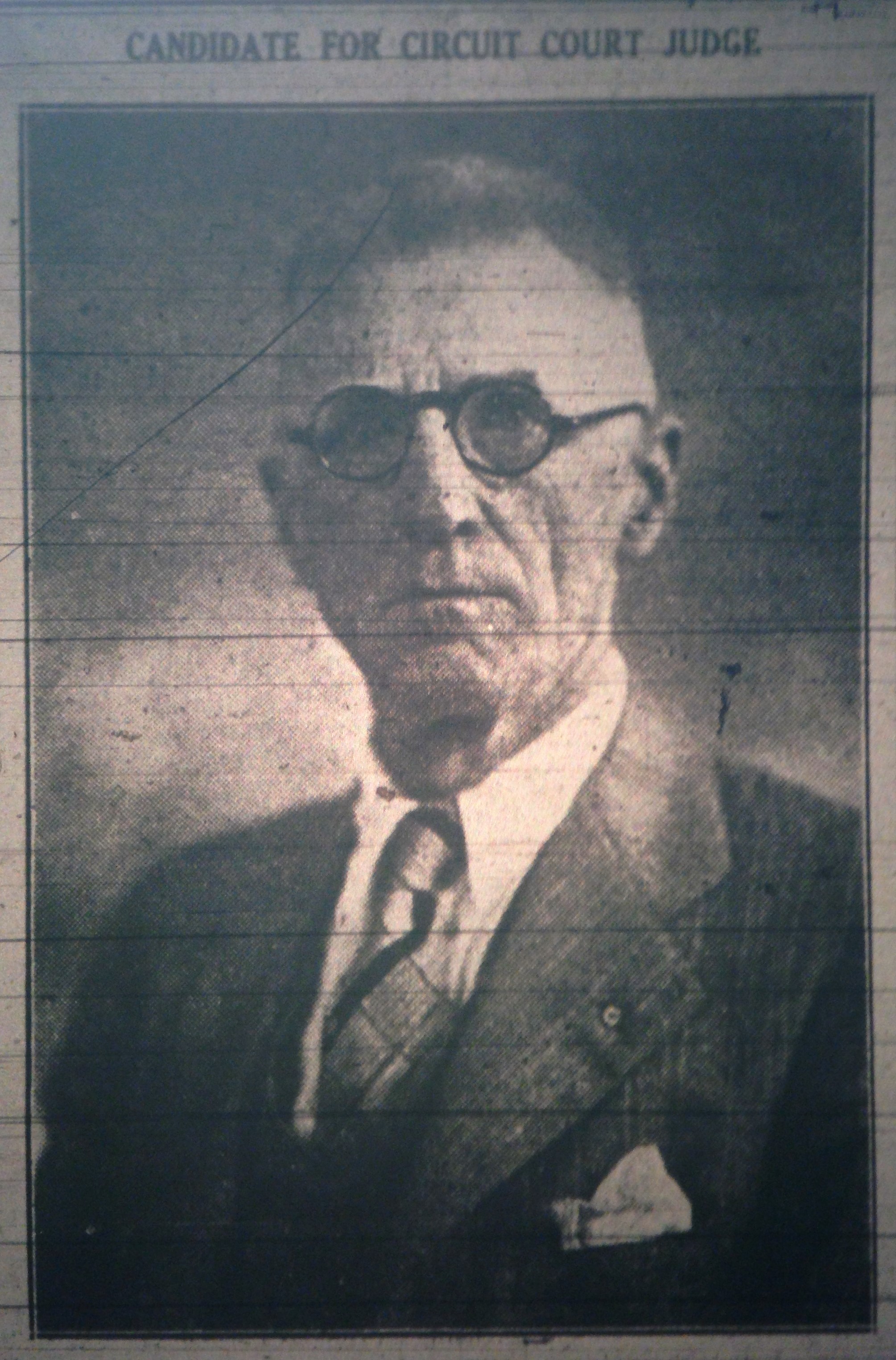
J.E. Peck for Circuit Court Judge (1928)

17 Tuesday Mar 2020

Posted by Brandon Ray Kirk in Logan

≈ Leave a comment

Tags

Appalachia, genealogy, history, J.E. Peck, judge, Logan, Logan Banner, Logan County, photos, politics, West Virginia

J.E. Peck Photo LB 07.24.1928

Logan (WV) Banner, 24 July 1928

Chapmanville News 05.05.1922

15 Sunday Mar 2020

Posted by Brandon Ray Kirk in Big Creek, Chapmanville, Coal, Huntington, Logan, Stone Branch

≈ Leave a comment

Tags

Alma Wagner, Anna Justice, Appalachia, Big Creek, Chapmanville, Cincinnati, Clee Conley, coal, Eustice Ward, genealogy, Hattie Clay, history, Hobert Spurlock, Huntington, Ida Butcher, Levy Hensley, Logan, Logan Banner, Logan County, Lola Ferrell, Maud Garrett, Mazie Bates, Morgan Garrett, Nettie Pauley, Oscar Langdon, Queeney Conley, Roy Hager, Ruby Wagner, Stone Branch, Wanda Ferrell, West Virginia, Wilbert Langdon

A correspondent named “Uncle Joe” from Chapmanville in Logan County, West Virginia, offered the following news, which the Logan Banner printed on May 5, 1922:

We are still having fair days and cool nights.

Miss Ruby Wagner has returned from the hospital at Huntington and is getting along nicely.

Mr. Oscar Langdon has left our town for Cincinnati.

Miss Alma Wagner looked lonesome Sunday. Where was L.T., Alma?

We wonder where they go when they take a ride here?

We saw two sweet gigglers out promenading all alone Sunday. Where were the boys?

Bug makes several trips to town during the day, but what does he care, for he gets his rides free.

Miss Eunice Ward and Mr. Hobert Spurlock were at the show Saturday night.

Miss Queeney Conley was shopping in town this week.

Some of the young folks were calling on Miss Clee Conley and thought they were on a merry go round.

Every person is always anxious to know who sends in the news. We wonder, who sent this?

Still more improvements and better wages at the mines here. You ought to make good money, boys.

When is Rev. Langdon going to preach for us again? It seems a long time between times.

Did we see Miss Maud Garrett and Mr. Wilbart Langdon out walking Sunday, or was it just imagination?

You’re not in style in our town unless you have a gray cap.

Mr. Roy Hager, of Big Creek, was calling on Miss Ida Butcher Sunday.

The handsomest man of Chapmanville has gone to work.

Mrs. Levy Hensley and daughter have returned to their home at Chapmanville after a short visit at Stone Branch.

Anna Justice, Hattie Clay and Mazie Bates were calling on Lola and Wanda Ferrell Sunday.

Mrs. Nettie Pauley was visiting relatives in this town Sunday.

Mr. Morgan Garrett has gone to work in Logan.

Appalachian Heritage Day 2019

13 Friday Mar 2020

Posted by Brandon Ray Kirk in Logan, Music

≈ Leave a comment

Tags

Almost Heaven Dulcimer Club, Appalachian Heritage Day, bluegrass, Buddy Griffin, Cody Jordan, history, Jackie Whitley, Kim Johnson, Logan, music, West Virginia

On August 24, 2019, Appalachian Heritage Day occurred in Logan, WV. The event featured authors, musicians, speakers, all-day music performances by leading regional old-time musicians, old-time and bluegrass music workshops, a genealogy workshop, a writers’ workshop, and an old-time music concert. On August 28-29, 2020, Logan will host Appalachian Heritage Days at Chief Logan State Park Lodge and the Coalfield Jamboree.

DSC_0841

Kim Johnson led an old-time banjo workshop. 24 August 2019. Photo by Jackie Whitley

DSC_0843

Cody Jordan assisted Kim Johnson in the old-time banjo workshop. 24 August 2019. Photo by Jackie Whitley

DSC_0823

Almost Heaven Dulcimer Club! 24 August 2019. Photo by Jackie Whitley

Almost Heaven Dulcimer Club

Here’s the Almost Heaven Dulcimer Club on stage…they were wonderful! 24 August 2019

DSC_0836

Assisting Buddy Griffin in the bluegrass fiddle workshop! 24 August 2019. Photo by Jackie Whitley

Ku Klux Klan in Logan, WV (1922)

13 Friday Mar 2020

Posted by Brandon Ray Kirk in Logan

≈ 2 Comments

Tags

Appalachia, Billy Sunday, Charleston, history, Island Creek, Ku Klux Klan, Logan, Logan Banner, Logan County, Mud Fork, West Virginia

From the Logan Banner of Logan, WV, comes this bit of history about the Ku Klux Klan in Logan County in 1922:

Has Logan An Organization of the Ku Klux Klan in her Midst?

Mysterious Fire Surrounded by Many Figures in Long Flowing Robes Observed

JUNCTION OF MUD FORK AND ISLAND CREEK ASSEMBLY SPOT

Ceremony Lasted Until Midnight, When Fiery Red Cross Was Raised and the Crowd Left

Has Logan a Ku Klux Klan?

Wednesday night a bright fire was observed on the mountain at the junction of Mud Fork and Island Creek, around which the figures of many beings were assembled. Many people that observed the fire made a closer inspection and they witnessed a secret meeting around a large, brightly burning fire, in which 60 or more figures dressed in long, flowing white robes participated. In the circle formed by these people could be observed the figure of the Chief, and the ceremony, while it could not be heard, was beautifully executed as each member arose and in a majestic manner saluted the Chief, and hastened to do his bidding.

The ceremony lasted until the hour of twelve when the fiery red cross was raised and the blazing emblem cast a ghostly shadow throughout the valley beneath. When the names from the flaming symbol had died away the clan evidently dispersed for the fire around which they had been assembled was ____ out and no further signs of the figures could be observed.

The Ku Klux Klan does not signify what the clansmen stood for during the reconstruction period. The Ku Klux Klan in this day assists in maintaining law and order, yet they still stand for supremacy of the white race. Unlawful acts and violence have no place within their councils, yet in their silent way they have a means whereby they are enabled to right wrongs and assist the authorities in maintaining the peace and dignity of the commonwealth. This invisible society is not to be feared by any that are law abiding citizens but to those who are inclined to do those things which are morally wrong yet probably within the law may sometime play host or hostess to a visit from these weird strangers.

Inquiry was made in the city as to whether or not there was a local branch of the Ku Klux Klan here. They are known to exist in many parts of the state and nation for the revival conducted at Charleston by Billy Sunday, which has just closed, was visited by members of the Klan there, who appeared in their weird attire. Of course no one here would speak authoritatively, but one prominent party of the town vouched for the information that they were here and in larger numbers than the public would suspect.

Strange and mysterious lights have been observed high on the peaks of the mountains about our city for some weeks. These lights have a habit of mysteriously appearing and suddenly disappearing. They occur at all hours of the night and in various places. Whether or not these strange lights have any connection with the meeting of Wednesday night is, of course, a matter of conjecture. However, those who observed the meeting of the Ku Klux Klan are inclined to believe all the lights signify individual members of the council which held forth Wednesday night.

Their future meetings will be observed with interest–if they can be discovered.

Logan (WV) Banner, 14 April 1922

***

Ku Klux Klan Has Been Organized Here

Organization Which Has Sprung Up So Quietly Within Our Midst Gives Promise of Being Strongest of Any Other Body in the County if Information Gained is True

Perhaps the readers of the Banner were a little doubtful of the authenticity of the statement made in these columns a few weeks ago relative to the presence in Logan county of the Ku Klux Klan. If any doubt existed then it is well to rid your mind of further doubt, for the Ku Klux Klan is here and the organization is not holding “marshmallow roasts” as was thought by a contemporary newspaper.

According to information which we feel is authentic, the second meeting of the Klan was held in this city Wednesday evening at which time the organization was perfected but only those on the inside are aware of the place of the meeting and just what occurred that evening. It is understood leaders were elected and members were made acquainted with the purposes and objects of the organization.

The movement for the organization in this country, while made secretly, spread like wildfire and applications for membership swamped those behind the movement and the Klan now numbers about 500 members, of which it is thought approximately 200 are to be found in the city while the remainder is scattered throughout the county and is composed of the most prominent business and professional men of the Guyan Valley.

The first meeting of the Klan was held a few weeks ago. Since that time the movement has grown with rapidity and it is understood several hundred applications for membership are now on file. New members are being carefully and systematically chosen and the Logan Klan will evidently take first rank with the numerous other Klans found throughout the state.

The Ku Klux Klan movement has met with the endorsement and approval of the most prominent men of the nation. The Rev. Billy Sunday, during his recent revival in Charleston, proudly announced he was a member and many of the Klans throughout the state number among their members, officials, professional men, and others whose moral character and community standing is above reproach.

The greatest secrecy attends all movements of the order and the identity of the members and the place of meeting of the Klan are secrets carefully guarded. secrecy is necessary in view of the old false prejudice against the order in the north, yet since the objects have become nationally known the order is experiencing its greatest growth in northern states. Membership is limited to native born Americans and initiation is open only to those who receive special invitation to join.

The Ku Klux Klan is described as an institution of picked men standing for “Chivalry, Humanity, Justice and Patriotism”; embodying in its genius and principles all that is chivalric in conduct, noble in sentiment, generous in manhood and patriotic in purpose; its peculiar objects being:

First: To protect the weak, the innocent, and the defenseless from the indignities, wrongs and outrages of the lawless, the violent and the brutal; to relieve the injured and oppressed; to succor the suffering and unfortunate, especially worthy widows and orphans.

Second: To protect and defend the Constitution of the United States of America, and all laws passed in conformity thereto, and to protect the people thereof from all invasion of their rights thereunder from any source whatsoever.

Third: To aid and assist in the execution of all constitutional laws and to preserve the honor and dignity of the state by opposing tyranny, in any and every degree attempted from any and every source whatsoever, by a fearless and faithful administration of justice to promptly meet every behest of duty without fear and without reproach.

Logan (WV) Banner, 12 May 1922

Logan: A Poem (1923)

08 Sunday Mar 2020

Posted by Brandon Ray Kirk in Coal, Guyandotte River, Logan, Poetry

≈ Leave a comment

Tags

Appalachia, Don Chafin, Logan, Logan Banner, Logan Wildcats, Mine Wars, New York City, O. Benton, poems, poetry, West Virginia, writers, writing

This poem was written by O. Benton and dedicated to Don Chafin, “a true son of Logan.” The poem relates to the Mine Wars, or as it was called by the Logan Banner, the “armed march.”

There’s a land of “Love thy brother”

By the sky-blue Guyandotte

Where the folks love one another,

And I know God loves the spot.

For he built those mighty mountains

And he touched their tops with blue,

From their sides gush crystal fountains,

Just to quench the thirst of you.

Oaks and poplars, pines and hemlocks,

On the mountainsides they grew.

There’ll be no coal beneath the mountains

For a million years or two.

In this glorious land of blessings

Long before the railroad came

Lived the honest, fighting people

Who have brought the country fame.

Now there’s mines beneath those mountains

And there’s towns most everywhere,

But with all the wealth and greatness

Freedom reigns and all is fair.

Some may say, “You think there’s freedom,”

But I’m saying what I know.

I have crossed the rushing rivers,

I have tramped the mountain snow.

I have sweated ‘neath those mountains

Where the motors screech and hum.

I have worked upon the tipple

Worked with pick and shovel some.

And I swear by all above me

That a man may have his say.

He may tell of any grievance

Unmolested, go his way.

For there is no lack of freedom

When the Court-House clock looks down

On the men who love their neighbors

In the busy coal-gorged town.

When the men from New York City

Told us that they were not free,

It was something quite unheard of,

Something free men cannot see.

If our misinformed brothers

Wish to DO, and not to mock,

Let them stay within the cities

Where there’s Hell in every block.

Let them stay away from Logan,

Where a man can be a man.

Take your creeds and go to New York

Where their brothers understand.

For the famous “Logan Wildcats”

And the lads who fought the Hun,

They are tired of soap-box teachings

And have said there shall be none.

Source: Logan (WV) Banner, 29 June 1923

Logan Memorial Park in McConnell, WV (1928, 2020)

16 Sunday Feb 2020

Posted by Brandon Ray Kirk in Cemeteries, Logan

≈ 9 Comments

Tags

Aldridge Coal Company, Amanda Avis, Anna Crovjack, Appalachia, Brandon Kirk, C&O Railroad, cemeteries, Charles Quinn, crime, Dwight Williamson, Ed Burgess, Elzie Burgess, Fintown, genealogy, history, Hugh C. Avis, immigrants, Ireland, Logan, Logan Banner, Logan County, Logan Memorial Park, Mamie Thurman, Maude Steele, McConnell, Noah E. Steele, Q.L. Stewart, West Virginia, Woodmen of the World, Works Progress Administration

Logan Memorial Park was a “perpetual care” cemetery established in the late 1920s in McConnell, Logan County, WV. The cemetery contains the final remains of many noteworthy Loganites, including Mamie Thurman, whose 1932 murder continues to tantalize regional residents. The Logan Banner reported on the cemetery’s beginnings on September 7, 1928:

Work Rapidly In Developing Burial Park

With Brush Cut and Loose Rock Being Hauled for Surface, Road Work Starts Soon

BEAUTIFYING COMES SOON

Plans Call for Use of Skilled Landscape Gardeners to Aid in Placing Shrubbery

Conclusive proof that Logan is soon to have a modern burial part embodying all the improvements found in the highest type institutions of this kind anywhere was afforded a reporter of The Logan Banner in an inspection of the work being done near McConnell by the Logan Memorial Park company.

Much work was found to have been done already. Brush and undergrowth has been cleaned off the entire 20 acre tract. This will finally include the grubbing of stumps and raking up the trash until the entire tract can be mowed with a lawnmower. Several hundred sled loads of loose rock have already been hauled to the banks of the small stream that flows through the central part of the tract, where a rubble stone embankment will be built near the water course to be covered with vines and shrubbery.

All surface rocks will be removed, blasting being resorted to loosen the larger ones. Several hundred holes were drilled in the surface of the entire plot of ground before it was decided that it would be a suitable place for burial purposes. It was found that there was no ledge rock on the entire tract except at one small spot.

Work is now in progress in preparation for the concrete road to be built from the state road into the park. A ditch suitable for the placing of 26-inch tile to carry the small stream out of the park is being dug. The C. & O. had two steam shovels at work Wednesday cleaning off a sidetrack, unused for several years and submerged by silt from the roadside, preparatory to setting out a carload of tile. It will be laid at once and then the making of a grade for the concrete will follow.

This entrance is between the residence of Burgess and Aldridge. Options have already been secured on property adjacent so that a large stone and iron entrance can be built just off the state road. From that point the hard surfaced road passes up the hollow to where a natural amphitheater provides several acres of smooth land where the first section of the park will be developed. The improved road will entirely encircle this plot so that easy access will be afforded and each lot will be reached by either the roadway or paths.

At the lower end of the natural amphitheater stand several houses that were formerly the property of the Aldridge Coal Company. The present tenants have been ordered to vacate these and they will be torn down.

Water will be supplied to the entire section now being developed and in the spring the entire tract will be plowed and seeded to the best grass obtainable. At that time much shrubbery, from the best nursery stock, will be planted under the direction of competent landscape gardeners.

The Bannerman was in doubt as to the closeness of this tract to the Courthouse, so it was metered and clocked. It proved to be 2 1/2 miles in distance and it was driven easily in traffic in six minutes. Thus there will be the dual advantages of the great natural and enhanced beauty of the Logan Memorial Park site and proximity to the town.

The earnest desire of the company to get this memorial park ready for those desiring to use it is shown in the rush that characterizes the work of cleaning it of brush and rock and in getting in a permanent road. More than a dozen men have been at work ever since the charter was granted and others will be added as more projects get under way simultaneously. The permanent road is to be laid immediately. The rubble stone wall along the stream will come later, but every bit of the work is to be pushed as rapidly as men can do it.

The perpetual care which the charter confirms to the lot owner will no doubt be a great inducement. Already interested parties are inquiring about when it will be open for inspection. Q.L. Stewart, the manager, assures them that no avoidable delay will be allowed to intervene.

***

Here’s a WPA map of the cemetery dating from the 1930s:

Logan Memorial Cemetery 1Logan Memorial Cemetery 2

***

This 1938 map of the cemetery is located in the Logan County Clerk’s office:

IMG_5552IMG_5553IMG_5547IMG_5548IMG_5549

***

Here are photographs of the cemetery in 2020:

IMG_7700

14 February 2020

IMG_7704

14 February 2020

IMG_7716

14 February 2020

IMG_7722

14 February 2020

IMG_7762

14 February 2020

IMG_7783

14 February 2020

IMG_7791

Charles Quinn, Irish immigrant… 14 February 2020

IMG_7803

Many immigrants are buried in the cemetery… 14 February 2020

IMG_7804

14 February 2020

IMG_7808

14 February 2020

IMG_7809

14 February 2020

IMG_7845

14 February 2020

IMG_7888

Woodmen of the World! 14 February 2020

IMG_7901

14 February 2020

IMG_8012

14 February 2020

IMG_8031

14 February 2020

IMG_8040

14 February 2020

IMG_8041

14 February 2020

IMG_8052

14 February 2020

IMG_8063

Mamie Thurman is buried below the Steele Mausoleum… 14 February 2020

IMG_E8079

Elzie Burgess helped dig Mamie Thurman’s grave. Here is an interview with Mr. Burgess by Dwight Williamson, dating from about 1985…

Home: A Poem (1915)

11 Tuesday Feb 2020

Posted by Brandon Ray Kirk in Poetry, Wyoming County

≈ 1 Comment

Tags

Appalachia, J. Rush Cook, Logan, Logan Democrat, poems, poetry, West Virginia, writers, writing

From the Logan Democrat of Logan, WV, comes this poem written by J. Rush Cook titled “Home,” published January 14, 1915:

HOME

Endearing words to us are given,

Endearing thoughts for us they hold.

All for which the heart has striven,

But none so dear to us as home.

When wearied with the cares of life,

With toil and labor, sorrows borne,

There comes a joy amidst the strife,

When e’re we think of home, sweet home.

Home replete with all its pleasure,

Be it a cot or palace grand;

Be it poor or rich in treasure,

‘Tis always home in every land.

If peace and love therein abide,

Reign supremely every hour.

In each heart in faith confides

Like a sweet, unfolding flower.

‘Tis the thought of home we cherish,

As we roam some distant land.

All else for us may perish,

But sweet home in childhood land.

Where dear mother led us gently

O’er the hills, through vale and field;

Where she sang to us so sweetly,

And in prayer so oft did kneel.

Where the songbirds ever singing,

‘Neath a blue sky with music ringing,

Where the hills with music ringing,

And the zephyrs blow at night.

This is home to us forever,

Home, with mother at our side.

Perhaps in thought when ties we sever,

And have crossed beyond the tide.

Miss Rosalie Adams (1929)

09 Sunday Feb 2020

Posted by Brandon Ray Kirk in African American History

≈ Leave a comment

Tags

Appalachia, Aracoma Junior High School, Douglas Junior High School, education, history, Logan, Logan Banner, Logan County, Omar, photos, Rosalie Adams, teacher, West Virginia, West Virginia State College

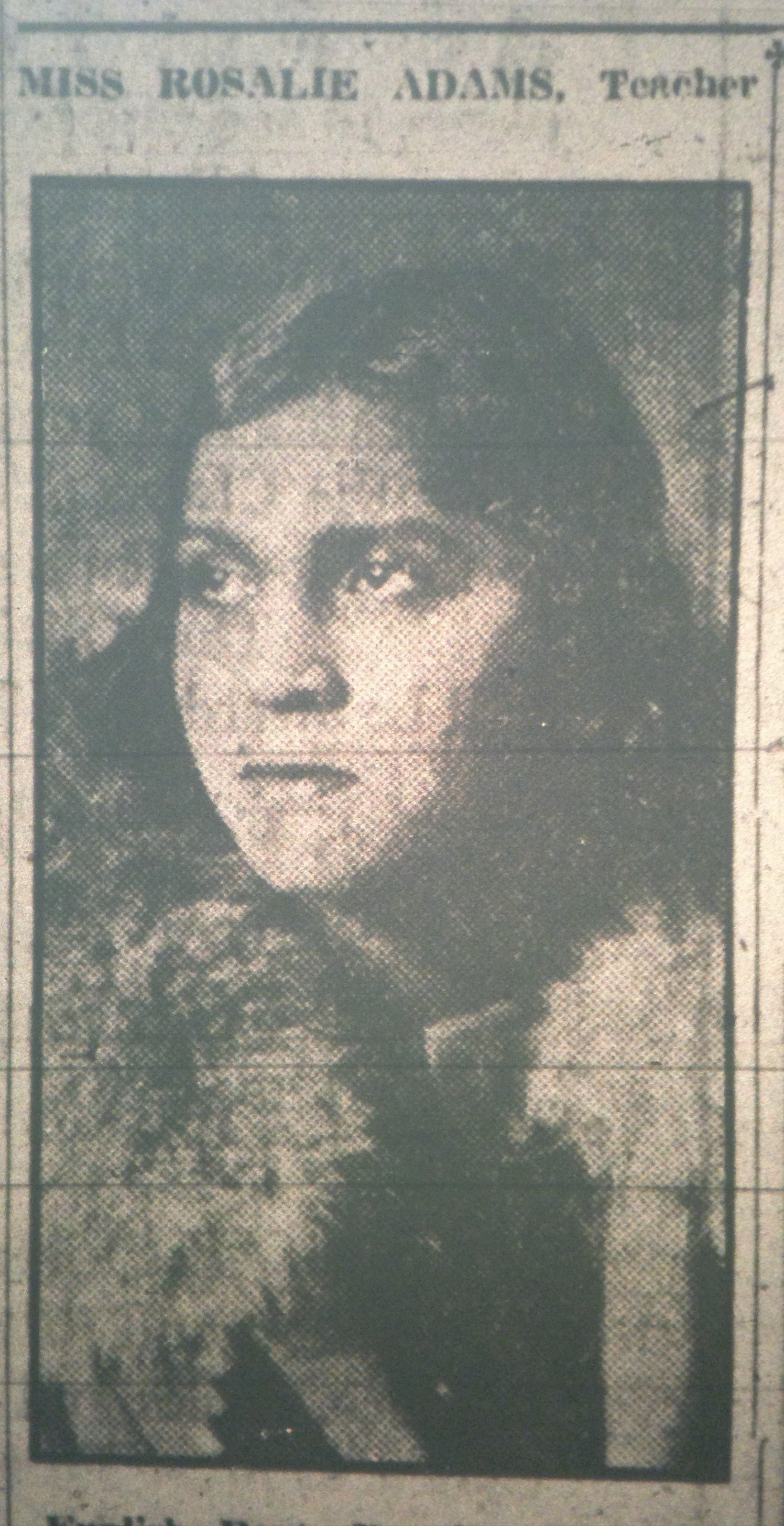
In April of 1929, the Logan Banner profiled numerous prominent African-American residents of Logan County, West Virginia.

Notable Blacks of Logan County LB 04.16.1929 11

Miss Rosalie Adams

Teacher, English Department, Douglas Jr. High School, Omar

Embracing the teaching of French, Sociology and History, Miss Adams is a graduate of West Virginia State College, A.B. degree, with honorary Cum Laude. She has done summer work at the same institution; member of Alpha Kappa Alpha and other social clubs. She has been in her present position one term, but is highly qualified for the grade of work in which she is engaged. When pursuing her studies Miss Adams was classed as one of the most brilliant students in the institution, and her graduation was most creditable in its distinctive marks. Miss Adams has aspirations to reach a higher degree of efficiency in her chosen profession, and contemplates pursuing studies for master’s degree in summer work in a credible institution. She is thorough and efficient in her work and takes high rating as a teacher.

← Older posts
Newer posts →

Feud Poll 1

If you had lived in the Harts Creek community during the 1880s, to which faction of feudists might you have given your loyalty?

Categories

  • Adkins Mill
  • African American History
  • American Revolutionary War
  • Ashland
  • Atenville
  • Banco
  • Barboursville
  • Battle of Blair Mountain
  • Beech Creek
  • Big Creek
  • Big Harts Creek
  • Big Sandy Valley
  • Big Ugly Creek
  • Boone County
  • Breeden
  • Calhoun County
  • Cemeteries
  • Chapmanville
  • Civil War
  • Clay County
  • Clothier
  • Coal
  • Cove Gap
  • Crawley Creek
  • Culture of Honor
  • Dingess
  • Dollie
  • Dunlow
  • East Lynn
  • Ed Haley
  • Eden Park
  • Enslow
  • Estep
  • Ethel
  • Ferrellsburg
  • Fourteen
  • French-Eversole Feud
  • Gilbert
  • Giles County
  • Gill
  • Green Shoal
  • Guyandotte River
  • Halcyon
  • Hamlin
  • Harts
  • Hatfield-McCoy Feud
  • Holden
  • Hungarian-American History
  • Huntington
  • Inez
  • Irish-Americans
  • Italian American History
  • Jamboree
  • Jewish History
  • John Hartford
  • Kermit
  • Kiahsville
  • Kitchen
  • Leet
  • Lincoln County Feud
  • Little Harts Creek
  • Logan
  • Man
  • Matewan
  • Meador
  • Midkiff
  • Monroe County
  • Montgomery County
  • Music
  • Native American History
  • Peach Creek
  • Pearl Adkins Diary
  • Pecks Mill
  • Peter Creek
  • Pikeville
  • Pilgrim
  • Poetry
  • Queens Ridge
  • Ranger
  • Rector
  • Roane County
  • Rowan County Feud
  • Salt Rock
  • Sand Creek
  • Shively
  • Spears
  • Sports
  • Spottswood
  • Spurlockville
  • Stiltner
  • Stone Branch
  • Tazewell County
  • Timber
  • Tom Dula
  • Toney
  • Turner-Howard Feud
  • Twelve Pole Creek
  • Uncategorized
  • Warren
  • Wayne
  • West Hamlin
  • Wewanta
  • Wharncliffe
  • Whirlwind
  • Williamson
  • Women's History
  • World War I
  • Wyoming County
  • Yantus

Feud Poll 2

Do you think Milt Haley and Green McCoy committed the ambush on Al and Hollene Brumfield in 1889?

Blogroll

  • Ancestry.com
  • Ashland (KY) Daily Independent News Article
  • Author FB page
  • Beckley (WV) Register-Herald News Article
  • Big Sandy News (KY) News Article
  • Blood in West Virginia FB
  • Blood in West Virginia order
  • Chapters TV Program
  • Facebook
  • Ghosts of Guyan
  • Herald-Dispatch News Article 1
  • Herald-Dispatch News Article 2
  • In Search of Ed Haley
  • Instagram
  • Lincoln (WV) Journal News Article
  • Lincoln (WV) Journal Thumbs Up
  • Lincoln County
  • Lincoln County Feud
  • Lincoln County Feud Lecture
  • LinkedIn
  • Logan (WV) Banner News Article
  • Lunch With Books
  • Our Overmountain Men: The Revolutionary War in Western Virginia (1775-1783)
  • Pinterest
  • Scarborough Society's Art and Lecture Series
  • Smithsonian Article
  • Spirit of Jefferson News Article
  • The Friendly Neighbor Radio Show 1
  • The Friendly Neighbor Radio Show 2
  • The Friendly Neighbor Radio Show 3
  • The Friendly Neighbor Radio Show 4
  • The New Yorker
  • The State Journal's 55 Good Things About WV
  • tumblr.
  • Twitter
  • Website
  • Weirton (WV) Daily Times Article
  • Wheeling (WV) Intelligencer News Article 1
  • Wheeling (WV) Intelligencer News Article 2
  • WOWK TV
  • Writers Can Read Open Mic Night

Feud Poll 3

Who do you think organized the ambush of Al and Hollene Brumfield in 1889?

Recent Posts

  • Logan County Jail in Logan, WV
  • Absentee Landowners of Magnolia District (1890, 1892, 1894)
  • Charles Spurlock Survey at Fourteen Mile Creek, Lincoln County, WV (1815)

Ed Haley Poll 1

What do you think caused Ed Haley to lose his sight when he was three years old?

Top Posts & Pages

  • New Year's Raid (1888): Randolph McCoy's Testimony
  • Civil War Gold Coins Hidden Near Chapmanville, WV
  • Feudist Jim McCoy (1929)
  • Paw Paw Incident: Dan Whitt Deposition (1889)
  • Paw Paw Incident: Ellison Mounts Deposition (1889)

Copyright

© Brandon Ray Kirk and brandonraykirk.wordpress.com, 1987-2023. Unauthorized use and/or duplication of this material without express and written permission from this blog’s author and/or owner is strictly prohibited. Excerpts and links may be used, provided that full and clear credit is given to Brandon Ray Kirk and brandonraykirk.wordpress.com with appropriate and specific direction to the original content.

Archives

  • February 2025
  • January 2025
  • October 2023
  • September 2023
  • December 2022
  • November 2022
  • May 2022
  • April 2022
  • February 2022
  • November 2021
  • October 2021
  • September 2021
  • June 2021
  • May 2021
  • April 2021
  • March 2021
  • February 2021
  • January 2021
  • December 2020
  • November 2020
  • October 2020
  • July 2020
  • June 2020
  • May 2020
  • April 2020
  • March 2020
  • February 2020
  • January 2020
  • December 2019
  • November 2019
  • October 2019
  • September 2019
  • August 2019
  • July 2019
  • June 2019
  • May 2019
  • April 2019
  • March 2019
  • February 2019
  • January 2019
  • December 2018
  • November 2018
  • October 2018
  • September 2018
  • August 2018
  • July 2018
  • June 2018
  • May 2018
  • April 2018
  • March 2018
  • February 2018
  • January 2018
  • December 2017
  • November 2017
  • October 2017
  • September 2017
  • August 2017
  • July 2017
  • June 2017
  • May 2017
  • April 2017
  • March 2017
  • February 2017
  • January 2017
  • December 2016
  • November 2016
  • October 2016
  • September 2016
  • August 2016
  • July 2016
  • June 2016
  • May 2016
  • April 2016
  • March 2016
  • February 2016
  • January 2016
  • December 2015
  • November 2015
  • October 2015
  • September 2015
  • August 2015
  • July 2015
  • June 2015
  • May 2015
  • April 2015
  • March 2015
  • February 2015
  • January 2015
  • December 2014
  • October 2014
  • September 2014
  • August 2014
  • July 2014
  • June 2014
  • May 2014
  • April 2014
  • March 2014
  • February 2014
  • January 2014
  • December 2013
  • November 2013
  • October 2013
  • September 2013
  • August 2013
  • July 2013
  • June 2013
  • May 2013
  • April 2013
  • March 2013
  • February 2013
  • January 2013
  • December 2012
  • November 2012

Enter your email address to follow this blog and receive notifications of new posts by email.

Join 2,925 other subscribers

Tags

Appalachia Ashland Big Creek Big Ugly Creek Blood in West Virginia Brandon Kirk Cabell County cemeteries Chapmanville Charleston civil war coal Confederate Army crime culture Ed Haley Ella Haley Ferrellsburg feud fiddler fiddling genealogy Green McCoy Guyandotte River Harts Harts Creek Hatfield-McCoy Feud history Huntington John Hartford Kentucky Lawrence Haley life Lincoln County Lincoln County Feud Logan Logan Banner Logan County Milt Haley Mingo County music Ohio photos timbering U.S. South Virginia Wayne County West Virginia Whirlwind writing

Blogs I Follow

  • OtterTales
  • Our Appalachia: A Blog Created by Students of Brandon Kirk
  • Piedmont Trails
  • Truman Capote
  • Appalachian Diaspora

BLOOD IN WEST VIRGINIA is now available for order at Amazon!

Blog at WordPress.com.

OtterTales

Writings from my travels and experiences. High and fine literature is wine, and mine is only water; but everybody likes water. Mark Twain

Our Appalachia: A Blog Created by Students of Brandon Kirk

This site is dedicated to the collection, preservation, and promotion of history and culture in Appalachia.

Piedmont Trails

Genealogy and History in North Carolina and Beyond

Truman Capote

A site about one of the most beautiful, interesting, tallented, outrageous and colorful personalities of the 20th Century

Appalachian Diaspora

  • Subscribe Subscribed
    • Brandon Ray Kirk
    • Join 787 other subscribers
    • Already have a WordPress.com account? Log in now.
    • Brandon Ray Kirk
    • Subscribe Subscribed
    • Sign up
    • Log in
    • Report this content
    • View site in Reader
    • Manage subscriptions
    • Collapse this bar
 

Loading Comments...