• About

Brandon Ray Kirk

~ This site is dedicated to the collection, preservation, and promotion of history and culture in my section of Appalachia.

Brandon Ray Kirk

Tag Archives: Appalachia

Henry Adkins Deed to Elizabeth Adkins et al (1870)

27 Tuesday Aug 2019

Posted by Brandon Ray Kirk in Atenville, Fourteen, Guyandotte River, Little Harts Creek, Twelve Pole Creek

≈ Leave a comment

Tags

Appalachia, Charles Adkins, Charles Lattin, Elizabeth Adkins, Enos Adkins, Evaline Adkins, Fourteen Mile Creek, genealogy, George W. Adkins, Guyandotte River, Harmon Stroud, Henry Adkins, Henry H. Adkins, history, Isaac Nelson, Jacob K. Adkins, Laurel Fork, Lewis Adkins, Lincoln County, Little Harts Creek, Mary Louisa Adkins, notary public, Price Lucas, Reece W. Elkins, Sand Island Branch, Spencer Adkins, Sulphur Spring Fork, Trough Fork, Twelve Pole Creek, West Virginia

Henry Adkins to Elizabeth Adkins 2

Deed Book 59, page 269, Lincoln County Clerk’s Office, Hamlin, WV. Henry Adkins (c.1811-c.1873) was the son of Isaac and Elizabeth (Adkins) Adkins.

Henry Adkins to Elizabeth Adkins 3

Deed Book 59, page 270, Lincoln County Clerk’s Office, Hamlin, WV.

Frank Hutchison (1927, 2019)

10 Saturday Aug 2019

Posted by Brandon Ray Kirk in Cemeteries, Logan, Music

≈ 1 Comment

Tags

Appalachia, Brandon Kirk, cemeteries, Coney Isle, Ed Belcher, Elbert Garrett Family Cemetery, fiddler, Fort Branch, Frank Hutchison, genealogy, guitar, harp-organ, history, Lake, Logan Banner, Logan County, music, New York, Okeh Company, Omar Theatre, Peach Creek Theatre, piano, Sheila Brumfield Coleman, Stirrat Theatre, Stollings, West Virginia, West Virginia Rag, William Hatcher Garrett

Two Local Musicians Record LB 02.01.1927 1

Logan (WV) Banner, 1 February 1927.

Frank Hutchinson's Songs for Sale LB 03.08.1927

Logan (WV) Banner, 8 March 1927.

Frank Hutchinson LB 03.25.1927

Logan (WV) Banner, 25 March 1927.

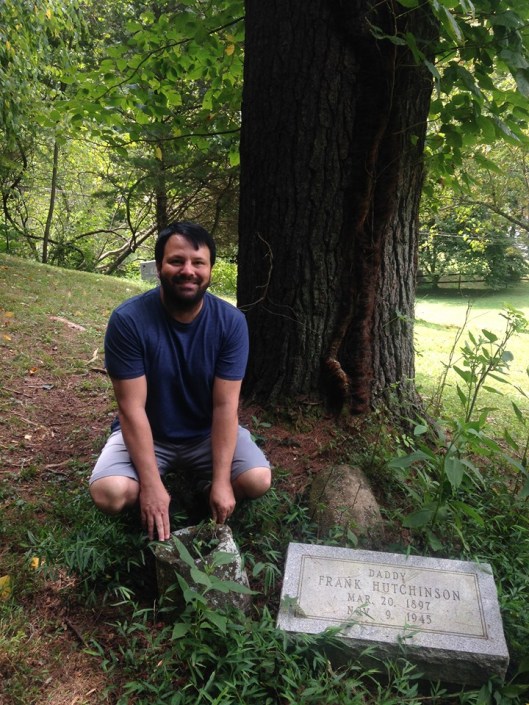
BK at Hutchison Grave 2

Here we are visiting the Frank Hutchison grave at the Elbert Garrett Family Cemetery at Lake, Logan County, WV. Photo by Sheila Brumfield Coleman. 10 August 2019

Recollections of Bert Curry about Timbering on Pigeon Creek, WV (1978)

10 Saturday Aug 2019

Posted by Brandon Ray Kirk in Coal, Holden, Timber

≈ Leave a comment

Tags

Appalachia, Bert Curry, Catlettsburg, coal, Cole and Crane Company, Delbarton, Elk Creek, Henry Ferrell, history, Holden, Island Creek, Island Creek Coal Company, Lando Mines, Lenore, logging, Louisa, Mingo County, Mud Fork, Pigeon Creek, rafting, Rock House, splash dams, timber, timbering, Trace Fork, Tug Fork, Wallace Curry, West Virginia

The following interview excerpt of Bert Curry (born c.1901) was conducted at Lenore in Mingo County, WV, on December 5, 1978.

***

How much money was around back then?

The first public works to come into the Pigeon Creek areas was when Cole and Crane come in to cut all of this virgin timber. All of Pigeon Creek. They built a splash dam at Delbarton, one on Elk Creek, and one on Rock House. They come in here in 1910 and they paid seventy-five cents a day and board for a man to work and he worked from daylight til dark and along later some of their best men, their team drivers… Team drivers had to work extra hours. They’d put them on by the month. I remember my brother-in-law got $35 a month, but he’d have to get up at 4 o’clock in the morning and then after supper he’d have to go out and clean the stable and curry his team and doctor ‘em, anything that had to be doctored and feed ‘em and bed ‘em down of the night.

Where did people get most of their income in those days?

If you had a job it was usually helping somebody cut timber. My first job was fifty cents a day carrying water for seventeen men and I was about twelve or thirteen years old.

Was that for loggers?

Well, these was loggers but my brother Wallace had a big field of corn. He had to grow corn to feed his cattle. He had six yokes of cattle and he used cattle in logging and he’d take a big flour barrel full of corn and them cattle would get around and he’d feed that corn to ‘em. They’d eat a barrel of corn each night and they’d let ‘em… Maybe a little fodder, or once in a while in bad weather they’d give ‘em a little hay. But them cattle, they worked ‘em six days a week haulin’ logs. They was trained to work and them six yokes of cattle was worth more than you could get for… You could buy a beef for $25 at that time but if you bought a good oxen that was broke you’d have to give about $50 for him.

What do you remember about the logging operations?

They was very primitive. They had nothin’ like a chain saw. They had a cross cut saw and they had axes and they had cane hooks and they had their teams of oxen and then some had teams of mules and horses. When Cole and Crane come in here they contracted all the cuttin’ of this timber. All the haulin’ it and puttin’ it into the creeks where the waters from the dams would take care of it. They had several contractors. They’d contract a whole boundary, maybe 500 or 1000 acres of timber to cut, and it was all virgin timber. It took six yoke of oxen or two to three big span of mules or horses to pull a tree. They didn’t cut it up into logs like they do now. They cut the whole tree and they didn’t take anything less than 16 inches up to the top. They’d be from 5 to 7 feet down where they cut them off and some of them would be 100 feet long and I’ve seen gorges of logs in Pigeon Creek they claimed had 5,000 trees in it. For a mile it’d be piled up bank to bank as high as they could pile. They’d work sometimes with all the teams they could get around them for three weeks a breaking one gorge. And when they got it to the Tug, they’d raft it. Sometimes they’d raft them and sometimes they would drift them down to the locks at Louisa before they’d raft them and they never went past there. They’d raft them there and then take tug boats and haul them from there to Cincinnati.

How did you raft them? I’m not familiar with that.

They had what you call chain dogs, a little chain about that long (indicates about 12 inches) with a spike on each end. They’d drive a spike in this log here and in this log (indicates two logs laying side by side) to hold it together, one at the front and one at the back, and they’d be oh maybe they’d be 50 feet wide and two or three hundred feet long, the rafts would. Maybe they’d have two or three rafts. One steamboat would be pullin’ maybe two or three rafts.

The logs wouldn’t drift apart?

They’d drive them spikes. Them spikes was about that long (indicating about six inches) and they’d drive them in there and it took a whole lot to pull ‘em out.

Did they work in the winter time, too?

Oh yes! I’ve seen fellers wade Pigeon Creek when they mush ice was a floatin’ and when they’d have to get back in the water to thaw before they could walk.

Was the creek deeper then or about like it is now?

It was more even. They had water all the time but they didn’t have as many severe floods as they have now because this was all covered with timbers, all of everything. See, this mulch in these forests held the water and let it leak out. It didn’t run off like it does now.

The water flow was more evened out this year around?

More evened out. But when they’d have a splash dam at Delbarton, one on Rockhouse up at Lando Mines and one in the head of Elk Creek, they’d time these. They’d know how long it took the water to run from Elk Creek, and they knowed how long it took the water to run from Rock House, and they knowed how long it took the water to meet. They’d try to have them all three come out at once so that they’d have a vast big sudden increase in water. You could look up the creek when they’d splash and you could see a wall floatin’ and a turnin’ in and everything.

And that was to wash the logs out?

Yes, well they washed them out to Tug River that way. That’s the way they got them out of Pigeon Creek.

Do you remember when Island Creek first came into the area?

No. Island Creek first come in about 1901. That was over there. They started when two young fellows come from New York in there looking for oil, to prospect for oil, so they could invest some money. And some old man had a mine open right where No. 1 Island Creek mine is and he was a haulin’ coal with a mule—a mule and a sled. He’d go back in there and he’d haul coal out—a big seam of coal six foot high and good and clean. So they decided that there was where they could make their money. So they got to talkin’ with these fellows and they went and got lawyers and they bought around Holden and Trace Fork and up Mud Fork and a vast area. I don’t know how much: 79,000 acres for 470,000 dollars. And fellows like Henry Ferrell, he counted timber so long. To count timber you have men a goin’ through and selecting the trees and one man a tallying. They’d make a mark on a tree when they’d count it, and the fellow with the tally sheet, he kept the numbers. He said they’d count timber a while and said then they had more money than they had brains. To spend that much money for that much land—470,000 dollars—and he said they put up a band mill and cut the timber and sold the timber and built their camps and sold enough lumber to pay for all of it. They got their coal and their land free. Just cut the timber and sold it and got their money back. People thought they were foolish for paying that kind of prices. Buying some of them farms out with all that timber for thousand dollars—that sounded like an awful lot of money. They didn’t have any money. They weren’t used to money. You worked for fifty cents a day. $1000 seemed like a whole lot.

James Ratliff v. Ephraim Hatfield (1825)

24 Wednesday Jul 2019

Posted by Brandon Ray Kirk in Big Sandy Valley, Hatfield-McCoy Feud

≈ Leave a comment

Tags

Appalachia, county clerk, Ephraim Hatfield, genealogy, history, James Ratliff, Kentucky, Pike County, Spencer Adkins

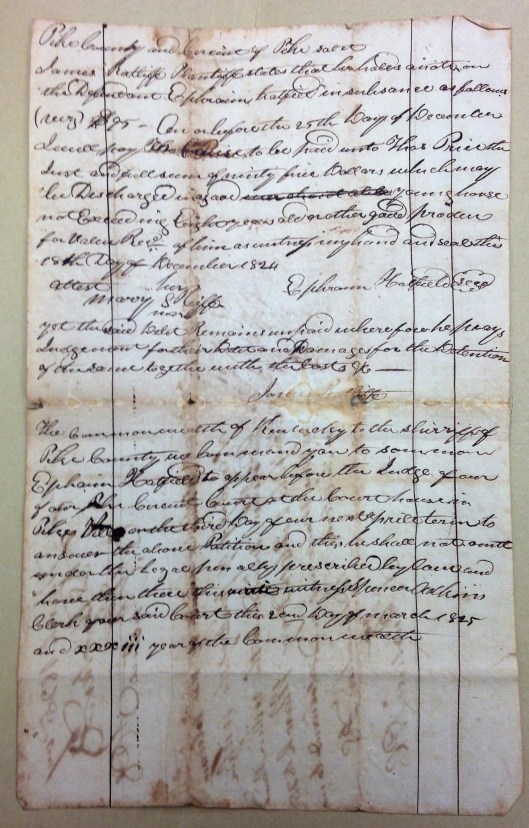
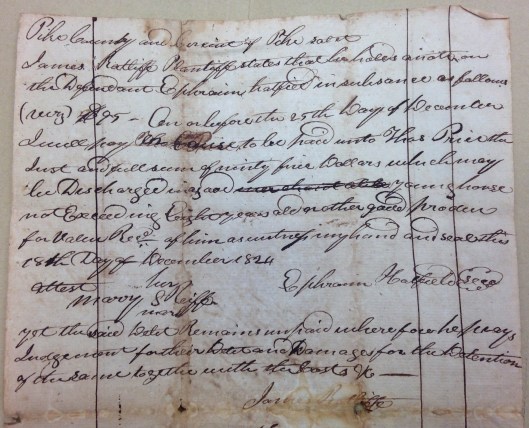
IMG_7515

Reference to promissory note for $95.

IMG_7516

Reference to promissory note for $95.

IMG_7517

Summons for Ephraim Hatfield.

IMG_7518

Summons served…

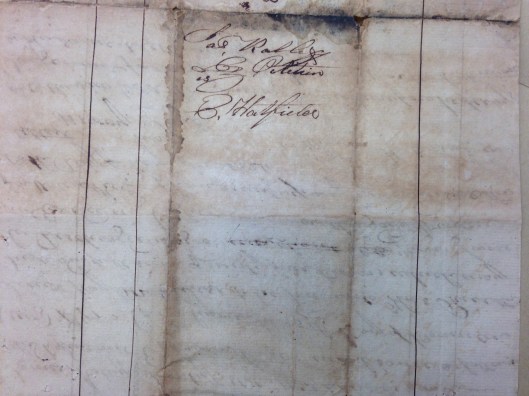
IMG_7519

The back of the document identifies the case name.

World War I Recollections of Dr. Edwin M. Godby (1928)

24 Wednesday Jul 2019

Posted by Brandon Ray Kirk in Huntington, Logan, World War I

≈ 3 Comments

Tags

308th Infantry, 77th Division, 92nd Division, Alsace-Lorraine, Appalachia, Bosche, Camp Greenleaf, Chateau Thierry, dentist, Edwin M. Godby, Fifth Avenue, Georgia, Germany, Gwinn Brothers & Company, Herald-Advertiser, history, Huntington, James Godby, Logan, Logan Banner, Logan County, Lost Battalion, United Cigar Stores, University of Cincinnati, West Virginia, World War I

From the Logan Banner of Logan, WV, comes this recollection of World War I by veteran Edwin M. Godby of Huntington, WV, dated July 10, 1928:

LOGAN BOY OF LOST BATTALION LIVED THRU SIX DAYS OF HELL

Dr. E.M. Godby, Now of Huntington, One of 150 Survivors of An Outstanding Episode of World War—Graphic Account of Harrowing Experiences

It has been a little less than 10 years since the story of the Lost Battalion thrilled and horrified the American people.

It was the story of an infantry battalion which pushed its way through in an advance into the German lines while the forces on either flank were being beaten back, writes Wiatt Smith for the Herald-Advertiser.

Of the 1,000 men who went in, only a remnant lived to tell the story of six days in a literal hell. Six days during which they crouched in shell holes and dugouts, without food or water, while the shells from the guns of their own army thundered over them or broke about them and the gas and machine gun fire of a sullen enemy harassed them.

One of those survivors lives in Huntington. He is a dentist and as he goes about his professional work and social life only a slight cough serves to mark him as one who breathed the deadly poison spewed over him by the Bosche.

Dr. Edwin M. Godby, of Fifth Avenue, with offices in the United Cigar Stores building, is the man in question. He told the story to one who had first learned from others of his part in this great drama of the war. Dr. Godby was an ambulance corps man, attached to the Seventy-Seventh division and at the time assigned to Major Whittlesey’s battalion of the 308th infantry for said duty.

Left Logan in 1918

Eldest son of Mr. and Mrs. James Godby of Logan, he was a student of dentistry in the University of Cincinnati when America entered the war. He went from Logan with a draft contingent in March 1918. He trained at Camp Greenleaf, Ga., was assigned to the Medical corps, and crossed the ocean in June as a casual.

Assigned at once to the Seventy-seventh division he first saw the front at post in Alsace-Lorraine.

“There was no action here,” said Dr. Godby. “We were within one kilometer of the enemy but there seemed to be almost an understanding that we wouldn’t bother each other. There was no firing. Occasionally one side or the other would send a raiding party into the others lines, but these were rarely fired upon.

“In July our division went in to replace another division which had helped take Chateau Thierry. We continued in the drive from the Marne to the Aisne. We would advance two or three days and then dig in for perhaps four or five. This went on from July to September.

“Then we moved from the Aisne to the Argonne. One date that stays with me is that of the great barrage which marked the opening of the Argonne drive on the night of September 26.

“On October 13 or 14 we got orders to advance from our position in a 30-mile strip of woods between the headwaters of the Aisne and the Meusc. The Ninety-second division flanked us on the left and two of our regiments and two of the Ninety-second were supposed to advance.

“The advance started as planned, early in the morning, but the right and left flanks were met by such resistance that they fell back to their original positions.

“Major Whittlessey’s men tore through the resisting German line and went forward. It was late in the forenoon before we discovered that we were unsupported on either flank and cut off from the rear.

“We spend six days before we were relieved by another regiment which was almost destroyed in the effort. The battalion was virtually at war strength, having been in only a little while. Of the 1,000 who went in only 150 came back.”

Dr. Godby tells a grim story of the last days. As soon as the soldiers found their situation they began to dig in. It was every man for himself. Dr. Godby says he and two others found a shell hole. They deepened it and were comparatively safe there. But one of the three got too venturesome and raised his head too far above the rim of the crater. His comrades used his body for an additional barricade.

The surviving companion of Dr. Godby was a man named Crane, who had gone in from Pennsylvania. He told Dr. Godby that he had a sister in Huntington whose husband worked for Gwinn Bros. & Co.

“I have often thought I’d try to get race of that sister,” said Dr. Godby, “but I never have.

“We just laid there,” the dentist said, detailing his experience. “Each man had less than a quart of water and no food. After the second day I didn’t have any water. We never missed the food, but of course the thirst was torture. It was terrible, too, to have to wear our gas masks continuously for that becomes torture after the first hour.

“For the first day or two the Germans tried charging us but we were strong enough to beat them back. After that they were content to keep their machine guns turned on us and subject us to a continuous barrage of gas. At the same time we were within the range of our own batteries.

Contemplated Suicide

“American planes passed over us and tried to drop us food, but the Germans got it.

“For the last two or three days nothing mattered. Crane and I tried to devise means of escape. We would work out a plan and then decide it was futile. We decided to commit suicide, but changed our minds. It was simply a matter of trying to keep alive as long as we could. On the fifth night I had only intervals of consciousness. But we had determined to make a dash for freedom and life when daylight came. It would not have been a dash for life, but a dash to death.

I know this is true because we were on the slope of a ravine, the battalion being pocketed on either side of it. We could see the water in the ravine and the bodies of the men who in their desperation had gone there to drink. Not one lived to taste the water.

“But as Crane and I planned to make the final desperate dash I lost consciousness. When I revived I was on a stretcher at a base hospital at Nantes. I never saw Crane again. I have often wondered what became of him.

“Did he,” I asked myself, “live to go for his death drink or was he too rescued?

“I have never talked to anyone who was with the battalion.”

A few days after Dr. Godby revived from his unconsciousness the armistice was signed. He was in the hospital from November 1 until late in December, recovering from the effects of gas. In January 1919, he came back to the United States, received his discharge and resumed his studies. He has been practicing in Huntington two years.

Hatfield-McCoy Feud: Ellison Hatfield Grave at Newtown, WV (2019)

17 Wednesday Jul 2019

Posted by Brandon Ray Kirk in Cemeteries, Hatfield-McCoy Feud

≈ Leave a comment

Tags

Appalachia, Brandon Kirk, Ellison Hatfield, Floyd Hatfield, genealogy, Hatfield Cemetery, Hatfield-McCoy Feud, history, Mate Creek, Mingo County, Newtown, Phyllis Kirk, Sarah Hatfield, West Virginia

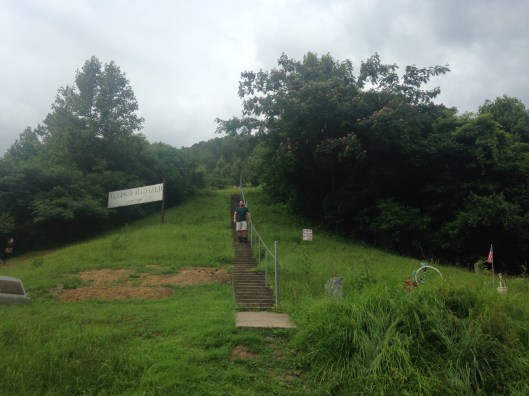
IMG_9558

Up this way to the old Hatfield cemetery. Newtown, Mingo County, WV. Photo by Mom. 6 July 2019.

IMG_9552

Entering the old Hatfield cemetery. It was a bit weedy! Photo by Mom. 6 July 2019.

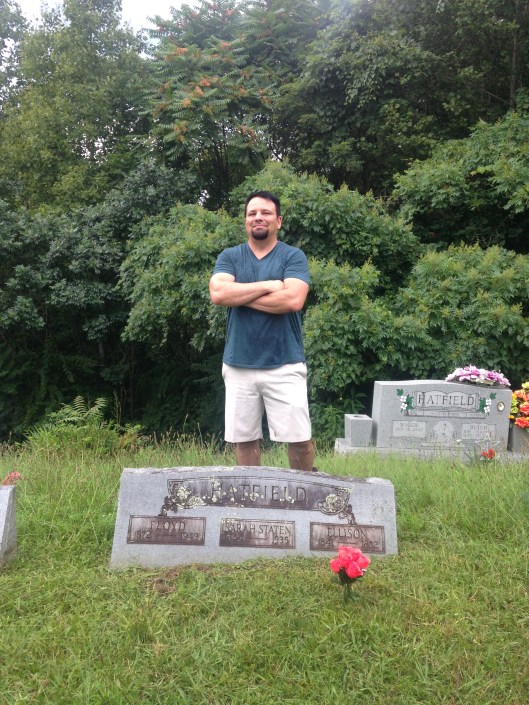
IMG_9529

I mowed some of the graves and made sure to place flowers at the grave of Ellison Hatfield. Photo by Mom. 6 July 2019

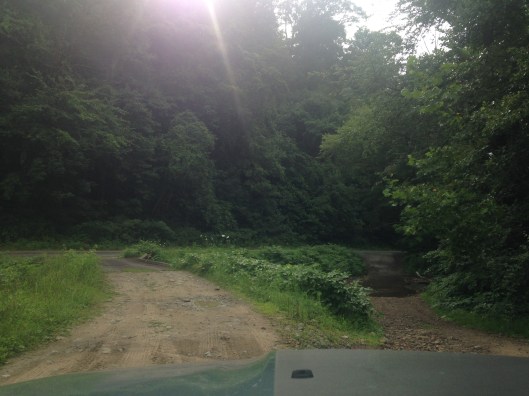
IMG_9559.JPG

Leaving the cemetery, you can return to the paved road by going left over the bridge or right through Mate Creek. 6 July 2019

White Family History at Pecks Mill, WV (1937)

15 Monday Jul 2019

Posted by Brandon Ray Kirk in Giles County, Logan, Pecks Mill

≈ Leave a comment

Tags

Anna Stuart, Appalachia, Arter White, Battle of New Orleans, Ben White, Betty Radford, Charles White, Editha White, Elijah White, Frank White, Franklin, genealogy, Giles County, Henry Mitchell, Hezekiah Staton, Hiram White, history, Howard White, Indiana, Isaac White, James Buskirk, James Thompson, James White, John Chambers, John Sansom, John White, Judith White, Lark White, Logan, Logan Banner, Logan County, Lucretia Elkins, Major White, Margaret White, Mason White, Maston White, Millard White, Mingo County, Monroe County, Montgomery County, Nancy White, Ohio, Pigeon Creek, Pleasant Chafin, Reuben White, Robert Chambers, Robert Whitt, South Carolina, Susannah Elkins, Susannah Marcum, Thomas White, Viola Ellis, Virginia, Wade Hampton, Wallace White, West Virginia, Will White, William White

From the Logan Banner of Logan, WV, comes this bit of history about the White family in Logan County, West Virginia. The story is dated May 21, 1937.

White Family Among Early Settlers in Logan County

Great Grandfather of Patrolman Frank White Moved From Pecks Mill to Mingo County; His Father Had Settled on Mitchell Farm

Among the pioneer families which settled in and around Logan during the early days of its building from a settlement to a village was the family of John White.

John White came to Logan and settled on the farm later owned by Henry Mitchell with a family of grown men and one daughter. Ben and James had come to Pecks Mill early in the 19th century and built their cabins.

His daughter, Nancy, married Robert Whitt, who afterwards moved to Ohio.

His sons were John, who married Susannah Marcum of Franklin; Ben, who married Anna Stuart of Montgomery; James, who married Lucretia Elkins; and William, who married a daughter of John Sansom, another pioneer of the county.

James, tiring of this section of the country because “hunting was bad”, moved to Mingo county and bought five miles of land on Pigeon Creek for a bear gun and a bear dog.

He reared his family and among his children was John, grandfather of Frank White, city patrolman, Mrs. James Buskirk, Power Plant addition, and Lark, Will, Millard, Howard, Wallace, and Mason, all of Logan.

John was the breadwinner of his family, his father having died not long after his son reached the age of 12. John hunted and filled the soil to take care of his aging mother and several brothers and sisters.

He married Betty Radford, also of Mingo county and was the father of twelve children. They were William, who married Editha White; John, who married Susannah Elkins; Thomas, James, Reuben, Isaac, Charles, Major, Elijah, Hiram, Masten, and Judith, who married James Thompson.

Elijah was the father of the Logan citizens named above. He left Mingo county and came to Logan where he married Viola Ellis.

Thomas, James, and Reuben went to Giles county, Virginia, and Major went to Indiana.

All the others remained in Logan and reared large families.

Ben White was the father of seven children, five sons and two daughters. His sons were John, Arter, Ben, William, and James, and his daughters were Nancy, who married Pleasant Chafin, and Margaret, who married Hezekiah Staton.

James had but one child, a daughter Nancy, who married John Chambers, a son of Robert Chambers of Monroe county.

William, the youngest son, joined the regular army in 1808 and was assigned for duty in a regiment that was being raised by Col. Wade Hampton of South Carolina.

When Hampton was made Brigadier-General in 1806 and assigned to duty at New Orleans, White went with him, and when Hampton was superseded by Wilkinson, White remained with Wilkinson and then under Jackson until after the Battle of New Orleans in which battle he participated.

He returned home in 1816 and married the daughter of John Sansom.

Hatfield-McCoy Feud: Tom “Guerilla” Mitchell grave at Meador, WV (2019)

14 Sunday Jul 2019

Posted by Brandon Ray Kirk in Hatfield-McCoy Feud, Meador

≈ 4 Comments

Tags

Appalachia, Brandon Kirk, cemeteries, genealogy, Hatfield-McCoy Feud, history, Meador, Meador Cemetery, Mingo County, Nancy Varney, Sarah Jane Mitchell, Tom Mitchell, West Virginia

IMG_9765

Heading up to the cemetery. What a rush! 12 July 2019

IMG_9773

This cemetery has several names, most commonly Meador, Varney, or Steele Cemetery. 12 July 2019

IMG_9837

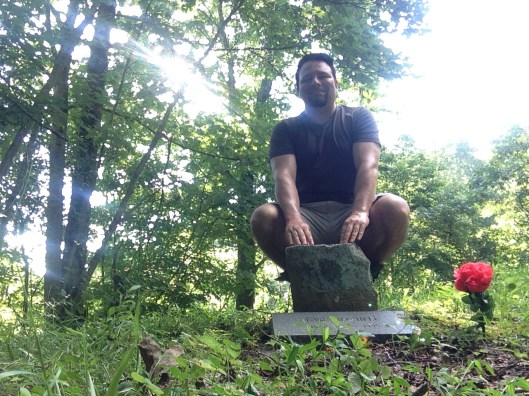
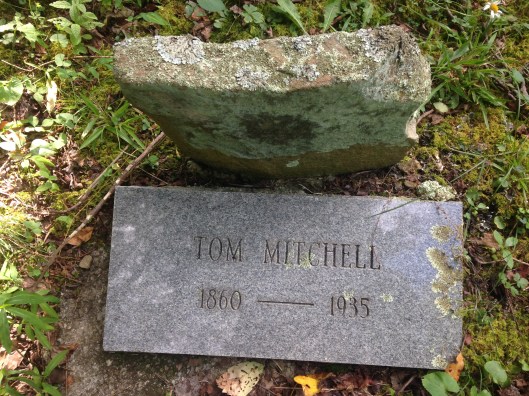
Tom Mitchell is buried to the left just as you enter the cemetery. I made sure to place flowers at his grave. 12 July 2019

IMG_9767

Tom Mitchell (Feb 1865-10/20/1935), son of Sarah Jane Mitchell, married Nancy Varney and fathered at least twelve children. He was a key participant in the Hatfield-McCoy Feud.

Stephen Hart and Harts Creek (1937)

14 Sunday Jul 2019

Posted by Brandon Ray Kirk in Big Creek, Big Harts Creek, Civil War, Hamlin, Harts, Logan, Midkiff, Ranger, Spurlockville, Toney

≈ 5 Comments

Tags

Appalachia, assistant postmaster, Big Creek, Cabell County, Charles Spurlock, Cheat River, Cincinnati, civil engineer, civil war, doctor, genealogy, gunsmith, Hamlin, history, Jane Spurlock, John Spurlock, Lifas Spurlock, Lincoln County, Logan Banner, Logan County, Logan Post Office, Marshall Spurlock, Midkiff, Montgomery County, Omar, Pete Spurlock, preacher, Ranger, Robertson Spurlock, Seth Spurlock, Sheridan, sheriff, Spurlockville, Stephen Hart, surveyor, Union Army, Virginia, West Virginia

From the Logan Banner of Logan, WV, comes this bit of history about Stephen Hart and Harts Creek in Lincoln and Logan counties, West Virginia. The story is dated April 14, 1937.

Stephen Hart Settled at Cheat River, Pete Spurlock, A Great Grandson, Reveals

P.A. (Pete) Spurlock, assistant postmaster at the Logan post office, this morning revealed the destination of Stephen Hart, who went went after he had lived for a short time at the forks of the creek in the lower end of Logan county which now bears his name.

Spurlock said that Hart went to the Cheat River and settled permanently there to hunt deer and rear a family. He said the family name of Hart is as familiar there as the name Dingess is familiar in Logan county.

A daughter of Stephen, Jane, was Spurlock’s grandmother. She lived until 1913 and told her grandson much of the early history of the family which made its home in and around Spurlocksville, Sheridan, Ranger, and Midkiff.

Charles Spurlock, the progenitor of the Spurlock family, came to what used to be the Toney farm below the mouth of Big Creek in 1805 from Montgomery county, Virginia.

“Uncle Charley was a funny old cuss,” his great grandson Pete said this morning. “The story is told that a sheriff of Cabell county was given a capias to serve on the old codger for some minor offense when he was growing old and rather stout.

“Meeting him in the road one day, the sheriff informed Uncle Charley he had a capias to serve on him.

“None abashed, the old man informed the sheriff he was a law-abiding citizen and laid down in the middle of the road and told the sheriff to take him to jail.

“The ruse worked, for the sheriff chose to look for less obstinate prisoners,” Uncle Charley’s grandson said, chuckling.

Another story about the eccentric “Uncle Charley Spurlock” which has gone down in history, whether true or not, was that he lived for a short time below Big Creek under a rock cliff (known as a rockhouse) during the early summer while he was getting his cabin in shape for winter.

The tale is out that “Uncle Charley” explained his strange dwelling place in this way to his neighbors:

“Well I took Sarah (his wife) in a good substantial frame house in Virginia and she wasn’t quite satisfied. I took her to a log house and she wasn’t satisfied. I took her to a rail pen and still she grumbled. Then I took her to a rock house built by God Almight and still she wasn’t satisfied.

“I don’t know what I’m going to do with Sarah.”

Sarah evidently became accustomed to “Uncle Charley” for the couple reared four sons. They were John, Seth, Lifas and Robertson. There were no daughters.

Seth was P.A. Spurlock’s grandfather. His father, Marshall, is 78 and lives on his farm near Cincinnati.

Spurlock says “Uncle Charley” is buried on a point at Spurlocksville overlooking the haunts of his early manhood.

Robertson was a gunsmith and lived near Hamlin. Seth was a civil engineer and helped survey much of Logan county. He was a Union soldier. John was a country doctor who practiced at Ranger.

Lifas was a preacher for sixty years and lived at Sheridan.

Charles Spurlock, of Omar, is a distant cousin, the assistant postmaster said. He is the only relative that lives in this section of Logan county, Spurlock said.

Spurlock, at Omar, was born at Spurlocksville and is a grandson of one of the original “Charley’s” boys.

Image

Old Scene near Allen in Lincoln County, WV

11 Thursday Jul 2019

Tags

Appalachia, genealogy, history, Lincoln County, photos, West Virginia

IMG_2083 copyright.jpg

Posted by Brandon Ray Kirk | Filed under Spurlockville

≈ Leave a comment

Leet News 11.30.1923

11 Thursday Jul 2019

Posted by Brandon Ray Kirk in Big Ugly Creek, Hamlin, Huntington, Leet, Rector

≈ 1 Comment

Tags

Anna Fry, Appalachia, Beulah Ellen Skeens, Edith Frye, Edna Brumfield, Ernest Lucas, Ethel Frye, genealogy, H.M. Gill, Hamlin, history, Horn Skeens, Huntington, Irwin Lucas, Leona Lambert, Lillie Lucas, Linnie Brumfield, Lizzie Frye, Lonnie Lambert, Morrisville, Rector, Thanksgiving, Thelma Huffman, Wayne Brumfield, Wealtha Lambert, West Virginia, Willie Payne

A correspondent named “Baby Doll” from Leet on Big Ugly Creek in Lincoln County, West Virginia, offered the following news, which the Logan Banner printed on November 30, 1923:

Miss Thelma Huffman, her chum, __ ___ Brumfield, have __________.

_________ visiting friends and relatives in Huntington.

Miss Wealtha Lambert gave a party Tuesday night. A nice time was reported.

Mr. Willie Payne left this afternoon for Morrisville, W.Va.

Mr. Lonnie and Leona Lambert will spend Thanksgiving in Hunitngton.

Miss Edna M. Brumfield stayed home all day Sunday. Wonder where her sweetie was?

Edith and Ethel Frye are going to school these days.

School is proceeding nicely on Lore Fork.

Born to Mr. and Mrs. Horn Skeens a 11 pound baby girl, Buleauh Ellen.

Mr. and Mrs. H.M. Gill made a flying trip to Hamlin attending to personal affairs.

Miss Lillie Lucas has a case of chickenpox and is very ill.

Mr. Wayne C. Brumfield will visit home folks Saturday evening.

Ernest and Irwin Lucas attended church at Rector Sunday.

Miss Anna Fry seems to be quite ill now. Hope she will soon recover.

Miss Linnie Brumfield had lots of company Sunday afternoon.

Mr. and Mrs. Guy are planning to go to Huntington this week.

Mrs. Lizzie Frye entertained company Sunday evening.

Sinclair Cummings of Lincoln County, WV (c.1910)

11 Thursday Jul 2019

Posted by Brandon Ray Kirk in Big Ugly Creek

≈ Leave a comment

Tags

Adam Cummings, Allen, Appalachia, Harts Creek District, history, Kanawha County, Lincoln County, Louisa Cummings, photos, Sinclair Cummings, West Virginia

Sinclair Cummings 1 copyright.jpg

Sinclair Cummings, son of Adam and Louisa (Fry) Cummings, was born in 1890 at Allen in Lincoln County, WV. His family lived in Harts Creek District in 1900. He later lived in Kanawha County.

Harts News 04.03.1925

11 Thursday Jul 2019

Posted by Brandon Ray Kirk in Ashland, Chapmanville, Hamlin, Harts, Queens Ridge

≈ Leave a comment

Tags

Appalachia, Ashland, Bob Brumfield, C&O Railroad, Caroline Brumfield, Chapmanville, Charley Brumfield, Ed Brumfield, Enos Dial, genealogy, Hamlin, Harts, Herb Adkins, history, Huntington, Ironton, Jessie Brumfield, Kentucky, Lincoln County, Lizzie Nelson, Logan Banner, Ohio, R.M. Sevin, Verna Johnson, West Virginia

An unnamed correspondent from Harts in Lincoln County, West Virginia, offered the following news, which the Logan Banner printed on April 3, 1925:

Charles Brumfield of Harts has been transacting business in Ironton, Ohio, the past week.

Mrs. Toney Johnson, of Ashland, Ky., has been visiting her mother, Mrs. Chas. Brumfield Harts.

Herbert Adkins of Harts is prospecting business in Huntington.

Miss Jessie Brumfield is teaching a successful school at Rector. She spent the week end with homefolks at Harts and was accompanied by Miss Cora Adkins and Mrs. Herbert Adkins and Mrs. Robert Brumfield of Harts.

Mrs. Robert Brumfield of Harts was shopping in Logan Saturday.

Edward Brumfield of this place is preparing to attend school at Hamlin.

Charles Brumfield is building a fine residence costing about seven thousand dollars at Harts.

Mrs. Robert Dingess of Queen’s Ridge returned to her home after a short visit with her mother, Mrs. Charles Brumfield, of Harts.

Miss Lizzie Nelson of Harts is attending high school at Chapmanville.

R.M. Sevine, C&O brakeman of Huntington was calling on Miss Jessie Brumfield of Harts.

Enos Dials and Edward Brumfield and Miss Jessie Brumfield were seen out walking Sunday evening at Harts.

William G. “Big Creek Bill” Lucas Estate (1930)

02 Tuesday Jul 2019

Posted by Brandon Ray Kirk in Big Creek

≈ Leave a comment

Tags

A.L. Lucas, Appalachia, Barrett Mullins, Big Creek, Confederate Army, county clerk, genealogy, Gracie Johnson, Hattie Harmon, history, J. Green McNeely, Logan County, map, Mattie Toney, Route 10, Sanders Branch, W.C. Lucas, W.W. Lucas, West Virginia, William G. Lucas

IMG_5530.JPG

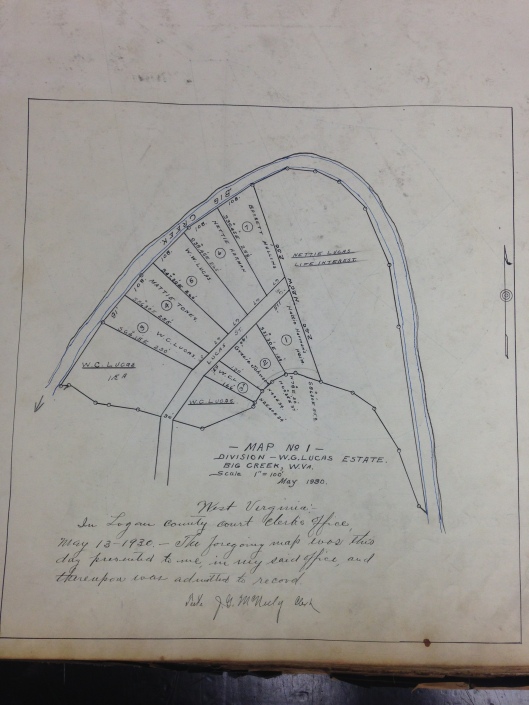
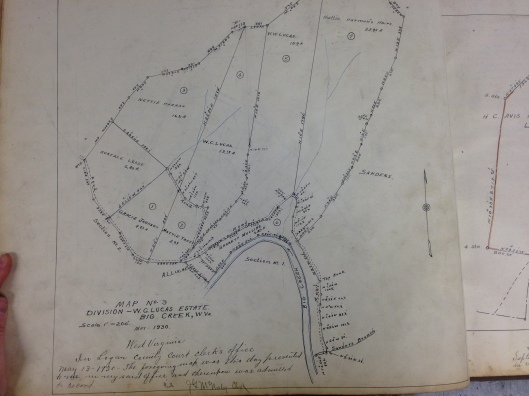
Big Creek, Logan County, WV. “Big Creek Bill” was a Confederate veteran.

IMG_5526.JPG

Big Creek, Logan County, WV.

IMG_5532.JPG

Big Creek, Logan County, WV.

Queens Ridge News 12.07.1923

02 Tuesday Jul 2019

Posted by Brandon Ray Kirk in Queens Ridge

≈ Leave a comment

Tags

Appalachia, Bisha Tomblin, Dave Vance, Dorothy Janis Tomblin, genealogy, history, Lincoln County, Logan Banner, Logan County, Preston Vernatter, Queens Ridge, Wayne County, West Virginia

A correspondent named “Sweet Sixteen” from Queens Ridge in Wayne County, West Virginia, offered the following news, which the Logan Banner printed on December 7, 1923:

Here we come with the Queen’s Ridge news.

This is pretty weather at this writing.

Mr. and Mrs. Bisha Tomblin have a fine baby girl and her name is Dorothy Janis.

Mr. and Mrs. Dave Vance are visiting their daughter this week.

Preston Vernatter and stepson were out horseback riding this afternoon.

Combinations: Anna and her glasses; Hazel and her new coat; Ruby and her wrist watch; Dorothy and her new dress; Ethel and her dancing; Ann and her scissors.

NOTE: Queens Ridge is located in Wayne County but the post office during this time served part of Lincoln and Logan counties.

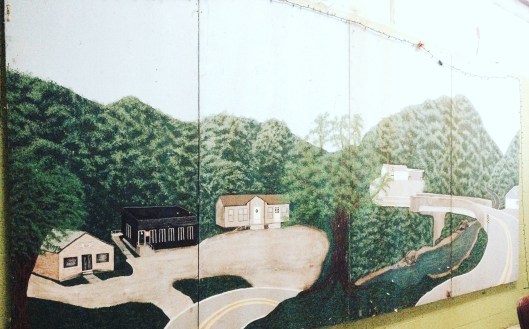
Harts Mural at Big Ugly Community Center (2019)

02 Tuesday Jul 2019

Posted by Brandon Ray Kirk in Big Ugly Creek, Harts

≈ Leave a comment

Tags

Appalachia, art, Big Ugly Community Center, Harts, history, Lincoln County, mural, Route 10, West Virginia

Harts Mural at Big Ugly CC 1.jpg

Harts, Lincoln County, WV. BUCC. 2019

Harts News 12.07.1923

02 Tuesday Jul 2019

Posted by Brandon Ray Kirk in Big Harts Creek, Harts, Logan, Pearl Adkins Diary

≈ Leave a comment

Tags

Anna Brumfield, Appalachia, Bessie Adkins, Carmus Adkins, Christmas, Cora Adkins, Curry Branch, Enos Dial, Fisher B. Adkins, Fred Adkins, genealogy, Harts, Harts School, history, Hollena Ferguson, Inez Adkins, J. Johnson, Jessie Brumfield, Lincoln County, Logan, Logan Banner, Mud Fork, Rotie Farley, Susan Virginia McEldowney, teacher, Watson Adkins, West Virginia

A correspondent named “Harts Hiccobughs” from Harts Creek in Lincoln County, West Virginia, offered the following news, which the Logan Banner printed on December 7, 1923:

___ ks and light brown curls, __amonds, teeth like pearls.

___ Dingess was calling on Miss ______ Brumfield Sunday afternoon.

__on Adkins and Miss Cora __ were shopping in Logan Saturday.

___ of Logan was the guest ___ Jessie Brumfield Sunday.

__ why all the boys have forgotten ___ Curry Branch.

Susan Virginia McEldowney __ has been visiting her grandmother, Mrs. Hollene Ferguson, __.

__ Brumfield has returned __ a visit with relatives in __.

Jessie and Anna Brumfield __ Adkins were seen out horse back riding Friday.

Fisher B. Adkins has been __ for the last two weeks.

__ and Mrs. Herbert Adkins is busy preparing for the Christmas holidays.

The school at Harts is progressing nicely with J. Johnson teacher.

Enos Dials seems to be very __ old coals have been kindled on __ Creek.

__ Rotie Farley and Carmus Adkins of Mud Fork have been visiting here recently.

Combinations: Inez going to the ___; Anna and Robert out walking; __ and her powder puff; Bessie and her bobbed hair; Cora and her curls; Herb and his bath robe; Watson and his pipe; Fred and his coal bucket; Billy and his horse; Johnny and his frock tail coat; Pearl writing letters; Tom going down the road.

NOTE: Part of this page of the newspaper is torn and some words are missing.

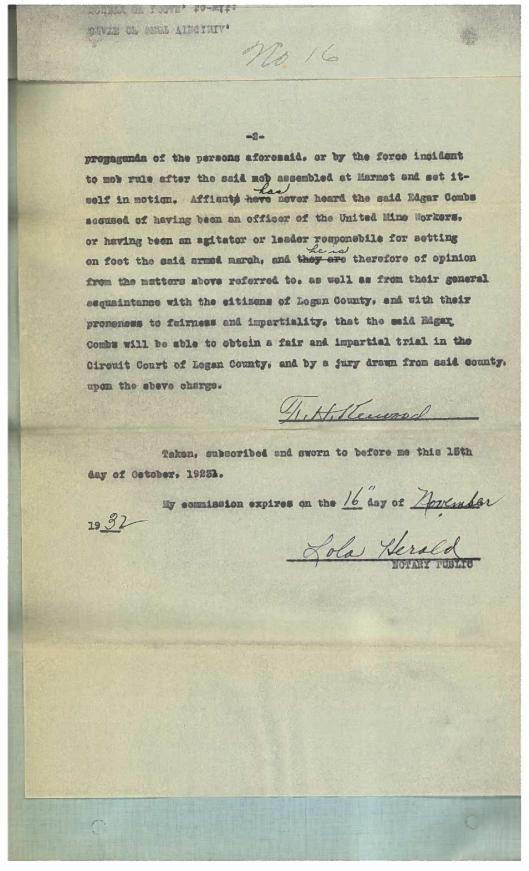
State v. Edgar Combs (1923): Statement of F.H. Kerwood, No. 16

01 Monday Jul 2019

Posted by Brandon Ray Kirk in Battle of Blair Mountain, Coal, Logan

≈ Leave a comment

Tags

Appalachia, Blair Mountain, F.H. Kerwood, history, Logan, Logan County, Lola Herald, merchant, Mine Wars, United Mine Workers of America, West Virginia

Document 16-1Document 16-2

Harts Creek News 11.30.1923

01 Monday Jul 2019

Posted by Brandon Ray Kirk in Big Harts Creek, Harts

≈ Leave a comment

Tags

Appalachia, Bill Thompson, Bob Dingess, Chapman Adkins, Charles Curry, Ed Brumfield, Garnet Brumfield, genealogy, George Adkins, history, Ira Tomblin, Josephine Robinson, Lincoln County, Logan Banner, Mattie Carter, Minerva Tomblin, Robert Robinson, Tom Brumfield, West Virginia

A correspondent named “Forget Me Not” from Harts Creek in Lincoln County, West Virginia, offered the following news, which the Logan Banner printed on November 30, 1923:

Mr. George H. Adkins is still driving Charley Curry’s mules for him.

Miss Nervie Tomblin and Bill Thompson were guests of Charles Curry’s Sunday.

Wonder why Mr. Ira Tomblin is visiting the home of Mr. Curry’s so much.

Mattie Carter and Garnet Brumfield were out looking for their boys Sunday.

Mr. Tom Brumfield and Ed Brumfield are giving out Preacher Curry’s appointment for him.

Chapman Adkins is clerking in Robert Robinson’s store.

Robert Dingess was calling on Josephine Robinson Sunday.

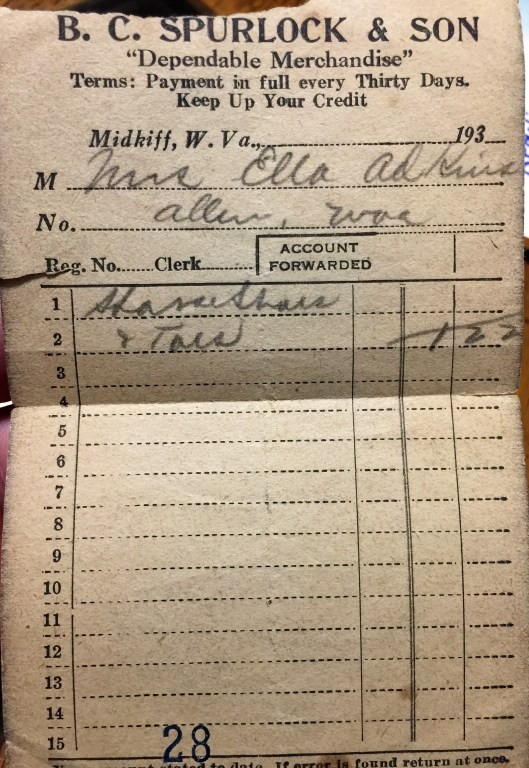
B.C. Spurlock & Son Store Receipt (193?)

29 Saturday Jun 2019

Posted by Brandon Ray Kirk in Midkiff

≈ Leave a comment

Tags

Allen, Appalachia, B.C. Spurlock & Son, Burbus Clinton Spurlock, Donna Miller, Ella Adkins, history, Lincoln County, Midkiff, West Virginia

B.C. Spurlock and Son Store Receipt 1.JPG

Courtesy of Donna (Lucas) Miller

← Older posts
Newer posts →

Feud Poll 1

If you had lived in the Harts Creek community during the 1880s, to which faction of feudists might you have given your loyalty?

Categories

  • Adkins Mill
  • African American History
  • American Revolutionary War
  • Ashland
  • Atenville
  • Banco
  • Barboursville
  • Battle of Blair Mountain
  • Beech Creek
  • Big Creek
  • Big Harts Creek
  • Big Sandy Valley
  • Big Ugly Creek
  • Boone County
  • Breeden
  • Calhoun County
  • Cemeteries
  • Chapmanville
  • Civil War
  • Clay County
  • Clothier
  • Coal
  • Cove Gap
  • Crawley Creek
  • Culture of Honor
  • Dingess
  • Dollie
  • Dunlow
  • East Lynn
  • Ed Haley
  • Eden Park
  • Enslow
  • Estep
  • Ethel
  • Ferrellsburg
  • Fourteen
  • French-Eversole Feud
  • Gilbert
  • Giles County
  • Gill
  • Green Shoal
  • Guyandotte River
  • Halcyon
  • Hamlin
  • Harts
  • Hatfield-McCoy Feud
  • Holden
  • Hungarian-American History
  • Huntington
  • Inez
  • Irish-Americans
  • Italian American History
  • Jamboree
  • Jewish History
  • John Hartford
  • Kermit
  • Kiahsville
  • Kitchen
  • Leet
  • Lincoln County Feud
  • Little Harts Creek
  • Logan
  • Man
  • Matewan
  • Meador
  • Midkiff
  • Monroe County
  • Montgomery County
  • Music
  • Native American History
  • Peach Creek
  • Pearl Adkins Diary
  • Pecks Mill
  • Peter Creek
  • Pikeville
  • Pilgrim
  • Poetry
  • Queens Ridge
  • Ranger
  • Rector
  • Roane County
  • Rowan County Feud
  • Salt Rock
  • Sand Creek
  • Shively
  • Spears
  • Sports
  • Spottswood
  • Spurlockville
  • Stiltner
  • Stone Branch
  • Tazewell County
  • Timber
  • Tom Dula
  • Toney
  • Turner-Howard Feud
  • Twelve Pole Creek
  • Uncategorized
  • Warren
  • Wayne
  • West Hamlin
  • Wewanta
  • Wharncliffe
  • Whirlwind
  • Williamson
  • Women's History
  • World War I
  • Wyoming County
  • Yantus

Feud Poll 2

Do you think Milt Haley and Green McCoy committed the ambush on Al and Hollene Brumfield in 1889?

Blogroll

  • Ancestry.com
  • Ashland (KY) Daily Independent News Article
  • Author FB page
  • Beckley (WV) Register-Herald News Article
  • Big Sandy News (KY) News Article
  • Blood in West Virginia FB
  • Blood in West Virginia order
  • Chapters TV Program
  • Facebook
  • Ghosts of Guyan
  • Herald-Dispatch News Article 1
  • Herald-Dispatch News Article 2
  • In Search of Ed Haley
  • Instagram
  • Lincoln (WV) Journal News Article
  • Lincoln (WV) Journal Thumbs Up
  • Lincoln County
  • Lincoln County Feud
  • Lincoln County Feud Lecture
  • LinkedIn
  • Logan (WV) Banner News Article
  • Lunch With Books
  • Our Overmountain Men: The Revolutionary War in Western Virginia (1775-1783)
  • Pinterest
  • Scarborough Society's Art and Lecture Series
  • Smithsonian Article
  • Spirit of Jefferson News Article
  • The Friendly Neighbor Radio Show 1
  • The Friendly Neighbor Radio Show 2
  • The Friendly Neighbor Radio Show 3
  • The Friendly Neighbor Radio Show 4
  • The New Yorker
  • The State Journal's 55 Good Things About WV
  • tumblr.
  • Twitter
  • Website
  • Weirton (WV) Daily Times Article
  • Wheeling (WV) Intelligencer News Article 1
  • Wheeling (WV) Intelligencer News Article 2
  • WOWK TV
  • Writers Can Read Open Mic Night

Feud Poll 3

Who do you think organized the ambush of Al and Hollene Brumfield in 1889?

Recent Posts

  • Logan County Jail in Logan, WV
  • Absentee Landowners of Magnolia District (1890, 1892, 1894)
  • Charles Spurlock Survey at Fourteen Mile Creek, Lincoln County, WV (1815)

Ed Haley Poll 1

What do you think caused Ed Haley to lose his sight when he was three years old?

Top Posts & Pages

  • Don Chafin's Deputies (1912-1917)
  • About
  • Early Schools of Logan County, WV (1916)
  • Clyde Dean
  • Levisa Hatfield (1927-1929)

Copyright

© Brandon Ray Kirk and brandonraykirk.wordpress.com, 1987-2023. Unauthorized use and/or duplication of this material without express and written permission from this blog’s author and/or owner is strictly prohibited. Excerpts and links may be used, provided that full and clear credit is given to Brandon Ray Kirk and brandonraykirk.wordpress.com with appropriate and specific direction to the original content.

Archives

  • February 2025
  • January 2025
  • October 2023
  • September 2023
  • December 2022
  • November 2022
  • May 2022
  • April 2022
  • February 2022
  • November 2021
  • October 2021
  • September 2021
  • June 2021
  • May 2021
  • April 2021
  • March 2021
  • February 2021
  • January 2021
  • December 2020
  • November 2020
  • October 2020
  • July 2020
  • June 2020
  • May 2020
  • April 2020
  • March 2020
  • February 2020
  • January 2020
  • December 2019
  • November 2019
  • October 2019
  • September 2019
  • August 2019
  • July 2019
  • June 2019
  • May 2019
  • April 2019
  • March 2019
  • February 2019
  • January 2019
  • December 2018
  • November 2018
  • October 2018
  • September 2018
  • August 2018
  • July 2018
  • June 2018
  • May 2018
  • April 2018
  • March 2018
  • February 2018
  • January 2018
  • December 2017
  • November 2017
  • October 2017
  • September 2017
  • August 2017
  • July 2017
  • June 2017
  • May 2017
  • April 2017
  • March 2017
  • February 2017
  • January 2017
  • December 2016
  • November 2016
  • October 2016
  • September 2016
  • August 2016
  • July 2016
  • June 2016
  • May 2016
  • April 2016
  • March 2016
  • February 2016
  • January 2016
  • December 2015
  • November 2015
  • October 2015
  • September 2015
  • August 2015
  • July 2015
  • June 2015
  • May 2015
  • April 2015
  • March 2015
  • February 2015
  • January 2015
  • December 2014
  • October 2014
  • September 2014
  • August 2014
  • July 2014
  • June 2014
  • May 2014
  • April 2014
  • March 2014
  • February 2014
  • January 2014
  • December 2013
  • November 2013
  • October 2013
  • September 2013
  • August 2013
  • July 2013
  • June 2013
  • May 2013
  • April 2013
  • March 2013
  • February 2013
  • January 2013
  • December 2012
  • November 2012

Enter your email address to follow this blog and receive notifications of new posts by email.

Join 2,927 other subscribers

Tags

Appalachia Ashland Big Creek Big Ugly Creek Blood in West Virginia Brandon Kirk Cabell County cemeteries Chapmanville Charleston civil war coal Confederate Army crime culture Ed Haley Ella Haley Ferrellsburg feud fiddler fiddling genealogy Green McCoy Guyandotte River Harts Harts Creek Hatfield-McCoy Feud history Huntington John Hartford Kentucky Lawrence Haley life Lincoln County Lincoln County Feud Logan Logan Banner Logan County Milt Haley Mingo County music Ohio photos timbering U.S. South Virginia Wayne County West Virginia Whirlwind writing

Blogs I Follow

  • OtterTales
  • Our Appalachia: A Blog Created by Students of Brandon Kirk
  • Piedmont Trails
  • Truman Capote
  • Appalachian Diaspora

BLOOD IN WEST VIRGINIA is now available for order at Amazon!

Blog at WordPress.com.

OtterTales

Writings from my travels and experiences. High and fine literature is wine, and mine is only water; but everybody likes water. Mark Twain

Our Appalachia: A Blog Created by Students of Brandon Kirk

This site is dedicated to the collection, preservation, and promotion of history and culture in Appalachia.

Piedmont Trails

Genealogy and History in North Carolina and Beyond

Truman Capote

A site about one of the most beautiful, interesting, tallented, outrageous and colorful personalities of the 20th Century

Appalachian Diaspora

  • Subscribe Subscribed
    • Brandon Ray Kirk
    • Join 789 other subscribers
    • Already have a WordPress.com account? Log in now.
    • Brandon Ray Kirk
    • Subscribe Subscribed
    • Sign up
    • Log in
    • Report this content
    • View site in Reader
    • Manage subscriptions
    • Collapse this bar
 

Loading Comments...