In Search of Ed Haley 335

Tags

, , , , , , , , , , , , , , , , , , , , , ,

Meanwhile, as Brandon flushed out more information about the 1889 feud, I was on the phone with Ed’s daughter, Mona Hager. In no time, she was singing “Old Man Duff”, one of Ed’s songs:

Old Man Duff was so doggone tough

That they called him dynamite.

On a mattress filled with broken glass

He rested well each night.

He combed his hair with a garden rake

And he ate his vittles raw.

He picked his teeth with a horseshoe nail

And he shaved his beard with a saw.

Old Man Duff was mighty tough

And rough as a man could be.

He had hair on his chest

And he wore no vest a

And he looked like a chimpanzee.

Old Man Duff had a daughter fair

But she died a poor old maid.

Lots of men woulda courted her

But they were all afraid.

Once old Duff seen a fella with her.

You could hear him rave and shout:

He’d put his hand down the poor man’s throat

And he’d turn him inside out.

Old Man Duff was mighty rough

And tough as a man could be.

He ate iron nails and the bones of whales

And he drank gasoline for tea.

Old Man Duff lived a thousand years

And he died and went below.

And when old Satan looked at him

He smiled and said, “Hello.”

Now the fire was mighty hot

When they put old Duff in there,

But he layed right down and he went to sleep

And it never singed a hair.

Old Man Duff was mighty rough

And tough as a man could be.

He had hair on his chest

And he wore no vest

And he looked like a chimpanzee.

Mona also remembered Ed singing “Man of Constant Sorrow”. She said Ed sometimes sang “little ditties” like with “Sourwood Mountain”. Ella did the same thing to “Kiss Me Quick”.

Kiss me quick, kiss me runnin’.

Kiss me quick ’cause my daddy’s comin’.

Love my wife, love my baby.

Love my biscuits sopped in gravy.

Ed never called square dances but would “blurt out some of the square dance reel” while fiddling.

I told Mona that I was still very interested in the source of Ed’s music.

“Pop was around a lot of blacks, you know, up in the coalfields up in West Virginia,” she said. “I even had a black nanny up there. She babysat me sometimes for Mom and Pop. Now that was at Manuel and Nora Martin’s house on the hill there at Aracoma [near Logan]. And Pop took me up to an old color lady’s bootleg joint one time somewhere up in West Virginia. And I know he was around a lot of blacks and I know that he learned some of the black’s music. They had a lot of blind friends that made music on the street, too, and one of them was Clayton White. He played an accordion. He walked up from 15th to 16th and back, you know.”

I asked Mona how many musicians were playing on the streets of Ashland in Ed’s time and she said, “Well, there was Pop and Mom, and there was Bill Bowler, and then there was a lady named Lula Lee. Now she was an illiterate woman and a lot of people got my mom and her mixed up. Mom was a cultured lady.”

I asked Mona if she thought her mother’s education rubbed off on Ed over the years and she said, “Oh, yeah. He only got uncultured when he was drinking. He talked well educated but of course he wasn’t. He was a very intelligent man.”

Mona seemed surprised when I told her that Ed could supposedly quote the Bible.

I asked her more about Ed’s and Ella’s relationship in later years and she said, “You know about me bringing him back from Logan back to Mom after they were divorced? Well, I was up there and I persuaded Pop to come home with me and I brought Pop home and he had one of those long change purses that snapped together and he had that in his pocket. And when we got home, he sit down and he was talking to Mom and he said, ‘Ella, I’ve got this plumb full of half-dollars and if you’ll let me sit by your fire this winter, I’ll give them all to you.’ I’m glad I took him home. That was when we lived on Greenup. He stayed with her until he died. Eventually Mom stayed with Lawrence and Patricia. She didn’t do any good after Pop died. She lost her friends. She didn’t have anybody to talk to.”

So after their divorce, they had a good relationship?

“They had a better relationship than they did before the divorce,” Mona said.

Interview with Ward Adkins (1997)

Tags

, , , , , , , , , , , , , , , , , , , , , ,

Not long after talking with Mr. Dingess, Brandon went to see his good friend Ward Adkins, an elderly resident of nearby Fourteen Mile Creek. Ward said his grandfather Albert Neace used to help Al Brumfield make whisky, barrel it, and ship it downriver on flatboats. Making whiskey was Brumfield’s major source of income.

“You know dern well he didn’t make his fortune in a little old store up there at that day and time,” Ward said. “About all he sold was soap, salt, and soda — a little sugar.”

When Albert quit the business, Brumfield said, “You won’t tell nothing will you, Albert?” to which he replied, “No, you know better than that.”

Albert knew it wasn’t smart to cross Al because “the people who worked around” him “had a way of dealing” with his enemies.

“When they took a notion to kill somebody, they’d go out the day before and dig the grave,” Ward said. “Then they’d play up to whoever it was they aimed to kill…talk them into going squirrel hunting with them. They’d squirrel hunt around close to that grave. Kill them, roll them in it, and cover it up.”

Ward’s step-grandfather, Will Headley, had told him about witnessing Milt’s and Green’s murder.

“They stood them up beside of a house and shot them in public because they wanted to teach people a lesson,” Ward said.

Will’s uncle Burl Farley went with the Brumfields to fetch them in Kentucky. Ward knew a lot about Burl.

“He started out in timbering,” Ward said. “He worked for Cole & Crane Timber Company up on Browns Fork of Pigeon Creek. Uncle Burl was pretty well to do. He was dangerous mean. He was an Atheist. He felt you just did what you wanted to do on this earth and then died and that was the end of it so he didn’t have nothing to fear. Of course, I liked the old man. If he liked you, he was good to you. He ruled over his domain down there. What he said went. It was just strictly law. There wasn’t no bucking him. There wasn’t no law to fool with Uncle Burl.”

Ferrellsburg Fancies 03.21.1918

Tags

, , , , , , , , , , , , , , , , , , , ,

An unnamed local correspondent from Ferrellsburg in Lincoln County, West Virginia, offered the following items, which the Lincoln Democrat printed on Thursday, March 21, 1918:

Born — To Mr. and Mrs. John Lucas a fine baby boy.

Private John Lucas of Camp Lee is here to spend a few days with us again.

Rev. I.M. Nelson is improving.

C.S. McCoy section foreman here will soon leave us to take charge of section at Ranger, leaving D. Mullins to take charge of the work here.

B.R. Bledsoe of Big Creek was here Sunday.

I.J. Adkins and General Adkins were visitors at Hamlin during court.

Born — To Mr. and Mrs. Daniel Nelson a fine baby girl.

Cain and Mariah (Vance) Adkins

Tags

, , , , , , , , , , , , , , , , ,

Cain and Mariah (Vance) Adkins, residents of West Fork of Harts Creek, Lincoln County, WV

Cain and Mariah (Vance) Adkins, residents of West Fork of Harts Creek, Lincoln County, WV. Cain was a United Baptist preacher, teacher, country doctor, justice of the peace…and participant in the Lincoln County Feud.

Interview with John Dingess 2 (1996)

Tags

, , , , , , , , , , , , , , , , , , , , , , , , , , , , , , , , , , , , , , , , , , , , , , , , , , ,

Al rounded up a gang of men to accompany him on his ride to fetch the prisoners in Williamson. Albert and Charlie Dingess were ringleaders of the posse, which included “Short Harve” Dingess, Hugh Dingess, John Dingess, Burl Farley, French Bryant, John Brumfield, and Charley Brumfield. Perhaps the most notorious member of the gang was French Bryant – “a bad man” who “did a lot of dirty work for the Dingesses.” On the way back from Kentucky, he tied Milt and Green by the arms and “drove them like a pair of mules on a plow line.”

“French Bryant run and drove them like a pair of horses ahead of these guys on the horses,” John said. “That’s quite a ways to let them walk. Old French, he married a Dingess. I knew old French Bryant. When he died, he was a long time dying and they said that he hollered for two or three days, ‘Get the ropes off me!’ I guess that come back to him.”

When the gang reached the headwaters of Trace Fork — what John called “Adams territory” — they sent a rider out ahead in the darkness to make sure it was safe to travel through that vicinity.

Waiting on the Brumfield posse was a mob of about 100 men hiding behind trees at Sycamore Bottom, just below the mouth of Trace Fork. This mob was led by Ben and Anthony Adams and was primarily made up of family members or people who worked timber for the Adamses, like Tom Maggard (“Ben’s right hand man”).

As the Brumfield rider approached their location, they began to click their Winchester rifles — making them “crack like firewood.” Hearing this, the rider turned back up Trace Fork, where he met the Brumfields and Dingesses at Boardtree Bottom and warned them about the danger at the mouth of Trace. They detoured safely up Buck Fork, then stopped at Hugh Dingess’ on Smokehouse where they remained for two or three days, not really sure of what to do with their prisoners. They made a “fortress” at Hugh’s by gathering about 100 men around them, fully aware that Ben Adams might make another effort to recapture Milt and Green.

While at Hugh’s, they got drunk on some of the red whiskey and apple brandy made at nearby Henderson’s. They also held a “trial” to see if Milt and Green would admit their guilt. They took one of the men outside and made him listen through the cracks between the logs of the house as his partner confessed on the inside. About then, the guy outside got loose and ran toward Bill’s Branch but was grabbed by “Short Harve” Dingess as he tried to scurry over a fence.

After this confession, the Brumfields and Dingesses considered killing Milt and Green on the spot but “got scared the Adamses was gonna take them” and headed towards Green Shoal.

John didn’t know why they chose George Fry’s home but figured Mr. Fry was a trusted acquaintance. He said they “punished” them “quite a bit there” but also got one to play a fiddle.

“These people that killed them, they made them play their last tune,” John said. “One of them would play and one guy, I think, he never would play for them.  I forgot which one, but they never could get one guy to do much. The other one’d do whatever they’d tell him to do. That’s just before they started shooting them. The tune that they played was ‘Hell Up Coal Hollow’. I don’t know what that tune is.”

After that, the mob “shot their brains out” and left them in the yard where the “chickens ate their brains.”

A neighbor took their bodies through Low Gap and buried them on West Fork.

John said there was a trial over Haley and McCoy’s murders, something we’d never heard before. Supposedly, about one hundred of the Brumfields and their friends rode horses to Hamlin and strutted into the courtroom where they sat down with guns on their laps. The judge threw the case out immediately because he knew they were fully prepared to “shoot up the place.”

This “quick trial,” of course, didn’t resolve the feud. Back on Harts Creek, Ben Adams often had to hide in the woods from the Dingesses. One time, Hugh and Charlie Dingess put kerosene-dowsed cornstalks on his porch and set them on fire, hoping to drive him out of his house where they could shoot him. When they realized he wasn’t home, they extinguished the fire because they didn’t want to harm his wife and children. Mrs. Adams didn’t live long after the feud. Ben eventually moved to Trace Fork where he lived the rest of his life. Charlie never spoke to him again.

John also said there seemed to have been a “curse” on the men who participated in the killing of Haley and McCoy. He said Albert Dingess’ “tongue dropped out,” Al Brumfield “was blind for years before he died,” and Charlie Dingess “died of lung cancer.” We had heard similar tales from Johnny Farley and Billy Adkins, who said mob members Burl Farley and Fed Adkins both had their faces eaten away by cancer. Vilas Adams told us about one of the vigilantes drowning (Will Adkins), while we also knew about the murders of Paris Brumfield, John Brumfield, Charley Brumfield, and Bill Brumfield.

Just before hanging up with John, Brandon asked if he remembered Ed Haley. John said he used to see him during his younger days on Harts Creek.

“When he was a baby, old Milt wanted to make him tough and he’d take him every morning to a cold spring and bath him,” he said. “I guess he got a cold and couldn’t open his eyes. Something grew over his eyes so Milt took a razor and cut it off. Milt said that he could take that off so he got to fooling with it with a razor and put him blind.”

John said Ed made peace with a lot of the men who’d participated in his father’s killing and was particularly good friends with Cecil Brumfield, a grandson of Paris.

Ferrellsburg Items 02.14.1918

Tags

, , , , , , , , , , , , , , , , , , , , , , , , , , , ,

“Observer,” a local correspondent from Ferrellsburg in Lincoln County, West Virginia, offered the following items, which the Lincoln Republican printed on Thursday, February 14, 1918:

The infant child of Henry Bryant died suddenly Monday.

Miss Ruby Adkins gave a Birthday dinner Saturday. Those present were: Miss Dollie Toney and her school enmasse, Mrs. Arena Ferrell, Miss Ethel Daves, Miss Roxie Adkins, Miss Nettie Bryant, Messrs. Homer Hager, and Musco Dingess. The school children being trained by their teacher, who is especially fitted for training little ones, rendered a very interesting and entertaining program.

Miss Iva Adkins has been real sick this week.

It is reported that “Coon” Tomblin, President of the Local Bootleggers Union has been arrested and placed in jail at Logan. This is quite a shock to the members of the Union, being the first time they have been interrupted for two years.

Supt. F.B. Adkins returned from Hamlin Saturday and is husking corn.

Aunt Sinda Adkins has been seriously ill the past week.

Albert Messer and family, of Buffalo, are visiting relatives at this place.

Jake Mathes, of Huntington, who is sawing for Philip Hager, returned Monday and is making the mill hum.

Quite a lot of the boys are preparing to leave for the training camp the 27th.

Interview with John Dingess 1 (1996)

Tags

, , , , , , , , , , , , , , , , , , , , , , , , , , ,

That winter, Brandon made contact by telephone with John Dingess, a Connecticut resident who proved to be one of our best sources on the 1889 feud. John was born on the Smokehouse Fork of Harts Creek in 1918. A grandson to Henderson Dingess, he moved away from West Virginia after serving his country in World War II.

John said Henderson Dingess met his wife Sallie while boarding with her father Joseph Adams on Harts Creek. Henderson didn’t care much for his in-laws (he said they were “hoggish”), particularly his brother-in-law Ben Adams. Ben lived over the mountain from Henderson on main Harts Creek where he operated a small store. He and Henderson feuded “for years.” At some point, Henderson’s oldest son Charlie Dingess got into a racket with Ben over a yoke of cattle and “almost killed him in a fight” at Cole Branch.

The feud between Henderson’s family and Ben Adams reached a new level of tension when Ben refused to pay the sixteen-cents-per-log fee required by Al Brumfield to pass logs through his boom at the mouth of Harts Creek. Brumfield “was more of a businessman” than a feudist but “got into it” with Adams at his saloon near the boom. In the scrape, Ben pulled out his pistol and shot Al, who was spared from harm only because of a button on his clothes. Al subsequently fetched a gun and chased Ben up the creek — a very humiliating thing as there was probably a whole gang of people to witness his flight.

Ben soon gathered up a party of men with plans to force his timber out of Harts Creek under the cover of darkness. Before he could put his plan into action, though, the Dingesses caught wind of it and warned the Brumfields who promptly armed themselves with .38 Winchesters and .44 Winchesters and gathered in ambush on the hill at Panther Branch near the mouth of Harts.

Ben, anticipating trouble, put his wife, the former Victoria Dingess, at the front of his gang in the hopes that it might discourage her cousins from shooting at him as they came down the creek. It was a bad idea: the Brumfields and Dingesses shot “her dress full of holes.”

This was particularly horrible since she was probably pregnant at the time.

The next day, she came to her uncle Henderson’s to show him what his boys had done to her dress but he never punished them.

At that point, Ben was probably hell-bent on revenge and arranged for Milt Haley and Green McCoy, who John called two “professional gunmen,” to “bump Al off.”

John was sure of Ben’s role in the events of 1889.

“Ben Adams, my father’s uncle, he gave them a .38 Winchester apiece and a side of bacon to kill Al Brumfield,” he said.

Milt and Green caught Al one Sunday as he made his way back down Harts Creek after visiting with Henderson Dingess. He rode alone, while Hollena rode with her younger brother, Dave Dingess. As they neared Thompson Branch, Milt and Green fired down the hill at them from their position at the “Hot Rock.” Al was shot in the elbow, which knocked him from his horse and broke his arm, while Hollena was shot in the face. Al somehow managed to make it over a mountain back to Henderson Dingess’, while Hollena was left to crawl half a mile down to Chapman Dingess’ at Thompson Branch for help.

Upon learning of the ambush, Harvey Dingess (John’s father) hitched up a sled to one of his father’s yokes of cattle and fetched Hollena, who remained at Henderson’s until she recovered.

Immediately after the shootings, there was a lot of gossip about who’d been behind the whole affair. John said there was some talk that Long John Adams had been involved “but the Dingess and Brumfield people never believed it.” Everyone seemed to focus in on Milt and Green, who’d recently disappeared into Kentucky (where McCoy was from).

“They used to, if you committed a crime in West Virginia, would run away to Kentucky,” John said. “In the hill part of Kentucky there on the Tug River.”

Brumfield put up a $500 reward and it wasn’t long until a man rode up to Henderson Dingess’ claiming to have caught Milt and Green in Kentucky. He was sent to Brumfield’s home near the mouth of Harts where he found Al out back shoeing an ox steed. They talked for a while, then Brumfield told him, “You put them across the Tug River and when I identify them you’ll get your money.”

In Search of Ed Haley 334

Tags

, , , , , , , , , , , , , , , , , , , , , , ,

Around that time, as Billy and Brandon wandered in the woods of eastern Kentucky, I called Jimmy Triplett, a fiddler and protégé of Doc White in West Virginia. Doc, in addition to being Ed’s friend, was a jack of all trades — fiddler, doctor, dentist… I’d recently heard that he was a photographer and wondered if maybe he had pictures of Ed or Laury Hicks. Jimmy wasn’t really sure.

“It was way back when he was a youth that he took pictures,” he said. “I guess he was considered an amateur, but he made a lot of photographs used for postcards.”

I asked Jimmy if Doc ever talked about Ed and he said, “Yeah, he talked about how good he was and everything. He said that he was one of the best that he ever heard.”

What kind of tunes did Doc play?

“The main one Doc plays is ‘Pigeon on the Gate’ — he got that from Ed Haley,” Jimmy said. “I think it would be in standard tuning — it’s a D tune. I don’t know that there’s that many other tunes that he got off of Ed Haley that he played, but he talked about him a whole bunch and then described seeing him and his wife play.”

Jimmy played a tape over the telephone of Doc talking and playing “Pigeon on the Gate”.

“Here’s one they call the ‘Pigeon on the Gate’,” Doc said. “Ed Haley, a blind man, played that tune from Kentucky. Best fiddler that ever I heard draw a bow. His wife was blind and she played the mandolin. They used to come through the country and stop at our houses and stay for days and play with us. You ought to’ve heard him play the fiddle. He’d make them fellas over there sick.”

Jimmy referred me to John Morris, an Ivydale-area fiddler who’d known Doc and even learned “Pigeon on the Gate” from him. John was too young to remember Ed personally (he was fifty-something) but had heard a lot of stories.

“I growed up hearing about Ed Haley from my dad,” John said. “I heard a lot of other stories about him later. He used to come here and stay at my grandparents’ house some. Their names were Amos and Ocie Morris. They just lived about a mile and a half from the train station and it was on the way to Calhoun County and they were from Calhoun County. He’d ride the train to Ivydale. If it was the evening train, usually a lot of people from Calhoun County — the next county back — stayed at my grandparents’ house. He’d stay at my grandpaw and grandmaw’s up here and then go on the next day. He usually, I think, visited with Laury Hicks mostly.”

What about Laury?

“Laury Hicks was evidently a riverman,” John said. “I believe it was Aunt Minnie Moss that said he could take a hog’s head of salt or something under each arm and he poled boats up and down the Elk River and hauled supplies when they used them flatboats. I’ve heard stories of his strength — what a strong and robust kind of a man he was. My dad said that when Laury Hicks died, Ed Haley wasn’t here and the next time he come through they took a chair and set it out at Laury Hicks’ grave and Ed Haley sat out on Laury Hicks’ grave and fiddled for about four hours.”

John said stories abounded about Ed among the people of Calhoun County.

“They told that they was having church over there someplace one night in an old school building or something on top of the hill between Walker and Stinson,” he said. “Ed happened to be in the country and they wanted him to play some hymns. He got started playing and he got off of playing hymns and they wound up breaking up church and having a dance. And they was about to take him up over it — about to get in trouble with the law over it — for breaking up church.”

I asked John if he thought that was a true story and he said, “Well, I’ve heard that. I know Ed cussed all the time. He was bad to cuss and swear. I heard that my Grandmaw Morris about put him away from the table for swearing at the table. Dad said he swore continuously.”

It was coincidental that John would mention Ed’s profanity. A few days later, Brandon met a niece to Johnny Hager at a genealogical meeting and she said Johnny quit traveling with Ed because he used foul language and because he had another woman in Calhoun County. Supposedly, when this woman died Ed played the fiddle at her grave all night. This “other woman” story may have had some merit: Wilson Douglas told me that Ed had an illegitimate daughter in that country.

1st Annual Ed Haley Fiddle Contest

Tags

, , , , , , , , , , , , , , , , , ,

Ed Haley Contest 1

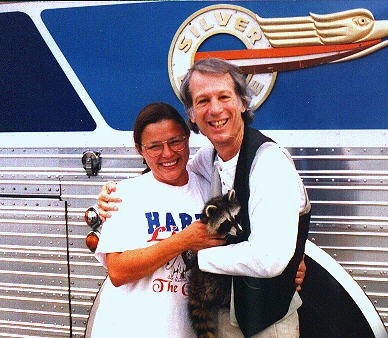
(L-R) Peter Even, Mike Compton, Brandon Kirk, J.P. Fraley, Nancy McClellan, Paul David Smith, and John Hartford.

Chasing John Runyon (1996)

Tags

, , , , , , , , , , , , , , , , , , , , , , , , , , , , , , , , , , , ,

A month or so after “striking out” on the Ed Haley house, Brandon and Billy drove to Inez, Kentucky, and searched for more information about John Runyon. Venturing north of the county seat, they met Leonard Porter, who lived in a little settlement called Tomahawk. Porter remembered Mrs. Runyon staying with Mary Fields in a small house at the mouth of nearby Hall Branch and said she was likely buried in the Fields family cemetery on a point at nearby Hall Branch Road. Billy and Brandon headed up there, where they found the grave of Bill Fields (1882-1948) and Mary Fields (1888-1985), but none of John Runyon’s family. Just down the hill from the cemetery (presently a trailer court) was the old homestead of Mr. and Mrs. Fields. At one time, they later discovered, the Fieldses ran a store beside of their home. Across the road was the location of the former Mary United Baptist Church — named for Mary Runyon or Mary Fields – now converted into a house. As they stood on the hill, Billy reminded Brandon that Bill Duty’s mother-in-law was a Fields prior to her marriage.

They next tried to find the location of John Runyon’s homeplace. According to the Williamson family history, Runyon lived at the “old Stidham post office,” which they figured was located on Rockhouse Fork. Unfortunately, they found no sign of “Stidham” up the many branches of Rockhouse. There were no mailboxes labeled “RUNYON” or any signs to help them along. Many of the names of local hollows had changed since the time of the old deeds.

Feeling a little desperate, they pulled into a driveway with a mailbox labeled “HINKLE” and spoke with a very nice middle-aged man who told them the exact location of the old Stidham Post Office — actually, all three of them. The first location ran by Joe Fannin was situated at the mouth of Spence Branch near Milo. Around 1935, the office was relocated to a site on what is now called Hinkle Valley Road, just across the creek from a sign reading “Left Fork.” The final Stidham Post Office was in what is today James Webb’s Music Store. Upon viewing the sites, Billy deduced that the old Runyon homeplace had been near the second post office.

While in that vicinity, they talked with an elderly man named Walt Mollett who confirmed that John Runyon had been a local resident. He said Runyon was probably buried down the road in a cemetery on Graveyard Point at Stidham, basically the junction of Route 1884 and Route 40.

A few minutes later they were at the cemetery, parking beside the road in a treacherous curve and tromping through a forest of damp growth. At the center of the cemetery was a single, ancient pine tree. Near the pine, Brandon spotted the grave of Runyon’s daughter, Wealthy Fry. Just below her was Aquillia Porter. And below her was a grave with a new tombstone written as “Mary M. Runyons” and dated “January 28, 1861-January 29, 1958.” Beside of Wealthy Fry’s final resting place was an older stone originally created for “Mary Runyon” dated “January 28, 1861-January 29, 1956.” There were plenty of Williamsons in the cemetery — all relation to Mrs. Runyon — including Sam Porter’s second wife — but absolutely no sign of John Runyon’s grave.

Jim Webb, a gentle middle-aged musician and proprietor of Webb’s Music Store, told Brandon and Billy that someone had wrecked in the cemetery a few years earlier and destroyed many of the tombstones. Equally tragic, the wrecker that removed the vehicle from the cemetery had caused more damage to the stones. The community had organized a fund to restore the graves, Webb said, but it was little consolation. Brandon theorized that John was buried beside of Wealthy — that someone had used Mary’s old tombstone to “sort of” mark the spot. He didn’t rule out, though, that Runyon had been buried with his parents on nearby Nat’s Creek in Lawrence County. (The Graveyard Point cemetery was more oriented toward his wife’s family, the Williamsons.) A quick drive to Nat’s Creek, including a tour of the “town” of Peach Orchard (a virtually abandoned coal town once prominent in business affairs and the site of a General Garfield Civil War story), failed to produce any signs of a Runyon cemetery, although it did offer some of the most serene, peaceful, spooky and haunting countryside found in the locale.

Brandon felt a real frustration in not being able to positively find Runyon’s grave and thus achieve some sense of closure on that facet of the story. It was as if he and Billy, whose ancestors had supposedly spent years looking for Runyon, had also been evaded by ole John — even in his death.

Ken Sullivan endorses “Blood in West Virginia”

Tags

, , , , , , , , , , , , , , , , ,

I proudly announce Ken Sullivan’s endorsement of my book, Blood in West Virginia: Brumfield v. McCoy. Mr. Sullivan, executive director of the West Virginia Humanities Council, ranks as one of Appalachia’s most distinguished and recognized editors. Best known for his promotion and editorship of the West Virginia Encyclopedia (2006), which has sold more than 17,000 copies, Mr. Sullivan is also the former editor of West Virginia’s premier state magazine, Goldenseal. Educated in history at the University of Virginia and University of Rochester, with a PhD from the University of Pittsburgh, he has consistently offered top-notch work on a variety of Appalachian subjects. It was during Mr. Sullivan’s tenure at Goldenseal that I first read a contemporary account of the Lincoln County Feud. Receiving praise from such an outstanding and accomplished editor as Ken Sullivan means a great deal to me.

Here is Mr. Sullivan’s endorsement of Blood in West Virginia:

“This book brings a deadly story to life: As the Hatfield-McCoy Feud was finally coming to a close in the Tug Valley of West Virginia and Kentucky, another bloody vendetta was under way in nearby Lincoln County, West Virginia. Here it was Brumfields versus McCoys — and Haleys and Runyons and Adkinses and others — with results that were equally fatal. Author Brandon Kirk has done remarkable work in untangling the complex web of kinship connections linking both friends and foes, while detailing the social and economic strains of changing times in the mountains. The story he documents in these pages had lasting implications for the families and individuals involved — and, curiously, for the folk music of the region.”

In Search of Ed Haley 333

Tags

, , , , , , , , , , , , ,

That fall, Brandon and Billy drove to Trace Fork to inspect the “Ed Haley home” — or at least what we wanted to be the Ed Haley home. It was, of course, most likely the Ewell Mullins home since Mullins bought Ed’s land in 1911 and reportedly built a new house there. Billy and Brandon spoke with Von Tomblin, Ewell’s daughter who lived next to the old home. Von said she was born in the back part of the home in 1935. As far as she knew, the front part of the house was torn down years ago, but not the back. Upon inspection, the back portion of the house did appear older than the front.

Von recommended that Billy and Brandon talk to Cas Baisden about the house, since he helped tear some of it down.

They found Cas down the creek.

Baisden said he helped push Ewell’s store against the front of the house when he was a boy. Later, they tore the entire home down, then built an almost-exact replica on the same spot.

Before Brandon and Billy left, Cas told them that Ewell Mullins had three stores in his life. The first one was built when Cas was a small boy near Ewell’s home. The second one was built around 1940 near the original one. The third one was built at the mouth of Ticky George Hollow just prior to Ewell’s passing.

Cas also remembered Ed Haley and his family well. He said Ed had the meanest boys he’d ever seen and probably drank himself to death.

Later that night, Billy and Brandon visited Pete and Gaie Adams near the mouth of Trace Fork. Gaie, who is a niece to Bob Dingess, had a lot of old photographs and said she remembered Ed and Ella spending weekends with her grandma, Alice Dingess. There was a little more confusion about the Ed Haley place: Gaie thought Ewell’s house had been completely torn down, while her husband said the back part was original. Oh boy.

Interview with Nellie Thompson of Wayne, WV (1996)

Tags

, , , , , , , , , , , , , , , , , , , , , , , , , , , , , , ,

A few weeks later, Brandon called Nellie Thompson in Wayne, West Virginia. Nellie reportedly had the picture of Milt Haley and Green McCoy.

“I don’t know if I have anything like that or not,” Nellie said, “but I do have an old letter from Green McCoy.”

What?

Almost hyperventilating, he asked her to read it over the telephone.

Nellie fetched it from somewhere in the house, said it was dated May 19, 1889, then read it to him and said he was welcome to see it.

The next day, she called Brandon back and said, “I think I’ve found that picture you were looking for. It’s a little tin picture with two men in it.”

Oh god.

A few days later, Brandon drove to see Nellie about the picture and letter. Before dropping in on her, he spent a little time at the local library where he located a story about Spicie McCoy.

“As I promised last week, today we will explore the life of a lady who claimed to have a cure for diphtheria,” the story, printed in the Wayne County News (1994), began. “Spicie (Adkins) McCoy Fry was so short that if you stretched out your arm she could have walked under it. Anyone who lived in the East Lynn area knew who Spicie Fry was because she had probably been in almost every church around to sing at a revival meeting, something she loved to do. Spicie was well educated. She saw that her children went to school. Once out of grade school, Spicie’s sons took advantage of correspondence courses in music, art, and any other subject they could get thru the mail order catalog. Spicie’s son Monroe Taylor Fry was a self-taught musician.”

After a short time, Brandon drove to Nellie’s home, where she produced a small tin picture of two men sitting together. One of the men was obviously Green McCoy based on the picture we had already seen of him. The other fellow, then, was Milt.

As Brandon stared at the tintype, Nellie handed him Green’s letter. It was penned in a surprisingly nice handwriting, addressed to his brother Harrison, and was apparently never mailed. At the time of his writing, it was spring and McCoy had just moved back to Harts — probably after a short stay with his family or in-laws in Wayne County. He may’ve been there with his older brother, John, who’d married a girl almost half his age from Wayne County earlier in February.

Dear Brother. after a long delay of time I take this opertunity of droping you a few lines to let you know that I am well hoping when these lines reaches you they may find you all the same. Harrison you must excuse me for not writing sooner. the cause of me not writing is this[:] the post master here is very careless. they let people brake open the letters and read them so I will write this time to let you know where I am and where Lynza is. I have moved back to the west fork of Harts Creek and Lynza is married and living in wayne co yet on beach fork. everybody is done planting corn very near in this country. every thing looks lively in this part. tell Father and mother that I[‘m] coming out this fall after crops are laid by if I live and Lynza will come with me. tell all howdy for me. you may look for us boath. if death nor sickness don’t tak[e] place we will come. Harrison I would rather you would not write anymore this summer. people brakes open the letters and reads them so I will not write a long letter. Brumfield and me lives in 2 miles of each other and has had no more trubble but every body says that he will kill me if I don’t kill him. I look to have trouble with him so I will close this time.

On the back of the letter was written the following: “My wife sends her best respects to you all and says she would like to see you all. my boy is beginning to walk. he is a spoiled boy to[o].”

Clutching carefully onto the tintype and letter, Brandon asked Nellie what she’d heard about Milt and Green’s death. She didn’t really know much, but her brother Goble Richardson said he’d always heard that pack-peddlers who boarded with Paris Brumfield never left his home alive. These men were supposedly killed, tied to rocks, and thrown to the bottom of the Guyan River where the fish ate their rotting corpses. Soon after the “disappearance” of these pack-peddlers, Paris would be seen riding the man’s horse, while his children would be playing with his merchandise.

When Brandon arrived home he studied over Green McCoy’s letter — all the cursive strokes, the occasional misspellings, trying to extract something from it beyond what it plainly read.

Strangely, the letter didn’t reveal to which Brumfield — Al or Paris — Green referred when he wrote, “every body says that he will kill me if I don’t kill him.” It seems likely, though, based on what Daisy Ross had said, that Green referenced Paris.

Still, it was Al Brumfield who was ambushed only three months later.

What started their trouble?

And who was the careless postmaster who allowed people to “brake open the letters and read them?”

At the time of the Haley-McCoy trouble, Harts had two post offices: Harts and Warren. The postmaster at Harts — where McCoy likely received his mail — was Ross Fowler, son to the Bill Fowler who was eventually driven away from Harts by the Brumfields. Ross, though, was close with the Brumfields and even ferried the 1889 posse across the river to Green Shoal with Milt and Green as prisoners (according to Bob Dingess) in October of 1889. A little later, he worked in Al Brumfield’s store. The postmaster at Warren was Andrew D. Robinson, a former justice of the peace and brother-in-law to Ben Adams and Sallie Dingess. Robinson seems to have been a man of good credit who stayed neutral in the trouble.