• About

Brandon Ray Kirk

~ This site is dedicated to the collection, preservation, and promotion of history and culture in my section of Appalachia.

Brandon Ray Kirk

Tag Archives: Ohio

Lincoln County, WV: After Oil and Gas (1922)

23 Sunday Dec 2018

Posted by Brandon Ray Kirk in Hamlin

≈ 1 Comment

Tags

Appalachia, board of education, Carroll High School, cattle, Columbus, dairy, Edna Hager, education, fruit, gas, Hamlin, history, Homer Stiles, Hugh Hainor, Ida Hager, Kenova, Lincoln County, Lincoln Republican, Ohio, oil, orchards, sheep, teachers, West Virginia

From the Lincoln Republican of Hamlin, WV, comes this submission by three Carroll High School students about what Lincoln County might do when oil and gas is exhausted in the future.

AFTER OIL AND GAS, THEN WHAT?

If oil and gas were to become exhausted in Lincoln county what suggestions have you along the line of agriculture for keeping up and increasing the wealth of the county and maintaining the population of Hamlin?

Three Carroll High School pupils in a recent examination in Agriculture gave the following answers:

If oil and gas were to become exhausted in Lincoln county, and it is supposed that it will, the people could make just as much money at other things if they would only think so. For instance, Lincoln county has been declared by the best educated men in the State to be the best fruit growing county in West Virginia. The people of Lincoln county can make as much money growing fruit as the people of Ohio, and many a farmer in Ohio has grown rich just by growing fruit. I do not mean out close to Columbus, but down near Kenova, in the hilly section. These hills of Lincoln county can be cleared and the men who are now making $2500 a year working in the oil and gas business can make that much and more growing fruit. Of course he has to go about it in the right manner. If they do it as it should be done they would be busy every day in the year.

Dairying is another thing that has been discussed by educated men for Lincoln county. They say now that we are getting the hard road we can take all our milk and butter to Huntington and receive good prices for it. Improved cattle can be turned out on these hills and if cared for in the proper way a man can make as much money working at it as he can working in the oil and gas business.

IDA HAGER.

If oil and gas were to become exhausted in Lincoln county, I think dairying would help increase the wealth of the county and also help maintain the population of Hamlin. Dairying would pay in this county because so many people do not own cows and would buy all their milk and butter from the dairy. The cows could be pastured in the summer, and this would cause the people to improve their farms; and again, we are getting the hard road, and the dairy products could very easily be taken to market, if the dairy man could not sell all his products at home.

Fruit raising would also help Lincoln county. These hill-sides could be converted into profitable and beautiful fruit farms. I don’t think another town in the U.S. of its size uses so much fruit as Hamlin, and all this fruit must be shipped in from other places when it could be raised very easily at home. The people would improve their farms, and the washed and gullied hills would be made of some use, whereas they are of none. The only thing needed to make both dairying and fruit raising profitable is some one to start and boost the business.

EDNA HAGER.

If oil and gas were to become exhausted in Lincoln county, I would suggest agriculture on a scientific basis to keep the population and increase the wealth. If I see right, Lincoln county has some of the best land for orchards in the eastern part of the United States. What cannot be used for orchards can be used for sheep. With the proper care, orchards of great value and producing ability can soon be started in Lincoln county. Most of the soil, or sub soil, is clay and usually is deep and well watered. The change in temperature is usually gradual and not much risk or danger would be run in loosing from frosts or freezing. Again, we can not find a better sheep raising county in the east than Lincoln county. Sheep would surely prosper in Lincoln county. The land is somewhat run down and this would soon build it back again and restore Lincoln county’s virgin soils. This is the only way I can possibly see to keep Lincoln on her feet.

HUGH HAINOR

Perhaps it is well that some people are thinking along this line. It might be dded also that one way of keeping up the population and welfare of the county is to build up at the County seat the best school possible. In doing this everyone can help. We should have a large number of county teachers in the High School for the spring months. Everyone should be interested in livening teachers up to this opportunity of better preparation. We shall be in the new building then and the new building is fine. It might be of interest to note in closing that the Board of Education and the faculty are considering the establishment of a Five Week’s Summer Training School for teachers, and are discussing the matter with State authorities and with the County Superintendent.

HOMER STILES,

Prin. Carroll High School

Source: Lincoln Republican (Hamlin, WV), 02 February 1922.

Dr. J.S. Carter (1929)

27 Thursday Sep 2018

Posted by Brandon Ray Kirk in African American History, World War I

≈ Leave a comment

Tags

African-Americans, Alpha Phi, Appalachia, Athens, Dental College, dentist, genealogy, history, Howard University, Logan Banner, Logan County, McDowell Dental Clinic, Ohio, Ohio University, University of Pittsburgh, West Virginia, World War I

In April of 1929, the Logan Banner profiled numerous prominent African-American residents of Logan County, West Virginia.

Notable Blacks of Logan County LB 04.16.1929 5

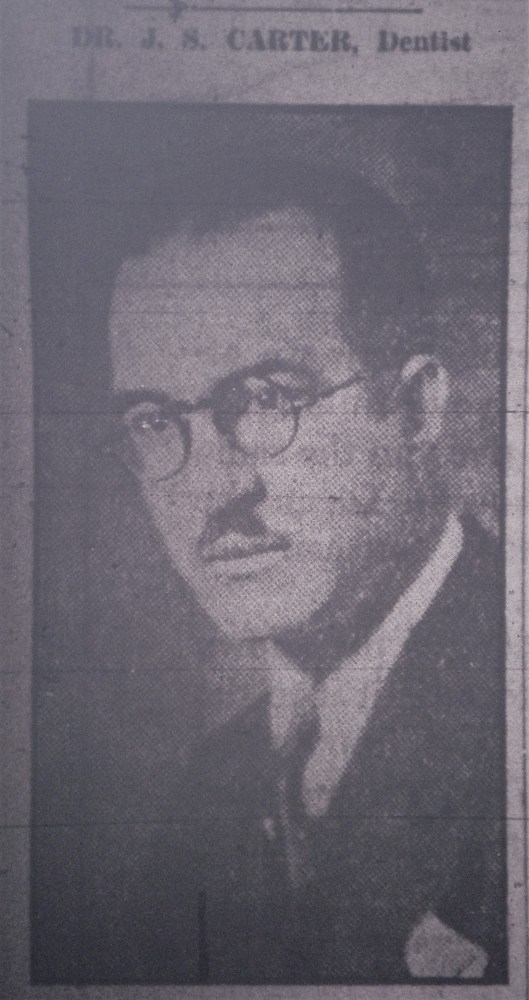
DR. J.S. CARTER, DENTIST

Washington Hotel, Logan, W.Va.

Graduate: Dental College of Howard University; did work at Ohio University, Athens, and the University of Pittsburgh; member of Alpha Phi fraternity. Dr. Carter served his country in the late World War. The doctor has practiced medicine six years, all of which has been done in West Virginia, his native state. The doctor has a modernly equipped office, engaged a large and profitable practice in Logan county. He is studious and alert to bring to his profession any scientific discoveries or new appliances that will benefit his patients. Dr. Carter has former connection with the McDowell Dental Clinic. The doctor encompasses a generous field of activities outside of his profession. He is prominent in fraternal and civic organizations in his county and state.

Source: Logan (WV) Banner, 16 April 1929

Allen Hatfield of Beech Creek, WV (1970s)

11 Tuesday Sep 2018

Posted by Brandon Ray Kirk in Hatfield-McCoy Feud, Matewan, Tazewell County

≈ 4 Comments

Tags

Allen Hatfield, Appalachia, Beech Creek, Beni Kedem, Charleston, Charlie Simpkins, Cincinnati, civil war, Clyde Kiser, Deanna Hatfield, Devil Anse Hatfield, Devon Church of Christ, Doc Mayhorn, Eliza Murphy, Ellison Hatfield, feuds, Frankfort, genealogy, Goldie Hatfield, Gordon Smith, Grapevine Fork, Hatfield-McCoy Feud, history, Hugh C. Boyd Lodge No. 119, Jane Hatfield, Jane Maynard, Joseph Chester Hatfield, Joseph Murphy, Kentucky, Kentucky Colonels, Lawrence Hatfield, Logan County, Major Hatfield, Martha Bell Murphy, Maryland, Mingo County, Norfolk and Western Railroad, North Tazewell, Ohio, Pike County, Plyant Mayhorn, preacher, Raymond Hatfield, Right Hand Fork, Rockville, Thacker, Valentine Wall Hatfield, Virginia, West Virginia, Williamson, Williamson Memorial Hospital, Willis Hatfield

My name is Deanna Hatfield and tonight I would like to share with you a West Virginian, Allen Hatfield, who the community of Beech Creek honored and loved. Allen was born October 11, 1877. He was the youngest child of the pioneer couple, Wall Valentine Hatfield and Jane Maynard Hatfield, who settled on Beech Creek in 1861, the year that the Civil War broke out in this country. His parents had settled at the mouth of Grapevine Fork of Beech Creek. They had occupied a log cabin near the present site of Lawrence Hatfield’s home. He was the nephew of Captain Devil Anse Hatfield, clan leader in the famed Hatfield-McCoy Feud, and a first cousin of Willis Hatfield, the only surviving child of that family.

Almost until the day of his death, Allen carried a sadness in his heart over the death of his father in the days of the famous feud. His father, a peaceable man, was not an active member of the fighting group of the Hatfields during the trouble between his family and the McCoys but was named in warrants along with two of his sons-in-law, Doc and Plyant Mayhorn. Allen Hatfield, but ten years old at the time, remembered that his father Wall, thinking that he had nothing to fear in the courts of Kentucky, wrote the prosecuting attorney of Pike County that he and his sons-in-laws wished to surrender in Pikeville and stand trial for crimes for which they were accused. Allen Hatfield recalled the incident from his boyhood, including the feud. His father did go to Pikeville to voluntarily stand trial and clear his name but he was convicted by a prejudiced jury, the son remembered, and was sentenced to life imprisonment at the Kentucky State Prison in Frankfort. After sentencing, he lived about one year and his burial place is still unknown today. The two Mayhorns served several years and were later pardoned.

One of his fondest memories was that of his mother Jane who took over the management of the home and did a good job of raising a large family after her husband was taken from her. She did chores around the homestead. A great and interesting conversationalist in his adult years, he liked to tell of how he and his friends made bows and arrows–arrows consisting of straight pieces of wood with a horseshoe nails attached as the spike. He became an excellent marksman with the bow and arrow and later with his first rifle as he helped to provide squirrels and other wild game for the family table.

The early years of Hatfield’s life were marked by sadness as a result of the loss of his family in the feud. But his hours spent in the great outdoors hunting and fishing provided a therapy that led to his development to splendid manhood. He was several years old when the Norfolk and Western Railroad Company built an extension from Virginia to southern West Virginia and Mingo County, which still was Logan County at that time.

In 1899, Hatfield was married to Martha Bell Murphy, daughter of Joseph and Eliza (Steele) Murphy. She had just turned fourteen when he proposed and her family thought she was too young to wed. The young couple sort of eloped the night of April 8, 1899, to Allen’s home where they were married by Allen’s brother, Ellison, a country preacher and a granny doctor, as he later recalled. Late that summer, he amassed enough lumber to build their first home—a one-room abode that was erected next to the hillside just north of the present homestead. Allen Hatfield made most of his furniture and his wife tended a garden and dug ginseng to help the family fortune.

During the ensuing years, the Hatfields had eleven children, two of whom preceded them in death. Lawrence Hatfield, who married Dollie Kiser, is now retired and lives with Dollie on Beech Creek at the mouth of Grapevine Fork. Estel Hatfield, who married Virginia Varney, lived with his dad and still lives in the old homeplace. Estel is an agent for the Norfolk and Western Railroad Company. Major Hatfield, who married Mildred Friend, is employed as an agent also for the Norfolk and Western Railroad Company in North Tazewell, Virginia. Rosa Hatfield, married Wayne Simpkins, lives on Beech Creek on Right Hand Fork. Goldie Hatfield married Gordon Smith, and they make their home below Grapevine Fork on Beech Creek. Mamie Hatfield married Charlie Simpkins and makes her home in Rockville, Maryland. Glendeen Hatfield married Douglas Berlin, and they make their home in Louisiana. Etta June Hatfield, never married and lives in Cincinnati, Ohio. Erma Hatfield married Forest Baisden, and she lives in Williamson, West Virginia. Milda Hatfield, deceased, was a retired school teacher and was never married. Joseph Chester Hatfield, died at six months old.

In 1914, Allen bought from his brother Smith a grocery store at the old homeplace and moved the merchandise to a small building at his home. He built a large home later and it was there that most of the children were born. He expanded his business to a larger store building, which still stands, and then he erected the present homeplace. During his early merchandising days, Hatfield was compelled to haul his goods from the railway station at Devon by team and wagon for the roads had not been built and most of the rough team tracks was through the creeks. It was a problem in the wintertime to get through the streams as they were filled with ice. After the county built a road up Beech Creek, he retired his team and wagon and switched to a gasoline-powered vehicle to haul and deliver his goods. He learned carpentry in the early years of his marriage and continued this art until 1964 when he retired. Hatfield was a 57-year member of the Hugh C. Boyd Lodge No. 119 AF & AM at Matewan and received his 50-year service award from the Grand Lodge of West Virginia in 1970. The lodge, when he became a master mason, was known as Thacker No. 119. It was located at Thacker, West Virginia. It later was moved to Matewan. He also belonged to the Beni Kedem Temple of Charleston, being a 50-year member of the Shriners. He also received the honorary commission of a Kentucky Colonel on April 10, 1972. He had been a member of the Devon Church of Christ since 1916 and sponsored the building of the present church that stands near his home on Beech Creek.

In his years of selling groceries, Hatfield said he never lost but 50 dollars in bad debts. He was proud of his heritage, a leader in his community, and in his active life a crack shot with a rifle, pistol, and shotgun. His hunting and fishing kept the table supplied with food. He won beef, hogs, turkeys, and chickens in the old-time rifle matches that were so popular in the Beech Creek area years ago. He and the former Martha B. Murphy were married 71 years before her death on May 25, 1970. His life might have been used as the subject by the poet who wrote, “Let me live by the side of the road and be a friend to man.” Allen Hatfield had spent a lifetime doing just that, living beside a little country road on Beech Creek and being a friend to mankind. On March 2, 1975, Allen was taken to the Williamson Memorial Hospital for ailments associated with his advanced age. He then was released and re-entered the hospital on April 18 in critical condition. On Friday, May 2, 1975, the community of Beech Creek lost one of the dearest old-timers that was ever known. Allen Hatfield, 97, prominently-known Mingo pioneer citizen, retired merchant of Beech Creek, died at 3 a.m. in the Williamson Memorial Hospital of a lingering illness. Funeral services were scheduled at the Chambers Funeral Home Chapel with his beloved ministers Clyde Kiser and Raymond Hatfield officiating. Burial took place in the family cemetery behind the homeplace on Beech Creek. His grandsons and great-grandsons were his pallbearers. Allen would have wanted it this way. Simple.

NOTE: Some of the names may be transcribed incorrectly.

West Virginia Once Part of Iroquois Domain (1927)

21 Tuesday Aug 2018

Posted by Brandon Ray Kirk in American Revolutionary War, Native American History

≈ Leave a comment

Tags

Andrew P. Price, Appalachia, Canada, Cayuga, Chillicothe, Cumberland River, Dekanawida, Five Nations, Great Lakes, Greenbrier Valley, Hiawatha, history, Iroquois, Jackson River, James Fenimore Cooper, Kanawha River, Lancaster, Logan Banner, London, Marlinton, Mingo Flats, Mohawk, New York, Ohio, Oneida, Onondago, Ototarha, Pennsylvania, Revolutionary War, Rio Grande River, Seneca, Seneca Trail, Shawnee, St. Lawrence River, Tennessee, Tuscarora, Virginia, Warrior's Road, West Virginia, Winchester

From the Logan Banner of Logan, WV, comes this bit of history about the Iroqouis and West Virginia dated October 7, 1927:

West Virginia Part of Iroquois Domain

Confederation of Five Nations, Pledged to Peace, Endured For Two Centuries — Hiawatha One of Founders — Vast Indian Drama Told By Andrew P. Price, “Sage of Marlinton.”

You keep hearing of the Shawnees who overran this country prior to the Revolutionary War, and you keep hearing of them to the east and then to the west. You know that when 72 men went from this (Greenbrier) valley to fight them at the mouth of Kanawha, that they were living in Chillicothe.

The mystery of the Shawnee being to the east and then to the west is explained as follows:

When the whites first began to record history the Shawnees were far to the south and were split into two tribes. One lived on the Atlantic seaboard, around Savannah, and the other west of the mountains in the Tennessee country. They were forced north by their enemies and they were sometime after that found with towns at Winchester, in the valley of Virginia, and Lancaster, Pennsylvania, and in other places in Pennsylvania, while those from the Cumberland basin in Tennessee came north into Ohio. The eastern tribe moved first and no doubt the communicating road between the settlements at Winchester and eastern Pennsylvania traversed West Virginia. They would have to cross Seneca Trail, or Warrior’s Road, and the military town of Mingo Flats lay in their line of travel and that is the occasion of the corrupting of that place and making the garrison traitor to the Five Nations.

The whole of the Appalachia Range of mountains was owned, policed and controlled by the Iroquois or Five Nations. This was the highest type of Indian north of the Rio Grande. For centuries they held a commanding position, their country extending from the mouth of the St. Lawrence river, west on both sides to the Great Lakes and turning there took all the mountain country as far south as Georgia, and they had at least 50 towns along the way from north to south. History deals more with the Mohawks around New York, but the westernmost part in which we live was occupied and kept by the Senecas. The list of the Iroquois or Five Nations: Mohawk, Oneida, Onondago, Cayuga and Seneca. When the Tuscaroras came in in 1726 they were called the Six Nations.

Government Older Than Ours

This conference lasted for more than two centuries and was perhaps the most notable government ever set up by savages. They are the Indians that James Fennimore Cooper wrote about and they are entitled to every bit of praise that he gives them. They had a council that was noted for its dignity, faith, and ability. The kinds of Europe sent ambassadors to that council for many generations which made treaties, and it was well known in the London of that day as the American Congress is now. The Nations early agreed with the whites to allow the Europeans to settle and thrive on the Atlantic seaboard and they, the Five Nations, kept the mountains and western part of their countries.

Probably the first fraud practiced on the Five Nations was the Greenbrier Colony grant of 100,000 acres on waters that flowed into the Ohio, and this was held up for more than 30 years and only matured after the colonies had gained their independence. It is evident that it was first granted on the mistake of fact, that is, that the Greenbrier, like the Jackson River, flowed into the Atlantic.

Hiawatha an Organizer

The formation of the Five Nations was accomplished about the history the year 1750 and was the work of two Indians of great fame, Dekanawida and Hiawatha. The name of Hiawatha is famous by reason of Longfellow’s poem, but it does not contain a single fact of the history of Hiawatha. The two Indians posed as medicine men and magicians and spent their lives to bring about the league to promote peace and to end war. At the time they commenced their work, war was the religion of the tribes. Hiawatha was a Mohawk, and at times the Mohawks were cannibals. The two Indians traveled from council to council, proposing the scheme of the league to promote peace, and it was debated on the council fires, and it encountered the most bitter opposition. The name of the tyrant Ototarha comes down in history as the most formidable opponent to the peace makers.

The first success they had was to make it unlawful to prosecute family feuds and murders generally. For every murder the killer was required to pay the family of the dead man ten strings of wampum, as the value of a human life. Later the law was amended to require the payment of an additional ten strings of wampum, on the construction that the first payment was compensatory, and the second string to take the place of the life of the murderer which was forfeited under the old law to the blood kin of the slain man.

In time the confederation was formed. First by the Mohawk, Cayuga and Oneida. Then the Onondaga came in and last, the Senecas came in with reservations, and plenty of them. The Senecas refused to disband their armies and were thereupon made the police force of the Iroquois nations, and kept to themselves the department of war and foreign affairs. They gave up murder and cannibalism but clung to their military life.

The league got along pretty well until the introduction of fire-water and gunpowder. After that it was hard to keep the peace. The end of the league of the Iroquois came when they joined the British to fight the colonists. They came out of the Revolutionary War, doomed, and most of the survivors moved into Canada, though some are still to be found on the reservations in the State of New York.

Old Time Fiddlers’ Contests at the Logan Courthouse in Logan, WV (1927)

28 Saturday Jul 2018

Posted by Brandon Ray Kirk in Logan, Music

≈ Leave a comment

Tags

Appalachia, Baumgardner's String Band, Belford Harvey, blind, David Miller, fiddle contest, fiddlers, fiddling, Grimes Music Shop, Guyandotte Mockingbirds, Hell Back of Maysville, history, Logan, Logan Banner, Logan County, music, Ohio, Paddy's on the Short Rows, Sourwood Mountain, West Virginia

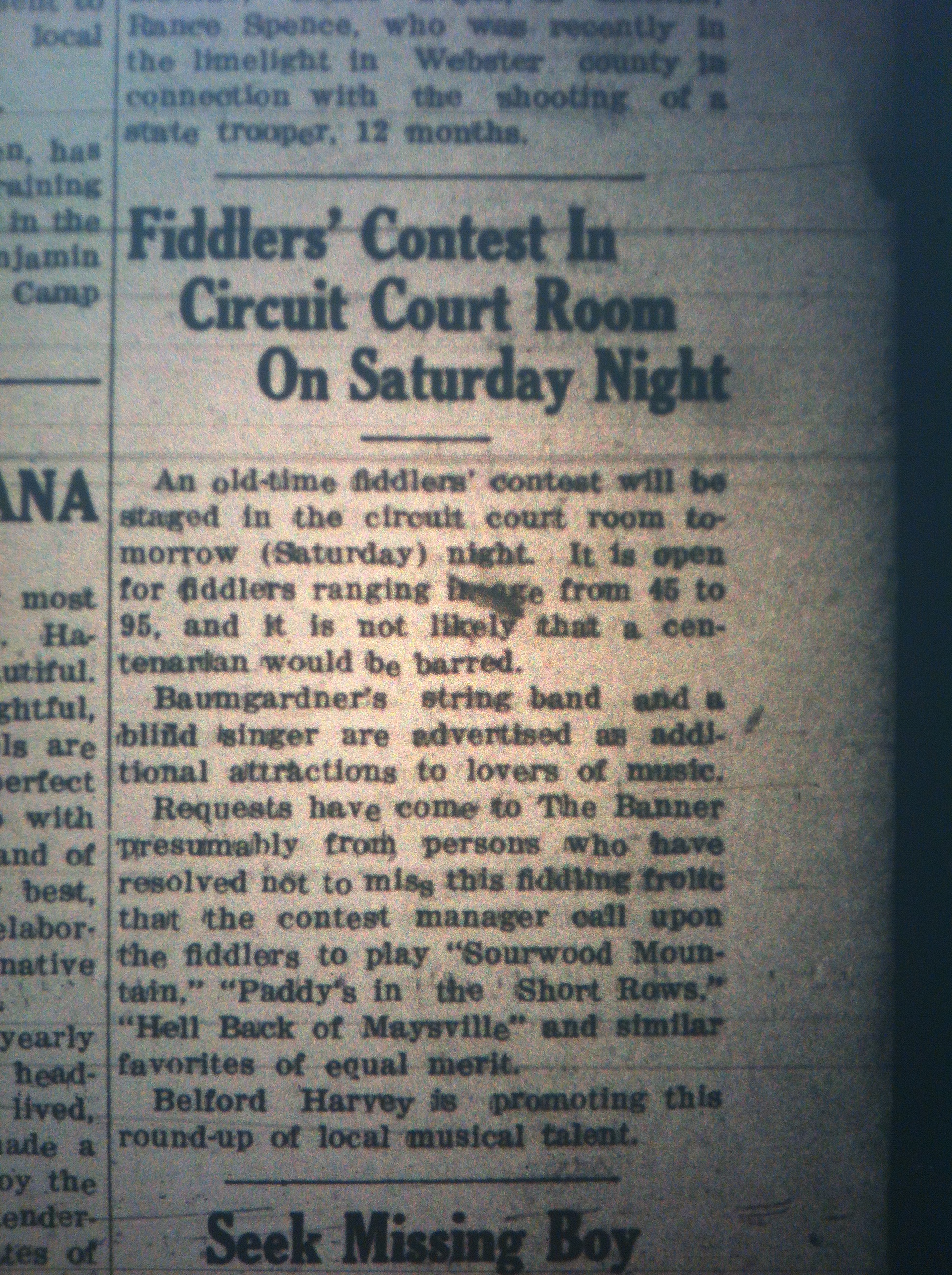
Fiddlers' Contest at Logan Circuit Court Room LB 04.29.1927.JPG

Logan (WV) Banner, 29 April 1927. Belford Harvey was a multi-instrumentalist associated with David Miller and the Guyandotte Mockingbirds.

Old-Time Fiddlers' Contest at Logan Courthouse LB 09.16.1927 1

Logan (WV) Banner, 16 September 1927.

Elizabeth Adkins Deed to Jacob K. Adkins (1901)

23 Monday Jul 2018

Posted by Brandon Ray Kirk in Guyandotte River, Little Harts Creek

≈ Leave a comment

Tags

Appalachia, Elizabeth Adkins, Eveline Adkins, genealogy, George W. Adkins, Guyandotte River, Harts Creek District, Henry Adkins, Henry H. Adkins, history, Jacob K. Adkins, John C. Ferguson, John Sartin, L.C. Queen, Lincoln County, Little Harts Creek, Mary Adkins, Mary Louisa Tomblin, notary public, Ohio, Spencer Adkins, Wayne County, West Virginia

Elizabeth Adkins to Jacob K. Adkins 1

Deed Book 59, page 272, Lincoln County Clerk’s Office, Hamlin, WV. This deed involves the heirs of Henry and Mary “Polly” (Dalton) Adkins, Sr.

Elizabeth Adkins to Jacob K. Adkins 2

Deed Book 59, page 273, Lincoln County Clerk’s Office, Hamlin, WV.

Whirlwind News 12.06.1927

16 Saturday Jun 2018

Posted by Brandon Ray Kirk in Big Harts Creek, Dingess, Logan, Whirlwind

≈ Leave a comment

Tags

Anna Mullins, Appalachia, Buck Fork, Charleston, Curtis Hamlin, Daniel McCloud, Dingess, Elias Workman, Frank McCloud, genealogy, Gertrude Clendenin, Harts, Harts Creek, history, Hoover Fork, Joe Martin, Logan, Logan County, Mingo County, Ohio, Twelve Pole Creek, West Virginia, Whirlwind, Wilburn Mullins

An unknown correspondent from Whirlwind in Logan County, West Virginia, offered the following items, which the Logan Banner printed on December 6, 1927:

Miss Gertrude Clendenin has just returned from Ohio where she has been visiting her parents.

Wilburn Mullins made a business trip to Dingess Monday.

Elias Workman made a business trip to Charleston last week.

Daniel McCloud was a business caller in Logan Monday.

Frank McCloud made a visit to Hoover one night last week.

Anna Mullins of Twelvepole was a visitor of Harts Sunday.

Curtis Hamlin is on the sick list this week.

Joe Martin and family of Buck Fork motored to Hoover Sunday.

Battle of Kanawha Gap (1861)

10 Sunday Jun 2018

Posted by Brandon Ray Kirk in Barboursville, Big Creek, Boone County, Chapmanville, Civil War, Guyandotte River, Tazewell County

≈ 5 Comments

Tags

129th Regiment Virginia Militia, 1st Kentucky Infantry, 34th Ohio Volunteer Infantry Regiment, 5th Virginia Regiment, Abram S. Piatt, Appalachia, Baltimore & Ohio Railroad, Barboursville, Battle of Kanawha Gap, Big Creek, Big Sandy River, Boone County, Burlington Weekly Hawk-Eye, Camp Enyart, Ceredo, Chapmanville, Charleston, Chicago Daily Tribune, Cincinnati Daily Press, Cincinnati Gazette, civil war, Cleveland Morning Leader, Coal River, Confederate Army, Daily Green Mountain Freeman, David S. Enyart, Eli Thayer, Evening Star, George McClellan, Greenbrier County, Guyandotte River, H.C. Evans, Harpers Ferry, Herman Evans, history, J.V. Guthrie, J.W. Davis, Jacob D. Cox, John Dejernatt, Kanawha River, Kanawha Valley, Logan County, Logan Court House, M.H. Wood, National Republican, O.P. Evans, Ohio, Ohio River, Parkersburg, Pomeroy Weekly Telegraph, Portsmouth, Richmond Whig, Robert E. Lee, Samuel Smoot, Sewell Mountain, Southwestern Times, Staunton Spectator, T.W. Rathbone, Tazewell County, Tug Fork, Union Army, Virginia, West Virginia, West Virginia Division of Culture and History, Wheeling, William Baisden, William Rosecrans, William S. Rosecrans, Zouaves

The following newspaper accounts describe the Battle of Kanawha Gap near present-day Chapmanville, Logan County, WV, which occurred on September 25, 1861:

Cleveland (OH) Morning Leader, 3 October 1861

GALLIPOLIS, Oct. 2.

The expedition planned by Col. J.V. Guthrie of the First Kentucky Regiment, and sent out under Lieut. Col. Enyart and Col. Piatt, has returned. They encountered the enemy at Chapmansville under Col. J. Lucien Davis, of Greenbrier, and utterly routed them. The enemy lost between fifty and sixty killed. Our loss was four killed. The expedition returned to Charleston on the 30th ult.

david s. enyart photo

Col. David S. Enyart, 1st Kentucky Infantry (Union).

Evening Star (Washington, DC), 4 October 1861

A Confederate Camp in Western Virginia Broken Up and Routed

CINCINNATI, Oct. 3 — A body of Federal troops, under Lieut. Col. Enyart, attacked a camp of rebels at Chapmansville, in Logan county, Va., near the Kentucky line, routing them, killing sixty and taking seventy prisoners. The same body of rebels were afterward intercepted in their retreat by Col. Piatt, who killed forty and made a large number prisoners.
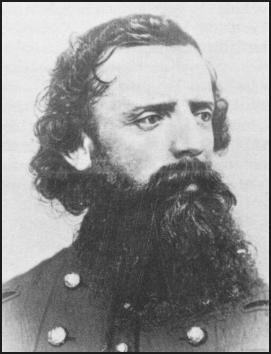
abram s. piatt photo

Col. Abram S. Piatt (1821-1908), 34th Ohio Infantry Regiment.

New York (NY) Herald, 4 October 1861

FIGHT WITH THE REBELS AT CHAPMANSVILLE

Cincinnati, Oct. 3, 1861.

The Kanawha correspondent of the Commercial of this city says that five companies of the First Kentucky regiment, four companies of the Thirty-fourth Ohio regiment and one company of the Fifty Virginia regiment, under Lieutenant Colonel Enyart, surrounded and attacked the rebels at Chapmansville, and after a short engagement completely routed them, killing sixty and taking seventy prisoners. The rebels in escaping were intercepted by Colonial Piatt, who killed forty and took a large number of prisoners. The country between Charleston and Wyandot river is now freed from secession power. This is the most effective blow given the rebels in this part of the valley.

IMG_2256.JPG

One section of the Kanawha Gap Battle Site, Chapmanville, Logan County, WV, 9 June 2018.

Daily Green Mountain Freeman (Montpelier, VT), 7 October 1861

Chapmansville, Va., the scene of the most recent engagement, is a small post village in Logan county, Va. Logan county is in the extreme Western portion of Virginia, the Tug Fork of the Big Sandy being the boundary line between it and the State of Kentucky. It is one of the largest, wildest and most sparsely inhabited counties in the State.

IMG_2238.JPG

Part of the Kanawha Gap Battle Site, Chapmanville, Logan County, WV, 9 June 2018.

National Republican (Washington, DC), 7 October 1861

THE SITUATION.

The two affairs at Chapmansville, reported three or four days since, in which the enemy lost one hundred killed and a proportionate number of wounded, will, it is supposed, restore permanent peace to the Virginia counties western of the Kanawha. Chapmansville is on the turnpike from Charleston to Logan county Court-house, and is about twenty-five miles to the south of Barboursville, the shire town of Cabell county. The secessionists in that part of Western Virginia have been numerous and pertinacious. They have once had possession of Guyandotte on the Ohio river and for a long time they threatened Ceredo (Mr. Thayer’s colony,) which lies on the river between Guyandotte and the Kentucky line. There have been two engagements with them in the rear of Ceredo, one at Barboursville, one at Logan county Court-house, one at Boone county Court-house (which town was burnt by the national troops,) and finally two at Chapmansville. The truth is, that in large portions of numerous, and, but for the early occupation of that region by the National troops, would have controlled it, not because they were the majority, but because one secessionist is, everywhere, a match for three Union men.

The secessionists are reckless, violent, and desperate, while their opponents, if not timid are at any rate remarkably pacific. We doubt, indeed, from all the information we can get, whether throwing out of the account Wheeling and Parkersburg, the terminal on the Ohio river of the Baltimore and Ohio railroad, Western Virginia had more elements of Union strength than the Valley of Virginia. From Harper’s Ferry south for fifty miles, the Union men have been numerous from the first, and it is a matter of deep regret that it did not consist with the plans of military strategy adopted at the headquarters of the army here, to occupy (at least) the northern part of the Valley of Virginia. It is consoling, that a different policy was adopted in retrospect to Western Virginia. That region was promptly taken possession of, cleared of the rebel armies by Gen. McClellan, and has since been victoriously held by Gen. Rosecrans. All attempts of the enemy to affect a re-entrance into Western Virginia are promptly repulsed.

34th Ohio Volunteer Infantry Regiment, Piatt's Zouaves Flag Photo.jpg

Staunton (VA) Spectator, 8 October 1861

Status at Sewell’s Mountain.

The enemy, under Gen. Rozencrantz, and our forces under Gen. Lee, are both upon Sewell Mountain very near each other. A fight has been daily expected there for some time, but the enemy have been fortifying ever since they have been there, and there will not be a fight unless we attack them in their entrenchments. They are afraid to attack us, and it is probable that our force is too weak to risk an attack on them within their fortification. It may, therefore, be some time before an engagement will take place. We understand that we had sent a force of four regiments to their rear for the purpose of cutting off their supplies—that we succeeded in getting around them, but were compelled to return because we did not have sufficient supplies ourselves. We also learn that Col. Jas. W. Davis of Greenbrier, whilst commanding a force of militia in Logan county, attacked a part of the enemy, and was shot down at the first fire. The militia, after several rounds caught the Yankee fever which made their cowardly legs run off with their brave hearts, and they left their commander in the hands of the enemy, who, we fear, has died from his wound.

IMG_2923

New historical sign placed by the WV Division of Culture and History located at the 119 ramp in Chapmanville, WV. 26 April 2017.

Chicago (IL) Daily Tribune, 9 October 1861

A Splendid Achievement of the Ohio Zouaves–“Wood Up” the Battle Cry.

[The following letter is exclusively devoted to the fight which the Piatt Zouaves had with the rebels near Chapmansville, Va. It is distinct from the victorious fight which the command of Lieut. Col. Enyart had with another body of rebels, in the same vicinity. EDS. CINCINNATI COM]

CAMP ENYART, KANAWHA, Oct. 2, 1861. EDS. COM.: The Zouave Thirty-fourth Regimens, Ohio, have had a chance to show their metal. This was on Wednesday, on Kanawha Gap, near Chapmansville, Va. After marching 42 miles, they came upon the enemy, who were behind breastworks, but could not stand our boys’ steady fire, for they retreated in utter consternation, their Col. J.W. Davis, of Greenbrier, Va, (but the traitor is a native of Portsmouth, Ohio,) being mortally wounded. We killed 20, took 3 prisoners, a secesh flag, 20 feet long with FIFTEEN STARS, 4 horses, 1 wagon, 10 rifles (one of which I claim), 12 muskets, and commissary stores (very low.) We lost 3 killed, 9 wounded, one since died. The route of the enemy was complete, although they had a brave, skillful commander, and strong position, with two days’ information of our intentions. They fled the moment their commander fell. The fight lasted about 10 minutes opposite the breastworks, but a running fire was kept up previous to that, by the Bushwhackers and rebel cavalry for two hours. At every turn of the road over the mountains, they would fire upon our advance men, wheel round, and gallop away. This kind of fight was kept up till we came suddenly upon their breastworks, immediately in line of our entire column. It was made on the side of a knoll, between two mountain sides, the road running between the mountain on our left. The wily rebel commander had adroitly cut down the brush on the right, placing a force of 100 men on the mountain top on our right, who raked our column from the front to the center. This was to draw our attention from their breastworks. Our men naturally fired upon the rebels on their right, steadily advancing up the road, until within 20 feet of the enemy’s works, when the rebels suddenly opened fire, from their right, left and center. The order from Col. Piatt and Lieut. Col. Toland, to flank right and left was immediately responded to by the Zouaves with a hurrah, a Zouave yell, and a cry of “wood up” from Little Red; a dash by our boys upon the enemy’s breastworks, above which about 300 rebel heads suddenly appeared, unknown by our men till that moment. They sent a perfect storm of bullets around, over, under, and into our men. A few minutes more and our boys were inside the breastworks, chasing them over the mountains, the enemy running away like cowards as they proved to be. They left 29 dead behind. Their force was 450 infantry and 50 cavalry. Our force was 560.

We buried our three brave dead comrades that night, carried our wounded to the house wherein the rebel Colonel lay, mortally wounded, deserted by all his men but one. Our whole column finally marched into the little town of Chapmansville, formerly headquarters of the enemy, and camped for the night.

34th Ohio Volunteer Infantry Regiment, Piatt's Zouaves Captain Photo.jpg

34th Ohio Volunteer Infantry Regiment, Piatt’s Zouaves, Captain Photo.

Pomeroy (OH) Weekly Telegraph, 11 October 1861

Brilliant Action in the Kanawha Valley.

CHARLESTON, Va., Sept. 30, ’61. Eds. Cin. Com.–Information having been brought to Col. J.V. Guthrie, commanding this post, that a large force of Rebels were gathered at Logan Co., Lt. Col. Enyart, of the 1st Kentucky, was at once sent to engage them. His force was composed of five companies of the 1st Kentucky, four companies of the 34th Ohio–German Regiment–under command of Col. A.S. Piatt, and one company of the 5th Virginia Regiment, under command of Maj. M.H. Wood.

Col. Enyart, with the Kentucky force, surrounded and attacked the Rebels at Chapmanville, and after a short but decisive engagement, completely routed them, killing 60 and taking 70 prisoners. The Rebels, in escaping, were intercepted by Col. Piatt, who surprised them and killed 40 men, and took a large number of prisoners.

The force of the Rebels is now completely broken up, and the country between this point and Guyandotte River is now freed from Secession power. This is the most effective blow given the Rebels in this part of the Valley.

In great haste. Further particulars by next boat.

Very respectfully,

M. CLEMENS,

Lieut. Col. 5th Va. Reg’t.

34th Ohio Volunteer Infantry Regiment, Piatt's Zouaves Soldier Photo

34th Ohio Volunteer Infantry Regiment, Piatt’s Zouaves, Soldier.

Evening Star (Washington, DC), 11 October 1861

THE BATTLE OF KANAWHA GAP.

The Western Virginia correspondent of the Cincinnati Gazette gives the following account of the late engagement at Kanawha Gap:

There were about 1,050 troops under the command of Colonels Enyart and Piatt, who left their camp Monday morning, 30th ulto., and took up their line of march for the enemy.

The forces moved together until they reached Peytona, on Cole river, where they separated; Col. Enyart going up Cole river. Col. Enyart did not meet the enemy in force at any place but his men did meet and ford swollen rivers, and marched on short rations, and were anxious to meet with the running enemy of Old Virginia. Col. Enyart did not meet Col. Piatt until they met on the Kanawha, on their return.

Col. Piatt’s command immediately proceeded thence to Boone Court House, and camped that night one mile beyond. The next day, after proceeding some sixteen miles,t hey came up with the advance guard of the enemy, consisting of cavalry, when a brisk fire was exchanged, the cavalry retreating. After the retreat of cavalry the battalion was immediately put in order of battle. The advance guard of fifteen men was led forward by Adj’t Clarke, proceeding along the road. Scouts were sent out on either side of the road to meet and repulse the sharp-shooters of the enemy.

The force proceeded in this order for about two miles, meeting the pickets of the enemy, exchanging shots with them incessantly, and driving them back with increased confusion at each charge.

Being unable to ascertain the position of the rebels, the entire force halted for a few moments, and Col. Piatt rode in advance and took observations with his glass, but could not ascertain their force and position, as it was covered with a thick growth of underbrush. After these observations a command was issued to forward the column. The scouts moved on the rapidity and enthusiasm, the main body moving up the narrow road cautiously and firmly. The fire continued to increase, and shots were rapidly exchanged from the right and left with the enemy, until our advanced guard reached within sixty yards of their main force. The column was some eighty yards from the enemy when they received a perfect volley of fire upon their right, indicating that the rebels were in force in that direction. Company “A,” commanded by Capt. Rathbone, was ordered to deploy as skirmishers to the right, up the side of the mountain, and if possible to flank the enemy on the left. Company “C,” commanded by Capt. Miller, was ordered to the right, up a similar mountain, to flank the enemy on their left. Company “I,” commanded by Capt. Anderson, was ordered directly up the ravine, on the left. In this position he drew the concentrated fire of the rebels upon his company, who made use of the knowledge thus obtained by rapidly charging upon and destroying the enemy’s breastworks. The center moved directly up the road. With this disposition of the forces, Col. Piatt routed them from their confusion. Capt. Anderson was the first to mount their breastworks, his men following him in the face of a terrible fire without flinching or confusion.

As Capt. Anderson sealed the breastwork, Capt. Miller closed upon the left and Capt. Rathbone came in upon the right, his men crying “Zouave!” The main column moving up the road in double quick–until they were brought to a temporary halt by obstructions placed in the road by the enemy.

The rebels, terrified by the strange bravery and almost wild enthusiasm that was exhibited by each advancing column, ran in confusion, leaving their dead, wounded, clothing, guns, horses, &c., making their escape by Capt. Rathbone’s right; his company being too far up the mountain to cut off their retreat. Capt. West, commanding company F, was detailed to scour the mountain on the west, on the left of the road. Capt. O.P. Evans on the west side of the mountain, on the right side of the road. Capt. Herman Evans, commanding Company H, on the east side of the mountain, on the left of the road.

Each of these companies moved with dispatch, yet such was the knowledge of the rebels of teh by-paths in the mountains, and belonging to the “F.F.V.’s,” and having been drilled at running all summer, that but two were captured.

Among interesting objects captured was a genuine secession flag, captured by Lieut. Brown.

The enemy’s loss was thirty killed and fifty wounded.

We regret to know that four of our men were killed and eight wounded.

34th Ohio Volunteer Infantry Regiment, Piatt's Zouaves Soldiers Photo 2.jpg

34th Ohio Volunteer Infantry Regiment, Piatt’s Zouaves, Soldiers. Here’s a link to Captain T.W. Rathbone’s Civil War diary: http://resources.ohiohistory.org/ohj/browse/displaypages.php?display[]=0071&display[]=33&display[]=56

Burlington (IA) Weekly Hawk-Eye, 12 October 1861

The fight at Chapmansville was a sharp and bloody affair. Five of Piatt’s Zouaves were killed. The rebels lost thirty-five killed.
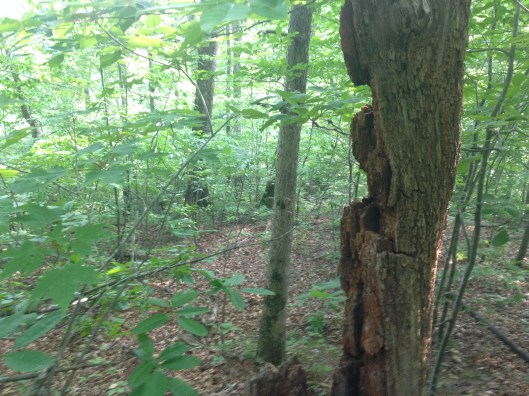
IMG_2235.JPG

Part of the Kanawha Gap Battle Site, Chapmanville, Logan County, WV, 9 June 2018.

National Republican (Washington, DC), 17 October 1861

The thirty-fourth regiment (first Zouaves) have been actively engaged since they came to the Kanawha Valley. Since the glorious victory they won near Chapmansville where the rebel commander, Colonel Davis, was mortally wounded, the Union sentiment has advanced on the Cole River. Two companies have been organized, and are ready to go to work to defend their own homes and give the organized regiments an opportunity to advance into the heart of the enemy’s country.

IMG_2254.JPG

Part of the Kanawha Gap Battle Site, Chapmanville, Logan County, WV, 9 June 2018.

Cincinnati (OH) Daily Press, 22 October 1861

Captain H.C. Evans, of Piatt’s Zouave Regiment, yesterday called in our office and exhibited a Secesh flag, captured at the Chapmansville fight, on the 24th ult.
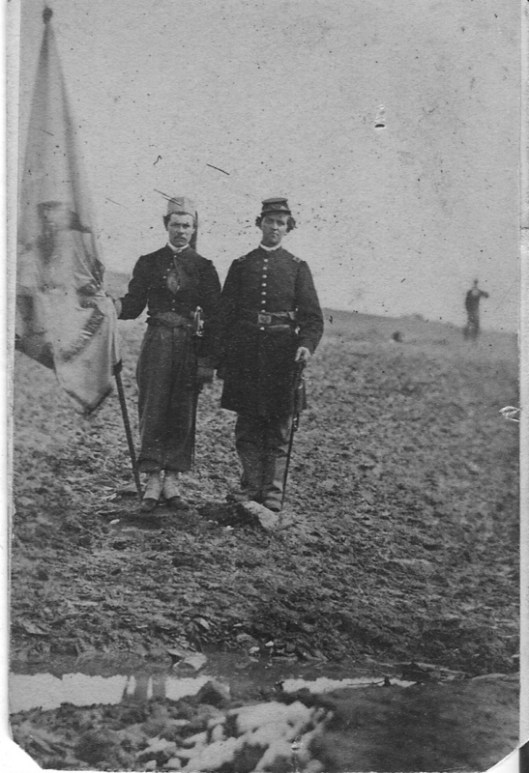
34th Ohio Volunteer Infantry Regiment, Piatt's Zouaves Soldiers Photo

34th Ohio Volunteer Infantry Regiment, Piatt’s Zouaves, Soldiers.

Clarksville (TN) Chronicle, 25 October 1861

The Fight in Logan County, Va.

[From the Richmond Whig of the 15th.]

We yesterday published the Yankee account of a battle in Logan county, which as usual, was manufactured out of whole cloth. The following are the facts as given by the South-western Times, (Tazewell county) of the 10th inst.:

From Samuel Smoot, Esq., of Boone county, who was in the fight, we learn the following particulars of the battle near Chapmanville, Logan county, on the 25th ult: The Yankees numbered 700, and commenced the attack upon our troops–the Logan militia–in a low gap between Guyandotte river and Big Creek, where they were engaged in raising a temporary breastwork. Our troops numbered 220, but there were only about 80 of them engaged in the fight. They were commanded by Col. J.W. Davis, of Greenbrier, a brave and gallant officer, who was severely, but not dangerously wounded, in the arm and breast. As soon as it became known that Col. Davis was wounded, the militia commenced a retreat. The commanding officer of the Lincoln troops afterwards confessed to Col. Davis, who was taken prisoner, that at the same moment a portion of the Yankees were running, and that one more round would have completely dispersed them.

The loss of the Yankees, by their own confession to Col. Davis, was 40 killed and a number wounded; among the former were four Union men, all of whom are represented by the Yankees to be most arrant thieves and cowards. Our loss was two killed and three or four wounded, besides Col. Davis, whose valuable services are at present lost to the Confederacy, being paroled by the enemy.

On the following day our scouts killed one of their pickets, and wounded another, at a point about half way between Logan Court House and Chapmanville, promising to give them particular thunder before daylight next morning. This with some news from a lady on the road, and some account of the militia of the surrounding counties, found on the person of Col. Davis, caused a hasty stampede for their headquarters, in the valley of the Kanawha. It seems that high water, bad roads, nor anything else could impede their rapid flight. They tore down a meeting house in Boone county to make rafts whereon to cross the river. They drowned two of their wounded, lost a wagon containing their entire stock of ammunition, and were fully persuaded that they were followed by two thousand cavalry, of which the Yankees in the West are about as fearful as their Eastern brothers are of masked batteries.

Upon the whole, we are much gratified at the result of this fight. It has, for the present, driven the cowardly thieves from the country, given renewed energy to the true patriots of Logan and the adjoining counties, fully convincing them that with the assistance of two or three hundred of their gallant friends in Tazewell county, they will be fully able to thrash any number that Gen. Cox or his friends shall dare to send against them.”

Note: An almost identical version of this story appeared in the Staunton (VA) Spectator on 22 October 1861.
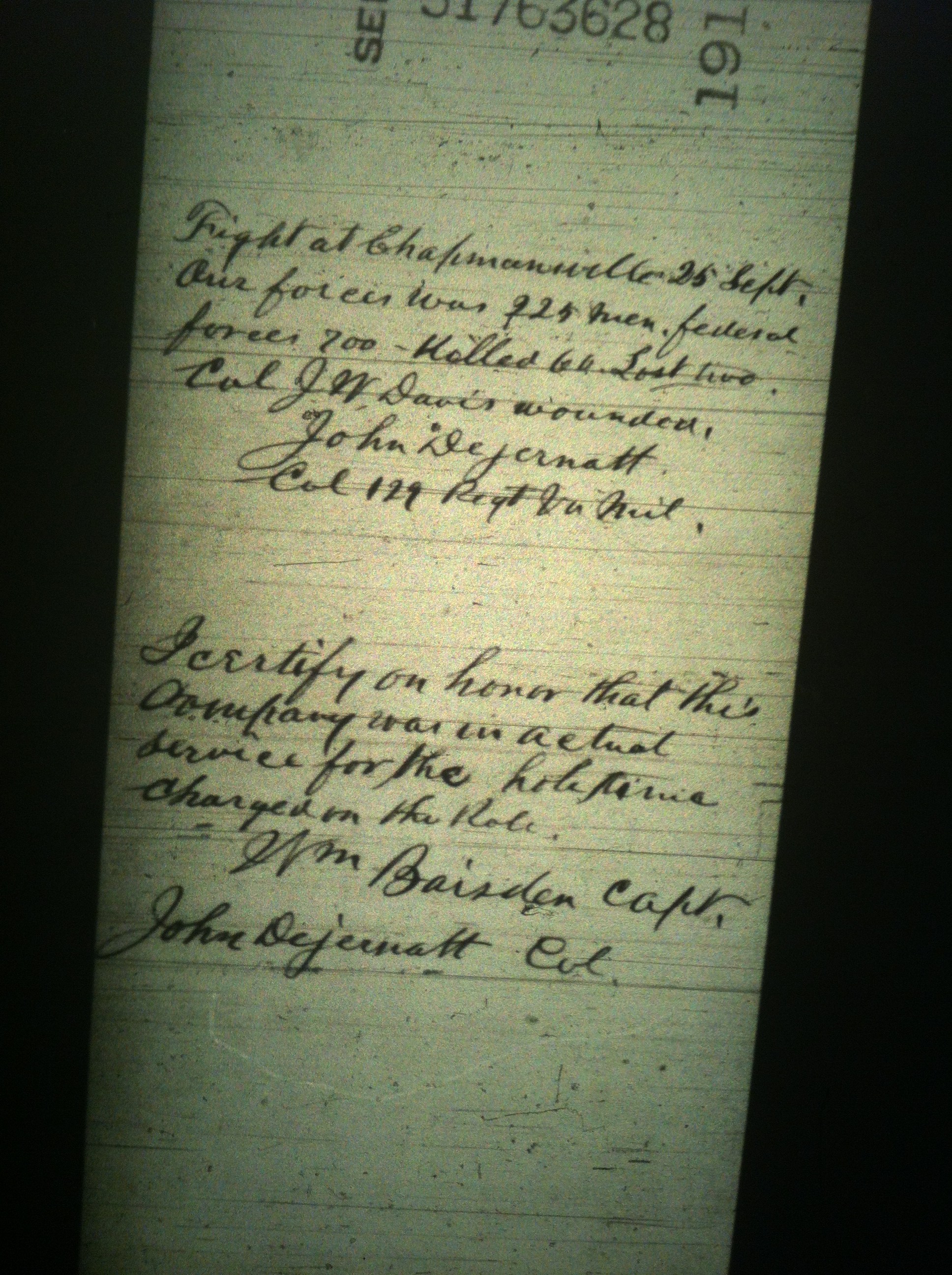
IMG_7149.JPG

Record relating to the 129th Virginia Militia (Confederate), which was present at the Battle of Kanawha Gap.

Banco News 10.12.1926

11 Friday May 2018

Posted by Brandon Ray Kirk in Banco, Big Creek, Big Ugly Creek, Estep, Stone Branch

≈ Leave a comment

Tags

Appalachia, Aracoma, B.E. Ferrell, Banco, Basil Duty, Big Creek, Braxton County, Broad Branch School, C.A. Justice, Charlie Stone, Clara Harmon, Cynthiana, D.H. Harmon, Daisy, Daisy School, Dewey Miller, Earl Justice, Elm Street, Estep, Gardner Baisden, Gay Petit, genealogy, H.F. Lucas, history, Jesse Justice, Logan Banner, Logan County, Mary Hager, Mary Thomas, Mt. Sinai, Mud Fork, O.C. Justice, O.L. Harmon, Ohio, Ruby Browning, Six Mile, Stone Branch, Ted Hager, West Virginia, Whitman

An unknown correspondent from Banco on Big Creek in Logan County, West Virginia, offered the following items, which the Logan Banner printed on October 12, 1926:

All you folks of different towns

And the travelers making rounds

Who read lots of papers

And are always getting blue

Just get The Logan Banner and read it too.

Miss Gay Petit of Braxton county, teacher of the Daisy school, and Miss Mary Thomas of Estep were the guests of Clara Harmon last Sunday.

Mr. and Mrs. Charlie Stone and children were out motoring last Saturday evening.

We imagine H.F.L. will soon don his furs and be off for the “North Pole.”

Gardner Baisden of Estep passed through Banco last Sunday enroute to Stone Branch. What’s the attraction around there, Peanut?

Mr. and Mrs. C.A. Justice, Mr. and Mrs. O.C. Justice, and Earl Justice motored from Whitman last Sunday and were the guests of home folks on Elm Street.

Mr. and Mrs. C.L. Hager and small daughter of Stone Branch and Mr. and Mrs. Ted Hager of Big Creek were the guests of Mrs. Mary Hager last Sunday.

Mr. and Mrs. Dewey Miller of Six Mile motored through Banco last Sunday evening.

O.L. Harmon of Aracoma was calling on his uncle Mr. D.H. Harmon here one evening last week.

Look out girls of Banco and Estep. You’re going to lose Basil Duty, as he is visiting Mud Fork real often. There must be some attraction up there.

H.F. Lucas of Elm Street was in Banco real early last Sunday morning. He surely was inspecting the “Candy Kitchens” of this town.

Miss Ruby Browning, teacher of the Broad Branch school, was visiting her parents at Cynthiana, Ohio, the last weekend.

Mrs. B.E. Ferrell of Mt. Sinai was a business caller in Banco one day last week.

Wonder if the “Boy” who resides on Elm Street saw the pretty girl from Daisy that was visiting in Banco last Sunday?

Jesse Justice surely will be an expert at swallowing taffy as he followed a mill all last week that ground out the goods.

Good luck to all.

Coal Development on Island Creek (1927)

04 Friday May 2018

Posted by Brandon Ray Kirk in Coal, Holden, Huntington

≈ Leave a comment

Tags

Appalachia, Boston, Cincinnati, coal, F.W. Batcheler, history, Holden, Huntington, Island Creek, Island Creek Coal Company, James D. Francis, Kentucky, Logan, Logan Banner, New York, Norfolk and Western Railroad, Ohio, Pine Creek, Pond Creek, R.S. McVey, Thomas B. Davis, West Virginia

From the Logan Banner of Logan, WV, comes this story titled “Boston Coal Men Pleased with Island Creek Development–New Town of Pine Creek Planned For,” published on October 25, 1927:

BOSTON COAL MEN PLEASED WITH ISLAND CREEK DEVELOPMENT–NEW TOWN OF PINE CREEK PLANNED FOR

Wish that more of the men at Boston, who talk about “mining camps” could come to West Virginia and see the flourishing cities and towns which dot the coal fields and ride over the hard roads which connect them was expressed Friday by F.W. Batcheler of Boston, treasurer of the Island Creek Coal Company. Mr. Batcheler, for 25 years in his present capacity, had just arrived in Huntington after his first visit to his company’s properties in Logan county and on Pond Creek in Kentucky. He said frankly that the experience had been a revelation to him, familiar as he already was in theory with the activities of his and other companies in these fields, reports the Herald-Dispatch.

Thomas B. Davis of New York, the Island Creek president, who has observed personally the development of the coal fields, was no less enthusiastic than Mr. Batcheler in his comment off the changes which have been wrought since his first visit to Island Creek.

“At first,” he said, “we had to go up the Norfolk & Western, using an accommodation train, and go across the mountains on horseback. Now we can inspect both Pond Creek and Island Creek properties in less time than it took them to get into the field.”

His enthusiasm and that of his fellow travelers was heightened by the fact that the party came to Huntington from Holden, by automobile, in two hours and twenty minutes.

With the president and Mr. Batcheler were R.S. McVey of Cincinnati, vice president in charge of sales, and James D. Francis of Huntington, vice president. Other members of the sales force took part in the inspection visit to the fields.

President Davis spoke in an optimistic strain of business conditions, which he feels are going to continue good despite a “let down” tendency now manifest.

“We can’t go at top speed all the time,” was his comment.

One of the chief points of interest to the inspection party while in Logan was operation No. 22, a new shaft mine which is being opened by the Island Creek company at an outlay of several million dollars.

15-Foot Seam at No. 22

“The shafts are down,” Mr. Davis said, “and we have found a 15-foot seam of coal as good as any found anywhere. The hoists are being raised and the first houses are being built.”

The preliminary housing in the new town of Pine Creek will include about forty buildings. The complete program, the officials explain, includes 600 houses to care for a population of 3,500. To reach this operation a railroad extension was built and a hard road, running for much of the seven-mile distance, was built by the company to connect Pine Creek with Holden.


Banco News 09.17.1926

21 Wednesday Mar 2018

Posted by Brandon Ray Kirk in Banco, Battle of Blair Mountain, Big Creek, Cemeteries, Chapmanville, Estep, Logan

≈ Leave a comment

Tags

Anna Ferrell, Banco, Battle of Blair Mountain, Big Creek, Borda Lucas, Braxton County, Broad Branch School, Chapmanville, Chapmanville High School, Clara Harmon, Crites, D.H. Harmon, Ellis Fork, Estep, Eva Ellis, Everette Justice, F.L. Estep, Fannie McKinney, Fry Lucas, Gay Pettit, genealogy, H.F. Lucas, history, Ida Rene Lucas, J. Green McNeely, J.A. Stone, J.V. Lucas, Jesse Justice, Julia Toney, Kentucky, Lake, Logan, Logan Banner, Logan County, Louisa Pardue, Lucas Cemetery, Marea Lucas, Mary Hager, Mollie Vance, Ohio, Okey Justice, Pearl Hager, R.L. Ellis, Ralph Lucas, Robert L. Lucas, Robert Sanders, Rosa Barker, Ruby Bowling, Sadie Ball, Ted Hager, Trace Fork, Vergie Turner, Vickers Branch, West Virginia, Whitman

An unknown correspondent from Banco on Big Creek in Logan County, West Virginia, offered the following items, which the Logan Banner printed on September 17, 1926:

Mr. F.D. Lucas of Trace Fork died at his home Tuesday, Sept. 14, after a long illness. Mr. Lucas had seen the frosts of many winters, being near eighty years of age. He is survived by a wife of eight children and a host of grandchildren and one brother known as “Uncle Bill” Lucas. The four daughters are Mrs. Julia Toney of Chapmanville, Mrs. Mollie Vance of Banco, Mrs. Fannie McKinney of Crites, Mrs. Vergie Turner of Chapmanville. The four sons are J.V. Lucas of Trace Fork, B.R. Lucas of Banco, R.L. Lucas of Banco, Ralph Lucas of Vickers Branch. Interment took place at the family graveyard. The bereaved family have our heartfelt sympathy.

The school at this place is progressing nicely under the management of Mrs. Rosa Barker.

Miss Ida Rene Lucas of Logan has been visiting her parents, Mr. and Mrs. J.V. Lucas on Trace Fork the past week.

Everette and Jesse Justice motored to Kentucky last week.

Mr. H.F. Lucas of this place and his girlfriend of Estep motored to Chapmanville last Sunday and attended the basket meeting held by Rev. Green McNeely.

Miss Louisa Pardue of Banco was visiting her sister, Mrs. Sadie Ball at Lake last week.

Mr. and Mrs. F.L. Estep and children of this place motored to the head of Ellis Fork last Sunday and were the guests of Mrs. Estep’s parents, Mr. and Mrs. R.L. Ellis.

Okey Justice of Whitman was calling on homefolks near Banco this week.

Miss Marea Lucas of this place left for Chapmanville last Sunday where she will attend high school. She will be missed by her many friends.

Miss Gay Pettit of Braxton county was the dinner guest of Mrs. D.H. Harmon last Sunday and was also accompanied to Big Creek by Miss Clara Harmon.

Miss Eva Ellis of Estep was the guest of her sister Mrs. F.L. Estep last Wednesday evening.

Mrs. Mary Hager of this place was a business caller in Big Creek last Tuesday and was the dinner guest of her son, Ted Hager.

Mr. and Mrs. J.A. Stone of Blair was the guest of Mr. and Mrs. Robert Sanders last Tuesday.

Miss Ruby Bowling of Ohio, teacher of Broad Branch school, was a business caller in Banco and Big Creek Monday.

Miss Anna Ferrell of Estep was the weekend guest of Miss Pearl Hager.

Good luck to The Banner readers.

Stone Branch News 06.10.1927

11 Sunday Mar 2018

Posted by Brandon Ray Kirk in Stone Branch

≈ Leave a comment

Tags

Appalachia, Beulah Shackelford, Billie Duty Jr., Black Hawk, Circleville, Clyde McKinzie, Ella Dean, farming, genealogy, George Duty, Graham Stiltner, Helley McKinzie, history, Lee Stiltner, Logan Banner, Logan County, Louise Wright, Monitor, Ohio, Rube Wilson, Sarah McKenzie, Sarah Smith, Sherman Hobbs, Stone Branch, West Virginia, William Duty

An unknown correspondent from Stone Branch in Logan County, West Virginia, offered the following items, which the Logan Banner printed on June 10, 1927:

As we haven’t seen any news from here for a while we will try to write a few items.

The Sunday School is progressing nicely.

Lee Stiltner left Monday for Monitor where he will visit his daughter, Mrs. Sherman Hobbs.

Little Miss Beulah Shackelford was calling on Mr. and Mrs. Withrow Sunday.

William Duty and small son, Billie, Jr., were calling on Mr. Duty’s mother, Mrs. George Duty, Sunday.

Mrs. Osborne of Black Hawk was calling on Mr. and Mrs. Withrow Sunday.

Mrs. Sarah McKenzie of Circleville, Ohio, is visiting her son, Helley McKinzie.

Miss Ella Dean was seen in Stone Branch Sunday. Who was that with you, Ella?

Miss Graham Stiltner is expected to return home in a few days. She has been visiting her sister, Mrs. Hobbs, of Monitor.

Mrs. Sarah Smith was calling on Mrs. George Duty Sunday.

Clyde McKinzie was calling on Miss Louise Wright Sunday.

Rube Wilson is very attentive to his garden.

Martin County Courthouse in Inez, KY (2018)

04 Sunday Mar 2018

Posted by Brandon Ray Kirk in American Revolutionary War, Big Sandy Valley, Civil War, Huntington, Inez

≈ Leave a comment

Tags

American Revolution, Appalachia, Ashland, author, banker, Battle of Blue Licks, Battle of Bryan Station, books, Brandon Kirk, Charleston, Chillicothe, Democratic National Convention, Flem Sampson, Florida, Floyd County, Henry L. Clay, history, Huntington, Inez, Inez Deposit Bank, James Ward, John P. Martin, Kentucky, lawyer, Lewis Dempsey, Martin County, Ohio, Old Sandy Valley Seminary, Outline of U.S. History, Paintsville, photos, Phyllis Kirk, Piqua, Pleasant, Rockcastle Creek, Saltwell Cemetery, State Textbook Commission, teacher, The Mountain Journal, The New Day, U.S. Congress, Virginia, Warfield, West Virginia, William B. Ward, William McCoy Sr., Williamson

IMG_5764.JPG

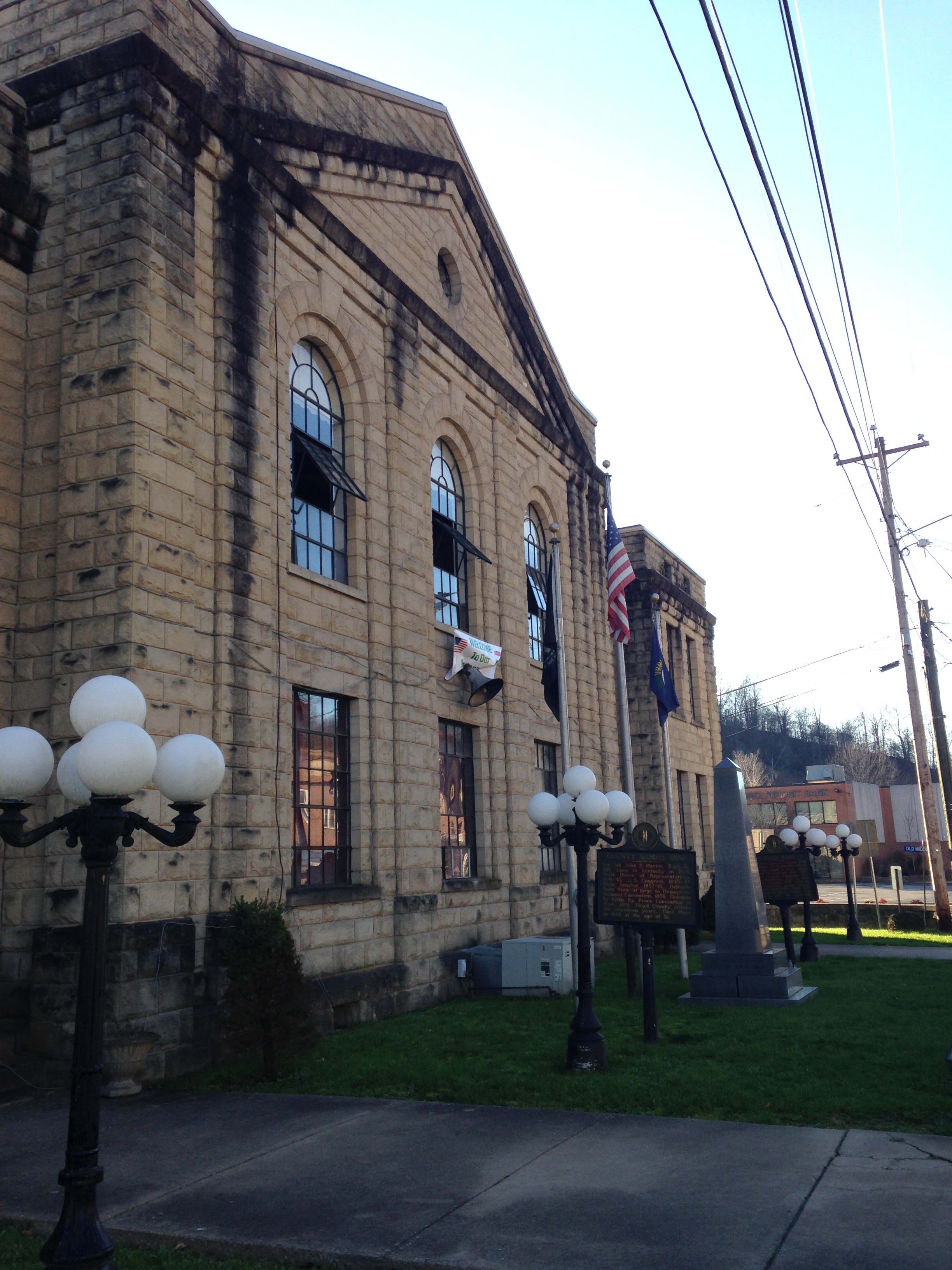
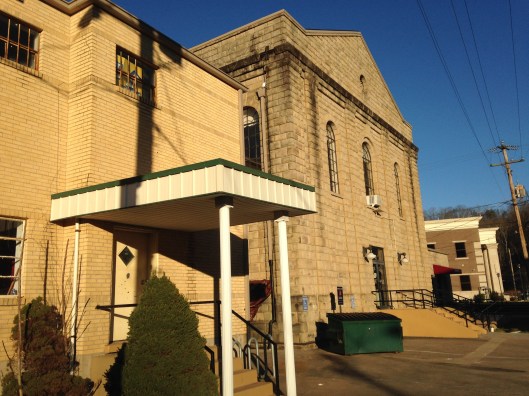
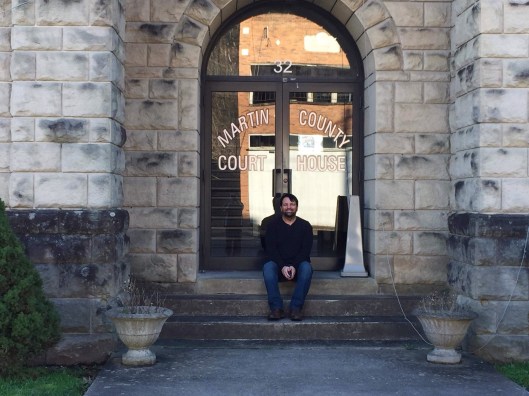
Martin County Courthouse in Inez, KY. 3 March 2018.

IMG_5822 Martin County Courthouse in Inez, KY. 3 March 2018. Photo by Mom.
IMG_5821

Martin County Courthouse in Inez, KY. 3 March 2018. Photo by Mom.

IMG_5762

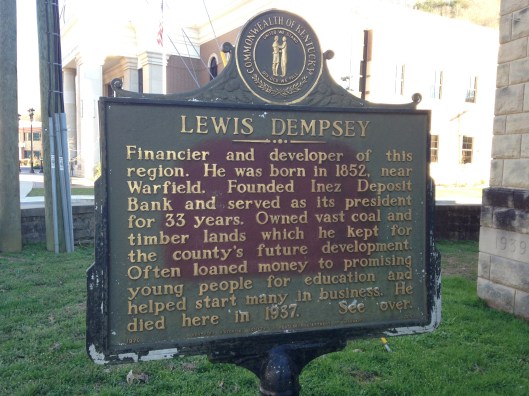
Lewis Dempsey Historical Marker, Martin County Courthouse in Inez, KY. 3 March 2018.

IMG_5763

William McCoy Historical Marker, Martin County Courthouse in Inez, KY. 3 March 2018.

IMG_5765

County Named (1870) Historical Marker, Martin County Courthouse in Inez, KY. 3 March 2018.

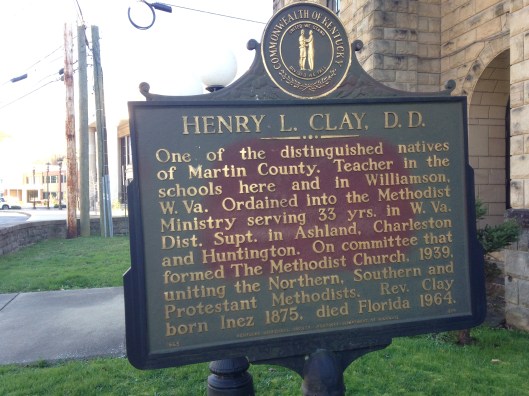
IMG_5767

Dr. Henry L. Clay Historical Marker, Martin County Courthouse in Inez, KY. 3 March 2018.

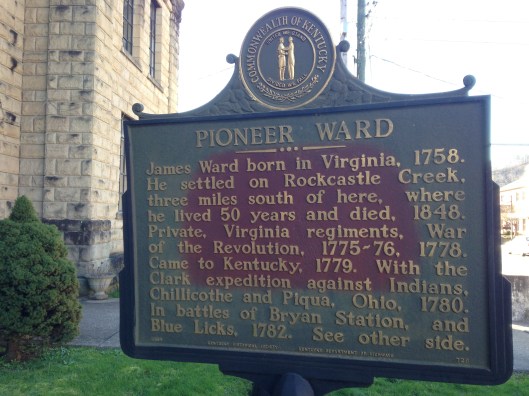
IMG_5768

James Ward Historical Marker, Martin County Courthouse in Inez, KY. 3 March 2018.

IMG_5769

William B. Ward Historical Marker, Martin County Courthouse in Inez, KY. 3 March 2018.

IMG_5772

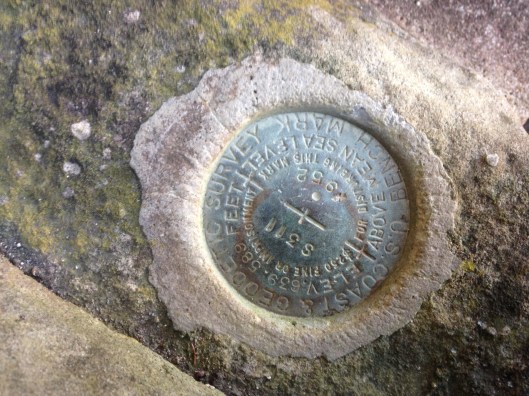
U.S. Coast Guard Geodetic Survey Bench Mark, Martin County Courthouse in Inez, KY. 3 March 2018.

IMG_5775

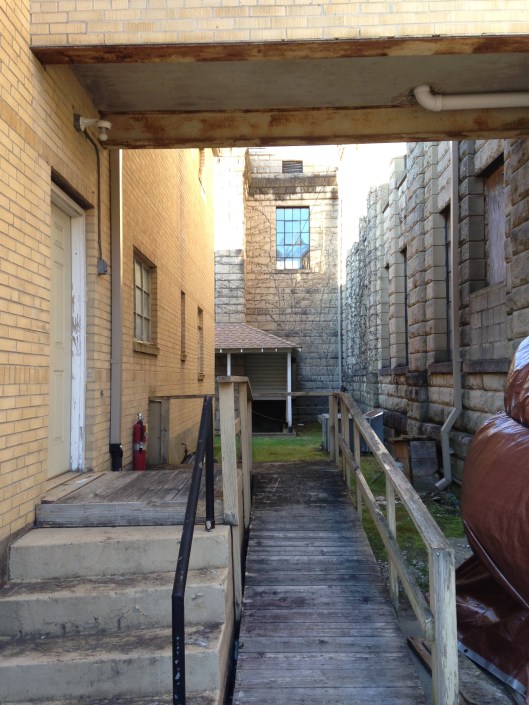
Old Jail, Martin County Courthouse in Inez, KY. 3 March 2018.

IMG_5778

Martin County Courthouse in Inez, KY. 3 March 2018.

IMG_5780

Martin County Courthouse in Inez, KY. 3 March 2018.

Don Chafin to Watch Jack Dempsey Fight in New York City (1927)

28 Wednesday Feb 2018

Posted by Brandon Ray Kirk in Logan, Sports

≈ Leave a comment

Tags

Appalachia, boxer, boxing, Don Chafin, history, Jack Dempsey, Jack Sharkey, Logan, Logan Banner, Logan County, New York City, Ohio, Toledo, West Virginia

Don Chafin to Watch Fight in NY LB 07.19.1927.JPG

Logan (WV) Banner, 19 July 1927. For more information about this historic fight, follow this link: http://boxrec.com/media/index.php/Jack_Dempsey_vs._Jack_Sharkey

To watch the fight, follow this link: https://www.youtube.com/watch?v=U55XvQy_eZY

Clinton Crane (1917)

14 Wednesday Feb 2018

Posted by Brandon Ray Kirk in Logan, Timber

≈ Leave a comment

Tags

Appalachia, Christmas, Cincinnati, Clinton Crane, Cole and Crane Company, Fred Cole, genealogy, Guyandotte River, Guyandotte Valley, Henry D. Hatfield, Highland Avenue, history, Logan, Logan County, Logan Democrat, logging, Ohio, optometry, photos, timber, timbering, W.H. Cole, West Virginia

The following news items relating to Clinton Crane (1844-1917) and Cole & Crane Co. were printed in the Logan Democrat of Logan, WV, in 1917:

Clinton Crane 1

HONOR FOR LOGAN CITIZEN

C. Cole Appointed Member of State Board in Optometry

C. Cole of this city has been appointed by Governor Hatfield a member of the State Board of Examiners in Optometry, and the senate has confirmed the appointment.

It will be Mr. Cole’s duty to meet at the state capital with the other members of the board at regular intervals to prepare examinations and to examine applications who wish to practice optometry in this state, and to issue certificates to those who pass a satisfactory examination.

Mr. Cole has been practicing optometry for about sixteen years, and when the law requiring a certificate came into effect, he would have been exempt from taking the examination on account of his long practice, but preferred to take it.

In 1912 he passed a satisfactory examination and secured a life certificate, and since that time has been practicing in this profession and has taken an active part in the state optical work.

He has supervised the training and study of his two sons, W.H. and Fred Cole, who also hold certificates.

Source: Logan (WV) Democrat, 1 March 1917.

***

CAPT. CRANE IS BETTER

Veteran Timberman and Lumber Manufacturer Will Get Out Again

Capt. Clinton Crane of Cincinnati, millionaire timber and lumber dealer and manufacturer, who has been very ill for several weeks at his home in the Ohio metropolis, and whose life was for a time despaired of, is now improving, according to advices received by friends and business acquaintances here.

The messages state that Capt. Crane will be able to get out again as soon as the weather improves.

Source: Logan (WV) Democrat, 8 March 1917.

***

Work on remodeling the Cole residence on Highland avenue, which was damaged by fire before Christmas, is progressing rapidly. W.H. Cole, son of C. Cole, expects to build a house for himself later on the lot above his father’s.

Source: Logan (WV) Democrat, 27 April 1917.

***

CLINTON CRANE DEAD

Well Known Lumber Magnate Passes Away At His Home In Cincinnati

The death of Clinton Crane, a well known lumber man, at his home in Cincinnati, last Friday, came as a shock to a number of people in Logan county who were well acquainted with him.

Mr. Crane had extensive holdings in West Virginia, being junior partner in the firm of Cole & Crane. He was 77 years old. He entered the West Virginia timber market about 1880, and came to own thousands of acres in the Guyandotte valley. His firm had booms at the mouth of the Guyandotte river and drifted millions of logs from the upper waters, rafting them to the booms and then towing them to Cincinnati. Lately, they have used trains mostly for this work.

Mr. Crane kept in close touch with his vast business interests. He also had large coal interests in the Guyan valley. He leaves a widow and two daughters. He was buried last Monday. His interests in Logan county were put in the hands of trustees before his death, so his passing will have no effect on the companies in which he held interest here.

Source: Logan (WV) Democrat, 10 May 1917.

***

The late Clinton Crane, who died recently in Cincinnati, was among the first to recognize the vast resources of this part of West Virginia. He accumulated over a million dollars as a result. The same opportunities that were open to him are still open to others. The coal development of Logan county will produce many more millionaires within the lifetime of the present generation.

Source: Logan (WV) Democrat, 17 May 1917.

Harts News 08.05.1927

15 Monday Jan 2018

Posted by Brandon Ray Kirk in Big Creek, Big Ugly Creek, Gill, Harts, Huntington, Logan

≈ Leave a comment

Tags

Annie Dingess, Appalachia, Big Creek, Blanche Spry, Caroline Brumfield, Cat Adkins, Charleston, Columbus, Cora Adkins, Ed Brumfield, Ethel Brumfield, Fisher B. Adkins, Fred Shelton, genealogy, H.R. Adkins, Harts, Hendricks Brumfield, Herb Adkins, history, Howard Stone, Huntington, Inez Adkins, Jessie Brumfield, John McEldowney, Lincoln County, Logan, Logan Banner, Nye Rooper, Ohio, Pauline Scites, St. Albans, Sylvia Cyfers, Verna Johnson, Vesta Cyfers, West Virginia

An unknown correspondent from Harts in Lincoln County, West Virginia, offered the following items, which the Logan Banner printed on August 5, 1927:

Hurrah! Here comes Harts again!

H.R. Adkins was transacting business in Logan, Monday.

Miss Cora Adkins of Huntington spent the weekend with home folks here.

Cheer up, boys. The flapper from Big Creek will come again.

Mrs. Verna Johnson of Columbus, Ohio, was the guest of her mother, Mrs. Chas. Brumfield, here over Saturday and Sunday.

Howard Stone of Huntington was calling on friends in Harts, Friday.

F.B. Adkins was looking after business matters in Huntington, Saturday.

Miss Pauline Scites of Huntington was calling on Mrs. Jessie Brumfield here Saturday and Sunday.

Mr. and Mrs. John McEldowney and children of Charleston are here visiting friends at present.

Miss Ethel Brumfield was the guest of Mrs. Robert Dingess at Logan last Saturday.

Mrs. Jessie Brumfield and Pauline Scites and Fred Shelton were calling on Miss Sylvia and Vesta Cyfers at Gill Sunday and were accompanied by Nye Rooper of St. Albans.

George Midkiff is our new operator here this week.

Jack Marcum of Hamlin was in town Sunday.

Daily Happenings: Fred in his new car; Inez in her sleeveless dress; Catherine and her pipe; Herb and his bill book; Hendrix and his mail; Clara crying; Blanche flirting; Jessie and Pauline in Bessie’s fine new Oakland coach; Ed with his tax books.

Dear old Banner, goodbye, see you some time again.

History of Logan County as Political Subdivision (1926)

02 Tuesday Jan 2018

Posted by Brandon Ray Kirk in Giles County, Holden, Logan, Native American History, Tazewell County

≈ Leave a comment

Tags

Accawmack Shire, Appalachia, Augusta County, Botetourt County, Cabell County, Cayuga, Charles City Shire, Charles River Shire, Elizabeth City Shire, Essex County, Fincastle County, G.W. Bickley, Giles County, Henrico Shire, history, James City Shire, John Logan, Kanawha County, King and Queen County, King William County, Littletown Tazewell, Logan Banner, Logan County, Mingo County, Montgomery County, Ohio, Orange County, Russell County, Simon Cotterel, Spottsylvania County, Tazewell County, Virginia, Warroskuyoak Shire, Warwick River Shire, Washington County, West Virginia, Wheeling, Wythe County, Yellow Creek, York County

From the Logan Banner of Logan, WV, comes this item relating to county history dated October 22, 1926:

AS POLITICAL SUBDIVISION, LOGAN CO. IS DESCENDANT OF FIRST EIGHT SHIRES

Logan county was formed in 1824 from parts of Tazewell, Giles, Cabell and Kanawha. In 1895 Logan was bisected in two almost equal parts, from the southernmost of which Mingo was created. Logan’s area is 455.82 square miles; Mingo’s 423,50_ square miles.

Tracing this county’s ancestry back through Tazewell it will be found to have a long line of distinguished progenitors.

The county was named after John Logan, a famous Cayuga Indian but not a chief, who was changed from a staunch friend to an unrelenting foe of the whites after his family had been murdered at Yellow Creek, Ohio, not far from Wheeling.

Tazewell was formed from Wythe and Russell in 1799. It derived its name from a political strategem. Simon Cotterel, representative from Russell, introduced a bill to authorize the creation of a new county. A Mr. Tazewell, representing Norfolk County, opposed the measure. Cotterel induced him to suspend his opposition pending the rewriting of the bill. Then Cotterel erased the proposed name and substituted that of Tazewell. That silenced the objector, who then voted for the amended measure. According to G.W. Bickley’s history of Tazewell County, the Tazewell referred to was not Littletown Tazewell, who was governor of the state from 1834 to 1836.

At that time Tazewell county had an area of 3,000 square miles–two and a half times the size of Rhode Island and more than six times the six of Logan county.

Wythe county was formed from Montgomery in 1789, Russell from Washington in 1786, Washington and Montgomery from Fincastle in 1772, Botetourt from Augusta in 1769, Augusta from Orange in 1738, Orange from Spottsylvania in 1724, Spottsylvania from King and Queen, Essex, and King William in 1720, King William from King and Queen, and through a series of changes, descended from Charles River Shire, which was changed to York county, in 1643. Ten years before that “The General Assembly holden at James City the 21st of August, 1633, divided Virginia Colony into eight shires, named James City, Henrico, Warwick River, Warroskuyoak, Charles City, Elizabeth City, Accawmack and Charles River.”


One-Armed Indian Doctor Visits Huntington, WV (1886)

08 Friday Dec 2017

Posted by Brandon Ray Kirk in Huntington, Native American History

≈ Leave a comment

Tags

Appalachia, Cabell County, Gallipolis, history, Huntington, Huntington Advertiser, Indian, King of Pain, medicine, medicine man, Native American History, Native Americans, Ohio, Queen of the Valley, Utawaun, West Virginia

From the Huntington Advertiser of Huntington, WV, come these interesting historical items about a Native American visitor to town in 1886:

The one-armed Indian doctor, who pulls teeth for the love of his species and sells compounds known as the “King of Pain” and the “Queen of the Valley” for a livelihood, is in the town. The crowds that nightly surround his wagon demonstrate that the American people have queer ideas of entertainment. Many people take advantage of the aborigine’s gratuitous services, and as he tosses in the air black and crumbling snags and molars with hideous roots, the crowd manifests its pleasure by generous applause. The doctor will remain as long as the harvest of snags holds out, the crowd remains appreciative, and last but not least, as long as the sale of the “King” and “Queen” does not lag.

Source: Huntington (WV) Advertiser, 15 May 1886.

***

U-ta-wa-un, the Indian medicine man and lightning tooth-puller, visited this city this week and pulled an astonishing number of decayed teeth, lectured on temperance and dispensed the King of Pain and the Queen of the Valley to the eager populace. On Thursday the aborigine departed for Gallipolis.

Source: Huntington (WV) Advertiser, 3 July 1886.

Chapmanville News 01.04.1927

08 Wednesday Nov 2017

Posted by Brandon Ray Kirk in Chapmanville, Huntington

≈ Leave a comment

Tags

Appalachia, B.E. Ferrell, Blake Bentley, Chapmanville, Christmas, Dr. J.T. Ferrell, Ellen Conley, Emmet Raines, G.R. Lowe, genealogy, Goldie Rowsey, history, Huntington, Logan Banner, Logan County, O.C. Winters, O.F. Ferrell, Ohio, Opal Johnson, Stollings, Thelma Scaggs, Walter Ferrell, West Virginia, Willa Lowe

An unknown correspondent from Chapmanville in Logan County, West Virginia, offered the following items, which the Logan Banner printed on January 4, 1927:

Umbrellas over our shoulders,

Mud all over our feet.

Ask a Chapmanville tax payer

Where is the nice paved street!

We hope every one has enjoyed Christmas, as it only comes once a year.

We surely have been having some rough weather. It seems as though Chapmanville is going to be overflown by water, if it keeps on raining.

Miss Opal Johnson who has been at Huntington for some time spent Christmas with her parents at this place.

Mr. and Mrs. B.E. Ferrell spent the weekend with home folks here.

Mr. Walter Ferrell seems to enjoy going up to Mr. Raines these days.

The Sunday School seems to be progressing very nicely since Mr. O.C. Winters has taken charge.

Miss Willa Lowe and Emmet Raines were seen out walking Sunday evening.

There were new pupils at Sunday School Sunday. Come again boys. We are glad to have you. Everyone is welcome.

We wish Mr. G.R. Lowe of Stollings would visit us again. He was our Sunday School teacher and Superintendent for almost two years.

Dr. Ferrell and the family are visiting home folks for the holidays.

Blake Bently who shot off two of his toes some time ago will soon be able to get out again.

Miss Thelma Scaggs seemed to be downhearted Sunday. Cheer up, Thelma. You may win him back.

Mrs. Ellen Conley still continues seriously ill.

Miss Goldie Rowsey has returned from Ohio where she has been staying for some time.

While out hunting Monday morning, Mr. O.F. Ferrell fell and hurt himself very badly. We wish him quick recovery.

Good luck to The Banner.

Henry Clay Ragland is Recalled (1913)

29 Sunday Oct 2017

Posted by Brandon Ray Kirk in Civil War, Logan

≈ Leave a comment

Tags

Appalachia, Chillicothe, civil war, Confederate Army, genealogy, history, Logan, Logan Banner, Logan County, Logan Wildcats, Lucille Bradshaw, Main Street, Ohio, Tabernacle Baptist Church, W.S. Bradshaw, West Virginia, Winnifred Bradshaw

From the Logan Banner of Logan, WV, comes this story dated August 15, 1913:

Rev. W.S. Bradshaw, Pastor of the Baptist Church, and his wife, are now housed in the historic and stately Ragland property on Main street. Their two charming daughters, the Misses Winnifred and Lucile, are due to arrive in Logan tonight from a stay-over at Ironton and Huntington, since the departure of their parents from Chillicothe, O., where the Rev. was pastor of Tabernacle Baptist Church. In this acquisition Logan has gained another estimable family, whose field of usefulness is bounded only by their ability and willingness. Pastoral work in Logan, however, is, in many respects, far different than in the Buckeye State, and it will take a few weeks to acquire our set ways and methods, and then a few weeks to get “down to the real business.” The Baptist congregation, usually the largest in Logan, has not had regular services since Rev. Richardson’s resignation several months ago, and the membership has become somewhat scattered. It is up to Rev. Bradshaw to bring the congregation up to its standard. He comes highly recommended by the Chillicothe press and public, whose loss of a good man and family is Logan’s gain. Their dwelling house here–the familiar old landmark formerly occupied by the reverend, aged couple Major and “Grandma” Ragland–has been remodeled, painted, and decorated. Major Ragland, in years gone by, was one of the founders and editors of The Banner, and was admired, beloved, and reverenced by everybody in Logan county, young and old alike. We have at this office a few old photo prints of the late Major Ragland, taken in front of the home a short time before his death. Those desiring them will be supplied gratis while the limited supply lasts. Major Ragland was leader of the famous “Logan Wildcats” of Civil War times, and the more we say of him, the more sacred his name and memory becomes, as it takes us back into those historic days bathed in blood and bitter strife. Rev. Bradshaw and family are indeed fortunate to secure this sacred homestead, and to mingle with the memories of those historic events, centered about the mortal life and career of the now immortal Major Ragland.

Source: “Rev. Bradshaw and Ragland Memories,” Logan (WV) Banner, 15 August 1913.

← Older posts
Newer posts →

Feud Poll 1

If you had lived in the Harts Creek community during the 1880s, to which faction of feudists might you have given your loyalty?

Categories

  • Adkins Mill
  • African American History
  • American Revolutionary War
  • Ashland
  • Atenville
  • Banco
  • Barboursville
  • Battle of Blair Mountain
  • Beech Creek
  • Big Creek
  • Big Harts Creek
  • Big Sandy Valley
  • Big Ugly Creek
  • Boone County
  • Breeden
  • Calhoun County
  • Cemeteries
  • Chapmanville
  • Civil War
  • Clay County
  • Clothier
  • Coal
  • Cove Gap
  • Crawley Creek
  • Culture of Honor
  • Dingess
  • Dollie
  • Dunlow
  • East Lynn
  • Ed Haley
  • Eden Park
  • Enslow
  • Estep
  • Ethel
  • Ferrellsburg
  • Fourteen
  • French-Eversole Feud
  • Gilbert
  • Giles County
  • Gill
  • Green Shoal
  • Guyandotte River
  • Halcyon
  • Hamlin
  • Harts
  • Hatfield-McCoy Feud
  • Holden
  • Hungarian-American History
  • Huntington
  • Inez
  • Irish-Americans
  • Italian American History
  • Jamboree
  • Jewish History
  • John Hartford
  • Kermit
  • Kiahsville
  • Kitchen
  • Leet
  • Lincoln County Feud
  • Little Harts Creek
  • Logan
  • Man
  • Matewan
  • Meador
  • Midkiff
  • Monroe County
  • Montgomery County
  • Music
  • Native American History
  • Peach Creek
  • Pearl Adkins Diary
  • Pecks Mill
  • Peter Creek
  • Pikeville
  • Pilgrim
  • Poetry
  • Queens Ridge
  • Ranger
  • Rector
  • Roane County
  • Rowan County Feud
  • Salt Rock
  • Sand Creek
  • Shively
  • Spears
  • Sports
  • Spottswood
  • Spurlockville
  • Stiltner
  • Stone Branch
  • Tazewell County
  • Timber
  • Tom Dula
  • Toney
  • Turner-Howard Feud
  • Twelve Pole Creek
  • Uncategorized
  • Warren
  • Wayne
  • West Hamlin
  • Wewanta
  • Wharncliffe
  • Whirlwind
  • Williamson
  • Women's History
  • World War I
  • Wyoming County
  • Yantus

Feud Poll 2

Do you think Milt Haley and Green McCoy committed the ambush on Al and Hollene Brumfield in 1889?

Blogroll

  • Ancestry.com
  • Ashland (KY) Daily Independent News Article
  • Author FB page
  • Beckley (WV) Register-Herald News Article
  • Big Sandy News (KY) News Article
  • Blood in West Virginia FB
  • Blood in West Virginia order
  • Chapters TV Program
  • Facebook
  • Ghosts of Guyan
  • Herald-Dispatch News Article 1
  • Herald-Dispatch News Article 2
  • In Search of Ed Haley
  • Instagram
  • Lincoln (WV) Journal News Article
  • Lincoln (WV) Journal Thumbs Up
  • Lincoln County
  • Lincoln County Feud
  • Lincoln County Feud Lecture
  • LinkedIn
  • Logan (WV) Banner News Article
  • Lunch With Books
  • Our Overmountain Men: The Revolutionary War in Western Virginia (1775-1783)
  • Pinterest
  • Scarborough Society's Art and Lecture Series
  • Smithsonian Article
  • Spirit of Jefferson News Article
  • The Friendly Neighbor Radio Show 1
  • The Friendly Neighbor Radio Show 2
  • The Friendly Neighbor Radio Show 3
  • The Friendly Neighbor Radio Show 4
  • The New Yorker
  • The State Journal's 55 Good Things About WV
  • tumblr.
  • Twitter
  • Website
  • Weirton (WV) Daily Times Article
  • Wheeling (WV) Intelligencer News Article 1
  • Wheeling (WV) Intelligencer News Article 2
  • WOWK TV
  • Writers Can Read Open Mic Night

Feud Poll 3

Who do you think organized the ambush of Al and Hollene Brumfield in 1889?

Recent Posts

  • Logan County Jail in Logan, WV
  • Absentee Landowners of Magnolia District (1890, 1892, 1894)
  • Charles Spurlock Survey at Fourteen Mile Creek, Lincoln County, WV (1815)

Ed Haley Poll 1

What do you think caused Ed Haley to lose his sight when he was three years old?

Top Posts & Pages

  • History for Boone County, WV (1928)
  • Origin of Place Names in Logan County, WV (1937)
  • Big Harts Creek Post Offices
  • Early Coal Mines in Logan County, WV
  • Post Offices of Wayne County, WV

Copyright

© Brandon Ray Kirk and brandonraykirk.wordpress.com, 1987-2023. Unauthorized use and/or duplication of this material without express and written permission from this blog’s author and/or owner is strictly prohibited. Excerpts and links may be used, provided that full and clear credit is given to Brandon Ray Kirk and brandonraykirk.wordpress.com with appropriate and specific direction to the original content.

Archives

  • February 2025
  • January 2025
  • October 2023
  • September 2023
  • December 2022
  • November 2022
  • May 2022
  • April 2022
  • February 2022
  • November 2021
  • October 2021
  • September 2021
  • June 2021
  • May 2021
  • April 2021
  • March 2021
  • February 2021
  • January 2021
  • December 2020
  • November 2020
  • October 2020
  • July 2020
  • June 2020
  • May 2020
  • April 2020
  • March 2020
  • February 2020
  • January 2020
  • December 2019
  • November 2019
  • October 2019
  • September 2019
  • August 2019
  • July 2019
  • June 2019
  • May 2019
  • April 2019
  • March 2019
  • February 2019
  • January 2019
  • December 2018
  • November 2018
  • October 2018
  • September 2018
  • August 2018
  • July 2018
  • June 2018
  • May 2018
  • April 2018
  • March 2018
  • February 2018
  • January 2018
  • December 2017
  • November 2017
  • October 2017
  • September 2017
  • August 2017
  • July 2017
  • June 2017
  • May 2017
  • April 2017
  • March 2017
  • February 2017
  • January 2017
  • December 2016
  • November 2016
  • October 2016
  • September 2016
  • August 2016
  • July 2016
  • June 2016
  • May 2016
  • April 2016
  • March 2016
  • February 2016
  • January 2016
  • December 2015
  • November 2015
  • October 2015
  • September 2015
  • August 2015
  • July 2015
  • June 2015
  • May 2015
  • April 2015
  • March 2015
  • February 2015
  • January 2015
  • December 2014
  • October 2014
  • September 2014
  • August 2014
  • July 2014
  • June 2014
  • May 2014
  • April 2014
  • March 2014
  • February 2014
  • January 2014
  • December 2013
  • November 2013
  • October 2013
  • September 2013
  • August 2013
  • July 2013
  • June 2013
  • May 2013
  • April 2013
  • March 2013
  • February 2013
  • January 2013
  • December 2012
  • November 2012

Enter your email address to follow this blog and receive notifications of new posts by email.

Join 2,925 other subscribers

Tags

Appalachia Ashland Big Creek Big Ugly Creek Blood in West Virginia Brandon Kirk Cabell County cemeteries Chapmanville Charleston civil war coal Confederate Army crime culture Ed Haley Ella Haley Ferrellsburg feud fiddler fiddling genealogy Green McCoy Guyandotte River Harts Harts Creek Hatfield-McCoy Feud history Huntington John Hartford Kentucky Lawrence Haley life Lincoln County Lincoln County Feud Logan Logan Banner Logan County Milt Haley Mingo County music Ohio photos timbering U.S. South Virginia Wayne County West Virginia Whirlwind writing

Blogs I Follow

  • OtterTales
  • Our Appalachia: A Blog Created by Students of Brandon Kirk
  • Piedmont Trails
  • Truman Capote
  • Appalachian Diaspora

BLOOD IN WEST VIRGINIA is now available for order at Amazon!

Blog at WordPress.com.

OtterTales

Writings from my travels and experiences. High and fine literature is wine, and mine is only water; but everybody likes water. Mark Twain

Our Appalachia: A Blog Created by Students of Brandon Kirk

This site is dedicated to the collection, preservation, and promotion of history and culture in Appalachia.

Piedmont Trails

Genealogy and History in North Carolina and Beyond

Truman Capote

A site about one of the most beautiful, interesting, tallented, outrageous and colorful personalities of the 20th Century

Appalachian Diaspora

  • Subscribe Subscribed
    • Brandon Ray Kirk
    • Join 787 other subscribers
    • Already have a WordPress.com account? Log in now.
    • Brandon Ray Kirk
    • Subscribe Subscribed
    • Sign up
    • Log in
    • Report this content
    • View site in Reader
    • Manage subscriptions
    • Collapse this bar
 

Loading Comments...