• About

Brandon Ray Kirk

~ This site is dedicated to the collection, preservation, and promotion of history and culture in my section of Appalachia.

Brandon Ray Kirk

Tag Archives: Logan Banner

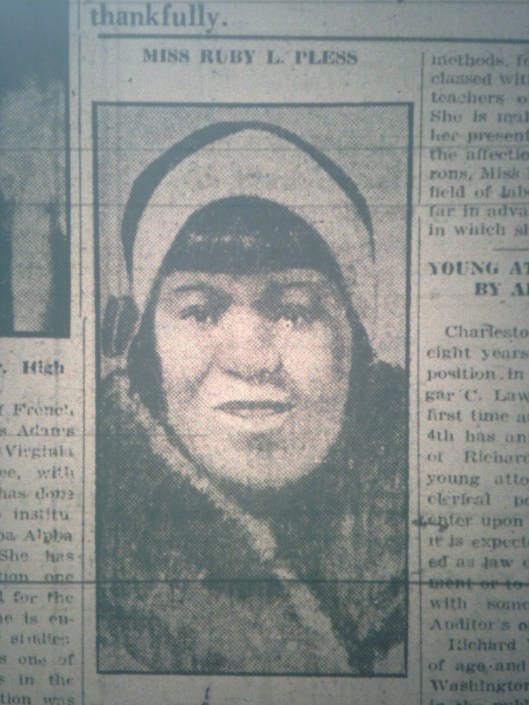
Miss Ruby L. Hess (1929)

26 Wednesday Feb 2020

Posted by Brandon Ray Kirk in African American History, Women's History

≈ Leave a comment

Tags

African-Americans, education, history, Logan Banner, Logan County, Lorado, Nannie Burroughs School, Ruby L. Pless, teacher, West Virginia, West Virginia Parent-Teacher Association, West Virginia State College, West Virginia State Teachers' Association

In April of 1929, the Logan Banner profiled numerous prominent African-American residents of Logan County, West Virginia.

Notable Blacks of Logan County LB 04.16.1929 13

Miss Ruby L. Pless

Teacher, Nannie Burrough School, Lorado

Graduate West Virginia State College and did summer work at same institution. She has taught four years, two of which have been spent in her present position.

She is a member of the West Virginia State Teachers’ Association and of the State Parent-Teacher Association.

Miss Pless is a teacher of engaging personality. Studious and earnest in her work, and direct in her methods, for obtaining results, she is classed with the group of progressive teachers of the county and state. She is making a splendid record in her present position. Well placed in the affections of her pupils and patrons, Miss Pless’ thoroughness in her field of labor is destined to lead her far in advancement in the profession in which she is engaged.

Logan Memorial Park in McConnell, WV (1928, 2020)

16 Sunday Feb 2020

Posted by Brandon Ray Kirk in Cemeteries, Logan

≈ 9 Comments

Tags

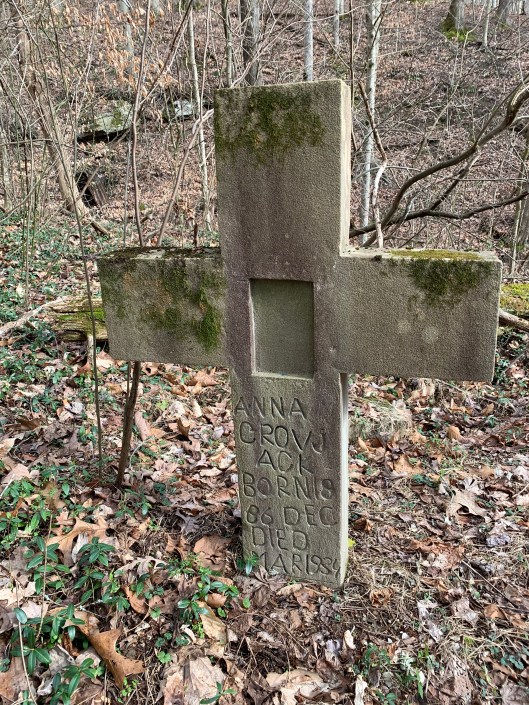
Aldridge Coal Company, Amanda Avis, Anna Crovjack, Appalachia, Brandon Kirk, C&O Railroad, cemeteries, Charles Quinn, crime, Dwight Williamson, Ed Burgess, Elzie Burgess, Fintown, genealogy, history, Hugh C. Avis, immigrants, Ireland, Logan, Logan Banner, Logan County, Logan Memorial Park, Mamie Thurman, Maude Steele, McConnell, Noah E. Steele, Q.L. Stewart, West Virginia, Woodmen of the World, Works Progress Administration

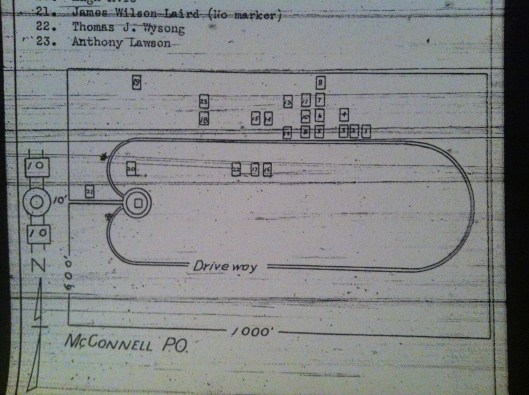
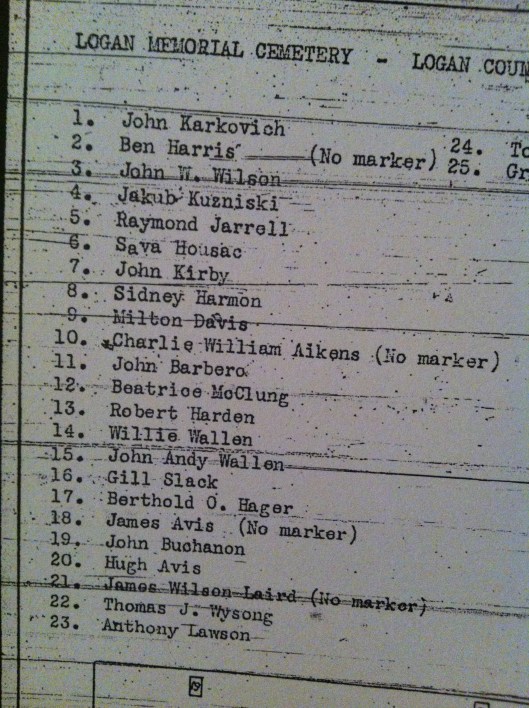
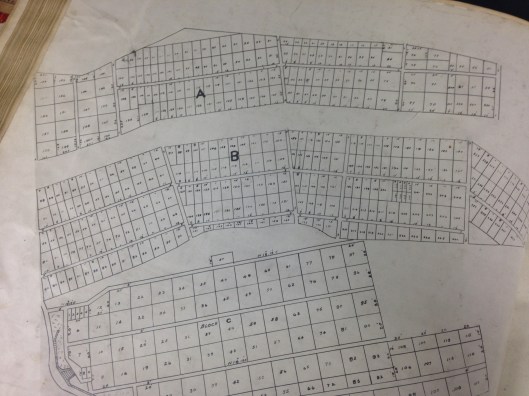
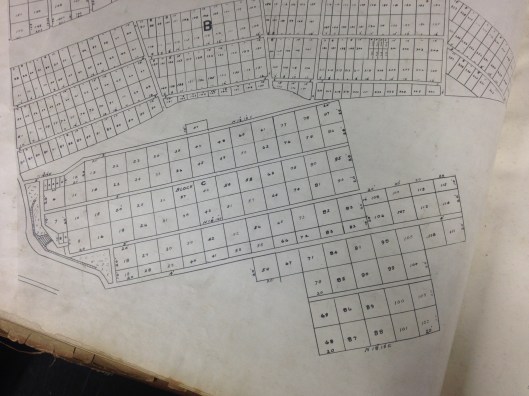
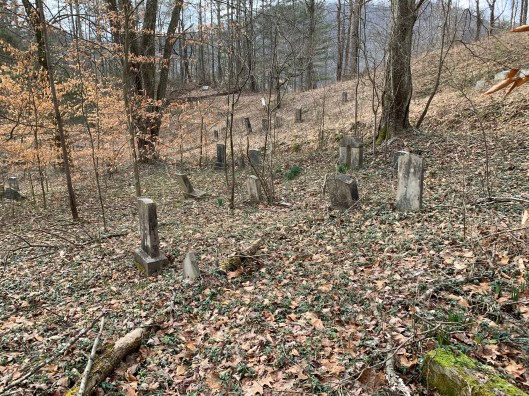
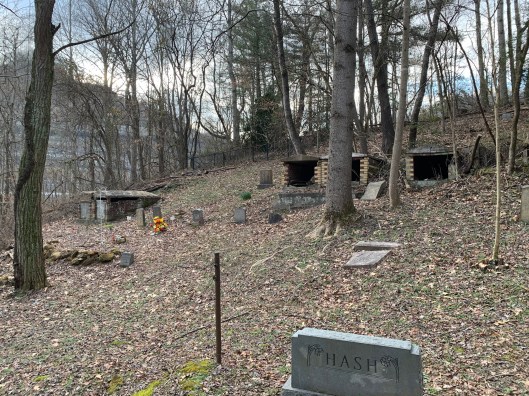
Logan Memorial Park was a “perpetual care” cemetery established in the late 1920s in McConnell, Logan County, WV. The cemetery contains the final remains of many noteworthy Loganites, including Mamie Thurman, whose 1932 murder continues to tantalize regional residents. The Logan Banner reported on the cemetery’s beginnings on September 7, 1928:

Work Rapidly In Developing Burial Park

With Brush Cut and Loose Rock Being Hauled for Surface, Road Work Starts Soon

BEAUTIFYING COMES SOON

Plans Call for Use of Skilled Landscape Gardeners to Aid in Placing Shrubbery

Conclusive proof that Logan is soon to have a modern burial part embodying all the improvements found in the highest type institutions of this kind anywhere was afforded a reporter of The Logan Banner in an inspection of the work being done near McConnell by the Logan Memorial Park company.

Much work was found to have been done already. Brush and undergrowth has been cleaned off the entire 20 acre tract. This will finally include the grubbing of stumps and raking up the trash until the entire tract can be mowed with a lawnmower. Several hundred sled loads of loose rock have already been hauled to the banks of the small stream that flows through the central part of the tract, where a rubble stone embankment will be built near the water course to be covered with vines and shrubbery.

All surface rocks will be removed, blasting being resorted to loosen the larger ones. Several hundred holes were drilled in the surface of the entire plot of ground before it was decided that it would be a suitable place for burial purposes. It was found that there was no ledge rock on the entire tract except at one small spot.

Work is now in progress in preparation for the concrete road to be built from the state road into the park. A ditch suitable for the placing of 26-inch tile to carry the small stream out of the park is being dug. The C. & O. had two steam shovels at work Wednesday cleaning off a sidetrack, unused for several years and submerged by silt from the roadside, preparatory to setting out a carload of tile. It will be laid at once and then the making of a grade for the concrete will follow.

This entrance is between the residence of Burgess and Aldridge. Options have already been secured on property adjacent so that a large stone and iron entrance can be built just off the state road. From that point the hard surfaced road passes up the hollow to where a natural amphitheater provides several acres of smooth land where the first section of the park will be developed. The improved road will entirely encircle this plot so that easy access will be afforded and each lot will be reached by either the roadway or paths.

At the lower end of the natural amphitheater stand several houses that were formerly the property of the Aldridge Coal Company. The present tenants have been ordered to vacate these and they will be torn down.

Water will be supplied to the entire section now being developed and in the spring the entire tract will be plowed and seeded to the best grass obtainable. At that time much shrubbery, from the best nursery stock, will be planted under the direction of competent landscape gardeners.

The Bannerman was in doubt as to the closeness of this tract to the Courthouse, so it was metered and clocked. It proved to be 2 1/2 miles in distance and it was driven easily in traffic in six minutes. Thus there will be the dual advantages of the great natural and enhanced beauty of the Logan Memorial Park site and proximity to the town.

The earnest desire of the company to get this memorial park ready for those desiring to use it is shown in the rush that characterizes the work of cleaning it of brush and rock and in getting in a permanent road. More than a dozen men have been at work ever since the charter was granted and others will be added as more projects get under way simultaneously. The permanent road is to be laid immediately. The rubble stone wall along the stream will come later, but every bit of the work is to be pushed as rapidly as men can do it.

The perpetual care which the charter confirms to the lot owner will no doubt be a great inducement. Already interested parties are inquiring about when it will be open for inspection. Q.L. Stewart, the manager, assures them that no avoidable delay will be allowed to intervene.

***

Here’s a WPA map of the cemetery dating from the 1930s:

Logan Memorial Cemetery 1Logan Memorial Cemetery 2

***

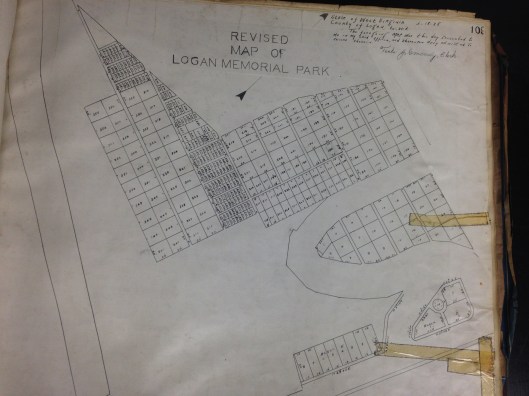
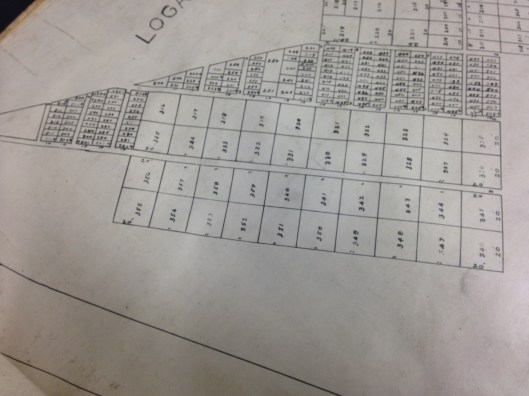
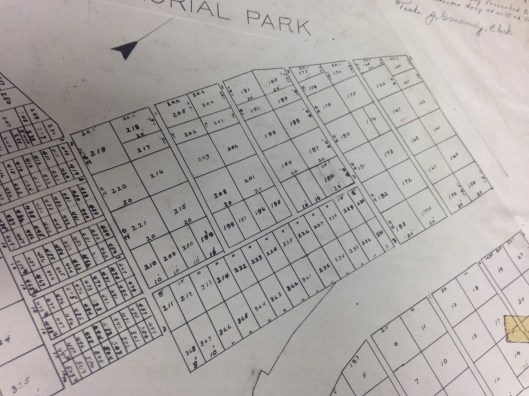
This 1938 map of the cemetery is located in the Logan County Clerk’s office:

IMG_5552IMG_5553IMG_5547IMG_5548IMG_5549

***

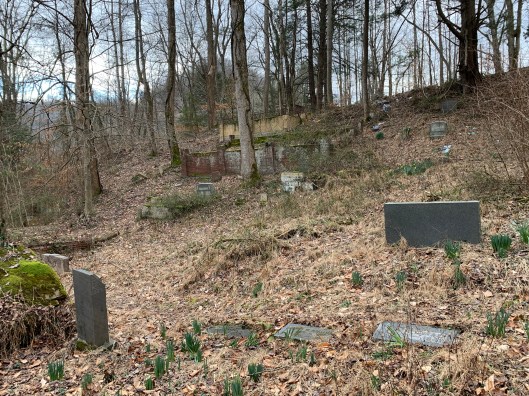
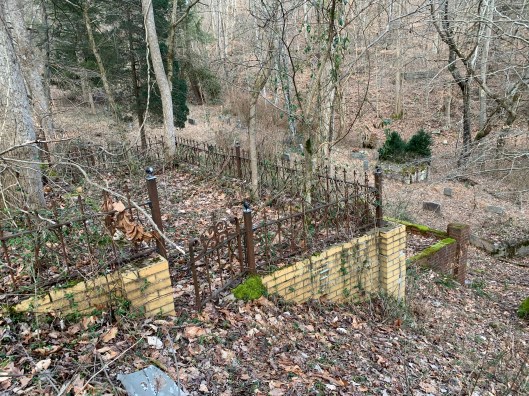
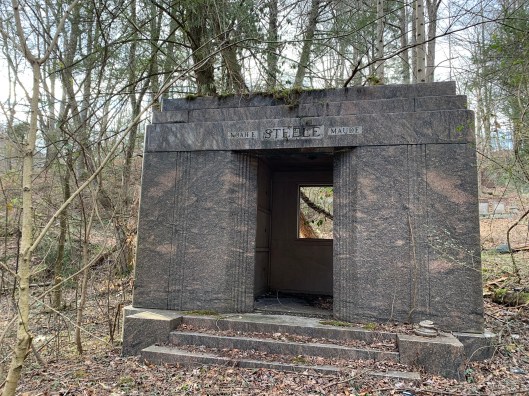
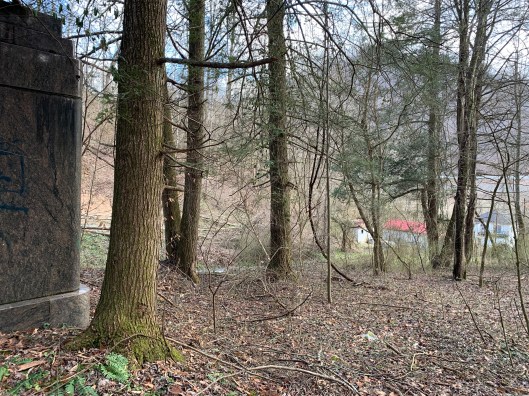
Here are photographs of the cemetery in 2020:

IMG_7700

14 February 2020

IMG_7704

14 February 2020

IMG_7716

14 February 2020

IMG_7722

14 February 2020

IMG_7762

14 February 2020

IMG_7783

14 February 2020

IMG_7791

Charles Quinn, Irish immigrant… 14 February 2020

IMG_7803

Many immigrants are buried in the cemetery… 14 February 2020

IMG_7804

14 February 2020

IMG_7808

14 February 2020

IMG_7809

14 February 2020

IMG_7845

14 February 2020

IMG_7888

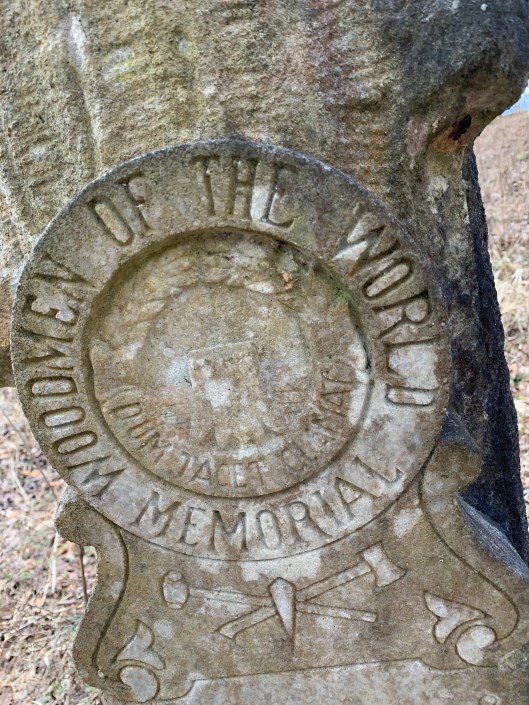
Woodmen of the World! 14 February 2020

IMG_7901

14 February 2020

IMG_8012

14 February 2020

IMG_8031

14 February 2020

IMG_8040

14 February 2020

IMG_8041

14 February 2020

IMG_8052

14 February 2020

IMG_8063

Mamie Thurman is buried below the Steele Mausoleum… 14 February 2020

IMG_E8079

Elzie Burgess helped dig Mamie Thurman’s grave. Here is an interview with Mr. Burgess by Dwight Williamson, dating from about 1985…

Miss Rosalie Adams (1929)

09 Sunday Feb 2020

Posted by Brandon Ray Kirk in African American History

≈ Leave a comment

Tags

Appalachia, Aracoma Junior High School, Douglas Junior High School, education, history, Logan, Logan Banner, Logan County, Omar, photos, Rosalie Adams, teacher, West Virginia, West Virginia State College

In April of 1929, the Logan Banner profiled numerous prominent African-American residents of Logan County, West Virginia.

Notable Blacks of Logan County LB 04.16.1929 11

Miss Rosalie Adams

Teacher, English Department, Douglas Jr. High School, Omar

Embracing the teaching of French, Sociology and History, Miss Adams is a graduate of West Virginia State College, A.B. degree, with honorary Cum Laude. She has done summer work at the same institution; member of Alpha Kappa Alpha and other social clubs. She has been in her present position one term, but is highly qualified for the grade of work in which she is engaged. When pursuing her studies Miss Adams was classed as one of the most brilliant students in the institution, and her graduation was most creditable in its distinctive marks. Miss Adams has aspirations to reach a higher degree of efficiency in her chosen profession, and contemplates pursuing studies for master’s degree in summer work in a credible institution. She is thorough and efficient in her work and takes high rating as a teacher.

Joe Hatfield for Sheriff of Logan County, WV (1927)

08 Saturday Feb 2020

Posted by Brandon Ray Kirk in Hatfield-McCoy Feud, Logan

≈ 3 Comments

Tags

Appalachia, Delorme, Democratic Party, Devil Anse Hatfield, Evaline Marie Hatfield, genealogy, Grace Ferrell, history, Huntington Business College, Island Creek, Joe D. Hatfield Jr., Joe Hatfield, Levisa Hatfield, Logan Banner, Logan County, Marshall College, Mingo County, politics, Republican Party, sheriff, Stirrat, teacher, Tennis Hatfield, Tug River, West Virginia

From the Logan Banner of Logan, WV, comes this bit of political history dated December 13, 1927:

J.D. Hatfield for Sheriff 12.13.1927 1

J.D. Hatfield Announces Candidacy For Sheriff

Native Son Will Ask for Republican Nomination in May Primary–That He Would Enter Race Was Expected, and That He Possesses Unusual Political Strength Is Undisputed

Joe Hatfield will be a candidate for the Republican nomination for sheriff in the primary election May 29.

That announcement will doubtless arouse tremendous interest but will create little surprise. For many months the public has expected that at a seasonable time his hat would be quietly tossed into the ring and remain there until the voters had registered their approval or disapproval. Having determined upon a course of action, he will go straight ahead.

Born and reared in Logan county, in love with its every stream and mountain, hoping and expecting to spend the remainder of his life amid the rugged hills to which his ancestors were lured by fate a century ago, he says he has long had an ambition to serve as sheriff of the county beloved of his kith and kin.

The statement that he was born in this county calls for this qualification: Joe Davis Hatfield was born at Delorme, on Tug River, then in Logan county but now in Mingo. That was 44 years ago. Except for a period at Huntington Business College and a year (1903-4) at Marshall College, he has lived hereabouts and his life is an open book. He attended country school on Island Creek and had some experience as a relief teacher, though at no time did he ever consider that his vocation. He is a brother of Sheriff Tennis Hatfield and a son of the late Captain Anse Hatfield and Lovisa Chafin Hatfield–their fourth youngest child, Tennis being the youngest.

Joe was married in 1917 to Grace Ferrell of a Mingo county family and is the father of two children, Evaline Marie, aged eight, and Joe D., Jr., aged five.

His fraternal affiliation are limited to the Elks and the Modern Woodmen of America.

In commenting on his announcement, Mr. Hatfield said, “I’m not running for the office solely for the honor and rewards it might bring, but also because I believe I can fill it in a way that my children and friends will be proud of. I want to give the people a square deal for their sake and mine–why should a man in an important office like that want to do less? I expect to be nominated, but if not I’ll do my part for the man who beats me; and when nominated I’ll plan to wage an active and winning campaign. Besides my experience and observation have given me some ideas about what a sheriff can and should do and I’ll probably discuss these with friends and perhaps in the papers at the proper time.”

Republican Stronghold

It is not The Banner’s purpose to espouse any man’s candidacy before the primary, yet there is no hesitancy in saying here and now that Joe Hatfield will be regarded by voters of all parties as a formidable candidate for the nomination. Quiet, suave, friendly, neat and attractive in appearance, on intimate terms with hundreds and even thousands of voters in the county, the scion of a prominent pioneer family, his strength is obvious to the humblest citizens as well as those trained in politics. And while on the subject of politics, let it be recalled that Stirrat, Hatfield’s precinct, was the banner Republican precinct in the county in 1926. The Republican vote varied from 310 to 312 for the different candidates; the Democratic vote from 54 to 58. The precinct won a flag for the largest registration of Republican voters before the primary and won a silver cup for the largest Republican vote in the election, the prizes having been offered by the county committee. Incidentally, that feat was credited largely to Joe Hatfield and brought the first prophecy the writer heard that he would be the next sheriff of Logan county.

Armed March Trial (1923): Convicted Man Flees to Mexico

08 Saturday Feb 2020

Posted by Brandon Ray Kirk in Battle of Blair Mountain, Coal

≈ Leave a comment

Tags

Appalachia, Battle of Blair Mountain, Blair Mountain, C.W. Conrad, Charles Town, Charleston, circuit clerk, crime, deputy sheriff, Don Chafin, H.E. Keadle, history, Jefferson County, Logan Banner, Logan County, Mexico City, Oklahoma, Oklahoma City, sheriff, U.G. Young, United Mine Workers of America, Walter Allen, West Virginia

From the Logan Banner of Logan, WV, comes this bit of history about the “Armed March” at Blair Mountain, dated February 2, 1923:

Allen Is Traced By Deputy E. Keadle To Mexico City

Walter Allen, convicted of treason at Charlestown on September 15, and sentenced to ten years in the state penitentiary and who was released on bond of $15,000 with U.G. Young of Charleston as surety and who jumped his bond and fled from the state recently has been traced by Logan officers to Mexico City.

A capias was received here on December 20 for Allen, the capias being issued to C.W. Conrad, clerk of the circuit court of Jefferson County, when Allen failed to appear there on the date set. Deputy H.E. Keadle took the capias to Charleston and called at headquarters of the United Mine Workers, and attorneys for that organization professed their ignorance of his whereabouts and stated they would do all within their power to apprehend the fugitive.

However it was ascertained that Allen had been in Oklahoma City, Okla., and the officers there were requested by wire to arrest the fugitive but he had fled the city when they searched for him. Deputy Keadle then continued the search and the latest information received at the sheriff’s office here states that Allen is now known to be in Mexico City, Mexico.

Allen was convicted for his participation in the armed march of Logan in August and September, 1921. According to the evidence in the trial which lasted five weeks, he handled the finances and otherwise assumed direction of the armed march which was stopped at the border of Logan County where a battle between the invaders and the state forces raged over a battle line extending for 25 miles.

After his conviction his attorneys noted an appeal and stated the case would be carried to the supreme court. The time granted Allen for his appeal expired December 13, but the time expired without any record of an appeal being noted. When Allen failed to appear at Charlestown to begin his sentence a capias was issued for him and sent to Sheriff Chafin for execution and the hunt for the fugitive then began.

Due to the red tape connected with extradition proceedings, it is not yet known what steps will be taken by Logan authorities toward extraditing the fugitive.

***

For more information about Mr. Allen, go here: https://www.wvencyclopedia.org/articles/205

Jewish History for Logan, WV (1923)

31 Friday Jan 2020

Posted by Brandon Ray Kirk in Huntington, Jewish History, Logan

≈ Leave a comment

Tags

Abraham Feinstein, Appalachia, Charleston, Coalfield Jews: An Appalachian History, Dave Fried, Deborah R. Weiner, history, Huntington, Jews, Ku Klux Klan, Logan, Logan Banner, Logan County, New York, Philadelphia, West Virginia

From a Logan Banner story dated May 11, 1923 comes this bit of history about Jewish activity in Logan, WV.

Dr. Feinstein Gives Talk to Society

Dr. Abraham Feinstein, of Huntington, addressing the Hebrew Sisterhood of Logan county Wednesday evening, spoke zealously for the establishment of a Jewish synagogue in Logan.

Dr. Feinstein told the gathering that there was one idea uppermost in his mind, which he wanted to submit. And that idea was the establishment of a place of worship and meeting for the Jews of Logan.

This suggestion had a far more deeper significance than was apparent on the surface, the audience was told, because it was the small part of the greatest problem that the Jews of America face today.

And this problem, as Dr. Feinstein pointed out, is “the reclamation of Jews to Judaism. And this can be done only through the mediums of education. Study the history of your people and your race. Jews are Jews merely by accident; understanding Jews study their religion, so that they might know why they are Jews. Familiarize yourself with the prophets, be square-shouldered Jews, proud and happy in being a Jew.

“It isn’t anti-semitism, the K.K.K., Henry Ford with his smug ideas of patriotism, nor Lowell asking for the expulsion of the Jews from American universities, nor the Zionist movement that is your problem. Your problem is education. See to it that this problem is solved and you will have contributed richly to the Jewish life in your city.”

Dr. Feinstein pointed out that in New York, where the largest number of Jewish citizens in the world reside, that seventy-five percent of the children have never received any kind of Jewish education whatsoever. “The more we are attacked and denounced the more schools and synagogues we should build,” he said.

“The greatest enemy of the Jews is the Jew who goes out, ignorant of things Jewish,” Dr. Feinstein said.

These words were quoted from an address of a Philadelphia Rabbi by the speaker: “I am not particularly pleased when I hear of a Jew becoming a great scientist, for Judaism is not a school of science. I am not pleased when a Jew becomes a great actor, a great inventor, a great lawyer, pugilist, statesman, but I exalt and rejoice when a true altruistic man becomes a Jew.”

The order of the meeting follows:

Opening prayer–Dr. Feinstein.

Piano and violin–Mrs. Dave Fried and Mrs. Brown.

Piano Solo–Mrs. S. Michaelson.

Voice–Miss Mellman of Charleston.

NOTE: One excellent source for regional Jewish history is Deborah R. Weiner’s Coalfield Jews: An Appalachian History (2006).

Armed March Trial (1923)

29 Wednesday Jan 2020

Posted by Brandon Ray Kirk in Battle of Blair Mountain, Boone County, Coal, Logan

≈ Leave a comment

Tags

A.M. Belcher, Appalachia, Battle of Blair Mountain, Bill Blizzard, Blair Mountain, Boone County, C.W. Osenton, coal, Coal River, crime, deputy sheriff, Dingess Run, Edgar Combs, George Muncy, H.W. Houston, history, J.E. Wilburn, James Cafalgo, John Gore, Lewisburg, Logan Banner, Logan County, Nellis, Ottawa, T.C. Townsend, United Mine Workers of America, Velesco Carpenter, W.B. Mullens

From the Logan Banner of Logan, WV, comes this story dated June 29, 1923 about the trial that resulted from the “armed march” on Logan County, WV, by UMWA miners:

Widow Is Introduced At The Blizzard Trial

LEWISBURG, W.Va., June 27 — Two word pictures, one from the lips of the widow of George Munsy, coal digger who “never came back” from guarding his county, the other from one of the party that met and killed the outpost on the mountain side, lay tonight before 12 men who are to determine whether Sub-District President William Blizzard, of the miners’ union, was an accessory to the murder of Munsy.

Before these word pictures the jurors had heard counsel on both sides outline the story of the labor trouble of Southern West Virginia coal fields, the march of thousands against the Logan border, the interruption of that march after a brigadier general of the United States Army had intervened a midnight clash between miners and deputy sheriffs and state police, resumption of the march, fighting on the mountain ridges that separated the non-union Logan coal fields from the then union fields on Coal River, the meeting of 30 or 40 marchers with Deputy Sheriff John C. Gore, of Logan county, and two companions one of whom was Munsey, the volley of shots that answered the Logan pass-word, “amen,” and a wealth of detail about the march presented from point of view of both prosecution and defense.

Review Blair Battle

All the morning was spent in the opening of the attorneys, A.M. Belcher and C.W. Osenton, for the prosecution, and H.W. Houston and T.C. Townsend, for the defense. Then in the afternoon the jurors turned their attention to the witness box. First they saw W.B. Mullens point out the battle line and the points of interest in the march on a map that was tacked to the courthouse wall above the witness stand. Next Velesco Carpenter, facing an inexhaustible stream of questions in direct and cross-examinations told how he had gone from his home in Nellis to Blair, how in a party of about 35 he marched up Blair mountain, spent the night, and early the next morning set out and from his place in line watched the meeting with three men, one of whom he learned was Gore, heard the shots and saw the bodies after they had fallen. Then just before court adjourned Mrs. Munsy took the stand for her brief examination so that she might return tomorrow to her seven children in her home on Dingess Run Creek in Logan county.

Widow on Stand

“The night before he was killed was his time to come home but he never came,” Mrs. Munsy testified that her husband had been digging coal for about fifteen years before his death and that they had been married about 20 years. He had been “guarding for about a week, working for Logan county, for the coal operators,” she went on, but later when Mr. Houston cross-examined her on that statement her formerly quiet tone rose to the ringing declaration “he was defending his county.”

Carpenter did not know who fired the shots that killed Gore, Munsy and James Cafalgo. When the shooting began he ran back a few steps and dropped to the ground, he said. After it was over he went to a point near the body of “the foreigner,” and saw that of Gore, but could not see the third body. Edgar Combs told him he had killed the one Carpenter had designated as “the large man in the middle,” and later told another of the party this man was Gore.

He left Nellis, where he was employed as a pump man, on August 29, 1921, he said, after a man had come to the mines and threatened to “knock off” the “yellow” men who did not go. A journey on foot and by rail took about 30 in his party to Ottawa, and there Edgar Combs picked him and three others he named to go to Blair. The next day from the schoolhouse steps in Blair, he said, Rev. J.E. Wilburn made a speech and a party was organized that went into the hills. Some threw down their guns and refused to go but threats were made, and the men were lined up in single file, with leaders for squads of eight men. The original party of 50 or 60 divided, and the group of about 35, in which he went, camped on the top of the mountain until daybreak. They heard firing in the direction of the “gap,” through which previous testimony had shown the road from Blair to Logan ran and set out in that direction.

Then he told of the meeting with the “large man” and his two companions, and by pre-arranged signal the leader lifted his hat three times to indicate there was no danger. The large man beckoned to them to come on, and when the parties met there were mutual demands for the password. The shots were fired, Carpenter testified, when somebody said “amen,” and in the opening statements prosecution counsel had told the jury that it would be shown that “amen” was the Logan password. Wilburn, the preacher, was in the lead of the marchers column, and Combs next behind him, the witness said.

Chapmanville News 11.23.1923

28 Tuesday Jan 2020

Posted by Brandon Ray Kirk in Chapmanville, Huntington, Logan

≈ Leave a comment

Tags

A.K. Bowling, Appalachia, B.B. Ward, Basil Robertson, Bennie Robertson, Cecil Ward, Chapmanville, Charleston, Code Tabor, Donald Stone, Dr. Turner, Eva Barker, Floyd Barker, genealogy, Harriet Hill, Hinton, history, Huntington, Kentucky, Lexington, Logan, Logan Banner, Logan County, New York, Opie Robertson, Roscoe Turner, Subinia Ward, Victor Toney, Wallace Ferrell, Washington, Wayne Brown, West Virginia, William Turner, Young People's Epworth League

A correspondent named “Old Man Grump” from Chapmanville in Logan County, West Virginia, offered the following news, which the Logan Banner printed on November 23, 1923:

Last week was a sad week on account of the death of Dr. Turner and we failed to write. We all are much grieved over his death.

Rev. Chambers conducted a two weeks service and had quite a few joiners and several were baptized Sunday. Rev. Chambers left Sunday afternoon for Lexington, Ky.

Mr. Cecil Ward left Monday for Charleston where he will spend his vacation. Wish you a happy time, Cecil.

The Young People’s Epworth League are doing great work and the young and old people seem to be interested in it. We hope they still hold out for I am sure it will be a great help to all the young people.

Mr. Opie Robertson spent Sunday in Chapmansville with his mother, Mrs. A.K. Bowling.

We have seen in the papers so much about Hazel Maud, Hazel E. McCloud, but we haven’t never been able to find out which is Hazel M. and Hazel E. but we see them quite often.

Ima Nutt, we sure are glad you come to our little town, but we would be pleased if you would let yourself be known and not be so bashful. Now don’t get mad as we are just joking.

Mr. Donald Stone left Monday for Charleston for an extended visit. We haven’t been able to find out how long.

Mr. Basil Robertson spent Sunday with his mother of this place.

Seems like some of the girls like to quarrel on their way home from church, don’t they Hazel?

Mr. Victor Toney and Miss Bennie Robertson were seen out walking Sunday afternoon.

Mr. Floyd Barker spent Saturday in Chapmansville with friends. Mr. Barker is here from the army on a three [day?] vacation, then he will return and stay another year.

Mr. Code Tabor of Logan was visiting in Chapmansville Saturday.

Roscoe Turner, a brother of Dr. Turner, from New York, attended the funeral of his brother last week.

Mr. and Mrs. Wallace Ferrell of Huntington spent last week here with Mrs. Ferrell’s sister, Mrs. Turner.

Mr. and Mrs. King of Hinton attended the burial of Dr. Turner. Mrs. King is a sister of Dr. Turner.

Mrs. William Turner, mother of the late Dr. Turner, and his sister, Mrs. Mankins of Washington, D.C., attended the burial services.

Mrs. Subinia Ward was calling on Mr. and Mrs. B.B. Ward Sunday.

Mr. Wayne Brown and Miss Harriet Hill were seen out walking Sunday evening.

Miss Eva Barker and Mr. Wilkie were seen out car riding Sunday.

Stone Branch News 09.14.1923

23 Thursday Jan 2020

Posted by Brandon Ray Kirk in African American History, Stone Branch

≈ Leave a comment

Tags

Appalachia, Bob Ferrell, Bonnie Covert, genealogy, history, Logan Banner, Logan County, Lorado, Malinda Workman, Nannie Lilly, Rosa Workman, Sadie Ferguson, Stone Branch, West Virginia

A correspondent named “Snow Ball” from Stone Branch in Logan County, West Virginia, offered the following news, which the Logan Banner printed on September 14, 1923:

As Rosebud didn’t write last week, think I will try and write this week.

The weather is very unpleasant at this writing.

Mr. Bob Ferrell is seen out car riding occasionally.

We are sorry to say that our friend Malinda Workman is very ill at this writing.

Miss Bonnie Covert has been entertaining relatives the last few days.

Miss Rosa Workman and Miss Sadie Ferguson seem to enjoy carrying water.

Miss Nannie Lilly was seen reading a letter containing 13 pages Friday. I wonder if it wasn’t from Lorado? She said not.

Big Creek News 06.22.1923

22 Wednesday Jan 2020

Posted by Brandon Ray Kirk in Big Creek

≈ Leave a comment

Tags

Appalachia, Big Creek, Dorothy Matthews, genealogy, history, Lincoln County, Lizzie Sanders, Logan Banner, Logan County, Mae Lucas, Nell Perry, Thelma Freeman, West Virginia

A correspondent named “Blue Eyes” from Big Creek in Logan County, West Virginia, offered the following news, which the Logan Banner printed on June 22, 1923:

We are having some very nice weather at this writing.

May Lucas visits Lincoln quite often since Minie(?) has come here.

Nell Perry sure does like bobbed hair.

Thelma Freeman and Dorothy Matthews are real good chums.

Franklin wears a rose on his cap and I guess he is looking for a girl.

Thelma looks lonesome. Wonder what’s wrong? Did she lose a friend?

Lizzie Sanders has put up a restaurant in Big Creek.

Chapmanville News 11.30.1923

20 Monday Jan 2020

Posted by Brandon Ray Kirk in Big Creek, Chapmanville, Coal, Holden, Logan

≈ Leave a comment

Tags

A.K. Bowling, Appalachia, Bernie Ward, Big Creek, Bill Carper, Bill Cooper, Chapmanville, Charleston, Chester Barker, coal, Dr. J.D. Turner, Fannie Brown, genealogy, Guyan Hospital, Henlawson, history, Holden, Logan, Logan Banner, Logan County, Man, merchant, Molly Conley, O.C. Winters, Oliver Shuff, Oscar Langton, T.A. Rogers, West Virginia

A correspondent named “Pug Nose” and “Let All-Alone Blues” from Chapmanville in Logan County, West Virginia, offered the following news, which the Logan Banner printed on November 30, 1923:

We are having some rainy weather here now.

Fannie Brown, Miss Daniels and Mrs. Bernie Ward have some attraction in Big Creek, as they go down every evening on 51 and back on 52.

Mr. A.K. Bowling was home Sunday from Man, W.Va.

Mrs. Collins of Holden was calling on homefolks SUnday.

Borned to Mr. and Mrs. Oscar Langton, a fine boy last Friday. Mrs. Langton before marriage was Miss Fannie Brown.

Some one said wedding bells will ring at Henlawson soon.

Mr. Bill Cooper is able to be home from the Guyan Hospital at Logan.

Mr. T.A. Rogers was in Logan last Thursday on business.

We are having lots of new houses built now.

Oliver Shuff is building him a house here.

***

As there hasn’t been any one here writing I will try and see what I can do.

Last week was sad on account of the death of Dr. J.D. Turner. We are much grieved over the loss of him.

Mr. Bill Carper was seriously hurt in the mines while driving. He was caught between two cars. Mr. Carper was taken to the Guyan Valley hospital.

Miss Molly Conley and Mr. Chester Barker were seen coming from church one night last week.

Ferrells and Winters store seems to be doing great business under the general manager, Mr. O.C. Winters.

Combinations: Everett and his sweater; Inez and her dancing; Anna and her apron; Bena and beans; Mrs. A.K. Bowling and her cap; Mrs. Ward and her hotel; Eva and her parcel; Cecil going to Charleston.

Chapmanville News 10.12.1923

14 Tuesday Jan 2020

Posted by Brandon Ray Kirk in Chapmanville, Holden, Logan, Man, Sports

≈ 1 Comment

Tags

A.K. Bowling, Annie Ward, Appalachia, Basil Robertson, Bennie Robertson, Bernard Ward, Bob Ferrell, Chapmanville, Charleston General Hospital, Charlie Stone, football, genealogy, history, Holden, Homer Langdon, Ina Barker, Logan, Logan Banner, Logan County, Man, Nell Bryant, Oran Mobley, pie supper, revenue agents, Ula Barker, West Virginia, Willie Boothe

A correspondent named “The Black Cat” from Chapmanville in Logan County, West Virginia, offered the following news, which the Logan Banner printed on October 12, 1923:

Quite a large crowd attended the musical Saturday night at Ula Barker’s store.

Mr. Bob Ferrell was calling on Miss Barnette Sunday.

A large number was presented at the pie supper Thursday night. It was given by the school. Pies and candy sold well with auctioneer Mr. Charlie Stone, Prof. Stiles and Mr. Eyrial.

There was much excitement here Friday when two of our dry law officers were thrown by the white mule and were seriously wounded. They were taken to the Charleston General Hospital.

We are sure glad to see Ima Nutt back on the job again. We have missed him so much.

Mr. Homer Langdon spent Sunday with his mother of this place.

Mr. Bernard Ward spent Saturday in Holden.

Quite a large crowd attended the party Friday night at Mr. and Mrs. Bernard Ward’s. After an evening of fun, refreshments were served.

Some of our most popular young men have left here and gone to Holden to work.

Mr. and Mrs. N. Muncy returned last week after a few weeks visiting in Virginia. They report a good trip.

Mrs. Annie Ward and Mrs. A.K. Bowling were visiting in Man this week.

Mr. Oran Mabley is seen in Chapmanville pretty often now.

Misses Ina Barker, Bennie Robertson, Messrs. Darnald Stone and Bacil Robertson and Mr. and Mrs. Bernard Ward attended the football game at Logan.

Mr. Willie Boothe and Miss Nell Bryant seem to enjoy themselves walking in the sunshine.

Messrs. Joe Glim and George Ohler returned home after a long vacation.

State v. Edgar Combs (1923): Statement of Clarence H. Frey, No. 17

12 Sunday Jan 2020

Posted by Brandon Ray Kirk in Battle of Blair Mountain, Logan

≈ Leave a comment

Tags

Appalachia, Blair Mountain, Clarence H. Frey, coal, editor, history, Logan, Logan Banner, Logan County, Lola Herald, Mine Wars, West Virginia

Document 17-1Document 17-2

Chapmanville News 11.02.1923

12 Sunday Jan 2020

Posted by Brandon Ray Kirk in Chapmanville

≈ Leave a comment

Tags

Appalachia, Chapmanville, Chapmanville Post Office, Clyde White, Darnell Stone, genealogy, Hazel E. McCloud, Hazel M. McCloud, history, Inez Barker, Logan Banner, Logan County, Victor Toney, West Virginia, Young People's Christian Endeavor

Correspondents named “Evelyn and Marie” from Chapmanville in Logan County, West Virginia, offered the following news, which the Logan Banner printed on November 2, 1923:

We are having nice weather at this writing.

We are all glad to know Mr. Darnell Stone and Miss Inez Barker were out joy riding Sunday. Wonder what Inez will say when she finds out his car was shot all to pieces. Ask Darnell. He knows.

Mr. Victor Toney and Miss Hazel E. McCloud attended church Sunday night.

Miss Hazel M. McCloud attended the Young People’s Christian Endeavor Sunday night.

Wonder what makes Miss Hazel E. McCloud visit the post office so much? Ask Hazel M. McCloud. She ought to know.

Mr. Clyde White was visiting in this little burg Sunday.

Big Creek News 09.05.1924

12 Sunday Jan 2020

Posted by Brandon Ray Kirk in Big Creek, Guyandotte River, Huntington, Logan

≈ Leave a comment

Tags

Appalachia, basket meetings, Big Creek, Burke McComas, Cecil Hager, Charleston, Florence Wheeler, genealogy, Gladys Saunders, Guyandotte Valley, history, Huntington, Jess Harmon, John Mitchell, John Mobley, Laura Hager, Lillie Estep, Lloyd Ellis, Logan, Logan Banner, Logan County, Lonna Hager, Lulu Harmon, merchant, Myrtle Mobley, Nannie Lilly, Nannie Mobley, Norma Saunders, P.D. Bradbury, Pearl Mobley, Peter M. Toney, Tom Vance, Ward Shively, West Virginia

An unnamed correspondent from Big Creek in Logan County, West Virginia, offered the following news, which the Logan Banner printed on September 5, 1924:

Dear old Banner, here I am with a bit of news from our little city Big Creek, one of the most leading little cities on the Guyan Valley.

Miss Lulu Harmon is very ill at this writing.

Mrs. John Mitchell was calling on Mrs. John Mobley Sunday.

It was sad to see Mr. Burke McComas baptized Sunday. He is very ill and not expected to live.

Mr. Lloyd Ellis seems to be enjoying himself of late.

Misses Florence Wheeler and Gladys Saunders has returned home after a short stay in Huntington.

A fine new boy arrived at the home of Mr. and Mrs. John Mobley.

Don’t forget the basket meeting Sunday on Big Creek. Everybody invited.

Misses Nannie Lilly, Myrtle Mobley, and Cecil Hager were out car riding Sunday.

Mr. Jess Harmon and Miss Norma Saunders were out picnicking Sunday.

Mr. Tom Vance and Miss Pearl Mobley motored to Logan Sunday.

John Mobley has accommodated all loafers. He has made a loafers bench under his shade tree near his store.

Ward Shively has returned to his home after a short stay in Charleston.

Peter M. Toney made a flying trip to Huntington to see his home folks.

We all were sorry when Mr. P.D. Bradbury found his span of mules drowned Sunday. They were tied with a rope and fell over the high bank.

Mrs. Nannie Mobley was kodaking Sunday evening.

Miss Lillie Estepp returned home after a short stay with her parents.

Miss Gladys Saunders and Miss Myrtle Mobley had a happy meeting when first they met after Gladys’ return home.

There are plenty of cars and good drivers nowadays.

Mrs. Lonna Hager of Huntington is the guest of her sisters, Laura Hager.

Hungarian News from the WV Coalfields (1923, 1927-1929)

13 Friday Dec 2019

Posted by Brandon Ray Kirk in Coal, Hungarian-American History, Huntington, Inez, Logan, Music, Williamson

≈ 1 Comment

Tags

Appalachia, Beauty, Charleston, Cinder Bottom, coal, crime, dancing, Elizabeth Nagy, Ellis Park, Emmett Scaggs, Himlerville, history, Hungarian Benevolent Association, Hungarian Miners' Journal, Hungarian-Americans, Hungarians, Huntington, Joe Hatfield, Kentucky, Keystone, Logan, Logan Banner, Logan County, Martin County, McDowell County, Mingo County, Mud Fork, Rose Mustapha, Warfield, Welch, West Virginia, Williamson, Williamson Daily News

Between 1900 and 1920, a large number of Hungarians settled in West Virginia. Most were employed as coal miners. As of 1920, 6,260 Hungarians lived in West Virginia, primarily in Logan and McDowell counties. The Logan Banner, seated in Logan, WV, offered coverage of Hungarian news. It also commented on items published by Martin Himler in the Hungarian Miners’ Journal.

New Marathon Dance Record Is Made Here

Rose Mustapha, Pretty Hungarian Starts the Step Believed to Be the record.

At nigh noon Sunday, Rose Mustapha, a beautiful Hungarian girl, tripped the starting step in a terpsichorean debauch, that is believed to have established a record for sustained dancing in groups. Rose led a cotillion of thirty of her countrymen over a stretch of nineteen hours of continual dancing.

The dance started at twelve o’clock Sunday noon and continued without intermission till seven o’clock Monday morning. The jolly spirit of old Budapest struck color with jazz hilarity as the dancers spun in a vortez over the polished floor.

Hundreds of the dancers’ admirers rimmed the floor, hailing the participants in a half dozen different languages and dialects. Three wheezy but quite animated violins provided the music, which ran in wild Magyar strains and jazzy syncopation.

For the most part the dancers adhered to their native folk dances, but occasionally a couple would break into a fox trot, or a one step. At six o’clock Sunday evening, the dancers were given liquid nourishment as they whirled, and at midnight the same was repeated.

Most of the dancers finished strong, but several of the weaker sex had to be helped from the floor by their friends. Long distance dancing is quite common in their native land, and had the participants been in trim the task would have been comparatively easy, they say. As it was all of the men, who are miners, reported for work Monday morning and so far no ill results have been reported of the affair.

Logan (WV) Banner, 3 August 1923

***

Hungarian Dance

Several hundred persons enjoyed the dance given by the Hungarian Benevolent Association at Ellis Park skating rink last Saturday night. The program included many attractive features and novelties. Miss Elizabeth Nagy of Mud Fork was the winner of the beauty prize. She received a fine watch and $5 in gold.

Logan (WV) Banner, 29 November 1927

***

Hungarian Paper Tells of Resorts Hereabouts

Sensational Charges Prompt Williamson News to Demand Investigation and “Clean-Up”–Logan and Neighboring Cities Are Mentioned In This Alleged Expose

A Hungarian paper published at Himlerville, Ky., not far from Williamson, is running a series of sensational articles on vice conditions in Logan, Williamson, Huntington and Charleston. These articles are printed both in English and Hungarian and are attracting much attention, many copies of the paper having been sent to the cities named.

Two articles about Logan have mentioned various resorts in which it is charged that vice is rampant, that protection is obtained by bribery of officials, and that conditions are getting worse. Local officers brand these so-called disclosures as either baseless or greatly exaggerated.

In Williamson the expose has attracted much attention, particularly since the Williamson Daily News carried the following editorial, under the heading, “A Clean City.”

It’s a sad commentary on our city, county, and state police officials when the leaders of the foreign element in our midst are forced to take the lead in cleaning up moral conditions.

Through the Hungarian paper published at Himlerville, Ky., a campaign is being waged to clean up Williamson, Logan, Huntington and Charleston.

We are primarily concerned in Williamson and this paper charges that Williamson is harboring not less than eleven Hungarian brothels and some fifteen speak-easies. The editor of the paper has furnished the Williamson Daily News with the names of eight hotels and rooming houses where he says “light o’ love ladies” may be found.

It is common knowledge in Williamson that what he charges is true. Furthermore it is also common knowledge that there is hardly a hotel from the best to the worst in the city that does not harbor women of prostitution.

These women are debauching our manhood and spreading disease and there are attendant demoralizing evils which add to the indictment against them.

Not only are there Hungarian brothels in Williamson, but there are brothels that cater to every race and condition. The fact that they exist is known to practically every person in Williamson.

In this same Himlerville paper in an article published in this week’s issue it is stated that “Protection fees vary between twenty-five and seventy-five dollars weekly” suggesting a reason why no action is taken to remedy conditions.

We have had every reason to believe that Williamson was infested with brothels of every degree of degradation, but until the bold statement is made in the Hungarian paper, we had no reason to suspect that some persons were receiving protection fees.

However, such a state of things is a natural noncomitant, in view of the laws of the land. It would be very easy for city, state or county officers to take action, and if they do not the question immediately arises: Why?

It cannot be argued that it is impossible to clean up the city in this respect. We all know better. The chief of police and four good policemen, with proper backing of the mayor and the citizens of Williamson could do the job, and do it thoroughly in ten days. In doing it they could be so impressively earnest that there would be no recurrence of the evil for months to come. If instances of violations of the law of this character did occur in the future they could enforce the law with such vigor as to deter others. Williamson would soon be classed as a “clean city.”

Even the notorious “Cinder Bottom” at Keystone has been cleaned up. Welch, the county seat of McDowell county, is known far and wide as a “clean city.” Chippies and their like give it a wide berth. Why? Because the mayor and the chief of police of Welch, with a determined citizenship back of them, will not tolerate the evil. Merchants and business men of Welch generally are unreservedly in favor of an absolute ban against women of evil character being allowed to remain in hotels and rooming houses, because they know it hurts business and is a thoroughly demoralizing factor.

Primarily the question is one for the mayor and the chief of police at Williamson to handle, but there are other law enforcement agencies that could function.

For instance, the prosecuting attorney has an effective weapon at hand if he wants to use it. We refer to the state padlock law, upheld by the supreme court. With this weapon he could close every hotel and rooming house in the city that harbored women of ill fame. And there would be no question of securing sufficient evidence to act. It is ready at hand.

There is another agency, the state police. This efficient body of men could take action and bring the matter to a hand.

The state health department is aware of the fact that Williamson is one of the vilest cities in the way of brothels in the state. It has investigated conditions here and has data that could be used by officials who wanted to take action. Furthermore the state health department, on request of the city or county officials, would send investigators here to ascertain true conditions. But, if we understand the situation rightly there is no need for further investigation. The brothels are conducted more or less openly, are well advertised and unfortunately are well patronized.

There would be no lack of information to proceed upon if city, county or state officials wanted to take action. And first of all, it is up to our city officials to act.

Logan (WV) Banner, 27 January 1928

***

NOTICE TO LOGAN

With newly sharpened sticks the Hungarian Miners Journal, published at Himlerville, Ky., continues to prod into vice conditions hereabouts. Its latest issue is devoted largely to a further exposure at Williamson’s intrenched vice, but Logan has not been forgotten. In fact, in a large type box on the first page notice is given that the spotlight will be turned again soon on the garden spot. It says:

“The brother-situation of Williamson is taking up all our space and our energies for a few days.

“This does not mean that we have nothing more to say about Logan brothels.

“A score of Hungarian criminals, keepers of brothels and white-slavers are harbored in and by Logan, to the great detriment of the decent Hungarians in the Logan field.

“We demand the expulsion of these criminals and we will turn to Logan in a very short time.

“Surely the decent citizens of Logan are not going to build a roof over their town to designate THE red-light district.”

Logan (WV) Banner, 3 February 1928

***

Hungarian Paper Reverts to Logan’s Need of Reformation

Editor Fisher Takes Crack at The Banner, Sheriff Hatfield and Chief Scaggs–Long Silence Broken By Familiar, Rasping Outcry

Remember the Magyar Banyaszlap, a newspaper formerly published at Warfield, Ky., not far from Williamson, W.Va. A year or more ago it probed conditions in Logan and carried some sensational strictures about county and city officials. Finally, an officious and offensively inquisitive soul, the editor hisself, came in person and before he left was given quite a thumping by Chief of Police Scaggs.

Some time later the coal company located at Warfield and Hungarian-owned, went into the hands of a receiver and whether the Banyaszlap then suspended publication or not it ceased to come to this office. The other day a copy came. It is published in Columbus now but its editor is evidently still interested in conditions here. After scanning its eight pages, the writer of these lines found but one article printed in English. That embraced a clipping from The Banner and the Banyaszlap’s comments thereupon. The article clipped appeared to the Banner on April 9 and had to do with reports that the sheriff’s forces were determined to suppress the liquor traffic in boarding and lodging houses that cater to foreign-born miners. Most Banner readers will recall that news item and for that reason it will not be reproduced here, but what the Columbus paper says may be of some interest.

“We are glad to note the sudden interest of Sheriff Hatfield, and the rather mild interest of the Logan Banner, in the speak-easyes.

“The officers do not have to ‘trail’ these boarding houses, for we have published a list of them.

“And we have also published a long-long list of speak-easyes and brothels in Logan, W.Va., with addresses, and names, with locations and any other needed informations.

“Why not start a housecleaning right here in Logan, W.Va., and spread it then to the coal field?

“We can promise Logan and its vicinity that others than the sheriff will also be interested in these affairs.

“When the gunman (called chief of police) of Logan so heroically objected to our articles, we have promised that we will have the matter attended to in good time.

“It will happen soon.

“Perhaps hence the sudden interest in the Logan vice.”

Logan (WV) Banner, 23 April 1929

***

For more information about Hungarians in West Virginia, go here: https://www.appalachianhistory.net/2017/03/magyars-in-morgantown.html

For more information about Martin Himler, Himlerville (Beauty), and the Magyar Banyaszlap: Hungarian Miners’ Journal, go here: https://www.appalachianhistory.net/2014/11/saving-himler-house.html
Stirrat Colored News 01.05.1923

11 Wednesday Dec 2019

Posted by Brandon Ray Kirk in African American History

≈ Leave a comment

Tags

African-Americans, Chauncey, G.J. Parks, history, Island Creek, Lewis Calvin, Logan Banner, Logan County, preacher, Stirrat

A correspondent named Lewis Calvin from Stirrat on Island Creek in Logan County, West Virginia, offered the following news, which the Logan Banner printed on January 5, 1923:

On last Sunday, the Sunday school lesson at the Mt. Olive Baptist church was efficiently taught by our visiting minister, Rev. G.J. Parks, of Chauncey.

Rev. Parks remained with us during the day and preached for us some wonderful sermons which were accepted by all of his hearers. We sure did enjoy having Rev. Parks with us and we extend to him an invitation to return and he will always find a warm welcome.

We always delight in having with us ministers who know how to preach the Gospel and Rev. Parks surely did know how to bring the message to us. His evening text was taken from the 3rd chapter of Job, and he discussed Job as a man of God.

The entire congregation was delighted with his manner of handling the subject and extends to him the glad hand to return and be with us again.

Lewis Calvin, Clerk

Milk Fed Squabs (1923)

16 Saturday Nov 2019

Posted by Brandon Ray Kirk in Logan, Women's History

≈ Leave a comment

Tags

Appalachia, history, Logan Banner, Logan County, Milk Fed Squabs, West Virginia

Milk Fed Squabs LB 04.06.1923 2.JPG

Logan (WV) Banner, 6 April 1923

Armed March: Logan County Officers Thwarted in Pomeroy, OH (1921)

16 Saturday Nov 2019

Posted by Brandon Ray Kirk in Battle of Blair Mountain, Coal, Logan, Matewan

≈ Leave a comment

Tags

A.M. Belcher, Appalachia, Charleston, coal, deputy sheriff, Ed Reynolds, Edgar Combs, George Munsey, Harold W. Houston, Harry R. Barnes, history, Jackson Arnold, James Miller, James Swanner, John Chafin, John Gore, justice of the peace, Lee Belcher, Logan, Logan Banner, Mason City, Matewan, Meigs County, Mine Wars, Ohio, Point Pleasant, Pomeroy, Savoy Holt, U.S. Cantley, United Mine Workers of America, W.M. Swanner, Wallace Chafin, Welch, West Virginia, William Chafin

From the Logan Banner of Logan, WV, comes this bit of history about the armed march of 1921:

OFFICERS SAY OHIO MOB THREATENED LIVES

“Let’s Make It a Matewan-Welch Affair,” Yells Citizens of Pomeroy

Officers Say Lives Were Threatened

Another tragic sequel to the miners “armed march” on Logan was narrowly averted at Pomeroy, Ohio, Monday, when a mob of about three hundred persons are said to have threatened the lives of Deputy Sheriffs Wallace Chafin and Lee Belcher, and Mr. Chafin’s son William, who went to Pomeroy to visit his grandfather. The officers were sent to Pomeroy with requisition papers for the removal of Savoy Holt, and U.S. Cantley, who are wanted in Logan on the charge of being accessory before the fact of the killing of George  Munsey and John Gore, during the “armed march.”

A statement was given out by Officer Chafin Wednesday, which he described in detail the affair at Pomeroy. Bearing requisition papers for the removal of Holt drawn by the Governor of Ohio and later held up by the agreement of attorneys of both the defense and prosecution till after the trial of James Miller. Officers Chafin and Belcher reported to the sheriffs of Meigs county. They were sent to the Prosecuting Attorney’s office of the county where they were advised that they would have to get other papers for their purpose. They then went before Justice of Peace Harry R. Barnes and swore out a fugitive warrant for the two men wanted. “A crowd of seventy-five or a hundred gathered around the jail. All of the men wore coats and did not  seem friendly,” Mr. Chafin said. “We returned to the Prosecuting Attorney’s office, and as I came out there was considerable commotion among the large crowd of men. Persons were  being waved back and told to stand aside. These directions were being made by members of the crowd,” Officer Chafin said. Chafin returnerd to the Sheriff’s office and was told that he had been called away, and that he could not see Holt.

“Officer Belcher, myself and my son were directed to the Mayor’s office. We were told that the Mayor had a telegram for us from Governor Donahey, which said that Holt should not be delivered and that if we were ___ to run us out of town and tell us not to return. We did not go to the Mayor’s office, and thought if we were really causing trouble it would be best for us to leave immediately. From the time I arrived in town I noticed that the atmosphere had changed since I was last there. Not an officer could be found anywhere. People gazed out on the streets from their houses in great numbers. And several people were noticed to follow us from the time we arrived in town.”

“When we decided to leave, we hired a taxi cab with the intention of going to Point Pleasant. Again, the crowd which seemed to be growing surrounded the cab, and the driver fled, leaving us standing amidst the crowd in the middle of the street. We heard some one in the crowd say, ‘Let’s make it another Welch or Matewan affair.’ A man who said he was a newspaper reporter began to ask questions as the crowd pushed in against the cab. We were asked if we weren’t Logan county thugs, and if we were not in the gang that opposed the ‘armed march.’ We told them that we were regular Logan county officers and had been serving as Deputy Sheriffs for some time, also that we had been sent there with the proper papers to return Savoy Holt to Logan. They were told that I had been a Deputy for two years and that Belcher had been in office for six years. The crowd dropped back and we got our bags and endeavored to hire another taxi, but evidently the drivers had been given instructions not to drive us. They all refused and we were forced to go to the ferry. The crowd continued to swell and they followed us to the ferry. The ferry boat was on the West Virginia side and we were forced to endure the jeers and threats of the crowd until the boat returned to the Ohio side.

While on the ferry ten or twelve men came in a group and demanded me to get off, saying that I had given a false name. I told them if they wanted me they would have to come and get me. They approached and requested me to show further identifications and I compiled by showing them my Masonic cards.”

“Upon arriving on the West Virginia side I saw several of the same men I had seen in Pomeroy. Another taxi was hired to take us to Point Pleasant. As we started we were hailed. The taxi was stopped and we were told that the driver could not take us. We concluded that we would walk to the next station to avoid trouble. A short distance below the town we were surrounded by about twelve men in automobiles. Heading for the river, and afraid that they would kill my son, we returned to the station at Mason City to wait for a train. While sitting in the station group after group of men came to the doors and men swarmed around. I believe they would have fired on us in the station if there had not been several women sitting near us. The first train to arrive was an east bound train which we took to Parkersburg. The last words we heard from the crowd was from a large man who seemed to act in capacity of spokesman. He yelled, ‘I’m damn sorry boys we did not make this another Welch or Matewan affair.'”

Mr. Chafin reported the affair to Governor Morgan at Charleston Tuesday. He was instructed by the governor that the removal of Holt and Cantley would be affected by the state authorities. It is understood that Colonel Jackson Arnold has been sent to Columbus, Ohio, to get the proper extradition papers for the men’s removal. Cantley is still at large and Holt is being held in the county jail at Pomeroy, where he has been held as a witness in the case of James Miller who was sentenced from two to twenty years for the killing of E. Reynolds and W.M. Swanner. Holt was in the Miller home in Pomeroy at the time of the shooting which took place in Miller’s front yard.

Logan (WV) Banner, 3 August 1923

***

POMEROY, OHIO, IS A REFUGE AFTER CRIMES ARE COMMITTED, SAID

A.M. Belcher, Attorney, Says the Failure of Meigs County to Relinquish Prisoners Is Proof.

MAKES STATEMENT WHILE CALLING ON PROSECUTOR

“The attack on Deputy Sheriffs Wallace Chafin and Lee Belcher, at Pomeroy, Ohio, where they were threatened by a mob when they attempted to return Savoy Holt to West Virginia for trial in connection with the armed march on Logan, in 1921, is only added proof to the claim that the Pomeroy Band is serving as a refuge for various crimes in West Virginia,” said A.M. Belcher, state counsel in the prosecution of the so-called armed march cases.

Mr. Belcher was here Thursday to assist Prosecuting Attorney John Chafin resist an application for a change of venue for Harold W. Houston, chief counsel for District 17, United Mine Workers and Edgar Combs, a member of the mine workers union, for their alleged connection with the murders which grew out of the armed march.

“The refusal of the Meigs county authorities to turn over Holt to the custody of the Logan county sheriffs was in a direct violation of an agreement we had made with attorneys representing the defense,” said Mr. Belcher.

“At the time J.E. Miller was indicted for the murder of James Swanner and Ed Reynolds, Holt was indicted as an accessory to that crime. He was also wanted by the Logan county authorities for his participation in the march, but an agreement was made with Miller’s attorneys that if he were allowed to remain in Meigs county until after the Miller trial that he would immediately be returned to Logan.”

Requisition papers for Holt’s return were honored at the time by Governor Donahey but at the request of Miller’s attorneys West Virginia decided not to insist upon Holt’s immediate return, relying on the defense’s promise that he would be surrendered as soon as the trial was over.

“When Deputies Chafin and Belcher went to Pomeroy Tuesday they had in their possession the requisition papers issued at the time we instituted the original proceedings. They were signed by Governor Donahey on May 15. Neither of the two deputies expected any resistance but to their surprise they were met by a mob of 300 men who not only drove them out of town but pursued them across the river into West Virginia territory.

It would appear that there is something radically wrong with the state’s government that would permit a mob’s action to override its official decisions. The Pomeroy Band has become the refuge of scores of miners who took part in the uprising against Logan county. The entire section apparently is in sympathy with the band of radicals who fostered the march against the citizens of a peaceful county.

The temper of the mob which threatened the two Logan county deputies is seen in the fact that it was only by a miracle that the two officers escaped with their lives. “Let’s make it another Matewan affair” was their battle cry; and the reason that two more West Virginians did not meet death in Pomeroy as did Jim Swanner and Ed Reynolds is due to the courage and coolness of the two officers.

Holt was once in custody of the Logan county officers but was released on bail. Soon after his release he is said to have gone to the headquarters of the United Mine Workers at Charleston and then on the following day left for Pomeroy. It was on the next day that Swanner and Reynolds went to Pomeroy to offer Miller immunity if he would return to Logan county and testify for the state in the armed march cases.

Miller met the two men at the door of his home near Pomeroy and shot both of them to death, though neither of the Logan deputies were armed. Holt, it is said, was in the house at the time of the shooting.

Logan (WV) Banner, 10 August 1923

Attack Upon Non-Union Mine in Boone County, WV (1922)

16 Saturday Nov 2019

Posted by Brandon Ray Kirk in Boone County, Clothier, Coal, Logan

≈ 1 Comment

Tags

Appalachia, Boone County, Clothier, coal, crime, history, Lloyd Layman, Logan, Logan Banner, Madison, Ottawa, West Virginia

The following story about an attack upon a non-union mine at Ottawa in Boone County comes from the Logan Banner on July 21, 1922:

300 Shots Are Fired At Boone County Mine

Three hundred shots were fired from the mountain side into a group of non-union miners as they were going to work at 7:30 A.M., in a mine at Ottawa, Monday. There were no casualties as the miners fled and hastily hid behind trees, and other points of safety.

Two state troopers stationed at Ottawa made an immediate dash for the scene of the trouble but the firing which had lasted for only a few minutes, was over when they reached the mine. An investigation disclosed the fact that the attacking party had made a hasty retreat and their whereabouts could not be ascertained. A call for assistance brought five additional troopers from Clothier who brought with them a bloodhound but the dog could not take the trail evidently due to some substance that the attacking party had used to throw the hounds off the trail.

Immediately after the firing was over an investigation was made and 30 sticks of dynamite were found concealed beneath the mine track inside of the drift mouth of the mine and so arranged that it would explode when the first mine motor entered.

The outbreak Monday was the first that has occurred on Little Coal River in some months and the state police in that section are making every effort to apprehend members of the party who did the firing. Ten special officers were sworn in at Madison on Monday and Capt. Midkiff, in charge of the state police at Clothier, dispatched trooper Lloyd Layman to Logan Monday where he was furnished with 30 high-powered rifles and 3,000 rounds of ammunition with which to equip the special officers and successfully combat any further outbreak that might occur as well as to assist in apprehending members of the attacking forces last Monday.

Trooper Layman stated that in addition to the ten men sworn in Madison there would be 50 special officers sworn in at Ottawa, and every effort put forth by officers to track down the men who were responsible for the mine battle and bring them to justice.

← Older posts
Newer posts →

Feud Poll 1

If you had lived in the Harts Creek community during the 1880s, to which faction of feudists might you have given your loyalty?

Categories

  • Adkins Mill
  • African American History
  • American Revolutionary War
  • Ashland
  • Atenville
  • Banco
  • Barboursville
  • Battle of Blair Mountain
  • Beech Creek
  • Big Creek
  • Big Harts Creek
  • Big Sandy Valley
  • Big Ugly Creek
  • Boone County
  • Breeden
  • Calhoun County
  • Cemeteries
  • Chapmanville
  • Civil War
  • Clay County
  • Clothier
  • Coal
  • Cove Gap
  • Crawley Creek
  • Culture of Honor
  • Dingess
  • Dollie
  • Dunlow
  • East Lynn
  • Ed Haley
  • Eden Park
  • Enslow
  • Estep
  • Ethel
  • Ferrellsburg
  • Fourteen
  • French-Eversole Feud
  • Gilbert
  • Giles County
  • Gill
  • Green Shoal
  • Guyandotte River
  • Halcyon
  • Hamlin
  • Harts
  • Hatfield-McCoy Feud
  • Holden
  • Hungarian-American History
  • Huntington
  • Inez
  • Irish-Americans
  • Italian American History
  • Jamboree
  • Jewish History
  • John Hartford
  • Kermit
  • Kiahsville
  • Kitchen
  • Leet
  • Lincoln County Feud
  • Little Harts Creek
  • Logan
  • Man
  • Matewan
  • Meador
  • Midkiff
  • Monroe County
  • Montgomery County
  • Music
  • Native American History
  • Peach Creek
  • Pearl Adkins Diary
  • Pecks Mill
  • Peter Creek
  • Pikeville
  • Pilgrim
  • Poetry
  • Queens Ridge
  • Ranger
  • Rector
  • Roane County
  • Rowan County Feud
  • Salt Rock
  • Sand Creek
  • Shively
  • Spears
  • Sports
  • Spottswood
  • Spurlockville
  • Stiltner
  • Stone Branch
  • Tazewell County
  • Timber
  • Tom Dula
  • Toney
  • Turner-Howard Feud
  • Twelve Pole Creek
  • Uncategorized
  • Warren
  • Wayne
  • West Hamlin
  • Wewanta
  • Wharncliffe
  • Whirlwind
  • Williamson
  • Women's History
  • World War I
  • Wyoming County
  • Yantus

Feud Poll 2

Do you think Milt Haley and Green McCoy committed the ambush on Al and Hollene Brumfield in 1889?

Blogroll

  • Ancestry.com
  • Ashland (KY) Daily Independent News Article
  • Author FB page
  • Beckley (WV) Register-Herald News Article
  • Big Sandy News (KY) News Article
  • Blood in West Virginia FB
  • Blood in West Virginia order
  • Chapters TV Program
  • Facebook
  • Ghosts of Guyan
  • Herald-Dispatch News Article 1
  • Herald-Dispatch News Article 2
  • In Search of Ed Haley
  • Instagram
  • Lincoln (WV) Journal News Article
  • Lincoln (WV) Journal Thumbs Up
  • Lincoln County
  • Lincoln County Feud
  • Lincoln County Feud Lecture
  • LinkedIn
  • Logan (WV) Banner News Article
  • Lunch With Books
  • Our Overmountain Men: The Revolutionary War in Western Virginia (1775-1783)
  • Pinterest
  • Scarborough Society's Art and Lecture Series
  • Smithsonian Article
  • Spirit of Jefferson News Article
  • The Friendly Neighbor Radio Show 1
  • The Friendly Neighbor Radio Show 2
  • The Friendly Neighbor Radio Show 3
  • The Friendly Neighbor Radio Show 4
  • The New Yorker
  • The State Journal's 55 Good Things About WV
  • tumblr.
  • Twitter
  • Website
  • Weirton (WV) Daily Times Article
  • Wheeling (WV) Intelligencer News Article 1
  • Wheeling (WV) Intelligencer News Article 2
  • WOWK TV
  • Writers Can Read Open Mic Night

Feud Poll 3

Who do you think organized the ambush of Al and Hollene Brumfield in 1889?

Recent Posts

  • Logan County Jail in Logan, WV
  • Absentee Landowners of Magnolia District (1890, 1892, 1894)
  • Charles Spurlock Survey at Fourteen Mile Creek, Lincoln County, WV (1815)

Ed Haley Poll 1

What do you think caused Ed Haley to lose his sight when he was three years old?

Top Posts & Pages

  • T.S. Godby & Co.
  • Aracoma High School in Logan, WV (1929)
  • Red Rock Cola in Logan, WV (1939)
  • John Hartford's home
  • Guyandotte Valley Drought of 1881

Copyright

© Brandon Ray Kirk and brandonraykirk.wordpress.com, 1987-2023. Unauthorized use and/or duplication of this material without express and written permission from this blog’s author and/or owner is strictly prohibited. Excerpts and links may be used, provided that full and clear credit is given to Brandon Ray Kirk and brandonraykirk.wordpress.com with appropriate and specific direction to the original content.

Archives

  • February 2025
  • January 2025
  • October 2023
  • September 2023
  • December 2022
  • November 2022
  • May 2022
  • April 2022
  • February 2022
  • November 2021
  • October 2021
  • September 2021
  • June 2021
  • May 2021
  • April 2021
  • March 2021
  • February 2021
  • January 2021
  • December 2020
  • November 2020
  • October 2020
  • July 2020
  • June 2020
  • May 2020
  • April 2020
  • March 2020
  • February 2020
  • January 2020
  • December 2019
  • November 2019
  • October 2019
  • September 2019
  • August 2019
  • July 2019
  • June 2019
  • May 2019
  • April 2019
  • March 2019
  • February 2019
  • January 2019
  • December 2018
  • November 2018
  • October 2018
  • September 2018
  • August 2018
  • July 2018
  • June 2018
  • May 2018
  • April 2018
  • March 2018
  • February 2018
  • January 2018
  • December 2017
  • November 2017
  • October 2017
  • September 2017
  • August 2017
  • July 2017
  • June 2017
  • May 2017
  • April 2017
  • March 2017
  • February 2017
  • January 2017
  • December 2016
  • November 2016
  • October 2016
  • September 2016
  • August 2016
  • July 2016
  • June 2016
  • May 2016
  • April 2016
  • March 2016
  • February 2016
  • January 2016
  • December 2015
  • November 2015
  • October 2015
  • September 2015
  • August 2015
  • July 2015
  • June 2015
  • May 2015
  • April 2015
  • March 2015
  • February 2015
  • January 2015
  • December 2014
  • October 2014
  • September 2014
  • August 2014
  • July 2014
  • June 2014
  • May 2014
  • April 2014
  • March 2014
  • February 2014
  • January 2014
  • December 2013
  • November 2013
  • October 2013
  • September 2013
  • August 2013
  • July 2013
  • June 2013
  • May 2013
  • April 2013
  • March 2013
  • February 2013
  • January 2013
  • December 2012
  • November 2012

Enter your email address to follow this blog and receive notifications of new posts by email.

Join 2,927 other subscribers

Tags

Appalachia Ashland Big Creek Big Ugly Creek Blood in West Virginia Brandon Kirk Cabell County cemeteries Chapmanville Charleston civil war coal Confederate Army crime culture Ed Haley Ella Haley Ferrellsburg feud fiddler fiddling genealogy Green McCoy Guyandotte River Harts Harts Creek Hatfield-McCoy Feud history Huntington John Hartford Kentucky Lawrence Haley life Lincoln County Lincoln County Feud Logan Logan Banner Logan County Milt Haley Mingo County music Ohio photos timbering U.S. South Virginia Wayne County West Virginia Whirlwind writing

Blogs I Follow

  • OtterTales
  • Our Appalachia: A Blog Created by Students of Brandon Kirk
  • Piedmont Trails
  • Truman Capote
  • Appalachian Diaspora

BLOOD IN WEST VIRGINIA is now available for order at Amazon!

Blog at WordPress.com.

OtterTales

Writings from my travels and experiences. High and fine literature is wine, and mine is only water; but everybody likes water. Mark Twain

Our Appalachia: A Blog Created by Students of Brandon Kirk

This site is dedicated to the collection, preservation, and promotion of history and culture in Appalachia.

Piedmont Trails

Genealogy and History in North Carolina and Beyond

Truman Capote

A site about one of the most beautiful, interesting, tallented, outrageous and colorful personalities of the 20th Century

Appalachian Diaspora

  • Subscribe Subscribed
    • Brandon Ray Kirk
    • Join 789 other subscribers
    • Already have a WordPress.com account? Log in now.
    • Brandon Ray Kirk
    • Subscribe Subscribed
    • Sign up
    • Log in
    • Report this content
    • View site in Reader
    • Manage subscriptions
    • Collapse this bar
 

Loading Comments...