• About

Brandon Ray Kirk

~ This site is dedicated to the collection, preservation, and promotion of history and culture in my section of Appalachia.

Brandon Ray Kirk

Tag Archives: Huntington

Recollections of Laura Hinchman at Combs Addition, WV (1984), Part 1

24 Friday Jan 2020

Posted by Brandon Ray Kirk in African American History, Civil War, Coal, Guyandotte River, Huntington, Logan, Man, Timber, Women's History, Wyoming County

≈ 5 Comments

Tags

African-Americans, Alfred Beckley, Anna Brooke Hinchman, Bruno, Buffalo City, civil war, Claypool, Clean Eagle Coal Company, coal, Combs Addition, Confederate Army, Cyclone, Cyclone Post Office, Davin, Elk Creek, Forkner, genealogy, Guyandotte River, history, Hollow A. Davin, Huntington, John L. Lewis, Lake Claypool, Laura Hinchman, Logan, Logan County, logging, Lorenzo Dow HInchman, Mallory, Man, Man High School, Morris Harvey College, Oceana, Paul Hinchman, Pete Toler, postmaster, rafting, Raleigh County, Rosa Hinchman, splash dams, timbering, Ulysses Hinchman, United Mine Workers of America, Vic McVey, Walter Hinchman, West Virginia, Woodrow Hinchman, Wyoming County

Laura C. Hinchman was born on March 22, 1919 to Walter and Anna Brooke (McVey) Hinchman at Mallory in Logan County, WV. She was an educator for over fifty years and was very active in civic affairs. For more information about her background, see her obituary at this location: https://www.findagrave.com/memorial/140834185/laura-caryl-hinchman

The following interview of Ms. Hinchman was conducted on July 16, 1984. In this part of the interview, she discusses her ancestry, community history, timbering, and coal mining.

***

Miss Hinchman, how did your family first come to this area?

Well, when West Virginia was being settled, people who were willing to come here were given land grants by governors of Virginia over different periods of years. This property was given by the governor of the commonwealth of Virginia at that time, Governor Nicholson. It was given in 1815 to my great grandfather, Dr. Ulysses Hinchman, who was a member of the legislature. He had land holdings in Wyoming County, and he laid out the town of Oceana. He is recorded in a lot of the books of the history of Wyoming and Logan Counties. According to the West Virginia Blue Book, that is how Man got its name. At first it was called Buffalo City. Then they decided to change the name. They thought Hinchman was too long and there was already a place called Hinch, so they named it Man in honor of my great grandfather. Now, that’s according to the West Virginia Blue Book.

Do you remember what your grandparents were like?

Now, both my grandfather and grandmother Hinchman died before I was born, so I don’t remember either of them. At that time, this was all timber land. My grandfather Hinchman, whose name was Lorenzo Dow Hinchman, was a timberman. We have a lot of records here in the house where he kept books of how much he paid the men and how much he sold, and all that. After this was cleared, then, of course, it became farmland. Now, they had no way of getting the logs that were cut to a market. So down there just below Woodrow’s, and this happened several places, they built what was called splash dams. They made a dam and dammed the water up and filled it with logs. Then there would be a great big lot of excitement. Everybody would gather and they would tear the dam lose and let the logs float down to the Guyan River. There were men who went with them, I suppose on rafts, and rafted the logs together, and floated them down the Guyan River to the Guyandotte. Now, my mother’s father, who came from Raleigh County, was Uncle Vic McVey. Of course, I remember him well, he lived here with us until he died at the age of ninety-four. He was one of the men who followed floating those logs down the river, and then they would walk back from Huntington. They had places that they stayed on their way back. I don’t know how many days it took.

Now, my grandmother Hinchman was a Chambers, which is also one of the early settler families in this area. She was a schoolteacher. At that time, it was possible to teach school when you got through the eighth grade, you were given a certificate. All first teachers in the one room schools here were just graduates of the eight grade, because the high school at Man was not built until 1919 or 1920, and that’s all they had. Now some people taught after they finished the eighth grade, and then went on when it was possible. I have a cousin Lake Claypool–that’s another old family in this area for which Claypool is named–that she taught after she finished the eighth grade then she went on to Man and finished high school and then went to Morris Harvey. But all the older teachers were just eighth grade. There was a one room school down here at Claypool. There was a one room school up at Vance’s. There were several one room schools on Buffalo Creek. There was a one room school up–what’s that creek up Bruno called–Elk Creek. My grandmother was a teacher, but as I say, both died before I was ever born. Now then, this place was called Cyclone. This is where Cyclone was. My grandmother Hinchman kept the Cyclone Post Office here for forty years. After she passed away, my mother–she was a McVey–and she married my father, Walter Hinchman, in 1910, and came here. I had Aunt Rosa Hinchman, who had never married at that time, who helped her keep the post office. The mail was carried on horseback from Huntington and the West, came that way, and from Oceana, from that direction they carried it. The postmasters met here, and they ate dinner here every day. My mother–ever who all was here, and at that time, you never knew who might be there for dinner… But when this house was built, this part wasn’t part of it. The kitchen and the dining room were in separate buildings. Now, of course, in the south they had slaves and all, but I do recall their talking about on black man, by the name of Sam. I don’t remember much about him but that’s the only black person that they ever had here, you know, on the farm.

I do remember my granddad McVey quite well, and my great-grandfather came to Raleigh County with General Beckley and settled there. Then my mother’s grandfather was a Confederate soldier in the Civil War. His name was Zirkle, which is the German word for circle. He ran away from home during the Civil War and joined the Confederate Army. After the war he came here and settled. He also lived with us until he was in his nineties. But my mothers’ mother, my grandmother McVey, died when my mother was only, maybe two years old, so I never knew any of my real grandparents except, you know, my granddad McVey.

Were you born here, at this house?

I was born here on March 22, 1919. My father passed away in February of 1920 when I was eleven months old. There were three of us Hinchman children: Woodrow, Paul, and I was the youngest, of course. I don’t remember my father, but Woodrow does. Then my mother married Pete Toler when I was twenty-three months old, a year after my father died. I remember his as my real father because he reared me. He worked this farm and I remember the first time I called him Daddy, now I don’t know how old I was.

There was a mine at Davin that was first called Forkner, and it was changed to the name of Davin after Hollow A. Davin, a prominent man in Logan who probably owned the mine, and that started in 1923. Then the post office was taken up the creek and then we had a post office at Davin. Then my dad ran a coal cutting machine. Men took those jobs by contract and they were paid for the number of cars that they cut. They could work as many hours as they wanted. The men who loaded the coal–they may have loaded themselves, I don’t know–they loaded the coal into wooden cars. Now, in order to get credit of the coal car that they had loaded they had a–what was it called? Well, it was a little round piece of metal with a number on it that they hung on that coal car. The coal was hauled out of the mine by mule or ponies. There was a tipple and everything there at Davin. Then the Clean Eagle mine went in later, I don’t remember when, but my dad worked there, and he also worked at Mallory. But when we were children, we never saw our dad until the weekend because he went to work before daylight, before we ever thought of getting up and he never came in until after we had gone to bed. That sort of thing kept up with miners until John L. Lewis, you see, organized the union.

Big Creek News 09.05.1924

12 Sunday Jan 2020

Posted by Brandon Ray Kirk in Big Creek, Guyandotte River, Huntington, Logan

≈ Leave a comment

Tags

Appalachia, basket meetings, Big Creek, Burke McComas, Cecil Hager, Charleston, Florence Wheeler, genealogy, Gladys Saunders, Guyandotte Valley, history, Huntington, Jess Harmon, John Mitchell, John Mobley, Laura Hager, Lillie Estep, Lloyd Ellis, Logan, Logan Banner, Logan County, Lonna Hager, Lulu Harmon, merchant, Myrtle Mobley, Nannie Lilly, Nannie Mobley, Norma Saunders, P.D. Bradbury, Pearl Mobley, Peter M. Toney, Tom Vance, Ward Shively, West Virginia

An unnamed correspondent from Big Creek in Logan County, West Virginia, offered the following news, which the Logan Banner printed on September 5, 1924:

Dear old Banner, here I am with a bit of news from our little city Big Creek, one of the most leading little cities on the Guyan Valley.

Miss Lulu Harmon is very ill at this writing.

Mrs. John Mitchell was calling on Mrs. John Mobley Sunday.

It was sad to see Mr. Burke McComas baptized Sunday. He is very ill and not expected to live.

Mr. Lloyd Ellis seems to be enjoying himself of late.

Misses Florence Wheeler and Gladys Saunders has returned home after a short stay in Huntington.

A fine new boy arrived at the home of Mr. and Mrs. John Mobley.

Don’t forget the basket meeting Sunday on Big Creek. Everybody invited.

Misses Nannie Lilly, Myrtle Mobley, and Cecil Hager were out car riding Sunday.

Mr. Jess Harmon and Miss Norma Saunders were out picnicking Sunday.

Mr. Tom Vance and Miss Pearl Mobley motored to Logan Sunday.

John Mobley has accommodated all loafers. He has made a loafers bench under his shade tree near his store.

Ward Shively has returned to his home after a short stay in Charleston.

Peter M. Toney made a flying trip to Huntington to see his home folks.

We all were sorry when Mr. P.D. Bradbury found his span of mules drowned Sunday. They were tied with a rope and fell over the high bank.

Mrs. Nannie Mobley was kodaking Sunday evening.

Miss Lillie Estepp returned home after a short stay with her parents.

Miss Gladys Saunders and Miss Myrtle Mobley had a happy meeting when first they met after Gladys’ return home.

There are plenty of cars and good drivers nowadays.

Mrs. Lonna Hager of Huntington is the guest of her sisters, Laura Hager.

Hungarian News from the WV Coalfields (1923, 1927-1929)

13 Friday Dec 2019

Posted by Brandon Ray Kirk in Coal, Hungarian-American History, Huntington, Inez, Logan, Music, Williamson

≈ 1 Comment

Tags

Appalachia, Beauty, Charleston, Cinder Bottom, coal, crime, dancing, Elizabeth Nagy, Ellis Park, Emmett Scaggs, Himlerville, history, Hungarian Benevolent Association, Hungarian Miners' Journal, Hungarian-Americans, Hungarians, Huntington, Joe Hatfield, Kentucky, Keystone, Logan, Logan Banner, Logan County, Martin County, McDowell County, Mingo County, Mud Fork, Rose Mustapha, Warfield, Welch, West Virginia, Williamson, Williamson Daily News

Between 1900 and 1920, a large number of Hungarians settled in West Virginia. Most were employed as coal miners. As of 1920, 6,260 Hungarians lived in West Virginia, primarily in Logan and McDowell counties. The Logan Banner, seated in Logan, WV, offered coverage of Hungarian news. It also commented on items published by Martin Himler in the Hungarian Miners’ Journal.

New Marathon Dance Record Is Made Here

Rose Mustapha, Pretty Hungarian Starts the Step Believed to Be the record.

At nigh noon Sunday, Rose Mustapha, a beautiful Hungarian girl, tripped the starting step in a terpsichorean debauch, that is believed to have established a record for sustained dancing in groups. Rose led a cotillion of thirty of her countrymen over a stretch of nineteen hours of continual dancing.

The dance started at twelve o’clock Sunday noon and continued without intermission till seven o’clock Monday morning. The jolly spirit of old Budapest struck color with jazz hilarity as the dancers spun in a vortez over the polished floor.

Hundreds of the dancers’ admirers rimmed the floor, hailing the participants in a half dozen different languages and dialects. Three wheezy but quite animated violins provided the music, which ran in wild Magyar strains and jazzy syncopation.

For the most part the dancers adhered to their native folk dances, but occasionally a couple would break into a fox trot, or a one step. At six o’clock Sunday evening, the dancers were given liquid nourishment as they whirled, and at midnight the same was repeated.

Most of the dancers finished strong, but several of the weaker sex had to be helped from the floor by their friends. Long distance dancing is quite common in their native land, and had the participants been in trim the task would have been comparatively easy, they say. As it was all of the men, who are miners, reported for work Monday morning and so far no ill results have been reported of the affair.

Logan (WV) Banner, 3 August 1923

***

Hungarian Dance

Several hundred persons enjoyed the dance given by the Hungarian Benevolent Association at Ellis Park skating rink last Saturday night. The program included many attractive features and novelties. Miss Elizabeth Nagy of Mud Fork was the winner of the beauty prize. She received a fine watch and $5 in gold.

Logan (WV) Banner, 29 November 1927

***

Hungarian Paper Tells of Resorts Hereabouts

Sensational Charges Prompt Williamson News to Demand Investigation and “Clean-Up”–Logan and Neighboring Cities Are Mentioned In This Alleged Expose

A Hungarian paper published at Himlerville, Ky., not far from Williamson, is running a series of sensational articles on vice conditions in Logan, Williamson, Huntington and Charleston. These articles are printed both in English and Hungarian and are attracting much attention, many copies of the paper having been sent to the cities named.

Two articles about Logan have mentioned various resorts in which it is charged that vice is rampant, that protection is obtained by bribery of officials, and that conditions are getting worse. Local officers brand these so-called disclosures as either baseless or greatly exaggerated.

In Williamson the expose has attracted much attention, particularly since the Williamson Daily News carried the following editorial, under the heading, “A Clean City.”

It’s a sad commentary on our city, county, and state police officials when the leaders of the foreign element in our midst are forced to take the lead in cleaning up moral conditions.

Through the Hungarian paper published at Himlerville, Ky., a campaign is being waged to clean up Williamson, Logan, Huntington and Charleston.

We are primarily concerned in Williamson and this paper charges that Williamson is harboring not less than eleven Hungarian brothels and some fifteen speak-easies. The editor of the paper has furnished the Williamson Daily News with the names of eight hotels and rooming houses where he says “light o’ love ladies” may be found.

It is common knowledge in Williamson that what he charges is true. Furthermore it is also common knowledge that there is hardly a hotel from the best to the worst in the city that does not harbor women of prostitution.

These women are debauching our manhood and spreading disease and there are attendant demoralizing evils which add to the indictment against them.

Not only are there Hungarian brothels in Williamson, but there are brothels that cater to every race and condition. The fact that they exist is known to practically every person in Williamson.

In this same Himlerville paper in an article published in this week’s issue it is stated that “Protection fees vary between twenty-five and seventy-five dollars weekly” suggesting a reason why no action is taken to remedy conditions.

We have had every reason to believe that Williamson was infested with brothels of every degree of degradation, but until the bold statement is made in the Hungarian paper, we had no reason to suspect that some persons were receiving protection fees.

However, such a state of things is a natural noncomitant, in view of the laws of the land. It would be very easy for city, state or county officers to take action, and if they do not the question immediately arises: Why?

It cannot be argued that it is impossible to clean up the city in this respect. We all know better. The chief of police and four good policemen, with proper backing of the mayor and the citizens of Williamson could do the job, and do it thoroughly in ten days. In doing it they could be so impressively earnest that there would be no recurrence of the evil for months to come. If instances of violations of the law of this character did occur in the future they could enforce the law with such vigor as to deter others. Williamson would soon be classed as a “clean city.”

Even the notorious “Cinder Bottom” at Keystone has been cleaned up. Welch, the county seat of McDowell county, is known far and wide as a “clean city.” Chippies and their like give it a wide berth. Why? Because the mayor and the chief of police of Welch, with a determined citizenship back of them, will not tolerate the evil. Merchants and business men of Welch generally are unreservedly in favor of an absolute ban against women of evil character being allowed to remain in hotels and rooming houses, because they know it hurts business and is a thoroughly demoralizing factor.

Primarily the question is one for the mayor and the chief of police at Williamson to handle, but there are other law enforcement agencies that could function.

For instance, the prosecuting attorney has an effective weapon at hand if he wants to use it. We refer to the state padlock law, upheld by the supreme court. With this weapon he could close every hotel and rooming house in the city that harbored women of ill fame. And there would be no question of securing sufficient evidence to act. It is ready at hand.

There is another agency, the state police. This efficient body of men could take action and bring the matter to a hand.

The state health department is aware of the fact that Williamson is one of the vilest cities in the way of brothels in the state. It has investigated conditions here and has data that could be used by officials who wanted to take action. Furthermore the state health department, on request of the city or county officials, would send investigators here to ascertain true conditions. But, if we understand the situation rightly there is no need for further investigation. The brothels are conducted more or less openly, are well advertised and unfortunately are well patronized.

There would be no lack of information to proceed upon if city, county or state officials wanted to take action. And first of all, it is up to our city officials to act.

Logan (WV) Banner, 27 January 1928

***

NOTICE TO LOGAN

With newly sharpened sticks the Hungarian Miners Journal, published at Himlerville, Ky., continues to prod into vice conditions hereabouts. Its latest issue is devoted largely to a further exposure at Williamson’s intrenched vice, but Logan has not been forgotten. In fact, in a large type box on the first page notice is given that the spotlight will be turned again soon on the garden spot. It says:

“The brother-situation of Williamson is taking up all our space and our energies for a few days.

“This does not mean that we have nothing more to say about Logan brothels.

“A score of Hungarian criminals, keepers of brothels and white-slavers are harbored in and by Logan, to the great detriment of the decent Hungarians in the Logan field.

“We demand the expulsion of these criminals and we will turn to Logan in a very short time.

“Surely the decent citizens of Logan are not going to build a roof over their town to designate THE red-light district.”

Logan (WV) Banner, 3 February 1928

***

Hungarian Paper Reverts to Logan’s Need of Reformation

Editor Fisher Takes Crack at The Banner, Sheriff Hatfield and Chief Scaggs–Long Silence Broken By Familiar, Rasping Outcry

Remember the Magyar Banyaszlap, a newspaper formerly published at Warfield, Ky., not far from Williamson, W.Va. A year or more ago it probed conditions in Logan and carried some sensational strictures about county and city officials. Finally, an officious and offensively inquisitive soul, the editor hisself, came in person and before he left was given quite a thumping by Chief of Police Scaggs.

Some time later the coal company located at Warfield and Hungarian-owned, went into the hands of a receiver and whether the Banyaszlap then suspended publication or not it ceased to come to this office. The other day a copy came. It is published in Columbus now but its editor is evidently still interested in conditions here. After scanning its eight pages, the writer of these lines found but one article printed in English. That embraced a clipping from The Banner and the Banyaszlap’s comments thereupon. The article clipped appeared to the Banner on April 9 and had to do with reports that the sheriff’s forces were determined to suppress the liquor traffic in boarding and lodging houses that cater to foreign-born miners. Most Banner readers will recall that news item and for that reason it will not be reproduced here, but what the Columbus paper says may be of some interest.

“We are glad to note the sudden interest of Sheriff Hatfield, and the rather mild interest of the Logan Banner, in the speak-easyes.

“The officers do not have to ‘trail’ these boarding houses, for we have published a list of them.

“And we have also published a long-long list of speak-easyes and brothels in Logan, W.Va., with addresses, and names, with locations and any other needed informations.

“Why not start a housecleaning right here in Logan, W.Va., and spread it then to the coal field?

“We can promise Logan and its vicinity that others than the sheriff will also be interested in these affairs.

“When the gunman (called chief of police) of Logan so heroically objected to our articles, we have promised that we will have the matter attended to in good time.

“It will happen soon.

“Perhaps hence the sudden interest in the Logan vice.”

Logan (WV) Banner, 23 April 1929

***

For more information about Hungarians in West Virginia, go here: https://www.appalachianhistory.net/2017/03/magyars-in-morgantown.html

For more information about Martin Himler, Himlerville (Beauty), and the Magyar Banyaszlap: Hungarian Miners’ Journal, go here: https://www.appalachianhistory.net/2014/11/saving-himler-house.html

Big Creek News 09.12.1924

11 Wednesday Sep 2019

Posted by Brandon Ray Kirk in Big Creek, Huntington, Logan, Stone Branch

≈ Leave a comment

Tags

Appalachia, Big Creek, Cecil Hager, Charles Harmon, genealogy, Georgia Thomas, Guyan Valley Drug Store, history, Huntington, Linnie Workman, Logan, Logan County, Nannie Lilly, Nannie Mobley, Susie Harmon, Tom Vance, Wert Ellis, West Virginia

A unknown correspondent from Big Creek in Logan County, West Virginia, offered the following news, which the Logan Banner printed on September 12, 1924:

Big Creek is still on the go-go-go.

A large crowd attended the basket meeting on North Fork Sunday.

One of our Big Creek boys, Mr. Tom Vance was injured badly by falling from a telephone pole Sunday.

Mrs. Linnie Workman of this place is moving to Stone Branch.

Mr. Cecil Hager and Miss Nannie Lilly attended the basket meeting Sunday.

Mr. Charles Harmon and Miss Mobley were seen talking once more.

Mrs. Nannie Mobley is purchasing her a new home in Huntington.

Mr. Cecil Hager will leave for Logan September 12, where he will take up clerking in the Guyan Valley Drug store. Won’t Nannie be lonesome.

Miss Susie Harmon left for Huntington Sunday to attend school.

Mr. Wert Ellis and Georgia Thomas were seen out car riding Sunday.

Daily happenings–Pearl S. and drug store; Bill and his keys; Oran and his straw stack; Pearl going to see Tom; Mae and her sweetie; Gladys and her traveling case; Nannie and her dust; Cecil and his Lollipop; Lucile and her slippers; Susie and her chewing gum; Nealin and the chickens; Norma and her Gray; Myrtle and her sun grins.

World War I Statue in Logan, WV (1928)

26 Monday Aug 2019

Posted by Brandon Ray Kirk in Huntington, Italian American History, Logan, World War I

≈ 1 Comment

Tags

A.D. Collins, A.F. Benjamin, American Legion, Bee Stewart, Betty Davin, Boy Scouts, C.L. Wright, Clarence Bartram, David Hensley, Doris Bradley, Edward Gunther, Favaro, Floyd W. Clay, Gunther-McNeely-Nowlan Post, Hatfield Island, history, Huntington, Italy, James Greever, James L. Robinson, John B. McNeely, John Martin, Keefer Jennings Whitman, Logan, Logan Banner, Logan County, Lorena greever, M.B. Kendall, M.D. Tony Kendall, Madge Adkins, Margaret McNemar, Marshall College, Marshall University, Midelburg Island, Mike Tarka, Morris P. Shawkey, Newton Cook, Oscar Dial, Pete Minotti, Peter White, Robert F. Caverlee, Roy Lowe, Roy Simms, Scotty McDonald, Tony Curia, Ulysses B. Vance, W.C. Turley, West Virginia, Willard Ball, William F. Munsey, Willie F. Smith, World War I

From the Logan Banner of Logan, WV, comes this bit of history about the World War I statue now located at Hatfield/Midelburg Island:

IMG_7592

Soldier Monument Dedication Nov. 11

Granite Figure of Doughboy Will Be Set Up This Week, Minotti Says

The $6,000 granite doughboy memorial to World War veterans, the erection of which is being sponsored by Pete Minotti of this city, will be placed on the base near the west Court House entrance sometime during the next three days.

Word was received here by Mr. Minotti that the monument had been shipped from Chicago Monday and that it would arrive in Logan sometime tomorrow. Mr. Minotti said that the figure would be placed on the base and all the work completed this week.

Dedication will be held Sunday afternoon, November 11, at 2 o’clock. The American Legion of this city will have charge of the ceremonies to which the public is invited.

Boy scouts of the community are busy selling tags to help defray expenses of purchasing and erecting the monument. The doughboy figure is larger than life size, being seven feet tall. The figure depicts an American soldier carrying a rifle in one hand and throwing a bomb with the other hand. He is pictured as in the midst of a barb wire entanglement.

Logan (WV) Banner, 30 October 1928

***

8 Tons of Granite In New Monument to Logan Soldiery

Seventeen thousand pounds of Vermont granite will surmount the concrete base of the monument now being erected in the Court House yard. Atop the granite blocks will be placed a seven-foot statue representing an American doughboy carrying a rifle and bomb poised for throwing.

The monument will be 19 feet high, says Pete Minotti, local contractor, who is backing and taking the leading part in providing a suitable memorial for Logan county’s heroic dead. The base will be hidden by an earthen mound or terrace on all four sides.

Dedication of this memorial will be the feature of this year’s celebration of the signing of the Armistice on November 11.

Logan (WV) Banner, 2 November 1928

***

Arrange Plans for Unveiling of Statue

Plans for the dedication of the new monument to the memory of World War participants, living and dead, will be completed at a special meeting of the local post, American Legion, at the Court House Dugout Thursday night at 7:30.

The unveiling and dedicatory services are set for 2 o’clock Sunday afternoon, Armistice day. Pete Minotti, originator of the plan and the donor of the monument, will make the presentation. Formal acceptance will be by M.D. (Tony) Kendall, a leading legionnaire of the city. There will be other addresses and vocal numbers by Mrs. Madge Adkins, popular and talented singer.

Boy Scouts will aid the Legion men in carrying out an appropriate program of exercises.

Logan (WV) Banner, 6 November 1928

***

Monument to Soldiers Ready For Unveiling

Exercises to be Held at Court House at 2:00 O’clock Sunday Afternoon

Minotti is Moving Spirit

Huntington Educator Will Deliver Address–Flag-Raising Comes First

On the tenth anniversary of the signing of the Armistice, Logan county soldiers who paid the supreme price will be honored by their kinsfolk and the citizens of the county when the Pete Minotti memorial is unveiled Sunday afternoon at two o’clock.

The memorial, a fine bronze reproduction of a doughboy mounted on a suitable granite base, was erected near the western entrance to the Court House during the first part of this week and by tomorrow evening everything will be in complete readiness for the dedication exercise.

The American Legion will have charge of the services with the Boy Scouts and several others assisting. The Boy Scouts will conduct a flag-raising just before the unveiling exercises.

The dedicatory address will be delivered by C.L. Wright, superintendent of Huntington schools and a brilliant orator. These exercises will be opened with prayer by Rev. Robert F. Caverlee. Pete Minotti, whose generosity and whose love for his–adopted–country have made this memorial possible, will make the presentation speech. Thereupon the unveiling will take place, with Misses Scotty McDonald, Margaret McNemar, Lorena Greever, Doris Bradley and Betty Davin and James Greever participating. Formal acceptance will be made by M.B. Kendall, commander of Fifth district, department of West Virginia, American Legion. Salute and taps will be followed by benediction by Rev. A.F. Benjamin.

This monument, costing $6,000, is 19 feet high.

A bronze name plate at the statue’s base has inscribed across the top the dates, “1917-1918,” and underneath are the names of the 39 Logan County World War veterans killed, mortally wounded or fatally afflicted by disease while in service. At the bottom is the name, “Pete Minotti Memorial,” and the date, “1928.” The American Legion crest is also on the plate.

Logan (WV) Banner, 13 November 1928

***

Big Concourse At Dedication of Monument

Dr. M.P. Shawkey Delivers Eloquent, Patriotic Address At Sunday’s Exercises

P. Minotti the Generous

Presents Memorial to Legion Post as Custodian–Flag-Raising Ceremony

Logan county paid tribute Sunday to a long list of its heroic dead sleeping in foreign and native soil when hundreds of people witnessed the dedication of the monument to the memory of the warriors who fell in the World War.

The Pete C. Minnotti memorial depicting a khaki-clad doughboy hurling a grenade amid barb wire entanglements was dedicated with fitting ceremonies on the eleventh Armistice Day. Dr. M.P. Shawkey, president of Marshall College, delivered the address. C.L. Wright, superintendent of the Huntington schools, who was unable to be present because of illness, was scheduled to deliver the address and Dr. Shawkey filled his place.

In his presentation speech Mr. Minotti reminded the people that the memorial was erected so that people passing by hurriedly in the pursuit of riches might glance up at the soldier figure and remember the boys who fell fighting for freedom and democracy. Mr. Minotti said that he convicted the idea of erecting some memorial to the dead soldiers last summer as he journeyed through his native land, Italy, and in every city and hamlet, no matter how small, the people had erected some kind of a memorial to their dead heroes.

Generous and Patriotic

“Adjoining counties had honored their soldiers and it was time that Logan county honor their dead with a fitting memorial,” said Mr. Minotti.

During the last two months Mr. Minotti, through the cooperation of the American Legion, has been busy planning for and erecting the monument that now graces the Court House lawn near the western entrances. This generous donor, an Italian by birth and an American by choice, was born at Favaro, Italy, October 22, 1885. He came to Logan county 22 years ago and since that time Logan has been his home.

The monument was accepted by A.D. Collins, commander of Gunther-McNeely-Nowlan post, in behalf of the Legion.

Dr. Shawkey spoke of the prosperity which this country enjoys and the lofty position which the nation commands. Yet he urged that the goal which the people should strive for should be a happy and contented country is preference to wealth and a dominating position.

In the unveiling ceremony Misses Scotty McDonald, Margaret McNemar, Lorena Greever, Doris Bradley, Betty Davin and James Greever participated. Previous to the unveiling the Logan county scouts had charge of the flag raising ceremony. W.C. Turley was chairman of the dedication. Following the ceremony a rifle squad fired three volleys of shots over the monument as a salute to the dead.

C. & O. Band Made Special Music

It is also said that the light in the right hand of the doughboy which represents a grenade is the only one of its kind in the state and it was Mr. Minotti’s original idea.

On the bronze tablet on the base of the monument are inscribed the names of 39 men who died in action of wounds and of disease in Europe.

Roll of Honor

The men killed in action are:

Willard Ball, Clarence Bartram, Floyd W. Clay, Newton Cook, Tony Curia, Oscar Dial, Edward Gunther, David Hensley, Roy Lowe, John B. McNeely, John Martin, William F. Munsey, James L. Robinson, Roy Simms, Willie F. Smith, Bee Stewart, Mike Tarka, Ulysses B. Vance, Peter White, Keefer Jennings Whitman.

Those dying of wounds are: John L. Blankenship, Elmer Cook, Homer Hobbs, Noble J. Lax, Lawrence Marcuzzi, Denver Mullins, William R. Nowland, Haskell Phillips, Henry H. Runyon, Harold Thompson. Those dying of disease in Europe: Allen Bryant, Thomas J. Cox, Fred E. Hahne, Joe Hardy, Clyde Jeffrey, Johnnie Johnson, Allen Tabor, Homer Vance, and Levi J. Vance.

Those who died of disease in the United States but whose names do not appear on the tablet are William O. Bailey, Elbert Billups, James L. Brown, Elbert Carter, Sam Dillard, George D. Fletcher, Bert W. Green, Calvin Hughes, Wilbert S. Jeffreys, Sam Johnson, Claude B. Justice, Druie Mounts, Moss F. Stone, James Weaver, and Roy White.

The soldiers from Logan county who were wounded in action but whose names do not appear on the tablet were Albert Adams, Zatto Adkins, William W. Adkins, Lovell  H. Aldridge, Willie Allen, Frank Ball, Elisha Ball, Frank J. Bell, Walter S. Blake, Evert Blankenship, Tom Boring, George F. Breeden, H. Brewster, Charles Brewster, H.C. Brown, Floyd Chambers, James Chapin, Greenway Christian, Gay T. Gonley, George E. Covey, Ella Craddock, Dan Craft, Jim F. Crawford, John H. Crittenden, James Cyrus, Thomas Y. Davis, Bird Dingess, Rector H. Elkins, James M. Ellis, Carl Ellis, Frank Ferrell, Sidney Ferrell, Robert L. Gore, Burton W. Gore, Ben H. Gosney, Meddie Craley, Orvil Grubb, Earl Hager, William E. Hanshaw, John H. Harris, William Harris, Stonewall Hensley, James Jackson, Albert Jeffrey, Henon Jerrell, Ned Johnson, Floyd Johnson, Thomas P. Justice, Luther Lacy, Tony Ladas, Charles Burton Litten, George Luty, Herbert L. McKinney, Nick Mallozzo, Clifton Manns, Bill Manville, Ben Maynard, William D. Maynard, George Meadows, Shellie Moxley, Charlie M. Munsey, Spencer Mullins, Thomas R. Newmann, Clarence W. Parkins, James D. Peters, Arlie J. Price, Alfred Prichard, Finnie Walter Pugh, Bert Rayborn, Frank C. Reynolds, John Roberts, Dennie Robertson, Jennings Robinson, Otto Sanders, Burnie Sanson, Lee Shelton, John A. Shepherd, Clarence Smith, John Smith, Mack Smith, Patsy Vance, Frank Ward, John L. Ward, Charlie Warcovies, Thomas Weir, Joseph White, John B. Wilkinson, Jr., Frank C. Willcoven, Tom Williams, Will Wilson, Jasper Wooten, and Wilson Workman.

Sunday’s exercises were witnessed by a crowd comparable in size to that which greeted Colonel Roosevelt here during the campaign. While the Roosevelt crowd was considerably larger, Sunday’s crowd occupied most of the space fronting the monument and the main entrance to the Court House, and those on the outer edges heard but snatches of the speeches. And of course there were present scores of kinsmen of those whose names appear in rustless bronze on this granite shaft. As they gathered close to scan these names and to note the expression on the face of the doughboy representation, tears poured down the cheeks of Gold Star mothers as if to climax the hallowing of this spot–this heart center of the city and county–this monument to the ashes, this temple to the fame of those who laid their lives on their country’s altar in the greatest crisis in human history.

Much of the time since the dedication, at least during daylight hours, this new monument has been the cynosure of groups of varying size.

Logan (WV) Banner, 13 November 1928

World War I Recollections of Dr. Edwin M. Godby (1928)

24 Wednesday Jul 2019

Posted by Brandon Ray Kirk in Huntington, Logan, World War I

≈ 3 Comments

Tags

308th Infantry, 77th Division, 92nd Division, Alsace-Lorraine, Appalachia, Bosche, Camp Greenleaf, Chateau Thierry, dentist, Edwin M. Godby, Fifth Avenue, Georgia, Germany, Gwinn Brothers & Company, Herald-Advertiser, history, Huntington, James Godby, Logan, Logan Banner, Logan County, Lost Battalion, United Cigar Stores, University of Cincinnati, West Virginia, World War I

From the Logan Banner of Logan, WV, comes this recollection of World War I by veteran Edwin M. Godby of Huntington, WV, dated July 10, 1928:

LOGAN BOY OF LOST BATTALION LIVED THRU SIX DAYS OF HELL

Dr. E.M. Godby, Now of Huntington, One of 150 Survivors of An Outstanding Episode of World War—Graphic Account of Harrowing Experiences

It has been a little less than 10 years since the story of the Lost Battalion thrilled and horrified the American people.

It was the story of an infantry battalion which pushed its way through in an advance into the German lines while the forces on either flank were being beaten back, writes Wiatt Smith for the Herald-Advertiser.

Of the 1,000 men who went in, only a remnant lived to tell the story of six days in a literal hell. Six days during which they crouched in shell holes and dugouts, without food or water, while the shells from the guns of their own army thundered over them or broke about them and the gas and machine gun fire of a sullen enemy harassed them.

One of those survivors lives in Huntington. He is a dentist and as he goes about his professional work and social life only a slight cough serves to mark him as one who breathed the deadly poison spewed over him by the Bosche.

Dr. Edwin M. Godby, of Fifth Avenue, with offices in the United Cigar Stores building, is the man in question. He told the story to one who had first learned from others of his part in this great drama of the war. Dr. Godby was an ambulance corps man, attached to the Seventy-Seventh division and at the time assigned to Major Whittlesey’s battalion of the 308th infantry for said duty.

Left Logan in 1918

Eldest son of Mr. and Mrs. James Godby of Logan, he was a student of dentistry in the University of Cincinnati when America entered the war. He went from Logan with a draft contingent in March 1918. He trained at Camp Greenleaf, Ga., was assigned to the Medical corps, and crossed the ocean in June as a casual.

Assigned at once to the Seventy-seventh division he first saw the front at post in Alsace-Lorraine.

“There was no action here,” said Dr. Godby. “We were within one kilometer of the enemy but there seemed to be almost an understanding that we wouldn’t bother each other. There was no firing. Occasionally one side or the other would send a raiding party into the others lines, but these were rarely fired upon.

“In July our division went in to replace another division which had helped take Chateau Thierry. We continued in the drive from the Marne to the Aisne. We would advance two or three days and then dig in for perhaps four or five. This went on from July to September.

“Then we moved from the Aisne to the Argonne. One date that stays with me is that of the great barrage which marked the opening of the Argonne drive on the night of September 26.

“On October 13 or 14 we got orders to advance from our position in a 30-mile strip of woods between the headwaters of the Aisne and the Meusc. The Ninety-second division flanked us on the left and two of our regiments and two of the Ninety-second were supposed to advance.

“The advance started as planned, early in the morning, but the right and left flanks were met by such resistance that they fell back to their original positions.

“Major Whittlessey’s men tore through the resisting German line and went forward. It was late in the forenoon before we discovered that we were unsupported on either flank and cut off from the rear.

“We spend six days before we were relieved by another regiment which was almost destroyed in the effort. The battalion was virtually at war strength, having been in only a little while. Of the 1,000 who went in only 150 came back.”

Dr. Godby tells a grim story of the last days. As soon as the soldiers found their situation they began to dig in. It was every man for himself. Dr. Godby says he and two others found a shell hole. They deepened it and were comparatively safe there. But one of the three got too venturesome and raised his head too far above the rim of the crater. His comrades used his body for an additional barricade.

The surviving companion of Dr. Godby was a man named Crane, who had gone in from Pennsylvania. He told Dr. Godby that he had a sister in Huntington whose husband worked for Gwinn Bros. & Co.

“I have often thought I’d try to get race of that sister,” said Dr. Godby, “but I never have.

“We just laid there,” the dentist said, detailing his experience. “Each man had less than a quart of water and no food. After the second day I didn’t have any water. We never missed the food, but of course the thirst was torture. It was terrible, too, to have to wear our gas masks continuously for that becomes torture after the first hour.

“For the first day or two the Germans tried charging us but we were strong enough to beat them back. After that they were content to keep their machine guns turned on us and subject us to a continuous barrage of gas. At the same time we were within the range of our own batteries.

Contemplated Suicide

“American planes passed over us and tried to drop us food, but the Germans got it.

“For the last two or three days nothing mattered. Crane and I tried to devise means of escape. We would work out a plan and then decide it was futile. We decided to commit suicide, but changed our minds. It was simply a matter of trying to keep alive as long as we could. On the fifth night I had only intervals of consciousness. But we had determined to make a dash for freedom and life when daylight came. It would not have been a dash for life, but a dash to death.

I know this is true because we were on the slope of a ravine, the battalion being pocketed on either side of it. We could see the water in the ravine and the bodies of the men who in their desperation had gone there to drink. Not one lived to taste the water.

“But as Crane and I planned to make the final desperate dash I lost consciousness. When I revived I was on a stretcher at a base hospital at Nantes. I never saw Crane again. I have often wondered what became of him.

“Did he,” I asked myself, “live to go for his death drink or was he too rescued?

“I have never talked to anyone who was with the battalion.”

A few days after Dr. Godby revived from his unconsciousness the armistice was signed. He was in the hospital from November 1 until late in December, recovering from the effects of gas. In January 1919, he came back to the United States, received his discharge and resumed his studies. He has been practicing in Huntington two years.

Leet News 11.30.1923

11 Thursday Jul 2019

Posted by Brandon Ray Kirk in Big Ugly Creek, Hamlin, Huntington, Leet, Rector

≈ 1 Comment

Tags

Anna Fry, Appalachia, Beulah Ellen Skeens, Edith Frye, Edna Brumfield, Ernest Lucas, Ethel Frye, genealogy, H.M. Gill, Hamlin, history, Horn Skeens, Huntington, Irwin Lucas, Leona Lambert, Lillie Lucas, Linnie Brumfield, Lizzie Frye, Lonnie Lambert, Morrisville, Rector, Thanksgiving, Thelma Huffman, Wayne Brumfield, Wealtha Lambert, West Virginia, Willie Payne

A correspondent named “Baby Doll” from Leet on Big Ugly Creek in Lincoln County, West Virginia, offered the following news, which the Logan Banner printed on November 30, 1923:

Miss Thelma Huffman, her chum, __ ___ Brumfield, have __________.

_________ visiting friends and relatives in Huntington.

Miss Wealtha Lambert gave a party Tuesday night. A nice time was reported.

Mr. Willie Payne left this afternoon for Morrisville, W.Va.

Mr. Lonnie and Leona Lambert will spend Thanksgiving in Hunitngton.

Miss Edna M. Brumfield stayed home all day Sunday. Wonder where her sweetie was?

Edith and Ethel Frye are going to school these days.

School is proceeding nicely on Lore Fork.

Born to Mr. and Mrs. Horn Skeens a 11 pound baby girl, Buleauh Ellen.

Mr. and Mrs. H.M. Gill made a flying trip to Hamlin attending to personal affairs.

Miss Lillie Lucas has a case of chickenpox and is very ill.

Mr. Wayne C. Brumfield will visit home folks Saturday evening.

Ernest and Irwin Lucas attended church at Rector Sunday.

Miss Anna Fry seems to be quite ill now. Hope she will soon recover.

Miss Linnie Brumfield had lots of company Sunday afternoon.

Mr. and Mrs. Guy are planning to go to Huntington this week.

Mrs. Lizzie Frye entertained company Sunday evening.

Harts News 04.03.1925

11 Thursday Jul 2019

Posted by Brandon Ray Kirk in Ashland, Chapmanville, Hamlin, Harts, Queens Ridge

≈ Leave a comment

Tags

Appalachia, Ashland, Bob Brumfield, C&O Railroad, Caroline Brumfield, Chapmanville, Charley Brumfield, Ed Brumfield, Enos Dial, genealogy, Hamlin, Harts, Herb Adkins, history, Huntington, Ironton, Jessie Brumfield, Kentucky, Lincoln County, Lizzie Nelson, Logan Banner, Ohio, R.M. Sevin, Verna Johnson, West Virginia

An unnamed correspondent from Harts in Lincoln County, West Virginia, offered the following news, which the Logan Banner printed on April 3, 1925:

Charles Brumfield of Harts has been transacting business in Ironton, Ohio, the past week.

Mrs. Toney Johnson, of Ashland, Ky., has been visiting her mother, Mrs. Chas. Brumfield Harts.

Herbert Adkins of Harts is prospecting business in Huntington.

Miss Jessie Brumfield is teaching a successful school at Rector. She spent the week end with homefolks at Harts and was accompanied by Miss Cora Adkins and Mrs. Herbert Adkins and Mrs. Robert Brumfield of Harts.

Mrs. Robert Brumfield of Harts was shopping in Logan Saturday.

Edward Brumfield of this place is preparing to attend school at Hamlin.

Charles Brumfield is building a fine residence costing about seven thousand dollars at Harts.

Mrs. Robert Dingess of Queen’s Ridge returned to her home after a short visit with her mother, Mrs. Charles Brumfield, of Harts.

Miss Lizzie Nelson of Harts is attending high school at Chapmanville.

R.M. Sevine, C&O brakeman of Huntington was calling on Miss Jessie Brumfield of Harts.

Enos Dials and Edward Brumfield and Miss Jessie Brumfield were seen out walking Sunday evening at Harts.

Big Coal Deals for Logan County, WV (1917)

11 Tuesday Jun 2019

Posted by Brandon Ray Kirk in Boone County, Coal, Huntington, Logan

≈ Leave a comment

Tags

A.H. Land, Al Litz, attorney, B.L. Holland, Bengal Coal Company, Billy Aldredge, Boone County, Cleveland and Western Coal and Coke Company, coal, coal operators, Cora Mining Company, E.H. Butts, Ethel, Ethel Coal Company, Flynn-Haislip Coal Company, Fred Haislip, George Aldredge, H.T. Proctor, history, Hotel Frederick, Huntington, Island Creek Colliery Company, J.J. Ross, Jack Dalton, Logan County, Logan Democrat, Loma Mining Company, Norfolk and Western Railroad, Riley Lilly, Tom Wilson, Washington D.C., West Virginia

From the Logan Democrat of Logan, WV, comes this bit of information relating to coal companies in Logan County, printed on May 17, 1917:

BIG DEALS FOR COAL IN LOGAN ARE BEING MADE

Public Service Corporation Buying Huge Prices for Local Properties

Public service corporations which must have coal whether school keeps or not are becoming big investors in Logan county coal and many big deals are about to be made. Most of the business is being done at the Frederick hotel, Huntington, which at this time is swarming with Logan county operators and representatives of big interests.

So far, the following companies are as good as sold.

Loma Mining Company.

Cora Mining Company.

Island Creek Colliery Company.

The following companies have been optioned and are regarded as good as sold:

Ethel Coal Company.

Flynn-Haislip Coal Company.

Bengal Coal Company.

The Loma Mining Company and the Cora Mining Co., are reported to have been sold to Cleveland and Western Coal and Coke Company for $250,000 apiece. The Loma Mining company was capitalized at $100,000 while the Cora Mining company was capitalized at $50,000 so the investors in both corporations will clear up a handsome profit on their investment.

Deposit $100,000

In the case of the Loma Mining company $100,000 already has been deposited in a Huntington bank to insure the deal so there is no chance of it falling through. The final papers in the Cora Mining company may not be signed for a few days yet but it is regarded as good as sold as it is a valuable property for any public service to own. Both companies have well developed seams of coal and are capable of great productivity. Island Creek Colliery sold for $475,000.

The Ethel Coal Mining company at Ethel, W.Va., is working on three operations. It is reported to have been optioned at $1,250,000 and the company notified by those holding the option that they intend to exercise their rights in the near future. It was not possible to get the amount of the proposed sale of the Flynn-Haislip company.

A.H. Land, the well known coal operator of Logan county, at present is in Washington, D.C. It is said that he is there on a big deal but it is not possible to give details.

Among the operators from this county who have been in the throng at the hotel Frederick during the last few days are Jack Dalton, H.T. Proctor, Fred Haislip, Al Litz, E.H. Butts, attorney for several Logan county operators, Riley Lilly, attorney for several Logan county interests, B.L. Holland, George Aldredge, Billy Aldredge, Tom Wilson, J.J. Ross and others.

Make Vast Sums

Logan county operators are now in a position, according to reports, to clean up vast sums of money on their investments. The public service corporations who have been depending on the open market have found that it is absolutely necessary for them to go into the coal mining business on their own hook in order to insure their supply and they are doing so.

At the hotel Frederick, many big deals have been pulled off for mines in Boone, the N. & W. territory as well as for Logan. A number of deals affecting Logan county interests are anticipated in near future.

The buyers of Logan mines intend to operate them on a bigger scale than ever before. They have the money to do so and intend to employ for it that purpose so that the general prosperity of the county is on a more solid foundation than ever before.

Stone Branch Colored News 07.28.1922

08 Saturday Jun 2019

Posted by Brandon Ray Kirk in African American History, Boone County, Huntington, Stone Branch

≈ Leave a comment

Tags

A.J. Dickerson, African-Americans, Appalachia, Bessie Burney, Della Ferguson, Elizabeth Dickerson, genealogy, Genoa Page, Georgia Smith, Hazel Smith, history, Huntington, Kessler Hospital, Logan Banner, Lucy Woodie, Madison, Mary Coltrane, Mary Hudson, Mollie Claton, Mollie Clayton, Nathaniel Hogans, Stone Branch, Tom Smoot

A correspondent named “The Two Gypsies” from Stone Branch in Logan County, West Virginia, offered the following “colored” news, which the Logan Banner printed on July 28, 1922:

The ladies helping hand club spent the day in prayer services led by Sister Mollie Claton. We had a good and successful service.

Mrs. Genoa Page has been on the sick list for a few days. She went to the Kessler hospital Monday but she is at home again.

Mrs. Hazel Smith and Miss Bessie Burney have returned home again.

Mrs. Lucy Woodie has been on the sick list for a few days.

Mrs. Mary Coltrane made a visit here last week.

Mrs. Tom Smoot of Madison was visiting church Sunday.

Mr. A.J. Dickerson went to Huntington last week to take Nathaniel Hogans to the hospital. He is home now and is somewhat improved.

Elizabeth Dickerson and Georgia Smith went to Sunday school Sunday. The Lesson was discussed by Bro. Craddock, the teacher.

Mrs. Mary Hudson is visiting Mrs. Mollie Clayton.

Mrs. Della Ferguson and daughters were seen at the carnival. We hope they had a nice time.

William M. Cooper for Committeeman in Huntington, WV (1932)

08 Saturday Jun 2019

Posted by Brandon Ray Kirk in Huntington

≈ Leave a comment

Tags

Appalachia, Cabell County, Great Depression, history, Huntington, photos, politics, Republican Party, West Virginia, William M. Cooper

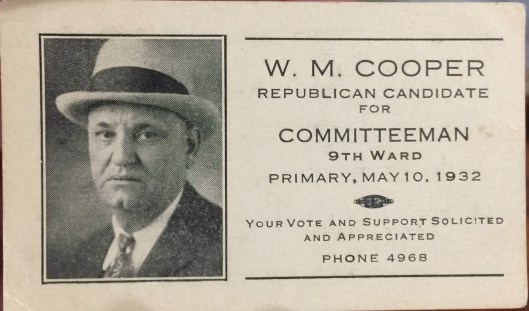
W.M. Cooper for Committeeman 1932

To view Mr. Cooper’s household in 1930, go here: https://www.familysearch.org/ark:/61903/3:1:33SQ-GRZV-35Y?i=16&cc=1810731

The Guthrie Hospital in Huntington, WV

05 Wednesday Jun 2019

Posted by Brandon Ray Kirk in Huntington

≈ Leave a comment

Tags

6th Avenue, 6th Street, Appalachia, Cabell County, Guthrie Hospital, history, Huntington, photos, West Virginia

Guthrie Hospital 1Guthrie Hospital 4

Chapmanville, WV (1923-1924, 1942)

26 Friday Apr 2019

Posted by Brandon Ray Kirk in Chapmanville, Guyandotte River

≈ Leave a comment

Tags

Appalachia, Ball Addition, C&O Railroad, Chapmanville, Dingess Street, Division Street, Ed Conley, engineer, Ferrell Street, George S. Ferrell, Guyandotte River, history, Huntington, J.D. Perry, J.D. Turner, J.H. Vickers, Logan, Logan County, map, O'Dell Street, R.E. Vickers, Riverside Drive, Rupert W. Stone, surveyor, West Virginia, William J. Ellis

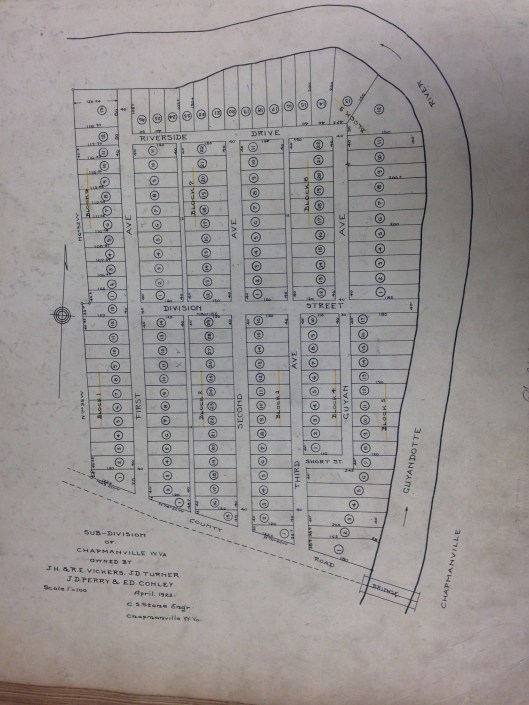
IMG_5449

Sub-division of Chapmanville, WV.

IMG_5467

Sub-division of Chapmanville, WV.

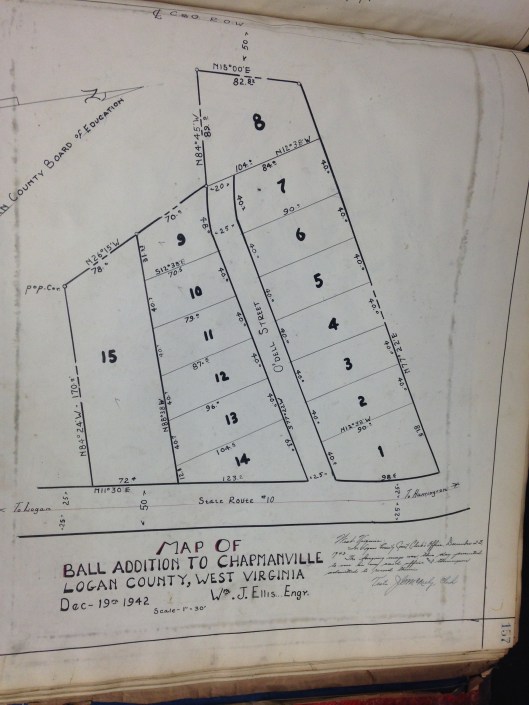
IMG_5561

Ball Addition to Chapmanville, WV.

Oil Boring Near Central City, WV (1897)

14 Sunday Apr 2019

Posted by Brandon Ray Kirk in Huntington

≈ Leave a comment

Tags

Appalachia, Cabell County, Central City, history, Huntington, Huntington Advertiser, oil, West Virginia

Oil Boring near Central City HuA 10.19.1897.JPG

Huntington (WV) Advertiser, 19 October 1897

Trial of Don Chafin, the “Fighting Sheriff of Logan County” (1924)

05 Friday Apr 2019

Posted by Brandon Ray Kirk in African American History, Huntington, Logan

≈ Leave a comment

Tags

A.S. Christian, Appalachia, Barnabus, Blue Goose, crime, deputy sheriff, Don Chafin, Elliott Northcott, Emmett Scaggs, F.C. Leftwich, Frank Lewis, George W. McClintic, H.S. Walker, history, Huntington, John Browning, John Chafin, John S. Marcum, John T. Gore, Logan Banner, Logan County, Mallory, Mine Wars, Prohibition, sheriff, Simp Thompson, Superintendent of Schools, Tennis Hatfield, Volstead Act, W.F. Farley, Walter Wright, West Virginia, William Avis, William Dingess

From the Logan Banner of Logan, WV, comes this bit of history about the trial of Sheriff Don Chafin, dated September 26, 1924:

Trial of Don Chafin Set For Monday, October 6

Logan’s Sheriff Will Answer to Charges of Alleged Violation of Volstead Act.

Trial of Don Chafin, fighting sheriff of Logan county and a figure of national prominence, indicted by the grand jury in federal court on two counts, one charging conspiracy to violate the Volstead act and the other engaging unlawfully in the retail liquor business, will come up before Judge George W. McClintic, in United States Court at Huntington Monday October 6.

The same day was fixed by the court for the trial of John T. Gore, a deputy sheriff, and H.S. Walker, who were indicted jointly for alleged conspiracy to secure the arrest and conviction of one Frank Lewis, a negro, on a pistol toting charge because he had been a witness against another negro charged with violating the prohibition law.

Sheriff Don Chafin and Gore were given their release under bond of $5,000 each, but the court declined to admit Walker to bail, and he was remanded to the county jail, and held without bail until Wednesday at which time he was released under [error here in layout] mitted to jail Friday afternoon, after bond of $5,000. The last named was arrested and committed to jail last Friday afternoon, after he was alleged to have administered a severe whipping to William Avis, a witness before the grand jury. The alleged assault was said to have occurred when Avis returned to Logan from Huntington Tuesday.

The court at the same time continued the cases of five other Logan county officials indicted along with Sheriff Chafin, Gore, and Walker to the March term in Huntington [error in layout] in each of these cases the defendant obtained release under $3,000. They were: Emmett Scaggs, now county superintendent of schools in Logan, and the democratic nominee for sheriff, indicted for alleged illicit possession of liquor; Simp Thompson, a deputy sheriff under Chafin, indicted on a charge of alleging that for a $200 consideration he released Walter Wright, in whose possession a still and quantity of moonshine had been found; John Chafin, a relative of the sheriff and a deputy under him, indicted on a charge of having had liquor at the polls at Mallory, Logan county during the conduct of a national election; William Dingess, a deputy sheriff, indicted on a charge of selling liquor; and John Browning, a deputy sheriff, indicted for alleged possession of whisky in the basement of the court house at Logan.

Indicted jointly with Dingess on a charge of selling moonshine was Garfield Maynard. He did not appear for arraignment with the rest of the accused and the court ordered a capias issued for him.

Appearing in court with the famed fighting sheriff of Logan and the rest of the indicted persons were Colonel John S. Marcum and Judge F.C. Leftwich, engaged as defense counsel for the entire group. The formalities were brief and required but a comparatively short time of transaction. After furnishing their bonds the accused, with their bondsmen, who included W.F. Farley and A.S. Christian, left the court chamber in a body, accompanied by their counsel.

The indictments against the Logan officials were returned by the federal grand jury Friday morning, coming as the outgrowth of an exhaustive investigation of affairs in Logan county which  the government, it was said, has been conducting here for the past six months or more. According to reports, as many as 20 agents of the department of justice were at work in Logan at one time.

Tennis Hatfield, Republican nominee for the office of sheriff of Logan county, who served a jail term of eleven months and paid a fine of $1,000 for violating the prohibition law, was understood to have been the principal witness against Sheriff Don Chafin before the grand jury.

According to statements emanating from the office of United States District Attorney Elliott Northcott, Hatfield offered testimony to the effect that Chafin was his partner in the ownership and promotion of the notorious speakeasy once conducted at Barnabus in Logan county. This establishment, known as the Blue Goose, flourished from 1914 to late in 1922, when federal men closed up the place.

Source: Logan (WV) Banner, 26 September 1924

Ferrellsburg News 04.06.1923

09 Saturday Mar 2019

Posted by Brandon Ray Kirk in Chapmanville, Ferrellsburg, Huntington, Logan

≈ Leave a comment

Tags

Appalachia, Belle Dingess, Chapmanville, Charles Curry, Cora Adkins, Cora Kelly, Dude Tomblin, Easter, Ferrellsburg, Ferrellsburg School, fox hunting, genealogy, Gracy Horns, history, Homer Tomblin, Hugh Farris, Huntington, John Dan, John Lucas, John Pitts, Lincoln County, Logan, Logan Banner, Logan County, Lula Tomblin, Martha Fowler, Martha Mullins, merchant, Piney Fork, Ross Fowler, Route 10, sawmilling, Stella Mullins, Walt Stowers, Wayne Brumfield, West Virginia, Wilburn

A correspondent named “Blue Eyes” from Ferrellsburg in Lincoln County, West Virginia, offered the following items, which the Logan Banner printed on April 6, 1923:

The hard road is being rapidly worked on here at this place. We hope Logan County will keep her part of this road worked to make a speedy finish.

Mr. J.W. Stowers is still at home; he doesn’t go out much. Sometimes he fox hunts with his hounds.

Hugh Farris, a merchant from Piney, is here looking after business interests.

Mr. John Lucas made a rushing trip to Chapmanville Tuesday.

Mr. Bartley returned from a home visit in Huntington Monday.

Miss Martha Fowler made a trip to Logan Monday looking after business matters.

Mrs. Belle Dingess is visiting her sister Miss Martha Fowler this week.

Rev. Charles Curry and other Baptist ministers preached at Ferrellsburg school house Easter Sunday.

A Holiness revival will begin here this week by Brother Wellman and wife. We are certainly proud to announce the meeting because the people in this section have got their eyes on this highway of holiness. We are expecting a large crowd and a good meeting.

Mrs. Cora Adkins has been very ill for the past few weeks, but is improving now.

Mrs. Stella Mullins is visiting her sister in Ferrellsburg, Mrs. M. Tomblin.

Mr. John Pitts was on his way to work Saturday night when he fell and shot himself and now is in the Logan hospital.

The beauty of this place left here yesterday—Miss Cora Kelly.

Mr. W.E. Fowler, a merchant of Ferrellsburg, has gone to saw milling.

Mrs. Martha Mullins isn’t very well pleased with this noisy place.

Miss Gracy Horns returned to Ferrellsburg yesterday after visiting her sister at Wilburn, W.Va.

Mr. W.C. Brumfield was calling on Miss Lula Tomblin Saturday and Sunday.

The girls in Ferrellsburg are very sad at this writing on account of bad weather and bad roads, and are hoping the hard roads will be completed in a short time so they can begin joy riding.

Mr. Homer Tomblin and friend John Dan are taking a vacation this week. They will begin work Monday.

Huntington Safe Robbed by James Gang Taken to Henlawson, WV (1937)

27 Wednesday Feb 2019

Posted by Brandon Ray Kirk in Coal, Huntington, Logan

≈ Leave a comment

Tags

Appalachia, Bank of Huntington, Bob Greever, Bud McDaniel, C.W. Jones, Cabell County, Frank James, Henlawson, Henry Lawson, history, Huntington, Island Creek, Jesse James, Logan, Logan County, Merrill Mines, Robert T. Oney, Tennessee, West Virginia

From the Logan Banner of Logan, WV, comes this bit of history about the James Gang’s robbery of a Huntington bank…and the fate of a safe:

Historic Safe In Offices Merrill Mines, Henlawson

Bank Safe Robbed by Jesse James’ Gang at Huntington in 1875 Now in Fire-proof Vault at Henlawson

Used As Storage For Old Files

The Merrill Mines at Henlawson have a safe in their payroll office which has a unique history.

The safe is being used by the company as a storage place for old records and is in a fire-proof vault.

But it was not always thus.

According to Bob Greever, payroll clerk, who became interested in the history of the safe and clipped a news story from a Huntington newspaper to support his story, the depository was once in the old Bank of Huntington on Third avenue and Twelfth street and was robbed by members of Jesse James gang, who made their getaway with $14,500 on Twelfth street to Fourth avenue, thence to Tenth street and out Tenth street to the hills, closely pursued by a hastily formed posse.

Old-timers in Logan still remember the posse which followed the gang to Logan and lost its trail at the forks of Island Creek long enough for the gang to make their escape to Tennessee.

Reports came back to Logan that the posse overtook the band in Tennessee, killed one of the gang, Bud McDaniel, and arrested another by the name of Webb or Keen. The man the police arrested was brought back to West Virginia and was sentenced to the penitentiary for 20 years. Most of the money was recovered.

An excerpt from the news article describing the bank robbery reads:

“On Monday, September 6, 1875, between the hours of 1 and 2 o’clock a group of men later discovered to have been members of the dreaded James gang, descended on the Bank of Huntington and, at the point of a pistol, forced Robert T. Oney, cashier, to open the bank’s safe in order that they might rifle the contents.

“They complimented the cashier on his courage and insisted on restoring to him an amount of money shown to be his by a credit slip on the counter.

“Reaching the outside of the bank the four men sprung into their saddles, brandished their pistols in the air and galloped away, yelling like Comanche.”

“It was definitely learned that Jesse James was not among them, but there was uncertainty as to whether or not Frank James was in the party. Colder Young was present and may have been leader of the detachment.”

C.W. Jones, general manager of the Merrill Mines, said that the old safe, which weighs every bit of two tons, was first owned by Henry Lawson, lumber operator at Henlawson.

Lawson brought the safe from Huntington by pushboat and put it in his lumber offices on the site of the Merrill Mine offices.

When the Merrill Mines opened their workings, the safe was left near its original site and a fireproof vault was built around it.

The safe is showing the ravages of nearly a century of service. The combination is broken, it squeaks on its hinges, and some of the cement which is encased between steel plates on the safe doors is beginning to crack.

However, the safe is in its final resting place, the door of the vault is too small to get the safe through.

Logan (WV) Banner, 13 May 1937

Jerry “Dad” Crowley: Logan’s Irish Repairman (1937)

02 Saturday Feb 2019

Posted by Brandon Ray Kirk in Huntington, Irish-Americans, Logan

≈ Leave a comment

Tags

baseball, Brazil, Canada, England, genealogy, history, Huntington, Ireland, Jerry Crowley, Logan, Logan Banner, Logan County, Marietta, Mt. Gay, Murphy's Restaurant, New York, Ohio, repairman, Stratton Street, Syracuse, Wales, West Virginia

From the Logan Banner of Logan, WV, comes this bit of history about J.E. “Dad” Crowley, a familiar Irish repairman, in 1937:

J.E. “Dad” Crowley Here Since 1884 As Repairman

Ninety-Year-Old Irishman Worked on Sewing Machines In Brazil, England, Ireland, Wales and Canada; Never Sick A Day

This will be the first time that Jerry E. “Dad” Crowley’s name has been in a newspaper.

Not that Dad doesn’t have an interesting story to tell, but just because no one ever “discovered” him before. (Dad has never been in jail, either, though he has walked twice across the continent and calls himself a “tramp.”)

Dad Crowley, 90-year-old sewing machine repairman who has been working spasmodically in Logan county since 1884, was born in Syracuse, New York, member of a family of 14 children.

During the 90 years since the time of his birth he has walked twice across the United States, gone across the continent more than 100 times by rail and has repaired sewing machines in Brazil, Wales, England, Canada, and Ireland.

Dad says he has never been sick more than a half day in his life, has had only one contagious illness, has never taken a drop of medicine to date and up to now has had no ache or pain more serious than a toothache or a corn.

His only illness was whooping cough. He had this affliction at Marietta, Ohio, when he was 76 years old.

“I guess the Master just figured I was entering my second childhood and had better give me something to remind me of the fact,” Dad said with a chuckle.

“I just whooped ‘er out, though. No doctor, no medicine, no thing.”

“Dad” says he’s not bothered with any aches or pains now.

“I haven’t any teeth no, so—toothache won’t bother me, and my feet are so battered up that a pain there wouldn’t be noticeable.”

When asked how many miles he believed he had walked during his 90 years, the leathery, little Irishman—he’s “Shelalaigh Irish” and proud of it—rattled off the figure of 23, 367, 798, 363 miles without a blink of the eye, then later admitted that “I lost track of mileage after the first 20 billion miles.”

Dad declared that in his first and last job of work that he held for a person other than for himself he walked more than 10,000 miles.

He was operator of a treadmill for a Syracuse citizen named Hamilton from whom he learned the mechanism of the sewing machine, thus making it possible for him later to be independent of all bosses.

The whitehaired old chap repaired his first sewing machine on the Mounts farm in Mount Gay in 1884 when he first came into this section of West Virginia from Huntington.

Since that time during his intermittent visits to Logan county he has canvassed nearly every home here and has worked on many of the sewing machines in the county.

Dad is a close friend of the Murphys who operate a restaurant and poolroom on Stratton street. He affectionately calls Mrs. Murphy “Mom” because he thinks she looks like his mother, who died when he was only two years old.

Dad can be found at Murphy’s Restaurant any afternoon when the baseball scores are coming in. Baseball next to repairing sewing machines, is his consuming passion. One will find Dad wearing a cap on his graying locks, smiling broadly and ever ready to spin a yarn or talk baseball.

Source: Logan (WV) Banner, 1 July 1937

Image

State v. Edgar Combs (1923): Statement of Thomas West, No. 11

29 Tuesday Jan 2019

Tags

Appalachia, Blair Mountain, Cabell County, coal, crime, deputy sheriff, Edgar Combs, H.W. Houston, history, Huntington, lawyer, Logan County, Mine Wars, Thomas West, United Mine Workers of America, West Virginia

document 11-1

Posted by Brandon Ray Kirk | Filed under Battle of Blair Mountain, Coal, Huntington, Logan

≈ Leave a comment

Leet News 09.12.1924

31 Monday Dec 2018

Posted by Brandon Ray Kirk in Big Creek, Big Ugly Creek, Huntington, Leet, Toney

≈ Leave a comment

Tags

Aggie Lucas, Appalachia, Big Creek, Big Ugly Creek, Earling, Ernest Lucas, genealogy, George Lucas, H.M. Gill, Herbert Feels, history, Huntington, Irvin Lucas, Jim Brumfield, Jim Gue, Joe Lewis, Leet, Lillie Lucas, Lincoln County, Logan Banner, Lorado, Lucas, Madison Creek, New York, Nora Lucas, Pearl Brumfield, Pleasant Valley, Sylvia Cyphers, teacher, Thelma Huffman, Toney, Vergie Brumfield, Wayne Brumfield, West Virginia

An unknown correspondent from Leet on Big Ugly Creek in Lincoln County, West Virginia, offered the following items, which the Logan Banner printed on September 12, 1924:

Dear old Banner, here we come with our bit of news.

L. Hoffman has just completed the new school house at the Pleasant valley, Leet, W.Va.

Mr. and Mrs. H.M. Gill spent a few days vacation on Madison Creek last week.

Mr. and Mrs. Jim Gue made a business trip to Huntington last week.

Mrs. Joe Lewis and family of Lorado were visiting friends at this place last week.

Mr. Wayne Brumfield was calling on Miss Thelma Huffman Sunday.

Miss M. Lucas of Toney, W.Va., and Mr. Boyer of Big Creek were quietly married Wednesday. We wish them much happiness for a future life. They will spend their honeymoon in New York.

Miss Pearl Brumfield’s school is progressing nicely at Lucas, W.Va.

Miss Aggie Lucas, Miss Thelma and Rosa and a bunch of other girls were at a party Saturday night and reported a nice time.

Let’s not forget the 4th Sunday in this month the big meeting in the new school building here at Leet, W.Va.

Mr. Irwin and Ernest Lucas were the guests of Miss Thelma Huffman Friday and Saturday.

Miss Vergie Brumfield left Sunday evening for Earling, W.Va., where she will remain to teach school.

Miss Thelma Huffman entertained a bunch of girls and boys with piano and Victrola music Sunday.

Mr. Ernest Lucas was calling on Miss Sylvia Cyphers Sunday.

Miss Nora Lucas and George Lucas were out horse back riding Sunday.

Mr. and Mrs. Herbert Feels were down to visit home folks last week.

Miss Lillie Lucas was calling on homefolks Saturday and Sunday.

Mrs. L. Hoffman seems to be really busy now a days canning fruit.

NOTE: In the mid-1990s, I enjoyed several telephone calls and an exchange of letters with Vergie and Pearl Brumfield, who were daughters of my great-great-uncle Jim Brumfield.

← Older posts
Newer posts →

Feud Poll 1

If you had lived in the Harts Creek community during the 1880s, to which faction of feudists might you have given your loyalty?

Categories

  • Adkins Mill
  • African American History
  • American Revolutionary War
  • Ashland
  • Atenville
  • Banco
  • Barboursville
  • Battle of Blair Mountain
  • Beech Creek
  • Big Creek
  • Big Harts Creek
  • Big Sandy Valley
  • Big Ugly Creek
  • Boone County
  • Breeden
  • Calhoun County
  • Cemeteries
  • Chapmanville
  • Civil War
  • Clay County
  • Clothier
  • Coal
  • Cove Gap
  • Crawley Creek
  • Culture of Honor
  • Dingess
  • Dollie
  • Dunlow
  • East Lynn
  • Ed Haley
  • Eden Park
  • Enslow
  • Estep
  • Ethel
  • Ferrellsburg
  • Fourteen
  • French-Eversole Feud
  • Gilbert
  • Giles County
  • Gill
  • Green Shoal
  • Guyandotte River
  • Halcyon
  • Hamlin
  • Harts
  • Hatfield-McCoy Feud
  • Holden
  • Hungarian-American History
  • Huntington
  • Inez
  • Irish-Americans
  • Italian American History
  • Jamboree
  • Jewish History
  • John Hartford
  • Kermit
  • Kiahsville
  • Kitchen
  • Leet
  • Lincoln County Feud
  • Little Harts Creek
  • Logan
  • Man
  • Matewan
  • Meador
  • Midkiff
  • Monroe County
  • Montgomery County
  • Music
  • Native American History
  • Peach Creek
  • Pearl Adkins Diary
  • Pecks Mill
  • Peter Creek
  • Pikeville
  • Pilgrim
  • Poetry
  • Queens Ridge
  • Ranger
  • Rector
  • Roane County
  • Rowan County Feud
  • Salt Rock
  • Sand Creek
  • Shively
  • Spears
  • Sports
  • Spottswood
  • Spurlockville
  • Stiltner
  • Stone Branch
  • Tazewell County
  • Timber
  • Tom Dula
  • Toney
  • Turner-Howard Feud
  • Twelve Pole Creek
  • Uncategorized
  • Warren
  • Wayne
  • West Hamlin
  • Wewanta
  • Wharncliffe
  • Whirlwind
  • Williamson
  • Women's History
  • World War I
  • Wyoming County
  • Yantus

Feud Poll 2

Do you think Milt Haley and Green McCoy committed the ambush on Al and Hollene Brumfield in 1889?

Blogroll

  • Ancestry.com
  • Ashland (KY) Daily Independent News Article
  • Author FB page
  • Beckley (WV) Register-Herald News Article
  • Big Sandy News (KY) News Article
  • Blood in West Virginia FB
  • Blood in West Virginia order
  • Chapters TV Program
  • Facebook
  • Ghosts of Guyan
  • Herald-Dispatch News Article 1
  • Herald-Dispatch News Article 2
  • In Search of Ed Haley
  • Instagram
  • Lincoln (WV) Journal News Article
  • Lincoln (WV) Journal Thumbs Up
  • Lincoln County
  • Lincoln County Feud
  • Lincoln County Feud Lecture
  • LinkedIn
  • Logan (WV) Banner News Article
  • Lunch With Books
  • Our Overmountain Men: The Revolutionary War in Western Virginia (1775-1783)
  • Pinterest
  • Scarborough Society's Art and Lecture Series
  • Smithsonian Article
  • Spirit of Jefferson News Article
  • The Friendly Neighbor Radio Show 1
  • The Friendly Neighbor Radio Show 2
  • The Friendly Neighbor Radio Show 3
  • The Friendly Neighbor Radio Show 4
  • The New Yorker
  • The State Journal's 55 Good Things About WV
  • tumblr.
  • Twitter
  • Website
  • Weirton (WV) Daily Times Article
  • Wheeling (WV) Intelligencer News Article 1
  • Wheeling (WV) Intelligencer News Article 2
  • WOWK TV
  • Writers Can Read Open Mic Night

Feud Poll 3

Who do you think organized the ambush of Al and Hollene Brumfield in 1889?

Recent Posts

  • Logan County Jail in Logan, WV
  • Absentee Landowners of Magnolia District (1890, 1892, 1894)
  • Charles Spurlock Survey at Fourteen Mile Creek, Lincoln County, WV (1815)

Ed Haley Poll 1

What do you think caused Ed Haley to lose his sight when he was three years old?

Top Posts & Pages

  • Halcyon 4.10.1919
  • Halcyon-Yantus 12.08.1911
  • Civil War Gold Coins Hidden Near Chapmanville, WV
  • Ran'l McCoy's Final Months (1914)
  • Halcyon 3.27.1919

Copyright

© Brandon Ray Kirk and brandonraykirk.wordpress.com, 1987-2023. Unauthorized use and/or duplication of this material without express and written permission from this blog’s author and/or owner is strictly prohibited. Excerpts and links may be used, provided that full and clear credit is given to Brandon Ray Kirk and brandonraykirk.wordpress.com with appropriate and specific direction to the original content.

Archives

  • February 2025
  • January 2025
  • October 2023
  • September 2023
  • December 2022
  • November 2022
  • May 2022
  • April 2022
  • February 2022
  • November 2021
  • October 2021
  • September 2021
  • June 2021
  • May 2021
  • April 2021
  • March 2021
  • February 2021
  • January 2021
  • December 2020
  • November 2020
  • October 2020
  • July 2020
  • June 2020
  • May 2020
  • April 2020
  • March 2020
  • February 2020
  • January 2020
  • December 2019
  • November 2019
  • October 2019
  • September 2019
  • August 2019
  • July 2019
  • June 2019
  • May 2019
  • April 2019
  • March 2019
  • February 2019
  • January 2019
  • December 2018
  • November 2018
  • October 2018
  • September 2018
  • August 2018
  • July 2018
  • June 2018
  • May 2018
  • April 2018
  • March 2018
  • February 2018
  • January 2018
  • December 2017
  • November 2017
  • October 2017
  • September 2017
  • August 2017
  • July 2017
  • June 2017
  • May 2017
  • April 2017
  • March 2017
  • February 2017
  • January 2017
  • December 2016
  • November 2016
  • October 2016
  • September 2016
  • August 2016
  • July 2016
  • June 2016
  • May 2016
  • April 2016
  • March 2016
  • February 2016
  • January 2016
  • December 2015
  • November 2015
  • October 2015
  • September 2015
  • August 2015
  • July 2015
  • June 2015
  • May 2015
  • April 2015
  • March 2015
  • February 2015
  • January 2015
  • December 2014
  • October 2014
  • September 2014
  • August 2014
  • July 2014
  • June 2014
  • May 2014
  • April 2014
  • March 2014
  • February 2014
  • January 2014
  • December 2013
  • November 2013
  • October 2013
  • September 2013
  • August 2013
  • July 2013
  • June 2013
  • May 2013
  • April 2013
  • March 2013
  • February 2013
  • January 2013
  • December 2012
  • November 2012

Enter your email address to follow this blog and receive notifications of new posts by email.

Join 2,927 other subscribers

Tags

Appalachia Ashland Big Creek Big Ugly Creek Blood in West Virginia Brandon Kirk Cabell County cemeteries Chapmanville Charleston civil war coal Confederate Army crime culture Ed Haley Ella Haley Ferrellsburg feud fiddler fiddling genealogy Green McCoy Guyandotte River Harts Harts Creek Hatfield-McCoy Feud history Huntington John Hartford Kentucky Lawrence Haley life Lincoln County Lincoln County Feud Logan Logan Banner Logan County Milt Haley Mingo County music Ohio photos timbering U.S. South Virginia Wayne County West Virginia Whirlwind writing

Blogs I Follow

  • OtterTales
  • Our Appalachia: A Blog Created by Students of Brandon Kirk
  • Piedmont Trails
  • Truman Capote
  • Appalachian Diaspora

BLOOD IN WEST VIRGINIA is now available for order at Amazon!

Blog at WordPress.com.

OtterTales

Writings from my travels and experiences. High and fine literature is wine, and mine is only water; but everybody likes water. Mark Twain

Our Appalachia: A Blog Created by Students of Brandon Kirk

This site is dedicated to the collection, preservation, and promotion of history and culture in Appalachia.

Piedmont Trails

Genealogy and History in North Carolina and Beyond

Truman Capote

A site about one of the most beautiful, interesting, tallented, outrageous and colorful personalities of the 20th Century

Appalachian Diaspora

  • Subscribe Subscribed
    • Brandon Ray Kirk
    • Join 789 other subscribers
    • Already have a WordPress.com account? Log in now.
    • Brandon Ray Kirk
    • Subscribe Subscribed
    • Sign up
    • Log in
    • Report this content
    • View site in Reader
    • Manage subscriptions
    • Collapse this bar
 

Loading Comments...