• About

Brandon Ray Kirk

~ This site is dedicated to the collection, preservation, and promotion of history and culture in my section of Appalachia.

Brandon Ray Kirk

Tag Archives: Virginia

Hiram McCoy Deed to McCoy Heirs (1853)

07 Friday Sep 2018

Posted by Brandon Ray Kirk in Big Sandy Valley, Hatfield-McCoy Feud, Lincoln County Feud

≈ Leave a comment

Tags

Andrew Varney, Appalachia, Big Sandy River, Chloe McCoy, Eveline Browning, genealogy, George F. McCoy, Harts Creek, Hatfield-McCoy Feud, Hiram McCoy, history, John Stafford, Julie Ann McCoy, Lewis J. McCoy, Lincoln County Feud, Logan County, Melvina Curry, Pigeon Creek, Randolph McCoy, Rockhouse Fork, Salena Vance, Sarah McCoy, Virginia, West Fork, West Virginia, William J. McCoy

Hiram McCoy to McCoy Heirs 1853 2

Deed Book C, page 313, Logan County Clerk’s Office, Logan, WV. Note: This property is located in present-day Mingo County, WV.

Hiram McCoy to McCoy Heirs 1853 3

Deed Book C, page 313, Logan County Clerk’s Office, Logan, WV. Hiram McCoy was a brother to Sarah McCoy, wife of Randolph.

Hiram McCoy to McCoy Heirs 1853 4

Deed Book C, page 313, Logan County Clerk’s Office, Logan, WV. Hiram’s granddaughter Salena (Browning) Vance settled on West Fork of Harts Creek and was an important character in the Lincoln County Feud.

William Straton Accidentally Shoots and Kills Thomas Mullins (1860)

04 Tuesday Sep 2018

Posted by Brandon Ray Kirk in Logan

≈ Leave a comment

Tags

Appalachia, county clerk, genealogy, history, Laurel Fork, Little Coal River, Logan, Logan County, Roanoke Republican, Spruce Fork, Stratton Street, Thomas Mullins, Virginia, West Virginia, William Straton

From the Alexandria (VA) Gazette comes this bit of history for William Straton of Logan County, (West) Virginia, dated December 4, 1860:

FATAL SHOOTING ACCIDENT.

The Roanoke Republican states that on the morning of the 15th ult., Wm. Stratton, esq., Clerk of Logan county, Va., and a young man, Thos. Mullins, of the same county, left the hunting camp on Laurel Fork of Spruce Fork of Little Coal river, in pursuit of deer. They became separated, for some time, and Mr. Stratton thinking he spied a deer, through a small aperture in a laurel thicket, about fifty yards distant, fired at it, and to his horror, found that he had shot his companion, Mr. Mullins, through the body–the ball entering his left side just below the ribs. No one was near, to whom the alarm could be given for aid, as they were about a mile and a half from the camp, and their camp companions may have been in an opposite direction from them. They, however, came to their assistance before night and making a litter on which they placed a bed, bore Mr. Mullins to the camp, which he died about 10 o’clock that night.

NOTE: Stratton Street in Logan is named for Mr. Straton.

Civil War in the Guyandotte and Big Sandy Valleys (1862)

03 Monday Sep 2018

Posted by Brandon Ray Kirk in Big Sandy Valley, Chapmanville, Civil War, Guyandotte River, Pikeville, Tazewell County

≈ Leave a comment

Tags

Abington Virginian, Appalachia, Big Sandy River, Cabell County, Chapmanville, civil war, Confederate Army, genealogy, Guyandotte River, history, John B. Floyd, John Clarkson, John Dils, John Letcher, Kanawha River, Kentucky, Levisa Fork, Lincoln County, Logan County, Ohio River, Pigeon Creek, Pike County, Pikeville, Prestonsburg, Smyth County, Tazewell County, Union Army, Virginia, Virginia State Line, Washington County, Wayne County, West Virginia

Confederate General John B. Floyd composed this letter detailing military activity in the Guyandotte and Big Sandy valleys in late 1862, which was published by the Abington Virginian on January 2, 1863.

***

OFFICIAL REPORT OF GEN. FLOYD

Headquarters Virginia State Line,

Camp Clarkson, Tazewell Co.,

December 17, 1862

His Excellencey, John Letcher,

Governor of Virginia—

SIR: After my last communication to you I prepared an expedition consisting of a strong force of Cavalry under Colonel John Clarkson, to operate against the enemy in the counties of Wayne, Cabell, &c. He set out from Chapmansville on the 14th November, in the direction of Cabell down the Guyandotte river, over a rough and difficult road. The following day he fell in with a detachment of the enemy which he quickly routed and dispersed. He continued the march until a few miles of the Ohio river, breaking up the “Home Guard” organization of the enemy, which are very numerous in all that country, and taking prisoners every day.

A strong guard of Yankee troops, acting as a guard for the Pierpont Assessor for the county of Wayne, was attacked and dispersed after a short skirmish, in which was killed and wounded some of the enemy and took a few prisoners. Col. Clarkson proceeded then, according to the previous directions given him, to the Sandy river, to attack a large and formidable organization of the enemy composed mainly of the native population, and very strong posted amidst the cliffs and forests upon the precipitous banks of that river. He succeeded in taking them by surprise completely, and after killing and wounding a number of them, took a large number of prisoners, and surprised entirely the rest of the force. This force and organization were formidable and extremely dangerous to the peace and quiet of all the country round about for many miles, the loyal people were nearly all driven from their country and all were robbed. After that, Col. Clarkson, according to previous understanding, made a junction with me at the mouth of Pigeon Creek, in Logan county, on the Kentucky border, whither I had gone with the infantry and a section of the mounted howitzer battery.

I learned from Col. Clarkson that the enemy had started a number of boats with valuable supplies, from the mouth of Sandy to a post recently established at Pikeville, a point at the head of navigation on the Louisa Fork of Sandy. These boats were in charge of a strong guard, and were intended to furnish a complete outfit for a force deemed sufficient for them, by their commander, to march upon and destroy the salt works in Smyth and Washington counties.

I determined at once to attack this train, and from its distance, being more than forty miles off, it became necessary to send mounted men. Besides this reason, I found it inconvenient to move the infantry in that direction, on account of the number of prisoners with which we were encumbered. The cavalry and mounted men were put in motion within an hour and proceeded upon the march, which was uninterrupted, day or night, until the enemy were overtaken, attacked and routed.

Our people captured ten of the enemy’s transport boats, laden with valuable supplies. A great deal of these supplies was distributed amongst the men, and much of them was brought off; but a very large amount of most valuable supplies was necessarily destroyed for want of transportation to bring them away. A train of one hundred pack mules would have brought away a very large amount of extremely valuable stores, which were committed to the fire and the river.

The night following the capture of these boats (indeed, just twelve hours after the attack upon the boats,) our forces engaged that of Col. Dils, posted in an extremely strong position on the summit of a mountain on the road leading from Prestonsburg to Pikeville. This position was taken and held without any knowledge on our part, and as the attack was made after the night, and entirely unexpected, we were taken at a great disadvantage. But our men behaved with great steadiness and resolution, received the attack and charged the enemy, driving him from his position, and dispersing them entirely. The rout was complete, and the post at Pikeville, consisting of a thousand men, was entirely broken up. The prisoners and the Union people in that neighborhood reported Colonel Dils as killed in the fight that night.

For more detailed statements of this expedition I refer you to the report of Col. Clarkson. In our operation through the country, we made a number of recruits in the counties of Cabell, Wayne, Logan, &c.

My object in this campaign was, as far as possible, to prevent the occupation by the Yankee forces, of the country between the Kanawha Valley and Kentucky border, as well as to destroy the military organization of the country under the traitor government in Wheeling. Both objects were fully attained, as long as I was able to remain in the country. The military organizations, very numerous and well appointed in every particular, were almost entirely destroyed, and the attempts to set up the spurious government were entirely failed.

I was compelled to leave the country, held by me for more than three months alone, for the want of Quartermaster’s supplies. We were without tents, or clothing, or cooking utensils, or axes; and after the inclement weather of winter set in, we could no longer remain in the field. With these stores supplied, I would have remained in that country throughout the winter months. We were able to procure food (meat and bread) in the country, nearly all of it taken from the enemy.

The campaign, from first to last, was one of hardship and privations; but they were borne without complaint by the men, who are unsurpassed in hardship, activity and capability to endure privations. They deserve great praise for their constancy and general good conduct.

The officers generally deserve commendation, but to Col. Clarkson too much credit cannot be given for his energy, activity and courage. The obstacle she encountered, of every sort, throughout these expeditions, were of the most formidable character, but they were also most gallantly surmounted.

I have the honor to be, very respectfully,

Your obedient servant,

JOHN B. FLOYD,

Maj. Gen. Commanding Va. State Line

NOTE: I bolded Gen. Floyd’s description of activity in the Guyandotte Valley that occurred between Chapmanville and the lower section of the river near present-day Huntington.

“Holly Creek” John Mullins Grave in Clintwood, VA (2018)

03 Monday Sep 2018

Posted by Brandon Ray Kirk in American Revolutionary War, Big Harts Creek, Cemeteries

≈ 4 Comments

Tags

American Revolution, Appalachia, cemeteries, Clintwood, Clintwood Baptist Church, Dickenson County, genealogy, Harts Creek, history, Holly Creek John Mullins, Jane Mullins, John Mullins, Logan County, Revolutionary War, Virginia, West Virginia

IMG_6942

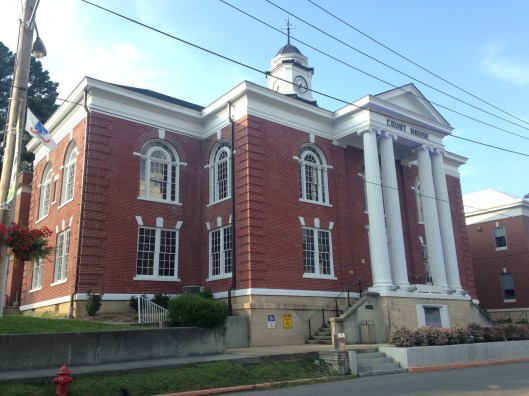
Dickenson County Courthouse in Clintwood, VA.  THIS IS MULLINS COUNTRY. Placed at its front is a large plaque commemorating John Mullins, Sr. (father to “Holly Creek John”), who served in the Revolutionary War. 25 August 2018.

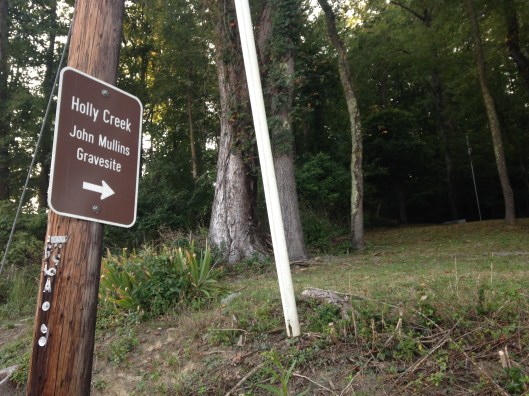
Holly Creek John Mullins Historic Marker

“Holly Creek John” received his nickname because he settled on Holly Creek, near the courthouse. Clintwood is located in the head of Holly Creek.

IMG_6945

Behind the Clintwood Baptist Church on High Street is the grave of “Holly Creek John” Mullins, son of John and Jane (Bailey) Mullins. There’s really no place to park along this narrow street, so you have to park at the Sleep Inn and Suites Hotel and walk back up the hill just a bit. 25 August 2018.

IMG_6946

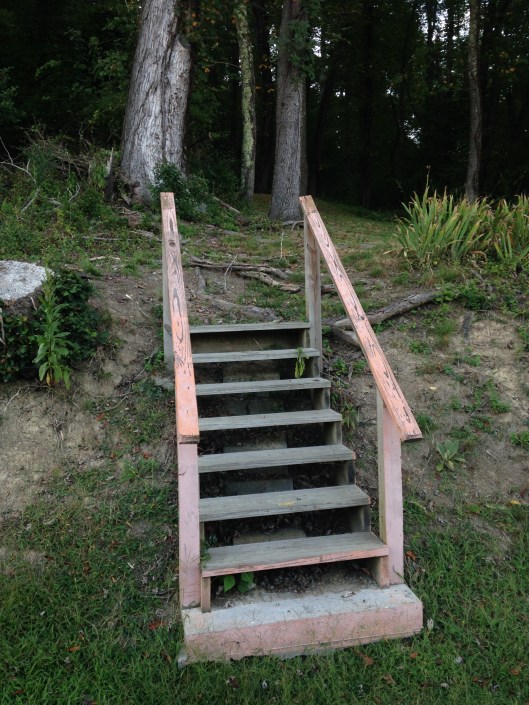
Up this way! These steps literally connect to High Street — parking right here is not really an option! 25 August 2018.

IMG_6947

Straight ahead. For more information about the grave and cemetery, follow this link: https://www.findagrave.com/memorial/64659784/john-mullins

IMG_6948

John and Ollie (Cox) Mullins grave, located in Clintwood, Dickenson County, VA. Their daughter Jane married Peter Mullins and settled on Harts Creek in Logan County, WV. 25 August 2018.

Logan, WV: Coal Street, Not Cole Street (1928)

27 Monday Aug 2018

Posted by Brandon Ray Kirk in Huntington, Logan

≈ Leave a comment

Tags

Appalachia, coal, Coal River, Coal Street, Cole Street, Collis P. Huntington, general, George Rogers Clark Floyd, governor, history, Huntington, James Buchanan, John B. Floyd, John Floyd, Logan, Logan Banner, Logan County, Logan Junior High School, Nighbert Memorial Church, T.C. Whited, Virginia, West Virginia

From the Logan Banner of Logan, WV, comes this bit of history about Coal Street dated September 7, 1928:

C-O-A-L IS CORRECT

Acknowledging that it has long been in error, The Banner announces on good authority that the name of the street running from the Wilkinson property up past Nighbert Memorial church and Junior High school is Coal street, not Cole. In some way it was impressed on the mind of the writer soon after he came to Logan that the proper spelling was C-o-l-e. That impression seems to have been widespread and fixed. Wherefore, when street signs were recently placed at the intersections preparatory to the establishment of mail delivery service and the name of “Coal” was made conspicuous at strategic points on “Cole” street, this writer and others were peeved about it. We thought it would cause endless confusion and perpetuate an inexcusable error.

In a desire to dispose of the matter with some finality we asked T.C. Whited about the spelling of the street’s name, the origin of the name, when, why and by whom was it selected. He replied that the street was named Coal by Col. George Rogers Clark Floyd, one of the most brilliant and beloved men that ever came into these mountains. Col. Floyd, a brother of John B. Floyd, who sat in Buchanan’s cabinet and later won renown as a general and who also, like his father, John Floyd, was a governor of Virginia, owned 700 acres of land in this immediate vicinity. It included what is now the west or main business section of the city. That was long before the railroad was built but Col. Floyd envisioned the industrial development that has come. In fact, he believed it would come long before it did, and his miscalculation led him eventually into financial difficulties. When he bore about the same relation to Logan village that Collis P. Huntington bore to the village of Huntington, the residents of this hamlet obtained coal for their own use from a mine opened up near the site of Mrs. Perry’s boarding house at the head of what is now Coal street. So, he gave it that name, says Mr. Whited, and having done so, there is no reason why it should not be preserved and why all confusion about it should not cease.

At that time Coal was perhaps the most logical and appropriate name, whereas under present conditions that name might be as appropriate for one street as another in any town in Logan county.

Once there was the same confusion about the name Coal River, some historians contending the name intended was Cole, in honor of a noted pioneer surveyor of that name. But that question was long ____ geographers and of those who dwelt on the banks of that noble stream.

NOTE: Today the street sign reads COLE STREET.

West Virginia Once Part of Iroquois Domain (1927)

21 Tuesday Aug 2018

Posted by Brandon Ray Kirk in American Revolutionary War, Native American History

≈ Leave a comment

Tags

Andrew P. Price, Appalachia, Canada, Cayuga, Chillicothe, Cumberland River, Dekanawida, Five Nations, Great Lakes, Greenbrier Valley, Hiawatha, history, Iroquois, Jackson River, James Fenimore Cooper, Kanawha River, Lancaster, Logan Banner, London, Marlinton, Mingo Flats, Mohawk, New York, Ohio, Oneida, Onondago, Ototarha, Pennsylvania, Revolutionary War, Rio Grande River, Seneca, Seneca Trail, Shawnee, St. Lawrence River, Tennessee, Tuscarora, Virginia, Warrior's Road, West Virginia, Winchester

From the Logan Banner of Logan, WV, comes this bit of history about the Iroqouis and West Virginia dated October 7, 1927:

West Virginia Part of Iroquois Domain

Confederation of Five Nations, Pledged to Peace, Endured For Two Centuries — Hiawatha One of Founders — Vast Indian Drama Told By Andrew P. Price, “Sage of Marlinton.”

You keep hearing of the Shawnees who overran this country prior to the Revolutionary War, and you keep hearing of them to the east and then to the west. You know that when 72 men went from this (Greenbrier) valley to fight them at the mouth of Kanawha, that they were living in Chillicothe.

The mystery of the Shawnee being to the east and then to the west is explained as follows:

When the whites first began to record history the Shawnees were far to the south and were split into two tribes. One lived on the Atlantic seaboard, around Savannah, and the other west of the mountains in the Tennessee country. They were forced north by their enemies and they were sometime after that found with towns at Winchester, in the valley of Virginia, and Lancaster, Pennsylvania, and in other places in Pennsylvania, while those from the Cumberland basin in Tennessee came north into Ohio. The eastern tribe moved first and no doubt the communicating road between the settlements at Winchester and eastern Pennsylvania traversed West Virginia. They would have to cross Seneca Trail, or Warrior’s Road, and the military town of Mingo Flats lay in their line of travel and that is the occasion of the corrupting of that place and making the garrison traitor to the Five Nations.

The whole of the Appalachia Range of mountains was owned, policed and controlled by the Iroquois or Five Nations. This was the highest type of Indian north of the Rio Grande. For centuries they held a commanding position, their country extending from the mouth of the St. Lawrence river, west on both sides to the Great Lakes and turning there took all the mountain country as far south as Georgia, and they had at least 50 towns along the way from north to south. History deals more with the Mohawks around New York, but the westernmost part in which we live was occupied and kept by the Senecas. The list of the Iroquois or Five Nations: Mohawk, Oneida, Onondago, Cayuga and Seneca. When the Tuscaroras came in in 1726 they were called the Six Nations.

Government Older Than Ours

This conference lasted for more than two centuries and was perhaps the most notable government ever set up by savages. They are the Indians that James Fennimore Cooper wrote about and they are entitled to every bit of praise that he gives them. They had a council that was noted for its dignity, faith, and ability. The kinds of Europe sent ambassadors to that council for many generations which made treaties, and it was well known in the London of that day as the American Congress is now. The Nations early agreed with the whites to allow the Europeans to settle and thrive on the Atlantic seaboard and they, the Five Nations, kept the mountains and western part of their countries.

Probably the first fraud practiced on the Five Nations was the Greenbrier Colony grant of 100,000 acres on waters that flowed into the Ohio, and this was held up for more than 30 years and only matured after the colonies had gained their independence. It is evident that it was first granted on the mistake of fact, that is, that the Greenbrier, like the Jackson River, flowed into the Atlantic.

Hiawatha an Organizer

The formation of the Five Nations was accomplished about the history the year 1750 and was the work of two Indians of great fame, Dekanawida and Hiawatha. The name of Hiawatha is famous by reason of Longfellow’s poem, but it does not contain a single fact of the history of Hiawatha. The two Indians posed as medicine men and magicians and spent their lives to bring about the league to promote peace and to end war. At the time they commenced their work, war was the religion of the tribes. Hiawatha was a Mohawk, and at times the Mohawks were cannibals. The two Indians traveled from council to council, proposing the scheme of the league to promote peace, and it was debated on the council fires, and it encountered the most bitter opposition. The name of the tyrant Ototarha comes down in history as the most formidable opponent to the peace makers.

The first success they had was to make it unlawful to prosecute family feuds and murders generally. For every murder the killer was required to pay the family of the dead man ten strings of wampum, as the value of a human life. Later the law was amended to require the payment of an additional ten strings of wampum, on the construction that the first payment was compensatory, and the second string to take the place of the life of the murderer which was forfeited under the old law to the blood kin of the slain man.

In time the confederation was formed. First by the Mohawk, Cayuga and Oneida. Then the Onondaga came in and last, the Senecas came in with reservations, and plenty of them. The Senecas refused to disband their armies and were thereupon made the police force of the Iroquois nations, and kept to themselves the department of war and foreign affairs. They gave up murder and cannibalism but clung to their military life.

The league got along pretty well until the introduction of fire-water and gunpowder. After that it was hard to keep the peace. The end of the league of the Iroquois came when they joined the British to fight the colonists. They came out of the Revolutionary War, doomed, and most of the survivors moved into Canada, though some are still to be found on the reservations in the State of New York.

John Fry Deed to A.S. Fry (1856)

08 Wednesday Aug 2018

Posted by Brandon Ray Kirk in Big Ugly Creek

≈ 2 Comments

Tags

Admiral S. Fry, Appalachia, Big Branch, Big Ugly Creek, genealogy, history, John Fry, justice of the peace, Laurel Fork, Lincoln County, Logan County, Lorenzo D. Hill, Virginia, W.I. Campbell, West Virginia, William Straton

John Fry to A.S. Fry Deed 1

Deed Book C, page 449, Logan County Clerk’s Office, Logan, WV. John Fry is my great-great-great-great-grandfather. I descend from three of his children.

John Fry to A.S. Fry Deed 2

Deed Book C, page 450, Logan County Clerk’s Office, Logan, WV. This property is located in present-day Lincoln County, WV.

Little Sorrel (1886, 2018)

06 Monday Aug 2018

Posted by Brandon Ray Kirk in Civil War

≈ Leave a comment

Tags

Brandon Kirk, civil war, Confederate Army, Confederate Soldiers' Home, history, Huntington Advertiser, Lexington, Little Sorrel, Richmond, Stonewall Jackson, Virginia, VMI Museum

Old Sorrel Dies HA 03.20.1886 2

Huntington (WV) Advertiser, 20 March 1886.

IMG_4809

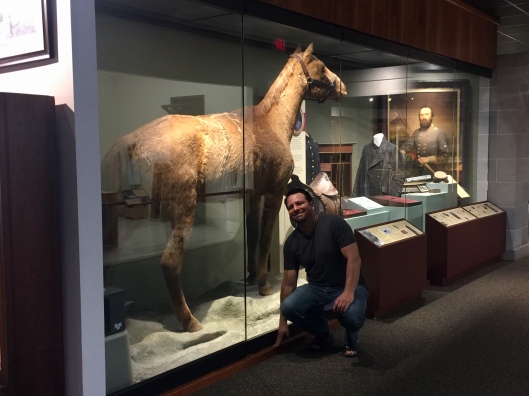
Visiting with Little Sorrel in Lexington, VA. 9 July 2018. Photo by Mom.

IMG_4675

Little Sorrel in Lexington, VA. 9 July 2018. For more about the VMI Museum, go here: https://www.vmi.edu/museums-and-archives/vmi-museum/

IMG_4688

Little Sorrel in Lexington, VA. 9 July 2018. For more about Old Sorrel, go here: http://www.horseandman.com/horse-stories/stonewall-jacksons-horse-little-sorrel/11/11/2014/

History of the West Virginia Penitentiary (1901), Part 1

31 Tuesday Jul 2018

Posted by Brandon Ray Kirk in African American History, Civil War, Culture of Honor, Timber

≈ Leave a comment

Tags

African-Americans, Alabama, Appalachia, Arthur I. Boreman, civil war, history, J.W. McWhorter, Moundsville, North Carolina, Ohio River, Potomac River, South Carolina, Virginia, West Virginia, West Virginia State Penitentiary

HISTORY OF THE WEST VIRGINIA PENITENTIARY.

WRITTEN BY A PRISONER.

In 1863 the state was admitted as one of the constellation of states of the union. Virginia had seceded from the union by a majority vote. The strong and indomitable minority citizens of the Old Dominion residing in the western part of it, many of whom were Scotch and Irish descendants and natives of the adjoining states, who had taken up their homes in the valleys and on the hillsides, were loyal to the Union, loved well the flag, and reverenced with an undying affection the builders of the union of states for the greater blessing of the people, and stood firm and unyielding for an indivisible united country. By their hands and brave hearts they built a state stretching from the Potomac to the Ohio river, carved out of the Old Dominion. The war-born daughter of the historical commonwealth proved, in subsequent years, to be rich in the production of materials in active demand in the marts of commerce, and she now outstrips her mother state in the race for greatness, prosperity, and happiness.

Many regions of the state are mountainous, and the principal industries are lumbering, mining, and oil production. Many of the white people are typical mountaineers and somewhat rough and uncouth in manner, while the negroes, many of them, have drifted from North and South Carolina, Alabama, and other southern states to be employed in the development of these industries.

There are very many respectable farmers, professional and business men, and cultured ladies residing in these almost inaccessible parts; but the rough element in many places predominates, and the order of the day and night is drinking and brawling, ending as a rule in desperate encounters and murder. Most of the white and black inmates of the penitentiary have been and are now composed of the lawless men from these regions, from the time it was only a stockade of ten acres in 1866, when Hon. J.W. McWhorter of the Tenth Judicial District was appointed warden by Governor Boreman. He resigned this position after viewing it. In a letter to Warden Hawk he states it was for the reason that there was not so much as a building erected for the shelter of the inmates, and he thought he could not work the convicts to advantage under the circumstances. The penitentiary has been improved from time to time to the present, by additions, until it is a massive structure of stone and iron, with a high stone surrounding wall. It has 695 inmates at the present writing.

The center, or main building, is built after the old baronial castellated style of architecture, and with its several stories height, it makes an imposing appearance. It is flanked on the north and south by the stone and strongly-barred buildings, wherein the old and first built stone cells and the modern steel ones–900 in all–are placed. Entrance is to be had into the prison proper by means of a round turning iron-barred cage in the main hallway of the central building.

Source: E.E. Byrum, Behind the Prison Bars: A Reminder of Our Duties Toward Those Who Have Been So Unfortunate as to Be Cast Into Prison (Moundsville, WV: Gospel Trumpet Publishing Co., 1901), pp. 73-75.

Hugh Toney Letter to Edward Chapman (1861)

24 Tuesday Jul 2018

Posted by Brandon Ray Kirk in Chapmanville, Civil War, Giles County

≈ Leave a comment

Tags

11th Virginia Cavalry, Appalachia, Camp Narrows, Chapmanville, civil war, Confederate Army, Edward Chapman, Giles County, history, Hugh Toney, J. Green McNeely, Logan Banner, Logan Country Club, Logan County, North Carolina, Virginia, West Virginia

Rev. J. Green McNeely (1871-1943) located the following letter written by Hugh Toney to Edward Chapman when he razed a log cabin situated on the property that later became the Logan Country Club, near Chapmanville.

Camp Narrows, Va.

March 26, 1861

Dear Friend:

I saw the officers of the 11th Virginia Cavalry about your horses. Col. French and Maj. Smith both say that your horse shall be give up if the horse can be found.

I have not been able to find out anything about who got your horse yet. The horses were sent off to North Carolina. If I have any chance to get your horse, I will attend to the matter for you. If you know the man’s names or any of the men’s names that was present when your horse was taken, write to me their names.

I have made careful inquiries about Ira Woodram’s horse. I have not been able to find out anything about his horse, also John’s. I can’t bear that horses were taken.

I can’t find out who took them, it being uncertain about getting your horse or pay for him the way matters stand at this time.

Your friend,

Hugh Toney

Source: Logan (WV) Banner, 25 June 1941.

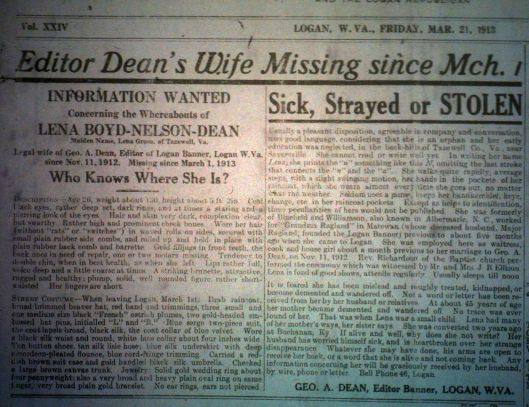
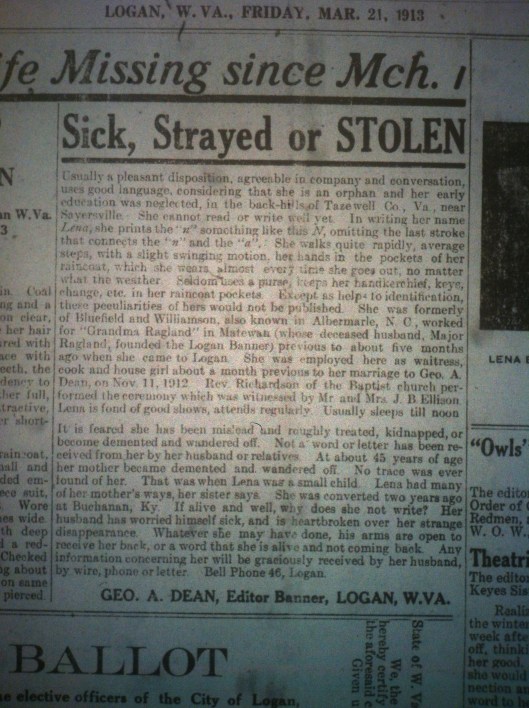
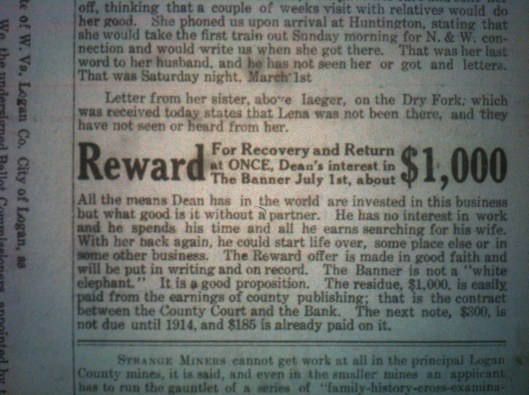
Wife of Logan Banner Editor George A. Dean Disappears (1912-1913)

20 Friday Jul 2018

Posted by Brandon Ray Kirk in Huntington, Logan, Matewan, Tazewell County

≈ Leave a comment

Tags

Albermarle, Appalachia, Bluefield, Buchanan, Collier's Weekly, Dry Fork, genealogy, George A. Dean, Henry Clay Ragland, Herald-Dispatch, history, Huntington, Iaeger, Imperial Order of Redmen, J.B. ellison, Jefferson Hotel, Kentucky, Keyes Sisters, LaRoy Stock Company, Lena Boyd Nelson, Lena Gross, Logan, Logan Banner, Logan County, Logan Democrat, Logan Nest 1442, Matewan, Modern Maccabees, Norfolk and Western Railroad, North Carolina, Order of Owls, Sayersville, Silver Cloud Tribe 138, Tazewell County, Virginia, W.L. Richardson, West Virginia, Williamson

In 1912, Logan Banner editor George A. Dean married the former Lena Gross, who soon thereafter disappeared. Here are a few stories about the event:

Editor Dean Married

On Monday, Nov. 11 in the minister’s study, Geo. A. Dean and Miss Lena Gross of Virginia, were united in marriage by Rev. W.L. Richardson.

Mr. Dean is the hustling editor of the Logan Banner and is well-known in this city and surrounding country as a man of push and energy, while the bride was one of the charming dining room girls at the Hotel Jefferson.

Mr. and Mrs. Dean will be at home to their friends after Nov. 18.

Source: Logan (WV) Democrat, 14 November 1912.

***

George A. Dean Logan Banner LB 01.24.1913.JPG

Logan (WV) Banner, 24 January 1913.

***

Editor of “Most Fearless Weekly” on the Trail

West Virginia editors who have failed to receive the Logan Banner on their exchange tables during the past three weeks, no doubt, marveled at its absence. But there is a reason–a tragic, gnawing reason which has caused the editor, Geo. A. Dean to suspend temporarily editorial duties and to embark upon a quest which means more to him than journalistic honors or the mere touch of hollow gold.

Readers of the Banner will remember that there appeared graven upon its front page four months ago Mr. Dean’s and his wife’s own announcement of their marriage. The paragraph attracted more than usual attention, partly because of its unique construction and partly because of the unusual manner of its presentation, but more than all because Mr. Dean was very prominently in the editorial limelight because of recent rather prominent mention in Collier’s Weekly. But that is history, and in mere prelude to the situation which now confronts him: to-wit: that of a married man, wifeless, disconsolate, yearning for the things that were.

Mr. Dean, who has been in Huntington and vicinity for two days seeking a trace of his evanished spouse, speaks frankly of his bereavement, and is importunate that the home-loving public shall, if possible, assist him in finding and restoring his lost treasure. In brief, Lena Boyd Nelson Dean has gone away and, some fear, forever departed. She went without the tender formality of a farewell husband’s kiss. She went away surreptitiously, mysteriously. She went, and Mr. Dean, who has sounded the very depths of heaven and earth, is no whit the wiser whither. Descriptive circulars, telling her height, weight, complexion, color of eyes and hair, manner of dress, and all that pertains to accurate and dependable description have been scattered broadcast all over the territory in which it might be surmised that she would be obscuring herself from the eyes of love and yearning. Mr. Dean stated last night, in conversation with the Herald-Dispatch, that he had absolutely no heart for business, that he had known no rest, no surcease from the terrible heart-longing that had seized upon him and held with tenacious grip from the morning of his wife’s departure. He has searched high and low. He has communicated with every known relative of his wife, without being able to get even the shadow of a clue tending to lead to the discovery of her whereabouts. He gives the following verbal photograph, which is almost as good as the ordinary studio product, and much better than a tintype:

Lena Boyd Nelson Dean, formerly of Williamson and Matewan and Bluefield. Four months ago she served as waitress, cook, and house girl at Logan, W.Va. Last seen at Kenova on Sunday morning, March 2. Physical description: Age 26. Height 5 ft. 2. Coal-black eyes given to starry twinkle. Raven black hair. Rather full lips. Gold filling in front teeth. Deep, well modulated musical voice, with a tendency to coarseness in time of cold. Can not read or write much as her early education was neglected. Her costume is described as being strict in the style of today. Raincoat, drab-colored; blue-serge, two piece coat suit. Beaver hat, embellished with four black ostrich plumes. Leather suitcase, canvass trunk and gold-headed umbrella.

Mr. Dean feels that his wife may have returned to one of the three occupations ascribed to her in the opening paragraphs.

He has important mail for her, both registered and ordinary, and is awaiting anxiously any news of her, and his arms are open to her return. The Logan editor’s plight is positively pitiful. He has grown emaciated, hollow-eyed, faded, wan. The tireless vigil, the ceaseless search, the anxious waiting hours, have all played their part in preying upon his splendid vitality. He is discouraged but not defeated, and will continue the search as long as human endurance will permit, or else sooner find the partner of his joys and immediate cause of his great and overpowering grief. His plight has elicited much sympathy. For what is life without a partner?

Source: Huntington (WV) Herald-Dispatch via Logan (WV) Democrat, 13 March 1913.

***

George A. Dean's Wife Missing LB 03.21.1913 1

Logan (WV) Banner, 21 March 1913.

George A. Dean's Wife Missing LB 03.21.1913 2

Logan (WV) Banner, 21 March 1913.

George A. Dean's Wife Missing LB 03.21.1913 3

Logan (WV) Banner, 21 March 1913.

George A. Dean's Wife Missing LB 03.21.1913 4

Logan (WV) Banner, 21 March 1913.

George A. Dean's Wife Missing LB 03.21.1913 5

Logan (WV) Banner, 21 March 1913.

George A. Dean's Wife Missing LB 03.21.1913 6

Logan (WV) Banner, 21 March 1913.

Preston Spears Deed to Hugh Toney and William Smith (1853)

24 Sunday Jun 2018

Posted by Brandon Ray Kirk in Big Ugly Creek

≈ Leave a comment

Tags

Appalachia, Big Ugly Creek, Edward Chapman, Elizabeth Spears, genealogy, history, Hugh Toney, Lincoln County, Logan County, Pigeon Roost Fork, Preston Spears, Virginia, W.I. Campbell, West Virginia, William Smith, William Straton, William T. Godby, Z.C. Dingess

Preston Spears to Hugh Toney Deed 1.JPG

Deed Book C, page ___, Logan County Clerk’s Office, Logan, WV. Note: This property is located in present-day Lincoln County, WV.

“Bad” Frank Allen (1927)

24 Sunday Jun 2018

Posted by Brandon Ray Kirk in Big Harts Creek, Culture of Honor

≈ 1 Comment

Tags

Andrew Howlett, Appalachia, Augustus Fowler, Ben Bartram, Bill Driver, Boone County, C.S. Wilson, Carroll County, constable, crime, Delbarton, Floyd Allen, Frank Adams, Frank Allen, genealogy, Harts Creek, Hillsville, history, Kirk, Leonard Conley, Lew Webb, Logan, Logan Banner, Logan County, McDowell County, Mingo County, moonshining, Moundsville, Nancy E. Ayres, Shanklin Creek, Sidna Allen, T.L. Massie, Virginia, W.M. Foster, W.M. Ray, Wallace Dillon, Welch, West Virginia, West Virginia State Penitentiary, Williamson, Wythe County

In 1912, Floyd Allen and other members of his family participated in a sensational gunfight during a trial at the Carroll County Courthouse in Hillsville, Carroll County, Virginia. The incident resulted in the death of Judge T.L. Massie, Prosecutor W.M. Foster, Sheriff L.F. Webb, juror Augustus Fowler, and witness Nancy E. Ayres, while seven others were wounded. In 1927, Frank Allen–a reputed relative of Carroll County Allens–was captured on Harts Creek in Logan County, WV.

Frank Allen Caught On Murder Charge

“Bad Frank” Allen was captured on Harts Creek last night and was lodged in jail here at 6 o’clock this morning. An hour or so later he was taken to Williamson to answer to a murder charge.

State police from Williamson, accompanied by Trooper Wilson and Constable Frank Adams, made the capture. They went to a house where he was known to be and called him to the door. As he appeared in view he was “covered” by high powered rifle and was commanded to drop a pistol he held in his hand. He refused to let go but one of the officers walked up to him and took possession.

Source: Logan (WV) Banner, 11 November 1927.

“Bad” Frank Allen Moved to Welch Jail for Safe-Keeping

Charged With Murder, He Eluded Officers from October 1 Until Captured on Harts Creek Week Ago–Kinsmen of Allens of Carroll Court House Fame.

“Bad Frank” Allen, who was captured on Harts Creek a week ago last night, to answer to a murder charge in Mingo county, was subsequently moved from the Williamson jail to the Welch jail for safe-keeping. Boys with hard heads or big feet are in the habit of kicking holes in the Williamson bastile, but a ball bearing nutmeg grater will be presented to the first one who bumps his way to freedom through the thick walls of the McDowell prison.

Allen is accused of killing Wallace Dillon at a horsetrading carnival held near the Baptist Association meeting on Shanklin Creek October 1. Stories of the affray are conflicting. It is said Dillon and others had a whale of a fight, after there had been much imbibing of strong liquor. In the free-for-all Dillon was a star performer, upsetting friends and foes with little regard for consequences. Allen missed the “party,” but when he heard that Dillon had beat up the other participants in the affray, he is said to have construed it as a challenge. Saddling his horse he rode to the scene of the fight and presumably without any provocation fired at Dillon with fatal effect. He escaped after the shooting and officials of both Mingo and Logan county waged a strenuous man hunt in an effort to capture him.

The arrest was made at the home of Leonard Conley in a wild and isolated corner of Harts Creek. His captors were Deputy Sheriffs Bill Driver and Ben Bartram, of Williamson; State Police Wamsley and McClure, of Delbarton, and State Trooper C.S. Wilson, of the Logan detachment.

Conley, wanted on a liquor charge, was not at home, but the officers had a tip that “Bad Frank” was there. One yelled for him to come out and he appeared in the doorway, pistol in hand, and ready to “shoot it out,” until he saw several high-powered rifles leveled at him. Even then he ignored the command to drop his gun, but stood motionless as an officer approached him and took possession of the weapon, which proved to be of 45-calibre.

Allen told his captors that during the six weeks he was a fugitive he had slept in caves and barns and had nearly starved at times. It is thought he fared much better in the hospitable hills of Harts, altho he said that was the first night he had sought shelter in a human habitation.

Big Shoot Recalled

Allen hails from Wythe county, Virginia, and is said to be a kinsmen of the Allens who shot up the Hillsville court house on March 14, 1912. Two of the clan were executed for the crime and Sidney Allen was released from prison on a conditional pardon a year or more ago, the first fusillade in the court upon Judge T.L. Massie and Sheriff Lew F. Webb fell dead. Augustus Fowler, a juror was shot through the head and died two days later. Commonwealth’s Attorney Forst was also shot. Andrew Howlett, another juror, was shot through the _____st. Another juror and Clerk of the court Dextor Goad were wounded but recovered. Miss Elizabeth Ayres received a death wound. Sidna and Allen Floyd were wounded also.

Source: Logan (WV) Banner, 18 November 1927.

Penitentiary Awaits “Bad” Frank Allen

“Bad” Frank Allen, whose recent capture under dramatic circumstances on Harts Creek, will be recalled by Banner readers, was found guilty of voluntary manslaughter in the circuit court at Williamson this week. Sentence has not been pronounced but that offense is punishable by from one to five years in the penitentiary.

This desperado of a picturesque type killed Wallace Dillon at a horse-trading gathering near Kirk, on October 1. State’s evidence indicated he rode on the scene when the crowd was watching a fight between Dillon’s brother and another man and shot Dillon without any provocation. Allen testified he shot in self-defense, claiming there was no ill feeling between them and that they were unacquainted.

Allen is 28 and said to be related to the Allens of Hillsville court house fame.

Source: Logan (WV) Banner, 16 December 1927.

“Bad” Frank Allen Escapes from Pen

“Bad” Frank Allen, said to be one of the Hillsville Allens and known in these parts, has escaped from the penitentiary and is at large. W.M. Ray, a Boone county man serving a two-year sentence for moonshining, escaped with him. They were missed at the prison mine Monday.

The usual reward of $50 has been offered for Allen’s recapture, but those familiar with his record are likely to believe the reward is too small to be tempting.

Allen entered the pen last December 26 to serve a term for shooting and killing Wallace Dillon at a horse-trading carnival near the Baptist Association meeting on Shanklin Creek, Mingo county, October 1. After that affray he escaped but late in November was captured at the isolated home of Leonard Conley on Harts Creek. State policemen armed with rifles and pistols surrounded the house and several were pointed at the front door when Conley, .45 pistol in hand, opened the door in response to a knock. He ignored commands to drop his gun but allowed an officer to seize it.

During the six weeks preceding his capture, Allen stayed in the wilds, subsisting on nuts and fruits largely, he told his captors, though he fared better after getting into the hospitable Harts Creek country.

Source: Logan (WV) Banner, 24 April 1928.

Rebecca McGuire Deed to Isaiah Adkins (1855)

10 Sunday Jun 2018

Posted by Brandon Ray Kirk in Big Harts Creek, Guyandotte River

≈ Leave a comment

Tags

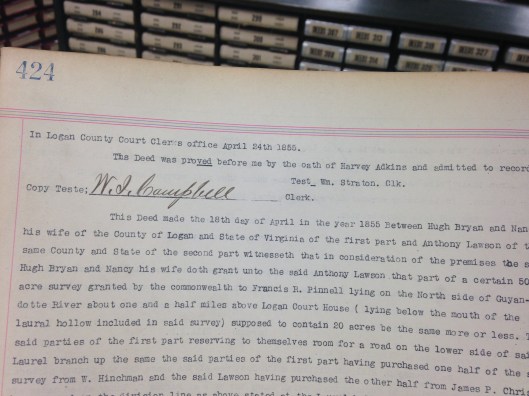
Appalachia, Archibald Elkins, Elijah Gartin, genealogy, Harts Creek, Harvey Elkins, history, Isaiah Adkins, James Dalton, Logan County, Peter Dingess, Rebecca McGuire, Richard Elkins, Virginia, W.I. Campbell, West Virginia, William Straton

Rebecca McGuire to Isaiah Adkins Deed 1

Deed Book C, page 423, Logan County Circuit Clerk’s Office, Logan, WV. Isaiah Adkins was my great-great-great-great-grandfather.

Rebecca McGuire to Isaiah Adkins Deed 2

Deed Book C, page 424, Logan County Circuit Clerk’s Office, Logan, WV.

Thomas Dunn English (1846-1861)

10 Sunday Jun 2018

Posted by Brandon Ray Kirk in Logan, Poetry

≈ Leave a comment

Tags

abolitionists, Appalachia, Aracoma, Ben Bolt, Bergen County, Columbian Fountain, Daily Dispatch, Democrat, Democratic Party, history, Logan, Logan County, Lucretia Mott, New Jersey, New York, New York Daily Tribune, poet, politics, Thomas Dunn English, U.S. Congress, Virginia, West Virginia, William and Mary College, writers

From various newspapers come these items relating to Thomas Dunn English, the famous poet who once lived in Logan County, (West) Virginia:

The Columbian Fountain (Washington, DC), 19 September 1846

Thomas Dunn English is to be the Democratic candidate for Congress in the fifth district, New York.

***

New York (NY) Daily Tribune, 27 December 1850

Doctor Thomas Dunn English will lecture concerning Hungarian matters on Sunday the 22d inst. and Lucretia Mott concerning Woman’s Rights upon the 29th of December, Sabbath evening.

***

Daily Dispatch (Richmond, VA), 29 July 1853

Dr. Thomas Dunn English is engaged in making geological exploration for some New York capitalists in Western Virginia.

***

Richmond (VA) Enquirer, 6 March 1855

We have seen the proof-sheets of a selection of the poems of Thomas Dunn English, the author of “Ben Bolt.” The same author is collating and arranging materials for an illustrated history of South-western Virginia.

***

Nashville (TN) Union and American via Richmond (VA) Enquirer, 6 September 1861

THOMAS DUNN ENGLISH MOBBED.–This gentleman was mobbed in Bergen county, New Jersey, on Friday, while on his way to speak at a peace meeting. He was severely maltreated by the Abolitionists, and, though he fought his way boldly, was with difficulty saved from assassination by the sheriff of the county. Dr. English resided in Logan county, Va., for several years. He represented Logan county in the legislature several years ago, and last year he delivered the poem at the commencement of William and Mary College. He is a genial poet and eloquent speaker. Since 1855 he has resided in New Jersey.

Battle of Kanawha Gap (1861)

10 Sunday Jun 2018

Posted by Brandon Ray Kirk in Barboursville, Big Creek, Boone County, Chapmanville, Civil War, Guyandotte River, Tazewell County

≈ 5 Comments

Tags

129th Regiment Virginia Militia, 1st Kentucky Infantry, 34th Ohio Volunteer Infantry Regiment, 5th Virginia Regiment, Abram S. Piatt, Appalachia, Baltimore & Ohio Railroad, Barboursville, Battle of Kanawha Gap, Big Creek, Big Sandy River, Boone County, Burlington Weekly Hawk-Eye, Camp Enyart, Ceredo, Chapmanville, Charleston, Chicago Daily Tribune, Cincinnati Daily Press, Cincinnati Gazette, civil war, Cleveland Morning Leader, Coal River, Confederate Army, Daily Green Mountain Freeman, David S. Enyart, Eli Thayer, Evening Star, George McClellan, Greenbrier County, Guyandotte River, H.C. Evans, Harpers Ferry, Herman Evans, history, J.V. Guthrie, J.W. Davis, Jacob D. Cox, John Dejernatt, Kanawha River, Kanawha Valley, Logan County, Logan Court House, M.H. Wood, National Republican, O.P. Evans, Ohio, Ohio River, Parkersburg, Pomeroy Weekly Telegraph, Portsmouth, Richmond Whig, Robert E. Lee, Samuel Smoot, Sewell Mountain, Southwestern Times, Staunton Spectator, T.W. Rathbone, Tazewell County, Tug Fork, Union Army, Virginia, West Virginia, West Virginia Division of Culture and History, Wheeling, William Baisden, William Rosecrans, William S. Rosecrans, Zouaves

The following newspaper accounts describe the Battle of Kanawha Gap near present-day Chapmanville, Logan County, WV, which occurred on September 25, 1861:

Cleveland (OH) Morning Leader, 3 October 1861

GALLIPOLIS, Oct. 2.

The expedition planned by Col. J.V. Guthrie of the First Kentucky Regiment, and sent out under Lieut. Col. Enyart and Col. Piatt, has returned. They encountered the enemy at Chapmansville under Col. J. Lucien Davis, of Greenbrier, and utterly routed them. The enemy lost between fifty and sixty killed. Our loss was four killed. The expedition returned to Charleston on the 30th ult.

david s. enyart photo

Col. David S. Enyart, 1st Kentucky Infantry (Union).

Evening Star (Washington, DC), 4 October 1861

A Confederate Camp in Western Virginia Broken Up and Routed

CINCINNATI, Oct. 3 — A body of Federal troops, under Lieut. Col. Enyart, attacked a camp of rebels at Chapmansville, in Logan county, Va., near the Kentucky line, routing them, killing sixty and taking seventy prisoners. The same body of rebels were afterward intercepted in their retreat by Col. Piatt, who killed forty and made a large number prisoners.
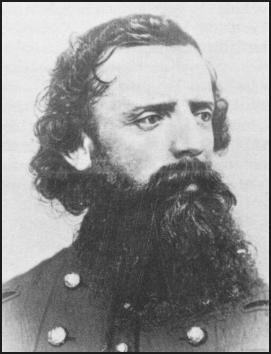
abram s. piatt photo

Col. Abram S. Piatt (1821-1908), 34th Ohio Infantry Regiment.

New York (NY) Herald, 4 October 1861

FIGHT WITH THE REBELS AT CHAPMANSVILLE

Cincinnati, Oct. 3, 1861.

The Kanawha correspondent of the Commercial of this city says that five companies of the First Kentucky regiment, four companies of the Thirty-fourth Ohio regiment and one company of the Fifty Virginia regiment, under Lieutenant Colonel Enyart, surrounded and attacked the rebels at Chapmansville, and after a short engagement completely routed them, killing sixty and taking seventy prisoners. The rebels in escaping were intercepted by Colonial Piatt, who killed forty and took a large number of prisoners. The country between Charleston and Wyandot river is now freed from secession power. This is the most effective blow given the rebels in this part of the valley.

IMG_2256.JPG

One section of the Kanawha Gap Battle Site, Chapmanville, Logan County, WV, 9 June 2018.

Daily Green Mountain Freeman (Montpelier, VT), 7 October 1861

Chapmansville, Va., the scene of the most recent engagement, is a small post village in Logan county, Va. Logan county is in the extreme Western portion of Virginia, the Tug Fork of the Big Sandy being the boundary line between it and the State of Kentucky. It is one of the largest, wildest and most sparsely inhabited counties in the State.

IMG_2238.JPG

Part of the Kanawha Gap Battle Site, Chapmanville, Logan County, WV, 9 June 2018.

National Republican (Washington, DC), 7 October 1861

THE SITUATION.

The two affairs at Chapmansville, reported three or four days since, in which the enemy lost one hundred killed and a proportionate number of wounded, will, it is supposed, restore permanent peace to the Virginia counties western of the Kanawha. Chapmansville is on the turnpike from Charleston to Logan county Court-house, and is about twenty-five miles to the south of Barboursville, the shire town of Cabell county. The secessionists in that part of Western Virginia have been numerous and pertinacious. They have once had possession of Guyandotte on the Ohio river and for a long time they threatened Ceredo (Mr. Thayer’s colony,) which lies on the river between Guyandotte and the Kentucky line. There have been two engagements with them in the rear of Ceredo, one at Barboursville, one at Logan county Court-house, one at Boone county Court-house (which town was burnt by the national troops,) and finally two at Chapmansville. The truth is, that in large portions of numerous, and, but for the early occupation of that region by the National troops, would have controlled it, not because they were the majority, but because one secessionist is, everywhere, a match for three Union men.

The secessionists are reckless, violent, and desperate, while their opponents, if not timid are at any rate remarkably pacific. We doubt, indeed, from all the information we can get, whether throwing out of the account Wheeling and Parkersburg, the terminal on the Ohio river of the Baltimore and Ohio railroad, Western Virginia had more elements of Union strength than the Valley of Virginia. From Harper’s Ferry south for fifty miles, the Union men have been numerous from the first, and it is a matter of deep regret that it did not consist with the plans of military strategy adopted at the headquarters of the army here, to occupy (at least) the northern part of the Valley of Virginia. It is consoling, that a different policy was adopted in retrospect to Western Virginia. That region was promptly taken possession of, cleared of the rebel armies by Gen. McClellan, and has since been victoriously held by Gen. Rosecrans. All attempts of the enemy to affect a re-entrance into Western Virginia are promptly repulsed.

34th Ohio Volunteer Infantry Regiment, Piatt's Zouaves Flag Photo.jpg

Staunton (VA) Spectator, 8 October 1861

Status at Sewell’s Mountain.

The enemy, under Gen. Rozencrantz, and our forces under Gen. Lee, are both upon Sewell Mountain very near each other. A fight has been daily expected there for some time, but the enemy have been fortifying ever since they have been there, and there will not be a fight unless we attack them in their entrenchments. They are afraid to attack us, and it is probable that our force is too weak to risk an attack on them within their fortification. It may, therefore, be some time before an engagement will take place. We understand that we had sent a force of four regiments to their rear for the purpose of cutting off their supplies—that we succeeded in getting around them, but were compelled to return because we did not have sufficient supplies ourselves. We also learn that Col. Jas. W. Davis of Greenbrier, whilst commanding a force of militia in Logan county, attacked a part of the enemy, and was shot down at the first fire. The militia, after several rounds caught the Yankee fever which made their cowardly legs run off with their brave hearts, and they left their commander in the hands of the enemy, who, we fear, has died from his wound.

IMG_2923

New historical sign placed by the WV Division of Culture and History located at the 119 ramp in Chapmanville, WV. 26 April 2017.

Chicago (IL) Daily Tribune, 9 October 1861

A Splendid Achievement of the Ohio Zouaves–“Wood Up” the Battle Cry.

[The following letter is exclusively devoted to the fight which the Piatt Zouaves had with the rebels near Chapmansville, Va. It is distinct from the victorious fight which the command of Lieut. Col. Enyart had with another body of rebels, in the same vicinity. EDS. CINCINNATI COM]

CAMP ENYART, KANAWHA, Oct. 2, 1861. EDS. COM.: The Zouave Thirty-fourth Regimens, Ohio, have had a chance to show their metal. This was on Wednesday, on Kanawha Gap, near Chapmansville, Va. After marching 42 miles, they came upon the enemy, who were behind breastworks, but could not stand our boys’ steady fire, for they retreated in utter consternation, their Col. J.W. Davis, of Greenbrier, Va, (but the traitor is a native of Portsmouth, Ohio,) being mortally wounded. We killed 20, took 3 prisoners, a secesh flag, 20 feet long with FIFTEEN STARS, 4 horses, 1 wagon, 10 rifles (one of which I claim), 12 muskets, and commissary stores (very low.) We lost 3 killed, 9 wounded, one since died. The route of the enemy was complete, although they had a brave, skillful commander, and strong position, with two days’ information of our intentions. They fled the moment their commander fell. The fight lasted about 10 minutes opposite the breastworks, but a running fire was kept up previous to that, by the Bushwhackers and rebel cavalry for two hours. At every turn of the road over the mountains, they would fire upon our advance men, wheel round, and gallop away. This kind of fight was kept up till we came suddenly upon their breastworks, immediately in line of our entire column. It was made on the side of a knoll, between two mountain sides, the road running between the mountain on our left. The wily rebel commander had adroitly cut down the brush on the right, placing a force of 100 men on the mountain top on our right, who raked our column from the front to the center. This was to draw our attention from their breastworks. Our men naturally fired upon the rebels on their right, steadily advancing up the road, until within 20 feet of the enemy’s works, when the rebels suddenly opened fire, from their right, left and center. The order from Col. Piatt and Lieut. Col. Toland, to flank right and left was immediately responded to by the Zouaves with a hurrah, a Zouave yell, and a cry of “wood up” from Little Red; a dash by our boys upon the enemy’s breastworks, above which about 300 rebel heads suddenly appeared, unknown by our men till that moment. They sent a perfect storm of bullets around, over, under, and into our men. A few minutes more and our boys were inside the breastworks, chasing them over the mountains, the enemy running away like cowards as they proved to be. They left 29 dead behind. Their force was 450 infantry and 50 cavalry. Our force was 560.

We buried our three brave dead comrades that night, carried our wounded to the house wherein the rebel Colonel lay, mortally wounded, deserted by all his men but one. Our whole column finally marched into the little town of Chapmansville, formerly headquarters of the enemy, and camped for the night.

34th Ohio Volunteer Infantry Regiment, Piatt's Zouaves Captain Photo.jpg

34th Ohio Volunteer Infantry Regiment, Piatt’s Zouaves, Captain Photo.

Pomeroy (OH) Weekly Telegraph, 11 October 1861

Brilliant Action in the Kanawha Valley.

CHARLESTON, Va., Sept. 30, ’61. Eds. Cin. Com.–Information having been brought to Col. J.V. Guthrie, commanding this post, that a large force of Rebels were gathered at Logan Co., Lt. Col. Enyart, of the 1st Kentucky, was at once sent to engage them. His force was composed of five companies of the 1st Kentucky, four companies of the 34th Ohio–German Regiment–under command of Col. A.S. Piatt, and one company of the 5th Virginia Regiment, under command of Maj. M.H. Wood.

Col. Enyart, with the Kentucky force, surrounded and attacked the Rebels at Chapmanville, and after a short but decisive engagement, completely routed them, killing 60 and taking 70 prisoners. The Rebels, in escaping, were intercepted by Col. Piatt, who surprised them and killed 40 men, and took a large number of prisoners.

The force of the Rebels is now completely broken up, and the country between this point and Guyandotte River is now freed from Secession power. This is the most effective blow given the Rebels in this part of the Valley.

In great haste. Further particulars by next boat.

Very respectfully,

M. CLEMENS,

Lieut. Col. 5th Va. Reg’t.

34th Ohio Volunteer Infantry Regiment, Piatt's Zouaves Soldier Photo

34th Ohio Volunteer Infantry Regiment, Piatt’s Zouaves, Soldier.

Evening Star (Washington, DC), 11 October 1861

THE BATTLE OF KANAWHA GAP.

The Western Virginia correspondent of the Cincinnati Gazette gives the following account of the late engagement at Kanawha Gap:

There were about 1,050 troops under the command of Colonels Enyart and Piatt, who left their camp Monday morning, 30th ulto., and took up their line of march for the enemy.

The forces moved together until they reached Peytona, on Cole river, where they separated; Col. Enyart going up Cole river. Col. Enyart did not meet the enemy in force at any place but his men did meet and ford swollen rivers, and marched on short rations, and were anxious to meet with the running enemy of Old Virginia. Col. Enyart did not meet Col. Piatt until they met on the Kanawha, on their return.

Col. Piatt’s command immediately proceeded thence to Boone Court House, and camped that night one mile beyond. The next day, after proceeding some sixteen miles,t hey came up with the advance guard of the enemy, consisting of cavalry, when a brisk fire was exchanged, the cavalry retreating. After the retreat of cavalry the battalion was immediately put in order of battle. The advance guard of fifteen men was led forward by Adj’t Clarke, proceeding along the road. Scouts were sent out on either side of the road to meet and repulse the sharp-shooters of the enemy.

The force proceeded in this order for about two miles, meeting the pickets of the enemy, exchanging shots with them incessantly, and driving them back with increased confusion at each charge.

Being unable to ascertain the position of the rebels, the entire force halted for a few moments, and Col. Piatt rode in advance and took observations with his glass, but could not ascertain their force and position, as it was covered with a thick growth of underbrush. After these observations a command was issued to forward the column. The scouts moved on the rapidity and enthusiasm, the main body moving up the narrow road cautiously and firmly. The fire continued to increase, and shots were rapidly exchanged from the right and left with the enemy, until our advanced guard reached within sixty yards of their main force. The column was some eighty yards from the enemy when they received a perfect volley of fire upon their right, indicating that the rebels were in force in that direction. Company “A,” commanded by Capt. Rathbone, was ordered to deploy as skirmishers to the right, up the side of the mountain, and if possible to flank the enemy on the left. Company “C,” commanded by Capt. Miller, was ordered to the right, up a similar mountain, to flank the enemy on their left. Company “I,” commanded by Capt. Anderson, was ordered directly up the ravine, on the left. In this position he drew the concentrated fire of the rebels upon his company, who made use of the knowledge thus obtained by rapidly charging upon and destroying the enemy’s breastworks. The center moved directly up the road. With this disposition of the forces, Col. Piatt routed them from their confusion. Capt. Anderson was the first to mount their breastworks, his men following him in the face of a terrible fire without flinching or confusion.

As Capt. Anderson sealed the breastwork, Capt. Miller closed upon the left and Capt. Rathbone came in upon the right, his men crying “Zouave!” The main column moving up the road in double quick–until they were brought to a temporary halt by obstructions placed in the road by the enemy.

The rebels, terrified by the strange bravery and almost wild enthusiasm that was exhibited by each advancing column, ran in confusion, leaving their dead, wounded, clothing, guns, horses, &c., making their escape by Capt. Rathbone’s right; his company being too far up the mountain to cut off their retreat. Capt. West, commanding company F, was detailed to scour the mountain on the west, on the left of the road. Capt. O.P. Evans on the west side of the mountain, on the right side of the road. Capt. Herman Evans, commanding Company H, on the east side of the mountain, on the left of the road.

Each of these companies moved with dispatch, yet such was the knowledge of the rebels of teh by-paths in the mountains, and belonging to the “F.F.V.’s,” and having been drilled at running all summer, that but two were captured.

Among interesting objects captured was a genuine secession flag, captured by Lieut. Brown.

The enemy’s loss was thirty killed and fifty wounded.

We regret to know that four of our men were killed and eight wounded.

34th Ohio Volunteer Infantry Regiment, Piatt's Zouaves Soldiers Photo 2.jpg

34th Ohio Volunteer Infantry Regiment, Piatt’s Zouaves, Soldiers. Here’s a link to Captain T.W. Rathbone’s Civil War diary: http://resources.ohiohistory.org/ohj/browse/displaypages.php?display[]=0071&display[]=33&display[]=56

Burlington (IA) Weekly Hawk-Eye, 12 October 1861

The fight at Chapmansville was a sharp and bloody affair. Five of Piatt’s Zouaves were killed. The rebels lost thirty-five killed.
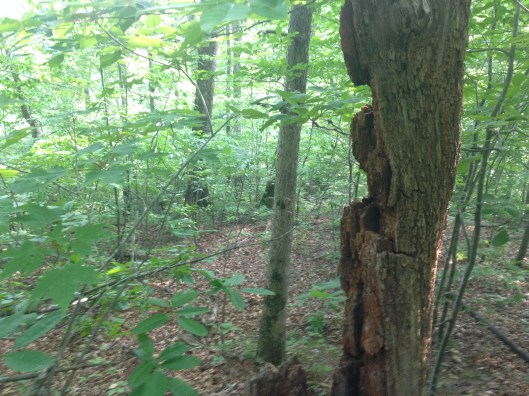
IMG_2235.JPG

Part of the Kanawha Gap Battle Site, Chapmanville, Logan County, WV, 9 June 2018.

National Republican (Washington, DC), 17 October 1861

The thirty-fourth regiment (first Zouaves) have been actively engaged since they came to the Kanawha Valley. Since the glorious victory they won near Chapmansville where the rebel commander, Colonel Davis, was mortally wounded, the Union sentiment has advanced on the Cole River. Two companies have been organized, and are ready to go to work to defend their own homes and give the organized regiments an opportunity to advance into the heart of the enemy’s country.

IMG_2254.JPG

Part of the Kanawha Gap Battle Site, Chapmanville, Logan County, WV, 9 June 2018.

Cincinnati (OH) Daily Press, 22 October 1861

Captain H.C. Evans, of Piatt’s Zouave Regiment, yesterday called in our office and exhibited a Secesh flag, captured at the Chapmansville fight, on the 24th ult.
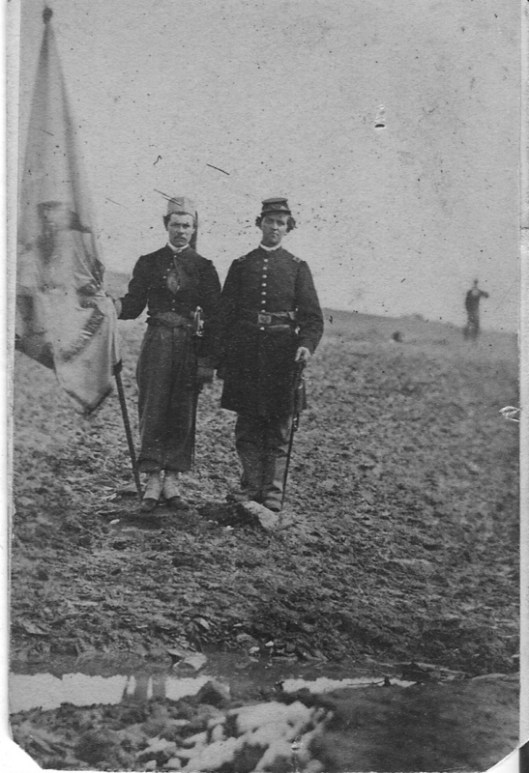
34th Ohio Volunteer Infantry Regiment, Piatt's Zouaves Soldiers Photo

34th Ohio Volunteer Infantry Regiment, Piatt’s Zouaves, Soldiers.

Clarksville (TN) Chronicle, 25 October 1861

The Fight in Logan County, Va.

[From the Richmond Whig of the 15th.]

We yesterday published the Yankee account of a battle in Logan county, which as usual, was manufactured out of whole cloth. The following are the facts as given by the South-western Times, (Tazewell county) of the 10th inst.:

From Samuel Smoot, Esq., of Boone county, who was in the fight, we learn the following particulars of the battle near Chapmanville, Logan county, on the 25th ult: The Yankees numbered 700, and commenced the attack upon our troops–the Logan militia–in a low gap between Guyandotte river and Big Creek, where they were engaged in raising a temporary breastwork. Our troops numbered 220, but there were only about 80 of them engaged in the fight. They were commanded by Col. J.W. Davis, of Greenbrier, a brave and gallant officer, who was severely, but not dangerously wounded, in the arm and breast. As soon as it became known that Col. Davis was wounded, the militia commenced a retreat. The commanding officer of the Lincoln troops afterwards confessed to Col. Davis, who was taken prisoner, that at the same moment a portion of the Yankees were running, and that one more round would have completely dispersed them.

The loss of the Yankees, by their own confession to Col. Davis, was 40 killed and a number wounded; among the former were four Union men, all of whom are represented by the Yankees to be most arrant thieves and cowards. Our loss was two killed and three or four wounded, besides Col. Davis, whose valuable services are at present lost to the Confederacy, being paroled by the enemy.

On the following day our scouts killed one of their pickets, and wounded another, at a point about half way between Logan Court House and Chapmanville, promising to give them particular thunder before daylight next morning. This with some news from a lady on the road, and some account of the militia of the surrounding counties, found on the person of Col. Davis, caused a hasty stampede for their headquarters, in the valley of the Kanawha. It seems that high water, bad roads, nor anything else could impede their rapid flight. They tore down a meeting house in Boone county to make rafts whereon to cross the river. They drowned two of their wounded, lost a wagon containing their entire stock of ammunition, and were fully persuaded that they were followed by two thousand cavalry, of which the Yankees in the West are about as fearful as their Eastern brothers are of masked batteries.

Upon the whole, we are much gratified at the result of this fight. It has, for the present, driven the cowardly thieves from the country, given renewed energy to the true patriots of Logan and the adjoining counties, fully convincing them that with the assistance of two or three hundred of their gallant friends in Tazewell county, they will be fully able to thrash any number that Gen. Cox or his friends shall dare to send against them.”

Note: An almost identical version of this story appeared in the Staunton (VA) Spectator on 22 October 1861.
IMG_7149.JPG

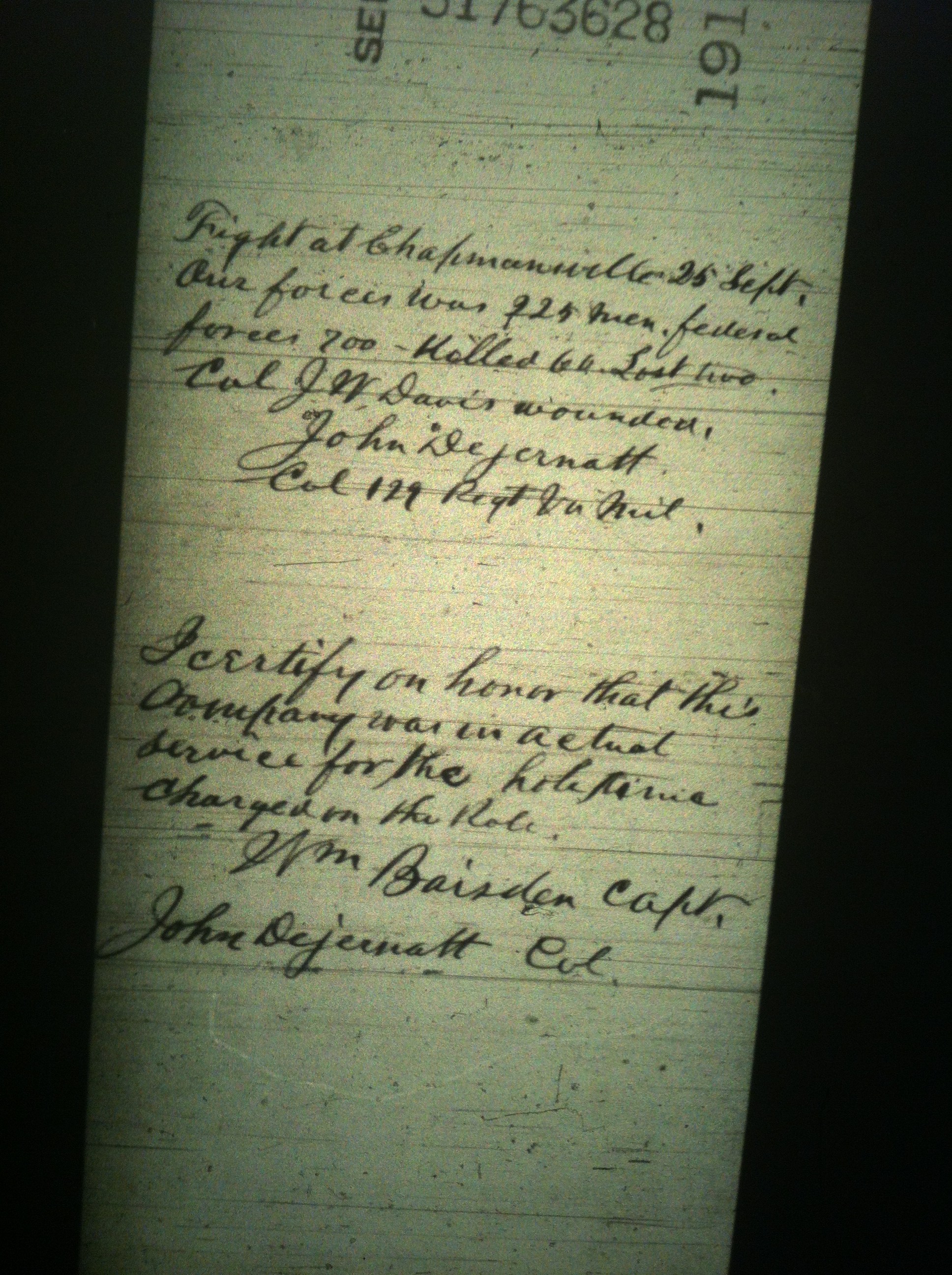
Record relating to the 129th Virginia Militia (Confederate), which was present at the Battle of Kanawha Gap.
John R. Browning Debt to James A. Nighbert (1860)

07 Thursday Jun 2018

Posted by Brandon Ray Kirk in African American History, Logan

≈ Leave a comment

Tags

African-Americans, Appalachia, genealogy, history, James A. Nighbert, John R. Browning, Logan County, slavery, Virginia, West Virginia

IMG_1355

John R. Browning Check to James A. Nighbert, Logan County, (W)VA, 1860.

IMG_1356.JPG

John R. Browning Promissory Note to James A. Nighbert, Logan County, (W)VA, 1860-1861. Note reference to “Negro boy” named Simon.

For more information about John R. Browning, follow this link: https://www.familysearch.org/ark:/61903/3:1:33S7-9BSZ-9N3H?i=46&cc=1473181

Henry Conley v. William Straton et al. (1854)

04 Monday Jun 2018

Posted by Brandon Ray Kirk in Big Harts Creek, Crawley Creek, Logan

≈ Leave a comment

Tags

Appalachia, Brushy Fork, county clerk, Crawley Creek, David Straton, Eliza Straton, genealogy, Harts Creek, Henry Conley, Hickman S. White, history, Hugh Bryan, John J. Besnoist, Joseph Straton, justice of the peace, Lawnsville, Logan, Logan County, Logan Court House, Mulligan Lot, Polly Straton, Rebecca A. Straton, Virginia, West Virginia, William Straton

Henry Conley and William Straton Deed 1

Deed Book C, page 367, Logan County Clerk’s Office, Logan, WV. This land is located in present-day West Virginia.

Daniel H. Fry Deed to Tolbert Ferrell and Patterson Ferrell (1854)

25 Friday May 2018

Posted by Brandon Ray Kirk in Big Creek

≈ Leave a comment

Tags

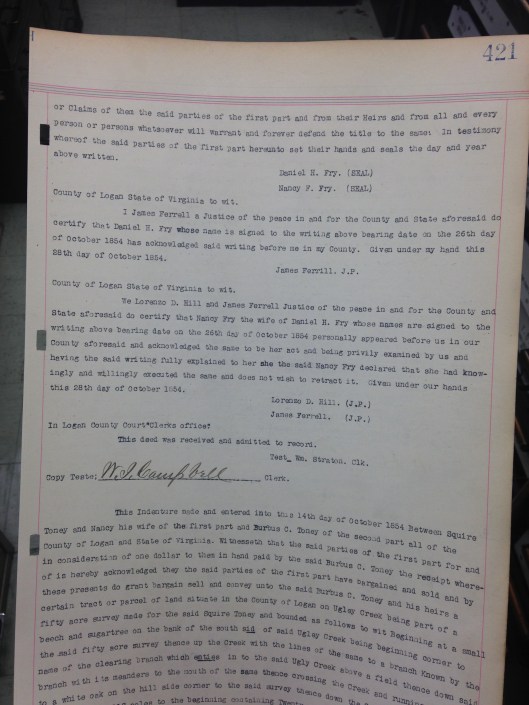
Appalachia, Austin Survey, Big Creek, Daniel H. Fry, Elisha Fry, genealogy, George Fry, history, James Ferrell, John J. Besnoist, justice of the peace, Logan County, Lorenzo Dow Hill, Nancy Fry, Obediah Godby, Patterson Ferrell, Right Hand Fork, Tolbert Ferrell, Virginia, W.I. Campbell, West Virginia, William Godby

Daniel Fry to Tolbert Ferrell Deed 1

Deed Book C, page 420, Logan County Clerk’s Office, Logan, WV. This property is located in present-day West Virginia.

Daniel Fry to Tolbert Ferrell Deed 2

Deed Book C, page 421, Logan County Clerk’s Office, Logan, WV. Daniel’s brother Elisha Fry is my great-great-great-grandfather.

George Workman Letter to Lewis Lawson (1867)

19 Saturday May 2018

Posted by Brandon Ray Kirk in Civil War, Pecks Mill

≈ Leave a comment

Tags

Appalachia, civil war, Confederate Army, genealogy, George Workman, history, Lewis Lawson, Logan County, Virginia, West Virginia, Whites Mill

The following letter was composed by George Workman of Logan County, WV, and sent to Lewis Lawson:

April the 3rd 1867

Mr. Lewis Lawson. Sir. I take the present oppotunity of informing you that I have been in formed that you claim to have a deed of trust on my land. now this seems a strange truth to me for you know that I never gave you any such a thing and I think you are a man of better sense than to forge such a thing you don’t like to work that well I give you and smoot a deed of trust on five head of cattle which the rebs took from me and when you want your pay you must make them pay me now sir if you have a trust deed on my land you had better keep it to your self for I can prove the deed was on cattle and I will prossecute you as you are a man. You must think that I am a perfect idiot that I will let you forge a trust deed sell me out say nothing to you. but I am not quite that dull now sir I dare you to do any thing with your deed and Just show you that I am not a sleep and I am not worth what the law a lows me until you rebs pays me for my property then I will pay you & c.

George Workman

Note: Mr. Lawson, born about 1810 in England, lived at Whites Mills in 1860 where the census listed him as a farmer and merchant with $4000 worth of real estate and $15,720 worth of personal property.

← Older posts
Newer posts →

Feud Poll 1

If you had lived in the Harts Creek community during the 1880s, to which faction of feudists might you have given your loyalty?

Categories

  • Adkins Mill
  • African American History
  • American Revolutionary War
  • Ashland
  • Atenville
  • Banco
  • Barboursville
  • Battle of Blair Mountain
  • Beech Creek
  • Big Creek
  • Big Harts Creek
  • Big Sandy Valley
  • Big Ugly Creek
  • Boone County
  • Breeden
  • Calhoun County
  • Cemeteries
  • Chapmanville
  • Civil War
  • Clay County
  • Clothier
  • Coal
  • Cove Gap
  • Crawley Creek
  • Culture of Honor
  • Dingess
  • Dollie
  • Dunlow
  • East Lynn
  • Ed Haley
  • Eden Park
  • Enslow
  • Estep
  • Ethel
  • Ferrellsburg
  • Fourteen
  • French-Eversole Feud
  • Gilbert
  • Giles County
  • Gill
  • Green Shoal
  • Guyandotte River
  • Halcyon
  • Hamlin
  • Harts
  • Hatfield-McCoy Feud
  • Holden
  • Hungarian-American History
  • Huntington
  • Inez
  • Irish-Americans
  • Italian American History
  • Jamboree
  • Jewish History
  • John Hartford
  • Kermit
  • Kiahsville
  • Kitchen
  • Leet
  • Lincoln County Feud
  • Little Harts Creek
  • Logan
  • Man
  • Matewan
  • Meador
  • Midkiff
  • Monroe County
  • Montgomery County
  • Music
  • Native American History
  • Peach Creek
  • Pearl Adkins Diary
  • Pecks Mill
  • Peter Creek
  • Pikeville
  • Pilgrim
  • Poetry
  • Queens Ridge
  • Ranger
  • Rector
  • Roane County
  • Rowan County Feud
  • Salt Rock
  • Sand Creek
  • Shively
  • Spears
  • Sports
  • Spottswood
  • Spurlockville
  • Stiltner
  • Stone Branch
  • Tazewell County
  • Timber
  • Tom Dula
  • Toney
  • Turner-Howard Feud
  • Twelve Pole Creek
  • Uncategorized
  • Warren
  • Wayne
  • West Hamlin
  • Wewanta
  • Wharncliffe
  • Whirlwind
  • Williamson
  • Women's History
  • World War I
  • Wyoming County
  • Yantus

Feud Poll 2

Do you think Milt Haley and Green McCoy committed the ambush on Al and Hollene Brumfield in 1889?

Blogroll

  • Ancestry.com
  • Ashland (KY) Daily Independent News Article
  • Author FB page
  • Beckley (WV) Register-Herald News Article
  • Big Sandy News (KY) News Article
  • Blood in West Virginia FB
  • Blood in West Virginia order
  • Chapters TV Program
  • Facebook
  • Ghosts of Guyan
  • Herald-Dispatch News Article 1
  • Herald-Dispatch News Article 2
  • In Search of Ed Haley
  • Instagram
  • Lincoln (WV) Journal News Article
  • Lincoln (WV) Journal Thumbs Up
  • Lincoln County
  • Lincoln County Feud
  • Lincoln County Feud Lecture
  • LinkedIn
  • Logan (WV) Banner News Article
  • Lunch With Books
  • Our Overmountain Men: The Revolutionary War in Western Virginia (1775-1783)
  • Pinterest
  • Scarborough Society's Art and Lecture Series
  • Smithsonian Article
  • Spirit of Jefferson News Article
  • The Friendly Neighbor Radio Show 1
  • The Friendly Neighbor Radio Show 2
  • The Friendly Neighbor Radio Show 3
  • The Friendly Neighbor Radio Show 4
  • The New Yorker
  • The State Journal's 55 Good Things About WV
  • tumblr.
  • Twitter
  • Website
  • Weirton (WV) Daily Times Article
  • Wheeling (WV) Intelligencer News Article 1
  • Wheeling (WV) Intelligencer News Article 2
  • WOWK TV
  • Writers Can Read Open Mic Night

Feud Poll 3

Who do you think organized the ambush of Al and Hollene Brumfield in 1889?

Recent Posts

  • Logan County Jail in Logan, WV
  • Absentee Landowners of Magnolia District (1890, 1892, 1894)
  • Charles Spurlock Survey at Fourteen Mile Creek, Lincoln County, WV (1815)

Ed Haley Poll 1

What do you think caused Ed Haley to lose his sight when he was three years old?

Top Posts & Pages

  • Halcyon 4.10.1919
  • Civil War Gold Coins Hidden Near Chapmanville, WV
  • Halcyon-Yantus 12.08.1911
  • Ran'l McCoy's Final Months (1914)
  • Blood in West Virginia: Brumfield v. McCoy (2014)

Copyright

© Brandon Ray Kirk and brandonraykirk.wordpress.com, 1987-2023. Unauthorized use and/or duplication of this material without express and written permission from this blog’s author and/or owner is strictly prohibited. Excerpts and links may be used, provided that full and clear credit is given to Brandon Ray Kirk and brandonraykirk.wordpress.com with appropriate and specific direction to the original content.

Archives

  • February 2025
  • January 2025
  • October 2023
  • September 2023
  • December 2022
  • November 2022
  • May 2022
  • April 2022
  • February 2022
  • November 2021
  • October 2021
  • September 2021
  • June 2021
  • May 2021
  • April 2021
  • March 2021
  • February 2021
  • January 2021
  • December 2020
  • November 2020
  • October 2020
  • July 2020
  • June 2020
  • May 2020
  • April 2020
  • March 2020
  • February 2020
  • January 2020
  • December 2019
  • November 2019
  • October 2019
  • September 2019
  • August 2019
  • July 2019
  • June 2019
  • May 2019
  • April 2019
  • March 2019
  • February 2019
  • January 2019
  • December 2018
  • November 2018
  • October 2018
  • September 2018
  • August 2018
  • July 2018
  • June 2018
  • May 2018
  • April 2018
  • March 2018
  • February 2018
  • January 2018
  • December 2017
  • November 2017
  • October 2017
  • September 2017
  • August 2017
  • July 2017
  • June 2017
  • May 2017
  • April 2017
  • March 2017
  • February 2017
  • January 2017
  • December 2016
  • November 2016
  • October 2016
  • September 2016
  • August 2016
  • July 2016
  • June 2016
  • May 2016
  • April 2016
  • March 2016
  • February 2016
  • January 2016
  • December 2015
  • November 2015
  • October 2015
  • September 2015
  • August 2015
  • July 2015
  • June 2015
  • May 2015
  • April 2015
  • March 2015
  • February 2015
  • January 2015
  • December 2014
  • October 2014
  • September 2014
  • August 2014
  • July 2014
  • June 2014
  • May 2014
  • April 2014
  • March 2014
  • February 2014
  • January 2014
  • December 2013
  • November 2013
  • October 2013
  • September 2013
  • August 2013
  • July 2013
  • June 2013
  • May 2013
  • April 2013
  • March 2013
  • February 2013
  • January 2013
  • December 2012
  • November 2012

Enter your email address to follow this blog and receive notifications of new posts by email.

Join 2,927 other subscribers

Tags

Appalachia Ashland Big Creek Big Ugly Creek Blood in West Virginia Brandon Kirk Cabell County cemeteries Chapmanville Charleston civil war coal Confederate Army crime culture Ed Haley Ella Haley Ferrellsburg feud fiddler fiddling genealogy Green McCoy Guyandotte River Harts Harts Creek Hatfield-McCoy Feud history Huntington John Hartford Kentucky Lawrence Haley life Lincoln County Lincoln County Feud Logan Logan Banner Logan County Milt Haley Mingo County music Ohio photos timbering U.S. South Virginia Wayne County West Virginia Whirlwind writing

Blogs I Follow

  • OtterTales
  • Our Appalachia: A Blog Created by Students of Brandon Kirk
  • Piedmont Trails
  • Truman Capote
  • Appalachian Diaspora

BLOOD IN WEST VIRGINIA is now available for order at Amazon!

Blog at WordPress.com.

OtterTales

Writings from my travels and experiences. High and fine literature is wine, and mine is only water; but everybody likes water. Mark Twain

Our Appalachia: A Blog Created by Students of Brandon Kirk

This site is dedicated to the collection, preservation, and promotion of history and culture in Appalachia.

Piedmont Trails

Genealogy and History in North Carolina and Beyond

Truman Capote

A site about one of the most beautiful, interesting, tallented, outrageous and colorful personalities of the 20th Century

Appalachian Diaspora

  • Subscribe Subscribed
    • Brandon Ray Kirk
    • Join 789 other subscribers
    • Already have a WordPress.com account? Log in now.
    • Brandon Ray Kirk
    • Subscribe Subscribed
    • Sign up
    • Log in
    • Report this content
    • View site in Reader
    • Manage subscriptions
    • Collapse this bar
 

Loading Comments...