• About

Brandon Ray Kirk

~ This site is dedicated to the collection, preservation, and promotion of history and culture in my section of Appalachia.

Brandon Ray Kirk

Tag Archives: Kentucky

Boling Baker and Princess Aracoma (1937)

06 Tuesday Nov 2018

Posted by Brandon Ray Kirk in Gilbert, Logan, Native American History, Women's History

≈ 3 Comments

Tags

Abner Vance, Appalachia, Aracoma, Ben Stewart, Ben White, Bluestone River, Boling Baker, Buffalo Creek, Charles Hull, Clear Fork, Dingess Run, Elias Harman, Flat Top Mountain, genealogy, George Berry, Gilbert Creek, Guyandotte River, Henry Clay Ragland, history, Horse Pen Mountain, Huff Creek, Island Creek, James Hensley, James Hines, James White, John Breckinridge, John Carter, John Cook, Joseph Workman, Kentucky, Logan, Logan Banner, Logan County, Logan County Banner, Mallory, Native American History, Native Americans, Oceana, Peter Huff, Rockcastle Creek, Shawnee, West Virginia, William Dingess, William S. Madison

From the Logan Banner of Logan, WV, comes this bit of history concerning Boling Baker and Princess Aracoma, dated March 23, 1937:

IMG_1668

Historical marker on Horse Pen Mountain near Gilbert, Mingo County, WV. 25 April 2015.

Dying Words of Princess Aracoma Related In Story Taken From Banner Files

Though much has been written on the history of Logan county, just as much has been forgotten about its early development.

One of the county’s first historians, Henry Clay Ragland, mayor of the city, church worker and editor of the Logan County Banner, recorded some of the high spots of the development of Logan county in a series of articles which he ran in his newspaper during 1896.

It is from this series of articles that the following story of the early settlement of Logan county is taken.

Records show that a large number of white men first set foot in what is now Logan county in the spring of 1777, when Captain Charles Hull with 20 men pursued a band of marauding Shawnees to the site where Oceana was later built. They lost the trail at Oceana and had to turn back. The Shawnees had raided a white settlement near the falls of New River one spring night and had stolen thirty head of horses. The army captain and his men set out in pursuit but the redskins had too great a start.

Huff Creek was given its name on this expedition in honor of Peter Huff who was killed in a skirmish on the banks of the stream as the men returned home. Huff was buried near the spot where he was killed, which is believed to have been near where the town of Mallory now stands.

Other men on this expedition and who returned to the valley of the Guyandotte later and built homes were John Cook, James Hines, William Dingess and James Hensley.

The first white man really to be identified with what is now Logan county was Boling Baker, a renegade white, but the old-timers would not give him credit for being a white man. They said: “He lived with the Injins and that makes him an Injin.” Baker, however dastardly he was, was indirectly responsible for the settlement of Logan county in 1780-85.

The renegade had one great weakness. A weakness that they hung men for in those days. He was a horse thief. He would take a party of Indians a hundred miles through the mountain passes of Logan county to raid a white settlement in order to steal 20 or 30 horses.

Baker had gone into the business on a large scale. At the head of Gilbert Creek, on Horse Pen Mountain, where the mountain rises abruptly with almost cliff-like sharpness, he had stripped bark from hickory trees and stretched it from tree to tree making a pen in which to keep his stolen stock.

Old settlers of the county who have had the story passed down to them from their great-grandfathers say that the pen was somewhere in the hollow below the road which leads to the fire tower on Horsepen Mountain. It was from this improvised corral of Boling Baker that the mountain was named.

But, back to how Baker was responsible for the settlement of the county.

He left his Indian camps on the Guyan river in the fall of 1780 and visited the white settlements in the Bluestone valley in the Flat Top mountain territory. There he told the settlers a story of how he had been captured by the Indians when he was a young man and had learned their ways. He said he had just escaped from the Shawnee tribe known to be hunting in the Guyandotte valley and was on his way back east to see his father and mother who lived in Boston. Shrewd chap, this Baker!

The settlers were taken in by his story and allowed him to remain with them for several weeks during which time he got the location of all the settlers barns well in mind and after a time departed “back east.”

Soon after the renegade left the Bluestone settlement the whites awoke one rainy morning late in autumn and found every barn empty. The Indians had come with the storm which lashed the valley and had gone without arousing a person. Thirty horses from the settlement went with them.

An expedition headed by Wm. S. Madison and John Breckinridge—son of the Breckinridges who settled much of Kentucky—was made up in a neighboring settlement and set out in pursuit of the thieving Shawnees.

They trailed the party over Flat Top Mountain and southwest to the headwaters of the Guyan River by way of Rockcastle creek and Clear Fork. Trail marks showed that the band had gone down the river, up Gilbert Creek to Baker’s pen and thence over the mountain.

Madison and his 75 men did not follow the Indian trail over the mountain but the redskins probably brought their herd of 50 or 75 horses down Island Creek to the Guyan.

The white expedition chose to follow the Guyan in a hope that they would find the party encamped somewhere along its banks. Scouts had reported that a large tribe of Indians used the Guyan valley as its hunting grounds.

Madison’s party followed the river down to Buffalo Creek—named because the white men found such a large number of buffalo grazing in its bottoms—crossed Rum Creek and pitched camp for a night at the mouth of Dingess Run because “Guyan” Green and John Carter, scouts sent ahead to reconnoiter, had reported finding ten Indian lodges in the canebrakes of an island formed by the joining of a large creek and the Guyan river.

The men rested on their guns for the night and the following morning divided into two parties and attacked the encampment from the front and rear.

In the furious fighting that followed, nine of the thirty Indians in the camp were killed and ten or twelve wounded. Only a few escaped the slaughter of the white men. Among those captured was an old squaw 50 or 60 years old, who by her bearing, was obviously leader of the party. She was wounded but refused to talk.

Near midnight, however, following the massacre of the camp the old squaw felt death creeping upon her and called Madison to her quarters, and told him in broken English the following:

“I am the wife of a pale face who came across the great waters to make war on my people, but came to us and became one of us. A great plague many moons ago carried off my children with a great number of my people, and they lay buried just above the bend in the river. Bury me with them with my face to the setting sun that I may see my people in their march to the happy hunting ground. For your kindness I warn you to make haste in returning to your homes, for my people are still powerful, and will return to avenge my death.”

The proud princess died before morning and the white men buried her “near the bend in the river.” The Indian captives were all killed.

Four days later the men returned to the valley of the Bluestone.

Among those who helped Wm. S. Madison rout the Shawnees and who vowed to possess the valley of the Guyandotte for themselves and their children were George Booth, George Berry, Elias Harman, Ben Stewart, Abner Vance, Joseph Workman, Ben White and James White. All these names are familiar in the county today.

After the Indians were pushed to the west, surveyors allotted the land to the first settlers who had dared, with Madison, to come into the wilderness of the Guyandotte and open it up for the white man.

Madison owned several thousand acres of land on Island Creek, Gilbert Creek and Dingess Run. Other fighters were given like parcels of land.

Source: Logan (WV) Banner, 23 March 1937
Paw Paw Incident: James McCoy Deposition (1889)

20 Saturday Oct 2018

Posted by Brandon Ray Kirk in Culture of Honor, Hatfield-McCoy Feud, Matewan

≈ Leave a comment

Tags

Alex Messer, Anderson Ferrell, Appalachia, Asa McCoy, Blackberry Creek, Bud McCoy, Cap Hatfield, Charlie Carpenter, clerk, crime, Devil Anse Hatfield, Doc Mayhorn, Elias Hatfield, Elijah Mounts, Ellison Hatfield, feuds, Floyd Hatfield, G.W. Pinson, genealogy, Hatfield-McCoy Feud, history, Joe Hatfield, Johnson Hatfield, Kentucky, Mate Creek, Matthew Hatfield, Pharmer McCoy, Pike County, Pikeville, Plyant Mayhorn, Preacher Anse Hatfield, Sam Simpkins, Tolbert McCoy, Tom Mitchell, Valentine Wall Hatfield, West Virginia

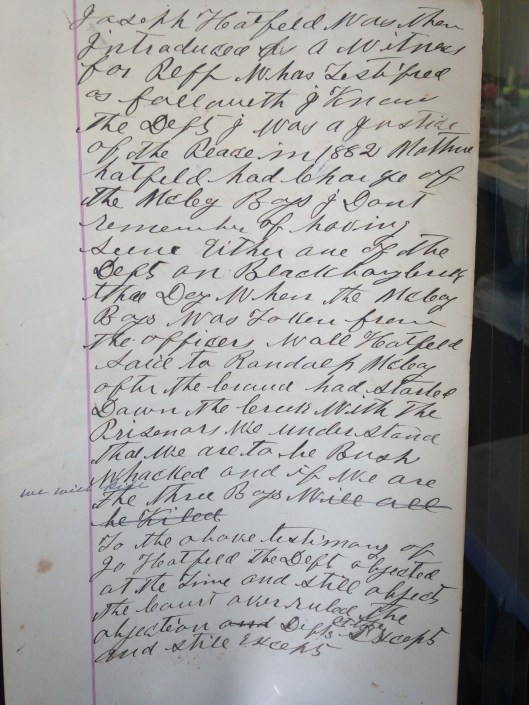
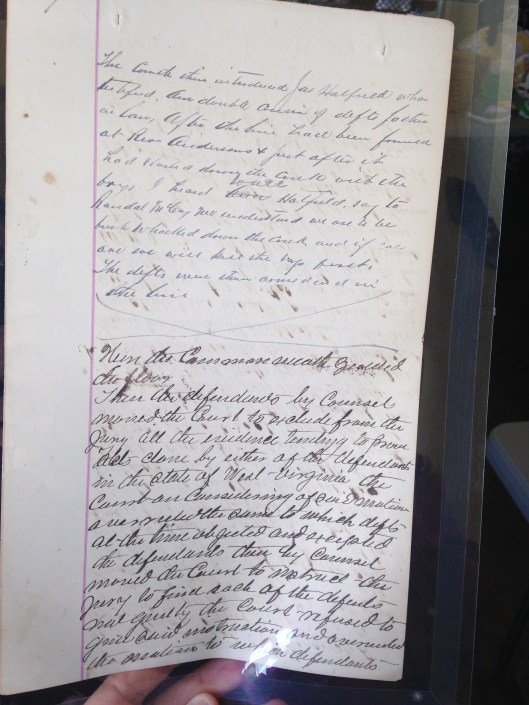
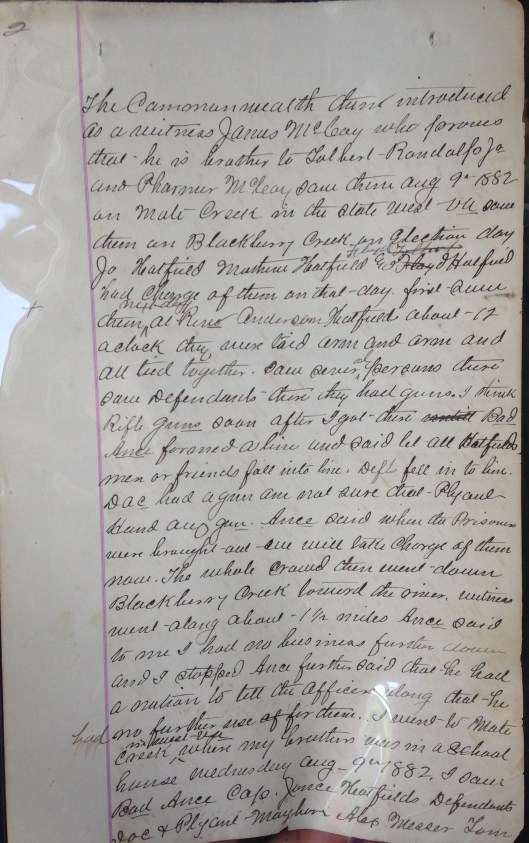
The killing of Tolbert, Pharmer, and Bud McCoy by a Hatfield-led gang on August 8, 1882 represented one of the most sensational events of the Hatfield-McCoy Feud. What follows is Plyant Mayhorn’s deposition regarding the affair:

COMMONWEALTH VS DOC MAYHORN &C

Bill of Exceptions

FILED Sept. 1889

G.W. Pinson, Clk

IMG_9720.JPG

The Commonwealth then introduced as a witness James McCoy who proves that he is brother to Tolbert, Randolp (sic) Jr. and Pharmer McCoy. Saw them Aug 9, 1882 on Mate Creek in the state West Va. Saw them on Blackberry Creek on Election day. Jo Hatfield, Mathew Hatfield and Floyd Hatfield had charge off them on that day. First saw them next day at Rev. Anderson Hatfield about 12 o’clock. They were tied arm and arm and all tied together. Saw several persons there. Saw Defendants there. They had guns. I think Rifle guns. Soon after I got there Bad Ance formed a line and said let all Hatfield men or friends fall into line. Deft. fell in to line. Doc had a gun. Am not sure that Plyant had any gun. Ance said when the Prisoners were brought out we will take charge of them now. The whole crowd then went down Blackberry Creek toward the river. Witness went along about 1 ½ miles. Ance said to me I had no business further down and I stopped. Ance further said that he had a notion to tell the officers along that he had no further use for them. I went to Mate Creek in West Va. where my brothers was in a School house Wednesday Aug 9th 1882. I saw Bad Ance, Cap, Jonce Hatfields Defendants Doc & Plyant Mayhorn, Alex Messer, Tom Mitchell and some others. Defendants had guns some times. I left there about 3 o’clock p.m. Went down to mouth Mate Creek, staid a few minutes at Sam Simpkin’s. Then went to Asa McCoy’s at mouth Sulphur. I saw Wall with a papers. Do not know what it contained and heard Wall call for signers. Saw Plyant walk up to Wall but can not say whether he signed it or not. Saw Plyant with Wall & Elias Hatfield and Elijah Mounts that evening late at the mouth Mate Creek. They went up river. Saw them again just after dark pass down by the mouth of Sulphur. I was there and they had not been gone by perhaps 20 minutes when I heard a volley of guns or pistols fired on the Ky side of the river about ½ way between Mouth Sulphur and Mate Creek but on the opposite side of the river from Sulphur. My brothers was dead when I found them. Anderson Ferrell went with him to find them. Found on the Ky shore short distance from river in a sink or flat all tied together and to two Paw Paw Bushes. Tolbert had one hand over his head. Made an examination of my brothers and found Pharmer shot 16 times. Randolph with the whole top of his head shot off. Six or seven shots in Tolbert. We removed them in a sled. They were all burried in one coffin. Elias Hatfield had a gun as they passed me at the mouth of Sulphur, there was one horse in the crowd was considerably excited at times. The officers had the boys in charge for murdering Ellison Hatfield. There were a great many men along who had guns that are not indicted. There was six or seven guards and some that were not guards along with my brothers. I do not know where any one objected to my brothers being brought to Pikevill or not. I can not tell all the parties who had guns. Ellison Hatfield died about 2 ½ or 3 oclock Wednesday Aug 9, 1882. The men who taken the corps of Ellison Hatfield to Elias Hatfields was a part of the men he had seen at the school house. My brothers were found dead in Pike County Ky. Wall Hatfield is the brother of Ance, Elison & Elias Hatfield, and the father in law of the defts. When I saw my brothers at Rev. Anderson Hatfield’s there was also present Ance, Cap, Johns, Wall & Elias Hatfield. Carpenter, Dan Whitt, Messer, Murphy, Mose Christian and defts. When I found my brothers dead they were tied together and to two paw paw bushes. When Wall, Elias, & deft. Plyant Mahorn found me near the mouth of Sulphur at dark they were passing from the direction of Joe Davis’ at mo. Blackberry and going in the direction of the mouth Mate. From Jo Davis’ to mouth of Sulphur is about ½ mile, and from Sulphur to mouth Mate is about ½ mile. From the point where my brothers were found dead in Pike Co Ky is _____ in WVa immediately opposite is about 125 yards. As soon as they passed me near the mouth of Sulphur I ___ my horse pulled some grass and fed him, went back and sat down on the porch, and the firing directly began. I think it was 20 minutes after they passed until the firing began. I think I heard 50 shots. After the volley ceased there was one loud shot.

Written in the margin: Soon after this I went down to Ferrell’s and ___ Simpkins and myself went and found my brothers.

For more information about this incident, follow these links:

http://explorekyhistory.ky.gov/items/show/785?tour=55&index=3

http://wvpublic.org/post/three-mccoys-killed-hatfields-kentucky-august-8-1882#stream/0

http://hatfield-mccoytruth.com/2017/04/22/in-hatfield-country-blackberry-creek-in-the-1880s/

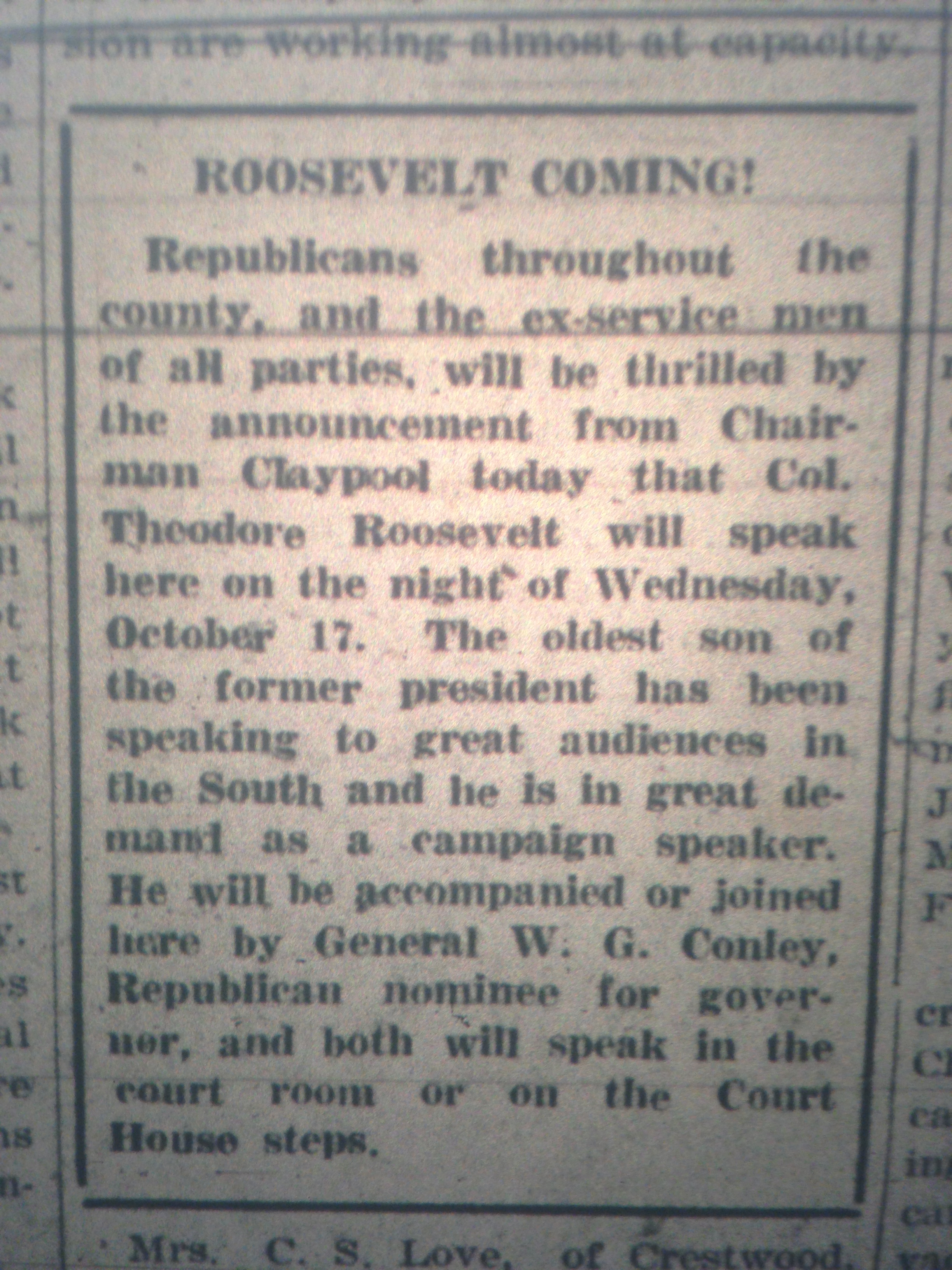
Teddy Roosevelt, Jr. Visits Logan, WV (1928)

14 Sunday Oct 2018

Posted by Brandon Ray Kirk in Huntington, Logan, Williamson, Women's History, World War I

≈ Leave a comment

Tags

A.A. Lilly, American Legion, Appalachia, Beckley, Braeholm, C.C. Lanham, Calvert Estill, Casey M. Jones, Charleston, Emmett Scaggs, First Methodist Church, G.R. Claypool, Guyandotte Valley, Harrisville, Henry D. Hatfield, Herbert Hoover, history, Hugh Ike Shott, Huntington, John M. Mitchell, John W. Davis, Kentucky, Logan, Logan Banner, Logan County, Lundale, M.Z. White, Naaman Jackson, Peach Creek, photos, Point Pleasant, politics, Princeton, Republican Party, Ripley, Teddy Roosevelt Jr., W.C. Lybarger, W.C. Price, W.G. Conley, W.J. Fields, Welch, West Virginia, Williamson, Woman's Christian Temperance Union, World War I, YMCA

On October 17, 1928, Theodore Roosevelt, Jr. visited Logan, WV, and gave a speech to approximately 10,000 people. The Logan Banner offered plenty of coverage for the event:

Tedd Roosevelt Jr. is Coming LB 10.05.1928.JPG

Logan (WV) Banner, 5 October 1928

***

War-Time Buddies to Greet Col. Roosevelt

After His Meeting Here Wednesday Night–General Conley Will Also Speak at Open-Air Meeting That Night–Whale of Rally Assured

Every ex-service man in Logan county is urged to meet Col. Theodore Roosevelt when he comes here to deliver a campaign address in front of the Court House next Wednesday night. A reception in honor of the distinguished son of a distinguished sire will be held in Republican headquarters on the fifth floor of the White & Browning building after the political meeting is ended. There he will be greeted by his war “buddies” and every soldier, sailor and marine who served in the World War, regardless of political affiliations, is asked to be present.

Col. Roosevelt is billed three speeches on Tuesday. He is expected to speak at Welch in the afternoon and at Princeton at 5 p.m. and at Beckley that night. He is in great demand and Logan Republicans are elated over the definite promise from state headquarters that he is coming here.

General W.G. Conley, Republican nominee for Governor, will accompany or join Col. Roosevelt here and both will speak at the Wednesday night meeting. It is probable, too, that Dr. H.D. Hatfield and A.A. Lilly, former attorney general, will be here at the same time. General Lilly is billed for a speech at Braeholm on Monday night.

Logan (WV) Banner, 12 October 1928

***

Col. Roosevelt and General Conley Speak in Logan Tomorrow Night

Open-Air Rally at Court House Expected to Attract Delegations From All Sections of County–Service Men to Hold Reception for Col. Roosevelt After Speaking Is Ended

With the coming of Theodore Roosevelt and General W.C. Conley tomorrow for what is expected to be a memorable night meeting, the speaking campaign in this county may reach a climax. They will be the chief speakers at an open-air meeting in front of the Court House. It is probable that Governor Gore will come also and in that event he may serve as chairman of the meeting.

A.A. Lilly, former attorney general and Hugh Ike Shott, Republican nominee for congress, who addressed a huge gathering at Braeholm and Lundale last night, will speak at Peach Creek tonight; Senator Jackson and E.F. Scaggs also spoke at last night’s gatherings. Mr. Shott will remain in the county up to Wednesday night.

Governor W.J. Fields of Kentucky will address a Democratic meeting in the court room tonight.

Widespread interest has been aroused in the Roosevelt-Conley meeting and delegations are looked for from every section of the county. Ex-service men are to turn out in force to meet and greet the distinguished soldier-son of the beloved soldier-president of the same name. A reception to which all ex-service men are invited will be held on the fifth floor of the White & Browning building after the big meeting is concluded. Roosevelt’s war record, his activity in helping to organize the American Legion, and his fondness for those who served with him have endeared him to World War men everywhere.

A prohibition rally sponsored by the W.C.T.U. will be held at the Court House at 7:30 Friday p.m. Everyone is urged to come. The speakers for this occasion have not been announced.

Teddy Roosevelt Jr. in Logan LB 10.16.1928 2.JPG

Logan (WV) Banner, 16 October 1928.

***

Col. Roosevelt Center of Interest of Biggest Crowd Ever Seen Here

Republicans Stage Rally Eclipsing Any of the Past in Guyan Valley, With Attentive, Enthusiastic Crowd Estimated At Around 10,000 Mark

GEN. CONLEY AND OTHERS TAKE PART

Ex-Service Men Add Zest to Ovation for Gallant Soldier Son of Beloved T.R.–Rev. Mr. Lanham Is Chairman–Flowers For Teddy

Before the largest crowd ever assembled in Logan county, Col. Theodore Roosevelt, eldest son of the late president, made an eloquent and elaborate appeal in front of the Court House Wednesday night for the election of Hoover and Curtis on November 6.

His oratory, his Rooseveltian grimaces, his deep-furrowed smiles, his warm and radiant fellowship, and genuine camaraderie in meeting and greeting ex-service men, won the hearts of all. And how game he was! Exhausted by his effort to make himself heard to the far corners of the crowd confronting him and really surrounding him, following a strenuous ordeal of many days, traveling at night and speaking several times a day, he had difficulty making his way from the platform back through the crowd and into the Court House corridor. To several companions he hoarsely confided, “I’m a wreck!” Nevertheless, he tried to shake every hand and exchange a friendly greeting with those who swarmed about him. His exit was marked by a renewal of the ovation that greeted him when he, General W.G. Conley, Senator M.Z. White, County Chairman and Mrs. G.R. Claypool, Casey M. Jones, Calvert Estill and others in the party wormed their way through the crowd to the platform erected at the foot of the steps on the side of the Court House.

After the meeting the distinguished visitor was whisked to Republican headquarters where ex-service men in large numbers held a reception in his honor. Again and again he was “dee-lighted” and thrilled to find some “buddy” who had belonged to some military unit with whose history Roosevelt is familiar. Then he would cry out to his pal Casey Jones, Charleston newspaperman and bosom friend for more than a decade,” What do you know about it, Casey, here’s an old pal that served with” so-and-so company or regiment.

Not only ex-service men but more than one professional man of Logan, miners and others whispered to him, or yelled out to his wake, “We’ll be voting for you some time, Teddy!”

Hits the Line Hard

After the reception the Colonel returned to Charleston, to make ready for a busy schedule yesterday. He was billed for speeches at Harrisville, Ripley and Pt. Pleasant, and had arranged to get back to Charleston last night and to speak both at Beckley and Welch today. All day yesterday here whenever the matter of his visit was discussed in any group the prediction was advanced that he was too terribly exhausted to adhere to his schedule. And his Logan friends are sincerely concerned about him. However, he will return to New York at the end of the week.

Wednesday night’s rally will be remembered for years, say political observers, not only because of its size but also because of its direct bearing on a momentous contest for supremacy.

Most estimates of the attendance hover around the 10,000 mark. John M. Mitchell, court bailiff, who has been familiar with political activities in this county for half a century, said it exceeded twice over any crowd he had ever seen in the county. Others say the only meeting ever held here worthy of comparison was that addressed by Senator Pat Harrison in the 1924 campaign. To the writer the crowd seemed more than half as large as that which heard John W. Davis in Huntington in 1924. That crowd was estimated at 25,000, but that was an obvious exaggeration–a characteristic of the estimates of political assemblages.

The Folks Were There

Cloudy weather and a light rain that set in at the hour when the meeting was scheduled to start doubtless kept away a considerable number and caused scores to leave. On the outer edges it was impossible to hear the speakers and so there was a steady going and coming of persons wishing to see and hear. windows in about half a dozen buildings were occupied, small boys were atop the Old Stone building, and there was a good-sized crowd clustered on and about the platform, steps, windows, portico and corridors of the Court House.

Roosevelt has a good voice but it was put to a terrific test here, considering what he had undergone recently. His voice is better than his father’s was and he is more humorous, but the only striking resemblance between the two as public speakers is that grinning grimace that once seen can never be forgotten. In his speech he did not delve exhaustively into any one issue or phase of the campaign but he gave a comprehensive review of the issues and personalities that Republicans generally assume to be involved in this campaign. As for Tammany he panned it as it has never been panned before hereabouts. He recalled, too, that his grandfather had fought the greedy Tiger: “My father fought it; I am fighting it, and if it lives 20 years longer, I expect and hope my son Teddy III will be fighting it.”

Rev. Lanham Presides

It was after 8 o’clock when the speakers arrived–more than half an hour late–whereas all available seats and many vantage points had been occupied for nearly if not fully two hours. At the home of Mr. and Mrs. G.R. Claypool they had been entertained at dinner–or supper, as Teddy and most of us call it. Besides the Colonel and General Conley there were six other guests: Hugh Ike Shott, Republican nominee for representative in Congress; Senator M.Z. White, Williamson; C.M. Jones, publicity man and side for Mr. Conley; Calvert N. Estill, Charleston correspondent for the Ogden chain of newspapers, and Senator Naaman Jackson.

Rev. C.C. Lanham, pastor of the First Methodist Church, who has been a leader in the fight to avert any backward step on prohibition, was chairman of the meeting. He filled the role with tact and good judgment and introduced the various speakers in happy style.

General Conley was the first speaker, but sensing the crowd’s desire to hear the Colonel he cut short his remarks. He did not take up state or national issues but after a word of congratulation to those who had sponsored such an immense turnout he withdrew.

Flowers For Colonel

Next a pretty little surprise was sprung. Mrs. W.C. Price, of Huntington, who is taking the lead in organizing the Republican women of the county, was introduced. Turning to Col. Roosevelt, after bringing a basket full of beautiful flowers into view, she told him of the esteem in which he is held by the women and presented the flowers in behalf of the woman’s Republican Club as a token of appreciation of his services in this campaign and of his zeal in promoting the public welfare. His face wreathed in wrinkles and aglow, he replied: “I accept with thanks. And I would much rather stand high in the esteem of women than of men. They are more important. I know, for I am married.”

The chairman then introduced W.C. Lybarger, secretary of the railway Y.M.C.A. at Peach Creek, who in turn introduced Col. Roosevelt. He paid the visitor a splendid tribute for his valor on the battlefields of France, touched the high points of his political career, and said he had a leading part in organizing the American Legion.

At the outset Roosevelt sketched the character and growth of the orphaned Hoover and gave some intimate glimpses into the habits of living and of thought, of his working and his industry and resourcefulness in solving problems of public and playing, of his zeal in tackling concern. Between these two men there is a close friendship, and there was no mistaking Roosevelt’s whole-hearted admiration for the farm boy of Iowa who has risen to a position of pre-eminence in the minds and hearts of his countrymen and even of the folk of many other lands.

Logan (WV) Banner, 19 October 1928

Buskirk Cemetery at Buskirk, KY (2015)

09 Tuesday Oct 2018

Posted by Brandon Ray Kirk in Cemeteries, Coal, Culture of Honor, Matewan

≈ Leave a comment

Tags

Appalachia, Baldwin-Felts Agency, Brandon Kirk, Buskirk, Buskirk Cemetery, Cable Testerman, cemeteries, Ed Chambers, genealogy, history, Kentucky, Matewan, Matewan Massacre, mayor, McDowell County, Mine Wars, Phyllis Kirk, Pike County, Sid Hatfield, Welch, West Virginia

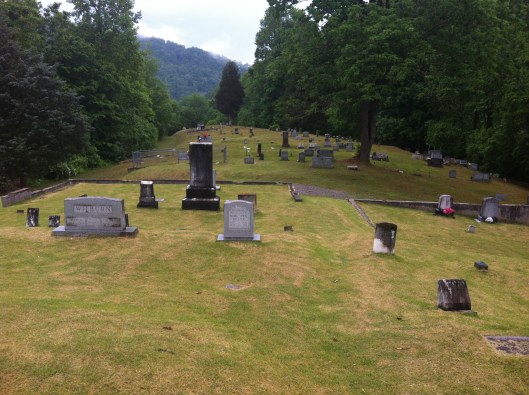
IMG_1872

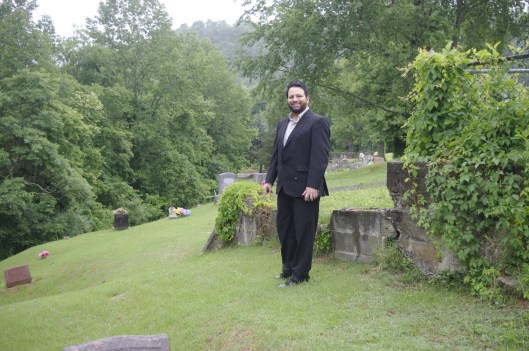
Partial view of the Buskirk Cemetery in Buskirk, Pike County, KY. 16 May 2015.

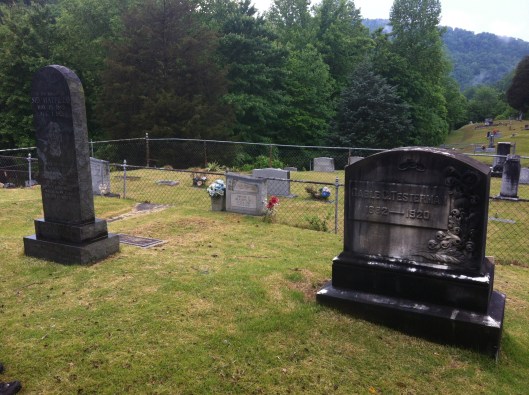
IMG_1873

Sid Hatfield grave (left) and Cable Testerman grave (right). Note gap between the headstones.. After Cable’s death, Sid married his widow. Was the burial spot between the two men reserved for her? 16 May 2015. https://yesteryearsnews.wordpress.com/2012/06/04/married-the-man-who-killed-her-husband-and-then/

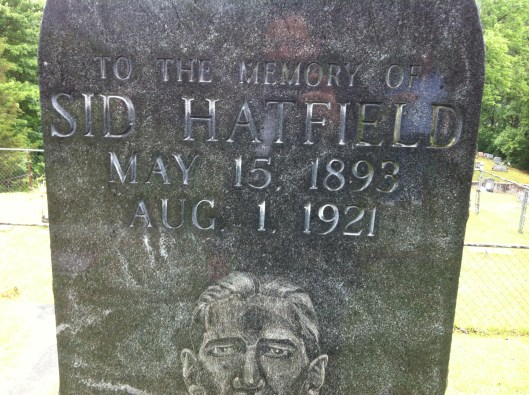
IMG_3189

Sid Hatfield headstone, Buskirk Cemetery, Buskirk, KY. Sid was chief of police in Matewan, WV. 16 May 2015. https://www.youtube.com/watch?v=PnHY7HHPhCw

IMG_3190

Sid Hatfield headstone, Buskirk Cemetery, Buskirk, KY. After his murder, labor activists fashioned a mythical Sid Hatfield. The real Sid Hatfield has been largely lost to history. 16 May 2015. https://www.wvencyclopedia.org/articles/282

IMG_3191

“Defender of the Rights of Working People”…? 16 May 2015.

IMG_3193

Cable Testerman headstone, Buskirk Cemetery, Buskirk, KY. Mayor Testerman was shot and killed in the Matewan Massacre. 16 May 2015.

IMG_1870

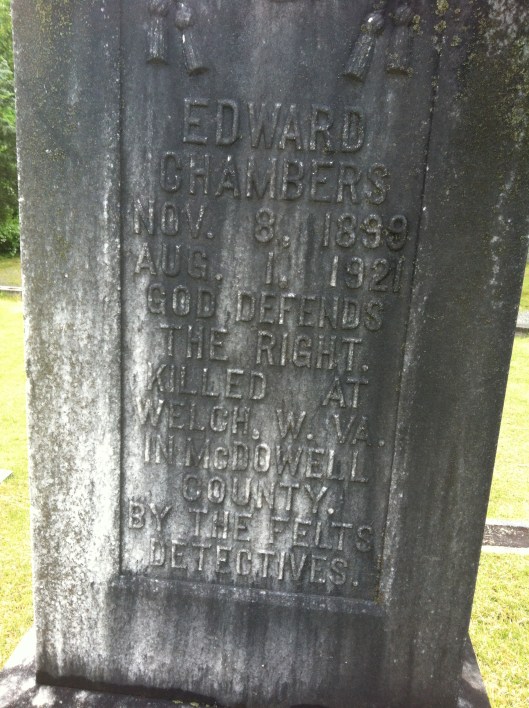
Ed Chambers headstone, Buskirk Cemetery, Buskirk, KY. Chambers and Hatfield were murdered at Welch, WV. 3000 people reportedly attended their funerals. 16 May 2015.

IMG_3225

Fun day! Buskirk Cemetery, Buskirk, KY. 16 May 2015. Photo by Mom.

Museum and Log Cabin at Breaks Interstate Park in Breaks, VA (2018)

17 Monday Sep 2018

Posted by Brandon Ray Kirk in Civil War, Hatfield-McCoy Feud, Native American History, Timber

≈ Leave a comment

Tags

Appalachia, Battle of Middle Creek, Brandon Kirk, Breaks, Breaks Canyon, Breaks Interstate Park, civil war, fossils, Hatfield-McCoy Feud, history, James A Garfield, Kentucky, Marion, moonshine, moonshining, Native American History, Native Americans, photos, Phyllis Kirk, rafting, Saltville, Union Army, Virginia

IMG_6831

Video showcasing regional history. 25 August 2018.

IMG_6816

Hammerstone and Polishing Stone. 25 August 2018.

IMG_6818

Fully Grooved Axe. 25 August 2018.

IMG_6819

Lt. James A. Garfield, Union hero at the Battle of Middle Creek, KY. 25 August 2018.

IMG_6825.JPG

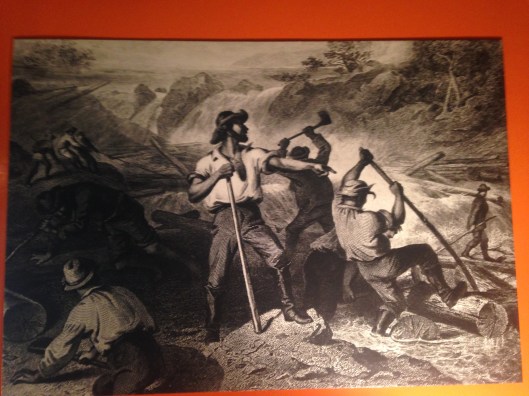
Rafting through Breaks Canyon, c.1885. 25 August 2018.

IMG_6821

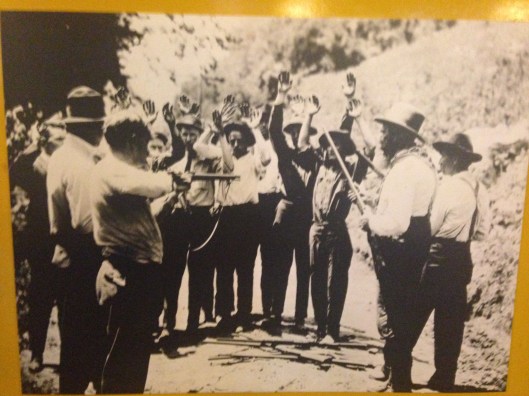
This photo is labeled: “A Confrontation Between the Hatfields and the McCoys.”

IMG_6823

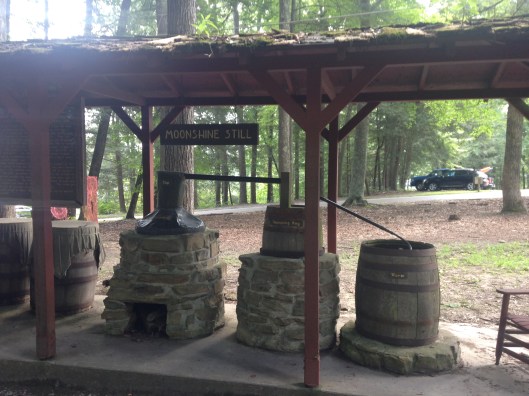
Moonshine still. 25 August 2018.

IMG_6827

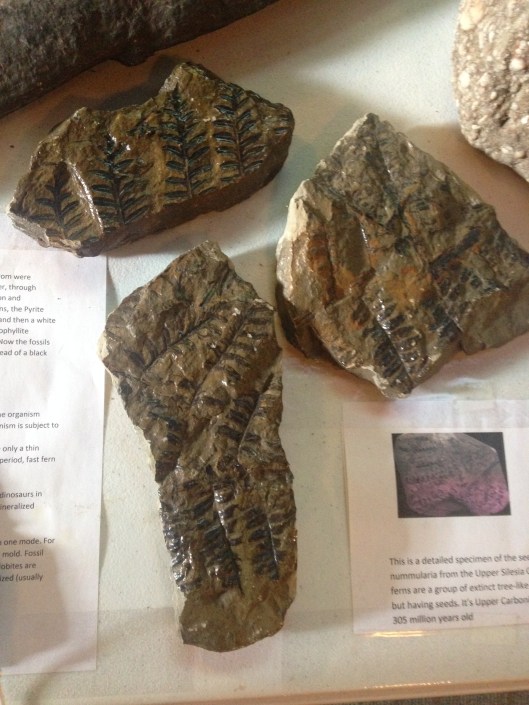
Seed fern fossil, 305 million years old. 25 August 2018.

IMG_6833

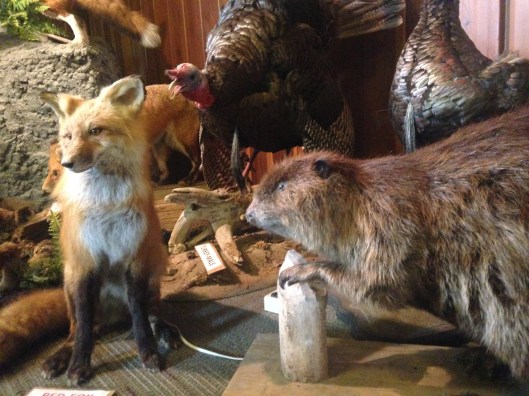
Native wildlife. 25 August 2018.

IMG_6835

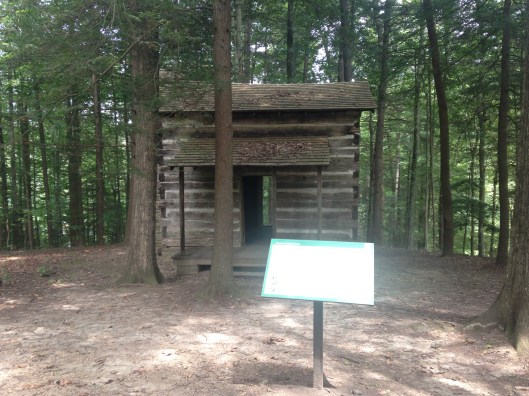
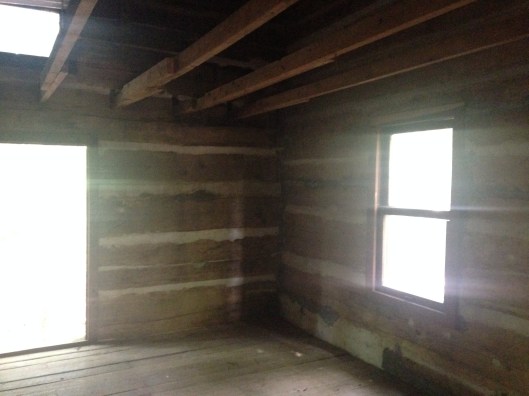
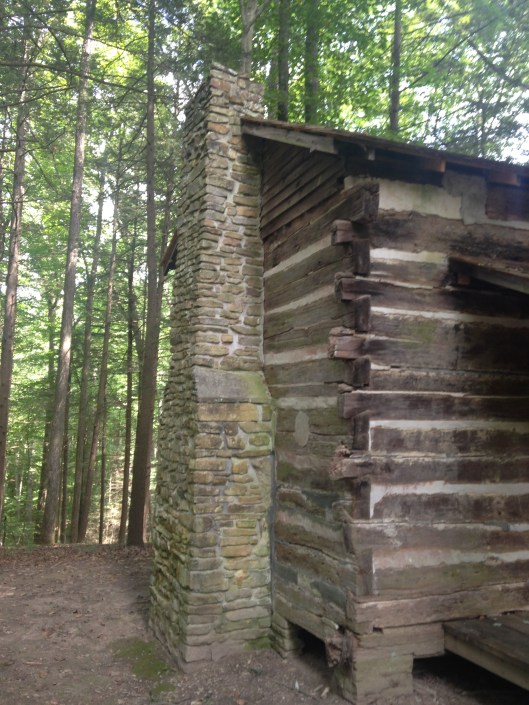
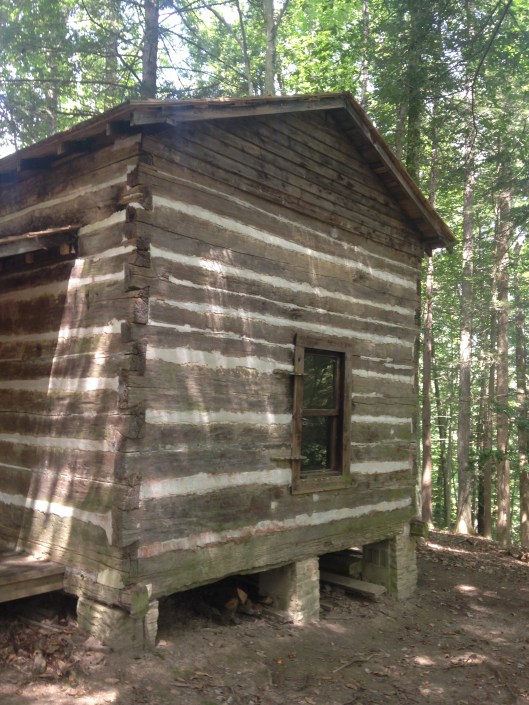
Log cabin. 25 August 2018.

IMG_6839

Log cabin. 25 August 2018.

IMG_6837

Log cabin. 25 August 2018.

IMG_6842

Log cabin. 25 August 2018.

IMG_6840

Log cabin. 25 August 2018.

IMG_6841.JPG

Mom at the cabin. 25 August 2018.

IMG_6844

Moonshine still showing cap, thumping keg, and worm. 25 August 2018.

IMG_6852

Salt kettle cast at Marion, VA, about 1860 and buried to conceal it from Union troops at Saltville, VA, in 1864. 25 August 2018.

Baisden Family Troubles

13 Thursday Sep 2018

Posted by Brandon Ray Kirk in Hatfield-McCoy Feud, Kermit

≈ Leave a comment

Tags

Appalachia, Brit Jones, Buchanan County, Carroll County, Catherine Wills, Catlettsburg Republican, crime, Flora Baisden, Floyd County, genealogy, Grant Bollman, Grover Waldron, Grundy, Harrison Baisden, Harrison Baisden Jr., Hatfield-McCoy Feud, Hiram Wills, history, Ira J. McGinnis, Jack Maynard, James Brewer, Jeffersonville, John Brewer, John Henry Baisden, John Lee White, John Smith Baisden, Johnson County, Kentucky, Lebanon, Lee Brewer, Lewis Dempsey, Logan County, Logan County Banner, Logan Democrat, Marrowbone Creek, Martha Baisden, Mingo County, murder, Naugatuck, Parkersburg Sentinel, Pigeon Creek, R.W. Buskirk, Reuben Baisden, Riley Brewer, Robert Irons, Robert L. Baisden, Ruby Harrison Baisden, Trace Fork, Virginia, West Virginia, William Baisden, William Bevins

Between 1883 and 1891, several members of the Baisden family suffered troubles in their section of West Virginia and Virginia. What follows are some news and other accounts of those events:

At the mouth of Pigeon creek, in Logan county, Grant Bollman and Dr. Harrison Baisden got into a difficulty over a settlement, short words brought blows, when Bollman used a knife severely if not fatally stabbing Baisden. Thereupon he drew a revolver and shot Bollman, who died the same day from the effects of the wound. There is little hopes of the recovery of Baisden.

Parkersburg (WV) Sentinel, 18 August 1883

***

Judge McGinnis has issued a vacation order to the Circuit Clerk of Wayne County admitting Dr. Baisden, charged with the murder of Yancy Bolin, in Logan County, to bail in the sum of $2,000.

Huntington (WV) Advertiser, 31 July 1886

***

According to one item printed in an old genealogy newsletter: “John Smith Baisden was born May 14, 1864. On May 29, 1885 he married Martha Jane Wills who was born in Carroll County, Virginia, on August 4, 1870, the daughter of Hiram and Catherine Massey Wills. Martha had come to Floyd County, Kentucky, in a wagon train in 1879. She was fifteen when she married John Smith Baisden. They had two children: Flora, who was born on January 8, 1888, and Ruby Harrison “Harry” Baisden [February 7, 1890]. On May 4, 1890, John Smith Baisden was shot and killed by John Brewer and John Lee White, while the family was visiting in West Virginia. He was shot in an argument over a horse. It is thought that his murder was indirectly associated with the Hatfield-McCoy Feud. The Baisdens became involved after relatives married McCoys. About the same time of his father’s death, the Hatfields kidnapped and imprisoned Ruby Harrison Baisden (then only a child) and other members of the McCoy clan, and held them in a log barn in what is now Mingo County, West Virginia. Ruby Harrison Baisden was found by a roadside where he had been left for dead. Soon after John S. Baisden’s death, Martha, against the advice of family members, returned to Kentucky by horseback, traveling at night over lonely mountain trails with her son and daughter.”

***

Last week several capias against John Henry Baisden and John Smith Baisden were placed in the hands of the Sheriff of this County. The Baisdens had established the very unenviable name of being dangerous and desperate men, and, a part of the process was placed in the hands of Wm. Bevins with instructions to go by way of Marrowbone to summon a guard who knew the haunts of the Baisdens and to locate them if he could and meet the Sheriff, who was accompanied by Jailor Buskirk, Deputy Sheriff McDonald and several guards, at the mouth of the Trace Fork of Pigeon. Mr. Bevins arrived on Marrowbone on Friday morning and learned that just before his arrival the Baisden boys had made an attack on the house of James Brewer with Winchester Rifles, and that assisted by John Lee White, he had repelled the attack, mortally wounding John Smith Baisden. On learning this Mr. Bevins at once summoned a posse consisting of John Lee White, Brit Jones, James Brewer, Riley Brewer, Lee Brewer and John Brewer and followed the Baisdens to Pigeon Creek. Locating them at Dr. Harrison Baisden’s, Bevins left all of the guard about a quarter of a mile from the house, except John Lee White, who he took with him to find the position of the Baisden boys. As soon as he came in sight of them he demanded their surrender, which they refused to do and fire was opened on them. James Baisden was killed and John Henry Baisden was badly wounded and captured. William Baisden having left the crowd made his escape and is still at large. John Henry Baisden was brought to this place and is now in jail. He was shot through both arms and in the right side, but his wounds are not dangerous. All parties regret the killing of young James Baisden, as there was nothing against him. Heretofore a man in this county had thought that to establish for himself the name of a dangerous man was all the security that he needed against the officers of the law. That is now changed and all of them will hereafter be hunted down.

Logan County (WV) Banner, 24 April 1890

***

John Smith Baisden, who was shot by James Brewer and John Lee White, on April 18th, while making an attack on Brewer’s house, died last Sunday evening.

Logan County (WV) Banner, 8 May 1890

***

On Monday morning John Henry Baisden was turned over by the authorities of West Virginia to Wm. A. Bevins upon a requisition from the Governor of Virginia. Baisden is wanted in Buchanan county, Va., for the murders of a man named Irons. Bevins, accompanied by R.W. Buskirk and Lewis Dempsey, started with Baisden to Jeffersonville, Va., where he will be confined for safe keeping until the Buchanan authorities are ready for his trial. He was not taken to Buchanan as there has been some talk of lynching him there.

Logan County (WV) Banner, 26 June 1890

***

R.W. Buskirk, Wm. Bevin and Lewis Dempsey, who took John Henry Baisden to Virginia on a charge of murder, returned on Sunday. The prisoner was first taken to Jeffersonville, then to Grundy, and finally to Lebanon as neither the Jeffersonville nor Grundy Jail were safe.

Logan County (WV) Banner, 10 July 1890

***

A Logan Man Gone Wrong.

Wm. Baisden, formerly of this county, was last week sentenced to the Virginia penitentiary from Buchanan county, for the term of 18 years, for the murder of a man named Irons, some two years ago. Outside of whisky, Baisden was regarded as a good man, and had a great many friends on the Sandy side of our county, where he was raised, and where his relatives now live.

Logan County (WV) Banner, 6 August 1890

***

Baisdens Allowed to Escape.

John Henry Baisden who killed Robert Irons in Buchanan county, Va. last fall and who afterwards figured in a terrible tragedy in Logan county, W.Va., and who was captured and taken to Virginia has been allowed to escape. After killing Irons, he fled to W.Va. to find another man living with his wife. He got a party of his relatives and went to attack the man, but was met by an officer and posse in search of him. Two desperate fights ensued between the two parties on consecutive days and Jim and John Smith Baisden were killed. John Henry was captured, after being seriously wounded, and lodged in jail. The parties who captured him in W.Va. delivered him to the authorities all right and received the Reward. He was afterwards sent to Russell county jail and being taken back to Buchanan for trial was taken from the guard by his brother. It is thought that the officers were willing that the prisoner should be rescued.

Catlettsburg (KY) Republican via the Logan County (WV) Banner, 21 August 1890

***

Murder on Sandy.

Monday afternoon Harrison Baisden, Jr., a member of the notorious gang of Baisden outlaws came down to the Mouth of Pigeon where there was a whiskey boat moored on this side of the river. He took his horse across to the Kentucky side, and then returning, he walked deliberately up to Jack Maynard, between whom and himself, it appears, there had been some bad blood, and shot him through the head, killing him instantly. The last heard from Baisden he was in Kentucky riding from about five men, who were pursuing him hotly. As the report says he was very drunk and the men were only a mile behind, the chances are that he is captured by now. It is feared that if he is caught that he will be lynched.

Logan County (WV) Banner, 3 September 1891

***

Found Dead.

A rumor has reached us that Reuben Baisden, the murderer of Jack Maynard, was found dead at the head of a lonely creek, in Johnson county, Kentucky, with fifty-three bullet wounds on his body and his dead horse lying on him. It was thought that he had been dead about three days when found. We do not credit the story.

Logan County (WV) Banner, 17 September 1891

***

Manslaughter for Dr. Baisden

In the Mingo criminal court last week, Dr. Robert L. Baisden was found guilty of voluntary manslaughter for killing Grover Waldron, at Naugatuck on April 23, of last year.

The evidence showed that young Waldron was stabbed to the heart on the above named night near the signal tower at Naugatuck. Dr. Baisden was coming down the tower steps when some person threw a beer bottle against a stone wall not far away. Young Waldron and two companions were standing near the foot of the steps.

Using an oath Dr. Baisden inquired who threw the bottle at him and there came a reply and also an oath, that it was for him and some one of the three also called out that they would send Dr. Baisden to hell “feet first” if he was not careful.

Logan (WV) Democrat, 20 April 1911

Allen Hatfield of Beech Creek, WV (1970s)

11 Tuesday Sep 2018

Posted by Brandon Ray Kirk in Hatfield-McCoy Feud, Matewan, Tazewell County

≈ 4 Comments

Tags

Allen Hatfield, Appalachia, Beech Creek, Beni Kedem, Charleston, Charlie Simpkins, Cincinnati, civil war, Clyde Kiser, Deanna Hatfield, Devil Anse Hatfield, Devon Church of Christ, Doc Mayhorn, Eliza Murphy, Ellison Hatfield, feuds, Frankfort, genealogy, Goldie Hatfield, Gordon Smith, Grapevine Fork, Hatfield-McCoy Feud, history, Hugh C. Boyd Lodge No. 119, Jane Hatfield, Jane Maynard, Joseph Chester Hatfield, Joseph Murphy, Kentucky, Kentucky Colonels, Lawrence Hatfield, Logan County, Major Hatfield, Martha Bell Murphy, Maryland, Mingo County, Norfolk and Western Railroad, North Tazewell, Ohio, Pike County, Plyant Mayhorn, preacher, Raymond Hatfield, Right Hand Fork, Rockville, Thacker, Valentine Wall Hatfield, Virginia, West Virginia, Williamson, Williamson Memorial Hospital, Willis Hatfield

My name is Deanna Hatfield and tonight I would like to share with you a West Virginian, Allen Hatfield, who the community of Beech Creek honored and loved. Allen was born October 11, 1877. He was the youngest child of the pioneer couple, Wall Valentine Hatfield and Jane Maynard Hatfield, who settled on Beech Creek in 1861, the year that the Civil War broke out in this country. His parents had settled at the mouth of Grapevine Fork of Beech Creek. They had occupied a log cabin near the present site of Lawrence Hatfield’s home. He was the nephew of Captain Devil Anse Hatfield, clan leader in the famed Hatfield-McCoy Feud, and a first cousin of Willis Hatfield, the only surviving child of that family.

Almost until the day of his death, Allen carried a sadness in his heart over the death of his father in the days of the famous feud. His father, a peaceable man, was not an active member of the fighting group of the Hatfields during the trouble between his family and the McCoys but was named in warrants along with two of his sons-in-law, Doc and Plyant Mayhorn. Allen Hatfield, but ten years old at the time, remembered that his father Wall, thinking that he had nothing to fear in the courts of Kentucky, wrote the prosecuting attorney of Pike County that he and his sons-in-laws wished to surrender in Pikeville and stand trial for crimes for which they were accused. Allen Hatfield recalled the incident from his boyhood, including the feud. His father did go to Pikeville to voluntarily stand trial and clear his name but he was convicted by a prejudiced jury, the son remembered, and was sentenced to life imprisonment at the Kentucky State Prison in Frankfort. After sentencing, he lived about one year and his burial place is still unknown today. The two Mayhorns served several years and were later pardoned.

One of his fondest memories was that of his mother Jane who took over the management of the home and did a good job of raising a large family after her husband was taken from her. She did chores around the homestead. A great and interesting conversationalist in his adult years, he liked to tell of how he and his friends made bows and arrows–arrows consisting of straight pieces of wood with a horseshoe nails attached as the spike. He became an excellent marksman with the bow and arrow and later with his first rifle as he helped to provide squirrels and other wild game for the family table.

The early years of Hatfield’s life were marked by sadness as a result of the loss of his family in the feud. But his hours spent in the great outdoors hunting and fishing provided a therapy that led to his development to splendid manhood. He was several years old when the Norfolk and Western Railroad Company built an extension from Virginia to southern West Virginia and Mingo County, which still was Logan County at that time.

In 1899, Hatfield was married to Martha Bell Murphy, daughter of Joseph and Eliza (Steele) Murphy. She had just turned fourteen when he proposed and her family thought she was too young to wed. The young couple sort of eloped the night of April 8, 1899, to Allen’s home where they were married by Allen’s brother, Ellison, a country preacher and a granny doctor, as he later recalled. Late that summer, he amassed enough lumber to build their first home—a one-room abode that was erected next to the hillside just north of the present homestead. Allen Hatfield made most of his furniture and his wife tended a garden and dug ginseng to help the family fortune.

During the ensuing years, the Hatfields had eleven children, two of whom preceded them in death. Lawrence Hatfield, who married Dollie Kiser, is now retired and lives with Dollie on Beech Creek at the mouth of Grapevine Fork. Estel Hatfield, who married Virginia Varney, lived with his dad and still lives in the old homeplace. Estel is an agent for the Norfolk and Western Railroad Company. Major Hatfield, who married Mildred Friend, is employed as an agent also for the Norfolk and Western Railroad Company in North Tazewell, Virginia. Rosa Hatfield, married Wayne Simpkins, lives on Beech Creek on Right Hand Fork. Goldie Hatfield married Gordon Smith, and they make their home below Grapevine Fork on Beech Creek. Mamie Hatfield married Charlie Simpkins and makes her home in Rockville, Maryland. Glendeen Hatfield married Douglas Berlin, and they make their home in Louisiana. Etta June Hatfield, never married and lives in Cincinnati, Ohio. Erma Hatfield married Forest Baisden, and she lives in Williamson, West Virginia. Milda Hatfield, deceased, was a retired school teacher and was never married. Joseph Chester Hatfield, died at six months old.

In 1914, Allen bought from his brother Smith a grocery store at the old homeplace and moved the merchandise to a small building at his home. He built a large home later and it was there that most of the children were born. He expanded his business to a larger store building, which still stands, and then he erected the present homeplace. During his early merchandising days, Hatfield was compelled to haul his goods from the railway station at Devon by team and wagon for the roads had not been built and most of the rough team tracks was through the creeks. It was a problem in the wintertime to get through the streams as they were filled with ice. After the county built a road up Beech Creek, he retired his team and wagon and switched to a gasoline-powered vehicle to haul and deliver his goods. He learned carpentry in the early years of his marriage and continued this art until 1964 when he retired. Hatfield was a 57-year member of the Hugh C. Boyd Lodge No. 119 AF & AM at Matewan and received his 50-year service award from the Grand Lodge of West Virginia in 1970. The lodge, when he became a master mason, was known as Thacker No. 119. It was located at Thacker, West Virginia. It later was moved to Matewan. He also belonged to the Beni Kedem Temple of Charleston, being a 50-year member of the Shriners. He also received the honorary commission of a Kentucky Colonel on April 10, 1972. He had been a member of the Devon Church of Christ since 1916 and sponsored the building of the present church that stands near his home on Beech Creek.

In his years of selling groceries, Hatfield said he never lost but 50 dollars in bad debts. He was proud of his heritage, a leader in his community, and in his active life a crack shot with a rifle, pistol, and shotgun. His hunting and fishing kept the table supplied with food. He won beef, hogs, turkeys, and chickens in the old-time rifle matches that were so popular in the Beech Creek area years ago. He and the former Martha B. Murphy were married 71 years before her death on May 25, 1970. His life might have been used as the subject by the poet who wrote, “Let me live by the side of the road and be a friend to man.” Allen Hatfield had spent a lifetime doing just that, living beside a little country road on Beech Creek and being a friend to mankind. On March 2, 1975, Allen was taken to the Williamson Memorial Hospital for ailments associated with his advanced age. He then was released and re-entered the hospital on April 18 in critical condition. On Friday, May 2, 1975, the community of Beech Creek lost one of the dearest old-timers that was ever known. Allen Hatfield, 97, prominently-known Mingo pioneer citizen, retired merchant of Beech Creek, died at 3 a.m. in the Williamson Memorial Hospital of a lingering illness. Funeral services were scheduled at the Chambers Funeral Home Chapel with his beloved ministers Clyde Kiser and Raymond Hatfield officiating. Burial took place in the family cemetery behind the homeplace on Beech Creek. His grandsons and great-grandsons were his pallbearers. Allen would have wanted it this way. Simple.

NOTE: Some of the names may be transcribed incorrectly.

Civil War in the Guyandotte and Big Sandy Valleys (1862)

03 Monday Sep 2018

Posted by Brandon Ray Kirk in Big Sandy Valley, Chapmanville, Civil War, Guyandotte River, Pikeville, Tazewell County

≈ Leave a comment

Tags

Abington Virginian, Appalachia, Big Sandy River, Cabell County, Chapmanville, civil war, Confederate Army, genealogy, Guyandotte River, history, John B. Floyd, John Clarkson, John Dils, John Letcher, Kanawha River, Kentucky, Levisa Fork, Lincoln County, Logan County, Ohio River, Pigeon Creek, Pike County, Pikeville, Prestonsburg, Smyth County, Tazewell County, Union Army, Virginia, Virginia State Line, Washington County, Wayne County, West Virginia

Confederate General John B. Floyd composed this letter detailing military activity in the Guyandotte and Big Sandy valleys in late 1862, which was published by the Abington Virginian on January 2, 1863.

***

OFFICIAL REPORT OF GEN. FLOYD

Headquarters Virginia State Line,

Camp Clarkson, Tazewell Co.,

December 17, 1862

His Excellencey, John Letcher,

Governor of Virginia—

SIR: After my last communication to you I prepared an expedition consisting of a strong force of Cavalry under Colonel John Clarkson, to operate against the enemy in the counties of Wayne, Cabell, &c. He set out from Chapmansville on the 14th November, in the direction of Cabell down the Guyandotte river, over a rough and difficult road. The following day he fell in with a detachment of the enemy which he quickly routed and dispersed. He continued the march until a few miles of the Ohio river, breaking up the “Home Guard” organization of the enemy, which are very numerous in all that country, and taking prisoners every day.

A strong guard of Yankee troops, acting as a guard for the Pierpont Assessor for the county of Wayne, was attacked and dispersed after a short skirmish, in which was killed and wounded some of the enemy and took a few prisoners. Col. Clarkson proceeded then, according to the previous directions given him, to the Sandy river, to attack a large and formidable organization of the enemy composed mainly of the native population, and very strong posted amidst the cliffs and forests upon the precipitous banks of that river. He succeeded in taking them by surprise completely, and after killing and wounding a number of them, took a large number of prisoners, and surprised entirely the rest of the force. This force and organization were formidable and extremely dangerous to the peace and quiet of all the country round about for many miles, the loyal people were nearly all driven from their country and all were robbed. After that, Col. Clarkson, according to previous understanding, made a junction with me at the mouth of Pigeon Creek, in Logan county, on the Kentucky border, whither I had gone with the infantry and a section of the mounted howitzer battery.

I learned from Col. Clarkson that the enemy had started a number of boats with valuable supplies, from the mouth of Sandy to a post recently established at Pikeville, a point at the head of navigation on the Louisa Fork of Sandy. These boats were in charge of a strong guard, and were intended to furnish a complete outfit for a force deemed sufficient for them, by their commander, to march upon and destroy the salt works in Smyth and Washington counties.

I determined at once to attack this train, and from its distance, being more than forty miles off, it became necessary to send mounted men. Besides this reason, I found it inconvenient to move the infantry in that direction, on account of the number of prisoners with which we were encumbered. The cavalry and mounted men were put in motion within an hour and proceeded upon the march, which was uninterrupted, day or night, until the enemy were overtaken, attacked and routed.

Our people captured ten of the enemy’s transport boats, laden with valuable supplies. A great deal of these supplies was distributed amongst the men, and much of them was brought off; but a very large amount of most valuable supplies was necessarily destroyed for want of transportation to bring them away. A train of one hundred pack mules would have brought away a very large amount of extremely valuable stores, which were committed to the fire and the river.

The night following the capture of these boats (indeed, just twelve hours after the attack upon the boats,) our forces engaged that of Col. Dils, posted in an extremely strong position on the summit of a mountain on the road leading from Prestonsburg to Pikeville. This position was taken and held without any knowledge on our part, and as the attack was made after the night, and entirely unexpected, we were taken at a great disadvantage. But our men behaved with great steadiness and resolution, received the attack and charged the enemy, driving him from his position, and dispersing them entirely. The rout was complete, and the post at Pikeville, consisting of a thousand men, was entirely broken up. The prisoners and the Union people in that neighborhood reported Colonel Dils as killed in the fight that night.

For more detailed statements of this expedition I refer you to the report of Col. Clarkson. In our operation through the country, we made a number of recruits in the counties of Cabell, Wayne, Logan, &c.

My object in this campaign was, as far as possible, to prevent the occupation by the Yankee forces, of the country between the Kanawha Valley and Kentucky border, as well as to destroy the military organization of the country under the traitor government in Wheeling. Both objects were fully attained, as long as I was able to remain in the country. The military organizations, very numerous and well appointed in every particular, were almost entirely destroyed, and the attempts to set up the spurious government were entirely failed.

I was compelled to leave the country, held by me for more than three months alone, for the want of Quartermaster’s supplies. We were without tents, or clothing, or cooking utensils, or axes; and after the inclement weather of winter set in, we could no longer remain in the field. With these stores supplied, I would have remained in that country throughout the winter months. We were able to procure food (meat and bread) in the country, nearly all of it taken from the enemy.

The campaign, from first to last, was one of hardship and privations; but they were borne without complaint by the men, who are unsurpassed in hardship, activity and capability to endure privations. They deserve great praise for their constancy and general good conduct.

The officers generally deserve commendation, but to Col. Clarkson too much credit cannot be given for his energy, activity and courage. The obstacle she encountered, of every sort, throughout these expeditions, were of the most formidable character, but they were also most gallantly surmounted.

I have the honor to be, very respectfully,

Your obedient servant,

JOHN B. FLOYD,

Maj. Gen. Commanding Va. State Line

NOTE: I bolded Gen. Floyd’s description of activity in the Guyandotte Valley that occurred between Chapmanville and the lower section of the river near present-day Huntington.

Nancy Hatfield, Widow of Cap, Identifies the Cause of the Hatfield-McCoy Feud (1937)

31 Friday Aug 2018

Posted by Brandon Ray Kirk in Hatfield-McCoy Feud

≈ 2 Comments

Tags

Appalachia, Bill Staten, Bob Hatfield, Cap Hatfield, crime, Devil Anse Hatfield, Ellison Hatfield, feuds, genealogy, Hatfield-McCoy Feud, history, Howard Alley, Island Creek, Kentucky, Logan, Logan Banner, Logan County, Mingo County, Nancy Hatfield, Paris McCoy, Pike County, Randolph McCoy, Sam McCoy, Tolbert McCoy, true crime, West Virginia

From the Logan Banner of Logan, WV, comes this story by Howard Alley titled “The Hatfield-McCoy Feud” and dated May 10, 1937:

The Hatfield-McCoy Feud…

“Aunt Nancy” Hatfield, Widow of “Cap” Hatfield, Relates That Historic Feud Actually Started Over An Election Argument When “Uncle” Ellison Was Killed Following Argument With a McCoy

Much has been said and many volumes have been written about the historic Hatfield-McCoy feud which took place in Logan and Mingo counties in the latter part of the last century. Lecturers have said the feud started over a razor-backed hog, and novelists have written that it began when a McCoy married a Hatfield lass and deserted her after he learned that she was to bear him a child. Both theories have their foundation in tradition, but neither Hatfield nor McCoy close to the feud has been quoted as saying either was right. Yesterday the mystery was cleared up. Because it seemed so utterly preposterous that two solid, level-headed mountain families with the solidity of the English for a background could wage a ten-year killing spree over a razor-backed sow when the woods were full of the animals, and because it was equally as improbable that the feud started over unhappy marital relationships when it is an established fact that mountaineers let their offspring take care of their own home life, we decided yesterday afternoon to find out what event was the spark which actually set off the powder magazine of mountain passion which rocked the hills of this section for nearly a decade.

And in the warm sunshine of a late spring Sunday afternoon we sat on the porch of the late William A. (Cap) Hatfield’s rambling frame home on the upper stretches of Main Island Creek and talked to “Cap’s” wife, the last survivor of those who were closest to the Hatfield clan in the feud.

“Aunt Nancy”, who has survived seventy winters and admits that she is “young and has the ‘hang’ of it,” but “don’t think I can do it again”, gazed reminiscently out over the newly-turned acres of her husband’s creek bottom estate, and her eyes grew misty as she told us of the closing years of the last century when Hatfield and McCoy alike expected death at every bend of the creek.

“That feud didn’t start over no ‘hog lawsuit’ and it didn’t start over a Hatfield-McCoy marriage,” Mrs. Hatfield said in a tone that showed plainly her disgust for those writers who had written of the feud and by twisting the facts had capitalized on it. “I’ve got a red-backed book two inches thick here that one of my sons brought to me and said: “Read this, Ma, and you’ll find out why we fought the McCoys.’ I read it–two pages of it–and it’s layin’ in there now with dust on its backs. Not a word o’ truth in it.”

She grew repentant.

“But they have to make their livin’, I guess. You want to know how it started? I’ll tell you. The Hatfields was always a political family, and it was their politics which got ’em into this fight. If they hadn’t gone to that election in Pike county in August of 1882, ‘Uncle’ Ellison would never have been killed and Ellison’s brother, ‘Devil’ Anse would never have been drawn into it. But I’m gettin’ ahead of my story. The way it was, ‘Uncle’ Ellison Hatfield was an officer in Logan county in 1882 and was sent out to arrest Sam and Paris McCoy who was supposed to have killed Bill Staten, ‘Uncle’ Ellison’s brother-in-law. These boys warn’t sons of Randall McCoy, ringleader of the McCoys. They were just cousins. He got the two boys and brought them to Logan county jail in Logan and afterwards testified agin’ them in a trial. The McCoys were ‘sent up’ for the killin’. Then in August ‘Uncle’ Ellison went to Pike county to ‘work’ at the polls, and it was so ordered that he was working for a man that the McCoys were agin’. Well, the only thing that could happen did happen. One of Randall McCoy’s sons, just a little twenty-one-year-old shaver, started a argument with ‘Uncle’ Ellison, and Ellison, who was always too high tempered for his own good, slapped him down. The little feller bounced up, and Ellison slapped him down agin’. But this time he jumped on top of him, and ’bout the time he drawed back his fist, aimin’ to end the fight, a shot rung out and ‘Uncle’ Ellison toppled over. He weren’t dead though. He told his friends to call ‘Devil’ Anse, who come a runnin’, and the McCoys ‘cleared out.’ ‘Devil’ Anse took his brother home and he lived from that Saturday until the next Wednesday. Just before he died, he said to Anse: ‘Anse, I want you to give the McCoys the ‘law’.’ And that’s what ‘Devil’ Anse did. He gave ’em the ‘law’ as he knowed it–and that was just about the only law in them days–and lived to see the justice handed out. And, well, you know as much about what happened after ‘Uncle’ Ellison died as I do. I don’t want to add any more tales to the list.”

We took the hint, and willingly began to talk about the celebration of “Aunt Nancy’s” birthday last September when she fell off her back porch and was told by one of her sons that “she shouldn’t have been trying to turn handsprings at her age.”

“I wasn’t hurt bad enough to keep me from cuttin’ my birthday cake. And I gave Bob the smallest piece because he was so smart about me fallin’.”

Queens Ridge News 09.03.1926

31 Tuesday Jul 2018

Posted by Brandon Ray Kirk in Big Harts Creek, Chapmanville, Harts, Logan, Queens Ridge

≈ Leave a comment

Tags

Annie Dingess, Appalachia, Ashland, Bob Dingess, Bulwark School, Bunt Dingess, Burl Farley, Carey Dingess, Chapmanville, Charlie Harris, Cole Adams, David Dingess, deputy sheriff, Ed Brumfield, Enos Dial, Ewell Mullins, genealogy, Harts, Harts Creek, history, Howard Adams, Inez Barker, Inez Dingess, Isaac Marion Nelson, J.W. Renfroe, Jeff Baisden, Jonas Branch, Kate Baisden, Kentucky, Lewis Farley, Lincoln County, Liza Mullins, Logan, Logan Banner, Logan County, Lucy Dingess, Mary Ann Farley, Maudie Adams, Mud Fork, Queens Ridge, Rachel Keyser, Roach, Rosa Workman, Sally Dingess, Sidney Mullins, Smokehouse Fork, Sol Adams, Trace Fork, Ula Adams, Ward Brumfield, West Virginia

An unknown correspondent from Queens Ridge (Harts Creek) in Logan County, West Virginia, offered the following items, which the Logan Banner printed on September 3, 1926:

We are having much rainy weather at this writing.

David Dingess made a business trip to Chapmanville Monday.

Miss Inez Barker of Chapmanville has been visiting Miss Ula Adams of Queen’s Ridge for the past week.

Sidney Mullins made a flying trip to Logan last week.

Edward Brumfield and Enos Dials of Harts were the guests of Misses Inez and Lucy Dingess Saturday and Sunday.

The people of this place enjoyed a fine meeting Saturday and Sunday when fine sermons were delivered by Rev. I.M. Nelson and Revs. J.W. Renfroe and Short from Ashland, Ky. There were a number of conversions.

Ward Brumfield, deputy sheriff of Lincoln county, attended church here Sunday.

Mrs. Rosa Workman of Mud Fork was the guest of her mother, Mrs. Sol Adams last week.

Mr. and Mrs. Charlie Harris of Mud Fork were visiting relatives of Smoke House Fork, Sunday.

Miss Maudie Adams and Rachel Keyser were seen out walking Sunday.

R.L. Dingess is teaching school at Bulwark this year. We wish him much success.

Mr. and Mrs. Howard Adams are raising water melons this year.

Times are very lively on Trace now since Mr. Dials made a visit up the left fork.

Born to Mr. and Mrs. Robert Dingess, a fine son, named J. Cary Dingess.

Mr. and Mrs. Lewis Farley made a trip to Roach last week, visiting the former’s parents.

Wonder why so many boys visit Mr. Baisden’s now?

Cole Adams looks lonely these days. Cheer up, Cole. Bessie has come back again.

Wonder who the barber is on Jonas Branch nowadays?

Some combinations: Howard and his wash bowl and pitcher; Liza and her flowered dress; Ewell going to Harts; Maudie and her powder puff; Kate and her bobbed hair; Sally and Bunt packing beans.

History for Boone County, WV (1927)

28 Saturday Jul 2018

Posted by Brandon Ray Kirk in Boone County, Civil War, Native American History

≈ Leave a comment

Tags

Albert Allen, Appalachia, Ballardsville Methodist Church, Boone County, Cabell County, Charleston, civil war, Coal River, crime, Crook District, Daniel Boone, Danville, Edgar Mitchell, Frankfort, French and Indian War, genealogy, history, Jack Dotson, Johnson Copley, Kanawha County, Kanawha River, Kanawha Valley, Kentucky, Lee Sowards, Lewisburg, Logan Banner, Logan County, Madison, Missouri, Nathan Boone, North Carolina, Pennsylvania, Peytona District, Point Pleasant, Pond Fork, Ruckers Branch, Scott District, Sherman District, Spruce Fork, St. Albans, Virginia Assembly, Washington District, West Virginia, West Virginia Synodical School, Yadkin Valley

From the Logan Banner of Logan, WV, comes this bit of history about Boone County in a story dated December 9, 1927:

BOONE COUNTY

Boone county was created in 1847 of parts of Kanawha, Cabell and Logan counties. Its area is 06 miles, 65 miles larger than Logan, and in 1920 its population was 18,145. It is divided into five magisterial districts, as follows: Crook, Peytona, Scott, Sherman and Washington.

Boone county commemorates in West Virginia the name of Daniel Boone, the pathfinder to the west. It is an honor worthily bestowed, for who has not heard of Daniel Boone and the story of his efforts as an explorer, hunter, land-pilot and surveyor. His was a romantic life, picturesque and even pathetic. For more than a century he has he has been held as the ideal of the frontiersman, perhaps for the reason that his course in life was not marked by selfishness and self-seeking. He fought with the Indians, but was not tainted with the blood-lust that so often marred the border warrior and made him even more savage than the red man whom he sought to expel; he built and passed on to newer fields, leaving to others the fruits of his industry and his suffering. As a man needing plenty of “elbow room,” his places of residence mark the border between civilization and savagery for a period of fifty years. And there was a time, a period of nearly ten years, when his cabin home was on the banks of the Kanawha, a short distance above the present City of Charleston.

Daniel Boone was born in the Schulykill Valley, Pennsylvania, on November 2, 1734, but in 1750 removed with his parents to the Yadkin Valley, in North Carolina. Here he grew to manhood, married and reared a family, but was active as an Indian trader, frontiersman and defender of the feeble settlement. He was with Braddock’s army at its defeat on the Monongahela in 1755, and a few years later became the founder and defender of Kentucky. He strove with the red man with force and stratagem, and many are the fire-side tales recounted and retold in West Virginia homes of his prowess with the rifle; his ready plans and nimble wit that helped him out of situations that seemed almost impossible. Many, perhaps, are without foundation of fact; others contain enough of truth to leaven the story. Of his service to the western settlers, records preserved in the archives of state and nation show that he was indefatigable. At the Indian uprising in 1774, Boone was sent out to warn the settlers and surveyors, ranging from the settlement on the Holston river throughout all of what is now southern West Virginia to Lewisburg. In 1788, after he had lost his property in Kentucky through defective titles and failure to properly enter land grants, Boone and his family removed to Point Pleasant, at the mouth of the Great Kanawha, where they remained about one year. Contrary to his habit, his next move was toward the east to a site near the City of Charleston. When Kanawha county was formed in 1789 Boone was a resident and was named the first Lieutenant Colonel of the militia, and the following year, 1790, was elected a member of the lower house of the Virginia assembly. Colonel Boone left the Kanawha valley in 1799, removing to Missouri where he had been granted a thousand arpents of land by the Spanish government and had been appointed a Syndic for the Femme-Osage district–a local office combining the duties of sheriff, jury and military commandant. Colonel Boone died at the home of his youngest son, Colonel Nathan Boone, on the Femme Osage river, Missouri, September 26, 1820. His remains, with those of his wife, were some years later taken to Frankfort, Kentucky, and re-interred with pomp and ceremony. A monument erected by the state marks his last resting place.

Madison, the present county seat, is located at the junction of Pond Fork and Spruce Fork, which form Coal River, is 603 feet above sea level and in 1920 had a population of 604. It was incorporated as a town by the circuit court of that county in 1906. At the organization of the county in 1847, the seat of justice was located on the lands of Albert Allen, at the mouth of Spruce Fork, opposite the present town of Madison. The original court house was burned by Federal troops during the Civil War, and for a time thereafter the seat of justice was located at the Ballardsville Methodist Church. In 1866 the court house was re-located on the lands of Johnson Copley, opposite the old site, and the public buildings erected, which were used until 1921 when the present fine court house was erected.

The West Virginia Synodical School maintained and operated by the Presbyterian church, occupies the site of the original court house, opposite the present county seat.

Danville, another incorporated town in that county, had a population of 327 in 1920.

Source: Logan (WV) Banner, 9 December 1927.

Old Trees at Boone Courthouse, Hangings LB 03.22.1927.JPG

Logan (WV) Banner, 22 March 1927.

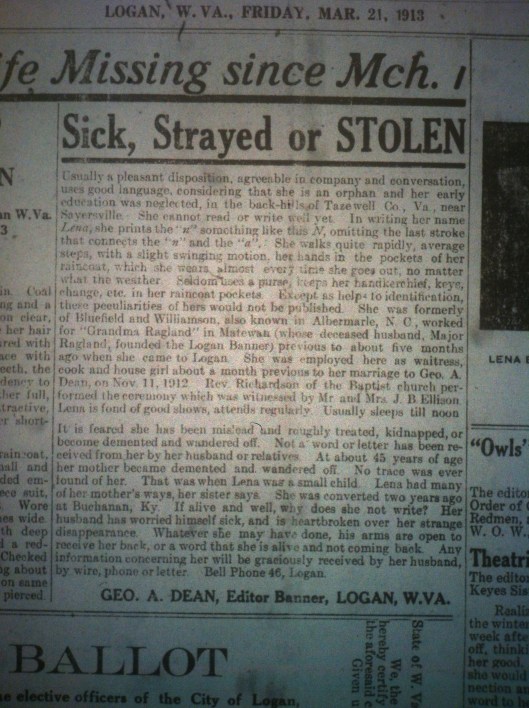
Wife of Logan Banner Editor George A. Dean Disappears (1912-1913)

20 Friday Jul 2018

Posted by Brandon Ray Kirk in Huntington, Logan, Matewan, Tazewell County

≈ Leave a comment

Tags

Albermarle, Appalachia, Bluefield, Buchanan, Collier's Weekly, Dry Fork, genealogy, George A. Dean, Henry Clay Ragland, Herald-Dispatch, history, Huntington, Iaeger, Imperial Order of Redmen, J.B. ellison, Jefferson Hotel, Kentucky, Keyes Sisters, LaRoy Stock Company, Lena Boyd Nelson, Lena Gross, Logan, Logan Banner, Logan County, Logan Democrat, Logan Nest 1442, Matewan, Modern Maccabees, Norfolk and Western Railroad, North Carolina, Order of Owls, Sayersville, Silver Cloud Tribe 138, Tazewell County, Virginia, W.L. Richardson, West Virginia, Williamson

In 1912, Logan Banner editor George A. Dean married the former Lena Gross, who soon thereafter disappeared. Here are a few stories about the event:

Editor Dean Married

On Monday, Nov. 11 in the minister’s study, Geo. A. Dean and Miss Lena Gross of Virginia, were united in marriage by Rev. W.L. Richardson.

Mr. Dean is the hustling editor of the Logan Banner and is well-known in this city and surrounding country as a man of push and energy, while the bride was one of the charming dining room girls at the Hotel Jefferson.

Mr. and Mrs. Dean will be at home to their friends after Nov. 18.

Source: Logan (WV) Democrat, 14 November 1912.

***

George A. Dean Logan Banner LB 01.24.1913.JPG

Logan (WV) Banner, 24 January 1913.

***

Editor of “Most Fearless Weekly” on the Trail

West Virginia editors who have failed to receive the Logan Banner on their exchange tables during the past three weeks, no doubt, marveled at its absence. But there is a reason–a tragic, gnawing reason which has caused the editor, Geo. A. Dean to suspend temporarily editorial duties and to embark upon a quest which means more to him than journalistic honors or the mere touch of hollow gold.

Readers of the Banner will remember that there appeared graven upon its front page four months ago Mr. Dean’s and his wife’s own announcement of their marriage. The paragraph attracted more than usual attention, partly because of its unique construction and partly because of the unusual manner of its presentation, but more than all because Mr. Dean was very prominently in the editorial limelight because of recent rather prominent mention in Collier’s Weekly. But that is history, and in mere prelude to the situation which now confronts him: to-wit: that of a married man, wifeless, disconsolate, yearning for the things that were.

Mr. Dean, who has been in Huntington and vicinity for two days seeking a trace of his evanished spouse, speaks frankly of his bereavement, and is importunate that the home-loving public shall, if possible, assist him in finding and restoring his lost treasure. In brief, Lena Boyd Nelson Dean has gone away and, some fear, forever departed. She went without the tender formality of a farewell husband’s kiss. She went away surreptitiously, mysteriously. She went, and Mr. Dean, who has sounded the very depths of heaven and earth, is no whit the wiser whither. Descriptive circulars, telling her height, weight, complexion, color of eyes and hair, manner of dress, and all that pertains to accurate and dependable description have been scattered broadcast all over the territory in which it might be surmised that she would be obscuring herself from the eyes of love and yearning. Mr. Dean stated last night, in conversation with the Herald-Dispatch, that he had absolutely no heart for business, that he had known no rest, no surcease from the terrible heart-longing that had seized upon him and held with tenacious grip from the morning of his wife’s departure. He has searched high and low. He has communicated with every known relative of his wife, without being able to get even the shadow of a clue tending to lead to the discovery of her whereabouts. He gives the following verbal photograph, which is almost as good as the ordinary studio product, and much better than a tintype:

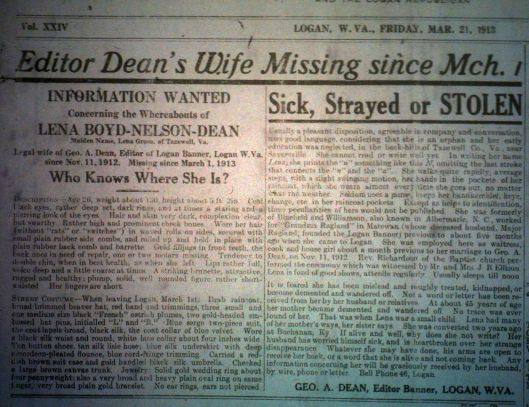
Lena Boyd Nelson Dean, formerly of Williamson and Matewan and Bluefield. Four months ago she served as waitress, cook, and house girl at Logan, W.Va. Last seen at Kenova on Sunday morning, March 2. Physical description: Age 26. Height 5 ft. 2. Coal-black eyes given to starry twinkle. Raven black hair. Rather full lips. Gold filling in front teeth. Deep, well modulated musical voice, with a tendency to coarseness in time of cold. Can not read or write much as her early education was neglected. Her costume is described as being strict in the style of today. Raincoat, drab-colored; blue-serge, two piece coat suit. Beaver hat, embellished with four black ostrich plumes. Leather suitcase, canvass trunk and gold-headed umbrella.

Mr. Dean feels that his wife may have returned to one of the three occupations ascribed to her in the opening paragraphs.

He has important mail for her, both registered and ordinary, and is awaiting anxiously any news of her, and his arms are open to her return. The Logan editor’s plight is positively pitiful. He has grown emaciated, hollow-eyed, faded, wan. The tireless vigil, the ceaseless search, the anxious waiting hours, have all played their part in preying upon his splendid vitality. He is discouraged but not defeated, and will continue the search as long as human endurance will permit, or else sooner find the partner of his joys and immediate cause of his great and overpowering grief. His plight has elicited much sympathy. For what is life without a partner?

Source: Huntington (WV) Herald-Dispatch via Logan (WV) Democrat, 13 March 1913.

***

George A. Dean's Wife Missing LB 03.21.1913 1

Logan (WV) Banner, 21 March 1913.

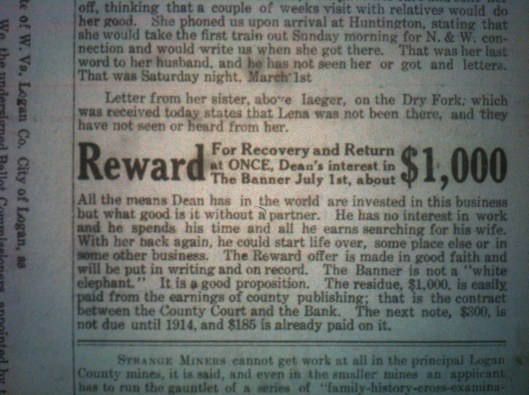
George A. Dean's Wife Missing LB 03.21.1913 2

Logan (WV) Banner, 21 March 1913.

George A. Dean's Wife Missing LB 03.21.1913 3

Logan (WV) Banner, 21 March 1913.

George A. Dean's Wife Missing LB 03.21.1913 4

Logan (WV) Banner, 21 March 1913.

George A. Dean's Wife Missing LB 03.21.1913 5

Logan (WV) Banner, 21 March 1913.

George A. Dean's Wife Missing LB 03.21.1913 6

Logan (WV) Banner, 21 March 1913.

History for Boone County, WV (1928)

15 Sunday Jul 2018

Posted by Brandon Ray Kirk in Boone County, Huntington, Logan

≈ 2 Comments

Tags

Appalachia, Boone County, Camp Creek, Charles L. Estep, civil war, Coal River, Coal Valley News, Cumberland Gap, Danville, education, Hadalton, history, Huntington, Isaac Barker, Jackie Dolin, John E. Kenna, John Halstead, John Morris, Kanawha River, Kentucky, Kinder Hill, Little Coal River, Logan, Logan Banner, Madison, Marshall A. Estep, Maysville, Mud River, North Carolina, Ohio River, Olive Branch Baptist Church, Spruce Fork, Spruce Ridge, Texas, Thomas Price, Turtle Creek, W.H. Turley, W.W. Hall, West Virginia, White Oak Creek, Wilderness Road

A story titled “Old Times in Boone County Told About By Historian” and printed in the Logan Banner in Logan, WV, on April 20, 1928 provides some history for Boone County:

Old-timers and students of local history should be interested in the following excerpt from the history of Boone county by Prof. W.W. Hall. The family names mentioned are familiar ones.

What is here reproduced was taken from the Coal Valley News:

About the year of 1798 Isaac Barker reared a pole cabin on the brow of the hill on the lower side of White Oak Creek, near old lock seven. This was the first white man’s home established in Boone county. The second settler in the county was Johnson Kinder, a brother-in-law of Barker. He settled on Kinder Hill a few months after Barker came. The first settler on Little Coal River was John Halstead, who settled at the mouth of Camp creek about 1800. A few months later Jackie Dolin was married to Isaac Barker’s daughter and led his blushing bride, attired in her homespun, through the trackless forest up Brush creek and over the hill to a scantily furnished home on Camp creek. Not long after this Thomas Price, a daring hunter from North Carolina, wandered over the Wilderness Road through Cumberland Gap to Maysville, Kentucky, where he embarked in a canoe, ascended the Ohio, the Kanawha, the Coal and the Little Coal rivers to the present site of the town of Danville, and became the first settler there.

For some years after the coming of the white men there were no churches, but when an Old Baptist or Methodist preacher would arrive in the settlement, word was passed around to the neighbors and that night earnest prayers, exhortations and hallelujahs would ascend from those rude homes. The first church erected in the county was the Olive Branch Baptist church at the mouth of Turtle creek. The first term of the circuit court held in the county after its organization in 1847 was held in this church. The grand jury made its investigations while seated on the framing in Ballard’s old water mill near by, and the petit jury retired to the paw paw bushes below to consider their verdicts.

The daring hunters, adventurous pioneers and brave soldiers who came from the best families in the east to establish home in the wilderness, were not contented to let their children grow up without the rudiments of an education, so they established Old Field schools in the slave cabins, tanneries, country churches and abandoned dwellings, when an itinerant teacher who could read, write and cipher a little came along. The first free school in the county was taught by John Morris, just after the Civil War, in an old house abandoned by Dr. Church. The old house stood across the hollow from W.H. Turley’s present residence in Madison. Within the next year or two a log school house was erected near the upper end of Danville and another on the point across the river from Hadalton. The children of Madison had to go to Danville or Hadalton to school until 1885, when the people of Madison, by mandamus, compelled the board of education to give them a school. The first school house erected in Madison is now used by Dr. Smoot for a barn. While the course of study in these early schools was meager and the work crude, yet they did succeed in inspiring a few boys to strive for higher education. Former United States Senator John E. Kenna was born in Boone county and attended his first schools in a log house on Big Coal river. Dr. Marshall A. Estep, an eminent physician of Texas, and his brother, Judge Charles L. Estep, of Huntington and Logan, were reared in the “Promised Land,” the name of their father’s mountain home on the summit of Spruce Ridge, and attended their first schools in a log house on the Spruce Fork. One of these early log school houses still stands on the head of Mud river, remote from the highways frequented by trade and travelers. Two of the most recent prosecuting attorneys of the county, two clerks of the circuit court, two of the clerks of the county court, four county superintendents of schools, chief U.S. Marshal for the southern district of West Virginia, and two prosperous dental surgeons attended school when boys in that little log school house on the head of Mud. The attendance in it was never large.

Chapmanville News 12.09.1927

06 Friday Jul 2018

Posted by Brandon Ray Kirk in Chapmanville, Huntington, Logan

≈ Leave a comment

Tags

Appalachia, Bernie Young, Chapmanville, genealogy, history, Huntington, Kentucky, Lizzie Crislip, Logan, Logan Banner, Logan County, Maude Fillinger, West Virginia, Willa Lowe

An unknown correspondent from Chapmanville in Logan County, West Virginia, offered the following items, which the Logan Banner printed on December 9, 1927:

Rev. Sreves’ wife is improving very slowly.

Miss Willa Lowe and Miss Maude Fillinger are spending a few days in Logan.

Mrs. Lizzie Chrislip and friends made a trip to Huntington Sunday.

Bernie Young was calling on friends here Sunday.

We were very glad to welcome the Cox family back again after they spent a few years in Kentucky.

Hatfield-McCoy Reunion Festival at Matewan, WV (2018)

22 Friday Jun 2018

Posted by Brandon Ray Kirk in Coal, Hatfield-McCoy Feud, Lincoln County Feud, Matewan

≈ 3 Comments

Tags

Appalachia, art, Blood in West Virginia, Bob Hatfield, Brandon Kirk, Buskirk and Hamilton, Devil Anse Hatfield, Green McCoy, Hatfield-McCoy Reunion Festival, history, Kentucky, Lincoln County Feud, Lisha Breeding, Louisa Mullins, Matewan, Matewan Depot, Mine Wars, Mingo County, Norfolk and Southern Railroad, Phyllis Kirk, Pike County, Randy Marcum, Sid Hatfield, Thacker, West Virginia, West Virginia Division of Culture and History

On June 15-16, 2018, the town of Matewan, WV, hosted the Hatfield-McCoy Reunion Festival. Matewan Depot hosted us for a book event. THANK YOU, Matewan Depot!

IMG_5591

Matewan Depot is a must-see destination! NOTE: For more information about the town and depot, please follow this link: http://www.historicmatewan.com/

IMG_2614

Here is a photo of our revamped Lincoln County Feud display at the Hatfield-McCoy Reunion Festival. Green McCoy, a Pike County (Ky.) McCoy, participated in the Lincoln feud; Bob Hatfield, son of Anse, married Louisa Mullins, a Lincoln feudist. 15 June 2018.

IMG_2690

Green McCoy’s great-niece Lisha Breeding made my day when she visited the Lincoln County Feud exhibit. 16 June 2018. Photo by Mom.

IMG_2687

We met nice people and sold copies of the book at the Hatfield-McCoy Reunion Festival. All proceeds were donated to the depot, which I greatly SUPPORT — it’s a significant asset that promotes regional history and tourism. 16 June 2018. Photo by Randy Marcum.

IMG_2635

The Matewan Depot features a free museum. The museum offers historical items related to town history, the Hatfield-McCoy Feud, the Norfolk & Southern Railroad, and the Mine Wars. 15 June 2018.

IMG_2636

Sid Hatfield gun with accompanying documentation. 15 June 2018.

IMG_2681

The West Virginia Division of Culture and History showcased a Hatfield-McCoy exhibit at the Hatfield-McCoy Reunion Festival. 16 June 2018.

IMG_2677

Some of the many artifacts located inside of the Matewan Depot. 16 June 2018.

IMG_9704.JPG

The depot features a worthy selection of books and other items related to regional history and culture. This photo shows a sample of books: t-shirts, stickers, videos, art, and many other items can also be found here. If you visit, be sure to take a peak at my book, “Blood in West Virginia: Brumfield v. McCoy.” May 2018.

Paw Paw Incident: Tolbert Hatfield Deposition (1889)

07 Thursday Jun 2018

Posted by Brandon Ray Kirk in Culture of Honor, Hatfield-McCoy Feud, Pikeville

≈ Leave a comment

Tags

Anderson Hatfield, Appalachia, Blackberry Creek, Bud McCoy, Doc Mayhorn, feuds, G.W. Pinson, Hatfield-McCoy Feud, history, justice of the peace, Kentucky, Pharmer McCoy, Pike County, Pikeville, Tolbert Hatfield, Tolbert McCoy, Valentine Wall Hatfield, West Virginia

The killing of Tolbert, Pharmer, and Bud McCoy by a Hatfield-led gang on August 8, 1882 represented one of the most sensational events of the Hatfield-McCoy Feud. What follows is Tolbert Hatfield’s deposition regarding the affair:

COMMONWEALTH VS DOC MAYHORN &C

Bill of Exceptions

FILED Sept. 1889

G.W. Pinson, Clk

IMG_9721.JPG

Tolbert Hatfield testified that he was one of the Justices that had charge of the McCoy Boys. They were in our custody until about 12 o’clock next day. They were in the crowd that moved to Pikeville with the Prisoners. We were stoped (sic) by Wall. I Don’t remember where I first saw the Defts. Seen them some where between Anderson Hatfield and where we turned back Down Blackbery. One of them had arms. Don’t know which. The McCoy Boys were given up by the authoritys because they could not help themselvs (sic). It is not far from where the McCoy Boys was killed to the road on on the Virginia shore opposite the place where they was killed. Some 200 to 250 yards. The Defs. Were not Present when the McCoy Boys were Turned Back Down Blackbery. Theire were a grate many People theire.

For more information about this incident, follow these links:

http://explorekyhistory.ky.gov/items/show/785?tour=55&index=3

http://wvpublic.org/post/three-mccoys-killed-hatfields-kentucky-august-8-1882#stream/0

http://hatfield-mccoytruth.com/2017/04/22/in-hatfield-country-blackberry-creek-in-the-1880s/

Paw Paw Incident: Joseph Hatfield Deposition (1889)

04 Monday Jun 2018

Posted by Brandon Ray Kirk in Culture of Honor, Hatfield-McCoy Feud, Matewan

≈ Leave a comment

Tags

Appalachia, Blackberry Creek, Bud McCoy, Doc Mayhorn, feuds, G.W. Pinson, genealogy, Hatfield-McCoy Feud, history, Joseph Hatfield, justice of the peace, Kentucky, Matthew Hatfield, Pharmer McCoy, Pike County, Tolbert McCoy, Valentine Wall Hatfield, West Virginia

The killing of Tolbert, Pharmer, and Bud McCoy by a Hatfield-led gang on August 8, 1882 represented one of the most sensational events of the Hatfield-McCoy Feud. What follows is Joseph Hatfield’s deposition regarding the affair:

COMMONWEALTH VS DOC MAYHORN &C

Bill of Exceptions

FILED Sept. 1889

G.W. Pinson, Clk

IMG_9725

Joseph Hatfield was then introduced as a witness for Deft. whos Testified as followeth. I know the Defts. I was a justice of the peace in 1882. Mathew hatfield had charge of the McCoy Boys. I Don’t remember of having seen either one of the Defts. on Blackbary Creek the Day when the McCoy Boys was Taken from the officers. Wall Hatfield said to Randolph McCoy after the Crowd had started Down the Creek with the Prisoners. We understand that we are to be Bush whacked and if we are we will kill the three Boys.

To the above testimony of Jo Hatfield the Deft. objected at the Time and still objects. The Court over ruled the objection. Defts. excepts and still excepts.

Paw Paw Incident: James Hatfield Deposition (1889)

03 Sunday Jun 2018

Posted by Brandon Ray Kirk in Culture of Honor, Hatfield-McCoy Feud, Matewan

≈ Leave a comment

Tags

Anderson Hatfield, Appalachia, Bud McCoy, crime, Doc Mayhorn, G.W. Pinson, genealogy, Hatfield-McCoy Feud, history, James Hatfield, Kentucky, murder, Pharmer McCoy, Pike County, Randolph McCoy, Tolbert McCoy, West Virginia

The killing of Tolbert, Pharmer, and Bud McCoy by a Hatfield-led gang on August 8, 1882 represented one of the most sensational events of the Hatfield-McCoy Feud. What follows is James Hatfield’s deposition regarding the affair:

COMMONWEALTH VS DOC MAYHORN &C

Bill of Exceptions

FILED Sept. 1889

G.W. Pinson, Clk

IMG_9732

The Commonwealth then introduced Jas. Hatfield who testified. Am double cousin of defts. father in law. After the line had been formed at Rev. Anderson’s & just after it had started down the creek with the boys I heard Ance Hatfield say to Randal McCoy we understand we are to be bush whacked down the creek and if we are we will kill the boys first. The defts. were then commanded(?) in the line.

Paw Paw Incident: Ephraim Hatfield Deposition (1889)

31 Thursday May 2018

Posted by Brandon Ray Kirk in Culture of Honor, Hatfield-McCoy Feud, Matewan

≈ Leave a comment

Tags

Appalachia, Bud McCoy, Doc Mayhon, Ephraim Hatfield, feud, feuds, G.W. Pinson, genealogy, Hatfield-McCoy Feud, history, Jeff Whitt, Kentucky, Pharmer McCoy, Pike County, Plyant Mahon, Tolbert McCoy, Tug Fork, Wall Hatfield, West Virginia

The killing of Tolbert, Pharmer, and Bud McCoy by a Hatfield-led gang on August 8, 1882 represented one of the most sensational events of the Hatfield-McCoy Feud. What follows is Ephraim Hatfield’s deposition regarding the affair:

COMMONWEALTH VS DOC MAYHORN &C

Bill of Exceptions

FILED Sept. 1889

G.W. Pinson, Clk

IMG_9724.JPG

I know Jeff Whitt. I had a conversation with Jeff Whitt the day Wall Hatfield was tried and after he had been sworn as a witness on said trial. In said conversation he said That if he swore on the trial of Wall Hatfield that Dock and Plyant Mayhone was on this side of the river where the McCoy boys were killed. He didn’t know what he was saying. That he was scared and that they were not there.

Melvin and Susan (Thompson) Kirk Homeplace (2018)

28 Monday May 2018

Posted by Brandon Ray Kirk in Cemeteries, Halcyon, Lincoln County Feud, Timber

≈ Leave a comment

Tags

Appalachia, Brandon Kirk, Elizabeth Kirk, Floyd Caldwell, genealogy, Halcyon, Harts Creek, history, Hog Hollow, Kentucky, Lawrence County, Lincoln County, Lincoln County Feud, Logan County, Martin County, Melvin Kirk, Melvin Kirk Family Cemetery, photos, Phyllis Kirk, Piney Fork, Thomas Kirk, West Fork, West Virginia

IMG_1107.JPG

Melvin and Susan (Thompson) Kirk Homeplace, Piney Fork of West Fork of Harts Creek, Logan County, WV. 24 May 2018. Melvin and Susan are my great-great-grandparents.

IMG_1282

Kirk Homeplace sign, Piney Fork of West Fork of Harts Creek, Logan County, WV. 24 May 2018. Melvin was born in 1862 to Thomas and Elizabeth “Betty” (Maynard) Kirk and was partly raised in Lawrence (later Martin) County, KY. To see Melvin with his father in the 1870 Lawrence County, KY, Census, follow this link: https://www.familysearch.org/ark:/61903/3:1:S3HT-D8S9-4LS?i=7&cc=1438024 

IMG_1220

Kirk Cemetery sign, Piney Fork of West Fork of Harts Creek, Logan County, WV. 24 May 2018. Melvin followed his mother to Piney before 1880. To see Melvin in the 1880 Lincoln County Census, follow this link: https://www.familysearch.org/ark:/61903/3:1:33SQ-GYB2-9WFZ?cc=1417683 

IMG_1128

Heading up to the cemetery. 24 May 2018. Melvin was a powerful left-handed timberman. In 1888, he bought a 35-acre farm from Floyd Caldwell.

IMG_1209

Kirk Cemetery Statue, Kirk Cemetery, Piney Fork of West Fork of Harts Creek, Logan County, WV. 24 May 2018. Melvin played an important role in the Lincoln County Feud. https://www.amazon.com/Blood-West-Virginia-Brumfield-McCoy/dp/1455619183 

IMG_1194

Melvin Kirk grave, Kirk Cemetery. 24 May 2018. Photo by Mom. Melvin’s property was assessed in Lincoln County until 1897, when it transferred to Logan County. To see Melvin in the 1900 Logan County Census, follow this link: https://www.familysearch.org/ark:/61903/3:1:S3HY-68V3-C77?i=31&cc=1325221 

← Older posts
Newer posts →

Feud Poll 1

If you had lived in the Harts Creek community during the 1880s, to which faction of feudists might you have given your loyalty?

Categories

  • Adkins Mill
  • African American History
  • American Revolutionary War
  • Ashland
  • Atenville
  • Banco
  • Barboursville
  • Battle of Blair Mountain
  • Beech Creek
  • Big Creek
  • Big Harts Creek
  • Big Sandy Valley
  • Big Ugly Creek
  • Boone County
  • Breeden
  • Calhoun County
  • Cemeteries
  • Chapmanville
  • Civil War
  • Clay County
  • Clothier
  • Coal
  • Cove Gap
  • Crawley Creek
  • Culture of Honor
  • Dingess
  • Dollie
  • Dunlow
  • East Lynn
  • Ed Haley
  • Eden Park
  • Enslow
  • Estep
  • Ethel
  • Ferrellsburg
  • Fourteen
  • French-Eversole Feud
  • Gilbert
  • Giles County
  • Gill
  • Green Shoal
  • Guyandotte River
  • Halcyon
  • Hamlin
  • Harts
  • Hatfield-McCoy Feud
  • Holden
  • Hungarian-American History
  • Huntington
  • Inez
  • Irish-Americans
  • Italian American History
  • Jamboree
  • Jewish History
  • John Hartford
  • Kermit
  • Kiahsville
  • Kitchen
  • Leet
  • Lincoln County Feud
  • Little Harts Creek
  • Logan
  • Man
  • Matewan
  • Meador
  • Midkiff
  • Monroe County
  • Montgomery County
  • Music
  • Native American History
  • Peach Creek
  • Pearl Adkins Diary
  • Pecks Mill
  • Peter Creek
  • Pikeville
  • Pilgrim
  • Poetry
  • Queens Ridge
  • Ranger
  • Rector
  • Roane County
  • Rowan County Feud
  • Salt Rock
  • Sand Creek
  • Shively
  • Spears
  • Sports
  • Spottswood
  • Spurlockville
  • Stiltner
  • Stone Branch
  • Tazewell County
  • Timber
  • Tom Dula
  • Toney
  • Turner-Howard Feud
  • Twelve Pole Creek
  • Uncategorized
  • Warren
  • Wayne
  • West Hamlin
  • Wewanta
  • Wharncliffe
  • Whirlwind
  • Williamson
  • Women's History
  • World War I
  • Wyoming County
  • Yantus

Feud Poll 2

Do you think Milt Haley and Green McCoy committed the ambush on Al and Hollene Brumfield in 1889?

Blogroll

  • Ancestry.com
  • Ashland (KY) Daily Independent News Article
  • Author FB page
  • Beckley (WV) Register-Herald News Article
  • Big Sandy News (KY) News Article
  • Blood in West Virginia FB
  • Blood in West Virginia order
  • Chapters TV Program
  • Facebook
  • Ghosts of Guyan
  • Herald-Dispatch News Article 1
  • Herald-Dispatch News Article 2
  • In Search of Ed Haley
  • Instagram
  • Lincoln (WV) Journal News Article
  • Lincoln (WV) Journal Thumbs Up
  • Lincoln County
  • Lincoln County Feud
  • Lincoln County Feud Lecture
  • LinkedIn
  • Logan (WV) Banner News Article
  • Lunch With Books
  • Our Overmountain Men: The Revolutionary War in Western Virginia (1775-1783)
  • Pinterest
  • Scarborough Society's Art and Lecture Series
  • Smithsonian Article
  • Spirit of Jefferson News Article
  • The Friendly Neighbor Radio Show 1
  • The Friendly Neighbor Radio Show 2
  • The Friendly Neighbor Radio Show 3
  • The Friendly Neighbor Radio Show 4
  • The New Yorker
  • The State Journal's 55 Good Things About WV
  • tumblr.
  • Twitter
  • Website
  • Weirton (WV) Daily Times Article
  • Wheeling (WV) Intelligencer News Article 1
  • Wheeling (WV) Intelligencer News Article 2
  • WOWK TV
  • Writers Can Read Open Mic Night

Feud Poll 3

Who do you think organized the ambush of Al and Hollene Brumfield in 1889?

Recent Posts

  • Logan County Jail in Logan, WV
  • Absentee Landowners of Magnolia District (1890, 1892, 1894)
  • Charles Spurlock Survey at Fourteen Mile Creek, Lincoln County, WV (1815)

Ed Haley Poll 1

What do you think caused Ed Haley to lose his sight when he was three years old?

Top Posts & Pages

  • Halcyon 4.10.1919
  • Halcyon-Yantus 12.08.1911
  • Civil War Gold Coins Hidden Near Chapmanville, WV
  • Ran'l McCoy's Final Months (1914)
  • Halcyon 3.27.1919

Copyright

© Brandon Ray Kirk and brandonraykirk.wordpress.com, 1987-2023. Unauthorized use and/or duplication of this material without express and written permission from this blog’s author and/or owner is strictly prohibited. Excerpts and links may be used, provided that full and clear credit is given to Brandon Ray Kirk and brandonraykirk.wordpress.com with appropriate and specific direction to the original content.

Archives

  • February 2025
  • January 2025
  • October 2023
  • September 2023
  • December 2022
  • November 2022
  • May 2022
  • April 2022
  • February 2022
  • November 2021
  • October 2021
  • September 2021
  • June 2021
  • May 2021
  • April 2021
  • March 2021
  • February 2021
  • January 2021
  • December 2020
  • November 2020
  • October 2020
  • July 2020
  • June 2020
  • May 2020
  • April 2020
  • March 2020
  • February 2020
  • January 2020
  • December 2019
  • November 2019
  • October 2019
  • September 2019
  • August 2019
  • July 2019
  • June 2019
  • May 2019
  • April 2019
  • March 2019
  • February 2019
  • January 2019
  • December 2018
  • November 2018
  • October 2018
  • September 2018
  • August 2018
  • July 2018
  • June 2018
  • May 2018
  • April 2018
  • March 2018
  • February 2018
  • January 2018
  • December 2017
  • November 2017
  • October 2017
  • September 2017
  • August 2017
  • July 2017
  • June 2017
  • May 2017
  • April 2017
  • March 2017
  • February 2017
  • January 2017
  • December 2016
  • November 2016
  • October 2016
  • September 2016
  • August 2016
  • July 2016
  • June 2016
  • May 2016
  • April 2016
  • March 2016
  • February 2016
  • January 2016
  • December 2015
  • November 2015
  • October 2015
  • September 2015
  • August 2015
  • July 2015
  • June 2015
  • May 2015
  • April 2015
  • March 2015
  • February 2015
  • January 2015
  • December 2014
  • October 2014
  • September 2014
  • August 2014
  • July 2014
  • June 2014
  • May 2014
  • April 2014
  • March 2014
  • February 2014
  • January 2014
  • December 2013
  • November 2013
  • October 2013
  • September 2013
  • August 2013
  • July 2013
  • June 2013
  • May 2013
  • April 2013
  • March 2013
  • February 2013
  • January 2013
  • December 2012
  • November 2012

Enter your email address to follow this blog and receive notifications of new posts by email.

Join 2,927 other subscribers

Tags

Appalachia Ashland Big Creek Big Ugly Creek Blood in West Virginia Brandon Kirk Cabell County cemeteries Chapmanville Charleston civil war coal Confederate Army crime culture Ed Haley Ella Haley Ferrellsburg feud fiddler fiddling genealogy Green McCoy Guyandotte River Harts Harts Creek Hatfield-McCoy Feud history Huntington John Hartford Kentucky Lawrence Haley life Lincoln County Lincoln County Feud Logan Logan Banner Logan County Milt Haley Mingo County music Ohio photos timbering U.S. South Virginia Wayne County West Virginia Whirlwind writing

Blogs I Follow

  • OtterTales
  • Our Appalachia: A Blog Created by Students of Brandon Kirk
  • Piedmont Trails
  • Truman Capote
  • Appalachian Diaspora

BLOOD IN WEST VIRGINIA is now available for order at Amazon!

Blog at WordPress.com.

OtterTales

Writings from my travels and experiences. High and fine literature is wine, and mine is only water; but everybody likes water. Mark Twain

Our Appalachia: A Blog Created by Students of Brandon Kirk

This site is dedicated to the collection, preservation, and promotion of history and culture in Appalachia.

Piedmont Trails

Genealogy and History in North Carolina and Beyond

Truman Capote

A site about one of the most beautiful, interesting, tallented, outrageous and colorful personalities of the 20th Century

Appalachian Diaspora

  • Subscribe Subscribed
    • Brandon Ray Kirk
    • Join 789 other subscribers
    • Already have a WordPress.com account? Log in now.
    • Brandon Ray Kirk
    • Subscribe Subscribed
    • Sign up
    • Log in
    • Report this content
    • View site in Reader
    • Manage subscriptions
    • Collapse this bar
 

Loading Comments...