• About

Brandon Ray Kirk

~ This site is dedicated to the collection, preservation, and promotion of history and culture in my section of Appalachia.

Brandon Ray Kirk

Tag Archives: Guyandotte River

Green Shoal (WV) Post Office

12 Monday Jan 2015

Posted by Brandon Ray Kirk in Ferrellsburg, Green Shoal, Toney

≈ Leave a comment

Tags

Admiral S. Fry, Burbus Toney, C. Brumfield, Erastus Kelly Steele, Ferrellsburg, Fry, George W. Ferrell, Green Shoal, Green Shoal Post Office, Guyandotte River, Harts Creek District, James H. McComas, Lincoln County, Logan County, postmaster, Route 10, Toney, Virginia, West Virginia

Green Shoal Creek is a tributary of the Guyandotte River located in Harts Creek District of Lincoln County, West Virginia. Prior to 1863, the stream was located in Virginia, and prior to 1869, it was located in Logan County. Today, it is situated on Route 10 between the communities of Ferrellsburg and Toney. Prior to the Civil War, Green Shoal was a sort of community hub for the Harts Creek area. Green Shoal had the first post office located in the Harts area.

Green Shoal Post Office was established on January 4, 1855. It was discontinued on July 9, 1866. Burbus C. Toney, son of Squire and Nancy (Brown) Toney, was postmaster from 1855 to 1866.

Green Shoal Post Office was re-established on November 25, 1873. Admiral S. Fry, a Confederate veteran and merchant, served as postmaster until November 1, 1878. Kale Steele served as postmaster until November 17, 1879. The post office was discontinued on November 17, 1879.

Greenshoal Post Office was established on December 20, 1899. James H. McComas served as postmaster until April 5, 1901. According to one period newspaper account, C. Brumfield replaced McComas on April 2, 1901. Official records cite McComas as postmaster until December 22, 1902. George W. Ferrell, adopted son of local merchants, served as postmaster from December 22, 1902 until December 27, 1904. At this latter date, the post office was discontinued to Ferrellsburg.

In the twentieth century, the Green Shoal area was called “Fry.”
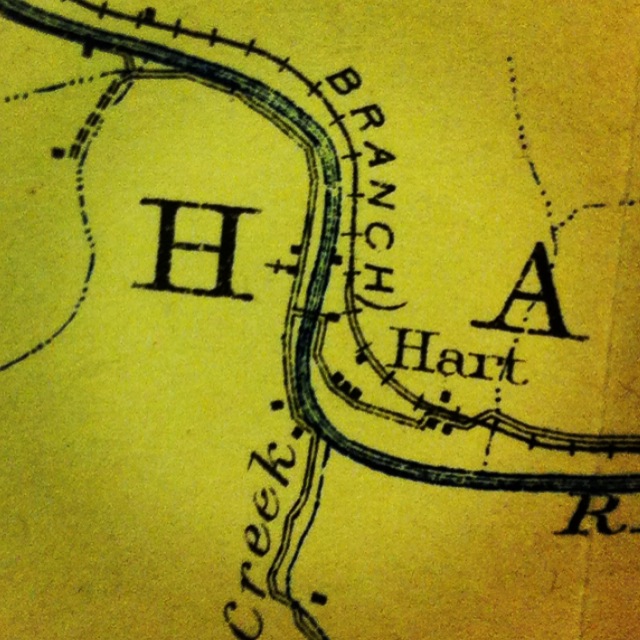
Hart, 1914

30 Tuesday Dec 2014

Posted by Brandon Ray Kirk in Big Harts Creek, Harts

≈ Leave a comment

Tags

Appalachia, Browns Branch, C&O Railroad, genealogy, Guyandotte River, Harts, Harts Creek, Harts Creek District, history, Lincoln County, map, West Virginia

Hart, 1914

Hart, 1914

Moses Brown survey (1834)

24 Wednesday Dec 2014

Posted by Brandon Ray Kirk in Harts

≈ Leave a comment

Tags

Anthony Lawson, Archibald Elkins, genealogy, Guyandotte River, Harvey Elkins, Henry Adkins, history, John Lawson, Lincoln County, Logan County, Moses Brown, West Virginia

Moses Brown survey, 25 acres, 1834

Moses Brown survey, 25 acres, 1834

Moses Brown survey, 25 acres, 1834

Moses Brown survey, 25 acres, 1834

Gill News 05.03.1923

05 Tuesday Aug 2014

Posted by Brandon Ray Kirk in Big Ugly Creek, Coal, Gill, Timber

≈ 1 Comment

Tags

Alkol, Allen, Andrew Adkins, Bach Linville, Bernie, Big Ugly Creek, Brad Gill, Bruce Walls, Cassie Hager, Clark Collins, coal, Democrats, Dick Aldridge, Emery Fry, fishing, Gill, Grant Cremeans, Griffithsville, Guyandotte River, Hamlin, Hattie Gill, Henon Smith, history, Huntington, James A. Hughes, Jupiter Fry, Lattin, Lee Adkins, Lincoln County, Lincoln Republican, Logan County, measles, mumps, Omar, Peacha Hager, Philip Hager, Philip Sperry, Sherman Linville, Tom Mullins, West Virginia, Westmoreland, Wilburn Scragg

“Two Brothers,” local correspondents from Gill in Lincoln County, West Virginia, offered the following items, which the Lincoln Republican printed on Thursday, May 3, 1923:

Grant Cremeans, of Hamlin, Sherman Linville, of Alkol, Bruce Walls, of Griffithsville, and Bach Linville, of Bernie, were recent business visitors at this place.

Louis Fry caught a fish one day this week that weighed five pounds.

There is a number of cases of measles in this section.

Philip Spery, Hainen Smith and others loaded thirty-two thousand feet of lumber for Philip Hager one day last week. The lumber was shipped to Jas. A. Hughes, West Moreland, W.Va.

Prof. Lee Adkins’ singing school at this place closed Wednesday night. A large crowd heard the instrumental music rendered by Misses Peacha and Cassie Hager, which was enjoyed by all.

The coal traffic on Guyan is becoming enormous. Everything seems to be on the boom in the Guyan Valley.

Wilburn Scragg, of Allen, was a recent Gill visitor.

Brad Gill is recovering from the mumps and is able to be out again.

Miss Hattie Gill has the mumps.

Emery Fry and Dick Aldridge have been hauling telephone poles the past week.

The mining operations at Lattin have been having trouble securing cars the past few weeks.

Hainen Smith has gone to Omar, where he will cook for a mining crew.

Mrs. Tom Mullins and Mrs. Andrew Adkins were shopping at Gill one day the past week.

Clark Collins was a recent business visitor in Huntington.

You can’t fool all the people all the time. Neither can you please half the people half the time.

Democrats can’t forgive prosperity for coming back when they are out.


In Search of Ed Haley 346

31 Thursday Jul 2014

Posted by Brandon Ray Kirk in Big Harts Creek, Ed Haley, Lincoln County Feud, Shively

≈ Leave a comment

Tags

Alton Conley, Big Creek, blind, Blood in West Virginia, Brown's Run, Burl Farley, Charles Conley Jr., Charlie Conley, Clifford Belcher, Conley Branch, crime, Ed Belcher, Ed Haley, Ella Haley, fiddler, fiddling, Green McCoy, Green Shoal, Guyandotte River, Harts Creek, history, John Brumfield, Lincoln County Feud, Logan, Logan County, Milt Haley, Mona Haley, music, Robert Martin, Smokehouse Fork, Warfield, West Virginia, Wirt Adams, writing

From Clifton’s, we went to see Charlie Conley, Jr., a fiddler who lived on the Conley Branch of Smokehouse Fork of Harts Creek. Wirt Adams had mentioned his name to us the previous summer. We found Charlie sitting on his porch and quickly surrounded him with a fiddle, tape recorder, and camera.

When I told him about my interest in Ed Haley’s life, he said Ed played so easy it was “like a fox trotting through dry leaves.”

Charlie said Ed was a regular at Clifford Belcher’s tavern.

“Right there, that’s where we played at on the weekends,” he said. “He used to play there a lot, the old man Ed Haley did. Me and another boy, Alton Conley — he’s my brother-in-law, just a kid… I bought him a guitar and he learned how to play pretty good. He could second pretty good to me, but he couldn’t keep up with that old man. He knowed too many notes and everything for him. The old man realized he was just a kid.”

Charlie told us an interesting story about how Ed came to be blind.

“Milt and Burl Farley, they was drinking where Burl lived down at the mouth of Browns Run. And Ed was just a little baby — been born about a week. Old man Burl said to Milt, ‘Take him out here and baptize him in this creek. It’ll make him tough.’ And it was ice water. He just went out and put him in that creek and baptized the kid and the kid took the measles and he lost his eyes. That’s how come him to be blind.”

That was an interesting picture: Milt and Burl hanging out on Browns Run. We had never really thought about it, but there was a great chance that all the men connected up in the 1889 troubles knew each other pretty well and maybe even drank and played cards together on occasion. For all we knew, Milt may have worked timber for Farley.

Brandon asked Charlie if he knew what happened to Milt Haley.

“They said the Brumfields killed him,” Charlie said. “Him and his uncle was killed over at a place called Green Shoal over on the river somewhere around Big Creek. They were together when they got killed. That was way back. I never knew much about it.”

Obviously Green McCoy wasn’t Ed’s uncle, but I had to ask Charlie more about him.

“All I can tell you is he was old man Ed’s uncle,” he said. “They lived over there on the river, around Green Shoal.”

So Ed was raised on the river?

“No, he lived down here on the creek, right where that old man baptized him in that cold water at the mouth of Browns Run,” Charlie said. “That’s where he was born and raised at, the old man was.”

I guess Charlie meant that Green lived “over there on the river,” which was sorta true.

He didn’t know why Milt Haley was killed, but said, “Back then, you didn’t have much of a reason to kill a man. People’d get mad at you and they wouldn’t argue — they’d start shooting. Somebody’d die. I know the Conleys and the Brumfields had a run in over there on the river way back. Oh, it’s been, I guess, ninety year ago. Man, they had a shoot-out over there and right to this day they got grudges against the Conley people. I’ve had run-ins with them several times. I say, ‘Look man, this happened before my time. Why you wanna fool with me for?’ But they just had a grudge and they wouldn’t let go of it.”

When we asked Charlie about local fiddlers, he spoke firstly about Robert Martin.

“They said Robert was a wonderful fiddler,” he said. “I had a half-brother that used to play a guitar with him when he played the fiddle named Mason Conley. I used to play with his brothers over there on Trace and with Wirt and Joe Adams. Bernie Adams — he was my first cousin. They said Robert was a wonderful fiddler.”

What about Ed Belcher?

“Yeah, Ed was pretty good, but he couldn’t hold old man Ed Haley a light to fiddle by. Belcher was more of a classical fiddler. Now, he could make a piano talk, that old guy could. I knowed him a long time ago. I noticed he’d go up around old man Ed and every oncest in a while he’d call out a tune for him to play. Ed’d look around and say, ‘Is that you, Belcher?’ Said, ‘Yeah,’ and he’d set in a fiddling for him. Maybe he’d throw a half a dollar in his cup and walk on down the street.”

Brandon said to Charlie, “Ed Belcher lived up at Logan, didn’t he?” and Charlie blew us away with answer: “Well now, old man Ed Haley lived up there then at that time. They lived out there in an apartment somewhere. The little girl was about that high the last time I seen her.”

Well, that was the first I heard of Ed living in Logan — maybe it was during his separation from Ella, or maybe there was an earlier separation, when Mona was a little girl.

I asked about a tune called “Warfield” and Charlie said, “That ‘Warfield’ is out of my vocabulary, buddy. I’ve done forgot them old tunes, now.”

Wewanta News 06.22.1922

20 Sunday Jul 2014

Posted by Brandon Ray Kirk in African American History, Fourteen, Gill, Ranger, Wewanta

≈ Leave a comment

Tags

Arthur Napier, Boyd Wiley, Dr. Crockett, East Fork, Elias Williamson, Fourteen Mile Creek, Garrett Webb, genealogy, Gill, Guyandotte River, history, Huntington, Jackson Mullins, John Smith, Lincoln County, Lincoln Republican, Maynard, Milton Nelson, P.J. Williamson, Rachel Adkins, Ranger, Sherman Nelson, Shirley Hankles, West Virginia, Wewanta, William Adkins, William Webb

An unnamed local correspondent from Wewanta in Lincoln County, West Virginia, offered the following items, which the Lincoln Republican printed on Thursday, June 22, 1922:

Mr. and Mrs. P.J. Williamson entertained a number of friends Sunday, among whom were: Mrs. Rachel Adkins, Mrs. Shirlie Hankles, Mrs. Elias Williamson, Jackson Mullins, of Maynard, and Mr. Elias Williamson.

Arthur Napier and Boyd Wiley, of this place, attended singing at East Fork of Fourteen, Saturday.

Milton Nelson, of Gill, tells of finding a dead man in the Guyan river near Gill. Inquest was held by Wm. Adkins at Ranger. Dr. Crockett was called and after examination, stated that he had been dead about three months. He had very costly cuff links, and a fine bill-book. He also had insurance papers on which his name and address, John Smith, of Huntington, W.Va., appeared. His bill-book contained $2. His body was in such a bad state that not much could be told of his features, but it is believed that he was a colored man. The body was found by Sherman Nelson and his son, Milton, while out fishing.

Garrett Webb was a visitor at Wm. Webb’s Sunday.

Harts Creek and Big Ugly Creek land grants (prior to 1850)

16 Wednesday Jul 2014

Posted by Brandon Ray Kirk in Big Harts Creek, Big Ugly Creek

≈ 3 Comments

Tags

Abijah Workman, Abner Vance, Arnold Perry, Big Ugly Creek, Buck Fork, Burbus Toney, Charles Spurlock, Edmund Toney, Elias Adkins, genealogy, George Spears, Green Shoal, Guy Dingess, Guyandotte River, Harts Creek, Harvey Elkins, Henderson Branch, Henry Conley, history, Hoover Fork, Isaac Adkins, Jacob Stollings, James White Jr., John Fry, John Gore, John H. Brumfield, John Rowe, John Workman, Joseph Adams, Joseph Fry, Joshua Butcher, Kiahs Creek, Levi Collins, Lorenzo Dow Hill, Marsh Fork, Mekin Vance, Moses Brown, Moses Workman, Obediah Workman, Patton Thompson, Peter Dingess, Peter Mullins, Price Lucas, Ralph Lucas, Richard Elkins, Richard Vance, Robert Hensley, Rockhouse Fork, Samuel Lambert, Smokehouse Fork, Squire Toney, Trace Fork, William Dalton, William Wirt Brumfield

Listed below are land grants and early deeds citing the Harts Creek and Big Ugly Creek areas of what was then Logan and Cabell counties, Virginia. The list will be updated and improved periodically.

1812   Squire Toney         100 acres   1 1/2 poles from A.W. grave

1813   Jacob Stollings       185 acres   Harts Creek, mouth

1814   Henry Conley         N/A            Hearts Creek

1815   George Spears       300 acres   Guyan River at upper end of William Brumfield’s line

1817   Edmund Toney       40 acres     Guyan River near Harts Creek

1819   William Brumfield   75 acres     Below Big Ugly on Guyan River

1819   William Brumfield   75 acres     Waters Guyandotte

1821   Charles Spurlock     N/A           mouth of Harts Creek

1824   Jacob Stollings       50 acres     N/A

1824   Peter Dingess        170 acres    Harts Creek

1827   John Goare           N/A             Marsh Fork

1828   Elias Adkins          N/A              Waters Guyandotte

1828   Richard Elkins       18 acres       Harts Creek

1828   John Fry               N/A              Green Shoal Creek

1833   Isaac & Elias Adkins   N/A          Mouth of Harts Creek from Richard Elkins

1834   Henry Conley        N/A              Harts Creek

1834   Abner Vance, Jr.   N/A              Harts Creek

1834   Richard Vance       N/A              Smokehouse

1835   Isaac Adkins          N/A              Waters Guyandotte

1835   Moses Brown          N/A              Guyandotte River

1835   John H. Brumfield   N/A              Waters Guyandotte

1836   Harvey Elkins          N/A             Harts Creek

1836   Richard Elkins          N/A             Harts Creek

1836   Squire Toney           N/A             Ugly Creek

1837   Richard Vance         25 acres      Trace Fork

1838   Joseph Adams         100 acres     Mouth Rockhouse Fork from Guy Dingess

1838   John H. Brumfield    255 acres     Big Ugly Creek

1838   Ralph Lucas            N/A              Ugly Creek, Green Shoal

1838   John Rowe              38 acres       Ugly Creek

1841   Joseph Adams         30 acres       Buck Fork

1841   Moses & John Workman   N/A      Harts Creek

1842   Joseph Adams         N/A              Harts Creek

1842   Robert Hensley        N/A              Smokehouse

1842   Lorenzo Dow Hill      N/A              Buck Fork of Harts Creek

1842   Peter Mullins            25 acres      Harts Creek, from Abijah Workman and Mekin Vance

1842   Burbus Toney          N/A              Limestone

1843   Joshua Butcher        N/A              Smokehouse

1843   Price Lucas              N/A              Harts Creek

1843   James White, Jr.      N/A              Rockhouse?

1844   Joseph Adams         N/A              Four Tracts, Harts Creek and Buck Fork

1844   Peter Mullins            50 acres       First lower branch of Trace Fork

1844   Meken Vance           N/A              Harts Creek

1846   John Workman         N/A              Hoover Fork

1847   William Dalton          N/A             2 Tracts, Harts Creek, Kiahs Fork

1847   Samuel Lambert       N/A             Marsh Fork

1847   Arnold Perry             N/A             Hoover’s Fork

1847   Obediah Workman    N/A             Henderson’s Branch

1848   Joseph Fry               N/A             Ugly Creek

1849   John H. Brumfield     N/A             Ugly Creek

1849   Levi Collins              N/A             Ugly Creek

1849   Peter Mullins            N/A             Harts Creek

1849   Patten Thompson     N/A             Marsh Fork

Interview with Nellie Thompson of Wayne, WV (1996)

05 Saturday Jul 2014

Posted by Brandon Ray Kirk in Culture of Honor, Harts, Lincoln County Feud, Twelve Pole Creek, Wayne

≈ Leave a comment

Tags

Al Brumfield, Andrew D. Robinson, Beech Fork, Ben Adams, Bob Dingess, Brandon Kirk, crime, diptheria, Goble Richardson, Green McCoy, Green Shoal, Guyandotte River, Harrison McCoy, Harts, Harts Creek, history, Lincoln County Feud, Lynza John McCoy, Milt Haley, Monroe Fry, music, Paris Brumfield, Ross Fowler, Sallie Dingess, Sherman McCoy, Spicie McCoy, Warren, Wayne, Wayne County, Wayne County News, West Fork, writing

A few weeks later, Brandon called Nellie Thompson in Wayne, West Virginia. Nellie reportedly had the picture of Milt Haley and Green McCoy.

“I don’t know if I have anything like that or not,” Nellie said, “but I do have an old letter from Green McCoy.”

What?

Almost hyperventilating, he asked her to read it over the telephone.

Nellie fetched it from somewhere in the house, said it was dated May 19, 1889, then read it to him and said he was welcome to see it.

The next day, she called Brandon back and said, “I think I’ve found that picture you were looking for. It’s a little tin picture with two men in it.”

Oh god.

A few days later, Brandon drove to see Nellie about the picture and letter. Before dropping in on her, he spent a little time at the local library where he located a story about Spicie McCoy.

“As I promised last week, today we will explore the life of a lady who claimed to have a cure for diphtheria,” the story, printed in the Wayne County News (1994), began. “Spicie (Adkins) McCoy Fry was so short that if you stretched out your arm she could have walked under it. Anyone who lived in the East Lynn area knew who Spicie Fry was because she had probably been in almost every church around to sing at a revival meeting, something she loved to do. Spicie was well educated. She saw that her children went to school. Once out of grade school, Spicie’s sons took advantage of correspondence courses in music, art, and any other subject they could get thru the mail order catalog. Spicie’s son Monroe Taylor Fry was a self-taught musician.”

After a short time, Brandon drove to Nellie’s home, where she produced a small tin picture of two men sitting together. One of the men was obviously Green McCoy based on the picture we had already seen of him. The other fellow, then, was Milt.

As Brandon stared at the tintype, Nellie handed him Green’s letter. It was penned in a surprisingly nice handwriting, addressed to his brother Harrison, and was apparently never mailed. At the time of his writing, it was spring and McCoy had just moved back to Harts — probably after a short stay with his family or in-laws in Wayne County. He may’ve been there with his older brother, John, who’d married a girl almost half his age from Wayne County earlier in February.

Dear Brother. after a long delay of time I take this opertunity of droping you a few lines to let you know that I am well hoping when these lines reaches you they may find you all the same. Harrison you must excuse me for not writing sooner. the cause of me not writing is this[:] the post master here is very careless. they let people brake open the letters and read them so I will write this time to let you know where I am and where Lynza is. I have moved back to the west fork of Harts Creek and Lynza is married and living in wayne co yet on beach fork. everybody is done planting corn very near in this country. every thing looks lively in this part. tell Father and mother that I[‘m] coming out this fall after crops are laid by if I live and Lynza will come with me. tell all howdy for me. you may look for us boath. if death nor sickness don’t tak[e] place we will come. Harrison I would rather you would not write anymore this summer. people brakes open the letters and reads them so I will not write a long letter. Brumfield and me lives in 2 miles of each other and has had no more trubble but every body says that he will kill me if I don’t kill him. I look to have trouble with him so I will close this time.

On the back of the letter was written the following: “My wife sends her best respects to you all and says she would like to see you all. my boy is beginning to walk. he is a spoiled boy to[o].”

Clutching carefully onto the tintype and letter, Brandon asked Nellie what she’d heard about Milt and Green’s death. She didn’t really know much, but her brother Goble Richardson said he’d always heard that pack-peddlers who boarded with Paris Brumfield never left his home alive. These men were supposedly killed, tied to rocks, and thrown to the bottom of the Guyan River where the fish ate their rotting corpses. Soon after the “disappearance” of these pack-peddlers, Paris would be seen riding the man’s horse, while his children would be playing with his merchandise.

When Brandon arrived home he studied over Green McCoy’s letter — all the cursive strokes, the occasional misspellings, trying to extract something from it beyond what it plainly read.

Strangely, the letter didn’t reveal to which Brumfield — Al or Paris — Green referred when he wrote, “every body says that he will kill me if I don’t kill him.” It seems likely, though, based on what Daisy Ross had said, that Green referenced Paris.

Still, it was Al Brumfield who was ambushed only three months later.

What started their trouble?

And who was the careless postmaster who allowed people to “brake open the letters and read them?”

At the time of the Haley-McCoy trouble, Harts had two post offices: Harts and Warren. The postmaster at Harts — where McCoy likely received his mail — was Ross Fowler, son to the Bill Fowler who was eventually driven away from Harts by the Brumfields. Ross, though, was close with the Brumfields and even ferried the 1889 posse across the river to Green Shoal with Milt and Green as prisoners (according to Bob Dingess) in October of 1889. A little later, he worked in Al Brumfield’s store. The postmaster at Warren was Andrew D. Robinson, a former justice of the peace and brother-in-law to Ben Adams and Sallie Dingess. Robinson seems to have been a man of good credit who stayed neutral in the trouble.

Cecil Lambert

22 Sunday Jun 2014

Posted by Brandon Ray Kirk in Green Shoal, Lincoln County Feud

≈ Leave a comment

Tags

Appalachia, Cecil Lambert, genealogy, Green Shoal, Guyandotte River, history, Lincoln County, Lincoln County Feud, photos, U.S. South, West Virginia

Cecil Lambert standing on the "green shoals" of Guyandotte River, Lincoln County, WV, 1996

Cecil Lambert standing on the “green shoals” of Guyandotte River, Lincoln County, WV, 1996

Cabell-Logan county map

31 Saturday May 2014

Posted by Brandon Ray Kirk in Barboursville, Big Harts Creek, Big Sandy Valley, Big Ugly Creek, Fourteen, Little Harts Creek, Sand Creek

≈ Leave a comment

Tags

Appalachia, Big Sandy River, Big Ugly Creek, Buck Fork, Cabell County, Crawley Creek, Fourteen Mile Creek, Green Shoal, Guyandotte, Guyandotte River, Harts Creek, history, Little Harts Creek, Logan County, map, Near Fork, Rockhouse Fork, Sand Creek, Smokehouse Fork, Trace Fork, West Virginia

1826 map

In Search of Ed Haley 311

28 Wednesday May 2014

Posted by Brandon Ray Kirk in Ed Haley, Harts, Lincoln County Feud

≈ 1 Comment

Tags

Al Brumfield, Ann Brumfield, Appalachia, Ben Adams, Bob Adkins, Brandon Kirk, Burl Adams, Cain Adkins, crime, Daisy Ross, Ed Haley, Green McCoy, Guyandotte River, Harts, Harts Creek, Henderson Dingess, history, Howard Dalton, Imogene Haley, Joe Adams, John Frock Adams, John Hartford, John W Runyon, Lawrence Haley, Lawrence Kirk, Lincoln County, Logan County, Major Adkins, Milt Haley, Paris Brumfield, Peter McCoy, Sallie Dingess, Trace Fork, West Virginia, writing

Two months later, Brandon was still digging, but in a different way. He was knee-deep in land records at the Lincoln and Logan County court houses. He was curious — based on the economic aspect of the 1889 feud — to know about property ownership for feudists, particularly those with land around the mouth of Harts Creek.

He started with the Brumfields.

In 1889, Paris Brumfield owned 771 acres of land worth $1020, while his wife owned 367 acres worth $483. Al Brumfield had 295 acres (195 acres on Brown’s Branch and 100 acres on the Guyan River) worth $642. By combining Al’s totals to that of his parents, the Brumfields owned a total of 1433 acres of land worth $2143. A little further up Harts Creek, Henderson and Sarah Dingess owned 546 acres (five tracts) worth $1234.50 with a building valued at 100 dollars.

How did these totals compare to the land holdings of their enemies?

Well, Cain Adkins owned 205 acres worth $420 (with no buildings listed for 1889), while John Runyon owned 100 acres worth $187.50. Ben Adams owned at least 340 acres in Lincoln and Logan Counties (2 tracts) worth $380. By combining Ben’s property with that of Adkins and Runyon they owned 645 acres worth $987.50 — not even half of the Brumfield family holdings.

Based on these records, we realized that it might have been the financial superiority of the Brumfields and Dingesses which caused Adams, Runyon, and/or Adkins to act out against them (through Milt and Green).

But there was also a reason for the Brumfields to feel a little threatened themselves: John Runyon, whose 100 acres of property was situated geographically closest to them near the mouth of Harts Creek, had accumulated his estate in only three years of residence in Harts. His first tract, totaling 75 acres, was worth $1.50 and was deeded by A.S. “Major” Adkins in 1887. The other tract, totaling 25 acres and worth three dollars per acre, was deeded in 1888. Neither tract contained a building, according to land records.

Al’s 100 acres near the mouth of Harts Creek, in contrast, reflected eight years of effort.

Brumfield was likely concerned that Runyon had acquired so much land at the mouth of Harts in such a short time, especially since it was property that he wanted for himself.

It was immediately clear in looking at the feud in mild economic terms that Milt Haley and Green McCoy were pawns in a larger game between local elites. While Paris Brumfield, Al Brumfield, Cain Adkins, John Runyon, and Ben Adams were leading citizens, property owners and businessmen, Milt and Green were timber laborers and musicians who owned no property whatsoever. Based on what we’d heard from Daisy Ross, it was easy to see why Green might have took a shot at Paris, but why did he attack Al? And what was Milt’s motivation for even getting involved in the whole mess? Was he pulled into the fray because of his friendship to Green, as Daisy Ross had said? Or did he have connections to Ben Adams (a possible economic dependence on the timber-boss, his residence nearby Adams on Trace, or the fact his wife was related to Ben)?

And what did either man hope to gain from the assassination of Al Brumfield? I mean, that’s a hell of a lot to risk for a side of bacon and a few dollars. I had this nagging suspicion that they were maybe innocent of the crime, but Brandon was pretty well convinced of their guilt (as had been Lawrence Haley). He did, however, leave an opening by pointing out how Bob Adkins, Howard Dalton, Joe Adams and Lawrence Kirk had all heard that they were innocent. Bob and Joe had actually mentioned other suspects: Burl Adams, a nephew to Ben Adams, and John “Frock” Adams, a half-brother to Ed’s mother (who later shot his wife’s head off with a shotgun in his front yard). There was also the testimony of Preacher McCoy, who said Milt and Green were “as innocent as Jesus Christ on the cross.”

Harts flood, 1963

21 Wednesday May 2014

Posted by Brandon Ray Kirk in Harts

≈ 1 Comment

Tags

flood, Guyandotte River, Harts, history, Lincoln County, photos, Watson Adkins, West Virginia

Harts, Guyandotte River flood, 1963

Harts, Guyandotte River flood, 1963

Flood March 1963 2

Harts, Guyandotte River flood, 1963

Ferrellsburg Items 1.18.1912

30 Wednesday Apr 2014

Posted by Brandon Ray Kirk in Sand Creek

≈ Leave a comment

Tags

Blackburn Lucas, education, Ferrellsburg, Fisher B. Adkins, genealogy, German Vance, Greely Isaacs, Guyandotte River, Hamlin, history, Homer Hager, J.M. "Doc" Mullins, John Clay Farley, Lincoln County, Lincoln Republican, Matthew Farley, Sand Creek, typhoid fever, West Virginia, William H. Mann

“Old Hickory,” a local correspondent from Ferrellsburg in Lincoln County, West Virginia, offered the following items, which the Lincoln Republican printed on Thursday, January 18, 1912:

Winter weather is still here. A fine snow is on the ground and the boys are enjoying fox hunting.

Doc Mullins killed a fine large red Fox which he is very proud of, it being the first he ever killed.

F.B. Adkins and Homer Hager, at the beginning of the freeze up in the Guyan river, attempted to make their way through the ice in a small boat and came near being drowned.

B.B. Lucas and other members of his family, who have been suffering with typhoid fever for some time, are able to be at their usual labors again.

German Vance, who has been teaching school at Sand Creek, is very low with typhoid fever at the home of Greely Isaacs, of Ferrellsburg.

John C. Farley, the oldest man in Harts Creek District and the father of M.C. Farley, member of the County Court, is very sick and is not expected to live but a short time.

W.H. Man, of Harts Creek, went to Hamlin the first of the week.

M.C. Farley made a business trip to Hamlin the first of the week.

Ferrellsburg River Scene

05 Saturday Apr 2014

Posted by Brandon Ray Kirk in Ferrellsburg

≈ Leave a comment

Tags

Appalachia, culture, Ferrellsburg, genealogy, Guyandotte River, history, life, Lincoln County, photos, West Virginia

Ferrellsburg, Lincoln County, West Virginia

Ferrellsburg, Lincoln County, West Virginia, c.1910

Ferrellsburg Items 12.2.1909

05 Saturday Apr 2014

Posted by Brandon Ray Kirk in Ferrellsburg, Green Shoal, Toney

≈ Leave a comment

Tags

Appalachia, Big Ugly Creek, Charley Tomblin, Coon Tomblin, education, farming, Ferrellsburg, genealogy, Green Shoal School, Guyandotte River, Harts Creek, Joseph Gartin, Keenan Ferrell, Keenan Toney, Lincoln County, Lincoln Republican, logging, Lottie Lucas, Low Gap School, Nancy Alford, Strawder Tomblin, timbering, typhoid fever, Ward Lucas, Watson Lucas, West Fork, West Virginia

“Grey Eyes,” a local correspondent at Ferrellsburg in Lincoln County, West Virginia, offered the following items, which the Lincoln Republican printed on Thursday, December 2, 1909:

The tobacco barn of Ferrell & Altizer burned a few days ago. Loss about $1200. It is supposed that it caught from a passing train.

Keenan Toney is doing a very good business with his store, P.O. and grist mill.

The Lucas boys, Ward and Watson, are running a good job of logging on Big Ugly.

Miss Lottie Lucas is teaching the Green Shoal School this year and is having fine success.

The people over this county, are well worked up. They think the Court House will be built on the Guyan River side. Petitions are flying here like straw in a whirl-wind for a chance to get to vote on the question.

Farmers are busy gathering corn.

The sons of Charley Tomblin, Coon and Strawder are getting over a severe spell of typhoid fever.

Rev. Jos. Gartin preached to a large congregation at the Low Gap School House on last Sunday.

Mrs. Nan Alford died at her home on the West Fork of Big Hart the other day.

In Search of Ed Haley 256

04 Tuesday Mar 2014

Posted by Brandon Ray Kirk in Big Ugly Creek, Ed Haley, Music

≈ Leave a comment

Tags

Big Ugly Creek, Bill Monroe, Boney Lucas, Carl Toney, charlie paris, Clarence Lambert, Durg Fry, fiddler, fiddlers, fiddling, Frank Fry, Grand Ole Opry, Green Shoal, Guyandotte River, history, Irvin Lucas, Jack Lucas, Jim Lucas, Jupiter Fry, Leander Fry, music, Paris Brumfield, Sam Lambert, writing

At the turn of the century, Jim Lucas was the best fiddler on Big Ugly Creek — that peculiarly named creek located a few miles downriver from Harts Creek. Jim was born in 1881 to Irvin Lucas (a fiddler), and was a nephew to Boney Lucas and Paris Brumfield. Based on interviews with Jim’s family, Jim always went clean-shaven and wore an overcoat year round because “whatever’d keep the cold out would keep the heat out.” He was also an avid hunter and cowboy — he could supposedly command cattle from across the Guyan River. As for his fiddling, Jim either cradled the fiddle on the inside of his shoulder or held it under his chin. He gripped the bow with two or three fingers right on its very end, used a lot of bow, and patted one of his feet when playing. He sometimes sang, typically played alone, and devoted a great deal of his time fiddling for children. Every Saturday, he’d get with Clarence Lambert at his home on the Rockhouse Fork of Big Ugly or at Sam Lambert’s porch on Green Shoal. Some of Sam’s daughters sang and played the guitar. Jim’s grandson Jack Lucas said they played a lot of gospel and bluegrass music but could only remember one tune Jim played: “Ticklish Reuben.” Jim had to give up the fiddle when he got old but always put an almost deaf ear up against the radio and listened to Bill Monroe on the Grand Ole Opry. He died in 1956.

Charlie Paris, a long-time resident of the Laurel Fork of Big Ugly Creek, remembered Jim Lucas coming to visit his grandfather Durg Fry in the thirties. He said his grandpa Durg lived on Laurel Fork in a home with cracks between the logs so large that “you could throw a dog through” them. He was a fiddler himself, as were his brothers Leander and Jupiter and his nephew Frank Fry. Charlie said Durg played with the fiddle under his chin and never sang or played gospel or bluegrass. He patted his feet when playing and, in his old age, would hold himself up by a chair and dance to music. One time, when he and Jim were hanging out on Laurel Fork, Jim reached his fiddle to a younger fella named Carl Toney and said, “Your turn.” Carl was a very animated fiddler and when he took off playing “Orange Blossom Special” Jim just shook his head and said, “I’ve quit.”

In Search of Ed Haley 237

09 Sunday Feb 2014

Posted by Brandon Ray Kirk in Coal, Ed Haley, Harts, Timber

≈ Leave a comment

Tags

Atenville, Bob Lewis, Cabell Record, Eden Park, education, Ferrellsburg, Fry, Guyandotte River, Harts, Harts Creek, history, Lincoln County, moonshine, oil, rafting, timbering, Toney, West Virginia, writing

For the moment, timber remained king of the local economy. There were saw mills, large-scale timbering and news of a “firm from the East” locating in the area. “A firm from the East is getting ready to put men at work in the woods making barrel staves in the near future, near the Logan and Lincoln county line,” the Cabell Record reported in June of 1900. “Twenty thousand logs went out from Big Ugly and Hart’s creek last week,” it reported later in December. “There is a general activity in the timber business on Hart’s creek this winter,” the paper reported in January of ’01. “About fifty men are at work there getting out logs.”

With the coming of the railroad, Harts residents were also excited about the potential of extractive industries, like coal, natural gas, and even oil. “Everyone along the valley is talking coal these days,” the Record reported on December 6, 1900. “People with coal on their lands are jubilant over the prospects.” In January of 1901, the Record stated, “Hart’s creek people are enthusiastic over the prospects of striking oil or gas in that section. They have been encouraged very much by experienced oil men, who will work more wells in the spring on Little and Big Hart.”

Unprecedented economic opportunity seemed to be at everyone’s fingertips. “The valley will soon be dotted with small towns,” the Record accurately predicted on January 24, 1901. “Every day people are coming in to locate, and the future of the Guyan valley is promising.” On April 4, 1901, the Record wrote: “More timber went out of the valley in the late rise than has gone down in several years. Rafts followed one right after the other for several days. Bob Lewis is doing a lot of work on Hart’s creek now. He has got a large number of men in the woods chopping and has now on hand a grand lot of timber for the market.”

A major problem during this prosperous time involved an overabundance of alcohol. “A man claiming to be a Deputy U.S. Marshal or Revenue officer, was along the river the most of past week investigating reports regarding the sale of liquor without the proper Government permit,” the Record reported on April 5, 1900. “It is said that he ‘hooked’ on to plenty of clues and found where cider was ‘spiked’ quite heavily.”

On April 25, the Record offered this: “The past few days have been busy ones along the river. Timber men have been busy trying to save their stuff. At Nine, Fourteen, Big Ugly and Hart the stream has been filled with men rafting and working about logs. The river was higher than it has been for many years, and much damage was done to property along the streams and the big creeks.” On May 2, it stated: “Considerable dressed timber that was lying in the mouth of Big Ugly broke loose during the high water last week, but was caught below the Falls. The stuff is very valuable and is used in ship building, being transported to various ports in the East, and it is reported that some of it gets to England and Scotland.”

Alcohol continued to plague the valley. In June 1901, the Record offered this small dispatch: “From all reports plenty of ‘kill me quick’ liquor is being sold along the river these days. A big batch of indictments and arrests may result from it.” By fall, the Record wrote of the moonshiners and distillers: “They do business despite all protest.” Essentially giving up its attack upon the liquor men, it suggested that the Lincoln County Court “grant licenses to the saloons that do business openly near Big Ugly and Hart’s creek” because it “might as well get the revenue from this source.” In December, the Record reported, “It is said that the coming Lincoln county court may grant license to some saloons. Will it extend to those who openly violate the law along the river and don’t care?”

Once the railroad was completed in 1904, the newspaper’s predictions about “small towns dotting the valley” became a reality. In 1904, Ferrellsburg and Toney were established in Harts Creek District, followed by Atenville, Eden Park, and Fry in 1908. In 1904, there were 15 schools in the district and 482 students enrolled (out of 714 enumerated).

Little Girl at Ferrellsburg Ferry

25 Friday Oct 2013

Posted by Brandon Ray Kirk in Ferrellsburg, Women's History

≈ Leave a comment

Tags

Appalachia, culture, Ferrellsburg, Guyandotte River, history, life, Lincoln County, photos, West Virginia

Little girl at the Ferrellsburg Ferry, Lincoln County, West Virginia, 1905-1915

Ferrellsburg Ferry, Lincoln County, West Virginia, 1905-1915

George W. Ferrell 1

25 Friday Oct 2013

Posted by Brandon Ray Kirk in Big Ugly Creek, Ferrellsburg, Music

≈ Leave a comment

Tags

Archibald Harrison, Arena Ferrell, Big Ugly Creek, C&O Railroad, Cleme Harrison, Daniel Fry, Don McCann, Ferrellsburg, genealogy, George W. Ferrell, Guy Harrison, Guyandotte River, Guyandotte Valley, Harold Ray Smith, Harts Creek District, history, Keenan Ferrell, Laurel Hill District, Lincoln County, Logan County, Martha E. Harrison, Martha Harrison, music, Nancy Fry, Nine Mile Creek, Phernatt's Creek, Tazewell County, Virginia, writing

Around the turn of the century, in the years just prior to the arrival of the C&O Railroad in the Guyandotte Valley, George W. Ferrell, a musician in present-day Ferrellsburg, busily wrote songs about local personalities and events. Today, Ferrell’s solitary grave is marked with an ornate tombstone that sits at the edge of what was, until recent years, a garden.

George W. Ferrell was born on October 10, 1874 to Archibald B. and Martha E. (Fry) Harrison. Archibald was the son of Guy P. and Cleme (Harmon) Harrison of Tazewell County, Virginia. Mary was the daughter of Daniel H. and Nancy P. (Bailey) Fry of Logan County. Ferrell’s birthplace is not known because, soon after his parents married in 1865, they left the area, settling at first in Kentucky and then elsewhere.

In 1878, George, then four years old, returned to Lincoln County with his parents. In 1880, his family lived near the mouth of Big Ugly Creek or at the “Bend,” just across the Guyandotte River. Shortly thereafter, they made their home at Phernatt’s Creek, further downriver in Laurel Hill District.

By 1889, Ferrell’s father — who was perhaps recently divorced from his mother — had sold all of the family property in Harts Creek District and at Phernatt’s Creek and relocated to Nine Mile Creek.

Details concerning Ferrell’s early life remain elusive. It is not known who influenced him musically or when he even started writing or playing music. There is no indication of his father or mother being musicians but his mother’s first husband, Jupiter Fry, was a well-known fiddler on Big Ugly. Some of his first songs may have been inspired by his father’s stories of the Civil War.

At some point in his young life, and for reasons unknown, Ferrell was adopted by Keenan and Arena Ferrell, a childless couple at Ferrellsburg in Lincoln County.

“I heard he was just a big old boy when the Ferrells took him in,” said Don McCann, current owner of the property surrounding Ferrell’s grave. “They didn’t have any children of their own.”

In the 1900 Lincoln County Census, Ferrell was listed as their 25-year-old adopted son. More than likely, he was assisting the Ferrells in the operation of their store and business interests.

It is easy to see how Ferrell would have become acquainted with his future foster parents.

“His father worked a lot of timber around Big Ugly or Green Shoal,” said Harold R. Smith, Lincoln County genealogist and historian. “And that would have put him in close contact with the Ferrells at Ferrellsburg.”

But why was he not living with his mother (wherever she was), who died in 1901, or his maternal grandmother, who was alive on Big Ugly? And what was his connection to the Ferrells?

In Search of Ed Haley 183

16 Wednesday Oct 2013

Posted by Brandon Ray Kirk in Ed Haley, Timber

≈ Leave a comment

Tags

Appalachia, Cabell County, Doc Suiter, Dolph Spratt, fiddlers, Fred B. Lambert, Guyandotte River, history, John Thomas Moore, logging, Lucian Mitchell, Paris Brumfield, Thomas Dunn English, timbering, W.M. Carter, writing

The weather was also a problem for loggers, who often plied the river in freezing temperatures.

“I was on the water that cold Saturday, about 1900,” W.M. Carter of Ferrellsburg told Fred B. Lambert, regional historian. “People froze to death, finger and toe nails froze off, but we went on.”

Some loggers built fires on their rafts to battle the cold.

“I have had fires on a raft in winter by throwing sand between close logs,” Mitchell said.

For warmth and a little light-hearted comfort, the loggers drank whiskey along the way. A resident of the Salt Rock area told Lambert about hearing “a hundred men passing his home, one night, about 1896” who “were gloriously drunk and filled the air with such cursing and yelling as one hears not more than once in a lifetime.” Johnson’s Representative Men of Cabell County, West Virginia (1929) said “they were often so boisterous that children playing along the banks ran away in fright as they heard these raftsmen sweeping by, yelling and swearing lustily. Yet, they were only a lot of mountaineers taking their trips as high adventure.”

In addition to their whiskey, loggers also used music to alleviate the hardship of their trip. They always had one or two fiddlers with them who sometimes played on the ride downriver. Thomas Dunn English’s poem “Rafting on the Guyandot” hinted at that part of the journey with the line: “Where’s the fiddle? Boys, be gay!” The fiddles were brought out again after dark, when loggers were camped at various points on the riverbank, in the yard of inns or at houses along their route where people made a business of caring for them. Raftsmen spent their evening eating packed lunches (or fresh, home-cooked meals if they were lucky), drinking, dancing, then sleeping it all off in preparation for the next day.

I could just picture Milt Haley playing the fiddle under the stars and lifting the spirits of burly men who were gathered around their campfires.

“If no bad luck overtook them, they could make the whole journey to Guyandotte in one or two days,” according to The Llorrac.

At that location, their timber was caught in a boom, then examined by measuring crews, who paid them based on the quality and usability (per cubic foot) of each log.

“Here they were delivered to sawmills or run into the Ohio where they were gathered into ‘fleets’ containing many rafts,” Lambert wrote. “They were sold to lumber dealers in Cincinnati, Louisville, Jeffersonville, Indiana, or other cities, and floated down the river.”

Having rid themselves of their timber, the loggers found vacant hotel rooms or boarding houses in the town of Guyandotte and set about the business of “having a good time.” Locals had no choice but to surrender to them and prepare for the worst.

Ferrell’s Centennial Program put it thusly: “When the timbermen had anchored their rafts, the good people of the town anchored themselves at home.”

The whole scene was as exciting and dangerous as any thing in the Wild West. There were a lot of horrible atrocities, like when John T. Moore was burned to death after some loggers renting the upstairs of his large house caught the whole place on fire.

“I’ve seen some fancy fights in Huntington among the raftsmen,” Lucian Mitchell said. “Policemen usually didn’t interfere. Dolph Spratt of Mingo County or Paris Brumfield hit Doc Suiter. He toned down after that.”

After several days of hell-raising, loggers bought a final half-gallon of the best whiskey and made plans to return home. Most made their way back upriver on borrowed or rented horses and mules — or less dramatically by walking. (To get to Harts by foot was a six or seven day trip.)

“They often went in crowds of twenty-five to fifty,” Lambert wrote.

It was rare for them to return home sober, and when they did, it often warranted special attention by local newspapers.

“We note with satisfaction that the raftsmen all returned home safely,” one reported, “and we are pleased to say that the absence of drunkedness among them on this trip was indeed gratifying.”

← Older posts
Newer posts →

Feud Poll 1

If you had lived in the Harts Creek community during the 1880s, to which faction of feudists might you have given your loyalty?

Categories

  • Adkins Mill
  • African American History
  • American Revolutionary War
  • Ashland
  • Atenville
  • Banco
  • Barboursville
  • Battle of Blair Mountain
  • Beech Creek
  • Big Creek
  • Big Harts Creek
  • Big Sandy Valley
  • Big Ugly Creek
  • Boone County
  • Breeden
  • Calhoun County
  • Cemeteries
  • Chapmanville
  • Civil War
  • Clay County
  • Clothier
  • Coal
  • Cove Gap
  • Crawley Creek
  • Culture of Honor
  • Dingess
  • Dollie
  • Dunlow
  • East Lynn
  • Ed Haley
  • Eden Park
  • Enslow
  • Estep
  • Ethel
  • Ferrellsburg
  • Fourteen
  • French-Eversole Feud
  • Gilbert
  • Giles County
  • Gill
  • Green Shoal
  • Guyandotte River
  • Halcyon
  • Hamlin
  • Harts
  • Hatfield-McCoy Feud
  • Holden
  • Hungarian-American History
  • Huntington
  • Inez
  • Irish-Americans
  • Italian American History
  • Jamboree
  • Jewish History
  • John Hartford
  • Kermit
  • Kiahsville
  • Kitchen
  • Leet
  • Lincoln County Feud
  • Little Harts Creek
  • Logan
  • Man
  • Matewan
  • Meador
  • Midkiff
  • Monroe County
  • Montgomery County
  • Music
  • Native American History
  • Peach Creek
  • Pearl Adkins Diary
  • Pecks Mill
  • Peter Creek
  • Pikeville
  • Pilgrim
  • Poetry
  • Queens Ridge
  • Ranger
  • Rector
  • Roane County
  • Rowan County Feud
  • Salt Rock
  • Sand Creek
  • Shively
  • Spears
  • Sports
  • Spottswood
  • Spurlockville
  • Stiltner
  • Stone Branch
  • Tazewell County
  • Timber
  • Tom Dula
  • Toney
  • Turner-Howard Feud
  • Twelve Pole Creek
  • Uncategorized
  • Warren
  • Wayne
  • West Hamlin
  • Wewanta
  • Wharncliffe
  • Whirlwind
  • Williamson
  • Women's History
  • World War I
  • Wyoming County
  • Yantus

Feud Poll 2

Do you think Milt Haley and Green McCoy committed the ambush on Al and Hollene Brumfield in 1889?

Blogroll

  • Ancestry.com
  • Ashland (KY) Daily Independent News Article
  • Author FB page
  • Beckley (WV) Register-Herald News Article
  • Big Sandy News (KY) News Article
  • Blood in West Virginia FB
  • Blood in West Virginia order
  • Chapters TV Program
  • Facebook
  • Ghosts of Guyan
  • Herald-Dispatch News Article 1
  • Herald-Dispatch News Article 2
  • In Search of Ed Haley
  • Instagram
  • Lincoln (WV) Journal News Article
  • Lincoln (WV) Journal Thumbs Up
  • Lincoln County
  • Lincoln County Feud
  • Lincoln County Feud Lecture
  • LinkedIn
  • Logan (WV) Banner News Article
  • Lunch With Books
  • Our Overmountain Men: The Revolutionary War in Western Virginia (1775-1783)
  • Pinterest
  • Scarborough Society's Art and Lecture Series
  • Smithsonian Article
  • Spirit of Jefferson News Article
  • The Friendly Neighbor Radio Show 1
  • The Friendly Neighbor Radio Show 2
  • The Friendly Neighbor Radio Show 3
  • The Friendly Neighbor Radio Show 4
  • The New Yorker
  • The State Journal's 55 Good Things About WV
  • tumblr.
  • Twitter
  • Website
  • Weirton (WV) Daily Times Article
  • Wheeling (WV) Intelligencer News Article 1
  • Wheeling (WV) Intelligencer News Article 2
  • WOWK TV
  • Writers Can Read Open Mic Night

Feud Poll 3

Who do you think organized the ambush of Al and Hollene Brumfield in 1889?

Recent Posts

  • Logan County Jail in Logan, WV
  • Absentee Landowners of Magnolia District (1890, 1892, 1894)
  • Charles Spurlock Survey at Fourteen Mile Creek, Lincoln County, WV (1815)

Ed Haley Poll 1

What do you think caused Ed Haley to lose his sight when he was three years old?

Top Posts & Pages

  • Halcyon 4.10.1919
  • Civil War Gold Coins Hidden Near Chapmanville, WV
  • Halcyon-Yantus 12.08.1911
  • Ran'l McCoy's Final Months (1914)
  • Yantus 10.20.1911

Copyright

© Brandon Ray Kirk and brandonraykirk.wordpress.com, 1987-2023. Unauthorized use and/or duplication of this material without express and written permission from this blog’s author and/or owner is strictly prohibited. Excerpts and links may be used, provided that full and clear credit is given to Brandon Ray Kirk and brandonraykirk.wordpress.com with appropriate and specific direction to the original content.

Archives

  • February 2025
  • January 2025
  • October 2023
  • September 2023
  • December 2022
  • November 2022
  • May 2022
  • April 2022
  • February 2022
  • November 2021
  • October 2021
  • September 2021
  • June 2021
  • May 2021
  • April 2021
  • March 2021
  • February 2021
  • January 2021
  • December 2020
  • November 2020
  • October 2020
  • July 2020
  • June 2020
  • May 2020
  • April 2020
  • March 2020
  • February 2020
  • January 2020
  • December 2019
  • November 2019
  • October 2019
  • September 2019
  • August 2019
  • July 2019
  • June 2019
  • May 2019
  • April 2019
  • March 2019
  • February 2019
  • January 2019
  • December 2018
  • November 2018
  • October 2018
  • September 2018
  • August 2018
  • July 2018
  • June 2018
  • May 2018
  • April 2018
  • March 2018
  • February 2018
  • January 2018
  • December 2017
  • November 2017
  • October 2017
  • September 2017
  • August 2017
  • July 2017
  • June 2017
  • May 2017
  • April 2017
  • March 2017
  • February 2017
  • January 2017
  • December 2016
  • November 2016
  • October 2016
  • September 2016
  • August 2016
  • July 2016
  • June 2016
  • May 2016
  • April 2016
  • March 2016
  • February 2016
  • January 2016
  • December 2015
  • November 2015
  • October 2015
  • September 2015
  • August 2015
  • July 2015
  • June 2015
  • May 2015
  • April 2015
  • March 2015
  • February 2015
  • January 2015
  • December 2014
  • October 2014
  • September 2014
  • August 2014
  • July 2014
  • June 2014
  • May 2014
  • April 2014
  • March 2014
  • February 2014
  • January 2014
  • December 2013
  • November 2013
  • October 2013
  • September 2013
  • August 2013
  • July 2013
  • June 2013
  • May 2013
  • April 2013
  • March 2013
  • February 2013
  • January 2013
  • December 2012
  • November 2012

Enter your email address to follow this blog and receive notifications of new posts by email.

Join 2,927 other subscribers

Tags

Appalachia Ashland Big Creek Big Ugly Creek Blood in West Virginia Brandon Kirk Cabell County cemeteries Chapmanville Charleston civil war coal Confederate Army crime culture Ed Haley Ella Haley Ferrellsburg feud fiddler fiddling genealogy Green McCoy Guyandotte River Harts Harts Creek Hatfield-McCoy Feud history Huntington John Hartford Kentucky Lawrence Haley life Lincoln County Lincoln County Feud Logan Logan Banner Logan County Milt Haley Mingo County music Ohio photos timbering U.S. South Virginia Wayne County West Virginia Whirlwind writing

Blogs I Follow

  • OtterTales
  • Our Appalachia: A Blog Created by Students of Brandon Kirk
  • Piedmont Trails
  • Truman Capote
  • Appalachian Diaspora

BLOOD IN WEST VIRGINIA is now available for order at Amazon!

Blog at WordPress.com.

OtterTales

Writings from my travels and experiences. High and fine literature is wine, and mine is only water; but everybody likes water. Mark Twain

Our Appalachia: A Blog Created by Students of Brandon Kirk

This site is dedicated to the collection, preservation, and promotion of history and culture in Appalachia.

Piedmont Trails

Genealogy and History in North Carolina and Beyond

Truman Capote

A site about one of the most beautiful, interesting, tallented, outrageous and colorful personalities of the 20th Century

Appalachian Diaspora

  • Subscribe Subscribed
    • Brandon Ray Kirk
    • Join 789 other subscribers
    • Already have a WordPress.com account? Log in now.
    • Brandon Ray Kirk
    • Subscribe Subscribed
    • Sign up
    • Log in
    • Report this content
    • View site in Reader
    • Manage subscriptions
    • Collapse this bar
 

Loading Comments...