• About

Brandon Ray Kirk

~ This site is dedicated to the collection, preservation, and promotion of history and culture in my section of Appalachia.

Brandon Ray Kirk

Tag Archives: genealogy

Paw Paw Incident: Doc Mayhorn Deposition (1889)

07 Friday Sep 2018

Posted by Brandon Ray Kirk in Hatfield-McCoy Feud, Matewan

≈ Leave a comment

Tags

Anderson Ferrell, Appalachia, Bud McCoy, crime, Devil Anse Hatfield, Doc Mayhorn, feud, feuds, G.W. Pinson, genealogy, Hatfield-McCoy Feud, history, John Hatfield, murder, Pharmer McCoy, Tolbert McCoy, true crime, Valentine Wall Hatfield

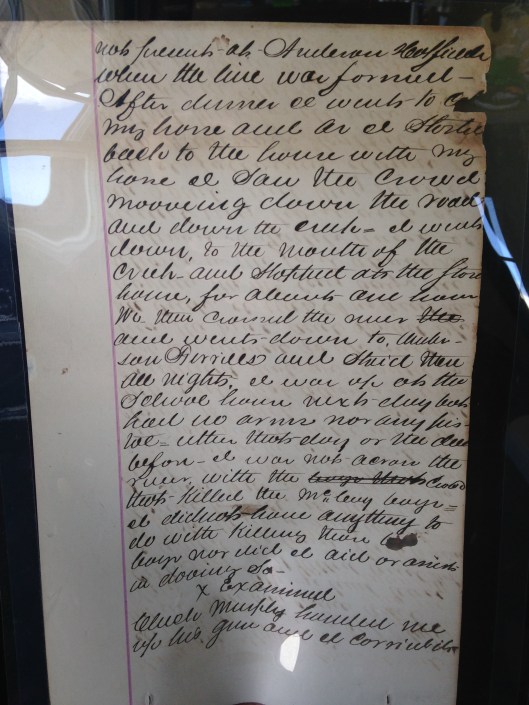
The killing of Tolbert, Pharmer, and Bud McCoy by a Hatfield-led gang on August 8, 1882 represented one of the most sensational events of the Hatfield-McCoy Feud. What follows is Doc Mayhorn’s deposition regarding the affair:

COMMONWEALTH VS DOC MAYHORN &C

Bill of Exceptions

FILED Sept. 1889

G.W. Pinson, Clk

IMG_9740IMG_9741

Dock Mayhorn

I was at home in bed asleep when Walls boy come and said that Ellison had been cut shot and killed and that he wanted his horse ____ to him. We took the horse and went down to Wall at the mouth of Beech. Wall wanted us to go and help get his brother away from where he was shot. We did not know until we got down to Black Berry who had cut and shot Ellison. We then consented that we would go up and hear the trial, and ___ up the creek. I met Ans and th__ ____ the McCoy boys in charge in the ford above Rev. Anderson Hatfields house. I __ my horse out of the road and they passed on. I followed down to Rev. Anderson Hatfields They stopped there for dinner. I ___ my horse in the pasture ___ ____ walk to John Hatfields and got my dinner I was not present at Anderson Hatfields when the line was formed. After dinner I went to ___ my horse and as I started back to the house with my horse I saw the crowd moving down the road and down the creek. I went down to the mouth of the creek and stopped at the store house for ___ one ____ We then crossed the river and went down to Anderson Ferrills and staid there all night. I was up at the school house next day __ had no arms nor any pistol. either that day or the day before. I was not across the river with the crowd that killed the McCoy boys. I didn’t have anything to do with killing those boys nor did I aid or assist in doing so.

Examined

Clucl Murphy ____ me up his ___ and I _____

For more information about this incident, follow these links:

http://explorekyhistory.ky.gov/items/show/785?tour=55&index=3

http://wvpublic.org/post/three-mccoys-killed-hatfields-kentucky-august-8-1882#stream/0

http://hatfield-mccoytruth.com/2017/04/22/in-hatfield-country-blackberry-creek-in-the-1880s/

Mariah (Vance) Adkins Obituary (1931)

06 Thursday Sep 2018

Posted by Brandon Ray Kirk in Big Harts Creek, Cemeteries, Lincoln County Feud, Stiltner, Women's History

≈ 1 Comment

Tags

Abner Vance, Angeline Adams, Appalachia, Blood in West Virginia, Cain Adkins, Cain Adkins Jr., cemeteries, Community Memorial Gardens, Eliza Kelly, genealogy, Harts Creek, history, Jesse Nelson, Kenova, Lena Napier, Lick Creek, Lincoln County, Lincoln County Feud, Mariah Adkins, Mary Jane Jordan, Mittie Adkins, photos, Spicie Fry, Stiltner, Tams, Thomas Vaughan, Walton, Wayne, Wayne County, Wayne County News, West Fork, West Virginia, Williamson, Winchester Adkins

Mariah Adkins Obituary WCN 07.02.1931 1.JPG

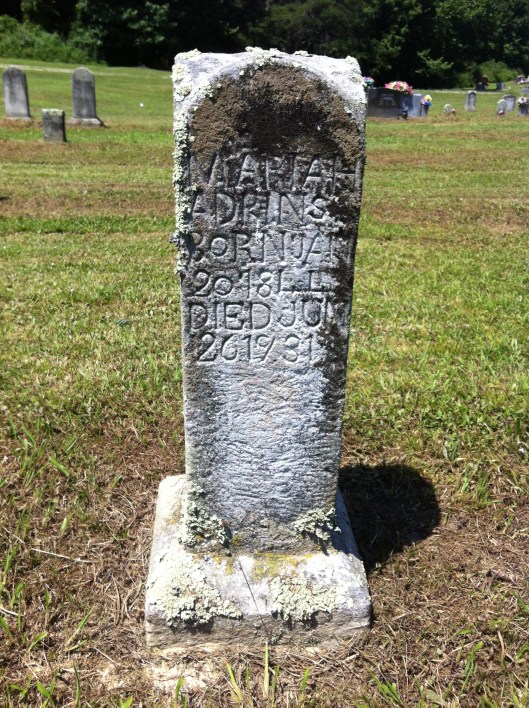
Wayne County (WV) News, 2 July 1931. Mariah (Vance) Adkins was born on the West Fork of Harts Creek in present-day Lincoln County, WV. She married Canaan “Cain” Adkins, a preacher, teacher, doctor, and justice of the peace.

IMG_6738

Mariah Adkins grave at Community Memorial Gardens near Wayne, Wayne County, WV. 23 July 2016.

Recollections of McKinley Grimmett of Bruno, WV 3 (1984)

06 Thursday Sep 2018

Posted by Brandon Ray Kirk in Coal, Hatfield-McCoy Feud, Logan, Timber, World War I

≈ Leave a comment

Tags

Appalachia, assessor, blacksmith, Bruno, Burl Stotts, California, Cap Hatfield, Christian, Christmas, coal, Devil Anse Hatfield, drum runner, Edith Grimmett, Elba Hatfield, Elk Creek, Ellison Toler, genealogy, Harvey Ferguson, Harvey Howes, Hatfield-McCoy Feud, Henderson Grimmett, history, Huff Creek, J.G. Hunter, Joe Hatfield, Johnny Davis, justice of the peace, Logan, Logan County, Mallory, Mallory Coal Company, Matilda Hatfield, McKinley Grimmett, mining, Nancy Grimmett, Osey Richey, politics, pushboats, rafting, Ralph Grimmett, Rum Creek, Sand Lick, sheriff, Smoke House Restaurant, Tennis Hatfield, Thomas Hatfield, timber, West Virginia, whooping cough, Willis Hatfield, World War I

McKinley Grimmett was born on November 30, 1896 to Henderson and Nancy (Hatfield) Grimmett at Sand Lick, Logan County, WV. On May 14, 1916, Mr. Grimmett married a Ms. Plymale, who soon died, in Logan County. One child named Alva died on June 21, 1919 of whooping cough, aged fourteen months. His World War I draft registration card dated September 12, 1918 identifies him as having blue eyes and light-colored hair. He was employed by Mallory Coal Company at Mallory, WV. On November 13, 1919, he married Matilda “Tilda” Hatfield, daughter of Thomas Hatfield, in Logan County. He identified himself as a farmer in both of his marriage records. During the 1920s, he served as a deputy under Sheriff Tennis Hatfield.

The following interview of Mr. Grimmett was conducted at his home on July 17, 1984. In this part of the interview, he recalls his occupations. Tennis Hatfield, Cap Hatfield, Joe Hatfield, Willis Hatfield, pushboats, Logan, World War I, coal, and blacksmithing are featured.

***

What about Tennis and Joe Hatfield?

But now they come out, they paid all their debts and everything and stuff like that. They was honest, as far as I know. I think both of ‘em went broke, they was so good to the people. They had all kinds of things… Tennis had a five thousand dollar ring and he pawned it to the First National Bank and somebody got the ring. I don’t know who did. Tennis didn’t get it back. They both lost everything they had. And not just only them. Osey Richey, he was assessor and J.G. Hunter was assessor, and they lost all they had. People just, after they got elected and everything, thought that they had to furnish ‘em whether they had it or whether they didn’t.

Tennis and Joe were too young to participate in the Hatfield-McCoy Feud.

Oh yeah. That happened before I got big enough, Cap and them. Cap was chief deputy, though, while I was on. I can remember some of it. Just hear-says. I don’t know nothing about it. Ellison Toler was related to them someway and he stayed at my daddy’s and they kept him up for killing somebody over there at Welch and they hung him there at Welch yard on a tree. I remember getting into my daddy’s papers and reading the letters after I was just learning in school about such stuff like that. And I thought that was the awfulest thing ever was, writing to him and telling about it.

What changed in the county for the Hatfields between the feud and the 1920s?

Mostly, they died out to tell you the truth. Joe and Tennis died out and nobody else had guts enough to take it, you see? Now, Willis, he was the youngest brother. Elba, now he was JP and after he got out as JP he pulled out and went to California. And Willis, he died here about a year ago up on Rum Creek. And Tennis and Joe both died. And that was all of ‘em. All of the old people. Harvey Howes married their sister, and they’re all dead.

Did you ever talk to Cap or Willis?

Oh yeah. Willis, they’d hang after me all the time. They knowed I was half-Hatfield, you know. Tennis and Joe would, too. They was awful good to me ever way. Now Cap, I never – Cap just had one word for a person. If he wanted to talk with you, he’d say, well let’s talk a while, and if he didn’t, he’d say, get the hell away from here. That was the way Cap was. Devil Anse, he used to kill a beef and roast it every Christmas, you know. I’ve went there and eat with him a lot. They tell me they wouldn’t know that place now. They’ve cleaned the graveyard up, you know. I ain’t been up there in… Be five years in January since I got down and I ain’t been away … Only one takes me anyplace is my daughter Edith and Ralph and Edith’s working all the time and Ralph’s all the time busy and Ralph takes me to the doctor every month and Edith took me to the store back and forth and Ralph took me last Saturday.

How has Downtown Logan changed since you were young?

Oh, it’s changed a big lot. Built more buildings in it and everything. Used to be you had about three or four policeman and that was it. Now I can remember back whenever they had a wooden courthouse. A boxed building. I was just a big boy then. Daddy followed rafting and pushboating. You know what pushboating is? Well, they had a big long boat. He had two. And one of ‘em was about eight feet wide and about 46 feet long. Other one was about twelve feet wide. And they had to catch water to get that big boat. And sixteen foot wide. And they’d take a pair of mules or horses, whichever they had, and they’d go to Logan and buy groceries. He had a store and he boated most of his stuff. They’d kill hogs and take chickens and catch fish and take it down to Logan and sell it and they’d bring groceries back.

And they’d make these trips how often?

He went every week. It would take two days to make it, very best. You had from daylight to dark.

Tell me more about your work history.

Well I was a blacksmith. Worked in electric force. They knew I was going to fire. Harvey Ferguson was superintendent. Johnny Davis was general manager. They knowed how old I was. They knowed I was going to retire. I left Christian over here. They shut down. Johnny Davis offered me a job and offered me a job and I wouldn’t take it. I met him right at the foot of the hill. He was a boss over some Elk Creek mine. Well, I went and worked about six months lacking two days for Burl Stotts over there in Campbell’s Creek, built a tipple he fell off of and got killed. I come back and Johnny had come in home that week and Johnny and Harvey Ferguson had been up here and they wanted me to come around there and talk with them on Saturday night. I went around there. They said Johnny said he wanted me to come back up and work for him. I said, well you won’t give me enough. He said, how much you getting? I told him. He said, well I’ll give you three dollars on the day more. I said, well I’ll do it. The rates was 24 dollars. Union then. He give me 27 dollars. I wasn’t getting 24 and going over there and paying board, you know. So I said, well I’ll go back over there and work next week and pay my board up. I wouldn’t walk right off the job from him. He was a good fellow. And he was good to me. And he liked me and everything. And he give me all he could give me. They said they appreciated that, Davis and Harvey Ferguson both. That I’d do a thing like that. So I went back and worked that week and paid my board and come back and went up there and stayed with him fourteen years and retired. In November 30, 1962.

Do you remember anything about your last day?

No, they give me a pair of gloves and Johnny told me that he was going to put a ten dollar gold piece in my envelope. And he did.

What about World War I?

Well I was called… I was drum runner. The superintendent come down in the drum house where I was at. The superintendent said I see you are called for service. I said, Yeah, two more weeks will be my last. You better get somebody in here and let me learn him while I can. He said, we were studying about that. Do you want to go? I said, no I don’t want to go but I guess I’ll have to go. Kaiser was his name. He said, We’ll see what we can do about it. I’ll let you know and I’ll keep you posted at all times. Well, that was on Monday morning, I believe it was. On Saturday evening, I had to work six days a week, Saturday evening he wanted me to come over to his office. That was around on Huff Creek, at Mallory 1. And I went over there. He said, I think I’ve got you retired. He said, We’ve got to have coal men as well as army men. Just don’t say anything about it to none of the boys. You’ll not have to go. And that was all of it. I never did have to go. But I registered five different times for the service. Last time I registered, they took everybody. They didn’t get too old—I registered them all. And the company put me in a little old room beside the store and furnished my eatings for that day paid me for my day’s work and the government never did pay me a cent for none of it. Five different times. Now at first start I had to take them, I had to keep a tally of how many registered, had to take them to Logan and send them out, call in to Washington and tell them how many I registered and everything. Now the last time, I didn’t have to do that. A man come and got ‘em the next day.

Who taught you how to blacksmith?

Oh, I taught myself. My daddy used to shoe horses and I used to help him in the shop. That’s the hardest job ever I got in, shoeing horses or mules. Dangerous job, too. I’ve had them kick me plumb over top of… At that time you had belluses you blow. They’d kick me plumb over top of them belluses. Almost kill me sometimes.

Were there any blacksmith shops around Logan when you were a boy?

Oh yeah. There was plenty of them. There in Logan there was a big one. A fellow named White was the blacksmith down there. Boy, he’d whip a mule. He kept big old hickory poles in there and a mule or horse that didn’t hold still or anything he’d throw its leg down and grab one of them poles—I’ve been in there and watched him—and he’d beat that mule… I swear, I’d be uneasy about it. Think he was going to kill it. It would just quiver like a leaf.

Where was his shop?

Right where the courthouse sits now. There was a wooden courthouse. Box building. Two-story high. And his blacksmith shop was right on down the street. I’d say it wasn’t quite down to the Smoke House. Not quite down that far. Over on the right hand side. It was a big old boxed building and a shed to it. He’d get dirty coal. He was too tight to buy the coal or something. And he’d have enough smoke go all over that town. Yeah, I remember all about that.

NOTE: Some names may be transcribed incorrectly.

William Straton Accidentally Shoots and Kills Thomas Mullins (1860)

04 Tuesday Sep 2018

Posted by Brandon Ray Kirk in Logan

≈ Leave a comment

Tags

Appalachia, county clerk, genealogy, history, Laurel Fork, Little Coal River, Logan, Logan County, Roanoke Republican, Spruce Fork, Stratton Street, Thomas Mullins, Virginia, West Virginia, William Straton

From the Alexandria (VA) Gazette comes this bit of history for William Straton of Logan County, (West) Virginia, dated December 4, 1860:

FATAL SHOOTING ACCIDENT.

The Roanoke Republican states that on the morning of the 15th ult., Wm. Stratton, esq., Clerk of Logan county, Va., and a young man, Thos. Mullins, of the same county, left the hunting camp on Laurel Fork of Spruce Fork of Little Coal river, in pursuit of deer. They became separated, for some time, and Mr. Stratton thinking he spied a deer, through a small aperture in a laurel thicket, about fifty yards distant, fired at it, and to his horror, found that he had shot his companion, Mr. Mullins, through the body–the ball entering his left side just below the ribs. No one was near, to whom the alarm could be given for aid, as they were about a mile and a half from the camp, and their camp companions may have been in an opposite direction from them. They, however, came to their assistance before night and making a litter on which they placed a bed, bore Mr. Mullins to the camp, which he died about 10 o’clock that night.

NOTE: Stratton Street in Logan is named for Mr. Straton.

Civil War in the Guyandotte and Big Sandy Valleys (1862)

03 Monday Sep 2018

Posted by Brandon Ray Kirk in Big Sandy Valley, Chapmanville, Civil War, Guyandotte River, Pikeville, Tazewell County

≈ Leave a comment

Tags

Abington Virginian, Appalachia, Big Sandy River, Cabell County, Chapmanville, civil war, Confederate Army, genealogy, Guyandotte River, history, John B. Floyd, John Clarkson, John Dils, John Letcher, Kanawha River, Kentucky, Levisa Fork, Lincoln County, Logan County, Ohio River, Pigeon Creek, Pike County, Pikeville, Prestonsburg, Smyth County, Tazewell County, Union Army, Virginia, Virginia State Line, Washington County, Wayne County, West Virginia

Confederate General John B. Floyd composed this letter detailing military activity in the Guyandotte and Big Sandy valleys in late 1862, which was published by the Abington Virginian on January 2, 1863.

***

OFFICIAL REPORT OF GEN. FLOYD

Headquarters Virginia State Line,

Camp Clarkson, Tazewell Co.,

December 17, 1862

His Excellencey, John Letcher,

Governor of Virginia—

SIR: After my last communication to you I prepared an expedition consisting of a strong force of Cavalry under Colonel John Clarkson, to operate against the enemy in the counties of Wayne, Cabell, &c. He set out from Chapmansville on the 14th November, in the direction of Cabell down the Guyandotte river, over a rough and difficult road. The following day he fell in with a detachment of the enemy which he quickly routed and dispersed. He continued the march until a few miles of the Ohio river, breaking up the “Home Guard” organization of the enemy, which are very numerous in all that country, and taking prisoners every day.

A strong guard of Yankee troops, acting as a guard for the Pierpont Assessor for the county of Wayne, was attacked and dispersed after a short skirmish, in which was killed and wounded some of the enemy and took a few prisoners. Col. Clarkson proceeded then, according to the previous directions given him, to the Sandy river, to attack a large and formidable organization of the enemy composed mainly of the native population, and very strong posted amidst the cliffs and forests upon the precipitous banks of that river. He succeeded in taking them by surprise completely, and after killing and wounding a number of them, took a large number of prisoners, and surprised entirely the rest of the force. This force and organization were formidable and extremely dangerous to the peace and quiet of all the country round about for many miles, the loyal people were nearly all driven from their country and all were robbed. After that, Col. Clarkson, according to previous understanding, made a junction with me at the mouth of Pigeon Creek, in Logan county, on the Kentucky border, whither I had gone with the infantry and a section of the mounted howitzer battery.

I learned from Col. Clarkson that the enemy had started a number of boats with valuable supplies, from the mouth of Sandy to a post recently established at Pikeville, a point at the head of navigation on the Louisa Fork of Sandy. These boats were in charge of a strong guard, and were intended to furnish a complete outfit for a force deemed sufficient for them, by their commander, to march upon and destroy the salt works in Smyth and Washington counties.

I determined at once to attack this train, and from its distance, being more than forty miles off, it became necessary to send mounted men. Besides this reason, I found it inconvenient to move the infantry in that direction, on account of the number of prisoners with which we were encumbered. The cavalry and mounted men were put in motion within an hour and proceeded upon the march, which was uninterrupted, day or night, until the enemy were overtaken, attacked and routed.

Our people captured ten of the enemy’s transport boats, laden with valuable supplies. A great deal of these supplies was distributed amongst the men, and much of them was brought off; but a very large amount of most valuable supplies was necessarily destroyed for want of transportation to bring them away. A train of one hundred pack mules would have brought away a very large amount of extremely valuable stores, which were committed to the fire and the river.

The night following the capture of these boats (indeed, just twelve hours after the attack upon the boats,) our forces engaged that of Col. Dils, posted in an extremely strong position on the summit of a mountain on the road leading from Prestonsburg to Pikeville. This position was taken and held without any knowledge on our part, and as the attack was made after the night, and entirely unexpected, we were taken at a great disadvantage. But our men behaved with great steadiness and resolution, received the attack and charged the enemy, driving him from his position, and dispersing them entirely. The rout was complete, and the post at Pikeville, consisting of a thousand men, was entirely broken up. The prisoners and the Union people in that neighborhood reported Colonel Dils as killed in the fight that night.

For more detailed statements of this expedition I refer you to the report of Col. Clarkson. In our operation through the country, we made a number of recruits in the counties of Cabell, Wayne, Logan, &c.

My object in this campaign was, as far as possible, to prevent the occupation by the Yankee forces, of the country between the Kanawha Valley and Kentucky border, as well as to destroy the military organization of the country under the traitor government in Wheeling. Both objects were fully attained, as long as I was able to remain in the country. The military organizations, very numerous and well appointed in every particular, were almost entirely destroyed, and the attempts to set up the spurious government were entirely failed.

I was compelled to leave the country, held by me for more than three months alone, for the want of Quartermaster’s supplies. We were without tents, or clothing, or cooking utensils, or axes; and after the inclement weather of winter set in, we could no longer remain in the field. With these stores supplied, I would have remained in that country throughout the winter months. We were able to procure food (meat and bread) in the country, nearly all of it taken from the enemy.

The campaign, from first to last, was one of hardship and privations; but they were borne without complaint by the men, who are unsurpassed in hardship, activity and capability to endure privations. They deserve great praise for their constancy and general good conduct.

The officers generally deserve commendation, but to Col. Clarkson too much credit cannot be given for his energy, activity and courage. The obstacle she encountered, of every sort, throughout these expeditions, were of the most formidable character, but they were also most gallantly surmounted.

I have the honor to be, very respectfully,

Your obedient servant,

JOHN B. FLOYD,

Maj. Gen. Commanding Va. State Line

NOTE: I bolded Gen. Floyd’s description of activity in the Guyandotte Valley that occurred between Chapmanville and the lower section of the river near present-day Huntington.

“Holly Creek” John Mullins Grave in Clintwood, VA (2018)

03 Monday Sep 2018

Posted by Brandon Ray Kirk in American Revolutionary War, Big Harts Creek, Cemeteries

≈ 4 Comments

Tags

American Revolution, Appalachia, cemeteries, Clintwood, Clintwood Baptist Church, Dickenson County, genealogy, Harts Creek, history, Holly Creek John Mullins, Jane Mullins, John Mullins, Logan County, Revolutionary War, Virginia, West Virginia

IMG_6942

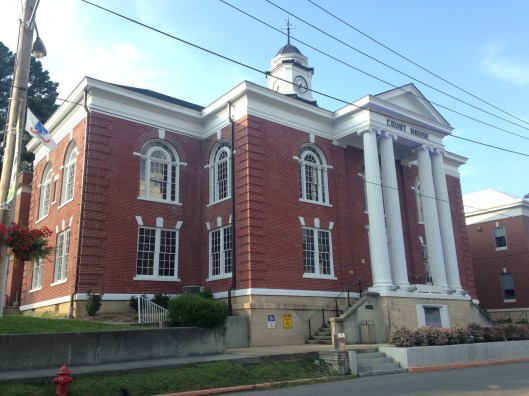
Dickenson County Courthouse in Clintwood, VA.  THIS IS MULLINS COUNTRY. Placed at its front is a large plaque commemorating John Mullins, Sr. (father to “Holly Creek John”), who served in the Revolutionary War. 25 August 2018.

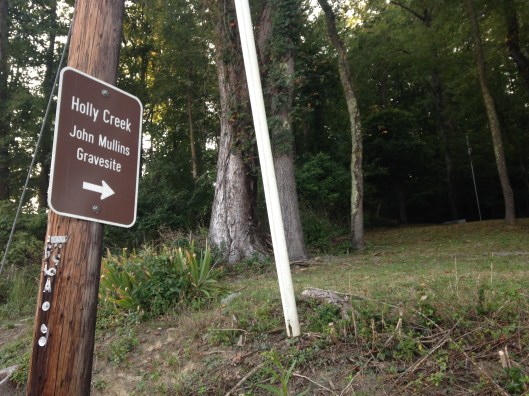
Holly Creek John Mullins Historic Marker

“Holly Creek John” received his nickname because he settled on Holly Creek, near the courthouse. Clintwood is located in the head of Holly Creek.

IMG_6945

Behind the Clintwood Baptist Church on High Street is the grave of “Holly Creek John” Mullins, son of John and Jane (Bailey) Mullins. There’s really no place to park along this narrow street, so you have to park at the Sleep Inn and Suites Hotel and walk back up the hill just a bit. 25 August 2018.

IMG_6946

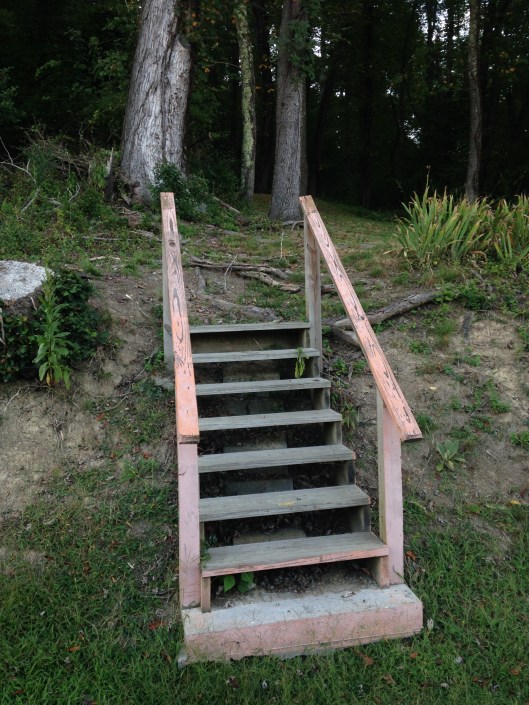
Up this way! These steps literally connect to High Street — parking right here is not really an option! 25 August 2018.

IMG_6947

Straight ahead. For more information about the grave and cemetery, follow this link: https://www.findagrave.com/memorial/64659784/john-mullins

IMG_6948

John and Ollie (Cox) Mullins grave, located in Clintwood, Dickenson County, VA. Their daughter Jane married Peter Mullins and settled on Harts Creek in Logan County, WV. 25 August 2018.

Salena Estep Deed to Rufus Estep (1910)

31 Friday Aug 2018

Posted by Brandon Ray Kirk in Big Harts Creek

≈ Leave a comment

Tags

Appalachia, Elias Vance, Elisha Vance, Everett Elkins, genealogy, Harts Creek, Harts Creek District, history, Lincoln County, notary public, Rufus Estep, Salena Estep, Spring Branch, W.C. Holstein, West Fork

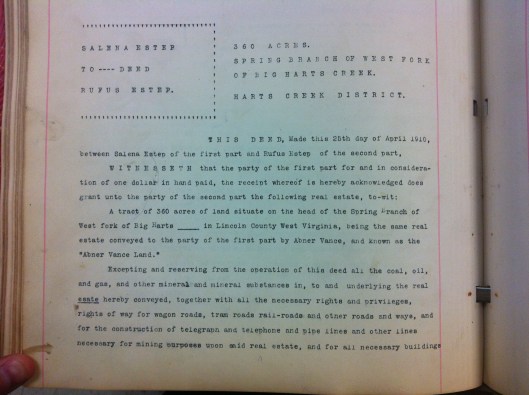
Salena Estep to Rufus Estep 1

Deed Book __, page __, Lincoln County Clerk’s Office, Hamlin, WV. Salena (Browning) Estep was the former wife of Elisha Vance and Elias Vance.

Salena Estep to Rufus Estep 2

Deed Book __, page __, Lincoln County Clerk’s Office, Hamlin, WV.

Nancy Hatfield, Widow of Cap, Identifies the Cause of the Hatfield-McCoy Feud (1937)

31 Friday Aug 2018

Posted by Brandon Ray Kirk in Hatfield-McCoy Feud

≈ 2 Comments

Tags

Appalachia, Bill Staten, Bob Hatfield, Cap Hatfield, crime, Devil Anse Hatfield, Ellison Hatfield, feuds, genealogy, Hatfield-McCoy Feud, history, Howard Alley, Island Creek, Kentucky, Logan, Logan Banner, Logan County, Mingo County, Nancy Hatfield, Paris McCoy, Pike County, Randolph McCoy, Sam McCoy, Tolbert McCoy, true crime, West Virginia

From the Logan Banner of Logan, WV, comes this story by Howard Alley titled “The Hatfield-McCoy Feud” and dated May 10, 1937:

The Hatfield-McCoy Feud…

“Aunt Nancy” Hatfield, Widow of “Cap” Hatfield, Relates That Historic Feud Actually Started Over An Election Argument When “Uncle” Ellison Was Killed Following Argument With a McCoy

Much has been said and many volumes have been written about the historic Hatfield-McCoy feud which took place in Logan and Mingo counties in the latter part of the last century. Lecturers have said the feud started over a razor-backed hog, and novelists have written that it began when a McCoy married a Hatfield lass and deserted her after he learned that she was to bear him a child. Both theories have their foundation in tradition, but neither Hatfield nor McCoy close to the feud has been quoted as saying either was right. Yesterday the mystery was cleared up. Because it seemed so utterly preposterous that two solid, level-headed mountain families with the solidity of the English for a background could wage a ten-year killing spree over a razor-backed sow when the woods were full of the animals, and because it was equally as improbable that the feud started over unhappy marital relationships when it is an established fact that mountaineers let their offspring take care of their own home life, we decided yesterday afternoon to find out what event was the spark which actually set off the powder magazine of mountain passion which rocked the hills of this section for nearly a decade.

And in the warm sunshine of a late spring Sunday afternoon we sat on the porch of the late William A. (Cap) Hatfield’s rambling frame home on the upper stretches of Main Island Creek and talked to “Cap’s” wife, the last survivor of those who were closest to the Hatfield clan in the feud.

“Aunt Nancy”, who has survived seventy winters and admits that she is “young and has the ‘hang’ of it,” but “don’t think I can do it again”, gazed reminiscently out over the newly-turned acres of her husband’s creek bottom estate, and her eyes grew misty as she told us of the closing years of the last century when Hatfield and McCoy alike expected death at every bend of the creek.

“That feud didn’t start over no ‘hog lawsuit’ and it didn’t start over a Hatfield-McCoy marriage,” Mrs. Hatfield said in a tone that showed plainly her disgust for those writers who had written of the feud and by twisting the facts had capitalized on it. “I’ve got a red-backed book two inches thick here that one of my sons brought to me and said: “Read this, Ma, and you’ll find out why we fought the McCoys.’ I read it–two pages of it–and it’s layin’ in there now with dust on its backs. Not a word o’ truth in it.”

She grew repentant.

“But they have to make their livin’, I guess. You want to know how it started? I’ll tell you. The Hatfields was always a political family, and it was their politics which got ’em into this fight. If they hadn’t gone to that election in Pike county in August of 1882, ‘Uncle’ Ellison would never have been killed and Ellison’s brother, ‘Devil’ Anse would never have been drawn into it. But I’m gettin’ ahead of my story. The way it was, ‘Uncle’ Ellison Hatfield was an officer in Logan county in 1882 and was sent out to arrest Sam and Paris McCoy who was supposed to have killed Bill Staten, ‘Uncle’ Ellison’s brother-in-law. These boys warn’t sons of Randall McCoy, ringleader of the McCoys. They were just cousins. He got the two boys and brought them to Logan county jail in Logan and afterwards testified agin’ them in a trial. The McCoys were ‘sent up’ for the killin’. Then in August ‘Uncle’ Ellison went to Pike county to ‘work’ at the polls, and it was so ordered that he was working for a man that the McCoys were agin’. Well, the only thing that could happen did happen. One of Randall McCoy’s sons, just a little twenty-one-year-old shaver, started a argument with ‘Uncle’ Ellison, and Ellison, who was always too high tempered for his own good, slapped him down. The little feller bounced up, and Ellison slapped him down agin’. But this time he jumped on top of him, and ’bout the time he drawed back his fist, aimin’ to end the fight, a shot rung out and ‘Uncle’ Ellison toppled over. He weren’t dead though. He told his friends to call ‘Devil’ Anse, who come a runnin’, and the McCoys ‘cleared out.’ ‘Devil’ Anse took his brother home and he lived from that Saturday until the next Wednesday. Just before he died, he said to Anse: ‘Anse, I want you to give the McCoys the ‘law’.’ And that’s what ‘Devil’ Anse did. He gave ’em the ‘law’ as he knowed it–and that was just about the only law in them days–and lived to see the justice handed out. And, well, you know as much about what happened after ‘Uncle’ Ellison died as I do. I don’t want to add any more tales to the list.”

We took the hint, and willingly began to talk about the celebration of “Aunt Nancy’s” birthday last September when she fell off her back porch and was told by one of her sons that “she shouldn’t have been trying to turn handsprings at her age.”

“I wasn’t hurt bad enough to keep me from cuttin’ my birthday cake. And I gave Bob the smallest piece because he was so smart about me fallin’.”

Greenbrier Ghost (2018)

31 Friday Aug 2018

Posted by Brandon Ray Kirk in Women's History

≈ Leave a comment

Tags

Appalachia, Brandon Kirk, Edward Shue, genealogy, ghosts, Greenbrier County, Greenbrier Ghost, history, photos, Phyllis Kirk, Sam Black Church, West Virginia, Zona Heaster Shue

IMG_4535

Greenbrier Ghost historical marker, Sam Black Church, Greenbrier County, WV. 8 July 2018. Photo by Mom. For more about the murder, follow this link: http://www.wvculture.org/history/crime/shuearticles.html

IMG_4534

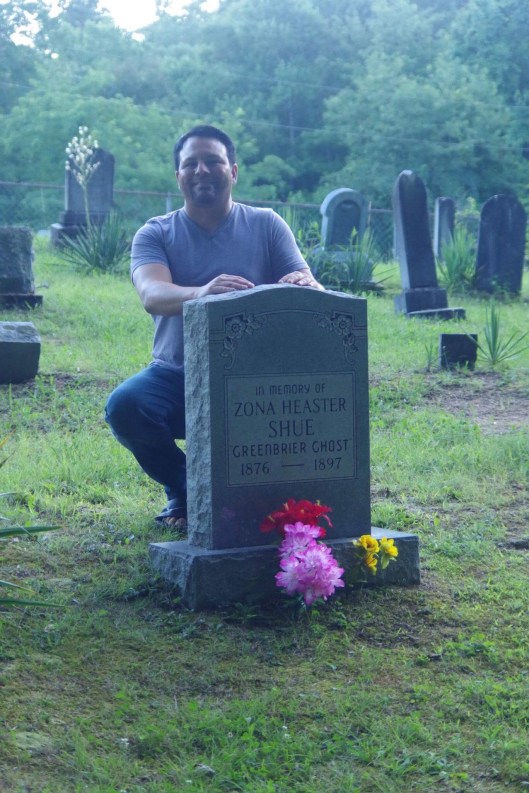
The Greenbrier Ghost’s grave is located several miles away from the historical marker. 8 July 2018. Photo by Mom. For more about the grave, follow this link: https://www.findagrave.com/memorial/5015852/zona-shue

Recollections of McKinley Grimmett of Bruno, WV 1 (1984)

31 Friday Aug 2018

Posted by Brandon Ray Kirk in African American History, Coal, Dingess, Guyandotte River, Holden, Logan, Man, Timber, Wyoming County

≈ 4 Comments

Tags

African-Americans, Alva Grimmett, Appalachia, Austin Grimmett, Baileysville, Big Cub Creek, Bruno, Buffalo Creek, Christian, Cole and Crane Company, Devil Anse Hatfield, Dingess, Edith Grimmett, education, Elk Creek, Ettie Grimmett, farming, genealogy, general store, Green Perry, Guyandotte River, Guyandotte Valley, Henderson Browning, Henderson Grimmett, history, Holden, Horse Pen Mountain, Johnny Grimmett, Landsville, Lilly Grimmett, Logan, Logan County, logging, Madison Creek, Mallory, Man, McGuffey Readers, McKinley Grimmett, Mingo County, Mud Fork, Nancy Grimmett, rafting, Ralph Grimmett, Rose Grimmett, Sand Lick, Sanford Grimmett, Slater Hatfield, Tennis Hatfield, Thomas Hatfield, Tilda Hatfield, timber, timbering, Travis Grimmett, Verner, Walter Buchanan, West Virginia, whooping cough, World War I, Wyatt Belcher, Wyoming County

McKinley Grimmett was born on November 30, 1896 to Henderson and Nancy (Hatfield) Grimmett at Sand Lick, Logan County, WV. On May 14, 1916, Mr. Grimmett married a Ms. Plymale, who soon died, in Logan County. One child named Alva died on June 21, 1919 of whooping cough, aged fourteen months. His World War I draft registration card dated September 12, 1918 identifies him as having blue eyes and light-colored hair. He was employed by Mallory Coal Company at Mallory, WV. On November 13, 1919, he married Matilda “Tilda” Hatfield, daughter of Thomas Hatfield, in Logan County. He identified himself as a farmer in both of his marriage records. During the 1920s, he served as a deputy under Sheriff Tennis Hatfield.

The following interview of Mr. Grimmett was conducted at his home on July 17, 1984. In this part of the interview, he recalls his family background and early occupations. Logging and rafting in the Guyandotte Valley are featured.

***

Would you mind telling me when and where you were born?

Right here. I was born about a mile up above here. I was borned in Logan County. The post office was Christian at that time. Christian, WV. It’s changed now. They throwed Christian out – it was over here at Christian – and they throwed it out and moved it over here to Bruno. Christian went… The mines stopped over there. And that’s where I was born, right here at Bruno, Logan County. Been here all my life.

What day were you born?

November 30, 1896.

Who were your parents?

Henderson Grimmett and Nancy Hatfield Grimmett.

What kind of work did they do?

They did logging work. All they had that day and time. Mule teams and ox teams.

Where did your dad do his work?

All over Logan County.

Did he have his own farm?

Oh yeah. Yeah.

How big was his farm?

It was about 287 acres.

Can you describe his house?

Well, the house was a two-story building. But he never did get… He took the fever and he never did get the upper story, all of it completed. He died at a very early age of 74. He put him up a little store. Got ahead a little bit. Had a store here. Come down and bought this place off Walter Buchanan and he deeded his five kids the homeplace up there. And then he stayed on it from ’21 to ’29. He died 19th day of January, 1929.

Who were your mother’s parents?

Oh, Lord, I can’t… Slater Hatfield was her daddy’s name. And I don’t know my grandma. My daddy, now they both was born in Wyoming County. Baileysville or somewhere in there. I think my mother was born over there in Big Cub Creek. She was a Hatfield. I don’t know where…

How many brothers and sisters do you have?

I had three brothers and three sisters. Sanford was the oldest one. Austin and Johnny. They’re all dead. I’m the only one that’s living. All my three sisters… Lilly was the oldest one, and Rose was the next one, and Ettie was the youngest. They’re all dead. All of ‘em but me.

Were you educated in Logan County schools?

Yeah, that’s all we got. Free schools. I believe we started off about three months out of the year. Right over there where that first house is sitting – a one-room school house. All of us kids.

What was the last year of school you completed?

I believe it was about 1914, I’m not right sure. ’15.

Did you use the McGuffey Readers?

That’s all we had. And the spelling books. And in the late years, why we had a U.S. history… A small one. Most of it was just about West Virginia. It wasn’t about the whole United States. And geography, we had that. Arithmetic. That was about all we had in free schools. We had to buy them all then. They weren’t furnished.

How did you meet your wife?

She was born and raised over here at Horse Pen in Mingo County. And that’s how we met. We were just neighbors.

What was her maiden name?

She was a Hatfield, too. But now they were… There’s three or four sets of them.

Was her family related to Devil Anse Hatfield?

Well, they was some… Not very close, though, I don’t think.

Which church did you belong to?

I don’t belong to any.

Did you belong to a church when you were younger?

No, never did. If I ever would have joined, I’d have stayed with it.

Do you remember the year of your marriage?

Yeah, I sure do. November 13, 1919.

How many children do you have?

Four. We have two boys and two girls. Travis Grimmett is the oldest. And Ralph, Edith, and Nancy.

What was your wedding like?

Well, we just got married and come right home. At that time, they didn’t have such things, to tell you the truth.

Who was the preacher?

Green Perry. Rev. Green Perry on Elk Creek. Rode a horse back when I went up there to get married. A pair of mules. I rode them mules.

Where did you first live after you married?

Right about a mile above here at the old homeplace.

You have lived here all of your life?

All of our life.

Was it always this populated?

No, no. Wasn’t three or four houses on this creek at that day and time. It was farm land. It’s all growed up now. All them hills was put in corn, millets, and stuff like that. If they couldn’t get a machine to it, they cut it by hand. Some of them raised oats and some of them raised millet, corn. Raised hogs and cattle and sheep and selling ‘em.

Who owned this property back then?

Burl Christian owned this here, but I don’t know… My daddy bought his… A fellow by the name of Wyatt Belcher. Wait a minute. Browning. I can’t think of his name. He lived over here on Christian and he bidded in… It sold for back taxes and he bidded in. Henderson Browning.

What kind of work did you do after you married?

Just the same thing as I worked at before I got married. I first started out – my daddy was a boss for Cole and Crane on this river. I first started out working in the log business. I worked two years at that and then I decided… Mule team – I worked about eighteen months at that. Then in 1913 the coal company started in and I went to work in carpenter work. I helped build all of these houses down here at Landville. The superintendent, we got done, they was wanting to hire men, he give me a job keeping time for a while. And he wanted me to learn to run the drum – that’s letting coal off the hill. I learned it and about the third day I was up there, a preacher was running it, and he told me they’d just opened up and they didn’t have much coal to run off the hill, he told me, that preacher, he rolled out two cards and he said if that preacher fails to go out and work on that side track today you give him one of these cards. Well, I didn’t give him a card. But he come out that evening, the boss did. And he said, did the preacher work. And I said, no he refused. He said, I’ll fix him. He fired him. And I took the job and stayed with it four years and then I got married and then I went to work over here at Christian running a drum and I stayed there 34 years.

When you worked for Cole and Crane, did either of those men ever come up here?

Oh yeah. One of them was. Cole was. I don’t think Crane was ever here. A little slim fella.

Did you get a chance to talk to them?

No, they wouldn’t talk to us working men. They’d talk to the boss. They’d go away from us and talk to theirselves. We just got a $1.10 for ten hours. Eleven cents an hour.

What kind of a person did Cole seem to be?

Well, he knowed how the men was. They’d raft timber and go down this river to Guyandotte. Had what they called locks and dams there to catch the logs. This river was full of logs. He bought timber everywhere. Plumb at the head of it.

Did you ever ride a raft?

Oh, yeah. I went with my daddy. I wasn’t grown.

Can you describe it?

Oh, they’d raft the logs, poplar. Now they didn’t raft hardwoods. They’d sink on them. Some rafts, a big one would be 160 to 200 feet long, about 24 to 26 feet wide. Oar on each end of it. If it was a big raft, they had two men up front all the time plumb in to Guyandotte. I was the second man on it when I got to go out on it. My dad had timber and he rafted it, took it there and sold it. Took what they called dog wedges and cut little basket oaks and rafted them, stringers across ‘em, you know. Lots of people get drowned, too.

Were you ever in an accident?

No, I never was in no big one. I’ve seen about six or eight drown.

Could you describe how it happened?

Oh, if he couldn’t swim, sometimes the best swimmer drowned, you know, if he got under a lot of logs or something. According to whatever happened there with him. He could get out if there wasn’t no logs on top of him no where to hold him under, you know. If logs were on top of him, he was gone. Now about the last ones I seen drowned was two colored people. They was building a railroad from Logan to Man up Buffalo Creek. So we was working on a log gorge down there at the lower end of Landville. And there was four colored men… 1921. Had a saloon up here at Verner. They wouldn’t allow one in Logan County. And they went up there on the 21st day of December to get ‘em a load of whisky. And they come back… They’d seen white people ride these logs. Some county people would get on one log and ride it plumb to Logan, as far as you wanted to go. And they thought they could ride it. And they got on. Rode ‘em off the gorge and they was running into eddy water and they would hit the back end, it would, and the other end would swarp out and they’d pull out that way. And they got on ‘em with their whisky and everything and two of ‘em got out and two of ‘em drowned.

When you rode the raft to Guyandotte, how did you get back to Logan?

Oh, we had to walk. We’d get a train up to Dingess over here. You know where that’s at? We’d ride down up to there. And then we’d have to get off and walk across the hill there and come right straight out at the mouth of Mud Fork, Holden there, and up another little drain and down Madison Creek down here. And walk… Man alive, our feet would be so sore, I’d be up for two or three weeks I couldn’t walk, my feet would be wore out so.

NOTE: Some names may be transcribed incorrectly.
Philip Hager Deed to Robert Lee Fry (1898)

27 Monday Aug 2018

Posted by Brandon Ray Kirk in Big Ugly Creek

≈ Leave a comment

Tags

Appalachia, Big Sulpher Spring Branch, Big Ugly Creek, genealogy, Harts Creek District, history, John A. McComas, Lincoln County, notary public, Patterson Toney, Philip Hager, Robert Lee Fry, West Virginia

Philip Hager to Robert Lee Fry 2

Deed Book __, page ___, Lincoln County Clerk’s Office, Hamlin, WV.

Philip Hager to Robert Lee Fry 3

Deed Book __, page ___, Lincoln County Clerk’s Office, Hamlin, WV.

Harts Area Deed Index (1870-1910)

21 Tuesday Aug 2018

Posted by Brandon Ray Kirk in Big Harts Creek, Big Ugly Creek, Fourteen, Guyandotte River, Little Harts Creek, West Hamlin

≈ Leave a comment

Tags

A.L. Smith, Aaron Adkins, Allison Ferrell, Arisba Ferrell, Big Branch, Big Ugly Creek, Bill Duty, Blucher Lucas, Broad Branch, Climena Lucas, Elizabeth Adkins, Ellen Adkins, Evermont Ward Fry, Fourteen Mile Creek, genealogy, George W. Hill, Gilbert Topping, Guyandotte River, Harts Creek District, Heenan Smith, Henry Adkins, history, Isaiah Adkins, Jacob K. Adkins, James I. Kuhn, James Toney, John Adkins, John F. Duty, Keenan Toney, Kiahs Creek, Laurel Fork, Lena Ferrell, Limestone Creek, Lincoln County, Little Harts Creek, Lower Big Branch, Matthew Spurlock, Middle Fork, Minnie Mullins, Moses Adkins, Moses Dempsey, Mud River, N.B. Mobley, Nancy E. Fry, Overton Elkins, Parlee Hunter, Patton Thompson, Ralph Nelson, Sams Branch, Sankey Gillenwater, Sarah E. Thompson, Sarah Gillenwater, Sarah J. Nelson, Smith Ferrell, Susan Adkins, Trough Fork, U.G. Shipe, Van Donley Lambert, W.C. Smith, W.M. May, West Hamlin, West Virginia, William May

The following deed index is based on Deed Book 59 at the Lincoln County Clerk’s Office in Hamlin, WV, and relates to residents of the Harts Creek community. Most notations reflect Harts Creek citizens engaged in local land transactions; some reflect Harts Creek citizens engaged in land transactions outside of the community. These notes are meant to serve as a reference to Deed Book 59. Researchers who desire the most accurate version of this material are urged to consult the actual record book.

Aaron Adkins et ux to Moses Adkins et al     54 1/4 acres Little Harts Creek     12 March 1906     p. 481-482

Elizabeth Adkins et al to Jacob K. Adkins     1902 acres Little Harts Creek     01 September 1901     p. 272-273

Ellen Adkins to John Adkins     25 acres Lower Big Branch     22 February 1910     p. 95

Henry Adkins to Elizabeth Adkins et al     1962 acres Little Harts Creek, Fourteen Mile Creek, Trough Fork, Laurel Fork     28 June 1870     p. 269-270

Henry Adkins et ux to Ralph Nelson     20 acres Big Harts Creek     21 March 1905     p. 198-199

Isaiah Adkins et ux to John Adkins     45 acres Lower Big Branch     11 August 1906     p. 89

John Adkins Sr. et ux to K.E. Toney     30 acres mineral Big Harts Creek     27 July 1909     p. 91-92

John Adkins Sr. et ux to K.E. Toney     35 acres Big Harts Creek     25 February 1910     p. 93-94

Board of Education of Harts Creek District to John E. Fry et al     1/2 acre Big Ugly Creek     1 August 1905     p. 498

L.H. Burks et ux to Gilbert Topping     110 acres Little Harts Creek     30 March 1906     p. 5-7

Moses Dempsey to K.E. Toney     24 acres mineral Big Harts Creek     19 March 1910     p. 96-97

William Dempsey et al to Moses Dempsey     24 acres Big Branch     13 April 1908     p. 71-72

William R. Duty et ux to John F. Duty     50 acres Broad Branch     9 December 1887     p. 429-430

Allison Ferrell et ux to Sarah Gillenwater     133 acres Big Ugly Creek     26 October 1897     p. 499

Arisba Ferrell et al to Parlee Hunter     42 acres Broad Branch     15 February 1905     p. 168-169

Arrisba Ferrell et al to John F. Duty     25 acres Broad Branch     8 April 1891     p. 425-427

Lena Ferrell to Nancy E. Fry     5 acres Big Ugly     3 June 1905     p. 495

Smith Ferrell et ux to John F. Duty     55 acres Ugly Creek     5 April 1907     p. 428-429

William T. Fowler et ux to Mathew Spurlock     100 acres Sams Branch of Middle Fork of Mud River     9 January 1890     Elias Vance, JP     p. 376-377

Sarah A. Gillenwater et vir to Nancy E. Fry     133 acres Big Ugly Creek     19 February 1898     p. 496-497

George W. Hill et ux to W.M. May     30 acres Limestone Creek     3 November 1906     p. 137-138

J.I. Kuhn, attorney, to Overton Elkins     100 acres Fourteen Mile Creek     1 June 1880     p. 420-423

V.D. Lambert et ux to Sarah J. Nelson     20 acres West Side Guyan River     13 April 1906     p. 289

Blucher N. Lucas to Climena Lucas     50 acres Fourteen Mile Creek     1 July 1910     p. 308-309

N.B. Mobley to Sankey Gillenwater     50 acres Limestone Creek     15 December 1909     p. 121-122

Minnie Mullins et vir to William May     30 acres Limestone Creek     29 January 1910     p. 140-141

A.L. Smith et ux to Susan Adkins     48 acres Big Harts Creek     11 July 1907     p. 225-226

A.L. Smith et ux to Ralph Nelson     2 acres Big Harts Creek     13 April 1907     p. 204-205

Heenan Smith to W.C. Smith     75 acres Guyandotte River     15 July 1902     p. 468-470

Sarah E. Thompson et vir to E.W. Fry     150 acres Guyandotte River, Laurel Hill District     12 February 1897     p. 487-488

P.T. Thompson to U.G. Shipe et al     Lots 64-65     23 February 1909     p. 329

James Toney et ux to Gilbert Toppins     35 1/4 acres Kiahs Creek     03 January 1908     p. 7-8

NOTE: I copied all of these deeds.

Brad Toney Stationery

21 Tuesday Aug 2018

Posted by Brandon Ray Kirk in Big Creek, Timber, Toney

≈ Leave a comment

Tags

Appalachia, Big Creek, Brad Toney, genealogy, history, Lincoln County, Logan County, merchant, timber, timbering, Toney, West Virginia

B.D. Toney Stationery.JPG

Bradford D. Toney, son of Burbus C. and Sarah Kesiah (Lucas) Toney, was born in 1847. Toney, a town located in southern Lincoln County, WV, is named for him.

Burbus C. Dial Deed to Brad Toney (1891)

14 Tuesday Aug 2018

Posted by Brandon Ray Kirk in Big Creek, Guyandotte River, Toney

≈ Leave a comment

Tags

Appalachia, Brad Toney, Burbus Dial, genealogy, Guyandotte River, Harts Creek District, history, Lincoln County, Martha Jane Dial, Spring Branch, Squire Toney, Tantroft Branch, West Virginia

B.C. Dial to Brad Toney 1

Deed Book 52, page 241, Lincoln County Clerk’s Office, Hamlin, WV.

B.C. Dial to Brad Toney 2

Deed Book 52, page 242, Lincoln County Clerk’s Office, Hamlin, WV.

Don Chafin Returns to Logan, WV (1926)

14 Tuesday Aug 2018

Posted by Brandon Ray Kirk in Coal, Huntington, Logan

≈ Leave a comment

Tags

Appalachia, Atlanta, Barnabus, Blue Goose Saloon, Democratic Party, Don Chafin, genealogy, history, Huntington, Logan, Logan Banner, Logan County, Mine Wars, Mingo Republican, sheriff, Tennis Hatfield, Wallace Chafin, West Virginia, Williamson

From the Logan Banner of Logan, WV, come these small items relating to former Logan County Sheriff Don Chafin, a prominent figure in the Mine Wars:

Chafin’s Petition For Parole Now In Hands of Sargeant

Attorney General Sergeant has placed the application for parole of former sheriff Don Chafin “on file,” indicating that it has been shelved temporarily according to reports received here.

It is understood, however, that the federal pardon board, sitting at Atlanta prison has recommended Chafin for parole.

Source: Logan (WV) Banner, 11 June 1926.

***

Don Chafin Freed From Prison Is Due Here on Wednesday

Don Chafin, former Logan county sheriff, received his parole from the federal penitentiary at Atlanta this morning at 10 o’clock, according to word received here at noon by Wallace Chafin.

The last obstacle for his parole was removed several days ago when an indictment against him in the federal court at Huntington was nollied.

Chafin left Atlanta immediately upon his release and is expected to arrive in Logan Wednesday night.

Source: Logan (WV) Banner, 24 August 1926.

***

Ex-Sheriff Chafin Returns to Logan Friday From Prison

“Don” Greeted At Station By Many Friends As He Comes Back on Federal Parole.

Don Chafin, former sheriff of Logan county, returned Friday to Logan from the federal penitentiary at Atlanta, after serving eight months of a two-year sentence imposed by Judge McClintic in federal court for violation of the prohibition act.

The former sheriff was paroled after months of strenuous work in his behalf by relatives and friends who contended his conviction was largely political.

A large number of friends met Chafin at the station in Logan on his arrival. At his request there was no demonstration here to greet him. Plans to meet him with a brass band, which had been widely broadcast, were abandoned at his request.

The former sheriff gained weight during his absence and arrived here looking well and hearty. He has consistently refused to make any statement to the press since his release at Atlanta. His only public statement in Logan for the newspaper was as follows:

“I have nothing to say for publication. All I ask is to let and be let alone.”

Source: Logan (WV) Banner, 31 August 1926.

***

Don Chafin Visits Williamson Friends In Trip On Tuesday

Don Chafin, ex-sheriff of Logan county, motored to Williamson last Tuesday morning and spent the greater part of the day here visiting friends. His visit was entirely social, says the Mingo Republican.

He stated that he was in the best of health and was glad to get back with his family and friends.

On the eve of the general election held in 1924, Chafin was indicted and tried in the Federal court at Huntington upon a conspiracy to violate the prohibition law. He had been a dominant figure in Democratic politics for many years, having held respectively the offices of assessor, county clerk and sheriff, to which latter office he was elected twice. He was sheriff of the county during the time of the armed march and gained national prominence because of his stand for law and order. He was a delegate to the Democratic National Convention held in New York City in July 1924.

It was alleged at the trial that the presiding judge was prejudiced against Chafin and several affidavits were filed to prove this. However, the judge did not permit the affidavits to be filed and the case proceeded to trial resulting in the conviction of Chafin. The principal witness against him was Tennis Hatfield, the present sheriff of Logan county, who gained the office by virtue of a decision of the Supreme Court.

The most damaging evidence introduced against Chafin was an alleged receipt which Hatfield testified Chafin had given him showing the payment of a certain sum of money which was supposed to represent the proceeds derived from operation of the once famous Blue Goose Saloon at Barnabus. Chafin alleged this paper to be a forgery and applied for a pardon on this ground.

Pending the application for pardon the Parole Board recommended Chafin’s parole and while Judge McClintic strenuously opposed it the pardon was approved by the Attorney General on Tuesday August 24, and Chafin arrived in Logan on Friday, Sept. 3. He was greeted at Huntington by several hundred of his friends and when he arrived in Logan an enthusiastic reception by friends in his home county.

It was first planned to stage a monstrous celebration but after Chafin learned of this he requested that this not be done and said that he wanted his home-coming to be of a quiet nature and to be received informally by his friends.

Throughout all of his trouble his friends proved their loyalty to him and steadfastly maintained his innocence. Many of those who met him here Tuesday have known him since boyhood.

He expressed to his friends here the intention of devoting his time to his private business. He has many large and various interests which will require constant attention and most of his time. He returned to Logan Tuesday afternoon.

Source: Logan (WV) Banner, 10 September 1926.

John Fry Deed to A.S. Fry (1856)

08 Wednesday Aug 2018

Posted by Brandon Ray Kirk in Big Ugly Creek

≈ 2 Comments

Tags

Admiral S. Fry, Appalachia, Big Branch, Big Ugly Creek, genealogy, history, John Fry, justice of the peace, Laurel Fork, Lincoln County, Logan County, Lorenzo D. Hill, Virginia, W.I. Campbell, West Virginia, William Straton

John Fry to A.S. Fry Deed 1

Deed Book C, page 449, Logan County Clerk’s Office, Logan, WV. John Fry is my great-great-great-great-grandfather. I descend from three of his children.

John Fry to A.S. Fry Deed 2

Deed Book C, page 450, Logan County Clerk’s Office, Logan, WV. This property is located in present-day Lincoln County, WV.

Big Creek News 04.09.1926

08 Wednesday Aug 2018

Posted by Brandon Ray Kirk in Big Creek, Cemeteries, Chapmanville

≈ Leave a comment

Tags

Appalachia, Banco, Big Creek, Big Creek School, Chapman Cemetery, Chapmanville, Easter, education, F.W. Saltsman, genealogy, Henlawson, history, Logan Banner, Logan County, Luther Wheeler, Manila, P.D. Bradbury, W.G. Lucas, West Virginia

An unknown correspondent from Big Creek in Logan County, West Virginia, offered the following items, which the Logan Banner printed on April 9, 1926:

Here we come with a bit of Big Creek news.

We sure did have a nice Easter. Plenty of eggs and a good time.

The teachers and pupils of this school were seen on the hill hunting eggs Friday afternoon. I bet they were all boiled hard eggs, don’t you, Nannie?

We are sorry to chronicle the death of Mrs. P.D. Bradbury of this place, who died at her home Saturday about 1:30 a.m. and was buried in the Chapman cemetery Sunday afternoon. She was a good Christian woman and will be missed by the children of God as well as other friends.

We are having nice weather at this writing and hope it will continue.

F.W. Saltsman seems rather downhearted. Cheer up, Saltsman. Winter is over.

We would be very glad if some one would come to Big Creek and preach some for us.

Mr. Chafin of Chapmanville has been doing some classified work at the Big Creek school.

We wish the school much success with their cooking.

Miss Harmon has a girl that suits her at last.

Wonder where Archie goes every Sunday when he is up? He always has to run to keep the train from leaving him. Ask Princess where he was.

Miss Thomas, what have you done with Mr. Adams?

What has become of the cook? We guess A.C. has taken his place.

Come on Banco, Manila, Chapmanville and Henlawson. Come on with more news.

Luther Wheeler demonstrated spring Monday by taking a joy ride on his bicycle.

W.G. Lucas, who has been sick for quite a while, is much better.

Marie, where is your Kennedy?

Combinations: Ikey and her sweetie; Miss Richardson going to school; Princess and her books; Martha going to Lincoln; Marie looking for Kennedy; Saltsman and his new cap; Nannie and Dell going to the show; Mr. Kennard spitting his tobacco juice; Archie going to Millard’s.

Good night, old Banner. Hope to meet you in dreamland.

If this is published, will call again.

Ranger News 01.13.1928

06 Monday Aug 2018

Posted by Brandon Ray Kirk in Hamlin, Ranger

≈ Leave a comment

Tags

Appalachia, B.E. Smith, Barney Saunders, Cecil Estep, Cecil Kidwell, Christmas, Dova Adkins, Freeda Adkins, genealogy, Golden Saunders, Hamlin, history, Hubball, John Estep, L.C. Hatfield, Lincoln County, Logan Banner, Mary Estep, Olive Adkins, Opal Adkins, Peach Creek, Ranger, Rufus Hatfield, Stollings, West Virginia

An unknown correspondent from Ranger in Lincoln County, West Virginia, offered the following items, which the Logan Banner printed on January 13, 1928:

We have been neglectful in our writing, but our town is still on the map and our memory still lingers on the dear old Banner.

We are glad to say the cold spell has passed and the weather is more agreeable.

Cecil Estep of Peach Creek met with an accident Saturday morning, losing two fingers.

B.E. Smith of Peach Creek was calling on Miss Mary Estep Sunday.

Barney Saunders of Hubball was seen in our town Monday.

Golden Saunders was the pleasant guest of Miss Opal Adkins Wednesday evening.

John Estep was visiting his sister of Peach Creek this week.

L.C. Hatfield was a business visitor in Hamlin Monday.

Misses Freeda and Olive Adkins were seen in our town Saturday.

M. Frazier who visited homefolks at Stollings last weekend, returned to his work Monday.

Cecil Kidwell was seen in our little town Monday. Dorothy was smiling out loud.

Irma was looking for Paul Saturday evening. Irma, Golden hasn’t purchased his 1928 license is why he didn’t come.

Rufus Hatfield was calling on Miss Dova Adkins Sunday.

News is scarce this week but look out for Ranger next week.

Wedding bells were not heard this Christmas, but listen for them next Christmas. This is leap year, boys.

Best wishes to The Banner and its many readers.


Ed Brumfield, Notary Public (1938)

31 Tuesday Jul 2018

Posted by Brandon Ray Kirk in Harts

≈ Leave a comment

Tags

Appalachia, Ed Brumfield, genealogy, Harts, history, Lincoln County, Minerva Brumfield, notary public, Ward Brumfield, West Virginia

Record Oaths and Certificates 4.JPG

Record Oaths and Certificates Book 4, p. 259, Lincoln County Clerk’s Office (storage room), Hamlin, WV. Ed Brumfield was the son of Ward and Minerva (Dingess) Brumfield.

Queens Ridge News 09.03.1926

31 Tuesday Jul 2018

Posted by Brandon Ray Kirk in Big Harts Creek, Chapmanville, Harts, Logan, Queens Ridge

≈ Leave a comment

Tags

Annie Dingess, Appalachia, Ashland, Bob Dingess, Bulwark School, Bunt Dingess, Burl Farley, Carey Dingess, Chapmanville, Charlie Harris, Cole Adams, David Dingess, deputy sheriff, Ed Brumfield, Enos Dial, Ewell Mullins, genealogy, Harts, Harts Creek, history, Howard Adams, Inez Barker, Inez Dingess, Isaac Marion Nelson, J.W. Renfroe, Jeff Baisden, Jonas Branch, Kate Baisden, Kentucky, Lewis Farley, Lincoln County, Liza Mullins, Logan, Logan Banner, Logan County, Lucy Dingess, Mary Ann Farley, Maudie Adams, Mud Fork, Queens Ridge, Rachel Keyser, Roach, Rosa Workman, Sally Dingess, Sidney Mullins, Smokehouse Fork, Sol Adams, Trace Fork, Ula Adams, Ward Brumfield, West Virginia

An unknown correspondent from Queens Ridge (Harts Creek) in Logan County, West Virginia, offered the following items, which the Logan Banner printed on September 3, 1926:

We are having much rainy weather at this writing.

David Dingess made a business trip to Chapmanville Monday.

Miss Inez Barker of Chapmanville has been visiting Miss Ula Adams of Queen’s Ridge for the past week.

Sidney Mullins made a flying trip to Logan last week.

Edward Brumfield and Enos Dials of Harts were the guests of Misses Inez and Lucy Dingess Saturday and Sunday.

The people of this place enjoyed a fine meeting Saturday and Sunday when fine sermons were delivered by Rev. I.M. Nelson and Revs. J.W. Renfroe and Short from Ashland, Ky. There were a number of conversions.

Ward Brumfield, deputy sheriff of Lincoln county, attended church here Sunday.

Mrs. Rosa Workman of Mud Fork was the guest of her mother, Mrs. Sol Adams last week.

Mr. and Mrs. Charlie Harris of Mud Fork were visiting relatives of Smoke House Fork, Sunday.

Miss Maudie Adams and Rachel Keyser were seen out walking Sunday.

R.L. Dingess is teaching school at Bulwark this year. We wish him much success.

Mr. and Mrs. Howard Adams are raising water melons this year.

Times are very lively on Trace now since Mr. Dials made a visit up the left fork.

Born to Mr. and Mrs. Robert Dingess, a fine son, named J. Cary Dingess.

Mr. and Mrs. Lewis Farley made a trip to Roach last week, visiting the former’s parents.

Wonder why so many boys visit Mr. Baisden’s now?

Cole Adams looks lonely these days. Cheer up, Cole. Bessie has come back again.

Wonder who the barber is on Jonas Branch nowadays?

Some combinations: Howard and his wash bowl and pitcher; Liza and her flowered dress; Ewell going to Harts; Maudie and her powder puff; Kate and her bobbed hair; Sally and Bunt packing beans.

← Older posts
Newer posts →

Feud Poll 1

If you had lived in the Harts Creek community during the 1880s, to which faction of feudists might you have given your loyalty?

Categories

  • Adkins Mill
  • African American History
  • American Revolutionary War
  • Ashland
  • Atenville
  • Banco
  • Barboursville
  • Battle of Blair Mountain
  • Beech Creek
  • Big Creek
  • Big Harts Creek
  • Big Sandy Valley
  • Big Ugly Creek
  • Boone County
  • Breeden
  • Calhoun County
  • Cemeteries
  • Chapmanville
  • Civil War
  • Clay County
  • Clothier
  • Coal
  • Cove Gap
  • Crawley Creek
  • Culture of Honor
  • Dingess
  • Dollie
  • Dunlow
  • East Lynn
  • Ed Haley
  • Eden Park
  • Enslow
  • Estep
  • Ethel
  • Ferrellsburg
  • Fourteen
  • French-Eversole Feud
  • Gilbert
  • Giles County
  • Gill
  • Green Shoal
  • Guyandotte River
  • Halcyon
  • Hamlin
  • Harts
  • Hatfield-McCoy Feud
  • Holden
  • Hungarian-American History
  • Huntington
  • Inez
  • Irish-Americans
  • Italian American History
  • Jamboree
  • Jewish History
  • John Hartford
  • Kermit
  • Kiahsville
  • Kitchen
  • Leet
  • Lincoln County Feud
  • Little Harts Creek
  • Logan
  • Man
  • Matewan
  • Meador
  • Midkiff
  • Monroe County
  • Montgomery County
  • Music
  • Native American History
  • Peach Creek
  • Pearl Adkins Diary
  • Pecks Mill
  • Peter Creek
  • Pikeville
  • Pilgrim
  • Poetry
  • Queens Ridge
  • Ranger
  • Rector
  • Roane County
  • Rowan County Feud
  • Salt Rock
  • Sand Creek
  • Shively
  • Spears
  • Sports
  • Spottswood
  • Spurlockville
  • Stiltner
  • Stone Branch
  • Tazewell County
  • Timber
  • Tom Dula
  • Toney
  • Turner-Howard Feud
  • Twelve Pole Creek
  • Uncategorized
  • Warren
  • Wayne
  • West Hamlin
  • Wewanta
  • Wharncliffe
  • Whirlwind
  • Williamson
  • Women's History
  • World War I
  • Wyoming County
  • Yantus

Feud Poll 2

Do you think Milt Haley and Green McCoy committed the ambush on Al and Hollene Brumfield in 1889?

Blogroll

  • Ancestry.com
  • Ashland (KY) Daily Independent News Article
  • Author FB page
  • Beckley (WV) Register-Herald News Article
  • Big Sandy News (KY) News Article
  • Blood in West Virginia FB
  • Blood in West Virginia order
  • Chapters TV Program
  • Facebook
  • Ghosts of Guyan
  • Herald-Dispatch News Article 1
  • Herald-Dispatch News Article 2
  • In Search of Ed Haley
  • Instagram
  • Lincoln (WV) Journal News Article
  • Lincoln (WV) Journal Thumbs Up
  • Lincoln County
  • Lincoln County Feud
  • Lincoln County Feud Lecture
  • LinkedIn
  • Logan (WV) Banner News Article
  • Lunch With Books
  • Our Overmountain Men: The Revolutionary War in Western Virginia (1775-1783)
  • Pinterest
  • Scarborough Society's Art and Lecture Series
  • Smithsonian Article
  • Spirit of Jefferson News Article
  • The Friendly Neighbor Radio Show 1
  • The Friendly Neighbor Radio Show 2
  • The Friendly Neighbor Radio Show 3
  • The Friendly Neighbor Radio Show 4
  • The New Yorker
  • The State Journal's 55 Good Things About WV
  • tumblr.
  • Twitter
  • Website
  • Weirton (WV) Daily Times Article
  • Wheeling (WV) Intelligencer News Article 1
  • Wheeling (WV) Intelligencer News Article 2
  • WOWK TV
  • Writers Can Read Open Mic Night

Feud Poll 3

Who do you think organized the ambush of Al and Hollene Brumfield in 1889?

Recent Posts

  • Logan County Jail in Logan, WV
  • Absentee Landowners of Magnolia District (1890, 1892, 1894)
  • Charles Spurlock Survey at Fourteen Mile Creek, Lincoln County, WV (1815)

Ed Haley Poll 1

What do you think caused Ed Haley to lose his sight when he was three years old?

Top Posts & Pages

  • Early Coal Mines in Logan County, WV
  • Harrison Blair Was Early Sheriff in Logan County, WV (1937)
  • Jack Dempsey’s Broadway Restaurant Location in New York City (2019)
  • John B. Wilkinson
  • Hatfield Tunnel at Sprigg, WV (2022)

Copyright

© Brandon Ray Kirk and brandonraykirk.wordpress.com, 1987-2023. Unauthorized use and/or duplication of this material without express and written permission from this blog’s author and/or owner is strictly prohibited. Excerpts and links may be used, provided that full and clear credit is given to Brandon Ray Kirk and brandonraykirk.wordpress.com with appropriate and specific direction to the original content.

Archives

  • February 2025
  • January 2025
  • October 2023
  • September 2023
  • December 2022
  • November 2022
  • May 2022
  • April 2022
  • February 2022
  • November 2021
  • October 2021
  • September 2021
  • June 2021
  • May 2021
  • April 2021
  • March 2021
  • February 2021
  • January 2021
  • December 2020
  • November 2020
  • October 2020
  • July 2020
  • June 2020
  • May 2020
  • April 2020
  • March 2020
  • February 2020
  • January 2020
  • December 2019
  • November 2019
  • October 2019
  • September 2019
  • August 2019
  • July 2019
  • June 2019
  • May 2019
  • April 2019
  • March 2019
  • February 2019
  • January 2019
  • December 2018
  • November 2018
  • October 2018
  • September 2018
  • August 2018
  • July 2018
  • June 2018
  • May 2018
  • April 2018
  • March 2018
  • February 2018
  • January 2018
  • December 2017
  • November 2017
  • October 2017
  • September 2017
  • August 2017
  • July 2017
  • June 2017
  • May 2017
  • April 2017
  • March 2017
  • February 2017
  • January 2017
  • December 2016
  • November 2016
  • October 2016
  • September 2016
  • August 2016
  • July 2016
  • June 2016
  • May 2016
  • April 2016
  • March 2016
  • February 2016
  • January 2016
  • December 2015
  • November 2015
  • October 2015
  • September 2015
  • August 2015
  • July 2015
  • June 2015
  • May 2015
  • April 2015
  • March 2015
  • February 2015
  • January 2015
  • December 2014
  • October 2014
  • September 2014
  • August 2014
  • July 2014
  • June 2014
  • May 2014
  • April 2014
  • March 2014
  • February 2014
  • January 2014
  • December 2013
  • November 2013
  • October 2013
  • September 2013
  • August 2013
  • July 2013
  • June 2013
  • May 2013
  • April 2013
  • March 2013
  • February 2013
  • January 2013
  • December 2012
  • November 2012

Enter your email address to follow this blog and receive notifications of new posts by email.

Join 2,927 other subscribers

Tags

Appalachia Ashland Big Creek Big Ugly Creek Blood in West Virginia Brandon Kirk Cabell County cemeteries Chapmanville Charleston civil war coal Confederate Army crime culture Ed Haley Ella Haley Ferrellsburg feud fiddler fiddling genealogy Green McCoy Guyandotte River Harts Harts Creek Hatfield-McCoy Feud history Huntington John Hartford Kentucky Lawrence Haley life Lincoln County Lincoln County Feud Logan Logan Banner Logan County Milt Haley Mingo County music Ohio photos timbering U.S. South Virginia Wayne County West Virginia Whirlwind writing

Blogs I Follow

  • OtterTales
  • Our Appalachia: A Blog Created by Students of Brandon Kirk
  • Piedmont Trails
  • Truman Capote
  • Appalachian Diaspora

BLOOD IN WEST VIRGINIA is now available for order at Amazon!

Blog at WordPress.com.

OtterTales

Writings from my travels and experiences. High and fine literature is wine, and mine is only water; but everybody likes water. Mark Twain

Our Appalachia: A Blog Created by Students of Brandon Kirk

This site is dedicated to the collection, preservation, and promotion of history and culture in Appalachia.

Piedmont Trails

Genealogy and History in North Carolina and Beyond

Truman Capote

A site about one of the most beautiful, interesting, tallented, outrageous and colorful personalities of the 20th Century

Appalachian Diaspora

  • Subscribe Subscribed
    • Brandon Ray Kirk
    • Join 789 other subscribers
    • Already have a WordPress.com account? Log in now.
    • Brandon Ray Kirk
    • Subscribe Subscribed
    • Sign up
    • Log in
    • Report this content
    • View site in Reader
    • Manage subscriptions
    • Collapse this bar
 

Loading Comments...