• About

Brandon Ray Kirk

~ This site is dedicated to the collection, preservation, and promotion of history and culture in my section of Appalachia.

Brandon Ray Kirk

Category Archives: Civil War

Civil War Hanging in Logan County, WV (1937)

28 Friday Dec 2018

Posted by Brandon Ray Kirk in Civil War, Man

≈ Leave a comment

Tags

Appalachia, civil war, constable, crime, Eli Gore, Emmett Scaggs, Frank McKesson, genealogy, George Scaggs, Henry S. Walker, history, justice of the peace, lawyer, Logan Banner, Logan County, Man, Raleigh County, Stollings, Taplin Hollow, Virginia, West Virginia

From the Logan Banner of Logan, WV, comes this bit of history about a Civil War hanging in present-day Logan County, West Virginia.

Civil War Hanging in Logan 1862 LB 06.01.1937 1.JPG

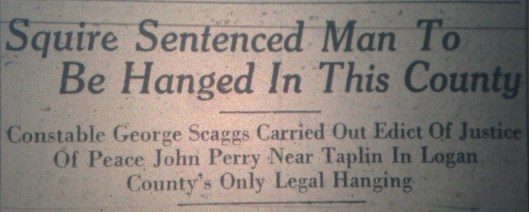
Squire Sentenced Man To Be Hanged In This County

Constable George Scaggs Carried Out Edict Of Justice Of Peace John Perry Near Taplin In Logan County’s Only Legal Hanging

Nothing but the gnarled weather beaten stump of an old locust tree remains today to mark the scene of Logan county’s only legal hanging.

The stump is standing just below the highway at the mouth of Taplin hollow and is the only landmark which calls to mind the hanging of Henry S. Walker, convicted of murder by Squire John Perry of Man in the spring of 1862 and hanged the same day by Constable George Scaggs, uncle of Emmett Scaggs, prominent lawyer, and brother-in-law of Eli Gore, old resident of Stollings.

A story is told that Henry Walker came down Taplin Hollow late one night in the closing months of the civil war on a “scouting” tour. He entered the home of Uncle Frank McKesson and for no apparent reason seized a double bitted axe and chopped to lifeless, bleeding masses the bodies of Uncle Frank and his wife and then fled to Raleigh county.

One week later Constable George Scaggs arrested the man in the county where he was hiding and brought him before Justice of the Peace John Perry.

Squire John Perry had a fine eye for justice and he was meting it out under the Virginia law which allowed a justice of the peace to pass the death sentence.

George Scaggs was delegated as executioner and Walker was put on a wagon and brought to Taplin down the river road to the spot where he committed the crime.

Old-timers say that a crowd of men, women and children laughing and passing jokes on the show they were to see followed the wagon to the scene of the proposed hanging and watched tensely as a rope was thrown over the limb of the locust tree and the noose was placed snuggly around the neck of the murderer.

He was placed on the flour barrel, a couple of feet of the slack in the rope was taken up and tied securely to the trunk of the tree, and George Scaggs, without any preliminaries, kicked the flour barrel from under the man.

The man fell to within six inches of the ground and the awed onlookers gasped as they heard an audible crack which told them the murderer’s neck had snapped. He hung quivering at the end of the rope several minutes before the peace officer cut him down and placed him in the wagon to be taken to Man for burial.

The same crowd followed the wagon back to Man, but it was a crowd of sober individuals who had seen a human life pass into oblivion. There was no joking and even the children talked in muted undertones.

Source: Logan (WV) Banner, 01 June 1937.

Battle of Kanawha Gap (1861)

03 Monday Dec 2018

Posted by Brandon Ray Kirk in Chapmanville, Civil War

≈ Leave a comment

Tags

Appalachia, Battle of Kanawha Gap, Chapmanville, civil war, Confederate Army, history, Logan County, Union Army, West Virginia

IMG_0339

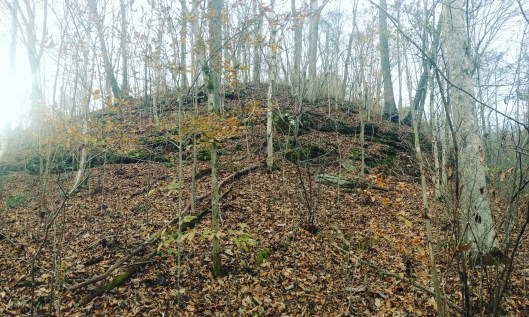
Partial view of the route toward Kanawha Gap, Logan County, WV. Confederates may have viewed the Union advance from this position. 18 November 2018.

IMG_0324

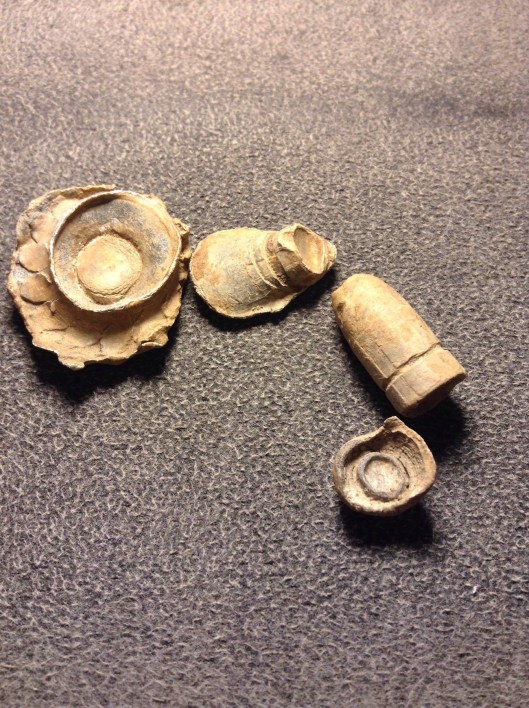
Finding relics and noting their type and location is imperative to understanding what happened in the battle. 18 November 2018.

IMG_0327

A relic! 18 November 2018.

IMG_0444

Items which may or may not be related to the battle. 18 November 2018.

IMG_0340

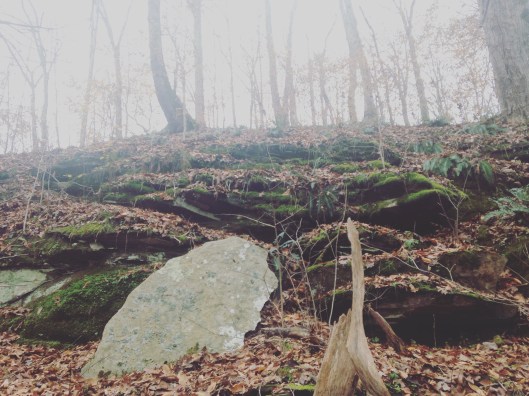
Looking up toward the rocks. Such sites would have made excellent observation points for Confederates. 18 November 2018.

IMG_0341

Looking up toward the rocks. 18 November 2018.

IMG_0342

The rocks. 18 November 2018.

Jake Kinser of Logan County, WV (1936-1937)

20 Saturday Oct 2018

Posted by Brandon Ray Kirk in Big Creek, Big Harts Creek, Boone County, Civil War, Coal, Logan

≈ Leave a comment

Tags

Appalachia, Aracoma, Big Creek, Boone County, Brooke McNeely, Camp Chase, Chapmanville District, Charles Williams, civil war, Claude Ellis, coal, Confederate Army, crime, Dave Kinser, Democratic Party, Douglas Kinser, Elbert Kinser, Ethel, Fort Branch, French River, genealogy, ginseng, Harts Creek, Hetzel, history, J. Green McNeely, Jake Kinser, Jane Mullins, Jefferson Davis, Jim Aldridge, John Carter, John Kinser, Logan, Logan Banner, Logan County, logging, Malinda Kinser, Malinda Newman, Mary Ann Ellis, Mud Fork, Otis Kinser, rafting, Scott Ellis, Smyth County, Stonewall Jackson, timbering, tobacco, Virginia, Washington Township, West Virginia, Wythe County

Jake Kinser Visits LB 06.20.1936 1

Logan (WV) Banner, 20 June 1936. Note: Jacob was not born in 1850, so he does not appear with his family in the 1850 Census for Wythe County, Virginia. He was nine years old in the 1860 Census for Smyth County, Virginia.

Jake Kinser Recollections LB 11.12.1936 2

Logan (WV) Banner, 12 November 1936. Note: Jake Kinser appears as a seventeen-year-old fellow in the 1870 Census for Boone County, West Virginia (Washington Township).

Jake Kinser and Jane Mullins LB 07.07.1937 2

Jake Kinser and his sister Jane Mullins, Logan (WV) Banner, 7 July 1937. 

Jake Kinser and Jane Mullins LB 07.07.1937 3

Jake Kinser and his sister Jane Mullins, Logan (WV) Banner, 7 July 1937. Note: Mary Jane (Kinser) Mullins was eleven years old in the 1860 Census for Smyth County, Virginia. Mr. Kinser died in 1944; his death record can be found here: http://www.wvculture.org/vrr/va_view2.aspx?FilmNumber=571280&ImageNumber=349


Powell Valley Male Academy at Speedwell, TN (2013)

07 Sunday Oct 2018

Posted by Brandon Ray Kirk in African American History, Civil War

≈ 2 Comments

Tags

African-Americans, Appalachia, Claiborne County, Confederate Army, Davis Creek, education, Felix Zollicoffer, George Shutter, history, photos, Powell Valley Male Academy, Sam Monday, slavery, Speedwell, Speedwell Academy, Tennessee

IMG_8024

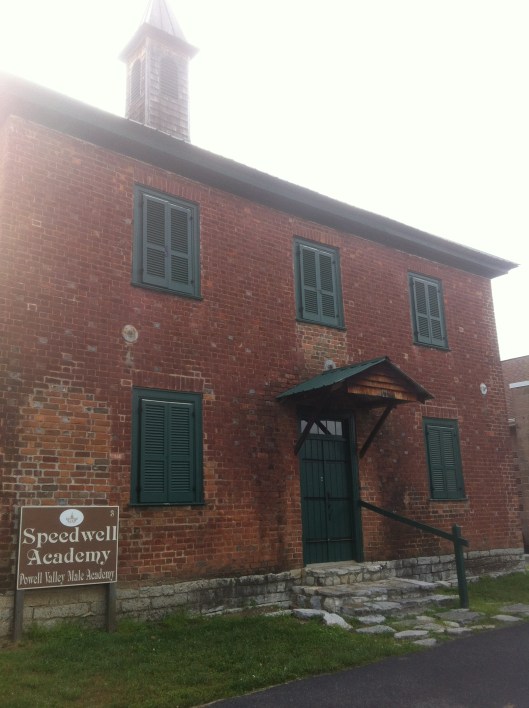
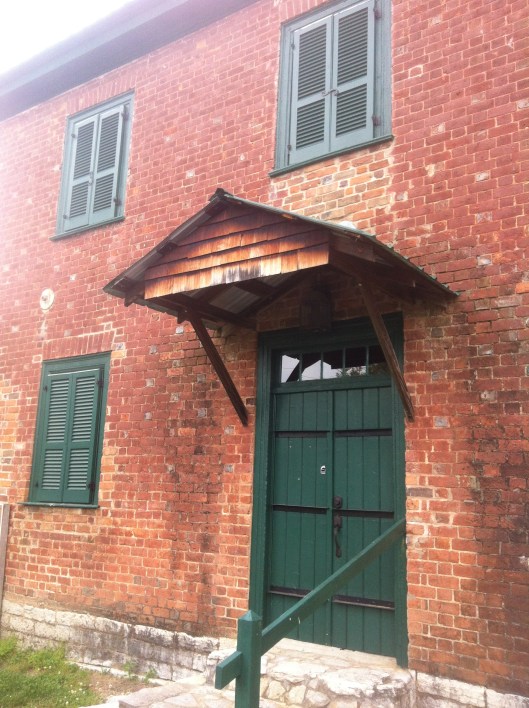
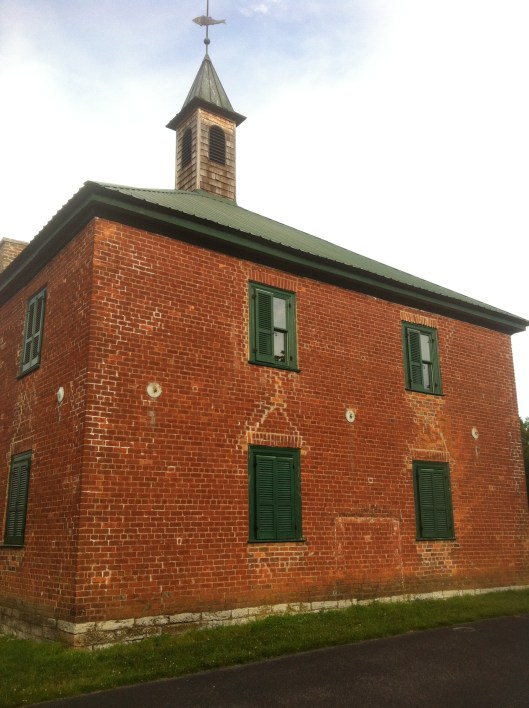
Powell Valley Male (later Speedwell) Academy, built 1827, at Speedwell in Claiborne County, TN. During the Civil War, it served as headquarters for Confederate General Felix Zollicoffer. 30 May 2013.

IMG_8034

George Shutter, a German immigrant who settled locally from Pennsylvania about 1800, believed strongly in education. He supplied the money and slaves necessary to build the academy. 30 May 2013.

IMG_8028

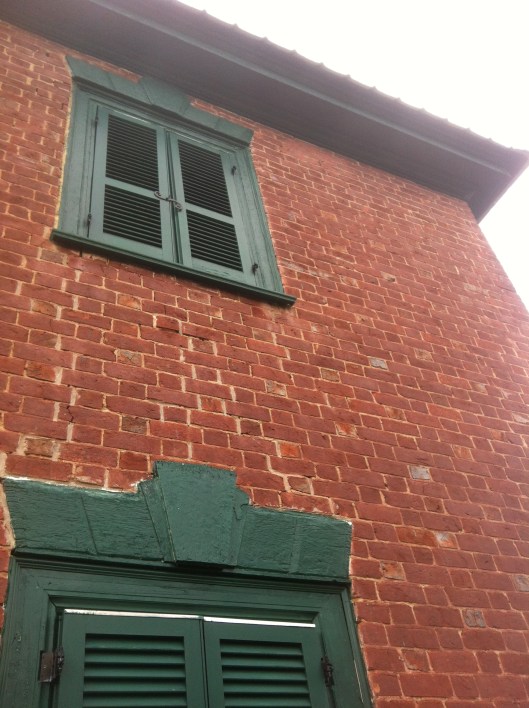
Slaves supervised by Sam Monday made the bricks from nearby Davis Creek and erected the building. 30 May 2013.

IMG_8026

Once the building was completed, students relocated from an earlier log building. 30 May 2013.

IMG_8031

Students boarded with neighborhood residents or upstairs in the building. The professor lived upstairs. 30 May 2013.

IMG_8035

The Powell Valley Male Academy operated until sometime around 1900 when it was reorganized as Speedwell Academy and served both male and female students. 30 May 2013. For more history, follow this link: http://www.tngenweb.org/campbell/hist-bogan/speedwell.html

Confederate Statue at Union, WV (2016)

27 Thursday Sep 2018

Posted by Brandon Ray Kirk in Civil War, Monroe County

≈ Leave a comment

Tags

Appalachia, Brandon Kirk, civil war, Confederacy, Confederate Army, Hinton Marble Works, history, Monroe County, Phyllis Kirk, Union, West Virginia

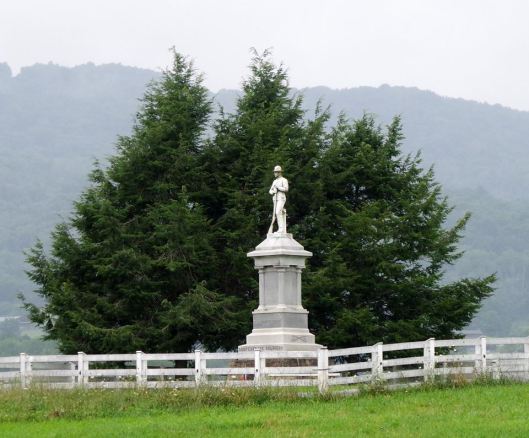
Civil War Monument

Visiting the Confederate statue at Union, Monroe County, WV. 6 August 2016. Photo by Mom.

IMG_8614

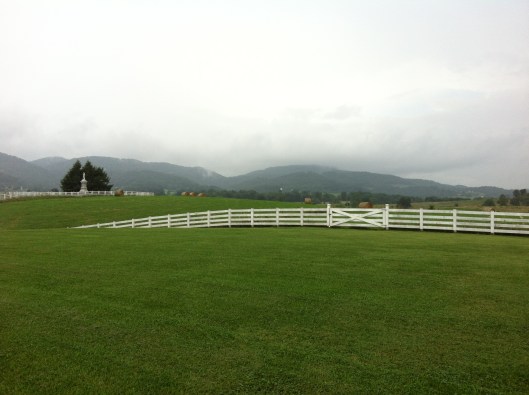
Way out in the distance is the statue. 6 August 2016.

Monument 2

The statue. 6 August 2016. Photo by Mom.

Jackson’s Mill (2015)

27 Thursday Sep 2018

Posted by Brandon Ray Kirk in American Revolutionary War, Civil War, Lincoln County Feud, Native American History

≈ Leave a comment

Tags

American Legion Mountaineer Boys State, American Revolution, Appalachia, Battle of Chancellorsville, Beverly, Blake G. Woodson, Blood in West Virginia, books, Brandon Kirk, civil war, Confederate Army, Edward Jackson, First Battle of Manassas, George Conrad, Harpers Ferry, Henry McWhorter, history, Hugh O'Brien Youth Leadership Academy, Jackson's Mill, Jonathan Arnold, Jonathan Jackson, Julia Beckwith Neale Jackson Woodson, Laura Ann jackson, Lewis County, Lincoln County Feud, log cabin, Mary Conrad, Mexican War, Native American History, Native Americans, New Jersey, Pelican Publishing Company, photos, Phyllis Kirk, Revolutionary War, Rutherford B. Hayes, Stonewall Jackson, U.S. Military Academy, Union Army, Virginia Military Institute, West Point, West Virginia, West Virginia 4-H Camp, West Virginia University Archives, William McKinley, William Rohrbough

IMG_6195.PNG

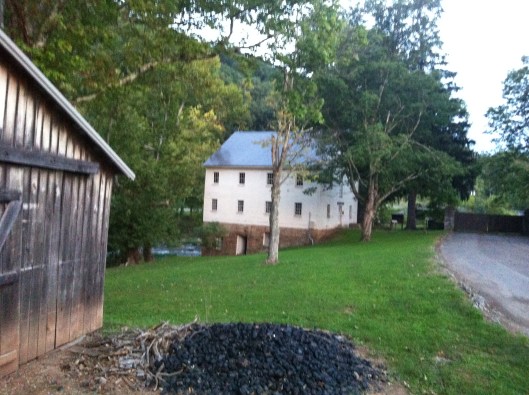
Years ago, I attended Hugh O’Brien Youth Leadership Academy (10th grade) and the American Legion Mountaineer Boys State (11th grade) here at Jackson’s Mill in Lewis County, WV. 29 August 2015. Photo by Mom.

IMG_6197

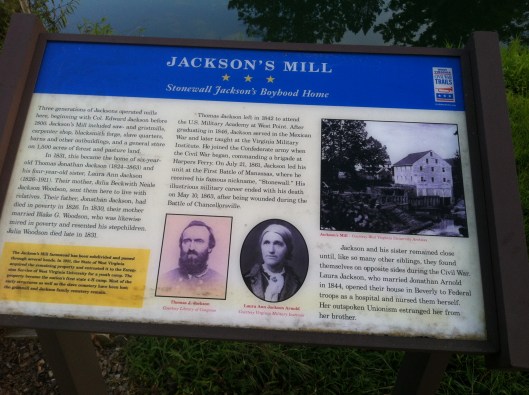
Jackson’s Mill is the boyhood home of Thomas J. “Stonewall” Jackson. 29 August 2015.

IMG_6201

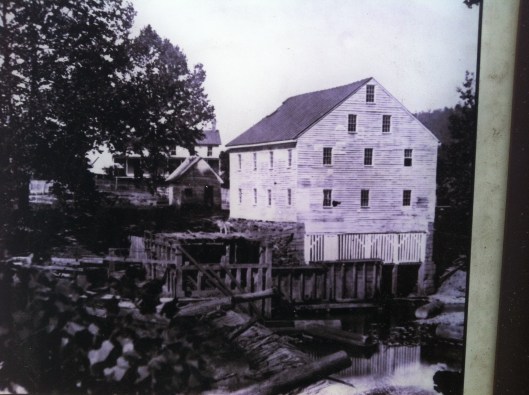
Jackson’s Mill. Original owned by West Virginia University Archives.

IMG_6202

Jackson’s Mill Historic Area Map. 29 August 2015.

IMG_6196

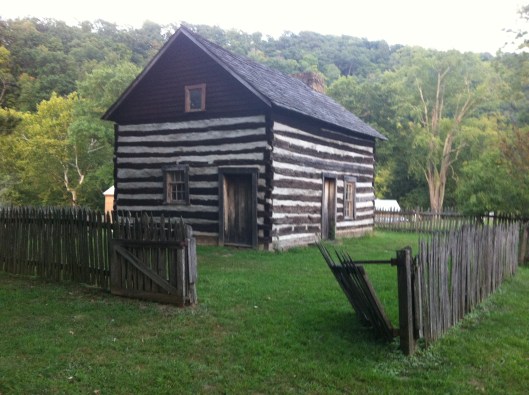
Mary Conrad Cabin/The General’s Store. William Rohrbough constructed the front in 1845; George Conrad constructed the back after 1855. 29 August 2015.

IMG_6205

Mary Conrad Cabin/The General’s Store. Future U.S. presidents Rutherford B. Hayes and William McKinley reportedly visited the cabin at its original location. 29 August 2015.

IMG_6208

Mary Conrad Cabin/The General’s Store. Dove tail notching. 29 August 2015.

IMG_6216.JPG

Mary Conrad Cabin/The General’s Store. Love the dogtrot feature! 29 August 2015.

IMG_6355

Mary Conrad Cabin/The General’s Store. BOOK MEETS LOG CABIN. I enjoy seeing the book with logs. 29 August 2015.

IMG_6218

McWhorter Cabin. Built after 1793 by Revolutionary War veteran Henry McWhorter of New Jersey, this 18′ X 24′ cabin offers an internal chimney as protection from attacks by Native Americans. It was used as a home, church, school, and post office. 29 August 2015.

IMG_6219.JPG

McWhorter Cabin. Note the square notching. 29 August 2015.

IMG_6363

McWhorter Cabin. 1793 pioneer cabin meets 1889 feud history. 29 August 2015. Photo by Mom.

IMG_6241.JPG

Jackson’s Mill. 29 August 2015.

IMG_6233

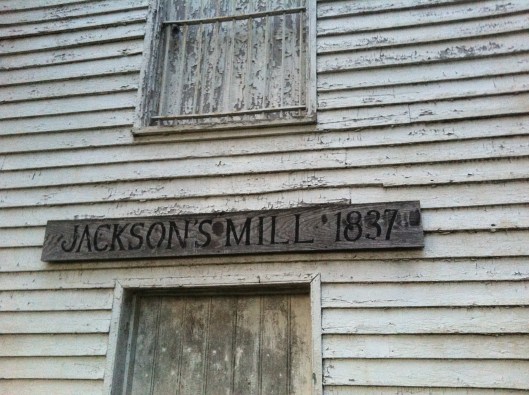
Jackson’s Mill, 1837. 29 August 2015.

Confederate Pensions in West Virginia (1929)

24 Monday Sep 2018

Posted by Brandon Ray Kirk in African American History, Big Creek, Big Harts Creek, Boone County, Civil War, Crawley Creek, Holden, Logan, Man, Pecks Mill, Whirlwind

≈ Leave a comment

Tags

A.B. White, A.L. Browning, A.V. Pauley, African-Americans, Andrew Jackson, Appalachia, Band Mill Hollow, Big Creek, Boone County, C.H. Gilkinson, civil war, Confederacy, Confederate Army, Crawley Creek, Curry, Dave Bryant, Dyke Bryant, Dyke Garrett, Ethel, genealogy, Gettysburg, Green Thompson, Harrison White, Harts Creek, Harvey Chafin, Henlawson, Henry Mitchell, history, Holden, House of Delegates, Hugh Avis, J. Matt Pauley, Jackson McCloud, James Zirkles, John Bryant, John Neece, Joseph Lowe, Judy Bryant, Kistler, Leslie Mangus, Logan, Logan Banner, Logan County, Lucinda Spry, M.T. Miller, Madison, Man, Martha Jane Smith, Melvin Plumley, Mingo County, Monaville, Mt. Gay, Pecks Mill, preacher, Shegon, Slagle, slavery, Steve Markham, Stollings, Union Army, W.C. Turley, Wade Bryant, Wayne County, West Virginia, Whirlwind, William C. Lucas, William Chafin, William Workman, Zan Bryant

In 1929, the State of West Virginia nearly opted to allocate a monthly pension to its Confederate veterans, as well as blacks who had served the Confederate Army in service roles. In covering the story, the Logan Banner of Logan, WV, compiled a list of its remaining Confederate veterans.

HOW MANY VETERANS?

A pension of $20 a month is provided for Confederate veterans of the state by a bill passed by the Senate last week and sent in the House for concurrence. Senator M.T. Miller, of Boone county, who said he could not vote to pension men who had carried arms against their government, cast the only vote against the proposal.

A Charleston paper says there are only about 60 Confederate veterans living. This paper cannot believe that, although it has no information on the subject. How many are there in Logan county? Does anyone know? Has anyone an approximately correct list? If so, will he or she make the fact known? Uncle Dyke Garrett probably knows most of them.

The Banner would like to obtain a list of both Confederate and Union veterans still living in the county, together with their post office address.

Source: Logan Banner, 26 February 1929.

***

AS TO OLD SOLDIERS

The Banner’s request for information about old soldiers living in Logan county has not been in vain, nor has the response been satisfactory. The names of four confederate veterans have been turned in, as follows:

Rev. Dyke Garrett, Curry, beloved and venerable minister; William Workman, Shegon, who fought at Gettysburg and is now 88; Steve Markham, Holden No. 20, who has been blind for 20 years; and William Chafin, who lives with his son Harvey, at Holden 5 and 6.

Who are the others? Send in their names and addresses and any information you deem of interest concerning their careers as soldiers and citizens. The same information about Union soldiers, residents of the county, is likewise desired.

Logan Banner, 5 March 1929.

***

PREPARING THE ROLL

Another name has been added to the list of old soldiers that The Banner has undertaken to compile. Reference is to J. Matt Pauley, residing in Band Mill Hollow, post office Stollings. He was in the Confederate army, fought throughout the war and was wounded, writes Mrs. A.V. Pauley of Ethel. He is of the same age as Uncle Dyke Garrett.

The names of four survivors of the War Between the States, all living in Logan county, were published in Tuesday’s paper. There must be others. Who are they?

Today, W.C. Turley brought in a list of eight Confederate veterans, including the following new names: Wm. C. Lucas, Big Creek; Henry Mitchell, Henlawson; Hugh Avis, Green Thompson and John Neece, Logan; Harrison White, Pecks Mill.

Logan Banner, 8 March 1929.

***

On Confederate Roll

Two more names have been added to the roll of Confederate veterans that The Banner is preparing. These are James Zirkles of Man, whose name was sent in by Leslie Mangus, of Kistler, and Zan Bryant of Whirlwind, whose name was recalled by County Clerk McNeely. Are there not others besides nine or ten previously published?

Logan Banner, 12 March 1929.

***

Confederate Veterans Living Here Number at Least 17

There Are Probably  Others–Will You Help to Enroll Them–All Merit the Tender Interest of Younger Folk

Seventeen names of Confederate soldiers, residents of the county, have been collected by The Banner. Wonder if any have been overlooked, or if the appended list is in error in including any Union veterans? If any reader knows of a Confederate soldier not listed here, please send in the name and address AT ONCE. There will be no further request or reminder.

This paper undertook to make up a list of these old soldiers for two reasons. Chief of these was a desire to prevent any of them being overlooked in case a bill to pension them was passed by the legislature–but the writer does not know yet whether or not that bill was enacted into law. Another reason for assuming the task was to test in a limited way a statement in a Charleston paper that there were only 60 Confederate veterans left in the state. That statement was doubted, and with good reason judging from the number polled in this county. Anyhow, the ranks have become terribly thinned. Every few days we all read of taps being sounded for another one here and there.

Middle-aged men and young folk should esteem it a privilege to do something to brighten the lives of these old soldiers. As the years roll by our pride will increase as we recall our acquaintance with and our kindness toward the “boys of ’61 and ’65.”

Here is the list. Look it over, and if there is a name that should be added or a name that should be stricken out, or any error or omission that should be corrected or supplied, speak up:

James Zirkles, Man; Zan Bryant, Whirlwind; J. Matt Pauley, Ft. Branch; Uncle Dyke Garrett, Curry; William C. Lucas, Big Creek; Henry Mitchell, Henlawson; Hugh Avis, Green Thompson and John Neece, all of Logan; Harrison White, Pecks Mill; Melvin Plumley, Crawleys Creek (post office not known); William Workman, Shegon; Steve Markham, Holden No. 20; William Chafin, No. 5 and 6.

Logan Banner, 15 March 1929.

***

Two Names Added Confederate Roll

Bill to Pension Them is Defeated By Parliamentary Tactics in House

Names of two more Confederate soldiers living in the county have been sent to The Banner. They are: C.H. Gilkinson, minister, resident of Holden, who was born and reared in Wayne county, and is the father of Dr. L.W. Gilkinson. Jackson McCloud, a resident of Whirlwind on Harts Creek. His name was supplied by A.L. Browning of Monaville, who says he feels sure that Mr. McCloud was in the Confederate service and fought at Gettysburg.

Assuming both names should be added to the roll, it means that there are at least 19 Confederate veterans still living in Logan county, seventeen names having been listed and published a week ago.

For many of them there will be disappointment in the information that the bill to pension them did not pass. Sponsored in the Senate by ex-governor A.B. White, the son of a Union soldier, the bill passed, that body, Senator M.T. Miller of Madison casting the only vote against it. In the House of Delegates it was amended, by a majority of one, to include Negroes, whether slave or free, who had served in the Confederate army of cooks, personal servants, or otherwise, and later tabled.

Source: Logan Banner, 22 March 1929.

***

Slagle Man 17th in Confederate List

Zan Bryant Probably Oldest Veteran In County–Born in Jackson’s Time

Joseph Lowe of Slagle is the latest name to be added to the list of Confederate veterans that has been compiled by The Banner. However, that leaves the count at 17, as the name of Melvin Plumley of Crawleys Creek was erroneously included in the published list. He was a Union soldier, it seems.

Of all those listed Zan Bryant of Whirlwind must be the oldest. He is said to be 98 years old and his wife, Judie Hensley Bryant, 91. They have been married for 75 years and have a son, Dave Bryant, who is 73. There are five other children, Dave, John, Wade and Dyke all live on Harts Creek, most of them near their parents; Mrs. Martha Jane Smith at Gay, and Mrs. Lucinda Spry of Mingo county.

This venerable couple have spent all their years in the isolated Harts country, their home being on White Oak fork, and can be reached only by a long horseback ride.

When Zan was born Andrew Jackson was president and Logan county as a political subdivision was but five years old. He was 23 years old when married and 30 when the War Between the States began.

Logan Banner, 26 March 1929.


Museum and Log Cabin at Breaks Interstate Park in Breaks, VA (2018)

17 Monday Sep 2018

Posted by Brandon Ray Kirk in Civil War, Hatfield-McCoy Feud, Native American History, Timber

≈ Leave a comment

Tags

Appalachia, Battle of Middle Creek, Brandon Kirk, Breaks, Breaks Canyon, Breaks Interstate Park, civil war, fossils, Hatfield-McCoy Feud, history, James A Garfield, Kentucky, Marion, moonshine, moonshining, Native American History, Native Americans, photos, Phyllis Kirk, rafting, Saltville, Union Army, Virginia

IMG_6831

Video showcasing regional history. 25 August 2018.

IMG_6816

Hammerstone and Polishing Stone. 25 August 2018.

IMG_6818

Fully Grooved Axe. 25 August 2018.

IMG_6819

Lt. James A. Garfield, Union hero at the Battle of Middle Creek, KY. 25 August 2018.

IMG_6825.JPG

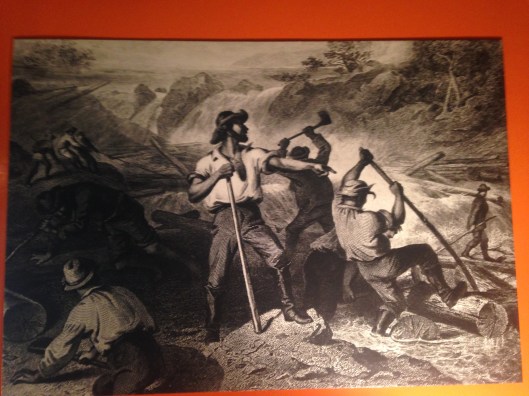
Rafting through Breaks Canyon, c.1885. 25 August 2018.

IMG_6821

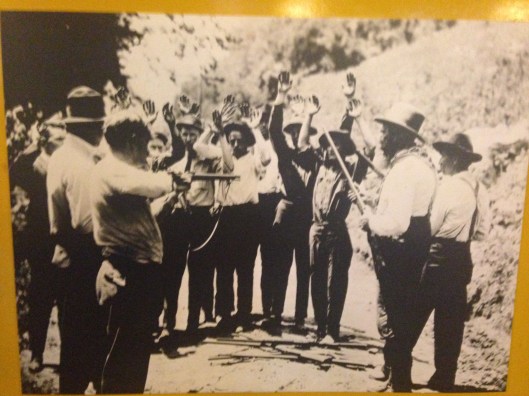
This photo is labeled: “A Confrontation Between the Hatfields and the McCoys.”

IMG_6823

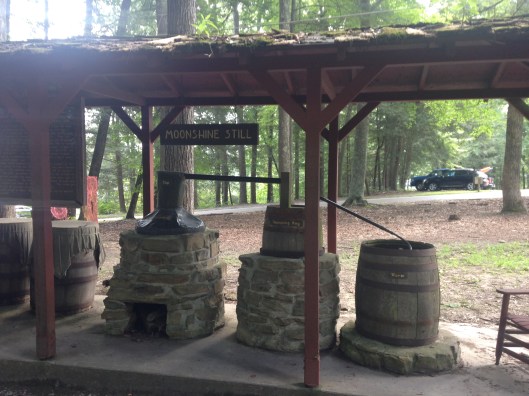
Moonshine still. 25 August 2018.

IMG_6827

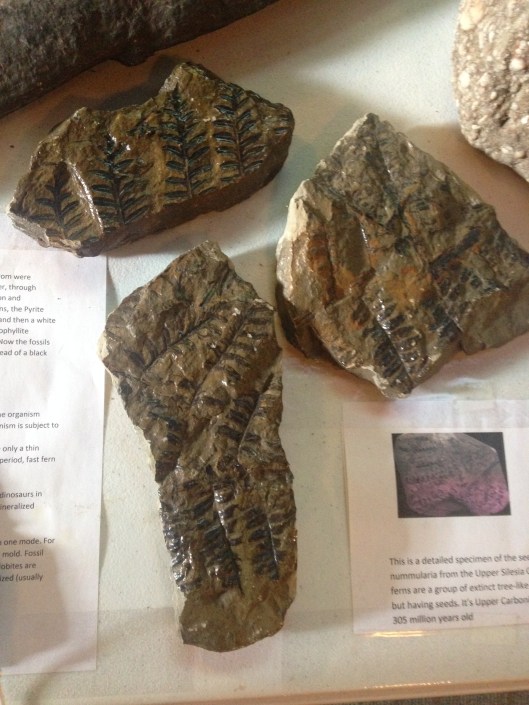
Seed fern fossil, 305 million years old. 25 August 2018.

IMG_6833

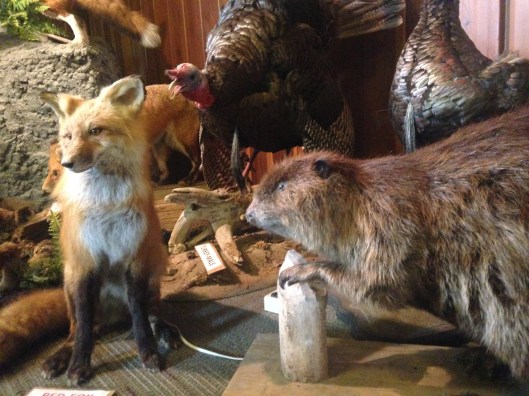
Native wildlife. 25 August 2018.

IMG_6835

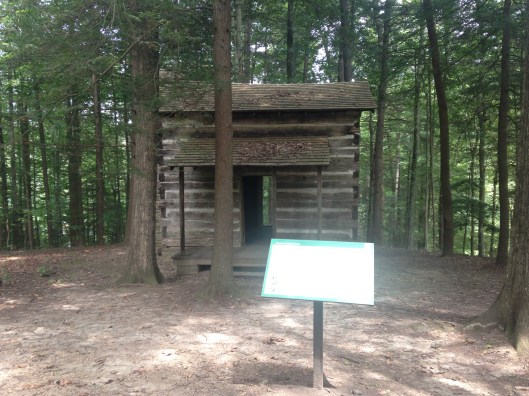
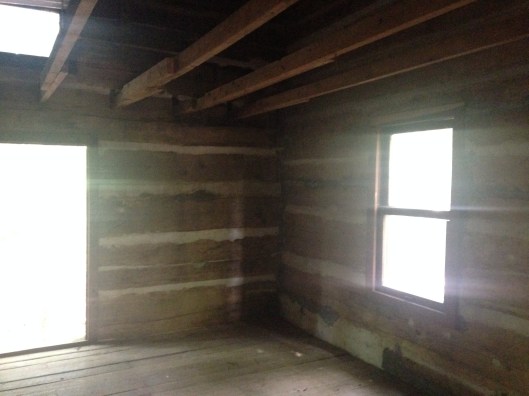
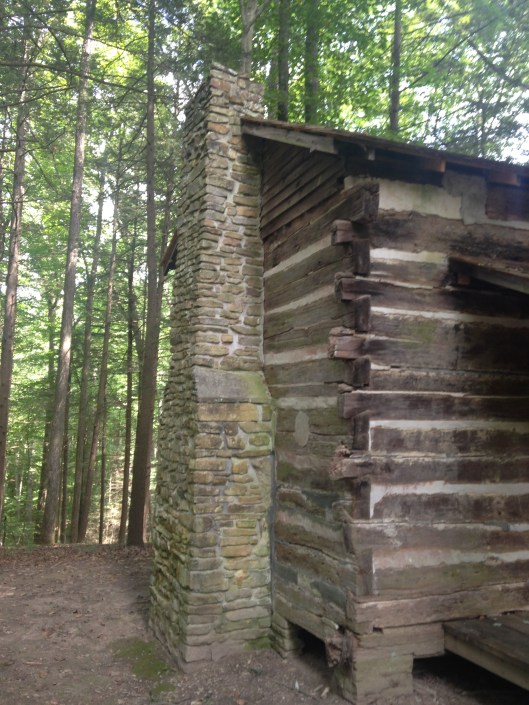
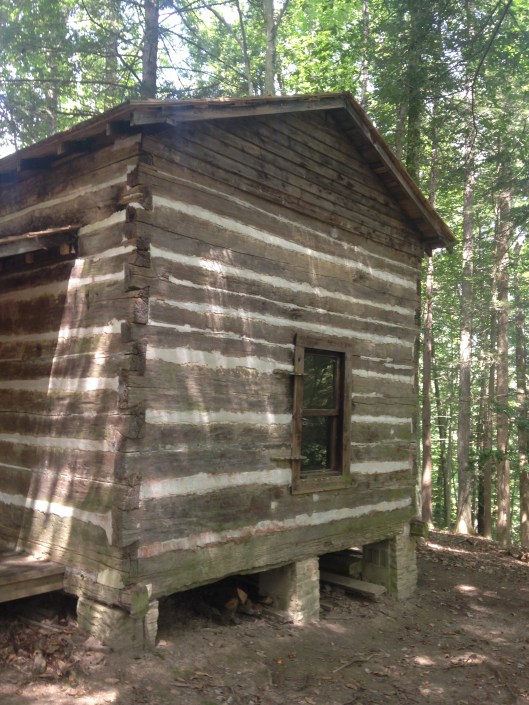
Log cabin. 25 August 2018.

IMG_6839

Log cabin. 25 August 2018.

IMG_6837

Log cabin. 25 August 2018.

IMG_6842

Log cabin. 25 August 2018.

IMG_6840

Log cabin. 25 August 2018.

IMG_6841.JPG

Mom at the cabin. 25 August 2018.

IMG_6844

Moonshine still showing cap, thumping keg, and worm. 25 August 2018.

IMG_6852

Salt kettle cast at Marion, VA, about 1860 and buried to conceal it from Union troops at Saltville, VA, in 1864. 25 August 2018.

Flick Amendment Ratified by Voters of Triadelphia Township, Logan County, WV (1871)

09 Sunday Sep 2018

Posted by Brandon Ray Kirk in Civil War, Man

≈ Leave a comment

Tags

Aaron Altizer, Albert G. Mitchell, Alexander Spratt, Alexander Trent, Appalachia, B.W. White, Ben H. White, civil war, Curtis Ballard, Democratic Party, F.M. White, Flick Amendment, genealogy, George S. Claypool, Harvey Buchanan, Harvey Ellis, history, Hugh Avis, Isaac Browning, James A. White, James H. Brown, James H. Hinchman, James M. White, James Spratt, Jasper Perry, John Claypool, John Riffe, Logan County, Louis Mitchell, Madison Ellis, Patterson Christian, Perry Altizer, Peter Riffe, Phillip Ellis, politics, Preston Perry, Reconstruction, Republican Party, Rhodes D. Ballard, Robert P. Spratt, Sidney Hinchman, Squire Ellis, Triadelphia District, Ulysses Hinchman, W.H.H. Flick, West Virginia, William A. Lee, William Claypool, William W. McDonald

After the Civil War, West Virginia law barred ex-Confederates from voting. The Flick Amendment of 1871, named for Republican W.H.H. Flick, sought to extend suffrage to ex-Confederates and freedmen. Most ex-Confederates were Democrats. Passage of the Flick Amendment ultimately meant that Democrats would rule West Virginia for the next 25 years.

***

Names of all persons voting at Aaron Altizer in Triadelphia Township of Logan County this 27th day of April 1871 on the Ratification or Rejection of the amendment of the constitution of the state of West Virginia.

Ben H. White

John Claypool

Albert G. Mitchell

Peter Riffe

Wm. Claypool

Squire Ellis

B.W. White

Phillip Ellis

Alexander Trent

Isaac Browning

Harvey Buchanan

James Spratt

Robert P. Spratt

Patterson Christian

Michell Carter

John Riffe

Hugh Avis

Harvey Ellis

Perry Altizer

Rhodes D. Ballard

Alexander Spratt

Madison Ellis

Curtis Ballard

Aron Altizer

Wm. W. McDonald

Jasper Perry

James M. White

James H. Brown

Louis Mitchell

F.M. White

Wm. A. Lee

Preston Perry

George S. Claypool

Jas. H. Hinchman

Wm. Wesly

Ulyses Hinchman

Sidney Hinchman

James A. White


Total No. Votes: Thirty Eight


Madison Ellis, Inspector

F.M. White, Inspector


James M. White, Clerk

Wm. A. Lee, Clerk


Tally of the votes cast at the Election held at Aaron Altizer’s in the Township of Triadelphia and county of Logan on the 27th day of April 1871 (on the Ratification or rejection of the proposed amendment to the constitution of the State of West Virginia).

Tally of Votes:

Total of Votes for Ratification: Thirty Eight

***

Compared to the gubernatorial election of 1870, voter turnout for the Flick Amendment was extremely low. West Virginia voters approved the amendment by a vote of 23,546 to 6,323. Only five counties, all located in the northern part of the state, voted against the amendment.

Civil War in the Guyandotte and Big Sandy Valleys (1862)

03 Monday Sep 2018

Posted by Brandon Ray Kirk in Big Sandy Valley, Chapmanville, Civil War, Guyandotte River, Pikeville, Tazewell County

≈ Leave a comment

Tags

Abington Virginian, Appalachia, Big Sandy River, Cabell County, Chapmanville, civil war, Confederate Army, genealogy, Guyandotte River, history, John B. Floyd, John Clarkson, John Dils, John Letcher, Kanawha River, Kentucky, Levisa Fork, Lincoln County, Logan County, Ohio River, Pigeon Creek, Pike County, Pikeville, Prestonsburg, Smyth County, Tazewell County, Union Army, Virginia, Virginia State Line, Washington County, Wayne County, West Virginia

Confederate General John B. Floyd composed this letter detailing military activity in the Guyandotte and Big Sandy valleys in late 1862, which was published by the Abington Virginian on January 2, 1863.

***

OFFICIAL REPORT OF GEN. FLOYD

Headquarters Virginia State Line,

Camp Clarkson, Tazewell Co.,

December 17, 1862

His Excellencey, John Letcher,

Governor of Virginia—

SIR: After my last communication to you I prepared an expedition consisting of a strong force of Cavalry under Colonel John Clarkson, to operate against the enemy in the counties of Wayne, Cabell, &c. He set out from Chapmansville on the 14th November, in the direction of Cabell down the Guyandotte river, over a rough and difficult road. The following day he fell in with a detachment of the enemy which he quickly routed and dispersed. He continued the march until a few miles of the Ohio river, breaking up the “Home Guard” organization of the enemy, which are very numerous in all that country, and taking prisoners every day.

A strong guard of Yankee troops, acting as a guard for the Pierpont Assessor for the county of Wayne, was attacked and dispersed after a short skirmish, in which was killed and wounded some of the enemy and took a few prisoners. Col. Clarkson proceeded then, according to the previous directions given him, to the Sandy river, to attack a large and formidable organization of the enemy composed mainly of the native population, and very strong posted amidst the cliffs and forests upon the precipitous banks of that river. He succeeded in taking them by surprise completely, and after killing and wounding a number of them, took a large number of prisoners, and surprised entirely the rest of the force. This force and organization were formidable and extremely dangerous to the peace and quiet of all the country round about for many miles, the loyal people were nearly all driven from their country and all were robbed. After that, Col. Clarkson, according to previous understanding, made a junction with me at the mouth of Pigeon Creek, in Logan county, on the Kentucky border, whither I had gone with the infantry and a section of the mounted howitzer battery.

I learned from Col. Clarkson that the enemy had started a number of boats with valuable supplies, from the mouth of Sandy to a post recently established at Pikeville, a point at the head of navigation on the Louisa Fork of Sandy. These boats were in charge of a strong guard, and were intended to furnish a complete outfit for a force deemed sufficient for them, by their commander, to march upon and destroy the salt works in Smyth and Washington counties.

I determined at once to attack this train, and from its distance, being more than forty miles off, it became necessary to send mounted men. Besides this reason, I found it inconvenient to move the infantry in that direction, on account of the number of prisoners with which we were encumbered. The cavalry and mounted men were put in motion within an hour and proceeded upon the march, which was uninterrupted, day or night, until the enemy were overtaken, attacked and routed.

Our people captured ten of the enemy’s transport boats, laden with valuable supplies. A great deal of these supplies was distributed amongst the men, and much of them was brought off; but a very large amount of most valuable supplies was necessarily destroyed for want of transportation to bring them away. A train of one hundred pack mules would have brought away a very large amount of extremely valuable stores, which were committed to the fire and the river.

The night following the capture of these boats (indeed, just twelve hours after the attack upon the boats,) our forces engaged that of Col. Dils, posted in an extremely strong position on the summit of a mountain on the road leading from Prestonsburg to Pikeville. This position was taken and held without any knowledge on our part, and as the attack was made after the night, and entirely unexpected, we were taken at a great disadvantage. But our men behaved with great steadiness and resolution, received the attack and charged the enemy, driving him from his position, and dispersing them entirely. The rout was complete, and the post at Pikeville, consisting of a thousand men, was entirely broken up. The prisoners and the Union people in that neighborhood reported Colonel Dils as killed in the fight that night.

For more detailed statements of this expedition I refer you to the report of Col. Clarkson. In our operation through the country, we made a number of recruits in the counties of Cabell, Wayne, Logan, &c.

My object in this campaign was, as far as possible, to prevent the occupation by the Yankee forces, of the country between the Kanawha Valley and Kentucky border, as well as to destroy the military organization of the country under the traitor government in Wheeling. Both objects were fully attained, as long as I was able to remain in the country. The military organizations, very numerous and well appointed in every particular, were almost entirely destroyed, and the attempts to set up the spurious government were entirely failed.

I was compelled to leave the country, held by me for more than three months alone, for the want of Quartermaster’s supplies. We were without tents, or clothing, or cooking utensils, or axes; and after the inclement weather of winter set in, we could no longer remain in the field. With these stores supplied, I would have remained in that country throughout the winter months. We were able to procure food (meat and bread) in the country, nearly all of it taken from the enemy.

The campaign, from first to last, was one of hardship and privations; but they were borne without complaint by the men, who are unsurpassed in hardship, activity and capability to endure privations. They deserve great praise for their constancy and general good conduct.

The officers generally deserve commendation, but to Col. Clarkson too much credit cannot be given for his energy, activity and courage. The obstacle she encountered, of every sort, throughout these expeditions, were of the most formidable character, but they were also most gallantly surmounted.

I have the honor to be, very respectfully,

Your obedient servant,

JOHN B. FLOYD,

Maj. Gen. Commanding Va. State Line

NOTE: I bolded Gen. Floyd’s description of activity in the Guyandotte Valley that occurred between Chapmanville and the lower section of the river near present-day Huntington.

Little Sorrel (1886, 2018)

06 Monday Aug 2018

Posted by Brandon Ray Kirk in Civil War

≈ Leave a comment

Tags

Brandon Kirk, civil war, Confederate Army, Confederate Soldiers' Home, history, Huntington Advertiser, Lexington, Little Sorrel, Richmond, Stonewall Jackson, Virginia, VMI Museum

Old Sorrel Dies HA 03.20.1886 2

Huntington (WV) Advertiser, 20 March 1886.

IMG_4809

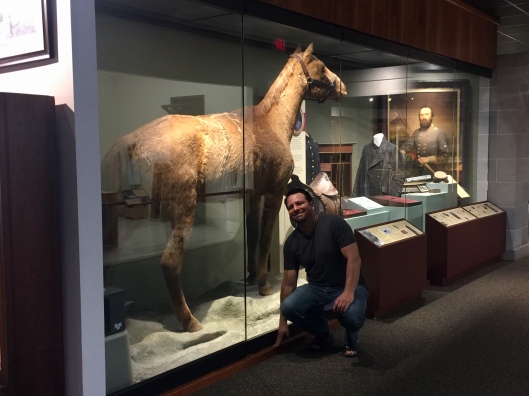
Visiting with Little Sorrel in Lexington, VA. 9 July 2018. Photo by Mom.

IMG_4675

Little Sorrel in Lexington, VA. 9 July 2018. For more about the VMI Museum, go here: https://www.vmi.edu/museums-and-archives/vmi-museum/

IMG_4688

Little Sorrel in Lexington, VA. 9 July 2018. For more about Old Sorrel, go here: http://www.horseandman.com/horse-stories/stonewall-jacksons-horse-little-sorrel/11/11/2014/

History of the West Virginia Penitentiary (1901), Part 1

31 Tuesday Jul 2018

Posted by Brandon Ray Kirk in African American History, Civil War, Culture of Honor, Timber

≈ Leave a comment

Tags

African-Americans, Alabama, Appalachia, Arthur I. Boreman, civil war, history, J.W. McWhorter, Moundsville, North Carolina, Ohio River, Potomac River, South Carolina, Virginia, West Virginia, West Virginia State Penitentiary

HISTORY OF THE WEST VIRGINIA PENITENTIARY.

WRITTEN BY A PRISONER.

In 1863 the state was admitted as one of the constellation of states of the union. Virginia had seceded from the union by a majority vote. The strong and indomitable minority citizens of the Old Dominion residing in the western part of it, many of whom were Scotch and Irish descendants and natives of the adjoining states, who had taken up their homes in the valleys and on the hillsides, were loyal to the Union, loved well the flag, and reverenced with an undying affection the builders of the union of states for the greater blessing of the people, and stood firm and unyielding for an indivisible united country. By their hands and brave hearts they built a state stretching from the Potomac to the Ohio river, carved out of the Old Dominion. The war-born daughter of the historical commonwealth proved, in subsequent years, to be rich in the production of materials in active demand in the marts of commerce, and she now outstrips her mother state in the race for greatness, prosperity, and happiness.

Many regions of the state are mountainous, and the principal industries are lumbering, mining, and oil production. Many of the white people are typical mountaineers and somewhat rough and uncouth in manner, while the negroes, many of them, have drifted from North and South Carolina, Alabama, and other southern states to be employed in the development of these industries.

There are very many respectable farmers, professional and business men, and cultured ladies residing in these almost inaccessible parts; but the rough element in many places predominates, and the order of the day and night is drinking and brawling, ending as a rule in desperate encounters and murder. Most of the white and black inmates of the penitentiary have been and are now composed of the lawless men from these regions, from the time it was only a stockade of ten acres in 1866, when Hon. J.W. McWhorter of the Tenth Judicial District was appointed warden by Governor Boreman. He resigned this position after viewing it. In a letter to Warden Hawk he states it was for the reason that there was not so much as a building erected for the shelter of the inmates, and he thought he could not work the convicts to advantage under the circumstances. The penitentiary has been improved from time to time to the present, by additions, until it is a massive structure of stone and iron, with a high stone surrounding wall. It has 695 inmates at the present writing.

The center, or main building, is built after the old baronial castellated style of architecture, and with its several stories height, it makes an imposing appearance. It is flanked on the north and south by the stone and strongly-barred buildings, wherein the old and first built stone cells and the modern steel ones–900 in all–are placed. Entrance is to be had into the prison proper by means of a round turning iron-barred cage in the main hallway of the central building.

Source: E.E. Byrum, Behind the Prison Bars: A Reminder of Our Duties Toward Those Who Have Been So Unfortunate as to Be Cast Into Prison (Moundsville, WV: Gospel Trumpet Publishing Co., 1901), pp. 73-75.

History for Boone County, WV (1927)

28 Saturday Jul 2018

Posted by Brandon Ray Kirk in Boone County, Civil War, Native American History

≈ Leave a comment

Tags

Albert Allen, Appalachia, Ballardsville Methodist Church, Boone County, Cabell County, Charleston, civil war, Coal River, crime, Crook District, Daniel Boone, Danville, Edgar Mitchell, Frankfort, French and Indian War, genealogy, history, Jack Dotson, Johnson Copley, Kanawha County, Kanawha River, Kanawha Valley, Kentucky, Lee Sowards, Lewisburg, Logan Banner, Logan County, Madison, Missouri, Nathan Boone, North Carolina, Pennsylvania, Peytona District, Point Pleasant, Pond Fork, Ruckers Branch, Scott District, Sherman District, Spruce Fork, St. Albans, Virginia Assembly, Washington District, West Virginia, West Virginia Synodical School, Yadkin Valley

From the Logan Banner of Logan, WV, comes this bit of history about Boone County in a story dated December 9, 1927:

BOONE COUNTY

Boone county was created in 1847 of parts of Kanawha, Cabell and Logan counties. Its area is 06 miles, 65 miles larger than Logan, and in 1920 its population was 18,145. It is divided into five magisterial districts, as follows: Crook, Peytona, Scott, Sherman and Washington.

Boone county commemorates in West Virginia the name of Daniel Boone, the pathfinder to the west. It is an honor worthily bestowed, for who has not heard of Daniel Boone and the story of his efforts as an explorer, hunter, land-pilot and surveyor. His was a romantic life, picturesque and even pathetic. For more than a century he has he has been held as the ideal of the frontiersman, perhaps for the reason that his course in life was not marked by selfishness and self-seeking. He fought with the Indians, but was not tainted with the blood-lust that so often marred the border warrior and made him even more savage than the red man whom he sought to expel; he built and passed on to newer fields, leaving to others the fruits of his industry and his suffering. As a man needing plenty of “elbow room,” his places of residence mark the border between civilization and savagery for a period of fifty years. And there was a time, a period of nearly ten years, when his cabin home was on the banks of the Kanawha, a short distance above the present City of Charleston.

Daniel Boone was born in the Schulykill Valley, Pennsylvania, on November 2, 1734, but in 1750 removed with his parents to the Yadkin Valley, in North Carolina. Here he grew to manhood, married and reared a family, but was active as an Indian trader, frontiersman and defender of the feeble settlement. He was with Braddock’s army at its defeat on the Monongahela in 1755, and a few years later became the founder and defender of Kentucky. He strove with the red man with force and stratagem, and many are the fire-side tales recounted and retold in West Virginia homes of his prowess with the rifle; his ready plans and nimble wit that helped him out of situations that seemed almost impossible. Many, perhaps, are without foundation of fact; others contain enough of truth to leaven the story. Of his service to the western settlers, records preserved in the archives of state and nation show that he was indefatigable. At the Indian uprising in 1774, Boone was sent out to warn the settlers and surveyors, ranging from the settlement on the Holston river throughout all of what is now southern West Virginia to Lewisburg. In 1788, after he had lost his property in Kentucky through defective titles and failure to properly enter land grants, Boone and his family removed to Point Pleasant, at the mouth of the Great Kanawha, where they remained about one year. Contrary to his habit, his next move was toward the east to a site near the City of Charleston. When Kanawha county was formed in 1789 Boone was a resident and was named the first Lieutenant Colonel of the militia, and the following year, 1790, was elected a member of the lower house of the Virginia assembly. Colonel Boone left the Kanawha valley in 1799, removing to Missouri where he had been granted a thousand arpents of land by the Spanish government and had been appointed a Syndic for the Femme-Osage district–a local office combining the duties of sheriff, jury and military commandant. Colonel Boone died at the home of his youngest son, Colonel Nathan Boone, on the Femme Osage river, Missouri, September 26, 1820. His remains, with those of his wife, were some years later taken to Frankfort, Kentucky, and re-interred with pomp and ceremony. A monument erected by the state marks his last resting place.

Madison, the present county seat, is located at the junction of Pond Fork and Spruce Fork, which form Coal River, is 603 feet above sea level and in 1920 had a population of 604. It was incorporated as a town by the circuit court of that county in 1906. At the organization of the county in 1847, the seat of justice was located on the lands of Albert Allen, at the mouth of Spruce Fork, opposite the present town of Madison. The original court house was burned by Federal troops during the Civil War, and for a time thereafter the seat of justice was located at the Ballardsville Methodist Church. In 1866 the court house was re-located on the lands of Johnson Copley, opposite the old site, and the public buildings erected, which were used until 1921 when the present fine court house was erected.

The West Virginia Synodical School maintained and operated by the Presbyterian church, occupies the site of the original court house, opposite the present county seat.

Danville, another incorporated town in that county, had a population of 327 in 1920.

Source: Logan (WV) Banner, 9 December 1927.

Old Trees at Boone Courthouse, Hangings LB 03.22.1927.JPG

Logan (WV) Banner, 22 March 1927.

Hugh Toney Letter to Edward Chapman (1861)

24 Tuesday Jul 2018

Posted by Brandon Ray Kirk in Chapmanville, Civil War, Giles County

≈ Leave a comment

Tags

11th Virginia Cavalry, Appalachia, Camp Narrows, Chapmanville, civil war, Confederate Army, Edward Chapman, Giles County, history, Hugh Toney, J. Green McNeely, Logan Banner, Logan Country Club, Logan County, North Carolina, Virginia, West Virginia

Rev. J. Green McNeely (1871-1943) located the following letter written by Hugh Toney to Edward Chapman when he razed a log cabin situated on the property that later became the Logan Country Club, near Chapmanville.

Camp Narrows, Va.

March 26, 1861

Dear Friend:

I saw the officers of the 11th Virginia Cavalry about your horses. Col. French and Maj. Smith both say that your horse shall be give up if the horse can be found.

I have not been able to find out anything about who got your horse yet. The horses were sent off to North Carolina. If I have any chance to get your horse, I will attend to the matter for you. If you know the man’s names or any of the men’s names that was present when your horse was taken, write to me their names.

I have made careful inquiries about Ira Woodram’s horse. I have not been able to find out anything about his horse, also John’s. I can’t bear that horses were taken.

I can’t find out who took them, it being uncertain about getting your horse or pay for him the way matters stand at this time.

Your friend,

Hugh Toney

Source: Logan (WV) Banner, 25 June 1941.

Civil War Gold Coins Hidden Near Chapmanville, WV

23 Monday Jul 2018

Posted by Brandon Ray Kirk in Chapmanville, Civil War, Guyandotte River

≈ Leave a comment

Tags

Buried Treasures of the Appalachians, Chapmanville, civil war, Confederate Army, Fayette County, Guyandotte River, history, Logan County, Union Army, W.C. Jameson, West Virginia

From W.C. Jameson’s Buried Treasures of the Appalachians (1991, pp. 204-205) comes this story of buried treasure near Chapmanville, WV:

In Fayette County during the War Between the States, a contingent of Union soldiers was escorting a large payroll–a wagon full of gold coins–to a Yankee encampment in the area. As the party traveled along the winding trails through the dense woods, scouts told the commanding officer that a Confederate patrol was rapidly approaching from the east.

The Union officer ordered the escort into a full gallop in the hope of outdistancing the rebels, but after trying to elude the enemy for about five miles, it became clear that they would soon be overtaken. Anticipating a skirmish, the officer halted the wagon and ordered the canvas bags that held the Union payroll taken from the wagon and buried it a short distance from the trail. While troopers hastily dug a pit in which to hide the gold, the officer noted the surroundings in his journal. He wrote that the payroll was hidden on the west side of the Guyandotte River, near a small settlement named Chapmanville.

Once the hole was filled, the soldiers remounted and rode on. About an hour later, the Confederates overtook the Union soldiers and opened fire. The Yankees sought cover and returned fire, but they were disorganized and greatly outnumbered. The fighting lasted about two hours, and when it was over, all of the Yankee soldiers lay dead.

The rebel soldiers searched the wagon for the money and found it empty. Suspecting the gold had been buried shortly before the engagement, they retraced the Yankees’ trail for several miles, without finding the payroll.

Returning to the site of the skirmish, the Confederates stripped the Union soldiers of anything of value and left the corpses to rot in the sun. An unknown soldier took the commanding officer’s journal and he tossed it into the trunk and forgot it. In the early 1930s, someone discovered an old journal and searched unsuccessfully for the buried coins.

The directions in the journal claimed the gold was buried at a point where the old road and the Guyandotte River came within twenty yards of one another. Since the war, however, the road has been all but obliterated by the more modern thoroughfare, and the river has shifted its course.

If the Union payroll of gold coins was not uncovered by the shifting river and washed downstream, the Civil War cache is probably still lying just a few inches beneath the soil near Chapmanville.

For more information about buried treasure in Appalachia, read Mr. Jameson’s book, which can be found here: https://www.amazon.com/Buried-Treasures-Appalachians-W-C-Jameson/dp/0874831261

Bulwark, WV (2017-18)

29 Friday Jun 2018

Posted by Brandon Ray Kirk in Big Harts Creek, Civil War, Whirlwind

≈ Leave a comment

Tags

Appalachia, Bulwark, civil war, Harts Creek, history, Logan County, photos, West Virginia, Whirlwind

Bulwark, located in the head of Harts Creek in Logan County, WV, is reportedly named in connection to a Civil War skirmish that occurred at the mouth of the fork. Bulwark means “fortification, stockade, or wall.” The name does not appear in deeds until after the Civil War. Whirlwind Post Office served this area from 1910 until the 1950s.

IMG_2138

Old school at Bulwark, Logan County, WV. The original Bulwark School, established in 1880, was a one-room framed building. 7 April 2017.

IMG_5314

Waterfall on Bulwark, Logan County, WV. 23 February 2018.

Battle of Kanawha Gap (1861)

10 Sunday Jun 2018

Posted by Brandon Ray Kirk in Barboursville, Big Creek, Boone County, Chapmanville, Civil War, Guyandotte River, Tazewell County

≈ 5 Comments

Tags

129th Regiment Virginia Militia, 1st Kentucky Infantry, 34th Ohio Volunteer Infantry Regiment, 5th Virginia Regiment, Abram S. Piatt, Appalachia, Baltimore & Ohio Railroad, Barboursville, Battle of Kanawha Gap, Big Creek, Big Sandy River, Boone County, Burlington Weekly Hawk-Eye, Camp Enyart, Ceredo, Chapmanville, Charleston, Chicago Daily Tribune, Cincinnati Daily Press, Cincinnati Gazette, civil war, Cleveland Morning Leader, Coal River, Confederate Army, Daily Green Mountain Freeman, David S. Enyart, Eli Thayer, Evening Star, George McClellan, Greenbrier County, Guyandotte River, H.C. Evans, Harpers Ferry, Herman Evans, history, J.V. Guthrie, J.W. Davis, Jacob D. Cox, John Dejernatt, Kanawha River, Kanawha Valley, Logan County, Logan Court House, M.H. Wood, National Republican, O.P. Evans, Ohio, Ohio River, Parkersburg, Pomeroy Weekly Telegraph, Portsmouth, Richmond Whig, Robert E. Lee, Samuel Smoot, Sewell Mountain, Southwestern Times, Staunton Spectator, T.W. Rathbone, Tazewell County, Tug Fork, Union Army, Virginia, West Virginia, West Virginia Division of Culture and History, Wheeling, William Baisden, William Rosecrans, William S. Rosecrans, Zouaves

The following newspaper accounts describe the Battle of Kanawha Gap near present-day Chapmanville, Logan County, WV, which occurred on September 25, 1861:

Cleveland (OH) Morning Leader, 3 October 1861

GALLIPOLIS, Oct. 2.

The expedition planned by Col. J.V. Guthrie of the First Kentucky Regiment, and sent out under Lieut. Col. Enyart and Col. Piatt, has returned. They encountered the enemy at Chapmansville under Col. J. Lucien Davis, of Greenbrier, and utterly routed them. The enemy lost between fifty and sixty killed. Our loss was four killed. The expedition returned to Charleston on the 30th ult.

david s. enyart photo

Col. David S. Enyart, 1st Kentucky Infantry (Union).

Evening Star (Washington, DC), 4 October 1861

A Confederate Camp in Western Virginia Broken Up and Routed

CINCINNATI, Oct. 3 — A body of Federal troops, under Lieut. Col. Enyart, attacked a camp of rebels at Chapmansville, in Logan county, Va., near the Kentucky line, routing them, killing sixty and taking seventy prisoners. The same body of rebels were afterward intercepted in their retreat by Col. Piatt, who killed forty and made a large number prisoners.
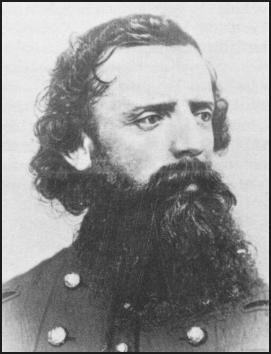
abram s. piatt photo

Col. Abram S. Piatt (1821-1908), 34th Ohio Infantry Regiment.

New York (NY) Herald, 4 October 1861

FIGHT WITH THE REBELS AT CHAPMANSVILLE

Cincinnati, Oct. 3, 1861.

The Kanawha correspondent of the Commercial of this city says that five companies of the First Kentucky regiment, four companies of the Thirty-fourth Ohio regiment and one company of the Fifty Virginia regiment, under Lieutenant Colonel Enyart, surrounded and attacked the rebels at Chapmansville, and after a short engagement completely routed them, killing sixty and taking seventy prisoners. The rebels in escaping were intercepted by Colonial Piatt, who killed forty and took a large number of prisoners. The country between Charleston and Wyandot river is now freed from secession power. This is the most effective blow given the rebels in this part of the valley.

IMG_2256.JPG

One section of the Kanawha Gap Battle Site, Chapmanville, Logan County, WV, 9 June 2018.

Daily Green Mountain Freeman (Montpelier, VT), 7 October 1861

Chapmansville, Va., the scene of the most recent engagement, is a small post village in Logan county, Va. Logan county is in the extreme Western portion of Virginia, the Tug Fork of the Big Sandy being the boundary line between it and the State of Kentucky. It is one of the largest, wildest and most sparsely inhabited counties in the State.

IMG_2238.JPG

Part of the Kanawha Gap Battle Site, Chapmanville, Logan County, WV, 9 June 2018.

National Republican (Washington, DC), 7 October 1861

THE SITUATION.

The two affairs at Chapmansville, reported three or four days since, in which the enemy lost one hundred killed and a proportionate number of wounded, will, it is supposed, restore permanent peace to the Virginia counties western of the Kanawha. Chapmansville is on the turnpike from Charleston to Logan county Court-house, and is about twenty-five miles to the south of Barboursville, the shire town of Cabell county. The secessionists in that part of Western Virginia have been numerous and pertinacious. They have once had possession of Guyandotte on the Ohio river and for a long time they threatened Ceredo (Mr. Thayer’s colony,) which lies on the river between Guyandotte and the Kentucky line. There have been two engagements with them in the rear of Ceredo, one at Barboursville, one at Logan county Court-house, one at Boone county Court-house (which town was burnt by the national troops,) and finally two at Chapmansville. The truth is, that in large portions of numerous, and, but for the early occupation of that region by the National troops, would have controlled it, not because they were the majority, but because one secessionist is, everywhere, a match for three Union men.

The secessionists are reckless, violent, and desperate, while their opponents, if not timid are at any rate remarkably pacific. We doubt, indeed, from all the information we can get, whether throwing out of the account Wheeling and Parkersburg, the terminal on the Ohio river of the Baltimore and Ohio railroad, Western Virginia had more elements of Union strength than the Valley of Virginia. From Harper’s Ferry south for fifty miles, the Union men have been numerous from the first, and it is a matter of deep regret that it did not consist with the plans of military strategy adopted at the headquarters of the army here, to occupy (at least) the northern part of the Valley of Virginia. It is consoling, that a different policy was adopted in retrospect to Western Virginia. That region was promptly taken possession of, cleared of the rebel armies by Gen. McClellan, and has since been victoriously held by Gen. Rosecrans. All attempts of the enemy to affect a re-entrance into Western Virginia are promptly repulsed.

34th Ohio Volunteer Infantry Regiment, Piatt's Zouaves Flag Photo.jpg

Staunton (VA) Spectator, 8 October 1861

Status at Sewell’s Mountain.

The enemy, under Gen. Rozencrantz, and our forces under Gen. Lee, are both upon Sewell Mountain very near each other. A fight has been daily expected there for some time, but the enemy have been fortifying ever since they have been there, and there will not be a fight unless we attack them in their entrenchments. They are afraid to attack us, and it is probable that our force is too weak to risk an attack on them within their fortification. It may, therefore, be some time before an engagement will take place. We understand that we had sent a force of four regiments to their rear for the purpose of cutting off their supplies—that we succeeded in getting around them, but were compelled to return because we did not have sufficient supplies ourselves. We also learn that Col. Jas. W. Davis of Greenbrier, whilst commanding a force of militia in Logan county, attacked a part of the enemy, and was shot down at the first fire. The militia, after several rounds caught the Yankee fever which made their cowardly legs run off with their brave hearts, and they left their commander in the hands of the enemy, who, we fear, has died from his wound.

IMG_2923

New historical sign placed by the WV Division of Culture and History located at the 119 ramp in Chapmanville, WV. 26 April 2017.

Chicago (IL) Daily Tribune, 9 October 1861

A Splendid Achievement of the Ohio Zouaves–“Wood Up” the Battle Cry.

[The following letter is exclusively devoted to the fight which the Piatt Zouaves had with the rebels near Chapmansville, Va. It is distinct from the victorious fight which the command of Lieut. Col. Enyart had with another body of rebels, in the same vicinity. EDS. CINCINNATI COM]

CAMP ENYART, KANAWHA, Oct. 2, 1861. EDS. COM.: The Zouave Thirty-fourth Regimens, Ohio, have had a chance to show their metal. This was on Wednesday, on Kanawha Gap, near Chapmansville, Va. After marching 42 miles, they came upon the enemy, who were behind breastworks, but could not stand our boys’ steady fire, for they retreated in utter consternation, their Col. J.W. Davis, of Greenbrier, Va, (but the traitor is a native of Portsmouth, Ohio,) being mortally wounded. We killed 20, took 3 prisoners, a secesh flag, 20 feet long with FIFTEEN STARS, 4 horses, 1 wagon, 10 rifles (one of which I claim), 12 muskets, and commissary stores (very low.) We lost 3 killed, 9 wounded, one since died. The route of the enemy was complete, although they had a brave, skillful commander, and strong position, with two days’ information of our intentions. They fled the moment their commander fell. The fight lasted about 10 minutes opposite the breastworks, but a running fire was kept up previous to that, by the Bushwhackers and rebel cavalry for two hours. At every turn of the road over the mountains, they would fire upon our advance men, wheel round, and gallop away. This kind of fight was kept up till we came suddenly upon their breastworks, immediately in line of our entire column. It was made on the side of a knoll, between two mountain sides, the road running between the mountain on our left. The wily rebel commander had adroitly cut down the brush on the right, placing a force of 100 men on the mountain top on our right, who raked our column from the front to the center. This was to draw our attention from their breastworks. Our men naturally fired upon the rebels on their right, steadily advancing up the road, until within 20 feet of the enemy’s works, when the rebels suddenly opened fire, from their right, left and center. The order from Col. Piatt and Lieut. Col. Toland, to flank right and left was immediately responded to by the Zouaves with a hurrah, a Zouave yell, and a cry of “wood up” from Little Red; a dash by our boys upon the enemy’s breastworks, above which about 300 rebel heads suddenly appeared, unknown by our men till that moment. They sent a perfect storm of bullets around, over, under, and into our men. A few minutes more and our boys were inside the breastworks, chasing them over the mountains, the enemy running away like cowards as they proved to be. They left 29 dead behind. Their force was 450 infantry and 50 cavalry. Our force was 560.

We buried our three brave dead comrades that night, carried our wounded to the house wherein the rebel Colonel lay, mortally wounded, deserted by all his men but one. Our whole column finally marched into the little town of Chapmansville, formerly headquarters of the enemy, and camped for the night.

34th Ohio Volunteer Infantry Regiment, Piatt's Zouaves Captain Photo.jpg

34th Ohio Volunteer Infantry Regiment, Piatt’s Zouaves, Captain Photo.

Pomeroy (OH) Weekly Telegraph, 11 October 1861

Brilliant Action in the Kanawha Valley.

CHARLESTON, Va., Sept. 30, ’61. Eds. Cin. Com.–Information having been brought to Col. J.V. Guthrie, commanding this post, that a large force of Rebels were gathered at Logan Co., Lt. Col. Enyart, of the 1st Kentucky, was at once sent to engage them. His force was composed of five companies of the 1st Kentucky, four companies of the 34th Ohio–German Regiment–under command of Col. A.S. Piatt, and one company of the 5th Virginia Regiment, under command of Maj. M.H. Wood.

Col. Enyart, with the Kentucky force, surrounded and attacked the Rebels at Chapmanville, and after a short but decisive engagement, completely routed them, killing 60 and taking 70 prisoners. The Rebels, in escaping, were intercepted by Col. Piatt, who surprised them and killed 40 men, and took a large number of prisoners.

The force of the Rebels is now completely broken up, and the country between this point and Guyandotte River is now freed from Secession power. This is the most effective blow given the Rebels in this part of the Valley.

In great haste. Further particulars by next boat.

Very respectfully,

M. CLEMENS,

Lieut. Col. 5th Va. Reg’t.

34th Ohio Volunteer Infantry Regiment, Piatt's Zouaves Soldier Photo

34th Ohio Volunteer Infantry Regiment, Piatt’s Zouaves, Soldier.

Evening Star (Washington, DC), 11 October 1861

THE BATTLE OF KANAWHA GAP.

The Western Virginia correspondent of the Cincinnati Gazette gives the following account of the late engagement at Kanawha Gap:

There were about 1,050 troops under the command of Colonels Enyart and Piatt, who left their camp Monday morning, 30th ulto., and took up their line of march for the enemy.

The forces moved together until they reached Peytona, on Cole river, where they separated; Col. Enyart going up Cole river. Col. Enyart did not meet the enemy in force at any place but his men did meet and ford swollen rivers, and marched on short rations, and were anxious to meet with the running enemy of Old Virginia. Col. Enyart did not meet Col. Piatt until they met on the Kanawha, on their return.

Col. Piatt’s command immediately proceeded thence to Boone Court House, and camped that night one mile beyond. The next day, after proceeding some sixteen miles,t hey came up with the advance guard of the enemy, consisting of cavalry, when a brisk fire was exchanged, the cavalry retreating. After the retreat of cavalry the battalion was immediately put in order of battle. The advance guard of fifteen men was led forward by Adj’t Clarke, proceeding along the road. Scouts were sent out on either side of the road to meet and repulse the sharp-shooters of the enemy.

The force proceeded in this order for about two miles, meeting the pickets of the enemy, exchanging shots with them incessantly, and driving them back with increased confusion at each charge.

Being unable to ascertain the position of the rebels, the entire force halted for a few moments, and Col. Piatt rode in advance and took observations with his glass, but could not ascertain their force and position, as it was covered with a thick growth of underbrush. After these observations a command was issued to forward the column. The scouts moved on the rapidity and enthusiasm, the main body moving up the narrow road cautiously and firmly. The fire continued to increase, and shots were rapidly exchanged from the right and left with the enemy, until our advanced guard reached within sixty yards of their main force. The column was some eighty yards from the enemy when they received a perfect volley of fire upon their right, indicating that the rebels were in force in that direction. Company “A,” commanded by Capt. Rathbone, was ordered to deploy as skirmishers to the right, up the side of the mountain, and if possible to flank the enemy on the left. Company “C,” commanded by Capt. Miller, was ordered to the right, up a similar mountain, to flank the enemy on their left. Company “I,” commanded by Capt. Anderson, was ordered directly up the ravine, on the left. In this position he drew the concentrated fire of the rebels upon his company, who made use of the knowledge thus obtained by rapidly charging upon and destroying the enemy’s breastworks. The center moved directly up the road. With this disposition of the forces, Col. Piatt routed them from their confusion. Capt. Anderson was the first to mount their breastworks, his men following him in the face of a terrible fire without flinching or confusion.

As Capt. Anderson sealed the breastwork, Capt. Miller closed upon the left and Capt. Rathbone came in upon the right, his men crying “Zouave!” The main column moving up the road in double quick–until they were brought to a temporary halt by obstructions placed in the road by the enemy.

The rebels, terrified by the strange bravery and almost wild enthusiasm that was exhibited by each advancing column, ran in confusion, leaving their dead, wounded, clothing, guns, horses, &c., making their escape by Capt. Rathbone’s right; his company being too far up the mountain to cut off their retreat. Capt. West, commanding company F, was detailed to scour the mountain on the west, on the left of the road. Capt. O.P. Evans on the west side of the mountain, on the right side of the road. Capt. Herman Evans, commanding Company H, on the east side of the mountain, on the left of the road.

Each of these companies moved with dispatch, yet such was the knowledge of the rebels of teh by-paths in the mountains, and belonging to the “F.F.V.’s,” and having been drilled at running all summer, that but two were captured.

Among interesting objects captured was a genuine secession flag, captured by Lieut. Brown.

The enemy’s loss was thirty killed and fifty wounded.

We regret to know that four of our men were killed and eight wounded.

34th Ohio Volunteer Infantry Regiment, Piatt's Zouaves Soldiers Photo 2.jpg

34th Ohio Volunteer Infantry Regiment, Piatt’s Zouaves, Soldiers. Here’s a link to Captain T.W. Rathbone’s Civil War diary: http://resources.ohiohistory.org/ohj/browse/displaypages.php?display[]=0071&display[]=33&display[]=56

Burlington (IA) Weekly Hawk-Eye, 12 October 1861

The fight at Chapmansville was a sharp and bloody affair. Five of Piatt’s Zouaves were killed. The rebels lost thirty-five killed.
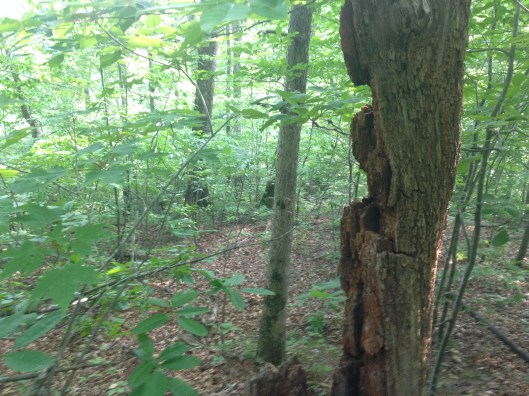
IMG_2235.JPG

Part of the Kanawha Gap Battle Site, Chapmanville, Logan County, WV, 9 June 2018.

National Republican (Washington, DC), 17 October 1861

The thirty-fourth regiment (first Zouaves) have been actively engaged since they came to the Kanawha Valley. Since the glorious victory they won near Chapmansville where the rebel commander, Colonel Davis, was mortally wounded, the Union sentiment has advanced on the Cole River. Two companies have been organized, and are ready to go to work to defend their own homes and give the organized regiments an opportunity to advance into the heart of the enemy’s country.

IMG_2254.JPG

Part of the Kanawha Gap Battle Site, Chapmanville, Logan County, WV, 9 June 2018.

Cincinnati (OH) Daily Press, 22 October 1861

Captain H.C. Evans, of Piatt’s Zouave Regiment, yesterday called in our office and exhibited a Secesh flag, captured at the Chapmansville fight, on the 24th ult.
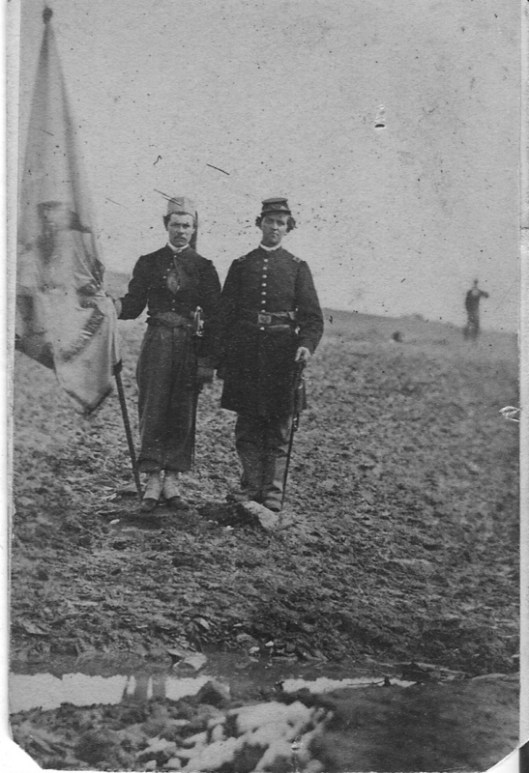
34th Ohio Volunteer Infantry Regiment, Piatt's Zouaves Soldiers Photo

34th Ohio Volunteer Infantry Regiment, Piatt’s Zouaves, Soldiers.

Clarksville (TN) Chronicle, 25 October 1861

The Fight in Logan County, Va.

[From the Richmond Whig of the 15th.]

We yesterday published the Yankee account of a battle in Logan county, which as usual, was manufactured out of whole cloth. The following are the facts as given by the South-western Times, (Tazewell county) of the 10th inst.:

From Samuel Smoot, Esq., of Boone county, who was in the fight, we learn the following particulars of the battle near Chapmanville, Logan county, on the 25th ult: The Yankees numbered 700, and commenced the attack upon our troops–the Logan militia–in a low gap between Guyandotte river and Big Creek, where they were engaged in raising a temporary breastwork. Our troops numbered 220, but there were only about 80 of them engaged in the fight. They were commanded by Col. J.W. Davis, of Greenbrier, a brave and gallant officer, who was severely, but not dangerously wounded, in the arm and breast. As soon as it became known that Col. Davis was wounded, the militia commenced a retreat. The commanding officer of the Lincoln troops afterwards confessed to Col. Davis, who was taken prisoner, that at the same moment a portion of the Yankees were running, and that one more round would have completely dispersed them.

The loss of the Yankees, by their own confession to Col. Davis, was 40 killed and a number wounded; among the former were four Union men, all of whom are represented by the Yankees to be most arrant thieves and cowards. Our loss was two killed and three or four wounded, besides Col. Davis, whose valuable services are at present lost to the Confederacy, being paroled by the enemy.

On the following day our scouts killed one of their pickets, and wounded another, at a point about half way between Logan Court House and Chapmanville, promising to give them particular thunder before daylight next morning. This with some news from a lady on the road, and some account of the militia of the surrounding counties, found on the person of Col. Davis, caused a hasty stampede for their headquarters, in the valley of the Kanawha. It seems that high water, bad roads, nor anything else could impede their rapid flight. They tore down a meeting house in Boone county to make rafts whereon to cross the river. They drowned two of their wounded, lost a wagon containing their entire stock of ammunition, and were fully persuaded that they were followed by two thousand cavalry, of which the Yankees in the West are about as fearful as their Eastern brothers are of masked batteries.

Upon the whole, we are much gratified at the result of this fight. It has, for the present, driven the cowardly thieves from the country, given renewed energy to the true patriots of Logan and the adjoining counties, fully convincing them that with the assistance of two or three hundred of their gallant friends in Tazewell county, they will be fully able to thrash any number that Gen. Cox or his friends shall dare to send against them.”

Note: An almost identical version of this story appeared in the Staunton (VA) Spectator on 22 October 1861.
IMG_7149.JPG

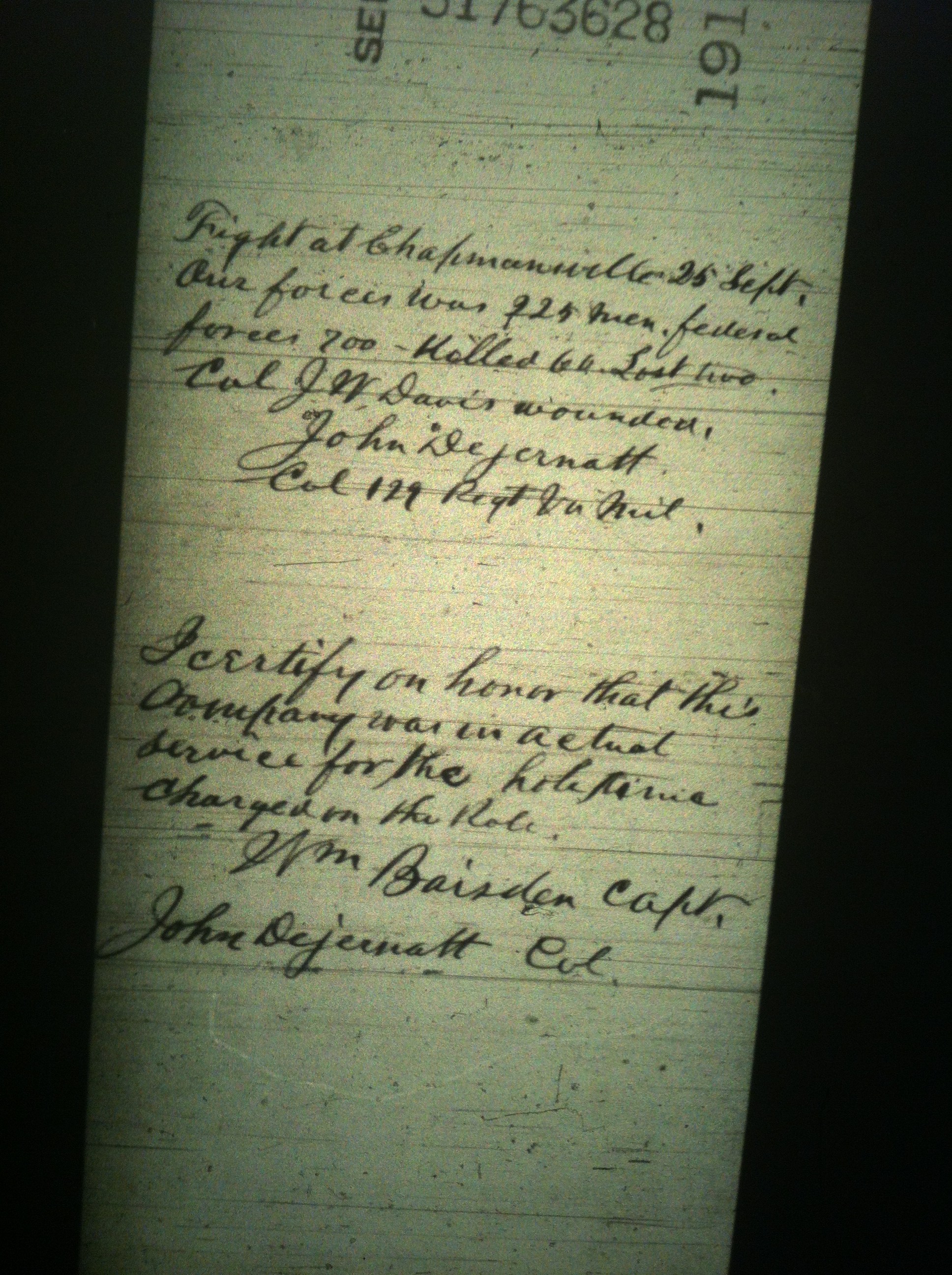
Record relating to the 129th Virginia Militia (Confederate), which was present at the Battle of Kanawha Gap.
George Workman Letter to Lewis Lawson (1867)

19 Saturday May 2018

Posted by Brandon Ray Kirk in Civil War, Pecks Mill

≈ Leave a comment

Tags

Appalachia, civil war, Confederate Army, genealogy, George Workman, history, Lewis Lawson, Logan County, Virginia, West Virginia, Whites Mill

The following letter was composed by George Workman of Logan County, WV, and sent to Lewis Lawson:

April the 3rd 1867

Mr. Lewis Lawson. Sir. I take the present oppotunity of informing you that I have been in formed that you claim to have a deed of trust on my land. now this seems a strange truth to me for you know that I never gave you any such a thing and I think you are a man of better sense than to forge such a thing you don’t like to work that well I give you and smoot a deed of trust on five head of cattle which the rebs took from me and when you want your pay you must make them pay me now sir if you have a trust deed on my land you had better keep it to your self for I can prove the deed was on cattle and I will prossecute you as you are a man. You must think that I am a perfect idiot that I will let you forge a trust deed sell me out say nothing to you. but I am not quite that dull now sir I dare you to do any thing with your deed and Just show you that I am not a sleep and I am not worth what the law a lows me until you rebs pays me for my property then I will pay you & c.

George Workman

Note: Mr. Lawson, born about 1810 in England, lived at Whites Mills in 1860 where the census listed him as a farmer and merchant with $4000 worth of real estate and $15,720 worth of personal property.

Dils Cemetery in Pikeville, KY (2018)

29 Sunday Apr 2018

Posted by Brandon Ray Kirk in African American History, Cemeteries, Civil War, Hatfield-McCoy Feud, Pikeville

≈ Leave a comment

Tags

39th Kentucky Infantry, African-Americans, Ann Dils, Appalachia, Basil Hatfield, cemeteries, civil war, Dils Cemetery, genealogy, Hatfield-McCoy Feud, history, John Dils Jr., Kentucky, Martha Hatfield, Martha McCoy, National Register off Historic Places, photos, Pike County, Pikeville, Randolph McCoy, Roseanna McCoy, Sam McCoy, Sarah McCoy, slavery, Union Army

IMG_9093

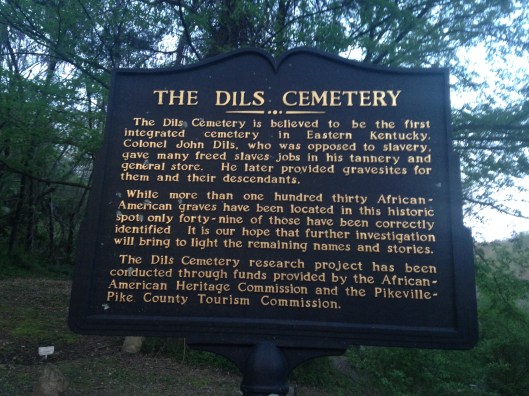
The Dils Cemetery Sign, Pikeville, KY. 27 April 2018.

IMG_9170

McCoy Family wreath, Dils Cemetery, Pikeville, KY. 27 April 2018.

IMG_9095

Randolph and Sarah McCoy graves, Dils Cemetery, Pikeville, KY. 27 April 2018.

IMG_9096

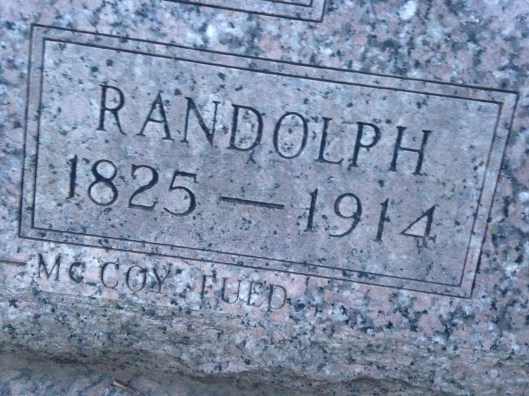
Randolph McCoy grave, Dils Cemetery, Pikeville, KY. 27 April 2018.

IMG_9171

Roseanna McCoy grave, Dils Cemetery, Pikeville, KY. 27 April 2018.

IMG_9172

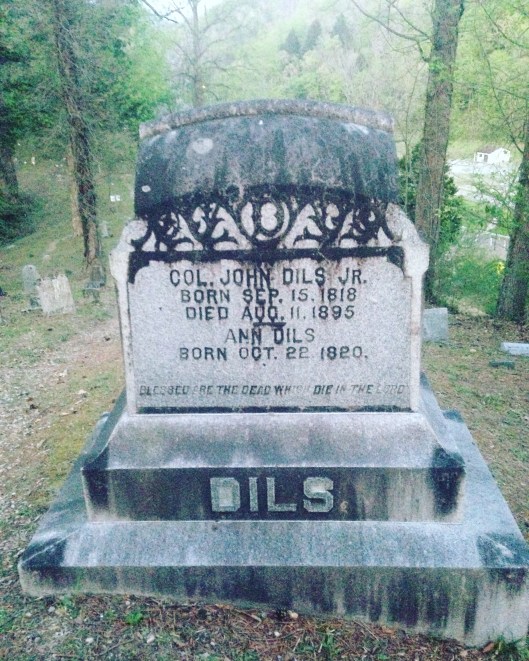
Col. John Dils grave, Dils Cemetery, Pikeville, KY. 27 April 2018.

IMG_9110

History Marker, Dils Cemetery, Pikeville, KY. 27 April 2018.

IMG_9174

Dils Cemetery, Pikeville, KY. 27 April 2018.

IMG_9101

Basil Hatfield grave sign, Dils Cemetery, Pikeville, KY. 27 April 2018.

IMG_9100

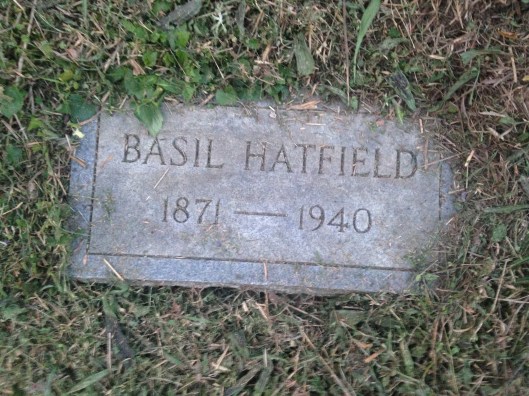
Basil Hatfield grave, Dils Cemetery, Pikeville, KY. 27 April 2018.

IMG_9113

Sam and Martha McCoy grave, Dils Cemetery, Pikeville, KY. 27 April 2018.

Smith Cemeteries on Brier Branch of Harts Creek (2018)

31 Saturday Mar 2018

Posted by Brandon Ray Kirk in Big Harts Creek, Cemeteries, Civil War, Tazewell County, Whirlwind

≈ 1 Comment

Tags

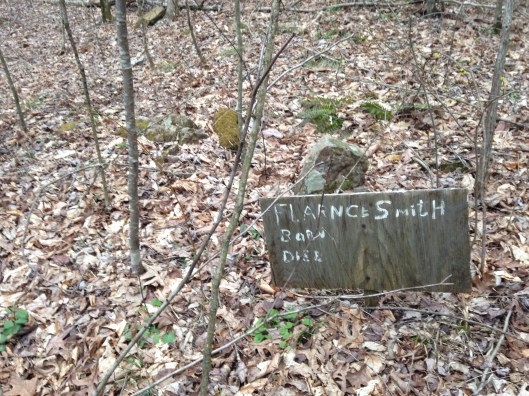
45th Battalion Virginia Infantry, Appalachia, Brandon Kirk, Brier Branch, cemeteries, civil war, Confederate Army, Emal Smith, Florence Smith, genealogy, Harts Creek, history, James Smith, Logan County, photos, Scott Dalton, Susie Smith, Tazewell County, Thomas Smith, Thomas Smith Family Cemetery, Virginia, West Virginia, Zernie Smith

IMG_7185.JPG

Heading up Brier/Briar Branch of Harts Creek, Logan County, WV. 29 March 2018.


IMG_7254

Up we go! 29 March 2018.

IMG_7191

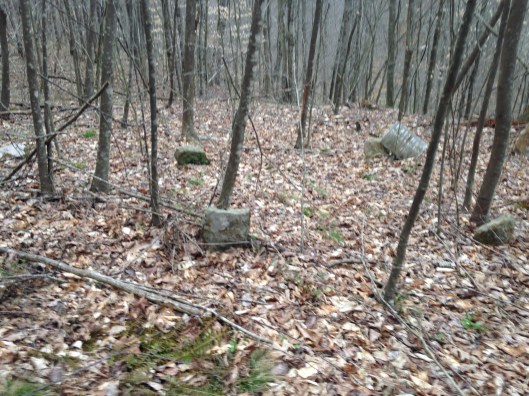
Lower Smith Cemetery. Right Hand Fork of Brier Branch. I counted six graves here. 29 March 2018.

IMG_7188

Lower Smith Cemetery. Right Hand Fork of Brier Branch. 29 March 2018.

IMG_7199

Upper Smith Cemetery. Some records refer to this cemetery as “Brier Branch Cemetery.” Right Hand Fork of Brier Branch at left; Sugar Camp on the right. 29 March 2018.

IMG_7214

Thomas Smith grave. Mr. Smith, a veteran of the Confederate Army, was a native of Tazewell County, VA. 29 March 2018.

← Older posts
Newer posts →

Feud Poll 1

If you had lived in the Harts Creek community during the 1880s, to which faction of feudists might you have given your loyalty?

Categories

  • Adkins Mill
  • African American History
  • American Revolutionary War
  • Ashland
  • Atenville
  • Banco
  • Barboursville
  • Battle of Blair Mountain
  • Beech Creek
  • Big Creek
  • Big Harts Creek
  • Big Sandy Valley
  • Big Ugly Creek
  • Boone County
  • Breeden
  • Calhoun County
  • Cemeteries
  • Chapmanville
  • Civil War
  • Clay County
  • Clothier
  • Coal
  • Cove Gap
  • Crawley Creek
  • Culture of Honor
  • Dingess
  • Dollie
  • Dunlow
  • East Lynn
  • Ed Haley
  • Eden Park
  • Enslow
  • Estep
  • Ethel
  • Ferrellsburg
  • Fourteen
  • French-Eversole Feud
  • Gilbert
  • Giles County
  • Gill
  • Green Shoal
  • Guyandotte River
  • Halcyon
  • Hamlin
  • Harts
  • Hatfield-McCoy Feud
  • Holden
  • Hungarian-American History
  • Huntington
  • Inez
  • Irish-Americans
  • Italian American History
  • Jamboree
  • Jewish History
  • John Hartford
  • Kermit
  • Kiahsville
  • Kitchen
  • Leet
  • Lincoln County Feud
  • Little Harts Creek
  • Logan
  • Man
  • Matewan
  • Meador
  • Midkiff
  • Monroe County
  • Montgomery County
  • Music
  • Native American History
  • Peach Creek
  • Pearl Adkins Diary
  • Pecks Mill
  • Peter Creek
  • Pikeville
  • Pilgrim
  • Poetry
  • Queens Ridge
  • Ranger
  • Rector
  • Roane County
  • Rowan County Feud
  • Salt Rock
  • Sand Creek
  • Shively
  • Spears
  • Sports
  • Spottswood
  • Spurlockville
  • Stiltner
  • Stone Branch
  • Tazewell County
  • Timber
  • Tom Dula
  • Toney
  • Turner-Howard Feud
  • Twelve Pole Creek
  • Uncategorized
  • Warren
  • Wayne
  • West Hamlin
  • Wewanta
  • Wharncliffe
  • Whirlwind
  • Williamson
  • Women's History
  • World War I
  • Wyoming County
  • Yantus

Feud Poll 2

Do you think Milt Haley and Green McCoy committed the ambush on Al and Hollene Brumfield in 1889?

Blogroll

  • Ancestry.com
  • Ashland (KY) Daily Independent News Article
  • Author FB page
  • Beckley (WV) Register-Herald News Article
  • Big Sandy News (KY) News Article
  • Blood in West Virginia FB
  • Blood in West Virginia order
  • Chapters TV Program
  • Facebook
  • Ghosts of Guyan
  • Herald-Dispatch News Article 1
  • Herald-Dispatch News Article 2
  • In Search of Ed Haley
  • Instagram
  • Lincoln (WV) Journal News Article
  • Lincoln (WV) Journal Thumbs Up
  • Lincoln County
  • Lincoln County Feud
  • Lincoln County Feud Lecture
  • LinkedIn
  • Logan (WV) Banner News Article
  • Lunch With Books
  • Our Overmountain Men: The Revolutionary War in Western Virginia (1775-1783)
  • Pinterest
  • Scarborough Society's Art and Lecture Series
  • Smithsonian Article
  • Spirit of Jefferson News Article
  • The Friendly Neighbor Radio Show 1
  • The Friendly Neighbor Radio Show 2
  • The Friendly Neighbor Radio Show 3
  • The Friendly Neighbor Radio Show 4
  • The New Yorker
  • The State Journal's 55 Good Things About WV
  • tumblr.
  • Twitter
  • Website
  • Weirton (WV) Daily Times Article
  • Wheeling (WV) Intelligencer News Article 1
  • Wheeling (WV) Intelligencer News Article 2
  • WOWK TV
  • Writers Can Read Open Mic Night

Feud Poll 3

Who do you think organized the ambush of Al and Hollene Brumfield in 1889?

Recent Posts

  • Logan County Jail in Logan, WV
  • Absentee Landowners of Magnolia District (1890, 1892, 1894)
  • Charles Spurlock Survey at Fourteen Mile Creek, Lincoln County, WV (1815)

Ed Haley Poll 1

What do you think caused Ed Haley to lose his sight when he was three years old?

Top Posts & Pages

  • About
  • Perry A. Cline Deed to Anderson Hatfield (1877)
  • Aracoma High School in Logan, WV (1929)
  • The C&O Shops at Peach Creek, WV (1974)
  • Paw Paw Incident: Plyant Mahon Deposition (1889)

Copyright

© Brandon Ray Kirk and brandonraykirk.wordpress.com, 1987-2023. Unauthorized use and/or duplication of this material without express and written permission from this blog’s author and/or owner is strictly prohibited. Excerpts and links may be used, provided that full and clear credit is given to Brandon Ray Kirk and brandonraykirk.wordpress.com with appropriate and specific direction to the original content.

Archives

  • February 2025
  • January 2025
  • October 2023
  • September 2023
  • December 2022
  • November 2022
  • May 2022
  • April 2022
  • February 2022
  • November 2021
  • October 2021
  • September 2021
  • June 2021
  • May 2021
  • April 2021
  • March 2021
  • February 2021
  • January 2021
  • December 2020
  • November 2020
  • October 2020
  • July 2020
  • June 2020
  • May 2020
  • April 2020
  • March 2020
  • February 2020
  • January 2020
  • December 2019
  • November 2019
  • October 2019
  • September 2019
  • August 2019
  • July 2019
  • June 2019
  • May 2019
  • April 2019
  • March 2019
  • February 2019
  • January 2019
  • December 2018
  • November 2018
  • October 2018
  • September 2018
  • August 2018
  • July 2018
  • June 2018
  • May 2018
  • April 2018
  • March 2018
  • February 2018
  • January 2018
  • December 2017
  • November 2017
  • October 2017
  • September 2017
  • August 2017
  • July 2017
  • June 2017
  • May 2017
  • April 2017
  • March 2017
  • February 2017
  • January 2017
  • December 2016
  • November 2016
  • October 2016
  • September 2016
  • August 2016
  • July 2016
  • June 2016
  • May 2016
  • April 2016
  • March 2016
  • February 2016
  • January 2016
  • December 2015
  • November 2015
  • October 2015
  • September 2015
  • August 2015
  • July 2015
  • June 2015
  • May 2015
  • April 2015
  • March 2015
  • February 2015
  • January 2015
  • December 2014
  • October 2014
  • September 2014
  • August 2014
  • July 2014
  • June 2014
  • May 2014
  • April 2014
  • March 2014
  • February 2014
  • January 2014
  • December 2013
  • November 2013
  • October 2013
  • September 2013
  • August 2013
  • July 2013
  • June 2013
  • May 2013
  • April 2013
  • March 2013
  • February 2013
  • January 2013
  • December 2012
  • November 2012

Enter your email address to follow this blog and receive notifications of new posts by email.

Join 2,925 other subscribers

Tags

Appalachia Ashland Big Creek Big Ugly Creek Blood in West Virginia Brandon Kirk Cabell County cemeteries Chapmanville Charleston civil war coal Confederate Army crime culture Ed Haley Ella Haley Ferrellsburg feud fiddler fiddling genealogy Green McCoy Guyandotte River Harts Harts Creek Hatfield-McCoy Feud history Huntington John Hartford Kentucky Lawrence Haley life Lincoln County Lincoln County Feud Logan Logan Banner Logan County Milt Haley Mingo County music Ohio photos timbering U.S. South Virginia Wayne County West Virginia Whirlwind writing

Blogs I Follow

  • OtterTales
  • Our Appalachia: A Blog Created by Students of Brandon Kirk
  • Piedmont Trails
  • Truman Capote
  • Appalachian Diaspora

BLOOD IN WEST VIRGINIA is now available for order at Amazon!

Blog at WordPress.com.

OtterTales

Writings from my travels and experiences. High and fine literature is wine, and mine is only water; but everybody likes water. Mark Twain

Our Appalachia: A Blog Created by Students of Brandon Kirk

This site is dedicated to the collection, preservation, and promotion of history and culture in Appalachia.

Piedmont Trails

Genealogy and History in North Carolina and Beyond

Truman Capote

A site about one of the most beautiful, interesting, tallented, outrageous and colorful personalities of the 20th Century

Appalachian Diaspora

  • Subscribe Subscribed
    • Brandon Ray Kirk
    • Join 787 other subscribers
    • Already have a WordPress.com account? Log in now.
    • Brandon Ray Kirk
    • Subscribe Subscribed
    • Sign up
    • Log in
    • Report this content
    • View site in Reader
    • Manage subscriptions
    • Collapse this bar
 

Loading Comments...