• About

Brandon Ray Kirk

~ This site is dedicated to the collection, preservation, and promotion of history and culture in my section of Appalachia.

Brandon Ray Kirk

Tag Archives: West Virginia

Attack Upon Non-Union Mine in Boone County, WV (1922)

16 Saturday Nov 2019

Posted by Brandon Ray Kirk in Boone County, Clothier, Coal, Logan

≈ 1 Comment

Tags

Appalachia, Boone County, Clothier, coal, crime, history, Lloyd Layman, Logan, Logan Banner, Madison, Ottawa, West Virginia

The following story about an attack upon a non-union mine at Ottawa in Boone County comes from the Logan Banner on July 21, 1922:

300 Shots Are Fired At Boone County Mine

Three hundred shots were fired from the mountain side into a group of non-union miners as they were going to work at 7:30 A.M., in a mine at Ottawa, Monday. There were no casualties as the miners fled and hastily hid behind trees, and other points of safety.

Two state troopers stationed at Ottawa made an immediate dash for the scene of the trouble but the firing which had lasted for only a few minutes, was over when they reached the mine. An investigation disclosed the fact that the attacking party had made a hasty retreat and their whereabouts could not be ascertained. A call for assistance brought five additional troopers from Clothier who brought with them a bloodhound but the dog could not take the trail evidently due to some substance that the attacking party had used to throw the hounds off the trail.

Immediately after the firing was over an investigation was made and 30 sticks of dynamite were found concealed beneath the mine track inside of the drift mouth of the mine and so arranged that it would explode when the first mine motor entered.

The outbreak Monday was the first that has occurred on Little Coal River in some months and the state police in that section are making every effort to apprehend members of the party who did the firing. Ten special officers were sworn in at Madison on Monday and Capt. Midkiff, in charge of the state police at Clothier, dispatched trooper Lloyd Layman to Logan Monday where he was furnished with 30 high-powered rifles and 3,000 rounds of ammunition with which to equip the special officers and successfully combat any further outbreak that might occur as well as to assist in apprehending members of the attacking forces last Monday.

Trooper Layman stated that in addition to the ten men sworn in Madison there would be 50 special officers sworn in at Ottawa, and every effort put forth by officers to track down the men who were responsible for the mine battle and bring them to justice.

Civil War in the Kanawha Valley: Spring Hill Cemetery (2019)

09 Saturday Nov 2019

Posted by Brandon Ray Kirk in Cemeteries, Civil War

≈ Leave a comment

Tags

50th Virginia Infantry, Appalachia, Battle of Charleston, Camp Garnett, Charleston, civil war, Confederate Army, Confederate Cemetery, genealogy, history, Joseph H. Conley, Kanawha County, Sons of Confederate Veterans, Spring Hill Cemetery, Stonewall Jackson Camp, Terry Lowry, United Confederate Veterans, West Virginia

IMG_0660

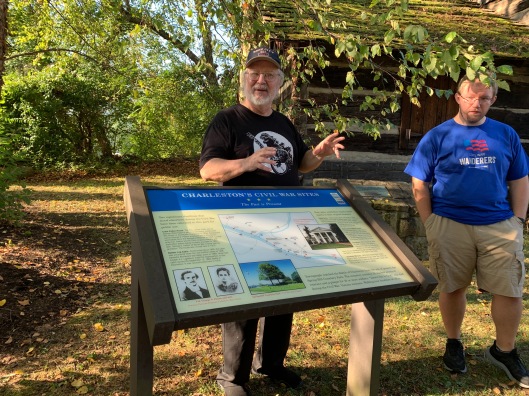
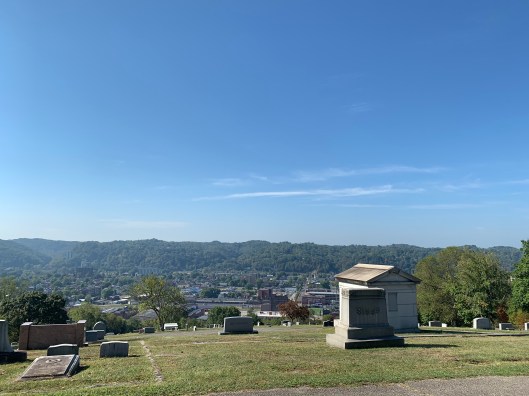
Terry Lowry is THE authority on the Civil War in the Kanawha Valley. Stop 4 on his tour: Spring Hill Cemetery in Charleston, WV. 29 September 2019. Here is a link to Terry’s latest book, The Battle of Charleston (2016): https://wvcivilwar.com/now-available-the-battle-of-charleston/

IMG_0657

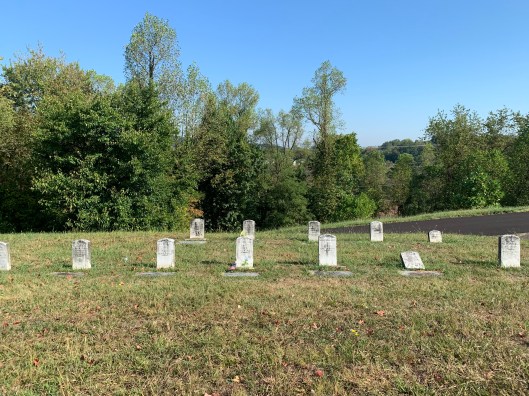
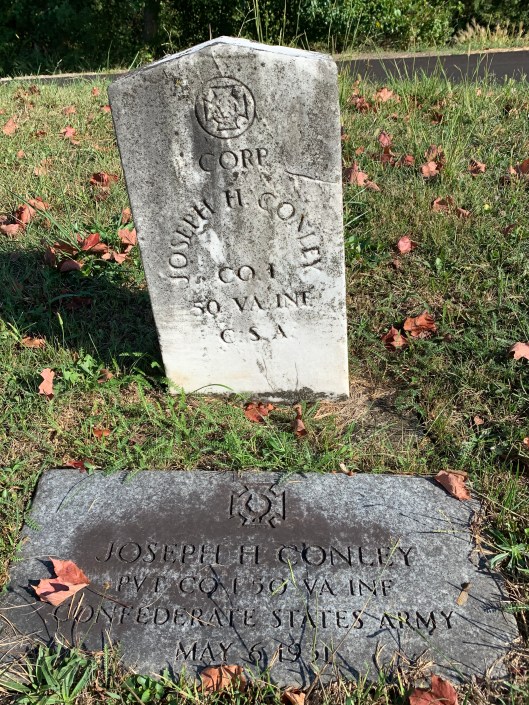
Confederate Cemetery at Spring Hill Cemetery in Charleston, WV. 29 September 2019. For more information about the cemetery, go here: https://www.wvencyclopedia.org/articles/539

IMG_0656

Confederate Cemetery at Spring Hill Cemetery in Charleston, WV. 29 September 2019. For more information about the cemetery, go here: https://wvtourism.com/company/spring-hill-cemetery/

IMG_0661

Confederate Cemetery at Spring Hill Cemetery in Charleston, WV. 29 September 2019

Logan County Jail (1921)

09 Saturday Nov 2019

Posted by Brandon Ray Kirk in Logan

≈ Leave a comment

Tags

Appalachia, crime, Denver Beckett, history, Logan, Logan County, Logan County Jail, N.E. Steele, West Virginia, William B. Johnson

Here is a bit of history for the Logan County (W.Va.) Jail based on documents from 1921:

Appointment of Jail Inspectors

Dr. N.E. Steele, Wm. B. Johnson and Denver Beckett are hereby appointed, authorized and directed to inspect, investigate and report in writing to the court at the present term the existing conditions of the Jail of the county, the care and treatment of the prisoners therein confined, in detail, as required by Secs. 40 and 41 of Chapter 41 of the Code of West Virginia.

The Clerk of the court will furnish said inspectors a copy of said sections for their guide in making said inspection and report and will make four attested copies of this order and place them in the hands of the sheriff of this county to be served on the above named inspectors which shall operate as a summons to them to forthwith appear in open court and take the oath required by law and to enter upon the discharge of the duties herewith.

Law Order Book X, page 183, 11 April 1921

***

CHAPTER 41

Sec. 40. DUTIES OF JAILER. The jailer shall cause all the apartments of his jail to be well whitewashed at least twice in every year, and have the same properly aired and always kept clean. He shall furnish every prisoner with wholesome and sufficient food, and with a bed and bedding cleanly and sufficient, and have his apartment warmed when it is proper, in case of the sickness of any prisoner, he shall provide for him adequate nursing and attendance, and if there be occasion for it, and circumstances will permit shall confine him in an apartment separate from other prisoners. In no case shall a jailer permit the use of ardent spirits in the jail, except when prescribed by a physician. (Code Va. 1860, p. 289; Acts 1881, c 19.)

Sec. 41. Annual Inspection. The circuit court of every county shall annually, or oftener, if deemed necessary, appoint three persons, one of whom shall be a physician, to inspect the jail of each county. The judge shall administer to them the following oath: “You shall truly report to the court, as to the jail in this county, the size thereof, the number of its apartments, and its state, and condition; whether it is secure, sufficient for those who may be confined therein, and such that convicts may be kept in apartments separate from each other and from the other prisoners; whether every apartment is as constructed that it can be kept comfortable; whether it is kept in constant and adequate repair, and supplied with the furniture and other things necessary, and if not, in what it is deficient. You shall also diligently examine and truly report whether or not the jailer, has, during the last twelve months, faithfully performed the duties required of him by the fortieth section of the forty first chapter of the Code of West Virginia, and if not, in what respect he has failed to perform the same.” The said inspectors shall be furnished for their guide with a copy of the said oath, and of the said section. If they make a report, which fails in any respect to conform to said oath, it shall be recommitted to them until they fully report  upon all the said matters. (Code Va. 1860, p. 289, Acts 1881 c. 19.)

***

N.E. Steele, William B. Johnson and Denver Beckett, who were appointed to inspect and report the existing conditions of and at the County Jail, by an order entered at a former day of this term of court, pursuant to Section 40 of Chapter 41 of the Code of West Virginia, and who were sworn as the law directs, having made the inspection as required, returned into court and submitted the following report in writing:

“We the undersigned appointed to inspect the jail of Logan County, hereby make the following report.

Size of Jail approximately 39 by 84 feet. Exclusive of jailer’s Residence. Brick building with concrete floors, three stories high, with cells on first and second floors, third story unfinished.

31 apartments or cells.

Capacity 112 men.

Confined therein at present 93 persons.

State and condition of jail, Good.

We consider jail secure and sufficient for those who may be confined therein, and convicts may be kept separate one apartment or cell from the other, the capacity of each apartment or cell being 3 or 4 persons or more.

Apartments or cells are so constructed that they can be kept comfortable.

Jail is new and in good repair and condition, and supplied with Furniture and other things necessary.

As to the jailer performing the duties required by Section 40 of Chapter 41 the past twelve months, will state that the present jail is new, and the old jail recently torn, and we doubt if the jailer could during the past twelve months comply with all the requirements in all cases in the old jail which has been torn away.

At present we believe that the jailer is complying with section 40 of Chapter 41.

Respectfully Submitted.

N.E. Steele

Wm. B. Johnson

Denver Beckett.”

It appearing from said report that a new county jail has been provided and the prisoners moved from the old jail into the new one but a few days before the beginning of this term of the court, and the old jail was torn down. It was not possible for the committee to make a report as to the condition of the old jail for the year preceding, but the report showing that the new jail is in good condition, ample and sufficient to provide for the comfort and well-being of the prisoners, as well as for their proper detention, and that the prisoners are being provided with suitable clothing, bedding, food and other necessaries, as required by law, the court perceives no reason for making any order changing the existing conditions, and the report is therefore received, confirmed, ordered to be filed, and the committee discharged.

It is further ordered that the said committee each is allowed for his services in this behalf the sum of Five Dollars ($5.00), payable out of the treasury of this county.

Law Order Book X, page 264, 6 May 1921

Civil War in the Kanawha Valley: MacFarland-Hubbard House (2019)

31 Thursday Oct 2019

Posted by Brandon Ray Kirk in Civil War

≈ Leave a comment

Tags

Appalachia, Battle of Charleston, Charleston, civil war, history, Kanawha County, Kanawha Valley, MacFarland-Hubbard House, photos, Terry Lowry, West Virginia

IMG_0652

Terry Lowry is THE authority on the Civil War in the Kanawha Valley. Stop 3 on his tour: MacFarland-Hubbard House in Charleston, WV. 29 September 2019. Here is a link to Terry’s latest book, The Battle of Charleston (2016): https://wvcivilwar.com/now-available-the-battle-of-charleston/

IMG_0653

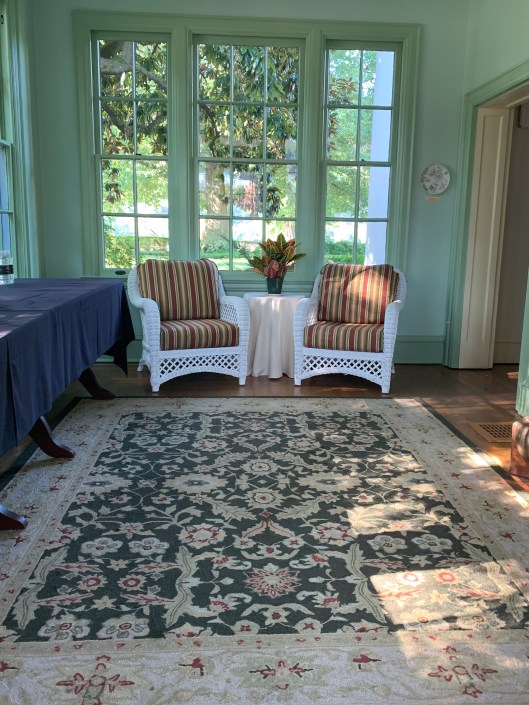
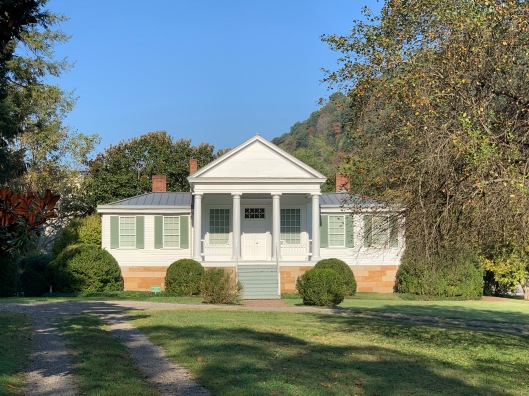
MacFarland-Hubbard House in Charleston, WV. 29 September 2019. For house history, go here: https://www.wvencyclopedia.org/exhibits/23?section=6

IMG_0654

MacFarland-Hubbard House in Charleston, WV. 29 September 2019. During the Battle of Charleston (1862), a cannonball struck in the house. It also served as a hospital. For history about house restoration, go here: http://wvhumanities.org/about/our-historic-house/macfarland-hubbard-house-restoration/

IMG_0655

MacFarland-Hubbard House in Charleston, WV. 29 September 2019. 

Recollections of Harry Berman of Williamson, WV (1978)

31 Thursday Oct 2019

Posted by Brandon Ray Kirk in Coal, Matewan, Williamson

≈ 3 Comments

Tags

Appalachia, Baldwin-Felts Agency, Bluefield, Cabell Testerman, Carleton Starr, Chambers Hardware Store, chief of police, Clara Berman, coal, crime, Harry Berman, history, Matewan, mayor, Mine Wars, Mingo County, Sid Hatfield, teacher, United Mine Workers of America, Welch, West Virginia, Williamson

On December 2, 1978, Harry Berman of Williamson, Mingo County, West Virginia, recalled the Matewan Massacre of May 19, 1920:

When do you remember that the union… What do you remember about the organization of the unions?

Well, that was in Matewan. I was at the age of about thirteen years old at that time. That was about 1915, I’d say. This was concerning the miners there, about a strike. They all got together and so they went on a strike, and the company has ordered the people that went on a strike. The company has ordered them to vacate their homes.

That was the company houses?

That was the company houses. The miners at that time, they didn’t approve of it and so they began to gather around. So they got Baldwin-Felts men in there. There as about twelve of them from Bluefield, West Virginia. So they came in on that midnight train that comes through there about twelve.

The Baldwin-Felts gang was a gang that broke the unions. They traveled all over the state or throughout the coalfields breaking the unions.

Well, they were trying to break the union at that time, but these twelve men were sent in here from Bluefield and they came in on the twelve o’clock train and they went over to the hotel. They spent the night there and the next morning they got up and out and they vacated more houses for these men. This kindly upset the union men at that time. So anyway then when after all that was all done they all went back again to the hotel, and so they packed their bags. Unfortunately, what they done, they took their rifles, they took them apart, and they packed them on the inside of their bags and some of them packed them on the outside of their bags.

In other words, they were going to show that they were leaving in peace?

Yeah.

After vacating people from their company houses?

Yeah. That was about the time… Let’s see, the train comes through there, that Number 16, it comes through there about five o’clock in the evening. So they all came to the station at that time. When they all got to the station, all the union men–there must have been at least 100 of them–all gathered around them.  You know, as they came to the station. Well, I was standing there in front of the door, in front of my father’s store there at that time, and watched all these people coming to the station. So, they all went the other way–that was Chambers Hardware at that time–they went toward Chambers Hardware. When they all got there, they all bunched together.

Was that the union men bunching together?

That was the union men that bunched together there around the Baldwin-Felts men, because I don’t think the Baldwin-Felts men suspected anything at all. If they did, they would have went there with their rifles, see.

In other words, you think they were surprised with an ambush?

Yeah, they were surprised. It took them by surprise.

The whole, as I understand it, the whole Baldwin gang was shot on the platform as they were getting ready to board the train?

Well, before the train came in. That was about maybe fifteen minutes before the train came in through there, see. So the mayor of the town was Testerman. He went along with them to the Baldwin-Felts men down in there and also with the union men and they all bunched around Chambers Hardware Store. Then the chief of police–he was also in the crowd, too. Just for the curiosity I went right along with them. Sid Hatfield, I knew him pretty well. So when he was standing there with Testerman, which is the mayor. Facing one another, I was standing about maybe two feet in the back of Sid Hatfield, and all at once there was a shot fired and I think he was the one who put a bullet through Testerman.

The mayor?

Yeah. The mayor. And then that was what started all this shooting. So the first thing I knew I got scared and I beat it back to the store again, see, and while I was going back to the store there was one man laying across the broadwalk. At that time there wasn’t any…

Boards for a sidewalk?

Yeah. The boards were made out of sidewalks. One was scattered there. One was laying here, one was over there. And the first thing you know, then they began to get out and try to get away from them, if they could, you know, see. But the first thing I knew, there must have been at least maybe about eight or ten of them laying around on the ground there.

Bullets went over your head. Remember the bullets that were shot over your head?

Oh, there was bullets everywhere at that time. I really do recall that. That’s a fact. Then after Sixteen came in, the union men, the conductor got off. Which he was a tough conductor, too, he was. They called him McCullock. A captain McCullock at that time. So he got off of the train and he wanted to know what it was all about. And then union men all went into the train. When all the passengers on the train came off you know, the union men went in there and they were searching the train because they figured that some of these detectives stopped Sixteen down there just on this side of the tunnel. To see if any did get on there. Because they said there was about…

In other words, they expected more of the gang to come in?

No. Some of these that did get away from the union men… They thought about two or three of them went down toward the tunnel to stop the train to get on. So that’s what they expected, you know.

The union breakers?

Yeah, the union breakers, and so when the train came in to the station they rushed into the train and they looked all through the compartments. Under the seats and everywhere and there wasn’t no union men on there.

Strike breakers?

Yeah. There wasn’t any detectives on there at all. In the meantime, I think there was about maybe one got away, from what I understand. He was hid in a coal pile. Mrs. Hoskins, a school teacher, hid him in a coal pile and she didn’t say anything about him at all. She must have felt sorry for him or something. And I think he got away. He really did… He got away, from what I understand. So that was it and so when Sixteen came in they put Testerman on the baggage car and before he got to Welch he died.

They killed him.

Yeah. Well, they killed him, naturally.

In other words, he left here alive but they killed him before he got to the hospital?

Yeah. He died in the baggage car. Testerman died in the baggage car.

But the chief of police’s family killed him because the chief of police had been shot?

No. The chief of police wasn’t shot. Let’s get it straight. The mayor is the one who got shot. The chief of police is the one who shot the mayor.

Civil War in the Kanawha Valley: Ruffner Memorial Park (2019)

29 Tuesday Oct 2019

Posted by Brandon Ray Kirk in African American History, American Revolutionary War, Cemeteries, Civil War

≈ Leave a comment

Tags

22nd Virginia Infantry, Appalachia, Charleston, Confederate Army, Daniel Ruffner, French and Indian War, gas, George S. Patton, George Washington, Henry D. Ruffner, history, Holly Mansion, John McCausland, Joseph Ruffner, Kanawha County, Kanawha Riflemen, Kanawha River, Kanawha Street, oil, Revolutionary War, Richard Laidley, salt, Thomas Bullitt, United Daughters of the Confederacy, West Virginia

IMG_0648

Terry Lowry is THE authority on the Civil War in the Kanawha Valley. Stop 2 on his tour: Ruffner Memorial Park in Charleston, WV. 29 September 2019. Here is a link to Terry’s latest book, The Battle of Charleston (2016): https://wvcivilwar.com/now-available-the-battle-of-charleston/

IMG_0649

Kanawha Riflemen: “Hometown Boys in Gray.” 29 September 2019

IMG_0646

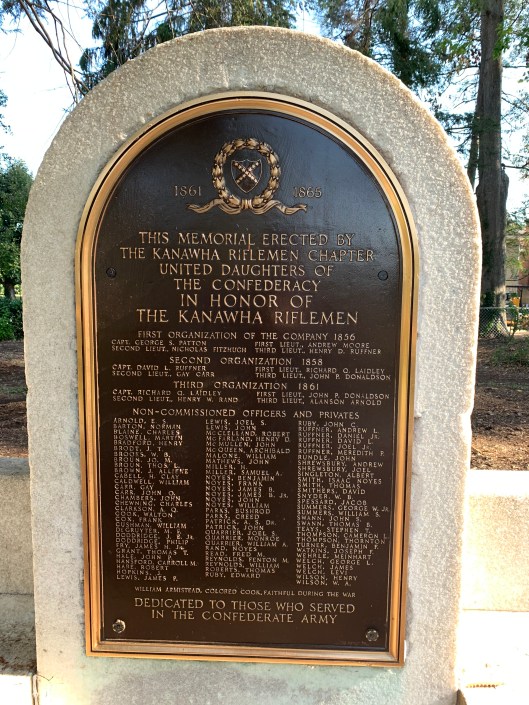
Kanawha Riflemen Memorial at Ruffner Memorial Park. In 1831, Joseph Ruffner deeded this cemetery to the city. In 1920, the site became a city park. Some graves were relocated but many are still here with their headstones buried beneath the surface. The UDC memorial was placed in 1922. 29 September 2019

IMG_0647

Thomas Bullitt grave. Ruffner Memorial Park. In 1776, George Washington wrote of him: “Bullet (sic) is no favourite of mine, & therefore I shall say nothing more of him, than that his own opinion of himself always kept pace with what others pleas’d to think of him—if any thing, rather run a head of it.” 29 September 2019

Stone Branch News 01.11.1924

29 Tuesday Oct 2019

Posted by Brandon Ray Kirk in Stone Branch

≈ Leave a comment

Tags

Appalachia, Bill Skeens, education, Frank Rice, genealogy, Haskell Compton, Hattie Loud, Henlawson, history, Lizzie McComas, Logan, Logan Banner, Logan County, Roberta Russell, Sadie Ferguson, Stone Branch, Von Browning, West Virginia

A correspondent named “Sweet Marie” from Stone Branch in Logan County, West Virginia, offered the following news, which the Logan Banner printed on January 11, 1924:

We are having some bad weather at the present writing.

There is a lot of sickness in our camps at this time.

Miss Hattie Loud and Roberta Russell was calling on Sadie Ferguson Tuesday evening.

Mrs. Lizzie McComas and Mrs. Bill Skeens of Henlawson was visiting friends at this place Saturday night and Sunday.

Wonder how the boys like their teacher here.

Haskell Compton was visiting Frank Rice Sunday afternoon.

They are holding a revival at this place. Everybody is invited to attend.

Mrs. Bill Rice was calling on Mrs. Von Browning Sunday evening.

Civil War in the Kanawha Valley: Ruffner Log Cabin and Craik-Patton House (2019)

29 Tuesday Oct 2019

Posted by Brandon Ray Kirk in Civil War

≈ Leave a comment

Tags

22nd Virginia Infantry, A.J. Lightburn, Appalachia, Battle of Charleston, Charleston, civil war, Confederate Army, Craik-Patton House, George S. Patton, history, James Craik, Kanawha Boulevard, Kanawha County, Kanawha Rifleman, Kanawha Valley, lawyer, Ruffner Log Cabin, Terry Lowry, The Battle of Charleston, Union Army, West Virginia

IMG_0641

Terry Lowry is THE authority on the Civil War in the Kanawha Valley. He began his tour at the Ruffner Log Cabin and the Craik-Patton House. 29 September 2019. Here is a link to his latest book, The Battle of Charleston (2016): https://wvcivilwar.com/now-available-the-battle-of-charleston/

IMG_0643

Ruffner Log Cabin. Constructed about 1800 at 1536 Kanawha Boulevard; discovered in 1969; reconstructed here in 1976. Union General Joseph A.J. Lightburn made his headquarters in the cabin during the Battle of Charleston (09.13.1862). 29 September 2019

IMG_0644

Craik-Patton House. Rev. James Craik constructed this home in downtown Charleston in 1834. George S. Patton, a lawyer and leader of the Kanawha Riflemen, later lived in the home. Patton led the 22nd Virginia Infantry before his mortal wounding in 1864. The house was moved to this location in 1973. 29 September 2019

Sheriff Don Chafin Offers Resignation (1922)

28 Monday Oct 2019

Posted by Brandon Ray Kirk in Coal, Logan

≈ Leave a comment

Tags

Appalachia, coal, deputy sheriff, Don Chafin, history, Logan, Logan Banner, Mine Wars, politics, sheriff, West Virginia

From the Logan Banner of Logan, WV, comes this bit of history for Sheriff Don Chafin. The story is dated February 10, 1922:

REJECT SHERIFF’S RESIGNATION

Don Chafin Presents Same to the County Court But Would Not Be Accepted

ACTION OF SHERIFF DUE TO LACK OF COOPERATION

He Has Agreed to Serve Out Term of the Office After Urging of Court and Friends

Last week Don Chafin tendered to the county court his resignation as Sheriff of Logan county. The county court promptly rejected his resignation and Mr. Chafin was prevailed upon by his friends to let the matter drop and continue to serve the county in his official capacity.

The direct cause of his resignation was the lack of cooperation on the part of some of his deputies. To those who are unacquainted with the official duties of a Sheriff in Logan County the duties of the office might be considered one of ease and pleasure but to those who are initiated with the trials and tribulations of the position it is a well known fact that the life of a Sheriff in this county is anything but a bed of roses.

The Banner is directly opposed to the political policy of Don Chafin but it must be remembered that when Mr. Chafin offered himself as a candidate in the fall of 1920 for the office of Sheriff he was elected by an overwhelming majority in keeping with the choice as expressed by a majority of the citizens of the county. The Banner accepted the result and resolved to extend to the incoming Sheriff all the assistance within our power in fulfilling the duties of his office. Since that time we have had no occasion to regret our course. The previous term of Sheriff Chafin had satisfied us that the duties of the office would be fulfilled honestly and faithfully and the short time that he has served during the present term has justified our faith.

Logan county is in many respects far different from any other county in the state. We are in one sense of the word isolated from other sections of the state inasmuch as we are situated on a branch of a railway system with only one outlet. Consequently it is no easy matter for the mining operators in this field to secure labor. In their efforts to supply their mines with labor it is necessary for them to draw on the supply of raw labor of the larger cities. This brings into our midst an element of labor that is not always of the most lawful type but in many instances the men are of foreign  birth and of various races hence we are sometimes so unfortunate as to admit many men of criminal tendencies.

Not one tenth of the labor required in the various industries of the county are of native birth, the other 90 percent being men who have no interest here other than the wages they may receive. Thus if may be seen that it requires constant attention to duties by the authorities of the county to maintain the law and prevent crime. To do this not only requires courage but tact and diplomacy as well.

How faithfully Don Chafin has performed the duties of the office the world is well aware. When thousands of armed men had banded themselves together with the avowed intention of invading our peaceful county last fall it was he that said, “They shall not pass.” They did not pass. Don Chafin stood like a stone wall and while the army of angry men stormed at the gates of our county he firmly held his men on the defensive and saved our county from invasion. Ho well he performed this duty is attested by commendation from all parts of the nation and needs no repetition here.

This is the second term of Don Chafin as Sheriff of this county. The citizens to the county called him to serve. While the routine of his duties may prove most irksome and perplexing we trust that he may exercise the fullest measure of patience and continue to serve the citizens of Logan county during the remainder of his term. The Sheriff needs the cooperation not only of his official family but of every law abiding citizen of the county and we should be quick to express our appreciation of duties well performed by giving to him all the assistance within our power.

Kiahs Creek, Wayne and Lincoln Counties, WV

19 Saturday Oct 2019

Posted by Brandon Ray Kirk in Kiahsville

≈ 2 Comments

Tags

bear, Big Laurel Fork, Brandon Kirk, Francis Fork, horses, Kiahs Creek, Lincoln County, Mountain Home Cemetery, nature, New Salem Old Regular Baptist Church, photos, Phyllis Kirk, Wade Adkins Branch, Wayne County, West Virginia

IMG_5791

Black Bear, Francis Fork of Kiahs Creek, WV. Photo by Mom. 2015

IMG_6388

House With the Rock, Wade Adkins Branch of Kiahs Creek, WV. 15 July 2016

IMG_9606

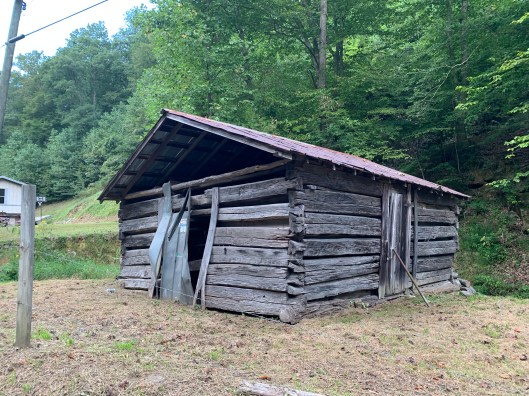
Log Structure on Francis Fork of Kiahs Creek, WV. 31 August 2019

IMG_1394

Mountain Home Cemetery, Trough Fork of Kiahs Creek, Wayne County, WV. 5 August 2017

IMG_6390

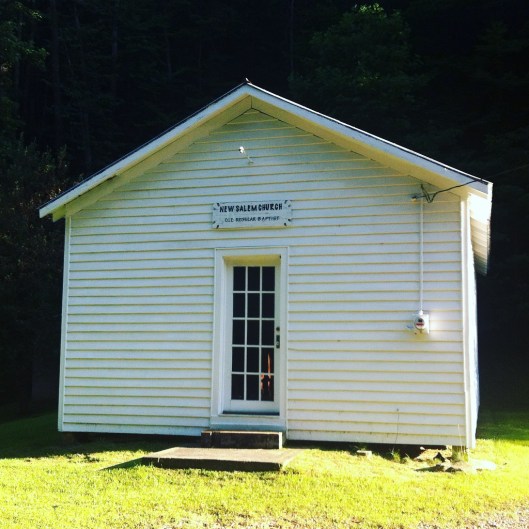
New Salem Old Regular Baptist Church, Big Laurel Fork of Kiahs Creek, Wayne County, WV. 15 July 2016

IMG_6286

Old School at Big Laurel Fork of Kiahs Creek, Wayne County, WV. 15 July 2016

IMG_6355

Head of Big Laurel Fork of Kiahs Creek, Wayne County, WV.  15 July 2016

IMG_6397

Head of Big Laurel Fork of Kiahs Creek, Wayne County, WV.  15 July 2016

IMG_6398

Head of Big Laurel Fork of Kiahs Creek, Wayne County, WV.  15 July 2016

BK in Field on 12 Pole

Head of Big Laurel Fork of Kiahs Creek, Wayne County, WV.  Photo by Mom. 15 July 2016

IMG_6389

Road in the Road, Wade Adkins Branch of Kiahs Creek, Wayne County, WV. 15 July 2016

Lawlessness in the Mountains (1915)

19 Saturday Oct 2019

Posted by Brandon Ray Kirk in Huntington, Logan

≈ Leave a comment

Tags

Appalachia, crime, feuds, history, Huntington Advertiser, Kentucky, Logan, Logan Democrat, New York City, West Virginia

From the Logan Democrat of Logan, WV, comes this editorial originally printed by the Huntington Advertiser regarding mountain violence. The item is dated January 7, 1915.

LAWLESSNESS

From the Huntington Advertiser–

Every time neighbors fall out in the West Virginia or Kentucky mountains, and one of them is killed, the New York newspapers discover a feud, and discourse upon the lack of civilization that permits such things to be.

Yet in this same New York, the constituted authorities have proven themselves helpless in dealing with gangs of “gun men,” and there is more flagrant defiance of the law in certain sections of New York today than anywhere in the Kentucky or West Virginia mountains.

So complete has been the failure of the New York authorities to deal with the problem of the “gun men” in any effective manner, that the business men of the east side are organizing a citizens police force to accomplish the work the New York police have been unable to accomplish. This organization of citizens is no more, no less, than a revival of the vigilance committees in the hurly-burly days in the western gold fields, and that the greatest city on the western continent should be compelled to resort to the methods of the mining camp in dealing with offenders against the law and against the decency is a sorry comment upon the metropolis.

But the New York newspapers will remember nothing of this the next time there is a lynching in the south, or there is a “feud” outbreak in the mountains.

Veola Ann Runyon: Authoress-Poet of Logan County (1922)

08 Tuesday Oct 2019

Posted by Brandon Ray Kirk in Ashland, Coal, Guyandotte River, Man, Poetry

≈ Leave a comment

Tags

Appalachia, Ashland, author, authors, coal, Guyandotte Valley, history, Kentucky, Logan Banner, Logan County, physician, poems, poetry, Thomas Dunn English, Three Forks, Viola Ann Runyon, West Virginia, writers, writing

From the Logan Banner of Logan, WV, comes this bit of history about Veola Ann Runyon, authoress-poet of Logan County. The story is dated January 13, 1922:

LOGAN COUNTY HAS AN AUTHORESS-POET

Mrs. Veola Ann Runyon, of Three Forks, Has Had Much of Her Work Published.

We never know in what nook or corner we may find unknown talent or beneath what bushel measure we may and a shining light unless, perchance, we may trip across a clue that may lead us to a welcome discovery. Such was the case with a representative of The Banner on a recent trip to Three Forks, when he fortunately learned of the presence there of Mrs. Veola Anne Runyon, a poet and talented writer of fact and fiction.

Mrs. Runyon was born in Ashland, Ky. Her grandfather was a French physician and author. From him she derived the gifted talent at at the early age of sixteen she began writing stories and for the past ten years she has been a regular contributor to several of the largest magazines of our country. She has in preparation at the present time a romance which will be happily connected with the coal mining industry, while she has in the hands of her publisher two other  books, one dealing with scientifical and botanical work and the other on entomological facts.

The story now in preparation will be eagerly sought by all readers in Logan County, due to the fact that part of the plot will be based upon knowledge gained within this county. Mrs. Runyon was requested by her publishers to write a story closely connected with the mining industry and so not knowing the details connected with the industry she came to Three Forks, and while stopping at the Club House there she is gathering facts that will prove invaluable in her latest work.

Mrs. Runyon is a gifted writer and is filled with the love of the work. She is also deeply interested in botanical work and the study of nature. Through persuasion we were able to secure some of her poems for publication in The Banner, and we are pleased to announce that arrangements have been made with her for regular contributions to the columns of this paper.

Her presence here will recall to mind another author who came to Logan County in years gone by. Dr. Thos. Dunn English recognized the beauty of these mountains and the nearness of true nature and came here during the period between 1850 and 1860. Some of his poems deal with life in the Guyan Valley.

With her ability and fluency of language, Mrs. Runyon should find in these grand majestic mountains and wonderful natural beauty an invaluable aid to inspiration that will enable her to complete a wonderful story that should attract the favorable attention of the most critical.

Note: I cannot locate any biographical information for this writer. Three Forks, according to one source, is also known as Saunders (Buffalo Creek).

Chapmanville Coal Company (1927)

27 Friday Sep 2019

Posted by Brandon Ray Kirk in Chapmanville, Coal

≈ Leave a comment

Tags

Appalachia, B.A. Grady, Chapmanville, Chapmanville Coal Company, coal, history, Logan Banner, Logan County, Logan Mines Inc., Thompson Coal Company, W.M. Zurkle, West Virginia

Chapmanville Coal Company LB 08.26.1927.JPG

Logan (WV) Banner, 26 August 1927

Arnold Perry Deed to John McCloud (1854)

26 Thursday Sep 2019

Posted by Brandon Ray Kirk in Big Harts Creek, Twelve Pole Creek

≈ Leave a comment

Tags

Appalachia, Arnold Perry, Catherine Perry, genealogy, history, Hoover Fork, John McCloud, justice of the peace, Logan County, Pretty Branch, Samuel Dawson, Stephen Marcum, Twelve Pole Creek, Virginia, Wayne County, West Virginia

Arnold Perry to John McCloud Deed.JPG

Deed Book C, page ___, Logan County Clerk’s Office, Logan, WV.

News Items for Logan, WV (1913)

26 Thursday Sep 2019

Posted by Brandon Ray Kirk in Logan

≈ Leave a comment

Tags

Appalachia, Charles Bennett, crime, Draper Building, Falls City Construction Company, German, history, John B. Wilkinson, Lanham's Plumbing Shop, Logan, Logan Banner, Logan County, Logan Court House, mayor, Poole Drug Store, R. Topin, Robert Bland, West Virginia

From the Logan Banner of Logan, WV, come these items of local news during the year 1913:

Logan Court House Rebuilt LD 05.01.1913.JPG

Logan (WV) Banner, 1 May 1913

***

The Call to Arms

Ladies of Logan, we need you, and ask your unfailing support against filth and flies. With your full assistance we expect to make the men “help the women do the work.” We want you to help us develop the pride and civic duty which promotes cleanliness. Enlist the whole household in this crusade against filth and flies–breeders of disease.

With the homes, the yards and the streets clean, screened receptacles for kitchen waste, which we will remove without expense, the free use of lime daily, our city will be respectable and commendable.

Lend us your aid and imbibe the slogan, “Cleaner, Healthier and Better Logan.”

Respectfully,

Robert Bland, Mayor

By order of the Common Council.

Logan (WV) Banner, 23 May 1913

***

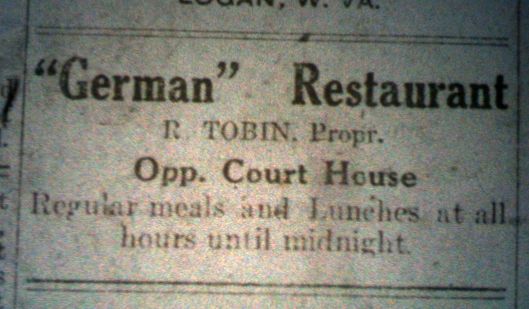
German Restaurant Ad LB 06.20.1913.JPG

Logan (WV) Banner, 20 June 1913.

***

The Latest Craze

In Logan now is PAINT–house paint and everybody’s doin’ it! The most recent ones are the Draper Bldg., Judge Wilkinson’s residence and office, Lanham’s plumbing shop, the Poole drug store, German restaurant, etc. More paint was spread in Logan this year than ever was known before, and considerable of it was “red” too. It can truly be said that nearly every building in town, of importance, has been or will be painted this year, in fact a few almost worthless old houses now look like new. A bucket of paint surely works wonders sometimes. A sign writer has also been at work the past week or two putting gold lettering on windows.”

Logan (WV) Banner, 4 July 1913

***

Logan County Prisoners Working Roads, They Like It Better Than Confinement

Two wagon-loads of prisoners were taken out of the county jail Wednesday morning, under guard, and worked on the roads in this vicinity. A 5-lb rod, about two foot long, was locked around an ankle of each prisoners. They seemed to like their outing.

Logan (WV) Banner, 12 September 1913

Buddy Griffin at Appalachian Heritage Day in Logan, WV (2019)

21 Saturday Sep 2019

Posted by Brandon Ray Kirk in Logan, Music

≈ Leave a comment

Tags

A Prairie Home Companion, Appalachia, Appalachian Heritage Day, banjo, bluegrass, Bobby Osborne, Branson, Braxton County, Buddy Griffin, Charlie Sizemore, Cincinnati, David O'Dell, fiddler, fiddling, Glenville State College, Goins Brothers, guitar, Jackie Whitley, Jeff Roberts, Jim and Jesse McReynolds, Katie Laur Band, Landon Williams, Larry Sparks, Logan, Mac Wiseman, mandolin, Missouri, music, Nicholas County, photos, Robert C. Byrd, Rocky Top X-Press, Southern West Virginia Community and Technical College, The Hard Times, Vandalia Award, Vetco Records, West Virginia, West Virginia All-Star Bluegrass Band, Wheeling, WWVA Jamboree

DSC_0834

Bluegrass fiddle workshop, AHD, SWVCTC, Logan, WV. Photo by Jackie Whitley. 24 August 2019

DSC_0835

Bluegrass fiddle workshop, AHD, SWVCTC, Logan, WV. Photo by Jackie Whitley. 24 August 2019

DSC_0837

Bluegrass fiddle workshop, AHD, SWVCTC, Logan, WV. Photo by Jackie Whitley. 24 August 2019

Buddy Griffin with Bluegrass Music Workshop

Bluegrass fiddle workshop, AHD, SWVCTC, Logan, WV. Photo by David O’Dell. 24 August 2019

A native of Nicholas and Braxton counties, Buddy Griffin is a master musician on several instruments and a dedicated teacher and mentor. Raised in a musical family, Buddy began performing at an early age, excelling at banjo, fiddle, guitar, and mandolin. In 1973, he was hired in the staff band on the WWVA Jamboree in Wheeling, where he came into contact with Landon Williams, who lured him to Cincinnati to play in his band, The Hard Times. He and banjoist Jeff Roberts joined the Katie Laur Band in 1975. Buddy also played with the Goins Brothers. He later worked as an engineer at Vetco Records in Cincinnati and played in Charlie Sizemore’s band. He recorded with Mac Wiseman and has worked with Jim and Jesse, Larry Sparks, the Heckels, Sen. Robert C. Byrd, and Jesse McReynolds. He played in Branson, MO, for several years. In 1997, he returned to West Virginia and taught music at Glenville State College, where he was instrumental in developing the world’s first degree program in bluegrass music. He is a studio musician and has performed on various radio shows, including NPR’s “A Prairie Home Companion.” In 2011, he was awarded the Vandalia Award, West Virginia’s highest folklife honor. In 2016, he played fiddle with Bobby Osborne and the Rocky Top X-Press. He often performs with the West Virginia All-Star Bluegrass Band.

Armed March on Logan County, WV (1921)

21 Saturday Sep 2019

Posted by Brandon Ray Kirk in Battle of Blair Mountain, Boone County, Logan

≈ Leave a comment

Tags

A.C. Rouse, A.R. Browning, Appalachia, Battle of Blair Mountain, Bill Blizzard, Blair Mountain, Charleston, crime, deputy sheriff, District No. 17, Don Chafin, Ferndale, Frank Keeney, George Munsy, H.M. Miller, history, Hubert Ferrell, J.E. Wilburn, J.L. Workman, John Gore, Lens Creek, Logan, Logan Banner, Madison, Marmet, merchant, Mine Wars, Mother Jones, Savoy Holt, sheriff, T.C. Townsend, United Mine Workers of America, Warren G. Harding, West Virginia

Here is one article from the Logan Banner relating to Bill Blizzard and the Armed March on Logan County, WV, popularly remembered today as the Battle of Blair Mountain:

Blizzard Gloated at Gore’s Death, Said

“That’s fine! What’s the matter you haven’t killed any others?” William Blizzard, mine workers’ officer, was quoted as saying after he heard of the death of Deputy Sheriff John Gore and two companions at the hands of a party of union miners, according to testimony Monday at Blizzard’s trial upon an accessory to murder indictment growing out of the armed march against Logan county in 1921. Blizzard is charged with having participated in the plans that caused the death of George Munsy, one of the Logan defenders killed with Gore.

Hubert Ferrell, of Ferndale, the witness who quoted Blizzard’s words, declared the mine workers’ office made the statement in a speech to the armed miners gathered at Blair on the afternoon of the day after they had returned from Blair mountain where the Logan “defenders” were killed.

“It don’t seem like it would take any  more nerve to kill Don Chafin (Logan county sheriff) and his thugs than it would a sheep-killing dog,” Ferrell testified Blizzard continued in his speech. “Right tomorrow I want you to fix up to go over the top. It don’t matter about losing a few men. I want you to go over to Logan and let the men out of jail and tear the thing down to the ground.”

Under cross-examination Ferrell added that Blizzard had told the men he wanted them to eat dinner the next day “on the jail house step.”

Ferrell, according to his testimony, failed in his first effort to visit the men who participated in the armed march when he was stopped by guards at the mouth of Lens Creek where the marchers first assembled. He denied that he had ever desired to join the march and said he went there only to see if there were any men there whom he knew. T.C. Townsend, one of the defense attorneys, cross-examined Ferrell vigorously upon that point. The witness said he was on his way to Charleston to buy clothing at the time. Later he said he went to Blair intending to go on to Logan and visit his half-brother, but was prevented by the armed men in Blair from either going on or returning and eventually returned home on a special train after federal troops took charge of the situation.

While he was at Marmet at the mouth of Lens Creek and unable to go farther up the creek because he could not give the guards the password and did not belong to a union, Ferrell said Fred Mooney, secretary treasurer of District No. 17, United Mine Workers, and a man who was said to be C. Frank Keeney, the district president, were there in an automobile. Mooney, the young man told the jury, asked the guards if any guns and ammunition had arrived and on being told he had none informed them that two truck loads had left Charleston. The man pointed out as Keeney told the men he did not believe they were sufficiently prepared and that they would do better to go home, “get prepared and then go over and get Don Chafin and his thugs.”

On the day before Gore and Munsy were killed, Ferrell said Blizzard also made a speech from the porch of the school house that served as base for the armed forces on the union side at the mountain and asked what was the matter that they were not having more success and told them they ought to go over and “get Chafin and the thugs and get it over with.”

Mrs. J.E. Wilburn, wife of the miner-preacher who was one of the principal witnesses for the state now serving a sentence of 12 years for his part in the killings on Blair mountain, testified that guns and ammunition were stored in the parlor of their home. She did not know Blizzard, she said, but men who took the arms into the house said Blizzard had brought them, she testified.

A.R. Browning, a merchant at Blair, told the court that members of the armed forces there got merchandise at his store and told him to charge it to the United Mine Workers of America. The things they got, he said, included shoes, overalls, and other clothing and also some women’s clothing, which he thought, they got for their wives and daughters.

H.M. Miller, a constable at Madison, said that just before Keeney made a speech at the ball park near there which he counselled the marchers to return to their homes, he had a conversation with the union president in which Keeney said that “if the federal troops would keep out he would take these men and go through Logan with them.”

Earlier in the day, J.L. Workman and A.C. Rouse of Marmet had testified as to the occurrence during the assembling of the men on Lens Creek. Workman told of “Mother” Jones’ efforts to get the men to go back to their homes and her declaration that she had a telegram from the President of the United States, which he said Keeney called a “fake.” Later that day both Workman and Rouse said Savoy Holt in a speech from the running board of an automobile said the union officials were their but could not address the men and that he had been instructed to tell them that the telegram was not genuine and that they were to “go on.” Rouse said Keeney and Mooney were in this automobile and that Blizzard was in another nearby. A man he did not know spoke from the running board of the automobile in which Blizzard was riding, telling the men to go on, and Blizzard’s car drove up Lens Creek followed by the armed hordes.

Source: Logan (WV) Banner, 6 July 1923

Isaac Adkins Heirs Deed to Isaiah Adkins (1855)

21 Saturday Sep 2019

Posted by Brandon Ray Kirk in Big Harts Creek

≈ 2 Comments

Tags

Appalachia, Charles Adkins, Cole Branch, Elias Adkins, Elizabeth Adkins, genealogy, Harts Creek, Henry Adkins, history, Isaac Adkins, Isaac Adkins Jr., Isaiah Adkins, Lincoln County, Logan County, Lydia Eveline Mullins, Parthena Adkins, Polly Adkins, Spencer A. Mullins, Virginia, West Virginia

Isaac Adkins Heirs to Isaiah Adkins Deed 1

Deed Book ___, page 447, Logan County Clerk’s Office, Logan, WV. Note: This property is located in present-day Lincoln County.

Isaac Adkins Heirs to Isaiah Adkins Deed 2

Deed Book ___, page 448, Logan County Clerk’s Office, Logan, WV. Note: Isaiah Adkins is my great-great-great-great-grandfather.

Levi Collins Deed to Anderson Barker (1853)

19 Thursday Sep 2019

Posted by Brandon Ray Kirk in Big Ugly Creek

≈ Leave a comment

Tags

Anderson Barker, Appalachia, Big Ugly Creek, county clerk, genealogy, history, justice of the peace, Levi Collins, Lincoln County, Logan County, Nancy Collins, Ralph Lucas, Virginia, W.I. Campbell, West Virginia, William Smith, William Straton

Levi Collins to Anderson Barker Deed 1

Deed Book __, page 471, Logan County Clerk’s Office, Logan, WV. This property is located in present-day Lincoln County.

Levi Collins to Anderson Barker Deed 2

Deed Book __, page 471, Logan County Clerk’s Office, Logan, WV.

Recollections of Tom Brown about Timbering on Big Sandy River (1979)

19 Thursday Sep 2019

Posted by Brandon Ray Kirk in Big Sandy Valley, Timber, Twelve Pole Creek

≈ Leave a comment

Tags

Appalachia, Big Sandy River, Bragg Creek, Fort Gay, history, Horse Creek, Kenova, logging, Mingo County, Naugatuck, Ohio River, pushboats, rafting, steamboats, timber, timbering, Tom Brown, Tug Fork, Twelve Pole Creek, Wayne County, West Virginia

The following interview excerpt of Tom Brown (born c.1909) was conducted at Fort Gay in Wayne County, WV, on December 15, 1979.

***

It was probably hard to get around back then, to go to church.

Well the only way you could get around through this country was up and down creeks or on horseback or wagon. And roads were in the creek most of the way. And where they cut timber and logs they had tram roads built back in the heads of the hollows and they had tracks–they built their track out of 2″ X 4″s–and they hauled these logs or ties from the mills back to the heads of the hollows back to the railroads. And they logged out of the mountains and they ran lots of rafts down Tug River. I’ve see high as four to five. They started the rafts running in the spring. They run them out of Mingo County and generally a lot of them was set out in Naugatuck.

That’s how they got them, they used rafts and boats?

Yes, they used rafts. Logs. They’d put these logs together… Sometimes a raft would be maybe 200 or 300 feet long.

200 or 300 feet long?

Almost as wide as the river. The man would stay on that and they’d pull the men to, I guess, Kenova and the Ohio River down here. And they would log them through the winter. The spring waters came and they started down the rivers with the rafts. The river banks were all cut clean.

That’s what I was going to ask you about. They had to be cut clean, didn’t they?

Yes, they was all cut clean. But the rafts… Well they ran logs down Twelve Pole Creek to… Back then people used to put their logs in the creek when it would raise and run them plumb out down Twelve Pole to Kenova. Heads of these creeks… And sometimes I can remember Bragg Creek and Horse Creek… They was a sawmill. There was locks in at Saltpeter and they pushed just like water to Bragg Creek. I’d say along 1916-1917. And almost the travel was boats. It went down on a little showboat. It used to come up an old paddle wheel boat.

That was in about 1917?

About 1917, ’18, ’19, along that.

Could you get a ride on that showboat if you wanted to?

No, they just pulled in and parked and had a show every night, like the picture show, the movie picture show had.

How long did that showboat go up and down the river? How many years did that last?

Well, I don’t know. It would just come up every once in a while maybe, and just stopped at certain places maybe. Places you know at that time… That was about as far as it could get up. And then things was brought up on pushboat. They loaded ties and stuff like that. I remember them loading them on the boat at the river at the mouth of Horse Creek. It was about as far as boats could come up the river.

← Older posts
Newer posts →

Feud Poll 1

If you had lived in the Harts Creek community during the 1880s, to which faction of feudists might you have given your loyalty?

Categories

  • Adkins Mill
  • African American History
  • American Revolutionary War
  • Ashland
  • Atenville
  • Banco
  • Barboursville
  • Battle of Blair Mountain
  • Beech Creek
  • Big Creek
  • Big Harts Creek
  • Big Sandy Valley
  • Big Ugly Creek
  • Boone County
  • Breeden
  • Calhoun County
  • Cemeteries
  • Chapmanville
  • Civil War
  • Clay County
  • Clothier
  • Coal
  • Cove Gap
  • Crawley Creek
  • Culture of Honor
  • Dingess
  • Dollie
  • Dunlow
  • East Lynn
  • Ed Haley
  • Eden Park
  • Enslow
  • Estep
  • Ethel
  • Ferrellsburg
  • Fourteen
  • French-Eversole Feud
  • Gilbert
  • Giles County
  • Gill
  • Green Shoal
  • Guyandotte River
  • Halcyon
  • Hamlin
  • Harts
  • Hatfield-McCoy Feud
  • Holden
  • Hungarian-American History
  • Huntington
  • Inez
  • Irish-Americans
  • Italian American History
  • Jamboree
  • Jewish History
  • John Hartford
  • Kermit
  • Kiahsville
  • Kitchen
  • Leet
  • Lincoln County Feud
  • Little Harts Creek
  • Logan
  • Man
  • Matewan
  • Meador
  • Midkiff
  • Monroe County
  • Montgomery County
  • Music
  • Native American History
  • Peach Creek
  • Pearl Adkins Diary
  • Pecks Mill
  • Peter Creek
  • Pikeville
  • Pilgrim
  • Poetry
  • Queens Ridge
  • Ranger
  • Rector
  • Roane County
  • Rowan County Feud
  • Salt Rock
  • Sand Creek
  • Shively
  • Spears
  • Sports
  • Spottswood
  • Spurlockville
  • Stiltner
  • Stone Branch
  • Tazewell County
  • Timber
  • Tom Dula
  • Toney
  • Turner-Howard Feud
  • Twelve Pole Creek
  • Uncategorized
  • Warren
  • Wayne
  • West Hamlin
  • Wewanta
  • Wharncliffe
  • Whirlwind
  • Williamson
  • Women's History
  • World War I
  • Wyoming County
  • Yantus

Feud Poll 2

Do you think Milt Haley and Green McCoy committed the ambush on Al and Hollene Brumfield in 1889?

Blogroll

  • Ancestry.com
  • Ashland (KY) Daily Independent News Article
  • Author FB page
  • Beckley (WV) Register-Herald News Article
  • Big Sandy News (KY) News Article
  • Blood in West Virginia FB
  • Blood in West Virginia order
  • Chapters TV Program
  • Facebook
  • Ghosts of Guyan
  • Herald-Dispatch News Article 1
  • Herald-Dispatch News Article 2
  • In Search of Ed Haley
  • Instagram
  • Lincoln (WV) Journal News Article
  • Lincoln (WV) Journal Thumbs Up
  • Lincoln County
  • Lincoln County Feud
  • Lincoln County Feud Lecture
  • LinkedIn
  • Logan (WV) Banner News Article
  • Lunch With Books
  • Our Overmountain Men: The Revolutionary War in Western Virginia (1775-1783)
  • Pinterest
  • Scarborough Society's Art and Lecture Series
  • Smithsonian Article
  • Spirit of Jefferson News Article
  • The Friendly Neighbor Radio Show 1
  • The Friendly Neighbor Radio Show 2
  • The Friendly Neighbor Radio Show 3
  • The Friendly Neighbor Radio Show 4
  • The New Yorker
  • The State Journal's 55 Good Things About WV
  • tumblr.
  • Twitter
  • Website
  • Weirton (WV) Daily Times Article
  • Wheeling (WV) Intelligencer News Article 1
  • Wheeling (WV) Intelligencer News Article 2
  • WOWK TV
  • Writers Can Read Open Mic Night

Feud Poll 3

Who do you think organized the ambush of Al and Hollene Brumfield in 1889?

Recent Posts

  • Logan County Jail in Logan, WV
  • Absentee Landowners of Magnolia District (1890, 1892, 1894)
  • Charles Spurlock Survey at Fourteen Mile Creek, Lincoln County, WV (1815)

Ed Haley Poll 1

What do you think caused Ed Haley to lose his sight when he was three years old?

Top Posts & Pages

  • Battle of Kanawha Gap (1861)
  • Manns Knob Fire Tower and Residence (2017)
  • Let's Boost Old Logan (1911)
  • Early Anglo Settlers of Logan, WV (1937)
  • Civil War Hanging in Logan County, WV (1937)

Copyright

© Brandon Ray Kirk and brandonraykirk.wordpress.com, 1987-2023. Unauthorized use and/or duplication of this material without express and written permission from this blog’s author and/or owner is strictly prohibited. Excerpts and links may be used, provided that full and clear credit is given to Brandon Ray Kirk and brandonraykirk.wordpress.com with appropriate and specific direction to the original content.

Archives

  • February 2025
  • January 2025
  • October 2023
  • September 2023
  • December 2022
  • November 2022
  • May 2022
  • April 2022
  • February 2022
  • November 2021
  • October 2021
  • September 2021
  • June 2021
  • May 2021
  • April 2021
  • March 2021
  • February 2021
  • January 2021
  • December 2020
  • November 2020
  • October 2020
  • July 2020
  • June 2020
  • May 2020
  • April 2020
  • March 2020
  • February 2020
  • January 2020
  • December 2019
  • November 2019
  • October 2019
  • September 2019
  • August 2019
  • July 2019
  • June 2019
  • May 2019
  • April 2019
  • March 2019
  • February 2019
  • January 2019
  • December 2018
  • November 2018
  • October 2018
  • September 2018
  • August 2018
  • July 2018
  • June 2018
  • May 2018
  • April 2018
  • March 2018
  • February 2018
  • January 2018
  • December 2017
  • November 2017
  • October 2017
  • September 2017
  • August 2017
  • July 2017
  • June 2017
  • May 2017
  • April 2017
  • March 2017
  • February 2017
  • January 2017
  • December 2016
  • November 2016
  • October 2016
  • September 2016
  • August 2016
  • July 2016
  • June 2016
  • May 2016
  • April 2016
  • March 2016
  • February 2016
  • January 2016
  • December 2015
  • November 2015
  • October 2015
  • September 2015
  • August 2015
  • July 2015
  • June 2015
  • May 2015
  • April 2015
  • March 2015
  • February 2015
  • January 2015
  • December 2014
  • October 2014
  • September 2014
  • August 2014
  • July 2014
  • June 2014
  • May 2014
  • April 2014
  • March 2014
  • February 2014
  • January 2014
  • December 2013
  • November 2013
  • October 2013
  • September 2013
  • August 2013
  • July 2013
  • June 2013
  • May 2013
  • April 2013
  • March 2013
  • February 2013
  • January 2013
  • December 2012
  • November 2012

Enter your email address to follow this blog and receive notifications of new posts by email.

Join 2,925 other subscribers

Tags

Appalachia Ashland Big Creek Big Ugly Creek Blood in West Virginia Brandon Kirk Cabell County cemeteries Chapmanville Charleston civil war coal Confederate Army crime culture Ed Haley Ella Haley Ferrellsburg feud fiddler fiddling genealogy Green McCoy Guyandotte River Harts Harts Creek Hatfield-McCoy Feud history Huntington John Hartford Kentucky Lawrence Haley life Lincoln County Lincoln County Feud Logan Logan Banner Logan County Milt Haley Mingo County music Ohio photos timbering U.S. South Virginia Wayne County West Virginia Whirlwind writing

Blogs I Follow

  • OtterTales
  • Our Appalachia: A Blog Created by Students of Brandon Kirk
  • Piedmont Trails
  • Truman Capote
  • Appalachian Diaspora

BLOOD IN WEST VIRGINIA is now available for order at Amazon!

Blog at WordPress.com.

OtterTales

Writings from my travels and experiences. High and fine literature is wine, and mine is only water; but everybody likes water. Mark Twain

Our Appalachia: A Blog Created by Students of Brandon Kirk

This site is dedicated to the collection, preservation, and promotion of history and culture in Appalachia.

Piedmont Trails

Genealogy and History in North Carolina and Beyond

Truman Capote

A site about one of the most beautiful, interesting, tallented, outrageous and colorful personalities of the 20th Century

Appalachian Diaspora

  • Subscribe Subscribed
    • Brandon Ray Kirk
    • Join 787 other subscribers
    • Already have a WordPress.com account? Log in now.
    • Brandon Ray Kirk
    • Subscribe Subscribed
    • Sign up
    • Log in
    • Report this content
    • View site in Reader
    • Manage subscriptions
    • Collapse this bar
 

Loading Comments...