• About

Brandon Ray Kirk

~ This site is dedicated to the collection, preservation, and promotion of history and culture in my section of Appalachia.

Brandon Ray Kirk

Tag Archives: Tug Fork

Paw Paw Incident: Floyd Mounts Deposition (1889)

04 Thursday Apr 2019

Posted by Brandon Ray Kirk in Big Sandy Valley, Hatfield-McCoy Feud

≈ Leave a comment

Tags

Appalachia, Bud McCoy, crime, Doc Mayhorn, Don Whitt, feud, feuds, Floyd Mounts, genealogy, Hatfield-McCoy Feud, history, Jeff Whitt, Logan County, Mingo County, Pharmer McCoy, Plyant Mahorn, Tolbert McCoy, Tug Fork, Valentine Wall Hatfield, West Virginia

The killing of Tolbert, Pharmer, and Bud McCoy by a Hatfield-led gang on August 8, 1882 represented one of the most sensational events of the Hatfield-McCoy Feud. What follows is Floyd Mounts’ deposition regarding the affair:

IMG_9723.JPG

Floyd Mounts

I know Don and Jeff Whitt. Jeff said at the Jail Door Just after the __ of Wall Hatfield that if he swore Wall, Plyant and Dock Mahorn went across the river where the boys were killed he was mistaken, and that he was served and didn’t know what he was doing and that they were not there.

Paw Paw Incident: Ellison Mounts Deposition (1889)

04 Monday Mar 2019

Posted by Brandon Ray Kirk in Big Sandy Valley, Culture of Honor, Hatfield-McCoy Feud

≈ Leave a comment

Tags

Alex Messer, Appalachia, Bud McCoy, Cap Hatfield, Charley Carpenter, crime, Dan Whitt, Devil Anse Hatfield, Doc Mayhorn, Ellison Mounts, feuds, Hatfield-McCoy Feud, history, Jeff Whitt, Johnson Hatfield, Mose Christian, Pharmer McCoy, Pike County, Plyant Mayhorn, Sam Mayhorn, Tolbert McCoy, Tug Fork, Valentine Wall Hatfield, West Virginia

The killing of Tolbert, Pharmer, and Bud McCoy by a Hatfield-led gang on August 8, 1882 represented one of the most sensational events of the Hatfield-McCoy Feud. What follows is Ellison Mounts’ deposition regarding the affair:

IMG_9727.JPG

Ellison Mounts

I was present at the time the 3 McCoys were killed. They were killed on the Ky side of the river opposite a little drain, or maybe a little above it. Neither Plyant Mayhorn nor Dock Mayhorn were present at the time or place where the McCoy boys were killed.

X Ex

Ance, Cap, & Johnce Hatfield, Charley Carpenter, Dan Whitt, Mose Christian and Sam Mayhorn, Jeff Whitt, Alex Messer and myself were present when the killing was done. Jeff Whitt, Dan Whitt, Mose Christian and myself were not ___ present when the Guns were fired. we were 15 or so steps away. After we got across the river Ance called on Wall to Swear them to keep secret what had occurred that nights and Wall did so.

Re Ex

[I cropped the bottom of the page in my photo]

James Nighbert, S.S. Altizer Notice to Anse Hatfield (1874, 1879)

05 Saturday Jan 2019

Posted by Brandon Ray Kirk in Big Sandy Valley, Hatfield-McCoy Feud

≈ Leave a comment

Tags

Anderson Hatfield, Appalachia, Big Sandy River, genealogy, Grapevine Creek, H.P. Clark, history, James A. Nighbert, Logan County, S.S. Altizer, Tug Fork, West Virginia

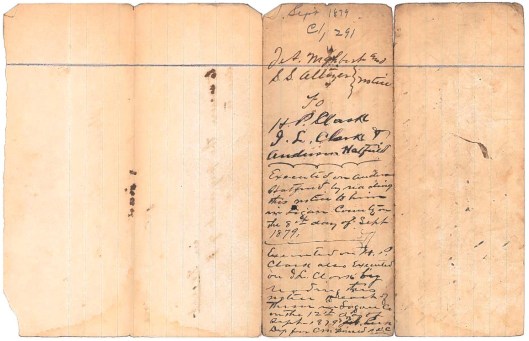
nighbert and hatfield 1

Nighbert and Altizer notice, 1874.

nighbert and hatfield 2

Served on Anse Hatfield “by reading this notice to him in Logan County” on 8 September 1879.

Old Records Found in Bank Vault (1936)

27 Thursday Sep 2018

Posted by Brandon Ray Kirk in Big Sandy Valley, Guyandotte River, Hamlin, Huntington, Logan

≈ 3 Comments

Tags

Appalachia, Big Sandy River, Cabell County, Guyan Valley Bank, Guyandotte River, H.M. Booth, Hamlin, history, Huntington, James Barbour, Logan, Logan County, Mary Morris, Pennsylvania, Peter Dingess, Philadelphia, Richmond, Robert Brooke, Robert Morris, Robert Morris Grant, Russell County, Tug Fork, Virginia, West Virginia, William Crammond, Wythe County

Old Peter Dingess Deed LB 08.19.1936 7

320,000 Acres of Land Hereabouts Sold for Five Shillings According to Old Records Found in Old Vault

H.M. Booth, in cleaning out the vault of the old Guyan Valley Bank preparatory to moving his offices from Logan to Hamlin, uncovered a number of old documents that dated back to the time when “horse and buggy days” were a fact and not merely a political equation.

Many of these old papers, including deeds, receipts, account books and other papers of a semi-personal nature, are originals, while others are notarized copies of originals. They make interesting reading in these days of speed, radios, high prices and typewriters.

The old documents were all hand written, in clear, flowing script, the capital letters often decorated with fancy scrolls and shaded lines. Many of them were written with a quill pen.

Of particular interest is one deed, 12 ½ by 15 ½ inches, written on sheepskin. The ink has not faded, and although the skin is old and discolored, the deed is easily read. It was made in the days when Logan county was unheard of, and all this vicinity was part of Cabell county, Virginia. It seems strange, now, to think of a governor in Richmond, Virginia, parceling out land in Logan county.

The deed reads, in part: “James Barbour, Esq., Governor of the Commonwealth of Virginia: To all whom these presents shall come, Greeting: Know ye, that by virtue of a Land office Treasury warrant, No. 6126, upon the 9th day of Sept. 1780, there is granted by the said Commonwealth unto Peter Dingess, a certain Tract or Parcel of Land, containing one hundred and twelve acres, by survey, bearing date the 31st day of March, 1813, situate in the County of Cabell, joining to his own deeded land, and bounded as followeth, to-wit:”

Then follows a detailed description of the boundaries of the land, in which prominent trees and landmarks play a common part. After the description of the land, which was written in pen and ink, came the regular printed form as follows:

“In witness whereof, the said James Barbour, Esq., Governor of the Commonwealth of Virginia, hath hereunto set his Hand, and caused the Seal of the said Commonwealth to be affixed at Richmond, on the twenty-fifth day of October, in the Year of our Lord, One thousand eight hundred and fourteen, and of the Commonwealth the thirty-ninth.”

Down in the lower right hand corner of the paper can be plainly seen the signature of James Barbour, governor of Virginia at that time.

A notarized copy of another land deed was signed by Robert Brooke, Governor of Virginia in 1795, and was dated March 23 of that year. It deeded through the Land Office treasury warrants numbered from 472 to 530, inclusive, a parcel of land containing 480,000 acres, “by a survey made the 10th of September, 1794.” The land was described as being in the county of Wythe, on the Tug and Guyandotte rivers. This grant of land was known as the “Robert Morris Grant.”

Evidently, from the records, Robert Morris became involved in difficulties, for after a considerable amount of legal red tape, all duly recorded, there is a document showing where “Robert Morris and Mary, his wife, of Philadelphia, sell to William Crammond of Philadelphia as well for and in consideration of the sum of five shillings lawful money of Pennsylvania to them well and truly paid do grant bargain and sell, alien and enteoff release and confirm to the purchased 320,000 acres of land in the counties of Wythe and Russell, lying on both sides of Sandy Creek.”

Among the records of accounts paid found by Mr. Booth were numerous fees paid out for “boating freight from Huntington.” Six dollars and fifty cents is entered “for a suit of clothes,” and another entry shows where four dollars and a half were paid for two pair of shoes.

Source: Logan (WV) Banner, 19 August 1936

Battle of Kanawha Gap (1861)

10 Sunday Jun 2018

Posted by Brandon Ray Kirk in Barboursville, Big Creek, Boone County, Chapmanville, Civil War, Guyandotte River, Tazewell County

≈ 5 Comments

Tags

129th Regiment Virginia Militia, 1st Kentucky Infantry, 34th Ohio Volunteer Infantry Regiment, 5th Virginia Regiment, Abram S. Piatt, Appalachia, Baltimore & Ohio Railroad, Barboursville, Battle of Kanawha Gap, Big Creek, Big Sandy River, Boone County, Burlington Weekly Hawk-Eye, Camp Enyart, Ceredo, Chapmanville, Charleston, Chicago Daily Tribune, Cincinnati Daily Press, Cincinnati Gazette, civil war, Cleveland Morning Leader, Coal River, Confederate Army, Daily Green Mountain Freeman, David S. Enyart, Eli Thayer, Evening Star, George McClellan, Greenbrier County, Guyandotte River, H.C. Evans, Harpers Ferry, Herman Evans, history, J.V. Guthrie, J.W. Davis, Jacob D. Cox, John Dejernatt, Kanawha River, Kanawha Valley, Logan County, Logan Court House, M.H. Wood, National Republican, O.P. Evans, Ohio, Ohio River, Parkersburg, Pomeroy Weekly Telegraph, Portsmouth, Richmond Whig, Robert E. Lee, Samuel Smoot, Sewell Mountain, Southwestern Times, Staunton Spectator, T.W. Rathbone, Tazewell County, Tug Fork, Union Army, Virginia, West Virginia, West Virginia Division of Culture and History, Wheeling, William Baisden, William Rosecrans, William S. Rosecrans, Zouaves

The following newspaper accounts describe the Battle of Kanawha Gap near present-day Chapmanville, Logan County, WV, which occurred on September 25, 1861:

Cleveland (OH) Morning Leader, 3 October 1861

GALLIPOLIS, Oct. 2.

The expedition planned by Col. J.V. Guthrie of the First Kentucky Regiment, and sent out under Lieut. Col. Enyart and Col. Piatt, has returned. They encountered the enemy at Chapmansville under Col. J. Lucien Davis, of Greenbrier, and utterly routed them. The enemy lost between fifty and sixty killed. Our loss was four killed. The expedition returned to Charleston on the 30th ult.

david s. enyart photo

Col. David S. Enyart, 1st Kentucky Infantry (Union).

Evening Star (Washington, DC), 4 October 1861

A Confederate Camp in Western Virginia Broken Up and Routed

CINCINNATI, Oct. 3 — A body of Federal troops, under Lieut. Col. Enyart, attacked a camp of rebels at Chapmansville, in Logan county, Va., near the Kentucky line, routing them, killing sixty and taking seventy prisoners. The same body of rebels were afterward intercepted in their retreat by Col. Piatt, who killed forty and made a large number prisoners.
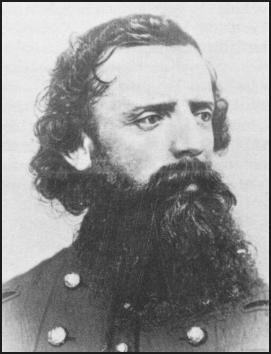
abram s. piatt photo

Col. Abram S. Piatt (1821-1908), 34th Ohio Infantry Regiment.

New York (NY) Herald, 4 October 1861

FIGHT WITH THE REBELS AT CHAPMANSVILLE

Cincinnati, Oct. 3, 1861.

The Kanawha correspondent of the Commercial of this city says that five companies of the First Kentucky regiment, four companies of the Thirty-fourth Ohio regiment and one company of the Fifty Virginia regiment, under Lieutenant Colonel Enyart, surrounded and attacked the rebels at Chapmansville, and after a short engagement completely routed them, killing sixty and taking seventy prisoners. The rebels in escaping were intercepted by Colonial Piatt, who killed forty and took a large number of prisoners. The country between Charleston and Wyandot river is now freed from secession power. This is the most effective blow given the rebels in this part of the valley.

IMG_2256.JPG

One section of the Kanawha Gap Battle Site, Chapmanville, Logan County, WV, 9 June 2018.

Daily Green Mountain Freeman (Montpelier, VT), 7 October 1861

Chapmansville, Va., the scene of the most recent engagement, is a small post village in Logan county, Va. Logan county is in the extreme Western portion of Virginia, the Tug Fork of the Big Sandy being the boundary line between it and the State of Kentucky. It is one of the largest, wildest and most sparsely inhabited counties in the State.

IMG_2238.JPG

Part of the Kanawha Gap Battle Site, Chapmanville, Logan County, WV, 9 June 2018.

National Republican (Washington, DC), 7 October 1861

THE SITUATION.

The two affairs at Chapmansville, reported three or four days since, in which the enemy lost one hundred killed and a proportionate number of wounded, will, it is supposed, restore permanent peace to the Virginia counties western of the Kanawha. Chapmansville is on the turnpike from Charleston to Logan county Court-house, and is about twenty-five miles to the south of Barboursville, the shire town of Cabell county. The secessionists in that part of Western Virginia have been numerous and pertinacious. They have once had possession of Guyandotte on the Ohio river and for a long time they threatened Ceredo (Mr. Thayer’s colony,) which lies on the river between Guyandotte and the Kentucky line. There have been two engagements with them in the rear of Ceredo, one at Barboursville, one at Logan county Court-house, one at Boone county Court-house (which town was burnt by the national troops,) and finally two at Chapmansville. The truth is, that in large portions of numerous, and, but for the early occupation of that region by the National troops, would have controlled it, not because they were the majority, but because one secessionist is, everywhere, a match for three Union men.

The secessionists are reckless, violent, and desperate, while their opponents, if not timid are at any rate remarkably pacific. We doubt, indeed, from all the information we can get, whether throwing out of the account Wheeling and Parkersburg, the terminal on the Ohio river of the Baltimore and Ohio railroad, Western Virginia had more elements of Union strength than the Valley of Virginia. From Harper’s Ferry south for fifty miles, the Union men have been numerous from the first, and it is a matter of deep regret that it did not consist with the plans of military strategy adopted at the headquarters of the army here, to occupy (at least) the northern part of the Valley of Virginia. It is consoling, that a different policy was adopted in retrospect to Western Virginia. That region was promptly taken possession of, cleared of the rebel armies by Gen. McClellan, and has since been victoriously held by Gen. Rosecrans. All attempts of the enemy to affect a re-entrance into Western Virginia are promptly repulsed.

34th Ohio Volunteer Infantry Regiment, Piatt's Zouaves Flag Photo.jpg

Staunton (VA) Spectator, 8 October 1861

Status at Sewell’s Mountain.

The enemy, under Gen. Rozencrantz, and our forces under Gen. Lee, are both upon Sewell Mountain very near each other. A fight has been daily expected there for some time, but the enemy have been fortifying ever since they have been there, and there will not be a fight unless we attack them in their entrenchments. They are afraid to attack us, and it is probable that our force is too weak to risk an attack on them within their fortification. It may, therefore, be some time before an engagement will take place. We understand that we had sent a force of four regiments to their rear for the purpose of cutting off their supplies—that we succeeded in getting around them, but were compelled to return because we did not have sufficient supplies ourselves. We also learn that Col. Jas. W. Davis of Greenbrier, whilst commanding a force of militia in Logan county, attacked a part of the enemy, and was shot down at the first fire. The militia, after several rounds caught the Yankee fever which made their cowardly legs run off with their brave hearts, and they left their commander in the hands of the enemy, who, we fear, has died from his wound.

IMG_2923

New historical sign placed by the WV Division of Culture and History located at the 119 ramp in Chapmanville, WV. 26 April 2017.

Chicago (IL) Daily Tribune, 9 October 1861

A Splendid Achievement of the Ohio Zouaves–“Wood Up” the Battle Cry.

[The following letter is exclusively devoted to the fight which the Piatt Zouaves had with the rebels near Chapmansville, Va. It is distinct from the victorious fight which the command of Lieut. Col. Enyart had with another body of rebels, in the same vicinity. EDS. CINCINNATI COM]

CAMP ENYART, KANAWHA, Oct. 2, 1861. EDS. COM.: The Zouave Thirty-fourth Regimens, Ohio, have had a chance to show their metal. This was on Wednesday, on Kanawha Gap, near Chapmansville, Va. After marching 42 miles, they came upon the enemy, who were behind breastworks, but could not stand our boys’ steady fire, for they retreated in utter consternation, their Col. J.W. Davis, of Greenbrier, Va, (but the traitor is a native of Portsmouth, Ohio,) being mortally wounded. We killed 20, took 3 prisoners, a secesh flag, 20 feet long with FIFTEEN STARS, 4 horses, 1 wagon, 10 rifles (one of which I claim), 12 muskets, and commissary stores (very low.) We lost 3 killed, 9 wounded, one since died. The route of the enemy was complete, although they had a brave, skillful commander, and strong position, with two days’ information of our intentions. They fled the moment their commander fell. The fight lasted about 10 minutes opposite the breastworks, but a running fire was kept up previous to that, by the Bushwhackers and rebel cavalry for two hours. At every turn of the road over the mountains, they would fire upon our advance men, wheel round, and gallop away. This kind of fight was kept up till we came suddenly upon their breastworks, immediately in line of our entire column. It was made on the side of a knoll, between two mountain sides, the road running between the mountain on our left. The wily rebel commander had adroitly cut down the brush on the right, placing a force of 100 men on the mountain top on our right, who raked our column from the front to the center. This was to draw our attention from their breastworks. Our men naturally fired upon the rebels on their right, steadily advancing up the road, until within 20 feet of the enemy’s works, when the rebels suddenly opened fire, from their right, left and center. The order from Col. Piatt and Lieut. Col. Toland, to flank right and left was immediately responded to by the Zouaves with a hurrah, a Zouave yell, and a cry of “wood up” from Little Red; a dash by our boys upon the enemy’s breastworks, above which about 300 rebel heads suddenly appeared, unknown by our men till that moment. They sent a perfect storm of bullets around, over, under, and into our men. A few minutes more and our boys were inside the breastworks, chasing them over the mountains, the enemy running away like cowards as they proved to be. They left 29 dead behind. Their force was 450 infantry and 50 cavalry. Our force was 560.

We buried our three brave dead comrades that night, carried our wounded to the house wherein the rebel Colonel lay, mortally wounded, deserted by all his men but one. Our whole column finally marched into the little town of Chapmansville, formerly headquarters of the enemy, and camped for the night.

34th Ohio Volunteer Infantry Regiment, Piatt's Zouaves Captain Photo.jpg

34th Ohio Volunteer Infantry Regiment, Piatt’s Zouaves, Captain Photo.

Pomeroy (OH) Weekly Telegraph, 11 October 1861

Brilliant Action in the Kanawha Valley.

CHARLESTON, Va., Sept. 30, ’61. Eds. Cin. Com.–Information having been brought to Col. J.V. Guthrie, commanding this post, that a large force of Rebels were gathered at Logan Co., Lt. Col. Enyart, of the 1st Kentucky, was at once sent to engage them. His force was composed of five companies of the 1st Kentucky, four companies of the 34th Ohio–German Regiment–under command of Col. A.S. Piatt, and one company of the 5th Virginia Regiment, under command of Maj. M.H. Wood.

Col. Enyart, with the Kentucky force, surrounded and attacked the Rebels at Chapmanville, and after a short but decisive engagement, completely routed them, killing 60 and taking 70 prisoners. The Rebels, in escaping, were intercepted by Col. Piatt, who surprised them and killed 40 men, and took a large number of prisoners.

The force of the Rebels is now completely broken up, and the country between this point and Guyandotte River is now freed from Secession power. This is the most effective blow given the Rebels in this part of the Valley.

In great haste. Further particulars by next boat.

Very respectfully,

M. CLEMENS,

Lieut. Col. 5th Va. Reg’t.

34th Ohio Volunteer Infantry Regiment, Piatt's Zouaves Soldier Photo

34th Ohio Volunteer Infantry Regiment, Piatt’s Zouaves, Soldier.

Evening Star (Washington, DC), 11 October 1861

THE BATTLE OF KANAWHA GAP.

The Western Virginia correspondent of the Cincinnati Gazette gives the following account of the late engagement at Kanawha Gap:

There were about 1,050 troops under the command of Colonels Enyart and Piatt, who left their camp Monday morning, 30th ulto., and took up their line of march for the enemy.

The forces moved together until they reached Peytona, on Cole river, where they separated; Col. Enyart going up Cole river. Col. Enyart did not meet the enemy in force at any place but his men did meet and ford swollen rivers, and marched on short rations, and were anxious to meet with the running enemy of Old Virginia. Col. Enyart did not meet Col. Piatt until they met on the Kanawha, on their return.

Col. Piatt’s command immediately proceeded thence to Boone Court House, and camped that night one mile beyond. The next day, after proceeding some sixteen miles,t hey came up with the advance guard of the enemy, consisting of cavalry, when a brisk fire was exchanged, the cavalry retreating. After the retreat of cavalry the battalion was immediately put in order of battle. The advance guard of fifteen men was led forward by Adj’t Clarke, proceeding along the road. Scouts were sent out on either side of the road to meet and repulse the sharp-shooters of the enemy.

The force proceeded in this order for about two miles, meeting the pickets of the enemy, exchanging shots with them incessantly, and driving them back with increased confusion at each charge.

Being unable to ascertain the position of the rebels, the entire force halted for a few moments, and Col. Piatt rode in advance and took observations with his glass, but could not ascertain their force and position, as it was covered with a thick growth of underbrush. After these observations a command was issued to forward the column. The scouts moved on the rapidity and enthusiasm, the main body moving up the narrow road cautiously and firmly. The fire continued to increase, and shots were rapidly exchanged from the right and left with the enemy, until our advanced guard reached within sixty yards of their main force. The column was some eighty yards from the enemy when they received a perfect volley of fire upon their right, indicating that the rebels were in force in that direction. Company “A,” commanded by Capt. Rathbone, was ordered to deploy as skirmishers to the right, up the side of the mountain, and if possible to flank the enemy on the left. Company “C,” commanded by Capt. Miller, was ordered to the right, up a similar mountain, to flank the enemy on their left. Company “I,” commanded by Capt. Anderson, was ordered directly up the ravine, on the left. In this position he drew the concentrated fire of the rebels upon his company, who made use of the knowledge thus obtained by rapidly charging upon and destroying the enemy’s breastworks. The center moved directly up the road. With this disposition of the forces, Col. Piatt routed them from their confusion. Capt. Anderson was the first to mount their breastworks, his men following him in the face of a terrible fire without flinching or confusion.

As Capt. Anderson sealed the breastwork, Capt. Miller closed upon the left and Capt. Rathbone came in upon the right, his men crying “Zouave!” The main column moving up the road in double quick–until they were brought to a temporary halt by obstructions placed in the road by the enemy.

The rebels, terrified by the strange bravery and almost wild enthusiasm that was exhibited by each advancing column, ran in confusion, leaving their dead, wounded, clothing, guns, horses, &c., making their escape by Capt. Rathbone’s right; his company being too far up the mountain to cut off their retreat. Capt. West, commanding company F, was detailed to scour the mountain on the west, on the left of the road. Capt. O.P. Evans on the west side of the mountain, on the right side of the road. Capt. Herman Evans, commanding Company H, on the east side of the mountain, on the left of the road.

Each of these companies moved with dispatch, yet such was the knowledge of the rebels of teh by-paths in the mountains, and belonging to the “F.F.V.’s,” and having been drilled at running all summer, that but two were captured.

Among interesting objects captured was a genuine secession flag, captured by Lieut. Brown.

The enemy’s loss was thirty killed and fifty wounded.

We regret to know that four of our men were killed and eight wounded.

34th Ohio Volunteer Infantry Regiment, Piatt's Zouaves Soldiers Photo 2.jpg

34th Ohio Volunteer Infantry Regiment, Piatt’s Zouaves, Soldiers. Here’s a link to Captain T.W. Rathbone’s Civil War diary: http://resources.ohiohistory.org/ohj/browse/displaypages.php?display[]=0071&display[]=33&display[]=56

Burlington (IA) Weekly Hawk-Eye, 12 October 1861

The fight at Chapmansville was a sharp and bloody affair. Five of Piatt’s Zouaves were killed. The rebels lost thirty-five killed.
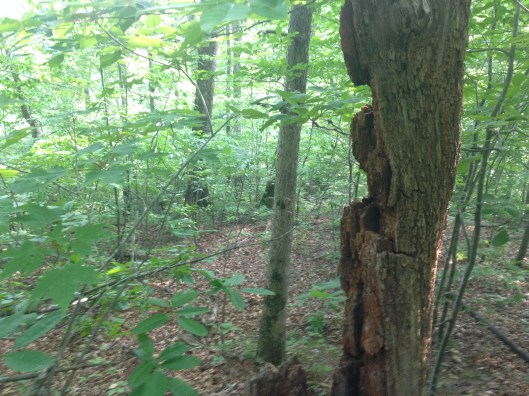
IMG_2235.JPG

Part of the Kanawha Gap Battle Site, Chapmanville, Logan County, WV, 9 June 2018.

National Republican (Washington, DC), 17 October 1861

The thirty-fourth regiment (first Zouaves) have been actively engaged since they came to the Kanawha Valley. Since the glorious victory they won near Chapmansville where the rebel commander, Colonel Davis, was mortally wounded, the Union sentiment has advanced on the Cole River. Two companies have been organized, and are ready to go to work to defend their own homes and give the organized regiments an opportunity to advance into the heart of the enemy’s country.

IMG_2254.JPG

Part of the Kanawha Gap Battle Site, Chapmanville, Logan County, WV, 9 June 2018.

Cincinnati (OH) Daily Press, 22 October 1861

Captain H.C. Evans, of Piatt’s Zouave Regiment, yesterday called in our office and exhibited a Secesh flag, captured at the Chapmansville fight, on the 24th ult.
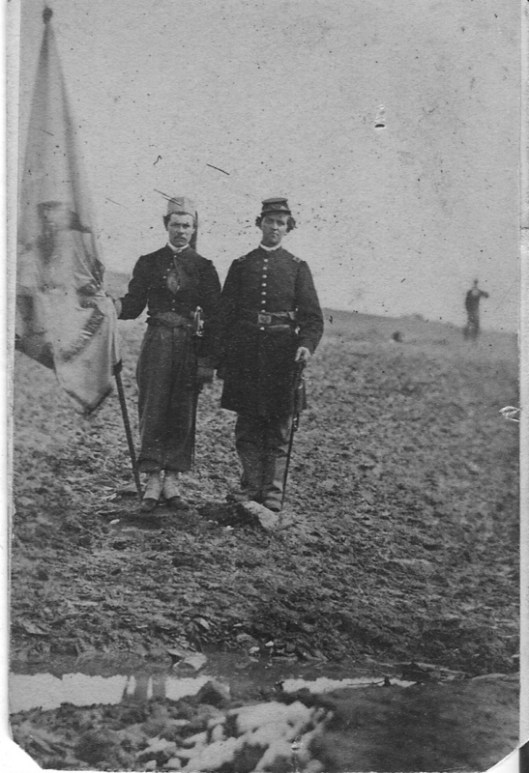
34th Ohio Volunteer Infantry Regiment, Piatt's Zouaves Soldiers Photo

34th Ohio Volunteer Infantry Regiment, Piatt’s Zouaves, Soldiers.

Clarksville (TN) Chronicle, 25 October 1861

The Fight in Logan County, Va.

[From the Richmond Whig of the 15th.]

We yesterday published the Yankee account of a battle in Logan county, which as usual, was manufactured out of whole cloth. The following are the facts as given by the South-western Times, (Tazewell county) of the 10th inst.:

From Samuel Smoot, Esq., of Boone county, who was in the fight, we learn the following particulars of the battle near Chapmanville, Logan county, on the 25th ult: The Yankees numbered 700, and commenced the attack upon our troops–the Logan militia–in a low gap between Guyandotte river and Big Creek, where they were engaged in raising a temporary breastwork. Our troops numbered 220, but there were only about 80 of them engaged in the fight. They were commanded by Col. J.W. Davis, of Greenbrier, a brave and gallant officer, who was severely, but not dangerously wounded, in the arm and breast. As soon as it became known that Col. Davis was wounded, the militia commenced a retreat. The commanding officer of the Lincoln troops afterwards confessed to Col. Davis, who was taken prisoner, that at the same moment a portion of the Yankees were running, and that one more round would have completely dispersed them.

The loss of the Yankees, by their own confession to Col. Davis, was 40 killed and a number wounded; among the former were four Union men, all of whom are represented by the Yankees to be most arrant thieves and cowards. Our loss was two killed and three or four wounded, besides Col. Davis, whose valuable services are at present lost to the Confederacy, being paroled by the enemy.

On the following day our scouts killed one of their pickets, and wounded another, at a point about half way between Logan Court House and Chapmanville, promising to give them particular thunder before daylight next morning. This with some news from a lady on the road, and some account of the militia of the surrounding counties, found on the person of Col. Davis, caused a hasty stampede for their headquarters, in the valley of the Kanawha. It seems that high water, bad roads, nor anything else could impede their rapid flight. They tore down a meeting house in Boone county to make rafts whereon to cross the river. They drowned two of their wounded, lost a wagon containing their entire stock of ammunition, and were fully persuaded that they were followed by two thousand cavalry, of which the Yankees in the West are about as fearful as their Eastern brothers are of masked batteries.

Upon the whole, we are much gratified at the result of this fight. It has, for the present, driven the cowardly thieves from the country, given renewed energy to the true patriots of Logan and the adjoining counties, fully convincing them that with the assistance of two or three hundred of their gallant friends in Tazewell county, they will be fully able to thrash any number that Gen. Cox or his friends shall dare to send against them.”

Note: An almost identical version of this story appeared in the Staunton (VA) Spectator on 22 October 1861.
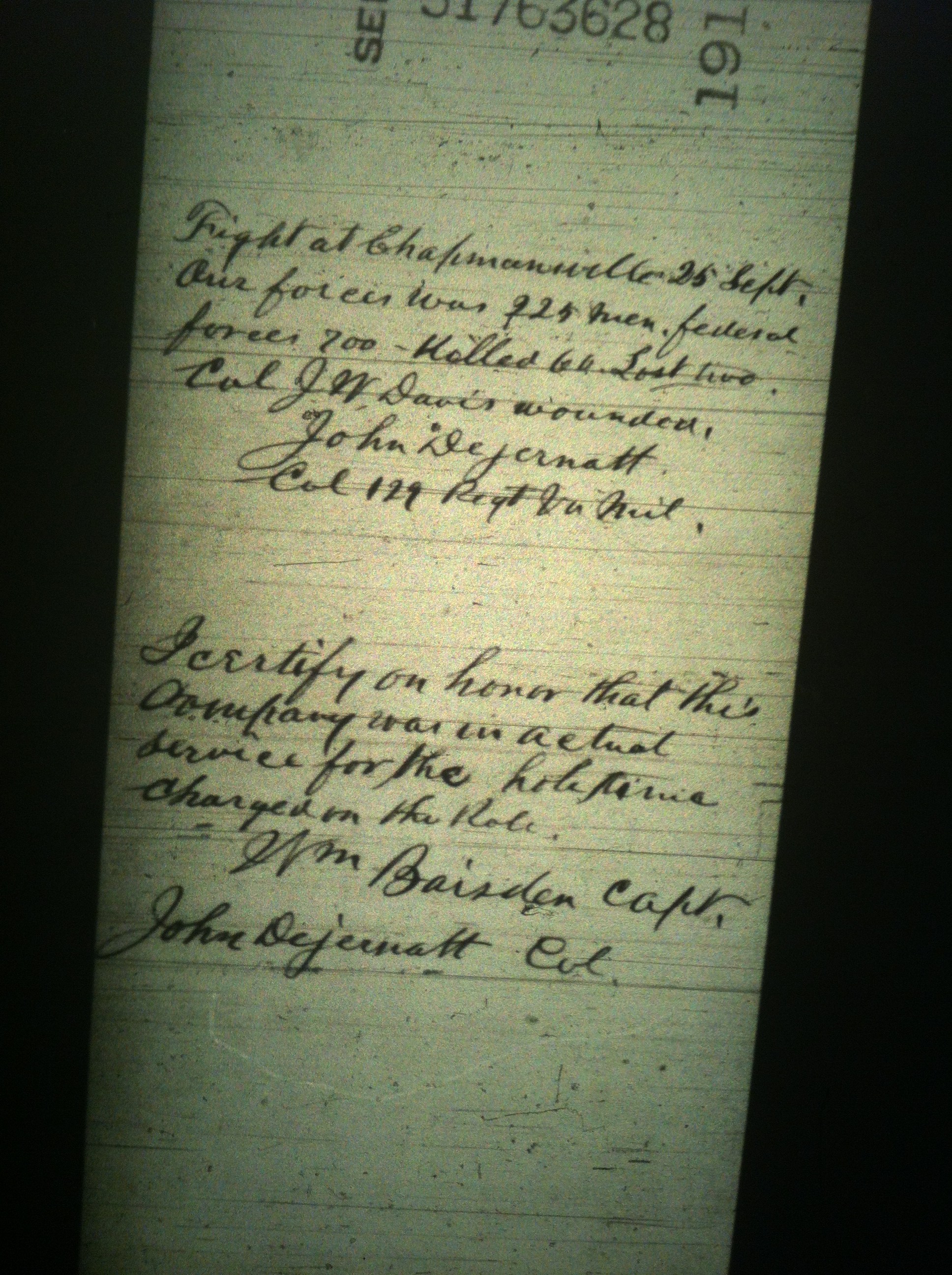
IMG_7149.JPG

Record relating to the 129th Virginia Militia (Confederate), which was present at the Battle of Kanawha Gap.

Paw Paw Incident: Ephraim Hatfield Deposition (1889)

31 Thursday May 2018

Posted by Brandon Ray Kirk in Culture of Honor, Hatfield-McCoy Feud, Matewan

≈ Leave a comment

Tags

Appalachia, Bud McCoy, Doc Mayhon, Ephraim Hatfield, feud, feuds, G.W. Pinson, genealogy, Hatfield-McCoy Feud, history, Jeff Whitt, Kentucky, Pharmer McCoy, Pike County, Plyant Mahon, Tolbert McCoy, Tug Fork, Wall Hatfield, West Virginia

The killing of Tolbert, Pharmer, and Bud McCoy by a Hatfield-led gang on August 8, 1882 represented one of the most sensational events of the Hatfield-McCoy Feud. What follows is Ephraim Hatfield’s deposition regarding the affair:

COMMONWEALTH VS DOC MAYHORN &C

Bill of Exceptions

FILED Sept. 1889

G.W. Pinson, Clk

IMG_9724.JPG

I know Jeff Whitt. I had a conversation with Jeff Whitt the day Wall Hatfield was tried and after he had been sworn as a witness on said trial. In said conversation he said That if he swore on the trial of Wall Hatfield that Dock and Plyant Mayhone was on this side of the river where the McCoy boys were killed. He didn’t know what he was saying. That he was scared and that they were not there.

Paw Paw Incident: Joe Davis Deposition (1889)

27 Sunday May 2018

Posted by Brandon Ray Kirk in Culture of Honor, Hatfield-McCoy Feud, Matewan

≈ Leave a comment

Tags

Appalachia, Blackberry Creek, Bud McCoy, county clerk, Doc Mayhorn, Elias Hatfield, Elijah Mounts, feuds, G.W. Pinson, Hatfield-McCoy Feud, history, Joe Davis, Kentucky, Pharmer McCoy, Pike County, Plyant Mahorn, Tolbert McCoy, Tug Fork, Wall Hatfield, West Virginia

The killing of Tolbert, Pharmer, and Bud McCoy by a Hatfield-led gang on August 8, 1882 represented one of the most sensational events of the Hatfield-McCoy Feud. What follows is Joe Davis’ deposition regarding the affair:

COMMONWEALTH VS DOC MAYHORN &C

Bill of Exceptions

FILED Sept. 1889

G.W. Pinson, Clk

IMG_9709.JPG

The Commonwealth then introduced as a witness Jo Davis who Proves that he lives at the mouth of Blackberry Creek in Pike County Ky and was at home on the 9th day of August 1882. the mouth of Blackberry is about one mile above the mouth of Sulphur. knows Deft Plyant Mayhorn. saw him on Aug 9 1882 with with (sic) Wall and Elias Hatfield and Lige Mounts. Wall ask me if the little McCoy boy cut his brother. I told him he did and Wall said that was all right. it was all he wanted to know or something to that effect. They all turned and went back down the river. from the mouth Sulphur to mouth Mate Creek it is something over ½ mile. As soon as Wall and the others left him he turned and got in his skiff and sailed(?) across the river and went up first Bank(?) 8 or 10 steps and stopped and talked with Fanan(?) for about 3 or 4 minutes. walked on 10 or 12 steps to a fence. throwed his leg across it and heard guns or Pistols firing down the river. There is 3 fords in the river between Blackberry & Sulphur. Wall spoke to him in an ordinary tone of voice. Wall, Elias, Elijah Mounts and deft. Plyant Mayhorn wen(t) just opposite my house where Wall asked me about the little boy stabbing his brother. It was nearing dusk.

Written on left margin: In giving the distance from my house [corner torn] I have reference to the distance on the Ky shore [page torn]. It is nearer on the WVa side. I rowed the skiff ____ up the river about 25(0?) yds. Tug River is the boundary line between Ky & WVa and the river was low. I went down in the morning and saw the boys dead and the little one that Wall inquired about had the top of his head shot off.

For more information about this incident, follow these links:

http://explorekyhistory.ky.gov/items/show/785?tour=55&index=3

http://wvpublic.org/post/three-mccoys-killed-hatfields-kentucky-august-8-1882#stream/0

In Hatfield Country–Blackberry Creek in the 1880s

Island Creek Roads (1927)

19 Thursday Apr 2018

Posted by Brandon Ray Kirk in Boone County, Gilbert, Hamlin, Huntington, Logan, Ranger, West Hamlin, Wharncliffe

≈ Leave a comment

Tags

Appalachia, Beech Creek, Ben Creek, Bluefield, Bluestone River, Bob Browning, Boone County, Bramwell, Cabell County, Charleston, Coal Valley News, Commissioner of Agriculture, Crum, Davy, Devil Anse Hatfield, farming, Gilbert, Gilbert Creek, ginseng, Griffithsville, Guyandotte River, Hamlin, history, Horsepen Creek, Huntington, Iaeger, Island Creek, John W. Smith, Kanawha River, Lincoln County, Logan, Logan Banner, Logan County, M.L. Jones, Mate Creek, Pigeon Creek, Ranger, Route 10, Route 2, Route 3, Sarepta Workman, Tug Fork, Twelve Pole Creek, Wayne, Welch, West Hamlin, West Virginia, West Virginia by Rail and Trail, West Virginia Hills, Williamson

From the Logan Banner of Logan, WV, comes this bit of history about Route 3 dated October 14, 1927:

“Changes Can Be Noted” In Island Creek Hills

Madison Editor Waxes Interesting on Old Times and Primitive Conditions–Surfaced Highways Mark the Paths Through Woodland That Were Traveled a Generation Ago.

An article of special interest to Logan folk is here reproduced from the Coal Valley News (Madison) of which M.L. Jones is editor. In a reminiscent mood he tells of road conditions and other conditions that prevailed hereabouts a generation ago. Exceptions might be taken to one or two statements, but the whole article is interesting indeed and informative.

It is considered appropriate that West Virginians should sing the “West Virginia Hills,” and year after year the teachers in their institution disturb their neighbors with this song, while “Tears of regret will intrusively swell.” There is some romance and merit in the song; but it strikes us that it is about time for a revision of this line.

“But no changes can be noticed in the West Virginia Hills.”

To prove our point we quote from memory.

For some years after 1882, there lived in the extreme head of the left fork of Island Creek, or Main Island Creek, a man named Bob Browning. It was 18 miles from Logan. The house was a two-room log cabin, surrounded by palings; and the valley was so narrow that it was difficult to find enough level ground for a garden. Apple trees and peach trees were scattered over a few acres of cleared mountain side. The family subsisted by a little farming, a little hunting and much ginsenging.

This place was between two low mountain gaps. A dim road, usable for wagons in dry weather, led down the creek to Logan, and forked at Browning’s house. One fork led east over one gap to Horsepen and Gilbert of Guyan; the other went west over the other gap to Pigeon creek, and by more or less roundabout ways connected with Ben Creek, Beech Creek, Mate Creek and Pigeon Creek, all of Tug river. Hence, it was a possible road route.

The nearest house down Island creek and on Horsepen creek was two miles; and on Pigeon creek about three-fourths of a mile. A wagon, lightly loaded, passed here on the average six times a year. Horsemen may have averaged one a day, though often a whole week passed without a traveler. It was simply a log shack in the head of the hollow, four miles from a school, ten miles from a store, without anything “which exalts and embellishes civilized life,” and so very remote from the haunts of men that when “Devil” Anse Hatfield and his followers concluded to surrender Tug river to Frank Phillips and the McCoys, they picked their “last stand” on Island creek, four miles below the spot we have been talking about.

Now, in the close of 1927, can “changes be noticed?” We have not been there for over 30 years. But we recently received a present from John W. Smith, commissioner of agriculture , Charleston, W.Va., entitled “West Virginia by Rail and Trail,” containing 22 maps and 174 pictures reproduced from photographs of different parts of the state, and for which we sincerely thank whoever got our name on Mr. Smith’s mailing list.

From this book we learn that when we laboriously trudged through the Horsepen gap or the Pigeon gap, from 45 to 35 years ago, we failed to foresee that within on generation men would pick those two gaps, within less than a miles of each other, as a route for one of West Virginia’s leading roads; and not only for one, but for two, of West Virginia’s leading roads. As we will explain:

Route 3, connects Huntington, Wayne, Crum, Williamson, Gilbert, Iaeger, Davy, Welch, Bramwell, and Bluefield. From Huntington to Wayne and about 15 miles above Wayne, it is mostly on the waters of Twelve Pole creek. It then bears west to Tug river and follows it from Crum to Williamson, about 25 miles. It then bears east to Pigeon Creek, which it follows to the spot we are writing about, in the head of Island creek, some 20 miles. It then goes through the two gaps and down Horsepen creek to Gilbert, on Guyan; up Guyan and Little Huff’s creek, of Guyan, and across the mountain to Iaeger, on Tug river. It then follows up Tug, by Welch, to the head of Elkhorn and then on the waters of Bluestone to Bluefield.

In all, Route 3 is in seven counties, though less than a mile of it is in Logan county, in the head of Island creek. It is graded all the way about 60 percent of it is hard surfaced, including about 25 miles at and near the Bob Browning place. Thus Bob, if alive, can ride on a hard surfaced road from his old home almost to Williamson, one way, and to Gilbert on Guyan the other way; and he could continue south by graded road, until he strikes hard surface again. The last fifty miles next to Bluefield is all hard surfaced, also the lower 25 miles next to Huntington.

But this is not the only big state route hitting this “head of the hollow.”

Route 10 runs from Huntington to the very same spot, a distance of 100 miles, through Cabell, Lincoln and Logan, and is all on Guyan or its tributaries. It is paved, or hard surfaced, from Huntington to West Hamlin, on Guyan where the Hamlin-Griffithsville hard-surfaced road turns off. It is also marked paved for seven miles north of Logan and twelve miles up Island creek. This leaves six miles up by the “Devil” Anse Hatfield place to the Bob Browning place to pave, and it is marked, “paved road under construction.” The only drawback to No. 10 is that from West Hamlin to Ranger is a patch where the grading is not yet satisfactory. Doubtless, within three years both 3 and 10 will be hard surfaced all the way. Even now, from the Browning place, the people can take their choice between an evening’s entertainment in Logan or Williamson.

But that is not all yet. The chances are heavy that there will never be but one hard surfaced road from Logan to Williamson. There will always be a heavy travel from Charleston to Williamson. It will be by our No. 2 to Logan; by No. 10 to the Browning place; and by No. 3 to Williamson. Within a few months it will all be hard surfaced.

From all this we conclude.

First; that we let a good chance slip when we failed to buy a half acre of land where No. 10 joints No. 3 for a hotel and filling station. We could have multiplied our investment by one thousand. But so far as we could see that spot was fit only to hold and the rest of the Earth’s surface together, and to get away from as rapidly as possible.

Second; that “changes can be noticed in the West Virginia Hills.”

We might add that thousands can remember crossing the Kanawha at Charleston on the ferry, because there was no bridge; and few, if any, three-story homes. The writer hereof did his first plowing with a two-horse turning plow in the center of what is now Huntington. It was a cornfield then. It is a fashionable residence district now. He boarded at an isolated log house on a hill back of the Huntington bottom, where now are miles of mansions on paved streets. Even in and about Madison and all over Boone county, it is hard for people to visualize how things looked a short ten years ago. Mrs. Sarepta Workman, on her recent visit to her old…

Coal Company Set to Build New Town in Logan County, WV (1927)

25 Monday Dec 2017

Posted by Brandon Ray Kirk in Coal

≈ Leave a comment

Tags

Appalachia, C&O Railroad, coal, Guyandotte River, Herald-Dispatch, history, Holden, Holden No. 22, Island Creek Coal Company, J.D. Francis, Logan County, Omar, Peytona Lumber Company, Tug Fork, West Virginia, Wiatt Smith, Y.M.C.A.

From a 1927 story printed in the Logan Banner of Logan, WV, comes this interesting bit of history about Holden No. 22:

Island Creek Co. Plans Building of New Town

Contracts Will Be Let Within 30 Days For Houses, Highways and Also Tipple For Largest Mine In West Virginia, Says Vice President–May Spend $2,000,000.

Within the next year there will arise in one of the remote and hitherto inaccessible regions of Logan county, a new town. It will have a population approximating 2,000. It will have a Y.M.C.A., a community church, modern homes, paved streets, its own water system, electric lights–in fact, all of the modern conveniences. It will be connected by hard road with Logan, Holden and the great world beyond the mountains. At present, it has not even a name, writes Wiatt Smith for the Huntington Herald-Dispatch.

The new town is to arise at operation No. 22 of the Island Creek Coal Company.

Within the next 30 days, J.D. Francis, vice-president of the Island Creek Co., said Tuesday, contracts will be let for the erection of tipples, the building of houses, the paving of streets and the hard surfacing of seven miles of road which will connect the new community with Holden.

Operation No. 22 will represent when completed an additional investment on the part of Island Creek, ranging well beyond a million dollars, perhaps reaching two million, though Mr. Francis refused to hazard an estimate of definite figures.

For a number of months preparations for the opening of a new mine, which will be the largest in southern West Virginia, have been going forward. The two 400 foot shafts which will serve the mine are now nearly complete. The Chesapeake & Ohio is rapidly completing the four mile extension of the Pine creek branch which will provide an outlet for the coal produced. The Island Creek company is completing three miles of siding. Pete Minotti, the contractor, has finished grading the road from Holden to the mine.

By October, it is expected, the road will be surfaced, the town well under way and the great mine in operation. Output at the beginning will be small, as the number of workmen will be necessarily limited until the underground workings have been expanded by the removal of coal. The area to be worked is underlaid, experts say, with 50 or 60 million tons and the mining of the coal will, under normal conditions, require 50 years.

Work at the mine site in advance of the completion of the railroads has been made possible, Mr. Francis explained, by the use of the tram road of the Peytona Lumber company over which many thousands of tons of sand, gravel and supplies have been shipped. The completion of the railroad is awaited for the installation of the bulkier machinery and equipment.

The new rail extension will connect with the Chesapeake & Ohio’s Logan division main lines via Omar. The contact of the operative officials and the workers with the Island Creek center at Holden will be by means of the hard road, the construction of which, in itself represents something like an engineering adventure. For some three miles it follows the ridge that marks the crest of the watershed between the valleys of Guyandotte and Tug Rivers. Then it drops sharply to follow mountain side, hollow and creek valley to the mine operation.

Persons who have traveled the now graded road say that at points on the ridge it affords magnificent views which compare favorably with the most famous in the state. The road was graded and will be hard surfaced entirely at the expense of the coal company, which, in the preparations for its new development has followed the policy adopted many years ago when, upon the opening of its original operations, it established in Holden a mining community which was pointed out as a model throughout the United States.

Island Creek operation No. 22 will be the fifth shaft mine in West Virginia.

Source: Logan (WV) Banner, 25 March 1927.

Stone Mountain Coal Company Headhouse is Burned in Matewan, WV (1921)

16 Saturday Sep 2017

Posted by Brandon Ray Kirk in Big Sandy Valley, Coal, Matewan

≈ Leave a comment

Tags

Appalachia, Blackberry City, coal, crime, deputy sheriff, fire marshal, history, John Hall, Kentucky, Logan Banner, M.C. Kindleberger, Matewan, Mingo County, P.J. Smith, Stone Mountain Coal Company, Tom Davis, Tug Fork, War Eagle, West Virginia, West Virginia Federationist, Williamson

From the Logan Banner of Logan, WV, we find the following story dated 27 May 1921:

The headhouse of the Stone Mountain Coal Company at Matewan, in the heart of the Tug river battle zone, on the West Virginia-Kentucky border, was burned early today, reports received by Major Tom Davis, acting adjutant general on Governor Morgan’s staff, stated.

P.J. Smith, superintendent of the company in Williamson said until he makes an investigation, he could not estimate the amount of damage. The minimum loss, he added, would not probably be less than $25,000.

M.C. Kindleberger, deputy state fire marshal, here to investigate the recent firing of the headhouse at War Eagle, departed for Matewan immediately. Two automobiles containing members of the state constabulary accompanied him. He said he would report to Major Davis.

The Stone Mountain mine has been abandoned by the miners recently, said Superintendent Smith.

Although Chief Deputy Sheriff John Hall gave out the statement that he had made a personal inspection of the fighting area as far east as Blackberry City, and everything was quiet, and that sniping had ceased, the emergency defense organization composed of former service men and other citizens was said by Captain Brockus, of the state police, to be growing. Seventy-two rifles were issued late Saturday night and more have been ordered. In all, said Captain Brockus, several hundred men are under arms prepared for another outbreak. An organization today issued an order temporarily discontinuing the publication of the West Virginia Federationist, a labor paper.

An incident connected with the recent shooting along the Tug river is the reluctance of taxi-cab drivers to take their passengers east of Williamson. Their invariable call at the railroad station to prospective fares is discontinuing.

Source: “Headhouse in Mingo is Burned,” Logan (WV) Banner, 27 May 1921.

To see a coal company headhouse photograph, follow this link: http://wvhistoryonview.org/catalog/wvulibraries:14752

Civil War Dispatches From Wayne County, WV (1865-1866)

07 Thursday Sep 2017

Posted by Brandon Ray Kirk in Big Sandy Valley, Civil War, Timber

≈ Leave a comment

Tags

Abel Segur, Abraham Lincoln, Appalachia, Arthur I. Boreman, Bill Smith, Burlington, Cabell County, Cassville, Catlettsburg, Ceredo, Charleston, civil war, Confederate Army, crime, David Bartram, David Frasher, Department of West Virginia, deputy sheriff, G.W. Brown, Gallipolis, Gallipolis Journal, George Crook, Greenbrier County, Guyandotte, history, Ironton Register, Isaac Bloss, J.W. Merricks, Jack Meadows, Jefferson Davis, Jim Turner, John B. Bowen, John W. Holt, Kentucky, Logan County, Monroe County, Ohio, Ohio River, Pete Jeffers, Pike County, Pocahontas County, Point Pleasant, Raleigh County, sheriff, The Weekly Register, Tug Fork, Union Army, Wayne County, Webster County, West Virginia, Wheeling Intelligencer, William Wirt Brumfield

Below are several dispatches relating to the Civil War and immediate post-war era in Wayne County, West Virginia. These dispatches appeared in pro-Union newspapers.

Wheeling Intelligencer, 21 January 1865

WEST VIRGINIA AS A PLACE TO LIVE. I could not conscientiously recommend any one to come here now to live, although investment in farms will surely be profitable. The trouble now, chiefly, is that the guerrillas have broken up their organization, if they ever had any, and scattered into small squads to rob and steal. A schoolmistress, passing along a lonely road not far from Ceredo, was robbed of all her money, the amount she had just received for three months’ teaching, by three ruffians. A few nights ago men went to the house of a quiet farmer, one mile from Ceredo, and robbed him of a few dollars, all he had, and boots and some clothing. Some of the citizens keep arms in their houses, and intend to use them if visited in that way. One of these shot one of a gang of six one night not long ago, but became frightened himself, and ran off, giving the robbers a chance to take their wounded companion away. He has not been troubled since. Geo. Crook, commanding the Department of West Virginia, has issued a circular notifying the people that they must organize for their own protection, and recommends them to hunt the bushwhackers and kill them. Governor Boreman offers to furnish arms and ammunition. It will be done, and the guerrillas will decrease every week, I hope.

The Weekly Register (Point Pleasant, WV), 26 January 1865

GIVING THEMSELVES UP. — We learn that Lieut. Samuels, brother of Judge Samuels, formerly Adjutant General of this State, recently came into Wayne county, accompanied by a dozen or fifteen other rebel soldiers, all of whom took the amnesty oath. They say they are tired of fighting for nothing and freezing to death.

Wheeling Intelligencer, 21 February 1865

A GUERRILLA MURDER. We learn from citizens of Wayne county, who arrived yesterday, that a few days ago a guerrilla murder was committed at Ceredo, on the Ohio river in that county. It appears that a gang of men, under command of the notorious Bill Smith, came down to Ceredo and entered the house of Jack Meadows, a citizen, shot him through the heart, drove his wife and children out of doors, and set fire to the premises. Mrs. Meadows who fortunately armed with a revolver, shot one of the guerrillas dead and seriously wounded another, but not until one of her legs had been broken by a blow with a gun in the hands of one of the rebels. The rebels having completely destroyed the house of Mr. Meadows, and with all its contents, fled to their hiding places, leaving their dead companion unburied. Mrs. Meadows and her children were taken to Catlettsburg, Ky., where she still remains.

Wheeling Intelligencer, 23 February 1865

GUERRILLAS. — During the debate yesterday in the House of Delegates, upon the bill to provide for the better organization of the State Guards, some horrible pictures were presented of the condition of the loyal people of the border counties. Mr. Ferguson said that every part of the county of Wayne on the Ohio river, was held by guerrillas. In the county of Cabell only one two, Guyandotte, was held by the Federal troops. The rebels have their headquarters up in Logan county, and they make forays down toward the Ohio river, stealing, murdering and devastating the country. They enter the houses of loyal people and steal household furniture and bed clothing, and frequently strip women and children of wearing apparel and leave them in an actual state of nudity. Mr. Wells, of Raleigh, and Mr. Gregory, who represents Webster and Pocahontas, gave similar accounts of the condition of things in their respective localities.

Gallipolis Journal, 2 March 1865

CEREDO, WEST VIRGINIA. — Since the breaking out of the rebellion, “I give bread” town has been subjected to many vicissitudes. Its prospects when projected, in 1854, and later, was that of a great manufacturing city. Early in 1862, many of the Yankee citizens anticipated the coming storm, and either disposed of their property or left it to the despoiler. At one time it had a regiment quartered in its midst, but of late no troops have been nearer than Guyandotte. Disloyalty has cropped out under drunkenness and personal hate, until one’s life is endangered at any moment. Guerrillas and rebel sympathizers occupy the principal houses vacated by the owners. Not a public building stands untouched. The window and door frames, flooring and every sleeper of the hotel have been torn out and burned up. The dismantling of the steam saw mill and Glass Factory have long since been accomplished. Night is made hideous by the continued debaucheries of certain desperate characters, such as Jack Meddows and Pete Jeffers. There is not a loyal family left in Ceredo.

The Weekly Register (Point Pleasant, WV), 9 March 1865

A correspondent of the Ironton Register, writing from Burlington, O., says: The murder of Jack Middaughs, at Ceredo, on the 13th inst., was attended with some circumstances that deserve mention. The guerrillas surrounded his house before he knew of their presence. Then with a single revolver he drove them a little, wounding two of them. His wife then seized the revolver and threatened them, while Jack made his motions for escape. It was then that the rebs pressed forward to get up the stairs, Mrs. Middaugh standing at the head. Jim Turner was in advance, and finding Mrs. Middaugh in his way, swung his gun and with a blow smashed her foot. She then shot him through the breast, and he fell. At this moment Jack sprang down the stairs knocking down all in his path. He got out and nearly reached the woods, when he was met by three or four mounted men, who surrounded and killed him. — There were thirty-five men in the gang, with Smith, and it would be safe to say that twenty of them were at the house. Through this crowd Jack heroically fought his way and would have escaped but for the guards near the woods. The treatment of Mrs. Middaugh was barbarous in the extreme. It has been equaled only by the cruelties practiced by the Indians in the early times in this country. After she was disabled they took her and her children out, and made her lie down upon the ground, half dressed, refusing to permit her to get a single article from the house, while they were setting fire to it. On that bitter cold night of the 13th of February, in her condition, she was compelled to remain until the savages left. The conduct of this heroic woman is duly appreciated by the citizens of Catlettsburg and they have generously provided for her and her little ones.

Wheeling Register, 6 June 1865

The following resolutions were passed at a meeting of the citizens of Wayne county, West Virginia, held at the Court House on the 18th ult.:

WHEREAS, Our country is just emerging from civil war, which has laid waste our fields and drenched the land in fraternal blood; and

WHEREAS, It is to the interest of all to restore permanent peace and harmonize the elements necessary to a well regulated society; therefore, we, the people of Wayne county, in Mass Meeting assembled, do Resolve:

1st. That in the preservation and perpetuity of the principles set forth in the Constitution and Government of our fathers, we most sincerely and devoutly acknowledge an all wise Providence, who is the Giver of every good and perfect gift, and the common Father of us all; and we will, in time to come, rely implicitly upon Him for His protection and guidance.

2d. That it is the duty of every individual to lend his active aid and energy to the establishment of civil law, both State and National, and to its enforcement for the protection of life, liberty and property.

3d. That we justify and approve the Amnesty of President Lincoln. Its results have been beneficial, and the croakers and fault finders of the policy are morally arrayed against the Government and its best interest, and are not found among those who have fought its battles and borne it through the ordeal of war with success.

4th. That we concur in the convention called by the citizens of Greenbrier and Monroe, to meet at Charleston on the third day of June next, for the purpose of suppressing the lawless persons, and the restoration of order throughout the State, and do appoint and constitute Messrs. Abel Segur, John B. Bowen, R. Banton, and Isaac Bloss as delegates to represent Wayne county in said convention.

W.W. Brumfield, President

J.W. Merricks, Secretary

Wheeling Intelligencer, 25 April 1866

AFFAIRS IN WAYNE COUNTY. Cassville, Wayne Co., W.Va., March 23d, 1866. To the Governor of the State of West Virginia: Dear Sir: — After respects, I wish to call your immediate attention to some facts, as follows: Sometime last Spring you commissioned me as a notary public, and I was sworn and gave bond as the law directs. I am also assessor of the 2d district of Wayne county. I live and keep my office in Cassville; and it is with extreme difficulty and under great danger and hard threats that I am getting along. My entire neighborhood is rebel with the exception of old Squire Bartram and his boys, one of whom is our high Sheriff and another Capt. David Bartram our deputy Sheriff. I have forborne for a long time calling for men and arms, thinking the rebels would quiet down; but sir, we cannot execute the civil law unless something is done. We have been beaten by mobs and shot at on the streets and dared to help ourselves. They say they can’t have power, and we shan’t have it. Now, Governor, I suggest and absolutely insist that a company of one hundred volunteer militia be raised for our protection. The rebels say if you call out the militia, they will be in the majority but we do not want more than one hundred men. Our county is mostly quiet except around Cassville. A commander and company is not necessary for the enforcement of civil law in the lower end of the county. If in your judgment you see fit to commission and arm men, I would suggest that William Shannon be commissioned Captain. He is an honorable and upright man and knows something of both civil and military matters. Further, that David Frasher be commissioned as Lieutenant, to be stationed at Cassville. We must have from 25 to 50 men here in Cassville, or else we must get out of here. This is the landing place for all lumber that comes down Tug river. Those big buck rebels come down in time of high water sometimes by dozens from Logan county and from Pike county, Ky., with their navies [revolvers] buckled around them, hurrahing “for Jeff Davis,” cursing the Government, cursing Union men, and then we have to get out. Sir, I frequently see men come in here who are indicted for murder in Kentucky, defying everybody. Not more than eight miles from here, as some of the Home Guards were on their way home from being paid off a company of rebels fell on them and beat and abused them severely, calling the party “damned abolitionists,” and swore they would not submit to our laws. A few days ago they gathered in here and raised a riot with our Sheriff, and fell on him with clubs and weights and tried to kill him and his brother. His brother ran into my house for protection. They stoned my window out, knocked two panels out of my door and nearly killed my little child. If you see fit to protect us send the commissions immediately. The men can be raised in a few days. Send full instructions and special orders. You may send arms if you think proper, for there will be no doubt about recruiting the men immediately. We have plenty of guns here which belong to the State that can be gathered up. This company should be armed with revolvers instead of guns. I refer you to Major Brown [Col. G.W. Brown, Q.M. General], the man who came here and paid the home guards. He formed some acquaintance with me when he was here, also with Shannon and Lieut. Frasher. Yours, with respect, John W. Holt.


Image

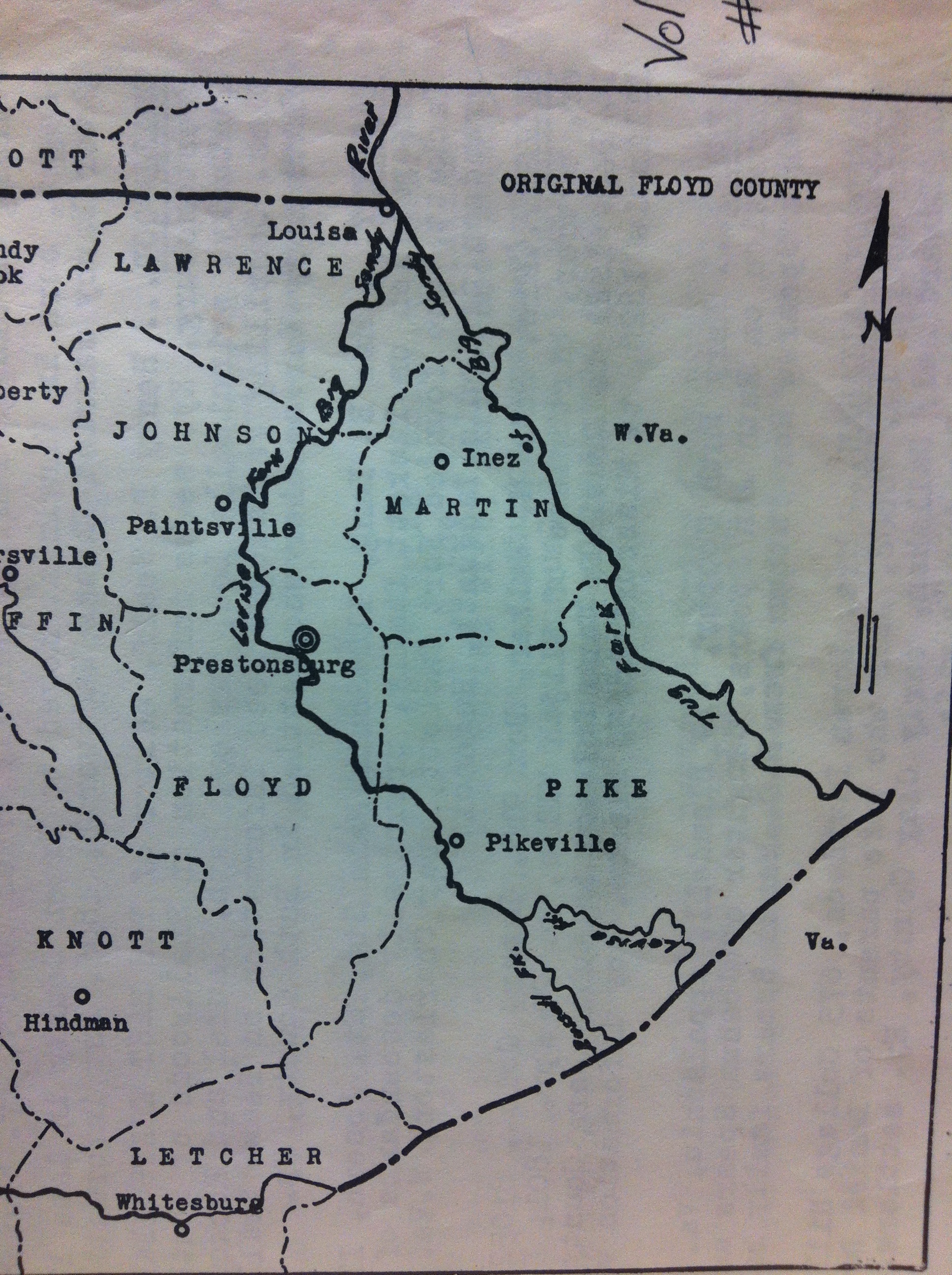
Kentucky Counties in the Big Sandy Valley

04 Tuesday Jul 2017

Tags

Appalachia, Big Sandy River, Floyd County, Hindman, Inez, Johnson County, Kentucky, Knott County, Letcher County, Levisa Fork, map, Martin County, Paintsville, Pike County, Pikeville, Prestonsburg, Russell Fork, Tug Fork, West Virginia, Whitesburg

Map of Big Sandy Kentucky Counties.JPG

Kentucky Counties in the Big Sandy Valley.

Posted by Brandon Ray Kirk | Filed under Big Sandy Valley

≈ Leave a comment

Cap Hatfield Shoots Jeff McCoy (1886)

01 Saturday Apr 2017

Posted by Brandon Ray Kirk in Big Sandy Valley, Hatfield-McCoy Feud

≈ Leave a comment

Tags

Appalachia, Cap Hatfield, crime, feud, feuds, genealogy, Hatfield-McCoy Feud, history, Jeff McCoy, Kentucky, Logan County, Martin County, murder, Parkersburg Sentinel, Tug Fork, West Virginia

Cap Hatfield Shoots Jef McCoy PS 12.11.1886

Parkersburg (WV) Sentinel, 11 December 1886.

Recollections of the Civil War in Cabell County, WV (1862)

13 Tuesday Sep 2016

Posted by Brandon Ray Kirk in Barboursville, Civil War, Hamlin

≈ 1 Comment

Tags

1st Regiment Virginia State Line, Abbs Valley, Ball Gap, Barboursville, Big Sandy River, Cabell County, civil war, Clint Lovette, Coal River, Confederate Army, G.W. Hackworth, Guyandotte, Guyandotte River, Hamlin, history, J.C. Reynolds, John B. Floyd, Kanawha River, Levisa Fork, Mud River, Mud River Bridge, Ohio, Proctorville, Thomas H. Perry, Tug Fork, Tylers Creek, Van Sanford, Virginia, West Virginia

About 1910, Rev. Thomas H. Perry reflected on his long life, most of which was spent in the vicinity of Tylers Creek in Cabell County, West Virginia. In this excerpt from his autobiography, Mr. Perry recalled the early years of the Civil War in his locale:

Immediately after our first defeat we began to plan for another exit to Dixie, as so few of our men made their escape to Dixie after being fired into at the falls of Guyan, for we knew now for a certainty that we must go south and be a soldier or go north a prisoner; for the Federals were going through the country picking up men and sending them away as far as they could. This last plan was for us to meet at Ball Gap, on Mud river, early in the morning, and a company of armed men would meet us there to guard us out to Dixie. Early that morning I met thirty or forty young men at the Ball Gap. We appointed G.W. Hackworth as our leader, and we moved on Mud river, and the young men came to us all along the way, and when we arrived six miles above Hamlin, we had from one to two hundred men in our company. From there we crossed the mountain to the Guyan valley, and then up the river and over the mountains and through the woods for ten days and nights, and we found ourselves in Aps [sic] valley, Virginia. Here we organized a military company* by electing G.W. Hackworth, captain; Van Sanford, J.C. Reynolds and Clint Lovette, lieutenants. No one knows but myself the feelings I had the day I took the oath to support the constitution of the Southern Confederate States of America and to discharge my duty as a soldier. As they swore me they handed me a bible. I remembered that this is the book that I had been preparing myself to preach, and it says: “Thou shalt not kill,” and it gave me trouble as long as I was a soldier.

We drilled at this place two or three weeks, and had eighty-four men in our company, and they generally used us as scouts, operating from the Kanawha river westward, down into Kentucky and eastern Tennessee. There would be times that we would not see our regiment for two months, and then again we would be with them every day for two months. The Federals were trying to make their way up Coal river, Guyan river, Tug river, and the Levisa fork of Big Sandy river, in Kentucky. Their idea was to destroy the New river bridge and the King salt works. General Floyd had a brigade of soldiers somewhere about the headwaters of these rivers; sometimes he would send large scouting parties down these rivers and drive out everything before them. Sometimes when we would be driving them down one river they would be moving up some other river. I have crossed the mountains between these rivers so many times and was shot at by men in the brush and suffered from hunger and cold so many times that it makes me think of war as the darkest days of my life. At one time I went three days and nights without one bite to eat; in many places we had to live on the country that we were in, and the soldiers in front would get all the citizens had to eat, and the rear guard suffered for food; we did not have battles like Lee and Grant, but to many of our poor boys the battle to them was as great as that of Gettysburg or Cold Harbor was to some of them.

At one time my company and some other company was ordered to Cabell county, and we came to Mud river bridge and went into camp for eight or ten days at this place. During our stay in this camp we had no trouble in getting food for our horses and soldiers for the Reeces and Morris and Guinns and Kilgores and others who lived in this neighborhood had an abundance of this world’s goods at that time. One morning our captain said he wanted eight volunteers who would go afoot for three or four days; he had no trouble in getting the eight men; I was one of that number; Lieutenant Lovette was in command, and at noon that day we ate dinner near Barboursville, and at night we were in Guyandotte. Several times the next day we would stand along the river front and see the Federal soldiers in Proctorville. In the middle of that afternoon we started back for Mud river bridge, and the next day our command broke camp, and we started for Dixie. Why these eight men were sent to Guyandotte I never knew, and why General Floyd sent such large scouting parties to Mason, Cabell and Wayne counties, as he did at this time, I never knew, unless it was to give protection to those who were desirous of going south with their families and chattels, which a great many did, and stayed until after the war.

Source: From Youth to Old Age by T.H. Perry, Chapter 6, p. 16-18. Note: As of 1862, Cabell County remained a part of Virginia and Lincoln County did not exist.

*Company F, 1st Regiment Virginia State Line

Suzy Phillips (2015)

22 Monday Jun 2015

Posted by Brandon Ray Kirk in Big Sandy Valley, Hatfield-McCoy Feud, Women's History

≈ Leave a comment

Tags

Appalachia, Big Sandy Valley, Brandon Kirk, Frank Phillips, Hatfield-McCoy Feud, history, Kentucky, Matewan, Matewan Depot, Mingo County, photos, Pike County, Suzy Phillips, Tug Fork, U.S. South, West Virginia

When I visit the Tug River section, Suzy Phillips is often my guide and partner. She is a descendant of Frank Phillips, who gained fame during the Hatfield-McCoy Feud. She loves history. 20 June 2013

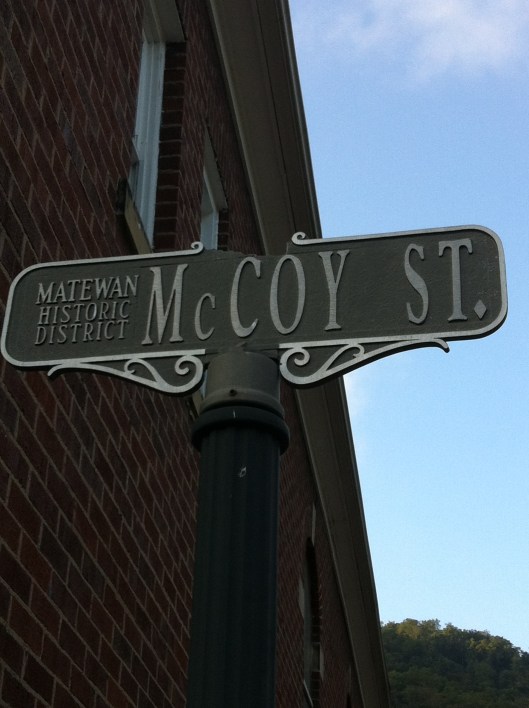
McCoy Street in Matewan, WV (2014)

29 Wednesday Apr 2015

Posted by Brandon Ray Kirk in Big Sandy Valley, Coal, Matewan

≈ Leave a comment

Tags

Appalachia, Big Sandy River, history, Matewan, Matewan Massacre, McCoy Street, Mine Wars, Mingo County, photos, Tug Fork, West Virginia

IMG_5611

McCoy Street, Matewan, WV, 13 September 2014

In Search of Ed Haley 60

30 Wednesday Jan 2013

Posted by Brandon Ray Kirk in Big Sandy Valley, Ed Haley, Huntington, Music, Pikeville, Williamson

≈ 2 Comments

Tags

Appalachia, Beaver Creek, Big Sandy River, Bill Necessary, Carter Caves State Park, Curly Wellman, Ed Haley, Ella Haley, fiddler, fiddling, Floyd County, Fraley Family Festival, Grayson, history, Huntington, J P Fraley, John Hartford, Kentucky, Lawrence Haley, Levisa Fork, Lynn Davis, Mingo County, Molly O Day, Molly O'Day, Mona Hager, music, Nashville, Paintsville, Prestonsburg, Snake Chapman, Tug Fork, U.S. South, Ugee Postalwait, West Virginia, Williamson, writers, writing

A few months later, I met Lawrence Haley at the Fraley Family Festival at Carter Caves State Park near Grayson, Kentucky. Lawrence and I spoke with Bill Necessary, a musician who saw Ed and Ella all over the Big Sandy Valley when he was about twenty years old. He said they rode a train up Levisa Fork to Paintsville, the seat of government for Johnson County, where they spent the day playing music at the courthouse. From there, they continued by train to Prestonsburg, county seat of Floyd County. At times, they went into the nearby coal camps of Beaver Creek and played at theatres. From Prestonsburg, they took the train to Pikeville, the county seat of Pike County, and then continued over to the Tug River around Williamson, county seat of Mingo County, West Virginia.

“Aw, they took in the whole dern country up through there,” Bill said. “By the time they made that circuit, why it’d be time for them to come again. I guess they’d tour a couple of weeks. By God, I just followed them around, son.”

Lawrence didn’t remember going to all of those places with Ed but did remember staying with Molly O’Day’s family around Williamson. Bill said Molly’s widow Lynn Davis was still living around Huntington, West Virginia.

Bill said Ed always wore a long overcoat — “rain or shine” — and even played in it. He never sang or entered contests.

“He was pretty up to date on music at that time,” Bill said. “His notes were real clear, boy.”

Back in Nashville, I worked really hard trying to figure out Ed’s bowing. There was a lot of contradictory information to consider. Snake Chapman said he bowed short strokes, indicating a lot of sawstrokes and pronounced note separation. J.P. Fraley, Slim Clere, Lawrence and Mona said that he favored the long bow approach and only used short strokes when necessary, like for hoedowns. Preacher Gore, Ugee Postalwait and Curly Wellman spoke about how smooth his fiddling was, which kind of hinted at him being a long bow fiddler. All were probably accurate in some respect. It seemed plain to me that one reason why there were so many contrasting and sometimes completely opposite accounts of how or even what Ed played was that everyone I’d talked to witnessed him playing at different times and places during his musical evolution. All along the way, he was experimenting, looking for that “right combination” or playing the style needed to create the sounds popular in a certain area. Even what I could actually hear on his home recordings was really just a glimpse into the world of his fiddling as it existed at that moment toward the end of his lifetime.

In Search of Ed Haley 6

26 Monday Nov 2012

Posted by Brandon Ray Kirk in Ashland, Big Sandy Valley, Ed Haley, Matewan, Music, Pikeville, Williamson

≈ 1 Comment

Tags

Appalachia, Art Stamper, Arthur Smith, Ashland, Big Sandy River, Billy Lyons, Blackberry Blossom, blind, Charles Wolfe, Clark Kessinger, Clayton McMichen, Duke Williamson, Ed Haley, fiddle, fiddler, fiddlers, fiddling, Fox in the Mud, Frazier Moss, Fred Way, Ft. Gay, Grand Ole Opry, history, Huntington, Joe Williamson, John Hartford, Kentucky, Kermit, Kirk McGee, Levisa Fork, Louisa, Mark Howard, Matewan, Mississippi River, Molly O'Day, music, Nashville, Natchee the Indian, Ohio River, Old Sledge, Packet Directory, Paintsville, Parkersburg Landing, Pikeville, Prestonsburg, Red Apple Rag, River Steamboats and Steamboat Men, Robert Owens, Roy Acuff, Sam McGee, Skeets Williamson, Snake Chapman, square dances, St. Louis, Stacker Lee, Stackolee, steamboats, Tennessee Valley Boys, Tri-State Jamboree, Trouble Among the Yearlings, Tug Fork, West Virginia, Williamson, WSAZ

Back in Nashville, I was knee-deep in Haley’s music, devoting more time to it than I care to admit. I talked so much about it that my friends began to tease me. Mark Howard, who was producing my albums at the time, joked that if Ed’s recordings were of better quality, I might not like them so much. As my obsession with Haley’s music grew, so did my interest in his life. For a long time, my only source was the liner notes for Parkersburg Landing, which I had almost committed to memory. Then came Frazier Moss, a fiddling buddy in town, who presented me with a cassette tape of Snake Chapman, an old-time fiddler from the Tug Fork of the Big Sandy in eastern Kentucky. On the tape, Snake said he’d heard Haley play the “old original” version of “Blackberry Blossom” after he “came in on the boats” at Williamson, West Virginia.

The boats?

This was making for a great story. I was already enthralled by Haley’s fiddling…but to think of him riding on “the boats.” It was the marriage of my two loves. I immediately immersed myself in books like Captain Fred Way’s Packet Directory 1848-1983: Passenger Steamboats of the Mississippi River System Since the Advent of Photography in Mid-Continent America (1983) to see which boats ran in the Big Sandy Valley during Haley’s lifetime. Most of the boats were wooden-hulled, lightweight batwings – much smaller than the ones that plied the Mississippi River in my St. Louis youth – but they were exciting fixtures in the Big Sandy Valley culture.

“I have seen these boats coming down the river like they were shot out of a cannon, turning these bends, missing great limbs hanging over the stream from huge trees, and finally shooting out of the Big Sandy into the Ohio so fast that often they would be nearly a mile below the wharf boat before they could be stopped,” Captain Robert Owens wrote in Captain Mace’s River Steamboats and Steamboat Men (1944). “They carried full capacity loads of sorghum, chickens and eggs. These days were times of great prosperity around the mouth of Sandy. Today, great cities have sprung up on the Tug and Levisa forks. The railroad runs on both sides, and the great activity that these old-time steamboats caused has all disappeared.”

During the next few weeks, I scoured through my steamboat photograph collection and assembled pictures of Big Sandy boats, drunk with images of Haley riding on any one of them, maybe stopping to play at Louisa, Paintsville, Prestonsburg and Pikeville, Kentucky on the Levisa Fork or on the Tug Fork at Ft. Gay, Kermit, Williamson, and Matewan, West Virginia.

Finally, I resolved to call Snake Chapman and ask him about his memories. It was a nervous moment – for the first time, I was contacting someone with personal memories of Ed Haley. Snake, I soon discovered, was a little confused about exactly who I was and why I was so interested in Haley’s life and then, just like that, he began to offer his memories of Ed Haley.

“Yeah, he’s one of the influences that started me a fiddling back years ago,” Snake said, his memories slowly trickling out. “I used to go over to Molly O’Day’s home – her name was Laverne Williamson – and me and her and her two brothers, Skeets and Duke, used to play for square dances when we first started playing the fiddle. And Uncle Ed, he’d come up there to old man Joe Williamson’s home – that’s Molly’s dad – and he just played a lot for us and then us boys would play for him, me and Cecil would, and he’d show us a lot of things with the bow.”

Molly O’Day, I knew, was regarded by many as the most famous female vocalist in country music in the 1940s; she had retired at a young age in order to dedicate her life to the church.

“And he’s the one that told me all he could about old-time fiddling,” Snake continued. “He said, ‘Son, you’re gonna make a good fiddler, but it takes about ten years to do it.'”

I told Snake about reading in the Parkersburg Landing liner notes how Haley reportedly wished that “someone might pattern after” him after his death and he totally disagreed. He said, “I could have copied Uncle Ed – his type of playing – but I didn’t want to do it because he told me not to. He told me not to ever copy after anyone. Said, ‘Just play what you feel and when you get good, you’re as good as anybody else.’ That was his advice.”

I didn’t really know what to make of that comment. I mean, was Haley serious? Was he speaking from personal experience or was it just something he told to a beginning fiddler for encouragement?

After that, my conversation with Snake consisted of me asking questions – everything from how much Haley weighed to all the intricate details of his fiddling. I wondered, for instance, if Ed held the bow at the end or toward the middle, if he played with the fiddle under his chin, and if he ever tried to play words in his tunes. I wanted to know all of these things so that I could just inhabit them, not realizing that later on what were perceived as trivial details would often become major items of interest.

Snake answered my questions precisely: he said Haley held the bow “up a little in the middle, not plumb on the end” and usually played with the fiddle at his chest – “just down ordinarily.” He also said Haley “single-noted” most of his bow strokes, played frequently in cross-key, hated vibrato and used a lot of “sliding notes.” He seldom got out of first position, only occasionally “going down and getting some notes” that he wanted to “bring in the tune” and he definitely tried to play words in his music.

“The old fiddlers through the mountains here – and I guess it’s that way everywhere – they tried to make the fiddle say the words of the old tunes,” Snake said.

“Uncle Ed, he was a kind of a fast fiddler,” he went on. “Most old-time fiddlers are slow fiddlers, but he played snappy fiddling, kindly like I do. Ah, he could do anything with a fiddle, Uncle Ed could. He could play a tune and he could throw everything in the world in it if he wanted to or he could just play it out straight as it should be. If you could just hear him in person because those tapes didn’t do him justice. None of them didn’t. To me, he was one of the greatest old-time fiddlers of all time. He was telling me, when I was young, he said, ‘Well, I could make a fiddle tune any time I want to,’ but he said he just knowed so many tunes he didn’t care about making any more. He played a variety of tunes that a lot of people didn’t play, and a lot of people couldn’t play. He knew so many tunes he wouldn’t play one tune too long.”

I asked Snake about Haley’s repertoire and he said, “He played an old tune called ‘Old Sledge’ and it was one of his good ones. He played tunes like ‘Trouble Among the Yearlings’, but when he was gonna play it he called it ‘Fox in the Mud’. He made that up himself. One of the favorite tunes of mine he played was the old-time way of playing ‘Blackberry Blossom’ and he played it in G-minor. Ed could really play it good. They was somebody else that made the tune. Uncle Ed told me who it was – Garfield. He said he was a standing fiddling near a big blackberry patch and it was in bloom at the mouth of the hollow one time and this fella Garfield played this tune and he asked this fella Garfield what the name of the tune was. He said, ‘Well, I ain’t named it, yet,’ and he turned around and spit in that blackberry patch with a big bunch of ambeer and said, ‘We’ll just call it ‘Blackberry Blossom’.”

Snake laughed.

“Yeah, Uncle Ed, he had tales behind every one of them like that, but that’s where he said he got the name of it. He said he named it there…spitting in the blackberry blossom.”

Snake only remembered Haley singing “Stacker Lee”, a tune I’d heard him fiddle and sing simultaneously on Parkersburg Landing:

Oh Stacker Lee went to town with a .44 in his hand.

He looked around for old Billy Lyons. Gonna kill him if he can.

All about his John B. Stetson hat.

Stacker Lee entered a bar room, called up a glass of beer.

He looked around for old Billy Lyons, said, “What’re you a doin’ here?

This is Stacker Lee. That bad man Stacker Lee.”

Old Billy Lyons said, “Stacker Lee, please don’t take my life.

Got a half a dozen children and one sweet loving wife

Looking for my honey on the next train.”

“Well God bless your children. I will take care of your wife.

You’ve stole my John B. Stetson hat, and I’m gonna take your life.”

All about that broad-rimmed Stetson hat.

Old Billy Lyons said, “Mother, great God don’t weep and cry.”

Oh Billy Lyons said, “Mother, I’m bound to die.”

All about that broad-rimmed Stetson hat.

Stacker Lee’s mother said, “Son, what have you done?”

“I’ve murdered a man in the first degree and Mother I’m bound to be hung.”

All about that John B. Stetson hat.

Oh Stacker Lee said, “Jailor, jailor, I can’t sleep.

Old Billy Lyons around my bedside does creep.”

All about that John B. Stetson hat.

Stacker Lee said, “Judge, have a little pity on me.

Got one gray-haired mother dear left to weep for me.”

All about that broad-rimmed Stetson hat.

That judge said, “Old Stacker Lee, gonna have a little pity on you.”

I’m gonna give you twenty-five years in the penitentiary.”

All about that John B. Stetson hat.

It was one awful cold and rainy day

When they laid old Billy Lyons away

In Tennessee.  In Tennessee.

Snake said Haley used to play on the streets of Williamson, West Virginia where he remembered him catching money in a tin cup. In earlier years, he supposedly played on the Ohio River and Big Sandy boats and probably participated in the old fiddlers’ contests, which Snake’s father said was held on boat landings. These impromptu contests were very informal and usually audience-judged, meaning whoever got the most applause was considered the winner. Sometimes, fiddlers would just play and whoever drew the biggest crowd was considered the winner.

I asked Snake if he ever heard Ed talk about Clark Kessinger and he said, “Skeets was telling me Ed didn’t like Clark at all. He said, ‘That damned old son-of-a-gun stands around and tries to pick up everything he can pick up from you.’ And he did. Clark tried to pick up everything from Uncle Ed. He was a good fiddler, too.”

Snake said Clayton McMichen (the famous Skillet Licker) was Haley’s favorite fiddler, although he said he knew just how to beat him. This made me think of the line from Parkersburg Landing, “In regard to his own fiddling, Haley was not particularly vain, although he was aware that he could put ‘slurs and insults’ into a tune in a manner that set him apart from all other fiddlers.” (I wasn’t exactly sure he meant by slurs and insults.)

Snake could tell that I was really into Haley.

“Try to come see me and we’ll make you as welcome as we possibly can,” he said. “I tell you, my wife is poorly sick, and I have a little trouble with my heart. I’m 71. Doctors don’t want me to play over two or three hours at a time, but I always like to meet other people and play with them. I wouldn’t have no way of putting you up, but you can come any time.”

Just before hanging up, I asked Snake if he had any Haley recordings. He said Skeets Williamson had given him some tapes a few years back and “was to bring more, but he died two years ago of cancer.” Haley had a son in Ashland, Kentucky, he said, who might have more recordings. “I don’t know whether he’s got any of Uncle Ed’s stuff or not. See, most of them old tapes they made, they made them on wire recordings, and I don’t know if he’s got any more of his stuff than what I’ve got or not.”

I told Snake I would drive up and see him in the spring but ended up calling him a week later to ask him if he knew any of Ed’s early influences. He said Ed never talked about those things. “No sir, he never did tell me. He never did say. Evidently, he learned from somebody, but I never did hear him say who he learned from.” I felt pretty sure that he picked up tunes from the radio. “Ed liked to listen to the radio, preferring soap operas and mystery chillers, but also in order to hear new fiddle tunes,” the Parkersburg Landing liner notes read. “A good piece would cause him to slap his leg with excitement.” I asked Snake if he remembered Haley ever listening to fiddlers on the radio and he said, “I don’t know. He must have from the way he talked, because he didn’t like Arthur Smith and he liked Clayton McMichen.”

What about pop tunes? Did he play any of those?

“He played ragtime pretty good in some tunes,” Snake said. “Really you can listen to him play and he slides a little bit of ragtime off in his old-time fiddling – and I never did hear him play a waltz in all the time I ever heard him play. He’d play slow songs that sound old lonesome sounds.”

Snake quickly got into specifics, mentioning how Haley only carried one fiddle around with him. He said, “He could tune right quick, you know. He didn’t have tuners.  He just had the keys.”

Did fiddlers tune low back in those days?

“I’d say they did. They didn’t have any such thing as a pitch-pipe, so they had to tune just to whatever they liked to play.”

Haley was the exception.

“Well, it seemed like to me he tuned in standard pitch, I’m not sure. But from hearing his fiddling – like we hear on those tapes we play now – I believe he musta had a pitch-pipe at that time.”

I wondered if Haley spent a lot of time messing around with his fiddle, like adjusting the sound post, and Snake said, “No, I never did see him do that. He might have did it at home but when he was out playing he already had it set up the way he wanted to play.”

Surprisingly, Snake didn’t recall Haley playing for dances. “I don’t think he did because I never did know of him playing for a dance. He was mostly just for somebody to listen to, and what he did mostly was to make money for a living playing on the street corner. I seen him at a fiddling contest or two – that was back before I learned to play the fiddle. That’s when I heard him play ‘Trouble Among the Yearlings’. He won the fiddling contest.”

What about playing with other fiddlers?

“Well, around in this area here he was so much better than all the other fiddle players, they all just laid their fiddles down and let him play. The old fiddlers through here, they wasn’t what I’d call too good fiddlers. We had one or two in the Pikeville area over through there that played a pretty good fiddle. Art Stamper’s dad, he was a good old-time fiddler, and so was Kenny Baker’s dad.”

After hanging up with Snake, I gave a lot of thought to Haley reportedly not liking Arthur Smith. His dislike for Smith was documented on Parkersburg Landing, which stated plainly: “Another fiddler he didn’t care for was Arthur Smith. An Arthur Smith record would send him into an outrage, probably because of Smith’s notoriously uncertain sense of pitch. Cecil Williamson remembers being severely lectured for attempting to play like ‘that fellow Smith.'”

Haley probably first heard Smith over the radio on the Grand Ole Opry, where he debuted in December of 1927. Almost right away, he became a radio star, putting fiddlers all over the country under his spell. His popularity continued to skyrocket throughout the 1930s, during his collaboration with Sam and Kirk McGee. In the late thirties, Haley had a perfect chance to meet Smith, who traveled through southern West Virginia and eastern Kentucky with the Tennessee Valley Boys. While unlikely, Haley may have met him at fiddling contests during the Depression. “In the thirties, Haley occasionally went to fiddle contests to earn money,” according to Parkersburg Landing. At that same time, Smith was participating in well-publicized (usually staged) contests with Clark Kessinger, Clayton McMichen and Natchee the Indian. Haley, however, tended to avoid any contest featuring Natchee the Indian, who “dressed in buckskins and kept his hair very long” and was generally a “personification of modern tendencies toward show fiddling.”

In the early 1940s, Haley had a perfect opportunity to meet Smith, who appeared regularly on WSAZ’s “Tri-State Jamboree” in Huntington, West Virginia. Huntington is located several miles up the Ohio River from Ashland, Kentucky and is West Virginia’s second largest city.

In the end, Haley’s reported low opinion of Smith’s fiddling was interesting. Arthur Smith was one of the most influential fiddlers in American history. Roy Acuff regarded him as the “king of the fiddlers,” while Dr. Wolfe referred to him as the “one figure” who “looms like a giant over Southern fiddling.” Haley even had one of his tunes – “Red Apple Rag” – in his repertoire. Maybe he got a lot of requests for Smith tunes on the street and had to learn them. Who knows how many of his tunes Haley actually played, or if his motives for playing them were genuine?

Newer posts →

Feud Poll 1

If you had lived in the Harts Creek community during the 1880s, to which faction of feudists might you have given your loyalty?

Categories

  • Adkins Mill
  • African American History
  • American Revolutionary War
  • Ashland
  • Atenville
  • Banco
  • Barboursville
  • Battle of Blair Mountain
  • Beech Creek
  • Big Creek
  • Big Harts Creek
  • Big Sandy Valley
  • Big Ugly Creek
  • Boone County
  • Breeden
  • Calhoun County
  • Cemeteries
  • Chapmanville
  • Civil War
  • Clay County
  • Clothier
  • Coal
  • Cove Gap
  • Crawley Creek
  • Culture of Honor
  • Dingess
  • Dollie
  • Dunlow
  • East Lynn
  • Ed Haley
  • Eden Park
  • Enslow
  • Estep
  • Ethel
  • Ferrellsburg
  • Fourteen
  • French-Eversole Feud
  • Gilbert
  • Giles County
  • Gill
  • Green Shoal
  • Guyandotte River
  • Halcyon
  • Hamlin
  • Harts
  • Hatfield-McCoy Feud
  • Holden
  • Hungarian-American History
  • Huntington
  • Inez
  • Irish-Americans
  • Italian American History
  • Jamboree
  • Jewish History
  • John Hartford
  • Kermit
  • Kiahsville
  • Kitchen
  • Leet
  • Lincoln County Feud
  • Little Harts Creek
  • Logan
  • Man
  • Matewan
  • Meador
  • Midkiff
  • Monroe County
  • Montgomery County
  • Music
  • Native American History
  • Peach Creek
  • Pearl Adkins Diary
  • Pecks Mill
  • Peter Creek
  • Pikeville
  • Pilgrim
  • Poetry
  • Queens Ridge
  • Ranger
  • Rector
  • Roane County
  • Rowan County Feud
  • Salt Rock
  • Sand Creek
  • Shively
  • Spears
  • Sports
  • Spottswood
  • Spurlockville
  • Stiltner
  • Stone Branch
  • Tazewell County
  • Timber
  • Tom Dula
  • Toney
  • Turner-Howard Feud
  • Twelve Pole Creek
  • Uncategorized
  • Warren
  • Wayne
  • West Hamlin
  • Wewanta
  • Wharncliffe
  • Whirlwind
  • Williamson
  • Women's History
  • World War I
  • Wyoming County
  • Yantus

Feud Poll 2

Do you think Milt Haley and Green McCoy committed the ambush on Al and Hollene Brumfield in 1889?

Blogroll

  • Ancestry.com
  • Ashland (KY) Daily Independent News Article
  • Author FB page
  • Beckley (WV) Register-Herald News Article
  • Big Sandy News (KY) News Article
  • Blood in West Virginia FB
  • Blood in West Virginia order
  • Chapters TV Program
  • Facebook
  • Ghosts of Guyan
  • Herald-Dispatch News Article 1
  • Herald-Dispatch News Article 2
  • In Search of Ed Haley
  • Instagram
  • Lincoln (WV) Journal News Article
  • Lincoln (WV) Journal Thumbs Up
  • Lincoln County
  • Lincoln County Feud
  • Lincoln County Feud Lecture
  • LinkedIn
  • Logan (WV) Banner News Article
  • Lunch With Books
  • Our Overmountain Men: The Revolutionary War in Western Virginia (1775-1783)
  • Pinterest
  • Scarborough Society's Art and Lecture Series
  • Smithsonian Article
  • Spirit of Jefferson News Article
  • The Friendly Neighbor Radio Show 1
  • The Friendly Neighbor Radio Show 2
  • The Friendly Neighbor Radio Show 3
  • The Friendly Neighbor Radio Show 4
  • The New Yorker
  • The State Journal's 55 Good Things About WV
  • tumblr.
  • Twitter
  • Website
  • Weirton (WV) Daily Times Article
  • Wheeling (WV) Intelligencer News Article 1
  • Wheeling (WV) Intelligencer News Article 2
  • WOWK TV
  • Writers Can Read Open Mic Night

Feud Poll 3

Who do you think organized the ambush of Al and Hollene Brumfield in 1889?

Recent Posts

  • Logan County Jail in Logan, WV
  • Absentee Landowners of Magnolia District (1890, 1892, 1894)
  • Charles Spurlock Survey at Fourteen Mile Creek, Lincoln County, WV (1815)

Ed Haley Poll 1

What do you think caused Ed Haley to lose his sight when he was three years old?

Top Posts & Pages

  • History for Boone County, WV (1928)
  • Origin of Place Names in Logan County, WV (1937)
  • Big Harts Creek Post Offices
  • Early Coal Mines in Logan County, WV
  • Post Offices of Wayne County, WV

Copyright

© Brandon Ray Kirk and brandonraykirk.wordpress.com, 1987-2023. Unauthorized use and/or duplication of this material without express and written permission from this blog’s author and/or owner is strictly prohibited. Excerpts and links may be used, provided that full and clear credit is given to Brandon Ray Kirk and brandonraykirk.wordpress.com with appropriate and specific direction to the original content.

Archives

  • February 2025
  • January 2025
  • October 2023
  • September 2023
  • December 2022
  • November 2022
  • May 2022
  • April 2022
  • February 2022
  • November 2021
  • October 2021
  • September 2021
  • June 2021
  • May 2021
  • April 2021
  • March 2021
  • February 2021
  • January 2021
  • December 2020
  • November 2020
  • October 2020
  • July 2020
  • June 2020
  • May 2020
  • April 2020
  • March 2020
  • February 2020
  • January 2020
  • December 2019
  • November 2019
  • October 2019
  • September 2019
  • August 2019
  • July 2019
  • June 2019
  • May 2019
  • April 2019
  • March 2019
  • February 2019
  • January 2019
  • December 2018
  • November 2018
  • October 2018
  • September 2018
  • August 2018
  • July 2018
  • June 2018
  • May 2018
  • April 2018
  • March 2018
  • February 2018
  • January 2018
  • December 2017
  • November 2017
  • October 2017
  • September 2017
  • August 2017
  • July 2017
  • June 2017
  • May 2017
  • April 2017
  • March 2017
  • February 2017
  • January 2017
  • December 2016
  • November 2016
  • October 2016
  • September 2016
  • August 2016
  • July 2016
  • June 2016
  • May 2016
  • April 2016
  • March 2016
  • February 2016
  • January 2016
  • December 2015
  • November 2015
  • October 2015
  • September 2015
  • August 2015
  • July 2015
  • June 2015
  • May 2015
  • April 2015
  • March 2015
  • February 2015
  • January 2015
  • December 2014
  • October 2014
  • September 2014
  • August 2014
  • July 2014
  • June 2014
  • May 2014
  • April 2014
  • March 2014
  • February 2014
  • January 2014
  • December 2013
  • November 2013
  • October 2013
  • September 2013
  • August 2013
  • July 2013
  • June 2013
  • May 2013
  • April 2013
  • March 2013
  • February 2013
  • January 2013
  • December 2012
  • November 2012

Enter your email address to follow this blog and receive notifications of new posts by email.

Join 2,925 other subscribers

Tags

Appalachia Ashland Big Creek Big Ugly Creek Blood in West Virginia Brandon Kirk Cabell County cemeteries Chapmanville Charleston civil war coal Confederate Army crime culture Ed Haley Ella Haley Ferrellsburg feud fiddler fiddling genealogy Green McCoy Guyandotte River Harts Harts Creek Hatfield-McCoy Feud history Huntington John Hartford Kentucky Lawrence Haley life Lincoln County Lincoln County Feud Logan Logan Banner Logan County Milt Haley Mingo County music Ohio photos timbering U.S. South Virginia Wayne County West Virginia Whirlwind writing

Blogs I Follow

  • OtterTales
  • Our Appalachia: A Blog Created by Students of Brandon Kirk
  • Piedmont Trails
  • Truman Capote
  • Appalachian Diaspora

BLOOD IN WEST VIRGINIA is now available for order at Amazon!

Blog at WordPress.com.

OtterTales

Writings from my travels and experiences. High and fine literature is wine, and mine is only water; but everybody likes water. Mark Twain

Our Appalachia: A Blog Created by Students of Brandon Kirk

This site is dedicated to the collection, preservation, and promotion of history and culture in Appalachia.

Piedmont Trails

Genealogy and History in North Carolina and Beyond

Truman Capote

A site about one of the most beautiful, interesting, tallented, outrageous and colorful personalities of the 20th Century

Appalachian Diaspora

  • Subscribe Subscribed
    • Brandon Ray Kirk
    • Join 787 other subscribers
    • Already have a WordPress.com account? Log in now.
    • Brandon Ray Kirk
    • Subscribe Subscribed
    • Sign up
    • Log in
    • Report this content
    • View site in Reader
    • Manage subscriptions
    • Collapse this bar
 

Loading Comments...