• About

Brandon Ray Kirk

~ This site is dedicated to the collection, preservation, and promotion of history and culture in my section of Appalachia.

Brandon Ray Kirk

Tag Archives: education

Richard T. Jordan (1929)

15 Saturday Sep 2018

Posted by Brandon Ray Kirk in African American History, Logan, World War I

≈ Leave a comment

Tags

25th Infantry, African-Americans, Alpha Phi Alpha, Appalachia, Aracoma High School, Columbia University, education, genealogy, history, Logan, Logan Banner, Logan County, Ohio State University, Red Cross Ambulance Corps, Richard T. Jordan, teacher, West Virignia, Wilberforce University, World War I

In April of 1929, the Logan Banner profiled numerous prominent African-American residents of Logan County, West Virginia.

Notable Blacks of Logan County LB 04.16.1929 1

RICHARD T. JORDAN

Graduate: Wilberforce University with B.A. degree; will take master’s work at Columbia University the coming summer session. Prof. Jordan has done work at Ohio State University; is a member of Alpha Phi Alpha, a national college fraternity. Honorary fraternities: Sword and Shield and Boule, and is an Elk and Mason. Prof. Jordan served his country in the late World War, doing overseas service; he was connected with the Red Cross Ambulance corps also enlisted in the U.S. Twenty-Fifth Infantry immediately following the World War, assigned to Mexican border service. The Aracoma school of which Prof. Jordan is principal has a corps of seven teachers, carrying an average enrollment of 150, and under his guidance the system is organized into an effective working unit, developing a definite educational program in the pupil enrollment. Prof. Jordan is a young man of high ideals, sterling character, studious and enterprising, and will make his mark in the profession.

Source: Logan (WV) Banner, 16 April 1929.

Recollections of McKinley Grimmett of Bruno, WV 1 (1984)

31 Friday Aug 2018

Posted by Brandon Ray Kirk in African American History, Coal, Dingess, Guyandotte River, Holden, Logan, Man, Timber, Wyoming County

≈ 4 Comments

Tags

African-Americans, Alva Grimmett, Appalachia, Austin Grimmett, Baileysville, Big Cub Creek, Bruno, Buffalo Creek, Christian, Cole and Crane Company, Devil Anse Hatfield, Dingess, Edith Grimmett, education, Elk Creek, Ettie Grimmett, farming, genealogy, general store, Green Perry, Guyandotte River, Guyandotte Valley, Henderson Browning, Henderson Grimmett, history, Holden, Horse Pen Mountain, Johnny Grimmett, Landsville, Lilly Grimmett, Logan, Logan County, logging, Madison Creek, Mallory, Man, McGuffey Readers, McKinley Grimmett, Mingo County, Mud Fork, Nancy Grimmett, rafting, Ralph Grimmett, Rose Grimmett, Sand Lick, Sanford Grimmett, Slater Hatfield, Tennis Hatfield, Thomas Hatfield, Tilda Hatfield, timber, timbering, Travis Grimmett, Verner, Walter Buchanan, West Virginia, whooping cough, World War I, Wyatt Belcher, Wyoming County

McKinley Grimmett was born on November 30, 1896 to Henderson and Nancy (Hatfield) Grimmett at Sand Lick, Logan County, WV. On May 14, 1916, Mr. Grimmett married a Ms. Plymale, who soon died, in Logan County. One child named Alva died on June 21, 1919 of whooping cough, aged fourteen months. His World War I draft registration card dated September 12, 1918 identifies him as having blue eyes and light-colored hair. He was employed by Mallory Coal Company at Mallory, WV. On November 13, 1919, he married Matilda “Tilda” Hatfield, daughter of Thomas Hatfield, in Logan County. He identified himself as a farmer in both of his marriage records. During the 1920s, he served as a deputy under Sheriff Tennis Hatfield.

The following interview of Mr. Grimmett was conducted at his home on July 17, 1984. In this part of the interview, he recalls his family background and early occupations. Logging and rafting in the Guyandotte Valley are featured.

***

Would you mind telling me when and where you were born?

Right here. I was born about a mile up above here. I was borned in Logan County. The post office was Christian at that time. Christian, WV. It’s changed now. They throwed Christian out – it was over here at Christian – and they throwed it out and moved it over here to Bruno. Christian went… The mines stopped over there. And that’s where I was born, right here at Bruno, Logan County. Been here all my life.

What day were you born?

November 30, 1896.

Who were your parents?

Henderson Grimmett and Nancy Hatfield Grimmett.

What kind of work did they do?

They did logging work. All they had that day and time. Mule teams and ox teams.

Where did your dad do his work?

All over Logan County.

Did he have his own farm?

Oh yeah. Yeah.

How big was his farm?

It was about 287 acres.

Can you describe his house?

Well, the house was a two-story building. But he never did get… He took the fever and he never did get the upper story, all of it completed. He died at a very early age of 74. He put him up a little store. Got ahead a little bit. Had a store here. Come down and bought this place off Walter Buchanan and he deeded his five kids the homeplace up there. And then he stayed on it from ’21 to ’29. He died 19th day of January, 1929.

Who were your mother’s parents?

Oh, Lord, I can’t… Slater Hatfield was her daddy’s name. And I don’t know my grandma. My daddy, now they both was born in Wyoming County. Baileysville or somewhere in there. I think my mother was born over there in Big Cub Creek. She was a Hatfield. I don’t know where…

How many brothers and sisters do you have?

I had three brothers and three sisters. Sanford was the oldest one. Austin and Johnny. They’re all dead. I’m the only one that’s living. All my three sisters… Lilly was the oldest one, and Rose was the next one, and Ettie was the youngest. They’re all dead. All of ‘em but me.

Were you educated in Logan County schools?

Yeah, that’s all we got. Free schools. I believe we started off about three months out of the year. Right over there where that first house is sitting – a one-room school house. All of us kids.

What was the last year of school you completed?

I believe it was about 1914, I’m not right sure. ’15.

Did you use the McGuffey Readers?

That’s all we had. And the spelling books. And in the late years, why we had a U.S. history… A small one. Most of it was just about West Virginia. It wasn’t about the whole United States. And geography, we had that. Arithmetic. That was about all we had in free schools. We had to buy them all then. They weren’t furnished.

How did you meet your wife?

She was born and raised over here at Horse Pen in Mingo County. And that’s how we met. We were just neighbors.

What was her maiden name?

She was a Hatfield, too. But now they were… There’s three or four sets of them.

Was her family related to Devil Anse Hatfield?

Well, they was some… Not very close, though, I don’t think.

Which church did you belong to?

I don’t belong to any.

Did you belong to a church when you were younger?

No, never did. If I ever would have joined, I’d have stayed with it.

Do you remember the year of your marriage?

Yeah, I sure do. November 13, 1919.

How many children do you have?

Four. We have two boys and two girls. Travis Grimmett is the oldest. And Ralph, Edith, and Nancy.

What was your wedding like?

Well, we just got married and come right home. At that time, they didn’t have such things, to tell you the truth.

Who was the preacher?

Green Perry. Rev. Green Perry on Elk Creek. Rode a horse back when I went up there to get married. A pair of mules. I rode them mules.

Where did you first live after you married?

Right about a mile above here at the old homeplace.

You have lived here all of your life?

All of our life.

Was it always this populated?

No, no. Wasn’t three or four houses on this creek at that day and time. It was farm land. It’s all growed up now. All them hills was put in corn, millets, and stuff like that. If they couldn’t get a machine to it, they cut it by hand. Some of them raised oats and some of them raised millet, corn. Raised hogs and cattle and sheep and selling ‘em.

Who owned this property back then?

Burl Christian owned this here, but I don’t know… My daddy bought his… A fellow by the name of Wyatt Belcher. Wait a minute. Browning. I can’t think of his name. He lived over here on Christian and he bidded in… It sold for back taxes and he bidded in. Henderson Browning.

What kind of work did you do after you married?

Just the same thing as I worked at before I got married. I first started out – my daddy was a boss for Cole and Crane on this river. I first started out working in the log business. I worked two years at that and then I decided… Mule team – I worked about eighteen months at that. Then in 1913 the coal company started in and I went to work in carpenter work. I helped build all of these houses down here at Landville. The superintendent, we got done, they was wanting to hire men, he give me a job keeping time for a while. And he wanted me to learn to run the drum – that’s letting coal off the hill. I learned it and about the third day I was up there, a preacher was running it, and he told me they’d just opened up and they didn’t have much coal to run off the hill, he told me, that preacher, he rolled out two cards and he said if that preacher fails to go out and work on that side track today you give him one of these cards. Well, I didn’t give him a card. But he come out that evening, the boss did. And he said, did the preacher work. And I said, no he refused. He said, I’ll fix him. He fired him. And I took the job and stayed with it four years and then I got married and then I went to work over here at Christian running a drum and I stayed there 34 years.

When you worked for Cole and Crane, did either of those men ever come up here?

Oh yeah. One of them was. Cole was. I don’t think Crane was ever here. A little slim fella.

Did you get a chance to talk to them?

No, they wouldn’t talk to us working men. They’d talk to the boss. They’d go away from us and talk to theirselves. We just got a $1.10 for ten hours. Eleven cents an hour.

What kind of a person did Cole seem to be?

Well, he knowed how the men was. They’d raft timber and go down this river to Guyandotte. Had what they called locks and dams there to catch the logs. This river was full of logs. He bought timber everywhere. Plumb at the head of it.

Did you ever ride a raft?

Oh, yeah. I went with my daddy. I wasn’t grown.

Can you describe it?

Oh, they’d raft the logs, poplar. Now they didn’t raft hardwoods. They’d sink on them. Some rafts, a big one would be 160 to 200 feet long, about 24 to 26 feet wide. Oar on each end of it. If it was a big raft, they had two men up front all the time plumb in to Guyandotte. I was the second man on it when I got to go out on it. My dad had timber and he rafted it, took it there and sold it. Took what they called dog wedges and cut little basket oaks and rafted them, stringers across ‘em, you know. Lots of people get drowned, too.

Were you ever in an accident?

No, I never was in no big one. I’ve seen about six or eight drown.

Could you describe how it happened?

Oh, if he couldn’t swim, sometimes the best swimmer drowned, you know, if he got under a lot of logs or something. According to whatever happened there with him. He could get out if there wasn’t no logs on top of him no where to hold him under, you know. If logs were on top of him, he was gone. Now about the last ones I seen drowned was two colored people. They was building a railroad from Logan to Man up Buffalo Creek. So we was working on a log gorge down there at the lower end of Landville. And there was four colored men… 1921. Had a saloon up here at Verner. They wouldn’t allow one in Logan County. And they went up there on the 21st day of December to get ‘em a load of whisky. And they come back… They’d seen white people ride these logs. Some county people would get on one log and ride it plumb to Logan, as far as you wanted to go. And they thought they could ride it. And they got on. Rode ‘em off the gorge and they was running into eddy water and they would hit the back end, it would, and the other end would swarp out and they’d pull out that way. And they got on ‘em with their whisky and everything and two of ‘em got out and two of ‘em drowned.

When you rode the raft to Guyandotte, how did you get back to Logan?

Oh, we had to walk. We’d get a train up to Dingess over here. You know where that’s at? We’d ride down up to there. And then we’d have to get off and walk across the hill there and come right straight out at the mouth of Mud Fork, Holden there, and up another little drain and down Madison Creek down here. And walk… Man alive, our feet would be so sore, I’d be up for two or three weeks I couldn’t walk, my feet would be wore out so.

NOTE: Some names may be transcribed incorrectly.

African-American Schools in Logan County, WV (1927)

21 Tuesday Aug 2018

Posted by Brandon Ray Kirk in African American History, Huntington

≈ Leave a comment

Tags

A.A. Wright, A.D. Robinson, A.V. McRae, African-Americans, Albert Meade, Anna B. Harris, Anna C. Hunter, Anna Spencer, Appalachia, Aracoma, Ardrossan, Audra Wilson, B.H. Hall, board of education, Bruce Hull, Clara Lee Johnson, Clara Richardson, Clothier, Coal River, Copperas, Cora, Crystal Block, D.E. Hopkins, Daisy Sheffery, Daniel H. Wood, Dehue, Doratha Withers, education, Elaine Ferguson, Elizabeth Creasy, Elizabeth Notter, Elma Phipps, Esta Shriver, Ethel, Ethel M. Page, F.O. Woerner, Flossie Hatfield, Flossie M. Jones, Garlands Fork, Georgia L. Miller, Gertrude Huntsman, Grace V. Reynolds, Harold Starcher, Hatfield, Helen E. Jones, history, Holden, Huntington, I.G. Hollandsworth, Imogene Baker, Ione Hall Cook, Island Creek, J.C. Evans, Jane Walker, John Pelter, Joseph D. Cary, Josephine Vaughan, Laura Griere, Laura J. Bayes, Laurel Hill, Lillian Samors, Logan County, Logan District, Logan High School, Logan Junior High School, Louis Simmons, M. Amelia Brooks, Macbeth, Mary Smith, Matilda Wade, Micco, Omar, Page Hamilton, Peach Creek, Preston A. Cave, Rossmore, Sharples, Slagle, Stirratt, teacher, Theodora Bradford, Thomas Jordan, Virginia Spratt, W.H. Houston, W.H. Huston, West Virginia, Yolyn

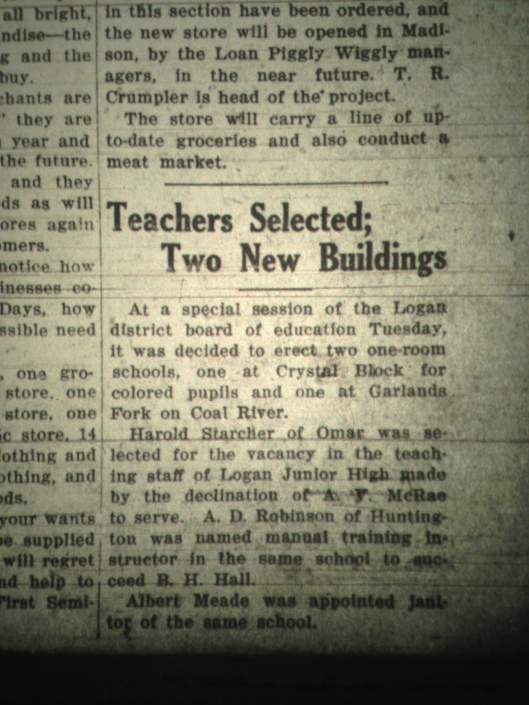
New Colored School at Crystal Block LB 08.12.1927 1

Logan (WV) Banner, 12 August 1927.

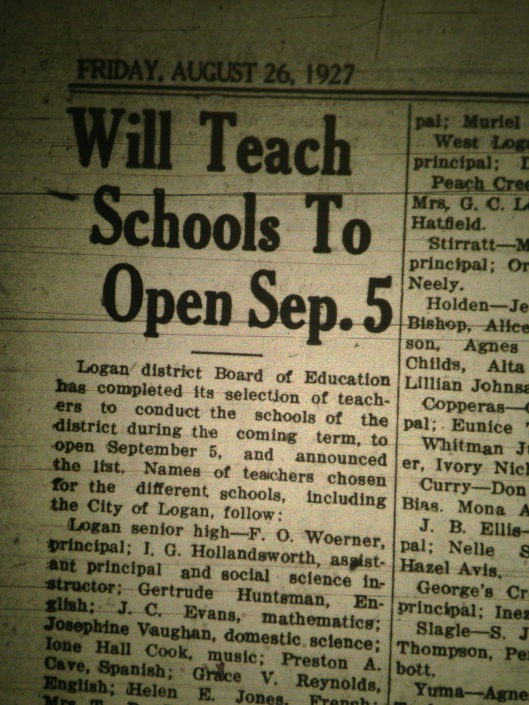
Logan District Colored Schools LB 08.26.1927 1

Logan (WV) Banner, 26 August 1927. This photo is meant to show the headline of the story; teachers named here are “white.”

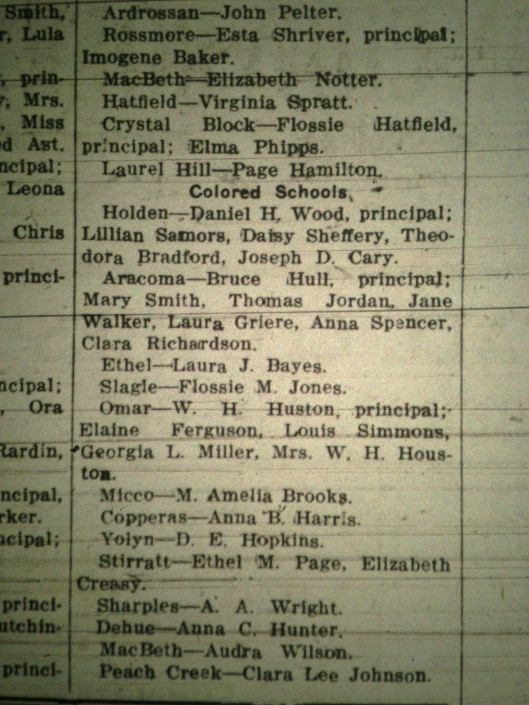
Logan District Colored Schools LB 08.26.1927 2

Logan (WV) Banner, 26 August 1927. The list of “colored” teachers begin here and continue in the photos below.

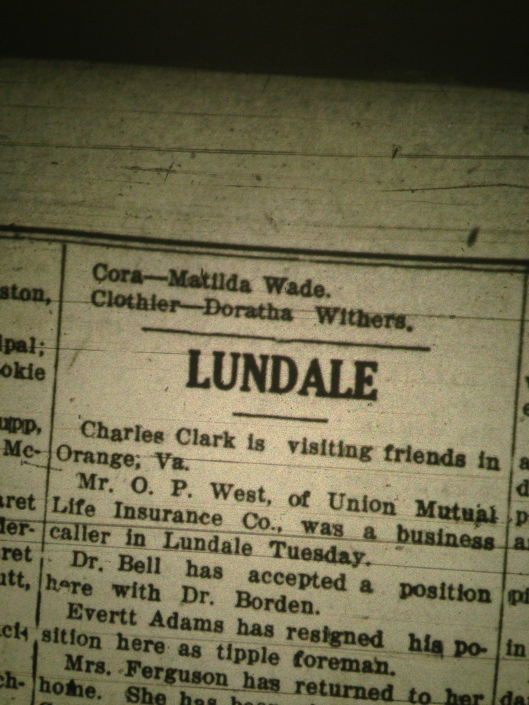
Logan District Colored Schools LB 08.26.1927 3

Logan (WV) Banner, 26 August 1927.

Big Creek News 04.09.1926

08 Wednesday Aug 2018

Posted by Brandon Ray Kirk in Big Creek, Cemeteries, Chapmanville

≈ Leave a comment

Tags

Appalachia, Banco, Big Creek, Big Creek School, Chapman Cemetery, Chapmanville, Easter, education, F.W. Saltsman, genealogy, Henlawson, history, Logan Banner, Logan County, Luther Wheeler, Manila, P.D. Bradbury, W.G. Lucas, West Virginia

An unknown correspondent from Big Creek in Logan County, West Virginia, offered the following items, which the Logan Banner printed on April 9, 1926:

Here we come with a bit of Big Creek news.

We sure did have a nice Easter. Plenty of eggs and a good time.

The teachers and pupils of this school were seen on the hill hunting eggs Friday afternoon. I bet they were all boiled hard eggs, don’t you, Nannie?

We are sorry to chronicle the death of Mrs. P.D. Bradbury of this place, who died at her home Saturday about 1:30 a.m. and was buried in the Chapman cemetery Sunday afternoon. She was a good Christian woman and will be missed by the children of God as well as other friends.

We are having nice weather at this writing and hope it will continue.

F.W. Saltsman seems rather downhearted. Cheer up, Saltsman. Winter is over.

We would be very glad if some one would come to Big Creek and preach some for us.

Mr. Chafin of Chapmanville has been doing some classified work at the Big Creek school.

We wish the school much success with their cooking.

Miss Harmon has a girl that suits her at last.

Wonder where Archie goes every Sunday when he is up? He always has to run to keep the train from leaving him. Ask Princess where he was.

Miss Thomas, what have you done with Mr. Adams?

What has become of the cook? We guess A.C. has taken his place.

Come on Banco, Manila, Chapmanville and Henlawson. Come on with more news.

Luther Wheeler demonstrated spring Monday by taking a joy ride on his bicycle.

W.G. Lucas, who has been sick for quite a while, is much better.

Marie, where is your Kennedy?

Combinations: Ikey and her sweetie; Miss Richardson going to school; Princess and her books; Martha going to Lincoln; Marie looking for Kennedy; Saltsman and his new cap; Nannie and Dell going to the show; Mr. Kennard spitting his tobacco juice; Archie going to Millard’s.

Good night, old Banner. Hope to meet you in dreamland.

If this is published, will call again.

Guyan Valley High School Graduates (1929-1931)

28 Saturday Jul 2018

Posted by Brandon Ray Kirk in Gill, Guyandotte River, West Hamlin

≈ Leave a comment

Tags

Alvin Franklin Watts, Appalachia, Bessie Arix, Branchland, Clyde Okra Adkins, David Keith Smith, Dennis Nathan Roy, Dorothy Beatrice Roy, Edgar Ray Midkiff, education, Ella Mae Covey, Elva Mae Adkins, Fred B. Lambert, Freda Marie McComas, Gilbert Garmon Isaac, Gill, Gilmer Odell McClellan, Glada Ellen Cyfers, Glenna Helena Midkiff, Glenna Naoma Roy, Guidna Bates, Guyan Valley High School, Guyan Valley Middle School, Helen Mary Yost, Helena Johnson, Helena Scraggs, Hilbert Harmon Isaac, history, Hubball, Huntington, Ida Lee Adkins, Irma Holton, Jennings Orlando Midkiff, Lincoln County, Mable Virginia Chapman, Marshall University, Maude Jewel Jaynes, Midkiff, Mildred Vivian Smith, Milton, Morrow Library, Olive Maude Triplett, Pleasant View, Rhoda Irene Messinger, Ruel Dial, Ruth Dewdrops Adkins, Ruth Lucas Stowers, Sarah Nelson, Sheridan, Smith, Thern Hodge, Thomas Wondel Adkins, Virginia Catherine Scites, Virginia Louise Johnson, West Hamlin, West Virginia, William Earl Bias

Fred B. Lambert, a prominent educator in the Guyandotte Valley, compiled this list of early Guyan Valley High School graduates. Guyan Valley High School was located in Pleasant View, Lincoln County, WV.

gv 1929.jpg

Guyan Valley High School, 1929. Photo credit unknown.

List of 1929 graduates

  1. Edgar Ray Midkiff     Smith, WV
  2. Jennings Orlando Midkiff     Smith, WV
  3. Gilmer Odell McClellan     Branchland, WV
  4. Olive Maude Triplett     West Hamlin, WV
  5. Dennis Nathan Roy     Hubball, WV
  6. Glenna Naoma Roy     Hubball, WV
  7. Rhoda Irene Messinger     Branchland, WV

List of 1930 graduates

  1. Clyde Okra Adkins     West Hamlin, WV
  2. Bessie Arix     Smith, WV
  3. Ruel Dial     Branchland, WV
  4. Thern Hodge     West Hamlin, WV
  5. Virginia Louese Johnson     Branchland, WV
  6. Sarah Nelson     Gill, WV
  7. Ruth Lucas Stowers     Milton, WV
  8. Elva Mae Adkins     West Hamlin, WV
  9. Dorothy Beatrice Roy     Hubball, WV
  10. David Keith Smith     West Hamlin, WV

List of 1931 graduates

  1. Ida Lee Adkins     West Hamlin, WV
  2. Ruth Dewdrops Adkins     West Hamlin, WV
  3. Thomas Wondel Adkins     Midkiff, WV
  4. Guidna Bates     Sheridan, WV
  5. William Earl Bias     West Hamlin, WV
  6. Mable Virginia Chapman     Hubball, WV
  7. Ella Mae Covey     West Hamlin, WV
  8. Glada Ellen Cyfers     Gill, WV
  9. Irma Holton      Branchland, WV
  10. Gilbert Garmon Isaac     Smith, WV
  11. Hilbert Harmon Isaac     Smith, WV
  12. Maude Jewel Jaynes     West Hamlin, WV
  13. Helena Johnson     West Hamlin, WV
  14. Freda Marie McComas     West Hamlin, WV
  15. Glenna Helena Midkiff     West Hamlin, WV
  16. Virginia Catherine Scites     Midkiff, WV
  17. Helena Scraggs     West Hamlin, WV
  18. Mildred Vivian Smith     West Hamlin, WV
  19. Alvin Franklin Watts     Branchland, WV
  20. Helen Mary Yost     West Hamlin, WV
IMG_1194.JPG

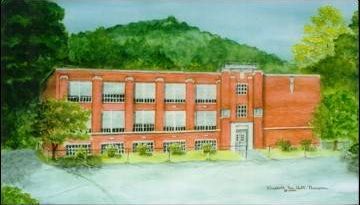
Guyan Valley Middle School, c.2017.

Source: Fred B. Lambert Papers, Special Collections Department, James E. Morrow Library, Marshall University, Huntington, WV.

History for Boone County, WV (1928)

15 Sunday Jul 2018

Posted by Brandon Ray Kirk in Boone County, Huntington, Logan

≈ 2 Comments

Tags

Appalachia, Boone County, Camp Creek, Charles L. Estep, civil war, Coal River, Coal Valley News, Cumberland Gap, Danville, education, Hadalton, history, Huntington, Isaac Barker, Jackie Dolin, John E. Kenna, John Halstead, John Morris, Kanawha River, Kentucky, Kinder Hill, Little Coal River, Logan, Logan Banner, Madison, Marshall A. Estep, Maysville, Mud River, North Carolina, Ohio River, Olive Branch Baptist Church, Spruce Fork, Spruce Ridge, Texas, Thomas Price, Turtle Creek, W.H. Turley, W.W. Hall, West Virginia, White Oak Creek, Wilderness Road

A story titled “Old Times in Boone County Told About By Historian” and printed in the Logan Banner in Logan, WV, on April 20, 1928 provides some history for Boone County:

Old-timers and students of local history should be interested in the following excerpt from the history of Boone county by Prof. W.W. Hall. The family names mentioned are familiar ones.

What is here reproduced was taken from the Coal Valley News:

About the year of 1798 Isaac Barker reared a pole cabin on the brow of the hill on the lower side of White Oak Creek, near old lock seven. This was the first white man’s home established in Boone county. The second settler in the county was Johnson Kinder, a brother-in-law of Barker. He settled on Kinder Hill a few months after Barker came. The first settler on Little Coal River was John Halstead, who settled at the mouth of Camp creek about 1800. A few months later Jackie Dolin was married to Isaac Barker’s daughter and led his blushing bride, attired in her homespun, through the trackless forest up Brush creek and over the hill to a scantily furnished home on Camp creek. Not long after this Thomas Price, a daring hunter from North Carolina, wandered over the Wilderness Road through Cumberland Gap to Maysville, Kentucky, where he embarked in a canoe, ascended the Ohio, the Kanawha, the Coal and the Little Coal rivers to the present site of the town of Danville, and became the first settler there.

For some years after the coming of the white men there were no churches, but when an Old Baptist or Methodist preacher would arrive in the settlement, word was passed around to the neighbors and that night earnest prayers, exhortations and hallelujahs would ascend from those rude homes. The first church erected in the county was the Olive Branch Baptist church at the mouth of Turtle creek. The first term of the circuit court held in the county after its organization in 1847 was held in this church. The grand jury made its investigations while seated on the framing in Ballard’s old water mill near by, and the petit jury retired to the paw paw bushes below to consider their verdicts.

The daring hunters, adventurous pioneers and brave soldiers who came from the best families in the east to establish home in the wilderness, were not contented to let their children grow up without the rudiments of an education, so they established Old Field schools in the slave cabins, tanneries, country churches and abandoned dwellings, when an itinerant teacher who could read, write and cipher a little came along. The first free school in the county was taught by John Morris, just after the Civil War, in an old house abandoned by Dr. Church. The old house stood across the hollow from W.H. Turley’s present residence in Madison. Within the next year or two a log school house was erected near the upper end of Danville and another on the point across the river from Hadalton. The children of Madison had to go to Danville or Hadalton to school until 1885, when the people of Madison, by mandamus, compelled the board of education to give them a school. The first school house erected in Madison is now used by Dr. Smoot for a barn. While the course of study in these early schools was meager and the work crude, yet they did succeed in inspiring a few boys to strive for higher education. Former United States Senator John E. Kenna was born in Boone county and attended his first schools in a log house on Big Coal river. Dr. Marshall A. Estep, an eminent physician of Texas, and his brother, Judge Charles L. Estep, of Huntington and Logan, were reared in the “Promised Land,” the name of their father’s mountain home on the summit of Spruce Ridge, and attended their first schools in a log house on the Spruce Fork. One of these early log school houses still stands on the head of Mud river, remote from the highways frequented by trade and travelers. Two of the most recent prosecuting attorneys of the county, two clerks of the circuit court, two of the clerks of the county court, four county superintendents of schools, chief U.S. Marshal for the southern district of West Virginia, and two prosperous dental surgeons attended school when boys in that little log school house on the head of Mud. The attendance in it was never large.

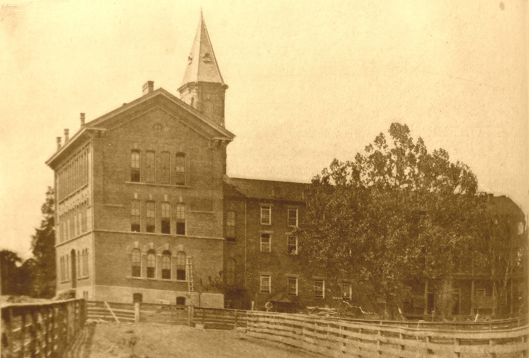
Marshall College (1867)

07 Saturday Jul 2018

Posted by Brandon Ray Kirk in Huntington

≈ Leave a comment

Tags

Appalachia, Cabell County, education, history, Huntington, Marshall College, Marshall University, photos, West Virginia

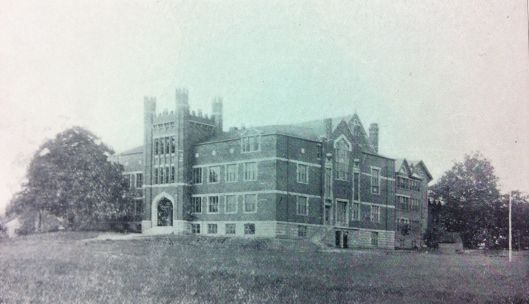
Marshall College in 1867 1.JPG

Marshall College (now University) in present-day Huntington, Cabell County, WV. Photo credit unknown.

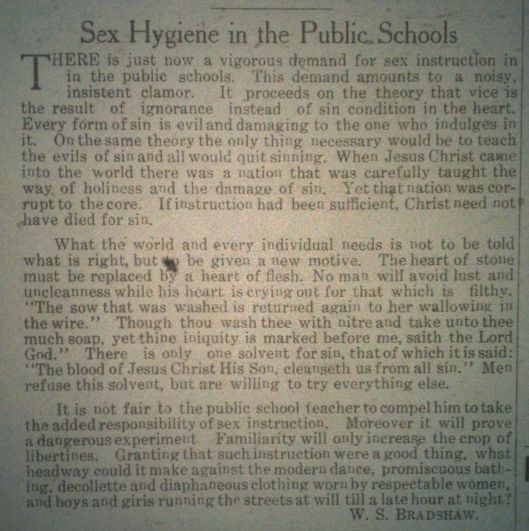
Sex Hygiene in the Public Schools (1914)

30 Saturday Jun 2018

Posted by Brandon Ray Kirk in Logan

≈ Leave a comment

Tags

education, history, Logan, Logan Banner, sex education, W.S. Bradshaw, West Virginia

Sex Hygiene in Public Schools LB 08.14.1914

Logan (WV) Banner, 14 August 1914.

Aracoma High School in Logan, WV (1927)

11 Sunday Mar 2018

Posted by Brandon Ray Kirk in African American History, Logan

≈ Leave a comment

Tags

African-Americans, Appalachia, Aracoma High School, Bruce H. Hull, education, history, Logan, Logan Banner, Logan County, Logan High School, North Central Association of Secondary Schools, teachers, West Virginia

From the Logan Banner of Logan, WV, comes this interesting item about Aracoma High School dated September 2, 1927:

ARACOMA HIGH OPENS SEPT. 5th

Principal Hull Announces Some New Features Since Last Term, Adding To the Facilities

Plans are about completed for the opening of the Aracoma high school for the coming year. The principal, Mr. Bruce H. Hull, states that an annex will be fitted up for use this year giving an additional room for high school purposes. This annex will be equipped as a science laboratory. Equipment, including special furniture, has already been ordered for this department and is expected to be in place for the beginning of the year. The additional room and added facilities thus provided should enable the high school to be classified as second class.

Mr. Hull further stated that the board of education will furnish transportation to all students living in the district who wish to attend the high school up to and including the eleventh grade. Parents are urged by him to have their boys and girls enter school on the first day for purpose of classification.

The faculty for the school will be composed of five members holding baccalaureate degrees from standard and approved colleges and two members who are graduates of the standard normal course. It will be recalled that when Mr. Hull came to Logan two years ago there was no accredited senior high school for Negroes, but now plans have been completed for a new building which the board expects to complete before the end of the present term. The completion of this unit in the system of education together with the entrance of the Logan high school into the North Central Association of Secondary Schools will be tangible evidence of the progress of Logan county in the field of education.

Aracoma High School in Logan, WV (1927)

14 Sunday Jan 2018

Posted by Brandon Ray Kirk in African American History, Battle of Blair Mountain, Logan

≈ Leave a comment

Tags

African-Americans, Appalachia, Appalachian Power Company, Aracoma High School, Battle of Blair Mountain, board of education, Buskirk & Kayser, Coal Branch, Coal River, E.F. Scaggs, education, Elaine Ferguson, Georgia Miller, history, Island Creek Bridge, J.F. May, J.W. Beckett, K.F. Deskins, L.E. Farnsworth, Logan, Logan Banner, Logan County, Logan High School, Lois Simmons, Omar Colored School, Opperman, R.H. May, W.H. Houston, West Virginia, White & Browning Building

In 1927, the Logan County Board of Education discussed construction of a new high school building for the county’s black pupils. At this time, Republicans held many county offices by narrow majorities.

aracoma high school

Board of Education Favorable to Providing New Building for Colored Pupils.

NEEDS OF BLAIR POINTED OUT

Colored Teachers Hired For Omar

–Board Meets Again Friday–

Other Matters.

That negotiations for the purchase of a site for a centralized colored high school for Logan district have been under way was disclosed at the regular monthly meeting of the Logan district board of education last Saturday. At an adjourned meeting to be held Friday of this week a further step toward this end may be taken.

The site under consideration is a two-acre tract fronting on the north shore of Island creek in Coal Branch. It lies between Coal Branch (stream) and the Island Creek bridge and roadway, and to which the only access at this time is through the alley along side and back of Buskirk & Kayser’s store. The upper half of it is now a weed patch; the other half is under cultivation.

This tract belongs to K.F. Deskins and has been priced to the board at $21,000. The ground is low and often overflows, but the board has been advised that the Appalachian Power Company will fill it with its own refuse up to the level of the road at no cost to the purchaser. Thus it would be made virtually flood proof.

Saturday’s meeting was attended by all three members, President J.F. May, Dr. L.E. Farnsworth and J.W. Beckett. Though convinced the price is high, Dr. May and Dr. Farnsworth said, everything considered, they believed the tract to be the most suitable for the purpose that could be found; and they further made it clear that in their opinion a new high school for the colored pupils is imperative and should be made available just as soon as possible. While admitting there are many things that should and must be done, they doubt whether any other contemplated improvement is more urgent than this.

The Aracoma high school building, a rickety, wholly unsuitable two-story frame, is characterized as a fire-box that must be abandoned. This property would be sold, if the other is bought, it is said, but the proceeds of the sale would doubtless be negligible compared to the price of the Dingess tract.

Central Location

The Dingess tract is believed to be ideally located with reference to the colored population of the district. Besides, it is easily accessible from various directions and is ample in dimensions; and if necessary, one or more lots could be sold, though nothing of that sort is now contemplated.

Just how this proposed purchase and the proposed new wing for the Logan high school are to be financed was not explained at Saturday’s meeting. But there were many other matters demanding attention.

Conditions of school buildings and equipment at Blair and other Coal River points were discussed at length and definite action will be taken soon, it was promised. The two Richardson brothers, coal operators at Opperman, took a hand in these discussions and urged a program of improvements. Blasting done by road contractors nearly wrecked the Blair school building a good while ago.

The following teachers were hired for the Omar colored school: W.H. Houston, principal; Mrs. Georgia Miller,  Mrs. Lois Simmons, Mrs. Elaine Ferguson, Mrs. W.H. Houston. The last three are new ones.

Prof. Houston was given a contract to paint some parts of the building for 10 cents a yard, the board to furnish the paint. He was told he could not make wages at that price but said he did not care about that, adding that he wanted the work done and would do it right or would not expect to receive even the low contract price for his work.

Many bills, many of them small and incurred by the old regime, were ordered paid. Among these was one for $40 for two months rent for an office in the White & Browning building for E.F. Scaggs. That contract was declared canceled.

R.H. May was appointed janitor of the Logan high school building, effective August 1.

Source: Logan (WV) Banner, 26 July 1927.

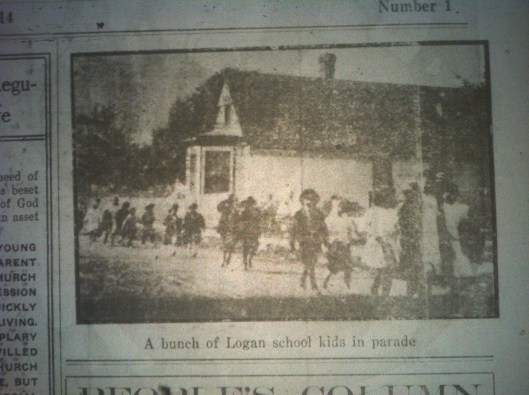
Logan School Children in a Parade (1914)

15 Tuesday Aug 2017

Posted by Brandon Ray Kirk in Logan

≈ 1 Comment

Tags

Appalachia, education, history, Logan, Logan Banner, Logan County, photos, West Virginia

Logan School Kids in Parade LB 07.03.1914 1.JPG

Logan (WV) Banner, 3 July 1914.

Marshall College (1910)

15 Thursday Jun 2017

Posted by Brandon Ray Kirk in Huntington

≈ Leave a comment

Tags

Appalachia, Cabell County, education, history, Huntington, Marshall College, Marshall University, photos, West Virginia

Marshall College in 1910 1

Marshall College, Huntington, WV, 1910.

Chapmanville District Schools (1927) 2

15 Thursday Jun 2017

Posted by Brandon Ray Kirk in Big Harts Creek, Civil War, Halcyon, Native American History, Queens Ridge, Shively, Spottswood, Stone Branch, Warren, Whirlwind, Yantus

≈ Leave a comment

Tags

Albert Thornton, Alice Dingess, Alonzo, Anna Adams, Appalachia, Battle of Cloyd's Mountain, Beatrice Adams, Ben Adams, Bob Dingess, Brown's Run, Browns Run School, Buck Fork, Buck Fork School, Bud Dingess School, Bulwark School, Chapmanville District, civil war, Cole Adams, Confederate Army, Conley School, Crawley Creek, Daisy Dingess, Dalton School, Dave Dingess School, Dixie Mullins, E. Burton, East Fork, Ed Dalton, education, Edward Chapman, F.M. McKay, Fisher B. Adkins, Fisher Thompson, genealogy, George Doss, George Mullins School, Harts Creek, history, Hoover School, Howard Adams, Hugh Dingess School, Ina Dingess, Ivy Branch School, J.A. Vickers, J.L. Thomas, John Conley, John Dingess, L.D. Stollings, Lee Dingess School, Limestone Creek, Local History and Topography of Logan County, Logan County, Lower Trace School, Manor School, Marsh Fork, Melvin Plumley, Middle Fork, Native Americans, Pigeon Roost, Piney School, Reuben Conley, Road Fork, Rocky School, Sallie Dingess, Smokehouse Fork, Stephen Hart, Striker School, T. Doss, Thelma Dingess, Three Fork School, Tim's Fork, Timothy Dwight, Twelve Pole Creek, Ula Adams, Union Army, West Fork, West Virginia, White Oak School, Workman School, World War I

Teachers identified the following schools in Chapmanville District of Logan County, WV, and offered a bit of local history in 1927:

Dave Dingess School, est. 1814

Ula Adams, teacher

One room frame school

“Harts Creek derived its name from Steven Harts, said to have been killed by Indians on the creek.”

Striker School, est. about 1874

Edward Chapman, teacher

One room frame building

Three Fork School, est. 1878

One room frame building, originally a log house

Nine Confederate veterans live here: George Doss, T. Doss, L.D. Stollings, Ed Dalton, Ruben Conley, John Conley, Ben Adams, E. Burton, Melvin Plumley. A Union veteran lives here; he originated elsewhere. Three branches of Crawley Creek are Road Fork, Middle Fork, and Pigeon Roost. Alonzo is the local post office.

Bulwark School, est. 1880

Robert Dingess, teacher

One room frame building

“All fought on the Confederate side” during the Civil War. One man gained great merit from our district as a marksman with the American marines during World War I.

Lee Dingess School, est. 1891

Cole Adams, teacher

One room frame

Five local men served in the Confederate Army.

Browns Run School, est. 1892

Ina Dingess, teacher

One room frame building

“Sent several soldiers to help the South.” The fork is named for a Brown who lived at its mouth.

Buck Fork School, est. 1894

No teacher given

One room frame building

A Church of Christ exists nearby. Three local men served in the Confederate Army. One local soldier lost both hands in World War I.

Ivy Branch School, est. 1895

Anna Adams, teacher

Albert Thornton was the first teacher here. “Trace Fork received its name from the original road leading to Twelve Pole Creek.”

Hugh Dingess School, est. 1897

Sallie Dingess, teacher

One room frame building

Conley School, est. 1897

J.L. Thomas, teacher

One room frame building

The first house built on Smoke House Fork at its mouth had no chimney for quite a while and smoked badly.

Dalton School, est. 1897

Thelma Dingess, teacher

One room frame building

“This district furnished a lot of Civil War veterans and played her part.”

Bud Dingess School, est. 1904

Beatrice Adams, teacher

One room frame building

“East Fork named on account of its being the most Eastern fork of Harts Creek.” One local soldier served in the Confederate Army.

Hoover School, est. 1910

Howard Adams, teacher

One room frame building

A Christian Church exists in the vicinity. Four local men served in the Confederate ARmy. “Harts Creek named from Steven Harts murdered by Indians.” Three boys went from here and one was wounded at the battle of Argonne.

George Mullins School, est. 1910

Dixie Mullins, teacher

One room frame building

“Buck Fork named from large number of male deer on creek.”

Rocky School (no date)

Daisy Given Dingess, teacher

References an Indian mound on Pigeon Roost where tomahawks, arrowheads, etc. can be found. Indian burial ground.

Under the Tim’s Fork entry, it says that John Dingess was killed in battle at Cloyd’s farm. Tim’s Fork is named for Timothy Dwight, who lived there.

Lower Trace School, est. 1919

Alice Dingess, teacher

Two room frame building

“Sent several soldiers to help the South.” Also, “Harts Creek named from Steven Harts.”

Piney School, est. 1921

F.M. McKay, teacher

One room building

No permanent churches exist locally; people meet occasionally in one of the school houses. Four local men served in the Confederate Army. “Piney was named because of so much pine growing there.”

White Oak School, est. 1922

Fisher Thompson, teacher

One room rented frame building

Manor School, est. 1923

Located at Limestone

Workman School, est. 1924

Fisher B. Adkins, teacher

One room frame building

Marsh Fork derived its name from the marshy land near its mouth.

Source: Local History and Topography of Logan County by J.A. Vickers (Charleston, WV: George M. Ford, State Superintendent, 1927).

Chapmanville District Schools (1927) 1

14 Wednesday Jun 2017

Posted by Brandon Ray Kirk in African American History, Banco, Big Creek, Big Harts Creek, Chapmanville, Civil War, Guyandotte River, Holden, Native American History, Stone Branch, Timber

≈ Leave a comment

Tags

36th Virginia Volunteer Infantry Regiment, African-Americans, Appalachia, Battle of Kanawha Gap, Big Creek, Big Creek School, Burley Stollings, Buzzard Hill, Chapmanville District, Chapmanville School, Charles I. Stone, civil war, Confederate Army, Crispin Stone, Daisy Pettit, Daisy School, Dare Devils, Ed Stone School, Edith Richardson, education, Fort Sumter, French Dingess, Garrett Fork, genealogy, George Hill, Godby Branch, Guyandotte River, history, Holden, Hugh Thompson School, Hugh Toney, J.A. Vickers, J.G. Beymer, John Conley, John Garrett, John Godby, John stone, Kitchen School, Lane School, Local History and Topography of Logan County, Logan County, Lot W. Adams, Mabel Lowe, Native American History, Native Americans, Pigeon Mountain, Poplar Camp Creek, Prudential Coal Mine, Rosa Barker, Sid Ferrell, Simon Girty, Spanish-American War, Stone Branch, Stone Branch School, Thomas Huff, Thomas School, Union Army, Vette, Violet H. Agee, West Virginia, World War I

Teachers identified the following schools in Chapmanville District of Logan County, WV, and offered a bit of local history in 1927:

Big Creek School, est. 1852

Edith Richardson, teacher

Big Creek School was built of logs in 1870. Crispin S. Stone taught the first free school in his kitchen in 1870. A log building was erected the next year by the people. A Baptist Church exists here as of 1906. Many soldiers of the Civil War served from here. Two are still living. George Hill of Holden served in the Spanish-American War. Sid Ferrell of Big Creek was wounded in World War I when he left the trenches ahead of his command. The first merchant started here in 1904. Prudential was the first coal mine, just below here, in 1905. The first gas well was drilled here in 1909. Big Creek was formerly named “vette.” On the left of Big Creek (stream) looking downstream is Buzzard Hill and on the right is Pigeon Mountain. Pigeon Hill was named due to the great number of pigeons resting there. Big Creek was formerly called Poplar Camp Creek from a surveyor’s camp made of logs. The town was pretty well built up since 1902.

Lane School, est. 1887

Mable Lowe, teacher

Two room frame building

Four Confederate soldiers and one Union soldier lived here during the war. Garrett Fork was named for John Garrett, an old soldier.

Under the entry for Godby Branch: Godby Branch was named for John Godby. Old settlers claim that Simon Girty who married an Indian squaw lived on Godby Branch for several years. He cut his name on a large beech tree that fell in 1890. John Godby told the story.

Chapmanville School, est. 1892

Lot W. Adams, teacher

Four rooms and two outside rooms

There is a large Indian mound in Chapmanville. French Dingess reportedly fired the first gun at Fort Sumter. The Guyandotte River was reportedly named from the Indian word meaning “narrow bottoms.” Company D, 36th Virginia Infantry, known as the Dare Devils, organized here in May 1861 with Charles I. Stone as captain. Later it combined with Co. C, 36th Virginia Volunteer Infantry and was known as the Logan Wildcats with Hugh Toney as captain. The Battle of Chapmanville Mountain was fought in the fall of 1861 here. Major Davis was wounded and captured and his original is still kept by his relatives. He charged fifty cents a month per pupil and the textbooks were free. A large beech and a large white oak plainly marked a corner trees on the Thomas Huff 850-acre survey made on June 3, 1784.

Stone Branch School (colored), est. 1902

Violet H. Agee, teacher

Kitchen School, est. 1905

Uses three one-room buildings

John Stone said there were a few straggling bands of Indians here when he came to Stone Branch in 1807 but committed no depredations after he settled. John Stone taught the first school in this district and maybe in the county at Stone Branch in 1812. The textbooks were made by him with goose quill pens.

Hugh Thompson School, est. 1916

J.G. Beymer, teacher

One room frame building

A school house erected in 1916 was blown down in a heavy storm, killing John Conley, an old citizen who had taken shelter under the floor. The house was not used for school this year but was rebuilt the following year.

Ed Stone School, est. 1919

Rosa Barker, teacher

One room frame building

One Confederate soldier lived here during the war.

Thomas School, est. 1919

Burley Stollings, teacher

One room frame building

Two Confederate soldiers lived here during the war.

Daisy School, est. 1920

Daisy Pettit, teacher

One room frame house

Source: Local History and Topography of Logan County by J.A. Vickers (Charleston, WV: George M. Ford, State Superintendent, 1927).

Harts Creek District Educational Directory, 1914-1929

12 Monday Jun 2017

Posted by Brandon Ray Kirk in Banco, Big Harts Creek, Big Ugly Creek, Dollie, Ferrellsburg, Fourteen, Harts, Queens Ridge, Rector, Sand Creek, Toney

≈ Leave a comment

Tags

Appalachia, Banco, Ben Walker, board of education, Bob Brumfield, Brad Toney, education, Ferrellsburg, genealogy, Harts, Harts Creek District, history, James B. Toney, Jim Brumfield, Joe Maynard, John Hager, Lee Toney, Lewis Dempsey, Lincoln County, M.F. McComas, Matthew Farley, Milt Ferrell, Queens Ridge, Ralph Nelson, Rector, Robert Martin, Sand Creek, Toney, Ward Brumfield, Watson Adkins, West Virginia

The following persons served as members of the Harts Creek District Board of Education in Lincoln County, WV:

1914-1915

B.W. Walker, president, Ferrellsburg

Lewis Dempsey, commissioner, Ferrellsburg

B.D. Toney, commissioner, Toney

Ward Brumfield, secretary, Queens Ridge

1915-1916

J.B. Toney, president, Queens Ridge

Lee Toney, commissioner, Rector

B.D. Toney, commissioner, Toney

Ward Brumfield, secretary, Ferrellsburg

1916-1917

J.B. Toney, president, Queens Ridge

Lee Toney, commissioner, Rector

B.D. Toney, commissioner, Toney

Ward Brumfield, secretary, Harts

1917-1918

J.B. Toney, president, Queens Ridge

Lee Toney, commissioner, Rector

John Hager, commissioner, Rector

Ward Brumfield, secretary, Harts

1918-1919

J.B. Toney, president, Queens Ridge

Lee Toney, commissioner, Rector

John Hager, commissioner, Rector

Ward Brumfield, secretary, Harts

1919-1920

M.F. McComas, president, Banco

Ralph Nelson, commissioner, Queens Ridge

John M. Hager, commissioner, Rector

Watson Adkins, secretary, Sand Creek

1920-1921

M.F. McComas, president, Banco

Ralph Nelson, commissioner, Queens Ridge

John M. Hager, commissioner, Rector

Lewis Dempsey, secretary, Harts

1921-1922

No board members listed

1922-1923

J.M. Ferrell, president, Dollie

Watson Adkins, secretary, Harts

1923-1924

Robert Brumfield, president, Harts

Ward Brumfield, secretary, Harts

1924-1925

Robert Brumfield, president, Harts

James Brumfield, commissioner, Ferrellsburg

J.M. Ferrell, commissioner, Rector

Ward Brumfield, secretary, Harts

1925-1926

No board members listed

1926-1927

Robert Brumfield, president, Harts

Milton Ferrell, commissioner, Rector

James Brumfield, commissioner, Toney

Robert Martin, secretary, Queens Ridge

1928-1929

M.C. Farley, president, Fourteen

Gilbert Toppings, commissioner, Queens Ridge

Joe Maynard, commissioner, no address given

R.L. Martin, secretary, Queens Ridge

NOTE: In 1928-1929, Harts Creek District had 24 one-room schools with a total enrollment of 574.

Banco News 05.28.1926

29 Monday May 2017

Posted by Brandon Ray Kirk in Banco, Big Creek, Chapmanville

≈ Leave a comment

Tags

Albert Chafin, Appalachia, Banco, Basil Duty, Big Creek, Carmine Hager, Cecil Hager, Chapmanville, Charles Duty, Clara Harmon, D.H. Harmon, Daisy School, education, Ella Jane Toney, Frank Chapman, Gay Pettit, genealogy, Henlawson, history, J.B. Lucas, J.M. Harmon, Jesse Justice, Johnnie Hager, Levi Duty, Logan Banner, Logan County, Marea Lucas, Peach Creek, Pearl Hager, Robert Gullet, Spring Dale, Squirrel Branch, Ted Hager, W.J. Vance, West Virginia

An unknown local correspondent from Banco in Logan County, West Virginia, offered the following items, which the Logan Banner printed on May 28, 1926:

Rev. White of Henlawson, who was the pastor of our church for some time, was back in our midst last Saturday night and Sunday, we are glad to say, and delivered three very interesting discourses. A good crowd attended with much attention.

Mr. and Mrs. Albert Chafin of Chapmanville attended church at Banco last Saturday night and Sunday and were the all night guests of Mrs. Chafin’s sister, Mrs. D.H. Harmon of this place.

The Banco choir met last Saturday afternoon in the center of our town and gave a very interesting and enjoyable concert.

Mr. and Mrs. Levi Duty and children of Squirrel Branch attended church at Banco Saturday night and Sunday.

Robert Gullet of Spring Dale and some of his old pals were out joy riding last Sunday afternoon.

Charles Duty of Spring Dale was slightly injured last Tuesday while unloading some switch ties in Big Creek.

When Basil Duty of Spring Dale gets sight of a certain pretty girl of his town he can walk as lightly as the Meadow Lark can soar in the sky.

The  boy who says he can tell the girls the “sweetest story ever told” over the gate post was trying his experience last Sunday, and we believe the gate post was all there was between the girl and himself.

Jesse Justice and Frank Chapman sure do like Spring Dale these days. They stay up there six days a week and wouldn’t mind to stay the seventh. Time about is fair boys. Each one must wait for their turn to carry the swith ties out if the girls are coming.

Miss Ella Jane Toney of Chapmanville attended church at Banco Saturday night and Sunday and was the all night guest of her cousin, Miss Marea Lucas.

Among those who were out kodaking last Sunday were Mr. and Mrs. J.B. Lucas, Mr. and Mrs. Ted Hager, Misses Gay Pettit, Clara Harmon, and Pearl Hager.

J.M. Harmon and W.J. Vance of Peach Creek motored to Banco last Saturday evening.

Mr. and Mrs. Cecil Hager and little daughter Carmine was the all night guest of Mr. Hager’s parents, Mr. and Mrs. Johnnie Hager, of this place Saturday.

Wonder what has become of the sheik that we never see him in town any more?

Miss Ella Jane Toney left for her home at Chapmanville last Sunday evening accompanied by her cousin, Miss Marea Lucas of this place.

Miss Gay Pettit, teacher of the Daisy school, was the guest of Clara Harmon at this place Sunday and Monday. She will soon bid Big Creek goodbye as her school will close this week.

Wonder when there will be a circus for Banco? The parade was one day last week. The clowns went through riding the spotted pony.

Interview with Frank Hill of Big Creek, WV (2004) 3

22 Monday May 2017

Posted by Brandon Ray Kirk in Banco, Big Creek

≈ Leave a comment

Tags

Annie Elizabeth Hill, Appalachia, Ashland, Big Creek, Big Ugly Creek, Billy Adkins, Boone County, Brandon Kirk, Chapmanville, dairy, education, Edward Hill, Ellis Fork, Frank Hill, genealogy, general store, Green McNeely, history, Kentucky, Logan, North Fork, notary public, Sandy Valley Grocery Company, tobacco, U.S. Army, West Virginia, World War II

On June 2, 2004, Billy Adkins and I visited Frank Hill. Mr. Hill, a retired farmer, bus driver, and store keeper, made his home on Ellis Fork of North Fork of Big Creek in Boone County, West Virginia. Born in 1923, he was the son of Edward W. and Annie Elizabeth (Stollings) Hill. Billy and I were interested in hearing about Mr. Hill’s Fowler ancestry and anything he wanted to share about his own life. We greatly enjoyed our visit. What follows is a partial transcript of our interview:

STORE BUSINESS

My brother started a store. There wasn’t no money in circulation when he started that store. He took a government loan for $100 and he got in touch with Sandy Valley Grocery Company in Ashland, Kentucky, and he invested that $100 and it give him enough stock to start with. Pinto beans at that time was $3.50 per hundred and he bagged them up in five pound bags and sold them for five cents. That was slow money but he made a go of it. Then he got drafted in the army and he turned it over to Mom and Dad and they took care of it for so many years. You know, my dad didn’t have a bit of education. He couldn’t even sign his name. But he clerked in that store and he could make change better than somebody with a calculator.

EARLY JOBS AND WAR

I started growing tobacco and when I was 19 I got drafted in the Army and I stayed a spell there. And the government was letting farmers that was pretty good producers go home. They needed food worse than they did soldiers at that time. That was about 1943. So I got to come home. I had an awful sick dad, too, and that was part of the reason. And I was the last one of three boys – two of them was already overseas. And all of that had a bearing on letting me out, I guess. I never went overseas. My company left about the time they released me.

Note: Electricity came about 1945.

MARRIAGE

I got married at Logan. We went in there and bought our license and the county clerk was Green McNeely. I said, “Could you tell me where there’s a preacher that would marry her and me?” He said, “Step around here behind the counter. I’m a preacher and also a clerk.”

STORE BUSINESS

We run it about fifteen years. We sold groceries. At one time, I had general merchandise. If you wanted any kind of hardware – wires, nails, anything like that – I could get it out of Huntington. People come there from Big Ugly across the mountain and carry their groceries back. That was the only store that was very close unless you went to Chapmanville or Madison.

That store was my wife’s project really. I worked away. I drove a bus 27 years, I think it was, in Boone County. I applied for a job to contract that hollow. I furnished my own bus, gas and everything. I done that for four year and a half and then they put me on the big yellow bus but I never got any credit for them four years and a half toward my pension. I thought they should have paid me for that because I met all the requirements that other drivers did and my bus had to be inspected, too.

I farmed and growed tobacco all them years. We had a dairy, too. We milked cows by hand and bottled it up and sold it in Chapmanville house by house. I’ve served as a notary public for Boone County for three terms – ten year each time under a different governor. And I’ve served on the farm committee for more than forty-seven years and I’ll not run no more as far as I know.

Interview with Frank Hill of Big Creek, WV (2004) 2

20 Saturday May 2017

Posted by Brandon Ray Kirk in Banco, Big Creek, Boone County, Ed Haley, Music

≈ 1 Comment

Tags

Albert Stone, Annie Elizabeth Hill, Appalachia, Big Creek, Billy Adkins, Boone County, Brandon Kirk, California, Carlos Clark, Chapmanville High School, Church of Christ, Civilian Conservation Corps, Ed Haley, education, Edward W. Hill, Ellis Fork, fiddler, fiddling, Frank Hill, genealogy, Great Depression, guitar, Hell Among the Heffers, history, Huntington, Johnny Hager, Lloyd Ellis, Logan, Logan County, Madison, Melvin White, North Fork, Pope Dial, Pure Oil Company, Seymour Ellis, Six Mile Creek, square dances, Stone School, tobacco, Vernon Mullins, Walter Fowler, West Virginia, Whitman Creek

On June 2, 2004, Billy Adkins and I visited Frank Hill. Mr. Hill, a retired farmer, bus driver, and store keeper, made his home on Ellis Fork of North Fork of Big Creek in Boone County, West Virginia. Born in 1923, he was the son of Edward W. and Annie Elizabeth (Stollings) Hill. Billy and I were interested in hearing about Mr. Hill’s Fowler ancestry and anything he wanted to share about his own life. We greatly enjoyed our visit. What follows is a partial transcript of our interview:

FRANK HILL

I was born April 22, 1923 up the Ellis Fork Road. When I was born there, we had a four-room Jenny Lind house. It was an old-timer: double fireplace that burned coal and wood, you know. My mother had eleven children and I was the last one. When she saw me, she give up.

EDUCATION

I went to the Stone School, a one-room school just up Ellis Fork. My wife’s grandpa, Albert Stone, gave them land to build this school. It wasn’t a big lot – it might have been 300 feet square. We played ball there in the creek. We didn’t have much dry ground. Well, I went through the 8th grade around there. Arithmetic was my best subject. I had good handwriting, too. I thought I could go into the 9th at Chapmanville but they wouldn’t let me. They said I hadn’t took this test you were supposed to take as you left the 8th grade.

I walked a mile and six-tenths to school. We’d had bad teachers. They couldn’t get no control over the students. Dad got this old fellow from Madison and he said, “Now, I’ll give you ten dollars extra on the month.” I think the board paid fifty dollars a month. Back then, young men and women went to school. Twenty, twenty-five years old. They were so mean the teachers couldn’t hardly handle them. I had an older brother that was one of them. A teacher whipped a younger brother he had one day and he said, “Old man, wait till I catch you out. I’ll give you a good one.” And he meant it, too.

JOHNNY HAGER

Little Johnny Hager was a fiddle player. He was a little man, never was married. And he never had a home. All he had was a little suitcase with a few clothes in it. He’d stay with people maybe a month or two and the way he paid his keep was he whittled out lids or fed their pigs and stuff like that. He’d stay there a month or two till he felt he’d wore out his welcome then he’d go to another house. He was a well-liked little guy. Us boys, we followed him wherever he went cause he could sure play that fiddle. He played one tune called “Hell Among the Heffers”.

DEPRESSION

We had a hard time in this world. You couldn’t buy a job then. I had a brother-in-law that worked for the Pure Oil Company in Logan that was the only man that had a public job in this whole hollow. People grew tobacco to pay their taxes and bills they had accumulated. It was terrible. I remember my daddy had a little barrel of little potatoes when spring come and this old fellow lived above us, he was a musician. His name was Carlos Clark. He’d come out of the coalfields in Logan and he lost his home. His wife was a cousin of mine. He was trying to teach me to play the guitar. I’d go there and she’d lead the singing and he’d pick the guitar and I’d try to play second. He give me eleven lessons for that barrel of potatoes.

We had two or three around here that went to work in the CCC camps. Lloyd Ellis from Whitman’s Creek was one of them and Seymour Ellis was another one from Six Mile. In his last days, that was all he wanted to talk about. They went plumb into California in the CC camps. Then war broke out and they just switched them camps over to the Army. The Army operated those camps anyhow. That’s why they was so successful. They had control over boys to teach them how to do things.

DANCES

We got just as wild as any of them. Ed Haley used to come over here and play. The Barker family had a full band. Now, they could make the rafters roar. There was an old lady lived in here married to Walter Fowler who called the dances and there wasn’t a one of us really knowed how to dance but we put on a show anyhow. They had them in people’s homes. No drinking allowed but there was always a few that did. They always had a lot of good cakes.

CHURCHES

It was mostly Church of Christ around here. The main preacher up here in these parts was Pope Dial from Huntington. I’ll tell you another one that came in here that followed him sort of was Melvin White. Vernon Mullins followed up years later when he preached in here. I remember the first sermon he ever preached was around here in the one-room Stone School. He established a lot of different churches in the country but that was the first one. He’d talk about how he started here, preached his first sermon. Every funeral he conducted on this creek, he’d tell that story.

Estep News 04.16.1926

27 Thursday Apr 2017

Posted by Brandon Ray Kirk in Banco, Big Creek, Estep

≈ Leave a comment

Tags

Almeda Baisden, Amanda Justice, Appalachia, Banco, Basil Duty, Big Creek, East End, education, Emma Baisden, Estep, Estep Post Office, Frank Chapman, genealogy, Hessel Workman, history, I.J. Elkins, J.A. Stone, J.W. Thomas, Jess Wallen, Johnie Roberts, Leva Baisden, Logan Banner, Logan County, Mud, P.D. Bradbury, Spring Dale, Stone Branch, Ted Hager, West Virginia

An unknown local correspondent from Estep in Logan County, West Virginia, offered the following items, which the Logan Banner printed on April 16, 1926:

The school at this place closed last Saturday with a spelling contest and candy breaking. All reported an enjoyable day.

Ted Hager of Banco was a pleasant caller at J.W. Thomas’ of this place last Sunday.

Johnie Roberts of Mud was seen driving through this town last Monday evening with a load of furniture.

Mrs. P.D. Bradbury, who has been ill for some time, died at her home at Big Creek last Saturday at 12 noon. Her remains were brought to her old home near this place for interment. I.J. Elkins conducted the services.

Jess Wallen of Stone Branch was seen going through our town one day last week.

Mrs. Emma Baisden and daughters, Misses Almeda and Leva, of East End have returned from a visit with Mrs. Baisden’s daughter, Mrs. Hessel Workman of Big Creek.

Frank Chapman of East End was seen going through this place last Wednesday evening en route for Spring Dale where he will resume his old job as mule driver.

The post office at this place was moved about five hundred yards east of the old site last Tuesday. Don’t forget the place, boys and girls.

Come on Big Creek with your news items. The second item of your letter last week sure did impress us, for which we wish to congratulate the writer. We admire your motto: “Climb high though the rocks be rugged.”

Mrs. Amanda Justice of Banco was the all night guest of Mr. and Mrs. J.W. Thomas of Estep last Sunday.

J.A. Stone of Banco was a business caller in Estep last Tuesday.

Basil Duty, the local sheik of Banco, was calling in Curry last Sunday we were informed. Wonder what the attraction is up there. Look out girls of Estep and Banco. You are going to lose Basil.

Harts Creek District (c.1883)

08 Saturday Apr 2017

Posted by Brandon Ray Kirk in Big Harts Creek, Big Ugly Creek, Fourteen, Green Shoal, Guyandotte River, Harts, Leet, Little Harts Creek, Timber, Warren, Wewanta

≈ 3 Comments

Tags

Adam Lambert, Andrew D. Robinson, Appalachia, B.C. Curry, Big Ugly Creek, Boone County, Burbus Toney, Charles Spurlock, constable, Edley Elkins, education, Fourteen Mile Creek, genealogy, Guyandotte River, Harts Creek, Harts Creek District, Henry H. Hardesty, Hezekiah Adkins, history, Isaac Elkins, James White, Jefferson District, Jeremiah Lambert, Jesse Gartin, John Fry, John H. Brumfield, John Lucas, justice of the peace, Kiahs Creek, Laurel Hill District, Lewis Queen, Lincoln County, Little Harts Creek, Little Ugly Creek, Logan County, Methodist, miller, Rhoda Elkins, Richard Adkins, Richard Elkins, Sarah Elkins, Squire Toney, timber, timbering, Wayne County, West Virginia, William Lucas, William West

From “Hardesty’s History of Lincoln County, West Virginia,” published by H.H. Hardesty, we find this entry for Harts Creek District in Lincoln County, West Virginia:

This is the most southern subdivision of the county. It derives its name from Harts creek, a tributary of the Guyandotte river. On the north is Laurel Hill district, on the northeast is Jefferson, east Boone county, on the south Logan, and on the west Wayne. Guyandotte river flows northwest and divides the district into two nearly equal parts. There are several small streams, among which are Little and Big Harts creeks, Little and Big Ugly creeks, Kiahs creek, and Fourteen Mile creek.

The first settler was Richard Elkins, who reared his cabin in the month of September, 1807. Here he removed his family, and here Charles Spurlock became his first neighbor. Other early settlers were: Esquire Toney, John Lucas, Edley Elkins, John Fry, Hezekiah Adkins, John Brumfield, and Richard Adkins. Rhoda, a daughter of Edley and Sarah Elkins, was the first white child born in the district. The first grist mill was built  by James White about the year 1821. It was a small tub-wheel mill, water being the propelling power. Isaac Elkins built the first saw mill in 1847 or 1848. It was constructed on the old sash-saw plan, and had a capacity for cutting from 800 to 1,000 feet per day.

The first school was taught in a log cabin one mile above the mouth of Big Harts creek about the year 1832, but who the teacher was cannot now be ascertained. The date, however, is remembered by an old resident, because it was the year in which he first visited this section. The first house for educational purposes was built near the mouth of Big Harts creek in 1834. It was a five-cornered building, one side being occupied by the ever-present huge fire place. There are now ten public school houses in the district, “some of which,” says an informant, “are in bad condition, but will soon be replaced by frames;” 334 boys and girls attend school in this district.

The first sermon was preached here in the year 1823 by a Methodist minister named William West, and here the same year he gathered a little church, one of the first ever formed in the valley of the Guyandotte river; but of its history or who composed its membership, nothing is known. When the writer asked of an old settler the question: “Who were the first members?” his reply was: “The register is gone, and no one living can tell.” When asked who organized the first Sabbath school, he replied: “There never was one in the district.”

The first township officers were as follows: Supervisor, Burbus Toney; justice of the peace, Jeremiah Lambert; constable, Jesse Gartin; clerk, Andrew Robinson; treasurer, B.C. Curry; school commissioners, Adam Lambert, William Lucas, and Lewis Queen. According to the census of 1880, the population was 1,116.

Source: The West Virginia Encyclopedia, Vol. 7 (Richwood, WV: Jim Comstock, 1974), p. 106-107.

NOTE: I descend from Richard Elkins, John Fry, John H. Brumfield, and Jeremiah Lambert.

← Older posts
Newer posts →

Feud Poll 1

If you had lived in the Harts Creek community during the 1880s, to which faction of feudists might you have given your loyalty?

Categories

  • Adkins Mill
  • African American History
  • American Revolutionary War
  • Ashland
  • Atenville
  • Banco
  • Barboursville
  • Battle of Blair Mountain
  • Beech Creek
  • Big Creek
  • Big Harts Creek
  • Big Sandy Valley
  • Big Ugly Creek
  • Boone County
  • Breeden
  • Calhoun County
  • Cemeteries
  • Chapmanville
  • Civil War
  • Clay County
  • Clothier
  • Coal
  • Cove Gap
  • Crawley Creek
  • Culture of Honor
  • Dingess
  • Dollie
  • Dunlow
  • East Lynn
  • Ed Haley
  • Eden Park
  • Enslow
  • Estep
  • Ethel
  • Ferrellsburg
  • Fourteen
  • French-Eversole Feud
  • Gilbert
  • Giles County
  • Gill
  • Green Shoal
  • Guyandotte River
  • Halcyon
  • Hamlin
  • Harts
  • Hatfield-McCoy Feud
  • Holden
  • Hungarian-American History
  • Huntington
  • Inez
  • Irish-Americans
  • Italian American History
  • Jamboree
  • Jewish History
  • John Hartford
  • Kermit
  • Kiahsville
  • Kitchen
  • Leet
  • Lincoln County Feud
  • Little Harts Creek
  • Logan
  • Man
  • Matewan
  • Meador
  • Midkiff
  • Monroe County
  • Montgomery County
  • Music
  • Native American History
  • Peach Creek
  • Pearl Adkins Diary
  • Pecks Mill
  • Peter Creek
  • Pikeville
  • Pilgrim
  • Poetry
  • Queens Ridge
  • Ranger
  • Rector
  • Roane County
  • Rowan County Feud
  • Salt Rock
  • Sand Creek
  • Shively
  • Spears
  • Sports
  • Spottswood
  • Spurlockville
  • Stiltner
  • Stone Branch
  • Tazewell County
  • Timber
  • Tom Dula
  • Toney
  • Turner-Howard Feud
  • Twelve Pole Creek
  • Uncategorized
  • Warren
  • Wayne
  • West Hamlin
  • Wewanta
  • Wharncliffe
  • Whirlwind
  • Williamson
  • Women's History
  • World War I
  • Wyoming County
  • Yantus

Feud Poll 2

Do you think Milt Haley and Green McCoy committed the ambush on Al and Hollene Brumfield in 1889?

Blogroll

  • Ancestry.com
  • Ashland (KY) Daily Independent News Article
  • Author FB page
  • Beckley (WV) Register-Herald News Article
  • Big Sandy News (KY) News Article
  • Blood in West Virginia FB
  • Blood in West Virginia order
  • Chapters TV Program
  • Facebook
  • Ghosts of Guyan
  • Herald-Dispatch News Article 1
  • Herald-Dispatch News Article 2
  • In Search of Ed Haley
  • Instagram
  • Lincoln (WV) Journal News Article
  • Lincoln (WV) Journal Thumbs Up
  • Lincoln County
  • Lincoln County Feud
  • Lincoln County Feud Lecture
  • LinkedIn
  • Logan (WV) Banner News Article
  • Lunch With Books
  • Our Overmountain Men: The Revolutionary War in Western Virginia (1775-1783)
  • Pinterest
  • Scarborough Society's Art and Lecture Series
  • Smithsonian Article
  • Spirit of Jefferson News Article
  • The Friendly Neighbor Radio Show 1
  • The Friendly Neighbor Radio Show 2
  • The Friendly Neighbor Radio Show 3
  • The Friendly Neighbor Radio Show 4
  • The New Yorker
  • The State Journal's 55 Good Things About WV
  • tumblr.
  • Twitter
  • Website
  • Weirton (WV) Daily Times Article
  • Wheeling (WV) Intelligencer News Article 1
  • Wheeling (WV) Intelligencer News Article 2
  • WOWK TV
  • Writers Can Read Open Mic Night

Feud Poll 3

Who do you think organized the ambush of Al and Hollene Brumfield in 1889?

Recent Posts

  • Logan County Jail in Logan, WV
  • Absentee Landowners of Magnolia District (1890, 1892, 1894)
  • Charles Spurlock Survey at Fourteen Mile Creek, Lincoln County, WV (1815)

Ed Haley Poll 1

What do you think caused Ed Haley to lose his sight when he was three years old?

Top Posts & Pages

  • Big Harts Creek Post Offices
  • History for Boone County, WV (1928)
  • Origin of Place Names in Logan County, WV (1937)
  • Early Coal Mines in Logan County, WV
  • Post Offices of Wayne County, WV

Copyright

© Brandon Ray Kirk and brandonraykirk.wordpress.com, 1987-2023. Unauthorized use and/or duplication of this material without express and written permission from this blog’s author and/or owner is strictly prohibited. Excerpts and links may be used, provided that full and clear credit is given to Brandon Ray Kirk and brandonraykirk.wordpress.com with appropriate and specific direction to the original content.

Archives

  • February 2025
  • January 2025
  • October 2023
  • September 2023
  • December 2022
  • November 2022
  • May 2022
  • April 2022
  • February 2022
  • November 2021
  • October 2021
  • September 2021
  • June 2021
  • May 2021
  • April 2021
  • March 2021
  • February 2021
  • January 2021
  • December 2020
  • November 2020
  • October 2020
  • July 2020
  • June 2020
  • May 2020
  • April 2020
  • March 2020
  • February 2020
  • January 2020
  • December 2019
  • November 2019
  • October 2019
  • September 2019
  • August 2019
  • July 2019
  • June 2019
  • May 2019
  • April 2019
  • March 2019
  • February 2019
  • January 2019
  • December 2018
  • November 2018
  • October 2018
  • September 2018
  • August 2018
  • July 2018
  • June 2018
  • May 2018
  • April 2018
  • March 2018
  • February 2018
  • January 2018
  • December 2017
  • November 2017
  • October 2017
  • September 2017
  • August 2017
  • July 2017
  • June 2017
  • May 2017
  • April 2017
  • March 2017
  • February 2017
  • January 2017
  • December 2016
  • November 2016
  • October 2016
  • September 2016
  • August 2016
  • July 2016
  • June 2016
  • May 2016
  • April 2016
  • March 2016
  • February 2016
  • January 2016
  • December 2015
  • November 2015
  • October 2015
  • September 2015
  • August 2015
  • July 2015
  • June 2015
  • May 2015
  • April 2015
  • March 2015
  • February 2015
  • January 2015
  • December 2014
  • October 2014
  • September 2014
  • August 2014
  • July 2014
  • June 2014
  • May 2014
  • April 2014
  • March 2014
  • February 2014
  • January 2014
  • December 2013
  • November 2013
  • October 2013
  • September 2013
  • August 2013
  • July 2013
  • June 2013
  • May 2013
  • April 2013
  • March 2013
  • February 2013
  • January 2013
  • December 2012
  • November 2012

Enter your email address to follow this blog and receive notifications of new posts by email.

Join 2,925 other subscribers

Tags

Appalachia Ashland Big Creek Big Ugly Creek Blood in West Virginia Brandon Kirk Cabell County cemeteries Chapmanville Charleston civil war coal Confederate Army crime culture Ed Haley Ella Haley Ferrellsburg feud fiddler fiddling genealogy Green McCoy Guyandotte River Harts Harts Creek Hatfield-McCoy Feud history Huntington John Hartford Kentucky Lawrence Haley life Lincoln County Lincoln County Feud Logan Logan Banner Logan County Milt Haley Mingo County music Ohio photos timbering U.S. South Virginia Wayne County West Virginia Whirlwind writing

Blogs I Follow

  • OtterTales
  • Our Appalachia: A Blog Created by Students of Brandon Kirk
  • Piedmont Trails
  • Truman Capote
  • Appalachian Diaspora

BLOOD IN WEST VIRGINIA is now available for order at Amazon!

Blog at WordPress.com.

OtterTales

Writings from my travels and experiences. High and fine literature is wine, and mine is only water; but everybody likes water. Mark Twain

Our Appalachia: A Blog Created by Students of Brandon Kirk

This site is dedicated to the collection, preservation, and promotion of history and culture in Appalachia.

Piedmont Trails

Genealogy and History in North Carolina and Beyond

Truman Capote

A site about one of the most beautiful, interesting, tallented, outrageous and colorful personalities of the 20th Century

Appalachian Diaspora

  • Subscribe Subscribed
    • Brandon Ray Kirk
    • Join 787 other subscribers
    • Already have a WordPress.com account? Log in now.
    • Brandon Ray Kirk
    • Subscribe Subscribed
    • Sign up
    • Log in
    • Report this content
    • View site in Reader
    • Manage subscriptions
    • Collapse this bar
 

Loading Comments...