• About

Brandon Ray Kirk

~ This site is dedicated to the collection, preservation, and promotion of history and culture in my section of Appalachia.

Brandon Ray Kirk

Tag Archives: crime

Big Creek News 04.28.1922

22 Sunday Mar 2020

Posted by Brandon Ray Kirk in Big Creek, Ferrellsburg, Hamlin, Huntington, Sand Creek, Stone Branch

≈ Leave a comment

Tags

Albert Messer, Appalachia, Big Creek, C&O Railroad, crime, Dr. Whitehall, Earl McComas, Ferrellsburg, Frank Stone, genealogy, H.B. McComas, Hamlin, history, Howard Fry, Huntington, Ike Dean, Indiana, Lewis Stowers, Logan Banner, Logan County, murder, Peter M. Toney, pneumonia, Sand Creek, South Bend, Stone Branch, West Virginia

A correspondent named “Phil” from Big Creek in Logan County, West Virginia, offered the following news, which the Logan Banner printed on April 28, 1922:

Earl McComas, son of Mr. and Mrs. H.B. McComas, died last week of pneumonia.

Dr. Whitehall who has been visiting friends and relatives in South Bend, Ind., for the past week or ten days has returned.

Mr. P.M. Toney has been attending business matters in Huntington for the past week.

Mr. Howard Fry of Sand Creek died last week of pneumonia and influenza.

Big Creek is coming to the front more every day. We note that the picture theatre is running three days a week instead of two.

Additional News:

Mrs. Lewis Stowers who has been in for some time died Monday night and was buried Tuesday evening.

Serious murder case at Ferrellsburg last Sunday evening; it is said that Albert Messer killed Ike Dean which was a very bloody and sad affair, which is said to be the result of an old grudge. Messer surrendered to authorities and was taken to Hamlin to jail Tuesday morning.

Mrs. Stone has been away visiting relatives in Huntington for the past week and taking a rest after a spell of sickness.

Frank Stone brakeman on the switch engine at Big Creek was hit by a switch lever, slightly injuring the left side of his face, and has been off from duty for the past ten days on that account. He returned to work on Tuesday.

There was a large freight wreck just below Stone Branch Monday at noon. 15 freight cars derailed and caused passenger trains to transfer Monday evening. The wreck was cleared after several hours work with the tool cars.

Gatherings from Gilbert (1894)

17 Tuesday Mar 2020

Posted by Brandon Ray Kirk in Gilbert, Timber

≈ Leave a comment

Tags

Appalachia, crime, farming, genealogy, Gilbert Creek, H.E. Ellis, history, James E. McDonald, James Stimpson, Joseph Bragg, justice of the peace, Logan, Logan County, Logan County Banner, logging, M.A. Hatfield, merchant, Mingo County, timbering, West Virginia, William Johnson

From the Logan County Banner of Logan, WV, come these items about Gilbert in present-day Mingo County, WV, dated 1894:

On yesterday William Johnson lodged James Stimpson and Joseph Bragg in jail here. They were sent on for further trial by Justice M.A. Hatfield, on a charge of breaking into the store of H.E. Ellis, on Gilbert creek. The boys confessed to the offense.

Logan County Banner (Logan, WV), 24 May 1894

***

From Waco, written on July 7, 1894 from Gilbert:

EDITOR BANNER: Farmers are very busy with their crops. Corn is looking as well as could be expected. Oats in most cases are promising.

Two or three applications have been made for our school, but it is thought that Prof. James E. McDonald will teach it.

That log tide which failed to materialize makes it hard on taxpayers and merchants.

Logan County Banner (Logan, WV), 12 July 1894

Tom Dula: Ann Melton Grave (2020)

08 Sunday Mar 2020

Posted by Brandon Ray Kirk in Cemeteries, Tom Dula, Women's History

≈ Leave a comment

Tags

Ann Melton, Appalachia, cemeteries, crime, Elkville, genealogy, history, James Melton, Laura Foster, Melton Cemetery, North Carolina, photos, Tom Dula, true crime, Wilkes County

IMG_6084

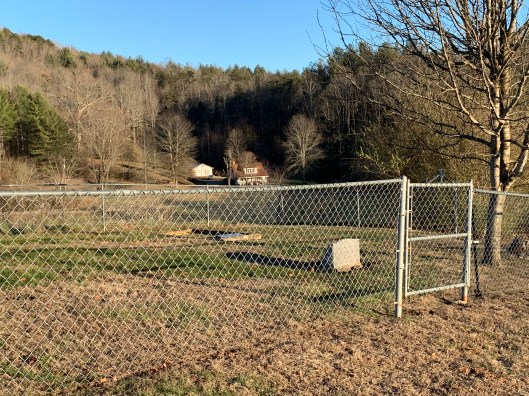
Ann Melton, a married woman, was involved in a love triangle with Tom Dula and her cousin, Laura Foster. Up this way to Melton Cemetery, Elkville, Wilkes County, NC. 7 January 2020

IMG_6033

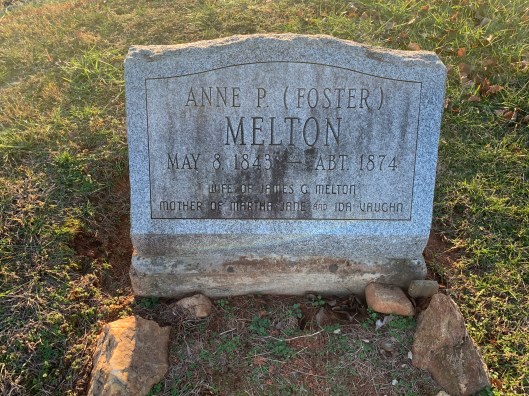
Anne Melton was charged with the Laura Foster murder, but was cleared by Tom Dula’s note shortly before his execution. Melton Cemetery, Elkville, Wilkes County, NC. 7 January 2020

IMG_6081

Ann Melton died a few years after Tom Dula. A Foster descendant suggested that I not put flowers at Ann Melton’s grave, but I did anyway. 7 January 2020

IMG_6034

Sources disagree as to Ann Melton’s cause of death. Family members recently placed this headstone. 7 January 2020

Tom Dula: Wilkes County Jail, Part 2 (2020)

16 Sunday Feb 2020

Posted by Brandon Ray Kirk in Tom Dula

≈ Leave a comment

Tags

Appalachia, Brandon Kirk, crime, Elkville, history, justice of the peace, Laura Foster, North Carolina, photos, Phyllis Kirk, Pickins Carter, Tom Dula, true crime, Wilkes County, Wilkes County Jail, Wilkesboro

IMG_5840

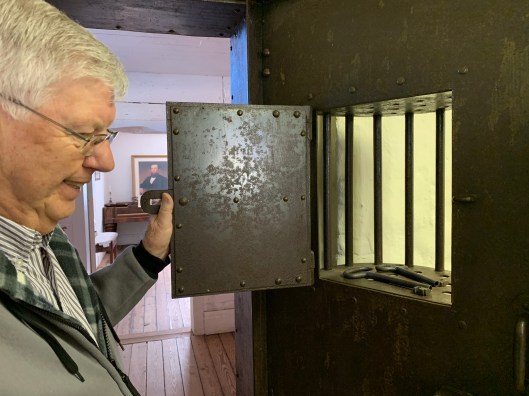
The Wilkes County Jail was built in 1859. Here’s our guide showing us the jail cell on the lower floor. 8 January 2020

IMG_5837

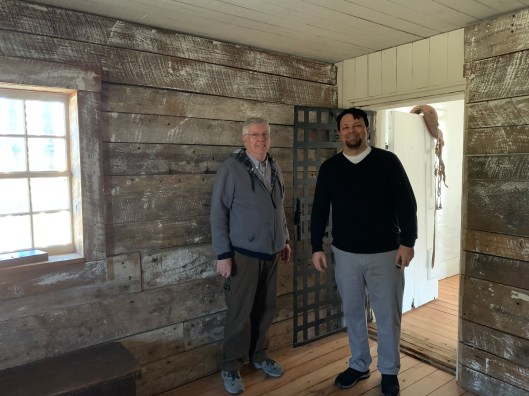
All three cells have the original doors, wood, and iron bars. The keys still operate the door! 8 January 2020

IMG_5842

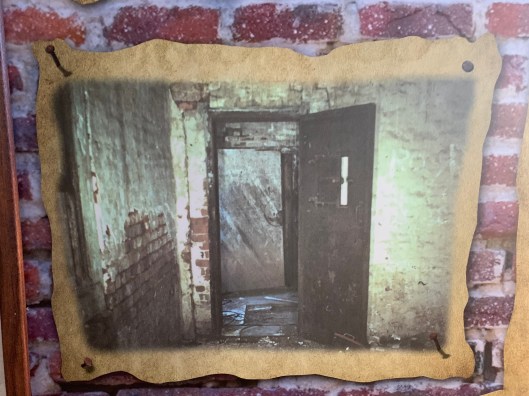
The jail was used until 1915, when it was converted into apartments. It was scheduled for demolition in 1968 but a local group saved it. It began operation as a museum in the 1970s. Here’s the lower floor cell before restoration… 8 January 2020

IMG_5831

This way to the two cells upstairs… 8 January 2020

IMG_5852

Was a knife like this one used to kill Laura Foster? 8 January 2020

IMG_5890

In June of 1866, Justice of the Peace Pickins Carter wrote the warrant for Tom Dula’s arrest from this desk in Elkville, NC. 8 January 2020 For more info, go here: http://www.kronsell.net/the_story_3.htm

IMG_5895

No known photographs of Tom Dula exist, but here is one local artist’s rendition of him. Photo by Mom. 8 January 2020 For information about the fake Tom Dula picture, read this article: https://www.statesville.com/news/local/joel-reese-column-who-s-the-soldier-in-the-photo/article_48eb0f0c-4c93-11e8-8455-abac2bbbaf82.html

IMG_5853

Through these bars is Tom Dula’s jail cell. 8 January 2020

IMG_5854

Looking inside of Tom Dula’s cell… 8 January 2020

IMG_5876

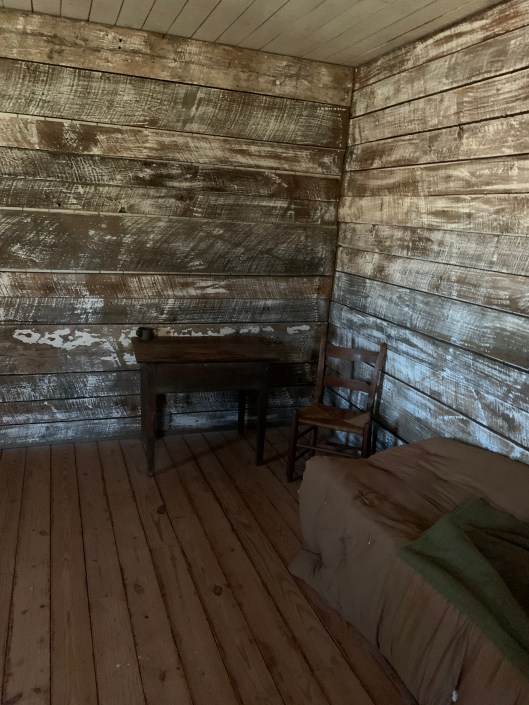
Tom Dula’s jail cell… 8 January 2020

IMG_5873

Inside of Tom Dula’s jail cell with the guide. Photo by Mom. 8 January 2020

IMG_5864

Inside of Tom Dula’s jail cell… 8 January 2020

IMG_6145

Tour happening! Photo by Mom. 8 January 2020

IMG_5861

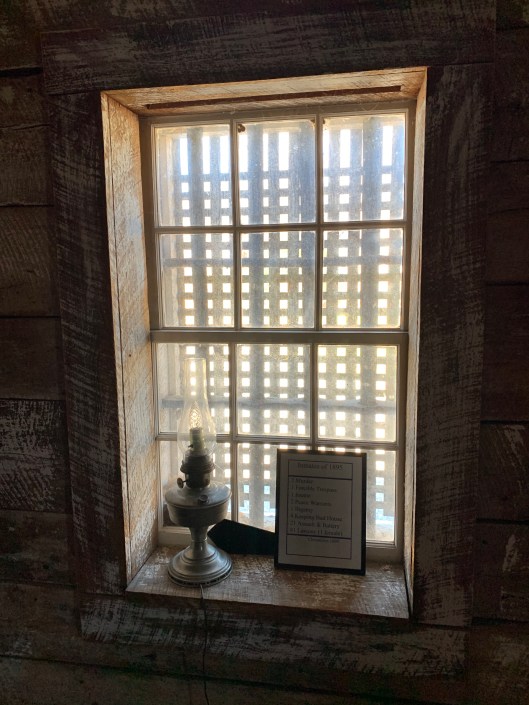
Side window inside of Tom Dula’s jail cell… 8 January 2020

IMG_5859

Looking out of the front window inside of Tom Dula’s jail cell… 8 January 2020

Logan Memorial Park in McConnell, WV (1928, 2020)

16 Sunday Feb 2020

Posted by Brandon Ray Kirk in Cemeteries, Logan

≈ 9 Comments

Tags

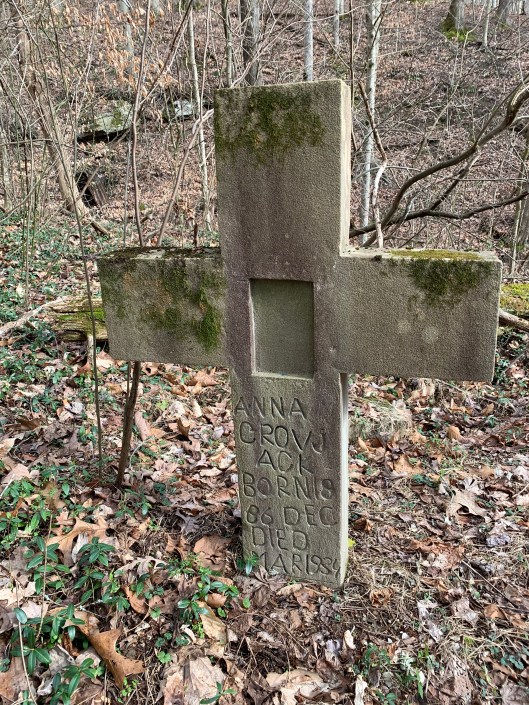
Aldridge Coal Company, Amanda Avis, Anna Crovjack, Appalachia, Brandon Kirk, C&O Railroad, cemeteries, Charles Quinn, crime, Dwight Williamson, Ed Burgess, Elzie Burgess, Fintown, genealogy, history, Hugh C. Avis, immigrants, Ireland, Logan, Logan Banner, Logan County, Logan Memorial Park, Mamie Thurman, Maude Steele, McConnell, Noah E. Steele, Q.L. Stewart, West Virginia, Woodmen of the World, Works Progress Administration

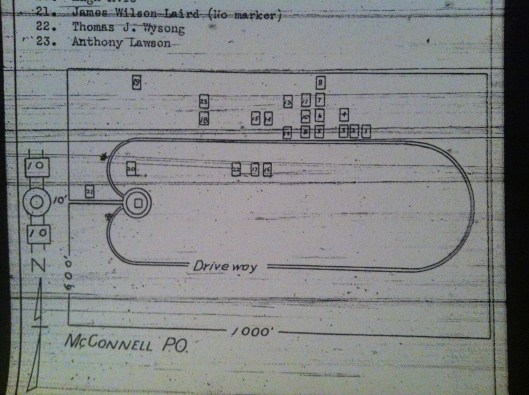
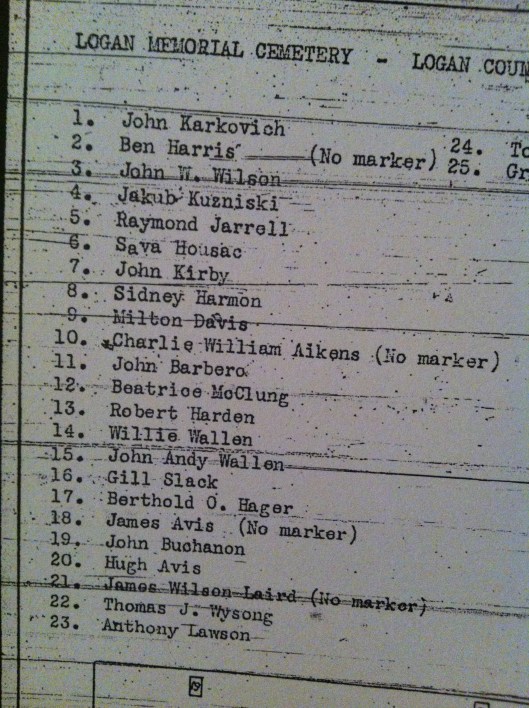
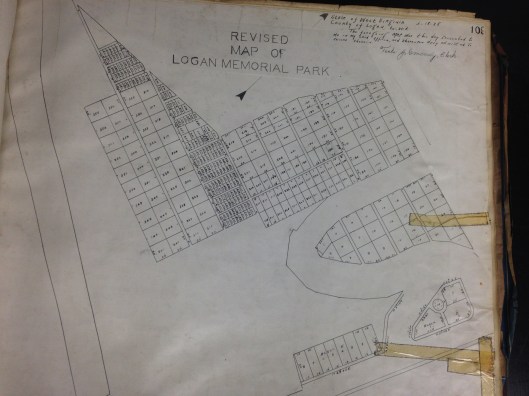
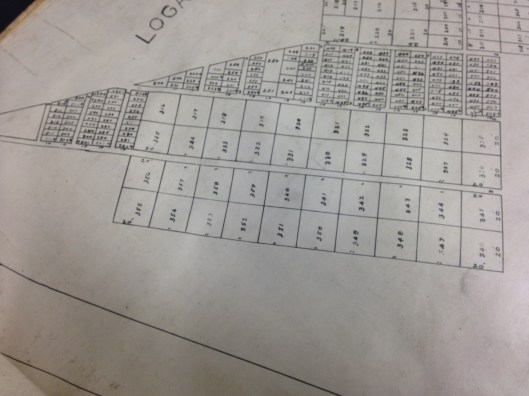
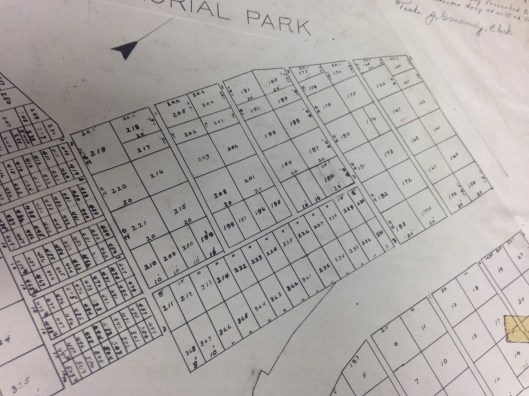
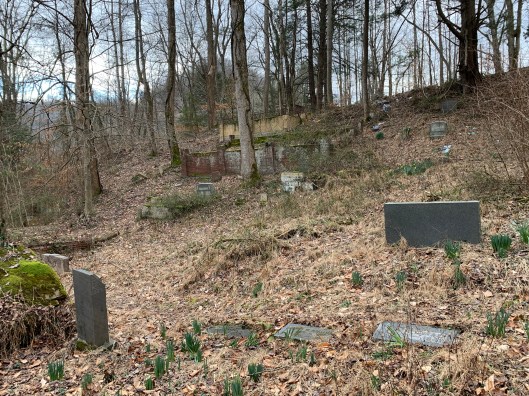
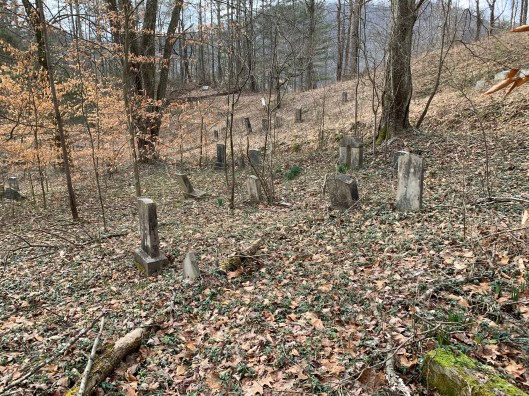
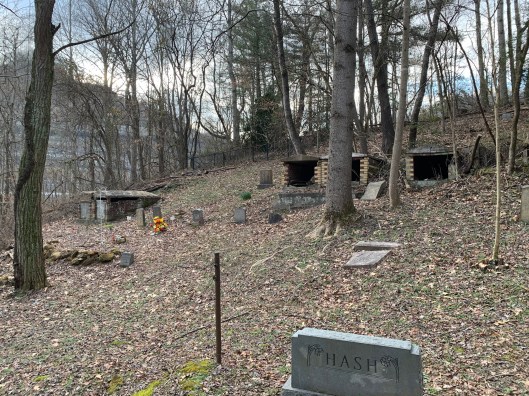
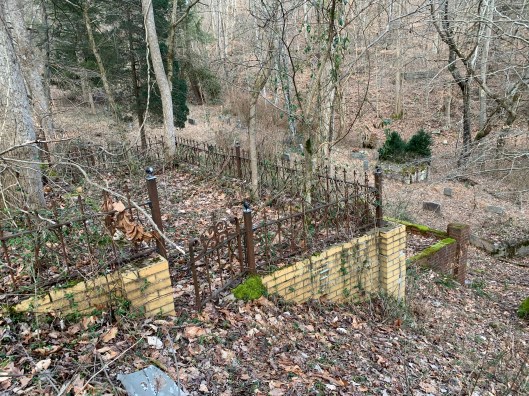
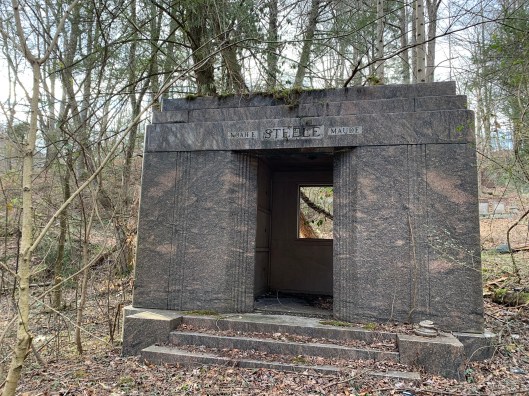
Logan Memorial Park was a “perpetual care” cemetery established in the late 1920s in McConnell, Logan County, WV. The cemetery contains the final remains of many noteworthy Loganites, including Mamie Thurman, whose 1932 murder continues to tantalize regional residents. The Logan Banner reported on the cemetery’s beginnings on September 7, 1928:

Work Rapidly In Developing Burial Park

With Brush Cut and Loose Rock Being Hauled for Surface, Road Work Starts Soon

BEAUTIFYING COMES SOON

Plans Call for Use of Skilled Landscape Gardeners to Aid in Placing Shrubbery

Conclusive proof that Logan is soon to have a modern burial part embodying all the improvements found in the highest type institutions of this kind anywhere was afforded a reporter of The Logan Banner in an inspection of the work being done near McConnell by the Logan Memorial Park company.

Much work was found to have been done already. Brush and undergrowth has been cleaned off the entire 20 acre tract. This will finally include the grubbing of stumps and raking up the trash until the entire tract can be mowed with a lawnmower. Several hundred sled loads of loose rock have already been hauled to the banks of the small stream that flows through the central part of the tract, where a rubble stone embankment will be built near the water course to be covered with vines and shrubbery.

All surface rocks will be removed, blasting being resorted to loosen the larger ones. Several hundred holes were drilled in the surface of the entire plot of ground before it was decided that it would be a suitable place for burial purposes. It was found that there was no ledge rock on the entire tract except at one small spot.

Work is now in progress in preparation for the concrete road to be built from the state road into the park. A ditch suitable for the placing of 26-inch tile to carry the small stream out of the park is being dug. The C. & O. had two steam shovels at work Wednesday cleaning off a sidetrack, unused for several years and submerged by silt from the roadside, preparatory to setting out a carload of tile. It will be laid at once and then the making of a grade for the concrete will follow.

This entrance is between the residence of Burgess and Aldridge. Options have already been secured on property adjacent so that a large stone and iron entrance can be built just off the state road. From that point the hard surfaced road passes up the hollow to where a natural amphitheater provides several acres of smooth land where the first section of the park will be developed. The improved road will entirely encircle this plot so that easy access will be afforded and each lot will be reached by either the roadway or paths.

At the lower end of the natural amphitheater stand several houses that were formerly the property of the Aldridge Coal Company. The present tenants have been ordered to vacate these and they will be torn down.

Water will be supplied to the entire section now being developed and in the spring the entire tract will be plowed and seeded to the best grass obtainable. At that time much shrubbery, from the best nursery stock, will be planted under the direction of competent landscape gardeners.

The Bannerman was in doubt as to the closeness of this tract to the Courthouse, so it was metered and clocked. It proved to be 2 1/2 miles in distance and it was driven easily in traffic in six minutes. Thus there will be the dual advantages of the great natural and enhanced beauty of the Logan Memorial Park site and proximity to the town.

The earnest desire of the company to get this memorial park ready for those desiring to use it is shown in the rush that characterizes the work of cleaning it of brush and rock and in getting in a permanent road. More than a dozen men have been at work ever since the charter was granted and others will be added as more projects get under way simultaneously. The permanent road is to be laid immediately. The rubble stone wall along the stream will come later, but every bit of the work is to be pushed as rapidly as men can do it.

The perpetual care which the charter confirms to the lot owner will no doubt be a great inducement. Already interested parties are inquiring about when it will be open for inspection. Q.L. Stewart, the manager, assures them that no avoidable delay will be allowed to intervene.

***

Here’s a WPA map of the cemetery dating from the 1930s:

Logan Memorial Cemetery 1Logan Memorial Cemetery 2

***

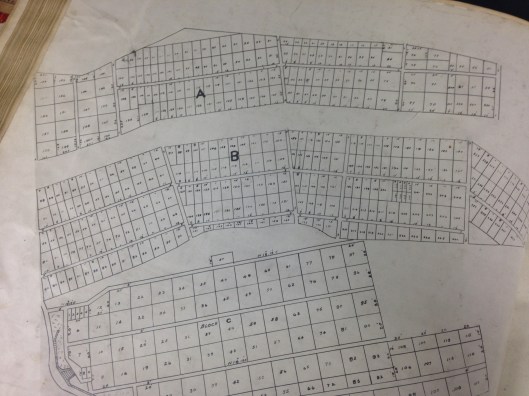
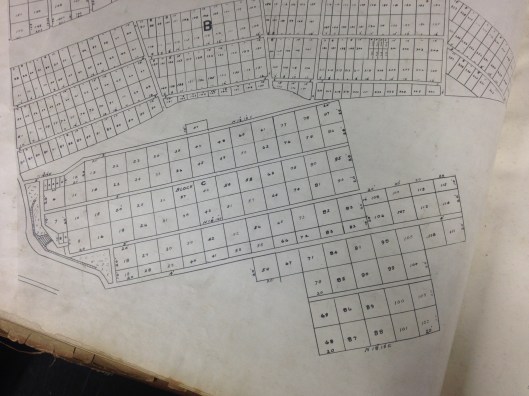
This 1938 map of the cemetery is located in the Logan County Clerk’s office:

IMG_5552IMG_5553IMG_5547IMG_5548IMG_5549

***

Here are photographs of the cemetery in 2020:

IMG_7700

14 February 2020

IMG_7704

14 February 2020

IMG_7716

14 February 2020

IMG_7722

14 February 2020

IMG_7762

14 February 2020

IMG_7783

14 February 2020

IMG_7791

Charles Quinn, Irish immigrant… 14 February 2020

IMG_7803

Many immigrants are buried in the cemetery… 14 February 2020

IMG_7804

14 February 2020

IMG_7808

14 February 2020

IMG_7809

14 February 2020

IMG_7845

14 February 2020

IMG_7888

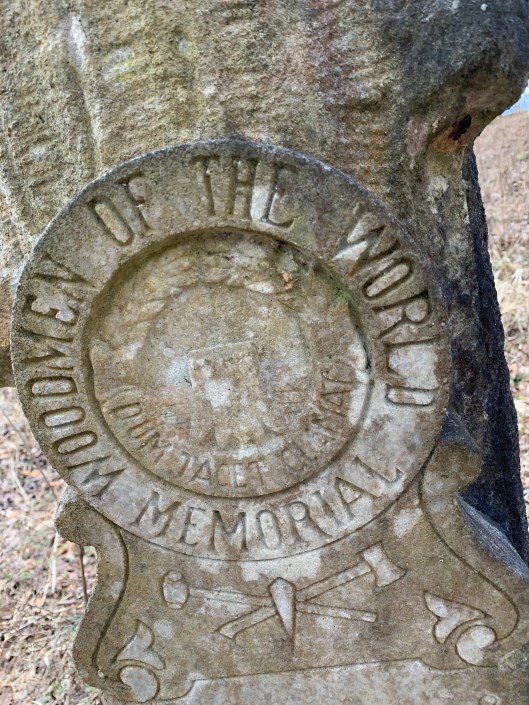
Woodmen of the World! 14 February 2020

IMG_7901

14 February 2020

IMG_8012

14 February 2020

IMG_8031

14 February 2020

IMG_8040

14 February 2020

IMG_8041

14 February 2020

IMG_8052

14 February 2020

IMG_8063

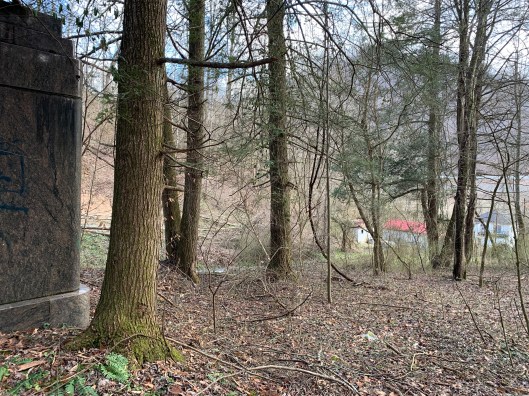
Mamie Thurman is buried below the Steele Mausoleum… 14 February 2020

IMG_E8079

Elzie Burgess helped dig Mamie Thurman’s grave. Here is an interview with Mr. Burgess by Dwight Williamson, dating from about 1985…

Tom Dula: Wilkes County Jail, Part 1 (2020)

11 Tuesday Feb 2020

Posted by Brandon Ray Kirk in Tom Dula

≈ Leave a comment

Tags

Appalachia, crime, history, jailer, North Carolina, Old Wilkes Jail Museum, photos, Tom Dula, Wilkes County, Wilkesboro

LJPD1333

Wilkes County Jail (built 1860) in Wilkesboro, NC. The jailer residential space was to the left. Tom Dula was kept in the top right corner cell. Dula was kept here from July to October 1866. 7 January 2020

IMG_5843

The Wilkes County Jail before renovation… The entrance door to the jailer residential quarters is shown at right.

IMG_5688

Here’s the entrance door to the jail. Just inside, at left, is the jailer’s living quarters. At right and upstairs are three cells. 7 January 2020

IMG_5681

Jailer’s quarters (downstairs, front room). 7 January 2020

IMG_5829

Jailer’s quarters (downstairs, front room). 8 January 2020

IMG_5815

Jailer’s quarters (downstairs, front room). 8 January 2020

IMG_5811

Jailer’s quarters (downstairs, dining room). 8 January 2020

IMG_5812

Jailer’s quarters (downstairs, dining room). 8 January 2020

IMG_5813

Jailer’s quarters (downstairs, dining room). 8 January 2020

IMG_5814

Jailer’s quarters (downstairs, dining room). 8 January 2020

IMG_5830

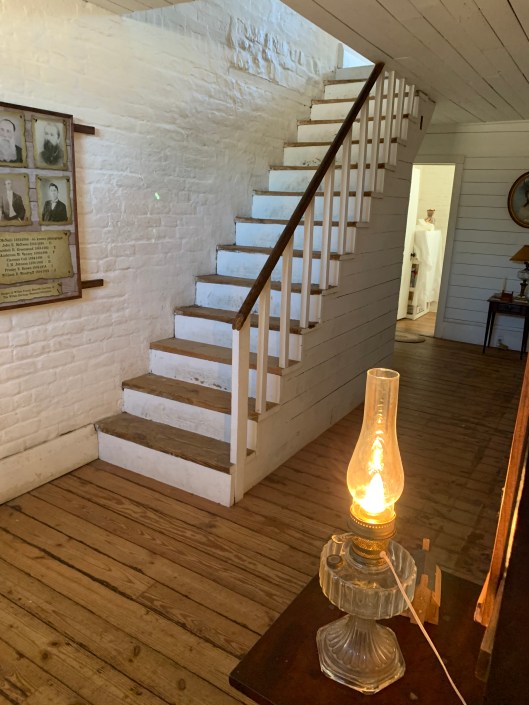
Jailer’s quarters (stairs). 8 January 2020

IMG_5816

Jailer’s quarters (stairs). 8 January 2020

IMG_5822

Jailer’s quarters (upstairs, front bedroom). 8 January 2020

IMG_5827

Jailer’s quarters (upstairs, front bedroom). 8 January 2020

IMG_5821

Jailer’s quarters (upstairs, front bedroom). 8 January 2020

IMG_5824

Jailer’s quarters (upstairs, front bedroom). 8 January 2020

IMG_5828

Jailer’s quarters (upstairs, front bedroom). 8 January 2020

IMG_5817

Jailer’s quarters (upstairs, back bedroom). 8 January 2020

IMG_5819

Jailer’s quarters (upstairs, back bedroom). 8 January 2020

IMG_5818

Jailer’s quarters (upstairs, back bedroom). 8 January 2020

IMG_5826

Jailer’s quarters (upstairs, back bedroom). 8 January 2020

Tom Dula: Caldwell County, NC (2020)

09 Sunday Feb 2020

Posted by Brandon Ray Kirk in Tom Dula

≈ 1 Comment

Tags

Appalachia, Brandon Kirk, Caldwell County, crime, Elkville, history, Laura Foster, North Carolina, photos, Tom Dula, Wilkes County, Yadkin Valley

IMG_6017

Laura Foster’s murder in the vicinity of Reedy Branch at Elkville, NC, resulted in Tom Dula’s hanging. Driving from Elkville (Wilkes County) toward Yadkin Valley (Caldwell County) on Highway 268, the Laura Foster grave is located at left; the Laura Foster memorial is located up ahead at right. You park at the memorial. 8 January 2020

IMG_E5961

Laura Foster Memorial near Yadkin Valley in Caldwell County, NC. 8 January 2020. The marker is located across Highway 268 from the Foster grave.

IMG_5967

Laura Foster’s grave is located at the edge of a field. The pasture is surrounded by an electric fence. 8 January 2020

IMG_5993

Laura Foster’s grave. A white fence encloses the grave so as to protect it from cattle. 8 January 2020

IMG_6001

When Laura Foster was buried here, locals marked her grave with white stones from the creek. Today, white gravel still marks her grave. 8 January 2020

IMG_5968

Laura Foster’s headstone shows an incorrect death date and includes the name of her killer, Tom Dula. Since her burial, the grave site has been nearly lost and her marker disappeared for a time. Thankfully, the grave site is well-preserved today. 8 January 2020

Armed March Trial (1923): Convicted Man Flees to Mexico

08 Saturday Feb 2020

Posted by Brandon Ray Kirk in Battle of Blair Mountain, Coal

≈ Leave a comment

Tags

Appalachia, Battle of Blair Mountain, Blair Mountain, C.W. Conrad, Charles Town, Charleston, circuit clerk, crime, deputy sheriff, Don Chafin, H.E. Keadle, history, Jefferson County, Logan Banner, Logan County, Mexico City, Oklahoma, Oklahoma City, sheriff, U.G. Young, United Mine Workers of America, Walter Allen, West Virginia

From the Logan Banner of Logan, WV, comes this bit of history about the “Armed March” at Blair Mountain, dated February 2, 1923:

Allen Is Traced By Deputy E. Keadle To Mexico City

Walter Allen, convicted of treason at Charlestown on September 15, and sentenced to ten years in the state penitentiary and who was released on bond of $15,000 with U.G. Young of Charleston as surety and who jumped his bond and fled from the state recently has been traced by Logan officers to Mexico City.

A capias was received here on December 20 for Allen, the capias being issued to C.W. Conrad, clerk of the circuit court of Jefferson County, when Allen failed to appear there on the date set. Deputy H.E. Keadle took the capias to Charleston and called at headquarters of the United Mine Workers, and attorneys for that organization professed their ignorance of his whereabouts and stated they would do all within their power to apprehend the fugitive.

However it was ascertained that Allen had been in Oklahoma City, Okla., and the officers there were requested by wire to arrest the fugitive but he had fled the city when they searched for him. Deputy Keadle then continued the search and the latest information received at the sheriff’s office here states that Allen is now known to be in Mexico City, Mexico.

Allen was convicted for his participation in the armed march of Logan in August and September, 1921. According to the evidence in the trial which lasted five weeks, he handled the finances and otherwise assumed direction of the armed march which was stopped at the border of Logan County where a battle between the invaders and the state forces raged over a battle line extending for 25 miles.

After his conviction his attorneys noted an appeal and stated the case would be carried to the supreme court. The time granted Allen for his appeal expired December 13, but the time expired without any record of an appeal being noted. When Allen failed to appear at Charlestown to begin his sentence a capias was issued for him and sent to Sheriff Chafin for execution and the hunt for the fugitive then began.

Due to the red tape connected with extradition proceedings, it is not yet known what steps will be taken by Logan authorities toward extraditing the fugitive.

***

For more information about Mr. Allen, go here: https://www.wvencyclopedia.org/articles/205

Armed March Trial (1923)

29 Wednesday Jan 2020

Posted by Brandon Ray Kirk in Battle of Blair Mountain, Boone County, Coal, Logan

≈ Leave a comment

Tags

A.M. Belcher, Appalachia, Battle of Blair Mountain, Bill Blizzard, Blair Mountain, Boone County, C.W. Osenton, coal, Coal River, crime, deputy sheriff, Dingess Run, Edgar Combs, George Muncy, H.W. Houston, history, J.E. Wilburn, James Cafalgo, John Gore, Lewisburg, Logan Banner, Logan County, Nellis, Ottawa, T.C. Townsend, United Mine Workers of America, Velesco Carpenter, W.B. Mullens

From the Logan Banner of Logan, WV, comes this story dated June 29, 1923 about the trial that resulted from the “armed march” on Logan County, WV, by UMWA miners:

Widow Is Introduced At The Blizzard Trial

LEWISBURG, W.Va., June 27 — Two word pictures, one from the lips of the widow of George Munsy, coal digger who “never came back” from guarding his county, the other from one of the party that met and killed the outpost on the mountain side, lay tonight before 12 men who are to determine whether Sub-District President William Blizzard, of the miners’ union, was an accessory to the murder of Munsy.

Before these word pictures the jurors had heard counsel on both sides outline the story of the labor trouble of Southern West Virginia coal fields, the march of thousands against the Logan border, the interruption of that march after a brigadier general of the United States Army had intervened a midnight clash between miners and deputy sheriffs and state police, resumption of the march, fighting on the mountain ridges that separated the non-union Logan coal fields from the then union fields on Coal River, the meeting of 30 or 40 marchers with Deputy Sheriff John C. Gore, of Logan county, and two companions one of whom was Munsey, the volley of shots that answered the Logan pass-word, “amen,” and a wealth of detail about the march presented from point of view of both prosecution and defense.

Review Blair Battle

All the morning was spent in the opening of the attorneys, A.M. Belcher and C.W. Osenton, for the prosecution, and H.W. Houston and T.C. Townsend, for the defense. Then in the afternoon the jurors turned their attention to the witness box. First they saw W.B. Mullens point out the battle line and the points of interest in the march on a map that was tacked to the courthouse wall above the witness stand. Next Velesco Carpenter, facing an inexhaustible stream of questions in direct and cross-examinations told how he had gone from his home in Nellis to Blair, how in a party of about 35 he marched up Blair mountain, spent the night, and early the next morning set out and from his place in line watched the meeting with three men, one of whom he learned was Gore, heard the shots and saw the bodies after they had fallen. Then just before court adjourned Mrs. Munsy took the stand for her brief examination so that she might return tomorrow to her seven children in her home on Dingess Run Creek in Logan county.

Widow on Stand

“The night before he was killed was his time to come home but he never came,” Mrs. Munsy testified that her husband had been digging coal for about fifteen years before his death and that they had been married about 20 years. He had been “guarding for about a week, working for Logan county, for the coal operators,” she went on, but later when Mr. Houston cross-examined her on that statement her formerly quiet tone rose to the ringing declaration “he was defending his county.”

Carpenter did not know who fired the shots that killed Gore, Munsy and James Cafalgo. When the shooting began he ran back a few steps and dropped to the ground, he said. After it was over he went to a point near the body of “the foreigner,” and saw that of Gore, but could not see the third body. Edgar Combs told him he had killed the one Carpenter had designated as “the large man in the middle,” and later told another of the party this man was Gore.

He left Nellis, where he was employed as a pump man, on August 29, 1921, he said, after a man had come to the mines and threatened to “knock off” the “yellow” men who did not go. A journey on foot and by rail took about 30 in his party to Ottawa, and there Edgar Combs picked him and three others he named to go to Blair. The next day from the schoolhouse steps in Blair, he said, Rev. J.E. Wilburn made a speech and a party was organized that went into the hills. Some threw down their guns and refused to go but threats were made, and the men were lined up in single file, with leaders for squads of eight men. The original party of 50 or 60 divided, and the group of about 35, in which he went, camped on the top of the mountain until daybreak. They heard firing in the direction of the “gap,” through which previous testimony had shown the road from Blair to Logan ran and set out in that direction.

Then he told of the meeting with the “large man” and his two companions, and by pre-arranged signal the leader lifted his hat three times to indicate there was no danger. The large man beckoned to them to come on, and when the parties met there were mutual demands for the password. The shots were fired, Carpenter testified, when somebody said “amen,” and in the opening statements prosecution counsel had told the jury that it would be shown that “amen” was the Logan password. Wilburn, the preacher, was in the lead of the marchers column, and Combs next behind him, the witness said.

Dils and Smith v. William McCoy (1865)

14 Tuesday Jan 2020

Posted by Brandon Ray Kirk in Big Sandy Valley, Hatfield-McCoy Feud, Pikeville

≈ Leave a comment

Tags

Appalachia, county clerk, crime, genealogy, Hatfield-McCoy Feud, history, Jacob Smith, James H. McCoy, John Dils, Kentucky, merchant, Pike County, Pleasant McCoy, Randolph McCoy, S.K. Damron, Sallie McCoy, Sam McCoy, sheriff, William McCoy, William P. Johnson

IMG_7554

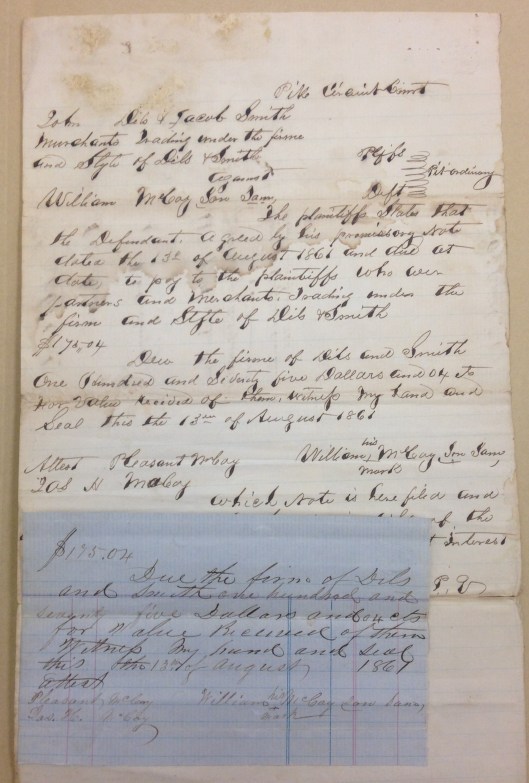
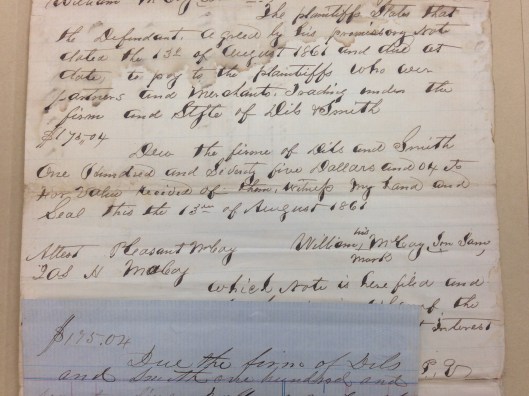
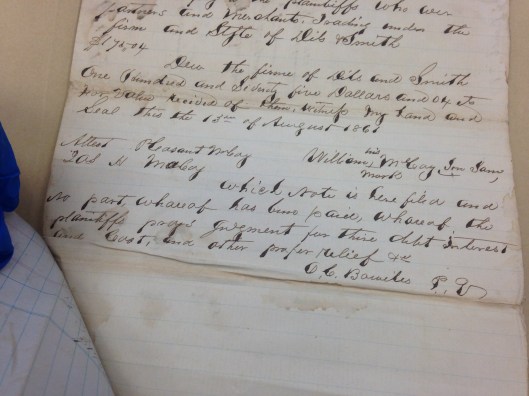
Promissory note between William McCoy and Dils and Smith (1861). Pike County, KY.

IMG_7550

Page 1 (1865)

IMG_7551

Page 1 (1865)

IMG_7552

Page 1 (1865)

IMG_7553

Page 1 (1865)

IMG_7555

Page 1 (1865)

IMG_7556

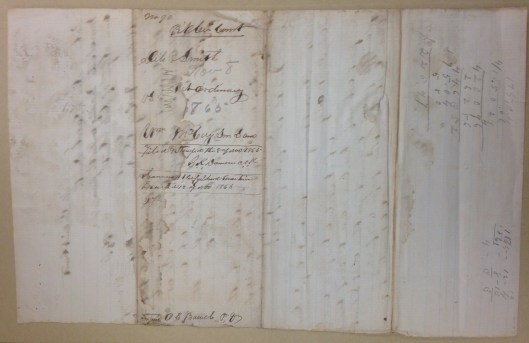
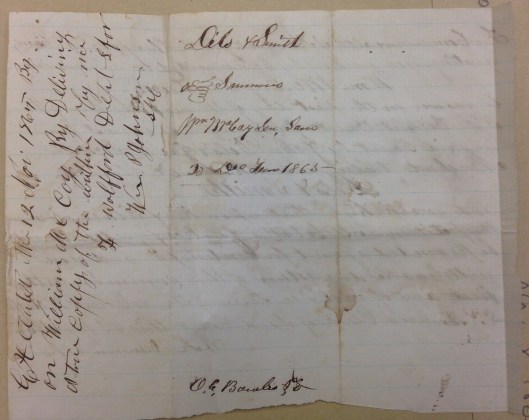
Summons for William McCoy (1865). Pike County, KY.

IMG_7558

Summons for William McCoy (1865). Pike County, KY.

NOTE: This case is most definitely unrelated to the Hatfield-McCoy Feud. I included it here because of the involvement of John Dils. The William McCoy involved in the case is likely the brother to Sallie (McCoy) McCoy, wife of Randal McCoy.

Hungarian News from the WV Coalfields (1923, 1927-1929)

13 Friday Dec 2019

Posted by Brandon Ray Kirk in Coal, Hungarian-American History, Huntington, Inez, Logan, Music, Williamson

≈ 1 Comment

Tags

Appalachia, Beauty, Charleston, Cinder Bottom, coal, crime, dancing, Elizabeth Nagy, Ellis Park, Emmett Scaggs, Himlerville, history, Hungarian Benevolent Association, Hungarian Miners' Journal, Hungarian-Americans, Hungarians, Huntington, Joe Hatfield, Kentucky, Keystone, Logan, Logan Banner, Logan County, Martin County, McDowell County, Mingo County, Mud Fork, Rose Mustapha, Warfield, Welch, West Virginia, Williamson, Williamson Daily News

Between 1900 and 1920, a large number of Hungarians settled in West Virginia. Most were employed as coal miners. As of 1920, 6,260 Hungarians lived in West Virginia, primarily in Logan and McDowell counties. The Logan Banner, seated in Logan, WV, offered coverage of Hungarian news. It also commented on items published by Martin Himler in the Hungarian Miners’ Journal.

New Marathon Dance Record Is Made Here

Rose Mustapha, Pretty Hungarian Starts the Step Believed to Be the record.

At nigh noon Sunday, Rose Mustapha, a beautiful Hungarian girl, tripped the starting step in a terpsichorean debauch, that is believed to have established a record for sustained dancing in groups. Rose led a cotillion of thirty of her countrymen over a stretch of nineteen hours of continual dancing.

The dance started at twelve o’clock Sunday noon and continued without intermission till seven o’clock Monday morning. The jolly spirit of old Budapest struck color with jazz hilarity as the dancers spun in a vortez over the polished floor.

Hundreds of the dancers’ admirers rimmed the floor, hailing the participants in a half dozen different languages and dialects. Three wheezy but quite animated violins provided the music, which ran in wild Magyar strains and jazzy syncopation.

For the most part the dancers adhered to their native folk dances, but occasionally a couple would break into a fox trot, or a one step. At six o’clock Sunday evening, the dancers were given liquid nourishment as they whirled, and at midnight the same was repeated.

Most of the dancers finished strong, but several of the weaker sex had to be helped from the floor by their friends. Long distance dancing is quite common in their native land, and had the participants been in trim the task would have been comparatively easy, they say. As it was all of the men, who are miners, reported for work Monday morning and so far no ill results have been reported of the affair.

Logan (WV) Banner, 3 August 1923

***

Hungarian Dance

Several hundred persons enjoyed the dance given by the Hungarian Benevolent Association at Ellis Park skating rink last Saturday night. The program included many attractive features and novelties. Miss Elizabeth Nagy of Mud Fork was the winner of the beauty prize. She received a fine watch and $5 in gold.

Logan (WV) Banner, 29 November 1927

***

Hungarian Paper Tells of Resorts Hereabouts

Sensational Charges Prompt Williamson News to Demand Investigation and “Clean-Up”–Logan and Neighboring Cities Are Mentioned In This Alleged Expose

A Hungarian paper published at Himlerville, Ky., not far from Williamson, is running a series of sensational articles on vice conditions in Logan, Williamson, Huntington and Charleston. These articles are printed both in English and Hungarian and are attracting much attention, many copies of the paper having been sent to the cities named.

Two articles about Logan have mentioned various resorts in which it is charged that vice is rampant, that protection is obtained by bribery of officials, and that conditions are getting worse. Local officers brand these so-called disclosures as either baseless or greatly exaggerated.

In Williamson the expose has attracted much attention, particularly since the Williamson Daily News carried the following editorial, under the heading, “A Clean City.”

It’s a sad commentary on our city, county, and state police officials when the leaders of the foreign element in our midst are forced to take the lead in cleaning up moral conditions.

Through the Hungarian paper published at Himlerville, Ky., a campaign is being waged to clean up Williamson, Logan, Huntington and Charleston.

We are primarily concerned in Williamson and this paper charges that Williamson is harboring not less than eleven Hungarian brothels and some fifteen speak-easies. The editor of the paper has furnished the Williamson Daily News with the names of eight hotels and rooming houses where he says “light o’ love ladies” may be found.

It is common knowledge in Williamson that what he charges is true. Furthermore it is also common knowledge that there is hardly a hotel from the best to the worst in the city that does not harbor women of prostitution.

These women are debauching our manhood and spreading disease and there are attendant demoralizing evils which add to the indictment against them.

Not only are there Hungarian brothels in Williamson, but there are brothels that cater to every race and condition. The fact that they exist is known to practically every person in Williamson.

In this same Himlerville paper in an article published in this week’s issue it is stated that “Protection fees vary between twenty-five and seventy-five dollars weekly” suggesting a reason why no action is taken to remedy conditions.

We have had every reason to believe that Williamson was infested with brothels of every degree of degradation, but until the bold statement is made in the Hungarian paper, we had no reason to suspect that some persons were receiving protection fees.

However, such a state of things is a natural noncomitant, in view of the laws of the land. It would be very easy for city, state or county officers to take action, and if they do not the question immediately arises: Why?

It cannot be argued that it is impossible to clean up the city in this respect. We all know better. The chief of police and four good policemen, with proper backing of the mayor and the citizens of Williamson could do the job, and do it thoroughly in ten days. In doing it they could be so impressively earnest that there would be no recurrence of the evil for months to come. If instances of violations of the law of this character did occur in the future they could enforce the law with such vigor as to deter others. Williamson would soon be classed as a “clean city.”

Even the notorious “Cinder Bottom” at Keystone has been cleaned up. Welch, the county seat of McDowell county, is known far and wide as a “clean city.” Chippies and their like give it a wide berth. Why? Because the mayor and the chief of police of Welch, with a determined citizenship back of them, will not tolerate the evil. Merchants and business men of Welch generally are unreservedly in favor of an absolute ban against women of evil character being allowed to remain in hotels and rooming houses, because they know it hurts business and is a thoroughly demoralizing factor.

Primarily the question is one for the mayor and the chief of police at Williamson to handle, but there are other law enforcement agencies that could function.

For instance, the prosecuting attorney has an effective weapon at hand if he wants to use it. We refer to the state padlock law, upheld by the supreme court. With this weapon he could close every hotel and rooming house in the city that harbored women of ill fame. And there would be no question of securing sufficient evidence to act. It is ready at hand.

There is another agency, the state police. This efficient body of men could take action and bring the matter to a hand.

The state health department is aware of the fact that Williamson is one of the vilest cities in the way of brothels in the state. It has investigated conditions here and has data that could be used by officials who wanted to take action. Furthermore the state health department, on request of the city or county officials, would send investigators here to ascertain true conditions. But, if we understand the situation rightly there is no need for further investigation. The brothels are conducted more or less openly, are well advertised and unfortunately are well patronized.

There would be no lack of information to proceed upon if city, county or state officials wanted to take action. And first of all, it is up to our city officials to act.

Logan (WV) Banner, 27 January 1928

***

NOTICE TO LOGAN

With newly sharpened sticks the Hungarian Miners Journal, published at Himlerville, Ky., continues to prod into vice conditions hereabouts. Its latest issue is devoted largely to a further exposure at Williamson’s intrenched vice, but Logan has not been forgotten. In fact, in a large type box on the first page notice is given that the spotlight will be turned again soon on the garden spot. It says:

“The brother-situation of Williamson is taking up all our space and our energies for a few days.

“This does not mean that we have nothing more to say about Logan brothels.

“A score of Hungarian criminals, keepers of brothels and white-slavers are harbored in and by Logan, to the great detriment of the decent Hungarians in the Logan field.

“We demand the expulsion of these criminals and we will turn to Logan in a very short time.

“Surely the decent citizens of Logan are not going to build a roof over their town to designate THE red-light district.”

Logan (WV) Banner, 3 February 1928

***

Hungarian Paper Reverts to Logan’s Need of Reformation

Editor Fisher Takes Crack at The Banner, Sheriff Hatfield and Chief Scaggs–Long Silence Broken By Familiar, Rasping Outcry

Remember the Magyar Banyaszlap, a newspaper formerly published at Warfield, Ky., not far from Williamson, W.Va. A year or more ago it probed conditions in Logan and carried some sensational strictures about county and city officials. Finally, an officious and offensively inquisitive soul, the editor hisself, came in person and before he left was given quite a thumping by Chief of Police Scaggs.

Some time later the coal company located at Warfield and Hungarian-owned, went into the hands of a receiver and whether the Banyaszlap then suspended publication or not it ceased to come to this office. The other day a copy came. It is published in Columbus now but its editor is evidently still interested in conditions here. After scanning its eight pages, the writer of these lines found but one article printed in English. That embraced a clipping from The Banner and the Banyaszlap’s comments thereupon. The article clipped appeared to the Banner on April 9 and had to do with reports that the sheriff’s forces were determined to suppress the liquor traffic in boarding and lodging houses that cater to foreign-born miners. Most Banner readers will recall that news item and for that reason it will not be reproduced here, but what the Columbus paper says may be of some interest.

“We are glad to note the sudden interest of Sheriff Hatfield, and the rather mild interest of the Logan Banner, in the speak-easyes.

“The officers do not have to ‘trail’ these boarding houses, for we have published a list of them.

“And we have also published a long-long list of speak-easyes and brothels in Logan, W.Va., with addresses, and names, with locations and any other needed informations.

“Why not start a housecleaning right here in Logan, W.Va., and spread it then to the coal field?

“We can promise Logan and its vicinity that others than the sheriff will also be interested in these affairs.

“When the gunman (called chief of police) of Logan so heroically objected to our articles, we have promised that we will have the matter attended to in good time.

“It will happen soon.

“Perhaps hence the sudden interest in the Logan vice.”

Logan (WV) Banner, 23 April 1929

***

For more information about Hungarians in West Virginia, go here: https://www.appalachianhistory.net/2017/03/magyars-in-morgantown.html

For more information about Martin Himler, Himlerville (Beauty), and the Magyar Banyaszlap: Hungarian Miners’ Journal, go here: https://www.appalachianhistory.net/2014/11/saving-himler-house.html

Attack Upon Non-Union Mine in Boone County, WV (1922)

16 Saturday Nov 2019

Posted by Brandon Ray Kirk in Boone County, Clothier, Coal, Logan

≈ 1 Comment

Tags

Appalachia, Boone County, Clothier, coal, crime, history, Lloyd Layman, Logan, Logan Banner, Madison, Ottawa, West Virginia

The following story about an attack upon a non-union mine at Ottawa in Boone County comes from the Logan Banner on July 21, 1922:

300 Shots Are Fired At Boone County Mine

Three hundred shots were fired from the mountain side into a group of non-union miners as they were going to work at 7:30 A.M., in a mine at Ottawa, Monday. There were no casualties as the miners fled and hastily hid behind trees, and other points of safety.

Two state troopers stationed at Ottawa made an immediate dash for the scene of the trouble but the firing which had lasted for only a few minutes, was over when they reached the mine. An investigation disclosed the fact that the attacking party had made a hasty retreat and their whereabouts could not be ascertained. A call for assistance brought five additional troopers from Clothier who brought with them a bloodhound but the dog could not take the trail evidently due to some substance that the attacking party had used to throw the hounds off the trail.

Immediately after the firing was over an investigation was made and 30 sticks of dynamite were found concealed beneath the mine track inside of the drift mouth of the mine and so arranged that it would explode when the first mine motor entered.

The outbreak Monday was the first that has occurred on Little Coal River in some months and the state police in that section are making every effort to apprehend members of the party who did the firing. Ten special officers were sworn in at Madison on Monday and Capt. Midkiff, in charge of the state police at Clothier, dispatched trooper Lloyd Layman to Logan Monday where he was furnished with 30 high-powered rifles and 3,000 rounds of ammunition with which to equip the special officers and successfully combat any further outbreak that might occur as well as to assist in apprehending members of the attacking forces last Monday.

Trooper Layman stated that in addition to the ten men sworn in Madison there would be 50 special officers sworn in at Ottawa, and every effort put forth by officers to track down the men who were responsible for the mine battle and bring them to justice.

Logan County Jail (1921)

09 Saturday Nov 2019

Posted by Brandon Ray Kirk in Logan

≈ Leave a comment

Tags

Appalachia, crime, Denver Beckett, history, Logan, Logan County, Logan County Jail, N.E. Steele, West Virginia, William B. Johnson

Here is a bit of history for the Logan County (W.Va.) Jail based on documents from 1921:

Appointment of Jail Inspectors

Dr. N.E. Steele, Wm. B. Johnson and Denver Beckett are hereby appointed, authorized and directed to inspect, investigate and report in writing to the court at the present term the existing conditions of the Jail of the county, the care and treatment of the prisoners therein confined, in detail, as required by Secs. 40 and 41 of Chapter 41 of the Code of West Virginia.

The Clerk of the court will furnish said inspectors a copy of said sections for their guide in making said inspection and report and will make four attested copies of this order and place them in the hands of the sheriff of this county to be served on the above named inspectors which shall operate as a summons to them to forthwith appear in open court and take the oath required by law and to enter upon the discharge of the duties herewith.

Law Order Book X, page 183, 11 April 1921

***

CHAPTER 41

Sec. 40. DUTIES OF JAILER. The jailer shall cause all the apartments of his jail to be well whitewashed at least twice in every year, and have the same properly aired and always kept clean. He shall furnish every prisoner with wholesome and sufficient food, and with a bed and bedding cleanly and sufficient, and have his apartment warmed when it is proper, in case of the sickness of any prisoner, he shall provide for him adequate nursing and attendance, and if there be occasion for it, and circumstances will permit shall confine him in an apartment separate from other prisoners. In no case shall a jailer permit the use of ardent spirits in the jail, except when prescribed by a physician. (Code Va. 1860, p. 289; Acts 1881, c 19.)

Sec. 41. Annual Inspection. The circuit court of every county shall annually, or oftener, if deemed necessary, appoint three persons, one of whom shall be a physician, to inspect the jail of each county. The judge shall administer to them the following oath: “You shall truly report to the court, as to the jail in this county, the size thereof, the number of its apartments, and its state, and condition; whether it is secure, sufficient for those who may be confined therein, and such that convicts may be kept in apartments separate from each other and from the other prisoners; whether every apartment is as constructed that it can be kept comfortable; whether it is kept in constant and adequate repair, and supplied with the furniture and other things necessary, and if not, in what it is deficient. You shall also diligently examine and truly report whether or not the jailer, has, during the last twelve months, faithfully performed the duties required of him by the fortieth section of the forty first chapter of the Code of West Virginia, and if not, in what respect he has failed to perform the same.” The said inspectors shall be furnished for their guide with a copy of the said oath, and of the said section. If they make a report, which fails in any respect to conform to said oath, it shall be recommitted to them until they fully report  upon all the said matters. (Code Va. 1860, p. 289, Acts 1881 c. 19.)

***

N.E. Steele, William B. Johnson and Denver Beckett, who were appointed to inspect and report the existing conditions of and at the County Jail, by an order entered at a former day of this term of court, pursuant to Section 40 of Chapter 41 of the Code of West Virginia, and who were sworn as the law directs, having made the inspection as required, returned into court and submitted the following report in writing:

“We the undersigned appointed to inspect the jail of Logan County, hereby make the following report.

Size of Jail approximately 39 by 84 feet. Exclusive of jailer’s Residence. Brick building with concrete floors, three stories high, with cells on first and second floors, third story unfinished.

31 apartments or cells.

Capacity 112 men.

Confined therein at present 93 persons.

State and condition of jail, Good.

We consider jail secure and sufficient for those who may be confined therein, and convicts may be kept separate one apartment or cell from the other, the capacity of each apartment or cell being 3 or 4 persons or more.

Apartments or cells are so constructed that they can be kept comfortable.

Jail is new and in good repair and condition, and supplied with Furniture and other things necessary.

As to the jailer performing the duties required by Section 40 of Chapter 41 the past twelve months, will state that the present jail is new, and the old jail recently torn, and we doubt if the jailer could during the past twelve months comply with all the requirements in all cases in the old jail which has been torn away.

At present we believe that the jailer is complying with section 40 of Chapter 41.

Respectfully Submitted.

N.E. Steele

Wm. B. Johnson

Denver Beckett.”

It appearing from said report that a new county jail has been provided and the prisoners moved from the old jail into the new one but a few days before the beginning of this term of the court, and the old jail was torn down. It was not possible for the committee to make a report as to the condition of the old jail for the year preceding, but the report showing that the new jail is in good condition, ample and sufficient to provide for the comfort and well-being of the prisoners, as well as for their proper detention, and that the prisoners are being provided with suitable clothing, bedding, food and other necessaries, as required by law, the court perceives no reason for making any order changing the existing conditions, and the report is therefore received, confirmed, ordered to be filed, and the committee discharged.

It is further ordered that the said committee each is allowed for his services in this behalf the sum of Five Dollars ($5.00), payable out of the treasury of this county.

Law Order Book X, page 264, 6 May 1921

Recollections of Harry Berman of Williamson, WV (1978)

31 Thursday Oct 2019

Posted by Brandon Ray Kirk in Coal, Matewan, Williamson

≈ 3 Comments

Tags

Appalachia, Baldwin-Felts Agency, Bluefield, Cabell Testerman, Carleton Starr, Chambers Hardware Store, chief of police, Clara Berman, coal, crime, Harry Berman, history, Matewan, mayor, Mine Wars, Mingo County, Sid Hatfield, teacher, United Mine Workers of America, Welch, West Virginia, Williamson

On December 2, 1978, Harry Berman of Williamson, Mingo County, West Virginia, recalled the Matewan Massacre of May 19, 1920:

When do you remember that the union… What do you remember about the organization of the unions?

Well, that was in Matewan. I was at the age of about thirteen years old at that time. That was about 1915, I’d say. This was concerning the miners there, about a strike. They all got together and so they went on a strike, and the company has ordered the people that went on a strike. The company has ordered them to vacate their homes.

That was the company houses?

That was the company houses. The miners at that time, they didn’t approve of it and so they began to gather around. So they got Baldwin-Felts men in there. There as about twelve of them from Bluefield, West Virginia. So they came in on that midnight train that comes through there about twelve.

The Baldwin-Felts gang was a gang that broke the unions. They traveled all over the state or throughout the coalfields breaking the unions.

Well, they were trying to break the union at that time, but these twelve men were sent in here from Bluefield and they came in on the twelve o’clock train and they went over to the hotel. They spent the night there and the next morning they got up and out and they vacated more houses for these men. This kindly upset the union men at that time. So anyway then when after all that was all done they all went back again to the hotel, and so they packed their bags. Unfortunately, what they done, they took their rifles, they took them apart, and they packed them on the inside of their bags and some of them packed them on the outside of their bags.

In other words, they were going to show that they were leaving in peace?

Yeah.

After vacating people from their company houses?

Yeah. That was about the time… Let’s see, the train comes through there, that Number 16, it comes through there about five o’clock in the evening. So they all came to the station at that time. When they all got to the station, all the union men–there must have been at least 100 of them–all gathered around them.  You know, as they came to the station. Well, I was standing there in front of the door, in front of my father’s store there at that time, and watched all these people coming to the station. So, they all went the other way–that was Chambers Hardware at that time–they went toward Chambers Hardware. When they all got there, they all bunched together.

Was that the union men bunching together?

That was the union men that bunched together there around the Baldwin-Felts men, because I don’t think the Baldwin-Felts men suspected anything at all. If they did, they would have went there with their rifles, see.

In other words, you think they were surprised with an ambush?

Yeah, they were surprised. It took them by surprise.

The whole, as I understand it, the whole Baldwin gang was shot on the platform as they were getting ready to board the train?

Well, before the train came in. That was about maybe fifteen minutes before the train came in through there, see. So the mayor of the town was Testerman. He went along with them to the Baldwin-Felts men down in there and also with the union men and they all bunched around Chambers Hardware Store. Then the chief of police–he was also in the crowd, too. Just for the curiosity I went right along with them. Sid Hatfield, I knew him pretty well. So when he was standing there with Testerman, which is the mayor. Facing one another, I was standing about maybe two feet in the back of Sid Hatfield, and all at once there was a shot fired and I think he was the one who put a bullet through Testerman.

The mayor?

Yeah. The mayor. And then that was what started all this shooting. So the first thing I knew I got scared and I beat it back to the store again, see, and while I was going back to the store there was one man laying across the broadwalk. At that time there wasn’t any…

Boards for a sidewalk?

Yeah. The boards were made out of sidewalks. One was scattered there. One was laying here, one was over there. And the first thing you know, then they began to get out and try to get away from them, if they could, you know, see. But the first thing I knew, there must have been at least maybe about eight or ten of them laying around on the ground there.

Bullets went over your head. Remember the bullets that were shot over your head?

Oh, there was bullets everywhere at that time. I really do recall that. That’s a fact. Then after Sixteen came in, the union men, the conductor got off. Which he was a tough conductor, too, he was. They called him McCullock. A captain McCullock at that time. So he got off of the train and he wanted to know what it was all about. And then union men all went into the train. When all the passengers on the train came off you know, the union men went in there and they were searching the train because they figured that some of these detectives stopped Sixteen down there just on this side of the tunnel. To see if any did get on there. Because they said there was about…

In other words, they expected more of the gang to come in?

No. Some of these that did get away from the union men… They thought about two or three of them went down toward the tunnel to stop the train to get on. So that’s what they expected, you know.

The union breakers?

Yeah, the union breakers, and so when the train came in to the station they rushed into the train and they looked all through the compartments. Under the seats and everywhere and there wasn’t no union men on there.

Strike breakers?

Yeah. There wasn’t any detectives on there at all. In the meantime, I think there was about maybe one got away, from what I understand. He was hid in a coal pile. Mrs. Hoskins, a school teacher, hid him in a coal pile and she didn’t say anything about him at all. She must have felt sorry for him or something. And I think he got away. He really did… He got away, from what I understand. So that was it and so when Sixteen came in they put Testerman on the baggage car and before he got to Welch he died.

They killed him.

Yeah. Well, they killed him, naturally.

In other words, he left here alive but they killed him before he got to the hospital?

Yeah. He died in the baggage car. Testerman died in the baggage car.

But the chief of police’s family killed him because the chief of police had been shot?

No. The chief of police wasn’t shot. Let’s get it straight. The mayor is the one who got shot. The chief of police is the one who shot the mayor.

Lawlessness in the Mountains (1915)

19 Saturday Oct 2019

Posted by Brandon Ray Kirk in Huntington, Logan

≈ Leave a comment

Tags

Appalachia, crime, feuds, history, Huntington Advertiser, Kentucky, Logan, Logan Democrat, New York City, West Virginia

From the Logan Democrat of Logan, WV, comes this editorial originally printed by the Huntington Advertiser regarding mountain violence. The item is dated January 7, 1915.

LAWLESSNESS

From the Huntington Advertiser–

Every time neighbors fall out in the West Virginia or Kentucky mountains, and one of them is killed, the New York newspapers discover a feud, and discourse upon the lack of civilization that permits such things to be.

Yet in this same New York, the constituted authorities have proven themselves helpless in dealing with gangs of “gun men,” and there is more flagrant defiance of the law in certain sections of New York today than anywhere in the Kentucky or West Virginia mountains.

So complete has been the failure of the New York authorities to deal with the problem of the “gun men” in any effective manner, that the business men of the east side are organizing a citizens police force to accomplish the work the New York police have been unable to accomplish. This organization of citizens is no more, no less, than a revival of the vigilance committees in the hurly-burly days in the western gold fields, and that the greatest city on the western continent should be compelled to resort to the methods of the mining camp in dealing with offenders against the law and against the decency is a sorry comment upon the metropolis.

But the New York newspapers will remember nothing of this the next time there is a lynching in the south, or there is a “feud” outbreak in the mountains.

News Items for Logan, WV (1913)

26 Thursday Sep 2019

Posted by Brandon Ray Kirk in Logan

≈ Leave a comment

Tags

Appalachia, Charles Bennett, crime, Draper Building, Falls City Construction Company, German, history, John B. Wilkinson, Lanham's Plumbing Shop, Logan, Logan Banner, Logan County, Logan Court House, mayor, Poole Drug Store, R. Topin, Robert Bland, West Virginia

From the Logan Banner of Logan, WV, come these items of local news during the year 1913:

Logan Court House Rebuilt LD 05.01.1913.JPG

Logan (WV) Banner, 1 May 1913

***

The Call to Arms

Ladies of Logan, we need you, and ask your unfailing support against filth and flies. With your full assistance we expect to make the men “help the women do the work.” We want you to help us develop the pride and civic duty which promotes cleanliness. Enlist the whole household in this crusade against filth and flies–breeders of disease.

With the homes, the yards and the streets clean, screened receptacles for kitchen waste, which we will remove without expense, the free use of lime daily, our city will be respectable and commendable.

Lend us your aid and imbibe the slogan, “Cleaner, Healthier and Better Logan.”

Respectfully,

Robert Bland, Mayor

By order of the Common Council.

Logan (WV) Banner, 23 May 1913

***

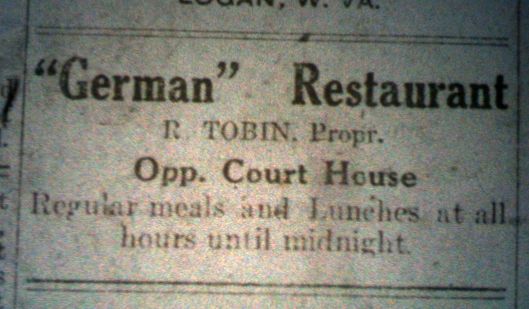
German Restaurant Ad LB 06.20.1913.JPG

Logan (WV) Banner, 20 June 1913.

***

The Latest Craze

In Logan now is PAINT–house paint and everybody’s doin’ it! The most recent ones are the Draper Bldg., Judge Wilkinson’s residence and office, Lanham’s plumbing shop, the Poole drug store, German restaurant, etc. More paint was spread in Logan this year than ever was known before, and considerable of it was “red” too. It can truly be said that nearly every building in town, of importance, has been or will be painted this year, in fact a few almost worthless old houses now look like new. A bucket of paint surely works wonders sometimes. A sign writer has also been at work the past week or two putting gold lettering on windows.”

Logan (WV) Banner, 4 July 1913

***

Logan County Prisoners Working Roads, They Like It Better Than Confinement

Two wagon-loads of prisoners were taken out of the county jail Wednesday morning, under guard, and worked on the roads in this vicinity. A 5-lb rod, about two foot long, was locked around an ankle of each prisoners. They seemed to like their outing.

Logan (WV) Banner, 12 September 1913

Armed March on Logan County, WV (1921)

21 Saturday Sep 2019

Posted by Brandon Ray Kirk in Battle of Blair Mountain, Boone County, Logan

≈ Leave a comment

Tags

A.C. Rouse, A.R. Browning, Appalachia, Battle of Blair Mountain, Bill Blizzard, Blair Mountain, Charleston, crime, deputy sheriff, District No. 17, Don Chafin, Ferndale, Frank Keeney, George Munsy, H.M. Miller, history, Hubert Ferrell, J.E. Wilburn, J.L. Workman, John Gore, Lens Creek, Logan, Logan Banner, Madison, Marmet, merchant, Mine Wars, Mother Jones, Savoy Holt, sheriff, T.C. Townsend, United Mine Workers of America, Warren G. Harding, West Virginia

Here is one article from the Logan Banner relating to Bill Blizzard and the Armed March on Logan County, WV, popularly remembered today as the Battle of Blair Mountain:

Blizzard Gloated at Gore’s Death, Said

“That’s fine! What’s the matter you haven’t killed any others?” William Blizzard, mine workers’ officer, was quoted as saying after he heard of the death of Deputy Sheriff John Gore and two companions at the hands of a party of union miners, according to testimony Monday at Blizzard’s trial upon an accessory to murder indictment growing out of the armed march against Logan county in 1921. Blizzard is charged with having participated in the plans that caused the death of George Munsy, one of the Logan defenders killed with Gore.

Hubert Ferrell, of Ferndale, the witness who quoted Blizzard’s words, declared the mine workers’ office made the statement in a speech to the armed miners gathered at Blair on the afternoon of the day after they had returned from Blair mountain where the Logan “defenders” were killed.

“It don’t seem like it would take any  more nerve to kill Don Chafin (Logan county sheriff) and his thugs than it would a sheep-killing dog,” Ferrell testified Blizzard continued in his speech. “Right tomorrow I want you to fix up to go over the top. It don’t matter about losing a few men. I want you to go over to Logan and let the men out of jail and tear the thing down to the ground.”

Under cross-examination Ferrell added that Blizzard had told the men he wanted them to eat dinner the next day “on the jail house step.”

Ferrell, according to his testimony, failed in his first effort to visit the men who participated in the armed march when he was stopped by guards at the mouth of Lens Creek where the marchers first assembled. He denied that he had ever desired to join the march and said he went there only to see if there were any men there whom he knew. T.C. Townsend, one of the defense attorneys, cross-examined Ferrell vigorously upon that point. The witness said he was on his way to Charleston to buy clothing at the time. Later he said he went to Blair intending to go on to Logan and visit his half-brother, but was prevented by the armed men in Blair from either going on or returning and eventually returned home on a special train after federal troops took charge of the situation.

While he was at Marmet at the mouth of Lens Creek and unable to go farther up the creek because he could not give the guards the password and did not belong to a union, Ferrell said Fred Mooney, secretary treasurer of District No. 17, United Mine Workers, and a man who was said to be C. Frank Keeney, the district president, were there in an automobile. Mooney, the young man told the jury, asked the guards if any guns and ammunition had arrived and on being told he had none informed them that two truck loads had left Charleston. The man pointed out as Keeney told the men he did not believe they were sufficiently prepared and that they would do better to go home, “get prepared and then go over and get Don Chafin and his thugs.”

On the day before Gore and Munsy were killed, Ferrell said Blizzard also made a speech from the porch of the school house that served as base for the armed forces on the union side at the mountain and asked what was the matter that they were not having more success and told them they ought to go over and “get Chafin and the thugs and get it over with.”

Mrs. J.E. Wilburn, wife of the miner-preacher who was one of the principal witnesses for the state now serving a sentence of 12 years for his part in the killings on Blair mountain, testified that guns and ammunition were stored in the parlor of their home. She did not know Blizzard, she said, but men who took the arms into the house said Blizzard had brought them, she testified.

A.R. Browning, a merchant at Blair, told the court that members of the armed forces there got merchandise at his store and told him to charge it to the United Mine Workers of America. The things they got, he said, included shoes, overalls, and other clothing and also some women’s clothing, which he thought, they got for their wives and daughters.

H.M. Miller, a constable at Madison, said that just before Keeney made a speech at the ball park near there which he counselled the marchers to return to their homes, he had a conversation with the union president in which Keeney said that “if the federal troops would keep out he would take these men and go through Logan with them.”

Earlier in the day, J.L. Workman and A.C. Rouse of Marmet had testified as to the occurrence during the assembling of the men on Lens Creek. Workman told of “Mother” Jones’ efforts to get the men to go back to their homes and her declaration that she had a telegram from the President of the United States, which he said Keeney called a “fake.” Later that day both Workman and Rouse said Savoy Holt in a speech from the running board of an automobile said the union officials were their but could not address the men and that he had been instructed to tell them that the telegram was not genuine and that they were to “go on.” Rouse said Keeney and Mooney were in this automobile and that Blizzard was in another nearby. A man he did not know spoke from the running board of the automobile in which Blizzard was riding, telling the men to go on, and Blizzard’s car drove up Lens Creek followed by the armed hordes.

Source: Logan (WV) Banner, 6 July 1923

William Anderson McCoy’s Recollections of the Hatfield-McCoy Feud (1949)

23 Sunday Jun 2019

Posted by Brandon Ray Kirk in Big Sandy Valley, Hatfield-McCoy Feud

≈ Leave a comment

Tags

Anderson Ferrell, Appalachia, crime, David Ross, education, Ferrell School, feud, feuds, Hatfield-McCoy Feud, history, Homer Claude McCoy, Johnnie Rutherford, Kentucky, Logan County, Mate Creek, Mate Creek School, Mingo County, Nona McCoy, Pike County, Tug Fork, West Virginia, William Anderson McCoy

From “The Rise of Education and the Decline of Feudal Tendencies in the Tug River Valley of West Virginia and Kentucky in Relation to the Hatfield and McCoy Feud” by Homer Claude McCoy (1950):

Appendix A

I attended school in the school house on Mate Creek just a few days after the McCoy boys was taken out and killed. The kettles and pans that they used to cook their grub in was still in the school house yet. This was my first school. This was about 1882. My next school was in the school house on the Anderson Ferrell farm about one mile below Mate Creek on the W.Va. side of Tug River. The teacher of Mate Creek School was David Ross and teacher for the Ferrell School was Johnie Rutheford.

William Anderson McCoy

Dec. 4, 1949

Note: Homer Claude McCoy (b. 1904) was the son of William Anderson and Nona (Jackson) McCoy. William Anderson McCoy was born in 1873 and died in 1960. To see William’s family in the 1880 Logan County, WV, Census, follow this link: https://www.familysearch.org/ark:/61903/3:1:33S7-9YB2-97NB?i=7&cc=1417683

Hatfield-McCoy Feud Prisoners (1889-1890)

08 Saturday Jun 2019

Posted by Brandon Ray Kirk in Hatfield-McCoy Feud

≈ 2 Comments

Tags

Alex Messer, Andy Varney, Appalachia, crime, Doc Mayhorn, Eddyville, farmer, Frank Phillips, Frankfort, Hatfield-McCoy Feud, history, Kentucky, L.D. McCoy, Mose Christian, murder, Pike County, Plyant Mahorn, Randolph McCoy, Sam Mahon, Selkirk McCoy, Tom Mitchell, Valentine Wall Hatfield, West Virginia

In December of 1887 and January of 1888, Frank Phillips and his posse captured nine members of the Hatfield faction accused of murdering various members of Randolph McCoy’s family. Captured persons included Selkirk McCoy, Mose Christian, Tom Mitchell, Valentine “Wall” Hatfield, Doc Mahon, Sam Mahon, Andy Varney, Plyant Mahon, and L.D. McCoy. In November of 1888, detectives captured Hatfield partisan Alex Messer. The following information is derived from Kentucky State Penitentiary records:

VALENTINE HATFIELD

NAME: Valentine Hatfield

SEX OR COLOR: White Male

CRIME: Murder

SENTENCE: Life

COUNTY SENT FROM: Pike

TERM OF COURT: August 1889

RECEIVED: January 2, 1890

NO. OF COMMITTAL: 73

AGE: 56

HEIGHT: 6′

WEIGHT: 162

COMPLEXION: Fair

COLOR OF EYES: Yellow

COLOR OF HAIR: Dark

EDUCATION: Com.

NATIVITY: Ky

OCCUPATION: Farmer

PREVIOUS HABITS: Int.

SOCIAL RELATION: M

SUNDAY SCHOOL: No

DESCRIPTION: Book 2, page 117

FORMER CONVICTIONS: —

HOW AND WHEN DISCHARGED: Died February 13, 1890

MARKS, SCARS, ETC.: Mole on left side of neck; ____ in front of neck; scars on right knee and shin; some varicose veins on legs; two dark moles on outside left thigh

ALEXANDER MESSER

NAME: Alexander Messer

SEX OR COLOR: White Male

CRIME: Murder

SENTENCE: Life

COUNTY SENT FROM: Pike

TERM OF COURT: August 1889

RECEIVED: September 7, 1889

NO. OF COMMITTAL: 420 (or 419)

AGE: 52

HEIGHT: 5’8 ¼”

WEIGHT: 158

COMPLEXION: Fair

COLOR OF EYES: Blue

COLOR OF HAIR: Grayish

EDUCATION: None

NATIVITY: Ky

OCCUPATION: Farmer

PREVIOUS HABITS: Temp.

SOCIAL RELATION: M

SUNDAY SCHOOL: Yes

DESCRIPTION: Book 2, page 78

FORMER CONVICTIONS: —

HOW AND WHEN DISCHARGED: —

MARKS, SCARS, ETC.: 2nd finger of left hand scarred at end; scar on each knee; great toe on right foot crooked and badly scarred where it joins foot; great number of scars behind left shoulder; scars in small of back; scar under right nipple; scar on right side

DOC MAHON

NAME: Doc Mayhorn

SEX OR COLOR: White Male

CRIME: Murder

SENTENCE: Life

COUNTY SENT FROM: Pike

TERM OF COURT: August 1889

RECEIVED: January 2, 1890

NO. OF COMMITTAL: 74

AGE: 35

HEIGHT:   5’9 ½”

WEIGHT: 156

COMPLEXION: Fair

COLOR OF EYES: Blue

COLOR OF HAIR: Sandy

EDUCATION: Com.

NATIVITY: W.Va

OCCUPATION: Farmer

PREVIOUS HABITS: Int.

SOCIAL RELATION: M

SUNDAY SCHOOL: No

DESCRIPTION: Book 2, page 118

FORMER CONVICTIONS: —

HOW AND WHEN DISCHARGED: —

MARKS, SCARS, ETC.: Vaccine mark on right arm; scar inside right wrist; small scar outside right hip

PLYANT MAHON

NAME: Plyant Mahorn

SEX OR COLOR: White Male

CRIME: Murder

SENTENCE: Life

COUNTY SENT FROM: Pike

TERM OF COURT: August 1889

RECEIVED: January 2, 1890

NO. OF COMMITTAL: 75

AGE: 37

HEIGHT: 5/10 ½”

WEIGHT: 148

COMPLEXION: Fair

COLOR OF EYES: Blue

COLOR OF HAIR: Sandy

EDUCATION: Com.

NATIVITY: W.Va

OCCUPATION: Farmer

PREVIOUS HABITS: Temp.

SOCIAL RELATION: M

SUNDAY SCHOOL: No

DESCRIPTION: Book 2, page 118

FORMER CONVICTIONS: —

HOW AND WHEN DISCHARGED: —

MARKS, SCARS, ETC.: Vaccine mark on right arm.

Sources:

Eddyville Prisoner Description Book 1889-1910, Roll No. 7009897

Eddyville Prisoner Register 1885-1910, Roll No. 7008244

Frankfort Prison Cell House Register 1883-1919, Roll No. 7010207

Frankfort Prison Sentence Register 1874-1894, Roll No. 7010211

Frankfort Prisoner Descriptions 1887-1906, Roll No. 7009898

Frankfort Register of Prisoners 1848-1893, Roll No. 7009891

Frankfort Register of Prisoners 1880-1911, Roll No. 7009892

Interview of Jean Hatfield at Sarah Ann, WV (2001), Part 2

28 Tuesday May 2019

Posted by Brandon Ray Kirk in Civil War, Hatfield-McCoy Feud

≈ 2 Comments

Tags

Altina Waller, Appalachia, Asa Harmon McCoy, Betty Caldwell, Bob Hatfield, Bob Spence, Brandon Kirk, Cap Hatfield, Cincinnati, civil war, Coleman Hatfield, crime, Devil Anse Hatfield, Don Chafin, Ellison Hatfield, feud, feuds, Frank Phillips, genealogy, Hatfield-McCoy Feud, Henry Hatfield, history, History Channel, hunting, Jack Hatfield, Jean Hatfield, Joe Hatfield, Johnson Hatfield, Levisa Hatfield, Logan Banner, Logan County, logging, Mingo County, Nancy McCoy, Otis Rice, Perry Cline, Preacher Anse Hatfield, Rosa Browning, Roseanne McCoy, Sarah Ann, Tennis Hatfield, The Hatfield and McCoy Feud After Kevin Costner, The McCoys: Their Story, The Tale of the Devil, Thomas Dotson, timbering, tourism, Truda Williams McCoy, West Virginia

In 2001-2002, I wrote a series of popular stories for the Logan Banner that merged aspects of well-known Hatfield-McCoy books written by Otis Rice and Altina Waller in the 1980s. I had previously enjoyed Rice’s narrative and Waller’s analysis; I did not conduct any new research. Even though I believed the definitive Hatfield-McCoy Feud book remained unwritten, my purpose in writing these stories was not a step toward writing a book; my purpose in writing these stories was to revisit the narrative with some analysis for Banner readers. My hope was that readers would see what I saw: first, fascinating history (or folk story) for its own sake; second, the power of history to create a popular type of tourism.

I was fortunate during this time to meet Jean Hatfield. Jean, born in 1936, operated a Hatfield family museum at Sarah Ann, WV. Jean was not a native of West Virginia but had lived her entire adult life locally and had personally known several of Anderson Hatfield’s children. I really appreciated her desire to promote regional history. She “got it.” She inspired me. Anytime that I drove up Route 44, I stopped to visit Jean at the museum. She was always welcoming. Knowing her reminded me that every Hatfield (and McCoy) descendant is a source of information–-and that for the most part they have yet to tell the story in their own words. Three notable exceptions include The McCoys: Their Story by Truda Williams McCoy (1976), The Tale of the Devil (2003) by Coleman Hatfield and Bob Spence, and The Hatfield and McCoy Feud After Kevin Costner: Rescuing History (2013) by Thomas Dotson.

What follows is Part 2 of my interview with Jean, which occurred on August 7, 2001:

What year was your husband born in?

He was born in ‘25. Grandpa died in 1921. He didn’t remember him but he remembered his grandmother. Grandma died in ’28.

Where did Devil Anse’s house sit here?

It’s up above the cemetery. There’s a ranch-style house there now. There’s a concrete bridge going over there. And a big bottom. And where the ranch style house is, that’s where the old homeplace was.

Is it still in family hands?

No. It’s been out of the family for I guess fifty years or more.

Now, Devil Anse having that many kids, do the grand-kids mingle pretty well?

They’re scattered. We really need to get back to the tradition of having a family reunion where they could all come in. But they’re scattered all over the country. Some in Florida, some in Ohio.

Are there other pictures like this that other branches of the family have?

I would say they all have some. There’s always pictures hidden back in attics and things like that. You never know. There’s one… Bob Hatfield from Cincinnati, he has an extensive family also. He’s through Anderson Hatfield. Preacher Anderson.

Do you know any stories about Anse and bear?

He was a bear hunter. And he killed a momma bear and brought the baby cubs home and raised them. They had them for years. A male and a female. Their names was Billy and Fanny. And Grandma would have to go out and run them out of the well house because they was out there slurping all of the cream off of the milk. They were down-to-earth people. They planted their gardens and things like that.

What about Don Chafin?

He was distant relation to the Hatfields. Grandma was a Chafin so he would have come in on her side. Maybe cousins. There’s a picture over there of Grandpa and him together.

The pictures of Johnse that I’ve seen, I don’t think he’s the best looking of the boys.

Well, I don’t either. Some of the pictures doesn’t do him justice either. This is the one that I like of him. It’s a little bit better. As he got older, he didn’t age very well. But then he had about five wives, too. That has a tendency to age you a bit.

If you have just one wife and she’s no good that can be enough.

I was lucky in that respect. We had 47 good years together. Now that top picture there is Joe and Cap and one of the deputies. His name was Lilly.

Devil Anse’s home burned, right? Did they lose a lot of things in it?

Uh huh. It had a lot of things in it. Somebody said Tennis had stored a lot of guns and ammunition and things like that in it. People were afraid to go by there for a week afterwards because the shots was going off. I would say it was something else because at that time there was no fire departments or anything. It probably just burned out.

Did you ever hear what year it was built?

1889. That’s a replica of it there. It was a seven-room two-story. Cap’s was built on the same pattern.

Did your husband read a lot about the feud?

Mostly, but he disagreed with a lot of it. The Altina Waller book, he liked that. It was a good one. They interviewed him on the History Channel. She never interviewed anyone. She went with public record on everything. And I think a lot of it was Perry Cline pushed a lot of it. Grandpa had sued him because he got on Grandpa’s land and timbered it. Grandpa won 5000 acres of land off of him. After that, all the warrants and the bounty hunters started looking for Grandpa and the boys. Grandpa decided all of a sudden that he was just going to sell him the land and get rid of it and when he did that everything just stopped. She thought in the book too that Perry Cline was the one really instigating the Hatfields and the McCoys and he was taking money off both sides of the family for things. He would buddy up to one side and then do something for someone and they’d pay him and then he would go to the other one and do the same thing.

Did you say you had something of his?

No. Frank Phillips. A pocket knife. We got it through one of our friends way back there. And he didn’t want it because he said it was too grisly. And it is rusty but you know the blade is razor sharp. And it has to be way over 100 years old.

Didn’t he marry Nancy McCoy?

She was Johnse’s first wife. She left Johnse for Frank Phillips. Well now, Asa Harmon McCoy was her father. And he was the one… Grandpa wounded him in the Civil War. And when they all come back from the Civil War he was found dead in the Hatfield territory and they blamed the Hatfields for the killing. But I think years later on they found out that one of his own people had killed him and just throwed him in the Hatfield territory. But now it was his daughter that married Johnse and from what I can understand she made Johnse live pretty rough, which he probably deserved for treating Roseanne the way he did. But now, I talked to Aunt Betty and Aunt Rosie both about Roseanne and they were living at the house with her and they loved her. They said she was a beautiful person. She had coal-black hair, she had a good turn. She was just a nice person. And I think they kind of got mad at Johnse because he was running around and chasing women and things like that.

Now, I’ve heard that Devil Anse wouldn’t allow them to be married.

He wouldn’t. But years later he said he wished he had’ve because Roseanne saved Johnse’s life a couple of times there. That is true. And he did say that he wished he had let them marry. But back at that time there was so much hatred going on between the families. Her father, as far as I know, never spoke to her again. Just because she did take up with Johnse.

What about the shirt that Ellison wore when he was stabbed?

As far as I know, it’s in a museum in New Orleans. There’s a picture there. Uncle Joe had it and he sold it to one of his sister’s grandsons and he passed away and his wife has it. I heard that it was on display in a museum. Henry tried to buy it back after his cousin died but we never did get an answer back from them. I would still like to have it back. Actually, it belonged to Henry’s father and he left it in storage at Uncle Joe’s and Uncle Joe sold it. It should have come down to Henry or Jack. But that’s life.

← Older posts
Newer posts →

Feud Poll 1

If you had lived in the Harts Creek community during the 1880s, to which faction of feudists might you have given your loyalty?

Categories

  • Adkins Mill
  • African American History
  • American Revolutionary War
  • Ashland
  • Atenville
  • Banco
  • Barboursville
  • Battle of Blair Mountain
  • Beech Creek
  • Big Creek
  • Big Harts Creek
  • Big Sandy Valley
  • Big Ugly Creek
  • Boone County
  • Breeden
  • Calhoun County
  • Cemeteries
  • Chapmanville
  • Civil War
  • Clay County
  • Clothier
  • Coal
  • Cove Gap
  • Crawley Creek
  • Culture of Honor
  • Dingess
  • Dollie
  • Dunlow
  • East Lynn
  • Ed Haley
  • Eden Park
  • Enslow
  • Estep
  • Ethel
  • Ferrellsburg
  • Fourteen
  • French-Eversole Feud
  • Gilbert
  • Giles County
  • Gill
  • Green Shoal
  • Guyandotte River
  • Halcyon
  • Hamlin
  • Harts
  • Hatfield-McCoy Feud
  • Holden
  • Hungarian-American History
  • Huntington
  • Inez
  • Irish-Americans
  • Italian American History
  • Jamboree
  • Jewish History
  • John Hartford
  • Kermit
  • Kiahsville
  • Kitchen
  • Leet
  • Lincoln County Feud
  • Little Harts Creek
  • Logan
  • Man
  • Matewan
  • Meador
  • Midkiff
  • Monroe County
  • Montgomery County
  • Music
  • Native American History
  • Peach Creek
  • Pearl Adkins Diary
  • Pecks Mill
  • Peter Creek
  • Pikeville
  • Pilgrim
  • Poetry
  • Queens Ridge
  • Ranger
  • Rector
  • Roane County
  • Rowan County Feud
  • Salt Rock
  • Sand Creek
  • Shively
  • Spears
  • Sports
  • Spottswood
  • Spurlockville
  • Stiltner
  • Stone Branch
  • Tazewell County
  • Timber
  • Tom Dula
  • Toney
  • Turner-Howard Feud
  • Twelve Pole Creek
  • Uncategorized
  • Warren
  • Wayne
  • West Hamlin
  • Wewanta
  • Wharncliffe
  • Whirlwind
  • Williamson
  • Women's History
  • World War I
  • Wyoming County
  • Yantus

Feud Poll 2

Do you think Milt Haley and Green McCoy committed the ambush on Al and Hollene Brumfield in 1889?

Blogroll

  • Ancestry.com
  • Ashland (KY) Daily Independent News Article
  • Author FB page
  • Beckley (WV) Register-Herald News Article
  • Big Sandy News (KY) News Article
  • Blood in West Virginia FB
  • Blood in West Virginia order
  • Chapters TV Program
  • Facebook
  • Ghosts of Guyan
  • Herald-Dispatch News Article 1
  • Herald-Dispatch News Article 2
  • In Search of Ed Haley
  • Instagram
  • Lincoln (WV) Journal News Article
  • Lincoln (WV) Journal Thumbs Up
  • Lincoln County
  • Lincoln County Feud
  • Lincoln County Feud Lecture
  • LinkedIn
  • Logan (WV) Banner News Article
  • Lunch With Books
  • Our Overmountain Men: The Revolutionary War in Western Virginia (1775-1783)
  • Pinterest
  • Scarborough Society's Art and Lecture Series
  • Smithsonian Article
  • Spirit of Jefferson News Article
  • The Friendly Neighbor Radio Show 1
  • The Friendly Neighbor Radio Show 2
  • The Friendly Neighbor Radio Show 3
  • The Friendly Neighbor Radio Show 4
  • The New Yorker
  • The State Journal's 55 Good Things About WV
  • tumblr.
  • Twitter
  • Website
  • Weirton (WV) Daily Times Article
  • Wheeling (WV) Intelligencer News Article 1
  • Wheeling (WV) Intelligencer News Article 2
  • WOWK TV
  • Writers Can Read Open Mic Night

Feud Poll 3

Who do you think organized the ambush of Al and Hollene Brumfield in 1889?

Recent Posts

  • Logan County Jail in Logan, WV
  • Absentee Landowners of Magnolia District (1890, 1892, 1894)
  • Charles Spurlock Survey at Fourteen Mile Creek, Lincoln County, WV (1815)

Ed Haley Poll 1

What do you think caused Ed Haley to lose his sight when he was three years old?

Top Posts & Pages

  • Halcyon 4.10.1919
  • Halcyon-Yantus 12.08.1911
  • Civil War Gold Coins Hidden Near Chapmanville, WV
  • Ran'l McCoy's Final Months (1914)
  • Buskirk Cemetery at Buskirk, KY (2015)

Copyright

© Brandon Ray Kirk and brandonraykirk.wordpress.com, 1987-2023. Unauthorized use and/or duplication of this material without express and written permission from this blog’s author and/or owner is strictly prohibited. Excerpts and links may be used, provided that full and clear credit is given to Brandon Ray Kirk and brandonraykirk.wordpress.com with appropriate and specific direction to the original content.

Archives

  • February 2025
  • January 2025
  • October 2023
  • September 2023
  • December 2022
  • November 2022
  • May 2022
  • April 2022
  • February 2022
  • November 2021
  • October 2021
  • September 2021
  • June 2021
  • May 2021
  • April 2021
  • March 2021
  • February 2021
  • January 2021
  • December 2020
  • November 2020
  • October 2020
  • July 2020
  • June 2020
  • May 2020
  • April 2020
  • March 2020
  • February 2020
  • January 2020
  • December 2019
  • November 2019
  • October 2019
  • September 2019
  • August 2019
  • July 2019
  • June 2019
  • May 2019
  • April 2019
  • March 2019
  • February 2019
  • January 2019
  • December 2018
  • November 2018
  • October 2018
  • September 2018
  • August 2018
  • July 2018
  • June 2018
  • May 2018
  • April 2018
  • March 2018
  • February 2018
  • January 2018
  • December 2017
  • November 2017
  • October 2017
  • September 2017
  • August 2017
  • July 2017
  • June 2017
  • May 2017
  • April 2017
  • March 2017
  • February 2017
  • January 2017
  • December 2016
  • November 2016
  • October 2016
  • September 2016
  • August 2016
  • July 2016
  • June 2016
  • May 2016
  • April 2016
  • March 2016
  • February 2016
  • January 2016
  • December 2015
  • November 2015
  • October 2015
  • September 2015
  • August 2015
  • July 2015
  • June 2015
  • May 2015
  • April 2015
  • March 2015
  • February 2015
  • January 2015
  • December 2014
  • October 2014
  • September 2014
  • August 2014
  • July 2014
  • June 2014
  • May 2014
  • April 2014
  • March 2014
  • February 2014
  • January 2014
  • December 2013
  • November 2013
  • October 2013
  • September 2013
  • August 2013
  • July 2013
  • June 2013
  • May 2013
  • April 2013
  • March 2013
  • February 2013
  • January 2013
  • December 2012
  • November 2012

Enter your email address to follow this blog and receive notifications of new posts by email.

Join 2,927 other subscribers

Tags

Appalachia Ashland Big Creek Big Ugly Creek Blood in West Virginia Brandon Kirk Cabell County cemeteries Chapmanville Charleston civil war coal Confederate Army crime culture Ed Haley Ella Haley Ferrellsburg feud fiddler fiddling genealogy Green McCoy Guyandotte River Harts Harts Creek Hatfield-McCoy Feud history Huntington John Hartford Kentucky Lawrence Haley life Lincoln County Lincoln County Feud Logan Logan Banner Logan County Milt Haley Mingo County music Ohio photos timbering U.S. South Virginia Wayne County West Virginia Whirlwind writing

Blogs I Follow

  • OtterTales
  • Our Appalachia: A Blog Created by Students of Brandon Kirk
  • Piedmont Trails
  • Truman Capote
  • Appalachian Diaspora

BLOOD IN WEST VIRGINIA is now available for order at Amazon!

Blog at WordPress.com.

OtterTales

Writings from my travels and experiences. High and fine literature is wine, and mine is only water; but everybody likes water. Mark Twain

Our Appalachia: A Blog Created by Students of Brandon Kirk

This site is dedicated to the collection, preservation, and promotion of history and culture in Appalachia.

Piedmont Trails

Genealogy and History in North Carolina and Beyond

Truman Capote

A site about one of the most beautiful, interesting, tallented, outrageous and colorful personalities of the 20th Century

Appalachian Diaspora

  • Subscribe Subscribed
    • Brandon Ray Kirk
    • Join 789 other subscribers
    • Already have a WordPress.com account? Log in now.
    • Brandon Ray Kirk
    • Subscribe Subscribed
    • Sign up
    • Log in
    • Report this content
    • View site in Reader
    • Manage subscriptions
    • Collapse this bar
 

Loading Comments...