Missing You This Day

Tags

, , ,

Missing You This Day

Never have I felt so lonely,

So helpless,

As I have today.

Never have I cried for another

In frustration,

As I have today.

Never have I longed for one’s company

So desperately,

As I have today.

Today is the day

I miss you.

I am alone

And for the first time in my life,

I do not want to be.

I want my love to be here

Or I to be there.

So long as we are together.

I want to hear you laugh,

See you smile.

I want to smell your beautiful aroma

And feel your touch.

I want to love you in deed,

As well as in thought.

I want you to understand how

Lonely

I am.

Lonely, helpless, frustrated, longing.

This should convince you of my love.

See me as I weep like a child

At his dead mother’s grave.

See me as I stand alone,

Reaching for you.

Digging, clawing

In the muddy mound for what can not be had.

In this cold, desolate autumn wasteland

See me drowning in my lake of self-pity

Screaming at an unanswered echo,

Being bashed against a rocky shore,

Bleeding in the churning waters,

Mingling with its fury —

The fury of my turmoil.

Help me.

Only memories and future optimism

Keep me alive.

How I yearn for you,

Oh how I wish we could be together,

Forever,

So these separations would not be.

Oh how I want to sweep you from your

Home and run the winds

With your love, leaving rules behind.

I dream of the day we can finally be

You and I,

Until then, I will

Miss you,

As I do on this day.

 BRK

October 10, 1990

In Search of Ed Haley 275

Tags

, , , , , , , , , , , , , , , , , , , , , ,

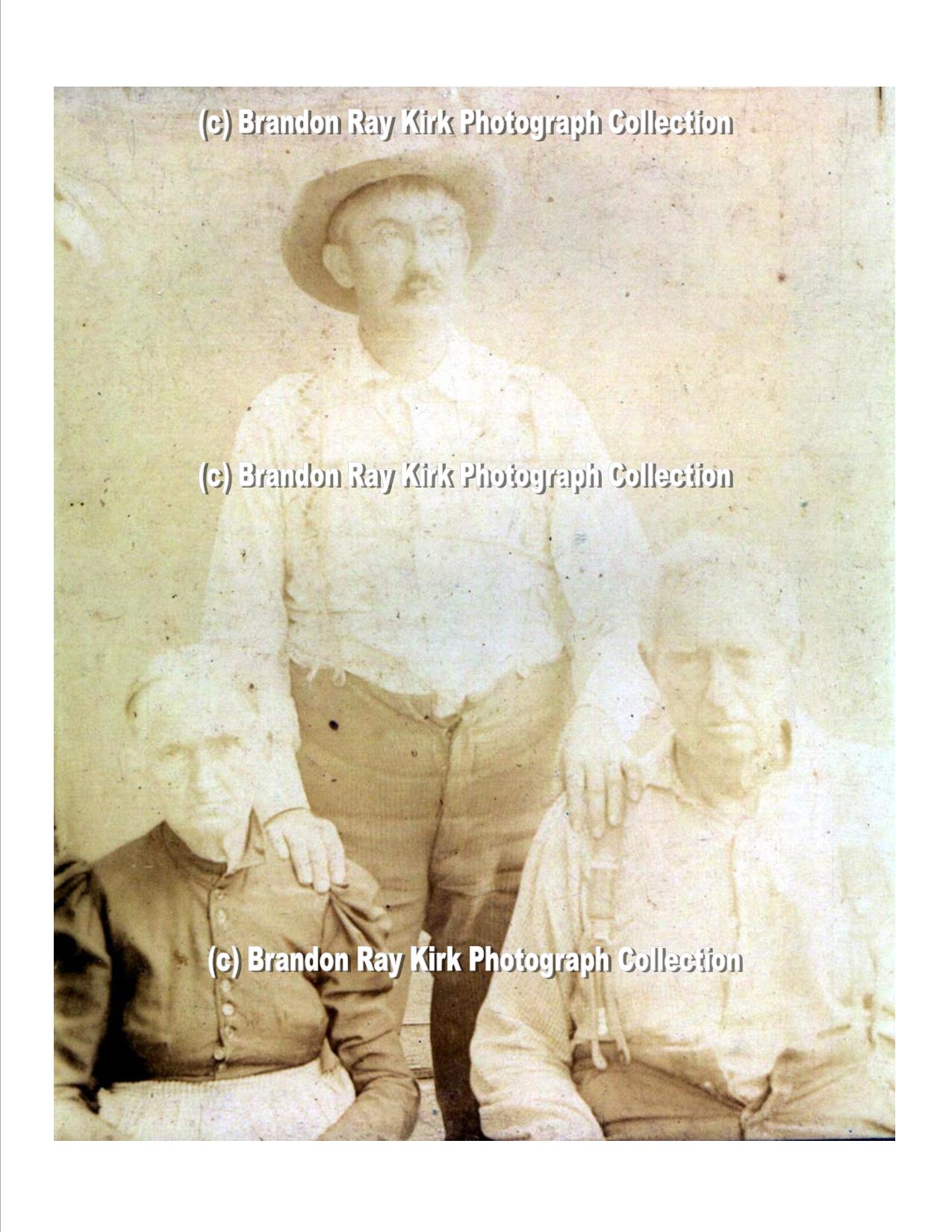
Early one fall morning, I loaded up the Cadillac and drove south to the home of Harold Postalwait in Rogersville, Alabama. Harold, I knew, had a very special visitor — his mother, 88-year-old Ugee Postalwait of Akron, Ohio. Ugee remembered Ed Haley as far back as the Bull Moose era when he used to visit her father in Calhoun County, West Virginia. I hadn’t seen her since a visit to her home four years earlier and was anxious to pick her brain for new stories or tunes and show her what I had learned about Ed’s fiddling. Not long after my arrival, after we’d all said our “hellos,” Harold pulled out the picture of Laury Hicks and his family at John Hicks’ in Douglas, West Virginia.

“That’s my dad,” Ugee said, pointing to her father’s image. “I can remember when he wore the mustache.”

I wondered if the picture was taken before Ed was acquainted with Laury.

“Dad met Ed before I can remember,” Ugee said. “I don’t know whether that was before Mom and him was married. It was after Grandpap died, they said. Dad musta been about eighteen or something like that. Josh Joplin brought Ed into that country and told him they was a boy down there he wanted him to hear play the fiddle. Said, ‘He thinks he can play but he can’t play,’ and went in and had Dad to tune up his fiddle and played them two pieces. He played ‘Sally Goodin’ and I think it was the ‘Cacklin’ Hen’. Ed said, ‘Boy he’s showin’ me off.’ That was all they was to it. And that old man you know had told him a lie.”

I asked Ugee, “So Ed was coming to Ivydale before you were born?” and she said, “I have an idea he was because I wasn’t quite old enough to go to school when I first remember him. The first time I ever remember seeing him was when him and John Hager was there. I bet he wasn’t over 27 years old, when I think about it. I would say that was — I was born in 1907 — that was about 1913 or something like that. He was tall, slender. I can remember back when I was four years old real good and I remember him just as plain as if it was yesterday. We had a dirt road to the house and when he went to leave in the spring — they stayed all winter — he was walking behind John Hager and me and my brother Harvey run right to the bank and waved by at him. We’d been crying after him. I can see him walking along… But he carried that there fiddle in a flour bag. I never seen Ed with a fiddle in a case till after him and Ella was married. He always carried it in a flour poke.”

I told Ugee that I had worked a lot with Lawrence Haley in his last days trying to find out about Ed’s technique. Before I could show her what I had come up with, she started telling me what she remembered along those lines. She said Ed played with the fiddle under his chin — he hated when musicians “put the fiddle down low” — and turned it occasionally. He held the bow way out on its end, she said, and played a lot smoother than her father, a tremendous concession for a daughter to make. I asked if Ed played smoothly when she first saw him.

“Oh naturally he got better as years went by, but he was good then,” she said.

She gave me the impression that Ed’s fiddling had a lot of Irish-style “ornaments” in his early days (in the older, more European tradition), which gradually disappeared over the years — probably due to artistic peer pressure from radio fiddlers like Arthur Smith and Clayton McMichen. Smith and McMichen were extremely popular during the last few decades of Haley’s life.

Summer Blood

Tags

, , ,

Summer Blood

‘Twas a summer day

In the meadow

When I spied her.

She was a beauty,

A youth,

And I loved her.

She trod toward me,

And I could feel my leaves

Grow in pride.

She was to pick me

As her flower,

Her love.

As she neared me,

She smiled…

And I loved her.

She gently reached for me

And my eagerness to be hers

Grew.

As she caressed my proud stem,

She quickly pulled away

And I wept.

A drop of blood ran down my petals,

And the angel ran from the meadow.

“Take no heed to my black petals.

Only my sharp, brazen thorn.

Is it always the harmless rose

Which is chosen to adorn?”

 BRK

July 11, 1990

Whirlwind 2.27.1919

Tags

, , , , , , , , , , , , , , , , , , , , , , , , , , ,

“Blue Eyed Beauty,” a local correspondent at Whirlwind in Upper Hart, Logan County, West Virginia, offered the following items, which the Logan Democrat printed on Thursday, February 27, 1919:

We have been having some rainy weather the past week.

Several of our farmers are fencing and clearing ground for this year’s crops.

The Bryant school, taught by W.J. Bachtel, closed on Friday, and the Hall school, taught by R.H. Thomas, closed on Saturday.

Dave and Wade Bryant have gone into the mercantile business at the head of Whiteoak, and Will Farley recently put up a store two miles below Whirlwind post office.

John Dalton is preparing to build himself a new house.

“Doke” Tomblin purchased a cow of Miss Burlie Riddle Thursday.

We hear that Isaac Workman accidentally cut his foot with an axe while working for Geo. Hutchinson Lumber Company.

Rev. George Hensley and John Bryant conducted religious services on Buckfork Sunday.

Jesse Blair was a business visitor at Holden Saturday.

John Taylor Bryant is on the sick list this week. He has not been in good health since having an attack of influenza in the fall.

In Search of Ed Haley 274

Tags

, , , , , , , , , , , , , , , , , , , , , , , , ,

Excitedly, I next called Spicie McCoy’s daughter Daisy Ross who lived in Kenova, a small city near Huntington, West Virginia. Daisy’s voice was weak — she said she’d been down sick with a cold for the past week. I told her that we were trying to find out about Green McCoy’s death and she said, “My mother married Green McCoy and he was murdered. She married Goble Fry after he died. My mother was Spicie. She talked about Milt Haley. She just said they played music together, him and Green McCoy. They were good friends. I don’t know whether he was rough or not. I never heard Mom say nothing against Milt Haley.”

To our surprise, Daisy had no idea why Milt and Green were killed by the Brumfields.

“The Brumfields was rough: they had a mob,” she said. “The Brumfields first killed Grandpa’s son-in-law Boney Lucas, and when Mom married Green McCoy they said they had another’n they was gonna kill. Said they were gonna kill everything from the housecat up. They was just kindly mean people, I reckon.”

Daisy said Milt and Green tried to hide out from the Brumfields somewhere in Eden, Kentucky. She wasn’t sure where that was, but knew why they went there.

“Green McCoy had been married and had his wife and two children down there,” she said. “Yeah, Mommy didn’t know that, you see. Just before she got married, she got news that he had a wife and two children down there. He had told her that he had divorced her and Grandma said that hurt her awful bad and she couldn’t make Mommy understand it. Said Mom loved him so good she went ahead and married him anyhow.”

It didn’t take long for the Brumfields to locate Milt and Green.

“They went down and got them,” Daisy said. “The law was afraid of them, you know. They killed them there at Fry. And when the Brumfields killed them, they wasn’t satisfied with that. They took a pole-axe and beat their brains out and their brains splattered up on the door, Mom said. That hurt Mom so bad.”

I was chilled to the bone.

After Milt’s and Green’s murder, Daisy’s mother and family fled Harts Creek.

“The murder was in October and Grandpa and Uncle Winchester, his son, had to get out to Wayne County because they said they was gonna kill everything from the housecat up, the Brumfields did,” she said. “Grandma and Mom and the girls rented a boat and put all their household stuff and barrels of meat and come down on the river in January to Laurel Creek here in Wayne County. It was in January, but the peach trees was in full bloom, Mom said. Come a little warm spell and they all budded out in bloom. They didn’t have no menfolks to row the boat; the women had to do it. Mom said they was looking every minute to be drowned ’cause they was all kinds of stuff on the river. It was up from bank to bank.”

I asked Daisy if she knew Ed Haley and she said, “Yeah that’s the one played music with my brother, Sherman McCoy. My brother, he played the banjo. That was Green McCoy’s son you know and that was my half-brother. Ed Haley and Sherman McCoy — they was good friends. They got together and played music together down in Kentucky somewhere. I guess maybe in Catlettsburg or maybe in Ashland. He was Milt Haley’s son. And they said their fathers was killed together.”

Whirlwind 2.6.1919

Tags

, , , , , , , , , , , , , , , , , , , , , , , ,

“Blue Eyed Beauty,” a local correspondent at Whirlwind in Upper Hart, Logan County, West Virginia, offered the following items, which the Logan Democrat printed on Thursday, February 6, 1919:

Vinson Collins and Mrs. Martha Spry were united in marriage Saturday night, the Rev. Sam Adkins officiating.

The death angel visited Smokehouse Monday night, claiming Charles Conley as its victim. Death was due to influenza.

Raymond Collins died at his home on Mud Monday and his body was brought here for burial Wednesday. This is the second child of Preston Collins to die since the first of the year. We hear another child of the family is in a very critical condition at this time. The influenza has been the cause of all the sickness and the deaths.

Reece Dalton and William Tomblin hauled a load of household furniture Friday for Doke Tomblin, who is moving here from Shamrock.

Bill Tomblin has been on the sick list this week, but is much improved at this writing.

Constable Peter Mullins arrested Jesse Blair Wednesday on a warrant charging him with having disturbed a religious service. The alleged offense is said to have occurred last July, before Jesse went to the army.

In Search of Ed Haley 273

Tags

, , , , , , , , , , , , , , , , , , , , , , , , , ,

When we got back to Billy’s, we were amazed to find that he’d made contact with Green McCoy’s family. He showed us telephone numbers for two of Green’s grandsons, Ralph McCoy and Luther McCoy, as well as for Spicie McCoy’s daughter, Daisy (Fry) Ross.

I dialed up Ralph McCoy in Marango, Ohio, and explained who I was and what I was doing, then asked about Green McCoy’s murder.

“I’m 72 years old but a lot of that went on before I was born,” he said. “I’ve had two or three strokes and sometimes my memory’s gone. From the way I understood it, it was a Brumfield that killed my grandfather. There was something going on — I don’t know what the feud was about. See, I know nothing first-hand. My dad was born in 1888 and my dad was I think about two years old when his dad was murdered. My grandmother told me this part of it: that her and my dad and somebody else, I believe… My grandmother’s name was Spicie McCoy. I guess my grandfather put her on a raft or something and pushed her out in the river and told her to get out of there, to just keep on going and be quiet about it. She was pregnant for Uncle Green. Then after my grandfather got killed she married Goble Fry and then I think they came on down into Wayne County, which was around Stiltner and East Lynn and in that area.”

I asked Ralph if he knew anything about Green McCoy being a musician and he said, “Yes, very much. I’d say he was just like my dad, Sherman McCoy. He played anything that had strings on it. My dad and my grandmother, they traveled all over Wayne County playing in a quartet. They called themselves the ‘McCoy Time Singers.’ I did some traveling with them but it was just more or less in the Wayne County area. Logan city, I’ve been down that far with my dad and Grandma.”

So Green McCoy’s son Sherman was a musician, too?

“He did play with some people before he became a Christian and he played in Cleveland over the radio and stuff like that, but I wasn’t living with him then,” Ralph said. “I was living with mother. See, I was brought to Columbus, Ohio, and raised from about nine years old, so I lost track of a lot of them. But I did know he played over the radio in Cleveland and I think Huntington and several different places.”

“Have you talked with Luther McCoy?” Ralph asked.

I told him that we had tried calling Luther first but that he was in bed asleep.

“If you can talk with him, I think you’ll find out he’s probably in the same business you’re in,” Ralph said. “He plays, I think, back-up for several bands. From the way I understand it, he might be out on the West Coast.”

This was all great: our first contact with Green McCoy’s descendants.

Whirlwind 2.20.1919

Tags

, , , , , , , , , , , , , , , , , , , , , , , , , , ,

“Blue Eyed Beauty,” a local correspondent at Whirlwind in Upper Hart, Logan County, West Virginia, offered the following items, which the Logan Democrat printed on Thursday, February 20, 1919:

The Revs. H.L. Marcum and John Bryant conducted religious services at the McCloud school house Sunday.

Taylor Harold removed here from Holden Tuesday and Harry Blair, his uncle removed to Holden, where he will conduct a boarding house for the Island Creek Coal Co.

Harve Smith and K.F. Adkins are out peddling this week.

We hear that “Bock” Conley and Mrs. Belle Stevens, widow of the late Alford Stevens, were married Friday at the home on Brown’s Run.

Walter Riddle went to Logan on business Friday.

James Mullins bought a horse of Jim Hensley last week and then sold it back to him, after which sold it to a miner in Holden.

Jesse Blair seems to be in earnest about farming — be bought an axe and two handles Friday.

The McCloud school, taught by J.L. Thomas, closed Saturday.

In Search of Ed Haley 272

Tags

, , , , , , , , , , , , , , , , , , , , ,

The next day, I followed a tip from Billy and Brandon and made the short drive to see Irene Hager and her son Ike at Low Gap in Boone County, West Virginia. Irene was the daughter of Hubert Baisden, a close friend to Johnny Hager, and was the widow of Bernie Hager, Johnny’s nephew. Irene said Johnny used to visit her father at nearby Big Branch when she was a girl. Johnny played the fiddle and banjo and talked frequently about his travels with Ed back in the ’20s and ’30s.

“Ed Haley was an ever day word with Johnny,” Ike said.

Ike said Johnny Hager was most known as a fiddler, not a banjo-picker. He said he “cradled” the fiddle in his arms, never put it under his chin and bowed a lot of long strokes. He was primarily a claw-hammer banjoist but “did have a finger style.” Irene said his favorite song was “Joshua’s Prayer”, while Ike remembered him loving “Will There Be Any Stars in My Crown”. He also played “Rosewood Casket”, “Nelly Gray”, “Ballad of Old Number Nine”, “John Hardy”, “In the Pines”, “Cripple Creek”, “Wreck of ’97”, “Mockingbird on the Hill”, and “Little Log Cabin”.

Ike said Johnny taught his father how to play the banjo.

“He wanted a banjo player in the family to play around the houses and the homes with him,” Ike said. “My dad was musically inclined — he could chord a guitar and follow him along on the fiddle and banjo — so he talked Dad into getting a banjo. Dad traded six or seven hens and walked several mile with them hens upside down for this old banjo and Johnny taught him how to play. He picked up on playing pretty fast. I know they used to go over on Big Ugly and play in a school somewhere. Now they was some more boys that played with them. They was Wilcoxes, down on Mud River.”

That evening, I met up with Brandon at Billy Adkins’ house in Harts. Billy said a local man named Roy Dempsey told him earlier that day about having a genuine Ed Haley fiddle. I didn’t have too much time — I was leaving for Nashville later that night — but I wanted to see Roy. Brandon and I drove a little ways up Harts Creek to the Dempsey place, situated on a hill near the mouth of Big Branch. Roy showed us the fiddle, which he said Ed had given to Bernie Adams. Bernie later gave it to Roy’s father-in-law, Robert Adams. It was the first “Ed Haley fiddle” I’d seen on Harts Creek.

Halcyon 1.23.1919

Tags

, , , , , , , , , , , , , , , ,

“Daddy’s Girl,” a local correspondent at Halcyon on the West Fork of Big Harts Creek, Logan County, West Virginia, offered the following items, which the Logan Democrat printed on Thursday, January 23, 1919:

A.C. Hager has been holding meetings in the Thompson school house the past week.

Tom Hensley of Buck Fork will begin a singing school at this place a week from Saturday. Everybody will be invited to join us.

S. Riddle will begin our school next Monday.

The people of West Fork made up a donation for A.C. Hager at church Sunday night.

Elbert Baisden, who has returned from Camp Meade, visited A. Dingess Sunday.

Lee Carey and Pole Dingess, who have been mad at each other for some time, made friends at church the other night.

In Search of Ed Haley 272

Tags

, , , , , , , , , , , , , , , , , , , , , , , ,

Either way, Milt Haley and Green McCoy were paid a side of bacon and some money to eliminate Al Brumfield. Maude Dingess said Milt and Green ambushed Al and Hollena Brumfield as they rode down Harts Creek on a single horse. Hollena’s brothers, Harvey and Dave, followed behind them on separate horses.

“I guess they thought he was gonna have trouble or they wouldn’t a been doing that,” Maude said, somewhat logically.

As they made their way past Thompson Branch, Brumfield spotted two men hiding in the weeds. He ducked somehow to avoid harm, but Hollena was shot from the horse.

“Al just went on,” Maude said, while Dave and Harve “ran back up here to their mother and daddy’s house to get somebody to go down there with them.”

They later returned with a sled and hauled Hollena’s bloody body back to Smoke House.

In a short time, Milt and Green were rounded up and taken to Hugh Dingess’ home at the mouth of Bill’s Branch.

“I’d say old man Hugh got them kids and took them maybe to some of their relatives’ houses or somewhere else,” Harve Dingess said. “Maybe up to old Albert Dingess’ or somewhere like that. See, old Albert just lived on up the road a mile, mile and a half.”

Harve continued, “They said they all had a big feast there and I guess they had a lot of the corn whiskey there and all of them drinking and playing music. And they said they made the old man Haley — he was a fiddle player — they said they made him play that fiddle all night and all of them drunk a dancing. They said that they just kept telling him to keep that fiddle a going.”

I wondered where Milt got the fiddle at Hugh’s and Maude said, “They sent somebody to somebody’s house that had a fiddle I bet and brought it back. Back in them days you know a lot of households had them old instruments in them.”

I asked if Milt was considered a good fiddler and Harve said, “At that time, I think they said he was. Supposed to’ve been very good.”

Harve had never heard much talk about Green McCoy but stressed: “I know I did hear them talk about them making the old man play the fiddle all night and all of them a dancing and cooking and having a big feast there and drinking their moonshine.”

I said, “Most people that are gonna kill somebody, they don’t want to get to know them. If you have an execution, the executioner don’t want to get to know the prisoner because the more he gets to know that prisoner the harder it is for him to conduct the execution. To have two guys to play music for you before you’re fixing to kill them — that’s a good way to get to know them real quick. Boy, I don’t see how they did that.”

“I guess that’s the reason they kept old French Bryant,” Harve said. “They said he didn’t care for nothing. They said he was one of the leaders. He was a hollering, ‘Let’s go! Let’s do it!’ Pushing the thing, from what I could understand. He was a hollering, ‘Let’s kill the sons of bitches!’ That’s what I heard over the years. I even heard Millard say that one time. French was the one wanting to hang them up to the walnut tree and I think they finally decided against that.”

Brandon wondered who else was in the gang and Maude said, “Hugh and Charlie Dingess was into that. They was Grandpap’s boys — the older boys. Hugh was rough and over-bearing. Harve’s grandfather, ‘Short Harve,’ was into that. Burl Farley was into it, too.”

Maude doubted that Henderson Dingess was involved due to his advanced age (approximately 58 years), but we felt it was entirely possible since (1) men his age and older participated in the Hatfield-McCoy feud and (2) these guys had reportedly shot his daughter. Harve said he figured that his great-grandfather Albert Dingess was in on it because “he was just that kind of guy.”

“Dealer Dave” Dingess was probably involved, too, Harve said, because “them Dingesses all hung together. They was just a band of outlaws, as we would call it, that day and time.”

Harve and Maude hadn’t heard much about the story beyond that, although they knew that Milt and Green were taken away from Hugh’s when the Brumfields learned that another mob was forming to rescue them. They never confessed to committing the ambush on Al and Hollena Brumfield but everyone figured that Ben Adams was behind the trouble. As a result, Maude said the Brumfields and Dingesses were “against” Ben in following years. At one point, they tried to burn his home. Maude’s father was one of the few Dingesses who never held a grudge. He often referred to him as “poor old Uncle Ben.”