Tags
Appalachia, Charley Brumfield, culture, Harts, history, life, Lincoln County, photos, U.S. South, West Virginia

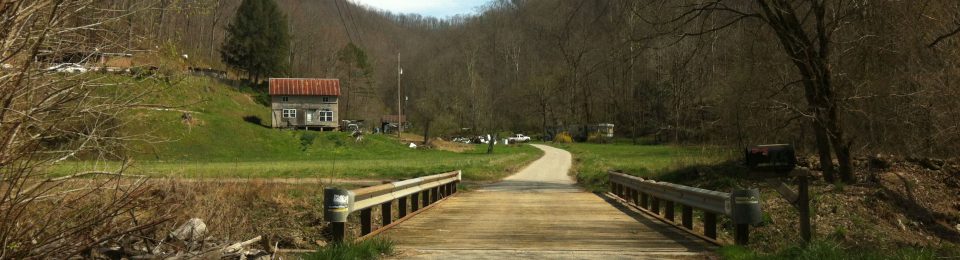
Charley Brumfield outbuilding, Harts, Lincoln County, WV, 2009
04 Sunday May 2014
Posted in Harts
Tags
Appalachia, Charley Brumfield, culture, Harts, history, life, Lincoln County, photos, U.S. South, West Virginia
Charley Brumfield outbuilding, Harts, Lincoln County, WV, 2009
04 Sunday May 2014
Posted in Culture of Honor, Ed Haley, Lincoln County Feud, Stiltner
Tags
Angeline Lucas, Bill Frazier, Brandon Kirk, Cain Adkins, Cain Adkins Jr., Daisy Ross, Faye Smith, feud, Harts Creek, history, John Hartford, Laurel Creek, Lee Adams, Lena Adkins, Lincoln County, Liza Adkins, Mariah Adkins, Mittie Adkins, Napier Ridge, Ranger, Sherman McCoy, Spicie McCoy, Stiltner, Wayne County, West Virginia, Winchester Adkins, writing
I asked Daisy again about her mother’s escape from Harts Creek.
“Grandpaw and the oldest boy had to come on out and come down into Wayne County to save their lives,” she said.
This seeming abandonment of his family in such a dark time appeared to be a blemish on Cain’s otherwise “spotless record.” I thought about that and said, “Seems to me like the safest way to get everybody out was to get the menfolk out first. And also, too, the menfolk could have got out of there quicker without the womenfolk.”
Faye said, “Well, I remember Grandmaw saying the Brumfields said they’d kill everything from the housecat up. I guess that’s why Grandpaw left, but I still wonder why he left the womenfolk. I can’t help it if it is my great-grandpaw.”
Not long after Cain left Harts, Daisy’s grandmother, Mariah Adkins, killed twelve sheep and some hogs and stored the meat in barrels, then loaded the barrels and all of the other family possessions onto a rented push-boat.
“They couldn’t get nobody to row the boat,” Daisy said. “Grandmaw tried to hire a colored man and he said he would, but he said, ‘I know they’d kill me.’ So they had to do it all theirselves. And Mom and Sissy done the rowing.”
“It was a pretty big size boat cause they had all the stuff they had in their house and their barrels of meat all in there,” Daisy said. “But they couldn’t get nobody to row the boat. Grandmaw tried to hire a colored man and he said he would but he said, ‘I know they’d kill me.’ So they had to do it all theirselves. And Mom and Sissy done the rowing.”
Those on the boat were 46-year-old Mariah Adkins, 23-year-old Spicie McCoy, 18-year-old Mittie Adkins, 13-year-old Lena Adkins, 13-year-old Liza Adkins, nine-year-old Cain Adkins, Jr., and one-year-old Sherman McCoy. Daisy wasn’t sure if Aunt Angeline (aged 28) was on the boat with her six kids, including a newborn.
“I don’t know whether she was already down here or not,” she said. “She didn’t come on the boat with them, I don’t think. She come down and married Lee Adams and lived out on the Napier Ridge.”
Daisy gave a chilling account of the ride down-river.
“Mom was about four months along with my brother Green and she had that little baby. Sherman was about a year and a half old — and it was raining and cold. 8th day of January. They come down through there and the peach trees was in full bloom, she said. Had been kind of a warm spell and the peach trees bloomed out that year. Mom said she was cold; she was numb.”
As they crept out of Harts, little Sherman McCoy pulled a long hair pin from his mother’s hair and stuck it repeatedly in her breast. She was afraid to take it from him because he might cry and alert the Brumfields of their exodus.
“He’d take that straight pin and poke it in her breast and pull it out,” Daisy said. “She knowed she was gonna be drowned every minute, so she wouldn’t scold him for it. She said, ‘It didn’t hurt and he had fun at it.’ He was just a little fella.”
It was the beginning of a rough ride: Mariah almost tipped the boat twice before allowing her daughter Mittie to pilot it.
The Adkinses spent the night at Ranger where they stored their goods at a local home. The next day, they got off the boat at Branchland and crossed over a mountain to Laurel Creek in Wayne County.
“Then they got Bill Frazier from Stiltner to go back up there to Ranger in a wagon — he was a young man then — and haul whatever they had stored down there,” Daisy said. “By the time he got there, the hams and meat didn’t have much meat on them.”
This story about the Adkins family’s exodus constituted one of those unforgettable tales in our search. Hearing about the Brumfield threat to kill “everything from the housecat up” caused Brandon to feel horrible that his ancestors would’ve perhaps harmed innocent women and children. Things had apparently come to that in Harts. Women shot from ambush. Young widows. Orphans. The entire community seemed to be coming undone. Of course, the determination of the women and children to survive their horrible ordeal was both inspiring and awesome, especially considering they weren’t the strong, raw-boned mountaineer women which one imagines them to have been. (Spicie McCoy only weighed about 91 pounds.)
04 Sunday May 2014
Posted in Barboursville
Tags
Appalachia, Barboursville, Cabell County, Fred B. Lambert, genealogy, Guyan Valley High School, history, Lincoln County, photos, U.S. South, West Virginia, writers

Fred B. Lambert, regional historian and educator, Cabell County, WV
04 Sunday May 2014
Posted in Big Harts Creek, Ferrellsburg, Logan, Timber
Tags
Chapman Adkins, Dave Dingess, Elizabeth Lucas, Ferrellsburg, genealogy, George Thomas, Giles Davis, Hamlin, Harts Creek, history, Huntington, Jerry Lambert, John P Fowler, Lincoln County, Lincoln Republican, Logan, Philip Hager, Salena Vance, Smokehouse Fork, timbering, Velva Dial, West Virginia, Willis Dingess
“Old Hickory,” a local correspondent from Ferrellsburg in Lincoln County, West Virginia, offered the following items, which the Lincoln Republican printed on Thursday, March 14, 1912:
Mr. G.D. Davis, an aged and respected citizen, is very low with chronic indigestion.
David Dingess, of Big Hart, passed through town today en route to Court at Hamlin.
Mrs. Salena Estep was a pleasant caller at this place recently.
Willis Dingess, of Smoke House Fork, is very low with fever.
John P. Fowler, of Logan, has moved into our midst. We welcome John.
Mrs. B.B. Lucas and little daughter were shopping in town Saturday.
George H. Thomas, the hustling timberman, was in Huntington the first of the week on business.
Born: To Mr. and Mrs. John P. Fowler on the 4th, a fine girl. Mother and baby are doing well and John is happy.
The Monitor has accused God Almighty of being partial toward the County Road Engineer; Democrats who have contracts on the roads of “voting right” and a “Hill Billy” lawyer with an “operatic voice” of writing an article signed “Duval” “Sweet Magnolia of Savanah!” We knew the Engineer was on the Lord’s side, but never dreamed of the good Lord being partial. Well, who comes next?
Chapman Adkins, of Big Hart, was here on business Saturday.
Jerry Lambert was here bidding on the roads Saturday.
Miss Velva Dial is contemplating attending school at Hamlin this spring.
03 Saturday May 2014
Posted in Lincoln County Feud, Music
Tags
genealogy, Green McCoy, Green McCoy Jr., guitar, history, life, music, photos, Spicie McCoy
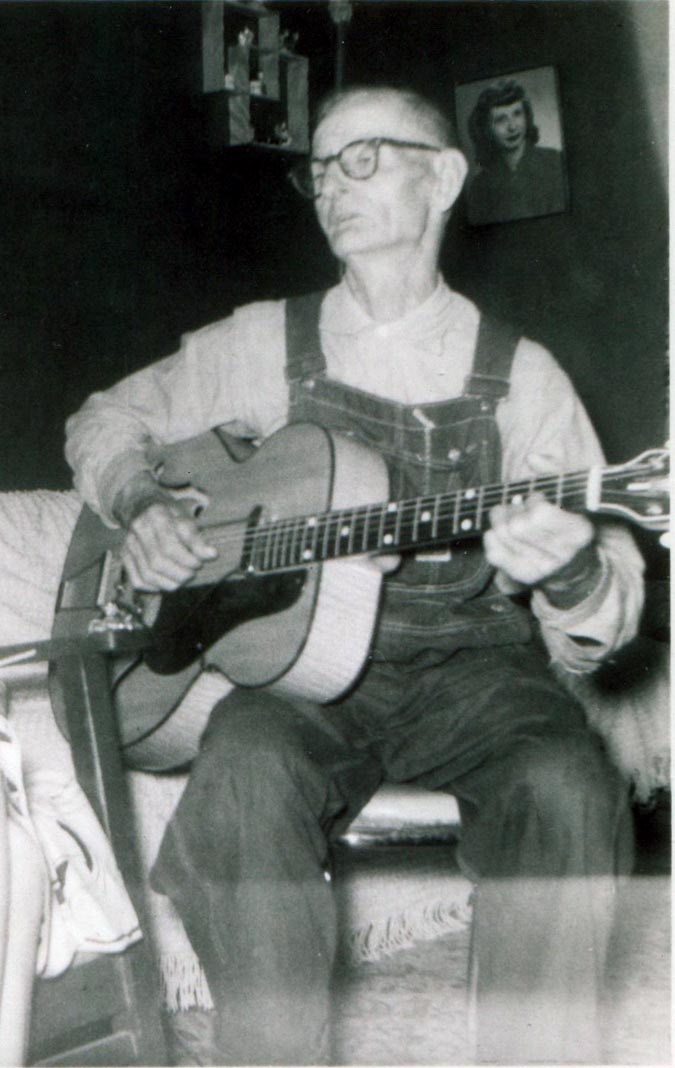
Green McCoy, Jr., son of Green and Spicie (Adkins) McCoy
03 Saturday May 2014
Posted in Ferrellsburg, Sand Creek, Toney
Tags
A.S. Adkins, Appalachia, Brooke Adkins, Burl Adkins, education, Ferrellsburg, Fisher B. Adkins, genealogy, history, J.M. "Doc" Mullins, Lincoln County, Low Gap, Minnis "Mink" Mullins, Philip Hager, Ripley, Sand Creek, Toney, West Virginia, William H. Taft
“Old Hickory,” a local correspondent from Ferrellsburg in Lincoln County, West Virginia, offered the following items, which the Lincoln Republican printed on Thursday, February 1, 1912:
Mrs. Brook Adkins has finished her school at Low Gap and is teaching the last month of school at Sand Creek.
A.S. Adkins received a letter from Fisher B. Adkins who is attending school at Ripley and reports that he is well satisfied.
Philip Hager, county road engineer, passed through this place last Saturday en route home from Harts Creek district, where he has been doing some excellent work on the county road.
Burwell Adkins is on the sick list this week.
Dock Mullins, of Toney, was made happy when a bouncing baby boy entered his home on the 28th of this month. The mother and child are getting along nicely, and the father says that another republican has been added to the ranks.
Hurrah for Wm. H Taft for president for a second term.
03 Saturday May 2014
Posted in Big Harts Creek, Lincoln County Feud, Stiltner, Women's History
Tags
Appalachia, Green McCoy, Harts Creek, history, life, Lincoln County, photos, Spicie McCoy, U.S. South, Wayne County, West Fork, West Virginia
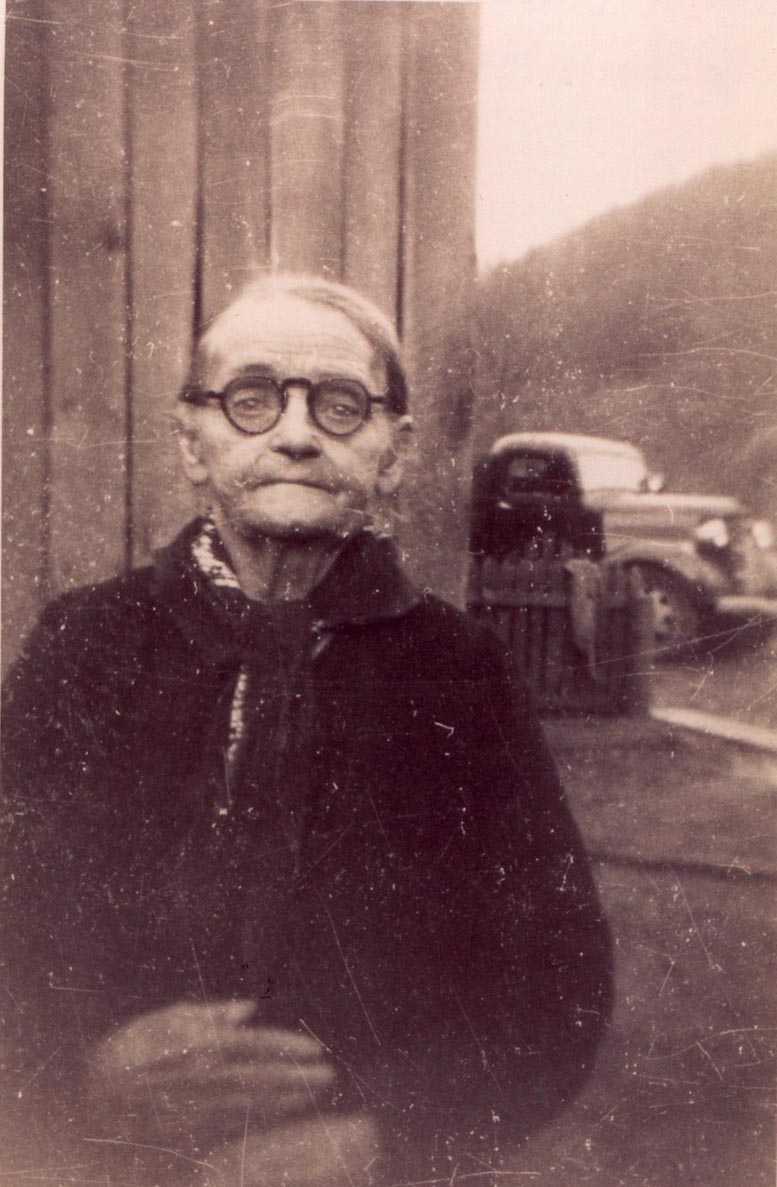
Spicie (Adkins) McCoy, widow of Green McCoy, resident of Wayne County, WV
02 Friday May 2014
Posted in Lincoln County Feud
Tags
Boney Lucas, Brandon Kirk, Cain Adkins, crime, Daisy Ross, Eden, Eliza Fry, Faye Smith, feud, Green McCoy, history, Imogene Haley, Kentucky, Logan County, Milt Haley, Paris Brumfield, Randolph McCoy, Sherman McCoy, Spicie McCoy, West Virginia, writing
Brandon asked Daisy about Paris Brumfield.
“Well, he had a band of people. They went around and killed a lot of people, they said. They called them a mob. Mommy said they had a mob and if they didn’t like somebody they’d kill them. The Brumfields was rough. The Brumfields first killed Grandpa’s son-in-law, Boney Lucas, and when Mom married Green McCoy they said they had another one they was gonna kill.”
Daisy told us an incredible story about Green whipping Paris in a fight.
“All I know, they was into a racket beforehand and Green McCoy got him down and pulled his eyes all out and said, ‘Go back.’ He said they was just like rubber — he’d pull his eyeballs out and they’d go back. Said you couldn’t pull them all the way out. He did finally get his sight back. Had to wear a blindfold for two or three weeks or a month. Laid around for a while.”
Faye said, “Mom said Grandma was laughing — she kinda thought it was funny to tell about him pulling that eyeball out and it popping back like a rubber band.”
We could just picture the fight, based on what we’d read in the Lambert Collection.
“Fist fights between neighborhood bullies, or to settle old scores” were a part of local culture in those times. “It was not uncommon for contestants to engage in ‘gouging,’ as a natural sequence of a fist fight. Weapons were banned, but many a man lost an eye, by having it gouged out.”
It probably wasn’t too long after Green’s fight with Paris that he and Milt were murdered. Daisy knew they were killed in October (just after Spicie’s twenty-third birthday) after being captured in Eden, Kentucky, where Green’s first family lived. She said a Brumfield mob easily took possession of them there because “the law was afraid of them.”
“Paris Brumfield was one of the ringleaders,” she said. “They brought them back from Kentucky up to Fry and killed them there. They made Green McCoy play the fiddle and he didn’t want to. They was a gonna kill him, they said. Mrs. Fry — that lived in that house — she crawled under the bed, she said. She was afraid they was gonna kill her.”
Mrs. Fry was a sister to Boney Lucas.
Daisy said some of the younger Brumfields protested Milt’s and Green’s murder.
“They are good Brumfields,” she said. “Like other people, they’re mean people in every generation. Some of the Brumfields was real good people.”
Daisy said Spicie didn’t go with Milt’s wife to beg for Milt’s and Green’s life, as we’d heard from Billy Adkins. Actually, Daisy didn’t think her mother had known Emma Haley but Brandon wondered about that since one of Emma’s uncles had married an aunt to Spicie McCoy years before. (Another confusing, but seemingly relevant, genealogical connection.)
“Then after they shot them and killed them,” Daisy said, “they took a pole axe and beat his brains in and his brains went up on the door, Mom said. Oh, that liked to killed Mom.”
After the murders, the Brumfields warned people not to touch Milt’s and Green’s bodies.
“The Hatfields up there was a friend to Green McCoy ’cause when they murdered them they wasn’t gonna let them be buried, they said, and the Hatfields from Logan County come down there with their rifles to see if Grandpaw had let them bury them on his farm,” Daisy said.
That seemed unlikely to us, considering how the Hatfields were busy feuding with Randolph McCoy’s clan, however, Devil Anse Hatfield’s mother was a first cousin to Spicie McCoy’s grandfather.
In any case, Daisy said there was no Hatfield-Brumfield trouble because Milt and Green were buried on Cain’s farm before the Hatfields arrived in Harts.
In later years, Spicie made several trips to the gravesite with her son, Sherman McCoy — sometimes on paw paw runs. Faye took Daisy and Spicie on a final trip in August of 1953. The graves were in bad shape.
“It looked like it had been neglected,” Daisy said. “They just had little rocks for their tombstone. I couldn’t go up there now — I’m ninety-one years old — but I went there several years ago with my mother.”
02 Friday May 2014
Posted in Music
Tags
Charles Wolfe, fiddling, history, music, Nashville, Tennessee, The Devil's Box, U.S. South, writing

One day in July 1998, John Hartford and I met Dr. Wolfe for lunch in Nashville. I made sure to ask Dr. Wolfe, if he wouldn’t mind, to autograph my copy of his book. He was a pleasant man and inundated with information about country music history.
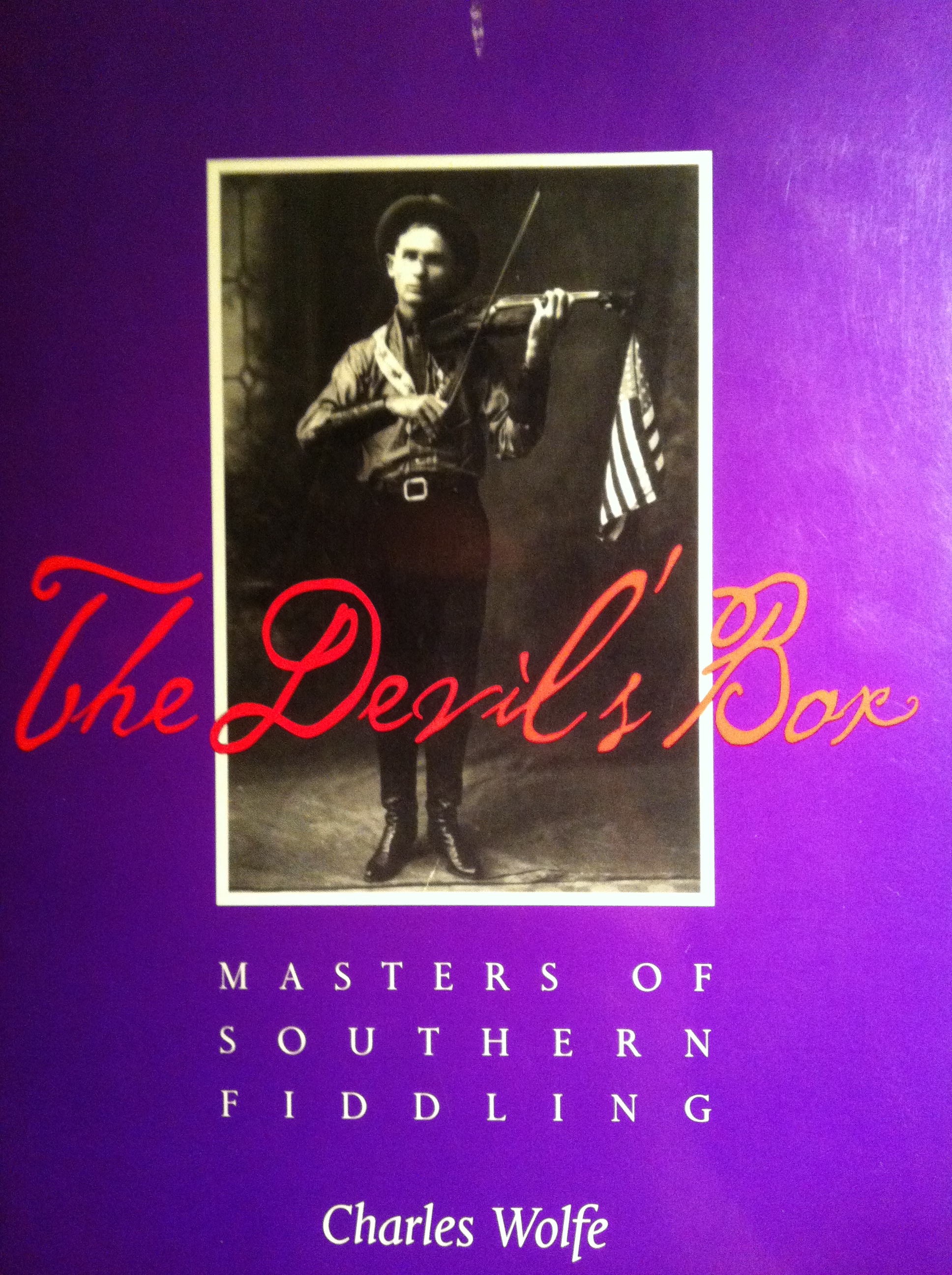
Dr. Wolfe’s “The Devil’s Box” remains the authoritative account of Southern fiddling.
01 Thursday May 2014
Posted in Ed Haley, Lincoln County Feud
Tags
Appalachia, art, crime, Daisy Ross, feud, John Hartford, Milt Haley, photo, U.S. South

John Hartford’s sketch of Milt Haley, drawn in Kenova, WV, 1996
01 Thursday May 2014
Posted in Lincoln County Feud
Tags
Angeline Lucas, banjo, Brandon Kirk, Daisy Ross, dulcimer, Faye Smith, fiddlers, fiddling, Fire on the Mountain, Green McCoy, history, John Hartford, Kenova, Kentucky, Lincoln County, Mariah Adkins, Milt Haley, music, Spicie McCoy, West Fork, West Virginia, writing
We next inquired about Green McCoy. We were particularly curious about why he left Kentucky and settled in Harts.
“I don’t know why he went up there,” Daisy said. “He was just playing music and started running around, I guess.”
Green and Spicie had a love for music in common.
Daisy said her mother “always liked music” and sung “from the time she was a little girl.” She “could sing any part of music — all four parts” — and “could play a banjo and she was left-handed. Played pretty good. She said she could play a dulcimer.”
Green was Spicie’s “first boyfriend” and she was crazy for him, even though she knew very little about his past.
“Grandma Spicie, she called him Will,” Faye said. “His name was William Greenville.”
“She didn’t even know Green McCoy was married till after she was engaged to him,” Daisy said of her mother. “He come up there with his brother and pretended to be single. Aunt Angeline, I think, was the one who found it out. And after Grandmaw found it out, she tried to keep Mom from marrying him, but Mom loved him so good she couldn’t believe it. They tried to keep Grandmaw from marrying him, but that just made her love him that much more.”
She “loved him so good she went ahead and married him anyhow.”
Green and Spicie settled in one of the small shacks on the Adkins farm. Faye said she’d heard that Green “would go off for a couple of weeks for a time,” then return home to his young wife, who always ran out to hug him. He’d tease her by running through the yard or “maybe around the house a couple of times — make her chase him. She was thrilled to death to see him come back.”
We wondered if perhaps Green was traveling between wives or playing music abroad, since Daisy said he never had any occupation aside from music.
I asked if he was a drinking man and Faye said, “If he had a been, Grandma wouldn’t a told it ’cause that woulda looked bad on him. Grandma Spicie told Green that she would swim the briny ocean for him.”
Okay…so what about Milt Haley?
Daisy said he was a good friend to Green and her mother. I asked if she thought we would ever find that picture of them together and she said, “No, I don’t. Mom kept it in her trunk. My niece has got it but she’s sick and got a house full of junk like I have and will never find it. She got Mom’s pictures. It was a little tintype snapshot of him and Green McCoy standing together. I think he had a hat on — seemed like both of them had a hat on in that picture. That was when they was playing music, but they didn’t have no instruments with them.”
I got a sheet of paper and tried to do a sketch, asking questions like, “Do you remember if he had bushy eyebrows?” or “Thin face, you reckon?”
I was pretty desperate.
Daisy kept insisting, “I can’t remember. I can’t tell you how somebody looks.”
Brandon asked if Milt and Green knew each other in Kentucky, before their move to Harts.
“No,” Daisy said. “Not until he come up there. I don’t know, now, where Milt Haley come from. They played music together.”
I wondered if Milt was the best fiddler between the two and Daisy said, “I don’t know which one was the best.”
“But Grandma thought Green was the best, didn’t she?” Faye said to her mother.
“Oh yeah,” Daisy said. “That was her husband. I never heard her say nothing against Haley.”
I asked if Spicie ever mentioned the names of any tunes that Green played and she said, “She might’ve said some of them. One of them I think was ‘Fire on the Mountain’.”
I got real excited hearing that and asked if she would remember more tunes if I played for her.
“No, I wouldn’t recognize…,” she said. “I never heard fiddles very much. My brothers had them there some, but they never played fiddles too much. They had guitars and banjos and pianos and organs and other stuff.”
I gave it a try but all I got when I played Ed’s version of “Fire on the Mountain” was, “That’s all right, but I don’t feel like dancing.”
We all cracked up and Faye warned us about her mother, who sat stone-faced in her chair.
“Sometimes she’s a smarty,” she said.
30 Wednesday Apr 2014
Posted in Ferrellsburg

Ferrellsburg residents, c.1910
30 Wednesday Apr 2014
Posted in Sand Creek
Tags
Blackburn Lucas, education, Ferrellsburg, Fisher B. Adkins, genealogy, German Vance, Greely Isaacs, Guyandotte River, Hamlin, history, Homer Hager, J.M. "Doc" Mullins, John Clay Farley, Lincoln County, Lincoln Republican, Matthew Farley, Sand Creek, typhoid fever, West Virginia, William H. Mann
“Old Hickory,” a local correspondent from Ferrellsburg in Lincoln County, West Virginia, offered the following items, which the Lincoln Republican printed on Thursday, January 18, 1912:
Winter weather is still here. A fine snow is on the ground and the boys are enjoying fox hunting.
Doc Mullins killed a fine large red Fox which he is very proud of, it being the first he ever killed.
F.B. Adkins and Homer Hager, at the beginning of the freeze up in the Guyan river, attempted to make their way through the ice in a small boat and came near being drowned.
B.B. Lucas and other members of his family, who have been suffering with typhoid fever for some time, are able to be at their usual labors again.
German Vance, who has been teaching school at Sand Creek, is very low with typhoid fever at the home of Greely Isaacs, of Ferrellsburg.
John C. Farley, the oldest man in Harts Creek District and the father of M.C. Farley, member of the County Court, is very sick and is not expected to live but a short time.
W.H. Man, of Harts Creek, went to Hamlin the first of the week.
M.C. Farley made a business trip to Hamlin the first of the week.
29 Tuesday Apr 2014
Posted in Lincoln County Feud, Stiltner, Women's History
Tags
Angeline Lucas, Appalachia, Bessie Watts, Eliza McComas, feud, genealogy, history, Julia May Lucas, Napier Ridge, U.S. South, Wayne County, West Virginia
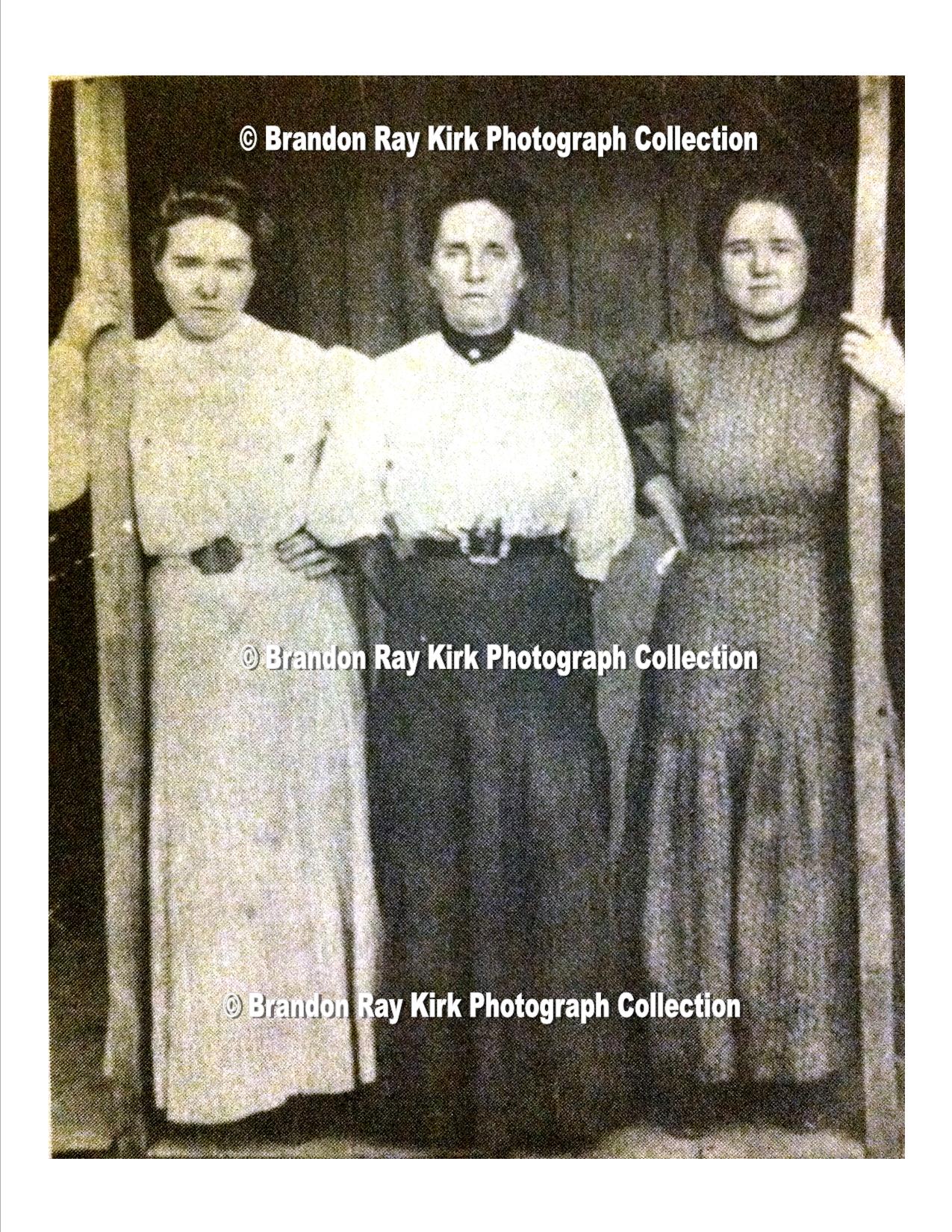
Julia May Lucas, Angeline Adkins Lucas (center), and Eliza Adams McComas, residents of Napier Ridge, Wayne County, WV. Courtesy of the Bessie Lucas Watts family
29 Tuesday Apr 2014
Posted in Ed Haley, Lincoln County Feud
Tags
Ben Walker, Boney Lucas, Brandon Kirk, Cain Adkins, Daisy Ross, diphtheria, education, Faye Smith, feud, Flora Adkins, genealogy, Green McCoy, history, Huntington, Kenova, Low Gap United Baptist Church, Mariah Adkins, medicine, Melvin Kirk, murder, Nancy Adkins, Paris Brumfield, Spicie McCoy, Wayne County, West Virginia, writing
The day after visiting Abe Keibler, I met Brandon Kirk in Huntington, West Virginia. We made the short drive into Wayne County where we located the home of Daisy Ross in Kenova. Her daughter, Faye Smith, met us at the door and told us to come in — her mother was waiting on us. She led us through a TV room and into the dining room where we found Daisy seated comfortably in a plush chair. She was hard of hearing, so Faye had to repeat many of our questions to her.
We first asked Daisy about Cain Adkins. Daisy said he was a United Baptist preacher, schoolteacher, and “had several different political offices.” He was also a “medical doctor” and was frequently absent from home on business.
“I would imagine Grandpaw Cain — I’m not bragging – was pretty well off at that time compared to other people,” Faye said.
Daisy didn’t think Cain was educated — he “just had the brains. Mom said he could be writing something and talk to you all the time.” He was also charitable.
“Lots of times when he doctored, they didn’t have no money,” Daisy said. “They’d give him meat or something off of the farm,” things like dried apples and chickens. “He had little shacks built and would bring in poor people that didn’t have no homes and Grandpaw would keep them and Grandmaw would have to furnish them with food. Kept them from starving to death.”
Cain seemed like a great guy.
Why would the Brumfields have any trouble with him?
Daisy had no idea.
We had a few theories, though, based on Cain’s various occupations. First, as a schoolteacher in the lower section of Harts Creek, he may have provoked Brumfield’s wrath as a possible teacher of his children. As a justice of the peace, he was surely at odds with Paris Brumfield, who we assume (based on numerous accounts) was often in Dutch with the law. As a preacher, Cain may have lectured citizens against living the “wild life” or condemning those locals already engaged in it, which would’ve also made him an “opposing force” to Brumfield.
There is some reason to believe that Cain was a potent religious force in the community during the feud era. Unfortunately, the earliest church record we could locate was for the Low Gap United Baptist Church, organized by Ben Walker and a handful of others in 1898. Melvin Kirk was an early member. More than likely, Cain was an inspiration to Walker, who was ordained a preacher in 1890.
Brandon asked Daisy what she knew about Boney Lucas’ murder.
“They killed him before they killed Green McCoy,” she said.
But why?
“I don’t know,” she said. “They mighta had trouble, too.”
Then came an incredible story, indicating that Boney Lucas was no saint, either.
“He lived about a week after he was hurt,” she said. “He wanted to be baptized and the preachers around there wouldn’t baptize him because he didn’t belong to the church. Grandpaw said, ‘I’ll baptize him.’ Grandpaw was a good preacher. He said, ‘I’ll baptize you, Boney.’ So they made a scaffold and they took him out there and somebody helped him and they baptized him before he died.”
Brandon said, “So Boney was kind of a rough character,” and Faye said, “See, he was connected with Grandpaw’s family and they didn’t tell things. If some of the family was mean, they didn’t get out and tell things.”
Cain had more bad luck when two of his daughters, Nancy and Flora, died of diphtheria.
“They buried them little girls out from the house somewhere up on the hill,” Daisy said. “I don’t know where they were buried. Mom never showed me. I guess they just had rocks for tombstones, you know.”
29 Tuesday Apr 2014
Posted in Green Shoal
Tags
Appalachia, Blackburn Lucas, genealogy, Green Shoal, history, Lincoln County, U.S. South, West Virginia

Blackburn Lucas grave at Green Shoal, Lincoln County, WV, 2003
29 Tuesday Apr 2014
Posted in Big Creek, Ferrellsburg, Harts, Logan, Sand Creek, Toney
Tags
A.W. Sloan, Appalachia, Big Creek, Blackburn Lucas, Buffalo, Chris Lambert, Christmas, Cleve Fry, Dingess Run, Ferrellsburg, Frank Davis, genealogy, Guyan Valley Railroad, Harts, Herbert Shelton, history, Hugh Fowler, John Fowler, John Lucas, Jones Adkins, Lincoln County, Lincoln Republican, Logan, Logan County, Matthew Farley, Sand Creek, Sheridan, Toney, typhoid fever, Ward Brumfield, West Virginia, Wilburn Adkins
“Old Hickory,” a local correspondent from Ferrellsburg in Lincoln County, West Virginia, offered the following items, which the Lincoln Republican printed on Thursday, December 28, 1911:
Xmas has come and gone and the people of Ferrellsburg enjoyed the occasion nicely.
A.W. Sloan, of Ferrellsburg will soon return to his former location at Sheridan.
B.B. Lucas and other members of his family have been suffering with typhoid fever the past week.
John Lucas, of Big Creek, Logan county, and Frank Davis engaged in a scrap at this place Xmas day. Lucas received a black eye.
Wilburn Adkins, son of Jones Adkins, received painful wounds in his thigh, Christmas day, as the result of an accidental discharge of a pistol which he had in his pocket.
Cleve Fry, of near Toney, has moved his family to Dingess Run, above Logan, and has taken charge of a section on the G.V. Railroad.
Ward Brumfield, John and Hugh Fowler, of near Hart, and Chris Lambert and Herbert Shelton had a knock down at Sand Creek the day before Xmas. Ward Brumfield received a severe blow over the head with a quart bottle, Lambert wielding the bottle.
M.C. Farley will now return to Buffalo, Logan county, where he has a job of work, as Xmas is over.
The Guyandotte river has been “full” during the holidays.
It seems funny that the Sheriff has recently come to the conclusion that the sheriff’s office is not a piddle office and that no one has a right in it but himself and his deputies. The voters will speak at the next election.
Best wishes to The Republican.
28 Monday Apr 2014
Tags
Abe Keibler, Appalachia, fiddle, fiddlers, history, John Hartford, Kentucky, music, photos, Roger Cooper, South Shore, U.S. South

Roger Cooper, Abe Keibler, and John Hartford at South Shore, KY, 1996
28 Monday Apr 2014
Tags
Abe Keibler, Asa Neal, Big Indian Hornpipe, Big Rock Candy Mountain, Birdie, Charley Keibler, Ed Haley, Ella Haley, fiddlers, fiddling, Greenup, Grey Eagle, Henry Keibler, history, Jim Keibler, John Hartford, John Lozier, Kentucky, Morris Allen John Keibler, music, Ohio, Portsmouth, Portsmouth Airs, Pretty Polly, Roger Cooper, Sam Keibler, Turkey in the Straw, writing
As Abe and I fiddled the afternoon away, Roger Cooper and John Lozier showed up. In ensuing conversation, John mentioned to Abe that he didn’t remember his father, Jim. Abe said it was because his dad had died young.
“My uncle raised me from seven year old and raised Morris Allen from three months old,” he said.
Which uncle?
“Uncle John and Uncle Henry raised me,” he said.
I said to Abe, “How many fiddling Keiblers were there all told?”
“Well, there weren’t many — just that one generation,” he said. “John — that was the oldest — Charley — that was the next one — and my dad and Sam. Them was the four fiddlers.”
His mind was starting to pull out great memories.
“Grandpa wouldn’t allow them to bring a fiddle into the house to saw around on and learn and they got a hold of an old fiddle and took it out in the cornfield. And the three brothers, he kept seeing them going out and he told Grandma, ‘Them boys are into something. I’m gonna follow them and see what they’re into.’ So he goes out there and Uncle John — that was the best fiddler — he was a playing and my dad was a dancing and he said, ‘Well now, John, you can bring your fiddle into the house.’ He had learnt to play it then pretty good.”
I asked Abe where he first heard Ed play and he said, “Greenup, Kentucky. Up here at the county seat. He played around the courthouse there and people donated him money. He had a cup on the neck of his fiddle and they’d drop five-dollar bills in it. When that old mill was a running and whiskey was in, he’d come around there to that mill on payday and maybe take a thousand dollars away from there. I was about eighteen years old when I heard him. He was a good fiddler. He could play ‘Birdie’ and all that. Played it in C or G either one. He played and sung a lot of songs — ‘Big Rock Candy Mountain’. He could play anything.”
Abe said he usually saw Ed at the courthouse on Labor Day or the Fourth of July. Ed always wore a hat and was dressed in a suit. He placed the fiddle under his chin, pulled a long bow and ran his fingers all up and down the neck of the fiddle. Abe said he “could play anything” but he only remembered “Grey Eagle”, “Big Indian Hornpipe”, “Portsmouth Airs”, and “Turkey in the Straw”. His wife normally sang while he played the fiddle, although he sang “Pretty Polly”. Abe never got to talk much to him because the crowds kept him so busy playing the fiddle.
I asked Abe if he ever played with Asa Neal and he said, “No, I never did play none with Asa but he was a pretty good fiddler. I remember when we first moved to Portsmouth in ’23, he couldn’t play nothing on the old Blues, but he got to be a pretty good fiddler. He used slip notes.”
27 Sunday Apr 2014
Tags
Abe Keibler, Appalachia, Charley Keibler, family, fiddlers, history, John Keibler, life, music, Ohio, photos, Portsmouth
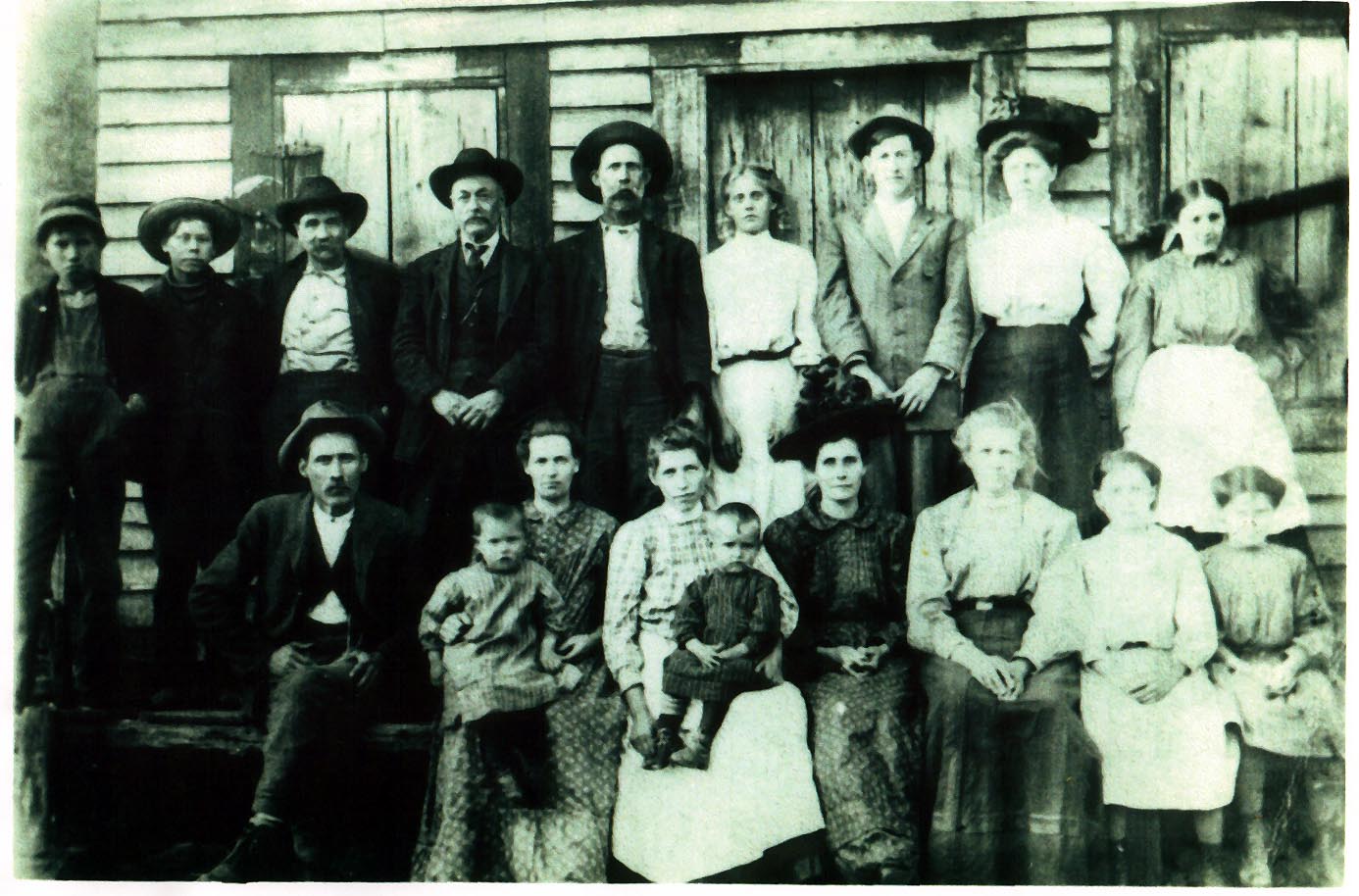
The Keibler family of Portsmouth, Ohio
Writings from my travels and experiences. High and fine literature is wine, and mine is only water; but everybody likes water. Mark Twain
This site is dedicated to the collection, preservation, and promotion of history and culture in Appalachia.
Genealogy and History in North Carolina and Beyond
A site about one of the most beautiful, interesting, tallented, outrageous and colorful personalities of the 20th Century
 Brandon Ray Kirk