• About

Brandon Ray Kirk

~ This site is dedicated to the collection, preservation, and promotion of history and culture in my section of Appalachia.

Brandon Ray Kirk

Category Archives: Women’s History

Aracoma (Part 4)

04 Sunday Dec 2022

Posted by Brandon Ray Kirk in Logan, Native American History, Women's History

≈ Leave a comment

Tags

American Primitive, Appalachia, Aracoma, Battle of Point Pleasant, Camp Charlotte, Chief Cornstalk, Chief Logan, Circleville Elm, genealogy, history, Horn Papers, James Logan, John Breckenridge, Lawnsville, Logan, Lord Dunmore, Michael Cresap, Native American History, Native Americans, surveyor, Tahgahinte, The Aracoma Story, Thomas Dunn English, Thomas Patterson, West Virginia, West Virginia Women, William Madison, William Penn, William Preston

Doris Miller (1903-1993), a longtime educator, historian, writer, and poet operating in the area of Huntington, West Virginia, composed this biography of Aracoma, a well-known Native American figure who lived in present-day Logan, West Virginia. This is Part 4 of her composition.

One other detail of the legend, not generally known but occasionally heard, is the story that Aracoma was Cornstalk’s daughter by adoption, that her mother was a sister of Cornstalk who had married Chief Logan and died soon after Aracoma’s birth. For this reason, the infant was taken into the lodge of Chief Cornstalk, where there were squaws to rear her, and this kinship by marriage and common interest in Aracoma was the secret of the alliance between the two famous Indian leaders who joined forces at the Battle of Point Pleasant in 1774. There is nothing in Aracoma’s dying words to refute this claim—she still would have considered Cornstalk her father and have been the last of his line, through a niece. But Logan’s words do carry a refutation.

At the time Logan made this speech under the Circleville Elm, and it was written down to be dispatched to Lord Dunmore at Camp Charlotte, where peace was being negotiated, he could not have said, “There runs not a drop of my blood in any living creature” if Aracoma had been his daughter.

Some historians have discounted Logan’s speech, but it is fully in keeping with the man pictured by his contemporaries in the Horn Papers and other sourcebooks of American history. Scottish Lord Dunmore must have [p. 10] accepted it as authentic, when it was brought to him wrapped in a wampum belt by a man he had sent to fetch Logan.

Logan had been friendly to white settlers of Virginia and Pennsylvania. As a boy, he lived in the home of James Logan, former secretary of William Penn, who educated the youth, a son of a friendly Indian chief. Thereafter Logan bore the name of his foster-father instead of Tahgahinte, his Indian name. Chief Logan remained friendly to the settlers until his family was treacherously murdered by white men. Later it was established that Colonel Cresap was not a party to the deed, though Logan thought so for a long time.

Colonel Madison who led the Virginians against Aracoma’s settlement, is said to have been a son-in-law of Colonel William Preston, a noted Virginia surveyor. Some of the earliest land surveys in present Logan County were recorded in names of members of the Preston, Madison and Breckenridge families, and it is quite likely others went to men who served under Madison and Breckenridge of the Battle of the Island, or members of their families. So the Legend of Aracoma came into the Guyandotte Valley in the memories of the white settlers who came first after her, and in their imaginations.

Another reason for discounting the story that Aracoma was the daughter of Logan is her name. Cornflower seems the logical name of a daughter of Cornstalk.

The residents of the Guyandotte Valley have treasured their legend and have honored the name of Aracoma in many ways. In the early 1800s, the town which grew up in the area of Aracoma’s settlement and grave was known as Lawnsville. During the 1850s, Thomas Dunn English, a physician and poet who was the first mayor of the town, insisted on changing the name to Aracoma, which it remained until its incorporation as a city in 1907. The change then may have been due to men’s custom of referring to the town as “Logan Courthouse” rather than by its true name. Since that time, the name of Aracoma has been given to a smaller community in the county.

When Logan County observed its Centennial in 1952, Thomas Patterson, the author of American Primitive and other well known plays, was commissioned to write a drama based on the legend of Princess Aracoma. The pageant was produced on successive days of the celebration and was considered one of the highlights. [p. 11]

Source: West Virginia Women, Richwood, WV: Jim Comstock (1974), p. 11.

For more about Doris Miller, go here: https://mds.marshall.edu/cgi/viewcontent.cgi?article=1284&context=sc_finding_aids

Aracoma (Part 3)

03 Saturday Dec 2022

Posted by Brandon Ray Kirk in American Revolutionary War, Guyandotte River, Logan, Man, Montgomery County, Native American History, Women's History

≈ Leave a comment

Tags

Appalachia, Aracoma, Blue Feather, Bluestone River, Boling Baker, Doris Miller, Guyandotte River, history, HorsepenCreek, Huntington, Jim Comstock, John Breckenridge, Little Black Bear, Logan, Logan County, Man, Montgomery County, Native American History, Native Americans, Ohio, Raindrop, Running Deer, Snow Lily, Virginia, Waulalisippi, West Virginia, West Virginia Women, William Ingles, William Madison

Doris Miller (1903-1993), a longtime educator, historian, writer, and poet operating in the area of Huntington, West Virginia, composed this biography of Aracoma, a well-known Native American figure who lived in present-day Logan, West Virginia. This is Part 3 of her composition.

Aracoma has been described as an Indian maiden of exceptional grace and beauty. Perhaps the Virginians she impressed deeply in her dying hours may have believed she had great beauty in youth. Boling Baker is said to have had a fine physique and courageous bearing, which would have given his Indian captors reason for adopting him into the tribe. He is given credit for artful courtship of his love, and it seems likely he must have been skillful to win her away from other suitors the sachem’s daughter must have had.

The long history of their wedding, an elaborate ceremony her father accompanied them to the Guyandotte to perform, is less credible, but not impossible. More stress has been given to Aracoma’s royal estate than Indian customs warranted, but the English settlers had their own traditions of royal pomp and ceremony as patterns to draw from.

The carefree life credited to the Indians in the Guyandotte valley before 1776 reflects the wishful thinking of people whose own lives were filled with toil. Certainly the Indians must have lived stremuous lives, though they may have had an interlude of unusual peace and happiness before family life was saddened by the scourge which overtook them in 1776.

According to the story-tellers, Aracoma and Boling Baker had six children. Their names were Waulalisippi, or Laughing Waters, Snow Lily, Raindrop, Running Deer, Little Black Bear and Blue Feather.

It is said that Baker became despondent and bitter after the death of his children and during the hardships undergone by the colony after disease had reduced its strength. Doubtless the ones who added this detail had seen similar results in other men’s lives. They deduce that it was his desire to recoup the fortunes of the tribe that led him to attempt a bold exploit which resulted in disaster for his settlement.

Legendary history tells us that in the spring of 1780, a stranger appeared at a white settlement on Bluestone River, a man with a woe-begone countenance who recited sorrowful accounts of hardships he had undergone as a captive among the Indians in Ohio. He stayed for several days, familiarizing himself with everything about the settlement, then departed for the east (he said) in the hope of being reunited with his aged parents. The man was Boling Baker, who merely circled back to Flat Top Mountain, where he had left a band of his braves. On a dark rainy night in April, they stole quietly into the settlement and left with every horse there without disturbing a single sleeper.

The outraged settlers realized their recent visitor must have led the raid. Without horses to follow, they could only send for help from the mounted guard at Montgomery, seat of government for Montgomery County, Virginia, in which this entire area was then located. Colonel William Ingles, sheriff of the county, dispatched Colonel Madison and a deputy sheriff, John Breckenridge, with [p. 10] the party which massacred Aracoma’s village a few days later. Her paleface husband was one of the party absent on a hunt that day.

Little is known of Boling Baker after the death of Aracoma. It is said that for many a year afterward, men could read a couplet carved on beech trees in the area: ‘Boling Baker—his hand and knife, He can’t find a horse to save his life.’ Whether the words were carved by Baker or were a gibe directed at him by another, none can say.

The story is told that years later, an aged stranger came wandering up the Guyandotte River, asking questions of those he met. After standing a long time weeping on the mountainside opposite the island where Aracoma had lived, he went on past Horsepen Creek and eventually found lodging for a night in a home near Man. That night he told briefly some of the experiences of his life, which later were recognized to match the known story of Boling Baker. Next morning he was found dead in bed.

Source: West Virginia Women, Richwood, WV: Jim Comstock (1974), p. 10-11.

For more about Doris Miller, go here: https://mds.marshall.edu/cgi/viewcontent.cgi?article=1284&context=sc_finding_aids

Aracoma (Part 2)

14 Monday Nov 2022

Posted by Brandon Ray Kirk in American Revolutionary War, Logan, Native American History, Women's History

≈ Leave a comment

Tags

American Revolution, Aracoma, Battle of Point Pleasant, Boling Baker, Chief Cornstalk, Circleville, Doris Miller, Edward Braddock, Fort Randolph, French and Indian War, Horsepen Creek, Horsepen Mountain, Huntington, Jim Comstock, Logan, Matthew Arbuckle, Native American History, Native Americans, Ohio, Pickaway Plain, Point Pleasant, Revolutionary War, Shawnee, Treaty of Camp Charlotte, West Virginia, West Virginian Women

Doris Miller (1903-1993), a longtime educator, historian, writer, and poet operating in the area of Huntington, West Virginia, composed this biography of Aracoma, a well-known Native American figure who lived in present-day Logan, West Virginia. This is Part 2 of her composition.

The father whose death was mentioned by Aracoma was the noted Shawnee sachem, Cornstalk, leader at the Battle of Point Pleasant on October 10, 1774. After the treaty of Camp Charlotte was signed following that battle, Cornstalk appears to have been constant in keeping his promise to be a friend to the border Virginians. The American Revolution was then in progress, and Tory colonists strongly entrenched in Canada were using every influence they could bring to bear on the Indians to persuade them to harry western settlements of the colonies that were banded together in rebellion. In September, 1777, Cornstalk went to Fort Randolph, on the site of Point Pleasant, to warn the commander of the garrison, Colonel Arbuckle, of impending hostitlies from other Shawnees, incited by the British.

As a reward for his warning, Cornstalk was held with two companions as hostages. While Colonel Arbuckle waited for a messenger to reach the governor of Virginia and a reply to be received, two men from the fort crossed the Ohio to hunt venison and were waylaid by hostile Indians. One of the men was killed and scalped. Members of the garrison were so enraged that they killed Cornstalk and his companions in vengeance, defying officers who sought to restrain them from an act in violation of military ethics.

Aracoma’s husband was Boling (or Bowling) Baker, an English soldier who had come to America with General Braddock’s army. Though he had been called a deserter, he may have been captured by Indians lurking along the path of Braddock’s march or in the route which followed the English army’s disastrous engagement with the French and Indians on July 9, 1755.

Apparently Baker had been taken to Cornstalk’s town at Pickaway Plain, near Circleville, O., and had been made a member of the tribe. There he met the sachem’s young daughter and at some later time became her husband. Together they were leaders of the Indian settlement in present Logan County.

In addition to the town located on the island at Logan, the Indians apparently had a camping place on Horsepen Creek where the braves sometimes camped with whatever horses they might possess. The animals could be walled in here by steep mountain sides and with hickory withes wound from tree to tree. Still today Horsepen Creek and Horsepen Mountain bear the names first white settlers gave them for their connections with the earlier inhabitants.

At this time, land-hungry white settlers were pressing continually westward from eastern Virginia. it is said that scouting parties sent out after crops were gathered in the fall of 1779 found Indians encamped with a strong force on Horsepen Fork of Gilbert’s Creek and on Ben Creek and returned home to wait until after spring crops had been planted for another visit. Also, Indian depredations and the occasional massacre of a white settler’s family by stray bands of Indian hunters far from home kept the frontiersmen alert and distrustful of all Indians, however peaceful and friendly.

Tradition says that they Indians on the Guyandotte prospered until 1776, when their settlement was stricken by a great scourge. The pestilence may have been smallpox, measles, dysentery, or even some lighter disorder, for Indians have no immunity built up against diseases which beset the white men. Among the many who died were the children of Aracoma and Boling Baker.

As repeated countless times, the Aracoma legend varies in details. Some begin the story by telling of Boling Baker’s arrival as a captive in the Shawnee village. They say that Aracoma interceded with her father when the young Englishman was about to be made to run the gauntlet, just as Pocahontas protected John Smith. Though doubtless based on surmise, the story could be true, for captives who escaped from the Indian villages in Ohio told of having been forced to run the gauntlet. Some romanticists believe Baker’s love for the Indian maiden began with his gratitude that day, and that also could be true.

Source: West Virginia Women, Richwood, WV: Jim Comstock (1974), p. 7-9.

For more about Doris Miller, go here: https://mds.marshall.edu/cgi/viewcontent.cgi?article=1284&context=sc_finding_aids

Aracoma (Part 1)

11 Friday Nov 2022

Posted by Brandon Ray Kirk in Huntington, Logan, Native American History, Women's History

≈ Leave a comment

Tags

Aracoma, Doris Miller, Guyandotte River, Henry Clay Ragland, history, Huntington, Jim Comstock, Logan, Logan County, Logan High School, Native Americans, West Virginia, West Virginia Women, William Madison

Doris Miller (1903-1993), a longtime educator, historian, writer, and poet operating in the area of Huntington, West Virginia, composed this biography of Aracoma, a well-known Native American figure who lived in present-day Logan, West Virginia. This is Part 1 of her composition.

West Virginians can lay claim to one of America’s most romantic legends, the story of Aracoma which has grown in Logan County around the meager authentic details of an incident in the history of the region which occurred some 200 years ago.

It is a legend of romance and tragedy about an Indian Princess who lies buried in the city of Logan. The story tells of her love for a white man taken captive by her tribe, of their happy life together as leaders of a settlement of her people on the Guyandotte River until tragedy wiped out their children and many others of their tribe, and of his depredations which led to her death.

Legends are stories built by folklore on a foundation of historic fact. Folklore is history preserved by tradition by people searching for the heroic. Such is the Logan County legend, a story of a courageous woman whose death brought her to the attention of ancestors of many of the people now living in Logan County, with details added by the romantic imaginations of residents of the region who have preserved and added to the legend.

Aracoma, an Indian word said to mean “corn blossom,” was the name given Colonel (later General) William Madison by a dying Indian woman who appeared to be the leader of a settlement of Indians located on the island where Logan High School now stands. She had been mortally wounded in combat between her people and a party of 90 Virginians led by Colonel Madison, in which all of the Indians were massacred except some braves strong and fast enough to escape when they saw the tide of battle had turned against them and a party of hunters absent when the Virginians made their surprise attack.

In later accounts, Aracoma was described as a woman of dignity and courage who appeared to be about 40 years old. The Virginians had been reared in a culture that still remembered the old chivalric tradition of reverence for women. They quickly forgot their animosity in concern for this woman of noble bearing, and treated their wounded captive with compassion and respect.

Tradition says that for several hours the woman resisted every effort to get her to talk. She lay with closed eyes, stoically awaiting her fate. Then, apparently realizing her life was ebbing away and there was no hope for recapture by her people she asked for their leader.

“My name is Aracoma and I am the last of a mighty line,” she told Colonel Madison. “My father was a great chief and friend of your people. He was murdered in cold blood by your people when he had come to them as a friend to give them warning. I am the wife of a paleface who came across the great waters to make war on our people, but came to us instead and was made one of us. Many moons since, a great plague carried off my children with a great number of my people and they lie buried just above the bend of the river. Bury me with them with my face toward the setting sun that I may see my people in their march toward the happy hunting grounds. For your kindness, I warn you to make haste in returning to your homes, for my people are still powerful and will return to avenge my death.”

It was told that the battle occurred in the afternoon of a spring day in 1780 and that Aracoma died before daybreak of the following morning. After burying her in the place and manner she had requested, the Virginians soon departed to return to their homes.

This story of Aracoma’s death differed but slightly in detail as it was repeated around countless firesides for a century before the late Henry Clay Ragland wrote it into the History of Logan County. It seems to be a reasonably accurate account, authenticated by certain details of historic record.

Source: West Virginia Women, Richwood, WV: Jim Comstock (1974), p. 6-7.

For more about Doris Miller, go here: https://mds.marshall.edu/cgi/viewcontent.cgi?article=1284&context=sc_finding_aids

Nancy E. Hatfield Memories, Part 4 (1974)

30 Saturday Oct 2021

Posted by Brandon Ray Kirk in Big Sandy Valley, Hatfield-McCoy Feud, Logan, Matewan, Women's History

≈ Leave a comment

Tags

Appalachia, attorney, attorney general, Big Sandy River, Bill Smith, Cap Hatfield, Catlettsburg, Devil Anse Hatfield, feuds, genealogy, Georgia, Hatfield-McCoy Feud, history, Howard B. Lee, Huntington, Jim Comstock, Joe Glenn, Kentucky, Logan, Logan County, logging, Mate Creek, Matewan, Mingo County, Nancy E. Hatfield, Ohio, Ohio River, Portsmouth, Tennessee, timbering, Tug Fork, University Law School, Wayne County, West Virginia, Wyoming County

Howard B. Lee, former Attorney General of West Virginia, provided this account of Nancy Hatfield (widow of Cap) in the early 1970s:

“Mrs. Hatfield, we have talked much about an era that is gone. Feuds are ended, railroads and paved highways have come, the huge coal industry has developed, churches and schools are everywhere, and people are educated. Now, I would like to know something about you.”

This is the brief life-story of the remarkable and unforgettable Nancy Elizabeth Hatfield, as she related it to me.

She was Nancy Elizabeth Smith, called “Nan” by her family and friends, born in Wayne County, West Virginia, September 10, 1866. (She died August 24, 1942). In her early years, she lived “close enough to the Ohio River,” she said, “to see the big boats that brought people and goods up from below.” She attended a country school three months out of the year, and acquired the rudiments of a common school education, plus a yearning for wider knowledge.

While she was still a young girl her parents moved by push-boat up the Big Sandy and Tug rivers into what is now Mingo County, then Logan County. They settled in the wilderness on Mate Creek, near the site of the present town of Matewan.

“Why they made that move,” said Nancy Elizabeth, “I have never understood.”

In her new environment, in the summer of 1880, when she was 14 years old, Nancy Elizabeth married Joseph M. Glenn, an enterprising young adventurer from Georgia, who had established a store in the mountains, and floated rafts of black walnut logs, and other timber, down the Tug and Big Sandy rivers to the lumber mills of Catlettsburg, Ky., and Portsmouth, Ohio.

Two years after their marriage Glenn was waylaid and murdered by a former business associate, named Bill Smith–no relation to Nancy Elizabeth. Smith escaped into the wilderness and was never apprehended. The 16-year-old widow was left with a three-weeks old infant son, who grew into manhood and for years, that son, the late Joseph M. Glenn, was a leading lawyer in the city of Logan.

On October 11, 1883, a year after her husband’s death, at the age of 17, Nancy Elizabeth married the 19-year-old Cap Hatfield, second son of Devil Anse.

“He was the best looking young man in the settlement,” she proudly told me.

But at that time Cap had little to recommend him, except his good looks. He was born Feb. 6, 1864, during the Civil War, and grew up in a wild and lawless wilderness, where people were torn and divided by political and sectional hatreds and family feuds–a rugged, mountain land, without roads, schools, or churches.

When he married, Cap could neither read nor write, but he possessed the qualities necessary for survival in that turbulent time and place–he was “quick on the draw, and a dead shot.”

“When we were married, Cap was not a very good risk as a husband,” said Nancy Elizabeth. “The feud had been going on for a year, and he was already its most deadly killer. Kentucky had set a price on his head. But we were young, he was handsome, and I was deeply in love with him. Besides, he was the best shot on the border, and I was confident that he could take care of himself–and he did.”

Nancy Elizabeth taught her handsome husband to read and write, and imparted to him the meager learning she had acquired in the country school in Wayne County. But, more important, the she instilled into him her own hunger for knowledge.

Cap had a brilliant mind, and he set about to improve it. He and Nancy Elizabeth bought and read many books on history and biography, and they also subscribed for and read a number of the leading magazines of their day. In time they built up a small library or good books, which they read and studied along with their children.

At the urging of Nancy Elizabeth, Cap decided to study law, and enrolled at the University Law School at Huntington, Tennessee. But six months later, a renewal of the feud brought him back to the mountains. He never returned to law school, but continued his legal studies at home, and was admitted to the bar in Wyoming and Mingo counties. However, he never practiced the profession.

Nancy Elizabeth and Cap raised seven of their nine children, and Nancy’ss eyes grew moist as she talked of the sacrifices she and Cap had made that their children might obtain the education fate had denied to their parents. But her face glowed with a mother’s pride as she said:

“All our children are reasonably well educated. Three are college graduates, and the others attended college from one to three years. But, above everything else, they are all good and useful citizens.”

As I left the home of the remarkable and unforgettable Nancy Hatfield, I knew that I had been in the presence of a queenly woman–a real “Mountain Queen.”

Source: West Virginia Women (Richwood, WV: Jim Comstock, 1974), p. 153-154.

Matilda Wade (1929)

09 Thursday Sep 2021

Posted by Brandon Ray Kirk in African American History, Huntington, Women's History

≈ Leave a comment

Tags

African-Americans, Cora, Cora School, Douglas High School, education, genealogy, history, Huntington, Logan County, West Virginia, West Virginia State College, West Virginia Teachers Association

In April of 1929, the Logan Banner profiled numerous prominent African-American residents of Logan County, West Virginia.

Matilda Wade

Teacher, Cora School

Miss Wade is a graduate of Douglas High School, Huntington, and West Virginia State College; she has done summer work at the same institution. This is Miss Wade’s first term as a teacher, but her adeptness and aggressive methods have the knack and precision of those of longer experience. Miss Wade has a pleasing manner in her school work which brings willing and immediate reaction from her pupils. Her ideals in education are high. With her disposition to apply herself, and the active and energetic methods she employs, she is bound to reach a high place in her profession. Miss Wade is a member of the West Virginia Teachers’ Association. She possesses another splendid quality in her ability to make friends among the patrons of her community.

The Hopemont Blues: A Poem (1922)

11 Thursday Mar 2021

Posted by Brandon Ray Kirk in Logan, Poetry, Women's History

≈ Leave a comment

Tags

Appalachia, Hopemont, Logan, Logan Banner, poems, poetry, Sally Godbey, Terra Alta, tuberculosis, West Virginia, writers, writing

The following poem appeared in the Logan Banner of Logan, WV, on July 7, 1922. The author was Sally Godbey, who gave her address as the “State T.B. Sanitarium, Hopemont, Terra Alta, W.Va.”

THE HOPEMONT BLUES

When the golden sun is sinking

Behind the hills of old Hopemont,

When of home and friends I’m thinking

That “what-might-have-been” is not.

When the night birds’ soft notes falling,

Melodies sweet float on the air,

Then my thoughts go back to Logan,

And the friends that I left there.

When the sighing night-winds moaning,

Groaning through the old oak trees

and the strain of “Home Sweet Home”

Carry softly on the breeze,

Then is when my thoughts go roaming,

Filled with memories old and new

Days of gladness, days of sadness,

Nights so happy, nights so blue.

Though there’s many miles between us,

Little town I love you yet,

And I long to hurry back,

For I’m homesick and regret

That I ever left you Logan,

But I had to, so they say.

I’m lonesome for the old home town,

And I’m coming back some day,

They say that you are a dull little town,

They spell it with a capital D.

They wish that they could get away,

But you are all the world to me,

And though the world is a very big place

My home has always been with you.

And I find you quite a nice little town,

With friends both kind and true.

The Banner prefaced the poem with this: “The Logan Banner is the recipient of a constant chain of poems which would fill our columns if we even dared to publish them. People will never learn that poets are born, not made. However, we have just received one which is from a former Logan girl and now a patient at Hopemont. we are pleased to give this publicity and for genuine beauty of expression and sentiment it far excels many of those we see in the public print today. The author is Miss Sally Godbey and she calls the poem “The Hopemont Blues.” We will refrain from further comments but pass the beatufiul lines on to our readers with the request that they write Miss Godbey, care of State T.B. Sanitarium, at Hopemont, W.Va. and tell her what they think of her literary ability.”

Nancy E. Hatfield Memories, Part 2 (1974)

02 Saturday Jan 2021

Posted by Brandon Ray Kirk in Big Sandy Valley, Civil War, Hatfield-McCoy Feud, Women's History

≈ Leave a comment

Tags

attorney general, Battle of Gravepine, Battle of Scary Creek, Cap Hatfield, Charleston, civil war, Confederate Army, crime, Dan Cunningham, detective, Devil Anse Hatfield, Ellison Mounts, feuds, Frank Phillips, Hatfield-McCoy Feud, Howard B. Lee, Jim Comstock, Johnse Hatfeild, Kentucky, Logan Wildcats, Nancy Hatfield, Roseanna McCoy, Tug Fork, Union Army, West Virginia, West Virginia Women

Howard B. Lee, former Attorney General of West Virginia, provided this account of Nancy Hatfield (widow of Cap) in the early 1970s:

Our next stop was at the home of Nancy Elizabeth, the same home where I visited with her and Cap during my campaign. For nearly three hours I asked questions and listened to that remarkable woman recount many of her experiences as the wife of America’s most celebrated feudist.

Nancy Elizabeth’s home also held a number of guns, pistols, and other relics of the feud days. But the most interesting item was Cap’s bullet-proof, steel breastplate, designed to cover the entire front half of his body from his beck to his lower abdomen.

“Mrs. Hatfield,” I said, “judging from the three bullet marks on it, this breastplate was a great protection to Cap; but what was to prevent an enemy from shooting him in the back?” Her eyes flashed as she replied: “Mr. Lee, Cap Hatfield never turned his back on an enemy or a friend.”

“I have read two stories, Mrs. Hatfield, each purporting to give the true cause of the feud: One book stated that it was the result of a dispute between a McCoy and a Hatfield over the ownership of a hog. Another book said that it grew out of the seduction of a McCoy girl by Johnson Hatfield, oldest son of Devil Anse. Is either one of these stories true?”

“No, neither story is true,” she replied. “The McCoys lived on the Kentucky side of Tug River, and the Hatfields lived on the West Virginia side. Hogs don’t swim rivers. I never heard the girl story until I read it in a book, written long after the feud was over. Both stories are pure fiction.”

“The truth is,” she continued, “in the fall of 1882, in an election-day fight between Ellison Hatfield, a younger brother of Devil Anse, and three McCoy brothers, Ellison was shot and knifed. He died two days later. In retaliation, Devil Anse and his clan captured and shot the three McCoy brothers. It was these four senseless killings that started the feud.”

In answer to my inquiry, Nancy Elizabeth said: “Yes, there had been ‘bad blood’ between the two families since the Civil War. In that struggle the Hatfields were ‘rebels’,–loyal to their State, Virginia. Devil Anse organized and was the captain of a company of Confederate sympathizers called the ‘Logan Wildcats’. They were recruited for local defense; but they left the county long enough to take part in the battle of Scary, fought along the banks of the Kanawha River, a few miles below Charleston.

“The McCoys, and their mountain neighbors, were pro-Union; and to protect their region against invasion by ‘Virginia rebels’, they organized a military company called ‘Home Guards’. There were occasional border clashes between the two forces, with casualties on both sides. The war ended only seventeen years before the feud began, and the bitterness still existed in the minds of the older generation, and they passed it on to their children. It was the old sectional and political hatreds that sparked the fight between Ellison Hatfield and the McCoy brothers.”

Nancy Elizabeth declined to estimate the number killed on either side of the feud.

“It was a horrible nightmare to me,” she said. “Sometimes, for months, Cap never spent a night in our house. He and Devil Anse, with others, slept in the nearby woods to guard our homes against surprise attacks. At times, too, we women and our children slept in hidden shelters in the forests.

“But these assaults were not one-sided affairs. The Hatfields crossed the Tug and killed McCoys. It was a savage war of extermination, regardless of age or sex. Finally, to get our children to a safer locality, we Hatfields left Tug River, crossed the mountains, and settled here on Island Creek, a tributary of the Guyandotte River.

“No, there was no formal truce ending hostilities. After a decade or more of fighting and killing, both sides grew tired and quit. The McCoys stayed in Kentucky and the Hatfields kept to West Virginia. The feud was really over a long time before either side realized it.

“Yes, Kentucky offered a large reward for the capture of Devil Anse and Cap. The governor of West Virginia refused to extradite them because, said he, ‘their trials in Kentucky would be nothing more than legalized lynchings’. It was then that Kentucky’s governor offered the reward for their capture–‘dead or alive’. Three attempts were made by reward seekers to capture them.

“Dan Cunningham, a Charleston detective, with two Cincinnati detectives, made the first attempt. They came through Kentucky, and crossed Tug River in the night; but the Hatfields soon captured them. A justice of the peace sentenced them to 90 days in Logan County jail for disturbing hte peace. When released, they were told to follow the Guyandotte River to Huntington, a distance of 60 miles, and ‘not to come back’.

“Next, a man named Phillips led two raids from Kentucky into Hatfield territory. In the first, he captured ‘Cottontop’ Mounts, a relative and supporter of the Hatfields, and took him to Pikeville, Kentucky, where he was hanged. But the second foray met with disaster at the ‘Battle of the Grapevine’. Phillips, and some of his followers escaped into Kentucky, but some where buried where they fell.

“This was the last attempt of the reward seekers. However, Kentucky never withdrew the reward offer, and that is why Devil Anse and Cap were always alarmed and on the alert.”

Source: West Virginia Women (Richwood, WV: Jim Comstock, 1974), p. 151-152

Nancy E. Hatfield Memories, Part 1 (1974)

28 Monday Dec 2020

Posted by Brandon Ray Kirk in Cemeteries, Hatfield-McCoy Feud, Logan, Women's History

≈ Leave a comment

Tags

Appalachia, attorney general, Betty Caldwell, Cap Hatfield, cemeteries, Devil Anse Hatfield, feuds, Hatfield-McCoy Feud, history, Howard B. Lee, Jim Comstock, Logan, Logan County, Nancy Hatfield, politics, Republican Party, Robert Elliott Hatfield, Sarah Ann, Tennis Hatfield, West Virginia, West Virginia Women, Willis Hatfield

Howard B. Lee, former Attorney General of West Virginia, provided this account of Nancy Hatfield (widow of Cap) in the early 1970s:

HATFIELD WOMEN.

Over the years, much has been written about the male members of the Hatfield clan who took part in that early orgy of blood-letting–the Hatfield-McCoy feud. But nothing has been said concerning the indomitable wives of that stalwart breed of men.

My purpose is to pay a richly deserved tribute to one of those pioneer women–the late Nancy Elizabeth, wife of William Anderson Hatfield, common known “Cap,” second son of Devil Anse, and the most deadly killer of the feud.

More than 30 years have passed since I last talked with her; but I still regard Nancy Elizabeth Hatfield as the most remarkable and unforgettable woman of the mountains.

In the spring of 1924, I was a candidate in the primary election for the Republican nomination for attorney general, and I wanted the Hatfield influence. Devil Anse had died in 1921, and his mantle of leadership of the clan had fallen to his oldest living son, Cap–a power in Logan County politics.

I had met Cap, casually, in 1912, but I had not seen him since that meeting. But his sister, Mrs. Betty Caldwell, and her husband, lived in my county of Mercer, and were among my political supporters. To pave the way for my later meeting with Cap, I had Mrs. Caldwell write and ask him to support me.

Later, when campaigning in the City of Logan, I engaged a taxi to take me the few miles up Island Creek to Cap’s home. The car stopped suddenly and the driver pointed to a comfortable-looking farm house on the other side of the creek and said:

“That’s Cap’s home, and that’s Cap out there by the barn.”

I told him to return for me in two hours.

Cap saw me get out of the car, and, as I crossed the creek on an old-fashioned footlog. I saw him fold his arms across his chest and slip his right hand under his coat. Later, I noticed a large pistol holstered under his left arm. Even in that late day, Cap took no chances with strangers. When I got within speaking distance, I told him my name, and that I had come to solicit his support in my campaign for attorney general. He gave me a hearty handclasp, and said:

“My sister, Mrs. Caldwell, wrote us about you. But, let’s go to the house, my wife is the politician in our family.”

Cap was reluctant to commit himself “so early.” But Nancy Elizabeth thought otherwise. Finally, Cap agreed to support me; and, with that point settled, we visited until my taxi returned.

Meanwhile, with Cap’s approval, Nancy Elizabeth gave me the accompanying, heretofore unpublished photograph of the Devil Anse Clan. In 1963 I rephotographed it and sent a print to Willis Hatfield (number 22 in picture), only survivor of Devil Anse, who made the identification. Nancy Elizabeth is number 16, and the baby in her lap is her son, Robert Elliott, born April 29, 1897. Therefore, the photograph must have been made late in 1897, or early in 1898.

A few months after Cap’s death (August 22, 1930), the West Virginia newspaper publishers and editors held their annual convention in Logan. I was invited to address the group at a morning session. That same day, Sheriff Joe Hatfield and his brother, Tennis, younger brothers of Cap, gave an ox-roast dinner for the visiting newsmen and their guests. The picnic was held on a narrow strip of bottom land, on Island Creek, a half-mile below the old home of Devil Anse.

I ate lunch with Nancy Elizabeth and her sister-in-law, Betty Caldwell. After lunch, at the suggestion of Mrs. Caldwell, we three drove up the creek to the old home of her father–Devil Anse. It was a large, two-story, frame structure (since destroyed by fire, then occupied by Tennis Hatfield, youngest son of Devil Anse).

The most interesting feature in the old home was Devil Anse’s gun-room. Hanging along its walls were a dozen, or more, high-powered rifles, and a number of large caliber pistols, ranging from teh earliest to the latest models. “The older guns,” said Nancy Elizabeth, “were used in the feud.”

As we returned, we stopped at the family cemetery that clings uncertainly to the steep mountainside, overlooking the picnic grounds. There, among the mountains he loved and ruled, old Devil Anse found peace. A life-size statue of the old man, carved in Italy (from a photograph) of the finest Carrara marble, stands in majestic solitude above his grave. On its four-foot high granite base are carved the names of his wife and their thirteen children.

Source: West Virginia Women (Richwood, WV: Jim Comstock, 1974), p. 149-151

L. Jean Bayes (1929)

16 Friday Oct 2020

Posted by Brandon Ray Kirk in African American History, Logan, Women's History

≈ 1 Comment

Tags

African-Americans, Appalachia, Aracoma High School, Cheyney, Cheyney Normal School, education, history, L. Jean Bayes, Logan, Logan Banner, Logan County, Pennsylvania, teacher, teachers, West Virginia, West Virginia State College, Wilberforce University

In April of 1929, the Logan Banner profiled numerous prominent African-American residents of Logan County, West Virginia.

Miss L. Jean Bayes

Elementary Department, Aracoma High School

Miss Bayes is a graduate of Wilberforce University and has done work at West Virginia State College and Cheyney Normal, Cheyney, Pa. She has taught for eleven years in West Virginia, seven of which have been engaged in Logan county. She is a member of the Teachers’ State and National Educational movements. She is very energetic in the promotion of civic, religious and the political welfare of her county and state. She tends her efforts zealously for the welfare and uplift of her people in a wide scope of interest. Social handicaps appeal strongly to her humanitarian impulses, and she is a veritable Good Samaritan in this sphere of necessity. Miss Bayes possibly has not a superior among the women of her race in the state as an organizer and effective public speaker. As a teacher she is effective. She knows her subject and her pupil and brings both together harmoniously and beneficially. In the community, Miss Bayes is always constructive and outstanding in whatever she undertakes and easily outdistances all competitors in her program. Her ____ is widespread, for she is possessed with a purpose and strength of character that makes her a natural leader among her people.

Poem: Sad Story of Married Life (1913)

15 Wednesday Apr 2020

Posted by Brandon Ray Kirk in Huntington, Poetry, Women's History

≈ 1 Comment

Tags

Appalachia, Huntington, Logan Democrat, Marshall College, poems, poetry, West Virginia

From the Logan Democrat of Logan, WV, comes this poem written by three young female students of Marshall College, published May 22, 1913:

Shady tree, babbling brook

Girl in hammock, reading book;

Gold curls, tiny feet,

Girl in hammock, looks so sweet;

Man rides past, big mustache,

Girl in hammock makes a “mash”.

Mash is mutual, day is set,

Man and maiden, married get.

Married now, one year ago,

Keeping house on Baxter row;

Red hot stove, beefsteak frying,

Girl got married, cooking trying.

Cheeks all burning, eyes look red,

Girl got married, nearly dead;

Biscuits burn up, beefsteak charry,

Girl got married, awful sorry,

Man comes home, tears mustache,

Mad as blazes, got no hash,

Thinks of hammock in the lane,

Wishes maiden back again,

Maiden also thinks of swing,

Wants to go back too, poor old thing.

Hour of midnight, baby squawking,

Man in sock feet bravely walking;

Baby yells on, now the other

Twin he starts up like his brother.

Paregoric by the bottle

Emptied into baby’s throttle,

Naughty tack points in air,

Waiting some one’s foot to tear,

Man in sock feet, see him there!

Holy Moses! Hear him swear!

Raving crazy, gets his gun,

Blows his head off, dead and gone.

Pretty widow, with a book,

In a hammock by the brook,

Man rides past, big mustache;

Keeps on riding, nary “mash.”

Tom Dula: Ann Melton Grave (2020)

08 Sunday Mar 2020

Posted by Brandon Ray Kirk in Cemeteries, Tom Dula, Women's History

≈ Leave a comment

Tags

Ann Melton, Appalachia, cemeteries, crime, Elkville, genealogy, history, James Melton, Laura Foster, Melton Cemetery, North Carolina, photos, Tom Dula, true crime, Wilkes County

IMG_6084

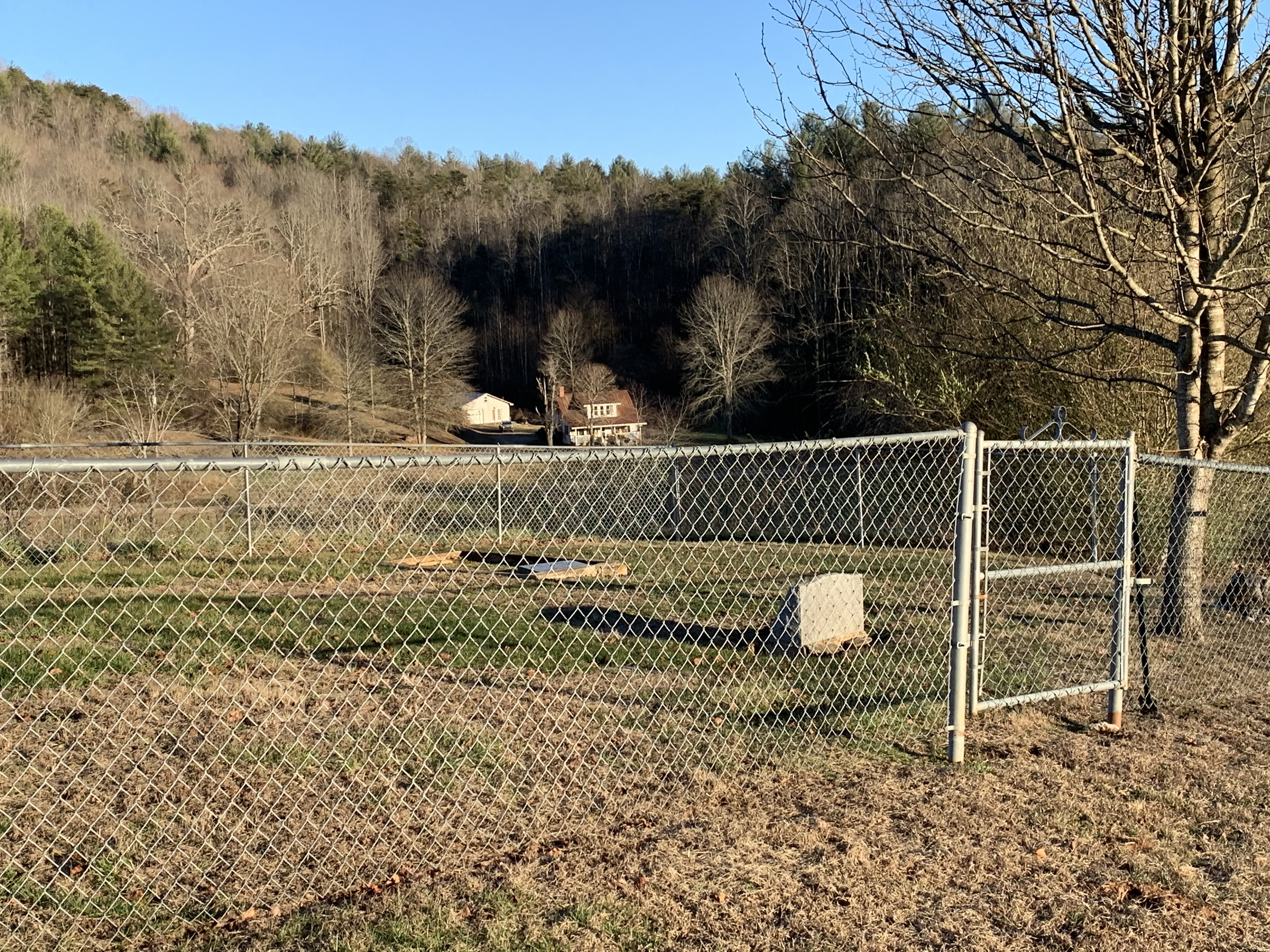
Ann Melton, a married woman, was involved in a love triangle with Tom Dula and her cousin, Laura Foster. Up this way to Melton Cemetery, Elkville, Wilkes County, NC. 7 January 2020

IMG_6033

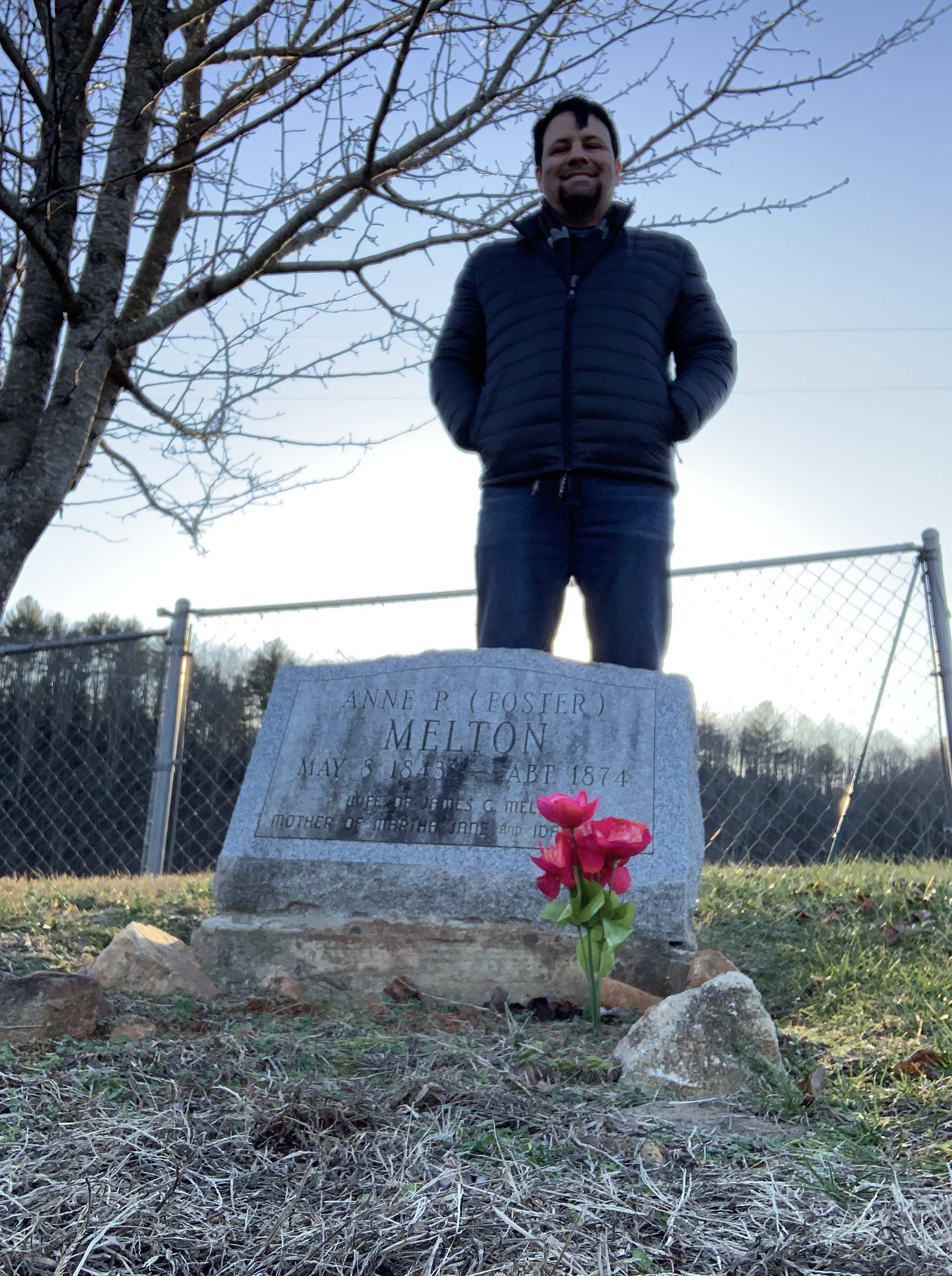
Anne Melton was charged with the Laura Foster murder, but was cleared by Tom Dula’s note shortly before his execution. Melton Cemetery, Elkville, Wilkes County, NC. 7 January 2020

IMG_6081

Ann Melton died a few years after Tom Dula. A Foster descendant suggested that I not put flowers at Ann Melton’s grave, but I did anyway. 7 January 2020

IMG_6034

Sources disagree as to Ann Melton’s cause of death. Family members recently placed this headstone. 7 January 2020

Mrs. Evva L. Hatch (1929)

04 Wednesday Mar 2020

Posted by Brandon Ray Kirk in African American History, Women's History

≈ Leave a comment

Tags

African-Americans, Appalachia, Charleston, Evva L. Hatch, Garnet High School, Logan Banner, Logan County, McBeth School, Ohio University, teacher, University of Chicago, West Virginia, West Virginia State College, West Virginia State Teachers' Association

In April of 1929, the Logan Banner profiled numerous prominent African-American residents of Logan County, West Virginia.

Notable Blacks of Logan County LB 04.16.1929 18

Mrs. Evva L. Hatch

Teacher, McBeth School

Mrs. Hatch is a graduate of Garnet High School, Charleston, and West Virginia State College. She has done summer work at Ohio University and University of Chicago. Mrs. Hatch has taught for fourteen years in the state, twelve years of which have been spent in Logan county. She is a member of West Virginia State Teachers’ Association.

In her community and district and also through the county, Mrs. Hatch is regarded as one of the active and influential leaders in all of her activities that are promoted in interest of good citizenship. Her preparation and long service as a teacher makes her ability unquestioned. She is a leader in her field and all groups of citizens recognize her qualifications and hold her in high regard.

Miss Ruby L. Hess (1929)

26 Wednesday Feb 2020

Posted by Brandon Ray Kirk in African American History, Women's History

≈ Leave a comment

Tags

African-Americans, education, history, Logan Banner, Logan County, Lorado, Nannie Burroughs School, Ruby L. Pless, teacher, West Virginia, West Virginia Parent-Teacher Association, West Virginia State College, West Virginia State Teachers' Association

In April of 1929, the Logan Banner profiled numerous prominent African-American residents of Logan County, West Virginia.

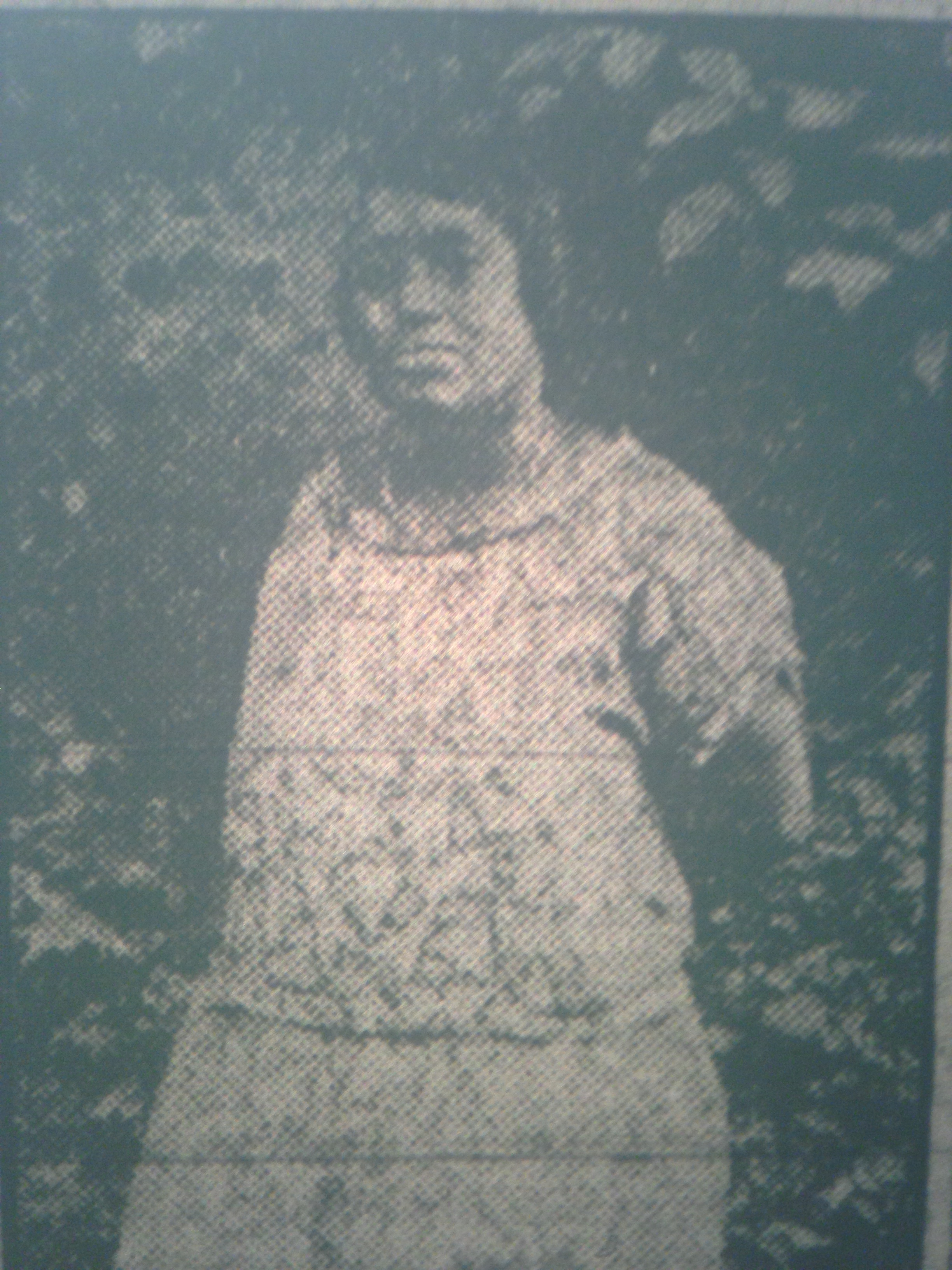
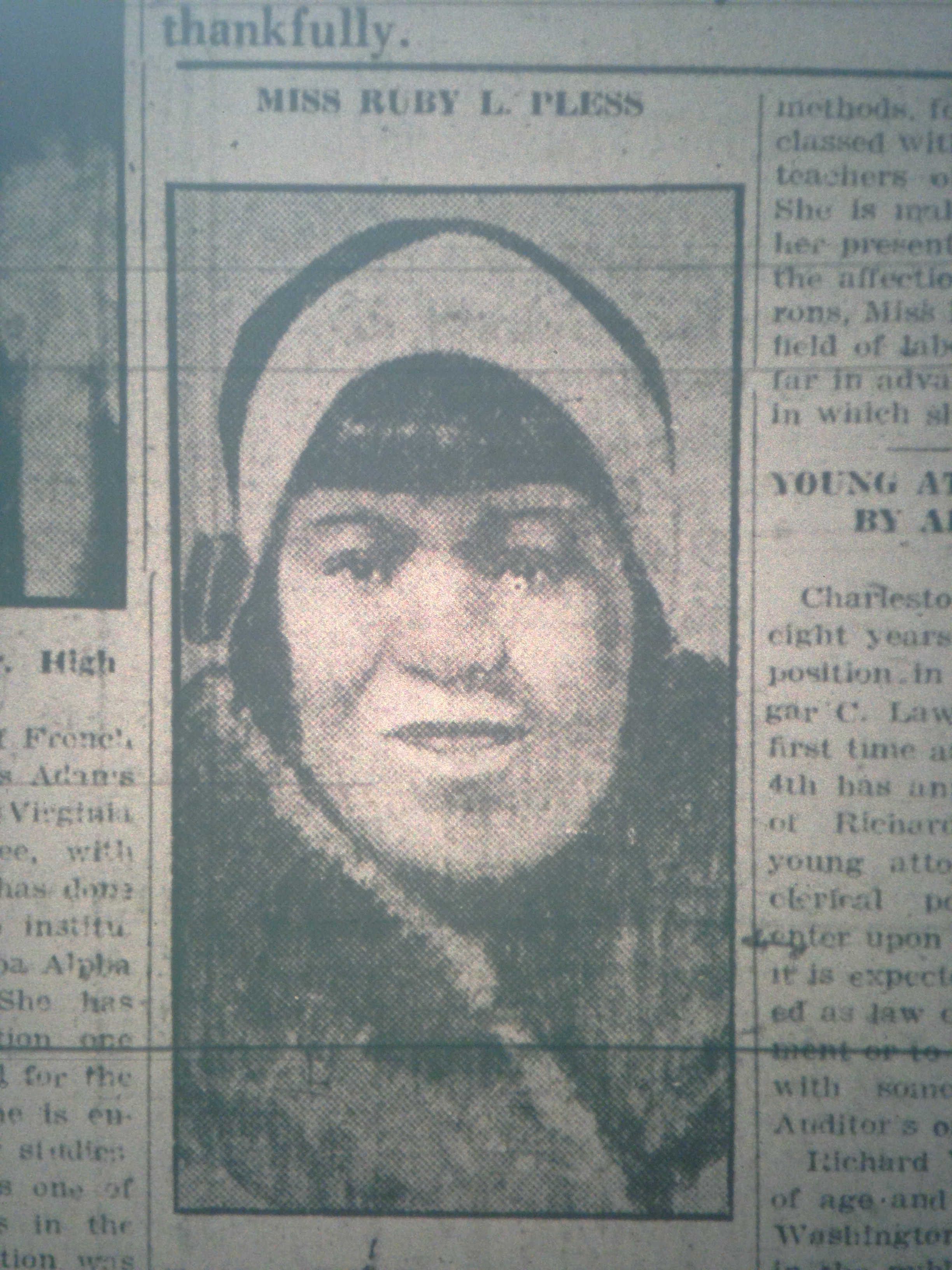
Notable Blacks of Logan County LB 04.16.1929 13

Miss Ruby L. Pless

Teacher, Nannie Burrough School, Lorado

Graduate West Virginia State College and did summer work at same institution. She has taught four years, two of which have been spent in her present position.

She is a member of the West Virginia State Teachers’ Association and of the State Parent-Teacher Association.

Miss Pless is a teacher of engaging personality. Studious and earnest in her work, and direct in her methods, for obtaining results, she is classed with the group of progressive teachers of the county and state. She is making a splendid record in her present position. Well placed in the affections of her pupils and patrons, Miss Pless’ thoroughness in her field of labor is destined to lead her far in advancement in the profession in which she is engaged.

Appalachian Heritage Day in Logan, WV (2019)

29 Wednesday Jan 2020

Posted by Brandon Ray Kirk in Civil War, Logan, Music, Women's History

≈ Leave a comment

Tags

Almost Heaven Dulcimer Club, Appalachia, Appalachian Heritage Day, authors, Bobby Taylor, books, Carter Taylor Seaton, Confederate Army, Cooney Ricketts Chapter, culture, fiddler, fiddlers, fiddling, Hatfield-McCoy CVB, Hippie Homesteaders, history, Ken Hechler, Laura Treacy Bentley, Logan, Logan County Commission, Looking for Ireland, M. Lynne Squires, photos, Rebel in the Red Jeep, Southern Coalition for the Arts, Southern West Virginia Community and Technical College, United Daughters of the Confederacy, Urban Appalachia, Vandalia Award, West Virginia

Appalachian Heritage Day occurred on August 25, 2019 in Logan, WV. The event featured authors, scholars, guest speakers, information tables, a genealogy workshop, a writers’ workshop, numerous old-time and bluegrass music workshops, and an all-day concert. Special thanks to the Logan County Commission, Southern West Virginia Community and Technical College, the Hatfield-McCoy CVB, and the Southern Coalition for the Arts for sponsoring the event. For more information, follow this link to the event website: https://appalachianheritageday.weebly.com/

DSC_0832

Authors Carter Taylor Seaton, Laura Treacy Bentley, and M. Lynne Squires offered their amazing books for sale, hosted meet-and-greet sessions at author tables, and presented about Appalachian topics. Each of these ladies has a website providing information about their biographies and books; for more info, give them a Google!

Cooney Ricketts UDC Group

The United Daughters of the Confederacy, Cooney Ricketts Chapter, were featured at Appalachian Heritage Day. This wonderful group of ladies offered history about Confederate soldiers and women on the home front. For more about this group, go here: https://www.herald-dispatch.com/features_entertainment/albert-gallatin-jenkins-united-daughters-of-confederacy-hosts-annual-meeting/article_6d2cdf9e-5ef3-5a75-a22f-69382944e145.html

Bobby Taylor in Old-Time Fiddle Workshop

Master fiddler Bobby Taylor hosted an old-time fiddle workshop. Bobby is the 2010 Vandalia Award winner. For more about Bobby, go here: http://www.wvculture.org/vandalia/award/2010taylor.html

Almost Heaven Dulcimer Club

The Almost Heaven Dulcimer Club made plenty of unforgettable music at Appalachian Heritage Day. For more about them, go here: http://www.davehaasmusic.com/davehaasmusic/Club.html

Recollections of Laura Hinchman at Combs Addition, WV (1984), Part 1

24 Friday Jan 2020

Posted by Brandon Ray Kirk in African American History, Civil War, Coal, Guyandotte River, Huntington, Logan, Man, Timber, Women's History, Wyoming County

≈ 5 Comments

Tags

African-Americans, Alfred Beckley, Anna Brooke Hinchman, Bruno, Buffalo City, civil war, Claypool, Clean Eagle Coal Company, coal, Combs Addition, Confederate Army, Cyclone, Cyclone Post Office, Davin, Elk Creek, Forkner, genealogy, Guyandotte River, history, Hollow A. Davin, Huntington, John L. Lewis, Lake Claypool, Laura Hinchman, Logan, Logan County, logging, Lorenzo Dow HInchman, Mallory, Man, Man High School, Morris Harvey College, Oceana, Paul Hinchman, Pete Toler, postmaster, rafting, Raleigh County, Rosa Hinchman, splash dams, timbering, Ulysses Hinchman, United Mine Workers of America, Vic McVey, Walter Hinchman, West Virginia, Woodrow Hinchman, Wyoming County

Laura C. Hinchman was born on March 22, 1919 to Walter and Anna Brooke (McVey) Hinchman at Mallory in Logan County, WV. She was an educator for over fifty years and was very active in civic affairs. For more information about her background, see her obituary at this location: https://www.findagrave.com/memorial/140834185/laura-caryl-hinchman

The following interview of Ms. Hinchman was conducted on July 16, 1984. In this part of the interview, she discusses her ancestry, community history, timbering, and coal mining.

***

Miss Hinchman, how did your family first come to this area?

Well, when West Virginia was being settled, people who were willing to come here were given land grants by governors of Virginia over different periods of years. This property was given by the governor of the commonwealth of Virginia at that time, Governor Nicholson. It was given in 1815 to my great grandfather, Dr. Ulysses Hinchman, who was a member of the legislature. He had land holdings in Wyoming County, and he laid out the town of Oceana. He is recorded in a lot of the books of the history of Wyoming and Logan Counties. According to the West Virginia Blue Book, that is how Man got its name. At first it was called Buffalo City. Then they decided to change the name. They thought Hinchman was too long and there was already a place called Hinch, so they named it Man in honor of my great grandfather. Now, that’s according to the West Virginia Blue Book.

Do you remember what your grandparents were like?

Now, both my grandfather and grandmother Hinchman died before I was born, so I don’t remember either of them. At that time, this was all timber land. My grandfather Hinchman, whose name was Lorenzo Dow Hinchman, was a timberman. We have a lot of records here in the house where he kept books of how much he paid the men and how much he sold, and all that. After this was cleared, then, of course, it became farmland. Now, they had no way of getting the logs that were cut to a market. So down there just below Woodrow’s, and this happened several places, they built what was called splash dams. They made a dam and dammed the water up and filled it with logs. Then there would be a great big lot of excitement. Everybody would gather and they would tear the dam lose and let the logs float down to the Guyan River. There were men who went with them, I suppose on rafts, and rafted the logs together, and floated them down the Guyan River to the Guyandotte. Now, my mother’s father, who came from Raleigh County, was Uncle Vic McVey. Of course, I remember him well, he lived here with us until he died at the age of ninety-four. He was one of the men who followed floating those logs down the river, and then they would walk back from Huntington. They had places that they stayed on their way back. I don’t know how many days it took.

Now, my grandmother Hinchman was a Chambers, which is also one of the early settler families in this area. She was a schoolteacher. At that time, it was possible to teach school when you got through the eighth grade, you were given a certificate. All first teachers in the one room schools here were just graduates of the eight grade, because the high school at Man was not built until 1919 or 1920, and that’s all they had. Now some people taught after they finished the eighth grade, and then went on when it was possible. I have a cousin Lake Claypool–that’s another old family in this area for which Claypool is named–that she taught after she finished the eighth grade then she went on to Man and finished high school and then went to Morris Harvey. But all the older teachers were just eighth grade. There was a one room school down here at Claypool. There was a one room school up at Vance’s. There were several one room schools on Buffalo Creek. There was a one room school up–what’s that creek up Bruno called–Elk Creek. My grandmother was a teacher, but as I say, both died before I was ever born. Now then, this place was called Cyclone. This is where Cyclone was. My grandmother Hinchman kept the Cyclone Post Office here for forty years. After she passed away, my mother–she was a McVey–and she married my father, Walter Hinchman, in 1910, and came here. I had Aunt Rosa Hinchman, who had never married at that time, who helped her keep the post office. The mail was carried on horseback from Huntington and the West, came that way, and from Oceana, from that direction they carried it. The postmasters met here, and they ate dinner here every day. My mother–ever who all was here, and at that time, you never knew who might be there for dinner… But when this house was built, this part wasn’t part of it. The kitchen and the dining room were in separate buildings. Now, of course, in the south they had slaves and all, but I do recall their talking about on black man, by the name of Sam. I don’t remember much about him but that’s the only black person that they ever had here, you know, on the farm.

I do remember my granddad McVey quite well, and my great-grandfather came to Raleigh County with General Beckley and settled there. Then my mother’s grandfather was a Confederate soldier in the Civil War. His name was Zirkle, which is the German word for circle. He ran away from home during the Civil War and joined the Confederate Army. After the war he came here and settled. He also lived with us until he was in his nineties. But my mothers’ mother, my grandmother McVey, died when my mother was only, maybe two years old, so I never knew any of my real grandparents except, you know, my granddad McVey.

Were you born here, at this house?

I was born here on March 22, 1919. My father passed away in February of 1920 when I was eleven months old. There were three of us Hinchman children: Woodrow, Paul, and I was the youngest, of course. I don’t remember my father, but Woodrow does. Then my mother married Pete Toler when I was twenty-three months old, a year after my father died. I remember his as my real father because he reared me. He worked this farm and I remember the first time I called him Daddy, now I don’t know how old I was.

There was a mine at Davin that was first called Forkner, and it was changed to the name of Davin after Hollow A. Davin, a prominent man in Logan who probably owned the mine, and that started in 1923. Then the post office was taken up the creek and then we had a post office at Davin. Then my dad ran a coal cutting machine. Men took those jobs by contract and they were paid for the number of cars that they cut. They could work as many hours as they wanted. The men who loaded the coal–they may have loaded themselves, I don’t know–they loaded the coal into wooden cars. Now, in order to get credit of the coal car that they had loaded they had a–what was it called? Well, it was a little round piece of metal with a number on it that they hung on that coal car. The coal was hauled out of the mine by mule or ponies. There was a tipple and everything there at Davin. Then the Clean Eagle mine went in later, I don’t remember when, but my dad worked there, and he also worked at Mallory. But when we were children, we never saw our dad until the weekend because he went to work before daylight, before we ever thought of getting up and he never came in until after we had gone to bed. That sort of thing kept up with miners until John L. Lewis, you see, organized the union.

Civil War in the Kanawha Valley: Littlepage Mansion (2019)

20 Monday Jan 2020

Posted by Brandon Ray Kirk in Civil War, Women's History

≈ Leave a comment

Tags

Adam Littlepage, Appalachia, architecture, Camp Two Mile, Charleston, civil war, Confederate Army, Gallipolis, George B. McClellan, Henry Wise, history, Kanawha County, Kanawha Valley, Littlepage Mansion, National Register of Historic Places, Ohio, Rebecca Littlepage, Ripley, Terry Lowry, The Battle of Charleston, Two Mile Creek, Union Army, West Virginia

IMG_0669

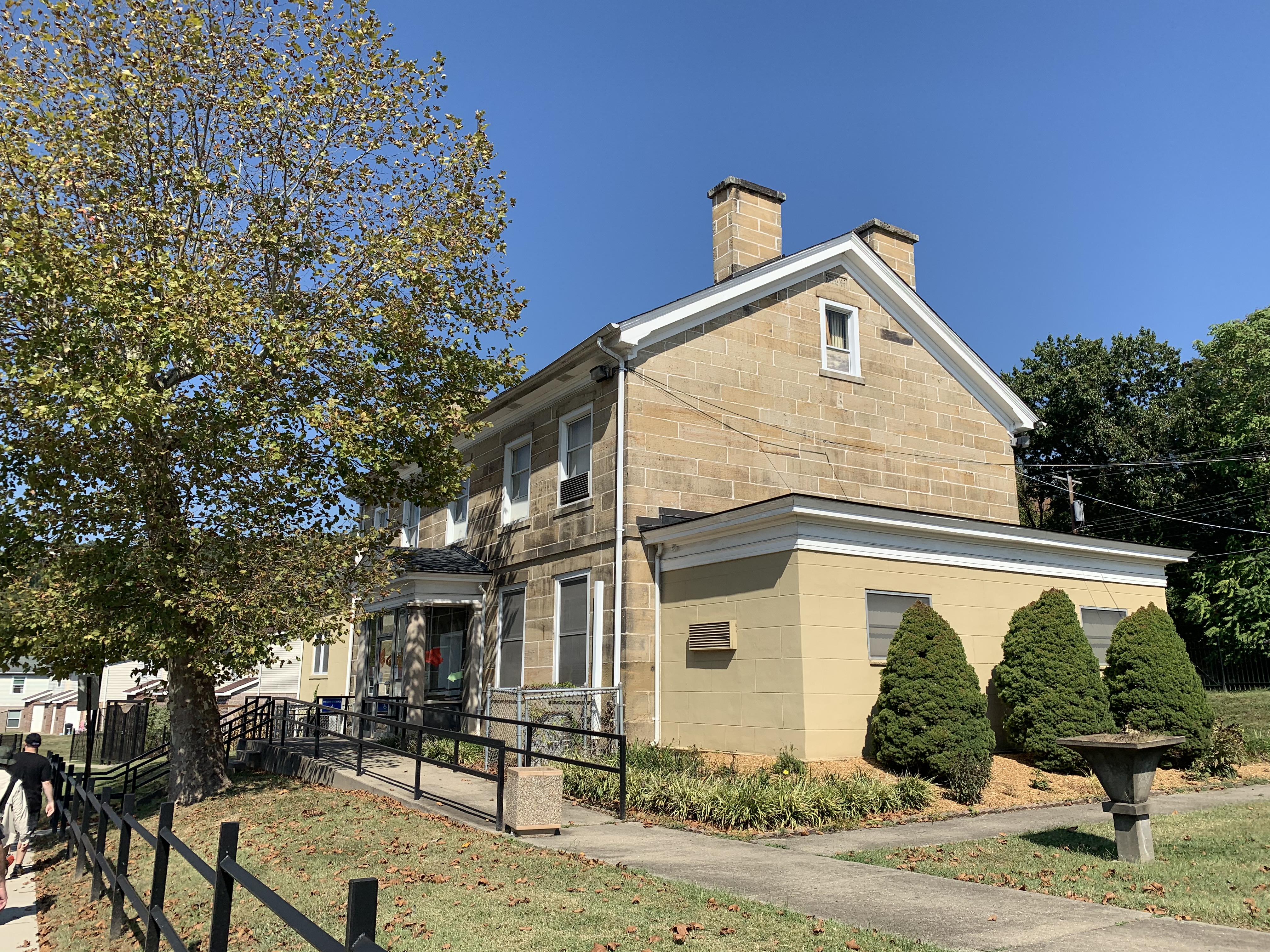
Terry Lowry is THE authority on the Civil War in the Kanawha Valley. Stop 7 on his tour: Littlepage Mansion in Charleston, WV. 29 September 2019. Here is a link to Terry’s latest book, The Battle of Charleston (2016): https://wvcivilwar.com/now-available-the-battle-of-charleston/

IMG_0670

Built in 1845, the Littlepage mansion is one of only six antebellum houses remaining in Charleston, WV. It is listed on the National Register of Historic Places. 29 September 2019

IMG_0667

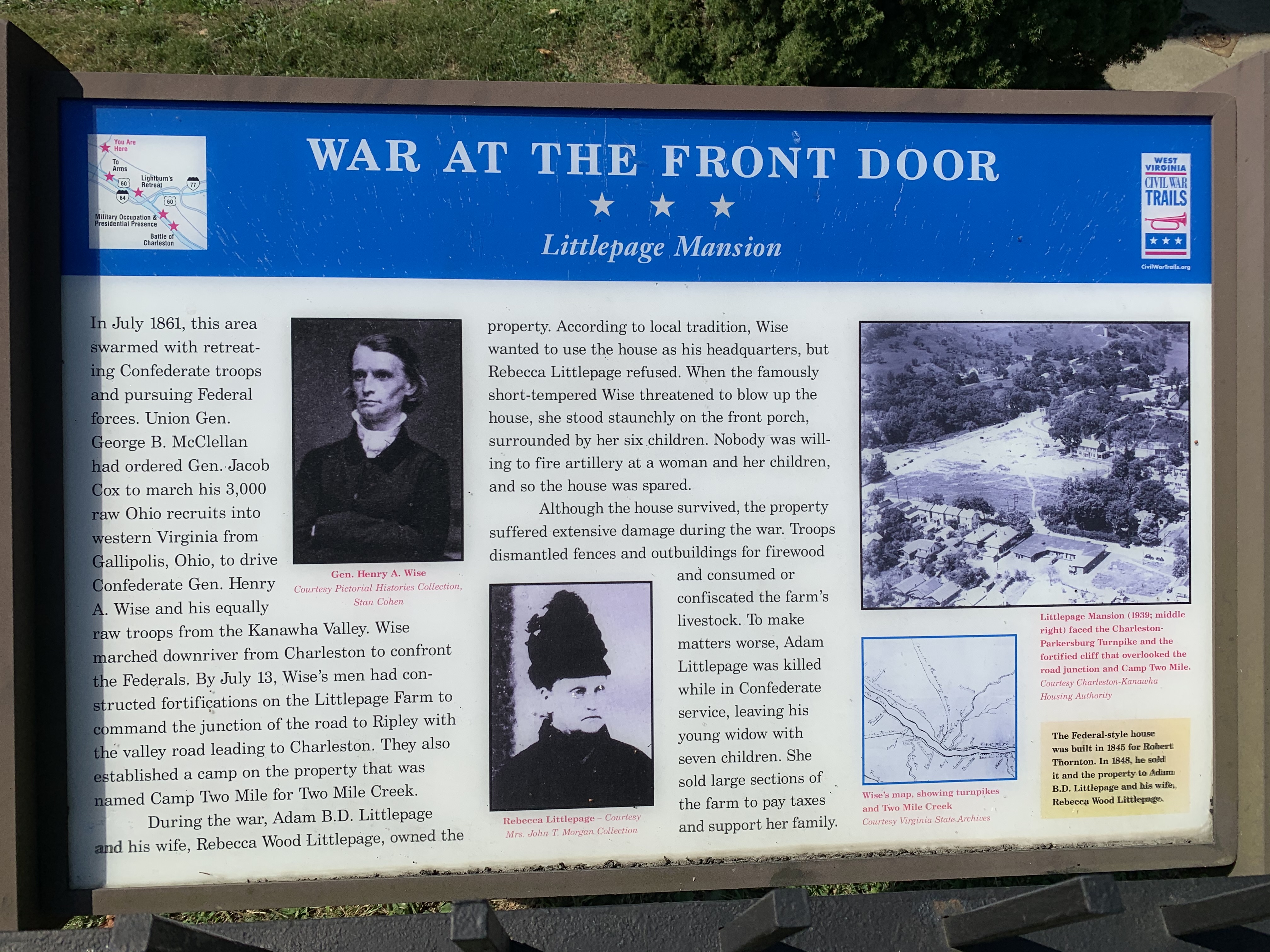
Rebecca Littlepage reportedly refused to allow Confederate General Henry A. Wise to occupy her home as a headquarters. According to the historical marker: “When the famously short-tempered Wise threatened to blow up the house, she stood staunchly on the front porch, surrounded by her six children. Nobody was willing to fire artillery at a woman and her children, and the house was spared.” For more history about the Littlepage mansion, go here: https://www.wvencyclopedia.org/exhibits/23?section=7

Milk Fed Squabs (1923)

16 Saturday Nov 2019

Posted by Brandon Ray Kirk in Logan, Women's History

≈ Leave a comment

Tags

Appalachia, history, Logan Banner, Logan County, Milk Fed Squabs, West Virginia

Milk Fed Squabs LB 04.06.1923 2.JPG

Logan (WV) Banner, 6 April 1923

Rats in Logan, WV (1922-1923)

19 Wednesday Jun 2019

Posted by Brandon Ray Kirk in Logan, Women's History

≈ Leave a comment

Tags

Anna Mae Wright, Appalachia, Aracoma Hotel, Chamber of Commerce, D.M. Staples, First National Bank, Helen Caldwell, history, Logan, Logan Banner, Logan County, Logan Planing Mill, Main Street, Norfolk, Portsmouth, rats, Virginia, West Virginia

From the Logan Banner of Logan, WV, come these stories of rats in the city, printed in 1922-1923:

Oh, Rats!

The Chamber of Commerce has collected quite a few rat tails since its announcement some days ago of the contest which ends on July 15th with a grand prize to the person having collected the greatest number from rats killed. The tails are delivered to Mr. McGuire each Saturday morning at the Chamber’s offices over the First National Bank building, at which time five cents are paid for each tail. The big prize will be given on July 15th, so it’s up to those who have been interested to get busy for the next two weeks.

Logan (WV) Banner, 30 June 1922

***

Extermination of Rats Contest Continues While Longer

Secretary Announces It Such a Success That Contest Will Continue

Five Pennies a Rat

Mr. Davis of East End, Leads in Contest With 113 of Rodents Killed

Such interest is being taken in the rat contest as inaugurated by the Chamber of Commerce that the body has decided not to close the contest July 15, as formally announced. The closing date will be announced later and in the meantime the Chamber wants every boy, girl, man or woman to be an active soldier in the extermination of this rodent.

So far Mr. Davis who lives near the Logan Planing Mill in the eastern portion of the city, has the largest number of rat tails to his credit, having delivered a total of 113 on last Saturday. These pests are said to be unusually numerous and active in this vicinity of the city and Mr. Davis has been unusually busy in killing everyone that he has been able to find. He is yet adding to his honor roll and will evidently keep the good work going until the end of the campaign when it is hoped he will be so fond of slaying rats he will continue the good work through life.

Many other citizens of the city are making records and there is one thing sure—when the rat campaign is over there will be a smaller number of the rodents in the city than there were when the contest opened.

Secretary McGuire calls for the citizens to keep up the good fight and announces that the more money the Chamber has to pay out for rat tails the better it pleases them and that he will be on hand each Saturday to reward the faithful exterminators and he hopes to see the number grow larger as each week-end roll around.

Logan (WV) Banner, 14 July 1922

***

Rodent Carries Ladies’ Outfit, But Dial Gets It

Chief of police Dial had a rather funny experience the other day. He was crossing Main street when he saw some sort of an animal moving down the street with a large package on its back that almost hid the animal from view. For some moments his brain was puzzled at the queer sight. He thought for an instant his eyes might be playing him a prank. Rubbing his eyes, he looked again and there it was moving along down the road.

Dial could not remember of imbibing any amount of “hootch” that might cause him to see things so he pulled his trusty pocket gun and fired away. The beast tumbled over and the package felt o the paved highway. Imagine his surprise when he discovered one of the large rats that inhabit the post office had escaped from the building and was making a get-away with a huge parcel post package. The address had been removed from the package by the rodent and several large holes punctured through the wrapping.

An examination of the package brought to light one voile skirt, a pink corset, two crepe de chine waists, 4 pair of bright colored hose, 1 chemise, 2 princess slips, 3 corset covers, 1 pair “knickers,” 2 pair of “Teddy’s,” 1 pair of fancy garters, 5 hair nets, 1 hair rat of auburn hue and two powder puffs.

The “he” rat had evidently made an inspection of the package and found therein a quantity of material with which to dress up Mrs. Rat and was on his way home with the package when he met his untimely death at the hands of the ever watchful chief of the city of Logan.

It is understood the post office rats held funeral services in the local office last Saturday night. There was much sorrow at the loss of one of their members but with the birth rate at a high figure his place will soon be filled and the deceased rat soon forgotten in the rush of rodents at the Logan post office.

Logan (WV) Banner, 11 August 1922

***

Pretty Poisoners Here For War On Rodents

Misses Wright and Caldwell Arrive in County For Rat Crusade

A rat extermination campaign was launched in Logan this week when Miss Anna Mae Wright, pretty Portsmouth, Va., girl and Miss Helen Caldwell, her aid-de-camp, began a cooperative drive with the city health department against the destructive rodents.

Women have entered many fields of endeavor but few of them have been of wider benefit to humanity than has Miss Wright in her plan of rat killing, municipal officials in nineteen states have testified following successful campaigns conducted in hundreds of towns and cities.

The germ of the idea for a national rat extermination was created in the mind of Miss Wright three years ago while she was assisting in a civic campaign against rats at Norfolk, Va. It was in this campaign that a government-tested West Virginia product was found to give best results. This product, barium carbonate, is a mineral manufactured from the waste products of West Virginia mines and through its use thousands of rats have been eradicated.

Enthused by the success of the Norfolk campaign and acting under the encouragement of the prominent health authorities in the east, Miss Wright, accompanied by a friend, Mrs. D.M. Staples, started on a tour of southern states during which they met with unusual success.

Romance, however, finally interrupted the partnership oft ese two young ladies in their strange business venture, when Mrs. Staples, a widow met and married a prominent Virginian. Undaunted, Miss Wright has continued her work and is coming to Logan to aid the municipal health department in its efforts to rid the city of rats.

A study of the rat family, made from statistics compiled from all parts of the United States, reveals that there are an average of two rats to every inhabitant in any city or town.

“On this basis,” Miss Wright explained, “Logan and vicinity has a population of 10,000 which costs the people $18,000 annually to feed.”

Upon the arrival of the young ladies in Logan, the Mayor was communicated with and they found him a willing helper. He secured for them the endorsement of the various civic bodies and then brought them to The Banner for the publicity campaign.

Their interviewer forgot at times these girls were “rat killers” and as the conversation would naturally turn to other channels he was soon reminded the campaign was against rats and not hearts.

“We’re not afraid of rats,” the girls answered to a query. “You see, we seldom see the live creatures anyway. We help set the bait and wait for results.”

The campaign was started in the business section immediately after their arrival and the girls are calling on the larger firms and assisting in the work. The residential sections cannot all be reached by them, but a supply of the barium carbonate may be had at any of the stores and if the directions are not thoroughly understood or proper results not obtained, Miss Wright or Miss Caldwell will be found at the Aracoma hotel and either will gladly help any person.

Miss Wright’s plan to work is quite simple, she explained. The right proportion of barium carbonate is mixed with delicate morsels of food which are invitingly displayed along the walls of rooms or in known runaways used by rats.

This powder is tasteless but deadly in its work, she explained. There is little to be feared of the rats dying underground or in the walls of buildings after they have eaten of the poison. Its action is such, she stated, that the afflicted rat always comes out into the open air in order to breathe more easily. It is a death of strangulation and the doped animals always come out of their retreats when they feel themselves afflicted.

The barium carbonate used in the local campaign will be furnished by Miss Wright at a nominal cost, city officials announced.

Logan (WV) Banner, 27 April 1923

Peggy Price of Williamson, WV (1937)

31 Sunday Mar 2019

Posted by Brandon Ray Kirk in Logan, Music, Williamson, Women's History

≈ Leave a comment

Tags

Appalachia, history, Liebenstraum, Logan Banner, Logan High School, Mingo County, Peggy Price, photos, West Virginia, Williamson

Peggy Price of Williamson LB 06.02.1937 2.JPG

Miss Peggy Price, Williamson dance pupil of Helen Cox Schrader, who appears in The Passing Show of 1937. The first night audience of the recital at the Logan high school auditorium Tuesday found Miss Price’s ballet number Liebestraum most pleasing. Logan (WV) Banner, 2 June 1937

← Older posts

Feud Poll 1

If you had lived in the Harts Creek community during the 1880s, to which faction of feudists might you have given your loyalty?

Categories

  • Adkins Mill
  • African American History
  • American Revolutionary War
  • Ashland
  • Atenville
  • Banco
  • Barboursville
  • Battle of Blair Mountain
  • Beech Creek
  • Big Creek
  • Big Harts Creek
  • Big Sandy Valley
  • Big Ugly Creek
  • Boone County
  • Breeden
  • Calhoun County
  • Cemeteries
  • Chapmanville
  • Civil War
  • Clay County
  • Clothier
  • Coal
  • Cove Gap
  • Crawley Creek
  • Culture of Honor
  • Dingess
  • Dollie
  • Dunlow
  • East Lynn
  • Ed Haley
  • Eden Park
  • Enslow
  • Estep
  • Ethel
  • Ferrellsburg
  • Fourteen
  • French-Eversole Feud
  • Gilbert
  • Giles County
  • Gill
  • Green Shoal
  • Guyandotte River
  • Halcyon
  • Hamlin
  • Harts
  • Hatfield-McCoy Feud
  • Holden
  • Hungarian-American History
  • Huntington
  • Inez
  • Irish-Americans
  • Italian American History
  • Jamboree
  • Jewish History
  • John Hartford
  • Kermit
  • Kiahsville
  • Kitchen
  • Leet
  • Lincoln County Feud
  • Little Harts Creek
  • Logan
  • Man
  • Matewan
  • Meador
  • Midkiff
  • Monroe County
  • Montgomery County
  • Music
  • Native American History
  • Peach Creek
  • Pearl Adkins Diary
  • Pecks Mill
  • Peter Creek
  • Pikeville
  • Pilgrim
  • Poetry
  • Queens Ridge
  • Ranger
  • Rector
  • Roane County
  • Rowan County Feud
  • Salt Rock
  • Sand Creek
  • Shively
  • Spears
  • Sports
  • Spottswood
  • Spurlockville
  • Stiltner
  • Stone Branch
  • Tazewell County
  • Timber
  • Tom Dula
  • Toney
  • Turner-Howard Feud
  • Twelve Pole Creek
  • Uncategorized
  • Warren
  • Wayne
  • West Hamlin
  • Wewanta
  • Wharncliffe
  • Whirlwind
  • Williamson
  • Women's History
  • World War I
  • Wyoming County
  • Yantus

Feud Poll 2

Do you think Milt Haley and Green McCoy committed the ambush on Al and Hollene Brumfield in 1889?

Blogroll

  • Ancestry.com
  • Ashland (KY) Daily Independent News Article
  • Author FB page
  • Beckley (WV) Register-Herald News Article
  • Big Sandy News (KY) News Article
  • Blood in West Virginia FB
  • Blood in West Virginia order
  • Chapters TV Program
  • Facebook
  • Ghosts of Guyan
  • Herald-Dispatch News Article 1
  • Herald-Dispatch News Article 2
  • In Search of Ed Haley
  • Instagram
  • Lincoln (WV) Journal News Article
  • Lincoln (WV) Journal Thumbs Up
  • Lincoln County
  • Lincoln County Feud
  • Lincoln County Feud Lecture
  • LinkedIn
  • Logan (WV) Banner News Article
  • Lunch With Books
  • Our Overmountain Men: The Revolutionary War in Western Virginia (1775-1783)
  • Pinterest
  • Scarborough Society's Art and Lecture Series
  • Smithsonian Article
  • Spirit of Jefferson News Article
  • The Friendly Neighbor Radio Show 1
  • The Friendly Neighbor Radio Show 2
  • The Friendly Neighbor Radio Show 3
  • The Friendly Neighbor Radio Show 4
  • The New Yorker
  • The State Journal's 55 Good Things About WV
  • tumblr.
  • Twitter
  • Website
  • Weirton (WV) Daily Times Article
  • Wheeling (WV) Intelligencer News Article 1
  • Wheeling (WV) Intelligencer News Article 2
  • WOWK TV
  • Writers Can Read Open Mic Night

Feud Poll 3

Who do you think organized the ambush of Al and Hollene Brumfield in 1889?

Recent Posts

  • Logan County Jail in Logan, WV
  • Absentee Landowners of Magnolia District (1890, 1892, 1894)
  • Charles Spurlock Survey at Fourteen Mile Creek, Lincoln County, WV (1815)

Ed Haley Poll 1

What do you think caused Ed Haley to lose his sight when he was three years old?

Top Posts & Pages

  • Baisden Family Troubles
  • History for Boone County, WV (1928)
  • Armed March Trial (1923): Convicted Man Flees to Mexico
  • Civil War Gold Coins Hidden Near Chapmanville, WV
  • Crotch Grabs

Copyright

© Brandon Ray Kirk and brandonraykirk.wordpress.com, 1987-2023. Unauthorized use and/or duplication of this material without express and written permission from this blog’s author and/or owner is strictly prohibited. Excerpts and links may be used, provided that full and clear credit is given to Brandon Ray Kirk and brandonraykirk.wordpress.com with appropriate and specific direction to the original content.

Archives

  • February 2025
  • January 2025
  • October 2023
  • September 2023
  • December 2022
  • November 2022
  • May 2022
  • April 2022
  • February 2022
  • November 2021
  • October 2021
  • September 2021
  • June 2021
  • May 2021
  • April 2021
  • March 2021
  • February 2021
  • January 2021
  • December 2020
  • November 2020
  • October 2020
  • July 2020
  • June 2020
  • May 2020
  • April 2020
  • March 2020
  • February 2020
  • January 2020
  • December 2019
  • November 2019
  • October 2019
  • September 2019
  • August 2019
  • July 2019
  • June 2019
  • May 2019
  • April 2019
  • March 2019
  • February 2019
  • January 2019
  • December 2018
  • November 2018
  • October 2018
  • September 2018
  • August 2018
  • July 2018
  • June 2018
  • May 2018
  • April 2018
  • March 2018
  • February 2018
  • January 2018
  • December 2017
  • November 2017
  • October 2017
  • September 2017
  • August 2017
  • July 2017
  • June 2017
  • May 2017
  • April 2017
  • March 2017
  • February 2017
  • January 2017
  • December 2016
  • November 2016
  • October 2016
  • September 2016
  • August 2016
  • July 2016
  • June 2016
  • May 2016
  • April 2016
  • March 2016
  • February 2016
  • January 2016
  • December 2015
  • November 2015
  • October 2015
  • September 2015
  • August 2015
  • July 2015
  • June 2015
  • May 2015
  • April 2015
  • March 2015
  • February 2015
  • January 2015
  • December 2014
  • October 2014
  • September 2014
  • August 2014
  • July 2014
  • June 2014
  • May 2014
  • April 2014
  • March 2014
  • February 2014
  • January 2014
  • December 2013
  • November 2013
  • October 2013
  • September 2013
  • August 2013
  • July 2013
  • June 2013
  • May 2013
  • April 2013
  • March 2013
  • February 2013
  • January 2013
  • December 2012
  • November 2012

Enter your email address to follow this blog and receive notifications of new posts by email.

Join 2,925 other subscribers

Tags

Appalachia Ashland Big Creek Big Ugly Creek Blood in West Virginia Brandon Kirk Cabell County cemeteries Chapmanville Charleston civil war coal Confederate Army crime culture Ed Haley Ella Haley Ferrellsburg feud fiddler fiddling genealogy Green McCoy Guyandotte River Harts Harts Creek Hatfield-McCoy Feud history Huntington John Hartford Kentucky Lawrence Haley life Lincoln County Lincoln County Feud Logan Logan Banner Logan County Milt Haley Mingo County music Ohio photos timbering U.S. South Virginia Wayne County West Virginia Whirlwind writing

Blogs I Follow

  • OtterTales
  • Our Appalachia: A Blog Created by Students of Brandon Kirk
  • Piedmont Trails
  • Truman Capote
  • Appalachian Diaspora

BLOOD IN WEST VIRGINIA is now available for order at Amazon!

Blog at WordPress.com.

OtterTales

Writings from my travels and experiences. High and fine literature is wine, and mine is only water; but everybody likes water. Mark Twain

Our Appalachia: A Blog Created by Students of Brandon Kirk

This site is dedicated to the collection, preservation, and promotion of history and culture in Appalachia.

Piedmont Trails

Genealogy and History in North Carolina and Beyond

Truman Capote

A site about one of the most beautiful, interesting, tallented, outrageous and colorful personalities of the 20th Century

Appalachian Diaspora

  • Subscribe Subscribed
    • Brandon Ray Kirk
    • Join 787 other subscribers
    • Already have a WordPress.com account? Log in now.
    • Brandon Ray Kirk
    • Subscribe Subscribed
    • Sign up
    • Log in
    • Report this content
    • View site in Reader
    • Manage subscriptions
    • Collapse this bar
 

Loading Comments...