• About

Brandon Ray Kirk

~ This site is dedicated to the collection, preservation, and promotion of history and culture in my section of Appalachia.

Brandon Ray Kirk

Category Archives: Coal

Democratic Party Intimidation in Logan County, WV (1924)

15 Saturday Dec 2018

Posted by Brandon Ray Kirk in Coal, Logan

≈ Leave a comment

Tags

Anthony Mullins, Appalachia, Charley Harris, Democratic Party, Deputy Marshal, deputy sheriff, Don Chafin, Dow Chambers, First National Bank, George Loggins, history, Hugh Deskins, Ira P. Hager, Iva Harris, Jean Thompson, Joe Hatfield, Keenus Mounts, Logan, Logan County, Lorado, Mine Wars, Monaville, Mud Fork, Randolph Dial, Republican Party, Sam Logan, sheriff, Surrilda Mullins, Tennis Hatfield, United States Commissioner, West Virginia

Political history for Logan County, West Virginia, during the 1920s was particularly eventful; it included the latter years of Sheriff Don Chafin’s rule, the Mine Wars (“armed march”), Republican Party ascendancy, and the rise of Republican sheriffs Tennis and Joe Hatfield. What follows are selected primary source documents relating to this period:

UNITED STATES OF AMERICA

SOUTHERN DISTRICT OF WEST VIRGINIA,

HUNTINGTON DIVISION

Before the undersigned authority, Ira P. Hager, a United States Commissioner in and for said District, personally appeared this day Sam Logan, who after being by me first duly sworn, says: That affiant was on the election ground at Mud Fork on election day November 4th, 1924, but did not see Don Chafin assault Hugh Deskins, Deputy Marshal, affiant being around on the other side of the school building; but affiant heard a commotion and heard the people say Don had hit some one, and saw the crowd gather around Hugh Deskins and Don, and I heard Don say, “If you don’t like that I will give you some more of it,” and followed him around and the Deputy Marshal was retreating from the said Don Chafin.

About a minute later the said Hugh Deskins deputized affiant as a Special Deputy Marshal to help keep order and handed affiant a pistol, and Don came up immediately and arrested affiant. He said, “Have you got a right to carry a gun?” I said, “Yes, I guess so,” and he said, “Show me your right,” and I said, “I was deputized by the Deputy Marshal,” and he reached and grabbed my gun from under my belt and said, “Come on and go to Logan,” and took me over to the automobile and told Randolph Dial, deputy sheriff to take me to jail. They locked me up in the Logan County jail and kept me from about 9:30 A.M. until about 7 or 8 o’clock next day. They kangarooed affiant while he was in jail and made affiant pay the prisoners $2.00 in money. Randolph Dial brought us out next morning and stayed with us on the corner at the First National Bank and said, “You fellows can go ahead now and we will notify you when we get ready for trial.” I heard Keenus Mounts cursing George Loggins on the election ground in the presence of a number of ladies.

Sam Logan (signature)

Taken, subscribed and sworn to before me this the 10th day of November, 1924.

Ira P. Hager

United States Commissioner as aforesaid.
***

UNITED STATES OF AMERICA

SOUTHERN DISTRICT OF WEST VIRGINIA,

HUNTINGTON DIVISION

Before the undersigned authority, Ira P. Hager, a United States Commissioner in and for said District, personally appeared this day Anthony Mullins and Surrilda Mullins, who after being by me first duly sworn, depose and say that they voted straight Republican tickets at the Mud Fork Precinct, in Logan County, November 4th, 1924, having voted open, on the table, in the presence of Walter Queen and the other election officers. That as affiant went out at the door of the election room after voting the said Walter Queen made insulting remarks to affiants indicating that affiants smelt bad to him. That after the fight affiant was deputized by the Marshal, but Jean Thompson told affiant not to take a tun.

Affiants further say that they saw Hugh Deskins, Deputy U.S. Marshal, standing on the ground and he was simply standing there, and had done nothing to any person, so far as affiants could see, or hear, when Don Chafin walked up and struck him on the head, or about the face. The Deputy Marshal backed away from the said Don Chafin, and the said Don Chafin followed him up, making some remarks to him, saying, “Have you got enough? If you haven’t, I will give you some more,” or words to that effect and called him a snurl. There were four in the room when we voted.

Anthony Mullins (signature)

Suralda Mullins (signature)

Taken, subscribed and sworn to before me this the 10th day of November, A.D., 1924.

Ira P. Hager

United States Commissioner as aforesaid.

***

UNITED STATES OF AMERICA

SOUTHERN DISTRICT OF WEST VIRGINIA,

HUNTINGTON DIVISION

Before the undersigned authority this day personally came Charley Harris and Ivie Harris, who after being by me first duly sworn, says:

That the said Charley Harris has been employed by the coal company at Yolyn. That affiants supported the Republican Ticket in the election. That prior to the election, Superintendent Butler came to affiant and told affiant that he wanted them to vote and support them. That affiant told them “he could not do that.” That affiants were “straight Republicans.” Dow Chambers came down today and said, “Say boy, how did you vote?” and I told him, “I voted Republican,” and he said, “You will have to move.” Two foreigners were standing by, and one of them was claiming that the other owed him two dollars for a board bill, and the said Dow Chambers hauled off and struck the other twice on the nose, and the blood squirted from his nose. I said, “Gee whiz.” He turned to me and said to me, “What have you to do with it?” and I said, “Nothing,” and he said, “You God Damned black son-of-a-bitch, I will kill you,” and he struck at me and came down off the store porch and went home. This happened about three o’clock today.

Mr. Butler, the superintendent, gave me my time today and said to me, “I am going to fire all who did not vote the Democratic ticket.” he told them to “settle with me” and that he would have to have the house.

Affiants are going to Monaville to try to get work, or may go to Lorado.

Down Chambers is supposed to be a thug or Deputy Sheriff. At any rate, he is a thug.

Ivie Harris (signature)

Charlie Harris (signature)

Taken, subscribed and sworn to before me this the 10th day of November, 1924.

Ira P. Hager

United States Commissioner as aforesaid.
History for Jenkins, KY (1928)

04 Tuesday Dec 2018

Posted by Brandon Ray Kirk in Big Sandy Valley, Coal

≈ Leave a comment

Tags

Appalachia, Big Sandy River, C&O Railroad, coal, Consolidation Coal Company, Cumberland Mountains, Devil John Wright, Devil Judd Tolliver, Hazard Herald, history, James A Garfield, Jenkins, John Fox Jr., John W. Wright, Kentucky, Kentucky River, Letcher County, Little Elkhorn Creek, Little Shepherd Amphitheatre, Logan Banner, Nick Dann, photos, Pound Gap, Rocky Branch, Shelby, The Trail of the Lonesome Pine, Virginia, West Virginia

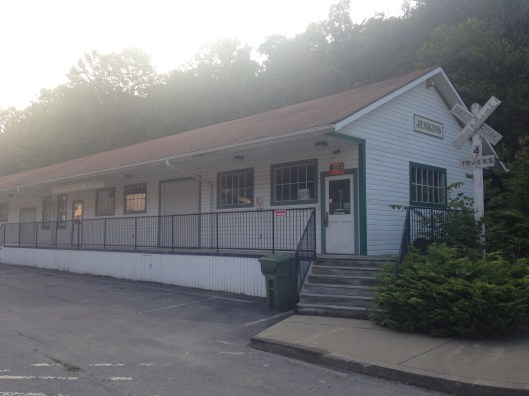
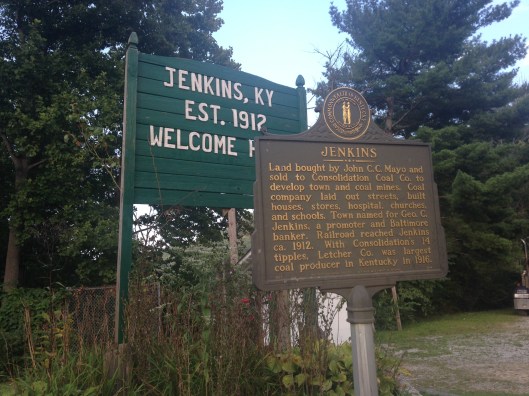
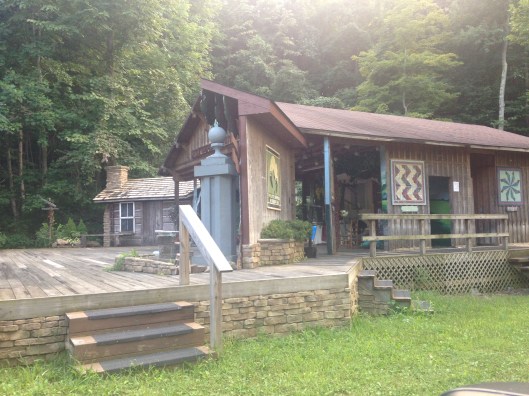
Here is a bit of history for Jenkins, Kentucky, based on a newspaper account provided in 1928:

IMG_7109.JPG

Welcome to Jenkins! 26 August 2018.

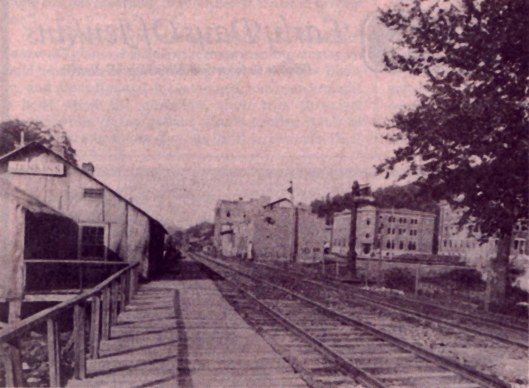
Nestling in the valley of the Little Elkhorn, within “a stone’s throw” of the famous Pound Gap, is Jenkins, one of the few great mining towns of the world. The term “mining camp” cannot rightly be used when speaking of Jenkins, because it is not a “camp” in any sense of the word, but rather a city built by the great Consolidation Coal Company for the accommodation of its thousands of employees.

IMG_7106.JPG

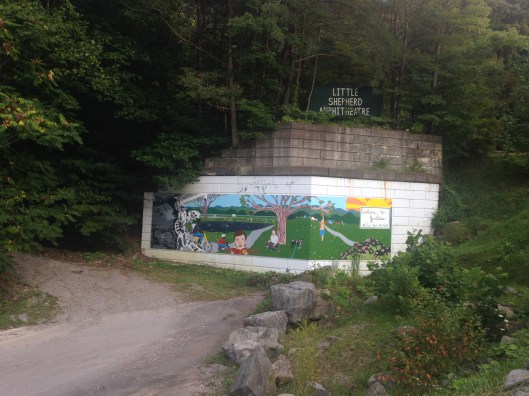
Little Shepherd Amphitheatre. 26 August 2018.

Never was a city planned more carefully, says the Hazard (Ky.) Herald. The men in charge of the construction work were chosen from the top of their respective professions, and the building of the plant was carried out to a plan with the health, safety, education, sanitation, convenience and enjoyment of life by the miners, as its chief object cost was a very secondary consideration.

IMG_5964.JPG

Devil John Wright, dubbed Devil Judd Tolliver by John Fox, Jr. in The Trail of the Lonesome Pine. Photo credit unknown.

Twenty years ago this spot was a wild mountain farm, owned by that famous mountaineer, John W. Wright. His home, a hewn log affair, stood near where the Methodist church has since been erected. For miles in every direction the unbroken forest swept away over hill and down valley, some of which had slept undisturbed since the beginning of time.

IMG_7121.JPG

St. George Catholic Church. 26 August 2018.

The mountaineers, on their seldom made visits to this wild region, would look up at the rugged mountains, like giant sentinels guarding the gates of another world, and wonder, what good could ever come of such a land. At night, the few settlers were lulled to sleep by the hoot owl’s call and awakened in the morning by the yelp of the fox.

IMG_7108.JPG

This way to Little Shepherd Amphitheatre. 26 August 2018.

Then one day news spread over the hills that Wright had disposed of his lands and that a great town was about to be built by some men from “away off yonder.” Surveying parties were camped on the Kentucky river, and along Elkhorn. Railroads were pushing into the hills from the east and west. Farmers, on their way to mill or meeting, would stop and ask questions of the engineers, learn all they could of the town that “they had heard was going to be” and then hurry home to toll the news to their neighbors, adding to the story until it becomes a fanciful fairy tale.

Jenkins KY

Jenkins. Photo credit unknown.

The roars of explosives soon were heard for many miles, children at first would run screaming to their mother [illegible line] skirts asking to be told what it was they had heard “away over yonder,” while old women smoked their pipes and wondered if “Garfield was coming up the Sandy again.”

IMG_7123.JPG

Jenkins Post Office. 26 August 2018.

Coming into wild, rugged country like the head of Elkhorn, and laying off and building a city was a feat worthy of the greatest engineering skill, and that was the sort employed by the Consolidation Company.

The nearest railroad was still miles away. Everything needed in construction must be freighted across the Cumberlands, over roads almost impassable by wagon. For 12 months preparation for this gigantic plant went on before the actual construction work began. Roads were graded across the mountain by Pound Gap and a lumbering concern was induced to build their narrow gauge railroad from Glomorgan to Rocky Branch, leaving only about five miles that supplies must be transported by wagon freight. The Pound Gap country was a beehive of activity. Freighters were so numerous on the road that it took the best part of a day to make the trip from Jenkins to Rocky Branch and return. Every few yards the driver would be forced to turn out so that another could pass.

IMG_9322.JPG

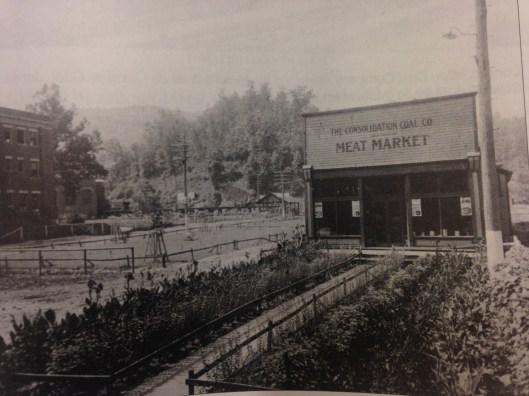
Consolidation Coal Company Meat Market. Photo credit unknown.

Hundreds of carpenters, masons and helpers were at work building houses. The houses they constructed were of a type foreign to the coal fields across the mountains in Virginia. A giant power plant was built, the water of Elkhorn were harnesses to create the power to run the greatest mining plant in the south. The dam built across the stream has formed one of the most beautiful lakes in America, it has been stocked with fish and lined with row boats for the recreation of the coal miners and their families.

IMG_7122.JPG

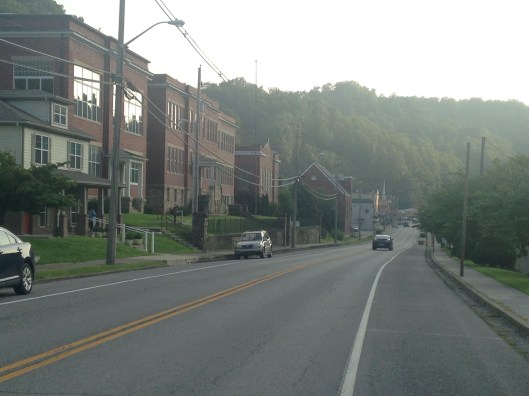
Jenkins. 26 August 2018.

Every home was built for convenience and comfort. Sanitation was provided and each house was wired for electricity. Word went out into the mining camps close by in Virginia that the “Jenkins company” would not tolerate kerosene lamps in their houses and required that their employees use electricity for illumination. These “other camps” were forced to remodel their plants in keeping with the pattern on which the great Consolidation plant was built, until today, the old order has been replaced with the new throughout Virginia, West Virginia and Kentucky: thanks to the lead of the Consolidation Coal Company.

IMG_7112.JPG

Jenkins. 26 August 2018.

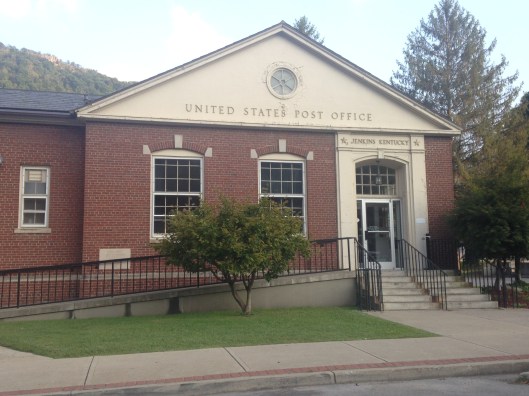
Jenkins is well lighted; has an excellent water system; fire department and paved streets in the business section. Many beautiful homes line the handsome drive, skirting the lake. These, unlike the ordinary mining town houses, are set well back from the driveway in park like lawns, well shaded with grand old oaks and other native trees.

Some of the most substantial business buildings to be found in the Cumberland region are here in Jenkins. Among these are the recreation building, housing a drug store, hotel, post office, Western Union office, barber shop, pool room, printing office, and drink stand. The First national Bank building is the most beautiful building in Letcher county; vine-clad with clinging ivy gives it the appearance of having grown there.

IMG_7114

Jenkins Dept. 26 August 2018.

The most widely known business institutions in Jenkins are the Consolidation Coal Company store, the First National bank, the Jenkins Steam Laundry, the Modern Pressing Shop, Nick Dann’s Auto Sales and Repair Shop, and the numerous businesses housed under the roof of the mammoth recreation building. The town is on the Kentucky state highway and is served by the C. & O. railroad system from Shelby junction.

Source: Logan (WV) Banner, 2 October 1928.

Jake Kinser of Logan County, WV (1936-1937)

20 Saturday Oct 2018

Posted by Brandon Ray Kirk in Big Creek, Big Harts Creek, Boone County, Civil War, Coal, Logan

≈ Leave a comment

Tags

Appalachia, Aracoma, Big Creek, Boone County, Brooke McNeely, Camp Chase, Chapmanville District, Charles Williams, civil war, Claude Ellis, coal, Confederate Army, crime, Dave Kinser, Democratic Party, Douglas Kinser, Elbert Kinser, Ethel, Fort Branch, French River, genealogy, ginseng, Harts Creek, Hetzel, history, J. Green McNeely, Jake Kinser, Jane Mullins, Jefferson Davis, Jim Aldridge, John Carter, John Kinser, Logan, Logan Banner, Logan County, logging, Malinda Kinser, Malinda Newman, Mary Ann Ellis, Mud Fork, Otis Kinser, rafting, Scott Ellis, Smyth County, Stonewall Jackson, timbering, tobacco, Virginia, Washington Township, West Virginia, Wythe County

Jake Kinser Visits LB 06.20.1936 1

Logan (WV) Banner, 20 June 1936. Note: Jacob was not born in 1850, so he does not appear with his family in the 1850 Census for Wythe County, Virginia. He was nine years old in the 1860 Census for Smyth County, Virginia.

Jake Kinser Recollections LB 11.12.1936 2

Logan (WV) Banner, 12 November 1936. Note: Jake Kinser appears as a seventeen-year-old fellow in the 1870 Census for Boone County, West Virginia (Washington Township).

Jake Kinser and Jane Mullins LB 07.07.1937 2

Jake Kinser and his sister Jane Mullins, Logan (WV) Banner, 7 July 1937. 

Jake Kinser and Jane Mullins LB 07.07.1937 3

Jake Kinser and his sister Jane Mullins, Logan (WV) Banner, 7 July 1937. Note: Mary Jane (Kinser) Mullins was eleven years old in the 1860 Census for Smyth County, Virginia. Mr. Kinser died in 1944; his death record can be found here: http://www.wvculture.org/vrr/va_view2.aspx?FilmNumber=571280&ImageNumber=349


Democratic Party Intimidation in Logan County, WV (1924)

20 Saturday Oct 2018

Posted by Brandon Ray Kirk in Coal, Logan

≈ Leave a comment

Tags

Appalachia, Buck Adams, crime, Democratic Party, deputy sheriff, Don Chafin, G.F. Gore, genealogy, history, Ira P. Hager, Jack Meadows, Joe Hatfield, John Colley, John Cooley, Logan County, McConnell, Mine Wars, Orville Hall, Republican Party, sheriff, Stollings, Switzer, Tennis Hatfield, United States Commissioner, Wayne Grover, West Virginia

Political history for Logan County, West Virginia, during the 1920s was particularly eventful; it included the latter years of Sheriff Don Chafin’s rule, the Mine Wars (“armed march”), Republican Party ascendancy, and the rise of Republican sheriffs Tennis and Joe Hatfield. What follows are selected primary source documents relating to this period:

UNITED STATES OF AMERICA

SOUTHERN DISTRICT OF WEST VIRGINIA,

HUNTINGTON DIVISION

John Cooley being by the undersigned authority first duly sworn, says that on the 5th day of November, A.D., 1924, he was on his way from work, and was traveling along the county road through the Town of Switzer, in Logan County, having been a mule driver, was riding his mule. Orville Hall was with affiant. I was riding and Orville was walking. We saw a car coming, with Jack Meadows and Buck Adams, Deputy Sheriffs in the car, with some other men we did not know. When they approached us, about 300 yards away, they began firing their pistols shooting down by the side of the car into the ground. They kept shooting until they came up where we were, and shot by the side of the mule I was riding, and frightened him right much, but the mule did not throw me. They shot within about three feet of the mule. Several citizens heard the shots in Switzer, and some of them saw it.

We went before G.F. Gore to get a warrant for the men, and he ask us who did the shooting, and we told him, and he said, “They are deputies. I do not see how you can do anything with them.”

John Colley

Taken, subscribed and sworn to before me this the 8th day of November, A.D., 1924.

Ira P. Hager

United States Commissioner as aforesaid.

***

UNITED STATES OF AMERICA

SOUTHERN DISTRICT OF WEST VIRGINIA,

HUNTINGTON DIVISION

Before the undersigned authority, Ira P. Hager, a United States Commissioner in and for said District, personally appeared this day Jesse Yeager, who after being by me first duly sworn, says that he resides at Stollings (or McConnell), Logan County, in said District.

That on November 5th, 1924, being election day, affiant went to the Court House to ascertain the results of the election, and affiant was standing in the crowded room. Wayne Grover came up to affiant and said, “God dam you, you haven’t any business here. You are legging for the Republican Party.” And at the same time struck this affiant in the side of the head with some sort of weapon, which affiant believes was a black-jack. That affiant fell to the floor in a dazed condition, very much injured, and affiant’s hip was almost broken, and affiant suffered a great deal on account of the same.

There were no arrests made. He ran back into the crowd as soon as he struck me. Affiant never had any trouble or hard feelings against the said Wayne Grover, and there was no excuse or provocation for the assault, except that affiant worked for the Republican Party in the election.

Jesse Yeager

Taken, subscribed and sworn to before me this the 8th day of November, 1924.

Ira P. Hager

United States Commissioner as aforesaid.

Democratic Party Intimidation in Logan County, WV (1924)

18 Thursday Oct 2018

Posted by Brandon Ray Kirk in Coal

≈ Leave a comment

Tags

Buck Adams, Burl Farley, Democratic Party, deputy sheriff, Don Chafin, history, Ira P. Hager, Jack Meadows, Joe Hatfield, John Cooley, John T. Gore, Logan County, Orville Hall, politics, Republican Party, Roy Adams, sheriff, Switzer, Switzer Collier Company, Tennis Hatfield, U.S. Commissioner, Wash Farley, West Virginia, Wilburn Adams

Political history for Logan County, West Virginia, during the 1920s was particularly eventful; it included the latter years of Sheriff Don Chafin’s rule, the Mine Wars (“armed march”), Republican Party ascendancy, and the rise of Republican sheriffs Tennis and Joe Hatfield. What follows are selected primary source documents relating to this period:

UNITED STATES OF AMERICA

SOUTHERN DISTRICT OF WEST VIRGINIA,

HUNTINGTON DIVISION

Before the undersigned authority this day personally came Orville Hall, who after being by me first duly sworn, deposes and says that he is sixteen years of age, resides at Switzer, Logan County, and is employed by the Switzer Collier Company, at Switzer.

That on the 5th day of November, 1924, after affiant had voted for the Republican Party in the election held November 4th, 1924, affiant was coming up the road, having come out of the mines, and I was walking. John Cooley was riding a mule, which mule we had been using in the mines. After we had gone some distance, Jack Meadows, Deputy Sheriff came along in a car and commenced shooting at the lower end of the camp of the Switzer Collier Company. He was shooting toward the ground. Buck Adams, Deputy Sheriff, was in the car with Jack Meadows, and another man or two that we did not know. They first shot at a point about the middle of the camp, having fired several shots. I got back out of the road, as far as I could, to let them pass in the car, and they shot right below me, and Jack Meadows took some shells out of his gun and threw them out in front of me and laughed, and he went on up the road, with the pistol in his hand, the car still running. They shot within about two feet of the mule. Two men shooting at the same time. Buck Adams and Jack Meadows were both shooting. The mule became frightened and John held on and was not thrown off; it was about four o’clock when this happened.

Orville Hall

Taken, subscribed and sworn to before this the 8th day of November, 1924.

Ira P. Hager

United States Commissioner as aforesaid.
***

UNITED STATES OF AMERICA

SOUTHERN DISTRICT OF WEST VIRGINIA,

HUNTINGTON DIVISION

BEFORE THE UNDERSIGNED authority, Ira P. Hager, a United States Commissioner in and for said District, personally appeared this day Wilburn Adams, who after being first duly sworn says that he run his car on election day, and hauled Republican voters to the election; that he was approached by John T. Gore, a Deputy Sheriff, while on the election ground, and the said Gore said to this affiant, “You did not go into the election to win, but you went into the election for contrariness, and we are going to set on you.”

I am informed by my son, Burl Farley, Wash Farley and Roy Adams that the said Deputy John T. Gore is threatening to do me bodily injury, or “beat me to death.” I being sick at the time he made these threats, which threats have been made since the election.

Wilburn Adams

Taken, subscribed and sworn to before me this the 8th day of November, 1924.

Ira P. Hager

United States Commissioner as aforesaid.
NOTE: Wilburn Adams and Deputy Sheriff Anthony “Buck” Adams were brothers. Wilburn married a sister to my great-great-grandmother.

Peach Creek YMCA (1928)

16 Tuesday Oct 2018

Posted by Brandon Ray Kirk in Coal

≈ Leave a comment

Tags

Appalachia, C&O Railroad, coal, history, Logan Banner, Logan County, Peach Creek, photos, West Virginia, YMCA

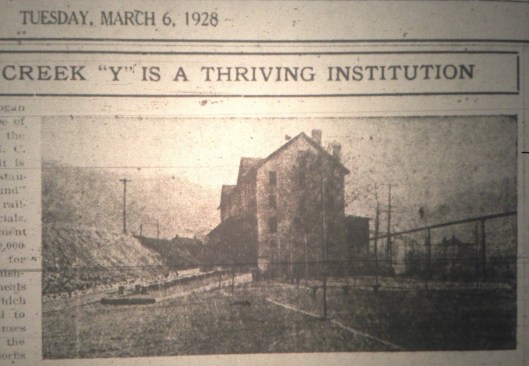
Peach Creek Y is Thriving LB 03.06.1928 1

Logan (WV) Banner, 6 March 1928.

Democratic Party Intimidation in Logan County, WV (1924)

16 Tuesday Oct 2018

Posted by Brandon Ray Kirk in Coal, Logan, Man

≈ Leave a comment

Tags

Anna Meade, Appalachia, Charley Stollings, Cherry Tree, constable, Cora, Democratic Party, deputy sheriff, Don Chafin, Frank Bell, history, Ira P. Hager, jailer, Joe Hatfield, John Harris, John Parmer, John T. Gore, Lee Belcher, Logan County, Logan District, Mine Wars, politics, Republican Party, Taplin, Tennis Hatfield, Tom Chafin, United States Commissioner, W.E. White, West Virginia

Political history for Logan County, West Virginia, during the 1920s was particularly eventful; it included the latter years of Sheriff Don Chafin’s rule, the Mine Wars (“armed march”), Republican Party ascendancy, and the rise of Republican sheriffs Tennis and Joe Hatfield. What follows are selected primary source documents relating to this period:

UNITED STATES OF AMERICA

SOUTHERN DISTRICT OF WEST VIRGINIA,

HUNTINGTON DIVISION

Before the undersigned authority this day personally came FRANK BELL, who after being by me first duly sworn, deposes and says that he resides at Taplin, Logan County, in said District; that he is a contractor in the mines at Cora, Logan County. That Lee Belcher, Deputy sheriff came to affiant’s employees yesterday and told affiant’s employees that affiant was a Republican and that he “was going to get him.” That on last night they fired several shots all around affiant’s house and some shots into affiant’s house, some of them kept parading and firing pistols around the walls of the house all night, and affiant did not sleep any, but kept his clothes on all night.

That affiant looked out and saw some of the men and knew one of them to be Tom Chafin, Deputy Sheriff.

Frank Bell

Taken, subscribed and sworn to before me this the 6th day of November, 1924.

Ira P. Hager

United States Commissioner as aforesaid.
***

UNITED STATES OF AMERICA

SOUTHERN DISTRICT OF WEST VIRGINIA,

HUNTINGTON DIVISION

Before the undersigned authority, Ira P. Hager, a United States Commissioner in and for said District, personally appeared this day Annie Meade who after being by me first duly sworn, says: That on election day, November 4th, 1924, she voted a Republican Ticket at Cherry Tree Bottom, and that after affiant voted W.E. White, Jailor of Logan County, and John T. Gore, a Deputy Sheriff of Logan County, and John Harris, Constable of Logan District, and John Parmer, whose business is unknown to affiant, followed affiant down the street to the home of Charley Stollings, where affiant stopped, and they ordered affiant to get off the public highway. I was then standing in front of Charley Stollings’s house on the hard road. They then said, “If you open your mouth we will take you and put you in jail on your head.” I answered Squire White by telling him that he would not do it. Deputy John T. Gore then said, “You will see if I do not do it.” They then abused me for voting the Republican ticket.

Affiant is forty-four years of age.

Anna Meade

Taken, subscribed and sworn to before me this the 7th day of November, 1924.

Ira P. Hager

United States Commissioner as aforesaid.
Democratic Party Intimidation in Logan County, WV (1924)

14 Sunday Oct 2018

Posted by Brandon Ray Kirk in Coal, Man, Women's History

≈ Leave a comment

Tags

Appalachia, Charley Gore, Democratic Party, deputy sheriff, Don Chafin, H.S. Walker, history, Ira P. Hager, Joe Hatfield, John Morgan, Kistler, Logan County, Malinda Carlton, Mattie Marley, Mine Wars, Pearl Anderson, Republican Party, Tennis Hatfield, United States Commissioner, West Virginia, Will Lancaster

Political history for Logan County, West Virginia, during the 1920s was particularly eventful; it included the latter years of Sheriff Don Chafin’s rule, the Mine Wars (“armed march”), Republican Party ascendancy, and the rise of Republican sheriffs Tennis and Joe Hatfield. What follows are selected primary source documents relating to this period:

UNITED STATES OF AMERICA

SOUTHERN DISTRICT OF WEST VIRGINIA,

HUNTINGTON DIVISION

Before the undersigned authority, Ira P. Hager, a United States Commissioner in and for said county and State, personally appeared this day Mattie Marley, who after being by me first duly sworn, deposes and says:

That she resides at Kistler, Logan County, in said District; that on or about the 2nd day of November, A.D., 1924, at Kistler, in said District, Charley Gore, Deputy Sheriff said to affiant that after the election he was going to give some of them hell; that he was then in affiant’s house, and pulled his revolvers and said that if we would not permit him to give a supper there he knew of plenty of houses where he could get a free supper. He also said when he put his pistol back into his pocket that if his special did not get them his machine gun would.

Mattie Marley

Taken, subscribed and sworn to before me this the 3rd day of November, A.D., 1924.

Ira P. Hager

United States Commissioner as aforesaid.
Witnesses:

Will Lancaster

Pearl Anderson

Malinda Carlton

***

UNITED STATES OF AMERICA

SOUTHERN DISTRICT OF WEST VIRGINIA,

HUNTINGTON DIVISION

Before me, Ira P. Hager, the undersigned a United States Commissioner in and for said District, personally appeared this day John Morgan, who after being by me first duly sworn, deposes and says:

That affiant voted a Republican ticket on election day November 4th, 1924, and H.S. Walker, receiving clerk tore the same up and destroyed it. That there was no justification for his destroying said ballot. Affiant further says that the other election officers of the Junior High School Precinct saw the said Walker destroy said ballot.

John Morgan

Taken, subscribed and sworn to before me this the 4th day of November, A.D., 1924.

Ira P. Hager

United States Commissioner as aforesaid.
Origin of Place Names in Logan County, WV (1937)

12 Friday Oct 2018

Posted by Brandon Ray Kirk in Chapmanville, Coal, Gilbert, Guyandotte River, Logan, Man, Native American History

≈ Leave a comment

Tags

Appalachia, Aracoma, Barnabus, Barnabus Curry, Boling Baker, Buffalo Creek, Cham, Chapmanville, Chauncey, Chauncey Browning, coal, Crystal Block, Curry, D.E. Hue, Dehue, Dingess Run, Edward O'Toole, Gilbert Creek, Guyandotte River, history, Horse Pen Mountain, Huff Creek, Island Creek, Jim Gilbert, Litz-Smith Coal Company, Logan Banner, Logan County, Main Island Creek Coal Company, Mallory, Micco, Mountain View Inn, Native American History, Native Americans, Omar, Omar Cole, Peter Huff, Rum Creek, Sarah Ann, Sarah Ann O'Toole, Stirrat, Twisted Gun Lick, West Virginia, William Dingess, William S. Madison

From the Logan Banner of Logan, WV, comes this bit of history about Logan County place names:

Naming of Logan County Towns and Creeks Related By Logan Banner Reporter

While the first white settlers who entered the county near the middle of the 18th century had to have names for the creeks and runs in order to locate their homes, the children of these first settlers had to have names for each large settlement in order to have their mail delivered to them. Both groups used interesting methods of naming the landmarks.

Early Indian fighters who had contact with Boling Baker and his horse-thieving found little trouble naming the mountain which rises behind Mountain View Inn at the head of Island Creek. Because of the renegade’s custom of using one of the steep hollows for a corral, Captain William S. Madison, an early pioneer, named the mountain Horse Pen. Likewise, Gilbert Creek was named for Jim Gilbert, an Indian scout, who was killed in an Indian skirmish on that tributary of the Guyandotte. Near the place where he was killed there is an old salt lick which is named “Twisted Gun Lick.” The story is told that Gilbert, before he died, hit his gun barrel against a tree to keep the Indians from using it on his comrades. His friends, coming to the lick several hours later, found Gilbert scalped and the twisted firearm lying nearby.

Huff Creek was similarly named for a Peter Huff, whose scouting party was ambushed by a roving band of redskins and Huff was killed in the ensuing battle. They buried Huff on the banks of the creek near the present town of Mallory.

Buffalo Creek, however, received its name in an entirely different manner. The first settlers who hunted in the valley of the Guyandotte found buffalo herds so plentiful on this creek that they called it Buffalo Creek.

Dingess Run was named for a pioneer family of Dingesses which settled in its broad bottoms. William Dingess was the patriarchal head of the family and his children named the run in memory of him.

Island Creek received its name from the Indians who were awed by the beauty of a large creek flowing into the Guyandotte with such force as to cut an entirely separate bed, thus forming an island in the middle of the river. Old timers say that in the early days of the county Island Creek entered the Guyan river at the upper limits of Aracoma. Only during flood time did the creek meet the river at its present point.

As for the towns which have sprung up in the county since coal became king, many were named for prominent people living in them at one time or another or for pioneer families who lived in the towns when the coal companies first came in.

A unique method was used, however, in naming Micco. It received its name from the first letters of the Main Island Creek Coal Co., which formerly operated the mines there.

Omar was named for Omar Cole who was closely associated with the development of the town. The Cole family held, and still holds, extensive mining leases in the vicinity of that mining town.

Sarah Ann acquired its name from the wife of Colonel Edward O’Toole, who was manager of the coal company when the town applied to the government for a post office. The town is generally known as Crystal Block.

Barnabus received its name from Barnabus Curry, a pioneer settler whose home was near the town.

Stirrat was named for Colonel Stirrat, who was manager of the Main Island Creek Coal Company at one time.

Chauncey was named for Chauncey Browning, well-known son of a pioneer family who owned much of the land near that town. For many years the town of Chauncey was not large enough to be made a post office, but after the Litz-Smith Coal Company opened its mines there the town grew to proportions large enough to warrant a post office.

Dehue was given its name in honor of D.E. Hue, the first superintendent who operated the mines there.

Cham, a small place about two and one-half miles above Dehue, got its name from a Chambers family who lived on Rum Creek.

Chapmanville was named for the Chapmans, Curry for the Curry family and Aracoma for the famous Indian princess.

Source: Logan (WV) Banner, 25 March 1937

Editorial: Blow at Coal Industry (1939)

11 Thursday Oct 2018

Posted by Brandon Ray Kirk in Coal

≈ Leave a comment

Tags

Appalachia, coal, Franklin D. Roosevelt, free trade, history, John D. Battle, Logan Banner, Logan County, National Coal Association, protectionism, Reciprocal Trade Agreement, tariffs, U.S. Congress, United Mine Workers of America, United States, Venezuela, West Virginia, White House

An Editorial: Blow at Coal Industry

We are all dependent upon the coal industry for a livelihood. Therefore anything that is injurious to the coal industry is of vital interest to us—whether we are in the newspaper business, a merchant, a clerk in a store, coal miner—or whatnot. It is a well known fact that for years, under the Roosevelt administration, reciprocal trade agreements with other countries have been striking at the very heart of the coal industry. We are all aware, too, that because of these trade agreements and because of regulatory measures, the demand for coal has been considerable less. In other words, to make a long story short, coal has been replaced to a large extent by cheap imported oils and natural gas. There was a time when high protective tariffs kept the cheap imported oils out of the United States—much to the benefit of the coal industry.

That is why it is of particular interest to refer to a recent Reciprocal Trade Agreement made with Venezuela which permits cheap imported oil to flow freely into the United States to replace coal as a fuel. John D. Battle, executive secretary of the National Coal Association, recently made some pertinent comment in regard to this agreement, that should be carefully diagnosed by all those engaged in and dependent upon the coal industry for a living. Said Mr. Battle: “The reciprocal trade agreement with Venezuela which the state department has announced is certain to increase the pressure upon Congress to terminate the entire trade treaty authorization. The Venezuela Agreement caps the climax of a tariff reduction policy which largely ignores the needs and concerns of American industry and American labor. This agreement cuts in half the existing excise tax on oil imports, notwithstanding the strong and unanimous opposition which had been registered with the state department by coal operators from coast to coast, both bituminous and anthracite, and by the United Mine Workers and by the spokesmen for the independent oil producers. Congress imposed a half-cent per gallon excise tax on oil imports in 1932 for the protection of our own fuels in our own markets. This tax so far failed to afford the needed protection that bills are now pending to increase the excise tax to 3 cents per gallon. The Venezuela Agreement not only reduces the excise tax to one-quarter cent per gallon, but ties the hands of Congress and prevents any increase in this tax so long as this trade agreement remains in force. The five per cent quota which the treaty drafters have inserted as a sugar coating is without practical effect and is a palpable subterfuge. The present taxable imports of crude and fuel oil, which come principally from Venezuela, large as they are, are nevertheless considerably below this five per cent quota limit. That means that as a result of the Venezuela Agreement oil imports may largely increase at the expense of United States coal, and at a time when the oil wells of many United States producers are shut in for want of markets. Existing oil imports represent a displacement of some ten to twelve million tons of bituminous coal annually, which takes from twelve to fifteen million dollars out of the pay envelopes of mine labor and takes more than twenty million dollars away from the railroads. Our industry will not suffer this blow in silence. We shall renew our protests to the state department and to the White House to make the record clear, and we shall carry this fight to Congress with the expectation that Congress will heed the protest and be moved to put a stop to this policy of delegating to the executive branch of the government law-making and treaty-making functions, which policy has in practice proved so destructive.”

Source: Logan (WV) Banner, 14 November 1939

Buskirk Cemetery at Buskirk, KY (2015)

09 Tuesday Oct 2018

Posted by Brandon Ray Kirk in Cemeteries, Coal, Culture of Honor, Matewan

≈ Leave a comment

Tags

Appalachia, Baldwin-Felts Agency, Brandon Kirk, Buskirk, Buskirk Cemetery, Cable Testerman, cemeteries, Ed Chambers, genealogy, history, Kentucky, Matewan, Matewan Massacre, mayor, McDowell County, Mine Wars, Phyllis Kirk, Pike County, Sid Hatfield, Welch, West Virginia

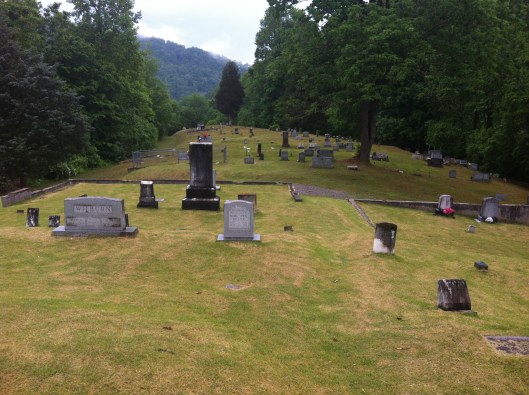
IMG_1872

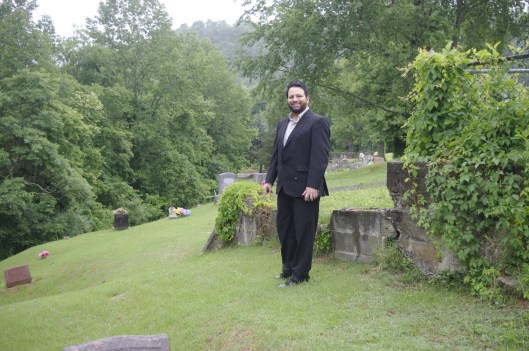
Partial view of the Buskirk Cemetery in Buskirk, Pike County, KY. 16 May 2015.

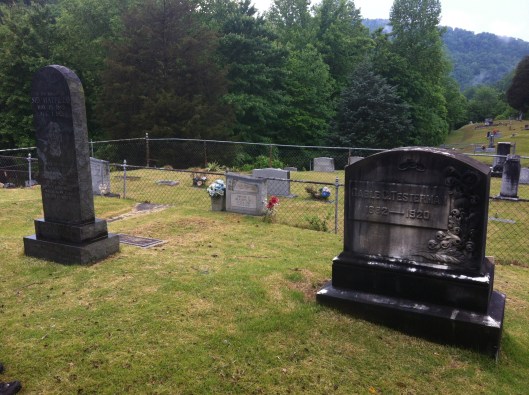
IMG_1873

Sid Hatfield grave (left) and Cable Testerman grave (right). Note gap between the headstones.. After Cable’s death, Sid married his widow. Was the burial spot between the two men reserved for her? 16 May 2015. https://yesteryearsnews.wordpress.com/2012/06/04/married-the-man-who-killed-her-husband-and-then/

IMG_3189

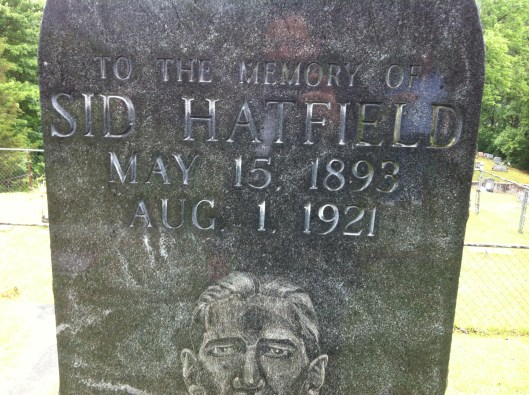
Sid Hatfield headstone, Buskirk Cemetery, Buskirk, KY. Sid was chief of police in Matewan, WV. 16 May 2015. https://www.youtube.com/watch?v=PnHY7HHPhCw

IMG_3190

Sid Hatfield headstone, Buskirk Cemetery, Buskirk, KY. After his murder, labor activists fashioned a mythical Sid Hatfield. The real Sid Hatfield has been largely lost to history. 16 May 2015. https://www.wvencyclopedia.org/articles/282

IMG_3191

“Defender of the Rights of Working People”…? 16 May 2015.

IMG_3193

Cable Testerman headstone, Buskirk Cemetery, Buskirk, KY. Mayor Testerman was shot and killed in the Matewan Massacre. 16 May 2015.

IMG_1870

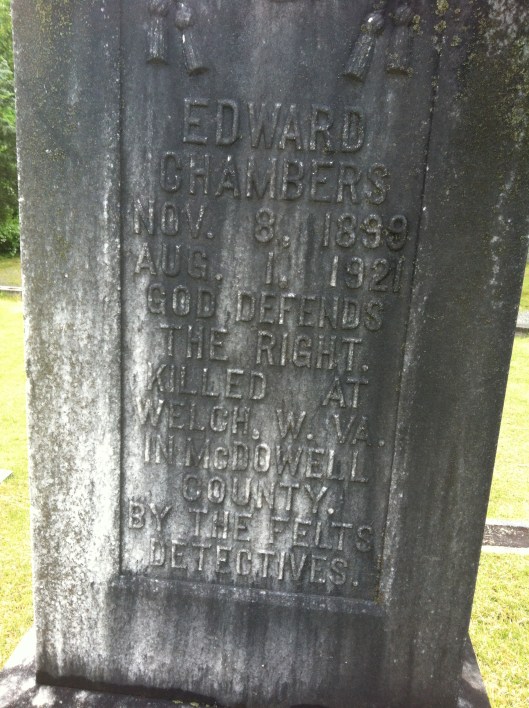
Ed Chambers headstone, Buskirk Cemetery, Buskirk, KY. Chambers and Hatfield were murdered at Welch, WV. 3000 people reportedly attended their funerals. 16 May 2015.

IMG_3225

Fun day! Buskirk Cemetery, Buskirk, KY. 16 May 2015. Photo by Mom.

Don Chafin (1927)

07 Sunday Oct 2018

Posted by Brandon Ray Kirk in Coal, Logan

≈ Leave a comment

Tags

Ammar Brothers, Appalachia, Bell Department Store, Democratic Party, Don Chafin, history, Logan Banner, Logan County, Logan Jewelry Company, Logan Jewelry Store, Nate Rosensweig, New Eagle Restaurant, Nick Savas, sheriff, Stratton Street, West Virginia

The Logan Banner of Logan, WV, offered these items relating to former sheriff Don Chafin in 1927:

Don Chafin In Another Realty Deal

Announcement was made today by Don Chafin of the disposal of more of his Logan property, following the sale of his oil and gas business and service stations consummated last week. The deal just closed disposes of two business buildings on Stratton street, one the three-story brick block occupied by the Bell Department Store, the other the adjoining one-story brick structure containing two store rooms, one occupied by the Logan Jewelry Company, the other by the Army and Navy Store of Nate Rosensweig. The consideration of the two sales is about $127,000. New owners of the properties are Nick Savis, of the New Eagle Restaurant, and Ammar Brothers. The Bell Department Store will continue to occupy the ground floor of the three-story building in its present location under the existing ten-year lease, while the Logan Jewelry Company and the Army and Navy Store will remain in their rooms in the other building until their present leases expire, at least.

Source: Logan (WV) Banner, 23 August 1927

***

DON CHAFIN WILL NOT BE A CANDIDATE FOR SHERIFF NEXT YEAR

Former Sheriff Decides Family and Business Need Him More Than Politics

STATEMENT IS FINAL ONE

Will Take No Active Part In Primaries; Asks That Insistence Cease

Under no circumstances will Don Chafin, former sheriff and recognized Democratic leader, be a candidate for sheriff at the next election. This was the text of a statement made to a Banner reporter this morning.

“Please tell my friends in both parties that my several business interests prevent me from making the race,” added Mr. Chafin. “I appreciate the many kind offers of support, and I know every person who has approached me is sincere in wanting me back in political action, but my family and business interests require my entire time, and I would not be fair to either if I neglected them to make the fight that would be necessary.”

Asked if he would take active part in the support of the Democratic candidate, the former sheriff said, “I will make no active campaign for any one in the primaries, but successful party nominees may expect my untiring support for their successful election in November, provided they are of the proper material.”

Mr. Chafin also wanted it made plain that his friends would be doing him quite a favor if, after this statement is made, they will take it as his final word, and make no further insistence. “It really takes up much of my time and distracts me from my work to have so many callers each day insisting I make the race,” he said.

This announcement of Mr. Chafin’s will cause more surprise from those who felt he positively would make the race at the proper time. No Democratic announcements for sheriff have been mentioned outright, each waiting to see what Don had in mind. This settled now, it is expected the field will be immediately flooded with the many who have looked with longing eyes on that important office.

Source: Logan (WV) Banner, 23 December 1927

James Jeffrey Deposition about Labor Conditions in Logan County, WV (1923)

02 Tuesday Oct 2018

Posted by Brandon Ray Kirk in Coal

≈ Leave a comment

Tags

Appalachia, coal, Coal River, deputy sheriff, Edgar Combs, history, James Jeffrey, Kanawha County, Logan, Logan County, Mine Wars, Prohibition Officer, Sallie Chambers, United Mine Workers of America, West Virginia

DEPOSITION OF JAMES JEFFREY

STATE OF WEST VIRGINIA

Vs.

Edgar Combs

STATE OF WEST VIRGINIA, KANAWHA COUNTY, as:

James Jeffrey, Who, being first duly sworn by me says that he now lives at Jeffrey, Boone County, West Virginia, and has lived in that section of the country all of his life; that he has been connected with the Prohibition Department of the State as a Prohibition Officer, and at the present time is a Coal Miner by occupation; that he is familiar with what is known as the Mine Guard System in Logan County under which large numbers of Deputy Sheriffs are employed and paid by the Coal Companies of that County; that the principal purpose of employing such Deputy Sheriffs is to prevent the Coal Miners from joining the United Mine Workers of America; that he knows the general reputation of the said deputy Sheriffs as to their attitudes toward the members of said Union; that the said Deputies have a long record for assaults upon members of the United Mine Workers that there is a feeling of deep hostility and enmity between the said Deputies and the members of said Union; that practically the whole of Logan County excepting only the small position lying along Coal River is non-union and this is due wholy to the war made upon the said Union by the deputy sheriffs; that it is dangerous for any member of the said union to remain in said County, by reason of the said Deputies; that Affiant knows that the members of said union are afraid to go to Logan Court House, as a witness and there testify fully and freely in any matter that might arise the hostility of the said deputies or the company by which they are employed and the conduct of the said deputies toward the employees of the said Union primarily caused the Armed March of the miners in 1921; that by reason of the above facts this affiant knows that it would be impossible for the defendant to get a fair and impartial trial in the said County of Logan.

Taken, sworn and subscribed by me on the 29th day of September 1923.

Sallie Starr Chambers

Notary Public, Kanawha County, West Virginia

Dorothy, WV (1910s)

02 Tuesday Oct 2018

Posted by Brandon Ray Kirk in Coal

≈ 1 Comment

Tags

Appalachia, coal, Dorothy, history, photos, Raleigh County, West Virginia, West Virginia State Archives

IMG_4443

Dorothy, Raleigh County, WV. Original photo owned by the West Virginia State Archives.

IMG_4450

Dorothy Company Store, Raleigh County, WV, 1915. Original photo owned by the West Virginia State Archives.

Walter R. Thurmond Testimony about Labor Conditions in Logan County, WV (1921)

28 Friday Sep 2018

Posted by Brandon Ray Kirk in Coal, Guyandotte River

≈ Leave a comment

Tags

Appalachia, coal, Committee on Education and Labor, Democratic Executive Committee, deputy sheriff, Don Chafin, Guyandotte River, history, Logan Coal Operators Association, Logan County, Mine Wars, miners, sheriff, U.S. Senate, Walter R. Thurmond, West Virginia

TESTIMONY OF MR. W.R. THURMOND.

Testimony of W.R. Thurmond, given before the Committee on Education and Labor of the United States Senate, at a hearing had in the City of Washington on October 26, 1921.

The witness, having been first duly sworn by the chairman, testified as follows:

THE CHAIRMAN: Mr. Thurmond, what is your position with the coal operators?

THURMOND: President of the Logan Coal Operators Association.

C: What is that Association?

T: The Logan Coal Operators’ Association is a voluntary association composed of 66 operating companies, located in that part of Logan County lying on the waters of the Guyan River, and operating 134 mines.

C: What percentage of the miners of Logan County belong to unions?

T: Only about 5 per cent, and none of them are in that part of Logan County. I have a map here that I think will show.

C: How much has your association contributed these different years to the payment of deputy sheriffs?

T: I have the years 1920 and 1921.

C: All right, sir.

T: The reason I did not go behind that year, you have that information in the governor’s investigation of West Virginia, which I understand was available to this committee.

C: Give us those two years.

T: Last year was $46,630, and was 4.9 mills on each ton of coal mined.

C: You have a system of assessing against each ton mined?

T: No, sir. I am giving you that for this reason. The newspapers had an article purporting that the Attorney General said to this committee that there was 10 cents a ton levied on every ton of coal shipped out of Logan County for the purpose of paying deputies, and I got this on this tonnage basis to refute that.

C: Four and nine-tenths cents.

T: Mills, not cents.

C: Oh, 4 mills?

T: Yes, less than one-half cent.

C: I do not remember that he said that, but he may have said it. Did he say it the other day before this committee?

T: No, the newspapers carried an article purporting him to have said that. I do not know whether he did or not. The public got that.

MR. AVIS: That 4 mills was for last year?

T: That was for 1920.

C: Can you figure any amount according to production of coal in tons among the officials?

T: No, sir.

C: What was it this year?

T: It is $61,517 up to and including September. Now, there are three reasons why there is an increase there this year, first the population of the county is growing each year, and new operations opening up, and we have more men, and the second reason is we are paying them a little more salary than last year, and the third and principal reason is this trouble which came on, and which we anticipated.

C: There were a good many new deputies sworn in during the trouble, were there not?

T: Yes, sir.

C: Did you people pay any of those deputies?

T: We paid that sum to the regular force.

C: How did you do that? Did you give a check to the sheriff?

T: Yes. We paid it to the bank. He rendered an account. Senator Shortridge asked if that was paid to the county treasurer. We have no county treasurer. The sheriff takes charge of those duties.

C: You paid that to the bank to the credit of the sheriff?

T: Yes, sir.

C: Did you pay it all at once?

T: Monthly.

C: Monthly?

T: Yes, sir. He gave us a statement.

C: How many deputies in 1920 did this $46,000 pay for?

T: I don’t know.

C: How many did they have in that county.

T: They have 54 now. There are 54 officers. That includes the sheriff himself and the elected officers.

C: It seems to me some one told us at Logan—and yet I do not want to be certain about that—that there were 50 deputies last year paid in that way.

T: I think you asked me that question, and I think you asked, “How many deputy sheriffs did you have?”

C: That is possibly true.

T: I said approximately 50 and I think later corrected the testimony and said I understood there were 54.

C: How many were there this year?

T: That is this year.

C: That is this year?

T: That is this year, yes.

C: You mean 1920?

T: 1921.

C: I am asking about 1920. You gave us the amount of money but I want to know how many deputies were employed in that way in 1920.

T: I don’t know.

C: You do not know?

T: No, sir.

A: I understood the witness to say the 54 included all the county officers.

C: I understood him to say there were some other officers.

T: There were six justices of the peace.

C: What salaries were paid to these deputies?

T: $175 a month.

C: $175 a month?

T: Some of them, and some $150.

C: Do these deputy sheriffs act as guards for your property?

T: No, sir.

C: They act as general deputy sheriffs?

T: Yes, sir.

C: Do they serve process around the county?

T: Yes, sir.

C: And arrest men who have no connection with your company?

T: Yes, sir.

C: Are all these deputies paid $175 a month?

T: No, not all of them.

C: The sheriff would know the exact number?

T: Yes, sir. He would know about that. I know they are not all paid that.

C: How long has that system of furnishing money to pay deputy sheriffs by the coal companies continued? How long has it been in operation?

T: I can not give you the exact number of years, but I think about 8 years.

C: Do you know whether that is carried on in any other county in West Virginia?

T: I don’t know, sir. The other gentlemen can testify to that.

NOTE: In 1921, Mr. Thurmond was chairman of the Democratic Executive Committee in Logan County, WV.

Sociologist Jerome Davis Letter about Labor Conditions in Logan County, WV (1923)

25 Tuesday Sep 2018

Posted by Brandon Ray Kirk in Battle of Blair Mountain, Coal, Logan

≈ Leave a comment

Tags

American Sociological Society, Appalachia, coal, Colorado, Dartmouth College, deputy sheriff, Don Chafin, Edgar Combs, Edward F. Moore, H.W. Houston, Hanover, history, Industrial Management, Jerome Davis, Logan, Logan County, Macmillan Company, New Hampshire, notary public, Pennsylvania, sheriff, United Mine Workers of America, West Virginia

State v. Edgar Combs

Affidavit

Filed in open Court

Oct. 15, 1923

***

The American Sociological Society

Dartmouth College

Hanover, N.H.

August 1, 1923

As a teacher in Dartmouth College I have been called on to make several investigations into conditions in coal mining regions in Colorado and Pennsylvania. One of my studies was published by the Macmillan Company and another by Industrial Management. I have never been connected in any way with a labor union and believe that my testimony is impartial.

I have recently been to West Virginia for the purpose of studying conditions in the coal industry there. I was in the state for a total of about a month during June and July of this year. For the major part of this time I was in Logan County or in the surrounding counties.

I found it extremely difficult to secure affidavits from coal miners and others because they stated they were afraid of Don Chaffin and his Deputy Sheriffs. It seemed to be the general consensus of opinion that any person connected with the United Mine Workers of America would not knowingly be permitted to remain in the county and might be subjected to violence. I counted the names of over two hundred deputy sheriffs in the court records of the county and Don Chaffin informed me that the unions had so far been successfully kept out of the district.

Whether justified or not, operators and officials with whom I talked in Logan seemed to feel especial bitterness against H.W. Houston, Attorney of the United Mine Workers of America. It seems to me probable that necessary witnesses for the defense would be reluctant to testify fully and freely, and that they might actually be afraid to attend court for any considerable time. I know that there are a large number of responsible citizens of Logan County who share this belief, although they may not be willing to testify publicly for the reasons given above.

Jerome Davis

Taken, subscribed and sworn to before me this first day of July, 1923.

My commission expires on the 17th day of Feb 1928.

Edward F. Moore, Notary Public

***

For more about Jerome Davis, follow these links:

https://en.wikipedia.org/wiki/Jerome_Davis_(sociologist)

http://archiveswest.orbiscascade.org/ark:/80444/xv87313

https://fdrlibrary.org/documents/356632/390886/findingaid_davis_jerome.pdf/d0d4b6dd-6e43-4263-8167-789da6b972dc

Recollections of McKinley Grimmett of Bruno, WV 4 (1984)

07 Friday Sep 2018

Posted by Brandon Ray Kirk in Coal, Hatfield-McCoy Feud, Italian American History, World War I, Wyoming County

≈ Leave a comment

Tags

Accoville, Appalachia, Bill Mosely, Bruno, Buffalo Creek, Burl Christian, Cap Hatfield, coal, crime, Cub Creek, Democratic Party, deputy sheriff, Devil Anse Hatfield, Don Chafin, Elech Luster, Elech Steven, Elk Creek, genealogy, Harve Grimmett, Henderson Grimmett, history, influenza, Italian-Americans, Joe Browning, Joe Hatfield, justice of the peace, Logan County, Logan Lumber Company, Mallory, Mallory Coal Company, Matilda Hatfield, McKinley Grimmett, Nancy Grimmett, Phil Elkins, Sand Lick, Scott Browning, sheriff, Spice Creek, Tennis Hatfield, Thomas Hatfield, Watt Elkins, West Virginia, World War I, Wyatt Belcher, Wyoming County

McKinley Grimmett was born on November 30, 1896 to Henderson and Nancy (Hatfield) Grimmett at Sand Lick, Logan County, WV. On May 14, 1916, Mr. Grimmett married a Ms. Plymale, who soon died, in Logan County. One child named Alva died on June 21, 1919 of whooping cough, aged fourteen months. His World War I draft registration card dated September 12, 1918 identifies him as having blue eyes and light-colored hair. He was employed by Mallory Coal Company at Mallory, WV. On November 13, 1919, he married Matilda “Tilda” Hatfield, daughter of Thomas Hatfield, in Logan County. He identified himself as a farmer in both of his marriage records. During the 1920s, he served as a deputy under Sheriff Tennis Hatfield.

The following interview of Mr. Grimmett was conducted at his home on July 17, 1984. In this part of the interview, he recalls his occupations. The post-World War I flu pandemic, early Bruno residents, timbering, the Hatfields, politics, and crime are featured.

***

Do you remember the flu that came along after World War I?

Oh yeah, I’ve seen ‘em up here in my graveyard bury as high as three or four in one day. Buried a man and his wife and kid all in one day there. It was bad. I was running a drum at Mallory for the company. I went there well that morning and at 10 o’clock they hauled me back in a jo-wagon. I couldn’t walk with the flu. I was down for four days and the mine didn’t run. I got over it awful quick. The doctor come… Dr. Shrewsbury, used to be at Mallory. Next day was Saturday and Sunday and he told me to stay off for Monday. And he said he’d send after me. Come and get me, bring me back in the evening. All he wanted me to do was run the drum. Not get hot or anything. I got over mine. My sister come there to see me. She had seven kids. She come there and took it. And all her kids come to see her and they all took it. And her husband come to see about them and he took it. And her husband couldn’t talk plain. Keenan Walls was her husband. He called onions “inghams.” My mother would say, Keenan, what do you want to eat today? They fried them. She’d fry them onions. He said, I don’t know hardly unless you fry me some more inghams. Yeah, they’s about 250 graves in that graveyard of mine.

Tape stops.

There’s a lot of people up this creek. Used to be there wasn’t about six families when I was a boy growing up. Wyatt Belcher lived down below the mouth of the creek. And Burl Christian lived up here a little ways. And Watt Elkins lived over there. And my daddy lived next. And my daddy’s brother Harve Grimmett lived next. Phil Elkins lived next. Now in the head of the creek where this backland was, that was before McDonalds got a hold of it. They lived on it, built log houses and everything else. I couldn’t tell you who all… Mountses there. I made several caskets. I made my mother’s coffin. I bought my daddy a steel coffin and I had to take some straw out of it. He was a pretty good sized man like myself. They both had the flu. And she had a lot of chickens here. I lived up at the old homeplace and they lived here. She wanted to know where that straw come from. I told her the truth about it. I told her I had to take it out of Daddy’s casket. It was a little too tight on him and I wouldn’t put him away that way. And said, Kin—she called me Kin, my nickname—said, whenever I die I want you to make my casket. She’d seen me make so many, you know. She wanted me to do that. And so I made it. I went to Logan and I bought the handles. It cost me $105 dollars. Looked like silver. And I bought plush stuff and lined it and everything. And I went down here to this planing mill and I bought the first class lumber. Didn’t have a knot in it. Logan Lumber Company run it then. And I made it. Oh, I’ve made oodles of ‘em. I made the old man Joe Browning’s in Spice Creek up here one time… And he’d sawed beech lumber now for me to make that casket out of. And old man Scott Browning, I got him to help me. And I bet you he weighed about 300 pound. And that beech lumber was 22 inches wide and I still had to put a slab on each side up at his hips down about four inches wide on each side. They couldn’t get enough men around that to lift it. I don’t see how they ever got it down in the grave. I didn’t go to the grave with ‘em. I made the casket and that was all.

Would you rather work with timber or coal?

Well, it’s according to what kind you do with lumber. I believe I would rather work in the mines because I’ve always had a good job in the mines. I worked 44 years and two months around the mines and I never was laid off. Born and raised here in Logan County. Never been in jail. Never been arrested. Never been sued. I never bothered nobody’s business only my own. I’ve been honest with everybody.

Were you ever politically active?

Yeah, I was, whenever them Hatfields was in there. They’d make you, whether you wanted to or not. Tennis and Joe and all of them. You get in that bunch of Hatfields at that day and time you couldn’t get away from ‘em. They’d claim me as their cousin all the time, ‘cause I was half-Hatfield myself. I don’t reckon my mother was any relation to any of them. She didn’t know nothing about them. She was from Wyoming County up on Big Cub Creek, you know. Now she heard lots of talk about Devil Anse and Cap and all of them. She was afraid for me to be with them all the time.

Did you like politics?

Yeah, I liked it pretty good.

Did you ever run for office?

Yeah, I run for JP one time. ’52. Bill Mosely run against me. And I beat Bill over here at his office precinct but he beat me up at Buffalo. Yeah, I run for JP one time. I never did run any more.

Who has impressed you the most in politics?

I reckon Tennis has been the one. Now Joe is a man that was still kind of sulky like. He didn’t seem like that he appreciated what you’d done or something like that. Either that or he thought hisself a little bit higher than you was. Something like that. I don’t know. I couldn’t figure him out. But Cap now, he’d cuss them out and everything else.

Do you remember the ’32 election?

Oh yeah. I remember. Why, coal companies, they went in with the Democrats and they fired us off of the deputy force. The coal companies put us on as guards. And we stayed that way for about three months. And Democrats come in and they cut that law out. And we went on back to work and that didn’t change nothing. I tell you, it was a sight whenever Chafin was in there. Lord, they killed people and everything. Up Buffalo at Accoville, they was building a railroad up through there. Well, that day and time they built camps for their men to stay in and they rode horses, the bosses did, ride him right out on the job. And they’d get up in the morning, Elech Steven and Elech R. Luster was the two bosses—one was superintendent, one was boss—and they’d go around, one had a ball bat and a hole drilled through it and a strap of leather in it and it was a small ball bat now and if them colored people or hunkies and Italians wasn’t up they’d knock the window lights out and then nail the window up instead of buying them a window and putting it back in. And they killed them two, the hunkies and Italians. They come out on ‘em and shot ‘em both and killed ‘em. About eight of them. Well, they killed three of ‘em before they got out of sight, the Americans did, up Accoville Hollow there. And the rest of ‘em come through and they shot one right over the Huff Knob and he rolled plumb from the top of that ridge down just like a dog bouncin’ plumb into the river. That made four of ‘em they got. Then they got two more up here on Elk Creek. Then they got two more up at Spice. Made the eight. Well, they killed them all. And they brought them—I was up there at the store at Elk Creek whenever they brought them two Italians down there… Now, this old raw bacon. Slabs that come that wide and be that long, grease would be running out. And they would cut them off raw meat and throw it to them like throwing it to a dog and they’d eat it.

NOTE: Some names may be transcribed incorrectly.

Recollections of McKinley Grimmett of Bruno, WV 3 (1984)

06 Thursday Sep 2018

Posted by Brandon Ray Kirk in Coal, Hatfield-McCoy Feud, Logan, Timber, World War I

≈ Leave a comment

Tags

Appalachia, assessor, blacksmith, Bruno, Burl Stotts, California, Cap Hatfield, Christian, Christmas, coal, Devil Anse Hatfield, drum runner, Edith Grimmett, Elba Hatfield, Elk Creek, Ellison Toler, genealogy, Harvey Ferguson, Harvey Howes, Hatfield-McCoy Feud, Henderson Grimmett, history, Huff Creek, J.G. Hunter, Joe Hatfield, Johnny Davis, justice of the peace, Logan, Logan County, Mallory, Mallory Coal Company, Matilda Hatfield, McKinley Grimmett, mining, Nancy Grimmett, Osey Richey, politics, pushboats, rafting, Ralph Grimmett, Rum Creek, Sand Lick, sheriff, Smoke House Restaurant, Tennis Hatfield, Thomas Hatfield, timber, West Virginia, whooping cough, Willis Hatfield, World War I

McKinley Grimmett was born on November 30, 1896 to Henderson and Nancy (Hatfield) Grimmett at Sand Lick, Logan County, WV. On May 14, 1916, Mr. Grimmett married a Ms. Plymale, who soon died, in Logan County. One child named Alva died on June 21, 1919 of whooping cough, aged fourteen months. His World War I draft registration card dated September 12, 1918 identifies him as having blue eyes and light-colored hair. He was employed by Mallory Coal Company at Mallory, WV. On November 13, 1919, he married Matilda “Tilda” Hatfield, daughter of Thomas Hatfield, in Logan County. He identified himself as a farmer in both of his marriage records. During the 1920s, he served as a deputy under Sheriff Tennis Hatfield.

The following interview of Mr. Grimmett was conducted at his home on July 17, 1984. In this part of the interview, he recalls his occupations. Tennis Hatfield, Cap Hatfield, Joe Hatfield, Willis Hatfield, pushboats, Logan, World War I, coal, and blacksmithing are featured.

***

What about Tennis and Joe Hatfield?

But now they come out, they paid all their debts and everything and stuff like that. They was honest, as far as I know. I think both of ‘em went broke, they was so good to the people. They had all kinds of things… Tennis had a five thousand dollar ring and he pawned it to the First National Bank and somebody got the ring. I don’t know who did. Tennis didn’t get it back. They both lost everything they had. And not just only them. Osey Richey, he was assessor and J.G. Hunter was assessor, and they lost all they had. People just, after they got elected and everything, thought that they had to furnish ‘em whether they had it or whether they didn’t.

Tennis and Joe were too young to participate in the Hatfield-McCoy Feud.

Oh yeah. That happened before I got big enough, Cap and them. Cap was chief deputy, though, while I was on. I can remember some of it. Just hear-says. I don’t know nothing about it. Ellison Toler was related to them someway and he stayed at my daddy’s and they kept him up for killing somebody over there at Welch and they hung him there at Welch yard on a tree. I remember getting into my daddy’s papers and reading the letters after I was just learning in school about such stuff like that. And I thought that was the awfulest thing ever was, writing to him and telling about it.

What changed in the county for the Hatfields between the feud and the 1920s?

Mostly, they died out to tell you the truth. Joe and Tennis died out and nobody else had guts enough to take it, you see? Now, Willis, he was the youngest brother. Elba, now he was JP and after he got out as JP he pulled out and went to California. And Willis, he died here about a year ago up on Rum Creek. And Tennis and Joe both died. And that was all of ‘em. All of the old people. Harvey Howes married their sister, and they’re all dead.

Did you ever talk to Cap or Willis?

Oh yeah. Willis, they’d hang after me all the time. They knowed I was half-Hatfield, you know. Tennis and Joe would, too. They was awful good to me ever way. Now Cap, I never – Cap just had one word for a person. If he wanted to talk with you, he’d say, well let’s talk a while, and if he didn’t, he’d say, get the hell away from here. That was the way Cap was. Devil Anse, he used to kill a beef and roast it every Christmas, you know. I’ve went there and eat with him a lot. They tell me they wouldn’t know that place now. They’ve cleaned the graveyard up, you know. I ain’t been up there in… Be five years in January since I got down and I ain’t been away … Only one takes me anyplace is my daughter Edith and Ralph and Edith’s working all the time and Ralph’s all the time busy and Ralph takes me to the doctor every month and Edith took me to the store back and forth and Ralph took me last Saturday.

How has Downtown Logan changed since you were young?

Oh, it’s changed a big lot. Built more buildings in it and everything. Used to be you had about three or four policeman and that was it. Now I can remember back whenever they had a wooden courthouse. A boxed building. I was just a big boy then. Daddy followed rafting and pushboating. You know what pushboating is? Well, they had a big long boat. He had two. And one of ‘em was about eight feet wide and about 46 feet long. Other one was about twelve feet wide. And they had to catch water to get that big boat. And sixteen foot wide. And they’d take a pair of mules or horses, whichever they had, and they’d go to Logan and buy groceries. He had a store and he boated most of his stuff. They’d kill hogs and take chickens and catch fish and take it down to Logan and sell it and they’d bring groceries back.

And they’d make these trips how often?

He went every week. It would take two days to make it, very best. You had from daylight to dark.

Tell me more about your work history.

Well I was a blacksmith. Worked in electric force. They knew I was going to fire. Harvey Ferguson was superintendent. Johnny Davis was general manager. They knowed how old I was. They knowed I was going to retire. I left Christian over here. They shut down. Johnny Davis offered me a job and offered me a job and I wouldn’t take it. I met him right at the foot of the hill. He was a boss over some Elk Creek mine. Well, I went and worked about six months lacking two days for Burl Stotts over there in Campbell’s Creek, built a tipple he fell off of and got killed. I come back and Johnny had come in home that week and Johnny and Harvey Ferguson had been up here and they wanted me to come around there and talk with them on Saturday night. I went around there. They said Johnny said he wanted me to come back up and work for him. I said, well you won’t give me enough. He said, how much you getting? I told him. He said, well I’ll give you three dollars on the day more. I said, well I’ll do it. The rates was 24 dollars. Union then. He give me 27 dollars. I wasn’t getting 24 and going over there and paying board, you know. So I said, well I’ll go back over there and work next week and pay my board up. I wouldn’t walk right off the job from him. He was a good fellow. And he was good to me. And he liked me and everything. And he give me all he could give me. They said they appreciated that, Davis and Harvey Ferguson both. That I’d do a thing like that. So I went back and worked that week and paid my board and come back and went up there and stayed with him fourteen years and retired. In November 30, 1962.

Do you remember anything about your last day?

No, they give me a pair of gloves and Johnny told me that he was going to put a ten dollar gold piece in my envelope. And he did.

What about World War I?

Well I was called… I was drum runner. The superintendent come down in the drum house where I was at. The superintendent said I see you are called for service. I said, Yeah, two more weeks will be my last. You better get somebody in here and let me learn him while I can. He said, we were studying about that. Do you want to go? I said, no I don’t want to go but I guess I’ll have to go. Kaiser was his name. He said, We’ll see what we can do about it. I’ll let you know and I’ll keep you posted at all times. Well, that was on Monday morning, I believe it was. On Saturday evening, I had to work six days a week, Saturday evening he wanted me to come over to his office. That was around on Huff Creek, at Mallory 1. And I went over there. He said, I think I’ve got you retired. He said, We’ve got to have coal men as well as army men. Just don’t say anything about it to none of the boys. You’ll not have to go. And that was all of it. I never did have to go. But I registered five different times for the service. Last time I registered, they took everybody. They didn’t get too old—I registered them all. And the company put me in a little old room beside the store and furnished my eatings for that day paid me for my day’s work and the government never did pay me a cent for none of it. Five different times. Now at first start I had to take them, I had to keep a tally of how many registered, had to take them to Logan and send them out, call in to Washington and tell them how many I registered and everything. Now the last time, I didn’t have to do that. A man come and got ‘em the next day.

Who taught you how to blacksmith?

Oh, I taught myself. My daddy used to shoe horses and I used to help him in the shop. That’s the hardest job ever I got in, shoeing horses or mules. Dangerous job, too. I’ve had them kick me plumb over top of… At that time you had belluses you blow. They’d kick me plumb over top of them belluses. Almost kill me sometimes.

Were there any blacksmith shops around Logan when you were a boy?

Oh yeah. There was plenty of them. There in Logan there was a big one. A fellow named White was the blacksmith down there. Boy, he’d whip a mule. He kept big old hickory poles in there and a mule or horse that didn’t hold still or anything he’d throw its leg down and grab one of them poles—I’ve been in there and watched him—and he’d beat that mule… I swear, I’d be uneasy about it. Think he was going to kill it. It would just quiver like a leaf.

Where was his shop?

Right where the courthouse sits now. There was a wooden courthouse. Box building. Two-story high. And his blacksmith shop was right on down the street. I’d say it wasn’t quite down to the Smoke House. Not quite down that far. Over on the right hand side. It was a big old boxed building and a shed to it. He’d get dirty coal. He was too tight to buy the coal or something. And he’d have enough smoke go all over that town. Yeah, I remember all about that.

NOTE: Some names may be transcribed incorrectly.

Recollections of McKinley Grimmett of Bruno, WV 2 (1984)

03 Monday Sep 2018

Posted by Brandon Ray Kirk in Battle of Blair Mountain, Coal, Italian American History, Logan, Man

≈ Leave a comment

Tags

Alva Grimmett, Appalachia, Barnabus, Blair Mountain, Bruno, Buffalo Creek, Cabin Creek, Campbell's Creek, carpenter, Charleston, Christian, coal, Democratic Party, deputy sheriff, Don Chafin, drum runner, Ed Goodman, Emmett Scaggs, George McClintock, Great Depression, Hatfield Bottom, Henderson Grimmett, history, Joe Hatfield, John Chafin, Kanawha County, Kistler, Landsville, Logan County, Mallory, Mallory Coal Company, Matilda Hatfield, McKinley Grimmett, moonshining, Nancy Grimmett, prosecuting attorney, Republican Party, Sand Lick, sheriff, Superintendent of Schools, Tennis Hatfield, Thomas Hatfield, United Mine Workers of America, West Virginia, Wild Goose Saloon

McKinley Grimmett was born on November 30, 1896 to Henderson and Nancy (Hatfield) Grimmett at Sand Lick, Logan County, WV. On May 14, 1916, Mr. Grimmett married a Ms. Plymale, who soon died, in Logan County. One child named Alva died on June 21, 1919 of whooping cough, aged fourteen months. His World War I draft registration card dated September 12, 1918 identifies him as having blue eyes and light-colored hair. He was employed by Mallory Coal Company at Mallory, WV. On November 13, 1919, he married Matilda “Tilda” Hatfield, daughter of Thomas Hatfield, in Logan County. He identified himself as a farmer in both of his marriage records. During the 1920s, he served as a deputy under Sheriff Tennis Hatfield.

The following interview of Mr. Grimmett was conducted at his home on July 17, 1984. In this part of the interview, he recalls his occupations. Coal, Don Chafin, Tennis Hatfield, unionization, and the Great Depression are featured.

***

Did you ever go to work in the mines?

Oh yeah. I’ve been… That’s what I done over here for 44 years and two months, in and around the mines.

Who hired you?

Yeah, a fellow by the name of Frazier down here at Logan. Superintendent. Not at Logan. Landsville. I stayed there four years, pretty nigh of five years. Then I quit down there and I come to Christian and I stayed up here. A fellow by the name of Harry Venebale hired me over here, the superintendent. And I stayed with him 34 years. Wouldn’t let nobody else hold a lever but me. Drum runner. I’d run as high as 35 railroad cars a day off of that hill. I’ve done it many a day.

Did you do other jobs?

Oh yeah. Days the mines didn’t work I was the carpenter boss. That is, I was overseer over ‘em all. After the union come in, why I wouldn’t take it as a boss. They just run me as a leader, you know. At that time, I’d either have to go in as a boss or get off the union, you know. And I knowed the union was the best for me and I stayed with the union.

Did you have any role in organizing the union?

Oh yeah. I had a big… They wouldn’t let us organize on their property. We had to go across an island over there in the river and have our meeting to organize.

Is it true that local men had the union organized and were waiting for Washington to allow it?

Yeah, that’s about right. We got it. No, they come from Cabin Creek and Kanawha County and Campbell’s Creek over there and tried to organize us. Don Chafin was the high sheriff. He got so much ton per coal and everything. And we couldn’t do a thing because he had every child, woman, and everything else on his side to block us every way. They come to Blair Mountain and had fights. Killed several people, too. Both sides. But I never was in it. I was running a drum and they never did ask me to go. But they paid ‘em. They did go from over there. And went from around here, too. To fight against them, you know. And there was several of them got killed up Dingess Run there. I’ve been at the place where one fellow, sink hole he was in. There was four of them got killed: deputy sheriffs. George Gore and a fellow by the name of Mitchem. I don’t know the other two. I’ve forgot ‘em now. George Gore and Mitchem. But I know where they was at and everything there.

Can you describe Don Chafin?

I’m not too familiar with him now. But he controlled Logan County all the time. Whatever he said, why they had to do or they’d get around you and beat you to death or something like that, throw you in the river, tie your hands behind you – stuff like that.

Were you a Chafin deputy?

I worked for Tennis Hatfield and Joe.

How did Tennis hire you?

Well, Emmett Scaggs run against him. And the County Court was Democratic and they give it all to Emmett. Tennis carried it up to the high court and he won it. About that time, that’s when it was, 1922 I believe it was, last part of 1922, well Emmett, he was a well-educated fellow, he had been the superintendent of schools and everything, he turns around and registers and turned to be a Republican, well then they appointed him prosecuting attorney. You understand? Give him a job. Now the Democrats didn’t do that—Tennis and all of them did. It made a full change around whenever Tennis was elected. The County Court had been Democratic all the time and it turned over, changed hands, and make a Republican County Court. Just like they’ve got now, it’s all Democratic. And a Republican couldn’t get nothing. I’ve seen John Chafin and Hi beat an Italian man. He had two ducks carrying them. Had to wade the river. They fired him over there at Christian. Had to ride horses that day and time. Didn’t have no cars. And they jumped off their horses after they overtook him and they beat him until he couldn’t walk. My dad had a store down at the mouth of the creek and he went and got him and got him up to the store and his ducks got loose. And Mother got the ducks and she raised all kinds of ducks from ‘em. But I haven’t seen that man from that day to this. He’s dead now. But they liked to beat him to death. Now Henry Allen was another one. They barred him from the union. He was a big organizer when it first started. And he got to playing crooked work and they put him out of the union. And he’d done something or other to the party. And they beat him around there at Kistler so hard – the creek was up. Buffalo was a big creek any way. They throwed him up there at Ben Gall’s store in the creek and he washed down there at Kistler and lodged up behind the middle pier at the railroad track. Some men run in and helped him out. I forget who it was. I didn’t see that go off but that’s what happened. Well, he come up here, Henry did, to where I was walking and wanted me to get him a job. Well, I told him I would talk to the boss. A fellow by the name of George Kore. George Kore give him a job working for Tony Lumber Company, helping build houses, you know. He worked about three days and why George fired him and wouldn’t have nothing more to do with him. Henry’s dead now. That’s the last I knowed of him.

Do you remember the names of any early union organizers?

I never did meet ‘em. I tell you they kept me busy all the time as a repair man and drum runner, and days that the mines didn’t run I had to do repair work on the houses and tipples and stuff. Them organizers was, one of ‘em was a fellow by the name of Hall. I’ve seen him but I forget his first name. He had an office over there in Charleston. He was president of the union then. Don Chafin went over there and aimed to tell him what to do and he shot Don. It put Don in the hospital for a long time. After he got out there, Don Chafin and Tennis Hatfield had been in to the Wild Goose business selling bootlegging moonshine whisky up at Hatfield Bottom [in Barnabus]. And they fell out. And Tennis, he goes before the federal grand jury. I forget who the judge was. I knowed him. [George McClintock] And Tennis indicted him and sent him to the pen for four years. But they never did do nothing to Hall for shooting him over there in the miners’ office. But he never did go back in it anymore.

You remember when the mines began to mechanize?

Oh, yeah. I was in there then. I worked up til ’62.

How did the mines change?

Well, they loaded by the car that day and time when they first started. Then they got conveyors in. And they cut the coal and they throwed it on them conveyors by hand. And they built belt-lines from here all across the river, just as far as you wanted to, you know. Had different offsets in it and different motors pulling the belt line. And it come out into a big tipple and dumped into a tipple and then I took it from that. I run it 2100 feet down the incline over there on two monitors on three rails. Now you figure that out. Ten tons to each monitor Now they come up there to the middle way place and they put four rails, you understand? And then one monitor passed the other one at that middle place. All the time. They had a big drum. The drum was twelve foot in diameter and fourteen foot long that way. Built out of gum. Six by six gum. Rope was inch and a quarter.

Was there much bitterness among people when mechanization started?

Oh, no. They was all for it. They was everything was settled. Whatever the union said, they had to do at that time. It was all loaded by the ton by the car. There wasn’t no weighing or nothing like that ‘til they got the union. Then they had to put scales in, you know, and weigh these cars of coal and they had to pay so much a ton. Why, there was people over there at Christian – I never will forget it. Ed Goodman was his name. He’d be broke every week. He’d never load over four or five cars. Just 35 cents a car and a car would hold about four tons, five. And they was starving him to death. He’d come in there on paydays and I’d come in. I was always the last man getting off the hill. He was wanting on dollar scrip. He’d come over and whisper to me and tell me they wouldn’t let him have a one dollar scrip. And I’d vouch for him. Sometimes I’d pull my pay envelope out—they put your money in a pay envelope, you know—and I’ve pull out my pay envelope and give him a dollar and that would do him until Monday. He had a big family. They all weren’t home at that time. He managed. And then when the union come in, they had to treat him the way they did the rest of them.

Did you maintain steady work during the Great Depression?

Yeah. I’ve always had work. I get awful good Social Security. I study all the time – they worked me too much. I actually couldn’t stand it hardly. They’d work me Sunday and every other day. But now I never got no big money at that time. I started off at four dollars a day and I ended up with two hundred and fifty dollars a month. I stayed on that way for 19 years. They wouldn’t give me a raise. I asked ‘em for more money. Miners got a raise, you know. They said no, he couldn’t give it. Was going broke. I said well if you won’t give it I’ll be leaving you first of the month. And he didn’t think I would. Day before I was supposed to quit I sent my toolbox off the hill and everything. They had a man-car there that they rode backwards and forwards that people rode up and down the hill in. That night the man said if I would stay he would split the difference with me. Give me half. Give me twenty-five dollars. I said no I won’t do it. I’ve made you a fortune here. So he wouldn’t come up to fifty dollars and I wouldn’t come off it. Next day they had a wreck. A fella was running… I was sitting here. And they wasn’t no timber around there and I could see the monitors from here. And he wrecked and I never seen such dust in all of my life. And I got in my car and went over there. And they tore one up so bad they had to buy a new one. A monitor. That cost ‘em some money, too.

NOTE: Some names may be transcribed incorrectly.

Recollections of McKinley Grimmett of Bruno, WV 1 (1984)

31 Friday Aug 2018

Posted by Brandon Ray Kirk in African American History, Coal, Dingess, Guyandotte River, Holden, Logan, Man, Timber, Wyoming County

≈ 4 Comments

Tags

African-Americans, Alva Grimmett, Appalachia, Austin Grimmett, Baileysville, Big Cub Creek, Bruno, Buffalo Creek, Christian, Cole and Crane Company, Devil Anse Hatfield, Dingess, Edith Grimmett, education, Elk Creek, Ettie Grimmett, farming, genealogy, general store, Green Perry, Guyandotte River, Guyandotte Valley, Henderson Browning, Henderson Grimmett, history, Holden, Horse Pen Mountain, Johnny Grimmett, Landsville, Lilly Grimmett, Logan, Logan County, logging, Madison Creek, Mallory, Man, McGuffey Readers, McKinley Grimmett, Mingo County, Mud Fork, Nancy Grimmett, rafting, Ralph Grimmett, Rose Grimmett, Sand Lick, Sanford Grimmett, Slater Hatfield, Tennis Hatfield, Thomas Hatfield, Tilda Hatfield, timber, timbering, Travis Grimmett, Verner, Walter Buchanan, West Virginia, whooping cough, World War I, Wyatt Belcher, Wyoming County

McKinley Grimmett was born on November 30, 1896 to Henderson and Nancy (Hatfield) Grimmett at Sand Lick, Logan County, WV. On May 14, 1916, Mr. Grimmett married a Ms. Plymale, who soon died, in Logan County. One child named Alva died on June 21, 1919 of whooping cough, aged fourteen months. His World War I draft registration card dated September 12, 1918 identifies him as having blue eyes and light-colored hair. He was employed by Mallory Coal Company at Mallory, WV. On November 13, 1919, he married Matilda “Tilda” Hatfield, daughter of Thomas Hatfield, in Logan County. He identified himself as a farmer in both of his marriage records. During the 1920s, he served as a deputy under Sheriff Tennis Hatfield.

The following interview of Mr. Grimmett was conducted at his home on July 17, 1984. In this part of the interview, he recalls his family background and early occupations. Logging and rafting in the Guyandotte Valley are featured.

***

Would you mind telling me when and where you were born?

Right here. I was born about a mile up above here. I was borned in Logan County. The post office was Christian at that time. Christian, WV. It’s changed now. They throwed Christian out – it was over here at Christian – and they throwed it out and moved it over here to Bruno. Christian went… The mines stopped over there. And that’s where I was born, right here at Bruno, Logan County. Been here all my life.

What day were you born?

November 30, 1896.

Who were your parents?

Henderson Grimmett and Nancy Hatfield Grimmett.

What kind of work did they do?

They did logging work. All they had that day and time. Mule teams and ox teams.

Where did your dad do his work?

All over Logan County.

Did he have his own farm?

Oh yeah. Yeah.

How big was his farm?

It was about 287 acres.

Can you describe his house?

Well, the house was a two-story building. But he never did get… He took the fever and he never did get the upper story, all of it completed. He died at a very early age of 74. He put him up a little store. Got ahead a little bit. Had a store here. Come down and bought this place off Walter Buchanan and he deeded his five kids the homeplace up there. And then he stayed on it from ’21 to ’29. He died 19th day of January, 1929.

Who were your mother’s parents?

Oh, Lord, I can’t… Slater Hatfield was her daddy’s name. And I don’t know my grandma. My daddy, now they both was born in Wyoming County. Baileysville or somewhere in there. I think my mother was born over there in Big Cub Creek. She was a Hatfield. I don’t know where…

How many brothers and sisters do you have?

I had three brothers and three sisters. Sanford was the oldest one. Austin and Johnny. They’re all dead. I’m the only one that’s living. All my three sisters… Lilly was the oldest one, and Rose was the next one, and Ettie was the youngest. They’re all dead. All of ‘em but me.

Were you educated in Logan County schools?

Yeah, that’s all we got. Free schools. I believe we started off about three months out of the year. Right over there where that first house is sitting – a one-room school house. All of us kids.

What was the last year of school you completed?

I believe it was about 1914, I’m not right sure. ’15.

Did you use the McGuffey Readers?

That’s all we had. And the spelling books. And in the late years, why we had a U.S. history… A small one. Most of it was just about West Virginia. It wasn’t about the whole United States. And geography, we had that. Arithmetic. That was about all we had in free schools. We had to buy them all then. They weren’t furnished.

How did you meet your wife?

She was born and raised over here at Horse Pen in Mingo County. And that’s how we met. We were just neighbors.

What was her maiden name?

She was a Hatfield, too. But now they were… There’s three or four sets of them.

Was her family related to Devil Anse Hatfield?

Well, they was some… Not very close, though, I don’t think.

Which church did you belong to?

I don’t belong to any.

Did you belong to a church when you were younger?

No, never did. If I ever would have joined, I’d have stayed with it.

Do you remember the year of your marriage?

Yeah, I sure do. November 13, 1919.

How many children do you have?

Four. We have two boys and two girls. Travis Grimmett is the oldest. And Ralph, Edith, and Nancy.

What was your wedding like?

Well, we just got married and come right home. At that time, they didn’t have such things, to tell you the truth.

Who was the preacher?

Green Perry. Rev. Green Perry on Elk Creek. Rode a horse back when I went up there to get married. A pair of mules. I rode them mules.

Where did you first live after you married?

Right about a mile above here at the old homeplace.

You have lived here all of your life?

All of our life.

Was it always this populated?

No, no. Wasn’t three or four houses on this creek at that day and time. It was farm land. It’s all growed up now. All them hills was put in corn, millets, and stuff like that. If they couldn’t get a machine to it, they cut it by hand. Some of them raised oats and some of them raised millet, corn. Raised hogs and cattle and sheep and selling ‘em.

Who owned this property back then?

Burl Christian owned this here, but I don’t know… My daddy bought his… A fellow by the name of Wyatt Belcher. Wait a minute. Browning. I can’t think of his name. He lived over here on Christian and he bidded in… It sold for back taxes and he bidded in. Henderson Browning.

What kind of work did you do after you married?

Just the same thing as I worked at before I got married. I first started out – my daddy was a boss for Cole and Crane on this river. I first started out working in the log business. I worked two years at that and then I decided… Mule team – I worked about eighteen months at that. Then in 1913 the coal company started in and I went to work in carpenter work. I helped build all of these houses down here at Landville. The superintendent, we got done, they was wanting to hire men, he give me a job keeping time for a while. And he wanted me to learn to run the drum – that’s letting coal off the hill. I learned it and about the third day I was up there, a preacher was running it, and he told me they’d just opened up and they didn’t have much coal to run off the hill, he told me, that preacher, he rolled out two cards and he said if that preacher fails to go out and work on that side track today you give him one of these cards. Well, I didn’t give him a card. But he come out that evening, the boss did. And he said, did the preacher work. And I said, no he refused. He said, I’ll fix him. He fired him. And I took the job and stayed with it four years and then I got married and then I went to work over here at Christian running a drum and I stayed there 34 years.

When you worked for Cole and Crane, did either of those men ever come up here?

Oh yeah. One of them was. Cole was. I don’t think Crane was ever here. A little slim fella.

Did you get a chance to talk to them?

No, they wouldn’t talk to us working men. They’d talk to the boss. They’d go away from us and talk to theirselves. We just got a $1.10 for ten hours. Eleven cents an hour.

What kind of a person did Cole seem to be?

Well, he knowed how the men was. They’d raft timber and go down this river to Guyandotte. Had what they called locks and dams there to catch the logs. This river was full of logs. He bought timber everywhere. Plumb at the head of it.

Did you ever ride a raft?

Oh, yeah. I went with my daddy. I wasn’t grown.

Can you describe it?

Oh, they’d raft the logs, poplar. Now they didn’t raft hardwoods. They’d sink on them. Some rafts, a big one would be 160 to 200 feet long, about 24 to 26 feet wide. Oar on each end of it. If it was a big raft, they had two men up front all the time plumb in to Guyandotte. I was the second man on it when I got to go out on it. My dad had timber and he rafted it, took it there and sold it. Took what they called dog wedges and cut little basket oaks and rafted them, stringers across ‘em, you know. Lots of people get drowned, too.

Were you ever in an accident?

No, I never was in no big one. I’ve seen about six or eight drown.

Could you describe how it happened?

Oh, if he couldn’t swim, sometimes the best swimmer drowned, you know, if he got under a lot of logs or something. According to whatever happened there with him. He could get out if there wasn’t no logs on top of him no where to hold him under, you know. If logs were on top of him, he was gone. Now about the last ones I seen drowned was two colored people. They was building a railroad from Logan to Man up Buffalo Creek. So we was working on a log gorge down there at the lower end of Landville. And there was four colored men… 1921. Had a saloon up here at Verner. They wouldn’t allow one in Logan County. And they went up there on the 21st day of December to get ‘em a load of whisky. And they come back… They’d seen white people ride these logs. Some county people would get on one log and ride it plumb to Logan, as far as you wanted to go. And they thought they could ride it. And they got on. Rode ‘em off the gorge and they was running into eddy water and they would hit the back end, it would, and the other end would swarp out and they’d pull out that way. And they got on ‘em with their whisky and everything and two of ‘em got out and two of ‘em drowned.

When you rode the raft to Guyandotte, how did you get back to Logan?

Oh, we had to walk. We’d get a train up to Dingess over here. You know where that’s at? We’d ride down up to there. And then we’d have to get off and walk across the hill there and come right straight out at the mouth of Mud Fork, Holden there, and up another little drain and down Madison Creek down here. And walk… Man alive, our feet would be so sore, I’d be up for two or three weeks I couldn’t walk, my feet would be wore out so.

NOTE: Some names may be transcribed incorrectly.

← Older posts
Newer posts →

Feud Poll 1

If you had lived in the Harts Creek community during the 1880s, to which faction of feudists might you have given your loyalty?

Categories

  • Adkins Mill
  • African American History
  • American Revolutionary War
  • Ashland
  • Atenville
  • Banco
  • Barboursville
  • Battle of Blair Mountain
  • Beech Creek
  • Big Creek
  • Big Harts Creek
  • Big Sandy Valley
  • Big Ugly Creek
  • Boone County
  • Breeden
  • Calhoun County
  • Cemeteries
  • Chapmanville
  • Civil War
  • Clay County
  • Clothier
  • Coal
  • Cove Gap
  • Crawley Creek
  • Culture of Honor
  • Dingess
  • Dollie
  • Dunlow
  • East Lynn
  • Ed Haley
  • Eden Park
  • Enslow
  • Estep
  • Ethel
  • Ferrellsburg
  • Fourteen
  • French-Eversole Feud
  • Gilbert
  • Giles County
  • Gill
  • Green Shoal
  • Guyandotte River
  • Halcyon
  • Hamlin
  • Harts
  • Hatfield-McCoy Feud
  • Holden
  • Hungarian-American History
  • Huntington
  • Inez
  • Irish-Americans
  • Italian American History
  • Jamboree
  • Jewish History
  • John Hartford
  • Kermit
  • Kiahsville
  • Kitchen
  • Leet
  • Lincoln County Feud
  • Little Harts Creek
  • Logan
  • Man
  • Matewan
  • Meador
  • Midkiff
  • Monroe County
  • Montgomery County
  • Music
  • Native American History
  • Peach Creek
  • Pearl Adkins Diary
  • Pecks Mill
  • Peter Creek
  • Pikeville
  • Pilgrim
  • Poetry
  • Queens Ridge
  • Ranger
  • Rector
  • Roane County
  • Rowan County Feud
  • Salt Rock
  • Sand Creek
  • Shively
  • Spears
  • Sports
  • Spottswood
  • Spurlockville
  • Stiltner
  • Stone Branch
  • Tazewell County
  • Timber
  • Tom Dula
  • Toney
  • Turner-Howard Feud
  • Twelve Pole Creek
  • Uncategorized
  • Warren
  • Wayne
  • West Hamlin
  • Wewanta
  • Wharncliffe
  • Whirlwind
  • Williamson
  • Women's History
  • World War I
  • Wyoming County
  • Yantus

Feud Poll 2

Do you think Milt Haley and Green McCoy committed the ambush on Al and Hollene Brumfield in 1889?

Blogroll

  • Ancestry.com
  • Ashland (KY) Daily Independent News Article
  • Author FB page
  • Beckley (WV) Register-Herald News Article
  • Big Sandy News (KY) News Article
  • Blood in West Virginia FB
  • Blood in West Virginia order
  • Chapters TV Program
  • Facebook
  • Ghosts of Guyan
  • Herald-Dispatch News Article 1
  • Herald-Dispatch News Article 2
  • In Search of Ed Haley
  • Instagram
  • Lincoln (WV) Journal News Article
  • Lincoln (WV) Journal Thumbs Up
  • Lincoln County
  • Lincoln County Feud
  • Lincoln County Feud Lecture
  • LinkedIn
  • Logan (WV) Banner News Article
  • Lunch With Books
  • Our Overmountain Men: The Revolutionary War in Western Virginia (1775-1783)
  • Pinterest
  • Scarborough Society's Art and Lecture Series
  • Smithsonian Article
  • Spirit of Jefferson News Article
  • The Friendly Neighbor Radio Show 1
  • The Friendly Neighbor Radio Show 2
  • The Friendly Neighbor Radio Show 3
  • The Friendly Neighbor Radio Show 4
  • The New Yorker
  • The State Journal's 55 Good Things About WV
  • tumblr.
  • Twitter
  • Website
  • Weirton (WV) Daily Times Article
  • Wheeling (WV) Intelligencer News Article 1
  • Wheeling (WV) Intelligencer News Article 2
  • WOWK TV
  • Writers Can Read Open Mic Night

Feud Poll 3

Who do you think organized the ambush of Al and Hollene Brumfield in 1889?

Recent Posts

  • Logan County Jail in Logan, WV
  • Absentee Landowners of Magnolia District (1890, 1892, 1894)
  • Charles Spurlock Survey at Fourteen Mile Creek, Lincoln County, WV (1815)

Ed Haley Poll 1

What do you think caused Ed Haley to lose his sight when he was three years old?

Top Posts & Pages

  • Halcyon 4.10.1919
  • Halcyon-Yantus 12.08.1911
  • Civil War Gold Coins Hidden Near Chapmanville, WV
  • Ran'l McCoy's Final Months (1914)
  • Halcyon 3.27.1919

Copyright

© Brandon Ray Kirk and brandonraykirk.wordpress.com, 1987-2023. Unauthorized use and/or duplication of this material without express and written permission from this blog’s author and/or owner is strictly prohibited. Excerpts and links may be used, provided that full and clear credit is given to Brandon Ray Kirk and brandonraykirk.wordpress.com with appropriate and specific direction to the original content.

Archives

  • February 2025
  • January 2025
  • October 2023
  • September 2023
  • December 2022
  • November 2022
  • May 2022
  • April 2022
  • February 2022
  • November 2021
  • October 2021
  • September 2021
  • June 2021
  • May 2021
  • April 2021
  • March 2021
  • February 2021
  • January 2021
  • December 2020
  • November 2020
  • October 2020
  • July 2020
  • June 2020
  • May 2020
  • April 2020
  • March 2020
  • February 2020
  • January 2020
  • December 2019
  • November 2019
  • October 2019
  • September 2019
  • August 2019
  • July 2019
  • June 2019
  • May 2019
  • April 2019
  • March 2019
  • February 2019
  • January 2019
  • December 2018
  • November 2018
  • October 2018
  • September 2018
  • August 2018
  • July 2018
  • June 2018
  • May 2018
  • April 2018
  • March 2018
  • February 2018
  • January 2018
  • December 2017
  • November 2017
  • October 2017
  • September 2017
  • August 2017
  • July 2017
  • June 2017
  • May 2017
  • April 2017
  • March 2017
  • February 2017
  • January 2017
  • December 2016
  • November 2016
  • October 2016
  • September 2016
  • August 2016
  • July 2016
  • June 2016
  • May 2016
  • April 2016
  • March 2016
  • February 2016
  • January 2016
  • December 2015
  • November 2015
  • October 2015
  • September 2015
  • August 2015
  • July 2015
  • June 2015
  • May 2015
  • April 2015
  • March 2015
  • February 2015
  • January 2015
  • December 2014
  • October 2014
  • September 2014
  • August 2014
  • July 2014
  • June 2014
  • May 2014
  • April 2014
  • March 2014
  • February 2014
  • January 2014
  • December 2013
  • November 2013
  • October 2013
  • September 2013
  • August 2013
  • July 2013
  • June 2013
  • May 2013
  • April 2013
  • March 2013
  • February 2013
  • January 2013
  • December 2012
  • November 2012

Enter your email address to follow this blog and receive notifications of new posts by email.

Join 2,927 other subscribers

Tags

Appalachia Ashland Big Creek Big Ugly Creek Blood in West Virginia Brandon Kirk Cabell County cemeteries Chapmanville Charleston civil war coal Confederate Army crime culture Ed Haley Ella Haley Ferrellsburg feud fiddler fiddling genealogy Green McCoy Guyandotte River Harts Harts Creek Hatfield-McCoy Feud history Huntington John Hartford Kentucky Lawrence Haley life Lincoln County Lincoln County Feud Logan Logan Banner Logan County Milt Haley Mingo County music Ohio photos timbering U.S. South Virginia Wayne County West Virginia Whirlwind writing

Blogs I Follow

  • OtterTales
  • Our Appalachia: A Blog Created by Students of Brandon Kirk
  • Piedmont Trails
  • Truman Capote
  • Appalachian Diaspora

BLOOD IN WEST VIRGINIA is now available for order at Amazon!

Blog at WordPress.com.

OtterTales

Writings from my travels and experiences. High and fine literature is wine, and mine is only water; but everybody likes water. Mark Twain

Our Appalachia: A Blog Created by Students of Brandon Kirk

This site is dedicated to the collection, preservation, and promotion of history and culture in Appalachia.

Piedmont Trails

Genealogy and History in North Carolina and Beyond

Truman Capote

A site about one of the most beautiful, interesting, tallented, outrageous and colorful personalities of the 20th Century

Appalachian Diaspora

  • Subscribe Subscribed
    • Brandon Ray Kirk
    • Join 789 other subscribers
    • Already have a WordPress.com account? Log in now.
    • Brandon Ray Kirk
    • Subscribe Subscribed
    • Sign up
    • Log in
    • Report this content
    • View site in Reader
    • Manage subscriptions
    • Collapse this bar
 

Loading Comments...