• About

Brandon Ray Kirk

~ This site is dedicated to the collection, preservation, and promotion of history and culture in my section of Appalachia.

Brandon Ray Kirk

Tag Archives: Logan

Sheriff Joe Hatfield (1928-1929)

06 Saturday Oct 2018

Posted by Brandon Ray Kirk in African American History, Hatfield-McCoy Feud, Logan

≈ Leave a comment

Tags

African-Americans, Appalachia, Devil Anse Hatfield, genealogy, history, Joe Hatfield, Logan, Logan Banner, Logan County, politics, Republican Party, sheriff

Joe D. Hatfield LB 05.25.1928 3.JPG

Republican Joe Hatfield, son of Anse Hatfield. Logan (WV) Banner, 25 May 1928.

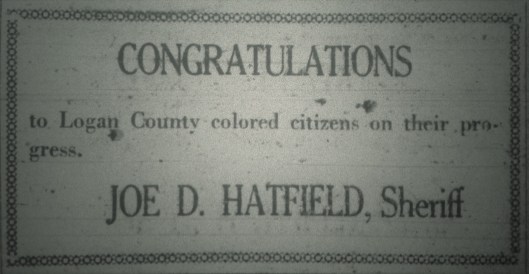
Joe Hatfield Congratulates Colored People LB 04.16.1929.JPG

Logan (WV) Banner, 16 April 1929.

James Jeffrey Deposition about Labor Conditions in Logan County, WV (1923)

02 Tuesday Oct 2018

Posted by Brandon Ray Kirk in Coal

≈ Leave a comment

Tags

Appalachia, coal, Coal River, deputy sheriff, Edgar Combs, history, James Jeffrey, Kanawha County, Logan, Logan County, Mine Wars, Prohibition Officer, Sallie Chambers, United Mine Workers of America, West Virginia

DEPOSITION OF JAMES JEFFREY

STATE OF WEST VIRGINIA

Vs.

Edgar Combs

STATE OF WEST VIRGINIA, KANAWHA COUNTY, as:

James Jeffrey, Who, being first duly sworn by me says that he now lives at Jeffrey, Boone County, West Virginia, and has lived in that section of the country all of his life; that he has been connected with the Prohibition Department of the State as a Prohibition Officer, and at the present time is a Coal Miner by occupation; that he is familiar with what is known as the Mine Guard System in Logan County under which large numbers of Deputy Sheriffs are employed and paid by the Coal Companies of that County; that the principal purpose of employing such Deputy Sheriffs is to prevent the Coal Miners from joining the United Mine Workers of America; that he knows the general reputation of the said deputy Sheriffs as to their attitudes toward the members of said Union; that the said Deputies have a long record for assaults upon members of the United Mine Workers that there is a feeling of deep hostility and enmity between the said Deputies and the members of said Union; that practically the whole of Logan County excepting only the small position lying along Coal River is non-union and this is due wholy to the war made upon the said Union by the deputy sheriffs; that it is dangerous for any member of the said union to remain in said County, by reason of the said Deputies; that Affiant knows that the members of said union are afraid to go to Logan Court House, as a witness and there testify fully and freely in any matter that might arise the hostility of the said deputies or the company by which they are employed and the conduct of the said deputies toward the employees of the said Union primarily caused the Armed March of the miners in 1921; that by reason of the above facts this affiant knows that it would be impossible for the defendant to get a fair and impartial trial in the said County of Logan.

Taken, sworn and subscribed by me on the 29th day of September 1923.

Sallie Starr Chambers

Notary Public, Kanawha County, West Virginia

Odd Fellows Parade in Logan, WV (1914)

28 Friday Sep 2018

Posted by Brandon Ray Kirk in Huntington, Logan

≈ Leave a comment

Tags

Appalachia, history, Huntington, Logan, Logan County, Methodist Episcopal Church South, Odd Fellows, photos, West Virginia

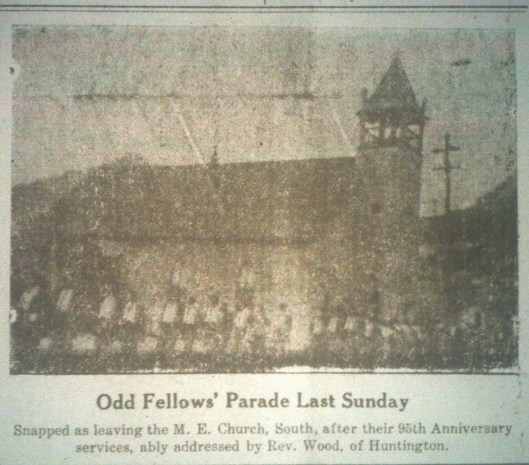
Odd Fellows Parade LB 05.01.1914.JPG

Logan (WV) Banner, 1 May 1914.

Old Records Found in Bank Vault (1936)

27 Thursday Sep 2018

Posted by Brandon Ray Kirk in Big Sandy Valley, Guyandotte River, Hamlin, Huntington, Logan

≈ 3 Comments

Tags

Appalachia, Big Sandy River, Cabell County, Guyan Valley Bank, Guyandotte River, H.M. Booth, Hamlin, history, Huntington, James Barbour, Logan, Logan County, Mary Morris, Pennsylvania, Peter Dingess, Philadelphia, Richmond, Robert Brooke, Robert Morris, Robert Morris Grant, Russell County, Tug Fork, Virginia, West Virginia, William Crammond, Wythe County

Old Peter Dingess Deed LB 08.19.1936 7

320,000 Acres of Land Hereabouts Sold for Five Shillings According to Old Records Found in Old Vault

H.M. Booth, in cleaning out the vault of the old Guyan Valley Bank preparatory to moving his offices from Logan to Hamlin, uncovered a number of old documents that dated back to the time when “horse and buggy days” were a fact and not merely a political equation.

Many of these old papers, including deeds, receipts, account books and other papers of a semi-personal nature, are originals, while others are notarized copies of originals. They make interesting reading in these days of speed, radios, high prices and typewriters.

The old documents were all hand written, in clear, flowing script, the capital letters often decorated with fancy scrolls and shaded lines. Many of them were written with a quill pen.

Of particular interest is one deed, 12 ½ by 15 ½ inches, written on sheepskin. The ink has not faded, and although the skin is old and discolored, the deed is easily read. It was made in the days when Logan county was unheard of, and all this vicinity was part of Cabell county, Virginia. It seems strange, now, to think of a governor in Richmond, Virginia, parceling out land in Logan county.

The deed reads, in part: “James Barbour, Esq., Governor of the Commonwealth of Virginia: To all whom these presents shall come, Greeting: Know ye, that by virtue of a Land office Treasury warrant, No. 6126, upon the 9th day of Sept. 1780, there is granted by the said Commonwealth unto Peter Dingess, a certain Tract or Parcel of Land, containing one hundred and twelve acres, by survey, bearing date the 31st day of March, 1813, situate in the County of Cabell, joining to his own deeded land, and bounded as followeth, to-wit:”

Then follows a detailed description of the boundaries of the land, in which prominent trees and landmarks play a common part. After the description of the land, which was written in pen and ink, came the regular printed form as follows:

“In witness whereof, the said James Barbour, Esq., Governor of the Commonwealth of Virginia, hath hereunto set his Hand, and caused the Seal of the said Commonwealth to be affixed at Richmond, on the twenty-fifth day of October, in the Year of our Lord, One thousand eight hundred and fourteen, and of the Commonwealth the thirty-ninth.”

Down in the lower right hand corner of the paper can be plainly seen the signature of James Barbour, governor of Virginia at that time.

A notarized copy of another land deed was signed by Robert Brooke, Governor of Virginia in 1795, and was dated March 23 of that year. It deeded through the Land Office treasury warrants numbered from 472 to 530, inclusive, a parcel of land containing 480,000 acres, “by a survey made the 10th of September, 1794.” The land was described as being in the county of Wythe, on the Tug and Guyandotte rivers. This grant of land was known as the “Robert Morris Grant.”

Evidently, from the records, Robert Morris became involved in difficulties, for after a considerable amount of legal red tape, all duly recorded, there is a document showing where “Robert Morris and Mary, his wife, of Philadelphia, sell to William Crammond of Philadelphia as well for and in consideration of the sum of five shillings lawful money of Pennsylvania to them well and truly paid do grant bargain and sell, alien and enteoff release and confirm to the purchased 320,000 acres of land in the counties of Wythe and Russell, lying on both sides of Sandy Creek.”

Among the records of accounts paid found by Mr. Booth were numerous fees paid out for “boating freight from Huntington.” Six dollars and fifty cents is entered “for a suit of clothes,” and another entry shows where four dollars and a half were paid for two pair of shoes.

Source: Logan (WV) Banner, 19 August 1936

Sociologist Jerome Davis Letter about Labor Conditions in Logan County, WV (1923)

25 Tuesday Sep 2018

Posted by Brandon Ray Kirk in Battle of Blair Mountain, Coal, Logan

≈ Leave a comment

Tags

American Sociological Society, Appalachia, coal, Colorado, Dartmouth College, deputy sheriff, Don Chafin, Edgar Combs, Edward F. Moore, H.W. Houston, Hanover, history, Industrial Management, Jerome Davis, Logan, Logan County, Macmillan Company, New Hampshire, notary public, Pennsylvania, sheriff, United Mine Workers of America, West Virginia

State v. Edgar Combs

Affidavit

Filed in open Court

Oct. 15, 1923

***

The American Sociological Society

Dartmouth College

Hanover, N.H.

August 1, 1923

As a teacher in Dartmouth College I have been called on to make several investigations into conditions in coal mining regions in Colorado and Pennsylvania. One of my studies was published by the Macmillan Company and another by Industrial Management. I have never been connected in any way with a labor union and believe that my testimony is impartial.

I have recently been to West Virginia for the purpose of studying conditions in the coal industry there. I was in the state for a total of about a month during June and July of this year. For the major part of this time I was in Logan County or in the surrounding counties.

I found it extremely difficult to secure affidavits from coal miners and others because they stated they were afraid of Don Chaffin and his Deputy Sheriffs. It seemed to be the general consensus of opinion that any person connected with the United Mine Workers of America would not knowingly be permitted to remain in the county and might be subjected to violence. I counted the names of over two hundred deputy sheriffs in the court records of the county and Don Chaffin informed me that the unions had so far been successfully kept out of the district.

Whether justified or not, operators and officials with whom I talked in Logan seemed to feel especial bitterness against H.W. Houston, Attorney of the United Mine Workers of America. It seems to me probable that necessary witnesses for the defense would be reluctant to testify fully and freely, and that they might actually be afraid to attend court for any considerable time. I know that there are a large number of responsible citizens of Logan County who share this belief, although they may not be willing to testify publicly for the reasons given above.

Jerome Davis

Taken, subscribed and sworn to before me this first day of July, 1923.

My commission expires on the 17th day of Feb 1928.

Edward F. Moore, Notary Public

***

For more about Jerome Davis, follow these links:

https://en.wikipedia.org/wiki/Jerome_Davis_(sociologist)

http://archiveswest.orbiscascade.org/ark:/80444/xv87313

https://fdrlibrary.org/documents/356632/390886/findingaid_davis_jerome.pdf/d0d4b6dd-6e43-4263-8167-789da6b972dc

Confederate Pensions in West Virginia (1929)

24 Monday Sep 2018

Posted by Brandon Ray Kirk in African American History, Big Creek, Big Harts Creek, Boone County, Civil War, Crawley Creek, Holden, Logan, Man, Pecks Mill, Whirlwind

≈ Leave a comment

Tags

A.B. White, A.L. Browning, A.V. Pauley, African-Americans, Andrew Jackson, Appalachia, Band Mill Hollow, Big Creek, Boone County, C.H. Gilkinson, civil war, Confederacy, Confederate Army, Crawley Creek, Curry, Dave Bryant, Dyke Bryant, Dyke Garrett, Ethel, genealogy, Gettysburg, Green Thompson, Harrison White, Harts Creek, Harvey Chafin, Henlawson, Henry Mitchell, history, Holden, House of Delegates, Hugh Avis, J. Matt Pauley, Jackson McCloud, James Zirkles, John Bryant, John Neece, Joseph Lowe, Judy Bryant, Kistler, Leslie Mangus, Logan, Logan Banner, Logan County, Lucinda Spry, M.T. Miller, Madison, Man, Martha Jane Smith, Melvin Plumley, Mingo County, Monaville, Mt. Gay, Pecks Mill, preacher, Shegon, Slagle, slavery, Steve Markham, Stollings, Union Army, W.C. Turley, Wade Bryant, Wayne County, West Virginia, Whirlwind, William C. Lucas, William Chafin, William Workman, Zan Bryant

In 1929, the State of West Virginia nearly opted to allocate a monthly pension to its Confederate veterans, as well as blacks who had served the Confederate Army in service roles. In covering the story, the Logan Banner of Logan, WV, compiled a list of its remaining Confederate veterans.

HOW MANY VETERANS?

A pension of $20 a month is provided for Confederate veterans of the state by a bill passed by the Senate last week and sent in the House for concurrence. Senator M.T. Miller, of Boone county, who said he could not vote to pension men who had carried arms against their government, cast the only vote against the proposal.

A Charleston paper says there are only about 60 Confederate veterans living. This paper cannot believe that, although it has no information on the subject. How many are there in Logan county? Does anyone know? Has anyone an approximately correct list? If so, will he or she make the fact known? Uncle Dyke Garrett probably knows most of them.

The Banner would like to obtain a list of both Confederate and Union veterans still living in the county, together with their post office address.

Source: Logan Banner, 26 February 1929.

***

AS TO OLD SOLDIERS

The Banner’s request for information about old soldiers living in Logan county has not been in vain, nor has the response been satisfactory. The names of four confederate veterans have been turned in, as follows:

Rev. Dyke Garrett, Curry, beloved and venerable minister; William Workman, Shegon, who fought at Gettysburg and is now 88; Steve Markham, Holden No. 20, who has been blind for 20 years; and William Chafin, who lives with his son Harvey, at Holden 5 and 6.

Who are the others? Send in their names and addresses and any information you deem of interest concerning their careers as soldiers and citizens. The same information about Union soldiers, residents of the county, is likewise desired.

Logan Banner, 5 March 1929.

***

PREPARING THE ROLL

Another name has been added to the list of old soldiers that The Banner has undertaken to compile. Reference is to J. Matt Pauley, residing in Band Mill Hollow, post office Stollings. He was in the Confederate army, fought throughout the war and was wounded, writes Mrs. A.V. Pauley of Ethel. He is of the same age as Uncle Dyke Garrett.

The names of four survivors of the War Between the States, all living in Logan county, were published in Tuesday’s paper. There must be others. Who are they?

Today, W.C. Turley brought in a list of eight Confederate veterans, including the following new names: Wm. C. Lucas, Big Creek; Henry Mitchell, Henlawson; Hugh Avis, Green Thompson and John Neece, Logan; Harrison White, Pecks Mill.

Logan Banner, 8 March 1929.

***

On Confederate Roll

Two more names have been added to the roll of Confederate veterans that The Banner is preparing. These are James Zirkles of Man, whose name was sent in by Leslie Mangus, of Kistler, and Zan Bryant of Whirlwind, whose name was recalled by County Clerk McNeely. Are there not others besides nine or ten previously published?

Logan Banner, 12 March 1929.

***

Confederate Veterans Living Here Number at Least 17

There Are Probably  Others–Will You Help to Enroll Them–All Merit the Tender Interest of Younger Folk

Seventeen names of Confederate soldiers, residents of the county, have been collected by The Banner. Wonder if any have been overlooked, or if the appended list is in error in including any Union veterans? If any reader knows of a Confederate soldier not listed here, please send in the name and address AT ONCE. There will be no further request or reminder.

This paper undertook to make up a list of these old soldiers for two reasons. Chief of these was a desire to prevent any of them being overlooked in case a bill to pension them was passed by the legislature–but the writer does not know yet whether or not that bill was enacted into law. Another reason for assuming the task was to test in a limited way a statement in a Charleston paper that there were only 60 Confederate veterans left in the state. That statement was doubted, and with good reason judging from the number polled in this county. Anyhow, the ranks have become terribly thinned. Every few days we all read of taps being sounded for another one here and there.

Middle-aged men and young folk should esteem it a privilege to do something to brighten the lives of these old soldiers. As the years roll by our pride will increase as we recall our acquaintance with and our kindness toward the “boys of ’61 and ’65.”

Here is the list. Look it over, and if there is a name that should be added or a name that should be stricken out, or any error or omission that should be corrected or supplied, speak up:

James Zirkles, Man; Zan Bryant, Whirlwind; J. Matt Pauley, Ft. Branch; Uncle Dyke Garrett, Curry; William C. Lucas, Big Creek; Henry Mitchell, Henlawson; Hugh Avis, Green Thompson and John Neece, all of Logan; Harrison White, Pecks Mill; Melvin Plumley, Crawleys Creek (post office not known); William Workman, Shegon; Steve Markham, Holden No. 20; William Chafin, No. 5 and 6.

Logan Banner, 15 March 1929.

***

Two Names Added Confederate Roll

Bill to Pension Them is Defeated By Parliamentary Tactics in House

Names of two more Confederate soldiers living in the county have been sent to The Banner. They are: C.H. Gilkinson, minister, resident of Holden, who was born and reared in Wayne county, and is the father of Dr. L.W. Gilkinson. Jackson McCloud, a resident of Whirlwind on Harts Creek. His name was supplied by A.L. Browning of Monaville, who says he feels sure that Mr. McCloud was in the Confederate service and fought at Gettysburg.

Assuming both names should be added to the roll, it means that there are at least 19 Confederate veterans still living in Logan county, seventeen names having been listed and published a week ago.

For many of them there will be disappointment in the information that the bill to pension them did not pass. Sponsored in the Senate by ex-governor A.B. White, the son of a Union soldier, the bill passed, that body, Senator M.T. Miller of Madison casting the only vote against it. In the House of Delegates it was amended, by a majority of one, to include Negroes, whether slave or free, who had served in the Confederate army of cooks, personal servants, or otherwise, and later tabled.

Source: Logan Banner, 22 March 1929.

***

Slagle Man 17th in Confederate List

Zan Bryant Probably Oldest Veteran In County–Born in Jackson’s Time

Joseph Lowe of Slagle is the latest name to be added to the list of Confederate veterans that has been compiled by The Banner. However, that leaves the count at 17, as the name of Melvin Plumley of Crawleys Creek was erroneously included in the published list. He was a Union soldier, it seems.

Of all those listed Zan Bryant of Whirlwind must be the oldest. He is said to be 98 years old and his wife, Judie Hensley Bryant, 91. They have been married for 75 years and have a son, Dave Bryant, who is 73. There are five other children, Dave, John, Wade and Dyke all live on Harts Creek, most of them near their parents; Mrs. Martha Jane Smith at Gay, and Mrs. Lucinda Spry of Mingo county.

This venerable couple have spent all their years in the isolated Harts country, their home being on White Oak fork, and can be reached only by a long horseback ride.

When Zan was born Andrew Jackson was president and Logan county as a political subdivision was but five years old. He was 23 years old when married and 30 when the War Between the States began.

Logan Banner, 26 March 1929.


Aracoma Memorial in Logan, WV (1936)

22 Saturday Sep 2018

Posted by Brandon Ray Kirk in American Revolutionary War, Logan, Native American History

≈ Leave a comment

Tags

American Revolution, Appalachia, Aracoma, Aracoma Hotel, Bluestone River, Boling Baker, C.A. Davis, Cornstalk, Daughters of the American Revolution, Edwin Goodwin, Elmer McDonald, Harris Funeral Home, history, Jimmy Browning, Logan, Logan Banner, Logan County, Lyle Burdette, M.R. Atkinson, Montgomery County, Native American History, Native Americans, photos, sheriff, Virginia, W.C. Turley, West Virginia

IMG_3735

Aracoma Memorial at the Logan Courthouse, Logan, WV. 18 May 2017.

Princess Aracoma Memorial Given to the Public by D.A.R. Chapter is Formally Unveiled and Dedicated

The monument to Princess Aracoma was dedicated yesterday afternoon by the local chapter of the D.A.R. which bears her name, with a brief ceremony in which the romantic history of the chief of the first tribe known to have settled in this vicinity was reviewed.

The dedication service took place at 4:30 o’clock at the northeast corner of the courthouse, and was opened with an assembly bugle call by Boy Scout Edwin Goodwin. Rev. M.R. Atkinson led in prayer and Jimmy Browning gave the salute to the flag.

Mrs. S. Elmer McDonald, regent of Aracoma chapter, presided, saying, “We have gathered here to honor Princess Aracoma, an Indian princess who with her tribe first settled in this valley.”

W.C. Turley, whom Mrs. McDonald introduced as the descendant of one of the oldest families of the county gave a talk reviewing the traditional settling of the Indians in this vicinity.

“I think it striking evidence of patriotism for your Princess Aracoma chapter to place this monument in memory of Princess Aracoma,” he said.

Mr. Turley said that Princess Aracoma was born somewhere between 1740 and 1745, the daughter of Cornstalk, chief of the Shawnee Indians, who was killed in the first land battle of the Revolution.

“When the princess was a young girl she interceded in behalf of Boling Baker, a white soldier who had deserted from the British army and had been captured by her tribe. Through her plea his life was spared and he was initiated into the tribe.

“According to the Indian custom, when Princess Aracoma became of age she was given a portion of the tribe to settle under her leadership in new hunting grounds, and chose the island first settled in this territory. Shortly after settling in their new home, the Princess and Boling Baker were married at a large ceremony attended by Cornstalk and other chiefs.

“The tribe lived happily and prospered until, in 1776, a plague struck them taking many of their members including all of the children of the princess and her white husband.

“Baker, seeking to replenish the goods of the tribe went with some scouts to a settlement on the Bluestone river, where, posing as an escaped captive, he gained the confidence of the settlers. Then one night he led his scouts in a raid on the camp, stealing their horses and provisions.

“The sheriff of Montgomery county, of which Logan was then a part, designated Col. Breckenridge and Gen. Madison to lead a force of 90 men to seek revenge on the Indians. In the ensuing battle, which took place near where the power plant now stands, Princess Aracoma was killed.

“According to tradition, she was buried somewhere in the vicinity where the Aracoma Hotel and Harris Funeral Home now stand. Skeletons and Indian burial pieces were unearthed when the excavation for these buildings was made.”

At the close of Mr. Turley’s address, the monument was unveiled by Mrs. Lyle Burdette and Mrs. C.A. Davis.

Source: Logan (WV) Banner, 28 October 1936.

NOTE: This article incorrectly references the Battle of Point Pleasant as part of the American Revolutionary War.

Richard T. Jordan (1929)

15 Saturday Sep 2018

Posted by Brandon Ray Kirk in African American History, Logan, World War I

≈ Leave a comment

Tags

25th Infantry, African-Americans, Alpha Phi Alpha, Appalachia, Aracoma High School, Columbia University, education, genealogy, history, Logan, Logan Banner, Logan County, Ohio State University, Red Cross Ambulance Corps, Richard T. Jordan, teacher, West Virignia, Wilberforce University, World War I

In April of 1929, the Logan Banner profiled numerous prominent African-American residents of Logan County, West Virginia.

Notable Blacks of Logan County LB 04.16.1929 1

RICHARD T. JORDAN

Graduate: Wilberforce University with B.A. degree; will take master’s work at Columbia University the coming summer session. Prof. Jordan has done work at Ohio State University; is a member of Alpha Phi Alpha, a national college fraternity. Honorary fraternities: Sword and Shield and Boule, and is an Elk and Mason. Prof. Jordan served his country in the late World War, doing overseas service; he was connected with the Red Cross Ambulance corps also enlisted in the U.S. Twenty-Fifth Infantry immediately following the World War, assigned to Mexican border service. The Aracoma school of which Prof. Jordan is principal has a corps of seven teachers, carrying an average enrollment of 150, and under his guidance the system is organized into an effective working unit, developing a definite educational program in the pupil enrollment. Prof. Jordan is a young man of high ideals, sterling character, studious and enterprising, and will make his mark in the profession.

Source: Logan (WV) Banner, 16 April 1929.

Chapmanville News 12.11.1928

15 Saturday Sep 2018

Posted by Brandon Ray Kirk in Big Creek, Chapmanville, Huntington, Logan

≈ Leave a comment

Tags

A. Dingess and Son, Abe Dingess, Allen Dingess, Appalachia, Big Creek, C.M. Gore, Chapmanville, Cherry Tree Bottom, Dyke White, Ed Turner, Faye Turner, genealogy, Herbert Hager, history, Huntington, Jim Turner, John Bryant, Leora Carter, Lewis Brooks, Logan, Logan Banner, Logan County, Monaville, Mud Fork, Murphy's 5 & 10 Cent Store, R.S. Butcher, Thelma Adams, Victor Toney

An unknown correspondent from Chapmanville in Logan County, West Virginia, offered the following items, which the Logan Banner printed on December 11, 1928:

C.M. Gore was a business visitor in Logan Monday.

Messrs. Ed and Jim Turner with their sister Faye motored to Huntington and back Sunday.

A. Dingess of Mud Fork visited his family here over Sunday.

Our school here is progressing nicely under the management of Professors Dobbins and Rigdon.

Herbert Hager moved to Chapmanville from Cherry Tree Bottom the past week.

A. Dingess and Son are putting in a grocery store at this place.

Mrs. R.S. Butcher visited Mrs. Jno. Bryant Sunday.

Mrs. Hill of Logan is visiting her daughter Mrs. Dyke White of this place.

Misses Thelma Adams and Leora Carter of the staff of clerks of Murphy’s 5 & 10 cent stores of Logan were visiting the former’s mother here.

Lewis Brooks of Monaville was a visitor here over Sunday.

Victor Toney and Abe Dingess attended church at Big Creek Sunday.

Mrs. Ferrell is improving nicely from her serious spell of sickness.

Allen Dingess passed through our town Friday enroute to Mud Fork.

Chapmanville News 02.01.1929

12 Wednesday Sep 2018

Posted by Brandon Ray Kirk in Chapmanville, Logan

≈ Leave a comment

Tags

Abe Dingess, Appalachia, C.M. Gore, Chapmanville, genealogy, history, Hugh Workman, influenza, Island Creek, Logan, Logan Banner, Logan County, Mud Fork, Wallace Toney, West Virginia

An unknown correspondent from Chapmanville in Logan County, West Virginia, offered the following items, which the Logan Banner printed on February 1, 1929:

A. Dingess, prominent merchant of Mud Fork of Island Creek has been quite indisposed at his home with flu.

Mrs. Hugh Workman has been on the sick list for the past week.

Abe Dingess, manager of Dingess’s grocery store here, was called to Mud Fork to see after his father’s business there.

C.M. Gore was a business visitor in Logan Friday.

Wallace Toney has been sick the past week, but we are glad to say is back with his business again.

Mrs. Lisa Salyers has been on the sick list the past week.

Geo. Chapman of this place is out again after a bad spell with the flu.

Logan’s Dirt Roads (1914)

11 Tuesday Sep 2018

Posted by Brandon Ray Kirk in Logan

≈ Leave a comment

Tags

Appalachia, history, Logan, Logan Banner, Logan County, photos, West Virginia

Taking Care of Logan City's Dirt Roads LB 05.22.1914 3

Taking Care of Logan City’s Dirt Roads, Logan (WV) Banner, 22 May 1914.

Recollections of McKinley Grimmett of Bruno, WV 3 (1984)

06 Thursday Sep 2018

Posted by Brandon Ray Kirk in Coal, Hatfield-McCoy Feud, Logan, Timber, World War I

≈ Leave a comment

Tags

Appalachia, assessor, blacksmith, Bruno, Burl Stotts, California, Cap Hatfield, Christian, Christmas, coal, Devil Anse Hatfield, drum runner, Edith Grimmett, Elba Hatfield, Elk Creek, Ellison Toler, genealogy, Harvey Ferguson, Harvey Howes, Hatfield-McCoy Feud, Henderson Grimmett, history, Huff Creek, J.G. Hunter, Joe Hatfield, Johnny Davis, justice of the peace, Logan, Logan County, Mallory, Mallory Coal Company, Matilda Hatfield, McKinley Grimmett, mining, Nancy Grimmett, Osey Richey, politics, pushboats, rafting, Ralph Grimmett, Rum Creek, Sand Lick, sheriff, Smoke House Restaurant, Tennis Hatfield, Thomas Hatfield, timber, West Virginia, whooping cough, Willis Hatfield, World War I

McKinley Grimmett was born on November 30, 1896 to Henderson and Nancy (Hatfield) Grimmett at Sand Lick, Logan County, WV. On May 14, 1916, Mr. Grimmett married a Ms. Plymale, who soon died, in Logan County. One child named Alva died on June 21, 1919 of whooping cough, aged fourteen months. His World War I draft registration card dated September 12, 1918 identifies him as having blue eyes and light-colored hair. He was employed by Mallory Coal Company at Mallory, WV. On November 13, 1919, he married Matilda “Tilda” Hatfield, daughter of Thomas Hatfield, in Logan County. He identified himself as a farmer in both of his marriage records. During the 1920s, he served as a deputy under Sheriff Tennis Hatfield.

The following interview of Mr. Grimmett was conducted at his home on July 17, 1984. In this part of the interview, he recalls his occupations. Tennis Hatfield, Cap Hatfield, Joe Hatfield, Willis Hatfield, pushboats, Logan, World War I, coal, and blacksmithing are featured.

***

What about Tennis and Joe Hatfield?

But now they come out, they paid all their debts and everything and stuff like that. They was honest, as far as I know. I think both of ‘em went broke, they was so good to the people. They had all kinds of things… Tennis had a five thousand dollar ring and he pawned it to the First National Bank and somebody got the ring. I don’t know who did. Tennis didn’t get it back. They both lost everything they had. And not just only them. Osey Richey, he was assessor and J.G. Hunter was assessor, and they lost all they had. People just, after they got elected and everything, thought that they had to furnish ‘em whether they had it or whether they didn’t.

Tennis and Joe were too young to participate in the Hatfield-McCoy Feud.

Oh yeah. That happened before I got big enough, Cap and them. Cap was chief deputy, though, while I was on. I can remember some of it. Just hear-says. I don’t know nothing about it. Ellison Toler was related to them someway and he stayed at my daddy’s and they kept him up for killing somebody over there at Welch and they hung him there at Welch yard on a tree. I remember getting into my daddy’s papers and reading the letters after I was just learning in school about such stuff like that. And I thought that was the awfulest thing ever was, writing to him and telling about it.

What changed in the county for the Hatfields between the feud and the 1920s?

Mostly, they died out to tell you the truth. Joe and Tennis died out and nobody else had guts enough to take it, you see? Now, Willis, he was the youngest brother. Elba, now he was JP and after he got out as JP he pulled out and went to California. And Willis, he died here about a year ago up on Rum Creek. And Tennis and Joe both died. And that was all of ‘em. All of the old people. Harvey Howes married their sister, and they’re all dead.

Did you ever talk to Cap or Willis?

Oh yeah. Willis, they’d hang after me all the time. They knowed I was half-Hatfield, you know. Tennis and Joe would, too. They was awful good to me ever way. Now Cap, I never – Cap just had one word for a person. If he wanted to talk with you, he’d say, well let’s talk a while, and if he didn’t, he’d say, get the hell away from here. That was the way Cap was. Devil Anse, he used to kill a beef and roast it every Christmas, you know. I’ve went there and eat with him a lot. They tell me they wouldn’t know that place now. They’ve cleaned the graveyard up, you know. I ain’t been up there in… Be five years in January since I got down and I ain’t been away … Only one takes me anyplace is my daughter Edith and Ralph and Edith’s working all the time and Ralph’s all the time busy and Ralph takes me to the doctor every month and Edith took me to the store back and forth and Ralph took me last Saturday.

How has Downtown Logan changed since you were young?

Oh, it’s changed a big lot. Built more buildings in it and everything. Used to be you had about three or four policeman and that was it. Now I can remember back whenever they had a wooden courthouse. A boxed building. I was just a big boy then. Daddy followed rafting and pushboating. You know what pushboating is? Well, they had a big long boat. He had two. And one of ‘em was about eight feet wide and about 46 feet long. Other one was about twelve feet wide. And they had to catch water to get that big boat. And sixteen foot wide. And they’d take a pair of mules or horses, whichever they had, and they’d go to Logan and buy groceries. He had a store and he boated most of his stuff. They’d kill hogs and take chickens and catch fish and take it down to Logan and sell it and they’d bring groceries back.

And they’d make these trips how often?

He went every week. It would take two days to make it, very best. You had from daylight to dark.

Tell me more about your work history.

Well I was a blacksmith. Worked in electric force. They knew I was going to fire. Harvey Ferguson was superintendent. Johnny Davis was general manager. They knowed how old I was. They knowed I was going to retire. I left Christian over here. They shut down. Johnny Davis offered me a job and offered me a job and I wouldn’t take it. I met him right at the foot of the hill. He was a boss over some Elk Creek mine. Well, I went and worked about six months lacking two days for Burl Stotts over there in Campbell’s Creek, built a tipple he fell off of and got killed. I come back and Johnny had come in home that week and Johnny and Harvey Ferguson had been up here and they wanted me to come around there and talk with them on Saturday night. I went around there. They said Johnny said he wanted me to come back up and work for him. I said, well you won’t give me enough. He said, how much you getting? I told him. He said, well I’ll give you three dollars on the day more. I said, well I’ll do it. The rates was 24 dollars. Union then. He give me 27 dollars. I wasn’t getting 24 and going over there and paying board, you know. So I said, well I’ll go back over there and work next week and pay my board up. I wouldn’t walk right off the job from him. He was a good fellow. And he was good to me. And he liked me and everything. And he give me all he could give me. They said they appreciated that, Davis and Harvey Ferguson both. That I’d do a thing like that. So I went back and worked that week and paid my board and come back and went up there and stayed with him fourteen years and retired. In November 30, 1962.

Do you remember anything about your last day?

No, they give me a pair of gloves and Johnny told me that he was going to put a ten dollar gold piece in my envelope. And he did.

What about World War I?

Well I was called… I was drum runner. The superintendent come down in the drum house where I was at. The superintendent said I see you are called for service. I said, Yeah, two more weeks will be my last. You better get somebody in here and let me learn him while I can. He said, we were studying about that. Do you want to go? I said, no I don’t want to go but I guess I’ll have to go. Kaiser was his name. He said, We’ll see what we can do about it. I’ll let you know and I’ll keep you posted at all times. Well, that was on Monday morning, I believe it was. On Saturday evening, I had to work six days a week, Saturday evening he wanted me to come over to his office. That was around on Huff Creek, at Mallory 1. And I went over there. He said, I think I’ve got you retired. He said, We’ve got to have coal men as well as army men. Just don’t say anything about it to none of the boys. You’ll not have to go. And that was all of it. I never did have to go. But I registered five different times for the service. Last time I registered, they took everybody. They didn’t get too old—I registered them all. And the company put me in a little old room beside the store and furnished my eatings for that day paid me for my day’s work and the government never did pay me a cent for none of it. Five different times. Now at first start I had to take them, I had to keep a tally of how many registered, had to take them to Logan and send them out, call in to Washington and tell them how many I registered and everything. Now the last time, I didn’t have to do that. A man come and got ‘em the next day.

Who taught you how to blacksmith?

Oh, I taught myself. My daddy used to shoe horses and I used to help him in the shop. That’s the hardest job ever I got in, shoeing horses or mules. Dangerous job, too. I’ve had them kick me plumb over top of… At that time you had belluses you blow. They’d kick me plumb over top of them belluses. Almost kill me sometimes.

Were there any blacksmith shops around Logan when you were a boy?

Oh yeah. There was plenty of them. There in Logan there was a big one. A fellow named White was the blacksmith down there. Boy, he’d whip a mule. He kept big old hickory poles in there and a mule or horse that didn’t hold still or anything he’d throw its leg down and grab one of them poles—I’ve been in there and watched him—and he’d beat that mule… I swear, I’d be uneasy about it. Think he was going to kill it. It would just quiver like a leaf.

Where was his shop?

Right where the courthouse sits now. There was a wooden courthouse. Box building. Two-story high. And his blacksmith shop was right on down the street. I’d say it wasn’t quite down to the Smoke House. Not quite down that far. Over on the right hand side. It was a big old boxed building and a shed to it. He’d get dirty coal. He was too tight to buy the coal or something. And he’d have enough smoke go all over that town. Yeah, I remember all about that.

NOTE: Some names may be transcribed incorrectly.

William Straton Accidentally Shoots and Kills Thomas Mullins (1860)

04 Tuesday Sep 2018

Posted by Brandon Ray Kirk in Logan

≈ Leave a comment

Tags

Appalachia, county clerk, genealogy, history, Laurel Fork, Little Coal River, Logan, Logan County, Roanoke Republican, Spruce Fork, Stratton Street, Thomas Mullins, Virginia, West Virginia, William Straton

From the Alexandria (VA) Gazette comes this bit of history for William Straton of Logan County, (West) Virginia, dated December 4, 1860:

FATAL SHOOTING ACCIDENT.

The Roanoke Republican states that on the morning of the 15th ult., Wm. Stratton, esq., Clerk of Logan county, Va., and a young man, Thos. Mullins, of the same county, left the hunting camp on Laurel Fork of Spruce Fork of Little Coal river, in pursuit of deer. They became separated, for some time, and Mr. Stratton thinking he spied a deer, through a small aperture in a laurel thicket, about fifty yards distant, fired at it, and to his horror, found that he had shot his companion, Mr. Mullins, through the body–the ball entering his left side just below the ribs. No one was near, to whom the alarm could be given for aid, as they were about a mile and a half from the camp, and their camp companions may have been in an opposite direction from them. They, however, came to their assistance before night and making a litter on which they placed a bed, bore Mr. Mullins to the camp, which he died about 10 o’clock that night.

NOTE: Stratton Street in Logan is named for Mr. Straton.

Nancy Hatfield, Widow of Cap, Identifies the Cause of the Hatfield-McCoy Feud (1937)

31 Friday Aug 2018

Posted by Brandon Ray Kirk in Hatfield-McCoy Feud

≈ 2 Comments

Tags

Appalachia, Bill Staten, Bob Hatfield, Cap Hatfield, crime, Devil Anse Hatfield, Ellison Hatfield, feuds, genealogy, Hatfield-McCoy Feud, history, Howard Alley, Island Creek, Kentucky, Logan, Logan Banner, Logan County, Mingo County, Nancy Hatfield, Paris McCoy, Pike County, Randolph McCoy, Sam McCoy, Tolbert McCoy, true crime, West Virginia

From the Logan Banner of Logan, WV, comes this story by Howard Alley titled “The Hatfield-McCoy Feud” and dated May 10, 1937:

The Hatfield-McCoy Feud…

“Aunt Nancy” Hatfield, Widow of “Cap” Hatfield, Relates That Historic Feud Actually Started Over An Election Argument When “Uncle” Ellison Was Killed Following Argument With a McCoy

Much has been said and many volumes have been written about the historic Hatfield-McCoy feud which took place in Logan and Mingo counties in the latter part of the last century. Lecturers have said the feud started over a razor-backed hog, and novelists have written that it began when a McCoy married a Hatfield lass and deserted her after he learned that she was to bear him a child. Both theories have their foundation in tradition, but neither Hatfield nor McCoy close to the feud has been quoted as saying either was right. Yesterday the mystery was cleared up. Because it seemed so utterly preposterous that two solid, level-headed mountain families with the solidity of the English for a background could wage a ten-year killing spree over a razor-backed sow when the woods were full of the animals, and because it was equally as improbable that the feud started over unhappy marital relationships when it is an established fact that mountaineers let their offspring take care of their own home life, we decided yesterday afternoon to find out what event was the spark which actually set off the powder magazine of mountain passion which rocked the hills of this section for nearly a decade.

And in the warm sunshine of a late spring Sunday afternoon we sat on the porch of the late William A. (Cap) Hatfield’s rambling frame home on the upper stretches of Main Island Creek and talked to “Cap’s” wife, the last survivor of those who were closest to the Hatfield clan in the feud.

“Aunt Nancy”, who has survived seventy winters and admits that she is “young and has the ‘hang’ of it,” but “don’t think I can do it again”, gazed reminiscently out over the newly-turned acres of her husband’s creek bottom estate, and her eyes grew misty as she told us of the closing years of the last century when Hatfield and McCoy alike expected death at every bend of the creek.

“That feud didn’t start over no ‘hog lawsuit’ and it didn’t start over a Hatfield-McCoy marriage,” Mrs. Hatfield said in a tone that showed plainly her disgust for those writers who had written of the feud and by twisting the facts had capitalized on it. “I’ve got a red-backed book two inches thick here that one of my sons brought to me and said: “Read this, Ma, and you’ll find out why we fought the McCoys.’ I read it–two pages of it–and it’s layin’ in there now with dust on its backs. Not a word o’ truth in it.”

She grew repentant.

“But they have to make their livin’, I guess. You want to know how it started? I’ll tell you. The Hatfields was always a political family, and it was their politics which got ’em into this fight. If they hadn’t gone to that election in Pike county in August of 1882, ‘Uncle’ Ellison would never have been killed and Ellison’s brother, ‘Devil’ Anse would never have been drawn into it. But I’m gettin’ ahead of my story. The way it was, ‘Uncle’ Ellison Hatfield was an officer in Logan county in 1882 and was sent out to arrest Sam and Paris McCoy who was supposed to have killed Bill Staten, ‘Uncle’ Ellison’s brother-in-law. These boys warn’t sons of Randall McCoy, ringleader of the McCoys. They were just cousins. He got the two boys and brought them to Logan county jail in Logan and afterwards testified agin’ them in a trial. The McCoys were ‘sent up’ for the killin’. Then in August ‘Uncle’ Ellison went to Pike county to ‘work’ at the polls, and it was so ordered that he was working for a man that the McCoys were agin’. Well, the only thing that could happen did happen. One of Randall McCoy’s sons, just a little twenty-one-year-old shaver, started a argument with ‘Uncle’ Ellison, and Ellison, who was always too high tempered for his own good, slapped him down. The little feller bounced up, and Ellison slapped him down agin’. But this time he jumped on top of him, and ’bout the time he drawed back his fist, aimin’ to end the fight, a shot rung out and ‘Uncle’ Ellison toppled over. He weren’t dead though. He told his friends to call ‘Devil’ Anse, who come a runnin’, and the McCoys ‘cleared out.’ ‘Devil’ Anse took his brother home and he lived from that Saturday until the next Wednesday. Just before he died, he said to Anse: ‘Anse, I want you to give the McCoys the ‘law’.’ And that’s what ‘Devil’ Anse did. He gave ’em the ‘law’ as he knowed it–and that was just about the only law in them days–and lived to see the justice handed out. And, well, you know as much about what happened after ‘Uncle’ Ellison died as I do. I don’t want to add any more tales to the list.”

We took the hint, and willingly began to talk about the celebration of “Aunt Nancy’s” birthday last September when she fell off her back porch and was told by one of her sons that “she shouldn’t have been trying to turn handsprings at her age.”

“I wasn’t hurt bad enough to keep me from cuttin’ my birthday cake. And I gave Bob the smallest piece because he was so smart about me fallin’.”

Recollections of McKinley Grimmett of Bruno, WV 1 (1984)

31 Friday Aug 2018

Posted by Brandon Ray Kirk in African American History, Coal, Dingess, Guyandotte River, Holden, Logan, Man, Timber, Wyoming County

≈ 4 Comments

Tags

African-Americans, Alva Grimmett, Appalachia, Austin Grimmett, Baileysville, Big Cub Creek, Bruno, Buffalo Creek, Christian, Cole and Crane Company, Devil Anse Hatfield, Dingess, Edith Grimmett, education, Elk Creek, Ettie Grimmett, farming, genealogy, general store, Green Perry, Guyandotte River, Guyandotte Valley, Henderson Browning, Henderson Grimmett, history, Holden, Horse Pen Mountain, Johnny Grimmett, Landsville, Lilly Grimmett, Logan, Logan County, logging, Madison Creek, Mallory, Man, McGuffey Readers, McKinley Grimmett, Mingo County, Mud Fork, Nancy Grimmett, rafting, Ralph Grimmett, Rose Grimmett, Sand Lick, Sanford Grimmett, Slater Hatfield, Tennis Hatfield, Thomas Hatfield, Tilda Hatfield, timber, timbering, Travis Grimmett, Verner, Walter Buchanan, West Virginia, whooping cough, World War I, Wyatt Belcher, Wyoming County

McKinley Grimmett was born on November 30, 1896 to Henderson and Nancy (Hatfield) Grimmett at Sand Lick, Logan County, WV. On May 14, 1916, Mr. Grimmett married a Ms. Plymale, who soon died, in Logan County. One child named Alva died on June 21, 1919 of whooping cough, aged fourteen months. His World War I draft registration card dated September 12, 1918 identifies him as having blue eyes and light-colored hair. He was employed by Mallory Coal Company at Mallory, WV. On November 13, 1919, he married Matilda “Tilda” Hatfield, daughter of Thomas Hatfield, in Logan County. He identified himself as a farmer in both of his marriage records. During the 1920s, he served as a deputy under Sheriff Tennis Hatfield.

The following interview of Mr. Grimmett was conducted at his home on July 17, 1984. In this part of the interview, he recalls his family background and early occupations. Logging and rafting in the Guyandotte Valley are featured.

***

Would you mind telling me when and where you were born?

Right here. I was born about a mile up above here. I was borned in Logan County. The post office was Christian at that time. Christian, WV. It’s changed now. They throwed Christian out – it was over here at Christian – and they throwed it out and moved it over here to Bruno. Christian went… The mines stopped over there. And that’s where I was born, right here at Bruno, Logan County. Been here all my life.

What day were you born?

November 30, 1896.

Who were your parents?

Henderson Grimmett and Nancy Hatfield Grimmett.

What kind of work did they do?

They did logging work. All they had that day and time. Mule teams and ox teams.

Where did your dad do his work?

All over Logan County.

Did he have his own farm?

Oh yeah. Yeah.

How big was his farm?

It was about 287 acres.

Can you describe his house?

Well, the house was a two-story building. But he never did get… He took the fever and he never did get the upper story, all of it completed. He died at a very early age of 74. He put him up a little store. Got ahead a little bit. Had a store here. Come down and bought this place off Walter Buchanan and he deeded his five kids the homeplace up there. And then he stayed on it from ’21 to ’29. He died 19th day of January, 1929.

Who were your mother’s parents?

Oh, Lord, I can’t… Slater Hatfield was her daddy’s name. And I don’t know my grandma. My daddy, now they both was born in Wyoming County. Baileysville or somewhere in there. I think my mother was born over there in Big Cub Creek. She was a Hatfield. I don’t know where…

How many brothers and sisters do you have?

I had three brothers and three sisters. Sanford was the oldest one. Austin and Johnny. They’re all dead. I’m the only one that’s living. All my three sisters… Lilly was the oldest one, and Rose was the next one, and Ettie was the youngest. They’re all dead. All of ‘em but me.

Were you educated in Logan County schools?

Yeah, that’s all we got. Free schools. I believe we started off about three months out of the year. Right over there where that first house is sitting – a one-room school house. All of us kids.

What was the last year of school you completed?

I believe it was about 1914, I’m not right sure. ’15.

Did you use the McGuffey Readers?

That’s all we had. And the spelling books. And in the late years, why we had a U.S. history… A small one. Most of it was just about West Virginia. It wasn’t about the whole United States. And geography, we had that. Arithmetic. That was about all we had in free schools. We had to buy them all then. They weren’t furnished.

How did you meet your wife?

She was born and raised over here at Horse Pen in Mingo County. And that’s how we met. We were just neighbors.

What was her maiden name?

She was a Hatfield, too. But now they were… There’s three or four sets of them.

Was her family related to Devil Anse Hatfield?

Well, they was some… Not very close, though, I don’t think.

Which church did you belong to?

I don’t belong to any.

Did you belong to a church when you were younger?

No, never did. If I ever would have joined, I’d have stayed with it.

Do you remember the year of your marriage?

Yeah, I sure do. November 13, 1919.

How many children do you have?

Four. We have two boys and two girls. Travis Grimmett is the oldest. And Ralph, Edith, and Nancy.

What was your wedding like?

Well, we just got married and come right home. At that time, they didn’t have such things, to tell you the truth.

Who was the preacher?

Green Perry. Rev. Green Perry on Elk Creek. Rode a horse back when I went up there to get married. A pair of mules. I rode them mules.

Where did you first live after you married?

Right about a mile above here at the old homeplace.

You have lived here all of your life?

All of our life.

Was it always this populated?

No, no. Wasn’t three or four houses on this creek at that day and time. It was farm land. It’s all growed up now. All them hills was put in corn, millets, and stuff like that. If they couldn’t get a machine to it, they cut it by hand. Some of them raised oats and some of them raised millet, corn. Raised hogs and cattle and sheep and selling ‘em.

Who owned this property back then?

Burl Christian owned this here, but I don’t know… My daddy bought his… A fellow by the name of Wyatt Belcher. Wait a minute. Browning. I can’t think of his name. He lived over here on Christian and he bidded in… It sold for back taxes and he bidded in. Henderson Browning.

What kind of work did you do after you married?

Just the same thing as I worked at before I got married. I first started out – my daddy was a boss for Cole and Crane on this river. I first started out working in the log business. I worked two years at that and then I decided… Mule team – I worked about eighteen months at that. Then in 1913 the coal company started in and I went to work in carpenter work. I helped build all of these houses down here at Landville. The superintendent, we got done, they was wanting to hire men, he give me a job keeping time for a while. And he wanted me to learn to run the drum – that’s letting coal off the hill. I learned it and about the third day I was up there, a preacher was running it, and he told me they’d just opened up and they didn’t have much coal to run off the hill, he told me, that preacher, he rolled out two cards and he said if that preacher fails to go out and work on that side track today you give him one of these cards. Well, I didn’t give him a card. But he come out that evening, the boss did. And he said, did the preacher work. And I said, no he refused. He said, I’ll fix him. He fired him. And I took the job and stayed with it four years and then I got married and then I went to work over here at Christian running a drum and I stayed there 34 years.

When you worked for Cole and Crane, did either of those men ever come up here?

Oh yeah. One of them was. Cole was. I don’t think Crane was ever here. A little slim fella.

Did you get a chance to talk to them?

No, they wouldn’t talk to us working men. They’d talk to the boss. They’d go away from us and talk to theirselves. We just got a $1.10 for ten hours. Eleven cents an hour.

What kind of a person did Cole seem to be?

Well, he knowed how the men was. They’d raft timber and go down this river to Guyandotte. Had what they called locks and dams there to catch the logs. This river was full of logs. He bought timber everywhere. Plumb at the head of it.

Did you ever ride a raft?

Oh, yeah. I went with my daddy. I wasn’t grown.

Can you describe it?

Oh, they’d raft the logs, poplar. Now they didn’t raft hardwoods. They’d sink on them. Some rafts, a big one would be 160 to 200 feet long, about 24 to 26 feet wide. Oar on each end of it. If it was a big raft, they had two men up front all the time plumb in to Guyandotte. I was the second man on it when I got to go out on it. My dad had timber and he rafted it, took it there and sold it. Took what they called dog wedges and cut little basket oaks and rafted them, stringers across ‘em, you know. Lots of people get drowned, too.

Were you ever in an accident?

No, I never was in no big one. I’ve seen about six or eight drown.

Could you describe how it happened?

Oh, if he couldn’t swim, sometimes the best swimmer drowned, you know, if he got under a lot of logs or something. According to whatever happened there with him. He could get out if there wasn’t no logs on top of him no where to hold him under, you know. If logs were on top of him, he was gone. Now about the last ones I seen drowned was two colored people. They was building a railroad from Logan to Man up Buffalo Creek. So we was working on a log gorge down there at the lower end of Landville. And there was four colored men… 1921. Had a saloon up here at Verner. They wouldn’t allow one in Logan County. And they went up there on the 21st day of December to get ‘em a load of whisky. And they come back… They’d seen white people ride these logs. Some county people would get on one log and ride it plumb to Logan, as far as you wanted to go. And they thought they could ride it. And they got on. Rode ‘em off the gorge and they was running into eddy water and they would hit the back end, it would, and the other end would swarp out and they’d pull out that way. And they got on ‘em with their whisky and everything and two of ‘em got out and two of ‘em drowned.

When you rode the raft to Guyandotte, how did you get back to Logan?

Oh, we had to walk. We’d get a train up to Dingess over here. You know where that’s at? We’d ride down up to there. And then we’d have to get off and walk across the hill there and come right straight out at the mouth of Mud Fork, Holden there, and up another little drain and down Madison Creek down here. And walk… Man alive, our feet would be so sore, I’d be up for two or three weeks I couldn’t walk, my feet would be wore out so.

NOTE: Some names may be transcribed incorrectly.

Logan, WV: Coal Street, Not Cole Street (1928)

27 Monday Aug 2018

Posted by Brandon Ray Kirk in Huntington, Logan

≈ Leave a comment

Tags

Appalachia, coal, Coal River, Coal Street, Cole Street, Collis P. Huntington, general, George Rogers Clark Floyd, governor, history, Huntington, James Buchanan, John B. Floyd, John Floyd, Logan, Logan Banner, Logan County, Logan Junior High School, Nighbert Memorial Church, T.C. Whited, Virginia, West Virginia

From the Logan Banner of Logan, WV, comes this bit of history about Coal Street dated September 7, 1928:

C-O-A-L IS CORRECT

Acknowledging that it has long been in error, The Banner announces on good authority that the name of the street running from the Wilkinson property up past Nighbert Memorial church and Junior High school is Coal street, not Cole. In some way it was impressed on the mind of the writer soon after he came to Logan that the proper spelling was C-o-l-e. That impression seems to have been widespread and fixed. Wherefore, when street signs were recently placed at the intersections preparatory to the establishment of mail delivery service and the name of “Coal” was made conspicuous at strategic points on “Cole” street, this writer and others were peeved about it. We thought it would cause endless confusion and perpetuate an inexcusable error.

In a desire to dispose of the matter with some finality we asked T.C. Whited about the spelling of the street’s name, the origin of the name, when, why and by whom was it selected. He replied that the street was named Coal by Col. George Rogers Clark Floyd, one of the most brilliant and beloved men that ever came into these mountains. Col. Floyd, a brother of John B. Floyd, who sat in Buchanan’s cabinet and later won renown as a general and who also, like his father, John Floyd, was a governor of Virginia, owned 700 acres of land in this immediate vicinity. It included what is now the west or main business section of the city. That was long before the railroad was built but Col. Floyd envisioned the industrial development that has come. In fact, he believed it would come long before it did, and his miscalculation led him eventually into financial difficulties. When he bore about the same relation to Logan village that Collis P. Huntington bore to the village of Huntington, the residents of this hamlet obtained coal for their own use from a mine opened up near the site of Mrs. Perry’s boarding house at the head of what is now Coal street. So, he gave it that name, says Mr. Whited, and having done so, there is no reason why it should not be preserved and why all confusion about it should not cease.

At that time Coal was perhaps the most logical and appropriate name, whereas under present conditions that name might be as appropriate for one street as another in any town in Logan county.

Once there was the same confusion about the name Coal River, some historians contending the name intended was Cole, in honor of a noted pioneer surveyor of that name. But that question was long ____ geographers and of those who dwelt on the banks of that noble stream.

NOTE: Today the street sign reads COLE STREET.

Don Chafin Returns to Logan, WV (1926)

14 Tuesday Aug 2018

Posted by Brandon Ray Kirk in Coal, Huntington, Logan

≈ Leave a comment

Tags

Appalachia, Atlanta, Barnabus, Blue Goose Saloon, Democratic Party, Don Chafin, genealogy, history, Huntington, Logan, Logan Banner, Logan County, Mine Wars, Mingo Republican, sheriff, Tennis Hatfield, Wallace Chafin, West Virginia, Williamson

From the Logan Banner of Logan, WV, come these small items relating to former Logan County Sheriff Don Chafin, a prominent figure in the Mine Wars:

Chafin’s Petition For Parole Now In Hands of Sargeant

Attorney General Sergeant has placed the application for parole of former sheriff Don Chafin “on file,” indicating that it has been shelved temporarily according to reports received here.

It is understood, however, that the federal pardon board, sitting at Atlanta prison has recommended Chafin for parole.

Source: Logan (WV) Banner, 11 June 1926.

***

Don Chafin Freed From Prison Is Due Here on Wednesday

Don Chafin, former Logan county sheriff, received his parole from the federal penitentiary at Atlanta this morning at 10 o’clock, according to word received here at noon by Wallace Chafin.

The last obstacle for his parole was removed several days ago when an indictment against him in the federal court at Huntington was nollied.

Chafin left Atlanta immediately upon his release and is expected to arrive in Logan Wednesday night.

Source: Logan (WV) Banner, 24 August 1926.

***

Ex-Sheriff Chafin Returns to Logan Friday From Prison

“Don” Greeted At Station By Many Friends As He Comes Back on Federal Parole.

Don Chafin, former sheriff of Logan county, returned Friday to Logan from the federal penitentiary at Atlanta, after serving eight months of a two-year sentence imposed by Judge McClintic in federal court for violation of the prohibition act.

The former sheriff was paroled after months of strenuous work in his behalf by relatives and friends who contended his conviction was largely political.

A large number of friends met Chafin at the station in Logan on his arrival. At his request there was no demonstration here to greet him. Plans to meet him with a brass band, which had been widely broadcast, were abandoned at his request.

The former sheriff gained weight during his absence and arrived here looking well and hearty. He has consistently refused to make any statement to the press since his release at Atlanta. His only public statement in Logan for the newspaper was as follows:

“I have nothing to say for publication. All I ask is to let and be let alone.”

Source: Logan (WV) Banner, 31 August 1926.

***

Don Chafin Visits Williamson Friends In Trip On Tuesday

Don Chafin, ex-sheriff of Logan county, motored to Williamson last Tuesday morning and spent the greater part of the day here visiting friends. His visit was entirely social, says the Mingo Republican.

He stated that he was in the best of health and was glad to get back with his family and friends.

On the eve of the general election held in 1924, Chafin was indicted and tried in the Federal court at Huntington upon a conspiracy to violate the prohibition law. He had been a dominant figure in Democratic politics for many years, having held respectively the offices of assessor, county clerk and sheriff, to which latter office he was elected twice. He was sheriff of the county during the time of the armed march and gained national prominence because of his stand for law and order. He was a delegate to the Democratic National Convention held in New York City in July 1924.

It was alleged at the trial that the presiding judge was prejudiced against Chafin and several affidavits were filed to prove this. However, the judge did not permit the affidavits to be filed and the case proceeded to trial resulting in the conviction of Chafin. The principal witness against him was Tennis Hatfield, the present sheriff of Logan county, who gained the office by virtue of a decision of the Supreme Court.

The most damaging evidence introduced against Chafin was an alleged receipt which Hatfield testified Chafin had given him showing the payment of a certain sum of money which was supposed to represent the proceeds derived from operation of the once famous Blue Goose Saloon at Barnabus. Chafin alleged this paper to be a forgery and applied for a pardon on this ground.

Pending the application for pardon the Parole Board recommended Chafin’s parole and while Judge McClintic strenuously opposed it the pardon was approved by the Attorney General on Tuesday August 24, and Chafin arrived in Logan on Friday, Sept. 3. He was greeted at Huntington by several hundred of his friends and when he arrived in Logan an enthusiastic reception by friends in his home county.

It was first planned to stage a monstrous celebration but after Chafin learned of this he requested that this not be done and said that he wanted his home-coming to be of a quiet nature and to be received informally by his friends.

Throughout all of his trouble his friends proved their loyalty to him and steadfastly maintained his innocence. Many of those who met him here Tuesday have known him since boyhood.

He expressed to his friends here the intention of devoting his time to his private business. He has many large and various interests which will require constant attention and most of his time. He returned to Logan Tuesday afternoon.

Source: Logan (WV) Banner, 10 September 1926.

Queens Ridge News 09.03.1926

31 Tuesday Jul 2018

Posted by Brandon Ray Kirk in Big Harts Creek, Chapmanville, Harts, Logan, Queens Ridge

≈ Leave a comment

Tags

Annie Dingess, Appalachia, Ashland, Bob Dingess, Bulwark School, Bunt Dingess, Burl Farley, Carey Dingess, Chapmanville, Charlie Harris, Cole Adams, David Dingess, deputy sheriff, Ed Brumfield, Enos Dial, Ewell Mullins, genealogy, Harts, Harts Creek, history, Howard Adams, Inez Barker, Inez Dingess, Isaac Marion Nelson, J.W. Renfroe, Jeff Baisden, Jonas Branch, Kate Baisden, Kentucky, Lewis Farley, Lincoln County, Liza Mullins, Logan, Logan Banner, Logan County, Lucy Dingess, Mary Ann Farley, Maudie Adams, Mud Fork, Queens Ridge, Rachel Keyser, Roach, Rosa Workman, Sally Dingess, Sidney Mullins, Smokehouse Fork, Sol Adams, Trace Fork, Ula Adams, Ward Brumfield, West Virginia

An unknown correspondent from Queens Ridge (Harts Creek) in Logan County, West Virginia, offered the following items, which the Logan Banner printed on September 3, 1926:

We are having much rainy weather at this writing.

David Dingess made a business trip to Chapmanville Monday.

Miss Inez Barker of Chapmanville has been visiting Miss Ula Adams of Queen’s Ridge for the past week.

Sidney Mullins made a flying trip to Logan last week.

Edward Brumfield and Enos Dials of Harts were the guests of Misses Inez and Lucy Dingess Saturday and Sunday.

The people of this place enjoyed a fine meeting Saturday and Sunday when fine sermons were delivered by Rev. I.M. Nelson and Revs. J.W. Renfroe and Short from Ashland, Ky. There were a number of conversions.

Ward Brumfield, deputy sheriff of Lincoln county, attended church here Sunday.

Mrs. Rosa Workman of Mud Fork was the guest of her mother, Mrs. Sol Adams last week.

Mr. and Mrs. Charlie Harris of Mud Fork were visiting relatives of Smoke House Fork, Sunday.

Miss Maudie Adams and Rachel Keyser were seen out walking Sunday.

R.L. Dingess is teaching school at Bulwark this year. We wish him much success.

Mr. and Mrs. Howard Adams are raising water melons this year.

Times are very lively on Trace now since Mr. Dials made a visit up the left fork.

Born to Mr. and Mrs. Robert Dingess, a fine son, named J. Cary Dingess.

Mr. and Mrs. Lewis Farley made a trip to Roach last week, visiting the former’s parents.

Wonder why so many boys visit Mr. Baisden’s now?

Cole Adams looks lonely these days. Cheer up, Cole. Bessie has come back again.

Wonder who the barber is on Jonas Branch nowadays?

Some combinations: Howard and his wash bowl and pitcher; Liza and her flowered dress; Ewell going to Harts; Maudie and her powder puff; Kate and her bobbed hair; Sally and Bunt packing beans.

Old Time Fiddlers’ Contests at the Logan Courthouse in Logan, WV (1927)

28 Saturday Jul 2018

Posted by Brandon Ray Kirk in Logan, Music

≈ Leave a comment

Tags

Appalachia, Baumgardner's String Band, Belford Harvey, blind, David Miller, fiddle contest, fiddlers, fiddling, Grimes Music Shop, Guyandotte Mockingbirds, Hell Back of Maysville, history, Logan, Logan Banner, Logan County, music, Ohio, Paddy's on the Short Rows, Sourwood Mountain, West Virginia

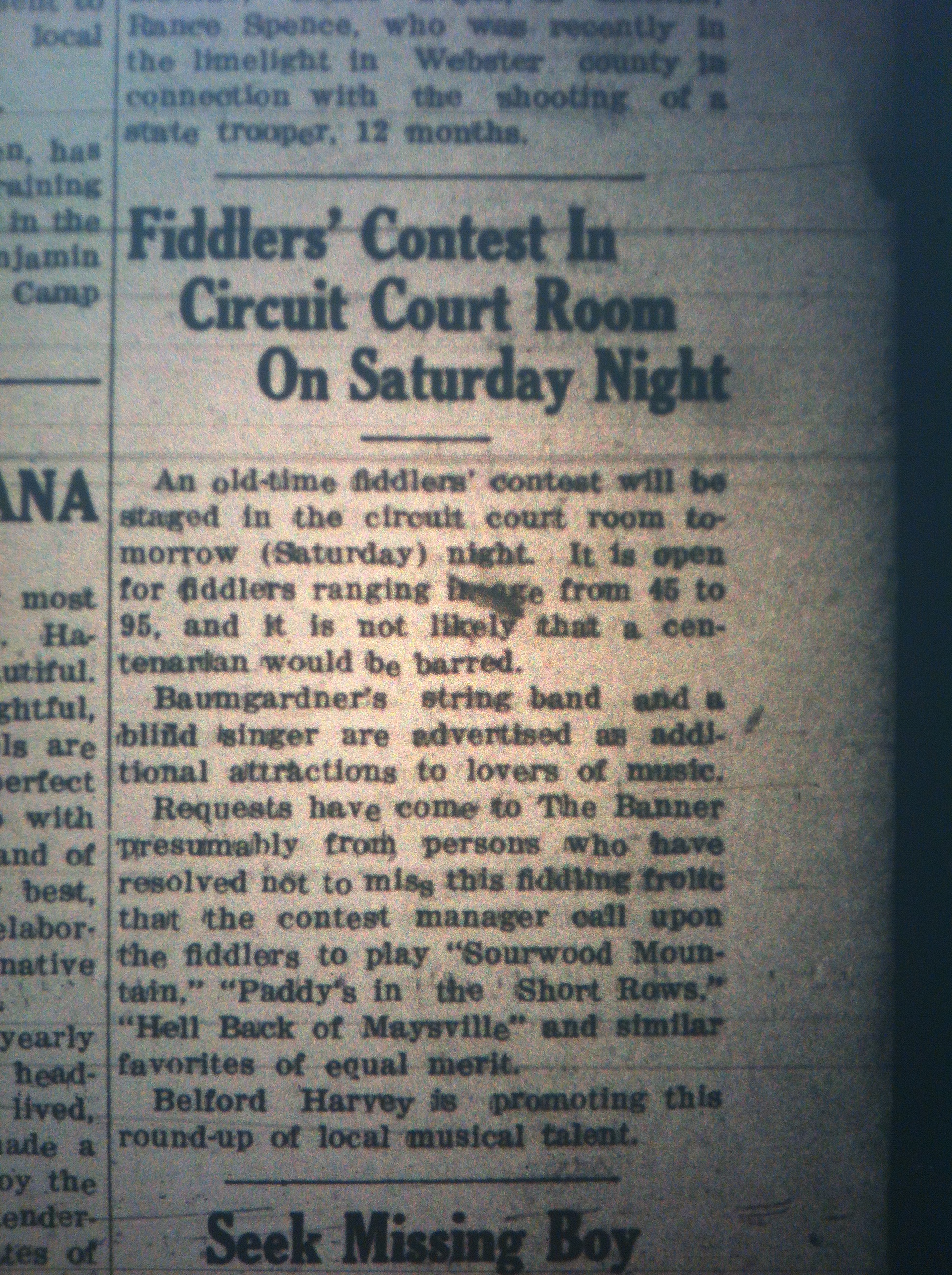
Fiddlers' Contest at Logan Circuit Court Room LB 04.29.1927.JPG

Logan (WV) Banner, 29 April 1927. Belford Harvey was a multi-instrumentalist associated with David Miller and the Guyandotte Mockingbirds.

Old-Time Fiddlers' Contest at Logan Courthouse LB 09.16.1927 1

Logan (WV) Banner, 16 September 1927.

Dempsey-Sharkey Fight (1927)

24 Tuesday Jul 2018

Posted by Brandon Ray Kirk in Logan, Sports

≈ Leave a comment

Tags

Appalachia, boxing, genealogy, history, Jack Dempsey, Jack Sharkey, Logan, Logan Banner, Logan County, Smoke House Restaurant, West Virginia

Dempsey-Sharkey Fight at the Smoke House Ad LB 07.19.1927

Logan (WV) Banner, 19 July 1927.

Here’s video footage of the fight: https://www.youtube.com/watch?v=Btvw6GM33II

← Older posts
Newer posts →

Feud Poll 1

If you had lived in the Harts Creek community during the 1880s, to which faction of feudists might you have given your loyalty?

Categories

  • Adkins Mill
  • African American History
  • American Revolutionary War
  • Ashland
  • Atenville
  • Banco
  • Barboursville
  • Battle of Blair Mountain
  • Beech Creek
  • Big Creek
  • Big Harts Creek
  • Big Sandy Valley
  • Big Ugly Creek
  • Boone County
  • Breeden
  • Calhoun County
  • Cemeteries
  • Chapmanville
  • Civil War
  • Clay County
  • Clothier
  • Coal
  • Cove Gap
  • Crawley Creek
  • Culture of Honor
  • Dingess
  • Dollie
  • Dunlow
  • East Lynn
  • Ed Haley
  • Eden Park
  • Enslow
  • Estep
  • Ethel
  • Ferrellsburg
  • Fourteen
  • French-Eversole Feud
  • Gilbert
  • Giles County
  • Gill
  • Green Shoal
  • Guyandotte River
  • Halcyon
  • Hamlin
  • Harts
  • Hatfield-McCoy Feud
  • Holden
  • Hungarian-American History
  • Huntington
  • Inez
  • Irish-Americans
  • Italian American History
  • Jamboree
  • Jewish History
  • John Hartford
  • Kermit
  • Kiahsville
  • Kitchen
  • Leet
  • Lincoln County Feud
  • Little Harts Creek
  • Logan
  • Man
  • Matewan
  • Meador
  • Midkiff
  • Monroe County
  • Montgomery County
  • Music
  • Native American History
  • Peach Creek
  • Pearl Adkins Diary
  • Pecks Mill
  • Peter Creek
  • Pikeville
  • Pilgrim
  • Poetry
  • Queens Ridge
  • Ranger
  • Rector
  • Roane County
  • Rowan County Feud
  • Salt Rock
  • Sand Creek
  • Shively
  • Spears
  • Sports
  • Spottswood
  • Spurlockville
  • Stiltner
  • Stone Branch
  • Tazewell County
  • Timber
  • Tom Dula
  • Toney
  • Turner-Howard Feud
  • Twelve Pole Creek
  • Uncategorized
  • Warren
  • Wayne
  • West Hamlin
  • Wewanta
  • Wharncliffe
  • Whirlwind
  • Williamson
  • Women's History
  • World War I
  • Wyoming County
  • Yantus

Feud Poll 2

Do you think Milt Haley and Green McCoy committed the ambush on Al and Hollene Brumfield in 1889?

Blogroll

  • Ancestry.com
  • Ashland (KY) Daily Independent News Article
  • Author FB page
  • Beckley (WV) Register-Herald News Article
  • Big Sandy News (KY) News Article
  • Blood in West Virginia FB
  • Blood in West Virginia order
  • Chapters TV Program
  • Facebook
  • Ghosts of Guyan
  • Herald-Dispatch News Article 1
  • Herald-Dispatch News Article 2
  • In Search of Ed Haley
  • Instagram
  • Lincoln (WV) Journal News Article
  • Lincoln (WV) Journal Thumbs Up
  • Lincoln County
  • Lincoln County Feud
  • Lincoln County Feud Lecture
  • LinkedIn
  • Logan (WV) Banner News Article
  • Lunch With Books
  • Our Overmountain Men: The Revolutionary War in Western Virginia (1775-1783)
  • Pinterest
  • Scarborough Society's Art and Lecture Series
  • Smithsonian Article
  • Spirit of Jefferson News Article
  • The Friendly Neighbor Radio Show 1
  • The Friendly Neighbor Radio Show 2
  • The Friendly Neighbor Radio Show 3
  • The Friendly Neighbor Radio Show 4
  • The New Yorker
  • The State Journal's 55 Good Things About WV
  • tumblr.
  • Twitter
  • Website
  • Weirton (WV) Daily Times Article
  • Wheeling (WV) Intelligencer News Article 1
  • Wheeling (WV) Intelligencer News Article 2
  • WOWK TV
  • Writers Can Read Open Mic Night

Feud Poll 3

Who do you think organized the ambush of Al and Hollene Brumfield in 1889?

Recent Posts

  • Logan County Jail in Logan, WV
  • Absentee Landowners of Magnolia District (1890, 1892, 1894)
  • Charles Spurlock Survey at Fourteen Mile Creek, Lincoln County, WV (1815)

Ed Haley Poll 1

What do you think caused Ed Haley to lose his sight when he was three years old?

Top Posts & Pages

  • Civil War Gold Coins Hidden Near Chapmanville, WV
  • New Year's Raid (1888): Randolph McCoy's Testimony
  • Feudist Jim McCoy (1929)
  • Paw Paw Incident: Dan Whitt Deposition (1889)
  • George Fry Last Will and Testament (1793)

Copyright

© Brandon Ray Kirk and brandonraykirk.wordpress.com, 1987-2023. Unauthorized use and/or duplication of this material without express and written permission from this blog’s author and/or owner is strictly prohibited. Excerpts and links may be used, provided that full and clear credit is given to Brandon Ray Kirk and brandonraykirk.wordpress.com with appropriate and specific direction to the original content.

Archives

  • February 2025
  • January 2025
  • October 2023
  • September 2023
  • December 2022
  • November 2022
  • May 2022
  • April 2022
  • February 2022
  • November 2021
  • October 2021
  • September 2021
  • June 2021
  • May 2021
  • April 2021
  • March 2021
  • February 2021
  • January 2021
  • December 2020
  • November 2020
  • October 2020
  • July 2020
  • June 2020
  • May 2020
  • April 2020
  • March 2020
  • February 2020
  • January 2020
  • December 2019
  • November 2019
  • October 2019
  • September 2019
  • August 2019
  • July 2019
  • June 2019
  • May 2019
  • April 2019
  • March 2019
  • February 2019
  • January 2019
  • December 2018
  • November 2018
  • October 2018
  • September 2018
  • August 2018
  • July 2018
  • June 2018
  • May 2018
  • April 2018
  • March 2018
  • February 2018
  • January 2018
  • December 2017
  • November 2017
  • October 2017
  • September 2017
  • August 2017
  • July 2017
  • June 2017
  • May 2017
  • April 2017
  • March 2017
  • February 2017
  • January 2017
  • December 2016
  • November 2016
  • October 2016
  • September 2016
  • August 2016
  • July 2016
  • June 2016
  • May 2016
  • April 2016
  • March 2016
  • February 2016
  • January 2016
  • December 2015
  • November 2015
  • October 2015
  • September 2015
  • August 2015
  • July 2015
  • June 2015
  • May 2015
  • April 2015
  • March 2015
  • February 2015
  • January 2015
  • December 2014
  • October 2014
  • September 2014
  • August 2014
  • July 2014
  • June 2014
  • May 2014
  • April 2014
  • March 2014
  • February 2014
  • January 2014
  • December 2013
  • November 2013
  • October 2013
  • September 2013
  • August 2013
  • July 2013
  • June 2013
  • May 2013
  • April 2013
  • March 2013
  • February 2013
  • January 2013
  • December 2012
  • November 2012

Enter your email address to follow this blog and receive notifications of new posts by email.

Join 2,925 other subscribers

Tags

Appalachia Ashland Big Creek Big Ugly Creek Blood in West Virginia Brandon Kirk Cabell County cemeteries Chapmanville Charleston civil war coal Confederate Army crime culture Ed Haley Ella Haley Ferrellsburg feud fiddler fiddling genealogy Green McCoy Guyandotte River Harts Harts Creek Hatfield-McCoy Feud history Huntington John Hartford Kentucky Lawrence Haley life Lincoln County Lincoln County Feud Logan Logan Banner Logan County Milt Haley Mingo County music Ohio photos timbering U.S. South Virginia Wayne County West Virginia Whirlwind writing

Blogs I Follow

  • OtterTales
  • Our Appalachia: A Blog Created by Students of Brandon Kirk
  • Piedmont Trails
  • Truman Capote
  • Appalachian Diaspora

BLOOD IN WEST VIRGINIA is now available for order at Amazon!

Blog at WordPress.com.

OtterTales

Writings from my travels and experiences. High and fine literature is wine, and mine is only water; but everybody likes water. Mark Twain

Our Appalachia: A Blog Created by Students of Brandon Kirk

This site is dedicated to the collection, preservation, and promotion of history and culture in Appalachia.

Piedmont Trails

Genealogy and History in North Carolina and Beyond

Truman Capote

A site about one of the most beautiful, interesting, tallented, outrageous and colorful personalities of the 20th Century

Appalachian Diaspora

  • Subscribe Subscribed
    • Brandon Ray Kirk
    • Join 787 other subscribers
    • Already have a WordPress.com account? Log in now.
    • Brandon Ray Kirk
    • Subscribe Subscribed
    • Sign up
    • Log in
    • Report this content
    • View site in Reader
    • Manage subscriptions
    • Collapse this bar
 

Loading Comments...