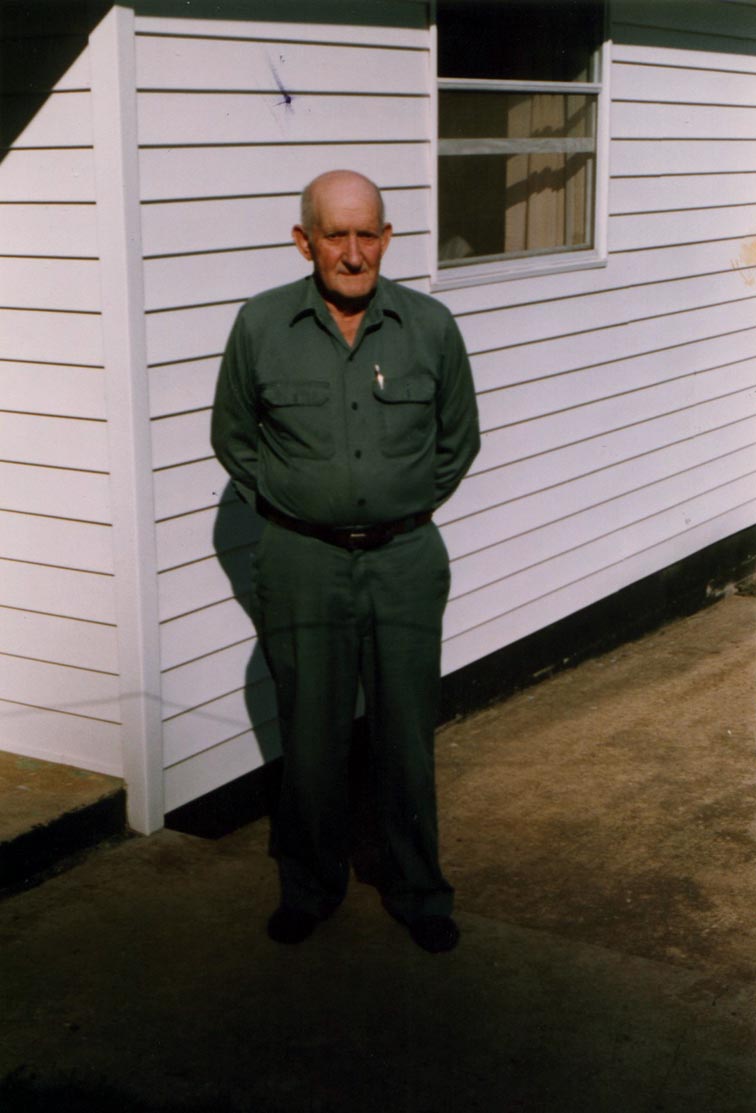
Joe Adams, Trace Fork of Big Harts Creek, Logan County, WV, 1995

26 Wednesday Feb 2014
Posted in Big Harts Creek, Ed Haley, Lincoln County Feud
Joe Adams, Trace Fork of Big Harts Creek, Logan County, WV, 1995
14 Friday Feb 2014
Posted in Big Harts Creek
Tags
Appalachia, Brandon Kirk, Emmett Dingess, genealogy, Harts Creek, life, Logan County, photos, Shively, West Virginia

Cousin Emmett Dingess and myself, Shively, Logan County, WV, 2011
12 Wednesday Feb 2014
Posted in Big Harts Creek
Tags
Appalachia, culture, education, Harts Creek, history, life, Logan County, photos, Piney, Piney School, West Virginia
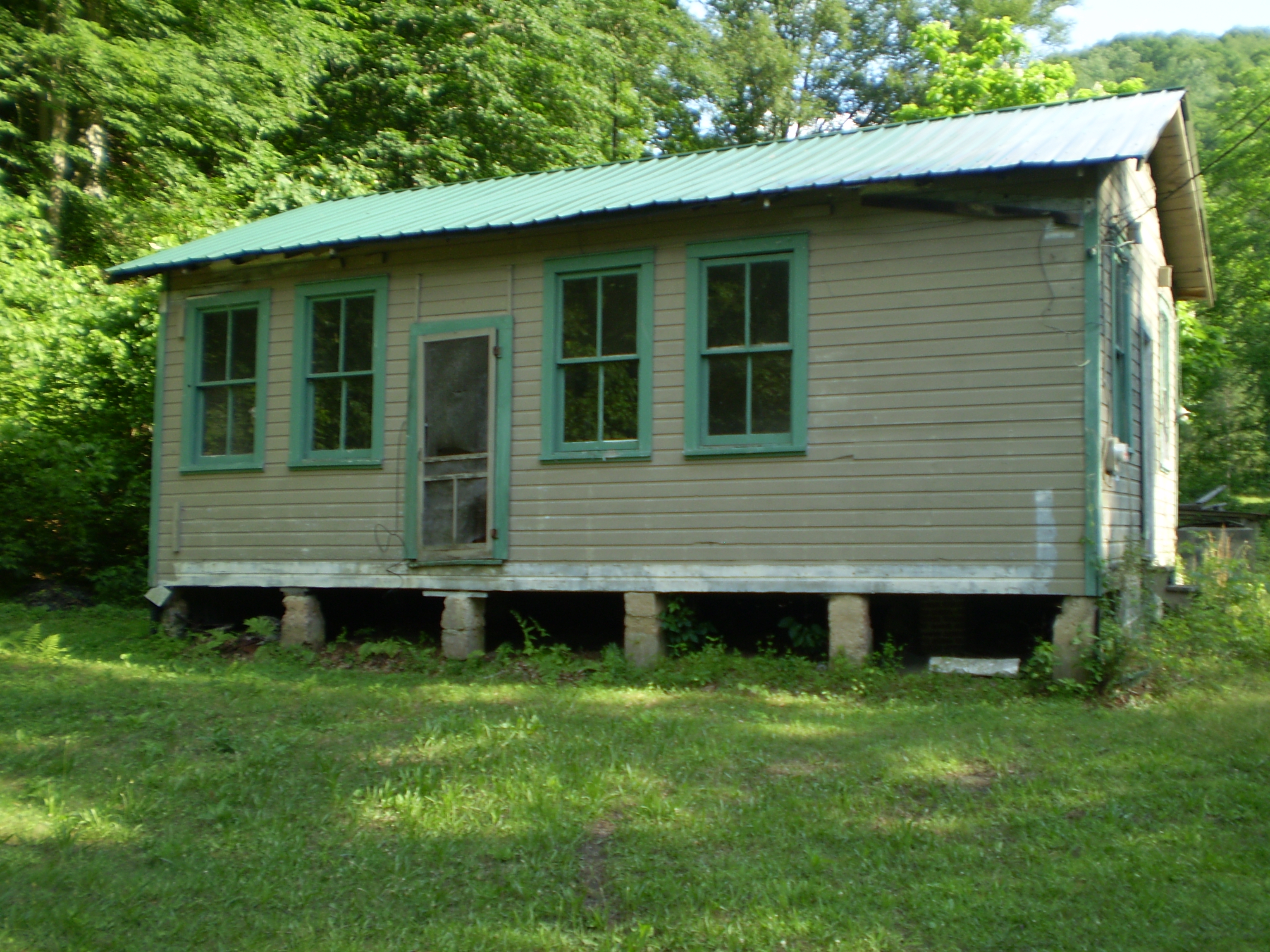
The old Piney School on West Fork, Logan County, West Virginia, 2008
09 Sunday Feb 2014
Posted in Civil War, Logan, Music, Women's History
Tags
Appalachia, banjo, Cathy Grant, Chief Logan State Park, civil war, fiddler, fiddling, life, Logan, Logan County, music, photos, Union Army, West Virginia
 A Civil War re-enactor plays the banjo while Cathy Grant plays the fiddle at Chief Logan State Park in Logan County, WV, September 2002.
05 Wednesday Feb 2014
Posted in Big Harts Creek, Ed Haley
Tags
Appalachia, culture, genealogy, Harts Creek, history, life, Logan County, Peter Mullins, photos, West Virginia

Peter Mullins with unknown woman, circa 1890s
05 Wednesday Feb 2014
Posted in Big Ugly Creek, Civil War
Tags
Archibald Harrison, Arena Ferrell, Burbus Clinton Spurlock, Elizabeth Scites, Ferrellsburg, George W. Ferrell, Guy Fry, history, James D. Cummings, John M. Harrison, Keenan Ferrell, Lincoln County, Logan County, Martha E. Harrison, Micco, Nine Mile Creek, Phernatt's Creek, timbering, Vinson Spurlock, West Virginia, William T. Harrison, writing
In the latter part of the 1880s, Archibald Harrison sold much of his property. In 1886, he sold 30 acres of his 120-acre tract at Nine Mile Creek in Lincoln County, West Virginia, to A.E. Callihan. The next year, he sold his 360-acre tract in Harts Creek District to an unknown party. In that same year, he bought 100 more acres on Nine Mile.
Around that time, Mr. Harrison and his wife Martha may have separated or divorced, based on indications provided by tax records. In 1888, he sold 150 acres of his 230-acre tract at Phernatt’s Creek to D.B. Keck, while Martha sold the 100-acre tract on Nine Mile to Guy Fry. The following year, Martha sold 90 more acres to Fry on Nine Mile and the remaining acreage on Phernatt’s Creek (recorded as 125 acres, not 80) to James D. Cummings.
At that juncture, Martha disappears from local records.
In the 1890s, Mr. Harrison — perhaps recuperating from a second divorce — centered his property acquisitions on Nine Mile Creek. In 1890, he bought 59 acres worth $1.00 per acre from Elizabeth Scites. In 1891, he bought 150 acres worth $3.00 per acre from Guy Fry and 75 acres also worth $3.00 per acre from an unknown party. This latter tract of land he immediately deeded to his son, William T. Harrison, who married Charlotte F. Sias around 1892.
In 1892, Mr. Harrison deeded A.B. Staley 86 acres from the 150-acre tract, which tax records document as being on Fourteen Mile Creek, not Nine Mile. Four years later, William T. sold his 75 acres to Eliza J. Hager. Harrison probably died in that frame of time. His remaining property on Nine Mile was sold by D.E. Wilkinson, special commissioner, to Clinton Spurlock in 1898.
By 1900, Archibald and Martha Harrison were absent from local census records. Their children Daniel H., age 31, Guy French, age 24, and Louisa J., age 21, were also gone from the area. While the fate of Martha, Daniel and Louisa remains unclear, there is some evidence that Guy, who later lived at Micco in Logan County in 1920, moved to Virginia just after the turn of the century.
In 1900, three of Archibald’s sons were still listed in local census records. William T. Harrison and his family were residents of the Laurel Hill District. John M. Harrison was boarding nearby in the home of Vinson Spurlock and was reportedly engaged in some type of timber business. George W. Harrison was at present-day Ferrellsburg in Harts Creek District with his adopted parents, Keenan and Arena Ferrell.
Martha Harrison, the wife of Archibald, reportedly died in 1901.
27 Monday Jan 2014
Posted in Big Harts Creek, Ed Haley
Tags
Appalachia, culture, Ed Haley, Ewell Mullins, genealogy, Harts Creek, history, Logan County, photos, West Virginia
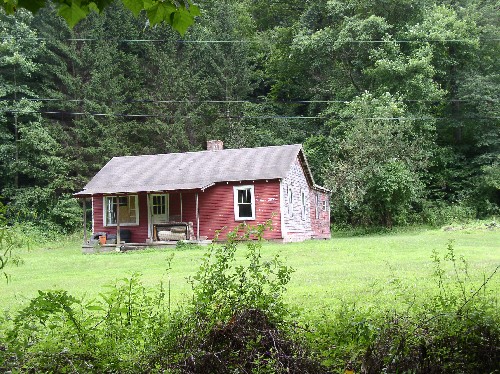
Ewell Mullins residence (part of the old Ed Haley property), Trace Fork of Harts Creek, Logan County, WV, 2006
17 Friday Jan 2014
Posted in Big Harts Creek, Lincoln County Feud
Tags
Appalachia, culture, Dave Dingess, feud, Harts Creek, history, life, Logan County, photos, West Virginia

Dave Dingess, resident of Smoke House Fork of Big Harts Creek, Logan County, WV, 1890s
14 Tuesday Jan 2014
Posted in Big Harts Creek, Ed Haley, Lincoln County Feud
Tags
Anthony Adams, Appalachia, culture, feud, genealogy, Harts Creek, history, life, Logan County, photos, West Virginia
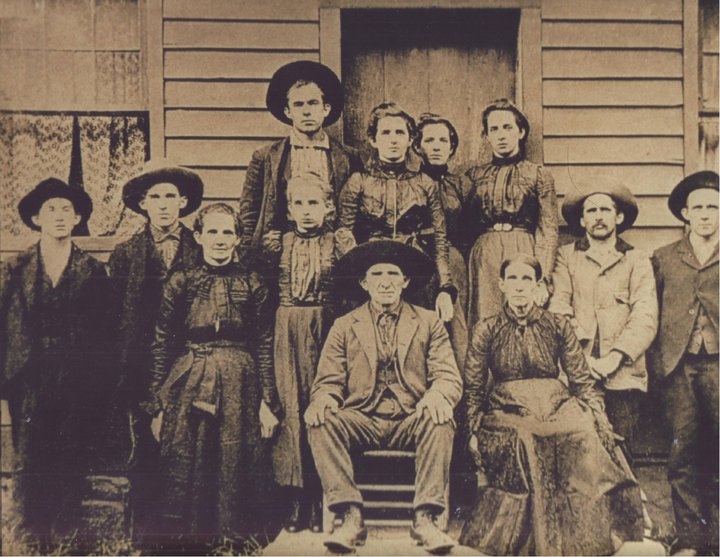
Anthony Adams family, Harts Creek, Logan County, West Virginia, 1890
13 Monday Jan 2014
Posted in Big Harts Creek, Ed Haley
Tags
Appalachia, culture, Great Depression, Harts Creek, history, life, Liza Mullins, Logan County, Peter Mullins, photos, West Virginia

Peter Mullins family, Trace Fork of Big Harts Creek, Logan County, WV, 1940s
11 Saturday Jan 2014
Posted in Ed Haley
Tags
Cary Mullins, Ed Belcher, Ed Haley, fiddle, fiddling, Harts Creek, history, Joe Adams, Logan County, music, Noah Mullins, West Virginia, writing
When I pressed Joe for specific details about Ed’s technique he said, “He’d play up on the bow about four or five inches, but he played the full stroke with the bow all the time. He didn’t jiggle it.”
I asked if he always sat down when he played and Joe said, “I’ve seen him sitting down and standing up both. They said he danced, but I never did see him dance none. He pat his foot when he played. You’d never hardly know he was patting it. He just patted one foot. He had that chin rest…”
“So Ed put the fiddle up under his chin?” I interrupted.
“He put it up under his chin and played,” Joe confirmed. “Ed Belcher, he played with it under his chin, too. Now Robert Martin, sometimes he’d have it under his chin, sometimes he’d have it down here on his chest.”
Brandon asked if Ed packed his fiddle in a case and Joe said, “Yeah, he had a case. If it was raining or something, I’ve seen him with it under his coat. He had two or three bows. I’ve seen him take the bow loose… He took the end of it loose and put it under the string and played some kind of a tune. They was just one tune he played like that. I believe it was some kind of a religious song. I don’t know how he done it.”
I asked Joe if Ed sang any and he said, “I heard him sing a little bit one or two times on one or two tunes. He’d play a verse and then he’d sing a little bit but not much. Seems to me like that his wife sung a little bit with him on some of them but they didn’t do too much singing. He’d play a little bit, then sing a little bit. They was just a few tunes that he done like that. He didn’t play none of this modern music or nothing like that. He played old-time tunes, like ‘The Arkansas Traveler’. He’d play that and some of them boys’d be sitting off someplace and talking about the big rock in the field and all about the feller digging the taters out and that old sow rooting them out. Ed would play the music and they’d put that in. They’re all dead now, them boys that used to do that. Noah Mullins and my brother Howard and Burl Mullins and Cary and them.”
Joe’s memories seemed to stretch back fondly to that time.
“Yeah, it was all right,” he said. “Every time I played with him he played ‘Lady of the Lake’. Real old tunes.”
Joe said Ed played “Love Somebody”, “Birdie”, “Brownlow’s Dream”, “Hell Up Coal Hollow”, “Hell Among the Yearlings”, “Wild Hog in the Red Brush”, and “Jenny’s Creek”. He also played “Mockingbird” with “everything in it.”
“He’d make the bird holler and everything else,” Joe said.
I asked Joe if Ed played a tune for a long time and he said, “Well, some of his tunes he played a long time and some of them were just short and sweet. He put a lot extra in them sometimes. It went along with it but if you didn’t know him pretty well and watch what you was doing you’d get off. It just come natural for me to follow him because he played good time.”
10 Friday Jan 2014
Posted in Ed Haley
Tags
Appalachia, Arthur Smith, banjo, Ed Belcher, Ed Haley, fiddlers, George Mullins, Geronie Adams, Grand Ole Opry, Harts Creek, history, Joe Adams, Johnny Hager, Logan County, music, Robert Martin, West Virginia, writing
I wondered if people around Trace listened to the radio, especially the Grand Ole Opry, in the early days.
“They was a few radios,” Joe said. “We had one here. We ordered it from a company called Jim Brown. It had five batteries. And like Jerry Clower said, you’d take them and set them in front of the fire and get them hot and then plug them in, they’d play. They was kindly hard to get — they didn’t cost much. I think they was about ten or twelve dollars for all of them. But Robert Martin had one on top of that hill and my brother had one on Twelve Pole, and on Saturday night when the Grand Ole Opry come on, it was a sight to watch these people a going. It come in good and clear. Robert learned a lot of Arthur Smith tunes off the radio. Yeah, Arthur Smith come down there at Branchland and stayed a week with him and I was talking to Robert after he left and he said, ‘I wish you boys’d come down.’ I said, ‘Well, if you’d a let us know, we woulda come.'”
Brandon said to Joe, “I remember you were telling me last time I talked to you that you thought Robert Martin was about the best around.”
Joe said, “In the modern music. Now, in the old-time music, you’d take Ed Haley and Johnny Hager and Ed Belcher. Ed Belcher, he stayed at George Mullins’ and he was like my brother: he was an all around musician. He could tune a piano and play it, he could play an organ. He could play anything he picked up. I never did hear him play a banjo but he could play anything on the fiddle or guitar. He’d note the guitar all the time. He played like these fellers play on Nashville. They was several people around here had banjos and played. Geronie Adams — Ticky George’s boy — he played a banjo a little bit. And they was a fella — Johnny Johnson — played with Robert Martin out on that hill. He was from someplace in Kentucky.”
I asked Joe what kind of banjo style Johnny Hager played.
“He played the old…,” he started. “They’s some of them calls it the ‘overhand’ and some of them call it just ‘plunking’ the banjo. They was several people played like that. Bob Dingess down here, he played that a way a little bit. My dad, he played the banjo and he played that.”
I asked Joe how Ed dressed in the early forties.
“Well, he wore dress pants most of the time,” he said. “He wore mostly colored shirts — blue or green or just any color. Work shirts. Most of the time he wore suspenders with them. And had buttons sewed on them to buttom them with. Buttons on the inside. Mostly he wore slippers. They was a lace-up slipper. Three laces. He could tie his shoes just as good as you could tie yorn. He wasn’t a big man — he was a little small man. About 5’4″, 5’5″.”
Brandon asked what Ed was like when he wasn’t playing and Joe said, “Well, he’d just sit around and talk and tell tales about first one thing and then another. They’d just talk about how hard they was raised and how they come up.”
Did the ladies like him?
Joe said, “They all liked him but they wasn’t girlfriends. If he went into a place to play, they’d all come around and hug him and talk to him.”
31 Tuesday Dec 2013
Posted in Big Harts Creek, Ed Haley
Tags
Appalachia, culture, history, Jackson Mullins, Joe Mullins, life, Logan County, Peter Mullins, photos, West Virginia
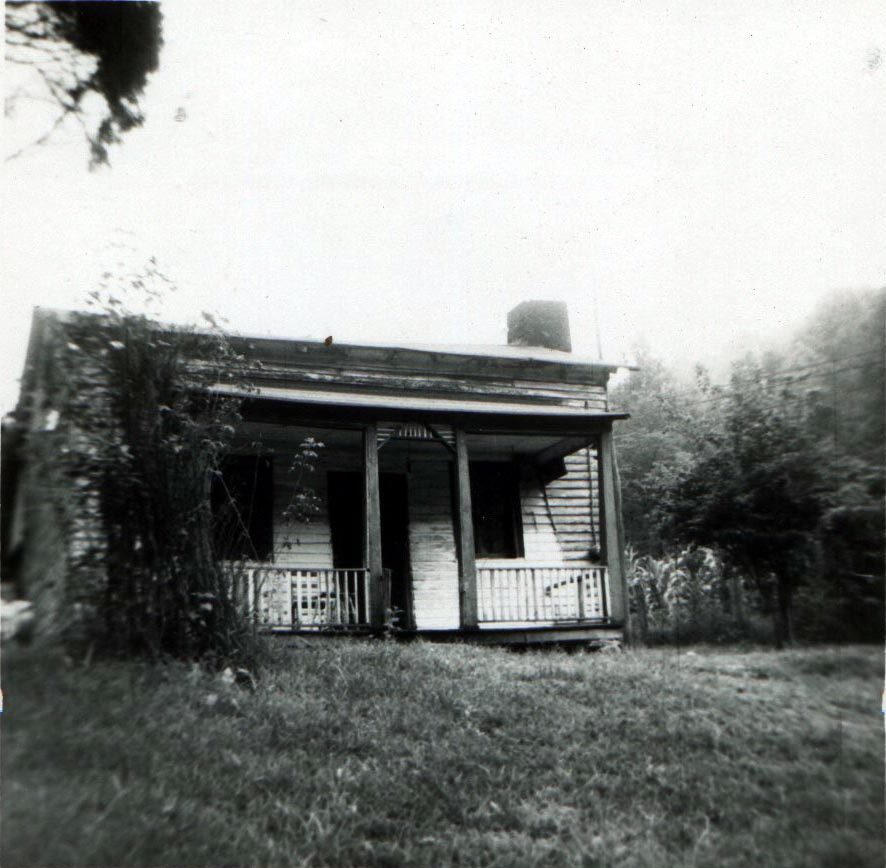
Mullins Homeplace, Trace Fork of Big Harts Creek, Logan County, WV, 1945-1950.
12 Thursday Dec 2013
Posted in Big Harts Creek
Tags
Appalachia, culture, Great Depression, Harts Creek, history, life, Logan County, photos, West Virginia

Children of Upper Hart during the Great Depression, Logan County, West Virginia.
29 Friday Nov 2013
Posted in Big Harts Creek, Ed Haley, Lincoln County Feud, Timber
Tags
Al Brumfield, Allen Martin, Andrew D. Robinson, Andrew Robinson, Anthony Adams, Appalachia, Ben Adams, Ben Robinson, Boardtree Branch, Chloe Gore, Chloe Mullins, crime, David Robinson, Dicy Adams, Elizabeth Abbott, genealogy, general store, Greasy George Adams, Green McCoy, Harts Creek, Harvey Adams, Henderson Dingess, history, Hollena Brumfield, Hugh Dingess, Jackson Mullins, John Frock Adams, John M. Adams, John Robinson, Joseph Adams, Joseph Robinson, Lincoln County Feud, Logan County, Logan County Banner, Lucinda Brumfield, May Adams, Meekin Branch, Milt Haley, Peter Carter, Rhoda Robinson, Sallie Dingess, Solomon Adams, Spicie McCoy, Susan Abbott, Ticky George Adams, timber, Trace Fork, Victoria Dingess, Viola Dingess, West Virginia, Wilson Abbott
Ben Adams — the man who supposedly hired Milt Haley and Green McCoy to assassinate Al Brumfield — was born in 1855 to Joseph and Dicy (Mullins) Adams on Big Harts Creek in Logan County, (West) Virginia. His older sister Sarah married Henderson Dingess and was the mother of Hollena Brumfield, Hugh Dingess and several others. He was a first cousin to Jackson Mullins, Milt Haley’s father-in-law, and a brother-in-law to Chloe Mullins, Milt’s mother-in-law, by her first marriage to John Adams.
In 1870, 17-year-old Ben lived at home with his mother, where he worked as a farmer. He was illiterate, according to census records. His neighbors were Andrew Robinson and Henderson Dingess, both of whom had married his sisters (Rhoda J. and Sally). In the next year, according to tradition, he fathered an illegitimate child, William Adams, who was born to Lucinda Brumfield (niece of Paris).
In 1873, Ben married Victoria Dingess. Victoria was born in 1856 and was a first cousin to Hollena Brumfield and Hugh Dingess. The marriage made for an interesting genealogical connection: Ben was already Hugh’s uncle; now he was also his brother-in-law, as Hugh was married to Victoria’s sister, Viola (his first cousin). Ben’s daughter Sally, who was named after Hollena’s mother, later married a cousin of Spicie McCoy, Green’s wife. For all practical purposes then, Ben Adams was genealogically connected to all sides of the feud — making it a true intra-family feud from his perspective.
For the first decade or so of his marriage, Ben lived with his mother on family property, although he did acquire land and open a general store business. In 1880, he was listed in the Lincoln County Census with his mother Dicy, aged 63, and family. He was 26 years old, Victory was 23, Sally was six, son Charlie was four, daughter Patsy A. was two, and son Anthony was a few months old. George Greaar, age 20, was a boarder. In 1881, he purchased 25 acres on the Meekin Branch of Trace Fork. Three years later, he was listed in a business directory as the proprietor of a general store. At that same time, his brother-in-law and neighbor Henderson Dingess was a distiller.
Later in the decade, Ben fathered three more children: George “Greasy” (1885), Harvey (1886), and May (1889). In 1889, the time of Milt Haley’s ambush of Al Brumfield, Adams owned 260 acres on the Boardtree Branch of Trace Fork valued at $1.00 per acre in Logan County.
Anthony Adams — Ben’s brother and ally in the 1889 troubles — was a prominent timberman on Harts Creek. Anthony had been born in 1849 and was the husband of Pricie Alifair Chapman, Burl Farley’s half-sister. In 1884, Adams was listed in a business directory as a blacksmith. In 1889, he owned two 50-acre tracts of land, one valued at $3.50 per acre with a $30 building on it, the other valued at $2.00 per acre. By that time, he had three sons of fighting age who may have participated in the feud: Solomon Adams (born 1869), Horatio “Rush” Adams (born 1871), and Wayne Adams (born 1874), as well as a son-in-law, Harrrison Blair (born c.1867).
A quick examination of the Adams genealogy gives a clue as to Ben’s other 1889 allies. First there was brother “Bad John” Adams. Adams was deceased at the time of the Haley-McCoy incident, but he had been married to Chloe Gore — mother of Emma Jean (Mullins) Haley. He had three sons of fighting age in 1889: Joseph Adams (born 1859), John Frock Adams (born 1861), and Ticky George Adams (born 1865)…as well as son-in-law Sampson Thomas.
Rhoda J. Robinson was a sister to the three Adams brothers. She had several children who may have allied with Ben: David Robinson (born 1860), Ben Robinson (born 1866), John R. Robinson (born 1868), and Joseph Robinson (born 1870). There was also brother Solomon Adams, who may have offered his loyalty to Ben, along with sons John M. Adams (born 1869) and Benjamin Adams (born 1867), and sons-in-law David Robinson and Peter Carter (c.1873).
As for Ben himself, he stayed busy with timber after the feud. According to an 1896 article from the Logan County Banner: “Benj. Adams, of Hart, is hauling some fine poplar from trace fork.” In 1901, he married Venila Susan Abbott, a daughter of Wilson and Elizabeth (Workman) Abbott, and had at least eight more children (born between 1901 and 1921). Not long after his remarriage, he was accused of murdering a local postman named Jim Allen Martin — and nearly went bankrupt paying for his legal defense. He died in 1910 and was buried on the hill near the mouth of Trace Fork.
27 Wednesday Nov 2013
Posted in Big Harts Creek, Chapmanville, Ed Haley, Harts, Music
Tags
Al Brumfield, Anthony Adams, Ashland, Bill's Branch, blind, Brandon Kirk, Cain Adkins, Cecil Brumfield, Chapmanville, Charley Davis, Cow Shed Inn, Crawley Creek, Dave Brumfield, Dick Thompson, Earl Brumfield, Ed Haley, Ellum's Inn, fiddler, fiddling, Fisher B. Adkins, Green McCoy, Harts Creek, Henderson Dingess, Hoover Fork, Hugh Dingess, John Brumfield, Kentucky, Lincoln County, Lincoln County Schools, Logan, Logan County, Milt Haley, music, Piney Fork, Smokehouse Fork, Trace Fork, Trace Mountain, West Fork, West Virginia, writing
A few days after visiting Earl Brumfield, Brandon dropped in on his good friends, Charley Davis and Dave Brumfield. Davis was an 88-year-old cousin to Bob and Bill Adkins. Brumfield was Davis’ son-in-law and neighbor. They lived just up Harts Creek near the high school and were familiar with Ed Haley and the story of his father, Milt. Charley said he once saw Ed in a fiddlers’ contest at the old Chapmanville High School around 1931-32. There were two other fiddlers in the contest — young men who were strangers to the area — but Ed easily won first place (a twenty-dollar gold piece). He was accompanied by his wife and a son, and there was a large crowd on hand.
Dave said Ed was mean as hell and laughed, as if it was just expected in those days. He said Ed spent most of his time drinking and playing music in all of the local dives. Sometimes, he would stop in and stay with his father, Cecil Brumfield, who lived in and later just down the road from the old Henderson Dingess place on Smoke House Fork. Dave remembered Ed playing at the Cow Shed Inn on Crawley Mountain, at Dick Thompson’s tavern on main Harts Creek and at Ellum’s Inn near Chapmanville. Supposedly, Ed wore a man out one time at a tavern on Trace Mountain.
Dave said he grew up hearing stories about Ed Haley from his mother’s people, the Adamses. Ed’s blindness was a source of fascination for locals. One time, he was sitting around with some cousins on Trace who were testing his ability to identify trees by their smell. They would put first one and then another type of limb under his nose. Dave said Ed identified oak and walnut. Then, one of his cousins stuck the hind-end of an old cat up under his nose. Ed smiled and said it was pussy willow.
Dave said he last saw Ed around 1945-46 when he came in to see his father, Cecil Brumfield. Ed had gotten drunk and broken his fiddle. Cecil loaned him his fiddle, which Ed never returned. Brumfield later learned that he had pawned it off in Logan for a few dollars to buy a train ticket to Ashland. Cecil bought his fiddle back from the shop and kept it for years.
Dave’s stories about Milt Haley were similar to what his Aunt Roxie Mullins had told me in 1991. Milt supposedly caused Ed’s blindness after getting angry and sticking him head-first into frozen water. Not long afterwards he and Green McCoy were hired by the Adamses to kill Al Brumfield over a timber dispute. After the assassination failed, the Brumfields captured Milt and Green in Kentucky. Charley said the two men were from Kentucky — “that’s why they went back there” to hide from the law after the botched ambush.
The vigilantes who captured Milt and Green planned to bring them back to Harts Creek by way of Trace Fork. But John Brumfield — Al’s brother and Dave’s grandfather — met them in the head of the branch and warned them to take another route because there was a rival mob waiting for them near the mouth of the hollow. Dave said it was later learned that Ben and Anthony Adams — two brothers who had ill feelings toward Al Brumfield — organized this mob.
The Brumfield gang, Dave and Charley agreed, quickly decided to avoid the Haley-McCoy rescue party. They crossed a mountain and came down Hoover Fork onto main Harts Creek, then went a short distance down the creek and turned up Buck Fork where they crossed the mountain to Henderson Dingess’ home on Smoke House Fork. From there, they went up Bill’s Branch, down Piney and over to Green Shoal, where Milt played “Brownlow’s Dream” — a tune Dave said (mistakenly) was the same as “Hell Up Coal Hollow”. Soon after, a mob beat Milt and Green to death and left them in the yard where chickens “picked at their brains.” After Milt and Green’s murder, Charley said locals were afraid to “give them land for their burial” because the Brumfields warned folks to leave their bodies alone.
Brandon asked about Cain Adkins, the father-in-law of Green McCoy. Charley said he had heard old-timers refer to the old “Cain Adkins place” on West Fork. In Charley’s time, it was known as the Fisher B. Adkins place. Fisher was a son-in-law to Hugh Dingess and one-time superintendent of Lincoln County Schools.
In the years following the Haley-McCoy murder, the Brumfields continued to rely on vigilante justice. Charley said they attempted to round up the Conleys after their murder of John Brumfield in 1900, but were unsuccessful.
11 Monday Nov 2013
Posted in Big Harts Creek, Civil War, Whirlwind
Tags
34th Battalion Virginia Cavalry, Appalachia, Barney Carter, civil war, genealogy, Harts Creek, history, Hoover Fork, Logan County, photos, West Virginia

Capt. Barney Carter (1821-1902), resident of Hoover Fork of Big Harts Creek, Logan County, West Virginia, served as captain of Company D, 34th Battalion Virginia Cavalry.
25 Friday Oct 2013
Posted in Big Ugly Creek, Ferrellsburg, Music
Tags
Archibald Harrison, Arena Ferrell, Big Ugly Creek, C&O Railroad, Cleme Harrison, Daniel Fry, Don McCann, Ferrellsburg, genealogy, George W. Ferrell, Guy Harrison, Guyandotte River, Guyandotte Valley, Harold Ray Smith, Harts Creek District, history, Keenan Ferrell, Laurel Hill District, Lincoln County, Logan County, Martha E. Harrison, Martha Harrison, music, Nancy Fry, Nine Mile Creek, Phernatt's Creek, Tazewell County, Virginia, writing
Around the turn of the century, in the years just prior to the arrival of the C&O Railroad in the Guyandotte Valley, George W. Ferrell, a musician in present-day Ferrellsburg, busily wrote songs about local personalities and events. Today, Ferrell’s solitary grave is marked with an ornate tombstone that sits at the edge of what was, until recent years, a garden.
George W. Ferrell was born on October 10, 1874 to Archibald B. and Martha E. (Fry) Harrison. Archibald was the son of Guy P. and Cleme (Harmon) Harrison of Tazewell County, Virginia. Mary was the daughter of Daniel H. and Nancy P. (Bailey) Fry of Logan County. Ferrell’s birthplace is not known because, soon after his parents married in 1865, they left the area, settling at first in Kentucky and then elsewhere.
In 1878, George, then four years old, returned to Lincoln County with his parents. In 1880, his family lived near the mouth of Big Ugly Creek or at the “Bend,” just across the Guyandotte River. Shortly thereafter, they made their home at Phernatt’s Creek, further downriver in Laurel Hill District.
By 1889, Ferrell’s father — who was perhaps recently divorced from his mother — had sold all of the family property in Harts Creek District and at Phernatt’s Creek and relocated to Nine Mile Creek.
Details concerning Ferrell’s early life remain elusive. It is not known who influenced him musically or when he even started writing or playing music. There is no indication of his father or mother being musicians but his mother’s first husband, Jupiter Fry, was a well-known fiddler on Big Ugly. Some of his first songs may have been inspired by his father’s stories of the Civil War.
At some point in his young life, and for reasons unknown, Ferrell was adopted by Keenan and Arena Ferrell, a childless couple at Ferrellsburg in Lincoln County.
“I heard he was just a big old boy when the Ferrells took him in,” said Don McCann, current owner of the property surrounding Ferrell’s grave. “They didn’t have any children of their own.”
In the 1900 Lincoln County Census, Ferrell was listed as their 25-year-old adopted son. More than likely, he was assisting the Ferrells in the operation of their store and business interests.
It is easy to see how Ferrell would have become acquainted with his future foster parents.
“His father worked a lot of timber around Big Ugly or Green Shoal,” said Harold R. Smith, Lincoln County genealogist and historian. “And that would have put him in close contact with the Ferrells at Ferrellsburg.”
But why was he not living with his mother (wherever she was), who died in 1901, or his maternal grandmother, who was alive on Big Ugly? And what was his connection to the Ferrells?
19 Saturday Oct 2013
Posted in Ed Haley, Music, Women's History
Tags
Appalachia, Clay County, culture, genealogy, guitar, history, life, Logan County, Nora Martin, photos, Ugee Postalwait, West Virginia

Nora (Douglas) Martin, daughter of Rosie Hicks Day, Clay County, WV, 1913-1925
15 Tuesday Oct 2013
Tags
Appalachia, Carol Caraco, Fred B. Lambert, history, Logan County, logging, Lucian Mitchell, Milt Haley, rafting, timbering, West Virginia, writing
Milt Haley, by all accounts, made his living as a timber man. He was probably lured “over the mountain” from the Tug River section by the timber industry that evolved in the Guyandotte Valley following the Civil War. It certainly played a role in his death. Really, for all practical purposes, logging was imbedded in the life fabric of every person living around Harts Creek in 1889…including little Ed Haley, who grew up in the era when timbering and steamboats gave way to coal and the railroad.
“Almost from the very beginning of history in this region, logs have been rafted on the Guyandotte and floated to Cincinnati and even to more distant markets,” according to Fred B. Lambert’s The Llorrac (1926). “In autumn, men with saws and axes went into the woods and cut down the trees. At first, the trees were so plentiful that they could be cut and rolled directly into the stream. In some cases, the bark was peeled from the logs and they were allowed to slide down the mountain side. But gradually the timber along the shore became scarce, and timbermen were compelled to go farther and farther into the hills or up the creeks, until now most of the virgin timber has been cut, and they are beginning on the second growth and, in some places, even on the third.”
The logging season began with the construction of logging camps “during the late winter and early spring months before the spring rains began to swell the creeks and rivers,” according to River Cities Monthly.
The men who came into these camps for work “were men in every sense of the word, and their beards of many days growth betrayed the fact that razors as well as some one to use them were quite scarce…,” Lambert wrote. They worked silently but would “yell like wild men” if something “unusual” happened. They were “master hands at swearing” and often fought amongst themselves, be it for sport or in fits of rage. Because of their wild nature, a foreman was often hired to regulate their activity. At night, they slept on bundles in crude log cabins. If the camp was large enough, a mess hall was constructed and a cook was hired to serve them bacon, beans, bread, coffee “or whatever may be brought into the camp from the surrounding country.”
According to Carol Caraco’s The Big Sandy (1979), loggers marked their timber by branding it with their initials. After branding their logs, they got them out of the hollow and to the river, usually by use of horse or oxen and cant hooks. Another often-used method involved splash dams. “When thousands of logs accumulated behind the timber and stone splash dam, a key wedge would be removed and the timber spewed forth,” Caraco wrote. As the logs made their way down the creek, many were jammed or land-locked along the bank.
At the mouth of creeks and rivers were “taker-ups” and booms. “The taker-ups were free-lance agents who caught and held unrafted logs until the owners appeared,” according to Caraco. “When their charge for this service proved excessive, the legislature standardized fees. Other times loose logs were stopped by a boom, a dam of huge poplar logs reinforced by a giant chain stretched across the stream.”
This boom concept, as well as questions about branding, were apparently at the heart of the 1889 troubles.
According to The Llorrac, “After the logs were all in the river, they were arranged into a raft and held in position by hickory pins driven through the small tiepoles. Later they were made more secure by the use of iron ‘chain dogs.’ Three men were required to build a raft; one to sight or place the logs, one to carry poles, and one to drive pins or chaindogs. They received a dollar a day each and it took about a day. The rafting was done in the fall and winter so as to be ready to go out on the first ‘log-tide’ of spring or early summer. An experienced raftsman always knew when it was safe to go. And well he did, for below him were the treacherous falls and shoals and eddies ready, without a moment’s notice, to hurl him to a terrible death. When the day came for the trip and the oarsmen decided that the river was at safe ‘log tide,’ the great ropes were loosened, the men took their places, the raft slowly moved into the current, and the wild ride was on.”
Based on Lambert’s notes, rafts moved at speeds of eight or nine miles per hour in convoys of fifty or more.
“There was an oarsmen at the bow’ and another behind, directing, with their strokes, every movement of the raft,” he wrote. “No one who has ever been near the river when rafts were passing, can fail to have heard the strange calls of the raftsmen to each other as they rounded the bends of the river or passed through dangerous chutes or rapids.”
“The man on the bow didn’t have to know much,” according to Lucian Mitchell, an old rafter who spoke with Lambert. “The man at the stern knew where to go, where the shoals were, and how to work up to the point on a hard bend and knew the Jordan sands at the mouth of Bear Creek. Sometimes a raft would cork the river by bowing and swing around in such a position as to get both ends afoul. If another raft came down it was rulable to hit this raft in the middle and cut it in two pieces.”
“This was a thrilling time,” The Llorrac claimed. “The front oar was often broken, leaving the raft unmanageable and, in the language of the raftsmen, it sometimes ‘swarped’ or turned completely around and even went to pieces. Let no one minimize the danger. If by accident, a man lost his balance and fell into the water, he was generally carried at once by the eddies to the bottom of the river; or, he drifted under the raft and was seen no more until his body was found, drifting far below, after many days or even months. In case they escaped these dangers they were still subject to sunken logs or great stones.”
Lucian Mitchell of Logan County downplayed the drowning aspect, saying, “Not many drowned. Most could swim.”
Writings from my travels and experiences. High and fine literature is wine, and mine is only water; but everybody likes water. Mark Twain
This site is dedicated to the collection, preservation, and promotion of history and culture in Appalachia.
Genealogy and History in North Carolina and Beyond
A site about one of the most beautiful, interesting, tallented, outrageous and colorful personalities of the 20th Century
 Brandon Ray Kirk