• About

Brandon Ray Kirk

~ This site is dedicated to the collection, preservation, and promotion of history and culture in my section of Appalachia.

Brandon Ray Kirk

Tag Archives: Chillicothe

West Virginia Once Part of Iroquois Domain (1927)

21 Tuesday Aug 2018

Posted by Brandon Ray Kirk in American Revolutionary War, Native American History

≈ Leave a comment

Tags

Andrew P. Price, Appalachia, Canada, Cayuga, Chillicothe, Cumberland River, Dekanawida, Five Nations, Great Lakes, Greenbrier Valley, Hiawatha, history, Iroquois, Jackson River, James Fenimore Cooper, Kanawha River, Lancaster, Logan Banner, London, Marlinton, Mingo Flats, Mohawk, New York, Ohio, Oneida, Onondago, Ototarha, Pennsylvania, Revolutionary War, Rio Grande River, Seneca, Seneca Trail, Shawnee, St. Lawrence River, Tennessee, Tuscarora, Virginia, Warrior's Road, West Virginia, Winchester

From the Logan Banner of Logan, WV, comes this bit of history about the Iroqouis and West Virginia dated October 7, 1927:

West Virginia Part of Iroquois Domain

Confederation of Five Nations, Pledged to Peace, Endured For Two Centuries — Hiawatha One of Founders — Vast Indian Drama Told By Andrew P. Price, “Sage of Marlinton.”

You keep hearing of the Shawnees who overran this country prior to the Revolutionary War, and you keep hearing of them to the east and then to the west. You know that when 72 men went from this (Greenbrier) valley to fight them at the mouth of Kanawha, that they were living in Chillicothe.

The mystery of the Shawnee being to the east and then to the west is explained as follows:

When the whites first began to record history the Shawnees were far to the south and were split into two tribes. One lived on the Atlantic seaboard, around Savannah, and the other west of the mountains in the Tennessee country. They were forced north by their enemies and they were sometime after that found with towns at Winchester, in the valley of Virginia, and Lancaster, Pennsylvania, and in other places in Pennsylvania, while those from the Cumberland basin in Tennessee came north into Ohio. The eastern tribe moved first and no doubt the communicating road between the settlements at Winchester and eastern Pennsylvania traversed West Virginia. They would have to cross Seneca Trail, or Warrior’s Road, and the military town of Mingo Flats lay in their line of travel and that is the occasion of the corrupting of that place and making the garrison traitor to the Five Nations.

The whole of the Appalachia Range of mountains was owned, policed and controlled by the Iroquois or Five Nations. This was the highest type of Indian north of the Rio Grande. For centuries they held a commanding position, their country extending from the mouth of the St. Lawrence river, west on both sides to the Great Lakes and turning there took all the mountain country as far south as Georgia, and they had at least 50 towns along the way from north to south. History deals more with the Mohawks around New York, but the westernmost part in which we live was occupied and kept by the Senecas. The list of the Iroquois or Five Nations: Mohawk, Oneida, Onondago, Cayuga and Seneca. When the Tuscaroras came in in 1726 they were called the Six Nations.

Government Older Than Ours

This conference lasted for more than two centuries and was perhaps the most notable government ever set up by savages. They are the Indians that James Fennimore Cooper wrote about and they are entitled to every bit of praise that he gives them. They had a council that was noted for its dignity, faith, and ability. The kinds of Europe sent ambassadors to that council for many generations which made treaties, and it was well known in the London of that day as the American Congress is now. The Nations early agreed with the whites to allow the Europeans to settle and thrive on the Atlantic seaboard and they, the Five Nations, kept the mountains and western part of their countries.

Probably the first fraud practiced on the Five Nations was the Greenbrier Colony grant of 100,000 acres on waters that flowed into the Ohio, and this was held up for more than 30 years and only matured after the colonies had gained their independence. It is evident that it was first granted on the mistake of fact, that is, that the Greenbrier, like the Jackson River, flowed into the Atlantic.

Hiawatha an Organizer

The formation of the Five Nations was accomplished about the history the year 1750 and was the work of two Indians of great fame, Dekanawida and Hiawatha. The name of Hiawatha is famous by reason of Longfellow’s poem, but it does not contain a single fact of the history of Hiawatha. The two Indians posed as medicine men and magicians and spent their lives to bring about the league to promote peace and to end war. At the time they commenced their work, war was the religion of the tribes. Hiawatha was a Mohawk, and at times the Mohawks were cannibals. The two Indians traveled from council to council, proposing the scheme of the league to promote peace, and it was debated on the council fires, and it encountered the most bitter opposition. The name of the tyrant Ototarha comes down in history as the most formidable opponent to the peace makers.

The first success they had was to make it unlawful to prosecute family feuds and murders generally. For every murder the killer was required to pay the family of the dead man ten strings of wampum, as the value of a human life. Later the law was amended to require the payment of an additional ten strings of wampum, on the construction that the first payment was compensatory, and the second string to take the place of the life of the murderer which was forfeited under the old law to the blood kin of the slain man.

In time the confederation was formed. First by the Mohawk, Cayuga and Oneida. Then the Onondaga came in and last, the Senecas came in with reservations, and plenty of them. The Senecas refused to disband their armies and were thereupon made the police force of the Iroquois nations, and kept to themselves the department of war and foreign affairs. They gave up murder and cannibalism but clung to their military life.

The league got along pretty well until the introduction of fire-water and gunpowder. After that it was hard to keep the peace. The end of the league of the Iroquois came when they joined the British to fight the colonists. They came out of the Revolutionary War, doomed, and most of the survivors moved into Canada, though some are still to be found on the reservations in the State of New York.
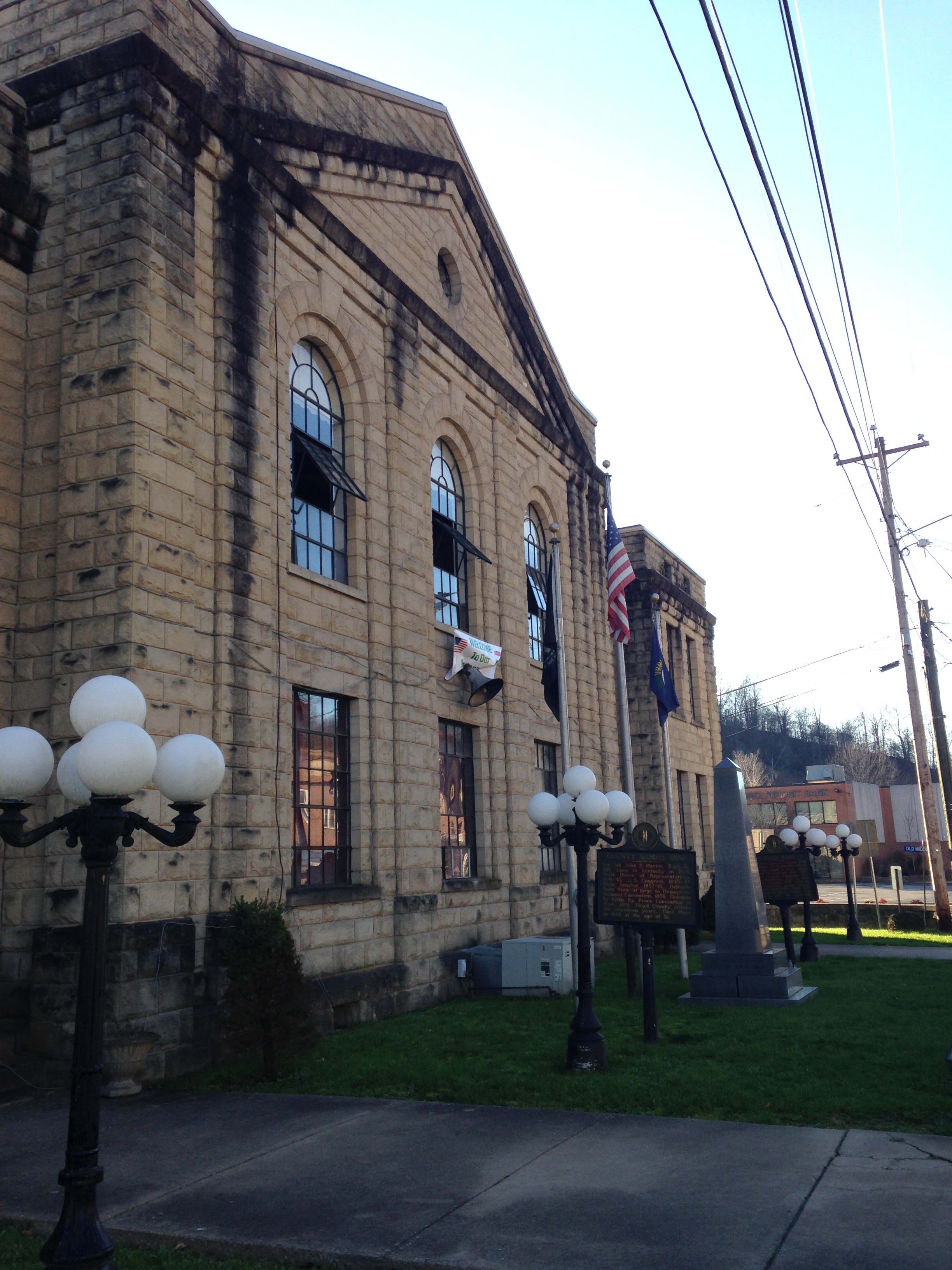
Martin County Courthouse in Inez, KY (2018)

04 Sunday Mar 2018

Posted by Brandon Ray Kirk in American Revolutionary War, Big Sandy Valley, Civil War, Huntington, Inez

≈ Leave a comment

Tags

American Revolution, Appalachia, Ashland, author, banker, Battle of Blue Licks, Battle of Bryan Station, books, Brandon Kirk, Charleston, Chillicothe, Democratic National Convention, Flem Sampson, Florida, Floyd County, Henry L. Clay, history, Huntington, Inez, Inez Deposit Bank, James Ward, John P. Martin, Kentucky, lawyer, Lewis Dempsey, Martin County, Ohio, Old Sandy Valley Seminary, Outline of U.S. History, Paintsville, photos, Phyllis Kirk, Piqua, Pleasant, Rockcastle Creek, Saltwell Cemetery, State Textbook Commission, teacher, The Mountain Journal, The New Day, U.S. Congress, Virginia, Warfield, West Virginia, William B. Ward, William McCoy Sr., Williamson

IMG_5764.JPG

Martin County Courthouse in Inez, KY. 3 March 2018.

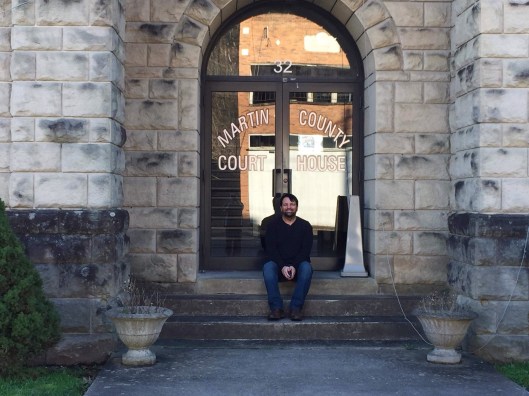
IMG_5822 Martin County Courthouse in Inez, KY. 3 March 2018. Photo by Mom.
IMG_5821

Martin County Courthouse in Inez, KY. 3 March 2018. Photo by Mom.

IMG_5762

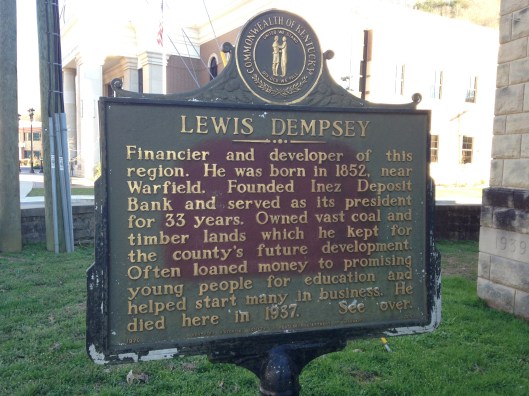
Lewis Dempsey Historical Marker, Martin County Courthouse in Inez, KY. 3 March 2018.

IMG_5763

William McCoy Historical Marker, Martin County Courthouse in Inez, KY. 3 March 2018.

IMG_5765

County Named (1870) Historical Marker, Martin County Courthouse in Inez, KY. 3 March 2018.

IMG_5767

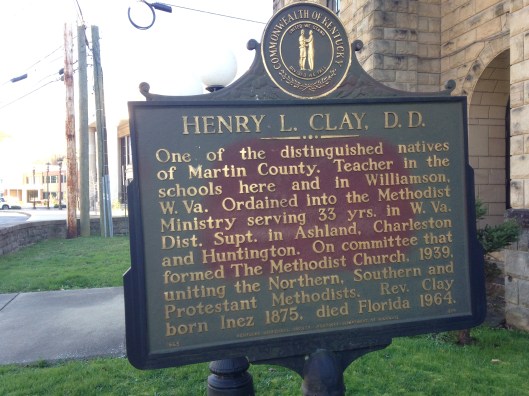
Dr. Henry L. Clay Historical Marker, Martin County Courthouse in Inez, KY. 3 March 2018.

IMG_5768

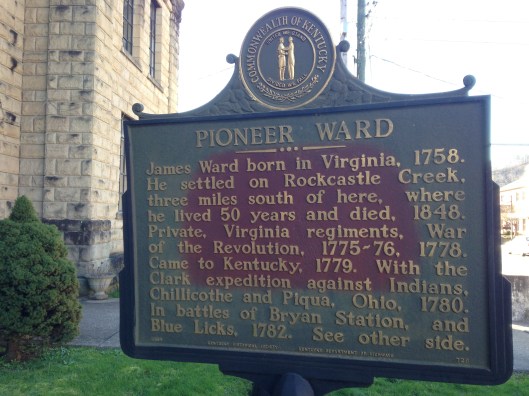
James Ward Historical Marker, Martin County Courthouse in Inez, KY. 3 March 2018.

IMG_5769

William B. Ward Historical Marker, Martin County Courthouse in Inez, KY. 3 March 2018.

IMG_5772

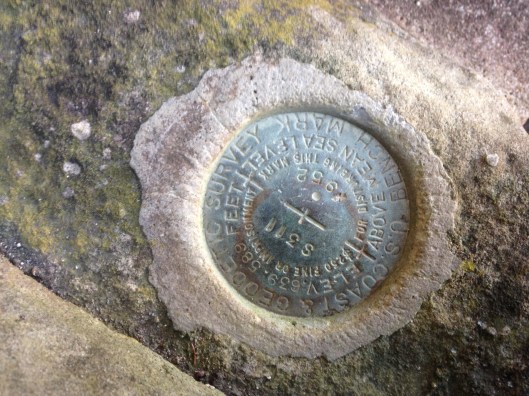
U.S. Coast Guard Geodetic Survey Bench Mark, Martin County Courthouse in Inez, KY. 3 March 2018.

IMG_5775

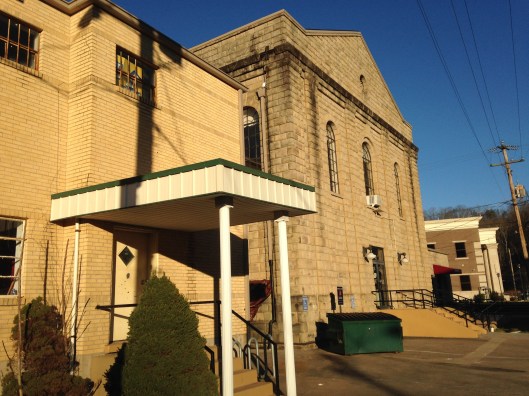
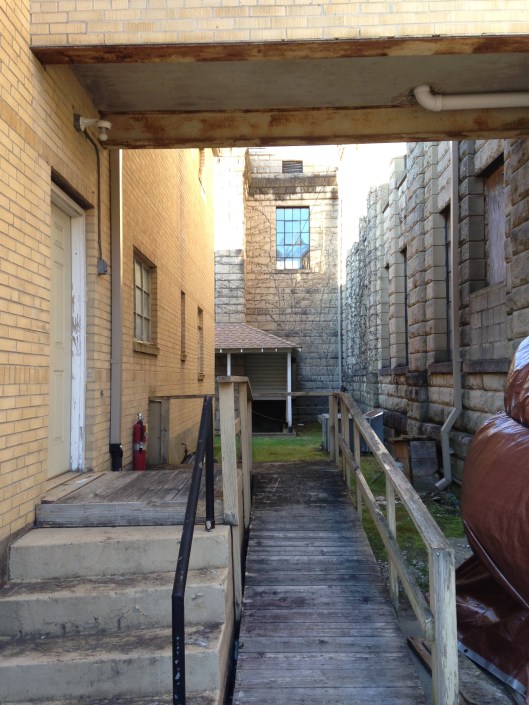
Old Jail, Martin County Courthouse in Inez, KY. 3 March 2018.

IMG_5778

Martin County Courthouse in Inez, KY. 3 March 2018.

IMG_5780

Martin County Courthouse in Inez, KY. 3 March 2018.

Henry Clay Ragland is Recalled (1913)

29 Sunday Oct 2017

Posted by Brandon Ray Kirk in Civil War, Logan

≈ Leave a comment

Tags

Appalachia, Chillicothe, civil war, Confederate Army, genealogy, history, Logan, Logan Banner, Logan County, Logan Wildcats, Lucille Bradshaw, Main Street, Ohio, Tabernacle Baptist Church, W.S. Bradshaw, West Virginia, Winnifred Bradshaw

From the Logan Banner of Logan, WV, comes this story dated August 15, 1913:

Rev. W.S. Bradshaw, Pastor of the Baptist Church, and his wife, are now housed in the historic and stately Ragland property on Main street. Their two charming daughters, the Misses Winnifred and Lucile, are due to arrive in Logan tonight from a stay-over at Ironton and Huntington, since the departure of their parents from Chillicothe, O., where the Rev. was pastor of Tabernacle Baptist Church. In this acquisition Logan has gained another estimable family, whose field of usefulness is bounded only by their ability and willingness. Pastoral work in Logan, however, is, in many respects, far different than in the Buckeye State, and it will take a few weeks to acquire our set ways and methods, and then a few weeks to get “down to the real business.” The Baptist congregation, usually the largest in Logan, has not had regular services since Rev. Richardson’s resignation several months ago, and the membership has become somewhat scattered. It is up to Rev. Bradshaw to bring the congregation up to its standard. He comes highly recommended by the Chillicothe press and public, whose loss of a good man and family is Logan’s gain. Their dwelling house here–the familiar old landmark formerly occupied by the reverend, aged couple Major and “Grandma” Ragland–has been remodeled, painted, and decorated. Major Ragland, in years gone by, was one of the founders and editors of The Banner, and was admired, beloved, and reverenced by everybody in Logan county, young and old alike. We have at this office a few old photo prints of the late Major Ragland, taken in front of the home a short time before his death. Those desiring them will be supplied gratis while the limited supply lasts. Major Ragland was leader of the famous “Logan Wildcats” of Civil War times, and the more we say of him, the more sacred his name and memory becomes, as it takes us back into those historic days bathed in blood and bitter strife. Rev. Bradshaw and family are indeed fortunate to secure this sacred homestead, and to mingle with the memories of those historic events, centered about the mortal life and career of the now immortal Major Ragland.

Source: “Rev. Bradshaw and Ragland Memories,” Logan (WV) Banner, 15 August 1913.

In Search of Ed Haley 303

11 Sunday May 2014

Posted by Brandon Ray Kirk in Ed Haley, Lincoln County Feud, Music, Stiltner

≈ Leave a comment

Tags

banjo, Brights Disease, Cain Adkins, Cain Adkins Jr., Catlettsburg, Chillicothe, Columbus, crime, Daisy Ross, Ed Haley, Faye Smith, fiddlers, fiddling, genealogy, Goble Fry, Green McCoy, Green McCoy Jr., guitar, Harkins Fry, history, Indian Girl, Kenova, Kentucky, Laurel Creek, Luther McCoy, Mariah Adkins, McCoy Time Singers, Monroe Fry, music, Ohio, Oscar Osborne, Salty Dog, Sherman Luther Haley, Sherman McCoy, Spicie McCoy, Time Has Made A Change, Wayne County, WCMI, West Virginia, Winchester Adkins, writing

After the feud, Cain Adkins settled on Laurel Creek in Wayne County and never returned to Harts. Not long afterward, he began suffering from some type of lingering illness.

“Grandpaw, he played a fiddle,” Daisy said. “They had him to play the fiddle on his deathbed. Somebody came in and they wanted to hear a song and he played it for him. He said, ‘They ain’t no harm in a fiddle. If they’s any harm, it’s when no one plays it.’ I’ve heard Mom tell the last song he played, but I don’t know what it was he played. Mom said it made him feel better.”

Cain died of Brights Disease in 1896.

His widow Mariah lived many more years.

“Grandmaw was a good person — she went to church every Sunday. The last ten years she went blind and stayed with Mom. Mom waited on her.”

She died in 1931.

It took Spicie years to forgive the Brumfields for killing Green. Even after remarrying Goble Fry (her first cousin) in 1893, she was unable to cope with Green’s death and always cried when recounting the tale of his murder. For years, her bitterness kept her from joining the church.

“She felt like he hadn’t done nothing to be killed for ’cause she loved him better than anything,” Daisy said. “Before she was baptized, my brother Sherman had went off to work — him and a bunch of boys — and they was all telling what church their mother belonged to and Sherman said to Mom, ‘Mom, I had to tell them you didn’t belong to the church.’ ‘Well,’ she said, ‘I can’t forgive the Brumfields.’ He said, ‘You can’t forget it, but you got to forgive them or you’ll go to the same place where they did.’ I heard him say that. I was a young woman.”

These were apparently inspiring words, because Spicie was baptized soon afterwards and formed a gospel quartet, “The McCoy Time Singers.” Her son, Sherman McCoy, was a key member.

“Brother Sherman could play any kind of instrument, but banjo is what he played mostly,” Daisy said. “He played all kinds of pretty tunes on the banjo that wasn’t gospel. And when he was on WCMI he wanted people to write in and tell him to play the gospel music, but he had to play the one that got the most requests and he didn’t get very much requests for the gospel. But Mom and Sherman sung them gospel songs on there. They had a program on WCMI one time.”

Daisy said the only known recordings of the McCoy Time Singers had been destroyed years ago.

“They made records of their quartet singing and they peeled up. Got damp. Monroe, my brother, got some and even wrapped them in cloth and they still peeled.”

I wanted to know more about Sherman McCoy, so I got out my banjo and played a little bit for Daisy. She said he played a lot with his uncle, Winchester Adkins (one of the best fiddlers in Wayne County), and a guitar player named Oscar Osborne.

“Brother Sherman was one of the best banjo players I ever heard,” Daisy said. “I’ve heard them on television but I’ve never heard anything to beat Brother Sherman. He played a guitar and taught music lessons. He played all kinds of jigs. Did you ever play ‘The Indian Girl’? He didn’t like to play that one very much because he had to tune it different but that was the prettiest tune I ever heard on the banjo. It sounded like he had more than ten fingers.”

I asked Daisy about Sherman playing with Ed Haley and she said, “He played music with Ed Haley and they played in Catlettsburg.”

That’s all she knew about it but I wondered just how well they actually knew each other. Was it possible that Ed named his oldest child Sherman Luther Haley after Sherman McCoy? I could just picture them loafing together as young bachelors.

Daisy said Green McCoy’s other son, Green Jr., was a singing instructor. She remembered the first time he came into contact with a guitar.

“Uncle Cain, he played a guitar,” she said. “He come down one time and wanted Green to see his guitar. Green only seen that guitar one time and worked a week and got him a guitar and tuned it up and was playing on it. He was gifted.”

What happened to him?

Faye said, “Uncle Green, he hadn’t been dead but I’d say about eight or ten years. He played a guitar good.”

Daisy said Green’s son Luther plays the guitar on the radio in the Columbus-Chillicothe area.

“Uncle Green said he was absolutely the best he ever heard,” she said.

She didn’t know much about Luther or have any recordings of him but had a videocassette tape of Green Jr. picking the guitar and singing in 1975. (I couldn’t help but note that Green Jr. and Ed Haley both had sons named Luther.)

Spicie’s children by Goble Fry also were talented musicians, hinting at a musical strain in her genetics as well.

“Uncle Monroe was a Fry — that was Mom’s brother — and Harkins — they both played music,” Faye said. “But now, Uncle Monroe could play, I guess, about any type of instrument. I remember him playing ‘Salty Dog’ one time.”

Daisy really bragged on her brother Harkins Fry, a music teacher and songwriter. He wrote one gospel song called “Time Has Made A Change”, which Daisy and Faye sang for us:

Time has made a change in the old homeplace.

Many of my friends have gone away,

Some never more in this life I shall see.

Time has made a change in me.

Time has made a change in the old homeplace.

Time has made a change in each smiling face,

And I know my friends can plainly see

Time has made a change in me.

In my childhood days I was well and strong.

I could climb the hillside all day long,

But I’m not today what I used to be.

Time has made a change in me.

When I reach my home in that land so fair.

Meet my friends awaiting me over there.

Free from toil and pain I shall ever be.

Time has made a change in me.

In Search of Ed Haley 13

01 Saturday Dec 2012

Posted by Brandon Ray Kirk in Ed Haley

≈ Leave a comment

Tags

Appalachia, Ashland, Beckley, Bluefield, Chillicothe, Ed Haley, Ella Haley, Farmers, fiddler, fiddlers, fiddling, Gallipolis, Gene Goforth, Hazard, history, Jenkins, Jess Adams, John Hartford, Kentucky, Lawrence Haley, Lexington, Missouri, Morehead, music, Nila Adams, Ohio, Pat Haley, Pikeville, Portsmouth, Pound, Princeton, Shannon County, U.S. South, Virginia, West Virginia, Winchester, writers, writing

Ed Haley spent his young bachelor days just “running around all over,” Lawrence said. He didn’t know any specifics about that time in his life but I could fill in the blanks based on memories of myself at that age. When I was growing up in Missouri, Gene Goforth, the great Shannon County fiddler took me into some of the darkest dives I could ever imagine — real “skull orchards.” Those places were filled with hot-tempered, burly men who were mean enough to fight or kill anyone. Even though Gene and I felt safe around them because we played their type of music, there was always an unpredictable danger in the air. I bet Ed’s music at that time in his life was as exciting as anything I would’ve ever wanted to hear, but to stay in some of those old taverns to hear it would’ve been like being in a cave full of rattlesnakes.

I asked Lawrence if he had any idea about how far Ed traveled with his music and he said, “I don’t know where he went when he was single, running the country. The way people talked, he started out about the time he married my mother. Hell, he was going twenty years before that. When he married my mother was more or less his settling down time. Well, I know he’s been all the way south through Beckley and Princeton and Bluefield, West Virginia and all the way down into Pikeville, Kentucky and over into Pound, Virginia. I guess he’s been as far as Hazard and Jenkins, Kentucky and all those little towns. County seats mostly is where he played.”

Lawrence didn’t think Ed made it as far west as Lexington, Kentucky. “They say that he never was down through the Bluegrass, but I’m pretty sure he’s been as far west into Kentucky as Winchester,” he said. “And I know he’s been to Morehead and Farmers; that’s a little town just outside of Morehead, Kentucky. He’s been to Chillicothe and Portsmouth, Gallipolis — up in Ohio that a way. Now, I don’t think he ever made it into the Carolinas or Johnson City, Tennessee but if he did it was before my time.”

Lawrence said his parents supported the family by playing music on the streets, but would play just about anywhere money could be made. “Pop used to go down to Portsmouth to a steel mill. It’s closed down now. It was a pretty good sized mill. They made everything from steel plate down to wire nails and fencing and everything else in there. It was Detroit Steel or one of those. He used to go down there, and he’d go to the railroad YMCA, too, because there was all the time train men coming and going on the N&W train line. A lot of train crews’d come in there and stay all night and Pop and Mom used to go in there and play right in the YMCA building. They used to do it down here at the Russell Y.”

Lawrence told me more about seeing Ed and Ella play for dances. “I’ve walked Mom and Pop to Morehead down the C&O Railroad tracks to Farmers — that’s six or seven miles — to play at a home. They’d take any rugs and furniture out of a room and pack them in another room and then dance. It might have been seven to nine o’clock sets, but it seemed to me like they lasted all night. I’ve seen Pop sit one set right after another without really stopping. When he’d play a piece of music, he’d play it as long as the caller wanted to call. Pop’d play ten minutes on a piece of music if that’s what was requested. Them was awful long sets. I’d get up and we’d start home at daybreak.”

I asked how Ed was paid for a dance and he said, “It would be more or less passing the hat or somebody coming up and wanting a certain piece of music played in a set or something. I don’t think they ever contracted a certain monetary fee for anything. They just took it as it came.”

Lawrence obviously preferred to think of Ed and Ella playing at dances instead of on the sidewalks, probably because street musicians are often regarded as being little more than talented bums. It was surely more romantic to think of them at county fairs, courthouses or little country houses. No doubt, he thought his father was above the street scene and likely had strong memories of long hot or cold days spent on sidewalks with passersby throwing out nickels and occasional slurs.

Pat gave me a little insight into that facet of Ed’s life story when she asked Lawrence if he’d told me about his “winter coat.” Lawrence said no because I wanted to know about Pop — not him — but she said, “Oh, I thought that was cute. He was a little boy and he was with his mama and they were in Cincinnati. It was very, very cold and he didn’t have a coat. And they were standing — you know his mama was playing — and his mother had told him he would get his winter coat for Christmas and he said, ‘Santa Claus better hurry up, Mama, ’cause I won’t be here.’ His mother went that very day and bought him that winter coat so he got his coat from Santa Claus a little bit early.”

Those were clearly memories that Lawrence didn’t care to re-hash.

“Sometimes it was good, sometimes it was lean,” he said. “Apparently, Mom and Pop was making enough. They always kept some kind of roof over our heads. We didn’t have anything fancy. Mom swept her own floors a lot of times, and she swept barefooted, and that’s the way she knew her floor was clean. She felt with her toes and her feet.”

Pat said, “My mother-in-law was very, very particular. She couldn’t stand to feel the least little thing on her — it bothered her. And if she sat down at your table — even though somebody would say, ‘These are very clean people’ — she would put her hand in the cup or the glass and run her hands over the plate. And I’ve heard people tell that they had the cleanest clothes in the area because she scrubbed them on a board and she would scrub twice as hard and twice as long to be sure those clothes were clean.”

On occasion, according to Pat, Ella even hired out neighbors to work for her. “Aunt Nila Adams worked some for your Mom,” she said to Lawrence. “She did a lot of the big cleaning.” She looked at me, “And his mother paid them well,” seemingly in an effort to compensate for the “winter coat” story. “She paid better than the average.”

Lawrence said, “Well, people like Nila Adams and Jess Adams — he was a hard-working man. He just was uneducated and that’s all he ever knew was hard work. And a lot of times that ditch-digging and hard work wasn’t around, so I guess Mom helped Nila Adams. When she’d come clean house for Mom she was helping Nila Adams keep her household together, too, in a way.”

One thing was to be understood: Ed Haley and his wife were not bums on the street begging for money. They were professional musicians who earned a decent living and who raised their children as well as any one else in the neighborhood.

Feud Poll 1

If you had lived in the Harts Creek community during the 1880s, to which faction of feudists might you have given your loyalty?

Categories

  • Adkins Mill
  • African American History
  • American Revolutionary War
  • Ashland
  • Atenville
  • Banco
  • Barboursville
  • Battle of Blair Mountain
  • Beech Creek
  • Big Creek
  • Big Harts Creek
  • Big Sandy Valley
  • Big Ugly Creek
  • Boone County
  • Breeden
  • Calhoun County
  • Cemeteries
  • Chapmanville
  • Civil War
  • Clay County
  • Clothier
  • Coal
  • Cove Gap
  • Crawley Creek
  • Culture of Honor
  • Dingess
  • Dollie
  • Dunlow
  • East Lynn
  • Ed Haley
  • Eden Park
  • Enslow
  • Estep
  • Ethel
  • Ferrellsburg
  • Fourteen
  • French-Eversole Feud
  • Gilbert
  • Giles County
  • Gill
  • Green Shoal
  • Guyandotte River
  • Halcyon
  • Hamlin
  • Harts
  • Hatfield-McCoy Feud
  • Holden
  • Hungarian-American History
  • Huntington
  • Inez
  • Irish-Americans
  • Italian American History
  • Jamboree
  • Jewish History
  • John Hartford
  • Kermit
  • Kiahsville
  • Kitchen
  • Leet
  • Lincoln County Feud
  • Little Harts Creek
  • Logan
  • Man
  • Matewan
  • Meador
  • Midkiff
  • Monroe County
  • Montgomery County
  • Music
  • Native American History
  • Peach Creek
  • Pearl Adkins Diary
  • Pecks Mill
  • Peter Creek
  • Pikeville
  • Pilgrim
  • Poetry
  • Queens Ridge
  • Ranger
  • Rector
  • Roane County
  • Rowan County Feud
  • Salt Rock
  • Sand Creek
  • Shively
  • Spears
  • Sports
  • Spottswood
  • Spurlockville
  • Stiltner
  • Stone Branch
  • Tazewell County
  • Timber
  • Tom Dula
  • Toney
  • Turner-Howard Feud
  • Twelve Pole Creek
  • Uncategorized
  • Warren
  • Wayne
  • West Hamlin
  • Wewanta
  • Wharncliffe
  • Whirlwind
  • Williamson
  • Women's History
  • World War I
  • Wyoming County
  • Yantus

Feud Poll 2

Do you think Milt Haley and Green McCoy committed the ambush on Al and Hollene Brumfield in 1889?

Blogroll

  • Ancestry.com
  • Ashland (KY) Daily Independent News Article
  • Author FB page
  • Beckley (WV) Register-Herald News Article
  • Big Sandy News (KY) News Article
  • Blood in West Virginia FB
  • Blood in West Virginia order
  • Chapters TV Program
  • Facebook
  • Ghosts of Guyan
  • Herald-Dispatch News Article 1
  • Herald-Dispatch News Article 2
  • In Search of Ed Haley
  • Instagram
  • Lincoln (WV) Journal News Article
  • Lincoln (WV) Journal Thumbs Up
  • Lincoln County
  • Lincoln County Feud
  • Lincoln County Feud Lecture
  • LinkedIn
  • Logan (WV) Banner News Article
  • Lunch With Books
  • Our Overmountain Men: The Revolutionary War in Western Virginia (1775-1783)
  • Pinterest
  • Scarborough Society's Art and Lecture Series
  • Smithsonian Article
  • Spirit of Jefferson News Article
  • The Friendly Neighbor Radio Show 1
  • The Friendly Neighbor Radio Show 2
  • The Friendly Neighbor Radio Show 3
  • The Friendly Neighbor Radio Show 4
  • The New Yorker
  • The State Journal's 55 Good Things About WV
  • tumblr.
  • Twitter
  • Website
  • Weirton (WV) Daily Times Article
  • Wheeling (WV) Intelligencer News Article 1
  • Wheeling (WV) Intelligencer News Article 2
  • WOWK TV
  • Writers Can Read Open Mic Night

Feud Poll 3

Who do you think organized the ambush of Al and Hollene Brumfield in 1889?

Recent Posts

  • Logan County Jail in Logan, WV
  • Absentee Landowners of Magnolia District (1890, 1892, 1894)
  • Charles Spurlock Survey at Fourteen Mile Creek, Lincoln County, WV (1815)

Ed Haley Poll 1

What do you think caused Ed Haley to lose his sight when he was three years old?

Top Posts & Pages

  • U.B. Buskirk of Logan, WV (1893-1894)
  • Tice Elkins in Ferrellsburg, WV
  • Red Rock Cola in Logan, WV (1939)
  • Tom Chafin Recalls Story of Ellison Hatfield's Killing (1989)
  • John Hartford's home

Copyright

© Brandon Ray Kirk and brandonraykirk.wordpress.com, 1987-2023. Unauthorized use and/or duplication of this material without express and written permission from this blog’s author and/or owner is strictly prohibited. Excerpts and links may be used, provided that full and clear credit is given to Brandon Ray Kirk and brandonraykirk.wordpress.com with appropriate and specific direction to the original content.

Archives

  • February 2025
  • January 2025
  • October 2023
  • September 2023
  • December 2022
  • November 2022
  • May 2022
  • April 2022
  • February 2022
  • November 2021
  • October 2021
  • September 2021
  • June 2021
  • May 2021
  • April 2021
  • March 2021
  • February 2021
  • January 2021
  • December 2020
  • November 2020
  • October 2020
  • July 2020
  • June 2020
  • May 2020
  • April 2020
  • March 2020
  • February 2020
  • January 2020
  • December 2019
  • November 2019
  • October 2019
  • September 2019
  • August 2019
  • July 2019
  • June 2019
  • May 2019
  • April 2019
  • March 2019
  • February 2019
  • January 2019
  • December 2018
  • November 2018
  • October 2018
  • September 2018
  • August 2018
  • July 2018
  • June 2018
  • May 2018
  • April 2018
  • March 2018
  • February 2018
  • January 2018
  • December 2017
  • November 2017
  • October 2017
  • September 2017
  • August 2017
  • July 2017
  • June 2017
  • May 2017
  • April 2017
  • March 2017
  • February 2017
  • January 2017
  • December 2016
  • November 2016
  • October 2016
  • September 2016
  • August 2016
  • July 2016
  • June 2016
  • May 2016
  • April 2016
  • March 2016
  • February 2016
  • January 2016
  • December 2015
  • November 2015
  • October 2015
  • September 2015
  • August 2015
  • July 2015
  • June 2015
  • May 2015
  • April 2015
  • March 2015
  • February 2015
  • January 2015
  • December 2014
  • October 2014
  • September 2014
  • August 2014
  • July 2014
  • June 2014
  • May 2014
  • April 2014
  • March 2014
  • February 2014
  • January 2014
  • December 2013
  • November 2013
  • October 2013
  • September 2013
  • August 2013
  • July 2013
  • June 2013
  • May 2013
  • April 2013
  • March 2013
  • February 2013
  • January 2013
  • December 2012
  • November 2012

Enter your email address to follow this blog and receive notifications of new posts by email.

Join 2,925 other subscribers

Tags

Appalachia Ashland Big Creek Big Ugly Creek Blood in West Virginia Brandon Kirk Cabell County cemeteries Chapmanville Charleston civil war coal Confederate Army crime culture Ed Haley Ella Haley Ferrellsburg feud fiddler fiddling genealogy Green McCoy Guyandotte River Harts Harts Creek Hatfield-McCoy Feud history Huntington John Hartford Kentucky Lawrence Haley life Lincoln County Lincoln County Feud Logan Logan Banner Logan County Milt Haley Mingo County music Ohio photos timbering U.S. South Virginia Wayne County West Virginia Whirlwind writing

Blogs I Follow

  • OtterTales
  • Our Appalachia: A Blog Created by Students of Brandon Kirk
  • Piedmont Trails
  • Truman Capote
  • Appalachian Diaspora

BLOOD IN WEST VIRGINIA is now available for order at Amazon!

Blog at WordPress.com.

OtterTales

Writings from my travels and experiences. High and fine literature is wine, and mine is only water; but everybody likes water. Mark Twain

Our Appalachia: A Blog Created by Students of Brandon Kirk

This site is dedicated to the collection, preservation, and promotion of history and culture in Appalachia.

Piedmont Trails

Genealogy and History in North Carolina and Beyond

Truman Capote

A site about one of the most beautiful, interesting, tallented, outrageous and colorful personalities of the 20th Century

Appalachian Diaspora

  • Subscribe Subscribed
    • Brandon Ray Kirk
    • Join 787 other subscribers
    • Already have a WordPress.com account? Log in now.
    • Brandon Ray Kirk
    • Subscribe Subscribed
    • Sign up
    • Log in
    • Report this content
    • View site in Reader
    • Manage subscriptions
    • Collapse this bar
 

Loading Comments...