• About

Brandon Ray Kirk

~ This site is dedicated to the collection, preservation, and promotion of history and culture in my section of Appalachia.

Brandon Ray Kirk

Tag Archives: Chapmanville District

Old Hinchman Book at Pecks Mill in Logan County, WV (1936)

04 Monday Mar 2019

Posted by Brandon Ray Kirk in Civil War, Pecks Mill

≈ Leave a comment

Tags

129th Regiment Virginia Militia, 12th Regiment Virginia Militia, Abner Vance, Adam Browning, Appalachia, Barney Carter, Big Creek, Calvary Hatfield, Chapmanville District, Charles Staton, civil war, David Mullins, Eli Gore, Evans Ferrell, genealogy, George Avis, George Bryant, Gilbert Creek, Gordon Riffe, Granville Riffe, Green A. Clark, Guyandotte River, Hardy District, Harts Creek, Harvey Ellis, history, Huff's Creek, Jack Dempsey, James H. Hinchman, James J. Hinchman, John Chapman, John DeJournett, John Dempsey, John Hager, John Hatfield, John Starr, Joseph B. Browning, Joseph Hinchman, Logan Banner, Logan County, Louis White, Magnolia District, Martin Doss, Mingo County, Nathan Elkins, Pecks Mill, physician, Reece Browning, Triadelphia District, Ulysses Hinchman, Union District, Virginia, West Virginia, Wheeling, William Dempsey, William McDonald, William Stollings, Wyoming County

From the Logan Banner of Logan, WV, comes this bit of history for Logan County printed on November 3, 1936:

Time-Dimmed Record of Early Logan County Families in 1852-1877 Period in Old Books Found at Pecks Mill

Thumbing the now-dimmed pages of a yellowed book which recently came to light in old Peck’s Mill, members of Logan county’s oldest families may read in a painstakingly-kept record of the years 1852 to 1877 how their forefathers were brought into the world, married, educated, governed.

The record is written in pen and ink with the quaint flourishes and old-fashioned double letters of the 1800s by James J. Hinchman, who was clerk of the 12th regiment of the Virginia militia from 1852 to 1858; and by one, Ulysses Hinchman, who was clerk of the 129th regiment from 1858 to the Civil War; and later pastor, doctor, and trader.

The first entry, dated Nov. 3, 1852, records the meeting “at the house of Wm. McDonald near the mouth of Huffs Creek” of the Twelfth regiment of the Virginia militia in the days when Logan county was the property of Virginia.

Among the officers present were Major John Hager and Capt. James J. Hinchman, who was also clerk.

Most of the records at the first, which deal entirely with the regiment, are devoted to the salaries paid for “drumming and fifing,” the fines of 50 cents each for failure to report at meetings, and the excuse of members from duty “because of physical infirmities.”

Among the interesting entries is one relating, it is believed, to an ancestor of ex-champion Jack Dempsey, which reads:

“William Dempsey for fifing one day in Capt. Miller’s company.”

Two dollars, according to numerous accounts, was the regular salary paid for a day of fifing or drumming. For three days training, officers received $10.

Among regiment members mentioned are Calvary Hatfield and Reece Browning, forefathers of the Hatfield and Browning families of today.

On Sept. 10, 1858, the record is transferred to that of the 129th and is kept by Ulysses Hinchman. His first entry tells of a meeting at which John De Journett was elected colonel; K. McComas, first major; Reece Browning, second major; and Ulysses Hinchman, clerk. Officers attending were Captains George Avis, James H. Hinchman, John Starr, John Hatfield, John Chapman, and Barnabus Carter; and Lieutenants Martin Doss, George Bryant, Granville Riffe, Louis White, Charles Staton and Green A. Clark.

Interesting in these pages are the forming of new companies in which the names of the creeks and localities are for the most part the same as today. Among the familiar names are Huffs, Gilbert, Harts and Big Creek, Guyandotte river, and Trace Fork.

There is no mention of the Civil War, but it is mutely attested to by two entries, the first, dated 1862 at the bottom of one page and the second dated 1866 at the top of the next, which read:

“Apr. 5, 1862—Abner Vance and Nathan Elkins received their claims.

1866—Rec’d of Eli Gore, county treasurer for my last year’s services, $50.

“Ulysses Hinchman, superintendent of schools.”

The next year, we are gratified to learn, his salary has increased to $300.
We learn that Logan, which then included Mingo and Wyoming counties, was at that time composed of five districts, Union, Triadelphia, Hardy, Chapmanville, and Magnolia; and that the county’s finances were all handled through Wheeling, then the only city of size in West Virginia.

The records contain long lists of certificates awarded to teachers for $1, among the recipients being John Dempsey, Eli Gore, Joseph Hinchman, Harvey Ellis and Evans Ferrell.

In the midst of the records of 1866 and ’67 we come upon the terse paragraph which informs that:

“The sheriff failed to settle for taxes of 1861.”

The board of education’s budget for 1869 was $2077.60 and was apportioned to these clerks of the various townships; Union, David Mullins; Triadelphia, Gordon Riffe; Magnolia, Joseph B. Browning; Hardy, Adam Browning; and Chapmanville, Wm. Stollings. Increased expenses that year made it necessary to levy a tax of “5 cents on $100.”

An enumeration of all children “between the ages of 6 and 21” in 1868 totaled 2139.

In 1871, our patient scribe becomes “Dr. U.S. Hinchman” and the record his personal account book. We learn much of the practices and hardships of the first country doctors and that his troubles in collecting the pitifully small fees of those days were as great as those of any “specialist” of today.

Dr. Hinchman had no set rates, but based on his charges upon the number of miles traveled (usually 50 cents per mile); the number of days and nights spent, and—quite evidently—the circumstances of his patient.

His customary charge for a delivery, if it chanced to come in the day time, appeared to be $5.50; but if the child arrived in the night and required many miles of travel it was a more expensive proposition—the fees sometimes reaching as high as $9.

The birth of one of these $9 babies is graphically recorded as follows:

“Labor two nights and days–$7

10 miles at 50 cents–$5

Administering–$1

Received $5.”

The doctor’s highest charge was one of $10 on a case which required three days and nights.

Interspersed freely with the accounts of births, and sicknesses are frequent entries of marriages at $2 each.

Toward the last of the book, in 1877, the author’s handwriting becomes more labored and the fine shadings and flourishing gradually disappear—evidence that his years of soldiering, school teaching, and doctoring were taking their toll.

At this time, too, he begins to record not only his receipts, but his expenditures and trades, and we read, not without envy, of purchases of “one bushel of sweet potatoes, 50 cents,” and “one and a half bushel of Irish potatoes, 75 cents.”

One of the last entries, dated Aug. 1877, tells of his receiving for his professional services a large amount of coffee which he traded for $5 cash, a suit, and a round of shoes,” the latter evidently referring to horseshoes.

As, regretfully, we close the book; we feel that we know that patient and prolific old settler of Logan County, Ulysses Hinchman—his honor as a soldier and officer, his strict accounting of himself as a public official, his hardships and struggles as a country doctor; and through all, his conscientious, faithful keeping of records. And we share, with his descendants, a great pride in him.

Somehow we know that when, with failing hand, he concluded his long accounts in another book; his record was clear and straight—his house was in order.

Jake Kinser of Logan County, WV (1936-1937)

20 Saturday Oct 2018

Posted by Brandon Ray Kirk in Big Creek, Big Harts Creek, Boone County, Civil War, Coal, Logan

≈ Leave a comment

Tags

Appalachia, Aracoma, Big Creek, Boone County, Brooke McNeely, Camp Chase, Chapmanville District, Charles Williams, civil war, Claude Ellis, coal, Confederate Army, crime, Dave Kinser, Democratic Party, Douglas Kinser, Elbert Kinser, Ethel, Fort Branch, French River, genealogy, ginseng, Harts Creek, Hetzel, history, J. Green McNeely, Jake Kinser, Jane Mullins, Jefferson Davis, Jim Aldridge, John Carter, John Kinser, Logan, Logan Banner, Logan County, logging, Malinda Kinser, Malinda Newman, Mary Ann Ellis, Mud Fork, Otis Kinser, rafting, Scott Ellis, Smyth County, Stonewall Jackson, timbering, tobacco, Virginia, Washington Township, West Virginia, Wythe County

Jake Kinser Visits LB 06.20.1936 1

Logan (WV) Banner, 20 June 1936. Note: Jacob was not born in 1850, so he does not appear with his family in the 1850 Census for Wythe County, Virginia. He was nine years old in the 1860 Census for Smyth County, Virginia.

Jake Kinser Recollections LB 11.12.1936 2

Logan (WV) Banner, 12 November 1936. Note: Jake Kinser appears as a seventeen-year-old fellow in the 1870 Census for Boone County, West Virginia (Washington Township).

Jake Kinser and Jane Mullins LB 07.07.1937 2

Jake Kinser and his sister Jane Mullins, Logan (WV) Banner, 7 July 1937. 

Jake Kinser and Jane Mullins LB 07.07.1937 3

Jake Kinser and his sister Jane Mullins, Logan (WV) Banner, 7 July 1937. Note: Mary Jane (Kinser) Mullins was eleven years old in the 1860 Census for Smyth County, Virginia. Mr. Kinser died in 1944; his death record can be found here: http://www.wvculture.org/vrr/va_view2.aspx?FilmNumber=571280&ImageNumber=349


Killing of Burwell Chapman (1903)

17 Saturday Feb 2018

Posted by Brandon Ray Kirk in Chapmanville

≈ Leave a comment

Tags

Appalachia, Burwell Chapman, Chapmanville District, crime, fishing, genealogy, history, Lloyd Ellis, Logan County, Maudie Mullins, S.B. Mullins, true crime, W.W. Perry, West Virginia

The following documents relating to the killing of Burwell Chapman in Chapmanville District are located in the Logan County Circuit Clerk’s Office in Logan, WV.

***

Logan, W.Va.

Sept. 14, 1903

Mr. S.B. Mullins,

Dear Friend:

I write this to inform you that I expect to have you and Maudie summoned to my trial pretty soon. The time has come that I must face bitter enemies and as you know they would be glad to see me hung whether I was guilty or not. I know and God knows I am not guilty of the charge which is alleged against me, though my life is at stake because they hate me so bad. You know that I stayed at your boat on the night the house was burned and you know that we talked about it the next morning and you said that you were glad that I did stay at your house that night. I am positive that I was not off your boat on the night the house was burned. I can’t swear positive that a fishing crew passed your boat on the night the house was burned but I was positive that I talked to you that night about going fishing.

Don’t you remember seeing that light at the head of the shoal above the boat the night the house was burned? I know that you can safely swear that I stayed at your boat anyhow till 11 o’clock that night. How would you like to be taken away from your family for something you did not do?

It is in your power to make me a free man and I know that you will do so. I want you to come up to see me just as soon as you get this letter. No matter what you are doing when you must drop it and come. I will pay you more for your time than you can get for working on the mill. I want you to go to work for me and help me to show up the truth in this matter. Justice is all on earth I ask.

Your Friend,

L.A. Ellis

***

STATE OF WEST VIRGINIA, LOGAN COUNTY.

The Grand Jurors of the State of West Virginia in and for the body of the County of Logan, upon their oaths present that Lloyd Ellis on the 14th day of May 1903, in the County aforesaid, willfully, maliciously, deliberately, feloniously, and unlawfully did slay, kill and murder one Burwell Chapman, against the peace and dignity of the State.Found at the October Term of said Court, 1903, upon the information of Lena Chapman sworn in open Court and sent before the Grand Jury to give evidence to that body.

***

We the Jury find the Defendant Not Guilty.

W.W. Perry

Anderson Blair

29 Sunday Oct 2017

Posted by Brandon Ray Kirk in Big Harts Creek, Cemeteries, Civil War, Lincoln County Feud, Pecks Mill, Warren, Whirlwind

≈ 2 Comments

Tags

10th Kentucky Cavalry, Anderson Blair, Appalachia, Aracoma, Barbara Kovach Morris, cemeteries, Chapmanville District, civil war, Confederate Army, Dingess Cemetery, Harts Creek, history, John Blair, John S. Blair, Logan, Logan County, Logan County Banner, Pecks Mill, photos, Polly Blair, Pop Dingess, Tommy Isaacs, Upper Hart, West Virginia

Anderson Blair copyright

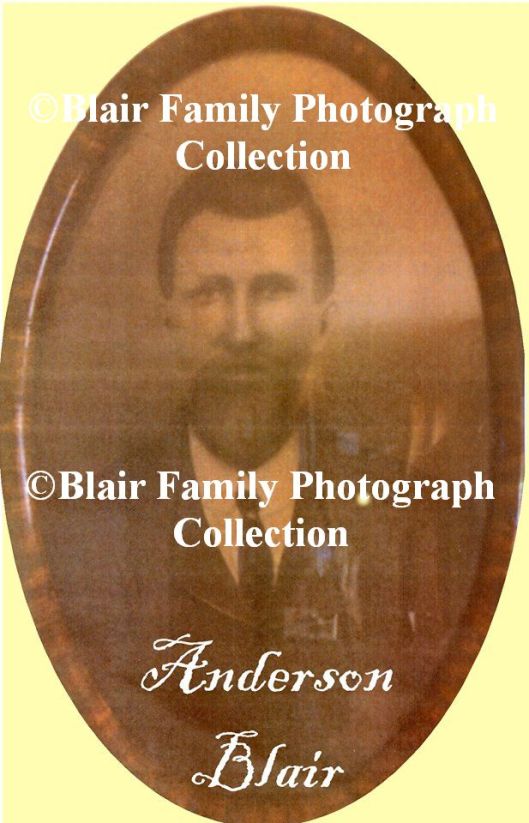
Anderson Blair, son of John S. and Polly (Baisden) Blair. Photo posted online by Barbara Kovach Morris.

Squire Anderson Blair LCB 01.09.1890 2

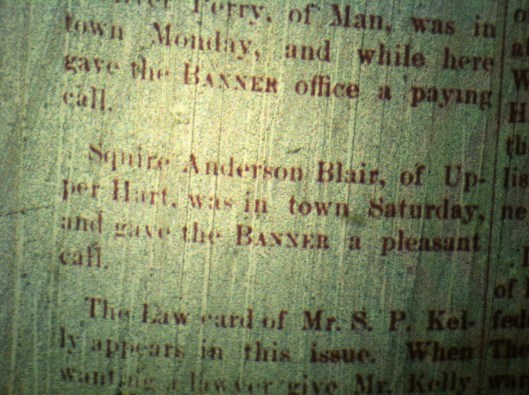
Logan County Banner (Logan, WV), 9 January 1890. During the Lincoln County Feud, Anderson Blair was a justice of the peace in Chapmanville District, Logan County, WV. His district included Upper Hart.

Anderson Blair LCB 08.14.1895

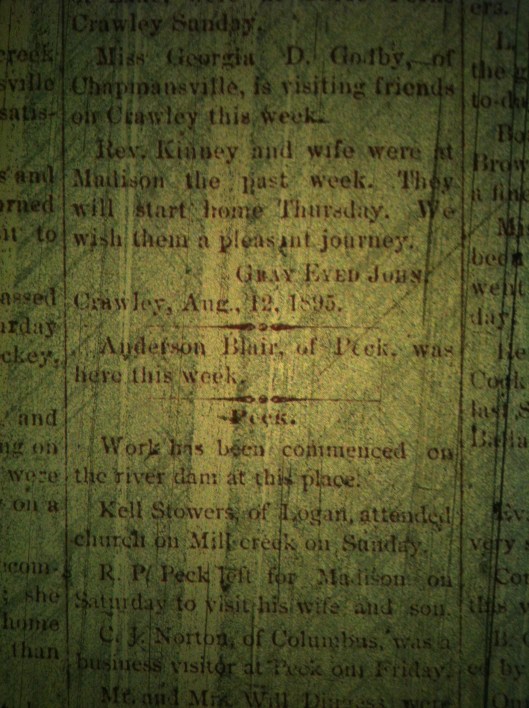
Logan County Banner (Logan, WV), 14 August 1895.

Anderson Blair death LCB 4.17.02

Logan County Banner (Logan, WV), 17 April 1902.

Anderson Blair grave

Dingess Cemetery, Pecks Mill, Logan County, WV. June 2016. John Blair and Tommy Isaacs installed the military headstone in May of 2014.

Harve Smith Appraisal (1927)

26 Thursday Oct 2017

Posted by Brandon Ray Kirk in Big Harts Creek, Whirlwind

≈ Leave a comment

Tags

Appalachia, Chapmanville District, Daniel McCloud, Elias Workman, Frank Curry, genealogy, Harts Creek, Harve Smith, history, justice of the peace, Logan County, Luke Curry, West Virginia, Whirlwind

Harve Smith Record 1927 1

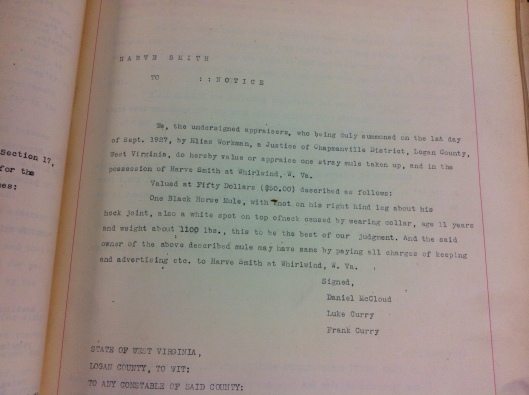
Miscellaneous Record Book 1, page 13, Logan County Clerk’s Office, Logan, WV.

Republicans to Invade Chapmanville District (1926)

02 Monday Oct 2017

Posted by Brandon Ray Kirk in African American History, Chapmanville, Logan

≈ Leave a comment

Tags

A.B. Eubanks, Appalachia, assessor, Chapmanville District, Charles Ritchie, Cole Hatfield, constable, county clerk, Democratic Party, E.R. Chapman, E.T. England, G.R. Claypool, history, Ira Hager, J.G. Hunter, James French Strother, Joe Buskirk, Johnny Pack, Lloyd P. Hager, Logan, Logan Banner, Logan County, Naaman Jackson, Noah Browning, politics, Republican Party, Superintendent of Schools, W.N. Bechtel, West Virginia

From the Logan Banner of Logan, WV, we find the following story dated September 10, 1926:

Groundwork for an energetic campaign was laid at a meeting of the candidates, committeemen and other party leaders and workers at a meeting held in Republican headquarters Wednesday afternoon. For more than two hours there was a frank discussion of local political conditions. Every appeal for party harmony–and these appeals came from all quarters–was greeted with applause and called forth unreserved pledges of loyalty to the whole ticket. Those present declare that so convincing was the evidence of a general determination to lay aside past differences about candidacies and party management that during the meeting and afterward predictions were advanced that the Republicans would carry the county by not less than 2,000 and more probably by 3,000. After the general meeting, local candidates and members of the committee met to formulate plans for the campaign. As a result of these meetings, it may be announced that this year the Republican campaign will be extended into every district. For the first time in the party’s history Chapmanville district is to be considered part of the battle-ground. That old Gibraltar of the Democracy is to have an opportunity at last, it is asserted, to hear both sides.

E.T. England, former attorney general and now the Republican nominee for representative in congress from the Sixth district, opened the general meeting by a fervent appeal for harmony and a whole-hearted effort in behalf of every candidate from Congressman James French Strother to Johnny Pack, candidate for constable. Notwithstanding his own candidacy, he declared that nothing interested him more in a political way than to see Logan county definitely fixed in the Republican column. “I have no personal interest at stake here,” he said, “yet if you think I’m needed at any time in the campaign let me know and I’ll come if it is possible. But you won’t need my services. All that is necessary to do is to go to the people and tell them in detail of what a Republican county court, a Republican sheriff, and a Republican assessor and magistrates have done; and then contrast that record with the record of the Democratic machine.” Until there was a political change in the administration of affairs, General England pointed out, the casual meeting of three or more Republicans on the street was considered by the authorities as an unlawful assembly. “Remind the people of the greater measure of liberty now, accorded to every man,” he advised. “Explain so all can understand that a Republican regime has lowered taxes, in spite of a reduced valuation of property for taxation purposes. It was the first time the taxpayers’ interest had been served; in fact for many years the subject of economy was never mentioned in Logan county.”

G.R. Claypool, chairman of the county committee, presided at the meeting and called on representatives of every element and of every section to discuss the party’s problems and prospects. Each speaker was able to present some new thought concerning the situation and as the meeting progressed enthusiasm waxed steadily higher. A climax was reached near the close of the session when Ira Hager, after adverting the registration figures showing a Republican margin of about 1,800, turned to General England and said: “You need not be troubled by the situation here; Logan county will give a Republican plurality of 3,000 all along the line.” Charles Ritchie, law partner of General England and a former assistant attorney general, recalled the court battle involving title to county offices in which he participated and commended Republican officials on the basis of reports he had received as to the record they are making. “No matter how earnestly you may have differed in the primary, you should abide by the expressed will of the majority,” he admonished. Senator Naaman Jackson urged the prompt discarding of minor grievances and differences tot he end that a vigorous canvass might be waged and a substantial victory won on November 2. Rev. A.B. Eubanks, introduced as one who had been made to feel the ruthless power of the Democratic machine, told of the interest of the colored voters in the impending contest.

Among others who spoke briefly were Joe Buskirk, candidate for county clerk; Noah Browning, candidate for county superintendent of schools; County Assessor J.G. Hunter; Cole Hatfield, Lloyd P. Hager, City Treasurer Nowlan, E.R. Chapman, Mr. Claypool, and W.N. Bechtel, who said he had been a member of the county committee for 30 years.

Source: “Republicans Form Plan for Spirited Campaign This Fall: Purpose to Invade Chapmanville Dist.,” Logan (WV) Banner, 10 September 1926.

Chapmanville District Schools (1927) 2

15 Thursday Jun 2017

Posted by Brandon Ray Kirk in Big Harts Creek, Civil War, Halcyon, Native American History, Queens Ridge, Shively, Spottswood, Stone Branch, Warren, Whirlwind, Yantus

≈ Leave a comment

Tags

Albert Thornton, Alice Dingess, Alonzo, Anna Adams, Appalachia, Battle of Cloyd's Mountain, Beatrice Adams, Ben Adams, Bob Dingess, Brown's Run, Browns Run School, Buck Fork, Buck Fork School, Bud Dingess School, Bulwark School, Chapmanville District, civil war, Cole Adams, Confederate Army, Conley School, Crawley Creek, Daisy Dingess, Dalton School, Dave Dingess School, Dixie Mullins, E. Burton, East Fork, Ed Dalton, education, Edward Chapman, F.M. McKay, Fisher B. Adkins, Fisher Thompson, genealogy, George Doss, George Mullins School, Harts Creek, history, Hoover School, Howard Adams, Hugh Dingess School, Ina Dingess, Ivy Branch School, J.A. Vickers, J.L. Thomas, John Conley, John Dingess, L.D. Stollings, Lee Dingess School, Limestone Creek, Local History and Topography of Logan County, Logan County, Lower Trace School, Manor School, Marsh Fork, Melvin Plumley, Middle Fork, Native Americans, Pigeon Roost, Piney School, Reuben Conley, Road Fork, Rocky School, Sallie Dingess, Smokehouse Fork, Stephen Hart, Striker School, T. Doss, Thelma Dingess, Three Fork School, Tim's Fork, Timothy Dwight, Twelve Pole Creek, Ula Adams, Union Army, West Fork, West Virginia, White Oak School, Workman School, World War I

Teachers identified the following schools in Chapmanville District of Logan County, WV, and offered a bit of local history in 1927:

Dave Dingess School, est. 1814

Ula Adams, teacher

One room frame school

“Harts Creek derived its name from Steven Harts, said to have been killed by Indians on the creek.”

Striker School, est. about 1874

Edward Chapman, teacher

One room frame building

Three Fork School, est. 1878

One room frame building, originally a log house

Nine Confederate veterans live here: George Doss, T. Doss, L.D. Stollings, Ed Dalton, Ruben Conley, John Conley, Ben Adams, E. Burton, Melvin Plumley. A Union veteran lives here; he originated elsewhere. Three branches of Crawley Creek are Road Fork, Middle Fork, and Pigeon Roost. Alonzo is the local post office.

Bulwark School, est. 1880

Robert Dingess, teacher

One room frame building

“All fought on the Confederate side” during the Civil War. One man gained great merit from our district as a marksman with the American marines during World War I.

Lee Dingess School, est. 1891

Cole Adams, teacher

One room frame

Five local men served in the Confederate Army.

Browns Run School, est. 1892

Ina Dingess, teacher

One room frame building

“Sent several soldiers to help the South.” The fork is named for a Brown who lived at its mouth.

Buck Fork School, est. 1894

No teacher given

One room frame building

A Church of Christ exists nearby. Three local men served in the Confederate Army. One local soldier lost both hands in World War I.

Ivy Branch School, est. 1895

Anna Adams, teacher

Albert Thornton was the first teacher here. “Trace Fork received its name from the original road leading to Twelve Pole Creek.”

Hugh Dingess School, est. 1897

Sallie Dingess, teacher

One room frame building

Conley School, est. 1897

J.L. Thomas, teacher

One room frame building

The first house built on Smoke House Fork at its mouth had no chimney for quite a while and smoked badly.

Dalton School, est. 1897

Thelma Dingess, teacher

One room frame building

“This district furnished a lot of Civil War veterans and played her part.”

Bud Dingess School, est. 1904

Beatrice Adams, teacher

One room frame building

“East Fork named on account of its being the most Eastern fork of Harts Creek.” One local soldier served in the Confederate Army.

Hoover School, est. 1910

Howard Adams, teacher

One room frame building

A Christian Church exists in the vicinity. Four local men served in the Confederate ARmy. “Harts Creek named from Steven Harts murdered by Indians.” Three boys went from here and one was wounded at the battle of Argonne.

George Mullins School, est. 1910

Dixie Mullins, teacher

One room frame building

“Buck Fork named from large number of male deer on creek.”

Rocky School (no date)

Daisy Given Dingess, teacher

References an Indian mound on Pigeon Roost where tomahawks, arrowheads, etc. can be found. Indian burial ground.

Under the Tim’s Fork entry, it says that John Dingess was killed in battle at Cloyd’s farm. Tim’s Fork is named for Timothy Dwight, who lived there.

Lower Trace School, est. 1919

Alice Dingess, teacher

Two room frame building

“Sent several soldiers to help the South.” Also, “Harts Creek named from Steven Harts.”

Piney School, est. 1921

F.M. McKay, teacher

One room building

No permanent churches exist locally; people meet occasionally in one of the school houses. Four local men served in the Confederate Army. “Piney was named because of so much pine growing there.”

White Oak School, est. 1922

Fisher Thompson, teacher

One room rented frame building

Manor School, est. 1923

Located at Limestone

Workman School, est. 1924

Fisher B. Adkins, teacher

One room frame building

Marsh Fork derived its name from the marshy land near its mouth.

Source: Local History and Topography of Logan County by J.A. Vickers (Charleston, WV: George M. Ford, State Superintendent, 1927).

Chapmanville District Schools (1927) 1

14 Wednesday Jun 2017

Posted by Brandon Ray Kirk in African American History, Banco, Big Creek, Big Harts Creek, Chapmanville, Civil War, Guyandotte River, Holden, Native American History, Stone Branch, Timber

≈ Leave a comment

Tags

36th Virginia Volunteer Infantry Regiment, African-Americans, Appalachia, Battle of Kanawha Gap, Big Creek, Big Creek School, Burley Stollings, Buzzard Hill, Chapmanville District, Chapmanville School, Charles I. Stone, civil war, Confederate Army, Crispin Stone, Daisy Pettit, Daisy School, Dare Devils, Ed Stone School, Edith Richardson, education, Fort Sumter, French Dingess, Garrett Fork, genealogy, George Hill, Godby Branch, Guyandotte River, history, Holden, Hugh Thompson School, Hugh Toney, J.A. Vickers, J.G. Beymer, John Conley, John Garrett, John Godby, John stone, Kitchen School, Lane School, Local History and Topography of Logan County, Logan County, Lot W. Adams, Mabel Lowe, Native American History, Native Americans, Pigeon Mountain, Poplar Camp Creek, Prudential Coal Mine, Rosa Barker, Sid Ferrell, Simon Girty, Spanish-American War, Stone Branch, Stone Branch School, Thomas Huff, Thomas School, Union Army, Vette, Violet H. Agee, West Virginia, World War I

Teachers identified the following schools in Chapmanville District of Logan County, WV, and offered a bit of local history in 1927:

Big Creek School, est. 1852

Edith Richardson, teacher

Big Creek School was built of logs in 1870. Crispin S. Stone taught the first free school in his kitchen in 1870. A log building was erected the next year by the people. A Baptist Church exists here as of 1906. Many soldiers of the Civil War served from here. Two are still living. George Hill of Holden served in the Spanish-American War. Sid Ferrell of Big Creek was wounded in World War I when he left the trenches ahead of his command. The first merchant started here in 1904. Prudential was the first coal mine, just below here, in 1905. The first gas well was drilled here in 1909. Big Creek was formerly named “vette.” On the left of Big Creek (stream) looking downstream is Buzzard Hill and on the right is Pigeon Mountain. Pigeon Hill was named due to the great number of pigeons resting there. Big Creek was formerly called Poplar Camp Creek from a surveyor’s camp made of logs. The town was pretty well built up since 1902.

Lane School, est. 1887

Mable Lowe, teacher

Two room frame building

Four Confederate soldiers and one Union soldier lived here during the war. Garrett Fork was named for John Garrett, an old soldier.

Under the entry for Godby Branch: Godby Branch was named for John Godby. Old settlers claim that Simon Girty who married an Indian squaw lived on Godby Branch for several years. He cut his name on a large beech tree that fell in 1890. John Godby told the story.

Chapmanville School, est. 1892

Lot W. Adams, teacher

Four rooms and two outside rooms

There is a large Indian mound in Chapmanville. French Dingess reportedly fired the first gun at Fort Sumter. The Guyandotte River was reportedly named from the Indian word meaning “narrow bottoms.” Company D, 36th Virginia Infantry, known as the Dare Devils, organized here in May 1861 with Charles I. Stone as captain. Later it combined with Co. C, 36th Virginia Volunteer Infantry and was known as the Logan Wildcats with Hugh Toney as captain. The Battle of Chapmanville Mountain was fought in the fall of 1861 here. Major Davis was wounded and captured and his original is still kept by his relatives. He charged fifty cents a month per pupil and the textbooks were free. A large beech and a large white oak plainly marked a corner trees on the Thomas Huff 850-acre survey made on June 3, 1784.

Stone Branch School (colored), est. 1902

Violet H. Agee, teacher

Kitchen School, est. 1905

Uses three one-room buildings

John Stone said there were a few straggling bands of Indians here when he came to Stone Branch in 1807 but committed no depredations after he settled. John Stone taught the first school in this district and maybe in the county at Stone Branch in 1812. The textbooks were made by him with goose quill pens.

Hugh Thompson School, est. 1916

J.G. Beymer, teacher

One room frame building

A school house erected in 1916 was blown down in a heavy storm, killing John Conley, an old citizen who had taken shelter under the floor. The house was not used for school this year but was rebuilt the following year.

Ed Stone School, est. 1919

Rosa Barker, teacher

One room frame building

One Confederate soldier lived here during the war.

Thomas School, est. 1919

Burley Stollings, teacher

One room frame building

Two Confederate soldiers lived here during the war.

Daisy School, est. 1920

Daisy Pettit, teacher

One room frame house

Source: Local History and Topography of Logan County by J.A. Vickers (Charleston, WV: George M. Ford, State Superintendent, 1927).

Big Creek News 04.16.1926

01 Saturday Apr 2017

Posted by Brandon Ray Kirk in Big Creek, Chapmanville, Hamlin, Logan

≈ Leave a comment

Tags

Appalachia, Archie Chapman, Big Creek, Big Creek Depot, Big Creek School, Bill Haze, Chapmanville District, Christine Kitchen, education, F.W. Saltsman, farming, genealogy, Hamlin, Helen Shriver, history, Lizzie Barker, Logan, Logan Banner, Logan County, Mae Lucas, Marie Kitchen, Myrtle Mobley, Nannie Thomas, Princess Butcher, singing schools, Virginia Lilly, Ward Lucas, Ward Shriver, West Virginia, William G. Lucas

An unknown local correspondent from Big Creek in Logan County, West Virginia, offered the following items, which the Logan Banner printed on April 16, 1926:

Here we come with more of the Big Creek news.

We are having some rain which has caused much delay in farm work.

W.G. Lucas who has been sick for quite a while was seen in his garden Saturday afternoon. We wish him much success and good health this season and his wife also.

The Big Creek school is progressing nicely. We have the best school in Chapmanville District this year and the best that has been known in Big Creek. We have the honor of being the First Standardized school in Chapmanville district. Other schools may be progressive but they can’t beat us. Miss Richardson says we are fine workers and we consider that a nice compliment. We were the first to finish the pupils Reading Circle work in the district. We also had the nicest social and the best programs and intend to have an excellent good time the 23rd of this month. What will we do when Miss Richardson and Miss Cottle leave? We know there will never be a better school taught in Big Creek.

Mr. F.W. Saltsman has had the depot cleaned. It sure does look nice.

The Pied Pipers of Hamlin are coming to Big Creek rather often. They don’t want to take away the rats, but it’s the pretty girls they want.

Mr. Midkiff sure has a good horse. I would like to take a horseback ride, wouldn’t you, Princess?

Archie Chapman got very wet while on a business errand Sunday afternoon.

Mr. Ward Shriver and Miss Mae Lucas were married at Ward Lucas’ home Saturday evening, April 10. We wish them much success.

Miss Lizzie Barker was a Saturday night guest of Miss Princess Butcher.

Miss Nannie Thomas was in Logan Monday.

Misses Marie Kitchen, Helen Shriver, Virginia Lilly, and Chrystine Kitchen took the Diploma test. Wonder why Julia didn’t take it? Have some more self-confidence, Julia.

Wonder who is going to be married next? Ikey and Bobbie, I hope.

Miss Myrtle Mobley seems to be all smiles. Wonder why?

We hope that all the people of Chapmanville will enjoy themselves at their singing school.

We expect to start a Sunday school the 1st Sunday in May.

Combinations: Bill Haze coming to Big Creek; Mae and her husband; Miss Richardson passing compliments on her good pupils; Myrtle and her smile; Ollie and her long hair; Jessie and his truck; John and his Dodge; Don and his long pants; Ottie and her new slippers; Ikey and Bobbie going to the show.

Good by old Banner.


Chapmanville News 03.26.1926

13 Monday Mar 2017

Posted by Brandon Ray Kirk in Big Creek, Chapmanville

≈ Leave a comment

Tags

Appalachia, Big Creek, Bruce Hensley, Chapmanville, Chapmanville District, Chapmanville High School, Frank Ballard, G.S. Ferrell, genealogy, history, J.W. Addis, Loblolly Band, Logan Banner, Logan County, Lone Scouts, Newton Munsey, Nova Scotia, O.C. Winter, Orville Barker, Oscar Langdon, Webster Springs, West Virginia, Willard Ward

An unknown local correspondent from Chapmanville in Logan County, West Virginia, offered the following items, which the Logan Banner printed on March 26, 1926:

O.C. Winter has purchased the stock of merchandise of G.S. Ferrell and is now in business at the old stand.

Newton Munsey is now a man of leisure, but is thinking of purchasing a peanut roaster.

Prof. J.W. Addis now owns the controlling interest in the Loblolly Band. He is making arrangements to take them to Webster Springs on a tour.

We notice the State Police have recently done some good work at Big Creek. Why do they neglect Chapmanville? There certainly would be a royal welcome extended to them if they would visit this town.

Frank Ballard and Oscar Langdon left Tuesday for Nova Scotia.

The noise of political bees is beginning to be heard here now. I predict Chapmanville District will furnish some surprises in the coming election, even if we are not allowed a member of the county court.

Work on the new road is progressing nicely. We understand the grade will be completed in three months.

Don’t forget the meeting of the Board next Saturday to arrange for the High School. We need this, as a number of pupils from here are attending high school away this term and still a number here that would be attending if we had the school. So parents, wake up.

The Lone Scouts at Chapmanville spent the weekend (March 20-21) roaming about in the woods. Captain Willard Ward had little trouble leading. Cook Orville Barker had success at cooking and Baggage Carrier and Dish Washer Bruce Hensley did well with the baggage and poor dish washing. Captain Willard Ward, while hunting the “Rare Butterfly,” carved out enough rock to make a camp fireplace. Willard says the boys enjoyed the two days so well that they are going again soon.

Logan County, WV, Political Commentary and Voting Trends (1824-1900)

05 Monday Sep 2016

Posted by Brandon Ray Kirk in Chapmanville, Civil War, Logan

≈ Leave a comment

Tags

Abraham Lincoln, Andrew Jackson, Arthur I. Boreman, Battle of Kanawha Gap, Boone County, Boone Democrat, Chapmanville District, Charleston Daily Star, Chesapeake and Ohio Railroad Company, civil war, Confederacy, Democratic Party, First Wheeling Convention, Franklin Pierce, Grover Cleveland, Guyandotte Valley Railroad Company, Hardee District, Henry Clay Ragland, history, Horace Greeley, Horatio Seymour, Isaac E. McDonald, James A. Nighbert, James Buchanan, James K. Polk, James Lawson, John Bell, John Breckenridge, Lewis Cass, Logan Banner, Logan County, Logan County Banner, Logan District, Magnolia District, Martin Van Buren, Parkersburg Sentinel, Parkersburg State Journal, politics, Samuel J. Tilden, Second Wheeling Convention, slavery, Stephen Douglas, Triadelphia District, Virginia Ordinance of Secession, West Virginia, West Virginia Statehood Referendum, William H. Crawford, William Jennings Bryan, William Straton, Winfield Scott Hancock, Wyoming County

Democrats who lived in Logan County, West Virginia, prior to 1896 may best be thought of as Democrats of the Jeffersonian and particularly the Jacksonian variety. The earliest settlers and their immediate progeny likely carried popular political viewpoints across the mountains from Virginia. Logan County Democrats appear to have believed in states’ rights, although few residents owned slaves. The old Democrats of the Civil War generation guided Logan County’s political scene until the 1890s, when the national political climate shifted toward issues relating to gold/silver, imperialism, etc. Still, the Confederate veterans of the county continued activity until the 1910s, even raising the Confederate flag over the courthouse as late as 1911. The Logan County Banner (later the Logan Banner), a Democratic organ since its inception in 1889, remained silent about issues that divided the Democratic Party in the 1890s. Based on its editorials, the Banner—operated by men of the Civil War era—was more concerned about industrial progress, particularly the development of a railroad in the Guyandotte Valley, than the national political issues that emerged in the 1890s. Examination of the active participants in the railroad effort include both Democrats and Republicans, locals and outsiders…

Logan County was organized in 1824. Voting trends from 1824 until 1856 reveal a strong preference for Democratic candidates:

1824: William H. Crawford (Democratic-Republican)
1828: Andrew Jackson (Democrat, 90+ percent)
1832: Andrew Jackson (Democrat, 90+ percent)
1836: Martin Van Buren (Democrat)
1840: Martin Van Buren (Democrat)
1844: James K. Polk (Democrat)
1848: Lewis Cass (Democrat)
1852: Franklin Pierce (Democrat)
1856: James Buchanan (Democrat, 80-90 percent)

We know, based on the above presidential tallies, the county was heavily Democratic. Because the Democratic Party was closely linked to slavery during this era, it is useful to consider local slave statistics.

1850 Logan County Slave Census:  26 slave owners in Logan County; 84 slaves (largest slave owner had 10)

1860 Logan County Slave Census:  27 slave owners in Logan County; 80 slaves (largest slave owner had 7)

We know the county voted heavily for John Breckenridge in the 1860 presidential election. What is remarkable to modern residents is this: Logan Countians gave no votes to Abraham Lincoln (see below):

Logan County Presidential Election Results (1860):
John Breckenridge (Southern Democratic), 271
John Bell (Constitutional Union), 100
Stephen Douglas (Democratic), 6
Abraham Lincoln (Republican), 0

We know Logan County’s delegate to the Virginia Secession Convention favored secession. James Lawson, the delegate to the Secession Convention for Logan, Boone, and Wyoming counties, voted in favor of the Ordinance of Secession on 17 April 1861.

We know the county did not favor anti-secession political developments in Wheeling. Logan declined to send delegates to the First Wheeling Convention (May 13-15, 1861).

We know the voters of Logan County favored secession. Here are results for Logan County regarding the Secession Ordinance in Virginia (23 May 1861):
For: 518
Against: 63

We know Logan County did not support the political gatherings in Wheeling. Logan County sent no delegates to the Second Wheeling Convention, First Session (June 11-25, 1861). Likewise, it sent no delegates to the General Assembly of the Reorganized Government of Virginia (July 1-26, 1861) or to the Second Wheeling Convention, Second Session (August 6-21, 1861).

In the mind of local people, Logan County was invaded in 1861. On 25 September 1861, Union soldiers attacked Confederates at the Battle of Kanawha Gap (Chapmanville). The battle was a Confederate loss.

Due to the absence of its men and election irregularities, Logan County did not vote heavily on the question of “West Virginia.” This was true for many counties in western Virginia: West Virginia Statehood Referendum (24 October 1861): 34 percent turnout statewide; 18,408 for statehood and only 781 opposed! We can be sure that Logan did not favor “West Virginia.” Logan County sent no delegate to the West Virginia Constitutional Convention (26 November 1861).

Logan Countians overwhelmingly enlisted to fight for the Confederacy (60-90%). According to one estimate, Logan County contributed over 780 soldiers to the Confederacy. Contributions to the Union Army were less than 60. Based on the 1890 census, the following number of Union veterans lived in Logan County:
Chapmansville District: 7
Hardee District (later Mingo County): 16
Logan District: 13
Magnolia District (later Mingo County): 9
Triadelphia District: 11

During the war, Logan sent delegates to participate in the Confederate government in Richmond. Isaac E. McDonald represented Logan, Boone, and Wyoming counties at the Confederate General Assembly from 1861 to 1863. James A. Nighbert represented Logan, Boone, and Wyoming counties at the Confederate General Assembly from 1863 to 1865.

Because Logan was known as a Confederate stronghold and recruiting station, the town was invaded in 1862. Union troops burned the Logan Courthouse (15 January 1862).

Logan County was one of 15 counties in WV that did NOT vote in the 1864 U.S. presidential election (most were south of the Kanawha River).

After the war, Logan Countians refused to recognize West Virginia as a legitimate state and refused to pay taxes to the new state. Guerillas and gangs were active in the county. Governor Arthur I. Boreman sent troops into the county in order to collect taxes and maintain order.

Ex-Confederate disenfranchisement was common after the war. In 1868, of 888 voters in Logan County, only 125 voted for president. In 1870, 220 voted for the Democratic candidate for governor while 70 voted for the Republican (total 290). In Logan County, it was difficult to find any men who had NOT served in the Confederacy who could hold political office (or practice law, or teach).

Maj. William Straton (namesake of Stratton Street) typified Logan County political leadership during this time.

After the war, Democrats and Republicans largely chose/maintained party identification based on their views of the war. Logan had been heavily Democratic before the war; Logan was pro-Confederate during the war; Logan was strongly Democratic after the war

Logan County in Presidential Elections After the War:
1868: Horatio Seymour (Democrat)
1872: Horace Greeley (Democrat)
1876: Samuel J. Tilden (Democrat, by 90+ percent)
1880: Winfield Scott Hancock (Democrat, by 90+ percent)
1884: Grover Cleveland (Democrat, by 90+ percent)
Winfield Scott Hancock’s victory in Logan County is somewhat noteworthy considering that he was a former Union general.

On 30 October 1886, the Parkersburg Sentinel reported: “Logan county is so intensely democratic that there are thirteen democratic candidates running for the legislature and only one republican. Nevertheless one of the thirteen democrats will be elected.”

In 1888, Logan Countians voted for Grover Cleveland (Democrat).

The Logan County Banner was established on 7 March 1889 by Henry Clay Ragland (editor) and J.A. Nighbert (business manager). On 28 March 1889, it stated:

The paper will be devoted to the best interests of the people of Logan county. To the improvement of the education and morals of its people, and to the development of its great material resources. Politically, the Banner will be Democratic. Every one connected with it is a Democrat, but at the same time it will be fair to the opposition, and will heartily accord to the Republican party due credit for any good work which it may do. In addressing the questions which may arise in the Democratic party, as to its management and its leaders, the Banner will be Independent and will acknowledge no faction or factions, but will labor earnestly and zealously for the success of the party, and not for any individual.

In 1892, it reported: “Three years ago in order to furnish the people of Logan county with a home paper, we unfurled the Banner. We expected neither money nor glory, and our expectations have been fully realized.” On 3 January 1895, Ragland stated: “When I first went into the newspaper business I had no idea of continuing on for any length of time. My only desire was to see a newspaper in Logan county which would truly reflect the character of its people and be able to defend them from the many slanders which have been heaped upon them by the outside world…”

The Banner‘s reputation as a Democratic organ was well-known. In April 1889, the Parkersburg State Journal referred to it as “Democratic to the core.” On 11 July 1889, the Charleston Daily Star said: “The Logan County Banner is being made one of the best country weeklies in the State. As long as it continues as it has begun Logan may be depended upon for her customary Democratic majority.” On 13 January 1898, the Boone Democrat said of the Banner: “We cheerfully hail it, and hope that it may long continue to wave in the vanguard of Logan Democracy.”

The Banner never failed to applaud Democratic gains. On 6 November 1890, it stated: “Glorious old Chapmansville always does her fully duty. The Democratic vote increased from 205 in 1888 to 210, and the Republican vote decreased from 28 in 1888 to 14.”

This editorial, from 15 September 1892, is one example of Banner political commentary:

We have heard that there are several so-called Democrats born and reared in the mountain fastnesses of old Logan who have avowed their intention of ‘scratching’ one or another of the nominees of our party when they ides of November shall roll around, but we hope for the credit of Logan’s ‘rock-ribbed, copper-bottomed’ democracy that such reports are false. It is but natural that bitter feelings should be engendered by the clashing of the claims of rival candidates before our conventions but the conventions have done their work now, well and conscientiously, and every true Democrat in hearty and earnest response to the bugle call of freedom must face about with his brethren and forgetting all private feuds and grievances join in the charge upon our friends the enemy. That Democrat who falters in his duty in this the crisis of our party’s need betrays the trust reposed in him by the party of the people, forfeits his claim upon the confidence and good will of his compeers and deserves to be incarcerated in the bottom-most pit of damnation. You cannot afford to let a petty desire for revenge prevent you from casting a straight Democratic ticket on the 8th day of November. If you have ever harbored such a thought, exorcise the evil spirit that has taken possession of you and come back to the fold on bended knee and ask forgiveness for the wicked thoughts of your heart. The people have spoken and ‘the voice of the people is the voice of God.’ We feel sorry for that Democrat who, when the glorious news flashes over the wires next November that Cleveland, MacCorkle, Alderson and Mahood are elected can’t forget one or more of them was scratched on his ticket. Verily, like the Judas of old, he will feel like sneaking off with down cast eyes and hanging himself to the nearest tree. Logan expects every Democrat to do his whole duty during this campaign. The eyes of friend and foe alike are turned towards the mountains of old Logan whence cometh our help. Every Republican in the county is alert, active and zealous in the support of his whole ticket, and it behooves every Democrat to see to it that he does not prove a traitor in the camp of his friends. Stop a minute, friend, and think of the issues involved in the fight that is now upon us. Do you want the robber tariff barons to keep on heaping up their multiplied millions from your hard-earned dollars? Do you want your polls to be manned by Federal soldiers or maybe negroes from Virginia or North Carolina?

In 1892, Logan Countians voted for Grover Cleveland (Democrat).

During the mid-1890s, the Banner offered more brief political commentary. Here are some examples. On 21 June 1894, it stated: “The Logan Republican club was organized last Saturday night, with 20 members.” On 9 September 1896: “There is a meeting of the W.J. Bryan club at Chapmansville next Saturday evening. Everybody is invited to attend.”

Logan Countians voted for William Jennings Bryan (Democrat) in 1896 and 1900.

Election of 1892 LCB 11.10.1892

Logan County Banner, 10 November 1892.

Justices of the Peace and Constables of Harts Creek and Chapmanville Districts (1961-1965)

09 Monday May 2016

Posted by Brandon Ray Kirk in Chapmanville, Harts

≈ 2 Comments

Tags

B.J. McComas, Billy Martin, Bobby Dingess, Chapmanville, Chapmanville District, Collie Lambert, constable, Eugene Chapman, Ezra Butcher, Harts, Harts Creek District, Henry Porter, history, Ira Fry, Ira Hill, James Adkins, James C. Ferrell, James P. Workman, Jesse Tomblin, justice of the peace, Lincoln County, Logan County, Ray McFarlin, Thurman Baisden, Walden Frye, West Virginia

Between 1961 and 1965, the following men served as justices of the peace and constables in the Harts Creek District of Lincoln County and the Chapmanville District of Logan County, West Virginia.

1961

Harts Creek District

Justices of the Peace

Henry Porter (D), Harts

Ira Hill (D), Harts

Constables

James Adkins (D), Harts

Ira Fry (D), Harts

Chapmanville District

Justices of the Peace

James C. Ferrell, Chapmanville

Ezra Butcher, Chapmanville

Constables

Bobby Dingess, Chapmanville

Eugene Chapman, Chapmanville

1962

Harts Creek District

Justices of the Peace

Henry Porter (D), Harts

Ira Hill (D), Harts

Constables

James Adkins (D), Harts

Ira Fry (D), Harts

Chapmanville District

Justices of the Peace

James C. Ferrell, Chapmanville

Ezra Butcher, Chapmanville

Constables

Bobby Dingess, Chapmanville

Eugene Chapman, Chapmanville

1963

Harts Creek District

Justices of the Peace

Henry Porter (D) Harts

Ira Hill (D), Harts

Constables

James Adkins (D), Harts

Ira Fry (D), Harts

Chapmanville District

Justices of the Peace

James C. Ferrell, Chapmanville

Ezra Butcher, Chapmanville

Constables

Bobby Dingess, Chapmanville

Eugene Chapman, Chapmanville

1964

Harts Creek District

Justices of the Peace

Henry Porter (D) Harts

Ira Hill (D), Harts

Constables

James P. Workman (D), Harts

Ira Fry (D), Harts

Chapmanville District (1964)

Justices of the Peace

James C. Ferrell, Chapmanville

Ezra Butcher, Chapmanville

Constables

B.J. McComas (D), Chapmanville

Eugene Chapman (D), Chapmanville

1965

Harts Creek District

Justices of the Peace

Walden Frye (D), Harts

Jesse Tomblin, Harts

Constables

Collie Lambert, Harts

Ira Fry (D), Harts

Chapmanville District

Justices of the Peace

Billy Martin (D), Chapmanville

Ezra Butcher, Chapmanville

Constables

Thurman Baisden (D), Chapmanville

Ray McFarlin, Chapmanville

Justices of the Peace and Constables for Harts Creek and Chapmanville Districts (1954-1960)

24 Sunday Apr 2016

Posted by Brandon Ray Kirk in Big Creek, Chapmanville, Harts

≈ Leave a comment

Tags

Big Creek, Bill Fugate, Carlos Lowe, Chapmanville, Chapmanville District, constable, Democratic Party, Earl Tomblin, Eugene Chapman, Frank Adams, Harts, Harts Creek District, Henry Porter, history, Hughey Ellis, Ira Fry, Ira Hill, J.W. Barker, James C. Ferrell, James P. Workman, John Vance, justice of the peace, K.F. Ramsey, Lee Collins, Lincoln County, Logan County, Luther Dempsey, Robert Bryant, Verdayne Shelton, West Virginia

Between 1954 and 1960, the following men served as justices of the peace and constables in the Harts Creek District of Lincoln County and the Chapmanville District of Logan County, West Virginia.

Harts Creek District (1954)

Justices of the Peace

Henry Porter (D) Harts

Luther Dempsey (D) Harts

Constables

James P. Workman (D) Harts

Ira Fry (D) Harts

Chapmanville District (1954)

Justices of the Peace

Frank Adams (D) Chapmanville

Carlos Lowe (D)

Constables

(Vacancy)

John Vance (D) Big Creek

Harts Creek District (1956)

Justices of the Peace

Henry Porter (D) Harts

Ira Hill (D) Harts

Constables

James P. Workman (D) Harts

Ira Fry (D) Harts

Chapmanville District (1956)

Justices of the Peace

Frank Adams (D) Chapmanville

J.W. Barker (D) Chapmanville

Constables

Lee Collins (D) Chapmanville

Eugene Chapman (D) Chapmanville

Harts Creek District (1958)

Justices of the Peace

Verdane Shelton (D) Harts

Ira Hill (D) Harts

Constables

Bill Fugate (D) Harts

Ira Fry (D) Harts

Chapmanville District (1958)

Justices of the Peace

Hughey Ellis (D) Chapmanville

Earl Tomblin (D) Chapmanville

Constables

Lee Collins (D) Chapmanville

Eugene Chapman (D) Chapmanville

Harts Creek District (1960)

Justices of the Peace

Henry Porter (D) Harts

Ira Hill (D) Harts

Constables

Bill Fugate (D) Harts

Ira Fry (D) Harts

Chapmanville District (1960)

Justices of the Peace

James C. Ferrell, Chapmanville

Earl Tomblin, Chapmanville

Constables

Lee Collins, Chapmanville

Eugene Chapman, Chapmanville

Robert Bryant (D), Harts

K.F. Ramsey (D), Harts

Justices of the Peace and Constables for Harts Creek and Chapmanville Districts (1943-1951)

30 Wednesday Mar 2016

Posted by Brandon Ray Kirk in Big Creek, Chapmanville, Harts, Rector, Whirlwind

≈ Leave a comment

Tags

Basil Dingess, Big Creek, Carlos Lowe, Chapmanville, Chapmanville District, constable, Ed Doss, Edward R. Chapman, Frank Adams, Harts, Harts Creek District, Henry Porter, history, Ira Fry, J.P. Workman, John E. Fry, John Vance, justice of the peace, K.C. Butcher, K.F. Ramsey, Lee Belcher, Lewis Dempsey, Lincoln County, Lindsey Workman, Logan County, Lon McCoy, Luther Dempsey, Rector, Robert Bryant, Robert Dalton, W.H. Hughie Ellis, Wallace Bryant, West Virginia, Whirlwind

Between 1943 and 1951, the following men served as justices of the peace and constables in the Harts Creek District of Lincoln County and the Chapmanville District of Logan County, West Virginia.

Harts Creek District (1943)

Justices of the Peace

Lewis Dempsey (D), Harts

John E. Frye (D), Rector

Constables

Robert Bryant (D), Harts

K.F. Ramsey (D), Harts

Chapmanville District (1941)

Justices of the Peace

K.C. Butcher (D), Chapmanville

Frank Adams (D), Whirlwind

Constables

Basil Dingess (D), Chapmanville

John Vance (D), Big Creek

Harts Creek District (1945)

Justices of the Peace

Lewis Dempsey (D), Harts

John E. Frye (D), Rector

Constables

J.P. Workman (D), Harts

K.F. Ramsey (D), Harts

Chapmanville District (1945)

Justices of the Peace

Basil Dingess (D), Chapmanville

W.H. (Hughie) Ellis (D), Chapmanville

Constables

Lee Belcher (D), Chapmanville

John Vance (D), Big Creek

Harts Creek District (1947)

Justices of the Peace

Henry Porter (D), Harts

John E. Fry (D), Rector

Constables

Lindsey Workman (D), Harts

Ira Fry (D), Harts

Chapmanville District (1947)

Justices of the Peace

Basil Dingess (D), Chapmanville

W.H. (Hughie) Ellis (D), Chapmanville

Constables

Lee Belcher (D), Chapmanville

John Vance (D), Big Creek

Harts Creek District (1949)

Justices of the Peace

Henry Porter (D), Harts

Luther Dempsey (D), Harts

Constables

Robert Dalton (D), Harts

Ira Fry (D), Harts

Chapmanville District (1949)

Justices of the Peace

Ed Doss (D), Chapmanville

W.H. (Hughie) Ellis (D), Chapmanville

Constables

Lon McCoy (D), Chapmanville

John Vance (D), Big Creek

Harts Creek District (1951)

Justices of the Peace

Henry Porter (D), Harts

Luther Dempsey (D), Harts

Constables

Robert Dalton (D), Harts

Ira Fry (D), Harts

Chapmanville District (1951)

Justices of the Peace

Edw. R. Chapman (D), Chapmanville

Carlos Lowe (D), no address given

Constables

Wallace Bryant (D), Chapmanville

John Vance (D), Big Creek

Justices of the Peace and Constables for Harts Creek and Chapmanville Districts (1934-1941)

28 Monday Mar 2016

Posted by Brandon Ray Kirk in Big Creek, Chapmanville, Harts, Logan, Rector, Whirlwind

≈ Leave a comment

Tags

Bruce Dial, Burl Dingess, Chapmanville, Chapmanville District, Charley Stollings, constable, Curtis Dempsey, Democrat, Frank Adams, genealogy, Harts, Harts Creek District, history, J.E. Bryant, John E. Fry, John Mullins, justice of the peace, K.C. Butcher, K.F. Ramsey, Lewis Dempsey, Lincoln County, Logan, Logan County, Milton Vance, Mosco Conley, Rector, Republican, Robert Bryant, Scott Brumfield, Virgil Ferrell, W.H. Ellis, Wallace Bryant, Walter Toney, West Virginia, Whirlwind, Wilburn Mullins, Yantus

Between 1934 and 1941, the following men served as justices of the peace and constables in the Harts Creek District of Lincoln County and the Chapmanville District of Logan County, West Virginia.

Harts Creek District (1934)

Justices of the Peace

John E. Frye (D), Rector

Walter Toney (D), Rector

Constables

Charley Stollings (D), Harts

Scott Brumfield (D), Harts

Chapmanville District (1934)

Justices of the Peace

J.E. Bryant (D), Chapmanville

Burl Dingess (D), Yantus

Constables

Bruce Dial (D), Big Creek

Mosco Conley, Chapmanville

Harts Creek District (1936)

Justices of the Peace

John E. Frye (D), Rector

Walter Toney (D), Rector

Constables

Charley Stollings (D), Harts

Scott Brumfield (D), Harts

Chapmanville District (1936)

Justices of the Peace

J.E. Bryant (D), Chapmanville

Frank Adams (D), Yantus

Constables

Bruce Dial (D), Big Creek

Wilburn Mullins (D), Chapmanville

Harts Creek District (1938)

Justices of the Peace

Milton Vance (D), Harts

John E. Frye (D), Rector

Constables

Curtis Dempsey (D), Harts

K.F. Ramey (D), Harts

Chapmanville District (1938)

Justices of the Peace

W.H. Ellis (D), Chapmanville

Frank Adams (D), Yantus

Constables

Virgil Ferrell (D), Logan

Wallace Bryant (D), Chapmanville

Harts Creek District (1941)

Justices of the Peace

Lewis Dempsey (D), Harts

John E. Frye (D), Rector

Constables

Robert Bryant (D), Harts

K.F. Ramsey (D), Harts

Chapmanville District (1941)

Justices of the Peace

K.C. Butcher (D), Chapmanville

Frank Adams (D), Whirlwind

Constables

John Mullins (D), Logan

J.E. Bryant (D), Logan

Big Harts Creek Post Offices

20 Friday Feb 2015

Posted by Brandon Ray Kirk in Big Harts Creek, Halcyon, Harts, Shively, Spottswood, Warren, Whirlwind

≈ 2 Comments

Tags

Al Brumfield, Albert Dingess, Alice Adams, Alice Dingess, Andrew D. Robinson, Appalachia, Bill Fowler, Chapmanville District, Enzelo Post Office, Everett Dingess, Ferrellsburg, genealogy, George W. Adkins, Glen R. Dial, Halcyon Post Office, Harts, Harts Creek, Harts Creek District, Harts Post Office, Henry S. Godby, Herbert Adkins, history, Hollena Brumfield, Hollena Ferguson, Ina Adams, Isham Roberts, James Mullins, John S. Butcher, Lawrence Riddle, Lewis Dempsey, Lincoln County, Logan County, Nora St. Clair, Queens Ridge Post Office, Ross Fowler, Sallie Adkins, Sallie Farley, Shively Post Office, Sol Riddell, Spottswood Post Office, Thomas H. Buckley, Ulysses S. Richards, Warren Post Office, West Virginia, Whirlwind Post Office

Big Harts Creek, located in Harts Creek District of Lincoln County, West Virginia, and Chapmanville District of Logan County, West Virginia, has hosted seven post offices: Hearts Creek/Hart’s Creek/Hart/Harts (1870-present), Warren (1884-1894), Spottswood (1901-1908), Halcyon (1906-1923), Whirlwind (1910-1950s), Enzelo (1916-1922), and Shively (1926-?). Today, one post office exists at the mouth of Harts Creek in the town of Harts.

Enzelo Post Office (1916-1922) — located in the Logan County section of Harts Creek

Ulysses S. Richards: 22 March 1916 – 15 December 1922

Post office discontinued: 15 December 1922

Halcyon Post Office (1906-1923) — located near the mouth of Marsh Fork of West Fork of Harts Creek in Logan County

Albert Dingess: 3 May 1906 – 20 April 1921

Everet Dingess: 20 April 1921 (took possession), 11 May 1921 (acting postmaster), 21 September 1921 – 14 July 1923

Post office discontinued: 14 July 1923, mail to Ferrellsburg

Hearts Creek Post Office (1870-1872) — located at the mouth of Big Harts Creek in Lincoln County

Henry S. Godby: 3 November 1870 – 20 November 1872

Post office discontinued: 20 November 1872

Hart’s Creek Post Office (1877-1880) — located at the mouth of Big Harts Creek in Lincoln County

William T. Fowler: 2 March 1877 – 9 September 1879

Andrew D. Robinson: 9 September 1879 – 2 December 1880

Post office discontinued: 2 December 1880

Hart Post Office (1881-1910) — located at the mouth of Big Harts Creek in Lincoln County

Andrew D. Robinson: 6 July 1881 – 12 November 1883

Isham Roberts: 12 November 1883 – 3 June 1884

Thomas H. Buckley: 3 June 1884 – 1 July 1884

George W. Adkins: 1 July 1884 – 25 May 1885

William E. “Ross” Fowler: 25 May 1885 – 30 October 1891

Post office discontinued: 30 October 1891, mail to Fourteen

Allen Brumfield: 19 January 1900 – 6 September 1905

Hollena Brumfield: 6 September 1905 – 25 July 1907

Hollena Ferguson: 25 July 1907 – 30 July 1910

Post office discontinued: 30 July 1910, mail to Queens Ridge

Harts Post Office (1916-present) — located at the mouth of Big Harts Creek in Lincoln County

Lewis Dempsey: 5 April 1916 – 12 April 1921

Herbert Adkins: 12 April 1921, 30 April 1921 (assumed charge) – 31 December 1953 (retired)

Glen R. Dial: 31 December 1953 (assumed charge), 22 January 1954 (acting postmaster), 8 March 1955 (confirmed) – 29 July 1966 (removed)

Shively Post Office (1923-?) — located on Smokehouse Fork of Big Harts Creek in Logan County

A. Butcher: 1923-1924

Ina E. Adams: 4 December 1925 (acting postmaster), 18 January 1926 – 2 August 1935

John S. Butcher: 2 August 1935 (assumed charge), 18 September 1935 (acting postmaster), 25 October 1935 – 1 January 1949

Mrs. Sallie Farley Adkins: 1 January 1949 (assumed charge), 10 June 1949, 1 October 1949 (assumed charge) – 22 July 1958 (resigned)

Nora St. Clair: 22 July 1958 (assumed charge) –

Spottswood Post Office (1901-1908) — located near the mouth of Trace Fork in Logan County

Alice Adams: 9 October 1901 – 4 August 1905

Alice Adams Dingess: 4 August 1905 – 31 December 1908

Post office discontinued: 31 December 1908

Warren Post Office (1884-1894) — located near the mouth of Smokehouse Fork in Lincoln County (today Logan County)

Andrew D. Robinson: 17 June 1884 – 17 January 1894

Post office discontinued: 17 January 1894

Whirlwind Post Office (1910-1950s)

L.W. Riddle: 31 March 1910 – 25 May 1911

Sol Riddell: 25 May 1911 – 30 April 1914

James Mullins: 30 April 1914 –

NOTE: For more information regarding the Whirlwind PO, see other posts at this blog.

Source: U.S. Appointments of Postmasters, 1832-1971, maintained by the National Archives and Records Administration; Polk’s West Virginia State Gazetteer & Business Directory, 1923-1924 (Detroit, MI: R.L. Polk & Company, 1923). 

Chapmanville District schools (1908)

15 Thursday Jan 2015

Posted by Brandon Ray Kirk in Big Creek, Big Harts Creek, Chapmanville, Halcyon, Spottswood, Timber, Warren, Whirlwind

≈ Leave a comment

Tags

Alfred Cabell, Alifair Adams, Almeda Mullins, Andrew J. Fowler, Anthony Adams, Appalachia, Barker School, Betsy Fowler, Big Creek, Bruce McDonald, Buck Fork, Burl Farley, Chapmanville, Chapmanville District, Crawley Creek, David C. Dingess, David Kinser, Dorcas Barker, E.C. Duty, education, Etta Robertson, F.D. Young Tie and Lumber Company, Fowlers Branch, Garland B. Conley, genealogy, Green Farley, Harriet Duty, Harriet Thompson, Harts Creek, Harvey Thompson, history, Hugh Dingess, Huntington, J.E. Peck, J.T. Ferrell, James I. Dingess, James Lowe, Jane Ferrell, Jennie Dingess, Joe Phipps, John G. Butcher, Lane School, Logan County, Louisa Butcher, Lucinda Lucas, M.D. Stone, M.J. Stone, Marsh Fork, Martha J. Dingess, Mary Ann Farley, Mary Peck, North Fork, North Fork School, Peter Dingess, Polly Conley, Robert L. Barker, Robert Mullins, Rocky Branch, Rocky School, S.B. Robertson, Smokehouse Fork, Sophia Kinser, Striker, Theophilus Fowler, Three Forks, Tim's Fork, Trace Fork, U.S. South, West Fork, West Virginia, William Barker

In 1908, A.J. Fowler, James Lowe, and Alfred Cabell, members of the Chapmanville District board of education, recorded deeds for district school property at the Logan County (WV) Clerk’s Office. Most of the deeds had been previously destroyed in a house fire. At the time of their destruction, 1897, Joe Phipps was secretary of the district board of education. Given below is the date of transfer, the grantor’s name, the location of the property, and the amount of money paid by the board to the grantor.

October 3, 1896: Louisa Butcher, 1/2 acre on Crawley Creek, near Striker, $25

August 4, 1897: Betsy Fowler, widow of Theophilus Fowler, et al, 1/4 acre Fowler’s Branch in Chapmanville, $50

August 10, 1897: Jennie Dingess, widow of Peter Dingess, and David C. Dingess, 1/2 acre Tim’s Fork, $0

August 10, 1897: James I. Dingess and Martha J. Dingess, “Rocky School,” 1/2 acre mouth Rocky Branch, $30

August 10, 1897: Harvey and Harriet Thompson, 1/2 acre, East Fork, $15

August 10, 1897: Lucinda Lucas, main Harts Creek, $8

August 10, 1897: Jane Ferrell, widow of J.T. Ferrell, et al, Lane School, $15

August 10, 1897: Hugh Dingess, Smoke House Fork, $15

August 10, 1897: Louisa Butcher, widow of John G. Butcher, 1/2 acre Crawley, Striker, $20

August 10, 1897: Anthony and Alafair Adams, mouth of Buck Fork, $0

August 10, 1897: E.C. and Harriett Duty, 1/2 acre North Fork, “North Fork School,” $15

August 10, 1897: Robert L. Barker and Dorcas Barker, widow of William, Big Creek, “Barker School,” $15

August 10, 1897: J.E. and Mary Peck (originally from Green Farley), Three Forks of Crawley, $10

August 17, 1897: Polly Conley, widow of Garland B. Conley, et al, Smoke House, $8

August 18, 1897: Sophia and David Kinser, Trace Fork, $0

August 24, 1897: Mary Ann and Burwell Farley, Smoke House Fork, $15

February 7, 1902: Robert and Almeda Mullins, main Harts Creek, $10

January 2, 1904: F.D. Young Tie & Lumber Company of Huntington, 1/2 acre Marsh Fork Branch of West Fork, $10

December 2, 1905: M.D. and M.J. Stone, 425/1000 acre, $25

July 21, 1908: S.B. and Etta Robertson and Bruce McDonald, Lot 64 in Chapmanville, $125


Harts area teachers, 1925-1926

03 Saturday Jan 2015

Posted by Brandon Ray Kirk in Atenville, Big Creek, Big Harts Creek, Big Ugly Creek, Ferrellsburg, Gill, Hamlin, Harts, Leet, Logan, Queens Ridge, Rector, Sand Creek, Shively, Whirlwind, Yantus

≈ 3 Comments

Tags

A.T. Miller, Alice Dingess, Anna Adams, Anna Butcher, Anna Dingess, Beatrice Dingess, Beulah M. Rickman, Blanche Mae Lambert, Boone County, Chapmanville District, Charlie Gore, Cole Adams, David E. Johnson, Dixie Mullins, E.V. Parsons, Ed Brumfield, education, Enos Dial, Everett Dingess, Fay Gill, Fisher B. Adkins, Fred Wilt, genealogy, Gill School, Glen Dingess, Harts Creek District, history, Howard Adams, Ina Adams, Jessie Brumfield, Kile Topping, Lester H. Cross, Lincoln County, Lizzie Nelson, Logan, Logan County, Lot W. Adams, Lucy Dingess, M.F. Tomblin, Nora Brumfield, Reb Adkins, Rufus P. Lambert, Shively, Sylvia Cyfers, teacher, Thomas J. McGinnis, Ula Adams, Wallace Hayner, Walter Hauldren, West Virginia, Whirlwind, Willie J. Williams, Yantus

In 1925-1926, Lincoln County (WV) Superintendent of Schools Rufus P. Lambert of Hamlin and Logan County (WV) Superintendent of Schools E.V. Parsons of Logan issued information regarding teachers in their respective counties for publication in the West Virginia Educational Directory. Given below are the names of Harts area teachers, post office address, enrollment, and county of employment. NOTE: Teachers did not necessarily teach in their immediate locale.

Anna Adams, Whirlwind, 38, Logan

Cole Adams, Queens Ridge, 24, Logan

Howard Adams, Whirlwind, 36, Logan

Ina Adams, Shively, 32, Logan

Lot W. Adams, Big Creek, 8, Lincoln

Ula Adams, Yantus, 34, Logan

Fisher B. Adkins, Hart’s, 42, Logan

Rebel Adkins, Queens Ridge, 24, Lincoln

Ed Brumfield, Harts, 25, Lincoln

Jessie Brumfield, Harts, 45, Lincoln

Nora Brumfield, Harts, 20, Lincoln

Anna Butcher, Shively, 65, Logan

Lester H. Cross, Shively, 32, Logan

Sylvia Cyfers, Leet, 40, Lincoln

Enos Dial, Harts, 40, Lincoln

Alice Dingess, Queens Ridge, 66, Logan

Anna Dingess, Queens Ridge, 28, Logan

Beatrice Dingess, Hart’s, 12, Logan

Everett Dingess, Ferrellsburg, 36, Logan

Glen Dingess, Leet, 24, Lincoln

Lucy Dingess, Queens Ridge, 28, Logan

Fay Gill Frye, Gill, 33, Lincoln

Charlie Gore, Ferrrellsburg, 43, Lincoln

Walter Hauldren, Rector, 26, Lincoln

Wallace Haynor, Rector, 25, Lincoln

David E. Johnson, Dollie, 24, Lincoln

Blanche Mae Lambert, Sand Creek, 19, Lincoln

Thomas J. McGinnis, Whirlwind, 49, Logan

A.T. Miller, Danville, 12 Lincoln

Dixie Mullins, Queens Ridge, 35, Logan

Lizzie Nelson, Harts, 18, Lincoln

Beulah M. Rickman, Gill, 14, Lincoln

M.F. Tomblin, Queens Ridge, 44, Lincoln

Kile Topping, Atenville, 22, Lincoln

Willie J. Williams, Queens Ridge, 30, Lincoln

Fred Wilt, Rector, 7, Lincoln

The highest paid teachers are given below:

Lot W. Adams, $960/yr.

Fisher B. Adkins, $840/yr.

Alice Dingess, $840/yr.

Fay Gill Frye, $840/yr.

Charlie Gore, $840/yr.

A.T. Miller, $840/yr.

Walter Hauldren, $820/yr.

Beatrice Dingess, $800/yr.

The lowest paid teachers received $400/yr.

Source: West Virginia Educational Directory for the School Year 1925-1926

Union veterans of Chapmanville District (1890)

07 Sunday Sep 2014

Posted by Brandon Ray Kirk in Chapmanville, Civil War

≈ 3 Comments

Tags

19th Kentucky Infantry, 1st Cavalry State Line, 1st Kentucky Infantry, 5th Virginia infantry, 7th West Virginia Cavalry, 9th Virginia Infantry, Allen K.M. Browning, Anna Woody, Barney Carter, Becky Aurelia Murray, Big Creek, Bryon Kelley, Chapmanville District, Charlotte Handy, civil war, Confederacy, David Thomas, doctor, Edwin F. Mitchell, Francis Murray, genealogy, Hannah Osborne, Harts, Harts Creek, Hiram Murray, history, Hoover Fork, Jane Riffe, Jim Vanderpool, John Rose, Kentucky, Lincoln County, Logan County, Logan District, Magnolia District, Mahulda Carter, Main Harts Creek Fire Department, Margaret Thomas, Marshall Kelley, Martha Thomas, Mary Ann Mullins, Nancy Branham, North Carolina, Parline Rose, Patterson Riffe, Peter Riffe, Pike County, Robert Vanderpool, Sally Ann Handy, Sarah Jane Carter, Sarah Vanderpool, Sidney Woody, Tazewell County, Tennessee, Union Army, Van Prince, Virginia, Warren, West Virginia, William Handy, William Kelley, Wise, Wise County, writing

During the War Between the States, the Chapmanville area of what is today Logan County, West Virginia, strongly supported the Confederacy. Logan County’s loyalty to the Confederacy was quite overwhelming. Its citizens supported secession and opposed the creation of West Virginia. Well over ninety-percent of all local veterans were Confederates. A few local men, however, did serve in the Union Army. At least seven Yankee soldiers lived in Chapmanville District after the war.

In June of 1890, Edwin F. Mitchell, enumerator of the federal census, made his way through Chapmanville District gathering information about local residents who had served in the U.S. Army, Navy, and Marine Corps during the late war. He ultimately compiled a short list of residents who had served the Union cause: Sidney T. Woody, Patterson Riffe, Martin Van Buren Prince, William Kelley, Robert Vanderpool, John Rose, and Allen K.M. Browning. It was a mixed bag of Yankees with hard-to-read loyalties. At least four of them were post-war settlers of the Chapmanville area, having served in Tennessee or Kentucky units. One of these migrants was an unenthusiastic Yankee who had been pressed into service by Federal troops. And of the two pre-war Logan County residents — Riffe and Prince — one served in both Confederate and Union military units. Regardless, these seven men reflected a very small percentage of the local population. In 1880, according to census schedules, Logan County had a population of 6,170 male residents and 1,795 families.

Sidney T. Woody, the first veteran listed by Mitchell in the 1890 census, was born around 1852 to Sidney and Anna (Tyree) Woody in North Carolina. During the war, from 1864-1865, he served as a private in a Tennessee regiment. By 1870, he was a resident of Logan District with his parents. In 1874, he married Sally Ann Handy, a daughter of William and Charlotte (Doss) Handy, in Logan County. They were the parents of at least ten children. Woody initially lived in Logan District with his family but spent his last years in the Chapmanville area.

Patterson Riffe, the second veteran identified in the 1890 census, was born on April 18, 1844 to Peter and Jane (Perry) Riffe in Logan County. In 1867, he married Martha B. Thomas, a daughter of David and Margaret (Mullins) Thomas, in Chapmanville. They were the parents of at least eight children. Early in the Civil War, Riffe served in Company A of the 1st Cavalry State Line (Confederate). In the latter part, from April 15, 1862 until August 8, 1865, he was a private with Company I of the 7th West Virginia Cavalry (Union). According to military records, Riffe was six feet tall with a fair complexion, gray eyes, and brown hair. He suffered a war-related injury caused by a horse falling on his leg. Riffe and his family were listed in the 1870, 1880, and 1900 censuses as occupants of Chapmanville District. He died on January 31, 1920 at Big Creek in Logan County.

Martin Van Buren Prince, the third person listed in the 1890 census, was born around 1835. Around 1856, he married Sarah Jane Carter, a daughter of Barney and Mahulda (Mullins) Carter, residents of the Hoover Fork of Harts Creek. Carter was a well-known Confederate officer in the war. During the war, Prince served as a private in Company F of the 5th Virginia Infantry. His dates of service were from August 10, 1861 until June 26, 1863. In 1884, Prince was listed in a business directory as “Van B. Prince, physician,” at Warren, a post office on Harts Creek in Lincoln County.

William Kelley, the fourth veteran in the 1890 census, was born around 1820 to Bryon Kelley in Wise or Tazewell County, Virginia. Around 1841, he married Hannah Osborne, with whom he had at least eight children. In 1850, he was a resident of Tazewell County. During the war, from November 4, 1862 until August 15, 1865, Kelley served in Company C of the 19th Kentucky Infantry. According to family tradition, Kelley was pressed into service by Yankees. “A bunch of Yankee recruiters came to Grandpa’s home and forced him to join up,” said the late Marshall Kelley of Harts. “He said he had to take his son with him because the rebels might come and kill him. Harvey was only about fifteen so they didn’t want him to go. But he went with Grandpa and was with him the whole time. He didn’t do any fighting. He just worked in the camp.” In 1870, Kelley was a resident of Pike County, Kentucky. Throughout the 1870s and early 1880s, Kelley fathered five or more children by different women before marrying Nancy Branham. They were the parents of at least five children. In the late 1880s, around 1888, Kelley sold his farm near Wise, Virginia and moved to the present-day site of the Main Harts Creek Fire Department. In 1890 or 1891, he sold out there to Tom Farley, his son-in-law, and moved back to Kentucky. Kelley died in February of 1902 in Cumberland, Kentucky or Clintwood, Virginia.

Robert Lee Vanderpool, the fifth Union man listed in the 1890 census, was born around 1849 to Jim and Sally (Beverly) Vanderpool. During the war, from May 1, 1864 until March 11, 1865, Vanderpool was a sergeant in Company G of the 1st Kentucky Infantry. Around 1871, Vanderpool married Becky Aurelia Murray, a daughter of Hiram and Francis (Thornsberry) Murray. He and Becky made their home in the Chapmanville District, where they reared at least seven children.

John Rose, the sixth person in the 1890 census, enlisted in Company G of the 1st Kentucky Infantry on the same day as Vanderpool. He was a private and was killed in battle during the war. In the 1880 census, Rose’s widow, Parline, was listed in the Chapmanville District of Logan County with four children. In 1890, Parline was still a widow and living at Warren. By 1900, no Roses lived in Logan County.

The last Union veteran listed in Mitchell’s 1890 enumeration was Allen K.M. Browning. During the war, Allen was a private in Company C of the 9th Virginia Infantry. He enlisted on January 15, 1862. He claimed some type of rupture as a war-related injury. In 1870, no one by Browning’s name lived in Logan County; in 1880, however, two local men appear by the name of “A.M. Browning.” One, aged 56, lived in the Logan District and was married with four children. The other, aged 45, lived in the Magnolia District and was married with six children. By 1900, there were no A.M. Brownings in Logan County census records.

Feud Poll 1

If you had lived in the Harts Creek community during the 1880s, to which faction of feudists might you have given your loyalty?

Categories

  • Adkins Mill
  • African American History
  • American Revolutionary War
  • Ashland
  • Atenville
  • Banco
  • Barboursville
  • Battle of Blair Mountain
  • Beech Creek
  • Big Creek
  • Big Harts Creek
  • Big Sandy Valley
  • Big Ugly Creek
  • Boone County
  • Breeden
  • Calhoun County
  • Cemeteries
  • Chapmanville
  • Civil War
  • Clay County
  • Clothier
  • Coal
  • Cove Gap
  • Crawley Creek
  • Culture of Honor
  • Dingess
  • Dollie
  • Dunlow
  • East Lynn
  • Ed Haley
  • Eden Park
  • Enslow
  • Estep
  • Ethel
  • Ferrellsburg
  • Fourteen
  • French-Eversole Feud
  • Gilbert
  • Giles County
  • Gill
  • Green Shoal
  • Guyandotte River
  • Halcyon
  • Hamlin
  • Harts
  • Hatfield-McCoy Feud
  • Holden
  • Hungarian-American History
  • Huntington
  • Inez
  • Irish-Americans
  • Italian American History
  • Jamboree
  • Jewish History
  • John Hartford
  • Kermit
  • Kiahsville
  • Kitchen
  • Leet
  • Lincoln County Feud
  • Little Harts Creek
  • Logan
  • Man
  • Matewan
  • Meador
  • Midkiff
  • Monroe County
  • Montgomery County
  • Music
  • Native American History
  • Peach Creek
  • Pearl Adkins Diary
  • Pecks Mill
  • Peter Creek
  • Pikeville
  • Pilgrim
  • Poetry
  • Queens Ridge
  • Ranger
  • Rector
  • Roane County
  • Rowan County Feud
  • Salt Rock
  • Sand Creek
  • Shively
  • Spears
  • Sports
  • Spottswood
  • Spurlockville
  • Stiltner
  • Stone Branch
  • Tazewell County
  • Timber
  • Tom Dula
  • Toney
  • Turner-Howard Feud
  • Twelve Pole Creek
  • Uncategorized
  • Warren
  • Wayne
  • West Hamlin
  • Wewanta
  • Wharncliffe
  • Whirlwind
  • Williamson
  • Women's History
  • World War I
  • Wyoming County
  • Yantus

Feud Poll 2

Do you think Milt Haley and Green McCoy committed the ambush on Al and Hollene Brumfield in 1889?

Blogroll

  • Ancestry.com
  • Ashland (KY) Daily Independent News Article
  • Author FB page
  • Beckley (WV) Register-Herald News Article
  • Big Sandy News (KY) News Article
  • Blood in West Virginia FB
  • Blood in West Virginia order
  • Chapters TV Program
  • Facebook
  • Ghosts of Guyan
  • Herald-Dispatch News Article 1
  • Herald-Dispatch News Article 2
  • In Search of Ed Haley
  • Instagram
  • Lincoln (WV) Journal News Article
  • Lincoln (WV) Journal Thumbs Up
  • Lincoln County
  • Lincoln County Feud
  • Lincoln County Feud Lecture
  • LinkedIn
  • Logan (WV) Banner News Article
  • Lunch With Books
  • Our Overmountain Men: The Revolutionary War in Western Virginia (1775-1783)
  • Pinterest
  • Scarborough Society's Art and Lecture Series
  • Smithsonian Article
  • Spirit of Jefferson News Article
  • The Friendly Neighbor Radio Show 1
  • The Friendly Neighbor Radio Show 2
  • The Friendly Neighbor Radio Show 3
  • The Friendly Neighbor Radio Show 4
  • The New Yorker
  • The State Journal's 55 Good Things About WV
  • tumblr.
  • Twitter
  • Website
  • Weirton (WV) Daily Times Article
  • Wheeling (WV) Intelligencer News Article 1
  • Wheeling (WV) Intelligencer News Article 2
  • WOWK TV
  • Writers Can Read Open Mic Night

Feud Poll 3

Who do you think organized the ambush of Al and Hollene Brumfield in 1889?

Recent Posts

  • Logan County Jail in Logan, WV
  • Absentee Landowners of Magnolia District (1890, 1892, 1894)
  • Charles Spurlock Survey at Fourteen Mile Creek, Lincoln County, WV (1815)

Ed Haley Poll 1

What do you think caused Ed Haley to lose his sight when he was three years old?

Top Posts & Pages

  • Baisden Family Troubles
  • About
  • Stephen Hart: Origins of Harts Creek (1896/1937)
  • Ran'l McCoy's Final Months (1914)
  • Perry A. Cline Deed to Anderson Hatfield (1877)

Copyright

© Brandon Ray Kirk and brandonraykirk.wordpress.com, 1987-2023. Unauthorized use and/or duplication of this material without express and written permission from this blog’s author and/or owner is strictly prohibited. Excerpts and links may be used, provided that full and clear credit is given to Brandon Ray Kirk and brandonraykirk.wordpress.com with appropriate and specific direction to the original content.

Archives

  • February 2025
  • January 2025
  • October 2023
  • September 2023
  • December 2022
  • November 2022
  • May 2022
  • April 2022
  • February 2022
  • November 2021
  • October 2021
  • September 2021
  • June 2021
  • May 2021
  • April 2021
  • March 2021
  • February 2021
  • January 2021
  • December 2020
  • November 2020
  • October 2020
  • July 2020
  • June 2020
  • May 2020
  • April 2020
  • March 2020
  • February 2020
  • January 2020
  • December 2019
  • November 2019
  • October 2019
  • September 2019
  • August 2019
  • July 2019
  • June 2019
  • May 2019
  • April 2019
  • March 2019
  • February 2019
  • January 2019
  • December 2018
  • November 2018
  • October 2018
  • September 2018
  • August 2018
  • July 2018
  • June 2018
  • May 2018
  • April 2018
  • March 2018
  • February 2018
  • January 2018
  • December 2017
  • November 2017
  • October 2017
  • September 2017
  • August 2017
  • July 2017
  • June 2017
  • May 2017
  • April 2017
  • March 2017
  • February 2017
  • January 2017
  • December 2016
  • November 2016
  • October 2016
  • September 2016
  • August 2016
  • July 2016
  • June 2016
  • May 2016
  • April 2016
  • March 2016
  • February 2016
  • January 2016
  • December 2015
  • November 2015
  • October 2015
  • September 2015
  • August 2015
  • July 2015
  • June 2015
  • May 2015
  • April 2015
  • March 2015
  • February 2015
  • January 2015
  • December 2014
  • October 2014
  • September 2014
  • August 2014
  • July 2014
  • June 2014
  • May 2014
  • April 2014
  • March 2014
  • February 2014
  • January 2014
  • December 2013
  • November 2013
  • October 2013
  • September 2013
  • August 2013
  • July 2013
  • June 2013
  • May 2013
  • April 2013
  • March 2013
  • February 2013
  • January 2013
  • December 2012
  • November 2012

Enter your email address to follow this blog and receive notifications of new posts by email.

Join 2,925 other subscribers

Tags

Appalachia Ashland Big Creek Big Ugly Creek Blood in West Virginia Brandon Kirk Cabell County cemeteries Chapmanville Charleston civil war coal Confederate Army crime culture Ed Haley Ella Haley Ferrellsburg feud fiddler fiddling genealogy Green McCoy Guyandotte River Harts Harts Creek Hatfield-McCoy Feud history Huntington John Hartford Kentucky Lawrence Haley life Lincoln County Lincoln County Feud Logan Logan Banner Logan County Milt Haley Mingo County music Ohio photos timbering U.S. South Virginia Wayne County West Virginia Whirlwind writing

Blogs I Follow

  • OtterTales
  • Our Appalachia: A Blog Created by Students of Brandon Kirk
  • Piedmont Trails
  • Truman Capote
  • Appalachian Diaspora

BLOOD IN WEST VIRGINIA is now available for order at Amazon!

Blog at WordPress.com.

OtterTales

Writings from my travels and experiences. High and fine literature is wine, and mine is only water; but everybody likes water. Mark Twain

Our Appalachia: A Blog Created by Students of Brandon Kirk

This site is dedicated to the collection, preservation, and promotion of history and culture in Appalachia.

Piedmont Trails

Genealogy and History in North Carolina and Beyond

Truman Capote

A site about one of the most beautiful, interesting, tallented, outrageous and colorful personalities of the 20th Century

Appalachian Diaspora

  • Subscribe Subscribed
    • Brandon Ray Kirk
    • Join 787 other subscribers
    • Already have a WordPress.com account? Log in now.
    • Brandon Ray Kirk
    • Subscribe Subscribed
    • Sign up
    • Log in
    • Report this content
    • View site in Reader
    • Manage subscriptions
    • Collapse this bar
 

Loading Comments...