Tags
Appalachia, Cabell County, history, Huntington, Huntington Advertiser, politics, West Virginia, William Jennings Bryan

Huntington (WV) Advertiser, 22 October 1900.

Huntington (WV) Advertiser, 22 October 1900.

04 Tuesday Sep 2018
Posted in Huntington
Tags
Appalachia, Cabell County, history, Huntington, Huntington Advertiser, politics, West Virginia, William Jennings Bryan
Huntington (WV) Advertiser, 22 October 1900.
Huntington (WV) Advertiser, 22 October 1900.
03 Monday Sep 2018
Posted in Big Sandy Valley, Chapmanville, Civil War, Guyandotte River, Pikeville, Tazewell County
Tags
Abington Virginian, Appalachia, Big Sandy River, Cabell County, Chapmanville, civil war, Confederate Army, genealogy, Guyandotte River, history, John B. Floyd, John Clarkson, John Dils, John Letcher, Kanawha River, Kentucky, Levisa Fork, Lincoln County, Logan County, Ohio River, Pigeon Creek, Pike County, Pikeville, Prestonsburg, Smyth County, Tazewell County, Union Army, Virginia, Virginia State Line, Washington County, Wayne County, West Virginia
Confederate General John B. Floyd composed this letter detailing military activity in the Guyandotte and Big Sandy valleys in late 1862, which was published by the Abington Virginian on January 2, 1863.
***
OFFICIAL REPORT OF GEN. FLOYD
Headquarters Virginia State Line,
Camp Clarkson, Tazewell Co.,
December 17, 1862
His Excellencey, John Letcher,
Governor of Virginia—
SIR: After my last communication to you I prepared an expedition consisting of a strong force of Cavalry under Colonel John Clarkson, to operate against the enemy in the counties of Wayne, Cabell, &c. He set out from Chapmansville on the 14th November, in the direction of Cabell down the Guyandotte river, over a rough and difficult road. The following day he fell in with a detachment of the enemy which he quickly routed and dispersed. He continued the march until a few miles of the Ohio river, breaking up the “Home Guard” organization of the enemy, which are very numerous in all that country, and taking prisoners every day.
A strong guard of Yankee troops, acting as a guard for the Pierpont Assessor for the county of Wayne, was attacked and dispersed after a short skirmish, in which was killed and wounded some of the enemy and took a few prisoners. Col. Clarkson proceeded then, according to the previous directions given him, to the Sandy river, to attack a large and formidable organization of the enemy composed mainly of the native population, and very strong posted amidst the cliffs and forests upon the precipitous banks of that river. He succeeded in taking them by surprise completely, and after killing and wounding a number of them, took a large number of prisoners, and surprised entirely the rest of the force. This force and organization were formidable and extremely dangerous to the peace and quiet of all the country round about for many miles, the loyal people were nearly all driven from their country and all were robbed. After that, Col. Clarkson, according to previous understanding, made a junction with me at the mouth of Pigeon Creek, in Logan county, on the Kentucky border, whither I had gone with the infantry and a section of the mounted howitzer battery.
I learned from Col. Clarkson that the enemy had started a number of boats with valuable supplies, from the mouth of Sandy to a post recently established at Pikeville, a point at the head of navigation on the Louisa Fork of Sandy. These boats were in charge of a strong guard, and were intended to furnish a complete outfit for a force deemed sufficient for them, by their commander, to march upon and destroy the salt works in Smyth and Washington counties.
I determined at once to attack this train, and from its distance, being more than forty miles off, it became necessary to send mounted men. Besides this reason, I found it inconvenient to move the infantry in that direction, on account of the number of prisoners with which we were encumbered. The cavalry and mounted men were put in motion within an hour and proceeded upon the march, which was uninterrupted, day or night, until the enemy were overtaken, attacked and routed.
Our people captured ten of the enemy’s transport boats, laden with valuable supplies. A great deal of these supplies was distributed amongst the men, and much of them was brought off; but a very large amount of most valuable supplies was necessarily destroyed for want of transportation to bring them away. A train of one hundred pack mules would have brought away a very large amount of extremely valuable stores, which were committed to the fire and the river.
The night following the capture of these boats (indeed, just twelve hours after the attack upon the boats,) our forces engaged that of Col. Dils, posted in an extremely strong position on the summit of a mountain on the road leading from Prestonsburg to Pikeville. This position was taken and held without any knowledge on our part, and as the attack was made after the night, and entirely unexpected, we were taken at a great disadvantage. But our men behaved with great steadiness and resolution, received the attack and charged the enemy, driving him from his position, and dispersing them entirely. The rout was complete, and the post at Pikeville, consisting of a thousand men, was entirely broken up. The prisoners and the Union people in that neighborhood reported Colonel Dils as killed in the fight that night.
For more detailed statements of this expedition I refer you to the report of Col. Clarkson. In our operation through the country, we made a number of recruits in the counties of Cabell, Wayne, Logan, &c.
My object in this campaign was, as far as possible, to prevent the occupation by the Yankee forces, of the country between the Kanawha Valley and Kentucky border, as well as to destroy the military organization of the country under the traitor government in Wheeling. Both objects were fully attained, as long as I was able to remain in the country. The military organizations, very numerous and well appointed in every particular, were almost entirely destroyed, and the attempts to set up the spurious government were entirely failed.
I was compelled to leave the country, held by me for more than three months alone, for the want of Quartermaster’s supplies. We were without tents, or clothing, or cooking utensils, or axes; and after the inclement weather of winter set in, we could no longer remain in the field. With these stores supplied, I would have remained in that country throughout the winter months. We were able to procure food (meat and bread) in the country, nearly all of it taken from the enemy.
The campaign, from first to last, was one of hardship and privations; but they were borne without complaint by the men, who are unsurpassed in hardship, activity and capability to endure privations. They deserve great praise for their constancy and general good conduct.
The officers generally deserve commendation, but to Col. Clarkson too much credit cannot be given for his energy, activity and courage. The obstacle she encountered, of every sort, throughout these expeditions, were of the most formidable character, but they were also most gallantly surmounted.
I have the honor to be, very respectfully,
Your obedient servant,
JOHN B. FLOYD,
Maj. Gen. Commanding Va. State Line
NOTE: I bolded Gen. Floyd’s description of activity in the Guyandotte Valley that occurred between Chapmanville and the lower section of the river near present-day Huntington.
28 Saturday Jul 2018
Posted in Boone County, Civil War, Native American History
Tags
Albert Allen, Appalachia, Ballardsville Methodist Church, Boone County, Cabell County, Charleston, civil war, Coal River, crime, Crook District, Daniel Boone, Danville, Edgar Mitchell, Frankfort, French and Indian War, genealogy, history, Jack Dotson, Johnson Copley, Kanawha County, Kanawha River, Kanawha Valley, Kentucky, Lee Sowards, Lewisburg, Logan Banner, Logan County, Madison, Missouri, Nathan Boone, North Carolina, Pennsylvania, Peytona District, Point Pleasant, Pond Fork, Ruckers Branch, Scott District, Sherman District, Spruce Fork, St. Albans, Virginia Assembly, Washington District, West Virginia, West Virginia Synodical School, Yadkin Valley
From the Logan Banner of Logan, WV, comes this bit of history about Boone County in a story dated December 9, 1927:
BOONE COUNTY
Boone county was created in 1847 of parts of Kanawha, Cabell and Logan counties. Its area is 06 miles, 65 miles larger than Logan, and in 1920 its population was 18,145. It is divided into five magisterial districts, as follows: Crook, Peytona, Scott, Sherman and Washington.
Boone county commemorates in West Virginia the name of Daniel Boone, the pathfinder to the west. It is an honor worthily bestowed, for who has not heard of Daniel Boone and the story of his efforts as an explorer, hunter, land-pilot and surveyor. His was a romantic life, picturesque and even pathetic. For more than a century he has he has been held as the ideal of the frontiersman, perhaps for the reason that his course in life was not marked by selfishness and self-seeking. He fought with the Indians, but was not tainted with the blood-lust that so often marred the border warrior and made him even more savage than the red man whom he sought to expel; he built and passed on to newer fields, leaving to others the fruits of his industry and his suffering. As a man needing plenty of “elbow room,” his places of residence mark the border between civilization and savagery for a period of fifty years. And there was a time, a period of nearly ten years, when his cabin home was on the banks of the Kanawha, a short distance above the present City of Charleston.
Daniel Boone was born in the Schulykill Valley, Pennsylvania, on November 2, 1734, but in 1750 removed with his parents to the Yadkin Valley, in North Carolina. Here he grew to manhood, married and reared a family, but was active as an Indian trader, frontiersman and defender of the feeble settlement. He was with Braddock’s army at its defeat on the Monongahela in 1755, and a few years later became the founder and defender of Kentucky. He strove with the red man with force and stratagem, and many are the fire-side tales recounted and retold in West Virginia homes of his prowess with the rifle; his ready plans and nimble wit that helped him out of situations that seemed almost impossible. Many, perhaps, are without foundation of fact; others contain enough of truth to leaven the story. Of his service to the western settlers, records preserved in the archives of state and nation show that he was indefatigable. At the Indian uprising in 1774, Boone was sent out to warn the settlers and surveyors, ranging from the settlement on the Holston river throughout all of what is now southern West Virginia to Lewisburg. In 1788, after he had lost his property in Kentucky through defective titles and failure to properly enter land grants, Boone and his family removed to Point Pleasant, at the mouth of the Great Kanawha, where they remained about one year. Contrary to his habit, his next move was toward the east to a site near the City of Charleston. When Kanawha county was formed in 1789 Boone was a resident and was named the first Lieutenant Colonel of the militia, and the following year, 1790, was elected a member of the lower house of the Virginia assembly. Colonel Boone left the Kanawha valley in 1799, removing to Missouri where he had been granted a thousand arpents of land by the Spanish government and had been appointed a Syndic for the Femme-Osage district–a local office combining the duties of sheriff, jury and military commandant. Colonel Boone died at the home of his youngest son, Colonel Nathan Boone, on the Femme Osage river, Missouri, September 26, 1820. His remains, with those of his wife, were some years later taken to Frankfort, Kentucky, and re-interred with pomp and ceremony. A monument erected by the state marks his last resting place.
Madison, the present county seat, is located at the junction of Pond Fork and Spruce Fork, which form Coal River, is 603 feet above sea level and in 1920 had a population of 604. It was incorporated as a town by the circuit court of that county in 1906. At the organization of the county in 1847, the seat of justice was located on the lands of Albert Allen, at the mouth of Spruce Fork, opposite the present town of Madison. The original court house was burned by Federal troops during the Civil War, and for a time thereafter the seat of justice was located at the Ballardsville Methodist Church. In 1866 the court house was re-located on the lands of Johnson Copley, opposite the old site, and the public buildings erected, which were used until 1921 when the present fine court house was erected.
The West Virginia Synodical School maintained and operated by the Presbyterian church, occupies the site of the original court house, opposite the present county seat.
Danville, another incorporated town in that county, had a population of 327 in 1920.
Source: Logan (WV) Banner, 9 December 1927.

Logan (WV) Banner, 22 March 1927.
18 Wednesday Jul 2018
Posted in Huntington
Tags
Appalachia, Bertha Bucklin, Blanche Duffield, Cabell County, Davis Theatre, history, Huntington, Huntington Advertiser, John Philip Sousa, music, Omaha, Paris Exposition, West Virginia
SOUSA COMING TO HUNTINGTON
THE CELEBRATED BAND MASTER AND “MARCH KING” WILL GIVE A CONCERT AT DAVIS THEATRE WEDNESDAY AFTERNOON, MARCH TWENTY-FIRST

Sousa is now on his sixteenth semiannual concert tour, a brief trip of only eight weeks, before going to the Paris Exposition and on a rather protracted European engagement. Sousa and his band will open at the Paris Exposition April 14, having been appointed the official American band. The forthcoming tour will extend no farther west than Omaha. Our own city is in for a concert on Wednesday afternoon only, March 21. The programmes for this tour are especially prepared and are illuminated with bright things. The soloists are Miss Blanche Duffield, soprana and Miss Bertha Bucklin, violinist. Seat sale opens March 14th.
Source: Huntington (WV) Advertiser, 12 March 1900.
07 Saturday Jul 2018
Posted in Huntington
Tags
Appalachia, Cabell County, education, history, Huntington, Marshall College, Marshall University, photos, West Virginia
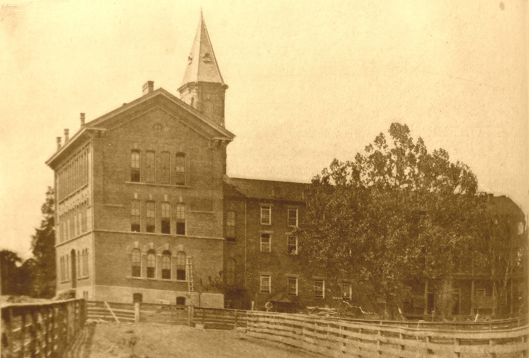
Marshall College (now University) in present-day Huntington, Cabell County, WV. Photo credit unknown.
25 Friday May 2018
Posted in Coal, Giles County, Native American History, Tazewell County
Tags
Alex W. Quarrier, Andrew Donnally, Benjamin F. Morris, C&O Railroad, Cabell County, Charles Droddy, Charles Page, Charleston, Clendenin, coal, Coal River, Coalsmouth, Daniel Boone, David Ruffner, Davis Creek, Donnally's Fort, Ebenezer Oakes, Elk River, Fleming Cobb, Fort Tackett, genealogy, Giles County, Greenbrier County, Henry Ruffner, Herbert P. Gaines, history, John P. Huddleston, John Young, Josiah Hughes, Kanawha County, Kanawha Court House, Kanawha Salines, Kanawha Valley, L.H. Oakes, Leonard Morris, Logan Banner, Logan County, Malden, Marmet, Mason Campbell, Mercer Academy, Michael Newhouse, Native Americans, Owen Jarrett, Point Pleasant, Roy J. Morris, salt, South Charleston, St. Albans, Tazewell County, The Western Virginian, Walton, West Virginia, William Cobb
From the Logan Banner of Logan, WV, in a story titled “Conditions Century Ago: Charleston Educator Tells of Settlement of Kanawha County Which Embraced Part of What Is Now Logan–With 550 Population Charleston Was Metropolis of Kanawha Valley,” comes this bit of history for the city of Charleston dated October 14, 1927:
Josiah Hughes, principal of the South Charleston graded schools, has written a sketch of Kanawha county, telling of the activities of a century and more ago. It is of interest here, because Logan county was created in 1824 from parts of Kanawha, Cabell, Giles and Tazewell, and because some of the pioneers he names have descendants in Logan. Kanawha county was formed Oct. 5, 1789. His article in part follows.
Charleston was the largest town in the valley, and had a population of approximately 550. It had its stores, its schools, its court house, its jail, its pillory, and its whipping post.
The postoffice at Charleston was “Kanawha C.H.” established under that name in 1801, and was so called until late in 1879. Among those who received their mail here one century ago were the following: Leonard Morris (an ancestor of Roy J. Morris, who is in the local C. & O. ticket office), probably the earliest of the pioneers of the valley; Fleming Cobb, the noted Indian scout, who lies buried near the mouth of Davis Creek; John P. Huddleston, who hunted and trapped with Daniel Boone; Alex W. Quarrier, who was many years clerk of the courts of Kanawha county; Herbert P. Gaines, founder of the first newspaper in Charleston; John Young, whose father saved him and his mother from death by Indians when Fort Tackett at the mouth of Coal River was destroyed about 1789; Dr. William Cobb, the first physician in this valley and the ancestor of the Cobb family near Clendenin; Michael Newhouse, a noted pioneer of Elk river; Ebenezer Oakes, a near ancestor of our townsman, L.H. Oakes; Charles Droddy, the first settler at Walton; Owen Jarrett, noted ancestor of the Jarrett family in Kanawha county; Col. David Ruffner, the noted business man whose enterprise made possible the establishment of Mercer Academy in Charleston one hundred and ten years ago; Benjamin Morris, a noted pioneer and near ancestor of Benjamin F. Morris of Marmet; Col. Andrew Donnally, whose father built Donnally’s Fort in Greenbrier county.
During the years 1825-1829. “The Western Virginian,” as it was called, was the only newspaper published in Charleston. Mason Campbell was editor.
50 Salt Furnaces
The first great industry in the Great Kanawha Valley was the manufacturing of salt. One hundred years ago more than fifty salt furnaces were in active operation. A few years later the annual production of salt reached upwards of 3,000,000 bushels.
Kanawha Salines, now Malden, was the center of the great industrial area. The salt companies had greater stores than could be found in Charleston and many of the citizens of Charleston went to Kanawha Salines to do their trading.
One hundred years ago only a few coal mines had been opened up. Wood was the principal fuel used at the salt furnaces. Prior to 1830 but little coal was used by the salt makers. The coal industry in this valley was of comparatively small value until the opening of the Chesapeake and Ohio railroad in 1873.
By 1827 three steamboats had succeeded in reaching Charleston. In 1830 the first towboat on the Kanawha reached Charleston.
Before the close of the first quarter of the nineteenth century missionaries of various churches had visited the valley and preached in the homes of the pioneers. The Protestant Episcopal church established parishes in Kanawha valley about 1821. The Rev. Charles Page was the preacher for the churches at Point Pleasant, Charleston and Coalsmouth (St. Albans). But the Presbyterian church was probably the pioneer in the valley, although small congregations of communicants of the Baptist and Methodist churches may have worshiped in the homes of some of the pioneers. Dr. Henry Ruffner organized the first Presbyterian church in Kanawha county in 1818. The church was organized in Charleston.
19 Thursday Apr 2018
Posted in Boone County, Gilbert, Hamlin, Huntington, Logan, Ranger, West Hamlin, Wharncliffe
Tags
Appalachia, Beech Creek, Ben Creek, Bluefield, Bluestone River, Bob Browning, Boone County, Bramwell, Cabell County, Charleston, Coal Valley News, Commissioner of Agriculture, Crum, Davy, Devil Anse Hatfield, farming, Gilbert, Gilbert Creek, ginseng, Griffithsville, Guyandotte River, Hamlin, history, Horsepen Creek, Huntington, Iaeger, Island Creek, John W. Smith, Kanawha River, Lincoln County, Logan, Logan Banner, Logan County, M.L. Jones, Mate Creek, Pigeon Creek, Ranger, Route 10, Route 2, Route 3, Sarepta Workman, Tug Fork, Twelve Pole Creek, Wayne, Welch, West Hamlin, West Virginia, West Virginia by Rail and Trail, West Virginia Hills, Williamson
From the Logan Banner of Logan, WV, comes this bit of history about Route 3 dated October 14, 1927:
“Changes Can Be Noted” In Island Creek Hills
Madison Editor Waxes Interesting on Old Times and Primitive Conditions–Surfaced Highways Mark the Paths Through Woodland That Were Traveled a Generation Ago.
An article of special interest to Logan folk is here reproduced from the Coal Valley News (Madison) of which M.L. Jones is editor. In a reminiscent mood he tells of road conditions and other conditions that prevailed hereabouts a generation ago. Exceptions might be taken to one or two statements, but the whole article is interesting indeed and informative.
It is considered appropriate that West Virginians should sing the “West Virginia Hills,” and year after year the teachers in their institution disturb their neighbors with this song, while “Tears of regret will intrusively swell.” There is some romance and merit in the song; but it strikes us that it is about time for a revision of this line.
“But no changes can be noticed in the West Virginia Hills.”
To prove our point we quote from memory.
For some years after 1882, there lived in the extreme head of the left fork of Island Creek, or Main Island Creek, a man named Bob Browning. It was 18 miles from Logan. The house was a two-room log cabin, surrounded by palings; and the valley was so narrow that it was difficult to find enough level ground for a garden. Apple trees and peach trees were scattered over a few acres of cleared mountain side. The family subsisted by a little farming, a little hunting and much ginsenging.
This place was between two low mountain gaps. A dim road, usable for wagons in dry weather, led down the creek to Logan, and forked at Browning’s house. One fork led east over one gap to Horsepen and Gilbert of Guyan; the other went west over the other gap to Pigeon creek, and by more or less roundabout ways connected with Ben Creek, Beech Creek, Mate Creek and Pigeon Creek, all of Tug river. Hence, it was a possible road route.
The nearest house down Island creek and on Horsepen creek was two miles; and on Pigeon creek about three-fourths of a mile. A wagon, lightly loaded, passed here on the average six times a year. Horsemen may have averaged one a day, though often a whole week passed without a traveler. It was simply a log shack in the head of the hollow, four miles from a school, ten miles from a store, without anything “which exalts and embellishes civilized life,” and so very remote from the haunts of men that when “Devil” Anse Hatfield and his followers concluded to surrender Tug river to Frank Phillips and the McCoys, they picked their “last stand” on Island creek, four miles below the spot we have been talking about.
Now, in the close of 1927, can “changes be noticed?” We have not been there for over 30 years. But we recently received a present from John W. Smith, commissioner of agriculture , Charleston, W.Va., entitled “West Virginia by Rail and Trail,” containing 22 maps and 174 pictures reproduced from photographs of different parts of the state, and for which we sincerely thank whoever got our name on Mr. Smith’s mailing list.
From this book we learn that when we laboriously trudged through the Horsepen gap or the Pigeon gap, from 45 to 35 years ago, we failed to foresee that within on generation men would pick those two gaps, within less than a miles of each other, as a route for one of West Virginia’s leading roads; and not only for one, but for two, of West Virginia’s leading roads. As we will explain:
Route 3, connects Huntington, Wayne, Crum, Williamson, Gilbert, Iaeger, Davy, Welch, Bramwell, and Bluefield. From Huntington to Wayne and about 15 miles above Wayne, it is mostly on the waters of Twelve Pole creek. It then bears west to Tug river and follows it from Crum to Williamson, about 25 miles. It then bears east to Pigeon Creek, which it follows to the spot we are writing about, in the head of Island creek, some 20 miles. It then goes through the two gaps and down Horsepen creek to Gilbert, on Guyan; up Guyan and Little Huff’s creek, of Guyan, and across the mountain to Iaeger, on Tug river. It then follows up Tug, by Welch, to the head of Elkhorn and then on the waters of Bluestone to Bluefield.
In all, Route 3 is in seven counties, though less than a mile of it is in Logan county, in the head of Island creek. It is graded all the way about 60 percent of it is hard surfaced, including about 25 miles at and near the Bob Browning place. Thus Bob, if alive, can ride on a hard surfaced road from his old home almost to Williamson, one way, and to Gilbert on Guyan the other way; and he could continue south by graded road, until he strikes hard surface again. The last fifty miles next to Bluefield is all hard surfaced, also the lower 25 miles next to Huntington.
But this is not the only big state route hitting this “head of the hollow.”
Route 10 runs from Huntington to the very same spot, a distance of 100 miles, through Cabell, Lincoln and Logan, and is all on Guyan or its tributaries. It is paved, or hard surfaced, from Huntington to West Hamlin, on Guyan where the Hamlin-Griffithsville hard-surfaced road turns off. It is also marked paved for seven miles north of Logan and twelve miles up Island creek. This leaves six miles up by the “Devil” Anse Hatfield place to the Bob Browning place to pave, and it is marked, “paved road under construction.” The only drawback to No. 10 is that from West Hamlin to Ranger is a patch where the grading is not yet satisfactory. Doubtless, within three years both 3 and 10 will be hard surfaced all the way. Even now, from the Browning place, the people can take their choice between an evening’s entertainment in Logan or Williamson.
But that is not all yet. The chances are heavy that there will never be but one hard surfaced road from Logan to Williamson. There will always be a heavy travel from Charleston to Williamson. It will be by our No. 2 to Logan; by No. 10 to the Browning place; and by No. 3 to Williamson. Within a few months it will all be hard surfaced.
From all this we conclude.
First; that we let a good chance slip when we failed to buy a half acre of land where No. 10 joints No. 3 for a hotel and filling station. We could have multiplied our investment by one thousand. But so far as we could see that spot was fit only to hold and the rest of the Earth’s surface together, and to get away from as rapidly as possible.
Second; that “changes can be noticed in the West Virginia Hills.”
We might add that thousands can remember crossing the Kanawha at Charleston on the ferry, because there was no bridge; and few, if any, three-story homes. The writer hereof did his first plowing with a two-horse turning plow in the center of what is now Huntington. It was a cornfield then. It is a fashionable residence district now. He boarded at an isolated log house on a hill back of the Huntington bottom, where now are miles of mansions on paved streets. Even in and about Madison and all over Boone county, it is hard for people to visualize how things looked a short ten years ago. Mrs. Sarepta Workman, on her recent visit to her old…
23 Friday Mar 2018
Posted in Native American History, Salt Rock
Tags
Appalachia, Billy Adkins, Brandon Kirk, Cabell County, Dave Vance, Fraulein Adkins, history, Native American History, Native Americans, petroglyphs, photos, Salt Rock Petroglyphs, West Virginia
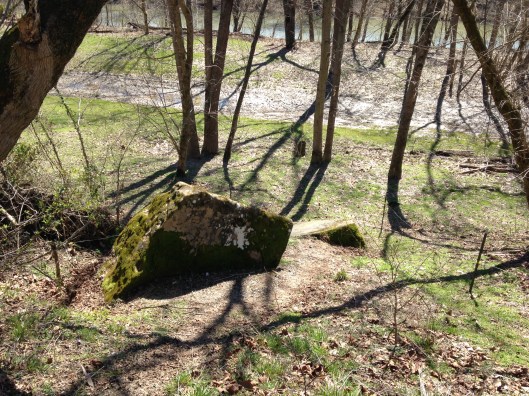
Petroglyphs…down below! Salt Rock, Cabell County, WV. 18 March 2018. For more information about West Virginia petroglpyhs, follow this link: https://www.wvencyclopedia.org/articles/1844

Making our way down to the petroglyphs… 18 March 2018.

Billy Adkins carefully exploring the petroglyphs. 18 March 2018. For more info, follow this link: https://www.theclio.com/web/entry?id=22877

Billy Adkins looking over the petroglyphs. 18 March 2018.
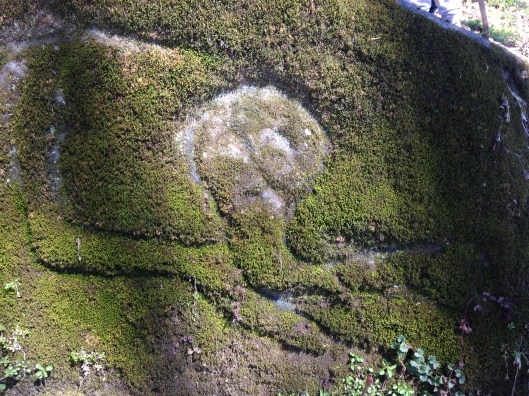
“Alien” petroglyph. 18 March 2018.
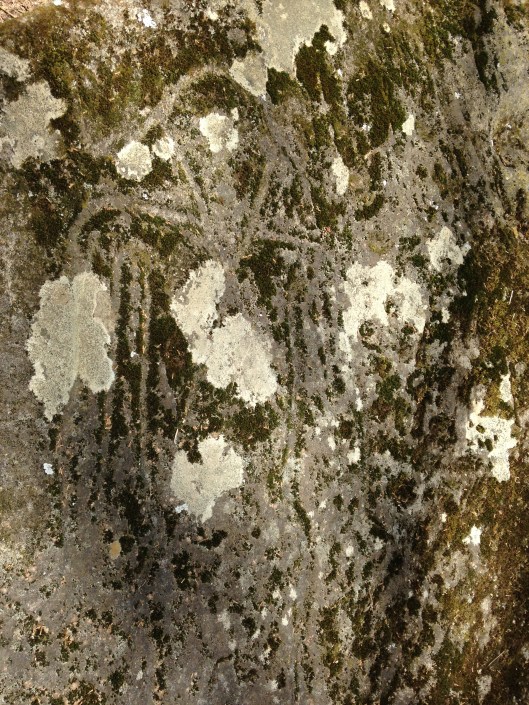
“Alien” petroglyph. 18 March 2018.

Petroglyphs just below me. 18 March 2018. Photo by Fraulein Adkins.

These petroglyphs are one of the most impressive Native American sites located in southwestern West Virginia. 18 March 2018. Photo by Fraulein Adkins.
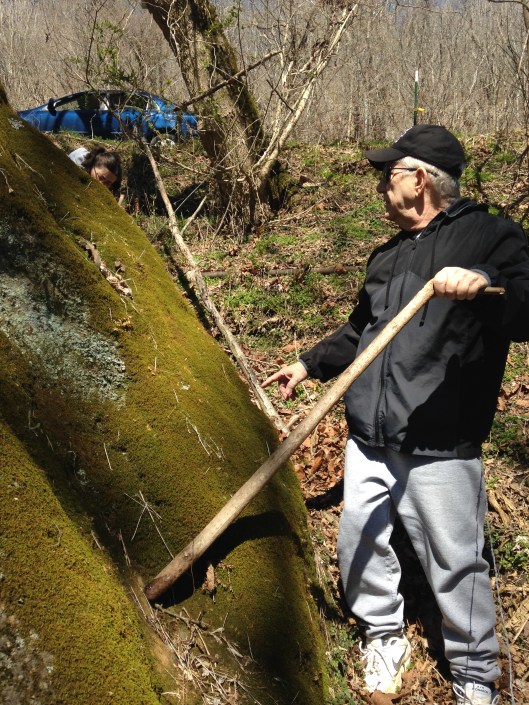
Billy Adkins. 18 March 2018.
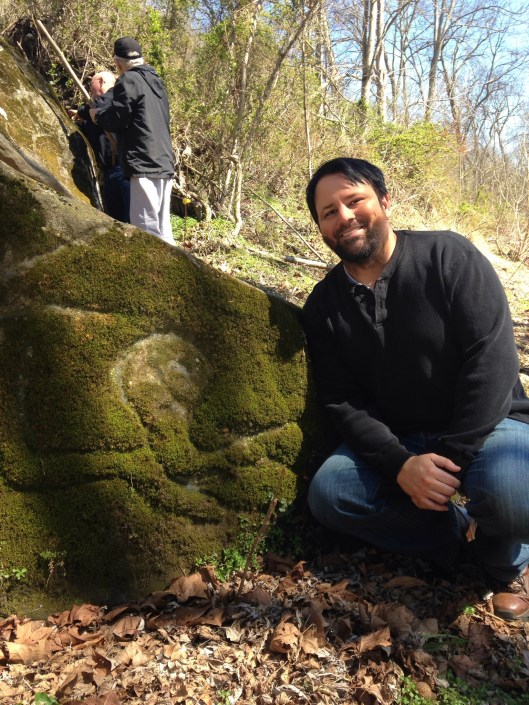
My favorite: the “alien” petroglyph. 18 March 2018. Photo by Fraulein Adkins.

Petroglyph crew: Dave Vance, Billy Adkins, and Fraulein Adkins. 18 March 2018.

Our guide: Dave Vance. 18 March 2018.
08 Monday Jan 2018
Posted in Culture of Honor, Rowan County Feud
Tags
Appalachia, Cabell County, Cook Humphrey, Craig Tolliver, Democratic Party, history, Huntington, Huntington Advertiser, John Martin, Kentucky, Morehead, politics, Republican Party, Rowan County, Rowan County Feud, sheriff, Solomon Bradley, West Virginia
From the Huntington Advertiser of Huntington, WV, dated July 2, 1887 comes this letter about the Rowan County Feud:
The Rowan County War.
Editor Advertiser:
The writer is not surprised that your paper of last week fell into the current of popular opinion and denounced the Toliver gang, of Morehead, Kentucky, as the guilty ones in the celebrated feud which has caused the killing of about thirteen persons. Later advices appear at least to throw doubt on the subject of who is really to blame. Let us see. Here is the Cincinnati Enquirer’s account of the origin of the trouble, taken from that journal of the 23d inst.:
“The beginning of the trouble dates from the August election of 1884, when Cook Humphrey, a Republican, was elected sheriff by a trifling majority. He was a young, spare-built man, fresh from the country, and unsophisticated in appearance and manner. Craig Toliver, at the head of a party of friends, declared that Humphrey should not serve as sheriff. On the evening of the election a row occurred. Pistols were drawn and used, and Solomon Bradley (Democrat), a friend of Toliver’s, was shot and killed. The killing was charged against John Martin, and Toliver swore to be avenged. Subsequently Floyd Toliver and Martin got into a fight and the former (Toliver, Democrat) was killed on the street. From this time it may be said that the Martin (Republican) and Toliver (Democrat) factions were organized in deadly array, both sides determined never to yield, one to the other.”
The analysis of the above is, that the Republicans, having carried the election, became more or less insolent towards the opposition, who were correspondingly depressed and sore over their defeat, and gave utterance to their disappointment, and Craig Toliver used a very foolish expression to the effect that the Republican sheriff elect should not be installed. It is probable that this was accompanied by charges of fraudulent voting on the part of the Republicans–at any rate it was not such an offense as to justify Martin, Republican, in shooting Sol. Bradley, a partisan of Toliver’s. Subsequently Floyd Toliver denounced Martin for having killed Bradley without sufficient provocation and in an unmanly way, and was himself shot by Martin on the instant. So that a war of extermination seems to have been inaugurated by the Martins and their Republican following, against the Bradleys and Tolivers and their Democratic following, and signalized by the cold blooded murder of two of the latter. If this is true, and the record seems to bear it out as true, then the Tolivers were simply defending themselves and their households and party friends against the tumultuous murder of the Martins and their Republican following.
The subsequent getting possession of the person of John Martin (already a double murderer) and his killing at the hands of the Tolivers, whose brother and friend he had slain, was in the nature of retribution, and justified by the circumstances. Later, killings on both sides followed from the hot blooded feud which these had aroused, and while some of them appear to have been barbarous in the extreme, yet they legitimately came of a war of extermination such as had been initiated by the Martins and responded to, and not by the Tolivers and their friends.
A prominent citizen of Cabell Co., now sojourning near the scene of the disorder, in Rowan County, says:
“I suppose the dispatches have told you the war news; how 300 Republicans succeeded in killing four Democrats; but the war has only begun. I hear, to-day, that the Democrats are organizing a company near —— to put down the mob at Morehead who did the killing. He is more than sanguine who thinks the trouble ended.”
Our fellow-citizen, on the ground in Kentucky, evidently thinks the late killing of the three Tolivers unjustified by the facts as they are known to him. Let us wait for the facts.
BEN.
02 Tuesday Jan 2018
Posted in Giles County, Holden, Logan, Native American History, Tazewell County
Tags
Accawmack Shire, Appalachia, Augusta County, Botetourt County, Cabell County, Cayuga, Charles City Shire, Charles River Shire, Elizabeth City Shire, Essex County, Fincastle County, G.W. Bickley, Giles County, Henrico Shire, history, James City Shire, John Logan, Kanawha County, King and Queen County, King William County, Littletown Tazewell, Logan Banner, Logan County, Mingo County, Montgomery County, Ohio, Orange County, Russell County, Simon Cotterel, Spottsylvania County, Tazewell County, Virginia, Warroskuyoak Shire, Warwick River Shire, Washington County, West Virginia, Wheeling, Wythe County, Yellow Creek, York County
From the Logan Banner of Logan, WV, comes this item relating to county history dated October 22, 1926:
AS POLITICAL SUBDIVISION, LOGAN CO. IS DESCENDANT OF FIRST EIGHT SHIRES
Logan county was formed in 1824 from parts of Tazewell, Giles, Cabell and Kanawha. In 1895 Logan was bisected in two almost equal parts, from the southernmost of which Mingo was created. Logan’s area is 455.82 square miles; Mingo’s 423,50_ square miles.
Tracing this county’s ancestry back through Tazewell it will be found to have a long line of distinguished progenitors.
The county was named after John Logan, a famous Cayuga Indian but not a chief, who was changed from a staunch friend to an unrelenting foe of the whites after his family had been murdered at Yellow Creek, Ohio, not far from Wheeling.
Tazewell was formed from Wythe and Russell in 1799. It derived its name from a political strategem. Simon Cotterel, representative from Russell, introduced a bill to authorize the creation of a new county. A Mr. Tazewell, representing Norfolk County, opposed the measure. Cotterel induced him to suspend his opposition pending the rewriting of the bill. Then Cotterel erased the proposed name and substituted that of Tazewell. That silenced the objector, who then voted for the amended measure. According to G.W. Bickley’s history of Tazewell County, the Tazewell referred to was not Littletown Tazewell, who was governor of the state from 1834 to 1836.
At that time Tazewell county had an area of 3,000 square miles–two and a half times the size of Rhode Island and more than six times the six of Logan county.
Wythe county was formed from Montgomery in 1789, Russell from Washington in 1786, Washington and Montgomery from Fincastle in 1772, Botetourt from Augusta in 1769, Augusta from Orange in 1738, Orange from Spottsylvania in 1724, Spottsylvania from King and Queen, Essex, and King William in 1720, King William from King and Queen, and through a series of changes, descended from Charles River Shire, which was changed to York county, in 1643. Ten years before that “The General Assembly holden at James City the 21st of August, 1633, divided Virginia Colony into eight shires, named James City, Henrico, Warwick River, Warroskuyoak, Charles City, Elizabeth City, Accawmack and Charles River.”
31 Sunday Dec 2017
Posted in Huntington
Tags
Appalachia, Cabell County, history, Huntington, Huntington Advertiser, Marshall College, Marshall University, photos, West Virginia

Huntington (WV) Advertiser, 18 June 1887.
10 Sunday Dec 2017
Posted in Huntington
Tags
Appalachia, Barrett's Circus, Cabell County, circus, history, Huntington, Huntington Advertiser, West Virginia
From the Huntington Advertiser of Huntington, WV, comes these items dated May 7, 1887:
At the conclusion of Barrett’s circus performance Tuesday, the animals were fed with raw meat in the presence of the spectators. The smell of the meat roused the lion from a sweet slumber, and he pranced round in his cage and threshed the bars, with his tail in a very ferocious manner. The keeper threw him a piece of beef which he received with manifestations of savage delight. He placed it between his paws and attempted to tear it as he was accustomed to tear the carcass of the succulent nigger in his native jungle, but he did not know the characteristics of Huntington beef, and his greatest efforts were not able to make an impression on the piece between his paws. An expression of grief and sadness and surprise came into this eyes as he contemplated it for a moment and then retired to a corner of his cage with an air of deep humiliation. It was inexpressibly sad to see the King of Beasts abdicating his title in favor of a Huntington steer.
***
More than five thousand people sweltered under Barrett’s circus tents Tuesday afternoon looking at the “greatest show on earth,” the principal advertised feature of which was Jo-Jo, the alleged dog-faced Russian boy, who is making one of his final tours before returning to his mother country, whither he has been, it is said, peremptorily recalled by his imperial majesty. As Jo-Jo is not noticeably handsome as a man, and is a poor excuse for a dog, it is not readily conceivable what they want with him in Russia, unless the Czar wishes to hear the wind bow Aeolian melodies through his whiskers. The daring bareback rider was there in all his spangles and glory, and the sacred animals looked as old and rusty and smelled as badly as ever, while the fat man and woman, the midgets and general monstrosities were in their old accustomed place, baby mine. But the golden haired fairies in perilously short garments who floated in bewitching and bewildering loveliness and went through all the motions on the flying trapeze were the old-time attraction for saint and sinner.
08 Friday Dec 2017
Posted in Huntington, Native American History
Tags
Appalachia, Cabell County, Gallipolis, history, Huntington, Huntington Advertiser, Indian, King of Pain, medicine, medicine man, Native American History, Native Americans, Ohio, Queen of the Valley, Utawaun, West Virginia
From the Huntington Advertiser of Huntington, WV, come these interesting historical items about a Native American visitor to town in 1886:
The one-armed Indian doctor, who pulls teeth for the love of his species and sells compounds known as the “King of Pain” and the “Queen of the Valley” for a livelihood, is in the town. The crowds that nightly surround his wagon demonstrate that the American people have queer ideas of entertainment. Many people take advantage of the aborigine’s gratuitous services, and as he tosses in the air black and crumbling snags and molars with hideous roots, the crowd manifests its pleasure by generous applause. The doctor will remain as long as the harvest of snags holds out, the crowd remains appreciative, and last but not least, as long as the sale of the “King” and “Queen” does not lag.
Source: Huntington (WV) Advertiser, 15 May 1886.
***
U-ta-wa-un, the Indian medicine man and lightning tooth-puller, visited this city this week and pulled an astonishing number of decayed teeth, lectured on temperance and dispensed the King of Pain and the Queen of the Valley to the eager populace. On Thursday the aborigine departed for Gallipolis.
Source: Huntington (WV) Advertiser, 3 July 1886.
05 Tuesday Dec 2017

Posted by Brandon Ray Kirk | Filed under Huntington
30 Thursday Nov 2017
Posted in Barboursville, Guyandotte River, Huntington, Logan
Tags
Barboursville, Cabell County, Charleston, Dusenberry's Dam, Guyandotte River, history, Hugh Toney, Huntington, Huntington Advertiser, Logan, steamboats, West Virginia
From the Huntington (WV) Advertiser of February 5, 1887 comes this bit of history about Dusenberry’s Dam:
The dwellers along the banks of the Guyandotte River from its mouth to the headwaters, together with many others who are interested in the navigation of that stream, will be pleased to know that it is soon to be cleared of all obstructions. Major Post, the Chief Engineer, and Capt. Hugh Toney, his assistant, in charge of the Government improvement on Guyandotte River, have made a contract with the Messrs. Rodgers to clear the river of all obstructions from Barboursville up for a considerable distance. By this contract the Dusenberry mill dam, which has been the chief obstacle to the free navigation of the river and the cause of immense loss to timber dealers and others, will be removed.
After its removal, with such a stage of water as we now have, steamboats will be enabled to ascend to within a few miles of Logan C.H. This will be of immense importance to the city of Huntington, as it opens a fertile region, which has in a great measure been cut off by this dam and forced to go to Charleston. A line of steamboats will, no doubt, enter the trade between this city and Logan C.H. as soon as the river is clear.
At the point where the Dusenberry dam is located was established as one of the first grist mills in all this region of country. About the year 1818 or 1820, the Legislature of Virginia passed an act allowing a mill dam four feet high to be built across the river at that point, and since that time the obstruction has remained.
Capt. Toney has been untiring in his efforts to secure the removal of this bar to the free navigation of Guyan, but not until a few days ago was he able to effect the arrangement which will result in opening the stream.
The merchants and business men of Huntington should now be on the look out for the trade up this river and use all proper means to bring it here.
01 Wednesday Nov 2017
Posted in Huntington
Tags
Alfred Whitaker, Appalachia, Cabell County, First Congregational Church, Frank Hullman, Griffin McCarthy, Halloween, Henry Ensign, history, Huntington, Huntington Advertiser, Ivor Titus, West Virginia
From the Huntington Advertiser of Huntington, WV, come these stories of Halloween dated November 1, 1899:
HALLOWE’EN SOCIAL
In spite of unpromising weather, a house full of people assembled at the parsonage of the First Congregational church, 520 Ninth street last night. Ghosts, goblins, fairies and brownies were in evidence. The ghosts and goblins were chanting weird incantations and brewing trouble in a great cauldron and devising all sorts of mischief when upon the appearance of the bright faced fairies and the merry brownies, they slunk away and gloom gave place to brightness and cheer. An unusual feature was the make-up of the brownies which in every case was clever and taking. Alfred Whitaker was the Indian; Frank Hullman the clown; Henry Ensign, the Chinaman; Ivor Titus, the dude; and Griffin McCarthy, Uncle Sam.
***
HALLOWE’EN OBSERVED
YOUNGSTERS MORE CIVILIZED IN HUNTINGTON THIS YEAR THAN USUAL
Hallowe’en was observed last night with many appropriate parties and other amusements on the part of our fair citizens. One mentionable feature was the civilized and orderly manner in which the small boy and his associates behaved. Last year it will be remembered much property was wantonly destroyed and the night made one of hideous revelry. The authoritatives, however, were prepared this time, and any extreme demonstrations of youthful vandalism were promptly quelled. The taxpayers may now rest in peace for another year.
27 Friday Oct 2017
Posted in Barboursville, Lincoln County Feud
Tags
Appalachia, Barboursville, Barboursville College, Blood in West Virginia, Brandon Kirk, Cabell County, Daughters of the American Revolution, Davis Creek, Eastman Community College, George A. Proffitt, ghosts, Guyandotte River, history, Hollena Brumfield, Huntington Advertiser, James I. Kuhn Presbyterian Church, James River-Kanawha Turnkpike, Lincoln County Feud, Logan County Banner, Logan Democrat, Mary G. Moss, Morris Harvey College, Old Toll House, photos, Phyllis Kirk, R.A. Alderman, Robert W. Douthat, S.V. Matthews, Virginus R. Moss, West Virginia

Old Toll House, built 1837, Barboursville, Cabell County, WV. 15 February 2015. For more, follow this link: http://www.wvdar.org/Barboursville/

Old Toll House Historical Marker. 15 February 2015. For more, follow this link: https://www.theclio.com/web/entry?id=6682

Barboursville College, 1889. Photo by S.V. Matthews. For more, visit here: https://www.theclio.com/web/entry?id=11606
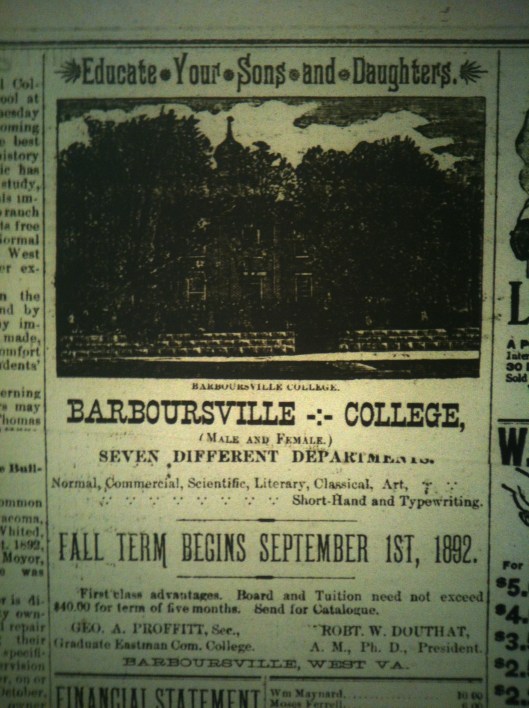
Logan County Banner (Logan, WV), 8 September 1892.
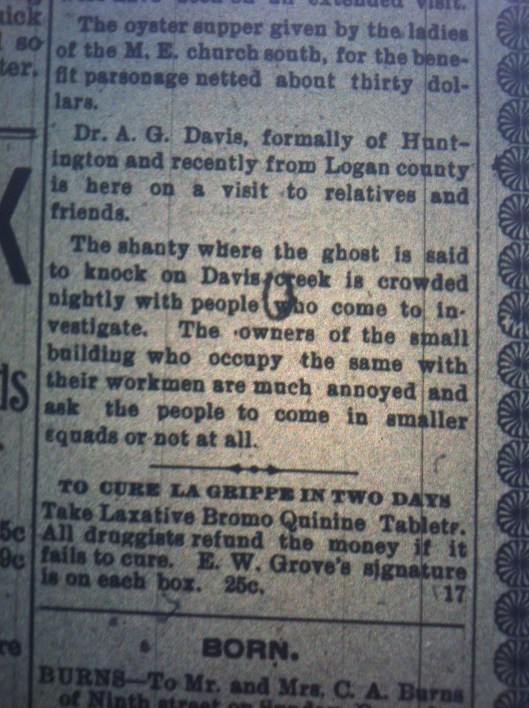
Davis Creek Ghost, Huntington (WV) Advertiser, 4 December 1899.

Logan (WV) Democrat, 10 August 1911. For more, visit here: https://www.wvencyclopedia.org/articles/276

Dr. Virginus R. Moss treated Hollena Brumfield after she had been shot in the face during the Lincoln County Feud. 5 May 2017. Photo by Mom. For more, follow this link: https://www.amazon.com/Blood-West-Virginia-Brumfield-McCoy/dp/1455619183

James I. Kuhn Memorial Presbyterian Church. 5 May 2017. Photo by Mom. For more, follow this link: http://www.herald-dispatch.com/features_entertainment/kuhn-memorial-presbyterian-church-to-celebrate-its-centennial/article_15f4d296-b5fb-505a-830d-1d6935babe87.html
20 Friday Oct 2017
Posted in Battle of Blair Mountain, Coal, Huntington, Logan, Women's History
Tags
Allen B. Dingess, Alleyne Dye, Appalachia, Ashland, Battle of Blair Mountain, Cabell County, Caroline Dingess, Cattaraugus County, Ceredo, coal, Democratic Party, genealogy, Hannah Mitchell, Henry Street Settlement, history, Huntington, Illinois, Kentucky, Leo Frank Drake, Logan, Logan Banner, Logan County, Mollie Drake, New York, Republican Party, Springfield, Wayne County, West Virginia
Mollie (Dingess) Drake, daughter of Allen B. Dingess and Caroline (Jackson) Dingess, was born on June 30, 1881 in Logan County, WV. She was the wife of Leo Frank Drake, a salesman. She appears in the 1910 Wayne County Census (Ceredo District). Hannah Mitchell profiled her life in the Logan Banner of Logan, WV, on December 30, 1921. Her husband died in 1925. In 1930, Mollie lived at Springfield, IL. In 1940, she made her home in Cattaraugus County, NY. Mrs. Drake died on July 7, 1958 at a nursing home in Huntington, WV.

It would be easy enough to make a melodramatic start and give her some such extravagant title as “The Angel of the Hills” or “The Mother of the Mines” or “The Florence Nightingale of Blair Mountain.” But if you did and Molly Dingess Drake found it out she might laugh and she might make some sharp remark, but most certainly she would not be pleased.
How she escaped the “war correspondents” who were rushed to the front to cover West Virginia’s recent mine war is more than I can say, for the story is still told of how Molly, like “Sheridan twenty miles away,” when the armed miners were marching on Logan, made all haste not toward safety, as she might very wisely have done, but back to where the bullets were flying.
Her narrowest escape from the feature pages of newspapers was several years ago–two, in fact–when, a woman of some two score years, she was graduated from high school with her sixteen-year-old daughter. That graduation and the attendant high school diploma were in no sense honorary affairs given out of respect for Molly Dingess Drake. They had been earned by this very determined, ambitious woman of the hills after four years of high school work, in which she had enrolled along with her daughter and for which she had attended classes faithfully and with classmates half her age.
On pay day Mrs. Drake is a welfare worker for one of the coal companies operating in the Logan field. Having finished her high school course, she did not go on to college with her daughter. And, as she puts it, one of the coal producers “knew she wouldn’t sit at home and knit and crochet.” So he offered her the job of visiting nurses among the employees of his company. In this job Mollie mothers a large family. It is composed of men and women much older than she and of the children of these older children. True to the mother-type anywhere, she makes their individual troubles, their health, their happiness, a very personal matter.
There was the young Spaniard who lay in the hospital after a severe accident. No friends or relatives rallied to his bedside, and the doctors and nurses could not understand him when he moaned out a word or two in his native tongue. Mollie Drake scoured the hills for an interpreter and found one. She also dug up a cousin of the unfortunate boy. Moreover she made the lives of nurses and doctors miserable until the lad was out of danger, sometimes calling at the hospital late at night to see how the boy was getting on. Was not this foreign born lad one of her children?
It was not the Mollie Dingess Drake, ready to face danger along with other brave women of Logan county when armed miners were marching upon their homes, that interested me most, as you may have guessed already. The World War is too recent proof that American women are not afraid to risk their lives for a cause. It is Mollie Drake and the work of her hands when peace broods over her native hills that make her a woman among women.
Mrs. Drake is a mountain woman herself. She knows the desires, the needs and the hopes of the women and children who live in her hills; in a double sense she is working among her own people.
No serious-minded killjoy is Mrs. Drake, but a large motherly woman with a great capacity for fun and for seeing the human side of things.
It is a common statement among traveling salesmen that they live in a Pullman; Mollie Drake might say she lives in a day coach. Her headquarters are in Logan, and much of her time is spent in riding to and from the little mining towns along the branch lines out of Logan.
Her trips are taken to visit the homes of miners, and no place is too remote for her to visit. Her energy in tramping about and the speed with which she walks over the hills is enough to make a younger woman gasp for breath and all but beg for quarter. That from one who knows.
We started out of Logan one morning on the 10 o’clock train.
Before the train started we were part of the social gathering which greets the all-too-few passenger trains that come into Logan. Mollie Dingess knew everybody.
Arrived at the mining center, our first visit was to the schoolhouse, a substantial two-story building, in front of which were all the latest playground devices for amusing the modern child. The teachers were young and efficient in their schoolroom manners. In Logan county the schools have the advantage of extra good teachers because after the school board has voted what it can afford for salaries the coal companies make up the deficit needed to attract the best.
It was then I learned of Mrs. Drake’s unusual high school career.
“You know I have a high school education,” she remarked as we left the school and strode (at least Mrs. Drake strode) along the dirt road.
“As a girl I went to school till I was thirteen. In the teens I took up nursing and later was married. But I always wanted more education. Sometimes it is the persons who are denied education appreciate it most. Well, when my daughter was ready for high school I decided that I would get my high school education too–not by following her studies at home (I knew that wouldn’t do), but by enrolling in high school with her.
“Some of my friends thought it was an absurd idea. They said I could enroll in college for special courses or take correspondence courses. But the idea of my going to school right along with my daughter and the other young people seemed queer to them. I suppose it was unusual. But what I wanted was a regular education. So I enrolled and went through the four years of high school and was graduated in the same class with my daughter.”
“And how did your daughter feel about it?”
“Oh, she had her young friends and took part in school activities just the same.” Again the twinkle behind the glasses. “It may be that she studied harder than she would have.” I had no doubt of that.
“She is in college now,” continued Mrs. Drake. “When her grades aren’t has high as I think they ought to be she sends them to her father, but a man can’t keep such things secret, and I always find out. She knows I haven’t much patience with students who don’t keep up their grades.
“My daughter is going to be a physician. She didn’t make up her mind until after she entered college. I was rather anxious to know what she would choose. After she started studying biology she was so interested that she decided to go on and study medicine.”
It occurred to me that Mollie Drake was a feminist. I wondered if she had ever been a suffrage worker.
“No,” she answered. “I’ve always been a Democrat, though. My husband says I am what is called ‘a mean Democrat.'”
She paused and then laughed. “I made one rule when I was married. You see, Mr. Drake is a Republican. Well, I told him that if I married him he must keep just one rule. I knew our marriage would be a success if he did. And of course I promised to keep it too. The rule was that we should never talk politics. We never have and we’ve been very happy.
“Of course I voted at the last election, and much good it did so far as the Presidency was concerned. But someway I didn’t care so much for the voting. I’m old-fashioned in many ways. I was brought up in a strict way and I don’t like to hear about folks playing cards on Sunday. I suppose it isn’t wicked, but I can’t get over my bringing-up. And I never take a needle in my hand on a Sunday, only when I just have to mend something, that I don’t feel kind of guilty.”
Our conversation had been interspersed with visits to various miners’ homes, mostly where there were babies. Mrs. Drake’s philosophy had been punctuated by advice on babies and friendly comment upon the little interests of the women we visited. If we weren’t inspecting a baby we were talking with some elderly woman over a fence about her latest “misery.”
As we climbed the trails I was tired, but Mrs. Drake seemed as energetic as when the day began.
“I like the work,” she said, “but I want to study more. Last summer I took a course in New York, and I’d like to go back there for a second at the Henry Street Settlement. I want to study languages, too. There are so many things I want to do.”
Some day I have not a doubt she will do these things she wants to do. In the meantime I think of her in connection with the verse: “Whatsoever thy hand findeth to do.”
Source: “The Florence Nightingale of Blair Mountain,” Logan (WV) Banner, 30 December 1921.
Notes:
To see Mrs. Drake’s photo and entry at Find-A-Grave, follow this link: https://www.findagrave.com/cgi-bin/fg.cgi?page=gr&GRid=20145994
Mrs. Drake’s daughter, Alleyne Howell Dye, died of suicide in Ashland, KY, in 1944. For her death record, follow this link: https://www.familysearch.org/ark:/61903/3:1:3Q9M-C9YV-H7M5-H
To see Mrs. Dye’s photo and entry at Find-A-Grave, follow this link: https://www.findagrave.com/cgi-bin/fg.cgi?page=gr&GRid=20146072
19 Thursday Oct 2017
Posted in Huntington
Tags
Appalachia, Cabell County, history, Huntington, Huntington Advertiser, Marshall College, Marshall University
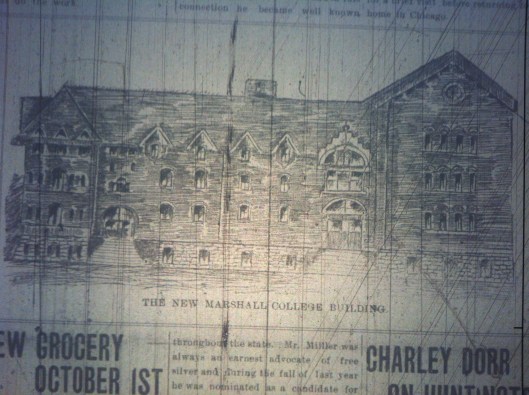
Huntington (WV) Advertiser, 16 August 1897.

Huntington (WV) Advertiser, 23 December 1897.
13 Friday Oct 2017
Posted in Huntington
Tags
Appalachia, Cabell County, crime, Halloween, history, Huntington, Huntington Advertiser, West Virginia
From the Huntington Advertiser of Huntington, WV, we find the following story dated October 31, 1899:
EDITOR ADVERTISER:
The observance of the evening of October 31st, in Huntington, seems to have sadly deteriorated, or at least is very different from that in the balance of the world. The old time pleasantness and superstitions connected with “Hallow eve,” are lost sight of here, and in their stead are introduced drunkenness and vandalism. The night is made hideous. Women and children terrorized, property wantonly destroyed and life endangered. The night is looked forward to with dread. Now this is all wrong, and some vigorous measures should be taken to protect citizens and taxpayers from the outrages committed on this night in the past few years. Let the city give us the protection we are entitled to. Put on a special police force sufficiently strong for the purpose. $150 or $200 had better be thus invested than to have this much or more property maliciously destroyed and life made miserable besides. Nay, more than this may be averted. A man’s house is his castle, and if the authorities are inadequate to protect him, and he is subjected to the outrages heretofore perpetrated, he may be forced to protect himself, and some serious tragedy result, which under the circumstances the law can only justify. It is to be hoped the authorities will take action in the matter, and lawless individuals take warning in time.
A TAX PAYER
Source: “Hallow Eve,” Huntington (WV) Advertiser, 31 October 1899.
Writings from my travels and experiences. High and fine literature is wine, and mine is only water; but everybody likes water. Mark Twain
This site is dedicated to the collection, preservation, and promotion of history and culture in Appalachia.
Genealogy and History in North Carolina and Beyond
A site about one of the most beautiful, interesting, tallented, outrageous and colorful personalities of the 20th Century
 Brandon Ray Kirk