Tags
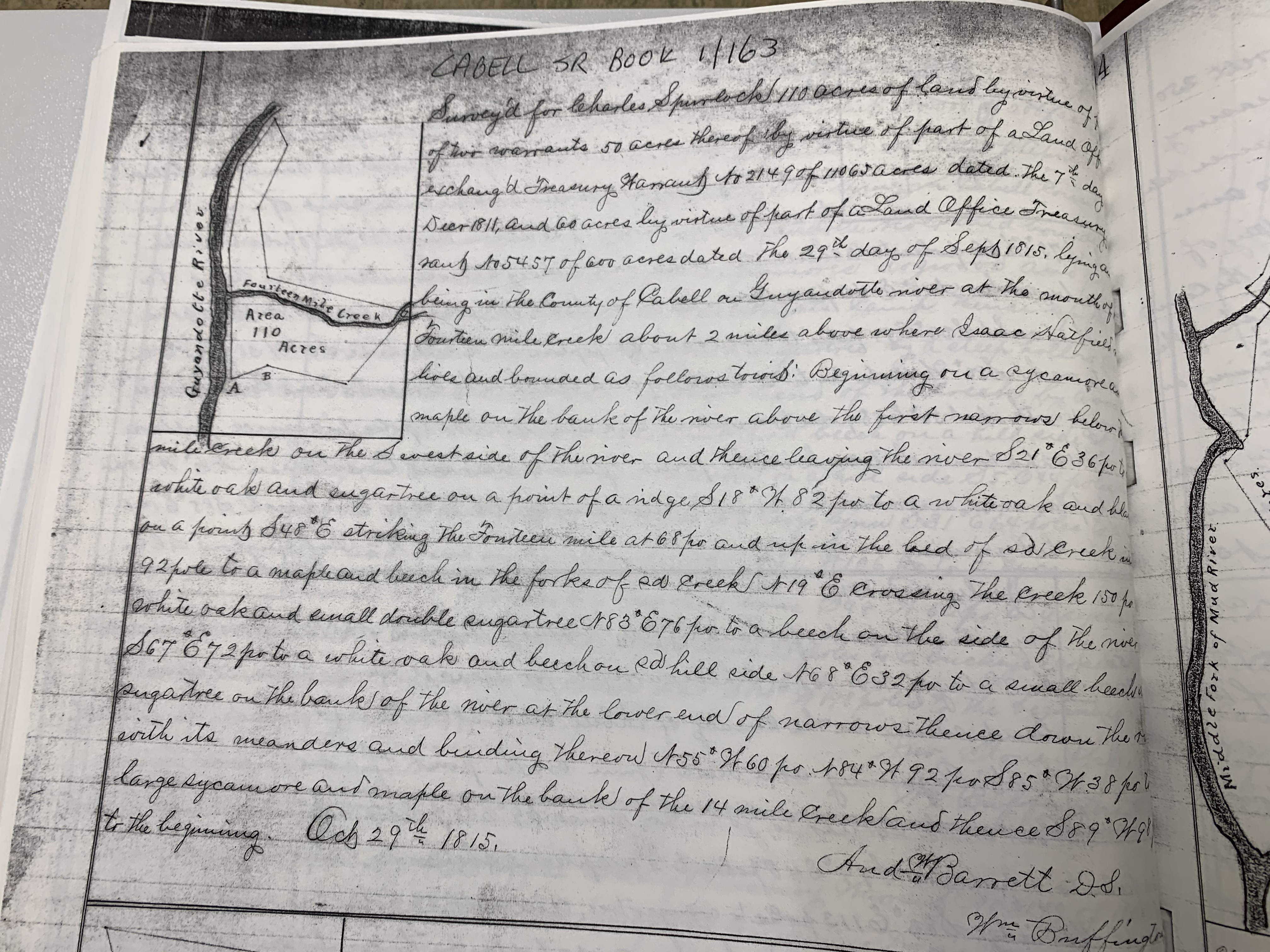
Andrew Barrett, Appalachia, Cabell County, Charles Spurlock, Fourteen Mile Creek, Guyandotte River, Isaac Hatfield, Lincoln County, Virginia, West Virginia, William Buffington

17 Monday Feb 2025
Posted in Fourteen
Tags
Andrew Barrett, Appalachia, Cabell County, Charles Spurlock, Fourteen Mile Creek, Guyandotte River, Isaac Hatfield, Lincoln County, Virginia, West Virginia, William Buffington
07 Wednesday Dec 2022
Posted in Boone County, Guyandotte River, Hamlin
Tags
Abraham Lincoln, Appalachia, Boone County, Cabell County, Carroll District, Duval District, Guyandotte River, Hamlin, Hamlin Chapel, Harts Creek District, history, Jefferson District, Kanawha County, Laurel Hill District, Lincoln County, Logan County, Mud River, Putnam County, Sheridan District, Union District, Washington District, West Virginia
From West Virginians, published by the West Virginia Biographical Association in 1928, comes this profile of the Logan-Boone Highway in southwestern West Virginia:
Lincoln County
Lincoln County occupies a place in the southwestern section of the State, and is one of the few counties created by the State of which it is a component part. The organization of the county was authorized by an act of the legislature passed February 23, 1867, from a part of the counties of Cabell, Putnam, Kanawha and Boone. The formal organization of the county government was made on March 11, following, at the Hamlin Chapel, a short distance away from the present seat of justice. Lincoln county is drained by the Guyandotte and Mud rivers, and has a land area of 448.76 square miles. The population in 1920, according to the official enumeration of the United States Census Bureau, was 19,378. Later estimates from the same sources do not increase the figures. The county has a great diversity of natural resources, coal, oil and gas predominating. It also has large agricultural interests, and its horticultural products are of no inconsiderable value. The assessed valuation of property within the county, as returned at the 1927 assessment, is as follows: Real estate, $7,000,460; personal property, $3,666,350; public utility property, $8,751,297; total $19,418,107. The county is sub-divided into eight magisterial districts, Carrol, Duval, Harts Creek, Jefferson, Laurel Hill, Sheridan, Union and Washington. There are but few who are not familiar with the life story of the man whose name is borne by this country—the martyred Abraham Lincoln, rail-splitter, country lawyer and sixteenth President of the United States. No towering shaft; no swiftly flowing stream; no sub-division of this land of ours, welded into one by his work and sacrifice, is needed to keep his memory green. His name is so emblazoned on the pages of American history that it will remain bright, shining and untarnished long after letters engraved upon granite rocks are dimmed and dulled by the rust and erosion of the years as they come and go. Lincoln—homely in feature and tall in stature—grows with the years and honors are paid him and his memory that are accorded no other, save only Washington, the founder. Hamlin, the county seat, is named in memory and honor of Hannibal Hamlin, of Maine, Vice President of the United States during the first administration of Abraham Lincoln. The site was selected as a proper place for the county seat at the organization of the county, and was made the permanent county seat by legislative enactment of February 26, 1869. Hamlin has an elevation of 642 feet above sea level, and in 1920 had a population of 516. It is the only incorporated place in the county.”
NOTE: Hamlin is NOT named for Hannibal Hamlin!
NOTE: By 1869, all land was returned to Putnam and additional land was taken from Logan County.
05 Monday Dec 2022
Tags
Appalachia, Barboursville, Bill Herndon, Cabell County, civil war, Huntington, Main Street, Maurice E. Beckett, Morris Harvey College, Old Abraham, poems, poet, poetry, Tanyard Branch, Union Cavalry, West Virginia, writers

Posted by Brandon Ray Kirk | Filed under Barboursville, Civil War, Poetry
26 Saturday Jun 2021
Posted in Huntington, Logan
Tags
Appalachia, Ben F. Donley, Cabell County, Claypool Chapel, Crump and Reardin, Dan Westfall, Giles County, Guyandotte, history, Huntington, J.S. Thornburg, Kanawha County, Kenova, Logan, Logan Banner, Logan County, Orville, Pittsburgh, Tazewell County, W.T. Workman, West Virginia
From the Logan Banner of Logan, WV, comes this bit of history about Methodists in Logan County, WV. The story is dated April 26, 1927:
PLANS FOR SUNDAY’S DEDICATION OF FIRST M.E. CHURCH PROMPT REVIEW OF 100 YEARS OF METHODISM HERE
Methodists from all parts of Logan county and even more distant points are expected to attend the dedication next Sunday of the new First M.E. Church in this city. As previously announced, an impressive program for the day has been arranged. Dr. Daniel Westfall, of Pittsburgh, Rev. J.E. Bird, of Huntington, and Rev. J.S. Thornburg, of Kenova, will be here to assist the pastor, Rev. Ben F. Donley.
It is more than a century ago that Methodism took root in Logan county. There are authentic records telling of the activities of the followers of the Wesleys as far back as 1825, the year the county was carved out of Tazewell, Giles, Cabell and Kanawha. Students of local church history are convinced that Methodist ministers labored in this field prior to that date. Their first goings and comings antedate the West Virginia Conference, which was established by the General Conference while assembled in Pittsburgh in 1848.
For the following review of the history of Methodism in Logan, the Banner is indebted to an adherent of the church who has just been delving into the subject:
First Church Prepares for Dedication
Methodism had its beginning in what is now Logan county in the year 1825 of which we have record, but we feel sure that even before that there were Methodist preachers in the confines of the county.
The History of Methodism in Logan county beings even before we have a West Virginia Conference. It was established by the General Conference while assembled in Pittsburgh in 1848.
Methodism, like all other denominations in Logan county and elsewhere, has been intermittent, not always able to have ministers enough to supply all its work; but wherever possible having local men to exhort the people, and some of these men became great ministers of the church.
Logan County’s Methodism has fared somewhat like that. It has been intermittent in its work. They have had many ministers and many times they have been without a minister. Because of this a large portion of the history has been lost, so far as records are concerned, but in the heart and mind of Methodist people there remains the story of Methodism in Logan county which has been given to them by their ancestors.
At Guyandotte in 1804
We know from the general church history that Bishop Asbury preached in this section of the country before the year 1825 and the minister who was preaching in Guyandotte at the mouth of our river came into the county and preached as early as 1804.
The local church has within the jurisdiction property that was deeded to the church as early as the year 1844 and at this time is defending in the Circuit Court of Mingo county title to property that was deeded to the church in 1882.
The First Methodist Church has been using the old church building or 21 years. It was started by the Reverend J.W. Bedford, who is now living at Parsons, W.Va., and who is still active in serving a church. He began traveling this field in 1872. His circuit included these places as some of the appointments: Claypoool Chapel, Logan, Orville, Starr Chapel, and others that made a circuit of over a hundred miles in length. He walked most of the time and won for himself the name “Walking Joe,” which holds to this day.
The Rev. J.S. Thornburg, a brother of the Rev. Thornburg of this city, was the first preacher in the new church built in 1904. This building has served its people well, but now the needs of the present congregation are so great that they cannot be served in the old building.
In 1924 the Rev. Ben F. Donley was appointed pastor of the local congregation. Upon arrival he found a very much discouraged people, but that willingness that has characterized the Christian people from the beginning–a willingness to arise and work.
Without much ado, or even any shouting from the housetops as to what they were going to do, they set themselves to the task of doing what seemed the impossible.
Planning for Future
The church board made a survey of the community and of the church to find out its needs and to see if it were possible for them to supply them. The first one that arose was the need of a new church building, Sketches were drawn of a building that would care for the church for a number of years, but upon consideration it was decided that the coat was prohibitive. It was then decided to build a part now and complete the plans in the near future. This included departmental rooms and a modern parsonage.
Contract was let to the firm of Crump and Reardin, of Huntington, and ground was broken on November 23, 1926. The corner stone was laid January 13, this year by W.T. Workman, the Most Worshipful Grand Master of the A.F. & A.M., of West Virginia.
The new edifice to be presented for dedication on Sunday, May 1, is of English architecture, a very beautiful structure.
23 Wednesday Dec 2020
Tags
Albert Adkins, Alva Koontz, Amon Ferguson, Annie Dingess, Appalachia, Ashland, attorney general, Bell Adkins, Bessie Adkins, Bob Brumfield, Bob Dingess, Brooke Adkins, Burl Farley, Cabell County, Caroline Brumfield, Cora Adkins, Decoration Day, Ed Brumfield, genealogy, Harts, Hazel Toney, Herb Adkins, history, Hollena Ferguson, Huntington, James Auxier Newman, Jessie Brumfield, Kentucky, Lace Marcum, Lincoln County, Logan, Mary Ann Farley, Nora Brumfield, Ora Dingess, Robert Hale, Ruby Adkins, Shelby Shelton, Toney Johnson, Verna Johnson, Wayne, Wayne County, Wesley Ferguson, West Virginia
An unnamed correspondent from Harts in Lincoln County, West Virginia, offered the following items, which the Logan Banner printed on June 5, 1925:
Mr. and Mrs. Robert Dingess of Logan spent Saturday and Sunday with her mother, Mrs. Chas. Brumfield at Harts.
Miss Cora Adkins was shopping in Logan Saturday.
Mr. and Mrs. Robert Brumfield of Harts spent Decoration Day in Wayne county.
Mr. Edward Brumfield and Wesley Ferguson spent several days visiting friends and relatives at Wayne.
Attorney General Lace Marcum of Huntington has been visiting Chas. Brumfield and family at Harts.
Mr. and Mrs. Toney Johnson of Ashland, Ky., spent Decoration Day with Mr. and Mrs. Chas. Brumfield at this place.
Mr. and Mrs. Herbert Adkins has purchased them a fine new Studebaker car last week.
Miss Hazel Toney and Mr. Eplings of Huntington were calling on Miss Jessie Brumfield Sunday.
Misses Jessie Brumfield was shopping in Huntington Saturday.
Mr. James Auxier Newman a state road inspector of Huntington was the guest of Miss Jessie Brumfield Tuesday at Harts.
Mr. Robert Hale and Mrs. Hollena Ferguson were seen out car riding Monday evening.
Mr. Amon Ferguson, Ora Dingess, Bell Adkins were seen out car riding Sunday evening.
Mr. and Mrs. Burl Farley of Cabell County and Mr. and Mrs. Albert Adkins and daughter, Miss Ruby, of Hamlin were the guests of Mrs. Chas. Brumfield at Harts Sunday.
Mr. Alva Koontz of Huntington is out new State inspector this week in Harts.
Mr. and Mrs. Shelby Shelton and children of Huntington spent Decoration Day at Harts.
23 Wednesday Dec 2020
Posted in Huntington, Music
Tags
accordion, Appalachia, banjo, C.M. Wallace, Cabell County, fiddle, history, Huntington, music, One Price Jeweler, Third Avenue, violin, West Virginia

08 Sunday Nov 2020
Tags
Appalachia, attorney, Cabell County, coal, H.W. Houston, Huntington, Logan County, Thomas West, United Mine Workers of America, West Virginia

Posted by Brandon Ray Kirk | Filed under Battle of Blair Mountain, Huntington
18 Monday May 2020
Posted in Barboursville
Tags
Appalachia, Cabell County, Daniel Peyton, Dusenberry Dam, Elizabeth Rutherford, Fred B. Lambert, history, Holland's Creek, James Ford, Jenny Rutherford, Lafe Samuels, Milly Rutherford, Old Tuck, Polly Rutherford, Robert Rutherford, Roland Bias, Sam Bias, Thomas Rutherford

Ms 76, Bx 6, Nbk 14: Fred B. Lambert Papers, Special Collections Department, Morrow Library, Marshall University, Huntington, WV.

Ms 76, Bx 6, Nbk 14: Fred B. Lambert Papers, Special Collections Department, Morrow Library, Marshall University, Huntington, WV.

Ms 76, Bx 6, Nbk 14: Fred B. Lambert Papers, Special Collections Department, Morrow Library, Marshall University, Huntington, WV.
14 Sunday Jul 2019
Posted in Big Creek, Big Harts Creek, Civil War, Hamlin, Harts, Logan, Midkiff, Ranger, Spurlockville, Toney
Tags
Appalachia, assistant postmaster, Big Creek, Cabell County, Charles Spurlock, Cheat River, Cincinnati, civil engineer, civil war, doctor, genealogy, gunsmith, Hamlin, history, Jane Spurlock, John Spurlock, Lifas Spurlock, Lincoln County, Logan Banner, Logan County, Logan Post Office, Marshall Spurlock, Midkiff, Montgomery County, Omar, Pete Spurlock, preacher, Ranger, Robertson Spurlock, Seth Spurlock, Sheridan, sheriff, Spurlockville, Stephen Hart, surveyor, Union Army, Virginia, West Virginia
From the Logan Banner of Logan, WV, comes this bit of history about Stephen Hart and Harts Creek in Lincoln and Logan counties, West Virginia. The story is dated April 14, 1937.
Stephen Hart Settled at Cheat River, Pete Spurlock, A Great Grandson, Reveals
P.A. (Pete) Spurlock, assistant postmaster at the Logan post office, this morning revealed the destination of Stephen Hart, who went went after he had lived for a short time at the forks of the creek in the lower end of Logan county which now bears his name.
Spurlock said that Hart went to the Cheat River and settled permanently there to hunt deer and rear a family. He said the family name of Hart is as familiar there as the name Dingess is familiar in Logan county.
A daughter of Stephen, Jane, was Spurlock’s grandmother. She lived until 1913 and told her grandson much of the early history of the family which made its home in and around Spurlocksville, Sheridan, Ranger, and Midkiff.
Charles Spurlock, the progenitor of the Spurlock family, came to what used to be the Toney farm below the mouth of Big Creek in 1805 from Montgomery county, Virginia.
“Uncle Charley was a funny old cuss,” his great grandson Pete said this morning. “The story is told that a sheriff of Cabell county was given a capias to serve on the old codger for some minor offense when he was growing old and rather stout.
“Meeting him in the road one day, the sheriff informed Uncle Charley he had a capias to serve on him.
“None abashed, the old man informed the sheriff he was a law-abiding citizen and laid down in the middle of the road and told the sheriff to take him to jail.
“The ruse worked, for the sheriff chose to look for less obstinate prisoners,” Uncle Charley’s grandson said, chuckling.
Another story about the eccentric “Uncle Charley Spurlock” which has gone down in history, whether true or not, was that he lived for a short time below Big Creek under a rock cliff (known as a rockhouse) during the early summer while he was getting his cabin in shape for winter.
The tale is out that “Uncle Charley” explained his strange dwelling place in this way to his neighbors:
“Well I took Sarah (his wife) in a good substantial frame house in Virginia and she wasn’t quite satisfied. I took her to a log house and she wasn’t satisfied. I took her to a rail pen and still she grumbled. Then I took her to a rock house built by God Almight and still she wasn’t satisfied.
“I don’t know what I’m going to do with Sarah.”
Sarah evidently became accustomed to “Uncle Charley” for the couple reared four sons. They were John, Seth, Lifas and Robertson. There were no daughters.
Seth was P.A. Spurlock’s grandfather. His father, Marshall, is 78 and lives on his farm near Cincinnati.
Spurlock says “Uncle Charley” is buried on a point at Spurlocksville overlooking the haunts of his early manhood.
Robertson was a gunsmith and lived near Hamlin. Seth was a civil engineer and helped survey much of Logan county. He was a Union soldier. John was a country doctor who practiced at Ranger.
Lifas was a preacher for sixty years and lived at Sheridan.
Charles Spurlock, of Omar, is a distant cousin, the assistant postmaster said. He is the only relative that lives in this section of Logan county, Spurlock said.
Spurlock, at Omar, was born at Spurlocksville and is a grandson of one of the original “Charley’s” boys.
08 Saturday Jun 2019
Posted in Huntington
Tags
Appalachia, Cabell County, Great Depression, history, Huntington, photos, politics, Republican Party, West Virginia, William M. Cooper

To view Mr. Cooper’s household in 1930, go here: https://www.familysearch.org/ark:/61903/3:1:33SQ-GRZV-35Y?i=16&cc=1810731
05 Wednesday Jun 2019
Posted in Huntington
14 Sunday Apr 2019
Posted in Huntington
Tags
Appalachia, Cabell County, Central City, history, Huntington, Huntington Advertiser, oil, West Virginia
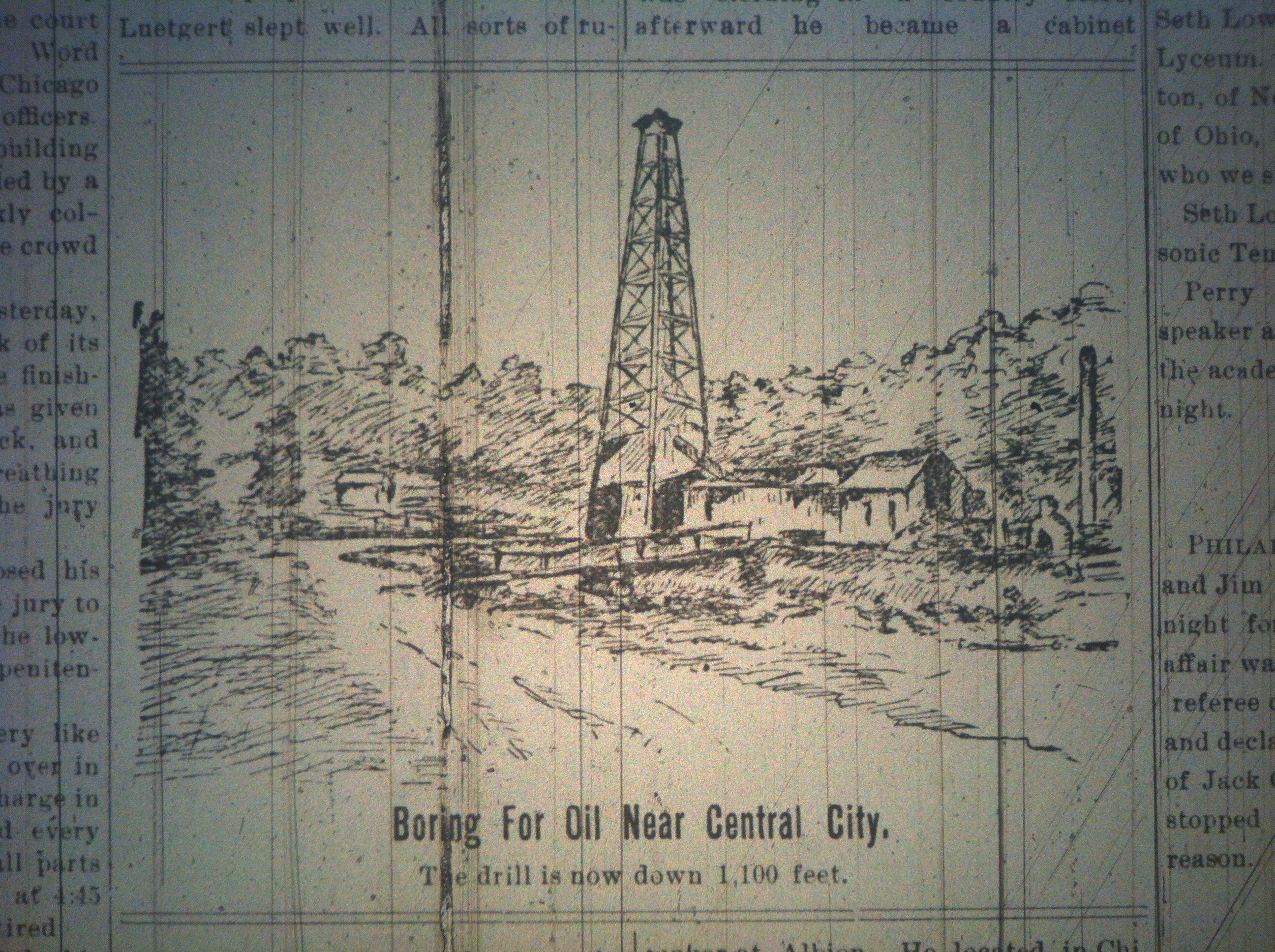
Huntington (WV) Advertiser, 19 October 1897
03 Sunday Mar 2019
Posted in Big Sandy Valley, Hatfield-McCoy Feud, Huntington, Matewan
Tags
Abner Vance, Alexander Varney, Ali Hatfield, Andrew Hatfield, Appalachia, B.H. Justice, Bettie Vance, Big Sandy River, Cabell County, Celia Hatfield, Ephraim Hatfield, Ferrell Evans, Frank Evans, genealogy, Guyandotte Valley, Hatfield-McCoy Feud, Henry Clay Ragland, history, Humphrey Trent, Jacob Hatfield, James Hatfield, James Justice, John Justice, John Toler, Joseph Hatfield, Logan, Logan Banner, Logan County, Logan County Banner, Logan Court House, M.A. Hatfield, Matewan, North Spring, Peter Cline, Phoebe Hatfield, sheriff, Thomas Hatfield, Thomas Smith, Valentine Hatfield, West Virginia, William E. Justice, Wyoming County
From the Logan Banner of Logan, WV, comes this bit of history for the Hatfield family, printed on May 11, 1937:
History Of Hatfield Clan Recorded In Banner Files
Ephraim Hatfield Was One of The Quietest Men In The County—Yet He Was Father Of Those Engaged In Famous Feud
Henry Clay Ragland, editor of The Logan Banner in 1896, was, among other things, a genealogist for Logan county.
He lived at a time when most of the children and grandchildren of Logan county’s first settlers were still alive and he had access to a wealth of first-hand information that has served as the basis for family histories in Logan county up to the present.
An account of the entrance of the Hatfield family into this section of the country is clipped verbatim from a Logan County Banner dated Wednesday, April 29, 1896.
“At what is still known as the Hatfield place on Horsepen, Valentine Hatfield, of Washington county, Va., settled at quite an early day. He was the father of nine sons and three daughters, and from them have sprung many of the Hatfields of the Guyandotte and Sandy Valleys.
“Valentine Hatfield married a Miss Weddington, and he was a half brother of Thomas Smith. His sons were Ali, who married a daughter of Ferrell Evans; Joe, who also married a daughter of Ferrell Evans; Ephraim, who married Bettie Vance; (This Ephraim was one of the quietest men in the county, and was for a long time a justice of the peace, yet he was the father and grandfather of the Hatfields who were engaged in the Hatfield-McCoy feud) Andrew, who married a daughter of Humphrey Trent, and whose descendants live in Wyoming county; Thomas, who married a daughter of Frank Evans; John, who married a daughter of Abner Vance; James, who married a daughter of John Toler; (Squire M.A. Hatfield and James Hatfield are the sons of this marriage) Jacob, who married a daughter of Peter Cline; and Valentine, who was never married.
“Of his three daughters, Phoebe married Alexander Varney; Celia married James Justice, who was at one time sheriff of Logan county, and who was the father of John Justice, a prominent merchant in Logan Court House (the name of the city at that time), B.H. Justice, a merchant and timber dealer of Cabell county, and William E. Justice, a merchant at North Spring and at one time a member of the West Virginia legislature.
“Joseph Hatfield, a brother of Valentine Hatfield, settled about the same time at Matewan.”
27 Wednesday Feb 2019
Posted in Coal, Huntington, Logan
Tags
Appalachia, Bank of Huntington, Bob Greever, Bud McDaniel, C.W. Jones, Cabell County, Frank James, Henlawson, Henry Lawson, history, Huntington, Island Creek, Jesse James, Logan, Logan County, Merrill Mines, Robert T. Oney, Tennessee, West Virginia
From the Logan Banner of Logan, WV, comes this bit of history about the James Gang’s robbery of a Huntington bank…and the fate of a safe:
Historic Safe In Offices Merrill Mines, Henlawson
Bank Safe Robbed by Jesse James’ Gang at Huntington in 1875 Now in Fire-proof Vault at Henlawson
Used As Storage For Old Files
The Merrill Mines at Henlawson have a safe in their payroll office which has a unique history.
The safe is being used by the company as a storage place for old records and is in a fire-proof vault.
But it was not always thus.
According to Bob Greever, payroll clerk, who became interested in the history of the safe and clipped a news story from a Huntington newspaper to support his story, the depository was once in the old Bank of Huntington on Third avenue and Twelfth street and was robbed by members of Jesse James gang, who made their getaway with $14,500 on Twelfth street to Fourth avenue, thence to Tenth street and out Tenth street to the hills, closely pursued by a hastily formed posse.
Old-timers in Logan still remember the posse which followed the gang to Logan and lost its trail at the forks of Island Creek long enough for the gang to make their escape to Tennessee.
Reports came back to Logan that the posse overtook the band in Tennessee, killed one of the gang, Bud McDaniel, and arrested another by the name of Webb or Keen. The man the police arrested was brought back to West Virginia and was sentenced to the penitentiary for 20 years. Most of the money was recovered.
An excerpt from the news article describing the bank robbery reads:
“On Monday, September 6, 1875, between the hours of 1 and 2 o’clock a group of men later discovered to have been members of the dreaded James gang, descended on the Bank of Huntington and, at the point of a pistol, forced Robert T. Oney, cashier, to open the bank’s safe in order that they might rifle the contents.
“They complimented the cashier on his courage and insisted on restoring to him an amount of money shown to be his by a credit slip on the counter.
“Reaching the outside of the bank the four men sprung into their saddles, brandished their pistols in the air and galloped away, yelling like Comanche.”
“It was definitely learned that Jesse James was not among them, but there was uncertainty as to whether or not Frank James was in the party. Colder Young was present and may have been leader of the detachment.”
C.W. Jones, general manager of the Merrill Mines, said that the old safe, which weighs every bit of two tons, was first owned by Henry Lawson, lumber operator at Henlawson.
Lawson brought the safe from Huntington by pushboat and put it in his lumber offices on the site of the Merrill Mine offices.
When the Merrill Mines opened their workings, the safe was left near its original site and a fireproof vault was built around it.
The safe is showing the ravages of nearly a century of service. The combination is broken, it squeaks on its hinges, and some of the cement which is encased between steel plates on the safe doors is beginning to crack.
However, the safe is in its final resting place, the door of the vault is too small to get the safe through.
Logan (WV) Banner, 13 May 1937
23 Saturday Feb 2019
Posted in Barboursville, Cemeteries, Lincoln County Feud
Tags
Anthony Shelton, Appalachia, Barboursville, Barboursville Cemetery, Brandon Kirk, Cabell County, genealogy, history, Hollena Brumfield, Lincoln County Feud, Margaret Shelton, photos, Phyllis Kirk, Randolph Moss, West Virginia, William S. Kelley

Anthony and Margaret Shelton headstone, Barboursville Cemetery, Barboursville, Cabell County, WV. 14 February 2015

Dr. V. Randolph Moss grave, Barboursville Cemetery, Barboursville, Cabell County, WV. Dr. Moss was an attending physician to Hollena Brumfield after her gunshot wound to the face in September of 1889. Photo by Mom. 5 May 2017

Dr. V. Randolph Moss grave, Barboursville Cemetery, Barboursville, Cabell County, WV. Photo by Mom. 5 May 2017

Dr. V. Randolph Moss grave, Barboursville Cemetery, Barboursville, Cabell County, WV. 5 May 2017

William S. Kelley grave, Barboursville Cemetery, Barboursville, Cabell County, WV. 15 February 2015
07 Thursday Feb 2019
Posted in Atenville, Guyandotte River
Tags
Andrew Johnson, Appalachia, Atenville, Cabell County, county clerk, genealogy, Guyandotte River, Guyandotte Valley Navigation Company, history, John Chapman, justice of the peace, Lincoln County, Lock No. 5, Logan County, Spencer A. Mullins, Virginia, W.I. Campbell, West Virginia, William Straton, Willow Bar

Deed Book C, page ___, Logan County Clerk’s Office, Logan, WV. Spencer A. Mullins lived at present-day Atenville in Lincoln County, WV.

Deed Book C, page ___, Logan County Clerk’s Office, Logan, WV.
29 Tuesday Jan 2019
Tags
Appalachia, Blair Mountain, Cabell County, coal, crime, deputy sheriff, Edgar Combs, H.W. Houston, history, Huntington, lawyer, Logan County, Mine Wars, Thomas West, United Mine Workers of America, West Virginia

Posted by Brandon Ray Kirk | Filed under Battle of Blair Mountain, Coal, Huntington, Logan
10 Monday Dec 2018
Posted in Huntington
Tags
Appalachia, Cabell County, education, history, Huntington, Marshall College, Marshall University, West Virginia
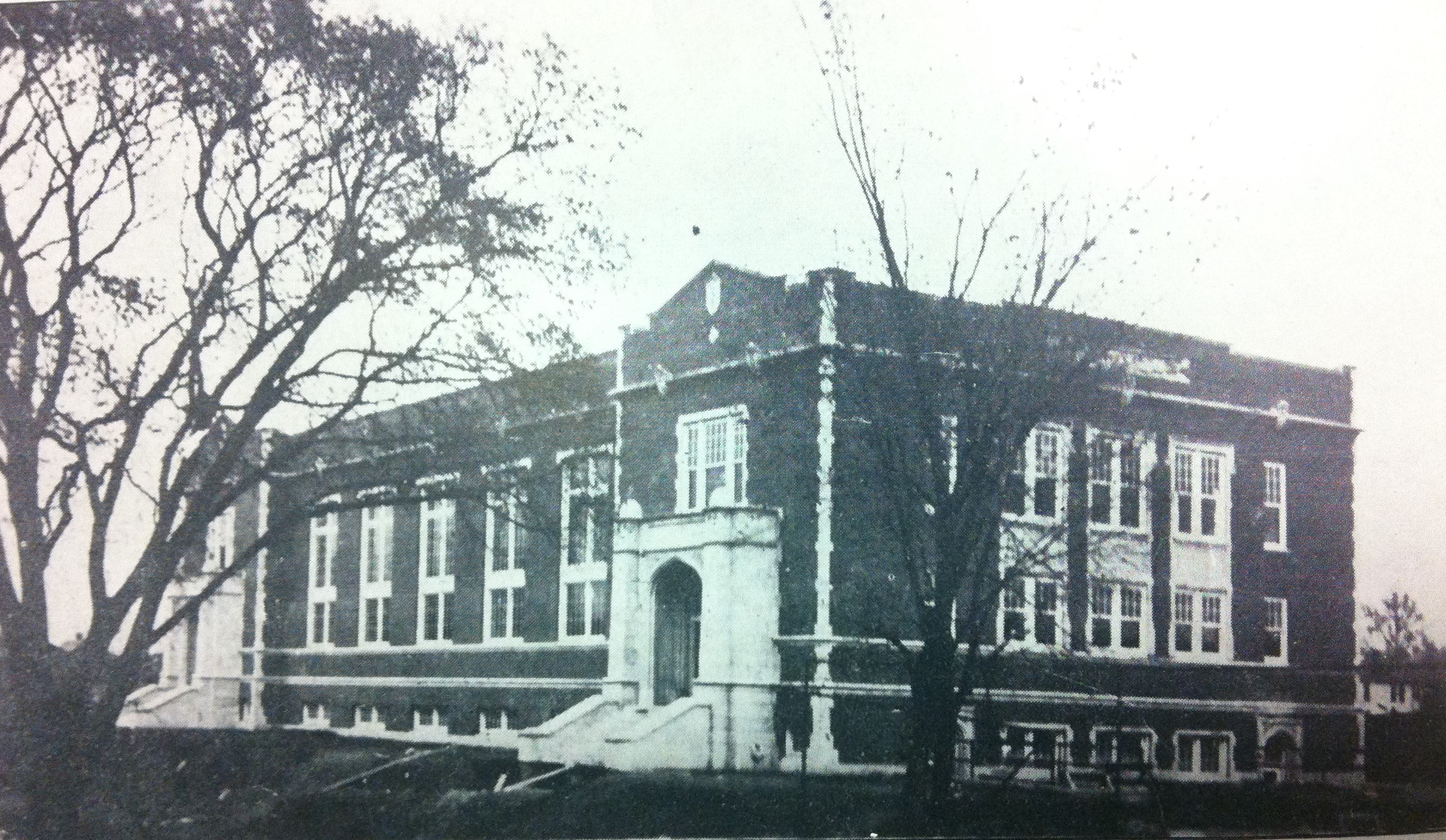
New Gymnasium at Marshall College (University), c.1931. Photo credit unknown.
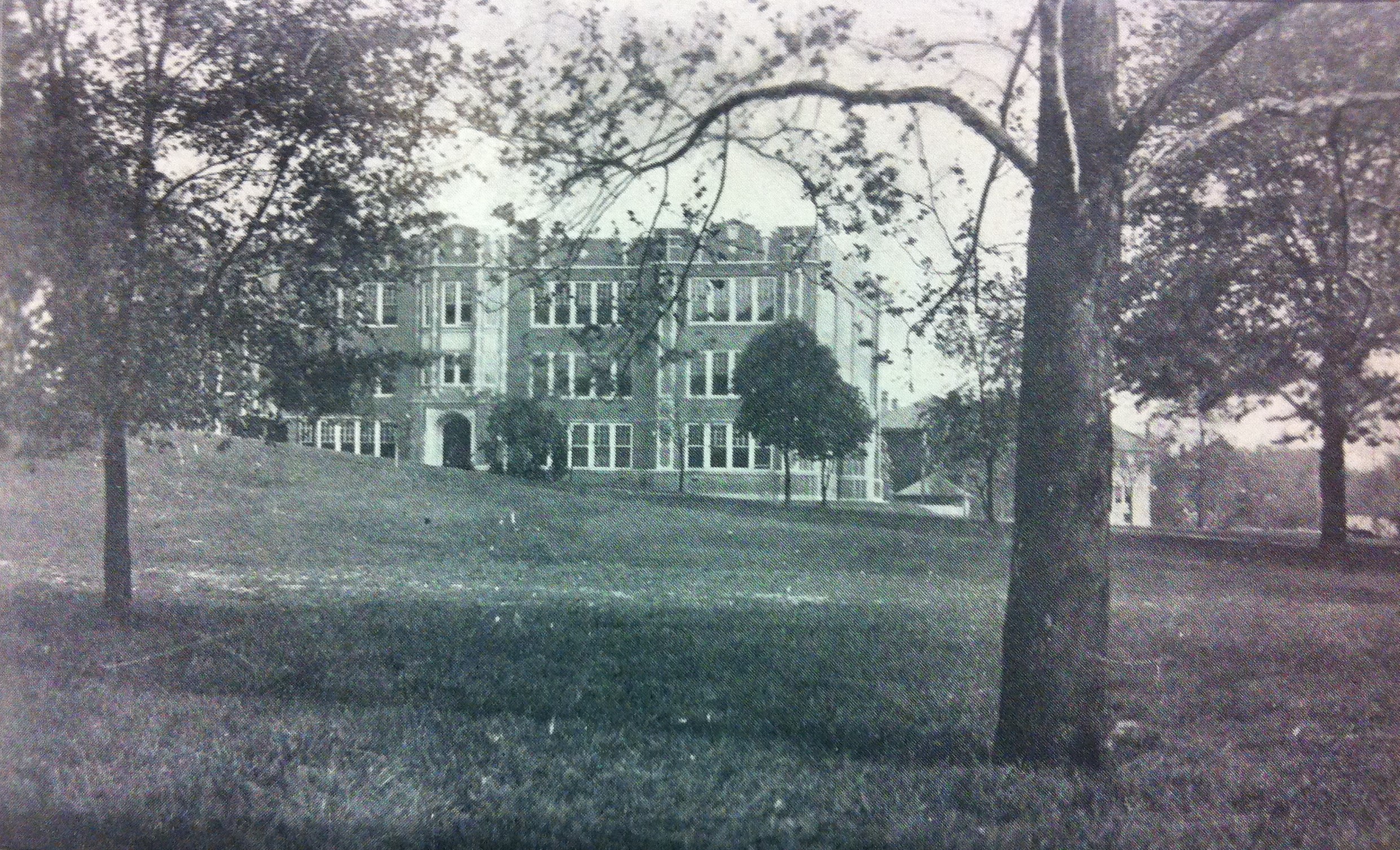
Science Hall at Marshall College (University), c.1931. Photo credit unknown.
30 Friday Nov 2018
Posted in Barboursville

C&O Depot at Barboursville, Cabell County, WV, c.1900. Photo credit unknown.
27 Thursday Sep 2018
Posted in Big Sandy Valley, Guyandotte River, Hamlin, Huntington, Logan
Tags
Appalachia, Big Sandy River, Cabell County, Guyan Valley Bank, Guyandotte River, H.M. Booth, Hamlin, history, Huntington, James Barbour, Logan, Logan County, Mary Morris, Pennsylvania, Peter Dingess, Philadelphia, Richmond, Robert Brooke, Robert Morris, Robert Morris Grant, Russell County, Tug Fork, Virginia, West Virginia, William Crammond, Wythe County

320,000 Acres of Land Hereabouts Sold for Five Shillings According to Old Records Found in Old Vault
H.M. Booth, in cleaning out the vault of the old Guyan Valley Bank preparatory to moving his offices from Logan to Hamlin, uncovered a number of old documents that dated back to the time when “horse and buggy days” were a fact and not merely a political equation.
Many of these old papers, including deeds, receipts, account books and other papers of a semi-personal nature, are originals, while others are notarized copies of originals. They make interesting reading in these days of speed, radios, high prices and typewriters.
The old documents were all hand written, in clear, flowing script, the capital letters often decorated with fancy scrolls and shaded lines. Many of them were written with a quill pen.
Of particular interest is one deed, 12 ½ by 15 ½ inches, written on sheepskin. The ink has not faded, and although the skin is old and discolored, the deed is easily read. It was made in the days when Logan county was unheard of, and all this vicinity was part of Cabell county, Virginia. It seems strange, now, to think of a governor in Richmond, Virginia, parceling out land in Logan county.
The deed reads, in part: “James Barbour, Esq., Governor of the Commonwealth of Virginia: To all whom these presents shall come, Greeting: Know ye, that by virtue of a Land office Treasury warrant, No. 6126, upon the 9th day of Sept. 1780, there is granted by the said Commonwealth unto Peter Dingess, a certain Tract or Parcel of Land, containing one hundred and twelve acres, by survey, bearing date the 31st day of March, 1813, situate in the County of Cabell, joining to his own deeded land, and bounded as followeth, to-wit:”
Then follows a detailed description of the boundaries of the land, in which prominent trees and landmarks play a common part. After the description of the land, which was written in pen and ink, came the regular printed form as follows:
“In witness whereof, the said James Barbour, Esq., Governor of the Commonwealth of Virginia, hath hereunto set his Hand, and caused the Seal of the said Commonwealth to be affixed at Richmond, on the twenty-fifth day of October, in the Year of our Lord, One thousand eight hundred and fourteen, and of the Commonwealth the thirty-ninth.”
Down in the lower right hand corner of the paper can be plainly seen the signature of James Barbour, governor of Virginia at that time.
A notarized copy of another land deed was signed by Robert Brooke, Governor of Virginia in 1795, and was dated March 23 of that year. It deeded through the Land Office treasury warrants numbered from 472 to 530, inclusive, a parcel of land containing 480,000 acres, “by a survey made the 10th of September, 1794.” The land was described as being in the county of Wythe, on the Tug and Guyandotte rivers. This grant of land was known as the “Robert Morris Grant.”
Evidently, from the records, Robert Morris became involved in difficulties, for after a considerable amount of legal red tape, all duly recorded, there is a document showing where “Robert Morris and Mary, his wife, of Philadelphia, sell to William Crammond of Philadelphia as well for and in consideration of the sum of five shillings lawful money of Pennsylvania to them well and truly paid do grant bargain and sell, alien and enteoff release and confirm to the purchased 320,000 acres of land in the counties of Wythe and Russell, lying on both sides of Sandy Creek.”
Among the records of accounts paid found by Mr. Booth were numerous fees paid out for “boating freight from Huntington.” Six dollars and fifty cents is entered “for a suit of clothes,” and another entry shows where four dollars and a half were paid for two pair of shoes.
Source: Logan (WV) Banner, 19 August 1936
Writings from my travels and experiences. High and fine literature is wine, and mine is only water; but everybody likes water. Mark Twain
This site is dedicated to the collection, preservation, and promotion of history and culture in Appalachia.
Genealogy and History in North Carolina and Beyond
A site about one of the most beautiful, interesting, tallented, outrageous and colorful personalities of the 20th Century


 Brandon Ray Kirk