Tags
Appalachia, Hatfield-McCoy Feud, history, J. Lee Ferguson, Kentucky, Pike County, prosecuting attorney
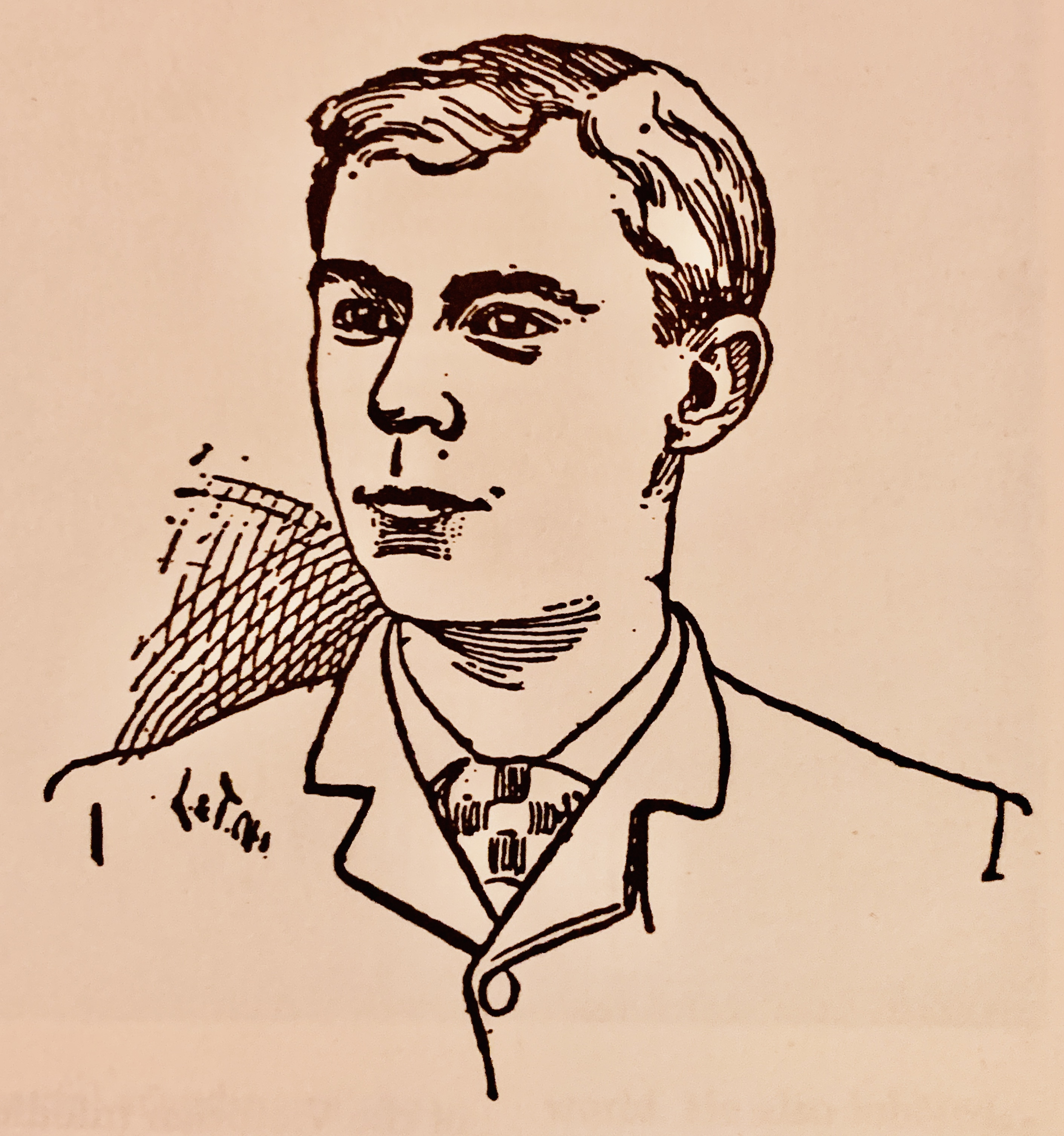

28 Thursday Apr 2022
Posted in Hatfield-McCoy Feud, Pikeville
Tags
Appalachia, Hatfield-McCoy Feud, history, J. Lee Ferguson, Kentucky, Pike County, prosecuting attorney
22 Friday Apr 2022
Posted in Hatfield-McCoy Feud
Tags
America Goff, Appalachia, California, Collins Cemetery, Frozen Creek, Hatfield-McCoy Feud, history, Kansas, Kentucky, Leonard Roberts, Missouri, Orville McCoy, Pikeville College, Raccoon Creek, Rebecca Bailey, Sam McCoy, St. Louis
On July 24, 1990, scholar Rebecca Bailey interviewed Orville McCoy (b.1922) of Raccoon Creek, Kentucky. What follows here is an excerpt of Mr. McCoy’s memories of his grandfather “Squirrel Huntin'” Sam McCoy and his book.
RB: Okay. What kind of stories did you hear about the feud when you were growing up?
OM: Well, about such materials you’ll find in my book. I recorded just about everything I knew about it.
RB: Do you know how your grandfather came to write his manuscript?
OM: Yes, he wrote in the year, I believe it was, 1931 while he was in St. Louis, Missouri. We all also got that information recorded in the book.
RB: How come him to be in St. Louis? Do you know?
OM: Well, he went west in the year about nineteen and ten and I think he first went to California and then back to Kansas and…and then to St. Louis.
RB: Did he take his wife and children with him?
OM: Yes. He took his whole family except my dad. He was the only one stayed here at Racoon.
RB: Was he the oldest? Is that why he stayed?
OM: No, he wasn’t the oldest. Yeah. I guess he was the oldest. He was the only child by him and his first wife, America Goff.
RB: Did she die or did they divorce?
OM: Well, yeah. She died young.
RB: How old was your father when his father left to go out west?
OM: That would be pretty hard for me to figure, I don’t bet. You could go to my book and deduct and subtract a little there and come up with an answer.
RB: He was probably a young man, though, because he had twelve children by the time you were born so he was probably a young man and married.
OM: Yeah. I’d say he should have been around thirty, something like that.
RB: Did your father remember any of the events of the feud or hear about them?
OM: No, he couldn’t remember any of the incidents, I don’t think except what was told to him.
RB: Alright. Do you have much contact with any of your McCoy cousins?
OM: Oh, yeah. I correspond with them. I got some in Kansas. Joshua Tree, California, and Tacoma, Washington, Remington, Washington, Pennsylvania.
RB: We were talking off tape. You said that a lot of McCoys didn’t stay in this area.
OM: No, they was quite a few of them went out west.
RB: Did they go looking for work or…?
OM: I guess they was seeking adventure.
RB: How did you come to have the manuscript that “Squirrel Huntin'” Sam wrote?
OM: Well, I obtained it from Sam when he was out here to pay us a visit in 1937.
RB: What kind of person was he?
OM: Oh, he was quite a tall man. About six foot or better.
RB: What do you remember about him?
OM: Well, when he visited us, he came out here to visit us about three times in the thirties. First come in ’36. ’38. Maybe ’39. He died in ’40. They shipped him back here.
RB: Do you know where he’s buried?
OM: Yeah.
RB: Where’s he buried?
OM: He’s buried in Collins Cemetery in the head of Frozen Creek.
RB: Okay. Were you always interested as a child in in your family history?
OM: Well, not in the early years. I always held on to that book though and preserved it. I guess I was around fifty-eight years when I let them publish it.
RB: Would you tell me on tape again who published it for you?
OM: Dr. Leonard Roberts of Pikeville College.
RB: Why was he interested in it? Do you know?
OM: Dr. Roberts?
RB: Un-huh.
OM: Well, he was working for the college and that’s how he… Well, it benefited the college, you know, doing Appalachian study centers, they called it. He published books and so on for them.
21 Thursday Apr 2022
Tags
Appalachia, Hatfield-McCoy Feud, history, justice of the peace, Kentucky, Logan County, Pike County, Sam McCoy, Tolbert Hatfield, Wall Hatfield, West Virginia
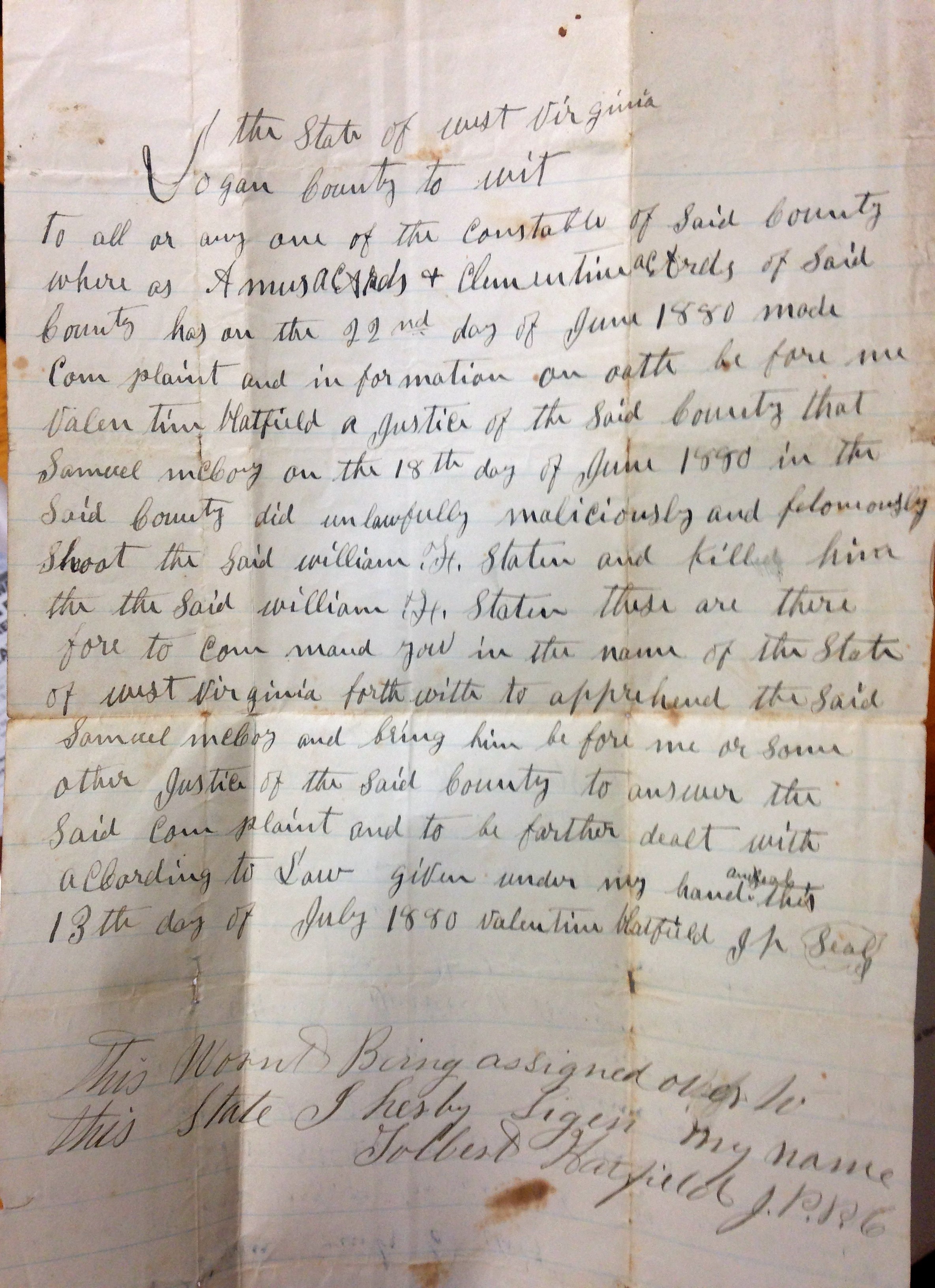
Posted by Brandon Ray Kirk | Filed under Hatfield-McCoy Feud
21 Thursday Apr 2022
Posted in Hatfield-McCoy Feud, Matewan
Tags
Allen Hatfield, Anse Ferrell, Beech Creek, Cap Hatfield, Devil Anse Hatfield, Double Camp Hollow, Elias Hatfield, Ellison Hatfield, Estil Hatfield, Hatfield-McCoy Feud, Island Creek, John Hennen, Kentucky, Mate Creek, Matewan, Mingo County, North Matewan, Pigeon Creek, Pike County, Rutherford Hollow, Tom Chafin, Truman Chafin, Vicy Hatfield, Wall Hatfield, Warm Hollow, West Virginia, Williamson, Willis Hatfield
On June 21, 1989, scholar John Hennen interviewed Tom Chafin (1911-1997) of Williamson, West Virginia. What follows here is an excerpt of Mr. Chafin’s story about the death of his grandfather Ellison Hatfield in 1882 and other general memories of the Hatfield family.
JH: Okay, let’s go ahead and just follow that line. Tell me about Ellison Hatfield. And of course Ellison Hatfield was one of the participants in the early days of the so called Hatfield and McCoy feud.
TC: He’s the one that the McCoys killed. Uh, he lived up Mate Creek at the mouth of a hollow they call Double Camp Holler. He came down to Matewan here and got with some of his friends and they had a saloon here. It was called a saloon then, not the liquor store like we call it.
JH: Do you have any idea where that saloon was?
TC: Uh…the saloon was close to where the liquor store is now.
JH: Okay.
TC: I’m…I’m sure it was in the same building. That’s the Buskirk building. And he got with some of his friends and they got to drinking and was a having an election across the river in Pike County, Kentucky. Just across the river here. And he said to them said, some of his friends said, “Let’s go over and see how the elections goin’,” and when they got over there, they got into it with them and he was cut all to pieces with knives. He didn’t die in Kentucky. They loaded him up and hauled him back in a wagon. They hauled him back through the river up here at the upper end of Matewan and took him to Warm Holler. Now this is Warm Holler straight across from the bank on the right goin’ down there. You go across the railroad tracks. Uncle Anse Ferrell lived there. That was Ellison’s uncle. Uncle Anse Ferrell lived there in a big old log house. And they took Ellison there to his house that evening and he stayed there all that evening, all that night, and all day the next day and died the next evening. Just about dark. But in the mean time now, the Hatfields captured the three McCoy boys that they said did the killin’ of Ellison. Cuttin’ him up with knives. They captured them and took them up to a place they call North Matewan just out of Matewan here. They had and old school house there at the mouth of Rutherford Hollow. And they had an old school house there at the mouth of Rutherford Holler and that’s where they kept the three McCoy boys. All this evening, all night tonight, all day tomorrow, until tomorrow evening. And they brought him back down here, took him across the river and then a little drain, I call it, instead of a holler. It’s not a holler, it’s just a drain where water runs out where you go up to the radio station. That’s where they tied them to three papaw bushes. Now, we don’t have any papaw bushes around like we used to. We used to have whole orchards of them but they all disappeared. Why, they was papaws everywhere You could pick up a bushel of papaws anywhere when I was a boy. But you don’t even see a papaw tree any more. They said they tied them to three papaw bushes and killed all three of them.
JH: And this was after Ellison died?
TC: They waited until Ellison died. Say he died this evening and they went up there and got them and took them over there I believe the next morning.
JH: Who were some of the Hatfields involved in this?
TC: Well, to be exact, I’d say Cap… Cap was the head man. He was Devil Anse’s oldest son.
JH: I’d like you to tell me a little bit more about Cap Hatfield and well, do you have a personal memory of Devil Anse? I know you have been to his house when you were a boy.
TC: No.
JH: You can’t remember anything directly about him?
TC: I’ve been to his house. I know where his house is. I knew what kind of house it was. It was a log house and it had a window in that end of it and a window in this end of it and it was across the creek. I could show you right where it is on Island Creek over there and I can remember goin’ over there with my grandfather Mose Chafin. Now, he was a brother to Devil Anse’s wife, Aunt Vicy. We’d go over and see Aunt Vicy after Uncle Anse had died. I believe he died in 1921 and I was ten years old when he died. And when I would go over there with him, probably I was twelve or thirteen or something like that, after Uncle Anse had died. And we’d ride a horse. I’d ride on the hind and my grandfather Mose Chafin. And I could tell you exactly how to go. We’d go up Mate Creek across the hill into Beech Creek and from Beech Creek into Pigeon Creek and Pigeon Creek into Island Creek.
JH: And Vicy was still living at that time?
TC: Yeah.
JH: So you knew her then?
TC: Yeah. She was a pretty big fat woman. She wasn’t too big and fat. She was about, say, hundred and sixty, something like that, I’m guessin’. I’m gonna guess it. About a hundred and sixty pound. Anyhow, she was a big fat woman.
JH: Now, Cap lived on up into…to be an old man?
TC: Yeah. Willis is the last man that…last one to die.
JH: He was the son of Devil Anse also?
TC: Yeah. I was with him at a birthday party for Allen Hatfield on Beech Creek. That was his cousin. Allen was Elias’ boy* and he was Ellison’s boy**. Willis was. That made them first cousins and Willis was the only Hatfield left on Island Creek so we got him to come to that… Allen’s boy Estil Hatfield got him to come over to the birthday party, and I believe Truman went with me. He died in seventy-eight. I can tell you when he died.
JH: Willis?
TC: Willis died. Last child that Devil Anse had died in seventy-eight. 1978.
*Should read as “Wall’s boy”
**Should read as “Anse’s boy”
21 Thursday Apr 2022
Posted in Logan
Tags
Atlanta, Babe Ruth, Georgia, ginger ale, history, Lee Hagan, Logan, Logan Beverage Company, Red Rock Cola, Red Rock Company, West Virginia

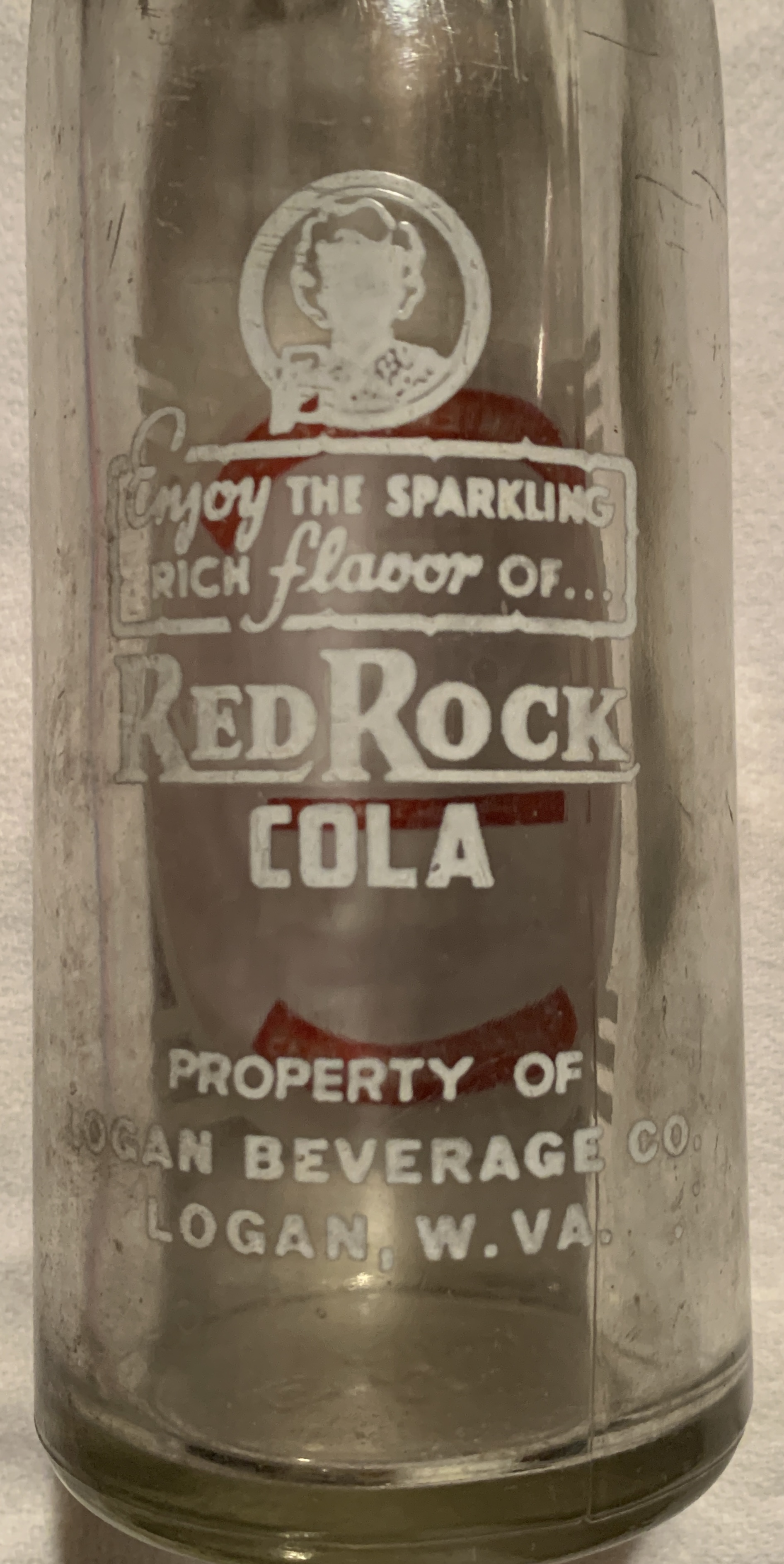
21 Thursday Apr 2022
Posted in Hatfield-McCoy Feud, Matewan
Tags
A.W. Ferrell, Asa McCoy, David Mounts, Ephraim Hatfield, genealogy, Hatfield-McCoy Feud, history, John Ferrell, Joseph Simpkins, justice of the peace, Logan County, Magnolia District, Michael A. Ferrell, Mingo County, Samuel F. Varney, Wall Hatfield, West Virginia, William Tiller
The following list of justices of the peace for Magnolia District in present-day Mingo County, West Virginia, is based on historical documents available at the Logan County Courthouse in Logan. Several things to consider: (1) The list will be expanded over time based on new research; (2) the targeted area for this research is the Hatfield-McCoy feud region; (3) some justices included in this list may have in fact been located outside of the feud region; (4) dates for justices are primarily derived from deeds and county court/commissioner records; and (5) Mingo County was formed from Logan County in 1895.
John Ferrell (1838)
April 26, 1838
David Mounts (1838-1840)
April 26, 1838
January 31, 1840
March 23, 1840
August 22, 1840
Samuel F. Varney (1861)
March 14, 1861
Ephraim Hatfield (1861)
March 14, 1861
William Tiller (1867)
October 1867
Valentine “Wall” Hatfield (1870-1885)
February 11, 1873
April 8-9, 1873
August 12-16, 1873
February 10-12, 1874
October 13-14, 1874
December 8-12, 1874
December 29, 1874
August 10, 1875
October 12-16, 1875
August 8-9, 1876
elected October 10, 1876
July 1, 1878
October 1879
July 1880
December 10, 1880
December 14, 1880
appointed June 13, 1881
January 28, 1882
July 22, 1885
Asa McCoy (1873-1876)
February 11-12, 1873
August 12-16, 1873
December 9-12, 1873
June 16, 1874
October 22, 1874
December 9, 1874
February 11, 1875
June 9, 1875
June 13-17, 1876
August 8-9, 1876
Ephraim Hatfield (1876-1878)
elected October 10, 1876
February 11, 1878
A.W. Ferrell (1880)
April 1880
referenced on February 8, 1881 as a former justice
Joseph Simpkins (1882)
appointed to fill unexpired term, October 17, 1882
Michael A. Ferrell (1888)
elected November 6, 1888
20 Wednesday Apr 2022
Posted in Logan
Tags
Appalachia, banks, First National Bank, George T. Swain, History of the City of Logan, Logan, West Virginia
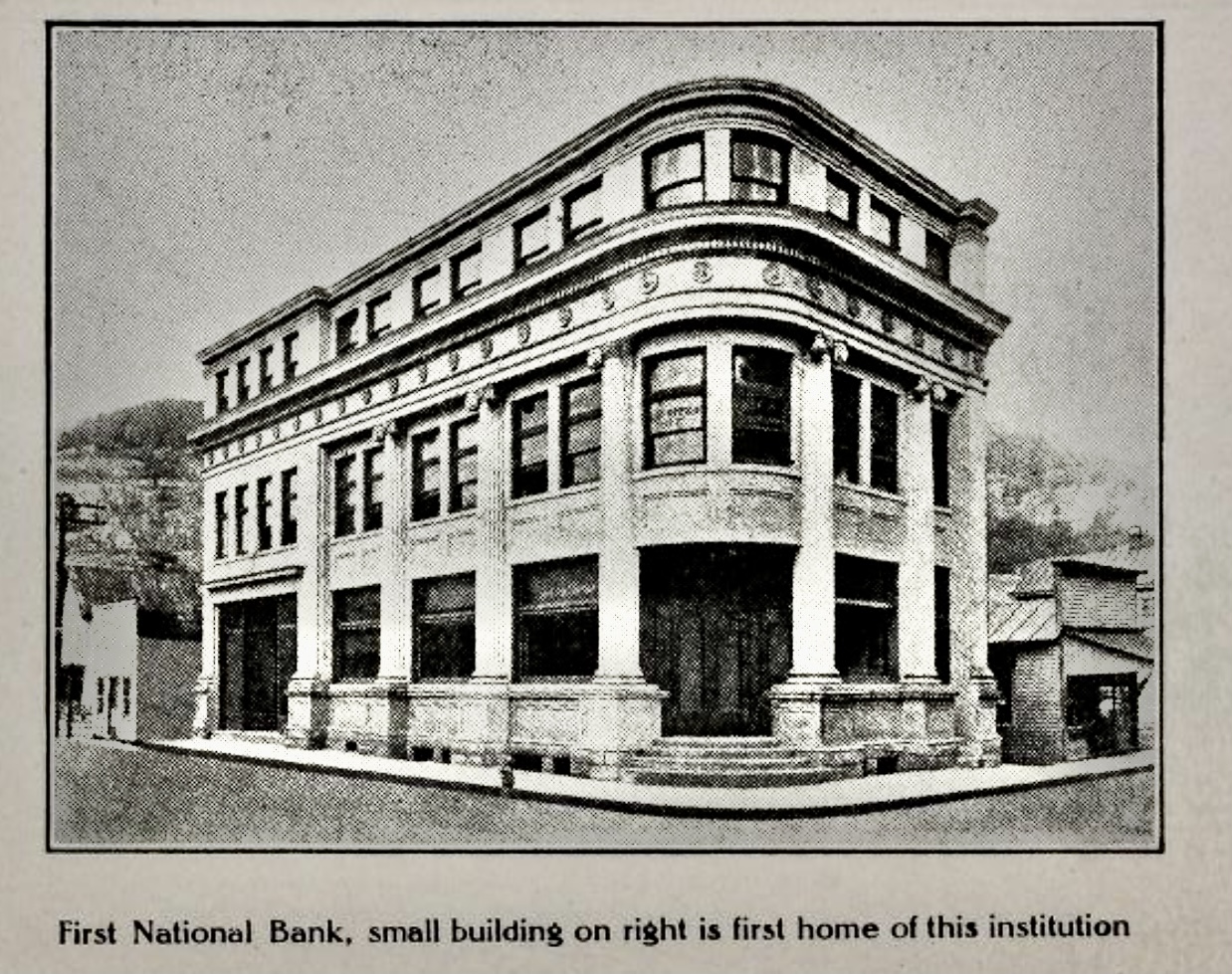
20 Wednesday Apr 2022
Tags
37th Ohio Volunteer Infantry Regiment, Appalachia, civil war, Confederate Army, Edward Siber, history, Isaac Morgan, James R. Perry, John DeJarnett, L.D. Chambers, Logan, Logan County, Thomas Buchanan, Union Army, West Virginia
From Law Orders Book A 1873-1878 in the Logan County (West Virginia) Circuit Clerk’s office comes this entry regarding the destruction of the Logan County Courthouse in 1862:
On the 14th day of June 1878, came the following persons viz: John Dejarnett, Thomas Buchanan (except as to Investigation of the Regiment), Dr. Hinchman, who being duly sworn in open Court depose and say: That they know the fact that the Court House of Logan County West Virginia after being temporarily occupied by the 34th Ohio Regt of Federal troops commanded by Col. Seiber, was set fire to and burned up, in the month of Nov. 1862. The said Court House had not been occupied at any time by the Confederate troops, but was used alone for the administration of Justice and for the custody and preservation of the Records of the Several Courts of the said County of Logan. The building was Constructed of bricks and wood, and was a substantial, durable and convenient Exterior, and was worth at the least at the time of its destruction not less than four thousand dollars and belonged exclusively to the said County of Logan, which County has ever since been within the jurisdiction of West Virginia. The destruction of said building was a wanton and inexcusable act of the said Regt. and in no manner contributed to the prosecution of the war in behalf of the Federal Government.
At a County Court continued and held for the County of Logan State of West Virginia on the 14th day of June 1878. Present Isaac Morgan, President, and James R. Perry and L.D. Chambers, Justices, the Court with the view of obtaining Compensation for the destruction of said Court House from the Government of the United States, caused the gentlemen above named to be examined on Oath in open Court, and ordered the substance of the facts above stated by them to be spread upon the Records of this Court, and the Court further caused to be certified that the above named citizens of said County of Logan and that their Statements are entitled to full faith and credit and further that they are in no wise interested in this application except in common with other citizens of the County and Tax payers thereof.
Source: Law Orders Book A 1873-1878, p. 713-714. Note: The entry contains a few errors, such as the date of the courthouse’s destruction, the spelling of Col. Edward Siber’s name, and the correct name of the unit (37th Ohio Volunteer Infantry Regiment).
17 Thursday Feb 2022
Tags
23 Tuesday Nov 2021
Posted in Big Sandy Valley, Hatfield-McCoy Feud
Tags
Appalachia, Bob Hatfield, Cap Hatfield, Charles Gillespie, Christmas, Court of Appeals, crime, Daniel Whitt, Devil Anse Hatfield, Elias Hatfield, Elliot Hatfield, feuds, Frankfort, Hatfield-McCoy Feud, Henry Mitchell, history, Jim McCoy, Jim Vance, Johnse Hatfield, Kentucky, Pike County, Pocahontas, Randolph McCoy, Tom Chambers, Tom Mitchell, true crime
Daniel Whitt’s testimony in the Johnse Hatfield murder trial provides one version of the Hatfield raid upon Randolph McCoy’s home on January 1, 1888:
Q. “Do you know Randolph McCoy?”
A. “Yes sir.”
Q. “Do you know Cap Hatfield?”
A. “Yes sir.”
Q. “Do you know Robert Hatfield, Ellison Mounts, Elliot Hatfield, Charles Gillespie, Thomas Mitchell, and Anderson Hatfield?”
A. “Yes sir.”
Q. “Do you remember of the old man McCoy’s house being burned?”
A. “Yes sir, I heard of it.”
Q. “Where were you a short time before that occurred?”
A. “Three days before Christmas I was in the neighborhood of the Hatfield’s.”
Q. “Who was with you?”
A. “Ance Hatfield, Jim Vance, Johnson Hatfield, Cap Hatfield, Charles Gillespie, and Tom Mitchell, I believe about all of the bunch.”
Q. “What were you doing together and how long had you been together?”
A. “About three days and nights.”
Q. “Were all of you armed?”
A. “Yes sir.”
Q. “What were you doing armed and together?”
A. “Just traveling in the woods most of the time.”
Q. “What did you sleep on?”
A. “We carried our quilts with us.”
Q. “Who was your captain?”
A. “Jim Vance.”
Q. “What was the purpose of your getting together?”
A. “They claimed the purpose was to get out of the way of the Kentucky authorities.”
Q. “What else did they claim?”
A. “When I left them we came to Henry Mitchell’s to get dinner. They wouldn’t let me hear what they had to talk about. Cap asked me if I was going to Kentucky with them. Said they were going to Kentucky to kill Randolph and Jim McCoy and settle the racket. He asked me if I was going with them and I said that I was not. He said that I would go or I would go to hell. I said that I would go to hell. Elias came and took me off. We slept in a shuck pen. When he got to sleep I ran away and went to Pocahontas and was there when this occurred.”
Q. “Was Johnson present when Cap was talking?”
A. “He was in the yard close enough to hear, and he came up to me when Cap was talking and took Cap out and had a talk with him.”
Source: Bill of exceptions at the office of the Clerk of the Court of Appeals in Kentucky, Frankfort, KY.
23 Tuesday Nov 2021
Tags
Appalachia, architecture, history, Joe Rimkus, Logan, Logan County, radio station, West Virginia, WVOW
Posted by Brandon Ray Kirk | Filed under Logan
31 Sunday Oct 2021
Posted in Big Harts Creek, Queens Ridge
Tags
Appalachia, Belle Dora Adams, Big Harts Creek, Carl Mullins, Cecil McCloud, Charley Adams, Garnet Martin, Garnet Mullins, genealogy, history, Hoover Fork, Howard Adams, Ireland Mullins, Lincoln County, Logan County, Lucy McCloud, New Orleans, Paralee Browning, Queens Ridge, Troy Town, West Virginia
An unnamed correspondent from Queens Ridge serving Upper Hart in Logan County, West Virginia, offered the following items, which the Logan Banner printed on May 13, 1927:
Mrs. Paralee Browning and Garnet Mullins of Lower Hoover were the evening guests of Cecil McCloud Sunday.
Ireland and Carl Mullins went up Hoover late Sunday enroute to Troy Town.
Mrs. Belle Dora Adams is going to have a son-in-law some one said. Gee, the girls will have to quiet fliring with Charley.
Lucy McCloud was visiting her aunt Mrs. Garnet Martin here Saturday.
Howard Adams made a business trip to New Orleans. Many tears were shed on account of his long absence.
30 Saturday Oct 2021
Posted in Logan
30 Saturday Oct 2021
Posted in Big Harts Creek, Logan, Twelve Pole Creek, Whirlwind
Tags
Bernie Adams, Big Harts Creek, Bulwark, Bulwark School, Daniel McCloud, farming, genealogy, history, Logan, Logan Banner, Logan County, Lora Martin, Lucy McCloud, singing school, Twelve Pole Creek, West Virginia, Whirlwind, Wilburn Mullins
An unnamed correspondent from Whirlwind on Big Harts Creek in Logan County, West Virginia, offered the following items, which the Logan Banner printed on May 10, 1927:
Mrs. Alla Mullins was the guest of Daniel McCloud Monday.
Daniel McCloud made a business trip to Twelve Pole Monday.
All the farmers are getting very busy in this vicinity.
Wilburn Mullins was calling on friends at Daniel McCloud’s Sunday.
Lucy McCloud visited her aunt Lora Martin Sunday.
Bernie Adams has just returned from a business trip to Logan.
Daniel McCloud is teaching a singing school at the Bulwark school house. All report a nice time.
Daily Acts: Florence and her straw hat; Lucy and her pink dress; Lenville carrying milk; Roy making whistles.
30 Saturday Oct 2021
Tags
Appalachia, Aracoma, Highland Avenue, history, Kanada Street, Lee Street, Logan, Logan County, Oak Hill Addition, Pine Street, West Virginia
Posted by Brandon Ray Kirk | Filed under Logan
30 Saturday Oct 2021
Posted in Big Sandy Valley, Hatfield-McCoy Feud, Logan, Matewan, Women's History
Tags
Appalachia, attorney, attorney general, Big Sandy River, Bill Smith, Cap Hatfield, Catlettsburg, Devil Anse Hatfield, feuds, genealogy, Georgia, Hatfield-McCoy Feud, history, Howard B. Lee, Huntington, Jim Comstock, Joe Glenn, Kentucky, Logan, Logan County, logging, Mate Creek, Matewan, Mingo County, Nancy E. Hatfield, Ohio, Ohio River, Portsmouth, Tennessee, timbering, Tug Fork, University Law School, Wayne County, West Virginia, Wyoming County
Howard B. Lee, former Attorney General of West Virginia, provided this account of Nancy Hatfield (widow of Cap) in the early 1970s:
“Mrs. Hatfield, we have talked much about an era that is gone. Feuds are ended, railroads and paved highways have come, the huge coal industry has developed, churches and schools are everywhere, and people are educated. Now, I would like to know something about you.”
This is the brief life-story of the remarkable and unforgettable Nancy Elizabeth Hatfield, as she related it to me.
She was Nancy Elizabeth Smith, called “Nan” by her family and friends, born in Wayne County, West Virginia, September 10, 1866. (She died August 24, 1942). In her early years, she lived “close enough to the Ohio River,” she said, “to see the big boats that brought people and goods up from below.” She attended a country school three months out of the year, and acquired the rudiments of a common school education, plus a yearning for wider knowledge.
While she was still a young girl her parents moved by push-boat up the Big Sandy and Tug rivers into what is now Mingo County, then Logan County. They settled in the wilderness on Mate Creek, near the site of the present town of Matewan.
“Why they made that move,” said Nancy Elizabeth, “I have never understood.”
In her new environment, in the summer of 1880, when she was 14 years old, Nancy Elizabeth married Joseph M. Glenn, an enterprising young adventurer from Georgia, who had established a store in the mountains, and floated rafts of black walnut logs, and other timber, down the Tug and Big Sandy rivers to the lumber mills of Catlettsburg, Ky., and Portsmouth, Ohio.
Two years after their marriage Glenn was waylaid and murdered by a former business associate, named Bill Smith–no relation to Nancy Elizabeth. Smith escaped into the wilderness and was never apprehended. The 16-year-old widow was left with a three-weeks old infant son, who grew into manhood and for years, that son, the late Joseph M. Glenn, was a leading lawyer in the city of Logan.
On October 11, 1883, a year after her husband’s death, at the age of 17, Nancy Elizabeth married the 19-year-old Cap Hatfield, second son of Devil Anse.
“He was the best looking young man in the settlement,” she proudly told me.
But at that time Cap had little to recommend him, except his good looks. He was born Feb. 6, 1864, during the Civil War, and grew up in a wild and lawless wilderness, where people were torn and divided by political and sectional hatreds and family feuds–a rugged, mountain land, without roads, schools, or churches.
When he married, Cap could neither read nor write, but he possessed the qualities necessary for survival in that turbulent time and place–he was “quick on the draw, and a dead shot.”
“When we were married, Cap was not a very good risk as a husband,” said Nancy Elizabeth. “The feud had been going on for a year, and he was already its most deadly killer. Kentucky had set a price on his head. But we were young, he was handsome, and I was deeply in love with him. Besides, he was the best shot on the border, and I was confident that he could take care of himself–and he did.”
Nancy Elizabeth taught her handsome husband to read and write, and imparted to him the meager learning she had acquired in the country school in Wayne County. But, more important, the she instilled into him her own hunger for knowledge.
Cap had a brilliant mind, and he set about to improve it. He and Nancy Elizabeth bought and read many books on history and biography, and they also subscribed for and read a number of the leading magazines of their day. In time they built up a small library or good books, which they read and studied along with their children.
At the urging of Nancy Elizabeth, Cap decided to study law, and enrolled at the University Law School at Huntington, Tennessee. But six months later, a renewal of the feud brought him back to the mountains. He never returned to law school, but continued his legal studies at home, and was admitted to the bar in Wyoming and Mingo counties. However, he never practiced the profession.
Nancy Elizabeth and Cap raised seven of their nine children, and Nancy’ss eyes grew moist as she talked of the sacrifices she and Cap had made that their children might obtain the education fate had denied to their parents. But her face glowed with a mother’s pride as she said:
“All our children are reasonably well educated. Three are college graduates, and the others attended college from one to three years. But, above everything else, they are all good and useful citizens.”
As I left the home of the remarkable and unforgettable Nancy Hatfield, I knew that I had been in the presence of a queenly woman–a real “Mountain Queen.”
Source: West Virginia Women (Richwood, WV: Jim Comstock, 1974), p. 153-154.
09 Thursday Sep 2021
Posted in Logan

09 Thursday Sep 2021
Posted in Logan, Williamson
Tags
Appalachia, Aracoma Drug Company, Charles Bennett, Ford McDonald, history, J.G. Hunter, K & H Drug Store, Logan, Logan Banner, Mingo County, O.D. Griffith, Omar, sheriff, Tennis Hatfield, Valley Drug Store, Victor N. Griffith, West Virginia, Williamson
From the Logan Banner of Logan, West Virginia, comes this item of history relating to Aracoma Drug Company, dated May 20, 1927:
K. & H. Drug Store is Sold to New Co.
A new company composed of local business men has purchased of F. Kerwood the K. & H. drug store fronting the northeast corner of the Court House. An inventory of the stock was completed last night but the store will not be re-opened before June 1. Meanwhile, elaborate improvements will be made in the front and the interior.
The purchaser is the Aracoma Drug Company, newly incorporated, among the organizers being Victor N. Griffith, office deputy under Sheriff T.S. Hatfield, and his cousin, O.D. Griffith, present manager of the Valley Drug Store. The latter will be in charge of the business. He has been here about three years and is widely known in this section.
Mr. Kerwood, who has been engaged in this business for three years, has made no definite plans for the future, he said last night.
The founder of this store was W.O. Poole, now in the drug business in Williamson, and formerly of Omar. From him Ford McDonald acquired it. Then it passed to Charles Bennett by whom it was sold to Mr. Kerwood and J.G. Hunter, hence its name K. and H.
09 Thursday Sep 2021
Posted in African American History, Huntington, Women's History
Tags
African-Americans, Cora, Cora School, Douglas High School, education, genealogy, history, Huntington, Logan County, West Virginia, West Virginia State College, West Virginia Teachers Association
In April of 1929, the Logan Banner profiled numerous prominent African-American residents of Logan County, West Virginia.

Matilda Wade
Teacher, Cora School
Miss Wade is a graduate of Douglas High School, Huntington, and West Virginia State College; she has done summer work at the same institution. This is Miss Wade’s first term as a teacher, but her adeptness and aggressive methods have the knack and precision of those of longer experience. Miss Wade has a pleasing manner in her school work which brings willing and immediate reaction from her pupils. Her ideals in education are high. With her disposition to apply herself, and the active and energetic methods she employs, she is bound to reach a high place in her profession. Miss Wade is a member of the West Virginia Teachers’ Association. She possesses another splendid quality in her ability to make friends among the patrons of her community.
09 Thursday Sep 2021
Posted in Big Harts Creek, Whirlwind
Tags
Appalachia, Bernie Adams, Big Harts Creek, Burl Mullins, Daniel McCloud, Dixie Adams, education, genealogy, history, Hoover Fork, Howard Adams, Jackson McCloud, James Carter, Logan Banner, Logan County, Lucy McCloud, Monaville, Shade Smith, West Virginia, Whirlwind, whooping cough, Will Adams
An unnamed correspondent from Whirlwind on Big Harts Creek in Logan County, West Virginia, offered the following items, which the Logan Banner printed on April 12, 1927:
Sunday school is progressing nicely at Trace.
A large crowd attended the last days of Howard Adams’ school Friday. All reported a fine time.
James Carter of Monaville was visiting home folks of Hoover Sunday.
Wonder if Daniel McCloud got all the news Sunday evening.
Howard Adams went up Hoover whistling “Hard Times.” His mustache caught on fire.
Wonder what Burl Mullins was interested in Saturday evening that he forgot to shave.
There are several sick children in our town with whooping cough at present.
Jackson McCloud is making his home at Daniel McCloud’s.
We are all listening for the wedding bells to ring on Hoover. Look out Burl, you will be sure to hear them.
Shade Smith of Whirlwind was calling on friends at Daniel McCloud’s Sunday.
Burnie Adams is very ill with whooping cough at this writing.
Wonder why Will Adams was stepping so high Saturday? He must have been afraid of getting his sox muddy.
Wonder why Lucy McCloud looks so down hearted these days? Cheer up Lucy, you have made a bad mistake.
The funniest thing we heard last week was Mrs. Dixie Adams making Howard change beds.
Daily happenings: Daniel losing his cane; Earl and his potatoes; Lucy lost her ___; May got disappointed; Alice and her job; Uncle Jack chewing his tobacco; Tilda going to see __; Charlie and his black eye; Clyde going to the store.
Writings from my travels and experiences. High and fine literature is wine, and mine is only water; but everybody likes water. Mark Twain
This site is dedicated to the collection, preservation, and promotion of history and culture in Appalachia.
Genealogy and History in North Carolina and Beyond
A site about one of the most beautiful, interesting, tallented, outrageous and colorful personalities of the 20th Century
 Brandon Ray Kirk