• About

Brandon Ray Kirk

~ This site is dedicated to the collection, preservation, and promotion of history and culture in my section of Appalachia.

Brandon Ray Kirk

Category Archives: Harts

In Search of Ed Haley 177

28 Saturday Sep 2013

Posted by Brandon Ray Kirk in Ed Haley, Harts

≈ Leave a comment

Tags

Bill Peyton, civil war, Comber Bias, Favorite, Guyandotte River, Harts, history, Hustler, J.T. "Pomp" Wentz, Lewis Midkiff, Major Adrian, Morris Wentz, Nick Messinger, Sam Bias, steamboats

Aside from this great fiddling history, I located several wonderful passages that hinted at Civil War era life in the Guyandotte Valley.

“A family named Bailey ran a mill at Harts Creek,” Sam Bias told Lambert in 1942. “They had seven or eight children — all half-naked. This was during the Civil War. Such mills ground slowly and people got hungry waiting for their grists. Mr. Bailey furnished a skillet where folks could parch corn when hungry. Food, in those days, was either secured from the forests, or produced on the farms. It consisted of corn bread, potatoes, bacon, pickled pork, and a few vegetables produced in the gardens. Hogs were often kept before being killed till they weighed as much as five or six hundred pounds, or more. There were no canned goods. We often fished at night and had fish the next day fried in bacon grease. We used a hook and line. We had guns and often killed ducks. I killed a bald eagle just above the Falls. It measured seven feet from tip to tip of their wings. It had been catching Lewis Midkiff’s geese. Women were very modest, and wore long dresses. People were scarce. They often lived five or six miles apart. Comber Bias, from the Forks of Two Mile, bear hunted at Harts Creek. He got a bear shortly after the war and I ate some of it. We had spinning wheels and looms. I can remember when my mother made pants and knit socks for us.”

“I remember bear and deer were plentiful in my early days,” said Bill Peyton. “Panthers were gone. I have laid by trees with my brother Lewis where six coons were until daylight and my father would come and shoot them. He killed many deer, a few bear, a few wildcats, foxes, panthers, etc. Trapped foxes. Much flax and cotton was grown. I have helped pack cotton many times. Many people had stills and made brandy. The Major Adrian, Louisa, and Lindsey [were steamboats] that ran before the war. Sugar orchards were plentiful. We raised wheat during and after War. Soldiers of both sides passed at different times. About 1200 Yankees went down the Creek as from Boone to B’ville on one occasion. Did no harm. Rebels (about 1000) also passed on another occasion on way to Wayne. They did no harm. Later soldiers came and robbed us and took a horse — Rebels — took blankets, clothes, meat, etc. About 25 in party. On Guyan, Nick Messinger had a water mill at the Falls after the war ended. Two or three saloons were in Hamlin directly after the Civil War. Pomp Wentz and Morris Wentz ran the Hustler since the war. A steamboat called the Favorite ran from Huntington to Laurel Hill.”

West Virginia Timber Scene

21 Saturday Sep 2013

Posted by Brandon Ray Kirk in Harts, Timber

≈ 1 Comment

Tags

Appalachia, Clyde Holton, culture, genealogy, Harts, history, life, Lincoln County, photos, timbering, U.S. South, Ward Brumfield, West Virginia

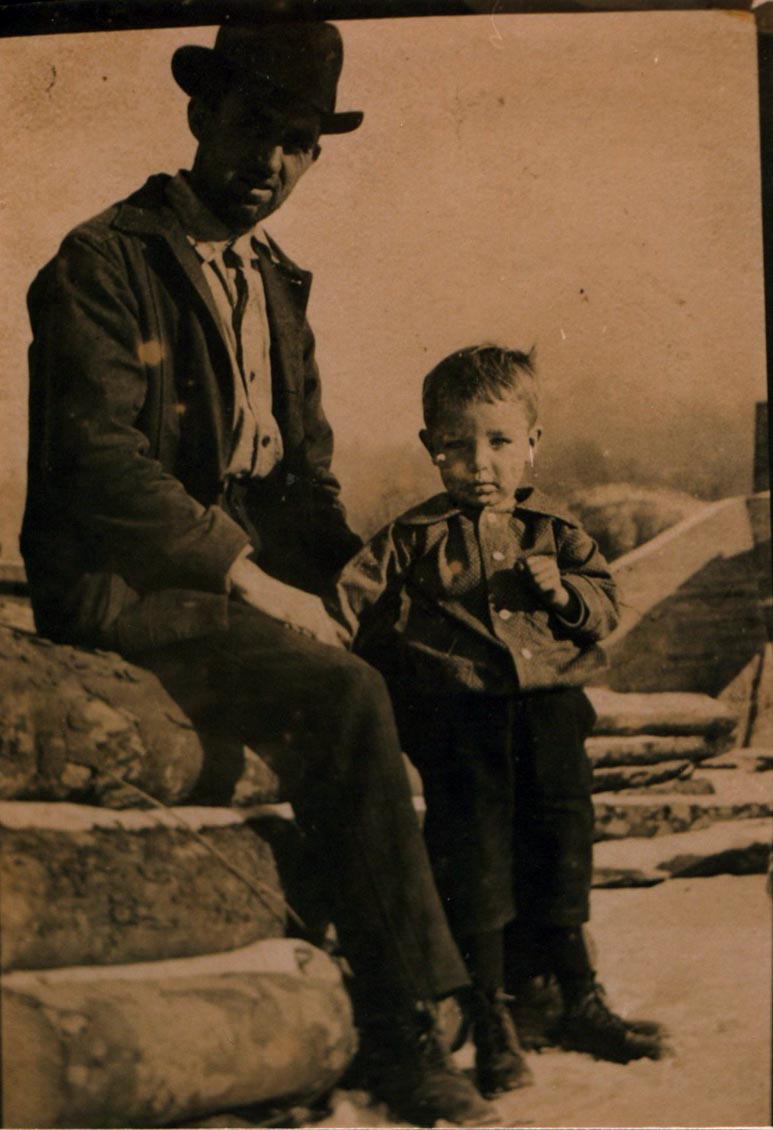
Deputy Sheriff Ward Brumfield with nephew Clyde Holton, taken in Harts, West Virginia, 1915-1920

Deputy Sheriff Ward Brumfield with nephew Clyde Holton, taken in Harts, West Virginia, 1918-1920

In Search of Ed Haley 85

04 Thursday Apr 2013

Posted by Brandon Ray Kirk in Big Harts Creek, Ed Haley, Harts, John Hartford

≈ Leave a comment

Tags

Appalachia, Bill Mullins, Chloe Mullins, Ed Haley, Imogene Haley, Jackson Mullins, Joe Mullins, John Hartford, Lawrence Haley, Liza McKenzie, Nashville, Peter Mullins, photos, Turley Adams, Violet Adams, West Virginia

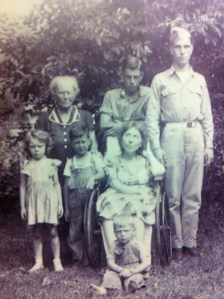
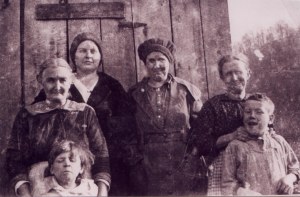
I returned to Nashville talking not so much about new musical developments but rambling on to my wife about murders and the people I’d met in Harts. I spent a lot of time studying over Joe’s photographs, especially the faded family group shot. One of the boys in the picture was propped inside a young woman’s arms and appeared very much to be blind. Was it Ed and his mother? Unfortunately, since the woman was almost completely faded away I couldn’t make a positive identification of her, even when I compared it to the photo of Emma Jean found by Lawrence and I on our first trip to Harts.

There was another interesting development: when I removed the picture of Bill and Peter Mullins from its frame, another equally large picture of the “old couple” kind of popped out from behind it. That made three pictures of those folks and it sure seemed logical to me that Joe Mullins would’ve had three pictures of his grandparents — meaning Ed’s grandparents — and not of an uncle and an aunt.

I sent copies of Joe’s old pictures to Turley and Violet Adams to see if they could show them around for identification. A few weeks later, we spoke over the telephone and they said Liza McKenzie had fingered Ed as the child to the right in the faded group picture. She also said the old folks in the back row were Jackson Mullins and his wife, Chloe.

P.B. “Fed” Adkins home

04 Thursday Apr 2013

Posted by Brandon Ray Kirk in Harts, Pearl Adkins Diary

≈ 1 Comment

Tags

Appalachia, Fed Adkins, genealogy, Harts, history, life, Lincoln County, Pearl Adkins, photos, West Virginia

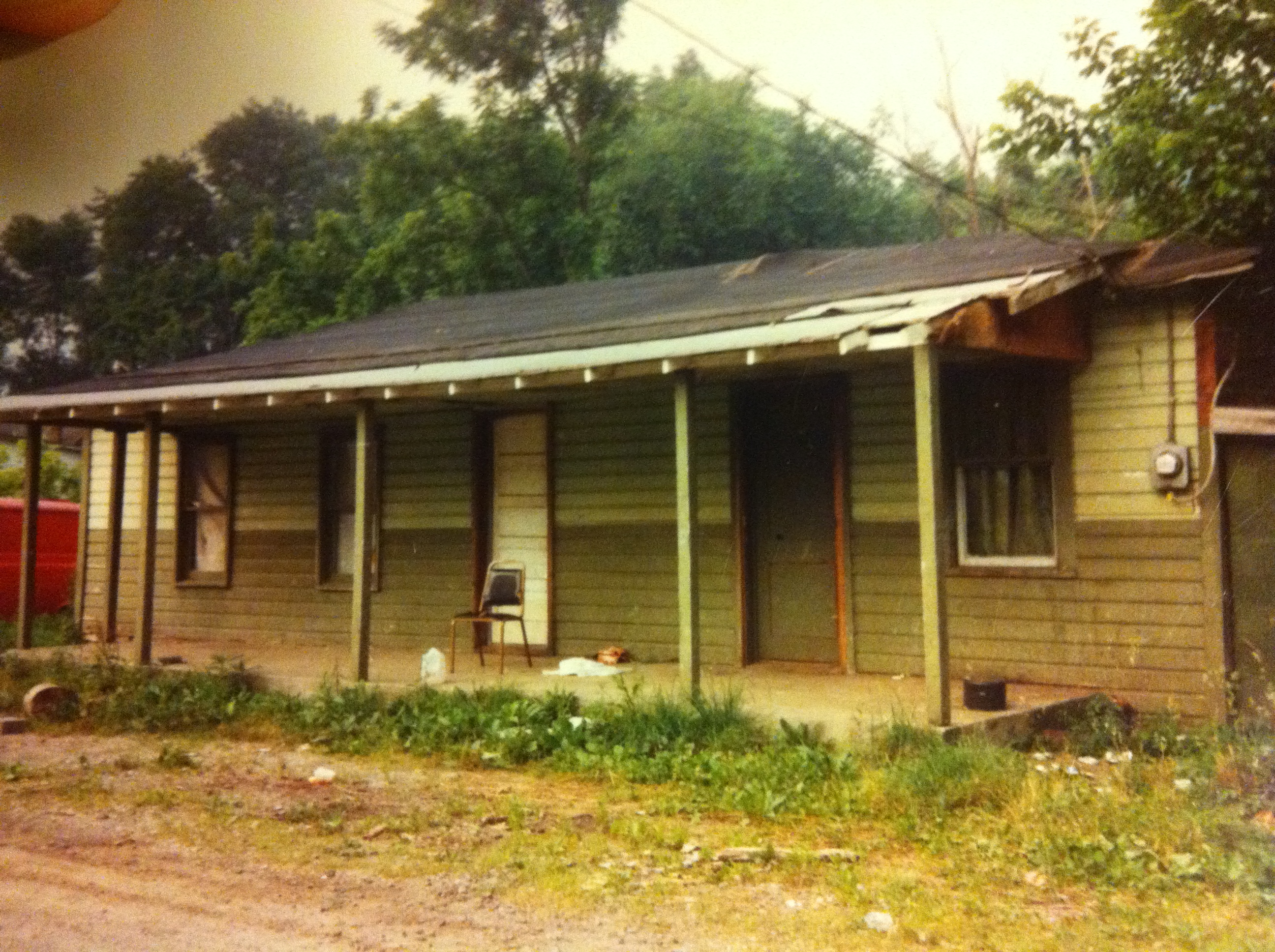
Pearl Adkins home, 1980s

P.B. “Fed” Adkins home in Harts, Lincoln County, WV, 1980s

Bob Adkins Interview, Part 2 (1993)

18 Monday Feb 2013

Posted by Brandon Ray Kirk in Breeden, Ed Haley, Guyandotte River, Hamlin, Harts, John Hartford, Lincoln County Feud

≈ Leave a comment

Tags

Al Brumfield, Appalachia, Bob Adkins, Breeden, Cincinnati, crime, feud, feuds, Green McCoy, Guyandotte River, Harts Creek, Henderson Dingess, history, Hollene Brumfield, John Dingess, John Hartford, John W Runyon, Kentucky, Lincoln County Feud, Milt Haley, Norfolk and Western Railroad, Thompson Branch, Tug River, Twelve Pole Creek, West Virginia

Wow. So what about Al Brumfield, the guy who got into the feud with Milt?

“Well, he was a little more tamer fellow than old Paris but he was kind of a rough character — mean as a snake,” Bob said. “All those Brumfields were, you know. They was a tough outfit, all of them was.”

Al and his wife Hollena lived in a large white house at the mouth of Harts Creek, which Bob said had recently burned. They had a store and log boom nearby and kept a boat tied up at the riverbank for easy access across the Guyandotte. Things were going great for them until John Runyon (who Bob called “the root of all evil”) moved in from Kentucky.

“That fellow Runyon, he had a saloon and a store right across the creek there at the mouth of Harts, you know — a shebang,” Bob said. “And Aunt Hollene and Al Brumfield, they had a big store over there on the other side of the creek, over on the lower side of the creek. They was competitors in a way, you know. This fellow Runyon hired these two thugs to kill them, so as to get rid of their competition. And he hired Milt Haley and Green McCoy to kill them. They got a side of bacon and a can of lard and five dollars to do that…each. And these fellows, Milt Haley and Green McCoy, were two characters. I don’t know why they ever took a chance on that. Them boys got into that before they knew what they was into. Them Brumfields was mean as the devil up there.”

Bob spun out the details of Milt and Green’s ambush of Al Brumfield.

“Every Sunday, Al and Hollene would get on their horse and they’d ride up to the Forks of Big Hart about ten miles to visit her father. He was old Henderson Dingess, my great-grandfather. Al had a fine riding horse and he’d get on the horse and she’d ride behind him, see? And they’d been up there on a pretty summer day, and they’d done had dinner with her father.”

Haley and McCoy, meanwhile, laid in wait for them in a sinkhole at Thompson Branch with a .30/.30 Winchester.

“And Al and Hollene came along about three or four o’clock in the evening and those thugs laywaid them on the side of the hill up there as they came back down Harts Creek. They shot at Al’s head. That horse jumped and that bullet missed his head and hit Hollene right in the face right there and the bullet knocked her teeth out and came out this side here. It knocked her off of the horse.”

Al was carried on down the creek by his horse, which “sprang and run” so Milt and Green came off the hill toward his wife.

“They aimed to shoot Aunt Hollene again — and she a laying there in the road, her eyes full of blood. She couldn’t see hardly who it was. But she begged them not to shoot her anymore, because she figured they’d already killed her. She told them she was dying and begged them out of it.”

At that point, Al came back up along the creek bed shooting toward them “and they got scared and they run.”

Bob said, “Well, the Brumfields didn’t know who it was so they watched all around to see who it was. They watched Runyon like a hawk but he changed his name and walked right off. He left his store, his saloon and his family and went back to Kentucky. They hunted for years for him but they never did find him. He never poked his head around there anymore, not even to contact his family.”

Milt and Green also disappeared from the neighborhood — which caused locals to assume that they were guilty of some role in the trouble.

“And these two guys just left their family and went into Kentucky and just deserted their families,” Bob said. “Then they knew who it was. And they started looking for them.”

Al Brumfield put out a $3,000 reward for their capture. Detectives were told to search in river towns, as both men had run rafts out of the Guyan River.

A detective caught Green McCoy first in a Cincinnati restaurant. He identified him by noticing a nick in one of his ears. Just before apprehending him, the detective walked up and said, “I think you’re the man I’m looking for.” Once caught, Green gave the whereabouts of Milt, who was found working a butter churn on a steamboat at the river. Both men were jailed. Al Brumfield was informed of their capture by letter.

Brumfield organized two of his brothers-in-law and perhaps one of his brothers into a posse and rode to the rendezvous point (presumably in the vicinity of Cincinnati). He posed as a sheriff, paid the reward, took possession of the two men, then headed across eastern Kentucky and up the Tug River to Williamson. He and his gang rode a train on the N&W across Twelve Pole to Breeden, where they crossed the mountain and spent a night at the home of John Dingess, Hollena’s brother. Dingess ran a large country store and saloon, Bob said, but “nothing exciting happened around there.”

Bob Adkins Interview, Part 1 (1993)

15 Friday Feb 2013

Posted by Brandon Ray Kirk in Big Harts Creek, Ed Haley, Hamlin, Harts, Huntington, Lincoln County Feud

≈ Leave a comment

Tags

Al Brumfield, Appalachia, Bob Adkins, Charleston, Charley Brumfield, crime, Emma Jane Hager, genealogy, Goldenseal, Griffithsville, Hamlin, Harts, Harts Creek, history, Hollena Brumfield, Huntington, Imogene Haley, John Hartford, Lawrence Haley, Lincoln County, Lincoln County Feud, Milt Haley, Paris Brumfield, Philip Hager, West Hamlin, West Virginia

The next day, Lawrence and I decided to go see 89-year-old Bob Adkins in Hamlin, West Virginia. In a recent Goldenseal article, Bob had given his biography, including his family’s connection to the story of Milt’s murder. Since reading his narrative, I’d been anxious to ask him about Milt, as well as to confirm or disprove my suspicion that his father’s first wife Emma Jane Hager was the same person as Ed’s mother.

To get to Bob’s house, we took Route 10 out of Huntington to Lincoln County. We turned off onto Route 3 just inside the county line at West Hamlin, then drove on for about ten minutes, crossed a hill and cruised into Hamlin — Lincoln County’s seat of government. Bob Adkins’ nice two-story house sat just past a block of small struggling businesses and through the only red light in town. We found Bob out back relaxing on a patio near a flower garden in full bloom.

After all the introductions, I mentioned my theory about Ed’s mother, which Bob shot out of the water right away. He was positive that Emma Jane Hager was not the same person as Emma Haley.

“No, Emma Jane Hager was old man Philip Hager’s daughter,” Bob said. “Dad got her from Griffithsville, 10 miles toward Charleston. Dad come down there and stole her.”

Bob knew all about Milt’s death but stressed that what he knew about it was hear-say, that he didn’t want to get sued and that we couldn’t take his word as gospel because there was “so dern many of ’em a shootin’ and a bangin’ around amongst each other” in Harts that he sometimes got his stories confused. Maybe Bob did have a foggy memory, as he claimed, but I found him to be a walking — or rather, sitting — encyclopedia of Harts Creek murders.

“I was born and raised up there until I was nineteen years old, but I was never afraid,” Bob said. “I walked all hours of the night and everything and do as I please, but I always tended to my business, you know. Kin to most of them. I never bothered nobody. Nobody never bothered me, but that doesn’t say they wouldn’t shoot you. Well, all you had to do was tend to your own business.”

Bob eased into the story of Milt’s death by giving Lawrence and I some background on the Brumfields. He knew a lot about them because Hollena Brumfield, the woman Milt supposedly shot, was his mother’s aunt and “about half way raised her.” She was a Dingess prior to marrying Al Brumfield.

“Now those Dingesses up there, I never knew of them to bother anybody much,” Bob said of his kinfolk. “Some of the older ones shot and banged around a little bit. But look out for them Brumfields. They was into it all the time. If they couldn’t get anybody else to shoot, they’d shoot theirselves — their own people.”

Al Brumfield’s father Paris was the most notorious of the old Brumfields.

“Well, one thing, he killed an old pack peddler up there at Hart, took his stuff and threw him in the river,” Bob said of the Brumfield patriarch. “And he killed another man, too. I forget the other fellow’s name. Son, he was a mean old man, I’ll tell you that. Why, he’d kill anybody. He lived about three quarters of a mile from the mouth of the creek down the river there in at the end of a bottom, see?”

Bob kind of chuckled.

“Yeah, killed that old pack peddler,” he said. “That’s what they said he did. I don’t know. He was a mean old devil. And boy, he’d killed two men.”

I wanted to know more about the Brumfields since they seemed to have been so wrapped up in the story of Milt Haley.

“What happened to Paris Brumfield?” I found myself asking.

“I tell you, old Paris, he got what was coming to him,” Bob said. “He was as mean as a snake and he would beat up on his wife every time he got drunk. And Paris’ wife got loose from him and she came down to her son Charley’s for protection. Charley was a grown man and was married and had a family and he lived down the road a quarter of a mile. Charley told her to come on in the house and there’d be nobody to bother her there and he told her to stay back in the room and he would take care of it. Old Paris, he was drunk and he didn’t get exactly where she was and he finally figured out where she was and old Paris come down there to get his wife. When he come down, Charley, his son, was setting on the porch with a Winchester across his lap. A Winchester is a high-powered gun, you know? And that day and time, they had steps that came up on this side of the fence and a platform at the top of the fence and you walked across the platform and down the steps again. That kept the gates shut so that the cattle and stuff couldn’t come into the yard. Well, he got up on that fence and Charley was setting on the porch with that Winchester. He said, ‘Now, Paw don’t you step across that fence. If you step across that fence, I’m going to kill you.’ And Paris quarreled and he fussed and he cussed and he carried on. That was his wife and if he wanted to whip her, he could whip her. He could do as he pleased. He was going to take his wife home. Charley said, ‘Now, Paw. You have beat up on my mother your last time. You’re not going to bother Mother anymore. If you cross that step, I am going to kill you.’ And he kept that up for a good little while there. ‘Ah, you wouldn’t shoot your own father.’ Drunk, you know? And Charley said, ‘You step your foot over that fence, I will.’ Paris was a little shaky of it even if he was drunk. Well, after a while he said, ‘I am coming to get her,’ and when he stepped over that fence, old Charley shot him dead as a doornail.”

You mean he killed his own father?

“His own father,” Bob said. “He killed him. That got rid of that old rascal. And that ended that story. They never did even get indicted for that or nothing. Everybody kept their mouth shut and nobody didn’t blame Charley for it because old Paris had beat up on his mother, you know? Everyone was glad to get rid of him.”

Pearl Adkins Diary

03 Thursday Jan 2013

Posted by Brandon Ray Kirk in Harts, Pearl Adkins Diary, Women's History

≈ Leave a comment

Tags

Appalachia, culture, Harts, history, inspiration, life, Lincoln County, Pearl Adkins, photos, U.S. South, West Virginia, writers, writing

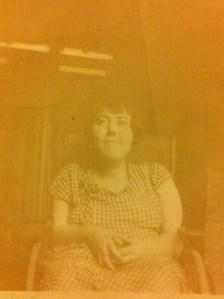
Pearl Adkins, West Virginia Diarist, 1920-1950

Pearl Adkins, West Virginia diarist, 1920-1950

Pearl Adkins Diary

31 Monday Dec 2012

Posted by Brandon Ray Kirk in Harts, Pearl Adkins Diary, Women's History

≈ Leave a comment

Tags

Appalachia, culture, Ed Zane Adkins, life, Lincoln County, Pearl Adkins, photos, Rinda Adkins, U.S. South, West Virginia, writers, writing

Pearl Adkins (center), 1940s

Pearl Adkins (center), 1940s

Heavy Heart

29 Saturday Dec 2012

Posted by Brandon Ray Kirk in Harts, Pearl Adkins Diary, Women's History

≈ 3 Comments

Tags

Appalachia, Cora Adkins, history, inspiration, life, Lincoln County, love, Pearl Adkins, U.S. South, West Virginia, writers, writing

“My dear, dear dream boy came one evening,” Pearl wrote in May or June. “He stayed all night. After supper I was sitting on the porch. Cora was out there. My heart dearest came and sit down at my feet. He talked to Cora of first one thing then another. He changed the subject all at once and asked Cora if the doctors thought there was any chance for me ever to walk. I don’t remember the talk for I felt slighted and hurt. To think he would sit at my feet and then ask some one else about my walking powers, if there was any chance of me ever.

“Well, I spent another sleepless night for he slept in the next room. I can now see him as I write next morning at the breakfast table. I looked across the table straight into those clear but sad eyes — those eyes which sent the blood over my neck and face to burn my fevered brain. He is gone and left a heavier heart and a sadder face behind him than was there when he came. I don’t guess he ever thought of the joy he brings to a sad and lonely woman when he comes or even dreamed of such a thing that I loved him. Well, I don’t care if he ever knows. I love him just the same.”

Bad News

26 Wednesday Dec 2012

Posted by Brandon Ray Kirk in Harts, Pearl Adkins Diary, Women's History

≈ Leave a comment

Tags

Appalachia, Cora Adkins, culture, Dr. Guthrie, Fed Adkins, history, inspiration, life, Lincoln County, Pearl Adkins, thoughts, U.S. South, West Virginia, writing

“Well, it seems that after all I might have a chance to get well,” Pearl happily wrote the following May. “Cora went to Huntington to Dr. Guthrie and told him my history. He said it was a strange case — that he couldn’t tell whether there could be any thing done with me without he could see me. He told her a certain time a board of doctors met at his hospital and, if they would bring me down there when they met, it would be a good chance to have my case studied. And among so many doctors some ought to learn what was the matter with my back. They took me under examination for three days. They took Xray pictures but all of it didn’t bring to light the cause of my troubles. Doctor Guthrie told Papa he could on the third day evening take me home and he was going to study a while longer on my case. The doctor told me to come home and whistle, sing and be a happy girl that he might have good news for me in a few days.

“I came home but I wasn’t happy, but prayed to the Heavenly Father has I never prayed before. I prayed to him to give the doctor’s knowledge to learn the cause of my troubles so they could doctor me and by the help of God I would get so I could walk. I prayed with all the knowledge the Lord give me to pray with, but my prayers were in vain. At last, my verdict was read. It read me a cripple for life. Oh that terrible news. I remember the morning I received the news. It was such a bright sunny morning and to receive such news on such a bright day I would just about as soon it would have been my death sentence for it wouldn’t have been much worse to think of leading a life so hapless as mine. Oh God, I don’t know how I ever went through that day with such sorrow as mine, for all hopes of happiness were blotted out forever. Dr. Guthrie went so far as to advise Papa not to spend any more money for he didn’t think there was any use to while I was as well off as I was, for some doctors would experiment on me. Where they might do me good they could do me a lot of harm. While it was bad, it wouldn’t be any thing to compare with a wracking body of pain. While I don’t hurt, let me be, he said. That all seems like a dream now. I only wish to my Lord above it had been a dream.”

Pearl Adkins Diary

25 Tuesday Dec 2012

Posted by Brandon Ray Kirk in Harts, Pearl Adkins Diary, Women's History

≈ 2 Comments

Tags

Appalachia, culture, genealogy, history, life, Lincoln County, Margaret Adkins, photos, U.S. South, West Virginia

"Aunt Marg," 1870s

“Aunt Marg,” 1870s

Hurt Feelings

24 Monday Dec 2012

Posted by Brandon Ray Kirk in Harts, Pearl Adkins Diary, Women's History

≈ Leave a comment

Tags

Appalachia, Cora Adkins, culture, Harts Creek, history, inspiration, life, Lincoln County, love, Margaret Adkins, Pearl Adkins, thoughts, West Virginia

“Alone on Xmas Eve with my thoughts centered on my one love,” Pearl wrote. “I was thinking of writing to a friend. Some folks came in. He was with them. They were all enjoying their selfs, all but me and I couldn’t help but be sad. He was looking rather sad, too. He walked around and after a while he said some thing about his girl. They laughed about her and he said, ‘She’s one of these girls that can talk.’ And, ‘I don’t like a girl that sits in the corner and smokes and talks to the cats.’ Well that caused a loud laugh but no one ever knew the wound those thoughtless words caused on my tender heart. No one shall ever know till I’m through with this life. There was no more pleasure for me that evening. He went away not knowing the hurt feelings he left behind or cared as little as he knew I supposed.”

“He come early in the morning and stayed till late in the afternoon — but he stayed in the next room,” Pearl wrote later. “Oh God, what I have to suffer just to think he was in the room and I didn’t have the strength to walk to where I could see him. What misery is some people don’t know, but if they were in my place they would soon learn. For instance, if some of you was in love and in my standing and in love and not a single hope of him ever being in love with you. If it wasn’t who it is I would have some hope, but as it is I’m in despair. What would you do, dear friend, if you were like me? Do nothing as I am doing? I know with out asking but the Lord above may change him and make him love me by and by.”

“We hadn’t any guests all day,” Pearl wrote on a Sunday in February. “Cora and I was setting by the fire. When he came in it was like the ray of sunshine drifting through a window pane on a bleak day for my life was as bleak as the day. Cora was rather friendly to him, some thing she hardly ever is. She asked him where he had been. He told her he was just walking around and thought he would stop in to see them all. He kept eating some thing. She asked what it was. He told her and said, ‘Don’t you want some?’ but never offered me any. I don’t guess he thought of me for I was as cold as an ice burg in those days. But I’m not one bit colder than he is but I’m not much better yet. Dear reader, don’t judge me too harshly for I have enough to bear and enough to make me cold and bitter for I didn’t have any girlfriends to talk to. Cora didn’t seem to care whether I was happy or not then. Aunt Marg had died then and Ma had to work so I didn’t have any one to talk to. All I had to do was to nurse my misery and think I was the most unfortunate girl in the world. You know, while Aunt Marg lived she could tell me of many things which helped to while away the hours. And I never was so bitter till after she was gone. I don’t blame my mother for my growing so hard and cold at life, for her life is a hard life to live any way. Aunt Flor was the only one that ever talked to me. She told me all the news and I liked for her to come. She seemed to understand me, but she didn’t stay much with us in them days. You see, I had a lot of time to keep growing bitter and crosser for I thought they didn’t care any thing about me, whether I lived or died. The Lord only knows what I could have been like by now if a certain thing hadn’t happened. Well, that changed me a little for a while but I soon grew cold again, but not so bad as at first. Kind friend, believe me. I spent a many a sad and lonely day then without one glimpse of happiness only when he came, not to say anything about the ones I spend now.”

Nobody Stays Over

20 Thursday Dec 2012

Posted by Brandon Ray Kirk in Harts, Pearl Adkins Diary, Women's History

≈ Leave a comment

Tags

Appalachia, culture, Fed Adkins, Harts, inspiration, life, Lincoln County, love, Pearl Adkins, thoughts, West Virginia, writers, writing

“They were all gone but Momma and Papa, the kiddies and me,” Pearl wrote in August. “I, like all the other times when alone, go to my meditation again and all the time it’s of him, and only him. I was longing for him to come with all my hungry heart, and he did come. It seems that when I want to see him right bad he is led to come by a higher power to satisfy my heart. Well, I will go on with my story. He come in as Momma called dinner. Pap said, ‘Come on.’ Mr. Nobody smiled and said, ‘It’s been a long time since I sit at your board.’ They said it had, too. I remember well that dinner as if it had been yesterday. It is written plainly in my mind, never to be blotted out as long as memory lasts. Mr. Nobody sit at one end of the table and I at the other. When I looked up from my plate and our eyes met for the first time since I had loved him, the picture he made there with the sun shining through the window on his hair made a fine picture of him. His eyes were like lurking shadows of those on a forest pool, as though thoughts of sadness are always pictured there. He isn’t satisfied no where for long at a time, for I’ve heard him say so time after time.”

“Some body had kind of a social gathering,” Pearl wrote later. “A lot of our friends came. I was so afraid he wouldn’t come but he did just as if he knew I wanted him to come. They all left here together. They were gone till about 11:30 o’clock, I guess. We hadn’t gone to bed when they came back. There was several stayed all night. I can see myself now as I was sitting tilted back in my chair with my feet upon the rungs when he come in. The lamp was on the shelf over my head and so he took a seat facing me again. If his eyes ever left my face I don’t remember it. I don’t know whether he thought I looked good or not, but there was a look in his eyes which I never seen there before.”

Mr. Nobody was among those who slept at the Adkins family home that night, giving Pearl cause for great excitement.

“That was my first night,” she wrote. “I tossed on my bed not able to sleep for the thoughts. Oh boy, it made it ten times worse him being in the next room. If he hadn’t been there it wouldn’t been quite so bad, but believe me dear reader I have spent a many a more nights tossing on my pillow, my fevered brain not able to think clearly. And it was all for the sake of my dear. I’ll call him Dear for he won’t never be any thing else to me as long as life lasts.”

Pearl Adkins Diary

18 Tuesday Dec 2012

Posted by Brandon Ray Kirk in Harts, Pearl Adkins Diary, Women's History

≈ Leave a comment

Tags

Appalachia, Cora Adkins, culture, Harts, Harts Creek, history, life, Lincoln County, photos, U.S. South, West Virginia

Cora Adkins (center), 1915-1925

Cora Adkins (center), 1920-1925

Harts Creek Residents

16 Sunday Dec 2012

Posted by Brandon Ray Kirk in Harts

≈ Leave a comment

Tags

Appalachia, blind, Cat Fry, culture, genealogy, Harts Creek, history, life, Lincoln County, photos, U.S. South, West Virginia, writing

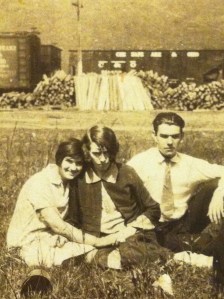
Harts Creek Residents, 1910-1920

Adkins Women with Children, 1910-1920

Introduction (July 2002)

01 Saturday Dec 2012

Posted by Brandon Ray Kirk in Harts, Pearl Adkins Diary, Women's History

≈ Leave a comment

Tags

Adkins Conspiracy Case, Appalachia, Beecher Avenue, Billy Adkins, Custer McCann, Fed Adkins, Ferrellsburg, Guyandotte River, Harts, history, Isaac Adkins Branch, Lincoln County, Pearl Adkins, polio, Rinda Adkins, Sand Creek, U.S. South, Watson Adkins, West Virginia, writers, writing

Some years ago, I located a diary kept by Pearl Adkins, a physically handicapped and romantically frustrated intellect. A life-long resident of Harts, West Virginia, Pearl was born on August 1, 1904 to Fed and Rinda (Davis) Adkins. At the time of her birth, her parents resided in a two-story plank house situated at the mouth of Isaac Adkins Branch on Guyandotte River. Her father’s involvement in the famous Adkins conspiracy case of 1907 and subsequent incarceration in the West Virginia state penitentiary and loss of property disrupted her childhood and prompted a move. In 1908, the family relocated to a rental dwelling situated above the Adkins store, just back of the original homeplace. Between 1914 and 1916, Pearl and her family lived elsewhere in Hart Bottom. Thereafter, they resided at Sand Creek (1916-1921), then Ferrellsburg — a community above Hart. At this latter location, the Adkins clan briefly operated a store.

“I knew Pearl real well,” said Custer McCann, an 83-year-old retired schoolteacher and Harts resident in June 2002. “I worked for her brother Watson Adkins and stayed around there a lot. She was Watson’s half-sister. She was highly intelligent and she read widely. I’d say she was self-educated. She was a very kind-hearted person. I never did hear her say a bad word about any one.”

Polio crippled Pearl at a young age.

“I’ve always heard my sister Inez [Pearl’s friend and sister-in-law] say that Pearl walked until she was twelve years old,” said McCann. “She had a sick spell and never got over that. But her mother did a real job taking care of her. When she got out of bed, they’d put her in a wheelchair. She had no control with her legs at all.”

According to the genealogy notebooks of nephew Billy Adkins of Harts, “Pearl was five feet, one inch tall and had brown hair and blue eyes. She was a very intelligent woman. She read a lot. She was a very wise woman and counseled people. She was a good listener.”

Pearl’s three volume diary appears to chronicle thoughts and events from January 30, 1922 until May 6, 1928, although it is full of undated or vaguely dated entries. At the time of her writing, Pearl was a young woman approximately eighteen to twenty-four years old still living at home with her parents. The family resided on Beecher Avenue in a small single-story house situated on property owned by Watson Adkins.

What happened to John Fleming? 1

30 Friday Nov 2012

Posted by Brandon Ray Kirk in Big Harts Creek, Big Sandy Valley, Fourteen, Harts

≈ Leave a comment

Tags

A.L. Smith, Adkins Conspiracy Case, Albert Adkins, Arty Fleming, Bill Brumfield, Charleston Gazette, Charley Brumfield, Christian Fry, Cosby Fry, crime, Dan Cunningham, Elizabeth Fry, Elizabeth Lizzie Fleming, Elliott Northcott, Emory Mullins, Fed Adkins, Fourteen Mile Creek, Harts Creek, Henry Mullins, history, J.P. Douglas, Jake Davis, John Fleming, John H. Mullins, John Henan Fry, Kentucky, Lace Marcum, Lillie Fleming, Lincoln County, Logan County, Luraney Fleming, Man Adkins, Margaret Adkins, Pike County, Preston Fleming, Raleigh County, Robert Fleming, Rosa Mullins, Squire Dial, Thomas H. Harvey, Upper Elkhorn Creek, West Virginia, Willard Fleming, Willard Frye, William Brumfield, William Fleming, William M.O. Dawson, writers, writing, Wyoming County

Over one hundred years ago, John Fleming, a desperado twice sentenced to serve time in the West Virginia State Penitentiary, escaped from the Lincoln County jail and disappeared forever in the mountains of the Big Sandy Valley.

John P. Fleming was born in February 1868 to Preston and Arty (Mullins) Fleming at Upper Elkhorn Creek in Pike County, Kentucky. Nothing is known of his early life except that he had a daughter named Roxie by Lucy Mullins in 1887. In the late 1880s, John and his family migrated to West Virginia and settled in the Abbott Branch area of Logan County, just above Harts Creek. In 1891, his brother William married Luraney Frye, a daughter of Christian and Elizabeth (Hunter) Frye, in Logan County. In 1897, his sister Sarah married Squire Dial in Logan County. The next year, brother Robert, or Bob, married Lillie Dempsey, also in Logan County.

On December 25, 1892, Fleming murdered his uncle, John H. Mullins, at Big Creek, Logan County. Essentially, the story went like this: Mr. Mullins’ sons, Henry and Emory, were in a quarrel and Fleming intervened. The elder Mullins came to settle the matter and Fleming fled across a creek. Mullins pursued, knife in hand. At the creek, Fleming shot his uncle. He was immediately taken before Squire Garrett, who discharged him. When a new warrant was sworn out for him, he fled the county. In March of 1893, his wife attempted to meet him but became ill and died at Dunlow, Wayne County. Fleming was at her bedside when authorities arrested him. A Logan County jury found him guilty of second degree murder and Judge Thomas H. Harvey sentenced him to eighteen years in the West Virginia state penitentiary in Moundsville. In the 1900 census, he is listed there under the name of “J.P. Flemons,” inmate. Curiously, he claimed to have been married for one year.

During Fleming’s incarceration, his siblings continued to marry into local families. In 1900, brother Willard married Caroline Caldwell, a daughter of Floyd Caldwell, in Logan County. In 1902, sister Lucy married James F. Caldwell, a son of Hugh Caldwell, in Logan County. Around 1903, brother George married Minnie Tomblin.

After his release from prison, John married Sarah Elizabeth “Lizzie” Frye, a daughter of John Henan and Ida Cosby (Headley) Frye. The Fryes lived on Sulphur Springs Fork of Fourteen Mile Creek, several miles below Harts Creek. Lizzie, born around 1887, was roughly eighteen years younger than John. They may have become acquainted through John’s brother, William, who had married Lizzie’s aunt, Luraney Frye, in 1891.

“Aunt Lizzie was married to John Fleming,” said Willard Frye, an elderly resident of Frye Ridge, in a 2003 interview. “John was a mean man who packed two .45 pistols. He was a member of Charley Brumfield’s gang. He was mean to Aunt Lizzie.”

Fleming’s involvement in the Brumfield gang soon led to more prison time. In the summer of 1907, the “feudist,” as newspapers would later call him, became entangled in the peculiar “Adkins conspiracy case.”

A little earlier, in December of 1906, Margaret Adkins, Fisher B. Adkins, Floyd Enos Adkins, Albert G. Adkins and Fed Adkins — all associates in an Adkins general store business in Harts — took out a four-month loan for $600 from the Huntington National Bank. By April 1907, they had not paid any money toward the loan and asked for a four-month extension. In late June or July, Margaret Adkins, sister to Fed, filed a bankruptcy petition. On July 3, the District Court of the United States for the Southern District of West Virginia adjudged her bankrupt. J.P. Douglass (later a Speaker of the West Virginia House of Delegates) was appointed as receiver in the case and arrived in Hart to survey the business. A.L. Smith stood guard at the store.

On July 5, after the government had taken control of the merchandise in the store, a vigilante group called the Night Riders robbed the store and hid the various goods in neighbors’ homes and barns.

Following the robbery, detectives descended on Harts in an effort to unravel the details of the crime. The most famous of these detectives was Dan Cunningham, a one-time participant in the Hatfield-McCoy Feud. More recently, Mr. Cunningham had been employed by Governor William M.O. Dawson in Raleigh and Wyoming Counties. During his Harts Creek investigation, he boarded with locals and eavesdropped on conversations between suspects. Those involved in the store heist, meanwhile, used various means to suppress information. But as the pressure of the investigation bore down on locals, neighbors began to snitch on each other.

By December of 1907, the State had evidence against eleven men in what the Charleston Gazette called “the celebrated Adkins Bankruptcy Case” which “if proven by witnesses for the government, will equal any novel ever written by Victor Hugo.” Those accused — described by the Huntington Herald-Dispatch as “eleven brawny mountaineers” — were Fed Adkins, Charles Brumfield, Albert “Jake” Davis, Manville Adkins, John Fleming, Willard Fleming, Robert “Bob” Fleming, John Adkins, Albert G. Adkins, Floyd Enos Adkins and William “Bill” Brumfield. The state charged the gang with “conspiracy to defraud the government and to impede the administration of justice after the government had taken possession of Adkins store.”

U.S. District Attorney Elliott Northcott prosecuted the case, while Lace Marcum argued for the defendants. In opening remarks on December 5, according to the Herald-Dispatch, District Attorney Northcott fiercely denounced “the eleven men who have been a terror to the country surrounding the village of Hart, in Lincoln county, for the past six months. He stated in words burning with bitterness that the government expected to prove beyond any reasonable doubt that crimes that would narrow the very souls of every juror had been committed in the vicinity of Hart, and had the story been told him three weeks ago he would have thought it a piece of fiction pure and simple… He also alluded to the fact that the government would prove by witnesses who would tell of the horror that had been created in the neighborhood: houses burned, men shot down from ambush, houses with unprotected women had been shot up and the inmates terrorized until they were afraid to venture outdoors. It was a thrilling recital of the worst crimes that have taken place in this state in a decade.” According to the Herald-Dispatch, the eleven defendants “showed but little interest except to look at each other and smile when the crimes were talked of.”

In Marcum’s opening remarks on December 5, he stated that he would prove the goods found at the homes of the defendants were there several weeks before the Adkins store went bankrupt.

On December 6, Northcott questioned Rosa “Sis” Mullins, a sister to Emory and a resident of Abbotts Branch, who swore that she saw John Fleming’s brothers — Bob and Willard — go by her house the night of the robbery on their way to the Adkins store.

“Nearly every witness who testified yesterday,” the Charleston Gazette reported on December 7, “showed just how desperate these defendants are, and the testimony of Capt. Dan Cunningham unraveled a tale of horror that was realistic in every sense of the word.”

On December 7, Lace Marcum began his defense of John Fleming and the ten other Harts men. Bob Fleming, John’s brother, was the second witness called to the stand. He swore that he knew nothing of the robbery until the day after it happened and that he never saw any of the stolen goods. Willard Fleming, John’s other brother, said he stayed with Charley Brumfield the night of the robbery and saw no one armed. John, referenced in one newspaper account as being a “paroled prisoner,” testified along the same lines, as did all the defendants who were called to the stand. “The entire list of defendants swore to very near the same thing,” reported the Gazette.

For the most part, Marcum’s defense of the eleven Harts men had little chance of success considering the evidence against them. In his closing remarks, he was forced to put them at the court’s mercy by claiming that they had acted the way they did because they didn’t know any better. In the end, ten of the accused were sentenced to twelve- or eighteen-month terms in the West Virginia state penitentiary.
Newer posts →

Feud Poll 1

If you had lived in the Harts Creek community during the 1880s, to which faction of feudists might you have given your loyalty?

Categories

  • Adkins Mill
  • African American History
  • American Revolutionary War
  • Ashland
  • Atenville
  • Banco
  • Barboursville
  • Battle of Blair Mountain
  • Beech Creek
  • Big Creek
  • Big Harts Creek
  • Big Sandy Valley
  • Big Ugly Creek
  • Boone County
  • Breeden
  • Calhoun County
  • Cemeteries
  • Chapmanville
  • Civil War
  • Clay County
  • Clothier
  • Coal
  • Cove Gap
  • Crawley Creek
  • Culture of Honor
  • Dingess
  • Dollie
  • Dunlow
  • East Lynn
  • Ed Haley
  • Eden Park
  • Enslow
  • Estep
  • Ethel
  • Ferrellsburg
  • Fourteen
  • French-Eversole Feud
  • Gilbert
  • Giles County
  • Gill
  • Green Shoal
  • Guyandotte River
  • Halcyon
  • Hamlin
  • Harts
  • Hatfield-McCoy Feud
  • Holden
  • Hungarian-American History
  • Huntington
  • Inez
  • Irish-Americans
  • Italian American History
  • Jamboree
  • Jewish History
  • John Hartford
  • Kermit
  • Kiahsville
  • Kitchen
  • Leet
  • Lincoln County Feud
  • Little Harts Creek
  • Logan
  • Man
  • Matewan
  • Meador
  • Midkiff
  • Monroe County
  • Montgomery County
  • Music
  • Native American History
  • Peach Creek
  • Pearl Adkins Diary
  • Pecks Mill
  • Peter Creek
  • Pikeville
  • Pilgrim
  • Poetry
  • Queens Ridge
  • Ranger
  • Rector
  • Roane County
  • Rowan County Feud
  • Salt Rock
  • Sand Creek
  • Shively
  • Spears
  • Sports
  • Spottswood
  • Spurlockville
  • Stiltner
  • Stone Branch
  • Tazewell County
  • Timber
  • Tom Dula
  • Toney
  • Turner-Howard Feud
  • Twelve Pole Creek
  • Uncategorized
  • Warren
  • Wayne
  • West Hamlin
  • Wewanta
  • Wharncliffe
  • Whirlwind
  • Williamson
  • Women's History
  • World War I
  • Wyoming County
  • Yantus

Feud Poll 2

Do you think Milt Haley and Green McCoy committed the ambush on Al and Hollene Brumfield in 1889?

Blogroll

  • Ancestry.com
  • Ashland (KY) Daily Independent News Article
  • Author FB page
  • Beckley (WV) Register-Herald News Article
  • Big Sandy News (KY) News Article
  • Blood in West Virginia FB
  • Blood in West Virginia order
  • Chapters TV Program
  • Facebook
  • Ghosts of Guyan
  • Herald-Dispatch News Article 1
  • Herald-Dispatch News Article 2
  • In Search of Ed Haley
  • Instagram
  • Lincoln (WV) Journal News Article
  • Lincoln (WV) Journal Thumbs Up
  • Lincoln County
  • Lincoln County Feud
  • Lincoln County Feud Lecture
  • LinkedIn
  • Logan (WV) Banner News Article
  • Lunch With Books
  • Our Overmountain Men: The Revolutionary War in Western Virginia (1775-1783)
  • Pinterest
  • Scarborough Society's Art and Lecture Series
  • Smithsonian Article
  • Spirit of Jefferson News Article
  • The Friendly Neighbor Radio Show 1
  • The Friendly Neighbor Radio Show 2
  • The Friendly Neighbor Radio Show 3
  • The Friendly Neighbor Radio Show 4
  • The New Yorker
  • The State Journal's 55 Good Things About WV
  • tumblr.
  • Twitter
  • Website
  • Weirton (WV) Daily Times Article
  • Wheeling (WV) Intelligencer News Article 1
  • Wheeling (WV) Intelligencer News Article 2
  • WOWK TV
  • Writers Can Read Open Mic Night

Feud Poll 3

Who do you think organized the ambush of Al and Hollene Brumfield in 1889?

Recent Posts

  • Logan County Jail in Logan, WV
  • Absentee Landowners of Magnolia District (1890, 1892, 1894)
  • Charles Spurlock Survey at Fourteen Mile Creek, Lincoln County, WV (1815)

Ed Haley Poll 1

What do you think caused Ed Haley to lose his sight when he was three years old?

Top Posts & Pages

  • About
  • James Wilson Sias grave (2016)
  • Baisden Family Troubles
  • Levisa Hatfield (1927-1929)
  • Early Schools of Logan County, WV (1916)

Copyright

© Brandon Ray Kirk and brandonraykirk.wordpress.com, 1987-2023. Unauthorized use and/or duplication of this material without express and written permission from this blog’s author and/or owner is strictly prohibited. Excerpts and links may be used, provided that full and clear credit is given to Brandon Ray Kirk and brandonraykirk.wordpress.com with appropriate and specific direction to the original content.

Archives

  • February 2025
  • January 2025
  • October 2023
  • September 2023
  • December 2022
  • November 2022
  • May 2022
  • April 2022
  • February 2022
  • November 2021
  • October 2021
  • September 2021
  • June 2021
  • May 2021
  • April 2021
  • March 2021
  • February 2021
  • January 2021
  • December 2020
  • November 2020
  • October 2020
  • July 2020
  • June 2020
  • May 2020
  • April 2020
  • March 2020
  • February 2020
  • January 2020
  • December 2019
  • November 2019
  • October 2019
  • September 2019
  • August 2019
  • July 2019
  • June 2019
  • May 2019
  • April 2019
  • March 2019
  • February 2019
  • January 2019
  • December 2018
  • November 2018
  • October 2018
  • September 2018
  • August 2018
  • July 2018
  • June 2018
  • May 2018
  • April 2018
  • March 2018
  • February 2018
  • January 2018
  • December 2017
  • November 2017
  • October 2017
  • September 2017
  • August 2017
  • July 2017
  • June 2017
  • May 2017
  • April 2017
  • March 2017
  • February 2017
  • January 2017
  • December 2016
  • November 2016
  • October 2016
  • September 2016
  • August 2016
  • July 2016
  • June 2016
  • May 2016
  • April 2016
  • March 2016
  • February 2016
  • January 2016
  • December 2015
  • November 2015
  • October 2015
  • September 2015
  • August 2015
  • July 2015
  • June 2015
  • May 2015
  • April 2015
  • March 2015
  • February 2015
  • January 2015
  • December 2014
  • October 2014
  • September 2014
  • August 2014
  • July 2014
  • June 2014
  • May 2014
  • April 2014
  • March 2014
  • February 2014
  • January 2014
  • December 2013
  • November 2013
  • October 2013
  • September 2013
  • August 2013
  • July 2013
  • June 2013
  • May 2013
  • April 2013
  • March 2013
  • February 2013
  • January 2013
  • December 2012
  • November 2012

Enter your email address to follow this blog and receive notifications of new posts by email.

Join 2,927 other subscribers

Tags

Appalachia Ashland Big Creek Big Ugly Creek Blood in West Virginia Brandon Kirk Cabell County cemeteries Chapmanville Charleston civil war coal Confederate Army crime culture Ed Haley Ella Haley Ferrellsburg feud fiddler fiddling genealogy Green McCoy Guyandotte River Harts Harts Creek Hatfield-McCoy Feud history Huntington John Hartford Kentucky Lawrence Haley life Lincoln County Lincoln County Feud Logan Logan Banner Logan County Milt Haley Mingo County music Ohio photos timbering U.S. South Virginia Wayne County West Virginia Whirlwind writing

Blogs I Follow

  • OtterTales
  • Our Appalachia: A Blog Created by Students of Brandon Kirk
  • Piedmont Trails
  • Truman Capote
  • Appalachian Diaspora

BLOOD IN WEST VIRGINIA is now available for order at Amazon!

Blog at WordPress.com.

OtterTales

Writings from my travels and experiences. High and fine literature is wine, and mine is only water; but everybody likes water. Mark Twain

Our Appalachia: A Blog Created by Students of Brandon Kirk

This site is dedicated to the collection, preservation, and promotion of history and culture in Appalachia.

Piedmont Trails

Genealogy and History in North Carolina and Beyond

Truman Capote

A site about one of the most beautiful, interesting, tallented, outrageous and colorful personalities of the 20th Century

Appalachian Diaspora

  • Subscribe Subscribed
    • Brandon Ray Kirk
    • Join 789 other subscribers
    • Already have a WordPress.com account? Log in now.
    • Brandon Ray Kirk
    • Subscribe Subscribed
    • Sign up
    • Log in
    • Report this content
    • View site in Reader
    • Manage subscriptions
    • Collapse this bar
 

Loading Comments...