• About

Brandon Ray Kirk

~ This site is dedicated to the collection, preservation, and promotion of history and culture in my section of Appalachia.

Brandon Ray Kirk

Author Archives: Brandon Ray Kirk

Bob and Nora Brumfield Home in Harts, Lincoln County, WV (1991)

08 Saturday Feb 2020

Posted by Brandon Ray Kirk in Boone County, Harts

≈ Leave a comment

Tags

Appalachia, Billy Adkins, board of education, Bob Brumfield, Boone County, Caroline Brumfield, Charley Brumfield, Columbus Lum Pack, Corbit Brumfield, genealogy, Harts, history, Lincoln County, Nora Brumfield, photos, teacher, Victoria Pack, West Madison, West Virginia

Robert & Nora Brumfield Home

Bob and Nora (Pack) Brumfield residence in Harts, Lincoln County, WV. Bob (1893-1969), a son of Charley and Caroline (Dingess) Brumfield, served as a member of the district board of education in the early 1900s. Nora (1896-1964), the daughter of Lum and Victoria (Lambert) Pack, was a longtime teacher in the Harts community. I used to visit their son Corbit Brumfield at West Madison, Boone County, WV. Photo courtesy of Bill Adkins.

Joe Hatfield for Sheriff of Logan County, WV (1927)

08 Saturday Feb 2020

Posted by Brandon Ray Kirk in Hatfield-McCoy Feud, Logan

≈ 3 Comments

Tags

Appalachia, Delorme, Democratic Party, Devil Anse Hatfield, Evaline Marie Hatfield, genealogy, Grace Ferrell, history, Huntington Business College, Island Creek, Joe D. Hatfield Jr., Joe Hatfield, Levisa Hatfield, Logan Banner, Logan County, Marshall College, Mingo County, politics, Republican Party, sheriff, Stirrat, teacher, Tennis Hatfield, Tug River, West Virginia

From the Logan Banner of Logan, WV, comes this bit of political history dated December 13, 1927:

J.D. Hatfield for Sheriff 12.13.1927 1

J.D. Hatfield Announces Candidacy For Sheriff

Native Son Will Ask for Republican Nomination in May Primary–That He Would Enter Race Was Expected, and That He Possesses Unusual Political Strength Is Undisputed

Joe Hatfield will be a candidate for the Republican nomination for sheriff in the primary election May 29.

That announcement will doubtless arouse tremendous interest but will create little surprise. For many months the public has expected that at a seasonable time his hat would be quietly tossed into the ring and remain there until the voters had registered their approval or disapproval. Having determined upon a course of action, he will go straight ahead.

Born and reared in Logan county, in love with its every stream and mountain, hoping and expecting to spend the remainder of his life amid the rugged hills to which his ancestors were lured by fate a century ago, he says he has long had an ambition to serve as sheriff of the county beloved of his kith and kin.

The statement that he was born in this county calls for this qualification: Joe Davis Hatfield was born at Delorme, on Tug River, then in Logan county but now in Mingo. That was 44 years ago. Except for a period at Huntington Business College and a year (1903-4) at Marshall College, he has lived hereabouts and his life is an open book. He attended country school on Island Creek and had some experience as a relief teacher, though at no time did he ever consider that his vocation. He is a brother of Sheriff Tennis Hatfield and a son of the late Captain Anse Hatfield and Lovisa Chafin Hatfield–their fourth youngest child, Tennis being the youngest.

Joe was married in 1917 to Grace Ferrell of a Mingo county family and is the father of two children, Evaline Marie, aged eight, and Joe D., Jr., aged five.

His fraternal affiliation are limited to the Elks and the Modern Woodmen of America.

In commenting on his announcement, Mr. Hatfield said, “I’m not running for the office solely for the honor and rewards it might bring, but also because I believe I can fill it in a way that my children and friends will be proud of. I want to give the people a square deal for their sake and mine–why should a man in an important office like that want to do less? I expect to be nominated, but if not I’ll do my part for the man who beats me; and when nominated I’ll plan to wage an active and winning campaign. Besides my experience and observation have given me some ideas about what a sheriff can and should do and I’ll probably discuss these with friends and perhaps in the papers at the proper time.”

Republican Stronghold

It is not The Banner’s purpose to espouse any man’s candidacy before the primary, yet there is no hesitancy in saying here and now that Joe Hatfield will be regarded by voters of all parties as a formidable candidate for the nomination. Quiet, suave, friendly, neat and attractive in appearance, on intimate terms with hundreds and even thousands of voters in the county, the scion of a prominent pioneer family, his strength is obvious to the humblest citizens as well as those trained in politics. And while on the subject of politics, let it be recalled that Stirrat, Hatfield’s precinct, was the banner Republican precinct in the county in 1926. The Republican vote varied from 310 to 312 for the different candidates; the Democratic vote from 54 to 58. The precinct won a flag for the largest registration of Republican voters before the primary and won a silver cup for the largest Republican vote in the election, the prizes having been offered by the county committee. Incidentally, that feat was credited largely to Joe Hatfield and brought the first prophecy the writer heard that he would be the next sheriff of Logan county.

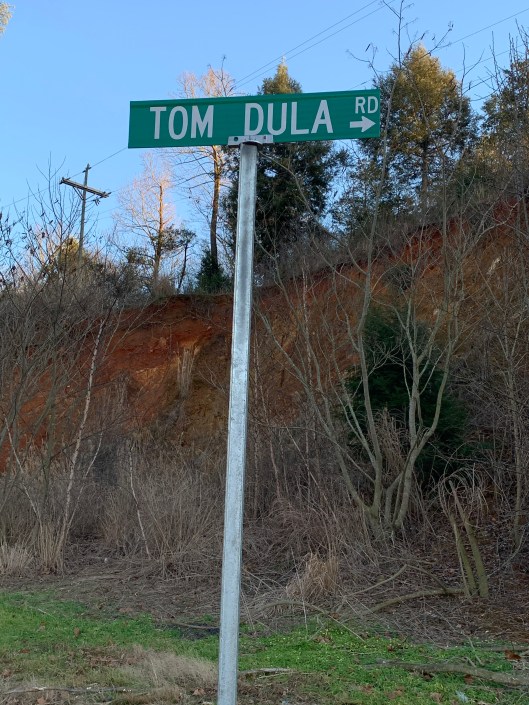
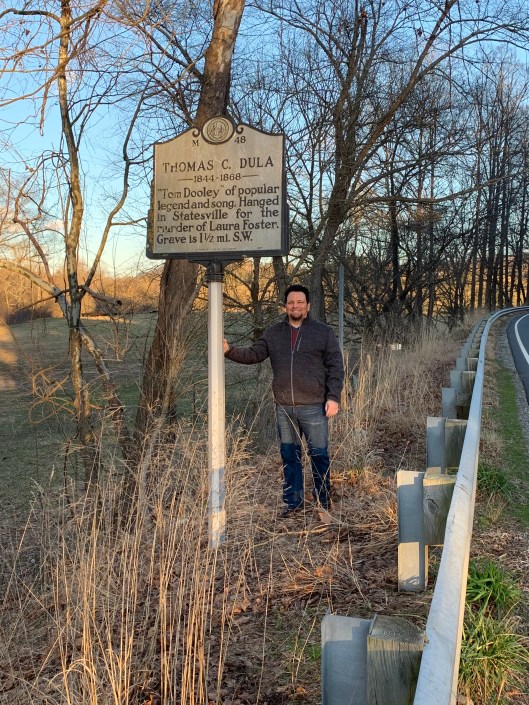
Tom Dula: Ferguson, NC (2020)

08 Saturday Feb 2020

Posted by Brandon Ray Kirk in Civil War, Music, Tom Dula

≈ Leave a comment

Tags

Appalachia, Brandon Kirk, civil war, Confederate Army, Elkville, Ferguson, fiddler, Frank Proffitt, Grayson and Whittier, history, Kingston Trio, music, North Carolina, photos, Phyllis Kirk, Sharyn McCrumb, The Ballad of Tom Dooley, Tom Dooley, Tom Dula, Wilkes County

IMG_5708

Reading Sharyn McCrumb’s masterpiece “The Ballad of Tom Dooley” sent us down to find historical sites in the vicinity of Ferguson in Wilkes County, NC. 7 January 2020. Most anyone will remember this 1958 mega-hit by the Kingston Trio: https://www.youtube.com/watch?v=VhXuO4Gz3Wo

IMG_5707

Tom Dula (1845-1868), a Confederate veteran and fiddler, lived in Elkville, just above Ferguson, NC. Few sites remain from his time; most of the old buildings are gone. 7 January 2020. Here’s the first recording of “Tom Dooley” by Grayson and Whittier (1929): https://www.youtube.com/watch?v=WWd1rNmDAgg

IMG_5711

Finding this sign in Ferguson meant that we were basically at Ground Zero. More discoveries to come! Photo by Mom. 7 January 2020. Here’s a personal favorite version of “Tom Dooley” by Frank Proffitt: https://www.youtube.com/watch?v=EfPdCveqQRw

Armed March Trial (1923): Convicted Man Flees to Mexico

08 Saturday Feb 2020

Posted by Brandon Ray Kirk in Battle of Blair Mountain, Coal

≈ Leave a comment

Tags

Appalachia, Battle of Blair Mountain, Blair Mountain, C.W. Conrad, Charles Town, Charleston, circuit clerk, crime, deputy sheriff, Don Chafin, H.E. Keadle, history, Jefferson County, Logan Banner, Logan County, Mexico City, Oklahoma, Oklahoma City, sheriff, U.G. Young, United Mine Workers of America, Walter Allen, West Virginia

From the Logan Banner of Logan, WV, comes this bit of history about the “Armed March” at Blair Mountain, dated February 2, 1923:

Allen Is Traced By Deputy E. Keadle To Mexico City

Walter Allen, convicted of treason at Charlestown on September 15, and sentenced to ten years in the state penitentiary and who was released on bond of $15,000 with U.G. Young of Charleston as surety and who jumped his bond and fled from the state recently has been traced by Logan officers to Mexico City.

A capias was received here on December 20 for Allen, the capias being issued to C.W. Conrad, clerk of the circuit court of Jefferson County, when Allen failed to appear there on the date set. Deputy H.E. Keadle took the capias to Charleston and called at headquarters of the United Mine Workers, and attorneys for that organization professed their ignorance of his whereabouts and stated they would do all within their power to apprehend the fugitive.

However it was ascertained that Allen had been in Oklahoma City, Okla., and the officers there were requested by wire to arrest the fugitive but he had fled the city when they searched for him. Deputy Keadle then continued the search and the latest information received at the sheriff’s office here states that Allen is now known to be in Mexico City, Mexico.

Allen was convicted for his participation in the armed march of Logan in August and September, 1921. According to the evidence in the trial which lasted five weeks, he handled the finances and otherwise assumed direction of the armed march which was stopped at the border of Logan County where a battle between the invaders and the state forces raged over a battle line extending for 25 miles.

After his conviction his attorneys noted an appeal and stated the case would be carried to the supreme court. The time granted Allen for his appeal expired December 13, but the time expired without any record of an appeal being noted. When Allen failed to appear at Charlestown to begin his sentence a capias was issued for him and sent to Sheriff Chafin for execution and the hunt for the fugitive then began.

Due to the red tape connected with extradition proceedings, it is not yet known what steps will be taken by Logan authorities toward extraditing the fugitive.

***

For more information about Mr. Allen, go here: https://www.wvencyclopedia.org/articles/205

Appalachian Heritage Day in Logan, WV (2019)

04 Tuesday Feb 2020

Posted by Brandon Ray Kirk in Civil War, Coal, Logan, Music, Native American History

≈ Leave a comment

Tags

Albert Gallatin Jenkins Camp, Appalachia, Appalachian Heritage Day, archaeology, bluegrass, Buddy Griffin, Chuck Keeney, civil war, Craig Ferrell, fiddlers, fiddling, flintknapping, Glenville State College, Hatfield-McCoy CVB, history, Logan, Logan County, Logan County Commission, Mine Wars Museum, Native American History, photos, Sons of Confederate Veterans, Southern Coalition for the Arts, Southern West Virginia Community and Technical College, Vinny Mendez, West Virginia, West Virginia Archaeological Society, writers, writing

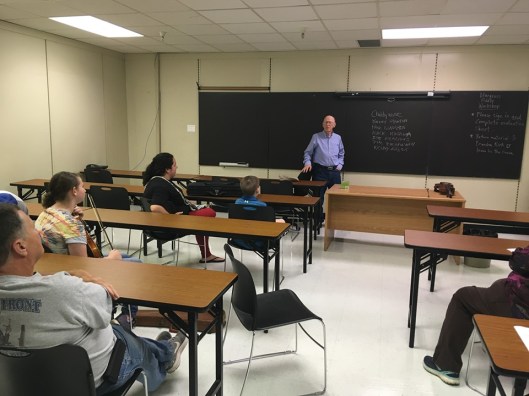
Appalachian Heritage Day occurred on August 25, 2019 in Logan, WV. The event featured authors, scholars, guest speakers, information tables, a genealogy workshop, a writers’ workshop, numerous old-time and bluegrass music workshops, and an all-day concert. Special thanks to the Logan County Commission, Southern West Virginia Community and Technical College, the Hatfield-McCoy CVB, and the Southern Coalition for the Arts for sponsoring the event. For more information, follow this link to the event website: https://appalachianheritageday.weebly.com/

Buddy Griffin with Bluegrass Music Workshop

Buddy Griffith, who helped develop the world’s first bluegrass music degree program at Glenville State College, hosted a bluegrass fiddle workshop. For more about this amazing artist, go here: http://www.wvculture.org/vandalia/award/2011Griffin.html

DSC_0803

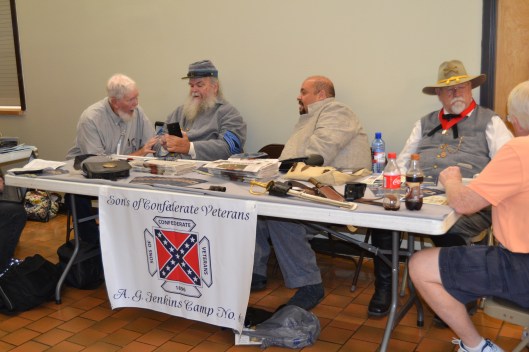
Sons of Confederate Veterans, Albert G. Jenkins Camp, were on hand to educate attendants about Southern history. For more about this group and its activities, go here: https://www.herald-dispatch.com/features_entertainment/memorial-service-held-in-milton-for-confederate-soldier-lt-james/article_44e81ab0-c7a0-550d-af96-c972bf27ca9d.html

DSC_0807

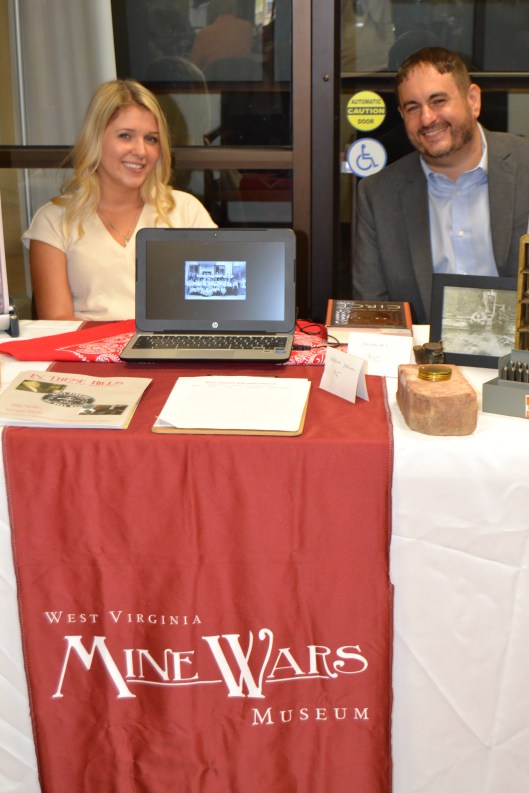
The West Virginia Mine Wars Museum provided information about regional labor history. Dr. Charles Keeney (shown above), a history professor at Southern WV CTC, presented a lecture about heritage tourism. For more about the Mine Wars Museum, go here: https://www.wvminewars.com/

DSC_0818

Craig Ferrell, past president of the Kanawha Chapter of the West Virginia Archaeological Society, demonstrates flintknapping for Vinny Mendez, a local relic hunter who showcased his collection of Civil War artifacts. Craig presented a lecture titled “The Art of Flintknapping and Stone Tool Replication.”

Early Schools of Logan County, WV (1916)

04 Tuesday Feb 2020

Posted by Brandon Ray Kirk in Civil War, Logan

≈ 1 Comment

Tags

Appalachia, Aracoma, Athelyn Hatfield, Beatrice Taylor, Bertha Allen, Big Island, Big Rock, Bill Ellis, board of education, Brooke McComas, C&O Railroad, Charles Avis, circuit rider, civil war, Cleveland, Coal Street, Dingess Run, E.M. Ford, education, Elma Allen, F.O. Woerner, Florence Hughes, Fred Kellerman, Free School Act, G.O. Nelson, George Bryant, George T. Swain, Guyandotte Valley, Hickman White, history, Isabella Wilson, Island Creek, J.A. McCauley, J.L. Chambers, J.L. Curry, J.W. Fisher, James Lawson, Jennie Mitchell, Jim Sidebottom, Joe Perry, Joel Lee Jones, John B. Floyd, John Dingess, Kate Taylor, Kittie Virginia Clevinger, L.G. Burns, Lawnsville, Leland Hall, Leon Smith, Lettie Halstead, Lewis B. Lawson, Lillian Halstead, Logan, Logan County, Logan Democrat, Logan High School, Logan Wildcats, Lon E. Browning, Lucile Bradshaw, Maud Ryder, Maude Smartwood, Minnie Cobb, Morgantown, Ohio, Old Fork Field, Pearl Hundley, Pearl Staats, Peter Dingess, principal, R.E. Petty, Roscoe Hinchman, Sarah Dingess, Southern Methodist Church, Stollings, Superintendent of Schools, Tennessee, The Islands, typhoid fever, W.V. Vance, W.W. Hall, West Virginia

From the Logan Democrat of Logan, WV, in a story titled “Schools and School Houses of Logan” and dated September 14, 1916, comes this bit of history about early education in Logan County, courtesy of G.T. Swain:

The hardest proposition encountered by the author in the preparation of this book was securing the following information relative to the early schools of Logan. We interviewed numbers of the older inhabitants, but owing to their faulty memories we were unable to obtain anything accurate. Nor were the county school officials able to give us any information regarding the schools of the early period. In making mention of this fact to Professor W.W. Hall of Stollings, who is District Superintendent of the free schools in Logan district, he graciously offered to secure as much information as he could from an old lady by the name of Sarah Dingess, who lives near his home. Thus, when we thought that we had exhausted every effort along this line, we were surprised and doubly appreciative of the efforts of Professor Hall, who secured for us the data from which the following article was compiled:

When the first settlers of Logan left the civilization of the East and came to the fertile Guyan Valley to carve homes for themselves and their children out of the forest, they brought with them a desire for schools for their offspring. One of the first pioneers of this valley, Peter Dingess, very early in the last century, erected a pole cabin upon the ruins of the Indian village on the Big Island, for a school house. That was the first school house erected within the limits of Logan county. In that house the children of The Islands (the first name of Logan) were taught “readin’, writin’ and spankin’.” After they ceased to use that house for school purposes, the people annoyed Mr. Dingess so much, wanting to live in the building, that he had his son, John, go out at night and burn it down. Thus the first school house for the children of Logan disappeared.

After the cabin on the Big Island ceased to be used for a school house, Lewis B. Lawson erected a round log house near the mouth of Dingess Run, where W.V. Vance now resides, for a school building. In that house George Bryant taught the children of Lawnsville (the name of Logan at that time) for a number of terms. A Mrs. Graves from Tennessee, wife of a Methodist circuit rider, also taught several terms there. Her work was of high order as a few of the older citizens yet attest.

A short time after Mr. Lawson built his school house at Dingess Run his brother, James, erected a school house on his land at the forks of Island Creek in the Old Fork Field, where J.W. Fisher now resides. The Rev. Totten, a famous and popular Southern Methodist circuit rider, taught the urchins of Aracoma (the name of Logan at that time) for several terms in the early ’50s of the last century.

After the passage of the Free School Act by the General Assembly of Virginia in 1846, the people of Aracoma and Dingess Run erected a boxed building for a school house by the Big Rock in the narrows above Bill Ellis’ hollow. The county paid the tuition of poor children in that school. Rev. Totten taught for several years in that house. He was teaching there when the Civil War began, when he discontinued his school, joined the Logan Wild Cats, marched away to Dixie, and never returned. Each of the last three named houses was washed away in the great flood in the year 1861.

When the Civil War was over and the soldiers had returned to their homes, they immediately set about to erect a school house. They built a hewn log house on the lower side of Bill Ellis’ hollow. That was the first free school building erected within the present limits of the city of Logan. In that house one-armed Jim Sidebottom wielded the rod and taught the three R’s. He was strict and a good teacher in his day. That house served as an institution of learning till in 1883 the Board of Education bought about an acre on the hill where the brick school houses now stand from Hickman White. A few years later additional land was bought of John B. Floyd in order to get a haul road from Coal street opposite the residence of Joe Perry’s to the school building. The old frame building was erected on the hill in 1883, and it furnished ample room for the children for more than two decades.

After the completion of the Guyan railroad to Logan the phenomenal growth of the city began. The growth of its educational facilities has kept pace with its material progress. In 1907 a brick building of four more rooms was added. Then they thought they would never need any more room. In 1911 they built a two story frame school house. In 1914 the magnificent new High school building was erected. Today, nineteen teachers are employed in the city, and within the next few years several more teachers must be employed, while the buildings are already taxed to their capacity.

In the year 1911 the Board of Education employed W.W. Hall as district supervisor. He asked for the establishment of a high school, and the citizens strongly endorsed his recommendation. The high school was established and Mr. Hall went at his own expense to the state university at Morgantown to find a principal for the high school. He secured F.O. Woerner, and the school was organized in 1911, on August 28. The next year Miss Maude Smartwood of Cleveland, Ohio, was added to the high school teaching force. In 1913 J.A. McCauley died from typhoid fever before the school closed, and George EM. Ford was employed to finish the term. In 1914 the school offered for the first time a standard four-year high school course and was classified by the state authorities as a first class high school. Today it is regarded as one of the best high schools in the state. It has more than one hundred pupils enrolled and employs seven regular high school teachers. It has a better equipped domestic science department than any other high school in West Virginia. When the high school was organized in 1911, there were only seven pupils in eighth grade in the city school. These seven were taken and pitched bodily into the high school. Of that first class, Fred Kellerman, Leland Hall, Roscoe Hinchman, Leon Smith, Kate and Beatrice Taylor continued in school until they were graduated June 2, 1915.

The first common school diploma examination ever held in Logan county was conducted by Supt. Hall as the close of his first year’s work at the head of the Logan District schools. He also conducted the first common school graduation exercises ever held in the county, in the old Southern Methodist church, on May 28, 1912.

Logan is indeed proud of her schools, and the efforts made by the faculty and school officials toward the training and educational development of young America meets with the hearty approval and commendation of all citizens.

Those in charge of the county schools are: Lon E. Browning, county superintendent; W.W. Hall, Logan district supervisor; the Logan district board of education is composed of J.L. Curry, president; and J.L. Chambers and L.G. Burns, commissioners. Chas. Avis is secretary of the board.

The faculty consists of F.O. Woerner, Principal of the Logan High School and instructor in mathematics; Joel Lee Jones, languages; Minnie Cobb, science; Isabella Wilson, cooking and sewing; Maud Ryder, commercial subjects; Jennie Mitchell, history and civics, and Mrs. R.E. Petty, music.

Lucile Bradshaw, English, literature, and mathematics; Florence Hughes, geography, history, and physiology, of the sixth and seventh grades departmental.

The following are the teachers in the grades: G.O. Nelson, Principal; Athelyn Hatfield, Pearl Staats, Brooke McComas, Lillian Halstead, Elma Allen, Lettie Halstead, Pearl Hundley, Kittie Virginia Cleavinger and Bertha Allen.

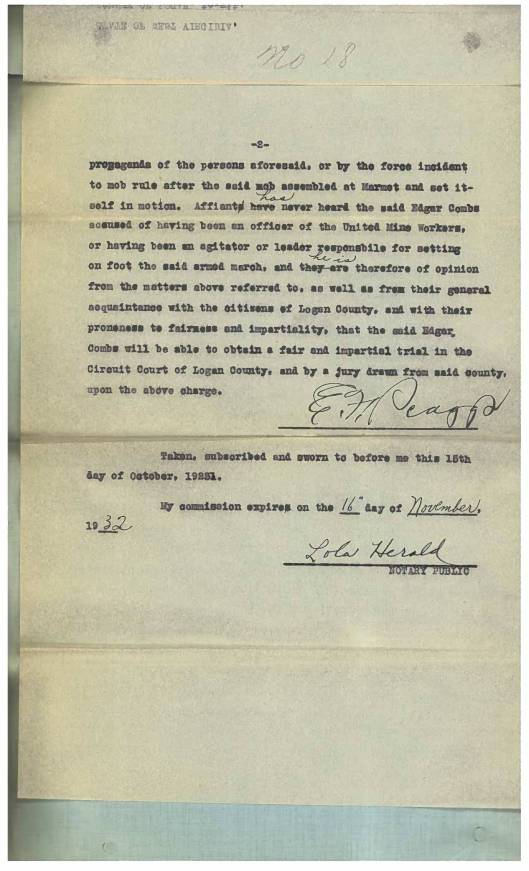
State v. Edgar Combs (1923): Statement of E.F. Scaggs, No. 18

31 Friday Jan 2020

Posted by Brandon Ray Kirk in Coal, Logan

≈ 1 Comment

Tags

Appalachia, Battle of Blair Mountain, Blair Mountain, coal, E.F. Scaggs, Edgar Combs, history, Logan, Logan County, Lola Herald, Superintendent of Schools, United Mine Workers of America, West Virginia

Document 18-1Document 18-2

Jewish History for Logan, WV (1923)

31 Friday Jan 2020

Posted by Brandon Ray Kirk in Huntington, Jewish History, Logan

≈ Leave a comment

Tags

Abraham Feinstein, Appalachia, Charleston, Coalfield Jews: An Appalachian History, Dave Fried, Deborah R. Weiner, history, Huntington, Jews, Ku Klux Klan, Logan, Logan Banner, Logan County, New York, Philadelphia, West Virginia

From a Logan Banner story dated May 11, 1923 comes this bit of history about Jewish activity in Logan, WV.

Dr. Feinstein Gives Talk to Society

Dr. Abraham Feinstein, of Huntington, addressing the Hebrew Sisterhood of Logan county Wednesday evening, spoke zealously for the establishment of a Jewish synagogue in Logan.

Dr. Feinstein told the gathering that there was one idea uppermost in his mind, which he wanted to submit. And that idea was the establishment of a place of worship and meeting for the Jews of Logan.

This suggestion had a far more deeper significance than was apparent on the surface, the audience was told, because it was the small part of the greatest problem that the Jews of America face today.

And this problem, as Dr. Feinstein pointed out, is “the reclamation of Jews to Judaism. And this can be done only through the mediums of education. Study the history of your people and your race. Jews are Jews merely by accident; understanding Jews study their religion, so that they might know why they are Jews. Familiarize yourself with the prophets, be square-shouldered Jews, proud and happy in being a Jew.

“It isn’t anti-semitism, the K.K.K., Henry Ford with his smug ideas of patriotism, nor Lowell asking for the expulsion of the Jews from American universities, nor the Zionist movement that is your problem. Your problem is education. See to it that this problem is solved and you will have contributed richly to the Jewish life in your city.”

Dr. Feinstein pointed out that in New York, where the largest number of Jewish citizens in the world reside, that seventy-five percent of the children have never received any kind of Jewish education whatsoever. “The more we are attacked and denounced the more schools and synagogues we should build,” he said.

“The greatest enemy of the Jews is the Jew who goes out, ignorant of things Jewish,” Dr. Feinstein said.

These words were quoted from an address of a Philadelphia Rabbi by the speaker: “I am not particularly pleased when I hear of a Jew becoming a great scientist, for Judaism is not a school of science. I am not pleased when a Jew becomes a great actor, a great inventor, a great lawyer, pugilist, statesman, but I exalt and rejoice when a true altruistic man becomes a Jew.”

The order of the meeting follows:

Opening prayer–Dr. Feinstein.

Piano and violin–Mrs. Dave Fried and Mrs. Brown.

Piano Solo–Mrs. S. Michaelson.

Voice–Miss Mellman of Charleston.

NOTE: One excellent source for regional Jewish history is Deborah R. Weiner’s Coalfield Jews: An Appalachian History (2006).

Appalachian Heritage Day in Logan, WV (2019)

29 Wednesday Jan 2020

Posted by Brandon Ray Kirk in Civil War, Logan, Music, Women's History

≈ Leave a comment

Tags

Almost Heaven Dulcimer Club, Appalachia, Appalachian Heritage Day, authors, Bobby Taylor, books, Carter Taylor Seaton, Confederate Army, Cooney Ricketts Chapter, culture, fiddler, fiddlers, fiddling, Hatfield-McCoy CVB, Hippie Homesteaders, history, Ken Hechler, Laura Treacy Bentley, Logan, Logan County Commission, Looking for Ireland, M. Lynne Squires, photos, Rebel in the Red Jeep, Southern Coalition for the Arts, Southern West Virginia Community and Technical College, United Daughters of the Confederacy, Urban Appalachia, Vandalia Award, West Virginia

Appalachian Heritage Day occurred on August 25, 2019 in Logan, WV. The event featured authors, scholars, guest speakers, information tables, a genealogy workshop, a writers’ workshop, numerous old-time and bluegrass music workshops, and an all-day concert. Special thanks to the Logan County Commission, Southern West Virginia Community and Technical College, the Hatfield-McCoy CVB, and the Southern Coalition for the Arts for sponsoring the event. For more information, follow this link to the event website: https://appalachianheritageday.weebly.com/

DSC_0832

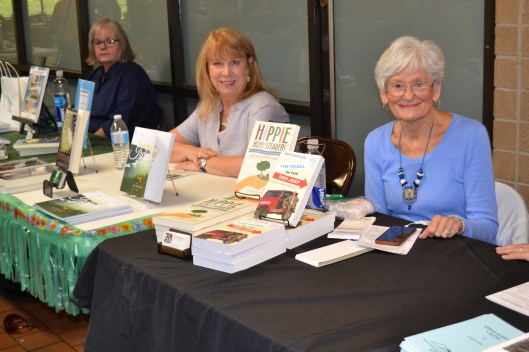
Authors Carter Taylor Seaton, Laura Treacy Bentley, and M. Lynne Squires offered their amazing books for sale, hosted meet-and-greet sessions at author tables, and presented about Appalachian topics. Each of these ladies has a website providing information about their biographies and books; for more info, give them a Google!

Cooney Ricketts UDC Group

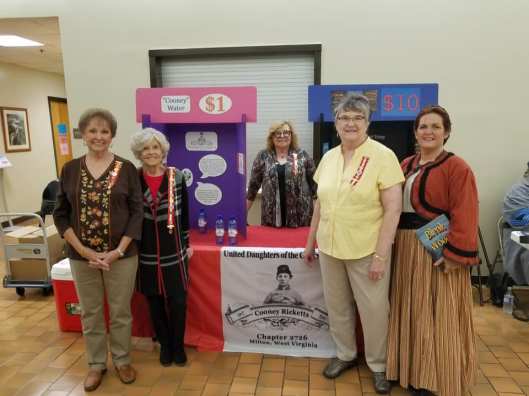
The United Daughters of the Confederacy, Cooney Ricketts Chapter, were featured at Appalachian Heritage Day. This wonderful group of ladies offered history about Confederate soldiers and women on the home front. For more about this group, go here: https://www.herald-dispatch.com/features_entertainment/albert-gallatin-jenkins-united-daughters-of-confederacy-hosts-annual-meeting/article_6d2cdf9e-5ef3-5a75-a22f-69382944e145.html

Bobby Taylor in Old-Time Fiddle Workshop

Master fiddler Bobby Taylor hosted an old-time fiddle workshop. Bobby is the 2010 Vandalia Award winner. For more about Bobby, go here: http://www.wvculture.org/vandalia/award/2010taylor.html

Almost Heaven Dulcimer Club

The Almost Heaven Dulcimer Club made plenty of unforgettable music at Appalachian Heritage Day. For more about them, go here: http://www.davehaasmusic.com/davehaasmusic/Club.html

Armed March Trial (1923)

29 Wednesday Jan 2020

Posted by Brandon Ray Kirk in Battle of Blair Mountain, Boone County, Coal, Logan

≈ Leave a comment

Tags

A.M. Belcher, Appalachia, Battle of Blair Mountain, Bill Blizzard, Blair Mountain, Boone County, C.W. Osenton, coal, Coal River, crime, deputy sheriff, Dingess Run, Edgar Combs, George Muncy, H.W. Houston, history, J.E. Wilburn, James Cafalgo, John Gore, Lewisburg, Logan Banner, Logan County, Nellis, Ottawa, T.C. Townsend, United Mine Workers of America, Velesco Carpenter, W.B. Mullens

From the Logan Banner of Logan, WV, comes this story dated June 29, 1923 about the trial that resulted from the “armed march” on Logan County, WV, by UMWA miners:

Widow Is Introduced At The Blizzard Trial

LEWISBURG, W.Va., June 27 — Two word pictures, one from the lips of the widow of George Munsy, coal digger who “never came back” from guarding his county, the other from one of the party that met and killed the outpost on the mountain side, lay tonight before 12 men who are to determine whether Sub-District President William Blizzard, of the miners’ union, was an accessory to the murder of Munsy.

Before these word pictures the jurors had heard counsel on both sides outline the story of the labor trouble of Southern West Virginia coal fields, the march of thousands against the Logan border, the interruption of that march after a brigadier general of the United States Army had intervened a midnight clash between miners and deputy sheriffs and state police, resumption of the march, fighting on the mountain ridges that separated the non-union Logan coal fields from the then union fields on Coal River, the meeting of 30 or 40 marchers with Deputy Sheriff John C. Gore, of Logan county, and two companions one of whom was Munsey, the volley of shots that answered the Logan pass-word, “amen,” and a wealth of detail about the march presented from point of view of both prosecution and defense.

Review Blair Battle

All the morning was spent in the opening of the attorneys, A.M. Belcher and C.W. Osenton, for the prosecution, and H.W. Houston and T.C. Townsend, for the defense. Then in the afternoon the jurors turned their attention to the witness box. First they saw W.B. Mullens point out the battle line and the points of interest in the march on a map that was tacked to the courthouse wall above the witness stand. Next Velesco Carpenter, facing an inexhaustible stream of questions in direct and cross-examinations told how he had gone from his home in Nellis to Blair, how in a party of about 35 he marched up Blair mountain, spent the night, and early the next morning set out and from his place in line watched the meeting with three men, one of whom he learned was Gore, heard the shots and saw the bodies after they had fallen. Then just before court adjourned Mrs. Munsy took the stand for her brief examination so that she might return tomorrow to her seven children in her home on Dingess Run Creek in Logan county.

Widow on Stand

“The night before he was killed was his time to come home but he never came,” Mrs. Munsy testified that her husband had been digging coal for about fifteen years before his death and that they had been married about 20 years. He had been “guarding for about a week, working for Logan county, for the coal operators,” she went on, but later when Mr. Houston cross-examined her on that statement her formerly quiet tone rose to the ringing declaration “he was defending his county.”

Carpenter did not know who fired the shots that killed Gore, Munsy and James Cafalgo. When the shooting began he ran back a few steps and dropped to the ground, he said. After it was over he went to a point near the body of “the foreigner,” and saw that of Gore, but could not see the third body. Edgar Combs told him he had killed the one Carpenter had designated as “the large man in the middle,” and later told another of the party this man was Gore.

He left Nellis, where he was employed as a pump man, on August 29, 1921, he said, after a man had come to the mines and threatened to “knock off” the “yellow” men who did not go. A journey on foot and by rail took about 30 in his party to Ottawa, and there Edgar Combs picked him and three others he named to go to Blair. The next day from the schoolhouse steps in Blair, he said, Rev. J.E. Wilburn made a speech and a party was organized that went into the hills. Some threw down their guns and refused to go but threats were made, and the men were lined up in single file, with leaders for squads of eight men. The original party of 50 or 60 divided, and the group of about 35, in which he went, camped on the top of the mountain until daybreak. They heard firing in the direction of the “gap,” through which previous testimony had shown the road from Blair to Logan ran and set out in that direction.

Then he told of the meeting with the “large man” and his two companions, and by pre-arranged signal the leader lifted his hat three times to indicate there was no danger. The large man beckoned to them to come on, and when the parties met there were mutual demands for the password. The shots were fired, Carpenter testified, when somebody said “amen,” and in the opening statements prosecution counsel had told the jury that it would be shown that “amen” was the Logan password. Wilburn, the preacher, was in the lead of the marchers column, and Combs next behind him, the witness said.

Civil War in the Kanawha Valley: Buffalo Academy (2019)

28 Tuesday Jan 2020

Posted by Brandon Ray Kirk in Civil War

≈ Leave a comment

Tags

Appalachia, Buffalo, Buffalo Academy, Buffalo Presbyterian Church, civil war, Civil War in Charleston, history, Kanawha Valley, photos, Putnam County, Terry Lowry, West Virginia

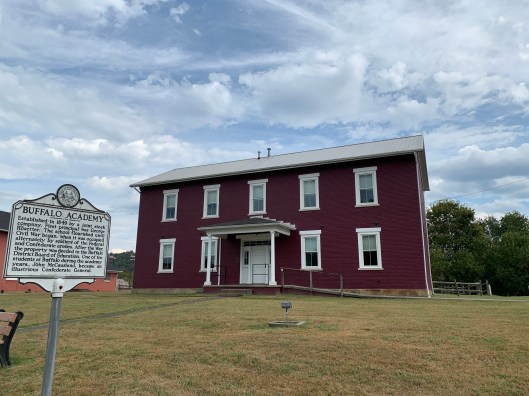
IMG_0725

Terry Lowry is THE authority on the Civil War in the Kanawha Valley. Stop 11 on his tour: Buffalo Academy in Buffalo, WV. 29 September 2019. Here is a link to Terry’s latest book, The Battle of Charleston (2016): https://wvcivilwar.com/now-available-the-battle-of-charleston/

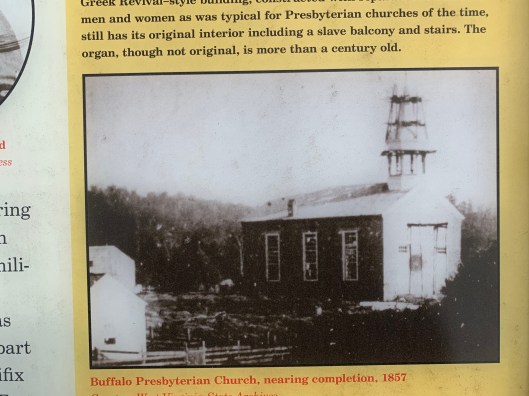
IMG_0730

Buffalo Presbyterian Church, located near Buffalo Academy (1857). 29 September 2019

IMG_0726

Buffalo Presbyterian Church, located near Buffalo Academy. 29 September 2019

IMG_0722

The tour concludes! 29 September 2019

Chapmanville News 11.23.1923

28 Tuesday Jan 2020

Posted by Brandon Ray Kirk in Chapmanville, Huntington, Logan

≈ Leave a comment

Tags

A.K. Bowling, Appalachia, B.B. Ward, Basil Robertson, Bennie Robertson, Cecil Ward, Chapmanville, Charleston, Code Tabor, Donald Stone, Dr. Turner, Eva Barker, Floyd Barker, genealogy, Harriet Hill, Hinton, history, Huntington, Kentucky, Lexington, Logan, Logan Banner, Logan County, New York, Opie Robertson, Roscoe Turner, Subinia Ward, Victor Toney, Wallace Ferrell, Washington, Wayne Brown, West Virginia, William Turner, Young People's Epworth League

A correspondent named “Old Man Grump” from Chapmanville in Logan County, West Virginia, offered the following news, which the Logan Banner printed on November 23, 1923:

Last week was a sad week on account of the death of Dr. Turner and we failed to write. We all are much grieved over his death.

Rev. Chambers conducted a two weeks service and had quite a few joiners and several were baptized Sunday. Rev. Chambers left Sunday afternoon for Lexington, Ky.

Mr. Cecil Ward left Monday for Charleston where he will spend his vacation. Wish you a happy time, Cecil.

The Young People’s Epworth League are doing great work and the young and old people seem to be interested in it. We hope they still hold out for I am sure it will be a great help to all the young people.

Mr. Opie Robertson spent Sunday in Chapmansville with his mother, Mrs. A.K. Bowling.

We have seen in the papers so much about Hazel Maud, Hazel E. McCloud, but we haven’t never been able to find out which is Hazel M. and Hazel E. but we see them quite often.

Ima Nutt, we sure are glad you come to our little town, but we would be pleased if you would let yourself be known and not be so bashful. Now don’t get mad as we are just joking.

Mr. Donald Stone left Monday for Charleston for an extended visit. We haven’t been able to find out how long.

Mr. Basil Robertson spent Sunday with his mother of this place.

Seems like some of the girls like to quarrel on their way home from church, don’t they Hazel?

Mr. Victor Toney and Miss Bennie Robertson were seen out walking Sunday afternoon.

Mr. Floyd Barker spent Saturday in Chapmansville with friends. Mr. Barker is here from the army on a three [day?] vacation, then he will return and stay another year.

Mr. Code Tabor of Logan was visiting in Chapmansville Saturday.

Roscoe Turner, a brother of Dr. Turner, from New York, attended the funeral of his brother last week.

Mr. and Mrs. Wallace Ferrell of Huntington spent last week here with Mrs. Ferrell’s sister, Mrs. Turner.

Mr. and Mrs. King of Hinton attended the burial of Dr. Turner. Mrs. King is a sister of Dr. Turner.

Mrs. William Turner, mother of the late Dr. Turner, and his sister, Mrs. Mankins of Washington, D.C., attended the burial services.

Mrs. Subinia Ward was calling on Mr. and Mrs. B.B. Ward Sunday.

Mr. Wayne Brown and Miss Harriet Hill were seen out walking Sunday evening.

Miss Eva Barker and Mr. Wilkie were seen out car riding Sunday.

Civil War in the Kanawha Valley: Hoge House (2019)

24 Friday Jan 2020

Posted by Brandon Ray Kirk in Civil War

≈ 2 Comments

Tags

Appalachia, Battle of Charleston, Battle of Winfield, Charles Brown, civil war, Confederate Army, history, Hoge House, James W. Hoge, John Bowyer, Kanawha Valley, National Register of Historic Places, Phillip James Thurmond, Putnam County, slavery, Tallyrand Brown, Terry Lowry, Virginia Secession Convention, West Virginia, Winfield

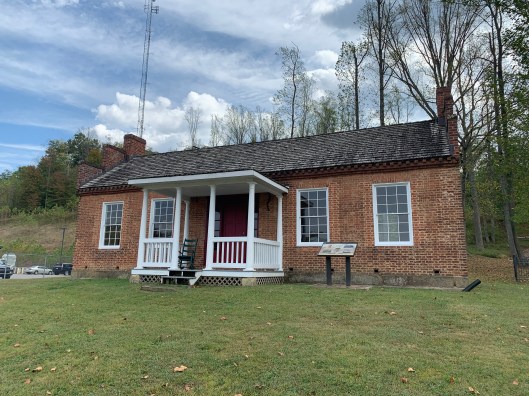
IMG_0694

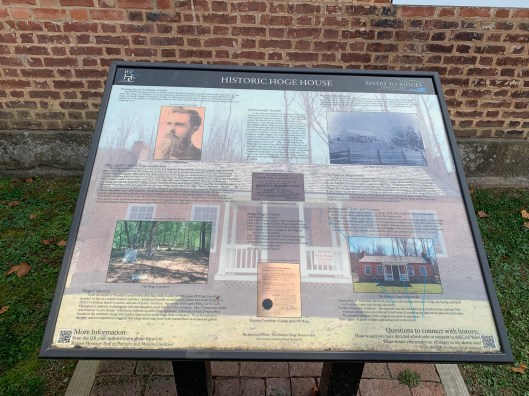
Terry Lowry is THE authority on the Civil War in the Kanawha Valley. Stop 10 on his tour: James W. Hoge House in Winfield, WV. 29 September 2019. Here is a link to Terry’s latest book, The Battle of Charleston (2016): https://wvcivilwar.com/now-available-the-battle-of-charleston/

IMG_0704

Built in 1838 by Charles Brown, his son Tallyrand sold it to Capt. John Bowyer. James W. Hoge acquired the home in 1857. He represented Putnam County at the Virginia Secession Convention in 1861, voting against secession.

IMG_0686

Moved from its original location in 2004, the home was listed on the National Register of Historic Places in 2007.

IMG_0691

This is the grave of Confederate Captain Phillip James Thurmond, who was mortally wounded in the Battle of Winfield (1864). For more about Capt. Thurmond, follow this link: https://www.herald-dispatch.com/news/putnam_news/confederate-soldier-reburied-with-fanfare-military-rites/article_0c234fe9-6083-5fbf-b7ac-79d2fd87b889.html

Recollections of Laura Hinchman at Combs Addition, WV (1984), Part 1

24 Friday Jan 2020

Posted by Brandon Ray Kirk in African American History, Civil War, Coal, Guyandotte River, Huntington, Logan, Man, Timber, Women's History, Wyoming County

≈ 5 Comments

Tags

African-Americans, Alfred Beckley, Anna Brooke Hinchman, Bruno, Buffalo City, civil war, Claypool, Clean Eagle Coal Company, coal, Combs Addition, Confederate Army, Cyclone, Cyclone Post Office, Davin, Elk Creek, Forkner, genealogy, Guyandotte River, history, Hollow A. Davin, Huntington, John L. Lewis, Lake Claypool, Laura Hinchman, Logan, Logan County, logging, Lorenzo Dow HInchman, Mallory, Man, Man High School, Morris Harvey College, Oceana, Paul Hinchman, Pete Toler, postmaster, rafting, Raleigh County, Rosa Hinchman, splash dams, timbering, Ulysses Hinchman, United Mine Workers of America, Vic McVey, Walter Hinchman, West Virginia, Woodrow Hinchman, Wyoming County

Laura C. Hinchman was born on March 22, 1919 to Walter and Anna Brooke (McVey) Hinchman at Mallory in Logan County, WV. She was an educator for over fifty years and was very active in civic affairs. For more information about her background, see her obituary at this location: https://www.findagrave.com/memorial/140834185/laura-caryl-hinchman

The following interview of Ms. Hinchman was conducted on July 16, 1984. In this part of the interview, she discusses her ancestry, community history, timbering, and coal mining.

***

Miss Hinchman, how did your family first come to this area?

Well, when West Virginia was being settled, people who were willing to come here were given land grants by governors of Virginia over different periods of years. This property was given by the governor of the commonwealth of Virginia at that time, Governor Nicholson. It was given in 1815 to my great grandfather, Dr. Ulysses Hinchman, who was a member of the legislature. He had land holdings in Wyoming County, and he laid out the town of Oceana. He is recorded in a lot of the books of the history of Wyoming and Logan Counties. According to the West Virginia Blue Book, that is how Man got its name. At first it was called Buffalo City. Then they decided to change the name. They thought Hinchman was too long and there was already a place called Hinch, so they named it Man in honor of my great grandfather. Now, that’s according to the West Virginia Blue Book.

Do you remember what your grandparents were like?

Now, both my grandfather and grandmother Hinchman died before I was born, so I don’t remember either of them. At that time, this was all timber land. My grandfather Hinchman, whose name was Lorenzo Dow Hinchman, was a timberman. We have a lot of records here in the house where he kept books of how much he paid the men and how much he sold, and all that. After this was cleared, then, of course, it became farmland. Now, they had no way of getting the logs that were cut to a market. So down there just below Woodrow’s, and this happened several places, they built what was called splash dams. They made a dam and dammed the water up and filled it with logs. Then there would be a great big lot of excitement. Everybody would gather and they would tear the dam lose and let the logs float down to the Guyan River. There were men who went with them, I suppose on rafts, and rafted the logs together, and floated them down the Guyan River to the Guyandotte. Now, my mother’s father, who came from Raleigh County, was Uncle Vic McVey. Of course, I remember him well, he lived here with us until he died at the age of ninety-four. He was one of the men who followed floating those logs down the river, and then they would walk back from Huntington. They had places that they stayed on their way back. I don’t know how many days it took.

Now, my grandmother Hinchman was a Chambers, which is also one of the early settler families in this area. She was a schoolteacher. At that time, it was possible to teach school when you got through the eighth grade, you were given a certificate. All first teachers in the one room schools here were just graduates of the eight grade, because the high school at Man was not built until 1919 or 1920, and that’s all they had. Now some people taught after they finished the eighth grade, and then went on when it was possible. I have a cousin Lake Claypool–that’s another old family in this area for which Claypool is named–that she taught after she finished the eighth grade then she went on to Man and finished high school and then went to Morris Harvey. But all the older teachers were just eighth grade. There was a one room school down here at Claypool. There was a one room school up at Vance’s. There were several one room schools on Buffalo Creek. There was a one room school up–what’s that creek up Bruno called–Elk Creek. My grandmother was a teacher, but as I say, both died before I was ever born. Now then, this place was called Cyclone. This is where Cyclone was. My grandmother Hinchman kept the Cyclone Post Office here for forty years. After she passed away, my mother–she was a McVey–and she married my father, Walter Hinchman, in 1910, and came here. I had Aunt Rosa Hinchman, who had never married at that time, who helped her keep the post office. The mail was carried on horseback from Huntington and the West, came that way, and from Oceana, from that direction they carried it. The postmasters met here, and they ate dinner here every day. My mother–ever who all was here, and at that time, you never knew who might be there for dinner… But when this house was built, this part wasn’t part of it. The kitchen and the dining room were in separate buildings. Now, of course, in the south they had slaves and all, but I do recall their talking about on black man, by the name of Sam. I don’t remember much about him but that’s the only black person that they ever had here, you know, on the farm.

I do remember my granddad McVey quite well, and my great-grandfather came to Raleigh County with General Beckley and settled there. Then my mother’s grandfather was a Confederate soldier in the Civil War. His name was Zirkle, which is the German word for circle. He ran away from home during the Civil War and joined the Confederate Army. After the war he came here and settled. He also lived with us until he was in his nineties. But my mothers’ mother, my grandmother McVey, died when my mother was only, maybe two years old, so I never knew any of my real grandparents except, you know, my granddad McVey.

Were you born here, at this house?

I was born here on March 22, 1919. My father passed away in February of 1920 when I was eleven months old. There were three of us Hinchman children: Woodrow, Paul, and I was the youngest, of course. I don’t remember my father, but Woodrow does. Then my mother married Pete Toler when I was twenty-three months old, a year after my father died. I remember his as my real father because he reared me. He worked this farm and I remember the first time I called him Daddy, now I don’t know how old I was.

There was a mine at Davin that was first called Forkner, and it was changed to the name of Davin after Hollow A. Davin, a prominent man in Logan who probably owned the mine, and that started in 1923. Then the post office was taken up the creek and then we had a post office at Davin. Then my dad ran a coal cutting machine. Men took those jobs by contract and they were paid for the number of cars that they cut. They could work as many hours as they wanted. The men who loaded the coal–they may have loaded themselves, I don’t know–they loaded the coal into wooden cars. Now, in order to get credit of the coal car that they had loaded they had a–what was it called? Well, it was a little round piece of metal with a number on it that they hung on that coal car. The coal was hauled out of the mine by mule or ponies. There was a tipple and everything there at Davin. Then the Clean Eagle mine went in later, I don’t remember when, but my dad worked there, and he also worked at Mallory. But when we were children, we never saw our dad until the weekend because he went to work before daylight, before we ever thought of getting up and he never came in until after we had gone to bed. That sort of thing kept up with miners until John L. Lewis, you see, organized the union.

Civil War in the Kanawha Valley: Battle of Scary Creek Monument (2019)

23 Thursday Jan 2020

Posted by Brandon Ray Kirk in Civil War

≈ Leave a comment

Tags

Albert Gallatin Jenkins, Appalachia, Battle of Charleston, civil war, Confederate Army, George S. Patton, history, Kanawha Valley, Putnam County, Saint Albans Chapter, Terry Lowry, United Daughters of Confederacy, West Virginia

IMG_0677

Terry Lowry is THE authority on the Civil War in the Kanawha Valley. Stop 9 on his tour: Battle of Scary Creek Monument near Saint Albans, WV. 29 September 2019. Here is a link to Terry’s latest book, The Battle of Charleston (2016): https://wvcivilwar.com/now-available-the-battle-of-charleston/

IMG_0678

Confederates led by Colonel George S. Patton supported by Captain Albert Gallatin Jenkins won the Battle of Scary Creek.

IMG_0680

For more information, go here: https://www.wvencyclopedia.org/articles/190

Stone Branch News 09.14.1923

23 Thursday Jan 2020

Posted by Brandon Ray Kirk in African American History, Stone Branch

≈ Leave a comment

Tags

Appalachia, Bob Ferrell, Bonnie Covert, genealogy, history, Logan Banner, Logan County, Lorado, Malinda Workman, Nannie Lilly, Rosa Workman, Sadie Ferguson, Stone Branch, West Virginia

A correspondent named “Snow Ball” from Stone Branch in Logan County, West Virginia, offered the following news, which the Logan Banner printed on September 14, 1923:

As Rosebud didn’t write last week, think I will try and write this week.

The weather is very unpleasant at this writing.

Mr. Bob Ferrell is seen out car riding occasionally.

We are sorry to say that our friend Malinda Workman is very ill at this writing.

Miss Bonnie Covert has been entertaining relatives the last few days.

Miss Rosa Workman and Miss Sadie Ferguson seem to enjoy carrying water.

Miss Nannie Lilly was seen reading a letter containing 13 pages Friday. I wonder if it wasn’t from Lorado? She said not.

Civil War in the Kanawha Valley: Morgan Kitchen Museum (2019)

22 Wednesday Jan 2020

Posted by Brandon Ray Kirk in Civil War

≈ Leave a comment

Tags

Albert Sidney Johnston Morgan, Appalachia, Battle of Charleston, Battle of Scary Creek, civil war, history, Jacob D. Cox, John Morgan, Kanawha County, Morgan Kitchen Museum, St. Albans, Terry Lowry, Union Army, West Virginia

IMG_0671

Terry Lowry is THE authority on the Civil War in the Kanawha Valley. Stop 8 on his tour: Morgan Kitchen Museum in Saint Albans, WV. 29 September 2019. Here is a link to Terry’s latest book, The Battle of Charleston (2016): https://wvcivilwar.com/now-available-the-battle-of-charleston/

IMG_0675

Morgan kitchen was built in 1846 near the present-day location of John Amos Power Plant. During the war, the kitchen was used to serve meals to Union soldiers wounded at the Battle of Scary Creek. It was moved to this site in 1972.

IMG_0673

For more information about the kitchen, go here: http://www.stalbanshistory.com/morgans-kitchen.html

Big Creek News 06.22.1923

22 Wednesday Jan 2020

Posted by Brandon Ray Kirk in Big Creek

≈ Leave a comment

Tags

Appalachia, Big Creek, Dorothy Matthews, genealogy, history, Lincoln County, Lizzie Sanders, Logan Banner, Logan County, Mae Lucas, Nell Perry, Thelma Freeman, West Virginia

A correspondent named “Blue Eyes” from Big Creek in Logan County, West Virginia, offered the following news, which the Logan Banner printed on June 22, 1923:

We are having some very nice weather at this writing.

May Lucas visits Lincoln quite often since Minie(?) has come here.

Nell Perry sure does like bobbed hair.

Thelma Freeman and Dorothy Matthews are real good chums.

Franklin wears a rose on his cap and I guess he is looking for a girl.

Thelma looks lonesome. Wonder what’s wrong? Did she lose a friend?

Lizzie Sanders has put up a restaurant in Big Creek.

Civil War in the Kanawha Valley: Littlepage Mansion (2019)

20 Monday Jan 2020

Posted by Brandon Ray Kirk in Civil War, Women's History

≈ Leave a comment

Tags

Adam Littlepage, Appalachia, architecture, Camp Two Mile, Charleston, civil war, Confederate Army, Gallipolis, George B. McClellan, Henry Wise, history, Kanawha County, Kanawha Valley, Littlepage Mansion, National Register of Historic Places, Ohio, Rebecca Littlepage, Ripley, Terry Lowry, The Battle of Charleston, Two Mile Creek, Union Army, West Virginia

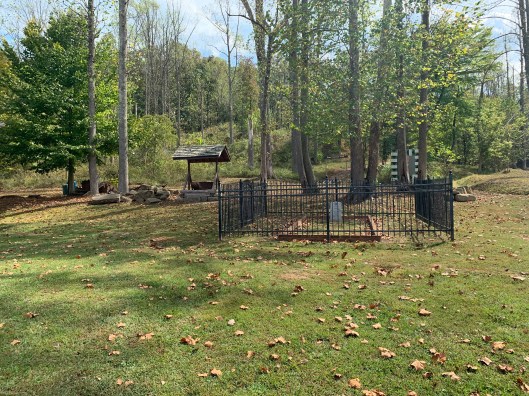
IMG_0669

Terry Lowry is THE authority on the Civil War in the Kanawha Valley. Stop 7 on his tour: Littlepage Mansion in Charleston, WV. 29 September 2019. Here is a link to Terry’s latest book, The Battle of Charleston (2016): https://wvcivilwar.com/now-available-the-battle-of-charleston/

IMG_0670

Built in 1845, the Littlepage mansion is one of only six antebellum houses remaining in Charleston, WV. It is listed on the National Register of Historic Places. 29 September 2019

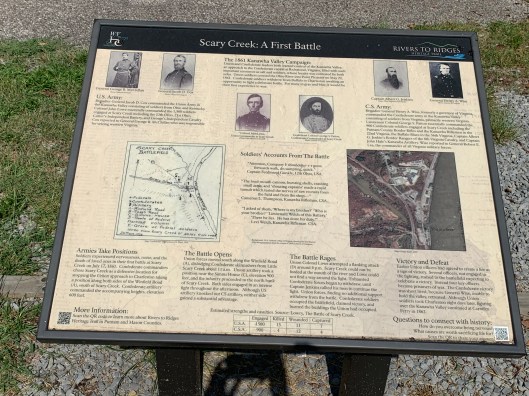
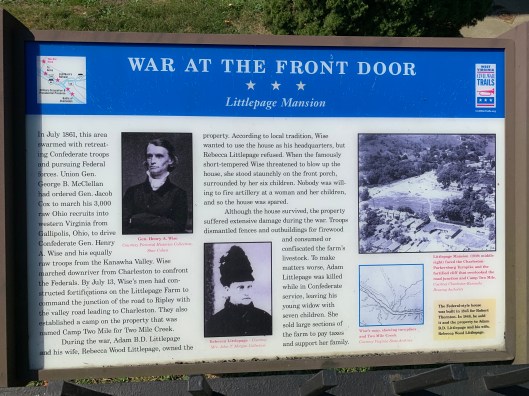
IMG_0667

Rebecca Littlepage reportedly refused to allow Confederate General Henry A. Wise to occupy her home as a headquarters. According to the historical marker: “When the famously short-tempered Wise threatened to blow up the house, she stood staunchly on the front porch, surrounded by her six children. Nobody was willing to fire artillery at a woman and her children, and the house was spared.” For more history about the Littlepage mansion, go here: https://www.wvencyclopedia.org/exhibits/23?section=7

Chapmanville News 11.30.1923

20 Monday Jan 2020

Posted by Brandon Ray Kirk in Big Creek, Chapmanville, Coal, Holden, Logan

≈ Leave a comment

Tags

A.K. Bowling, Appalachia, Bernie Ward, Big Creek, Bill Carper, Bill Cooper, Chapmanville, Charleston, Chester Barker, coal, Dr. J.D. Turner, Fannie Brown, genealogy, Guyan Hospital, Henlawson, history, Holden, Logan, Logan Banner, Logan County, Man, merchant, Molly Conley, O.C. Winters, Oliver Shuff, Oscar Langton, T.A. Rogers, West Virginia

A correspondent named “Pug Nose” and “Let All-Alone Blues” from Chapmanville in Logan County, West Virginia, offered the following news, which the Logan Banner printed on November 30, 1923:

We are having some rainy weather here now.

Fannie Brown, Miss Daniels and Mrs. Bernie Ward have some attraction in Big Creek, as they go down every evening on 51 and back on 52.

Mr. A.K. Bowling was home Sunday from Man, W.Va.

Mrs. Collins of Holden was calling on homefolks SUnday.

Borned to Mr. and Mrs. Oscar Langton, a fine boy last Friday. Mrs. Langton before marriage was Miss Fannie Brown.

Some one said wedding bells will ring at Henlawson soon.

Mr. Bill Cooper is able to be home from the Guyan Hospital at Logan.

Mr. T.A. Rogers was in Logan last Thursday on business.

We are having lots of new houses built now.

Oliver Shuff is building him a house here.

***

As there hasn’t been any one here writing I will try and see what I can do.

Last week was sad on account of the death of Dr. J.D. Turner. We are much grieved over the loss of him.

Mr. Bill Carper was seriously hurt in the mines while driving. He was caught between two cars. Mr. Carper was taken to the Guyan Valley hospital.

Miss Molly Conley and Mr. Chester Barker were seen coming from church one night last week.

Ferrells and Winters store seems to be doing great business under the general manager, Mr. O.C. Winters.

Combinations: Everett and his sweater; Inez and her dancing; Anna and her apron; Bena and beans; Mrs. A.K. Bowling and her cap; Mrs. Ward and her hotel; Eva and her parcel; Cecil going to Charleston.

← Older posts
Newer posts →

Feud Poll 1

If you had lived in the Harts Creek community during the 1880s, to which faction of feudists might you have given your loyalty?

Categories

  • Adkins Mill
  • African American History
  • American Revolutionary War
  • Ashland
  • Atenville
  • Banco
  • Barboursville
  • Battle of Blair Mountain
  • Beech Creek
  • Big Creek
  • Big Harts Creek
  • Big Sandy Valley
  • Big Ugly Creek
  • Boone County
  • Breeden
  • Calhoun County
  • Cemeteries
  • Chapmanville
  • Civil War
  • Clay County
  • Clothier
  • Coal
  • Cove Gap
  • Crawley Creek
  • Culture of Honor
  • Dingess
  • Dollie
  • Dunlow
  • East Lynn
  • Ed Haley
  • Eden Park
  • Enslow
  • Estep
  • Ethel
  • Ferrellsburg
  • Fourteen
  • French-Eversole Feud
  • Gilbert
  • Giles County
  • Gill
  • Green Shoal
  • Guyandotte River
  • Halcyon
  • Hamlin
  • Harts
  • Hatfield-McCoy Feud
  • Holden
  • Hungarian-American History
  • Huntington
  • Inez
  • Irish-Americans
  • Italian American History
  • Jamboree
  • Jewish History
  • John Hartford
  • Kermit
  • Kiahsville
  • Kitchen
  • Leet
  • Lincoln County Feud
  • Little Harts Creek
  • Logan
  • Man
  • Matewan
  • Meador
  • Midkiff
  • Monroe County
  • Montgomery County
  • Music
  • Native American History
  • Peach Creek
  • Pearl Adkins Diary
  • Pecks Mill
  • Peter Creek
  • Pikeville
  • Pilgrim
  • Poetry
  • Queens Ridge
  • Ranger
  • Rector
  • Roane County
  • Rowan County Feud
  • Salt Rock
  • Sand Creek
  • Shively
  • Spears
  • Sports
  • Spottswood
  • Spurlockville
  • Stiltner
  • Stone Branch
  • Tazewell County
  • Timber
  • Tom Dula
  • Toney
  • Turner-Howard Feud
  • Twelve Pole Creek
  • Uncategorized
  • Warren
  • Wayne
  • West Hamlin
  • Wewanta
  • Wharncliffe
  • Whirlwind
  • Williamson
  • Women's History
  • World War I
  • Wyoming County
  • Yantus

Feud Poll 2

Do you think Milt Haley and Green McCoy committed the ambush on Al and Hollene Brumfield in 1889?

Blogroll

  • Ancestry.com
  • Ashland (KY) Daily Independent News Article
  • Author FB page
  • Beckley (WV) Register-Herald News Article
  • Big Sandy News (KY) News Article
  • Blood in West Virginia FB
  • Blood in West Virginia order
  • Chapters TV Program
  • Facebook
  • Ghosts of Guyan
  • Herald-Dispatch News Article 1
  • Herald-Dispatch News Article 2
  • In Search of Ed Haley
  • Instagram
  • Lincoln (WV) Journal News Article
  • Lincoln (WV) Journal Thumbs Up
  • Lincoln County
  • Lincoln County Feud
  • Lincoln County Feud Lecture
  • LinkedIn
  • Logan (WV) Banner News Article
  • Lunch With Books
  • Our Overmountain Men: The Revolutionary War in Western Virginia (1775-1783)
  • Pinterest
  • Scarborough Society's Art and Lecture Series
  • Smithsonian Article
  • Spirit of Jefferson News Article
  • The Friendly Neighbor Radio Show 1
  • The Friendly Neighbor Radio Show 2
  • The Friendly Neighbor Radio Show 3
  • The Friendly Neighbor Radio Show 4
  • The New Yorker
  • The State Journal's 55 Good Things About WV
  • tumblr.
  • Twitter
  • Website
  • Weirton (WV) Daily Times Article
  • Wheeling (WV) Intelligencer News Article 1
  • Wheeling (WV) Intelligencer News Article 2
  • WOWK TV
  • Writers Can Read Open Mic Night

Feud Poll 3

Who do you think organized the ambush of Al and Hollene Brumfield in 1889?

Recent Posts

  • Logan County Jail in Logan, WV
  • Absentee Landowners of Magnolia District (1890, 1892, 1894)
  • Charles Spurlock Survey at Fourteen Mile Creek, Lincoln County, WV (1815)

Ed Haley Poll 1

What do you think caused Ed Haley to lose his sight when he was three years old?

Top Posts & Pages

  • Halcyon 4.10.1919
  • Civil War Gold Coins Hidden Near Chapmanville, WV
  • Halcyon-Yantus 12.08.1911
  • Ran'l McCoy's Final Months (1914)
  • Blood in West Virginia: Brumfield v. McCoy (2014)

Copyright

© Brandon Ray Kirk and brandonraykirk.wordpress.com, 1987-2023. Unauthorized use and/or duplication of this material without express and written permission from this blog’s author and/or owner is strictly prohibited. Excerpts and links may be used, provided that full and clear credit is given to Brandon Ray Kirk and brandonraykirk.wordpress.com with appropriate and specific direction to the original content.

Archives

  • February 2025
  • January 2025
  • October 2023
  • September 2023
  • December 2022
  • November 2022
  • May 2022
  • April 2022
  • February 2022
  • November 2021
  • October 2021
  • September 2021
  • June 2021
  • May 2021
  • April 2021
  • March 2021
  • February 2021
  • January 2021
  • December 2020
  • November 2020
  • October 2020
  • July 2020
  • June 2020
  • May 2020
  • April 2020
  • March 2020
  • February 2020
  • January 2020
  • December 2019
  • November 2019
  • October 2019
  • September 2019
  • August 2019
  • July 2019
  • June 2019
  • May 2019
  • April 2019
  • March 2019
  • February 2019
  • January 2019
  • December 2018
  • November 2018
  • October 2018
  • September 2018
  • August 2018
  • July 2018
  • June 2018
  • May 2018
  • April 2018
  • March 2018
  • February 2018
  • January 2018
  • December 2017
  • November 2017
  • October 2017
  • September 2017
  • August 2017
  • July 2017
  • June 2017
  • May 2017
  • April 2017
  • March 2017
  • February 2017
  • January 2017
  • December 2016
  • November 2016
  • October 2016
  • September 2016
  • August 2016
  • July 2016
  • June 2016
  • May 2016
  • April 2016
  • March 2016
  • February 2016
  • January 2016
  • December 2015
  • November 2015
  • October 2015
  • September 2015
  • August 2015
  • July 2015
  • June 2015
  • May 2015
  • April 2015
  • March 2015
  • February 2015
  • January 2015
  • December 2014
  • October 2014
  • September 2014
  • August 2014
  • July 2014
  • June 2014
  • May 2014
  • April 2014
  • March 2014
  • February 2014
  • January 2014
  • December 2013
  • November 2013
  • October 2013
  • September 2013
  • August 2013
  • July 2013
  • June 2013
  • May 2013
  • April 2013
  • March 2013
  • February 2013
  • January 2013
  • December 2012
  • November 2012

Enter your email address to follow this blog and receive notifications of new posts by email.

Join 2,927 other subscribers

Tags

Appalachia Ashland Big Creek Big Ugly Creek Blood in West Virginia Brandon Kirk Cabell County cemeteries Chapmanville Charleston civil war coal Confederate Army crime culture Ed Haley Ella Haley Ferrellsburg feud fiddler fiddling genealogy Green McCoy Guyandotte River Harts Harts Creek Hatfield-McCoy Feud history Huntington John Hartford Kentucky Lawrence Haley life Lincoln County Lincoln County Feud Logan Logan Banner Logan County Milt Haley Mingo County music Ohio photos timbering U.S. South Virginia Wayne County West Virginia Whirlwind writing

Blogs I Follow

  • OtterTales
  • Our Appalachia: A Blog Created by Students of Brandon Kirk
  • Piedmont Trails
  • Truman Capote
  • Appalachian Diaspora

BLOOD IN WEST VIRGINIA is now available for order at Amazon!

Blog at WordPress.com.

OtterTales

Writings from my travels and experiences. High and fine literature is wine, and mine is only water; but everybody likes water. Mark Twain

Our Appalachia: A Blog Created by Students of Brandon Kirk

This site is dedicated to the collection, preservation, and promotion of history and culture in Appalachia.

Piedmont Trails

Genealogy and History in North Carolina and Beyond

Truman Capote

A site about one of the most beautiful, interesting, tallented, outrageous and colorful personalities of the 20th Century

Appalachian Diaspora

  • Subscribe Subscribed
    • Brandon Ray Kirk
    • Join 789 other subscribers
    • Already have a WordPress.com account? Log in now.
    • Brandon Ray Kirk
    • Subscribe Subscribed
    • Sign up
    • Log in
    • Report this content
    • View site in Reader
    • Manage subscriptions
    • Collapse this bar
 

Loading Comments...