• About

Brandon Ray Kirk

~ This site is dedicated to the collection, preservation, and promotion of history and culture in my section of Appalachia.

Brandon Ray Kirk

Tag Archives: Wayne County

Harts c.2000

20 Tuesday May 2014

Posted by Brandon Ray Kirk in Big Harts Creek, Ed Haley, Harts, Spottswood, Whirlwind

≈ 6 Comments

Tags

Adams Branch, basketball, Beecher Avenue, Ben Walker, Billy Adkins, Bob Adkins, Bob Mullins Cemetery, Brumfield Avenue, Buck Fork, Bulwark Branch, Charles Brumfield, Crawley Creek Mountain, CSX Railroad, Ed Haley, Eden Park, genealogy, Guyandotte Valley, Hannah Baptist Church, Harts, Harts Creek, Harts High School, Heartland, Henderson Branch, history, Hoover Church of the General Assembly, Hoover Fork, Huntington, Ivy Branch, John Hartford, Kiahs Creek, Lambert Branch, Lincoln County, Logan County, McCloud Branch, Mingo County, Mount Era Baptist Church, Mountaineer Missionary Baptist Church, Pilgrims Rest Church, politics, Railroad Avenue, Republican, Rockhouse Fork, Route 10, Sand Creek, Smokehouse Fork, Trace Fork, Trace Old Reguarl Baptist Church, Twelve Pole Creek, Upper Trace Fork School, Ward Avenue, Wayne County, West Fork, Whirlwind, Workman Branch, writing

The community of Harts sits indiscreetly in the narrow section of the Guyandotte Valley on land that makes up the northernmost region of the Logan County coalfield and what was once “feud country.” Located some ten miles from a four-lane federal corridor linking the state capital to eastern Kentucky and fifty miles up a two-lane rural highway from Huntington, the second largest city in West Virginia, it is a settlement just on the cusp of modernization. It is a treasure trove of hidden history, quickly disappearing even in the minds of its locals, who have little if any recollection of its booming timber era or the exciting times of the railroad hey-day. It’s really the kind of place you might drive through without noticing much — or never have a reason to drive through at all.

Basically, Harts is an old timber town divided in the center by a lazy muddy river and intersected by a two-lane highway, Route 10. On the west side of the river — site of the old Brumfield business headquarters — is an empty store, a tavern-turned-church-turned-beauty shop, a garage, and a brick tabernacle. On the east side is an old brick general store, a nice video rental establishment, a state highways headquarters, an old wooden general store, a small brick post office, a fire department, a grocery store, a hardware store, a general merchandise store, a Victorian general store-turned-restaurant, and a new brick Head Start center. Running between those buildings on the east side is a track owned by CSX (formerly C&O) Railroad. Just behind the businesses are a few dozen houses of all vintages: brick, wooden, single-story, two-story… There are no street signs or traffic lights or even stop signs.

Route 10 connects Harts with the city of Huntington to the north and with the Logan coalfields to the south. From town, Big Harts Creek Road heads west up the creek to West Fork or Smokehouse Fork, while a little unnamed road diverges north past the tracks toward extinct post offices named Eden Park and Sand Creek. The four streets in town are paved but very few locals even know their proper names, which are Railroad, Beecher, Ward, and Brumfield Avenues. Just down the river is a brick house-turned-bank, a rural health clinic, a brick construction company headquarters, a new coalmine development area called Heartland, and a mechanic shop/gas station (owned incidentally by one Charles Brumfield).

Culturally, Harts might be thought of as an inconspicuous Harlequin romance and Wild West show gone wild, at least in its not-so-distant past. Many of the rabble rousers and roustabouts are long since dead. Actually, somewhat to my disappointment, a lot of the old families are gone completely from the area and no one really feuds any more. Many residents seem to work as schoolteachers or run small stores or work in the coalmines or draw government relief. People are nice and treat each other well. Most are related or at least seem to be. They watch TV or go to church or tend their yards or hunt or fish or ride four-wheelers or hop on the four-lane at Chapmanville and drive to Wal-Mart some 45 miles away. Old-timers are quick to say that Harts has a bad reputation for no reason — the only two murders within town limits occurred almost a century ago. There are no parks, museums or movie theatres — and only a few registered Republicans. It’s the kind of place where you can leave your doors unlocked at night or if you’re gone all day…and feel safe about it.

I have to admit, after several visits to Harts, I loved it. On one visit, I learned from Billy Adkins that the old Ben Walker farm was for sale…and seriously considered buying it. (I passed on the idea when I realized that my wife would never forgive me for it.) Harts, then, would remain a place to “see.” I began telling folks out on the road that it was “my Ireland.” It represented a desire on my part to get back to the kind of places where (at least in my romantic imagination) a lot of fiddle playing originated. A lot of my friends were from these kind of places. For them, when they wanted to tap into that ancestral ancient tone, they thought of Ireland, whether they were Irish or not. For me, coming from St. Louis, Harts was the closest I could ever hope to get to that. Such places are at the heart of the music I love.

Venturing up Harts Creek, the first thing you really notice is Harts High School, a forty-some-year-old two-and-a-half-story yellow brick structure near the mouth of West Fork with a gymnasium, annex building, and a baseball field, all situated on what was a prison camp during the early fifties and, a little further back in time, the upper reaches of the Al Brumfield property (and, a little further still, an Indian camp). In many ways, this school is the lifeblood of the community — at least in the lower section of the creek. In the mid-sixties, just as Harts began to turn away from its violent past, the high school basketball team won a state championship and began building a program known regionally for its successes. Today, basketball is what this community is best known for — not the murders or moonshining traditions of years past — with crooked politics maybe finishing a close second.

A little further up the creek, just below the Logan County line, a few miles past an old country store, a little restaurant, another baseball field, and a place of worship named the Cole Branch Church of Jesus Christ of the First Born. From there, the road forks left onto the Smoke House Fork of Big Harts Creek, location of the Hugh Dingess Elementary School and Dingess, Butcher, Farley and Conley country; or the road forks right into the head of Harts Creek to “Ed Haley country.” Of course, no one calls it that. People think of it as “Adams country” or “Mullins country” and really, that’s about all there ever was in that section. Ed himself is often identified with the Mullins family — his mother’s people. The adults in this part of Harts Creek vote in Logan County — not Lincoln — and send their kids on buses over Crawley Creek Mountain to Chapmanville High School. This section of the creek — where gunshots once rang out regularly and where moonshine was so readily found — is now remarkably quiet and low-key outside of the occasional marijuana bust. Unfortunately, it seems to have lost its musical tradition as well.

Trace Fork, the site of Ed Haley’s birth, is attributed by Ivy Branch in its head, Adams Branch, and Boardtree Branch toward its middle and Jonas and Dry House Branch toward its mouth. There are several small family cemeteries on Trace, with the maroon-bricked Mountaineer Missionary Baptist Church at its mouth. In previous days, the Upper Trace Fork School (now Trace Old Regular Baptist Church) sat in its headwaters, where the Logan-Lincoln-Mingo county line meets. As a matter of fact, Ivy Branch heads near Kiah’s Creek at the Wayne-Mingo County line, while Boardtree Branch heads at McCloud Branch of Twelve Pole Creek in Mingo County. Adams Branch heads at Rockhouse Fork in Lincoln County.

A little further up the main creek is Buck Fork, an extensive tributary comparable to West Fork or Smokehouse in size. It is the ancestral home of the Mullins, Bryant, and Hensley families whose names still dominate the mailbox landscape. In previous decades, it was the location of the Hensley School and Mt. Era Church. Just below Buck Fork on main Harts Creek is a large Adams family cemetery, while just above it is the equally large Bob Mullins family cemetery.

Continuing up Harts Creek is Hoover Fork, home of the Mullins, Adams, and Carter families as well as the Hoover Church of the General Assembly. Henderson Branch, home seat for Tomblins and Mullinses is the next tributary, followed by Lambert Branch (at Whirlwind) and Workman Branch. Bulwark Branch follows (populated by Carters and Workmans), trailed by Brier Branch (Smiths) and Tomblin Branch. In the headwaters of Harts Creek are Tomblins, Daltons, and Blairs, as well as the Pilgrims Rest Church and Hannah Baptist Church.

In all sections of Harts, gossip reigns supreme as a source of local entertainment. (This in spite of Bob Adkins’ warning that people should “tend to their own business.”) Maybe that’s why we hear so much about a 100-year-old murder when we ask about it and a bunch of other things we don’t ask about. Genealogy is super important. When you sit down to talk with someone, the first thing they want to know is how you fit into the community pedigree. It’s a way of squaring you up.

In Search of Ed Haley 304

13 Tuesday May 2014

Posted by Brandon Ray Kirk in Ed Haley, Stiltner

≈ Leave a comment

Tags

Angeline Lucas, Brandon Kirk, Cain Adkins, Daisy Ross, East Lynn, Faye Smith, genealogy, Green McCoy, Harts Creek, history, John Hartford, Kenova, Lee Adams, Lincoln County, Lynza John McCoy, Mary McCoy, Spicie McCoy, Stiltner, Twelve Pole Creek, Wayne County, West Fork, West Virginia, writing

Things got kind of quiet after that. I asked Faye if we were wearing her mother out and she said, “No, I don’t think so. She sits there and… Of course, she makes quilts. She’s made twenty since the first of the year. We’ve got them stacked upstairs. She made sixty-four the year before last. Last year she only made fifty-four. I don’t know how many she’ll make this year. She makes them upstairs. She pulls herself up there — you know, a handrail.”

Brandon asked if Daisy sold her quilts and Faye said, “Yeah, she sells them. Well, she gives us kids all one every year for our birthday. I’ve probably got forty or fifty.”

I asked how much they sold for and Faye said, “Thirty dollars.”

I said, “Have you got one you’d sell me?” and Faye laughed and said, “I’ve got a dozen if you want them. As a matter of fact, she’s even got her name and the date she completed it on each quilt.”

Faye looked over at her mother and said loudly, “He wants to buy one of your quilts.”

Daisy said, “Well, they’re upstairs.”

Brandon, Faye, and I went upstairs and fished through a bunch of quilts in a bedroom. We bought several; they were great souvenirs.

Back downstairs, Daisy told us more about Green McCoy’s “other family” in Eden, Kentucky.

“He had two children by his first wife,” she said. “Mary come and seen us and we was all tickled about it. I don’t know how she found us. She’d come to Kenova and stayed with some woman and found out where we lived up there above East Lynn in Stiltner way up in the country in a hollow. And she stayed a week or two. I don’t know how long she was aiming to stay, but she’d stayed with some lady and cleaned house and she cleaned out her wardrobe and took it with her and the law came and got ‘er. We don’t know what ever happened to Mary — we never heard from her no more. She was from down in Kentucky somewhere. I was just a little girl when she come up there.”

As for Green’s other child: “They had another’n, but I don’t know whether it was a girl or a boy.”

Not long before we left, Daisy revealed a final interesting connection between Green McCoy’s family and Cain Adkins’ family. She said Green McCoy had a brother named John who came around Cain’s place on Harts Creek.

“He’d go up there when Mom and Green lived out there in one of Grandpaw’s shacks. I think he was younger than Green.”

He might have been the same John McCoy, Brandon said, who land records showed owning 526 acres on Twelve Pole in Lincoln County in 1883.

About two years after Green’s death, John had a fling with Spicie’s sister, Angeline Lucas (Boney’s widow).

“Aunt Angeline went and had a young’n by him,” Daisy said.

A little later, she married Lee Adams and had seven more children, bringing her total to fourteen.

In Search of Ed Haley 303

11 Sunday May 2014

Posted by Brandon Ray Kirk in Ed Haley, Lincoln County Feud, Music, Stiltner

≈ Leave a comment

Tags

banjo, Brights Disease, Cain Adkins, Cain Adkins Jr., Catlettsburg, Chillicothe, Columbus, crime, Daisy Ross, Ed Haley, Faye Smith, fiddlers, fiddling, genealogy, Goble Fry, Green McCoy, Green McCoy Jr., guitar, Harkins Fry, history, Indian Girl, Kenova, Kentucky, Laurel Creek, Luther McCoy, Mariah Adkins, McCoy Time Singers, Monroe Fry, music, Ohio, Oscar Osborne, Salty Dog, Sherman Luther Haley, Sherman McCoy, Spicie McCoy, Time Has Made A Change, Wayne County, WCMI, West Virginia, Winchester Adkins, writing

After the feud, Cain Adkins settled on Laurel Creek in Wayne County and never returned to Harts. Not long afterward, he began suffering from some type of lingering illness.

“Grandpaw, he played a fiddle,” Daisy said. “They had him to play the fiddle on his deathbed. Somebody came in and they wanted to hear a song and he played it for him. He said, ‘They ain’t no harm in a fiddle. If they’s any harm, it’s when no one plays it.’ I’ve heard Mom tell the last song he played, but I don’t know what it was he played. Mom said it made him feel better.”

Cain died of Brights Disease in 1896.

His widow Mariah lived many more years.

“Grandmaw was a good person — she went to church every Sunday. The last ten years she went blind and stayed with Mom. Mom waited on her.”

She died in 1931.

It took Spicie years to forgive the Brumfields for killing Green. Even after remarrying Goble Fry (her first cousin) in 1893, she was unable to cope with Green’s death and always cried when recounting the tale of his murder. For years, her bitterness kept her from joining the church.

“She felt like he hadn’t done nothing to be killed for ’cause she loved him better than anything,” Daisy said. “Before she was baptized, my brother Sherman had went off to work — him and a bunch of boys — and they was all telling what church their mother belonged to and Sherman said to Mom, ‘Mom, I had to tell them you didn’t belong to the church.’ ‘Well,’ she said, ‘I can’t forgive the Brumfields.’ He said, ‘You can’t forget it, but you got to forgive them or you’ll go to the same place where they did.’ I heard him say that. I was a young woman.”

These were apparently inspiring words, because Spicie was baptized soon afterwards and formed a gospel quartet, “The McCoy Time Singers.” Her son, Sherman McCoy, was a key member.

“Brother Sherman could play any kind of instrument, but banjo is what he played mostly,” Daisy said. “He played all kinds of pretty tunes on the banjo that wasn’t gospel. And when he was on WCMI he wanted people to write in and tell him to play the gospel music, but he had to play the one that got the most requests and he didn’t get very much requests for the gospel. But Mom and Sherman sung them gospel songs on there. They had a program on WCMI one time.”

Daisy said the only known recordings of the McCoy Time Singers had been destroyed years ago.

“They made records of their quartet singing and they peeled up. Got damp. Monroe, my brother, got some and even wrapped them in cloth and they still peeled.”

I wanted to know more about Sherman McCoy, so I got out my banjo and played a little bit for Daisy. She said he played a lot with his uncle, Winchester Adkins (one of the best fiddlers in Wayne County), and a guitar player named Oscar Osborne.

“Brother Sherman was one of the best banjo players I ever heard,” Daisy said. “I’ve heard them on television but I’ve never heard anything to beat Brother Sherman. He played a guitar and taught music lessons. He played all kinds of jigs. Did you ever play ‘The Indian Girl’? He didn’t like to play that one very much because he had to tune it different but that was the prettiest tune I ever heard on the banjo. It sounded like he had more than ten fingers.”

I asked Daisy about Sherman playing with Ed Haley and she said, “He played music with Ed Haley and they played in Catlettsburg.”

That’s all she knew about it but I wondered just how well they actually knew each other. Was it possible that Ed named his oldest child Sherman Luther Haley after Sherman McCoy? I could just picture them loafing together as young bachelors.

Daisy said Green McCoy’s other son, Green Jr., was a singing instructor. She remembered the first time he came into contact with a guitar.

“Uncle Cain, he played a guitar,” she said. “He come down one time and wanted Green to see his guitar. Green only seen that guitar one time and worked a week and got him a guitar and tuned it up and was playing on it. He was gifted.”

What happened to him?

Faye said, “Uncle Green, he hadn’t been dead but I’d say about eight or ten years. He played a guitar good.”

Daisy said Green’s son Luther plays the guitar on the radio in the Columbus-Chillicothe area.

“Uncle Green said he was absolutely the best he ever heard,” she said.

She didn’t know much about Luther or have any recordings of him but had a videocassette tape of Green Jr. picking the guitar and singing in 1975. (I couldn’t help but note that Green Jr. and Ed Haley both had sons named Luther.)

Spicie’s children by Goble Fry also were talented musicians, hinting at a musical strain in her genetics as well.

“Uncle Monroe was a Fry — that was Mom’s brother — and Harkins — they both played music,” Faye said. “But now, Uncle Monroe could play, I guess, about any type of instrument. I remember him playing ‘Salty Dog’ one time.”

Daisy really bragged on her brother Harkins Fry, a music teacher and songwriter. He wrote one gospel song called “Time Has Made A Change”, which Daisy and Faye sang for us:

Time has made a change in the old homeplace.

Many of my friends have gone away,

Some never more in this life I shall see.

Time has made a change in me.

Time has made a change in the old homeplace.

Time has made a change in each smiling face,

And I know my friends can plainly see

Time has made a change in me.

In my childhood days I was well and strong.

I could climb the hillside all day long,

But I’m not today what I used to be.

Time has made a change in me.

When I reach my home in that land so fair.

Meet my friends awaiting me over there.

Free from toil and pain I shall ever be.

Time has made a change in me.

Blackburn Lucas

06 Tuesday May 2014

Posted by Brandon Ray Kirk in Big Harts Creek, Lincoln County Feud, Stiltner

≈ Leave a comment

Tags

Angeline Lucas, Blackburn Lucas, Boney Lucas, genealogy, Harts Creek, history, Lincoln County, photos, Wayne County, West Fork, West Virginia

Blackburn Lucas, son of Mont "Boney" and Angeline (Adkins) Lucas, resident of Wayne County, WV

Blackburn Lucas, son of Mont “Boney” and Angeline (Adkins) Lucas, resident of Wayne County, WV

In Search of Ed Haley 302

04 Sunday May 2014

Posted by Brandon Ray Kirk in Culture of Honor, Ed Haley, Lincoln County Feud, Stiltner

≈ 1 Comment

Tags

Angeline Lucas, Bill Frazier, Brandon Kirk, Cain Adkins, Cain Adkins Jr., Daisy Ross, Faye Smith, feud, Harts Creek, history, John Hartford, Laurel Creek, Lee Adams, Lena Adkins, Lincoln County, Liza Adkins, Mariah Adkins, Mittie Adkins, Napier Ridge, Ranger, Sherman McCoy, Spicie McCoy, Stiltner, Wayne County, West Virginia, Winchester Adkins, writing

I asked Daisy again about her mother’s escape from Harts Creek.

“Grandpaw and the oldest boy had to come on out and come down into Wayne County to save their lives,” she said.

This seeming abandonment of his family in such a dark time appeared to be a blemish on Cain’s otherwise “spotless record.” I thought about that and said, “Seems to me like the safest way to get everybody out was to get the menfolk out first. And also, too, the menfolk could have got out of there quicker without the womenfolk.”

Faye said, “Well, I remember Grandmaw saying the Brumfields said they’d kill everything from the housecat up. I guess that’s why Grandpaw left, but I still wonder why he left the womenfolk. I can’t help it if it is my great-grandpaw.”

Not long after Cain left Harts, Daisy’s grandmother, Mariah Adkins, killed twelve sheep and some hogs and stored the meat in barrels, then loaded the barrels and all of the other family possessions onto a rented push-boat.

“They couldn’t get nobody to row the boat,” Daisy said. “Grandmaw tried to hire a colored man and he said he would, but he said, ‘I know they’d kill me.’ So they had to do it all theirselves. And Mom and Sissy done the rowing.”

“It was a pretty big size boat cause they had all the stuff they had in their house and their barrels of meat all in there,” Daisy said. “But they couldn’t get nobody to row the boat. Grandmaw tried to hire a colored man and he said he would but he said, ‘I know they’d kill me.’ So they had to do it all theirselves. And Mom and Sissy done the rowing.”

Those on the boat were 46-year-old Mariah Adkins, 23-year-old Spicie McCoy, 18-year-old Mittie Adkins, 13-year-old Lena Adkins, 13-year-old Liza Adkins, nine-year-old Cain Adkins, Jr., and one-year-old Sherman McCoy. Daisy wasn’t sure if Aunt Angeline (aged 28) was on the boat with her six kids, including a newborn.

“I don’t know whether she was already down here or not,” she said. “She didn’t come on the boat with them, I don’t think. She come down and married Lee Adams and lived out on the Napier Ridge.”

Daisy gave a chilling account of the ride down-river.

“Mom was about four months along with my brother Green and she had that little baby. Sherman was about a year and a half old — and it was raining and cold. 8th day of January. They come down through there and the peach trees was in full bloom, she said. Had been kind of a warm spell and the peach trees bloomed out that year. Mom said she was cold; she was numb.”

As they crept out of Harts, little Sherman McCoy pulled a long hair pin from his mother’s hair and stuck it repeatedly in her breast. She was afraid to take it from him because he might cry and alert the Brumfields of their exodus.

“He’d take that straight pin and poke it in her breast and pull it out,” Daisy said. “She knowed she was gonna be drowned every minute, so she wouldn’t scold him for it. She said, ‘It didn’t hurt and he had fun at it.’ He was just a little fella.”

It was the beginning of a rough ride: Mariah almost tipped the boat twice before allowing her daughter Mittie to pilot it.

The Adkinses spent the night at Ranger where they stored their goods at a local home. The next day, they got off the boat at Branchland and crossed over a mountain to Laurel Creek in Wayne County.

“Then they got Bill Frazier from Stiltner to go back up there to Ranger in a wagon — he was a young man then — and haul whatever they had stored down there,” Daisy said. “By the time he got there, the hams and meat didn’t have much meat on them.”

This story about the Adkins family’s exodus constituted one of those unforgettable tales in our search. Hearing about the Brumfield threat to kill “everything from the housecat up” caused Brandon to feel horrible that his ancestors would’ve perhaps harmed innocent women and children. Things had apparently come to that in Harts. Women shot from ambush. Young widows. Orphans. The entire community seemed to be coming undone. Of course, the determination of the women and children to survive their horrible ordeal was both inspiring and awesome, especially considering they weren’t the strong, raw-boned mountaineer women which one imagines them to have been. (Spicie McCoy only weighed about 91 pounds.)

Spicie Adkins McCoy

03 Saturday May 2014

Posted by Brandon Ray Kirk in Big Harts Creek, Lincoln County Feud, Stiltner, Women's History

≈ Leave a comment

Tags

Appalachia, Green McCoy, Harts Creek, history, life, Lincoln County, photos, Spicie McCoy, U.S. South, Wayne County, West Fork, West Virginia

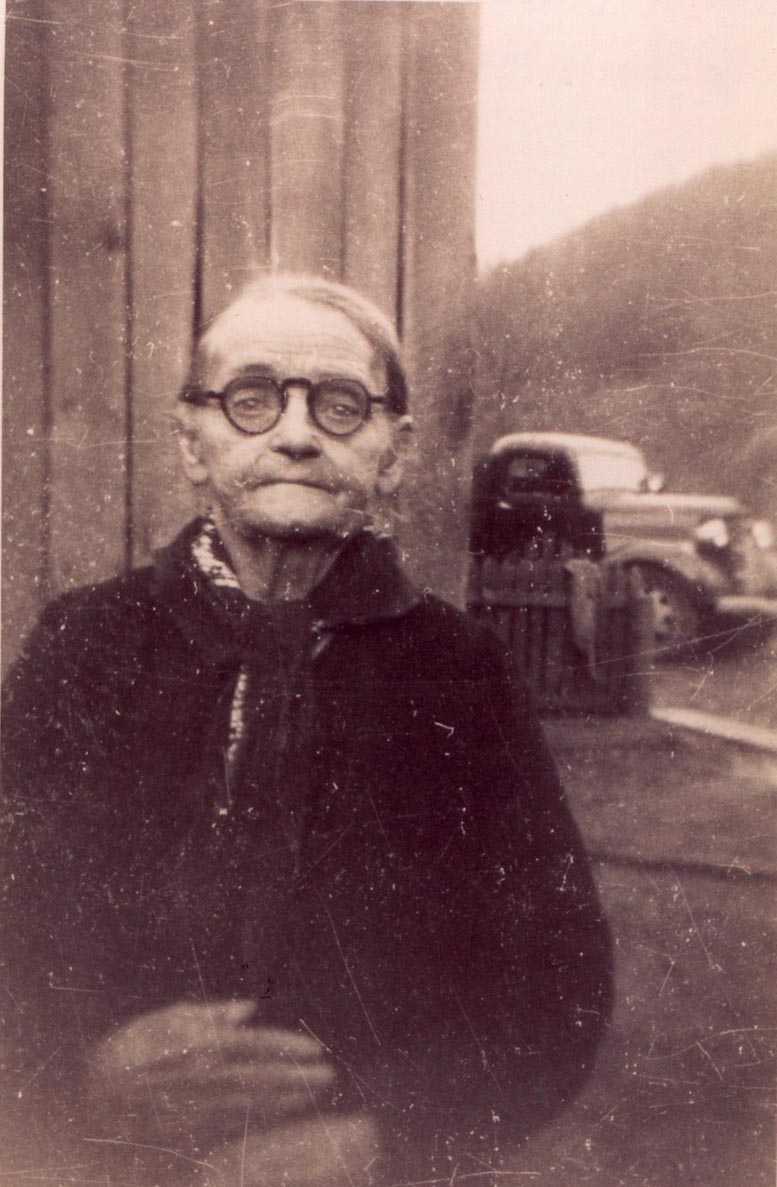
Spicie (Adkins) McCoy, widow of Green McCoy, resident of Wayne County, WV

Spicie (Adkins) McCoy, widow of Green McCoy, resident of Wayne County, WV

Julia May Lucas, Angeline Lucas, and Eliza McComas

29 Tuesday Apr 2014

Posted by Brandon Ray Kirk in Lincoln County Feud, Stiltner, Women's History

≈ 1 Comment

Tags

Angeline Lucas, Appalachia, Bessie Watts, Eliza McComas, feud, genealogy, history, Julia May Lucas, Napier Ridge, U.S. South, Wayne County, West Virginia

Angeline (Adkins) Lucas, resident of West Fork of Big Harts Creek, Lincoln County, WV

Julia May Lucas, Angeline Adkins Lucas (center), and Eliza Adams McComas, residents of Napier Ridge, Wayne County, WV. Courtesy of the Bessie Lucas Watts family

In Search of Ed Haley 299

29 Tuesday Apr 2014

Posted by Brandon Ray Kirk in Ed Haley, Lincoln County Feud

≈ Leave a comment

Tags

Ben Walker, Boney Lucas, Brandon Kirk, Cain Adkins, Daisy Ross, diphtheria, education, Faye Smith, feud, Flora Adkins, genealogy, Green McCoy, history, Huntington, Kenova, Low Gap United Baptist Church, Mariah Adkins, medicine, Melvin Kirk, murder, Nancy Adkins, Paris Brumfield, Spicie McCoy, Wayne County, West Virginia, writing

The day after visiting Abe Keibler, I met Brandon Kirk in Huntington, West Virginia. We made the short drive into Wayne County where we located the home of Daisy Ross in Kenova. Her daughter, Faye Smith, met us at the door and told us to come in — her mother was waiting on us. She led us through a TV room and into the dining room where we found Daisy seated comfortably in a plush chair. She was hard of hearing, so Faye had to repeat many of our questions to her.

We first asked Daisy about Cain Adkins. Daisy said he was a United Baptist preacher, schoolteacher, and “had several different political offices.” He was also a “medical doctor” and was frequently absent from home on business.

“I would imagine Grandpaw Cain — I’m not bragging – was pretty well off at that time compared to other people,” Faye said.

Daisy didn’t think Cain was educated — he “just had the brains. Mom said he could be writing something and talk to you all the time.” He was also charitable.

“Lots of times when he doctored, they didn’t have no money,” Daisy said. “They’d give him meat or something off of the farm,” things like dried apples and chickens. “He had little shacks built and would bring in poor people that didn’t have no homes and Grandpaw would keep them and Grandmaw would have to furnish them with food. Kept them from starving to death.”

Cain seemed like a great guy.

Why would the Brumfields have any trouble with him?

Daisy had no idea.

We had a few theories, though, based on Cain’s various occupations. First, as a schoolteacher in the lower section of Harts Creek, he may have provoked Brumfield’s wrath as a possible teacher of his children. As a justice of the peace, he was surely at odds with Paris Brumfield, who we assume (based on numerous accounts) was often in Dutch with the law. As a preacher, Cain may have lectured citizens against living the “wild life” or condemning those locals already engaged in it, which would’ve also made him an “opposing force” to Brumfield.

There is some reason to believe that Cain was a potent religious force in the community during the feud era. Unfortunately, the earliest church record we could locate was for the Low Gap United Baptist Church, organized by Ben Walker and a handful of others in 1898. Melvin Kirk was an early member. More than likely, Cain was an inspiration to Walker, who was ordained a preacher in 1890.

Brandon asked Daisy what she knew about Boney Lucas’ murder.

“They killed him before they killed Green McCoy,” she said.

But why?

“I don’t know,” she said. “They mighta had trouble, too.”

Then came an incredible story, indicating that Boney Lucas was no saint, either.

“He lived about a week after he was hurt,” she said. “He wanted to be baptized and the preachers around there wouldn’t baptize him because he didn’t belong to the church. Grandpaw said, ‘I’ll baptize him.’ Grandpaw was a good preacher. He said, ‘I’ll baptize you, Boney.’ So they made a scaffold and they took him out there and somebody helped him and they baptized him before he died.”

Brandon said, “So Boney was kind of a rough character,” and Faye said, “See, he was connected with Grandpaw’s family and they didn’t tell things. If some of the family was mean, they didn’t get out and tell things.”

Cain had more bad luck when two of his daughters, Nancy and Flora, died of diphtheria.

“They buried them little girls out from the house somewhere up on the hill,” Daisy said. “I don’t know where they were buried. Mom never showed me. I guess they just had rocks for tombstones, you know.”

In Search of Ed Haley 287

13 Sunday Apr 2014

Posted by Brandon Ray Kirk in Ed Haley

≈ Leave a comment

Tags

Ashland, Catlettsburg, Curly Wellman, Ed Haley, Ella Haley, fiddling, Fort Gay, Great Depression, guitar, history, Horse Branch, John Hartford, Kentucky, Keystone, life, Logan County, Louisa, Madison, Man, music, Ralph Haley, Red Jacket, Wayne, Wayne County, West Virginia, writing

In the spring of 1996, I made my way back to Ashland where I dropped in on Curly Wellman. Curly was an old guitarist in town who grew up watching Ed Haley on Horse Branch. I hadn’t visited him since a trip with Lawrence Haley some four years earlier. Unlike last time, he was quick to comment on Ed’s poverty.

“Now this story about Ed Haley, this was during the thirties — right after the Great Depression started,” Curly said. “And of course all they had coming was, I guess, just a blind pension, which wouldn’t have been much. They had to play on the corners with the tin cups. Those people, they had to struggle for life. The winter months on Ed Haley and his family were very hard. My grandfather — he came down here with money out of the big timber country up around Louisa, Ft. Gay, Wayne — and he run a little grocery store. Well, he was fortunate enough and had money enough to be able to carry these type of people through the winter months when they couldn’t make money. And as quick as spring come and they went to work every one come right in and paid him ever dime they owed. And the Haley family a lot of winters survived under his care. A lot of times, clothes we would outgrow would be taken to the Haleys because Mother thought so much of them. They had a hard struggle to raise those children but they were good people and the kids all turned out good as far as I know.”

I asked Curly to tell me about playing the guitar with Ed on Horse Branch.

“I was just a beginner and my aunt was teaching me,” he said. “The Haleys lived just across the street from us and down maybe a couple of houses. In the evenings, there was nothing else to do; no radio, no television, no nothing like that. Well, Ed would get out on the porch and Ralph and the mother and they’d start playing. I was learning to play a little bit, so I’d sit in with the guitar. I was just a very mediocre guitar player at that time. I was so rank that he’d have to tell me when he was going into a minor. I’d say, ‘I don’t know that,’ and Ralph would say, ‘Get right in there and play it anyhow.’ Them little kids would get out there and jump up and down and dance. Quick as people heard music, they’d start coming down the hollow and off’n the hillsides and gather up. They even had horse and buggies to stop and real old model cars would stop. People would open up their windows and their doors that lived up high where I was at — they’d get out on their porch till they could hear it all.”

Later, when Curly got better on the guitar, he played with Ed at the Boyd County Courthouse in Catlettsburg. Ed sat on a wooden bench with his hat turned up on the ground.

“You could throw a dime or nickel or quarter in his hat and you could tell by the way he grinned he knew the amount that went in the hat,” Curly said. “He could tell by the way it hit.”

I asked if Ed ever talked between tunes and he said, “He told little stories behind the tunes, like where it came from. He’d say, ‘Here’s an old tune I learned in Red Jacket, West Virginia,’ or, ‘Here’s an old tune I heard down in Logan County.’ And he used to talk about Madison, West Virginia, a lot. And another town I’d hear him talk about was Man, West Virginia. Keystone, it’s right in that area, too.”

Monroe T. Fry

09 Wednesday Apr 2014

Posted by Brandon Ray Kirk in Ed Haley, Music

≈ Leave a comment

Tags

culture, guitar, history, life, Monroe Fry, music, photos, Spicie McCoy, Stiltner, Wayne County, West Virginia

Monroe Taylor Fry, resident of Stiltner, Wayne County, WV

Monroe T. Fry (1897-1969), resident of Stiltner, Wayne County, WV

McCoy Time Singers

27 Thursday Mar 2014

Posted by Brandon Ray Kirk in Ed Haley, Lincoln County Feud

≈ Leave a comment

Tags

Appalachia, genealogy, history, McCoy Time Singers, music, Sherman McCoy, Spicie McCoy, Wayne County, West Virginia

Spicie McCoy Fry (front left), Sherman McCoy (front right) and the McCoy Time Singers, Wayne County, WV

Spicie McCoy Fry (front left), Sherman McCoy (front right) and the McCoy Time Singers, Wayne County, WV

In Search of Ed Haley 274

27 Thursday Mar 2014

Posted by Brandon Ray Kirk in Culture of Honor, Ed Haley, Lincoln County Feud

≈ Leave a comment

Tags

Ashland, Boney Lucas, Cain Adkins, Catlettsburg, crime, Daisy Ross, Ed Haley, Eden, Fry, Goble Fry, Harts Creek, history, John Hartford, Kenova, Kentucky, Laurel Creek, Mariah Adkins, Milt Haley, murder, music, Sherman McCoy, Spicie McCoy, Wayne County, West Virginia, Winchester Adkins, writing

Excitedly, I next called Spicie McCoy’s daughter Daisy Ross who lived in Kenova, a small city near Huntington, West Virginia. Daisy’s voice was weak — she said she’d been down sick with a cold for the past week. I told her that we were trying to find out about Green McCoy’s death and she said, “My mother married Green McCoy and he was murdered. She married Goble Fry after he died. My mother was Spicie. She talked about Milt Haley. She just said they played music together, him and Green McCoy. They were good friends. I don’t know whether he was rough or not. I never heard Mom say nothing against Milt Haley.”

To our surprise, Daisy had no idea why Milt and Green were killed by the Brumfields.

“The Brumfields was rough: they had a mob,” she said. “The Brumfields first killed Grandpa’s son-in-law Boney Lucas, and when Mom married Green McCoy they said they had another’n they was gonna kill. Said they were gonna kill everything from the housecat up. They was just kindly mean people, I reckon.”

Daisy said Milt and Green tried to hide out from the Brumfields somewhere in Eden, Kentucky. She wasn’t sure where that was, but knew why they went there.

“Green McCoy had been married and had his wife and two children down there,” she said. “Yeah, Mommy didn’t know that, you see. Just before she got married, she got news that he had a wife and two children down there. He had told her that he had divorced her and Grandma said that hurt her awful bad and she couldn’t make Mommy understand it. Said Mom loved him so good she went ahead and married him anyhow.”

It didn’t take long for the Brumfields to locate Milt and Green.

“They went down and got them,” Daisy said. “The law was afraid of them, you know. They killed them there at Fry. And when the Brumfields killed them, they wasn’t satisfied with that. They took a pole-axe and beat their brains out and their brains splattered up on the door, Mom said. That hurt Mom so bad.”

I was chilled to the bone.

After Milt’s and Green’s murder, Daisy’s mother and family fled Harts Creek.

“The murder was in October and Grandpa and Uncle Winchester, his son, had to get out to Wayne County because they said they was gonna kill everything from the housecat up, the Brumfields did,” she said. “Grandma and Mom and the girls rented a boat and put all their household stuff and barrels of meat and come down on the river in January to Laurel Creek here in Wayne County. It was in January, but the peach trees was in full bloom, Mom said. Come a little warm spell and they all budded out in bloom. They didn’t have no menfolks to row the boat; the women had to do it. Mom said they was looking every minute to be drowned ’cause they was all kinds of stuff on the river. It was up from bank to bank.”

I asked Daisy if she knew Ed Haley and she said, “Yeah that’s the one played music with my brother, Sherman McCoy. My brother, he played the banjo. That was Green McCoy’s son you know and that was my half-brother. Ed Haley and Sherman McCoy — they was good friends. They got together and played music together down in Kentucky somewhere. I guess maybe in Catlettsburg or maybe in Ashland. He was Milt Haley’s son. And they said their fathers was killed together.”

Angeline Adkins Lucas Family

26 Wednesday Mar 2014

Posted by Brandon Ray Kirk in Ed Haley, Lincoln County Feud, Women's History

≈ Leave a comment

Tags

Angeline Lucas, Appalachia, Boney Lucas, feud, history, Stiltner, U.S. South, Wayne County, West Virginia

Angeline (Adkins) Lucas, shown at center, with two of her daughters, Wayne County, WV

Angeline (Adkins) Lucas, shown at center, with two of her daughters, Wayne County, WV

In Search of Ed Haley 273

26 Wednesday Mar 2014

Posted by Brandon Ray Kirk in Culture of Honor, Ed Haley, Harts, Lincoln County Feud

≈ Leave a comment

Tags

Billy Adkins, Brandon Kirk, Cain Adkins, Cleveland, Columbus, crime, Daisy Ross, East Lynn, feud, Green McCoy, Green McCoy Jr., history, Huntington, John Hartford, Logan, Luther McCoy, Marango, McCoy Time Singers, music, Ohio, Ralph McCoy, Sherman McCoy, Spicie McCoy, Stiltner, Wayne County, West Virginia, writing

When we got back to Billy’s, we were amazed to find that he’d made contact with Green McCoy’s family. He showed us telephone numbers for two of Green’s grandsons, Ralph McCoy and Luther McCoy, as well as for Spicie McCoy’s daughter, Daisy (Fry) Ross.

I dialed up Ralph McCoy in Marango, Ohio, and explained who I was and what I was doing, then asked about Green McCoy’s murder.

“I’m 72 years old but a lot of that went on before I was born,” he said. “I’ve had two or three strokes and sometimes my memory’s gone. From the way I understood it, it was a Brumfield that killed my grandfather. There was something going on — I don’t know what the feud was about. See, I know nothing first-hand. My dad was born in 1888 and my dad was I think about two years old when his dad was murdered. My grandmother told me this part of it: that her and my dad and somebody else, I believe… My grandmother’s name was Spicie McCoy. I guess my grandfather put her on a raft or something and pushed her out in the river and told her to get out of there, to just keep on going and be quiet about it. She was pregnant for Uncle Green. Then after my grandfather got killed she married Goble Fry and then I think they came on down into Wayne County, which was around Stiltner and East Lynn and in that area.”

I asked Ralph if he knew anything about Green McCoy being a musician and he said, “Yes, very much. I’d say he was just like my dad, Sherman McCoy. He played anything that had strings on it. My dad and my grandmother, they traveled all over Wayne County playing in a quartet. They called themselves the ‘McCoy Time Singers.’ I did some traveling with them but it was just more or less in the Wayne County area. Logan city, I’ve been down that far with my dad and Grandma.”

So Green McCoy’s son Sherman was a musician, too?

“He did play with some people before he became a Christian and he played in Cleveland over the radio and stuff like that, but I wasn’t living with him then,” Ralph said. “I was living with mother. See, I was brought to Columbus, Ohio, and raised from about nine years old, so I lost track of a lot of them. But I did know he played over the radio in Cleveland and I think Huntington and several different places.”

“Have you talked with Luther McCoy?” Ralph asked.

I told him that we had tried calling Luther first but that he was in bed asleep.

“If you can talk with him, I think you’ll find out he’s probably in the same business you’re in,” Ralph said. “He plays, I think, back-up for several bands. From the way I understand it, he might be out on the West Coast.”

This was all great: our first contact with Green McCoy’s descendants.

In Search of Ed Haley 254

02 Sunday Mar 2014

Posted by Brandon Ray Kirk in Big Sandy Valley, Ed Haley, Music

≈ Leave a comment

Tags

blind, Charleston, Ed Haley, Ella Haley, fiddlers, history, John Spaulding, Josie Cline, Kentucky, Kermit, Martin County, Mont Spaulding, music, Norton, Virginia, Warfield, Wayne County, West Virginia, writing

John and Mary A. Spaulding were the parents of Josie Cline and Mont Spaulding, two fiddlers in Kermit, West Virginia, somehow affiliated with Ed Haley. In all, John and Mary had six children: Mont Spaulding (1860), Josephine Spaulding (c.1864), Virginia Spaulding (c.1867), Linsy Spaulding (1870), Nickiti Spaulding (c.1873) and Lizzie Spaulding (1878). In 1870, the Spauldings lived in the Lincoln District of Wayne County, West Virginia. In the late 1870s, they moved over to the Warfield area of Martin County, Kentucky. John died around 1878. In 1880, Mont was listed in census records as a blind person. In 1900, he and his mother Mary lived with his sister Lizzie Fitzpatrick in Martin County.

In 1910, according to census records, “Monterville Spaulding” lived in the Big Elk Precinct of Martin County where he was listed as a 48-year-old widowed traveling musician. Listed with him in that census were five children, including 20-year-old Dora Spaulding and 11-year-old James Spaulding. Based on this census, there was a solid (although not genealogical) connection between Ella Haley and the Spauldings. Between 1911-12, Ella received several postcards from a “Mont, Dora, and Jim Spaulding” from various places — Richmond, Virginia; Charleston, West Virginia; and Norton, Virginia. In light of the 1910 census, which gave Mont’s occupation as that of a traveling musician while listing him with two children named Dora and James, it seemed obvious that Ella knew Mont from her early years. Mont was gone from Martin County in 1920.

In Search of Ed Haley 252

28 Friday Feb 2014

Posted by Brandon Ray Kirk in Big Harts Creek, Chapmanville, Ed Haley, Music

≈ Leave a comment

Tags

Anna Adams, Billy Adkins, Brandon Kirk, Chapmanville, Ed Haley, Ella Haley, fiddling, Gaynelle Thompson, history, Imogene Haley, John Adams, Kiahs Creek, Little Harts Creek, Logan County, Milt Haley, Mona Haley, music, Roxie Mullins, Ticky George Adams, Wayne County, West Virginia, writing

In Chapmanville, Brandon and Billy dropped in on Gaynelle (Adams) Thompson, a granddaughter of Ticky George Adams who spent a lot of time with Aunt Roxie Mullins during her “last days.” Gaynelle said Ed Haley’s mother never remarried after Milt’s death and died prematurely when Ed was eight to ten years old. She said Ed used to visit her parents, John and Anna Adams, on Trace Fork during the summers in the ’30s and ’40s. “Everybody in the country thought they was nothing like him,” she said. Gaynelle heard that Ed was a drinker and could get rough but said he was well mannered at the Adams home. He never cursed or drank and talked mostly to Gaynelle’s mother. He came with his daughter and wife and stopped visiting when he became too sick to travel just a few years before his death. In earlier years, he played on Kiah’s Creek and Little Harts Creek near the Wayne County line.

In Search of Ed Haley 247

22 Saturday Feb 2014

Posted by Brandon Ray Kirk in Big Sandy Valley, Ed Haley

≈ 4 Comments

Tags

Andrew Francis Messinger, Bill Duty, Blackburn Messinger, David Messinger, Fall Creek, genealogy, George T. Swain, George W. Parsley, history, James Muncy, James Parsley, John H. Messinger, Jr., Keenan Parsley, Kentucky, Lawrence County, Lincoln County, Marcum-Muncy Feud, Nellie Muncy, Nicholas Messinger, Pigeon Creek, Ryburn Parsley, Tug River, Wayne County, West Virginia, Wilson Messinger, writing

Penelope Muncy — Milt Haley’s mother — was born around 1823 to James Muncy and Mary Martha Copley. Nellie, as she was sometimes called, was probably an illegitimate child. On January 23, 1840, she married Ryburn Parsley in Lawrence County, Kentucky. In her marriage record, she gave her last name as Copley…not Muncy. According to Logan County historian George T. Swain, Nellie and her husband settled on Jenny’s Creek near the Tug Fork. They had at least four children: James Parsley (born c.1842), George W. Parsley (born c.1845), Sarah J. Parsley (born c.1848) and Martha Parsley (born c.1850). Ryburn was listed in the 1850 Logan County Census of (West) Virginia as a farmer then disappeared from local records. Swain’s history of Logan County gives a clue: “Riburn [Parsley], who married a Miss Muncey, became involved in the Muncey-Marcum feud and moved to Mississippi and became a brigadier general of the Confederate States in the Civil War.”

Strangely, Parsley left his wife and children in the Tug Valley.

In 1853, Nellie gave birth to a son named Keenan Parsley at Big Hurricane Creek near FortGay on the Big Sandy River in Wayne County. In Keenan’s birth record, no father was listed, perhaps indicating that he was an illegitimate child. Approximately three years later, Nellie gave birth to a son census records identify as Thomas P. Parsley – a.k.a. Thomas Milton Haley.

In 1860 Nellie married Wilson Messinger in Logan County. In her marriage record she gave her age as 37 years, her surname as Muncy instead of Copley or Parsley and listed her parents’ names as James and Mary Muncy. She also referred to herself, curiously enough, as a widow. At the time of the marriage, Wilson Messinger (also widowed) had five children: Mary Messinger, born about 1844; Blackburn Messinger, born about 1846; Andrew Francis Messinger, born about 1848; John H. Messinger, born about 1850; and David Messinger, born about 1855.

In the 1860 Logan County Census, Wilson and Nellie lived at the mouth of Pigeon Creek in the Tug Valley near Bill Duty. Wilson operated a mill and owned $250 worth of personal property. He had the following children in his household: two Parsley stepchildren (including Milt), five children, and a newborn son, Wilson Messinger, Jr., who was less than a year old.

By 1870, Nellie and Wilson had disappeared from West Virginia census records, possibly indicating their death or a move across the Tug into Kentucky. The family seems to have broken apart, as many of the Messinger children flocked to live near their wealthy grandfather Nicholas Messinger, a water mill operator in the Fall Creek area of Lincoln County.

Milt Haley apparently didn’t follow his stepsiblings to the GuyandotteValley. In 1870, he was still on Pigeon Creek in the home of Bill Duty, who was no apparent kin to him. Was it a coincidence that Duty had been a close neighbor to the Messingers in 1860?

In Search of Ed Haley 245

18 Tuesday Feb 2014

Posted by Brandon Ray Kirk in Big Sandy Valley, Civil War, Ed Haley

≈ Leave a comment

Tags

Andersonville Prison, Arthur I. Boreman, Ben Haley, Ben Haley Branch, Bessie Fraley, Bill Smith, Brandon Kirk, Cabell County, Cabell County Scouts, Cain Adkins, Catherine Haley, civil war, Ed Haley, history, Independent Company of Scouts, James H. Ferguson, James Haley, Jane McCoy, Kentucky, Kiahsville, Lick Creek, Lincoln County, Martha Spence, Peter McCoy, Quincy, Thomas McCoy, Wayne County, West Virginia, William A. Haley, writing

On March 20, 1865, Captain Benjamin R. Haley wrote West Virginia Governor Arthur I. Boreman about his capture the previous fall, the disbanding of his independent company of scouts and of his desire to join Captain James H. Ferguson’s Cabell County Scouts.

I have the Honor to Report the condition of my company of Ind. Scouts for Wayn County W.Va on the night of the 15th of Sept./64 we were Surrounded by 115 Rebells under command of Bill Smith in person I having only my Self and Seven of my men on duty when we were captured together with nine citizens whom I had cald in and armed to assist us in case we should be attacked we were all gobbled up with our armes and accouterments making in all Seventeen gunes with there accouterments. on my Return after Being parroled I Lernd that Senator Bowen had Recivd orders from you Excellency to take up the Remainder of the armes and accouterments and to Disband the men that was not captured. I have been bound to keep the parole they gave me for Life Sake not that I hold them a Legal Ware power yet for that and personal Safety I have kept it till now. I ernistly Desire an exchange as I wish to participate in defending my country with James H. Ferguson of Cabell County on whose List my name Shall Shortly appear.

On March 25, 44-year-old Haley enlisted in Ferguson’s Company of Cabell County Scouts at Guyandotte for one year, along with his sons William and 18-year-old James. Ben was appointed 2nd Sergeant on April 1, while William was appointed corporal. James was listed as a private in a muster roll dated May 25. The war, of course, wound down in the spring of 1865 and with it the military career of Ben Haley.

After the war, Haley settled in the headwaters of Ben Haley Branch, a tributary located at a small post office known as Kiahsville near the Wayne-Lincoln county line. In 1870, 50-year-old “Benjamin Hale” was listed with his family in the Sheridan District of newly created Lincoln County with $315 worth of real estate and $200 worth of personal property. His son William was also still in the area, having married Catherine O’Neil of Ireland in 1869. By 1880, 66-year-old Ben was back in Wayne County with 30-year-old Martha Deeryfield Spence and her children. His wife and younger children were no longer in the county.

During the 1880s, Ben Haley relocated to Quincy, Kentucky, perhaps around the time of Ed Haley’s birth in 1885. According to locals, nothing remains of his home on Ben Haley Branch except an old well. Just down the hill is Lick Creek, where Cain Adkins had been born in 1833.

In 1890, Catherine Haley was listed in the Special Union Veterans Census as a resident of the Laurel Hill District of Lincoln County. She gave John’s military information as follows: 9th West Virginia Infantry (Company G) from October 1862 until October 1864 and 1st West Virginia Infantry (Company F) from 1864 until June 1865. He suffered from consumption and was held in prison for nine months and fourteen days in Andersonville and Florence, South Carolina.

By 1900, there were no Haleys living in the Grant District of Wayne County.

Of Ben’s children, only Jane Haley currently has any descendants in the WayneCounty area. Jane married Thomas McCoy, Jr. (no relation to Green) and was the mother of Peter McCoy — the preacher who gave Milt and Green money for their escape in 1889. Peter died in 1963 but his daughter Bessie Fraley lives at the old homeplace on Route 37 near the family cemetery at the Wayne-Lincoln county line. When Brandon called her, she said her grandma Jane McCoy (Milt’s half-sister) was a “great big fat lady” who died before her birth in 1920. She had never heard of Milt Haley or even Ben Haley and had no idea that a Ben Haley Branch was only a few miles from her home.

In Search of Ed Haley 244

17 Monday Feb 2014

Posted by Brandon Ray Kirk in Big Sandy Valley, Civil War, Ed Haley

≈ Leave a comment

Tags

5th West Virginia Infantry, Arthur I. Boreman, Ben Haley, Bill Smith, Camp Chase, Catlettsburg, civil war, Guyandotte, history, Independent Company of Scouts, James Buskirk, Jim Smith, Kentucky, steamboats, Stephen Strawther, Wash Watts, Wayne, Wayne County, West Virginia, William A. Haley, William T. Sherman, writing

On August 30, 1864, Captain Benjamin R. Haley wrote a letter to West Virginia Governor Arthur I. Boreman:

Sir I have the Honor of reporting to you the Success and condition of my company I have Lost no men tho there is Some ten cases of Sickness in my company owing to exposure in Scouting and Lying out in the night time we have had quiet times for the Last month untill the Last few days we now have Bill Smith and his gang in our midst which gives us much trouble and fatigue Looking out for him we also have Jim Smith the arch trator and a Small gang to Look after which is a great innoiance attended with considerable Trouble and Danger so upon the whole we have our hands full and in deed we may consider ourselves fourtunate if we are able to compete Successfully with them our armes are in good order and ammunition plenty for the ensuing month.

We have Arrested 9 Disloyal citizens which have been Sent away under Gen. Shermans order and two more who are now under trial at Catletts Burg Ky. Also one cofederate Soldier who was sent to Camp Chase whose name was Wash Wats. There has been Recently a trasaction in our county of Some importanc that a cirtain Rebel capt. James Buskerk who was experimenting with uncle Abe pills and took one too many So it worked him out of this wourld and also out of our way for ever and at the Same time there was one Stephen Strawther who took a very Heary Dose which is prooveing it is Supposed pretty fatal to him tho he may recover its affects for any thing we know yet we do hope it may have a good effect Let it work as it will it is an expressed opinion that if this Little company Should be removed the gurillas would be robbing Steam Boats between Catlettsburg & Guyandott and it is threatned Strongly as it is.

Attached to the August 30 letter was this message:

Sir wee are concious that our company is too weak to purform the Duty that is Required oweing to the increased numbers of gurilas and the Disbandment of the other three companies puting all together it becomes dangerous to Scout through the county or even to Hold a position in the County we have time and again Reported to the federal forces and with one Single exception have failed to get Help they invariably tell us to Remain with them and Keep out of Danger which you at once Se gives our County no protection at all now I have conversed with your warmest costituance and just friends and they all think it Due them and the intrust of our county that you Should give an order for more men now I can asure you the men can be recruited in a very Short time. You are aware that the term of Servis of the 5 Va Regt. is now about out and there are quite a number of them who have not nor will not reenlist also quite a number of them who Reside in wayn County and cannot Stay at home under existing circumstanses. They therefore would Readily enlist in a compey of this kind and Defend the Interest of the Loyal people of this county. There are also quite a number of citizens who would becom Souldiers in a Local Company like this be you assured we must have moor men or Suffer great Loss after Runing great Risks of our own Live we are held as usurpers of the Laws of Va and cald Borman Bogus theaves and cut throats by the Rebels and threatened with instantaneous Death when captured.

We are not at all Dismaid or intimidated at there threats not with Standing that there is plenty moor men to Help us we think it nothing more than Right they Should be permitted to do wee know they will do if armed and put at it we therefor petition you to give us the minimum number of a company Say eighty the Rank and file to be paid from the Date of there enlistment and for to be economical Say one Lieutenant.

On September 15, 1864, Haley was captured by a force under the command of Rebel Bill Smith. A few days later, on September 23, he was officially discharged from the 5th West Virginia Infantry, as was his son, William. The following day, the Wheeling Intelligencer reported on his capture:

A RAID: A few days ago the notorious rebel Bill Smith, with about sixty men, made a raid on Ceredo, situated on the Ohio river, in Wayne County in this state. They captured Capt. Ben. Hailey, and eight of his men, who belonged to the West Virginia State Guards, who were stationed at Ceredo for the protection of that point and surrounding neighborhood. They also captured all the male citizens of the place, with the exception of two old men, and robbed the Post Office of stationary and postage stamps, and other valuables, to the amount of about forty dollars, and robbed the citizens of all the horses in the neighborhood, and about seven hundred dollars. The guerillas left Ceredo with their prisoners and booty, going in the interior, in the direction of Wayne Court House, robbing the citizens of their horses and other property. The loyal citizens have been greatly annoyed for the want of necessary protection, ever since March or April last, the country being overrun by guerillas, committing depredations of the most shameful character, such as murdering citizens, robbing houses of bed clothing and their valuables, and taking money from citizens. It would be a great relief to the loyal citizens of Wayne County if the military authorities could possibly spare soldiers sufficient to protect said county from the bands of guerillas that are continually infesting the county, and driving the loyal citizens away from their homes.

In Search of Ed Haley 243

16 Sunday Feb 2014

Posted by Brandon Ray Kirk in Big Sandy Valley, Civil War, Ed Haley

≈ Leave a comment

Tags

45th Kentucky Volunteer Mounted Infantry, Albert Gallatin Jenkins, Arthur I. Boreman, Ashland, Ben Haley, Buffalo Shoals, Catlettsburg, Ceredo, Cumberland Gap, Flemingsburg, Independent Company of Scouts, James Haley, John Bowen, Kentucky, Louisa, Morgan Garrett, Mount Sterling, Prestonsburg, Saltville, Vincent A. Witcher, Virginia, Wayne County, West Virginia, William A. Haley

On June 8, 1863, Benjamin R. Haley and his son James enlisted for one year of service in the 45th Kentucky Volunteer Mounted Infantry. The 45th was organized in the summer of 1863 as a battalion (four companies) whose purpose it was the protect the Virginia front and the counties of eastern Kentucky. On October 10, the 45th was upgraded to a regiment in Ashland. At that time, Haley was made captain of Company B, while son William A. Haley was made second lieutenant.

“During the early part of 1864 the regimental headquarters were at Mt. Sterling, Ky., from which point the 45th was continually employed in constant and arduous duty, covering the entire Virginia front from Cumberland Gap to Louisa, and keeping in check, by ceaseless activity, the rebel cavalry command concentrated in and about Abingdon, Va.,” according to Union Regiments of Kentucky.

In March of ’64, the 45th moved its headquarters further north to Flemingsburg, Kentucky. Haley, perhaps wishing to remain closer to his home in Wayne County, resigned on March 17, 1864. William absented himself from command at Prestonsburg, Kentucky, on April 24, 1864 while on the march to Saltville, Virginia. James A. was mustered out on December 24, 1864 at Catlettsburg.

On April 8, 1864, John Bowen, a resident of Buffalo Shoals, wrote West Virginia governor Arthur I. Boreman to request that Ben Haley be permitted to organize a company and provide more Union protection in Wayne County.

Dear Sir I wish to inform you that Mr. Morgan Garret has declined to raise a Scouting Company for this part of our county and has gone to Kentucky. Horse Stealing is Still going on here. We need a company for this part of the county very much. They have three companeys upon Sandy and I understand they are trying to get another one. I think if their are to be another company for this county it ought to be for this part of the county. I would recommend either Benjamin Haley or William Nixson for capt. of a company and I request that one of them be commisioned to raise a company as soon as possible as we need protection badly.

Governor Boreman heeded Bowman’s request. On April 28, 1864, 46-year-old Ben Haley organized an Independent Company of Scouts for Wayne County. Some 25 men enlisted at Ceredo to serve in Captain Ben Haley’s Company for twelve months. “The members of my com were organized and Sworn in to the Servis by Abel Segar Esq the only Justice of the Peace that is in the County that will attempt to Edecute his office,” Haley wrote to the governor. On May 7, he requested 25 hats, 25 pairs of boots, 25 woolen blankets, 25 rubber blankets, 25 haversacks, 50 flannel shirts, fifty pairs of drawers and fifty pairs of stockings. He also requested 25 Colt rifles, 4000 bullet cartridges, 25 bayonet scabbards, 25 waist belts, 12 screw drivers and two ball screws, among other items. On May 10, Haley took his oath of office and then signed an oath of allegiance to the United States of America on the following day.

On June 6, Haley wrote Governor Boreman:

Sir I have the Honor of reporting the condition of my co of Independent Scouts for Wayne Co West Va. We are in Camp at present in Ceredo. The men in good condition except 3 cases of sickness disserrtions non captured two rebels prisoners one of Rebel Witcher command & the other of Jenkins turned over to the post at Catllesburg Ky please instruction what to be don with Sick also what is to be don with capturd property horses guns in consequence of the U.S. Troops being Sent to the front we are very much trobled with Strong bands of gurillas which prevents our Scouting very far in the county notwithstanding we have Scouted considerable & have lost no man I think in my next months report I shall be able to give a good account of the Service of my men as they are brace & hardy. Men all Suplied with arms in good condition.

← Older posts
Newer posts →

Feud Poll 1

If you had lived in the Harts Creek community during the 1880s, to which faction of feudists might you have given your loyalty?

Categories

  • Adkins Mill
  • African American History
  • American Revolutionary War
  • Ashland
  • Atenville
  • Banco
  • Barboursville
  • Battle of Blair Mountain
  • Beech Creek
  • Big Creek
  • Big Harts Creek
  • Big Sandy Valley
  • Big Ugly Creek
  • Boone County
  • Breeden
  • Calhoun County
  • Cemeteries
  • Chapmanville
  • Civil War
  • Clay County
  • Clothier
  • Coal
  • Cove Gap
  • Crawley Creek
  • Culture of Honor
  • Dingess
  • Dollie
  • Dunlow
  • East Lynn
  • Ed Haley
  • Eden Park
  • Enslow
  • Estep
  • Ethel
  • Ferrellsburg
  • Fourteen
  • French-Eversole Feud
  • Gilbert
  • Giles County
  • Gill
  • Green Shoal
  • Guyandotte River
  • Halcyon
  • Hamlin
  • Harts
  • Hatfield-McCoy Feud
  • Holden
  • Hungarian-American History
  • Huntington
  • Inez
  • Irish-Americans
  • Italian American History
  • Jamboree
  • Jewish History
  • John Hartford
  • Kermit
  • Kiahsville
  • Kitchen
  • Leet
  • Lincoln County Feud
  • Little Harts Creek
  • Logan
  • Man
  • Matewan
  • Meador
  • Midkiff
  • Monroe County
  • Montgomery County
  • Music
  • Native American History
  • Peach Creek
  • Pearl Adkins Diary
  • Pecks Mill
  • Peter Creek
  • Pikeville
  • Pilgrim
  • Poetry
  • Queens Ridge
  • Ranger
  • Rector
  • Roane County
  • Rowan County Feud
  • Salt Rock
  • Sand Creek
  • Shively
  • Spears
  • Sports
  • Spottswood
  • Spurlockville
  • Stiltner
  • Stone Branch
  • Tazewell County
  • Timber
  • Tom Dula
  • Toney
  • Turner-Howard Feud
  • Twelve Pole Creek
  • Uncategorized
  • Warren
  • Wayne
  • West Hamlin
  • Wewanta
  • Wharncliffe
  • Whirlwind
  • Williamson
  • Women's History
  • World War I
  • Wyoming County
  • Yantus

Feud Poll 2

Do you think Milt Haley and Green McCoy committed the ambush on Al and Hollene Brumfield in 1889?

Blogroll

  • Ancestry.com
  • Ashland (KY) Daily Independent News Article
  • Author FB page
  • Beckley (WV) Register-Herald News Article
  • Big Sandy News (KY) News Article
  • Blood in West Virginia FB
  • Blood in West Virginia order
  • Chapters TV Program
  • Facebook
  • Ghosts of Guyan
  • Herald-Dispatch News Article 1
  • Herald-Dispatch News Article 2
  • In Search of Ed Haley
  • Instagram
  • Lincoln (WV) Journal News Article
  • Lincoln (WV) Journal Thumbs Up
  • Lincoln County
  • Lincoln County Feud
  • Lincoln County Feud Lecture
  • LinkedIn
  • Logan (WV) Banner News Article
  • Lunch With Books
  • Our Overmountain Men: The Revolutionary War in Western Virginia (1775-1783)
  • Pinterest
  • Scarborough Society's Art and Lecture Series
  • Smithsonian Article
  • Spirit of Jefferson News Article
  • The Friendly Neighbor Radio Show 1
  • The Friendly Neighbor Radio Show 2
  • The Friendly Neighbor Radio Show 3
  • The Friendly Neighbor Radio Show 4
  • The New Yorker
  • The State Journal's 55 Good Things About WV
  • tumblr.
  • Twitter
  • Website
  • Weirton (WV) Daily Times Article
  • Wheeling (WV) Intelligencer News Article 1
  • Wheeling (WV) Intelligencer News Article 2
  • WOWK TV
  • Writers Can Read Open Mic Night

Feud Poll 3

Who do you think organized the ambush of Al and Hollene Brumfield in 1889?

Recent Posts

  • Logan County Jail in Logan, WV
  • Absentee Landowners of Magnolia District (1890, 1892, 1894)
  • Charles Spurlock Survey at Fourteen Mile Creek, Lincoln County, WV (1815)

Ed Haley Poll 1

What do you think caused Ed Haley to lose his sight when he was three years old?

Top Posts & Pages

  • Early Anglo Settlers of Logan, WV (1937)
  • Alice Dingess piano
  • History for Boone County, WV (1928)
  • Battle of Curry Farm (1864)
  • Thomas C. Whited

Copyright

© Brandon Ray Kirk and brandonraykirk.wordpress.com, 1987-2023. Unauthorized use and/or duplication of this material without express and written permission from this blog’s author and/or owner is strictly prohibited. Excerpts and links may be used, provided that full and clear credit is given to Brandon Ray Kirk and brandonraykirk.wordpress.com with appropriate and specific direction to the original content.

Archives

  • February 2025
  • January 2025
  • October 2023
  • September 2023
  • December 2022
  • November 2022
  • May 2022
  • April 2022
  • February 2022
  • November 2021
  • October 2021
  • September 2021
  • June 2021
  • May 2021
  • April 2021
  • March 2021
  • February 2021
  • January 2021
  • December 2020
  • November 2020
  • October 2020
  • July 2020
  • June 2020
  • May 2020
  • April 2020
  • March 2020
  • February 2020
  • January 2020
  • December 2019
  • November 2019
  • October 2019
  • September 2019
  • August 2019
  • July 2019
  • June 2019
  • May 2019
  • April 2019
  • March 2019
  • February 2019
  • January 2019
  • December 2018
  • November 2018
  • October 2018
  • September 2018
  • August 2018
  • July 2018
  • June 2018
  • May 2018
  • April 2018
  • March 2018
  • February 2018
  • January 2018
  • December 2017
  • November 2017
  • October 2017
  • September 2017
  • August 2017
  • July 2017
  • June 2017
  • May 2017
  • April 2017
  • March 2017
  • February 2017
  • January 2017
  • December 2016
  • November 2016
  • October 2016
  • September 2016
  • August 2016
  • July 2016
  • June 2016
  • May 2016
  • April 2016
  • March 2016
  • February 2016
  • January 2016
  • December 2015
  • November 2015
  • October 2015
  • September 2015
  • August 2015
  • July 2015
  • June 2015
  • May 2015
  • April 2015
  • March 2015
  • February 2015
  • January 2015
  • December 2014
  • October 2014
  • September 2014
  • August 2014
  • July 2014
  • June 2014
  • May 2014
  • April 2014
  • March 2014
  • February 2014
  • January 2014
  • December 2013
  • November 2013
  • October 2013
  • September 2013
  • August 2013
  • July 2013
  • June 2013
  • May 2013
  • April 2013
  • March 2013
  • February 2013
  • January 2013
  • December 2012
  • November 2012

Enter your email address to follow this blog and receive notifications of new posts by email.

Join 2,925 other subscribers

Tags

Appalachia Ashland Big Creek Big Ugly Creek Blood in West Virginia Brandon Kirk Cabell County cemeteries Chapmanville Charleston civil war coal Confederate Army crime culture Ed Haley Ella Haley Ferrellsburg feud fiddler fiddling genealogy Green McCoy Guyandotte River Harts Harts Creek Hatfield-McCoy Feud history Huntington John Hartford Kentucky Lawrence Haley life Lincoln County Lincoln County Feud Logan Logan Banner Logan County Milt Haley Mingo County music Ohio photos timbering U.S. South Virginia Wayne County West Virginia Whirlwind writing

Blogs I Follow

  • OtterTales
  • Our Appalachia: A Blog Created by Students of Brandon Kirk
  • Piedmont Trails
  • Truman Capote
  • Appalachian Diaspora

BLOOD IN WEST VIRGINIA is now available for order at Amazon!

Blog at WordPress.com.

OtterTales

Writings from my travels and experiences. High and fine literature is wine, and mine is only water; but everybody likes water. Mark Twain

Our Appalachia: A Blog Created by Students of Brandon Kirk

This site is dedicated to the collection, preservation, and promotion of history and culture in Appalachia.

Piedmont Trails

Genealogy and History in North Carolina and Beyond

Truman Capote

A site about one of the most beautiful, interesting, tallented, outrageous and colorful personalities of the 20th Century

Appalachian Diaspora

  • Subscribe Subscribed
    • Brandon Ray Kirk
    • Join 787 other subscribers
    • Already have a WordPress.com account? Log in now.
    • Brandon Ray Kirk
    • Subscribe Subscribed
    • Sign up
    • Log in
    • Report this content
    • View site in Reader
    • Manage subscriptions
    • Collapse this bar
 

Loading Comments...