• About

Brandon Ray Kirk

~ This site is dedicated to the collection, preservation, and promotion of history and culture in my section of Appalachia.

Brandon Ray Kirk

Tag Archives: logging

Jake Kinser of Logan County, WV (1936-1937)

20 Saturday Oct 2018

Posted by Brandon Ray Kirk in Big Creek, Big Harts Creek, Boone County, Civil War, Coal, Logan

≈ Leave a comment

Tags

Appalachia, Aracoma, Big Creek, Boone County, Brooke McNeely, Camp Chase, Chapmanville District, Charles Williams, civil war, Claude Ellis, coal, Confederate Army, crime, Dave Kinser, Democratic Party, Douglas Kinser, Elbert Kinser, Ethel, Fort Branch, French River, genealogy, ginseng, Harts Creek, Hetzel, history, J. Green McNeely, Jake Kinser, Jane Mullins, Jefferson Davis, Jim Aldridge, John Carter, John Kinser, Logan, Logan Banner, Logan County, logging, Malinda Kinser, Malinda Newman, Mary Ann Ellis, Mud Fork, Otis Kinser, rafting, Scott Ellis, Smyth County, Stonewall Jackson, timbering, tobacco, Virginia, Washington Township, West Virginia, Wythe County

Jake Kinser Visits LB 06.20.1936 1

Logan (WV) Banner, 20 June 1936. Note: Jacob was not born in 1850, so he does not appear with his family in the 1850 Census for Wythe County, Virginia. He was nine years old in the 1860 Census for Smyth County, Virginia.

Jake Kinser Recollections LB 11.12.1936 2

Logan (WV) Banner, 12 November 1936. Note: Jake Kinser appears as a seventeen-year-old fellow in the 1870 Census for Boone County, West Virginia (Washington Township).

Jake Kinser and Jane Mullins LB 07.07.1937 2

Jake Kinser and his sister Jane Mullins, Logan (WV) Banner, 7 July 1937. 

Jake Kinser and Jane Mullins LB 07.07.1937 3

Jake Kinser and his sister Jane Mullins, Logan (WV) Banner, 7 July 1937. Note: Mary Jane (Kinser) Mullins was eleven years old in the 1860 Census for Smyth County, Virginia. Mr. Kinser died in 1944; his death record can be found here: http://www.wvculture.org/vrr/va_view2.aspx?FilmNumber=571280&ImageNumber=349


Recollections of McKinley Grimmett of Bruno, WV 1 (1984)

31 Friday Aug 2018

Posted by Brandon Ray Kirk in African American History, Coal, Dingess, Guyandotte River, Holden, Logan, Man, Timber, Wyoming County

≈ 4 Comments

Tags

African-Americans, Alva Grimmett, Appalachia, Austin Grimmett, Baileysville, Big Cub Creek, Bruno, Buffalo Creek, Christian, Cole and Crane Company, Devil Anse Hatfield, Dingess, Edith Grimmett, education, Elk Creek, Ettie Grimmett, farming, genealogy, general store, Green Perry, Guyandotte River, Guyandotte Valley, Henderson Browning, Henderson Grimmett, history, Holden, Horse Pen Mountain, Johnny Grimmett, Landsville, Lilly Grimmett, Logan, Logan County, logging, Madison Creek, Mallory, Man, McGuffey Readers, McKinley Grimmett, Mingo County, Mud Fork, Nancy Grimmett, rafting, Ralph Grimmett, Rose Grimmett, Sand Lick, Sanford Grimmett, Slater Hatfield, Tennis Hatfield, Thomas Hatfield, Tilda Hatfield, timber, timbering, Travis Grimmett, Verner, Walter Buchanan, West Virginia, whooping cough, World War I, Wyatt Belcher, Wyoming County

McKinley Grimmett was born on November 30, 1896 to Henderson and Nancy (Hatfield) Grimmett at Sand Lick, Logan County, WV. On May 14, 1916, Mr. Grimmett married a Ms. Plymale, who soon died, in Logan County. One child named Alva died on June 21, 1919 of whooping cough, aged fourteen months. His World War I draft registration card dated September 12, 1918 identifies him as having blue eyes and light-colored hair. He was employed by Mallory Coal Company at Mallory, WV. On November 13, 1919, he married Matilda “Tilda” Hatfield, daughter of Thomas Hatfield, in Logan County. He identified himself as a farmer in both of his marriage records. During the 1920s, he served as a deputy under Sheriff Tennis Hatfield.

The following interview of Mr. Grimmett was conducted at his home on July 17, 1984. In this part of the interview, he recalls his family background and early occupations. Logging and rafting in the Guyandotte Valley are featured.

***

Would you mind telling me when and where you were born?

Right here. I was born about a mile up above here. I was borned in Logan County. The post office was Christian at that time. Christian, WV. It’s changed now. They throwed Christian out – it was over here at Christian – and they throwed it out and moved it over here to Bruno. Christian went… The mines stopped over there. And that’s where I was born, right here at Bruno, Logan County. Been here all my life.

What day were you born?

November 30, 1896.

Who were your parents?

Henderson Grimmett and Nancy Hatfield Grimmett.

What kind of work did they do?

They did logging work. All they had that day and time. Mule teams and ox teams.

Where did your dad do his work?

All over Logan County.

Did he have his own farm?

Oh yeah. Yeah.

How big was his farm?

It was about 287 acres.

Can you describe his house?

Well, the house was a two-story building. But he never did get… He took the fever and he never did get the upper story, all of it completed. He died at a very early age of 74. He put him up a little store. Got ahead a little bit. Had a store here. Come down and bought this place off Walter Buchanan and he deeded his five kids the homeplace up there. And then he stayed on it from ’21 to ’29. He died 19th day of January, 1929.

Who were your mother’s parents?

Oh, Lord, I can’t… Slater Hatfield was her daddy’s name. And I don’t know my grandma. My daddy, now they both was born in Wyoming County. Baileysville or somewhere in there. I think my mother was born over there in Big Cub Creek. She was a Hatfield. I don’t know where…

How many brothers and sisters do you have?

I had three brothers and three sisters. Sanford was the oldest one. Austin and Johnny. They’re all dead. I’m the only one that’s living. All my three sisters… Lilly was the oldest one, and Rose was the next one, and Ettie was the youngest. They’re all dead. All of ‘em but me.

Were you educated in Logan County schools?

Yeah, that’s all we got. Free schools. I believe we started off about three months out of the year. Right over there where that first house is sitting – a one-room school house. All of us kids.

What was the last year of school you completed?

I believe it was about 1914, I’m not right sure. ’15.

Did you use the McGuffey Readers?

That’s all we had. And the spelling books. And in the late years, why we had a U.S. history… A small one. Most of it was just about West Virginia. It wasn’t about the whole United States. And geography, we had that. Arithmetic. That was about all we had in free schools. We had to buy them all then. They weren’t furnished.

How did you meet your wife?

She was born and raised over here at Horse Pen in Mingo County. And that’s how we met. We were just neighbors.

What was her maiden name?

She was a Hatfield, too. But now they were… There’s three or four sets of them.

Was her family related to Devil Anse Hatfield?

Well, they was some… Not very close, though, I don’t think.

Which church did you belong to?

I don’t belong to any.

Did you belong to a church when you were younger?

No, never did. If I ever would have joined, I’d have stayed with it.

Do you remember the year of your marriage?

Yeah, I sure do. November 13, 1919.

How many children do you have?

Four. We have two boys and two girls. Travis Grimmett is the oldest. And Ralph, Edith, and Nancy.

What was your wedding like?

Well, we just got married and come right home. At that time, they didn’t have such things, to tell you the truth.

Who was the preacher?

Green Perry. Rev. Green Perry on Elk Creek. Rode a horse back when I went up there to get married. A pair of mules. I rode them mules.

Where did you first live after you married?

Right about a mile above here at the old homeplace.

You have lived here all of your life?

All of our life.

Was it always this populated?

No, no. Wasn’t three or four houses on this creek at that day and time. It was farm land. It’s all growed up now. All them hills was put in corn, millets, and stuff like that. If they couldn’t get a machine to it, they cut it by hand. Some of them raised oats and some of them raised millet, corn. Raised hogs and cattle and sheep and selling ‘em.

Who owned this property back then?

Burl Christian owned this here, but I don’t know… My daddy bought his… A fellow by the name of Wyatt Belcher. Wait a minute. Browning. I can’t think of his name. He lived over here on Christian and he bidded in… It sold for back taxes and he bidded in. Henderson Browning.

What kind of work did you do after you married?

Just the same thing as I worked at before I got married. I first started out – my daddy was a boss for Cole and Crane on this river. I first started out working in the log business. I worked two years at that and then I decided… Mule team – I worked about eighteen months at that. Then in 1913 the coal company started in and I went to work in carpenter work. I helped build all of these houses down here at Landville. The superintendent, we got done, they was wanting to hire men, he give me a job keeping time for a while. And he wanted me to learn to run the drum – that’s letting coal off the hill. I learned it and about the third day I was up there, a preacher was running it, and he told me they’d just opened up and they didn’t have much coal to run off the hill, he told me, that preacher, he rolled out two cards and he said if that preacher fails to go out and work on that side track today you give him one of these cards. Well, I didn’t give him a card. But he come out that evening, the boss did. And he said, did the preacher work. And I said, no he refused. He said, I’ll fix him. He fired him. And I took the job and stayed with it four years and then I got married and then I went to work over here at Christian running a drum and I stayed there 34 years.

When you worked for Cole and Crane, did either of those men ever come up here?

Oh yeah. One of them was. Cole was. I don’t think Crane was ever here. A little slim fella.

Did you get a chance to talk to them?

No, they wouldn’t talk to us working men. They’d talk to the boss. They’d go away from us and talk to theirselves. We just got a $1.10 for ten hours. Eleven cents an hour.

What kind of a person did Cole seem to be?

Well, he knowed how the men was. They’d raft timber and go down this river to Guyandotte. Had what they called locks and dams there to catch the logs. This river was full of logs. He bought timber everywhere. Plumb at the head of it.

Did you ever ride a raft?

Oh, yeah. I went with my daddy. I wasn’t grown.

Can you describe it?

Oh, they’d raft the logs, poplar. Now they didn’t raft hardwoods. They’d sink on them. Some rafts, a big one would be 160 to 200 feet long, about 24 to 26 feet wide. Oar on each end of it. If it was a big raft, they had two men up front all the time plumb in to Guyandotte. I was the second man on it when I got to go out on it. My dad had timber and he rafted it, took it there and sold it. Took what they called dog wedges and cut little basket oaks and rafted them, stringers across ‘em, you know. Lots of people get drowned, too.

Were you ever in an accident?

No, I never was in no big one. I’ve seen about six or eight drown.

Could you describe how it happened?

Oh, if he couldn’t swim, sometimes the best swimmer drowned, you know, if he got under a lot of logs or something. According to whatever happened there with him. He could get out if there wasn’t no logs on top of him no where to hold him under, you know. If logs were on top of him, he was gone. Now about the last ones I seen drowned was two colored people. They was building a railroad from Logan to Man up Buffalo Creek. So we was working on a log gorge down there at the lower end of Landville. And there was four colored men… 1921. Had a saloon up here at Verner. They wouldn’t allow one in Logan County. And they went up there on the 21st day of December to get ‘em a load of whisky. And they come back… They’d seen white people ride these logs. Some county people would get on one log and ride it plumb to Logan, as far as you wanted to go. And they thought they could ride it. And they got on. Rode ‘em off the gorge and they was running into eddy water and they would hit the back end, it would, and the other end would swarp out and they’d pull out that way. And they got on ‘em with their whisky and everything and two of ‘em got out and two of ‘em drowned.

When you rode the raft to Guyandotte, how did you get back to Logan?

Oh, we had to walk. We’d get a train up to Dingess over here. You know where that’s at? We’d ride down up to there. And then we’d have to get off and walk across the hill there and come right straight out at the mouth of Mud Fork, Holden there, and up another little drain and down Madison Creek down here. And walk… Man alive, our feet would be so sore, I’d be up for two or three weeks I couldn’t walk, my feet would be wore out so.

NOTE: Some names may be transcribed incorrectly.

Recollections of A. Peterson Christian of Simon, WV (c.1943)

28 Monday May 2018

Posted by Brandon Ray Kirk in Big Creek, Gilbert, Guyandotte River, Logan, Timber, Wyoming County

≈ Leave a comment

Tags

Appalachia, Betty Shoals, Big Branch Shoal, Big Creek, Big Cub Creek, Blackburn Mullins, Burrell Morgan, Byron Christian, Chapman Browning, Charley Toler, Copperas Fork, Ed Robertson, Eli Blankenship, Eli Morgan, Elk Creek, Ellis Toler, Epson Justice, Fred B. Lambert, Fred B. Lambert Papers, G. Pendleton Goode, genealogy, Gilbert, Guyandotte, Guyandotte River, H.C. Avis, Hickory Shute, history, Hugh Toney, Humphrey Cline, Huntington, James A. Nighbert, James Pine Christian, Jesse Belcher, John Buchanan, John Justice, justice of the peace, Lane Blankenship, Lark Justice, Leatherwood Shoal, Lewis Mitchell, Little Kanawha Lumber Company, Logan County, Logan Court House, logging, Marshall University, Mingo County, Morrow Library, Paren Christian, Peter Cline Jr., Peter Cline Sr., Peterson Christian, Pineville, pushboats, rafting, Raleigh County, Roughs of Guyan, Salt River Shute, Sanford Morgan, Simon, Spice Creek, Staffords Mill, West Virginia, White Oak Cliff, Wyatt Toler, Wyoming County

Recollections of A. Peterson Christian of Simon, WV, provided by G. Pendleton Goode of Pineville, WV, January 1, 1944:

I was born on Spice Creek, Logan Co., now Mingo County, West Va. on Oct. 12, 1857 — Now 86 years of age, Son of Rev. Byron Christian, and grandson of James Pine Christian (1800-1892), one of the justices who organized Logan County in 1824.

About 1867, people began what we called saw-logging. Dr. Warren from Big Creek brought the first six yoke ox team to our neighborhood, used them two years and then sold them to Chapman Browning who lived on Spice Creek. There sprang up among us, what we called timber merchants, among those were Paren Christian, Chapman Browning, Col. John Buchanan, H.C. Avis, Blackburn Mullins and Epson Justice and many others. Besides hauling and rafting their own timber, they would buy rafts of other parties and run them to Logan Court House and sell others to John and Lark Justice and afterwards to Ed Robertson and James Nighbert.

I entered the logging business in 1875, on a small scale. Lewis Mitchell and I bought some timber and made up a raft, and when the river reached rafting stage, Brother Mont Lewis and I started down the river with the raft which swung across the head of “Island 16,” but when the big July 12th freshet came it swept our raft away and we lost it. My next adventure in logging was in the spring of 1876, when Mont and I bought some timber in the bluff opposite the mouth of Elk Creek and with some loose logs in “Island 16,” we made up two rafts, but there was no rafting stage that summer, but when the ice went out the next winter, both rafts went with it and we lost them also.

Rafting down Guyandotte River from Reedy to Logan Court house was a great art during the 1870s and 80s. There were different opinions about the bad places along the stream. People at Logan Court house thought that the river from Spice down was real bad; but the river men around Spice did not mind running from there down, but said that up Copperas Fork, the Betty Shoals, Staffords Mill, and the White Oak Cliff was too bad for anybody to run a raft. The river men around about Gilbert said that the river from there down was a little rough but they didn’t mind it, but from Epson Justice’s up to Reedy was so rough that no person had any business trying it. But when you came up to Big Cub, Long Branch and Reedy and talked with the old pilots, such as Jesse Belcher, Lane Blankenship, Peter Cline Jr., Humphrey Cline and Peter Cline Sr. and numerous other persons such as oar carriers and seconds they would say something like this, “Well, the river for a few miles is pretty rough, especially at Wyatt Toler’s mill dam, the Fall Rock, near Charley Toler’s mill dam, the Hickory Shute, the Leatherwood Shoal, the Big Branch Shoal and the Salt River Shute, but if a man has good judgment about the drain and the water he will have but little trouble.” So you see all depends on whom you are talking to as to where the rough is on the Guyandotte River. The only way to find this out is to go through on a raft yourself.

I remember very well the thrill I got the first time I went through the “Roughs” on a raft. I got on at the mouth of Big Cub Creek; in a few minutes we were at the upper end of Leatherwood Shoal. We worked the raft to the proper position in the hole of water just above the shoal. We could look along the top of the water to the upper end of the shoal but there was such a fall there we could see the water until we dropped over the upper end of the shoal. The bow of the raft struck a wave and the water flew over our heads. I was carrying the oar and held the stern down on the raft while my second held my clothes to keep the oar from throwing me off. From there on to the lower end of the shoals (about ¼ mile) as soon as the raft would rise on one wave, it would plunge into another until we got through the shoal. From that time (1876), I followed running from Reedy to Guyandotte until about 1890.

It took 4 men to run a raft from Reedy or Cub to Spice. Then 2 men could take it from there to Logan C.H. Then we would latch two of those rafts together and 2 men would take those rafts through to Guyandotte.

In 1889, the Little Kanawha Lumber Co. came to Wyoming County and began logging on a big scale. The winter was warm and rainy. All goods and supplies were hauled from Prince Station on the C. and O. Ry. The roads through Raleigh were so muddy that a four-horse team could pull only 1000 or 1200 pounds, so in April Alec, Henry Blankenship and I made a push boat 50 feet long and 6 feet wide and 18 inches deep. We landed it at the mouth of Reedy Creek and started to Guyandotte with five men. I had about $95.00 in money, and the men from here to Elk sent money by me to buy flour. When I left Elk, I had about $260.00. Among the men that sent money by me to buy flour were Burrell Morgan, Ellis Toler, Eli Blankenship, Eli Morgan, Sanford Morgan and Chapman Browning and the only one alive now is Burrell Morgan. We reached Guyandotte the 3d day, where I bought 45 lbs of flour, 300 lbs of bacon and a lot of other things and after laying over at Capt. Toney’s for 2 days on account of high water, we arrived at the mouth of Spice Creek in 8 days from Guyandotte. I received $125 per 100 lbs. freight which gave me a nice profit for my trip. At that time and long before the people of Logan brought their goods up on push boats.”

Source: Fred B. Lambert Papers, Special Collections Department, Morrow Library, Marshall University, Huntington, WV.

Timber Companies Active in the Guyandotte Valley (1890s)

28 Wednesday Feb 2018

Posted by Brandon Ray Kirk in Guyandotte River, Timber

≈ Leave a comment

Tags

Appalachia, Burks and Prichard, C. Dingess & Company, Cole and Crane Company, Fridman Lumber Company, Guyan River Coal and Mercantile Company, Guyandotte Valley, history, Hugh Dingess & Company, Huntington Advertiser, Ironton Cross Tie Company, Little Kanawha Lumber Company, Logan County, Logan County Banner, Logan Timber Company, logging, McClintock & Son, Panther Lumber Company, Penn Lumber Company, R.H. Prichard, Ratliff and Shannon, Sliger Lumber Company, timbering, Wayne County, West Virginia, Wittenburg, Yellow Poplar Lumber Company

A partial list of timber companies active in the Guyandotte Valley of West Virginia during the 1890s, based on Logan County deeds, the Logan County Banner, and the Huntington Advertiser:

C. Crane & Company (1891, 1894, 1895, 1896, 1898, 1899, 1900)

C. Dingess & Company (1891, 1892, 1893, 1894)

Fridman Lumber Company (1899)

Guyan River Coal and Mercantile Company (1897)

Hugh Dingess & Company (1893)

Ironton Cross Tie Company (1897)

Little Kanawha Lumber Company (1891, 1892, 1893, 1895, 1898)

Logan Timber Company (1897)

McClintock & Son (1895)

Panther Lumber Company (1896)

Penn Lumber Company (1898)

R.H. Prichard or Burks and Prichard (1891)

Ratliff and Shannon of Wayne County (1890)

Sliger Lumber Company (1896)

Yellow Poplar Lumber Company (1893)

Wittenburg (1898)

Clinton Crane (1917)

14 Wednesday Feb 2018

Posted by Brandon Ray Kirk in Logan, Timber

≈ Leave a comment

Tags

Appalachia, Christmas, Cincinnati, Clinton Crane, Cole and Crane Company, Fred Cole, genealogy, Guyandotte River, Guyandotte Valley, Henry D. Hatfield, Highland Avenue, history, Logan, Logan County, Logan Democrat, logging, Ohio, optometry, photos, timber, timbering, W.H. Cole, West Virginia

The following news items relating to Clinton Crane (1844-1917) and Cole & Crane Co. were printed in the Logan Democrat of Logan, WV, in 1917:

Clinton Crane 1

HONOR FOR LOGAN CITIZEN

C. Cole Appointed Member of State Board in Optometry

C. Cole of this city has been appointed by Governor Hatfield a member of the State Board of Examiners in Optometry, and the senate has confirmed the appointment.

It will be Mr. Cole’s duty to meet at the state capital with the other members of the board at regular intervals to prepare examinations and to examine applications who wish to practice optometry in this state, and to issue certificates to those who pass a satisfactory examination.

Mr. Cole has been practicing optometry for about sixteen years, and when the law requiring a certificate came into effect, he would have been exempt from taking the examination on account of his long practice, but preferred to take it.

In 1912 he passed a satisfactory examination and secured a life certificate, and since that time has been practicing in this profession and has taken an active part in the state optical work.

He has supervised the training and study of his two sons, W.H. and Fred Cole, who also hold certificates.

Source: Logan (WV) Democrat, 1 March 1917.

***

CAPT. CRANE IS BETTER

Veteran Timberman and Lumber Manufacturer Will Get Out Again

Capt. Clinton Crane of Cincinnati, millionaire timber and lumber dealer and manufacturer, who has been very ill for several weeks at his home in the Ohio metropolis, and whose life was for a time despaired of, is now improving, according to advices received by friends and business acquaintances here.

The messages state that Capt. Crane will be able to get out again as soon as the weather improves.

Source: Logan (WV) Democrat, 8 March 1917.

***

Work on remodeling the Cole residence on Highland avenue, which was damaged by fire before Christmas, is progressing rapidly. W.H. Cole, son of C. Cole, expects to build a house for himself later on the lot above his father’s.

Source: Logan (WV) Democrat, 27 April 1917.

***

CLINTON CRANE DEAD

Well Known Lumber Magnate Passes Away At His Home In Cincinnati

The death of Clinton Crane, a well known lumber man, at his home in Cincinnati, last Friday, came as a shock to a number of people in Logan county who were well acquainted with him.

Mr. Crane had extensive holdings in West Virginia, being junior partner in the firm of Cole & Crane. He was 77 years old. He entered the West Virginia timber market about 1880, and came to own thousands of acres in the Guyandotte valley. His firm had booms at the mouth of the Guyandotte river and drifted millions of logs from the upper waters, rafting them to the booms and then towing them to Cincinnati. Lately, they have used trains mostly for this work.

Mr. Crane kept in close touch with his vast business interests. He also had large coal interests in the Guyan valley. He leaves a widow and two daughters. He was buried last Monday. His interests in Logan county were put in the hands of trustees before his death, so his passing will have no effect on the companies in which he held interest here.

Source: Logan (WV) Democrat, 10 May 1917.

***

The late Clinton Crane, who died recently in Cincinnati, was among the first to recognize the vast resources of this part of West Virginia. He accumulated over a million dollars as a result. The same opportunities that were open to him are still open to others. The coal development of Logan county will produce many more millionaires within the lifetime of the present generation.

Source: Logan (WV) Democrat, 17 May 1917.

Timber in Wyoming County, WV (1887)

15 Monday Jan 2018

Posted by Brandon Ray Kirk in Timber, Wyoming County

≈ Leave a comment

Tags

Appalachia, Catlettsburg, Charles Cook, Guyandotte Herald, H.H. Cook, history, Kentucky, logging, New York, timber, timbering, West Virginia, Wyoming County

Wyoming County Timber HuA 05.21.1887.JPG

Huntington (WV) Advertiser, 21 May 1887.

Ben Adams

24 Tuesday Oct 2017

Posted by Brandon Ray Kirk in Big Harts Creek, Cemeteries, Lincoln County Feud, Spottswood, Timber, Warren

≈ Leave a comment

Tags

A.J. Mullins, Annie Butcher, Appalachia, Ben Adams, Ben Adams Family Cemetery, Brandon Kirk, Cecil Butcher, Chatillon's Improved Spring Balance, Dave Fry, distiller, Emalina Baisden, feud, Garland Fly Conley, genealogy, Harts Creek, Henderson Bryant, history, Kathy Adams, Lincoln County, Lincoln County Feud, Logan County, logging, Matthew Babe Dempsey, Melvin Conley, Mont Baisden, Mose Workman, Nab Smith, New York, photos, Pilgrims Rest Church, Reece Dalton, Rosabelle Fry, Smokehouse Fork, Spottswood, timber, Trace Fork, Van Butcher, Warren, West Virginia

Benjamin “Ben” Adams (1855-1910), son of Joseph and Dicy (Mullins) Adams, was a prominent logger, splasher, distiller, and tavern operator at Warren-Spottswood in Logan County, WV. He was a key participant in the Lincoln County Feud.

Ben Adams Cabin

Ben Adams residence (built 1892), located on Harts Creek between the mouth of Trace Fork and Smokehouse Fork in Logan County, WV. Photo taken c.1995.

Bell Adams well 2

Ben Adams well, Trace Fork of Harts Creek, Logan County, WV. Photo taken c.1996.

Ben Adams homeplace on Trace

Ben Adams home and still site on Trace Fork of Harts Creek, Logan County, WV. Photo taken c.1996.

Ben Adams millstone 1

Ben Adams millstone on Trace Fork of Harts Creek, Logan County, WV. Photo taken c.1996.

Ben Adams Scale 1

Ben Adams scale

Ben Adams Scale 2

Ben Adams scale

Book 1 Page 26

Ben Adams Baptism Record, Pilgrims Rest United Baptist Church Record.

IMG_8495

Ben Adams grave, Trace Fork of Harts Creek, Logan County, WV. October 2014. Photo by Kathy Adams.

Big Sandy River Log Raft

04 Monday Sep 2017

Posted by Brandon Ray Kirk in Big Sandy Valley, Timber

≈ Leave a comment

Tags

Appalachia, Big Sandy River, history, Kentucky, logging, photos, timber, timbering, West Virginia

Big Sandy Log Raft

Big Sandy River log raft. Source of photograph to be determined.

Shay Locomotive in Boone County, WV (1890)

17 Thursday Aug 2017

Posted by Brandon Ray Kirk in Boone County, Timber

≈ Leave a comment

Tags

Appalachia, Boone County, history, logging, photos, timber, timbering, West Virginia

Shay Engine Boone County 1890 2

Shay locomotive in Boone County, WV. Photo credit undetermined.             https://www.youtube.com/watch?v=TbsbcZKCWDY


“Ben Bolt” Not Written in Logan (1926)

15 Saturday Jul 2017

Posted by Brandon Ray Kirk in Logan

≈ Leave a comment

Tags

Alice Lawson, Aracoma, assistant postmaster, Ben Bolt, Charleston Gazette, Edgar Allan Poe, George T. Swain, George Washington, Guyandotte River, history, Karl Myers, Logan, Logan Banner, Logan County, logging, mayor, New York Mirror, Pennsylvania, poems, poetry, postmaster, rafting, Rafting on the Guyandotte, Savage Grant, St. Albans, Thomas Dunn English, timbering, Vicie Nighbert, Walt Whitman, West Virginia, writers

Thomas Dunn English (1819-1902) was a Pennsylvania-born writer who lived briefly in present-day Logan, WV, before the Civil War. At one time, many Loganites believed he wrote his famous work titled “Ben Bolt” while a resident of Logan, then called Aracoma. For more information about his biography, follow this link: https://www.wvencyclopedia.org/articles/2205

The following story appeared in the Logan Banner on November 23, 1926:

“Logan gains quite a bit of notoriety from the fact that the song ‘Ben Bolt’ was written here,” said G.T. Swain in his short history of Logan county, published in 1916. Dr. English wrote “Ben Bolt” for the New York Mirror about 10 years before he ever came to Logan. So here explodeth another nice literary myth–if a myth concerning “Ben Bolt” may be called a literary one. They even tell how Dr. English laid aside his law and medicine practice, his novel writing, and his duties as assistant postmaster and politician and dreamily to go to the shades of certain elm trees overlooking the Guyandotte and there wrote the poem to a sweetheart of other days. The truth is that English wrote the poem while in the east at the request of “The Mirror” and while trying to compose a sea song he suddenly hit upon the sentimental mood and dashed it off, tacking the first four lines of the sea song-in-the-making onto the one in question. He sent it to the editor and told him the story and remarked that if it was not worth using to burn it. It was always a matter of chagrin to Dr. English that it was the best received piece he ever wrote and his prestige in congress was largely due to his fame from the song.

“For information relating to Dr. English we are indebted to Mrs. Vicie Nighbert, who gave us the information as told to her by her mother, and to Mr. Bryan [who] was personally acquainted [with English, now in his] 80th year and living at present in Straton street,” said Mr. Swain. “Mr. Bryan was personally acquainted with Dr. English, having at one time been postmaster of the town and employed Dr. English as assistant postmaster.”

English was mayor of Logan, according to Swain, in 1852. Mr. Swain said that Dr. English suddenly disappeared while living in Logan and showed up again with a woman and two children. Dr. English announced at the time that he had married a widow but rumors around the Logan chimney corners had it that the versatile gentleman had added that of wife stealing to his accomplishments. He did not permit the woman to visit or receive but a few friends “and she always carried a look of apprehension.” It is known that English, by act of the general assembly, had the names of the children changed to his own.

Although the whole thing is not worth refuting or proving, English did not write his “Ben Bolt” as told in Logan county. Mrs. Nighbert told the author of this historical sketch that “Dr. English used to often visit the large elm trees that stood by the bank of the Guyandotte near the woman’s residence. It was beneath the shade of the elm that stands today by the railroad bridge that he composed the song ‘Ben Bolt.'” Dr. English was a frequent visitor to the home of the Lawson’s, but the story to the effect that this song was dedicated to Alice Lawson is only imaginary for there was at that time none of the Lawson children bearing the name of Alice, nor were any of the girls at that time large enough to attract the attention of Dr. English.

The “Ben Bolt” myth is comparable to the story around Charleston that Poe wrote some of his works at St. Albans. Poe was never at St. Albans. It is like that pet tradition of the Huntington D.A.R. that George Washington surveyed lands in the Savage grant, the first grants involving the present site of Huntington.

Dr. English wrote a thousand rimes and jingles and couplets but no poems. “Ben Bolt” is a spurt of sentimentality of which the author was ashamed. Its popularity began when the German air was adapted to it, and has lived only on the strength of the music which is a sort the folk will not forget.

BEN BOLT

Don’t you remember sweet Alice, Ben Bolt…

Sweet Alice whose hair was so brown.

Who wept with delight when you gave her a smile.

And trembled with fear at your frown?

In the old churchyard in the valley, Ben Bolt.

In a corner obscure and alone,

They have fitted a slab of the granite so grey,

And Alice lies under the stone.

And so forth. English was at a loss how to open the verses when he hit upon the idea of tacking the first four lines of a sea song he was trying to compose for Willis, editor of “The Mirror,” and his last lines reflect the influence of the idea:

Your presence a blessing, your friendship a truth.

Ben Bolt, of the salt sea gale.

English wrote “Rafting on the Guyandotte” and two other “poems” while waiting on the return of a friend he was visiting, taking about an hour to [write] the poem. The opening to his poem is:

Who at danger never laughed,

Let him ride upon a raft

Down Guyan, when from the drains

Pours the flood from many rains,

And a stream no plummet gauges

In a furious freshet rages

With a strange and rapturous fear

Rushing water he will hear;

Woods and cliffsides darting by,

These shall terribly glad his eye.

He shall find his life blood leaping

Feel his brain with frenzy swell;

Faster with the current’s sweeping;

Hear his voice in sudden yell…

And so on for a 100 lines or more he describes the thrills of rafting. It would be interesting to have the collectors of West Virginia verse to rise up [illegible] now and tell exactly their reaction to this “beautiful verse” and why they like it, or why they attach importance to the scribbling pastimes of Dr. English, politician, physician, and lawyer.

Although he went to congress on “Ben Bolt,” there is no legitimate claims to list him as a West Virginia poet. Karl Myers writes much better verse than English ever achieved. A sixth grade pupil of native brightness a notch or two above his classmates can write pages of rhymes as good as the rafting poem. It is the sort of rhyme that is easier to do than not to do, once you establish the swing of it. Youngsters have been known to turn in history examination papers done in rhyme as good as this. But West Virginia is so anxious to claim some poets. Why this should worry the state is a mystery, for European critics say that the whole of America has produced but a poet and a half… Edgar Allan Poe the poet and Walt Whitman the half poet. So why should we feel sensitive about it?

Source: Charleston Gazette via the Logan Banner, 23 November 1926.

Samp Davis Sawmill

12 Monday Jun 2017

Posted by Brandon Ray Kirk in Big Harts Creek, Harts, Timber

≈ Leave a comment

Tags

Appalachia, Harts, Harts Creek, history, Lincoln County, logging, photos, Samp Davis, timber, West Fork, West Virginia

Samp Davis Sawmill.jpg

Samp Davis’ sawmill, most likely on West Fork of Harts Creek, Lincoln County, WV.

Little Kanawha Lumber Company (1890)

28 Tuesday Mar 2017

Posted by Brandon Ray Kirk in Guyandotte River, Logan, Timber, Wyoming County

≈ Leave a comment

Tags

Appalachia, Guyandotte River, Guyandotte Valley, history, Island Creek, Little Kanawha Lumber Company, Logan, Logan County, logging, Ohio, Parkersburg, Pigeon Creek, Portsmouth, Rockhouse Fork, timber, timbering, Upper Pigeon, West Virginia, Wyoming County

Little Kanawha Lumber Company Letterhead 1890.jpg

The Little Kanawha Lumber Company of Portsmouth, Ohio, operated in the Guyandotte Valley of Logan County, WV. The Logan County Banner newspaper regularly updated readers of its activity.

Little Kanawha Lumber Company LCB 08.06.1891.JPG

Logan County Banner (Logan, WV), 6 August 1891.

Watson Adkins timber ledger (1944)

06 Saturday Jun 2015

Posted by Brandon Ray Kirk in Harts, Timber

≈ Leave a comment

Tags

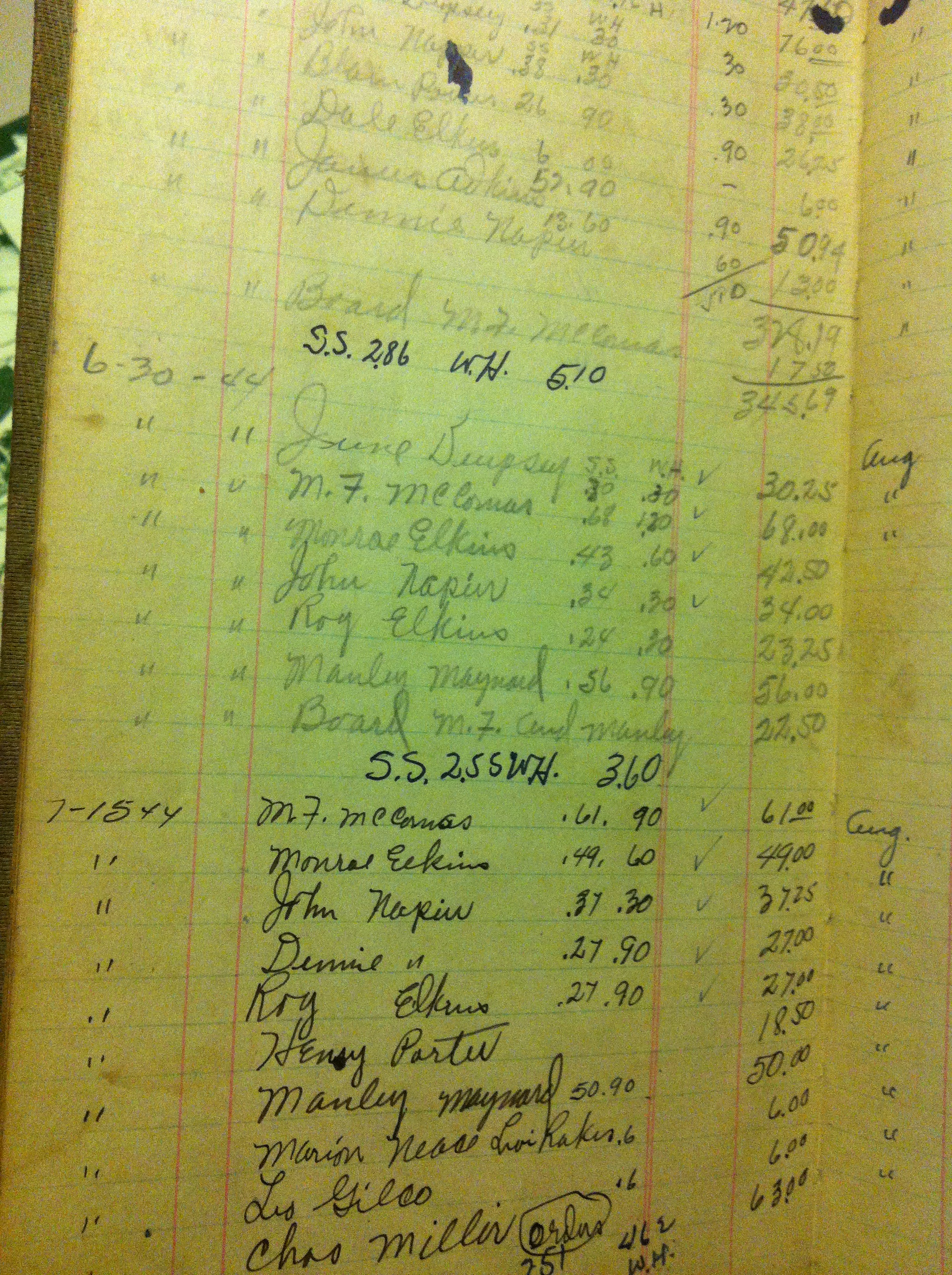
Appalachia, Blaine Powers, Charles Miller, Dale Elkins, Dennie Napier, Harts, Henry Porter, history, James Adkins, John Napier, June Dempsey, Leo Gilco, Levi Rakes, Lincoln County, logging, M.F. McComas, Manley Maynard, Marion Neace, Monroe Elkins, Roy Elkins, timbering, Watson Adkins, West Virginia

Watson Adkins timber ledger, Harts, WV, 1944

Watson Adkins timber ledger, Harts, WV, 1944

Enoch Baker

03 Sunday May 2015

Posted by Brandon Ray Kirk in Lincoln County Feud, Timber

≈ Leave a comment

Tags

Appalachia, Blood in West Virginia, Canada, culture, Enoch Baker, genealogy, history, Lincoln County Feud, logging, Nova Scotia, photos, timbering

Enoch Baker (center), a timber boss on Harts Creek in West Virginia during the 1880s

Enoch Baker (center), a timber boss on Harts Creek in West Virginia during the 1880s

The Life of Pioneers 11

22 Wednesday Apr 2015

Posted by Brandon Ray Kirk in Big Harts Creek, Timber

≈ Leave a comment

Tags

Appalachia, Belle Dora Adams, Daisy Adams, Harts Creek, history, Howard Adams, Logan County, logging, Major Adams, timbering, Trace Fork, U.S. South, West Virginia

This history of early life in Logan County, West Virginia, was written by Howard and Daisy Adams. Howard (1906-1976) and Daisy (b.1915) were children of Major and Belle Dora Adams of Trace Fork of Harts Creek. Titled “The life of pioneers during the latter half of the eighteenth century and the beginning of the 19th century” and written in the late 1960s or early 1970s, their history marks the only known attempt by local people to reconstruct the story of pioneer life. This part of the history includes information regarding timbering and rafting.

Now the timbering began. The men and boys would go into the forest and cut and saw down big trees. They would cut off the limbs and top the logs off, then peel all the bark off. Now the logs were slipped down the hills into the branch or valley. The next step was to get the logs to the creek. So this was done by hauling with teams of mules, horses, or oxen. Most folks done their hauling with a big ox team. The ox team consisted of from 4 to 8 yoke of oxen. A yoke was a heavy piece of wood carved and shaped to fit the necks of the steers. It was about 5 feet long and had two curved bows on each end called ox bows. They were put up around the oxen’s neck and through holes in the yoke and held in the yoke by a piece of wood called a key. A steeple of iron was installed in the center of the yoke used for hooking the chain and coupling the teams together. Now after the team was driven up and turned around in front of a log, a long chain called a draft chain was hitched around the log or a pair of “grabs” driven in the log and the chain hitched to them.

So the big ox driver cracked his whip and away the trek began toward the creek bank which was where the logs were hauled till enough logs were banked, as it was called, to make a raft when it rained and the creek arose up big enough to float the logs. They were rolled in the creek with cant hooks or log ______.

The logs were floated down near the river and caught by a device called a boom. Here the logs were placed side by side and end to end. Then poles were nailed to the logs by chain dogs. A chain dog was two wedge-shaped pieces of iron fastened together with a chain about one foot long. These wedge-shaped irons were driven into the logs, holding them to the poles.

Now the raft was made. A raft usually was about 20 feet wide and maybe 300 feet long. A gadget called an oar blade was put on each end of the raft. An oar blade was a board about 12 feet long, 12 inches wide, and 1/2 inch thick on one end and two inches thick on the other end. The thick end was nailed on a pole about four inches in diameter and 20 feet long. A ____ was driven in the end of a log on each end of raft. Then the pole blade had a hole drilled in it. Now it was placed on the peg in the log, making it swivel or work on a pivot. Two men run each raft. They had a large cable or rope about 100 feet long used for tying up the raft when they wanted to stop overnight.

Tying a raft up to a tree was a hard job and very dangerous. Many men were drowned at it. The raft was pushed or guided close to the bank of the river and one man would jump off and run along the river bank beside the raft and the other man on the raft would throw the end of the cable out to the man on the bank and he would put the raft around a big tree and tie the raft up. It took quick men who knew their job to do this type of work.

After tying up their raft, a buyer was found and he came and measured their logs and paid them and they walked back home, sometimes 100 miles. When the men got back home from the timber cruise, they paid off their debts and bought a few clothes, coffee, flour, salt, etc. And time marched on.

T.S. Godby & Co.

14 Tuesday Apr 2015

Posted by Brandon Ray Kirk in Big Creek, Timber

≈ 3 Comments

Tags

Appalachia, Big Creek, Boone County, genealogy, Guyandotte River, history, Logan County, Logan County Banner, logging, North Fork, T.S. Godby & Co., timbering, Tolbert S. Godby, U.S. South, West Virginia, William J. Berry

Godby and Berry dissolve timber partnership LCB 07.16.1891

Logan County Banner (Logan, WV), 16 July 1891

Will Mullins and Unknown Man

31 Tuesday Mar 2015

Posted by Brandon Ray Kirk in Dingess, Timber

≈ 1 Comment

Tags

Appalachia, Dingess, genealogy, history, logging, Mingo County, timbering, U.S. South, West Virginia, Will Mullins

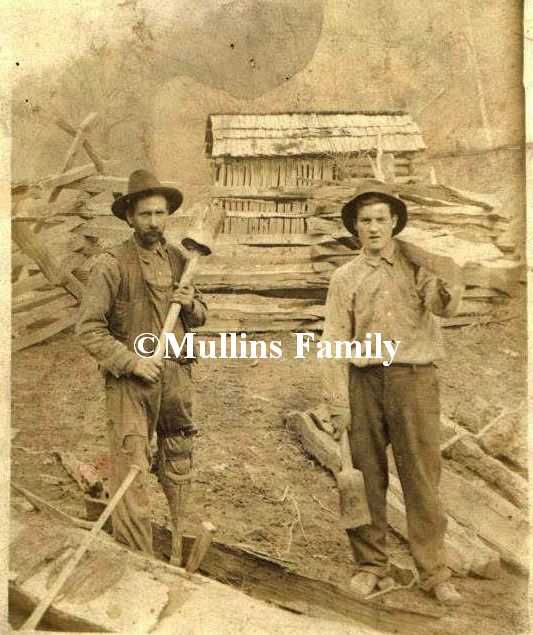
Will Mullins, shown with a peg-leg, resident of Dingess, Mingo County, WV

Will Mullins, shown with a peg-leg, resident of Dingess, Mingo County, WV

Dingess Doings 09.03.1891

31 Tuesday Mar 2015

Posted by Brandon Ray Kirk in Dingess, Timber

≈ Leave a comment

Tags

A.S. Wellman, Appalachia, Brit Wellman, Ceredo, Dingess, Elisha Wellman, genealogy, history, John Workman, Logan County Banner, logging, Mingo County, Pittsburg, preachers, saw mill, sawyer, Tillie McCloud, timbering, U.S. South, Vane Dingess, W.R. Ellis, Wayne County, Wellman mill, West Virginia, William Mullins

“Quongo Tandem,” a local correspondent at Dingess in present-day Mingo County, West Virginia, offered the following items, written on August 26, 1891, which the Logan County Banner printed on September 3, 1891:

Wm. Mullins is able to walk about with the aid of crutches.

John Workman, sawyer at Wellman mill, has returned after a brief visit in Wayne county.

Vane Dingess, our wide-awake merchant, has enclosed the lot adjoining his new store with a neat board fence.

Contractor Tresher has returned from Pittsburg with his family and is domiciled in one of the “camp cottages.” His present contract demands his presence at this point.

On Tuesday last Brit Wellman, proprietor of the saw-mill at this place, procured a warrant and searched the premises of W.R. Ellis in request of chains, a yoke, a pair of lines, etc., said to have been stolen by the latter. Part of the property was recovered and the end is not yet.

Monday evening two of our “callud breddun,” preachers of the word, held forth at Camp Locker to a large congregation. As our native Hottentots are much given to “shooting craps” “chuck-a-luck” and similar delectable games, this will doubtless prove a good field for mission work.

On Monday, the 17th inst., at the residence of A.S. Wellman, Mr. Elisha Wellman and Miss Tillie McCloud were united in the bonds of wedlock. Elder Dingess, in his usual impressive manner, spoke the words that made them one. Mr. Wellman is one of Dingess’ best known young men with a host of friends, and his bride, a beautiful young lady from Twelve Pole, no less noted for her many endearing qualities than for her many graces of person. Mr. Wellman is to be congratulated upon his fortunate conquest, and if well wishes count for anything, the happy couple’s future will be one continued summer day. They will reside at Ceredo.

Burl Farley Bridge

17 Tuesday Feb 2015

Posted by Brandon Ray Kirk in Big Harts Creek, Lincoln County Feud, Timber

≈ Leave a comment

Tags

Appalachia, Blood in West Virginia, Brown's Run, Burl Farley, Burl Farley Bridge, Cabell County, genealogy, Harts Creek, history, Lincoln County Feud, Logan County, logging, Roach, timbering, West Virginia

James Burl Farley of Browns Run of Harts Creek was a leading timber figure in the Guyandotte Valley. He was also a key participant in the Lincoln County Feud. Farley later relocated to Roach in Cabell County, WV.

James Burl Farley of Browns Run of Harts Creek was a leading timber figure in the Guyandotte Valley. He was also a key participant in the Lincoln County Feud. Farley later relocated to Roach in Cabell County, WV.

Enoch Baker

16 Monday Feb 2015

Posted by Brandon Ray Kirk in Big Harts Creek, Lincoln County Feud, Logan, Timber

≈ Leave a comment

Tags

Appalachia, Blood in West Virginia, Cabell County, Canada, Enoch Baker, genealogy, Harts Creek, history, Huntington, Lincoln County Feud, Logan County, logging, Nova Scotia, photos, timbering, West Virginia

Enoch Baker, a native of Nova Scotia who once worked timber on Harts Creek, is shown here years later at his Huntington office.

Enoch Baker, a native of Nova Scotia who once worked timber on Harts Creek, is shown here years later at his Huntington, WV, office.

← Older posts
Newer posts →

Feud Poll 1

If you had lived in the Harts Creek community during the 1880s, to which faction of feudists might you have given your loyalty?

Categories

  • Adkins Mill
  • African American History
  • American Revolutionary War
  • Ashland
  • Atenville
  • Banco
  • Barboursville
  • Battle of Blair Mountain
  • Beech Creek
  • Big Creek
  • Big Harts Creek
  • Big Sandy Valley
  • Big Ugly Creek
  • Boone County
  • Breeden
  • Calhoun County
  • Cemeteries
  • Chapmanville
  • Civil War
  • Clay County
  • Clothier
  • Coal
  • Cove Gap
  • Crawley Creek
  • Culture of Honor
  • Dingess
  • Dollie
  • Dunlow
  • East Lynn
  • Ed Haley
  • Eden Park
  • Enslow
  • Estep
  • Ethel
  • Ferrellsburg
  • Fourteen
  • French-Eversole Feud
  • Gilbert
  • Giles County
  • Gill
  • Green Shoal
  • Guyandotte River
  • Halcyon
  • Hamlin
  • Harts
  • Hatfield-McCoy Feud
  • Holden
  • Hungarian-American History
  • Huntington
  • Inez
  • Irish-Americans
  • Italian American History
  • Jamboree
  • Jewish History
  • John Hartford
  • Kermit
  • Kiahsville
  • Kitchen
  • Leet
  • Lincoln County Feud
  • Little Harts Creek
  • Logan
  • Man
  • Matewan
  • Meador
  • Midkiff
  • Monroe County
  • Montgomery County
  • Music
  • Native American History
  • Peach Creek
  • Pearl Adkins Diary
  • Pecks Mill
  • Peter Creek
  • Pikeville
  • Pilgrim
  • Poetry
  • Queens Ridge
  • Ranger
  • Rector
  • Roane County
  • Rowan County Feud
  • Salt Rock
  • Sand Creek
  • Shively
  • Spears
  • Sports
  • Spottswood
  • Spurlockville
  • Stiltner
  • Stone Branch
  • Tazewell County
  • Timber
  • Tom Dula
  • Toney
  • Turner-Howard Feud
  • Twelve Pole Creek
  • Uncategorized
  • Warren
  • Wayne
  • West Hamlin
  • Wewanta
  • Wharncliffe
  • Whirlwind
  • Williamson
  • Women's History
  • World War I
  • Wyoming County
  • Yantus

Feud Poll 2

Do you think Milt Haley and Green McCoy committed the ambush on Al and Hollene Brumfield in 1889?

Blogroll

  • Ancestry.com
  • Ashland (KY) Daily Independent News Article
  • Author FB page
  • Beckley (WV) Register-Herald News Article
  • Big Sandy News (KY) News Article
  • Blood in West Virginia FB
  • Blood in West Virginia order
  • Chapters TV Program
  • Facebook
  • Ghosts of Guyan
  • Herald-Dispatch News Article 1
  • Herald-Dispatch News Article 2
  • In Search of Ed Haley
  • Instagram
  • Lincoln (WV) Journal News Article
  • Lincoln (WV) Journal Thumbs Up
  • Lincoln County
  • Lincoln County Feud
  • Lincoln County Feud Lecture
  • LinkedIn
  • Logan (WV) Banner News Article
  • Lunch With Books
  • Our Overmountain Men: The Revolutionary War in Western Virginia (1775-1783)
  • Pinterest
  • Scarborough Society's Art and Lecture Series
  • Smithsonian Article
  • Spirit of Jefferson News Article
  • The Friendly Neighbor Radio Show 1
  • The Friendly Neighbor Radio Show 2
  • The Friendly Neighbor Radio Show 3
  • The Friendly Neighbor Radio Show 4
  • The New Yorker
  • The State Journal's 55 Good Things About WV
  • tumblr.
  • Twitter
  • Website
  • Weirton (WV) Daily Times Article
  • Wheeling (WV) Intelligencer News Article 1
  • Wheeling (WV) Intelligencer News Article 2
  • WOWK TV
  • Writers Can Read Open Mic Night

Feud Poll 3

Who do you think organized the ambush of Al and Hollene Brumfield in 1889?

Recent Posts

  • Logan County Jail in Logan, WV
  • Absentee Landowners of Magnolia District (1890, 1892, 1894)
  • Charles Spurlock Survey at Fourteen Mile Creek, Lincoln County, WV (1815)

Ed Haley Poll 1

What do you think caused Ed Haley to lose his sight when he was three years old?

Top Posts & Pages

  • Early Schools of Logan County, WV (1916)
  • Jack Dempsey’s Broadway Restaurant Location in New York City (2019)
  • Cotton Production in Antebellum Pike County, KY
  • Anthony Lawson founds Lawsonville
  • Blood in West Virginia: Brumfield v. McCoy (2014)

Copyright

© Brandon Ray Kirk and brandonraykirk.wordpress.com, 1987-2023. Unauthorized use and/or duplication of this material without express and written permission from this blog’s author and/or owner is strictly prohibited. Excerpts and links may be used, provided that full and clear credit is given to Brandon Ray Kirk and brandonraykirk.wordpress.com with appropriate and specific direction to the original content.

Archives

  • February 2025
  • January 2025
  • October 2023
  • September 2023
  • December 2022
  • November 2022
  • May 2022
  • April 2022
  • February 2022
  • November 2021
  • October 2021
  • September 2021
  • June 2021
  • May 2021
  • April 2021
  • March 2021
  • February 2021
  • January 2021
  • December 2020
  • November 2020
  • October 2020
  • July 2020
  • June 2020
  • May 2020
  • April 2020
  • March 2020
  • February 2020
  • January 2020
  • December 2019
  • November 2019
  • October 2019
  • September 2019
  • August 2019
  • July 2019
  • June 2019
  • May 2019
  • April 2019
  • March 2019
  • February 2019
  • January 2019
  • December 2018
  • November 2018
  • October 2018
  • September 2018
  • August 2018
  • July 2018
  • June 2018
  • May 2018
  • April 2018
  • March 2018
  • February 2018
  • January 2018
  • December 2017
  • November 2017
  • October 2017
  • September 2017
  • August 2017
  • July 2017
  • June 2017
  • May 2017
  • April 2017
  • March 2017
  • February 2017
  • January 2017
  • December 2016
  • November 2016
  • October 2016
  • September 2016
  • August 2016
  • July 2016
  • June 2016
  • May 2016
  • April 2016
  • March 2016
  • February 2016
  • January 2016
  • December 2015
  • November 2015
  • October 2015
  • September 2015
  • August 2015
  • July 2015
  • June 2015
  • May 2015
  • April 2015
  • March 2015
  • February 2015
  • January 2015
  • December 2014
  • October 2014
  • September 2014
  • August 2014
  • July 2014
  • June 2014
  • May 2014
  • April 2014
  • March 2014
  • February 2014
  • January 2014
  • December 2013
  • November 2013
  • October 2013
  • September 2013
  • August 2013
  • July 2013
  • June 2013
  • May 2013
  • April 2013
  • March 2013
  • February 2013
  • January 2013
  • December 2012
  • November 2012

Enter your email address to follow this blog and receive notifications of new posts by email.

Join 2,927 other subscribers

Tags

Appalachia Ashland Big Creek Big Ugly Creek Blood in West Virginia Brandon Kirk Cabell County cemeteries Chapmanville Charleston civil war coal Confederate Army crime culture Ed Haley Ella Haley Ferrellsburg feud fiddler fiddling genealogy Green McCoy Guyandotte River Harts Harts Creek Hatfield-McCoy Feud history Huntington John Hartford Kentucky Lawrence Haley life Lincoln County Lincoln County Feud Logan Logan Banner Logan County Milt Haley Mingo County music Ohio photos timbering U.S. South Virginia Wayne County West Virginia Whirlwind writing

Blogs I Follow

  • OtterTales
  • Our Appalachia: A Blog Created by Students of Brandon Kirk
  • Piedmont Trails
  • Truman Capote
  • Appalachian Diaspora

BLOOD IN WEST VIRGINIA is now available for order at Amazon!

Blog at WordPress.com.

OtterTales

Writings from my travels and experiences. High and fine literature is wine, and mine is only water; but everybody likes water. Mark Twain

Our Appalachia: A Blog Created by Students of Brandon Kirk

This site is dedicated to the collection, preservation, and promotion of history and culture in Appalachia.

Piedmont Trails

Genealogy and History in North Carolina and Beyond

Truman Capote

A site about one of the most beautiful, interesting, tallented, outrageous and colorful personalities of the 20th Century

Appalachian Diaspora

  • Subscribe Subscribed
    • Brandon Ray Kirk
    • Join 789 other subscribers
    • Already have a WordPress.com account? Log in now.
    • Brandon Ray Kirk
    • Subscribe Subscribed
    • Sign up
    • Log in
    • Report this content
    • View site in Reader
    • Manage subscriptions
    • Collapse this bar
 

Loading Comments...