• About

Brandon Ray Kirk

~ This site is dedicated to the collection, preservation, and promotion of history and culture in my section of Appalachia.

Brandon Ray Kirk

Tag Archives: Kanawha County

Lincoln County, WV (1928)

07 Wednesday Dec 2022

Posted by Brandon Ray Kirk in Boone County, Guyandotte River, Hamlin

≈ Leave a comment

Tags

Abraham Lincoln, Appalachia, Boone County, Cabell County, Carroll District, Duval District, Guyandotte River, Hamlin, Hamlin Chapel, Harts Creek District, history, Jefferson District, Kanawha County, Laurel Hill District, Lincoln County, Logan County, Mud River, Putnam County, Sheridan District, Union District, Washington District, West Virginia

From West Virginians, published by the West Virginia Biographical Association in 1928, comes this profile of the Logan-Boone Highway in southwestern West Virginia:

Lincoln County

Lincoln County occupies a place in the southwestern section of the State, and is one of the few counties created by the State of which it is a component part. The organization of the county was authorized by an act of the legislature passed February 23, 1867, from a part of the counties of Cabell, Putnam, Kanawha and Boone. The formal organization of the county government was made on March 11, following, at the Hamlin Chapel, a short distance away from the present seat of justice. Lincoln county is drained by the Guyandotte and Mud rivers, and has a land area of 448.76 square miles. The population in 1920, according to the official enumeration of the United States Census Bureau, was 19,378. Later estimates from the same sources do not increase the figures. The county has a great diversity of natural resources, coal, oil and gas predominating. It also has large agricultural interests, and its horticultural products are of no inconsiderable value. The assessed valuation of property within the county, as returned at the 1927 assessment, is as follows: Real estate, $7,000,460; personal property, $3,666,350; public utility property, $8,751,297; total $19,418,107. The county is sub-divided into eight magisterial districts, Carrol, Duval, Harts Creek, Jefferson, Laurel Hill, Sheridan, Union and Washington. There are but few who are not familiar with the life story of the man whose name is borne by this country—the martyred Abraham Lincoln, rail-splitter, country lawyer and sixteenth President of the United States. No towering shaft; no swiftly flowing stream; no sub-division of this land of ours, welded into one by his work and sacrifice, is needed to keep his memory green. His name is so emblazoned on the pages of American history that it will remain bright, shining and untarnished long after letters engraved upon granite rocks are dimmed and dulled by the rust and erosion of the years as they come and go. Lincoln—homely in feature and tall in stature—grows with the years and honors are paid him and his memory that are accorded no other, save only Washington, the founder. Hamlin, the county seat, is named in memory and honor of Hannibal Hamlin, of Maine, Vice President of the United States during the first administration of Abraham Lincoln. The site was selected as a proper place for the county seat at the organization of the county, and was made the permanent county seat by legislative enactment of February 26, 1869. Hamlin has an elevation of 642 feet above sea level, and in 1920 had a population of 516. It is the only incorporated place in the county.”

NOTE: Hamlin is NOT named for Hannibal Hamlin!

NOTE: By 1869, all land was returned to Putnam and additional land was taken from Logan County.
Logan-Boone Highway in WV (1928)

05 Monday Dec 2022

Posted by Brandon Ray Kirk in Big Sandy Valley, Boone County, Coal, Huntington, Logan, Native American History, Williamson

≈ Leave a comment

Tags

Appalachia, Aracoma, Aracoma Hotel, Boone County, Charleston, Chief Cornstalk, Chief Logan, coal, Daniel Boone, farming, history, Huntington, Kanawha County, Logan, Logan-Boone Highway, logging, Madison, Marmet, Midland Trail, mining, Tug Fork, West Virginia, West Virginia Biographical Association, Williamson

From West Virginians, published by the West Virginia Biographical Association in 1928, comes this profile of the Logan-Boone Highway in southwestern West Virginia:

Boone County, south of Kanawha, has been opened up by a hard road from Marmet, across the Kanawha from the Midland Trail. A second connection with Charleston is offered by a highway on the south side of the Kanawha. The county was named for Daniel Boone, the great hunter and Indian fighter, who lived in West Virginia many years. Madison is the county seat. Logan, county seat of Logan County, was named for Chief Logan, the speech-making Indian chief, who has been made one of the numerous story book heroes of the Indian race. Whether or not Chief Logan ever shot a deer or pitched his wig-wam in this county is much in doubt. The modern hotel at Logan, the Aracoma, further reflects the Indian influence with the name of this member of Chief Cornstalk’s family. Coal mining, lumbering and farming are the principal activities of Logan and Boone counties. Most of the road south is also hard-surfaced, and will eventually form the link between the Midland Trail to the North and the Huntington-Williamson highway along Tug River.

A History of Methodism in Logan (1927)

26 Saturday Jun 2021

Posted by Brandon Ray Kirk in Huntington, Logan

≈ Leave a comment

Tags

Appalachia, Ben F. Donley, Cabell County, Claypool Chapel, Crump and Reardin, Dan Westfall, Giles County, Guyandotte, history, Huntington, J.S. Thornburg, Kanawha County, Kenova, Logan, Logan Banner, Logan County, Orville, Pittsburgh, Tazewell County, W.T. Workman, West Virginia

From the Logan Banner of Logan, WV, comes this bit of history about Methodists in Logan County, WV. The story is dated April 26, 1927:

PLANS FOR SUNDAY’S DEDICATION OF FIRST M.E. CHURCH PROMPT REVIEW OF 100 YEARS OF METHODISM HERE

Methodists from all parts of Logan county and even more distant points are expected to attend the dedication next Sunday of the new First M.E. Church in this city. As previously announced, an impressive program for the day has been arranged. Dr. Daniel Westfall, of Pittsburgh, Rev. J.E. Bird, of Huntington, and Rev. J.S. Thornburg, of Kenova, will be here to assist the pastor, Rev. Ben F. Donley.

It is more than a century ago that Methodism took root in Logan county. There are authentic records telling of the activities of the followers of the Wesleys as far back as 1825, the year the county was carved out of Tazewell, Giles, Cabell and Kanawha. Students of local church history are convinced that Methodist ministers labored in this field prior to that date. Their first goings and comings antedate the West Virginia Conference, which was established by the General Conference while assembled in Pittsburgh in 1848.

For the following review of the history of Methodism in Logan, the Banner is indebted to an adherent of the church who has just been delving into the subject:

First Church Prepares for Dedication

Methodism had its beginning in what is now Logan county in the year 1825 of which we have record, but we feel sure that even before that there were Methodist preachers in the confines of the county.

The History of Methodism in Logan county beings even before we have a West Virginia Conference. It was established by the General Conference while assembled in Pittsburgh in 1848.

Methodism, like all other denominations in Logan county and elsewhere, has been intermittent, not always able to have ministers enough to supply all its work; but wherever possible having local men to exhort the people, and some of these men became great ministers of the church.

Logan County’s Methodism has fared somewhat like that. It has been intermittent in its work. They have had many ministers and many times they have been without a minister. Because of this a large portion of the history has been lost, so far as records are concerned, but in the heart and mind of Methodist people there remains the story of Methodism in Logan county which has been given to them by their ancestors.

At Guyandotte in 1804

We know from the general church history that Bishop Asbury preached in this section of the country before the year 1825 and the minister who was preaching in Guyandotte at the mouth of our river came into the county and preached as early as 1804.

The local church has within the jurisdiction property that was deeded to the church as early as the year 1844 and at this time is defending in the Circuit Court of Mingo county title to property that was deeded to the church in 1882.

The First Methodist Church has been using the old church building or 21 years. It was started by the Reverend J.W. Bedford, who is now living at Parsons, W.Va., and who is still active in serving a church. He began traveling this field in 1872. His circuit included these places as some of the appointments: Claypoool Chapel, Logan, Orville, Starr Chapel, and others that made a circuit of over a hundred miles in length. He walked most of the time and won for himself the name “Walking Joe,” which holds to this day.

The Rev. J.S. Thornburg, a brother of the Rev. Thornburg of this city, was the first preacher in the new church built in 1904. This building has served its people well, but now the needs of the present congregation are so great that they cannot be served in the old building.

In 1924 the Rev. Ben F. Donley was appointed pastor of the local congregation. Upon arrival he found a very much discouraged people, but that willingness that has characterized the Christian people from the beginning–a willingness to arise and work.

Without much ado, or even any shouting from the housetops as to what they were going to do, they set themselves to the task of doing what seemed the impossible.

Planning for Future

The church board made a survey of the community and of the church to find out its needs and to see if it were possible for them to supply them. The first one that arose was the need of a new church building, Sketches were drawn of a building that would care for the church for a number of years, but upon consideration it was decided that the coat was prohibitive. It was then decided to build a part now and complete the plans in the near future. This included departmental rooms and a modern parsonage.

Contract was let to the firm of Crump and Reardin, of Huntington, and ground was broken on November 23, 1926. The corner stone was laid January 13, this year by W.T. Workman, the Most Worshipful Grand Master of the A.F. & A.M., of West Virginia.

The new edifice to be presented for dedication on Sunday, May 1, is of English architecture, a very beautiful structure.

Sunset Mound in South Charleston, WV (2021)

12 Wednesday May 2021

Posted by Brandon Ray Kirk in Native American History

≈ Leave a comment

Tags

Appalachia, history, Kanawha County, Native American History, Native Americans, South Charleston, Sunset Mound, West Virginia

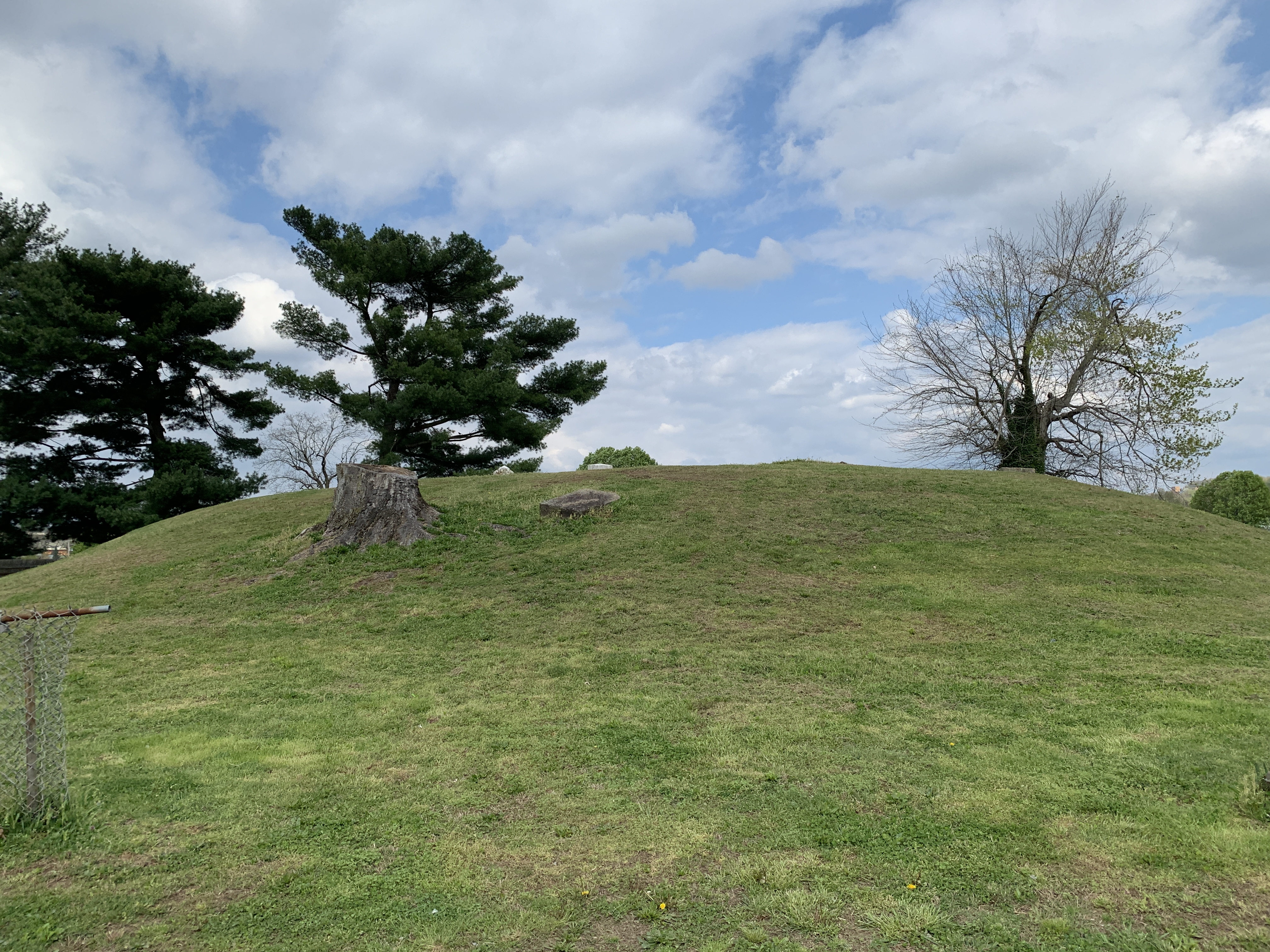
Sunset Mound, South Charleston, WV. 15 April 2021

Absentee Landowners of Magnolia District (1870, 1876, 1886, 1889)

22 Monday Feb 2021

Posted by Brandon Ray Kirk in Big Sandy Valley, Matewan

≈ Leave a comment

Tags

A.J. Baker, Alexander Mounts, Anthony Lawson, Appalachia, Asbury Hurley, Charles Mounts, Charleston, Christian M. Cline, Cincinnati, Edward Cline, Eli Trent Jr., Four Pole Creek, genealogy, history, J.C. Alderson, J.D. Sergeant, Jackson Mounts, Jacob Smith, James Laidley, James M. Lawson, James OKeeffe, John Counts, John Mullins, Julius C. Williamson, Julius Williamson, Kanawha County, Kentucky, Lewis Ferrell, McDowell County, Minnesota, Morehead, Oswald Schaaf, Philadelphia, Pike County, Pond, Roane County, Stuart Wood, T.W. Blankenship, Tazewell County, W.W. Adams, Warren Alderson, Warren M. Alderson, Wayne County, West Virginia, Wheeling, William Collins, William P. Payne, William Prater, Wytheville

What follows is a list of absentee landowners in Magnolia Township/District of Logan County, WV, for 1870, 1876, 1886, and 1889… There are three significant types of absentee landowners: 1) those who live outside of Logan County; 2) those who live in Logan County but outside of Magnolia District; and 3) those who own property, for example, at Mate Creek but reside, for example, at Grapevine Creek (both within the district). This list does not include the latter type.

1870

Alexander Mounts, Kentucky, 300 acres

John Counts, Minnesota, 230 acres

Charles Mounts Estate and Jackson Mounts, Kentucky, 150 acres

John Mullins, McDowell County, 150 acres

Christian M. Cline, McDowell County, 85 acres

1876

Jacob Cline’s Heirs, Kentucky, 5000 acres

Warren M. Alderson, Kentucky, 4518 acres

Julius Williamson, Kentucky, 1375 acres

William Collins, Kentucky, 1045 acres

John W. Deskins, McDowell County, 555 acres

Eli Trent, Jr., Wayne County, 524 acres

James M. Lawson, Kentucky, 417.25

William Prater, Kentucky, 240 acres

Asbury Hurly Heirs, Kentucky, 214 acres

Alexander Mounts, Kentucky, 75 acres

Edward Cline, McDowell County, 25 acres

John Mullins, McDowell County, 15 acres

1886

Warren Alderson, Morehead KY, 2999 acres

Jacob Smith, Mouth of Pond KY, 2050 acres

J.D. Sergeant, Philadelphia PA, 1581 acres

Julius C. Williamson, Kentucky, 1353 acres

T.W. Blankenship, Roane County, 1200 acres

Anthony Lawson estate, Wytheville VA, 816 acres

Oswald Schaaf, Cincinnati OH, 650 acres

A.J. Baker, unknown, 300 acres

James Laidley, Kanawha County, 141 acres

1889

J.D. Sergeant, Philadelphia PA, 8976 acres

James OKeeffe, Tazewell County VA, 3592 acres

Stuart Wood, Philadelphia PA, 1093 acres

Anthony Lawson heirs, Wytheville VA, 816 acres

Warren Alderson, Morehead KY*, 800 acres

J.C. Alderson and W.W. Adams et al., Wheeling and Charleston, 733 acres

Lewis Ferrell heirs, Pike County KY, 600 acres

F. Slutienburgh, Cincinnati OH, 350 acres

William P. Payne et al., McDowell County, 30 acres

*Note: Residence identified as Logan County in 1889 but as Morehead, Kentucky, for all other years.

Source: Land Book 1866-1872, Land Book 1873-1874, Land Book 1880-1886 and Land Book 1887-1892.

Logan Chamber of Commerce Offers Cool Reception to UMWA Officials (1925)

18 Wednesday Nov 2020

Posted by Brandon Ray Kirk in Battle of Blair Mountain, Boone County, Logan

≈ Leave a comment

Tags

Aracoma Hotel, Boone County, C.A. Brubeck, Chamber of Commerce, Herrin, history, Illinois, Kanawha County, Logan, Logan Banner, Logan County, Mingo County, Ohio, Pomeroy, United Mine Workers of America, West Virginia

From the Logan Banner of Logan, WV, comes this bit of history about a visit to Logan by United Mine Workers of America officials in 1925. The story is dated August 28, 1925.

Local Citizens Resent Visit of Union Officials

Chamber of Commerce Adopts Resolutions At Special Meeting, and Informs Visitors That They Are Unwelcome Guests

Just how thoroughly the citizens generally of this community are opposed to the activities and methods of the United Mine Workers of America was amply demonstrated this week when officials of the organization were frankly and almost bluntly told by committees waiting on them that their presence here was not desired and they were invited to make themselves conspicuous by their absence.

Two weeks ago eight officials prominent in the affairs of the organization paid a visit to this city and cloaked their activities with a secrecy which tended to excite suspicion. After a stay of a little over a day they departed for an unknown destination, leaving behind the information that they would return shortly. Tuesday four of them again made their appearance and immediately matters began to move with startling rapidity.

A special meeting of the Chamber of Commerce was hurriedly called. Before the visitors had been in the city a half hour members of the Chamber were being summoned by telephone and by messenger to assemble in special session. The response to the call was quite general for the business men of the community realized what the future promised where United Mine Workers methods prevailed. Pomeroy, Ohio and Herrin, Illinois, did not appeal to them as a possible future for Logan, so all other affairs were dropped and the meeting was promptly in session.

The subject of the visit was thoroughly discussed and it was unanimously decided that the best interests of the community demanded that unquestioned action should be taken. The experiences of other cities and communities where United Mine Workers methods prevailed were gone into thoroughly and in detail and the members went on record by unanimously adopting the following resolutions:

WHEREAS, it has come to the attention of the Chamber of Commerce of the City of Logan that certain officials of the United Mine Workers of America have made a recent visit to our city and are now back again, and

WHEREAS, we believe it is their desire and intention to stir up industrial strife in attempting to form an organization of the miners in this field, and,

WHEREAS, we have a peaceful, quiet community of good law-abiding citizens, and the miners in our section are now doing well and everything is peaceful and pleasant and that the relations between the coal operators and the miners is pleasant and agreeable, which is conducive to the peace and prosperity of our county; and

WHEREAS, the results and experiences in sections where efforts towards organization on the part of the United Mine Workers of America have been so destructive and disastrous to the industrial success of such communities such as Pomeroy, Ohio, Herrin, Ill., Northern West Virginia and Kanawha, Boone and Mingo Counties, which communities are still suffering from the effects of such attempted organization, and believing that the usual tactics would be pursued in this field if such organization is attempted.

THEREFORE BE IT RESOLVED, that this body in meeting assembled, unanimously deplores the fact of any such attempted organization and go on record as being unqualifiedly opposed to say activities towards such attempted organization on the part of the United Mine Workers of America, or any of their agents, servants or employees.

AND, BE IT FURTHER RESOLVED, that a copy of this resolution be spread on the minutes of this meeting and also delivered to the press.

This resolution unanimously adopted this the twenty-fifth day of August, One Thousand Nine Hundred and Twenty Five.

Logan Chamber of Commerce.

H.A. DAVID, chairman

C.A. BRUBECK, secretary

***

It was decided that a committee be appointed to wait on the visitors and in plain language inform them that their presence here was not desired and inviting them to transfer their activities to some other territory remote from Logan.

Shortly after the meeting adjourned, a committee of some twenty-five or thirty members paid a visit to the Aracoma hotel, where the officials were making their headquarters, and conveyed to them the feelings and decisions of the business men of the community. When the officials entered the parlor, where the committee had gathered, the spokesman conveyed to the visitors the reason for their interview in substantially the following words:

Men: Those assembled represent the business interests of the community members of the Chamber of Commerce. We know that you are not here for any good purpose, either for the good of the business interests or the good of the citizens of Logan county or its interests. We know your history in the past. We know what you did to Boone county and we…

Armed March: Kanawha County Sheriff H.A. White (1921)

16 Friday Oct 2020

Posted by Brandon Ray Kirk in Battle of Blair Mountain, Logan

≈ Leave a comment

Tags

Appalachia, Battle of Blair Mountain, crime, Don Chafin, H.A. White, Kanawha County, Logan, Logan County, Mine Wars, Mingo County, sheriff, United Mine Workers of America, West Virginia

From the Logan Banner of Logan, WV, comes this item dated September 2, 1921 about Kanawha County sheriff H.A. Walker and his role in the “armed march” on Logan County, WV, by UMWA miners:

IS KANAWHA PROUD OF HER SHERIFF?

We presume the citizens of Kanawha county are justly proud of their sheriff, H.A. Walker.

When Kanawha county citizens, all miners, last week decided that since Logan county was enjoying an unbroken peace of seventeen years, or from the time coal operations began, it would probably overlook the state pistol toting law and the United States treason laws and remain peacefully subservient thus allowing them to pass as quietly through Logan county as possible which might include pillaging a few homes and only a murder or two. Did Logan’s sheriff permit it? Let’s see.

This mob was allowed to gather in Kanawha county by their sheriff who visited their camp, saw armed sentinels and is said to have received authentic information of pillaging and looting and auto holdups in his county yet sends in the report of “everything orderly.” This then means that a person or several hundred persons may carry arms in Kanawha county so long as they are orderly even though he or they should hold up an auto or two “to see if the driver was carrying whiskey to the campers along the road.”

For shame, Kanawha. You permit a man to hold this high office who allows all of this in violation of his sacred oath, because he fears to disarm these men who came down through Boone leaving a trail of blood along the way, into Logan where families forsake their homes at two o’clock in the morning and drive to Logan city for protection; where every available man is pressed into service for fighting while his mother, wife, daughter and sister spend sleepless days and nights preparing food for him.

You should be pleased, Kanawha, that some of your citizens have produced this reign of terror, but it remained for Logan county’s sheriff to uphold the laws of the State of West Virginia and the laws of the United States and stop this mad rush of Kanawha county citizens into Mingo which would have ended in a manner which God alone knows.

There is no place in modern civilization for the Kanawha demonstration. It is wrong in principle, subservient to anarchy and flagrantly outrageous in the reputation it gives the state. It is the fault of Sheriff Walker that the name of West Virginia is once again disgraced as one of the United States, but thanks to Sheriff Don Chafin and Logan county citizens, the laws are upheld before the more serious encounters ensued.

Guyandotte River Navigation (1848)

24 Sunday May 2020

Posted by Brandon Ray Kirk in Coal, Guyandotte River, Timber

≈ 2 Comments

Tags

Andrew Elkins, Appalachia, Burbus Toney, coal, Corbin Bryant, David Dingess, farming, flatboats, Francis Browning, genealogy, Guyandotte River, Harvey S. Dingess, Henderson Dingess, Henry Conley, history, James Bailey, Jefferson Thompson, Kanawha County, Logan County, navigation, rafting, Ralph Lucas, sheep, Squire Toney, timber, tobacco, Virginia, West Virginia, West Virginia State Archives, William E. Browning, William Farley, William Toney

The following petition is imperfectly transcribed and will be corrected at a later date:

A Petition of Citizens of Logan County praying for the appropriation of money to clear out the obstruction in the navigation of the Guyandotte River (July 17, 1848)

Petition to the Senate and House of Representatives of the Virginia Legislature by the “citizens of the County of Logan” who “represent to your body that they live in a County of Boundless resources of wealth, with a soil adapted to the growth and culture of all most all the substantial ___ of Life. The Indian corn, Rye, oats, Tobacco, hemp, Flax, potatoes, cabbages, carrots, pumpkins are grown as well perhaps in this county as any other region in the commonwealth whilst there is no county can exceed it on firsts: Particularly Peaches by planting on the North Hill Sides they never fail to yield their fruits and the peaches often measure from 2 1/2 to 3 inches in diameter, it is believed also that the ___ would grow well and by proper and well directed enterprize and industry ___ may yet be made in our County to gladden the Hearts of the Citizens and strangers. That your Humble body may have some Idea of the Rich character of our County. They respectfully State as cattle can be gotten of the county, better than almost anything else, in which they could spend their capital or employ their time, that many cattle are annually raisen and drove from the County. That these vast herds of cattle live through the winter without being far from the Produce of the farm with the exception of a few days of Heavy snow and __ rains from the rich character of our hills fine grapes will soon upon them it is believed that no portion of the world would be better adapted to the growing of sheep as not much attention hath yet been paid to the growing of sheep there is no fine Breeds in the county yet our sheep are large and very thrifty. There is perhaps no county that can boast of finer growth of timber which now is and must continue to be in great demand upon the Ohio river and we have no doubt our County abounds with valuable minerals of many descriptions. There is every portion of in the county Rich and deep veins of Bituminous coal and several Banks of the Canal Coal have been found and doubtless the county is filled with it, this Coal above if it could be gotten to market would bring in a great resource of wealth.”

“Yet all of these vast resources are locked and remain valueless for the want of outlet or the means of getting them to market and the necessaries of Life brought to the county for Sale owing to the obstruction of the navigation of the Guyandotte river, and taxed something like one cent on the Pound, this on ___ coffee, nails, Tobacco &c, operates verry __ the Guyandotte River is here. Great chance of communication–the articles of salt may be brought across the county from Kanawha But almost everything else must and __ be Brought up the river and there is no other Possible __ of getting out with our lumber and coal and wool and other products.”

The petition hopes the “Honorable Body” will “appropriate a sufficient sum of money together with what may be raised By individuals to remove the obstructions of the navigation of said river By the ___ upheavals and the Flat Boat and Rafts Downwards at the proper stages of the tide.”

Some signatures of interest to me (there were many others):

Ralf Lucas

Burbus Toney

Henry Conley

Corbon Bryant

Squire Toney

Francis Browning

James Bailey

William E. Browning

Andrew Elkins

H.S. Dingess

William Farley

Henderson Dingess

Jefferson Thompson

William Toney

David Dingess

Source: Library of Virginia, General Assembly Legislative Petitions, Logan County, Reel 111,” located at the WV State Archives.

Civil War in the Kanawha Valley: Morgan Kitchen Museum (2019)

22 Wednesday Jan 2020

Posted by Brandon Ray Kirk in Civil War

≈ Leave a comment

Tags

Albert Sidney Johnston Morgan, Appalachia, Battle of Charleston, Battle of Scary Creek, civil war, history, Jacob D. Cox, John Morgan, Kanawha County, Morgan Kitchen Museum, St. Albans, Terry Lowry, Union Army, West Virginia

IMG_0671

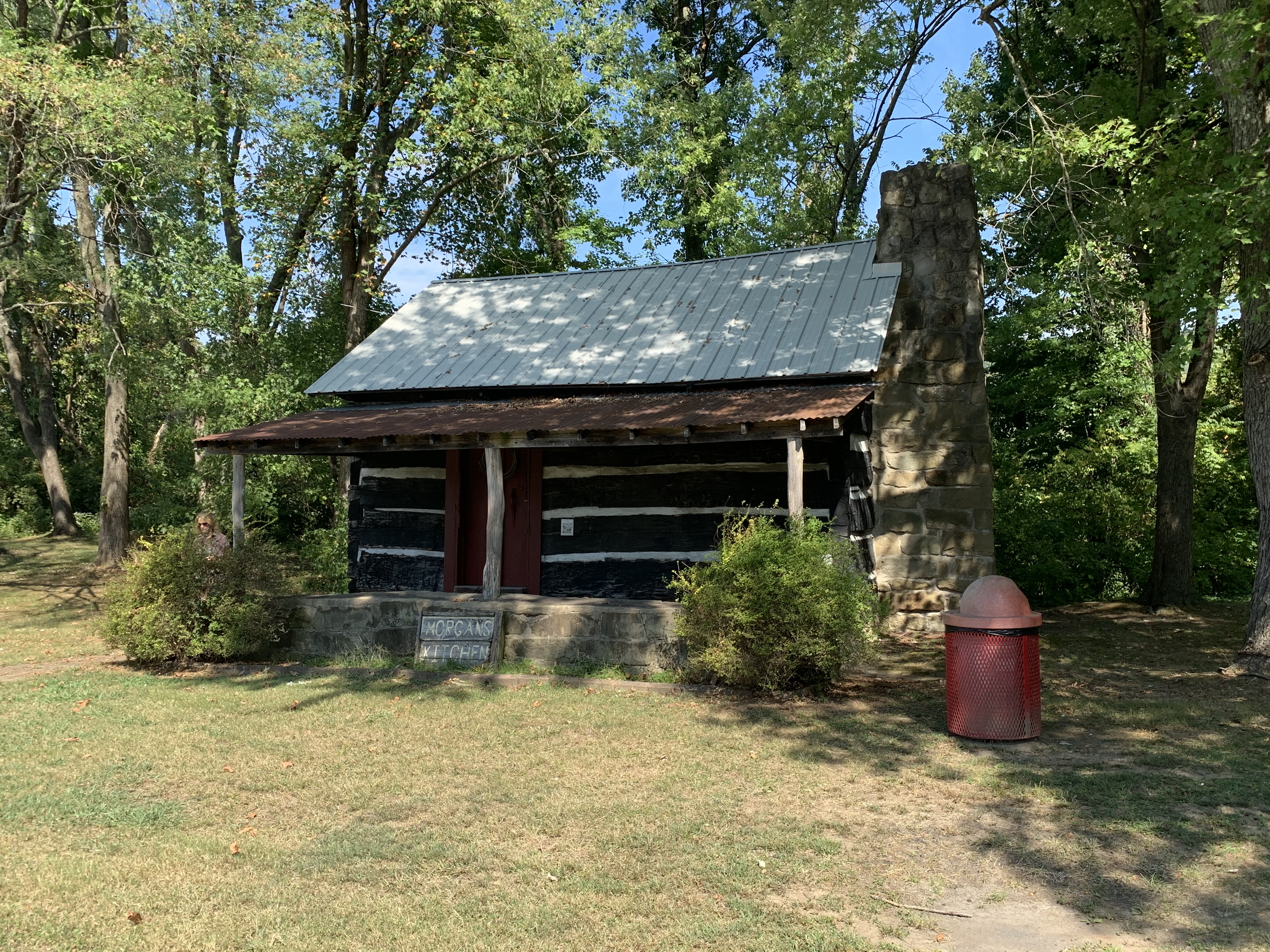
Terry Lowry is THE authority on the Civil War in the Kanawha Valley. Stop 8 on his tour: Morgan Kitchen Museum in Saint Albans, WV. 29 September 2019. Here is a link to Terry’s latest book, The Battle of Charleston (2016): https://wvcivilwar.com/now-available-the-battle-of-charleston/

IMG_0675

Morgan kitchen was built in 1846 near the present-day location of John Amos Power Plant. During the war, the kitchen was used to serve meals to Union soldiers wounded at the Battle of Scary Creek. It was moved to this site in 1972.

IMG_0673

For more information about the kitchen, go here: http://www.stalbanshistory.com/morgans-kitchen.html

Civil War in the Kanawha Valley: Littlepage Mansion (2019)

20 Monday Jan 2020

Posted by Brandon Ray Kirk in Civil War, Women's History

≈ Leave a comment

Tags

Adam Littlepage, Appalachia, architecture, Camp Two Mile, Charleston, civil war, Confederate Army, Gallipolis, George B. McClellan, Henry Wise, history, Kanawha County, Kanawha Valley, Littlepage Mansion, National Register of Historic Places, Ohio, Rebecca Littlepage, Ripley, Terry Lowry, The Battle of Charleston, Two Mile Creek, Union Army, West Virginia

IMG_0669

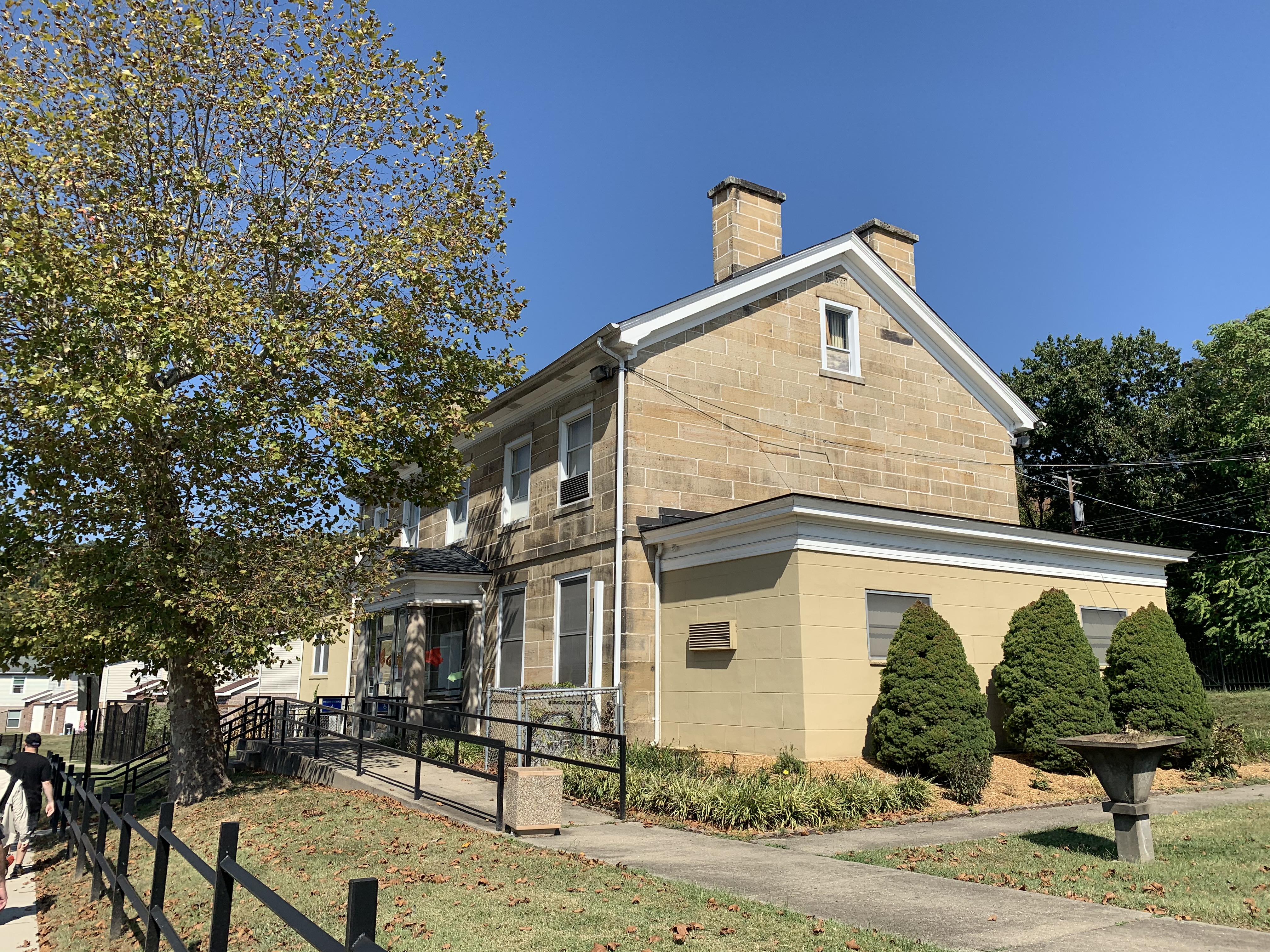
Terry Lowry is THE authority on the Civil War in the Kanawha Valley. Stop 7 on his tour: Littlepage Mansion in Charleston, WV. 29 September 2019. Here is a link to Terry’s latest book, The Battle of Charleston (2016): https://wvcivilwar.com/now-available-the-battle-of-charleston/

IMG_0670

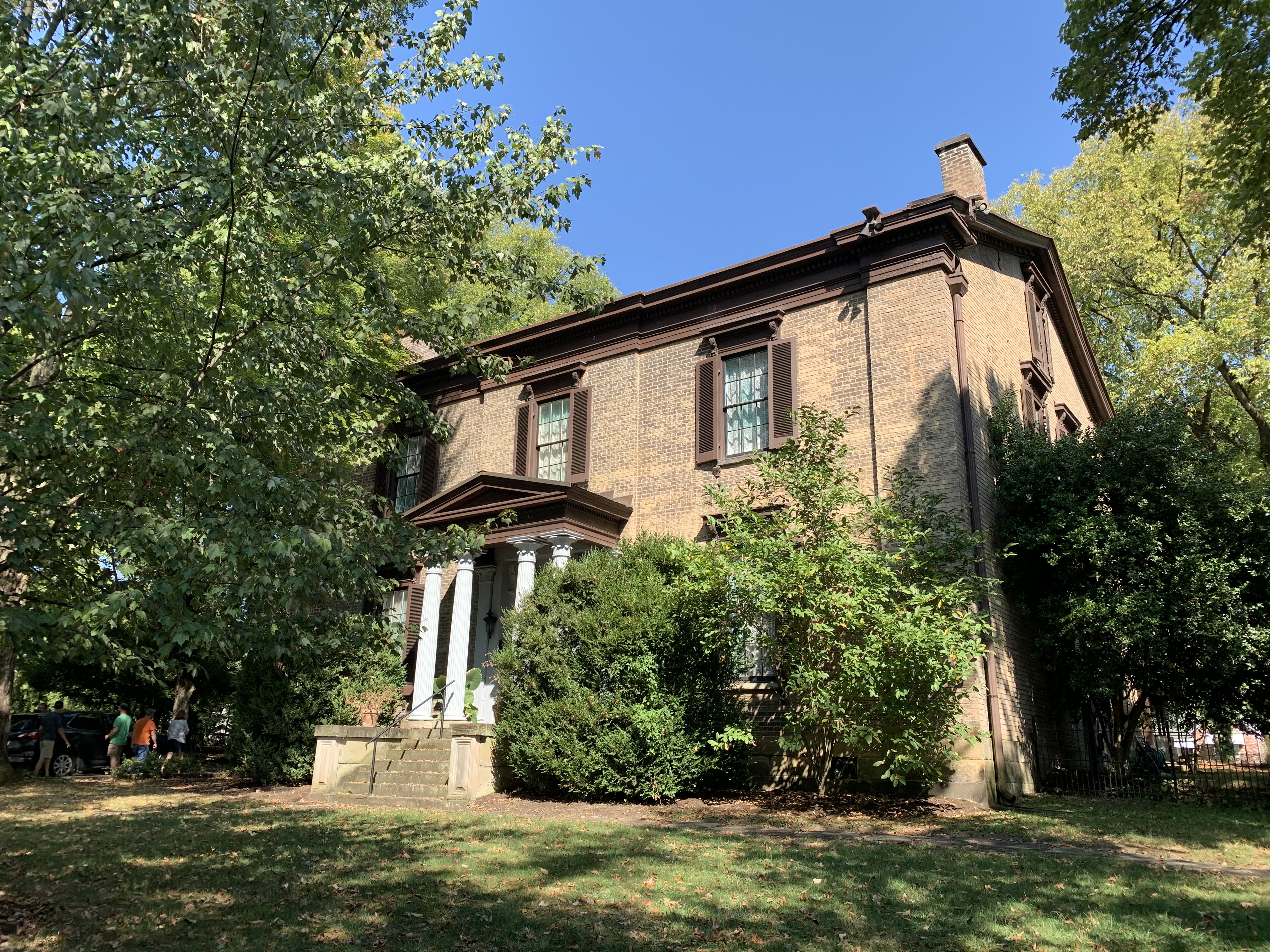
Built in 1845, the Littlepage mansion is one of only six antebellum houses remaining in Charleston, WV. It is listed on the National Register of Historic Places. 29 September 2019

IMG_0667

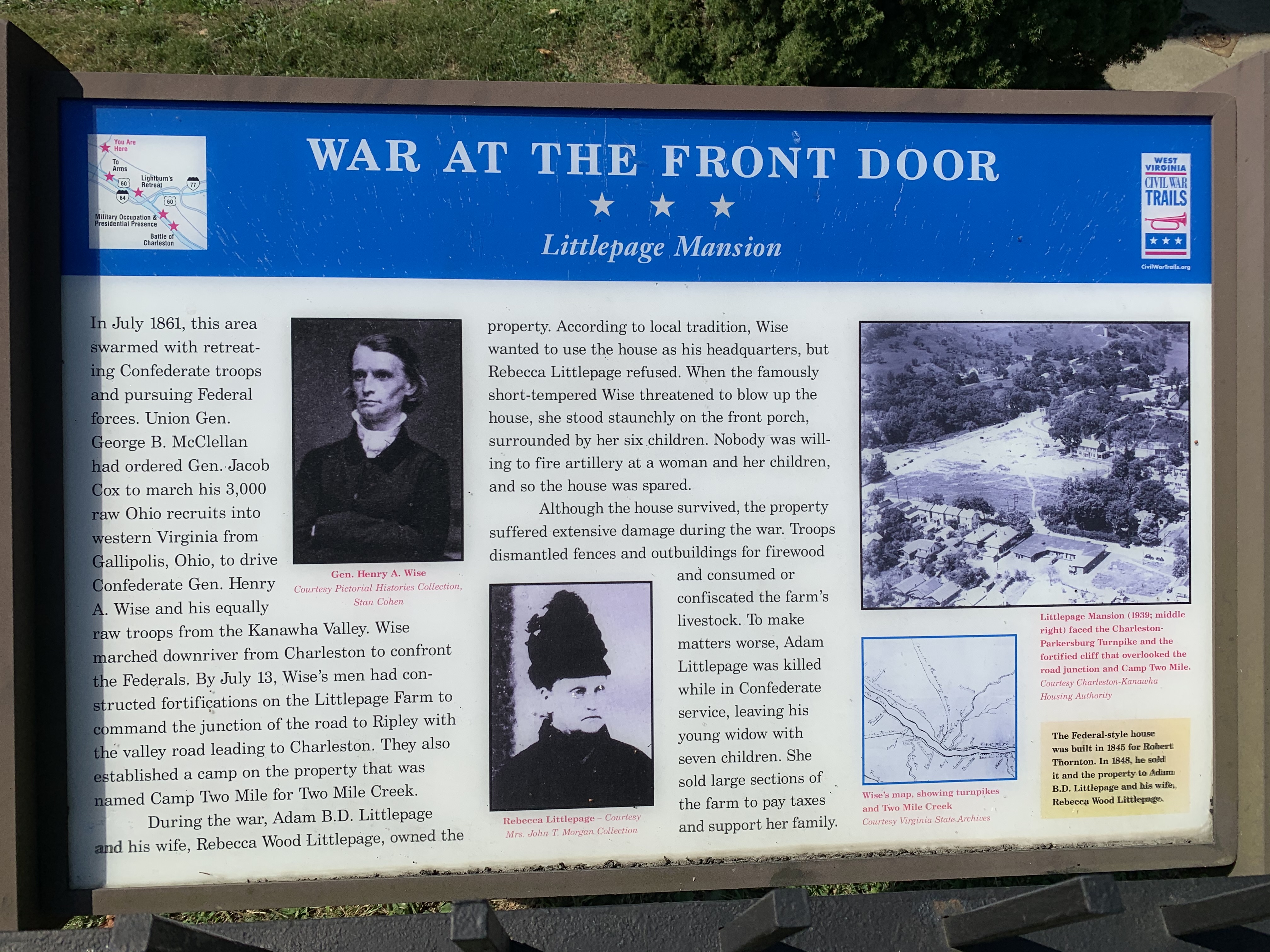
Rebecca Littlepage reportedly refused to allow Confederate General Henry A. Wise to occupy her home as a headquarters. According to the historical marker: “When the famously short-tempered Wise threatened to blow up the house, she stood staunchly on the front porch, surrounded by her six children. Nobody was willing to fire artillery at a woman and her children, and the house was spared.” For more history about the Littlepage mansion, go here: https://www.wvencyclopedia.org/exhibits/23?section=7

Civil War in the Kanawha Valley: Glenwood Estate (2019)

12 Sunday Jan 2020

Posted by Brandon Ray Kirk in Civil War

≈ Leave a comment

Tags

Appalachia, Charleston, civil war, Glenwood Estate, history, Kanawha County, Kanawha Valley, Terry Lowry, The Battle of Charleston, West Virginia

IMG_0665

Terry Lowry is THE authority on the Civil War in the Kanawha Valley. Stop 6 on his tour: Glenwood Estate in Charleston, WV. 29 September 2019. Here is a link to Terry’s latest book, The Battle of Charleston (2016): https://wvcivilwar.com/now-available-the-battle-of-charleston/

IMG_0666

For more information about Glenwood, go here: https://www.marshall.edu/graduatehumanities/the-glenwood-project/

Civil War in the Kanawha Valley: Magic Island Park (2019)

16 Saturday Nov 2019

Posted by Brandon Ray Kirk in Civil War

≈ Leave a comment

Tags

Appalachia, Battle of Charleston, civil war, Confederate Army, history, Jacob D. Cox, Joseph A. Lightburn, Kanawha County, Kanawha Valley, Magic Island Park, Point Pleasant, Terry Lowry, Union Army, West Virginia, William W. Loring

IMG_0662.JPG

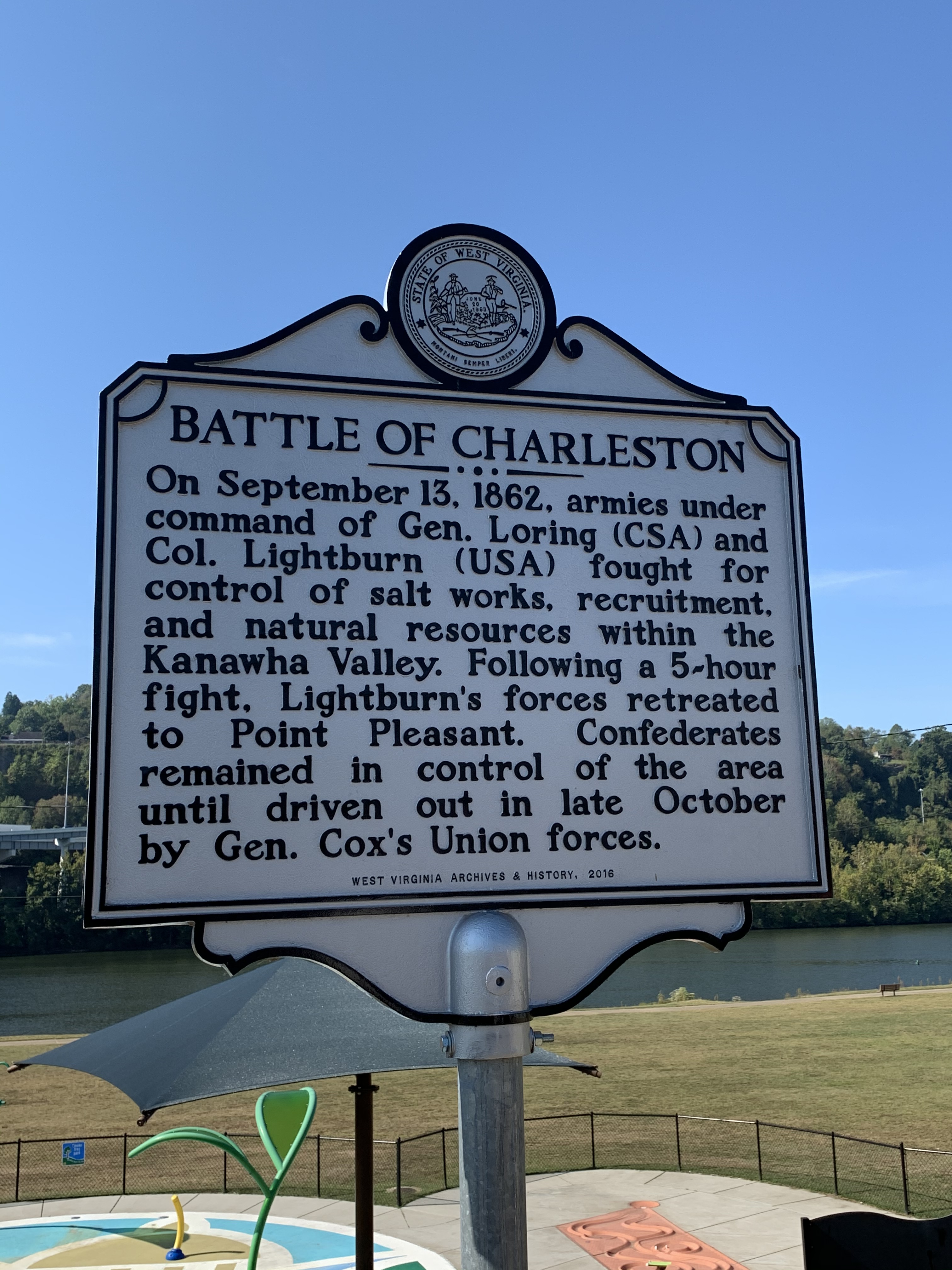
Terry Lowry is THE authority on the Civil War in the Kanawha Valley. Stop 5 on his tour: Magic Island Park in Charleston, WV. 29 September 2019. Here is a link to Terry’s latest book, The Battle of Charleston (2016): https://wvcivilwar.com/now-available-the-battle-of-charleston/

Civil War in the Kanawha Valley: Spring Hill Cemetery (2019)

09 Saturday Nov 2019

Posted by Brandon Ray Kirk in Cemeteries, Civil War

≈ Leave a comment

Tags

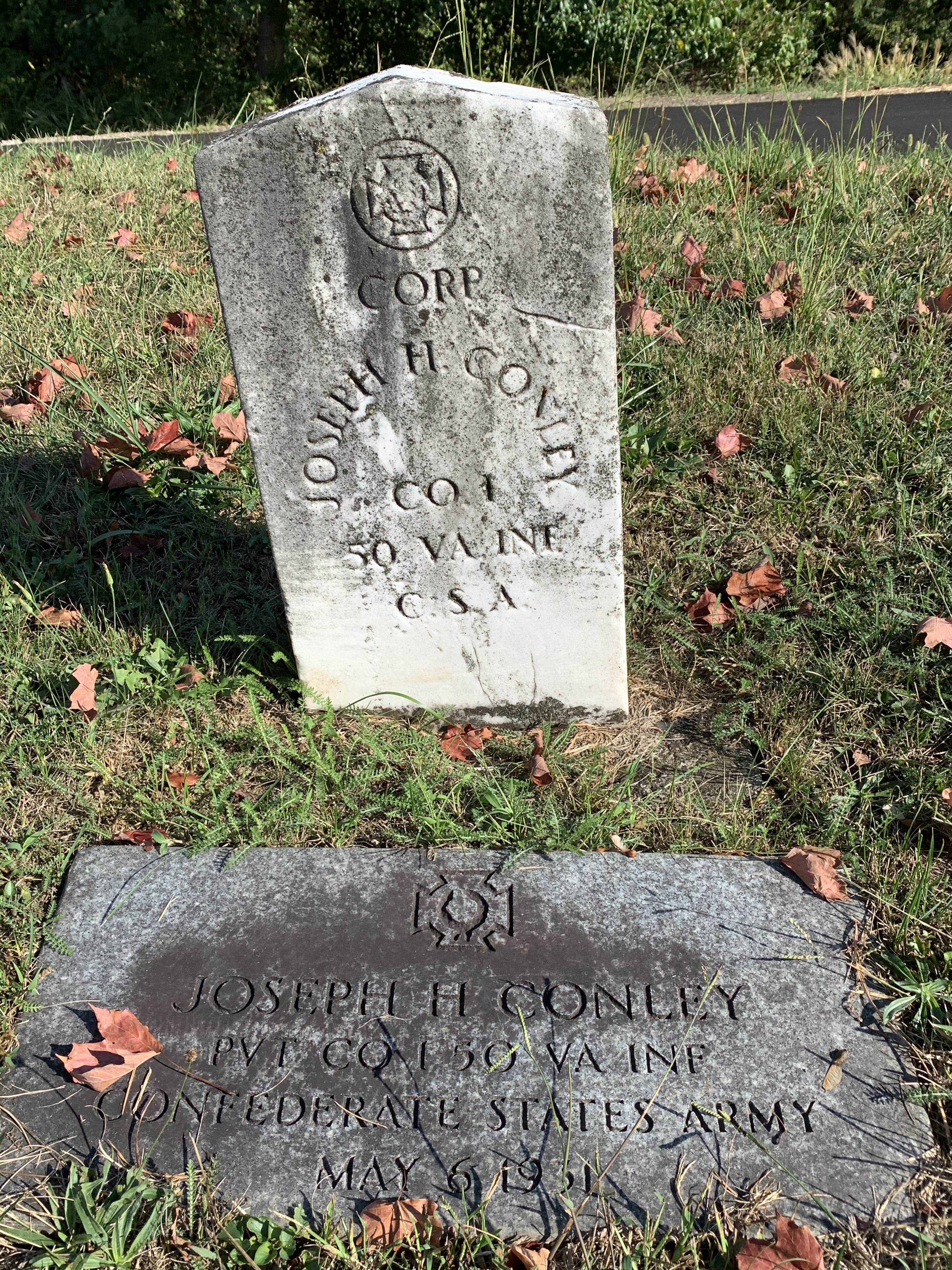
50th Virginia Infantry, Appalachia, Battle of Charleston, Camp Garnett, Charleston, civil war, Confederate Army, Confederate Cemetery, genealogy, history, Joseph H. Conley, Kanawha County, Sons of Confederate Veterans, Spring Hill Cemetery, Stonewall Jackson Camp, Terry Lowry, United Confederate Veterans, West Virginia

IMG_0660

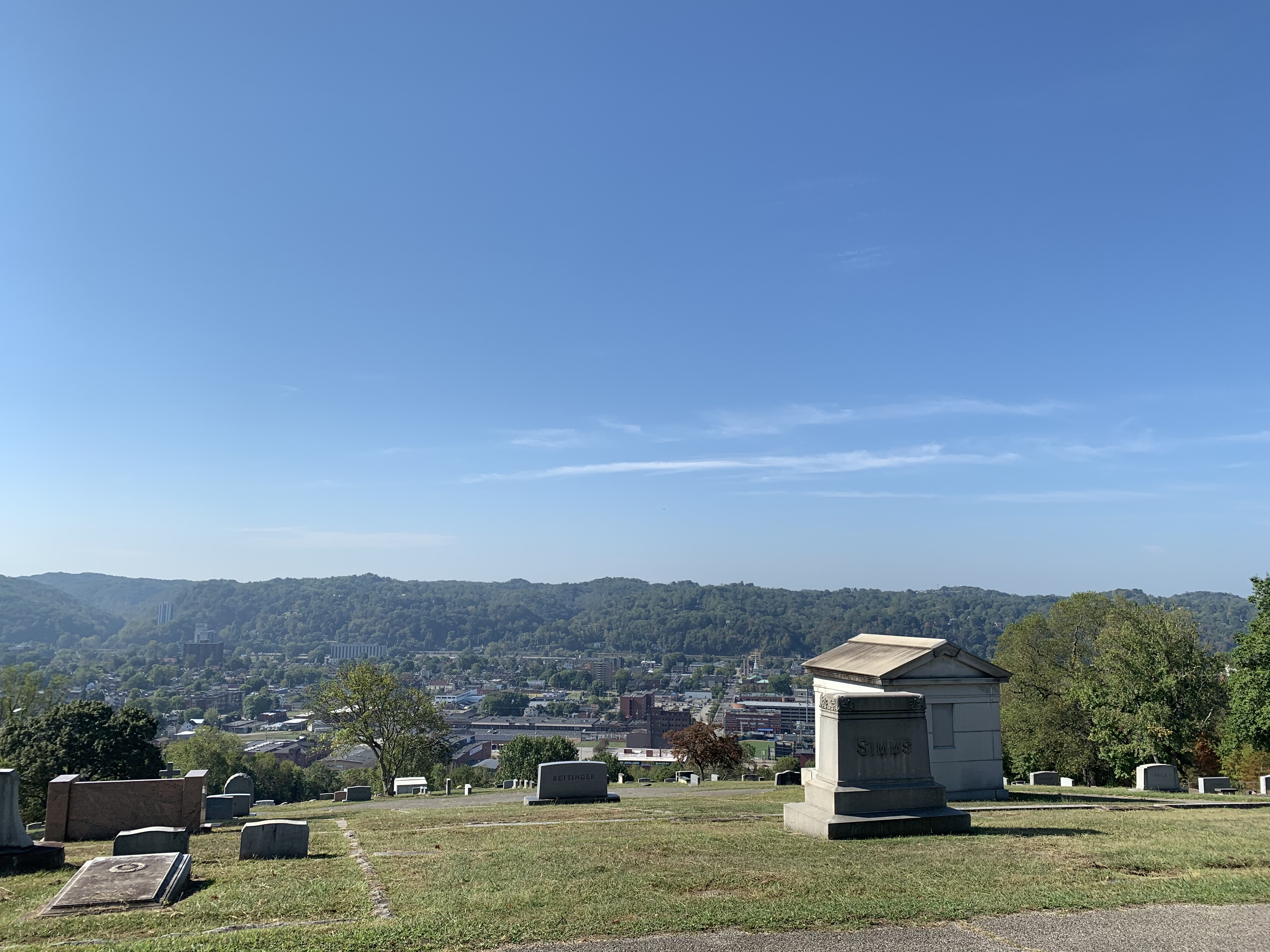
Terry Lowry is THE authority on the Civil War in the Kanawha Valley. Stop 4 on his tour: Spring Hill Cemetery in Charleston, WV. 29 September 2019. Here is a link to Terry’s latest book, The Battle of Charleston (2016): https://wvcivilwar.com/now-available-the-battle-of-charleston/

IMG_0657

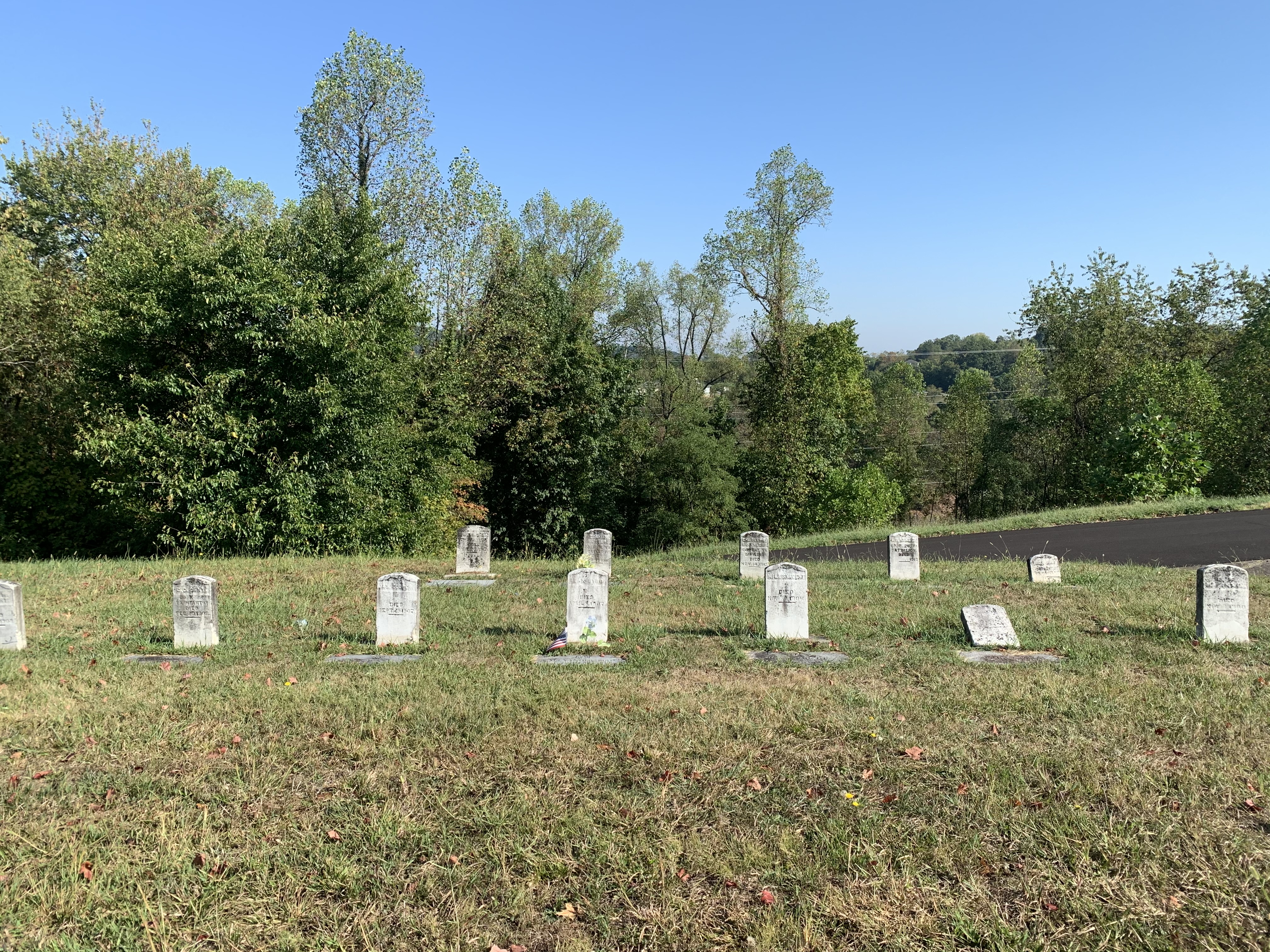
Confederate Cemetery at Spring Hill Cemetery in Charleston, WV. 29 September 2019. For more information about the cemetery, go here: https://www.wvencyclopedia.org/articles/539

IMG_0656

Confederate Cemetery at Spring Hill Cemetery in Charleston, WV. 29 September 2019. For more information about the cemetery, go here: https://wvtourism.com/company/spring-hill-cemetery/

IMG_0661

Confederate Cemetery at Spring Hill Cemetery in Charleston, WV. 29 September 2019

Civil War in the Kanawha Valley: MacFarland-Hubbard House (2019)

31 Thursday Oct 2019

Posted by Brandon Ray Kirk in Civil War

≈ Leave a comment

Tags

Appalachia, Battle of Charleston, Charleston, civil war, history, Kanawha County, Kanawha Valley, MacFarland-Hubbard House, photos, Terry Lowry, West Virginia

IMG_0652

Terry Lowry is THE authority on the Civil War in the Kanawha Valley. Stop 3 on his tour: MacFarland-Hubbard House in Charleston, WV. 29 September 2019. Here is a link to Terry’s latest book, The Battle of Charleston (2016): https://wvcivilwar.com/now-available-the-battle-of-charleston/

IMG_0653

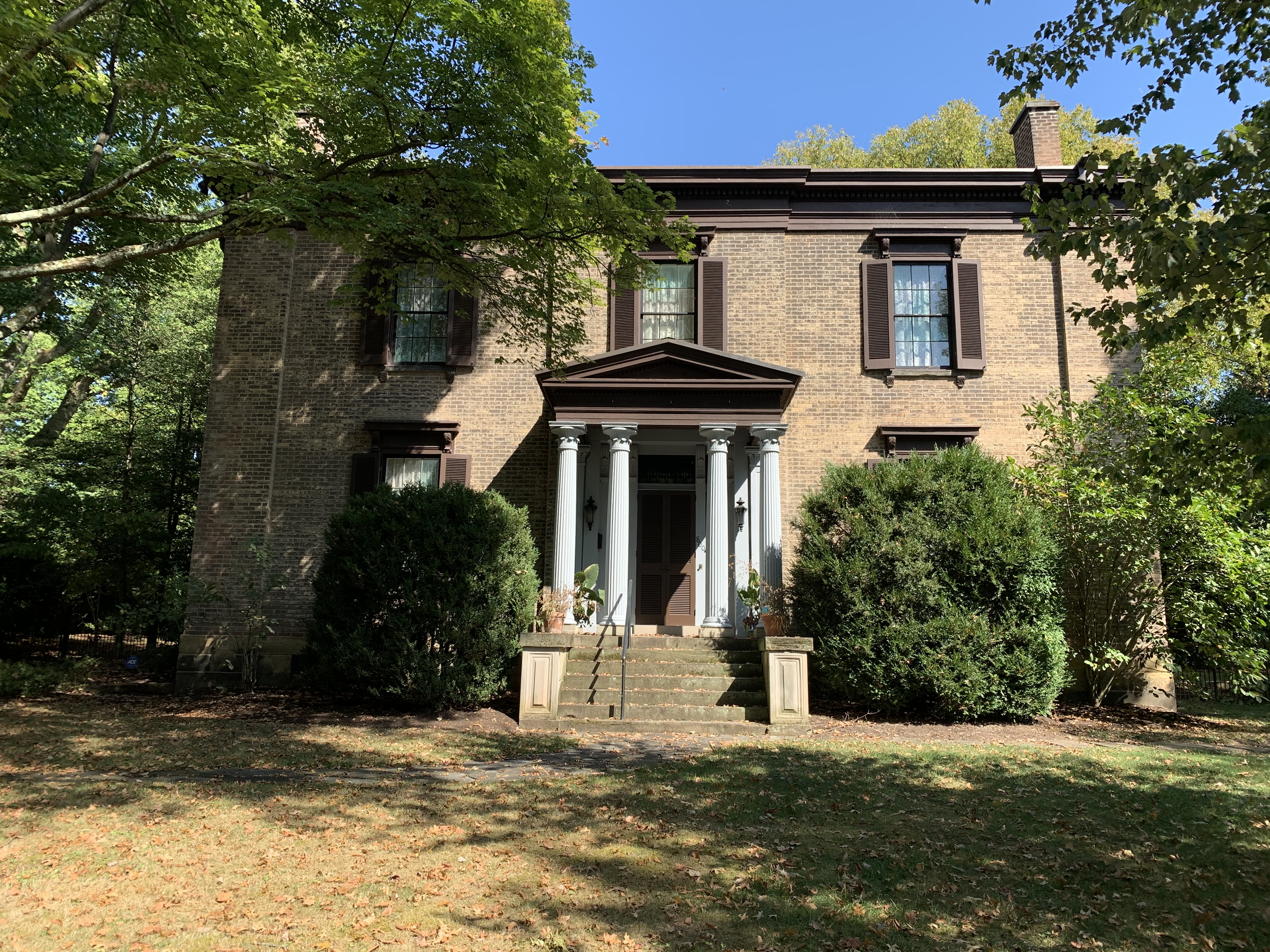
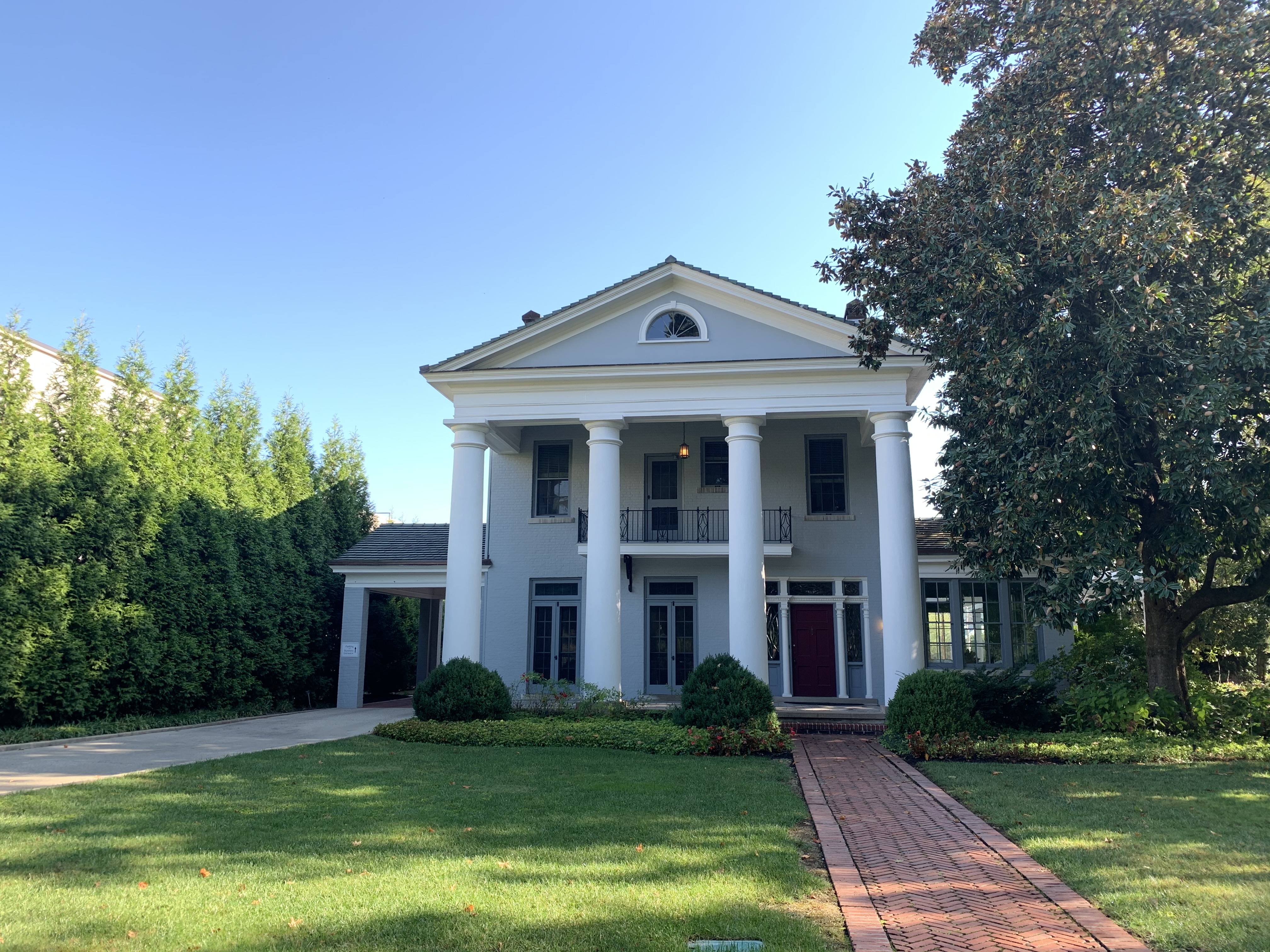
MacFarland-Hubbard House in Charleston, WV. 29 September 2019. For house history, go here: https://www.wvencyclopedia.org/exhibits/23?section=6

IMG_0654

MacFarland-Hubbard House in Charleston, WV. 29 September 2019. During the Battle of Charleston (1862), a cannonball struck in the house. It also served as a hospital. For history about house restoration, go here: http://wvhumanities.org/about/our-historic-house/macfarland-hubbard-house-restoration/

IMG_0655

MacFarland-Hubbard House in Charleston, WV. 29 September 2019. 

Civil War in the Kanawha Valley: Ruffner Memorial Park (2019)

29 Tuesday Oct 2019

Posted by Brandon Ray Kirk in African American History, American Revolutionary War, Cemeteries, Civil War

≈ Leave a comment

Tags

22nd Virginia Infantry, Appalachia, Charleston, Confederate Army, Daniel Ruffner, French and Indian War, gas, George S. Patton, George Washington, Henry D. Ruffner, history, Holly Mansion, John McCausland, Joseph Ruffner, Kanawha County, Kanawha Riflemen, Kanawha River, Kanawha Street, oil, Revolutionary War, Richard Laidley, salt, Thomas Bullitt, United Daughters of the Confederacy, West Virginia

IMG_0648

Terry Lowry is THE authority on the Civil War in the Kanawha Valley. Stop 2 on his tour: Ruffner Memorial Park in Charleston, WV. 29 September 2019. Here is a link to Terry’s latest book, The Battle of Charleston (2016): https://wvcivilwar.com/now-available-the-battle-of-charleston/

IMG_0649

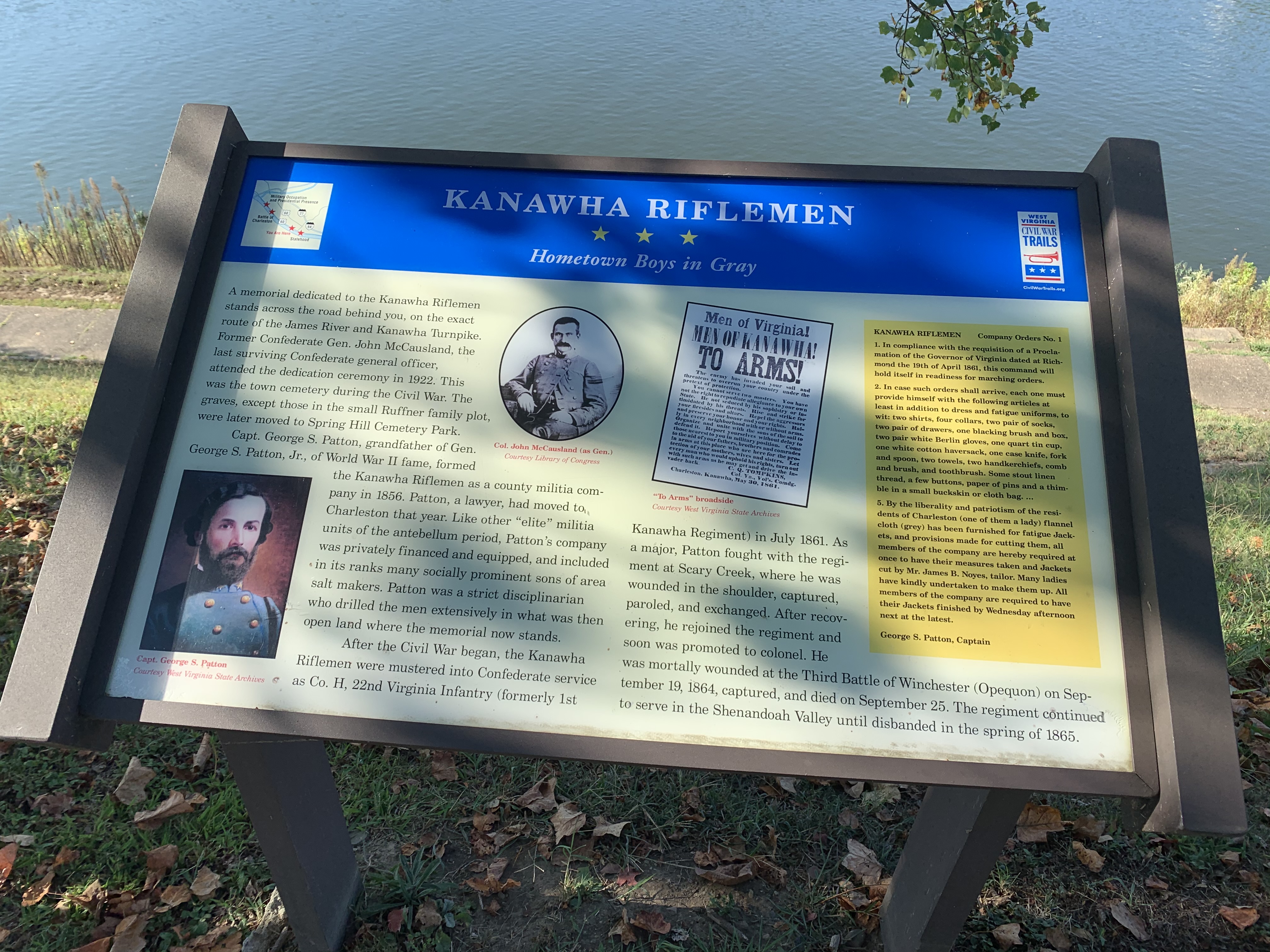
Kanawha Riflemen: “Hometown Boys in Gray.” 29 September 2019

IMG_0646

Kanawha Riflemen Memorial at Ruffner Memorial Park. In 1831, Joseph Ruffner deeded this cemetery to the city. In 1920, the site became a city park. Some graves were relocated but many are still here with their headstones buried beneath the surface. The UDC memorial was placed in 1922. 29 September 2019

IMG_0647

Thomas Bullitt grave. Ruffner Memorial Park. In 1776, George Washington wrote of him: “Bullet (sic) is no favourite of mine, & therefore I shall say nothing more of him, than that his own opinion of himself always kept pace with what others pleas’d to think of him—if any thing, rather run a head of it.” 29 September 2019

Civil War in the Kanawha Valley: Ruffner Log Cabin and Craik-Patton House (2019)

29 Tuesday Oct 2019

Posted by Brandon Ray Kirk in Civil War

≈ Leave a comment

Tags

22nd Virginia Infantry, A.J. Lightburn, Appalachia, Battle of Charleston, Charleston, civil war, Confederate Army, Craik-Patton House, George S. Patton, history, James Craik, Kanawha Boulevard, Kanawha County, Kanawha Rifleman, Kanawha Valley, lawyer, Ruffner Log Cabin, Terry Lowry, The Battle of Charleston, Union Army, West Virginia

IMG_0641

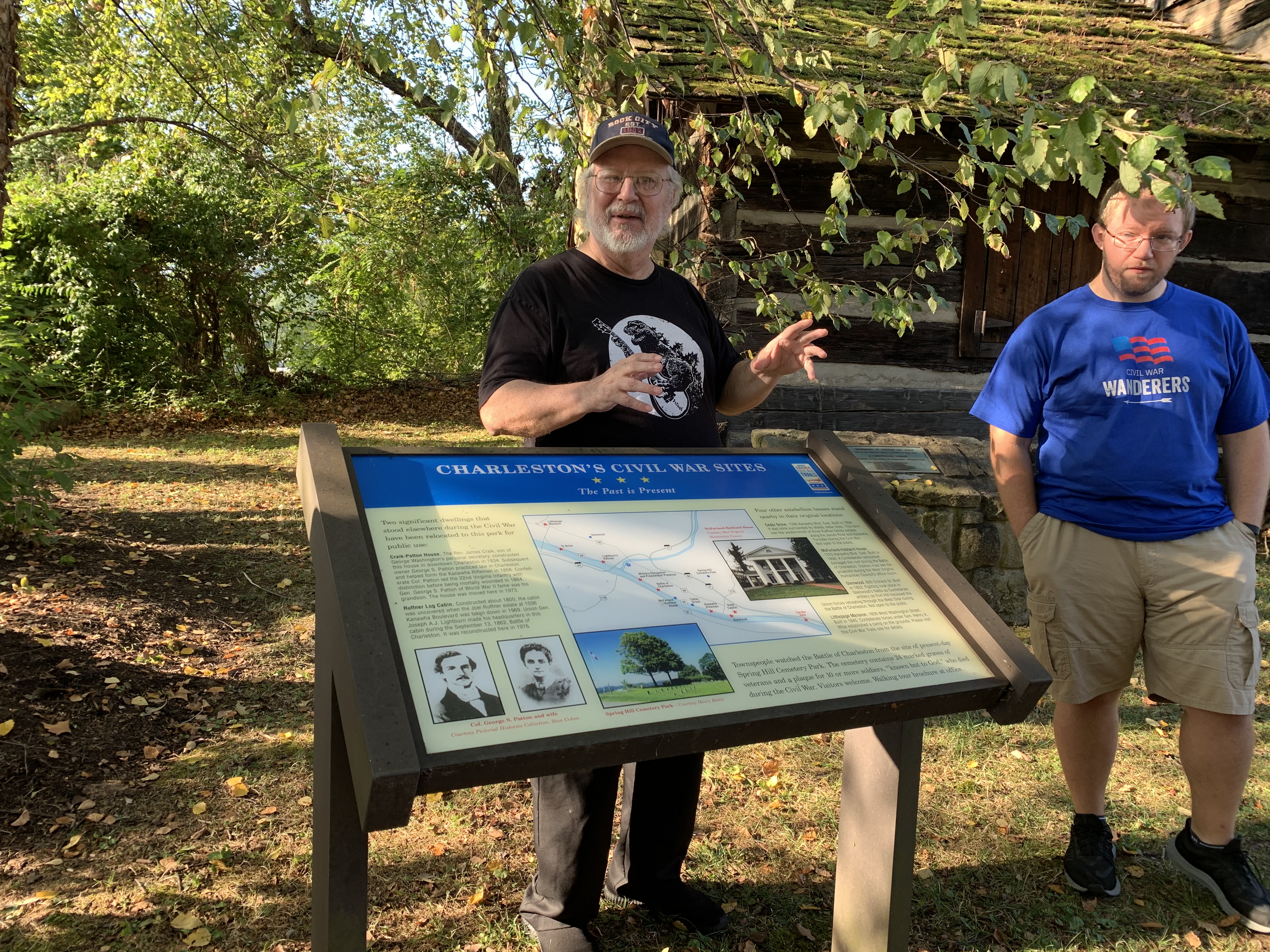
Terry Lowry is THE authority on the Civil War in the Kanawha Valley. He began his tour at the Ruffner Log Cabin and the Craik-Patton House. 29 September 2019. Here is a link to his latest book, The Battle of Charleston (2016): https://wvcivilwar.com/now-available-the-battle-of-charleston/

IMG_0643

Ruffner Log Cabin. Constructed about 1800 at 1536 Kanawha Boulevard; discovered in 1969; reconstructed here in 1976. Union General Joseph A.J. Lightburn made his headquarters in the cabin during the Battle of Charleston (09.13.1862). 29 September 2019

IMG_0644

Craik-Patton House. Rev. James Craik constructed this home in downtown Charleston in 1834. George S. Patton, a lawyer and leader of the Kanawha Riflemen, later lived in the home. Patton led the 22nd Virginia Infantry before his mortal wounding in 1864. The house was moved to this location in 1973. 29 September 2019

Sinclair Cummings of Lincoln County, WV (c.1910)

11 Thursday Jul 2019

Posted by Brandon Ray Kirk in Big Ugly Creek

≈ Leave a comment

Tags

Adam Cummings, Allen, Appalachia, Harts Creek District, history, Kanawha County, Lincoln County, Louisa Cummings, photos, Sinclair Cummings, West Virginia

Sinclair Cummings 1 copyright.jpg

Sinclair Cummings, son of Adam and Louisa (Fry) Cummings, was born in 1890 at Allen in Lincoln County, WV. His family lived in Harts Creek District in 1900. He later lived in Kanawha County.

James Jeffrey Deposition about Labor Conditions in Logan County, WV (1923)

02 Tuesday Oct 2018

Posted by Brandon Ray Kirk in Coal

≈ Leave a comment

Tags

Appalachia, coal, Coal River, deputy sheriff, Edgar Combs, history, James Jeffrey, Kanawha County, Logan, Logan County, Mine Wars, Prohibition Officer, Sallie Chambers, United Mine Workers of America, West Virginia

DEPOSITION OF JAMES JEFFREY

STATE OF WEST VIRGINIA

Vs.

Edgar Combs

STATE OF WEST VIRGINIA, KANAWHA COUNTY, as:

James Jeffrey, Who, being first duly sworn by me says that he now lives at Jeffrey, Boone County, West Virginia, and has lived in that section of the country all of his life; that he has been connected with the Prohibition Department of the State as a Prohibition Officer, and at the present time is a Coal Miner by occupation; that he is familiar with what is known as the Mine Guard System in Logan County under which large numbers of Deputy Sheriffs are employed and paid by the Coal Companies of that County; that the principal purpose of employing such Deputy Sheriffs is to prevent the Coal Miners from joining the United Mine Workers of America; that he knows the general reputation of the said deputy Sheriffs as to their attitudes toward the members of said Union; that the said Deputies have a long record for assaults upon members of the United Mine Workers that there is a feeling of deep hostility and enmity between the said Deputies and the members of said Union; that practically the whole of Logan County excepting only the small position lying along Coal River is non-union and this is due wholy to the war made upon the said Union by the deputy sheriffs; that it is dangerous for any member of the said union to remain in said County, by reason of the said Deputies; that Affiant knows that the members of said union are afraid to go to Logan Court House, as a witness and there testify fully and freely in any matter that might arise the hostility of the said deputies or the company by which they are employed and the conduct of the said deputies toward the employees of the said Union primarily caused the Armed March of the miners in 1921; that by reason of the above facts this affiant knows that it would be impossible for the defendant to get a fair and impartial trial in the said County of Logan.

Taken, sworn and subscribed by me on the 29th day of September 1923.

Sallie Starr Chambers

Notary Public, Kanawha County, West Virginia

Recollections of McKinley Grimmett of Bruno, WV 2 (1984)

03 Monday Sep 2018

Posted by Brandon Ray Kirk in Battle of Blair Mountain, Coal, Italian American History, Logan, Man

≈ Leave a comment

Tags

Alva Grimmett, Appalachia, Barnabus, Blair Mountain, Bruno, Buffalo Creek, Cabin Creek, Campbell's Creek, carpenter, Charleston, Christian, coal, Democratic Party, deputy sheriff, Don Chafin, drum runner, Ed Goodman, Emmett Scaggs, George McClintock, Great Depression, Hatfield Bottom, Henderson Grimmett, history, Joe Hatfield, John Chafin, Kanawha County, Kistler, Landsville, Logan County, Mallory, Mallory Coal Company, Matilda Hatfield, McKinley Grimmett, moonshining, Nancy Grimmett, prosecuting attorney, Republican Party, Sand Lick, sheriff, Superintendent of Schools, Tennis Hatfield, Thomas Hatfield, United Mine Workers of America, West Virginia, Wild Goose Saloon

McKinley Grimmett was born on November 30, 1896 to Henderson and Nancy (Hatfield) Grimmett at Sand Lick, Logan County, WV. On May 14, 1916, Mr. Grimmett married a Ms. Plymale, who soon died, in Logan County. One child named Alva died on June 21, 1919 of whooping cough, aged fourteen months. His World War I draft registration card dated September 12, 1918 identifies him as having blue eyes and light-colored hair. He was employed by Mallory Coal Company at Mallory, WV. On November 13, 1919, he married Matilda “Tilda” Hatfield, daughter of Thomas Hatfield, in Logan County. He identified himself as a farmer in both of his marriage records. During the 1920s, he served as a deputy under Sheriff Tennis Hatfield.

The following interview of Mr. Grimmett was conducted at his home on July 17, 1984. In this part of the interview, he recalls his occupations. Coal, Don Chafin, Tennis Hatfield, unionization, and the Great Depression are featured.

***

Did you ever go to work in the mines?

Oh yeah. I’ve been… That’s what I done over here for 44 years and two months, in and around the mines.

Who hired you?

Yeah, a fellow by the name of Frazier down here at Logan. Superintendent. Not at Logan. Landsville. I stayed there four years, pretty nigh of five years. Then I quit down there and I come to Christian and I stayed up here. A fellow by the name of Harry Venebale hired me over here, the superintendent. And I stayed with him 34 years. Wouldn’t let nobody else hold a lever but me. Drum runner. I’d run as high as 35 railroad cars a day off of that hill. I’ve done it many a day.

Did you do other jobs?

Oh yeah. Days the mines didn’t work I was the carpenter boss. That is, I was overseer over ‘em all. After the union come in, why I wouldn’t take it as a boss. They just run me as a leader, you know. At that time, I’d either have to go in as a boss or get off the union, you know. And I knowed the union was the best for me and I stayed with the union.

Did you have any role in organizing the union?

Oh yeah. I had a big… They wouldn’t let us organize on their property. We had to go across an island over there in the river and have our meeting to organize.

Is it true that local men had the union organized and were waiting for Washington to allow it?

Yeah, that’s about right. We got it. No, they come from Cabin Creek and Kanawha County and Campbell’s Creek over there and tried to organize us. Don Chafin was the high sheriff. He got so much ton per coal and everything. And we couldn’t do a thing because he had every child, woman, and everything else on his side to block us every way. They come to Blair Mountain and had fights. Killed several people, too. Both sides. But I never was in it. I was running a drum and they never did ask me to go. But they paid ‘em. They did go from over there. And went from around here, too. To fight against them, you know. And there was several of them got killed up Dingess Run there. I’ve been at the place where one fellow, sink hole he was in. There was four of them got killed: deputy sheriffs. George Gore and a fellow by the name of Mitchem. I don’t know the other two. I’ve forgot ‘em now. George Gore and Mitchem. But I know where they was at and everything there.

Can you describe Don Chafin?

I’m not too familiar with him now. But he controlled Logan County all the time. Whatever he said, why they had to do or they’d get around you and beat you to death or something like that, throw you in the river, tie your hands behind you – stuff like that.

Were you a Chafin deputy?

I worked for Tennis Hatfield and Joe.

How did Tennis hire you?

Well, Emmett Scaggs run against him. And the County Court was Democratic and they give it all to Emmett. Tennis carried it up to the high court and he won it. About that time, that’s when it was, 1922 I believe it was, last part of 1922, well Emmett, he was a well-educated fellow, he had been the superintendent of schools and everything, he turns around and registers and turned to be a Republican, well then they appointed him prosecuting attorney. You understand? Give him a job. Now the Democrats didn’t do that—Tennis and all of them did. It made a full change around whenever Tennis was elected. The County Court had been Democratic all the time and it turned over, changed hands, and make a Republican County Court. Just like they’ve got now, it’s all Democratic. And a Republican couldn’t get nothing. I’ve seen John Chafin and Hi beat an Italian man. He had two ducks carrying them. Had to wade the river. They fired him over there at Christian. Had to ride horses that day and time. Didn’t have no cars. And they jumped off their horses after they overtook him and they beat him until he couldn’t walk. My dad had a store down at the mouth of the creek and he went and got him and got him up to the store and his ducks got loose. And Mother got the ducks and she raised all kinds of ducks from ‘em. But I haven’t seen that man from that day to this. He’s dead now. But they liked to beat him to death. Now Henry Allen was another one. They barred him from the union. He was a big organizer when it first started. And he got to playing crooked work and they put him out of the union. And he’d done something or other to the party. And they beat him around there at Kistler so hard – the creek was up. Buffalo was a big creek any way. They throwed him up there at Ben Gall’s store in the creek and he washed down there at Kistler and lodged up behind the middle pier at the railroad track. Some men run in and helped him out. I forget who it was. I didn’t see that go off but that’s what happened. Well, he come up here, Henry did, to where I was walking and wanted me to get him a job. Well, I told him I would talk to the boss. A fellow by the name of George Kore. George Kore give him a job working for Tony Lumber Company, helping build houses, you know. He worked about three days and why George fired him and wouldn’t have nothing more to do with him. Henry’s dead now. That’s the last I knowed of him.

Do you remember the names of any early union organizers?

I never did meet ‘em. I tell you they kept me busy all the time as a repair man and drum runner, and days that the mines didn’t run I had to do repair work on the houses and tipples and stuff. Them organizers was, one of ‘em was a fellow by the name of Hall. I’ve seen him but I forget his first name. He had an office over there in Charleston. He was president of the union then. Don Chafin went over there and aimed to tell him what to do and he shot Don. It put Don in the hospital for a long time. After he got out there, Don Chafin and Tennis Hatfield had been in to the Wild Goose business selling bootlegging moonshine whisky up at Hatfield Bottom [in Barnabus]. And they fell out. And Tennis, he goes before the federal grand jury. I forget who the judge was. I knowed him. [George McClintock] And Tennis indicted him and sent him to the pen for four years. But they never did do nothing to Hall for shooting him over there in the miners’ office. But he never did go back in it anymore.

You remember when the mines began to mechanize?

Oh, yeah. I was in there then. I worked up til ’62.

How did the mines change?

Well, they loaded by the car that day and time when they first started. Then they got conveyors in. And they cut the coal and they throwed it on them conveyors by hand. And they built belt-lines from here all across the river, just as far as you wanted to, you know. Had different offsets in it and different motors pulling the belt line. And it come out into a big tipple and dumped into a tipple and then I took it from that. I run it 2100 feet down the incline over there on two monitors on three rails. Now you figure that out. Ten tons to each monitor Now they come up there to the middle way place and they put four rails, you understand? And then one monitor passed the other one at that middle place. All the time. They had a big drum. The drum was twelve foot in diameter and fourteen foot long that way. Built out of gum. Six by six gum. Rope was inch and a quarter.

Was there much bitterness among people when mechanization started?

Oh, no. They was all for it. They was everything was settled. Whatever the union said, they had to do at that time. It was all loaded by the ton by the car. There wasn’t no weighing or nothing like that ‘til they got the union. Then they had to put scales in, you know, and weigh these cars of coal and they had to pay so much a ton. Why, there was people over there at Christian – I never will forget it. Ed Goodman was his name. He’d be broke every week. He’d never load over four or five cars. Just 35 cents a car and a car would hold about four tons, five. And they was starving him to death. He’d come in there on paydays and I’d come in. I was always the last man getting off the hill. He was wanting on dollar scrip. He’d come over and whisper to me and tell me they wouldn’t let him have a one dollar scrip. And I’d vouch for him. Sometimes I’d pull my pay envelope out—they put your money in a pay envelope, you know—and I’ve pull out my pay envelope and give him a dollar and that would do him until Monday. He had a big family. They all weren’t home at that time. He managed. And then when the union come in, they had to treat him the way they did the rest of them.

Did you maintain steady work during the Great Depression?

Yeah. I’ve always had work. I get awful good Social Security. I study all the time – they worked me too much. I actually couldn’t stand it hardly. They’d work me Sunday and every other day. But now I never got no big money at that time. I started off at four dollars a day and I ended up with two hundred and fifty dollars a month. I stayed on that way for 19 years. They wouldn’t give me a raise. I asked ‘em for more money. Miners got a raise, you know. They said no, he couldn’t give it. Was going broke. I said well if you won’t give it I’ll be leaving you first of the month. And he didn’t think I would. Day before I was supposed to quit I sent my toolbox off the hill and everything. They had a man-car there that they rode backwards and forwards that people rode up and down the hill in. That night the man said if I would stay he would split the difference with me. Give me half. Give me twenty-five dollars. I said no I won’t do it. I’ve made you a fortune here. So he wouldn’t come up to fifty dollars and I wouldn’t come off it. Next day they had a wreck. A fella was running… I was sitting here. And they wasn’t no timber around there and I could see the monitors from here. And he wrecked and I never seen such dust in all of my life. And I got in my car and went over there. And they tore one up so bad they had to buy a new one. A monitor. That cost ‘em some money, too.

NOTE: Some names may be transcribed incorrectly.

History for Boone County, WV (1927)

28 Saturday Jul 2018

Posted by Brandon Ray Kirk in Boone County, Civil War, Native American History

≈ Leave a comment

Tags

Albert Allen, Appalachia, Ballardsville Methodist Church, Boone County, Cabell County, Charleston, civil war, Coal River, crime, Crook District, Daniel Boone, Danville, Edgar Mitchell, Frankfort, French and Indian War, genealogy, history, Jack Dotson, Johnson Copley, Kanawha County, Kanawha River, Kanawha Valley, Kentucky, Lee Sowards, Lewisburg, Logan Banner, Logan County, Madison, Missouri, Nathan Boone, North Carolina, Pennsylvania, Peytona District, Point Pleasant, Pond Fork, Ruckers Branch, Scott District, Sherman District, Spruce Fork, St. Albans, Virginia Assembly, Washington District, West Virginia, West Virginia Synodical School, Yadkin Valley

From the Logan Banner of Logan, WV, comes this bit of history about Boone County in a story dated December 9, 1927:

BOONE COUNTY

Boone county was created in 1847 of parts of Kanawha, Cabell and Logan counties. Its area is 06 miles, 65 miles larger than Logan, and in 1920 its population was 18,145. It is divided into five magisterial districts, as follows: Crook, Peytona, Scott, Sherman and Washington.

Boone county commemorates in West Virginia the name of Daniel Boone, the pathfinder to the west. It is an honor worthily bestowed, for who has not heard of Daniel Boone and the story of his efforts as an explorer, hunter, land-pilot and surveyor. His was a romantic life, picturesque and even pathetic. For more than a century he has he has been held as the ideal of the frontiersman, perhaps for the reason that his course in life was not marked by selfishness and self-seeking. He fought with the Indians, but was not tainted with the blood-lust that so often marred the border warrior and made him even more savage than the red man whom he sought to expel; he built and passed on to newer fields, leaving to others the fruits of his industry and his suffering. As a man needing plenty of “elbow room,” his places of residence mark the border between civilization and savagery for a period of fifty years. And there was a time, a period of nearly ten years, when his cabin home was on the banks of the Kanawha, a short distance above the present City of Charleston.

Daniel Boone was born in the Schulykill Valley, Pennsylvania, on November 2, 1734, but in 1750 removed with his parents to the Yadkin Valley, in North Carolina. Here he grew to manhood, married and reared a family, but was active as an Indian trader, frontiersman and defender of the feeble settlement. He was with Braddock’s army at its defeat on the Monongahela in 1755, and a few years later became the founder and defender of Kentucky. He strove with the red man with force and stratagem, and many are the fire-side tales recounted and retold in West Virginia homes of his prowess with the rifle; his ready plans and nimble wit that helped him out of situations that seemed almost impossible. Many, perhaps, are without foundation of fact; others contain enough of truth to leaven the story. Of his service to the western settlers, records preserved in the archives of state and nation show that he was indefatigable. At the Indian uprising in 1774, Boone was sent out to warn the settlers and surveyors, ranging from the settlement on the Holston river throughout all of what is now southern West Virginia to Lewisburg. In 1788, after he had lost his property in Kentucky through defective titles and failure to properly enter land grants, Boone and his family removed to Point Pleasant, at the mouth of the Great Kanawha, where they remained about one year. Contrary to his habit, his next move was toward the east to a site near the City of Charleston. When Kanawha county was formed in 1789 Boone was a resident and was named the first Lieutenant Colonel of the militia, and the following year, 1790, was elected a member of the lower house of the Virginia assembly. Colonel Boone left the Kanawha valley in 1799, removing to Missouri where he had been granted a thousand arpents of land by the Spanish government and had been appointed a Syndic for the Femme-Osage district–a local office combining the duties of sheriff, jury and military commandant. Colonel Boone died at the home of his youngest son, Colonel Nathan Boone, on the Femme Osage river, Missouri, September 26, 1820. His remains, with those of his wife, were some years later taken to Frankfort, Kentucky, and re-interred with pomp and ceremony. A monument erected by the state marks his last resting place.

Madison, the present county seat, is located at the junction of Pond Fork and Spruce Fork, which form Coal River, is 603 feet above sea level and in 1920 had a population of 604. It was incorporated as a town by the circuit court of that county in 1906. At the organization of the county in 1847, the seat of justice was located on the lands of Albert Allen, at the mouth of Spruce Fork, opposite the present town of Madison. The original court house was burned by Federal troops during the Civil War, and for a time thereafter the seat of justice was located at the Ballardsville Methodist Church. In 1866 the court house was re-located on the lands of Johnson Copley, opposite the old site, and the public buildings erected, which were used until 1921 when the present fine court house was erected.

The West Virginia Synodical School maintained and operated by the Presbyterian church, occupies the site of the original court house, opposite the present county seat.

Danville, another incorporated town in that county, had a population of 327 in 1920.

Source: Logan (WV) Banner, 9 December 1927.

Old Trees at Boone Courthouse, Hangings LB 03.22.1927.JPG

Logan (WV) Banner, 22 March 1927.

← Older posts

Feud Poll 1

If you had lived in the Harts Creek community during the 1880s, to which faction of feudists might you have given your loyalty?

Categories

  • Adkins Mill
  • African American History
  • American Revolutionary War
  • Ashland
  • Atenville
  • Banco
  • Barboursville
  • Battle of Blair Mountain
  • Beech Creek
  • Big Creek
  • Big Harts Creek
  • Big Sandy Valley
  • Big Ugly Creek
  • Boone County
  • Breeden
  • Calhoun County
  • Cemeteries
  • Chapmanville
  • Civil War
  • Clay County
  • Clothier
  • Coal
  • Cove Gap
  • Crawley Creek
  • Culture of Honor
  • Dingess
  • Dollie
  • Dunlow
  • East Lynn
  • Ed Haley
  • Eden Park
  • Enslow
  • Estep
  • Ethel
  • Ferrellsburg
  • Fourteen
  • French-Eversole Feud
  • Gilbert
  • Giles County
  • Gill
  • Green Shoal
  • Guyandotte River
  • Halcyon
  • Hamlin
  • Harts
  • Hatfield-McCoy Feud
  • Holden
  • Hungarian-American History
  • Huntington
  • Inez
  • Irish-Americans
  • Italian American History
  • Jamboree
  • Jewish History
  • John Hartford
  • Kermit
  • Kiahsville
  • Kitchen
  • Leet
  • Lincoln County Feud
  • Little Harts Creek
  • Logan
  • Man
  • Matewan
  • Meador
  • Midkiff
  • Monroe County
  • Montgomery County
  • Music
  • Native American History
  • Peach Creek
  • Pearl Adkins Diary
  • Pecks Mill
  • Peter Creek
  • Pikeville
  • Pilgrim
  • Poetry
  • Queens Ridge
  • Ranger
  • Rector
  • Roane County
  • Rowan County Feud
  • Salt Rock
  • Sand Creek
  • Shively
  • Spears
  • Sports
  • Spottswood
  • Spurlockville
  • Stiltner
  • Stone Branch
  • Tazewell County
  • Timber
  • Tom Dula
  • Toney
  • Turner-Howard Feud
  • Twelve Pole Creek
  • Uncategorized
  • Warren
  • Wayne
  • West Hamlin
  • Wewanta
  • Wharncliffe
  • Whirlwind
  • Williamson
  • Women's History
  • World War I
  • Wyoming County
  • Yantus

Feud Poll 2

Do you think Milt Haley and Green McCoy committed the ambush on Al and Hollene Brumfield in 1889?

Blogroll

  • Ancestry.com
  • Ashland (KY) Daily Independent News Article
  • Author FB page
  • Beckley (WV) Register-Herald News Article
  • Big Sandy News (KY) News Article
  • Blood in West Virginia FB
  • Blood in West Virginia order
  • Chapters TV Program
  • Facebook
  • Ghosts of Guyan
  • Herald-Dispatch News Article 1
  • Herald-Dispatch News Article 2
  • In Search of Ed Haley
  • Instagram
  • Lincoln (WV) Journal News Article
  • Lincoln (WV) Journal Thumbs Up
  • Lincoln County
  • Lincoln County Feud
  • Lincoln County Feud Lecture
  • LinkedIn
  • Logan (WV) Banner News Article
  • Lunch With Books
  • Our Overmountain Men: The Revolutionary War in Western Virginia (1775-1783)
  • Pinterest
  • Scarborough Society's Art and Lecture Series
  • Smithsonian Article
  • Spirit of Jefferson News Article
  • The Friendly Neighbor Radio Show 1
  • The Friendly Neighbor Radio Show 2
  • The Friendly Neighbor Radio Show 3
  • The Friendly Neighbor Radio Show 4
  • The New Yorker
  • The State Journal's 55 Good Things About WV
  • tumblr.
  • Twitter
  • Website
  • Weirton (WV) Daily Times Article
  • Wheeling (WV) Intelligencer News Article 1
  • Wheeling (WV) Intelligencer News Article 2
  • WOWK TV
  • Writers Can Read Open Mic Night

Feud Poll 3

Who do you think organized the ambush of Al and Hollene Brumfield in 1889?

Recent Posts

  • Logan County Jail in Logan, WV
  • Absentee Landowners of Magnolia District (1890, 1892, 1894)
  • Charles Spurlock Survey at Fourteen Mile Creek, Lincoln County, WV (1815)

Ed Haley Poll 1

What do you think caused Ed Haley to lose his sight when he was three years old?

Top Posts & Pages

  • About
  • Perry A. Cline Deed to Anderson Hatfield (1877)
  • U.B. Buskirk of Logan, WV (1893-1894)
  • Hugh Dingess Family Cemetery (2014)
  • Anderson Blair Account with William A. Dempsey (1854-1855)

Copyright

© Brandon Ray Kirk and brandonraykirk.wordpress.com, 1987-2023. Unauthorized use and/or duplication of this material without express and written permission from this blog’s author and/or owner is strictly prohibited. Excerpts and links may be used, provided that full and clear credit is given to Brandon Ray Kirk and brandonraykirk.wordpress.com with appropriate and specific direction to the original content.

Archives

  • February 2025
  • January 2025
  • October 2023
  • September 2023
  • December 2022
  • November 2022
  • May 2022
  • April 2022
  • February 2022
  • November 2021
  • October 2021
  • September 2021
  • June 2021
  • May 2021
  • April 2021
  • March 2021
  • February 2021
  • January 2021
  • December 2020
  • November 2020
  • October 2020
  • July 2020
  • June 2020
  • May 2020
  • April 2020
  • March 2020
  • February 2020
  • January 2020
  • December 2019
  • November 2019
  • October 2019
  • September 2019
  • August 2019
  • July 2019
  • June 2019
  • May 2019
  • April 2019
  • March 2019
  • February 2019
  • January 2019
  • December 2018
  • November 2018
  • October 2018
  • September 2018
  • August 2018
  • July 2018
  • June 2018
  • May 2018
  • April 2018
  • March 2018
  • February 2018
  • January 2018
  • December 2017
  • November 2017
  • October 2017
  • September 2017
  • August 2017
  • July 2017
  • June 2017
  • May 2017
  • April 2017
  • March 2017
  • February 2017
  • January 2017
  • December 2016
  • November 2016
  • October 2016
  • September 2016
  • August 2016
  • July 2016
  • June 2016
  • May 2016
  • April 2016
  • March 2016
  • February 2016
  • January 2016
  • December 2015
  • November 2015
  • October 2015
  • September 2015
  • August 2015
  • July 2015
  • June 2015
  • May 2015
  • April 2015
  • March 2015
  • February 2015
  • January 2015
  • December 2014
  • October 2014
  • September 2014
  • August 2014
  • July 2014
  • June 2014
  • May 2014
  • April 2014
  • March 2014
  • February 2014
  • January 2014
  • December 2013
  • November 2013
  • October 2013
  • September 2013
  • August 2013
  • July 2013
  • June 2013
  • May 2013
  • April 2013
  • March 2013
  • February 2013
  • January 2013
  • December 2012
  • November 2012

Enter your email address to follow this blog and receive notifications of new posts by email.

Join 2,925 other subscribers

Tags

Appalachia Ashland Big Creek Big Ugly Creek Blood in West Virginia Brandon Kirk Cabell County cemeteries Chapmanville Charleston civil war coal Confederate Army crime culture Ed Haley Ella Haley Ferrellsburg feud fiddler fiddling genealogy Green McCoy Guyandotte River Harts Harts Creek Hatfield-McCoy Feud history Huntington John Hartford Kentucky Lawrence Haley life Lincoln County Lincoln County Feud Logan Logan Banner Logan County Milt Haley Mingo County music Ohio photos timbering U.S. South Virginia Wayne County West Virginia Whirlwind writing

Blogs I Follow

  • OtterTales
  • Our Appalachia: A Blog Created by Students of Brandon Kirk
  • Piedmont Trails
  • Truman Capote
  • Appalachian Diaspora

BLOOD IN WEST VIRGINIA is now available for order at Amazon!

Blog at WordPress.com.

OtterTales

Writings from my travels and experiences. High and fine literature is wine, and mine is only water; but everybody likes water. Mark Twain

Our Appalachia: A Blog Created by Students of Brandon Kirk

This site is dedicated to the collection, preservation, and promotion of history and culture in Appalachia.

Piedmont Trails

Genealogy and History in North Carolina and Beyond

Truman Capote

A site about one of the most beautiful, interesting, tallented, outrageous and colorful personalities of the 20th Century

Appalachian Diaspora

  • Subscribe Subscribed
    • Brandon Ray Kirk
    • Join 787 other subscribers
    • Already have a WordPress.com account? Log in now.
    • Brandon Ray Kirk
    • Subscribe Subscribed
    • Sign up
    • Log in
    • Report this content
    • View site in Reader
    • Manage subscriptions
    • Collapse this bar
 

Loading Comments...