Tags
Al Brumfield, genealogy, Harts, Harts Creek District, history, Huntington, Huntington Advertiser, Lincoln County, West Virginia
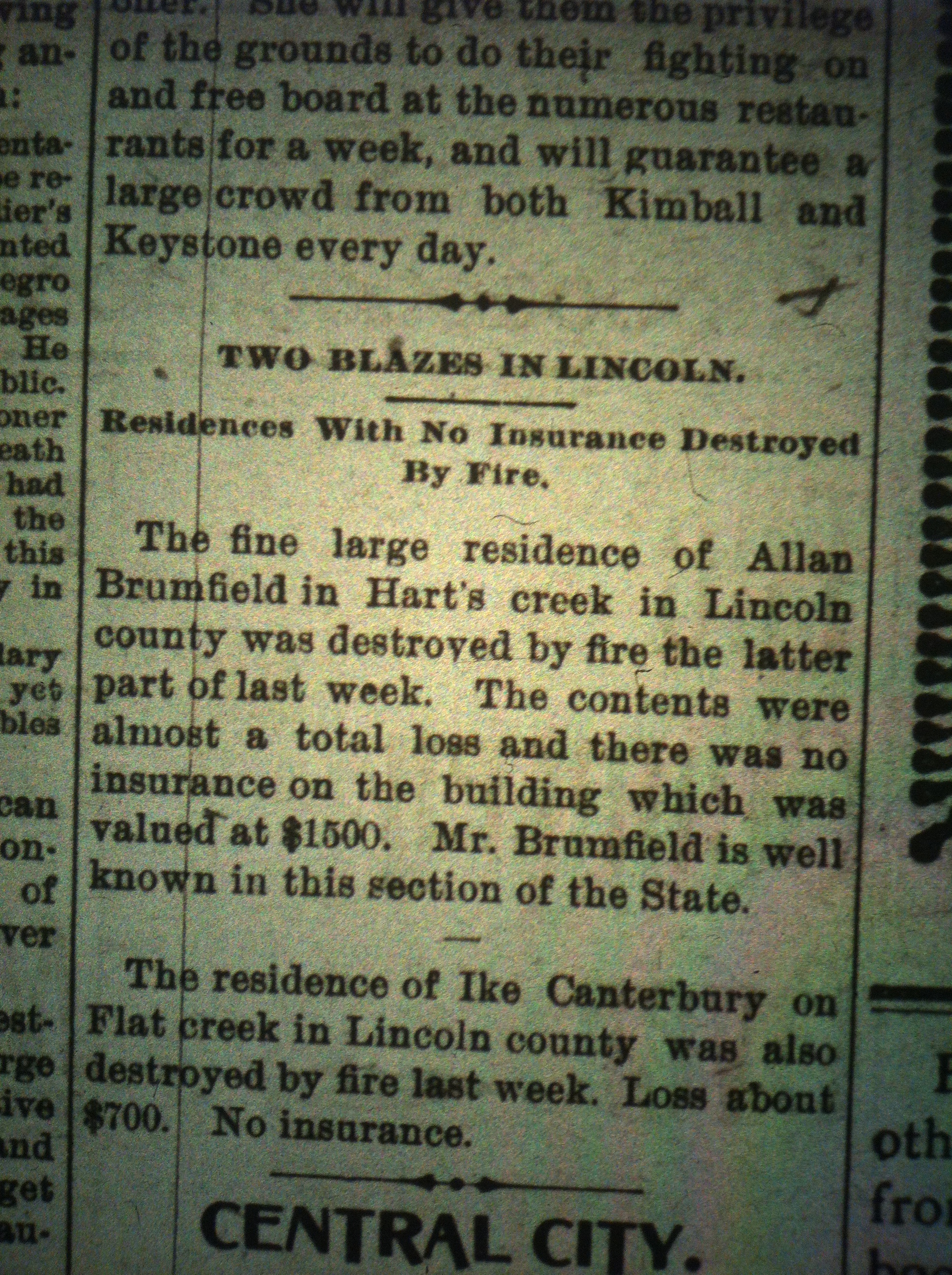
Huntington (WV) Advertiser, October 28, 1895

22 Sunday Jun 2014
Posted in Harts
Tags
Al Brumfield, genealogy, Harts, Harts Creek District, history, Huntington, Huntington Advertiser, Lincoln County, West Virginia
Huntington (WV) Advertiser, October 28, 1895
21 Saturday Jun 2014
Posted in Lincoln County Feud
Tags
Blood in West Virginia, Brandon Kirk, feud, Harts, Harts Creek, history, Lincoln County, Lincoln County Feud, Logan County, West Virginia, writers, writing
If you enjoy reading Appalachian history, please consider purchasing my book, Blood in West Virginia.
http://www.pelicanpub.com/proddetail.php?prod=9781455619184#.U7Dwm08U9dg
21 Saturday Jun 2014
Posted in Big Harts Creek, Ed Haley, Logan, Music
Tags
Billy Adkins, blind, Brandon Kirk, Cacklin Hen, Clyde Haley, Dood Dalton, Ed Haley, Ella Haley, fiddle, fiddling, guitar, Harts, Harts Creek, history, Huntington, John Hartford, Lincoln County, Logan, mandolin, Marshall Kelley, music, West Virginia, writing
That night, Brandon and I congregated at Billy Adkins’ house in Harts Bottom. In ensuing conversation, Billy told us about Marshall Kelley, an old-timer in the community who remembered Ed. He dialed Marshall up, then put me on the telephone. Marshall said he was seventy-three years old, had been born and raised about three miles up Harts Creek and was the son of a Baptist preacher. He was great: I didn’t have to prod him with questions. He just took off, beginning with a story about seeing Ed walking up toward Dood Dalton’s.
“I was about two or three blocks away from him,” Marshall said. “I lived in a house about 100 yards from the road and I could see the people going and coming up and down the road. And I saw a man — a little bit short — going, walking. It looked like he was carrying a guitar — might have been a mandolin — in one hand and his fiddle in the other hand. Somebody said they believed that was Ed Haley and he was being led by a young man that was just a little taller than him. In other words, this man was holding onto his arm. They were walking side by side. And he went down there and went up a hollow then about half a mile — maybe three quarters of a mile — to the home of Dood Dalton. They were acquainted with each other. Ed played the fiddle the biggest part of the afternoon.”
I asked Marshall if he remembered anything specific about Ed’s fiddling.
“I heard him play the ‘Cacklin’ Hen’ on the fiddle and made her cackle,” he said. “Buddy, he could make that sound just almost exactly like a chicken cackling. And I noticed the sound of that fiddle. And down in those little grooves — places where you could look down in the head of his fiddle — I could see some letters down in there, like a little sticker, that said, ‘Made in Germany.’ And his fiddle looked old cause it didn’t have much varnish on it. Dood made mention about putting new varnish on it and he said he didn’t want to. He said they played better — had a better sound — without any varnish on it. None of them sounded just like his fiddle and he wouldn’t change.”
Marshall said he saw Ed play at Logan and Huntington, too.
Then I heard him two or three times in Logan up around the courthouse singing and playing. One time they was a woman with him somebody said was his wife and she was also blind. I believe she was playing a mandolin. Then the next thing, I grew up a little bit and I went to Huntington. And I was a going down one of the streets and I heard a fiddle a playing. It was far enough away that I couldn’t tell what direction it was in. I stopped once and listened. And after a while, I went on down there and here was a gang of people ganged up and there was him and his wife again a playing. And I thought as I went walking down that way, ‘That sounds just like Ed Haley.’ And sure enough it was.”
Just before Marshall and I hung up, he told me what he knew about the Haley children.
“I only got acquainted with the one named Clyde,” he said. “And I saw him there at Dood Dalton’s house. Just talked with him a little bit. Me and him was approximately the same age. He got to sparking Dood’s girl and I was trying to take her away from him and whenever I seen I couldn’t make no headway I just walked away and left and then she quit him.”
19 Thursday Jun 2014
Posted in Harts, Pearl Adkins Diary, Women's History
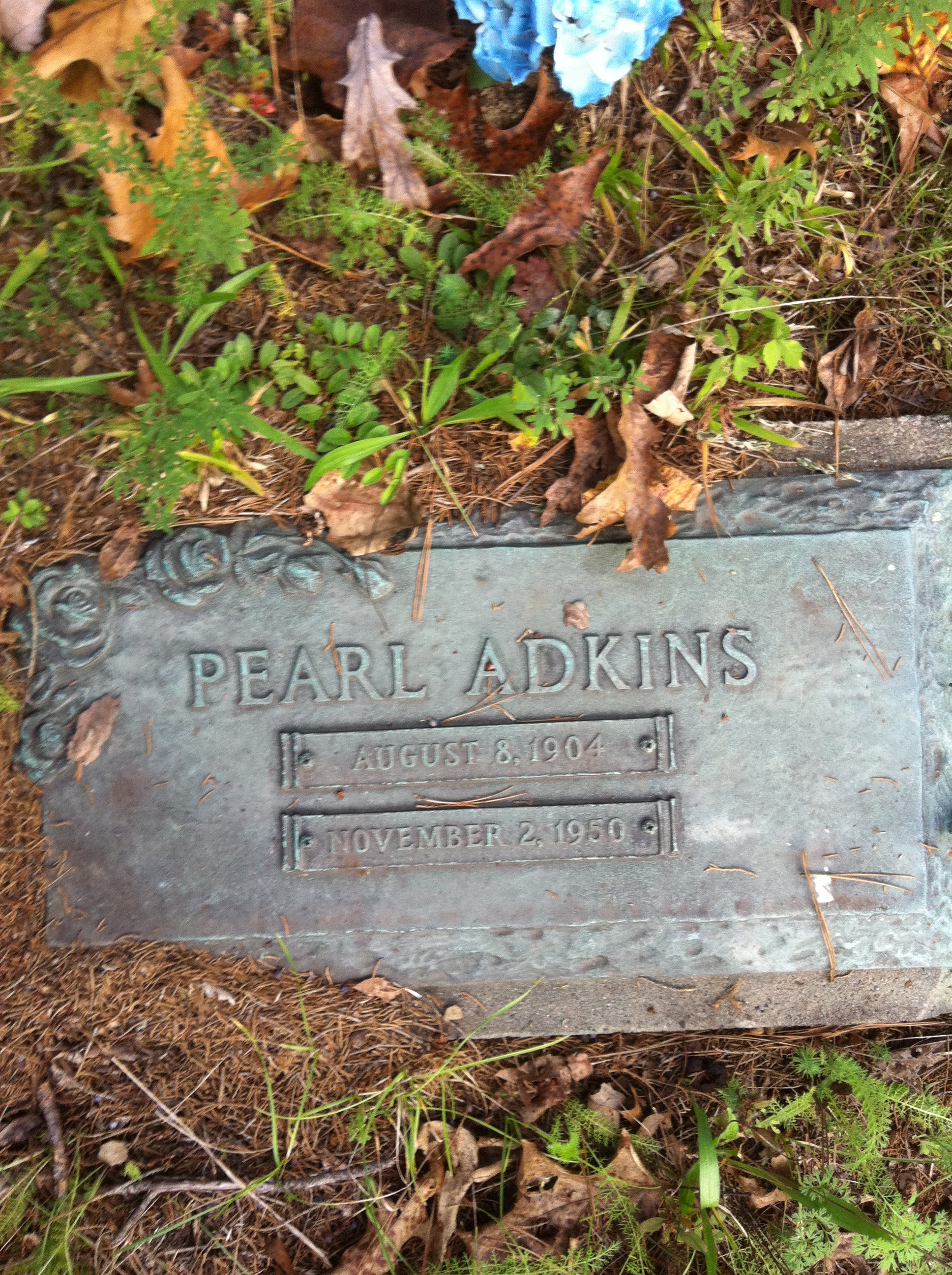
Pearl Adkins grave, Harts, Lincoln County, WV, 2011
17 Tuesday Jun 2014
Posted in Big Harts Creek, Culture of Honor, Ed Haley, Lincoln County Feud, Timber
Tags
Allen Martin, Anthony Adams, Ben Adams, Boardtree Branch, Brandon Kirk, Charley Brumfield, crime, Ed Haley, Ewell Mullins, fiddling, Greasy George Adams, Green McCoy, Green Shoal, Harts, Harts Creek, history, Jeff Baisden, John Hartford, Jr., Kentucky, Lincoln County Feud, Logan County, Milt Haley, moonshining, murder, music, Paris Brumfield, Peter Mullins, Sol Adams, Still Hollow, Ticky George Adams, timbering, Trace Fork, Vilas Adams, West Virginia, Will Adkins, writing
Trying to lift our spirits, we went to see Vilas Adams, who lived on the Boardtree Branch of Trace Fork. Vilas was a great-grandson of Ben Adams and a grandson of Ticky George Adams. He was very friendly, inviting us inside his very nice home where his wife fed us a whole mess of good food, which we ate between asking questions.
I first asked him about his memories of Ed Haley, who he said frequented Ewell Mullins’ store during the late 1930s and early forties.
“Down there at old man Ewell’s store, they’d gather in there of an evening and tell tales, old man Jeff Baisden and them,” Vilas said. “My grandpaw Ant Adams and I would walk down there and then Ed would walk down there from Uncle Peter’s. It was a quarter a mile — just a little hop and a jump I call it. Ed would come in there and fiddle for them and if they wanted a certain song, they’d give him a quarter or fifty cents. That was good money I guess back then.”
Vilas’ grandfather Anthony Adams (a brother to Greasy George) always gave Ed a quarter to hear his favorite tune.
“What was Ed like?” I asked.
Vilas implied that he was withdrawn.
“Mostly he stayed with that fiddle,” he said. “He was good.”
Like most of the other older people in Harts, Vilas knew about the Haley-McCoy killings.
“My grandpaw would tell me them tales but I wouldn’t pay no attention,” he said. “He was telling about them fellers — Sol Adams — going over there and locating them and they went back and captured them. Well, his daddy Anthony tried to waylay them and take them back through here somewhere. They thought they’d come through these hills somewhere but they missed them.”
So, Sol Adams — a 20-year-old nephew to Ben Adams who was often called “Squire Sol” because of his status as an officer of the law — “went over and located Haley and McCoy” in Kentucky after the ambush. Meanwhile, his father Anthony and uncle Ben Adams, organized a gang to recapture them as the Brumfields brought them back through Harts Creek. This seemed strange: why would Sol operate against the interests of his family? And why would he have even been compelled to even become involved since he was a Logan County justice and the crime had occurred in Lincoln County?
Brandon asked Vilas if he knew who had been in the Adams gang and he said, “No, I’ve heard my grandpaw talk but I’ve forgot some of it. They was somebody from down around Hart somewhere. He said they took them over around Green Shoal or over in there somewhere and killed them. Grandpaw said they maybe hit them with axe handles.”
Vilas said his grandfather told him something horrible had happened to most of the men who murdered Haley and McCoy.
“He said just about every one of them that was in on that, something bad happened to them,” he said. “I heard one of them’s own boy killed one of them. And one of them got drowned and my grandpaw said the river wasn’t deep. Said he fell off a horse or something right at the mouth of Hart.”
Of course, Vilas was referring to Paris Brumfield, who was killed by his son Charley in 1891, and to Will Adkins, who drowned at the mouth of Harts Creek on November 23, 1889.
Brandon asked Vilas about “old Ben Adams” and he almost immediately started talking about the old timber business.
“See, that was my great-grandpaw,” he said. “They would build splash dams. They had one right out here. They had them tied some way or the other. And they built them up on Hart there, maybe up on Hoover, and they’d work all winter and put them logs in the creek. And in the spring when them floods come, it would wash all them logs down around Hart and then they’d put them together and raft them on down to Kenova. I guess that was all they had to make a living — timber and farm.”
Ben, of course, made his living in timber. He lived at the mouth of Adams Branch, a little tributary of Trace Fork presently referred to as Still Hollow.
“Over there at what we call Still Hollow, they said he had a still-house there and he had a license to make apple brandy back then,” Vilas said. “And he would go with a wagon everywhere and get apples. They was a log house over there in the mouth of that holler — just down the road here a little ways. When I was a boy the old log house was there, but it rotted down. Just one-story as far as I can remember. The old well’s there. He had some kind of an old store or saloon right there.”
Vilas speculated very little on Ben Adams’ personality, but compared him to his son, Greasy George Adams: “always a likeable fella but seemed like trouble followed him.” He heard that after Ben’s first wife died, he lived with first one woman, then the next. He eventually got into a heap of trouble by murdering a local postman, Jim Martin.
“He killed a fella right over there at the mouth of that hollow,” Vilas said. “My grandpaw said he had some sort of an old store or saloon and he was shooting out the door. Right there in the mouth of that holler. It broke him. Lawyers. Lost everything he had.”
It was rumored that Ben’s and Martin’s trouble had something to do with a woman or a right-of-way.
09 Monday Jun 2014
Posted in Culture of Honor, Harts, Lincoln County Feud
Tags
Al Brumfield, Bill Brumfield, Bill Fowler, Billy Adkins, Black John Adkins, Brandon Kirk, crime, Fed Adkins, feud, Green McCoy, Harts, Harts Creek, Harvey "Long Harve" Dingess, history, Hollena "Tiny" Brumfield, Hollene Brumfield, John W Runyon, Lincoln County Feud, logging, Milt Haley, Paris Brumfield, Pat Adkins, writing
Later in the summer, Brandon visited his friend Pat Adkins, who lived in a little trailer just back of where the old Al Brumfield home once sat at the mouth of Harts Creek. Pat was raised in the magnificent Brumfield house and was its owner at the time of its burning. He was a first cousin to Billy Adkins.
Pat first spoke about Al and Hollena Brumfield, who he said charged people a ten-cents-per-log tax at their boom. The tax was a constant source of friction in the community. Even Al’s in-laws weren’t fond of the fee…and apparently weren’t spared from it, either.
“One time, Harvey Dingess had a big huge amount of logs out there and he said he wasn’t gonna pay no ten cents a log tax,” Pat said. “Harvey was Hollene’s brother. They all liked to drink so he come in there being jovial and friendly and brought Al and Hollene in a big special-made malt whiskey. They got a big drunken party going and finally around twelve o’clock they all got so drunk they went to bed. Harve had his men stationed over there on that hillside and when he waved a light from that porch upstairs them men come down there and cut that splash and let his logs through. The Brumfields got up the next morning — all their hangovers — and went out and looked and that splash had been cut and all of his logs had been run through and Harve was gone. He was on his way to Huntington to sell them.”
Brandon asked Pat if the log boom was the root of the 1889 troubles.
“Bill Brumfield’s wife, Aunt Tiny, told me about the famous posse ride to lynch Milt Haley and Green McCoy,” Pat said, cutting to the chase. “Runyon had a store up on Hart and that was among Hollene’s relatives up in there and she had the big timber operations down here — the splash dam, you know — and had a saloon. Runyon had a legal still where people brought their apples in and stuff to make brandy. Somebody else run one of them too up there — a Dingess. They was into it over the business. Runyon thought that if he could kill them, he could take control of the mouth of Hart. When Hollene came into business that was what she done. She killed out her enemy, or never killed him — burned him out. That was Bill Fowler. Bill Fowler was a businessman and he come into possession of the mouth of the creek. He had him a big saloon out there and she burned him out and burned his saloon and then she took it over. So, I guess Runyon got the same idea: ‘You took it. Now I’m going to get it from you.’ So he hired these guys to kill them and if he’d a killed them they’d a been out of the way and that woulda pretty well cinched him for it. He had plenty of money and he’d a rolled in here and coulda bought it. He’d been the top man then.”
According to Pat, locals quickly determined that Haley and McCoy were involved in the ambush of Al and Hollena Brumfield and formed a mob to capture them.
“They formed about sixty men,” he said. “I know Black John Adkins was in it. John was there a holding the horses. He wasn’t taking no part in it — just going along to show he was in support. I think everybody in the country around in this area and all of Hollena’s relatives were in it. Runyon, he left the country when he realized that they might be coming after him because they suspected him as hiring them.”
Pat said Mrs. Brumfield believed that her husband Bill was too young to have participated in the killings but would have “been in on it if he’d a been old enough.” Pat didn’t think his Grandpa Fed Adkins was in the mob either, but then said, “He might have been — probably was. You know, the killing took place there, I think, about where Lon Lambert’s house is, down under that riverbank. Black John said when Paris came out from under that bank he was just as bloody as he could be where he had stabbed on them men. Said, Paris Brumfield was bloody as a hog. Said, he just took a knife and cut them to pieces and I think they gave Paris the honor of killing them because it was a vengeance killing. They dared anybody to ever touch their bodies. I think they laid about nine days and got to smelling so bad they finally give them permission to bury them.”
In Pat’s view, those who participated in the killing of Milt and Green were not typically violent men. Haley’s and McCoy’s apparent guilt in ambushing Al Brumfield provided a justification for their bloody murders in the eyes of locals and ensured that the “peace-keeping” reputations of the vigilantes would endure as stories about the feud were handed down to later generations. For instance, despite the dangerous reputation of Paris Brumfield, Pat said, “Other than the killing of Haley and McCoy, he was really not a mean person. That was understandable that he helped kill Haley and McCoy if somebody was trying to kill your son. I never heard that he was a mean person. I don’t think he deliberately went around plotting up mean things to do. And I don’t think he was a cruel person.”
Just before Brandon left Pat, he asked him about growing up in Al Brumfield’s house. Pat said when he was young he often hid behind some large framed Brumfield family photographs stacked in an upstairs room. There was one in particular that he remembered: a picture of Al Brumfield — worn and blind, sitting in a chair on a porch.
03 Tuesday Jun 2014
Posted in Culture of Honor, Ed Haley, Green Shoal, Lincoln County Feud
Tags
Al Brumfield, Arena Ferrell, blind, Brandon Kirk, Cat Fry, crime, feud, Green McCoy, Green Shoal, Harts, history, Hollene Brumfield, Ida Taylor, J.L. Caldwell, Jake Davis, Jim Brumfield, Lincoln County, Lon Lambert, Mae Brumfield, Milt Haley, Paris Brumfield, Virgie Rooney, Watson Lucas, West Virginia, writing
In the early summer of 1996, Brandon made contact with Vergia Rooney, a daughter of Jim Brumfield and granddaughter of Paris Brumfield. Vergia was born in 1899 (making her the oldest person interviewed in this project) and was raised on Green Shoal. She was an older sister to Ida Taylor, with whom we had spoken in 1995. She had lived in Texas since 1930.
Vergia said Al Brumfield practically raised her father, who was young when his parents died. Later, when Vergia was about five years old, she went with her father to visit Al at his beautiful two-story white house in Harts. As far as she remembered, Al was well-dressed, clean-shaven, and had dark hair. He was blind, so he wore dark glasses and kept a cane near him. “He was suffering from a progressive illness he had which terminated to him being blind,” Vergia said. For much of the visit, Al sat in the first story front room facing the river, what he called the “sitting room.” He eventually adjourned to the kitchen where he sat at the table and had coffee and a piece of cake.
Vergia said Al’s home was nice and had a store built next to it so close that the two buildings almost touched each other. The whole place was busy with workers, all of whom were supervised by Aunt Hollena Brumfield. Vergia didn’t remember Al having a gristmill but he did have a large barn just up the creek in a bottom. A little further, behind Mae Brumfield’s present-day house, was his log boom, which had in earlier years been the scene of a lot of trouble.
This “earlier trouble,” of course, was the 1889 feud, which Vergia said started when some “McCoy outlaws” became jealous over the Brumfield boom and ambushed Al and Hollena as they rode a single horse down the creek. It was never proven, but Milt Haley and Green McCoy were accused of committing the ambush. They were taken to a two-story, log house at the mouth of Green Shoal and beaten to death by a Brumfield mob.
Vergia’s grandmother Cat Fry hid under a bed during the killings.
The morning after Milt and Green’s murder, Vergia’s mother spotted their bodies on her way to school.
“It was an awful sight,” Vergia said. “They were draped on the front steps and yard. One of them lay across the doorstep going into the house.”
There was never a trial because people like Cat Fry, who knew a lot about the killings, seldom discussed it. Vergia didn’t hear anyone mention the names of the participants when she lived in Harts because many of the people involved were still alive in the community.
Vergia said the murders occurred at the present-day Lon Lambert place at the mouth of Green Shoal. It was vacant when she first remembered it and was in terrible condition. At that time, it faced upriver and had a front and back door, which she remembered swinging open at times, with two steps leading into each of the two doorways. There were windows in the front and back of the house. It had, at most, two rooms on the bottom floor. The upstairs was used as a “drying room” for apples and peaches. Around 1905, Al Davis moved in and remodeled it. He tore the downriver side (back) away, which had pretty much collapsed, and boxed in the old door on the front of the house. A new front door was constructed to face the railroad tracks.
Vergia’s memories of Al Davis living in and remodeling the old Fry home were interesting in that he never owned the property. From 1902 until 1915, the property was in the hands of J.L. Caldwell, who likely rented it to Davis and perhaps others. Watson Lucas bought it in 1919 from Arena Ferrell.
“I am unable to remember in detail about the house as I never was inside the home until Watson Lucas brought the property,” Vergia later wrote Brandon. “I was there twice but several times after the Lamberts purchased the property from Watson Lucas. There were 2 BR, 1 LR-Kitchen, DR and bath room downstairs and I believe, there was a ladder [inside the house] utilized to [get] upstairs for awhile. I was never upstairs, but I think there [were] two rooms upstairs later on.”
Watson’s daughter-in-law Mabel Lucas remembered the home when she moved to Harts in 1939-40 as having four rooms downstairs and two rooms upstairs. There was no staircase in the house; to get upstairs, one had to climb a set of steps built outside against the upriver side of the building. So far as Mabel knew, the place was a frame house (not log), insinuating that the old Fry home had been torn down in previous years.
02 Monday Jun 2014
Posted in African American History, Ferrellsburg, Harts
Tags
Appalachia, Ferrellsburg, genealogy, Harts, Harts Creek District, history, John Adkins, Lincoln County, photos, slavery, U.S. South, West Virginia

John Adkins grave, located in Harts, Lincoln County, WV. Born into slavery at present-day Ferrellsburg, he was a life-long resident of Harts Creek District.
02 Monday Jun 2014
Posted in Harts, Women's History
Tags
Bessie Adkins, Caroline Brumfield, Charley Brumfield, genealogy, Harts, Herb Adkins, history, Lincoln County, photos, West Virginia

Bessie Adkins (1900-1959), daughter of Charles and Caroline (Dingess) Brumfield, wife of Herb Adkins, resident of Harts, Lincoln County, WV
28 Wednesday May 2014
Posted in Ed Haley, Harts, Lincoln County Feud
Tags
Al Brumfield, Ann Brumfield, Appalachia, Ben Adams, Bob Adkins, Brandon Kirk, Burl Adams, Cain Adkins, crime, Daisy Ross, Ed Haley, Green McCoy, Guyandotte River, Harts, Harts Creek, Henderson Dingess, history, Howard Dalton, Imogene Haley, Joe Adams, John Frock Adams, John Hartford, John W Runyon, Lawrence Haley, Lawrence Kirk, Lincoln County, Logan County, Major Adkins, Milt Haley, Paris Brumfield, Peter McCoy, Sallie Dingess, Trace Fork, West Virginia, writing
Two months later, Brandon was still digging, but in a different way. He was knee-deep in land records at the Lincoln and Logan County court houses. He was curious — based on the economic aspect of the 1889 feud — to know about property ownership for feudists, particularly those with land around the mouth of Harts Creek.
He started with the Brumfields.
In 1889, Paris Brumfield owned 771 acres of land worth $1020, while his wife owned 367 acres worth $483. Al Brumfield had 295 acres (195 acres on Brown’s Branch and 100 acres on the Guyan River) worth $642. By combining Al’s totals to that of his parents, the Brumfields owned a total of 1433 acres of land worth $2143. A little further up Harts Creek, Henderson and Sarah Dingess owned 546 acres (five tracts) worth $1234.50 with a building valued at 100 dollars.
How did these totals compare to the land holdings of their enemies?
Well, Cain Adkins owned 205 acres worth $420 (with no buildings listed for 1889), while John Runyon owned 100 acres worth $187.50. Ben Adams owned at least 340 acres in Lincoln and Logan Counties (2 tracts) worth $380. By combining Ben’s property with that of Adkins and Runyon they owned 645 acres worth $987.50 — not even half of the Brumfield family holdings.
Based on these records, we realized that it might have been the financial superiority of the Brumfields and Dingesses which caused Adams, Runyon, and/or Adkins to act out against them (through Milt and Green).
But there was also a reason for the Brumfields to feel a little threatened themselves: John Runyon, whose 100 acres of property was situated geographically closest to them near the mouth of Harts Creek, had accumulated his estate in only three years of residence in Harts. His first tract, totaling 75 acres, was worth $1.50 and was deeded by A.S. “Major” Adkins in 1887. The other tract, totaling 25 acres and worth three dollars per acre, was deeded in 1888. Neither tract contained a building, according to land records.
Al’s 100 acres near the mouth of Harts Creek, in contrast, reflected eight years of effort.
Brumfield was likely concerned that Runyon had acquired so much land at the mouth of Harts in such a short time, especially since it was property that he wanted for himself.
It was immediately clear in looking at the feud in mild economic terms that Milt Haley and Green McCoy were pawns in a larger game between local elites. While Paris Brumfield, Al Brumfield, Cain Adkins, John Runyon, and Ben Adams were leading citizens, property owners and businessmen, Milt and Green were timber laborers and musicians who owned no property whatsoever. Based on what we’d heard from Daisy Ross, it was easy to see why Green might have took a shot at Paris, but why did he attack Al? And what was Milt’s motivation for even getting involved in the whole mess? Was he pulled into the fray because of his friendship to Green, as Daisy Ross had said? Or did he have connections to Ben Adams (a possible economic dependence on the timber-boss, his residence nearby Adams on Trace, or the fact his wife was related to Ben)?
And what did either man hope to gain from the assassination of Al Brumfield? I mean, that’s a hell of a lot to risk for a side of bacon and a few dollars. I had this nagging suspicion that they were maybe innocent of the crime, but Brandon was pretty well convinced of their guilt (as had been Lawrence Haley). He did, however, leave an opening by pointing out how Bob Adkins, Howard Dalton, Joe Adams and Lawrence Kirk had all heard that they were innocent. Bob and Joe had actually mentioned other suspects: Burl Adams, a nephew to Ben Adams, and John “Frock” Adams, a half-brother to Ed’s mother (who later shot his wife’s head off with a shotgun in his front yard). There was also the testimony of Preacher McCoy, who said Milt and Green were “as innocent as Jesus Christ on the cross.”
23 Friday May 2014
Posted in Big Harts Creek, Ed Haley, Music
Tags
Andy Mullins, Ashland, banjo, Ben Adams, Bernie Adams, Bill Adkins, Brandon Kirk, Buck Fork, Claude Martin, Clyde Haley, Devil Anse Hatfield, Devil's Dream, Dingess, Drunkard's Hell, Ed Haley, Ella Haley, fiddling, George Baisden, George Mullins, Greasy George Adams, Harts, Harts Creek, Henderson Branch, history, Hoover Fork, John Frock Adams, Johnny Canub Adams, Kentucky, Lincoln County, Logan County, Mona Haley, music, Ralph Haley, Roxie Mullins, Sally Goodin, Soldiers Joy, Ticky George Adams, Trace Fork, Weddie Mullins, West Virginia, Wilson Mullins, writing
Throughout the winter 1996, Brandon kept busy interviewing folks around Harts for new Ed Haley-Milt Haley leads. In March, he wrote me about recent developments, including the death of Bill Adkins, Sr. — the old fiddler in Harts. At Bill’s wake, Brandon met Andy Mullins, who had recently moved back to Harts Creek after settling in Michigan in 1952. He was the son of Roxie Mullins.
Andy said, when he was a child, Ed Haley spent summers with his parents. Ed also stayed with George Mullins on Buck Fork, George Baisden (a banjo player) in the head of Hoover Fork, “old John Adams” on main Harts Creek, and Johnny Adams (Ticky George’s son) on Trace Fork. Ed had a big, fat belly. Sometimes, he came with his wife, a quiet woman who would eat dinner and then sing for an hour or so while playing the mandolin. Their daughter “Mona Mae” traveled with them, as did her husband, Wilson Mullins.
Andy didn’t remember much about Ed’s other children. He said Clyde stayed six months at a time on Harts Creek and “wouldn’t work a lick” and “couldn’t stay out of trouble.” He heard that Ralph used to hang upside down from a bridge in Ashland.
When Ed was young, Andy said, he supposedly played a lot of music with George Baisden. Later, he played with Bernie Adams and Claude Martin. Andy remembered that Ed didn’t saw the fiddle — he played smooth — and he was a good singer. His voice was like a bell. When he played music with Bernie and Claude, people gathered in and brought food and booze. Andy never saw Ed drunk, although he would get pretty high. Ed and Bernie were hateful. Somebody might request a tune and Ed would say, “What do you think I am, a steam engine?” — then play it five minutes later. Andy remembered Ed playing “Devil’s Dream”, “Drunkard’s Hell,” “Soldiers Joy” and “Sally Goodin”.
Andy was familiar with Ben Adams, who he said operated a mill-dam at Greasy George’s place on main Harts Creek. Ben used this dam to back the creek all the way up to Henderson Branch. Before turning it loose, he would go and tell people to get out of their homes. His nephew, “old John Adams” (a.k.a. “Long John” or “John Frock”), was the one who went to Dingess and killed the man who had shot Ed’s uncle, Weddie Mullins. Andy said the doctor had this man on a table working on him when John showed up and “wasted” him. John Frock let Ed cut his fingernails one time and he cut them up so badly that his fingers bled. (Mona had told me a similar story, except she thought that Ed had cut Devil Anse Hatfield’s nails.)
21 Wednesday May 2014

Harts, Guyandotte River flood, 1963
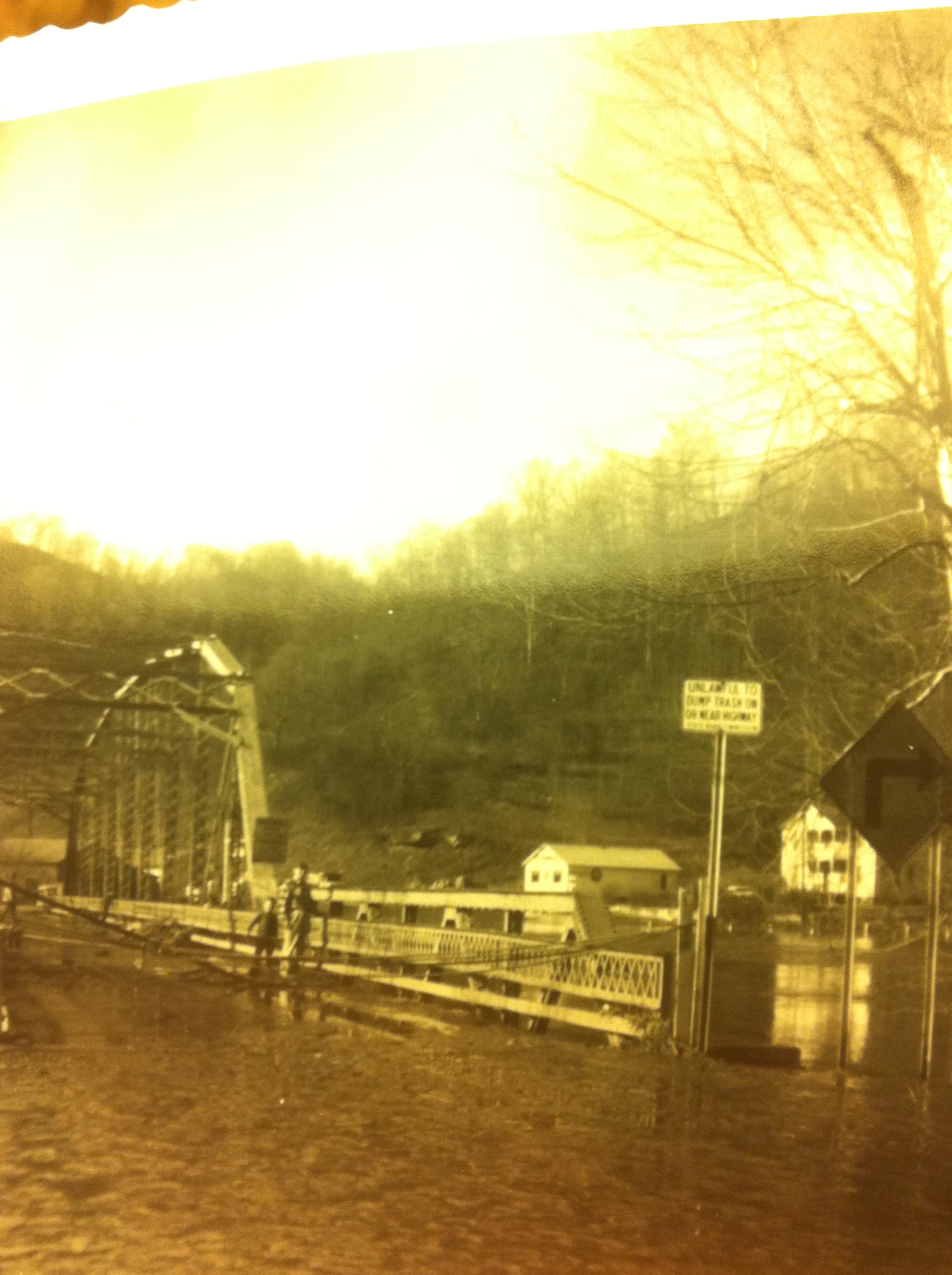
Harts, Guyandotte River flood, 1963
20 Tuesday May 2014
Tags
Appalachia, genealogy, Harts, Herb Adkins, history, Lincoln County, merchant, photos, U.S. South, West Virginia
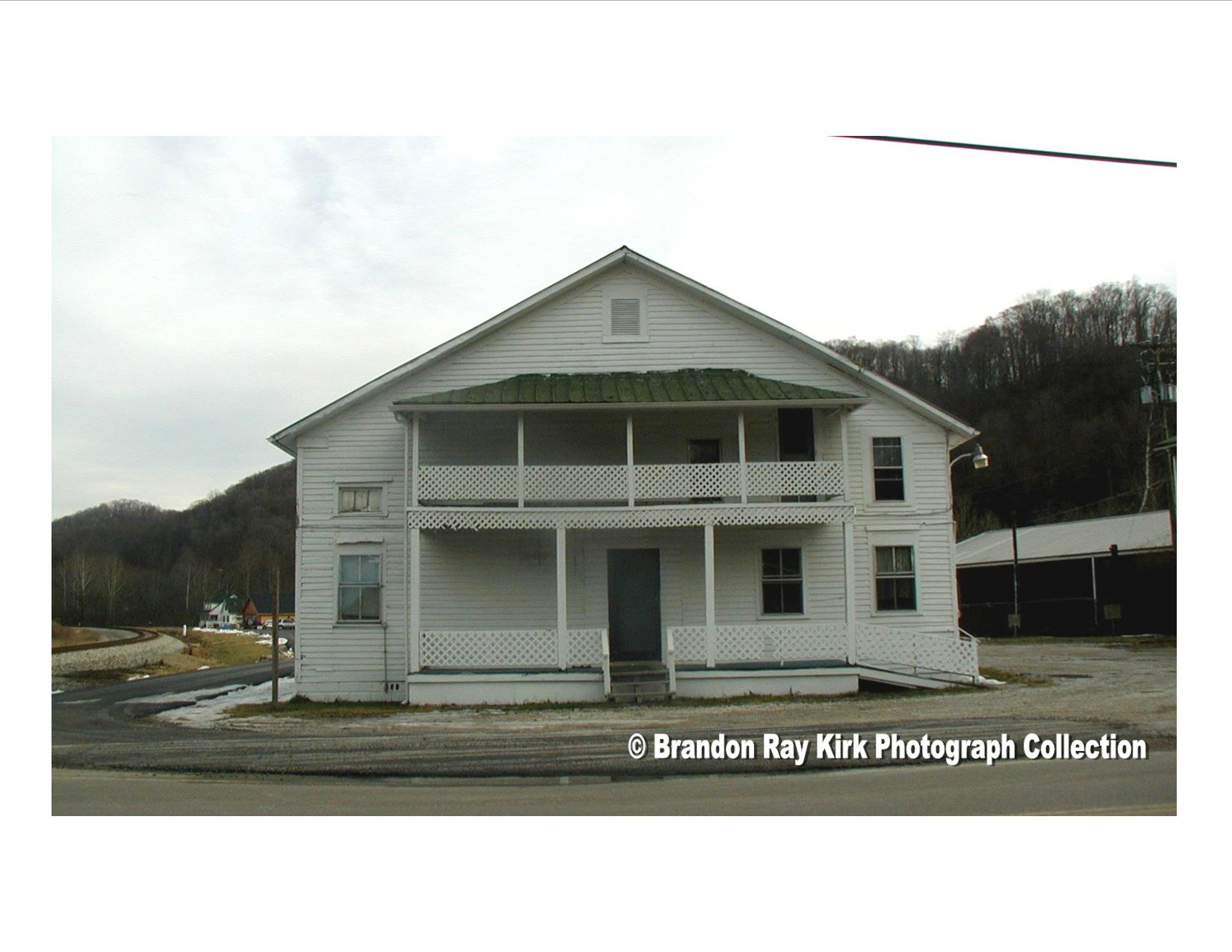
Herb Adkins store, Harts, Lincoln County, WV

Herb Adkins store, Harts, Lincoln County, WV
20 Tuesday May 2014
Posted in Big Harts Creek, Ed Haley, Harts, Spottswood, Whirlwind
Tags
Adams Branch, basketball, Beecher Avenue, Ben Walker, Billy Adkins, Bob Adkins, Bob Mullins Cemetery, Brumfield Avenue, Buck Fork, Bulwark Branch, Charles Brumfield, Crawley Creek Mountain, CSX Railroad, Ed Haley, Eden Park, genealogy, Guyandotte Valley, Hannah Baptist Church, Harts, Harts Creek, Harts High School, Heartland, Henderson Branch, history, Hoover Church of the General Assembly, Hoover Fork, Huntington, Ivy Branch, John Hartford, Kiahs Creek, Lambert Branch, Lincoln County, Logan County, McCloud Branch, Mingo County, Mount Era Baptist Church, Mountaineer Missionary Baptist Church, Pilgrims Rest Church, politics, Railroad Avenue, Republican, Rockhouse Fork, Route 10, Sand Creek, Smokehouse Fork, Trace Fork, Trace Old Reguarl Baptist Church, Twelve Pole Creek, Upper Trace Fork School, Ward Avenue, Wayne County, West Fork, Whirlwind, Workman Branch, writing
The community of Harts sits indiscreetly in the narrow section of the Guyandotte Valley on land that makes up the northernmost region of the Logan County coalfield and what was once “feud country.” Located some ten miles from a four-lane federal corridor linking the state capital to eastern Kentucky and fifty miles up a two-lane rural highway from Huntington, the second largest city in West Virginia, it is a settlement just on the cusp of modernization. It is a treasure trove of hidden history, quickly disappearing even in the minds of its locals, who have little if any recollection of its booming timber era or the exciting times of the railroad hey-day. It’s really the kind of place you might drive through without noticing much — or never have a reason to drive through at all.
Basically, Harts is an old timber town divided in the center by a lazy muddy river and intersected by a two-lane highway, Route 10. On the west side of the river — site of the old Brumfield business headquarters — is an empty store, a tavern-turned-church-turned-beauty shop, a garage, and a brick tabernacle. On the east side is an old brick general store, a nice video rental establishment, a state highways headquarters, an old wooden general store, a small brick post office, a fire department, a grocery store, a hardware store, a general merchandise store, a Victorian general store-turned-restaurant, and a new brick Head Start center. Running between those buildings on the east side is a track owned by CSX (formerly C&O) Railroad. Just behind the businesses are a few dozen houses of all vintages: brick, wooden, single-story, two-story… There are no street signs or traffic lights or even stop signs.
Route 10 connects Harts with the city of Huntington to the north and with the Logan coalfields to the south. From town, Big Harts Creek Road heads west up the creek to West Fork or Smokehouse Fork, while a little unnamed road diverges north past the tracks toward extinct post offices named Eden Park and Sand Creek. The four streets in town are paved but very few locals even know their proper names, which are Railroad, Beecher, Ward, and Brumfield Avenues. Just down the river is a brick house-turned-bank, a rural health clinic, a brick construction company headquarters, a new coalmine development area called Heartland, and a mechanic shop/gas station (owned incidentally by one Charles Brumfield).
Culturally, Harts might be thought of as an inconspicuous Harlequin romance and Wild West show gone wild, at least in its not-so-distant past. Many of the rabble rousers and roustabouts are long since dead. Actually, somewhat to my disappointment, a lot of the old families are gone completely from the area and no one really feuds any more. Many residents seem to work as schoolteachers or run small stores or work in the coalmines or draw government relief. People are nice and treat each other well. Most are related or at least seem to be. They watch TV or go to church or tend their yards or hunt or fish or ride four-wheelers or hop on the four-lane at Chapmanville and drive to Wal-Mart some 45 miles away. Old-timers are quick to say that Harts has a bad reputation for no reason — the only two murders within town limits occurred almost a century ago. There are no parks, museums or movie theatres — and only a few registered Republicans. It’s the kind of place where you can leave your doors unlocked at night or if you’re gone all day…and feel safe about it.
I have to admit, after several visits to Harts, I loved it. On one visit, I learned from Billy Adkins that the old Ben Walker farm was for sale…and seriously considered buying it. (I passed on the idea when I realized that my wife would never forgive me for it.) Harts, then, would remain a place to “see.” I began telling folks out on the road that it was “my Ireland.” It represented a desire on my part to get back to the kind of places where (at least in my romantic imagination) a lot of fiddle playing originated. A lot of my friends were from these kind of places. For them, when they wanted to tap into that ancestral ancient tone, they thought of Ireland, whether they were Irish or not. For me, coming from St. Louis, Harts was the closest I could ever hope to get to that. Such places are at the heart of the music I love.
Venturing up Harts Creek, the first thing you really notice is Harts High School, a forty-some-year-old two-and-a-half-story yellow brick structure near the mouth of West Fork with a gymnasium, annex building, and a baseball field, all situated on what was a prison camp during the early fifties and, a little further back in time, the upper reaches of the Al Brumfield property (and, a little further still, an Indian camp). In many ways, this school is the lifeblood of the community — at least in the lower section of the creek. In the mid-sixties, just as Harts began to turn away from its violent past, the high school basketball team won a state championship and began building a program known regionally for its successes. Today, basketball is what this community is best known for — not the murders or moonshining traditions of years past — with crooked politics maybe finishing a close second.
A little further up the creek, just below the Logan County line, a few miles past an old country store, a little restaurant, another baseball field, and a place of worship named the Cole Branch Church of Jesus Christ of the First Born. From there, the road forks left onto the Smoke House Fork of Big Harts Creek, location of the Hugh Dingess Elementary School and Dingess, Butcher, Farley and Conley country; or the road forks right into the head of Harts Creek to “Ed Haley country.” Of course, no one calls it that. People think of it as “Adams country” or “Mullins country” and really, that’s about all there ever was in that section. Ed himself is often identified with the Mullins family — his mother’s people. The adults in this part of Harts Creek vote in Logan County — not Lincoln — and send their kids on buses over Crawley Creek Mountain to Chapmanville High School. This section of the creek — where gunshots once rang out regularly and where moonshine was so readily found — is now remarkably quiet and low-key outside of the occasional marijuana bust. Unfortunately, it seems to have lost its musical tradition as well.
Trace Fork, the site of Ed Haley’s birth, is attributed by Ivy Branch in its head, Adams Branch, and Boardtree Branch toward its middle and Jonas and Dry House Branch toward its mouth. There are several small family cemeteries on Trace, with the maroon-bricked Mountaineer Missionary Baptist Church at its mouth. In previous days, the Upper Trace Fork School (now Trace Old Regular Baptist Church) sat in its headwaters, where the Logan-Lincoln-Mingo county line meets. As a matter of fact, Ivy Branch heads near Kiah’s Creek at the Wayne-Mingo County line, while Boardtree Branch heads at McCloud Branch of Twelve Pole Creek in Mingo County. Adams Branch heads at Rockhouse Fork in Lincoln County.
A little further up the main creek is Buck Fork, an extensive tributary comparable to West Fork or Smokehouse in size. It is the ancestral home of the Mullins, Bryant, and Hensley families whose names still dominate the mailbox landscape. In previous decades, it was the location of the Hensley School and Mt. Era Church. Just below Buck Fork on main Harts Creek is a large Adams family cemetery, while just above it is the equally large Bob Mullins family cemetery.
Continuing up Harts Creek is Hoover Fork, home of the Mullins, Adams, and Carter families as well as the Hoover Church of the General Assembly. Henderson Branch, home seat for Tomblins and Mullinses is the next tributary, followed by Lambert Branch (at Whirlwind) and Workman Branch. Bulwark Branch follows (populated by Carters and Workmans), trailed by Brier Branch (Smiths) and Tomblin Branch. In the headwaters of Harts Creek are Tomblins, Daltons, and Blairs, as well as the Pilgrims Rest Church and Hannah Baptist Church.
In all sections of Harts, gossip reigns supreme as a source of local entertainment. (This in spite of Bob Adkins’ warning that people should “tend to their own business.”) Maybe that’s why we hear so much about a 100-year-old murder when we ask about it and a bunch of other things we don’t ask about. Genealogy is super important. When you sit down to talk with someone, the first thing they want to know is how you fit into the community pedigree. It’s a way of squaring you up.
04 Sunday May 2014
Posted in Harts
Tags
Appalachia, Charley Brumfield, culture, Harts, history, life, Lincoln County, photos, U.S. South, West Virginia

Charley Brumfield outbuilding, Harts, Lincoln County, WV, 2009
29 Tuesday Apr 2014
Posted in Big Creek, Ferrellsburg, Harts, Logan, Sand Creek, Toney
Tags
A.W. Sloan, Appalachia, Big Creek, Blackburn Lucas, Buffalo, Chris Lambert, Christmas, Cleve Fry, Dingess Run, Ferrellsburg, Frank Davis, genealogy, Guyan Valley Railroad, Harts, Herbert Shelton, history, Hugh Fowler, John Fowler, John Lucas, Jones Adkins, Lincoln County, Lincoln Republican, Logan, Logan County, Matthew Farley, Sand Creek, Sheridan, Toney, typhoid fever, Ward Brumfield, West Virginia, Wilburn Adkins
“Old Hickory,” a local correspondent from Ferrellsburg in Lincoln County, West Virginia, offered the following items, which the Lincoln Republican printed on Thursday, December 28, 1911:
Xmas has come and gone and the people of Ferrellsburg enjoyed the occasion nicely.
A.W. Sloan, of Ferrellsburg will soon return to his former location at Sheridan.
B.B. Lucas and other members of his family have been suffering with typhoid fever the past week.
John Lucas, of Big Creek, Logan county, and Frank Davis engaged in a scrap at this place Xmas day. Lucas received a black eye.
Wilburn Adkins, son of Jones Adkins, received painful wounds in his thigh, Christmas day, as the result of an accidental discharge of a pistol which he had in his pocket.
Cleve Fry, of near Toney, has moved his family to Dingess Run, above Logan, and has taken charge of a section on the G.V. Railroad.
Ward Brumfield, John and Hugh Fowler, of near Hart, and Chris Lambert and Herbert Shelton had a knock down at Sand Creek the day before Xmas. Ward Brumfield received a severe blow over the head with a quart bottle, Lambert wielding the bottle.
M.C. Farley will now return to Buffalo, Logan county, where he has a job of work, as Xmas is over.
The Guyandotte river has been “full” during the holidays.
It seems funny that the Sheriff has recently come to the conclusion that the sheriff’s office is not a piddle office and that no one has a right in it but himself and his deputies. The voters will speak at the next election.
Best wishes to The Republican.
21 Monday Apr 2014
Posted in Harts
Tags
Al Brumfield, Appalachia, Harts, history, life, Lincoln County, photos, U.S. South, Watson Adkins, West Virginia
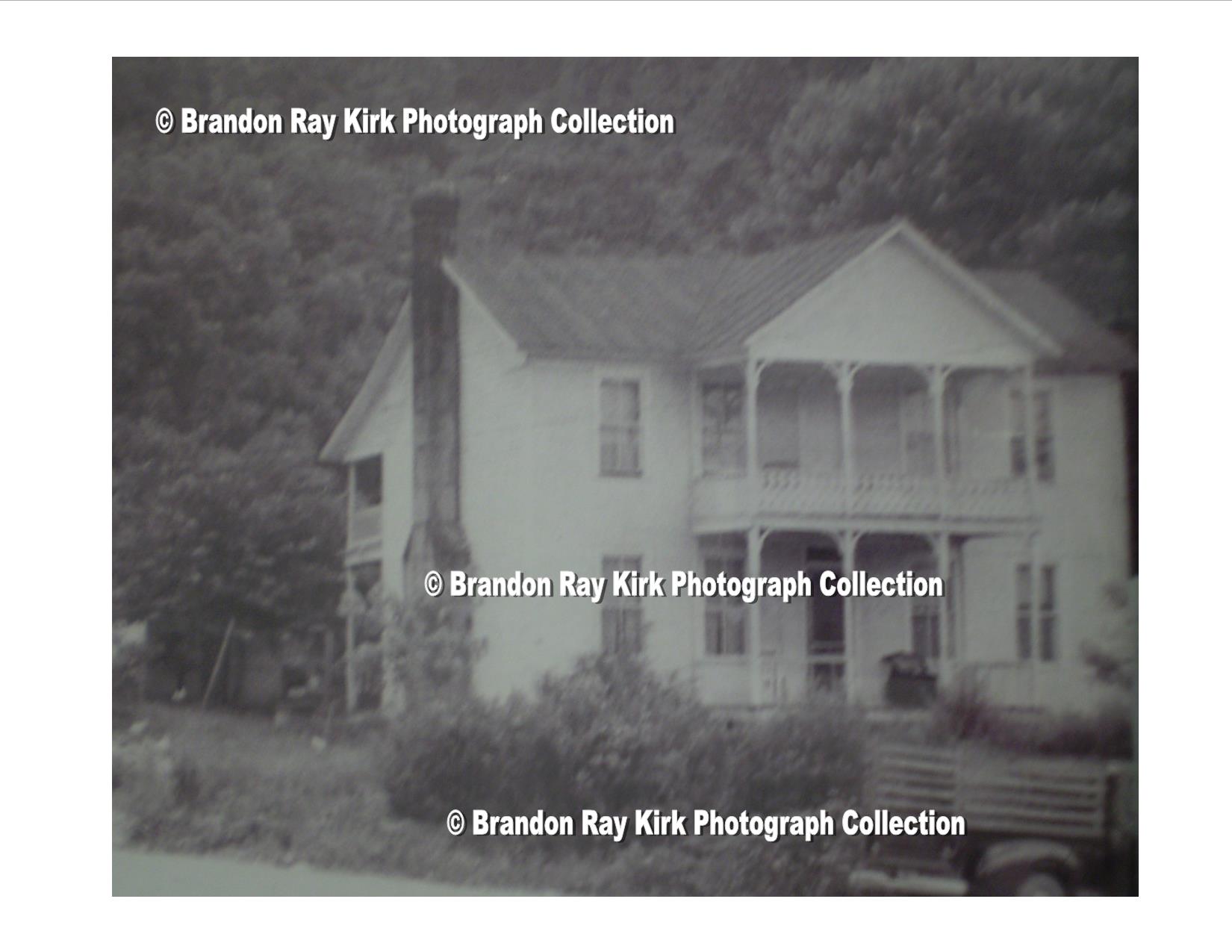
Al Brumfield-Watson Adkins House, constructed c.1894, located in Harts, Lincoln County, WV
20 Sunday Apr 2014
Posted in Big Harts Creek, Ferrellsburg, Harts
Tags
Appalachia, culture, Ferrellsburg, Fisher B. Adkins, genealogy, Harts, Harts Creek, history, life, Lincoln County, photos, West Fork, West Virginia

Fisher B. Adkins, resident of the West Fork of Big Harts Creek, Lincoln County, WV
13 Sunday Apr 2014
Posted in Culture of Honor, Harts, Little Harts Creek
Tags
Appalachia, culture, fiddle, fiddler, genealogy, Harts, history, life, Lincoln County, Little Aaron Adkins, Little Harts Creek, Major Adkins, photos, U.S. South, West Virginia

A.E. “Major” Adkins and Aaron Adkins, Jr., residents of Harts, Lincoln County, WV, 1870s
11 Friday Apr 2014
Posted in Harts
Tags
Appalachia, Bill Adkins, genealogy, Harts, history, Lincoln County, photos, U.S. South, West Virginia
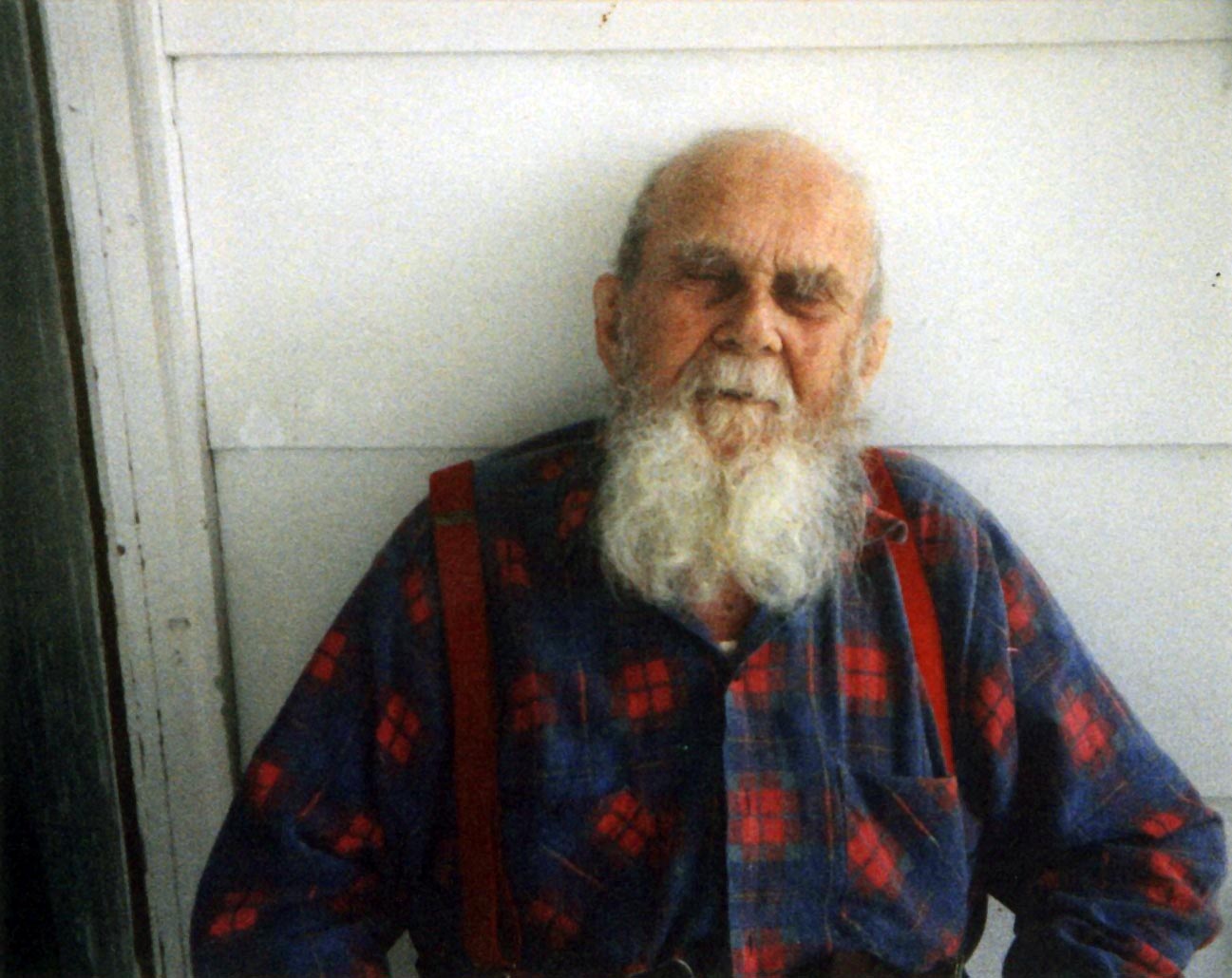
W.C. “Bill” Adkins, resident of Harts, Lincoln County, WV, c.1994
Writings from my travels and experiences. High and fine literature is wine, and mine is only water; but everybody likes water. Mark Twain
This site is dedicated to the collection, preservation, and promotion of history and culture in Appalachia.
Genealogy and History in North Carolina and Beyond
A site about one of the most beautiful, interesting, tallented, outrageous and colorful personalities of the 20th Century
 Brandon Ray Kirk