• About

Brandon Ray Kirk

~ This site is dedicated to the collection, preservation, and promotion of history and culture in my section of Appalachia.

Brandon Ray Kirk

Tag Archives: fiddling

In Search of Ed Haley 262

10 Monday Mar 2014

Posted by Brandon Ray Kirk in Big Harts Creek, Ed Haley, Timber

≈ Leave a comment

Tags

Al Brumfield, Calhoun County, Chicago, coal, Cole and Crane Company, Dood Dalton, Ed Haley, farming, fiddling, Harts Creek, history, Jake Dalton, Laury Hicks, Lincoln County, Logan County, logging, Stump Dalton, timbering, West Virginia, writing

Just before we left, Stump let us borrow a cassette containing a 1976 interview with his father. Surely, we thought, Dood would speak a lot about fiddling and of his friendship to Ed. Instead, he told about his life in Harts. His voice was very melancholy and he spoke loudly and in spurts. Some of his earliest memories were of the timber industry in Harts and of the Cole and Crane Company, which timbered extensively in the LoganCounty area from about 1893-1908. In 1900, he said, Cole and Crane used splash dams to float logs down to the mouth of the creek “where Al Brumfield had a boom in.” The boom was located at the present-day site of the West Fork Bridge.

“And this boom caught them logs all,” Dood said. “Them logs was piled on top of one another from that boom…to the mouth of Big Branch. At that time, if you owned across the creek, you owned the creek. Al Brumfield owned the other side there and he put this boom in there and bought the Cole and Crane Company and when he bought them he kept that timber there and they gave him a contract on rafting it and running it down to Guyandotte.”

Cole and Crane Company once paid Brumfield $2800 to cut his boom loose and let timber out of the creek, he said.

Dood said he went to work cutting timber for Cole and Crane Company when he was seventeen years old. He also drove oxen and cattle and loved to hunt foxes and raccoons.

After marrying, he supported his family by farming and raising cattle, sheep and hogs at his 300-acre farm on Big Branch.

In subsequent years, he worked as a blacksmith, bricklayer and coal miner.

In 1964, he took a three-month visit to Chicago and hated it about as much as an earlier visit to Michigan. He said, “My days is short. I’ve spent 84 years here and I’m figuring on spending the rest of my life here.”

And that was basically it.

Not one reference to fiddling from a guy who had played all of his life.

Well, in spite of the tape, we were pretty sure that Haley’s good friendship to Dood Dalton was authentic and was perhaps as important as his friendship with Laury Hicks in Calhoun County. We wanted to visit more of Dood’s children, so Stump directed us to the home of his oldest brother, Jake Dalton, an old fiddler on the Big Branch of Harts Creek. Jake lived in his father’s old home — the place where Ed had visited so frequently during the last twenty years of his life.

Ben France: Confederate Soldier and Fiddler from Cabell County, WV

07 Friday Mar 2014

Posted by Brandon Ray Kirk in Civil War, Ed Haley, Music

≈ 1 Comment

Tags

Appalachia, Ben France, Cabell County, civil war, Confederate Army, fiddler, fiddling, Fred B. Lambert, genealogy, history, music, photos, West Virginia

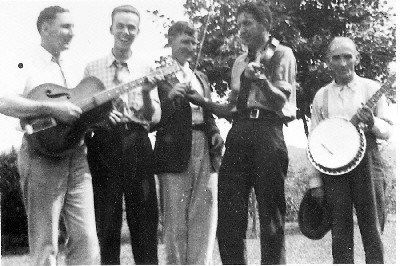
Ben France, Cabell County, West Virginia.

Ben France, fiddler and Confederate veteran, Cabell County, West Virginia. From the Fred B. Lambert Papers at Special Collections Department, Morrow Library, Marshall University, Huntington, WV.

In Search of Ed Haley 259

07 Friday Mar 2014

Posted by Brandon Ray Kirk in Culture of Honor, Ed Haley, Music

≈ Leave a comment

Tags

Bill Adkins, Brandon Kirk, culture, Devil Anse Hatfield, Dingess, Dood Dalton, Ed Haley, fiddlers, fiddling, history, John Hartford, life, music, Nary Dalton, Stump Dalton, Wog Dalton, writing

I got my fiddle out and played for Stump, hoping to generate some detailed memories of what he’d seen Ed and his father do. He watched me play for a while, then said, “You play exactly like the old-time fiddlers played, and I’m gonna tell you why. You’ve got the smoothest bow of anybody I’ve heard in a long time. Now that’s what they strived for, Ed Haley and Dad — them old-time fiddle players. This herky-jerky stuff, they didn’t go for that.”

Brandon asked, “What about Bill Adkins down at Harts? Did he play that style, too?”

Stump said, “He was pretty good. Bill had a little jerk to his. Bill had what I call a stiff wrist. All these players taught themselves. Dad, all of them.”

Dood Dalton, Stump said, started playing the fiddle when he was about six years old. A little later, he played for dances in the town of Dingess and on Mud Fork near Logan.

Brandon asked Stump if he knew the names of any more old fiddlers around Harts.

“My grandpaw, Wog Dalton, he was a fiddle player. One of the best, they said.”

Did Ed Haley know him?

“Ed said there wasn’t a fiddle player in this country could play with Wog Dalton,” Stump said. “Now, I barely can remember him. He was the spitting image of Devil Anse Hatfield.”

Wog was apparently a pretty rough character, too.

“My granddad was playing for a square dance and he and this guy had been into it,” Stump said. “Somebody came in there and told old man Wog, said, ‘Whatcha call it’s out there and he’s gonna cut you with a knife.’ He just kept playing that fiddle and here come this guy through there. He grabbed Granddad Wog and Granddad Wog just pulled his knife out and they just took each other by the hand, son, and started cutting each other.”

Stump laughed and said, “I think Granddad Wog was laid up about two months over that.”

I wanted to know more about Stump’s memories of Ed’s technique and repertoire, so I asked him the same kind of questions I’d asked Lawrence Haley in previous years.

Did Ed hold the fiddle up under his chin or down on his chest?

“He laid his chin right on it, like he was listening to it,” Stump said.

Did you ever see him play standing up, like at a contest?

“No. Now, old man Ed did play in fiddle contests. I know of two. One of them was in Ohio, ’cause he come in our house right after he done it.”

I wondered if Ed sang much.

“I never heard him sing a song in my life. Maybe a verse — just stop along there and sing a verse. Now, him and Dad both would do that. But to put the poetry to it, I never heard him really do that.”

Did he pat his foot a lot when he played?

“He patted both feet,” Stump said. “He’d switch off, and sometimes he’d pat both of them together. He just got himself into it.”

Did Ed ever play tunes in cross key?

“Now that there one I give you, ‘The Lost Indian’, was a cross key,” Stump said. “I remember that real well. That was one of the prettiest fiddle tunes. I asked Dad, ‘How are you tuning that fiddle?’ and he was tuning it in a banjo tuning.”

I asked if Ed traded fiddles much and Stump said, “No, he didn’t do much trading, I don’t think. And a lot of times he’d come without a fiddle. He knowed Dad had fiddles.”

I wondered if Ed brought a different fiddle every time he came to Dood’s and Stump said, “No, he had one fiddle he’d really like. But now, he’d bring an extra one once in a while.”

Stump thought for a second then said, “Now Ed would bring all his bows to Dad, after he’d broke up the hairs in them. Dad had horses, you know, and Dad would re-string that bow.”

How many bows did Ed carry around?

“Well, he’d just have maybe two in his case.”

Did he always have a case?

“No, a lot of times he’d just have a bare fiddle.”

Did you ever see him play anything besides the fiddle?

“I never seen him pick up anything besides a fiddle.”

Brandon asked Stump if he remembered the first time Ed came to see his father.

“I was born in 1929 but he was coming there, I know, in the thirties,” he said.

There were big musical gatherings at the Dalton home in those days.

“I’ve seen people all over the place,” Stump said. “My mother, she had a long table and she would have any kind of meat on that table you wanted to eat, any kind of bread on that table you wanted to eat. We raised all this stuff now. And sometimes you’d feed two tables full of people just through the week. Instead of cooking one pot of beans, she’d cook two. And we raised our own meat. We’d have sheep meat — what they call mutton — and pork and beef. We ground our own meal. The only thing we went to the store for was sugar, salt, and things like that. And I’ve seen people there lined up to eat — just country people gathering to enjoy themselves and that was it.”

Was there any drinking going on?

“Had one incident: this guy, he thought he was mean. My dad had my sister in his lap and we had music a going. This guy shot down in the floor there near my sister. He didn’t last long. Just somebody a drinking.”

In Search of Ed Haley

06 Thursday Mar 2014

Posted by Brandon Ray Kirk in Big Harts Creek, Music

≈ Leave a comment

Tags

Appalachia, culture, Dood Dalton, fiddler, fiddling, genealogy, Harts Creek, history, life, Lincoln County, music, photos, West Virginia, writing

Moses "Dood" Dalton, Big Branch of Big Harts Creek, Lincoln County, WV, c.1905

Moses “Dood” Dalton, Big Branch of Big Harts Creek, Lincoln County, WV, c.1905

In Search of Ed Haley 256

04 Tuesday Mar 2014

Posted by Brandon Ray Kirk in Big Ugly Creek, Ed Haley, Music

≈ Leave a comment

Tags

Big Ugly Creek, Bill Monroe, Boney Lucas, Carl Toney, charlie paris, Clarence Lambert, Durg Fry, fiddler, fiddlers, fiddling, Frank Fry, Grand Ole Opry, Green Shoal, Guyandotte River, history, Irvin Lucas, Jack Lucas, Jim Lucas, Jupiter Fry, Leander Fry, music, Paris Brumfield, Sam Lambert, writing

At the turn of the century, Jim Lucas was the best fiddler on Big Ugly Creek — that peculiarly named creek located a few miles downriver from Harts Creek. Jim was born in 1881 to Irvin Lucas (a fiddler), and was a nephew to Boney Lucas and Paris Brumfield. Based on interviews with Jim’s family, Jim always went clean-shaven and wore an overcoat year round because “whatever’d keep the cold out would keep the heat out.” He was also an avid hunter and cowboy — he could supposedly command cattle from across the Guyan River. As for his fiddling, Jim either cradled the fiddle on the inside of his shoulder or held it under his chin. He gripped the bow with two or three fingers right on its very end, used a lot of bow, and patted one of his feet when playing. He sometimes sang, typically played alone, and devoted a great deal of his time fiddling for children. Every Saturday, he’d get with Clarence Lambert at his home on the Rockhouse Fork of Big Ugly or at Sam Lambert’s porch on Green Shoal. Some of Sam’s daughters sang and played the guitar. Jim’s grandson Jack Lucas said they played a lot of gospel and bluegrass music but could only remember one tune Jim played: “Ticklish Reuben.” Jim had to give up the fiddle when he got old but always put an almost deaf ear up against the radio and listened to Bill Monroe on the Grand Ole Opry. He died in 1956.

Charlie Paris, a long-time resident of the Laurel Fork of Big Ugly Creek, remembered Jim Lucas coming to visit his grandfather Durg Fry in the thirties. He said his grandpa Durg lived on Laurel Fork in a home with cracks between the logs so large that “you could throw a dog through” them. He was a fiddler himself, as were his brothers Leander and Jupiter and his nephew Frank Fry. Charlie said Durg played with the fiddle under his chin and never sang or played gospel or bluegrass. He patted his feet when playing and, in his old age, would hold himself up by a chair and dance to music. One time, when he and Jim were hanging out on Laurel Fork, Jim reached his fiddle to a younger fella named Carl Toney and said, “Your turn.” Carl was a very animated fiddler and when he took off playing “Orange Blossom Special” Jim just shook his head and said, “I’ve quit.”

In Search of Ed Haley 255

03 Monday Mar 2014

Posted by Brandon Ray Kirk in Ed Haley, Harts, Music

≈ Leave a comment

Tags

Appalachia, Bill Adkins, Billy Adkins, Black John Adkins, Brandon Kirk, Dood Dalton, Fed Adkins, fiddlers, fiddling, Harts, history, Lincoln County, music, West Virginia

Meanwhile, Brandon and Billy were back at the bedside of Bill Adkins. Bill said Ed used to visit his father Fed Adkins for two or three days at a time when he was a boy. Fed and his family lived in Harts with Black John Adkins, a mulatto cousin who had neen present at the Haley-McCoy executions in 1889. When Haley came by, he usually traveled with Dood Dalton, a fiddler from Big Branch who played with a similar style. Ed and Dood played for all night dances at Fed’s but never sang anything. Bill said Ed played fast and smooth and was a “long bow” fiddler. He tapped his feet while playing.

Fed and Black John were both fiddlers, Bill said, but they never played with Ed and Dood. Instead, they tried to copy them after they left.

Bill said Ed didn’t drink at his father’s home and was a very serious person, never carrying on much. People led him around. When he stayed overnight, he slept in the same bed as Bill and the other Adkins boys.

In Search of Ed Haley 252

28 Friday Feb 2014

Posted by Brandon Ray Kirk in Big Harts Creek, Chapmanville, Ed Haley, Music

≈ Leave a comment

Tags

Anna Adams, Billy Adkins, Brandon Kirk, Chapmanville, Ed Haley, Ella Haley, fiddling, Gaynelle Thompson, history, Imogene Haley, John Adams, Kiahs Creek, Little Harts Creek, Logan County, Milt Haley, Mona Haley, music, Roxie Mullins, Ticky George Adams, Wayne County, West Virginia, writing

In Chapmanville, Brandon and Billy dropped in on Gaynelle (Adams) Thompson, a granddaughter of Ticky George Adams who spent a lot of time with Aunt Roxie Mullins during her “last days.” Gaynelle said Ed Haley’s mother never remarried after Milt’s death and died prematurely when Ed was eight to ten years old. She said Ed used to visit her parents, John and Anna Adams, on Trace Fork during the summers in the ’30s and ’40s. “Everybody in the country thought they was nothing like him,” she said. Gaynelle heard that Ed was a drinker and could get rough but said he was well mannered at the Adams home. He never cursed or drank and talked mostly to Gaynelle’s mother. He came with his daughter and wife and stopped visiting when he became too sick to travel just a few years before his death. In earlier years, he played on Kiah’s Creek and Little Harts Creek near the Wayne County line.

Rebellion in the Hills

09 Sunday Feb 2014

Posted by Brandon Ray Kirk in Civil War, Logan, Music, Women's History

≈ 2 Comments

Tags

Appalachia, banjo, Cathy Grant, Chief Logan State Park, civil war, fiddler, fiddling, life, Logan, Logan County, music, photos, Union Army, West Virginia

A Civil War re-enactor plays the banjo while an unknown woman plays the fiddle at Chief Logan State Park, September 2002.A Civil War re-enactor plays the banjo while Cathy Grant plays the fiddle at Chief Logan State Park in Logan County, WV, September 2002.

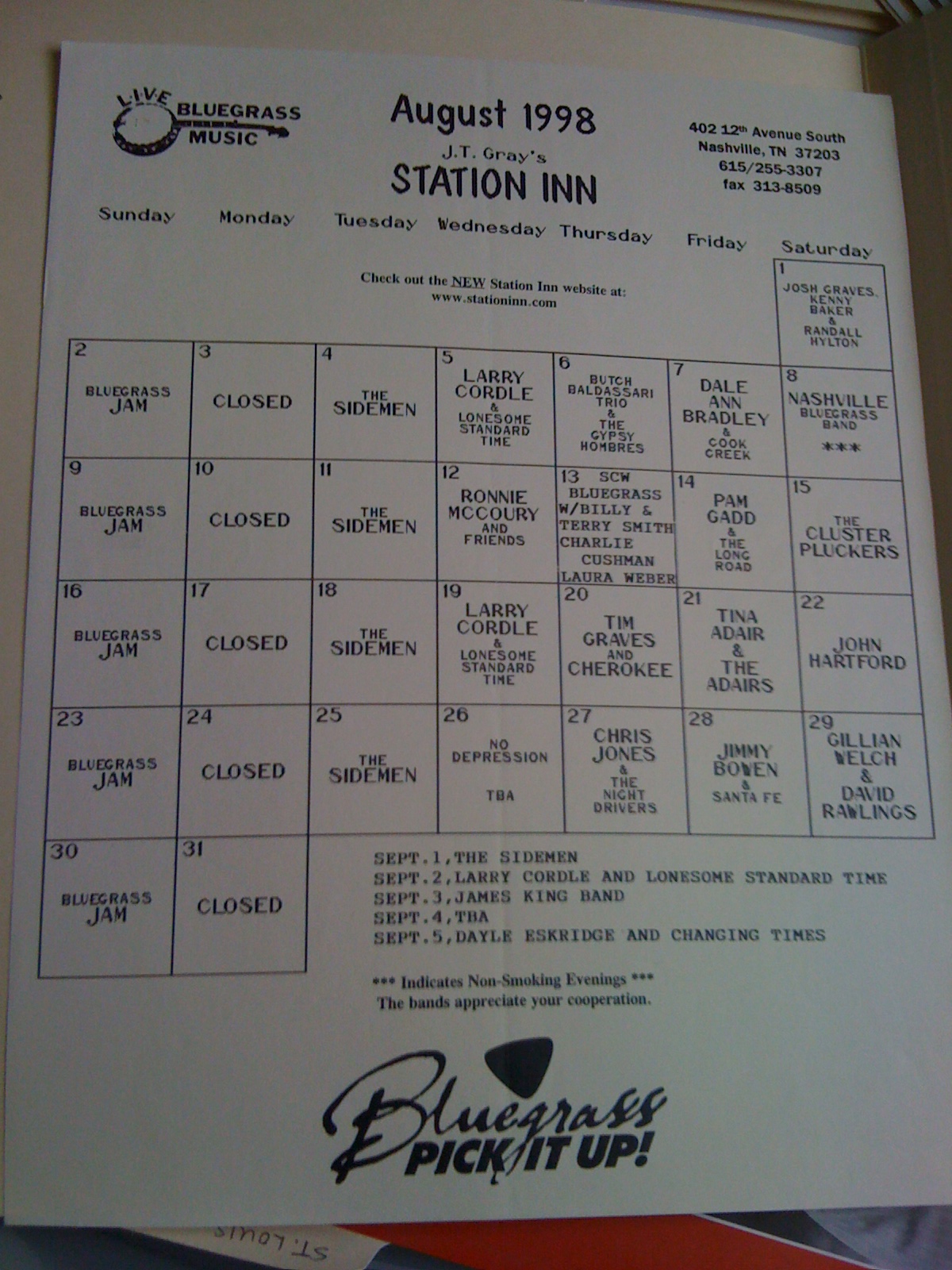
Station Inn

24 Friday Jan 2014

Posted by Brandon Ray Kirk in John Hartford, Music

≈ Leave a comment

Tags

bluegrass, fiddlers, fiddling, Gillian Welch, John Hartford, Larry Cordle, music, Nashville, Nashville Bluegrass Band, photos, Ronnie McCoury, Station Inn, Tennessee

Station Inn, Nashville, TN, July 1998

Station Inn, Nashville, TN, August 1998

Cliff Top

22 Wednesday Jan 2014

Posted by Brandon Ray Kirk in Ed Haley, John Hartford, Music

≈ Leave a comment

Tags

Carol Hardway, Cliff Top, culture, fiddlers, fiddling, history, John Hartford, life, music, photos, West Virginia, Wilson Douglas

Carol Hardway, Wilson Douglas, and John Hartford at Cliff Top, West Virginia, 1995

Carol Hardway, Wilson Douglas, and John Hartford at the Appalachian String Band Festival in Cliff Top, West Virginia, 1995

In Search of Ed Haley 226

16 Thursday Jan 2014

Posted by Brandon Ray Kirk in Big Harts Creek, Ed Haley

≈ Leave a comment

Tags

Alice Dingess, Andy Thompson, Bill Brumfield, Billy Adkins, blind, Bob Dingess, Ed Haley, Ella Haley, Ferrellsburg, fiddling, Harts, Harts Creek, history, John Hartford, Wash Farley, writing

Billy recommended that we visit Bob Dingess, a man of advanced age who was related to and personally remembered almost everyone in Ed’s story. His father was Dave Dingess, a younger brother to Hollena Brumfield, while his mother was a daughter to Anthony Adams. His first wife was a daughter to Charley Brumfield, while his current wife was Robert Martin’s niece. Bob was a close cousin to Bob Adkins and Joe Adams, as well as many of the Brumfields. He was a fine old man — a retired schoolteacher and elementary principal — who could probably tell us more about Harts Creek history than any one alive.

We drove to Bob’s small white house, which sat just below the mouth of Smoke House on Big Harts Creek, and knocked at his back door, where a nurse met us. She knew Billy and invited us inside, through the kitchen and into a dark stuffy living room. There, we met Bob and his wife. Bob was bundled up in a light black jacket, oblivious to the enormous August heat. A somewhat tall man, he had an alertness to his movements that was surprising and enviable. He was very friendly. We all sat down on couches to talk about Ed Haley. I was sure that Bob’s heater was running; in no time at all, my sinuses were ready to explode.

When Billy told him that we were interested in finding out about Ed Haley, he said, “You have to give me a little time on this. My memory jumps on me. I’m no spring chicken and I have to think.”

But it was obvious that his mind was sharp as a tack when he started telling about his memories of Ed.

“Now Ed Haley, he left here after so long,” Bob said. “He went to Kentucky and he married there. He had a blind woman and she played the mandolin and he played the violin and they had a lot of the meanest boys you ever saw. I first saw him in 1918, during the First World War. Well on Saturday I’d go to Ferrellsburg to haul groceries. That’s the only way to get them. No bridge at Hart. And bless your heart, here that man and them four children come off’n that train, and that old woman, and I got a wagon load of groceries and set them on it and them boys fought and that old man he just slapped and knocked and kicked among them. And the old man, he wouldn’t tell them nothing — he was blind — and she couldn’t tell them nothing, either. And I finally got them up here at the house, and when I got them there Mom made me unload the wagon and says, ‘Get ’em away from here.’ And we took them up yonder to old man John Adams’ then, and let them go. They stayed a month up there.”

I asked how Ed dressed.

“Well, he was all right now, boys,” Bob said. “Don’t worry about him. He took care of everything. He’d laugh and talk, too. You’d think he could see. After you’d get him located and get him in the house, you know, he could get up and walk about through the house.”

Bob didn’t think Ed was the best fiddler he ever heard.

“Nah,” he said. “He couldn’t play this fancy music like Bill Monroe and them played. The old-time fiddle, he was good…old-time music. ‘Comin’ Around the Mountain’. He had a dozen songs.”

Bob said Ed used to play at the old pie suppers on Harts Creek.

“See, I was born in ’04, and I went to these frolics where they had pie suppers and socials and all these gals gathered and these men,” he said. “About every weekend the girls’d go to one home and they’d kill chickens and bake cakes and bake pies and everything and they’d auctioneer them off. If you had a pretty girl, buddy you’d better have a little pocketbook because somebody’s gonna eat with her and knock you out. Mother always give me a little money and I’d just pick me out one and get her. Yeah, planned all week, the girls would. We did that once a week unless they was some special occasion. We’d start at Bill Brumfield’s down yonder. From Bill’s, we’d come to Andy Thompson’s, come from Andy Thompson we went to Rockhouse to Uncle Wash Farley’s. Uncle Sol over here, he wouldn’t let them have it but just once in a while. Mom would let them have it about every three or four months up here. But on up the hollow up yonder it was a regular thing. Them days is gone, though. You couldn’t have that now. No fighting, no quarreling, everybody got along happy.”

I wanted to know more about Ed.

“Ed Haley, here’s what they’d do,” Bob said. “They’d put him and her on a mule and he’d be in front and she’d ride astraddle behind and hold him. And somebody else’d have to carry their musical instruments, see? And when they got them up there then they had to lead them and get them in the house and get them located. And somebody’d slip around and give him a big shot of liquor and her and they’d say, ‘All right, old-man, let ‘er go.’ ‘Big Rock Candy Mountain’, boy here she’d go. He’d sing it. He was a good singer. And his old woman, she didn’t look like she was very much, but she was a singer. She was a little woman, blind. But she’d sing right with him. Yeah, ‘Turkey in the Straw’. Ah, that ‘Grapevine twist,’ man, ‘circle eight and all get straight.’ Ah man, them girls had them old rubber-heeled shoes and they’d pop that floor. It was an all-night affair. He’d play a while, then he’d rest a while, then he’d start again. Along about midnight, they’d drink that liquor in them half a gallon jugs. You know, I was a boy and I wasn’t allowed to drink too much but now them old-timers they would drink that liquor. ‘Bout one o’clock, she’d start again, and when the chickens was a crowing and daylight was coming still they were on the floor. They would lay all day and sleep.”

In Search of Ed Haley 225

15 Wednesday Jan 2014

Posted by Brandon Ray Kirk in Big Harts Creek, Ed Haley, Whirlwind

≈ 2 Comments

Tags

Billy Adkins, Creed Conley, Ed Haley, fiddling, Harts Creek, history, John Hartford, Logan, Minnie Smith, Sherman Smith, Sol Adams, West Virginia, Whirlwind, writing

After lunch, Billy suggested that we go see Sherman and Minnie Smith, who lived a little further up the creek at the old Whirlwind Post Office. Minnie was the granddaughter of Solomon Adams and a great-granddaughter to Anthony Adams. Her father was a nephew to Melvin Kirk, who helped bury Milt and Green.

We soon pulled up to an incredible two-story log home with a remodeled front. We first spoke with Minnie’s husband Sherman who was busy dismantling a chimney labeled “S.A. 1875.” Minnie came out of the house, recognized Billy and started talking to us like we were neighbors. We raved over her log house for several minutes, which caused her to tell us how her grandfather Sol Adams had built it of yellow poplar in 1869. We later discovered that he was born in that year.

We gathered in chairs and sofas in a dimly lit living room with a low ceiling, while Sherman stood nearby in a doorway leading into the kitchen. We told them about my interest in Ed Haley, which caused Sherman to tell about seeing him in Logan when he was a boy. He said Ed was usually by himself but sometimes had a banjo-picker with him.

“Ed Haley used to play here when I was a girl,” Minnie said, adding that she was born in 1933. According to Minnie, Ed played for dances in the Workman home. Her parents would clear all of the furniture out of the living room and an adjacent room on Saturday. Ed came before the dance started and was fed properly, then as people started showing up he was “set up” on a stool in the doorway between the two cleared rooms. From there, he could entertain two rooms of people instead of just one. Minnie remembered him playing tunes like “Blind Man Stackolee” and “Fire on the Mountain”. Creed Conley was usually the caller and would have people dancing so wildly that they’d bump heads. Most were drunk. Minnie said someone passed a hat around for Ed’s pay toward the end of the dance.

In Search of Ed Haley 222

11 Saturday Jan 2014

Posted by Brandon Ray Kirk in Ed Haley

≈ Leave a comment

Tags

Cary Mullins, Ed Belcher, Ed Haley, fiddle, fiddling, Harts Creek, history, Joe Adams, Logan County, music, Noah Mullins, West Virginia, writing

When I pressed Joe for specific details about Ed’s technique he said, “He’d play up on the bow about four or five inches, but he played the full stroke with the bow all the time. He didn’t jiggle it.”

I asked if he always sat down when he played and Joe said, “I’ve seen him sitting down and standing up both. They said he danced, but I never did see him dance none. He pat his foot when he played. You’d never hardly know he was patting it. He just patted one foot. He had that chin rest…”

“So Ed put the fiddle up under his chin?” I interrupted.

“He put it up under his chin and played,” Joe confirmed. “Ed Belcher, he played with it under his chin, too. Now Robert Martin, sometimes he’d have it under his chin, sometimes he’d have it down here on his chest.”

Brandon asked if Ed packed his fiddle in a case and Joe said, “Yeah, he had a case. If it was raining or something, I’ve seen him with it under his coat. He had two or three bows. I’ve seen him take the bow loose… He took the end of it loose and put it under the string and played some kind of a tune. They was just one tune he played like that. I believe it was some kind of a religious song. I don’t know how he done it.”

I asked Joe if Ed sang any and he said, “I heard him sing a little bit one or two times on one or two tunes. He’d play a verse and then he’d sing a little bit but not much. Seems to me like that his wife sung a little bit with him on some of them but they didn’t do too much singing. He’d play a little bit, then sing a little bit. They was just a few tunes that he done like that. He didn’t play none of this modern music or nothing like that. He played old-time tunes, like ‘The Arkansas Traveler’. He’d play that and some of them boys’d be sitting off someplace and talking about the big rock in the field and all about the feller digging the taters out and that old sow rooting them out. Ed would play the music and they’d put that in. They’re all dead now, them boys that used to do that. Noah Mullins and my brother Howard and Burl Mullins and Cary and them.”

Joe’s memories seemed to stretch back fondly to that time.

“Yeah, it was all right,” he said. “Every time I played with him he played ‘Lady of the Lake’. Real old tunes.”

Joe said Ed played “Love Somebody”, “Birdie”, “Brownlow’s Dream”, “Hell Up Coal Hollow”, “Hell Among the Yearlings”, “Wild Hog in the Red Brush”, and “Jenny’s Creek”. He also played “Mockingbird” with “everything in it.”

“He’d make the bird holler and everything else,” Joe said.

I asked Joe if Ed played a tune for a long time and he said, “Well, some of his tunes he played a long time and some of them were just short and sweet. He put a lot extra in them sometimes. It went along with it but if you didn’t know him pretty well and watch what you was doing you’d get off. It just come natural for me to follow him because he played good time.”

Johnny Hager and friends

10 Friday Jan 2014

Posted by Brandon Ray Kirk in Ed Haley

≈ Leave a comment

Tags

Appalachia, banjo, Boone County, culture, fiddle, fiddler, fiddling, history, Johnny Hager, life, music, photos, U.S. South, West Virginia

Johnny Hager on extreme right holding a banjo, Boone County, WV, 1950s.

Johnny Hager on extreme right holding a banjo, Boone County, WV, 1950s.

In Search of Ed Haley 220

08 Wednesday Jan 2014

Posted by Brandon Ray Kirk in Ed Haley

≈ Leave a comment

Tags

Billy Adkins, crime, Ed Haley, fiddlers, fiddling, George Mullins, Harts Creek, history, Joe Adams, Johnny Hager, music, Peter Mullins, Robert Martin, Ticky George Adams, writing

The next day, Billy and Brandon suggested that we visit 70-year-old Joe Adams on Trace Fork. Joe had all the right genealogical connections to know about many of the major characters in Ed and Milt’s story. According to Billy’s records, both of Joe’s grandfathers were brothers to Ben Adams, a key player in the 1889 feud. Joe’s grandmother was a Mullins, while the other was a half-sister to Burl Farley. (Burl Farley of course was in the Brumfield mob and even “gave the order to shoot” Milt and Green, according to some sources.) Brandon reminded me that he had talked with Joe earlier in the summer and heard him speak about having played music with Ed in his younger days.

As we pulled up to Joe’s nice house at the mouth of Trace, he and his wife met us at the end of their driveway. Joe, I noticed right away, looked a lot like Kenny Baker and was dressed in work clothes, indicating that he was probably in the middle of some project (a garden, working under a truck hood…). When we got out of the car, Mrs. Adams laughed and jokingly said, “Billy, is that you? What are you a doing up here?” Billy told them who I was and the reason for our visit and Joe basically said, “Well, come up to the porch and I’ll tell you boys all I can.” We gathered in chairs and swings under Joe’s carport where the conversation just took off. Joe was born in 1925.

I asked Joe when he first played with Ed and he said, “I’d say that was around ’40 up to ’43. It was before I went in the Army. We was down there at old man Peter Mullins’ — just out in the yard up there. They had a big old porch and they had a bunch of seats out under a bunch of big apple trees and stuff. Big shade. Had a swing out there. And I said, ‘How about bringing your fiddle out and playing a few tunes?’ And he told one of them boys — I forgot which one it was — said, ‘Go in there and bring my fiddle out here.’ He didn’t have it in a case that day but they brought it out and he played ‘Red Wing’ and he played ‘Soldiers Joy’ and he played ‘The Arkansas Traveler’ and he said, ‘Well, I’m tired now,’ and he just laid the fiddle down and we just quit. Sat around and talked a few minutes. He had some of them boys take it back and put it back in the house when he got through playing it. He took good care of his fiddle.”

“Now after I come out of the Army in ’46 and it seems to me like I seen Ed once after that and he left here and I never did see him anymore,” Joe said.

Brandon asked Joe where he remembered Ed staying on Harts Creek.

“I remember him staying up there with old man Peter and Liza and he stayed there off and on for years,” he said. “His wife and some of the children were there. Aunt Rosie married George Mullins on Buck Fork — he stayed up there a lot, too. Johnny Hager stayed with Ticky George Adams — old man George and Vic — that lived up in that holler up here at this store. Greasy George lived across the creek. And old man Ed, he’d go up there.”

What about Johnny Hager?

“Johnny Hager, he played a fiddle, too,” Joe said. “He didn’t play much. Just once in a while maybe he’d pick it up and play one tune. I had an older brother that’s dead, Howard — he played with them a lot. He played a fiddle, a guitar, mandolin, accordion, anything. He played anything he picked up. And we played around here for years.”

Joe said, “I played with a man lived right up in the head of this creek — I don’t know whether you ever heard tell of him — Robert Martin. He lived on top of the hill back there. Him and John Martin was the only two houses back there. He was a good fiddler. Robert played like ‘Lady of the Lake’ and ‘Blackberry Blossom’ and ‘Sugar Tree Stomp’. He had one he said he made it hisself and he made it for old man Will Farley — he called ‘Possom Creek’.”

Robert Martin left Harts, Joe said, after his brother John was murdered at Big Branch.

“You may have heard something about that,” he elaborated. “When they got in that trouble and his brother got killed down here at Big Branch they claimed that Robert cut him, but I don’t think so. I think it was somebody else. And he moved down here at Branchland and me and my brother’d go down there and play with him. He lived on that riverbank and he’d come out there and play with the fiddle till the bow got plum wet and he’d take it in and hang it up and go get another one. We played lots of times till three or four o’clock in the morning with him and then we’d come back to the house.”

In Search of Ed Haley 215

27 Friday Dec 2013

Posted by Brandon Ray Kirk in Big Ugly Creek, Ed Haley

≈ Leave a comment

Tags

Big Ugly Creek, Bill Duty, Charley Brumfield, Clarence Lambert, Clinton Ferrell, Doska Adkins, Eunice Ferrell, fiddlers, fiddling, Fulton Ferrell, history, Jeff Duty, Jim Lucas, Mayme Ferrell, Milt Ferrell, Rector, writing

At Broad Branch, we found that Bill Duty’s old one-story log house was completely gone. We wanted to go to the family cemetery just across the creek and up the hill but didn’t because it was overran with giant weeds.

We were all just kinda hanging out there, crammed in the car, when Doska said, “Milt Ferrell could play a fiddle. He was a first cousin to my daddy.”

Wait a minute — another fiddler? I’d spent quite a bit of time trying to track down the names of the old fiddlers around Harts. All of a sudden, they were falling from the woodwork.

Milt Ferrell — a man related to the Dutys and with the first name of Ed’s father. I said, “Now who was he?”

“Mayme’s daddy,” Eunice said, as if that helped. “Mayme lives down there.”

“She’s bad off,” Doska added. “One of her lungs has collapsed.”

I just had to see this Mayme Ferrell, although I didn’t want to impose on her if she was in poor health.

Nonsense.

Doska and Eunice said she would love the company…and she just lived down the road.

On the way to Mayme’s someone mentioned that she lived at the old Rector Post Office, a settlement from earlier in the century. We soon turned over a little bridge and pulled up to the only structure left in “Rector proper”: Mayme’s incredible two-story log cabin. It was ancient and leaning, with an old cemetery just behind it on the hill. The whole scene was like something from a dream.

We got out of the car and walked up to a small back porch where Eunice pecked at the screen door and hollered, “Mayme? It’s Eunice.”

In no time at all, Mayme Ferrell was peeking back out at us. She was frail, half-blind and hooked to a breathing machine — and very surprised to see us all on her porch with fiddles, cameras, and notebooks.

Mayme invited us on inside where we sat down in the living room and started talking like old friends. She was well acquainted with Eunice and Doska and knew a lot about Billy and Brandon’s families. It was clear after a few minutes of interchange that her life had went beyond school teaching — she was an educated woman of the modern world, who’d spent twelve years in Los Angeles and San Francisco. She got me to play her a few tunes and the next thing I knew she was singing lyrics that she remembered from her childhood, like “Nigger looky here and nigger looky yander. The old gray goose is flirting with the gander.” Or things like: “I had a piece of pie and I had a piece of puddin’. I give it all away for to sleep with Sally Goodin.” Or this: “Old Aunt Sal, if you don’t care I’ll leave my liquor jug sitting right here. If it ain’t here when I come back we’ll raise hell in the Cumberland Gap.”

Eunice remembered “Cluck old hen, cluck and sing. Ain’t laid an egg since way last spring.” Doska said her father Jeff Duty used to play the tune.

I said to Mayme, “So your father was a fiddler? Tell me about him.”

She was immediately nostalgic.

“Daddy was named for a poet, but I don’t think his parents knew it,” she said. “John Milton Ferrell. He was a great guy. He was a wonderful person. My daddy’s people were just easy going. Most of them were musicians. My daddy, he would lead the songs in church. He was a board member for three terms and the last term he was the president of the board. They would meet over at Harts and those Brumfields — I’ll tell you what — most people were afraid to go through there. Charley Brumfield shot his daddy and killed him. His daddy was beating his mother and he made him leave, so I understand, and then when he came back — I guess he was drunk…”

Mayme looked at Brandon and said, “Those Brumfields were rough then, son. Good people. If they liked you they liked you, and if they didn’t you better leave them alone. They were ambitious people. They just got to feuding among themselves, but it wore out after a while. But my daddy was a good friend to all of them. Charley Brumfield would’ve done anything for daddy. They’d get in a poker game after they had their meeting and they’d all drink. Well daddy would come home with a pocket full of money. One time he came home drunk and he couldn’t hang his hat up. Of course, the older children laughed and I cried, but he sang, ‘Hey hey rushin’ the rabbit. Into the brush and then you’ll habit.’ Didn’t say ‘have it.’ I don’t know what they were getting in that brush. He was a very, very humble person and he was witty.”

Milt Ferrell, Mayme said, played the fiddle around election time, at weddings, at schools or on Friday at all-night dances.

“We’d have barn-raisings,” she said. “After they got the roof over the barn and put the second floor in — the floor where you put your fodder and hay — they’d have a barn dancing. They’d dance all night.”

Milt played with the fiddle under his chin, as did Jeff Duty.

Mayme cried when I played one of her father’s tunes, “Over the Waves”.

She said her father’s older brothers Clinton Ferrell and Fulton Ferrell were also fiddlers. Clint was the smoothest fiddler in the family but would only occasionally pick up Milt’s fiddle and play “Mississippi Sawyer”. Their cousin Jim Lucas was also good.

“Uncle Jim was an excellent fiddler,” she said. “He didn’t jiggle. A real smooth player.”

She didn’t recall any banjos or mandolins on Big Ugly in the old days, although her brother-in-law Clarence Lambert was a great guitarist (“as good as Chet Atkins”) who played Hawaiian music and tunes like “Guitar Rag”.

In Search of Ed Haley 214

21 Saturday Dec 2013

Posted by Brandon Ray Kirk in Big Ugly Creek, Ed Haley

≈ Leave a comment

Tags

Big Ugly Creek, Bill Duty, Billy Adkins, blind, Doska Adkins, Ed Haley, Eunice Ferrell, fiddling, Jeff Duty, John Hartford, Milt Haley, Tom Ferrell, writing

A few days later, Brandon and I left the festival and headed toward Charleston and on to Harts via Corridor G and Boone County. We reached Harts around three in the morning and parked the bus at the local Fas Chek near a fire station and bridge. Brandon’s uncle Ron Lucas, the manager of the store, had given us permission to park there. The next morning, Billy Adkins met us at the bus and we decided to see Doska Adkins, a woman of advanced age and granddaughter of Bill Duty. Maybe Doska would know about Milt Haley living with her grandfather, who had settled on nearby Big Ugly Creek.

In no time at all, Brandon, Billy and I were charging over Green Shoal Mountain talking genealogy and well on our way to Big Ugly country.

About twenty minutes later, we turned off of the main road into Fawn Hollow and began climbing a rocky driveway toward Doska’s house. We soon spotted Doska cutting brush out near her yard. She was a small-framed woman crowned with a tuft of white hair, having every bit the appearance of “the helpless old widow” — barring the machete in her hand, of course. I could tell right away that things were about to get interesting.

We followed Doska into her home, stepping quickly past a barking dog tied up on her porch. Inside, on the living room wall we spotted a mass of more than forty bushy squirrel tales hanging together in a pattern, which she said were her hunting trophies for the season. Sensing our interest in such things, she showed us a stuffed squirrel that she herself had killed, stuffed and mounted onto a small log. Before we could really ask her anything about Milt Haley, she told us all about how to pickle squirrels for later eating, then opened a desk drawer full of snake rattlers…more trophies.

It took us a few minutes to sit down and actually focus on the reason for our visit. When I told Doska about my interest in Ed’s life, she said he used to stay with her father, Jeff Duty. It didn’t take him long to get familiar with a place, she said, and he couldn’t be fooled with paper money.

“How often would he come there to stay?” I asked.

She said, “Well, I don’t know how often. If I was around, I was real little. I don’t remember him but I’ve heard Daddy talk about him.”

Brandon asked Doska, “Did your dad and Ed play music together?” and she said, “Yeah.”

We wondered what songs Jeff Duty played.

“They was one he played on the fiddle that I thought was real pretty,” Doska said. “I think he called that the ’11th of January’ and he’d play a while and then he’d pick a piece in it. Yeah, man he used to sit on the porch of an evening down yonder where I was raised and play for us.”

Brandon asked, “Was your dad considered the best fiddler up around this part?”

Doska said, “He was pretty good and he could play a banjo, too.”

I asked if her grandfather Bill Duty ever talked about Milt Haley and she said, “No, all of my grandparents was dead before I was born. See, I was born in 1917 and I never seen nary one of my grandparents. Mommy used to have a picture of my grandpaw but I don’t know what happened to it.”

Billy asked her, “Was Ed Haley any relation to you at all?”

“No, he’d just come through here — I don’t know why — and he liked to stay at my daddy’s,” she answered. “Didn’t matter who come through this country. If they’d ask to stay all night somewhere they’d say, ‘You can go to old man Duty’s and stay all night.’”

Of course, knowing what we knew about Milt and the Dutys it seemed likely that Ed came around Jeff for reasons more than his hospitality. As Bill Duty’s son and a fiddler, he would’ve been an excellent source on Milt — the father Ed never really knew.

Doska said her grandfather Duty’s home was no longer standing on Broad Branch but I wanted to see the site anyway. (It was, after all, very possibly the place where Milt settled with the Duty family in the early 1880s.) We asked Doska to accompany us but she said she looked awful; she had been cutting brush all day, she said, and wasn’t dressed to go anywhere. After a while, though, we persuaded her to go with us.

On the way to Broad Branch, Billy suggested that we stop and see 89-year-old Eunice Ferrell. Eunice had settled on the creek years ago and married a son of the Tom Ferrell mentioned in “The Lincoln County Crew”. She was a very friendly Mormon, slumped over with age. I told her I was interested in “Blind Ed Haley,” an old fiddler from Harts Creek, and she said she didn’t know about him. Her father-in-law had been a fiddler, though. She knew something about Tom’s trouble with the Butchers.

“They said they was in a card game and this man was trying to run the horse over him,” she said. “And he killed him but he got out of it.”

We told Eunice that we were going to see the old Duty place on Broad Branch if she wanted to go and she was all for it. We helped her into the car and took off.

Along the way, I stopped the car so Doska could point out her father’s home — the place where Ed used to stay. Brandon said some “hippie-types” from a big city had moved into the place several years ago.

“Michael Tierney lives there now,” Eunice said. “He’s a lawyer. Catholic man. He’s a good neighbor.”

We were having a blast.

“I’m glad I come,” Eunice said.

In Search of Ed Haley 213

20 Friday Dec 2013

Posted by Brandon Ray Kirk in Ed Haley

≈ Leave a comment

Tags

Appalachia, Calhoun County, Doc White, Ed Haley, fiddling, history, Laury Hicks, life, moonshine, music, West Virginia, Wilson Douglas, writing

The next day, Wilson Douglas and Kim Johnson came on the bus where Wilson spun another one of his great stories, this time about Ed and Doc White.

Ed was already over at Laury Hicks’, but Laury was gone somewhere. That mail carrier brought the word through that Ed wanted Doc to come over and go down there to Bear Fork and play some music for that dance. Well, Doc lived in Ivydale. He played the fiddle a little, the banjo a little. He come down there and he got me one evening. Doc said, “Now, if you’ll drive, we’ll both go. We’ll hear Ed fiddle.” I said, “All right.” So we started. It must’ve been four o’clock in the evening. It was warm, you know. It was maybe the middle of August.

We stopped over on the Calhoun County line. That’s between Calhoun and Clay. Doc said, “Stop here. I know this old lady here. We’ll get some wine.” She had a bunch of green beans and set them out along the road selling them you know in little baskets. She said, “Now Doc, I’m gonna sell them beans right there for six dollars a basket.” Doc said, “My god, I don’t want to buy them beans.” So she kept on, you know. She looked at me and winked. Said, “Now Doc, better take a couple of baskets. Well, I’m gonna rake in here and show you how nice they are.” She had a quart jar of moonshine in each one of them. She was a bootlegging and Doc said, “Yeah, by god, yeah, I’ll take two baskets.”

We got down the road a little bit, Doc he pulled them two-quart fruit jars out and throwed them baskets and green beans over the hill. I said, “Now, look, Doc. If you get too drunk and cause trouble over there, they’ll throw all of us in jail.” Time we got to Bear Fork they was all drunk but me and I was a driving. Some old man there was calling that dance and Ed Haley was fiddling some of the prettiest fiddling I ever heard, but as the evening progressed the alcohol went to working on him. He lost his coordination. And he got so high, he was a making bad notes. Doc did, too. Doc was a talking fine — his glasses way down on the end of his nose. And Doc said, “Well, we better go home.” They liked Ed. They wanted to keep him all night. He said, “I gotta go with Doc and this boy. I gotta get back over to Laury Hicks’.” We come in the next morning. He was so drunk when we got back to Hicks’ I had to lead him up the steps. That’s the way it happened, all them things over there.

In Search of Ed Haley 211

14 Saturday Dec 2013

Posted by Brandon Ray Kirk in Ed Haley

≈ Leave a comment

Tags

Appalachia, Ed Haley, fiddle, fiddling, history, John Hartford, Laury Hicks, Lawrence Haley, music, Ugee Postalwait, West Virginia, writing

After pouring over all of this new information, I called Ugee Postalwait and asked if she could sing me any more of Ed’s songs. I hadn’t been thinking much about Laury Hicks lately and it seemed like a good time to just “check in” on that facet of Ed’s story. It wasn’t long until she was spinning this story that gave me insight into Ed’s ability to take a little melody and make it into a tune.

“One time when I was a little girl, somebody went up or down the road at night a singing, ‘Blue-eyed rabbit went away, the blue-eyed rabbit went to stay. Doodledy-do, doodledy do, doodledy do do doodledy do’,” Ugee said. “So I got up and that’s all I was singing all day long. Ed said, ‘What are you trying to sing?’ I said, ‘I’m a singing ‘Doodledy Doo’.’ Dad and him said, ‘Well it’s got a name. What is it?’ I said, ‘I don’t know.’ Said, ‘Where’d you hear it?’ I said, ‘I heard it in the night.’ Said, ‘Did you dream it?’ I said, ‘No, I didn’t dream it.’ They fooled around with that piece there for weeks trying to play it. When Ed Haley and Dad got done playing that, they had all kinds of runs in that there piece. One’d be a playing it and then the other’n, then they’d bring the different runs in on that song. Someone liked it real well when Ed was a playing it and wanted to know what the name of it was. He said, ‘Well, the one that give me the name of it said it was ‘Doodledy Doo’.’ Ed just laughed and would tell Aunt Rosie about him a playing that piece.”

This story was very interesting since I was starting to formulate this improvable theory that Ed first learned to play fiddle tunes by listening to his mother whistle or hum them. As a young widow who had lost her husband in tragic circumstances, she may well have been determined to pass along some of her beloved’s music to little Ed as best as she could. Of course, he may well have begun playing before Milt’s death, even “sneaking” and playing on his fiddle when his father was out working timber. (I’d had a similar experience with an old fiddle in my grandfather’s closet as a boy.)

I asked Ugee if Ed ever talked about where he learned to play and she said, “He told me about somebody leaving an old fiddle laying around when he was a boy. I don’t remember who the man was.” I told her his father had been a fiddler and asked if maybe he’d meant “my old man left an old fiddle laying around” and she said, “Some old man left an old fiddle laying around and I just wonder if it was his dad. And he picked that up and went to see-sawing on it and he said he found out he could play the fiddle. He said that was all he was good for: to play the fiddle. That’s all he studied. I asked him if he went to school to learn to play the fiddle. He said no.”

I just couldn’t shake the image of Ed playing on Milt’s fiddle. If he hadn’t fooled with it before Milt’s death, maybe he picked it up afterwards (“it was just laying around”) and learned to play with his mother’s help. I had these images of Emma whistling or singing Milt’s tunes to him and saying, “Yeah, do that.” “Don’t do that.” I got chills thinking about the way Ed may have began learning tunes and the way I used to ask Lawrence, “Did he do this?” “Did he play this?” Or the way he would say to me, “Pop didn’t do it like that.”

In Search of Ed Haley 204

27 Wednesday Nov 2013

Posted by Brandon Ray Kirk in Big Harts Creek, Chapmanville, Ed Haley, Harts, Music

≈ Leave a comment

Tags

Al Brumfield, Anthony Adams, Ashland, Bill's Branch, blind, Brandon Kirk, Cain Adkins, Cecil Brumfield, Chapmanville, Charley Davis, Cow Shed Inn, Crawley Creek, Dave Brumfield, Dick Thompson, Earl Brumfield, Ed Haley, Ellum's Inn, fiddler, fiddling, Fisher B. Adkins, Green McCoy, Harts Creek, Henderson Dingess, Hoover Fork, Hugh Dingess, John Brumfield, Kentucky, Lincoln County, Lincoln County Schools, Logan, Logan County, Milt Haley, music, Piney Fork, Smokehouse Fork, Trace Fork, Trace Mountain, West Fork, West Virginia, writing

A few days after visiting Earl Brumfield, Brandon dropped in on his good friends, Charley Davis and Dave Brumfield. Davis was an 88-year-old cousin to Bob and Bill Adkins. Brumfield was Davis’ son-in-law and neighbor. They lived just up Harts Creek near the high school and were familiar with Ed Haley and the story of his father, Milt. Charley said he once saw Ed in a fiddlers’ contest at the old Chapmanville High School around 1931-32. There were two other fiddlers in the contest — young men who were strangers to the area — but Ed easily won first place (a twenty-dollar gold piece). He was accompanied by his wife and a son, and there was a large crowd on hand.

Dave said Ed was mean as hell and laughed, as if it was just expected in those days. He said Ed spent most of his time drinking and playing music in all of the local dives. Sometimes, he would stop in and stay with his father, Cecil Brumfield, who lived in and later just down the road from the old Henderson Dingess place on Smoke House Fork. Dave remembered Ed playing at the Cow Shed Inn on Crawley Mountain, at Dick Thompson’s tavern on main Harts Creek and at Ellum’s Inn near Chapmanville. Supposedly, Ed wore a man out one time at a tavern on Trace Mountain.

Dave said he grew up hearing stories about Ed Haley from his mother’s people, the Adamses. Ed’s blindness was a source of fascination for locals. One time, he was sitting around with some cousins on Trace who were testing his ability to identify trees by their smell. They would put first one and then another type of limb under his nose. Dave said Ed identified oak and walnut. Then, one of his cousins stuck the hind-end of an old cat up under his nose. Ed smiled and said it was pussy willow.

Dave said he last saw Ed around 1945-46 when he came in to see his father, Cecil Brumfield. Ed had gotten drunk and broken his fiddle. Cecil loaned him his fiddle, which Ed never returned. Brumfield later learned that he had pawned it off in Logan for a few dollars to buy a train ticket to Ashland. Cecil bought his fiddle back from the shop and kept it for years.

Dave’s stories about Milt Haley were similar to what his Aunt Roxie Mullins had told me in 1991. Milt supposedly caused Ed’s blindness after getting angry and sticking him head-first into frozen water. Not long afterwards he and Green McCoy were hired by the Adamses to kill Al Brumfield over a timber dispute. After the assassination failed, the Brumfields captured Milt and Green in Kentucky. Charley said the two men were from Kentucky — “that’s why they went back there” to hide from the law after the botched ambush.

The vigilantes who captured Milt and Green planned to bring them back to Harts Creek by way of Trace Fork. But John Brumfield — Al’s brother and Dave’s grandfather — met them in the head of the branch and warned them to take another route because there was a rival mob waiting for them near the mouth of the hollow. Dave said it was later learned that Ben and Anthony Adams — two brothers who had ill feelings toward Al Brumfield — organized this mob.

The Brumfield gang, Dave and Charley agreed, quickly decided to avoid the Haley-McCoy rescue party. They crossed a mountain and came down Hoover Fork onto main Harts Creek, then went a short distance down the creek and turned up Buck Fork where they crossed the mountain to Henderson Dingess’ home on Smoke House Fork. From there, they went up Bill’s Branch, down Piney and over to Green Shoal, where Milt played “Brownlow’s Dream” — a tune Dave said (mistakenly) was the same as “Hell Up Coal Hollow”. Soon after, a mob beat Milt and Green to death and left them in the yard where chickens “picked at their brains.” After Milt and Green’s murder, Charley said locals were afraid to “give them land for their burial” because the Brumfields warned folks to leave their bodies alone.

Brandon asked about Cain Adkins, the father-in-law of Green McCoy. Charley said he had heard old-timers refer to the old “Cain Adkins place” on West Fork. In Charley’s time, it was known as the Fisher B. Adkins place. Fisher was a son-in-law to Hugh Dingess and one-time superintendent of Lincoln County Schools.

In the years following the Haley-McCoy murder, the Brumfields continued to rely on vigilante justice. Charley said they attempted to round up the Conleys after their murder of John Brumfield in 1900, but were unsuccessful.

← Older posts
Newer posts →

Feud Poll 1

If you had lived in the Harts Creek community during the 1880s, to which faction of feudists might you have given your loyalty?

Categories

  • Adkins Mill
  • African American History
  • American Revolutionary War
  • Ashland
  • Atenville
  • Banco
  • Barboursville
  • Battle of Blair Mountain
  • Beech Creek
  • Big Creek
  • Big Harts Creek
  • Big Sandy Valley
  • Big Ugly Creek
  • Boone County
  • Breeden
  • Calhoun County
  • Cemeteries
  • Chapmanville
  • Civil War
  • Clay County
  • Clothier
  • Coal
  • Cove Gap
  • Crawley Creek
  • Culture of Honor
  • Dingess
  • Dollie
  • Dunlow
  • East Lynn
  • Ed Haley
  • Eden Park
  • Enslow
  • Estep
  • Ethel
  • Ferrellsburg
  • Fourteen
  • French-Eversole Feud
  • Gilbert
  • Giles County
  • Gill
  • Green Shoal
  • Guyandotte River
  • Halcyon
  • Hamlin
  • Harts
  • Hatfield-McCoy Feud
  • Holden
  • Hungarian-American History
  • Huntington
  • Inez
  • Irish-Americans
  • Italian American History
  • Jamboree
  • Jewish History
  • John Hartford
  • Kermit
  • Kiahsville
  • Kitchen
  • Leet
  • Lincoln County Feud
  • Little Harts Creek
  • Logan
  • Man
  • Matewan
  • Meador
  • Midkiff
  • Monroe County
  • Montgomery County
  • Music
  • Native American History
  • Peach Creek
  • Pearl Adkins Diary
  • Pecks Mill
  • Peter Creek
  • Pikeville
  • Pilgrim
  • Poetry
  • Queens Ridge
  • Ranger
  • Rector
  • Roane County
  • Rowan County Feud
  • Salt Rock
  • Sand Creek
  • Shively
  • Spears
  • Sports
  • Spottswood
  • Spurlockville
  • Stiltner
  • Stone Branch
  • Tazewell County
  • Timber
  • Tom Dula
  • Toney
  • Turner-Howard Feud
  • Twelve Pole Creek
  • Uncategorized
  • Warren
  • Wayne
  • West Hamlin
  • Wewanta
  • Wharncliffe
  • Whirlwind
  • Williamson
  • Women's History
  • World War I
  • Wyoming County
  • Yantus

Feud Poll 2

Do you think Milt Haley and Green McCoy committed the ambush on Al and Hollene Brumfield in 1889?

Blogroll

  • Ancestry.com
  • Ashland (KY) Daily Independent News Article
  • Author FB page
  • Beckley (WV) Register-Herald News Article
  • Big Sandy News (KY) News Article
  • Blood in West Virginia FB
  • Blood in West Virginia order
  • Chapters TV Program
  • Facebook
  • Ghosts of Guyan
  • Herald-Dispatch News Article 1
  • Herald-Dispatch News Article 2
  • In Search of Ed Haley
  • Instagram
  • Lincoln (WV) Journal News Article
  • Lincoln (WV) Journal Thumbs Up
  • Lincoln County
  • Lincoln County Feud
  • Lincoln County Feud Lecture
  • LinkedIn
  • Logan (WV) Banner News Article
  • Lunch With Books
  • Our Overmountain Men: The Revolutionary War in Western Virginia (1775-1783)
  • Pinterest
  • Scarborough Society's Art and Lecture Series
  • Smithsonian Article
  • Spirit of Jefferson News Article
  • The Friendly Neighbor Radio Show 1
  • The Friendly Neighbor Radio Show 2
  • The Friendly Neighbor Radio Show 3
  • The Friendly Neighbor Radio Show 4
  • The New Yorker
  • The State Journal's 55 Good Things About WV
  • tumblr.
  • Twitter
  • Website
  • Weirton (WV) Daily Times Article
  • Wheeling (WV) Intelligencer News Article 1
  • Wheeling (WV) Intelligencer News Article 2
  • WOWK TV
  • Writers Can Read Open Mic Night

Feud Poll 3

Who do you think organized the ambush of Al and Hollene Brumfield in 1889?

Recent Posts

  • Logan County Jail in Logan, WV
  • Absentee Landowners of Magnolia District (1890, 1892, 1894)
  • Charles Spurlock Survey at Fourteen Mile Creek, Lincoln County, WV (1815)

Ed Haley Poll 1

What do you think caused Ed Haley to lose his sight when he was three years old?

Top Posts & Pages

  • Early Schools of Logan County, WV (1916)
  • Jack Dempsey’s Broadway Restaurant Location in New York City (2019)
  • Anthony Lawson founds Lawsonville
  • Blood in West Virginia: Brumfield v. McCoy (2014)
  • Blood in West Virginia

Copyright

© Brandon Ray Kirk and brandonraykirk.wordpress.com, 1987-2023. Unauthorized use and/or duplication of this material without express and written permission from this blog’s author and/or owner is strictly prohibited. Excerpts and links may be used, provided that full and clear credit is given to Brandon Ray Kirk and brandonraykirk.wordpress.com with appropriate and specific direction to the original content.

Archives

  • February 2025
  • January 2025
  • October 2023
  • September 2023
  • December 2022
  • November 2022
  • May 2022
  • April 2022
  • February 2022
  • November 2021
  • October 2021
  • September 2021
  • June 2021
  • May 2021
  • April 2021
  • March 2021
  • February 2021
  • January 2021
  • December 2020
  • November 2020
  • October 2020
  • July 2020
  • June 2020
  • May 2020
  • April 2020
  • March 2020
  • February 2020
  • January 2020
  • December 2019
  • November 2019
  • October 2019
  • September 2019
  • August 2019
  • July 2019
  • June 2019
  • May 2019
  • April 2019
  • March 2019
  • February 2019
  • January 2019
  • December 2018
  • November 2018
  • October 2018
  • September 2018
  • August 2018
  • July 2018
  • June 2018
  • May 2018
  • April 2018
  • March 2018
  • February 2018
  • January 2018
  • December 2017
  • November 2017
  • October 2017
  • September 2017
  • August 2017
  • July 2017
  • June 2017
  • May 2017
  • April 2017
  • March 2017
  • February 2017
  • January 2017
  • December 2016
  • November 2016
  • October 2016
  • September 2016
  • August 2016
  • July 2016
  • June 2016
  • May 2016
  • April 2016
  • March 2016
  • February 2016
  • January 2016
  • December 2015
  • November 2015
  • October 2015
  • September 2015
  • August 2015
  • July 2015
  • June 2015
  • May 2015
  • April 2015
  • March 2015
  • February 2015
  • January 2015
  • December 2014
  • October 2014
  • September 2014
  • August 2014
  • July 2014
  • June 2014
  • May 2014
  • April 2014
  • March 2014
  • February 2014
  • January 2014
  • December 2013
  • November 2013
  • October 2013
  • September 2013
  • August 2013
  • July 2013
  • June 2013
  • May 2013
  • April 2013
  • March 2013
  • February 2013
  • January 2013
  • December 2012
  • November 2012

Enter your email address to follow this blog and receive notifications of new posts by email.

Join 2,927 other subscribers

Tags

Appalachia Ashland Big Creek Big Ugly Creek Blood in West Virginia Brandon Kirk Cabell County cemeteries Chapmanville Charleston civil war coal Confederate Army crime culture Ed Haley Ella Haley Ferrellsburg feud fiddler fiddling genealogy Green McCoy Guyandotte River Harts Harts Creek Hatfield-McCoy Feud history Huntington John Hartford Kentucky Lawrence Haley life Lincoln County Lincoln County Feud Logan Logan Banner Logan County Milt Haley Mingo County music Ohio photos timbering U.S. South Virginia Wayne County West Virginia Whirlwind writing

Blogs I Follow

  • OtterTales
  • Our Appalachia: A Blog Created by Students of Brandon Kirk
  • Piedmont Trails
  • Truman Capote
  • Appalachian Diaspora

BLOOD IN WEST VIRGINIA is now available for order at Amazon!

Blog at WordPress.com.

OtterTales

Writings from my travels and experiences. High and fine literature is wine, and mine is only water; but everybody likes water. Mark Twain

Our Appalachia: A Blog Created by Students of Brandon Kirk

This site is dedicated to the collection, preservation, and promotion of history and culture in Appalachia.

Piedmont Trails

Genealogy and History in North Carolina and Beyond

Truman Capote

A site about one of the most beautiful, interesting, tallented, outrageous and colorful personalities of the 20th Century

Appalachian Diaspora

  • Subscribe Subscribed
    • Brandon Ray Kirk
    • Join 789 other subscribers
    • Already have a WordPress.com account? Log in now.
    • Brandon Ray Kirk
    • Subscribe Subscribed
    • Sign up
    • Log in
    • Report this content
    • View site in Reader
    • Manage subscriptions
    • Collapse this bar
 

Loading Comments...