Recollections of the 1856 Presidential Election, Cabell County, WV

Tags

, , , , , , , , , , , , , , , , , , , ,

About 1910, Rev. Thomas H. Perry reflected on his long life, most of which was spent in the vicinity of Tylers Creek in Cabell County, West Virginia. In this excerpt from his autobiography, Mr. Perry recalled the 1856 presidential election as it occurred near the Falls of Guyan and his early education:

When I was eleven years old I went to my first election; in 1856. James Buckhanan [sic], democrat, and John C. Fremont, republican, were the candidates for president, and as I could not vote, I did not take much interest in politics. I wanted to see how and what they did at elections.

The election was held in a store building, two miles below the falls of the Guyan river, now Lincoln county. The first thing I noticed was a barrel of whiskey standing upon a large tree, the head of the barrel being out, and large tin cups were hanging on nails that were driven into the side of the barrel. The whiskey was free for everybody and strange to say, but one out of that three or four hundred men who drank that whiskey that day, was drunk, and he thought he would die, and he began to beg the people to pray for him. Some said: “Let him died; a man that would make a dog out of himself and get drunk because the whiskey was free, was not fit to live.” But one man said: “I will pray for him.” He kneeled by the side of the drunk man and shut his eyes and raised his hand. I thought I never heard such a prayer in all my life as that man offered for the drunk man. It made me tremble to see the drunk man and hear the other men pray. During the prayer I resolved that I would never get drunk, which vow I have kept to this day. I never saw but few drunkards in my boyhood days. They were considered a low class of people, and ruled out of society. In those days the surplus peaches and apples were made into brandy, and as you could buy pure whiskey for twenty-five cents per gallon by the barrel, it was so cheap and plentiful the people did not have such a craving for it. In my neighborhood it was generally used in moderation. It was not the great evil of the day as it is now. The great evil of intemperance, in my opinion can only be overcome by freedom and moral suasion.

As I do not want to lose sight of the election: I went to the end of the store house where there was a window and a voter came to the window and took his hat off and gave his name to commissioners of the election. Commencing at the head of the ticket, one of the judges asked the voter who he would vote for, clear through the ticket. So we all knew who the voter voted for, from one end of the ticket to the other. I like that way of voting as there are less frauds in elections held that way than there are with the secret ballot. I think it was in 1856 a Mr. Howard made up a large school and taught it in Enon church. Mr. Howard had a great name as a teacher and the young people came for miles to this school.

The commissioners contracted with Mr. Howard to teach in this school the poor children of the district. This did not please some of our young people. They said this would be going to school with paupers, but when they found that the law of Virginia required the teacher who received the free school fund to teaching reading, writing, arithmetic, English, grammar, geography, state and U.S. history and the elements of physical science, and such other higher branches as the school might direct, they saw  if Mr. Howard could teach all these branches he was a good scholar and they said nothing more.

Mr. Saton Rowsey was our next teacher. He was said to be a hustling teacher. In my ten years schooling before the war I had seven teachers, in the three years after the war, three teachers–ten in all. Dr. Bias taught the last school I attended. He was about twenty years old and I was about thirty. He was considered a fine instructor. He is now practicing medicine in the west. I always felt that pupils should have the greatest respect for their teachers.

Source: From Youth to Old Age by T.H. Perry, Chapter 3, p. 11-12. Note: At the time of the 1856 presidential election, Cabell County yet remained a part of Virginia.

Logan County, WV, Political Commentary and Voting Trends (1824-1900)

Tags

, , , , , , , , , , , , , , , , , , , , , , , , , , , , , , , , , , , , , , , , , , , , , , , , , ,

Democrats who lived in Logan County, West Virginia, prior to 1896 may best be thought of as Democrats of the Jeffersonian and particularly the Jacksonian variety. The earliest settlers and their immediate progeny likely carried popular political viewpoints across the mountains from Virginia. Logan County Democrats appear to have believed in states’ rights, although few residents owned slaves. The old Democrats of the Civil War generation guided Logan County’s political scene until the 1890s, when the national political climate shifted toward issues relating to gold/silver, imperialism, etc. Still, the Confederate veterans of the county continued activity until the 1910s, even raising the Confederate flag over the courthouse as late as 1911. The Logan County Banner (later the Logan Banner), a Democratic organ since its inception in 1889, remained silent about issues that divided the Democratic Party in the 1890s. Based on its editorials, the Banner—operated by men of the Civil War era—was more concerned about industrial progress, particularly the development of a railroad in the Guyandotte Valley, than the national political issues that emerged in the 1890s. Examination of the active participants in the railroad effort include both Democrats and Republicans, locals and outsiders…

Logan County was organized in 1824. Voting trends from 1824 until 1856 reveal a strong preference for Democratic candidates:

1824: William H. Crawford (Democratic-Republican)
1828: Andrew Jackson (Democrat, 90+ percent)
1832: Andrew Jackson (Democrat, 90+ percent)
1836: Martin Van Buren (Democrat)
1840: Martin Van Buren (Democrat)
1844: James K. Polk (Democrat)
1848: Lewis Cass (Democrat)
1852: Franklin Pierce (Democrat)
1856: James Buchanan (Democrat, 80-90 percent)

We know, based on the above presidential tallies, the county was heavily Democratic. Because the Democratic Party was closely linked to slavery during this era, it is useful to consider local slave statistics.

1850 Logan County Slave Census:  26 slave owners in Logan County; 84 slaves (largest slave owner had 10)

1860 Logan County Slave Census:  27 slave owners in Logan County; 80 slaves (largest slave owner had 7)

We know the county voted heavily for John Breckenridge in the 1860 presidential election. What is remarkable to modern residents is this: Logan Countians gave no votes to Abraham Lincoln (see below):

Logan County Presidential Election Results (1860):
John Breckenridge (Southern Democratic), 271
John Bell (Constitutional Union), 100
Stephen Douglas (Democratic), 6
Abraham Lincoln (Republican), 0

We know Logan County’s delegate to the Virginia Secession Convention favored secession. James Lawson, the delegate to the Secession Convention for Logan, Boone, and Wyoming counties, voted in favor of the Ordinance of Secession on 17 April 1861.

We know the county did not favor anti-secession political developments in Wheeling. Logan declined to send delegates to the First Wheeling Convention (May 13-15, 1861).

We know the voters of Logan County favored secession. Here are results for Logan County regarding the Secession Ordinance in Virginia (23 May 1861):
For: 518
Against: 63

We know Logan County did not support the political gatherings in Wheeling. Logan County sent no delegates to the Second Wheeling Convention, First Session (June 11-25, 1861). Likewise, it sent no delegates to the General Assembly of the Reorganized Government of Virginia (July 1-26, 1861) or to the Second Wheeling Convention, Second Session (August 6-21, 1861).

In the mind of local people, Logan County was invaded in 1861. On 25 September 1861, Union soldiers attacked Confederates at the Battle of Kanawha Gap (Chapmanville). The battle was a Confederate loss.

Due to the absence of its men and election irregularities, Logan County did not vote heavily on the question of “West Virginia.” This was true for many counties in western Virginia: West Virginia Statehood Referendum (24 October 1861): 34 percent turnout statewide; 18,408 for statehood and only 781 opposed! We can be sure that Logan did not favor “West Virginia.” Logan County sent no delegate to the West Virginia Constitutional Convention (26 November 1861).

Logan Countians overwhelmingly enlisted to fight for the Confederacy (60-90%). According to one estimate, Logan County contributed over 780 soldiers to the Confederacy. Contributions to the Union Army were less than 60. Based on the 1890 census, the following number of Union veterans lived in Logan County:
Chapmansville District: 7
Hardee District (later Mingo County): 16
Logan District: 13
Magnolia District (later Mingo County): 9
Triadelphia District: 11

During the war, Logan sent delegates to participate in the Confederate government in Richmond. Isaac E. McDonald represented Logan, Boone, and Wyoming counties at the Confederate General Assembly from 1861 to 1863. James A. Nighbert represented Logan, Boone, and Wyoming counties at the Confederate General Assembly from 1863 to 1865.

Because Logan was known as a Confederate stronghold and recruiting station, the town was invaded in 1862. Union troops burned the Logan Courthouse (15 January 1862).

Logan County was one of 15 counties in WV that did NOT vote in the 1864 U.S. presidential election (most were south of the Kanawha River).

After the war, Logan Countians refused to recognize West Virginia as a legitimate state and refused to pay taxes to the new state. Guerillas and gangs were active in the county. Governor Arthur I. Boreman sent troops into the county in order to collect taxes and maintain order.

Ex-Confederate disenfranchisement was common after the war. In 1868, of 888 voters in Logan County, only 125 voted for president. In 1870, 220 voted for the Democratic candidate for governor while 70 voted for the Republican (total 290). In Logan County, it was difficult to find any men who had NOT served in the Confederacy who could hold political office (or practice law, or teach).

Maj. William Straton (namesake of Stratton Street) typified Logan County political leadership during this time.

After the war, Democrats and Republicans largely chose/maintained party identification based on their views of the war. Logan had been heavily Democratic before the war; Logan was pro-Confederate during the war; Logan was strongly Democratic after the war

Logan County in Presidential Elections After the War:
1868: Horatio Seymour (Democrat)
1872: Horace Greeley (Democrat)
1876: Samuel J. Tilden (Democrat, by 90+ percent)
1880: Winfield Scott Hancock (Democrat, by 90+ percent)
1884: Grover Cleveland (Democrat, by 90+ percent)
Winfield Scott Hancock’s victory in Logan County is somewhat noteworthy considering that he was a former Union general.

On 30 October 1886, the Parkersburg Sentinel reported: “Logan county is so intensely democratic that there are thirteen democratic candidates running for the legislature and only one republican. Nevertheless one of the thirteen democrats will be elected.”

In 1888, Logan Countians voted for Grover Cleveland (Democrat).

The Logan County Banner was established on 7 March 1889 by Henry Clay Ragland (editor) and J.A. Nighbert (business manager). On 28 March 1889, it stated:

The paper will be devoted to the best interests of the people of Logan county. To the improvement of the education and morals of its people, and to the development of its great material resources. Politically, the Banner will be Democratic. Every one connected with it is a Democrat, but at the same time it will be fair to the opposition, and will heartily accord to the Republican party due credit for any good work which it may do. In addressing the questions which may arise in the Democratic party, as to its management and its leaders, the Banner will be Independent and will acknowledge no faction or factions, but will labor earnestly and zealously for the success of the party, and not for any individual.

In 1892, it reported: “Three years ago in order to furnish the people of Logan county with a home paper, we unfurled the Banner. We expected neither money nor glory, and our expectations have been fully realized.” On 3 January 1895, Ragland stated: “When I first went into the newspaper business I had no idea of continuing on for any length of time. My only desire was to see a newspaper in Logan county which would truly reflect the character of its people and be able to defend them from the many slanders which have been heaped upon them by the outside world…”

The Banner‘s reputation as a Democratic organ was well-known. In April 1889, the Parkersburg State Journal referred to it as “Democratic to the core.” On 11 July 1889, the Charleston Daily Star said: “The Logan County Banner is being made one of the best country weeklies in the State. As long as it continues as it has begun Logan may be depended upon for her customary Democratic majority.” On 13 January 1898, the Boone Democrat said of the Banner: “We cheerfully hail it, and hope that it may long continue to wave in the vanguard of Logan Democracy.”

The Banner never failed to applaud Democratic gains. On 6 November 1890, it stated: “Glorious old Chapmansville always does her fully duty. The Democratic vote increased from 205 in 1888 to 210, and the Republican vote decreased from 28 in 1888 to 14.”

This editorial, from 15 September 1892, is one example of Banner political commentary:

We have heard that there are several so-called Democrats born and reared in the mountain fastnesses of old Logan who have avowed their intention of ‘scratching’ one or another of the nominees of our party when they ides of November shall roll around, but we hope for the credit of Logan’s ‘rock-ribbed, copper-bottomed’ democracy that such reports are false. It is but natural that bitter feelings should be engendered by the clashing of the claims of rival candidates before our conventions but the conventions have done their work now, well and conscientiously, and every true Democrat in hearty and earnest response to the bugle call of freedom must face about with his brethren and forgetting all private feuds and grievances join in the charge upon our friends the enemy. That Democrat who falters in his duty in this the crisis of our party’s need betrays the trust reposed in him by the party of the people, forfeits his claim upon the confidence and good will of his compeers and deserves to be incarcerated in the bottom-most pit of damnation. You cannot afford to let a petty desire for revenge prevent you from casting a straight Democratic ticket on the 8th day of November. If you have ever harbored such a thought, exorcise the evil spirit that has taken possession of you and come back to the fold on bended knee and ask forgiveness for the wicked thoughts of your heart. The people have spoken and ‘the voice of the people is the voice of God.’ We feel sorry for that Democrat who, when the glorious news flashes over the wires next November that Cleveland, MacCorkle, Alderson and Mahood are elected can’t forget one or more of them was scratched on his ticket. Verily, like the Judas of old, he will feel like sneaking off with down cast eyes and hanging himself to the nearest tree. Logan expects every Democrat to do his whole duty during this campaign. The eyes of friend and foe alike are turned towards the mountains of old Logan whence cometh our help. Every Republican in the county is alert, active and zealous in the support of his whole ticket, and it behooves every Democrat to see to it that he does not prove a traitor in the camp of his friends. Stop a minute, friend, and think of the issues involved in the fight that is now upon us. Do you want the robber tariff barons to keep on heaping up their multiplied millions from your hard-earned dollars? Do you want your polls to be manned by Federal soldiers or maybe negroes from Virginia or North Carolina?

In 1892, Logan Countians voted for Grover Cleveland (Democrat).

During the mid-1890s, the Banner offered more brief political commentary. Here are some examples. On 21 June 1894, it stated: “The Logan Republican club was organized last Saturday night, with 20 members.” On 9 September 1896: “There is a meeting of the W.J. Bryan club at Chapmansville next Saturday evening. Everybody is invited to attend.”

Logan Countians voted for William Jennings Bryan (Democrat) in 1896 and 1900.

Election of 1892 LCB 11.10.1892

Logan County Banner, 10 November 1892.

Lincoln County, WV, Pardons (1890-1893)

Tags

, , , , , , , , , , , , ,

Public Papers of Governor A.B. Fleming of West Virginia, February 6, 1890 to March 4, 1893 (Charleston, WV: Moses W. Donnally, Public Printer, 1893).

“Isaiah Mullins, convicted in the circuit court of Lincoln county, August term, 1891, of unlawful cutting and sentenced to one year’s confinement in the penitentiary. Pardoned December 8, 1891, for reasons entered in the pardon record as follows: The application for pardon is supported by the recommendation of the Hon. Thos. H. Harvey, the judge who presided at the trial, and who says: ‘This man Mullins, when sober, is represented as quiet and peaceable and tries to provide for his family, which, I understand is quite large, and who are now in very needy circumstances, depending largely on the assistance of neighbors and friends. I am inclined to believe it would now be a mercy to his little children to exercise the Executive clemency, and pardon him, which I respectfully recommend.’ The prosecuting attorney, clerk of circuit court, and nine of the jurors, also ask for the prisoner’s release.” (p. 96-97)

“John Brumfield, convicted in the circuit court of Lincoln county, February term, 1892, of unlawful shooting, and sentenced to confinement in the penitentiary for two years. Pardon granted November 21, 1892, for reasons entered in the pardon record as follows: It appears that the prisoner was but fifteen years of age at the time of the commission of the offense. The petition for pardon is supported by the recommendation of the Hon. Thos. H. Harvey, the judge who sentenced the prisoner; by Rome Lambert, the person who was shot; by Wade Lambert, the father of the injured party; by most of the persons who witnessed the difficulty; by the prosecuting attorney; and a large number of citizens.” (p. 103)


Justices of the Peace and Constables of Harts Creek and Guyan Districts (1972-1976)

Tags

, , , , , , , , , , , , , , , , , , , , , , , ,

Between 1972 and 1976, the following men served as justices of the peace and constables in the Harts Creek District of Lincoln County and the Guyan District of Logan County, West Virginia.

1972

Harts Creek District

Justices of the Peace

Charles Wilson Brumfield (D), Harts

Luther Dempsey (D), Harts

Constables

George D. Dalton (D), Harts

Carman Mitchell (D), Harts

Guyan District

Justices of the Peace

Frank Blevins (D)

Tyler Fender (D)

Constables

W.E. Wheatley, Jr. (D)

Ray McFarlin (D)

1973

Harts Creek District

Justices of the Peace

Charles Wilson Brumfield (D), Harts

Luther Dempsey (D), Harts

Constables

George D. Dalton (D), Harts

Carman Mitchell (D), Harts

Guyan District

Justices of the Peace

Frank Blevins (D)

Neal E. Dingess (D)

Constables

Don A. Stollings (D)

Ray McFarlin (D)

1975

Harts Creek District

Justices of the Peace

Charles Wilson Brumfield (D), Harts

Otis Tomblin (D), Harts

Constables

Goza T. Shelton (D), Ranger

Carman Mitchell (D), Harts

Guyan District

Justices of the Peace

Parker Stollings (D)

Neal E. Dingess (D)

Constables

Don A. Stollings (D)

Ray McFarlin (D)

1976

Harts Creek District

Justices of the Peace

Charles Wilson Brumfield (D), Harts

Otis Tomblin (D), Harts

Constables

Goza T. Shelton (D), Ranger

Carman Mitchell (D), Harts

Guyan District

Justices of the Peace

Parker Stollings (D)

Neal E. Dingess (D)

Constables

Virgil Farley (D)

Ray McFarlin (D)

Leet 07.25.1924

Tags

, , , , , , , , , , , , , , , , , , , , ,

An unknown local correspondent from Leet in Lincoln County, West Virginia, offered the following items, which the Logan Banner printed on July 25, 1924:

Dear Banner: Our news has been very scarce for quite awhile, but am glad to say the weather is improving nicely.

Miss Thelma Huffman entertained Mr. W.C. Brumfield Sunday with good music.

Mr. and Mrs. Lonnie Lambert are visiting friends and relatives in Leet this past week.

Mr. and Mrs. Bruce Hatfield spent a few days the guests of Mrs. Samuel Lambert.

Mr. Ossie Dial seemed to have been broken hearted Sunday. The reason was he lost his sweetheart Saturday night.

Mr. L. Hoffman is spending a few days at home with his wife and children.

Miss Nellie Lucas went to Sunday school Sunday and reported a nice time.

Mr. Jim Brumfield and his son were seen going through here late Monday evening.

Miss Pearl Brumfield stayed home all day Sunday. Wonder why?

There will be a pie supper at the Laurel Fork Saturday night. Hope there will be a large gathering.

Mrs. W.M. Payne made a flying trip to Sunday school Sunday.

Most everybody seems to be busy now-a-days picking berries.

Misses Drury and Edith Frye were at Sunday school.

Mr. and Mrs. H.M. Hill are vacationing now in Huntington, W.Va.

John W. Runyon Deed to Canaan Adkins (1888)

Tags

, , , , , , , , , , , , ,

John W. Runyon to Canaan Adkins DB52 1888 6.JPG

John W. Runyon deed to Canaan Adkins, 06 February 1888, Lincoln County Clerk’s Office, Hamlin, WV, Deed Book 52, page 248. Assigned to John H. Adkins on 12 May 1890. Assigned to Salena Vance on 15 March 1894.

Justices of the Peace and Constables of Harts Creek and Guyan Districts (1967-1970)

Tags

, , , , , , , , , , , , , , , , , , , , , ,

Between 1967 and 1970, the following men served as justices of the peace and constables in the Harts Creek District of Lincoln County and the Guyan District of Logan County, West Virginia.

1967

Harts Creek District

Justices of the Peace

Walden Frye (D), Harts

Jesse Tomblin, Harts

Constables

Collie Lambert, Harts

Carman Mitchell (D), Harts

Guyan District

Justices of the Peace

Clifford Belcher (D)

Ezra Butcher (D)

Constables

Sidney Dingess (D)

Ray McFarlin (D)

1968

Harts Creek District

Justices of the Peace

Walden Frye (D), Harts

Jesse Tomblin, Harts

Constables

Collie Lambert, Harts

Carman Mitchell, Harts

Guyan District

Justices of the Peace

Frank Blevins (D)

Ezra Butcher (D)

Constables

Sidney Dingess (D)

Ray McFarlin (D)

1969

Harts Creek District

Justices of the Peace

Charles Wilson Brumfield, Harts

Luther Dempsey, Harts

Jesse Tomblin, Harts

Constables

George D. Dalton, Harts

Carman Mitchell (D) Harts

Guyan District

Justices of the Peace

Frank Blevins (D)

Ezra Butcher (D)

Constables

W.E. Wheatly, Jr. (D)

Ray McFarlin (D)

1970

Harts Creek District

Justices of the Peace

Charles Wilson Brumfield (D), Harts

Luther Dempsey (D), Harts

Constables

George D. Dalton (D), Harts

Carman Mitchell (D), Harts

Guyan District

Justices of the Peace

Frank Blevins (D)

Tyler Fender (D)

Constables

W.E. Wheatley, Jr. (D)

Ray McFarlin (D)

Absalom “Ap” Spry Grave (2016)

Tags

, , , , , , , , , , , , , ,

110_9997

Absalom “Ap” Spry grave, located at Dry Branch in Atenville, Lincoln County, West Virginia. Mr. Spry (1850-1930), husband to Rachel Brumfield, appears as a character in the book.

Lambert-Spry Family Cemetery (2016)

Tags

, , , , , , , , , , , , , , , , , , , , , , , , , , , , , , , , , , , , , , ,

The Lambert-Spry Family Cemetery, which I visited on 21 May 2016, is located at Dry Branch in Atenville, Lincoln County, West Virginia.

Row 1

Larry D. Stollings (21 May 1971-08 December 2006)

Audrey Lambert (05 April 1932-still alive); d/o Dennis S. and Eunice V. (Brickles) Mullins; m. Ira “Coon” Lambert

Ira Coon Lambert (23 May 1922-02 December 1978); s/o Wilson B. and Lou (Spry) Lambert; SSGT US ARMY WWII

Row 2

Clarence Lucas (1956-2011); s/o Collie and Bertha (Porter) Lucas

Collie Lucas (1910-1975); s/o Winferd and Lucy F. (Frye) Lucas

Bertha Berdina Porter Lucas (1923-1999); m1. ___ Hiat; m2. Collie Lucas

Ramali Hiat (1947, only date)

Mohamed Butch Hiat (1945-2010); s/o Bertha (Porter) Hiat

Ezra Lambert (19 January 1938-12 February 2004); s/o Claude and Junie Mae (Messer) Lambert

Donald Edward Barnette (07 April 1936-10 April 1936); s/o Don and Ida (Lambert) Barnette

Absalom “Ap” Spry (“APS” on footstone); born July 1850; s/o James and Jane (Queen) Spry; died 24 March 1930

Row 3

Absolum P. Lambert (01 June 1916-23 April 1943); s/o Wilson B. and Lou (Spry) Lambert

Charles Wilson Counts (1938-1939)

Dixie V. Counts (1913-1939); d/o Wilson B. and Lou (Spry) Lambert; m. Bill Counts

Nora Louise Counts (1932, only date)

Lou B. Lambert (13 June 1885-04 July 1922); d/o Absalom and Rachel (Brumfield) Spry; m. Wilson B. Lambert

Wilson B. Lambert (1889-1967); s/o Van Donley and Francis Emarine (Adkins) Lambert; merchant

Rosa B. Lambert (01 June 1894-18 June 1978); d/o Hugh and Vicy (Stafford) Evans; m. Wilson B. Lambert

Row 4

George M. Pack (20 July 1930-27 November 1989)

Patricia Pack (26 February 1971-27 February 1971)

(gap)

Patricia Lambert (1966, only date)

rock headstone and rock footstone

Row 5

Dennis L. Lambert (24 August 1944-13 July 2001)

Eloise Lambert Callis (1949-2009)

Shannon Leigh Mercer (27 August 1971, only date)

Dallas E. Lambert (06 May 1933-25 March 2000); s/o Lawson “Jake” and Brookie (Nelson) Lambert

Brookie N. Lambert (23 October 1910-25 September 1993); d/o Gilbert Lincoln “Link” and Telie V. (Fry) Nelson; m. Lawson “Jake” Lambert

Delmer G. Lambert (31 July 1938-09 April 1976); s/o Lawson and Brookie (Nelson) Lambert

Janet Gailen Lambert (03 September 1942-07 August 1951)

Lawson Lambert (15 July 1909-24 December 1948); s/o Wilson B. and Lou (Spry) Lambert; nicknamed “Jake”

Row 6

Elizabeth A. Lambert (26 November 1927-still alive); m. Van Don Lambert

Van Don Lambert (16 January 1915-18 February 1984); s/o Wilson B. and Lou (Spry) Lambert

Row 7

Donna Jean Lambert (06 November 1946-08 August 2008)

(gap)

Wilson B. “Tom” Lambert (27 November 1963-20 May 2011)

Barbara A. Lambert (11 January 1935-still alive); m. Wilson B. Lambert, Jr.

Wilson Braxton Lambert, Jr. (14 June 1930-23 September 2006); s/o Wilson B. and Rosa B. (Evans) Lambert; CPL US ARMY KOREA PURPLE HEART

Lincoln County, WV, Pardons (1893-1897)

Tags

, , , , , , , , , , , , , , , , , , , , , , , , ,

Public Papers of Governor William A. MacCorkle of West Virginia, March 4, 1893 to March 4, 1897 (Charleston, WV: Moses W. Donnally, Public Printer, 1897).

“Wm. Kelley, convicted in the circuit court of Lincoln county, August term 1890, for shooting with intent to kill, and sentenced to five years in the penitentiary. Pardon granted August 10th, 1894, for reasons entered in the pardon record as follows: It appears that the prisoner is in the last stages of consumption, and is dying. The pardon is recommended by the warden of the penitentiary, by the physician, chaplain, and several members of the Board of Directors. The prisoner is pardoned in order that he may be taken home to die.” (p. 90-91)

“Green Wiley, convicted in the circuit court of Lincoln county, August term 1892, for shooting with intent to kill, and sentenced to one year confinement in the penitentiary. Pardon granted April 27, 1893, for reasons entered in the pardon record, as follows: “The petition for pardon is supported by the recommendation of the judge who tried the case, the prosecuting attorney and assistant prosecuting attorney, the clerk of the circuit court, P.S. Blankenship the man who was shot by Wiley, and by very man citizens of Lincoln county. The prisoner was convicted on very slight evidence. I extend to him a pardon for the following reasons: 1. The testimony against him in the trial was very inadequate. 2. The evidence of the witness upon which defendant was convicted has since been found entirely untrustworthy and the accused showed no malice in the act, but that it was a mere hot headed fight.” (p. 78-79)

“H.C. Shelton, convicted in the circuit court of Lincoln county, ____ term 1892, for assault, and fined $318. Remission of fine granted August 16, 1896. It appears from the petition in this case that Shelton is a very poor man, and utterly unable to pay the fine imposed upon him, which has been standing nearly four years. He has had a great deal of sickness in his family, and since his conviction his wife has died, leaving him with a large family of small children entirely unprovided for except by his labor. Were the petitioner to be confined in jail upon a capias pro fine, his children would be entirely helpless and thrown upon the citizens of Lincoln county. The remission of the fine is urged by nearly all the county officials in Lincoln county and a large number of the best citizens of the county. It is utterly beyond the power of the petitioner to pay this fine, and confinement in jail upon a capias pro fine would be entirely useless and result in no good to the State and only hardship to the petitioner.” (p. 481-482)

“Ira Adkins, convicted in the circuit court of Lincoln county, June term, 1894, for burglary, and sentenced to five years in the penitentiary. Pardon granted November 29, 1895, for reasons entered of record as follows: The petition for pardon is signed by every member of the jury that tried the case and a large number of citizens of Lincoln county. The pardon is asked for by these petitioners on the grounds that there is now ‘some doubt arising in the minds of said petitioners caused by circumstances which were learned of since his trial, when convicted and sentenced.’ The good petition further shows that his conduct has been good, during confinement, that his health is very much impaired by reason of his confinement, and that he has a wife and family in destitute circumstances.” (p. 437)

“Wirt Bias, convicted in the circuit court of Lincoln county, October term, 1894, for unlawful assault, confinement in jail for six months. Pardon granted April 2, 1895, for reasons entered of record as follows: The petition for pardon is supported by the recommendation of Hon. D.E. Wilkinson, prosecuting attorney of Lincoln county, J.M. Hollandsworth, sheriff, and William Jones, jailor, of said county, and by several members of the bar and a number of good citizens of the county. The petition shows that the prisoner is in bad health, the result of his confinement, and that the jail of Lincoln county is very unhealthy and that further confinement would seriously impair his health. The prisoner’s wife is also in very delicate health and needs his attention.” (p. 425)

“Heenan Smith, convicted in the circuit court of Lincoln county, February term, 1894 [1896?], for manslaughter, and sentenced to five years in the penitentiary. This case is surrounded by many mitigating circumstances. Maynard had gone to Smith’s house; had been hospitably and kindly treated; had taken supper at his house and was staying all night. At bed-time they all retired and Maynard went to bed with the host (Smith), who is the father of Heenan Smith, the defendant in this case. A little girl, 13 years old, the daughter of the host and sister of Heenan Smith, retired in a separate bed in the same room. Late in the night Maynard got up out of the bed with the host and went over and got in with the little girl and attempted to have criminal connection with her. The child made an outcry and the old man raised up, and Maynard ran out of the house and disappeared. The next morning he was met by Heenan Smith, the defendant, and brother of the little girl, and an alteration occurred, in which Smith knocked this man down. A few hours afterwards Smith went to the post office and he met Maynard on the road. Another altercation occurred between him and Smith, having revolvers and both firing almost simultaneously, in which altercation Smith killed Maynard. The court sentenced Smith to the penitentiary for five years. The judge who tried the case writes a letter, and requests Smith’s pardon. A large number of the best citizens in the county join in the petition. I think that under the circumstances that it is a case deserving of executive clemency. (p. 463-464)

NOTE: The Wheeling Intelligencer of February 25, 1896 reports: “Herman Smith, who murdered Marcus Maynard in Lincoln county, last year, was found guilty of murder in the second degree to-day [Feb. 24] and was sentenced to seven years in the penitentiary by Judge Harvey.”

NOTE: The Wheeling Intelligencer of March 5, 1896 reports: “Two prisoners were received yesterday. One, John Jenkins, from Wayne county, two years, for grand larceny; another, Heenan Smith, Lincoln county, seven years, for murder in the second degree.”

“Linford Jarrell, convicted in the circuit court of Lincoln county, for burglary, at the July term, 1896, and sentenced of five years in the penitentiary. Pardon granted February 13, 1897. From all the evidence in this case it seems that this man was an ignorant and feeble minded person and as a matter of reality was not cognizant of his crime. This statement was made by Judge McClaugherty, who presided at the trial. Judge McClaugherty is extremely careful in matters of this kind and universally refuses to sign letters asking for clemency. In this case he makes a request for the pardon, and sets out that under the legal rules it was impossible for him to set aside the verdict. This prayer for clemency is joined in by ten of the jury which tried the case and by a great number of the best citizens of the county of Boone, where the case was tried and where the boy lived. There is no doubt in my mind but that the boy should not have been convicted.” (p. 466)


Elizabeth (Maynard) Kirk-Vance Grave (2016)

Tags

, , , , , , , , , , , , , ,

BK and Dad at EM grave 8

Elizabeth “Betty” (Maynard) Kirk-Vance grave, located on Piney Fork of West Fork of Harts Creek in Logan County, WV. Betty (1837-1902), the daughter of Jesse and Sarah (Welch) Maynard, was my great-great-great-grandmother. She married Thomas Kirk, then Marvel Vance. Mom found the grave, Dad deciphered the writing on the stone, and I knew her death year. Photo by Mom. 7 May 2016

Justices of the Peace and Constables of Harts Creek and Chapmanville Districts (1961-1965)

Tags

, , , , , , , , , , , , , , , , , , , , , , , , ,

Between 1961 and 1965, the following men served as justices of the peace and constables in the Harts Creek District of Lincoln County and the Chapmanville District of Logan County, West Virginia.

1961

Harts Creek District

Justices of the Peace

Henry Porter (D), Harts

Ira Hill (D), Harts

Constables

James Adkins (D), Harts

Ira Fry (D), Harts

Chapmanville District

Justices of the Peace

James C. Ferrell, Chapmanville

Ezra Butcher, Chapmanville

Constables

Bobby Dingess, Chapmanville

Eugene Chapman, Chapmanville

1962

Harts Creek District

Justices of the Peace

Henry Porter (D), Harts

Ira Hill (D), Harts

Constables

James Adkins (D), Harts

Ira Fry (D), Harts

Chapmanville District

Justices of the Peace

James C. Ferrell, Chapmanville

Ezra Butcher, Chapmanville

Constables

Bobby Dingess, Chapmanville

Eugene Chapman, Chapmanville

1963

Harts Creek District

Justices of the Peace

Henry Porter (D) Harts

Ira Hill (D), Harts

Constables

James Adkins (D), Harts

Ira Fry (D), Harts

Chapmanville District

Justices of the Peace

James C. Ferrell, Chapmanville

Ezra Butcher, Chapmanville

Constables

Bobby Dingess, Chapmanville

Eugene Chapman, Chapmanville

1964

Harts Creek District

Justices of the Peace

Henry Porter (D) Harts

Ira Hill (D), Harts

Constables

James P. Workman (D), Harts

Ira Fry (D), Harts

Chapmanville District (1964)

Justices of the Peace

James C. Ferrell, Chapmanville

Ezra Butcher, Chapmanville

Constables

B.J. McComas (D), Chapmanville

Eugene Chapman (D), Chapmanville

1965

Harts Creek District

Justices of the Peace

Walden Frye (D), Harts

Jesse Tomblin, Harts

Constables

Collie Lambert, Harts

Ira Fry (D), Harts

Chapmanville District

Justices of the Peace

Billy Martin (D), Chapmanville

Ezra Butcher, Chapmanville

Constables

Thurman Baisden (D), Chapmanville

Ray McFarlin, Chapmanville

Empire Books & News (2016)

Tags

, , , , , , , , , , ,

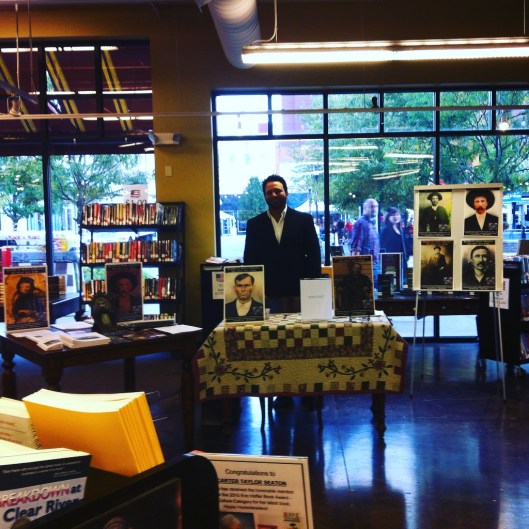
The book and I will appear at Empire Books & News in Huntington, WV, on Saturday, April 30, from 3 p.m. to 6 p.m. Our last appearance in September was a sellout venue…and we met many amazing people. If you are local to the Tri-State area, come and see us this Saturday! (We will be joined by over 25 regional authors.) For information about our last visit to the store, follow this link: http://www.herald-dispatch.com/features_entertainment/author-to-sign-new-book-at-empire-on-saturday/article_dcf95a5c-13eb-5ecf-aeca-713a131626c5.html

IMG_3499IMG_6612