• About

Brandon Ray Kirk

~ This site is dedicated to the collection, preservation, and promotion of history and culture in my section of Appalachia.

Brandon Ray Kirk

Category Archives: Women’s History

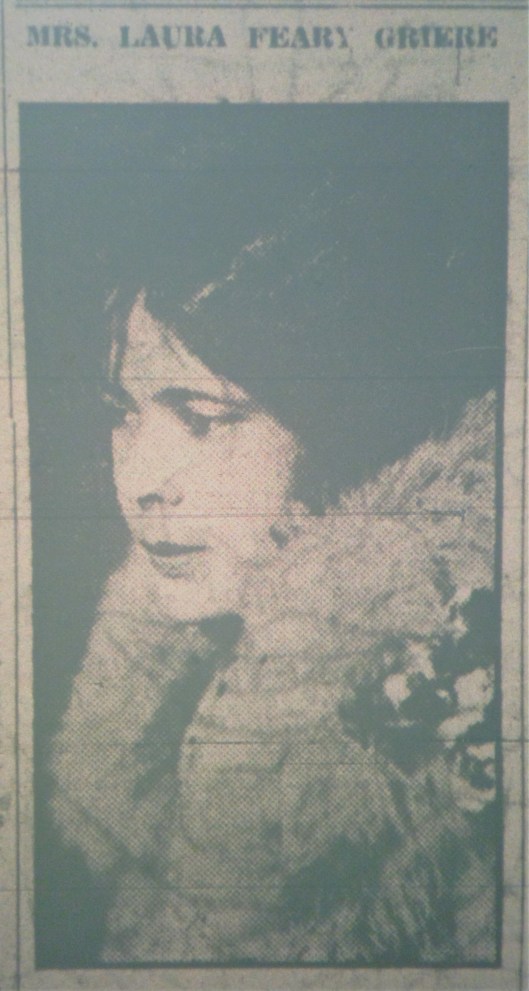
Mrs. Laura Feary Griere (1929)

02 Wednesday Jan 2019

Posted by Brandon Ray Kirk in African American History, Logan, Women's History

≈ Leave a comment

Tags

African-Americans, Appalachia, Aracoma High School, Fisk University, genealogy, history, Laura Feary Griere, Logan Banner, Logan County, teacher, Urban League, West Virginia, West Virginia Physical Education Union

In April of 1929, the Logan Banner profiled numerous prominent African-American residents of Logan County, West Virginia.

Notable Blacks of Logan County LB 04.16.1929 9.JPG

Mrs. Laura Feary Griere

Teacher, English Department, Aracoma High School

Graduate: Fisk University. She has three years’ teaching experience, spending two of them in her present position. Mrs. Griere is a member of the State and National Teachers’ Association; is also a member of West Virginia Physical Education Union for women. Mrs. Griere is an active, entertaining teacher, splendidly qualified for her work, and gives assistance to other activities in the community that concern the people’s welfare. She has also done much active service in Urban League work and is experienced in social activities. Mrs. Griere was a member of the Editorial Staff of her school journal while she attended school at Fisk.

Source: Logan (WV) Banner, 16 April 1929.

Martha Ellen (Lambert) Sias-Brumfield Deed to Henry H. Sias and Others (1907)

06 Thursday Dec 2018

Posted by Brandon Ray Kirk in Fourteen, Women's History

≈ Leave a comment

Tags

Andrew Lewis Sias, Appalachia, Archibald Elkins, county clerk, Fourteen, Fourteen Mile Creek, genealogy, Henry H. Sias, history, Jefferson Lucas, John S. Brumfield, Lincoln County, Martha Ellen Brumfield, notary public, Robert Hager, West Virginia

Martha Brumfield to Henry H. Sias 1

Deed Book ___, page 13, Lincoln County Clerk’s Office, Hamlin, WV. Martha Ellen (Lambert) Sias is my great-great-great-grandmother. Henry H. Sias, her son, is my great-great-grandfather.

Martha Brumfield to Henry H. Sias 5

Deed Book ___, page 14, Lincoln County Clerk’s Office, Hamlin, WV.

Levisa Hatfield (1927-1929)

03 Monday Dec 2018

Posted by Brandon Ray Kirk in Big Sandy Valley, Hatfield-McCoy Feud, Holden, Huntington, Logan, Matewan, Pikeville, Wharncliffe, Women's History

≈ 1 Comment

Tags

Abraham Lincoln, Appalachia, Barnabus, Ben Creek, Betty Caldwell, Betty Hatfield, Bob Hatfield, C.C. Lanham, Cap Hatfield, Charles Dardi, Charleston, deputy sheriff, Devil Anse Hatfield, E. Willis Wilson, Elias Hatfield, Elliott R. Hatfield, F.M. Browning, Fayette County, feud, genealogy, governor, Halsey Gibson, Hatfield-McCoy Feud, Henry D. Hatfield, Hibbard Hatfield, history, Holden, Huntington, Island Creek, J.O. Hill, Jim McCoy, Joe Hatfield, John Caldwell, John J. Jackson, Johnson Hatfield, Kentucky, L.W. Lawson, Levicy Hatfield, Logan, Logan Banner, Logan County, Lundale, Marion Browning, Mary Howes, Mate Creek, Matewan, Matilda Chafin, Mingo County, Nancy Carey, Nancy Mullins, Nathaniel Chafin, Omar, Pike County, Pikeville, Pittsburgh, pneumonia, R.A. Woodall, Randolph McCoy, Rebecca Hatfield, Rose Browning, sheriff, Tennis Hatfield, Tom Chafin, Troy Hatfield, Tug River, W.R. Eskew, West Virginia, Wharncliffe

The following news items from the Logan Banner of Logan, WV, provide some history about the final years of Levisa Hatfield, widow of Anse Hatfield:

Levisy Hatfield Dies LB 03.15.1929 1.JPG

MRS. HATFIELD BETTER

Mrs. Levicy Hatfield, widow of Ance Hatfield, continues to recuperate from a serious illness and is now able to walk about the home of her daughter, Mrs. F.M. Browning, of Holden, where she has been cared for. She is 84 years old.

Source: Logan (WV) Banner, 03 June 1927

***

Mrs. Hatfield Hurt

Mrs. Lovisa Hatfield, widow of the late “Devil Anse” Hatfield, is suffering from injuries received in a fall at her home on Island Creek Sunday. She hurt her hip and shoulder and forehead and her condition was such as to cause some concern, yet she was able to sit up yesterday. Two or three of her daughters are helping to take care of her. She is 85 years old.

Source: Logan (WV) Banner, 20 September 1927

***

DEVIL ANSE’S WIDOW, AGED 86, RECOVERS FROM PNEUMONIA

In recovering from her recent severe illness Mrs. Levisa Hatfield, widow of the late “Devil Anse,” has again demonstrated her remarkable vitality. Though in her 87th year, she is now recovering from pneumonia with which she was stricken on December 28. Monday of this week her lungs began to clear up, and her son, Sheriff Joe Hatfield, said yesterday that she seemed to be assured of recovery.

So critical was her illness for several days that half a dozen physicians were summoned to her bedside. These included Dr. H.D. Hatfield, L.W. Lawson, J.O. Hill, Brewer and Moore as well as Dr. E.R. Hatfield, of Charleston, a son of the aged patient.

Mrs. Hatfield celebrated her 86th birthday at the Hatfield homestead near the head of Island Creek on December 20.

Source: Logan (WV) Banner, 18 January 1929.

***

Devil Anse’s Widow Died Early Today

Mrs. Levisa Hatfield Succumbs Unexpectedly In 87th Year

10 Living Children

Hers Was Life of Storm And Stress for Several Decades

Funeral services for Mrs. Hatfield will be held at 2:30 Sunday at the Hatfield cemetery on Island Creek.

Mrs. Levisa Hatfield, widow of “Devil Anse” of Hatfield-McCoy feud fame, died at the family homestead up near the head of Island Creek at about 8 o’clock this morning. Though she was frail and had been in ill health all winter, the news of her passing caused much surprise and regret among relatives and friends outnumbered. Still, her condition yesterday was unsatisfactorily, indicating she had suffered a backset.

Mrs. Hatfield celebrated her 86th birthday on December 20. Eight days later she was stricken with pneumonia, and for several weeks her condition was alarming. Despite her advanced age, her indomitable grit and wiry strength and endurance triumphed, having as she did the tender, constant care of her children and other kinfolk, neighbors, and friends.

Hers was a stout heart, otherwise it could not have, withstood the storms that raged about her home and her family for many years. But long before her interesting career ended, peace and contentment had come into her life, and her declining days were brightened by the successes that had come to her children and grandchildren.

The decedent was born and reared on Mate Creek in what was then Logan county but now in Mingo. She was a daughter of Nathaniel Chafin. In her teens she was married to a neighbor youth, William Anderson Hatfield, who shortly thereafter entered the Confederate army and attained the rank of captain. That was a trying experience for a bride, but a longer and more terrifying one came in the early ‘80s when her family became involved in a now historic private war with the McCoys, a large family living on the Kentucky side of the Tug River. Even after the feud ended and a tacit agreement was carried out whereby her family moved back from the Tug and over the county divide and their foes went farther away from the Tug in the opposite direction, tragedies cast their shadows across her pathway. Chief of these was the slaying of her sons Troy and Elias by a drunken miner in Fayette county in 1911. The miner, too, was riddled with bullets after his victims had fallen mortally wounded.

Ten children survive Mrs. Hatfield and three are dead, Johnson, the oldest, having died in 1922 on Ben Creek, Mingo county. The living are: William A. (Cap), who shared with his father the leadership of their clan in the days of the feud, now a deputy sheriff and living at Stirrat; Robert L., Wharncliffe; Mrs. Nancy Mullins, living just above the Hatfield place; Dr. Elliott R., Charleston; Mrs. Mary Howes, at home; Mrs. John (Betty) Caldwell, Barnabus; Sheriff Joe D. Hatfield; Mrs. Marion (Rose) Browning, Holden; Willis, deputy sheriff at Lundale; Tennis, former sheriff.

She is survived by two sisters and a brother: Mrs. Betty Hatfield, widow of Elias Hatfield and mother of U.S. Senator H.D. Hatfield; Mrs. Rebecca Hatfield, of Logan, mother of Hibbard Hatfield, and Tom Chafin, who lives on Mate Creek.

Mrs. Hatfield and devoted to her home and family. And her home as well as herself was widely known for hospitality. There the friend or wayfarer ever found a welcome. She was a member of the Church of Christ and was baptized along with her husband by Uncle Dyke Garrett some years before her husband’s death.

No announcement was made this forenoon as to the funeral arrangements. Squire Elba Hatfield, a grandson, said he supposed the funeral would be held Sunday. Burial will be in the family cemetery.

Source: Logan (WV) Banner, 15 March 1929

***

Great Crowd At Funeral of Mrs. Hatfield

Throng Surpassed That of Any Previous Funeral In County

Pictures Are Taken

News of Death of “Devil” Anse’s Widow Travels Far and Wide

Hundreds of relatives and friends and neighbors paid their last tribute of affection to Mrs. Lovisa Hatfield Sunday afternoon. It is declared to be, by persons capable of judging, the largest funeral crowd ever assembled in the county. Perhaps the maximum attendance of the afternoon was no larger than that at the funeral of Charles Dardi last November, but on Sunday people were coming and going for an hour or more before the hour set–2:30–for the services and until the services were concluded.

Early in the afternoon a crowd began to form both at the Hatfield cemetery and the homestead. A cool, steady, stiff breeze made it uncomfortable for those who gathered at the cemetery, with the result that they did not tarry long there; and on account of weather conditions a great many did not leave their cars, which were closely parked along both sides of the highway from Sheriff Joe Hatfield’s home up to and beyond the home of the decedent.

The attendance at Sunday’s rites exceeded that of the funeral of Mrs. Hatfield’s widely known husband, “Devil Anse,” which was held on Sunday, January 9, 1921. At that time there was but a semblance of a highway up toward the head of Island Creek and most of those who attended the rites of the old feudist chieftain rode on a special train that was run that day or walked for a great distance.

At the homestead there were scripture readings, sermons, and tributes by Rev. Joe Hatfield, a nephew of the decedent, of Matewan; Rev. Halsey Gibson and Rev. C.C. Lanham, pastor of the first Methodist church of Logan. Before the cortege left the house R.A. Woodall, local photographer, took pictures of the body at rest in a beautiful metallic casket and of the grandchildren and perhaps others who were grouped on the porch.

At the grave the services were conducted by Rev. W.R. Eskew of Omar and a solo by a Mr. Woods of Huntington featured the singing. Mr. Eskew paid a tribute to the generosity and hospitality of Mrs. Hatfield, to her love of home and her devotion to her children and other loved ones.

As related in Friday’s paper, Mrs. Hatfield died at about 8 o’clock that morning, after having nearly recovered from pneumonia. Her age was 86 years, two months and 25 days. She was a daughter of Nathaniel and Matilda Varney Chafin and was born on Mate Creek, now in Mingo county. Her sisters, Mrs. Elizabeth Hatfield of Huntington , Mrs. Nancy Carey, Pittsburgh, and Mrs. Rebecca Hatfield of Logan, and her brother Tom Chafin of Mingo were at the funeral.

All over the country the news of Mrs. Hatfield’s death was flashed and it called forth much comment on the old Hatfield-McCoy feud that for a long time held the close attention evidently of millions of newspaper readers.

—

An old sketch of “Devil Anse” says he had none of the attributes of “bad men” in his character. He was always recognized as a loyal friend of the many who had some sort of claim to his friendship. Numbered among those who believed he had been right in the position he took during the feud days were the late Judge John J. Jackson, known as the “Iron Judge,” who was appointed to the federal bench by President Lincoln, and the late Governor E.W. Wilson, the former protecting Hatfield when he was called into court, and the latter refusing to honor a requisition of the Governor of Kentucky for the arrest of Devil Anse on a charge of killing some particular member of the McCoy family.

Detectives, real and alleged, had arranged for the capture of Hatfield, spurred by a reward, after they had seen to it that he was indicted on a charge of whiskey selling; in 1888, Judge Jackson, hearing of these plans, sent word to him that if he would appear in court voluntarily the court would see that he had ample protection until he returned to his home in this county.

Uncle Anse appeared and was acquitted of the charge against him. Some of the detectives pounced on him soon after he left the court room, but Judge Jackson summoned all of them before him, threatened to send them to jail, and directed special officers to see that Hatfield was permitted to reach his home. After Hatfield was well on his way, Judge Jackson told the detectives that if they wanted to get him they could proceed, just as the McCoys had been doing for a number of years. They never went.

Captain Hatfield spent the last 20 years of his life peacefully on his farm then in an isolated section of the county. Once he was prevailed upon by some enterprising amusement manager to go on the vaudeville stage but the lure of his home in the mountains soon proved stronger than the lure of the footlights.

—

In the splendid account of the death of Mrs. Anderson Hatfield, estimable woman who passed away at her home Friday, it was stated that Mrs. Hatfield was one of the last of either the Hatfield or McCoy family directly connected with the feud and that all the McCoy principals are believed to be dead. This last is in error as James McCoy, who resided in Pikeville for many years and latter came here, where he lived with his family for a number of years, and after the death of his wife only a few years ago again returned to Pikeville and is now living there. He is a highly respected and esteemed citizen and was the eldest son of the late Randall McCoy, of Pike county, and was one of the main principals of the feud.

Catlettsburg cor. in Huntington Advertiser

Source: Logan (WV) Banner, 19 March 1929.

Boling Baker and Princess Aracoma (1937)

06 Tuesday Nov 2018

Posted by Brandon Ray Kirk in Gilbert, Logan, Native American History, Women's History

≈ 3 Comments

Tags

Abner Vance, Appalachia, Aracoma, Ben Stewart, Ben White, Bluestone River, Boling Baker, Buffalo Creek, Charles Hull, Clear Fork, Dingess Run, Elias Harman, Flat Top Mountain, genealogy, George Berry, Gilbert Creek, Guyandotte River, Henry Clay Ragland, history, Horse Pen Mountain, Huff Creek, Island Creek, James Hensley, James Hines, James White, John Breckinridge, John Carter, John Cook, Joseph Workman, Kentucky, Logan, Logan Banner, Logan County, Logan County Banner, Mallory, Native American History, Native Americans, Oceana, Peter Huff, Rockcastle Creek, Shawnee, West Virginia, William Dingess, William S. Madison

From the Logan Banner of Logan, WV, comes this bit of history concerning Boling Baker and Princess Aracoma, dated March 23, 1937:

IMG_1668

Historical marker on Horse Pen Mountain near Gilbert, Mingo County, WV. 25 April 2015.

Dying Words of Princess Aracoma Related In Story Taken From Banner Files

Though much has been written on the history of Logan county, just as much has been forgotten about its early development.

One of the county’s first historians, Henry Clay Ragland, mayor of the city, church worker and editor of the Logan County Banner, recorded some of the high spots of the development of Logan county in a series of articles which he ran in his newspaper during 1896.

It is from this series of articles that the following story of the early settlement of Logan county is taken.

Records show that a large number of white men first set foot in what is now Logan county in the spring of 1777, when Captain Charles Hull with 20 men pursued a band of marauding Shawnees to the site where Oceana was later built. They lost the trail at Oceana and had to turn back. The Shawnees had raided a white settlement near the falls of New River one spring night and had stolen thirty head of horses. The army captain and his men set out in pursuit but the redskins had too great a start.

Huff Creek was given its name on this expedition in honor of Peter Huff who was killed in a skirmish on the banks of the stream as the men returned home. Huff was buried near the spot where he was killed, which is believed to have been near where the town of Mallory now stands.

Other men on this expedition and who returned to the valley of the Guyandotte later and built homes were John Cook, James Hines, William Dingess and James Hensley.

The first white man really to be identified with what is now Logan county was Boling Baker, a renegade white, but the old-timers would not give him credit for being a white man. They said: “He lived with the Injins and that makes him an Injin.” Baker, however dastardly he was, was indirectly responsible for the settlement of Logan county in 1780-85.

The renegade had one great weakness. A weakness that they hung men for in those days. He was a horse thief. He would take a party of Indians a hundred miles through the mountain passes of Logan county to raid a white settlement in order to steal 20 or 30 horses.

Baker had gone into the business on a large scale. At the head of Gilbert Creek, on Horse Pen Mountain, where the mountain rises abruptly with almost cliff-like sharpness, he had stripped bark from hickory trees and stretched it from tree to tree making a pen in which to keep his stolen stock.

Old settlers of the county who have had the story passed down to them from their great-grandfathers say that the pen was somewhere in the hollow below the road which leads to the fire tower on Horsepen Mountain. It was from this improvised corral of Boling Baker that the mountain was named.

But, back to how Baker was responsible for the settlement of the county.

He left his Indian camps on the Guyan river in the fall of 1780 and visited the white settlements in the Bluestone valley in the Flat Top mountain territory. There he told the settlers a story of how he had been captured by the Indians when he was a young man and had learned their ways. He said he had just escaped from the Shawnee tribe known to be hunting in the Guyandotte valley and was on his way back east to see his father and mother who lived in Boston. Shrewd chap, this Baker!

The settlers were taken in by his story and allowed him to remain with them for several weeks during which time he got the location of all the settlers barns well in mind and after a time departed “back east.”

Soon after the renegade left the Bluestone settlement the whites awoke one rainy morning late in autumn and found every barn empty. The Indians had come with the storm which lashed the valley and had gone without arousing a person. Thirty horses from the settlement went with them.

An expedition headed by Wm. S. Madison and John Breckinridge—son of the Breckinridges who settled much of Kentucky—was made up in a neighboring settlement and set out in pursuit of the thieving Shawnees.

They trailed the party over Flat Top Mountain and southwest to the headwaters of the Guyan River by way of Rockcastle creek and Clear Fork. Trail marks showed that the band had gone down the river, up Gilbert Creek to Baker’s pen and thence over the mountain.

Madison and his 75 men did not follow the Indian trail over the mountain but the redskins probably brought their herd of 50 or 75 horses down Island Creek to the Guyan.

The white expedition chose to follow the Guyan in a hope that they would find the party encamped somewhere along its banks. Scouts had reported that a large tribe of Indians used the Guyan valley as its hunting grounds.

Madison’s party followed the river down to Buffalo Creek—named because the white men found such a large number of buffalo grazing in its bottoms—crossed Rum Creek and pitched camp for a night at the mouth of Dingess Run because “Guyan” Green and John Carter, scouts sent ahead to reconnoiter, had reported finding ten Indian lodges in the canebrakes of an island formed by the joining of a large creek and the Guyan river.

The men rested on their guns for the night and the following morning divided into two parties and attacked the encampment from the front and rear.

In the furious fighting that followed, nine of the thirty Indians in the camp were killed and ten or twelve wounded. Only a few escaped the slaughter of the white men. Among those captured was an old squaw 50 or 60 years old, who by her bearing, was obviously leader of the party. She was wounded but refused to talk.

Near midnight, however, following the massacre of the camp the old squaw felt death creeping upon her and called Madison to her quarters, and told him in broken English the following:

“I am the wife of a pale face who came across the great waters to make war on my people, but came to us and became one of us. A great plague many moons ago carried off my children with a great number of my people, and they lay buried just above the bend in the river. Bury me with them with my face to the setting sun that I may see my people in their march to the happy hunting ground. For your kindness I warn you to make haste in returning to your homes, for my people are still powerful, and will return to avenge my death.”

The proud princess died before morning and the white men buried her “near the bend in the river.” The Indian captives were all killed.

Four days later the men returned to the valley of the Bluestone.

Among those who helped Wm. S. Madison rout the Shawnees and who vowed to possess the valley of the Guyandotte for themselves and their children were George Booth, George Berry, Elias Harman, Ben Stewart, Abner Vance, Joseph Workman, Ben White and James White. All these names are familiar in the county today.

After the Indians were pushed to the west, surveyors allotted the land to the first settlers who had dared, with Madison, to come into the wilderness of the Guyandotte and open it up for the white man.

Madison owned several thousand acres of land on Island Creek, Gilbert Creek and Dingess Run. Other fighters were given like parcels of land.

Source: Logan (WV) Banner, 23 March 1937

Democratic Party Intimidation in Logan County, WV (1924)

14 Sunday Oct 2018

Posted by Brandon Ray Kirk in Coal, Man, Women's History

≈ Leave a comment

Tags

Appalachia, Charley Gore, Democratic Party, deputy sheriff, Don Chafin, H.S. Walker, history, Ira P. Hager, Joe Hatfield, John Morgan, Kistler, Logan County, Malinda Carlton, Mattie Marley, Mine Wars, Pearl Anderson, Republican Party, Tennis Hatfield, United States Commissioner, West Virginia, Will Lancaster

Political history for Logan County, West Virginia, during the 1920s was particularly eventful; it included the latter years of Sheriff Don Chafin’s rule, the Mine Wars (“armed march”), Republican Party ascendancy, and the rise of Republican sheriffs Tennis and Joe Hatfield. What follows are selected primary source documents relating to this period:

UNITED STATES OF AMERICA

SOUTHERN DISTRICT OF WEST VIRGINIA,

HUNTINGTON DIVISION

Before the undersigned authority, Ira P. Hager, a United States Commissioner in and for said county and State, personally appeared this day Mattie Marley, who after being by me first duly sworn, deposes and says:

That she resides at Kistler, Logan County, in said District; that on or about the 2nd day of November, A.D., 1924, at Kistler, in said District, Charley Gore, Deputy Sheriff said to affiant that after the election he was going to give some of them hell; that he was then in affiant’s house, and pulled his revolvers and said that if we would not permit him to give a supper there he knew of plenty of houses where he could get a free supper. He also said when he put his pistol back into his pocket that if his special did not get them his machine gun would.

Mattie Marley

Taken, subscribed and sworn to before me this the 3rd day of November, A.D., 1924.

Ira P. Hager

United States Commissioner as aforesaid.

Witnesses:

Will Lancaster

Pearl Anderson

Malinda Carlton

***

UNITED STATES OF AMERICA

SOUTHERN DISTRICT OF WEST VIRGINIA,

HUNTINGTON DIVISION

Before me, Ira P. Hager, the undersigned a United States Commissioner in and for said District, personally appeared this day John Morgan, who after being by me first duly sworn, deposes and says:

That affiant voted a Republican ticket on election day November 4th, 1924, and H.S. Walker, receiving clerk tore the same up and destroyed it. That there was no justification for his destroying said ballot. Affiant further says that the other election officers of the Junior High School Precinct saw the said Walker destroy said ballot.

John Morgan

Taken, subscribed and sworn to before me this the 4th day of November, A.D., 1924.

Ira P. Hager

United States Commissioner as aforesaid.

Teddy Roosevelt, Jr. Visits Logan, WV (1928)

14 Sunday Oct 2018

Posted by Brandon Ray Kirk in Huntington, Logan, Williamson, Women's History, World War I

≈ Leave a comment

Tags

A.A. Lilly, American Legion, Appalachia, Beckley, Braeholm, C.C. Lanham, Calvert Estill, Casey M. Jones, Charleston, Emmett Scaggs, First Methodist Church, G.R. Claypool, Guyandotte Valley, Harrisville, Henry D. Hatfield, Herbert Hoover, history, Hugh Ike Shott, Huntington, John M. Mitchell, John W. Davis, Kentucky, Logan, Logan Banner, Logan County, Lundale, M.Z. White, Naaman Jackson, Peach Creek, photos, Point Pleasant, politics, Princeton, Republican Party, Ripley, Teddy Roosevelt Jr., W.C. Lybarger, W.C. Price, W.G. Conley, W.J. Fields, Welch, West Virginia, Williamson, Woman's Christian Temperance Union, World War I, YMCA

On October 17, 1928, Theodore Roosevelt, Jr. visited Logan, WV, and gave a speech to approximately 10,000 people. The Logan Banner offered plenty of coverage for the event:

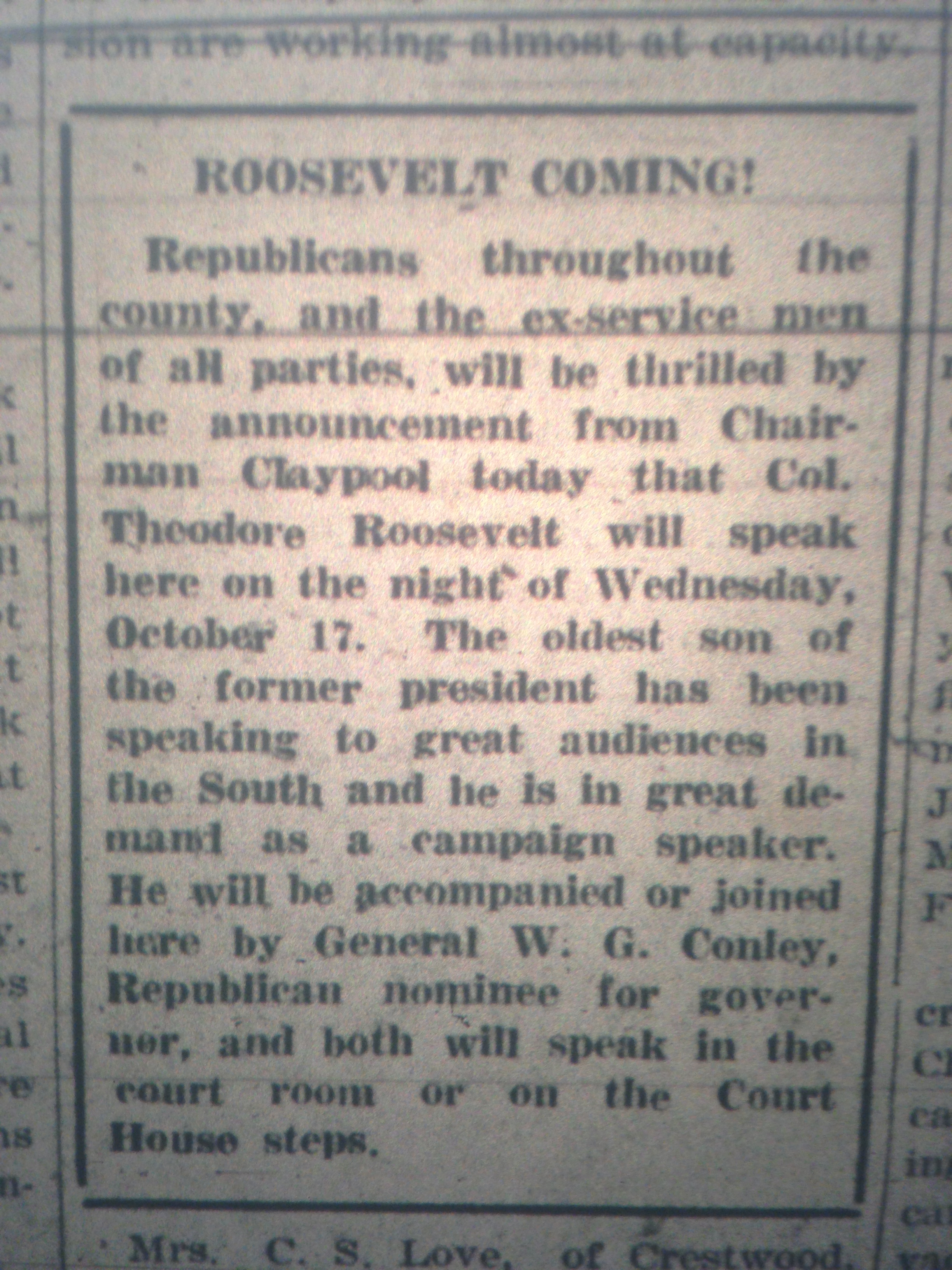
Tedd Roosevelt Jr. is Coming LB 10.05.1928.JPG

Logan (WV) Banner, 5 October 1928

***

War-Time Buddies to Greet Col. Roosevelt

After His Meeting Here Wednesday Night–General Conley Will Also Speak at Open-Air Meeting That Night–Whale of Rally Assured

Every ex-service man in Logan county is urged to meet Col. Theodore Roosevelt when he comes here to deliver a campaign address in front of the Court House next Wednesday night. A reception in honor of the distinguished son of a distinguished sire will be held in Republican headquarters on the fifth floor of the White & Browning building after the political meeting is ended. There he will be greeted by his war “buddies” and every soldier, sailor and marine who served in the World War, regardless of political affiliations, is asked to be present.

Col. Roosevelt is billed three speeches on Tuesday. He is expected to speak at Welch in the afternoon and at Princeton at 5 p.m. and at Beckley that night. He is in great demand and Logan Republicans are elated over the definite promise from state headquarters that he is coming here.

General W.G. Conley, Republican nominee for Governor, will accompany or join Col. Roosevelt here and both will speak at the Wednesday night meeting. It is probable, too, that Dr. H.D. Hatfield and A.A. Lilly, former attorney general, will be here at the same time. General Lilly is billed for a speech at Braeholm on Monday night.

Logan (WV) Banner, 12 October 1928

***

Col. Roosevelt and General Conley Speak in Logan Tomorrow Night

Open-Air Rally at Court House Expected to Attract Delegations From All Sections of County–Service Men to Hold Reception for Col. Roosevelt After Speaking Is Ended

With the coming of Theodore Roosevelt and General W.C. Conley tomorrow for what is expected to be a memorable night meeting, the speaking campaign in this county may reach a climax. They will be the chief speakers at an open-air meeting in front of the Court House. It is probable that Governor Gore will come also and in that event he may serve as chairman of the meeting.

A.A. Lilly, former attorney general and Hugh Ike Shott, Republican nominee for congress, who addressed a huge gathering at Braeholm and Lundale last night, will speak at Peach Creek tonight; Senator Jackson and E.F. Scaggs also spoke at last night’s gatherings. Mr. Shott will remain in the county up to Wednesday night.

Governor W.J. Fields of Kentucky will address a Democratic meeting in the court room tonight.

Widespread interest has been aroused in the Roosevelt-Conley meeting and delegations are looked for from every section of the county. Ex-service men are to turn out in force to meet and greet the distinguished soldier-son of the beloved soldier-president of the same name. A reception to which all ex-service men are invited will be held on the fifth floor of the White & Browning building after the big meeting is concluded. Roosevelt’s war record, his activity in helping to organize the American Legion, and his fondness for those who served with him have endeared him to World War men everywhere.

A prohibition rally sponsored by the W.C.T.U. will be held at the Court House at 7:30 Friday p.m. Everyone is urged to come. The speakers for this occasion have not been announced.

Teddy Roosevelt Jr. in Logan LB 10.16.1928 2.JPG

Logan (WV) Banner, 16 October 1928.

***

Col. Roosevelt Center of Interest of Biggest Crowd Ever Seen Here

Republicans Stage Rally Eclipsing Any of the Past in Guyan Valley, With Attentive, Enthusiastic Crowd Estimated At Around 10,000 Mark

GEN. CONLEY AND OTHERS TAKE PART

Ex-Service Men Add Zest to Ovation for Gallant Soldier Son of Beloved T.R.–Rev. Mr. Lanham Is Chairman–Flowers For Teddy

Before the largest crowd ever assembled in Logan county, Col. Theodore Roosevelt, eldest son of the late president, made an eloquent and elaborate appeal in front of the Court House Wednesday night for the election of Hoover and Curtis on November 6.

His oratory, his Rooseveltian grimaces, his deep-furrowed smiles, his warm and radiant fellowship, and genuine camaraderie in meeting and greeting ex-service men, won the hearts of all. And how game he was! Exhausted by his effort to make himself heard to the far corners of the crowd confronting him and really surrounding him, following a strenuous ordeal of many days, traveling at night and speaking several times a day, he had difficulty making his way from the platform back through the crowd and into the Court House corridor. To several companions he hoarsely confided, “I’m a wreck!” Nevertheless, he tried to shake every hand and exchange a friendly greeting with those who swarmed about him. His exit was marked by a renewal of the ovation that greeted him when he, General W.G. Conley, Senator M.Z. White, County Chairman and Mrs. G.R. Claypool, Casey M. Jones, Calvert Estill and others in the party wormed their way through the crowd to the platform erected at the foot of the steps on the side of the Court House.

After the meeting the distinguished visitor was whisked to Republican headquarters where ex-service men in large numbers held a reception in his honor. Again and again he was “dee-lighted” and thrilled to find some “buddy” who had belonged to some military unit with whose history Roosevelt is familiar. Then he would cry out to his pal Casey Jones, Charleston newspaperman and bosom friend for more than a decade,” What do you know about it, Casey, here’s an old pal that served with” so-and-so company or regiment.

Not only ex-service men but more than one professional man of Logan, miners and others whispered to him, or yelled out to his wake, “We’ll be voting for you some time, Teddy!”

Hits the Line Hard

After the reception the Colonel returned to Charleston, to make ready for a busy schedule yesterday. He was billed for speeches at Harrisville, Ripley and Pt. Pleasant, and had arranged to get back to Charleston last night and to speak both at Beckley and Welch today. All day yesterday here whenever the matter of his visit was discussed in any group the prediction was advanced that he was too terribly exhausted to adhere to his schedule. And his Logan friends are sincerely concerned about him. However, he will return to New York at the end of the week.

Wednesday night’s rally will be remembered for years, say political observers, not only because of its size but also because of its direct bearing on a momentous contest for supremacy.

Most estimates of the attendance hover around the 10,000 mark. John M. Mitchell, court bailiff, who has been familiar with political activities in this county for half a century, said it exceeded twice over any crowd he had ever seen in the county. Others say the only meeting ever held here worthy of comparison was that addressed by Senator Pat Harrison in the 1924 campaign. To the writer the crowd seemed more than half as large as that which heard John W. Davis in Huntington in 1924. That crowd was estimated at 25,000, but that was an obvious exaggeration–a characteristic of the estimates of political assemblages.

The Folks Were There

Cloudy weather and a light rain that set in at the hour when the meeting was scheduled to start doubtless kept away a considerable number and caused scores to leave. On the outer edges it was impossible to hear the speakers and so there was a steady going and coming of persons wishing to see and hear. windows in about half a dozen buildings were occupied, small boys were atop the Old Stone building, and there was a good-sized crowd clustered on and about the platform, steps, windows, portico and corridors of the Court House.

Roosevelt has a good voice but it was put to a terrific test here, considering what he had undergone recently. His voice is better than his father’s was and he is more humorous, but the only striking resemblance between the two as public speakers is that grinning grimace that once seen can never be forgotten. In his speech he did not delve exhaustively into any one issue or phase of the campaign but he gave a comprehensive review of the issues and personalities that Republicans generally assume to be involved in this campaign. As for Tammany he panned it as it has never been panned before hereabouts. He recalled, too, that his grandfather had fought the greedy Tiger: “My father fought it; I am fighting it, and if it lives 20 years longer, I expect and hope my son Teddy III will be fighting it.”

Rev. Lanham Presides

It was after 8 o’clock when the speakers arrived–more than half an hour late–whereas all available seats and many vantage points had been occupied for nearly if not fully two hours. At the home of Mr. and Mrs. G.R. Claypool they had been entertained at dinner–or supper, as Teddy and most of us call it. Besides the Colonel and General Conley there were six other guests: Hugh Ike Shott, Republican nominee for representative in Congress; Senator M.Z. White, Williamson; C.M. Jones, publicity man and side for Mr. Conley; Calvert N. Estill, Charleston correspondent for the Ogden chain of newspapers, and Senator Naaman Jackson.

Rev. C.C. Lanham, pastor of the First Methodist Church, who has been a leader in the fight to avert any backward step on prohibition, was chairman of the meeting. He filled the role with tact and good judgment and introduced the various speakers in happy style.

General Conley was the first speaker, but sensing the crowd’s desire to hear the Colonel he cut short his remarks. He did not take up state or national issues but after a word of congratulation to those who had sponsored such an immense turnout he withdrew.

Flowers For Colonel

Next a pretty little surprise was sprung. Mrs. W.C. Price, of Huntington, who is taking the lead in organizing the Republican women of the county, was introduced. Turning to Col. Roosevelt, after bringing a basket full of beautiful flowers into view, she told him of the esteem in which he is held by the women and presented the flowers in behalf of the woman’s Republican Club as a token of appreciation of his services in this campaign and of his zeal in promoting the public welfare. His face wreathed in wrinkles and aglow, he replied: “I accept with thanks. And I would much rather stand high in the esteem of women than of men. They are more important. I know, for I am married.”

The chairman then introduced W.C. Lybarger, secretary of the railway Y.M.C.A. at Peach Creek, who in turn introduced Col. Roosevelt. He paid the visitor a splendid tribute for his valor on the battlefields of France, touched the high points of his political career, and said he had a leading part in organizing the American Legion.

At the outset Roosevelt sketched the character and growth of the orphaned Hoover and gave some intimate glimpses into the habits of living and of thought, of his working and his industry and resourcefulness in solving problems of public and playing, of his zeal in tackling concern. Between these two men there is a close friendship, and there was no mistaking Roosevelt’s whole-hearted admiration for the farm boy of Iowa who has risen to a position of pre-eminence in the minds and hearts of his countrymen and even of the folk of many other lands.

Logan (WV) Banner, 19 October 1928

Willa Lipscomb Deering (1929)

28 Friday Sep 2018

Posted by Brandon Ray Kirk in African American History, Women's History

≈ Leave a comment

Tags

African-Americans, Appalachia, Columbia University, genealogy, history, Logan Banner, Logan County, Lundale Stowe School, National Teacher Association, teacher, West Virginia State College, West Virginia State Teachers' Association, Willa Lipscomb Deering

In April of 1929, the Logan Banner profiled numerous prominent African-American residents of Logan County, West Virginia.

MRS. WILLA LIPSCOMB DEERING

Teacher, Lundale Stowe School

Graduate West Virginia State College; has done summer work in the same institution and Columbia University; member West Virginia State and National Teachers Associations. She has taught for fourteen years in Logan county, twelve of which has been engaged in her present position. Mrs. Deering has a splendid record of achievement in her labors, seeing the result of her efforts in the growth and improvement of the community. She is thorough and precise in her work and is numbered in the profession among the best grade teachers. Because of her labors among the people, she holds a large place in their affections and esteem.

Source: Logan (WV) Banner, 16 April 1929

Lillian Samons (1929)

17 Monday Sep 2018

Posted by Brandon Ray Kirk in African American History, Logan, Women's History

≈ Leave a comment

Tags

African-Americans, Appalachia, education, genealogy, Harpers Ferry, history, Lillian Samons, Logan Banner, Logan County, Myrtilla Miner Normal School, National Teachers' Association, Storer College, teacher, Washington, West Virginia, West Virginia Parent-Teacher Association, West Virginia State Teachers' Association

In April of 1929, the Logan Banner profiled numerous prominent African-American residents of Logan County, West Virginia.

Notable Blacks of Logan County LB 04.16.1929 3

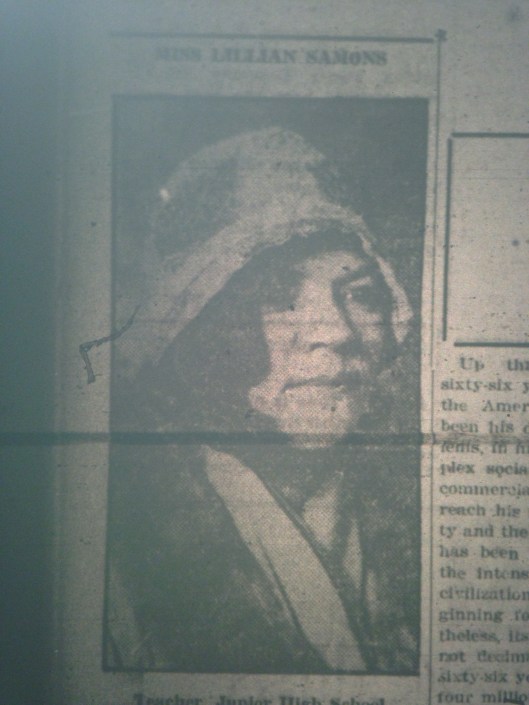
LILLIAN SAMONS

Miss Samons is a graduate of Storer College, Harpers Ferry, and Myrtilla Miner Normal, Washington, D.C. She has done summer work at West Virginia State College. Miss Samons has taught for ten years, all of which have been engaged in Logan county. She is a member of West Virginia State and National Teachers’ Association, and also a member of the State Parent-Teacher Association. Steady and methodical as a teacher, Miss Samons grasps the problem of the school room with a keen sense of its requirements. She obtains results immediate and direct, knowing forthwith at what she is aiming. Probably among the teachers of the county and state, Miss Samons takes her place among the foremost, this from a knowledge of the theory and practice and by that peculiar adaption to the work at hand. She has placed high dignity upon the profession, both in her high sense of honor and moral acumen, and her disposition to ever reach forward to a greater efficiency and the discovery of a more exact method to advance her pupils. Miss Samons has an engaging manner and has endeared herself in the hearts of the large number of pupils that have come under instruction, and with the patrons and citizens of the communities in which she has taught. She has a wholesome interest in the welfare of her people and responds actively to any movements that are devoted to their advancement.

Source: Logan (WV) Banner, 16 April 1929.

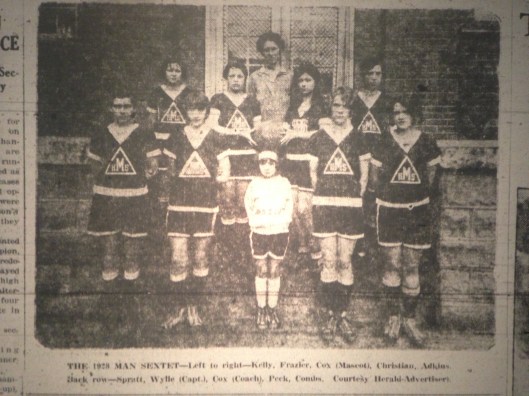
Man High School Girls’ Basketball Team (1928)

13 Thursday Sep 2018

Posted by Brandon Ray Kirk in Boone County, Gilbert, Huntington, Logan, Man, Sports, Women's History, Wyoming County

≈ Leave a comment

Tags

Appalachia, basketball, Burch High School, Ceredo-Kenova High School, Cincinnati, Clothier Independent High School, genealogy, Gilbert High School, history, Huntington High School, Indianapolis, Logan Banner, Logan County, Logan High School, Madison High School, Man High School, Oceana High School, Sports, West Virginia, Wichita

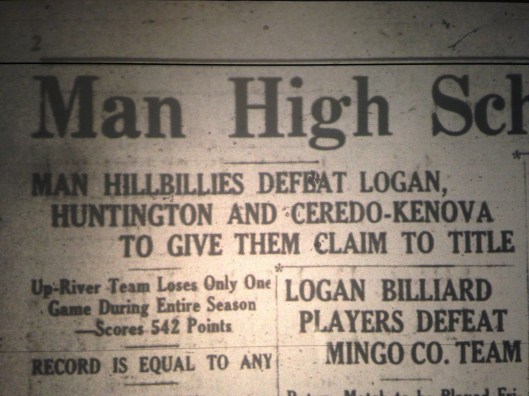
Man HS Girls Basketball Photo LB 03.06.1928 3

Logan (WV) Banner, 6 March 1928.

Man HS Girls Basketball Photo LB 03.06.1928 2

Logan (WV) Banner, 6 March 1928.

Man HS Girls Basketball Photo LB 03.06.1928 4

Logan (WV) Banner, 6 March 1928.

Man HS Girls Basketball Team Goes to Kansas LB 03.27.1928 1

Logan (WV) Banner, 27 March 1928.

Mariah (Vance) Adkins Obituary (1931)

06 Thursday Sep 2018

Posted by Brandon Ray Kirk in Big Harts Creek, Cemeteries, Lincoln County Feud, Stiltner, Women's History

≈ 1 Comment

Tags

Abner Vance, Angeline Adams, Appalachia, Blood in West Virginia, Cain Adkins, Cain Adkins Jr., cemeteries, Community Memorial Gardens, Eliza Kelly, genealogy, Harts Creek, history, Jesse Nelson, Kenova, Lena Napier, Lick Creek, Lincoln County, Lincoln County Feud, Mariah Adkins, Mary Jane Jordan, Mittie Adkins, photos, Spicie Fry, Stiltner, Tams, Thomas Vaughan, Walton, Wayne, Wayne County, Wayne County News, West Fork, West Virginia, Williamson, Winchester Adkins

Mariah Adkins Obituary WCN 07.02.1931 1.JPG

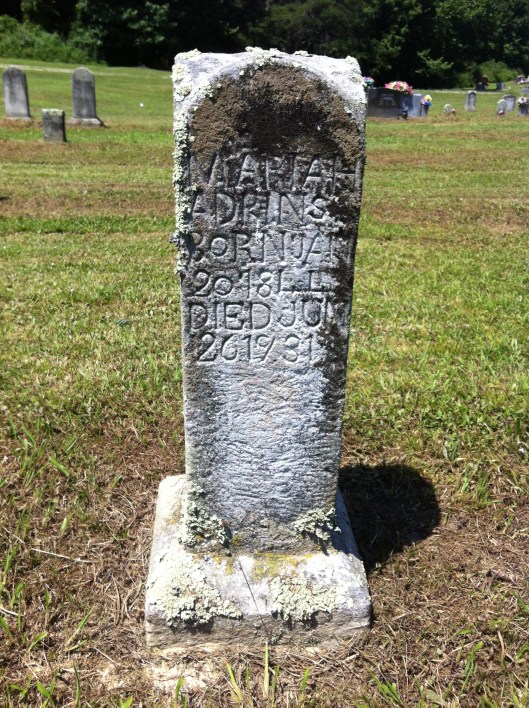
Wayne County (WV) News, 2 July 1931. Mariah (Vance) Adkins was born on the West Fork of Harts Creek in present-day Lincoln County, WV. She married Canaan “Cain” Adkins, a preacher, teacher, doctor, and justice of the peace.

IMG_6738

Mariah Adkins grave at Community Memorial Gardens near Wayne, Wayne County, WV. 23 July 2016.

Greenbrier Ghost (2018)

31 Friday Aug 2018

Posted by Brandon Ray Kirk in Women's History

≈ Leave a comment

Tags

Appalachia, Brandon Kirk, Edward Shue, genealogy, ghosts, Greenbrier County, Greenbrier Ghost, history, photos, Phyllis Kirk, Sam Black Church, West Virginia, Zona Heaster Shue

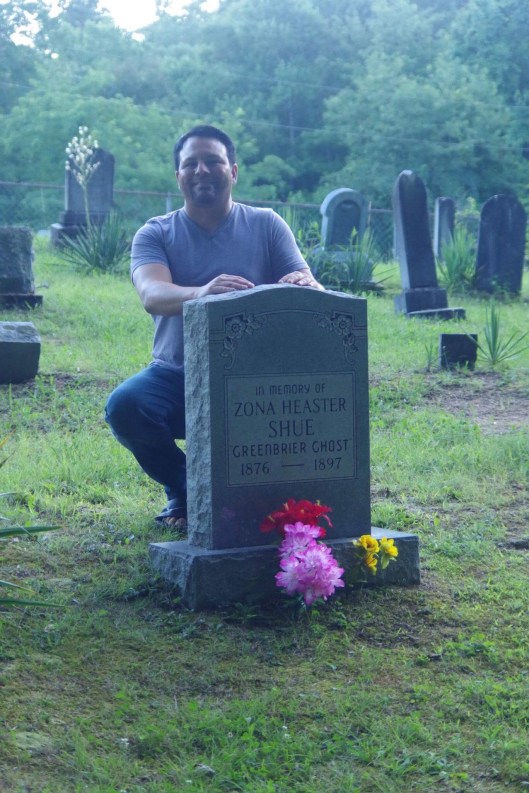
IMG_4535

Greenbrier Ghost historical marker, Sam Black Church, Greenbrier County, WV. 8 July 2018. Photo by Mom. For more about the murder, follow this link: http://www.wvculture.org/history/crime/shuearticles.html

IMG_4534

The Greenbrier Ghost’s grave is located several miles away from the historical marker. 8 July 2018. Photo by Mom. For more about the grave, follow this link: https://www.findagrave.com/memorial/5015852/zona-shue

Nancy Hatfield v. The Little Kanawha Lumber Company (1892)

07 Saturday Jul 2018

Posted by Brandon Ray Kirk in Hatfield-McCoy Feud, Timber, Women's History

≈ Leave a comment

Tags

Appalachia, Cap Hatfield, G.W. Morgan, G.W. Taylor, genealogy, Hatfield-McCoy Feud, history, Island Creek, John A. Sheppard, justice of the peace, Little Kanawha Lumber Company, Logan County, Nancy Hatfield, P.A. Farley, Patterson Christian, splashing, timber, timbering, West Virginia

Historians have well-documented Anderson Hatfield’s timber activity. In 1892, Nancy Hatfield, wife of Cap, sued the Little Kanawha Lumber Company. Here are transcriptions of a few court documents.

DOCUMENT 1

Nancy Hatfield

vs.

The Little Kanawha Lumber Company

Civil Action

Summons issued June 29, 1892 by G.W. Morgan, a Justice of Logan County, W.Va., and returnable at the residence of Cap Hatfield on Main Island Creek in Logan District of said County on the 14th day of July 1892. Residence of Cap Hatfield June 14, 1892. Summons returned duly executed by P.A. Farley, a constable of said county. Present the plaintiff in person and by Counsel Jno. A. Sheppard. No person appearing for the defendant. G.W. Morgan the Justice issuing the summons being absent and sick and the plaintiff being ready for trial the undersigned Justice of said county having waited on hour after the time set for trial and the defendant still failing to appear. After hearing the evidence offered by the plaintiff doth find for the plaintiff and assess her damages at $50.00. Judgment is therefore rendered in favor of the plaintiff and against the defendant for the sum of $50.00 and her costs in this behalf expended.

Given under my hand this June 14, 1892.

Patterson Christian, Justice

DOCUMENT 2

The Little Kanawha Lumber Company

To Nancy Hatfield

To damage by splashing to bottom creek bank &c of land on Island Creek, $75.00

To fence gate &c splashed away & cost of replacing, $25.00

To timber out, $25.00

Total: $125.00

Cr. by cash on same, $10.00

DOCUMENT 3

APPEAL BOND

Know all men by these presents that we Little Kanawha Lumber Company and G.W. Taylor are held and firmly bound unto the state of West Virginia in the just and full sum of one hundred dollars for the true payment whereof well and truly to be made we bind ourselves heirs and personal representatives jointly severally and firmly by these presents sealed with our seals and dated this the 20th day of July 1892.

The condition of the above obligation is such that whereas on the 14th day of July 1892 a Judgment was rendered by Patterson Christian a justice of the peace against the Little Kanawha Lumber Company in favor off Nancy Hatfield in the sum of $50.00 with interest from date and cost in a cause pending before said Christian J.P. wherein said Nancy Hatfield was plaintiff and said Little Kanawha Lumber Company was defendant and said Little Kanawha Lumber Company desiring an appeal from the decision of said justice in rendering said judgment tenders this bond for that purpose. Now if the above bond Little Kanawha Lumber Company and G.W. Taylor do pay off and satisfy any judgment rendered against them by the Circuit Court of Logan County on said appeal then this obligation to be void otherwise to remain in full force and virtue.

Little Kanawha Lumber Co.

G.W. Taylor

Approved this July 20, 1892

Patterson Christian, J.P.

NOTE: This case had nothing to do with the Hatfield-McCoy Feud.

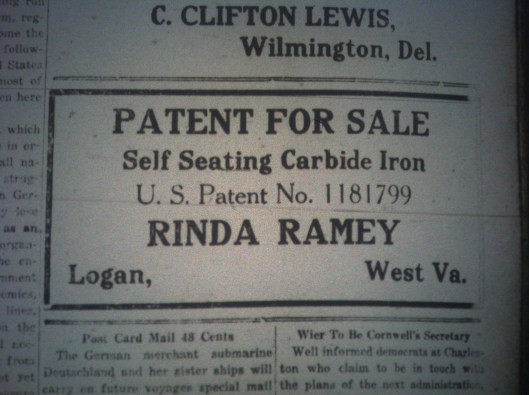
Rinda Ramey Patent for Sale (1917)

27 Friday Apr 2018

Posted by Brandon Ray Kirk in Logan, Women's History

≈ Leave a comment

Tags

Appalachia, history, Logan, Logan Democrat, Rinda Ramey, West Virginia

Rinda Ramey Patent for Sale LD 01.11.1917.JPG

Logan (WV) Democrat, 11 January 1917.

Jack Dempsey’s Mother (1927)

15 Sunday Apr 2018

Posted by Brandon Ray Kirk in Boone County, Chapmanville, Holden, Huntington, Logan, Sports, Women's History

≈ Leave a comment

Tags

Boone County, boxer, boxing, Cecilia Dempsey, Cecilia Smoot, Chapmanville, Charles Smoot, Chicago, Colorado, Don Ellis, Dyke Garrett, Enoch Baker, Gay Coal and Coke Company, Gene Tunney, Hiram Dempsey, history, Holden, Huntington, Huntington Hotel, Island Creek, J. Kenneth Stolts, Jack Dempsey, Jack Kearns, John B. Ellis, Joseph Ellis, Logan, Logan Banner, Logan County, Manassa, Salt Lake City, Scott Justice, Simpson Ellis, Stratton Street, The Long Count Fight, Utah, West Virginia, Wiatt Smith

From the Logan Banner of Logan, WV, comes this bit of history about champion boxer Jack Dempsey dated September 9, 1927:

Jack Dempsey’s Mother Pays Visit to Logan

Travels from Utah to See Relatives and Old Friends and Neighbors

Maiden Name Cecilia Smoot

Uncle Dyke Garrett Among Welcomers; Dempseys Once Owned Site of Holden.

While Jack Dempsey is fighting to regain the heavyweight championship of the world, his mother Mrs. Hiram Dempsey will be the guest of Logan relatives and friends. She is expected to arrive at any hour for an extended visit to the scenes of her childhood.

Mrs. Dempsey arrived at Huntington Sunday and then planned to come here the next day. Later, word came that she would complete today the last lap of a motor trip from Salt Lake City to Logan.

Interviewed at Huntington Mrs. Dempsey told of her desire to revisit girlhood scenes and inquired about old friends. She spoke of Uncle Dyke Garrett and was pleasantly surprised to learn that he is still living. Uncle Dyke read the interview (his wife is an aunt of Wiatt Smith, the interviewer) and despite the nearness of his 86th birthday, came back up from his home back of Chapmanville to welcome Mrs. Dempsey.

This beloved old mountain minister never knew Jack Dempsey, but he remembers Jack’s mother as a girl, her maiden name being Cecilia Smoot. She was a daughter of Charles Smoot, who came to Logan from Boone county, and who lived and died up on Island Creek. After his death, Mrs. Smoot (Jack Dempsey’s grandmother) married Simpson Ellis, who died but a few years ago, after serving a long period on the county court.

Scott Justice, who divides his time between Huntington and Logan, was among those who greeted Mrs. Dempsey at the Huntington Hotel yesterday. He remembers the marriage of Hiram Dempsey and Cecilia Smoot, and also recalls that the site on which the town of Holden now stands was sold by Hiram Dempsey to Mr. Justice’s father when the family decided to migrate westward.

According to Mr. Justice, the tract of 200 acres changed hands for a consideration of $600.

“Uncle” Enoch Baker was another caller to greet the challenger’s mother. Mr. Baker was engaged in business in Logan county when the Dempseys lived here, being well acquainted with the family.

Mrs. Dempsey was accompanied by Mr. and Mrs. J. Kenneth Stolts of Salt Lake City. They made the trip from Utah, where Jack’s mother now has her permanent home, in a large automobile, traveling in easy stages. They arrived in Huntington Sunday evening and are leaving there today.

She called her famous son in Chicago by telephone Sunday night to advise him she had arrived here safely.

While in Logan, Mrs. Dempsey will visit her half-brothers, Don Ellis of Stratton Street, and Joseph and John B. Ellis of Island Creek, and others.

She has never seen Jack in the ring and will probably receive the result of the coming battle from friends in Logan.

The difference in the ages of the champion and challenger will not be an advantage to Tunney, Jack’s mother thinks. “If Tunney will stand up and fight, I expect Jack will give a good account of himself. But if Jack has to chase him all the time, Tunney may turn around and give him a licking in the end. I believe they are pretty evenly matched and lucky may figure in the outcome,” she said.

The Dempseys left Logan in 1887 and William Harrison (Jack) was born in Manassa, Colo., in June ’95. While he was a mere child they returned to Logan county. Jack remained here until a young man, having been employed by the Gay Coal and Coke Company as late as 1913, and then went west alone to seek pugilistic fortune. He met Jack Kearns on the Pacific coast, from which point his spectacular climb to the pinnacle of the heavyweight division furnished the sport with one of its most romantic episodes.

In view of the fact that Dempsey is said to have lived in this county and because of the interest in the approaching fight, the foll

Julius David “Babe” Dingess Family Cemetery (2018)

04 Sunday Feb 2018

Posted by Brandon Ray Kirk in Big Harts Creek, Cemeteries, Ferrellsburg, Halcyon, Women's History

≈ Leave a comment

Tags

Appalachia, Babe Dingess Family Cemetery, Brandon Kirk, Brandon Ray Kirk, cemeteries, Clementine Dingess, Ferrellsburg, genealogy, Halcyon, Harry Kirk, Harts Creek, history, Jake Adkins, Lettie McKibbon Adkins, Lincoln County, Logan County, Morning Star Freewill Baptist Church, photos, West Fork, West Virginia

IMG_4467

Julius David “Babe” Dingess (c.1847-bef.1900) was the son of Julius C. and Eliza (Smith) Dingess. He married Venila Stollings. 3 February 2018.

IMG_4468

This cemetery is located near Morning Star Freewill Baptist Church on West Fork of Harts Creek in Logan County, WV. I last visited here on October 20, 1997. 3 February 2018.

IMG_4444

Clementine “Tine” (Adkins) Dingess grave… Tine was the daughter of Enos “Jake” and Lettie Kib (Toney) Adkins of Ferrellsburg, Lincoln County, WV. 3 February 2018. Photo by Dad.

Logan’s Pretty Women (1914)

08 Friday Dec 2017

Posted by Brandon Ray Kirk in Logan, Women's History

≈ Leave a comment

Tags

Appalachia, blacksmith, history, Logan, Logan Banner, Logan County, Logan Court House, West Virginia, writing

From the Logan Banner of Logan, WV, comes this story dated April 24, 1914:

People’s Column: Articles of about 300 words, written by citizens of Logan Co. will be received. Names will be omitted if desired, but must accompany all articles. Articles attacking reputation or official acts must be signed and sworn to. Reading matter of a political nature or intended to advance or retard the political ambitions of any person will not be published here. Ed.

Heard on the Streets

The Stroller is very fond of good entertainment. He is not too old to prance around a bit when one of the home boys gets the Spaulding over the fence. And when it comes to watching an endless procession of beautiful women, he exercises his prerogative as a man, to look and admire. Logan is so full of pretty women that one wonders where they are all housed when at home. It was a pleasure to stand on the corner of the public square one evening this week and watch them pass. Stately matrons elegantly costumed, beautiful girls, dainty and fresh as morning glories, and the wee misses with rosy cheeks; all laughingly a-mingle, ambled across the square, probably in search of an empty banana basket, for a few wisps of hay. At a distant corner a motley crowd of prisoners, paying the penalty of misconduct, marched toward the city bastile as b est they could with the Spanish spikes they wore. The stentorian cuss-word of the blacksmith at a refractory mule he was shoeing was split in half by the piercing honk-honk of the motorcycle horn, and the entertainment was over.

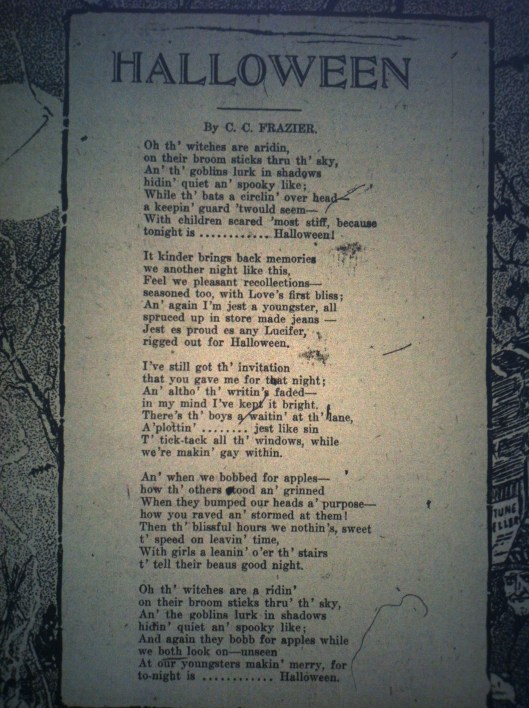
Halloween Poem (1916)

31 Tuesday Oct 2017

Posted by Brandon Ray Kirk in Poetry, Women's History

≈ Leave a comment

Tags

C.C. Fraser, Christina Catherine Fraser, Fraser Tytler, Halloween, Huntington Advertiser, Mrs. Edward Liddell, poems, poetry, writers, writing

Halloween Poem HA 10.31.1916 1

Huntington (WV) Advertiser, 31 October 1916. For more about the author, follow this link: http://fannycornforth.blogspot.com/2015/09/the-other-fraser-tytler-girl.html

Halloween Poem HA 10.31.1916 2

Huntington (WV) Advertiser, 31 October 1916.

Douglas Branch (2017)

26 Thursday Oct 2017

Posted by Brandon Ray Kirk in Boone County, Cemeteries, Ferrellsburg, Giles County, Green Shoal, Lincoln County Feud, Women's History

≈ 2 Comments

Tags

Adkins-Davis Family Cemetery, Al Brumfield, Albert Adkins, Appalachia, Boone County, Brandon Kirk, Douglas Branch, Elizabeth Jane Hager, Emery Mullins, Emma Jane Adkins, Ferrellsburg, genealogy, Giles County, Gilmer County, Green McCoy, Green Shoal, history, Jacob Douglas, Jake Adkins, Lettie Adkins, Lincoln County, Lincoln County Feud, Logan County, Milt Haley, Philip Hager, photos, Phyllis Kirk, Sallie Fry, Virginia, West Virginia

IMG_9195

Douglas Branch, located in present-day Ferrellsburg, Lincoln County, WV, was named for Jacob Douglas, husband of Sallie Fry, who settled in the area by 1829-30 from Giles County, Virginia. Mr. Douglas, born about 1804, appears in the 1830 Logan County Census. In 1850, he lived in Boone County. He died in 1855 in Gilmer County.

IMG_9199

Enos “Jake” and Leticia “Lettie” McKibbon (Toney) Adkins were early residents of Douglas Branch. Following the Haley-McCoy murders at the mouth of Green Shoal in 1889, Al Brumfield rode up this hollow and spent the night under a beech tree. In the early 1920s, my great-great-grandfather Emery Mullins just up this hollow and to the left.

IMG_9219

Emma Jane (Hager) Adkins was the daughter of Philip and Elizabeth Jane (Dalton) Hager. On July 14, 1888, she married Albert G. Adkins, a son of Jake and Lettie Adkins. Adkins-Davis Family Cemetery, Douglas Branch, Lincoln County, WV. 21 October 2017. Photo by Mom.

Mollie Drake: “The Florence Nightingale of Blair Mountain” (1921)

20 Friday Oct 2017

Posted by Brandon Ray Kirk in Battle of Blair Mountain, Coal, Huntington, Logan, Women's History

≈ Leave a comment

Tags

Allen B. Dingess, Alleyne Dye, Appalachia, Ashland, Battle of Blair Mountain, Cabell County, Caroline Dingess, Cattaraugus County, Ceredo, coal, Democratic Party, genealogy, Hannah Mitchell, Henry Street Settlement, history, Huntington, Illinois, Kentucky, Leo Frank Drake, Logan, Logan Banner, Logan County, Mollie Drake, New York, Republican Party, Springfield, Wayne County, West Virginia

Mollie (Dingess) Drake, daughter of Allen B. Dingess and Caroline (Jackson) Dingess, was born on June 30, 1881 in Logan County, WV. She was the wife of Leo Frank Drake, a salesman. She appears in the 1910 Wayne County Census (Ceredo District). Hannah Mitchell profiled her life in the Logan Banner of Logan, WV, on December 30, 1921. Her husband died in 1925. In 1930, Mollie lived at Springfield, IL. In 1940, she made her home in Cattaraugus County, NY. Mrs. Drake died on July 7, 1958 at a nursing home in Huntington, WV.

Mollie Dingess Drake Photo.jpg

It would be easy enough to make a melodramatic start and give her some such extravagant title as “The Angel of the Hills” or “The Mother of the Mines” or “The Florence Nightingale of Blair Mountain.” But if you did and Molly Dingess Drake found it out she might laugh and she might make some sharp remark, but most certainly she would not be pleased.

How she escaped the “war correspondents” who were rushed to the front to cover West Virginia’s recent mine war is more than I can say, for the story is still told of how Molly, like “Sheridan twenty miles away,” when the armed miners were marching on Logan, made all haste not toward safety, as she might very wisely have done, but back to where the bullets were flying.

Her narrowest escape from the feature pages of newspapers was several years ago–two, in fact–when, a woman of some two score years, she was graduated from high school with her sixteen-year-old daughter. That graduation and the attendant high school diploma were in no sense honorary affairs given out of respect for Molly Dingess Drake. They had been earned by this very determined, ambitious woman of the hills after four years of high school work, in which she had enrolled along with her daughter and for which she had attended classes faithfully and with classmates half her age.

On pay day Mrs. Drake is a welfare worker for one of the coal companies operating in the Logan field. Having finished her high school course, she did not go on to college with her daughter. And, as she puts it, one of the coal producers “knew she wouldn’t sit at home and knit and crochet.” So he offered her the job of visiting nurses among the employees of his company. In this job Mollie mothers a large family. It is composed of men and women much older than she and of the children of these older children. True to the mother-type anywhere, she makes their individual troubles, their health, their happiness, a very personal matter.

There was the young Spaniard who lay in the hospital after a severe accident. No friends or relatives rallied to his bedside, and the doctors and nurses could not understand him when he moaned out a word or two in his native tongue. Mollie Drake scoured the hills for an interpreter and found one. She also dug up a cousin of the unfortunate boy. Moreover she made the lives of nurses and doctors miserable until the lad was out of danger, sometimes calling at the hospital late at night to see how the boy was getting on. Was not this foreign born lad one of her children?

It was not the Mollie Dingess Drake, ready to face danger along with other brave women of Logan county when armed miners were marching upon their homes, that interested me most, as you may have guessed already. The World War is too recent proof that American women are not afraid to risk their lives for a cause. It is Mollie Drake and the work of her hands when peace broods over her native hills that make her a woman among women.

Mrs. Drake is a mountain woman herself. She knows the desires, the needs and the hopes of the women and children who live in her hills; in a double sense she is working among her own people.

No serious-minded killjoy is Mrs. Drake, but a large motherly woman with a great capacity for fun and for seeing the human side of things.

It is a common statement among traveling salesmen that they live in a Pullman; Mollie Drake might say she lives in a day coach. Her headquarters are in Logan, and much of her time is spent in riding to and from the little mining towns along the branch lines out of Logan.

Her trips are taken to visit the homes of miners, and no place is too remote for her to visit. Her energy in tramping about and the speed with which she walks over the hills is enough to make a younger woman gasp for breath and all but beg for quarter. That from one who knows.

We started out of Logan one morning on the 10 o’clock train.

Before the train started we were part of the social gathering which greets the all-too-few passenger trains that come into Logan. Mollie Dingess knew everybody.

Arrived at the mining center, our first visit was to the schoolhouse, a substantial two-story building, in front of which were all the latest playground devices for amusing the modern child. The teachers were young and efficient in their schoolroom manners. In Logan county the schools have the advantage of extra good teachers because after the school board has voted what it can afford for salaries the coal companies make up the deficit needed to attract the best.

It was then I learned of Mrs. Drake’s unusual high school career.

“You know I have a high school education,” she remarked as we left the school and strode (at least Mrs. Drake strode) along the dirt road.

“As a girl I went to school till I was thirteen. In the teens I took up nursing and later was married. But I always wanted more education. Sometimes it is the persons who are denied education appreciate it most. Well, when my daughter was ready for high school I decided that I would get my high school education too–not by following her studies at home (I knew that wouldn’t do), but by enrolling in high school with her.

“Some of my friends thought it was an absurd idea. They said I could enroll in college for special courses or take correspondence courses. But the idea of my going to school right along with my daughter and the other young people seemed queer to them. I suppose it was unusual. But what I wanted was a regular education. So I enrolled and went through the four years of high school and was graduated in the same class with my daughter.”

“And how did your daughter feel about it?”

“Oh, she had her young friends and took part in school activities just the same.” Again the twinkle behind the glasses. “It may be that she studied harder than she would have.” I had no doubt of that.

“She is in college now,” continued Mrs. Drake. “When her grades aren’t has high as I think they ought to be she sends them to her father, but a man can’t keep such things secret, and I always find out. She knows I haven’t much patience with students who don’t keep up their grades.

“My daughter is going to be a physician. She didn’t make up her mind until after she entered college. I was rather anxious to know what she would choose. After she started studying biology she was so interested that she decided to go on and study medicine.”

It occurred to me that Mollie Drake was a feminist. I wondered if she had ever been a suffrage worker.

“No,” she answered. “I’ve always been a Democrat, though. My husband says I am what is called ‘a mean Democrat.'”

She paused and then laughed. “I made one rule when I was married. You see, Mr. Drake is a Republican. Well, I told him that if I married him he must keep just one rule. I knew our marriage would be a success if he did. And of course I promised to keep it too. The rule was that we should never talk politics. We never have and we’ve been very happy.

“Of course I voted at the last election, and much good it did so far as the Presidency was concerned. But someway I didn’t care so much for the voting. I’m old-fashioned in many ways. I was brought up in a strict way and I don’t like to hear about folks playing cards on Sunday. I suppose it isn’t wicked, but I can’t get over my bringing-up. And I never take a needle in my hand on a Sunday, only when I just have to mend something, that I don’t feel kind of guilty.”

Our conversation had been interspersed with visits to various miners’ homes, mostly where there were babies. Mrs. Drake’s philosophy had been punctuated by advice on babies and friendly comment upon the little interests of the women we visited. If we weren’t inspecting a baby we were talking with some elderly woman over a fence about her latest “misery.”

As we climbed the trails I was tired, but Mrs. Drake seemed as energetic as when the day began.

“I like the work,” she said, “but I want to study more. Last summer I took a course in New York, and I’d like to go back there for a second at the Henry Street Settlement. I want to study languages, too. There are so many things I want to do.”

Some day I have not a doubt she will do these things she wants to do. In the meantime I think of her in connection with the verse: “Whatsoever thy hand findeth to do.”

Source: “The Florence Nightingale of Blair Mountain,” Logan (WV) Banner, 30 December 1921.

Notes:

To see Mrs. Drake’s photo and entry at Find-A-Grave, follow this link: https://www.findagrave.com/cgi-bin/fg.cgi?page=gr&GRid=20145994

Mrs. Drake’s daughter, Alleyne Howell Dye, died of suicide in Ashland, KY, in 1944. For her death record, follow this link: https://www.familysearch.org/ark:/61903/3:1:3Q9M-C9YV-H7M5-H

To see Mrs. Dye’s photo and entry at Find-A-Grave, follow this link: https://www.findagrave.com/cgi-bin/fg.cgi?page=gr&GRid=20146072


Halloween Traditions (1899)

17 Tuesday Oct 2017

Posted by Brandon Ray Kirk in Huntington, Women's History

≈ Leave a comment

Tags

Appalachia, culture, England, Halloween, history, Huntington, Huntington Advertiser, Ireland, Scotland, Wales, West Virginia

From the Huntington Advertiser of Huntington, WV, we find the following story dated October 31, 1899:

Tonight is Halloween and the small boy, as well as many of the larger ones, are happy. Girls ditto.

The lads and lassies, particularly of Scotland and Ireland, and the young people of Wales and England, as well as the youth of this and other countries, have for centuries hailed the night of Halloween, the last night in October, as prophetic.

The first ceremony of Halloween among the Scotch is the pulling of a stock or plant of kale. All the company go out and with eyes closed each pulls the first plant of this kind he or she is able to lay hold of. It being big or little, straight or crooked, is prophetic of the size, shape, and other characteristic of the grand object of all the Halloween spells–the husband or wife. If any earth remains clinging to the root, that signifies fortune, and the state of the heart of the stem, as perceptible to the taste, is indicative of the natural temper and disposition of a future spouse.

Burning nuts is a famous Caledonian charm. Two hazel nuts, sacred to the witches, one bearing the name of the lad and the other the lass, are laid in the fire side by side and accordingly as they burn quietly together or start away from one another so will be the progress and issue of the courtship.

Certain forms must be observed to insure the success of a given spell and in the following one there must be no departure from the formula: A maiden should steal out, entirely alone to the kiln, and throw into the pot a ball of blue yarn, holding fast to the end. She should then begin winding the yarn until it resists, whereupon she should demand, “Who holds this yarn?” An answer will be returned from the kiln-pot, naming the Christian and surname of her future spouse.

Another test is for her to take a candle and going, alone by its light only stand before a mirror and eat an apple. Some traditions say one should comb one’s hair instead of eating the apple. The conditions of the spell being perfect, a shadowy face supposed to be that of the maiden’s future husband will be seen in the glass, as if peeping over her shoulder.

Another Scotch ceremony into which the uncanny largely enters as an element is described as follows: One or more go out, as the case may be (for this is a social spell), to a south running spring or rivulet where “three lairds’ lands meet” and dip the left shirt sleeve. Go to bed in sight of a fire and bang the wet sleeve before it to dry. Lie awake watching carefully, and about midnight an apparition having the exact figure of the grand object in question will come and turn the sleeve as if to dry the other side of it.

An interesting Halloween divination that solves matrimonial doubt and banishes uncertainty is accomplished by arranging three dishes upon the hearth. Into the first is put clean water, into second clouded or muddy water, while the third is left empty. The candidate is securely blindfolded and led to the hearth where the dishes are. The left hand is dipped and if by chance it be in the clean water the wife that is to be will come to the bar of matrimony a maid; if in the muddy water, a widow; but if in the empty dish it foretells with equal certainty no marriage at all. This ceremony is three times repeated, the arrangement of the dishes being each time changed.

Ducking for apples and the attempt to secure by means of the mouth only an apple balanced upon a stick suspended from the ceiling upon the end of which is placed a lighted candle provokes much laughter and no little spirited competition.

For a girl to know if she will marry within the year she must obtain a green pea pod in which are exactly nine peas, hang it over the door, and if the next man guest entering be a bachelor her own marriage will follow within twelve months. This spell is sometimes tried at other times than Halloween, but the conditions then are generally considered less favorable.

Three small rings should be purchased by a maiden during the period of a new moon, each at a different place. She should tie them together with her left garter and place them in her left glove with a scrap of paper cut heart-shaped on which her sweetheart’s name has been written in blue ink. The whole should be placed under her pillow when retiring Halloween and she will dream of her sweetheart if she is to marry him.

The future is sometimes prognosticate on Halloween by candle omens. If a candle burns with an azure tint it signifies the presence or near approach of a spirit or gnome. A collection of tallow rising against the candlestick is styled a winding sheet and is deemed an omen of death in the family. A spark in the candle denotes that the observer will shortly receive a letter.

Two cambric needles are named on Halloween and skillfully placed in a vessel of water. If they float, swimming side by side, the course of true love runs smooth for those they represent. If they sink both together, or if one sinks and the other floats, the persons named will not marry each other.

A printed alphabet is cut into its individual letters, which are placed in water faces downward. On the morrow the initial letters of the favored opposite will be found reversed.

Peel an apple so that the skin remains in unbroken sequence. Whirl this skin three times around the head so that when released it passes over the left shoulder and falls to the floor, assuming the initial letter of the chosen one’s name.

Many young girls fill their mouth with water on Halloween and walk or run around the block, being careful not to swallow the water or suffer it to escape from the mouth. If a girl succeeds in doing this the first man met on returning home will be her husband.

To ascertain one’s standing with a sweetheart select at random an apple and quarter it, carefully gathering the seeds from the core. According to the number found, the following formula is used: 1. I love; 2. I love; 3. I love, I say; 4. I love with all my heart; 5. I cast away; 6. He loves; 7. She loves; 8. They both love; 9. He comes; 10. He tarries; 11. He courts; 12. He marries; 13. Honor; 14. Riches.

At some of the American colleges for women it is customary to celebrate Halloween with straw rides, games, and an annual sheet and pillowcase party, where the illuminations are grotesque pumpkins containing candles, and where cakes containing mystic rings, beans, and a coin are served with the refreshments.

Source: “Hallowe’en Is Now Here,” Huntington (WV) Advertiser, 31 October 1899.

← Older posts
Newer posts →

Feud Poll 1

If you had lived in the Harts Creek community during the 1880s, to which faction of feudists might you have given your loyalty?

Categories

  • Adkins Mill
  • African American History
  • American Revolutionary War
  • Ashland
  • Atenville
  • Banco
  • Barboursville
  • Battle of Blair Mountain
  • Beech Creek
  • Big Creek
  • Big Harts Creek
  • Big Sandy Valley
  • Big Ugly Creek
  • Boone County
  • Breeden
  • Calhoun County
  • Cemeteries
  • Chapmanville
  • Civil War
  • Clay County
  • Clothier
  • Coal
  • Cove Gap
  • Crawley Creek
  • Culture of Honor
  • Dingess
  • Dollie
  • Dunlow
  • East Lynn
  • Ed Haley
  • Eden Park
  • Enslow
  • Estep
  • Ethel
  • Ferrellsburg
  • Fourteen
  • French-Eversole Feud
  • Gilbert
  • Giles County
  • Gill
  • Green Shoal
  • Guyandotte River
  • Halcyon
  • Hamlin
  • Harts
  • Hatfield-McCoy Feud
  • Holden
  • Hungarian-American History
  • Huntington
  • Inez
  • Irish-Americans
  • Italian American History
  • Jamboree
  • Jewish History
  • John Hartford
  • Kermit
  • Kiahsville
  • Kitchen
  • Leet
  • Lincoln County Feud
  • Little Harts Creek
  • Logan
  • Man
  • Matewan
  • Meador
  • Midkiff
  • Monroe County
  • Montgomery County
  • Music
  • Native American History
  • Peach Creek
  • Pearl Adkins Diary
  • Pecks Mill
  • Peter Creek
  • Pikeville
  • Pilgrim
  • Poetry
  • Queens Ridge
  • Ranger
  • Rector
  • Roane County
  • Rowan County Feud
  • Salt Rock
  • Sand Creek
  • Shively
  • Spears
  • Sports
  • Spottswood
  • Spurlockville
  • Stiltner
  • Stone Branch
  • Tazewell County
  • Timber
  • Tom Dula
  • Toney
  • Turner-Howard Feud
  • Twelve Pole Creek
  • Uncategorized
  • Warren
  • Wayne
  • West Hamlin
  • Wewanta
  • Wharncliffe
  • Whirlwind
  • Williamson
  • Women's History
  • World War I
  • Wyoming County
  • Yantus

Feud Poll 2

Do you think Milt Haley and Green McCoy committed the ambush on Al and Hollene Brumfield in 1889?

Blogroll

  • Ancestry.com
  • Ashland (KY) Daily Independent News Article
  • Author FB page
  • Beckley (WV) Register-Herald News Article
  • Big Sandy News (KY) News Article
  • Blood in West Virginia FB
  • Blood in West Virginia order
  • Chapters TV Program
  • Facebook
  • Ghosts of Guyan
  • Herald-Dispatch News Article 1
  • Herald-Dispatch News Article 2
  • In Search of Ed Haley
  • Instagram
  • Lincoln (WV) Journal News Article
  • Lincoln (WV) Journal Thumbs Up
  • Lincoln County
  • Lincoln County Feud
  • Lincoln County Feud Lecture
  • LinkedIn
  • Logan (WV) Banner News Article
  • Lunch With Books
  • Our Overmountain Men: The Revolutionary War in Western Virginia (1775-1783)
  • Pinterest
  • Scarborough Society's Art and Lecture Series
  • Smithsonian Article
  • Spirit of Jefferson News Article
  • The Friendly Neighbor Radio Show 1
  • The Friendly Neighbor Radio Show 2
  • The Friendly Neighbor Radio Show 3
  • The Friendly Neighbor Radio Show 4
  • The New Yorker
  • The State Journal's 55 Good Things About WV
  • tumblr.
  • Twitter
  • Website
  • Weirton (WV) Daily Times Article
  • Wheeling (WV) Intelligencer News Article 1
  • Wheeling (WV) Intelligencer News Article 2
  • WOWK TV
  • Writers Can Read Open Mic Night

Feud Poll 3

Who do you think organized the ambush of Al and Hollene Brumfield in 1889?

Recent Posts

  • Logan County Jail in Logan, WV
  • Absentee Landowners of Magnolia District (1890, 1892, 1894)
  • Charles Spurlock Survey at Fourteen Mile Creek, Lincoln County, WV (1815)

Ed Haley Poll 1

What do you think caused Ed Haley to lose his sight when he was three years old?

Top Posts & Pages

  • Baisden Family Troubles
  • About
  • Jeff and Harriet Baisden
  • Origin of Place Names in Logan County, WV (1937)
  • Early Newspapers of Lincoln County, WV

Copyright

© Brandon Ray Kirk and brandonraykirk.wordpress.com, 1987-2023. Unauthorized use and/or duplication of this material without express and written permission from this blog’s author and/or owner is strictly prohibited. Excerpts and links may be used, provided that full and clear credit is given to Brandon Ray Kirk and brandonraykirk.wordpress.com with appropriate and specific direction to the original content.

Archives

  • February 2025
  • January 2025
  • October 2023
  • September 2023
  • December 2022
  • November 2022
  • May 2022
  • April 2022
  • February 2022
  • November 2021
  • October 2021
  • September 2021
  • June 2021
  • May 2021
  • April 2021
  • March 2021
  • February 2021
  • January 2021
  • December 2020
  • November 2020
  • October 2020
  • July 2020
  • June 2020
  • May 2020
  • April 2020
  • March 2020
  • February 2020
  • January 2020
  • December 2019
  • November 2019
  • October 2019
  • September 2019
  • August 2019
  • July 2019
  • June 2019
  • May 2019
  • April 2019
  • March 2019
  • February 2019
  • January 2019
  • December 2018
  • November 2018
  • October 2018
  • September 2018
  • August 2018
  • July 2018
  • June 2018
  • May 2018
  • April 2018
  • March 2018
  • February 2018
  • January 2018
  • December 2017
  • November 2017
  • October 2017
  • September 2017
  • August 2017
  • July 2017
  • June 2017
  • May 2017
  • April 2017
  • March 2017
  • February 2017
  • January 2017
  • December 2016
  • November 2016
  • October 2016
  • September 2016
  • August 2016
  • July 2016
  • June 2016
  • May 2016
  • April 2016
  • March 2016
  • February 2016
  • January 2016
  • December 2015
  • November 2015
  • October 2015
  • September 2015
  • August 2015
  • July 2015
  • June 2015
  • May 2015
  • April 2015
  • March 2015
  • February 2015
  • January 2015
  • December 2014
  • October 2014
  • September 2014
  • August 2014
  • July 2014
  • June 2014
  • May 2014
  • April 2014
  • March 2014
  • February 2014
  • January 2014
  • December 2013
  • November 2013
  • October 2013
  • September 2013
  • August 2013
  • July 2013
  • June 2013
  • May 2013
  • April 2013
  • March 2013
  • February 2013
  • January 2013
  • December 2012
  • November 2012

Enter your email address to follow this blog and receive notifications of new posts by email.

Join 2,925 other subscribers

Tags

Appalachia Ashland Big Creek Big Ugly Creek Blood in West Virginia Brandon Kirk Cabell County cemeteries Chapmanville Charleston civil war coal Confederate Army crime culture Ed Haley Ella Haley Ferrellsburg feud fiddler fiddling genealogy Green McCoy Guyandotte River Harts Harts Creek Hatfield-McCoy Feud history Huntington John Hartford Kentucky Lawrence Haley life Lincoln County Lincoln County Feud Logan Logan Banner Logan County Milt Haley Mingo County music Ohio photos timbering U.S. South Virginia Wayne County West Virginia Whirlwind writing

Blogs I Follow

  • OtterTales
  • Our Appalachia: A Blog Created by Students of Brandon Kirk
  • Piedmont Trails
  • Truman Capote
  • Appalachian Diaspora

BLOOD IN WEST VIRGINIA is now available for order at Amazon!

Blog at WordPress.com.

OtterTales

Writings from my travels and experiences. High and fine literature is wine, and mine is only water; but everybody likes water. Mark Twain

Our Appalachia: A Blog Created by Students of Brandon Kirk

This site is dedicated to the collection, preservation, and promotion of history and culture in Appalachia.

Piedmont Trails

Genealogy and History in North Carolina and Beyond

Truman Capote

A site about one of the most beautiful, interesting, tallented, outrageous and colorful personalities of the 20th Century

Appalachian Diaspora

  • Subscribe Subscribed
    • Brandon Ray Kirk
    • Join 787 other subscribers
    • Already have a WordPress.com account? Log in now.
    • Brandon Ray Kirk
    • Subscribe Subscribed
    • Sign up
    • Log in
    • Report this content
    • View site in Reader
    • Manage subscriptions
    • Collapse this bar
 

Loading Comments...