• About

Brandon Ray Kirk

~ This site is dedicated to the collection, preservation, and promotion of history and culture in my section of Appalachia.

Brandon Ray Kirk

Category Archives: Huntington

Leete News 06.08.1923

03 Monday Dec 2018

Posted by Brandon Ray Kirk in Big Ugly Creek, Dollie, Huntington, Leet, Rector

≈ Leave a comment

Tags

Appalachia, Big Ugly Creek, Chicago, Dollie, Edna Brumfield, football, genealogy, Green Shoal Creek, Hazel Huffman, history, Huntington, J.B. Gue, Leet, Lincoln County, Logan Banner, Lon Lambert, Rector, South Fork, Thelma Huffman, Tillie Huffman, W.M. Payne, Wayne Brumfield, West Virginia, Willie Payne

A correspondent named Red Rose & Smiles from Leete on Big Ugly Creek in Lincoln County, West Virginia, offered the following items, which the Logan Banner printed on June 8, 1923:

We certainly are having very fine weather at this writing.

The girls and boys are enjoying themselves by playing football and other games.

Mr. Wayne C. Brumfield was the guest of Miss Thelma Huffman Monday.

Miss Edna M. Brumfield was a visitor in Leete this P.M.

Miss W. Lambert of Rector, W.Va., was a recent visitor of Miss Hazel Huffman.

Mr. L.L. Lambert seems to have all his attention on Green Shoal as he goes to see Edna Brumfield almost every Sunday.

Miss Thelma Huffman has just arrived home from Huntington.

We had a grand meeting at Dolly on the first Sunday and we are also going to have a big meeting on the third Sunday. We would like to have everybody come.

We are having a splendid Sunday school at the South Fork of Ugly.

Mrs. W.M. Payne was the guest of Mrs. Tillie Huffman Sunday.

Willie Payne was a business visitor in town recently. Come again, Willie. We are glad to see you.

Miss Thelma Huffman is going to have a long vacation in Chicago, Ill.

Mrs. J.B. Gue is a lively visitor in Dally today.

Thomas Dunn English and “Ben Bolt” (1928)

06 Tuesday Nov 2018

Posted by Brandon Ray Kirk in Guyandotte River, Huntington, Logan, Poetry

≈ Leave a comment

Tags

Appalachia, Battle of Buena Vista, Ben Bolt, Charles Porter, Charleston, Edgar Allan Poe, George P. Morris, Green Gables Inn, history, Huntington, Know Nothing Party, Logan, Logan Banner, Logan Grazier, McDowell County, N.P. Willis, Nelson F. Kneass, New York Mirror, Philadelphia, poems, poetry, Rafting on the Guyan, Roy Fuller, Staunton, Thomas Dunn English, Vicie Nighbert, Wayne County, Welch, West Virginia, West Virginia Review, Wyoming Hunter

From the Logan Banner of Logan, WV, comes this bit of history concerning Thomas Dunn English and his famous poem “Ben Bolt,” which was reportedly composed in Logan:

Poem Ben Bolt Not Written In This City

Legend Concerning Thomas Dunn English Is Refuted by Roy Fuller in Magazine Article

Another forceful kick has been directed against the legend that Thomas Dunn English wrote the poem Ben Bolt under the big elms back of the former Vicie Nighbert home, now known as the Green Gables Inn.

Though all reliable investigators agree that this famous poem was written before Dr. English settled in this community, the legend survives with a strange pertinacity.

The subject is discarded in an interesting and enlightening way in the current number of the West Virginia Review by J. Roy Fuller. He has written before in a similar vein for other publications.

Fuller, a native of Wayne county, had been connected with Charleston, Huntington, and Welch papers for several years. Recently he went to New York to take an editorial position on Picture Play. On the subject “As to Ben Bolt,” he writes as follows:

If a man writes a poem a little more sentimental than any other, and then some ten years later moves to another state, it seems that the towns and counties around his new home will, years later, recall the very spot where the poem was written. Such has been the case with Ben Bolt, by Thomas Dunn English. The people of Logan county point with pride to the very tree under which the poet scribbled Ben Bolt, and time and again articles have been written in support of the legend, and people who speak of it choose to believe nothing else. Why this should be considered in the least important is amusing. But that is not all. In McDowell county, it is said, Thomas Dunn English wrote the feverish lines while at the old county seat town, now called English. A clerk in a hotel informed this writer that he knew exactly where Ben Bolt was written and offered to show him the house somewhere just over the Virginia state line.

The rare honor of being the birthplace of Ben Bolt cannot be claimed truthfully for this section at all. It was written in Philadelphia nine years before he ever came to West Virginia. There was no romantic posing over the grave of the beloved lady in the song as it has been said in Logan county. A New York editor asked English to write something for him. He insisted, and finally English mailed the verses with instructions to burn them if not satisfactory, after combining parts of two poems into one. So any weeping we do can be for our own images, and not for sympathy with the poor poet.

English was once postmaster of Logan (1857), and also a resident doctor, politician, poet and lawyer. One time he attended a convention in Staunton where he made a speech that was influential in helping to bring about the downfall of Know-Nothingism. He wrote many local poems such as Rafting on the Guyan, Logan Grazier, and Wyoming Hunter. Before coming to the south he was well known in the east and was mentioned—unfavorably—by Edgar Allan Poe in his Literati. For calling him Thomas Dunn “Brown,” English wrote a severe criticism of Poe. Some time later Poe answered him in a Philadelphia paper, and brought suit against him. Poe was awarded $225 damages for English’s sarcastic literary thrust.

It has always been a matter of chagrin to English that his Ben Bolt was the most popular of his literary works. He himself called the song “twaddle.” But the German melody, mention of old mills, school, a loved one, friendship—these things made it take hold of the heart.

He wrote Ben Bolt in 1843 after having dabbled in his professions for several years, and quite unexpectedly found himself famous. The story of the song will show how far removed it is from the cherished pastoral story told in Logan county. The story persists, however, this being one of the cases where the “moving finger writes,” etc., and nothing more can be done about it.

N.P. Willis and George P. Morris had revived the old New York Mirror. The former asked English to write a poem for the paper and suggested a sea song. English tried to write it after renewed pressure but he reported to the editors that his muse was not working. Later he drifted into reminiscence and produced four and a half stanzas of the well known song. His muse balked again, and after some thought he added the first four lines of a sea song he had started and sent the whole with a note to Willis telling him that he would send something else when he was in a better writing mood. The poem was printed with a little puff, and was signed with the author’s initial.

Later it was suggested that the poem be set to music, but several attempts failed. English composed a melody for it, but another got the start of his. In 1846 Charles Porter, manager of the Pittsburgh theatre had Nelson F. Kneass, a fine tenor, in his company. Porter told the singer that if he could find a song suitable for his voice he would cast him in The Battle of Buena Vista. An Englishman, a sort of hanger-on named Hunt, had read Ben Bolt and could recall most of it. The gaps were patched up and to this Kneass adapted a German air and sang the piece. The drama was soon dropped but the song took the country by

Source: Logan (WV) Banner, 11 December 1928

Whirlwind News 03.22.1929

28 Sunday Oct 2018

Posted by Brandon Ray Kirk in Big Harts Creek, Huntington, Whirlwind

≈ Leave a comment

Tags

Appalachia, Burl Mullins, Daniel McCloud, Garnet Mullins, genealogy, Harts Creek, history, Hoover Fork, Huntington, Logan Banner, Logan County, Mandy Farley, West Virginia, Whirlwind

An unknown correspondent from Whirlwind in Logan County, West Virginia, offered the following items, which the Logan Banner printed on March 22, 1929:

Miss Mandy Farley was the all night guest of Mrs. Daniel McCloud Saturday.

We are listening for the wedding bells to ring on Hoover. Hurry up, Leonard.

Burl Mullins made a business trip to Huntington Monday.

Miss Garnet Mullins is on the sick list this week.

Halloween in Huntington, WV (1899)

16 Tuesday Oct 2018

Posted by Brandon Ray Kirk in Huntington

≈ 1 Comment

Tags

Appalachia, crime, Halloween, history, Huntington, Huntington Advertiser, West Virginia

From the Huntington Advertiser of Huntington, WV, comes this letter from “a tax payer” regarding Halloween, dated October 31, 1899:

EDITOR ADVERTISER:

The observance of the evening of October 31st, in Huntington, seems to have sadly deteriorated, or at least is very different from that in the balance of the world. The old time pleasantness and superstitions connected with “Hallow eve,” are lost sight of here, and in their stead are introduced drunkenness and vandalism. The night is made hideous. Women and children terrorized, property wantonly destroyed and life endangered. The night is looked forward to with dread. Now this is all wrong, and some vigorous measures should be taken to protect citizens and taxpayers from the outrages committed on this night in the past few years. Let the city give us the protection we are entitled to. Put on a special police force sufficiently strong for the purpose. $150 or $200 had better be thus invested than to have this much or more property maliciously destroyed and life made miserable besides. Nay, more than this may be averted. A man’s house is his castle, and if the authorities are inadequate to protect him, and he is subjected to the outrages heretofore perpetrated, he may be forced to protect himself, and some serious tragedy result, which under the circumstances the law can only justify. It is to be hoped the authorities will take action in the matter, and lawless individuals take warning in time.

A TAX PAYER.

Source: Huntington (WV) Advertiser, 31 October 1899.

Teddy Roosevelt, Jr. Visits Logan, WV (1928)

14 Sunday Oct 2018

Posted by Brandon Ray Kirk in Huntington, Logan, Williamson, Women's History, World War I

≈ Leave a comment

Tags

A.A. Lilly, American Legion, Appalachia, Beckley, Braeholm, C.C. Lanham, Calvert Estill, Casey M. Jones, Charleston, Emmett Scaggs, First Methodist Church, G.R. Claypool, Guyandotte Valley, Harrisville, Henry D. Hatfield, Herbert Hoover, history, Hugh Ike Shott, Huntington, John M. Mitchell, John W. Davis, Kentucky, Logan, Logan Banner, Logan County, Lundale, M.Z. White, Naaman Jackson, Peach Creek, photos, Point Pleasant, politics, Princeton, Republican Party, Ripley, Teddy Roosevelt Jr., W.C. Lybarger, W.C. Price, W.G. Conley, W.J. Fields, Welch, West Virginia, Williamson, Woman's Christian Temperance Union, World War I, YMCA

On October 17, 1928, Theodore Roosevelt, Jr. visited Logan, WV, and gave a speech to approximately 10,000 people. The Logan Banner offered plenty of coverage for the event:
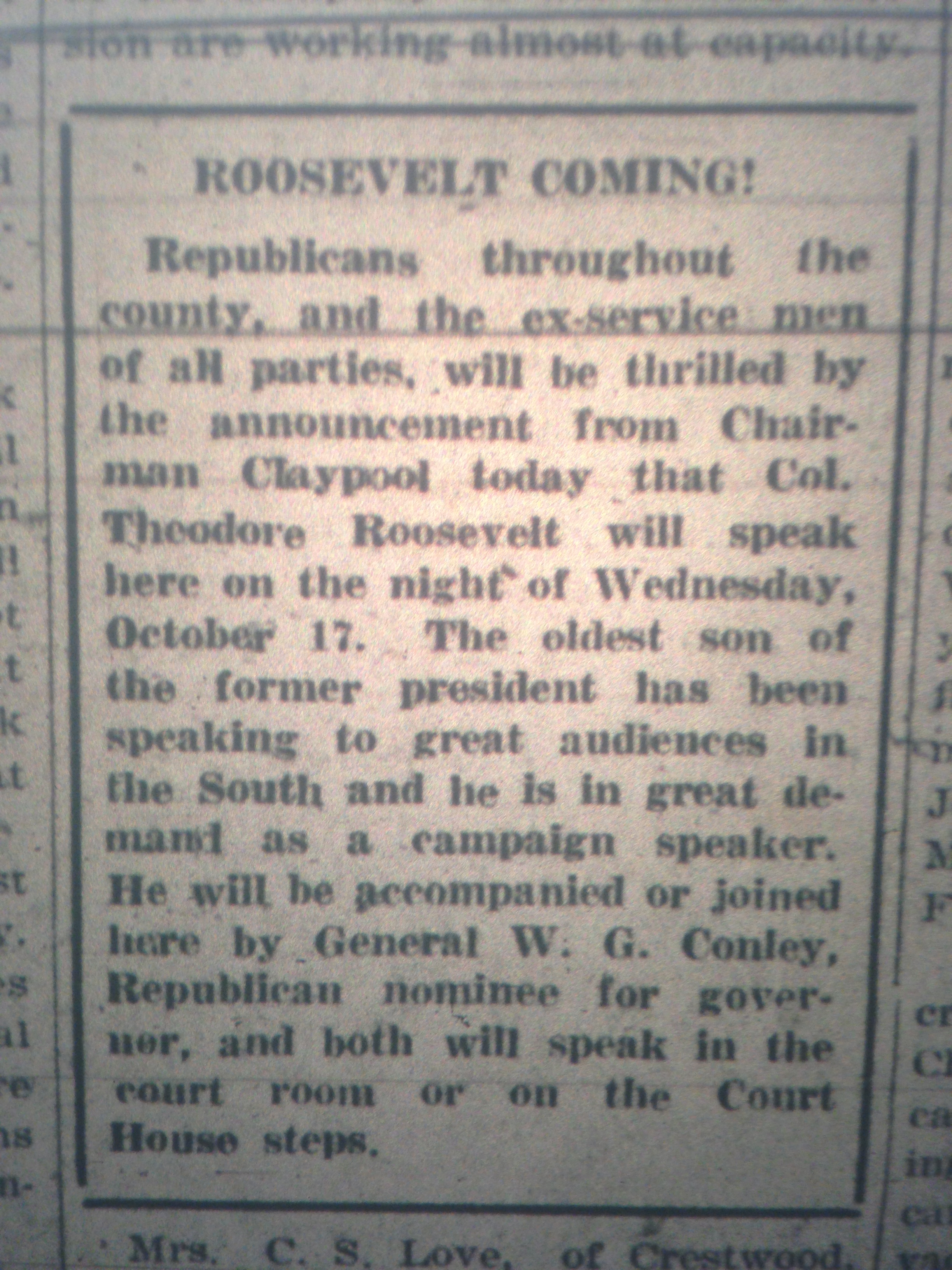
Tedd Roosevelt Jr. is Coming LB 10.05.1928.JPG

Logan (WV) Banner, 5 October 1928

***

War-Time Buddies to Greet Col. Roosevelt

After His Meeting Here Wednesday Night–General Conley Will Also Speak at Open-Air Meeting That Night–Whale of Rally Assured

Every ex-service man in Logan county is urged to meet Col. Theodore Roosevelt when he comes here to deliver a campaign address in front of the Court House next Wednesday night. A reception in honor of the distinguished son of a distinguished sire will be held in Republican headquarters on the fifth floor of the White & Browning building after the political meeting is ended. There he will be greeted by his war “buddies” and every soldier, sailor and marine who served in the World War, regardless of political affiliations, is asked to be present.

Col. Roosevelt is billed three speeches on Tuesday. He is expected to speak at Welch in the afternoon and at Princeton at 5 p.m. and at Beckley that night. He is in great demand and Logan Republicans are elated over the definite promise from state headquarters that he is coming here.

General W.G. Conley, Republican nominee for Governor, will accompany or join Col. Roosevelt here and both will speak at the Wednesday night meeting. It is probable, too, that Dr. H.D. Hatfield and A.A. Lilly, former attorney general, will be here at the same time. General Lilly is billed for a speech at Braeholm on Monday night.

Logan (WV) Banner, 12 October 1928

***

Col. Roosevelt and General Conley Speak in Logan Tomorrow Night

Open-Air Rally at Court House Expected to Attract Delegations From All Sections of County–Service Men to Hold Reception for Col. Roosevelt After Speaking Is Ended

With the coming of Theodore Roosevelt and General W.C. Conley tomorrow for what is expected to be a memorable night meeting, the speaking campaign in this county may reach a climax. They will be the chief speakers at an open-air meeting in front of the Court House. It is probable that Governor Gore will come also and in that event he may serve as chairman of the meeting.

A.A. Lilly, former attorney general and Hugh Ike Shott, Republican nominee for congress, who addressed a huge gathering at Braeholm and Lundale last night, will speak at Peach Creek tonight; Senator Jackson and E.F. Scaggs also spoke at last night’s gatherings. Mr. Shott will remain in the county up to Wednesday night.

Governor W.J. Fields of Kentucky will address a Democratic meeting in the court room tonight.

Widespread interest has been aroused in the Roosevelt-Conley meeting and delegations are looked for from every section of the county. Ex-service men are to turn out in force to meet and greet the distinguished soldier-son of the beloved soldier-president of the same name. A reception to which all ex-service men are invited will be held on the fifth floor of the White & Browning building after the big meeting is concluded. Roosevelt’s war record, his activity in helping to organize the American Legion, and his fondness for those who served with him have endeared him to World War men everywhere.

A prohibition rally sponsored by the W.C.T.U. will be held at the Court House at 7:30 Friday p.m. Everyone is urged to come. The speakers for this occasion have not been announced.

Teddy Roosevelt Jr. in Logan LB 10.16.1928 2.JPG

Logan (WV) Banner, 16 October 1928.

***

Col. Roosevelt Center of Interest of Biggest Crowd Ever Seen Here

Republicans Stage Rally Eclipsing Any of the Past in Guyan Valley, With Attentive, Enthusiastic Crowd Estimated At Around 10,000 Mark

GEN. CONLEY AND OTHERS TAKE PART

Ex-Service Men Add Zest to Ovation for Gallant Soldier Son of Beloved T.R.–Rev. Mr. Lanham Is Chairman–Flowers For Teddy

Before the largest crowd ever assembled in Logan county, Col. Theodore Roosevelt, eldest son of the late president, made an eloquent and elaborate appeal in front of the Court House Wednesday night for the election of Hoover and Curtis on November 6.

His oratory, his Rooseveltian grimaces, his deep-furrowed smiles, his warm and radiant fellowship, and genuine camaraderie in meeting and greeting ex-service men, won the hearts of all. And how game he was! Exhausted by his effort to make himself heard to the far corners of the crowd confronting him and really surrounding him, following a strenuous ordeal of many days, traveling at night and speaking several times a day, he had difficulty making his way from the platform back through the crowd and into the Court House corridor. To several companions he hoarsely confided, “I’m a wreck!” Nevertheless, he tried to shake every hand and exchange a friendly greeting with those who swarmed about him. His exit was marked by a renewal of the ovation that greeted him when he, General W.G. Conley, Senator M.Z. White, County Chairman and Mrs. G.R. Claypool, Casey M. Jones, Calvert Estill and others in the party wormed their way through the crowd to the platform erected at the foot of the steps on the side of the Court House.

After the meeting the distinguished visitor was whisked to Republican headquarters where ex-service men in large numbers held a reception in his honor. Again and again he was “dee-lighted” and thrilled to find some “buddy” who had belonged to some military unit with whose history Roosevelt is familiar. Then he would cry out to his pal Casey Jones, Charleston newspaperman and bosom friend for more than a decade,” What do you know about it, Casey, here’s an old pal that served with” so-and-so company or regiment.

Not only ex-service men but more than one professional man of Logan, miners and others whispered to him, or yelled out to his wake, “We’ll be voting for you some time, Teddy!”

Hits the Line Hard

After the reception the Colonel returned to Charleston, to make ready for a busy schedule yesterday. He was billed for speeches at Harrisville, Ripley and Pt. Pleasant, and had arranged to get back to Charleston last night and to speak both at Beckley and Welch today. All day yesterday here whenever the matter of his visit was discussed in any group the prediction was advanced that he was too terribly exhausted to adhere to his schedule. And his Logan friends are sincerely concerned about him. However, he will return to New York at the end of the week.

Wednesday night’s rally will be remembered for years, say political observers, not only because of its size but also because of its direct bearing on a momentous contest for supremacy.

Most estimates of the attendance hover around the 10,000 mark. John M. Mitchell, court bailiff, who has been familiar with political activities in this county for half a century, said it exceeded twice over any crowd he had ever seen in the county. Others say the only meeting ever held here worthy of comparison was that addressed by Senator Pat Harrison in the 1924 campaign. To the writer the crowd seemed more than half as large as that which heard John W. Davis in Huntington in 1924. That crowd was estimated at 25,000, but that was an obvious exaggeration–a characteristic of the estimates of political assemblages.

The Folks Were There

Cloudy weather and a light rain that set in at the hour when the meeting was scheduled to start doubtless kept away a considerable number and caused scores to leave. On the outer edges it was impossible to hear the speakers and so there was a steady going and coming of persons wishing to see and hear. windows in about half a dozen buildings were occupied, small boys were atop the Old Stone building, and there was a good-sized crowd clustered on and about the platform, steps, windows, portico and corridors of the Court House.

Roosevelt has a good voice but it was put to a terrific test here, considering what he had undergone recently. His voice is better than his father’s was and he is more humorous, but the only striking resemblance between the two as public speakers is that grinning grimace that once seen can never be forgotten. In his speech he did not delve exhaustively into any one issue or phase of the campaign but he gave a comprehensive review of the issues and personalities that Republicans generally assume to be involved in this campaign. As for Tammany he panned it as it has never been panned before hereabouts. He recalled, too, that his grandfather had fought the greedy Tiger: “My father fought it; I am fighting it, and if it lives 20 years longer, I expect and hope my son Teddy III will be fighting it.”

Rev. Lanham Presides

It was after 8 o’clock when the speakers arrived–more than half an hour late–whereas all available seats and many vantage points had been occupied for nearly if not fully two hours. At the home of Mr. and Mrs. G.R. Claypool they had been entertained at dinner–or supper, as Teddy and most of us call it. Besides the Colonel and General Conley there were six other guests: Hugh Ike Shott, Republican nominee for representative in Congress; Senator M.Z. White, Williamson; C.M. Jones, publicity man and side for Mr. Conley; Calvert N. Estill, Charleston correspondent for the Ogden chain of newspapers, and Senator Naaman Jackson.

Rev. C.C. Lanham, pastor of the First Methodist Church, who has been a leader in the fight to avert any backward step on prohibition, was chairman of the meeting. He filled the role with tact and good judgment and introduced the various speakers in happy style.

General Conley was the first speaker, but sensing the crowd’s desire to hear the Colonel he cut short his remarks. He did not take up state or national issues but after a word of congratulation to those who had sponsored such an immense turnout he withdrew.

Flowers For Colonel

Next a pretty little surprise was sprung. Mrs. W.C. Price, of Huntington, who is taking the lead in organizing the Republican women of the county, was introduced. Turning to Col. Roosevelt, after bringing a basket full of beautiful flowers into view, she told him of the esteem in which he is held by the women and presented the flowers in behalf of the woman’s Republican Club as a token of appreciation of his services in this campaign and of his zeal in promoting the public welfare. His face wreathed in wrinkles and aglow, he replied: “I accept with thanks. And I would much rather stand high in the esteem of women than of men. They are more important. I know, for I am married.”

The chairman then introduced W.C. Lybarger, secretary of the railway Y.M.C.A. at Peach Creek, who in turn introduced Col. Roosevelt. He paid the visitor a splendid tribute for his valor on the battlefields of France, touched the high points of his political career, and said he had a leading part in organizing the American Legion.

At the outset Roosevelt sketched the character and growth of the orphaned Hoover and gave some intimate glimpses into the habits of living and of thought, of his working and his industry and resourcefulness in solving problems of public and playing, of his zeal in tackling concern. Between these two men there is a close friendship, and there was no mistaking Roosevelt’s whole-hearted admiration for the farm boy of Iowa who has risen to a position of pre-eminence in the minds and hearts of his countrymen and even of the folk of many other lands.

Logan (WV) Banner, 19 October 1928

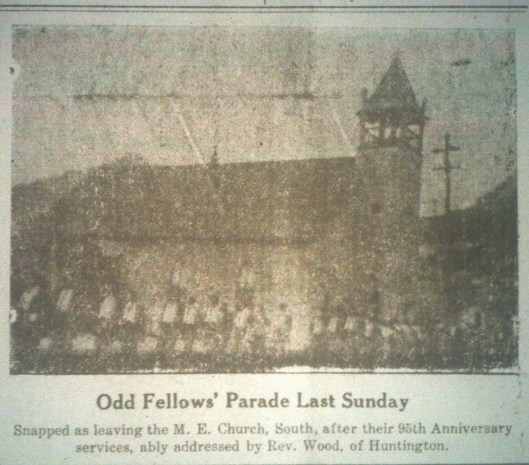
Odd Fellows Parade in Logan, WV (1914)

28 Friday Sep 2018

Posted by Brandon Ray Kirk in Huntington, Logan

≈ Leave a comment

Tags

Appalachia, history, Huntington, Logan, Logan County, Methodist Episcopal Church South, Odd Fellows, photos, West Virginia

Odd Fellows Parade LB 05.01.1914.JPG

Logan (WV) Banner, 1 May 1914.

Old Records Found in Bank Vault (1936)

27 Thursday Sep 2018

Posted by Brandon Ray Kirk in Big Sandy Valley, Guyandotte River, Hamlin, Huntington, Logan

≈ 3 Comments

Tags

Appalachia, Big Sandy River, Cabell County, Guyan Valley Bank, Guyandotte River, H.M. Booth, Hamlin, history, Huntington, James Barbour, Logan, Logan County, Mary Morris, Pennsylvania, Peter Dingess, Philadelphia, Richmond, Robert Brooke, Robert Morris, Robert Morris Grant, Russell County, Tug Fork, Virginia, West Virginia, William Crammond, Wythe County

Old Peter Dingess Deed LB 08.19.1936 7

320,000 Acres of Land Hereabouts Sold for Five Shillings According to Old Records Found in Old Vault

H.M. Booth, in cleaning out the vault of the old Guyan Valley Bank preparatory to moving his offices from Logan to Hamlin, uncovered a number of old documents that dated back to the time when “horse and buggy days” were a fact and not merely a political equation.

Many of these old papers, including deeds, receipts, account books and other papers of a semi-personal nature, are originals, while others are notarized copies of originals. They make interesting reading in these days of speed, radios, high prices and typewriters.

The old documents were all hand written, in clear, flowing script, the capital letters often decorated with fancy scrolls and shaded lines. Many of them were written with a quill pen.

Of particular interest is one deed, 12 ½ by 15 ½ inches, written on sheepskin. The ink has not faded, and although the skin is old and discolored, the deed is easily read. It was made in the days when Logan county was unheard of, and all this vicinity was part of Cabell county, Virginia. It seems strange, now, to think of a governor in Richmond, Virginia, parceling out land in Logan county.

The deed reads, in part: “James Barbour, Esq., Governor of the Commonwealth of Virginia: To all whom these presents shall come, Greeting: Know ye, that by virtue of a Land office Treasury warrant, No. 6126, upon the 9th day of Sept. 1780, there is granted by the said Commonwealth unto Peter Dingess, a certain Tract or Parcel of Land, containing one hundred and twelve acres, by survey, bearing date the 31st day of March, 1813, situate in the County of Cabell, joining to his own deeded land, and bounded as followeth, to-wit:”

Then follows a detailed description of the boundaries of the land, in which prominent trees and landmarks play a common part. After the description of the land, which was written in pen and ink, came the regular printed form as follows:

“In witness whereof, the said James Barbour, Esq., Governor of the Commonwealth of Virginia, hath hereunto set his Hand, and caused the Seal of the said Commonwealth to be affixed at Richmond, on the twenty-fifth day of October, in the Year of our Lord, One thousand eight hundred and fourteen, and of the Commonwealth the thirty-ninth.”

Down in the lower right hand corner of the paper can be plainly seen the signature of James Barbour, governor of Virginia at that time.

A notarized copy of another land deed was signed by Robert Brooke, Governor of Virginia in 1795, and was dated March 23 of that year. It deeded through the Land Office treasury warrants numbered from 472 to 530, inclusive, a parcel of land containing 480,000 acres, “by a survey made the 10th of September, 1794.” The land was described as being in the county of Wythe, on the Tug and Guyandotte rivers. This grant of land was known as the “Robert Morris Grant.”

Evidently, from the records, Robert Morris became involved in difficulties, for after a considerable amount of legal red tape, all duly recorded, there is a document showing where “Robert Morris and Mary, his wife, of Philadelphia, sell to William Crammond of Philadelphia as well for and in consideration of the sum of five shillings lawful money of Pennsylvania to them well and truly paid do grant bargain and sell, alien and enteoff release and confirm to the purchased 320,000 acres of land in the counties of Wythe and Russell, lying on both sides of Sandy Creek.”

Among the records of accounts paid found by Mr. Booth were numerous fees paid out for “boating freight from Huntington.” Six dollars and fifty cents is entered “for a suit of clothes,” and another entry shows where four dollars and a half were paid for two pair of shoes.

Source: Logan (WV) Banner, 19 August 1936

Chapmanville News 12.11.1928

15 Saturday Sep 2018

Posted by Brandon Ray Kirk in Big Creek, Chapmanville, Huntington, Logan

≈ Leave a comment

Tags

A. Dingess and Son, Abe Dingess, Allen Dingess, Appalachia, Big Creek, C.M. Gore, Chapmanville, Cherry Tree Bottom, Dyke White, Ed Turner, Faye Turner, genealogy, Herbert Hager, history, Huntington, Jim Turner, John Bryant, Leora Carter, Lewis Brooks, Logan, Logan Banner, Logan County, Monaville, Mud Fork, Murphy's 5 & 10 Cent Store, R.S. Butcher, Thelma Adams, Victor Toney

An unknown correspondent from Chapmanville in Logan County, West Virginia, offered the following items, which the Logan Banner printed on December 11, 1928:

C.M. Gore was a business visitor in Logan Monday.

Messrs. Ed and Jim Turner with their sister Faye motored to Huntington and back Sunday.

A. Dingess of Mud Fork visited his family here over Sunday.

Our school here is progressing nicely under the management of Professors Dobbins and Rigdon.

Herbert Hager moved to Chapmanville from Cherry Tree Bottom the past week.

A. Dingess and Son are putting in a grocery store at this place.

Mrs. R.S. Butcher visited Mrs. Jno. Bryant Sunday.

Mrs. Hill of Logan is visiting her daughter Mrs. Dyke White of this place.

Misses Thelma Adams and Leora Carter of the staff of clerks of Murphy’s 5 & 10 cent stores of Logan were visiting the former’s mother here.

Lewis Brooks of Monaville was a visitor here over Sunday.

Victor Toney and Abe Dingess attended church at Big Creek Sunday.

Mrs. Ferrell is improving nicely from her serious spell of sickness.

Allen Dingess passed through our town Friday enroute to Mud Fork.

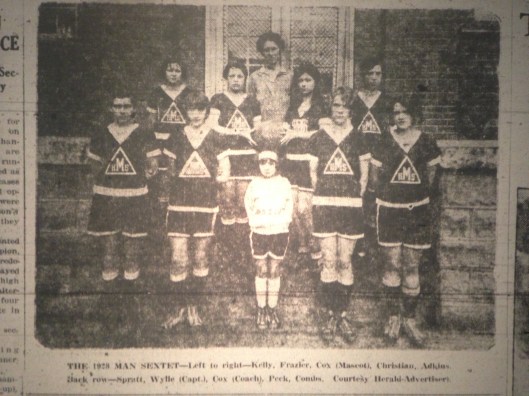
Man High School Girls’ Basketball Team (1928)

13 Thursday Sep 2018

Posted by Brandon Ray Kirk in Boone County, Gilbert, Huntington, Logan, Man, Sports, Women's History, Wyoming County

≈ Leave a comment

Tags

Appalachia, basketball, Burch High School, Ceredo-Kenova High School, Cincinnati, Clothier Independent High School, genealogy, Gilbert High School, history, Huntington High School, Indianapolis, Logan Banner, Logan County, Logan High School, Madison High School, Man High School, Oceana High School, Sports, West Virginia, Wichita

Man HS Girls Basketball Photo LB 03.06.1928 3

Logan (WV) Banner, 6 March 1928.

Man HS Girls Basketball Photo LB 03.06.1928 2

Logan (WV) Banner, 6 March 1928.

Man HS Girls Basketball Photo LB 03.06.1928 4

Logan (WV) Banner, 6 March 1928.

Man HS Girls Basketball Team Goes to Kansas LB 03.27.1928 1

Logan (WV) Banner, 27 March 1928.

William Jennings Bryan Visits Huntington: “Greatest Crowd Ever Known in State” (1900)

04 Tuesday Sep 2018

Posted by Brandon Ray Kirk in Huntington

≈ 1 Comment

Tags

Appalachia, Cabell County, history, Huntington, Huntington Advertiser, politics, West Virginia, William Jennings Bryan

William Jennings Bryan in Huntington HA 10.22.1900 2

Huntington (WV) Advertiser, 22 October 1900.

William Jennings Bryan in Huntington HA 10.22.1900 1

Huntington (WV) Advertiser, 22 October 1900.

Logan, WV: Coal Street, Not Cole Street (1928)

27 Monday Aug 2018

Posted by Brandon Ray Kirk in Huntington, Logan

≈ Leave a comment

Tags

Appalachia, coal, Coal River, Coal Street, Cole Street, Collis P. Huntington, general, George Rogers Clark Floyd, governor, history, Huntington, James Buchanan, John B. Floyd, John Floyd, Logan, Logan Banner, Logan County, Logan Junior High School, Nighbert Memorial Church, T.C. Whited, Virginia, West Virginia

From the Logan Banner of Logan, WV, comes this bit of history about Coal Street dated September 7, 1928:

C-O-A-L IS CORRECT

Acknowledging that it has long been in error, The Banner announces on good authority that the name of the street running from the Wilkinson property up past Nighbert Memorial church and Junior High school is Coal street, not Cole. In some way it was impressed on the mind of the writer soon after he came to Logan that the proper spelling was C-o-l-e. That impression seems to have been widespread and fixed. Wherefore, when street signs were recently placed at the intersections preparatory to the establishment of mail delivery service and the name of “Coal” was made conspicuous at strategic points on “Cole” street, this writer and others were peeved about it. We thought it would cause endless confusion and perpetuate an inexcusable error.

In a desire to dispose of the matter with some finality we asked T.C. Whited about the spelling of the street’s name, the origin of the name, when, why and by whom was it selected. He replied that the street was named Coal by Col. George Rogers Clark Floyd, one of the most brilliant and beloved men that ever came into these mountains. Col. Floyd, a brother of John B. Floyd, who sat in Buchanan’s cabinet and later won renown as a general and who also, like his father, John Floyd, was a governor of Virginia, owned 700 acres of land in this immediate vicinity. It included what is now the west or main business section of the city. That was long before the railroad was built but Col. Floyd envisioned the industrial development that has come. In fact, he believed it would come long before it did, and his miscalculation led him eventually into financial difficulties. When he bore about the same relation to Logan village that Collis P. Huntington bore to the village of Huntington, the residents of this hamlet obtained coal for their own use from a mine opened up near the site of Mrs. Perry’s boarding house at the head of what is now Coal street. So, he gave it that name, says Mr. Whited, and having done so, there is no reason why it should not be preserved and why all confusion about it should not cease.

At that time Coal was perhaps the most logical and appropriate name, whereas under present conditions that name might be as appropriate for one street as another in any town in Logan county.

Once there was the same confusion about the name Coal River, some historians contending the name intended was Cole, in honor of a noted pioneer surveyor of that name. But that question was long ____ geographers and of those who dwelt on the banks of that noble stream.

NOTE: Today the street sign reads COLE STREET.

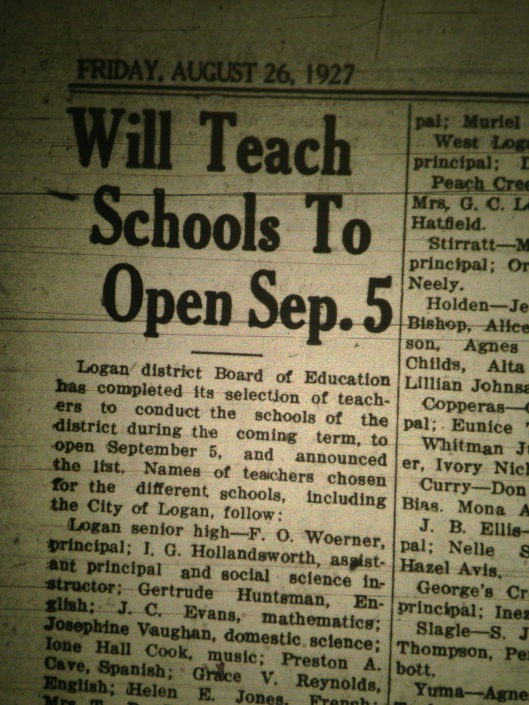
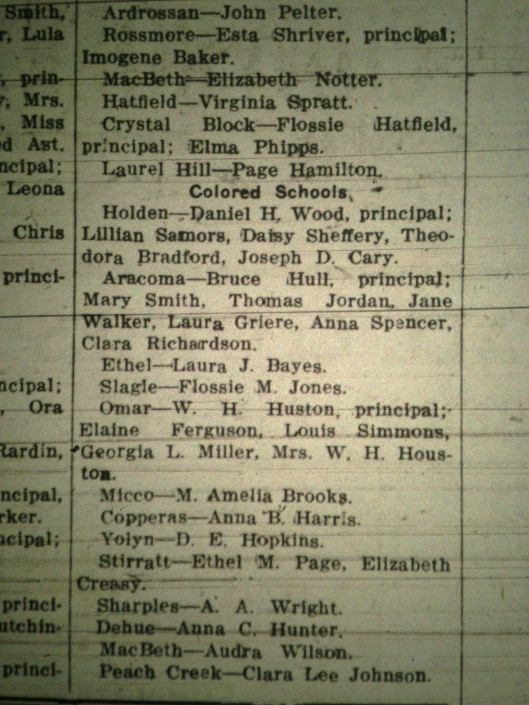
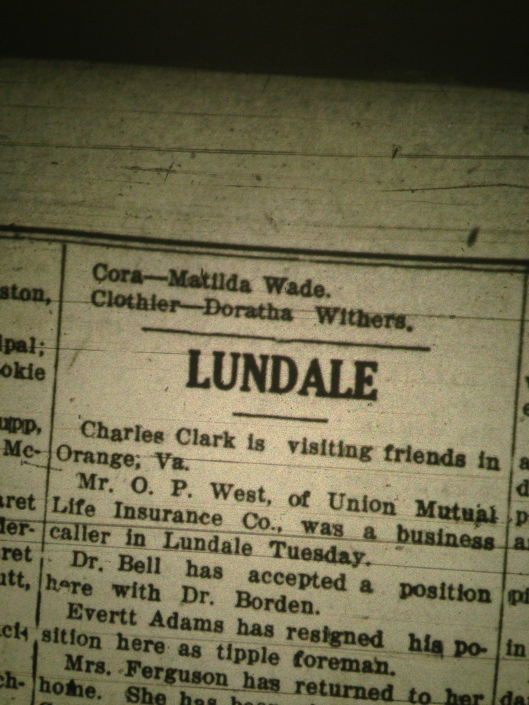
African-American Schools in Logan County, WV (1927)

21 Tuesday Aug 2018

Posted by Brandon Ray Kirk in African American History, Huntington

≈ Leave a comment

Tags

A.A. Wright, A.D. Robinson, A.V. McRae, African-Americans, Albert Meade, Anna B. Harris, Anna C. Hunter, Anna Spencer, Appalachia, Aracoma, Ardrossan, Audra Wilson, B.H. Hall, board of education, Bruce Hull, Clara Lee Johnson, Clara Richardson, Clothier, Coal River, Copperas, Cora, Crystal Block, D.E. Hopkins, Daisy Sheffery, Daniel H. Wood, Dehue, Doratha Withers, education, Elaine Ferguson, Elizabeth Creasy, Elizabeth Notter, Elma Phipps, Esta Shriver, Ethel, Ethel M. Page, F.O. Woerner, Flossie Hatfield, Flossie M. Jones, Garlands Fork, Georgia L. Miller, Gertrude Huntsman, Grace V. Reynolds, Harold Starcher, Hatfield, Helen E. Jones, history, Holden, Huntington, I.G. Hollandsworth, Imogene Baker, Ione Hall Cook, Island Creek, J.C. Evans, Jane Walker, John Pelter, Joseph D. Cary, Josephine Vaughan, Laura Griere, Laura J. Bayes, Laurel Hill, Lillian Samors, Logan County, Logan District, Logan High School, Logan Junior High School, Louis Simmons, M. Amelia Brooks, Macbeth, Mary Smith, Matilda Wade, Micco, Omar, Page Hamilton, Peach Creek, Preston A. Cave, Rossmore, Sharples, Slagle, Stirratt, teacher, Theodora Bradford, Thomas Jordan, Virginia Spratt, W.H. Houston, W.H. Huston, West Virginia, Yolyn

New Colored School at Crystal Block LB 08.12.1927 1

Logan (WV) Banner, 12 August 1927.

Logan District Colored Schools LB 08.26.1927 1

Logan (WV) Banner, 26 August 1927. This photo is meant to show the headline of the story; teachers named here are “white.”

Logan District Colored Schools LB 08.26.1927 2

Logan (WV) Banner, 26 August 1927. The list of “colored” teachers begin here and continue in the photos below.

Logan District Colored Schools LB 08.26.1927 3

Logan (WV) Banner, 26 August 1927.

Don Chafin Returns to Logan, WV (1926)

14 Tuesday Aug 2018

Posted by Brandon Ray Kirk in Coal, Huntington, Logan

≈ Leave a comment

Tags

Appalachia, Atlanta, Barnabus, Blue Goose Saloon, Democratic Party, Don Chafin, genealogy, history, Huntington, Logan, Logan Banner, Logan County, Mine Wars, Mingo Republican, sheriff, Tennis Hatfield, Wallace Chafin, West Virginia, Williamson

From the Logan Banner of Logan, WV, come these small items relating to former Logan County Sheriff Don Chafin, a prominent figure in the Mine Wars:

Chafin’s Petition For Parole Now In Hands of Sargeant

Attorney General Sergeant has placed the application for parole of former sheriff Don Chafin “on file,” indicating that it has been shelved temporarily according to reports received here.

It is understood, however, that the federal pardon board, sitting at Atlanta prison has recommended Chafin for parole.

Source: Logan (WV) Banner, 11 June 1926.

***

Don Chafin Freed From Prison Is Due Here on Wednesday

Don Chafin, former Logan county sheriff, received his parole from the federal penitentiary at Atlanta this morning at 10 o’clock, according to word received here at noon by Wallace Chafin.

The last obstacle for his parole was removed several days ago when an indictment against him in the federal court at Huntington was nollied.

Chafin left Atlanta immediately upon his release and is expected to arrive in Logan Wednesday night.

Source: Logan (WV) Banner, 24 August 1926.

***

Ex-Sheriff Chafin Returns to Logan Friday From Prison

“Don” Greeted At Station By Many Friends As He Comes Back on Federal Parole.

Don Chafin, former sheriff of Logan county, returned Friday to Logan from the federal penitentiary at Atlanta, after serving eight months of a two-year sentence imposed by Judge McClintic in federal court for violation of the prohibition act.

The former sheriff was paroled after months of strenuous work in his behalf by relatives and friends who contended his conviction was largely political.

A large number of friends met Chafin at the station in Logan on his arrival. At his request there was no demonstration here to greet him. Plans to meet him with a brass band, which had been widely broadcast, were abandoned at his request.

The former sheriff gained weight during his absence and arrived here looking well and hearty. He has consistently refused to make any statement to the press since his release at Atlanta. His only public statement in Logan for the newspaper was as follows:

“I have nothing to say for publication. All I ask is to let and be let alone.”

Source: Logan (WV) Banner, 31 August 1926.

***

Don Chafin Visits Williamson Friends In Trip On Tuesday

Don Chafin, ex-sheriff of Logan county, motored to Williamson last Tuesday morning and spent the greater part of the day here visiting friends. His visit was entirely social, says the Mingo Republican.

He stated that he was in the best of health and was glad to get back with his family and friends.

On the eve of the general election held in 1924, Chafin was indicted and tried in the Federal court at Huntington upon a conspiracy to violate the prohibition law. He had been a dominant figure in Democratic politics for many years, having held respectively the offices of assessor, county clerk and sheriff, to which latter office he was elected twice. He was sheriff of the county during the time of the armed march and gained national prominence because of his stand for law and order. He was a delegate to the Democratic National Convention held in New York City in July 1924.

It was alleged at the trial that the presiding judge was prejudiced against Chafin and several affidavits were filed to prove this. However, the judge did not permit the affidavits to be filed and the case proceeded to trial resulting in the conviction of Chafin. The principal witness against him was Tennis Hatfield, the present sheriff of Logan county, who gained the office by virtue of a decision of the Supreme Court.

The most damaging evidence introduced against Chafin was an alleged receipt which Hatfield testified Chafin had given him showing the payment of a certain sum of money which was supposed to represent the proceeds derived from operation of the once famous Blue Goose Saloon at Barnabus. Chafin alleged this paper to be a forgery and applied for a pardon on this ground.

Pending the application for pardon the Parole Board recommended Chafin’s parole and while Judge McClintic strenuously opposed it the pardon was approved by the Attorney General on Tuesday August 24, and Chafin arrived in Logan on Friday, Sept. 3. He was greeted at Huntington by several hundred of his friends and when he arrived in Logan an enthusiastic reception by friends in his home county.

It was first planned to stage a monstrous celebration but after Chafin learned of this he requested that this not be done and said that he wanted his home-coming to be of a quiet nature and to be received informally by his friends.

Throughout all of his trouble his friends proved their loyalty to him and steadfastly maintained his innocence. Many of those who met him here Tuesday have known him since boyhood.

He expressed to his friends here the intention of devoting his time to his private business. He has many large and various interests which will require constant attention and most of his time. He returned to Logan Tuesday afternoon.

Source: Logan (WV) Banner, 10 September 1926.

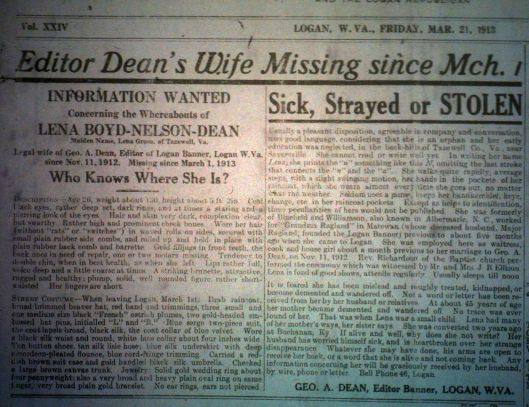
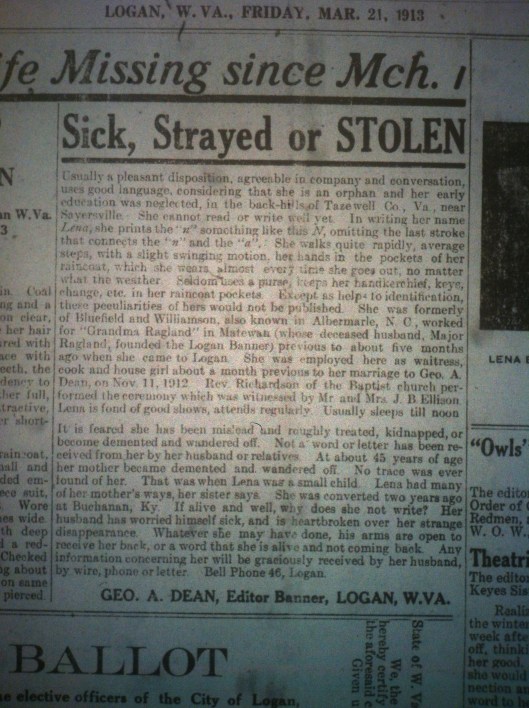
Wife of Logan Banner Editor George A. Dean Disappears (1912-1913)

20 Friday Jul 2018

Posted by Brandon Ray Kirk in Huntington, Logan, Matewan, Tazewell County

≈ Leave a comment

Tags

Albermarle, Appalachia, Bluefield, Buchanan, Collier's Weekly, Dry Fork, genealogy, George A. Dean, Henry Clay Ragland, Herald-Dispatch, history, Huntington, Iaeger, Imperial Order of Redmen, J.B. ellison, Jefferson Hotel, Kentucky, Keyes Sisters, LaRoy Stock Company, Lena Boyd Nelson, Lena Gross, Logan, Logan Banner, Logan County, Logan Democrat, Logan Nest 1442, Matewan, Modern Maccabees, Norfolk and Western Railroad, North Carolina, Order of Owls, Sayersville, Silver Cloud Tribe 138, Tazewell County, Virginia, W.L. Richardson, West Virginia, Williamson

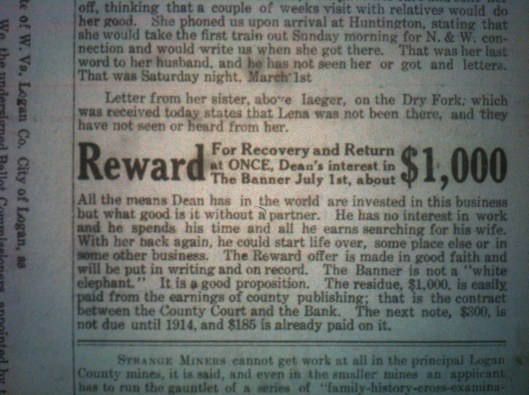
In 1912, Logan Banner editor George A. Dean married the former Lena Gross, who soon thereafter disappeared. Here are a few stories about the event:

Editor Dean Married

On Monday, Nov. 11 in the minister’s study, Geo. A. Dean and Miss Lena Gross of Virginia, were united in marriage by Rev. W.L. Richardson.

Mr. Dean is the hustling editor of the Logan Banner and is well-known in this city and surrounding country as a man of push and energy, while the bride was one of the charming dining room girls at the Hotel Jefferson.

Mr. and Mrs. Dean will be at home to their friends after Nov. 18.

Source: Logan (WV) Democrat, 14 November 1912.

***

George A. Dean Logan Banner LB 01.24.1913.JPG

Logan (WV) Banner, 24 January 1913.

***

Editor of “Most Fearless Weekly” on the Trail

West Virginia editors who have failed to receive the Logan Banner on their exchange tables during the past three weeks, no doubt, marveled at its absence. But there is a reason–a tragic, gnawing reason which has caused the editor, Geo. A. Dean to suspend temporarily editorial duties and to embark upon a quest which means more to him than journalistic honors or the mere touch of hollow gold.

Readers of the Banner will remember that there appeared graven upon its front page four months ago Mr. Dean’s and his wife’s own announcement of their marriage. The paragraph attracted more than usual attention, partly because of its unique construction and partly because of the unusual manner of its presentation, but more than all because Mr. Dean was very prominently in the editorial limelight because of recent rather prominent mention in Collier’s Weekly. But that is history, and in mere prelude to the situation which now confronts him: to-wit: that of a married man, wifeless, disconsolate, yearning for the things that were.

Mr. Dean, who has been in Huntington and vicinity for two days seeking a trace of his evanished spouse, speaks frankly of his bereavement, and is importunate that the home-loving public shall, if possible, assist him in finding and restoring his lost treasure. In brief, Lena Boyd Nelson Dean has gone away and, some fear, forever departed. She went without the tender formality of a farewell husband’s kiss. She went away surreptitiously, mysteriously. She went, and Mr. Dean, who has sounded the very depths of heaven and earth, is no whit the wiser whither. Descriptive circulars, telling her height, weight, complexion, color of eyes and hair, manner of dress, and all that pertains to accurate and dependable description have been scattered broadcast all over the territory in which it might be surmised that she would be obscuring herself from the eyes of love and yearning. Mr. Dean stated last night, in conversation with the Herald-Dispatch, that he had absolutely no heart for business, that he had known no rest, no surcease from the terrible heart-longing that had seized upon him and held with tenacious grip from the morning of his wife’s departure. He has searched high and low. He has communicated with every known relative of his wife, without being able to get even the shadow of a clue tending to lead to the discovery of her whereabouts. He gives the following verbal photograph, which is almost as good as the ordinary studio product, and much better than a tintype:

Lena Boyd Nelson Dean, formerly of Williamson and Matewan and Bluefield. Four months ago she served as waitress, cook, and house girl at Logan, W.Va. Last seen at Kenova on Sunday morning, March 2. Physical description: Age 26. Height 5 ft. 2. Coal-black eyes given to starry twinkle. Raven black hair. Rather full lips. Gold filling in front teeth. Deep, well modulated musical voice, with a tendency to coarseness in time of cold. Can not read or write much as her early education was neglected. Her costume is described as being strict in the style of today. Raincoat, drab-colored; blue-serge, two piece coat suit. Beaver hat, embellished with four black ostrich plumes. Leather suitcase, canvass trunk and gold-headed umbrella.

Mr. Dean feels that his wife may have returned to one of the three occupations ascribed to her in the opening paragraphs.

He has important mail for her, both registered and ordinary, and is awaiting anxiously any news of her, and his arms are open to her return. The Logan editor’s plight is positively pitiful. He has grown emaciated, hollow-eyed, faded, wan. The tireless vigil, the ceaseless search, the anxious waiting hours, have all played their part in preying upon his splendid vitality. He is discouraged but not defeated, and will continue the search as long as human endurance will permit, or else sooner find the partner of his joys and immediate cause of his great and overpowering grief. His plight has elicited much sympathy. For what is life without a partner?

Source: Huntington (WV) Herald-Dispatch via Logan (WV) Democrat, 13 March 1913.

***

George A. Dean's Wife Missing LB 03.21.1913 1

Logan (WV) Banner, 21 March 1913.

George A. Dean's Wife Missing LB 03.21.1913 2

Logan (WV) Banner, 21 March 1913.

George A. Dean's Wife Missing LB 03.21.1913 3

Logan (WV) Banner, 21 March 1913.

George A. Dean's Wife Missing LB 03.21.1913 4

Logan (WV) Banner, 21 March 1913.

George A. Dean's Wife Missing LB 03.21.1913 5

Logan (WV) Banner, 21 March 1913.

George A. Dean's Wife Missing LB 03.21.1913 6

Logan (WV) Banner, 21 March 1913.

John Philip Sousa to Visit Huntington (1900)

18 Wednesday Jul 2018

Posted by Brandon Ray Kirk in Huntington

≈ 1 Comment

Tags

Appalachia, Bertha Bucklin, Blanche Duffield, Cabell County, Davis Theatre, history, Huntington, Huntington Advertiser, John Philip Sousa, music, Omaha, Paris Exposition, West Virginia

SOUSA COMING TO HUNTINGTON

THE CELEBRATED BAND MASTER AND “MARCH KING” WILL GIVE A CONCERT AT DAVIS THEATRE WEDNESDAY AFTERNOON, MARCH TWENTY-FIRST

Sousa Coming HA 03.12.1900 2

Sousa is now on his sixteenth semiannual concert tour, a brief trip of only eight weeks, before going to the Paris Exposition and on a rather protracted European engagement. Sousa and his band will open at the Paris Exposition April 14, having been appointed the official American band. The forthcoming tour will extend no farther west than Omaha. Our own city is in for a concert on Wednesday afternoon only, March 21. The programmes for this tour are especially prepared and are illuminated with bright things. The soloists are Miss Blanche Duffield, soprana and Miss Bertha Bucklin, violinist. Seat sale opens March 14th.

Source: Huntington (WV) Advertiser, 12 March 1900.

Chapmanville News 04.06.1928

17 Tuesday Jul 2018

Posted by Brandon Ray Kirk in Chapmanville, Huntington

≈ Leave a comment

Tags

A. Lunsford, A.F. Carper, Appalachia, Chapmanville, Chapmanville School, Charleston, Demosthenian Literary Society, genealogy, Glenna Beckett, Henlawson, history, Huntington, Inez Barker Grace, Logan Banner, Logan County, Platonian Literary Society, Sid Ferrell, W.D. Nunley, West Virginia

An unknown correspondent from Chapmanville in Logan County, West Virginia, offered the following items, which the Logan Banner printed on April 6, 1928:

The Platonian Literary Society of the Chapmanville school entertained the Demosthenian Literary Society Friday evening, with a party at the school building. Every student present reported a very enjoyable time.

We are sorry to report the death of Mr. and Mrs. A. Lunsford’s baby, which occurred Saturday, March 31.

Mrs. Renner spent the week end in Huntington with homefolks.

Mrs. Inez Barker Grace spent the week end in Huntington with Mr. and Mrs. W.D. Nunley.

Mrs. A.F. Carper who has been very sick is able to be out again.

Miss Glenna Beckett of Charleston is visiting homefolks here at the present time.

Sid Ferrell of Henlawson spent Sunday in Chapmanville.

History for Boone County, WV (1928)

15 Sunday Jul 2018

Posted by Brandon Ray Kirk in Boone County, Huntington, Logan

≈ 2 Comments

Tags

Appalachia, Boone County, Camp Creek, Charles L. Estep, civil war, Coal River, Coal Valley News, Cumberland Gap, Danville, education, Hadalton, history, Huntington, Isaac Barker, Jackie Dolin, John E. Kenna, John Halstead, John Morris, Kanawha River, Kentucky, Kinder Hill, Little Coal River, Logan, Logan Banner, Madison, Marshall A. Estep, Maysville, Mud River, North Carolina, Ohio River, Olive Branch Baptist Church, Spruce Fork, Spruce Ridge, Texas, Thomas Price, Turtle Creek, W.H. Turley, W.W. Hall, West Virginia, White Oak Creek, Wilderness Road

A story titled “Old Times in Boone County Told About By Historian” and printed in the Logan Banner in Logan, WV, on April 20, 1928 provides some history for Boone County:

Old-timers and students of local history should be interested in the following excerpt from the history of Boone county by Prof. W.W. Hall. The family names mentioned are familiar ones.

What is here reproduced was taken from the Coal Valley News:

About the year of 1798 Isaac Barker reared a pole cabin on the brow of the hill on the lower side of White Oak Creek, near old lock seven. This was the first white man’s home established in Boone county. The second settler in the county was Johnson Kinder, a brother-in-law of Barker. He settled on Kinder Hill a few months after Barker came. The first settler on Little Coal River was John Halstead, who settled at the mouth of Camp creek about 1800. A few months later Jackie Dolin was married to Isaac Barker’s daughter and led his blushing bride, attired in her homespun, through the trackless forest up Brush creek and over the hill to a scantily furnished home on Camp creek. Not long after this Thomas Price, a daring hunter from North Carolina, wandered over the Wilderness Road through Cumberland Gap to Maysville, Kentucky, where he embarked in a canoe, ascended the Ohio, the Kanawha, the Coal and the Little Coal rivers to the present site of the town of Danville, and became the first settler there.

For some years after the coming of the white men there were no churches, but when an Old Baptist or Methodist preacher would arrive in the settlement, word was passed around to the neighbors and that night earnest prayers, exhortations and hallelujahs would ascend from those rude homes. The first church erected in the county was the Olive Branch Baptist church at the mouth of Turtle creek. The first term of the circuit court held in the county after its organization in 1847 was held in this church. The grand jury made its investigations while seated on the framing in Ballard’s old water mill near by, and the petit jury retired to the paw paw bushes below to consider their verdicts.

The daring hunters, adventurous pioneers and brave soldiers who came from the best families in the east to establish home in the wilderness, were not contented to let their children grow up without the rudiments of an education, so they established Old Field schools in the slave cabins, tanneries, country churches and abandoned dwellings, when an itinerant teacher who could read, write and cipher a little came along. The first free school in the county was taught by John Morris, just after the Civil War, in an old house abandoned by Dr. Church. The old house stood across the hollow from W.H. Turley’s present residence in Madison. Within the next year or two a log school house was erected near the upper end of Danville and another on the point across the river from Hadalton. The children of Madison had to go to Danville or Hadalton to school until 1885, when the people of Madison, by mandamus, compelled the board of education to give them a school. The first school house erected in Madison is now used by Dr. Smoot for a barn. While the course of study in these early schools was meager and the work crude, yet they did succeed in inspiring a few boys to strive for higher education. Former United States Senator John E. Kenna was born in Boone county and attended his first schools in a log house on Big Coal river. Dr. Marshall A. Estep, an eminent physician of Texas, and his brother, Judge Charles L. Estep, of Huntington and Logan, were reared in the “Promised Land,” the name of their father’s mountain home on the summit of Spruce Ridge, and attended their first schools in a log house on the Spruce Fork. One of these early log school houses still stands on the head of Mud river, remote from the highways frequented by trade and travelers. Two of the most recent prosecuting attorneys of the county, two clerks of the circuit court, two of the clerks of the county court, four county superintendents of schools, chief U.S. Marshal for the southern district of West Virginia, and two prosperous dental surgeons attended school when boys in that little log school house on the head of Mud. The attendance in it was never large.

Marshall College (1867)

07 Saturday Jul 2018

Posted by Brandon Ray Kirk in Huntington

≈ Leave a comment

Tags

Appalachia, Cabell County, education, history, Huntington, Marshall College, Marshall University, photos, West Virginia

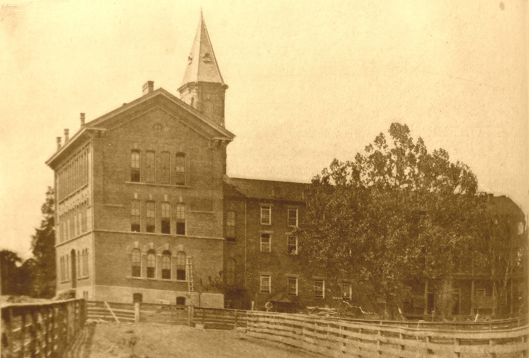
Marshall College in 1867 1.JPG

Marshall College (now University) in present-day Huntington, Cabell County, WV. Photo credit unknown.

Chapmanville News 12.09.1927

06 Friday Jul 2018

Posted by Brandon Ray Kirk in Chapmanville, Huntington, Logan

≈ Leave a comment

Tags

Appalachia, Bernie Young, Chapmanville, genealogy, history, Huntington, Kentucky, Lizzie Crislip, Logan, Logan Banner, Logan County, Maude Fillinger, West Virginia, Willa Lowe

An unknown correspondent from Chapmanville in Logan County, West Virginia, offered the following items, which the Logan Banner printed on December 9, 1927:

Rev. Sreves’ wife is improving very slowly.

Miss Willa Lowe and Miss Maude Fillinger are spending a few days in Logan.

Mrs. Lizzie Chrislip and friends made a trip to Huntington Sunday.

Bernie Young was calling on friends here Sunday.

We were very glad to welcome the Cox family back again after they spent a few years in Kentucky.

Big Creek News 02.07.1928

30 Saturday Jun 2018

Posted by Brandon Ray Kirk in Banco, Big Creek, Chapmanville, Gill, Huntington, Logan

≈ Leave a comment

Tags

A.J. Thomas, Appalachia, Banco, Big Creek, C&O Hospital, C.C. Varney, Chapmanville, Edward Ferrell, Flora Lucas, genealogy, George Chafin, Gill, history, Huntington, J.B. Lucas, J.B. Thomas, Jack Hager, Logan, Logan County, Madeline Varney, Minta Jeffrey, Myrtie Lucas, Myrtle Lucas, Nell Marie Gill, Pearl Harmon, Ted Hager, West Virginia

An unknown correspondent from Big Creek in Logan County, West Virginia, offered the following items, which the Logan Banner printed on February 7, 1928:

Mrs. Pearl Harmon has been in the C. & O. hospital at Huntington but is home again.

Little Nell Marie Gill has returned home again from a visit with her grandmother at Gill.

Mrs. Minta Jeffrey of Banco was a business caller here today.

Geo. Chafin and A.J. Thomas of Logan were Big Creek callers Thursday.

Mrs. C.C. Varney and daughter Madeline were calling on Mrs. Myrtie Lucas Thursday afternoon.

Mrs. Flora Lucas was the pleasant guest of Mrs. Myrtle Lucas one day last week.

Mr. and Mrs. Ted Hager and son Jack are visiting friends and relatives at Banco this week.

J.B. Lucas made a business trip to Chapmanville Saturday.

Edward Ferrell is store clerk in the Hunter store at present. Be careful, girls, and don’t stay too too long when shopping.

J.B. Thomas was a business caller in Logan this week.

← Older posts
Newer posts →

Feud Poll 1

If you had lived in the Harts Creek community during the 1880s, to which faction of feudists might you have given your loyalty?

Categories

  • Adkins Mill
  • African American History
  • American Revolutionary War
  • Ashland
  • Atenville
  • Banco
  • Barboursville
  • Battle of Blair Mountain
  • Beech Creek
  • Big Creek
  • Big Harts Creek
  • Big Sandy Valley
  • Big Ugly Creek
  • Boone County
  • Breeden
  • Calhoun County
  • Cemeteries
  • Chapmanville
  • Civil War
  • Clay County
  • Clothier
  • Coal
  • Cove Gap
  • Crawley Creek
  • Culture of Honor
  • Dingess
  • Dollie
  • Dunlow
  • East Lynn
  • Ed Haley
  • Eden Park
  • Enslow
  • Estep
  • Ethel
  • Ferrellsburg
  • Fourteen
  • French-Eversole Feud
  • Gilbert
  • Giles County
  • Gill
  • Green Shoal
  • Guyandotte River
  • Halcyon
  • Hamlin
  • Harts
  • Hatfield-McCoy Feud
  • Holden
  • Hungarian-American History
  • Huntington
  • Inez
  • Irish-Americans
  • Italian American History
  • Jamboree
  • Jewish History
  • John Hartford
  • Kermit
  • Kiahsville
  • Kitchen
  • Leet
  • Lincoln County Feud
  • Little Harts Creek
  • Logan
  • Man
  • Matewan
  • Meador
  • Midkiff
  • Monroe County
  • Montgomery County
  • Music
  • Native American History
  • Peach Creek
  • Pearl Adkins Diary
  • Pecks Mill
  • Peter Creek
  • Pikeville
  • Pilgrim
  • Poetry
  • Queens Ridge
  • Ranger
  • Rector
  • Roane County
  • Rowan County Feud
  • Salt Rock
  • Sand Creek
  • Shively
  • Spears
  • Sports
  • Spottswood
  • Spurlockville
  • Stiltner
  • Stone Branch
  • Tazewell County
  • Timber
  • Tom Dula
  • Toney
  • Turner-Howard Feud
  • Twelve Pole Creek
  • Uncategorized
  • Warren
  • Wayne
  • West Hamlin
  • Wewanta
  • Wharncliffe
  • Whirlwind
  • Williamson
  • Women's History
  • World War I
  • Wyoming County
  • Yantus

Feud Poll 2

Do you think Milt Haley and Green McCoy committed the ambush on Al and Hollene Brumfield in 1889?

Blogroll

  • Ancestry.com
  • Ashland (KY) Daily Independent News Article
  • Author FB page
  • Beckley (WV) Register-Herald News Article
  • Big Sandy News (KY) News Article
  • Blood in West Virginia FB
  • Blood in West Virginia order
  • Chapters TV Program
  • Facebook
  • Ghosts of Guyan
  • Herald-Dispatch News Article 1
  • Herald-Dispatch News Article 2
  • In Search of Ed Haley
  • Instagram
  • Lincoln (WV) Journal News Article
  • Lincoln (WV) Journal Thumbs Up
  • Lincoln County
  • Lincoln County Feud
  • Lincoln County Feud Lecture
  • LinkedIn
  • Logan (WV) Banner News Article
  • Lunch With Books
  • Our Overmountain Men: The Revolutionary War in Western Virginia (1775-1783)
  • Pinterest
  • Scarborough Society's Art and Lecture Series
  • Smithsonian Article
  • Spirit of Jefferson News Article
  • The Friendly Neighbor Radio Show 1
  • The Friendly Neighbor Radio Show 2
  • The Friendly Neighbor Radio Show 3
  • The Friendly Neighbor Radio Show 4
  • The New Yorker
  • The State Journal's 55 Good Things About WV
  • tumblr.
  • Twitter
  • Website
  • Weirton (WV) Daily Times Article
  • Wheeling (WV) Intelligencer News Article 1
  • Wheeling (WV) Intelligencer News Article 2
  • WOWK TV
  • Writers Can Read Open Mic Night

Feud Poll 3

Who do you think organized the ambush of Al and Hollene Brumfield in 1889?

Recent Posts

  • Logan County Jail in Logan, WV
  • Absentee Landowners of Magnolia District (1890, 1892, 1894)
  • Charles Spurlock Survey at Fourteen Mile Creek, Lincoln County, WV (1815)

Ed Haley Poll 1

What do you think caused Ed Haley to lose his sight when he was three years old?

Top Posts & Pages

  • Early Schools of Logan County, WV (1916)
  • Jack Dempsey’s Broadway Restaurant Location in New York City (2019)
  • Anthony Lawson founds Lawsonville
  • Blood in West Virginia: Brumfield v. McCoy (2014)
  • Blood in West Virginia

Copyright

© Brandon Ray Kirk and brandonraykirk.wordpress.com, 1987-2023. Unauthorized use and/or duplication of this material without express and written permission from this blog’s author and/or owner is strictly prohibited. Excerpts and links may be used, provided that full and clear credit is given to Brandon Ray Kirk and brandonraykirk.wordpress.com with appropriate and specific direction to the original content.

Archives

  • February 2025
  • January 2025
  • October 2023
  • September 2023
  • December 2022
  • November 2022
  • May 2022
  • April 2022
  • February 2022
  • November 2021
  • October 2021
  • September 2021
  • June 2021
  • May 2021
  • April 2021
  • March 2021
  • February 2021
  • January 2021
  • December 2020
  • November 2020
  • October 2020
  • July 2020
  • June 2020
  • May 2020
  • April 2020
  • March 2020
  • February 2020
  • January 2020
  • December 2019
  • November 2019
  • October 2019
  • September 2019
  • August 2019
  • July 2019
  • June 2019
  • May 2019
  • April 2019
  • March 2019
  • February 2019
  • January 2019
  • December 2018
  • November 2018
  • October 2018
  • September 2018
  • August 2018
  • July 2018
  • June 2018
  • May 2018
  • April 2018
  • March 2018
  • February 2018
  • January 2018
  • December 2017
  • November 2017
  • October 2017
  • September 2017
  • August 2017
  • July 2017
  • June 2017
  • May 2017
  • April 2017
  • March 2017
  • February 2017
  • January 2017
  • December 2016
  • November 2016
  • October 2016
  • September 2016
  • August 2016
  • July 2016
  • June 2016
  • May 2016
  • April 2016
  • March 2016
  • February 2016
  • January 2016
  • December 2015
  • November 2015
  • October 2015
  • September 2015
  • August 2015
  • July 2015
  • June 2015
  • May 2015
  • April 2015
  • March 2015
  • February 2015
  • January 2015
  • December 2014
  • October 2014
  • September 2014
  • August 2014
  • July 2014
  • June 2014
  • May 2014
  • April 2014
  • March 2014
  • February 2014
  • January 2014
  • December 2013
  • November 2013
  • October 2013
  • September 2013
  • August 2013
  • July 2013
  • June 2013
  • May 2013
  • April 2013
  • March 2013
  • February 2013
  • January 2013
  • December 2012
  • November 2012

Enter your email address to follow this blog and receive notifications of new posts by email.

Join 2,927 other subscribers

Tags

Appalachia Ashland Big Creek Big Ugly Creek Blood in West Virginia Brandon Kirk Cabell County cemeteries Chapmanville Charleston civil war coal Confederate Army crime culture Ed Haley Ella Haley Ferrellsburg feud fiddler fiddling genealogy Green McCoy Guyandotte River Harts Harts Creek Hatfield-McCoy Feud history Huntington John Hartford Kentucky Lawrence Haley life Lincoln County Lincoln County Feud Logan Logan Banner Logan County Milt Haley Mingo County music Ohio photos timbering U.S. South Virginia Wayne County West Virginia Whirlwind writing

Blogs I Follow

  • OtterTales
  • Our Appalachia: A Blog Created by Students of Brandon Kirk
  • Piedmont Trails
  • Truman Capote
  • Appalachian Diaspora

BLOOD IN WEST VIRGINIA is now available for order at Amazon!

Blog at WordPress.com.

OtterTales

Writings from my travels and experiences. High and fine literature is wine, and mine is only water; but everybody likes water. Mark Twain

Our Appalachia: A Blog Created by Students of Brandon Kirk

This site is dedicated to the collection, preservation, and promotion of history and culture in Appalachia.

Piedmont Trails

Genealogy and History in North Carolina and Beyond

Truman Capote

A site about one of the most beautiful, interesting, tallented, outrageous and colorful personalities of the 20th Century

Appalachian Diaspora

  • Subscribe Subscribed
    • Brandon Ray Kirk
    • Join 789 other subscribers
    • Already have a WordPress.com account? Log in now.
    • Brandon Ray Kirk
    • Subscribe Subscribed
    • Sign up
    • Log in
    • Report this content
    • View site in Reader
    • Manage subscriptions
    • Collapse this bar
 

Loading Comments...