• About

Brandon Ray Kirk

~ This site is dedicated to the collection, preservation, and promotion of history and culture in my section of Appalachia.

Brandon Ray Kirk

Category Archives: Coal

Don Chafin Returns to Logan, WV (1926)

14 Tuesday Aug 2018

Posted by Brandon Ray Kirk in Coal, Huntington, Logan

≈ Leave a comment

Tags

Appalachia, Atlanta, Barnabus, Blue Goose Saloon, Democratic Party, Don Chafin, genealogy, history, Huntington, Logan, Logan Banner, Logan County, Mine Wars, Mingo Republican, sheriff, Tennis Hatfield, Wallace Chafin, West Virginia, Williamson

From the Logan Banner of Logan, WV, come these small items relating to former Logan County Sheriff Don Chafin, a prominent figure in the Mine Wars:

Chafin’s Petition For Parole Now In Hands of Sargeant

Attorney General Sergeant has placed the application for parole of former sheriff Don Chafin “on file,” indicating that it has been shelved temporarily according to reports received here.

It is understood, however, that the federal pardon board, sitting at Atlanta prison has recommended Chafin for parole.

Source: Logan (WV) Banner, 11 June 1926.

***

Don Chafin Freed From Prison Is Due Here on Wednesday

Don Chafin, former Logan county sheriff, received his parole from the federal penitentiary at Atlanta this morning at 10 o’clock, according to word received here at noon by Wallace Chafin.

The last obstacle for his parole was removed several days ago when an indictment against him in the federal court at Huntington was nollied.

Chafin left Atlanta immediately upon his release and is expected to arrive in Logan Wednesday night.

Source: Logan (WV) Banner, 24 August 1926.

***

Ex-Sheriff Chafin Returns to Logan Friday From Prison

“Don” Greeted At Station By Many Friends As He Comes Back on Federal Parole.

Don Chafin, former sheriff of Logan county, returned Friday to Logan from the federal penitentiary at Atlanta, after serving eight months of a two-year sentence imposed by Judge McClintic in federal court for violation of the prohibition act.

The former sheriff was paroled after months of strenuous work in his behalf by relatives and friends who contended his conviction was largely political.

A large number of friends met Chafin at the station in Logan on his arrival. At his request there was no demonstration here to greet him. Plans to meet him with a brass band, which had been widely broadcast, were abandoned at his request.

The former sheriff gained weight during his absence and arrived here looking well and hearty. He has consistently refused to make any statement to the press since his release at Atlanta. His only public statement in Logan for the newspaper was as follows:

“I have nothing to say for publication. All I ask is to let and be let alone.”

Source: Logan (WV) Banner, 31 August 1926.

***

Don Chafin Visits Williamson Friends In Trip On Tuesday

Don Chafin, ex-sheriff of Logan county, motored to Williamson last Tuesday morning and spent the greater part of the day here visiting friends. His visit was entirely social, says the Mingo Republican.

He stated that he was in the best of health and was glad to get back with his family and friends.

On the eve of the general election held in 1924, Chafin was indicted and tried in the Federal court at Huntington upon a conspiracy to violate the prohibition law. He had been a dominant figure in Democratic politics for many years, having held respectively the offices of assessor, county clerk and sheriff, to which latter office he was elected twice. He was sheriff of the county during the time of the armed march and gained national prominence because of his stand for law and order. He was a delegate to the Democratic National Convention held in New York City in July 1924.

It was alleged at the trial that the presiding judge was prejudiced against Chafin and several affidavits were filed to prove this. However, the judge did not permit the affidavits to be filed and the case proceeded to trial resulting in the conviction of Chafin. The principal witness against him was Tennis Hatfield, the present sheriff of Logan county, who gained the office by virtue of a decision of the Supreme Court.

The most damaging evidence introduced against Chafin was an alleged receipt which Hatfield testified Chafin had given him showing the payment of a certain sum of money which was supposed to represent the proceeds derived from operation of the once famous Blue Goose Saloon at Barnabus. Chafin alleged this paper to be a forgery and applied for a pardon on this ground.

Pending the application for pardon the Parole Board recommended Chafin’s parole and while Judge McClintic strenuously opposed it the pardon was approved by the Attorney General on Tuesday August 24, and Chafin arrived in Logan on Friday, Sept. 3. He was greeted at Huntington by several hundred of his friends and when he arrived in Logan an enthusiastic reception by friends in his home county.

It was first planned to stage a monstrous celebration but after Chafin learned of this he requested that this not be done and said that he wanted his home-coming to be of a quiet nature and to be received informally by his friends.

Throughout all of his trouble his friends proved their loyalty to him and steadfastly maintained his innocence. Many of those who met him here Tuesday have known him since boyhood.

He expressed to his friends here the intention of devoting his time to his private business. He has many large and various interests which will require constant attention and most of his time. He returned to Logan Tuesday afternoon.

Source: Logan (WV) Banner, 10 September 1926.

Coal and Land Deal at Limestone Creek, WV (1917)

31 Tuesday Jul 2018

Posted by Brandon Ray Kirk in Big Creek, Coal

≈ Leave a comment

Tags

Appalachia, coal, Fairmont, history, James P. Cumminsky, Katherine Board, Limestone Creek, Lincoln County, Logan County, Logan Democrat, Louis R. Sweetland, Matthew Slush, Michigan, S.C. Board, West Virginia, William E. Metzger

Limestone Mining LD 03.01.1917 1.JPG

Logan (WV) Democrat, 1 March 1917.

History for Wyoming County, WV (1927-1928)

23 Monday Jul 2018

Posted by Brandon Ray Kirk in Coal, Native American History, Wyoming County

≈ Leave a comment

Tags

A.F. Wysong, Appalachia, architecture, Baileysville District, Barkers Ridge District, Center District, Charleston, Clear Fork District, coal, crime, Early Brothers, Gertrude of Wyoming, Guyan Heating and Plumbing Company, history, Huff's Creek District, Logan, Logan Banner, Logan County, Maughwaiwama, Mingo County, Mullens, Native American History, Native Americans, Oceana, Oceana District, Pineville, Princeton, Slab Fork District, Thomas Campbell, West Virginia, Wyoming County, Wysong & Bengston

From the Logan Banner of Logan, WV, comes this bit of history about Wyoming County, dated 1927 and 1928:

Wyoming County In the Public Eye

Now that three railroads are contesting for the authority to build a branch line across Wyoming county, increased interest is shown in the probable early development in that bailiwick.

Wyoming has coal resources equal to those of any other county in the state, it is said, and it has wide valleys of fine farming land, and an unusually picturesque mountain country. Like Mingo, it was carved out of Logan territory, its formation having been authorized by an act of the general assembly passed January 26, 1850. With an area of 507.30 square miles it is more than 50 miles larger than this county, yet its population in 1920 was only 15,180.

That county’s valuation for taxation purposes exceeded $28,000,000 last year.

Wyoming county is divided into seven magisterial districts, as follows: Baileysville, Barkers Ridge, Center, Clear Fork, Huff’s Creek, Oceana and Slab Fork districts.

Wyoming county was stricken off from the older county of Logan, which took its name from a celebrated Indian chief. Another county was formed from Logan, many years later, and to this was given the name of Mingo, the tribe to which Logan belonged. Logan, Mingo and Wyoming are the three counties in West Virginia whose names are derived from the original settlers.

Wyoming county bears the name of an Indian tribe, and this tribe was later honored by having its name adopted by one of our great western States. While the derivation of the name, in its application to the county, seems to be clear, the origin of the name itself is veiled in obscurity. By some authorities it is said to be a corruption of the Indian Maughwaiwama, signifying a plain, or open space. Others assert that it is a creation of Thomas Campbell, the poet, and author, of “Gertrude of Wyoming.”

Pineville, the present county seat, is located near the center of the county. It has an elevation of 1,323 feet above the level of the sea and had a population of 304 in 1920. Later estimates do not greatly increase this figure. Pineville became the county seat years ago, having secured the removal of the seat of justice from the older town of Oceana.

Mullens, a prosperous town and center of the coal industry, had a population of 1,425 in 1920.

Oceana, long the county seat before its removal to Pineville, had at the last census a population of 90.

Source: Logan (WV) Banner, 25 November 1927.

***

WYOMING COUNTY HAS NEW JAIL–NATIVE STONE USED–COST $150,000

Wyoming county’s new jail at Pineville has been accepted by the architects and will be formally turned over within the next few days.

Erected at a cost of approximately $150,000, the new bastille is perhaps one of the finest buildings of its kind in the southern part of the state. It is built of native stone throughout, and is a most imposing and beautiful building and one of which the county may well pride itself, says the Mullins Advocate.

It is three full stories high above the basements, heated by vapor, containing room for 70 prisoners with comfort, and can accommodate twice that number, if necessary. The cells and jail construction is of tool proof steel, equipped with the latest locking devices. A prisoner when confined in a cell, must go through three sets of tool proof steel bars to make an escape.

The building contains a large and comfortable residence for the jailer, including a large, well furnished and equipped kitchen, is supplied with hot and cold water throughout, including shower baths on the inside corridors of the jail, padded cells for the insane, hospitals for the sick and detention rooms for juveniles of both sexes.

In the basement there is an incinerator, together with a laundry and large supply rooms.

The building was formally approved on January 9th by A.F. Wysong of the firm of Wysong & Bengston architects, of Charleston, who had the construction of this building in charge. Early Brothers, of Mullens, contractors, constructed the building, while the heating system was installed by the Guyan Heating and Plumbing company, of Mullens. The plumbing was done by Wickline of Princeton. Mr. Wysong, after going over the jail carefully, approved the construction and recommended payment of the balance due on the several contracts.

Source: Logan (WV) Banner, 17 January 1928.

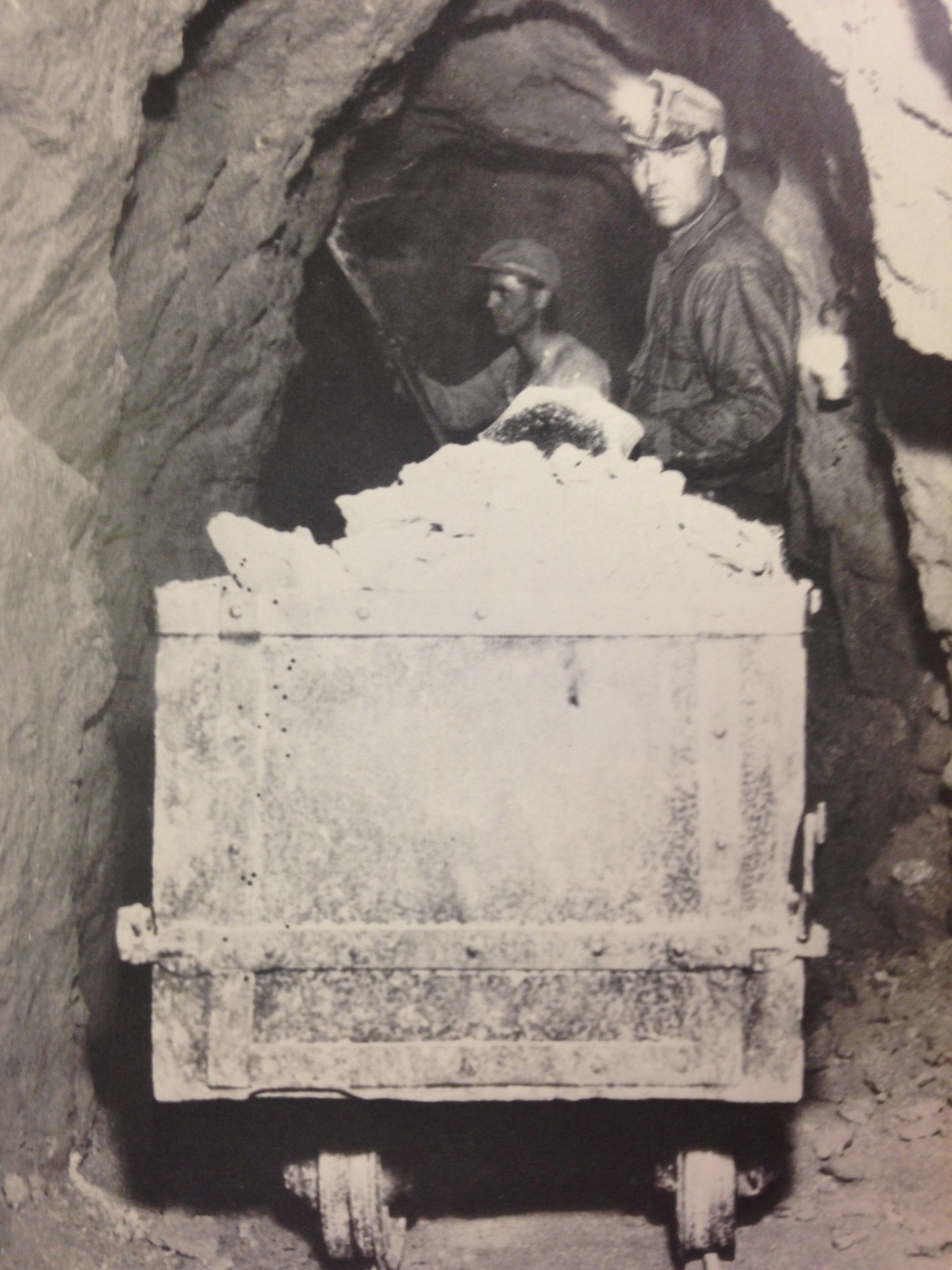
Jack Dempsey Working in a Coal Mine

20 Friday Jul 2018

Posted by Brandon Ray Kirk in Coal, Logan, Sports

≈ Leave a comment

Tags

Appalachia, boxing, coal, genealogy, history, Jack Dempsey, Logan County, photos, West Virginia

IMG_8130.JPG

Jack Dempsey, raised in Logan County, WV, was the heavyweight champion of the world from 1919 to 1926. Photo credit unknown.

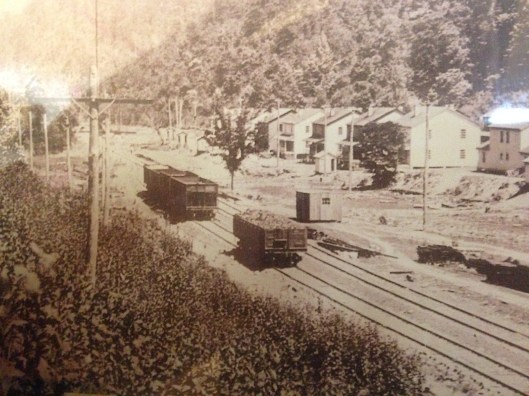
Hatfield Bottom

06 Friday Jul 2018

Posted by Brandon Ray Kirk in Coal

≈ Leave a comment

Tags

Appalachia, C&O Railroad, coal, Hatfield Bottom, history, Logan County, photos, West Virginia

Hatfield Bottom 3.JPG

Hatfield Bottom, Logan County, WV. Photo credit unknown.

Hatfield-McCoy Reunion Festival at Matewan, WV (2018)

22 Friday Jun 2018

Posted by Brandon Ray Kirk in Coal, Hatfield-McCoy Feud, Lincoln County Feud, Matewan

≈ 3 Comments

Tags

Appalachia, art, Blood in West Virginia, Bob Hatfield, Brandon Kirk, Buskirk and Hamilton, Devil Anse Hatfield, Green McCoy, Hatfield-McCoy Reunion Festival, history, Kentucky, Lincoln County Feud, Lisha Breeding, Louisa Mullins, Matewan, Matewan Depot, Mine Wars, Mingo County, Norfolk and Southern Railroad, Phyllis Kirk, Pike County, Randy Marcum, Sid Hatfield, Thacker, West Virginia, West Virginia Division of Culture and History

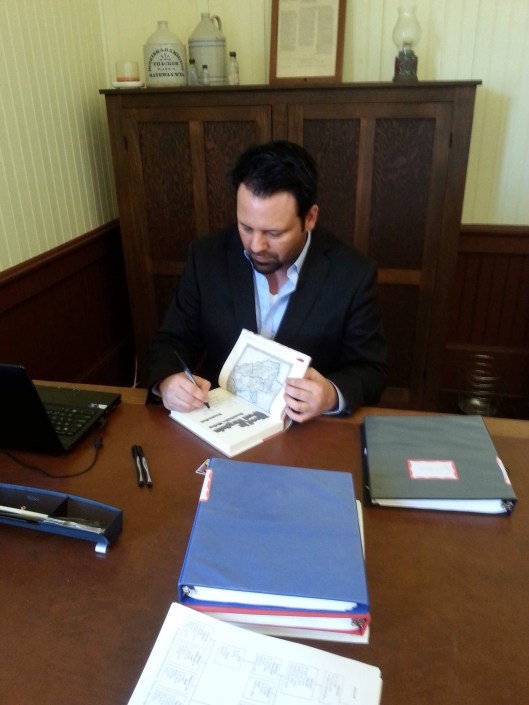
On June 15-16, 2018, the town of Matewan, WV, hosted the Hatfield-McCoy Reunion Festival. Matewan Depot hosted us for a book event. THANK YOU, Matewan Depot!

IMG_5591

Matewan Depot is a must-see destination! NOTE: For more information about the town and depot, please follow this link: http://www.historicmatewan.com/

IMG_2614

Here is a photo of our revamped Lincoln County Feud display at the Hatfield-McCoy Reunion Festival. Green McCoy, a Pike County (Ky.) McCoy, participated in the Lincoln feud; Bob Hatfield, son of Anse, married Louisa Mullins, a Lincoln feudist. 15 June 2018.

IMG_2690

Green McCoy’s great-niece Lisha Breeding made my day when she visited the Lincoln County Feud exhibit. 16 June 2018. Photo by Mom.

IMG_2687

We met nice people and sold copies of the book at the Hatfield-McCoy Reunion Festival. All proceeds were donated to the depot, which I greatly SUPPORT — it’s a significant asset that promotes regional history and tourism. 16 June 2018. Photo by Randy Marcum.

IMG_2635

The Matewan Depot features a free museum. The museum offers historical items related to town history, the Hatfield-McCoy Feud, the Norfolk & Southern Railroad, and the Mine Wars. 15 June 2018.

IMG_2636

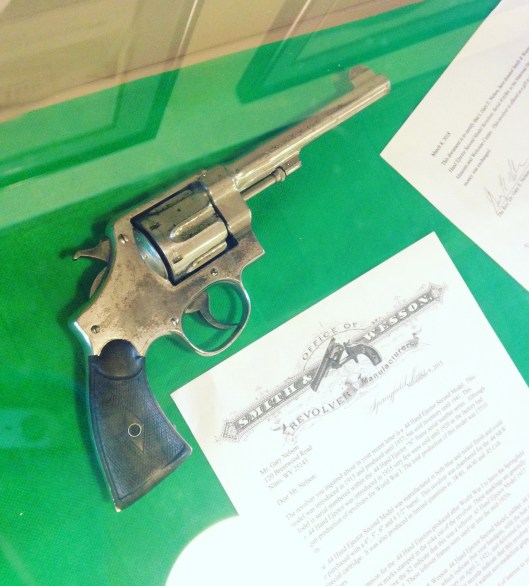
Sid Hatfield gun with accompanying documentation. 15 June 2018.

IMG_2681

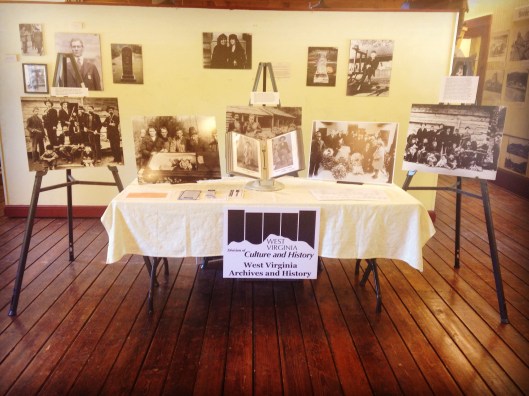
The West Virginia Division of Culture and History showcased a Hatfield-McCoy exhibit at the Hatfield-McCoy Reunion Festival. 16 June 2018.

IMG_2677

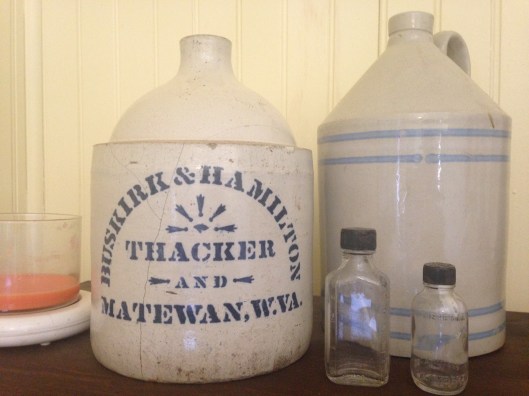
Some of the many artifacts located inside of the Matewan Depot. 16 June 2018.

IMG_9704.JPG

The depot features a worthy selection of books and other items related to regional history and culture. This photo shows a sample of books: t-shirts, stickers, videos, art, and many other items can also be found here. If you visit, be sure to take a peak at my book, “Blood in West Virginia: Brumfield v. McCoy.” May 2018.

Whirlwind News 08.24.1926

13 Wednesday Jun 2018

Posted by Brandon Ray Kirk in Big Harts Creek, Coal, Queens Ridge, Whirlwind

≈ Leave a comment

Tags

Anna Adams, Appalachia, Bernie Adams, Carl Adams, Charlie Mullins, Clinton Adams, coal, Edgar McCloud, Frank Bradshaw, genealogy, George McCloud Jr., Harts Creek, history, Hoover School, Howard Adams, Logan Banner, Logan County, Lucy McCloud, Margaret Wiley, Mary Honaker, May Robinson, Mildred Adams, Mt. Gay, Mud Fork, Pearly McCloud, Peter Mullins, Queens Ridge, Roy Browning, Sol Adams, Trace Fork, West Virginia, Whirlwind

An unknown correspondent from Whirlwind in Logan County, West Virginia, offered the following items, which the Logan Banner printed on August 24, 1926:

We are having plenty of rain at this writing.

Howard Adams is going to teach our school on Hoover. We are expecting a good school.

Miss Lucy McCloud visited her grandmother, Mrs. Margaret Wiley of Queen’s Ridge, last Tuesday.

Mrs. Anna Adams of Trace Fork is very ill at present.

Mr. and Mrs. Roy Browning of Mud Fork are visiting Mrs. Browning’s parents, Mr. and Mrs. Peter Mullins of Hart’s Creek.

Miss Pearly McCloud made a flying trip to Sol Adams’ Wednesday.

Charlie Mullins and Edgar McCloud have completed their coal tipple.

Carl Adams and Geo. McCloud Jr., are coal mining on the left hand Fork of Hoover.

Miss Mildred Adams has returned from Mt. Gay where she has been visiting her sister, Mrs. Frank Bradshaw.

Mrs. Mary Honaker was the guest of Miss May Robinson last Sunday.

Clinton Adams was taking his vacation last week.

Wonder what makes Bernie Adams look so downhearted? Ask Tilda. She knows.

Howard Adams was seen coming up the creek with a broom. Wonder what’s going to happen?

Daily happenings: Edgar and his new slippers; Carl and his white hogs; Herb and his lantern; Pearl and her blue dress; Howard and his talking machine; Charlie and his kodak; Bernie and his cob pipe.

Chapmanville Coal Company (1927)

03 Sunday Jun 2018

Posted by Brandon Ray Kirk in Chapmanville, Coal

≈ Leave a comment

Tags

Appalachia, B.A. Grady, Chapmanville, Chapmanville Coal Company, coal, history, Logan Banner, Logan County, Logan Mines Inc., Thompson Coal Company, W.M. Zurkle, West Virginia

Chapmanville Coal Company LB 08.26.1927

Logan (WV) Banner, 26 August 1927.

Guyan Valley Coal Operators Grant Ten Percent Wage Increase (1917)

25 Friday May 2018

Posted by Brandon Ray Kirk in Coal

≈ Leave a comment

Tags

Appalachia, coal, Guyan Valley Coal Operators, history, Logan, Logan Democrat, West Virginia

From the Logan Democrat of Logan, WV, comes this item about coal history dated February 15, 1917:

The Guyan Valley Operators Decide To Grant Ten Per Cent Wage Increase

Decision Reached By Men Who Control Mines Without Solicitation of Those in Their Employ–Have Treated Workmen Generously in Other Respects

The Guyan Valley operators have agreed to put in effect on March first a general advance of ten per cent in wages. This is the second advance they have given within twelve months, and both were of their own accord and without waiting for their employees to ask them.

These advances have been made because of the high cost of living, and without regard to the price of coal, for while a few of the operations in this valley have profited by the high price at which they have been able to sell their product, most of the coal mined in the field has been and is being delivered on contracts entered into at prices far below those prevailing at the present time. In fact some of the operations are engaged in filling contracts at prices considerably below the present cost of production. Some of the contracts will expire during the next month or two, but other well into midsummer. The average price received for Guyan Valley coal during the year 1916 was little if any more than ten per cent over the prices of the preceding year, when coal sold at figures a good deal less than had been known for a long period of years.

The two advances do not, however, embrace all that the Guyan operators have done for their people during the past few months. They have made a point of giving their men extra work to do, to enable them to make more money during the period of extreme car shortage. Most of the operators have also issued instructions to their store men to sell goods on a very close margin in order to help the men out during the prevalence of high prices for the necessaries of life.

These things are consonance with the general broad and liberal spirit that has characterized the actions of the men engaged in the coal business in this valley, and that has been instrumental in bringing it so rapidly to its present position of importance among the coal fields of West Virginia.

Charleston, WV: One Century Ago (1927)

25 Friday May 2018

Posted by Brandon Ray Kirk in Coal, Giles County, Native American History, Tazewell County

≈ Leave a comment

Tags

Alex W. Quarrier, Andrew Donnally, Benjamin F. Morris, C&O Railroad, Cabell County, Charles Droddy, Charles Page, Charleston, Clendenin, coal, Coal River, Coalsmouth, Daniel Boone, David Ruffner, Davis Creek, Donnally's Fort, Ebenezer Oakes, Elk River, Fleming Cobb, Fort Tackett, genealogy, Giles County, Greenbrier County, Henry Ruffner, Herbert P. Gaines, history, John P. Huddleston, John Young, Josiah Hughes, Kanawha County, Kanawha Court House, Kanawha Salines, Kanawha Valley, L.H. Oakes, Leonard Morris, Logan Banner, Logan County, Malden, Marmet, Mason Campbell, Mercer Academy, Michael Newhouse, Native Americans, Owen Jarrett, Point Pleasant, Roy J. Morris, salt, South Charleston, St. Albans, Tazewell County, The Western Virginian, Walton, West Virginia, William Cobb

From the Logan Banner of Logan, WV, in a story titled “Conditions Century Ago: Charleston Educator Tells of Settlement of Kanawha County Which Embraced Part of What Is Now Logan–With 550 Population Charleston Was Metropolis of Kanawha Valley,” comes this bit of history for the city of Charleston dated October 14, 1927:

Josiah Hughes, principal of the South Charleston graded schools, has written a sketch of Kanawha county, telling of the activities of a century and more ago. It is of interest here, because Logan county was created in 1824 from parts of Kanawha, Cabell, Giles and Tazewell, and because some of the pioneers he names have descendants in Logan. Kanawha county was formed Oct. 5, 1789. His article in part follows.

Charleston was the largest town in the valley, and had a population of approximately 550. It had its stores, its schools, its court house, its jail, its pillory, and its whipping post.

The postoffice at Charleston was “Kanawha C.H.” established under that name in 1801, and was so called until late in 1879. Among those who received their mail here one century ago were the following: Leonard Morris (an ancestor of Roy J. Morris, who is in the local C. & O. ticket office), probably the earliest of the pioneers of the valley; Fleming Cobb, the noted Indian scout, who lies buried near the mouth of Davis Creek; John P. Huddleston, who hunted and trapped with Daniel Boone; Alex W. Quarrier, who was many years clerk of the courts of Kanawha county; Herbert P. Gaines, founder of the first newspaper in Charleston; John Young, whose father saved him and his mother from death by Indians when Fort Tackett at the mouth of Coal River was destroyed about 1789; Dr. William Cobb, the first physician in this valley and the ancestor of the Cobb family near Clendenin; Michael Newhouse, a noted pioneer of Elk river; Ebenezer Oakes, a near ancestor of our townsman, L.H. Oakes; Charles Droddy, the first settler at Walton; Owen Jarrett, noted ancestor of the Jarrett family in Kanawha county; Col. David Ruffner, the noted business man whose enterprise made possible the establishment of Mercer Academy in Charleston one hundred and ten years ago; Benjamin Morris, a noted pioneer and near ancestor of Benjamin F. Morris of Marmet; Col. Andrew Donnally, whose father built Donnally’s Fort in Greenbrier county.

During the years 1825-1829. “The Western Virginian,” as it was called, was the only newspaper published in Charleston. Mason Campbell was editor.

50 Salt Furnaces

The first great industry in the Great Kanawha Valley was the manufacturing of salt. One hundred years ago more than fifty salt furnaces were in active operation. A few years later the annual production of salt reached upwards of 3,000,000 bushels.

Kanawha Salines, now Malden, was the center of the great industrial area. The salt companies had greater stores than could be found in Charleston and many of the citizens of Charleston went to Kanawha Salines to do their trading.

One hundred years ago only a few coal mines had been opened up. Wood was the principal fuel used at the salt furnaces. Prior to 1830 but little coal was used by the salt makers. The coal industry in this valley was of comparatively small value until the opening of the Chesapeake and Ohio railroad in 1873.

By 1827 three steamboats had succeeded in reaching Charleston. In 1830 the first towboat on the Kanawha reached Charleston.

Before the close of the first quarter of the nineteenth century missionaries of various churches had visited the valley and preached in the homes of the pioneers. The Protestant Episcopal church established parishes in Kanawha valley about 1821. The Rev. Charles Page was the preacher for the churches at Point Pleasant, Charleston and Coalsmouth (St. Albans). But the Presbyterian church was probably the pioneer in the valley, although small congregations of communicants of the Baptist and Methodist churches may have worshiped in the homes of some of the pioneers. Dr. Henry Ruffner organized the first Presbyterian church in Kanawha county in 1818. The church was organized in Charleston.

Camp Bellow, Logan County, WV

11 Friday May 2018

Posted by Brandon Ray Kirk in Coal

≈ Leave a comment

Tags

Appalachia, Camp Bellow, coal, history, Logan County, West Virginia

Camp Bellow No. 5 Mine 4.JPG

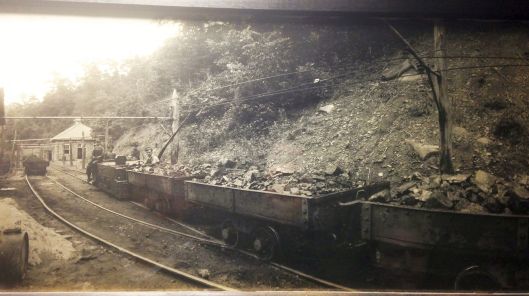
Camp Bellow #5 Mine, Logan County, WV. Photo credit unknown.

Origin of Coal (1927)

06 Sunday May 2018

Posted by Brandon Ray Kirk in Coal

≈ Leave a comment

Tags

Appalachia, Charles E. Krebs, Charleston, coal, history, Logan, Logan Banner, Mine Inspectors Institute of America, West Virginia

From the Logan Banner of Logan, WV, in a story titled “Origin of Coal,” comes this bit of coal history dated May 24, 1927:

ORIGIN OF COAL

It is a self evident fact that coal is of vegetable origin, and the evidence of which can be briefly stated, based on present scientific study of this subject:

1. Vegetable remains long extinct are found plentiful in close proximity with coal seams; stumps, roots, leaves and stems are found int eh slate overlying the seam and under clay, and are found even imbedded in the seams themselves.

2. This vegetation is associated with the coal seam and often becomes coal whiles till retaining its original form and structure.

3. This vegetation is found and recognized in the whole coal seam, even the coal ashes carefully examined under a powerful microscope show vegetable cells.

4. The perfect gradation may be traced from wood through the different kind of coal, and by chemical analysis.

5. Peats may be manufactured into a substance having many of the qualities of coal, and we may say further that all carbon and hydro carbon have organic matter.

The Flora or plant life of the coal measures are of the most abundant and perfect of all the extinct plants. It has been estimated that there are about 2000 known species of plant fossils in the coal measures. This Flora is really interesting to the geologist in that it furnishes a key to the evolution of the land plants. These plants are found preserved in some form in the coal seams in the overlying slate and rocks and underlying clays and slates.

From address by Charles E. Krebs, at convention of Mine Inspectors Institute of America, in session at Charleston last week.

Coal Development on Island Creek (1927)

04 Friday May 2018

Posted by Brandon Ray Kirk in Coal, Holden, Huntington

≈ Leave a comment

Tags

Appalachia, Boston, Cincinnati, coal, F.W. Batcheler, history, Holden, Huntington, Island Creek, Island Creek Coal Company, James D. Francis, Kentucky, Logan, Logan Banner, New York, Norfolk and Western Railroad, Ohio, Pine Creek, Pond Creek, R.S. McVey, Thomas B. Davis, West Virginia

From the Logan Banner of Logan, WV, comes this story titled “Boston Coal Men Pleased with Island Creek Development–New Town of Pine Creek Planned For,” published on October 25, 1927:

BOSTON COAL MEN PLEASED WITH ISLAND CREEK DEVELOPMENT–NEW TOWN OF PINE CREEK PLANNED FOR

Wish that more of the men at Boston, who talk about “mining camps” could come to West Virginia and see the flourishing cities and towns which dot the coal fields and ride over the hard roads which connect them was expressed Friday by F.W. Batcheler of Boston, treasurer of the Island Creek Coal Company. Mr. Batcheler, for 25 years in his present capacity, had just arrived in Huntington after his first visit to his company’s properties in Logan county and on Pond Creek in Kentucky. He said frankly that the experience had been a revelation to him, familiar as he already was in theory with the activities of his and other companies in these fields, reports the Herald-Dispatch.

Thomas B. Davis of New York, the Island Creek president, who has observed personally the development of the coal fields, was no less enthusiastic than Mr. Batcheler in his comment off the changes which have been wrought since his first visit to Island Creek.

“At first,” he said, “we had to go up the Norfolk & Western, using an accommodation train, and go across the mountains on horseback. Now we can inspect both Pond Creek and Island Creek properties in less time than it took them to get into the field.”

His enthusiasm and that of his fellow travelers was heightened by the fact that the party came to Huntington from Holden, by automobile, in two hours and twenty minutes.

With the president and Mr. Batcheler were R.S. McVey of Cincinnati, vice president in charge of sales, and James D. Francis of Huntington, vice president. Other members of the sales force took part in the inspection visit to the fields.

President Davis spoke in an optimistic strain of business conditions, which he feels are going to continue good despite a “let down” tendency now manifest.

“We can’t go at top speed all the time,” was his comment.

One of the chief points of interest to the inspection party while in Logan was operation No. 22, a new shaft mine which is being opened by the Island Creek company at an outlay of several million dollars.

15-Foot Seam at No. 22

“The shafts are down,” Mr. Davis said, “and we have found a 15-foot seam of coal as good as any found anywhere. The hoists are being raised and the first houses are being built.”

The preliminary housing in the new town of Pine Creek will include about forty buildings. The complete program, the officials explain, includes 600 houses to care for a population of 3,500. To reach this operation a railroad extension was built and a hard road, running for much of the seven-mile distance, was built by the company to connect Pine Creek with Holden.


C&O Officials Visit Guyan Valley (1917)

04 Friday May 2018

Posted by Brandon Ray Kirk in Coal, Huntington

≈ Leave a comment

Tags

Appalachia, C&O Railroad, E.D. Hotchkiss, E.L. Bock, G.W. Stevens, Guyandotte Valley, history, Huntington, J. Paul Stevens, L.B. Allen, Logan, Logan Democrat, West Virginia

From the Logan Democrat of Logan, WV, comes this interesting bit of railroad history titled “High Officials of C. & O. Pay Visit to Guyan Valley,” printed on January 11, 1917.

HIGH OFFICIALS OF C. & O. PAY VISIT TO GUYAN VALLEY

In a special train of four cars, President G.W. Stevens and other high officials of the Chesapeake & Ohio Railway company made an inspection up through the Guyan Valley on last Tuesday of this week, and that evening held a lengthy conference with Chamber of Commerce leaders and other prominent citizens of the city in regard to the needs and prospective improvements of the region, and during which many matters were placed upon a very satisfactory basis and better understanding.

Accompanying President Stevens were J. Paul Stevens, general manager; L.B. Allen, general superintendent; E.L. Bock, division superintendent; E.D. Hotchkiss, general freight agent; Mr. Walls, real estate agent; Mr. Trumbull, chairman of the board of directors and a number of other men prominently identified with the great railroad system, all of whom were enthusiastic over the wonderful development of the local coal fields and highly pleased with their trip.

As a result of the meeting it is understood that the long sought chair car on all Huntington trains will become a fixture in the near future, and that several other important and highly desired railroad improvements will very soon be started or accomplished.

Coal in Logan County, WV

29 Sunday Apr 2018

Posted by Brandon Ray Kirk in Coal

≈ 1 Comment

Tags

Appalachia, coal, history, Logan County, photos, West Virginia

Chief Logan Lodge Photo 2

Logan County, WV. Unknown date.

How a Farming Community was Built Again (1927)

10 Saturday Mar 2018

Posted by Brandon Ray Kirk in Coal, Logan

≈ Leave a comment

Tags

agriculture, Appalachia, coal, farming, history, Logan, Logan Banner, Pennsylvania, Point Marion, poultry, West Virginia

From the Logan Banner of Logan, WV, comes this interesting item about a transition from industry to agriculture in Point Marion, PA, dated August 19, 1927:

HOW A FARMING COMMUNITY WAS BUILT AGAIN

Glass factories and coal mines had kept the butcher, the baker, the candlestick maker, and the banker busy the year round in Point Marion, Pennsylvania. Hired men left the farms, followed by the farm owners, to get their share of the attractive wages. Suddenly labor saving machinery was brought in to the old hand method window glass factories. The coal business took a drop and hundreds of people had to find new employment. Savings accounts dwindled. Deposits of the two banks dropped off almost a million dollars. “Bring in more industries,” was being sung at luncheon clubs all over the land, every town seemed to be advertising unlimited water supply, cheap fuel, and free factory sites. Competition was keen and the reward doubtful.

The question came, “Why not stimulate the agricultural pursuits of the community which have lain dormant so long?” Farm income might be increased and production costs lowered in many instances. The first move of one of the banks was the purchase of healthy chicks. These were furnished by the bank at wholesale to interested farmers, payment to be made by note payable in six months. The bank followed through by aiding in the dissemination of culling and feeding knowledge and by helping to market the cockerels, which in most instances paid the initial cost of all the chicks.

When the pumpkins began to turn yellow, plans were laid for a great community exhibit. Besides the poultry display, farm produce exhibits from the surrounding country were entered. Altogether it made an impressive exhibit, bringing home the lesson to Point Marion people that there were great undeveloped opportunities within their own dooryards which they had overlooked.

The annual exhibit will be continued in the future by the bank. A horse show is sponsored, better seed corn and seed potatoes are made available to the farmers for planting, and the bank will continue to build agriculture in the community as a sound basis on which to work. “It will probably be some time before we shall see larger fruits of our endeavors,” the banker says, “but we are looking ahead ten to fifteen years.”

For more about Point Marion, PA, follow this link: https://en.wikipedia.org/wiki/Point_Marion,_Pennsylvania

George T. Swain to Write Logan County History (1927)

04 Sunday Mar 2018

Posted by Brandon Ray Kirk in Battle of Blair Mountain, Coal, Hatfield-McCoy Feud, Logan, Native American History

≈ Leave a comment

Tags

Appalachia, Aracoma, books, coal, feuds, genealogy, George T. Swain, Hatfield-McCoy Feud, history, Kingsport, Logan, Logan Banner, Mine Wars, Native American History, Native Americans, Tennessee, West Virginia, Woodland Press

From the Logan Banner of Logan, WV, comes this item about George T. Swain’s effort to write a history of Logan County dated May 27, 1927:

New Logan County History is Written

G.T. Swain, the Author, Says It May Be Ready For Distribution In 60 Days.

Announcement was made yesterday by G.T. Swain that his manuscript, on which he has been working for the past several years, of a complete history of Logan county, is practically completed and he plans to leave here within the next ten days for Kingsport, Tenn., where he will place it in the hands of a publisher.

It is understood the book will be published with cloth binding, the cover title to be printed in gold letters, and the work will cover approximately 400 pages. It will give traditions and legends of the tribe of Indians that inhabited this valley, details of the invasion and battle here when Aracoma was killed, the early life of the pioneers and who they were, as well as incidents occurring here during the early years.

It will contain a full history of the Hatfield-McCoy feud which occurred partly on Logan soil and a full and complete account of the mine war. Organizations of the coal companies that developed the valley will be given in full and even the names of the first white male and female child born in the valley will be recorded.

In addition to the historical data which have been obtained after laborious work the book will contain biographical sketches and pictures of approximately fifty prominent men who helped in the development of the great Guyan valley coal field. The completed book is expected to be ready for distribution within 60 days.

NOTE: To order a reprint of Swain’s history book, go here: http://www.woodlandpress.com/book/local-history/history-logan-county-west-virginia

NOTE: It’s very important for local newspapers to promote works by historians/writers!

F.D. Stollings Coal and Timber Lands Advertisement (1913)

03 Saturday Mar 2018

Posted by Brandon Ray Kirk in Coal, Logan, Timber

≈ Leave a comment

Tags

Appalachia, coal, F.D. Stollings, genealogy, history, Logan, Logan County, Logan Democrat, timber, West Virginia

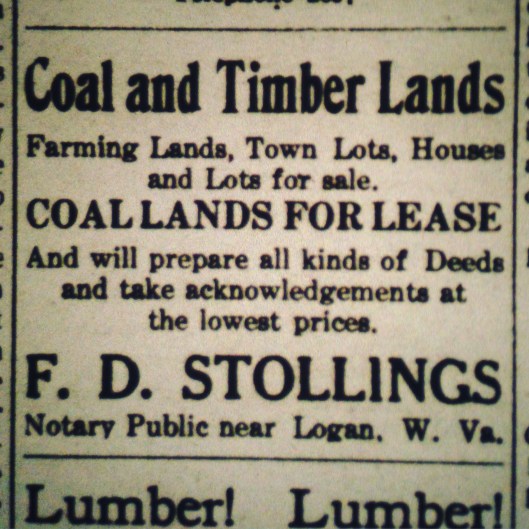
Coal and Timber Lands F.D. Stollings LD 01.02.1913 2

Logan (WV) Democrat, 2 January 1913.

Branchland Coal Company (1913)

12 Monday Feb 2018

Posted by Brandon Ray Kirk in Coal, Logan

≈ Leave a comment

Tags

Appalachia, Branchland Coal Company, coal, Guyandotte Valley, Henry D. Hatfield, history, James R. Branch, Kitchen, Lincoln County, Logan, Logan County, Logan Democrat, photos, West Virginia

From the Logan Democrat of Logan, WV, comes this letter from James R. Branch of the Branchland Coal Company, dated May 15, 1913:

Branchland 1

Kitchen, W.Va., May 9, 1913

Editor Logan Democrat,

Logan, W.Va.

Dear Sir:–

It may be of interest to you to know that the mines in the Guyan Valley operated by the Branchland Coal Co. adopted this month the nine hour day and two monthly pay-days suggested by Governor Hatfield.

These miners are probably the first in West Virginia to pay off on the double pay-day system, Saturday the tenth of May being the first day the men were paid off. I must say that it seems to make them happy and contented, and I am of the opinion that the changes will benefit the operator as well as the employee, for although men will have been scarce we are being flooded with them now. Miners live a hazardous life and are entitled to more consideration than they frequently receive. Our effort has always been to keep in touch with them and their complaints and troubles which are sometimes almost childish, but by sifting the real from the unreal and then acting justly the men are not hard to deal with, and they soon learn to trust those who treat them with consideration, justice and humanity.

West Virginia’s welfare and prosperity largely depend on her mines, and while I do not wish to pose as the preceptor of others, I sincerely believe that nearly all of our labor troubles could be adjusted by showing the miners as much liberality and kindness as possible.

Faithfully yours,

Jas. R. Branch, Pres.


Logan Train Station and C. & O. Railroad News (1917)

08 Thursday Feb 2018

Posted by Brandon Ray Kirk in Coal, Huntington, Logan

≈ 1 Comment

Tags

Appalachia, C&O Railroad, coal, E.F. Parkins, H.A. Davin, H.C. Davis, history, Huntington, Logan, Logan Democrat, Logan District, Peach Creek, R.W. Mumfort, W.E. Webb, West Virginia

From the Logan Democrat of Logan, WV, comes this item of news about the C&O and a proposed new Logan train station, dated May 10, 1917:

C. & O. PLANS NEW STATION

Great Volume of Business in Logan Compels Road to Consider Step

The C. & O. has decided on building a new freight and passenger station in Logan, according to a widely circulated rumor in railroad circles. The step has been under consideration for some time and it is said that the need for a bigger terminal in Logan has become imperative since this division was detached from the Huntington division and created into a separate branch of the system.

It is impossible at this time to verify the report that the new station is assured but a couple of railroad men who are said to have the confidence of those “higher up” have declared that a new station at Logan has become an absolute necessity.

Along with this rumor is another to the effect that the rapid development of the Logan county coal fields and the ever increasing volume of coal produce here will soon result in the system being doubletracked from Logan to Huntington. This measure is said to have been decided upon as a measure of economy as the existing conditions do not permit the railroad to realize the full extent of its possibilities.

More Than Talk

These rumors which have gained circulation before have been vigorously revived in railroad circles and the increasing importance attached to the Logan division make it appear as if more than talk would eventuate.

The Logan division is well known among traffic men in this part of the country is the most productive of the entire C. & O. system. More business is done through the Logan freight office than in Cincinnati or any other large city which is touched by that railroad. Furthermore, the constantly increasing number of new coal operations in Logan county show that the possibilities of this field are as yet only in their infancy. In a few more years, traffic under a single track system would be entirely congested and a double track will be the only means of enabling the railroad to care for the business in this field.

The creation of Logan as a separate division emphasizes the necessity of a new station to care for the force of officials and clerks who are  brought to the city. At the present time, superintendent W.E. Webb and his staff are compelled to occupy offices at Peach Creek which they will use until an addition is built to the yard office, but this too will be only of a temporary nature. Larger quarters, such as afforded in the Huntington station, are needed by the division chief and his staff and are said to be contemplated in the plans under consideration for a new station at Logan.

Supt. Webb Arrives

Supt. Webb and his staff arrived in Logan last week and were busy seeking suitable accommodations the first few days. Supt. Webb is not new to this field as he was for many years chief clerk to the division superintendent at Huntington who formerly had charge of the Logan District. Mr. Webb is a comparatively young man and is looked upon as one of the most promising younger railroad executives in the country. As chief clerk he had the respect and confidence of both officials and clerks and doubtless will make an enviable reputation as chief of the newest division on the C. & O. system. He bears the reputation of never speaking without coming directly to the point and wasting no unnecessary words.

The other officials and clerical staff heads here now are: H.A. Davin, trainmaster; H.C. Davis, assistant trainmaster; R.W. Mumfort, chief engineer and E.F. Parkins, time keeper. A number of other clerks are expected in a few days.

Source: Logan (WV) Democrat, 10 May 1917.

← Older posts
Newer posts →

Feud Poll 1

If you had lived in the Harts Creek community during the 1880s, to which faction of feudists might you have given your loyalty?

Categories

  • Adkins Mill
  • African American History
  • American Revolutionary War
  • Ashland
  • Atenville
  • Banco
  • Barboursville
  • Battle of Blair Mountain
  • Beech Creek
  • Big Creek
  • Big Harts Creek
  • Big Sandy Valley
  • Big Ugly Creek
  • Boone County
  • Breeden
  • Calhoun County
  • Cemeteries
  • Chapmanville
  • Civil War
  • Clay County
  • Clothier
  • Coal
  • Cove Gap
  • Crawley Creek
  • Culture of Honor
  • Dingess
  • Dollie
  • Dunlow
  • East Lynn
  • Ed Haley
  • Eden Park
  • Enslow
  • Estep
  • Ethel
  • Ferrellsburg
  • Fourteen
  • French-Eversole Feud
  • Gilbert
  • Giles County
  • Gill
  • Green Shoal
  • Guyandotte River
  • Halcyon
  • Hamlin
  • Harts
  • Hatfield-McCoy Feud
  • Holden
  • Hungarian-American History
  • Huntington
  • Inez
  • Irish-Americans
  • Italian American History
  • Jamboree
  • Jewish History
  • John Hartford
  • Kermit
  • Kiahsville
  • Kitchen
  • Leet
  • Lincoln County Feud
  • Little Harts Creek
  • Logan
  • Man
  • Matewan
  • Meador
  • Midkiff
  • Monroe County
  • Montgomery County
  • Music
  • Native American History
  • Peach Creek
  • Pearl Adkins Diary
  • Pecks Mill
  • Peter Creek
  • Pikeville
  • Pilgrim
  • Poetry
  • Queens Ridge
  • Ranger
  • Rector
  • Roane County
  • Rowan County Feud
  • Salt Rock
  • Sand Creek
  • Shively
  • Spears
  • Sports
  • Spottswood
  • Spurlockville
  • Stiltner
  • Stone Branch
  • Tazewell County
  • Timber
  • Tom Dula
  • Toney
  • Turner-Howard Feud
  • Twelve Pole Creek
  • Uncategorized
  • Warren
  • Wayne
  • West Hamlin
  • Wewanta
  • Wharncliffe
  • Whirlwind
  • Williamson
  • Women's History
  • World War I
  • Wyoming County
  • Yantus

Feud Poll 2

Do you think Milt Haley and Green McCoy committed the ambush on Al and Hollene Brumfield in 1889?

Blogroll

  • Ancestry.com
  • Ashland (KY) Daily Independent News Article
  • Author FB page
  • Beckley (WV) Register-Herald News Article
  • Big Sandy News (KY) News Article
  • Blood in West Virginia FB
  • Blood in West Virginia order
  • Chapters TV Program
  • Facebook
  • Ghosts of Guyan
  • Herald-Dispatch News Article 1
  • Herald-Dispatch News Article 2
  • In Search of Ed Haley
  • Instagram
  • Lincoln (WV) Journal News Article
  • Lincoln (WV) Journal Thumbs Up
  • Lincoln County
  • Lincoln County Feud
  • Lincoln County Feud Lecture
  • LinkedIn
  • Logan (WV) Banner News Article
  • Lunch With Books
  • Our Overmountain Men: The Revolutionary War in Western Virginia (1775-1783)
  • Pinterest
  • Scarborough Society's Art and Lecture Series
  • Smithsonian Article
  • Spirit of Jefferson News Article
  • The Friendly Neighbor Radio Show 1
  • The Friendly Neighbor Radio Show 2
  • The Friendly Neighbor Radio Show 3
  • The Friendly Neighbor Radio Show 4
  • The New Yorker
  • The State Journal's 55 Good Things About WV
  • tumblr.
  • Twitter
  • Website
  • Weirton (WV) Daily Times Article
  • Wheeling (WV) Intelligencer News Article 1
  • Wheeling (WV) Intelligencer News Article 2
  • WOWK TV
  • Writers Can Read Open Mic Night

Feud Poll 3

Who do you think organized the ambush of Al and Hollene Brumfield in 1889?

Recent Posts

  • Logan County Jail in Logan, WV
  • Absentee Landowners of Magnolia District (1890, 1892, 1894)
  • Charles Spurlock Survey at Fourteen Mile Creek, Lincoln County, WV (1815)

Ed Haley Poll 1

What do you think caused Ed Haley to lose his sight when he was three years old?

Top Posts & Pages

  • Halcyon 4.10.1919
  • Civil War Gold Coins Hidden Near Chapmanville, WV
  • Halcyon-Yantus 12.08.1911
  • Ran'l McCoy's Final Months (1914)
  • Buskirk Cemetery at Buskirk, KY (2015)

Copyright

© Brandon Ray Kirk and brandonraykirk.wordpress.com, 1987-2023. Unauthorized use and/or duplication of this material without express and written permission from this blog’s author and/or owner is strictly prohibited. Excerpts and links may be used, provided that full and clear credit is given to Brandon Ray Kirk and brandonraykirk.wordpress.com with appropriate and specific direction to the original content.

Archives

  • February 2025
  • January 2025
  • October 2023
  • September 2023
  • December 2022
  • November 2022
  • May 2022
  • April 2022
  • February 2022
  • November 2021
  • October 2021
  • September 2021
  • June 2021
  • May 2021
  • April 2021
  • March 2021
  • February 2021
  • January 2021
  • December 2020
  • November 2020
  • October 2020
  • July 2020
  • June 2020
  • May 2020
  • April 2020
  • March 2020
  • February 2020
  • January 2020
  • December 2019
  • November 2019
  • October 2019
  • September 2019
  • August 2019
  • July 2019
  • June 2019
  • May 2019
  • April 2019
  • March 2019
  • February 2019
  • January 2019
  • December 2018
  • November 2018
  • October 2018
  • September 2018
  • August 2018
  • July 2018
  • June 2018
  • May 2018
  • April 2018
  • March 2018
  • February 2018
  • January 2018
  • December 2017
  • November 2017
  • October 2017
  • September 2017
  • August 2017
  • July 2017
  • June 2017
  • May 2017
  • April 2017
  • March 2017
  • February 2017
  • January 2017
  • December 2016
  • November 2016
  • October 2016
  • September 2016
  • August 2016
  • July 2016
  • June 2016
  • May 2016
  • April 2016
  • March 2016
  • February 2016
  • January 2016
  • December 2015
  • November 2015
  • October 2015
  • September 2015
  • August 2015
  • July 2015
  • June 2015
  • May 2015
  • April 2015
  • March 2015
  • February 2015
  • January 2015
  • December 2014
  • October 2014
  • September 2014
  • August 2014
  • July 2014
  • June 2014
  • May 2014
  • April 2014
  • March 2014
  • February 2014
  • January 2014
  • December 2013
  • November 2013
  • October 2013
  • September 2013
  • August 2013
  • July 2013
  • June 2013
  • May 2013
  • April 2013
  • March 2013
  • February 2013
  • January 2013
  • December 2012
  • November 2012

Enter your email address to follow this blog and receive notifications of new posts by email.

Join 2,927 other subscribers

Tags

Appalachia Ashland Big Creek Big Ugly Creek Blood in West Virginia Brandon Kirk Cabell County cemeteries Chapmanville Charleston civil war coal Confederate Army crime culture Ed Haley Ella Haley Ferrellsburg feud fiddler fiddling genealogy Green McCoy Guyandotte River Harts Harts Creek Hatfield-McCoy Feud history Huntington John Hartford Kentucky Lawrence Haley life Lincoln County Lincoln County Feud Logan Logan Banner Logan County Milt Haley Mingo County music Ohio photos timbering U.S. South Virginia Wayne County West Virginia Whirlwind writing

Blogs I Follow

  • OtterTales
  • Our Appalachia: A Blog Created by Students of Brandon Kirk
  • Piedmont Trails
  • Truman Capote
  • Appalachian Diaspora

BLOOD IN WEST VIRGINIA is now available for order at Amazon!

Blog at WordPress.com.

OtterTales

Writings from my travels and experiences. High and fine literature is wine, and mine is only water; but everybody likes water. Mark Twain

Our Appalachia: A Blog Created by Students of Brandon Kirk

This site is dedicated to the collection, preservation, and promotion of history and culture in Appalachia.

Piedmont Trails

Genealogy and History in North Carolina and Beyond

Truman Capote

A site about one of the most beautiful, interesting, tallented, outrageous and colorful personalities of the 20th Century

Appalachian Diaspora

  • Subscribe Subscribed
    • Brandon Ray Kirk
    • Join 789 other subscribers
    • Already have a WordPress.com account? Log in now.
    • Brandon Ray Kirk
    • Subscribe Subscribed
    • Sign up
    • Log in
    • Report this content
    • View site in Reader
    • Manage subscriptions
    • Collapse this bar
 

Loading Comments...