• About

Brandon Ray Kirk

~ This site is dedicated to the collection, preservation, and promotion of history and culture in my section of Appalachia.

Brandon Ray Kirk

Category Archives: Big Sandy Valley

Blood in West Virginia

11 Tuesday Mar 2014

Posted by Brandon Ray Kirk in Big Harts Creek, Big Sandy Valley, Civil War, Culture of Honor, Harts, Lincoln County Feud, Music, Timber

≈ 2 Comments

Tags

Al Brumfield, Appalachia, Blood in West Virginia, Brandon Kirk, Cain Adkins, feud, Green McCoy, Henderson Dingess, history, John W Runyon, Lincoln County, Paris Brumfield, West Virginia, writers, writing

You may pre-order my book at Pelican Publishing Company: http://www.pelicanpub.com/index.php

You may pre-order my book directly at Pelican Publishing Company’s website or at the website of any major bookseller. http://www.pelicanpub.com/index.php

In Search of Ed Haley

02 Sunday Mar 2014

Posted by Brandon Ray Kirk in Big Sandy Valley, Ed Haley, Music, Women's History

≈ 5 Comments

Tags

Appalachia, culture, fiddle, fiddler, history, Josie Cline, Kentucky, Kermit, life, music, photos, Tug River, Warfield, West Virginia

The fiddle of Josie (Spaulding) Cline, "Lady Champion Fiddler of Kentucky, Virginia, Ohio & West Virginia"

The fiddle of Josie (Spaulding) Cline, “Lady Champion Fiddler of Kentucky, Virginia, Ohio & West Virginia”

In Search of Ed Haley 254

02 Sunday Mar 2014

Posted by Brandon Ray Kirk in Big Sandy Valley, Ed Haley, Music

≈ Leave a comment

Tags

blind, Charleston, Ed Haley, Ella Haley, fiddlers, history, John Spaulding, Josie Cline, Kentucky, Kermit, Martin County, Mont Spaulding, music, Norton, Virginia, Warfield, Wayne County, West Virginia, writing

John and Mary A. Spaulding were the parents of Josie Cline and Mont Spaulding, two fiddlers in Kermit, West Virginia, somehow affiliated with Ed Haley. In all, John and Mary had six children: Mont Spaulding (1860), Josephine Spaulding (c.1864), Virginia Spaulding (c.1867), Linsy Spaulding (1870), Nickiti Spaulding (c.1873) and Lizzie Spaulding (1878). In 1870, the Spauldings lived in the Lincoln District of Wayne County, West Virginia. In the late 1870s, they moved over to the Warfield area of Martin County, Kentucky. John died around 1878. In 1880, Mont was listed in census records as a blind person. In 1900, he and his mother Mary lived with his sister Lizzie Fitzpatrick in Martin County.

In 1910, according to census records, “Monterville Spaulding” lived in the Big Elk Precinct of Martin County where he was listed as a 48-year-old widowed traveling musician. Listed with him in that census were five children, including 20-year-old Dora Spaulding and 11-year-old James Spaulding. Based on this census, there was a solid (although not genealogical) connection between Ella Haley and the Spauldings. Between 1911-12, Ella received several postcards from a “Mont, Dora, and Jim Spaulding” from various places — Richmond, Virginia; Charleston, West Virginia; and Norton, Virginia. In light of the 1910 census, which gave Mont’s occupation as that of a traveling musician while listing him with two children named Dora and James, it seemed obvious that Ella knew Mont from her early years. Mont was gone from Martin County in 1920.

In Search of Ed Haley 247

22 Saturday Feb 2014

Posted by Brandon Ray Kirk in Big Sandy Valley, Ed Haley

≈ 4 Comments

Tags

Andrew Francis Messinger, Bill Duty, Blackburn Messinger, David Messinger, Fall Creek, genealogy, George T. Swain, George W. Parsley, history, James Muncy, James Parsley, John H. Messinger, Jr., Keenan Parsley, Kentucky, Lawrence County, Lincoln County, Marcum-Muncy Feud, Nellie Muncy, Nicholas Messinger, Pigeon Creek, Ryburn Parsley, Tug River, Wayne County, West Virginia, Wilson Messinger, writing

Penelope Muncy — Milt Haley’s mother — was born around 1823 to James Muncy and Mary Martha Copley. Nellie, as she was sometimes called, was probably an illegitimate child. On January 23, 1840, she married Ryburn Parsley in Lawrence County, Kentucky. In her marriage record, she gave her last name as Copley…not Muncy. According to Logan County historian George T. Swain, Nellie and her husband settled on Jenny’s Creek near the Tug Fork. They had at least four children: James Parsley (born c.1842), George W. Parsley (born c.1845), Sarah J. Parsley (born c.1848) and Martha Parsley (born c.1850). Ryburn was listed in the 1850 Logan County Census of (West) Virginia as a farmer then disappeared from local records. Swain’s history of Logan County gives a clue: “Riburn [Parsley], who married a Miss Muncey, became involved in the Muncey-Marcum feud and moved to Mississippi and became a brigadier general of the Confederate States in the Civil War.”

Strangely, Parsley left his wife and children in the Tug Valley.

In 1853, Nellie gave birth to a son named Keenan Parsley at Big Hurricane Creek near FortGay on the Big Sandy River in Wayne County. In Keenan’s birth record, no father was listed, perhaps indicating that he was an illegitimate child. Approximately three years later, Nellie gave birth to a son census records identify as Thomas P. Parsley – a.k.a. Thomas Milton Haley.

In 1860 Nellie married Wilson Messinger in Logan County. In her marriage record she gave her age as 37 years, her surname as Muncy instead of Copley or Parsley and listed her parents’ names as James and Mary Muncy. She also referred to herself, curiously enough, as a widow. At the time of the marriage, Wilson Messinger (also widowed) had five children: Mary Messinger, born about 1844; Blackburn Messinger, born about 1846; Andrew Francis Messinger, born about 1848; John H. Messinger, born about 1850; and David Messinger, born about 1855.

In the 1860 Logan County Census, Wilson and Nellie lived at the mouth of Pigeon Creek in the Tug Valley near Bill Duty. Wilson operated a mill and owned $250 worth of personal property. He had the following children in his household: two Parsley stepchildren (including Milt), five children, and a newborn son, Wilson Messinger, Jr., who was less than a year old.

By 1870, Nellie and Wilson had disappeared from West Virginia census records, possibly indicating their death or a move across the Tug into Kentucky. The family seems to have broken apart, as many of the Messinger children flocked to live near their wealthy grandfather Nicholas Messinger, a water mill operator in the Fall Creek area of Lincoln County.

Milt Haley apparently didn’t follow his stepsiblings to the GuyandotteValley. In 1870, he was still on Pigeon Creek in the home of Bill Duty, who was no apparent kin to him. Was it a coincidence that Duty had been a close neighbor to the Messingers in 1860?

In Search of Ed Haley 245

18 Tuesday Feb 2014

Posted by Brandon Ray Kirk in Big Sandy Valley, Civil War, Ed Haley

≈ Leave a comment

Tags

Andersonville Prison, Arthur I. Boreman, Ben Haley, Ben Haley Branch, Bessie Fraley, Bill Smith, Brandon Kirk, Cabell County, Cabell County Scouts, Cain Adkins, Catherine Haley, civil war, Ed Haley, history, Independent Company of Scouts, James H. Ferguson, James Haley, Jane McCoy, Kentucky, Kiahsville, Lick Creek, Lincoln County, Martha Spence, Peter McCoy, Quincy, Thomas McCoy, Wayne County, West Virginia, William A. Haley, writing

On March 20, 1865, Captain Benjamin R. Haley wrote West Virginia Governor Arthur I. Boreman about his capture the previous fall, the disbanding of his independent company of scouts and of his desire to join Captain James H. Ferguson’s Cabell County Scouts.

I have the Honor to Report the condition of my company of Ind. Scouts for Wayn County W.Va on the night of the 15th of Sept./64 we were Surrounded by 115 Rebells under command of Bill Smith in person I having only my Self and Seven of my men on duty when we were captured together with nine citizens whom I had cald in and armed to assist us in case we should be attacked we were all gobbled up with our armes and accouterments making in all Seventeen gunes with there accouterments. on my Return after Being parroled I Lernd that Senator Bowen had Recivd orders from you Excellency to take up the Remainder of the armes and accouterments and to Disband the men that was not captured. I have been bound to keep the parole they gave me for Life Sake not that I hold them a Legal Ware power yet for that and personal Safety I have kept it till now. I ernistly Desire an exchange as I wish to participate in defending my country with James H. Ferguson of Cabell County on whose List my name Shall Shortly appear.

On March 25, 44-year-old Haley enlisted in Ferguson’s Company of Cabell County Scouts at Guyandotte for one year, along with his sons William and 18-year-old James. Ben was appointed 2nd Sergeant on April 1, while William was appointed corporal. James was listed as a private in a muster roll dated May 25. The war, of course, wound down in the spring of 1865 and with it the military career of Ben Haley.

After the war, Haley settled in the headwaters of Ben Haley Branch, a tributary located at a small post office known as Kiahsville near the Wayne-Lincoln county line. In 1870, 50-year-old “Benjamin Hale” was listed with his family in the Sheridan District of newly created Lincoln County with $315 worth of real estate and $200 worth of personal property. His son William was also still in the area, having married Catherine O’Neil of Ireland in 1869. By 1880, 66-year-old Ben was back in Wayne County with 30-year-old Martha Deeryfield Spence and her children. His wife and younger children were no longer in the county.

During the 1880s, Ben Haley relocated to Quincy, Kentucky, perhaps around the time of Ed Haley’s birth in 1885. According to locals, nothing remains of his home on Ben Haley Branch except an old well. Just down the hill is Lick Creek, where Cain Adkins had been born in 1833.

In 1890, Catherine Haley was listed in the Special Union Veterans Census as a resident of the Laurel Hill District of Lincoln County. She gave John’s military information as follows: 9th West Virginia Infantry (Company G) from October 1862 until October 1864 and 1st West Virginia Infantry (Company F) from 1864 until June 1865. He suffered from consumption and was held in prison for nine months and fourteen days in Andersonville and Florence, South Carolina.

By 1900, there were no Haleys living in the Grant District of Wayne County.

Of Ben’s children, only Jane Haley currently has any descendants in the WayneCounty area. Jane married Thomas McCoy, Jr. (no relation to Green) and was the mother of Peter McCoy — the preacher who gave Milt and Green money for their escape in 1889. Peter died in 1963 but his daughter Bessie Fraley lives at the old homeplace on Route 37 near the family cemetery at the Wayne-Lincoln county line. When Brandon called her, she said her grandma Jane McCoy (Milt’s half-sister) was a “great big fat lady” who died before her birth in 1920. She had never heard of Milt Haley or even Ben Haley and had no idea that a Ben Haley Branch was only a few miles from her home.

In Search of Ed Haley

17 Monday Feb 2014

Posted by Brandon Ray Kirk in Big Sandy Valley, Ed Haley, Ferrellsburg

≈ Leave a comment

Tags

Appalachia, Brandon Kirk, feud, history, Inez, Kentucky, Lawrence Kirk, life, Martin County, photos

Lawrence Kirk, Inez, Martin County, KY, 4 March 1995.

Lawrence Kirk, Inez, Martin County, KY, 4 March 1995.

In Search of Ed Haley 244

17 Monday Feb 2014

Posted by Brandon Ray Kirk in Big Sandy Valley, Civil War, Ed Haley

≈ Leave a comment

Tags

5th West Virginia Infantry, Arthur I. Boreman, Ben Haley, Bill Smith, Camp Chase, Catlettsburg, civil war, Guyandotte, history, Independent Company of Scouts, James Buskirk, Jim Smith, Kentucky, steamboats, Stephen Strawther, Wash Watts, Wayne, Wayne County, West Virginia, William A. Haley, William T. Sherman, writing

On August 30, 1864, Captain Benjamin R. Haley wrote a letter to West Virginia Governor Arthur I. Boreman:

Sir I have the Honor of reporting to you the Success and condition of my company I have Lost no men tho there is Some ten cases of Sickness in my company owing to exposure in Scouting and Lying out in the night time we have had quiet times for the Last month untill the Last few days we now have Bill Smith and his gang in our midst which gives us much trouble and fatigue Looking out for him we also have Jim Smith the arch trator and a Small gang to Look after which is a great innoiance attended with considerable Trouble and Danger so upon the whole we have our hands full and in deed we may consider ourselves fourtunate if we are able to compete Successfully with them our armes are in good order and ammunition plenty for the ensuing month.

We have Arrested 9 Disloyal citizens which have been Sent away under Gen. Shermans order and two more who are now under trial at Catletts Burg Ky. Also one cofederate Soldier who was sent to Camp Chase whose name was Wash Wats. There has been Recently a trasaction in our county of Some importanc that a cirtain Rebel capt. James Buskerk who was experimenting with uncle Abe pills and took one too many So it worked him out of this wourld and also out of our way for ever and at the Same time there was one Stephen Strawther who took a very Heary Dose which is prooveing it is Supposed pretty fatal to him tho he may recover its affects for any thing we know yet we do hope it may have a good effect Let it work as it will it is an expressed opinion that if this Little company Should be removed the gurillas would be robbing Steam Boats between Catlettsburg & Guyandott and it is threatned Strongly as it is.

Attached to the August 30 letter was this message:

Sir wee are concious that our company is too weak to purform the Duty that is Required oweing to the increased numbers of gurilas and the Disbandment of the other three companies puting all together it becomes dangerous to Scout through the county or even to Hold a position in the County we have time and again Reported to the federal forces and with one Single exception have failed to get Help they invariably tell us to Remain with them and Keep out of Danger which you at once Se gives our County no protection at all now I have conversed with your warmest costituance and just friends and they all think it Due them and the intrust of our county that you Should give an order for more men now I can asure you the men can be recruited in a very Short time. You are aware that the term of Servis of the 5 Va Regt. is now about out and there are quite a number of them who have not nor will not reenlist also quite a number of them who Reside in wayn County and cannot Stay at home under existing circumstanses. They therefore would Readily enlist in a compey of this kind and Defend the Interest of the Loyal people of this county. There are also quite a number of citizens who would becom Souldiers in a Local Company like this be you assured we must have moor men or Suffer great Loss after Runing great Risks of our own Live we are held as usurpers of the Laws of Va and cald Borman Bogus theaves and cut throats by the Rebels and threatened with instantaneous Death when captured.

We are not at all Dismaid or intimidated at there threats not with Standing that there is plenty moor men to Help us we think it nothing more than Right they Should be permitted to do wee know they will do if armed and put at it we therefor petition you to give us the minimum number of a company Say eighty the Rank and file to be paid from the Date of there enlistment and for to be economical Say one Lieutenant.

On September 15, 1864, Haley was captured by a force under the command of Rebel Bill Smith. A few days later, on September 23, he was officially discharged from the 5th West Virginia Infantry, as was his son, William. The following day, the Wheeling Intelligencer reported on his capture:

A RAID: A few days ago the notorious rebel Bill Smith, with about sixty men, made a raid on Ceredo, situated on the Ohio river, in Wayne County in this state. They captured Capt. Ben. Hailey, and eight of his men, who belonged to the West Virginia State Guards, who were stationed at Ceredo for the protection of that point and surrounding neighborhood. They also captured all the male citizens of the place, with the exception of two old men, and robbed the Post Office of stationary and postage stamps, and other valuables, to the amount of about forty dollars, and robbed the citizens of all the horses in the neighborhood, and about seven hundred dollars. The guerillas left Ceredo with their prisoners and booty, going in the interior, in the direction of Wayne Court House, robbing the citizens of their horses and other property. The loyal citizens have been greatly annoyed for the want of necessary protection, ever since March or April last, the country being overrun by guerillas, committing depredations of the most shameful character, such as murdering citizens, robbing houses of bed clothing and their valuables, and taking money from citizens. It would be a great relief to the loyal citizens of Wayne County if the military authorities could possibly spare soldiers sufficient to protect said county from the bands of guerillas that are continually infesting the county, and driving the loyal citizens away from their homes.

In Search of Ed Haley 243

16 Sunday Feb 2014

Posted by Brandon Ray Kirk in Big Sandy Valley, Civil War, Ed Haley

≈ Leave a comment

Tags

45th Kentucky Volunteer Mounted Infantry, Albert Gallatin Jenkins, Arthur I. Boreman, Ashland, Ben Haley, Buffalo Shoals, Catlettsburg, Ceredo, Cumberland Gap, Flemingsburg, Independent Company of Scouts, James Haley, John Bowen, Kentucky, Louisa, Morgan Garrett, Mount Sterling, Prestonsburg, Saltville, Vincent A. Witcher, Virginia, Wayne County, West Virginia, William A. Haley

On June 8, 1863, Benjamin R. Haley and his son James enlisted for one year of service in the 45th Kentucky Volunteer Mounted Infantry. The 45th was organized in the summer of 1863 as a battalion (four companies) whose purpose it was the protect the Virginia front and the counties of eastern Kentucky. On October 10, the 45th was upgraded to a regiment in Ashland. At that time, Haley was made captain of Company B, while son William A. Haley was made second lieutenant.

“During the early part of 1864 the regimental headquarters were at Mt. Sterling, Ky., from which point the 45th was continually employed in constant and arduous duty, covering the entire Virginia front from Cumberland Gap to Louisa, and keeping in check, by ceaseless activity, the rebel cavalry command concentrated in and about Abingdon, Va.,” according to Union Regiments of Kentucky.

In March of ’64, the 45th moved its headquarters further north to Flemingsburg, Kentucky. Haley, perhaps wishing to remain closer to his home in Wayne County, resigned on March 17, 1864. William absented himself from command at Prestonsburg, Kentucky, on April 24, 1864 while on the march to Saltville, Virginia. James A. was mustered out on December 24, 1864 at Catlettsburg.

On April 8, 1864, John Bowen, a resident of Buffalo Shoals, wrote West Virginia governor Arthur I. Boreman to request that Ben Haley be permitted to organize a company and provide more Union protection in Wayne County.

Dear Sir I wish to inform you that Mr. Morgan Garret has declined to raise a Scouting Company for this part of our county and has gone to Kentucky. Horse Stealing is Still going on here. We need a company for this part of the county very much. They have three companeys upon Sandy and I understand they are trying to get another one. I think if their are to be another company for this county it ought to be for this part of the county. I would recommend either Benjamin Haley or William Nixson for capt. of a company and I request that one of them be commisioned to raise a company as soon as possible as we need protection badly.

Governor Boreman heeded Bowman’s request. On April 28, 1864, 46-year-old Ben Haley organized an Independent Company of Scouts for Wayne County. Some 25 men enlisted at Ceredo to serve in Captain Ben Haley’s Company for twelve months. “The members of my com were organized and Sworn in to the Servis by Abel Segar Esq the only Justice of the Peace that is in the County that will attempt to Edecute his office,” Haley wrote to the governor. On May 7, he requested 25 hats, 25 pairs of boots, 25 woolen blankets, 25 rubber blankets, 25 haversacks, 50 flannel shirts, fifty pairs of drawers and fifty pairs of stockings. He also requested 25 Colt rifles, 4000 bullet cartridges, 25 bayonet scabbards, 25 waist belts, 12 screw drivers and two ball screws, among other items. On May 10, Haley took his oath of office and then signed an oath of allegiance to the United States of America on the following day.

On June 6, Haley wrote Governor Boreman:

Sir I have the Honor of reporting the condition of my co of Independent Scouts for Wayne Co West Va. We are in Camp at present in Ceredo. The men in good condition except 3 cases of sickness disserrtions non captured two rebels prisoners one of Rebel Witcher command & the other of Jenkins turned over to the post at Catllesburg Ky please instruction what to be don with Sick also what is to be don with capturd property horses guns in consequence of the U.S. Troops being Sent to the front we are very much trobled with Strong bands of gurillas which prevents our Scouting very far in the county notwithstanding we have Scouted considerable & have lost no man I think in my next months report I shall be able to give a good account of the Service of my men as they are brace & hardy. Men all Suplied with arms in good condition.

In Search of Ed Haley 241

13 Thursday Feb 2014

Posted by Brandon Ray Kirk in Big Sandy Valley, Ed Haley, Music

≈ 2 Comments

Tags

Billy Adkins, Cain Adkins, fiddle, fiddler, Grand Ole Opry, Harts Creek, Lincoln County, Mingo Ramblers, Norfolk and Western, Stiltner, Tom Atkins, Wayne County, West Virginia, Williamson, Winchester Adkins, writing

A week later, I followed up on a lead from Billy Adkins and called Tom Atkins. Tom was a great-grandson of Cain Adkins and a genealogist in Williamson, West Virginia. It was a chance lead: Billy had called him to ask about Ed Haley’s genealogical connections in the Tug Valley only to discover that Tom’s grandfather was Winchester Adkins — a son to Cain.

When I called Tom, he said he knew almost nothing about Cain and only a little about his grandfather, Winchester Adkins. He said Winchester left the West Fork of Harts Creek at a young age and settled at Stiltner in Wayne County. He eventually moved to Williamson and worked as an engineer on the N&W Railroad. At that location, after a repeated “mix-up over his checks” he changed the spelling of his surname from “Adkins” to “Atkins.” He was also a well-known fiddler who tried his hand at professional music.

“I heard my mother tell someone here while back how many tunes my grandfather played,” Tom said. “It was a hundred and some. See, he just knew them by ear. And I believe that at one time he had a fiddle that was made by Cain — his father — and I don’t know who has that or whether it’s even in existence now ’cause we’ve had floods here. And I do know at one time he was a member of a group in Mingo County called the ‘Mingo Ramblers’ and they were on the Grand Ole Opry way back in the early days.”

Tom said that was all he knew because his grandfather died when he was four years old.

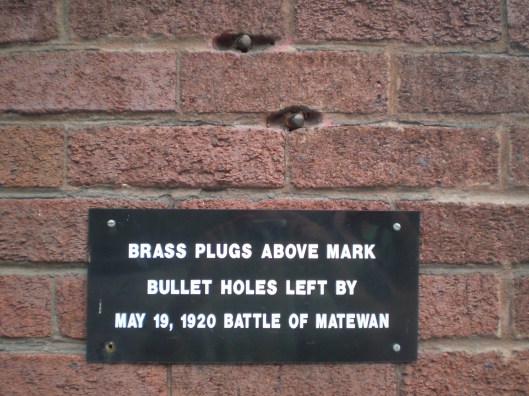
Matewan Massacre Historical Marker (2008)

05 Wednesday Feb 2014

Posted by Brandon Ray Kirk in Big Sandy Valley, Coal, Matewan

≈ 2 Comments

Tags

Baldwin-Felts Agency, Bluefield, Cabell Testerman, coal, crime, culture, life, Matewan, photos, Sid Hatfield, United Mine Workers of America, West Virginia

Matewan Massacre

Historical marker at Matewan, Mingo County, West Virginia, 2008.

In Search of Ed Haley 181

14 Monday Oct 2013

Posted by Brandon Ray Kirk in Big Sandy Valley, Big Ugly Creek, Ed Haley

≈ Leave a comment

Tags

Appalachia, Big Ugly Creek, Bill Duty, civil war, Fred B. Lambert, genealogy, history, Jeff Duty, John Hartford, Milt Haley, Tom Ferrell, Tug River, writing

We next looked at Logan County census records, where Milt Haley appeared in 1870 as “T. Milton Haley,” aged 13, living with a Bill Duty on Rich Creek in the Tug Valley. Duty’s home in Hardee District was relatively far away from the Harts area. Ten years later, in 1880, there was no trace of Milt or Duty anywhere in West Virginia, indicating that they may have lived outside the state at that time.

Had they moved together across the Tug into Kentucky?

We got back in the Lambert Collection for help…and found a circa-1934 interview with Jeff Duty, Bill Duty’s son.

At the time of the interview, Jeff was living at Dollie, a now extinct post office on Big Ugly Creek just upriver and over Green Shoal Mountain from Harts. He didn’t mention Milt Haley but gave a great account of his family story:

Grandfathers both came from Russell County, Virginia. Grandfather Geo. Duty came to Pigeon Creek in what is now Mingo County, before the Civil War. Grandfather James Ferrell settled on Big Creek, Logan County before the Civil War. Grandmother Duty was a Jackson and Grandmother Ferrell was a Fields.

Father was born in what is now Mingo County, and volunteered in 1861 as a Confederate. My father, William Duty, was in Gettysburg and Fort Donelson battles. They fought here seven days and seven nights. He was twice wounded. Father Wm. Duty lived in Mingo until fifty-one years ago, when he moved to Big Ugly, Lincoln County [around 1883]. When we moved to Big Ugly there were only three houses from Broad Branch, which is about one-half the length of Big Ugly to the head of Big Ugly, and now there are about two hundred. Big Ugly is nineteen miles long. There were plenty of deer, wild cats, coons, &c. when my father came. Wolves were here for about fifteen years after we came. Tom Ferrell killed the last deer killed about here about forty-five years ago.

My father was a rather big farmer for this part of the country, raising 1,000 bushels of corn a year, and always raising wheat. He had the first “chaff Piler” threshing machine brought in. It took about twelve horses to pull it. When it came on the first trip, my mother had about twenty geese in the yard, and when they heard it they took to the woods and did not come back for three or four days. My father had six children: John lived on Broad Branch, Lincoln County; Jeff here at Dollie; Phidelia Vernatter-Chapman lives in Boone County; Annie Steele lives in Logan County; George lives within three miles of Hurricane, Putnam County; Martha lives in Logan; she married Queen. My father, Wm. Duty, was the man who rode a $150.00 horse to death to save Tom Ferrell, who was in jail, in Hamlin, about 1889, for killing a man named Butcher, from a mob of Butcher relatives. Tom Ferrell is my cousin.

I am sixty-seven. I have eleven children, of whom three are dead: Alva, Lula, Stonewall, Solomon, Vernonda, Thos. Jefferson, Lee, Musco, Ira, Doska, Maggie. Mrs. Duty was Betty Pauley; her people came from Virginia. “Tiger Bill” Pauley was her father.

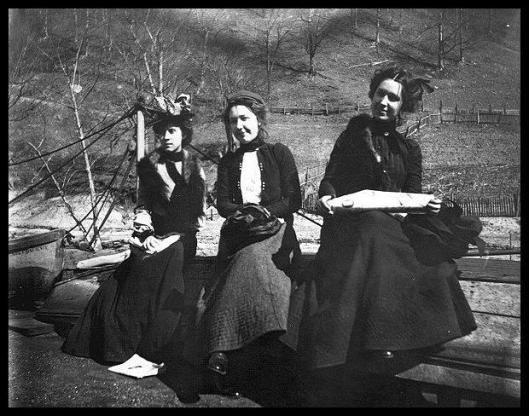
Pikeville Belles (1901)

29 Sunday Sep 2013

Posted by Brandon Ray Kirk in Big Sandy Valley, Pikeville, Women's History

≈ 1 Comment

Tags

Appalachia, Big Sandy River, culture, history, Kentucky, life, photos, Pikeville, steamboat, U.S. South

Pikeville Belles waiting on steamboat 1901

“Waiting on a boat,” Pikeville, Kentucky, 1901

Matewan Massacre Brass Plugs (2008)

13 Tuesday Aug 2013

Posted by Brandon Ray Kirk in Big Sandy Valley, Coal, Matewan

≈ Leave a comment

Tags

Appalachia, culture, history, Matewan, Mingo County, photos, West Virginia

Matewan Bullet Holes

Matewan, West Virginia, 2008

H.M. Stafford

31 Friday May 2013

Posted by Brandon Ray Kirk in Big Sandy Valley

≈ Leave a comment

Tags

Appalachia, Big Sandy River, H.M. Stafford, history, Johnson County, Kentucky, photos, pushboat, steamboats

HM Stafford and pushboat Johnson County 1904

H.M. Stafford and pushboat, Johnson County, Kentucky, 1904

Rafting Scene

26 Sunday May 2013

Posted by Brandon Ray Kirk in Big Sandy Valley, Timber

≈ Leave a comment

Tags

Appalachia, Catlettsburg, culture, history, Kentucky, life, logging, photos, steamboats, timbering, U.S. South

Six steamboats with log rafts, Catlettsburg, Kentucky, 1901

Six steamboats with log rafts, Catlettsburg, Kentucky, 1901

Image

Cricket

29 Monday Apr 2013

Tags

Appalachia, Big Sandy River, Cricket, culture, history, Johnson County, Kentucky, life, photos, steamboats, U.S. South

Cricket

Posted by Brandon Ray Kirk | Filed under Big Sandy Valley

≈ Leave a comment

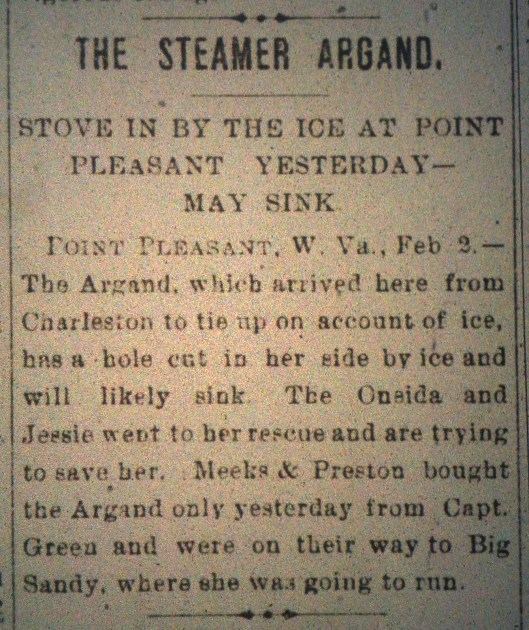
Steamboat: Argand (1900)

25 Thursday Apr 2013

Posted by Brandon Ray Kirk in Big Sandy Valley, Huntington

≈ Leave a comment

Tags

Appalachia, Argand, Big Sandy River, Charleston, culture, history, Jessie, Kentucky, Paintsville, photos, Point Pleasant, steamboats

Argand

Argand Likely to Sink HA 02.02.1900

Huntington (WV) Advertiser, 2 February 1900

In Search of Ed Haley 64

12 Tuesday Feb 2013

Posted by Brandon Ray Kirk in Ashland, Big Sandy Valley, Ed Haley, Music

≈ 1 Comment

Tags

Ashland, Big Sandy River, Blackberry Blossom, Blaze Starr, Bluegrass Meadows, Boyd County, Clark Kessinger, Dave Peyton, Delbarton, Duke Williamson, Ed Haley, fiddle, fiddler, fiddlers, fiddling, Georgia Slim Rutland, Grand Ole Opry, Hank Williams, Herald-Dispatch, history, Huntington, Jennies Creek, John Fleming, John Hartford, Kentucky, Lawrence Haley, Lynn Davis, McVeigh, Mingo County, Minnie Pearl, Molly O Day, Molly O'Day, music, Parkersburg Landing, Pike County, Pond Creek, Short Tail Fork, Shove That Hog's Foot, Skeets Williamson, Snake Chapman, Texas, West Virginia, Williamson

Early that summer, I was back at Lawrence Haley’s in Ashland with plans to visit Lynn Davis in Huntington, West Virginia. Lynn had been mentioned in the Parkersburg Landing liner notes as a source for Haley’s biographical sketch and was the widower of Molly O’Day, the famous country singer. Snake Chapman had told me that Molly and her family were close friends to Haley, who visited their home regularly in Pike County, Kentucky. I was sure Lynn would have a lot of great stories to tell about Ed. At our arrival, he was incredibly friendly — almost overwhelming us with the “welcome mat.” All we had to do was mention Ed’s name and he started telling us how he and Molly used to pick him up in Ashland and drive him up the Big Sandy Valley to see Molly’s father in southeastern Kentucky.

“That was back in the early forties,” he said. “We’d come to Ashland and get him at his home up on Winchester about 37th Street. They was a market there or something you turned up by and we’d go there and pick him up and take him up to Molly’s dad and mother up in Pond Creek, Kentucky — above Williamson. There’s an old log house up there — it’s been boarded up and sort of a thing built around it so people couldn’t get in and tear it up or something — but it’s falling down. He’d stay up there with Molly’s dad and mother for several days. They’d take him to Delbarton, a coal town over there from Williamson, and they’d just drive him around, buddy. Now Molly’s brother, he really loved Ed’s fiddling.”

Lynn was referencing Skeets Williamson, Molly’s older brother and a good fiddler by all accounts. Lynn showed me an album titled Fiddlin’ Skeets Williamson (c.1977), which referenced him as “one of country music’s more skilled fiddlers during the 1940’s — one of the best in his day.”

Skeets was born in 1920 at McVeigh, Kentucky, meaning he was approximately 35 years younger than Haley. As a child, he played music with Molly and his older brother Duke Williamson, as well as Snake Chapman. “During these years, the famous fiddler of Eastern Kentucky, Blind Ed Haley, became a tremendous influence on him,” the album liner notes proclaimed. “Skeets (along with Clark Kessinger) still contend that Haley was the greatest fiddler who ever played.” During a brief stint on Texas radio, Skeets met Georgia Slim Rutland, the famous radio fiddler who spent a year listening to Haley in Ashland.

I asked Lynn more about his trips to Haley’s home on 37th Street.

“We used to go down to his house and Molly’d say, ‘Uncle Ed, I’d just love to hear you play me a tune.’ Well he’d be sitting on the couch and he’d just reach over behind the couch — that’s where he kept his fiddle. He always had it in hand reach. So he would get it out of there, man, and fiddle.”

Sometimes Lynn and Molly would join in, but they mostly just sat back in awe.

“You’ve seen people get under the anointing of the Holy Ghost, John,” Lynn said. “Well now, that’s the way he played. I mean, I’ve seen him be playing a tune and man just shake, you know. It was hitting him. I mean, it was vibrating right in his very spirit. Molly always said, ‘I believe that fiddlers get anointed to the fiddle just like a preacher gets anointed to preach.’ They feel it. Man, he’d rock that fiddle. He’d get with rocking it what a lot of people get with bowing. It was something else. But he got into it man. He moved all over.”

Lynn said Ed was a “great artist” but had no specific memories of his technique. He didn’t comment on Ed’s bowing, fingering or even his fiddle positioning but did say that he mostly played in standard tuning. Only occasionally did Ed “play some weird stuff” in other tunings.

Lynn’s memories of Haley’s tunes seemed limited.

“Well, he played one called ‘Bluegrass Meadows’,” he said. “He had some great names for them. Of course one of his specials was ‘Blackberry Blossoms’. He liked that real good, and he’d tell real stories. He would be a sawing his fiddle a little while he was telling the story, and everybody naturally was just quiet as a mouse. You know, they didn’t want to miss nothing.”

What kind of stories?

“Well, I know about the hog’s foot thing. He said they went someplace to play and they didn’t have anything to eat and those boys went out and stole a hog and said they brought it in and butchered it and heard somebody coming. It was the law. They run in and put that hog in the bed and covered it up like it was somebody sleeping. And Ed was sitting there fiddling and somebody whispered to him, said, ‘Ed, that hog’s foot’s stickin’ out from under the cover there.’ So he started fiddling and singing, ‘Shove that hog’s foot further under the cover…’ He made it up as he went.”

The next thing I knew, Lynn was telling me about his musical career. He’d been acquainted with everybody from country great Hank Williams to Opry star Minnie Pearl. We knew a lot of the same people — a source of “bonding” — and it wasn’t long until he started handing me tapes and records of Molly O’Day and Georgia Slim Rutland. He said he had a wire recording of Ed and Ella somewhere, but couldn’t find it. He promised me though, “When I find this wire — and I will find it — it’s yours.”

Sometime later, he called Dave Peyton, a reporter-friend from the Huntington Herald-Dispatch, to come over for an interview. With Peyton’s arrival, Lynn (ever the showman) spun some big tales.

“Now, Molly’s grandfather on her mother’s side was the king of the moonshiners in West Virginia and he was known as ‘Twelve-Toed John Fleming’,” Lynn said. “He had six toes on each foot. Man, he was a rounder. Little short fella, little handlebar mustache — barefooted. He was from the Short Tail Fork of Jenny’s Creek. And the reason they called it that, those boys didn’t have any britches and they wore those big long night shirts till they was twelve or fourteen years old.”

Lynn was on a roll.

“I preached Molly’s uncle’s funeral. Her uncle is the father of Blaze Starr — the stripper. That’s Molly’s first cousin. In her book, she said she would walk seven miles through the woods to somebody that had a radio so she could hear her pretty cousin Molly sing. She was here in town about three or four months ago. We had breakfast a couple times together. She’s not stripping anymore. She makes jewelry and sells it. She’s about 60 right now.”

In Search of Ed Haley 60

30 Wednesday Jan 2013

Posted by Brandon Ray Kirk in Big Sandy Valley, Ed Haley, Huntington, Music, Pikeville, Williamson

≈ 2 Comments

Tags

Appalachia, Beaver Creek, Big Sandy River, Bill Necessary, Carter Caves State Park, Curly Wellman, Ed Haley, Ella Haley, fiddler, fiddling, Floyd County, Fraley Family Festival, Grayson, history, Huntington, J P Fraley, John Hartford, Kentucky, Lawrence Haley, Levisa Fork, Lynn Davis, Mingo County, Molly O Day, Molly O'Day, Mona Hager, music, Nashville, Paintsville, Prestonsburg, Snake Chapman, Tug Fork, U.S. South, Ugee Postalwait, West Virginia, Williamson, writers, writing

A few months later, I met Lawrence Haley at the Fraley Family Festival at Carter Caves State Park near Grayson, Kentucky. Lawrence and I spoke with Bill Necessary, a musician who saw Ed and Ella all over the Big Sandy Valley when he was about twenty years old. He said they rode a train up Levisa Fork to Paintsville, the seat of government for Johnson County, where they spent the day playing music at the courthouse. From there, they continued by train to Prestonsburg, county seat of Floyd County. At times, they went into the nearby coal camps of Beaver Creek and played at theatres. From Prestonsburg, they took the train to Pikeville, the county seat of Pike County, and then continued over to the Tug River around Williamson, county seat of Mingo County, West Virginia.

“Aw, they took in the whole dern country up through there,” Bill said. “By the time they made that circuit, why it’d be time for them to come again. I guess they’d tour a couple of weeks. By God, I just followed them around, son.”

Lawrence didn’t remember going to all of those places with Ed but did remember staying with Molly O’Day’s family around Williamson. Bill said Molly’s widow Lynn Davis was still living around Huntington, West Virginia.

Bill said Ed always wore a long overcoat — “rain or shine” — and even played in it. He never sang or entered contests.

“He was pretty up to date on music at that time,” Bill said. “His notes were real clear, boy.”

Back in Nashville, I worked really hard trying to figure out Ed’s bowing. There was a lot of contradictory information to consider. Snake Chapman said he bowed short strokes, indicating a lot of sawstrokes and pronounced note separation. J.P. Fraley, Slim Clere, Lawrence and Mona said that he favored the long bow approach and only used short strokes when necessary, like for hoedowns. Preacher Gore, Ugee Postalwait and Curly Wellman spoke about how smooth his fiddling was, which kind of hinted at him being a long bow fiddler. All were probably accurate in some respect. It seemed plain to me that one reason why there were so many contrasting and sometimes completely opposite accounts of how or even what Ed played was that everyone I’d talked to witnessed him playing at different times and places during his musical evolution. All along the way, he was experimenting, looking for that “right combination” or playing the style needed to create the sounds popular in a certain area. Even what I could actually hear on his home recordings was really just a glimpse into the world of his fiddling as it existed at that moment toward the end of his lifetime.

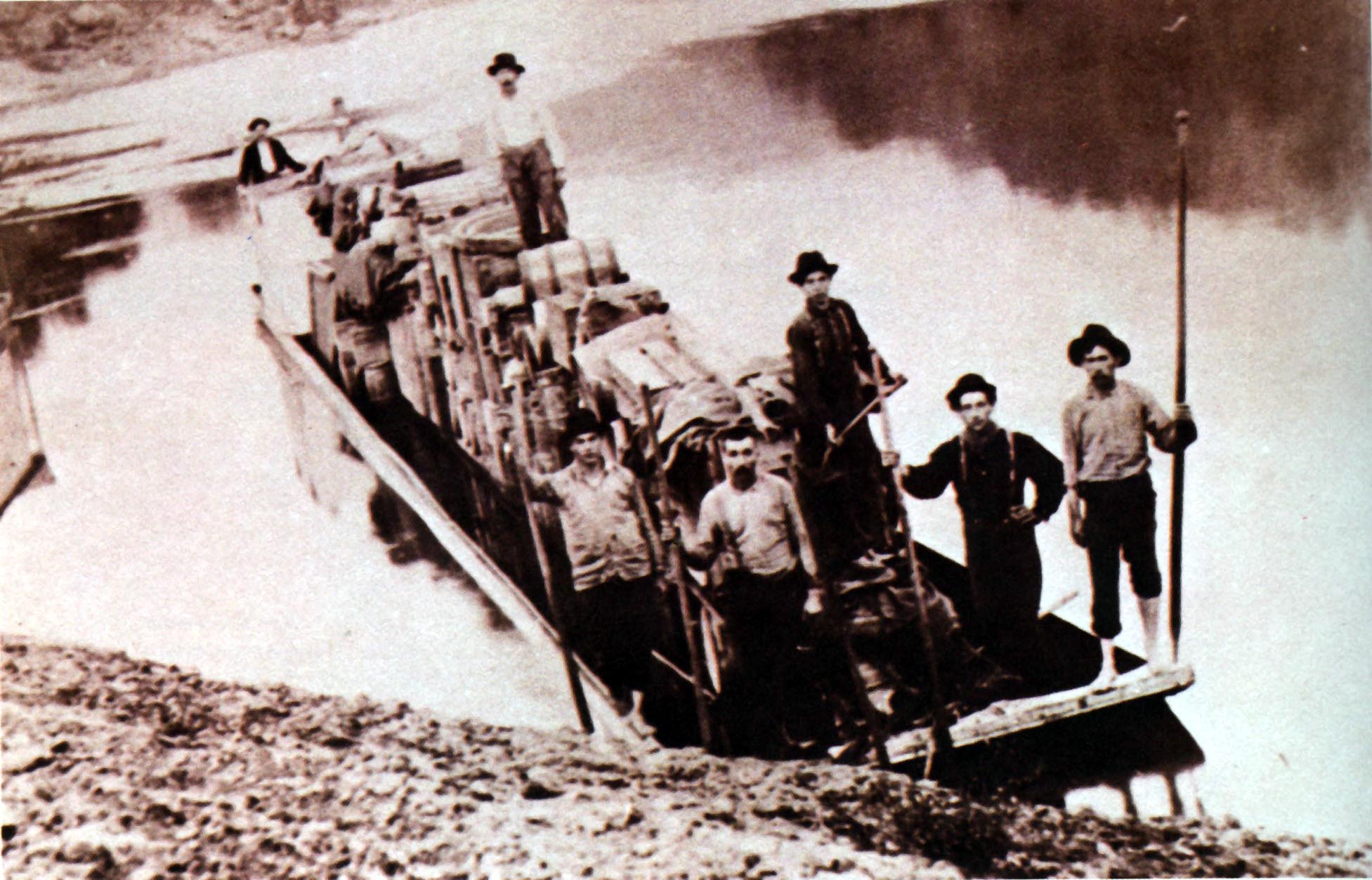
Big Sandy Boat

16 Wednesday Jan 2013

Posted by Brandon Ray Kirk in Big Sandy Valley

≈ 1 Comment

Tags

Appalachia, Big Sandy River, culture, history, Kentucky, life, photos, U.S. South, West Virginia

Taken sometime between 1885 and 1920

Taken sometime between 1885 and 1920

← Older posts
Newer posts →

Feud Poll 1

If you had lived in the Harts Creek community during the 1880s, to which faction of feudists might you have given your loyalty?

Categories

  • Adkins Mill
  • African American History
  • American Revolutionary War
  • Ashland
  • Atenville
  • Banco
  • Barboursville
  • Battle of Blair Mountain
  • Beech Creek
  • Big Creek
  • Big Harts Creek
  • Big Sandy Valley
  • Big Ugly Creek
  • Boone County
  • Breeden
  • Calhoun County
  • Cemeteries
  • Chapmanville
  • Civil War
  • Clay County
  • Clothier
  • Coal
  • Cove Gap
  • Crawley Creek
  • Culture of Honor
  • Dingess
  • Dollie
  • Dunlow
  • East Lynn
  • Ed Haley
  • Eden Park
  • Enslow
  • Estep
  • Ethel
  • Ferrellsburg
  • Fourteen
  • French-Eversole Feud
  • Gilbert
  • Giles County
  • Gill
  • Green Shoal
  • Guyandotte River
  • Halcyon
  • Hamlin
  • Harts
  • Hatfield-McCoy Feud
  • Holden
  • Hungarian-American History
  • Huntington
  • Inez
  • Irish-Americans
  • Italian American History
  • Jamboree
  • Jewish History
  • John Hartford
  • Kermit
  • Kiahsville
  • Kitchen
  • Leet
  • Lincoln County Feud
  • Little Harts Creek
  • Logan
  • Man
  • Matewan
  • Meador
  • Midkiff
  • Monroe County
  • Montgomery County
  • Music
  • Native American History
  • Peach Creek
  • Pearl Adkins Diary
  • Pecks Mill
  • Peter Creek
  • Pikeville
  • Pilgrim
  • Poetry
  • Queens Ridge
  • Ranger
  • Rector
  • Roane County
  • Rowan County Feud
  • Salt Rock
  • Sand Creek
  • Shively
  • Spears
  • Sports
  • Spottswood
  • Spurlockville
  • Stiltner
  • Stone Branch
  • Tazewell County
  • Timber
  • Tom Dula
  • Toney
  • Turner-Howard Feud
  • Twelve Pole Creek
  • Uncategorized
  • Warren
  • Wayne
  • West Hamlin
  • Wewanta
  • Wharncliffe
  • Whirlwind
  • Williamson
  • Women's History
  • World War I
  • Wyoming County
  • Yantus

Feud Poll 2

Do you think Milt Haley and Green McCoy committed the ambush on Al and Hollene Brumfield in 1889?

Blogroll

  • Ancestry.com
  • Ashland (KY) Daily Independent News Article
  • Author FB page
  • Beckley (WV) Register-Herald News Article
  • Big Sandy News (KY) News Article
  • Blood in West Virginia FB
  • Blood in West Virginia order
  • Chapters TV Program
  • Facebook
  • Ghosts of Guyan
  • Herald-Dispatch News Article 1
  • Herald-Dispatch News Article 2
  • In Search of Ed Haley
  • Instagram
  • Lincoln (WV) Journal News Article
  • Lincoln (WV) Journal Thumbs Up
  • Lincoln County
  • Lincoln County Feud
  • Lincoln County Feud Lecture
  • LinkedIn
  • Logan (WV) Banner News Article
  • Lunch With Books
  • Our Overmountain Men: The Revolutionary War in Western Virginia (1775-1783)
  • Pinterest
  • Scarborough Society's Art and Lecture Series
  • Smithsonian Article
  • Spirit of Jefferson News Article
  • The Friendly Neighbor Radio Show 1
  • The Friendly Neighbor Radio Show 2
  • The Friendly Neighbor Radio Show 3
  • The Friendly Neighbor Radio Show 4
  • The New Yorker
  • The State Journal's 55 Good Things About WV
  • tumblr.
  • Twitter
  • Website
  • Weirton (WV) Daily Times Article
  • Wheeling (WV) Intelligencer News Article 1
  • Wheeling (WV) Intelligencer News Article 2
  • WOWK TV
  • Writers Can Read Open Mic Night

Feud Poll 3

Who do you think organized the ambush of Al and Hollene Brumfield in 1889?

Recent Posts

  • Logan County Jail in Logan, WV
  • Absentee Landowners of Magnolia District (1890, 1892, 1894)
  • Charles Spurlock Survey at Fourteen Mile Creek, Lincoln County, WV (1815)

Ed Haley Poll 1

What do you think caused Ed Haley to lose his sight when he was three years old?

Top Posts & Pages

  • Early Anglo Settlers of Logan, WV (1937)
  • Alice Dingess piano
  • Vance Homeplace and Cemetery on West Fork (2017)
  • History for Boone County, WV (1928)
  • Battle of Curry Farm (1864)

Copyright

© Brandon Ray Kirk and brandonraykirk.wordpress.com, 1987-2023. Unauthorized use and/or duplication of this material without express and written permission from this blog’s author and/or owner is strictly prohibited. Excerpts and links may be used, provided that full and clear credit is given to Brandon Ray Kirk and brandonraykirk.wordpress.com with appropriate and specific direction to the original content.

Archives

  • February 2025
  • January 2025
  • October 2023
  • September 2023
  • December 2022
  • November 2022
  • May 2022
  • April 2022
  • February 2022
  • November 2021
  • October 2021
  • September 2021
  • June 2021
  • May 2021
  • April 2021
  • March 2021
  • February 2021
  • January 2021
  • December 2020
  • November 2020
  • October 2020
  • July 2020
  • June 2020
  • May 2020
  • April 2020
  • March 2020
  • February 2020
  • January 2020
  • December 2019
  • November 2019
  • October 2019
  • September 2019
  • August 2019
  • July 2019
  • June 2019
  • May 2019
  • April 2019
  • March 2019
  • February 2019
  • January 2019
  • December 2018
  • November 2018
  • October 2018
  • September 2018
  • August 2018
  • July 2018
  • June 2018
  • May 2018
  • April 2018
  • March 2018
  • February 2018
  • January 2018
  • December 2017
  • November 2017
  • October 2017
  • September 2017
  • August 2017
  • July 2017
  • June 2017
  • May 2017
  • April 2017
  • March 2017
  • February 2017
  • January 2017
  • December 2016
  • November 2016
  • October 2016
  • September 2016
  • August 2016
  • July 2016
  • June 2016
  • May 2016
  • April 2016
  • March 2016
  • February 2016
  • January 2016
  • December 2015
  • November 2015
  • October 2015
  • September 2015
  • August 2015
  • July 2015
  • June 2015
  • May 2015
  • April 2015
  • March 2015
  • February 2015
  • January 2015
  • December 2014
  • October 2014
  • September 2014
  • August 2014
  • July 2014
  • June 2014
  • May 2014
  • April 2014
  • March 2014
  • February 2014
  • January 2014
  • December 2013
  • November 2013
  • October 2013
  • September 2013
  • August 2013
  • July 2013
  • June 2013
  • May 2013
  • April 2013
  • March 2013
  • February 2013
  • January 2013
  • December 2012
  • November 2012

Enter your email address to follow this blog and receive notifications of new posts by email.

Join 2,925 other subscribers

Tags

Appalachia Ashland Big Creek Big Ugly Creek Blood in West Virginia Brandon Kirk Cabell County cemeteries Chapmanville Charleston civil war coal Confederate Army crime culture Ed Haley Ella Haley Ferrellsburg feud fiddler fiddling genealogy Green McCoy Guyandotte River Harts Harts Creek Hatfield-McCoy Feud history Huntington John Hartford Kentucky Lawrence Haley life Lincoln County Lincoln County Feud Logan Logan Banner Logan County Milt Haley Mingo County music Ohio photos timbering U.S. South Virginia Wayne County West Virginia Whirlwind writing

Blogs I Follow

  • OtterTales
  • Our Appalachia: A Blog Created by Students of Brandon Kirk
  • Piedmont Trails
  • Truman Capote
  • Appalachian Diaspora

BLOOD IN WEST VIRGINIA is now available for order at Amazon!

Blog at WordPress.com.

OtterTales

Writings from my travels and experiences. High and fine literature is wine, and mine is only water; but everybody likes water. Mark Twain

Our Appalachia: A Blog Created by Students of Brandon Kirk

This site is dedicated to the collection, preservation, and promotion of history and culture in Appalachia.

Piedmont Trails

Genealogy and History in North Carolina and Beyond

Truman Capote

A site about one of the most beautiful, interesting, tallented, outrageous and colorful personalities of the 20th Century

Appalachian Diaspora

  • Subscribe Subscribed
    • Brandon Ray Kirk
    • Join 787 other subscribers
    • Already have a WordPress.com account? Log in now.
    • Brandon Ray Kirk
    • Subscribe Subscribed
    • Sign up
    • Log in
    • Report this content
    • View site in Reader
    • Manage subscriptions
    • Collapse this bar
 

Loading Comments...