
• About

Brandon Ray Kirk

~ This site is dedicated to the collection, preservation, and promotion of history and culture in my section of Appalachia.

Brandon Ray Kirk

Tag Archives: World War II

Interview with Frank Hill of Big Creek, WV (2004) 3

22 Monday May 2017

Posted by Brandon Ray Kirk in Banco, Big Creek

≈ Leave a comment

Tags

Annie Elizabeth Hill, Appalachia, Ashland, Big Creek, Big Ugly Creek, Billy Adkins, Boone County, Brandon Kirk, Chapmanville, dairy, education, Edward Hill, Ellis Fork, Frank Hill, genealogy, general store, Green McNeely, history, Kentucky, Logan, North Fork, notary public, Sandy Valley Grocery Company, tobacco, U.S. Army, West Virginia, World War II

On June 2, 2004, Billy Adkins and I visited Frank Hill. Mr. Hill, a retired farmer, bus driver, and store keeper, made his home on Ellis Fork of North Fork of Big Creek in Boone County, West Virginia. Born in 1923, he was the son of Edward W. and Annie Elizabeth (Stollings) Hill. Billy and I were interested in hearing about Mr. Hill’s Fowler ancestry and anything he wanted to share about his own life. We greatly enjoyed our visit. What follows is a partial transcript of our interview:

STORE BUSINESS

My brother started a store. There wasn’t no money in circulation when he started that store. He took a government loan for $100 and he got in touch with Sandy Valley Grocery Company in Ashland, Kentucky, and he invested that $100 and it give him enough stock to start with. Pinto beans at that time was $3.50 per hundred and he bagged them up in five pound bags and sold them for five cents. That was slow money but he made a go of it. Then he got drafted in the army and he turned it over to Mom and Dad and they took care of it for so many years. You know, my dad didn’t have a bit of education. He couldn’t even sign his name. But he clerked in that store and he could make change better than somebody with a calculator.

EARLY JOBS AND WAR

I started growing tobacco and when I was 19 I got drafted in the Army and I stayed a spell there. And the government was letting farmers that was pretty good producers go home. They needed food worse than they did soldiers at that time. That was about 1943. So I got to come home. I had an awful sick dad, too, and that was part of the reason. And I was the last one of three boys – two of them was already overseas. And all of that had a bearing on letting me out, I guess. I never went overseas. My company left about the time they released me.

Note: Electricity came about 1945.

MARRIAGE

I got married at Logan. We went in there and bought our license and the county clerk was Green McNeely. I said, “Could you tell me where there’s a preacher that would marry her and me?” He said, “Step around here behind the counter. I’m a preacher and also a clerk.”

STORE BUSINESS

We run it about fifteen years. We sold groceries. At one time, I had general merchandise. If you wanted any kind of hardware – wires, nails, anything like that – I could get it out of Huntington. People come there from Big Ugly across the mountain and carry their groceries back. That was the only store that was very close unless you went to Chapmanville or Madison.

That store was my wife’s project really. I worked away. I drove a bus 27 years, I think it was, in Boone County. I applied for a job to contract that hollow. I furnished my own bus, gas and everything. I done that for four year and a half and then they put me on the big yellow bus but I never got any credit for them four years and a half toward my pension. I thought they should have paid me for that because I met all the requirements that other drivers did and my bus had to be inspected, too.

I farmed and growed tobacco all them years. We had a dairy, too. We milked cows by hand and bottled it up and sold it in Chapmanville house by house. I’ve served as a notary public for Boone County for three terms – ten year each time under a different governor. And I’ve served on the farm committee for more than forty-seven years and I’ll not run no more as far as I know.
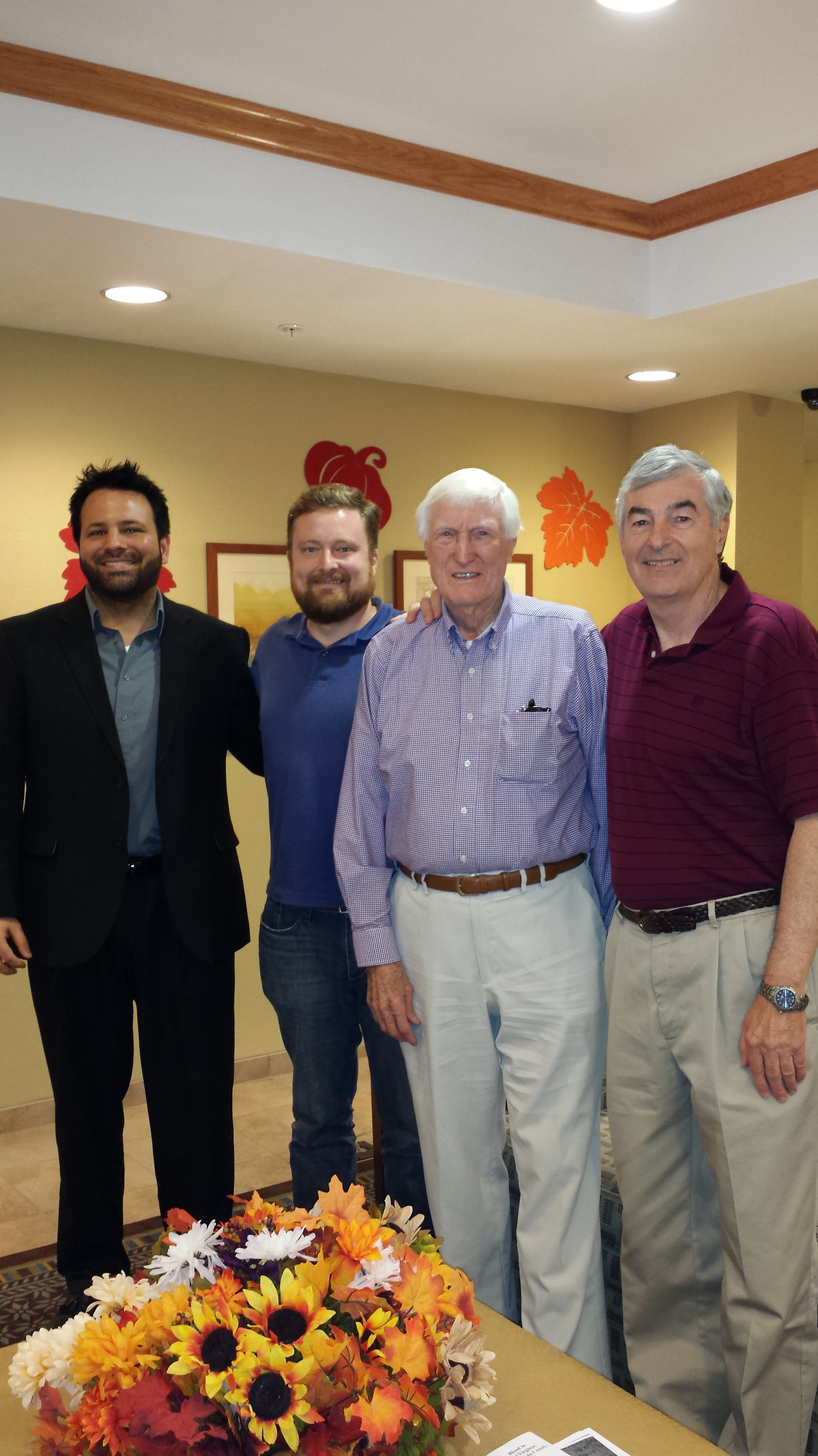
Sampson Brumfield’s Family (2015)

03 Saturday Oct 2015

Posted by Brandon Ray Kirk in Lincoln County Feud, Logan

≈ 1 Comment

Tags

Appalachia, Blood in West Virginia, Brandon Kirk, genealogy, George Brumfield, history, Logan, photos, Sampson Brumfield, West Virginia, World War II

I recently enjoyed meeting 89-year-old George Brumfield and his family in Logan, WV. George is the great-grandson of Sampson Brumfield.  September 2015

I recently enjoyed meeting 89-year-old George Brumfield and his family in Logan, WV. George is the great-grandson of Sampson Brumfield, a World War II veteran, and a wealth of knowledge about local history. September 2015

In Search of Ed Haley 353

10 Sunday Aug 2014

Posted by Brandon Ray Kirk in Big Harts Creek, Ed Haley, John Hartford, Music

≈ 1 Comment

Tags

blind, Brandon Kirk, Cacklin Hen, Cas Baisden, Clyde Haley, Ed Haley, Ella Haley, Ewell Mullins, fiddling, Harts, Harts Creek, history, John Hartford, Logan County, music, Peter Mullins, Robert Martin, Trace Fork, West Virginia, World War II, writing

Early the next morning, Brandon and I arrived on the bus in Harts and drove to see Cas Baisden, who we spotted in a porch swing up main Harts Creek, just above the mouth of Smoke House Fork. It was a pastoral scene: a somewhat old farmhouse, several chickens in the yard and a few cattle in the distance who’d done a marvelous job of clearing the mountainside just back of the place. As we pulled up to the house, I realized that it was built fairly high off of the ground — probably as a precaution against flooding. Cas just kind of stared down at us as we unloaded from the car.

Once he figured out who we were, he invited us in to the living room. There we learned that Cas was eighty-seven years old and had spent his whole life on Harts Creek.

“I was born in 1910,” he said. “The only five years I was gone from here was when I was in the Army. I left here the second day of April ’42. I spent five year in the Air Force. Never was off the ground.”

Wow — I had to ask, “What is the secret to living so long?”

“Working, working, buddy,” Cas said. “I work ever day a little bit. I wish you’d a seen the coal and stuff I packed in this morning. I got two calves down there and chickens and cats and dogs. I live on tobacco, Cheerios, and milk.”

Ever drink any whiskey?

“Barrels of it,” he said. “It’s been ten or twelve years since I quit fooling with drinking. Yeah, I went up here and joined the church and things. A fella never knows what he misses when he gets in a church. I used to be rougher’n a cob.”

Cas was partly raised by Uncle Peter Mullins, so he remembered Ed Haley well.

“He’d come up there to Peter’s and just go from house to house playing music and eating,” he said. “He used to go up to Ewell’s — I guess where he was raised — and come down that road just a running and hollering and whooping and cutting the awfulest shine that ever was and you wouldn’t a thought he could a stayed in that road. I don’t know how he done it, but he’d take spells like that. If he got a hold of you with a knife, though, he was dangerous. Hang on you and cut as long as they’s a thread on you. Him and that old woman, they’d get drunk and they’d fight up there. You know, it’s a wonder they hadn’t a killed one another. I believe they did try to cut one another up there at old man Peter’s one time.”

What about the Haley kids?

“Why them young’ns would do anything,” Cas said. “Clyde went out here where Robert Martin used to live on that mountain and went down in the well and they had a time a getting him out. And up here a little bit was a big sycamore and he was up in there and we’d throw rocks at him, son, and if we’d a hit him and knocked him out of there he’d been killed. I believe Clyde was the meanest one among them, I don’t know.”

I asked Cas if he ever played music and he said, “Nah, I done well to call hogs. But now Ed was about as good a fiddler as they was. Nobody could play better than Ed. He could play anything on earth he wanted to play.”

Cas had memories of Ed playing at Uncle Peter’s, either outside for small crowds or inside for “big dances” before “they finally broke up and quit.” The old dances started about the “edge of dark” and people would just “jump around — most people never could dance” – until sun-up. There was no trouble — just “fiddle, dance, drink” — although a person had to watch out for what Cas called the “old hedgehogs.”

I asked him if Ed ever drank much at the dances and he said, “Sure. He’d get to drinking and have more fun than the one’s a dancing.”

When Ed wasn’t around to play dances on Trace, Robert Martin would show up and fiddle tunes like “Cacklin’ Hen”. Martin had the first radio “that was ever in this country” so people went to his house “out on the mountain” and listened to it until “way late in the night.”

In Search of Ed Haley 351

07 Thursday Aug 2014

Posted by Brandon Ray Kirk in Ed Haley, John Hartford

≈ Leave a comment

Tags

Allie Trumbo, Ashland, Beautiful Isle of Somewhere, Brandon Kirk, California, Cincinnati, Cleveland, Doug Owsley, Ed Haley, Ella Haley, Florida, genealogy, history, Jack Haley, Janet Haley, Jimmy Haley, John Hartford, Kentucky, Lawrence Haley, life, Margaret Ryan, Mona Haley, music, Noah Haley, Oak Hill Cemetery, Ohio, Pat Haley, Patsy Haley, Ralph Haley, Ralph Payne, Rosemary Haley, Wilson Mullins, World War II, writing

Early in December, Brandon and I met at Pat Haley’s. All of our excitement focused on the upcoming meeting with Owsley’s forensic team, although it wasn’t long until we were in the familiar routine of asking Pat and Mona questions. Mostly they spoke of Ralph, a key player in Ed’s story. It was Ralph who recorded Ed’s and Ella’s music. Pat said Patsy knew a lot about Ralph, so she called her in Cleveland.

Patsy said Ralph was a nice and intelligent person.

“All the kids looked up to him when they were growing up,” she said.

As far as Patsy knew, Ralph never had any contact with his real father but he did take the last name of Payne when he was older.

Around 1936, Ralph married Margaret Ryan, an eighteen- or nineteen-year-old Cincinnati girl. The newlyweds took up residence with Ed and Ella, and Ralph stopped drinking (at his wife’s insistence). Margaret remained living with the Haleys during the war, when Ralph was overseas fighting the Japanese.

During the war, Ralph had an affair with a Filipino woman named Celeste, who Pat said bore him a son. Mona thought he actually married Celeste. According to her, his plan was to “set” Margaret up after the war, divorce her and return to his Filipino bride. He had Celeste’s name tattooed on his body. When he returned home from the war, he told Margaret, when she saw his tattoo, that Celeste had been the name of his ship. Ralph and Margaret soon left Ashland and moved to Cincinnati.

It was around that time that Patsy came into the family. She said she married Jack in California on October 25, 1946 and met Ed the following Thanksgiving in Ashland. She and Jack moved in with him for three months at 105 17th Street. Mona, Wilson Mullins, and little Ralph were also living there at the time. Jack only stayed for about three months because he couldn’t find work. Patsy said they moved out near Ralph in Cincinnati. Ella’s brother Allie Trumbo lived there, as did several of her close friends. Mona and her family soon followed them there and found an apartment in the same building.

Mona said Ralph’s thoughts were with Celeste: he was in the process of getting Margaret “set up” when tragedy intervened.

One Sunday in May of 1947, Jack, Patsy, Ralph, Margaret, Mona, Wilson, and little Ralph went fishing at a park about 25 miles outside of Cincinnati. At some point, Patsy said Ralph and Mona began talking about hanging upside down in a nearby tree. Mona climbed up the tree and Patsy took her picture. Then Ralph got in the tree and fell. As he lay on the ground, he told his family that his neck was broken and requested that they put a board under him until the doctors could arrive. Ralph was taken to a hospital where he told Ella, “When I bite down on the ice it makes a musical tone in my head.”

On Thursday, May 22, 1947, Ralph died at the age of 34. The family was afraid that Ella might hear of his death over the radio. She was staying at Mona’s apartment at the time.

On May 24 — Mona’s birthday — Ralph was buried in the Oak Hill Cemetery near Cincinnati. Patsy said Ed never made it to Ralph’s funeral, nor did Lawrence, who was in the service in Florida but Mona remembered that Lawrence was there on emergency leave. Someone played “Beautiful Isle of Somewhere”, Ralph’s favorite hymn.

Celeste later wrote Ella, mentioning how her son had an ear problem. When the family wrote to tell her of Ralph’s death, she figured they were making it up just so she would stop writing.

We figured that Ralph was Mona’s favorite brother since she had named her oldest son after him, but she said Jack was her favorite brother because he had taken up for her the most. She said Ella had been the one who named her son after Ralph. She also spoke highly of Noah, who contracted malaria and saw a lot of combat during World War II.

“Noah was good to send things home to Mom and Pop during the war,” Mona said. “And when he came home he laid carpet and fixed doorbells did things like that for Mom there at 17th Street.”

Noah went to Cleveland around 1950. Pat said Noah’s wife was a high-strung person. Their daughter Rosemary killed herself when she was eighteen. She wanted to get married but her mother protested, so she went into her brother’s room and shot herself in the head. In later years, Noah and Janet divorced. Pat said Noah’s son Jimmy really did a good job of looking after them. Janet died several years ago.

Interview with John Dingess 1 (1996)

10 Thursday Jul 2014

Posted by Brandon Ray Kirk in Big Harts Creek, Culture of Honor, Lincoln County Feud, Warren

≈ Leave a comment

Tags

Al Brumfield, Ben Adams, Blood in West Virginia, Brandon Kirk, Chapman Dingess, Charlie Dingess, Cole Branch, Connecticut, crime, feud, Green McCoy, Harts Creek, Harvey "Long Harve" Dingess, Henderson Dingess, history, John Dingess, John Frock Adams, Joseph Adams, Kentucky, Lincoln County War, Milt Haley, Sallie Dingess, Smokehouse Fork, Thompson Branch, Tug River, Victoria Adams, West Virginia, World War II

That winter, Brandon made contact by telephone with John Dingess, a Connecticut resident who proved to be one of our best sources on the 1889 feud. John was born on the Smokehouse Fork of Harts Creek in 1918. A grandson to Henderson Dingess, he moved away from West Virginia after serving his country in World War II.

John said Henderson Dingess met his wife Sallie while boarding with her father Joseph Adams on Harts Creek. Henderson didn’t care much for his in-laws (he said they were “hoggish”), particularly his brother-in-law Ben Adams. Ben lived over the mountain from Henderson on main Harts Creek where he operated a small store. He and Henderson feuded “for years.” At some point, Henderson’s oldest son Charlie Dingess got into a racket with Ben over a yoke of cattle and “almost killed him in a fight” at Cole Branch.

The feud between Henderson’s family and Ben Adams reached a new level of tension when Ben refused to pay the sixteen-cents-per-log fee required by Al Brumfield to pass logs through his boom at the mouth of Harts Creek. Brumfield “was more of a businessman” than a feudist but “got into it” with Adams at his saloon near the boom. In the scrape, Ben pulled out his pistol and shot Al, who was spared from harm only because of a button on his clothes. Al subsequently fetched a gun and chased Ben up the creek — a very humiliating thing as there was probably a whole gang of people to witness his flight.

Ben soon gathered up a party of men with plans to force his timber out of Harts Creek under the cover of darkness. Before he could put his plan into action, though, the Dingesses caught wind of it and warned the Brumfields who promptly armed themselves with .38 Winchesters and .44 Winchesters and gathered in ambush on the hill at Panther Branch near the mouth of Harts.

Ben, anticipating trouble, put his wife, the former Victoria Dingess, at the front of his gang in the hopes that it might discourage her cousins from shooting at him as they came down the creek. It was a bad idea: the Brumfields and Dingesses shot “her dress full of holes.”

This was particularly horrible since she was probably pregnant at the time.

The next day, she came to her uncle Henderson’s to show him what his boys had done to her dress but he never punished them.

At that point, Ben was probably hell-bent on revenge and arranged for Milt Haley and Green McCoy, who John called two “professional gunmen,” to “bump Al off.”

John was sure of Ben’s role in the events of 1889.

“Ben Adams, my father’s uncle, he gave them a .38 Winchester apiece and a side of bacon to kill Al Brumfield,” he said.

Milt and Green caught Al one Sunday as he made his way back down Harts Creek after visiting with Henderson Dingess. He rode alone, while Hollena rode with her younger brother, Dave Dingess. As they neared Thompson Branch, Milt and Green fired down the hill at them from their position at the “Hot Rock.” Al was shot in the elbow, which knocked him from his horse and broke his arm, while Hollena was shot in the face. Al somehow managed to make it over a mountain back to Henderson Dingess’, while Hollena was left to crawl half a mile down to Chapman Dingess’ at Thompson Branch for help.

Upon learning of the ambush, Harvey Dingess (John’s father) hitched up a sled to one of his father’s yokes of cattle and fetched Hollena, who remained at Henderson’s until she recovered.

Immediately after the shootings, there was a lot of gossip about who’d been behind the whole affair. John said there was some talk that Long John Adams had been involved “but the Dingess and Brumfield people never believed it.” Everyone seemed to focus in on Milt and Green, who’d recently disappeared into Kentucky (where McCoy was from).

“They used to, if you committed a crime in West Virginia, would run away to Kentucky,” John said. “In the hill part of Kentucky there on the Tug River.”

Brumfield put up a $500 reward and it wasn’t long until a man rode up to Henderson Dingess’ claiming to have caught Milt and Green in Kentucky. He was sent to Brumfield’s home near the mouth of Harts where he found Al out back shoeing an ox steed. They talked for a while, then Brumfield told him, “You put them across the Tug River and when I identify them you’ll get your money.”

In Search of Ed Haley 290

17 Thursday Apr 2014

Posted by Brandon Ray Kirk in Ed Haley, Music

≈ Leave a comment

Tags

Alphon Theater, Arthur Smith, Ashland, Ashland Vocational School, Bert Layne, blind, Blind Soldier, Catlettsburg, Cowboy Copas, Curly Wellman, David Miller, Ed Haley, Ella Haley, fiddling, Fleming County, Great Depression, Grimes Music Shop, Guyandotte Mockingbirds, Hawkshaw Hawkins, history, Horse Branch, Huntington, Kentucky, Logan, Logan Banner, music, Natchee the Indian, Old Shep, Red Foley, Riley Puckett, Rose Connelly, Skillet Lickers, Ward Hollow, West Virginia, Wilson Reeves, World War I, World War II, writing, WSAZ

Curly suggested that we visit Wilson Reeves, a local record collector, for more information about Ed. Wilson was glad to talk to us. He remembered seeing Ed and his family play on the streets of Ashland during World War II.

“This was in the early forties,” Wilson said. “I came up here to take training at the old Ashland Vocational School. I lived on Carter about 17th. There was a house there where I had a room upstairs. And every evening I’d cross over from Carter over to Winchester, go down Winchester, and on down to a little restaurant — what they call a ‘hole in the wall.’ Greasy food, but it was cheap. And she [meaning Ella] would be sitting in a chair there by the Presbyterian Church close to 16th Street. Most of the time she’d be playing the mandolin. Sometimes, I’d see her with the accordion. The little girl would stand on her side — I believe the 16th Street side — and she’d be holding the tin cup. I didn’t notice whether people put money in it or not.”

Where was Ed?

“Well, I don’t remember too much about them,” Wilson said. “I was twenty years old and other things to think about and on my way. Mr. Haley, I don’t remember whether he was sitting down or what. I’ve seen him over at the old Alphon Theater. He would sit right there. Best as I remember about him, he was by hisself. And there was times — and this is very vague in my memory — that I saw them get off the bus. They’d drag a chair out with them. Just a straight-backed chair, I believe. After the war was over, I went back to Fleming County for a while. Sometime in 1947 I came back up here, but I don’t recall ever seeing them any more.”

Wilson said he was never really acquainted with Ed or his family and was never at his home.

“Course I was in the house,” Curly said. “Poorly furnished. The family was rich in being family but very poor as far as living conditions. You might say if it was possible at that time, they would have been on food stamps.”

Curly was speaking of Ed’s home at Ward Hollow. I asked Wilson for some paper so I could sketch it out based on Curly’s memories. We started out with the living room.

“Just a square room,” Curly said. “No rug. A pine floor and a fireplace and a mantle and a little side table and his rocking chair and an old cane-backed straight chair. There was another doorway here that went into the next bedroom back. It was just an open door really. It was a shotgun house. I was never in their kitchen. They had about four rooms. But this was in a big building that there was a lot of apartments in — several apartments in this building — and Ed and his family lived downstairs in the first apartment as you went up the hollow. Big old community house — all wood — weather-boarded house. In my time, it mighta been sixty, seventy years old. They had a name for that building but it won’t come to me.”

When I’d finished my sketch of Ed’s home at Ward Hollow, I said to Curly, “Now what about his home at Horse Branch?”

“It was about a four room house — and one floor — and set up about six foot off a the ground because the creek run down through there and if they hadn’t a built it up on these sticks that it set on they woulda got flooded out every time it rained,” he said. “And you had to go up a long pair of steps to get up on their porch. Handrails down each side of the steps. Porch all the way across the front. I’d say the porch was six feet deep. I was never inside. In fact, the front room is as far as I was in the other house.”

Curly said he used to play music with Ed on the porch. Ed always sat to the right of everyone, probably so he wouldn’t have to worry about pulling his bow into them.

Wilson said Ed played with David Miller, a blind musician sometimes called “The Blind Soldier.” Miller (1893-1959) was originally from Ohio but settled at 124 Guyan Street in Huntington just prior to the First World War. He played on WSAZ, a Huntington station, with The Guyandotte Mockingbirds in the late 1920s and early 1930s. He also made it as far up the Guyan Valley as Logan where he hosted at least one fiddling contest.

“Saturday night, September 17th at 8 p.m., sharp at the court house, Logan, W.Va., David Miller, an old time recording artist, will open a real old time Fiddlers Contest, awarding three big cash prizes to contestants and one prize to best old time flat-foot dancer,” according a September 1927 article in the Logan Banner. “It is expected that this will be the season’s big meeting of old timers and lovers of old time music. See Miller at Grimes’ Music Shop Saturday afternoon.”

According to one source, Miller lost his radio job around 1933 after threatening to throw his manager through a window. Wilson heard that Ed taught Miller the tune “Rose Connelly”, as well as Red Foley’s “Old Shep”.

Aside from the Blind Soldier, there were several other well-known musicians working in Huntington during the Depression. In the mid-thirties, Riley Puckett and Bert Layne (two of the famous Skillet Lickers) spent a few months there, while Hawkshaw Hawkins, Cowboy Copas (a friend to Natchee the Indian), and Arthur Smith were featured acts during the World War II era.

In Search of Ed Haley 264

12 Wednesday Mar 2014

Posted by Brandon Ray Kirk in Big Harts Creek, Culture of Honor, Ed Haley, Music

≈ Leave a comment

Tags

blind, Cow Shed Inn, Crawley Creek, crime, Dood Dalton, Ed Haley, Ezra Jake Dalton, fiddlers, fiddling, Green McCoy, Green Shoal, Harts Creek, history, Hollene Brumfield, John Hartford, Lincoln County, Milt Haley, music, Rockhouse Fork, Ward Brumfield, West Virginia, World War II, writing

Around that time, I got my fiddle out to see if I could coax Jake into playing a few tunes. He said he couldn’t play anything — he’d quit years ago.

“I got shot through this shoulder with a high-powered rifle during World War II,” he said. “My fingers is stiff and my arm don’t operate just right. You’ve got to have a good bow hand to play a fiddle. I used to fiddle, but I can’t do no good no more.”

I asked Jake if he remembered any of Ed’s tunes and he said, “I don’t know — he played so many. ‘Hell Among the Yearlings’, ‘Wild Horse’, ‘The Cacklin’ Hen’, ‘Cluck Old Hen’, ‘Casey Jones’. They was all kinds — you could just keep naming them. Never did hear Ed sing.”

Thinking back to those times caused Jake to say, “Dad fiddled with Ed, you know. Dad never did own a fiddle. Ward Brumfield gave him one and he kept it all of his life. My dad used to like one called ‘The Blackberry Blossom’. ‘The Money Musk’ — man, it was a fast tune when he played it. They’d play ‘The Sourwood Mountain’. Pluck that string, you know. Play that ‘Sally Goodin’. Called one ‘Bear Dog’. It was something like ‘Bonaparte’s’, more or less. I used to, when my dad fiddled, get me two sticks this a way and beat on the strings of the fiddle.”

I asked Jake if he ever heard a tune called “Pharaoh’s Dream” or “Getting Off the Raft” and he said, “I’ve heard of ‘Pharaoh’s Dream’ but never heard of ‘Getting Off the Raft’. Can you play that ‘Danced all night with a bottle in my hand. Swing around the corner with the other man?'”

I asked Jake if he knew anything about Ed’s father and he said, “His dad was a mean guy. My dad has told me many times that Ed had the measles when he was a kid and his daddy took him out up here on Rockhouse and stuck him in the creek and that’s what made old man Ed Haley blind. His daddy stuck him in the creek. His daddy was a bad character. They went on a rampage, him and Green McCoy. My daddy knowed them from the beginning. They shot old Aunt Hollene Brumfield with a .30/.30 Winchester and it come out in her mouth. Never killed her. These fellers went to Kentucky — Ed’s daddy and Green McCoy — and they went and got them somewhere and took them up to Green Shoal up in there and massacred them. Someone took them up on the West Fork and buried them kindly up on the side of the hill. They probably just dug a hole and put them in it.”

Jake remembered Hollena Brumfield well.

“She was an old lady that run a store,” he said. “She was bad to drink — fell down a stairway and broke both of her thighs. She couldn’t get around very good. She had a big garden right there where Taylor Brumfield’s wife’s home is and she’d get out there… She’d keep every bum that come along and work them. She was good to them — she’d feed them, you know — and put them out there in that garden. She’d have them take her a chair out there and she’d hobble out there and sit in that chair and watch them work that garden. Boy, I dreaded her. When she’d talk, the spit would work out that hole there.”

Just before we left Jake’s, I asked him if he knew anything about Ed’s death. He basically repeated what Stump had told us earlier.

“I don’t know what happened. They killed him on the Crawley Creek side of the mountain over there. They beat him to death over there in a beer joint called the Cow Shed Inn. Some drunks did it, you know.”

I was flabbergasted. I mean, how could those Dalton boys tell such an off-target story?

In Search of Ed Haley 263

11 Tuesday Mar 2014

Posted by Brandon Ray Kirk in Big Harts Creek, Ed Haley, Music

≈ Leave a comment

Tags

Bernie Adams, Billy Adkins, Dood Dalton, Ed Haley, Ella Haley, Ezra Jake Dalton, fiddlers, fiddling, Harts Creek, history, Lincoln County, Logan, Mona Haley, moonshine, Nary Dalton, West Virginia, World War II, writing

Along the way, we stopped and picked up Billy Adkins, who guided us to Jake’s home on Big Branch. Jake, we found, was a little skinny fellow, somewhat quiet, and — I was told — a decorated World War II veteran.

I asked Jake if he remembered the first time he ever saw Ed.

“I don’t remember that,” he said right away. “I was born in 1916 but I didn’t stay at home like the rest of my family. I’d slip off from home here when I was a little bitty fella and maybe stay a week or two before I come back or they’d come get me or something another. Then after I got up in years, I joined the Army and I stayed over four years in the Army. I was in there nineteen months before they bombed Pearl Harbor. So I didn’t stay home like the rest of the kids.”

A little later in the conversation, Jake made it clear that he remembered more about Ed and his family than he realized.

“He stayed with Mother and Dad a lot, Ed did, and them young’ns,” he said. “She was a music teacher, the old woman was. She was from out of Kentucky and he was off’n Harts Creek. They had about five, six children.”

I asked Jake how long Ed usually stayed with his father and he said, “Aw, he might stay a week. They’d go up there at the courthouse at Logan and play music, him and her, and she had this little boy tied to the rope so she could draw him in you know out on the sidewalk. And somebody give him some pennies and he had them pennies you know and he dropped them and she started drawing them in. He ripped out a big oath, ‘Wait till I get my money!’ You know, they couldn’t see what they done or nothing.”

Sometimes, Ed left his kids with Dood when he was playing in Logan.

“Now them kids, they was pretty mean, but people most of the time helped him correct them,” Jake said. “They raised one girl, Mona. That girl, she was a bad one. She’d run up and down the road with them boys if Dad didn’t get after her. She was just a young gal, you know. Ed, he didn’t care if you corrected them kids. If you busted the hide on one that was all right.”

Jake didn’t remember much about Ed’s appearance other than that his eyes were “milky-looking.”

When Brandon asked him what it was like to hang around with Ed, Jake said, “He talked to Dad a whole lot. He said to my dad one time, ‘Dood, where do you think hell’s gonna be at?’ Dad said, ‘I never thought about where it’s gonna be, Ed.’ He said, ‘I have an idea where it’s gonna be. I believe it’ll be on the outside of this world.’ He was a good ole man in a way, but he was bad to drink in a way.”

Oh…so Jake remembered Ed drinking.

I asked him if Ed drank a lot and he said, “No, I never did see him come to Dad’s drunk. Dad didn’t allow no bad stuff around his house, even when he wasn’t a Christian.”

Jake thought for a second, then said, “Ed was a healthy eater. He’d come in there — get up for breakfast — he’d say to my mother, ‘Nary, have you got ary onion?’ And she’d get him an onion. He’d eat an onion head for breakfast. My mother was a person that would feed anybody that came along. It didn’t make no difference whether he was a drunk, a hobo, or what he mighta been, Mom would feed him. We had a big long table with a bench on one side and about ten people to eat off of it besides who come in. We kept Bernie Adams half the time. He was the puniest feller that ever you saw — a plumb weakling he was — and he’d stay with Dad for maybe two or three weeks.”

Jake tried to describe his memories of Ed and Dood playing around the house.

“We just had an old log house,” he said. “A door over there and one here and one room and Dad had a lot of trees around here. They’d sit out there in the yard. They’d start in on Saturday evening and they’d be a sitting right there when Monday morning come with a half a gallon of moonshine playing music. They’d fiddle that long.”

In Search of Ed Haley 99

29 Monday Apr 2013

Posted by Brandon Ray Kirk in Ed Haley

≈ Leave a comment

Tags

Appalachia, Calhoun County, fiddler, history, music, U.S. South, West Virginia, Wilson Douglas, World War II, writing

     I played a little for Wilson over the telephone to see what he thought of my bow stroke and he said, “You’ve got a lot of nice bow technique there. Now, that’s very close to Haley. Now, he plays a longer bow, but now you’re right on it as well as I remember. That’s the first time I’ve been reminded of him since ’55. You know, he died in ’55.” Hearing that made me feel good about my Scotch snap theory regarding Ed’s bowing, which I had been wearing out at home, although I noted that Wilson was off four years on Ed’s death date.

     Wilson said Ed played for dances all over Calhoun County.

     “Now when he got in a square dance where they was wound up, he played ‘Pigeon on the Gate’. That was a odd fiddle tune. He said it came out of Missouri somewhere. He’d play all night, you know. I believe he had more endurance at a dance than I used to have when I was younger. I’ve been around him when he would play for hours and never play the same tune twice, unless it was requested by somebody. But now what amazed me, he would play all night and maybe not play the same tune twice. And he told me, he said, ‘I know over a thousand fiddle tunes’.”

     I wondered if Ed drank at those dances, as Mona had said he was wont to do.

     “Now, if anybody had any alcoholic beverages around them places, they always kept that hid until after the fiddling session was over,” Wilson said. “If Haley took one drink of liquor, he could not play a bit. He would sort of get a chip on his shoulder and then he’d become violent, too. However, I could understand that. The man was blind and maybe he would go through a depressing stage.”

     Ed was deeply depressed during World War II, Wilson said, because his sons were away in the fighting.

     “We would go over to this place to hear him fiddle and he would not play one bit till I informed him what all Hitler was a doing, what the U.S. was doing, where all they were invading.”

     Wilson’s memories of Ed’s family were limited.

     “I saw one of his boys one time and I didn’t talk to him too much. He didn’t seem interested in music.”

     I asked Wilson if Ed ever told any stories and he said, “Na, he wouldn’t tell you nothing or he wouldn’t show ya nothing. He was real touchy, you know. You had to be careful not to punch the wrong buttons. He did not have the patience to show you anything on the violin. He wouldn’t show you where to slow up and show you no notes. He just wanted you to listen and think about it. He said a man ought to comprehend a tune and if he heard it a few times he ought to start at the outer edge of it and then finally it will dawn on you what to do. He said, ‘If you’re determined enough, you’ll finally get it.’ And in them days, you know, there was no tape recorders, so you just had to hear it over and over and do the best you could. I kind of believe his theory: I think fiddle playing is a gift and if you ain’t got a little of the gift, I don’t think you’ll get it.”

Parkersburg Landing 53

18 Friday Jan 2013

Posted by Brandon Ray Kirk in Ed Haley

≈ 2 Comments

Tags

Appalachia, Ashland, Ed Haley, Ella Haley, history, John Hartford, Kentucky, Lawrence Haley, life, Mona Haley, music, Noah Haley, West Virginia, World War II, writing

     We drove over to Noah’s rented apartment and parked near a Chrysler with “NOAH HALEY” emblazoned on its bumper in big stick-on letters. At the door, Lawrence told Noah, “I got a fella here that wants to talk to you.” Noah was surprised but seemed happy to see Lawrence. “Come on in,” he said. “I’ll just straighten up in here a little bit, but come on in.” He led us into a living room where the TV was blaring. It was a real bachelor pad. We all sat down and Lawrence introduced me. It was the first time I had met any of Ed’s children other than Lawrence and I was very curious to watch Noah for clues about his father and to shore up his memories of his dad with what Lawrence had told me.

     “I’ll tell you anything I can,” Noah said. “It’s been so long ago, I’ve just about forgot everything.”

     “I told him you probably couldn’t tell him much because you went into the service in 1939,” Lawrence said.

     Noah said, “Right. I stayed in the service nine and a half years — from 1940 until 1949. And then in ’51 I went to work on the railroad in Cleveland and I worked there until I retired. The only thing I know is they made their living by playing music on the streets and at fairs and churches and everywhere else. We’d go with them — one of us kids — to lead them around. And they would go to Logan, West Virginia. They used to set out on the street and play music at the courthouse, and we’d just wait till they got done. They would play sometimes all day long on Saturdays in the courtyard. People’d come along and give them money. That’s about all I can remember about them.”

     I asked if Ed ever talked about any older fiddlers he learned from and Noah said, “The only thing I ever heard him say was he taught himself. He couldn’t read music or nothing but my mother could read music by Braille. She was pretty well-educated. Pop played by ear.”

     The room got a little quiet for a few seconds — we were waiting on Noah to tell us something (anything) about Ed. Instead, he kind of laughed and said, “I’m not gonna be much help to you on this.” Lawrence asked Noah if Pop ever talked about his parents and Noah said, “The way I understood it, this guy shot his mother and… I don’t remember now how it went. Whether his dad got a gun and killed him or how.”

     Basically, Noah was saying just enough to confirm that he’d “been there,” but his memories were so vague that I wasn’t getting any great insight out of them. I wasn’t ready to give up though, next asking him about his share of Ed’s records. He assured us that he didn’t have any, which caused Lawrence to say, “You know, when Mom divided those records out, she gave you so many, she gave Mona so many, she gave Jack so many, and she gave me so many of them. And the only ones that was left, Jack had eight or nine left, I think.”

     “I don’t have a one of them,” Noah said. “The only ones I had I give them to Pat. She made tapes of them.”

     Pat, Lawrence explained, was Patsy Haley — his sister-in-law.

     “My sister, she could tell you more than I could,” Noah said to me. “Mona knows all them things. And she’s even got records of Mom and Pop’s music.” He looked at Lawrence and said, “I think she’s got some like you have — round and aluminum.”

     That was all I needed to hear.

     Looking back, I realize I lost almost all interest in talking with Noah — sacrificing his memories — at the prospect of getting to hear more of Ed’s records. That’s a strange thing to consider from a biographical standpoint but I was just so into Ed’s music.

In Search of Ed Haley 48

09 Wednesday Jan 2013

Posted by Brandon Ray Kirk in Ed Haley

≈ Leave a comment

Tags

Alaska, blind, California, Cleveland, Clyde Haley, Ed Haley, genealogy, Harts Creek, Hawaii, history, Japan, John Hartford, Kentucky, Lawrence Haley, Liza Mullins, Louisiana, Milt Haley, Montana, New York, Noah Haley, Ohio, Pacific Theatre, Pike County, Scoffield Barracks, Virginia, World War II

I asked Lawrence if he’d heard from any of his brothers or sister and he said, “I’ve got one that lives in town now. He moved back from Cleveland, Ohio. He lives in town. Noah was a little bit… You might want to talk to him, I don’t know. But Noah, he went away, I guess, in 1939. He went in the service. He was at Scoffield Barracks in Hawaii when the Japanese… He was in all that Pacific Theater. I think he was wounded a couple of times. The Japanese bayoneted him one time in a bonsai attack or something. It left Noah a little bit shell-shocked or something. He gets a pension from it. He’s not together all there, I guess. You know, in a way, if you talked to him you’d never notice it. He was married to a woman of Hungarian descent and raised a family — a boy and a girl. He had a problem with the girl, too. She was having a problem with a boyfriend or something and her boyfriend was there at the house. Well, the boy had a pistol or some sort of a gun and she went and got that pistol and said, ‘If you don’t love me,’ or something and she shot herself. She committed suicide. I think it was non-intentional. It was just a bluff.”

I said to Lawrence, “Well now, aren’t your other brothers, they’re all kind of hard to get along with, aren’t they?”

“Yeah, a little bit odd,” he answered. “Clyde just moved out and took off and went his way, I guess. Followed the sun, I call it. We’d hear from him in Louisiana one year and the next year he might be in Montana or Upper State New York. He did hobo. Noah went to see him about ten years ago out in California and they started back and Noah was going to stop and get some gasoline. Clyde said, ‘No, don’t stop here and get gas. I’ll get your gasoline.’ He went over to this big church and told them he was on the road back to Ohio and didn’t have money to get there. I guess they give them a tank of gas and they come all the way back from California like that. Clyde was good at that. He did work and we’d get his W-2 forms. He never did turn in his income tax, I don’t think. He’d send his W-2 forms home. Some years he was out on an oil rig in Louisiana. Apparently during the time he was working for them they had rigs off the coast of Alaska.”

Hearing Lawrence speak of his brothers caused me to ask if maybe any of Milt Haley’s “stuff” — which I now presumed to be sort of bad — might’ve come down in their genetics.

“I don’t know, John,” he said. “I couldn’t say. They never met their granddad. I don’t think… My dad, if he’d been a sighted man, he’d probably been as gentle as a lamb. But he had frustrations in his own life.”

“Sometimes in a situation like that, sometimes a gene will come and it won’t get everybody,” I said, pressing Lawrence a little further. “Like it’ll skip your dad, and like skip you, but pick out a brother there and one over there.”

Lawrence totally disagreed.

“Well, I don’t think any of them… And I really don’t think my grandfather, from what I’ve heard of that tale… It was caused by hard times. I’m not trying to defend my grandpa because, hell, it don’t make any difference to me now.”

Milt in so many ways seemed like a critical character in the story: an ambiguous rogue — a key player in causing Ed’s blindness and inspiring his music, whose very genetic attributes or deficiencies might still live on strongly in his grandchildren.

I wondered if Lawrence knew where Milt came from before his settlement on Harts Creek.

“I think maybe over in Old Virginia or over in Pike County,” he said. “I understand there’s some Haleys in Pike County. I’d ask Aunt Liza, ‘Where’d Milt Haley come from?’ ‘Well, he come from over the mountain.’ Now, that’s as far as I could get from her.”

Lawrence thought his father had resolved his hard feelings toward the Brumfields in later years.

“Pop was supposed to have made the remark that if he’d had his eyesight he’d hunted down the people that killed his dad,” Lawrence said. “But afterwards, him and one of the Brumfield sons, they settled their trouble.”

I said, “Well obviously if your grandmother was at the Brumfields’ house the night she got shot, there was no animosity between her and the Brumfields.”

I was starting to understand how the tragedies of Ed’s early life, as well as the legacy of his father, had manifested itself into the pain, rage, and lonesomeness I’d been so drawn to in his music. I kept telling Lawrence, “We’re gonna have to go back up Harts Creek,” but it would be a year before we actually did so.

Feud Poll 1

If you had lived in the Harts Creek community during the 1880s, to which faction of feudists might you have given your loyalty?

Categories

  • Adkins Mill
  • African American History
  • American Revolutionary War
  • Ashland
  • Atenville
  • Banco
  • Barboursville
  • Battle of Blair Mountain
  • Beech Creek
  • Big Creek
  • Big Harts Creek
  • Big Sandy Valley
  • Big Ugly Creek
  • Boone County
  • Breeden
  • Calhoun County
  • Cemeteries
  • Chapmanville
  • Civil War
  • Clay County
  • Clothier
  • Coal
  • Cove Gap
  • Crawley Creek
  • Culture of Honor
  • Dingess
  • Dollie
  • Dunlow
  • East Lynn
  • Ed Haley
  • Eden Park
  • Enslow
  • Estep
  • Ethel
  • Ferrellsburg
  • Fourteen
  • French-Eversole Feud
  • Gilbert
  • Giles County
  • Gill
  • Green Shoal
  • Guyandotte River
  • Halcyon
  • Hamlin
  • Harts
  • Hatfield-McCoy Feud
  • Holden
  • Hungarian-American History
  • Huntington
  • Inez
  • Irish-Americans
  • Italian American History
  • Jamboree
  • Jewish History
  • John Hartford
  • Kermit
  • Kiahsville
  • Kitchen
  • Leet
  • Lincoln County Feud
  • Little Harts Creek
  • Logan
  • Man
  • Matewan
  • Meador
  • Midkiff
  • Monroe County
  • Montgomery County
  • Music
  • Native American History
  • Peach Creek
  • Pearl Adkins Diary
  • Pecks Mill
  • Peter Creek
  • Pikeville
  • Pilgrim
  • Poetry
  • Queens Ridge
  • Ranger
  • Rector
  • Roane County
  • Rowan County Feud
  • Salt Rock
  • Sand Creek
  • Shively
  • Spears
  • Sports
  • Spottswood
  • Spurlockville
  • Stiltner
  • Stone Branch
  • Tazewell County
  • Timber
  • Tom Dula
  • Toney
  • Turner-Howard Feud
  • Twelve Pole Creek
  • Uncategorized
  • Warren
  • Wayne
  • West Hamlin
  • Wewanta
  • Wharncliffe
  • Whirlwind
  • Williamson
  • Women's History
  • World War I
  • Wyoming County
  • Yantus

Feud Poll 2

Do you think Milt Haley and Green McCoy committed the ambush on Al and Hollene Brumfield in 1889?

Blogroll

  • Ancestry.com
  • Ashland (KY) Daily Independent News Article
  • Author FB page
  • Beckley (WV) Register-Herald News Article
  • Big Sandy News (KY) News Article
  • Blood in West Virginia FB
  • Blood in West Virginia order
  • Chapters TV Program
  • Facebook
  • Ghosts of Guyan
  • Herald-Dispatch News Article 1
  • Herald-Dispatch News Article 2
  • In Search of Ed Haley
  • Instagram
  • Lincoln (WV) Journal News Article
  • Lincoln (WV) Journal Thumbs Up
  • Lincoln County
  • Lincoln County Feud
  • Lincoln County Feud Lecture
  • LinkedIn
  • Logan (WV) Banner News Article
  • Lunch With Books
  • Our Overmountain Men: The Revolutionary War in Western Virginia (1775-1783)
  • Pinterest
  • Scarborough Society's Art and Lecture Series
  • Smithsonian Article
  • Spirit of Jefferson News Article
  • The Friendly Neighbor Radio Show 1
  • The Friendly Neighbor Radio Show 2
  • The Friendly Neighbor Radio Show 3
  • The Friendly Neighbor Radio Show 4
  • The New Yorker
  • The State Journal's 55 Good Things About WV
  • tumblr.
  • Twitter
  • Website
  • Weirton (WV) Daily Times Article
  • Wheeling (WV) Intelligencer News Article 1
  • Wheeling (WV) Intelligencer News Article 2
  • WOWK TV
  • Writers Can Read Open Mic Night

Feud Poll 3

Who do you think organized the ambush of Al and Hollene Brumfield in 1889?

Recent Posts

  • Logan County Jail in Logan, WV
  • Absentee Landowners of Magnolia District (1890, 1892, 1894)
  • Charles Spurlock Survey at Fourteen Mile Creek, Lincoln County, WV (1815)

Ed Haley Poll 1

What do you think caused Ed Haley to lose his sight when he was three years old?

Top Posts & Pages

  • About
  • U.B. Buskirk of Logan, WV (1893-1894)
  • Perry A. Cline Deed to Anderson Hatfield (1877)
  • Tom Dula: Dula Cemetery (2020)
  • Tom Dula: Ann Melton Grave (2020)

Copyright

© Brandon Ray Kirk and brandonraykirk.wordpress.com, 1987-2023. Unauthorized use and/or duplication of this material without express and written permission from this blog’s author and/or owner is strictly prohibited. Excerpts and links may be used, provided that full and clear credit is given to Brandon Ray Kirk and brandonraykirk.wordpress.com with appropriate and specific direction to the original content.

Archives

  • February 2025
  • January 2025
  • October 2023
  • September 2023
  • December 2022
  • November 2022
  • May 2022
  • April 2022
  • February 2022
  • November 2021
  • October 2021
  • September 2021
  • June 2021
  • May 2021
  • April 2021
  • March 2021
  • February 2021
  • January 2021
  • December 2020
  • November 2020
  • October 2020
  • July 2020
  • June 2020
  • May 2020
  • April 2020
  • March 2020
  • February 2020
  • January 2020
  • December 2019
  • November 2019
  • October 2019
  • September 2019
  • August 2019
  • July 2019
  • June 2019
  • May 2019
  • April 2019
  • March 2019
  • February 2019
  • January 2019
  • December 2018
  • November 2018
  • October 2018
  • September 2018
  • August 2018
  • July 2018
  • June 2018
  • May 2018
  • April 2018
  • March 2018
  • February 2018
  • January 2018
  • December 2017
  • November 2017
  • October 2017
  • September 2017
  • August 2017
  • July 2017
  • June 2017
  • May 2017
  • April 2017
  • March 2017
  • February 2017
  • January 2017
  • December 2016
  • November 2016
  • October 2016
  • September 2016
  • August 2016
  • July 2016
  • June 2016
  • May 2016
  • April 2016
  • March 2016
  • February 2016
  • January 2016
  • December 2015
  • November 2015
  • October 2015
  • September 2015
  • August 2015
  • July 2015
  • June 2015
  • May 2015
  • April 2015
  • March 2015
  • February 2015
  • January 2015
  • December 2014
  • October 2014
  • September 2014
  • August 2014
  • July 2014
  • June 2014
  • May 2014
  • April 2014
  • March 2014
  • February 2014
  • January 2014
  • December 2013
  • November 2013
  • October 2013
  • September 2013
  • August 2013
  • July 2013
  • June 2013
  • May 2013
  • April 2013
  • March 2013
  • February 2013
  • January 2013
  • December 2012
  • November 2012

Enter your email address to follow this blog and receive notifications of new posts by email.

Join 2,925 other subscribers

Tags

Appalachia Ashland Big Creek Big Ugly Creek Blood in West Virginia Brandon Kirk Cabell County cemeteries Chapmanville Charleston civil war coal Confederate Army crime culture Ed Haley Ella Haley Ferrellsburg feud fiddler fiddling genealogy Green McCoy Guyandotte River Harts Harts Creek Hatfield-McCoy Feud history Huntington John Hartford Kentucky Lawrence Haley life Lincoln County Lincoln County Feud Logan Logan Banner Logan County Milt Haley Mingo County music Ohio photos timbering U.S. South Virginia Wayne County West Virginia Whirlwind writing

Blogs I Follow

  • OtterTales
  • Our Appalachia: A Blog Created by Students of Brandon Kirk
  • Piedmont Trails
  • Truman Capote
  • Appalachian Diaspora

BLOOD IN WEST VIRGINIA is now available for order at Amazon!

Blog at WordPress.com.

OtterTales

Writings from my travels and experiences. High and fine literature is wine, and mine is only water; but everybody likes water. Mark Twain

Our Appalachia: A Blog Created by Students of Brandon Kirk

This site is dedicated to the collection, preservation, and promotion of history and culture in Appalachia.

Piedmont Trails

Genealogy and History in North Carolina and Beyond

Truman Capote

A site about one of the most beautiful, interesting, tallented, outrageous and colorful personalities of the 20th Century

Appalachian Diaspora

  • Subscribe Subscribed
    • Brandon Ray Kirk
    • Join 787 other subscribers
    • Already have a WordPress.com account? Log in now.
    • Brandon Ray Kirk
    • Subscribe Subscribed
    • Sign up
    • Log in
    • Report this content
    • View site in Reader
    • Manage subscriptions
    • Collapse this bar
 

Loading Comments...