Tags
Appalachia, culture, history, Jackson Mullins, Joe Mullins, life, Logan County, Peter Mullins, photos, West Virginia
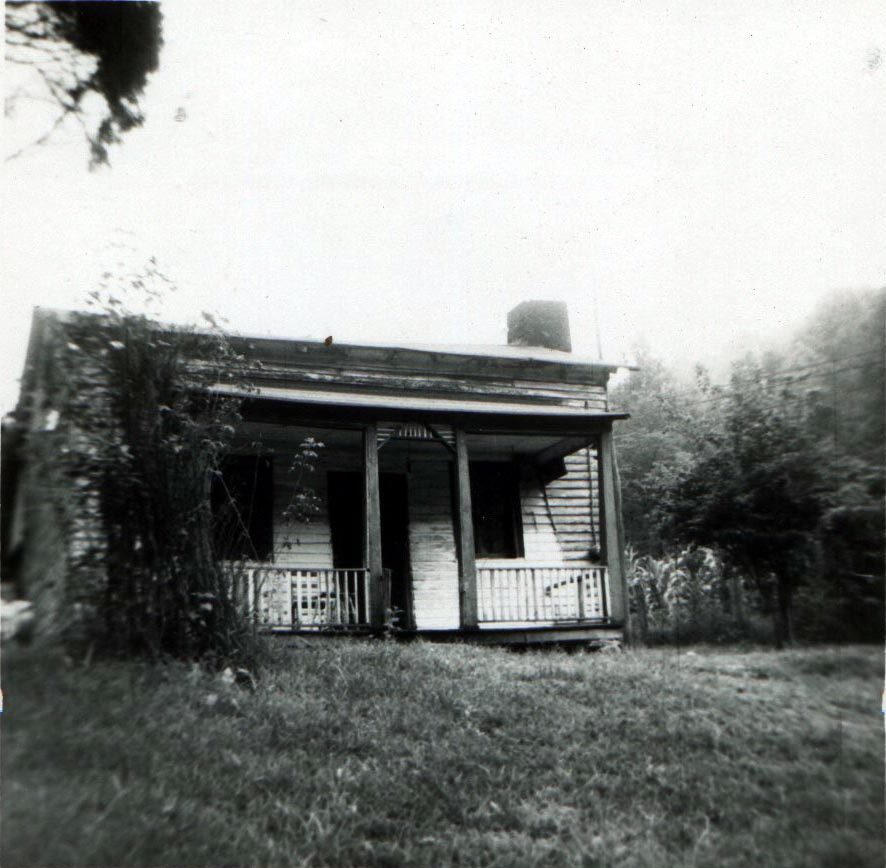
Mullins Homeplace, Trace Fork of Big Harts Creek, Logan County, WV, 1945-1950.

31 Tuesday Dec 2013
Posted in Big Harts Creek, Ed Haley
Tags
Appalachia, culture, history, Jackson Mullins, Joe Mullins, life, Logan County, Peter Mullins, photos, West Virginia
Mullins Homeplace, Trace Fork of Big Harts Creek, Logan County, WV, 1945-1950.
21 Saturday Dec 2013
Posted in Harts, Women's History
Tags
Appalachia, Bessie Adkins, culture, Great Depression, Harts, Hazel Adkins, history, life, Lincoln County, photos, West Virginia

Bessie (Brumfield) Adkins stands behind Hazel Adkins, Harts, Lincoln County, WV, 1940s.
20 Friday Dec 2013
Posted in Ed Haley
Tags
Appalachia, Calhoun County, Doc White, Ed Haley, fiddling, history, Laury Hicks, life, moonshine, music, West Virginia, Wilson Douglas, writing
The next day, Wilson Douglas and Kim Johnson came on the bus where Wilson spun another one of his great stories, this time about Ed and Doc White.
Ed was already over at Laury Hicks’, but Laury was gone somewhere. That mail carrier brought the word through that Ed wanted Doc to come over and go down there to Bear Fork and play some music for that dance. Well, Doc lived in Ivydale. He played the fiddle a little, the banjo a little. He come down there and he got me one evening. Doc said, “Now, if you’ll drive, we’ll both go. We’ll hear Ed fiddle.” I said, “All right.” So we started. It must’ve been four o’clock in the evening. It was warm, you know. It was maybe the middle of August.
We stopped over on the Calhoun County line. That’s between Calhoun and Clay. Doc said, “Stop here. I know this old lady here. We’ll get some wine.” She had a bunch of green beans and set them out along the road selling them you know in little baskets. She said, “Now Doc, I’m gonna sell them beans right there for six dollars a basket.” Doc said, “My god, I don’t want to buy them beans.” So she kept on, you know. She looked at me and winked. Said, “Now Doc, better take a couple of baskets. Well, I’m gonna rake in here and show you how nice they are.” She had a quart jar of moonshine in each one of them. She was a bootlegging and Doc said, “Yeah, by god, yeah, I’ll take two baskets.”
We got down the road a little bit, Doc he pulled them two-quart fruit jars out and throwed them baskets and green beans over the hill. I said, “Now, look, Doc. If you get too drunk and cause trouble over there, they’ll throw all of us in jail.” Time we got to Bear Fork they was all drunk but me and I was a driving. Some old man there was calling that dance and Ed Haley was fiddling some of the prettiest fiddling I ever heard, but as the evening progressed the alcohol went to working on him. He lost his coordination. And he got so high, he was a making bad notes. Doc did, too. Doc was a talking fine — his glasses way down on the end of his nose. And Doc said, “Well, we better go home.” They liked Ed. They wanted to keep him all night. He said, “I gotta go with Doc and this boy. I gotta get back over to Laury Hicks’.” We come in the next morning. He was so drunk when we got back to Hicks’ I had to lead him up the steps. That’s the way it happened, all them things over there.
19 Thursday Dec 2013
Posted in Big Harts Creek, Ferrellsburg, Timber
Tags
Appalachia, Ferrellsburg, genealogy, history, life, Lincoln County, photos, Samp Davis, timbering, U.S. South, West Fork, West Virginia

Samp Davis, an old timber man from West Fork, Lincoln County, WV.
19 Thursday Dec 2013
Posted in Ed Haley
Tags
Billy Adkins, Cliff Top, Ed Haley, John Hartford, John W Runyon, Johnny Hager, music, Pat Haley, Steve Haley, Tim Wendt, Tom Atkins, West Virginia, writing
Late in the summer of 1995, I boarded my bus and cruised along the familiar Kentucky interstate highway system toward something called the Appalachian String Band Festival at Cliff Top, West Virginia. J.P. Fraley and Wilson Douglas assured me it was of the fastest growing festivals in the region and would be a great place to learn more about Ed Haley. Along the way I picked up Brandon Kirk, who gave me the first draft of the Haley manuscript. Somewhere around Oak Hill, we eased off of the interstate onto a ridiculously curvy road and, after what seemed like hours, we arrived at Cliff Top — a Depression era CCC camp on top of a mountain filled with buses, automobiles, tents, campers, fiddlers, concessioneers, hippies, and just about anything else a person could imagine.
There were a lot of familiar faces milling about the grounds.
Brandon busily snapped pictures and kept saying things like, “So that’s Wilson Douglas?” or “Wow, that’s J.P. Fraley?” or “Virgil Alfrey? Cool.”
I wasted little time getting out my fiddle and playing with folks. There was an “Ed Haley buzz” at the camp. People were curious about my research into his life and music. Once I started playing in jam sessions, a lot of people asked if I was using an “extra-long bow.” At first, I wondered what the hell that was all about. Then, remembering how I had been busy working on Ed’s bowing style — his use of long bow and the Scotch snap (the little “stops”), I realized that I was (like Ed) creating the illusion of a longer bow. Wilson Douglas had once said that Ed’s bow was “six inches longer than any other kind of bow.” He was been sure of it. “A boy don’t miss nothing for he’s eager to learn,” he had said.
At some point Billy Adkins showed up with his teenage son Clint bringing news of new leads. He said he had found references to a “Runyon’s Branch” in old Harts deeds and had made contact with Tom Atkins, a genealogist and great-grandson to Cain Adkins who lived in Williamson. Cain, I remembered, was Green McCoy’s father-in-law. Billy left after a few hours saying that he’d see us in Harts in a couple of days.
At dinner, I met Jess Chambers, a Boone County resident and great-nephew to Ed’s friend, Johnny Hager. Jess didn’t know much about Ed but told us some interesting stories about Johnny’s background. In the late 1880s, Johnny took his mother and left the Mud River country of Boone County and headed West. Roxie Mullins had told me about that venture in 1991. “My mother, she was a Hager, and her mother went to the Western States and died there and was buried on the banks of the Wabash River,” Roxie said. “Uncle John told us — he was with her. Said she just lived there six months till she died.” Johnny returned to West Virginia around the turn of the century, Jess said, and soon persuaded Ed to travel with his music. No doubt, Johnny brought styles and tunes back with him from the West, which may have carried over to Ed. Wilson Douglas had told me Ed played a tune called “Boot Hill” that “came from out West back in the 1880s.” There was another tune in Ed’s recorded repertoire called “Poplar Bluff”, which I recognized as the name of a Missouri town.
Later that evening, just at the start of a fiddling contest, Pat Haley showed up with her son Steve. Pat’s leg was healing up nicely. She looked much better than when I’d seen her in March, but her spirits were down. The doctors didn’t give her daughter Beverly long to live. Brandon took to Pat right away. He hung out with her for several hours until Steve drove her back to Ashland. Steve returned later that night and hung out till daylight with Brandon and my bus driver, Tim Wendt.
14 Saturday Dec 2013
Posted in Ed Haley
Tags
Appalachia, Ed Haley, fiddle, fiddling, history, John Hartford, Laury Hicks, Lawrence Haley, music, Ugee Postalwait, West Virginia, writing
After pouring over all of this new information, I called Ugee Postalwait and asked if she could sing me any more of Ed’s songs. I hadn’t been thinking much about Laury Hicks lately and it seemed like a good time to just “check in” on that facet of Ed’s story. It wasn’t long until she was spinning this story that gave me insight into Ed’s ability to take a little melody and make it into a tune.
“One time when I was a little girl, somebody went up or down the road at night a singing, ‘Blue-eyed rabbit went away, the blue-eyed rabbit went to stay. Doodledy-do, doodledy do, doodledy do do doodledy do’,” Ugee said. “So I got up and that’s all I was singing all day long. Ed said, ‘What are you trying to sing?’ I said, ‘I’m a singing ‘Doodledy Doo’.’ Dad and him said, ‘Well it’s got a name. What is it?’ I said, ‘I don’t know.’ Said, ‘Where’d you hear it?’ I said, ‘I heard it in the night.’ Said, ‘Did you dream it?’ I said, ‘No, I didn’t dream it.’ They fooled around with that piece there for weeks trying to play it. When Ed Haley and Dad got done playing that, they had all kinds of runs in that there piece. One’d be a playing it and then the other’n, then they’d bring the different runs in on that song. Someone liked it real well when Ed was a playing it and wanted to know what the name of it was. He said, ‘Well, the one that give me the name of it said it was ‘Doodledy Doo’.’ Ed just laughed and would tell Aunt Rosie about him a playing that piece.”
This story was very interesting since I was starting to formulate this improvable theory that Ed first learned to play fiddle tunes by listening to his mother whistle or hum them. As a young widow who had lost her husband in tragic circumstances, she may well have been determined to pass along some of her beloved’s music to little Ed as best as she could. Of course, he may well have begun playing before Milt’s death, even “sneaking” and playing on his fiddle when his father was out working timber. (I’d had a similar experience with an old fiddle in my grandfather’s closet as a boy.)
I asked Ugee if Ed ever talked about where he learned to play and she said, “He told me about somebody leaving an old fiddle laying around when he was a boy. I don’t remember who the man was.” I told her his father had been a fiddler and asked if maybe he’d meant “my old man left an old fiddle laying around” and she said, “Some old man left an old fiddle laying around and I just wonder if it was his dad. And he picked that up and went to see-sawing on it and he said he found out he could play the fiddle. He said that was all he was good for: to play the fiddle. That’s all he studied. I asked him if he went to school to learn to play the fiddle. He said no.”
I just couldn’t shake the image of Ed playing on Milt’s fiddle. If he hadn’t fooled with it before Milt’s death, maybe he picked it up afterwards (“it was just laying around”) and learned to play with his mother’s help. I had these images of Emma whistling or singing Milt’s tunes to him and saying, “Yeah, do that.” “Don’t do that.” I got chills thinking about the way Ed may have began learning tunes and the way I used to ask Lawrence, “Did he do this?” “Did he play this?” Or the way he would say to me, “Pop didn’t do it like that.”
12 Thursday Dec 2013
Posted in Big Ugly Creek, Ed Haley
Tags
Albert Butcher, Andrew Chapman, Big Ugly Creek, Bill Duty, Cecil L. Hudgins, Hamlin, history, John W Runyon, Lincoln County, Long House, Tom Ferrell, West Virginia, William T. Butcher, writing
In the end, suspect or not, Runyon may have felt safe to comment on the feud since he was a man of the badge. If so however, he learned the error of that line of thinking once the Ferrell-Butcher trouble erupted on nearby Big Ugly Creek in January of 1890. (Its events were eventually merged with those of the Haley-McCoy trouble in the song “The Lincoln County Crew”.) The Logan newspaper covered this event:
Albert Butcher, who was shot by Tom Ferrell near Deal’s grocery in Lincoln county, Dec. 31st, died Friday morning last. The latest report we have says that Butcher and Ferrell had been drinking and playing cards all day for a pair of pants, and there was a dispute over $1.50. Butcher got the pants and got on his horse and started home, when Ferrell caught his horse by the bridle and demanded his pants or $1.50. Butcher got down off of his horse and the shooting was done immediately. One report says that Butcher attacked Ferrell with his knife and cut one of his fingers and wounded him in the breast. Another report says that Butcher only made Ferrell loose his bridles. Dr. Hudgins, of this place, was called and operated on Butcher, and it appears that the ball, which was a .38-calibre, had entered the abdomen 1/2 inch to the right and 1/2 inch below the navel, making five wounds in the intestines. The abdominal wall was opened, the fecol matter and blood worked out, the wounds in the intestines entered, and every thing done to save the life of the patient. Dr. Hudgins is a skilled surgeon, but in this case no skill could save.
Not long after Butcher’s death — and this is the part that would’ve had a sobering effect on Deputy-Sheriff John Runyon — a mob of Logan County Butchers went to retrieve Ferrell at the county jail and carry out mob justice. The Lambert Collection offered a great eyewitness account of their “raid” on Hamlin:
There was a saloon, but I can’t recall whose it was. I saw many men and two women stagger out of it while we were there [in Hamlin]. The occasion of the drunk women was when the Butcher mob came down from Big Ugly to take Tom Ferrell out of the jail and hang him for the shooting of one of the Butcher family. Tom Ferrell was just a boy about 20 yrs. of age. He had a difficulty of some kind with one of the Butchers, and to protect his own life had shot the man. Ferrell then came to Hamlin and gave himself up. The jailor Andrew Chapman locked him in a cell for safe-keeping for they realized there would be plenty of future trouble. Sure enough in a day or so the mob came riding into town. The mob was led by Capt. Butcher and two women were along. All had shiny guns on their shoulder. They rode up the street past our house to the jail that stood behind the court house, but when they got to the jail the prisoner was gone.
A Mr. Duty told me that his father then lived on Big Ugly Creek where Mr. Ferrell lived and knew all the circumstances of the killing. He heard of the Butcher plan to hang young Ferrell, so he mounted his horse and started to Hamlin to warn the jailor to protect Ferrell. He rode his horse so hard that it fell dead and he got another horse and rode it hard, but got to Hamlin before the mob did. The jailor at once turned Ferrell out and told him to run to the woods for his life. The jailor’s brother, John Chapman, lived with him and helped care for the prisoners, so he told John to go too, and to run. Word, by way of wireless, was circulated that John and Ferrell struck for the woods with John taking the lead by many yards. He was running for his life, too.
When the mob rode into town, the street was soon empty, for everybody took to cover, and stayed out of sight for the two or three days that the mob hung around. They stayed at the Long House, the other hotel in Hamlin, but it was close to the Campbell House. In fact there was just an empty lot between the two, for it was on the same side of the street.
The mob made many trips up and down the street from the hotel to the saloon and then on a little farther to the jail. They always went as soldiers with their shiny guns on their shoulders. Most of them staggered after they made their first trip to the saloon, and the men always had to keep the women from falling. They stayed so drunk. After two or three days they left as suddenly as they had come, and then John and Tom Ferrell came back to the jail. Ferrell was tried in court and found innocent by way of self defense. Mr. Duty told me that Mr. Ferrell was always in fear of his life after that. He was postmaster at Dolly in Lincoln County, but he lived a miserable life, and in constant fear. They said that Mr. Ferrell was a good and honorable man, and was not to blame for the deed that left him an unhappy man.
Surely, Runyon was horrified to witness this whole fiasco. If a mob could take over the county seat and march through town sloshed and armed with weapons, how safe was he — a mere deputy-sheriff — in isolated Harts?
12 Thursday Dec 2013
Posted in Big Harts Creek
Tags
Appalachia, culture, Great Depression, Harts Creek, history, life, Logan County, photos, West Virginia

Children of Upper Hart during the Great Depression, Logan County, West Virginia.
12 Thursday Dec 2013
Posted in Ed Haley
Tags
Al Brumfield, Appalachia, Aracoma, Ben Adams, feud, Green McCoy, Hollena Brumfield, John W Runyon, Logan County Banner, Milt Haley, Oakland House, West Virginia, writing
Thereafter, on January 9, 1890, came this powerful bit of news in soft faded print: “John Runyon, Deputy Sheriff of Lincoln county, and Benjamin Adams, of Harts Creek, registered at the Oakland House Saturday [Jan. 4]. Mr. Runyon says that every thing is quiet on Harts Creek, and thinks that the Brumfield-McCoy war is at an end.”
The implications of this tiny find were huge. First of all, John Runyon didn’t leave the Harts area for Kentucky immediately after Milt and Green’s murders, as we had been told. Secondly, he had distanced himself enough from the trouble by January of 1890 to provide the local paper a quote concerning the status of the feud. So what had happened between November 1889 when The Ceredo Advance reported the feud as having a Brumfield faction and a Runyon faction, and January 1890 when Runyon dubbed it a “Brumfield-McCoy war?” The newspapers themselves were confused because one of them said regarding the factions at work in the feud: “if two sides [it] could be said to have…”
Obviously, by January of 1890 Runyon had found a way to separate himself from the trouble, perhaps at the expense of Ben Adams. But why would he be so bold as to register at the Oakland House (a popular meeting place for timbermen) at the same time as Adams? And what was his reaction when the newspaper reported him there with “old Ben Adams”? Surely, the Brumfields and Dingesses felt their joint occupancy at the hotel was just too suspicious — as did we. No doubt, Runyon’s statement that “every thing is quiet on Harts Creek” changed immediately.
We were also fascinated by the fact that Runyon was a Lincoln County deputy-sheriff. Previously, we had only heard that Runyon was the owner of a small “grab-a-nickel” store near the mouth of Harts Creek. How did he get to be a deputy? Wouldn’t that position have been best served by someone from a large family (meaning many votes for the sheriff) and with deep roots in the area? Maybe we had underestimated Runyon. His status as a deputy-sheriff was perhaps an indicator that he had more power and was more of a threat to local businessmen and politicians like Al Brumfield than we’d figured.
Also, as an officer of the law, Runyon should have played a prominent role in settling the 1889 troubles, first in regard to Hollena and Al’s shooting, then later in regard to Milt and Green’s murder. The fact he was a local lawman and a suspect in the crime may have explained why the Brumfields resorted to using vigilante justice in handling Milt and Green. What kind of justice could they have expected from Runyon and his friends in the county seat after all, if he was an enemy or maybe even behind the hiring of Milt and Green in the first place? We wondered, did the Brumfields ask him to accompany their posse to fetch Milt and Green in Kentucky, or was he already a suspect in the crime? Obviously, there were a lot of questions along those lines.
29 Friday Nov 2013
Tags
Appalachia, banjo, culture, Fourteen Mile Creek, genealogy, history, Holly Sias, life, Lincoln County, music, photos, West Virginia

Holly “Hod” Sias, Lincoln County, West Virginia, 1925-1940.
29 Friday Nov 2013
Posted in Big Harts Creek, Ed Haley, Lincoln County Feud, Timber
Tags
Al Brumfield, Allen Martin, Andrew D. Robinson, Andrew Robinson, Anthony Adams, Appalachia, Ben Adams, Ben Robinson, Boardtree Branch, Chloe Gore, Chloe Mullins, crime, David Robinson, Dicy Adams, Elizabeth Abbott, genealogy, general store, Greasy George Adams, Green McCoy, Harts Creek, Harvey Adams, Henderson Dingess, history, Hollena Brumfield, Hugh Dingess, Jackson Mullins, John Frock Adams, John M. Adams, John Robinson, Joseph Adams, Joseph Robinson, Lincoln County Feud, Logan County, Logan County Banner, Lucinda Brumfield, May Adams, Meekin Branch, Milt Haley, Peter Carter, Rhoda Robinson, Sallie Dingess, Solomon Adams, Spicie McCoy, Susan Abbott, Ticky George Adams, timber, Trace Fork, Victoria Dingess, Viola Dingess, West Virginia, Wilson Abbott
Ben Adams — the man who supposedly hired Milt Haley and Green McCoy to assassinate Al Brumfield — was born in 1855 to Joseph and Dicy (Mullins) Adams on Big Harts Creek in Logan County, (West) Virginia. His older sister Sarah married Henderson Dingess and was the mother of Hollena Brumfield, Hugh Dingess and several others. He was a first cousin to Jackson Mullins, Milt Haley’s father-in-law, and a brother-in-law to Chloe Mullins, Milt’s mother-in-law, by her first marriage to John Adams.
In 1870, 17-year-old Ben lived at home with his mother, where he worked as a farmer. He was illiterate, according to census records. His neighbors were Andrew Robinson and Henderson Dingess, both of whom had married his sisters (Rhoda J. and Sally). In the next year, according to tradition, he fathered an illegitimate child, William Adams, who was born to Lucinda Brumfield (niece of Paris).
In 1873, Ben married Victoria Dingess. Victoria was born in 1856 and was a first cousin to Hollena Brumfield and Hugh Dingess. The marriage made for an interesting genealogical connection: Ben was already Hugh’s uncle; now he was also his brother-in-law, as Hugh was married to Victoria’s sister, Viola (his first cousin). Ben’s daughter Sally, who was named after Hollena’s mother, later married a cousin of Spicie McCoy, Green’s wife. For all practical purposes then, Ben Adams was genealogically connected to all sides of the feud — making it a true intra-family feud from his perspective.
For the first decade or so of his marriage, Ben lived with his mother on family property, although he did acquire land and open a general store business. In 1880, he was listed in the Lincoln County Census with his mother Dicy, aged 63, and family. He was 26 years old, Victory was 23, Sally was six, son Charlie was four, daughter Patsy A. was two, and son Anthony was a few months old. George Greaar, age 20, was a boarder. In 1881, he purchased 25 acres on the Meekin Branch of Trace Fork. Three years later, he was listed in a business directory as the proprietor of a general store. At that same time, his brother-in-law and neighbor Henderson Dingess was a distiller.
Later in the decade, Ben fathered three more children: George “Greasy” (1885), Harvey (1886), and May (1889). In 1889, the time of Milt Haley’s ambush of Al Brumfield, Adams owned 260 acres on the Boardtree Branch of Trace Fork valued at $1.00 per acre in Logan County.
Anthony Adams — Ben’s brother and ally in the 1889 troubles — was a prominent timberman on Harts Creek. Anthony had been born in 1849 and was the husband of Pricie Alifair Chapman, Burl Farley’s half-sister. In 1884, Adams was listed in a business directory as a blacksmith. In 1889, he owned two 50-acre tracts of land, one valued at $3.50 per acre with a $30 building on it, the other valued at $2.00 per acre. By that time, he had three sons of fighting age who may have participated in the feud: Solomon Adams (born 1869), Horatio “Rush” Adams (born 1871), and Wayne Adams (born 1874), as well as a son-in-law, Harrrison Blair (born c.1867).
A quick examination of the Adams genealogy gives a clue as to Ben’s other 1889 allies. First there was brother “Bad John” Adams. Adams was deceased at the time of the Haley-McCoy incident, but he had been married to Chloe Gore — mother of Emma Jean (Mullins) Haley. He had three sons of fighting age in 1889: Joseph Adams (born 1859), John Frock Adams (born 1861), and Ticky George Adams (born 1865)…as well as son-in-law Sampson Thomas.
Rhoda J. Robinson was a sister to the three Adams brothers. She had several children who may have allied with Ben: David Robinson (born 1860), Ben Robinson (born 1866), John R. Robinson (born 1868), and Joseph Robinson (born 1870). There was also brother Solomon Adams, who may have offered his loyalty to Ben, along with sons John M. Adams (born 1869) and Benjamin Adams (born 1867), and sons-in-law David Robinson and Peter Carter (c.1873).
As for Ben himself, he stayed busy with timber after the feud. According to an 1896 article from the Logan County Banner: “Benj. Adams, of Hart, is hauling some fine poplar from trace fork.” In 1901, he married Venila Susan Abbott, a daughter of Wilson and Elizabeth (Workman) Abbott, and had at least eight more children (born between 1901 and 1921). Not long after his remarriage, he was accused of murdering a local postman named Jim Allen Martin — and nearly went bankrupt paying for his legal defense. He died in 1910 and was buried on the hill near the mouth of Trace Fork.
27 Wednesday Nov 2013
Posted in Big Harts Creek, Chapmanville, Ed Haley, Harts, Music
Tags
Al Brumfield, Anthony Adams, Ashland, Bill's Branch, blind, Brandon Kirk, Cain Adkins, Cecil Brumfield, Chapmanville, Charley Davis, Cow Shed Inn, Crawley Creek, Dave Brumfield, Dick Thompson, Earl Brumfield, Ed Haley, Ellum's Inn, fiddler, fiddling, Fisher B. Adkins, Green McCoy, Harts Creek, Henderson Dingess, Hoover Fork, Hugh Dingess, John Brumfield, Kentucky, Lincoln County, Lincoln County Schools, Logan, Logan County, Milt Haley, music, Piney Fork, Smokehouse Fork, Trace Fork, Trace Mountain, West Fork, West Virginia, writing
A few days after visiting Earl Brumfield, Brandon dropped in on his good friends, Charley Davis and Dave Brumfield. Davis was an 88-year-old cousin to Bob and Bill Adkins. Brumfield was Davis’ son-in-law and neighbor. They lived just up Harts Creek near the high school and were familiar with Ed Haley and the story of his father, Milt. Charley said he once saw Ed in a fiddlers’ contest at the old Chapmanville High School around 1931-32. There were two other fiddlers in the contest — young men who were strangers to the area — but Ed easily won first place (a twenty-dollar gold piece). He was accompanied by his wife and a son, and there was a large crowd on hand.
Dave said Ed was mean as hell and laughed, as if it was just expected in those days. He said Ed spent most of his time drinking and playing music in all of the local dives. Sometimes, he would stop in and stay with his father, Cecil Brumfield, who lived in and later just down the road from the old Henderson Dingess place on Smoke House Fork. Dave remembered Ed playing at the Cow Shed Inn on Crawley Mountain, at Dick Thompson’s tavern on main Harts Creek and at Ellum’s Inn near Chapmanville. Supposedly, Ed wore a man out one time at a tavern on Trace Mountain.
Dave said he grew up hearing stories about Ed Haley from his mother’s people, the Adamses. Ed’s blindness was a source of fascination for locals. One time, he was sitting around with some cousins on Trace who were testing his ability to identify trees by their smell. They would put first one and then another type of limb under his nose. Dave said Ed identified oak and walnut. Then, one of his cousins stuck the hind-end of an old cat up under his nose. Ed smiled and said it was pussy willow.
Dave said he last saw Ed around 1945-46 when he came in to see his father, Cecil Brumfield. Ed had gotten drunk and broken his fiddle. Cecil loaned him his fiddle, which Ed never returned. Brumfield later learned that he had pawned it off in Logan for a few dollars to buy a train ticket to Ashland. Cecil bought his fiddle back from the shop and kept it for years.
Dave’s stories about Milt Haley were similar to what his Aunt Roxie Mullins had told me in 1991. Milt supposedly caused Ed’s blindness after getting angry and sticking him head-first into frozen water. Not long afterwards he and Green McCoy were hired by the Adamses to kill Al Brumfield over a timber dispute. After the assassination failed, the Brumfields captured Milt and Green in Kentucky. Charley said the two men were from Kentucky — “that’s why they went back there” to hide from the law after the botched ambush.
The vigilantes who captured Milt and Green planned to bring them back to Harts Creek by way of Trace Fork. But John Brumfield — Al’s brother and Dave’s grandfather — met them in the head of the branch and warned them to take another route because there was a rival mob waiting for them near the mouth of the hollow. Dave said it was later learned that Ben and Anthony Adams — two brothers who had ill feelings toward Al Brumfield — organized this mob.
The Brumfield gang, Dave and Charley agreed, quickly decided to avoid the Haley-McCoy rescue party. They crossed a mountain and came down Hoover Fork onto main Harts Creek, then went a short distance down the creek and turned up Buck Fork where they crossed the mountain to Henderson Dingess’ home on Smoke House Fork. From there, they went up Bill’s Branch, down Piney and over to Green Shoal, where Milt played “Brownlow’s Dream” — a tune Dave said (mistakenly) was the same as “Hell Up Coal Hollow”. Soon after, a mob beat Milt and Green to death and left them in the yard where chickens “picked at their brains.” After Milt and Green’s murder, Charley said locals were afraid to “give them land for their burial” because the Brumfields warned folks to leave their bodies alone.
Brandon asked about Cain Adkins, the father-in-law of Green McCoy. Charley said he had heard old-timers refer to the old “Cain Adkins place” on West Fork. In Charley’s time, it was known as the Fisher B. Adkins place. Fisher was a son-in-law to Hugh Dingess and one-time superintendent of Lincoln County Schools.
In the years following the Haley-McCoy murder, the Brumfields continued to rely on vigilante justice. Charley said they attempted to round up the Conleys after their murder of John Brumfield in 1900, but were unsuccessful.
25 Monday Nov 2013
Posted in Ed Haley
Tags
Al Brumfield, Appalachia, Betty Meade, Earl Brumfield, Fed Adkins, genealogy, history, Hollena Brumfield, Jim Brumfield, life, Lincoln County, West Virginia, writing
In West Virginia, Brandon was busy interviewing local folks about Ed Haley and his father’s 1889 murder. He first dropped in on Earl Brumfield, a grandson to Al Brumfield, who lived at Barboursville, near Huntington. Earl was born in 1914 — nine years after Al’s death — and was a Depression era schoolteacher in Harts. At the time of Brandon’s visit, Earl was bed-fast and withered with age and in poor health and was barely able to speak plainly. Brandon started asking him general questions about the Brumfields.
Earl said Al Brumfield was bad to chase women throughout his marriage to Hollena. He had a mistress in a little town downriver named Betty Meade, who bore him two illegitimate children. When Hollena found out about his affair, she enlisted the help of her brother-in-law Jim Brumfield to kill the woman. Supposedly, Al knocked Jim’s gun away just before the shooting started and did it with such force that he broke his younger brother’s arm.
Earl said Al had other affairs. One time, Hollena was in the yard and saw him with a woman hid behind a log across the river. Outraged, she fetched a shotgun and shot at him every time he poked his head out from the log. This, of course, sounded like a tall tale — but it surely had a glimmer of truth in it.
Apparently, Al’s infidelity was a constant source of trouble in his marriage. Earl laughed telling about it, but it would have made for a terrible situation, especially since Hollena was a shattered beauty. Maybe Al’s infidelity was what drove Hollena to have her reported affair and love child with Fed Adkins in the early 1890s. Either way, Hollena had her revenge when Al was sick and near the end of his life. According to Earl, she often confined him to the upstairs of their house while she stayed downstairs. If he needed something or was feeling contrary, he would peck his cane on the floor to get her attention.
19 Tuesday Nov 2013
Posted in Ferrellsburg, Music
Tags
culture, guitar, history, J.M. "Doc" Mullins, life, Minnis "Mink" Mullins, music, Ona "Teaberry" Mullins, Standard Mullins, Vernon Mullins, West Virginia

J.M. “Doc” Mullins and sons, Ferrellsburg, Lincoln County, WV, 1920s.
18 Monday Nov 2013
Posted in Harts
Tags
Appalachia, Harts, Henry S. Godby, history, Lincoln County, West Virginia, Wheeling Intelligencer
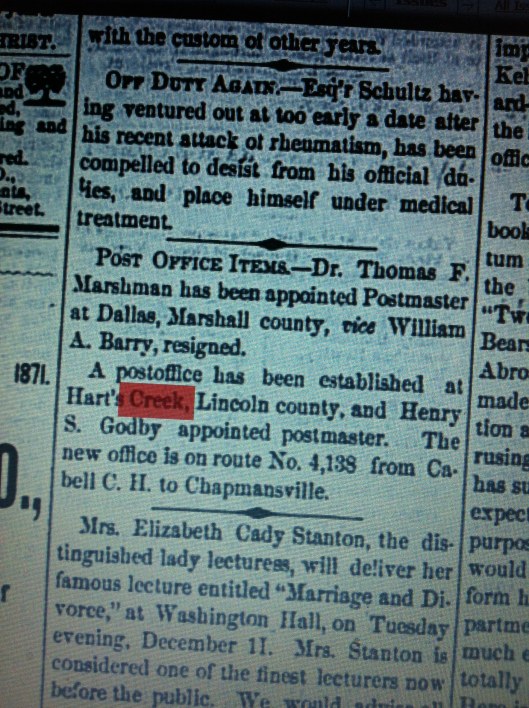
Wheeling Intelligencer, December 3, 1870.
16 Saturday Nov 2013
Posted in Ferrellsburg
Tags
Appalachia, culture, Ferrellsburg, history, Isaac Marion Nelson, life, Lincoln County, photos, West Virginia
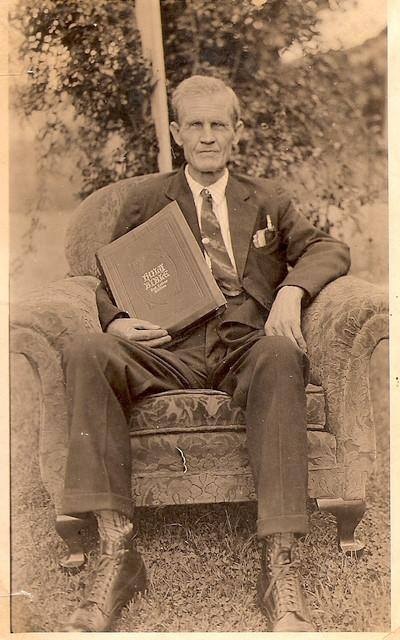
Isaac Marion Nelson, resident preacher of Ferrellsburg, Lincoln County, WV, c.1920s
13 Wednesday Nov 2013
Posted in Lincoln County Feud
Tags
Appalachia, Charley Brumfield, crime, culture, feud, Harts, history, life, Lincoln County, photos, West Virginia
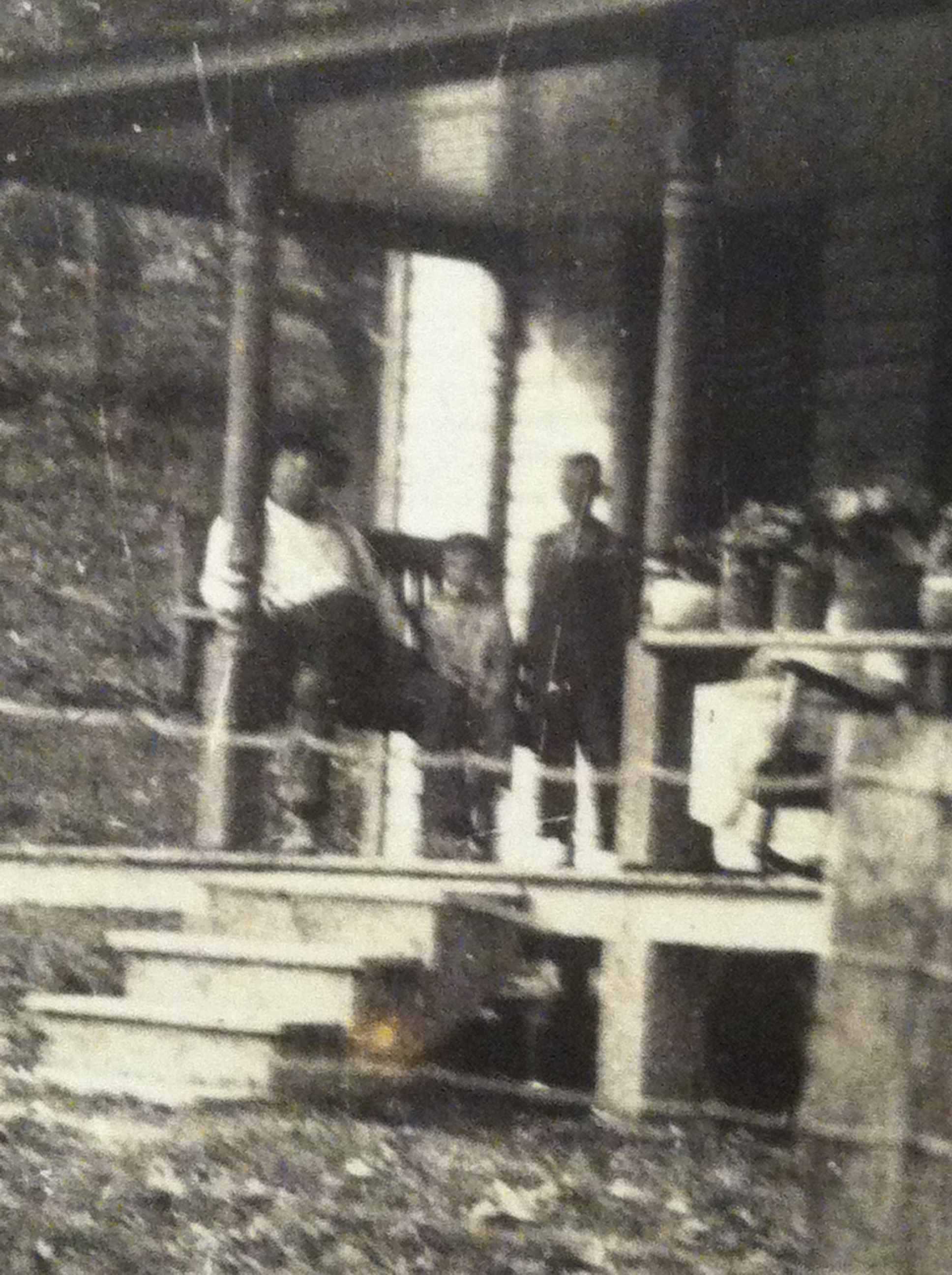
Charley Brumfield on his porch with children, Harts, Lincoln County, WV, 1915-1926
12 Tuesday Nov 2013
Posted in Lincoln County Feud
Tags
Appalachia, crime, feud, George Fry, Green McCoy, Green Shoal, history, Milt Haley, photos, West Virginia
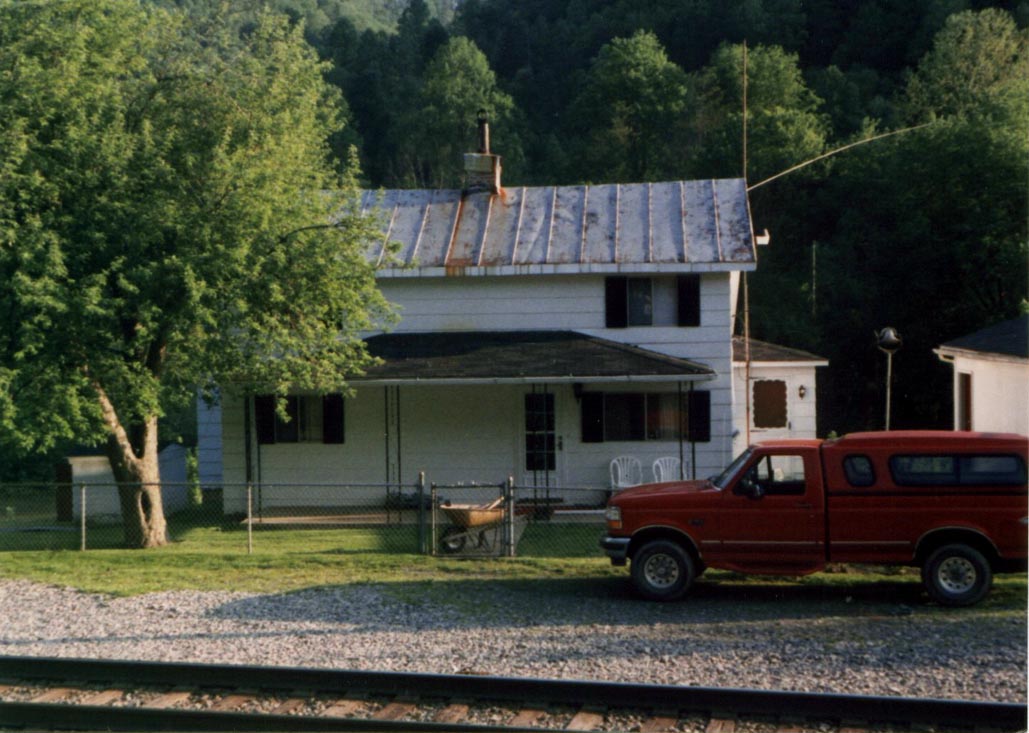
The Murder House? Green Shoal, Lincoln County, WV, 1995
11 Monday Nov 2013
Posted in Green Shoal, Lincoln County Feud
Tags
Appalachia, crime, feud, George Fry, Green McCoy, Green Shoal, history, Lincoln County, Lincoln County Feud, Milt Haley, murder, photos, West Virginia

Site of the Haley-McCoy murders, Green Shoal, Lincoln County, WV.
11 Monday Nov 2013
Posted in Big Harts Creek, Civil War, Whirlwind
Tags
34th Battalion Virginia Cavalry, Appalachia, Barney Carter, civil war, genealogy, Harts Creek, history, Hoover Fork, Logan County, photos, West Virginia

Capt. Barney Carter (1821-1902), resident of Hoover Fork of Big Harts Creek, Logan County, West Virginia, served as captain of Company D, 34th Battalion Virginia Cavalry.
Writings from my travels and experiences. High and fine literature is wine, and mine is only water; but everybody likes water. Mark Twain
This site is dedicated to the collection, preservation, and promotion of history and culture in Appalachia.
Genealogy and History in North Carolina and Beyond
A site about one of the most beautiful, interesting, tallented, outrageous and colorful personalities of the 20th Century
 Brandon Ray Kirk