• About

Brandon Ray Kirk

~ This site is dedicated to the collection, preservation, and promotion of history and culture in my section of Appalachia.

Brandon Ray Kirk

Tag Archives: Ohio

In Search of Ed Haley 355

19 Tuesday Aug 2014

Posted by Brandon Ray Kirk in Ed Haley, Harts, Holden, Music

≈ Leave a comment

Tags

Arkansas, Arkansas Traveler, Ashland, banjo, Brandon Kirk, Ed Haley, Ella Haley, fiddle, fiddler, fiddling, Grayson, Harts, history, Holden, Jim Tackett, John Hartford, John Tackett, Kentucky, Lincoln County, Logan County, Logan Court House, music, Ohio, Portsmouth, Red River, Reece Tackett, Trace Fork, West Fork, writing

The next day, Brandon and I visited Reece Tackett, a banjo-picker who lived in a nice yellow house just up West Fork. Reece was born in 1909 and raised around Grayson in eastern Kentucky. His grandfather, Jim Tackett, was a fiddler from the Red River area of Arkansas who played for square dances in large farmhouses. He taught Reece’s father, John Tackett, how to play the fiddle. Reece said his father played “the old way — not flashy.” He used a homemade fiddle and “had to go to pine trees to get rosin.” He moved to a farm about nine miles from Grayson, where he made fiddles and played close to home, never as far away as Portsmouth, Ohio.

Reece said he moved to Holden in Logan County when he was sixteen to work with his uncle and brother in the coalmines. He used to watch Ed Haley and his wife play “beautiful” tunes like “Arkansas Traveler” on weekends at the Logan Courthouse. He said Ed wasn’t a big man and had fingers “about like a lead pencil.” His wife played the mandolin.

“She was pretty good on her singing,” Reece said. “She was dressed like the real old ladies. She had the long dress on and the apron.”

Ella kept a cup fastened to herself somehow.

“I’ve tossed many a nickel and dime in their cup,” Reece said.

Sometimes, people would pretend to put money in their cup and then steal from it.

Ed was usually paid about ten or fifteen cents per tune. There were no dollars and most of the coal miners were paid in company script.

Reece said he moved to Harts in 1946 and had no idea that Ed was from Trace Fork or even lived in Ashland.

In Search of Ed Haley 352

08 Friday Aug 2014

Posted by Brandon Ray Kirk in Chapmanville, Ed Haley, John Hartford, Music

≈ Leave a comment

Tags

Ashland, Brandon Kirk, California, Catlettsburg, Catlettsburg Stock Yard, Chapmanville, Clyde Haley, Ed Haley, Ella Haley, genealogy, Halbert Street, history, Horse Branch, Jack Haley, Jean Thomas, John Hartford, Junius Martin, Kenny Smith, Kentucky, Lawrence Haley, Logan County, Mona Haley, music, Ohio, Pat Haley, Patsy Haley, Ralph Haley, Ralph Mullins, Rosie Day, San Quentin, South Point, Wee House in the Wood, West Virginia, Wilson Mullins, writing

The next day, Brandon and I got Mona to ride around town and show us some of the places where Ed played, as well as where he’d made the home recordings on 17th Street. In the car, she tried to recount the places the family had lived since her birth at Horse Branch in 1930.

The first place she remembered was an old brown house built on a slope at Halbert Street. This was the place where Ralph built the trap door.

When Mona was seven or eight years old, the family moved to 337 37th Street.

When she was about thirteen, they moved to 105 17th Street. She lived there in 1944 when she married Wilson Mullins and moved away to Chapmanville, near Harts. After her divorce, she moved back to 17th Street. At that time, Ed was separated from Ella and living in West Virginia.

For a brief spell, the Haleys lived at 5210 45th Street. Rosie Day lived nearby in a basement apartment.

Around 1948, the family moved to 1040 Greenup Avenue. Mona lived there when she married Kenny Smith and moved to South Point, Ohio.

Around 1950, Ed, Ella, Lawrence, Pat, and little Ralph moved to 2144 Greenup Avenue. Jack and Patsy lived there for a while because Patsy — who was pregnant with twins — wanted to be near the hospital. It was there that Ed passed away in February of 1951.

Thereafter, Ella stayed intermittently with Lawrence and Pat in Ashland or with Jack and Patsy in Cleveland until her death in 1954.

Brandon and I drove Mona around town later and she pointed out the sight of the Catlettsburg stock sale, where she remembered Ed making “good money” around 1935-36. She also directed us to at least three different locations of Jean Thomas’ “Wee House in the Wood.” One was remodeled into an office building and used by the county board of education, while another was out in what seemed like the middle of nowhere on a wooden stage in a valley surrounded by tall grass. Brandon and I thought this latter location was almost surreal, like something out of a weird dream.

Later at dinner, Mona told us what happened to her records.

“I sent Clyde some records when he was in San Quentin, California but he never brought them back with him,” she said.

I told her that some guy named Junius Martin had brought Lawrence some of Ed’s recordings and she said, “Seems like Junius Martin was one of Pop’s drinking buddies. I thought his name was Julius.”

In Search of Ed Haley 351

07 Thursday Aug 2014

Posted by Brandon Ray Kirk in Ed Haley, John Hartford

≈ Leave a comment

Tags

Allie Trumbo, Ashland, Beautiful Isle of Somewhere, Brandon Kirk, California, Cincinnati, Cleveland, Doug Owsley, Ed Haley, Ella Haley, Florida, genealogy, history, Jack Haley, Janet Haley, Jimmy Haley, John Hartford, Kentucky, Lawrence Haley, life, Margaret Ryan, Mona Haley, music, Noah Haley, Oak Hill Cemetery, Ohio, Pat Haley, Patsy Haley, Ralph Haley, Ralph Payne, Rosemary Haley, Wilson Mullins, World War II, writing

Early in December, Brandon and I met at Pat Haley’s. All of our excitement focused on the upcoming meeting with Owsley’s forensic team, although it wasn’t long until we were in the familiar routine of asking Pat and Mona questions. Mostly they spoke of Ralph, a key player in Ed’s story. It was Ralph who recorded Ed’s and Ella’s music. Pat said Patsy knew a lot about Ralph, so she called her in Cleveland.

Patsy said Ralph was a nice and intelligent person.

“All the kids looked up to him when they were growing up,” she said.

As far as Patsy knew, Ralph never had any contact with his real father but he did take the last name of Payne when he was older.

Around 1936, Ralph married Margaret Ryan, an eighteen- or nineteen-year-old Cincinnati girl. The newlyweds took up residence with Ed and Ella, and Ralph stopped drinking (at his wife’s insistence). Margaret remained living with the Haleys during the war, when Ralph was overseas fighting the Japanese.

During the war, Ralph had an affair with a Filipino woman named Celeste, who Pat said bore him a son. Mona thought he actually married Celeste. According to her, his plan was to “set” Margaret up after the war, divorce her and return to his Filipino bride. He had Celeste’s name tattooed on his body. When he returned home from the war, he told Margaret, when she saw his tattoo, that Celeste had been the name of his ship. Ralph and Margaret soon left Ashland and moved to Cincinnati.

It was around that time that Patsy came into the family. She said she married Jack in California on October 25, 1946 and met Ed the following Thanksgiving in Ashland. She and Jack moved in with him for three months at 105 17th Street. Mona, Wilson Mullins, and little Ralph were also living there at the time. Jack only stayed for about three months because he couldn’t find work. Patsy said they moved out near Ralph in Cincinnati. Ella’s brother Allie Trumbo lived there, as did several of her close friends. Mona and her family soon followed them there and found an apartment in the same building.

Mona said Ralph’s thoughts were with Celeste: he was in the process of getting Margaret “set up” when tragedy intervened.

One Sunday in May of 1947, Jack, Patsy, Ralph, Margaret, Mona, Wilson, and little Ralph went fishing at a park about 25 miles outside of Cincinnati. At some point, Patsy said Ralph and Mona began talking about hanging upside down in a nearby tree. Mona climbed up the tree and Patsy took her picture. Then Ralph got in the tree and fell. As he lay on the ground, he told his family that his neck was broken and requested that they put a board under him until the doctors could arrive. Ralph was taken to a hospital where he told Ella, “When I bite down on the ice it makes a musical tone in my head.”

On Thursday, May 22, 1947, Ralph died at the age of 34. The family was afraid that Ella might hear of his death over the radio. She was staying at Mona’s apartment at the time.

On May 24 — Mona’s birthday — Ralph was buried in the Oak Hill Cemetery near Cincinnati. Patsy said Ed never made it to Ralph’s funeral, nor did Lawrence, who was in the service in Florida but Mona remembered that Lawrence was there on emergency leave. Someone played “Beautiful Isle of Somewhere”, Ralph’s favorite hymn.

Celeste later wrote Ella, mentioning how her son had an ear problem. When the family wrote to tell her of Ralph’s death, she figured they were making it up just so she would stop writing.

We figured that Ralph was Mona’s favorite brother since she had named her oldest son after him, but she said Jack was her favorite brother because he had taken up for her the most. She said Ella had been the one who named her son after Ralph. She also spoke highly of Noah, who contracted malaria and saw a lot of combat during World War II.

“Noah was good to send things home to Mom and Pop during the war,” Mona said. “And when he came home he laid carpet and fixed doorbells did things like that for Mom there at 17th Street.”

Noah went to Cleveland around 1950. Pat said Noah’s wife was a high-strung person. Their daughter Rosemary killed herself when she was eighteen. She wanted to get married but her mother protested, so she went into her brother’s room and shot herself in the head. In later years, Noah and Janet divorced. Pat said Noah’s son Jimmy really did a good job of looking after them. Janet died several years ago.

Ed Haley plays on WLW (1924)

28 Monday Jul 2014

Posted by Brandon Ray Kirk in Culture of Honor, Ed Haley, Lincoln County Feud, Music

≈ Leave a comment

Tags

Ashland, blind, Cincinnati, Crosley Radio Weekly, Ed Haley, Ella Haley, feud, fiddler, fiddling, Green McCoy, Hamlin, history, Kentucky, Lincoln County Feud, Lincoln Republican, Milt Haley, music, Ohio, West Virginia, WLW

About that time, Brandon found this teeth-rattling article while scanning through microfilm of the Lincoln Republican at the public library in Hamlin, West Virginia. It was titled “Ed Haley and Wife Play for the Radio” and dated Thursday, August 28, 1924.

The Crosley Radio Weekly, published at Cincinnati, Ohio, contains a good picture of Ed Haley and wife, the blind musicians so well known in Hamlin, with an interesting story of Mr. Haley, which we reproduce as follows:

The picture above is that of Mr. and Mrs. Ed Haley, of Ashland, Ky., blind fiddlers, who soon will entertain WLW listeners with a most interesting concert. They have the reputation of being the best old-time music makers of the mountains of West Virginia and Kentucky, making a living for themselves and their three children by playing at dances and county fairs. Mr. Haley is shown playing a fiddle connected with which there is a very interesting story of the old mountain feud days. His father was involved in the famous Brumfield-McCoy feud and was captured by the Brumfields. He was told he was to be shot to death in five minutes, during which time he calmly played his fiddle, the same one his son plays for radio listeners and which he was holding when the above picture was taken. The feudist and a friend was shot to death when the five minutes expired and both their bodies were buried in a wooden box. The fiddle, however, was kept by the Brumfields for some years and later returned to the son of the murdered man.

Big Creek News 04.12.1923

27 Sunday Jul 2014

Posted by Brandon Ray Kirk in Big Creek, Big Ugly Creek, Holden, Logan, Rector, Toney

≈ Leave a comment

Tags

Arline Kitchen, Baptist, Benevolent and Protective Order of Elks, Big Creek, Big Ugly Creek, Birchard Toney, Charleston, Charley Lilly, Columbus, D.E. Owens, Dixie Toney, Easter, education, Flossie Barker, Floyd Lilly, genealogy, Gilbert Thompson, Green McNeely, history, Holden, Hub Vance, Huntington, J.H. Kitchen, Keenan Toney, Limestone School, Lincoln Republican, Logan, Logan Lodge, Maggie Lucas, Methodist Episcopal Church South, Nellie Parsons, Ohio, Rector, Robert Stone, Stone Branch School, Tom Vance, Toney, Walter Fry

An unnamed local correspondent from Big Creek in Logan County, West Virginia, offered the following items, which the Lincoln Republican printed on Thursday, April 12, 1923:

Charley Lilly is in very poor health.

Arline, daughter of Mr. and Mrs. J.H. Kitchen, has been very ill during the past week.

Mrs. Robert Stone was a business visitor in Huntington the past week.

The Stone Branch school closed on April 5th. Many were present and all report a fine time.

Mr. Tom Vance was a recent visitor in our midst.

Mrs. Floyd Lilly left Saturday for Charleston where she will pay an extended visit to her sister, Mrs. Nellie Parsons.

Miss Maggie Lucas has just closed a successful term of school at Lime Stone. The pupils there all want Miss Lucas back next year.

Mr. D.E. Owens, of Columbus, Ohio, was calling on friends here recently.

Mr. K.E. Toney, of Toney, who has large business interests in this city was here the early part of the week looking after business affairs and mingling with friends.

Rev. J. Green McNeely, of Logan, delivered very able sermons to the Baptist congregation in this city, at the M.E. Church, South, Saturday night and Sunday afternoon. Rev. McNeely is a splendid expounder of the gospel and the people of our city are always delighted to hear him.

Miss Dixie Toney returned home Saturday evening from a shopping visit in Huntington.

Mr. Walter Fry, prominent young citizen of Rector, was in the city yesterday on matters of business.

Uncle Hub Vance continues in very poor health.

Mr. W. Birchard Toney, of this place attended Logan Lodge, No. 391, B.P.O.E., Thursday evening.

Miss Flossie Barker, of Logan, spent Easter with friends here.

Gilbert Thompson, of Holden, was the recent guest of friends in our midst.

In Search of Ed Haley 343

25 Friday Jul 2014

Posted by Brandon Ray Kirk in Calhoun County, Ed Haley, John Hartford, Music

≈ Leave a comment

Tags

Akron, Banjo Tramp, Black Sheep, Calhoun County, Canton, Chloe, Ed Haley, fiddle, fiddlers, fiddling, Gus Meade, harp, Jo LaRose, John Hartford, Kerry Blech, Laury Hicks, Lawrence Haley, music, Ohio, Parkersburg Landing, Ragpicker Bill, Rector Hicks, Rounder Records, Stackolee, Sugar in the Morning, Tommy Jarrell, Traditional Music and Dance in Northeast Ohio, West Virginia

Not long after visiting Ugee, I received some great information in the mail regarding Rector Hicks, a fiddler and nephew to Ed’s friend Laury Hicks. Rector grew up watching his uncle Laury play the fiddle.

“Rector was born out in the country around Chloe, Calhoun County, West Virginia, in 1914,” Joe LaRose wrote in Traditional Music and Dance in Northeast Ohio (March 1985). “His father was a good mouth harp player, but no one else in his family played music. Rector learned from fiddlers who lived in his area, beginning to play the instrument when he was around ten years old. Rector learned a lot from time spent with a distant cousin, Laury Hicks, a generation older than Rector and one of the foremost fiddlers in the area. ‘I don’t know of a fiddle player, really, that played like him. Ed Haley said Laury was the best fiddler he ever heard on the old time tunes, you know, and old fast ones. Hisself, he said that. And I always thought he was.'”

While at Laury’s, Rector Hicks also had the opportunity to see Ed.

“He was hard to figure out,” Rector told LaRose. “When I was around him most I didn’t know too much about fiddling, and a lot of that stuff I could pick up now if I was around him. How he got all that in there with his bow like he did you’d never believe it. He just set there this way (passes the length of the bow back and forth across the strings) but everything seemed like it just come in there. If you’d hear him play… Now that record, that’s not Ed Haley. That’s him, but that’s no good. You don’t get a lot of what he puts in. But he puts every note in that thing. His left hand, his fingers just flew. But his right hand… He just set there and his fiddle laid on his arm, set there and rocked. That’s the way he played. All them fastest tunes he played, didn’t seem like he put any of the bow in hardly. But it was all in there.”

Rector seemed to idolize Haley, at least according to Kerry Blech, a fiddling buff and friend of mine.

“Rector, when he was a teenager, had saved up some money and got him a pretty good fiddle and when Ed would come and stay at Laury’s house Rector would always come over,” Kerry wrote. “For a couple of years, Ed would tease him and say, ‘Well, I really like that fiddle you got, Rector. We should swap.’ And once he did and went off and played in some other town, then came back through about a week later and got his fiddle back. Rector said he was just really thrilled to’ve had Ed’s fiddle for even a week.”

As Rector got older and learned more about the fiddle, he really patterned after Haley’s style.

“Rector’s approach to playing has much in common with Haley’s,” LaRose wrote of Hicks. “Like Haley, Rector holds his fiddle against his upper arm and chest and supports it with his wrist (he does not rock the fiddle under the bow, though, like Haley did.) Rector uses a variety of bow strokes. Like Haley, he uses the length of the bow, sometimes playing a passage of several notes with one long stroke, deftly rocking the bow as he plays. He will accent the melody at chosen times with short, quick strokes. Rather than overlay the melody with a patterned or constant bow rhythm as some dance-oriented fiddlers do, Rector adapts his bowing to the melody of the particular tune he’s playing. Much of the lilt and movement of his tunes is built into the sequence of notes played with his left hand.”

Rector apparently kept in touch with Ed’s family, who he sometimes visited long after Haley’s death, and was very disappointed with the quality of fiddling on the Parkersburg Landing album.

“When I met Rector in the mid-70s, the Haley LP had just come out and Rector called me up to tell me it was awful,” Kerry wrote. “He said it was not representative of the man’s genius. He told me that he knew the man, and although many years had passed, the Haley genius was still in his mind’s eye. He also said that there were many other home recordings beyond what Gus Meade had copied. He said that Haley’s children had split up the recordings, that Lawrence had a number of them, and that a daughter, who lived in the Akron-Canton area, had over a hundred of them, and that Rector occasionally went over there and listened. He said that the family was irritated by how the Rounder record came to be and did not want to be involved with any of us city folk any more, afraid that someone would exploit their father’s music.”

At that time in his life, Rector mostly played Tommy Jarrell tunes but also several Ed Haley tunes, like “Birdie”, “Sugar in the Morning” (“Banjo Tramp”), “Ragpicker Bill”, “Black Sheep”, and “Staggerlee”.

In Search of Ed Haley 338

19 Saturday Jul 2014

Posted by Brandon Ray Kirk in Calhoun County, Ed Haley, John Hartford, Music, Roane County

≈ 1 Comment

Tags

Akron, Alabama, blind, Brandon Kirk, Calhoun County, Christmas, crime, Ed Haley, Ella Haley, fiddle, fiddling, Harvey Hicks, history, John Hartford, Johnny Hager, Laury Hicks, Marietta, measles, Milt Haley, music, Ohio, Parkersburg, Rogersville, Soldiers Joy, Spencer, Stinson, Ugee Postalwait, Webster Springs, West Virginia, writing

On April 12, 1997, Brandon and I went to see Ugee Postalwait in Rogersville, Alabama. For the most part, she repeated a lot of the same stories I’d heard before, maybe with a new detail or two here and there. We began with her memories of Ed and Johnny Hager, who came to her father’s house around 1913. Brandon asked her specific questions about Johnny, which caused her to say: “He was a little short fella, slender. He was a nice person. Well-mannered. He was a good banjo-player. John Hager was a good friend of Dad and Mom’s both — all of us. Us kids, too. He used to write Mom and Dad. He wrote them from Webster Springs and he wrote them from Greenbrier. Different places where he was at. John wrote a letter back home and said he quit traveling with Ed ’cause Ed drank. He couldn’t take it. I’ve often wondered and studied about what become of him.”

Later, Ed sometimes came with a guitar player, but Ugee couldn’t recall his name.

Brandon was curious to know how far Ed traveled with his music, so he asked if Ed and Ella ever played around Parkersburg.

“I’m pretty sure they have,” Ugee said, “and Marietta, too. Harvey took them up to Akron to play music and they crowded that street so bad up there that they passed a law up there, you couldn’t stand on the corner and play music any more. They wouldn’t allow them to stand on the street. They had to move. See, they was such a crowd got around them.”

I asked, “How much do you reckon Ed would take in of a night?”

Ugee said, “I have seen Ed and Ella take in as much as a hundred dollars right there in Spencer.”

Wow, were they using a cup or a hat to collect money?

“They never used no cup. Just sit a box down or hat down and people come through and throwed money in it. Anyone that come along and dropped money in there, they’d play just the same.”

Would he play me anything I’d ask for?

“Why sure. He’d play it for you and then maybe if you asked for it again he might play you something else and call it that. He didn’t care to rename songs, like ‘Soldiers Joy’. He might call that ‘Runnin’ the Soldier’ or ‘Runnin’ the Track’ or something like that.”

I reminded Ugee that she heard Ed say he just picked up a fiddle and started playing it when he was small and she said, “Oh, yeah. He’d sit in the floor and play on that fiddle. Somebody brought something in that had two strings on it. He wasn’t very old. Just barely a walking, he said. Just like him a talking to me one time, telling me about his dad. Telling about them a lynching him. He said, ‘Goddamn him, they oughta lynched him.’ And I never asked him why. Why would a man say that about his dad? Maybe he was thinking about that man putting him in that barrel of water and causing him to be blind. But Ella’s eyes, they was ate out with blue vitriol.”

Ugee fully believed that measles had caused Ed’s blindness because they almost “put her blind,” too, when she was a girl.

“I must have been about five years old,” she said. “Well, Ed musta been there, too. Musta been the same year he was there that I had the measles and I went blind in my eyes. Couldn’t see nothing for three or four days. Had Granny’s bed set up by the side of the fireplace. I remember that instead of springs, it had rope. And Christmas time come up. And Dad, he played Santa Claus, I reckon. He got me jellybeans. I couldn’t see nothing for two or three weeks. I didn’t think I’d ever see again. Back then, they called them the ‘big’ measles and the ‘little’ measles. The big ones, they called the German measles. And I had them bad. Harvey come around — he was older than I was — he’d say, ‘You stink’, ’cause he could smell that fever on me.”

Brandon asked Ugee what year she was born in, to kind of help us better understand the time frame of her memories.

“I was born in 1907,” she said. “I got married in 1924. I left and went to Akron, but we come back ever month for a long time. If we knowed Ed was a coming in, we was there. I moved back in 1930. We lived on the farm until 1941. Then we went to a farm at the mouth of Stinson.”

At some point, Ugee moved back to Akron, where she lived when I first met her in 1991.

In Search of Ed Haley 336

15 Tuesday Jul 2014

Posted by Brandon Ray Kirk in Big Harts Creek, Ed Haley

≈ Leave a comment

Tags

Andy Mullins, Ashland, blind, Brandon Kirk, Columbus, Dobie Mullins, Ed Haley, Edith Dingess, Ella Haley, Ewell Mullins, Ferrellsburg, fiddling, genealogy, Harts Creek, history, Huntington, Imogene Haley, John Hartford, Kentucky, Lancaster, Lawrence Haley, Liza Mullins, Liza Napier, Logan, Mud Fork, music, Nashville, Ohio, Ora Booth, Pat Haley, Peter Mullins, West Virginia, writing

By the spring of 1997, Brandon and I were at a reflective point in our research efforts. We had begun to lose our edge. After all, how many times could we ask, “Now, how did Ed Haley hold the bow?” or “Do you remember the names of any tunes he played”? We decided to step away from interviewing people and focus on writing what we knew about Ed’s life and music. I spent long hours in Nashville at my dining room table listening to Ed’s recordings and working with the fiddle, while Brandon — in his three-room house in Ferrellsburg — transcribed interviews, re-checked facts, and constructed a manuscript. This went on for quite some time.

Eventually, Brandon came to visit and we decided to telephone a few people and ask more questions. Our first call went out to Edith Dingess, the only surviving child of Ed’s uncle, Peter Mullins. Andy and Dobie Mullins had told us about her several months earlier when we visited them on Harts Creek. Edith, they said, had recently moved from her home on Mud Fork in Logan to stay with a daughter in Columbus, Ohio. When we dialed her up, her daughter said, “She might be able to give you some information. Her memory is pretty bad. She’s 81 years old and she’s had a couple of real major heart attacks.”

I first asked Edith if she knew about Ed’s mother — her aunt — who apparently died in the early 1890s. Unfortunately, Edith didn’t know anything about her. As a matter of fact, she said she barely remembered Ed, who we knew had been practically raised by her father. She said he was a “nice person, likeable” who would “laugh and joke and go on.”

“I know Ed Haley used to come to our house with Mrs. Haley and they had a little girl. Might’ve had some boys — older,” Edith said. “I believe they lived down around Huntington. They’d come up home when my dad was a living and we was all home — I was young then — and they’d play music and we’d have company. We used to have some square dances at our house. We had some good times when he come up there.”

Edith said Ed’s children led him around, but he also got around using a cane.

Before we hung up, Edith gave us the telephone number of her niece, “Little Liza,” who lived with a daughter in Lancaster, Ohio. This was wonderful; I had first heard about Little Liza from Lawrence and Pat Haley in 1991. Little Liza had grown up in Uncle Peter’s home and was a featured face in family photographs. Prior to this lead, I wasn’t even sure if she was still alive.

When we called Liza, we first spoke with her daughter, Ora Booth, who gave the familiar introduction: “I don’t know if you’ll get too much out of her or not. She’s kinda forgetful and she repeats herself a lot. All I can do is put her on the phone and see what you get out of her. She’s seventy-six and her mind just comes and goes on a lot of things.”

I told Liza that I was good friends to Lawrence and Pat Haley, had heard a lot about her, and was very interested in Ed’s life. She said Ed used to stay a week or two with Uncle Peter — who she called “Poppy” — before heading back to Ashland. To our surprise, she had no idea exactly how Ed was related to her family.

“It’s been so long and you know I’ve been sick and everything and been operated on for cancer and stuff and I just don’t feel good,” she said. “When you get old, your mind just comes and goes.”

Just when I thought Liza’s memories of Ed had all but disappeared, she said, “I tell you, he was awful bad to drink all the time. Lord, have mercy. Anything he could drink, he’d drink it. That might have been half what killed him. He was a mean man. Just mean after women and stuff. I don’t know whether he could see a bit or not, but you’d get and hide from him and he’d come towards ya. I was scared of him.”

I asked Liza who Ed played music with when he visited at Peter’s and she said, “He just played with his wife. He didn’t have nobody else to play with. Lord, him and her’d get into a fight and they’d fight like I don’t know what.”

I wondered if Ed fought with his kids.

“Yeah, they liked to killed Ed Haley one time up there,” she said. “They’d just get into a fight and the kids’d try to separate their mommy and daddy and it’d just all come up. I had to holler for Ewell to come down there and get them boys off’n Ed Haley ’cause I was afraid they’s a gonna kill him. I didn’t want that to happen, you know? He got down there and buddy he put them boys a going. They was mean. I guess they took that back after Ed Haley. Yeah, he’d come up there and go here and yonder. After Mommy and Poppy got so bad off, people’d bring him down there and set him off and I had to take care of them, so Poppy just told him, said, ‘Ed, she has to wait on us and she can’t wait on you. You’ll just have to go somewhere else.’ He did.”

That was a horrible image.

Queens Ridge 10.09.1913

07 Saturday Jun 2014

Posted by Brandon Ray Kirk in Ferrellsburg, Hamlin, Logan, Queens Ridge

≈ Leave a comment

Tags

Arnold Perry, Columbus, Dr. York, Ellen Carter, Ferrellsburg, genealogy, Hamlin, Henry F. Workman, history, Isaac Workman Jr., Ivy Bias, J.J. Maynard, James Workman, John Workman, Joseph Maynard, Kentucky, Lincoln County, Lincoln Republican, Logan, Louisa, Maynard School House, Nancy Workman, Ohio, Queens Ridge, Squire Vance, Stone Coal, West Virginia, William F. Workman, Williamson, Wilsondale

“Bull Mooser,” a local correspondent from Queens Ridge in Lincoln County, West Virginia, offered the following items, which the Lincoln Republican printed on Thursday, October 9, 1913:

John Workman, Sr., is in very poor health. Dr. York, of Louisa, Ky., is the attending physician.

Isaac Workman, Jr., is recovering from a severe illness.

Squire Vance is on a business trip to Ferrellsburg this week.

Mr. and Mrs. J.J. Maynard were visiting Arnold Perry’s Sunday.

Joseph Maynard has been quite busy making repairs on the Maynard school house.

H.F. Workman is getting in his winter’s supply of coal.

W.F. Workman is attending the Association at Stone Coal, West Virginia.

Mr. and Mrs. Charley Gray, of Columbus, Ohio, are visiting relatives and friends here.

Ivy Bias, telegraph operator at Wilsondale, W.Va., went to Williamson to a hospital to have his right leg amputated.

Mrs. Isaac Workman is paying her daughter, Mrs. Ellen Carter who resides at Rolfe, a visit.

James Workman made a business trip to Logan this week.

Joseph Maynard made a business trip to Hamlin this week.

In Search of Ed Haley 313

02 Monday Jun 2014

Posted by Brandon Ray Kirk in Ed Haley

≈ Leave a comment

Tags

Catlettsburg, Dinky Coffman, Ella Haley, history, John Hartford, John Simon, Kentucky, music, Ohio, Portsmouth, Portsmouth YMCA, writing

Early in June 1996, I received a letter from John Simon, which conveyed more information about John Lozier’s memories of Ed Haley. Basically, Lozier said he played music with Ed and Ella around 1932 at the YMCA in Portsmouth, Ohio. Dinky Coffman, who was in charge of the entertainment, hired the three musicians often. “Sometimes Dinky would also take them into the railroad yards to play for groups of men,” Simon wrote. “They got a couple dollars for each day’s entertainment.” At that time, Ed lived at Catlettsburg, Kentucky. “The Haleys later divorced but continued to live in the same house on separate ends and continued to perform together,” Simon wrote.

In Search of Ed Haley 306

16 Friday May 2014

Posted by Brandon Ray Kirk in Ed Haley, Music

≈ 1 Comment

Tags

Ashland, Atlanta, Bert Layne, Bill Day, Blackberry Blossom, blind, Clayton McMichen, Dill Pickle Rag, Ed Haley, Ed Morrison, Ella Haley, fiddle, fiddlers, Gary, Goodnight Waltz, Grand Ole Opry, history, Indiana, Jesse Stuart, John Carson, Kentucky, Lowe Stokes, mandolin, music, Ohio, Over the Waves, Portsmouth, Riley Puckett, Slim Clere, South Charleston, South Shore, Sweet Bunch of Daisies, Theron Hale, Vanderbilt University, Wednesday Night Waltz, West Virginia, World War I, WSM

The next day, after a few hours of sleep at Wilson’s house, Brandon and I drove to see fiddler Slim Clere in South Charleston, West Virginia. Slim was born in Ashland around the time of the First World War and knew a lot about Ed. We were parked behind his two-story house and were unloading our “gear” when he appeared out of a back door and led us inside his house (past some type of home recording studio) and up a flight of stairs. We sat down in the living room where we met his wife, a vivacious middle-aged woman who fetched several scrapbooks at Slim’s request. We flipped through the pages while Slim told us about some of his early experiences.

“I knew Jesse Stuart in 1934,” he said. “He lived at South Shore, Kentucky, across the river from Portsmouth, Ohio. He went to Vanderbilt. I believe he did play football. He used to date Theron Hale’s daughter that used to be at WSM at the Grand Ole Opry. I thought maybe he might marry her but he didn’t. Well anyway, I went away. I left my home and went to Atlanta. Well I went to Gary, Indiana, and everywhere, and worked with Bert Layne and Riley Puckett and some of those old-timers. I knew old Fiddlin’ John Carson. I never did meet Lowe Stokes. He lost an arm in a hunting accident. At one time he was a better fiddle player than McMichen. But Mac come out of it. He really could play. I patterned a lot of my style after him.”

Slim pointed to a picture of himself in his youth and said, “That’s back when I had hair and teeth.”

I was anxious to talk about Ed, so I asked Slim if he could remember the first time he ever saw him.

“I grew up knowing him,” Slim said. “He used to come down to the Ashland Park there every Sunday and sit around and fiddle for nickels and dimes on a park bench and I’d sit on there and watch him play.”

Slim said Ed Haley, Ed Morrison, and Bill Day were his primary influences during his younger days in Ashland.

“He was hot stuff,” Slim said of Haley.

He described Ed as a “loner” but said his wife was always with him.

“The old lady chorded a taterbug mandolin,” he said.

Ed played on a little yellow fiddle, which he wouldn’t let anyone “get a hold of,” and kept a cup between his legs for money. Down at his feet on the ground was his old wooden case, “made like a coffin.”

How much would you have to put in the cup to get him to play a tune?

“Didn’t matter,” Slim said.

Could he tell how much you dropped into the cup?

“He’d know just to the tee what it was,” he said. “He could tell the difference between a penny and a dime.”

Would the length of how long he played the tune depend on how much you dropped in the cup?

“No, he liked to play.”

Slim and I got our fiddles out and played a lot of tunes — or parts of tunes — back and forth for about a half an hour. I wanted to know all about Ed’s technique and repertoire. Slim said he “cradled” his fiddle against his chest (“all the old-timers used to do that”) and held the bow way out on the end with his “thumb on the underneath part of the frog.” He moved very little when playing.

“The only action he had was in that arm…and it was smooth as a top,” Slim said. “He fingered his stuff out. He didn’t bow them out. He played slow and beautiful and got the melody out of it. Now, he could play stuff like ‘Dill Pickle Rag’ where you had to cross them strings and that ‘Blackberry Blossom’ was one of his favorites. He played ‘Goodnight Waltz’, ‘Wednesday Night Waltz’. I don’t think ‘The Waltz You Saved For Me’ had been invented yet. He played ‘Over the Waves’ and ‘Sweet Bunch of Daisies’. He didn’t double-stop it, though.”

Boone County’s “Little Johnny” Hager 2

13 Tuesday May 2014

Posted by Brandon Ray Kirk in Big Creek, Big Harts Creek, Big Ugly Creek, Calhoun County, Music

≈ Leave a comment

Tags

Akron, Arthur Smith, banjo, Bertha Bias, Big Creek, blind, Boone County, Boone County Genealogical Society, Broad Branch, Calhoun County, Chapmanville, Clay County, Dave Brumfield, Dicy Thomas, Dolly Bell, Ed Belcher, Ed Haley, Ella Haley, fiddle, fiddler, Garretts Fork, genealogy, Greenview, Harts Creek, Harvey Hicks, Hewetts Creek, history, Hubert Baisden, Irene Hager, Jeff Baisden, Jeff Duty, Jess Chambers, Johnny Hager, Kanawha County, Kansas, Kentucky, Kith and Kin, Laury Hicks, life, Little Coal River, Logan County, Lydia Johnson, Madison, Mary Baisden, Morehead, music, North Fork, Ohio, Powderly, Riland Bias, Robert Martin, Rowan County, Sampson Thomas, Simon Bias, Spruce Fork, Texas, Trace Fork, Turley Adams, Ugee Postalwait, Victoria Adams, West Virginia, Wilson Craddock, writing

After his return to West Virginia, Johnny Hager took immediate notice of the large number of musicians who lived in the head of Big Harts Creek. His first cousin, Jefferson “Jig-Toe” Baisden (1879-1970), was a dancer and banjo-picker. J. E. “Ed” Belcher (1889-1970), who played several instruments, and Robert Martin, an Arthur Smith-style fiddler, were other significant musicians in the area. Ed Haley (1885-1951), a blind fiddler from Trace Fork, particularly caught Hager’s attention. Johnny’s desire to absorb Haley’s music was understandable because, as Jess Chambers stated, “It was a badge of honor to have played with Ed Haley.” Jeff Baisden, a cousin to both men, may have introduced the pair.

Johnny could supposedly play any instrument and his trip out to Kansas allowed him to soak up a variety of western tunes and playing styles which were completely new to folks in Logan County. Both of these qualities, his diverse musical capabilities and his unique musical background, ensured that he an Ed Haley had many intense music sessions. According to Turley Adams, Johnny’s great-nephew, Hager encouraged Ed to take his show on the road and volunteered to serve as Haley’s “eyes” on such trips. This willingness to travel, coupled with his apparent competence as a musician, made Johnny a perfect sidekick to Ed. Haley and Hager were both unmarried, a convenience which allowed them to roam the country with few cares or responsibilities.

Johnny and Ed traveled to various places in West Virginia but are particularly remembered up around the Calhoun-Clay County area north of Kanawha County. Aside from being populated with rural folks similar to Hager’s neighbors in Logan and Boone Counties, the area was also endowed with a host of great musicians. Haley and Hager wintered there as young men with a fiddler named Lawrence “Laury” Hicks (1880-1937). Ugee (Hicks) Postalwait of Akron, Ohio, a daughter of Laury Hicks, said that Ed and Johnny first came and visited her father in the early 1910s. Hager was a tall, slim banjo-picker. When Ed and Johnny left Laury’s home in the spring, with Johnny leading the way, Ugee and her brother stood on the bank by the house and “hollered and cried after them.”

Most agree that Johnny’s travels with Ed Haley ended around 1914 when Haley married Ella Trumbo, a blind music instructor from Morehead in Rowan County, Kentucky. Haley’s habit of cursing and drinking also helped end the partnership. Hager did not care for it.

For the most part, Johnny spent the remainder of his life playing music while boarding with his Baisden kinfolk on the North Fork of Big Creek. Irene Hager, a daughter of Hubert E. and Mary (Pauley) Baisden, remembered Johnny playing music on her father’s front porch in the late 1920s. Her father, a banjo-picker, lived at Greenview and the Big Branch of Spruce Fork of Little Coal River in Boone County. Hubert Baisden was Johnny’s first cousin. Hager boarded with him for several weeks at a time. One of Hager’s chores at the Baisden home was to keep wood in the stove. Irene said that Johnny often talked about his early travels with Ed Haley.

Johnny Hager was a man with little roots and family, a fellow who never had a real home. Many from Harts Creek remember that Hager was simply from the “the North Fork of Big Creek.” Dave Brumfield, a great-nephew, said that Hager stayed in that vicinity with a Thomas family. No doubt, this Thomas family was headed by Sampson Thomas who married Dicy Adams, a sister-in-law to Johnny’s sister Victoria Adams. Incidentally, just over the mountain from North Fork was the Broad Branch of Big Ugly Creek where lived a fiddler named Jefferson “Jeff” Duty (born about 1877). During Hager’s stay on the North Fork, he probably visited this musician (and any others in this locality) to learn a few new licks.

Hager also stayed with Simon and Bertha (Baisden) Bias on Bias Branch in Boone County. Mrs. Bias’ grandfather, Riland Baisden, was a brother to Johnny Hager’s mother. He spent a lot of time on the Garretts Fork of Big Creek with the Barkers before leaving them to stay with Wilson Craddock’s family on Hewitts Creek in Boone County. Mr. Craddock’s widow has a necklace which Johnny gave her during his time there. Lydia (Adkins) Johnson of Powderly, Texas, recalled that Hager lived with her mother and father during her “growing up years at home” in the late 1920s and 1930s. Johnson “was born (around 1923) and raised in Boone Co. just over the hill from Chapmanville.” Hager was a hard worker and was very efficient at “old-time” carpentry jobs and such tasks as digging wells. According to Johnson: “[Johnny] was a handy man, & a fiddle player. (Sometimes) a neighbor would need him to come live with them, to build them an out house for them. He was noted for the best out houses, he earned his keep by living with & helping others.”

Lydia Johson described Johnny as “a very neat man” and Dolly Bell agreed, stating that he always kept his hair cut and his face shaved. He never wore suits and never dated women so far as any of his family knew. In Irene Hager’s words, he “was a pretty straight fellow” and Dave Brumfield said he never drank when visiting his father’s home on Harts Creek.

NOTE: Originally published in “Kith and Kin of Boone County, West Virginia” Volume XXII

Published by Boone County Genealogical Society

Madison, West Virginia, 1997

Dedicated to the late Dolly (Hager) Bell

In Search of Ed Haley 303

11 Sunday May 2014

Posted by Brandon Ray Kirk in Ed Haley, Lincoln County Feud, Music, Stiltner

≈ Leave a comment

Tags

banjo, Brights Disease, Cain Adkins, Cain Adkins Jr., Catlettsburg, Chillicothe, Columbus, crime, Daisy Ross, Ed Haley, Faye Smith, fiddlers, fiddling, genealogy, Goble Fry, Green McCoy, Green McCoy Jr., guitar, Harkins Fry, history, Indian Girl, Kenova, Kentucky, Laurel Creek, Luther McCoy, Mariah Adkins, McCoy Time Singers, Monroe Fry, music, Ohio, Oscar Osborne, Salty Dog, Sherman Luther Haley, Sherman McCoy, Spicie McCoy, Time Has Made A Change, Wayne County, WCMI, West Virginia, Winchester Adkins, writing

After the feud, Cain Adkins settled on Laurel Creek in Wayne County and never returned to Harts. Not long afterward, he began suffering from some type of lingering illness.

“Grandpaw, he played a fiddle,” Daisy said. “They had him to play the fiddle on his deathbed. Somebody came in and they wanted to hear a song and he played it for him. He said, ‘They ain’t no harm in a fiddle. If they’s any harm, it’s when no one plays it.’ I’ve heard Mom tell the last song he played, but I don’t know what it was he played. Mom said it made him feel better.”

Cain died of Brights Disease in 1896.

His widow Mariah lived many more years.

“Grandmaw was a good person — she went to church every Sunday. The last ten years she went blind and stayed with Mom. Mom waited on her.”

She died in 1931.

It took Spicie years to forgive the Brumfields for killing Green. Even after remarrying Goble Fry (her first cousin) in 1893, she was unable to cope with Green’s death and always cried when recounting the tale of his murder. For years, her bitterness kept her from joining the church.

“She felt like he hadn’t done nothing to be killed for ’cause she loved him better than anything,” Daisy said. “Before she was baptized, my brother Sherman had went off to work — him and a bunch of boys — and they was all telling what church their mother belonged to and Sherman said to Mom, ‘Mom, I had to tell them you didn’t belong to the church.’ ‘Well,’ she said, ‘I can’t forgive the Brumfields.’ He said, ‘You can’t forget it, but you got to forgive them or you’ll go to the same place where they did.’ I heard him say that. I was a young woman.”

These were apparently inspiring words, because Spicie was baptized soon afterwards and formed a gospel quartet, “The McCoy Time Singers.” Her son, Sherman McCoy, was a key member.

“Brother Sherman could play any kind of instrument, but banjo is what he played mostly,” Daisy said. “He played all kinds of pretty tunes on the banjo that wasn’t gospel. And when he was on WCMI he wanted people to write in and tell him to play the gospel music, but he had to play the one that got the most requests and he didn’t get very much requests for the gospel. But Mom and Sherman sung them gospel songs on there. They had a program on WCMI one time.”

Daisy said the only known recordings of the McCoy Time Singers had been destroyed years ago.

“They made records of their quartet singing and they peeled up. Got damp. Monroe, my brother, got some and even wrapped them in cloth and they still peeled.”

I wanted to know more about Sherman McCoy, so I got out my banjo and played a little bit for Daisy. She said he played a lot with his uncle, Winchester Adkins (one of the best fiddlers in Wayne County), and a guitar player named Oscar Osborne.

“Brother Sherman was one of the best banjo players I ever heard,” Daisy said. “I’ve heard them on television but I’ve never heard anything to beat Brother Sherman. He played a guitar and taught music lessons. He played all kinds of jigs. Did you ever play ‘The Indian Girl’? He didn’t like to play that one very much because he had to tune it different but that was the prettiest tune I ever heard on the banjo. It sounded like he had more than ten fingers.”

I asked Daisy about Sherman playing with Ed Haley and she said, “He played music with Ed Haley and they played in Catlettsburg.”

That’s all she knew about it but I wondered just how well they actually knew each other. Was it possible that Ed named his oldest child Sherman Luther Haley after Sherman McCoy? I could just picture them loafing together as young bachelors.

Daisy said Green McCoy’s other son, Green Jr., was a singing instructor. She remembered the first time he came into contact with a guitar.

“Uncle Cain, he played a guitar,” she said. “He come down one time and wanted Green to see his guitar. Green only seen that guitar one time and worked a week and got him a guitar and tuned it up and was playing on it. He was gifted.”

What happened to him?

Faye said, “Uncle Green, he hadn’t been dead but I’d say about eight or ten years. He played a guitar good.”

Daisy said Green’s son Luther plays the guitar on the radio in the Columbus-Chillicothe area.

“Uncle Green said he was absolutely the best he ever heard,” she said.

She didn’t know much about Luther or have any recordings of him but had a videocassette tape of Green Jr. picking the guitar and singing in 1975. (I couldn’t help but note that Green Jr. and Ed Haley both had sons named Luther.)

Spicie’s children by Goble Fry also were talented musicians, hinting at a musical strain in her genetics as well.

“Uncle Monroe was a Fry — that was Mom’s brother — and Harkins — they both played music,” Faye said. “But now, Uncle Monroe could play, I guess, about any type of instrument. I remember him playing ‘Salty Dog’ one time.”

Daisy really bragged on her brother Harkins Fry, a music teacher and songwriter. He wrote one gospel song called “Time Has Made A Change”, which Daisy and Faye sang for us:

Time has made a change in the old homeplace.

Many of my friends have gone away,

Some never more in this life I shall see.

Time has made a change in me.

Time has made a change in the old homeplace.

Time has made a change in each smiling face,

And I know my friends can plainly see

Time has made a change in me.

In my childhood days I was well and strong.

I could climb the hillside all day long,

But I’m not today what I used to be.

Time has made a change in me.

When I reach my home in that land so fair.

Meet my friends awaiting me over there.

Free from toil and pain I shall ever be.

Time has made a change in me.

In Search of Ed Haley 298

28 Monday Apr 2014

Posted by Brandon Ray Kirk in Ed Haley, Music

≈ Leave a comment

Tags

Abe Keibler, Asa Neal, Big Indian Hornpipe, Big Rock Candy Mountain, Birdie, Charley Keibler, Ed Haley, Ella Haley, fiddlers, fiddling, Greenup, Grey Eagle, Henry Keibler, history, Jim Keibler, John Hartford, John Lozier, Kentucky, Morris Allen John Keibler, music, Ohio, Portsmouth, Portsmouth Airs, Pretty Polly, Roger Cooper, Sam Keibler, Turkey in the Straw, writing

As Abe and I fiddled the afternoon away, Roger Cooper and John Lozier showed up. In ensuing conversation, John mentioned to Abe that he didn’t remember his father, Jim. Abe said it was because his dad had died young.

“My uncle raised me from seven year old and raised Morris Allen from three months old,” he said.

Which uncle?

“Uncle John and Uncle Henry raised me,” he said.

I said to Abe, “How many fiddling Keiblers were there all told?”

“Well, there weren’t many — just that one generation,” he said. “John — that was the oldest — Charley — that was the next one — and my dad and Sam. Them was the four fiddlers.”

His mind was starting to pull out great memories.

“Grandpa wouldn’t allow them to bring a fiddle into the house to saw around on and learn and they got a hold of an old fiddle and took it out in the cornfield. And the three brothers, he kept seeing them going out and he told Grandma, ‘Them boys are into something. I’m gonna follow them and see what they’re into.’ So he goes out there and Uncle John — that was the best fiddler — he was a playing and my dad was a dancing and he said, ‘Well now, John, you can bring your fiddle into the house.’ He had learnt to play it then pretty good.”

I asked Abe where he first heard Ed play and he said, “Greenup, Kentucky. Up here at the county seat. He played around the courthouse there and people donated him money. He had a cup on the neck of his fiddle and they’d drop five-dollar bills in it. When that old mill was a running and whiskey was in, he’d come around there to that mill on payday and maybe take a thousand dollars away from there. I was about eighteen years old when I heard him. He was a good fiddler. He could play ‘Birdie’ and all that. Played it in C or G either one. He played and sung a lot of songs — ‘Big Rock Candy Mountain’. He could play anything.”

Abe said he usually saw Ed at the courthouse on Labor Day or the Fourth of July. Ed always wore a hat and was dressed in a suit. He placed the fiddle under his chin, pulled a long bow and ran his fingers all up and down the neck of the fiddle. Abe said he “could play anything” but he only remembered “Grey Eagle”, “Big Indian Hornpipe”, “Portsmouth Airs”, and “Turkey in the Straw”. His wife normally sang while he played the fiddle, although he sang “Pretty Polly”. Abe never got to talk much to him because the crowds kept him so busy playing the fiddle.

I asked Abe if he ever played with Asa Neal and he said, “No, I never did play none with Asa but he was a pretty good fiddler. I remember when we first moved to Portsmouth in ’23, he couldn’t play nothing on the old Blues, but he got to be a pretty good fiddler. He used slip notes.”

Keiblers

27 Sunday Apr 2014

Posted by Brandon Ray Kirk in Ed Haley, Music

≈ Leave a comment

Tags

Abe Keibler, Appalachia, Charley Keibler, family, fiddlers, history, John Keibler, life, music, Ohio, photos, Portsmouth

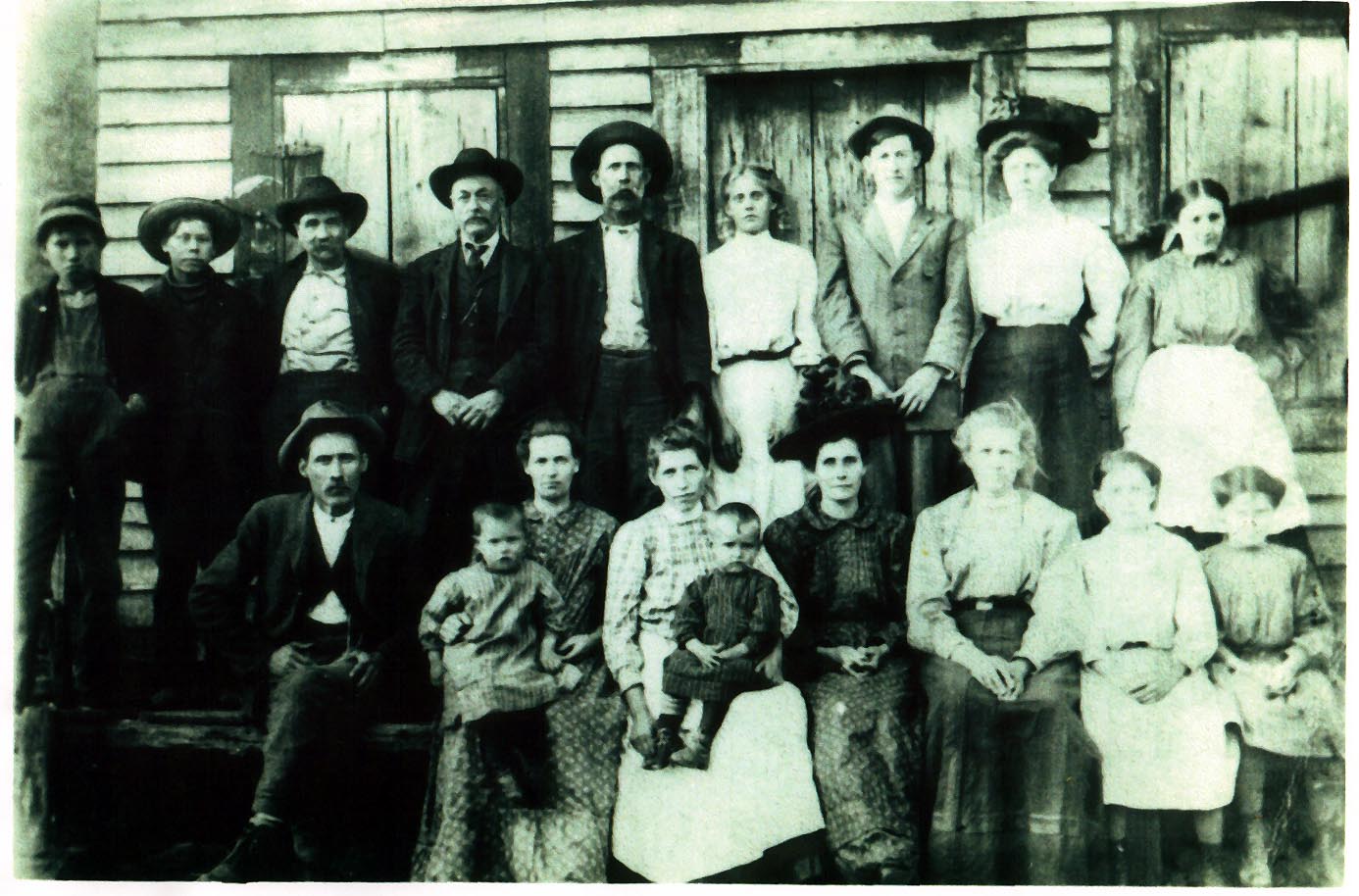
The Keibler family of Portsmouth, Ohio

The Keibler family of Portsmouth, Ohio

In Search of Ed Haley 297

27 Sunday Apr 2014

Posted by Brandon Ray Kirk in Ed Haley, Music

≈ 2 Comments

Tags

Abe Keibler, banjo, Boatin' Up Sandy, Charley Keibler, Cold Frosty Morning, Cotton-Eyed Joe, fiddle, fiddlers, Germany, Girl With the Blue Dress On, guitar, history, Jim Keibler, John Keibler, Kentucky, Morris Allen, music, Ohio, Old Coon Dog, Parkersburg Landing, Portsmouth, Rye Whiskey, Sally Goodin, Sally Got Drunk on Irish Potatoes, South Shore, Stumptail Dolly, Susan's Gone to the Ball With Her Old Shoes On, We'll All Go to Heaven When the Devil Goes Blind, writing

Later that day, I went to see 88-year-old Abe Keibler in nearby South Shore, Kentucky. Abe was the last surviving member of the old fiddling Keiblers and a first cousin to fiddler Morris Allen, one of the sources for Parkersburg Landing.

“My grandfather, he was sixteen years old when he landed in here from Germany and he got a job out here at an old furnace,” Abe said. “He couldn’t even speak the language when he first come here, they said, and he didn’t play nothing.”

“Wow,” I said, “So fiddling started with your dad and uncles?”

“My uncles and dad, yeah,” Abe confirmed. “Jim was my dad’s name. He played a banjo — the old claw-hammer style.

Abe was raised up in a family of fiddlers, but he originally played the guitar. He began to play the fiddle at the age of 55. He wasted little time in showing me the old family fiddle, which he inherited from his uncle John Keibler. It was a good-looking instrument with a good tone, although the bridge was ready to collapse.

“Way back before I was born some fella came into Portsmouth when they had the old saloons in and he had this old fiddle and couldn’t play it,” Abe explained. “My uncle John, he seen that it was a good fiddle and he wanted to buy it and this guy wouldn’t talk about selling it. My uncle Charley, he was a left-handed fiddler. He said, ‘Now John, if you want that fiddle, I can buy it for ten dollars.’ So he bought it. It’s been in our family around ninety years or maybe close to a hundred.”

Abe said the old fiddle was hard to tune — it had seen some rough times.

“My uncle fell and busted the top all to pieces. I had a fella that made fiddles put that top off of another old fiddle on it. My uncle had patent keys put on it and I had them took out and wood keys put in it.”

I tuned the Keibler fiddle as best as I could, then reached it back with a request for a tune I’d heard Abe mention called “We’ll All Go to Heaven When the Devil Goes Blind”. He couldn’t remember it but said it was the same thing as “Stumptail Dolly”. He scratched out a melody in the key of G, then said, “Some of them called that the ‘Girl With the Blue Dress On’. ‘Old Coon Dog’ is all I ever heard it called.”

He also played “Boatin’ Up Sandy”, “Sally Goodin” (in G), “Rye Whiskey” (which he called “Cold Frosty Morning”), “Sally Got Drunk on Irish Potatoes”, “Cotton-Eyed Joe”, and “Susan’s Gone to the Ball With Her Old Shoes On” (key of G).

Every now and then, I joined in with my fiddle.

“I’m gonna learn you how to play a fiddle yet,” Abe said.

In Search of Ed Haley 296

26 Saturday Apr 2014

Posted by Brandon Ray Kirk in Ed Haley, Music

≈ Leave a comment

Tags

Asa Neal, banjo, Birdie, blind, C&O Railroad, Charlie Mershon, Chet Rogers, Clark Kessinger, Clayt Fry, Community Common, Devil's Dream, Dinky Coffman, Dominique Bennett, Ed Haley, Ella Haley, Elmer Lohorn, fiddle, fiddlers, fiddling, Girl I Left Behind Me, Great Depression, Harry Frye, history, Jason Lovins, John Hartford, John Lozier, John Simon, Kentucky, Kid Lewis, music, Norfolk and Western Railroad, Ohio, Portsmouth, Portsmouth Airs, Portsmouth YMCA, Ragtime Annie, Roger Cooper, Roy Rogers, Russell, West End Jubilee, writing

A little later, I met John Lozier at Portsmouth. He was a real ball of energy. It was hard to believe that he was in his late eighties. I just sat back and listened to him talk about Ed.

“The first time I ever saw Ed Haley he was sitting on the street in a little old stool of a thing — him and his wife — had a little boy with him. They always kept a little boy with them — one of the kids that would lead them here and there and yander. And I didn’t know this but a fella by the name of Charlie Mershon was there and the Mershons are all fiddlers. They live over here in Ohio somewhere. And Charlie went home and told his dad, ‘I heard a man that could out-fiddle you.’ He went over and he had to take his hat off to Ed. But Ed had long, slim fingers like a woman and he played so soft you just had to listen. He was a great fiddler.”

I asked John to tell me about playing with Ed at the Portsmouth YMCA.

“A fella by the name of Dinky Coffman was the head of the entertainment committee at the N&W over here in Portsmouth,” he said. “Well, whenever Dink Coffman would want us to have a little shindig or whatever you want to call it he would take us over in the shops at the N&W at noon. They was about seven hundred people worked over there at one time. And nickels and dimes — whatever they could get — that’s the way Ed Haley made his living. It had to be a rough life. Of course, back in the twenties you make a dollar, honey, you could wrap it ’round a corncob and be nigger rich. And the last time I played with Ed Haley was at the YMCA at the C&O Russell yards.”

I asked John how Ed looked back then and he said, “Ed was a little old short pot-bellied feller. He had an old brown hat on as well as I can remember and just an old brown coat and a pair of britches. He didn’t dress like he was going out on vaudeville stage or anything. His wife would take Braille with her and read Braille for a little extra entertainment. She played a banjo-uke — eight string, short neck — but she just played chords. Mostly me and her would play and she would second after me. One time, we went up to the Russell yards at the YMCA up there and she accompanied me on the piano. I never knew any of the kids.”

John asked to see my fiddle, so I lifted it out of the case and reached it to him. He said to his wife, “Oh, Lord. Look at this. Isn’t that done pretty? My granddad made fiddles and he used three things: a wood chisel, a pocketknife, and a piece of window glass. All he bought was the fingerboard and the apron. And he made little wood clamps and wedges. He wouldn’t let me pick up the fiddle — afraid I’d drop it and break the neck out of it. And I started playing old fiddle tunes on a harp.”

Not long after that, John pulled out his harmonica and played “Devil’s Dream”, “Portsmouth Airs”, “Birdie”, “Girl I Left Behind Me”, and “Ragtime Annie”.

I joined in every now and then, which prompted him to say things like, “You’re putting something extra in there,” or “You missed a note. See that?”

To call him feisty would be a huge understatement.

At one point, he said, “I’m trying to tell you something. You’re gonna be here all day. This is my day.”

A little later he said, “I don’t know if you know what you’re doing or not, but you’re putting a few little slip notes in there. You put more notes in that than what Ed would have put in it. You’ve been listening to Clark Kessinger records.”

Uh-oh.

John opened up a whole new facet of our conversation by mentioning Clark Kessinger, who he’d heard play one time at the West End Jubilee on Market Street in Portsmouth.

“Clark Kessinger was a hard loser in a contest,” John said. “If he lost, he’d just stomp and carry on something awful.”

Clark came to Portsmouth and played a lot because of the great number of musicians in the town during the Depression.

“I come into Portsmouth about the time that Roy Rogers left here,” John said. “Now he had a cousin that was a better guitar player than he was: Chet. He had a little neck like a turkey. And him and Dominique Bennett, Clayt Fry, Elmer Lohorn… Elmer Lohorn was the only man I ever seen that played ‘companion time’ on the guitar. It was a double time — everything he done was doubled. And Harry Frye was a fine tenor banjo player. We had one guitar player by the name of Kid Lewis — was a smart-alec — and he could play classical stuff. But they just sat around and played cards and drank moonshine and got good. Asa Neal was, I’d say, our champion fiddler around here. Asa Neal bought ever record that Clark Kessinger ever put out.”

At that moment, John Simon, a local folklorist, showed up with Roger Cooper, a Buddy Thomas protégé. I got Roger to play the fiddle while I seconded him on my banjo. John Lozier jumped in when we weren’t playing something “just right.” At some point, Jason Lovins, a local newspaper reporter, dropped in with a camera and asked a few questions. He promised to plug my interest in Ed’s life in the Community Common.

In Search of Ed Haley 295

23 Wednesday Apr 2014

Posted by Brandon Ray Kirk in Ed Haley

≈ Leave a comment

Tags

Ashland, Big Sandy River, Bill Day, Canton, Clay Hicks, Durbin Creek, Ed Haley, Ella Haley, Florida, history, Jean Thomas, Jilson Setters, John Hartford, Kentucky, Lawrence Haley, Manuel Martin, Margaret Payne, Mona Haley, music, Ohio, Pat Haley, Ralph Haley, Ralph Payne, Rosie Day, Tampa, Wee House in the Wood, writing

We next discussed Jean Thomas, who wanted to feature Ed in her “Wee House in the Wood” production.

“I remember Pop and Mom didn’t care too much for Jean Thomas,” Mona said.

Pat said she had a run-in with Thomas later, long after Ed had died.

“Larry and I went to see Jean Thomas so we could take our cub scouts out there and as soon as she found out he was Ed Haley’s son, she didn’t want a thing to do with him. We never did take our troop out there. She said Pop was blasphemous — which I suppose was true — and he was a drunkard because he would not go along with her plans to be Jilson Setters.”

Mona said, “Bill Day…there was some controversy there between Jean Thomas and Pop and Mom. And I think Bill Day had a lot to do with it. I remember that. He was almost blind. He wasn’t quite blind. He wasn’t blind like Mom and Pop. I wouldn’t say they were friends, but they were acquaintances.”

Mona said Bill Day wasn’t much of a fiddler and seemed to enjoy telling me how his son Clay was cross-eyed and a little “off”.

Talking about Bill Day got us on the subject of his wife, “Aunt Rosie Day.” Mona had great memories of her.

“She kept house for us a lot and lived with us. She was rough. She’s whipped me home a lot of time with switches. She chewed bubble gum all the time and dipped snuff and she would stick bubble gum up all along the door facings and stuff and go back and get it later.”

Pat said, “I knew she dipped snuff. I used to go down and try to clean Aunt Rosie’s house, bless her heart.”

Mona said, “We never called her ‘Aunt Rosie’. We just called her ‘Rosie’. She fell down the steps one time from the landing. She was drunk. Her and Mom had been drinking apricot brandy. I remember it well. They was a stove in the corner and Rosie got down to the landing and missed a step and hit that stove with her head and made a big dent in that stove and never even hurt her. Mom fell down the steps too once, but she fell from the top to the landing. This time Mom fell down, Pop was playing music down in the living room and Mom was dancing upstairs to his music and danced right off the edge of those steps. It didn’t seem to hurt her, either. They could make the house come alive with music. When I would dance, Pop would say, ‘I hear you. I hear you.'”

Pat said Ed used to get drunk and fight with Aunt Rosie Day. He liked to drink with her son-in-law, Manuel Martin. Martin was a bootlegger. He and his wife lived on Durbin Creek up the Big Sandy River. In the 1960s, Manuel got drunk and shot his son at the kitchen table in Canton, Ohio. Lawrence went to see him in the penitentiary, Pat said.

Just before Mona left, I told her, “I can’t tell you how much I appreciate you coming over here and talking to me.”

“It’s my pleasure,” she said. “Anything I can do. I’m available.”

At the door, I gave her a big hug and she said, “It’s good seeing you, John. You seem like family.”

A few minutes later, just before I turned in to bed, I mentioned Ralph Haley’s importance in this story. It was Ralph, after all, who had the foresight to record Ed and Ella Haley’s music in the late forties. (Never mind that he wasn’t really Ed’s son or that he recorded him on a machine stolen from the army.) Pat said Ralph helped take care of the family when he was young, like stealing chickens when the kids were hungry. When he was older, he kind of distanced himself from the family by changing his last name from Haley to Payne — perhaps to protest Ed’s treatment of his mother. (This was the surname used on his tombstone in Cincinnati.) The Haleys tried to keep in touch with Ralph’s widow, Margaret, who remarried a younger man named Mel and moved to Florida to work a chicken farm. At some point, she had a grocery store in Tampa called “M&M’s”. In the late forties, Lawrence was stationed nearby and visited. When he went back, her husband put a pistol in his face and ran him off. Pat had no idea why.

In Search of Ed Haley 294

22 Tuesday Apr 2014

Posted by Brandon Ray Kirk in Ed Haley

≈ Leave a comment

Tags

Ashland, Catlettsburg, Catlettsburg Stock Yard, Doc Holbrook, Ed Haley, Ella Haley, Great Depression, history, John Hartford, Kentucky, Lawrence Haley, life, Mona Haley, Ohio, Pat Haley, Ralph Mullins, South Point, Ward Hollow, writing

Pat, slowly becoming the interviewer, asked Mona how far back she could remember and she said, “As far back as I can remember was Halbert Street. I can remember going out in the rain and standing out in the rain while Mom and Pop was fighting or Pop was fighting Mom — which that was probably the way it was. But it takes two to make a fight or an argument. I don’t remember whatever started it. I just remember Pop being mean to Mom, and that was on 45th Street. And the next memory I have is at Ward Hollow. 337 37th Street, that was Ward Hollow. And the next one was at 17th Street. And the next one was back up on 45th Street.”

Pat said, “When they lived on 45th Street that time had to be about ’48, ’49.”

Mona agreed: “It was, because Ralph was a baby. My Ralph.”

Pat said, “Good or bad memories are you talking about?”

Mona kind of laughed and said, “They’re all bad but there had to been some good ones.”

I said, “Bad stuff is easiest to remember. Most history and everything is told in terms of bad things instead of good things. Usually, if you go along a highway, most highway markers that you see commemorate battles and tragedies.”

Mona said, “I remember some good times with Mom. I remember seeing a lot of movies.”

Pat said, “That’s what Larry said. Said you’d see movies while they played.”

Mona said, “Yeah. I can imagine how Mom worried, too. I couldn’t sit there with her. They didn’t let us go too far away.”

Mona said she mostly traveled with Ella as a girl but remembered going with Ed to Doc Holbrook’s office where she watched him reach into her father’s mouth with something that looked like a giant spoon and take out his tonsils. Ed said, “How long do I have to do this?” and Doc answered, “It’s over…” and then they started playing music.

I said, “Did your mom and dad usually play around a movie theatre?” and Mona said, “Seems to me like it might have been a block or two away from the movies but that wasn’t very far.”

I asked what kind of places Ed usually looked for when he first came into a town and she said, “Pop always looked for a courthouse square or a YMCA — something where they’d be a lot of people around. He played at the Catlettsburg Stock Yard a lot, him and Mom.”

We made small talk for a few minutes — the kind that often signals the end of a conversation — when Pat said to Mona, “What do you remember about your childhood other than those bad memories?”

“I remember Mom playing with me and me getting a wash pan and washing her face and her hands and her arms,” Mona said. “Just with Mom, you know. Lawrence and I would take turns doing dishes and cooking for Mom and Pop. I remember playing cowboys and Indians with the boys and they didn’t like me playing with them.”

Mona was apparently quite the tomboy when she was a young girl.

Pat said, “I told John about how harsh they were with you about keeping your dress down and sitting property.”

Mona said, “Yeah, they were. They was rough on me. There wasn’t any ‘Come here, let me have you,’ or no love. Always ‘You do this’ or ‘You do that.'”

Pat said she figured Lawrence had been right in on all that and Mona said, “Why, I’d a whipped Lawrence. You remember Mom sent Lawrence to get me one time — I don’t know where I was – and he said, ‘I can’t.’ She said, ‘Why?’ He said, ‘She can whip me.'”

Pat said, “I’ve heard Mom tell that story. And he used to tattle on you.”

Mona said, “Yeah, he did. But I don’t know if I tattled on him or not. I don’t remember.”

A little later, when they were teenagers, Lawrence was so overprotective of Mona that he cut one of her boyfriends with a knife trying to run him away from the house. Ed was also hard on her boyfriends; he called one of them a “raggedy-ass-son-of-a-bitch.”

Mona told me about her memories of Ed in his later years.

“He retired from playing…period. I remember one time on 45th Street. I came over from South Point, where I lived, and I tried to get Pop to play some for me and Mom said, ‘He’ll never play no more. He’s quit.’ It was a long time after the divorce.”

I asked her if Ed had his beard at that time and she said, “Yes. I used to shave him with a straight razor under his beard. Trim it. He shaved hisself most of the time, but once in a while I’d shave him.”

She said Pop seldom took baths.

“He said it was a waste of water. He was like that guy that said too much bathing will weaken you.”

Ralph Haley

14 Monday Apr 2014

Posted by Brandon Ray Kirk in Ed Haley

≈ Leave a comment

Tags

Appalachia, genealogy, guitar, history, Kentucky, music, Ohio, photos, Ralph Haley, U.S. South

Ralph Haley, son of Ella (Trumbo) Haley

Ralph Haley, son of Ella (Trumbo) Haley

← Older posts
Newer posts →

Feud Poll 1

If you had lived in the Harts Creek community during the 1880s, to which faction of feudists might you have given your loyalty?

Categories

  • Adkins Mill
  • African American History
  • American Revolutionary War
  • Ashland
  • Atenville
  • Banco
  • Barboursville
  • Battle of Blair Mountain
  • Beech Creek
  • Big Creek
  • Big Harts Creek
  • Big Sandy Valley
  • Big Ugly Creek
  • Boone County
  • Breeden
  • Calhoun County
  • Cemeteries
  • Chapmanville
  • Civil War
  • Clay County
  • Clothier
  • Coal
  • Cove Gap
  • Crawley Creek
  • Culture of Honor
  • Dingess
  • Dollie
  • Dunlow
  • East Lynn
  • Ed Haley
  • Eden Park
  • Enslow
  • Estep
  • Ethel
  • Ferrellsburg
  • Fourteen
  • French-Eversole Feud
  • Gilbert
  • Giles County
  • Gill
  • Green Shoal
  • Guyandotte River
  • Halcyon
  • Hamlin
  • Harts
  • Hatfield-McCoy Feud
  • Holden
  • Hungarian-American History
  • Huntington
  • Inez
  • Irish-Americans
  • Italian American History
  • Jamboree
  • Jewish History
  • John Hartford
  • Kermit
  • Kiahsville
  • Kitchen
  • Leet
  • Lincoln County Feud
  • Little Harts Creek
  • Logan
  • Man
  • Matewan
  • Meador
  • Midkiff
  • Monroe County
  • Montgomery County
  • Music
  • Native American History
  • Peach Creek
  • Pearl Adkins Diary
  • Pecks Mill
  • Peter Creek
  • Pikeville
  • Pilgrim
  • Poetry
  • Queens Ridge
  • Ranger
  • Rector
  • Roane County
  • Rowan County Feud
  • Salt Rock
  • Sand Creek
  • Shively
  • Spears
  • Sports
  • Spottswood
  • Spurlockville
  • Stiltner
  • Stone Branch
  • Tazewell County
  • Timber
  • Tom Dula
  • Toney
  • Turner-Howard Feud
  • Twelve Pole Creek
  • Uncategorized
  • Warren
  • Wayne
  • West Hamlin
  • Wewanta
  • Wharncliffe
  • Whirlwind
  • Williamson
  • Women's History
  • World War I
  • Wyoming County
  • Yantus

Feud Poll 2

Do you think Milt Haley and Green McCoy committed the ambush on Al and Hollene Brumfield in 1889?

Blogroll

  • Ancestry.com
  • Ashland (KY) Daily Independent News Article
  • Author FB page
  • Beckley (WV) Register-Herald News Article
  • Big Sandy News (KY) News Article
  • Blood in West Virginia FB
  • Blood in West Virginia order
  • Chapters TV Program
  • Facebook
  • Ghosts of Guyan
  • Herald-Dispatch News Article 1
  • Herald-Dispatch News Article 2
  • In Search of Ed Haley
  • Instagram
  • Lincoln (WV) Journal News Article
  • Lincoln (WV) Journal Thumbs Up
  • Lincoln County
  • Lincoln County Feud
  • Lincoln County Feud Lecture
  • LinkedIn
  • Logan (WV) Banner News Article
  • Lunch With Books
  • Our Overmountain Men: The Revolutionary War in Western Virginia (1775-1783)
  • Pinterest
  • Scarborough Society's Art and Lecture Series
  • Smithsonian Article
  • Spirit of Jefferson News Article
  • The Friendly Neighbor Radio Show 1
  • The Friendly Neighbor Radio Show 2
  • The Friendly Neighbor Radio Show 3
  • The Friendly Neighbor Radio Show 4
  • The New Yorker
  • The State Journal's 55 Good Things About WV
  • tumblr.
  • Twitter
  • Website
  • Weirton (WV) Daily Times Article
  • Wheeling (WV) Intelligencer News Article 1
  • Wheeling (WV) Intelligencer News Article 2
  • WOWK TV
  • Writers Can Read Open Mic Night

Feud Poll 3

Who do you think organized the ambush of Al and Hollene Brumfield in 1889?

Recent Posts

  • Logan County Jail in Logan, WV
  • Absentee Landowners of Magnolia District (1890, 1892, 1894)
  • Charles Spurlock Survey at Fourteen Mile Creek, Lincoln County, WV (1815)

Ed Haley Poll 1

What do you think caused Ed Haley to lose his sight when he was three years old?

Top Posts & Pages

  • Early Schools of Logan County, WV (1916)
  • Jack Dempsey’s Broadway Restaurant Location in New York City (2019)
  • Anthony Lawson founds Lawsonville
  • Blood in West Virginia: Brumfield v. McCoy (2014)
  • Blood in West Virginia

Copyright

© Brandon Ray Kirk and brandonraykirk.wordpress.com, 1987-2023. Unauthorized use and/or duplication of this material without express and written permission from this blog’s author and/or owner is strictly prohibited. Excerpts and links may be used, provided that full and clear credit is given to Brandon Ray Kirk and brandonraykirk.wordpress.com with appropriate and specific direction to the original content.

Archives

  • February 2025
  • January 2025
  • October 2023
  • September 2023
  • December 2022
  • November 2022
  • May 2022
  • April 2022
  • February 2022
  • November 2021
  • October 2021
  • September 2021
  • June 2021
  • May 2021
  • April 2021
  • March 2021
  • February 2021
  • January 2021
  • December 2020
  • November 2020
  • October 2020
  • July 2020
  • June 2020
  • May 2020
  • April 2020
  • March 2020
  • February 2020
  • January 2020
  • December 2019
  • November 2019
  • October 2019
  • September 2019
  • August 2019
  • July 2019
  • June 2019
  • May 2019
  • April 2019
  • March 2019
  • February 2019
  • January 2019
  • December 2018
  • November 2018
  • October 2018
  • September 2018
  • August 2018
  • July 2018
  • June 2018
  • May 2018
  • April 2018
  • March 2018
  • February 2018
  • January 2018
  • December 2017
  • November 2017
  • October 2017
  • September 2017
  • August 2017
  • July 2017
  • June 2017
  • May 2017
  • April 2017
  • March 2017
  • February 2017
  • January 2017
  • December 2016
  • November 2016
  • October 2016
  • September 2016
  • August 2016
  • July 2016
  • June 2016
  • May 2016
  • April 2016
  • March 2016
  • February 2016
  • January 2016
  • December 2015
  • November 2015
  • October 2015
  • September 2015
  • August 2015
  • July 2015
  • June 2015
  • May 2015
  • April 2015
  • March 2015
  • February 2015
  • January 2015
  • December 2014
  • October 2014
  • September 2014
  • August 2014
  • July 2014
  • June 2014
  • May 2014
  • April 2014
  • March 2014
  • February 2014
  • January 2014
  • December 2013
  • November 2013
  • October 2013
  • September 2013
  • August 2013
  • July 2013
  • June 2013
  • May 2013
  • April 2013
  • March 2013
  • February 2013
  • January 2013
  • December 2012
  • November 2012

Enter your email address to follow this blog and receive notifications of new posts by email.

Join 2,927 other subscribers

Tags

Appalachia Ashland Big Creek Big Ugly Creek Blood in West Virginia Brandon Kirk Cabell County cemeteries Chapmanville Charleston civil war coal Confederate Army crime culture Ed Haley Ella Haley Ferrellsburg feud fiddler fiddling genealogy Green McCoy Guyandotte River Harts Harts Creek Hatfield-McCoy Feud history Huntington John Hartford Kentucky Lawrence Haley life Lincoln County Lincoln County Feud Logan Logan Banner Logan County Milt Haley Mingo County music Ohio photos timbering U.S. South Virginia Wayne County West Virginia Whirlwind writing

Blogs I Follow

  • OtterTales
  • Our Appalachia: A Blog Created by Students of Brandon Kirk
  • Piedmont Trails
  • Truman Capote
  • Appalachian Diaspora

BLOOD IN WEST VIRGINIA is now available for order at Amazon!

Blog at WordPress.com.

OtterTales

Writings from my travels and experiences. High and fine literature is wine, and mine is only water; but everybody likes water. Mark Twain

Our Appalachia: A Blog Created by Students of Brandon Kirk

This site is dedicated to the collection, preservation, and promotion of history and culture in Appalachia.

Piedmont Trails

Genealogy and History in North Carolina and Beyond

Truman Capote

A site about one of the most beautiful, interesting, tallented, outrageous and colorful personalities of the 20th Century

Appalachian Diaspora

  • Subscribe Subscribed
    • Brandon Ray Kirk
    • Join 789 other subscribers
    • Already have a WordPress.com account? Log in now.
    • Brandon Ray Kirk
    • Subscribe Subscribed
    • Sign up
    • Log in
    • Report this content
    • View site in Reader
    • Manage subscriptions
    • Collapse this bar
 

Loading Comments...