Tags
Big Ugly Creek, fiddler, genealogy, history, Jeff Duty, Lincoln County, music, photos, U.S. South, West Virginia

Jeff Duty (1867-1949), a fiddler from Big Ugly Creek in Lincoln County, WV

14 Wednesday May 2014
Posted in Big Ugly Creek, Music
Tags
Big Ugly Creek, fiddler, genealogy, history, Jeff Duty, Lincoln County, music, photos, U.S. South, West Virginia
Jeff Duty (1867-1949), a fiddler from Big Ugly Creek in Lincoln County, WV
13 Tuesday May 2014
Posted in Big Creek, Big Harts Creek, Big Ugly Creek, Calhoun County, Music
Tags
Akron, Arthur Smith, banjo, Bertha Bias, Big Creek, blind, Boone County, Boone County Genealogical Society, Broad Branch, Calhoun County, Chapmanville, Clay County, Dave Brumfield, Dicy Thomas, Dolly Bell, Ed Belcher, Ed Haley, Ella Haley, fiddle, fiddler, Garretts Fork, genealogy, Greenview, Harts Creek, Harvey Hicks, Hewetts Creek, history, Hubert Baisden, Irene Hager, Jeff Baisden, Jeff Duty, Jess Chambers, Johnny Hager, Kanawha County, Kansas, Kentucky, Kith and Kin, Laury Hicks, life, Little Coal River, Logan County, Lydia Johnson, Madison, Mary Baisden, Morehead, music, North Fork, Ohio, Powderly, Riland Bias, Robert Martin, Rowan County, Sampson Thomas, Simon Bias, Spruce Fork, Texas, Trace Fork, Turley Adams, Ugee Postalwait, Victoria Adams, West Virginia, Wilson Craddock, writing
After his return to West Virginia, Johnny Hager took immediate notice of the large number of musicians who lived in the head of Big Harts Creek. His first cousin, Jefferson “Jig-Toe” Baisden (1879-1970), was a dancer and banjo-picker. J. E. “Ed” Belcher (1889-1970), who played several instruments, and Robert Martin, an Arthur Smith-style fiddler, were other significant musicians in the area. Ed Haley (1885-1951), a blind fiddler from Trace Fork, particularly caught Hager’s attention. Johnny’s desire to absorb Haley’s music was understandable because, as Jess Chambers stated, “It was a badge of honor to have played with Ed Haley.” Jeff Baisden, a cousin to both men, may have introduced the pair.
Johnny could supposedly play any instrument and his trip out to Kansas allowed him to soak up a variety of western tunes and playing styles which were completely new to folks in Logan County. Both of these qualities, his diverse musical capabilities and his unique musical background, ensured that he an Ed Haley had many intense music sessions. According to Turley Adams, Johnny’s great-nephew, Hager encouraged Ed to take his show on the road and volunteered to serve as Haley’s “eyes” on such trips. This willingness to travel, coupled with his apparent competence as a musician, made Johnny a perfect sidekick to Ed. Haley and Hager were both unmarried, a convenience which allowed them to roam the country with few cares or responsibilities.
Johnny and Ed traveled to various places in West Virginia but are particularly remembered up around the Calhoun-Clay County area north of Kanawha County. Aside from being populated with rural folks similar to Hager’s neighbors in Logan and Boone Counties, the area was also endowed with a host of great musicians. Haley and Hager wintered there as young men with a fiddler named Lawrence “Laury” Hicks (1880-1937). Ugee (Hicks) Postalwait of Akron, Ohio, a daughter of Laury Hicks, said that Ed and Johnny first came and visited her father in the early 1910s. Hager was a tall, slim banjo-picker. When Ed and Johnny left Laury’s home in the spring, with Johnny leading the way, Ugee and her brother stood on the bank by the house and “hollered and cried after them.”
Most agree that Johnny’s travels with Ed Haley ended around 1914 when Haley married Ella Trumbo, a blind music instructor from Morehead in Rowan County, Kentucky. Haley’s habit of cursing and drinking also helped end the partnership. Hager did not care for it.
For the most part, Johnny spent the remainder of his life playing music while boarding with his Baisden kinfolk on the North Fork of Big Creek. Irene Hager, a daughter of Hubert E. and Mary (Pauley) Baisden, remembered Johnny playing music on her father’s front porch in the late 1920s. Her father, a banjo-picker, lived at Greenview and the Big Branch of Spruce Fork of Little Coal River in Boone County. Hubert Baisden was Johnny’s first cousin. Hager boarded with him for several weeks at a time. One of Hager’s chores at the Baisden home was to keep wood in the stove. Irene said that Johnny often talked about his early travels with Ed Haley.
Johnny Hager was a man with little roots and family, a fellow who never had a real home. Many from Harts Creek remember that Hager was simply from the “the North Fork of Big Creek.” Dave Brumfield, a great-nephew, said that Hager stayed in that vicinity with a Thomas family. No doubt, this Thomas family was headed by Sampson Thomas who married Dicy Adams, a sister-in-law to Johnny’s sister Victoria Adams. Incidentally, just over the mountain from North Fork was the Broad Branch of Big Ugly Creek where lived a fiddler named Jefferson “Jeff” Duty (born about 1877). During Hager’s stay on the North Fork, he probably visited this musician (and any others in this locality) to learn a few new licks.
Hager also stayed with Simon and Bertha (Baisden) Bias on Bias Branch in Boone County. Mrs. Bias’ grandfather, Riland Baisden, was a brother to Johnny Hager’s mother. He spent a lot of time on the Garretts Fork of Big Creek with the Barkers before leaving them to stay with Wilson Craddock’s family on Hewitts Creek in Boone County. Mr. Craddock’s widow has a necklace which Johnny gave her during his time there. Lydia (Adkins) Johnson of Powderly, Texas, recalled that Hager lived with her mother and father during her “growing up years at home” in the late 1920s and 1930s. Johnson “was born (around 1923) and raised in Boone Co. just over the hill from Chapmanville.” Hager was a hard worker and was very efficient at “old-time” carpentry jobs and such tasks as digging wells. According to Johnson: “[Johnny] was a handy man, & a fiddle player. (Sometimes) a neighbor would need him to come live with them, to build them an out house for them. He was noted for the best out houses, he earned his keep by living with & helping others.”
Lydia Johson described Johnny as “a very neat man” and Dolly Bell agreed, stating that he always kept his hair cut and his face shaved. He never wore suits and never dated women so far as any of his family knew. In Irene Hager’s words, he “was a pretty straight fellow” and Dave Brumfield said he never drank when visiting his father’s home on Harts Creek.
NOTE: Originally published in “Kith and Kin of Boone County, West Virginia” Volume XXII
Published by Boone County Genealogical Society
Madison, West Virginia, 1997
Dedicated to the late Dolly (Hager) Bell
13 Tuesday May 2014
Posted in Big Harts Creek, Ed Haley, Music, Whirlwind
Tags
Barbara Mullins, Bernie Adams, culture, Ed Haley, fiddle, fiddler, genealogy, guitar, Harts Creek, history, life, Logan County, music, photos, Trace Fork, U.S. South, West Virginia

Bernie Adams and Ed Haley with Barbara Mullins, Trace Fork of Harts Creek, Logan County, WV, c.1941
12 Monday May 2014
Posted in Big Harts Creek, Music, Spottswood, Women's History
Tags
Alice Dingess, Appalachia, Harts Creek, history, Logan County, music, photos, piano, U.S. South, West Virginia
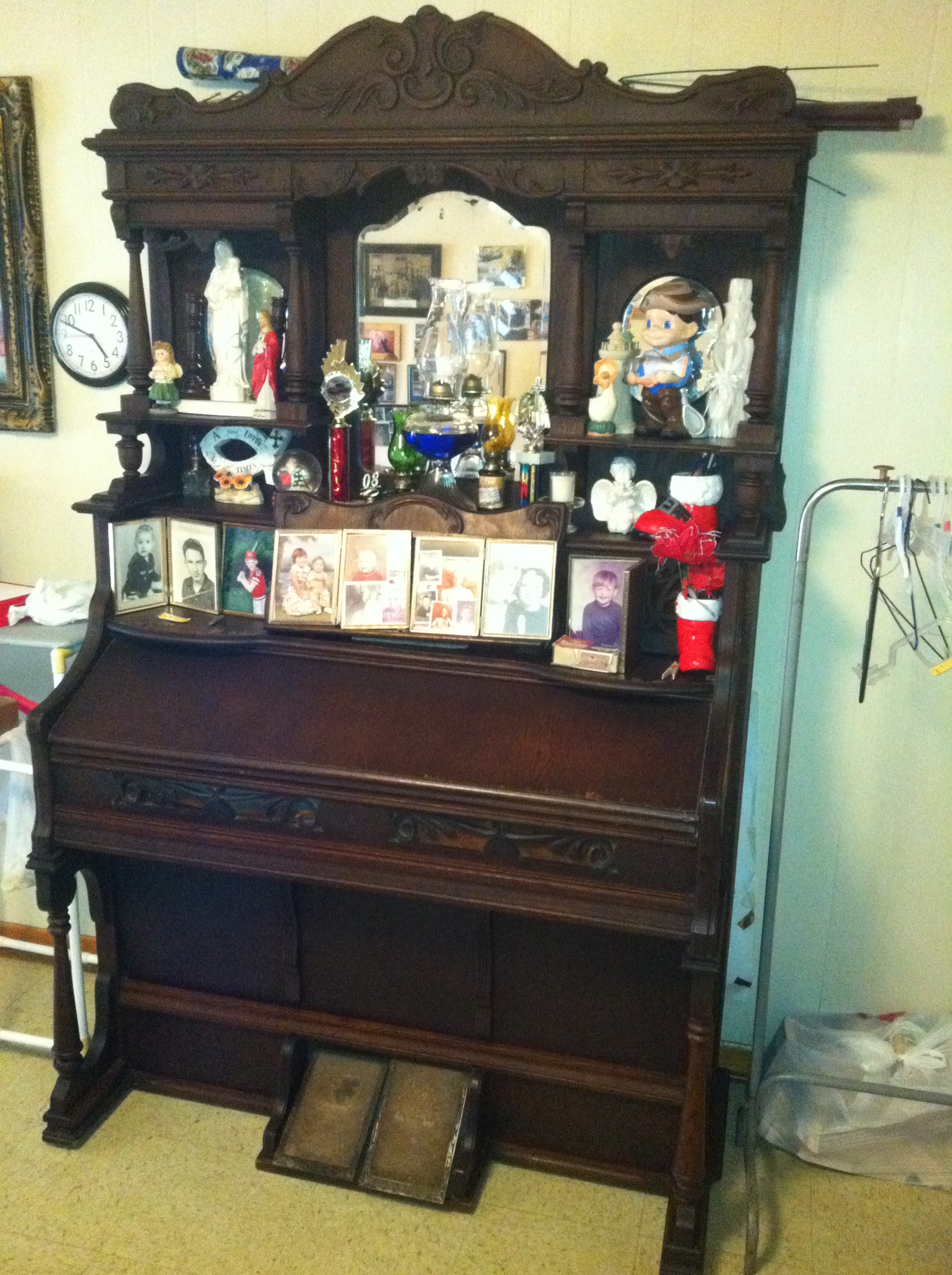
Alice (Adams) Dingess piano, Harts Creek, Logan County, WV, 2011
12 Monday May 2014
Posted in Big Creek, Big Harts Creek, Music
Tags
Aaron Hager, Anna Adams, Armilda Hager, banjo, Battle Hill Township, Big Creek, Big Ugly Creek, Boone County, Boone County Genealogical Society, Dave Brumfield, Dolly Bell, Ed Haley, Edward Hager, Eliza Hager, Geronimo Adams, Harts Creek, history, Jess Chambers, John Baisden, Johnny Canub Adams, Johnny Hager, Joseph Hager, Joseph Hager Jr., Kansas, Kith and Kin, Lincoln County, Logan County, Lola Adams, Lucinda Hager, Madison, Mag Brumfield, McPherson County, Missouri, Mud, music, Olivia Hager, Roxie Mullins, Sanders Branch, Smokehouse Fork, Victoria Adams, West Virginia, William Hager, writing
In the early 1900s, two musicians traveled as a pair throughout West Virginia and spread the influence of their musical talents to fiddlers and banjo-pickers in countless towns and hamlets. One of these men was Ed Haley, a Logan County native, who took up the fiddle after being blinded by his father as a child. The other was Little Johnny Hager who, although born in Logan County, spent a great deal of his life in Boone County.
John Washington Hager was born on December 8, 1876 to Joseph and Lucinda (Baisden) Hager, Sr. on Big Creek in Logan County, West Virginia, near the Boone County line. Johnny was the youngest sibling to Victoria Hager (1869-1942) and Aaron Hager (c.1872-c.1884). During his childhood, his parents moved from their home at the North Fork of Big Creek in Logan County to the Big Ugly Creek area. His family appeared in the 1880 Lincoln County Census. Subsequent years were difficult: Aaron Hager, Johnny’s older brother, died at the age of twelve years old. Victoria Hager married George Washington “Ticky George” Adams and moved to Big Harts Creek in Logan County. Finally, Johnny’s parents divorced due to his father’s infidelity with a local woman named Armilda Adkins. Joseph Hager soon married his mistress and fathered four more children: Edward Hager (1887), Joseph Hager, Jr. (1888-1940), Eliza Hager (1891), and Olivia Hager. Joe Hager lived in the vicinity of the old Mud Post Office near the Lincoln-Boone county line.
Remarkably, Johnny moved to Kansas with his mother, where he spent many years among Hager relatives. Just how long Johnny lived in Kansas has not been determined despite interviews with his close relatives. There is some indication that he and his mother lived in other Western states like Missouri prior to finally settling in Kansas. All the versions regarding Johnny’s stay in Kansas are given below because any one of them might be true. His niece Roxie (Adams) Mullins told that Johnny lived out West for six months. Johnny’s half-niece Dolly (Hager) Bell thought he came home from Kansas when he was twenty years old (circa 1896) or when he was aged in his twenties (circa 1896-1906). Hager’s half-great nephew Jess Chambers said that he had been told that Johnny lived in Kansas for twenty years, meaning that he would have returned to West Virginia around 1905. In the personal opinion of this author, accounts placing Johnny out West for several years seem at this time the most likely scenario simply because Johnny cannot be accounted for in the 1900 West Virginia Census. Instead, he shows up as a farm laborer in the home of a cousin, William Hager, aged 26, in Battle Hill Township, McPherson County, Kansas.
Kansas would have offered a West Virginia boy like Johnny Hager many new adventures. One can be sure that he spent a great portion of his time there working on the farm since he later described plowing fields into mile-long rows. According to family stories, he also chauffeured female cousins into town on wagon rides. Dolly Bell suggested that Hager probably learned to play the banjo while in Kansas and Jess Chambers said of Hager, “He played all his life.” Johnny was self-taught and played the old clawhammer style on the banjo.
According to tradition, Johnny’s mother died during their stay in Kansas. Roxie Mullins stated that Lucinda Hager was buried on the banks of the Wabash River, located along the borders between Illinois and Indiana. Another source said that she died in Missouri. Johnny always cried when he spoke of his mother and said that had lost “everything” when she died.
Some time after 1900, perhaps about 1905, Johnny returned to West Virginia. Although his father Joseph was still alive, Johnny never forgave him for divorcing his mother and refused to associate with him. He also refused to recognize Joseph’s children by his second wife. A story is told how Joe Hager, Johnny’s half-brother, rode to see him at John Baisden’s home on Sanders Branch. He was excited to meet the brother he had never known. When he came into the yard and yelled for him, Johnny wouldn’t even come outside.
In Johnny’s eyes, his sister Victoria Adams was all that remained of his family and he spent a great deal of time boarding at her Harts Creek residence in Logan County. During Johnny’s stay out West, Victoria had give birth to several children in a family which would grow to include Maggie “Mag” Adams (1888-1959), John C. “Johnny” Adams (1891-1965), Anna Adams (1901-1982), Geronimo Adams (c.1903), Roxie Adams (1905-1993) and Lola Adams (1911). It is likely that Johnny spun great stories for the Adams children about his experiences in Kansas. Roxie Mullins remembered him as being “funnier than a monkey,” Jess Chambers said he was a jolly fellow, and Dolly Bell remembered that he loved to joke and laugh. Dave Brumfield, a great-nephew, said that he pranked with the Brumfield children when he visited his parents’ home on the Smoke House Fork of Big Harts Creek in Logan County.
NOTE: Originally published in “Kith and Kin of Boone County, West Virginia” Volume XXII
Published by Boone County Genealogical Society
Madison, West Virginia, 1997
Dedicated to the late Dolly (Hager) Bell
11 Sunday May 2014
Posted in Ed Haley, Lincoln County Feud, Music, Stiltner
Tags
banjo, Brights Disease, Cain Adkins, Cain Adkins Jr., Catlettsburg, Chillicothe, Columbus, crime, Daisy Ross, Ed Haley, Faye Smith, fiddlers, fiddling, genealogy, Goble Fry, Green McCoy, Green McCoy Jr., guitar, Harkins Fry, history, Indian Girl, Kenova, Kentucky, Laurel Creek, Luther McCoy, Mariah Adkins, McCoy Time Singers, Monroe Fry, music, Ohio, Oscar Osborne, Salty Dog, Sherman Luther Haley, Sherman McCoy, Spicie McCoy, Time Has Made A Change, Wayne County, WCMI, West Virginia, Winchester Adkins, writing
After the feud, Cain Adkins settled on Laurel Creek in Wayne County and never returned to Harts. Not long afterward, he began suffering from some type of lingering illness.
“Grandpaw, he played a fiddle,” Daisy said. “They had him to play the fiddle on his deathbed. Somebody came in and they wanted to hear a song and he played it for him. He said, ‘They ain’t no harm in a fiddle. If they’s any harm, it’s when no one plays it.’ I’ve heard Mom tell the last song he played, but I don’t know what it was he played. Mom said it made him feel better.”
Cain died of Brights Disease in 1896.
His widow Mariah lived many more years.
“Grandmaw was a good person — she went to church every Sunday. The last ten years she went blind and stayed with Mom. Mom waited on her.”
She died in 1931.
It took Spicie years to forgive the Brumfields for killing Green. Even after remarrying Goble Fry (her first cousin) in 1893, she was unable to cope with Green’s death and always cried when recounting the tale of his murder. For years, her bitterness kept her from joining the church.
“She felt like he hadn’t done nothing to be killed for ’cause she loved him better than anything,” Daisy said. “Before she was baptized, my brother Sherman had went off to work — him and a bunch of boys — and they was all telling what church their mother belonged to and Sherman said to Mom, ‘Mom, I had to tell them you didn’t belong to the church.’ ‘Well,’ she said, ‘I can’t forgive the Brumfields.’ He said, ‘You can’t forget it, but you got to forgive them or you’ll go to the same place where they did.’ I heard him say that. I was a young woman.”
These were apparently inspiring words, because Spicie was baptized soon afterwards and formed a gospel quartet, “The McCoy Time Singers.” Her son, Sherman McCoy, was a key member.
“Brother Sherman could play any kind of instrument, but banjo is what he played mostly,” Daisy said. “He played all kinds of pretty tunes on the banjo that wasn’t gospel. And when he was on WCMI he wanted people to write in and tell him to play the gospel music, but he had to play the one that got the most requests and he didn’t get very much requests for the gospel. But Mom and Sherman sung them gospel songs on there. They had a program on WCMI one time.”
Daisy said the only known recordings of the McCoy Time Singers had been destroyed years ago.
“They made records of their quartet singing and they peeled up. Got damp. Monroe, my brother, got some and even wrapped them in cloth and they still peeled.”
I wanted to know more about Sherman McCoy, so I got out my banjo and played a little bit for Daisy. She said he played a lot with his uncle, Winchester Adkins (one of the best fiddlers in Wayne County), and a guitar player named Oscar Osborne.
“Brother Sherman was one of the best banjo players I ever heard,” Daisy said. “I’ve heard them on television but I’ve never heard anything to beat Brother Sherman. He played a guitar and taught music lessons. He played all kinds of jigs. Did you ever play ‘The Indian Girl’? He didn’t like to play that one very much because he had to tune it different but that was the prettiest tune I ever heard on the banjo. It sounded like he had more than ten fingers.”
I asked Daisy about Sherman playing with Ed Haley and she said, “He played music with Ed Haley and they played in Catlettsburg.”
That’s all she knew about it but I wondered just how well they actually knew each other. Was it possible that Ed named his oldest child Sherman Luther Haley after Sherman McCoy? I could just picture them loafing together as young bachelors.
Daisy said Green McCoy’s other son, Green Jr., was a singing instructor. She remembered the first time he came into contact with a guitar.
“Uncle Cain, he played a guitar,” she said. “He come down one time and wanted Green to see his guitar. Green only seen that guitar one time and worked a week and got him a guitar and tuned it up and was playing on it. He was gifted.”
What happened to him?
Faye said, “Uncle Green, he hadn’t been dead but I’d say about eight or ten years. He played a guitar good.”
Daisy said Green’s son Luther plays the guitar on the radio in the Columbus-Chillicothe area.
“Uncle Green said he was absolutely the best he ever heard,” she said.
She didn’t know much about Luther or have any recordings of him but had a videocassette tape of Green Jr. picking the guitar and singing in 1975. (I couldn’t help but note that Green Jr. and Ed Haley both had sons named Luther.)
Spicie’s children by Goble Fry also were talented musicians, hinting at a musical strain in her genetics as well.
“Uncle Monroe was a Fry — that was Mom’s brother — and Harkins — they both played music,” Faye said. “But now, Uncle Monroe could play, I guess, about any type of instrument. I remember him playing ‘Salty Dog’ one time.”
Daisy really bragged on her brother Harkins Fry, a music teacher and songwriter. He wrote one gospel song called “Time Has Made A Change”, which Daisy and Faye sang for us:
Time has made a change in the old homeplace.
Many of my friends have gone away,
Some never more in this life I shall see.
Time has made a change in me.
Time has made a change in the old homeplace.
Time has made a change in each smiling face,
And I know my friends can plainly see
Time has made a change in me.
In my childhood days I was well and strong.
I could climb the hillside all day long,
But I’m not today what I used to be.
Time has made a change in me.
When I reach my home in that land so fair.
Meet my friends awaiting me over there.
Free from toil and pain I shall ever be.
Time has made a change in me.
03 Saturday May 2014
Posted in Lincoln County Feud, Music
Tags
genealogy, Green McCoy, Green McCoy Jr., guitar, history, life, music, photos, Spicie McCoy
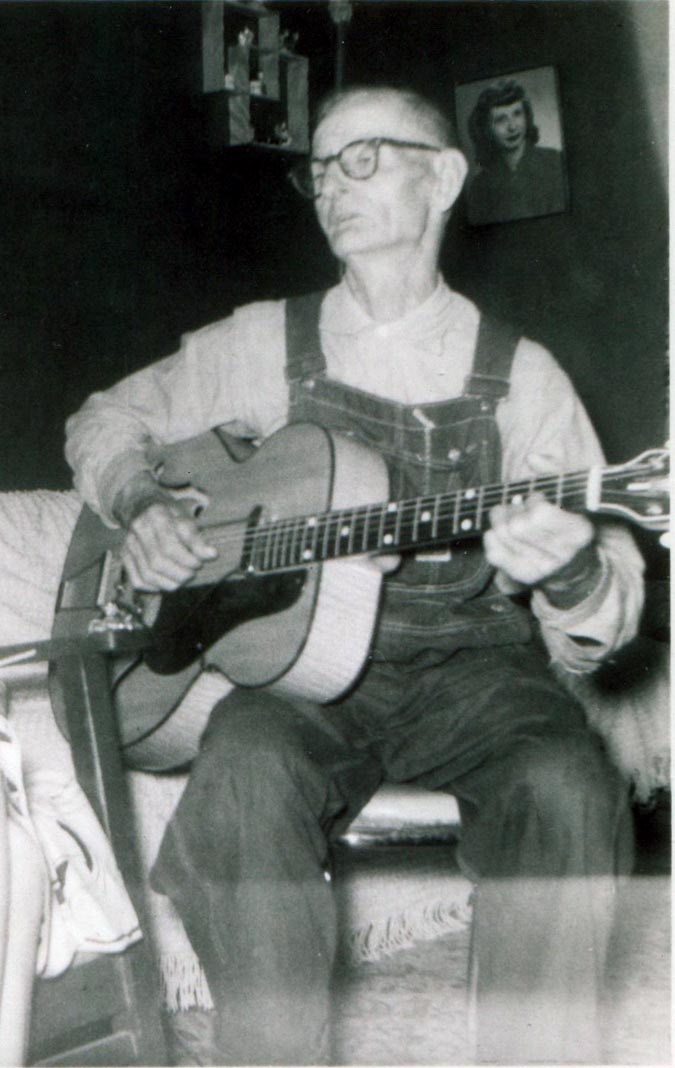
Green McCoy, Jr., son of Green and Spicie (Adkins) McCoy
02 Friday May 2014
Posted in Music
Tags
Charles Wolfe, fiddling, history, music, Nashville, Tennessee, The Devil's Box, U.S. South, writing

One day in July 1998, John Hartford and I met Dr. Wolfe for lunch in Nashville. I made sure to ask Dr. Wolfe, if he wouldn’t mind, to autograph my copy of his book. He was a pleasant man and inundated with information about country music history.
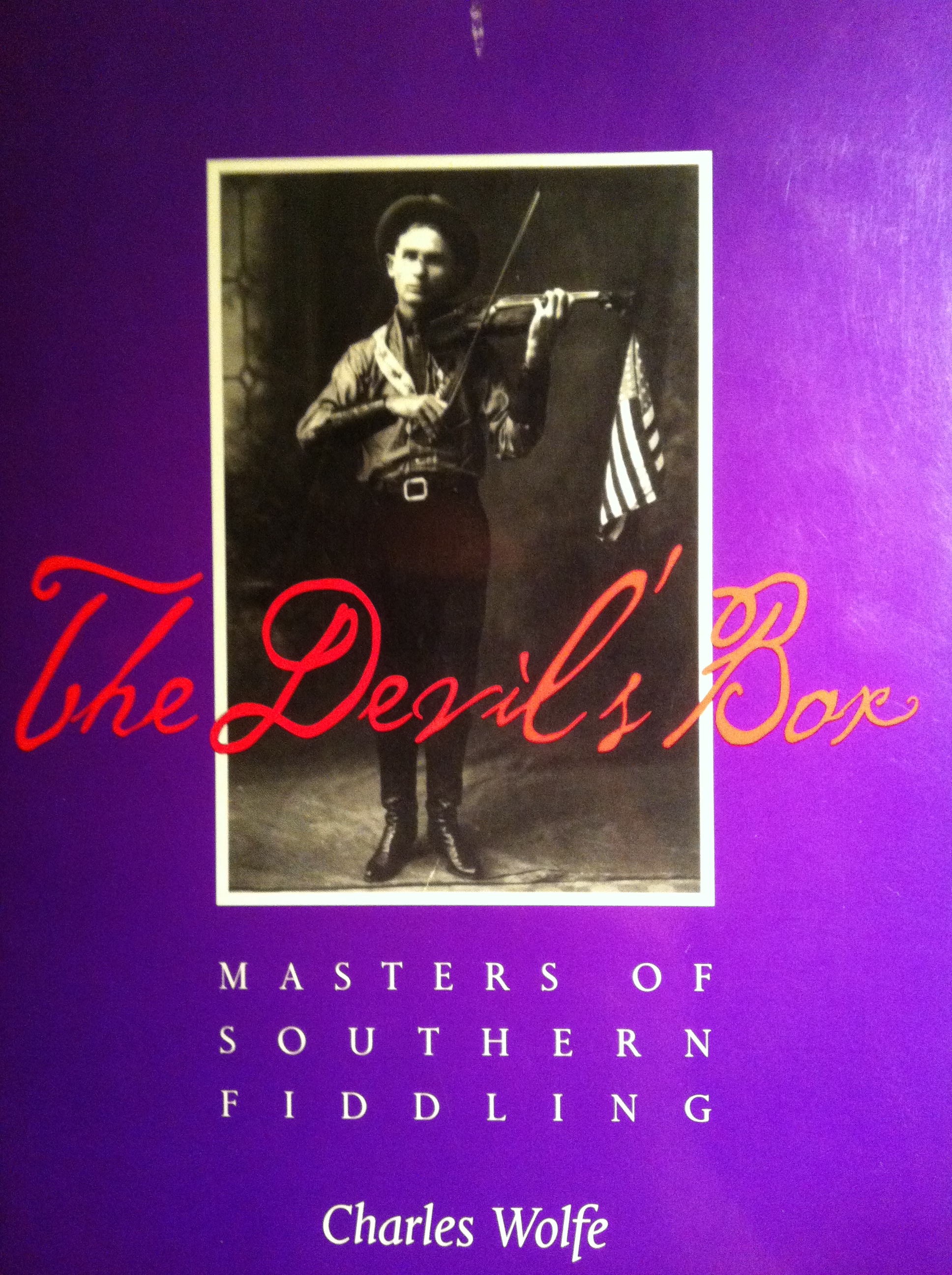
Dr. Wolfe’s “The Devil’s Box” remains the authoritative account of Southern fiddling.
01 Thursday May 2014
Posted in Lincoln County Feud
Tags
Angeline Lucas, banjo, Brandon Kirk, Daisy Ross, dulcimer, Faye Smith, fiddlers, fiddling, Fire on the Mountain, Green McCoy, history, John Hartford, Kenova, Kentucky, Lincoln County, Mariah Adkins, Milt Haley, music, Spicie McCoy, West Fork, West Virginia, writing
We next inquired about Green McCoy. We were particularly curious about why he left Kentucky and settled in Harts.
“I don’t know why he went up there,” Daisy said. “He was just playing music and started running around, I guess.”
Green and Spicie had a love for music in common.
Daisy said her mother “always liked music” and sung “from the time she was a little girl.” She “could sing any part of music — all four parts” — and “could play a banjo and she was left-handed. Played pretty good. She said she could play a dulcimer.”
Green was Spicie’s “first boyfriend” and she was crazy for him, even though she knew very little about his past.
“Grandma Spicie, she called him Will,” Faye said. “His name was William Greenville.”
“She didn’t even know Green McCoy was married till after she was engaged to him,” Daisy said of her mother. “He come up there with his brother and pretended to be single. Aunt Angeline, I think, was the one who found it out. And after Grandmaw found it out, she tried to keep Mom from marrying him, but Mom loved him so good she couldn’t believe it. They tried to keep Grandmaw from marrying him, but that just made her love him that much more.”
She “loved him so good she went ahead and married him anyhow.”
Green and Spicie settled in one of the small shacks on the Adkins farm. Faye said she’d heard that Green “would go off for a couple of weeks for a time,” then return home to his young wife, who always ran out to hug him. He’d tease her by running through the yard or “maybe around the house a couple of times — make her chase him. She was thrilled to death to see him come back.”
We wondered if perhaps Green was traveling between wives or playing music abroad, since Daisy said he never had any occupation aside from music.
I asked if he was a drinking man and Faye said, “If he had a been, Grandma wouldn’t a told it ’cause that woulda looked bad on him. Grandma Spicie told Green that she would swim the briny ocean for him.”
Okay…so what about Milt Haley?
Daisy said he was a good friend to Green and her mother. I asked if she thought we would ever find that picture of them together and she said, “No, I don’t. Mom kept it in her trunk. My niece has got it but she’s sick and got a house full of junk like I have and will never find it. She got Mom’s pictures. It was a little tintype snapshot of him and Green McCoy standing together. I think he had a hat on — seemed like both of them had a hat on in that picture. That was when they was playing music, but they didn’t have no instruments with them.”
I got a sheet of paper and tried to do a sketch, asking questions like, “Do you remember if he had bushy eyebrows?” or “Thin face, you reckon?”
I was pretty desperate.
Daisy kept insisting, “I can’t remember. I can’t tell you how somebody looks.”
Brandon asked if Milt and Green knew each other in Kentucky, before their move to Harts.
“No,” Daisy said. “Not until he come up there. I don’t know, now, where Milt Haley come from. They played music together.”
I wondered if Milt was the best fiddler between the two and Daisy said, “I don’t know which one was the best.”
“But Grandma thought Green was the best, didn’t she?” Faye said to her mother.
“Oh yeah,” Daisy said. “That was her husband. I never heard her say nothing against Haley.”
I asked if Spicie ever mentioned the names of any tunes that Green played and she said, “She might’ve said some of them. One of them I think was ‘Fire on the Mountain’.”
I got real excited hearing that and asked if she would remember more tunes if I played for her.
“No, I wouldn’t recognize…,” she said. “I never heard fiddles very much. My brothers had them there some, but they never played fiddles too much. They had guitars and banjos and pianos and organs and other stuff.”
I gave it a try but all I got when I played Ed’s version of “Fire on the Mountain” was, “That’s all right, but I don’t feel like dancing.”
We all cracked up and Faye warned us about her mother, who sat stone-faced in her chair.
“Sometimes she’s a smarty,” she said.
28 Monday Apr 2014
Tags
Abe Keibler, Appalachia, fiddle, fiddlers, history, John Hartford, Kentucky, music, photos, Roger Cooper, South Shore, U.S. South

Roger Cooper, Abe Keibler, and John Hartford at South Shore, KY, 1996
28 Monday Apr 2014
Tags
Abe Keibler, Asa Neal, Big Indian Hornpipe, Big Rock Candy Mountain, Birdie, Charley Keibler, Ed Haley, Ella Haley, fiddlers, fiddling, Greenup, Grey Eagle, Henry Keibler, history, Jim Keibler, John Hartford, John Lozier, Kentucky, Morris Allen John Keibler, music, Ohio, Portsmouth, Portsmouth Airs, Pretty Polly, Roger Cooper, Sam Keibler, Turkey in the Straw, writing
As Abe and I fiddled the afternoon away, Roger Cooper and John Lozier showed up. In ensuing conversation, John mentioned to Abe that he didn’t remember his father, Jim. Abe said it was because his dad had died young.
“My uncle raised me from seven year old and raised Morris Allen from three months old,” he said.
Which uncle?
“Uncle John and Uncle Henry raised me,” he said.
I said to Abe, “How many fiddling Keiblers were there all told?”
“Well, there weren’t many — just that one generation,” he said. “John — that was the oldest — Charley — that was the next one — and my dad and Sam. Them was the four fiddlers.”
His mind was starting to pull out great memories.
“Grandpa wouldn’t allow them to bring a fiddle into the house to saw around on and learn and they got a hold of an old fiddle and took it out in the cornfield. And the three brothers, he kept seeing them going out and he told Grandma, ‘Them boys are into something. I’m gonna follow them and see what they’re into.’ So he goes out there and Uncle John — that was the best fiddler — he was a playing and my dad was a dancing and he said, ‘Well now, John, you can bring your fiddle into the house.’ He had learnt to play it then pretty good.”
I asked Abe where he first heard Ed play and he said, “Greenup, Kentucky. Up here at the county seat. He played around the courthouse there and people donated him money. He had a cup on the neck of his fiddle and they’d drop five-dollar bills in it. When that old mill was a running and whiskey was in, he’d come around there to that mill on payday and maybe take a thousand dollars away from there. I was about eighteen years old when I heard him. He was a good fiddler. He could play ‘Birdie’ and all that. Played it in C or G either one. He played and sung a lot of songs — ‘Big Rock Candy Mountain’. He could play anything.”
Abe said he usually saw Ed at the courthouse on Labor Day or the Fourth of July. Ed always wore a hat and was dressed in a suit. He placed the fiddle under his chin, pulled a long bow and ran his fingers all up and down the neck of the fiddle. Abe said he “could play anything” but he only remembered “Grey Eagle”, “Big Indian Hornpipe”, “Portsmouth Airs”, and “Turkey in the Straw”. His wife normally sang while he played the fiddle, although he sang “Pretty Polly”. Abe never got to talk much to him because the crowds kept him so busy playing the fiddle.
I asked Abe if he ever played with Asa Neal and he said, “No, I never did play none with Asa but he was a pretty good fiddler. I remember when we first moved to Portsmouth in ’23, he couldn’t play nothing on the old Blues, but he got to be a pretty good fiddler. He used slip notes.”
27 Sunday Apr 2014
Tags
Abe Keibler, Appalachia, Charley Keibler, family, fiddlers, history, John Keibler, life, music, Ohio, photos, Portsmouth
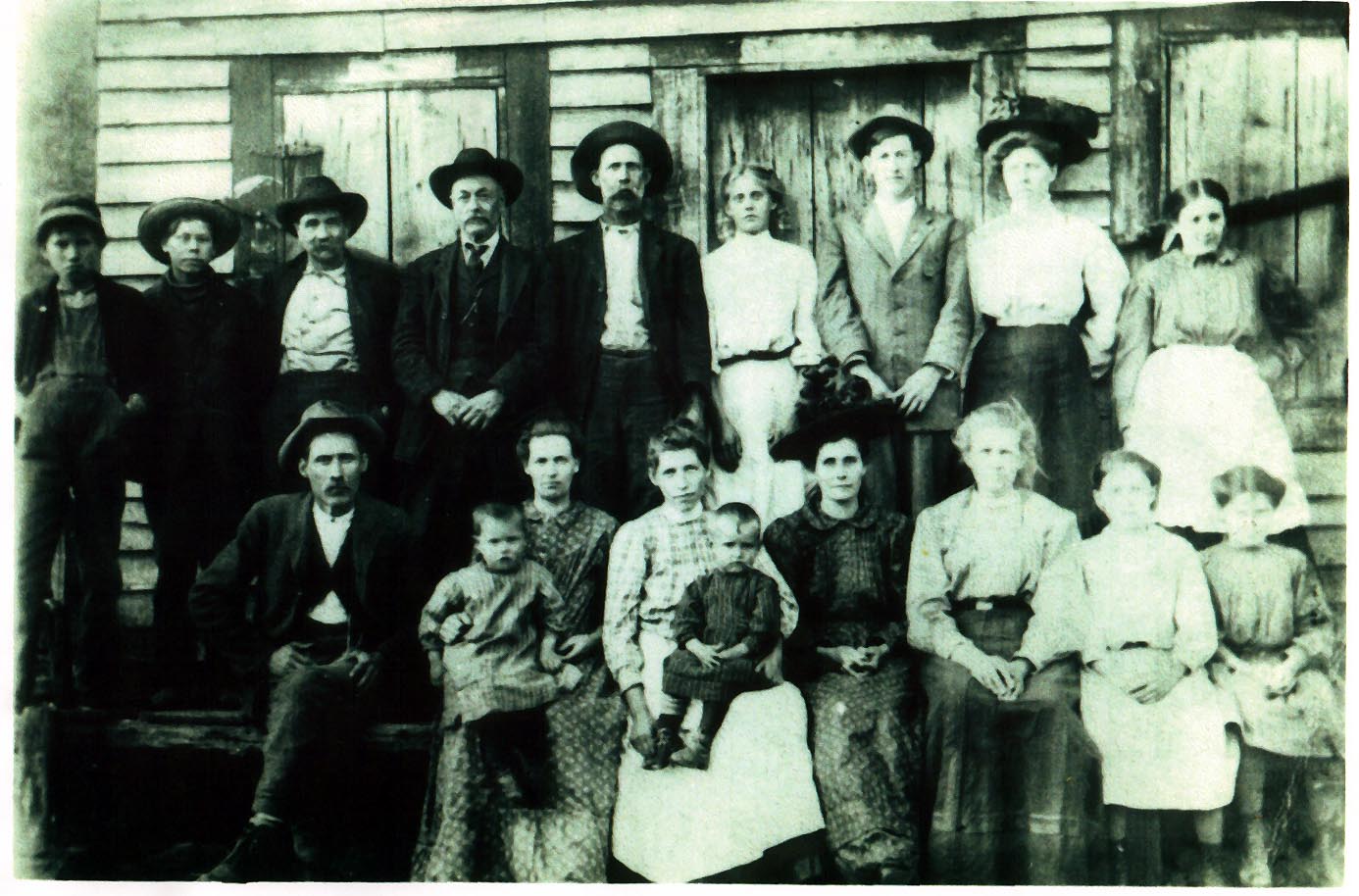
The Keibler family of Portsmouth, Ohio
27 Sunday Apr 2014
Tags
Abe Keibler, banjo, Boatin' Up Sandy, Charley Keibler, Cold Frosty Morning, Cotton-Eyed Joe, fiddle, fiddlers, Germany, Girl With the Blue Dress On, guitar, history, Jim Keibler, John Keibler, Kentucky, Morris Allen, music, Ohio, Old Coon Dog, Parkersburg Landing, Portsmouth, Rye Whiskey, Sally Goodin, Sally Got Drunk on Irish Potatoes, South Shore, Stumptail Dolly, Susan's Gone to the Ball With Her Old Shoes On, We'll All Go to Heaven When the Devil Goes Blind, writing
Later that day, I went to see 88-year-old Abe Keibler in nearby South Shore, Kentucky. Abe was the last surviving member of the old fiddling Keiblers and a first cousin to fiddler Morris Allen, one of the sources for Parkersburg Landing.
“My grandfather, he was sixteen years old when he landed in here from Germany and he got a job out here at an old furnace,” Abe said. “He couldn’t even speak the language when he first come here, they said, and he didn’t play nothing.”
“Wow,” I said, “So fiddling started with your dad and uncles?”
“My uncles and dad, yeah,” Abe confirmed. “Jim was my dad’s name. He played a banjo — the old claw-hammer style.
Abe was raised up in a family of fiddlers, but he originally played the guitar. He began to play the fiddle at the age of 55. He wasted little time in showing me the old family fiddle, which he inherited from his uncle John Keibler. It was a good-looking instrument with a good tone, although the bridge was ready to collapse.
“Way back before I was born some fella came into Portsmouth when they had the old saloons in and he had this old fiddle and couldn’t play it,” Abe explained. “My uncle John, he seen that it was a good fiddle and he wanted to buy it and this guy wouldn’t talk about selling it. My uncle Charley, he was a left-handed fiddler. He said, ‘Now John, if you want that fiddle, I can buy it for ten dollars.’ So he bought it. It’s been in our family around ninety years or maybe close to a hundred.”
Abe said the old fiddle was hard to tune — it had seen some rough times.
“My uncle fell and busted the top all to pieces. I had a fella that made fiddles put that top off of another old fiddle on it. My uncle had patent keys put on it and I had them took out and wood keys put in it.”
I tuned the Keibler fiddle as best as I could, then reached it back with a request for a tune I’d heard Abe mention called “We’ll All Go to Heaven When the Devil Goes Blind”. He couldn’t remember it but said it was the same thing as “Stumptail Dolly”. He scratched out a melody in the key of G, then said, “Some of them called that the ‘Girl With the Blue Dress On’. ‘Old Coon Dog’ is all I ever heard it called.”
He also played “Boatin’ Up Sandy”, “Sally Goodin” (in G), “Rye Whiskey” (which he called “Cold Frosty Morning”), “Sally Got Drunk on Irish Potatoes”, “Cotton-Eyed Joe”, and “Susan’s Gone to the Ball With Her Old Shoes On” (key of G).
Every now and then, I joined in with my fiddle.
“I’m gonna learn you how to play a fiddle yet,” Abe said.
26 Saturday Apr 2014
Tags
Appalachia, Clark Kessinger, fiddle, fiddler, fiddling, history, Kanawha County, Lincoln County, music, photos, West Virginia

Clark Kessinger
26 Saturday Apr 2014
Tags
Asa Neal, banjo, Birdie, blind, C&O Railroad, Charlie Mershon, Chet Rogers, Clark Kessinger, Clayt Fry, Community Common, Devil's Dream, Dinky Coffman, Dominique Bennett, Ed Haley, Ella Haley, Elmer Lohorn, fiddle, fiddlers, fiddling, Girl I Left Behind Me, Great Depression, Harry Frye, history, Jason Lovins, John Hartford, John Lozier, John Simon, Kentucky, Kid Lewis, music, Norfolk and Western Railroad, Ohio, Portsmouth, Portsmouth Airs, Portsmouth YMCA, Ragtime Annie, Roger Cooper, Roy Rogers, Russell, West End Jubilee, writing
A little later, I met John Lozier at Portsmouth. He was a real ball of energy. It was hard to believe that he was in his late eighties. I just sat back and listened to him talk about Ed.
“The first time I ever saw Ed Haley he was sitting on the street in a little old stool of a thing — him and his wife — had a little boy with him. They always kept a little boy with them — one of the kids that would lead them here and there and yander. And I didn’t know this but a fella by the name of Charlie Mershon was there and the Mershons are all fiddlers. They live over here in Ohio somewhere. And Charlie went home and told his dad, ‘I heard a man that could out-fiddle you.’ He went over and he had to take his hat off to Ed. But Ed had long, slim fingers like a woman and he played so soft you just had to listen. He was a great fiddler.”
I asked John to tell me about playing with Ed at the Portsmouth YMCA.
“A fella by the name of Dinky Coffman was the head of the entertainment committee at the N&W over here in Portsmouth,” he said. “Well, whenever Dink Coffman would want us to have a little shindig or whatever you want to call it he would take us over in the shops at the N&W at noon. They was about seven hundred people worked over there at one time. And nickels and dimes — whatever they could get — that’s the way Ed Haley made his living. It had to be a rough life. Of course, back in the twenties you make a dollar, honey, you could wrap it ’round a corncob and be nigger rich. And the last time I played with Ed Haley was at the YMCA at the C&O Russell yards.”
I asked John how Ed looked back then and he said, “Ed was a little old short pot-bellied feller. He had an old brown hat on as well as I can remember and just an old brown coat and a pair of britches. He didn’t dress like he was going out on vaudeville stage or anything. His wife would take Braille with her and read Braille for a little extra entertainment. She played a banjo-uke — eight string, short neck — but she just played chords. Mostly me and her would play and she would second after me. One time, we went up to the Russell yards at the YMCA up there and she accompanied me on the piano. I never knew any of the kids.”
John asked to see my fiddle, so I lifted it out of the case and reached it to him. He said to his wife, “Oh, Lord. Look at this. Isn’t that done pretty? My granddad made fiddles and he used three things: a wood chisel, a pocketknife, and a piece of window glass. All he bought was the fingerboard and the apron. And he made little wood clamps and wedges. He wouldn’t let me pick up the fiddle — afraid I’d drop it and break the neck out of it. And I started playing old fiddle tunes on a harp.”
Not long after that, John pulled out his harmonica and played “Devil’s Dream”, “Portsmouth Airs”, “Birdie”, “Girl I Left Behind Me”, and “Ragtime Annie”.
I joined in every now and then, which prompted him to say things like, “You’re putting something extra in there,” or “You missed a note. See that?”
To call him feisty would be a huge understatement.
At one point, he said, “I’m trying to tell you something. You’re gonna be here all day. This is my day.”
A little later he said, “I don’t know if you know what you’re doing or not, but you’re putting a few little slip notes in there. You put more notes in that than what Ed would have put in it. You’ve been listening to Clark Kessinger records.”
Uh-oh.
John opened up a whole new facet of our conversation by mentioning Clark Kessinger, who he’d heard play one time at the West End Jubilee on Market Street in Portsmouth.
“Clark Kessinger was a hard loser in a contest,” John said. “If he lost, he’d just stomp and carry on something awful.”
Clark came to Portsmouth and played a lot because of the great number of musicians in the town during the Depression.
“I come into Portsmouth about the time that Roy Rogers left here,” John said. “Now he had a cousin that was a better guitar player than he was: Chet. He had a little neck like a turkey. And him and Dominique Bennett, Clayt Fry, Elmer Lohorn… Elmer Lohorn was the only man I ever seen that played ‘companion time’ on the guitar. It was a double time — everything he done was doubled. And Harry Frye was a fine tenor banjo player. We had one guitar player by the name of Kid Lewis — was a smart-alec — and he could play classical stuff. But they just sat around and played cards and drank moonshine and got good. Asa Neal was, I’d say, our champion fiddler around here. Asa Neal bought ever record that Clark Kessinger ever put out.”
At that moment, John Simon, a local folklorist, showed up with Roger Cooper, a Buddy Thomas protégé. I got Roger to play the fiddle while I seconded him on my banjo. John Lozier jumped in when we weren’t playing something “just right.” At some point, Jason Lovins, a local newspaper reporter, dropped in with a camera and asked a few questions. He promised to plug my interest in Ed’s life in the Community Common.
23 Wednesday Apr 2014
Posted in Ferrellsburg, Green Shoal, Logan, Toney
Tags
Blackburn Lucas, Branchland, Catherine Toney, Clerk Lucas, Dollie Toney, Ferrellsburg, genealogy, Green Shoal, Hamlin, history, Huntington, Jim Brumfield, Joseph Elkins, life, Lincoln County, Lincoln Republican, Logan, Maggie Lucas, music, Nancy Elkins, Toney, West Virginia, William Elkins
“Violet,” a local correspondent from Toney in Lincoln County, West Virginia, offered the following items, which the Lincoln Republican printed on Thursday, April 13, 1911:
The weather is fine and the mud is drying rapidly.
The farmers are hustling about planting potatoes and preparing the ground for new crops.
The Death Angel visited the home of Mr. and Mrs. Wm. Elkins on last Thursday and called from them their infant son. Interment took place in the Ferrellsburg cemetery Friday. We extend our sympathy.
There was a large crowd of persons assembled at the Green Shoal school house on Sunday and heard a very interesting sermon delivered by Rev. Adkins of Branchland.
Misses Dollie Toney and Maggie Lucas attended the examination at Logan last week.
B.B. Lucas spent last week in Huntington serving as Juror in Federal Court.
Miss Lottie Lucas spent a few days in Logan recently on a shopping tour.
Mrs. B.D. Toney was calling at Jim Brumfield’s, Monday.
A number of Guitar Harps have been purchased around here; plenty of music at every house.
Clerk Lucas took the examination at Hamlin last week.
23 Wednesday Apr 2014
Posted in Big Harts Creek, Ed Haley, Lincoln County Feud, Whirlwind
Tags
Appalachia, blind, Ed Haley, Harts Creek, history, Imogene Haley, life, Logan County, Milt Haley, music, photos, U.S. South, West Virginia

James Edward “Ed” Haley, born August 1885, son of T. Milton and Imogene (Mullins) Haley, Harts Creek, Logan County, WV
23 Wednesday Apr 2014
Posted in Ed Haley
Tags
Ashland, Big Sandy River, Bill Day, Canton, Clay Hicks, Durbin Creek, Ed Haley, Ella Haley, Florida, history, Jean Thomas, Jilson Setters, John Hartford, Kentucky, Lawrence Haley, Manuel Martin, Margaret Payne, Mona Haley, music, Ohio, Pat Haley, Ralph Haley, Ralph Payne, Rosie Day, Tampa, Wee House in the Wood, writing
We next discussed Jean Thomas, who wanted to feature Ed in her “Wee House in the Wood” production.
“I remember Pop and Mom didn’t care too much for Jean Thomas,” Mona said.
Pat said she had a run-in with Thomas later, long after Ed had died.
“Larry and I went to see Jean Thomas so we could take our cub scouts out there and as soon as she found out he was Ed Haley’s son, she didn’t want a thing to do with him. We never did take our troop out there. She said Pop was blasphemous — which I suppose was true — and he was a drunkard because he would not go along with her plans to be Jilson Setters.”
Mona said, “Bill Day…there was some controversy there between Jean Thomas and Pop and Mom. And I think Bill Day had a lot to do with it. I remember that. He was almost blind. He wasn’t quite blind. He wasn’t blind like Mom and Pop. I wouldn’t say they were friends, but they were acquaintances.”
Mona said Bill Day wasn’t much of a fiddler and seemed to enjoy telling me how his son Clay was cross-eyed and a little “off”.
Talking about Bill Day got us on the subject of his wife, “Aunt Rosie Day.” Mona had great memories of her.
“She kept house for us a lot and lived with us. She was rough. She’s whipped me home a lot of time with switches. She chewed bubble gum all the time and dipped snuff and she would stick bubble gum up all along the door facings and stuff and go back and get it later.”
Pat said, “I knew she dipped snuff. I used to go down and try to clean Aunt Rosie’s house, bless her heart.”
Mona said, “We never called her ‘Aunt Rosie’. We just called her ‘Rosie’. She fell down the steps one time from the landing. She was drunk. Her and Mom had been drinking apricot brandy. I remember it well. They was a stove in the corner and Rosie got down to the landing and missed a step and hit that stove with her head and made a big dent in that stove and never even hurt her. Mom fell down the steps too once, but she fell from the top to the landing. This time Mom fell down, Pop was playing music down in the living room and Mom was dancing upstairs to his music and danced right off the edge of those steps. It didn’t seem to hurt her, either. They could make the house come alive with music. When I would dance, Pop would say, ‘I hear you. I hear you.'”
Pat said Ed used to get drunk and fight with Aunt Rosie Day. He liked to drink with her son-in-law, Manuel Martin. Martin was a bootlegger. He and his wife lived on Durbin Creek up the Big Sandy River. In the 1960s, Manuel got drunk and shot his son at the kitchen table in Canton, Ohio. Lawrence went to see him in the penitentiary, Pat said.
Just before Mona left, I told her, “I can’t tell you how much I appreciate you coming over here and talking to me.”
“It’s my pleasure,” she said. “Anything I can do. I’m available.”
At the door, I gave her a big hug and she said, “It’s good seeing you, John. You seem like family.”
A few minutes later, just before I turned in to bed, I mentioned Ralph Haley’s importance in this story. It was Ralph, after all, who had the foresight to record Ed and Ella Haley’s music in the late forties. (Never mind that he wasn’t really Ed’s son or that he recorded him on a machine stolen from the army.) Pat said Ralph helped take care of the family when he was young, like stealing chickens when the kids were hungry. When he was older, he kind of distanced himself from the family by changing his last name from Haley to Payne — perhaps to protest Ed’s treatment of his mother. (This was the surname used on his tombstone in Cincinnati.) The Haleys tried to keep in touch with Ralph’s widow, Margaret, who remarried a younger man named Mel and moved to Florida to work a chicken farm. At some point, she had a grocery store in Tampa called “M&M’s”. In the late forties, Lawrence was stationed nearby and visited. When he went back, her husband put a pistol in his face and ran him off. Pat had no idea why.
20 Sunday Apr 2014
Tags
Ashland, Blackberry Blossom, Calhoun County Blues, Cherry River Rag, Come Take A Trip in My Airship, Dunbar, fiddling, history, John Hartford, John Lozier, Kentucky, Lawrence Haley, Man of Constant Sorrow, Mona Haley, music, Parkersburg Landing, Pat Haley, Ragtime Annie, writing
“Pop put a lot of emotions in his music,” Mona said. “He was real excited with his playing. He would put things in there that no one else would.”
She described Ed’s music as loud and lively — contrary to testimony from John Lozier and others — and told how it generated a great deal of excitement. She re-iterated that Ed had very little body movements when playing and seemed a little bothered by my energy when I played the fiddle — all the facial and head gestures, loud tapping, leg movements.
I asked her if Ed played much around home and she said, “When he was sad or when he was drinking or when he was happy he played — especially when he was happy.”
I wondered what made Ed happy.
“I don’t know,” she said. “Maybe hearing about a place to play or some money to be made. Music was his life. There wasn’t much about the family that made him happy. I mean, we was always fighting.”
In no time at all, Mona and I slipped into a familiar routine: me playing and asking things like “Did Ed play this?” or “Did Ed play it like this?” I played a lot of tunes for her — mostly ones I knew Ed played but also ones I had heard or suspected him of playing based on talking with Ugee Postalwait and Wilson Douglas and reading notes in the Lambert Collection.
When I played “Cherry River Rag”, Mona said, “I always loved that. Now that’s one that Pop put the slurs and insults in.”
Lawrence Haley had spoken of the “slurs and insults”, but I had never really figured out what they were. I had this theory that they were when Ed used tiny chromatic slides to create a modal and “slidey” note, thereby broadening and helping to achieve more of a “human voice effect” — much like vibrato does. This concept goes way back into Celtic history and may be much more a source for Blues than anything African. (Scholars have, incidentally, found no historical precedent for the Blues in the music of the continent of Africa.) I figured that Ed hit a little “dead” grace note beforehand which helped separate the notes in his long bow style. It is what the Irish call a “cut:” the finger on the grace note barely touches the string so as to give a good stop or separation.
As for the “slurs and insults,” Mona couldn’t seem to explain them either. I suggested listening to “Cherry River Rag” on Pat’s copy of Parkersburg Landing and having Mona point them out to me. We went into the living room and gathered around the record player. As “Cherry River Rag” played, Mona pointed out the slurs and insults. Basically, she described them as being when Ed slid a note for emphasis.
“Sounded to me, John, like when he was getting tired,” she said, back in the kitchen. “He was just wanting to get out of it as easy as he could.”
I asked if there were ever times when Ed would play and just slide the notes a lot and she said, “No, not unless he was drinking. He’d slide those notes a lot when he was drinking. Screech a lot when he was drinking — especially on those high keys.”
Mona loved it when I played “Man of Constant Sorrow”, saying, “Beautiful. That reminds me of Pop being sad. I love it, though. I wanted to tell you, they made a lot of requests, people on the street. They’d say, ‘Ed, play ‘Blackberry Blossom’. If he knew it, he’d play it. He had people dancing on the street, John. He could play forever.”
I played a variety of tunes for Mona that I thought Ed might have played but she only recognized one called “Wilson’s Jig”. She said her father played “Dunbar” a lot and recognized the melody for “Run Here Granny”. She said he made up the tunes “You Can’t Blame Me for That” and “Come Take A Trip in My Airship”. She said “Ragtime Annie” was one of her father’s “main attractions,” while “Birdie” sounded “very familiar.” She said Ed played “Old Joe Clark” and “Money Musk” and fiddled “Done Gone” in B-flat. She said something in my version of “Wild Hog in the Red Brush” was familiar, although she said she never heard Ed play anything with that title. When I played “Uncle Joe”, she immediately recognized the melody but not the title.
“See, I know so many of the tunes I’ve heard but I don’t know the title,” she said.
It was probably a little confusing for her to sit and listen while I assaulted her with a whole barrage of tunes, but I was so excited about picking her brain that I just kept playing.
She remembered Ed playing “Waggoner” and “Paddy on the Turnpike”, as well as the very similar “Snowbird on the Ashbank”. She recognized “Pumpkin Ridge”, “Old Joe Clark”, and “Money Musk”. She didn’t know the melody for “Brownlow’s Dream” but recognized the title, while she knew the melody for “Indian Squaw” but not the title. She said Ed never played “Orange Blossom Special” but did play “Listen to the Mockingbird” and even “made the bird sounds, too.”
When I played “Calhoun County Blues”, she said, “I’ve heard him play that lots. You put a lot more notes in it than what he did.”
18 Friday Apr 2014
Tags
Appalachia, art, Ed Haley, fiddling, history, John Hartford, Mona Haley, music
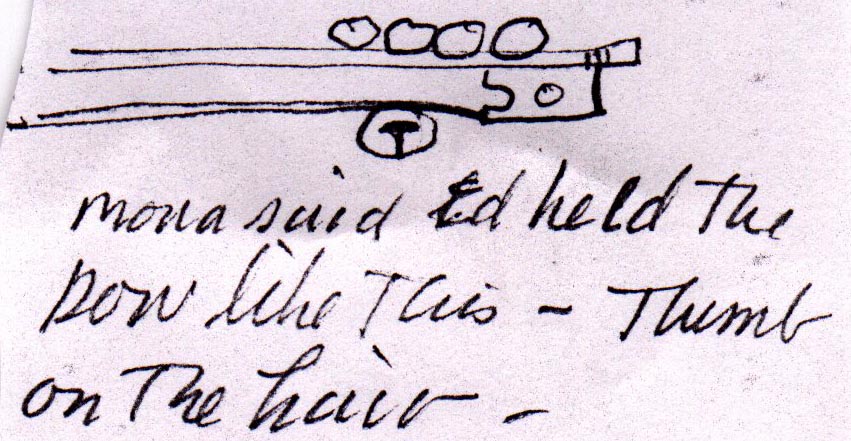
Ed Haley bow hold, according to Mona Haley
Writings from my travels and experiences. High and fine literature is wine, and mine is only water; but everybody likes water. Mark Twain
This site is dedicated to the collection, preservation, and promotion of history and culture in Appalachia.
Genealogy and History in North Carolina and Beyond
A site about one of the most beautiful, interesting, tallented, outrageous and colorful personalities of the 20th Century
 Brandon Ray Kirk