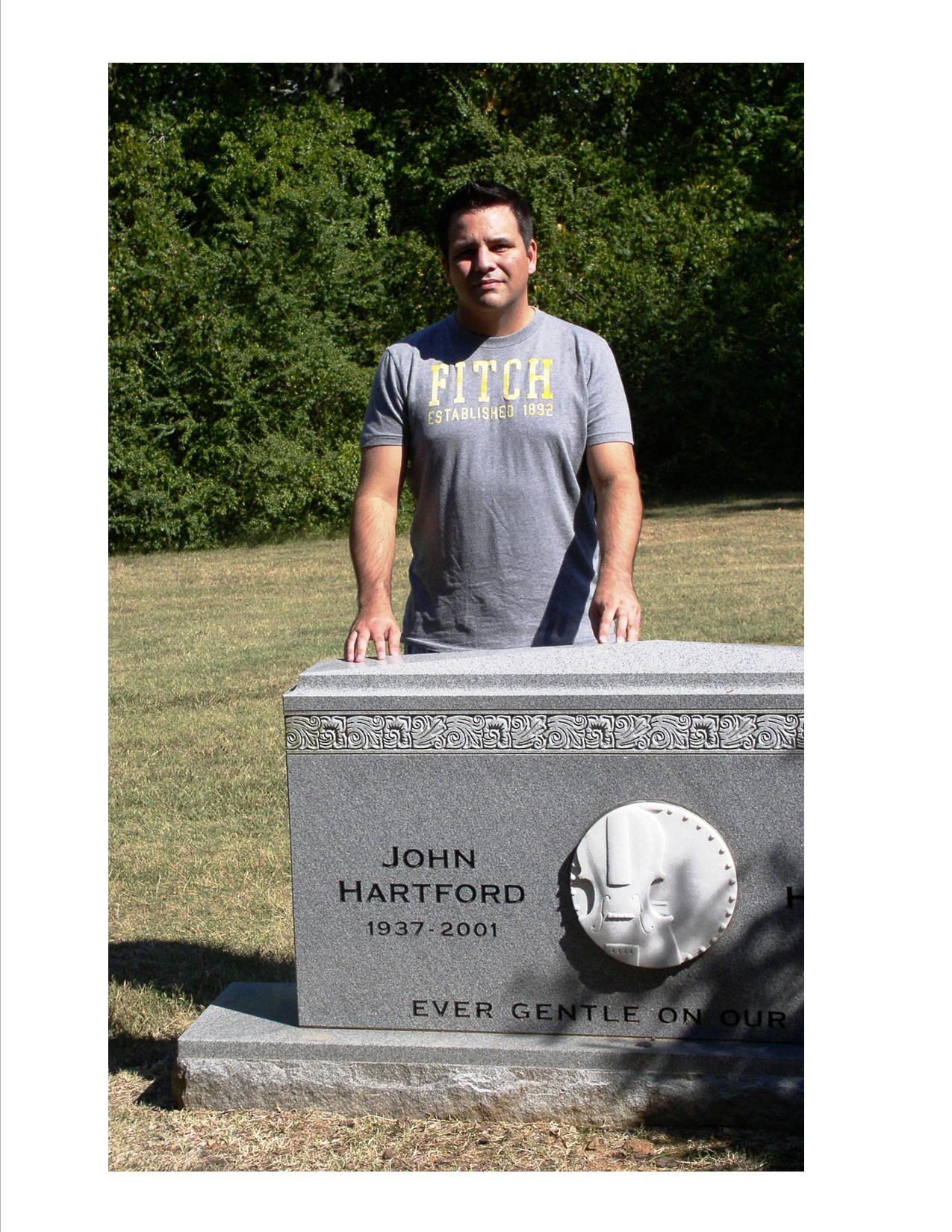
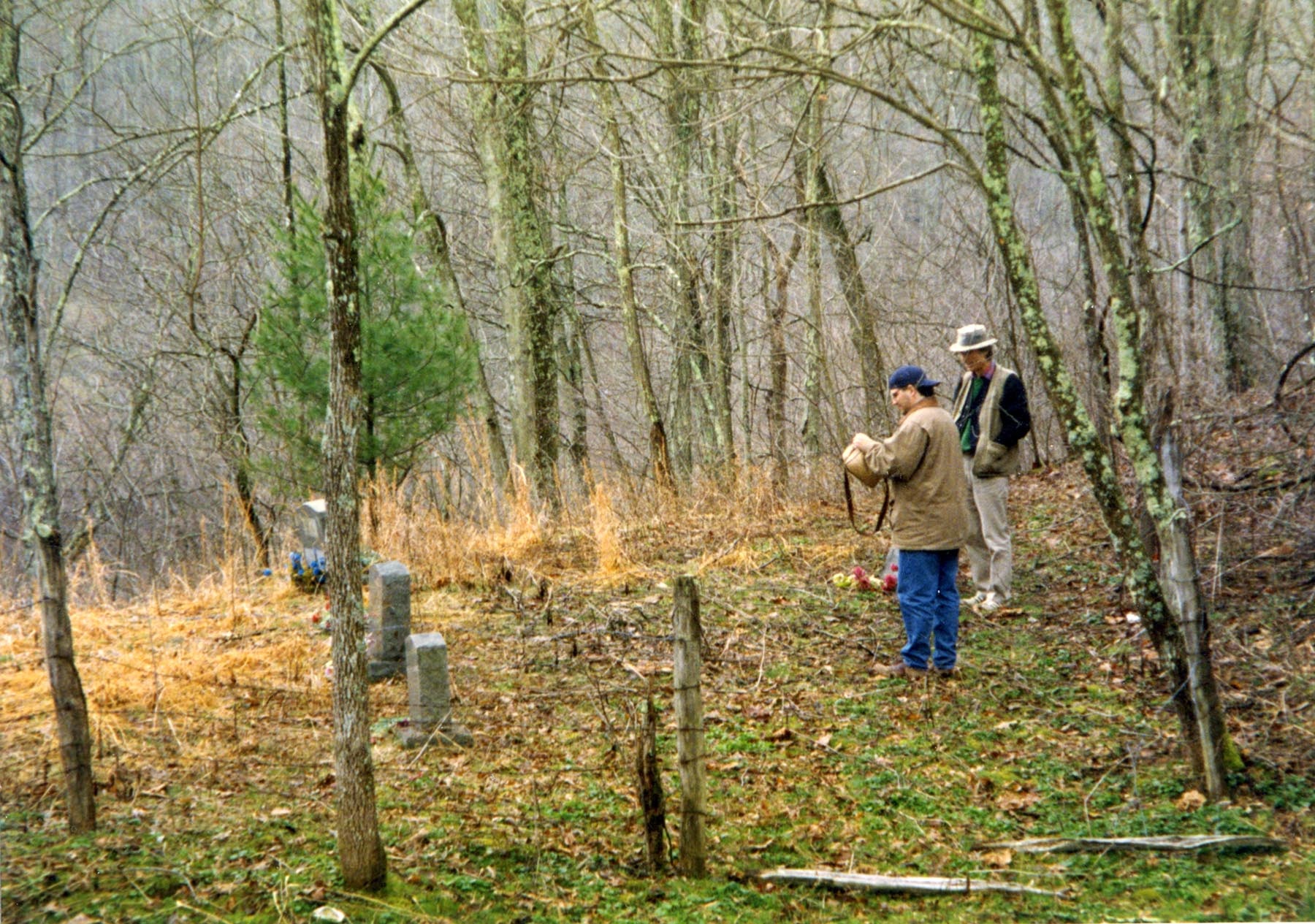
John Hartford’s grave, Madison, TN, August 2008
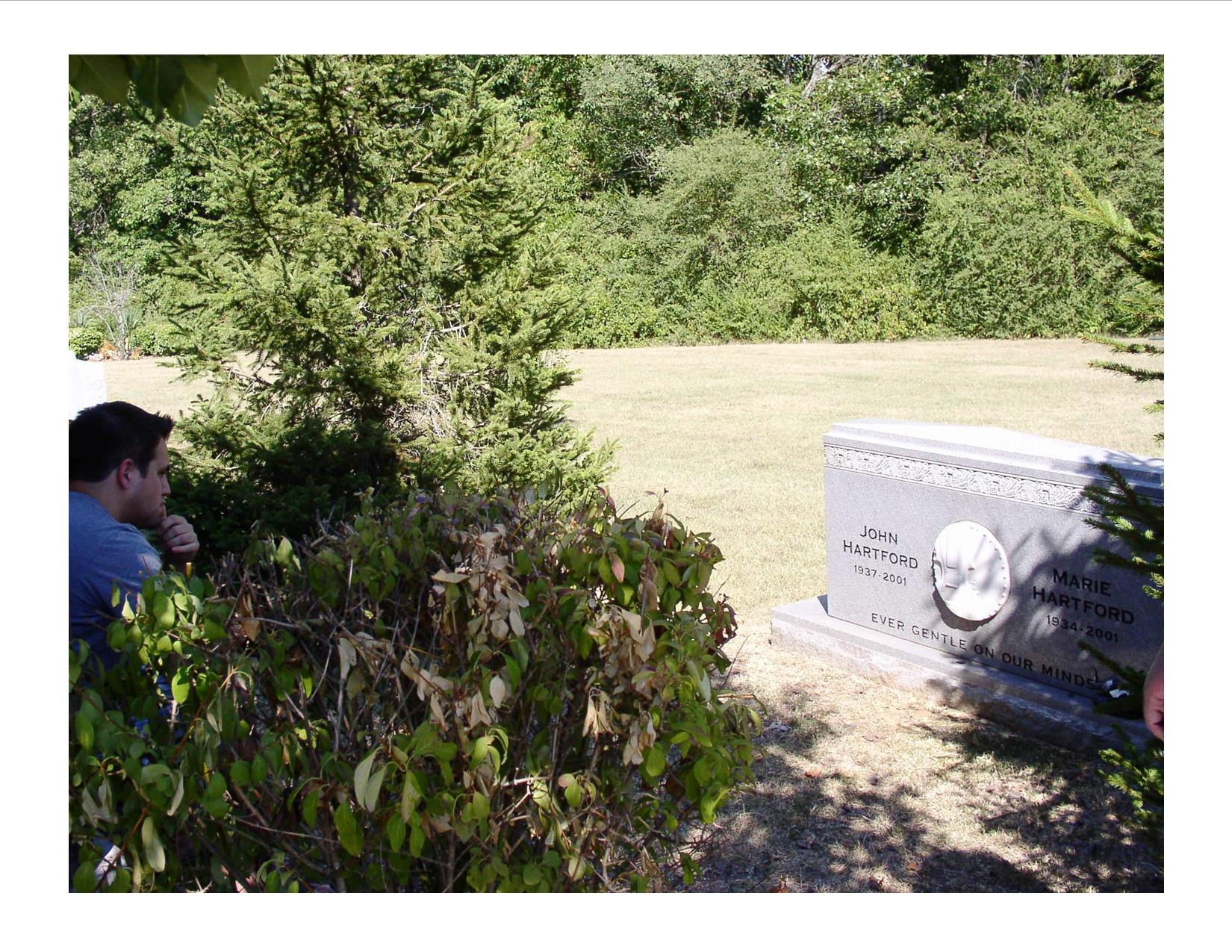
John Hartford’s grave, Madison, TN, August 2008

24 Tuesday Jun 2014
Posted in John Hartford, Music
John Hartford’s grave, Madison, TN, August 2008
John Hartford’s grave, Madison, TN, August 2008
24 Tuesday Jun 2014
Posted in Big Harts Creek, Ed Haley, Lincoln County Feud
Tags
Bernie Adams, Big Branch, Billy Adkins, Brandon Kirk, Cacklin Hen, crime, Dood Dalton, Ed Haley, fiddle, fiddler, fiddling, Green McCoy, guitar, Harts, Harts Creek, history, Hollene Brumfield, John Hartford, Logan, Luster Dalton, Milt Haley, Mona Haley, music, Rockhouse Fork, Stump Dalton, Wild Horse, writing
From Harts proper, we headed up Harts Creek to the home of Luster Dalton, a son of Ed’s friend, Dood Dalton. Luster was born in 1924 and used to play the fiddle on weekends for free drinks at local “dives” with his brother Stump and two cousins. I asked him if he learned much from Ed and he said, “Yeah, I learned a lot from the old man Ed. He was a real fiddle player, son.”
I wondered if anybody around Harts played like Ed.
“Not as good as he could, no,” Luster said. “I’d have to say no to that. That old man really knew how to handle that job, buddy.”
Luster tried to remember some of Ed’s tunes.
“Way back in them days, they had one they called ‘Cacklin’ Hen’ and ‘Wild Horse’ and such as that on down the line,” he said.
I got my fiddle out and pointed it toward Luster, who said, “They ain’t a bit of use in me to try that. I’ve had too many bones broke.”
I tried to get him to just show me anything — but he refused.
He chose instead to talk, starting with how Ed came to visit his father on Big Branch.
“He came about onest a year and would maybe stay a month,” Luster said. “He’d maybe stay a week at Dad’s and go to some other family and stay a week and go up Logan and stay a week or so with somebody. Him and his old woman both would come and a couple three of his kids. Mona was one of them’s name. About all of them I guess has been to my dad’s. I don’t see how they raised a bunch of kids — neither one of them could see. That’s something we got to think about. They was good people. And a fella by the name of Bernie Adams used to come with them — he was a guitar picker — and they’d sit up there and sing and pick up at my dad’s till twelve o’clock and go to bed and go to sleep, get up the next morning, go into ‘er again. I went in the army in 1940, I believe it was, and I know I’ve not heard from them since then.”
Luster didn’t know if Milt Haley was a fiddler but had heard the old-timers talk about how either him or Green McCoy had shot Hollena Brumfield through the jaw at the mouth of the Rockhouse Fork on Harts Creek.
“They were murdered in a little log house,” Luster said. “They took a pole axe and beat them to death and then chopped them up.”
21 Saturday Jun 2014
Posted in Big Harts Creek, Ed Haley, Logan, Music
Tags
Billy Adkins, blind, Brandon Kirk, Cacklin Hen, Clyde Haley, Dood Dalton, Ed Haley, Ella Haley, fiddle, fiddling, guitar, Harts, Harts Creek, history, Huntington, John Hartford, Lincoln County, Logan, mandolin, Marshall Kelley, music, West Virginia, writing
That night, Brandon and I congregated at Billy Adkins’ house in Harts Bottom. In ensuing conversation, Billy told us about Marshall Kelley, an old-timer in the community who remembered Ed. He dialed Marshall up, then put me on the telephone. Marshall said he was seventy-three years old, had been born and raised about three miles up Harts Creek and was the son of a Baptist preacher. He was great: I didn’t have to prod him with questions. He just took off, beginning with a story about seeing Ed walking up toward Dood Dalton’s.
“I was about two or three blocks away from him,” Marshall said. “I lived in a house about 100 yards from the road and I could see the people going and coming up and down the road. And I saw a man — a little bit short — going, walking. It looked like he was carrying a guitar — might have been a mandolin — in one hand and his fiddle in the other hand. Somebody said they believed that was Ed Haley and he was being led by a young man that was just a little taller than him. In other words, this man was holding onto his arm. They were walking side by side. And he went down there and went up a hollow then about half a mile — maybe three quarters of a mile — to the home of Dood Dalton. They were acquainted with each other. Ed played the fiddle the biggest part of the afternoon.”
I asked Marshall if he remembered anything specific about Ed’s fiddling.
“I heard him play the ‘Cacklin’ Hen’ on the fiddle and made her cackle,” he said. “Buddy, he could make that sound just almost exactly like a chicken cackling. And I noticed the sound of that fiddle. And down in those little grooves — places where you could look down in the head of his fiddle — I could see some letters down in there, like a little sticker, that said, ‘Made in Germany.’ And his fiddle looked old cause it didn’t have much varnish on it. Dood made mention about putting new varnish on it and he said he didn’t want to. He said they played better — had a better sound — without any varnish on it. None of them sounded just like his fiddle and he wouldn’t change.”
Marshall said he saw Ed play at Logan and Huntington, too.
Then I heard him two or three times in Logan up around the courthouse singing and playing. One time they was a woman with him somebody said was his wife and she was also blind. I believe she was playing a mandolin. Then the next thing, I grew up a little bit and I went to Huntington. And I was a going down one of the streets and I heard a fiddle a playing. It was far enough away that I couldn’t tell what direction it was in. I stopped once and listened. And after a while, I went on down there and here was a gang of people ganged up and there was him and his wife again a playing. And I thought as I went walking down that way, ‘That sounds just like Ed Haley.’ And sure enough it was.”
Just before Marshall and I hung up, he told me what he knew about the Haley children.
“I only got acquainted with the one named Clyde,” he said. “And I saw him there at Dood Dalton’s house. Just talked with him a little bit. Me and him was approximately the same age. He got to sparking Dood’s girl and I was trying to take her away from him and whenever I seen I couldn’t make no headway I just walked away and left and then she quit him.”
19 Thursday Jun 2014
Posted in Big Harts Creek, Ed Haley, Holden
Tags
Albert Dingess, Alice Dingess, Birdie, blind, Brandon Kirk, Cecil Brumfield, Cripple Creek, Dorothy Brumfield, Ed Haley, fiddler, fiddling, Harts Creek, Henderson Dingess, history, Holden, Hugh Dingess Elementary School, John Brumfield Jr., John Hartford, Kentucky, Logan County, Louisa, Milt Haley, music, Smokehouse Fork, West Virginia, Wildwood Flower, writing
About a half hour later, we drove up the Smoke House Fork of Harts Creek to see Dorothy Brumfield. Dorothy lived in a white one-story home situated on a hillside overlooking the Hugh Dingess Elementary School, just down the stream from the old Henderson Dingess homeplace. Dorothy had been born in 1929 at Louisa, Kentucky, but came to Harts when she was seventeen and soon married John Brumfield, a son of Ed’s friend, Cecil. Her father was a descendant of Albert Dingess, a member of the 1889 mob.
I started the conversation by asking Dorothy about Ed. She said she never knew him personally but heard that he lost his eyesight after his father dipped him in water. She also heard that he was a great fiddler when he got “pretty high” but was mean and eager to fight if he drank too much.
Dorothy knew the story about Ed borrowing a fiddle from her father-in-law Cecil Brumfield; her husband later acquired it. “He had come through here and borrowed a fiddle off of Paw Brumfield, him and Bernie Adams, and went up yonder to Logan and pawned it,” she said. “Paw Brumfield liked to never found it.”
Dorothy said the only time she actually saw Ed was when her husband brought him home early one Sunday morning around 1949-50.
“My husband worked at Holden, and I’d heard tell of Ed Haley but I hadn’t met him,” she said. “So John stopped at the top of Trace Mountain at this place. Back then, they called them saloons. And he was supposed to been in at one o’clock in the morning. He didn’t make it. Oh, did I get mad when four o’clock come in the morning. Here he knocked on the door and I could tell someone was with him, but I couldn’t make out that it was a blind person with him. I thought it was just somebody real drunk that had passed out. He got here in the house with him and I fixed them something to eat.”
“Why didn’t I know you all was over there and got me a babysitter and caught me a ride over there and had me a time?” Dorothy said to her husband. “What would you done if I’d walked in?”
“What, mam?” Ed said.
“All them women John had over there tonight,” she said to Ed.
“Mam, he didn’t have no women,” Ed said.
“Now sir, you told me you couldn’t see,” she said. “How do you know?”
“Well, John sit beside of me,” Ed said.
A little later, Dorothy fixed Ed a bed and she went and asked her husband, “Would you tell me who in the world you’ve brought home with you again?”
John said he’d stopped in at that saloon and found Ed playing music “and a bunch of them women dancing” and he “wouldn’t leave Ed there. When they closed, he brought him here.”
“Well, then they got up the next morning and I said, ‘Now John you help him around and show him around.’ I was already mad at John for laying out. Little bit jealous, too. We hadn’t been married long.”
Dorothy said she cooked a big breakfast for everyone.
“Mam, have you got any onions?” Ed asked her at the table.
“Yes I have but why would you want an onion for breakfast?” she said.
“Don’t you know what onions are good for?” Ed said. “Many a things.”
Dorothy said Ed seemed intelligent by the morning conversation.
After breakfast, Ed went back into the front room and played the fiddle for Dorothy’s kids in front of the fireplace. She said he held his fiddle under his chin and played “Wildwood Flower” and an extremely fast version of “Cripple Creek”.
John said, “Ed, play that there ‘Birdie’ for these children.”
“Well, he stayed around and I think they drunk all the booze up,” Dorothy said. “John, he was wanting more booze, too, so he went off with Ed to Aunt Alice’s or somewhere and got some liquor and he didn’t come back till about dark. I don’t know where all he took Ed. When he come back, he kept telling me why he brought him here. He said that he didn’t want to leave him. If something happened, he wouldn’t forgive hisself. Nobody else wouldn’t take him after all the big time was over with.”
18 Wednesday Jun 2014
Posted in Big Harts Creek, Ed Haley, Spottswood
Tags
Brownlow's Dream, Drunkard's Hell, Ed Haley, Harts Creek, history, Lawrence Haley, Logan County, music, Peter Mullins, Roxie Mullins, Vilas Adams, Violet Mullins, West Virginia, writing
After spending a few hours with Vilas, we drove a short distance up main Harts Creek to see Violet Mullins. Violet still lived in her mother Roxie’s little house. I hadn’t seen her since my first visit to Harts with Lawrence Haley in 1991; the home seemed a bit empty without Roxie. Violet began to speak in a voice hauntingly reminiscent of her mother’s.
“I knew Ed well,” she said. “He used to come stay all night at our house when he was traveling through here. I know he played all kinds of music. He’d play tunes and then sing them. He’d sing ‘The Drunkard’s Hell’ and the ‘Brownlow’s Dream’, I’ve heard him play that. They’d always be a big gang with him and I never stayed around with them where they was a playing music very much. He’d drink with them every now and then. He’d get to drinking and they’d get into a racket and have him a talking every once in a while. He never was at our house too much — just come and stay all night, him and his daughter and his son. Now, his son Jack stayed with us a long time. He come here, you see, and stayed with Uncle Peter’s fellers, and with different families around here. He stayed for a year or two.”
17 Tuesday Jun 2014
Posted in Big Harts Creek, Culture of Honor, Ed Haley, Lincoln County Feud, Timber
Tags
Allen Martin, Anthony Adams, Ben Adams, Boardtree Branch, Brandon Kirk, Charley Brumfield, crime, Ed Haley, Ewell Mullins, fiddling, Greasy George Adams, Green McCoy, Green Shoal, Harts, Harts Creek, history, Jeff Baisden, John Hartford, Jr., Kentucky, Lincoln County Feud, Logan County, Milt Haley, moonshining, murder, music, Paris Brumfield, Peter Mullins, Sol Adams, Still Hollow, Ticky George Adams, timbering, Trace Fork, Vilas Adams, West Virginia, Will Adkins, writing
Trying to lift our spirits, we went to see Vilas Adams, who lived on the Boardtree Branch of Trace Fork. Vilas was a great-grandson of Ben Adams and a grandson of Ticky George Adams. He was very friendly, inviting us inside his very nice home where his wife fed us a whole mess of good food, which we ate between asking questions.
I first asked him about his memories of Ed Haley, who he said frequented Ewell Mullins’ store during the late 1930s and early forties.
“Down there at old man Ewell’s store, they’d gather in there of an evening and tell tales, old man Jeff Baisden and them,” Vilas said. “My grandpaw Ant Adams and I would walk down there and then Ed would walk down there from Uncle Peter’s. It was a quarter a mile — just a little hop and a jump I call it. Ed would come in there and fiddle for them and if they wanted a certain song, they’d give him a quarter or fifty cents. That was good money I guess back then.”
Vilas’ grandfather Anthony Adams (a brother to Greasy George) always gave Ed a quarter to hear his favorite tune.
“What was Ed like?” I asked.
Vilas implied that he was withdrawn.
“Mostly he stayed with that fiddle,” he said. “He was good.”
Like most of the other older people in Harts, Vilas knew about the Haley-McCoy killings.
“My grandpaw would tell me them tales but I wouldn’t pay no attention,” he said. “He was telling about them fellers — Sol Adams — going over there and locating them and they went back and captured them. Well, his daddy Anthony tried to waylay them and take them back through here somewhere. They thought they’d come through these hills somewhere but they missed them.”
So, Sol Adams — a 20-year-old nephew to Ben Adams who was often called “Squire Sol” because of his status as an officer of the law — “went over and located Haley and McCoy” in Kentucky after the ambush. Meanwhile, his father Anthony and uncle Ben Adams, organized a gang to recapture them as the Brumfields brought them back through Harts Creek. This seemed strange: why would Sol operate against the interests of his family? And why would he have even been compelled to even become involved since he was a Logan County justice and the crime had occurred in Lincoln County?
Brandon asked Vilas if he knew who had been in the Adams gang and he said, “No, I’ve heard my grandpaw talk but I’ve forgot some of it. They was somebody from down around Hart somewhere. He said they took them over around Green Shoal or over in there somewhere and killed them. Grandpaw said they maybe hit them with axe handles.”
Vilas said his grandfather told him something horrible had happened to most of the men who murdered Haley and McCoy.
“He said just about every one of them that was in on that, something bad happened to them,” he said. “I heard one of them’s own boy killed one of them. And one of them got drowned and my grandpaw said the river wasn’t deep. Said he fell off a horse or something right at the mouth of Hart.”
Of course, Vilas was referring to Paris Brumfield, who was killed by his son Charley in 1891, and to Will Adkins, who drowned at the mouth of Harts Creek on November 23, 1889.
Brandon asked Vilas about “old Ben Adams” and he almost immediately started talking about the old timber business.
“See, that was my great-grandpaw,” he said. “They would build splash dams. They had one right out here. They had them tied some way or the other. And they built them up on Hart there, maybe up on Hoover, and they’d work all winter and put them logs in the creek. And in the spring when them floods come, it would wash all them logs down around Hart and then they’d put them together and raft them on down to Kenova. I guess that was all they had to make a living — timber and farm.”
Ben, of course, made his living in timber. He lived at the mouth of Adams Branch, a little tributary of Trace Fork presently referred to as Still Hollow.
“Over there at what we call Still Hollow, they said he had a still-house there and he had a license to make apple brandy back then,” Vilas said. “And he would go with a wagon everywhere and get apples. They was a log house over there in the mouth of that holler — just down the road here a little ways. When I was a boy the old log house was there, but it rotted down. Just one-story as far as I can remember. The old well’s there. He had some kind of an old store or saloon right there.”
Vilas speculated very little on Ben Adams’ personality, but compared him to his son, Greasy George Adams: “always a likeable fella but seemed like trouble followed him.” He heard that after Ben’s first wife died, he lived with first one woman, then the next. He eventually got into a heap of trouble by murdering a local postman, Jim Martin.
“He killed a fella right over there at the mouth of that hollow,” Vilas said. “My grandpaw said he had some sort of an old store or saloon and he was shooting out the door. Right there in the mouth of that holler. It broke him. Lawyers. Lost everything he had.”
It was rumored that Ben’s and Martin’s trouble had something to do with a woman or a right-of-way.
13 Friday Jun 2014
Posted in John Hartford, Music
Tags
bluegrass, culture, history, John Hartford, life, Museum of Appalachia, music, Norris, photos, Tennessee, U.S. South

John Hartford’s vest and hat, Museum of Appalachia, Norris, TN 5.15.2012
11 Wednesday Jun 2014
Tags
Ben France, Cabell County, civil war, Confederate Army, fiddler, fiddling, history, Long Branch, music, photos, West Virginia
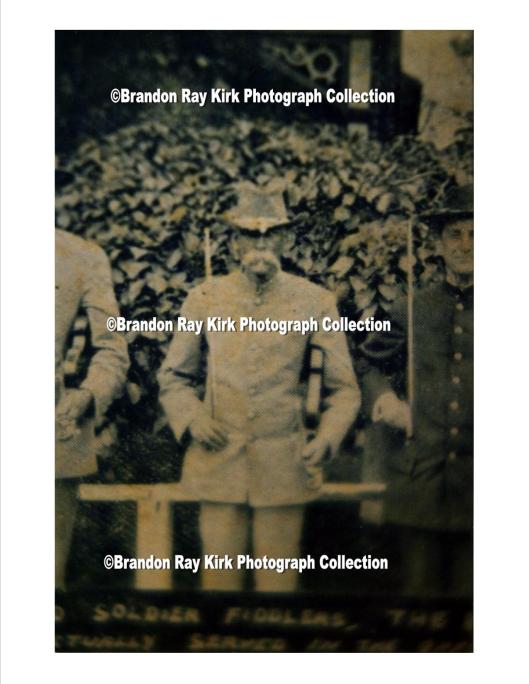
Ben France, a Confederate veteran and fiddler from Long Branch area of Cabell County, WV
11 Wednesday Jun 2014
Tags
Appalachia, Army of Tennessee, Battle of Gettysburg, Ben France, Ben Haley, Brandon Kirk, Cabell County, civil war, Confederate Army, Dave Bing, Ed Haley, fiddler, genealogy, Guyandotte Valley, Henry France Cemetery, history, John D. Rockefeller, John Hartford, Long Branch, Milt Haley, music, Old Soldier Fiddlers, Shenandoah Valley, Stonewall Jackson, Wayne County, West Virginia, writing
Around that same time, Brandon located a picture of Ben France in a newsletter called High Notes: Mountain Music from West Virginia (1996). France was the most famous fiddler in the Guyandotte Valley during the 1850s. He may have been acquainted with Ed’s grandfather, Ben Haley, or even influenced Milt or Ed.
“These are the ‘Old Soldier Fiddlers’ — two Union, two Confederate — who toured the country after the Civil War,” the caption read. “The second fiddler from the left is Ben France of Wayne County, a Confederate courier who was second on the scene after Stonewall Jackson was fatally wounded. France was the great-great-great-great-great-uncle of our own Bing Brothers. Thanks to Dave Bing for the use of the photograph.”
A little later, I called Dave Bing, a West Virginia fiddler pretty well known among the traditional festival circuit, to ask him about the picture.
“Uncle Ben was born in what is now Wayne County, West Virginia, in the 1840s,” he said. “He joined the Confederate Army at the age of seventeen and served as a carrier in the Shenandoah Valley campaign. He was in the area on a mission the night Stonewall Jackson was shot and was said to be the second man to come to his aid. During the Battle of Gettysburg, he was wounded and transferred to the Army of Tennessee where he served until the end of the war. Uncle Ben was known as a fine horseman.”
France became somewhat of a professional musician after the war.
“After the war, Uncle Ben and three other war veterans (all fiddlers) toured the country playing resorts and fine hotels,” Bing said. “The group was known as the ‘Blue and the Gray.’ Uncle Ben once played by invitation for John D. Rockefeller, Sr. at his hotel. He was an outstanding banjo player but was more famous for his fiddling. He was well-dressed and always had his fiddle — which he called ‘Sally.’ He never married but was the father of a daughter. He died in 1917. He was buried in Henry France Cemetery located off of Long Branch in Cabell County.”
10 Tuesday Jun 2014
Posted in Big Harts Creek, Ed Haley, Music
Tags
Big Branch, Brandon Kirk, Cacklin Hen, Calhoun County Blues, Dood Dalton, Ed Haley, fiddler, fiddling, Garfield's Blackberry Blossom, Harts Creek, history, John Hartford, Lincoln County, music, Tootsie Tomblin, West Virginia, Wild Horse, writing
In that same time frame, Brandon re-visited Tootsie Tomblin, a daughter of Ed Haley’s friend Dood Dalton. She presented him with a reel-to-reel recording of Dood playing the fiddle around 1971. He knew this was an amazing find, somewhat comparable to finding a recording of Laury Hicks, Ed’s fiddling friend in Calhoun County.
Tootsie warned Brandon that the recording wasn’t great because her father had been very old and somewhat crippled in his left hand.
“He was playing with three fingers on his left hand ’cause his fourth finger wouldn’t bend where he’d got it mashed in the mines,” she said.
Brandon sent me a copy of the Dalton recording and when I played it I found that Dood was just what Tootsie said — a man of advanced years whose fingers were tough, stiff and scarred from years of working in the mines — using what sounded like a bow with three hairs and no rosin and a fiddle that had been refinished with floor varnish and strung up with barbed wire and with an action so high you could probably put your shoe under the strings. Still, there he was playing “Wild Horse”, “Cacklin’ Hen”, “Calhoun County Blues”, and “Garfield’s Blackberry Blossom”…and doing it so slowly, as if he were trying to communicate to me through the years that he’d been one hell of a fiddler earlier in his life. His final number was an unaccompanied vocal rendition of an old gospel tune. I came away from the recording thinking that yes, by god, Dood Dalton had been a good fiddler in his day.
05 Thursday Jun 2014
Tags
Appalachia, Ed Belcher, fiddler, fiddlers, fiddling, genealogy, history, Logan, Logan County, music, photos, violin, West Virginia

John Edward “Ed” Belcher (1886-1970), violinist and resident of Logan, WV
05 Thursday Jun 2014
Posted in Big Harts Creek, Ed Haley, Logan, Music
Tags
banjo, Brandon Kirk, Buck Fork, Buffalo Creek, Dixie Mullins, Donna Samson, Ed Belcher, Ed Haley, Falling Water, fiddle, fiddler, genealogy, George Mullins, guitar, Harts Creek, history, James Belcher, Logan, Logan County, Logan Theatre, Mary Belcher, music, piano, Putnam County, Rhoda Mullins, Scott District, timbering, West Virginia, writing
Not long after talking with Vergia, Brandon located Donna Samson, a daughter of Ed Belcher, in Logan, West Virginia. Belcher, we were told, was a multi-instrumentalist who played music with Ed Haley at George Mullins’ home on the Buck Fork of Harts Creek.
John Edward Belcher was born in 1886 or 1889, the son of James and Mary (Thomas) Belcher. The Belchers lived in Scott District, Putnam County, in 1900. Donna thought her father was from Buffalo Creek in Logan County. She said her family was once heavily involved in the sawmill business. As a young man, Ed played music with his brother Henry. At some point, he took music lessons and learned to read and write music. He could play the piano, banjo, guitar, and “could make a violin cry.” In the 1910s and 1920s, he played the violin in an orchestra during silent movies at the Logan Theatre. About that same time, he also operated a boarding house near the train station (likely a convenient “stopping off place” for Ed Haley when he came into Logan).
“He always kept music around his home,” Donna said.
Belcher played ragtime and loved to play “Falling Water” on the piano in his later years.
Donna said her father met her mother Rhoda Mullins (1919-1990) while at a dance in Logan. Rhoda was staying in town with her sister Dixie, who was a local schoolteacher. They were the daughters of George Mullins of Harts Creek. Her father, she added, was some thirty years older than her mother, who was his second wife.
Ed Belcher died in 1970. His death record gives his occupation as “Piano repair, tuner.”
02 Monday Jun 2014
Posted in Ed Haley
Tags
Catlettsburg, Dinky Coffman, Ella Haley, history, John Hartford, John Simon, Kentucky, music, Ohio, Portsmouth, Portsmouth YMCA, writing
Early in June 1996, I received a letter from John Simon, which conveyed more information about John Lozier’s memories of Ed Haley. Basically, Lozier said he played music with Ed and Ella around 1932 at the YMCA in Portsmouth, Ohio. Dinky Coffman, who was in charge of the entertainment, hired the three musicians often. “Sometimes Dinky would also take them into the railroad yards to play for groups of men,” Simon wrote. “They got a couple dollars for each day’s entertainment.” At that time, Ed lived at Catlettsburg, Kentucky. “The Haleys later divorced but continued to live in the same house on separate ends and continued to perform together,” Simon wrote.
23 Friday May 2014
Posted in Big Harts Creek, Ed Haley, Music
Tags
Andy Mullins, Ashland, banjo, Ben Adams, Bernie Adams, Bill Adkins, Brandon Kirk, Buck Fork, Claude Martin, Clyde Haley, Devil Anse Hatfield, Devil's Dream, Dingess, Drunkard's Hell, Ed Haley, Ella Haley, fiddling, George Baisden, George Mullins, Greasy George Adams, Harts, Harts Creek, Henderson Branch, history, Hoover Fork, John Frock Adams, Johnny Canub Adams, Kentucky, Lincoln County, Logan County, Mona Haley, music, Ralph Haley, Roxie Mullins, Sally Goodin, Soldiers Joy, Ticky George Adams, Trace Fork, Weddie Mullins, West Virginia, Wilson Mullins, writing
Throughout the winter 1996, Brandon kept busy interviewing folks around Harts for new Ed Haley-Milt Haley leads. In March, he wrote me about recent developments, including the death of Bill Adkins, Sr. — the old fiddler in Harts. At Bill’s wake, Brandon met Andy Mullins, who had recently moved back to Harts Creek after settling in Michigan in 1952. He was the son of Roxie Mullins.
Andy said, when he was a child, Ed Haley spent summers with his parents. Ed also stayed with George Mullins on Buck Fork, George Baisden (a banjo player) in the head of Hoover Fork, “old John Adams” on main Harts Creek, and Johnny Adams (Ticky George’s son) on Trace Fork. Ed had a big, fat belly. Sometimes, he came with his wife, a quiet woman who would eat dinner and then sing for an hour or so while playing the mandolin. Their daughter “Mona Mae” traveled with them, as did her husband, Wilson Mullins.
Andy didn’t remember much about Ed’s other children. He said Clyde stayed six months at a time on Harts Creek and “wouldn’t work a lick” and “couldn’t stay out of trouble.” He heard that Ralph used to hang upside down from a bridge in Ashland.
When Ed was young, Andy said, he supposedly played a lot of music with George Baisden. Later, he played with Bernie Adams and Claude Martin. Andy remembered that Ed didn’t saw the fiddle — he played smooth — and he was a good singer. His voice was like a bell. When he played music with Bernie and Claude, people gathered in and brought food and booze. Andy never saw Ed drunk, although he would get pretty high. Ed and Bernie were hateful. Somebody might request a tune and Ed would say, “What do you think I am, a steam engine?” — then play it five minutes later. Andy remembered Ed playing “Devil’s Dream”, “Drunkard’s Hell,” “Soldiers Joy” and “Sally Goodin”.
Andy was familiar with Ben Adams, who he said operated a mill-dam at Greasy George’s place on main Harts Creek. Ben used this dam to back the creek all the way up to Henderson Branch. Before turning it loose, he would go and tell people to get out of their homes. His nephew, “old John Adams” (a.k.a. “Long John” or “John Frock”), was the one who went to Dingess and killed the man who had shot Ed’s uncle, Weddie Mullins. Andy said the doctor had this man on a table working on him when John showed up and “wasted” him. John Frock let Ed cut his fingernails one time and he cut them up so badly that his fingers bled. (Mona had told me a similar story, except she thought that Ed had cut Devil Anse Hatfield’s nails.)
21 Wednesday May 2014
Posted in Ed Haley
Tags
Ashland, Billy in the Lowground, Bonaparte's Retreat, Charles Gardner, Charleston, Dallas, Done Gone, fiddling, Flatfoot Nash, French Carpenter, Georgia Slim Rutland, Gunboats Through Georgia, history, John Hartford, Kentucky, music, West Virginia, Wilson Douglas, writing
Back in Nashville, I called Wilson Douglas to thank him for being such a good host on my recent trip to West Virginia. I also had a few questions, starting with whether or not Ed played a tune called “Gunboats Through Georgia”.
“Oh, yeah,” Wilson said. “Well, they wasn’t very many, John, that he didn’t play. And he played a danged tune, him and French Carpenter, called the ‘Flatfoot Nash’.”
Wilson paused, then said, “I told you about Ed Haley commending Georgia Slim, didn’t I? He said he believed that Georgia Slim was the best fiddler on some of them there Southern tunes he ever heard. He said nobody could touch him on the ‘Billy in the Lowground’. Now, Georgia Slim — way back there in ’37, ’38 — he went and stayed with Ed Haley a lot in the wintertime.”
Wilson’s memories of Georgia Slim caused me to recall my theory that Ed was a grandfather of the Texas contest fiddling style. I hadn’t thought much about that lately so I called up Charles Gardner, an authority on Texas fiddling. Charles said Georgia Slim had influenced a lot of Texas fiddlers when he played over Dallas radio in the early 1940s. At that time, he was fresh from the Ashland-Charleston area, his playing no doubt filled with Haley and Kessinger licks. It seemed very possible to me that the unfamiliar parts he played on tunes like “Done Gone” and “Bonaparte’s Retreat” were learned from Ed or at least based on his approach.
18 Sunday May 2014
Posted in Calhoun County, Civil War, Ed Haley, Music
Tags
Ashland, Atlanta, Big Ugly Creek, Birdie, blind, Boatin' Up Sandy, Catlettsburg, Chapmanville, Charleston, Cincinnati, civil war, Clark Kessinger, Coalton, Crawley Creek, Ed Haley, Ella Haley, fiddlers, fiddling, Girl With the Blue Dress On, Godby Branch School, Grantsville, Grayson, Great Depression, Green Shoal, Harts School, history, Hugh Dingess School, John Hartford, Kentucky, Lawrence Haley, Logan, Margaret Arms, Mona Haley, music, Orange Blossom Special, Pat Haley, Ralph Haley, Slim Clere, Sweet Georgia Brown, Tennessee Waggoner, The Old Lady Carried the Jug Around the Hill, Wewanta, writing
We hadn’t played long until Slim was telling me more about his background.
“I came from a line of Irish fiddlers,” he said. “My dad, his brothers, and his dad… The old man was so good on the fiddle — he was in the Civil War — my grandfather — that the soldiers all chipped in and bought him a fiddle and he didn’t have to fight. He was from Coalton on the road to Grayson out back of Ashland.”
Slim said his dad played “The Old Lady Carried the Jug Around the Hill” and “Girl With the Blue Dress On”.
Here comes the girl with the blue dress on, the blue dress on, with the blue dress on.
Everybody’s crazy about the girl with the blue dress on…
I asked him if his father played “Catlettsburg” and he said yes, although it was not the same version as what Ed played.
“My dad played it,” Slim said. “He played ‘Birdie’, ‘Tennessee Waggoner’. He got these two fingers cut when he was working at a steel mill and his fingers stayed stiff so he had to play the rest of his life with these two fingers. I don’t remember when he played with all five ’cause I was too small. He played ‘Boatin’ Up Sandy’.”
Every now and then, Slim would tell me something about Ed.
“Every Saturday Ed would go to a county courthouse someplace,” he said. “Believe it or not, he was in Grantsville one time when I was up there, sitting on the steps up there at the courthouse. I walked over, I said, ‘Ed, aren’t you out of place?’ He said, ‘You’re liable to find me anywhere.'”
I asked Slim if he ever saw Ed drunk and he said, “I don’t think I ever saw him sober. He didn’t get too high. Seemed like it give him more pep.”
I asked Slim if he remembered Sweet Georgia Brown coming to see Ed in Ashland and he said, “He was up in Ashland at one time. We called him Brownie. Well, he wasn’t around Ed too much. Ed was a close guy. He didn’t associate with a lot of people. Now, he liked me pretty well…but most fiddle players don’t like fiddle players.”
Speaking of fiddlers, Slim said he had met a lot of them during his lifetime. I wondered if he ever met any as good as Ed and he said, “Clark Kessinger was the closest. I think Clark learned from him. See when Clark made records for Brunswick — they had a studio down in Ashland — Ed wouldn’t play on it. He wouldn’t make records. Didn’t want to. He wouldn’t play over the radio. He said they wasn’t any money in that. He wanted to be somewhere somebody could throw a nickel or dime in that cup. He was very poor. He wasn’t starving to death, but — his wife was blind, too — there was no way that they could make any money. And he had a 17- or 18-year-old boy — he was a good guitar player, but he wouldn’t play with him. I don’t remember what his name was. He was ashamed of his father and mother — to get out in public. Not for any personal reasons…just the fact he could see and they couldn’t.”
Slim began talking about his own career in music, mostly his Depression-era radio work. He mentioned working with or meeting people like Bill and Charlie Monroe and Earl Scruggs and even credited himself with bringing “Orange Blossom Special” to Charleston from Atlanta in October of 1938. He kind of caught us by surprise when he spoke of having played all through the Guyandotte Valley.
“We played personal appearances up and down through there,” Slim said. “Played schools and theaters: Godby Branch School, up on Crawley Creek — one room school — and Hugh Dingess School — it was about an eight-room red brick building — Green Shoal, Wewanta. Harts School, I guess I must have played that school fifteen times. From about ’39 on up to 50-something. Everybody turned out when we played Harts. It was supposed to be the meanest place they was on the Guyan at that time. Came across Big Ugly Creek there. See, it goes from Lincoln County over into Boone. I used to broadcast down in there. I’d say, ‘All you Big Ugly girls be sure to come out and see us now.'”
I asked Slim if he played with any local musicians and he said, “No, we went in and played the show. Once in a while, we’d have amateur contests and they’d come in. Well, we’d have fiddling conventions at big high schools.”
I asked Slim if he ever saw Ed around Harts and he said, “No, not down there. Only time I ever seen Ed was around Ashland and Logan and Chapmanville. He played at the bank in Chapmanville. Chapmanville was 12 miles from Logan.”
Later that night, Brandon and I found some more family photographs in a box at Pat Haley’s. One was of Ella, while others were of Margaret Arms. Margaret was a real “mystery lady”: nobody seemed clear on her relationship to the Haley family. Lawrence Haley had remembered her as a cousin to either Ed or Ella, while Mona called her “Margaret Thomas” and said she lived in Cincinnati.
16 Friday May 2014
Tags
Appalachia, Brandon Kirk, fiddlers, John Hartford, music, photos, Slim Clere, South Charleston, U.S. South, West Virginia

Here I am with Slim Clere and John Hartford at Slim’s home in South Charleston, WV, 1996
16 Friday May 2014
Tags
Ashland, Atlanta, Bert Layne, Bill Day, Blackberry Blossom, blind, Clayton McMichen, Dill Pickle Rag, Ed Haley, Ed Morrison, Ella Haley, fiddle, fiddlers, Gary, Goodnight Waltz, Grand Ole Opry, history, Indiana, Jesse Stuart, John Carson, Kentucky, Lowe Stokes, mandolin, music, Ohio, Over the Waves, Portsmouth, Riley Puckett, Slim Clere, South Charleston, South Shore, Sweet Bunch of Daisies, Theron Hale, Vanderbilt University, Wednesday Night Waltz, West Virginia, World War I, WSM
The next day, after a few hours of sleep at Wilson’s house, Brandon and I drove to see fiddler Slim Clere in South Charleston, West Virginia. Slim was born in Ashland around the time of the First World War and knew a lot about Ed. We were parked behind his two-story house and were unloading our “gear” when he appeared out of a back door and led us inside his house (past some type of home recording studio) and up a flight of stairs. We sat down in the living room where we met his wife, a vivacious middle-aged woman who fetched several scrapbooks at Slim’s request. We flipped through the pages while Slim told us about some of his early experiences.
“I knew Jesse Stuart in 1934,” he said. “He lived at South Shore, Kentucky, across the river from Portsmouth, Ohio. He went to Vanderbilt. I believe he did play football. He used to date Theron Hale’s daughter that used to be at WSM at the Grand Ole Opry. I thought maybe he might marry her but he didn’t. Well anyway, I went away. I left my home and went to Atlanta. Well I went to Gary, Indiana, and everywhere, and worked with Bert Layne and Riley Puckett and some of those old-timers. I knew old Fiddlin’ John Carson. I never did meet Lowe Stokes. He lost an arm in a hunting accident. At one time he was a better fiddle player than McMichen. But Mac come out of it. He really could play. I patterned a lot of my style after him.”
Slim pointed to a picture of himself in his youth and said, “That’s back when I had hair and teeth.”
I was anxious to talk about Ed, so I asked Slim if he could remember the first time he ever saw him.
“I grew up knowing him,” Slim said. “He used to come down to the Ashland Park there every Sunday and sit around and fiddle for nickels and dimes on a park bench and I’d sit on there and watch him play.”
Slim said Ed Haley, Ed Morrison, and Bill Day were his primary influences during his younger days in Ashland.
“He was hot stuff,” Slim said of Haley.
He described Ed as a “loner” but said his wife was always with him.
“The old lady chorded a taterbug mandolin,” he said.
Ed played on a little yellow fiddle, which he wouldn’t let anyone “get a hold of,” and kept a cup between his legs for money. Down at his feet on the ground was his old wooden case, “made like a coffin.”
How much would you have to put in the cup to get him to play a tune?
“Didn’t matter,” Slim said.
Could he tell how much you dropped into the cup?
“He’d know just to the tee what it was,” he said. “He could tell the difference between a penny and a dime.”
Would the length of how long he played the tune depend on how much you dropped in the cup?
“No, he liked to play.”
Slim and I got our fiddles out and played a lot of tunes — or parts of tunes — back and forth for about a half an hour. I wanted to know all about Ed’s technique and repertoire. Slim said he “cradled” his fiddle against his chest (“all the old-timers used to do that”) and held the bow way out on the end with his “thumb on the underneath part of the frog.” He moved very little when playing.
“The only action he had was in that arm…and it was smooth as a top,” Slim said. “He fingered his stuff out. He didn’t bow them out. He played slow and beautiful and got the melody out of it. Now, he could play stuff like ‘Dill Pickle Rag’ where you had to cross them strings and that ‘Blackberry Blossom’ was one of his favorites. He played ‘Goodnight Waltz’, ‘Wednesday Night Waltz’. I don’t think ‘The Waltz You Saved For Me’ had been invented yet. He played ‘Over the Waves’ and ‘Sweet Bunch of Daisies’. He didn’t double-stop it, though.”
14 Wednesday May 2014
Posted in Calhoun County, Ed Haley, John Hartford, Music
Tags
Appalachia, Brandon Kirk, Calhoun County, cemeteries, Hicks Family Cemetery, history, John Hartford, Kim Johnson, Laury Hicks, music, photos, U.S. South, West Virginia, Wilson Douglas
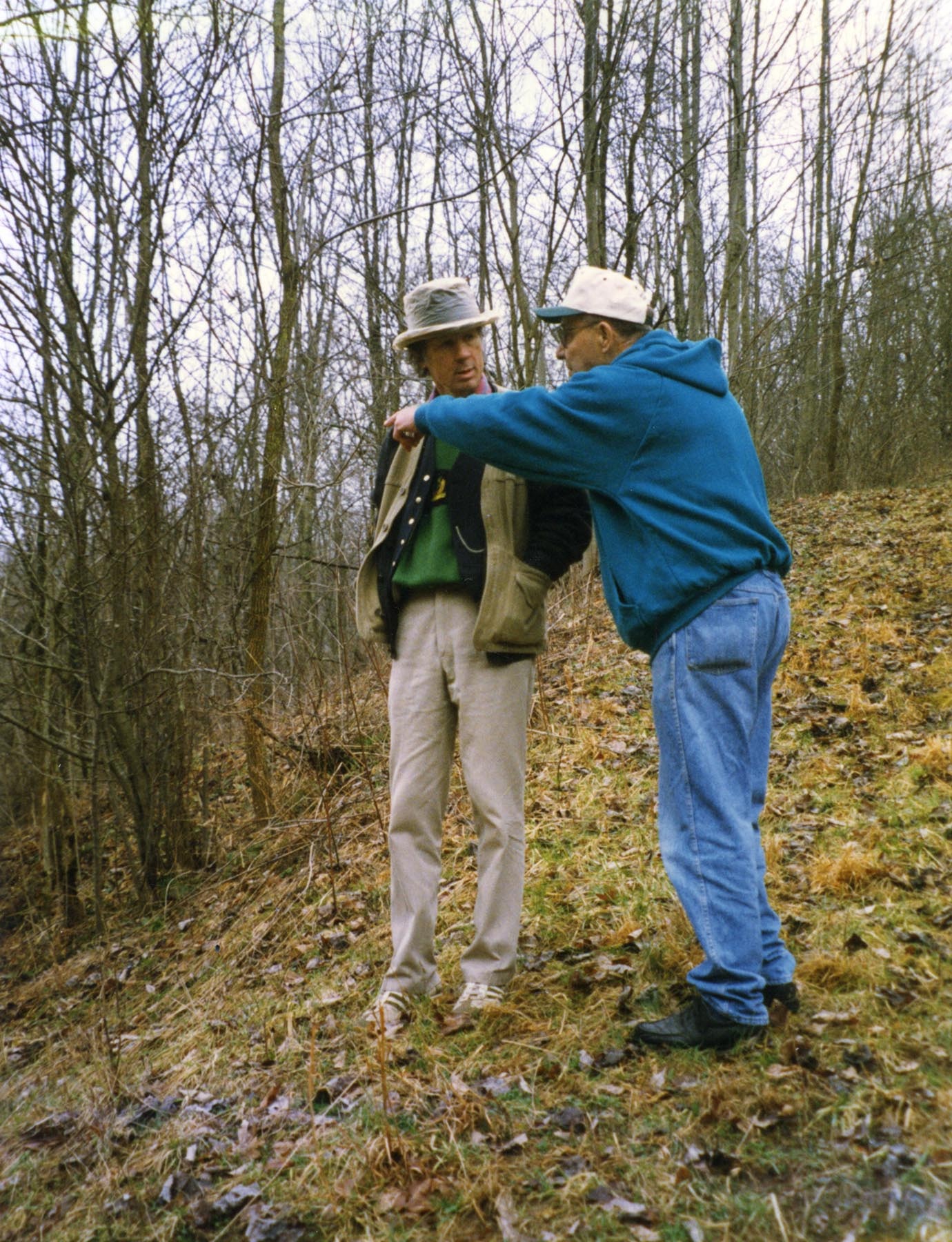
Wilson Douglas and John Hartford, Calhoun County, WV, 1996

John Hartford and I at the Laury Hicks grave, Calhoun County, WV, 1996
John and I at the Laury Hicks grave, Calhoun County, WV, 1996
14 Wednesday May 2014
Posted in Calhoun County, Clay County, Ed Haley, Music
Tags
Appalachia, Arnoldsburg, Ashland, banjo, Ben Friend, Bernard Postalwait, Bill Stutler, Bob Carr, Brandon Kirk, Calhoun County, Camp Chase, Charleston, civil war, Clay, Clay County, Clendenin, Ed Haley, Ed Williams, Edden Hammons, fiddlers, fiddling, history, Hog Run Hollow, Jack McElwain, John Hartford, Kentucky, Kim Johnson, Laury Hicks, Lawrence Haley, Lincoln Republican, Luther Carder, music, Pat Haley, Pisgah Bridge, Richwood, Sol Carpenter, St. Albans, Ugee Postalwait, West Virginia, William E. Chilton, Williams River, Wilson Douglas, writing
Brandon and I got a good night’s sleep at Pat Haley’s home in Ashland, then took off the next morning to see Wilson Douglas in Clendenin, West Virginia. I wanted to hear more about his memories of Ed, play some music, and go see the old Laury Hicks homeplace. Wilson met us on his porch with Kim Johnson, a banjo player. We all went inside and got settled, where Kim mentioned that Laury first invited Ed to his house after meeting him in St. Albans, near Charleston. Wilson was quick to offer new details about Ed — of a more seedy variety. He said Ed “ran around” a lot with Bernard Postalwait when he was in the area. They usually got drunk and went “women crazy” and stayed gone all night. Hicks apparently had a “wild side,” too. Wilson hinted that he was a moonshiner who sometimes left home on timber jobs…and never showed up.
We wasted little time in taking off to see some of Ed’s old stomping grounds in Clay and Calhoun Counties. There was a slight drizzle, just enough to wet everything.
Our first stop was the Hicks homeplace, which had been overtaken by weeds on my previous visit in 1994. The weeds were gone this time, so we got out of the car and maneuvered through the rotting remains of an outhouse, chicken coop, cellar base, parts of an old fence, and scattered boards — all damp and colored dark brown due to the light rain dropping down around us.
It was a far cry from the “old days” when (according to Ugee Postalwait) the family had farmed corn, wheat and cane all the way back up the mountain to the head of Hog Run Hollow. Gone were the apple and peach orchards. Gone were the gardens down by the creek (now taken in by the paved road). And, most obviously, gone was the old Hicks home, the last of four houses built on the site (the final one having been constructed in 1936).
We soon made our way up the hill to the cemetery, where Brandon took pictures. I just kind of stared at Laury’s grave — picturing Ed playing there after Laury’s death in 1937.
As we came off the hill, Wilson said Hicks was rumored to have died from “some bad cases of VD.”
Later that day, Wilson showed us Clay, the seat of government for Clay County. This was the place where Ed Haley arrived by train from Charleston enroute to the home of Laury Hicks. Lawrence Haley once told me about his father walking from Clay to Arnoldsburg, a town some thirty miles away. Brandon had found this great article titled “Old-Time Fiddlers Will Gather At Clay Saturday” from a 1921 edition of the Lincoln Republican.
Clay, W.Va., Jan. 10 — Elaborate preparations are being made in the little city of Clay for the old-time fiddlers’ contest which will be held on Saturday night, January 22. An attendance surpassing anything ever held in Clay is expected, and the hospitable citizens of this town have appointed a committee to look after the welfare of its guests. Similar contests have been held in various other sections of West Virginia this winter, but they cannot even compare to the one which will be held in Clay, it is predicted. Old-time fiddlers from far and near are coming to compete, and, if possible, carry off the honors of the evening.
Among some of the celebrated old-time fiddlers who will be here is “Jack” McElwaine of Erbacon, in Webster county. “Jack” has played the fiddle for more than fifty years, and between times has been justice of the peace, preached the gospel and practiced law. He learned to play under Saul Carpenter, the most famous old-time fiddler of them all, and who played himself out of Camp Chase during the Civil war. Another fiddler equally famous is “Edin” Hammons, who hails from the head of Wiliams river, and whose sole occupation all through life has been hunt, trap and play the fiddle. “Edin” has killed more bears, deer and played the fiddle more than any other man on Williams River.
It is said that Senator William E. Chilton and Colonel Bob Carr of Charleston have been given invitations to attend the contest and compete with these old-time fiddlers.
Several local celebrities are expected to enter the contest, and the old mountaineer fiddlers are looking forward to this part of the contest with great pleasure and saying “the city fellers will have to fiddle some to beat them.” No complete list of the fiddlers who enter the contest has been made public, but some fifteen or twenty are expected. Ben Friend, Ed Williams, Luther Carder and “Bill” Stutler, men who have been winning prizes in other contests, will be there.
People of Clay and surrounding country are looking forward to this event with great anticipation and pleasure. The last contest of the kind was held at Richwood, Thursday night of last week, and fully 200 persons were unable to get into the theater where it was held.
There are very few of the real old time fiddlers who play the old mountain tunes living today, and within a very short time there will be none left and no one to take their place. The younger generation has neither talent nor desire for this kind of music. At any rate, one can not find a young man of today who can play the fiddle in the “good old-fashioned way.”
Clay, I found, was a small shell of a town with a nice old courthouse sitting high on the hill. There was the typical arrangement of buildings: sagging old businesses hinting at lost prosperity, a small bank, dollar stores, a car dealership, a post office, and a Gino’s restaurant. No red lights and basically one two-lane thoroughfare through town. There was a hotel with the weekly newspaper office headquartered beneath where, I was told, you could go in late and help yourself to a key and then pay for your room the next morning on your way out. After passing through town and crossing the Pisgah Bridge, we spotted an old section of residences and a community church. The track bed was still visible but the railroad was long gone.
Writings from my travels and experiences. High and fine literature is wine, and mine is only water; but everybody likes water. Mark Twain
This site is dedicated to the collection, preservation, and promotion of history and culture in Appalachia.
Genealogy and History in North Carolina and Beyond
A site about one of the most beautiful, interesting, tallented, outrageous and colorful personalities of the 20th Century
 Brandon Ray Kirk