Tags
Appalachia, culture, Harts Creek, history, life, Liza McKenzie, Logan County, photos, U.S. South, West Virginia

Big Harts Creek, Logan County, West Virginia, circa 1940s

29 Sunday Sep 2013
Posted in Big Harts Creek, Women's History
Tags
Appalachia, culture, Harts Creek, history, life, Liza McKenzie, Logan County, photos, U.S. South, West Virginia
Big Harts Creek, Logan County, West Virginia, circa 1940s
27 Friday Sep 2013
Posted in Big Harts Creek
Tags
Appalachia, culture, Farmers, genealogy, Great Depression, Hiawatha Adams, history, life, Logan County, photos, U.S. South, West Virginia

Big Harts Creek, Logan County, West Virginia, c.1938
23 Monday Sep 2013
Posted in African American History, Logan
Tags
Andrew Bierne, Ann Lawson, Anthony Lawson, Appalachia, England, history, Logan, Logan County, Oceana, slavery, U.S. South, West Virginia, writing
Almost two hundred years ago, an Englishman made his way into the Guyandotte Valley and soon found himself fully engaged in the fur trading business and the creation of a new county.
Anthony Lawson was born on October 31, 1785 in Stanton, Northumberland, England. He was the son of Anthony and Margaret (Carse) Lawson. On May 26, 1806, Lawson married Ann Bilton, a daughter of Lewis and Jane Bilton, at Saint Helens Church in Longhorsley Parish, Northumberland. Ann was born on March 17, 1783 in Fieldhead, England.
In the early summer of 1817, Anthony and his family left England for America aboard the ship Active. “They left England on account of religious persecution,” according to the late Dr. Sidney B. Lawson, who spoke some years ago with historian Fred B. Lambert. Accompanying Lawson were his wife and four children: John Lawson, born in 1807 in Woodcraft, Northumberland; Lewis Bilton Lawson, born in 1808 in Stanhope, Northumberland; James B. Lawson, born in 1808 in Northumberland; and Anthony Lawson II, born in 1813.
On July 12, 1817, the Lawson family arrived at Philadelphia. They settled in Alexandria, Virginia, where Anthony’s uncle, John Lawson, operated a store on Cameron Street. While there, Ann gave birth to a fifth child named George Wilborn Lawson in 1818.
At that time, according to Ragland’s History of Logan County (1896), Lawson was persuaded to move to the Guyandotte Valley. “Col. Andrew Bierne, of Lewisburg, soon made his acquaintance, and induced him to come to the wilds of Guyandotte River and engage in the fur and ginseng trade,” Ragland wrote. “Mr. Lawson first settled near the present site of Oceana, where he remained about four years and then moved to the present site of Logan C.H.”
At Logan, which was then called the “Islands of Guyandot” and situated in Cabell County, Lawson ran a mercantile store. “Anthony had many buying and selling trips to Philadelphia,” writes James Avis of Albuquerque, New Mexico. “He would travel by horseback to the town of Guyandotte and from there by boat to Philadelphia. It is believed that he would visit with relatives living in Philadelphia.”
In 1824, when Logan County was formed from Cabell, Lawson served on the first County Court. His store was chosen as the seat of government for the new county. He also donated land for the construction of a courthouse. Reportedly, Logan was originally named Lawsonville but later had its name shortened to Lawnsville. Later still, it became Aracoma, then Logan Court House.
In 1830, Lawson was listed in the Logan County Census with his wife and four children, as well as two slaves (one female aged 10-24 and one male aged 0-10). His oldest son, John, was enumerator of the county census.
In 1840, Lawson was listed in the Logan County Census with his wife, son Anthony II, and three slaves. In that same year, sons John and James were also living in the county, with no slaves.
In 1847, Lawson became ill while on a return trip from Philadelphia. He was taken from a boat at Guyandotte, now Huntington’s east end, where he died of cholera on May 20. He was buried in the city cemetery. “Col. Anthony Lawson Sr. — Logan County — died at Guyandot aged upwards of 60 on his way home from Philadelphia,” the Richmond Whig wrote on June 17, 1847. “He often spoke of his birthplace as the vicinity of Alnwick Castle, the seat of the Percies in Yorkshire, England. He accumulated a large fortune which he left his children.”
On December 27, 1847, Ann Lawson was murdered by two of her slaves in Logan County. “Ann was mending a shirt for one of the slaves so that he and another slave could go to town for supplies,” Avis writes. “Thinking that they could be free after Anthony’s death, the negro she was mending the shirt for struck her on the head with an iron poker and she died.” After the murder, the slaves robbed Lawson. “The slave knew that money was kept in one of the drawers in the bureau,” according to Avis. “The poker was again used to pry open the drawer and take the money.” Two slaves named Bill and Hardin were accused of the murder. “The one that killed her was hanged, probably on the courthouse lawn,” Avis writes. “The other slave was severely punished.”
25 Sunday Aug 2013
Posted in Logan
Tags
Appalachia, culture, history, life, Logan, Logan County, photos, U.S. South, West Virginia

Logan Court House, built 1904, destroyed by fire 1911.
11 Sunday Aug 2013
Posted in Big Harts Creek, Whirlwind
Tags
Appalachia, Chapmanville, Dingess, Ernestine Tomblin, Guyandotte River, Harts Creek, history, James Mullins, Kirk, Lawrence Riddle, Lindsey Blair, Logan, Logan County, McCloud Post Office, Mingo County, Moses Tomblin, Pearl Lowe, Shirley Smith, Shively, Sol Riddle, Tema Workman, Verdunville, Verlie Smith, W.J. Carle, West Virginia, Whirlwind, writing, Zama
Between 1909 and 1952, Whirlwind Post Office served the postal needs for residents of Upper Hart. What follows is an attempt to reconstruct a history of its postmasters and its locations. All information is based on official post office records located in Washington, DC.
In 1908, Lawrence W. Riddle petitioned the Postmaster General for the creation of a post office called “Zama” in the Upper Hart section of Logan County, West Virginia. This proposed post office would be situated twenty feet west of Harts Creek, three miles west of the Norfolk & Southern Railway, six miles northwest of McCloud Post Office, seven miles south of the town of Dingess in Mingo County, and eight miles east of the Guyandotte River. The total population to be supplied with mail would be 200 persons. In January 1909, the First Assistant Postmaster General responded in a letter that marked out the proposed name of this post office, “Zama,” and replaced it with “Whirlwind.”
Early postmasters at Whirlwind included: Lawrence W. Riddle (March 31, 1910, appointed; April 25, 1910, commissioned; May 16, 1910, took possession), Moses Tomblin (February 13, 1911, appointed), Sol Riddle (May 7, 1913, order; May 25, 1911, appointed; June 12, 1911, commissioned; June 30, 1911, took possession), and James Mullins (April 30, 1914, confirmed; May 19, 1914, commission signed and mailed; May 23, 1914, assumed charge). On June 26, 1925, Mr. Mullins requested to change the site of the post office to a spot 600 feet southwest of its current location.
Lindsey Blair next served as postmaster (April 28, 1938, confirmed; May 6, 1938, commission signed and mailed; May 11, 1938, assumed charge; resigned without prejudice). On July 15, 1938, Mr. Blair requested to relocate the post office to a spot 1652 feet east of its present location.
Shirley Smith replaced Mr. Blair (October 22 or 23, 1940, assumed charge; October 26, 1940, appointed acting postmaster). In a letter dated October 1940, Smith requested a relocation of the post office. The new post office location would be 5/10th of a mile southeast from the old location, 100 feet west of Harts Creek, nine miles southwest of Dingess, ten miles north of Harts, twelve miles southeast of Verdunville, and fourteen miles from Logan. Ms. Smith asked that the post office be relocated “so I can take care of it at my own home.” Twenty-eight patrons resided within a one-mile radius. Postmasters in this era include: Shirley Smith (December 5, 1940, confirmed; December 27, 1940, commission signed and mailed; December 31, 1940, took possession; January 1, 1941, assumed charge; resigned without prejudice) and Pearl Lowe (July 11 or 12, 1941, assumed charge).
In a letter dated August 19, 1941, Pearl Lowe wrote the Postmaster General requesting that Whirlwind Post Office relocate to a new site. The proposed location would be one mile north of its present location, about forty feet west of Harts Creek, two miles southwest of a county line, nine miles southwest from Dingess, nine miles south of Verdunville, ten miles from the Guyandotte River, and ten miles from Chapmanville. This location was approved and became effective as of September 18, 1941.
Pearl Lowe served as the only postmaster at this location: (September 19, 1941, appointed acting postmaster; November 5, 1941, appointed postmaster; January 2, 1942, commission signed and mailed; January 22 or 23, 1942, assumed charge). On April 14, 1942, Mrs. Lowe requested that the post office be relocated to a new site 1500 feet east of the present location. Shortly thereafter, on July 6, she requested that it be relocated to a site 1/8 mile away. This new spot would be 300 feet east of Harts Creek, nine miles southwest of Dingess, eleven miles northeast of Harts, and twelve miles southeast of Verdunville. On April 8, 1944, Ms. Lowe requested the site be moved 1/2 mile to the east. This latter site became effective May 1, 1944.
On July 15, 1944, someone (the paperwork does not specify who) requested that the post office be relocated 1/4 mile south of the old post office, about forty feet east of Harts Creek, two miles from Mingo County, nine miles southwest of Dingess, ten miles north of Harts, eleven miles south of Verdunville, thirteen miles east of the Guyandotte River, and thirteen miles northeast of Chapmanville.
Tema Workman took possession of the Whirlwind Post Office on February 28, 1947 and was “appointed” on March 12, 1947. On April 22, 1947, Ms. Workman requested that the post office be relocated to a site one mile north of the old location. The new post office would be 1/2 miles from Mingo County, 7 1/2 miles south of Dingess, 8 1/10 miles northeast of Shively, 9 1/2 miles north of Harts, and 10 8/10 miles southeast of Verdunville. This letter cites another name which the community was then known: Bulwark.
Subsequent postmasters included: Tema Workman (June 16, 1947, confirmed; July 11, 1947, commission signed and mailed; September 30, 1947, took possession; October 1, 1947, assumed charge; removed) and Verlie Smith (November 5, 1947, assumed charge; November 5, 1949, took possession; November 15, 1949, appointed).
On November 16, 1949, W.J. Carle, Post Office Inspector, wrote a letter requesting the post office be moved to a site one mile southeast. The new location would be situated two miles from Mingo County, 6 1/2 miles east of Shively, 8 1/2 miles north of Harts, ten miles south of Dingess, and fourteen miles west of Kirk.
Ernestine Tomblin served as the final postmaster at Whirlwind (March 31, 1951, assumed charge; April 17, 1951, appointed).
Whirlwind Post Office was discontinued on January 5, 1952, effective January 31, 1952, “mail to Harts.” Documents cite the post office as “unnecessary.” An investigation determined “reestablishment unnecessary” on May 1, 1953.
30 Tuesday Jul 2013
Posted in Ed Haley
Tags
Appalachia, Elias Adkins, Harts Creek, history, Isaac Adkins, John H. Brumfield, Joseph Adams, Logan County, Peter Mullins, slavery, Thomas Dunn English, timbering, writing
Within a few years, by 1827, there were more settlers: Elias Adkins at Fowler Branch on the Guyandotte River, Moses Brown at Brown’s Branch of Guyan River and Marvel Elkins on Piney Creek of West Fork. Within three years, Isaac Adkins was at Harts and John Brumfield (father of Paris) was at the mouth of Ugly Creek. The Adkins brothers — Isaac and Elias — were the only slave owners in the section. They bought land at the mouth of Harts Creek in 1833.
In the early 1830s, Joseph Fry, John Lucas, and John Fry moved to the Harts area. Joseph Fry lived at Ugly Creek; John Fry, a War of 1812 veteran, lived at the mouth of Green Shoal; and John Lucas, a Baptist preacher, lived near Big Creek. With the arrival of these and other men, a school was organized to meet the educational needs of local children. “The first school was taught in a log cabin one mile above the mouth of Big Harts creek about the year 1832,” writes Hardesty. “The first house for educational purposes was built near the mouth of Big Harts creek in 1834. It was a five-cornered building, one side being occupied by the ever-present huge fire place.”
In the mid-1830s, Joseph Adams and Peter Mullins — both great-grandfathers to Ed Haley — arrived in the headwaters of Harts Creek. In 1838, Adams was granted 100 acres between the Forks of Harts Creek and the Rockhouse Branch. He became the patriarch of most Adamses in Harts, including Anthony and Ben Adams — key players in the Haley-McCoy trouble. In the early 1840s, Mullins was granted land on Hoover Fork and Trace Fork. He was a grandfather to Emma Haley.
At that time, in 1840, there were roughly 23 families in Harts. In the head of Harts Creek were Stephen Lambert, Moses Workman, Alexander Tomblin, and James Tomblin. Henry Conley and William Thompson were somewhere on the creek. Richard Elkins was at Thompson Branch and Isaac Adkins, Jr. was at Big Branch. Abner Vance was on West Fork. Isaac Adkins, Sr. and James Toney were at Harts. Moses Brown and Archibald Elkins were just below there. Harvey Elkins and Price Lucas were on or near Little Harts Creek. Above Harts was Elias Adkins and Squire Toney. At Ugly Creek were John Brumfield, Joseph Fry, and John Rowe. Charles Lucas and John Fry were at Green Shoal. John Dolen was somewhere in the area.
At that early date, folks were beginning to explore timber as a means of industry. “Isaac Elkins built the first saw mill in 1847 or 1848,” Hardesty writes. “It was constructed on the old sash-saw plan, and had a capacity for cutting from 800 to 1,000 feet per day.” To assist in the transport of timber and coal from the valley, locks and dams were constructed in the lower section of the Guyan and steamboats made a brief appearance in the valley during the 1850s, although they did not travel so far upriver as to reach Harts. There was some excitement, too, when Thomas Dunn English — a famous Northeastern writer — arrived in nearby Logan (then called Aracoma) and became mayor.
29 Monday Jul 2013
Posted in Logan
Tags
Appalachia, Aracoma, history, life, Logan County, photos, West Virginia

Aracoma, otherwise known as Logan Court House, circa 1885
29 Monday Jul 2013
Posted in Ed Haley
Tags
Appalachia, Ed Haley, Guyandotte River, Harts Creek, history, James White, Joseph Gore, Logan County, Richard Elkins, Stephen Hart, West Virginia, William West, writing
As far as can be ascertained, Harts — the place of Ed Haley’s birth — first appeared in written history as “Heart Creek” on a John Wood map sketched some time between 1809 and 1824. Reportedly, the creek was named for Stephen Hart — an early settler — or perhaps for his father, who was reportedly scalped by Indians at the mouth of Little Harts Creek. Stephen Hart first appeared in Logan County records in the late 1830s, settling on Crawley Creek, near Harts. Some claim that he lived at the mouth of Harts Creek on a hill in a rock cave, while others say he lived in Dock Bottom near the mouth of Smoke House Fork. More than likely, he had shanties constructed along various creeks at different times used for hunting camps. All historians agree that the Smoke House Fork of Harts Creek was so named because it contained Hart’s smoke house.
“At the forks of Hart’s Creek, where Henderson Dingess now lives, Stephen Hart had a cabin,” writes Henry Clay Ragland in his 1896 Logan County history. “He cared nothing for the soil, but put in his time hunting the deer which were so abundant on the creek. On the left-hand fork, a short distance from his cabin, he built a house in which to cure his venison, in order to take it to the settlement whenever an opportunity would offer itself.”
According to written record, the first settler of present-day Harts was Richard Elkins, a hunter, farmer and ginseng digger. Elkins migrated to the mouth of the creek from “The Islands of Guyandotte” (Logan) in 1809 or 1815, some fifteen years after the last Indian had roamed the valley. At that time, Harts Creek was in Cabell County, Virginia. Jacob Stollings, who was granted 185 acres in the lower section of the creek by the State of Virginia in 1812, soon joined Elkins. Other neighbors along the Guyan River were William W. Brumfield, who lived at the mouth of Ugly Creek, and Squire Toney, who lived in the bottoms above Douglas Branch. Brumfield was the grandfather of Paris Brumfield.
“At the coming of white men, this region was a wilderness inhabited only by wild animals,” wrote Fred B. Lambert, an early local historian. “There was a buffalo trail extending in the general direction from the Guyan Valley to Mud River and buffalo passed up the valleys in the summer. Wild game was plentiful — deer, turkey, bear and also such animals as panthers, wild cats, and wolves. The otter and beaver were found on Guyan River at an early day. Wild hogs roamed the woods. At times in the early morning the air would be darkened by pigeons. There were elk in this region, but they were exterminated as early as 1815.”
During the later teens, Peter Dingess, Garland Conley, Charles Spurlock, Abner Vance, and Richard Vance settled in the vicinity of Harts Creek. These men were the ancestors of many persons involved in the Milt Haley story.
“The first settlers to find homes in Hart’s District were from the counties of northern Virginia,” according to Kile Topping, an early historian. “Many of these settlers belonged to the hardy class of hunters and ginseng diggers, who later gave up this occupation to become timbermen. They came here from Virginia through the mountains on foot, or down the Kanawha Valley in covered wagons. Some came in push boats from nearby counties and Ohio. Most of the traveling was done on horseback. There was no salt here and the old settlers dug their ‘seng’ and carried it on horses to the Salt Licks of the great Kanawha River, where they exchanged it for salt and other merchandise.”
During the early 1820s, there were minor improvements locally. James White built the first grist mill around 1821. “It was a small tub-wheel mill, water being the propelling power,” according to Hardesty’s History of Lincoln County, West Virginia (c.1884). In 1823, a Methodist minister named William West preached the first sermon in Harts (and became the namesake for West Fork). In 1824, Harts was incorporated into the new county of Logan. By that time, William Thompson lived in the head of West Fork, Isham Tomblin lived on Harts Creek, Joseph Gore (Ed Haley’s great-great-grandfather) lived on West Fork and Isaac Brown lived across the Guyandotte River from Green Shoal. Moses Workman and John Abbott were perhaps in the area as well, the latter located near Isaac Brown.
10 Monday Jun 2013
Posted in Ed Haley
Tags
Abe Glenn, Bob Glenn, Bob Kessinger, Clark Kessinger, Ed Haley, fiddler, Georgia Slim Rutland, history, Logan County, music, Sam Virus, West Virginia, writing
At some point, no doubt at a festival, I bumped into Bob Kessinger, a mandolin-playing nephew of Clark Kessinger and a Church of Christ preacher. Bob looked a great deal like Clark and was a very jovial guy, eager to plug the family musicians. I told him about my interest in Ed Haley and he said he first heard of him about 1944 from Smokey Harless, a smooth fiddler out of Boone County, West Virginia.
“When I was about seventeen or eighteen, I was at his house one time and he asked me if I ever heard Ed Haley play,” Bob said. “I said, ‘No,’ and he said, ‘Well, your uncle says he’s the best he ever heard.’ And I went home and the first thing I asked, I said, ‘Dad, can Ed Haley play a fiddle?’ He just stopped everything and he said, ‘Can he play a fiddle? Your uncle Clark says he’s the best he’s ever heard.’ And he told me about it and then after that I never heard Clark sit down to play if he played very long that he didn’t mention Ed Haley. Well, I’ve heard Clark say, ‘I betcha Ed Haley knew more tunes than anybody I ever heard in my life.”
Bob said Clark first heard Haley play in Logan County in the 1930s.
“Did you ever hear of Abe and Bob Glenn?” he asked.
I mistakenly said no, forgetting what I had heard from Roger Cooper and others.
“They were two brothers and they were from Kentucky,” he said. “Clark was influenced a whole lot by them. They musta been good, too. And then there was a Sam Virus, a blind man that used to play in Charleston down on the levee. It was a whole lot like Ed Haley’s case: his wife played with him. Now, Clark said he was in the class of Ed Haley. Said he didn’t know as many tunes. But he musta been good because I heard Clark mention him several times.”
I told Bob I had read that Georgia Slim Rutland knew Haley.
“I first met him when I was living in Kentucky in ’63, ’64,” Bob said of Rutland, catching me a little by surprise. “I found out he’d moved back to Valdosta and I was staying with this Richard Black — he lives in Valdosta — and I asked if he knew him and he said yes. I said, ‘Well, would you introduce me to him?’ He took me over. He had two or three taxis and he started with just a little hole in the wall music store. And Richard introduced us. He said, ‘Robert, I want you to meet Robert Kessinger.’ He said, ‘Kessinger, Kessinger. Are you from West Virginia?’ I said, ‘Well, originally. I’m a nephew to Clark.’ He turned around to Richard Black and he said, ‘One of the greatest old-time fiddlers I ever heard in my life.’ But every time I’d go in that section, he’d go to church with me. The last time I was there, I was in a meeting at Jasper, Florida, and I stopped on the way down there and we played together for about an hour. He died unexpectedly. He just had a massive heart attack and he’d been dead about six months before I knew it and his wife apologized. She said she didn’t know how to get in touch with me.”
I told Bob how Mrs. Rutland had recently told me that Slim had never known Haley, which he discounted.
“Yeah, he stayed at Ed Haley’s house for a while,” Bob said. “He did. In fact, I was talking to him one day about good fiddlers that Clark didn’t like and I mentioned Ed Haley. He said, ‘He didn’t tell you that Ed Haley couldn’t play, did he?’ I said, ‘No, he thought he was the best.’ He didn’t tell me that he was there, but I’ve got it from someone. See Ed lived in Logan County, West Virginia, part of the time. That’s where Clark heard him. I think that’s where Slim spent time with him ’cause he spent some time in West Virginia back in the early thirties.”
03 Monday Jun 2013
Posted in Ed Haley
Tags
Appalachia, Bertha Mullins, culture, Ewell Mullins, genealogy, Harts Creek, history, life, Logan County, photos, West Virginia

Bertha (Adams) Mullins and siblings, Harts Creek, Logan County, West Virginia, 1920s
03 Monday Jun 2013
Posted in Ed Haley
Tags
Appalachia, Calhoun County, Ed Haley, Harts Creek, history, John Hartford, Josie Cline, Laury Hicks, Logan County, music, West Virginia, Wilson Douglas, writing
I spent the spring of 1994 triangulating the many different versions I had heard of Ed Haley’s life and trying to make some sense of the direction of my research. There were so many avenues to explore: Ed’s background and the story of his father’s death on Harts Creek; Ed’s family and professional life in Ashland; Ed’s experience in places like Portsmouth or Calhoun County… Really, I seemed to only be scraping the tip of the iceberg — and it appeared to be a large one at that. It was amazing to consider how much I might learn about someone who I had first read about as being “a misty legend.” Almost daily, some little scrap of information came in.
I called Wilson Douglas several times with very specific questions in mind. I asked him if Ed played a lot in the second and third position and he said, “Oh, yeah, he did a lot of that. Well, you know it’s like this, John. When he wanted to show off he would play in the standard position then he would let loose and get down the violin neck — way down — and play down there a while. He’d do a lot of that where he had competition, you know, and more or less to show off. That is, if somebody provoked him that’s the way he would do. I don’t know how he did it, but you wouldn’t detect any change, any hesitation, any loss of time, or nothing like that. But the man was a genius, they’s no question about it. He played the fiddle so many different ways, you had to listen close to tell what he was a doing.”
I asked Wilson if he knew anything about Ed’s personal history.
“No, not too much,” he said. “You know, he had the measles when he was two or three years old and that put him blind. He told me, ‘Wilson, where I was born and raised there on Harts Creek in Logan County, we almost starved to death.’ Said, ‘All we had was greens and green onions to eat of a summer and practically nothing of a winter.’ He said, ‘Now you know what the Depression is.’ I said, ‘Yeah.’ He said, ‘Well that was a picnic to what I was raised on .'”
I said to Wilson, “Well, let me tell you a little bit about Ed’s background and see if that rings any bells. His daddy was lynched.”
“Right,” he interrupted. “They was mean people. They were mean, violent people.”
I asked if Ed ever talked about his father.
“Not too much,” he said. “He didn’t want you to ask him too many questions about a thing like that, you know? He did mention one thing to me one time — said something about his dad, but he didn’t comment much, you know. Not enough to make any sense of it. Ed Haley wouldn’t tell you too much. You had to be in his confidence strongly before he’d tell you much of anything.”
When I mentioned my theory about Josie Cline being Ed’s half-sister, Wilson said, “Well, I heard him telling Laury Hicks that he had a sister, but he didn’t say his ‘half.’ He said his sister.”
31 Friday May 2013
Posted in Ed Haley
Tags
Appalachia, culture, folk medicine, Harts Creek, history, life, Logan County, photos, U.S. South, West Virginia
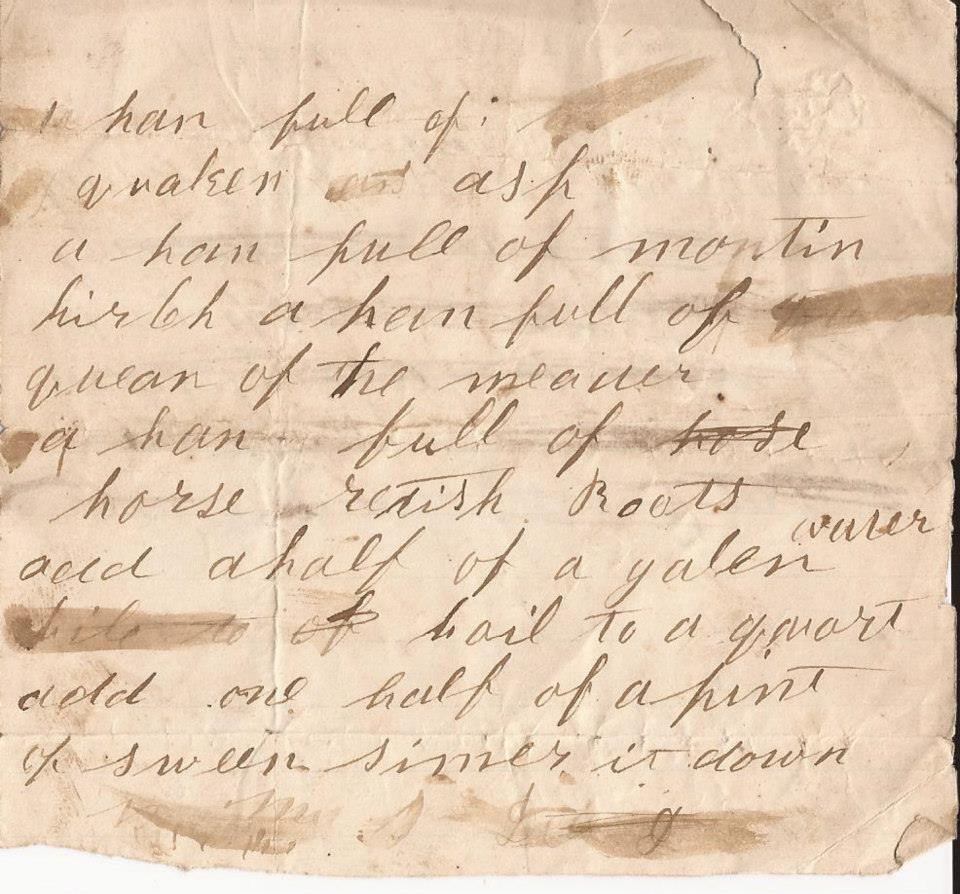
Old Mullins herbal remedy, Harts Creek, Logan County, West Virginia
28 Tuesday May 2013
Tags
culture, Ewell Mullins, genealogy, Harts Creek, history, life, Logan County, photos, West Virginia
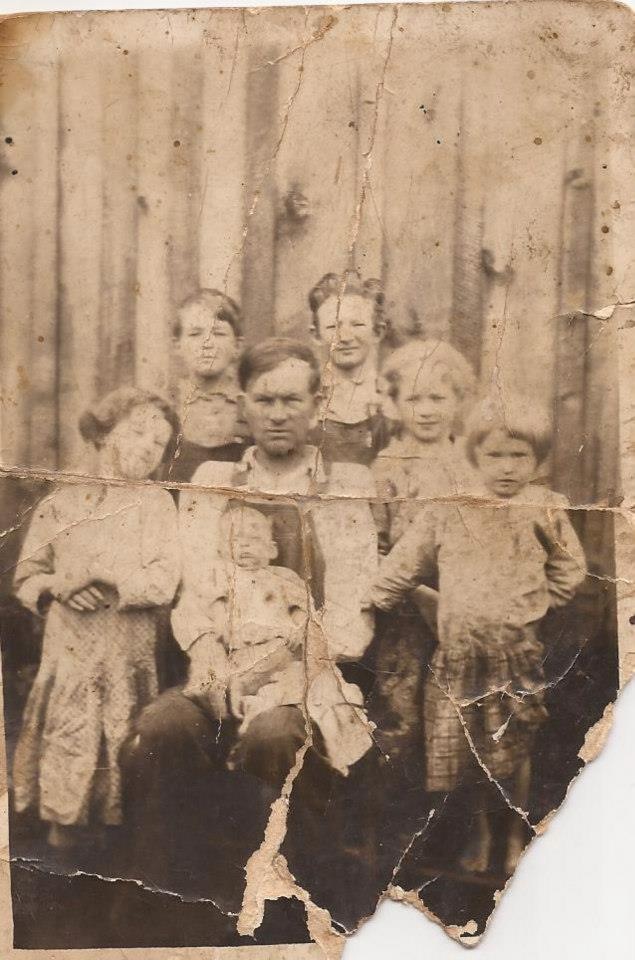
Ewell Mullins family, Harts Creek, Logan County, West Virginia, circa 1928
26 Sunday May 2013
Posted in Culture of Honor
Tags
Appalachia, culture, Harts Creek, history, life, Logan County, Mason Adams, photos, U.S. South, West Virginia

Harts Creek child, 1916-1920
25 Saturday May 2013
Posted in Ed Haley
Tags
Clyde Haley, Ella Haley, John Dillinger, John West, Josie Cline, Kermit, Logan, Logan County, music, Pretty Boy Floyd, Sarah West, West Virginia, writing
I gave Clyde Haley a call to ask him about this Josie Cline, who was somehow connected to Ed Haley. Was it his sister, half-sister…or even a girlfriend?
“No, I don’t recall him ever having anybody by that name around the house,” Clyde said. “I’ve just heard my dad talk about her. He didn’t womanize, if that’s what you’re talking about. He didn’t bring any women around the house or anything like that.”
I mentioned that Josie Cline was supposedly Ed’s sister and he wasn’t surprised.
“He might have,” he said. “I never did get acquainted with her. Josie Cline — I recall the name real well. I don’t recall any Clines personally. We went up around Kermit and Logan and up in that area quite a bit, you know. My dad took me with him all the time. I was his pet. I wasn’t around that area too much. The only time I went over there was one time I run off from home and went over that way and scrounged, you know. I couldn’t have been over ten, eleven, twelve years old.”
I asked Clyde why he ran away and he said, “Well, mostly because I was just that type of a guy. I didn’t always stay around the home. A lot of the times when I was away from home that way, it was because I was in dutch with the law, you know. I had to get away from Ashland. And we’d go different places, you know, me and my dad.”
I asked if Ed ever got “in dutch with the law” and he said, “Not too often, not too often. The only time he ever got in dutch was one time when he was whooping us kids in school you know and he whooped me so hard using a thin, brown belt — and he was using the buckled end of it to whip me with… He wrapped that belt around my body and accidentally hit my tally-whacker you know and put me out of commission for about three months. Yeah, I remember that pretty well. He wouldn’t never whip the other boys like he whipped me. But as I look back on my lifetime, I see that he did things that he wouldn’t ordinarily have done if he had been a normal man. He was blind and he done these things to us and my mother — he beat my mother quite a bit, you know. If he could have seen like a normal person, I think he’d been an altogether different person. I forgave him a lot of that stuff but he was awful mean to my mother.”
Clyde elaborated.
“He’d come in drunk sometimes and beat on her and every time he’d do that, when I was big enough, I’d hit him with something. I hit him with a milk bottle one time, one of those big old heavy milk bottles. But I conked him with one of them one time and cut a pretty good gash in the top of his head. If he’d ever found out that that was me that done that, he’d a beat me half to death. But we all told him that Sarah West done that. She stayed with us. John West’s wife. John West stayed with my mother and dad a lot of times too, because I remember him pretty well. And he did things around the house that my mother and father couldn’t do. He was like a handyman. But Sarah West got the blame for that milk bottle because I blamed her. I told him, I said, ‘Pop, that was Sarah done that, hit you in the head with that milk bottle.’ And he got on her about it. And I remember she couldn’t talk real well. She had a hesitant speech. She says, ‘Mr. Haley that was Clyde did that. Wasn’t me. That was Clyde.’ Trying to tell him it as me. And he wouldn’t believe her. She took the blame for that, poor girl. I was a regular hellion.”
I asked Clyde if he remembered any of the other people who worked around Ed’s house and he said, “We had so many people stayed around in my house. My mother and father were hospitality plus. You know, anybody that came around the house they were just like family. There was a lot of them that was at my house because they knew my mother’s part of the family, like John Dillinger and Pretty Boy Floyd. Those people in that category. They were from right there in the area. Their homes were right around in Logan and West Virginia. My dad was from Logan County. They’d come and listen to my dad play the fiddle. There’s stories that I could tell you that you wouldn’t believe about my dad — those things that we done when he was away from home. Things that were mean, pertaining to the family. He wasn’t a nice person to be around. If you come down this a way and we get together and talk, I can tell you things that I wouldn’t tell you on the phone.”
23 Thursday May 2013
Posted in Big Harts Creek, Ed Haley, Spottswood, Warren, Whirlwind
Tags
Andrew Jackson, Ben Adams, Bill Abbott, Bob Mullins Cemetery, Buck Fork, Chloe Mullins, civil war, Confederate Army, Dicy Adams, Ed Haley, Elizabeth Mullins, Enoch Baker, genealogy, Harts Creek, Henderson Dingess, history, Hollene Brumfield, Imogene Haley, Imogene Mullins, Jackson Mullins, Jane Mullins, Jeremiah Lambert, John Frock Adams, John Gore, John Q. Adams, Joseph Adams, Kentucky, Logan County, Margaret Gore, Mathias Elkins, Peter Mullins, Riland Baisden, Spencer A. Mullins, Tennessee, Ticky George Adams, timbering, Trace Fork, Turley Adams, Van Buren Mullins, Weddie Mullins, Weddington Mullins, West Virginia, writing
Ed Haley’s grandfather, Andrew Jackson Mullins, was born about 1843 to Peter and Jane (Mullins) Mullins. Jackson, as he was called, was named in honor of President Andrew Jackson, that early American icon. Like many folks in those days, Peter and Jane Mullins appear to have been caught up in the Jackson mystique. They even named one son Van Buren, after his vice president. Jackson Mullins was the first child born to Peter following the family exodus from Kentucky or Tennessee to Logan County, (West) Virginia. The 1850 Logan County Census listed him as seven years old. In 1860, he was eighteen. During the Civil War, Jackson served in the Confederate army. Brothers Weddington and Van Buren served as Confederates. In the late 1860s, Jackson married the slightly older Chloe Ann (Gore) Adams, a widow. Chloe had been born around 1840 to John and Margaret (Dingess) Gore, pioneer residents of Harts Creek. She had first married John Quincy “Bad John” Adams, a first cousin to Jackson, with whom she had four children: Dicy (born 1857), Joseph (born May 1858), John C. “Frock” (born c. 1861) and George Washington “Ticky George” (born 15 Jul 1864). She and Jackson had three children: Imogene Mullins (born c.1868), Peter Mullins (born May 1870), and Weddington Mullins (born April 10, 1872). Jackson and Chloe are thought to have lived on Trace Fork, perhaps at the present-day site of the Turley Adams home where they certainly lived in later years.
What little is known of Jackson Mullins — the man who partially raised Ed Haley — comes through deed records and census records. On February 13, 1869, his uncle Spencer A. Mullins wrote him a note that read: “Mr. A.J. Mullins and wife: you will pleas Come down and git your Deed for the Buck fork Land. I will not pay the taxes any longer.” In 1869 he purchased 200 acres of land on the creek from Riland Baisden. The next year he was listed in the 1870 census as 27 years old with 700 dollars worth of real estate and 200 dollars worth of personal property. His daughter — Ed Haley’s mother — first appeared in that record as “Em. Jane Mullins,” age two. An April 1871, Justice Jeremiah Lambert provided a receipt to him for $2.80 “in the cost of the peace warrant in favor [of] him against Benjamin Adams.” An 1871 Logan County tax receipt listed A.J. Mullins as a resident of “Hearts Creek.” On February 28, 1877, the Logan County Court appointed him as “Surveyor of Roads in Precinct No. 76 in place of Weddington Mullins for the time of two years commencing April 1, 1877.” On December 17, 1877, the Logan County Clerk provided a receipt to him for recording a deed from Henderson Dingess and wife (parents to Hollene Brumfield). An 1878 tax receipt shows him in charge of six tracts totaling 244 acres under the ownership of “John Adams Heirs.”
The 1880 Logan County Census listed Jackson as 37 years old, while his wife was 40. Children in the household were John C. Adams (aged eighteen), George Adams (aged 15), “Emagane Mullins” (aged 12), Peter Mullins (aged 9), and Weddington Mullins (aged 6). That same year, Jackson sold five tracts of land totaling over 200 acres to brother-in-law Mathias Elkins for 3,000 dollars. He also sold 50 or so acres on Buck Fork to his father Peter and stepmother Elizabeth for 600 dollars. In February 1881, the Logan County Court reappointed him to relieve his brother Weddington as Surveyor of Public Roads for Precinct No. 76 “commencing April 1st, 1881.” That same year, he secured land from the John Q. Adams estate and bought 100 acres on Trace Fork from A.A. Low, attorney. On August 7, 1883, Enoch Baker, a timber boss on Harts Creek, provided a receipt to him for fifteen dollars “in payment for a Stove.” In 1886, Jackson deeded 37 tracts on Trace Fork to stepsons Joseph and John Adams. On April 2, 1888, he signed a promissory note agreeing to pay William Abbott $41.75 plus interest within a year. Because he was illiterate, he signed the note with an “X.”
In March 1891, Jackson and Chloe Mullins deeded their property on Trace Fork to their three children: Imogene Haley, Peter Mullins, and Weddie Mullins.
In the 1900 Logan County Census, Jackson gave his birth date as March of 1845, while Chloe gave hers as July 1834. Ed Haley first appears in the 1900 Logan County Census as “James E. Haley, born August 1885,” and living in their home. His birth date of 1885 was two years later than what was given by the Haley family records. By 1910, Jackson lived with son Peter Mullins, while Chloe was in the home of Weddie Mullins’ widow, Mag. Ed was absent from the census entirely, indicating that he was gone from Harts by that time. A few years later, in 1915, Jackson Mullins died and was buried in an unmarked grave at the Bob Mullins Cemetery on main Harts Creek. His widow died in 1919.
19 Sunday May 2013
Posted in Music
Tags
Appalachia, banjo, Cush Adams, Harts Creek, history, Logan County, music, photos, U.S. South, West Virginia

Baisden family members, Trace Fork of Big Harts Creek, Logan County, West Virginia, 1940s.
18 Saturday May 2013
Tags
Alex Burton, Bill Farley, Catlettsburg, Crawley Creek, culture, history, Kentucky, Logan County, logging, Samuel S. Vinson, timbering, Vinson Goble and Prichard, West Virginia

Bill Farley timber contract (page 1 of 3), 1882
02 Thursday May 2013
Posted in Ed Haley
Tags
Appalachia, culture, genealogy, Harts Creek, history, Lawrence Haley, life, Liza Mullins, Logan County, photos, U.S. South, West Virginia

Lawrence Haley and Liza Mullins, Trace Fork of Harts Creek, Logan County, West Virginia, 1950s
28 Sunday Apr 2013
Posted in Ed Haley
Tags
Appalachia, Harts Creek, history, life, Logan County, Peter Mullins, photos, U.S. South, West Virginia, writing

Ed Haley Property Tax Note, Trace Fork of Harts Creek, Logan County, West Virginia, 1915
Writings from my travels and experiences. High and fine literature is wine, and mine is only water; but everybody likes water. Mark Twain
This site is dedicated to the collection, preservation, and promotion of history and culture in Appalachia.
Genealogy and History in North Carolina and Beyond
A site about one of the most beautiful, interesting, tallented, outrageous and colorful personalities of the 20th Century
 Brandon Ray Kirk