Tags
Appalachia, genealogy, Harts, Herb Adkins, history, Lincoln County, merchant, photos, U.S. South, West Virginia
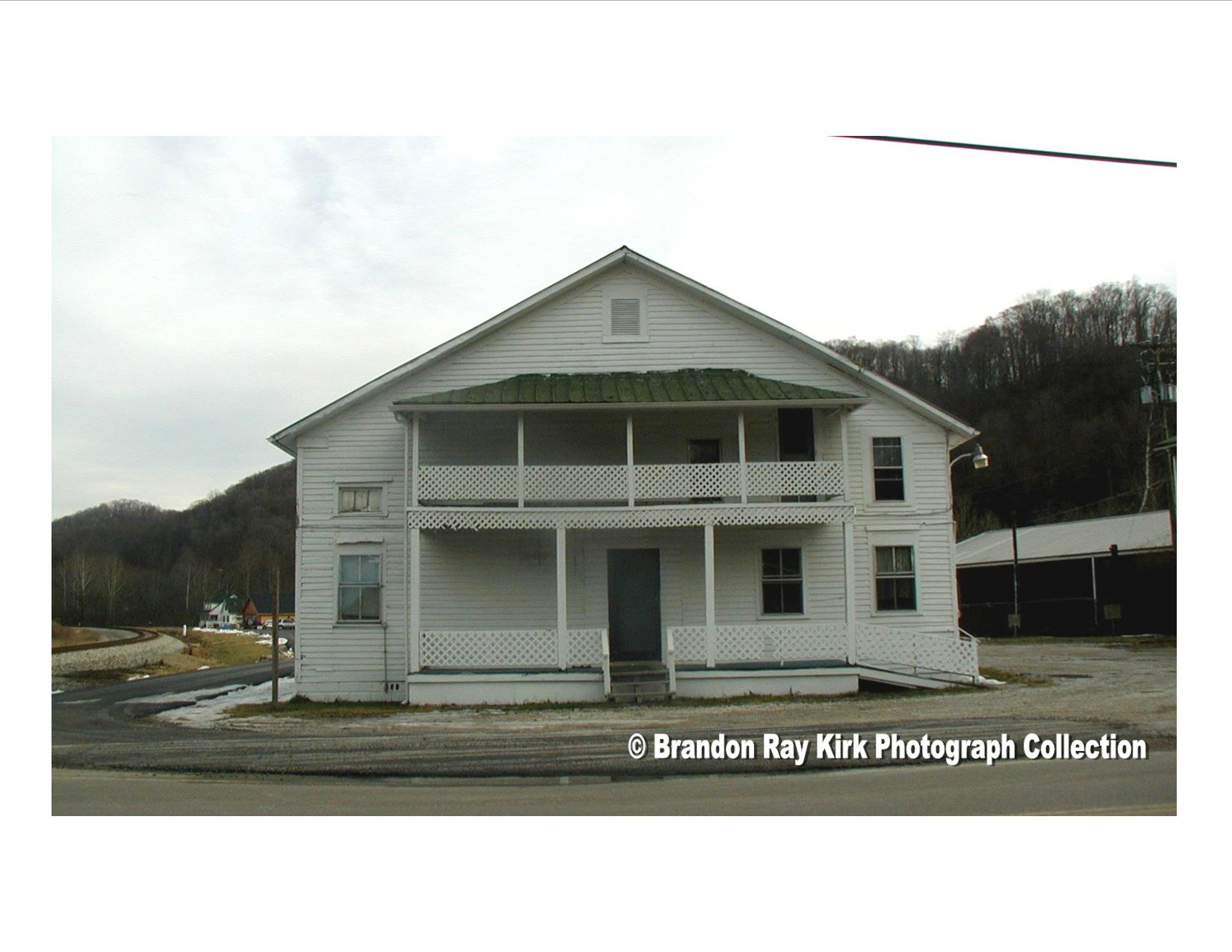
Herb Adkins store, Harts, Lincoln County, WV

Herb Adkins store, Harts, Lincoln County, WV
20 Tuesday May 2014
Tags
Appalachia, genealogy, Harts, Herb Adkins, history, Lincoln County, merchant, photos, U.S. South, West Virginia
Herb Adkins store, Harts, Lincoln County, WV
Herb Adkins store, Harts, Lincoln County, WV
20 Tuesday May 2014
Posted in Big Harts Creek, Ed Haley, Harts, Spottswood, Whirlwind
Tags
Adams Branch, basketball, Beecher Avenue, Ben Walker, Billy Adkins, Bob Adkins, Bob Mullins Cemetery, Brumfield Avenue, Buck Fork, Bulwark Branch, Charles Brumfield, Crawley Creek Mountain, CSX Railroad, Ed Haley, Eden Park, genealogy, Guyandotte Valley, Hannah Baptist Church, Harts, Harts Creek, Harts High School, Heartland, Henderson Branch, history, Hoover Church of the General Assembly, Hoover Fork, Huntington, Ivy Branch, John Hartford, Kiahs Creek, Lambert Branch, Lincoln County, Logan County, McCloud Branch, Mingo County, Mount Era Baptist Church, Mountaineer Missionary Baptist Church, Pilgrims Rest Church, politics, Railroad Avenue, Republican, Rockhouse Fork, Route 10, Sand Creek, Smokehouse Fork, Trace Fork, Trace Old Reguarl Baptist Church, Twelve Pole Creek, Upper Trace Fork School, Ward Avenue, Wayne County, West Fork, Whirlwind, Workman Branch, writing
The community of Harts sits indiscreetly in the narrow section of the Guyandotte Valley on land that makes up the northernmost region of the Logan County coalfield and what was once “feud country.” Located some ten miles from a four-lane federal corridor linking the state capital to eastern Kentucky and fifty miles up a two-lane rural highway from Huntington, the second largest city in West Virginia, it is a settlement just on the cusp of modernization. It is a treasure trove of hidden history, quickly disappearing even in the minds of its locals, who have little if any recollection of its booming timber era or the exciting times of the railroad hey-day. It’s really the kind of place you might drive through without noticing much — or never have a reason to drive through at all.
Basically, Harts is an old timber town divided in the center by a lazy muddy river and intersected by a two-lane highway, Route 10. On the west side of the river — site of the old Brumfield business headquarters — is an empty store, a tavern-turned-church-turned-beauty shop, a garage, and a brick tabernacle. On the east side is an old brick general store, a nice video rental establishment, a state highways headquarters, an old wooden general store, a small brick post office, a fire department, a grocery store, a hardware store, a general merchandise store, a Victorian general store-turned-restaurant, and a new brick Head Start center. Running between those buildings on the east side is a track owned by CSX (formerly C&O) Railroad. Just behind the businesses are a few dozen houses of all vintages: brick, wooden, single-story, two-story… There are no street signs or traffic lights or even stop signs.
Route 10 connects Harts with the city of Huntington to the north and with the Logan coalfields to the south. From town, Big Harts Creek Road heads west up the creek to West Fork or Smokehouse Fork, while a little unnamed road diverges north past the tracks toward extinct post offices named Eden Park and Sand Creek. The four streets in town are paved but very few locals even know their proper names, which are Railroad, Beecher, Ward, and Brumfield Avenues. Just down the river is a brick house-turned-bank, a rural health clinic, a brick construction company headquarters, a new coalmine development area called Heartland, and a mechanic shop/gas station (owned incidentally by one Charles Brumfield).
Culturally, Harts might be thought of as an inconspicuous Harlequin romance and Wild West show gone wild, at least in its not-so-distant past. Many of the rabble rousers and roustabouts are long since dead. Actually, somewhat to my disappointment, a lot of the old families are gone completely from the area and no one really feuds any more. Many residents seem to work as schoolteachers or run small stores or work in the coalmines or draw government relief. People are nice and treat each other well. Most are related or at least seem to be. They watch TV or go to church or tend their yards or hunt or fish or ride four-wheelers or hop on the four-lane at Chapmanville and drive to Wal-Mart some 45 miles away. Old-timers are quick to say that Harts has a bad reputation for no reason — the only two murders within town limits occurred almost a century ago. There are no parks, museums or movie theatres — and only a few registered Republicans. It’s the kind of place where you can leave your doors unlocked at night or if you’re gone all day…and feel safe about it.
I have to admit, after several visits to Harts, I loved it. On one visit, I learned from Billy Adkins that the old Ben Walker farm was for sale…and seriously considered buying it. (I passed on the idea when I realized that my wife would never forgive me for it.) Harts, then, would remain a place to “see.” I began telling folks out on the road that it was “my Ireland.” It represented a desire on my part to get back to the kind of places where (at least in my romantic imagination) a lot of fiddle playing originated. A lot of my friends were from these kind of places. For them, when they wanted to tap into that ancestral ancient tone, they thought of Ireland, whether they were Irish or not. For me, coming from St. Louis, Harts was the closest I could ever hope to get to that. Such places are at the heart of the music I love.
Venturing up Harts Creek, the first thing you really notice is Harts High School, a forty-some-year-old two-and-a-half-story yellow brick structure near the mouth of West Fork with a gymnasium, annex building, and a baseball field, all situated on what was a prison camp during the early fifties and, a little further back in time, the upper reaches of the Al Brumfield property (and, a little further still, an Indian camp). In many ways, this school is the lifeblood of the community — at least in the lower section of the creek. In the mid-sixties, just as Harts began to turn away from its violent past, the high school basketball team won a state championship and began building a program known regionally for its successes. Today, basketball is what this community is best known for — not the murders or moonshining traditions of years past — with crooked politics maybe finishing a close second.
A little further up the creek, just below the Logan County line, a few miles past an old country store, a little restaurant, another baseball field, and a place of worship named the Cole Branch Church of Jesus Christ of the First Born. From there, the road forks left onto the Smoke House Fork of Big Harts Creek, location of the Hugh Dingess Elementary School and Dingess, Butcher, Farley and Conley country; or the road forks right into the head of Harts Creek to “Ed Haley country.” Of course, no one calls it that. People think of it as “Adams country” or “Mullins country” and really, that’s about all there ever was in that section. Ed himself is often identified with the Mullins family — his mother’s people. The adults in this part of Harts Creek vote in Logan County — not Lincoln — and send their kids on buses over Crawley Creek Mountain to Chapmanville High School. This section of the creek — where gunshots once rang out regularly and where moonshine was so readily found — is now remarkably quiet and low-key outside of the occasional marijuana bust. Unfortunately, it seems to have lost its musical tradition as well.
Trace Fork, the site of Ed Haley’s birth, is attributed by Ivy Branch in its head, Adams Branch, and Boardtree Branch toward its middle and Jonas and Dry House Branch toward its mouth. There are several small family cemeteries on Trace, with the maroon-bricked Mountaineer Missionary Baptist Church at its mouth. In previous days, the Upper Trace Fork School (now Trace Old Regular Baptist Church) sat in its headwaters, where the Logan-Lincoln-Mingo county line meets. As a matter of fact, Ivy Branch heads near Kiah’s Creek at the Wayne-Mingo County line, while Boardtree Branch heads at McCloud Branch of Twelve Pole Creek in Mingo County. Adams Branch heads at Rockhouse Fork in Lincoln County.
A little further up the main creek is Buck Fork, an extensive tributary comparable to West Fork or Smokehouse in size. It is the ancestral home of the Mullins, Bryant, and Hensley families whose names still dominate the mailbox landscape. In previous decades, it was the location of the Hensley School and Mt. Era Church. Just below Buck Fork on main Harts Creek is a large Adams family cemetery, while just above it is the equally large Bob Mullins family cemetery.
Continuing up Harts Creek is Hoover Fork, home of the Mullins, Adams, and Carter families as well as the Hoover Church of the General Assembly. Henderson Branch, home seat for Tomblins and Mullinses is the next tributary, followed by Lambert Branch (at Whirlwind) and Workman Branch. Bulwark Branch follows (populated by Carters and Workmans), trailed by Brier Branch (Smiths) and Tomblin Branch. In the headwaters of Harts Creek are Tomblins, Daltons, and Blairs, as well as the Pilgrims Rest Church and Hannah Baptist Church.
In all sections of Harts, gossip reigns supreme as a source of local entertainment. (This in spite of Bob Adkins’ warning that people should “tend to their own business.”) Maybe that’s why we hear so much about a 100-year-old murder when we ask about it and a bunch of other things we don’t ask about. Genealogy is super important. When you sit down to talk with someone, the first thing they want to know is how you fit into the community pedigree. It’s a way of squaring you up.
19 Monday May 2014
Posted in Atenville, Big Ugly Creek, Ferrellsburg, Hamlin, Rector, Sand Creek, Toney
Tags
Bernie Lucas, Big Ugly Creek, Blackburn Lucas, Chris Lambert, Clerk Lucas, Democrat, Dollie Toney, Emma Watts, Etta Baisden, Ferrellsburg, genealogy, George Thomas, Hamlin, history, Homer Hager, Jerry Lambert, life, Lincoln County, Lincoln Republican, Lottie Lucas, Maggie Lucas, Maud Dial, Midkiff, Rector, S.J. Baisden, Sand Creek, Toney, Ward Baisden, Watson Lucas, West Virginia, Wib Adkins
“Bess,” a local correspondent from Toney in Lincoln County, West Virginia, offered the following items, which the Lincoln Republican printed on Thursday, June 20, 1912:
We are having very warm weather and rain is needed very much.
Misses Dollie Toney and Maggie Lucas returned home a few days ago from Hamlin, where they had been attending the normal.
Miss Emma Watts is here from Hamlin for a few days visit with Miss Toney and the Misses Lucas.
Misses Etta Baisden and Maud Dial were the guests of B.B. Lucas and family Sunday.
Mrs. S.J. Baisden is much improved in health.
Clerk Lucas bought a fine pair of mules from Ward Baisden last week, paying $390 for them.
Chris Lambert and family visited Mr. and Mrs. Jerry Lambert, of Sand Creek, Saturday and Sunday.
The democrats held their district primary last Saturday at Atenville. A large turnout is reported.
Clerk and Bernie Lucas, W. Adkins, and Homer Hager attended church at Rector Sunday. The boys say they like to go to Big Ugly.
Misses Emma Watts and Lottie Lucas were at Midkiff and other points on the G.V. Ry. last week.
Wib Adkins and Watson Lucas have Geo. H. Thomas at Ferrellsburg.
Success to the Republican and its readers.
18 Sunday May 2014
Posted in Cemeteries, Civil War, Fourteen, Wewanta
Tags
Brandon Kirk, Caleb Headley, cemeteries, Fourteen, Fourteen Mile Creek, genealogy, history, Lincoln County, photos, Sulphur Spring Fork, West Virginia
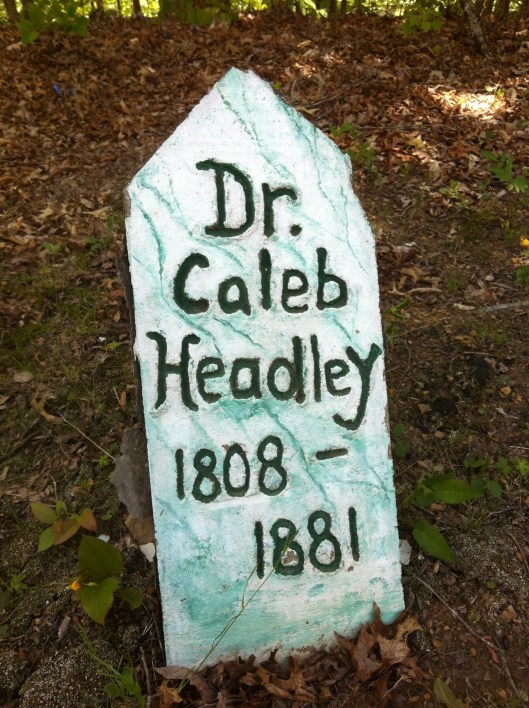
Caleb Headley grave, Sulphur Spring Fork of Fourteen Mile Creek, Lincoln County, WV, 2014
18 Sunday May 2014
Posted in Green Shoal
Tags
Appalachia, Archie Lucas, Arnold Arno Lucas, Blackburn Pood Lucas, culture, genealogy, Green Shoal, history, Jane Lucas, Lincoln County, Marcell Dave Lucas, Marie Lucas, photos, U.S. South, Watson Lucas, West Virginia
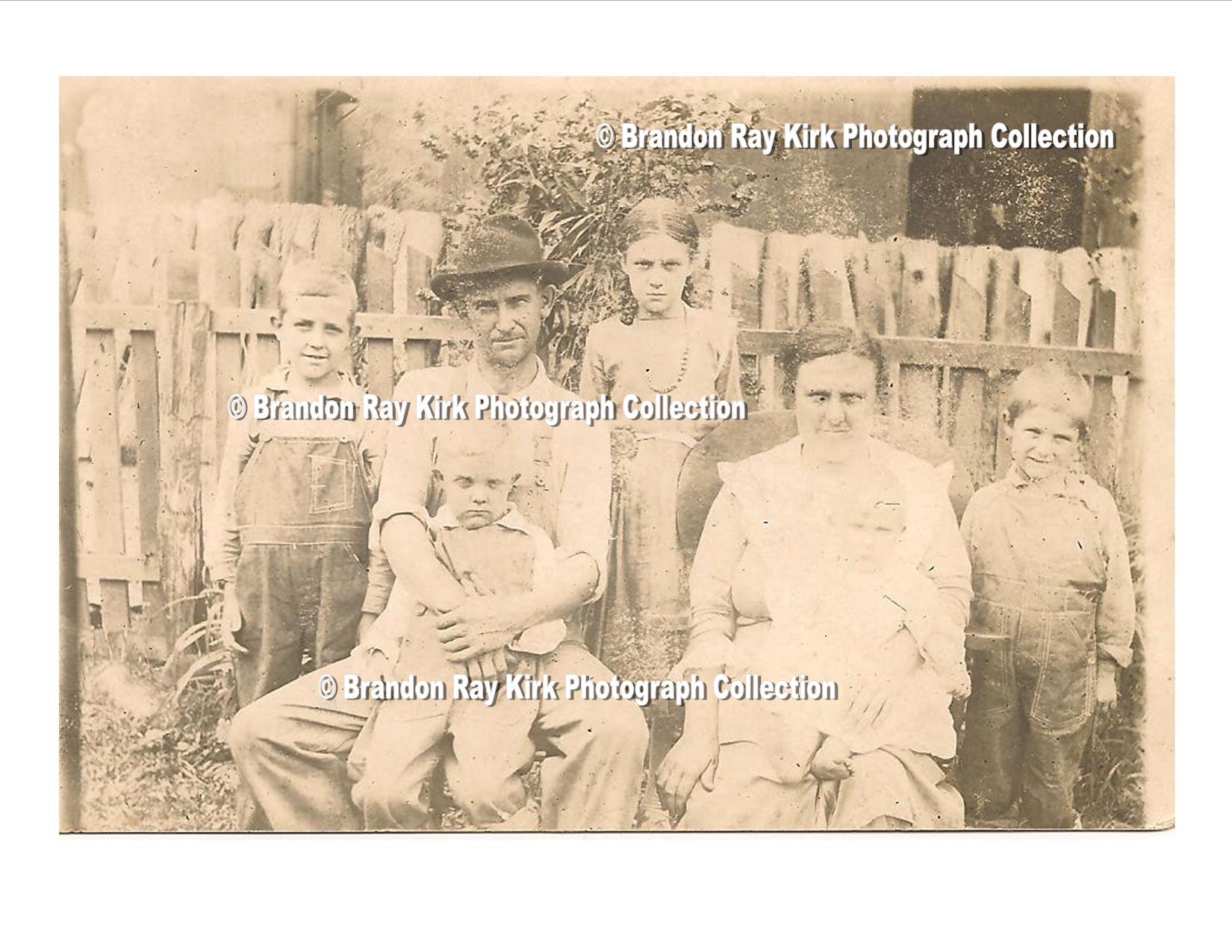
Watson Lucas family, residents of Green Shoal, Lincoln County, WV, c.1920
18 Sunday May 2014
Posted in Big Creek, Ferrellsburg, Fourteen, Leet, Sand Creek, Toney
Tags
Anna Laura Lucas, Big Creek, Blackburn Lucas, Catherine Toney, Clerk Lucas, Ed Reynolds, Elizabeth Lucas, farming, Ferrellsburg, Fourteen, genealogy, Georgia Stowers, Hazel Toney, history, Huntington, Isaac Marion Nelson, Jessie Lucas, John Sias, Leet, Lincoln County, Lincoln Republican, Low Gap United Baptist Church, Marie Lucas, Rachel Fry, Republican, Sand Creek, Sarah Workman, Susan Brumfield, Toney, Tucker Fry, W.W. Lucas, Walt Stowers, Ward Lucas, West Virginia, Wilburn Adkins
“Bess,” a local correspondent from Toney in Lincoln County, West Virginia, offered the following items, which the Lincoln Republican printed on Thursday, May 23, 1912:
The farmers are all glad to see this fine weather. They are all busy planting corn and hoeing potatoes.
Clerk Lucas attended the Republican Convention at Huntington last Wednesday and Thursday. He reports an interesting time.
D.C. Fry spent Saturday and Sunday with his family here.
Some of our people attended church at Low Gap Sunday and heard an interesting sermon delivered by Rev. Nelson.
Mr. and Mrs. B.B. Lucas had as guests Sunday J.W. Stowers and wife, of Ferrellsburg, W.W. Lucas and wife, E.W. Lucas and wife, of Big Creek, and John Sias of Fourteen.
Mrs. Sarah Workman was shopping in Ferrellsburg Saturday.
Mrs. B.D. Toney and granddaughter, Hazel, were visiting on Green Shoal Sunday.
Ed. Reynolds, a hustling republican of Leet, was in our midst Sunday.
Mrs. Rachel Fry is visiting her mother near Leet.
Wilburn Adkins, of this town, was visiting relatives near Sand Creek last week.
Little Marie Lucas is on the sick list this week.
14 Wednesday May 2014
Posted in Big Ugly Creek, Music
Tags
Big Ugly Creek, fiddler, genealogy, history, Jeff Duty, Lincoln County, music, photos, U.S. South, West Virginia

Jeff Duty (1867-1949), a fiddler from Big Ugly Creek in Lincoln County, WV
13 Tuesday May 2014
Tags
Angeline Lucas, Brandon Kirk, Cain Adkins, Daisy Ross, East Lynn, Faye Smith, genealogy, Green McCoy, Harts Creek, history, John Hartford, Kenova, Lee Adams, Lincoln County, Lynza John McCoy, Mary McCoy, Spicie McCoy, Stiltner, Twelve Pole Creek, Wayne County, West Fork, West Virginia, writing
Things got kind of quiet after that. I asked Faye if we were wearing her mother out and she said, “No, I don’t think so. She sits there and… Of course, she makes quilts. She’s made twenty since the first of the year. We’ve got them stacked upstairs. She made sixty-four the year before last. Last year she only made fifty-four. I don’t know how many she’ll make this year. She makes them upstairs. She pulls herself up there — you know, a handrail.”
Brandon asked if Daisy sold her quilts and Faye said, “Yeah, she sells them. Well, she gives us kids all one every year for our birthday. I’ve probably got forty or fifty.”
I asked how much they sold for and Faye said, “Thirty dollars.”
I said, “Have you got one you’d sell me?” and Faye laughed and said, “I’ve got a dozen if you want them. As a matter of fact, she’s even got her name and the date she completed it on each quilt.”
Faye looked over at her mother and said loudly, “He wants to buy one of your quilts.”
Daisy said, “Well, they’re upstairs.”
Brandon, Faye, and I went upstairs and fished through a bunch of quilts in a bedroom. We bought several; they were great souvenirs.
Back downstairs, Daisy told us more about Green McCoy’s “other family” in Eden, Kentucky.
“He had two children by his first wife,” she said. “Mary come and seen us and we was all tickled about it. I don’t know how she found us. She’d come to Kenova and stayed with some woman and found out where we lived up there above East Lynn in Stiltner way up in the country in a hollow. And she stayed a week or two. I don’t know how long she was aiming to stay, but she’d stayed with some lady and cleaned house and she cleaned out her wardrobe and took it with her and the law came and got ‘er. We don’t know what ever happened to Mary — we never heard from her no more. She was from down in Kentucky somewhere. I was just a little girl when she come up there.”
As for Green’s other child: “They had another’n, but I don’t know whether it was a girl or a boy.”
Not long before we left, Daisy revealed a final interesting connection between Green McCoy’s family and Cain Adkins’ family. She said Green McCoy had a brother named John who came around Cain’s place on Harts Creek.
“He’d go up there when Mom and Green lived out there in one of Grandpaw’s shacks. I think he was younger than Green.”
He might have been the same John McCoy, Brandon said, who land records showed owning 526 acres on Twelve Pole in Lincoln County in 1883.
About two years after Green’s death, John had a fling with Spicie’s sister, Angeline Lucas (Boney’s widow).
“Aunt Angeline went and had a young’n by him,” Daisy said.
A little later, she married Lee Adams and had seven more children, bringing her total to fourteen.
12 Monday May 2014
Posted in Big Creek, Big Harts Creek, Music
Tags
Aaron Hager, Anna Adams, Armilda Hager, banjo, Battle Hill Township, Big Creek, Big Ugly Creek, Boone County, Boone County Genealogical Society, Dave Brumfield, Dolly Bell, Ed Haley, Edward Hager, Eliza Hager, Geronimo Adams, Harts Creek, history, Jess Chambers, John Baisden, Johnny Canub Adams, Johnny Hager, Joseph Hager, Joseph Hager Jr., Kansas, Kith and Kin, Lincoln County, Logan County, Lola Adams, Lucinda Hager, Madison, Mag Brumfield, McPherson County, Missouri, Mud, music, Olivia Hager, Roxie Mullins, Sanders Branch, Smokehouse Fork, Victoria Adams, West Virginia, William Hager, writing
In the early 1900s, two musicians traveled as a pair throughout West Virginia and spread the influence of their musical talents to fiddlers and banjo-pickers in countless towns and hamlets. One of these men was Ed Haley, a Logan County native, who took up the fiddle after being blinded by his father as a child. The other was Little Johnny Hager who, although born in Logan County, spent a great deal of his life in Boone County.
John Washington Hager was born on December 8, 1876 to Joseph and Lucinda (Baisden) Hager, Sr. on Big Creek in Logan County, West Virginia, near the Boone County line. Johnny was the youngest sibling to Victoria Hager (1869-1942) and Aaron Hager (c.1872-c.1884). During his childhood, his parents moved from their home at the North Fork of Big Creek in Logan County to the Big Ugly Creek area. His family appeared in the 1880 Lincoln County Census. Subsequent years were difficult: Aaron Hager, Johnny’s older brother, died at the age of twelve years old. Victoria Hager married George Washington “Ticky George” Adams and moved to Big Harts Creek in Logan County. Finally, Johnny’s parents divorced due to his father’s infidelity with a local woman named Armilda Adkins. Joseph Hager soon married his mistress and fathered four more children: Edward Hager (1887), Joseph Hager, Jr. (1888-1940), Eliza Hager (1891), and Olivia Hager. Joe Hager lived in the vicinity of the old Mud Post Office near the Lincoln-Boone county line.
Remarkably, Johnny moved to Kansas with his mother, where he spent many years among Hager relatives. Just how long Johnny lived in Kansas has not been determined despite interviews with his close relatives. There is some indication that he and his mother lived in other Western states like Missouri prior to finally settling in Kansas. All the versions regarding Johnny’s stay in Kansas are given below because any one of them might be true. His niece Roxie (Adams) Mullins told that Johnny lived out West for six months. Johnny’s half-niece Dolly (Hager) Bell thought he came home from Kansas when he was twenty years old (circa 1896) or when he was aged in his twenties (circa 1896-1906). Hager’s half-great nephew Jess Chambers said that he had been told that Johnny lived in Kansas for twenty years, meaning that he would have returned to West Virginia around 1905. In the personal opinion of this author, accounts placing Johnny out West for several years seem at this time the most likely scenario simply because Johnny cannot be accounted for in the 1900 West Virginia Census. Instead, he shows up as a farm laborer in the home of a cousin, William Hager, aged 26, in Battle Hill Township, McPherson County, Kansas.
Kansas would have offered a West Virginia boy like Johnny Hager many new adventures. One can be sure that he spent a great portion of his time there working on the farm since he later described plowing fields into mile-long rows. According to family stories, he also chauffeured female cousins into town on wagon rides. Dolly Bell suggested that Hager probably learned to play the banjo while in Kansas and Jess Chambers said of Hager, “He played all his life.” Johnny was self-taught and played the old clawhammer style on the banjo.
According to tradition, Johnny’s mother died during their stay in Kansas. Roxie Mullins stated that Lucinda Hager was buried on the banks of the Wabash River, located along the borders between Illinois and Indiana. Another source said that she died in Missouri. Johnny always cried when he spoke of his mother and said that had lost “everything” when she died.
Some time after 1900, perhaps about 1905, Johnny returned to West Virginia. Although his father Joseph was still alive, Johnny never forgave him for divorcing his mother and refused to associate with him. He also refused to recognize Joseph’s children by his second wife. A story is told how Joe Hager, Johnny’s half-brother, rode to see him at John Baisden’s home on Sanders Branch. He was excited to meet the brother he had never known. When he came into the yard and yelled for him, Johnny wouldn’t even come outside.
In Johnny’s eyes, his sister Victoria Adams was all that remained of his family and he spent a great deal of time boarding at her Harts Creek residence in Logan County. During Johnny’s stay out West, Victoria had give birth to several children in a family which would grow to include Maggie “Mag” Adams (1888-1959), John C. “Johnny” Adams (1891-1965), Anna Adams (1901-1982), Geronimo Adams (c.1903), Roxie Adams (1905-1993) and Lola Adams (1911). It is likely that Johnny spun great stories for the Adams children about his experiences in Kansas. Roxie Mullins remembered him as being “funnier than a monkey,” Jess Chambers said he was a jolly fellow, and Dolly Bell remembered that he loved to joke and laugh. Dave Brumfield, a great-nephew, said that he pranked with the Brumfield children when he visited his parents’ home on the Smoke House Fork of Big Harts Creek in Logan County.
NOTE: Originally published in “Kith and Kin of Boone County, West Virginia” Volume XXII
Published by Boone County Genealogical Society
Madison, West Virginia, 1997
Dedicated to the late Dolly (Hager) Bell
06 Tuesday May 2014
Posted in Big Harts Creek, Lincoln County Feud, Stiltner
Tags
Angeline Lucas, Blackburn Lucas, Boney Lucas, genealogy, Harts Creek, history, Lincoln County, photos, Wayne County, West Fork, West Virginia

Blackburn Lucas, son of Mont “Boney” and Angeline (Adkins) Lucas, resident of Wayne County, WV
06 Tuesday May 2014
Posted in Barboursville, Ferrellsburg, Green Shoal, Toney
Tags
Anna Davis, Anthony Fry, Barboursville, Catherine Toney, Clerk Lucas, Cleve Fry, Foley, genealogy, George Thomas, Green Shoal, history, Huntington, Jane Lucas, Lincoln County, Lincoln Republican, Lizzie Fry, Logan County, Low Gap, Rachel Fry, Republican, Toney, Tucker Fry, Watson Lucas, Wealtha Bryant, West Virginia
“Bess,” a local correspondent from Toney in Lincoln County, West Virginia, offered the following items, which the Lincoln Republican printed on Thursday, May 2, 1912:
We are having a great deal of rain at present, to the sad disappointment of the farmers.
A number of our people attended church at Low Gap Sunday. Anthony Fry received immersion in the Christian church. May the dear Brother be faithful in his work recently begun.
Watson Lucas and bride of a few days, have gone to house keeping. We wish them all good luck through this life.
Cleve Fry, wife and children, of Foley, Logan county, were visiting their parents, Mr. and Mrs. D.C. Fry, Sunday.
Mrs. B.D. Toney was calling on friends on Green Shoals Monday.
There was a Republican rally at Low Gap on last Wednesday. The hurrah for Roosevelt was heard above all other candidates.
Clerk Lucas and George Thomas were appointed delegates to attend the convention to be held in Huntington, May 15.
Miss Wiltha Bryant, a popular young lady of Barboursville was visiting her sister, Mrs. T.B. Davis of this town.
04 Sunday May 2014
Posted in Harts
Tags
Appalachia, Charley Brumfield, culture, Harts, history, life, Lincoln County, photos, U.S. South, West Virginia

Charley Brumfield outbuilding, Harts, Lincoln County, WV, 2009
04 Sunday May 2014
Posted in Culture of Honor, Ed Haley, Lincoln County Feud, Stiltner
Tags
Angeline Lucas, Bill Frazier, Brandon Kirk, Cain Adkins, Cain Adkins Jr., Daisy Ross, Faye Smith, feud, Harts Creek, history, John Hartford, Laurel Creek, Lee Adams, Lena Adkins, Lincoln County, Liza Adkins, Mariah Adkins, Mittie Adkins, Napier Ridge, Ranger, Sherman McCoy, Spicie McCoy, Stiltner, Wayne County, West Virginia, Winchester Adkins, writing
I asked Daisy again about her mother’s escape from Harts Creek.
“Grandpaw and the oldest boy had to come on out and come down into Wayne County to save their lives,” she said.
This seeming abandonment of his family in such a dark time appeared to be a blemish on Cain’s otherwise “spotless record.” I thought about that and said, “Seems to me like the safest way to get everybody out was to get the menfolk out first. And also, too, the menfolk could have got out of there quicker without the womenfolk.”
Faye said, “Well, I remember Grandmaw saying the Brumfields said they’d kill everything from the housecat up. I guess that’s why Grandpaw left, but I still wonder why he left the womenfolk. I can’t help it if it is my great-grandpaw.”
Not long after Cain left Harts, Daisy’s grandmother, Mariah Adkins, killed twelve sheep and some hogs and stored the meat in barrels, then loaded the barrels and all of the other family possessions onto a rented push-boat.
“They couldn’t get nobody to row the boat,” Daisy said. “Grandmaw tried to hire a colored man and he said he would, but he said, ‘I know they’d kill me.’ So they had to do it all theirselves. And Mom and Sissy done the rowing.”
“It was a pretty big size boat cause they had all the stuff they had in their house and their barrels of meat all in there,” Daisy said. “But they couldn’t get nobody to row the boat. Grandmaw tried to hire a colored man and he said he would but he said, ‘I know they’d kill me.’ So they had to do it all theirselves. And Mom and Sissy done the rowing.”
Those on the boat were 46-year-old Mariah Adkins, 23-year-old Spicie McCoy, 18-year-old Mittie Adkins, 13-year-old Lena Adkins, 13-year-old Liza Adkins, nine-year-old Cain Adkins, Jr., and one-year-old Sherman McCoy. Daisy wasn’t sure if Aunt Angeline (aged 28) was on the boat with her six kids, including a newborn.
“I don’t know whether she was already down here or not,” she said. “She didn’t come on the boat with them, I don’t think. She come down and married Lee Adams and lived out on the Napier Ridge.”
Daisy gave a chilling account of the ride down-river.
“Mom was about four months along with my brother Green and she had that little baby. Sherman was about a year and a half old — and it was raining and cold. 8th day of January. They come down through there and the peach trees was in full bloom, she said. Had been kind of a warm spell and the peach trees bloomed out that year. Mom said she was cold; she was numb.”
As they crept out of Harts, little Sherman McCoy pulled a long hair pin from his mother’s hair and stuck it repeatedly in her breast. She was afraid to take it from him because he might cry and alert the Brumfields of their exodus.
“He’d take that straight pin and poke it in her breast and pull it out,” Daisy said. “She knowed she was gonna be drowned every minute, so she wouldn’t scold him for it. She said, ‘It didn’t hurt and he had fun at it.’ He was just a little fella.”
It was the beginning of a rough ride: Mariah almost tipped the boat twice before allowing her daughter Mittie to pilot it.
The Adkinses spent the night at Ranger where they stored their goods at a local home. The next day, they got off the boat at Branchland and crossed over a mountain to Laurel Creek in Wayne County.
“Then they got Bill Frazier from Stiltner to go back up there to Ranger in a wagon — he was a young man then — and haul whatever they had stored down there,” Daisy said. “By the time he got there, the hams and meat didn’t have much meat on them.”
This story about the Adkins family’s exodus constituted one of those unforgettable tales in our search. Hearing about the Brumfield threat to kill “everything from the housecat up” caused Brandon to feel horrible that his ancestors would’ve perhaps harmed innocent women and children. Things had apparently come to that in Harts. Women shot from ambush. Young widows. Orphans. The entire community seemed to be coming undone. Of course, the determination of the women and children to survive their horrible ordeal was both inspiring and awesome, especially considering they weren’t the strong, raw-boned mountaineer women which one imagines them to have been. (Spicie McCoy only weighed about 91 pounds.)
04 Sunday May 2014
Posted in Barboursville
Tags
Appalachia, Barboursville, Cabell County, Fred B. Lambert, genealogy, Guyan Valley High School, history, Lincoln County, photos, U.S. South, West Virginia, writers

Fred B. Lambert, regional historian and educator, Cabell County, WV
04 Sunday May 2014
Posted in Big Harts Creek, Ferrellsburg, Logan, Timber
Tags
Chapman Adkins, Dave Dingess, Elizabeth Lucas, Ferrellsburg, genealogy, George Thomas, Giles Davis, Hamlin, Harts Creek, history, Huntington, Jerry Lambert, John P Fowler, Lincoln County, Lincoln Republican, Logan, Philip Hager, Salena Vance, Smokehouse Fork, timbering, Velva Dial, West Virginia, Willis Dingess
“Old Hickory,” a local correspondent from Ferrellsburg in Lincoln County, West Virginia, offered the following items, which the Lincoln Republican printed on Thursday, March 14, 1912:
Mr. G.D. Davis, an aged and respected citizen, is very low with chronic indigestion.
David Dingess, of Big Hart, passed through town today en route to Court at Hamlin.
Mrs. Salena Estep was a pleasant caller at this place recently.
Willis Dingess, of Smoke House Fork, is very low with fever.
John P. Fowler, of Logan, has moved into our midst. We welcome John.
Mrs. B.B. Lucas and little daughter were shopping in town Saturday.
George H. Thomas, the hustling timberman, was in Huntington the first of the week on business.
Born: To Mr. and Mrs. John P. Fowler on the 4th, a fine girl. Mother and baby are doing well and John is happy.
The Monitor has accused God Almighty of being partial toward the County Road Engineer; Democrats who have contracts on the roads of “voting right” and a “Hill Billy” lawyer with an “operatic voice” of writing an article signed “Duval” “Sweet Magnolia of Savanah!” We knew the Engineer was on the Lord’s side, but never dreamed of the good Lord being partial. Well, who comes next?
Chapman Adkins, of Big Hart, was here on business Saturday.
Jerry Lambert was here bidding on the roads Saturday.
Miss Velva Dial is contemplating attending school at Hamlin this spring.
03 Saturday May 2014
Posted in Ferrellsburg, Sand Creek, Toney
Tags
A.S. Adkins, Appalachia, Brooke Adkins, Burl Adkins, education, Ferrellsburg, Fisher B. Adkins, genealogy, history, J.M. "Doc" Mullins, Lincoln County, Low Gap, Minnis "Mink" Mullins, Philip Hager, Ripley, Sand Creek, Toney, West Virginia, William H. Taft
“Old Hickory,” a local correspondent from Ferrellsburg in Lincoln County, West Virginia, offered the following items, which the Lincoln Republican printed on Thursday, February 1, 1912:
Mrs. Brook Adkins has finished her school at Low Gap and is teaching the last month of school at Sand Creek.
A.S. Adkins received a letter from Fisher B. Adkins who is attending school at Ripley and reports that he is well satisfied.
Philip Hager, county road engineer, passed through this place last Saturday en route home from Harts Creek district, where he has been doing some excellent work on the county road.
Burwell Adkins is on the sick list this week.
Dock Mullins, of Toney, was made happy when a bouncing baby boy entered his home on the 28th of this month. The mother and child are getting along nicely, and the father says that another republican has been added to the ranks.
Hurrah for Wm. H Taft for president for a second term.
03 Saturday May 2014
Posted in Big Harts Creek, Lincoln County Feud, Stiltner, Women's History
Tags
Appalachia, Green McCoy, Harts Creek, history, life, Lincoln County, photos, Spicie McCoy, U.S. South, Wayne County, West Fork, West Virginia
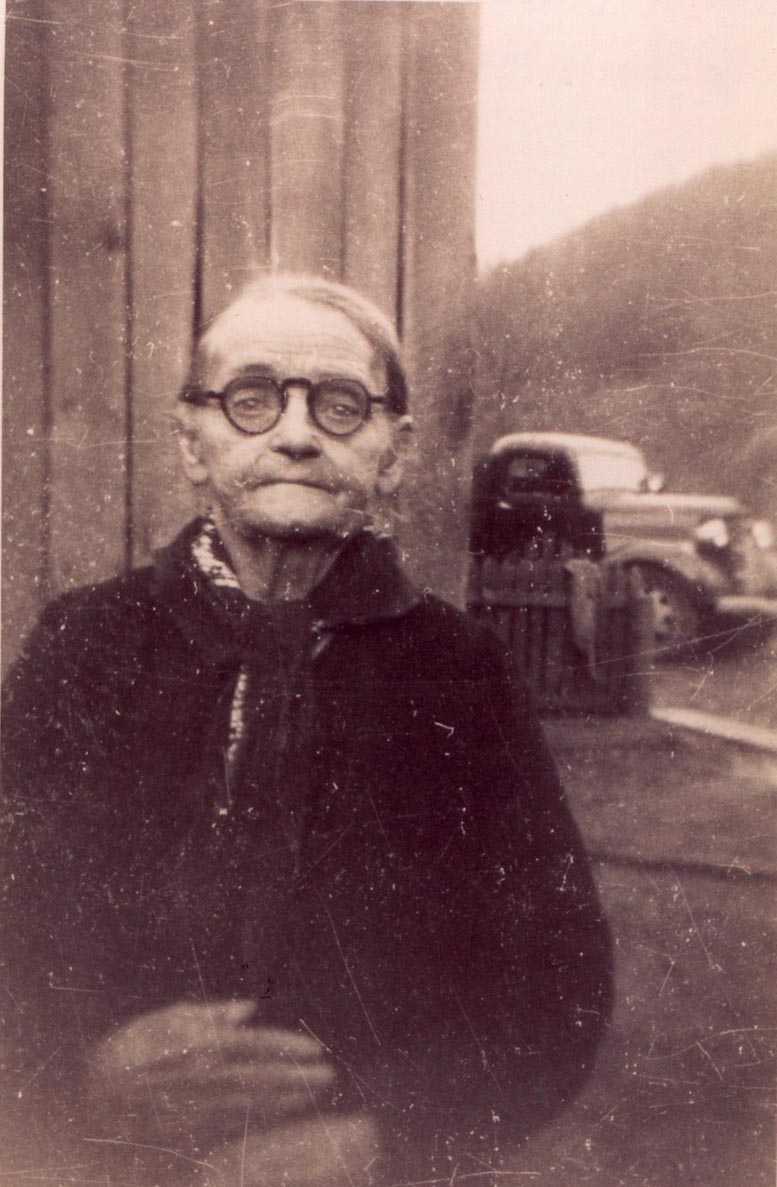
Spicie (Adkins) McCoy, widow of Green McCoy, resident of Wayne County, WV
01 Thursday May 2014
Posted in Lincoln County Feud
Tags
Angeline Lucas, banjo, Brandon Kirk, Daisy Ross, dulcimer, Faye Smith, fiddlers, fiddling, Fire on the Mountain, Green McCoy, history, John Hartford, Kenova, Kentucky, Lincoln County, Mariah Adkins, Milt Haley, music, Spicie McCoy, West Fork, West Virginia, writing
We next inquired about Green McCoy. We were particularly curious about why he left Kentucky and settled in Harts.
“I don’t know why he went up there,” Daisy said. “He was just playing music and started running around, I guess.”
Green and Spicie had a love for music in common.
Daisy said her mother “always liked music” and sung “from the time she was a little girl.” She “could sing any part of music — all four parts” — and “could play a banjo and she was left-handed. Played pretty good. She said she could play a dulcimer.”
Green was Spicie’s “first boyfriend” and she was crazy for him, even though she knew very little about his past.
“Grandma Spicie, she called him Will,” Faye said. “His name was William Greenville.”
“She didn’t even know Green McCoy was married till after she was engaged to him,” Daisy said of her mother. “He come up there with his brother and pretended to be single. Aunt Angeline, I think, was the one who found it out. And after Grandmaw found it out, she tried to keep Mom from marrying him, but Mom loved him so good she couldn’t believe it. They tried to keep Grandmaw from marrying him, but that just made her love him that much more.”
She “loved him so good she went ahead and married him anyhow.”
Green and Spicie settled in one of the small shacks on the Adkins farm. Faye said she’d heard that Green “would go off for a couple of weeks for a time,” then return home to his young wife, who always ran out to hug him. He’d tease her by running through the yard or “maybe around the house a couple of times — make her chase him. She was thrilled to death to see him come back.”
We wondered if perhaps Green was traveling between wives or playing music abroad, since Daisy said he never had any occupation aside from music.
I asked if he was a drinking man and Faye said, “If he had a been, Grandma wouldn’t a told it ’cause that woulda looked bad on him. Grandma Spicie told Green that she would swim the briny ocean for him.”
Okay…so what about Milt Haley?
Daisy said he was a good friend to Green and her mother. I asked if she thought we would ever find that picture of them together and she said, “No, I don’t. Mom kept it in her trunk. My niece has got it but she’s sick and got a house full of junk like I have and will never find it. She got Mom’s pictures. It was a little tintype snapshot of him and Green McCoy standing together. I think he had a hat on — seemed like both of them had a hat on in that picture. That was when they was playing music, but they didn’t have no instruments with them.”
I got a sheet of paper and tried to do a sketch, asking questions like, “Do you remember if he had bushy eyebrows?” or “Thin face, you reckon?”
I was pretty desperate.
Daisy kept insisting, “I can’t remember. I can’t tell you how somebody looks.”
Brandon asked if Milt and Green knew each other in Kentucky, before their move to Harts.
“No,” Daisy said. “Not until he come up there. I don’t know, now, where Milt Haley come from. They played music together.”
I wondered if Milt was the best fiddler between the two and Daisy said, “I don’t know which one was the best.”
“But Grandma thought Green was the best, didn’t she?” Faye said to her mother.
“Oh yeah,” Daisy said. “That was her husband. I never heard her say nothing against Haley.”
I asked if Spicie ever mentioned the names of any tunes that Green played and she said, “She might’ve said some of them. One of them I think was ‘Fire on the Mountain’.”
I got real excited hearing that and asked if she would remember more tunes if I played for her.
“No, I wouldn’t recognize…,” she said. “I never heard fiddles very much. My brothers had them there some, but they never played fiddles too much. They had guitars and banjos and pianos and organs and other stuff.”
I gave it a try but all I got when I played Ed’s version of “Fire on the Mountain” was, “That’s all right, but I don’t feel like dancing.”
We all cracked up and Faye warned us about her mother, who sat stone-faced in her chair.
“Sometimes she’s a smarty,” she said.
30 Wednesday Apr 2014
Posted in Ferrellsburg

Ferrellsburg residents, c.1910
30 Wednesday Apr 2014
Posted in Sand Creek
Tags
Blackburn Lucas, education, Ferrellsburg, Fisher B. Adkins, genealogy, German Vance, Greely Isaacs, Guyandotte River, Hamlin, history, Homer Hager, J.M. "Doc" Mullins, John Clay Farley, Lincoln County, Lincoln Republican, Matthew Farley, Sand Creek, typhoid fever, West Virginia, William H. Mann
“Old Hickory,” a local correspondent from Ferrellsburg in Lincoln County, West Virginia, offered the following items, which the Lincoln Republican printed on Thursday, January 18, 1912:
Winter weather is still here. A fine snow is on the ground and the boys are enjoying fox hunting.
Doc Mullins killed a fine large red Fox which he is very proud of, it being the first he ever killed.
F.B. Adkins and Homer Hager, at the beginning of the freeze up in the Guyan river, attempted to make their way through the ice in a small boat and came near being drowned.
B.B. Lucas and other members of his family, who have been suffering with typhoid fever for some time, are able to be at their usual labors again.
German Vance, who has been teaching school at Sand Creek, is very low with typhoid fever at the home of Greely Isaacs, of Ferrellsburg.
John C. Farley, the oldest man in Harts Creek District and the father of M.C. Farley, member of the County Court, is very sick and is not expected to live but a short time.
W.H. Man, of Harts Creek, went to Hamlin the first of the week.
M.C. Farley made a business trip to Hamlin the first of the week.
Writings from my travels and experiences. High and fine literature is wine, and mine is only water; but everybody likes water. Mark Twain
This site is dedicated to the collection, preservation, and promotion of history and culture in Appalachia.
Genealogy and History in North Carolina and Beyond
A site about one of the most beautiful, interesting, tallented, outrageous and colorful personalities of the 20th Century
 Brandon Ray Kirk