Tags
genealogy, Green McCoy, Green McCoy Jr., guitar, history, life, music, photos, Spicie McCoy
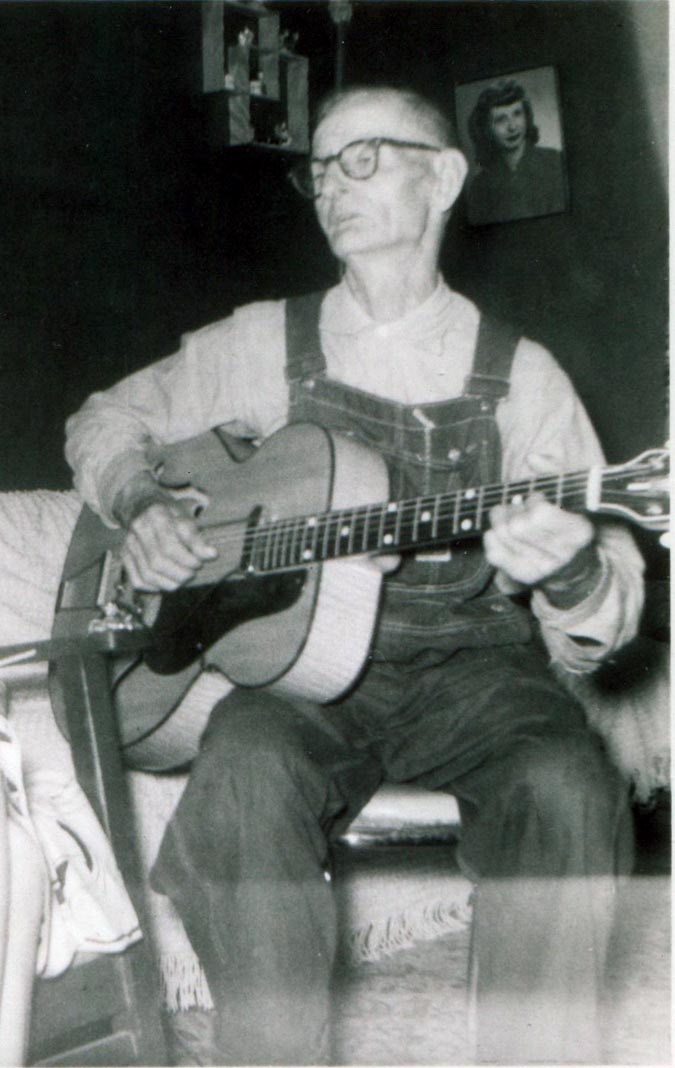
Green McCoy, Jr., son of Green and Spicie (Adkins) McCoy

03 Saturday May 2014
Posted in Lincoln County Feud, Music
Tags
genealogy, Green McCoy, Green McCoy Jr., guitar, history, life, music, photos, Spicie McCoy
Green McCoy, Jr., son of Green and Spicie (Adkins) McCoy
27 Sunday Apr 2014
Tags
Abe Keibler, banjo, Boatin' Up Sandy, Charley Keibler, Cold Frosty Morning, Cotton-Eyed Joe, fiddle, fiddlers, Germany, Girl With the Blue Dress On, guitar, history, Jim Keibler, John Keibler, Kentucky, Morris Allen, music, Ohio, Old Coon Dog, Parkersburg Landing, Portsmouth, Rye Whiskey, Sally Goodin, Sally Got Drunk on Irish Potatoes, South Shore, Stumptail Dolly, Susan's Gone to the Ball With Her Old Shoes On, We'll All Go to Heaven When the Devil Goes Blind, writing
Later that day, I went to see 88-year-old Abe Keibler in nearby South Shore, Kentucky. Abe was the last surviving member of the old fiddling Keiblers and a first cousin to fiddler Morris Allen, one of the sources for Parkersburg Landing.
“My grandfather, he was sixteen years old when he landed in here from Germany and he got a job out here at an old furnace,” Abe said. “He couldn’t even speak the language when he first come here, they said, and he didn’t play nothing.”
“Wow,” I said, “So fiddling started with your dad and uncles?”
“My uncles and dad, yeah,” Abe confirmed. “Jim was my dad’s name. He played a banjo — the old claw-hammer style.
Abe was raised up in a family of fiddlers, but he originally played the guitar. He began to play the fiddle at the age of 55. He wasted little time in showing me the old family fiddle, which he inherited from his uncle John Keibler. It was a good-looking instrument with a good tone, although the bridge was ready to collapse.
“Way back before I was born some fella came into Portsmouth when they had the old saloons in and he had this old fiddle and couldn’t play it,” Abe explained. “My uncle John, he seen that it was a good fiddle and he wanted to buy it and this guy wouldn’t talk about selling it. My uncle Charley, he was a left-handed fiddler. He said, ‘Now John, if you want that fiddle, I can buy it for ten dollars.’ So he bought it. It’s been in our family around ninety years or maybe close to a hundred.”
Abe said the old fiddle was hard to tune — it had seen some rough times.
“My uncle fell and busted the top all to pieces. I had a fella that made fiddles put that top off of another old fiddle on it. My uncle had patent keys put on it and I had them took out and wood keys put in it.”
I tuned the Keibler fiddle as best as I could, then reached it back with a request for a tune I’d heard Abe mention called “We’ll All Go to Heaven When the Devil Goes Blind”. He couldn’t remember it but said it was the same thing as “Stumptail Dolly”. He scratched out a melody in the key of G, then said, “Some of them called that the ‘Girl With the Blue Dress On’. ‘Old Coon Dog’ is all I ever heard it called.”
He also played “Boatin’ Up Sandy”, “Sally Goodin” (in G), “Rye Whiskey” (which he called “Cold Frosty Morning”), “Sally Got Drunk on Irish Potatoes”, “Cotton-Eyed Joe”, and “Susan’s Gone to the Ball With Her Old Shoes On” (key of G).
Every now and then, I joined in with my fiddle.
“I’m gonna learn you how to play a fiddle yet,” Abe said.
16 Wednesday Apr 2014
Tags
Ashland, Big Foot Keaton, Blackberry Blossom, blind, Cartersville, Catlettsburg, Clayton McMichen, Curly Wellman, Ed Haley, fiddle, fiddling, Georgia, Georgia Wildcats, Great Depression, guitar, history, John Hartford, Kentucky, Maude Johnson, moonshine, music, Sweet Georgia Brown, Ward Hollow, WCMI, Winchester Avenue, writing
Curly said he lost contact with Ed Haley in the mid-thirties (other than seeing him on a street corner or at court days).
“When I got about fourteen, fifteen years old, I went to playing around with younger musicians and I left Catlettsburg and I come down to Ashland,” he said. “I started playing bars at fifteen.”
Curly told me all about how he “rediscovered” Ed toward the end of the decade.
Along about 1937, we were working WCMI and Mother and I was talking one day and I asked her, I said, “Well Mother, do you know anything about Ed Haley or the Haley family or where they’re at? I haven’t heard from them in years.” And my mother told me, said, “Why, they live right up there at Ward Hollow.” I said, “Well, I didn’t know that.” See, what I used to do, I’d get lonesome to hear him. And I knew him and he knew my voice and he knew my mother and my father and all my brothers and sisters and I’d get lonesome to play with him. And I’d get a pint of “moon” — bought it from old Maude Johnson down there at 29th Street — and walk all the way to Ward Hollow. The front door was never locked. And when I’d open the door — I’d know where he was gonna be, in that rocking chair — I’d say, “Uncle Ed?” “Well Curly, come in.” And I’d go in — wouldn’t even carry a guitar or nothing — and I’d go in and I’d sit down. He’d go get the straight chair when he played, but he would be sitting in there. A little old fireplace. I’d say, “How are you, Uncle Ed?” “Well, I don’t feel so good today. I’m not as pure as I should be.” And I’d say, “Well, do you think maybe a little hooter…?” And he’d say, “Well, uh, yes.” Talked loud then. I’d say, “Well, I brought one along.” Moonshine. I’d go out and get it and come in and give it to him and he’d hit it.
We’d sit there and talk a little more — about this and that and the weather and so forth and so on — and I’d say, “You better getcha another little drink there, Ed. Maybe if you got a cold it’ll help you.” He’d hit it again and he’d sit there and all at once he’d say, “Say, did I ever play ‘Blackberry Blossom’ for ya?” And while he was saying this, he was getting up… He knew exactly where his fiddle was on the mantle, he knowed where the bow was on the mantle, and he never touched a thing that was on that mantle — just them two things. I never saw him finger for the fiddle: he always picked it up by the neck and got the bow with his right hand. And then he’d throw that fiddle under there — the chin was holding it — and he never even had a chin-rest — then he’d sit down and he’d say, “Well, you brought your old box along, didn’t ya?” I’d say, “Yeah, it’s out there in the car.” I think it was a D-18 Martin. Sixty-five bucks. Go get the guitar, come in, sit down, tune up with him. And that’s another thing about that man. I often wondered how he kept the fiddle at 440 tuning. I know he didn’t use a pitch pipe.
Curly said it was during that time that Ed met Bernice “Sweet Georgia” Brown, who he called “Brownie.” He elaborated: “Brownie’s father owned a business here, which was in the making of tombstones, right down on Winchester Avenue, and his mother was from Cartersville, Georgia. And he was a tremendous old-time… The old English fiddle tunes and a lot of that stuff — the hornpipes. He was just marvelous on them. He would’ve loved to have played jazz fiddle, but he didn’t have it. Because he was from Georgia, Big Foot said, ‘I’ll teach you how to play ‘Sweet Georgia Brown’, so from then on that was his name. We had him and Big Foot playing twin fiddles. During the time that he was here, I wanted him to hear Ed Haley. Neither one of us had a car at that time, but we were in walking distance of Ward Hollow, which was just up the road from me about eight, nine blocks. We’d walk up there and take a little hooter along and finally get him started. Well, Georgia wouldn’t pull a bow in front of Ed Haley, but he would watch him awful close. Every move — even the way he tuned the fiddle with his chin and his knee mostly. He was an amazing man.”
I asked Curly if Ed played “Sweet Georgia Brown” and he said, “Never. I don’t think he woulda even rosined his bow to play a thing like that.”
Thinking back about that time in his life caused Curly to talk about his personal memories of Ed.
“I had a lot of experiences with that old man. I loved the old man. Really loved him. He was a swell old man. He was a dear friend. So timid. He was easy to be around and knew a joke as quick as he heard it. He wasn’t boastful or pushy — just a very little timid man that would sit in the corner for hours. He let everything out with the fiddle. He turned everything loose that was inside and he done it with the instrument. I think his first love really was his music.”
I asked Curly if Ed got along with other fiddlers like Clayton McMichen and he said, “I don’t think he woulda even talked to him. When Clayton mouthed off like he did — and was all mouth — I just think Ed would have set back and not taken any part in anything. Brassy and forward — Clayton was awful bad for that. I didn’t care for Clayton McMichen myself other than I appreciated the group he had together, The Georgia Wildcats.”
14 Monday Apr 2014
Posted in Ed Haley
Tags
Appalachia, genealogy, guitar, history, Kentucky, music, Ohio, photos, Ralph Haley, U.S. South

Ralph Haley, son of Ella (Trumbo) Haley
13 Sunday Apr 2014
Posted in Ed Haley
Tags
Ashland, Catlettsburg, Curly Wellman, Ed Haley, Ella Haley, fiddling, Fort Gay, Great Depression, guitar, history, Horse Branch, John Hartford, Kentucky, Keystone, life, Logan County, Louisa, Madison, Man, music, Ralph Haley, Red Jacket, Wayne, Wayne County, West Virginia, writing
In the spring of 1996, I made my way back to Ashland where I dropped in on Curly Wellman. Curly was an old guitarist in town who grew up watching Ed Haley on Horse Branch. I hadn’t visited him since a trip with Lawrence Haley some four years earlier. Unlike last time, he was quick to comment on Ed’s poverty.
“Now this story about Ed Haley, this was during the thirties — right after the Great Depression started,” Curly said. “And of course all they had coming was, I guess, just a blind pension, which wouldn’t have been much. They had to play on the corners with the tin cups. Those people, they had to struggle for life. The winter months on Ed Haley and his family were very hard. My grandfather — he came down here with money out of the big timber country up around Louisa, Ft. Gay, Wayne — and he run a little grocery store. Well, he was fortunate enough and had money enough to be able to carry these type of people through the winter months when they couldn’t make money. And as quick as spring come and they went to work every one come right in and paid him ever dime they owed. And the Haley family a lot of winters survived under his care. A lot of times, clothes we would outgrow would be taken to the Haleys because Mother thought so much of them. They had a hard struggle to raise those children but they were good people and the kids all turned out good as far as I know.”
I asked Curly to tell me about playing the guitar with Ed on Horse Branch.
“I was just a beginner and my aunt was teaching me,” he said. “The Haleys lived just across the street from us and down maybe a couple of houses. In the evenings, there was nothing else to do; no radio, no television, no nothing like that. Well, Ed would get out on the porch and Ralph and the mother and they’d start playing. I was learning to play a little bit, so I’d sit in with the guitar. I was just a very mediocre guitar player at that time. I was so rank that he’d have to tell me when he was going into a minor. I’d say, ‘I don’t know that,’ and Ralph would say, ‘Get right in there and play it anyhow.’ Them little kids would get out there and jump up and down and dance. Quick as people heard music, they’d start coming down the hollow and off’n the hillsides and gather up. They even had horse and buggies to stop and real old model cars would stop. People would open up their windows and their doors that lived up high where I was at — they’d get out on their porch till they could hear it all.”
Later, when Curly got better on the guitar, he played with Ed at the Boyd County Courthouse in Catlettsburg. Ed sat on a wooden bench with his hat turned up on the ground.
“You could throw a dime or nickel or quarter in his hat and you could tell by the way he grinned he knew the amount that went in the hat,” Curly said. “He could tell by the way it hit.”
I asked if Ed ever talked between tunes and he said, “He told little stories behind the tunes, like where it came from. He’d say, ‘Here’s an old tune I learned in Red Jacket, West Virginia,’ or, ‘Here’s an old tune I heard down in Logan County.’ And he used to talk about Madison, West Virginia, a lot. And another town I’d hear him talk about was Man, West Virginia. Keystone, it’s right in that area, too.”
09 Wednesday Apr 2014
Tags
culture, guitar, history, life, Monroe Fry, music, photos, Spicie McCoy, Stiltner, Wayne County, West Virginia
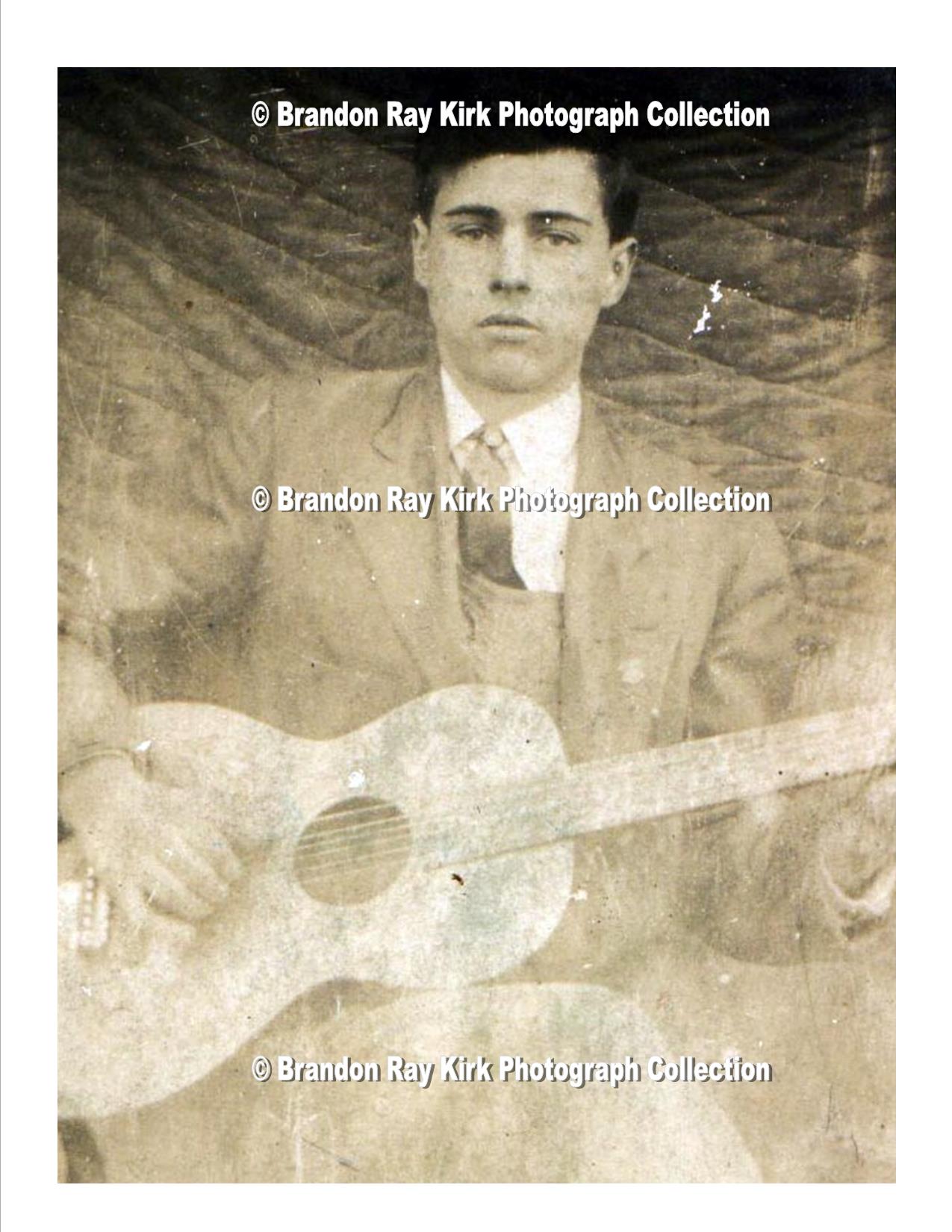
Monroe T. Fry (1897-1969), resident of Stiltner, Wayne County, WV
08 Tuesday Apr 2014
Posted in Ed Haley, Lincoln County Feud
Tags
Angeline Lucas, banjo, Boney Lucas, Brandon Kirk, Cain Adkins, Daisy Ross, Eustace Gibson, Faye Smith, fiddler, Green McCoy, guitar, Harts, Harts Creek, history, Huntington Advertiser, John McCoy, Kenova, Lincoln County, Milt Haley, Oscar Osborne, Paris Brumfield, Sherman Boyd, Sherman McCoy, Spicie McCoy, Tug Valley, West Fork, West Virginia, Winchester Adkins, writing
Meanwhile, as I churned up new details about Ed Haley, Brandon was busy chasing down leads on the Milt Haley story in West Virginia. One crisp December day he visited Daisy Ross, the aged daughter of Spicy McCoy, who lived in a nice two-story house at Kenova, a pretty little town just west of Huntington. It was Brandon’s first face-to-face contact with Green McCoy’s descendants and he was anxious to hear more about their side of the tale. Daisy was white-headed and a little hard-of-hearing — but full of information about Green’s family. Her daughter Faye played hostess during Brandon’s visit.
Daisy said Green McCoy was originally from the Tug Fork area. He came to Harts playing music with his brother, John McCoy. He always kept his hair combed and wore a neatly trimmed mustache. Spicy used to have a tintype picture of him with Milt Haley. He and Milt met each other in the Tug Valley.
Daisy said her grandfather Cain Adkins was a country doctor. He was gone frequently doctoring and was usually paid with dried apples or chickens. He feuded a lot with the Brumfields, who killed his son-in-law, Boney Lucas. Boney’s widow Angeline was pretty wild: she had two illegitimate children after Boney’s death. One child belonged to a man named Sherman Boyd and the other belonged to John McCoy — Green’s brother.
When Green McCoy came to Harts, Cain discouraged Spicy from marrying him because he was divorced from a woman living in Kentucky. Spicy didn’t believe the family talk of “another woman” and married him anyway. She and Green rented one of the little houses on Cain’s farm. Green made his living playing music and he was often gone for several days at a time. When he came home, Spicy, ever the faithful wife, ran out of the house to hug him and he would playfully run around the yard for a while before letting her “catch” him. Daisy had no idea where Green went on his trips because he never told her mother. Spicy didn’t really care: she always said she would “swim the briny ocean for him.”
Brandon showed Daisy an 1888 newspaper article he had recently found, documenting Cain’s trouble with Paris Brumfield.
“Paris Brumfield was indicted for felony in five different cases by the grand jury of Lincoln county at its last term,” according to the Huntington Advertiser on June 23, 1888. “He fled the county, not being able to give bail, which was fixed by the Court at $5,000. Brumfield’s latest act of violence was his murderous assault upon Cain Adkins, a staunch Democrat, one of THE ADVERTISER’S most esteemed subscribers. The last act was the straw that broke the camel’s back, and the county became too hot for Paris. Gibson & Michi have been retained by Brumfield’s friends to defend him when brought to trial.”
Daisy blamed Green’s murder on the Brumfields. She said Green once got into a fight with Paris Brumfield and “pulled his eyeballs out and let them pop back like rubber bands.” Brumfield had to wear a blindfold for a while afterward.
After Green’s death, Cain Adkins and his son Winchester fled Harts, probably on horses. Winchester was one of the best local fiddlers in his day. He mostly played with his nephew Sherman McCoy (banjo) and Oscar Osborne (guitar).
29 Saturday Mar 2014
Tags
Ab Moss, Alabama, Calhoun County, Calhoun County Blues, Carey Smith, Catlettsburg, Ed Haley, Ella Haley, Euler, fiddlers, fiddling, guitar, Harold Postalwait, Hell Among the Yearlings, history, Homer Moss, John Hartford, Laury Hicks, music, Rogersville, Ugee Postalwait, West Virginia, writing
I took my fiddle out of the case and played for Ugee. A few tunes later, she said she liked my bow hold.
“Him and Dad both held the bow down there on the end,” she said. “Dad and Ed neither one never had no use for anyone that took hold of the bow way up toward the middle. They didn’t like that at all. And Ed and Dad neither one didn’t like for someone to put their fiddle down against their chest.”
Ugee paused, then said, “You’re with the fiddle like I was with the guitar after I got it. I set and fooled with it all the time — any time I had time away from dishes or anything, I’d set on the porch and play that guitar. I wanted to learn it and nobody to learn me and I learned it myself. I done the same thing with the banjo. Of course, Dad could thump the banjo some and play it a little bit. But when I got that guitar and changed over to it, then I wanted to learn that guitar.”
When I played “Yellow Barber” for Ugee she got choked up and said, “That sounds so good, John. You don’t know how good that sounds. I’ve been thinking about my dad and them all morning. I’d just have given anything if we’d had tapes of Dad.”
I told her that I’d been researching some tunes I suspected of being in Ed’s repertoire (many from the Lambert Collection) and she said, “Ed knew a lot of them. I’ve heard so many of his pieces, now I’m getting to where I’m forgetting a lot of pieces.”
When I played “Girl With the Blue Dress On”, she said, “I can’t get that one in my head. Some part of it sounds natural. Yeah, I’ve heard that song. There’s words to that: ‘She come down from Arkansas with a blue dress on. Prettiest girl I ever saw, she came down from Arkansas.’ Who was that old man that used to come and play that on the banjo? I believe it was Carey Smith from around Euler.”
I next played “Flying Cloud” for Ugee, who said, “Ed didn’t call it that. I can’t remember what he called it but he never called it ‘Flying Cloud’. Course Ed was pretty good to change names on you, too.”
I told her that Lawrence and I had always figured Ed’s “Catlettsburg” had another name, and she agreed.
“Well in fact he almost said he put the name on that piece ’cause they lived down there, you know,” Ugee said. “You see, most of them old fellas, if they’d hear a tune and they learnt to play it, then they’d change the name. Just like ‘Carroll County Blues’, we called it ‘Calhoun County’. Just whatever county you was a living in.”
I started playing “Calhoun County Blues”, fully aware that it was one of Ugee’s favorite tunes. She watched me quietly with an excited expression on her face.
“That’s my piece,” she said to Harold. “I could crack my heels to that.”
The next thing I knew, she rose out of her chair and started dancing.
I stopped and said, “Now, wait a minute. Don’t hurt yourself.”
She told me to go on, though.
“I didn’t think you could get your feet up that high,” Harold joked her.
Ugee said, “I was a dancer at one time. Never got tired.”
I continued playing the tune for a few minutes, then asked if Ed ever danced.
“I never seen Ed dance, but I’ll tell you what,” she said. “He could keep time with his feet. I can remember so well that foot coming down and then when he got older he’d pat his feet. He’d keep both of them going. He didn’t make a big noise with them or anything. Just give him a drink of whiskey or two and then he’d come down on that there fiddle and you ought to hear Ella then.”
I asked Ugee if Ed was pretty good at making up parts to tunes.
“Oh, yeah,” she said, not quite understanding my question. “He made up a lot of his tunes and then give them a name. And Dad would do the same. They was sitting around and they’d try different things. ‘Listen to this’ and ‘Put that note in there.’ I always did think they made up that ‘Hell Among the Yearlings’. Ab Moss lived down below us — very religious man — and he was there with his wife and Homer, the oldest boy, and Abner looked over to Ed and said, ‘That’s a pretty piece. What do you call that?’ and they said ‘Hell Among the Yearlings’. I always did think they made that up to aggravate him. Then they just cackled and laughed after they left. ‘Hell Among the Yearlings’, said, ‘That’s a pretty good name for it.’ I can see them yet a sitting on the porch laughing about it.”
14 Friday Mar 2014
Posted in Big Harts Creek, Ed Haley, Music
Tags
Billy Adkins, Brandon Kirk, Carolyn Johnnie Farley, Ed Belcher, Ed Haley, fiddler, fiddling, George Mullins, guitar, Harts Creek, Hattie Farley, history, Hollene Brumfield, Lewis Farley, Logan County, Mary Ann Farley, Mason Conley, music, Rosa Mullins, West Virginia, writing
The next day — the 106th anniversary of Milt Haley’s death – Billy Adkins suggested that we go see Carolyn “Johnnie” Farley on Brown’s Run of Smoke House Fork. She was a granddaughter to Burl Farley, one of the ringleaders of the Brumfield mob. There were other interesting connections: her grandmother was Hollena Brumfield’s sister and her mother was Ben Adams’ niece. Her ancestors, then, represented both sides of the trouble, helping to make her a great source on the 1889 feud. Billy said she was old enough to remember Ed, too. His notes showed her as being born in 1924.
Without really hesitating, we went outside through a small rain shower and boarded the car and took off up the creek. We were oblivious to the poor weather and kept pointing to spots that were probably only significant to us.
“Now that was part of the old Al Brumfield farm.”
“There’s where the old boom was.”
“Here’s where the ambush took place.”
Our fascination with all the sites continued after we turned up the Smoke House Fork.
“There’s the Hugh Dingess Elementary School.”
“There’s the old Henderson Dingess place.”
“There’s where the old Dingesses are buried.”
“There’s Cecil Brumfield’s place. Ed used to visit there.”
We finally reached Browns Run. Johnnie Farley’s white house was just up the branch on the left, accessed by a muddy driveway filled with ruts and sharp jutting rocks. We parked behind the house, where several wooly dogs and a flock of tiny chickens surrounded us — three strangers ankle-deep in mud holes.
Almost immediately, Johnnie came out the back door and spotted Billy — one of the most recognized and popular guys in Harts — and told us to come on inside. She led us through the kitchen and a hallway, past a giant photograph of her grandmother, Mary Ann Farley (Hollena’s sister), and into a very dim living room. We all sat down on furniture that was literally surrounded by papers, books and pictures. Johnnie was obviously a packrat — a woman after my own heart.
Billy began introducing Brandon and I, but Johnnie stopped him short and looked at me with her ice blue eyes and said, “Oh I know who you are. I’ve got some of your records.” Her spirit and energy were immediately apparent — she spoke as if we were old friends. Her husband sat quietly nearby in a comfortable chair. He was in poor health.
I asked Johnnie if she remembered Ed and she said, “Yes, I knowed Ed Haley. He used to come through this country and pick and play the fiddle. I knowed Uncle Ed good. That old man could stop at any man’s house and they’d take him in and keep him all night and feed him. And he’d come through and stop you know and Mom and the girls would have a meal on the table. They’d just say, ‘Uncle Ed, come on.’ And they’d help him, show him the wash-pan and stuff, let him wash his hands, and he’d just go sit right down and eat with us. Whenever he’d come through out of the Chapmanville area he’d stay with one of my uncles and aunts that lived across the hill. That was George and Rosa Mullins. He’d go across the mountain ’cause he liked drinking and they had it over there — moonshine. And he stayed there week in and week out. People was good to him. He wasn’t mistreated.”
I asked Johnnie how old she was when Ed used to come around and she said, “I was about 10, maybe 12.”
She tried to describe him.
“Well, Ed was a little bit maybe heavier than you are, ’bout as tall. I know he kinda had a great, big belly on him. He was a great big fat man. I’d say Ed weighed around 170 pound. To my recollection, Ed had slim hands and slim fingers. He wore shaded glasses and he wore an overcoat — a brown one — and he had an old brown hat. I believe he smoked a pipe. He wore real old-fashioned shoes and old yarn socks. Uncle Ed drunk a lot. He was a good person. He was humble. He didn’t bother nobody. The only harm you could say he done was to hisself and that was drinking. He was around a lot of people, but Uncle Ed didn’t talk too much. He wouldn’t confront his own feelings. He wouldn’t open up fully to nobody.”
I asked Johnnie if she ever saw Ed drunk and she said, “I never did see him drunk — really drunk, no. I’ve seen him drink but not drunk.”
What about singing?
“No. I heard him fiddle but never sing. He played old tunes. ‘Turkey in the Straw’ and just quite a lot of the old-fashioned first fiddle player’s tunes. Uncle Ed was a good fiddler. He could make a fiddle talk. Mason Conley played the guitar and he’d get with him and play. And they was an old man traveled a lot with him named Ed Belcher. They had an old tune they played called ‘Sally Goodin’.”
Now, what happened to Ed Haley?
“I believe Ed died up around Ed Belcher and them. He drinked himself to death.”
17 Friday Jan 2014
Tags
Appalachia, culture, East Lynn, guitar, history, life, music, photos, Ralph McCoy, Spicie McCoy, Wayne County, West Virginia

McCoy Time Quartet of Wayne County, West Virginia, c.1940
19 Tuesday Nov 2013
Posted in Ferrellsburg, Music
Tags
culture, guitar, history, J.M. "Doc" Mullins, life, Minnis "Mink" Mullins, music, Ona "Teaberry" Mullins, Standard Mullins, Vernon Mullins, West Virginia

J.M. “Doc” Mullins and sons, Ferrellsburg, Lincoln County, WV, 1920s.
19 Saturday Oct 2013
Posted in Ed Haley, Music, Women's History
Tags
Appalachia, Clay County, culture, genealogy, guitar, history, life, Logan County, Nora Martin, photos, Ugee Postalwait, West Virginia

Nora (Douglas) Martin, daughter of Rosie Hicks Day, Clay County, WV, 1913-1925
31 Friday May 2013
Posted in Ed Haley
Tags
Appalachia, Ed Haley, Ella Haley, fiddler, Forked Deer, guitar, history, Kentucky, Lawrence Haley, music, Pat Haley, Ralph Haley, writing
I kept in close touch with Lawrence, who Pat said always perked up at my calls. His comments about his father’s music were very helpful. At times, I felt as if I might be talking to Ed.
“I guess Pop learned any time he was sitting around jamming. Anytime he was just sitting around making music with a bunch of friends, they was practicing and learning new pieces. How it would sound this a way and how it would sound that a way. You try different styles and things or you just try for speed. I’ve watched Bill Monroe and some of his stuff and it seems like that’s part of his aim is to see how fast he can play sometimes. Well, that might have been my dad’s. I know in that piece of music, ‘Forked Deer’, I think there’s a certain spot in it Pop changes his speed right there at the last a little bit. And I guess that’s the way most fiddlers do to see if people can keep up with them.”
I said to Lawrence, “Well, you know, a lot of that fiddling and everything, it was a competition. I bet if somebody came along that thought they could beat your dad, I bet your dad threw them a few loops to let them know who’s boss.”
Lawrence agreed.
“Yeah, I guess he did. He’d probably set and help somebody. Say, ‘Now you’d better do it this way,’ or something. If he liked who he was with, that’s the way he’d be. He’d play with them, and if the guitar player wasn’t doing it right… I’ve heard him a lot of times when Ralph — him and Mom would be a playing — he’d tell Ralph to change chord ‘so-and-so.’ And Ralph finally got to the point where he could chord it properly, but then he wanted to make those runs between chords. Pop would tell him how to get to a certain place, or what chord to be at. He’d tell him to change chords, so I guess he told everybody that if they wasn’t getting to where they should be at the right times. He’d let them know, if he wanted to teach anybody. If he played with you for a little while and saw that you weren’t going to make it, he’d probably tell you, ‘You just might as well put it up.’ That’s the way I think about my dad. I’m maybe like Clyde: I didn’t know him enough really to know what kind of a man he was. A lot of my knowledge of him is hearsay, too.”
27 Saturday Apr 2013
Posted in Ed Haley
Tags
Calhoun County, Clay County, Doc White, fiddler, guitar, history, Laury Hicks, music, West Virginia, Wilson Douglas, writing
Around that time, I read up on Wilson Douglas, an old-time fiddler who remembered Ed Haley visiting Laury Hicks during the Depression. I had first heard of him several months earlier from J.P. Fraley’s circle of friends. Wilson came from a family of musicians in the Elk River Valley north of Charleston, West Virginia.
“I was born October 22, 1922 in Clay County,” Wilson said in one published interview. “My grandfather, Martin Stephenson Van Buren Douglas was one of the greatest ballad singers of all times. My dad was Shirley Andrew Douglas and he was a beautiful banjoist! And my Grandmother Morris was an old-time square dance fiddler and all her brothers were top fiddlers on my mother’s side, the Morris side.”
Wilson started playing music at a young age, first the guitar, then the fiddle.
“I started on the guitar when I was nine years old and I played the guitar Carter-fashion,” he said. “And 1935-36 was a severe cold winter. I was 13 years old. I had played the guitar up until that time for various fiddlers. During that winter I lived about a mile from my grandmother’s. At that time she had the only old fiddle in the country to my knowledge. The old instrument was patched with solder, carpet tacks, and various other things. Every night I would take my guitar over there and play. She would play hoedown fiddle tunes half the night. She played mostly dance tunes on two or three strings. She seldom played the bass. The following winter her health failed and she began to lose interest in the violin. However, that fiddle began to sound good to me. Then I suddenly decided that I would quit playing the guitar and try to make some kind of fiddler out of myself. So I started saving my money to buy me a fiddle.”
In a short time, Wilson found himself visiting at the home of Laury Hicks, where he first saw Haley.
“There was an old gentleman that lived in Calhoun County joining Clay County by the name of Laury Hicks,” Wilson said. “He was a good old-time rough fiddler. I would ride a bicycle over to his home to hear him play the fiddle. Then somehow Laury Hicks contacted Ed Haley in Ashland, Kentucky. In about a month Haley came to Calhoun County. So the news got around through the country that Ed Haley was at Laury Hicks’. Everybody around went to hear him play. It was 12 miles from where I was raised over to Laury Hicks’ where Ed Haley’d come to. And if a gang didn’t gather up to go in an old ’29 Model-A Ford truck, we’d start walking. Maybe somebody’d come along in an old car and pick us up. And it was just like a dang carnival, you know. We just sat and never opened our mouth and he’d scare them fellers. Them fellers never tried to play. I was just dazed with that fiddle. He’d play until about 12 o’clock at night, and when he got tired, he’d quit. I was really not conscious of coming back home.””
According to Wilson, the locals tried to keep Haley in that part of the country as long as possible.
“Well, when he’d take a notion to go back to Kentucky, we’d all beg him to stay another week,” he said. “Doc White would say, ‘Ed, now listen. They’s a gang of people coming from Roane County, you can make some money. Now, you stay another week.’ Ed was bad to swear. Well, they’d talk him into it. Maybe some of these old farmers would come along. They’d had a tune and maybe their father played or some of their ancestors and they’d heard it. They’d say, ‘Well, Ed, play me this tune,’ and they’d hand him a dollar. Well, he’d play it for 15 minutes! They’d sit there with big tears. Well, he’d play till the money ran out and he’d quit!”
Wilson told about the last time he saw Haley play at the Hicks home.
“The last night, the last time I seen him, I was a big boy and I’d got over there,” he said. “I was sitting in this old split-bottom chair. Sleepy, you know. But every time he’d play a tune, I’d survive. And he said, ‘Son, what’s your name?’ I didn’t know that he knew that I’d been sitting in front of him. I told him. He said, ‘You’ve been over here every night, haven’t you?’ I said, ‘Yeah,’ and I said, ‘Mr. Haley, you’ve played tunes for everybody and I don’t have no money. I’m saving up to buy me a fiddle.’ He laughed! I said, ‘How about you playing me a tune?’ ‘All right. What is it?’ I said, ‘Play the ‘Black-Eyed Susie’.’ ‘Well, that’s really no tune. It’s just a little old thing.’ ‘Well,’ he said, ‘Damn it, I’ll play it. I don’t like to play it. Them’s single-line tunes, but I’ll play it for you.’ And he did, because I was interested, you see?”
20 Wednesday Mar 2013
Posted in Big Harts Creek, Cemeteries, Ed Haley, John Hartford, Music, Spottswood
Tags
accordion, Bernie Adams, blind, Clifford Belcher, Ed Belcher, Ed Haley, Ewell Mullins, fiddle, guitar, harmonica, history, Hoover Fork, Inez, John Adams, John Hartford, Johnny Adams, Johnny Hager, Kentucky, Liza Mullins, Milt Haley, music, Peter Mullins, Robert Martin, Turley Adams, Violet Adams, West Fork
Satisfied with our stop on West Fork, Lawrence and I said our farewells to the Kirks and went to see Turley and Violet Adams on Trace Fork. After some small talk about new developments, Turley told us about his uncle Johnny Hager and father Johnny C. Adams traveling with Ed in the early days. He said Uncle Johnny was the one who got Haley to take his music on the road, while his father just traveled around with them.
“They left here playing music together,” Turley said. “My father just helped them take care of their musical instruments — carried it around and stuff — but they done the music. He would sing with somebody but he never did sing by hisself. And Ed Belcher, I think, played with them then. He could play anything but played a guitar mostly.”
So where all did they travel to?
“They played up at Logan on the radio at one time,” Turley said. “They had a program on up there, Ed Belcher did. Oh man, that’s been back in the thirties. Maybe ’36, ’35. I was just a little bitty boy. I just heard these tales — I don’t know them for sure.”
I asked about Johnny Hager.
“I was just a great old big boy the last time I seen Johnny Hager,” Turley said. “He came to our house, stayed around a little while and left. He was kindly a small fella. My dad was, too. Ed would make two of ary one of them. He was a great big feller, Ed was. Now Ewell Mullins, they was all buddies. Now Johnny Hager and Ed could play music. I heard an old guy on television one day talking about how him and Ed used to play in front of a church somewhere together. Yeah, he called him ‘Blind Fiddling Ed Haley.’ Said he’s just a real good friend to him. But he lives in Inez, Kentucky, that feller does.”
I said, “Well, isn’t Inez where Milt is supposed to be from?”
Turley said, “Milt, now my dad just could remember him. He said he was a hard-working fellow and when he’d come in home he’d just tell them boys, ‘Right now, we got to have a fight and get everything settled and we’ll be all right.’ They liked to fight. I guess that was Ed and he had how many more — two more?”
I said, “You mean Ed had brothers?” and Turley said, “I think he did. I believe my dad said he had a brother and one of them got in a fight one time and he bit Milt’s ear off right in the yard right down there. Now, they was Milt’s boys. I guess Ed is Milt’s boy, ain’t he?”
Lawrence said he’d never heard of his father ever having any brothers or sisters, but it sure was a strange coincidence that we heard a story about “Milt’s ear” right after hearing Bob Adkins’ account of Green and “the nick.” Maybe Milt had the nick — which would’ve reversed their roles in Bob’s story of their final days.
So Ed had brothers?
“Far as I know, they was two or three more of them from the tales they told, you know,” Turley said. “Uncle Peter and Aunt Liza used to tell it. Said every time they come home — Milt and them boys — said he’d just fight with all of them at one time. Have a good time. Say, ‘Now we’re friends.’ Back then, that’s what they believed in.”
This was a major development.
“I just heard these tales,” Turley said. “I don’t know how true they are. About Milt coming home and say, ‘Now, we’ll straighten ‘er out right now and we won’t have no more problems while I’m here.’ That’s the way he run his family, you know. That old woman said, ‘I’ll agree to that. That’s the way it ought to be done.’ I don’t guess she could do anything with them boys.”
Hoping for clues about Ed’s “brothers,” I asked if any of the old gravestones in the cemetery behind Turley’s had any writing on them. Unfortunately, Violet said all the markers had rolled down the hill in recent years and the land had leveled out to where it didn’t even resemble a cemetery. All she knew about the cemetery was that there was a “big grave” in it at one time that belonged to a woman with the last name of Priest (she was the only person buried there who her mother-in-law had actually known).
Turley said he last heard Ed play the fiddle at Clifford Belcher’s tavern on Harts Creek where he played for money and drinks. Violet remembered him playing music all night at her father’s home on Hoover Fork with Robert Martin (her great-uncle) and Bernie Adams. She described Bernie as a “real skinny” bachelor who sang “a little bit but not much” and who “was a real good guitar player, but he never would hardly play.”
“He’d get to drinking and he’d play but if he wasn’t drinking he wouldn’t play,” she said.
Turley said Bernie could also play the banjo, harmonica, fiddle and accordion.
20 Sunday Jan 2013
Posted in Ed Haley
Tags
Appalachia, Ashland, Big Sandy River, Bill Bowler, blind, Cabell County, Ed Haley, Ella Haley, Field Furniture Store, Gibson's Furniture Store, Green McCoy, guitar, Harts Creek, history, Ironton, John Hartford, Kentucky, Lawrence County, Lawrence Haley, life, Logan, Milt Haley, Mona Haley, music, Noah Haley, Ohio, Paintsville, Peter Mullins, Portsmouth, Ralph Haley, Route 23, Route 60, Russell, South Point, West Virginia, writing
Lawrence said we could go see Mona if Noah would show us the way. Apparently, Lawrence didn’t know where his own sister lived. Noah agreed to guide us there, but drove a separate car so he could leave right away. He and Mona weren’t getting along. On the way, I said to Lawrence, “Now this sister is the youngest one?” and he said, “Yeah, she’s the baby.” I said, “She’s the only sister you have, and her name is?” “Mona,” he finished. “M-O-N-A. That wasn’t what she was intended to be named. Mother intended her to be named after old Doc Holbrook’s wife — her name was Monnie.”
Mona was staying with her daughter in nearby Ironton, Ohio. At the door, before Lawrence could tell her who I was or the reason for our visit, she looked right at me and said, “Well I know you. I’ve seen you on television.” It was an instant connection. I noticed that she had a high forehead just like her father.
We went on out in the yard where she showed a little surprise that Noah had led us to her house.
“He’s mad at me,” she said before sighing, “I feel sorry for poor old Noah. So lonely. Has to buy his friendship.” Right away, she dispelled our hopes that she had any of Ed’s records.
“No, I don’t have any,” she said. “I let my part of the records get away from me. I lost mine in my travels. I left them somewhere and never did get them back. It was around ’56. I went back to get them and the lady — Dorothy Bates — had moved. And I think she’s dead. I was living here in Ironton.”
Mona seemed a little emotionless — her voice was hollow, distant, as if her mind was a million miles away. She didn’t seem to show much remorse about losing her father’s records — “I’m sorry that I did, but you know hindsight’s 20/20.”
I asked her if Ed ever talked about his father or mother and she said, “He talked about his dad getting killed. He said that he was in the Hatfield-McCoy feud and he got killed with Green McCoy. He was a friend to the McCoys, I guess. And that’s all I can tell you about that. And he never talked about his mother at all.” Mona had no idea who Ed’s mother was and knew nothing about her connection with Uncle Peter Mullins on Harts Creek. She didn’t even remember what year her father died, saying, “My memory is failing me. I was married and living at South Point.”
I noticed again how much Mona looked like her dad.
I asked her if she ever had any long talks with him and she said, “My mother and I were very close but we didn’t talk much about my dad. I’ll tell you, I loved my dad but I didn’t like him very much because he was mean.”
She laughed and said to Lawrence, “Wasn’t he?”
“Yeah, if you struck him the wrong way,” Lawrence admitted. “He never was mean to me. I can’t even remember Pop whipping me.”
Mona insisted, “He wasn’t ever mean to me either but he was mean to Mom.”
I asked her what Ed did to her mother and Lawrence said (somewhat agitated), “He was a little bit mean to Mom. He’d fight with her sometimes and we’d have to stop things like that.”
It got a little quiet — a whole new facet of Ed’s life had just opened up to me.
“Maybe I shouldn’t have said that,” Mona said, “but that’s how I feel. I sympathize with him now but he was a mean man.”
Lawrence tried to smooth it over by saying, “I put that down, part of it, to frustration with his condition. Really, I do.”
Sensing Lawrence’s dislike of the topic, I got the conversation directed back toward Ed’s music. He and Mona remembered Pop playing frequently on the streets of Ashland at Gibson’s Furniture Store, Field Furniture Store (later Sears) on 17th and Winchester and at the Ashland (later Second) National Bank on 16th and Winchester. It made sense that Ed often played on Winchester Avenue, the main east-west thoroughfare through town, currently merged with Route 60 and Route 23. I asked if Ralph ever played with Ed and Ella on the street and Mona said no — that he only played with them at home. Bill Bowler, a blind guitarist, was the person she remembered playing with her father on the street.
“He wasn’t very good,” Mona said. “When they’d get ready to set down and make music Pop would have to tune up his guitar for him.”
Ed hung around Ashland through the winter, Lawrence said, then took off around February. There was not a particular place he went first; it just depended on his mood. Mona said he was in Greenup County, Kentucky, often.
“He played in front of the courthouse there,” she said. “I’ve seen them have that whole front of the courthouse with people standing around dancing.”
She and Lawrence also remembered Pop playing in Portsmouth, Ohio; Cabell County, West Virginia; Logan, West Virginia; Lawrence County, Kentucky; Paintsville, Kentucky; and “all up and down the Big Sandy River.”
“They’d play around railroad YMCAs, too,” Lawrence said. “They had one in Ashland, one in Russell. And down on the N&W they had a big railroad YMCA in Portsmouth — New Boston, I guess. And there was a big steel mill at New Boston. Mom used to play there more than Pop, I guess. Mom used to play at the main gate.”
Mona and Lawrence gave me a great idea of how Ed dressed when on the road. She said he wore “moleskin pants and a long-sleeve shirt — sometimes a top coat when it was cold.” Lawrence said his dad always buttoned his shirt “all the way to the top button” but never wore a tie and mostly wore blue pants. For shoes, he preferred some type of slipper, although he sometimes wore “high top patent leather shoes” — what I call “old man comfort shoes.” Mona said he always donned a hat, whether it was a Panama hat, straw hat or felt hat. He also packed his fiddle in a “black, leather-covered case” — never in a paper sack as Lawrence remembered. “No,” she stressed, seeming amused at the idea of Ed having anything other than a case. Lawrence disagreed, clearly recalling to the contrary — “Buddy, I have.” He said Ed seldom had his fiddle in a case when he went through the country, usually just tucking it under his arm. “Same way with Mom. She didn’t have a case for her mandolin a lot of times. I guess that’s the reason he wore out so many, reckon?”
13 Sunday Jan 2013
Posted in Ed Haley
Tags
Appalachia, Ashland, culture, Curly Wellman, Ed Haley, guitar, history, John Hartford, Kentucky, life, music, photos
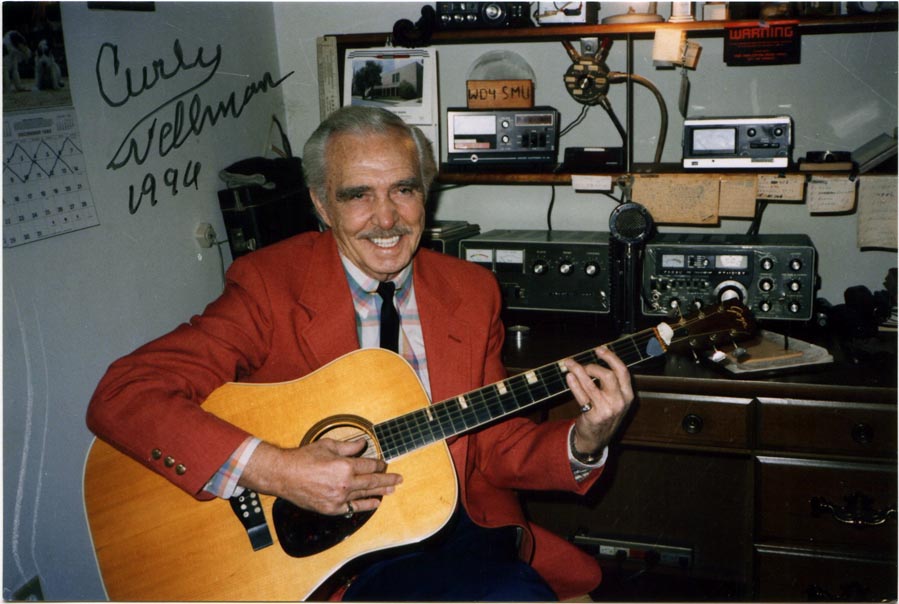
Curly Wellman, Kentucky Musician
13 Sunday Jan 2013
Posted in Ed Haley
Tags
Appalachia, Ashland, banjo, Billy in the Lowground, Blackberry Blossom, blind, Cacklin Hen, Catlettsburg, Clark Kessinger, Clayton McMichen, culture, Curly Wellman, Curt Polton, Ed Haley, Elvis Presley, fiddler, Floyd Collins, Forked Deer, Grand Ole Opry, guitar, Hatfield-McCoy Feud, history, Horse Branch, Huntington, Ivan Tribe, John Hartford, Kentucky, Lawrence Haley, Logan County, Mid-Day Merry-Go-Round, Morehead, Mountain Melody Boys, Mountaineer Jamboree, music, National Fiddling Association, Old Sledge, Poplar Bluff, Rowan County Crew, Ugee Postalwait, Ward Hollow, WCHS, WCMT, Westphalia Waltz, writing, WSAZ
I asked Curly if he remembered any of Ed’s tunes and he said, “Ah, I remember ‘Forked Deer’ and I remember ‘Billy in the Lowground’ and I remember the ‘Old Sledge’ and I remember ‘Poplar Bluff.’ ‘Blackberry Blossom.’ The longer he played a tune, the meaner he got on it. If he got the feel, it hit him. And the more he played the better he got and the more tunes come to him. He played one waltz — ‘Westphalia Waltz’ — and that’s really the only waltz that I can recall that he played. And it was all double stop fiddle.”
Curly never heard Ed sing a note — a very surprising recollection considering the way that Ugee Postalwait had hyped Haley’s singing abilities.
“I got a copy of a song from him,” Curly said. “He had somebody to write it down. Because at this time, out at Morehead, Kentucky, they had a feud out there. And they had a shoot-out there on the steps and then somebody wrote this song called ‘Rowan County Crew.’ And Ed, they tell me, would sing that at different places throughout Kentucky. At that time, it was like Floyd Collins that was in the cave and like the Hatfields and the McCoys — only this was called the ‘Rowan County Crew.’ Well, at that time it was hot as a pistol through the state. Now evidently he sang that song, but he never sang it for me.”
Curly said, “Ed could have been as great as the Blue Yodeler or any of those people. He could have been right on those records with them but under no reason did he want to record commercially. Had he been living today and with the equipment they’ve got today, he would’ve been in more demand than Elvis Presley ever was. Nobody played ‘Cacklin’ Hen’ like him. And a very humble man. I never heard Ed down anybody else, I never heard him put anybody below him and I never had him to tell me how good he was. In fact, I wonder sometimes if he knew how good he was. But I knew it. He was a brilliant man. He’d just about keep a check up on everything during his lifetime. He knew the news, he knew the political field, he knew what was going on in the state.”
I asked Curly about the first time he ever saw Haley play.
“I played with Ed when I was a kid — twelve, thirteen years old — and we lived at a place called Horse Branch. That’s as you enter Catlettsburg, Kentucky. And I was a kid carrying an old flat-top guitar — no case — trying to learn how to play. In the evening, he’d come out on the front porch after dinner and Ralph would get the guitar and the mother would get the mandolin and the neighborhood would gather because at that time radio was just coming into being. And I’d go down there and sit and bang while they were playing. And that’s where I first heard Ed Haley.”
Curly lost track of Ed when he started playing music out on his own at the age of fifteen. Throughout the mid-thirties, he played over the radio on Huntington’s WSAZ and Ashland’s WCMT with the “Mountain Melody Boys,” then made several appearances on the Grand Ole Opry and Knoxville’s Mid-Day Merry-Go-Round with Curt Polton’s band. It was during that time, he said, around 1936, that Ed got into a contest with Clark Kessinger and Clayton McMichen at the WCHS radio station in Charleston. Clayton was the National Fiddling Champion, while Clark was the National Fiddling Association’s champion of the East. The whole thing was “built up for months — it was a showdown.” In the contest, each fiddler got to play two tunes and someone named Banjo Murphy seconded every one using a three-finger picking style on a four-string banjo. First prize was a “live baby” (a little pig) and the winner was determined by a clapping meter. Curly wasn’t sure what tunes Ed played (probably “Cacklin’ Hen,” his contest specialty) but remembered the results clearly.
“Ed Haley beat the two men on stage,” he said. “McMichen was out of it in a little bit but it took several rounds to eliminate Clark Kessinger.”
Curly returned to Ashland in the early forties and found Ed living in the bottom of a weather-boarded, two-story apartment building on 37th Street (Ward Hollow). He started visiting Haley again, usually on cold days when he knew that he’d be close to home. He’d put his D-18 flat-top Martin guitar in the trunk of his car and “go pick up a pint or a half a pint of moonshine,” then head on over to Ed’s house.
I’d go in. I wouldn’t take the guitar in at all. I’d just knock on the door and go in and I’d say, “Hi, Uncle Ed.” “Hi, Curly.” He knew me by my voice. And I’d go in and sit down, you know, and say, “How’s the weather?” and “How’s things?” and “How’s the family?” and so forth and so on. We’d sit around there and talk a little bit. I’d say, “Ed, been playing any lately?” “No, I haven’t felt like it. I just haven’t felt like it.” I’d say, “Well, how about a little nip? You think that would help?” “Well now you know you might have something there.” So I’d go on to the car and I’d get the bottle and come in and we’d sit back down and I’d pass it to him. He’d hit it. He’d sit right there a little bit you know and I’d say, “Take another little nip, Ed.” “Well, I believe I will,” he’d say. “It’s too wet to plow.” And he’d sit there and he’d rock a little bit in that chair and… Being blind, he talked a little loud. “Hey, did I ever play that ‘Old Sledge’ for you?” I’d say, “Well, I can’t remember Ed. Just can’t remember.” Well, he’d get up and he’d go over and he’d lay his hand right on that fiddle laying on the mantle of the fireplace. By that time I’d be out the door and getting the Martin. I’d come back in and he’d tune ‘er up there and feel her across you know and touch her a little bit here and there. He’d take off on it.
Curly and I got our instruments out and played a few of Haley’s tunes. He showed me the type of runs he used to play behind Ed and gave me a few more tips about his fiddling. He said Ed was “all fingers…so smooth” and could play all over the fingerboard — even in second and third positions. He “put a lot of his upper body into the fiddling” and patted one foot to keep time. If he fiddled for a long time, he put a handkerchief under his chin for comfort (never a chinrest) and dropped the fiddle down to his arm and played with a collapsed wrist.
Just before Lawrence and I left, Curly said, “I’ll tell you somebody that’s still living in Charleston and he’s a hell of a fiddle player — or was. They called him Slim Clere. He’s about 82. He knew Ed. In fact, he was the man that Clere looked up to as he was learning. And he could probably give you more information than I could because he’s followed the fiddle all of his life.”
Curly also recommended Mountaineer Jamboree (1984), a book written by Ivan Tribe that attemped to detail West Virginia’s contributions to country music. It briefly mentioned Ed: “Blind Ed Haley (1883-1954), a legendary Logan County fiddler who eventually settled in Ashland, Kentucky, repeatedly refused to record, but did belatedly cut some home discs for his children in 1946.”
29 Saturday Dec 2012
Posted in Music
Tags
Appalachia, culture, Ferrellsburg, guitar, history, Jap Mullins, life, Lincoln County, music, photos, U.S. South, West Virginia
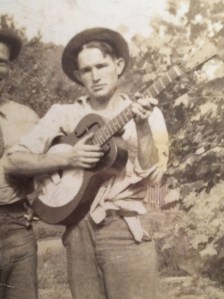
Jap Mullins of Ferrellsburg, 1936-1945
27 Thursday Dec 2012
Posted in Music
Tags
Appalachia, culture, guitar, Harts Creek, history, Joe Adams, life, Logan County, music, photos, U.S. South, West Virginia

Joe Adams of Harts Creek, 1945-1955
Writings from my travels and experiences. High and fine literature is wine, and mine is only water; but everybody likes water. Mark Twain
This site is dedicated to the collection, preservation, and promotion of history and culture in Appalachia.
Genealogy and History in North Carolina and Beyond
A site about one of the most beautiful, interesting, tallented, outrageous and colorful personalities of the 20th Century
 Brandon Ray Kirk