Tags
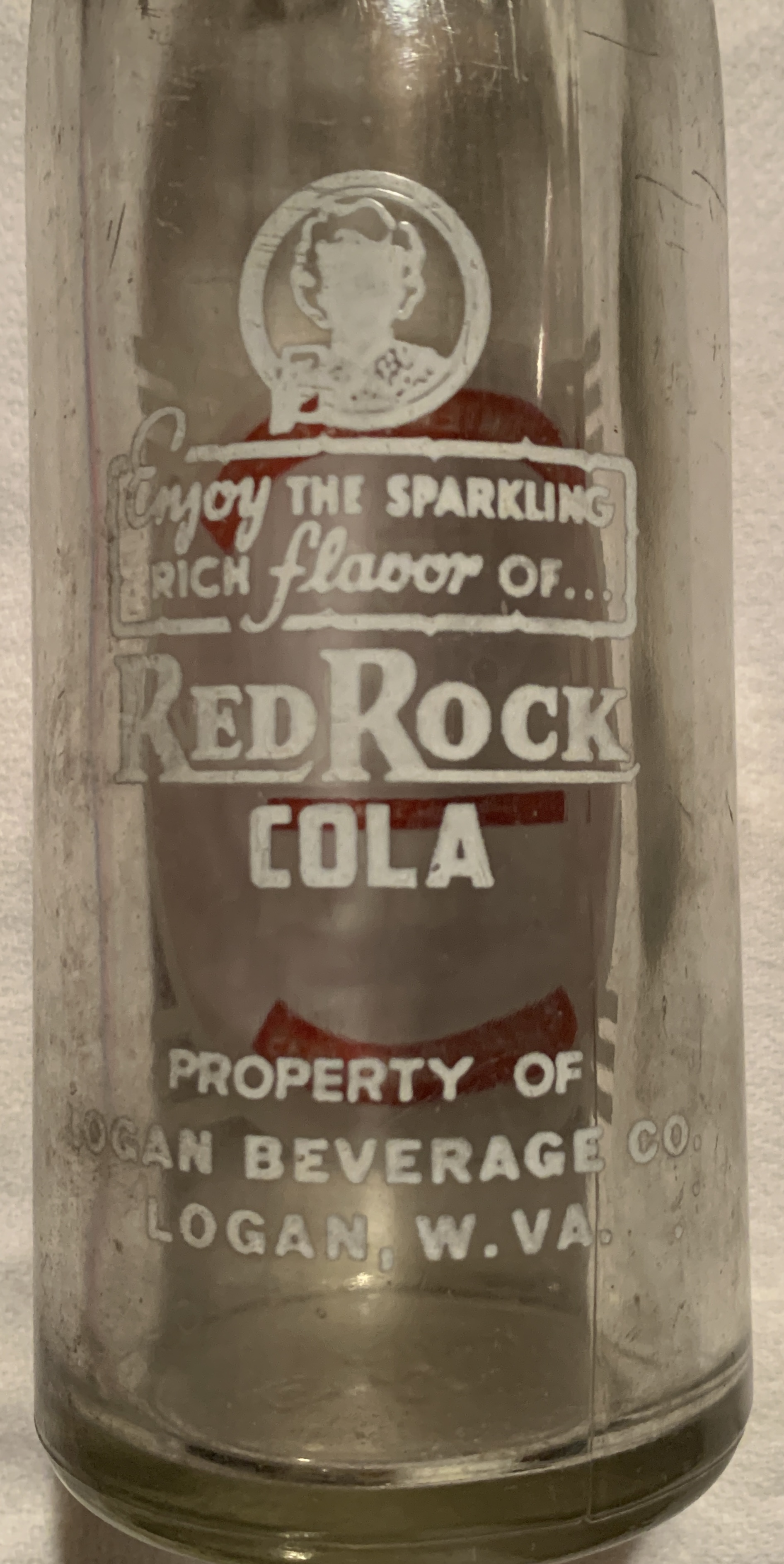
Atlanta, Babe Ruth, Georgia, ginger ale, history, Lee Hagan, Logan, Logan Beverage Company, Red Rock Cola, Red Rock Company, West Virginia


21 Thursday Apr 2022
Posted in Logan
Tags
Atlanta, Babe Ruth, Georgia, ginger ale, history, Lee Hagan, Logan, Logan Beverage Company, Red Rock Cola, Red Rock Company, West Virginia
30 Saturday Oct 2021
Posted in Big Sandy Valley, Hatfield-McCoy Feud, Logan, Matewan, Women's History
Tags
Appalachia, attorney, attorney general, Big Sandy River, Bill Smith, Cap Hatfield, Catlettsburg, Devil Anse Hatfield, feuds, genealogy, Georgia, Hatfield-McCoy Feud, history, Howard B. Lee, Huntington, Jim Comstock, Joe Glenn, Kentucky, Logan, Logan County, logging, Mate Creek, Matewan, Mingo County, Nancy E. Hatfield, Ohio, Ohio River, Portsmouth, Tennessee, timbering, Tug Fork, University Law School, Wayne County, West Virginia, Wyoming County
Howard B. Lee, former Attorney General of West Virginia, provided this account of Nancy Hatfield (widow of Cap) in the early 1970s:
“Mrs. Hatfield, we have talked much about an era that is gone. Feuds are ended, railroads and paved highways have come, the huge coal industry has developed, churches and schools are everywhere, and people are educated. Now, I would like to know something about you.”
This is the brief life-story of the remarkable and unforgettable Nancy Elizabeth Hatfield, as she related it to me.
She was Nancy Elizabeth Smith, called “Nan” by her family and friends, born in Wayne County, West Virginia, September 10, 1866. (She died August 24, 1942). In her early years, she lived “close enough to the Ohio River,” she said, “to see the big boats that brought people and goods up from below.” She attended a country school three months out of the year, and acquired the rudiments of a common school education, plus a yearning for wider knowledge.
While she was still a young girl her parents moved by push-boat up the Big Sandy and Tug rivers into what is now Mingo County, then Logan County. They settled in the wilderness on Mate Creek, near the site of the present town of Matewan.
“Why they made that move,” said Nancy Elizabeth, “I have never understood.”
In her new environment, in the summer of 1880, when she was 14 years old, Nancy Elizabeth married Joseph M. Glenn, an enterprising young adventurer from Georgia, who had established a store in the mountains, and floated rafts of black walnut logs, and other timber, down the Tug and Big Sandy rivers to the lumber mills of Catlettsburg, Ky., and Portsmouth, Ohio.
Two years after their marriage Glenn was waylaid and murdered by a former business associate, named Bill Smith–no relation to Nancy Elizabeth. Smith escaped into the wilderness and was never apprehended. The 16-year-old widow was left with a three-weeks old infant son, who grew into manhood and for years, that son, the late Joseph M. Glenn, was a leading lawyer in the city of Logan.
On October 11, 1883, a year after her husband’s death, at the age of 17, Nancy Elizabeth married the 19-year-old Cap Hatfield, second son of Devil Anse.
“He was the best looking young man in the settlement,” she proudly told me.
But at that time Cap had little to recommend him, except his good looks. He was born Feb. 6, 1864, during the Civil War, and grew up in a wild and lawless wilderness, where people were torn and divided by political and sectional hatreds and family feuds–a rugged, mountain land, without roads, schools, or churches.
When he married, Cap could neither read nor write, but he possessed the qualities necessary for survival in that turbulent time and place–he was “quick on the draw, and a dead shot.”
“When we were married, Cap was not a very good risk as a husband,” said Nancy Elizabeth. “The feud had been going on for a year, and he was already its most deadly killer. Kentucky had set a price on his head. But we were young, he was handsome, and I was deeply in love with him. Besides, he was the best shot on the border, and I was confident that he could take care of himself–and he did.”
Nancy Elizabeth taught her handsome husband to read and write, and imparted to him the meager learning she had acquired in the country school in Wayne County. But, more important, the she instilled into him her own hunger for knowledge.
Cap had a brilliant mind, and he set about to improve it. He and Nancy Elizabeth bought and read many books on history and biography, and they also subscribed for and read a number of the leading magazines of their day. In time they built up a small library or good books, which they read and studied along with their children.
At the urging of Nancy Elizabeth, Cap decided to study law, and enrolled at the University Law School at Huntington, Tennessee. But six months later, a renewal of the feud brought him back to the mountains. He never returned to law school, but continued his legal studies at home, and was admitted to the bar in Wyoming and Mingo counties. However, he never practiced the profession.
Nancy Elizabeth and Cap raised seven of their nine children, and Nancy’ss eyes grew moist as she talked of the sacrifices she and Cap had made that their children might obtain the education fate had denied to their parents. But her face glowed with a mother’s pride as she said:
“All our children are reasonably well educated. Three are college graduates, and the others attended college from one to three years. But, above everything else, they are all good and useful citizens.”
As I left the home of the remarkable and unforgettable Nancy Hatfield, I knew that I had been in the presence of a queenly woman–a real “Mountain Queen.”
Source: West Virginia Women (Richwood, WV: Jim Comstock, 1974), p. 153-154.
24 Wednesday Jul 2019
Posted in Huntington, Logan, World War I
Tags
308th Infantry, 77th Division, 92nd Division, Alsace-Lorraine, Appalachia, Bosche, Camp Greenleaf, Chateau Thierry, dentist, Edwin M. Godby, Fifth Avenue, Georgia, Germany, Gwinn Brothers & Company, Herald-Advertiser, history, Huntington, James Godby, Logan, Logan Banner, Logan County, Lost Battalion, United Cigar Stores, University of Cincinnati, West Virginia, World War I
From the Logan Banner of Logan, WV, comes this recollection of World War I by veteran Edwin M. Godby of Huntington, WV, dated July 10, 1928:
LOGAN BOY OF LOST BATTALION LIVED THRU SIX DAYS OF HELL
Dr. E.M. Godby, Now of Huntington, One of 150 Survivors of An Outstanding Episode of World War—Graphic Account of Harrowing Experiences
It has been a little less than 10 years since the story of the Lost Battalion thrilled and horrified the American people.
It was the story of an infantry battalion which pushed its way through in an advance into the German lines while the forces on either flank were being beaten back, writes Wiatt Smith for the Herald-Advertiser.
Of the 1,000 men who went in, only a remnant lived to tell the story of six days in a literal hell. Six days during which they crouched in shell holes and dugouts, without food or water, while the shells from the guns of their own army thundered over them or broke about them and the gas and machine gun fire of a sullen enemy harassed them.
One of those survivors lives in Huntington. He is a dentist and as he goes about his professional work and social life only a slight cough serves to mark him as one who breathed the deadly poison spewed over him by the Bosche.
Dr. Edwin M. Godby, of Fifth Avenue, with offices in the United Cigar Stores building, is the man in question. He told the story to one who had first learned from others of his part in this great drama of the war. Dr. Godby was an ambulance corps man, attached to the Seventy-Seventh division and at the time assigned to Major Whittlesey’s battalion of the 308th infantry for said duty.
Left Logan in 1918
Eldest son of Mr. and Mrs. James Godby of Logan, he was a student of dentistry in the University of Cincinnati when America entered the war. He went from Logan with a draft contingent in March 1918. He trained at Camp Greenleaf, Ga., was assigned to the Medical corps, and crossed the ocean in June as a casual.
Assigned at once to the Seventy-seventh division he first saw the front at post in Alsace-Lorraine.
“There was no action here,” said Dr. Godby. “We were within one kilometer of the enemy but there seemed to be almost an understanding that we wouldn’t bother each other. There was no firing. Occasionally one side or the other would send a raiding party into the others lines, but these were rarely fired upon.
“In July our division went in to replace another division which had helped take Chateau Thierry. We continued in the drive from the Marne to the Aisne. We would advance two or three days and then dig in for perhaps four or five. This went on from July to September.
“Then we moved from the Aisne to the Argonne. One date that stays with me is that of the great barrage which marked the opening of the Argonne drive on the night of September 26.
“On October 13 or 14 we got orders to advance from our position in a 30-mile strip of woods between the headwaters of the Aisne and the Meusc. The Ninety-second division flanked us on the left and two of our regiments and two of the Ninety-second were supposed to advance.
“The advance started as planned, early in the morning, but the right and left flanks were met by such resistance that they fell back to their original positions.
“Major Whittlessey’s men tore through the resisting German line and went forward. It was late in the forenoon before we discovered that we were unsupported on either flank and cut off from the rear.
“We spend six days before we were relieved by another regiment which was almost destroyed in the effort. The battalion was virtually at war strength, having been in only a little while. Of the 1,000 who went in only 150 came back.”
Dr. Godby tells a grim story of the last days. As soon as the soldiers found their situation they began to dig in. It was every man for himself. Dr. Godby says he and two others found a shell hole. They deepened it and were comparatively safe there. But one of the three got too venturesome and raised his head too far above the rim of the crater. His comrades used his body for an additional barricade.
The surviving companion of Dr. Godby was a man named Crane, who had gone in from Pennsylvania. He told Dr. Godby that he had a sister in Huntington whose husband worked for Gwinn Bros. & Co.
“I have often thought I’d try to get race of that sister,” said Dr. Godby, “but I never have.
“We just laid there,” the dentist said, detailing his experience. “Each man had less than a quart of water and no food. After the second day I didn’t have any water. We never missed the food, but of course the thirst was torture. It was terrible, too, to have to wear our gas masks continuously for that becomes torture after the first hour.
“For the first day or two the Germans tried charging us but we were strong enough to beat them back. After that they were content to keep their machine guns turned on us and subject us to a continuous barrage of gas. At the same time we were within the range of our own batteries.
Contemplated Suicide
“American planes passed over us and tried to drop us food, but the Germans got it.
“For the last two or three days nothing mattered. Crane and I tried to devise means of escape. We would work out a plan and then decide it was futile. We decided to commit suicide, but changed our minds. It was simply a matter of trying to keep alive as long as we could. On the fifth night I had only intervals of consciousness. But we had determined to make a dash for freedom and life when daylight came. It would not have been a dash for life, but a dash to death.
I know this is true because we were on the slope of a ravine, the battalion being pocketed on either side of it. We could see the water in the ravine and the bodies of the men who in their desperation had gone there to drink. Not one lived to taste the water.
“But as Crane and I planned to make the final desperate dash I lost consciousness. When I revived I was on a stretcher at a base hospital at Nantes. I never saw Crane again. I have often wondered what became of him.
“Did he,” I asked myself, “live to go for his death drink or was he too rescued?
“I have never talked to anyone who was with the battalion.”
A few days after Dr. Godby revived from his unconsciousness the armistice was signed. He was in the hospital from November 1 until late in December, recovering from the effects of gas. In January 1919, he came back to the United States, received his discharge and resumed his studies. He has been practicing in Huntington two years.
06 Saturday Oct 2018
Tags
African-Americans, Appalachia, Atlanta, Augusta, genealogy, Georgia, history, J.H. Burns, Logan Banner, Logan County, Morehouse College, Sharples, Shiloh Baptist Church, Walker Baptist Institute, West Virginia
In April of 1929, the Logan Banner profiled numerous prominent African-American residents of Logan County, West Virginia.
Rev. J.H. Burns
Pastor, Shiloh Baptist Church, Sharples
The Reverend Burns has been pastor for five consecutive years. The church of his charge has an enrolled membership of 175, and is one of the best organized congregations in the field. All of its departments, missionary society, Sunday school, B.Y.P.U. and other branches are active and effective. His services in the community and county, as a moral and spiritual influence, are constructive and uplifting. Rev. Burns has been in the ministry for twenty-one years, covering numerous fields of activity in his long period of service to the cause of religion among his people. The reverend’s educational qualifications embrace studies at Walker Baptist Institute, Augusta, and Morehouse College, Atlanta. All matters pertaining to the welfare of his people, enlist Rev. Burns’ support and he wields a large measure of power among his people in the community and county.
Source: Logan (WV) Banner, 16 April 1929
19 Tuesday Sep 2017
Tags
11th Georgia Regiment, 34th Battalion Virginia Cavalry, Andrew Lewis Sias, Battle of Funkstown, Battle of Gettysburg, Brandon Kirk, Chaney House, Chester, civil war, Confederate Army, Funkstown, General Hospital, Georgia, H.D. McDaniel, Hagerstown, Hammond General Hospital, history, J.E.B. Stuart, Jerusalem, John Buford, Keller Home, Maryland, Pennsylvania, photos, Phyllis Kirk, Point Lookout, Potomac River, Robert E. Lee, Seminary Hospital

My great-great-great-grandfather Andrew Lewis Sias participated with the 34th Battalion Virginia Cavalry (Co. D) under Maj. Gen. J.E.B. Stuart at Gettysburg and was thereafter captured (according to one military record) on July 8, 1863 in Funkstown, MD. He was held at Seminary Hospital in Hagerstown, MD, then admitted to General Hospital in Chester, PA, on September 17, 1863. He was thereafter sent to Hammond General Hospital at Point Lookout, MD, on October 4, 1863. 9 April 2015. Photo by Mom.

The Battle of Funkstown, a Confederate victory, occurred shortly after the Battle of Gettysburg. My ancestor missed this battle, having already been captured. 9 April 2015.

Originally named Jerusalem in 1767, the town was incorporated as Funkstown in 1840. 9 April 2015.

Major H.D. McDaniel of the 11th Georgia Regiment was treated here at the Keller Home after the Battle of Funkstown (July 10, 1863). Mr. McDaniel survived the battle and later became governor of Georgia. 9 April 2015.

Part of the Keller Home. 9 April 2015.

Dozens of beautifully-designed old residences are yet visible in Funkstown. 9 April 2015.

Funkstown’s population was 904 in 2010. 9 April 2015.

Most of my favorite old structures in Funkstown were located on this street. 9 April 2015.
30 Friday May 2014
Posted in Big Harts Creek, Culture of Honor
Tags
Allen Martin, Appalachia, Atlanta, Ben Adams, Brandon Kirk, Charley Brumfield, crime, Frank Adams, Georgia, Greasy George Adams, Harts Creek, history, Huntington Herald-Advertiser, Lawrence Haley, Logan County, moonshining, murder, Ward Brumfield, West Virginia, writing
“Greasy George” Adams, a son of Ben Adams, was apparently a notorious character on Harts Creek in the early decades of the twentieth century. Lawrence Haley had mentioned his name to me on my first trip to Ashland, while Brandon said his home was the scene of Charley and Ward Brumfield’s double murder in 1926. A 1953 article from the Huntington Herald-Advertiser titled “HARTS CREEK HOME WHERE FIVE MET DEATH NOW IS OFTEN SCENE OF PRAYER MEETINGS” had this great interview with Adams.
George Adams of Harts Creek in Logan County has his rifle on the wall now and instead of a pistol in his hand he carries a prayer book. He’s given up feuding and fighting and settled down to old-time religion at his neat farm home where five persons were killed in gun fights. Almost never does the tantalizing smell of moonshine cooking in a barrel up a mountain hollow drift down to taunt the nostrils of the man who proudly states he has made thousands of gallons and the law never chopped up one of his stills. “I put ’em high up in the hills and the law got too tired before they reached them,” he said.
THE HONKING of a brood of ducks and the whining of droves of bees busy at work at his 40 honey hives are about the only sounds which disturb the silence around his 25 acres of land today. Land which he says he was able to buy through the sale of bootleg liquor. But it was not always so at George Adams’ place. Several decades ago he recalls that when he heard a rifle singing through the hills he reckoned it was a neighbor shooting at another neighbor. Open season on humans has closed in the area since, and squirrels and rabbits are about the only targets. George Adams misses the sparsity of “shine” from the hill country he loves so well, even though he says he hasn’t touched a drop since the last killing at his home. “Dang revenooers probably don’t know how good moonshine made out of tomatoes is, or they wouldn’t go around bustin’ up all the stills in the country,” he said.
THE MOUNTAIN folk in the Harts Creek area will tell you that there’s many a home along the small stream which flows into the Guyandotte River that’s seen a shooting or a killing. But George Adams’ home is slightly above par for the area — five people have met violent deaths there. As “Greasy George,” which his neighbors call him, puts it: “No trouble for a man to get in trouble but it’s hell to get out!” And he’s a man who should know about trouble. His legs are a little wobbly now because of carrying his six foot of height and weight around for 72 years, and he gets a little short of breath when working too hard, but when he starts talking about his shooting scrapes, he has all the enthusiasm of a country boy walking a country mile to a country house to date a country girl for the first time.
“I FUST got into trouble when I was nineteen. Mail carrier undertook to kill Dad and I went after him. Somebody got him,” he said, hastily adding: “Weren’t too nice a way to treat a man who delivers letters.” George related that his Dad got shot four times in the exchange of lead and “we both went to jail.” A trial in Logan County lasted for three days and he said, “Dad nearly went broke paying off lawyers,” before a verdict of self defense was brought in. That shooting affair took place less than a mile from George’s present home but several years later his kitchen was the scene of a battle where he said “guns were going off like popcorn.” Three participants emptied their guns at each other after George said one of them knocked him down and out of the way. Three burials took place afterwards. Before George built his present frame house over a log cabin, the logs were speckled with the bullets which went wild. The house today is probably the only frame house in the nation which has a cement roof on it three inches thick. “Ran out of lumber and got concrete real cheap,” George said. “While the house is plenty warm in winter time it sure is hot in summer,” he added.
ADAMS recalls that except for getting a year in jail for fighting during the kitchen shooting affair, the only time he strayed from the Harts area was when he went on a three-year vacation in Atlanta, Ga., courtesy of the federal government. Things were peaceful at his house for a while until a relative “up and chased his wife over here,” he said. The relative, according to George, fired and hit the wife with a blast from a 16-gauge shot gun. The next and last time a shooting occurred in the old homestead, Frank Adams, George’s son, lost his life. He said the affair was due to drinking and “since then I haven’t touched a drop unless somebody put it in my food unbeknowst to me.” “My boys were singing a lot of old fool songs and I told ’em to shut up. My son got up and slapped me down. While I was knocked out somebody shot Frank.”
GEORGE SAID he had 18 children. Three are living at home with him now and the rest are in other parts of the state. He says he can’t recall all their names “but they are in the Bible.” During recent years his home which saw so much violence is now the scene of many a religious meeting. He has even constructed benches in his yard to seat the neighbors who come from miles around to hear the services. He’s not filled full of the brine and vinegar he had when he was younger and as he says: “Me and other folks have quit this tomfoolery.” But nevertheless, George remarked that he would “sorta like to git in ‘nuther shakedown if I wasn’t too old.” And on the wall overhanging his bed is his rifle. “Keep it so’s if a man keeps coming in the house at night when I say stop I can stop him,” he said.
16 Wednesday Apr 2014
Tags
Ashland, Big Foot Keaton, Blackberry Blossom, blind, Cartersville, Catlettsburg, Clayton McMichen, Curly Wellman, Ed Haley, fiddle, fiddling, Georgia, Georgia Wildcats, Great Depression, guitar, history, John Hartford, Kentucky, Maude Johnson, moonshine, music, Sweet Georgia Brown, Ward Hollow, WCMI, Winchester Avenue, writing
Curly said he lost contact with Ed Haley in the mid-thirties (other than seeing him on a street corner or at court days).
“When I got about fourteen, fifteen years old, I went to playing around with younger musicians and I left Catlettsburg and I come down to Ashland,” he said. “I started playing bars at fifteen.”
Curly told me all about how he “rediscovered” Ed toward the end of the decade.
Along about 1937, we were working WCMI and Mother and I was talking one day and I asked her, I said, “Well Mother, do you know anything about Ed Haley or the Haley family or where they’re at? I haven’t heard from them in years.” And my mother told me, said, “Why, they live right up there at Ward Hollow.” I said, “Well, I didn’t know that.” See, what I used to do, I’d get lonesome to hear him. And I knew him and he knew my voice and he knew my mother and my father and all my brothers and sisters and I’d get lonesome to play with him. And I’d get a pint of “moon” — bought it from old Maude Johnson down there at 29th Street — and walk all the way to Ward Hollow. The front door was never locked. And when I’d open the door — I’d know where he was gonna be, in that rocking chair — I’d say, “Uncle Ed?” “Well Curly, come in.” And I’d go in — wouldn’t even carry a guitar or nothing — and I’d go in and I’d sit down. He’d go get the straight chair when he played, but he would be sitting in there. A little old fireplace. I’d say, “How are you, Uncle Ed?” “Well, I don’t feel so good today. I’m not as pure as I should be.” And I’d say, “Well, do you think maybe a little hooter…?” And he’d say, “Well, uh, yes.” Talked loud then. I’d say, “Well, I brought one along.” Moonshine. I’d go out and get it and come in and give it to him and he’d hit it.
We’d sit there and talk a little more — about this and that and the weather and so forth and so on — and I’d say, “You better getcha another little drink there, Ed. Maybe if you got a cold it’ll help you.” He’d hit it again and he’d sit there and all at once he’d say, “Say, did I ever play ‘Blackberry Blossom’ for ya?” And while he was saying this, he was getting up… He knew exactly where his fiddle was on the mantle, he knowed where the bow was on the mantle, and he never touched a thing that was on that mantle — just them two things. I never saw him finger for the fiddle: he always picked it up by the neck and got the bow with his right hand. And then he’d throw that fiddle under there — the chin was holding it — and he never even had a chin-rest — then he’d sit down and he’d say, “Well, you brought your old box along, didn’t ya?” I’d say, “Yeah, it’s out there in the car.” I think it was a D-18 Martin. Sixty-five bucks. Go get the guitar, come in, sit down, tune up with him. And that’s another thing about that man. I often wondered how he kept the fiddle at 440 tuning. I know he didn’t use a pitch pipe.
Curly said it was during that time that Ed met Bernice “Sweet Georgia” Brown, who he called “Brownie.” He elaborated: “Brownie’s father owned a business here, which was in the making of tombstones, right down on Winchester Avenue, and his mother was from Cartersville, Georgia. And he was a tremendous old-time… The old English fiddle tunes and a lot of that stuff — the hornpipes. He was just marvelous on them. He would’ve loved to have played jazz fiddle, but he didn’t have it. Because he was from Georgia, Big Foot said, ‘I’ll teach you how to play ‘Sweet Georgia Brown’, so from then on that was his name. We had him and Big Foot playing twin fiddles. During the time that he was here, I wanted him to hear Ed Haley. Neither one of us had a car at that time, but we were in walking distance of Ward Hollow, which was just up the road from me about eight, nine blocks. We’d walk up there and take a little hooter along and finally get him started. Well, Georgia wouldn’t pull a bow in front of Ed Haley, but he would watch him awful close. Every move — even the way he tuned the fiddle with his chin and his knee mostly. He was an amazing man.”
I asked Curly if Ed played “Sweet Georgia Brown” and he said, “Never. I don’t think he woulda even rosined his bow to play a thing like that.”
Thinking back about that time in his life caused Curly to talk about his personal memories of Ed.
“I had a lot of experiences with that old man. I loved the old man. Really loved him. He was a swell old man. He was a dear friend. So timid. He was easy to be around and knew a joke as quick as he heard it. He wasn’t boastful or pushy — just a very little timid man that would sit in the corner for hours. He let everything out with the fiddle. He turned everything loose that was inside and he done it with the instrument. I think his first love really was his music.”
I asked Curly if Ed got along with other fiddlers like Clayton McMichen and he said, “I don’t think he woulda even talked to him. When Clayton mouthed off like he did — and was all mouth — I just think Ed would have set back and not taken any part in anything. Brassy and forward — Clayton was awful bad for that. I didn’t care for Clayton McMichen myself other than I appreciated the group he had together, The Georgia Wildcats.”
21 Tuesday May 2013
Posted in Ed Haley
Tags
Clayton McMichen, culture, fiddle, fiddler, Georgia, Georgia Wildcats, history, life, music, photos, Skillet Lickers
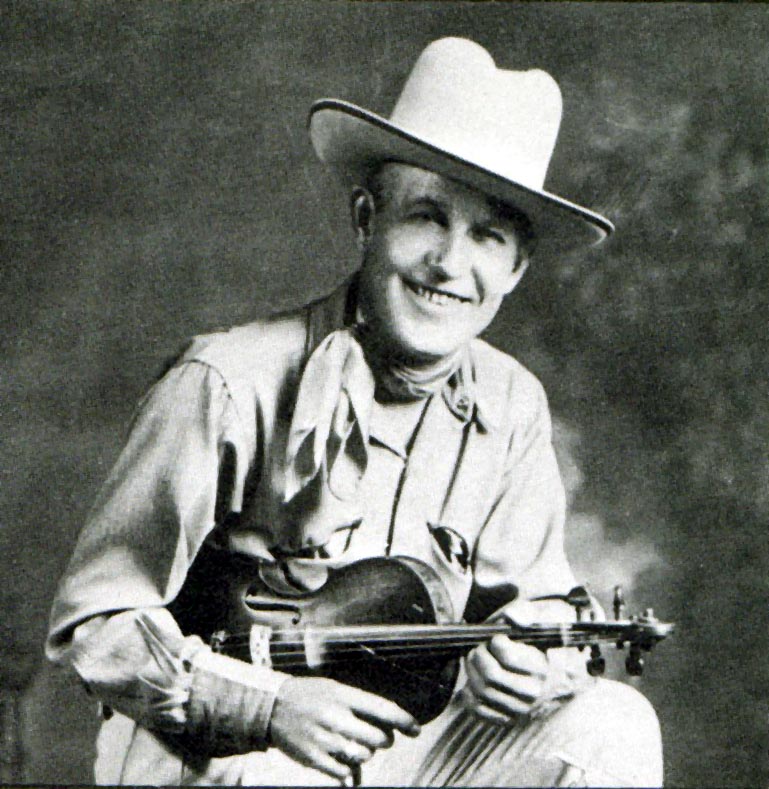
Clayton McMichen of Georgia
Writings from my travels and experiences. High and fine literature is wine, and mine is only water; but everybody likes water. Mark Twain
This site is dedicated to the collection, preservation, and promotion of history and culture in Appalachia.
Genealogy and History in North Carolina and Beyond
A site about one of the most beautiful, interesting, tallented, outrageous and colorful personalities of the 20th Century
 Brandon Ray Kirk