• About

Brandon Ray Kirk

~ This site is dedicated to the collection, preservation, and promotion of history and culture in my section of Appalachia.

Brandon Ray Kirk

Tag Archives: Brandon Kirk

In Search of Ed Haley 323

19 Thursday Jun 2014

Posted by Brandon Ray Kirk in Big Harts Creek, Ed Haley, Holden

≈ Leave a comment

Tags

Albert Dingess, Alice Dingess, Birdie, blind, Brandon Kirk, Cecil Brumfield, Cripple Creek, Dorothy Brumfield, Ed Haley, fiddler, fiddling, Harts Creek, Henderson Dingess, history, Holden, Hugh Dingess Elementary School, John Brumfield Jr., John Hartford, Kentucky, Logan County, Louisa, Milt Haley, music, Smokehouse Fork, West Virginia, Wildwood Flower, writing

About a half hour later, we drove up the Smoke House Fork of Harts Creek to see Dorothy Brumfield. Dorothy lived in a white one-story home situated on a hillside overlooking the Hugh Dingess Elementary School, just down the stream from the old Henderson Dingess homeplace. Dorothy had been born in 1929 at Louisa, Kentucky, but came to Harts when she was seventeen and soon married John Brumfield, a son of Ed’s friend, Cecil. Her father was a descendant of Albert Dingess, a member of the 1889 mob.

I started the conversation by asking Dorothy about Ed. She said she never knew him personally but heard that he lost his eyesight after his father dipped him in water. She also heard that he was a great fiddler when he got “pretty high” but was mean and eager to fight if he drank too much.

Dorothy knew the story about Ed borrowing a fiddle from her father-in-law Cecil Brumfield; her husband later acquired it. “He had come through here and borrowed a fiddle off of Paw Brumfield, him and Bernie Adams, and went up yonder to Logan and pawned it,” she said. “Paw Brumfield liked to never found it.”

Dorothy said the only time she actually saw Ed was when her husband brought him home early one Sunday morning around 1949-50.

“My husband worked at Holden, and I’d heard tell of Ed Haley but I hadn’t met him,” she said. “So John stopped at the top of Trace Mountain at this place. Back then, they called them saloons. And he was supposed to been in at one o’clock in the morning. He didn’t make it. Oh, did I get mad when four o’clock come in the morning. Here he knocked on the door and I could tell someone was with him, but I couldn’t make out that it was a blind person with him. I thought it was just somebody real drunk that had passed out. He got here in the house with him and I fixed them something to eat.”

“Why didn’t I know you all was over there and got me a babysitter and caught me a ride over there and had me a time?” Dorothy said to her husband. “What would you done if I’d walked in?”

“What, mam?” Ed said.

“All them women John had over there tonight,” she said to Ed.

“Mam, he didn’t have no women,” Ed said.

“Now sir, you told me you couldn’t see,” she said. “How do you know?”

“Well, John sit beside of me,” Ed said.

A little later, Dorothy fixed Ed a bed and she went and asked her husband, “Would you tell me who in the world you’ve brought home with you again?”

John said he’d stopped in at that saloon and found Ed playing music “and a bunch of them women dancing” and he “wouldn’t leave Ed there. When they closed, he brought him here.”

“Well, then they got up the next morning and I said, ‘Now John you help him around and show him around.’ I was already mad at John for laying out. Little bit jealous, too. We hadn’t been married long.”

Dorothy said she cooked a big breakfast for everyone.

“Mam, have you got any onions?” Ed asked her at the table.

“Yes I have but why would you want an onion for breakfast?” she said.

“Don’t you know what onions are good for?” Ed said. “Many a things.”

Dorothy said Ed seemed intelligent by the morning conversation.

After breakfast, Ed went back into the front room and played the fiddle for Dorothy’s kids in front of the fireplace. She said he held his fiddle under his chin and played “Wildwood Flower” and an extremely fast version of “Cripple Creek”.

John said, “Ed, play that there ‘Birdie’ for these children.”

“Well, he stayed around and I think they drunk all the booze up,” Dorothy said. “John, he was wanting more booze, too, so he went off with Ed to Aunt Alice’s or somewhere and got some liquor and he didn’t come back till about dark. I don’t know where all he took Ed. When he come back, he kept telling me why he brought him here. He said that he didn’t want to leave him. If something happened, he wouldn’t forgive hisself. Nobody else wouldn’t take him after all the big time was over with.”

In Search of Ed Haley 321

17 Tuesday Jun 2014

Posted by Brandon Ray Kirk in Big Harts Creek, Culture of Honor, Ed Haley, Lincoln County Feud, Timber

≈ Leave a comment

Tags

Allen Martin, Anthony Adams, Ben Adams, Boardtree Branch, Brandon Kirk, Charley Brumfield, crime, Ed Haley, Ewell Mullins, fiddling, Greasy George Adams, Green McCoy, Green Shoal, Harts, Harts Creek, history, Jeff Baisden, John Hartford, Jr., Kentucky, Lincoln County Feud, Logan County, Milt Haley, moonshining, murder, music, Paris Brumfield, Peter Mullins, Sol Adams, Still Hollow, Ticky George Adams, timbering, Trace Fork, Vilas Adams, West Virginia, Will Adkins, writing

Trying to lift our spirits, we went to see Vilas Adams, who lived on the Boardtree Branch of Trace Fork. Vilas was a great-grandson of Ben Adams and a grandson of Ticky George Adams. He was very friendly, inviting us inside his very nice home where his wife fed us a whole mess of good food, which we ate between asking questions.

I first asked him about his memories of Ed Haley, who he said frequented Ewell Mullins’ store during the late 1930s and early forties.

“Down there at old man Ewell’s store, they’d gather in there of an evening and tell tales, old man Jeff Baisden and them,” Vilas said. “My grandpaw Ant Adams and I would walk down there and then Ed would walk down there from Uncle Peter’s. It was a quarter a mile — just a little hop and a jump I call it. Ed would come in there and fiddle for them and if they wanted a certain song, they’d give him a quarter or fifty cents. That was good money I guess back then.”

Vilas’ grandfather Anthony Adams (a brother to Greasy George) always gave Ed a quarter to hear his favorite tune.

“What was Ed like?” I asked.

Vilas implied that he was withdrawn.

“Mostly he stayed with that fiddle,” he said. “He was good.”

Like most of the other older people in Harts, Vilas knew about the Haley-McCoy killings.

“My grandpaw would tell me them tales but I wouldn’t pay no attention,” he said. “He was telling about them fellers — Sol Adams — going over there and locating them and they went back and captured them. Well, his daddy Anthony tried to waylay them and take them back through here somewhere. They thought they’d come through these hills somewhere but they missed them.”

So, Sol Adams — a 20-year-old nephew to Ben Adams who was often called “Squire Sol” because of his status as an officer of the law — “went over and located Haley and McCoy” in Kentucky after the ambush. Meanwhile, his father Anthony and uncle Ben Adams, organized a gang to recapture them as the Brumfields brought them back through Harts Creek. This seemed strange: why would Sol operate against the interests of his family? And why would he have even been compelled to even become involved since he was a Logan County justice and the crime had occurred in Lincoln County?

Brandon asked Vilas if he knew who had been in the Adams gang and he said, “No, I’ve heard my grandpaw talk but I’ve forgot some of it. They was somebody from down around Hart somewhere. He said they took them over around Green Shoal or over in there somewhere and killed them. Grandpaw said they maybe hit them with axe handles.”

Vilas said his grandfather told him something horrible had happened to most of the men who murdered Haley and McCoy.

“He said just about every one of them that was in on that, something bad happened to them,” he said. “I heard one of them’s own boy killed one of them. And one of them got drowned and my grandpaw said the river wasn’t deep. Said he fell off a horse or something right at the mouth of Hart.”

Of course, Vilas was referring to Paris Brumfield, who was killed by his son Charley in 1891, and to Will Adkins, who drowned at the mouth of Harts Creek on November 23, 1889.

Brandon asked Vilas about “old Ben Adams” and he almost immediately started talking about the old timber business.

“See, that was my great-grandpaw,” he said. “They would build splash dams. They had one right out here. They had them tied some way or the other. And they built them up on Hart there, maybe up on Hoover, and they’d work all winter and put them logs in the creek. And in the spring when them floods come, it would wash all them logs down around Hart and then they’d put them together and raft them on down to Kenova. I guess that was all they had to make a living — timber and farm.”

Ben, of course, made his living in timber. He lived at the mouth of Adams Branch, a little tributary of Trace Fork presently referred to as Still Hollow.

“Over there at what we call Still Hollow, they said he had a still-house there and he had a license to make apple brandy back then,” Vilas said. “And he would go with a wagon everywhere and get apples. They was a log house over there in the mouth of that holler — just down the road here a little ways. When I was a boy the old log house was there, but it rotted down. Just one-story as far as I can remember. The old well’s there. He had some kind of an old store or saloon right there.”

Vilas speculated very little on Ben Adams’ personality, but compared him to his son, Greasy George Adams: “always a likeable fella but seemed like trouble followed him.” He heard that after Ben’s first wife died, he lived with first one woman, then the next. He eventually got into a heap of trouble by murdering a local postman, Jim Martin.

“He killed a fella right over there at the mouth of that hollow,” Vilas said. “My grandpaw said he had some sort of an old store or saloon and he was shooting out the door. Right there in the mouth of that holler. It broke him. Lawyers. Lost everything he had.”

It was rumored that Ben’s and Martin’s trouble had something to do with a woman or a right-of-way.

In Search of Ed Haley 320

13 Friday Jun 2014

Posted by Brandon Ray Kirk in Big Harts Creek, Ed Haley, Lincoln County Feud, Timber

≈ Leave a comment

Tags

Appalachia, Billy Adkins, Brandon Kirk, Green McCoy, Haley-McCoy grave, Harts Creek, Harts Fas Chek, history, Lincoln County, Low Gap, Milt Haley, West Fork, West Virginia, writing

In the mid-summer heat of July, I pulled into the Harts Fas Chek parking lot on my bus with the Haley-McCoy grave bearing strongly on my mind. Early the next morning, Billy, Brandon, and I drove over to Presto’s Garden and made our way up the hillside toward Milt’s grave, cringing at the destruction wrought by bulldozers. The land was scarred and brush was everywhere. There was a wide road recently forged into the side of the mountain, which seemed to be sliding gently down the hillside like thick tears or even blood from the earth’s gaping wounds. It led right up to the grave. There was a bulldozer trail leading down below the grave to a pile of scrap wood, a trail cutting beside the grave leading on up into the hollow, and the entire Low Gap side of the grave area was scraped bare. Nearby, a dozer whirred and rumbled, tossing logs in neatly stacked piles. Somehow the grave was safe from destruction, but this special place was violated after one hundred and seven years of peace and solitude.

In Search of Ed Haley 319

12 Thursday Jun 2014

Posted by Brandon Ray Kirk in Big Harts Creek, Ed Haley, Harts, Lincoln County Feud

≈ 2 Comments

Tags

Al Brumfield, Ben Adams, Bernie Adams, Brandon Kirk, Cain Adkins, Caroline Brumfield, Cecil Brumfield, Dave Dingess, Ed Haley, fiddle, French Bryant, Harriet Brumfield, Harts Creek, Henderson Dingess, history, Hollene Brumfield, Hugh Dingess, John Hartford, John W Runyon, Lillian Ray, Logan, Milt Haley, Paris Brumfield, Sallie Dingess, Smokehouse Fork, Tom Martin, writing

A little later, Brandon visited Lillian Ray, a seventy-something-year-old daughter of Cecil Brumfield who lived in a beautiful two-story house on the Smokehouse Fork of Harts Creek. Lilly, he discovered, had a lot of the old Dingess family photographs. To Brandon’s surprise, there were several thick-paged Victorian velvet-covered albums full of tintypes and a few boxes of sepia images on decorative cardboard squares. Only a few were labeled, but he recognized some of the faces: Al Brumfield, Henderson and Sallie Dingess, Hugh Dingess, Mrs. Charley Brumfield, Mrs. John Brumfield, and Dave Dingess. No doubt, there were pictures in the album of Ben Adams and Hollena Brumfield in their youth.

Before leaving, Brandon asked Lilly about Ed Haley. She said she remembered him coming to her father’s house when he lived in the old Henderson Dingess homeplace. He would just show up, leading himself with a cane, and stay for two or three days. Lilly hated to see him come because he was so hateful to the Brumfield children — “always running his mouth.” She described him as a “little short man” who “drank a lot” and told how he and Bernie Adams once borrowed a fiddle from her father and then pawned it off in Logan. The fiddle originally belonged to Tom Martin.

Not long after visiting Lilly, Brandon sent me a letter updating me on his research along with pictures of people we’d only imagined. As they turned up, I wondered if I were to go into a room with Al, Paris, Milt, Green, French, Cain, Runyon — without knowing who any of them were — which ones would I take to strictly on a personality basis? Which ones would I have a gut reaction to think, “Well, he’s a pretty fair good old boy,” or, “Boy, I don’t know about that feller there. Something’s just not right.” I mean, you walk in the room and, “That’s Al Brumfield?” No way. “That’s Cain Adkins?” Nope, I can’t believe that.

In Search of Ed Haley 318

11 Wednesday Jun 2014

Posted by Brandon Ray Kirk in Civil War, Ed Haley, Music

≈ Leave a comment

Tags

Appalachia, Army of Tennessee, Battle of Gettysburg, Ben France, Ben Haley, Brandon Kirk, Cabell County, civil war, Confederate Army, Dave Bing, Ed Haley, fiddler, genealogy, Guyandotte Valley, Henry France Cemetery, history, John D. Rockefeller, John Hartford, Long Branch, Milt Haley, music, Old Soldier Fiddlers, Shenandoah Valley, Stonewall Jackson, Wayne County, West Virginia, writing

Around that same time, Brandon located a picture of Ben France in a newsletter called High Notes: Mountain Music from West Virginia (1996). France was the most famous fiddler in the Guyandotte Valley during the 1850s. He may have been acquainted with Ed’s grandfather, Ben Haley, or even influenced Milt or Ed.

“These are the ‘Old Soldier Fiddlers’ — two Union, two Confederate — who toured the country after the Civil War,” the caption read. “The second fiddler from the left is Ben France of Wayne County, a Confederate courier who was second on the scene after Stonewall Jackson was fatally wounded. France was the great-great-great-great-great-uncle of our own Bing Brothers. Thanks to Dave Bing for the use of the photograph.”

A little later, I called Dave Bing, a West Virginia fiddler pretty well known among the traditional festival circuit, to ask him about the picture.

“Uncle Ben was born in what is now Wayne County, West Virginia, in the 1840s,” he said. “He joined the Confederate Army at the age of seventeen and served as a carrier in the Shenandoah Valley campaign. He was in the area on a mission the night Stonewall Jackson was shot and was said to be the second man to come to his aid. During the Battle of Gettysburg, he was wounded and transferred to the Army of Tennessee where he served until the end of the war. Uncle Ben was known as a fine horseman.”

France became somewhat of a professional musician after the war.

“After the war, Uncle Ben and three other war veterans (all fiddlers) toured the country playing resorts and fine hotels,” Bing said. “The group was known as the ‘Blue and the Gray.’ Uncle Ben once played by invitation for John D. Rockefeller, Sr. at his hotel. He was an outstanding banjo player but was more famous for his fiddling. He was well-dressed and always had his fiddle — which he called ‘Sally.’ He never married but was the father of a daughter. He died in 1917. He was buried in Henry France Cemetery located off of Long Branch in Cabell County.”

In Search of Ed Haley 317

10 Tuesday Jun 2014

Posted by Brandon Ray Kirk in Big Harts Creek, Ed Haley, Music

≈ Leave a comment

Tags

Big Branch, Brandon Kirk, Cacklin Hen, Calhoun County Blues, Dood Dalton, Ed Haley, fiddler, fiddling, Garfield's Blackberry Blossom, Harts Creek, history, John Hartford, Lincoln County, music, Tootsie Tomblin, West Virginia, Wild Horse, writing

In that same time frame, Brandon re-visited Tootsie Tomblin, a daughter of Ed Haley’s friend Dood Dalton. She presented him with a reel-to-reel recording of Dood playing the fiddle around 1971. He knew this was an amazing find, somewhat comparable to finding a recording of Laury Hicks, Ed’s fiddling friend in Calhoun County.

Tootsie warned Brandon that the recording wasn’t great because her father had been very old and somewhat crippled in his left hand.

“He was playing with three fingers on his left hand ’cause his fourth finger wouldn’t bend where he’d got it mashed in the mines,” she said.

Brandon sent me a copy of the Dalton recording and when I played it I found that Dood was just what Tootsie said — a man of advanced years whose fingers were tough, stiff and scarred from years of working in the mines — using what sounded like a bow with three hairs and no rosin and a fiddle that had been refinished with floor varnish and strung up with barbed wire and with an action so high you could probably put your shoe under the strings. Still, there he was playing “Wild Horse”, “Cacklin’ Hen”, “Calhoun County Blues”, and “Garfield’s Blackberry Blossom”…and doing it so slowly, as if he were trying to communicate to me through the years that he’d been one hell of a fiddler earlier in his life. His final number was an unaccompanied vocal rendition of an old gospel tune. I came away from the recording thinking that yes, by god, Dood Dalton had been a good fiddler in his day.

Pat Adkins interview in Harts, WV

09 Monday Jun 2014

Posted by Brandon Ray Kirk in Culture of Honor, Harts, Lincoln County Feud

≈ Leave a comment

Tags

Al Brumfield, Bill Brumfield, Bill Fowler, Billy Adkins, Black John Adkins, Brandon Kirk, crime, Fed Adkins, feud, Green McCoy, Harts, Harts Creek, Harvey "Long Harve" Dingess, history, Hollena "Tiny" Brumfield, Hollene Brumfield, John W Runyon, Lincoln County Feud, logging, Milt Haley, Paris Brumfield, Pat Adkins, writing

Later in the summer, Brandon visited his friend Pat Adkins, who lived in a little trailer just back of where the old Al Brumfield home once sat at the mouth of Harts Creek. Pat was raised in the magnificent Brumfield house and was its owner at the time of its burning. He was a first cousin to Billy Adkins.

Pat first spoke about Al and Hollena Brumfield, who he said charged people a ten-cents-per-log tax at their boom. The tax was a constant source of friction in the community. Even Al’s in-laws weren’t fond of the fee…and apparently weren’t spared from it, either.

“One time, Harvey Dingess had a big huge amount of logs out there and he said he wasn’t gonna pay no ten cents a log tax,” Pat said. “Harvey was Hollene’s brother. They all liked to drink so he come in there being jovial and friendly and brought Al and Hollene in a big special-made malt whiskey. They got a big drunken party going and finally around twelve o’clock they all got so drunk they went to bed. Harve had his men stationed over there on that hillside and when he waved a light from that porch upstairs them men come down there and cut that splash and let his logs through. The Brumfields got up the next morning — all their hangovers — and went out and looked and that splash had been cut and all of his logs had been run through and Harve was gone. He was on his way to Huntington to sell them.”

Brandon asked Pat if the log boom was the root of the 1889 troubles.

“Bill Brumfield’s wife, Aunt Tiny, told me about the famous posse ride to lynch Milt Haley and Green McCoy,” Pat said, cutting to the chase. “Runyon had a store up on Hart and that was among Hollene’s relatives up in there and she had the big timber operations down here — the splash dam, you know — and had a saloon. Runyon had a legal still where people brought their apples in and stuff to make brandy. Somebody else run one of them too up there — a Dingess. They was into it over the business. Runyon thought that if he could kill them, he could take control of the mouth of Hart. When Hollene came into business that was what she done. She killed out her enemy, or never killed him — burned him out. That was Bill Fowler. Bill Fowler was a businessman and he come into possession of the mouth of the creek. He had him a big saloon out there and she burned him out and burned his saloon and then she took it over. So, I guess Runyon got the same idea: ‘You took it. Now I’m going to get it from you.’ So he hired these guys to kill them and if he’d a killed them they’d a been out of the way and that woulda pretty well cinched him for it. He had plenty of money and he’d a rolled in here and coulda bought it. He’d been the top man then.”

According to Pat, locals quickly determined that Haley and McCoy were involved in the ambush of Al and Hollena Brumfield and formed a mob to capture them.

“They formed about sixty men,” he said. “I know Black John Adkins was in it. John was there a holding the horses. He wasn’t taking no part in it — just going along to show he was in support. I think everybody in the country around in this area and all of Hollena’s relatives were in it. Runyon, he left the country when he realized that they might be coming after him because they suspected him as hiring them.”

Pat said Mrs. Brumfield believed that her husband Bill was too young to have participated in the killings but would have “been in on it if he’d a been old enough.” Pat didn’t think his Grandpa Fed Adkins was in the mob either, but then said, “He might have been — probably was. You know, the killing took place there, I think, about where Lon Lambert’s house is, down under that riverbank. Black John said when Paris came out from under that bank he was just as bloody as he could be where he had stabbed on them men. Said, Paris Brumfield was bloody as a hog. Said, he just took a knife and cut them to pieces and I think they gave Paris the honor of killing them because it was a vengeance killing. They dared anybody to ever touch their bodies. I think they laid about nine days and got to smelling so bad they finally give them permission to bury them.”

In Pat’s view, those who participated in the killing of Milt and Green were not typically violent men. Haley’s and McCoy’s apparent guilt in ambushing Al Brumfield provided a justification for their bloody murders in the eyes of locals and ensured that the “peace-keeping” reputations of the vigilantes would endure as stories about the feud were handed down to later generations. For instance, despite the dangerous reputation of Paris Brumfield, Pat said, “Other than the killing of Haley and McCoy, he was really not a mean person. That was understandable that he helped kill Haley and McCoy if somebody was trying to kill your son. I never heard that he was a mean person. I don’t think he deliberately went around plotting up mean things to do. And I don’t think he was a cruel person.”

Just before Brandon left Pat, he asked him about growing up in Al Brumfield’s house. Pat said when he was young he often hid behind some large framed Brumfield family photographs stacked in an upstairs room. There was one in particular that he remembered: a picture of Al Brumfield — worn and blind, sitting in a chair on a porch.

In Search of Ed Haley 316

07 Saturday Jun 2014

Posted by Brandon Ray Kirk in Big Creek, Chapmanville, Culture of Honor, Ed Haley, Ferrellsburg, Green Shoal, Lincoln County Feud

≈ Leave a comment

Tags

Addison Vance, Admiral S. Fry, Basil Frye, Big Creek, Billy Adkins, Brandon Kirk, Burbus Dial, Cain Adkins, Chapmanville, crime, Essie McCann, Ferrellsburg, feud, Fry, George Fry, Green McCoy, Green Shoal, Harts Creek, history, John Hartford, Lincoln County Feud, Martha Dial, Milt Haley, West Fork, writing

I told Brandon that I would be coming to Harts at the end of July. In the meantime, he contacted Basil Frye, a grandson to George Fry. Basil, a resident of North Carolina, was old enough to know about the Haley-McCoy killings (he was born in 1925) but admittedly knew very little. He had heard through the family that his grandfather George agreed to let three “guards” stay overnight at his house with two prisoners (Milt and Green). That night, a mob of drunken vigilantes arrived with guns and demanded possession of the prisoners. The three guards allowed the gang to take Milt and Green outside where they were tied to a bush and eventually shot several times. The next morning, after daylight, the Frys and guards went outside and found the dead bodies.

Brandon asked Basil about the location of the old A.S. Fry-George Fry family home. He said he wasn’t sure of its location but always figured it to have been a short distance up Green Shoal, not at its mouth. He based that on the fact that his father, a son of George Fry, had been born in that vicinity in 1888 (a year before the killing). Billy Adkins had always heard that the old Fry home was up in that area, too, which caused a little doubt on our assuredness that the Milt and Green murders had taken place in the Lambert home at the mouth of Green Shoal. Brandon became even more confused when he went back to the Fry history and read how A.S. Fry (father of George) had two homes in the area: “a log cabin at Fry” (a.k.a. the mouth of Green Shoal) and “a stately house near Harts Creek, across the river from the log house.”

A little later, Brandon visited Essie McCann, an elderly neighbor in Ferrellsburg. Essie had been born on West Fork in 1910. She said her mother Martha Dial almost bumped into the 1889 mob as she rode toward her home on Big Creek with her husband. Upon hearing a troop of horses approaching their direction from Chapmanville, she and Mr. Dial knew it was the mob that had been recently sent out to capture Milt and Green. They hid in a patch of weeds near the riverbank and watched the mob ride by doubled up on horses. Essie said her mother recognized Addison Vance (a brother-in-law to Cain Adkins) riding in the group. Afterwards, Haley and McCoy were held in a house at Green Shoal where a group of men came and shot out the lights before killing them.

In Search of Ed Haley 315

06 Friday Jun 2014

Posted by Brandon Ray Kirk in Big Harts Creek, Culture of Honor, Ed Haley, Lincoln County Feud

≈ Leave a comment

Tags

Billy Adkins, Brandon Kirk, Doug Owsley, feud, Green McCoy, John Hartford, Lincoln County, Lincoln County Feud, Milt Haley, Smithsonian, timbering, West Fork, West Virginia, writing

On July 4th, Brandon and Billy learned that a timber crew had been working at the Haley-McCoy grave for several days. Horrified, they raced to the site and found the ground ripped up, trees felled, and huge machinery roaring and chewing all over the mountainside. The Haley-McCoy grave was lost amidst toppled trees and fresh timber roads. Workers said the grave was okay, although property owners had not told them it was there.

When Brandon called me with this news, I told him there might be a positive outcome to the whole mess. Maybe we could now approach some people about exhuming the grave. He was all for it now.

“You know, we could try Doug Owsley at the Smithsonian,” I said. “He could tell us all kinds of things about them just by looking at their bones.”

Brandon had more of a “rescue mentality.”

“I hate to mess with their bodies,” he said. “I mean, they were real people. There’s something historical about them being there. I hate to spoil that.”

He agreed to an exhumation, though, so long as it had the support of Milt and Green’s family and so long as they would be re-buried at the site with a historical marker placed nearby to note the significance of the site and add protection from future bulldozers.

We talked more over the next few days — particularly about getting Doug Owsley, the expert forensic scientist, to conduct such a dig.

The next thing I knew, I was on the telephone with Owsley explaining my interest in Milt’s and Green’s grave. He was enthusiastic about the project but wanted more information, so Brandon gathered up some of our research and fired it off to him.

In Search of Ed Haley 314

05 Thursday Jun 2014

Posted by Brandon Ray Kirk in Big Harts Creek, Ed Haley, Logan, Music

≈ Leave a comment

Tags

banjo, Brandon Kirk, Buck Fork, Buffalo Creek, Dixie Mullins, Donna Samson, Ed Belcher, Ed Haley, Falling Water, fiddle, fiddler, genealogy, George Mullins, guitar, Harts Creek, history, James Belcher, Logan, Logan County, Logan Theatre, Mary Belcher, music, piano, Putnam County, Rhoda Mullins, Scott District, timbering, West Virginia, writing

Not long after talking with Vergia, Brandon located Donna Samson, a daughter of Ed Belcher, in Logan, West Virginia. Belcher, we were told, was a multi-instrumentalist who played music with Ed Haley at George Mullins’ home on the Buck Fork of Harts Creek.

John Edward Belcher was born in 1886 or 1889, the son of James and Mary (Thomas) Belcher. The Belchers lived in Scott District, Putnam County, in 1900. Donna thought her father was from Buffalo Creek in Logan County. She said her family was once heavily involved in the sawmill business. As a young man, Ed played music with his brother Henry. At some point, he took music lessons and learned to read and write music. He could play the piano, banjo, guitar, and “could make a violin cry.” In the 1910s and 1920s, he played the violin in an orchestra during silent movies at the Logan Theatre. About that same time, he also operated a boarding house near the train station (likely a convenient “stopping off place” for Ed Haley when he came into Logan).

“He always kept music around his home,” Donna said.

Belcher played ragtime and loved to play “Falling Water” on the piano in his later years.

Donna said her father met her mother Rhoda Mullins (1919-1990) while at a dance in Logan. Rhoda was staying in town with her sister Dixie, who was a local schoolteacher. They were the daughters of George Mullins of Harts Creek. Her father, she added, was some thirty years older than her mother, who was his second wife.

Ed Belcher died in 1970. His death record gives his occupation as “Piano repair, tuner.”

Vergia Rooney recalls the “murder house”

03 Tuesday Jun 2014

Posted by Brandon Ray Kirk in Culture of Honor, Ed Haley, Green Shoal, Lincoln County Feud

≈ Leave a comment

Tags

Al Brumfield, Arena Ferrell, blind, Brandon Kirk, Cat Fry, crime, feud, Green McCoy, Green Shoal, Harts, history, Hollene Brumfield, Ida Taylor, J.L. Caldwell, Jake Davis, Jim Brumfield, Lincoln County, Lon Lambert, Mae Brumfield, Milt Haley, Paris Brumfield, Virgie Rooney, Watson Lucas, West Virginia, writing

In the early summer of 1996, Brandon made contact with Vergia Rooney, a daughter of Jim Brumfield and granddaughter of Paris Brumfield. Vergia was born in 1899 (making her the oldest person interviewed in this project) and was raised on Green Shoal. She was an older sister to Ida Taylor, with whom we had spoken in 1995. She had lived in Texas since 1930.

Vergia said Al Brumfield practically raised her father, who was young when his parents died. Later, when Vergia was about five years old, she went with her father to visit Al at his beautiful two-story white house in Harts. As far as she remembered, Al was well-dressed, clean-shaven, and had dark hair. He was blind, so he wore dark glasses and kept a cane near him. “He was suffering from a progressive illness he had which terminated to him being blind,” Vergia said. For much of the visit, Al sat in the first story front room facing the river, what he called the “sitting room.” He eventually adjourned to the kitchen where he sat at the table and had coffee and a piece of cake.

Vergia said Al’s home was nice and had a store built next to it so close that the two buildings almost touched each other. The whole place was busy with workers, all of whom were supervised by Aunt Hollena Brumfield. Vergia didn’t remember Al having a gristmill but he did have a large barn just up the creek in a bottom. A little further, behind Mae Brumfield’s present-day house, was his log boom, which had in earlier years been the scene of a lot of trouble.

This “earlier trouble,” of course, was the 1889 feud, which Vergia said started when some “McCoy outlaws” became jealous over the Brumfield boom and ambushed Al and Hollena as they rode a single horse down the creek. It was never proven, but Milt Haley and Green McCoy were accused of committing the ambush. They were taken to a two-story, log house at the mouth of Green Shoal and beaten to death by a Brumfield mob.

Vergia’s grandmother Cat Fry hid under a bed during the killings.

The morning after Milt and Green’s murder, Vergia’s mother spotted their bodies on her way to school.

“It was an awful sight,” Vergia said. “They were draped on the front steps and yard. One of them lay across the doorstep going into the house.”

There was never a trial because people like Cat Fry, who knew a lot about the killings, seldom discussed it. Vergia didn’t hear anyone mention the names of the participants when she lived in Harts because many of the people involved were still alive in the community.

Vergia said the murders occurred at the present-day Lon Lambert place at the mouth of Green Shoal. It was vacant when she first remembered it and was in terrible condition. At that time, it faced upriver and had a front and back door, which she remembered swinging open at times, with two steps leading into each of the two doorways. There were windows in the front and back of the house. It had, at most, two rooms on the bottom floor. The upstairs was used as a “drying room” for apples and peaches. Around 1905, Al Davis moved in and remodeled it. He tore the downriver side (back) away, which had pretty much collapsed, and boxed in the old door on the front of the house. A new front door was constructed to face the railroad tracks.

Vergia’s memories of Al Davis living in and remodeling the old Fry home were interesting in that he never owned the property. From 1902 until 1915, the property was in the hands of J.L. Caldwell, who likely rented it to Davis and perhaps others. Watson Lucas bought it in 1919 from Arena Ferrell.

“I am unable to remember in detail about the house as I never was inside the home until Watson Lucas brought the property,” Vergia later wrote Brandon. “I was there twice but several times after the Lamberts purchased the property from Watson Lucas. There were 2 BR, 1 LR-Kitchen, DR and bath room downstairs and I believe, there was a ladder [inside the house] utilized to [get] upstairs for awhile. I was never upstairs, but I think there [were] two rooms upstairs later on.”

Watson’s daughter-in-law Mabel Lucas remembered the home when she moved to Harts in 1939-40 as having four rooms downstairs and two rooms upstairs. There was no staircase in the house; to get upstairs, one had to climb a set of steps built outside against the upriver side of the building. So far as Mabel knew, the place was a frame house (not log), insinuating that the old Fry home had been torn down in previous years.

In Search of Ed Haley 312

30 Friday May 2014

Posted by Brandon Ray Kirk in Big Harts Creek, Culture of Honor

≈ Leave a comment

Tags

Allen Martin, Appalachia, Atlanta, Ben Adams, Brandon Kirk, Charley Brumfield, crime, Frank Adams, Georgia, Greasy George Adams, Harts Creek, history, Huntington Herald-Advertiser, Lawrence Haley, Logan County, moonshining, murder, Ward Brumfield, West Virginia, writing

“Greasy George” Adams, a son of Ben Adams, was apparently a notorious character on Harts Creek in the early decades of the twentieth century. Lawrence Haley had mentioned his name to me on my first trip to Ashland, while Brandon said his home was the scene of Charley and Ward Brumfield’s double murder in 1926. A 1953 article from the Huntington Herald-Advertiser titled “HARTS CREEK HOME WHERE FIVE MET DEATH NOW IS OFTEN SCENE OF PRAYER MEETINGS” had this great interview with Adams.

George Adams of Harts Creek in Logan County has his rifle on the wall now and instead of a pistol in his hand he carries a prayer book. He’s given up feuding and fighting and settled down to old-time religion at his neat farm home where five persons were killed in gun fights. Almost never does the tantalizing smell of moonshine cooking in a barrel up a mountain hollow drift down to taunt the nostrils of the man who proudly states he has made thousands of gallons and the law never chopped up one of his stills. “I put ’em high up in the hills and the law got too tired before they reached them,” he said.

THE HONKING of a brood of ducks and the whining of droves of bees busy at work at his 40 honey hives are about the only sounds which disturb the silence around his 25 acres of land today. Land which he says he was able to buy through the sale of bootleg liquor. But it was not always so at George Adams’ place. Several decades ago he recalls that when he heard a rifle singing through the hills he reckoned it was a neighbor shooting at another neighbor. Open season on humans has closed in the area since, and squirrels and rabbits are about the only targets. George Adams misses the sparsity of “shine” from the hill country he loves so well, even though he says he hasn’t touched a drop since the last killing at his home. “Dang revenooers probably don’t know how good moonshine made out of tomatoes is, or they wouldn’t go around bustin’ up all the stills in the country,” he said.

THE MOUNTAIN folk in the Harts Creek area will tell you that there’s many a home along the small stream which flows into the Guyandotte River that’s seen a shooting or a killing. But George Adams’ home is slightly above par for the area — five people have met violent deaths there. As “Greasy George,” which his neighbors call him, puts it: “No trouble for a man to get in trouble but it’s hell to get out!” And he’s a man who should know about trouble. His legs are a little wobbly now because of carrying his six foot of height and weight around for 72 years, and he gets a little short of breath when working too hard, but when he starts talking about his shooting scrapes, he has all the enthusiasm of a country boy walking a country mile to a country house to date a country girl for the first time.

“I FUST got into trouble when I was nineteen. Mail carrier undertook to kill Dad and I went after him. Somebody got him,” he said, hastily adding: “Weren’t too nice a way to treat a man who delivers letters.” George related that his Dad got shot four times in the exchange of lead and “we both went to jail.” A trial in Logan County lasted for three days and he said, “Dad nearly went broke paying off lawyers,” before a verdict of self defense was brought in. That shooting affair took place less than a mile from George’s present home but several years later his kitchen was the scene of a battle where he said “guns were going off like popcorn.” Three participants emptied their guns at each other after George said one of them knocked him down and out of the way. Three burials took place afterwards. Before George built his present frame house over a log cabin, the logs were speckled with the bullets which went wild. The house today is probably the only frame house in the nation which has a cement roof on it three inches thick. “Ran out of lumber and got concrete real cheap,” George said. “While the house is plenty warm in winter time it sure is hot in summer,” he added.

ADAMS recalls that except for getting a year in jail for fighting during the kitchen shooting affair, the only time he strayed from the Harts area was when he went on a three-year vacation in Atlanta, Ga., courtesy of the federal government. Things were peaceful at his house for a while until a relative “up and chased his wife over here,” he said. The relative, according to George, fired and hit the wife with a blast from a 16-gauge shot gun. The next and last time a shooting occurred in the old homestead, Frank Adams, George’s son, lost his life. He said the affair was due to drinking and “since then I haven’t touched a drop unless somebody put it in my food unbeknowst to me.” “My boys were singing a lot of old fool songs and I told ’em to shut up. My son got up and slapped me down. While I was knocked out somebody shot Frank.”

GEORGE SAID he had 18 children. Three are living at home with him now and the rest are in other parts of the state. He says he can’t recall all their names “but they are in the Bible.” During recent years his home which saw so much violence is now the scene of many a religious meeting. He has even constructed benches in his yard to seat the neighbors who come from miles around to hear the services. He’s not filled full of the brine and vinegar he had when he was younger and as he says: “Me and other folks have quit this tomfoolery.” But nevertheless, George remarked that he would “sorta like to git in ‘nuther shakedown if I wasn’t too old.” And on the wall overhanging his bed is his rifle. “Keep it so’s if a man keeps coming in the house at night when I say stop I can stop him,” he said.

Elizabeth Elkins grave

28 Wednesday May 2014

Posted by Brandon Ray Kirk in Cemeteries, Fourteen

≈ 1 Comment

Tags

Andrew Elkins, Andrew Elkins Family Cemetery, Appalachia, Brandon Kirk, cemeteries, Elizabeth Elkins, Fourteen Mile Creek, genealogy, Harry Kirk, history, Lincoln County, Phyllis Kirk, West Virginia

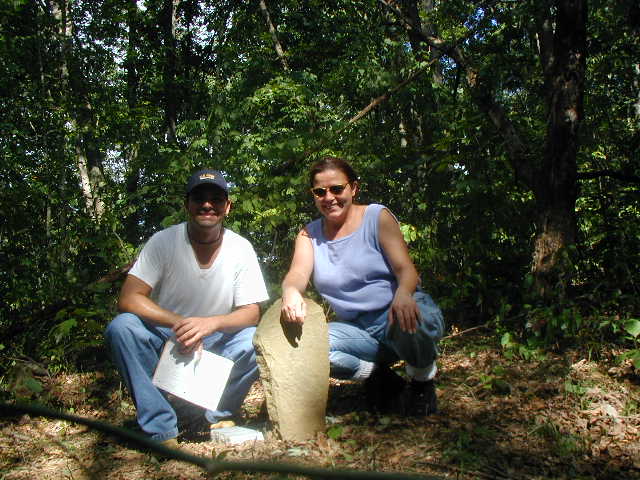
To reach the Elkins family cemetery, you must cut brush, Fourteen Mile Creek, Lincoln County, WV, 2002


Mom and I at the Elizabeth Elkins grave, Fourteen Mile Creek, Lincoln County, WV, 2002

Mom at the Elizabeth Elkins grave, Fourteen Mile Creek, Lincoln County, WV, 2002

OLYMPUS DIGITAL CAMERA

Elizabeth Elkins was the wife of Andrew Elkins, a Confederate veteran and postmaster, Fourteen Mile Creek, Lincoln County, WV, 2002

Dad at the Elizabeth Elkins grave, Fourteen Mile Creek, Lincoln County, WV, 2002

Elizabeth Elkins grave, Fourteen Mile Creek, Lincoln County, WV, 2002

In Search of Ed Haley 311

28 Wednesday May 2014

Posted by Brandon Ray Kirk in Ed Haley, Harts, Lincoln County Feud

≈ 1 Comment

Tags

Al Brumfield, Ann Brumfield, Appalachia, Ben Adams, Bob Adkins, Brandon Kirk, Burl Adams, Cain Adkins, crime, Daisy Ross, Ed Haley, Green McCoy, Guyandotte River, Harts, Harts Creek, Henderson Dingess, history, Howard Dalton, Imogene Haley, Joe Adams, John Frock Adams, John Hartford, John W Runyon, Lawrence Haley, Lawrence Kirk, Lincoln County, Logan County, Major Adkins, Milt Haley, Paris Brumfield, Peter McCoy, Sallie Dingess, Trace Fork, West Virginia, writing

Two months later, Brandon was still digging, but in a different way. He was knee-deep in land records at the Lincoln and Logan County court houses. He was curious — based on the economic aspect of the 1889 feud — to know about property ownership for feudists, particularly those with land around the mouth of Harts Creek.

He started with the Brumfields.

In 1889, Paris Brumfield owned 771 acres of land worth $1020, while his wife owned 367 acres worth $483. Al Brumfield had 295 acres (195 acres on Brown’s Branch and 100 acres on the Guyan River) worth $642. By combining Al’s totals to that of his parents, the Brumfields owned a total of 1433 acres of land worth $2143. A little further up Harts Creek, Henderson and Sarah Dingess owned 546 acres (five tracts) worth $1234.50 with a building valued at 100 dollars.

How did these totals compare to the land holdings of their enemies?

Well, Cain Adkins owned 205 acres worth $420 (with no buildings listed for 1889), while John Runyon owned 100 acres worth $187.50. Ben Adams owned at least 340 acres in Lincoln and Logan Counties (2 tracts) worth $380. By combining Ben’s property with that of Adkins and Runyon they owned 645 acres worth $987.50 — not even half of the Brumfield family holdings.

Based on these records, we realized that it might have been the financial superiority of the Brumfields and Dingesses which caused Adams, Runyon, and/or Adkins to act out against them (through Milt and Green).

But there was also a reason for the Brumfields to feel a little threatened themselves: John Runyon, whose 100 acres of property was situated geographically closest to them near the mouth of Harts Creek, had accumulated his estate in only three years of residence in Harts. His first tract, totaling 75 acres, was worth $1.50 and was deeded by A.S. “Major” Adkins in 1887. The other tract, totaling 25 acres and worth three dollars per acre, was deeded in 1888. Neither tract contained a building, according to land records.

Al’s 100 acres near the mouth of Harts Creek, in contrast, reflected eight years of effort.

Brumfield was likely concerned that Runyon had acquired so much land at the mouth of Harts in such a short time, especially since it was property that he wanted for himself.

It was immediately clear in looking at the feud in mild economic terms that Milt Haley and Green McCoy were pawns in a larger game between local elites. While Paris Brumfield, Al Brumfield, Cain Adkins, John Runyon, and Ben Adams were leading citizens, property owners and businessmen, Milt and Green were timber laborers and musicians who owned no property whatsoever. Based on what we’d heard from Daisy Ross, it was easy to see why Green might have took a shot at Paris, but why did he attack Al? And what was Milt’s motivation for even getting involved in the whole mess? Was he pulled into the fray because of his friendship to Green, as Daisy Ross had said? Or did he have connections to Ben Adams (a possible economic dependence on the timber-boss, his residence nearby Adams on Trace, or the fact his wife was related to Ben)?

And what did either man hope to gain from the assassination of Al Brumfield? I mean, that’s a hell of a lot to risk for a side of bacon and a few dollars. I had this nagging suspicion that they were maybe innocent of the crime, but Brandon was pretty well convinced of their guilt (as had been Lawrence Haley). He did, however, leave an opening by pointing out how Bob Adkins, Howard Dalton, Joe Adams and Lawrence Kirk had all heard that they were innocent. Bob and Joe had actually mentioned other suspects: Burl Adams, a nephew to Ben Adams, and John “Frock” Adams, a half-brother to Ed’s mother (who later shot his wife’s head off with a shotgun in his front yard). There was also the testimony of Preacher McCoy, who said Milt and Green were “as innocent as Jesus Christ on the cross.”

In Search of Ed Haley 310

26 Monday May 2014

Posted by Brandon Ray Kirk in Big Harts Creek, Ed Haley, Ferrellsburg, Lincoln County Feud

≈ Leave a comment

Tags

8th of January, Arkansas Traveler, Big Branch, Billy Adkins, Billy in the Lowground, Blackberry Blossom, Brandon Kirk, Dood Dalton, Ed Haley, Ferrellsburg, fiddling, Green McCoy, Green Shoal, Harts Creek, Henderson Dingess, history fiddle, Lop-Eared Mule, Milt Haley, Mingo County, Soldiers Joy, Ward Browning, West Fork, West Virginia, writing

A week or so later, Brandon and Billy visited Ward Browning, an older gentleman in Ferrellsburg whose wife was a descendant of Henderson Dingess. Ward said Milt Haley was from “back in the country at the head of Harts toward Mingo County.” The first year of Ed’s life, Milt dipped him repeatedly in water because someone told him it would make a baby healthy; instead, it made him go blind. Milt was hired with Green McCoy to kill the Brumfields. Later, they were captured and taken across the river from Green Shoal and kept under a dogwood bush where they were beaten through the night and then killed around daylight.

Ward said he used to see Ed Haley at Dood Dalton’s home on Big Branch in the late 1930s. Ed would stay around Dood’s place for two or three weeks at a time. He was a “star” — the best around. He and Dood sat on the porch and played for crowds of people in the yard who clapped their hands and had a good time. There was never any trouble. No one took him for granted. He sometimes made up to four dollars a day playing there in hard Depression times.

Ward said Ed carried his fiddle in a case and kept a stick to find his way in the road. He had a great personality and would tell wild stories of his exploits. He drank heavily and was “bad to fight,” but was always sober at Dood’s. Ward said he played “Billy in the Lowground”, “Lop-Eared Mule”, “Arkansas Traveler”, “Soldiers Joy”, “Blackberry Blossom”, and ‘8th of January”.

Brandon was also busy at the Haley-McCoy grave on West Fork. He seemed to be coming around on my idea to exhume Milt Haley and Green McCoy. I’d joked him relentlessly that we might do it only to find it completely empty. He was still against the idea, although his curiosity was getting the better of him.

“As I had been dwelling a lot on the Haley-McCoy grave recently, I finally decided to satisfy my curiosity to a limited extent,” he wrote. “I borrowed a metal detector and raced up to the grave on West Fork at the edge of dark to see what it would pick up (belt buckle, handcuffs, perhaps even the murder weapon). I first tested it on my keys, which I laid upon the ground. Running the detector over them caused a loud buzz. I then placed a pile of leaves over the keys and the detector still buzzed. As a last preliminary test, I laid a thick rock on top of my keys and ran the machine over it and it still registered the buzz. Content that the machine worked fairly well, I then eagerly began gliding it over the grave. Unfortunately, I picked up no real buzz. There was one spot that seemed to repeatedly register a slight buzz but nothing conclusive.”

Brandon signed his letter, “Digging Around (Almost Literally)…”

In Search of Ed Haley 309

23 Friday May 2014

Posted by Brandon Ray Kirk in Big Harts Creek, Ed Haley, Music

≈ Leave a comment

Tags

Andy Mullins, Ashland, banjo, Ben Adams, Bernie Adams, Bill Adkins, Brandon Kirk, Buck Fork, Claude Martin, Clyde Haley, Devil Anse Hatfield, Devil's Dream, Dingess, Drunkard's Hell, Ed Haley, Ella Haley, fiddling, George Baisden, George Mullins, Greasy George Adams, Harts, Harts Creek, Henderson Branch, history, Hoover Fork, John Frock Adams, Johnny Canub Adams, Kentucky, Lincoln County, Logan County, Mona Haley, music, Ralph Haley, Roxie Mullins, Sally Goodin, Soldiers Joy, Ticky George Adams, Trace Fork, Weddie Mullins, West Virginia, Wilson Mullins, writing

Throughout the winter 1996, Brandon kept busy interviewing folks around Harts for new Ed Haley-Milt Haley leads. In March, he wrote me about recent developments, including the death of Bill Adkins, Sr. — the old fiddler in Harts. At Bill’s wake, Brandon met Andy Mullins, who had recently moved back to Harts Creek after settling in Michigan in 1952. He was the son of Roxie Mullins.

Andy said, when he was a child, Ed Haley spent summers with his parents. Ed also stayed with George Mullins on Buck Fork, George Baisden (a banjo player) in the head of Hoover Fork, “old John Adams” on main Harts Creek, and Johnny Adams (Ticky George’s son) on Trace Fork. Ed had a big, fat belly. Sometimes, he came with his wife, a quiet woman who would eat dinner and then sing for an hour or so while playing the mandolin. Their daughter “Mona Mae” traveled with them, as did her husband, Wilson Mullins.

Andy didn’t remember much about Ed’s other children. He said Clyde stayed six months at a time on Harts Creek and “wouldn’t work a lick” and “couldn’t stay out of trouble.” He heard that Ralph used to hang upside down from a bridge in Ashland.

When Ed was young, Andy said, he supposedly played a lot of music with George Baisden. Later, he played with Bernie Adams and Claude Martin. Andy remembered that Ed didn’t saw the fiddle — he played smooth — and he was a good singer. His voice was like a bell. When he played music with Bernie and Claude, people gathered in and brought food and booze. Andy never saw Ed drunk, although he would get pretty high. Ed and Bernie were hateful. Somebody might request a tune and Ed would say, “What do you think I am, a steam engine?” — then play it five minutes later. Andy remembered Ed playing “Devil’s Dream”, “Drunkard’s Hell,” “Soldiers Joy” and “Sally Goodin”.

Andy was familiar with Ben Adams, who he said operated a mill-dam at Greasy George’s place on main Harts Creek. Ben used this dam to back the creek all the way up to Henderson Branch. Before turning it loose, he would go and tell people to get out of their homes. His nephew, “old John Adams” (a.k.a. “Long John” or “John Frock”), was the one who went to Dingess and killed the man who had shot Ed’s uncle, Weddie Mullins. Andy said the doctor had this man on a table working on him when John showed up and “wasted” him. John Frock let Ed cut his fingernails one time and he cut them up so badly that his fingers bled. (Mona had told me a similar story, except she thought that Ed had cut Devil Anse Hatfield’s nails.)

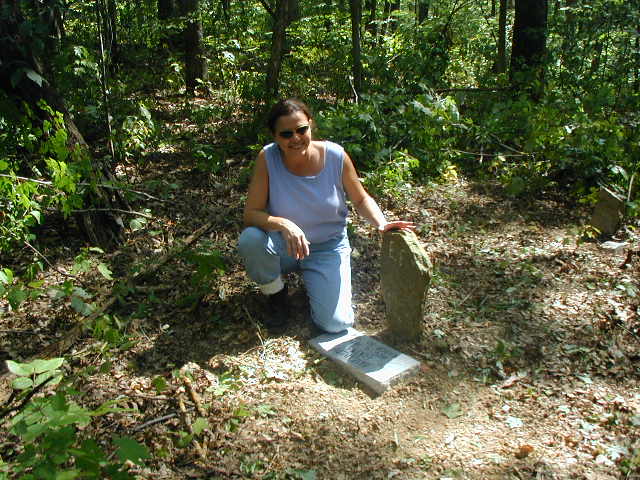
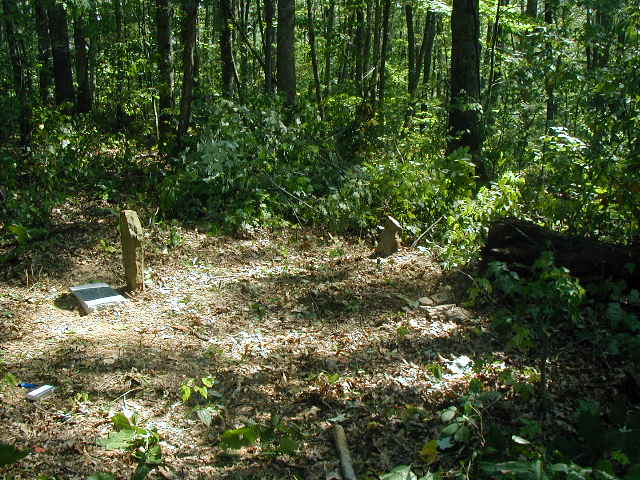
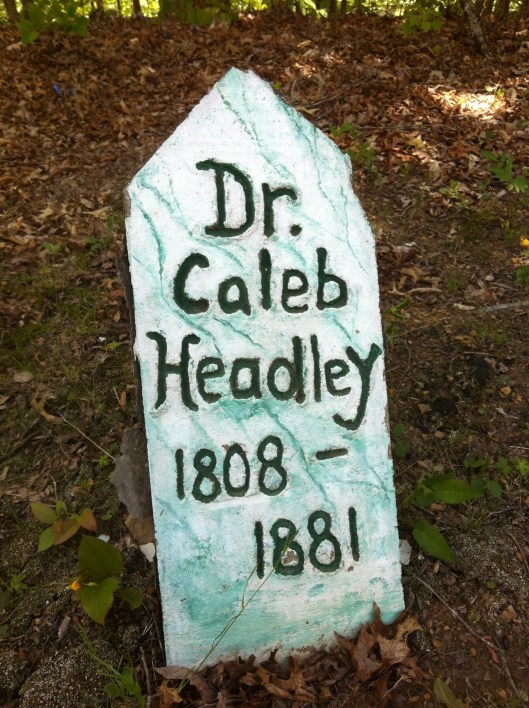
Caleb Headley grave

18 Sunday May 2014

Posted by Brandon Ray Kirk in Cemeteries, Civil War, Fourteen, Wewanta

≈ 22 Comments

Tags

Brandon Kirk, Caleb Headley, cemeteries, Fourteen, Fourteen Mile Creek, genealogy, history, Lincoln County, photos, Sulphur Spring Fork, West Virginia

IMG_2665

Caleb Headley grave, Sulphur Spring Fork of Fourteen Mile Creek, Lincoln County, WV, 2014


Slim Clere and John Hartford

16 Friday May 2014

Posted by Brandon Ray Kirk in Ed Haley, Music

≈ Leave a comment

Tags

Appalachia, Brandon Kirk, fiddlers, John Hartford, music, photos, Slim Clere, South Charleston, U.S. South, West Virginia

Slim Clere, John Hartford, and myself at Slim's home in South Charleston, WV, 1996

Here I am with Slim Clere and John Hartford at Slim’s home in South Charleston, WV, 1996

John Hartford at the Hicks grave (1996)

14 Wednesday May 2014

Posted by Brandon Ray Kirk in Calhoun County, Ed Haley, John Hartford, Music

≈ Leave a comment

Tags

Appalachia, Brandon Kirk, Calhoun County, cemeteries, Hicks Family Cemetery, history, John Hartford, Kim Johnson, Laury Hicks, music, photos, U.S. South, West Virginia, Wilson Douglas

Wilson Douglas and John Hartford, Calhoun County, WV, 1996

Wilson Douglas and John Hartford, Calhoun County, WV, 1996

Brandon Kirk and John Hartford at the Laury Hicks grave, Calhoun County, WV, 1996

John Hartford and I at the Laury Hicks grave, Calhoun County, WV, 1996

John and I at the Laury Hicks grave, Calhoun County, WV, 1996

John and I at the Laury Hicks grave, Calhoun County, WV, 1996

In Search of Ed Haley 305

14 Wednesday May 2014

Posted by Brandon Ray Kirk in Calhoun County, Clay County, Ed Haley, Music

≈ Leave a comment

Tags

Appalachia, Arnoldsburg, Ashland, banjo, Ben Friend, Bernard Postalwait, Bill Stutler, Bob Carr, Brandon Kirk, Calhoun County, Camp Chase, Charleston, civil war, Clay, Clay County, Clendenin, Ed Haley, Ed Williams, Edden Hammons, fiddlers, fiddling, history, Hog Run Hollow, Jack McElwain, John Hartford, Kentucky, Kim Johnson, Laury Hicks, Lawrence Haley, Lincoln Republican, Luther Carder, music, Pat Haley, Pisgah Bridge, Richwood, Sol Carpenter, St. Albans, Ugee Postalwait, West Virginia, William E. Chilton, Williams River, Wilson Douglas, writing

Brandon and I got a good night’s sleep at Pat Haley’s home in Ashland, then took off the next morning to see Wilson Douglas in Clendenin, West Virginia. I wanted to hear more about his memories of Ed, play some music, and go see the old Laury Hicks homeplace. Wilson met us on his porch with Kim Johnson, a banjo player. We all went inside and got settled, where Kim mentioned that Laury first invited Ed to his house after meeting him in St. Albans, near Charleston. Wilson was quick to offer new details about Ed — of a more seedy variety. He said Ed “ran around” a lot with Bernard Postalwait when he was in the area. They usually got drunk and went “women crazy” and stayed gone all night. Hicks apparently had a “wild side,” too. Wilson hinted that he was a moonshiner who sometimes left home on timber jobs…and never showed up.

We wasted little time in taking off to see some of Ed’s old stomping grounds in Clay and Calhoun Counties. There was a slight drizzle, just enough to wet everything.

Our first stop was the Hicks homeplace, which had been overtaken by weeds on my previous visit in 1994. The weeds were gone this time, so we got out of the car and maneuvered through the rotting remains of an outhouse, chicken coop, cellar base, parts of an old fence, and scattered boards — all damp and colored dark brown due to the light rain dropping down around us.

It was a far cry from the “old days” when (according to Ugee Postalwait) the family had farmed corn, wheat and cane all the way back up the mountain to the head of Hog Run Hollow. Gone were the apple and peach orchards. Gone were the gardens down by the creek (now taken in by the paved road). And, most obviously, gone was the old Hicks home, the last of four houses built on the site (the final one having been constructed in 1936).

We soon made our way up the hill to the cemetery, where Brandon took pictures. I just kind of stared at Laury’s grave — picturing Ed playing there after Laury’s death in 1937.

As we came off the hill, Wilson said Hicks was rumored to have died from “some bad cases of VD.”

Later that day, Wilson showed us Clay, the seat of government for Clay County. This was the place where Ed Haley arrived by train from Charleston enroute to the home of Laury Hicks. Lawrence Haley once told me about his father walking from Clay to Arnoldsburg, a town some thirty miles away. Brandon had found this great article titled “Old-Time Fiddlers Will Gather At Clay Saturday” from a 1921 edition of the Lincoln Republican.

Clay, W.Va., Jan. 10 — Elaborate preparations are being made in the little city of Clay for the old-time fiddlers’ contest which will be held on Saturday night, January 22. An attendance surpassing anything ever held in Clay is expected, and the hospitable citizens of this town have appointed a committee to look after the welfare of its guests. Similar contests have been held in various other sections of West Virginia this winter, but they cannot even compare to the one which will be held in Clay, it is predicted. Old-time fiddlers from far and near are coming to compete, and, if possible, carry off the honors of the evening.

Among some of the celebrated old-time fiddlers who will be here is “Jack” McElwaine of Erbacon, in Webster county. “Jack” has played the fiddle for more than fifty years, and between times has been justice of the peace, preached the gospel and practiced law. He learned to play under Saul Carpenter, the most famous old-time fiddler of them all, and who played himself out of Camp Chase during the Civil war. Another fiddler equally famous is “Edin” Hammons, who hails from the head of Wiliams river, and whose sole occupation all through life has been hunt, trap and play the fiddle. “Edin” has killed more bears, deer and played the fiddle more than any other man on Williams River.

It is said that Senator William E. Chilton and Colonel Bob Carr of Charleston have been given invitations to attend the contest and compete with these old-time fiddlers.

Several local celebrities are expected to enter the contest, and the old mountaineer fiddlers are looking forward to this part of the contest with great pleasure and saying “the city fellers will have to fiddle some to beat them.” No complete list of the fiddlers who enter the contest has been made public, but some fifteen or twenty are expected. Ben Friend, Ed Williams, Luther Carder and “Bill” Stutler, men who have been winning prizes in other contests, will be there.

People of Clay and surrounding country are looking forward to this event with great anticipation and pleasure. The last contest of the kind was held at Richwood, Thursday night of last week, and fully 200 persons were unable to get into the theater where it was held.

There are very few of the real old time fiddlers who play the old mountain tunes living today, and within a very short time there will be none left and no one to take their place. The younger generation has neither talent nor desire for this kind of music. At any rate, one can not find a young man of today who can play the fiddle in the “good old-fashioned way.”

Clay, I found, was a small shell of a town with a nice old courthouse sitting high on the hill. There was the typical arrangement of buildings: sagging old businesses hinting at lost prosperity, a small bank, dollar stores, a car dealership, a post office, and a Gino’s restaurant. No red lights and basically one two-lane thoroughfare through town. There was a hotel with the weekly newspaper office headquartered beneath where, I was told, you could go in late and help yourself to a key and then pay for your room the next morning on your way out. After passing through town and crossing the Pisgah Bridge, we spotted an old section of residences and a community church. The track bed was still visible but the railroad was long gone.

← Older posts
Newer posts →

Feud Poll 1

If you had lived in the Harts Creek community during the 1880s, to which faction of feudists might you have given your loyalty?

Categories

  • Adkins Mill
  • African American History
  • American Revolutionary War
  • Ashland
  • Atenville
  • Banco
  • Barboursville
  • Battle of Blair Mountain
  • Beech Creek
  • Big Creek
  • Big Harts Creek
  • Big Sandy Valley
  • Big Ugly Creek
  • Boone County
  • Breeden
  • Calhoun County
  • Cemeteries
  • Chapmanville
  • Civil War
  • Clay County
  • Clothier
  • Coal
  • Cove Gap
  • Crawley Creek
  • Culture of Honor
  • Dingess
  • Dollie
  • Dunlow
  • East Lynn
  • Ed Haley
  • Eden Park
  • Enslow
  • Estep
  • Ethel
  • Ferrellsburg
  • Fourteen
  • French-Eversole Feud
  • Gilbert
  • Giles County
  • Gill
  • Green Shoal
  • Guyandotte River
  • Halcyon
  • Hamlin
  • Harts
  • Hatfield-McCoy Feud
  • Holden
  • Hungarian-American History
  • Huntington
  • Inez
  • Irish-Americans
  • Italian American History
  • Jamboree
  • Jewish History
  • John Hartford
  • Kermit
  • Kiahsville
  • Kitchen
  • Leet
  • Lincoln County Feud
  • Little Harts Creek
  • Logan
  • Man
  • Matewan
  • Meador
  • Midkiff
  • Monroe County
  • Montgomery County
  • Music
  • Native American History
  • Peach Creek
  • Pearl Adkins Diary
  • Pecks Mill
  • Peter Creek
  • Pikeville
  • Pilgrim
  • Poetry
  • Queens Ridge
  • Ranger
  • Rector
  • Roane County
  • Rowan County Feud
  • Salt Rock
  • Sand Creek
  • Shively
  • Spears
  • Sports
  • Spottswood
  • Spurlockville
  • Stiltner
  • Stone Branch
  • Tazewell County
  • Timber
  • Tom Dula
  • Toney
  • Turner-Howard Feud
  • Twelve Pole Creek
  • Uncategorized
  • Warren
  • Wayne
  • West Hamlin
  • Wewanta
  • Wharncliffe
  • Whirlwind
  • Williamson
  • Women's History
  • World War I
  • Wyoming County
  • Yantus

Feud Poll 2

Do you think Milt Haley and Green McCoy committed the ambush on Al and Hollene Brumfield in 1889?

Blogroll

  • Ancestry.com
  • Ashland (KY) Daily Independent News Article
  • Author FB page
  • Beckley (WV) Register-Herald News Article
  • Big Sandy News (KY) News Article
  • Blood in West Virginia FB
  • Blood in West Virginia order
  • Chapters TV Program
  • Facebook
  • Ghosts of Guyan
  • Herald-Dispatch News Article 1
  • Herald-Dispatch News Article 2
  • In Search of Ed Haley
  • Instagram
  • Lincoln (WV) Journal News Article
  • Lincoln (WV) Journal Thumbs Up
  • Lincoln County
  • Lincoln County Feud
  • Lincoln County Feud Lecture
  • LinkedIn
  • Logan (WV) Banner News Article
  • Lunch With Books
  • Our Overmountain Men: The Revolutionary War in Western Virginia (1775-1783)
  • Pinterest
  • Scarborough Society's Art and Lecture Series
  • Smithsonian Article
  • Spirit of Jefferson News Article
  • The Friendly Neighbor Radio Show 1
  • The Friendly Neighbor Radio Show 2
  • The Friendly Neighbor Radio Show 3
  • The Friendly Neighbor Radio Show 4
  • The New Yorker
  • The State Journal's 55 Good Things About WV
  • tumblr.
  • Twitter
  • Website
  • Weirton (WV) Daily Times Article
  • Wheeling (WV) Intelligencer News Article 1
  • Wheeling (WV) Intelligencer News Article 2
  • WOWK TV
  • Writers Can Read Open Mic Night

Feud Poll 3

Who do you think organized the ambush of Al and Hollene Brumfield in 1889?

Recent Posts

  • Logan County Jail in Logan, WV
  • Absentee Landowners of Magnolia District (1890, 1892, 1894)
  • Charles Spurlock Survey at Fourteen Mile Creek, Lincoln County, WV (1815)

Ed Haley Poll 1

What do you think caused Ed Haley to lose his sight when he was three years old?

Top Posts & Pages

  • Early Anglo Settlers of Logan, WV (1937)
  • "Holly Creek" John Mullins Grave in Clintwood, VA (2018)
  • Levisa Hatfield (1927-1929)
  • Halloween Traditions (1899)
  • Boling Baker and Princess Aracoma (1937)

Copyright

© Brandon Ray Kirk and brandonraykirk.wordpress.com, 1987-2023. Unauthorized use and/or duplication of this material without express and written permission from this blog’s author and/or owner is strictly prohibited. Excerpts and links may be used, provided that full and clear credit is given to Brandon Ray Kirk and brandonraykirk.wordpress.com with appropriate and specific direction to the original content.

Archives

  • February 2025
  • January 2025
  • October 2023
  • September 2023
  • December 2022
  • November 2022
  • May 2022
  • April 2022
  • February 2022
  • November 2021
  • October 2021
  • September 2021
  • June 2021
  • May 2021
  • April 2021
  • March 2021
  • February 2021
  • January 2021
  • December 2020
  • November 2020
  • October 2020
  • July 2020
  • June 2020
  • May 2020
  • April 2020
  • March 2020
  • February 2020
  • January 2020
  • December 2019
  • November 2019
  • October 2019
  • September 2019
  • August 2019
  • July 2019
  • June 2019
  • May 2019
  • April 2019
  • March 2019
  • February 2019
  • January 2019
  • December 2018
  • November 2018
  • October 2018
  • September 2018
  • August 2018
  • July 2018
  • June 2018
  • May 2018
  • April 2018
  • March 2018
  • February 2018
  • January 2018
  • December 2017
  • November 2017
  • October 2017
  • September 2017
  • August 2017
  • July 2017
  • June 2017
  • May 2017
  • April 2017
  • March 2017
  • February 2017
  • January 2017
  • December 2016
  • November 2016
  • October 2016
  • September 2016
  • August 2016
  • July 2016
  • June 2016
  • May 2016
  • April 2016
  • March 2016
  • February 2016
  • January 2016
  • December 2015
  • November 2015
  • October 2015
  • September 2015
  • August 2015
  • July 2015
  • June 2015
  • May 2015
  • April 2015
  • March 2015
  • February 2015
  • January 2015
  • December 2014
  • October 2014
  • September 2014
  • August 2014
  • July 2014
  • June 2014
  • May 2014
  • April 2014
  • March 2014
  • February 2014
  • January 2014
  • December 2013
  • November 2013
  • October 2013
  • September 2013
  • August 2013
  • July 2013
  • June 2013
  • May 2013
  • April 2013
  • March 2013
  • February 2013
  • January 2013
  • December 2012
  • November 2012

Enter your email address to follow this blog and receive notifications of new posts by email.

Join 2,927 other subscribers

Tags

Appalachia Ashland Big Creek Big Ugly Creek Blood in West Virginia Brandon Kirk Cabell County cemeteries Chapmanville Charleston civil war coal Confederate Army crime culture Ed Haley Ella Haley Ferrellsburg feud fiddler fiddling genealogy Green McCoy Guyandotte River Harts Harts Creek Hatfield-McCoy Feud history Huntington John Hartford Kentucky Lawrence Haley life Lincoln County Lincoln County Feud Logan Logan Banner Logan County Milt Haley Mingo County music Ohio photos timbering U.S. South Virginia Wayne County West Virginia Whirlwind writing

Blogs I Follow

  • OtterTales
  • Our Appalachia: A Blog Created by Students of Brandon Kirk
  • Piedmont Trails
  • Truman Capote
  • Appalachian Diaspora

BLOOD IN WEST VIRGINIA is now available for order at Amazon!

Blog at WordPress.com.

OtterTales

Writings from my travels and experiences. High and fine literature is wine, and mine is only water; but everybody likes water. Mark Twain

Our Appalachia: A Blog Created by Students of Brandon Kirk

This site is dedicated to the collection, preservation, and promotion of history and culture in Appalachia.

Piedmont Trails

Genealogy and History in North Carolina and Beyond

Truman Capote

A site about one of the most beautiful, interesting, tallented, outrageous and colorful personalities of the 20th Century

Appalachian Diaspora

  • Subscribe Subscribed
    • Brandon Ray Kirk
    • Join 789 other subscribers
    • Already have a WordPress.com account? Log in now.
    • Brandon Ray Kirk
    • Subscribe Subscribed
    • Sign up
    • Log in
    • Report this content
    • View site in Reader
    • Manage subscriptions
    • Collapse this bar
 

Loading Comments...