• About

Brandon Ray Kirk

~ This site is dedicated to the collection, preservation, and promotion of history and culture in my section of Appalachia.

Brandon Ray Kirk

Tag Archives: Brandon Kirk

1st Annual Ed Haley Fiddle Contest

07 Monday Jul 2014

Posted by Brandon Ray Kirk in Ashland, Big Sandy Valley, Ed Haley, John Hartford, Music

≈ 1 Comment

Tags

Annadeene Fraley, Ashland, banjo, Brandon Kirk, Ed Haley, Ed Haley Fiddle Contest, fiddlers, fiddling, history, J P Fraley, John Hartford, Kentucky, mandolin, Mike Compton, music, Nancy McClellan, Paul David Smith, Peter Even, photos

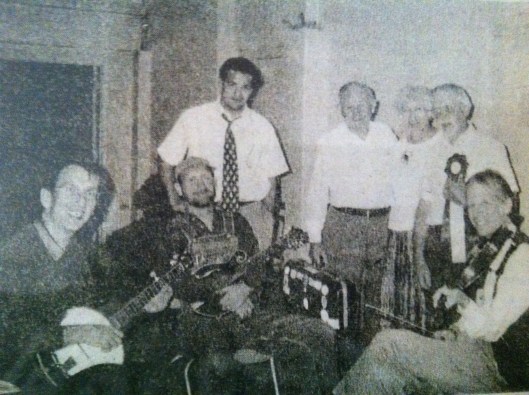
Ed Haley Contest 1

(L-R) Peter Even, Mike Compton, Brandon Kirk, J.P. Fraley, Nancy McClellan, Paul David Smith, and John Hartford.

Chasing John Runyon (1996)

07 Monday Jul 2014

Posted by Brandon Ray Kirk in Cemeteries, Ed Haley, Inez, Lincoln County Feud

≈ Leave a comment

Tags

Appalachia, Aquillia Porter, Bill Duty, Bill Fields, Billy Adkins, Brandon Kirk, cemetery, Ed Haley, genealogy, Graveyard Point, Hinkle Valley Road, history, Inez, James A Garfield, Jim Webb, Joe Fannin, John W Runyon, Kentucky, Lawrence County, Leonard Porter, Martin County, Mary Runyon, Mary Runyon Fields, Mary United Baptist Church, Milo, Nat's Creek, Peach Orchard, Route 1884, Route 40, Samuel W. Porter, Stidham, Tomahawk, U.S. South, Walt Mollett, Wealthy Fry, Webb Music Store, writing

A month or so after “striking out” on the Ed Haley house, Brandon and Billy drove to Inez, Kentucky, and searched for more information about John Runyon. Venturing north of the county seat, they met Leonard Porter, who lived in a little settlement called Tomahawk. Porter remembered Mrs. Runyon staying with Mary Fields in a small house at the mouth of nearby Hall Branch and said she was likely buried in the Fields family cemetery on a point at nearby Hall Branch Road. Billy and Brandon headed up there, where they found the grave of Bill Fields (1882-1948) and Mary Fields (1888-1985), but none of John Runyon’s family. Just down the hill from the cemetery (presently a trailer court) was the old homestead of Mr. and Mrs. Fields. At one time, they later discovered, the Fieldses ran a store beside of their home. Across the road was the location of the former Mary United Baptist Church — named for Mary Runyon or Mary Fields – now converted into a house. As they stood on the hill, Billy reminded Brandon that Bill Duty’s mother-in-law was a Fields prior to her marriage.

They next tried to find the location of John Runyon’s homeplace. According to the Williamson family history, Runyon lived at the “old Stidham post office,” which they figured was located on Rockhouse Fork. Unfortunately, they found no sign of “Stidham” up the many branches of Rockhouse. There were no mailboxes labeled “RUNYON” or any signs to help them along. Many of the names of local hollows had changed since the time of the old deeds.

Feeling a little desperate, they pulled into a driveway with a mailbox labeled “HINKLE” and spoke with a very nice middle-aged man who told them the exact location of the old Stidham Post Office — actually, all three of them. The first location ran by Joe Fannin was situated at the mouth of Spence Branch near Milo. Around 1935, the office was relocated to a site on what is now called Hinkle Valley Road, just across the creek from a sign reading “Left Fork.” The final Stidham Post Office was in what is today James Webb’s Music Store. Upon viewing the sites, Billy deduced that the old Runyon homeplace had been near the second post office.

While in that vicinity, they talked with an elderly man named Walt Mollett who confirmed that John Runyon had been a local resident. He said Runyon was probably buried down the road in a cemetery on Graveyard Point at Stidham, basically the junction of Route 1884 and Route 40.

A few minutes later they were at the cemetery, parking beside the road in a treacherous curve and tromping through a forest of damp growth. At the center of the cemetery was a single, ancient pine tree. Near the pine, Brandon spotted the grave of Runyon’s daughter, Wealthy Fry. Just below her was Aquillia Porter. And below her was a grave with a new tombstone written as “Mary M. Runyons” and dated “January 28, 1861-January 29, 1958.” Beside of Wealthy Fry’s final resting place was an older stone originally created for “Mary Runyon” dated “January 28, 1861-January 29, 1956.” There were plenty of Williamsons in the cemetery — all relation to Mrs. Runyon — including Sam Porter’s second wife — but absolutely no sign of John Runyon’s grave.

Jim Webb, a gentle middle-aged musician and proprietor of Webb’s Music Store, told Brandon and Billy that someone had wrecked in the cemetery a few years earlier and destroyed many of the tombstones. Equally tragic, the wrecker that removed the vehicle from the cemetery had caused more damage to the stones. The community had organized a fund to restore the graves, Webb said, but it was little consolation. Brandon theorized that John was buried beside of Wealthy — that someone had used Mary’s old tombstone to “sort of” mark the spot. He didn’t rule out, though, that Runyon had been buried with his parents on nearby Nat’s Creek in Lawrence County. (The Graveyard Point cemetery was more oriented toward his wife’s family, the Williamsons.) A quick drive to Nat’s Creek, including a tour of the “town” of Peach Orchard (a virtually abandoned coal town once prominent in business affairs and the site of a General Garfield Civil War story), failed to produce any signs of a Runyon cemetery, although it did offer some of the most serene, peaceful, spooky and haunting countryside found in the locale.

Brandon felt a real frustration in not being able to positively find Runyon’s grave and thus achieve some sense of closure on that facet of the story. It was as if he and Billy, whose ancestors had supposedly spent years looking for Runyon, had also been evaded by ole John — even in his death.

Ken Sullivan endorses “Blood in West Virginia”

06 Sunday Jul 2014

Posted by Brandon Ray Kirk in Lincoln County Feud

≈ Leave a comment

Tags

Appalachia, Blood in West Virginia, books, Brandon Kirk, Goldenseal, Hatfield-McCoy Feud, Ken Sullivan, Kentucky, Lincoln County, Lincoln County Feud, music, Tug Valley, University of Pittsburgh, University of Rochester, University of Virginia, West Virginia, West Virginia Encyclopedia, West Virginia Humanities Council

I proudly announce Ken Sullivan’s endorsement of my book, Blood in West Virginia: Brumfield v. McCoy. Mr. Sullivan, executive director of the West Virginia Humanities Council, ranks as one of Appalachia’s most distinguished and recognized editors. Best known for his promotion and editorship of the West Virginia Encyclopedia (2006), which has sold more than 17,000 copies, Mr. Sullivan is also the former editor of West Virginia’s premier state magazine, Goldenseal. Educated in history at the University of Virginia and University of Rochester, with a PhD from the University of Pittsburgh, he has consistently offered top-notch work on a variety of Appalachian subjects. It was during Mr. Sullivan’s tenure at Goldenseal that I first read a contemporary account of the Lincoln County Feud. Receiving praise from such an outstanding and accomplished editor as Ken Sullivan means a great deal to me.

Here is Mr. Sullivan’s endorsement of Blood in West Virginia:

“This book brings a deadly story to life: As the Hatfield-McCoy Feud was finally coming to a close in the Tug Valley of West Virginia and Kentucky, another bloody vendetta was under way in nearby Lincoln County, West Virginia. Here it was Brumfields versus McCoys — and Haleys and Runyons and Adkinses and others — with results that were equally fatal. Author Brandon Kirk has done remarkable work in untangling the complex web of kinship connections linking both friends and foes, while detailing the social and economic strains of changing times in the mountains. The story he documents in these pages had lasting implications for the families and individuals involved — and, curiously, for the folk music of the region.”

In Search of Ed Haley 333

06 Sunday Jul 2014

Posted by Brandon Ray Kirk in Big Harts Creek, Ed Haley, Spottswood

≈ Leave a comment

Tags

Alice Dingess, Billy Adkins, Bob Dingess, Brandon Kirk, Cas Baisden, Ed Haley, Ewell Mullins, Gaie Adams, history, Pete Adams, Ticky George Hollow, Trace Fork, Von Tomblin, writing

That fall, Brandon and Billy drove to Trace Fork to inspect the “Ed Haley home” — or at least what we wanted to be the Ed Haley home. It was, of course, most likely the Ewell Mullins home since Mullins bought Ed’s land in 1911 and reportedly built a new house there. Billy and Brandon spoke with Von Tomblin, Ewell’s daughter who lived next to the old home. Von said she was born in the back part of the home in 1935. As far as she knew, the front part of the house was torn down years ago, but not the back. Upon inspection, the back portion of the house did appear older than the front.

Von recommended that Billy and Brandon talk to Cas Baisden about the house, since he helped tear some of it down.

They found Cas down the creek.

Baisden said he helped push Ewell’s store against the front of the house when he was a boy. Later, they tore the entire home down, then built an almost-exact replica on the same spot.

Before Brandon and Billy left, Cas told them that Ewell Mullins had three stores in his life. The first one was built when Cas was a small boy near Ewell’s home. The second one was built around 1940 near the original one. The third one was built at the mouth of Ticky George Hollow just prior to Ewell’s passing.

Cas also remembered Ed Haley and his family well. He said Ed had the meanest boys he’d ever seen and probably drank himself to death.

Later that night, Billy and Brandon visited Pete and Gaie Adams near the mouth of Trace Fork. Gaie, who is a niece to Bob Dingess, had a lot of old photographs and said she remembered Ed and Ella spending weekends with her grandma, Alice Dingess. There was a little more confusion about the Ed Haley place: Gaie thought Ewell’s house had been completely torn down, while her husband said the back part was original. Oh boy.

Interview with Nellie Thompson of Wayne, WV (1996)

05 Saturday Jul 2014

Posted by Brandon Ray Kirk in Culture of Honor, Harts, Lincoln County Feud, Twelve Pole Creek, Wayne

≈ Leave a comment

Tags

Al Brumfield, Andrew D. Robinson, Beech Fork, Ben Adams, Bob Dingess, Brandon Kirk, crime, diptheria, Goble Richardson, Green McCoy, Green Shoal, Guyandotte River, Harrison McCoy, Harts, Harts Creek, history, Lincoln County Feud, Lynza John McCoy, Milt Haley, Monroe Fry, music, Paris Brumfield, Ross Fowler, Sallie Dingess, Sherman McCoy, Spicie McCoy, Warren, Wayne, Wayne County, Wayne County News, West Fork, writing

A few weeks later, Brandon called Nellie Thompson in Wayne, West Virginia. Nellie reportedly had the picture of Milt Haley and Green McCoy.

“I don’t know if I have anything like that or not,” Nellie said, “but I do have an old letter from Green McCoy.”

What?

Almost hyperventilating, he asked her to read it over the telephone.

Nellie fetched it from somewhere in the house, said it was dated May 19, 1889, then read it to him and said he was welcome to see it.

The next day, she called Brandon back and said, “I think I’ve found that picture you were looking for. It’s a little tin picture with two men in it.”

Oh god.

A few days later, Brandon drove to see Nellie about the picture and letter. Before dropping in on her, he spent a little time at the local library where he located a story about Spicie McCoy.

“As I promised last week, today we will explore the life of a lady who claimed to have a cure for diphtheria,” the story, printed in the Wayne County News (1994), began. “Spicie (Adkins) McCoy Fry was so short that if you stretched out your arm she could have walked under it. Anyone who lived in the East Lynn area knew who Spicie Fry was because she had probably been in almost every church around to sing at a revival meeting, something she loved to do. Spicie was well educated. She saw that her children went to school. Once out of grade school, Spicie’s sons took advantage of correspondence courses in music, art, and any other subject they could get thru the mail order catalog. Spicie’s son Monroe Taylor Fry was a self-taught musician.”

After a short time, Brandon drove to Nellie’s home, where she produced a small tin picture of two men sitting together. One of the men was obviously Green McCoy based on the picture we had already seen of him. The other fellow, then, was Milt.

As Brandon stared at the tintype, Nellie handed him Green’s letter. It was penned in a surprisingly nice handwriting, addressed to his brother Harrison, and was apparently never mailed. At the time of his writing, it was spring and McCoy had just moved back to Harts — probably after a short stay with his family or in-laws in Wayne County. He may’ve been there with his older brother, John, who’d married a girl almost half his age from Wayne County earlier in February.

Dear Brother. after a long delay of time I take this opertunity of droping you a few lines to let you know that I am well hoping when these lines reaches you they may find you all the same. Harrison you must excuse me for not writing sooner. the cause of me not writing is this[:] the post master here is very careless. they let people brake open the letters and read them so I will write this time to let you know where I am and where Lynza is. I have moved back to the west fork of Harts Creek and Lynza is married and living in wayne co yet on beach fork. everybody is done planting corn very near in this country. every thing looks lively in this part. tell Father and mother that I[‘m] coming out this fall after crops are laid by if I live and Lynza will come with me. tell all howdy for me. you may look for us boath. if death nor sickness don’t tak[e] place we will come. Harrison I would rather you would not write anymore this summer. people brakes open the letters and reads them so I will not write a long letter. Brumfield and me lives in 2 miles of each other and has had no more trubble but every body says that he will kill me if I don’t kill him. I look to have trouble with him so I will close this time.

On the back of the letter was written the following: “My wife sends her best respects to you all and says she would like to see you all. my boy is beginning to walk. he is a spoiled boy to[o].”

Clutching carefully onto the tintype and letter, Brandon asked Nellie what she’d heard about Milt and Green’s death. She didn’t really know much, but her brother Goble Richardson said he’d always heard that pack-peddlers who boarded with Paris Brumfield never left his home alive. These men were supposedly killed, tied to rocks, and thrown to the bottom of the Guyan River where the fish ate their rotting corpses. Soon after the “disappearance” of these pack-peddlers, Paris would be seen riding the man’s horse, while his children would be playing with his merchandise.

When Brandon arrived home he studied over Green McCoy’s letter — all the cursive strokes, the occasional misspellings, trying to extract something from it beyond what it plainly read.

Strangely, the letter didn’t reveal to which Brumfield — Al or Paris — Green referred when he wrote, “every body says that he will kill me if I don’t kill him.” It seems likely, though, based on what Daisy Ross had said, that Green referenced Paris.

Still, it was Al Brumfield who was ambushed only three months later.

What started their trouble?

And who was the careless postmaster who allowed people to “brake open the letters and read them?”

At the time of the Haley-McCoy trouble, Harts had two post offices: Harts and Warren. The postmaster at Harts — where McCoy likely received his mail — was Ross Fowler, son to the Bill Fowler who was eventually driven away from Harts by the Brumfields. Ross, though, was close with the Brumfields and even ferried the 1889 posse across the river to Green Shoal with Milt and Green as prisoners (according to Bob Dingess) in October of 1889. A little later, he worked in Al Brumfield’s store. The postmaster at Warren was Andrew D. Robinson, a former justice of the peace and brother-in-law to Ben Adams and Sallie Dingess. Robinson seems to have been a man of good credit who stayed neutral in the trouble.

In Search of Ed Haley 332

04 Friday Jul 2014

Posted by Brandon Ray Kirk in Calhoun County, Ed Haley, Music

≈ Leave a comment

Tags

Ashland, Brandon Kirk, Calhoun County, Ed Haley Fiddle Contest, Ella Haley, fiddler, fiddling, George Carr, history, Kentucky, Laury Hicks, Madison, midwife, Minnie Hicks, music, Roane County, Spencer, Walker School House, West Virginia, writing

The next day, at the fiddling contest, Brandon met George Carr of Madison, West Virginia. George said Ed was the reason he started playing the fiddle many years ago.

“I was raised in Calhoun County,” he said. “I first saw Ed Haley as a small boy in the one-room Walker School House. Sometime in the early ’30s, about ’34, ’35, I’d say. Him and his wife came and they played for us and he fascinated me with that fiddle. And he had a son called ‘Puckett’ and I don’t know what ever became of him. But Ed and his wife would play on the streets in Spencer where the stock sale was every Friday and they would play there and she pinned a tin cup in her apron and they got nickels and dimes and quarters and fifty cents but no greenbacks. He stayed with a fella by the name of Laury Hicks who was a local fiddler and a self-taught veterinarian. His wife, Minnie Hicks, was a midwife — delivered many, many babies — who held my father in her arms when he was a small baby and he died in ’75 and he was 77 years old.”

Dr. Ivan Tribe endorses “Blood in West Virginia”

03 Thursday Jul 2014

Posted by Brandon Ray Kirk in Lincoln County Feud

≈ 1 Comment

Tags

Appalachia, Blood in West Virginia, books, Brandon Kirk, crime, Harts, Hatfield-McCoy Feud, history, Ivan Tribe, Kentucky, Lincoln County, Mountaineer Jamboree, Rio Grande University, West Virginia, writing

I proudly announce Dr. Ivan Tribe’s endorsement of my book, Blood in West Virginia: Brumfield v. McCoy. Dr. Tribe, Professor Emeritus of History at Rio Grande University, ranks as one of Appalachia’s most distinguished and recognized historians. Best known for his Mountaineer Jamboree (1984), the definitive history of country music in West Virginia, Dr. Tribe is author of six additional books, beginning with Albany, Ohio: The First Fifty Years of a Rural Midwestern Community (1980). Dr. Tribe has also contributed over two hundred articles, composed at least eighty sets of liner notes for albums, and written more than forty record and book reviews. Throughout his long career as an educator and author, he has consistently offered top-notch scholarship on the subjects of traditional country music, bluegrass music, and coal mining communities. While I recommend any one of Dr. Tribe’s writings, his Mountaineer Jamboree remains a personal favorite. Receiving praise from such an outstanding scholar and accomplished author means a great deal to me.

Here is Dr. Tribe’s endorsement of Blood in West Virginia:

“Except for the Hatfield-McCoy Feud which spilled over into two states, eastern Kentucky is better known as Appalachia’s feud country. However, Brandon Kirk’s book demonstrates that Lincoln County, West Virginia had a feud that has been largely overlooked by prior chronicleers. The Brumfields versus a variety of persons named Adkins, McCoy, and Haley made the community of Harts a real hot spot among mountain communities in the late 1880s. Kirk’s Blood in West Virginia tells a fascinating story that elevates the Lincoln County feud to its proper place in Appalachian and West Virginia History.”

In Search of Ed Haley 331

03 Thursday Jul 2014

Posted by Brandon Ray Kirk in Ed Haley, Music

≈ Leave a comment

Tags

Ashland, Brandon Kirk, Clyde Haley, Ed Haley, Ella Haley, genealogy, history, John Hartford, Kentucky, Keyser Creek, life, music, Noah Haley, Pat Haley, Ralph Haley, writing

About an hour later, Brandon showed up at Pat’s, followed by various members of the Haley clan: Noah, Clyde, and a bunch of children and grandchildren. The house was soon full of people — talking and eating. It was a bittersweet moment due to Lawrence’s absence, although his spirit was everywhere. I watched the Haleys — Ed’s children and grandchildren — business executives, gamblers, bar owners — mix with one another. Conversation was friendly between them, although there seemed to be an estrangement — especially among the younger ones. Basically, they were raised up separate from each other (the “Kentucky Haleys” vs. the “Ohio Haleys”); to be honest, it was as if they really didn’t know each other that well.

I realized that the binding force in Ed’s family — the glue that held all of them together — was the music…or at least the memory of it. Children who had never met before were sitting in the floor together or running through the house and yard — some hearing about Ed for the first time. I kept thinking about how one of them might some day pick up a fiddle and naturally crank out some of those “Haley licks.”

Brandon and I sat in the living room with Noah, Clyde, and Mona. Clyde immediately started talking about Ed.

“I used to hate him — hate that man — the way he treated Mom,” he said.

“Evidently, Mom cared for him or she wouldn’t a let it go on,” Noah said.

“I learnt as I got older and got a little tolerance in my mind I learned to forgive my hate for my dad to something else,” Clyde said. “I give it to God or whatever you want to call it.”

“I think the reason you didn’t like him Clyde was because when we stole them ducks there at Keyser Creek, he took each one in a room by ourself and he took a strap and he held us by the arm and he beat the hell out of us,” Noah said, laughing.

“That was Mr. Runyon’s ducks,” Clyde said. “Yeah, he beat us with the buckle part of that belt.”

“Yeah, and I think that’s why you didn’t like him,” Noah said. “I remember that beating we got.”

Clyde said, “Oh, we got a good one, didn’t we?”

I asked where Ed lived when that happened and Clyde said, “That was a four-room house. Ralph, our oldest brother, he had made a trapdoor in that floor and he used to bootleg moonshine through that trapdoor.”

“Clyde, you remember the cow he stole and kept it under the porch?” Noah asked.

Clyde said, “Yeah, Ralph did that. That wasn’t a cow. That was a calf. Our house stood up on stilts and Ralph or somebody had fenced that all in to keep that calf in. Got that while he was in the CCCs.”

Noah said, “And he built a trapdoor so he could go down through the floor…”

“In the bedroom,” Mona added.

Clyde laughed and said, “Ralph got that calf in the house and he was trying to put that calf up in Mom’s lap and it done something all over Mom.”

John W. Runyon 3

02 Wednesday Jul 2014

Posted by Brandon Ray Kirk in Big Sandy Valley, Inez, Lincoln County Feud, Timber, Wyoming County

≈ 2 Comments

Tags

Adam Runyon, Analena Porter, Aquillia Runyon, Asa Williamson, Aubrey Lee Porter, Bill Fields, Bill Porter, Brandon Kirk, Buchanan County, Buskirk and Wittenberg, Clarence Hinkle, Etta M. Porter, Ferrellsburg, genealogy, Graveyard Point, Guiniford Apney, Hatti Hinkle Apney, history, Inez, Jean Ramey, John Porter Jr., John W Runyon, John W. Porter, Kentucky, Martin County, Mary Runyon Fields, Mary Williamson, Maude Williamson, Merrill Porter, Norfolk, Point Pleasant, Rockcastle Creek, Russell Goble, Samuel W. Porter, Stafford Fork Precinct, Stidham, Virgil Ramey, Virginia, Virginia Lee Porter, Wealthy Runyon, West Virginia, writing, Wyoming County

The John W. Runyon family seems to have headed further south to try their luck elsewhere. In February 1902, Mary Runyon, her recently remarried daughter, Wealthy (Runyon) Hinkle-Fry, and her former son-in-law Clarence Hinkle were listed in Martin County deed records as residents of Buchanan County, Virginia.

John Runyon, meanwhile, soon gave up on his case in Wyoming County. A court entry dated April 2, 1902 and titled “John W. Runyon vs. Buskirk and Wittenberg” mentions how he “failed to give bond for costs as required in an order entered at a former term of the Court.” The Court ruled that “the defendants recover of the plaintiff their costs in their behalf expended in their defense herein including an attorneys fee of $10.00.” Included in this record was a list of thirty-four “Petit Jurors” who were, for some reason, to be paid “out of the County Treasury to wit” for their services in this case, some of them serving as many as nine days and being paid as much as eighteen dollars. It wasn’t clear why jurors served up to nine days, as records indicate that the court dismissed Runyon’s case before it went to trial.

After a short stay in Virginia, the Runyon family returned to Martin County and settled near the old Stidham Post Office on Rockcastle Creek, several miles north of the countyseat of Inez. On June 25, 1903, Wealthy Fry died at the age of 22 years old. Aquillia Porter died on February 20, 1910. A few months later (April 20) her husband remarried to Maude Williamson. Both of the Runyon girls were buried in the Williamson family cemetery at Stidham. Runyon’s legal problems, meanwhile, continued in Martin County as late as the 1910s.

On the bright side, John and Mary Runyon Fork purchased many acres of land around Rockhouse between 1893-1917 and sold at least 1,001 acres in that same vicinity between 1904-1932. Most of it went to their family: Sam Porter got 100 acres in 1910, 50 acres in 1917 and 35 acres in 1925. Various members of the Williamson family also bought tracts from John and Mary Runyon.

In 1920, John W. Runyon was listed in the Martin County Census as a resident of the Stafford Fork Precinct. He was a 65-year-old general laborer. His wife Mary was 55 years old. Asa G. Williamson, age 52, brother-in-law, was also in the household. Next door was the family of grandson John W. Porter, a 23-year-old farmer, with wife Etta M. (age 23). There were two children listed: Analena, age three; and Virginia Lee, age one. Aubrey Lee Porter, 22-year-old brother to John, who was also present in the home and employed as a coal miner.

John Runyon died on January 12, 1925 in Martin County. His widow spent her final years under the care of his niece, Mary (Runyon) Fields, who had been listed with the family in the 1900 Wyoming County Census. Mary was a daughter of John’s twin brother. She married Bill Fields and participated in much of the “family business” (marriage records, land transactions). Mary Runyon was still alive in 1952, when the Runyon genealogy book was assembled and was a source on the Adam Runyon family line.

Back in Ferrellsburg, Brandon called Bill Porter, an 80-year-old man in the Inez-area who was distantly connected to John Runyon’s family. He hadn’t known Runyon personally but said, “He was a well-thought of person. He followed the timber business. Everywhere he went he had bad luck. He was pretty bad to crook people.”

Mr. Porter said the Runyon place sat just above the old Stidham Post Office at Graveyard Point and told all about the Runyon descendants. He said Aubrey Porter married a Williams and raised a family of three children (including one son named Jimmy) in Columbus, Ohio. John W. Porter had two children — Merrill and John, Jr — and lived in Norfolk, Virginia. Hattie (Hinkle) Apney had two daughters: one named Guiniford, who married Russell Goble (an active member of the Inez School Board for years), and Jean, who married Virgil Ramey. Mr. Porter thought Hattie divorced her husband and moved to Point Pleasant, West Virginia, where she died.

John W. Runyon 1

30 Monday Jun 2014

Posted by Brandon Ray Kirk in Big Harts Creek, Big Sandy Valley, Harts, Inez, Timber, Wyoming County

≈ Leave a comment

Tags

Adam Runyon, Adam Runyon Sr., Alden Williamson Genealogy, Aquillia Runyon, Aubrey Lee Porter, Billy Adkins, Bob Spence, Brandon Kirk, Charleston, civil war, Clarence Hinkle, Crawley Creek, Cultural Center, Ellender Williamson, Enoch Baker, Garrett and Runyon, genealogy, Harts, Hattie Hinkle, Henderson Dingess, history, Inez, Izella Porter, James Bertrand Runyon, James Muncy, John W Runyon, John W. Porter, Kentucky, Land of the Guyandot, Lawrence County, Logan County, Logan County Banner, logging, Martin County, Mary Runyon, Milt Haley, Moses Parsley, Nat's Creek, Nellie Muncy, Nova Scotia, Peach Orchard, Pigeon Creek, Pike County, Pineville, Rockcastle Creek, Runyon Genealogy, Samuel W. Porter, Stephen Williamson, timbering, Wayne, Wayne County, Wealthy Runyon, West Virginia, Wolf Creek, writing, Wyoming County

In the late summer of 1996, Brandon and Billy turned their genealogical sights on John W. Runyon, that elusive character in the 1889 story who seemed to have stirred up a lot of trouble and then escaped unharmed into Kentucky. They arranged a biographical outline after locating two family history books titled Runyon Genealogy (1955) and Alden Williamson Genealogy (1962). Then, they chased down leads at the Cultural Center in Charleston, West Virginia; the Wyoming County Courthouse at Pineville, West Virginia; the Wayne County Courthouse in Wayne, West Virginia; the Martin County Courthouse at Inez, Kentucky; and at various small public libraries in eastern Kentucky. Runyon had left quite a trail.

John W. Runyon was born in February of 1856 to Adam and Wealthy (Muncy) Runyon, Jr. in Pike County, Kentucky. He was a twin to James Bertrand Runyon and the ninth child in his family. His mother was a daughter of James Muncy — making her a sister to Nellie Muncy and an aunt to Milt Haley. In other words, John Runyon and Milt Haley were first cousins.

According to Runyon Genealogy (1955), Adam and Wealthy Runyon left Pike County around 1858 and settled on the Emily Fork of Wolf Creek in present-day Martin County. In 1860, they sold out to, of all people, Milt Haley’s older half-brother, Moses Parsley, and moved to Pigeon Creek in Logan County. John’s grandfather, Adam Runyon, Sr., had first settled on Pigeon Creek around 1811. The family was primarily pro-Union during the Civil War.

At a young age, Runyon showed promise as a timber baron.

“The first lumber industry in Logan County of any importance was started on Crawley Creek by Garrett and Runyon during the year 1876,” Bob Spence wrote in Land of the Guyandot (1978). “Garrett and Runyon deserve credit for their efforts in opening the lumber business in Logan County. They were the first to hire labor in this field. It might be of interest to note here that they originally brought trained men from Catlettsburg… In a few years, Garrett and Runyon left Logan [County], and soon Enoch Baker from Nova Scotia came to Crawley Creek to take their place.”

John may have put his timber interests on hold due to new developments within his family. According to Runyon Genealogy, his mother died around 1878 and was buried at Peach Orchard on Nat’s Creek in Lawrence County, Kentucky. His father, meanwhile, went to live with a son in Minnesota. In that same time frame, on Christmas Day, 1878, Runyon married Mary M. Williamson, daughter of Stephen and Ellender (Blevins) Williamson, in Martin County, Kentucky. He and Mary were the parents of two children: Aquillia Runyon, born 1879; and Wealthy Runyon, born 1881. John settled on or near Nat’s Creek, where his father eventually returned to live with him and was later buried at his death around 1895.

During the late 1880s, of course, Runyon moved to Harts where he surely made the acquaintance of Enoch Baker, the timber baron from Nova Scotia. An 1883 deed for Henderson Dingess referenced “Baker’s lower dam,” while Baker was mentioned in the local newspaper in 1889. “Enoch Baker, who has been at work in the County Clerk’s office and post office for several weeks, is now on Hart’s creek,”  the Logan County Banner reported on September 12. Baker was still there in December, perhaps headquartered at a deluxe logging camp throughout the fall of 1889.

After the tragic events of ’89, Runyon made his way to Wayne County where he and his wife “Mary M. Runyons” were referenced in an 1892 deed. Wayne County, of course, was a border county between Lincoln County and the Tug Fork where Cain Adkins and others made their home. He was apparently trying to re-establish himself in Martin County, where his wife bought out three heirs to her late father’s farm on the Rockhouse Fork of Rockcastle Creek between 1892-1895.

In the late 1890s, John’s two daughters found husbands and began their families. On January 3, 1896, Wealthy Runyon married Clarence Hinkle at “John Runyonses” house in Martin County. She had one child named Hattie, born in 1899 in West Virginia. On March 29, 1896, Aquillia Runyon married Samuel W. Porter at Mary Runyon’s house in Martin County. They had three children: John W. Porter, born in 1897 in West Virginia; Aubrey Lee Porter, born in 1899 in Kentucky; and Izella Porter, who died young.

Dr. Ronald L. Lewis endorses “Blood in West Virginia”

28 Saturday Jun 2014

Posted by Brandon Ray Kirk in Lincoln County Feud, Timber

≈ Leave a comment

Tags

Appalachia, Blood in West Virginia, Brandon Kirk, Coal Iron and Slaves, ethnicity, feud, Harts, Historian Laureate of West Virginia, history, industrialization, Kentucky, labor, Ronald L. Lewis, timbering, Transforming the Appalachian Countryside, West Virginia, West Virginia University, writing

I proudly announce Dr. Ronald L. Lewis’ endorsement of my book, Blood in West Virginia: Brumfield v. McCoy. Dr. Lewis, professor emeritus of history at West Virginia University and Historian Laureate of West Virginia, ranks as one of Appalachia’s most distinguished and recognized historians. Best known for his award-winning book, Transforming the Appalachian Countryside (1998), an unsurpassed study of the timber industry in West Virginia, Dr. Lewis is author of five books, beginning with Coal, Iron, and Slaves (1979), as well as numerous articles. Throughout his long career in academia, he has consistently offered top-notch scholarship on the subjects of ethnicity, labor, industrialization, and social change, particularly as they apply to West Virginia and Appalachian history. While I would recommend any one of Dr. Lewis’ writings, his Transforming the Appalachian Countryside remains a personal favorite. Receiving praise from such an outstanding scholar (and personal hero) means a great deal to me.

Here is Dr. Lewis’ endorsement of Blood in West Virginia:

“The family feud is indelibly linked with Appalachia in American popular culture. As portrayed by sensationalist reporters and local color writers of the late 19th century, feuding was evidence of the genetic and/or cultural degeneracy of a people whose lack of social institutions and isolation had arrested their culture in a frontier state as American progress bypassed the region on its way westward. Appalachia was ‘a strange land with peculiar people’ and ‘a place where time stood still.’ Unfortunately, there is not a shred of evidence for this social construction of the region or the ‘hillbilly’ stereotype: that Appalachians were governed by an irrational predisposition to violence. Since the 1980s, scholars have rejected the popular-culture view of drunken hillbillies ready to shoot at the drop of a hat to protect family honor. Brandon Kirk’s Blood in West Virginia is one of the modern community studies that obliterate the stereotype; his intensive research of the Brumfield-McCoy feud that occurred in 1889-90 at Hart, West Virginia, reinforces the revisionist view that feuds occurred as the result of industrial capitalism, rather than the lack of it. Most Appalachian feuds occurred in the mountain counties of southern West Virginia and eastern Kentucky during the last two decades of the 19th century when railroad, timber, and coal development virtually transformed the region’s economy from its traditional agricultural economy into a rural-industrial one. Kirk clearly demonstrates that the Brumfield-McCoy feud was a struggle between rival factions to control the area’s economic and political development. Family ties among the feudists were incidental. Motives for the feud were, therefore, not peculiar to Appalachian culture; after all, violence for economic and political control in industrializing America was as American as apple pie. Blood in West Virginia is an exciting story well-told; fortunately, it is one that preserves the truth rather than perpetuates the stereotypes.”

In Search of Ed Haley 329

28 Saturday Jun 2014

Posted by Brandon Ray Kirk in Big Harts Creek, Culture of Honor, Ed Haley, Lincoln County Feud, Spottswood, Timber

≈ Leave a comment

Tags

accordion, Al Brumfield, Andy Mullins, banjo, Bernie Adams, Billy Adkins, Birdie, Blackberry Blossom, Brandon Kirk, Charles Conley Jr., Chinese Breakdown, Clifford Belcher, Crawley Creek Mountain, Down Yonder, Ed Belcher, Ed Haley, fiddle, fiddler, guitar, Harts, Harts Creek, history, Hollene Brumfield, Joe Adams, John Hartford, Johnny Hager, Logan, Logan County, Milt Haley, music, piano, Pop Goes the Weasel, Raggedy Ann, Soldiers Joy, Spanish Fandango, timbering, Trace Fork, West Virginia, Wirt Adams, writing

Satisfied that we’d taken up enough of Andy’s day, we drove up Trace Fork to see Wirt Adams, an older brother to Joe Adams. Wirt was busy installing a waterbed but took a break to talk with us. “Well, come on in boys, but I’ve only got a few minutes,” he seemed to say. Inside, however, after I had pulled out my fiddle and he had grabbed a mandolin, he seemed ready to hang out with us all day.

I told Wirt that I was trying to find out about Haley’s life. He said old-timers in the neighborhood used to tell stories about Ed playing for dances on Saturday nights with Johnny Hager, a banjo-picker and fiddler. Ed eventually left Harts Creek and got married but came back to stay with his cousins every summer.

Wirt said he sometimes bumped into him in local taverns:

“It was in the forties,” he said. “About ’47, ’48, ’49, ’50 — along there somewhere. We called it Belcher’s beer garden. It was a roadhouse over on Crawley Hill. Well, I just come in there from the mines and Ed was there and he heard somebody say that I was there and he said, ‘Come on over here Wirt and play one.’ I think the fella that’d been playing with him had got drunk and passed out. Well I played one or two with him and then Charley Conley and them boys come in and Charley says, ‘C’mon over here Wirt and get in with us.’ Ed said, ‘Don’t do that, you’re playing with me.’ I really wasn’t playing with him. I had my mine clothes on. I just come in there and picked up Bernie Adams’ old guitar. If you was playing they’d sit you a beer up there — no money in it. Mostly for fun, we thought. We’d gang up on Saturday night somewhere and play a little. Sometimes they’d dance.”

Wirt felt that Ed was “a good fiddler, one of the best in that time.”

I asked him about Ed’s bowing and he said, “It didn’t look like he moved it that far over the whole thing [meaning very little bow usage] but he played tunes where he did use the long stroke. But most of it was just a lot of movement but not no distance. Just hacking, I call it. Him and Johnny Hager were the only two fellas I know who done that.”

Brandon wondered about Ed’s tunes.

“Well, he played that ‘Blackberry Blossom’ — that was one of his favorites — and then he played ‘The Old Red Rooster’ and he played ‘Raggedy Ann’ and ‘Soldiers Joy’. He had one he called ‘somethin’ in the shucks’. I forget the name of it. Anyhow, it was one of the old tunes. And ‘Pop Goes the Weasel’, I’ve heard him play that.”

I asked if Ed played “Birdie” and he said, “Yeah. Now, that’s one of Charley’s favorites. ‘Chinese Breakdown’, that was one of Ed’s. ‘Down Yonder’.”

Wirt told us more about Johnny Hager and Ed Belcher.

“Johnny Hager was a banjo player but he could play the fiddle, too. He played the old ‘overhand’ [on the banjo]. He was a good second for somebody. Now Ed Belcher was a different thing altogether. He played all kinds of stuff. He played classical, he could play hillbilly. He played a piano, he played accordion, he played a banjo, he played a guitar. He was a good violin player. He tuned pianos for a living. Well, I’d call him a professional musician. They had talent shows in Logan. He’d sponsor that. He’d be like the MC and these kids would go in and play. He was a head musician. He was good. He could do ‘Spanish Fandango’ on the guitar and make it sound good. He could play all kinds of tunes. I never could play with him but then he could take the piano and make it talk, too. He was just an all-around musician.”

Brandon asked Wirt if he knew the story about how Ed came to be blind.

“Milt Haley was Ed’s dad,” Wirt said matter-of-factly. “They said his dad was kind of a mean fella and he took Ed out when he was a little kid — held him by the heels — and ducked him in the creek. He had some kind of a fever in wintertime. I’ve heard that, now. Ed never would talk about it. I never heard him mention his dad.”

Wirt had only heard “snippets” about Milt’s death.

“It was pretty wild times,” he said. “I understand the whole thing was over timberworks. These people, they’d have a splash dam on this creek and they’d get their logs and haul them in this bottom at the mouth of Trace — this was one of them. They had a splash dam and when the water got up they’d knock that dam out and that’d carry the logs down to Hart and they had a boom and them Brumfields owned the boom. They charged so much a log. Some way over that, there was some confusion. But I’ve seen Aunt Hollene. She was supposed to been riding behind old man Al Brumfield, her husband, and they shot at him and hit her.”

After Milt was caught, he made a last request.

“They said they asked him if he wanted anything and he wanted them to bring him a fiddle,” Wirt said. “He wanted to play a tune. Now this is hearsay but I’ve heard it several times. They said he played the fiddle and they hung him.”

In Search of Ed Haley 328

26 Thursday Jun 2014

Posted by Brandon Ray Kirk in Big Harts Creek, Ed Haley, Lincoln County Feud, Music

≈ Leave a comment

Tags

Andy Mullins, banjo, Bernie Adams, Bill Adkins, Bill Monroe, Billy Adkins, Black Sheep, blind, Bob Dingess, Brandon Kirk, Buck Fork, Claude Martin, Dingess, Dobie Mullins, Drunkard's Hell, Ed Haley, Floyd Mullins, George Baisden, George Mullins, Green McCoy, Grover Mullins, guitar, Harts Creek, history, Hollene Brumfield, John Hartford, Logan County, Maple Leaf on the Hill, measles, Michigan, Millard Thompson, Milt Haley, Mona Haley, moonshine, music, Naaman Adams, Roxie Mullins, Smokehouse Fork, Ticky George Hollow, Trace Fork, West Virginia, Williamson, Wilson Mullins, writing

From Naaman’s, we drove out of Trace and on up Harts Creek to see Andy Mullins, who Brandon had met a few months earlier at Bill Adkins’ wake. Andy had just relocated to Harts after years of living away in Michigan; he had constructed a new house in the head of Ticky George Hollow. Andy was a son to Roxie Mullins, the woman who inspired my fascination with Harts Creek. Andy, who we found sitting in his yard with his younger brother Dobie, was very friendly. He treated us as if we had known him for years.

“I was just catting when you fellas come up through there,” Andy said to us. “One of the girls lost a cat down there over the bank last night — a kitten. This morning I went down there and it was up in that rock cliff and I took its mother down there and it whooped the mother. And I took one of the kittens down there and it whooped the kitten. The old tomcat, he come down there and he whooped it. It went back up under that damn rock.”

I liked Andy right away.

We all took seats in lawn chairs in the front yard where Andy told about Ed Haley coming to see his parents every summer when he was a boy, usually with his wife. He described him as having a “big, fat belly” and weighing about 200 pounds.

“He wasn’t much taller than Dobie but he was fat,” Andy said. “I can remember his eyes more than the rest of him because his eyes was like they had a heavy puss over them or something. It was real thick-like. Not like they were clouded or anything.”

Even though Ed was blind, he could get around all over Harts Creek and even thread a needle.

Andy had heard that Milt caused Ed’s blindness.

“They said that Ed got a fever of some kind when he was a baby and Milt went out and cut a hole in the ice and stuck him under the ice in the creek to break the fever,” he said.

Andy knew very little about Milt.

“Just that Milt got killed, that was it, over shooting the old lady down at the shoal below Bob Dingess’ at the mouth of Smokehouse,” he said.

“All the old-timers that knows anything about his daddy is probably dead,” Dobie said.

Brandon said we’d heard rumors that Milt and Green were innocent of shooting Hollena Brumfield and Andy quickly answered, “That’s what my father-in-law told me.”

Changing the conversation back to Ed, Andy said, “Ed used to go up on Buck Fork to George Mullins’ to stay a lot and up to Grover Mullins’. He lived just above George’s place — the old chimney is the only thing still standing.”

He also went up in the head of Hoover to see George Baisden, a banjo-picker who’d hoboed with him in his younger days. The two of them had a lot of adventures, like the time Ed caught a train at Dingess and rode it over to Williamson to play for a dance or at a tavern. Just before they rolled into town, George pushed him off the train then jumped off himself. It made Ed so mad that George had to hide from him for the rest of the night.

I asked Andy if Ed ever told those kind of stories on himself and he said, “He told big tales, I’d call them, but I don’t remember what they were. Well, he set and talked with my grandmother and grandfather all the time he was here, and Mom. I never paid any attention to what they talked about really. I guess, man, I run these hills. I was like a goat. Hindsight is 20/20.”

Not long into our visit with Andy, he got out his guitar and showed me what he remembered about Bernie Adams’ guitar style. From there, he took off on Bill Monroe tunes, old lonesome songs, or honky-tonk music, remarking that he could only remember Ed’s tunes in “sketches.”

I asked, “Do you reckon Ed would sing anything like ‘Little Joe’?” and he said, “I don’t know. It’s awful old. I heard him sing ‘The Maple on the Hill’. He played and sang the ‘Black Sheep’.”

“He played loud, Ed did,” Dobie said.

“And sang louder,” Andy said immediately. “He’d rare back and sing, man.”

The tune he best remembered Ed singing was “The Drunkard’s Hell”.

I wanted to know the time frame of Andy’s memories.

“1944, ’45,” he said. “I was thirteen year old at that time. Now in ’46, we lived across the creek up here at Millard’s. Him and Mona Mae and Wilson — they wasn’t married at the time — went somewhere and got some homebrew and they all got pretty looped. That was up on Buck Fork some place. Ed got mad at Wilson and her about something that night and that’s the reason they didn’t play music — him and Claude Martin and Bernie Adams.”

I asked Andy about Ed’s drinking and he said, “Just whatever was there, Ed’d drink. He didn’t have to see it. He smelled it. Ed could sniff it out.”

Brandon wondered if Ed ever played at the old jockey grounds at the mouth of Buck Fork. Andy doubted it, although it sure seemed to me like the kind of place for him to go. There was moonshine everywhere and men playing maybe ten card games at once.

“They’d get drunk and run a horse right over top of you if you didn’t watch,” Andy said. “It was like a rodeo.”

The last jockey ground held at the mouth of Buck Fork was in 1948.

In Search of Ed Haley 327

25 Wednesday Jun 2014

Posted by Brandon Ray Kirk in Big Harts Creek, Ed Haley, Lincoln County Feud

≈ Leave a comment

Tags

Adams Branch, Ashland, Ben Adams, Billy Adkins, Bob Dingess, Brandon Kirk, Calhoun County, Ed Haley, Eloise Adams, Ernest Adams, Ewell Mullins, feud, Harts Creek, history, Imogene Haley, John Hartford, Logan, Logan County, Luster Dalton, Naaman Adams, Trace Fork, Twelve Pole Creek, West Virginia, writing

After talking with Luster, we drove to see Naaman Adams on Trace Fork. We talked in the yard with Naaman, who wore a straw hat and work clothes. His mother, we knew from Billy’s records, was Imogene Mullins, a first cousin to Ed’s mother and her namesake.

Naaman said his grandfather Ben Adams had lived in an old log cabin at the mouth of Adams Branch on Trace. Ben had feuded frequently with his neighbors and once ordered sixteen rifles for protection — eight .32 Winchesters and eight .38 Winchesters. To our surprise, Naaman said he had one of those very rifles. Disappearing momentarily into his house, he returned outside with a magnificent 1873 model .38 Winchester. Pointing to a dark spot on its butt end, Naaman said it had been caused by rifle fire. Apparently, during a feud, as Ben stood in his doorway shooting at his enemies, someone fired back, striking his rifle and causing the spot. He didn’t know if this incident occurred during the 1889 troubles.

Of the old feuds, Naaman said: “People back then feuded amongst themselves but ganged up on outsiders. People’d be killed and nobody knew who did it.”

Naaman said Ben’s feud “just died out” when a lot of the participants moved away from the area. The law eventually confiscated most of his guns. Someone located one of them in the old Logan Courthouse when it was torn down in the sixties. Bob Dingess had a .32, as did Ernest Adams, while a Hall on Twelve Pole had a .38.

Just before we left, Naaman mentioned that his wife was a daughter of Ewell Mullins, Ed’s first cousin. Ewell, of course, was the man who had bought Ed’s Trace Fork property in 1911. Naaman said when his father-in-law had bought the property, it contained a one-story boxed log house, which stood near a sugar tree toward the branch. Later, Ewell moved the house further up the bottom; old-timers had told Naaman about placing logs under the house and rolling it. In the 1950s, Naaman and several other men demolished the house. They did it in stages: first, the front was removed and rebuilt, then the back was removed and rebuilt. The newer home — the one there now, which we had nicknamed the “red house” — was patterned in its design after the older one.

This was a little disheartening: there didn’t seem to be anything left from Ed’s time on Harts Creek (nor in Ashland or in Calhoun County).

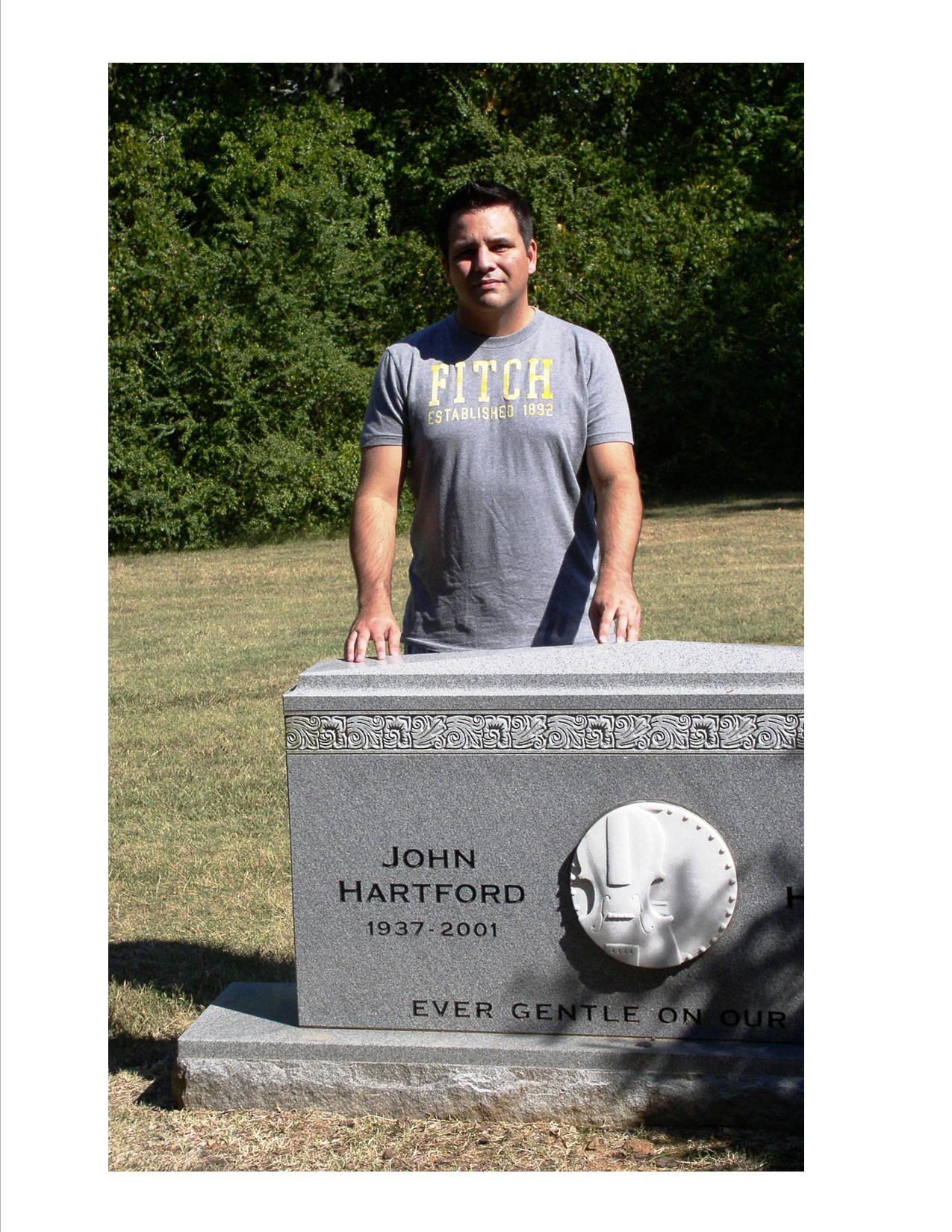
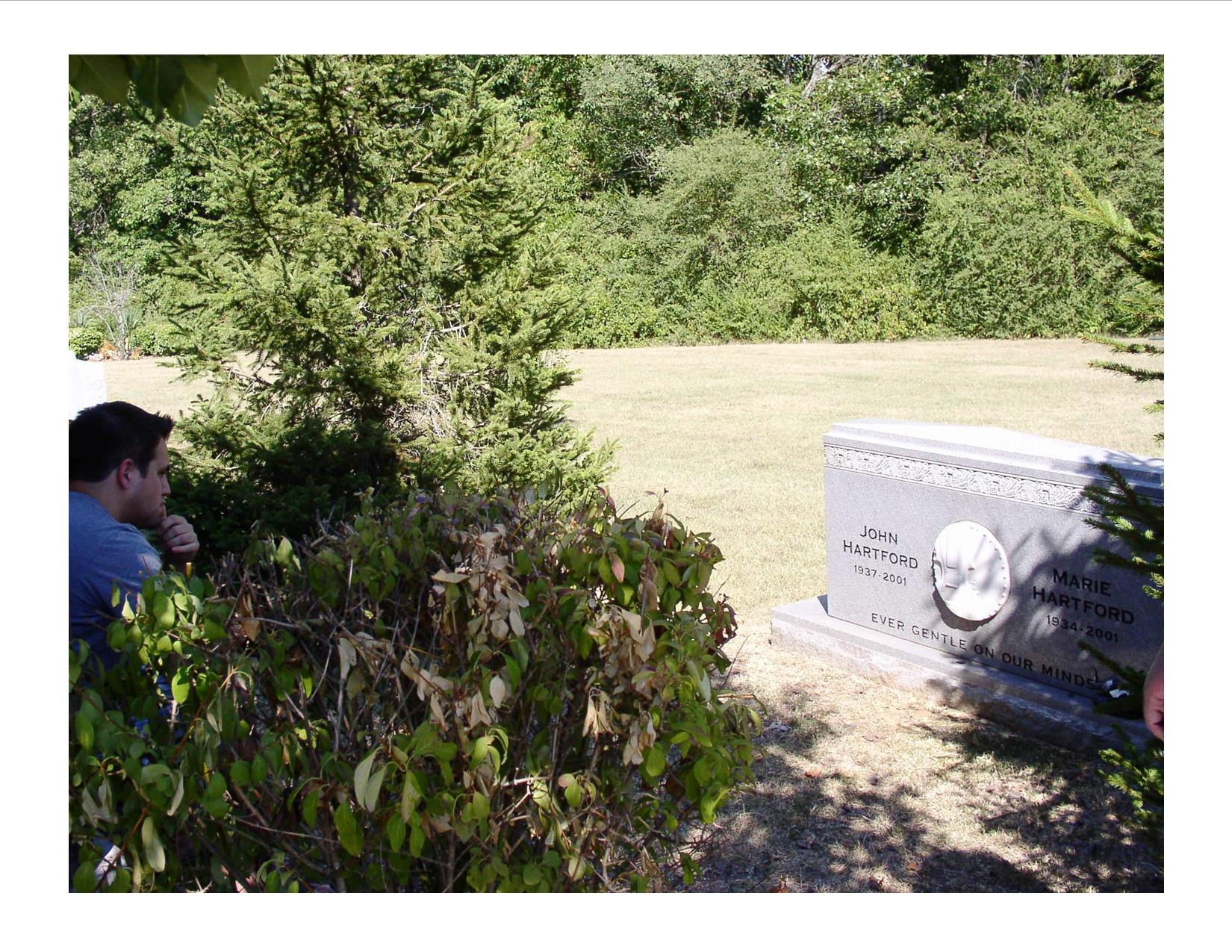
John Hartford’s grave

24 Tuesday Jun 2014

Posted by Brandon Ray Kirk in John Hartford, Music

≈ 1 Comment

Tags

bluegrass, Brandon Kirk, John Hartford, Marie Hartford, music, Nashville, photos, Tennessee

John Hartford's grave, Madison, TN, August 2008

John Hartford’s grave, Madison, TN, August 2008

John 2

John Hartford’s grave, Madison, TN, August 2008

In Search of Ed Haley 326

24 Tuesday Jun 2014

Posted by Brandon Ray Kirk in Big Harts Creek, Ed Haley, Lincoln County Feud

≈ Leave a comment

Tags

Bernie Adams, Big Branch, Billy Adkins, Brandon Kirk, Cacklin Hen, crime, Dood Dalton, Ed Haley, fiddle, fiddler, fiddling, Green McCoy, guitar, Harts, Harts Creek, history, Hollene Brumfield, John Hartford, Logan, Luster Dalton, Milt Haley, Mona Haley, music, Rockhouse Fork, Stump Dalton, Wild Horse, writing

From Harts proper, we headed up Harts Creek to the home of Luster Dalton, a son of Ed’s friend, Dood Dalton. Luster was born in 1924 and used to play the fiddle on weekends for free drinks at local “dives” with his brother Stump and two cousins. I asked him if he learned much from Ed and he said, “Yeah, I learned a lot from the old man Ed. He was a real fiddle player, son.”

I wondered if anybody around Harts played like Ed.

“Not as good as he could, no,” Luster said. “I’d have to say no to that. That old man really knew how to handle that job, buddy.”

Luster tried to remember some of Ed’s tunes.

“Way back in them days, they had one they called ‘Cacklin’ Hen’ and ‘Wild Horse’ and such as that on down the line,” he said.

I got my fiddle out and pointed it toward Luster, who said, “They ain’t a bit of use in me to try that. I’ve had too many bones broke.”

I tried to get him to just show me anything — but he refused.

He chose instead to talk, starting with how Ed came to visit his father on Big Branch.

“He came about onest a year and would maybe stay a month,” Luster said. “He’d maybe stay a week at Dad’s and go to some other family and stay a week and go up Logan and stay a week or so with somebody. Him and his old woman both would come and a couple three of his kids. Mona was one of them’s name. About all of them I guess has been to my dad’s. I don’t see how they raised a bunch of kids — neither one of them could see. That’s something we got to think about. They was good people. And a fella by the name of Bernie Adams used to come with them — he was a guitar picker — and they’d sit up there and sing and pick up at my dad’s till twelve o’clock and go to bed and go to sleep, get up the next morning, go into ‘er again. I went in the army in 1940, I believe it was, and I know I’ve not heard from them since then.”

Luster didn’t know if Milt Haley was a fiddler but had heard the old-timers talk about how either him or Green McCoy had shot Hollena Brumfield through the jaw at the mouth of the Rockhouse Fork on Harts Creek.

“They were murdered in a little log house,” Luster said. “They took a pole axe and beat them to death and then chopped them up.”

A Visit to the “Murder House” (1996)

22 Sunday Jun 2014

Posted by Brandon Ray Kirk in Green Shoal, Lincoln County Feud

≈ Leave a comment

Tags

Admiral S. Fry, Billy Adkins, Brandon Kirk, Cecil Lambert, crime, George Fry, Green McCoy, Green Shoal, history, John Hartford, Lincoln County Feud, Lon Lambert, Milt Haley, Virgie Rooney, Watson Lucas, writing

The next day, Brandon, Billy, and I went to investigate the Watson Lucas-Lon Lambert home at the mouth of Green Shoal. For a long time, we had suspected it of being the actual “murder house,” the place where Haley and McCoy had been brutally murdered in 1889. Cecil Lambert, the current owner and occupant of the dwelling, told us, however, upon our arrival that it was not the same house. He said his father, Lon, had told him prior to his death that the old Fry log house was long torn down. The Fry home, he said, had been located just a few feet downriver from the current home, generally at the present-day location of a garage. Cecil had done some recent remodeling and was pretty sure that his father was correct: he hadn’t found a single log anywhere behind the walls.

Cecil walked us over to a nearby embankment and showed us what he figured to be the last remaining vestige of the Fry house: some old foundation stones strewn down into a ditch. He then took us through the house, which (unfortunately for our imaginations) really didn’t have a nineteenth century look to it.

There was one thing on the second floor that excited us: easily visible through a large hole in the wall (courtesy of Cecil’s remodeling) were some old dried beans lying on the rafter “floor.” It made us think of what Vergia Rooney had said about people using the top story of the old Fry house for drying peaches and apples. Of course, the beans we could see were not George Fry’s…but finding them like we did sure struck us as a coincidence.

Back outside, Brandon walked around the house searching for anything that might connect it with the events of 1889. He made a significant find on the upriver side, which Vergia remembered as being part of the original house. Clearly visible in a corner was an old foundation stone just like the ones at the ditch. We did not notice any more old stones under the house that day, but Cecil later found many more after further remodeling. On the upriver (or “original”) side of the house, foundation stones were intact (at least partially) while on the downriver (or “newer”) side, foundation stones had been tossed in the ditch. There was also a “hidden” door on the downriver side of the house (where Vergia had remembered one swinging open in the old days).

Back at Billy’s, Brandon got out the Fry history book and located a picture of A.S. Fry’s home at Green Shoal, presumably taken around the time of the murders. We compared it mentally with what we remembered about the present home at Green Shoal and noted a few similarities but nothing really conclusive. Then we noticed in the photograph that the Fry dwelling had an extension of rough lumber off to one side that resembled the current Lambert house. It wasn’t clear whether the log portion was on the upriver or downriver side but if it was on the downriver side (the end Vergia said was torn away) it would explain why some of the old foundation stones were lying about in that direction. In such a scenario, both Vergia and Lambert would be correct in their account of what happened to the Fry house. In other words, there was a real chance that the building was at least partly intact — although radically remodeled.

Homer Hickam endorses “Blood in West Virginia”

22 Sunday Jun 2014

Posted by Brandon Ray Kirk in Lincoln County Feud

≈ Leave a comment

Tags

Appalachia, Blood in West Virginia, Brandon Kirk, Coalwood, history, Homer Hickam, October Sky, Rocket Boys, Torpedo Junction, West Virginia, writers, writing

I proudly announce Homer Hickam, Jr.’s endorsement of my book, Blood in West Virginia: Brumfield v. McCoy. I regard Mr. Hickam, a West Virginia native, as one of Appalachia’s most accomplished living writers. Best known for his beloved Rocket Boys (1998), a No. 1 New York Times Best Seller that inspired the movie October Sky, Hickam has authored at least twelve books, beginning with his military history best seller, Torpedo Junction (1989). While a bit partial to Mr. Hickam’s reflective Coalwood series, I can enthusiastically recommend any of his books. Receiving praise from such a fine writer and fellow West Virginian means a great deal to me.

Here is Mr. Hickam’s endorsement of Blood in West Virginia:

“When two proud families collide in the hills of West Virginia, there will be blood. Brandon Kirk’s marvelous tale of one of the bloodiest Appalachian feuds is a rip-roaring page-turner! The mountaineers in this book may at times be funny, mysterious, romantic, and deadly but they are always interesting. In Kirk’s sure hands, the reader will be transported back to the hills in an era when no judge and jury was required, just fists, knives, and gun powder. Highly recommended for anyone craving a good spirited read.”

“Blood in West Virginia” is now available

21 Saturday Jun 2014

Posted by Brandon Ray Kirk in Lincoln County Feud

≈ 1 Comment

Tags

Blood in West Virginia, Brandon Kirk, feud, Harts, Harts Creek, history, Lincoln County, Lincoln County Feud, Logan County, West Virginia, writers, writing

If you enjoy reading Appalachian history, please consider purchasing my book, Blood in West Virginia.

http://www.pelicanpub.com/proddetail.php?prod=9781455619184#.U7Dwm08U9dg

In Search of Ed Haley 325

21 Saturday Jun 2014

Posted by Brandon Ray Kirk in Big Harts Creek, Ed Haley, Logan, Music

≈ Leave a comment

Tags

Billy Adkins, blind, Brandon Kirk, Cacklin Hen, Clyde Haley, Dood Dalton, Ed Haley, Ella Haley, fiddle, fiddling, guitar, Harts, Harts Creek, history, Huntington, John Hartford, Lincoln County, Logan, mandolin, Marshall Kelley, music, West Virginia, writing

That night, Brandon and I congregated at Billy Adkins’ house in Harts Bottom.  In ensuing conversation, Billy told us about Marshall Kelley, an old-timer in the community who remembered Ed. He dialed Marshall up, then put me on the telephone. Marshall said he was seventy-three years old, had been born and raised about three miles up Harts Creek and was the son of a Baptist preacher. He was great: I didn’t have to prod him with questions. He just took off, beginning with a story about seeing Ed walking up toward Dood Dalton’s.

“I was about two or three blocks away from him,” Marshall said. “I lived in a house about 100 yards from the road and I could see the people going and coming up and down the road. And I saw a man — a little bit short — going, walking. It looked like he was carrying a guitar — might have been a mandolin — in one hand and his fiddle in the other hand. Somebody said they believed that was Ed Haley and he was being led by a young man that was just a little taller than him. In other words, this man was holding onto his arm. They were walking side by side. And he went down there and went up a hollow then about half a mile — maybe three quarters of a mile — to the home of Dood Dalton. They were acquainted with each other. Ed played the fiddle the biggest part of the afternoon.”

I asked Marshall if he remembered anything specific about Ed’s fiddling.

“I heard him play the ‘Cacklin’ Hen’ on the fiddle and made her cackle,” he said. “Buddy, he could make that sound just almost exactly like a chicken cackling. And I noticed the sound of that fiddle. And down in those little grooves — places where you could look down in the head of his fiddle — I could see some letters down in there, like a little sticker, that said, ‘Made in Germany.’ And his fiddle looked old cause it didn’t have much varnish on it. Dood made mention about putting new varnish on it and he said he didn’t want to. He said they played better — had a better sound — without any varnish on it. None of them sounded just like his fiddle and he wouldn’t change.”

Marshall said he saw Ed play at Logan and Huntington, too.

Then I heard him two or three times in Logan up around the courthouse singing and playing. One time they was a woman with him somebody said was his wife and she was also blind. I believe she was playing a mandolin. Then the next thing, I grew up a little bit and I went to Huntington. And I was a going down one of the streets and I heard a fiddle a playing. It was far enough away that I couldn’t tell what direction it was in. I stopped once and listened. And after a while, I went on down there and here was a gang of people ganged up and there was him and his wife again a playing. And I thought as I went walking down that way, ‘That sounds just like Ed Haley.’ And sure enough it was.”

Just before Marshall and I hung up, he told me what he knew about the Haley children.

“I only got acquainted with the one named Clyde,” he said. “And I saw him there at Dood Dalton’s house. Just talked with him a little bit. Me and him was approximately the same age. He got to sparking Dood’s girl and I was trying to take her away from him and whenever I seen I couldn’t make no headway I just walked away and left and then she quit him.”

← Older posts
Newer posts →

Feud Poll 1

If you had lived in the Harts Creek community during the 1880s, to which faction of feudists might you have given your loyalty?

Categories

  • Adkins Mill
  • African American History
  • American Revolutionary War
  • Ashland
  • Atenville
  • Banco
  • Barboursville
  • Battle of Blair Mountain
  • Beech Creek
  • Big Creek
  • Big Harts Creek
  • Big Sandy Valley
  • Big Ugly Creek
  • Boone County
  • Breeden
  • Calhoun County
  • Cemeteries
  • Chapmanville
  • Civil War
  • Clay County
  • Clothier
  • Coal
  • Cove Gap
  • Crawley Creek
  • Culture of Honor
  • Dingess
  • Dollie
  • Dunlow
  • East Lynn
  • Ed Haley
  • Eden Park
  • Enslow
  • Estep
  • Ethel
  • Ferrellsburg
  • Fourteen
  • French-Eversole Feud
  • Gilbert
  • Giles County
  • Gill
  • Green Shoal
  • Guyandotte River
  • Halcyon
  • Hamlin
  • Harts
  • Hatfield-McCoy Feud
  • Holden
  • Hungarian-American History
  • Huntington
  • Inez
  • Irish-Americans
  • Italian American History
  • Jamboree
  • Jewish History
  • John Hartford
  • Kermit
  • Kiahsville
  • Kitchen
  • Leet
  • Lincoln County Feud
  • Little Harts Creek
  • Logan
  • Man
  • Matewan
  • Meador
  • Midkiff
  • Monroe County
  • Montgomery County
  • Music
  • Native American History
  • Peach Creek
  • Pearl Adkins Diary
  • Pecks Mill
  • Peter Creek
  • Pikeville
  • Pilgrim
  • Poetry
  • Queens Ridge
  • Ranger
  • Rector
  • Roane County
  • Rowan County Feud
  • Salt Rock
  • Sand Creek
  • Shively
  • Spears
  • Sports
  • Spottswood
  • Spurlockville
  • Stiltner
  • Stone Branch
  • Tazewell County
  • Timber
  • Tom Dula
  • Toney
  • Turner-Howard Feud
  • Twelve Pole Creek
  • Uncategorized
  • Warren
  • Wayne
  • West Hamlin
  • Wewanta
  • Wharncliffe
  • Whirlwind
  • Williamson
  • Women's History
  • World War I
  • Wyoming County
  • Yantus

Feud Poll 2

Do you think Milt Haley and Green McCoy committed the ambush on Al and Hollene Brumfield in 1889?

Blogroll

  • Ancestry.com
  • Ashland (KY) Daily Independent News Article
  • Author FB page
  • Beckley (WV) Register-Herald News Article
  • Big Sandy News (KY) News Article
  • Blood in West Virginia FB
  • Blood in West Virginia order
  • Chapters TV Program
  • Facebook
  • Ghosts of Guyan
  • Herald-Dispatch News Article 1
  • Herald-Dispatch News Article 2
  • In Search of Ed Haley
  • Instagram
  • Lincoln (WV) Journal News Article
  • Lincoln (WV) Journal Thumbs Up
  • Lincoln County
  • Lincoln County Feud
  • Lincoln County Feud Lecture
  • LinkedIn
  • Logan (WV) Banner News Article
  • Lunch With Books
  • Our Overmountain Men: The Revolutionary War in Western Virginia (1775-1783)
  • Pinterest
  • Scarborough Society's Art and Lecture Series
  • Smithsonian Article
  • Spirit of Jefferson News Article
  • The Friendly Neighbor Radio Show 1
  • The Friendly Neighbor Radio Show 2
  • The Friendly Neighbor Radio Show 3
  • The Friendly Neighbor Radio Show 4
  • The New Yorker
  • The State Journal's 55 Good Things About WV
  • tumblr.
  • Twitter
  • Website
  • Weirton (WV) Daily Times Article
  • Wheeling (WV) Intelligencer News Article 1
  • Wheeling (WV) Intelligencer News Article 2
  • WOWK TV
  • Writers Can Read Open Mic Night

Feud Poll 3

Who do you think organized the ambush of Al and Hollene Brumfield in 1889?

Recent Posts

  • Logan County Jail in Logan, WV
  • Absentee Landowners of Magnolia District (1890, 1892, 1894)
  • Charles Spurlock Survey at Fourteen Mile Creek, Lincoln County, WV (1815)

Ed Haley Poll 1

What do you think caused Ed Haley to lose his sight when he was three years old?

Top Posts & Pages

  • "Holly Creek" John Mullins Grave in Clintwood, VA (2018)
  • Levisa Hatfield (1927-1929)
  • Early Anglo Settlers of Logan, WV (1937)
  • Halloween Traditions (1899)
  • Boling Baker and Princess Aracoma (1937)

Copyright

© Brandon Ray Kirk and brandonraykirk.wordpress.com, 1987-2023. Unauthorized use and/or duplication of this material without express and written permission from this blog’s author and/or owner is strictly prohibited. Excerpts and links may be used, provided that full and clear credit is given to Brandon Ray Kirk and brandonraykirk.wordpress.com with appropriate and specific direction to the original content.

Archives

  • February 2025
  • January 2025
  • October 2023
  • September 2023
  • December 2022
  • November 2022
  • May 2022
  • April 2022
  • February 2022
  • November 2021
  • October 2021
  • September 2021
  • June 2021
  • May 2021
  • April 2021
  • March 2021
  • February 2021
  • January 2021
  • December 2020
  • November 2020
  • October 2020
  • July 2020
  • June 2020
  • May 2020
  • April 2020
  • March 2020
  • February 2020
  • January 2020
  • December 2019
  • November 2019
  • October 2019
  • September 2019
  • August 2019
  • July 2019
  • June 2019
  • May 2019
  • April 2019
  • March 2019
  • February 2019
  • January 2019
  • December 2018
  • November 2018
  • October 2018
  • September 2018
  • August 2018
  • July 2018
  • June 2018
  • May 2018
  • April 2018
  • March 2018
  • February 2018
  • January 2018
  • December 2017
  • November 2017
  • October 2017
  • September 2017
  • August 2017
  • July 2017
  • June 2017
  • May 2017
  • April 2017
  • March 2017
  • February 2017
  • January 2017
  • December 2016
  • November 2016
  • October 2016
  • September 2016
  • August 2016
  • July 2016
  • June 2016
  • May 2016
  • April 2016
  • March 2016
  • February 2016
  • January 2016
  • December 2015
  • November 2015
  • October 2015
  • September 2015
  • August 2015
  • July 2015
  • June 2015
  • May 2015
  • April 2015
  • March 2015
  • February 2015
  • January 2015
  • December 2014
  • October 2014
  • September 2014
  • August 2014
  • July 2014
  • June 2014
  • May 2014
  • April 2014
  • March 2014
  • February 2014
  • January 2014
  • December 2013
  • November 2013
  • October 2013
  • September 2013
  • August 2013
  • July 2013
  • June 2013
  • May 2013
  • April 2013
  • March 2013
  • February 2013
  • January 2013
  • December 2012
  • November 2012

Enter your email address to follow this blog and receive notifications of new posts by email.

Join 2,927 other subscribers

Tags

Appalachia Ashland Big Creek Big Ugly Creek Blood in West Virginia Brandon Kirk Cabell County cemeteries Chapmanville Charleston civil war coal Confederate Army crime culture Ed Haley Ella Haley Ferrellsburg feud fiddler fiddling genealogy Green McCoy Guyandotte River Harts Harts Creek Hatfield-McCoy Feud history Huntington John Hartford Kentucky Lawrence Haley life Lincoln County Lincoln County Feud Logan Logan Banner Logan County Milt Haley Mingo County music Ohio photos timbering U.S. South Virginia Wayne County West Virginia Whirlwind writing

Blogs I Follow

  • OtterTales
  • Our Appalachia: A Blog Created by Students of Brandon Kirk
  • Piedmont Trails
  • Truman Capote
  • Appalachian Diaspora

BLOOD IN WEST VIRGINIA is now available for order at Amazon!

Blog at WordPress.com.

OtterTales

Writings from my travels and experiences. High and fine literature is wine, and mine is only water; but everybody likes water. Mark Twain

Our Appalachia: A Blog Created by Students of Brandon Kirk

This site is dedicated to the collection, preservation, and promotion of history and culture in Appalachia.

Piedmont Trails

Genealogy and History in North Carolina and Beyond

Truman Capote

A site about one of the most beautiful, interesting, tallented, outrageous and colorful personalities of the 20th Century

Appalachian Diaspora

  • Subscribe Subscribed
    • Brandon Ray Kirk
    • Join 789 other subscribers
    • Already have a WordPress.com account? Log in now.
    • Brandon Ray Kirk
    • Subscribe Subscribed
    • Sign up
    • Log in
    • Report this content
    • View site in Reader
    • Manage subscriptions
    • Collapse this bar
 

Loading Comments...