• About

Brandon Ray Kirk

~ This site is dedicated to the collection, preservation, and promotion of history and culture in my section of Appalachia.

Brandon Ray Kirk

Tag Archives: Boone County

Thomas Buchanan Letter (1865)

11 Sunday Sep 2016

Posted by Brandon Ray Kirk in Boone County, Logan

≈ Leave a comment

Tags

Arthur I. Boreman, Boone County, civil war, Confederate Army, John A. Barker, justice of the peace, Logan, Logan County, Richmond, Thomas Buchanan, Union Army, Virginia, West Virginia

The following letter from Thomas Buchanan dated July 14, 1865 at Brownstown, WV to Governor Arthur I. Boreman offers insight into immediate postwar conditions in Logan and Boone counties, WV. The letter was titled “Enclosed account for services in recruiting a Co. of Scouts for Logan & Boone Counties.”

Brownstown

July 14, 1865

His Excellency A.I. Boreman (Governor)

Sir: I Rec’d an order dated March 2nd 1865 authorizing me to organize a company of State Guards for the counties of Logan and Boone to consist of not less than 25 men. At first I thought I could recruit 25 men in a short time, but I was much deceived. Men remaining in those counties at that time had bin [sic] conscripted in to the Confederate service (or what they called State line Service under the Confederate authorities) and had bin [sic] disbanded and they seemed to have taken up the idea (or a portion of them at least) that neutral ground was saftest for them, as the country was infested with bushwhackers, and sixty or seventy miles outside of federal lines I could get no assistance from federal troops and consequently had to scout alone and sometimes [with] one man for company. Finally I succeeded in recruiting 32 or 33 men, made off my muster Roll, called my men together, the required oath was administered to them by John A. Barker, a Justice of the Peace, and his certificate with the Roll and form of oaths was directed to the adjutant Gen’l of the State and I have not heard from it since tho when Richmond fell I did not expect my men would be armed and equipped tho I shall expect to be enumerated for my services to the State for recruiting the company.

Yours respectfully,

Thomas Buchanan

P.S. My address is Logan C.H., W.Va. I did not expect an answer to my muster Roll.

Source: West Virginia Adjutant Generals’ Papers, Union Militia 1861-1865, Militia Box 12, Logan County, Folder 2. WV State Archives and History, Charleston, WV.

Note: To see Mr. Buchanan’s account, follow this link: http://www.wvculture.org/history/wvmemory/militia/logan/logan02-01.html

Logan County, WV, Political Commentary and Voting Trends (1824-1900)

05 Monday Sep 2016

Posted by Brandon Ray Kirk in Chapmanville, Civil War, Logan

≈ Leave a comment

Tags

Abraham Lincoln, Andrew Jackson, Arthur I. Boreman, Battle of Kanawha Gap, Boone County, Boone Democrat, Chapmanville District, Charleston Daily Star, Chesapeake and Ohio Railroad Company, civil war, Confederacy, Democratic Party, First Wheeling Convention, Franklin Pierce, Grover Cleveland, Guyandotte Valley Railroad Company, Hardee District, Henry Clay Ragland, history, Horace Greeley, Horatio Seymour, Isaac E. McDonald, James A. Nighbert, James Buchanan, James K. Polk, James Lawson, John Bell, John Breckenridge, Lewis Cass, Logan Banner, Logan County, Logan County Banner, Logan District, Magnolia District, Martin Van Buren, Parkersburg Sentinel, Parkersburg State Journal, politics, Samuel J. Tilden, Second Wheeling Convention, slavery, Stephen Douglas, Triadelphia District, Virginia Ordinance of Secession, West Virginia, West Virginia Statehood Referendum, William H. Crawford, William Jennings Bryan, William Straton, Winfield Scott Hancock, Wyoming County

Democrats who lived in Logan County, West Virginia, prior to 1896 may best be thought of as Democrats of the Jeffersonian and particularly the Jacksonian variety. The earliest settlers and their immediate progeny likely carried popular political viewpoints across the mountains from Virginia. Logan County Democrats appear to have believed in states’ rights, although few residents owned slaves. The old Democrats of the Civil War generation guided Logan County’s political scene until the 1890s, when the national political climate shifted toward issues relating to gold/silver, imperialism, etc. Still, the Confederate veterans of the county continued activity until the 1910s, even raising the Confederate flag over the courthouse as late as 1911. The Logan County Banner (later the Logan Banner), a Democratic organ since its inception in 1889, remained silent about issues that divided the Democratic Party in the 1890s. Based on its editorials, the Banner—operated by men of the Civil War era—was more concerned about industrial progress, particularly the development of a railroad in the Guyandotte Valley, than the national political issues that emerged in the 1890s. Examination of the active participants in the railroad effort include both Democrats and Republicans, locals and outsiders…

Logan County was organized in 1824. Voting trends from 1824 until 1856 reveal a strong preference for Democratic candidates:

1824: William H. Crawford (Democratic-Republican)
1828: Andrew Jackson (Democrat, 90+ percent)
1832: Andrew Jackson (Democrat, 90+ percent)
1836: Martin Van Buren (Democrat)
1840: Martin Van Buren (Democrat)
1844: James K. Polk (Democrat)
1848: Lewis Cass (Democrat)
1852: Franklin Pierce (Democrat)
1856: James Buchanan (Democrat, 80-90 percent)

We know, based on the above presidential tallies, the county was heavily Democratic. Because the Democratic Party was closely linked to slavery during this era, it is useful to consider local slave statistics.

1850 Logan County Slave Census:  26 slave owners in Logan County; 84 slaves (largest slave owner had 10)

1860 Logan County Slave Census:  27 slave owners in Logan County; 80 slaves (largest slave owner had 7)

We know the county voted heavily for John Breckenridge in the 1860 presidential election. What is remarkable to modern residents is this: Logan Countians gave no votes to Abraham Lincoln (see below):

Logan County Presidential Election Results (1860):
John Breckenridge (Southern Democratic), 271
John Bell (Constitutional Union), 100
Stephen Douglas (Democratic), 6
Abraham Lincoln (Republican), 0

We know Logan County’s delegate to the Virginia Secession Convention favored secession. James Lawson, the delegate to the Secession Convention for Logan, Boone, and Wyoming counties, voted in favor of the Ordinance of Secession on 17 April 1861.

We know the county did not favor anti-secession political developments in Wheeling. Logan declined to send delegates to the First Wheeling Convention (May 13-15, 1861).

We know the voters of Logan County favored secession. Here are results for Logan County regarding the Secession Ordinance in Virginia (23 May 1861):
For: 518
Against: 63

We know Logan County did not support the political gatherings in Wheeling. Logan County sent no delegates to the Second Wheeling Convention, First Session (June 11-25, 1861). Likewise, it sent no delegates to the General Assembly of the Reorganized Government of Virginia (July 1-26, 1861) or to the Second Wheeling Convention, Second Session (August 6-21, 1861).

In the mind of local people, Logan County was invaded in 1861. On 25 September 1861, Union soldiers attacked Confederates at the Battle of Kanawha Gap (Chapmanville). The battle was a Confederate loss.

Due to the absence of its men and election irregularities, Logan County did not vote heavily on the question of “West Virginia.” This was true for many counties in western Virginia: West Virginia Statehood Referendum (24 October 1861): 34 percent turnout statewide; 18,408 for statehood and only 781 opposed! We can be sure that Logan did not favor “West Virginia.” Logan County sent no delegate to the West Virginia Constitutional Convention (26 November 1861).

Logan Countians overwhelmingly enlisted to fight for the Confederacy (60-90%). According to one estimate, Logan County contributed over 780 soldiers to the Confederacy. Contributions to the Union Army were less than 60. Based on the 1890 census, the following number of Union veterans lived in Logan County:
Chapmansville District: 7
Hardee District (later Mingo County): 16
Logan District: 13
Magnolia District (later Mingo County): 9
Triadelphia District: 11

During the war, Logan sent delegates to participate in the Confederate government in Richmond. Isaac E. McDonald represented Logan, Boone, and Wyoming counties at the Confederate General Assembly from 1861 to 1863. James A. Nighbert represented Logan, Boone, and Wyoming counties at the Confederate General Assembly from 1863 to 1865.

Because Logan was known as a Confederate stronghold and recruiting station, the town was invaded in 1862. Union troops burned the Logan Courthouse (15 January 1862).

Logan County was one of 15 counties in WV that did NOT vote in the 1864 U.S. presidential election (most were south of the Kanawha River).

After the war, Logan Countians refused to recognize West Virginia as a legitimate state and refused to pay taxes to the new state. Guerillas and gangs were active in the county. Governor Arthur I. Boreman sent troops into the county in order to collect taxes and maintain order.

Ex-Confederate disenfranchisement was common after the war. In 1868, of 888 voters in Logan County, only 125 voted for president. In 1870, 220 voted for the Democratic candidate for governor while 70 voted for the Republican (total 290). In Logan County, it was difficult to find any men who had NOT served in the Confederacy who could hold political office (or practice law, or teach).

Maj. William Straton (namesake of Stratton Street) typified Logan County political leadership during this time.

After the war, Democrats and Republicans largely chose/maintained party identification based on their views of the war. Logan had been heavily Democratic before the war; Logan was pro-Confederate during the war; Logan was strongly Democratic after the war

Logan County in Presidential Elections After the War:
1868: Horatio Seymour (Democrat)
1872: Horace Greeley (Democrat)
1876: Samuel J. Tilden (Democrat, by 90+ percent)
1880: Winfield Scott Hancock (Democrat, by 90+ percent)
1884: Grover Cleveland (Democrat, by 90+ percent)
Winfield Scott Hancock’s victory in Logan County is somewhat noteworthy considering that he was a former Union general.

On 30 October 1886, the Parkersburg Sentinel reported: “Logan county is so intensely democratic that there are thirteen democratic candidates running for the legislature and only one republican. Nevertheless one of the thirteen democrats will be elected.”

In 1888, Logan Countians voted for Grover Cleveland (Democrat).

The Logan County Banner was established on 7 March 1889 by Henry Clay Ragland (editor) and J.A. Nighbert (business manager). On 28 March 1889, it stated:

The paper will be devoted to the best interests of the people of Logan county. To the improvement of the education and morals of its people, and to the development of its great material resources. Politically, the Banner will be Democratic. Every one connected with it is a Democrat, but at the same time it will be fair to the opposition, and will heartily accord to the Republican party due credit for any good work which it may do. In addressing the questions which may arise in the Democratic party, as to its management and its leaders, the Banner will be Independent and will acknowledge no faction or factions, but will labor earnestly and zealously for the success of the party, and not for any individual.

In 1892, it reported: “Three years ago in order to furnish the people of Logan county with a home paper, we unfurled the Banner. We expected neither money nor glory, and our expectations have been fully realized.” On 3 January 1895, Ragland stated: “When I first went into the newspaper business I had no idea of continuing on for any length of time. My only desire was to see a newspaper in Logan county which would truly reflect the character of its people and be able to defend them from the many slanders which have been heaped upon them by the outside world…”

The Banner‘s reputation as a Democratic organ was well-known. In April 1889, the Parkersburg State Journal referred to it as “Democratic to the core.” On 11 July 1889, the Charleston Daily Star said: “The Logan County Banner is being made one of the best country weeklies in the State. As long as it continues as it has begun Logan may be depended upon for her customary Democratic majority.” On 13 January 1898, the Boone Democrat said of the Banner: “We cheerfully hail it, and hope that it may long continue to wave in the vanguard of Logan Democracy.”

The Banner never failed to applaud Democratic gains. On 6 November 1890, it stated: “Glorious old Chapmansville always does her fully duty. The Democratic vote increased from 205 in 1888 to 210, and the Republican vote decreased from 28 in 1888 to 14.”

This editorial, from 15 September 1892, is one example of Banner political commentary:

We have heard that there are several so-called Democrats born and reared in the mountain fastnesses of old Logan who have avowed their intention of ‘scratching’ one or another of the nominees of our party when they ides of November shall roll around, but we hope for the credit of Logan’s ‘rock-ribbed, copper-bottomed’ democracy that such reports are false. It is but natural that bitter feelings should be engendered by the clashing of the claims of rival candidates before our conventions but the conventions have done their work now, well and conscientiously, and every true Democrat in hearty and earnest response to the bugle call of freedom must face about with his brethren and forgetting all private feuds and grievances join in the charge upon our friends the enemy. That Democrat who falters in his duty in this the crisis of our party’s need betrays the trust reposed in him by the party of the people, forfeits his claim upon the confidence and good will of his compeers and deserves to be incarcerated in the bottom-most pit of damnation. You cannot afford to let a petty desire for revenge prevent you from casting a straight Democratic ticket on the 8th day of November. If you have ever harbored such a thought, exorcise the evil spirit that has taken possession of you and come back to the fold on bended knee and ask forgiveness for the wicked thoughts of your heart. The people have spoken and ‘the voice of the people is the voice of God.’ We feel sorry for that Democrat who, when the glorious news flashes over the wires next November that Cleveland, MacCorkle, Alderson and Mahood are elected can’t forget one or more of them was scratched on his ticket. Verily, like the Judas of old, he will feel like sneaking off with down cast eyes and hanging himself to the nearest tree. Logan expects every Democrat to do his whole duty during this campaign. The eyes of friend and foe alike are turned towards the mountains of old Logan whence cometh our help. Every Republican in the county is alert, active and zealous in the support of his whole ticket, and it behooves every Democrat to see to it that he does not prove a traitor in the camp of his friends. Stop a minute, friend, and think of the issues involved in the fight that is now upon us. Do you want the robber tariff barons to keep on heaping up their multiplied millions from your hard-earned dollars? Do you want your polls to be manned by Federal soldiers or maybe negroes from Virginia or North Carolina?

In 1892, Logan Countians voted for Grover Cleveland (Democrat).

During the mid-1890s, the Banner offered more brief political commentary. Here are some examples. On 21 June 1894, it stated: “The Logan Republican club was organized last Saturday night, with 20 members.” On 9 September 1896: “There is a meeting of the W.J. Bryan club at Chapmansville next Saturday evening. Everybody is invited to attend.”

Logan Countians voted for William Jennings Bryan (Democrat) in 1896 and 1900.

Election of 1892 LCB 11.10.1892

Logan County Banner, 10 November 1892.

Lincoln County, WV, Pardons (1893-1897)

09 Monday May 2016

Posted by Brandon Ray Kirk in Culture of Honor

≈ Leave a comment

Tags

Boone County, Charleston, crime, D.E. Wilkinson, governor, Green Wiley, H.C. Shelton, Heenan Smith, history, Ira Adkins, J.M. Hollandsworth, John Jenkins, Lincoln County, Linford Jarrell, Marcus Maynard, Moses W. Donnally, P.S. Blankenship, Public Papers of Governor William A. MacCorkle of West Virginia, Thomas H. Harvey, Wayne County, West Virginia, Wheeling Intelligencer, William A. MacCorkle, William Jones, William Kelley, Wirt Bias

Public Papers of Governor William A. MacCorkle of West Virginia, March 4, 1893 to March 4, 1897 (Charleston, WV: Moses W. Donnally, Public Printer, 1897).

“Wm. Kelley, convicted in the circuit court of Lincoln county, August term 1890, for shooting with intent to kill, and sentenced to five years in the penitentiary. Pardon granted August 10th, 1894, for reasons entered in the pardon record as follows: It appears that the prisoner is in the last stages of consumption, and is dying. The pardon is recommended by the warden of the penitentiary, by the physician, chaplain, and several members of the Board of Directors. The prisoner is pardoned in order that he may be taken home to die.” (p. 90-91)

“Green Wiley, convicted in the circuit court of Lincoln county, August term 1892, for shooting with intent to kill, and sentenced to one year confinement in the penitentiary. Pardon granted April 27, 1893, for reasons entered in the pardon record, as follows: “The petition for pardon is supported by the recommendation of the judge who tried the case, the prosecuting attorney and assistant prosecuting attorney, the clerk of the circuit court, P.S. Blankenship the man who was shot by Wiley, and by very man citizens of Lincoln county. The prisoner was convicted on very slight evidence. I extend to him a pardon for the following reasons: 1. The testimony against him in the trial was very inadequate. 2. The evidence of the witness upon which defendant was convicted has since been found entirely untrustworthy and the accused showed no malice in the act, but that it was a mere hot headed fight.” (p. 78-79)

“H.C. Shelton, convicted in the circuit court of Lincoln county, ____ term 1892, for assault, and fined $318. Remission of fine granted August 16, 1896. It appears from the petition in this case that Shelton is a very poor man, and utterly unable to pay the fine imposed upon him, which has been standing nearly four years. He has had a great deal of sickness in his family, and since his conviction his wife has died, leaving him with a large family of small children entirely unprovided for except by his labor. Were the petitioner to be confined in jail upon a capias pro fine, his children would be entirely helpless and thrown upon the citizens of Lincoln county. The remission of the fine is urged by nearly all the county officials in Lincoln county and a large number of the best citizens of the county. It is utterly beyond the power of the petitioner to pay this fine, and confinement in jail upon a capias pro fine would be entirely useless and result in no good to the State and only hardship to the petitioner.” (p. 481-482)

“Ira Adkins, convicted in the circuit court of Lincoln county, June term, 1894, for burglary, and sentenced to five years in the penitentiary. Pardon granted November 29, 1895, for reasons entered of record as follows: The petition for pardon is signed by every member of the jury that tried the case and a large number of citizens of Lincoln county. The pardon is asked for by these petitioners on the grounds that there is now ‘some doubt arising in the minds of said petitioners caused by circumstances which were learned of since his trial, when convicted and sentenced.’ The good petition further shows that his conduct has been good, during confinement, that his health is very much impaired by reason of his confinement, and that he has a wife and family in destitute circumstances.” (p. 437)

“Wirt Bias, convicted in the circuit court of Lincoln county, October term, 1894, for unlawful assault, confinement in jail for six months. Pardon granted April 2, 1895, for reasons entered of record as follows: The petition for pardon is supported by the recommendation of Hon. D.E. Wilkinson, prosecuting attorney of Lincoln county, J.M. Hollandsworth, sheriff, and William Jones, jailor, of said county, and by several members of the bar and a number of good citizens of the county. The petition shows that the prisoner is in bad health, the result of his confinement, and that the jail of Lincoln county is very unhealthy and that further confinement would seriously impair his health. The prisoner’s wife is also in very delicate health and needs his attention.” (p. 425)

“Heenan Smith, convicted in the circuit court of Lincoln county, February term, 1894 [1896?], for manslaughter, and sentenced to five years in the penitentiary. This case is surrounded by many mitigating circumstances. Maynard had gone to Smith’s house; had been hospitably and kindly treated; had taken supper at his house and was staying all night. At bed-time they all retired and Maynard went to bed with the host (Smith), who is the father of Heenan Smith, the defendant in this case. A little girl, 13 years old, the daughter of the host and sister of Heenan Smith, retired in a separate bed in the same room. Late in the night Maynard got up out of the bed with the host and went over and got in with the little girl and attempted to have criminal connection with her. The child made an outcry and the old man raised up, and Maynard ran out of the house and disappeared. The next morning he was met by Heenan Smith, the defendant, and brother of the little girl, and an alteration occurred, in which Smith knocked this man down. A few hours afterwards Smith went to the post office and he met Maynard on the road. Another altercation occurred between him and Smith, having revolvers and both firing almost simultaneously, in which altercation Smith killed Maynard. The court sentenced Smith to the penitentiary for five years. The judge who tried the case writes a letter, and requests Smith’s pardon. A large number of the best citizens in the county join in the petition. I think that under the circumstances that it is a case deserving of executive clemency. (p. 463-464)

NOTE: The Wheeling Intelligencer of February 25, 1896 reports: “Herman Smith, who murdered Marcus Maynard in Lincoln county, last year, was found guilty of murder in the second degree to-day [Feb. 24] and was sentenced to seven years in the penitentiary by Judge Harvey.”

NOTE: The Wheeling Intelligencer of March 5, 1896 reports: “Two prisoners were received yesterday. One, John Jenkins, from Wayne county, two years, for grand larceny; another, Heenan Smith, Lincoln county, seven years, for murder in the second degree.”

“Linford Jarrell, convicted in the circuit court of Lincoln county, for burglary, at the July term, 1896, and sentenced of five years in the penitentiary. Pardon granted February 13, 1897. From all the evidence in this case it seems that this man was an ignorant and feeble minded person and as a matter of reality was not cognizant of his crime. This statement was made by Judge McClaugherty, who presided at the trial. Judge McClaugherty is extremely careful in matters of this kind and universally refuses to sign letters asking for clemency. In this case he makes a request for the pardon, and sets out that under the legal rules it was impossible for him to set aside the verdict. This prayer for clemency is joined in by ten of the jury which tried the case and by a great number of the best citizens of the county of Boone, where the case was tried and where the boy lived. There is no doubt in my mind but that the boy should not have been convicted.” (p. 466)


Battle of Boone Court House (1861)

08 Thursday Oct 2015

Posted by Brandon Ray Kirk in Boone County, Civil War

≈ 1 Comment

Tags

129th Regiment Virginia Militia, 187th Regiment Virginia Militia, Battle of Boone Court House, Black-Striped Company, Boone County, civil war, Confederate Army, David Enyart, Ezekiel Miller, Knob Hill, Little Coal River, Madison, Union Army, West Virginia

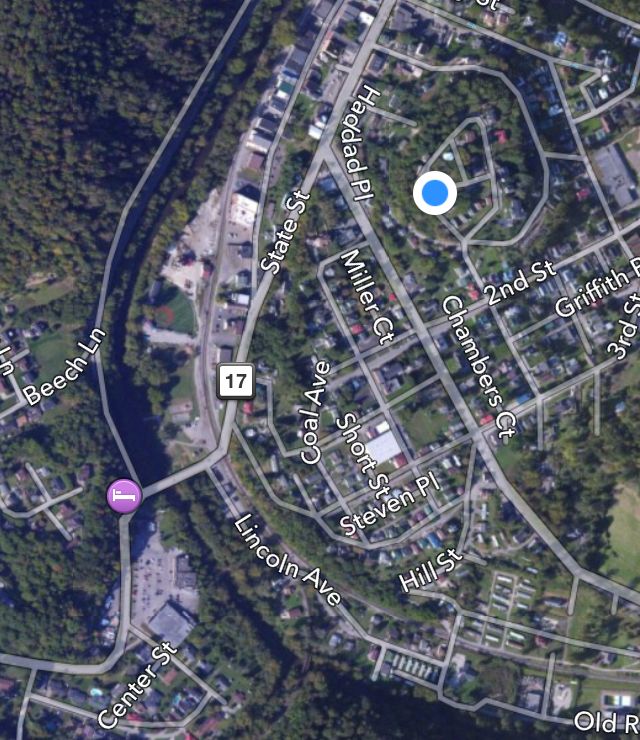
Modern-day view of the Battle of Boone Court House (1 September 1861). The blue dot notes the approximate location of Boone Court House (Madison), which was guarded by Confederates under Col. Ezekiel Miller. Miller commanded about 250 men from the 187th Regiment Virginia Militia, 129th Regiment Virginia Militia, and the Black-Striped Company.

Modern-day view of the Battle of Boone Court House (1 September 1861). The blue dot notes the approximate location of Boone Court House (Madison), which was guarded by Confederates under Col. Ezekiel Miller. Miller commanded about 250 men from the 187th Regiment Virginia Militia, 129th Regiment Virginia Militia, and the Black-Striped Company.

Modern-day view of the Battle of Boone Court House (1 September 1861). The blue dot notes the approximate location of Col. Enyart's Union force (three companies of Kentucky and Ohio men), as well as Union artillery, placed on Knob Hill. Col. Enyart commanded about 750 men.

Modern-day view of the Battle of Boone Court House (1 September 1861). The blue dot notes the approximate location of Lt. Col. David Enyart’s Union force (three companies of Kentucky and Ohio men), as well as Union artillery, placed on Knob Hill. Col. Enyart commanded about 750 men.

Modern-day view from the Confederate position toward Knob Hill in Madison, WV.

Modern-day view from the Confederate position looking toward Knob Hill in Madison, WV.

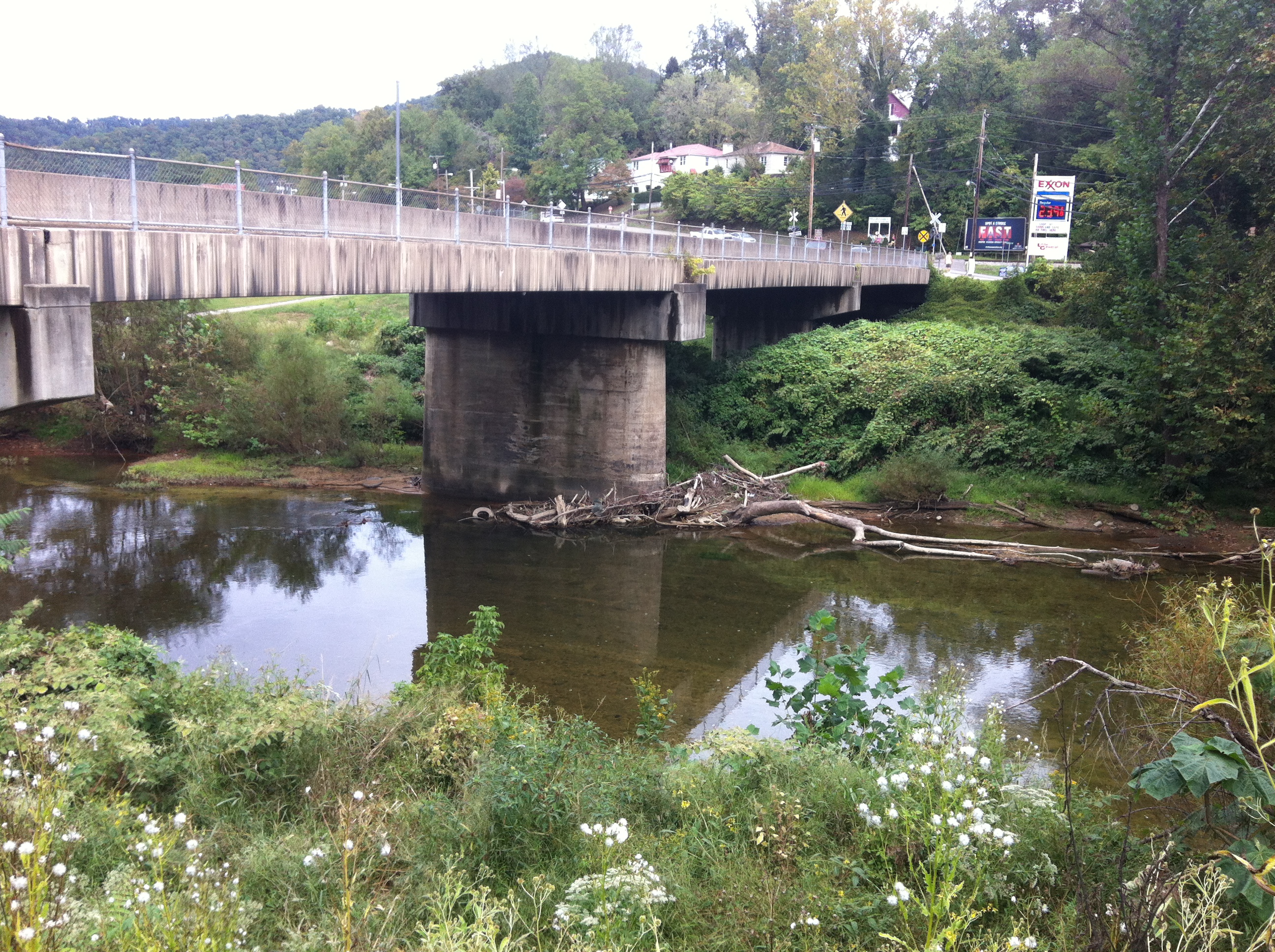
Union troops charged across the Little Coal River and dislodged Confederates from their positions at Boone Court House.

Union troops charged across the Little Coal River and dislodged Confederates from their positions at Boone Court House.

Thomas Justice

10 Friday Jul 2015

Posted by Brandon Ray Kirk in Civil War, Wyoming County

≈ 1 Comment

Tags

Almeda Justice, America Justice, Appalachia, Berkley's Battalion, Boone County, civil war, Confederate Army, Delia Bailey, Delia J. Justice, Ellen Justice, genealogy, George W. Justice, Henry H. Hardesty, history, Ingabo Justice, James Bailey, James Justice Sr., Jennie Justice, Kentucky, Laura C. Justice, Lee Justice, Logan County, Minnie Cook, North Spring, Pike County, R.A. Brock, Richmond, Russell County, Scott Justice, Thomas Justice, U.S. South, Virginia, Virginia and Virginians, Wayne Justice, West Virginia, Wyoming County

From “Virginia and Virginians, 1606-1888,” published by H.H. Hardesty, we find this entry for Thomas Justice, who resided at North Spring, West Virginia:

Of North Spring, Wyoming county, W.Va., was born June 15, 1834, in Logan county, W.Va. (then Virginia); in this county, Aug. 20, 1854, he was united in marriage to Ingabo Bailey, who was born in Logan county, Jan. 29, 1832. Record of the children of Mr. and Mrs. Thomas Justice: George W., born June 20, 1855, married; Delia J., March 15, 1857, married; Laura C., June 11, 1859, married; Almeda, Dec. 4, 1861, married; Lee, April 20, 1866, married; Minnie, May 1, 1868, married to Berry L. Cook; Scott, Dec. 9, 1870, living with his parents; James, Sept. 15, 1874, living with parents. Record of Thomas Justice’s parents: James Justice, Sr., was born in Pike county, Ky., Dec. 5, 1812, departed this life in Logan county, W.Va., Aug. 12, 1874; Jennie (Hatfield) Justice was born in Pike county, Ky., Jan. 10, 1813, departed this life in Logan county April 28, 1886. Record of the parents of Mrs. Thomas Justice: James Bailey was born in Russell county, Va., Dec. 1, 1806, died in Logan county Feb. 9, 1874; Delia (Gore) Bailey was born in Boone county, W.Va., Oct. 11, 1806, died in Logan county Jan. 28, 1888. Thomas Justice enlisted in 1861 as lieutenant in Co. D, Berkley’s Battalion, C.S.A., and served with honor and distinction until the close of the war. At the present time he resides with his wife and their youngest two children in his pleasant home not far from the mouth of Huff’s Creek; here he is engaged in farming and in managing his estate. His plantation is well cultivated; he also owns valuable coal and timber lands. As citizens he and his family are loved and respected. His son, Lee Justice, was married June 11, 1890, in Logan county, to America, daughter of James N. and Lucinda (Steel) Justice. Record of the family of James N. Justice: He was born in 1847 in Pike county, Ky.; at present lives in Logan county, W.Va.; his wife was born in Logan county in 18_6, and died in the same county in 1884. Their son Wayne was born in 1872; daughter Ellen was born in 1877, and died in 1879.

Source: Dr. R.A. Brock, Virginia and Virginians, 1606-1888 (Richmond, VA: H.H. Hardesty, Publisher, 1888), p. 833-834.

John B. Ellison

21 Sunday Jun 2015

Posted by Brandon Ray Kirk in Logan

≈ Leave a comment

Tags

Appalachia, Boone County, genealogy, Henry H. Hardesty, history, John B. Ellison, lawyer, Logan, Logan County, Monroe County, R.A. Brock, Raleigh County, Richmond, U.S. South, Virginia, Virginia and Virginians, West Virginia, Wyoming County

From “Virginia and Virginians, 1606-1888,” published by H.H. Hardesty, we find this entry for John B. Ellison, who resided at Logan Court House, West Virginia:

Attorney and counselor at law, Logan Court House, West Va., is a native of Monroe county, Va., where he was born Jan. 15, 1853. He first began the practice of his profession in 1878, and has since practiced in Boone, Raleigh, Wyoming and Logan counties; is also notary public; the duties of this position are ably executed by him. He is a lawyer of superior ability and has won a distinguished position in his profession; being gifted with a brilliant intellect, he has by close study and extensive practice acquired a thorough knowledge of law that can compete with the oldest and most learned at the bar, but it is his indefatigable energy and zeal in the interest of his clients for which he is most conspicuous. He resides at Logan Court House, and practices in all the neighboring counties.

Source: Dr. R.A. Brock, Virginia and Virginians, 1606-1888 (Richmond, VA: H.H. Hardesty, Publisher, 1888), p. 829.

Charles F. Cook

20 Wednesday May 2015

Posted by Brandon Ray Kirk in Wyoming County

≈ Leave a comment

Tags

Addie P. Cook, Alice L. Cook, Anna Laurie Cook, Appalachia, Boone County, Charles F. Cook, Charles W. Cook, coal, Edgar Cook, genealogy, George W. Cook, Henry H. Hardesty, history, Huff's Creek, John Cook, Lucinda Cook, Marshall Cook, Mary A. Cook, Nannie G. Cook, Oceana, Perry C. Cook, R.A. Brock, Raleigh County, Richmond, timbering, Virginia, Virginia and Virginians, West Virginia, Wyoming County

From “Virginia and Virginians, 1606-1888,” published by H.H. Hardesty, we find this entry for Charles F. Cook, who resided at Oceana, West Virginia:

Was born in Wyoming county, Jan. 3, 1843; was married to Lucinda O’Neal in Raleigh county, Nov. 12, 1868; their union has been blessed with nine children, eight of whom are at the present time residing with their parents: Edgar, Anna Laurie (died when three years old), Charles W., Nannie G., Marshall, Addie P., Perry C., George W., and Alice L. His father, John Cook, was born in Wyoming county, W.Va., June 20, 1818, and died there May 25, 1887. Mary A. Jarrell was born in Boone county, W.Va., March 8, 1818, and died in Wyoming county, March 10, 1873; they were married May 5, 1831. Mr. Cook owns a beautiful home, situated on Huff’s Creek, Wyoming county; he also has other estates, consisting of extensive coal and timber lands. He is descended from one of the oldest and best families of that county; is a man of high moral character, and has the esteem of all who know him. His post office address is Oceana, W.Va.

Source: Dr. R.A. Brock, Virginia and Virginians, 1606-1888 (Richmond, VA: H.H. Hardesty, Publisher, 1888), p. 825-826.

David T. Bryan

25 Saturday Apr 2015

Posted by Brandon Ray Kirk in Logan

≈ Leave a comment

Tags

Alleghany County, Andrew Scott Bryan, Appalachia, Boone County, Clara Bryan, David T. Bryan, genealogy, Henry H. Hardesty, history, Joseph Roy Bryan, Logan, Logan County, Mary Ann Bryan, R.A. Brock, Richmond, U.S. South, Virginia, Virginia and Virginians, West Virginia

From “Virginia and Virginians, 1606-1888,” published by H.H. Hardesty, we find this entry for Dr. David T. Bryan, who resided at Logan, West Virginia:

Is a son of Andrew Scott and Mary Ann (Dingess) Bryan; his mother was born in Logan county, W.Va.; departed this life in her native county, on the 4th of January, 1880. His father was born in Alleghany county, Va., Sept. 6, 1835; married in Logan county to his first wife, the mother of David T. Bryan, Oct. 15, 1856. Nov. 18, 1880, he was united in wedlock to Clara Workman, of Boone county, W.Va., her birth occurring there Jan. 26, 1848. The subject of this sketch was born in Logan county, W.Va., May 2, 1859, his wife in the same county Dec. 26, 1872; they were joined in matrimony there June 27, 1889. June 11, 1890, their son, Joseph Roy Bryan, was born. Mr. Bryan owns a large dry goods store and handsome residence in Logan Court House; here he resides with his accomplished wife and their infant son; he is engaged in conducting a large and profitable dry goods business, and is one of the most highly esteemed young men in the county, being always among the first to forward any movement or enterprise that tends to advance the business of his town and the morals of the citizens.

Source: Dr. R.A. Brock, Virginia and Virginians, 1606-1888 (Richmond, VA: H.H. Hardesty, Publisher, 1888), p. 820

T.S. Godby & Co.

14 Tuesday Apr 2015

Posted by Brandon Ray Kirk in Big Creek, Timber

≈ 3 Comments

Tags

Appalachia, Big Creek, Boone County, genealogy, Guyandotte River, history, Logan County, Logan County Banner, logging, North Fork, T.S. Godby & Co., timbering, Tolbert S. Godby, U.S. South, West Virginia, William J. Berry

Godby and Berry dissolve timber partnership LCB 07.16.1891

Logan County Banner (Logan, WV), 16 July 1891

Isaac E. Browning

13 Monday Apr 2015

Posted by Brandon Ray Kirk in Man

≈ Leave a comment

Tags

Alice B. Browning, Appalachia, Boone County, Buryle S. Browning, Christian, Ezera H. Browning, Francis S. Browning, genealogy, Grayson White, Guyandotte River, Haley W. Browning, Henry H. Hardesty, history, Isaac E. Browning, Jane Browning, justice of the peace, Lena T. Browning, Logan County, Minnie C. Browning, R.A. Brock, Rebecca J. White, Sarah A. Browning, Van D. Browning, Virginia and Virginians, West Virginia

From “Virginia and Virginians, 1606-1888,” published by H.H. Hardesty, we find this entry for Isaac E. Browning, who resided at Christian, West Virginia:

Was born in Logan county, W.Va., Sept. 2, 1849; married there to Mary A. White on 2d of November, 1869; his wife was born in the same county, March 23, 1848. The annals of their children are: Van D., born Aug. 30, 1870; Sarah A., born March 29, 1872, died Sept. 20, 1875; Buryle S., born Oct. 18, 1874; Alice B., born March 6, 1876; Lena T., born July 6, 1878; Minnie C., born June 2, 1882; Haley W., born April 4, 1886; Ezera H., born March 14, 1889; all reside with their parents. The subject of this record is one of the most highly respected citizens in Logan county having been elected justice of the peace in 1884, he held the office honorably and satisfactorily for two years. His home is beautifully situated on Guyandotte River, and he also owns extensive mineral and timber land. His address is Christian, Logan county, W.Va. His father, Francis S. Browning, was born in Logan county, W.Va., about the year 1825, and still resides in Boone county, same State; his mother, Jane (Spratt) Browning, was born in Logan county in 1823. Mrs. Isaac Browning’s father, Grayson White, was born in Logan county in 1828, and died there in 1851; her mother, whose maiden name was Rebecca J. Christian, was born in same county in 1830 and died there in 1886. The Browning family came from England in an early day. They were among the first settlers in Logan county, and are people of high standing and have held high positions in the State and county where they reside.

Source: Dr. R.A. Brock, Virginia and Virginians, 1606-1888 (Richmond, VA: H.H. Hardesty, Publisher, 1888), 818-819.

Adam Pauley finds gold in Boone County, WV (1894)

18 Wednesday Mar 2015

Posted by Brandon Ray Kirk in Boone County

≈ Leave a comment

Tags

Andrew Pauley, Appalachia, Big Horse Creek, Boone County, gold, history, Logan, Logan County Banner, U.S. South, West Virginia

Logan County (WV) Banner, 26 April 1894.

Logan County (WV) Banner, 26 April 1894.

Harts area teachers, 1925-1926

03 Saturday Jan 2015

Posted by Brandon Ray Kirk in Atenville, Big Creek, Big Harts Creek, Big Ugly Creek, Ferrellsburg, Gill, Hamlin, Harts, Leet, Logan, Queens Ridge, Rector, Sand Creek, Shively, Whirlwind, Yantus

≈ 3 Comments

Tags

A.T. Miller, Alice Dingess, Anna Adams, Anna Butcher, Anna Dingess, Beatrice Dingess, Beulah M. Rickman, Blanche Mae Lambert, Boone County, Chapmanville District, Charlie Gore, Cole Adams, David E. Johnson, Dixie Mullins, E.V. Parsons, Ed Brumfield, education, Enos Dial, Everett Dingess, Fay Gill, Fisher B. Adkins, Fred Wilt, genealogy, Gill School, Glen Dingess, Harts Creek District, history, Howard Adams, Ina Adams, Jessie Brumfield, Kile Topping, Lester H. Cross, Lincoln County, Lizzie Nelson, Logan, Logan County, Lot W. Adams, Lucy Dingess, M.F. Tomblin, Nora Brumfield, Reb Adkins, Rufus P. Lambert, Shively, Sylvia Cyfers, teacher, Thomas J. McGinnis, Ula Adams, Wallace Hayner, Walter Hauldren, West Virginia, Whirlwind, Willie J. Williams, Yantus

In 1925-1926, Lincoln County (WV) Superintendent of Schools Rufus P. Lambert of Hamlin and Logan County (WV) Superintendent of Schools E.V. Parsons of Logan issued information regarding teachers in their respective counties for publication in the West Virginia Educational Directory. Given below are the names of Harts area teachers, post office address, enrollment, and county of employment. NOTE: Teachers did not necessarily teach in their immediate locale.

Anna Adams, Whirlwind, 38, Logan

Cole Adams, Queens Ridge, 24, Logan

Howard Adams, Whirlwind, 36, Logan

Ina Adams, Shively, 32, Logan

Lot W. Adams, Big Creek, 8, Lincoln

Ula Adams, Yantus, 34, Logan

Fisher B. Adkins, Hart’s, 42, Logan

Rebel Adkins, Queens Ridge, 24, Lincoln

Ed Brumfield, Harts, 25, Lincoln

Jessie Brumfield, Harts, 45, Lincoln

Nora Brumfield, Harts, 20, Lincoln

Anna Butcher, Shively, 65, Logan

Lester H. Cross, Shively, 32, Logan

Sylvia Cyfers, Leet, 40, Lincoln

Enos Dial, Harts, 40, Lincoln

Alice Dingess, Queens Ridge, 66, Logan

Anna Dingess, Queens Ridge, 28, Logan

Beatrice Dingess, Hart’s, 12, Logan

Everett Dingess, Ferrellsburg, 36, Logan

Glen Dingess, Leet, 24, Lincoln

Lucy Dingess, Queens Ridge, 28, Logan

Fay Gill Frye, Gill, 33, Lincoln

Charlie Gore, Ferrrellsburg, 43, Lincoln

Walter Hauldren, Rector, 26, Lincoln

Wallace Haynor, Rector, 25, Lincoln

David E. Johnson, Dollie, 24, Lincoln

Blanche Mae Lambert, Sand Creek, 19, Lincoln

Thomas J. McGinnis, Whirlwind, 49, Logan

A.T. Miller, Danville, 12 Lincoln

Dixie Mullins, Queens Ridge, 35, Logan

Lizzie Nelson, Harts, 18, Lincoln

Beulah M. Rickman, Gill, 14, Lincoln

M.F. Tomblin, Queens Ridge, 44, Lincoln

Kile Topping, Atenville, 22, Lincoln

Willie J. Williams, Queens Ridge, 30, Lincoln

Fred Wilt, Rector, 7, Lincoln

The highest paid teachers are given below:

Lot W. Adams, $960/yr.

Fisher B. Adkins, $840/yr.

Alice Dingess, $840/yr.

Fay Gill Frye, $840/yr.

Charlie Gore, $840/yr.

A.T. Miller, $840/yr.

Walter Hauldren, $820/yr.

Beatrice Dingess, $800/yr.

The lowest paid teachers received $400/yr.

Source: West Virginia Educational Directory for the School Year 1925-1926

Meet the Author event

02 Friday Jan 2015

Posted by Brandon Ray Kirk in Lincoln County Feud

≈ 3 Comments

Tags

author, Blood in West Virginia, book, books, Boone County, Coal River Public Library, Lincoln County Feud, Racine, West Virginia, writing

On January 3, my book and I will appear at the Coal River Public Library in Racine, WV, from 1 p.m. to 5 p.m. If you’re local, come see us!

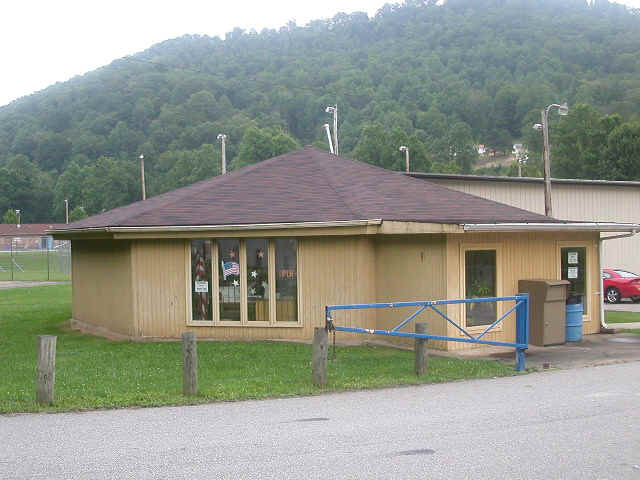
Coal River Public Library, Racine, Boone County, West Virginia

Coal River Public Library, Racine, Boone County, West Virginia

http://www.amazon.com/Blood-West-Virginia-Brumfield-McCoy/dp/1455619183

Big Creek Budget 09.18.1903

29 Monday Dec 2014

Posted by Brandon Ray Kirk in Big Creek

≈ 2 Comments

Tags

Anna Garrett, Appalachia, Big Creek, Boone County, Charley Ferrell, genealogy, Grace McComas, history, Hunter Bros., Hurricane, J.L. McComas, J.M. Mitchell, J.M. Nelson, Kanawha County, Lake, Logan Banner, Logan County, Manila, Otto Bethel, Peter Craddock, R.H. Vickers, Sally Blevins, St. Albans, Susie Garrett, typhoid fever, W.B. Phipps, W.H. Vickers, West Virginia

“Forest,” a local correspondent at Big Creek in Logan County, West Virginia, offered the following items, written on September 15, which the Logan Banner printed on Friday, September 18, 1903:

Seeing your earnest solicitation for correspondents from each village, we will try to give you a few items from this vicinity.

The drought still continues in this section of the country and people and property are almost suffering from want of water.

The law school convened Monday with W.H. Vickers as teacher. We predict for him a successful term of school.

Work on the new residence of W.B. Phipps, near the Lane, is being rapidly pushed forward. Hunter Bros. are doing the work.

Quite a number of our young people attended church on Hewett Sunday.

We are pleased to chronicle that R.E. Vickers is able to be out again after being confined to his room several weeks with typhoid fever.

Miss Sally Blevins has been the honored guest of Mrs. J.L. McComas at Manila for several days.

Charley Ferrell, a prominent young man from St. Albans, was transacting business on the creek last week.

Rev. Peter Craddock preached to a large congregation at the Lane Saturday night. We hope the people will all turn out to hear him again Thursday night.

Miss Grace McComas of Lake came over Sunday to stay with her uncle, J.L. McComas, and attend school at Hurricane.

Mrs. J.M. Nelson and children, who have been visiting friends and relatives here for several weeks, will leave next week for her home in Kanawha county.

Mr. and Mrs. J.M. Mitchell, Misses Susie and Anna Garrett and Otto Bethel were pleasant callers at the home of John Phipps last Sunday and were treated to a nice lot of melons.

Johnny Hager

30 Wednesday Jul 2014

Posted by Brandon Ray Kirk in Big Harts Creek, Ed Haley, Music

≈ Leave a comment

Tags

banjo, Boone County, Ed Haley, genealogy, history, Johnny Hager, Johnny Hagter, music, photos, West Virginia

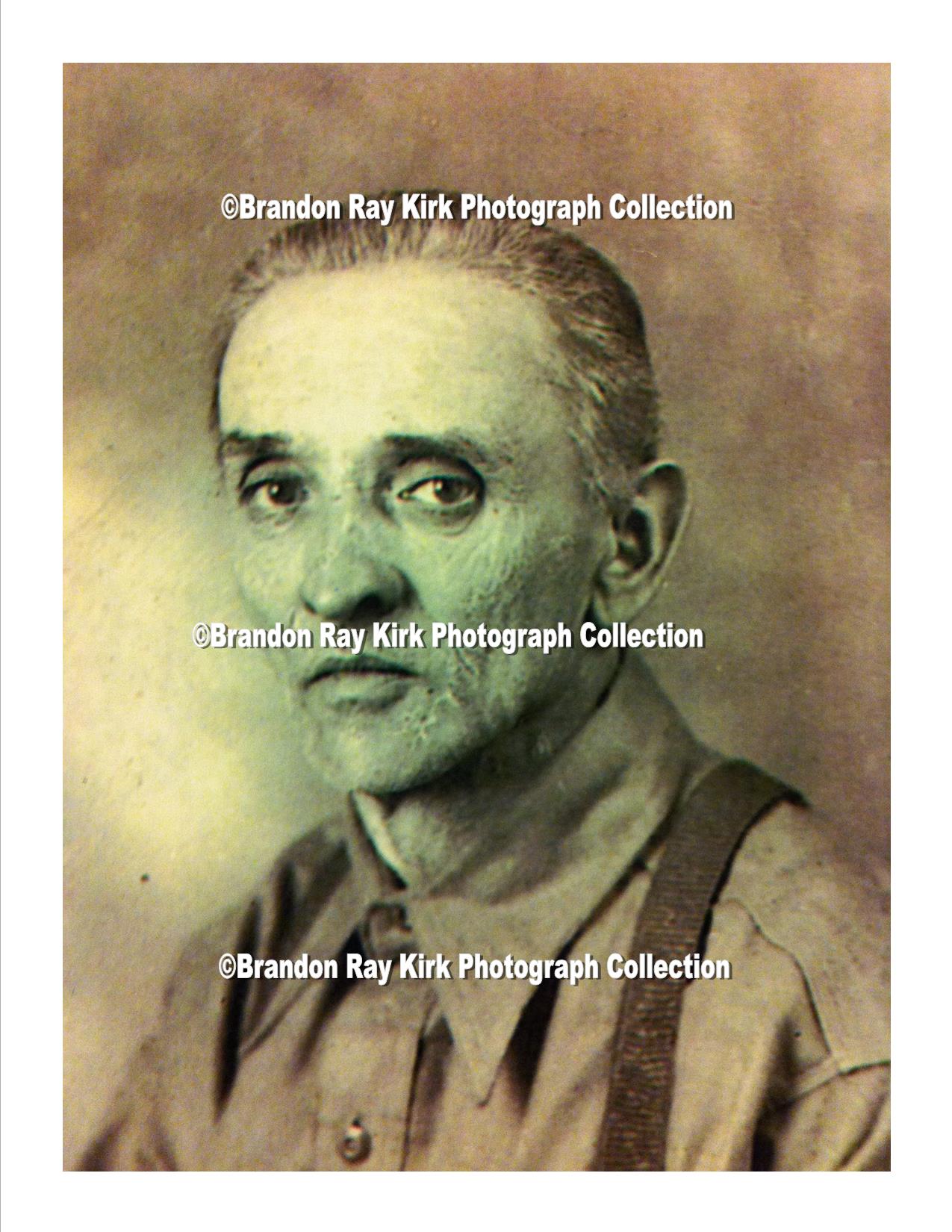
Johnny Hager, banjo player and friend to Ed Haley

Johnny Hager, banjo player and friend to Ed Haley

Rector Items 04.16.1914

13 Friday Jun 2014

Posted by Brandon Ray Kirk in Big Creek, Gill, Holden, Logan, Rector

≈ 2 Comments

Tags

Big Creek, Boone County, Cleveland Brumfield, Ed Harmon, Elijah Pauley, Emma Barker, Ervin Ellis, Estep, Frank Stone, genealogy, Gill, history, Holden, Independent Order of Odd Fellows, James Fulton Ferrell, Jr., Junie Fry, Lee Toney, Lincoln County, Lincoln Monitor, Logan, Lonnie Vannatter, Lula Ellis, Maggie Fry, Maude Toney, Nancy Jane Toney, Polly Ann Wall, Rector, Webb Terrill Gillenwater, West Virginia

“Trix,” a local correspondent from Rector in Lincoln County, West Virginia, offered the following items, which the Lincoln Monitor printed on Thursday, April 16, 1914:

Rev. Elijah Pauley and wife attended services at Estep Sunday.

Miss Maggie Fry was shopping in Logan and Holden Saturday.

Mrs. Squire Toney spent Saturday and Sunday with her daughter, Mrs. Albert Wall.

Mrs. Emma Barker of Boone county was the guest of her father, Tell Gillenwater, Saturday and Sunday.

Frank Stone and Ed Harmon of Big Creek made a flying trip to the city Sunday.

Born: To Mr. and Mrs. Ervin Ellis, Thursday, a fine boy. Mother and child doing nicely.

Cleveland Brumfield, a well-known horse dealer, passed thru here Sunday en route to Gill.

James Ferrell, Jr. was a business visitor in town the early part of the week.

Miss Junnie Fry was a guest of her aunt, Miss Maude Toney, Sunday.

Lonnie Vannatter and Lee Toney attended the regular Saturday night meeting of the Odd Fellow fraternity at Big Creek.

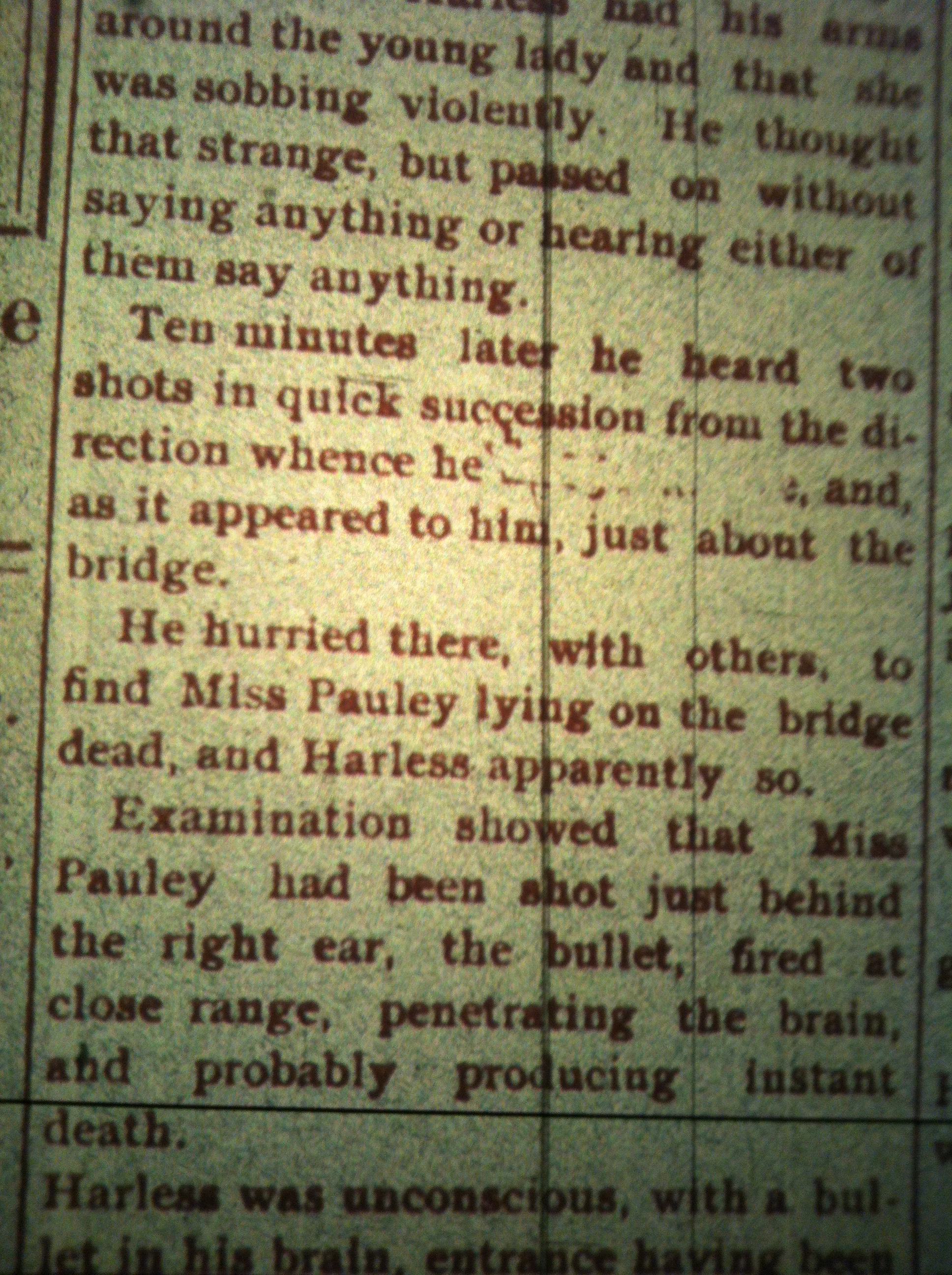
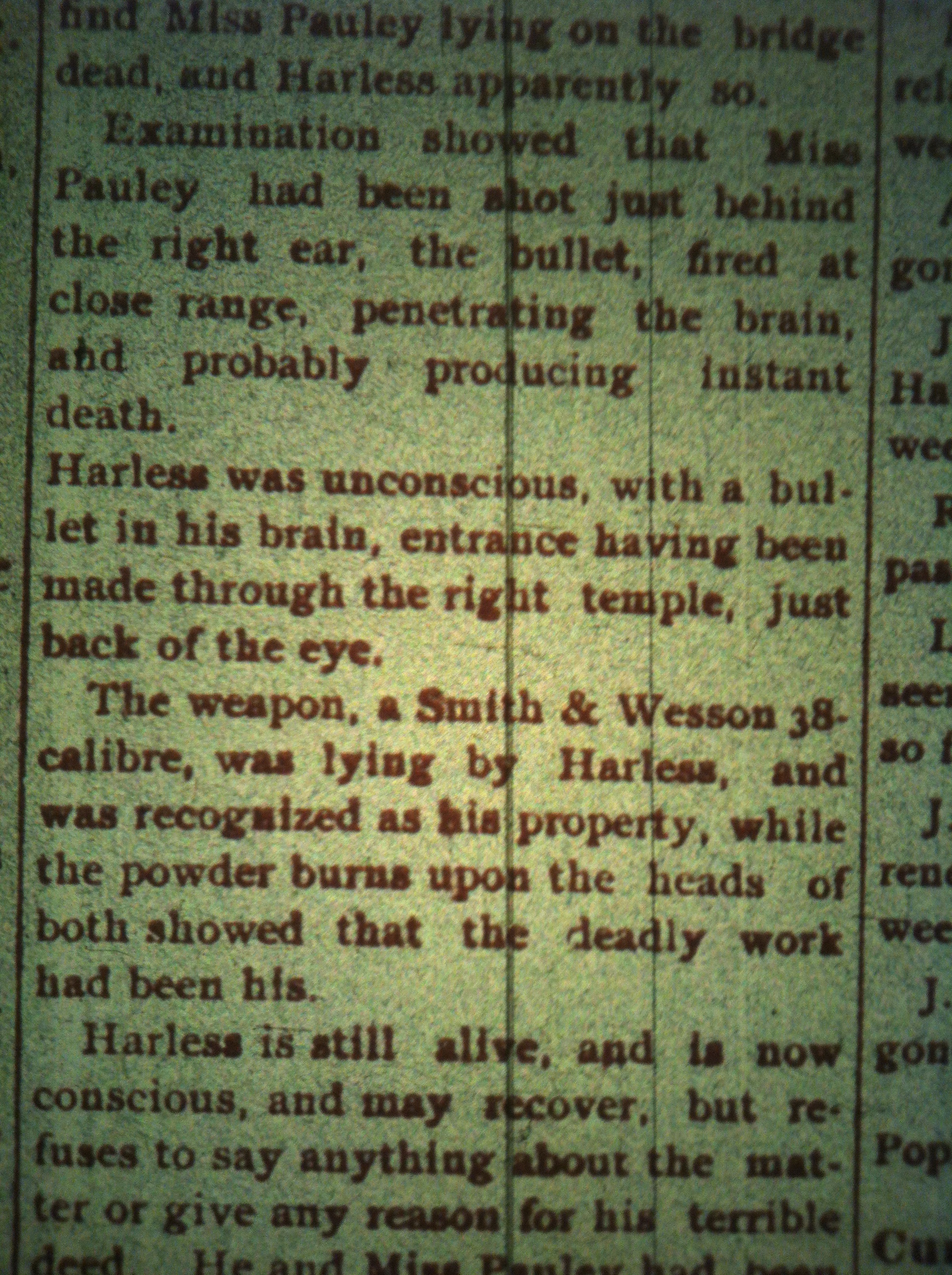
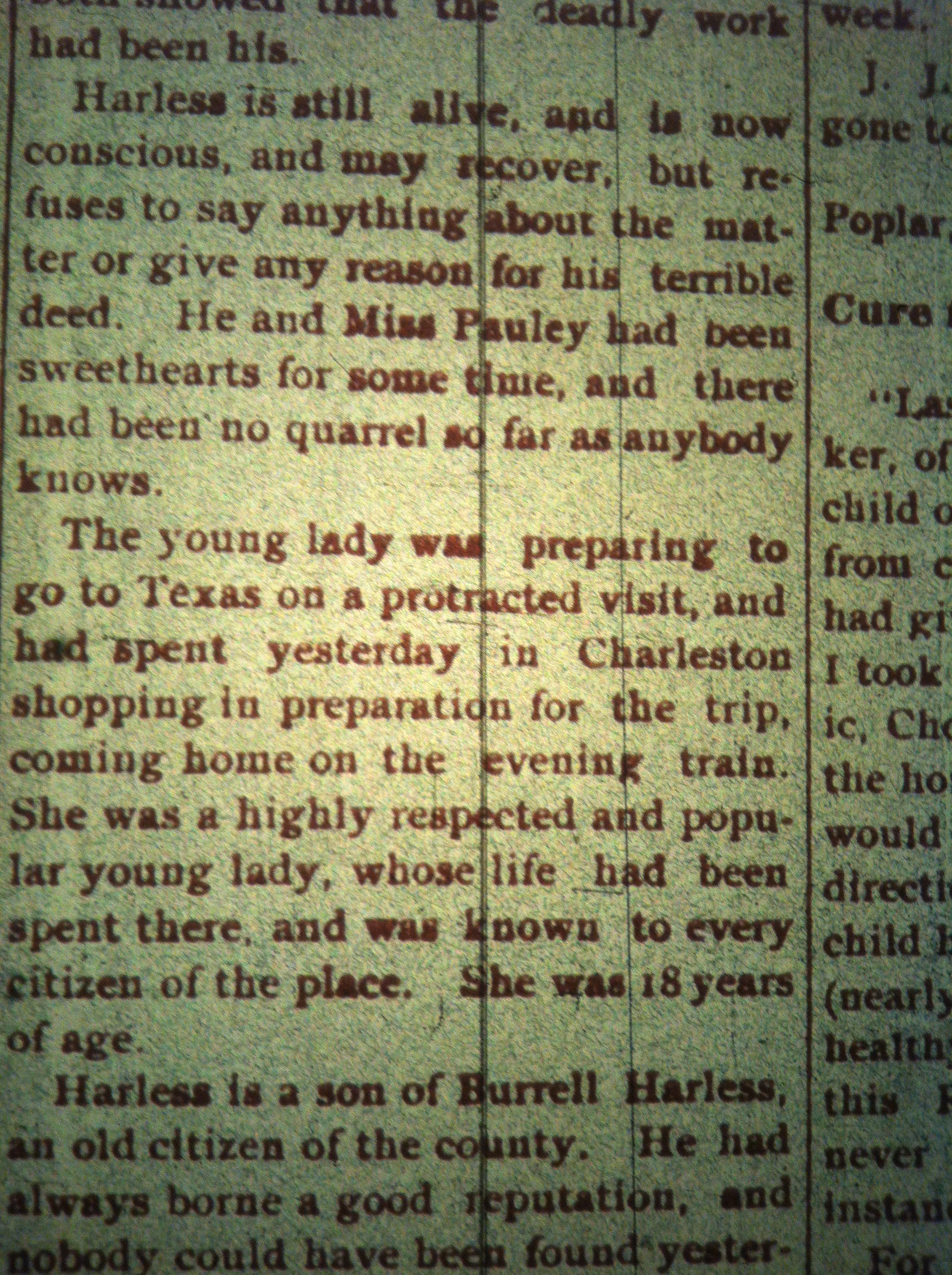
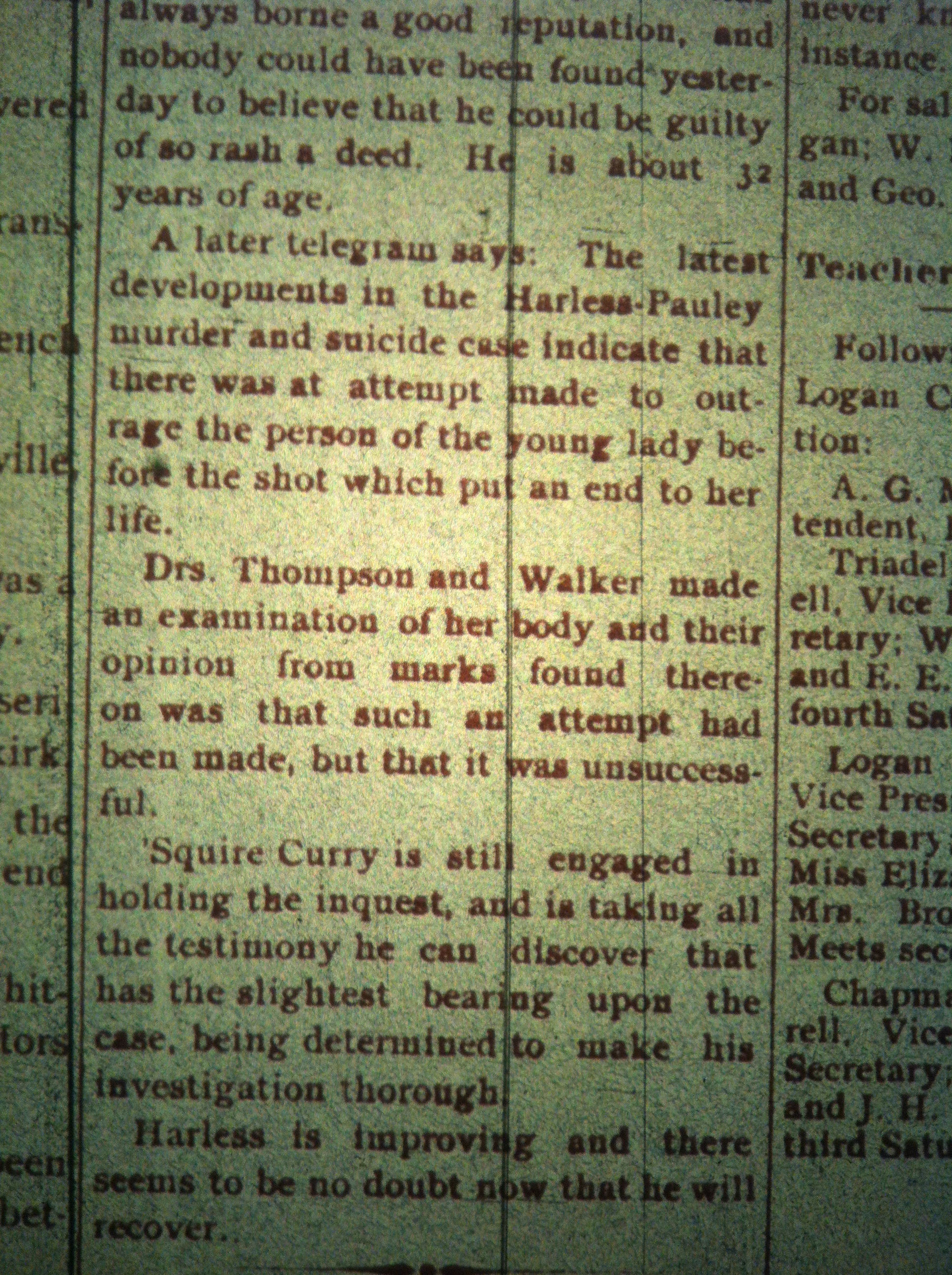
Wyatt Harless kills Maude Pauley 1901

26 Monday May 2014

Posted by Brandon Ray Kirk in Culture of Honor

≈ Leave a comment

Tags

Appalachia, Boone County, Brownstown, Burrell Harless, Charleston, crime, Dr. Thompson, Dr. Walker, history, Lens Creek, Logan County Banner, love, Maude Pauley, Texas, West Virginia, Wyatt Harless

Wyatt Harless kills Maude Pauley, Logan County Banner, August 1, 1901

Wyatt Harless kills Maude Pauley, Logan County (WV) Banner, Thursday, August 1, 1901

Wyatt Harless kills Maude Pauley LCB 8.1.01 2 Wyatt Harless kills Maude Pauley LCB 8.1.01 3 Wyatt Harless kills Maude Pauley LCB 8.1.01 4 Wyatt Harless kills Maude Pauley LCB 8.1.01 5 Wyatt Harless kills Maude Pauley LCB 8.1.01 6 Wyatt Harless kills Maude Pauley LCB 8.1.01 7

Boone County’s “Little Johnny” Hager 2

13 Tuesday May 2014

Posted by Brandon Ray Kirk in Big Creek, Big Harts Creek, Big Ugly Creek, Calhoun County, Music

≈ Leave a comment

Tags

Akron, Arthur Smith, banjo, Bertha Bias, Big Creek, blind, Boone County, Boone County Genealogical Society, Broad Branch, Calhoun County, Chapmanville, Clay County, Dave Brumfield, Dicy Thomas, Dolly Bell, Ed Belcher, Ed Haley, Ella Haley, fiddle, fiddler, Garretts Fork, genealogy, Greenview, Harts Creek, Harvey Hicks, Hewetts Creek, history, Hubert Baisden, Irene Hager, Jeff Baisden, Jeff Duty, Jess Chambers, Johnny Hager, Kanawha County, Kansas, Kentucky, Kith and Kin, Laury Hicks, life, Little Coal River, Logan County, Lydia Johnson, Madison, Mary Baisden, Morehead, music, North Fork, Ohio, Powderly, Riland Bias, Robert Martin, Rowan County, Sampson Thomas, Simon Bias, Spruce Fork, Texas, Trace Fork, Turley Adams, Ugee Postalwait, Victoria Adams, West Virginia, Wilson Craddock, writing

After his return to West Virginia, Johnny Hager took immediate notice of the large number of musicians who lived in the head of Big Harts Creek. His first cousin, Jefferson “Jig-Toe” Baisden (1879-1970), was a dancer and banjo-picker. J. E. “Ed” Belcher (1889-1970), who played several instruments, and Robert Martin, an Arthur Smith-style fiddler, were other significant musicians in the area. Ed Haley (1885-1951), a blind fiddler from Trace Fork, particularly caught Hager’s attention. Johnny’s desire to absorb Haley’s music was understandable because, as Jess Chambers stated, “It was a badge of honor to have played with Ed Haley.” Jeff Baisden, a cousin to both men, may have introduced the pair.

Johnny could supposedly play any instrument and his trip out to Kansas allowed him to soak up a variety of western tunes and playing styles which were completely new to folks in Logan County. Both of these qualities, his diverse musical capabilities and his unique musical background, ensured that he an Ed Haley had many intense music sessions. According to Turley Adams, Johnny’s great-nephew, Hager encouraged Ed to take his show on the road and volunteered to serve as Haley’s “eyes” on such trips. This willingness to travel, coupled with his apparent competence as a musician, made Johnny a perfect sidekick to Ed. Haley and Hager were both unmarried, a convenience which allowed them to roam the country with few cares or responsibilities.

Johnny and Ed traveled to various places in West Virginia but are particularly remembered up around the Calhoun-Clay County area north of Kanawha County. Aside from being populated with rural folks similar to Hager’s neighbors in Logan and Boone Counties, the area was also endowed with a host of great musicians. Haley and Hager wintered there as young men with a fiddler named Lawrence “Laury” Hicks (1880-1937). Ugee (Hicks) Postalwait of Akron, Ohio, a daughter of Laury Hicks, said that Ed and Johnny first came and visited her father in the early 1910s. Hager was a tall, slim banjo-picker. When Ed and Johnny left Laury’s home in the spring, with Johnny leading the way, Ugee and her brother stood on the bank by the house and “hollered and cried after them.”

Most agree that Johnny’s travels with Ed Haley ended around 1914 when Haley married Ella Trumbo, a blind music instructor from Morehead in Rowan County, Kentucky. Haley’s habit of cursing and drinking also helped end the partnership. Hager did not care for it.

For the most part, Johnny spent the remainder of his life playing music while boarding with his Baisden kinfolk on the North Fork of Big Creek. Irene Hager, a daughter of Hubert E. and Mary (Pauley) Baisden, remembered Johnny playing music on her father’s front porch in the late 1920s. Her father, a banjo-picker, lived at Greenview and the Big Branch of Spruce Fork of Little Coal River in Boone County. Hubert Baisden was Johnny’s first cousin. Hager boarded with him for several weeks at a time. One of Hager’s chores at the Baisden home was to keep wood in the stove. Irene said that Johnny often talked about his early travels with Ed Haley.

Johnny Hager was a man with little roots and family, a fellow who never had a real home. Many from Harts Creek remember that Hager was simply from the “the North Fork of Big Creek.” Dave Brumfield, a great-nephew, said that Hager stayed in that vicinity with a Thomas family. No doubt, this Thomas family was headed by Sampson Thomas who married Dicy Adams, a sister-in-law to Johnny’s sister Victoria Adams. Incidentally, just over the mountain from North Fork was the Broad Branch of Big Ugly Creek where lived a fiddler named Jefferson “Jeff” Duty (born about 1877). During Hager’s stay on the North Fork, he probably visited this musician (and any others in this locality) to learn a few new licks.

Hager also stayed with Simon and Bertha (Baisden) Bias on Bias Branch in Boone County. Mrs. Bias’ grandfather, Riland Baisden, was a brother to Johnny Hager’s mother. He spent a lot of time on the Garretts Fork of Big Creek with the Barkers before leaving them to stay with Wilson Craddock’s family on Hewitts Creek in Boone County. Mr. Craddock’s widow has a necklace which Johnny gave her during his time there. Lydia (Adkins) Johnson of Powderly, Texas, recalled that Hager lived with her mother and father during her “growing up years at home” in the late 1920s and 1930s. Johnson “was born (around 1923) and raised in Boone Co. just over the hill from Chapmanville.” Hager was a hard worker and was very efficient at “old-time” carpentry jobs and such tasks as digging wells. According to Johnson: “[Johnny] was a handy man, & a fiddle player. (Sometimes) a neighbor would need him to come live with them, to build them an out house for them. He was noted for the best out houses, he earned his keep by living with & helping others.”

Lydia Johson described Johnny as “a very neat man” and Dolly Bell agreed, stating that he always kept his hair cut and his face shaved. He never wore suits and never dated women so far as any of his family knew. In Irene Hager’s words, he “was a pretty straight fellow” and Dave Brumfield said he never drank when visiting his father’s home on Harts Creek.

NOTE: Originally published in “Kith and Kin of Boone County, West Virginia” Volume XXII

Published by Boone County Genealogical Society

Madison, West Virginia, 1997

Dedicated to the late Dolly (Hager) Bell

Boone County’s “Little Johnny” Hager 1

12 Monday May 2014

Posted by Brandon Ray Kirk in Big Creek, Big Harts Creek, Music

≈ Leave a comment

Tags

Aaron Hager, Anna Adams, Armilda Hager, banjo, Battle Hill Township, Big Creek, Big Ugly Creek, Boone County, Boone County Genealogical Society, Dave Brumfield, Dolly Bell, Ed Haley, Edward Hager, Eliza Hager, Geronimo Adams, Harts Creek, history, Jess Chambers, John Baisden, Johnny Canub Adams, Johnny Hager, Joseph Hager, Joseph Hager Jr., Kansas, Kith and Kin, Lincoln County, Logan County, Lola Adams, Lucinda Hager, Madison, Mag Brumfield, McPherson County, Missouri, Mud, music, Olivia Hager, Roxie Mullins, Sanders Branch, Smokehouse Fork, Victoria Adams, West Virginia, William Hager, writing

In the early 1900s, two musicians traveled as a pair throughout West Virginia and spread the influence of their musical talents to fiddlers and banjo-pickers in countless towns and hamlets. One of these men was Ed Haley, a Logan County native, who took up the fiddle after being blinded by his father as a child. The other was Little Johnny Hager who, although born in Logan County, spent a great deal of his life in Boone County.

John Washington Hager was born on December 8, 1876 to Joseph and Lucinda (Baisden) Hager, Sr. on Big Creek in Logan County, West Virginia, near the Boone County line. Johnny was the youngest sibling to Victoria Hager (1869-1942) and Aaron Hager (c.1872-c.1884). During his childhood, his parents moved from their home at the North Fork of Big Creek in Logan County to the Big Ugly Creek area. His family appeared in the 1880 Lincoln County Census. Subsequent years were difficult: Aaron Hager, Johnny’s older brother, died at the age of twelve years old. Victoria Hager married George Washington “Ticky George” Adams and moved to Big Harts Creek in Logan County. Finally, Johnny’s parents divorced due to his father’s infidelity with a local woman named Armilda Adkins. Joseph Hager soon married his mistress and fathered four more children: Edward Hager (1887), Joseph Hager, Jr. (1888-1940), Eliza Hager (1891), and Olivia Hager. Joe Hager lived in the vicinity of the old Mud Post Office near the Lincoln-Boone county line.

Remarkably, Johnny moved to Kansas with his mother, where he spent many years among Hager relatives. Just how long Johnny lived in Kansas has not been determined despite interviews with his close relatives. There is some indication that he and his mother lived in other Western states like Missouri prior to finally settling in Kansas. All the versions regarding Johnny’s stay in Kansas are given below because any one of them might be true. His niece Roxie (Adams) Mullins told that Johnny lived out West for six months. Johnny’s half-niece Dolly (Hager) Bell thought he came home from Kansas when he was twenty years old (circa 1896) or when he was aged in his twenties (circa 1896-1906). Hager’s half-great nephew Jess Chambers said that he had been told that Johnny lived in Kansas for twenty years, meaning that he would have returned to West Virginia around 1905. In the personal opinion of this author, accounts placing Johnny out West for several years seem at this time the most likely scenario simply because Johnny cannot be accounted for in the 1900 West Virginia Census. Instead, he shows up as a farm laborer in the home of a cousin, William Hager, aged 26, in Battle Hill Township, McPherson County, Kansas.

Kansas would have offered a West Virginia boy like Johnny Hager many new adventures. One can be sure that he spent a great portion of his time there working on the farm since he later described plowing fields into mile-long rows. According to family stories, he also chauffeured female cousins into town on wagon rides. Dolly Bell suggested that Hager probably learned to play the banjo while in Kansas and Jess Chambers said of Hager, “He played all his life.” Johnny was self-taught and played the old clawhammer style on the banjo.

According to tradition, Johnny’s mother died during their stay in Kansas. Roxie Mullins stated that Lucinda Hager was buried on the banks of the Wabash River, located along the borders between Illinois and Indiana. Another source said that she died in Missouri. Johnny always cried when he spoke of his mother and said that had lost “everything” when she died.

Some time after 1900, perhaps about 1905, Johnny returned to West Virginia. Although his father Joseph was still alive, Johnny never forgave him for divorcing his mother and refused to associate with him. He also refused to recognize Joseph’s children by his second wife. A story is told how Joe Hager, Johnny’s half-brother, rode to see him at John Baisden’s home on Sanders Branch. He was excited to meet the brother he had never known. When he came into the yard and yelled for him, Johnny wouldn’t even come outside.

In Johnny’s eyes, his sister Victoria Adams was all that remained of his family and he spent a great deal of time boarding at her Harts Creek residence in Logan County. During Johnny’s stay out West, Victoria had give birth to several children in a family which would grow to include Maggie “Mag” Adams (1888-1959), John C. “Johnny” Adams (1891-1965), Anna Adams (1901-1982), Geronimo Adams (c.1903), Roxie Adams (1905-1993) and Lola Adams (1911). It is likely that Johnny spun great stories for the Adams children about his experiences in Kansas. Roxie Mullins remembered him as being “funnier than a monkey,” Jess Chambers said he was a jolly fellow, and Dolly Bell remembered that he loved to joke and laugh. Dave Brumfield, a great-nephew, said that he pranked with the Brumfield children when he visited his parents’ home on the Smoke House Fork of Big Harts Creek in Logan County.

NOTE: Originally published in “Kith and Kin of Boone County, West Virginia” Volume XXII

Published by Boone County Genealogical Society

Madison, West Virginia, 1997

Dedicated to the late Dolly (Hager) Bell

Barker-Kinder Feud

20 Sunday Apr 2014

Posted by Brandon Ray Kirk in Culture of Honor

≈ Leave a comment

Tags

Barker-Kinder Feud, Boone County, Brownstown, history, Isaac Barker, Jennie Barker, Peter Kinder, West Virginia

Barker-Kinder Feud in Boone County, West Virginia, 1890

Barker-Kinder Feud in Boone County, Wheeling (WV) Intelligencer, August 14, 1890

← Older posts
Newer posts →

Feud Poll 1

If you had lived in the Harts Creek community during the 1880s, to which faction of feudists might you have given your loyalty?

Categories

  • Adkins Mill
  • African American History
  • American Revolutionary War
  • Ashland
  • Atenville
  • Banco
  • Barboursville
  • Battle of Blair Mountain
  • Beech Creek
  • Big Creek
  • Big Harts Creek
  • Big Sandy Valley
  • Big Ugly Creek
  • Boone County
  • Breeden
  • Calhoun County
  • Cemeteries
  • Chapmanville
  • Civil War
  • Clay County
  • Clothier
  • Coal
  • Cove Gap
  • Crawley Creek
  • Culture of Honor
  • Dingess
  • Dollie
  • Dunlow
  • East Lynn
  • Ed Haley
  • Eden Park
  • Enslow
  • Estep
  • Ethel
  • Ferrellsburg
  • Fourteen
  • French-Eversole Feud
  • Gilbert
  • Giles County
  • Gill
  • Green Shoal
  • Guyandotte River
  • Halcyon
  • Hamlin
  • Harts
  • Hatfield-McCoy Feud
  • Holden
  • Hungarian-American History
  • Huntington
  • Inez
  • Irish-Americans
  • Italian American History
  • Jamboree
  • Jewish History
  • John Hartford
  • Kermit
  • Kiahsville
  • Kitchen
  • Leet
  • Lincoln County Feud
  • Little Harts Creek
  • Logan
  • Man
  • Matewan
  • Meador
  • Midkiff
  • Monroe County
  • Montgomery County
  • Music
  • Native American History
  • Peach Creek
  • Pearl Adkins Diary
  • Pecks Mill
  • Peter Creek
  • Pikeville
  • Pilgrim
  • Poetry
  • Queens Ridge
  • Ranger
  • Rector
  • Roane County
  • Rowan County Feud
  • Salt Rock
  • Sand Creek
  • Shively
  • Spears
  • Sports
  • Spottswood
  • Spurlockville
  • Stiltner
  • Stone Branch
  • Tazewell County
  • Timber
  • Tom Dula
  • Toney
  • Turner-Howard Feud
  • Twelve Pole Creek
  • Uncategorized
  • Warren
  • Wayne
  • West Hamlin
  • Wewanta
  • Wharncliffe
  • Whirlwind
  • Williamson
  • Women's History
  • World War I
  • Wyoming County
  • Yantus

Feud Poll 2

Do you think Milt Haley and Green McCoy committed the ambush on Al and Hollene Brumfield in 1889?

Blogroll

  • Ancestry.com
  • Ashland (KY) Daily Independent News Article
  • Author FB page
  • Beckley (WV) Register-Herald News Article
  • Big Sandy News (KY) News Article
  • Blood in West Virginia FB
  • Blood in West Virginia order
  • Chapters TV Program
  • Facebook
  • Ghosts of Guyan
  • Herald-Dispatch News Article 1
  • Herald-Dispatch News Article 2
  • In Search of Ed Haley
  • Instagram
  • Lincoln (WV) Journal News Article
  • Lincoln (WV) Journal Thumbs Up
  • Lincoln County
  • Lincoln County Feud
  • Lincoln County Feud Lecture
  • LinkedIn
  • Logan (WV) Banner News Article
  • Lunch With Books
  • Our Overmountain Men: The Revolutionary War in Western Virginia (1775-1783)
  • Pinterest
  • Scarborough Society's Art and Lecture Series
  • Smithsonian Article
  • Spirit of Jefferson News Article
  • The Friendly Neighbor Radio Show 1
  • The Friendly Neighbor Radio Show 2
  • The Friendly Neighbor Radio Show 3
  • The Friendly Neighbor Radio Show 4
  • The New Yorker
  • The State Journal's 55 Good Things About WV
  • tumblr.
  • Twitter
  • Website
  • Weirton (WV) Daily Times Article
  • Wheeling (WV) Intelligencer News Article 1
  • Wheeling (WV) Intelligencer News Article 2
  • WOWK TV
  • Writers Can Read Open Mic Night

Feud Poll 3

Who do you think organized the ambush of Al and Hollene Brumfield in 1889?

Recent Posts

  • Logan County Jail in Logan, WV
  • Absentee Landowners of Magnolia District (1890, 1892, 1894)
  • Charles Spurlock Survey at Fourteen Mile Creek, Lincoln County, WV (1815)

Ed Haley Poll 1

What do you think caused Ed Haley to lose his sight when he was three years old?

Top Posts & Pages

  • Early Coal Mines in Logan County, WV
  • History for Boone County, WV (1928)
  • Early Anglo Settlers of Logan, WV (1937)
  • Origin of Place Names in Logan County, WV (1937)
  • Big Harts Creek Post Offices

Copyright

© Brandon Ray Kirk and brandonraykirk.wordpress.com, 1987-2023. Unauthorized use and/or duplication of this material without express and written permission from this blog’s author and/or owner is strictly prohibited. Excerpts and links may be used, provided that full and clear credit is given to Brandon Ray Kirk and brandonraykirk.wordpress.com with appropriate and specific direction to the original content.

Archives

  • February 2025
  • January 2025
  • October 2023
  • September 2023
  • December 2022
  • November 2022
  • May 2022
  • April 2022
  • February 2022
  • November 2021
  • October 2021
  • September 2021
  • June 2021
  • May 2021
  • April 2021
  • March 2021
  • February 2021
  • January 2021
  • December 2020
  • November 2020
  • October 2020
  • July 2020
  • June 2020
  • May 2020
  • April 2020
  • March 2020
  • February 2020
  • January 2020
  • December 2019
  • November 2019
  • October 2019
  • September 2019
  • August 2019
  • July 2019
  • June 2019
  • May 2019
  • April 2019
  • March 2019
  • February 2019
  • January 2019
  • December 2018
  • November 2018
  • October 2018
  • September 2018
  • August 2018
  • July 2018
  • June 2018
  • May 2018
  • April 2018
  • March 2018
  • February 2018
  • January 2018
  • December 2017
  • November 2017
  • October 2017
  • September 2017
  • August 2017
  • July 2017
  • June 2017
  • May 2017
  • April 2017
  • March 2017
  • February 2017
  • January 2017
  • December 2016
  • November 2016
  • October 2016
  • September 2016
  • August 2016
  • July 2016
  • June 2016
  • May 2016
  • April 2016
  • March 2016
  • February 2016
  • January 2016
  • December 2015
  • November 2015
  • October 2015
  • September 2015
  • August 2015
  • July 2015
  • June 2015
  • May 2015
  • April 2015
  • March 2015
  • February 2015
  • January 2015
  • December 2014
  • October 2014
  • September 2014
  • August 2014
  • July 2014
  • June 2014
  • May 2014
  • April 2014
  • March 2014
  • February 2014
  • January 2014
  • December 2013
  • November 2013
  • October 2013
  • September 2013
  • August 2013
  • July 2013
  • June 2013
  • May 2013
  • April 2013
  • March 2013
  • February 2013
  • January 2013
  • December 2012
  • November 2012

Enter your email address to follow this blog and receive notifications of new posts by email.

Join 2,925 other subscribers

Tags

Appalachia Ashland Big Creek Big Ugly Creek Blood in West Virginia Brandon Kirk Cabell County cemeteries Chapmanville Charleston civil war coal Confederate Army crime culture Ed Haley Ella Haley Ferrellsburg feud fiddler fiddling genealogy Green McCoy Guyandotte River Harts Harts Creek Hatfield-McCoy Feud history Huntington John Hartford Kentucky Lawrence Haley life Lincoln County Lincoln County Feud Logan Logan Banner Logan County Milt Haley Mingo County music Ohio photos timbering U.S. South Virginia Wayne County West Virginia Whirlwind writing

Blogs I Follow

  • OtterTales
  • Our Appalachia: A Blog Created by Students of Brandon Kirk
  • Piedmont Trails
  • Truman Capote
  • Appalachian Diaspora

BLOOD IN WEST VIRGINIA is now available for order at Amazon!

Blog at WordPress.com.

OtterTales

Writings from my travels and experiences. High and fine literature is wine, and mine is only water; but everybody likes water. Mark Twain

Our Appalachia: A Blog Created by Students of Brandon Kirk

This site is dedicated to the collection, preservation, and promotion of history and culture in Appalachia.

Piedmont Trails

Genealogy and History in North Carolina and Beyond

Truman Capote

A site about one of the most beautiful, interesting, tallented, outrageous and colorful personalities of the 20th Century

Appalachian Diaspora

  • Subscribe Subscribed
    • Brandon Ray Kirk
    • Join 787 other subscribers
    • Already have a WordPress.com account? Log in now.
    • Brandon Ray Kirk
    • Subscribe Subscribed
    • Sign up
    • Log in
    • Report this content
    • View site in Reader
    • Manage subscriptions
    • Collapse this bar
 

Loading Comments...